

Submitted:
29 August 2024
Posted:
30 August 2024
You are already at the latest version
Abstract
Food tourism, an increasingly vital sector within tourism, significantly impacts both the economic vitality and cultural enrichment of tourist destinations. It attracts a diverse range of visitors, both local and international, while enhancing appreciation for regional culinary traditions. This study employs scenario planning to uncover pivotal factors influencing food tourism in rural Iran. Methodologically, it combines objective-driven, descriptive-analytical approaches with future studies methodologies. Data sourced from literature reviews, field studies, and expert surveys, facilitated by MICMAC and ScenarioWizard software, identified six key drivers: promotional activities, pricing, food quality, infrastructure, government support, and investment. The study forecasts future scenarios based on these drivers, revealing optimistic, stagnant, and crisis condi-tions impacting food tourism development. To achieve favorable outcomes, prioritizing these drivers is essential, ensuring sustainable growth and seizing tourism opportunities in rural Iran. This research contributes by systematically analyzing critical factors driving food tourism using scenario-based insights, essential for sector longevity and prosperity.
Keywords:
Tourism
; Tourism Development
; Food Tourism
; Futures Studies
; Scenario Planning
1. Introduction
Today, rural communities face numerous economic, social, and environmental challenges, especially in developing countries. Among these challenges are issues such as poverty [1], low-income levels [2], reduced need for labour due to the use of machinery in agriculture [3], migration [4], population ageing [5], as well as environmental problems such as climate change [6], floods, droughts, forest fires [7], environmental degradation [8] limited natural resources [9].
Despite these challenges and problems, rural communities still hold significant importance in regional, national, and even international development, to the extent that 80% of food items in Asia and sub-Saharan Africa are produced by smallholder farmers, most of whom reside in rural areas [10]. A critical approach to rural development is rural tourism development. Rural tourism, due to its promotion of traditional and local culture, agricultural prosperity, and providing investment opportunities [11], income generation, and job creation [12], contributes to creating new financial resources and reducing rural poverty. In other words, rural tourism has been recognized as a revitalization strategy for rural life [13]. Food tourism, with a sustainable approach, not only utilizes natural heritage but also preserves it [14], and besides directly contributing to gross domestic product (GDP), it plays a crucial role in strengthening and developing peace, welfare, national and international relations [15] in achieving sustainable development goals [16]. The valuable benefits of rural tourism in various dimensions of sustainable development have led governments to pursue its development actively [11]. Considering that in 1950, there were about 25 million international tourists, and in the mid-2010s (2010-2020) this figure increased to over one billion; optimistically, it is predicted that this figure will increase to 4.2 billion by 2050 [17].
Among various forms of rural tourism, food tourism is one of the most essential strategies for local and regional development, considered a strategic response to solving rural development issues and problems [18,19], and an essential pillar for both tourism and local development [20]. Fountain, citing Hall and Sharples, defines food tourism as follows: "Visiting primary and secondary food producers, food festivals, restaurants, and specific venues that taste food and experience the characteristics of the food-producing region, is the primary motivational factor for travel" [21]. Since local small-scale economies cannot often compete in global markets, the emergence of food tourism can bring about significant changes in the local economy. Therefore, food tourism has been mentioned as an alternative development strategy for rural areas [22]. The main objectives of food tourism development include promoting local agriculture, using local products and ingredients to produce traditional and local foods, preserving local culture and ecosystems, enhancing local economy and employment [23], and improving quality of life [24].
Food tourism is a key factor in connecting farmers, producers, distributors, retailers, and consumers, and it can bring numerous benefits to stakeholders and communities participating in the tourism process [25]. Food tourism covers multiple stakeholders with different motivations and roles so that it can be referred to as entrepreneurial food networks [19]. Nonetheless, alongside accommodation, transportation, travel, shopping, and entertainment, food is one of the six primary components of the tourism system [26]. Studies indicate that during travel, tourists typically spend around one-third [27] to 40 percent of their budget on food and beverages [28]. An astonishing aspect of food tourism is that it’s a 24/7, global activity available 365 days a year [29]. Additionally, among every ten visitors to tourist destinations, eight are influenced by food attractions [30]
Food tourism has emerged as a powerful tool for fostering sustainable rural development. By attracting tourists to rural areas and stimulating demand for local products, food tourism creates new opportunities for income generation and employment. Farmers and local producers can increase their revenue by selling directly to tourists, reducing reliance on external markets. Moreover, food tourism can catalyze investments in local infrastructure such as restaurants, accommodations, and recreational facilities, thereby stimulating economic growth and improving rural quality of life. Additionally, food tourism can contribute to economic sustainability by diversifying local economies and mitigating rural-urban migration [31,32].
In recent years, one of the most significant challenges facing rural areas in Iran has been employment and rural-urban migration. Food tourism can positively impact the cultural fabric of rural communities by promoting and showcasing local and traditional cuisine, thus preserving cultural heritage and customs. By connecting food to specific rituals and celebrations, food tourism can help sustain and strengthen these cultural events [31,33]
Furthermore, food tourism can have a significant impact on the rural environment, provided it is managed sustainably. By promoting local and organic products, food tourism can reduce reliance on imported food and decrease the carbon footprint associated with long-distance food transportation. It can also raise awareness about environmental conservation and sustainable agricultural practices, as tourists seek authentic experiences tied to nature and local food systems [34,35].
Scenario planning is a valuable tool for understanding the complex and uncertain future of food tourism in rural areas. By considering various economic, social, political, and environmental factors, different scenarios can be developed to explore potential outcomes and identify appropriate strategies. This approach enables policymakers to develop robust strategies that can adapt to future changes and uncertainties[36,37]
While numerous studies have explored sustainable rural tourism, fewer have focused on the role of food tourism in rural development, particularly through a scenario-based planning approach. This research aims to fill this gap by examining the case of rural areas in Iran, identifying key factors influencing the sustainable development of food tourism, and developing optimal scenarios to enhance food tourism in these regions.
Some of the most important studies related to food tourism covering various topics include the social factors influencing participation in food tourism. the impact of word-of-mouth advertising on food tourism [22], the influence of festival food quality characteristics on experience, satisfaction level, and intent to revisit [23], the trend and development of food tourism [38], investigating factors affecting repeat visits by food tourists [39], the link between agriculture and food tourism [40], understanding the behavioral intentions of food tourists [41], the future success of food festivals [24], growth strategies in food tourism [42], the impact of food value video clips in promoting food tourism [43], and policy analysis in food tourism [44]. Due to the limited number of studies related to food tourism, researchers have emphasized conducting more studies in the field of food tourism [45,46], especially in developing communities [47]. Furthermore, researchers suggest that to enhance understanding of food tourism experiences and related factors, stimuli for food tourism should be further and more deeply investigated through empirical studies involving both small and large-scale data on travellers and tourists [20]. This is because each factor in any tourism destination can play a different role in food tourism [48]. Additionally, considering the numerous gaps in food tourism studies, utilizing various methods and software can help bridge these gaps [49]. One of the most important approaches for the future development of food tourism is scenario planning for food tourism development, especially in rural areas [25]
Iran’s geographical position, situated at the crossroads of trade routes connecting the East and the West, has led Iranian cuisine to be influenced by various cultures such as Mediterranean, Mesopotamian, Russian, Arabic, European, and others, providing diverse and delicious foods for tourists [50]. Among Asian countries, Iran possesses one of the most unique food traditions. Historical documents indicate that Iranian cuisine dates back four thousand years and includes approximately 2200 types of dishes, 109 beverages, and various sweets and breads [44]. Some famous Iranian dishes that attract tourists and hold significant value include Fesenjan (walnut and pomegranate stew), Bademjan (eggplant and tomato stew), Baghali Polo (rice with dill and fava beans), Zereshk Polo (barberry rice), Ghormeh Sabzi (herb stew), Ash Reshteh (noodle soup), Tahdig (crispy rice), and Kebab (lamb, chicken, lamb liver, ground meat) [39].
Adapting to the geographical conditions prevailing in Iran, its rural areas exhibit a wide range of diversity in terms of climatic, cultural, religious, ethnic, and socio-economic conditions, which has led to the production of various traditional foods and beverages in rural areas [51]. In recent years, Iranian policymakers and planners have endeavoured to introduce Iran as a new food tourism destination and utilize it as a tool for rural development [52]. For this reason, the 20-year vision of the Islamic Republic of Iran emphasizes attracting 20 million foreign tourists by 2027 and increasing Iran’s share of global tourism revenue to two percent by 2026, aiming to earn nearly $25 billion from tourism in 2026 [53]. However, despite the implementation of policies such as the global registration of Iranian foods and branding certain cities as creative food cities, food tourism in Iran has not fully realized its potential due to reasons such as lack of coordination among executive and supervisory bodies in the government sector, non-prioritization of food tourism development in planning, restrictive laws in the field of food tourism, excessive government oversight of food tourism operations, and weak cooperation among all influential factors in shaping food tourism [44]. Consequently, food tourism in rural areas of Iran is not at an acceptable level and has failed to establish its position [51]. This is even though rural areas of Iran face various challenges. Food tourism development can serve as a new opportunity for optimal and sustainable use of environmental resources that are highly susceptible to destruction [54], ultimately ensuring the main dimensions of sustainable rural development (economic, social, and ecological sustainability) are addressed [55].
This study advances knowledge on the growth of food tourism in rural Iran by thoroughly examining the primary motivators. It analyzes the effects of numerous elements, including advertising campaigns, pricing schemes, food quality, infrastructure, governmental backing, and investment climate, using a scenario-based methodology. Through an examination of three distinct scenarios—desired, static, and crisis—the research offers valuable insights into tactics that can promote long-term expansion within this rapidly developing industry. Policymakers, tourist planners, and local stakeholders who want to harness the potential of food tourism in rural Iran need to know these kinds of information.
Various aspects of food tourism have been investigated from different angles in a number of studies. And yet there are still some unanswered questions about food tourism. This study examines the broad, important aspects that influence food tourism by using a future-focused methodology. After that, it lists the major forces behind food tourism and, drawing from the opinions of experts, projects possible futures.
Given the topics addressed, the main objective of this research is scenario planning for the development of food tourism in rural areas of Iran. Achieving this goal will provide a helpful background and scientific foundation for policymakers, planners, and all stakeholders in rural development so that, by utilizing it, they can leverage the multiple economic, social, cultural, environmental, political, and other benefits of food tourism development towards achieving sustainable rural development. Furthermore, the results of this research will provide policymakers and planners with an essential scientific document to use in achieving the goals of the 20-year vision of the Islamic Republic of Iran. Studies indicate that there has been limited research on scenario planning for food tourism development in rural areas. Despite the significant potential for food tourism development and the current inadequate status of food tourism in rural areas of Iran, this research gap is of greater importance. Therefore, this study, in addition to its administrative and organizational applications, can serve as a basis for researchers in the field of food tourism.
1.1. Literature Review
In the late twentieth century, food was considered a significant asset and vital element in enhancing the attractiveness of tourism destinations [56]. Generally, food tourism has a relatively new history, and the early years of the twenty-first century can be considered its starting point. The increasing interest in food tourism has led to multiple definitions of "food tourism." These definitions aim to distinguish individuals whose primary purpose is eating, familiarizing themselves with food and beverage preparation, and being motivated by food-related factors during the travel process [38]. Various terms have been used to describe the relationship and combination of food and tourism, such as food tourism, food tourism [21], foodie tourism, taste tourism [38], slow food tourism [30,57], delicious tourism, and indigenous tourism. However, specific terms are more prevalent in different regions among the various modifications related to food tourism. For example, food tourism is more commonly used in North American publications, food tourism in Europe, and food tourism in Australia and New Zealand [58]. Some researchers believe these modifications are largely similar and are sometimes used interchangeably. However, food tourism is one of the most widely used concepts among the terms mentioned above (Ellis et al., 2018). In fact, due to the complex, evolving nature and overlap of food tourism with other forms, providing a definition of food tourism limits and weakens it [38].
Nevertheless, the inclination to experience a specific type of food or product in a particular region is a simple definition of food tourism [27]. The World Food Travel Association has provided the following definition of food tourism: "The pursuit and enjoyment of unique and memorable food and beverage experiences, both near and far" [59]. Additionally, tourist activities that involve fully or partially tasting the foods of a place or engaging in food-related activities represent a more flexible definition of food tourism [60]
To alleviate the growing challenges of rural communities in social, economic, and environmental dimensions [61] such as geographical isolation, weak economic conditions, limited infrastructure development, low education and social welfare [62], poverty [63], declining economic activity, population aging, and migration of highly educated youth and decreased quality of life [64], various strategies have been employed [65]. Among these, tourism development is one of the most essential strategies for rural development [66,67,68]. The development of the tourism industry over the past 70 years has significantly impacted the development of many rural areas [69]. In such a way that rural tourism has been considered as a poverty alleviation industry [70] and an alternative tool for achieving economic and social revitalization and an engine for economic development, helping to improve the quality of life for rural residents [64].
Among various attractions in rural settlements, food has been identified as a significant driving force for tourism development [41,71], playing a crucial role in tourist satisfaction and destination marketing [72]. Local food, by showcasing national, regional, and personal identities, plays a key role in improving the image of a destination [39]. Within various environmental, social, cultural, and economic discourses, it has been argued that local food, with its authenticity and freshness being among its most important characteristics [58], leads to reduced distances travelled for food consumption and greenhouse gas emissions, improved food safety and quality (resulting in greater health benefits), increased social capital, and bolstering of the local economy. Politically, supporting small and local food producers increases their resilience against corporations [73].
Overall, food tourism in rural areas, as a small-scale business [74], business development [27], maintaining the authenticity of destinations, developing environmentally friendly infrastructure, strengthening the local economy, enhancing the sustainability of tourism [75], providing job opportunities and local economic development, having positive effects on other sectors of activity in rural communities, overcoming seasonal out-migration (Privitera et al., 2018).
Given the extensive effects of food tourism on tourist destinations and their sustainable development [55], identifying the factors influencing food tourism is essential for the optimal management of tourist destinations and the sustainable utilization of its benefits [76,77]. Studies indicate that there has been increased attention to research related to food tourism in recent years [49,55], and a wide range of factors can influence the development of food tourism [39]. Following this, the most important research studies that have focused on the development of food tourism are presented in Table 1.
An examination of scholarly texts related to food tourism indicates that researchers have identified other factors as drivers of food tourism, as follows: respect for dietary laws among tourists, especially among Muslim tourists [82]; innovation in tourist destinations [58]; attention to the authenticity of tourist destinations [56]; valuing local people [21]; stakeholder participation [74]; food innovation; provision of quantitative and qualitative information about food; food tourism managers; food festivals; word-of-mouth advertising; provision of travel information; employee training in ensuring food safety; legislation; health protocols; and the spread of global pandemics [20].
Existing research on food tourism primarily focuses on the current state of development and the factors influencing its growth or decline. However, there is a scarcity of studies that identify the key drivers of food tourism. Moreover, given the diverse geographical and cultural contexts, the key drivers of food tourism vary across different regions. Additionally, while some studies have proposed solutions, few have explored future scenarios.
Consequently, there is a twofold gap in the literature on food tourism. Firstly, there is a need for more research to identify the key drivers of food tourism in different regions. Secondly, there is a dearth of studies that develop scenarios for the future of food tourism.
By understanding the key drivers and developing future scenarios, researchers and policymakers can better inform decision-making and develop effective strategies to promote food tourism. Such research can contribute to the sustainable development of rural areas and the preservation of cultural heritage.
2. Materials and Methods
2.1. Study Area
According to the latest estimates from the Statistical Center of Iran, Iran has 31 provinces and a population of 84,055,000 people. Out of this population, 63,867,000 people (equivalent to 76% of the total population) reside in urban areas, and 20,179,000 people (equivalent to 24% of the total population) live in rural areas. The rural population of Iran resides in 622,284 rural settlements[83] Figure 1 illustrates the geographical location of Iran.
Iran, due to its rich historical background, culture, and diverse tourist attractions, is one of the Middle East’s tourism destinations, hosting numerous tourists worldwide every year [84]. Rural areas of Iran also have significant potential for food tourism, offering various attractions such as nutritious traditional foods [53], fresh, healthy, natural, and authentic foods [84], the use of medicinal herbs in food and beverages [52].
Considering the importance of food tourism in the development process in Iran (at least theoretically), food tourism has been mentioned as a suitable platform for employment generation and entrepreneurship and a key factor for Iran’s future development [84]. For this reason, the Cultural Heritage, Handicrafts, and Tourism Organization of Iran have identified 464 villages as high-potential rural tourism destinations, and it is predicted that their number will increase to over 1,000 villages [53].
2.2. Methodology
To identify the key factors influencing the development of food tourism in rural rural areas of Iran(All rural areas of Iran, which comprise 24% of the country’s total population) a comprehensive literature review was conducted to identify general factors influencing food tourism development. Subsequently, these factors were presented to 30 experts in tourism development to identify the specific factors relevant to food tourism development in Iran(A group of 5 employees from tourism organizations, 18 graduate and doctoral students, and 7 professors specializing in rural and tourism planning). These individuals were selected using the snowball sampling method and based on their research background in the field of rural tourism in Iran. From the initial set of factors, 52 primary and context-specific variables were identified and extracted (Table 2).
Subsequently, through distributing questionnaires and surveys among these 30 expert professionals, and using cross-impact analysis with Micmac software, the key drivers influencing food tourism development in rural areas of Iran were identified. Cross-impact analysis is a method used to evaluate the interdependencies between various factors or events, particularly in complex systems. In this context, it helps to understand how different variables influencing food tourism development might affect each other. By analyzing these interrelationships, the method provides insights into the potential outcomes or scenarios that could arise based on different combinations of factors. The main concept involves assessing the likelihood and impact of each factor in relation to others, often using expert opinions or statistical models. The resulting outputs of cross-impact analysis typically include a matrix or map showing the strength and direction of these interactions, which can help in identifying key drivers, potential synergies, or conflicts between variables. This approach is valuable for scenario planning and decision-making, as it highlights how changes in one area could influence others, enabling more informed strategies to be developed[85,86,87].
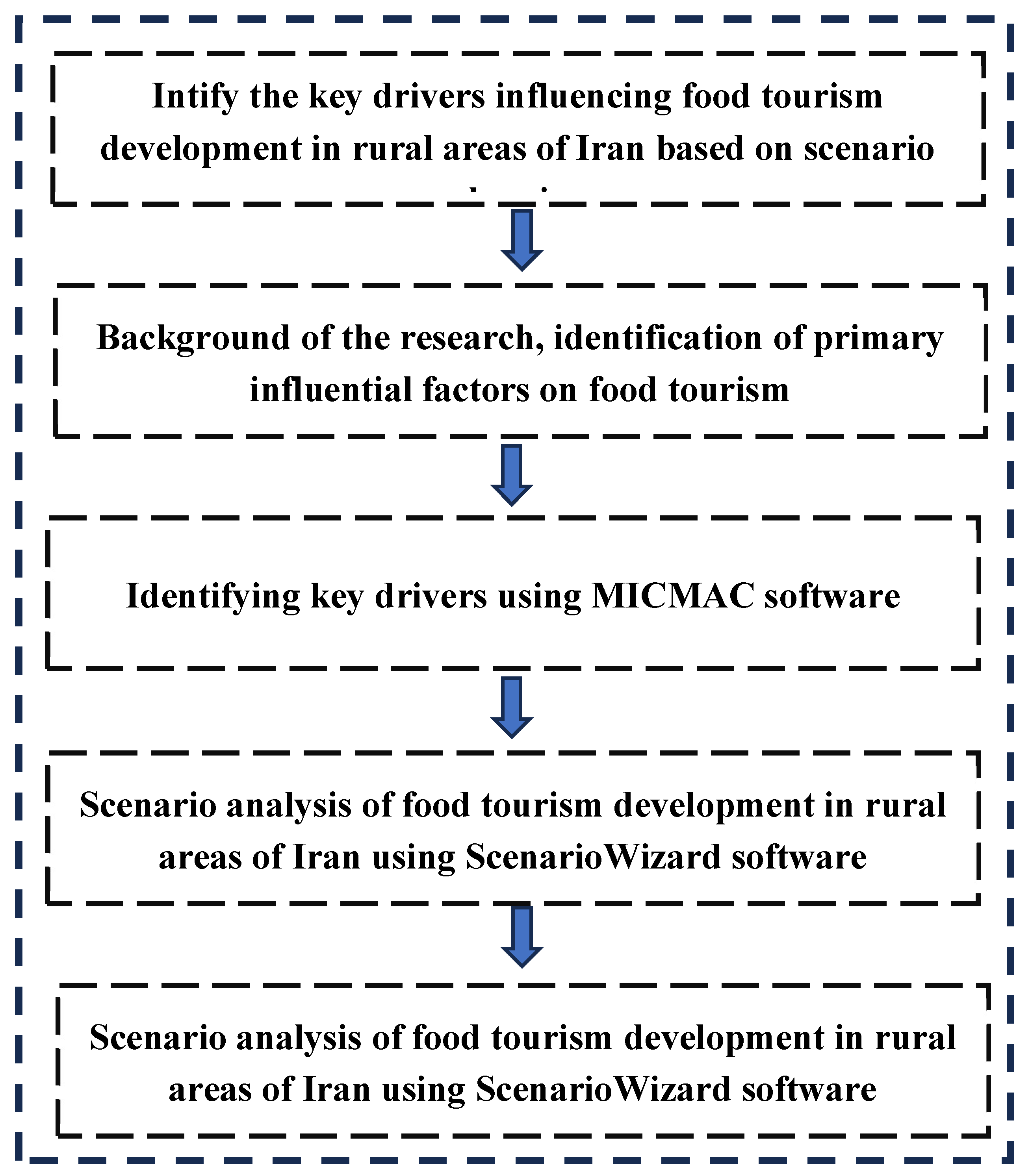
Following the identification of the key drivers, a third-stage questionnaire was distributed among the same 30 experts, and with the use of ScenarioWizard software, the possible and desirable future scenarios for the development of food tourism in rural areas of Iran were presented in Figure 2.
Figure 2.
Research Process Steps.
3. Results
3.1. Identification of Key Drivers Influencing Food Tourism in Rural Areas of Iran
After identifying the initial factors influencing food tourism based on research literature and expert opinions, 52 factors were selected as the final set. These factors were then presented to 30 expert professionals to determine the impact and influence of each factor on the other. Given the number of factors, the resulting matrix is 52x52. The degree of influence among the factors ranges from 0 to 3, with 0 indicating no relationship between the variables and 1 to 3 indicating varying levels of influence. Specifically, a score of 1 indicates the least influence, while 3 indicates the highest influence. An initial examination of the matrix characteristics reveals that the matrix fill rate (i.e., the percentage of non-zero influences) is 86.72%, indicating a significant degree of inter-factor influences Table 3.
The stability of the data, achieved through two rounds of statistical rotation, was 100%, indicating a high validity of the questionnaires and their responses.
As it is evident, the level of influence of the factors on each other is 99%, and the level of influence of the factors on each other is 96% (Table 4).
3.1.1. Evaluation of the Impact and Influence of Factors Affecting the Development of Food Tourism in Rural Areas of Iran
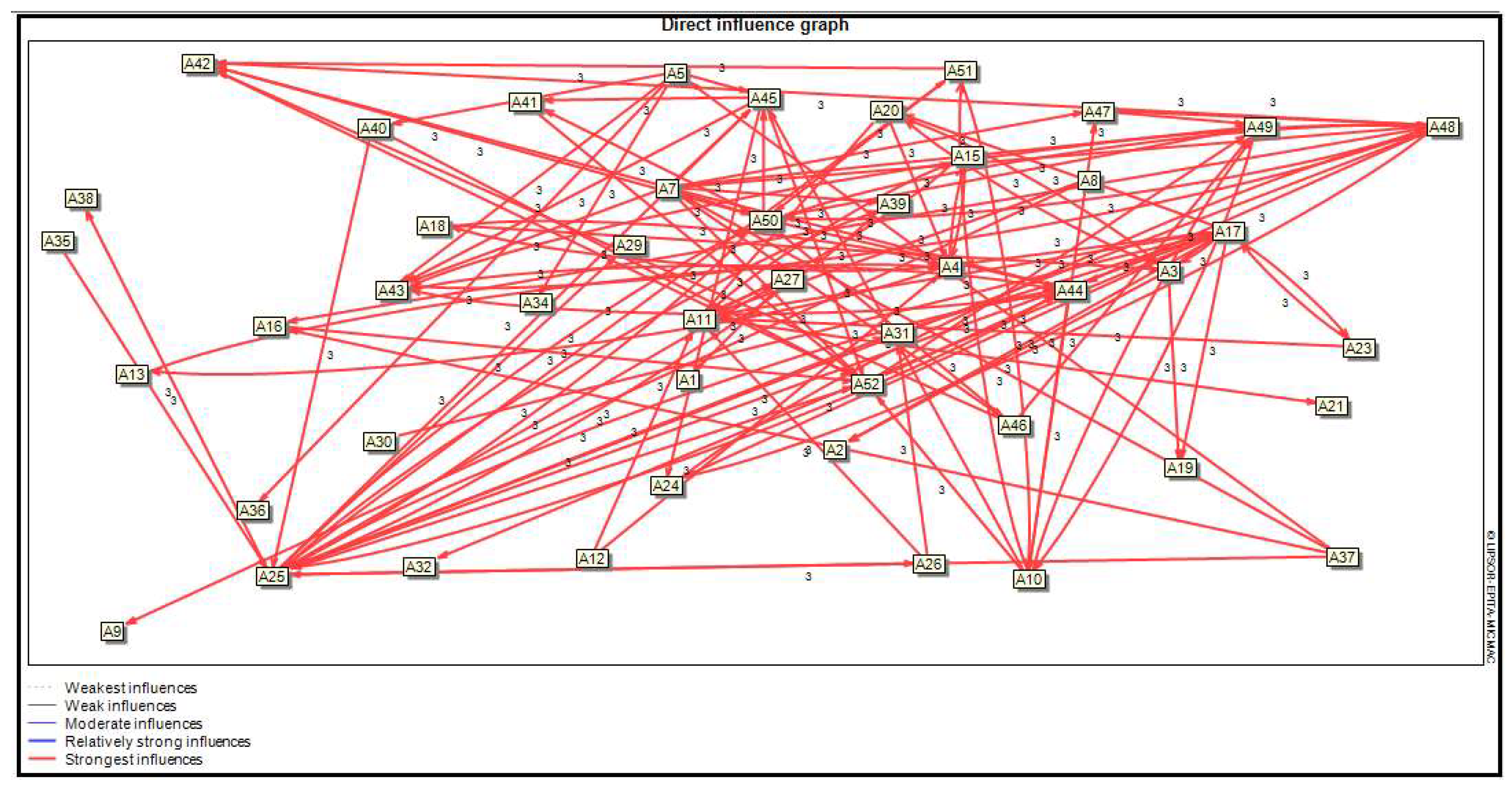
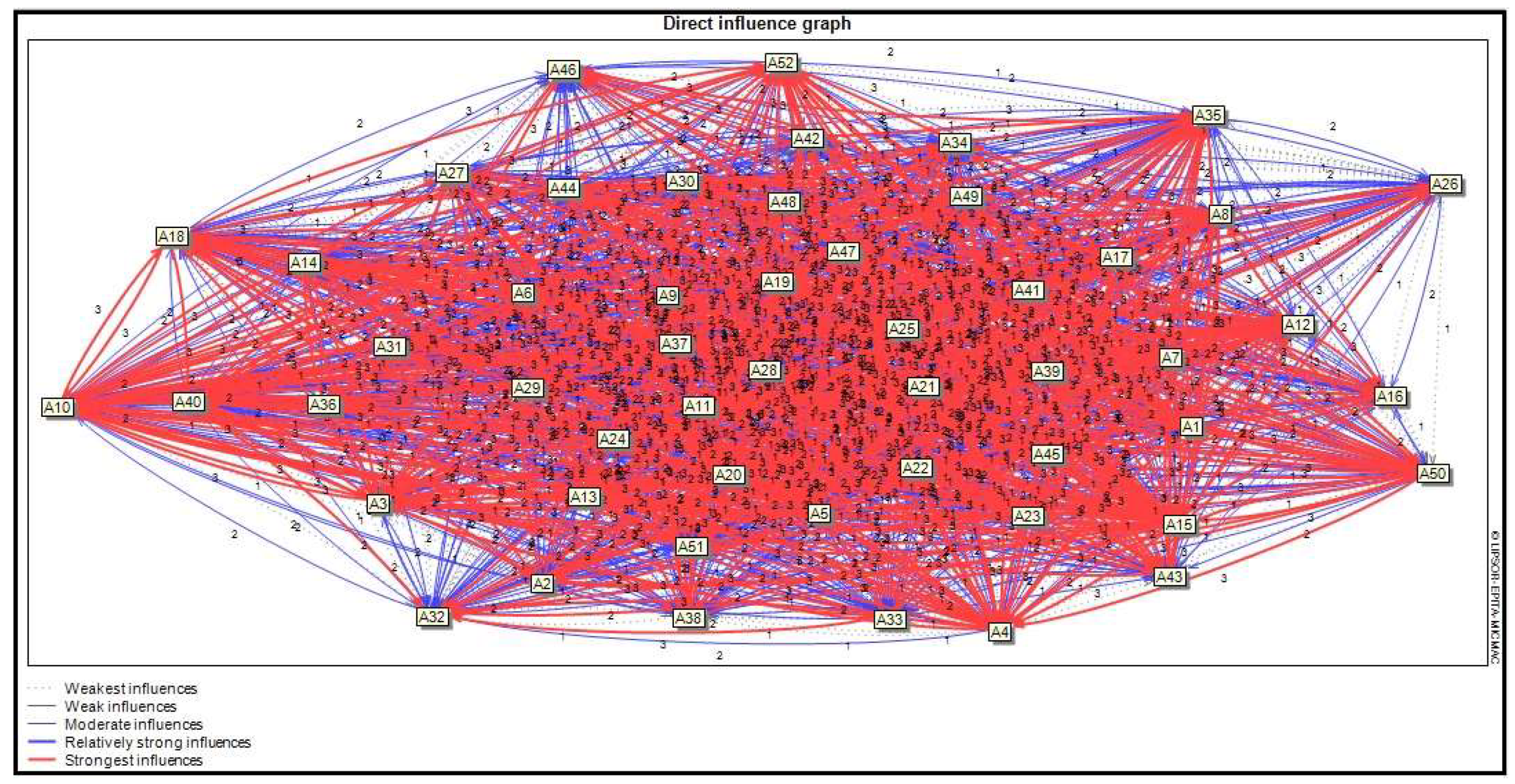
The factors with the highest and lowest direct and indirect impacts on other factors and those with the highest and lowest direct and indirect influences from other factors are shown in Table 5. In direct effects, one factor directly influences another without any intermediary. For example, an increase in the price of gasoline directly affects transportation costs. In indirect effects, one factor influences another through an intermediary. For example, a decrease in interest rates can indirectly affect investment levels and, consequently, GDP. Dependence between factors can also be direct or indirect. Direct dependence refers to a direct and reciprocal relationship between two factors. For instance, demand and supply in a market are directly interdependent. Indirect dependence occurs when one factor is influenced by another factor that is itself influenced by a third factor. For example, rainfall can affect agricultural production, which in turn can affect food prices.
As observed, the factor "Creating campaigns and organizing festivals, events, meetings, conferences, and trade shows (A5)" has the highest direct impact. In contrast, "Proximity/accessibility to accommodation (A11)" has the lowest direct effects on other factors. Similarly, the factor "Creating campaigns and organizing festivals, events, meetings, conferences, and trade shows (A5)" also exhibits the highest indirect impact, while "Proximity/accessibility to accommodation (A11)" has the lowest indirect implications. Additionally, the factor "High capacity in agriculture and animal husbandry (A15)" shows the highest direct influence from other factors. In contrast, the factor "Human risks such as the COVID-19 pandemic (A52)" exhibits the lowest direct influence. The factor "High capacity in agriculture and animal husbandry (A15)" also demonstrates the highest indirect influence, whereas "Human risks such as the COVID-19 pandemic (A52)" has the lowest indirect influence. Figures related to the direct and indirect influence of factors on each other are provided in the appendix section.
3.1.2. Factors Determining or Influencing the Development of Food Tourism in Rural Areas of Iran
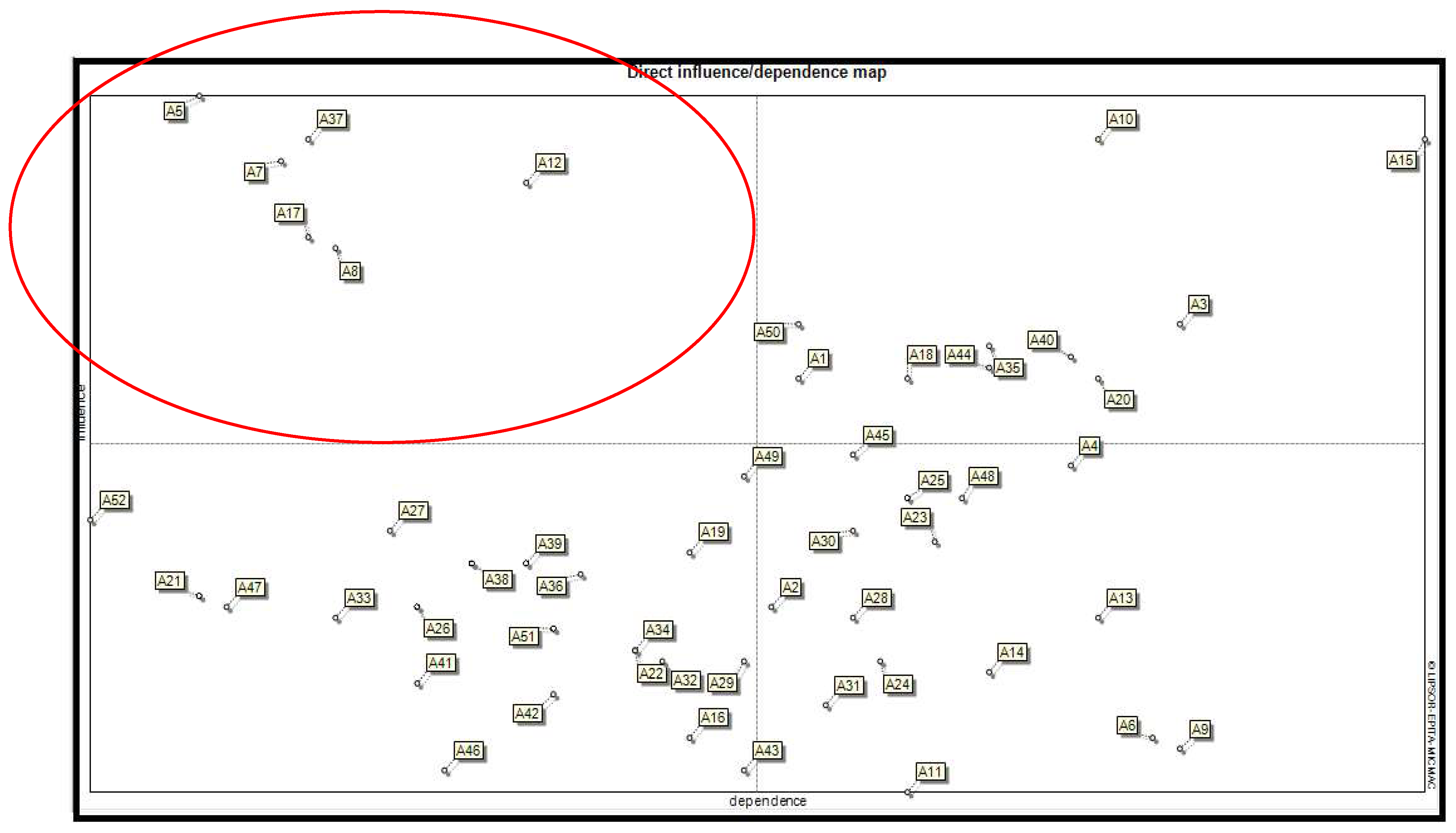
Figure 2 illustrates the dispersion status of factors influencing food tourism development in rural areas of Iran, indicating system stability as most variables conform to an "L" distribution. In Micmac software, the dispersion of variables in the diagram defines system stability or instability. In stable systems, variable dispersion typically forms an "L" shape, where some variables exhibit high influence while others show high dependence.
Variables in stable systems generally fall into three categories: highly influential variables (key factors), independent variables, and system output variables (outcome variables). Each variable’s position is clearly defined, and its role is explicitly presented. Conversely, unstable systems present a more complex pattern where variables scatter around the diagonal axis of the scatter plot, often indicating an intermittent state of influence and dependence, making the assessment and identification of key factors challenging.
However, solutions have been proposed even for such systems to guide the selection and identification of key factors [97]. Factors influencing the development of food tourism in rural areas of Iran generally have both direct and indirect impacts, which can be categorized into five groups based on their impact type: determinant or influential variables, bidirectional variables (risk variables and target variables), influenced variables, independent variables, and regulatory variables.
Figure 2 depicts the most influential factors affecting food tourism development in rural areas of Iran. These factors are more impactful and less susceptible to external influences. They are positioned in the northwest quadrant of the diagram. Out of a total of 52 influential factors in food tourism, six factors fall into this category. These factors include: Creating campaigns and organizing festivals, events, meetings, conferences, and trade shows (A5); Prices (for food, drinks, courses, etc.) (A7); The quality of food (A8); The quality of infrastructure (A12); Government support and assistance (A17); Investment (A37).
The findings from the identification of key drivers influencing the development of food tourism in rural areas of Iran were presented to experts and subsequently validated through follow-up interviews. The findings were thus validated through expert consensus, further strengthening their validity.
Figure 2.
Determinant factors influencing food tourism development in rural areas of Iran.
3.1.3. Dual-Purpose Factors (Risk Factors and Target Variables) of Food Tourism Development in Rural Areas of Iran
These factors simultaneously act as highly influential and highly susceptible. Figure (3) illustrates dual-purpose factors of food tourism development in rural areas of Iran. Their nature is mixed with instability, as any action or change affects and triggers changes in other factors. Out of 52 influential factors in food tourism development, 10 factors fall into this category. These factors are located in the northeast region of figure (3). They possess significant potential to become key players in food tourism development. Risk and target factors in food tourism development include: Innovation and creativity in food and destination (A50); Understanding the motivations and needs of tourists (A1); Diversity of food (A18); Development and promotion of street food (A44); Accurate capacity assessment of assets (A35); Adding a dreamy aspect to festivals (A40); Traditional restaurants (A20); The decoration of food, its colour, and presentation (A3); Industrial reconstruction (A10) and High capacity in agriculture and animal husbandry (A15).
3.1.4. Influential Factors on Food Tourism Development in Rural Areas of Iran
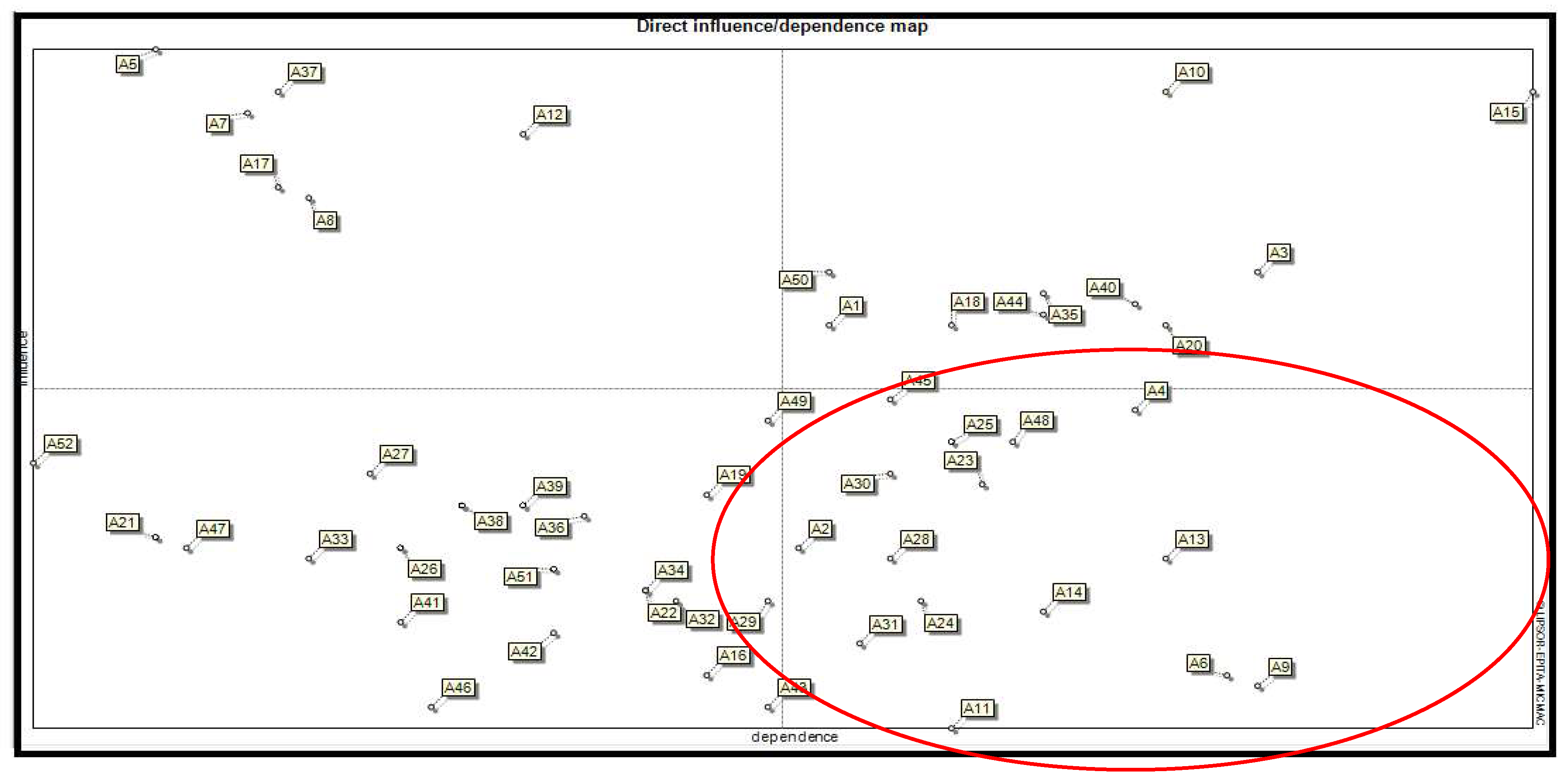
These factors are visible in figure (4). Their nature involves low impact but high susceptibility. Out of 52 factors influencing food tourism development in rural areas of Iran, fifteen factors fall into this category. These factors include:
Food tourism managers(A49); The authenticity of food (A6); Local lifestyle (A13); National food holidays calendar (A14); Proximity/accessibility to accommodation (A11); Values (health value, emotional value, experience and consumption value of local food, perceived value for repeat visit intention, valuing local people) (A24); Advertising, mainly word-of-mouth and social media advertising (A31); Attention to tourists food interests (A28); Reduction in tax rates (A2); The internet and web (Information and Communication Technology) in the tourism sector (A30); Awareness (local and general) of tourists’ preferences and food tourism (A23); Cooking motivation (A25); Providing quantitative and qualitative information about food (A48); Increasing competition among companies involved in food production (A4); Food safety (A45).
Figure 4.
dispersion of influential factors (Outcome) on food tourism development in rural areas of Iran.
Figure 4.
dispersion of influential factors (Outcome) on food tourism development in rural areas of Iran.
3.1.5. Independent or Exceptional Factors in Food Tourism Development in Rural Areas of Iran
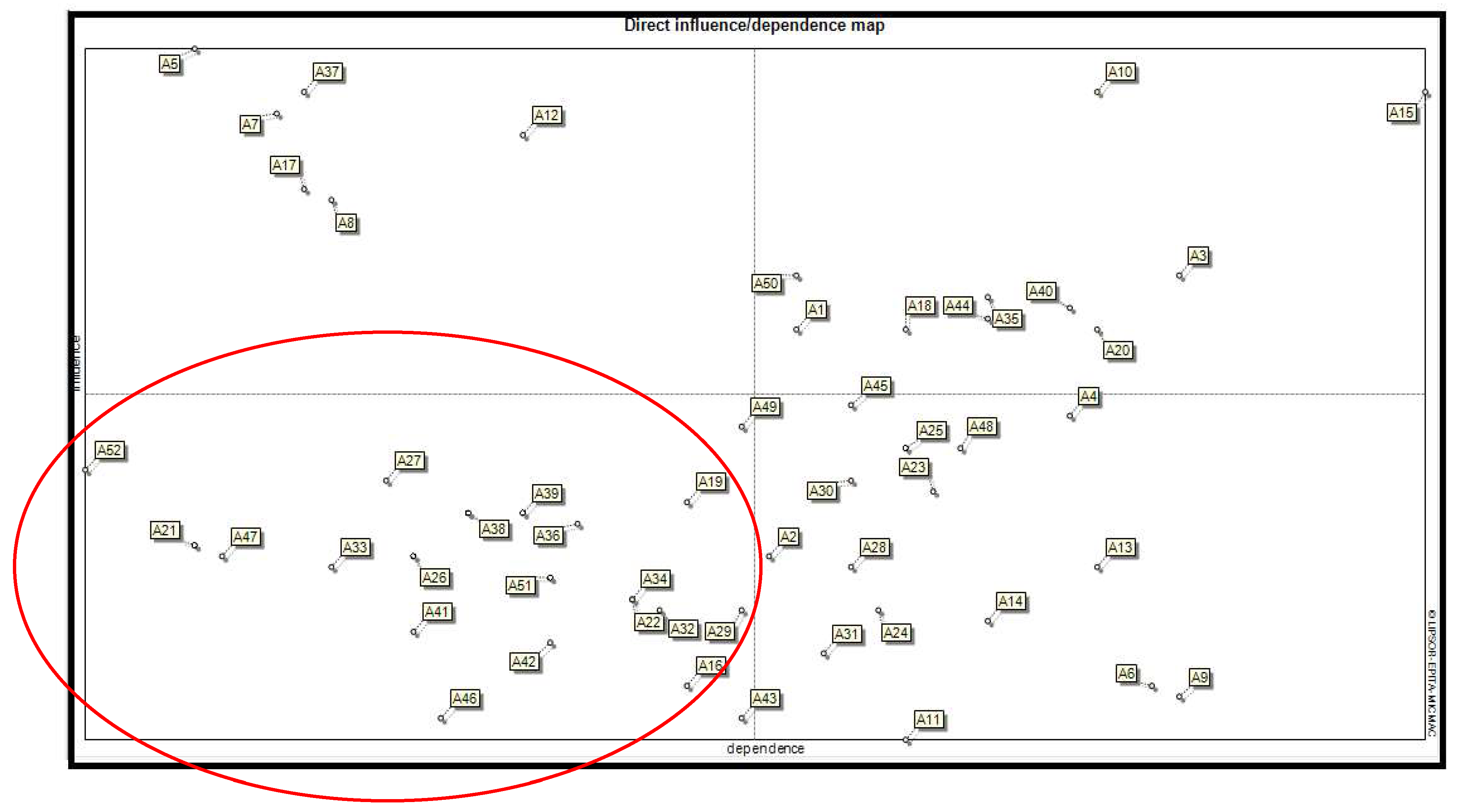
Figure 5 illustrates the independent factors influencing food tourism development in rural areas of Iran. These factors have low influence and susceptibility. Out of a total of 52 factors, 20 factors fall into this group, including the following factors:
Travel information provision (A43); Formation of tourism companies (A16); Satisfaction and contentment for repeat visit intention (A29); The quality, shape, and colour of food containers (A32); Improving communication between tourists and the host community (A22); Marketing (A34); Respect for tourists’ dietary regime laws in tourist destinations (A19); Attention to the authenticity of the tourism destination. (A46); The fluid identity of the festival and its food (A42); Observance of health protocols (A51); Continuous and comprehensive evaluation of food tourism destinations (A36); Enhancing more interaction between tourists and local communities. (A39); Collaboration and stakeholder participation (A38); Adaptation and coordination of tourism products (A26); Elevating the level of motivation for well-being and exclusivity in the local community (A41); Personnel (attire and interaction manner, ensuring safety by them) (A33); Coordination of laws and policies (A27); Establishment of food museums (A47); The perceived quality by tourists (A21); Human risks such as the COVID-19 pandemic and. (A52). These factors have had the most negligible impact on the growth of food tourism in Iran’s rural areas since they neither help nor impede the development of a critical component of this industry.
Figure 5.
Dispersion of independent or outlier factors in food tourism development in rural areas of Iran.
Figure 5.
Dispersion of independent or outlier factors in food tourism development in rural areas of Iran.
3.1.6. Regulatory Factors in Food Tourism Development in Rural Areas of Iran
Figure 6 illustrates the regulatory factors influencing food tourism development in rural areas of Iran. These factors are positioned centrally in the diagram. They primarily operate in a governance capacity and sometimes serve as secondary levers. Depending on government policies regarding development goals, these factors can evolve into influential, determinant, or target and risk factors [97]. Factor” Designing the ambient decoration of the destination (considering ethnicities, furniture, artworks, environmental embellishments, lighting quality, entertainment such as music, shows, etc.) (A9)” in food tourism development, this factor can be considered a governance variable.
3.2. Scenario development for food tourism in rural areas of Iran
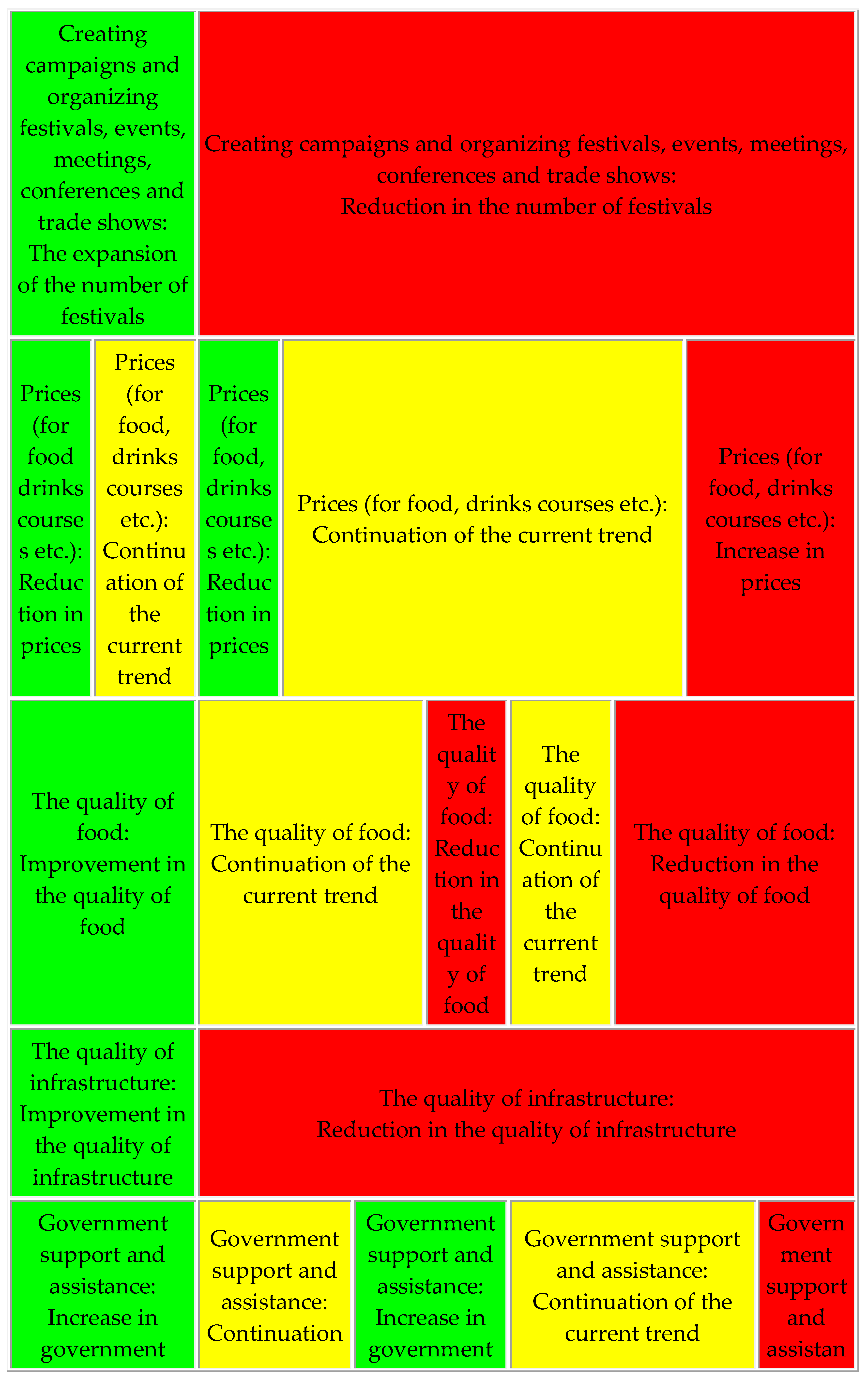
After identifying the key drivers influencing food tourism development in rural areas of Iran, scenario development for food tourism in these regions was explored. Each key driver of food development will lead to three different futures (desired scenario, continuation of current trends, and crisis scenario), forming the basis of the scenarios in this study (Table 6) .
Scenario Analysis for Food Tourism Development in Rural Areas of Iran
The six key drivers influencing food tourism development in rural areas of Iran, each in three possible states, were combined to create 18 potential scenarios for the future of food tourism development in these areas. These scenarios were presented to experts to assess the impact of each of the 18 possible states on each other. This assessment was expressed on a scale of 3+ to 3-. For example, if state A1 of key driver A occurs in the future, what impact will it have on the occurrence or non-occurrence of state B1 of key driver B? The findings of these assessments indicate several strong to weak scenarios, as shown in Table 7. Strong scenarios are those that are more likely to occur in the future, while weak scenarios are those that are less likely to occur.
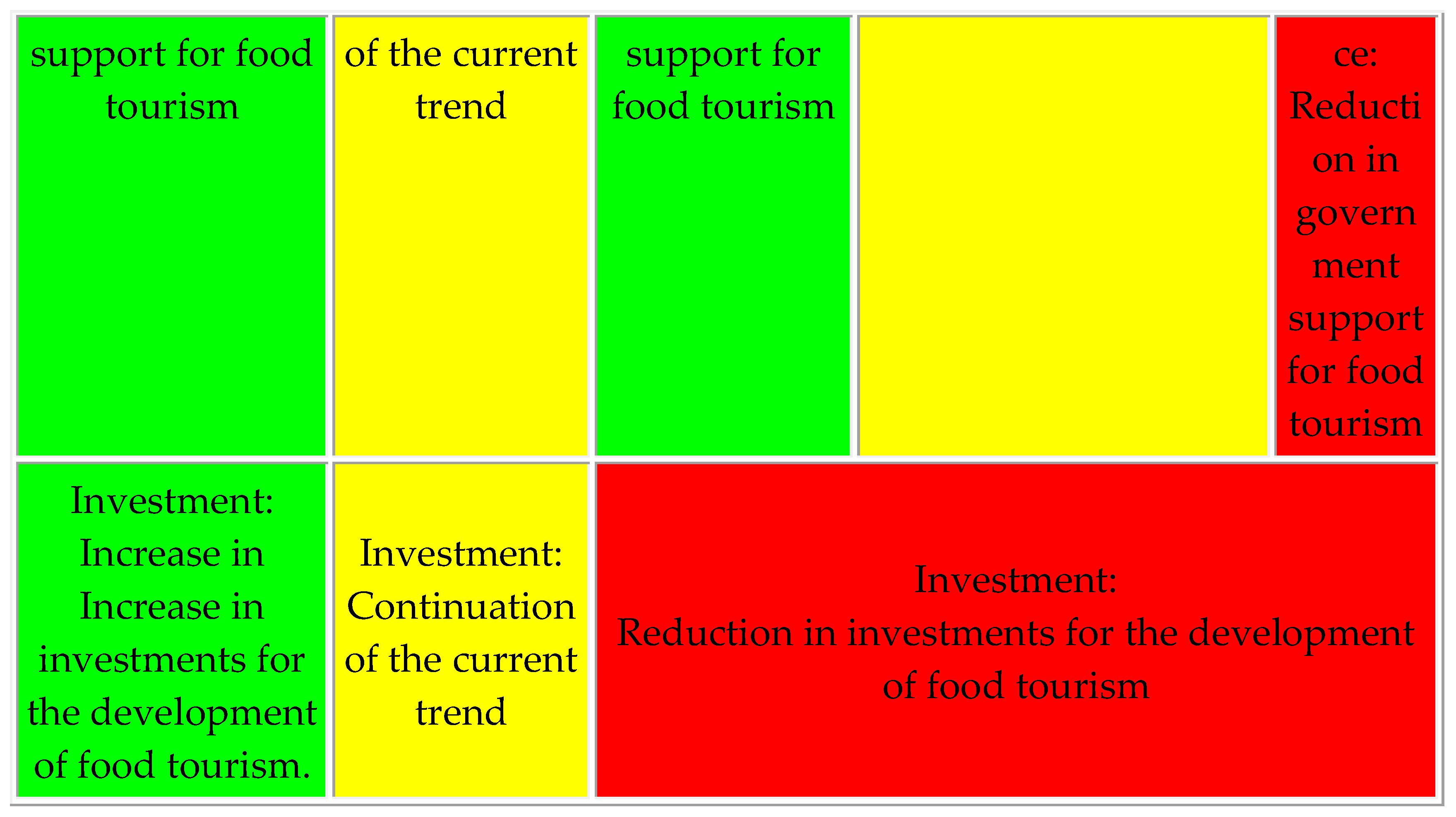
The findings indicate 196 scenarios with weak probability (under the title of possible scenarios) in Table 7, which is unscientific and impossible to deal with such a volume of scenarios. What seems logical and is between limited strong (probable) scenarios and wide weak (possible) scenarios is the scenarios with compatibility 1, which is an extension of the range of strong scenarios by one unit towards weak scenarios [97]. Accordingly, 10 logical scenarios have been calculated for planning and policy-making for food tourism development in rural areas of Iran, which naturally includes the 4 strong scenarios as well Figure (7).
Selected and possible scenarios for food tourism development in rural areas of Iran
In general, the 10 scenarios that were obtained can be classified into four groups based on their characteristics, as follows. These groups represent the general framework of the prevailing conditions for food tourism development:
Group 1: Scenarios for Food Tourism Development in Rural Areas of Iran under Very Favorable Conditions.
This group includes two scenarios and represents the most favourable possible conditions for food tourism development in rural areas of Iran. As shown in Figure 7, all states of the factors are in the best possible state. The characteristics of this scenario are provided in Table 8.
Group 2: Scenarios of food tourism development in rural areas of Iran with static trends, current conditions, relative improvement in some factors, and crisis conditions in others. This group comprises six scenarios. In this group, some factors will be in desirable conditions, some will continue their current trends, and some factors will experience crisis conditions. See Table 9.
Group Three: Critical Scenarios of Food Tourism Development in Rural Areas of Iran
Two scenarios (9 and 10) have been identified in this group. As depicted in Figure 7, scenarios within this group are in a state of complete crisis, showing no signs of efforts to enhance or maintain the current situation (except for Government support and assistance: Continuation of the current trend). A severe and comprehensive crisis encompasses all factors. The key characteristics of these scenarios are presented in Table 10.

Table 10.
Scenarios of the third group from the total credible scenarios of food tourism development in rural areas of Iran.
Table 10.
Scenarios of the third group from the total credible scenarios of food tourism development in rural areas of Iran.
| Group | Scenario number | Consistency value | Icons. Descript. | Total impact score | Characteristics |
| 3 |
Scenario No. 9 | -1 | 1 | 15 | In this group, Scenario 9 and Scenario 10 are positioned in a state of complete crisis, as illustrated in Figure 5-5. These scenarios depict a full-scale crisis where there is no evidence of efforts to improve or even maintain the current situation, except for Government support and assistance, which continues along its current trajectory. The critical features of these scenarios, detailed in Table 10, encompass a severe reduction or deterioration in all key factors: a decrease in the number of festivals, an increase in prices, a decline in food quality, a degradation of infrastructure quality, reduced government support for food tourism, and diminished investments in the development of food tourism . |
| Scenario No. 10 | 0 | 0 | 20 |
Figure 7.
Scenarios for Food Tourism Development in Rural Areas of Iran.

4. Discussion
Economic, social, cultural, and managerial factors influence food tourism development. In the present study, six key drivers have been identified among 52 primary influential factors on food tourism development in rural areas of Iran. These factors include:
Creating campaigns and organizing festivals, events, meetings, conferences, and trade shows: These activities play a crucial role in food tourism development by enhancing public awareness and effective promotion of food destinations. Festivals and food events introduce the food attractions of a region, attracting both media attention and tourists, thereby increasing domestic and international tourist numbers. This increase in tourist numbers can strengthen the local economy, create job opportunities for residents, and benefit local businesses such as restaurants and food suppliers due to increased demand. In addition, these events contribute to cultural exchange and showcase cultural diversity across different regions. Conferences and food-related meetings can foster international relations and new collaborations between regions and countries. Furthermore, these events provide opportunities for knowledge exchange and experiences among food tourism professionals, which can lead to the establishment of standards, best practices, and innovation in the industry. Thus, food campaigns and events play a pivotal role in developing and advancing food tourism. Studies [23,25,81], [82,93] have confirmed the impact of [creating campaigns and organizing festivals, events, meetings, conferences, and trade shows] on the development of food tourism.
Prices (for food, drinks, courses, etc.): Prices play a crucial role in developing the food tourism industry. Firstly, they affect customer satisfaction, as tourists seek memorable and satisfying experiences at reasonable prices. Increasing access to various food and beverage items at reasonable prices can increase the number of tourists and help convert them into repeat customers. Secondly, prices are crucial for competitiveness and attracting visitors. In a competitive market, offering services at attractive prices can be a significant competitive advantage. Restaurants, hotels, and other service units can attract more tourists and increase their income by employing appropriate pricing strategies. Moreover, reasonable prices can contribute to the development of the local industry, as these food items and services often utilize local products and resources, promoting the local economy and supporting local producers. Overall, prices in food tourism contribute to customer satisfaction and aid in the sustainable development and competitiveness of this industry. Studies [80,88] have emphasized the impact of price on the development of food tourism.
The quality of food: Food quality is one of the fundamental and vital factors in the development of food tourism. Food quality encompasses not only food’s taste and visual appeal but also includes cooking processes, use of high-quality ingredients, local sourcing, and hygiene. High-quality foods usually create a unique and exceptional experience for tourists due to their special properties such as local ingredients and hygienic processing, and can help attract more tourists and increase demand for local services.
Furthermore, food quality can contribute to enhancing the reputation and international recognition of a tourist destination. Offering high-quality food can act as an attraction factor for foreign tourists and generate positive feedback, leading to positive promotion in international markets. Additionally, the direct impact of food quality on tourists’ experiences and their satisfaction is crucial; a positive experience can help convert tourists into repeat customers and bring them back to the region. Overall, food quality plays a key role in the development and sustainability of food tourism and can contribute to increasing local income, added value, and destination reputation. Study [94] has highlighted the impact of food quality on the development of food tourism.
The quality of infrastructure is a crucial factor in tourism development and attracting tourists. This term clearly refers to the facilities and infrastructure such as hotels, restaurants, roads, airports, recreational facilities, tourist information, etc., that tourists use for their accommodation and leisure. Quality infrastructure can impact tourists’ experiences in several ways. Firstly, high-quality infrastructure enhances tourists’ accommodation experience and generates positive feedback from them, which can lead to positive promotion for the tourist destination. Secondly, adequate infrastructure quality can increase tourists’ trust in the destination and enhance their sense of security and comfort. This can contribute to sustainable tourism development and increase the number of tourists, thereby boosting local income.
In general, improving infrastructure quality to enhance the tourism industry and increase destination attractiveness is fundamental. It can help in sustainable development and added value for the local economy. Studies [57,96] have confirmed the impact of [the quality of infrastructure] on the development of food tourism.
Government support and assistance can play a very important role in tourism development. Governments can assist the tourism industry through various actions and policies, including:
Firstly, financial facilities and support: Governments can help tourism businesses by providing financial facilities with favorable conditions. These facilities may include long-term repayment loans, low-interest financial assistance, or collaboration in major investments in tourism infrastructure.
Secondly, advertising and marketing: Governments can provide financial support for advertising and marketing tourist destinations, promoting this industry in domestic and international markets. These actions can increase awareness and reputation of the tourist destination and ultimately help attract more tourists.
Thirdly, infrastructure development: Governments can invest in the development and improvement of tourism infrastructure, including the construction and renovation of roads, airports, recreational and accommodation facilities, and the creating public amenities such as parks and museums. These actions can help improve tourists’ experiences and attract them to the destination.
Overall, government support and assistance can contribute to sustainable development and growth of the tourism industry, leading to increased national income and suitable employment in tourism regions. Study [57] has confirmed the impact of government support and assistance on the development of food tourism.
Investment: Investment in the tourism industry can play a crucial role in its development and growth. Investments can be made directly or indirectly and include:
Firstly, construction and improvement of infrastructure: Investing in the construction and renovation of tourism infrastructure such as hotels, restaurants, shopping centers, recreational facilities, tourist routes, airports, and public transportation can help improve tourists’ experiences and attract them to various areas.
Secondly, development of tourism services: Investment in the development and improvement of tourism services such as local and international tours, sports and adventure activities, cultural and educational activities, shopping centers, and tourism-related services can enhance the diversity of tourists’ experiences and increase local income.
Investments can also lead to improved employment conditions in tourist areas and contribute to regional economic development. Such investments can stimulate local businesses and entrepreneurship, providing a conducive environment for the growth and sustainability of the tourism industry.
Overall, investment in the tourism industry can contribute to improving the value chain of this industry, increasing jobs, and enhancing local economies, acting as a significant driver for sustainable tourism development and prosperity. Study [11] has confirmed the impact of investment on the development of food tourism.
In the second section, based on the future prospects of these key drivers, scenarios for the development of food tourism in rural areas of Iran were discussed and categorized into three groups. In the first scenario, all factors will be in favourable conditions, and in scenario number ten, all factors will be in crisis conditions. Two factors, ’Creating campaigns and organizing festivals, events, meetings, conferences, and trade shows’ and ’The quality of infrastructure,’ will jointly be in all scenarios of the second and third groups, being in the most critical state possible, requiring more attention from planners and policymakers to these two factors.
5. Conclusions
Tourism is one of the most crucial economic sectors across different nations. Food tourism emerges prominently within this domain, driven by numerous influential factors. This study aims to scrutinize the state of food tourism in rural regions of Iran using a scenario-based approach. Findings underscore the pivotal roles played by six key factors in fostering the development of the food tourism sector. These factors encompass organizing campaigns and events such as festivals, meetings, conferences, and trade shows; determining prices for food, beverages, and courses; ensuring the quality of food offerings; improving infrastructure quality; governmental backing and support; and investments.
Furthermore, the study presents scenarios categorizing the future prospects of each key driver and their impacts on other influential factors. In the first group of scenarios (focusing on highly favorable conditions for food tourism development), the environment is envisioned as one where all critical factors operate optimally, facilitating development without significant setbacks. Notably, in this scenario group, all factors except one are projected to be in their most advantageous states. These include expanded event organization, reduced price levels, enhanced food quality, upgraded infrastructure, increased governmental support for food tourism, and boosted investments in the sector. Conversely, under scenario number two, the trend in pricing remains consistent with current conditions.
In the second group of scenarios for food tourism development (scenarios characterized by a stable trend, current state, and moderate improvements in some factors alongside critical conditions in others), conditions may remain unchanged or undergo minimal changes in key factors, thereby restricting development to a lesser extent. The primary features of these scenarios include a reduction in the number of festivals and a decrease in the quality of infrastructure, which are common across all six scenarios under crisis conditions.
Scenario three focuses on the factor of prices (for food, drinks, courses, etc.) with a reduction in prices, while scenarios five and six highlight governmental support and assistance with an increase in support for food tourism, both maintaining favourable statuses. Meanwhile, other factors persist in their current state or under critical conditions across all scenarios.
In the third group of scenarios (scenarios depicting critical conditions for food tourism development), significant problems and obstacles may jeopardize or even halt food tourism development. The primary characteristic of these scenarios includes: All factors, except for government support and assistance, are in critical conditions. In scenario number 9, they face a crisis situation. The critical factors in these two scenarios are:
Creating campaigns and organizing festivals, events, meetings, conferences, and trade shows: Reduction in the number of festivals.
Prices (for food, drinks, courses, etc.): Increase in prices.
The quality of food: Reduction in the quality of food.
The quality of infrastructure: Reduction in the quality of infrastructure.
Government support and assistance: Reduction in government support for food tourism.
Investment: Reduction in investments for the development of food tourism.
These findings can assist in better resource management, prioritization of strategies, and policy decisions to ensure the optimal development of food tourism in rural areas of Iran. The research results indicate that achieving the desired scenario for food tourism development in rural Iran requires attention to key drivers; otherwise, developmental opportunities may be lost.
Research Limitations:
Limited access to expert professionals in food tourism.
The highly specialized nature of questionnaires designed to identify key drivers and develop scenarios required extensive training for respondents.
The high cost associated with conducting future-oriented studies.
The time-consuming nature of the research process, involving all stages from identifying key drivers to conducting data analysis.
Based on the results obtained, the following recommendations are proposed to future researchers:
- Conduct studies on the impact of food tourism development on other tourism sectors.
- Identify the competitiveness capacities of food tourism among the provinces of Iran.
- Assess the position of Iranian provinces in terms of food tourism development capacities using MCDM techniques.
- Investigate the obstacles and constraints of food tourism development in rural areas of Iran.
- Identify strategies to attract private and public sector participation in investments for food tourism development.
Appendix A
Direct influence (5%)
Direct influence (100%)
Indirect influence (5%)
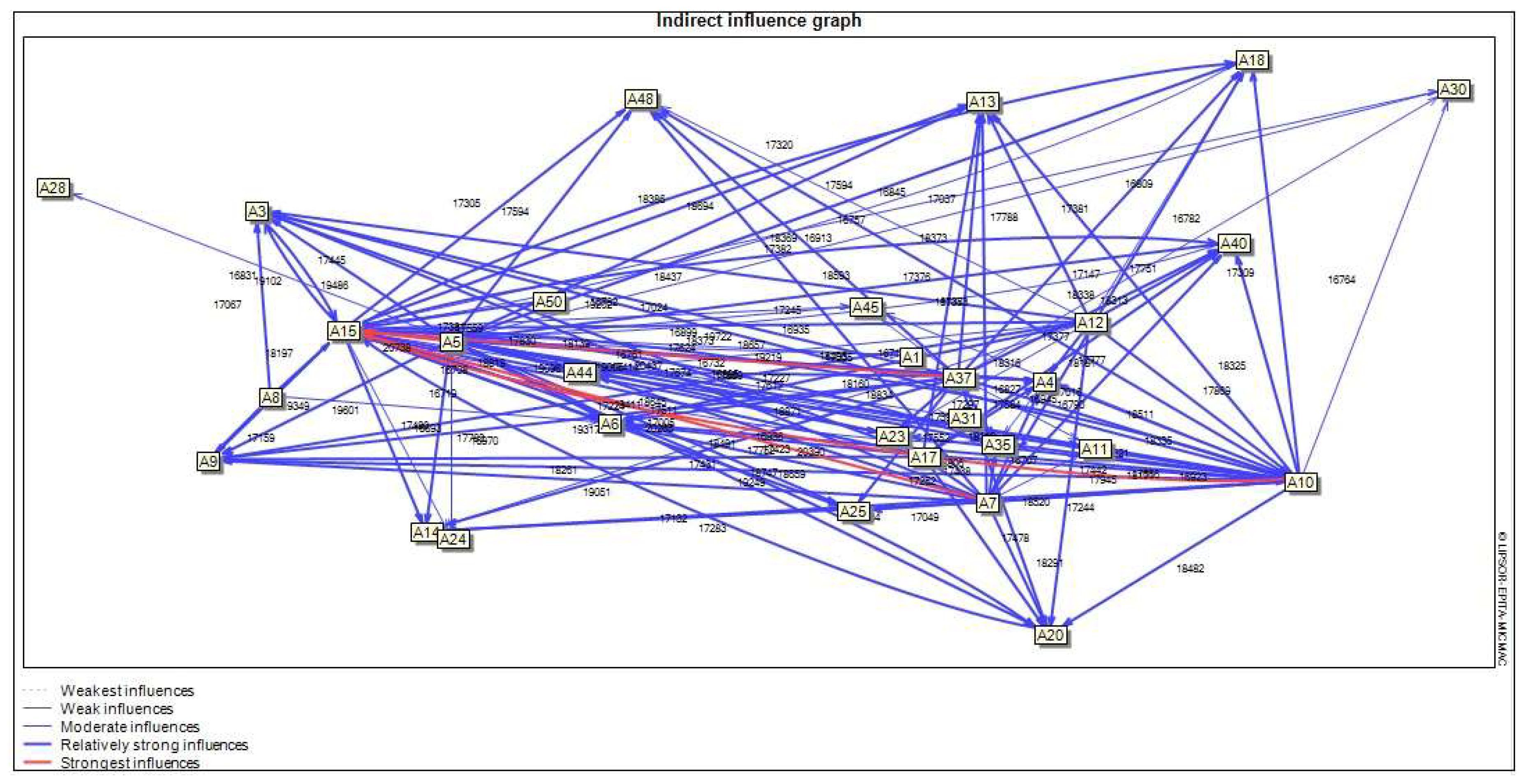
Indirect influence (100%)
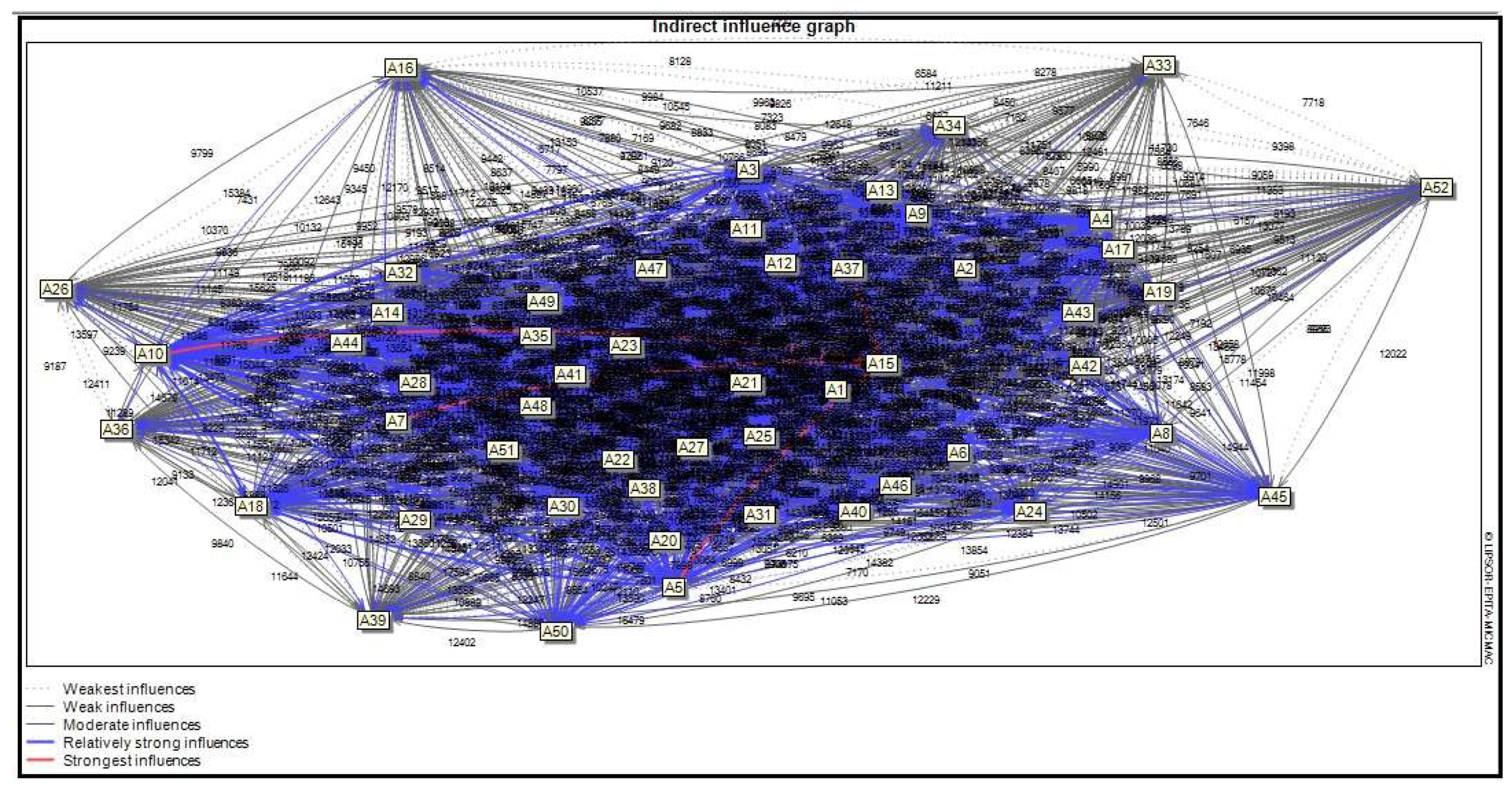
References
- M. Koyuncu, E. Yörük, and B. Gürel, “Does violent conflict affect the distribution of social welfare? Evidence from India’s Mahatma Gandhi National Rural Employment Guarantee Act,” Soc Policy Adm, vol. 57, no. 5, pp. 656–678, Sep. 2023. [CrossRef]
- R. Paping and J. Pawlowski, “Success or Failure in the City? Social Mobility and Rural-Urban Migration in Nineteenth- and Early-Twentieth-Century Groningen, the Netherlands,” Hist Life Course Stud, vol. 6, pp. 69–94, Feb. 2018. [CrossRef]
- P. Rai, “The labor of social change: Seasonal labor migration and social change in rural western India,” Geoforum, vol. 92, pp. 171–180, Jun. 2018. [CrossRef]
- A. Bernzen, J. C. Jenkins, and B. Braun, “Climate Change-Induced Migration in Coastal Bangladesh? A Critical Assessment of Migration Drivers in Rural Households under Economic and Environmental Stress,” Geosciences (Basel), vol. 9, no. 1, p. 51, Jan. 2019. [CrossRef]
- H. Hofstede, K. Salemink, and T. Haartsen, “The appreciation of rural areas and their contribution to young adults’ staying expectations,” J Rural Stud, vol. 95, pp. 148–159, Oct. 2022. [CrossRef]
- M. Kaag, G. Baltissen, G. Steel, and A. Lodder, “Migration, Youth, and Land in West Africa: Making the Connections Work for Inclusive Development,” Land (Basel), vol. 8, no. 4, p. 60, Apr. 2019. [CrossRef]
- M. Sapena, M. Gamperl, M. Kühnl, C. Garcia-Londoño, J. Singer, and H. Taubenböck, “Cost estimation for the monitoring instrumentation of landslide early warning systems,” Natural Hazards and Earth System Sciences, vol. 23, no. 12, pp. 3913–3930, Dec. 2023. [CrossRef]
- T. Zeng et al., “Quantitative risk assessment of the Shilongmen reservoir landslide in the Three Gorges area of China,” Bulletin of Engineering Geology and the Environment, vol. 82, no. 6, p. 214, Jun. 2023. [CrossRef]
- R. Wolniak, S. Saniuk, S. Grabowska, and B. Gajdzik, “Identification of Energy Efficiency Trends in the Context of the Development of Industry 4.0 Using the Polish Steel Sector as an Example,” Energies (Basel), vol. 13, no. 11, p. 2867, Jun. 2020. [CrossRef]
- P. Pakawanich, A. Udomsakdigool, and C. Khompatraporn, “Crop production scheduling for revenue inequality reduction among smallholder farmers in an agricultural cooperative,” Journal of the Operational Research Society, vol. 73, no. 12, pp. 2614–2625, Dec. 2022. [CrossRef]
- I. AdrianaTisca, N. Istrat, C. D. Dumitrescu, and G. Cornu, “Management of Sustainable Development in Ecotourism. Case Study Romania,” Procedia Economics and Finance, vol. 39, pp. 427–432, 2016. [CrossRef]
- A. Z. A. Abdurahman, J. K. Ali, L. Y. B. Khedif, Z. Bohari, J. A. Ahmad, and S. A. Kibat, “Ecotourism Product Attributes and Tourist Attractions: UiTM Undergraduate Studies,” Procedia Soc Behav Sci, vol. 224, pp. 360–367, Jun. 2016. [CrossRef]
- P. Dang, L. Ren, and J. Li, “Livelihood Resilience or Policy Attraction? Factors Determining Households’ Willingness to Participate in Rural Tourism in Western China,” Int J Environ Res Public Health, vol. 19, no. 12, p. 7224, Jun. 2022. [CrossRef]
- P. A. Quezada-Sarmiento, J. del C. Macas-Romero, C. Roman, and J. C. Martin, “A body of knowledge representation model of ecotourism products in southeastern Ecuador,” Heliyon, vol. 4, no. 12, p. e01063, Dec. 2018. [CrossRef]
- S. K. Mallick, S. Rudra, and R. Samanta, “Sustainable ecotourism development using SWOT and QSPM approach: A study on Rameswaram, Tamil Nadu,” International Journal of Geoheritage and Parks, vol. 8, no. 3, pp. 185–193, Sep. 2020. [CrossRef]
- C. Huang, F. Lin, D. Chu, L. Wang, J. Liao, and J. Wu, “Spatiotemporal Evolution and Trend Prediction of Tourism Economic Vulnerability in China’s Major Tourist Cities,” ISPRS Int J Geoinf, vol. 10, no. 10, p. 644, Sep. 2021. [CrossRef]
- I. Yeoman and U. McMahon-Beatte, “The future of food tourism,” Journal of Tourism Futures, vol. 2, no. 1, pp. 95–98, Mar. 2016. [CrossRef]
- C. M. Hall, “Chapter 9. Rural Wine and Food Tourism Cluster and Network Development,” in Rural Tourism and Sustainable Business, Multilingual Matters, 2005, pp. 149–164. [CrossRef]
- M. Šmid Hribar, N. Razpotnik Visković, and D. Bole, “Models of stakeholder collaboration in food tourism experiences,” Acta geographica Slovenica, vol. 61, no. 1, Jul. 2021. [CrossRef]
- M. Mariani and B. Okumus, “Features, drivers, and outcomes of food tourism,” British Food Journal, vol. 124, no. 2, pp. 401–405, Jan. 2022. [CrossRef]
- J. Fountain, “The future of food tourism in a post-COVID-19 world: insights from New Zealand,” Journal of Tourism Futures, vol. 8, no. 2, pp. 220–233, Aug. 2022. [CrossRef]
- M. Dougherty and G. Green, “Local Food Tourism Networks and Word of Mouth,” J Ext, vol. 49, no. 2, Apr. 2011. [CrossRef]
- T. Jung, E. M. Ineson, M. Kim, and M. H. Yap, “Influence of festival attribute qualities on Slow Food tourists’ experience, satisfaction level and revisit intention,” Journal of Vacation Marketing, vol. 21, no. 3, pp. 277–288, Jul. 2015. [CrossRef]
- I. Yeoman, U. McMahon-Beattie, K. Findlay, S. Goh, S. Tieng, and S. Nhem, “Future Proofing the Success of Food Festivals Through Determining the Drivers of Change: A Case Study of Wellington on a Plate,” Tourism Analysis, vol. 26, no. 2, pp. 167–193, Apr. 2021. [CrossRef]
- I. Yeoman and U. McMahon-Beatte, “The future of food tourism,” Journal of Tourism Futures, vol. 2, no. 1, pp. 95–98, Mar. 2016. [CrossRef]
- J. Lin et al., “Determining food tourism consumption of wild mushrooms in Yunnan Provence, China: A projection-pursuit approach,” Heliyon, vol. 9, no. 3, p. e14638, Mar. 2023. [CrossRef]
- S. Everett, “Production Places or Consumption Spaces? The Place-making Agency of Food Tourism in Ireland and Scotland,” Tourism Geographies, vol. 14, no. 4, pp. 535–554, Nov. 2012. [CrossRef]
- C.-T. (Simon) Tsai and Y.-C. Wang, “Experiential value in branding food tourism,” Journal of Destination Marketing & Management, vol. 6, no. 1, pp. 56–65, Mar. 2017. [CrossRef]
- E. Koc, “Food tourism: A practical marketing guide,” Ann Tour Res, vol. 54, pp. 233–234, Sep. 2015. [CrossRef]
- F. Fusté-Forné and T. Jamal, “Slow food tourism: an ethical microtrend for the Anthropocene,” Journal of Tourism Futures, vol. 6, no. 3, pp. 227–232, Mar. 2020. [CrossRef]
- A. Wondirad, Y. Kebete, and Y. Li, “Culinary tourism as a driver of regional economic development and socio-cultural revitalization: Evidence from Amhara National Regional State, Ethiopia,” Journal of Destination Marketing & Management, vol. 19, p. 100482, Mar. 2021. [CrossRef]
- E. C. Nwokorie, “Food Tourism in Local Economic Development and National Branding in Nigeria,” SSRN Electronic Journal, 2015. [CrossRef]
- A. M. Stalmirska and A. Ali, “Sustainable development of urban food tourism : A cultural globalisation approach,” Tourism and Hospitality Research, Sep. 2023. [CrossRef]
- P. Diawati and H. H. Loupias, “The Negative Impact of Rapid Growth of Culinary Tourism in Bandung City: Implementation of Innovative and Eco- Friendly Model Are Imperative,” in Proceedings of the 2nd International Conference on Tourism, Gastronomy, and Tourist Destination (ICTGTD 2018), Paris, France: Atlantis Press, 2018. [CrossRef]
- M. Yang, J. Qiu, K. Ding, S. Zhang, and W. Fan, “Visitor preferences in rural gastronomic tourism environment and the related design implications,” Heliyon, vol. 10, no. 3, p. e25072, Feb. 2024. [CrossRef]
- V. Adriana, “Tourism of the Future – An on Going Challenge,” Studies in Business and Economics, vol. 14, no. 3, pp. 258–272, Dec. 2019. [CrossRef]
- I. Boavida-Portugal, J. Rocha, and C. C. Ferreira, “Exploring the impacts of future tourism development on land use/cover changes,” Applied Geography, vol. 77, pp. 82–91, Dec. 2016. [CrossRef]
- K. QUİGLEY, M. CONNOLLY, E. MAHON, and M. MAC CON IOMAİRE, “Insight from Insiders: A Phenomenological Study for Exploring Food Tourism Policy in Ireland 2009-2019,” Advances in Hospitality and Tourism Research (AHTR), vol. 7, no. 2, pp. 188–215, Dec. 2019. [CrossRef]
- A. Rousta and D. Jamshidi, “Food tourism value: Investigating the factors that influence tourists to revisit,” Journal of Vacation Marketing, vol. 26, no. 1, pp. 73–95, Jan. 2020. [CrossRef]
- E. Di-Clemente, J. M. Hernández-Mogollón, and T. López-Guzmán, “Culinary Tourism as An Effective Strategy for a Profitable Cooperation between Agriculture and Tourism,” Soc Sci, vol. 9, no. 3, p. 25, Mar. 2020. [CrossRef]
- M. Soltani, N. Soltani Nejad, F. Taheri Azad, B. Taheri, and M. J. Gannon, “Food consumption experiences: a framework for understanding food tourists’ behavioral intentions,” International Journal of Contemporary Hospitality Management, vol. 33, no. 1, pp. 75–100, Jan. 2021. [CrossRef]
- K. Al Harthy, A. M. Karim, and A. O. Rahid, “Investigating Determinants of Street Food Attributes and Tourist Satisfaction: An Empirical study of Food Tourism Perspective,” International Journal of Academic Research in Accounting, Finance and Management Sciences, vol. 11, no. 2, Jun. 2021. [CrossRef]
- S. (Sam) Kim, J. Y. Choe, and S. Lee, “How are food value video clips effective in promoting food tourism? Generation Y versus non–Generation Y,” Journal of Travel & Tourism Marketing, vol. 35, no. 3, pp. 377–393, Mar. 2018. [CrossRef]
- A. Pezeshki, N. Kalantari, A. Pourreza, and A. Haghighian Roudsari, “Comida como Atração Turística:,” Revista Rosa dos Ventos - Turismo e Hospitalidade, vol. 15, no. 1, pp. 199–224, Feb. 2023. [CrossRef]
- R. Sims, “Putting place on the menu: The negotiation of locality in UK food tourism, from production to consumption,” J Rural Stud, vol. 26, no. 2, pp. 105–115, Apr. 2010. [CrossRef]
- S. Everett, “Theoretical turns through tourism taste-scapes: the evolution of food tourism research,” Research in Hospitality Management, vol. 9, no. 1, pp. 3–12, Sep. 2019. [CrossRef]
- K. Sidali, P. Morocho, and E. Garrido-Pérez, “Food Tourism in Indigenous Settings as a Strategy of Sustainable Development: The Case of Ilex guayusa Loes. in the Ecuadorian Amazon,” Sustainability, vol. 8, no. 10, p. 967, Sep. 2016. [CrossRef]
- E. Park, K. Muangasame, and S. Kim, “‘We and our stories’: constructing food experiences in a UNESCO gastronomy city,” Tourism Geographies, vol. 25, no. 2–3, pp. 572–593, Apr. 2023. [CrossRef]
- Shekhar, “Mapping Research on Food Tourism: A Review Study,” Paradigm: A Management Research Journal, vol. 26, no. 1, pp. 50–69, Jun. 2022. [CrossRef]
- S. Pourfakhimi, Z. Nadim, G. Prayag, and R. Mulcahy, “The influence of neophobia and enduring food involvement on travelers’ perceptions of wellbeing—Evidence from international visitors to Iran,” International Journal of Tourism Research, vol. 23, no. 2, pp. 178–191, Mar. 2021. [CrossRef]
- M. Mahmoodi, M. Roman, and P. Prus, “Features and Challenges of Agritourism: Evidence from Iran and Poland,” Sustainability, vol. 14, no. 8, p. 4555, Apr. 2022. [CrossRef]
- N. Torabi Farsani, H. Zeinali, and M. Moaiednia, “Food heritage and promoting herbal medicine-based niche tourism in Isfahan, Iran,” Journal of Heritage Tourism, vol. 13, no. 1, pp. 77–87, Jan. 2018. [CrossRef]
- H. Varmazyari, M. Babaei, K. Vafadari, and B. Imani, “Motive-based segmentation of tourists in rural areas: the case of Maragheh, East Azerbaijan, Iran,” International Journal of Tourism Sciences, vol. 17, no. 4, pp. 316–331, Oct. 2017. [CrossRef]
- F. Dadvar-Khani, “Second Home Tourism and Agriculture in Rural Areas: Examining the Effects of Second Homes on Agricultural Resources in Northern Iran,” J Rural Dev, vol. 38, no. 1, p. 123, Mar. 2019. [CrossRef]
- S. Everett, “Beyond the visual gaze?,” Tour Stud, vol. 8, no. 3, pp. 337–358, Dec. 2008. [CrossRef]
- T. Lunchaprasith and D. Macleod, “Food Tourism and the Use of Authenticity in Thailand,” Tourism Culture & Communication, vol. 18, no. 2, pp. 101–116, Apr. 2018. [CrossRef]
- M. AHLAWAT, P. SHARMA, and P. K. GAUTAM, “SLOW FOOD AND TOURISM DEVELOPMENT: A CASE STUDY OF SLOW FOOD TOURISM IN UTTARAKHAND, INDIA,” GeoJournal of Tourism and Geosites, vol. 26, no. 3, pp. 751–760, Nov. 2019. [CrossRef]
- S. Rachão, Z. Breda, C. Fernandes, and V. Joukes, “Food tourism and regional development: A systematic literature review,” European Journal of Tourism Research, vol. 21, pp. 33–49, Mar. 2019. [CrossRef]
- Food tourism: a practical marketing guide. UK: CABI, 2015. [CrossRef]
- S. (Sam) Kim, J. Y. Choe, and S. Lee, “How are food value video clips effective in promoting food tourism? Generation Y versus non–Generation Y,” Journal of Travel & Tourism Marketing, vol. 35, no. 3, pp. 377–393, Mar. 2018. [CrossRef]
- P. Gittins and Gerard McElwee, “Constrained rural entrepreneurship: Upland farmer responses to the socio-political challenges in England’s beef and sheep sector,” J Rural Stud, vol. 104, p. 103141, Dec. 2023. [CrossRef]
- B. Wu et al., “Reverse entrepreneurship and integration in poor areas of China: Case studies of tourism entrepreneurship in Ganzi Tibetan Region of Sichuan,” J Rural Stud, vol. 96, pp. 358–368, Dec. 2022. [CrossRef]
- I. Nordbø, “Female entrepreneurs and path-dependency in rural tourism,” J Rural Stud, vol. 96, pp. 198–206, Dec. 2022. [CrossRef]
- C. Liu, X. Dou, J. Li, and L. A. Cai, “Analyzing government role in rural tourism development: An empirical investigation from China,” J Rural Stud, vol. 79, pp. 177–188, Oct. 2020. [CrossRef]
- X. (Stephanie) Yang and H. Xu, “Producing an ideal village: Imagined rurality, tourism and rural gentrification in China,” J Rural Stud, vol. 96, pp. 1–10, Dec. 2022. [CrossRef]
- D. Jamini and A. Dehghani, “Evaluation and analysis of resilience of rural tourism and identification of key drivers affecting it in the face of the Covid-19 pandemic in Iran,” Journal of Research & Rural Planning, vol. 11, no. 4, pp. 99–116, 2022.
- P. Chen, N. Clarke, and B. J. Hracs, “Urban-rural mobilities: The case of China’s rural tourism makers,” J Rural Stud, vol. 95, pp. 402–411, Oct. 2022. [CrossRef]
- M. Qu and S. Zollet, “Neo-endogenous revitalisation: Enhancing community resilience through art tourism and rural entrepreneurship,” J Rural Stud, vol. 97, pp. 105–114, Jan. 2023. [CrossRef]
- P. A. Stokowski, W. F. Kuentzel, M. M. Derrien, and Y. L. Jakobcic, “Social, cultural and spatial imaginaries in rural tourism transitions,” J Rural Stud, vol. 87, pp. 243–253, Oct. 2021. [CrossRef]
- B. Wu et al., “Reverse entrepreneurship and integration in poor areas of China: Case studies of tourism entrepreneurship in Ganzi Tibetan Region of Sichuan,” J Rural Stud, vol. 96, pp. 358–368, Dec. 2022. [CrossRef]
- S. Renko, N. Renko, and T. Polonijo, “Understanding the Role of Food in Rural Tourism Development in a Recovering Economy,” Journal of Food Products Marketing, vol. 16, no. 3, pp. 309–324, Jun. 2010. [CrossRef]
- L. W. Lan, W.-W. Wu, and Y.-T. Lee, “Promoting Food Tourism with Kansei Cuisine Design,” Procedia Soc Behav Sci, vol. 40, pp. 609–615, 2012. [CrossRef]
- A. de Jong and P. Varley, “Food tourism policy: Deconstructing boundaries of taste and class,” Tour Manag, vol. 60, pp. 212–222, Jun. 2017. [CrossRef]
- A. Ellis, E. Park, S. Kim, and I. Yeoman, “What is food tourism?,” Tour Manag, vol. 68, pp. 250–263, Oct. 2018. [CrossRef]
- Y. H. Kim, M. Kim, and B. K. Goh, “An examination of food tourist’s behavior: Using the modified theory of reasoned action,” Tour Manag, vol. 32, no. 5, pp. 1159–1165, Oct. 2011. [CrossRef]
- C. Bellia, M. Pilato, and H. Seraphin, “Determining tourism drivers and followers: a methodological approach,” Anatolia, vol. 33, no. 2, pp. 259–262, Apr. 2022. [CrossRef]
- C. Massidda, R. Piras, and N. Seetaram, “Analysing the drivers of itemised tourism expenditure from the UK using survey data,” Annals of Tourism Research Empirical Insights, vol. 3, no. 1, p. 100037, May 2022. [CrossRef]
- I. Tikkanen, “Maslow’s hierarchy and food tourism in Finland: five cases,” British Food Journal, vol. 109, no. 9, pp. 721–734, Sep. 2007. [CrossRef]
- A. Correia, M. Moital, C. F. Da Costa, and R. Peres, “The determinants of gastronomic tourists’ satisfaction: a second-order factor analysis,” Journal of Foodservice, vol. 19, no. 3, pp. 164–176, Jun. 2008. [CrossRef]
- T. Jung, E. M. Ineson, M. Kim, and M. H. Yap, “Influence of festival attribute qualities on Slow Food tourists’ experience, satisfaction level and revisit intention,” Journal of Vacation Marketing, vol. 21, no. 3, pp. 277–288, Jul. 2015. [CrossRef]
- K. QUİGLEY, M. CONNOLLY, E. MAHON, and M. MAC CON IOMAİRE, “Insight from Insiders: A Phenomenological Study for Exploring Food Tourism Policy in Ireland 2009-2019,” Advances in Hospitality and Tourism Research (AHTR), vol. 7, no. 2, pp. 188–215, Dec. 2019. [CrossRef]
- M. H. Hanafiah and N. A. A. Hamdan, “Determinants of Muslim travellers Halal food consumption attitude and behavioural intentions,” Journal of Islamic Marketing, vol. 12, no. 6, pp. 1197–1218, Jul. 2021. [CrossRef]
- Statistical Center of Iran, “The Statistical Yearbook of Iran contains,” 2023.
- H. Esfandyari, S. Choobchian, Y. Momenpour, and H. Azadi, “Sustainable rural development in Northwest Iran: proposing a wellness-based tourism pattern using a structural equation modeling approach,” Humanit Soc Sci Commun, vol. 10, no. 1, p. 499, Aug. 2023. [CrossRef]
- H. Komasi, S. Hashemkhani Zolfani, and F. Cavallaro, “The COVID-19 Pandemic and Nature-Based Tourism, Scenario Planning Approach (Case Study of Nature-Based Tourism in Iran),” Sustainability, vol. 14, no. 7, p. 3954, Mar. 2022. [CrossRef]
- H. Komasi, S. Hashemkhani Zolfani, O. Prentkovskis, and P. Skačkauskas, “Urban Competitiveness: Identification and Analysis of Sustainable Key Drivers (A Case Study in Iran),” Sustainability, vol. 14, no. 13, p. 7844, Jun. 2022. [CrossRef]
- W. Weimer-Jehle, “Cross-impact balances: A system-theoretical approach to cross-impact analysis,” Technol Forecast Soc Change, vol. 73, no. 4, pp. 334–361, May 2006. [CrossRef]
- K. QUİGLEY, M. CONNOLLY, E. MAHON, and M. MAC CON IOMAİRE, “Insight from Insiders: A Phenomenological Study for Exploring Food Tourism Policy in Ireland 2009-2019,” Advances in Hospitality and Tourism Research (AHTR), vol. 7, no. 2, pp. 188–215, Dec. 2019. [CrossRef]
- L. W. Lan, W.-W. Wu, and Y.-T. Lee, “Promoting Food Tourism with Kansei Cuisine Design,” Procedia Soc Behav Sci, vol. 40, pp. 609–615, 2012. [CrossRef]
- A. Surenkok, R. Baggio, and M. A. Corigliano, “Gastronomy and Tourism in Turkey: The Role of ICTs,” in Information and Communication Technologies in Tourism 2010, Vienna: Springer Vienna, 2010, pp. 567–578. [CrossRef]
- M. Šmid Hribar, N. Razpotnik Visković, and D. Bole, “Models of stakeholder collaboration in food tourism experiences,” Acta geographica Slovenica, vol. 61, no. 1, Jul. 2021. [CrossRef]
- I. Yeoman, U. McMahon-Beattie, K. Findlay, S. Goh, S. Tieng, and S. Nhem, “Future Proofing the Success of Food Festivals Through Determining the Drivers of Change: A Case Study of Wellington on a Plate,” Tourism Analysis, vol. 26, no. 2, pp. 167–193, Apr. 2021. [CrossRef]
- X. Lan, H. Yu, and L. Cui, “Application of Telemedicine in COVID-19: A Bibliometric Analysis,” Front Public Health, vol. 10, May 2022. [CrossRef]
- O. C. T. , & P. S. Alliance, “The rise of food tourism.”.
- S., C. R. , C. S. , K. R. , P. P. & B. B. Ecker, “Drivers of regional agritourism and food tourism in Australia. Australian Bureau of Agricultural and Resource Economics – Bureau of Rural Sciences,” 2010.
- Z. , S. I. & T. S. Grigorova, “Rural Food Tourism. IBANESS Conference Series – Plovdiv.”.
- Z. Nader, “Regional development foresight with a scenario-based planning approach (Case study: East Azerbaijan Province),” Tabriz, 2009.
Figure 1.
- Geographic Location of Iran.
Figure 3.
distribution of dual variables (risk factors and target variables) in food tourism development in rural areas of Iran.
Figure 3.
distribution of dual variables (risk factors and target variables) in food tourism development in rural areas of Iran.
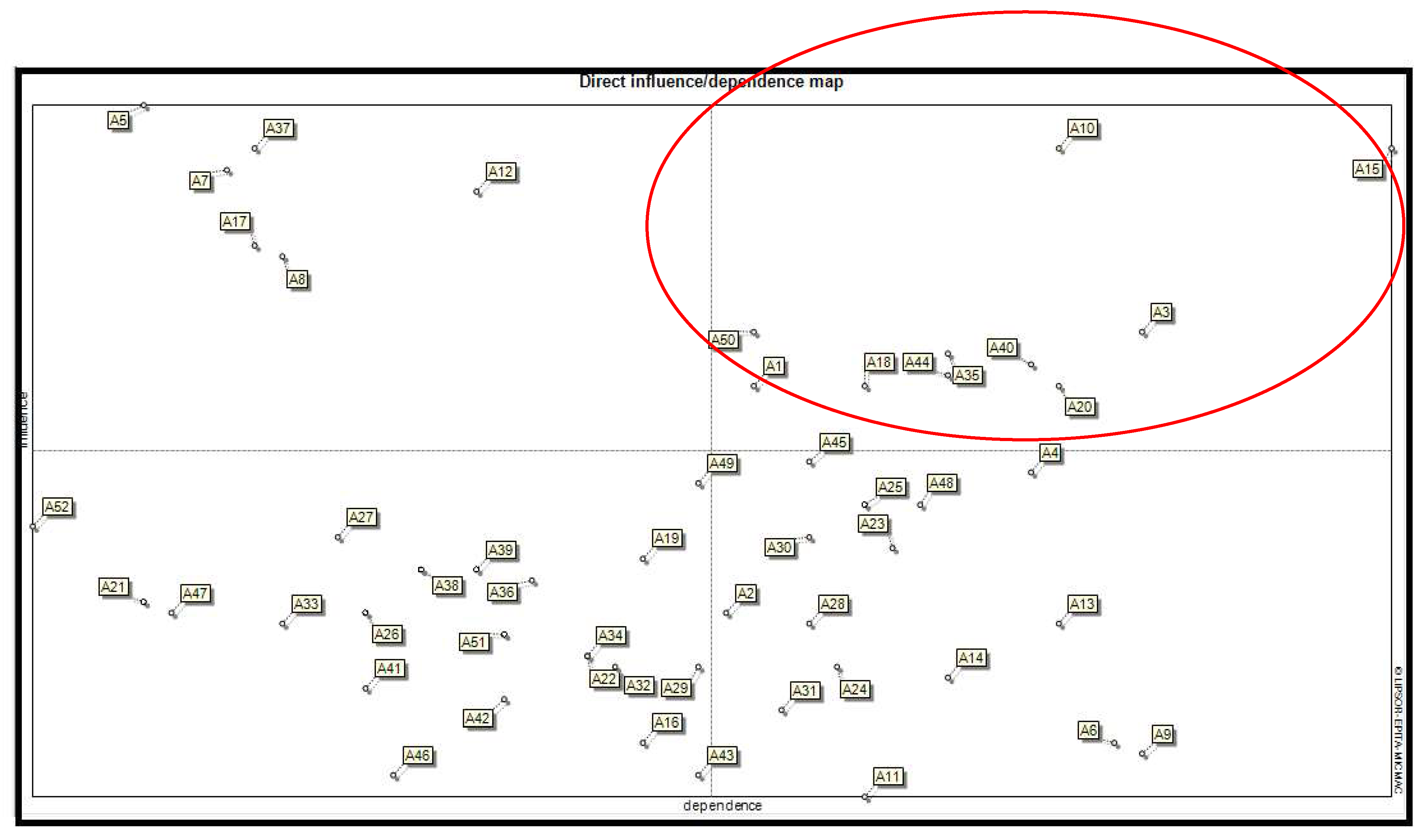
Figure 6.
Dispersion of regulatory variables in food tourism development in rural areas of Iran.
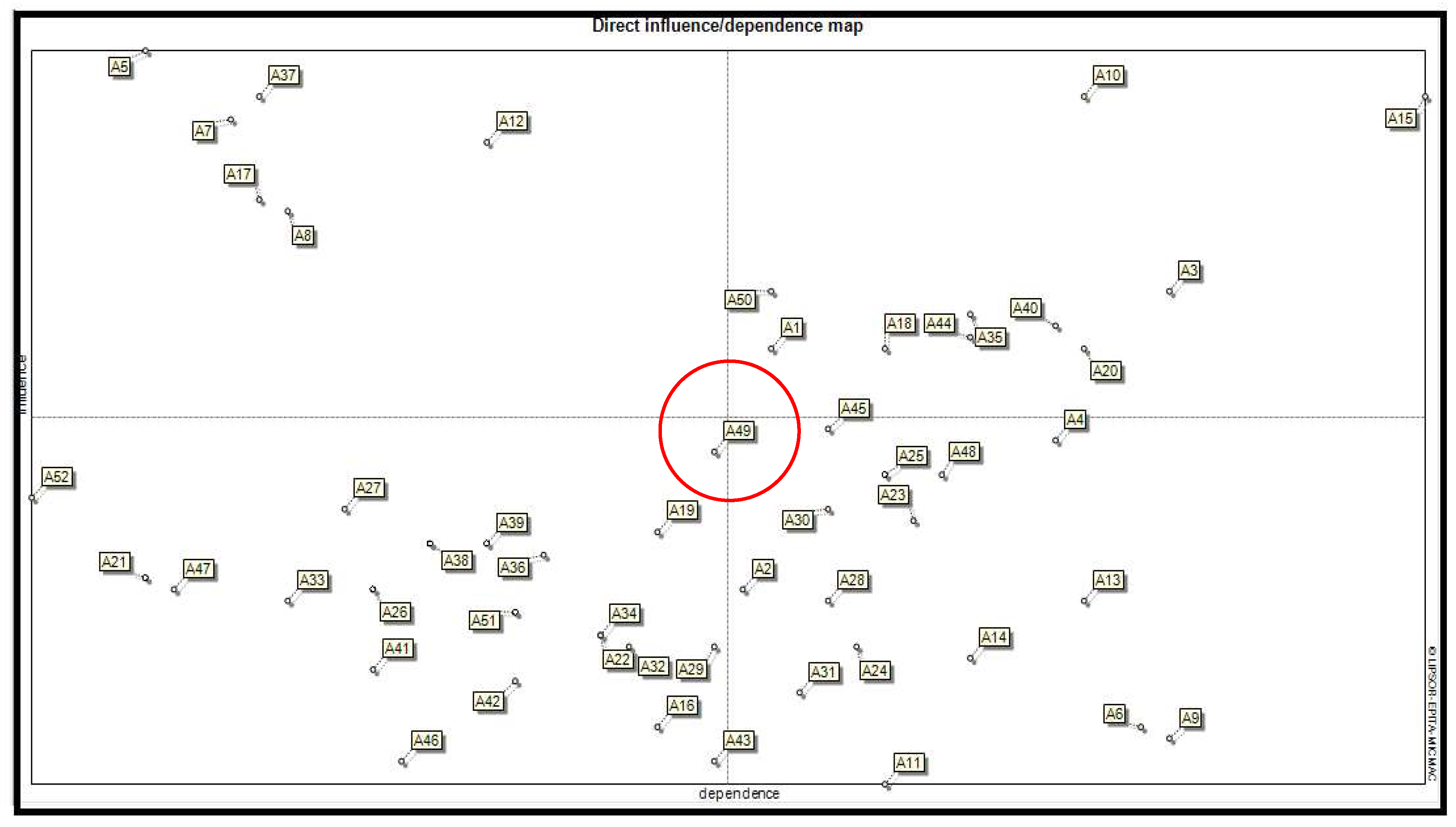
Table 1.
- Research Review.
| Researcher / Researchers | Year | Title | Method | Results |
| [78] | 2007 | Maslow’s hierarchy and food tourism in Finland: five cases |
multiple-case design and Descriptive research The empirical data has been collected from literature, studies, websites, and conducting an interview. For data analysis, analytic generalization has been utilized. |
Understanding the needs and motivations of tourists, reducing taxation, selling products and goods at lower prices, income, harmonizing regulations, increasing competition among companies involved in food production, holding meetings, conferences, and trade shows, and cohesive marketing efforts can be effective in the development of food tourism in Finland |
| [79] | 2008 | The determinants of gastronomic tourists’ satisfaction: a second-order factor analysis | Descriptive research The data has been collected through a survey using 377 questionnaires. For data analysis, the AMOS software (structural equation modeling) has been utilized. |
The three main factors affecting the satisfaction of food tourists in Portugal are: Food-related factors (local dishes, presentation of food, authenticity, and uniqueness). Price and quality of food (beverage prices, course prices, food quality, and staff service). Atmosphere and environment (ethnic decor, decoration, modern music, lighting, and entertainment). |
| [22] | 2011 | Local Food Tourism Networks and Word of Mouth | The descriptive-analytical method has been employed for this study. Data has been gathered through postal surveys (475 questionnaires) and interviews. | In Wisconsin, oral advertising plays a pivotal role in forming and maintaining local food tourism networks by connecting farmers and restaurateurs. Additionally, word-of-mouth advertising primarily informs tourists about tourism opportunities in the region. |
| [75] | 2011 | An examination of food tourist’s behaviour: Using the modified theory of reasoned action |
The descriptive-analytical method was employed, and data was collected from 305 questionnaires among tourists participating in the food festival. The collected data was analyzed using SPSS 17.0 and AMOS 4.0 software. | In the southwestern United States, perceived value, contentment, and satisfaction for intention to return are important behavioural determinants for food tourism. |
| [80] | 2015 | Influence of Festival Attribute Qualities on Slow Food Tourists’ Experience, Satisfaction Level and Revisit Intention: The Case of the Mold Food and Drink Festival |
quantitative research Data was collected through 209 questionnaires completed among participants in the food festival. The data was analyzed using SPSS and AMOS software. |
Programs, food quality, and other recreational and welfare facilities at the festival can effectively develop food tourism in Wales by increasing visitor satisfaction and encouraging repeat visits. |
| [81] |
2019 |
Insight from insiders: A phenomenological study for exploring food tourism policy in Ireland 2009-2019 | Phenomenological hermeneutics (a qualitative method for examining the lived experience of stakeholders related to food tourism) Data were collected through conducting 10 semi-structured, in-depth interviews. The data were analyzed using thematic analysis method. |
Key policymakers, networking and clustering, social entrepreneurs, government support, creation of regional tourism brands, linking food with cultural initiatives, and marketing strategies have played a pivotal role in developing food tourism in Ireland. |
| [39] | 2020 | Food tourism value: Investigating the factors that influence tourists to revisit |
multivariate analysis method Multivariate analysis method 891 questionnaires were used to collect the data. Partial Least Squares Structural Equation Modeling (PLS-SEM) was used for data analysis. |
aste/quality value, health value, price, emotional value, and credibility are among the factors that have a positive impact on the attitude of food tourists in the city of Shiraz, Iran. |
| [42] | 2021 | Investigating Determinants of Street Food Attributes and Tourist Satisfaction: An Empirical study of Food Tourism Perspective | positivist research approach Positivist research approach Data were collected through questionnaire completion among 331 tourists. Smart PLS 3.0 was used for data evaluation. |
Quality of services, marketing techniques, diversification and coordination of tourism products, improvement of agricultural techniques, enhancement of destination reputation, and improvement of place branding are among the most important factors and strategies for food tourism growth in Kuala Lumpur, Malaysia. |
| [49] | 2022 | Mapping Research on Food Tourism: A Review Study |
descriptive and bibliometric analysis Descriptive and bibliographic analysis The data was collected from published articles (in the most reputable journals, with the participation of top authors, and from leading countries that have researched food tourism) from 2006 to 2021. Statistical tools such as modularity class and PageRank have been used for data analysis. |
Studies in the field of food tourism have mainly been conducted in Britain and Canada. During this period, the main focus of studies in food tourism has been increasing tourist satisfaction and loyalty. Additionally, the results have shown that experience, local, preservation, development, motivation, market, culture, cuisine, model, behaviour, image, perception, intention, loyalty, value, attitude, active, technology, content, use, and review are the key keywords in studies in the field of food tourism. |
| [26] | 2023 | Determining food tourism consumption of wild mushrooms in Yunnan Provence, China: A projection-pursuit approach |
quantitative methods The data was obtained through the completion of 500 questionnaires. The projection pursuit model (PPM) and structural equation modeling (SEM) were used for data analysis. |
The quality and quantity of food resources, attention to tourists’ needs, and tourists’ perceptions are the most important factors influencing the development of wild mushroom-related food tourism in Yunnan Province, China. |
Table 2.
- Factors Influencing Food Tourism.
| Encoding | Factors | Reference | Encoding | Factors | Reference |
|---|---|---|---|---|---|
| A1 | Understanding the motivations and needs of tourists | [78] | A27 | Coordination of laws and policies | [19,72,80] |
| A2 | Reduction in tax rates | [78] | A28 | Attention to tourists’ food interests. | [89] |
| A3 | The decoration of food, its colour, and presentation | [72,79] | A29 | Satisfaction and contentment for repeat visit intention | [75] |
| A4 | Increasing competition among companies involved in food production | [78] | A30 | The internet and web (Information and Communication Technology) in the tourism sector |
[90] |
| A5 | Creating campaigns and organizing festivals, events, meetings, conferences, and trade shows. |
[78,79,80], [91,92] | A31 | Advertising, especially word-of-mouth and social media advertising | [20,22,41] |
| A6 | The authenticity of food | [40,79] | A32 | The quality, shape, and colour of food containers | [93] |
| A7 | Prices (for food, drinks, courses, etc.) | [39,78,79] | A33 | Personnel (attire and interaction manner, ensuring safety by them) | [20,79,89] |
| A8 | The quality of food | [79,89] | A34 | Marketing |
[41,42,48], [57,78] |
| A9 | Designing the ambient decoration of the destination (considering ethnicities, furniture, artworks, environmental embellishments, lighting quality, entertainment such as music, shows, etc.) | [79,89] | A35 | Accurate capacity assessment of assets | [94] |
| A10 | Industrial reconstruction | [95] | A36 | Continuous and comprehensive evaluation of food tourism destinations | [94] |
| A11 | Proximity/accessibility to accommodation | [95] | A37 | Investment. | [96] |
| A12 | The quality of infrastructure |
[57,95] | A38 | Collaboration and stakeholder participation | [19,74,92], [94] |
| A13 | Local lifestyle | [95] | A39 | Enhancing more interaction between tourists and local communities. | [19] |
| A14 | National food holidays calendar | [96] | A40 | Adding a dreamy aspect to festivals | [92] |
| A15 | High capacity in agriculture and animal husbandry | [26,96] | A41 | Elevating the level of motivation for well-being and exclusivity in the local community | [92] |
| A16 | Formation of tourism companies | [96] | A42 | The fluid identity of the festival and its food. | [92] |
| A17 | Government support and assistance | [57] | A43 | Travel information provision | [20] |
| A18 | Diversity of food | [40] | A44 | Development and promotion of street food | [76] |
| A19 | Respect for tourists’ dietary regime laws in tourist destinations | [82] | A45 | Food safety | [76] |
| A20 | Traditional restaurants | [96] | A46 | Attention to the authenticity of the tourism destination. | [56] |
| A21 | The perceived quality by tourists | [26] | A47 | Establishment of food museums |
[96] |
| A22 | Improving communication between tourists and the host community | [96] | A48 | Providing quantitative and qualitative information about food |
[20] |
| A23 | Awareness (local and general) of tourists’ preferences and food tourism | [57] | A49 | Food tourism managers | [20] |
| A24 | Values (health value, emotional value, experience and consumption value of local food, perceived value for repeat visit intention, valuing local people) | [39,41,75] | A50 | Innovation and creativity in food and destination | [20,58,79], [95] |
| A25 | Cooking motivation | [40] | A51 | Observance of health protocols | [20] |
| A26 | Adaptation and coordination of tourism products | [42] | A52 | Human risks such as the COVID-19 pandemic and... | [20] |
Table 3.
The primary features of collected data and cross-effects (Matrix of Direct Influences).
| MDI characteristics | |
|---|---|
| Matrix size | 52 |
| Number of iterations | 2 |
| Number of zeros | 359 |
| Number of ones | 896 |
| Number of twos | 874 |
| Number of threes | 575 |
| Number of P | 0 |
| Total | 2345 |
| Fillrat | 86.72 |
Table 4.
Stability (Matrix of Direct Influences).
| Iteration | Influence | Dependence |
|---|---|---|
| 1 | 99% | 96% |
| 2 | 100% | 100% |
Table 5.
Direct and indirect impact and influence of factors on the development of food tourism in rural areas of Iran.
Table 5.
Direct and indirect impact and influence of factors on the development of food tourism in rural areas of Iran.
| Rank | Label | Direct influence | Label | Direct dependence | Label | Indirect influence | Label | Indirect dependence |
|---|---|---|---|---|---|---|---|---|
| 1 | A5 | 279 | A15 | 251 | A5 | 271 | A15 | 248 |
| 2 | A10 | 270 | A3 | 231 | A15 | 267 | A9 | 234 |
| 3 | A15 | 270 | A9 | 231 | A37 | 267 | A3 | 233 |
| 4 | A37 | 270 | A6 | 228 | A10 | 266 | A6 | 228 |
| 5 | A7 | 265 | A10 | 224 | A7 | 264 | A20 | 224 |
| 6 | A12 | 260 | A13 | 224 | A12 | 258 | A10 | 224 |
| 7 | A17 | 249 | A20 | 224 | A17 | 252 | A13 | 223 |
| 8 | A8 | 247 | A4 | 222 | A8 | 237 | A40 | 223 |
| 9 | A3 | 231 | A40 | 222 | A3 | 227 | A4 | 222 |
| 10 | A50 | 231 | A14 | 215 | A50 | 226 | A35 | 213 |
| 11 | A35 | 226 | A35 | 215 | A35 | 223 | A44 | 213 |
| 12 | A40 | 224 | A44 | 215 | A20 | 223 | A14 | 212 |
| 13 | A44 | 222 | A48 | 212 | A40 | 220 | A23 | 211 |
| 14 | A1 | 219 | A23 | 210 | A18 | 220 | A48 | 211 |
| 15 | A18 | 219 | A11 | 208 | A1 | 218 | A18 | 210 |
| 16 | A20 | 219 | A18 | 208 | A44 | 217 | A25 | 210 |
| 17 | A45 | 203 | A25 | 208 | A4 | 201 | A11 | 205 |
| 18 | A4 | 201 | A24 | 205 | A45 | 200 | A30 | 204 |
| 19 | A49 | 199 | A28 | 203 | A49 | 200 | A45 | 203 |
| 20 | A25 | 194 | A30 | 203 | A25 | 193 | A1 | 202 |
| 21 | A48 | 194 | A45 | 203 | A48 | 193 | A24 | 202 |
| 22 | A52 | 189 | A31 | 201 | A30 | 192 | A28 | 201 |
| 23 | A27 | 187 | A1 | 199 | A27 | 191 | A31 | 199 |
| 24 | A30 | 187 | A50 | 199 | A52 | 191 | A2 | 197 |
| 25 | A23 | 185 | A2 | 196 | A23 | 189 | A50 | 197 |
| 26 | A19 | 183 | A29 | 194 | A19 | 182 | A29 | 194 |
| 27 | A38 | 180 | A43 | 194 | A38 | 181 | A49 | 193 |
| 28 | A39 | 180 | A49 | 194 | A36 | 180 | A43 | 193 |
| 29 | A36 | 178 | A16 | 189 | A39 | 179 | A32 | 189 |
| 30 | A21 | 173 | A19 | 189 | A21 | 175 | A19 | 188 |
| 31 | A2 | 171 | A32 | 187 | A47 | 175 | A22 | 188 |
| 32 | A26 | 171 | A22 | 185 | A28 | 172 | A16 | 187 |
| 33 | A47 | 171 | A34 | 185 | A2 | 171 | A34 | 180 |
| 34 | A13 | 169 | A36 | 180 | A33 | 170 | A51 | 180 |
| 35 | A28 | 169 | A42 | 178 | A13 | 170 | A39 | 178 |
| 36 | A33 | 169 | A51 | 178 | A26 | 169 | A36 | 177 |
| 37 | A51 | 167 | A12 | 176 | A34 | 168 | A42 | 177 |
| 38 | A22 | 162 | A39 | 176 | A51 | 167 | A12 | 176 |
| 39 | A34 | 162 | A38 | 171 | A32 | 163 | A38 | 171 |
| 40 | A24 | 160 | A46 | 169 | A14 | 162 | A46 | 170 |
| 41 | A29 | 160 | A26 | 167 | A22 | 161 | A27 | 168 |
| 42 | A32 | 160 | A41 | 167 | A29 | 161 | A41 | 168 |
| 43 | A14 | 157 | A27 | 164 | A24 | 159 | A26 | 165 |
| 44 | A41 | 155 | A8 | 160 | A31 | 154 | A17 | 162 |
| 45 | A42 | 153 | A33 | 160 | A42 | 153 | A33 | 159 |
| 46 | A31 | 151 | A17 | 157 | A41 | 152 | A37 | 159 |
| 47 | A6 | 144 | A37 | 157 | A9 | 145 | A8 | 157 |
| 48 | A16 | 144 | A7 | 155 | A16 | 145 | A7 | 154 |
| 49 | A9 | 141 | A47 | 151 | A6 | 143 | A21 | 151 |
| 50 | A43 | 137 | A5 | 148 | A46 | 138 | A47 | 150 |
| 51 | A46 | 137 | A21 | 148 | A43 | 136 | A5 | 146 |
| 52 | A11 | 132 | A52 | 139 | A11 | 135 | A52 | 145 |
Table 6.
Key drivers and possible scenarios of food tourism development in the future in rural areas of Iran.
Table 6.
Key drivers and possible scenarios of food tourism development in the future in rural areas of Iran.
| Abbreviation mark | Key factors of food tourism development |
Possible scenarios for each factor |
Subcategories of each factor |
Degree of desirability | Status |
| A | Creating campaigns and organizing festivals, events, meetings, conferences, and trade shows |
A1 | The expansion of the number of festivals | Desirable | Green |
| A2 | Continuation of the current trend | Average | Yellow | ||
| A3 | Reduction in the number of festivals | Undesirable | Red | ||
| B | Prices (for food, drinks, courses, etc.) |
B1 | Reduction in prices | Desirable | Green |
| B2 | Continuation of the current trend | Average | Yellow | ||
| B3 | Increase in prices | Undesirable | Red | ||
| C | The quality of food |
C1 | Improvement in the quality of food | Desirable | Green |
| C2 | Continuation of the current trend | Average | Yellow | ||
| C3 | Reduction in the quality of food | Undesirable | Red | ||
| D | The quality of infrastructure |
D1 | Improvement in the quality of infrastructure | Desirable | Green |
| D2 | Continuation of the current trend | Average | Yellow | ||
| D3 | Reduction in the quality of infrastructure | Undesirable | Red | ||
| E | Government support and assistance |
E1 | Increase in government support for food tourism | Desirable | Green |
| E2 | Continuation of the current trend | Average | Yellow | ||
| E3 | Reduction in government support for food tourism | Undesirable | Red | ||
| F | Investment |
F1 | Increase in investments for the development of food tourism | Desirable | Green |
| F2 | Continuation of the current trend | Average | Yellow | ||
| F3 | Reduction in investments for the development of food tourism | Undesirable | Red | ||
| Total | 18 | ---- | ---- |
Table 7.
Summary of Strong to Weak Scenarios for Food Tourism Development in Rural Areas of Iran.
| Scenario Status | The number of scenarios |
| Weak (possible) scenarios | 196 |
| Scenarios with maximum incompatibility: 1 (Compatibility 1) | 10 |
| Strong or probable scenarios | 4 |
Table 8.
Scenarios of group 1 from the total set of believable scenarios for food tourism development in rural areas of Iran.
Table 8.
Scenarios of group 1 from the total set of believable scenarios for food tourism development in rural areas of Iran.
| Group | Scenario number | Consistency value | Icons. Descriptor. | Total impact score | Characteristics |
| 1 | Scenario No. 1 | 0 | 0 | 55 | All factors except one in this group will be in their most desirable state. These factors include creating campaigns and organizing festivals, events, meetings, conferences, and trade shows with an expanded number of festivals; improvement in the quality of food and infrastructure; increased government support for food tourism; and higher investments for its development. The only exception is the pricing factor, which continues its current trend in Scenario 2, reflecting ongoing conditions. |
| Scenario No. 2 | 0 | 0 | 49 |
Table 9.
Scenarios of the second group from the total scenarios of food tourism development in rural areas of Iran,.
Table 9.
Scenarios of the second group from the total scenarios of food tourism development in rural areas of Iran,.
| Group | Scenario number | Consistency value | Icons. Descript. | Total impact score | Characteristics |
| 2 |
Scenario No. 3 | -1 | 3 | 4 | In this group, two factors, Creating campaigns and organizing festivals, events, meetings, conferences and trade shows, and The quality of infrastructure, are collectively in critical conditions across all six scenarios. Scenario three involves a Reduction in prices for the Prices (for food drinks courses etc.) factor, while scenarios five and six for the Government support and assistance factor are favorable. Other factors remain in either current state continuation or critical conditions across all scenarios. |
| Scenario No. 4 | -1 | 3 | 2 | ||
| Scenario No. 5 | -1 | 2 | 10 | ||
| Scenario No. 6 | -1 | 2 | 14 | ||
| Scenario No. 7 | -1 | 1 | 9 | ||
| Scenario No. 8 | 0 | 0 | 15 |
Disclaimer/Publisher’s Note: The statements, opinions and data contained in all publications are solely those of the individual author(s) and contributor(s) and not of MDPI and/or the editor(s). MDPI and/or the editor(s) disclaim responsibility for any injury to people or property resulting from any ideas, methods, instructions or products referred to in the content. |
© 2024 by the authors. Licensee MDPI, Basel, Switzerland. This article is an open access article distributed under the terms and conditions of the Creative Commons Attribution (CC BY) license (http://creativecommons.org/licenses/by/4.0/).
Copyright: This open access article is published under a Creative Commons CC BY 4.0 license, which permit the free download, distribution, and reuse, provided that the author and preprint are cited in any reuse.