

Submitted:
25 August 2024
Posted:
28 August 2024
You are already at the latest version
Abstract
The Keeling Curve shows that in addition to the progressive increase in the amount of CO2 in the atmosphere, the rate of increase in the rate of uptake of CO2 into the atmosphere, both in ppm and gigatons C/year, has been progressively increasing from 1960 to the present, despite some leveling off of man-made emissions. There is a similar processive increase in the earth’s heat imbalance. I propose that this is due to the additive effect of multiple partially activated tipping points putting the earth into a positive feedback mode such that these increases in rate will continue even after net zero emissions from fossil fuels is attained. As a result, controlling global warming will require a marked acceleration of Carbon Dioxide Removal using multiple Negative Emission Technologies.
Keywords:
climate change
; global warming
; partial tipping points
; positive feedback loop
; CDR
; carbon dioxide removal
; negative emission technologies
Article
A climate change tipping point is a critical threshold at which point a modest additional change in the causative factor leads to a potentially irreversible positive feedback loop with further increases in CO2 levels. A number of such tipping points have been described [1-3]. They can be divided into two groups, those directly resulting in an increase in the level of greenhouse gases, especially CO2 and methane, and those that do not primarily affect the level of greenhouse gases. Examples of the first group are forest fires and melting permafrost. An example of the latter group is the melting of the West Antarctic Ice Sheet (WAIS) resulting in a significant increase in sea level.
The Keeling Curve is based on atmospheric CO2 levels sampled on Mona Loa in Hawaii [4,5] and provides valuable information on atmospheric CO2 levels over time from 1958 until the present. In an effort to control CO2 emissions, since their inception in 1995, 27 COPs or Conference of the Parties have been held. At each, most of the countries of the world renew their pledges to cut down on greenhouse emissions. With this level of effort, it was hoped that the Keeling curve would begin to level off and the rate of increase would begin to decrease. Has it? Recent results, Figure 1, indicate that in fact the opposite is occurring, and rate of increase is steadily increasing [6].
In 1967 the rate of increase was 1.0 ppm/year, in 1987 1.5 ppm/year, in 2007 2.0 ppm/year, in 2017 2.5 ppm/yr, and in 2023 2.8 ppm/yr. Why is this happening? The quick answer is that countries are not trying hard enough. However, the Global Carbon Project reported that despite a modest 1.1% increase in 2023 over 2022, the growth in total CO2 emissions – the sum of fossil and land-use change emissions – has substantially slowed down over the past decade [7]. Keeling’s group at Scripps Institute recently published plots also showing an increase in the rate of increase in atmospheric CO2 levels over time [8]. These were based on the variable Atmosphere Growth Rate (AGR) measured in gigatons carbon per year (Figure 2).
Over the time frame of 1960 to 2020, except for the time around the eruption of Mount Pinatubo in 1991 when AGR dipped, there was a steady increase from an AGR from about 1.8 gigatons carbon per year in 1960 to about 5 gigatons carbon per year in 2020. This agrees with Figure 1 where the rate was measured in ppm per year. Both showed a progressive increase in rate of accumulation over time. At any given rate, the level of CO2 would be additive and the absolute amounts in the atmosphere would continuously increase, as they have. Their modeling, includes AGR + land use + terrestrial carbon exchange + delta or budget imbalance + the ocean sink, accurately predicts the earth’s carbon cycle to within 0.5 gigatons per year [8].
This article explores the possibility that even though none of the individual tipping points are fully activated, several of them are partially activated, and their additive effect can be just as dangerous, as a single fully activated tipping point. I propose that the additive effect of multiple partially activated greenhouse gas tipping points is the cause of the continued increase in the rate of increase of atmospheric CO2.
The following are some potential partial tipping point candidates.
1. Forest fires. In the past few years there have been massive forest fires in the United States, Canada, Greece, Australia, Brazil, and other countries. Van der Werf [9] estimated that wildfires have emitted about 8 gigatons of CO2 per year for the past 20 years. The 2020 California wildfires generated more than 91 million metric tons of CO2 and it was estimated that California’s wildfire carbon dioxide equivalent (CO2e) emissions from that year were approximately two times higher than California’s total greenhouse gas (GHG) emission reductions since 2003 [10]. The 2023 Canadian wildfires produced more than 1.5 gigatons of CO2 emissions [11] surpassing the emissions from all forest fires in that country over the previous 22 years.
In 2020 the bushfires in Australia, released twofold more carbon than what was usually emitted in that country by fossil fuel emissions in an entire year [12]. Global forest fires in 2019 and 2020, like those in Indonesia, Brazil, Central Africa, Siberia, Australia, and California, accounted for 10–15% of all global greenhouse gas emissions [13]. While forest regrowth can partially correct for the CO2 released by fires, it often does not fully compensate for the emissions, especially in the short term.
Another downside of massive forest fires is the PM2.5 particles they produce. These are 30 times smaller than a human hair. This tiny size allows them to enter the brain through to nasal passages and this results in a 21% increase in the risk of dementia [14].
2. Additional deforestation. Forest fires cause deforestation by burning trees. Humans add additional deforestation by cutting down trees both for lumber and to clear land for agriculture. When deforestation occurs, much of the carbon stored by trees is released back into the atmosphere as carbon dioxide. In the last decade, the largest amounts of deforestation occurred across the humid tropics, mostly in Africa, followed by South America [15-17]. The most important driver of deforestation is the global demand for high-value cash crops like palm oil and soya, and for cattle ranching. As a result of deforestation and degradation, some tropical forests now emit more carbon than they capture, turning them from a carbon sink into a carbon source. For example, the south-eastern part of the Amazon Rainforest is now considered a net carbon source [16].
3. Burning peat. Current estimates suggest that the carbon stored by peatlands is at least twice as much as all the world’s forests[18]. When burned it releases large amounts of CO2. Indonesia experienced an exceptional number of peat fires in 2015. These fires released approximately 1.1 gigatons of carbon dioxide (CO2) into the atmosphere[19]. Barbier and Burgess [20] concluded that protecting and restoring peatlands can reduce global greenhouse gas emissions by about 800 million metric tons per year, roughly equivalent to the country of Germany’s annual emissions.
4. Burning Boreal Forests. A boreal forest is a forest that grows in regions of the northern hemisphere with cold temperatures. They are made up mostly of cold tolerant coniferous species such as spruce, larch and fir. In the massive Yukon Flats National Wildlife Refuge in east Alaska, boreal fires have long been allowed to burn unchecked unless they threaten human life and property [21]. Due to climate change, the frequency of these fires has increased four times since 1988. These more-frequent fires can burn carbon that has accumulated over centuries [22]. Canada’s boreal forest fires last year released more than three times as much carbon dioxide as the entire country emitted from burning fossil fuels [21]. Because of this, efforts are now being made to extinguish these fires. The boreal forest in the Yukon Flats Refuge cover a uniquely vulnerable type of permafrost called Yedoma, which contains deep ice wedges that often melt after fires. This causes the land to collapse, exposing the ancient carbon to microorganisms and releasing greenhouse gases. The target areas of the fire suppression areas contain some 1.1 gigatons of carbon, which if released would be equivalent to 7 years of emissions from U.S. coal burning [21].
5. Warming ocean water. The oceans are a huge CO2 sink. They hold 60 times more carbon than the atmosphere and absorb almost 30% of carbon dioxide emissions from human activities. The summer of 2023 saw record sea temperatures. For example, some areas of the Gulf of Mexico reached 100oF. The amount of CO2 the ocean can adsorb is critically dependent on temperature.
The average temperature for the sea water is 15 to18oC. At 100oF or 38oC. the ability of the ocean to hold CO2 would be decreased from 2 grams per kilogram of water to 1 gram, or by 50%.
The excess CO₂ in the atmosphere traps an enormous amount of energy from the sun that would otherwise have dissipated into space—about 90% of all this excess heat is absorbed into the ocean [23-27]. The quantity is staggering, calculated at about 14 zettajoules of heat every year. This is one joule with 21 zeros after it 1,000,000,000,000,000,000,000 joules. It is roughly equivalent to five Hiroshima type atomic bombs worth of heat energy going into the ocean every second [28]. This means that, every day, 432,000 atomic bombs’ worth of excess heat energy enters the ocean. Figure 3 shows the result of this heat transfer into the ocean. Rising ocean temperatures bolster the energy exchanges from ocean to atmosphere, increase the quantity of atmospheric moisture, and change the patterns of precipitation and temperature globally [23]. Among other effects, this means more severe hurricanes.
This produces another variable that is progressively increasing despite a leveling off of emissions, i.e., the amount of the sun’s energy trapped by the earth (heat balance). This has doubled over the last 20 years from 0.42 W/m2 between 1974 and 1993, to 0.87 W/m2 between 2004 and 2010, and 0.96 W/m2 between 2011 and 2023 [29]. Since 1986 the average annual increase in ocean heat content is 9.1 ZJ/yr (1986 to 2020), almost eight times larger than the linear rate from 1958 to 1985 (1.2 ZJ/yr.)[24].
Ninety percent of this excess heat is adsorbed by the oceans making them less able to adsorb CO2. This is the result of greenhouse gases trapping the sun’s heat and the of loss of albedo due to melting sea ice (see below). It is a classic partial tipping point loop in that the increased heat melts sea ice which decreases albedo, which in turn increases the heat imbalance leading to more melting of glaciers and sea ice. Since a portion of the CO2 remains in the atmosphere for thousands of years [30,31] the only way to reverse this is by CDR
Between 1982 and 2016, the number of days with marine heatwaves—defined as days on which the sea-surface temperature (SST) exceeds its local 99th percentile—has doubled. Warmer oceans also hold less oxygen, leading to anoxia contributing to ocean blobs. In October 2013, as described by the National Park Service, a strong and long-lasting high-pressure ridge in the Pacific Ocean created a mass of warmer-than-normal water by between 4- and 10-degrees F above average, that stretched over 1,000 miles between the North American and Asian continents and was up to 300 feet deep. It was the size of Texas and called the Blob after a science fiction movie of the same name [32]. It later split into three distinct masses between 2013 and 2018. This produced three patches, one in the Bering Sea, one off the California/Mexico coast, and one off the coast of Canada, Washington, and Oregon. The many devastating effects of the blob included killing phytoplankton which disrupted the entire Pacific food chain, starving whales, salmon, herring, sardines, Alaskan cod, kelp, seals, and others. An elevation of nighttime temperatures even exacerbated forest fires [32]
In their article Let Oceans Breathe, Goodkin and Pullen [33] point out that while sea level rise and acidification have been the main focus of the effects of global warming on the oceans, deoxygenation should have equal prominence. They state that, “roughly 40 percent of the world’s people depend on the ocean for their livelihoods. If we do not save marine life from oxygen starvation, we starve ourselves.” Penn & Deutsch [34] report that the current rate of ocean warming could bring the greatest extinction of sea life in 250 million years.
Bolin and Eriksson [35] used an ocean model in which only the surface or top two percent, mixed quickly with the atmosphere. This was a reality check which made it that much slower for the great bulk of the oceans to absorb CO2. This indicated we could not rely on the entirety of the oceans to absorb all our emissions of fossil fuels. As the ocean warms, it removes less CO2 from the atmosphere, which leads to increased atmospheric CO2 and increased warming.
6. Ocean Outgassing of CO2. While the adsorption of CO2 by the oceans is well recognized, it is much less appreciated that some areas of the ocean also release huge amounts of CO2 back into the atmosphere. The areas of the greatest year-round out gassing are in the Equatorial Pacific west of Ecuador. Other areas such as the Arctic Ocean, the Southern Ocean around Antarctica and the Arabian Sea vary by season. In terms of gigatons of CO2 per year the figures are 2.26 for the equatorial area, 2.6 to 7.7 for the arctic, 1.4 to 2.1 for the Southern Ocean, and 0.59 for the Arabian Sea [36-44]. All together they amount to 6.85 to 12.65 gigatons of CO2 per year. While this is an enormous amount of CO2, it is generally considered that when balanced against the amount of CO2 adsorbed by the ocean it is net zero. However, it is likely that as the ocean warms the balance will tip in favor of outgassing, leading to a significant bump in atmospheric CO2
7. CO2 Efflux from Rivers Liu et al [45] reported that 112-to 209 million tons of CO2 are taken up from the soil and then emitted into the atmosphere from streams and rivers each month worldwide, or 1.3 to 2.5 gigatons of CO2 per year. They provided maps showing where this emission is the greatest.
8. Soil. The soil is also a large reservoir of carbon and changes in the size of the soil carbon pool can significantly affect atmospheric CO2 concentration. Warming would also increase rates of CO2 production by soils, thereby exacerbating the CO2 loading of the atmosphere and providing positive feedback to climate warming [46]. The rate of soil CO2 emission varies for different crops and different organic fertilizers [47]. The higher the amount of organic fertilization (chicken manure, dairy manure, and Milorganite) the higher the CO2 emissions. Proper soil management can shift the balance to sequestration of CO2 [48].
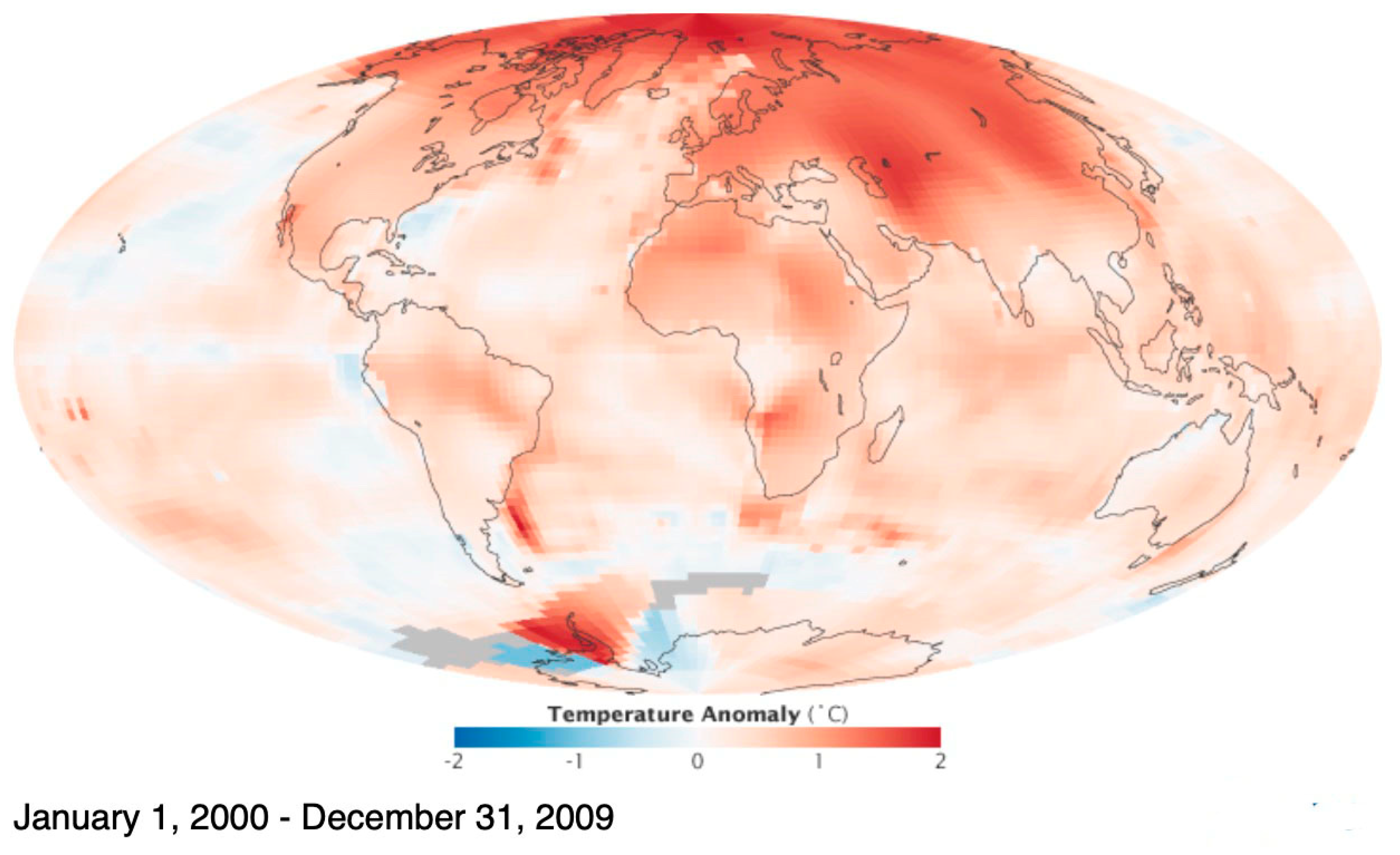
9. Loss of albedo. The glaciers and sea ice in the Greenland region and the Antarctic region reflect large amounts of solar radiation back away from the earth, cooling it. This is the albedo effect. The pair of GRACE satellites have shown that Greenland and Antarctic glaciers lost mass at a rate of 199 ± 32 Gt per year during a 14-yr period from 2002 to 2016 [49]. This destroys this albedo effect [50] which means more of the sun’s heat is retained in the earth. There is clear evidence that this is already having a major effect. The Arctic Region is warming up to four times faster than elsewhere [51,52]. This is called Arctic or Polar Amplification. The warming in the Arctic since the 1980s has been particularly strong, and the different datasets are in a close agreement. While several causative factors have been suggested [51] the loss of sea ice with a resultant loss of albedo is the best documented cause. Figure 4 shows the effect of the loss of this albedo on Arctic warming.
The loss of albedo does not directly result in an increase in CO2 levels. However, it has several indirect effects such as increasing permafrost melting, increasing temporal and boreal forest fires, burning of peatland, decreasing land and ocean sinks, and increasing the earth’s heat imbalance.
10. Melting permafrost. Beneath the Arctic’s frozen surface there are huge amounts of organic carbon matter in the form of frozen soil and ancient plant matter called permafrost. It is estimated that there are 1.7 trillion tons of carbon as methane and CO2 are stored in the arctic. This is 250 times the amount of methane currently in the atmosphere. In Alaska alone over 70 sites of leaking surface methane from melting permafrost have been found [54-55].
It is estimated that even larger amounts of methane are stored deeper underground as fossil methane. This is also beginning to melt in an explosive manner, producing large sinkholes [56]. When permafrost begins to melt it releases large amounts of methane, which is over 80 times more potent as a greenhouse gas than CO2. This has already started in parts of Siberia and the Arctic [57-63]. The released methane is eventually oxidized to CO2.
Several recent studies further illustrate the critical nature of the problem. A Swedish study [57] reported that between 2000 and 2020 the northern permafrost region emitted 12 Tg of CO2-C /yr, 38 Tg of CH3-C/yr and 0.67 Tg of N2O-N/yr. (12 Tg of CO2 = 12 million tons of CO2). Nitrous oxide is far more potent greenhouse gas than CO2. When lateral fluxes were also included, the complete C and N budgets of the permafrost region result in net sources of 144 TgC/yr (including CO2 and CH4) and 3 Tg N yr. Lateral fluxes refer to the loss of soil carbon by leaching with water [61]. The melting of permafrost has also played a role in arctic warming [62-63].
11. Melting of Methane Hydrates Gas hydrates are icelike structures formed when water and low molecular weight gases such as CO2, H2S and methane (CH4), combine into a clathrate structure. Since methane is the primary gas involved, they are termed methane hydrates. The word clathrate is derived from the Latin clathratus meaning ‘with bars or latticed’. Methane clathrates are especially common along the continental shelf where they are stable at 300 to 600 meters under the surface and at the low temperatures close to the sea floor. Worldwide it is estimated that gas hydrates contain up to 12,000 gigatons tons of carbon, more than the amount of carbon held in all fossil fuels on earth [64]. This shows why it is a tipping point. If ocean temperatures keep raising this trapped methane could be released to the atmosphere. There is evidence that this has happened before. The Paleocene-Eocene Thermal Maximum, (PETM) [65] million years ago, is believed to have been due in part to the release of many tons of methane from methane clathrates. This has been referred to as the methane burp hypothesis, or more technically as the gas hydrate dissociation hypothesis. It has been estimated that during PETM up to 1,600 gigatons of carbon were added to the atmosphere resulting in global warming of 5 to 7 oC (41 to 45 oF). Recent studies suggest that while some of the carbon was due to a methane burp, most may have come from volcanism [65].
On the bright side, there are several sinks that would mitigate the amount of methane leaked to the atmosphere if methane hydrates melted 65]. These included the anaerobic oxidation of methane by various microbes, the dissolution of methane bubbles by dissolving methane in sea water, the atmospheric oxidation of methane to CO2 which is a less potent greenhouse gas, and others. None-the-less, the PETM, which is presumed to be due in part to gas hydrate dissociation, illustrates the potential risk despite the sinks.
12. Die off of phytoplankton. It is rarely appreciated that phytoplankton in the ocean sequesters as much CO2 and produce as much oxygen as all the trees on land [66-69]. A major question is the sensitivity of this biomass to future ocean warming, both regionally and globally. If these die off because of increased temperature, ocean acidification, deoxygenation, or other changes in ocean chemistry, this huge reservoir of carbon dioxide will be lost. It would be the equivalent of a massive underwater forest fire.
The size of ocean biomass production is referred to as Net Primary Productivity or NPP [66,67]. It is defined as gross primary productivity minus the rate of energy lost to metabolism and maintenance. It is the rate at which energy is stored as biomass by marine organisms and made available to the consumers in the ecosystem.
In the April 2023 heat wave NPP dropped by 22% in the equatorial regions of the Atlantic and Pacific, as well as the northern Atlantic [70]. All of these areas exhibited positive sea surface temperature (SST) anomalies. This decrease is not limited to a few heat waves. Based on satellite-in situ blended ocean chlorophyll records, Gregg, et al [71] reported that global ocean annual primary production has declined more than 6% since the early 1980’s. The decadal decline in global ocean annual primary production corresponded with an increase in global sea surface temperature of 0.2°C (P < 0.05) over the same time period. Not only do phytoplankton generate half the atmosphere’s oxygen they also form the base of virtually every ocean food chain, making most other ocean life possible [72]. A prolonged increase in ocean temperature would not only seriously compromise this important source of CO2 fixation and O2 production, but also affect the food source for other marine life and billions of humans. The loss of this carbon sink would contribute to a major increase in atmospheric CO2.
13. Plants switch from photosynthesis to respiration. As global temperatures increase a point is reached at which plants on earth begin to switch from photosynthesis (consuming CO2 and producing oxygen), to respiration (consuming oxygen and producing CO2). Duffy et al [73] showed this by accessing measurements from the largest continuous carbon monitoring network, FLUXNET to determine the temperature dependence of global rates of photosynthesis and respiration. This was based on ~1500 site years of daily data from all major biomes and plant functional types. The photosynthetic machinery in tropical trees begins to fall at 46.7oC (117oF) (Tcrit). Doughty et al [74] using leaf thermocouples, pyrgeometers and remote sensing (ECOSTRESS) at multiple sites across the topics, found mid-day peak temperatures of 34oC during dry seasons with temperature tails of over 40oC and Tcrit temperatures 0.01% of the time. They concluded that that tropical forests can only withstand an additional temperature increase of 3.9 ± 0.5 °C before reaching a potential tipping point in metabolic function. If a significant percentage of terrestrial plants were to switch from photosynthesis to respiration the large amount of the resultant CO2 would be catastrophic.
14. Air Conditioning This may seem like a strange candidate for a partial tipping point, but the hotter it gets the greater the need for air conditioning, and the greater the need for air conditioning to more greenhouse gases that are produced to run it, forming a positive feedback loop. Globally, 20 percent of the total electricity used in buildings goes to air conditioning. It has been estimated that by 2050 there will be 4.5 billion air condition units. Currently, this option is largely restricted to the wealthier countries forming one of the reasons climate change has a greater impact on the less wealthy countries. An additional issue with air conditioning is that the coolant often used is a hydrofluorocarbon (HFC) which is over a thousand times more potent as a greenhouse gas as carbon dioxide [75].
15. Interacting tipping points. An additional factor is a positive interaction between tipping points wherein one activated partial tipping point helps to activate a second. These have been termed “cascading” [76] and “connected” [77] tipping points. This additive nature of tipping points relates well to the concept proposed here of an additive multifactorial partial CO2 tipping point.
Discussion
A likely scenario is that the burning of fossil fuels led to an increase in atmospheric CO2 which began to activate one or more partial tipping points with the initial one being an increase in the earth’s heat imbalance due to loss of albedo because of the melting of Greenland glaciers and sea ice. Widespread forest fires may also have been an early additional early partially activated tipping point. This was followed by the progressive addition of other partial tipping points. The critical question is, “as fossil fuel emissions continue to decrease will the increases in the rate of atmospheric CO2 accumulation continue to increase due to a multifactoral partial tipping point positive feedback loop?” My concern in that this has already happened.
The best evidence that a multifactorial CO2 tipping point is already occurring comes the fact that a number of the above candidates are clearly already happening. These are temperate area forest fires, boreal area forest fires, the burning of peat, melting of the permafrost, loss of albedo resulting in accelerated Arctic warming and increasing whole earth heat imbalance, a periodic die off of phytoplankton, and warming of the land and ocean. The years 2023 and 2024 have already shown the highest levels of global temperature on record [78,79]. This suggests that it is not necessary to wait until one or more tipping points becomes fully expressed for tipping points to make a significant contribution to atmospheric CO2 levels. Such a multifactorial partial tipping point would produce a positive feedback loop that could become irreversible. What are the implications of this?
Does it mean cutting down on emissions is fruitless? Of course not. It would suggest just the opposite. We must redouble our efforts world-wide to more quickly get to net zero emissions since it was man-made CO2 that triggered the partial tipping points in the first place. And, if the earth is not in a positive feedback loop from a multifactorial partial tipping point, then achieving net zero might stop this destructive source of CO2.
Does it mean massive efforts at carbon dioxide removal (CDR) are necessary? This is a definite yes. These are called Negative Emission Technologies or NETs. It has been suggested that it will be necessary to permanently remove 10 gigatons of CO2 from the atmosphere each year until 2050 and then 20 gigaton of CO2 to the end of the century [80]. These sum up to a bit over 1,000 gigatons of CO2 sequestered by the end of the century. This matches the IPCC proposal on the use of carbon dioxide removal (CDR) of up to 1,000 GtCO2 over the 21st century [81]. Currently the emphasis is on direct air capture and sequestration of CO2 (DACS) with the sequestration being done by burying the CO2 underground. While this can easily remove thousands and even millions of tons of CO2 there are problems and some skepticism both about its safety and if it can reach multiple gigatons levels [82].
It is clear that additional NETs must quickly be added to the list. Enhanced Weathering uses crushed ultramafic rocks such as magnesium silicates (olivine) and mafic rocks such as basalt [82-89] that capture CO2 and convert it to a permanent mineralized form. There are significant deposits of ultramafic rocks in the U.S. and world-wide but currently very little of these ‘climate rocks’ are being mined for this purpose. It has been suggested that enhanced weathering could be scaled up to capture 2–4 gigatons of CO2 per year by 2050, with rates of more than 20 gigatons per year theoretically possible by 2100 [89]. Cost estimates vary widely, from less than $50 per ton of CO2 sequestered to more than $200 per ton. Much higher levels of CO2 storage have been claimed for in situ sequestration where captured CO2 is chemically bound to underground mafic rocks such as basalt [90,91].
In addition to spreading finely ground ultramafic rocks on land, they can also be placed in the ocean. This is called OAE or Ocean Alkalization Enhancement [82,92,93]. Like Enhanced Weathering this also requires large amounts of ground ultramafic rocks. There are some potential OAE methods that do not require ultramafic rocks [82].
There are many other NETs that should also be utilized. Together they could contribute multiple gigatons per year of sequestered CO2 [94]. In its 2023 Sixth Assessment Report, the Intergovernmental Panel on Climate Change [95] pointed out that the many other NETs such as “biological CDR methods like reforestation, improved forest management, soil carbon sequestration, peatland restoration and coastal blue carbon management can be utilized.”
Just as a combination of multiple partial tipping points may have brought us to the current situation, multiple NETs will be necessary to solve the problem. Enhanced weathering in situ storage and OAE need to be added to the mix. They have the advantage that the CO2 is safely sequestered above ground, or chemically bound to underground mafic rocks, or in the ocean, and there plenty of room at these sites. There are many other advantages to enhanced weathering [82].
In summary, I propose that a multifactorial CO2 partial tipping point, as described here, has already entered into a positive feedback loop, and is the cause of the progressive increases in the rate of accumulation of atmospheric CO2. This does not bode well for easy answers to global warming. It is analogous to a swimmer caught in a whorl pool – very difficult to swim out of. Cutting emissions to zero will be necessary but that will not be enough because many of the multiple partial tripping points, such as forest fires, melting permafrost, melting sea ice with a decrease in albedo, increase in heat imbalance, die off of phytoplankton, and others, will continue to grow and even more horrendous tipping points such as the melting of methane hydrates, the conversion of plants from photosynthesis to respiration, and the die off of phytoplankton - are waiting in the wings, to be activated as temperatures continue to rise. Others have also suggested accelerated action on combating global warming for similar reasons - 5 years ago [96] and even 16 years ago [97].
After writing about fixing the ozone hole, Susan Solomon, said, “people are much better at solving hot crisis than they are dealing with slow ones” [98] with the latter referring to climate change and global warming. Based on the above I would argue that global warming is a hot crisis both literally and figuratively, and becoming a fast one.
References
- Lenton TM, Held H, Kriegler E, Hall JW, Lucht W, et al. Tipping elements in the Earth’s climate system. Proceedings of the national Academy of Sciences. 105, 1786-93 (2008).
- Fabbri S, Hauschild MZ, Lenton TM, Owsianiak M. Multiple climate tipping points metrics for improved sustainability assessment of products and services. Environmental science & technology. 55, 2800-2810 (2021).
- Armstrong McKay DI, Staal A, Abrams JF, Winkelmann R, Sakschewski B. et al. Exceeding 1.5 C global warming could trigger multiple climate tipping points. Science. 377,1171 (20220.
- Keeling CD, Whorf TP, Wahlen M, Van der Plicht J. Interannual extremes in the rate of rise of atmospheric carbon dioxide since 1980. Nature 375, 666-70 (1995).
- Harris, D. C. Charles David Keeling and the story of atmospheric CO2 measurements. Anal. Chem. 82, 7865–7870 (2010).
- Betts, R., Jones, C., Liddicoat, S., Keeling, R. How the Keeling Curve will need to bend to limit global Warming to 1.5oC. Guest Post, Carbon Brief January 12, (2022).
- Friedlingstein, P. et al. Briefing on key messages Global Carbon Budget 2023. Earth System Science Data. 15, 5301–5369, 2023. https://orcid.org/0000-0003-3309-4739.
- Birner B, Rödenbeck C, Dohner JL, Schwartzman A, Keeling RF. Surprising stability of recent global carbon cycling enables improved fossil fuel emission verification. Nature Climate Change. 13, 961-966 (2023).
- Van Der Werf GR, Randerson JT, Giglio L, Van Leeuwen TT, Chen Y, et al, Global fire emissions estimates during 1997–2016. Earth System Science Data. 9, 697-720 (2017).
- Jerrett M, Jina AS, Marlier ME. Up in smoke: California’s greenhouse gas reductions could be wiped out by 2020 wildfires. Environmental Pollution. 310, 119888 (2022).
- You, X. Surge in extreme forest fires fuels global emissions. Nature, 20 Dec, (2023). [CrossRef]
- Boer MM, Resco de Dios V, Bradstock RA. Unprecedented burn area of Australian mega forest fires. Nature Climate Change. 10, 171-12, (2020).
- Global Fire Emissions Database, (2020).
- Wigglesworth, A. Dementia risk may rise with wildfire smoke. LA Times July 29 (2024).
- Grantham Research Institute on Climate Change and the Environment, in the London School of Economics and Political Science, London 2024.
- What is the role of deforestation in climate change and how can ‘Reducing Emissions from Deforestation and Degradation’ (REDD+) help? Grantham Research Institute on Climate Change and the Environment. February 12, 2023.
- Datta A, Krishnamoorti R. Understanding the greenhouse gas impact of deforestation fires in Indonesia and Brazil in 2019 and 2020. Frontiers in Climate. 4,799632 (2022).
- UNEP Peatlands Store Twice as Much Carbon as all the World’s Forests. Feb 1, (2019). Available online at: https://www.unep.org/news-and-stories/story/peatlands-store-twice-much-carbon-all-worlds-forests.
- Heymann J, Reuter M, Buchwitz M, Schneising O, Bovensmann H, et al. CO2 emission of Indonesian fires in 2015 estimated from satellite-derived atmospheric CO2 concentrations. Geophysical Research Letters.44, 1537-1544 (2017.
- Barbier EB, Burgess JC. Economics of Peatlands Conservation, Restoration and Sustainable Management. Restoration and Sustainable Management (October 15, 2021). ). ISBN No: 978-92-807-3896-4.
- Tollefson J. Epic blazes threaten Arctic permafrost. Can firefighters save it? Nature. 629,270-271 (2024).
- Phillips CA, Rogers BM, Elder M, Cooperdock S, Moubarak M, et al. Escalating carbon emissions from North American boreal forest wildfires and the climate mitigation potential of fire management. Science advances. 8, eabl7161 (2022).
- Cheng L, Abraham J, Trenberth KE, Fasullo J, Boyer T, Mann ME, Zhu J, Wang F, Locarnini R, Li Y, Zhang B. Another year of record heat for the oceans 2023. Advances in atmospheric sciences. 40, 963-74 (2023).
- Cheng L, Abraham J, Trenberth KE, Fasullo J, Boyer T, et al. Upper ocean temperatures hit record high in 2020. NOAA_47637_DS1 (2021).
- Cheng L, von Schuckmann K, Abraham JP, Trenberth KE, Mann ME, Zanna L, England MH, Zika JD, Fasullo JT, Yu Y, Pan Y. Past and future ocean warming. Nature Reviews Earth & Environment. 3, 776-94, (2022).
- Cheng, L. Abraham J, Zhu J, Trenberth KE, Fasullo J, et al. Record-Setting Ocean Warmth Continued in 2019. Advances in Atmospheric Sciences 37, 137-142 (2022).
- Cheng L, von Schuckmann K, Minière A, Hakuba MZ, Purkey S, Schmidt GA, Pan Y. Ocean heat content in 2023. Nature Reviews Earth & Environment. 5, 232-234, 2024.
- Nuccitelli, D. Earth is heating at a rate equivalent to five atomic bombs per second. Or two Hurricane Sandys. Bulletin Atomic Scientists 76,140-144, 2020.
- Forester, P.M. et. al. Indicators of Global Climate Change 2023: annual update of key indicators of the state of the climate system and human influence, Earth Syst. Sci. Data, 16,2625–26, 2024.
- Archer D, Eby M, Brovkin V, Ridgwell A, Cao L, et al. Atmospheric lifetime of fossil fuel carbon dioxide. Annual review of earth and planetary sciences. 37,117-34 (2009).
- Archer D. Fate of fossil fuel CO2 in geologic time. Journal of geophysical research: Oceans. 110, C9, (2005). [CrossRef]
- Goodell, J. The heat will kill you first: Life and death on a scorched planet. (Little, Brown, 2023).
- Goodkin, N. and Pullen, J. Let Oceans Breathe. Sci. Amer. April p11, (2022).
- Penn JL, Deutsch C. Avoiding Ocean mass extinction from climate warming. Science. 376, 524-526 (2022).
- Bolin, B. and Eriksson, E. Changes in the Carbon Dioxide Content of the Atmosphere and Sea Due to Fossil Fuel Combustion. In The Atmosphere and the Sea in Motion, (ed Bolin) 130-42. (New York: Rockefeller Institute Press, 1959).
- Bates NR, Cai WJ, Mathis JT. The ocean carbon cycle in the western Arctic Ocean: Distributions and air-sea fluxes of carbon dioxide. Oceanography. 24, 186-201 (2011).
- Boutin J, Etcheto J, Dandonneau Y, Bakker DC, Feely RA, et al..Satellite sea surface temperature: a powerful tool for interpreting in situ pCO2 measurements in the equatorial Pacific Ocean. Tellus B. 51,490-508 (1999).
- de Verneil A, Lachkar Z, Smith S, Lévy, M. Evaluating the Arabian Sea as a regional source of atmospheric CO2: seasonal variability and drivers. Biogeosciences Discussions. 19, 907–929 (2022).
- Feely RA, Takahashi T, Wanninkhof R, McPhaden MJ, Cosca CE, Sutherland SC, Carr ME. Decadal variability of the air-sea CO2 fluxes in the equatorial Pacific Ocean. Journal of Geophysical Research: Oceans. 111, C08S90 (2006). [CrossRef]
- Gray WR, Rae JW, Wills RC, Shevenell AE, Taylor B. et al. Deglacial upwelling, productivity and CO2 outgassing in the North Pacific Ocean. Nature Geoscience.11, 340-344 (2018).
- Mathis JT, Pickart RS, Byrne RH, McNeil CL, Moore GW et al. Storm-induced upwelling of high pCO2 waters onto the continental shelf of the western Arctic Ocean and implications for carbonate mineral saturation states. Geophysical Research Letters. 39, L07606 (2012). [CrossRef]
- Risien CM, Chelton DB. A global climatology of surface wind and wind stress fields from eight years of QuikSCAT scatterometer data. Journal of Physical Oceanography. 38, 2379-2413 (2008).
- Sarma VV, Kumar MD, George MD. The central and eastern Arabian Sea as a perennial source of atmospheric carbon dioxide. Tellus B: Chemical and Physical Meteorology. 50,179-84 (1998).
- Takahashi T, Sutherland SC, Wanninkhof R, Sweeney C, Feely RA, et al. Climatological mean and decadal change in surface ocean pCO2, and net sea–air CO2 flux over the global oceans. Deep Sea Research Part II: Topical Studies in Oceanography. 56, 554-77 (2009).
- Liu S, Kuhn C, Amatulli G, Aho K, Butman DE, Allen GH, Lin P, Pan M, Yamazaki D, Brinkerhoff C, Gleason C. The importance of hydrology in routing terrestrial carbon to the atmosphere via global streams and rivers. Proceedings of the National Academy of Sciences. 119, e2106322119, (2022).
- Raich JW, Potter CS. Global patterns of carbon dioxide emissions from soils. Global Biogeochemical Cycles. 9, 23-36 (1995).
- Ray RL, Griffin RW, Fares A, Elhassan A, Awal R, Woldesenbet S, Risch E. Soil CO2 emission in response to organic amendments, temperature, and rainfall. Scientific Reports. 10, 5849 (2020).
- Paustian KA, Andren O, Janzen HH, Lal R, Smith P, Tian G, Tiessen H, Van Noordwijk M, Woomer PL. Agricultural soils as a sink to mitigate CO2 emissions. Soil use and management. 13, 230-44 (1997).
- Wouters B, Gardner AS, Moholdt G. Global glacier mass loss during the GRACE satellite mission (2002-2016). Frontiers in earth science. 7, 96 (2019).
- Riihelä A, Bright RM, Anttila K. Recent strengthening of snow and ice albedo feedback driven by Antarctic sea-ice loss. Nature Geoscience. 14, 832-836 (2021).
- Rantanen, Mika, et al. The Arctic has warmed nearly four times faster than the globe since 1979. Communications Earth & Environment 3,168 (2022).
- Ballinger TJ, Bigalke S, Walsh JE, Brettschneider B, Thoman RL et al. NOAA Arctic Report Card Surface Air Temperature 2023.
- Pörtner HO, Roberts DC, Masson-Delmotte V, Zhai P, Tignor M, et al. The ocean and cryosphere in a changing climate. IPCC special report on the ocean and cryosphere in a changing climate. 1155 (2019).
- Welch, C. Arctic permafrost is thawing fast: That affects us all. National Geographic. 236, 74-99 (2019).
- Biskaborn BK, Smith SL, Noetzli J, Matthes H, Vieira G, Streletskiy DA, et al. Permafrost is warming at a global scale. Nature communications. 10, 264 (2019).
- NOVA Arctic Sinkholes https:// youtu.be/ HvKpnaXYUPU.
- Shakhova N, Semiletov I, Salyuk A, Yusupov V, Kosmach D, et al. Extensive methane venting to the atmosphere from sediments of the East Siberian Arctic Shelf. Science. 327, 1246-50 (2010).
- Kindy, D. Permafrost Thaw in Siberia Creates a Ticking ‘Methane Bomb’ of Greenhouse Gases, Scientists Warn. Smithsonian Magazine August 2021.
- ICCI International Cryosphere Climate Imitative State of the Cryosphere 2022 Growing Losses. Global Impacts. www.iccinet.org/statecryo22 (2022).
- Ramage J, Kuhn M, Virkkala AM, Voigt C, Marushchak ME, et al. The net GHG balance and budget of the permafrost region (2000–2020) from ecosystem flux upscaling. Global Biogeochemical Cycles. 38, e2023GB007953 (2024).
- Zhang X, Hutchings JA, Bianchi TS, Liu Y, Arellano AR, et al. Importance of lateral flux and its percolation depth on organic carbon export in Arctic tundra soil: Implications from a soil leaching experiment. Journal of Geophysical Research: Biogeosciences. 122, 796-810 (2017).
- Schuur EA, Abbott BW, Commane R, Ernakovich J, Euskirchen E, et al. Permafrost and climate change: carbon cycle feedbacks from the warming Arctic. Annual Review of Environment and Resources. 47, 343-371 (2022).
- Sullivan, K.D. Alaska’s thawing permafrost has big consequences for greenhouse gas emissions. Labroots August 23, (2017).
- Ruppel CD, Kessler JD. The interaction of climate change and methane hydrates. Reviews of Geophysics. 55, 126-68 (2017).
- Mann, M.E. Our Fragile Moment: How Lessons from Earth’s Past Can Help US Survive the Climate Crisis. (Public Affairs, NY. 2023).
- Longhurst A, Sathyendranath S, Platt T, Caverhill C. An estimate of global primary production in the ocean from satellite radiometer data. Journal of Plankton Research. 17, 1245-71 (1995).
- Field CB, Behrenfeld MJ, Randerson JT, Falkowski P. Primary production of the biosphere: integrating terrestrial and oceanic components. Science. 281, 237-40 (1998).
- Falkowski P. Ocean science: the power of plankton. Nature. 483, S17-20 (2012).
- MacRae, G. The uncertain fate of Earth’s other ‘lung.’ Phytoplankton’s response to the effects of climate change is complex, variable, and enormously important. Sentinel Feb, (2020).
- Bowles, M. et al. Decline in ocean net primary production coincident with the 2023 heat wave. Research Square March 18th, (2024). [CrossRef]
- Gregg WW, Conkright ME, Ginoux P, O’Reilly JE, Casey NW. Ocean primary production and climate: Global decadal changes. Geophysical Research Letters. 30,1809 (2003). [CrossRef]
- Fenchel T. Marine plankton food chains. Annual Review of Ecology and Systematics. 1:19-38 (1988).
- Duffy et al. How close are we to the temperature tipping point of the terrestrial biosphere? Sci. Adv. 7:13 (2021).
- Doughty CE, Keany JM, Wiebe BC, Rey-Sanchez C, Carter KR, et al. Tropical forests are approaching critical temperature thresholds. Nature. 621, 105-11 (2023).
- Mach KJ, Mastrandrea MD, Bilir TE, Field CB. Understanding and responding to danger from climate change: the role of key risks in the IPCC AR5. Climatic Change 136:427-44 (2016).
- Dekker M M, Von Der Heydt A S, Dijkstra HA. Cascading transitions in the climate system. Earth System Dynamics. 9, 1243-60 (2018).
- Livina VN. Connected climate tipping elements. Nature Climate Change. 13,15-6 (2023).
- Li K, Zheng F, Cheng L, Zhang T, Zhu J. Record-breaking global temperature and crises with strong El Niño in 2023–2024. The Innovation Geoscience. 1, 100030 (2023).
- Sanderson K. June’s record-smashing temperatures—in data. Nature. 619, 232-233 (2023).
- National Academies of Sciences, Engineering, and Medicine (NASEM) Negative Emissions Technologies and Reliable Sequestration: A Research Agenda (Washington, DC: The National Academies Press, 2019). [CrossRef]
- IPCC, 2018: Global Warming of 1.5°C. An IPCC Special Report. (eds Masson-Delmotte et al.). (Cambridge University Press, Cambridge, UK and New York, NY, USA, 2018). 616 pp. [CrossRef]
- Comings, D. How to Combat Global Warming.www.howtocombatglobalwarming.org.
- Beerling DJ, Leake JR, Long SP, Scholes JD, Ton J, et al. Farming with crops and rocks to address global climate, food and soil security. Nature plants. 4, 138-47 (2018).
- Beerling, D. J. et al. Potential for large-scale CO2 removal via enhanced rock weathering with croplands. Nature 583, 242–248, 2020.
- Hartmann, J. et al. Enhanced chemical weathering as a geoengineering strategy to reduce atmospheric carbon dioxide, supply nutrients, and mitigate ocean acidification. Rev. Geophys. 51: 113–149, 2013.
- Schuiling, R. D. and Krijgsman, P. Enhanced weathering: an effective and cheap tool to sequester CO2. Clim. Change 74:349-354, 2006.
- Kohler, P. et al. Geoengineering potential of artificially enhanced silicate weathering of olivine. Proc. Natl. Acad. Sci. USA 107:20228-20233, 2010.
- Taylor, L.L. et al. Enhanced weathering strategies for stabilizing climate and averting ocean acidification + Supplemental Information. Nature Climate Change 6:402-406, 2016.
- American University. Fact Sheet Enhanced Mineralization. American University School of International Service. Carbon Removal Law & Policy. June 24, 2020.
- Kelemen, P.B. et al (2019) An Overview of the Status and Challenges of CO2 Storage in Minerals and Geological Formations. Front. Clim. 15. (2019). [CrossRef]
- Kelemen, P.B. et al, (2020). Engineered carbon mineralization in ultramafic rocks for CO2 removal from air: Review and new insights. Chem. Geol. 550, 119628. [CrossRef]
- National Academy of Science. Alkalinity Enhancement Chapter 7 of A Research Strategy for Ocean-based Carbon Dioxide Removal and Sequestration (2022). (Washington, DC: The National Academies Press.(2022). [CrossRef]
- Oschlies, A. et al. Guide to Best Practices in Ocean Alkalinity Enhancement Research (OAE Guide 23), Copernicus Publications, State Planet, 2-oae (2023). [CrossRef]
- Cobo S, Negri V, Valente A, Reiner DM, Hamelin L, Dowell NM, Guillén-Gosálbez G. Sustainable scale-up of negative emissions technologies and practices: where to focus. Environmental Research Letters. 18, 023001 (2023).
- Sixth Assessment Report (AR6) of the United Nations (UN) Intergovernmental Panel on Climate Change (IPCC), (2023).
- Lenton TM, Rockström J, Gaffney O, Rahmstorf S, Richardson K, et al. Climate tipping points—too risky to bet against. Nature.575, 592-595 (2019).
- Pittock AB. Are scientists underestimating climate change? EOS, Transactions American Geophysical Union. 87, 340 (2006).
- Solomon, S. Solvable. University of Chicago Press, Chicago (2024) p51.
Figure 1.
Data from Scripps Institution of Oceanography at UC San Diego. Permission from Creative Commons licenses. Chart by Joe Goodman for Carbon Brief.
Figure 1.
Data from Scripps Institution of Oceanography at UC San Diego. Permission from Creative Commons licenses. Chart by Joe Goodman for Carbon Brief.
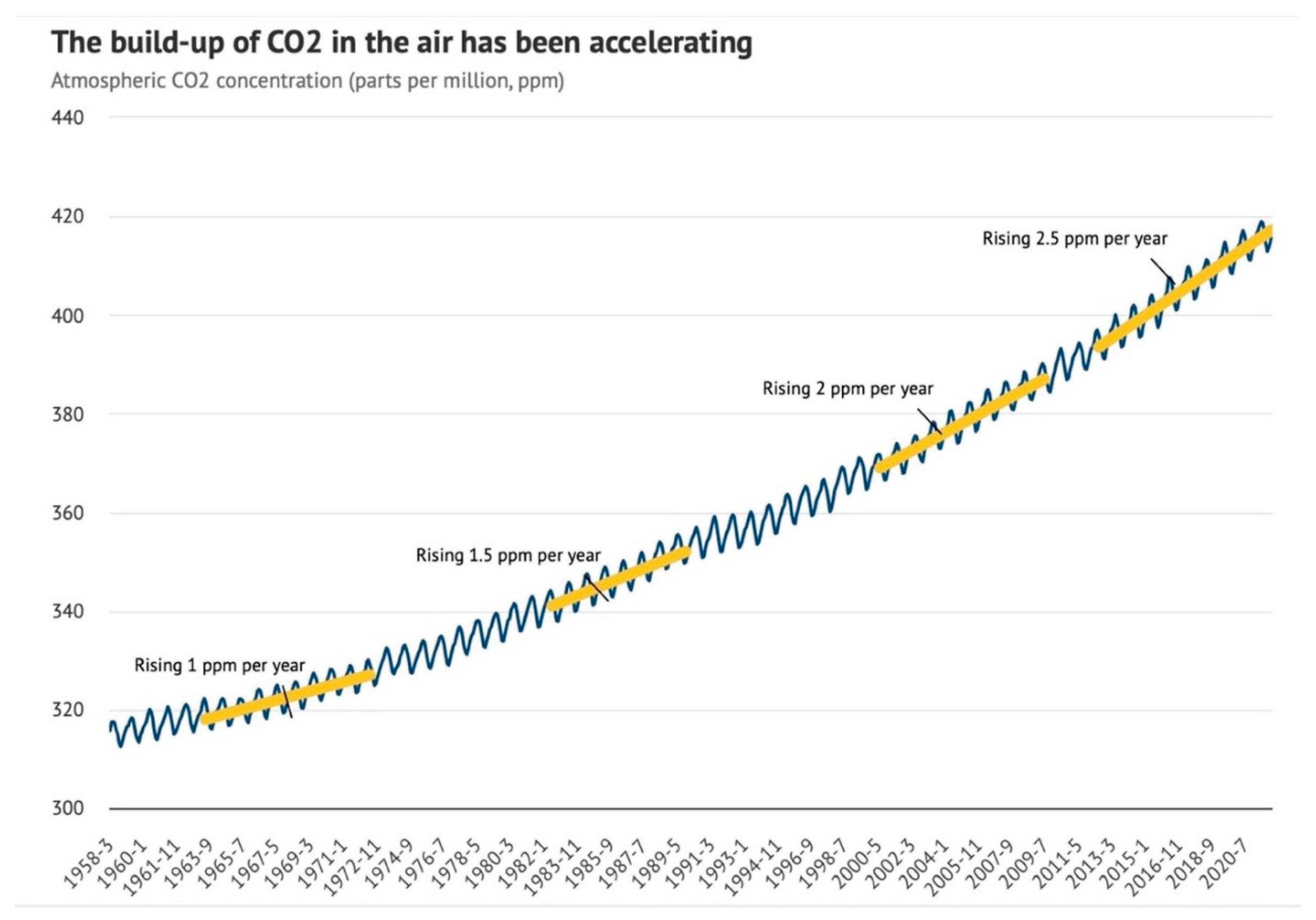
Figure 2.
Comparison of the observed AGR to the growth rate. From Briner et al, 2023 [8]. Permission from Creative Commons licenses.
Figure 2.
Comparison of the observed AGR to the growth rate. From Briner et al, 2023 [8]. Permission from Creative Commons licenses.
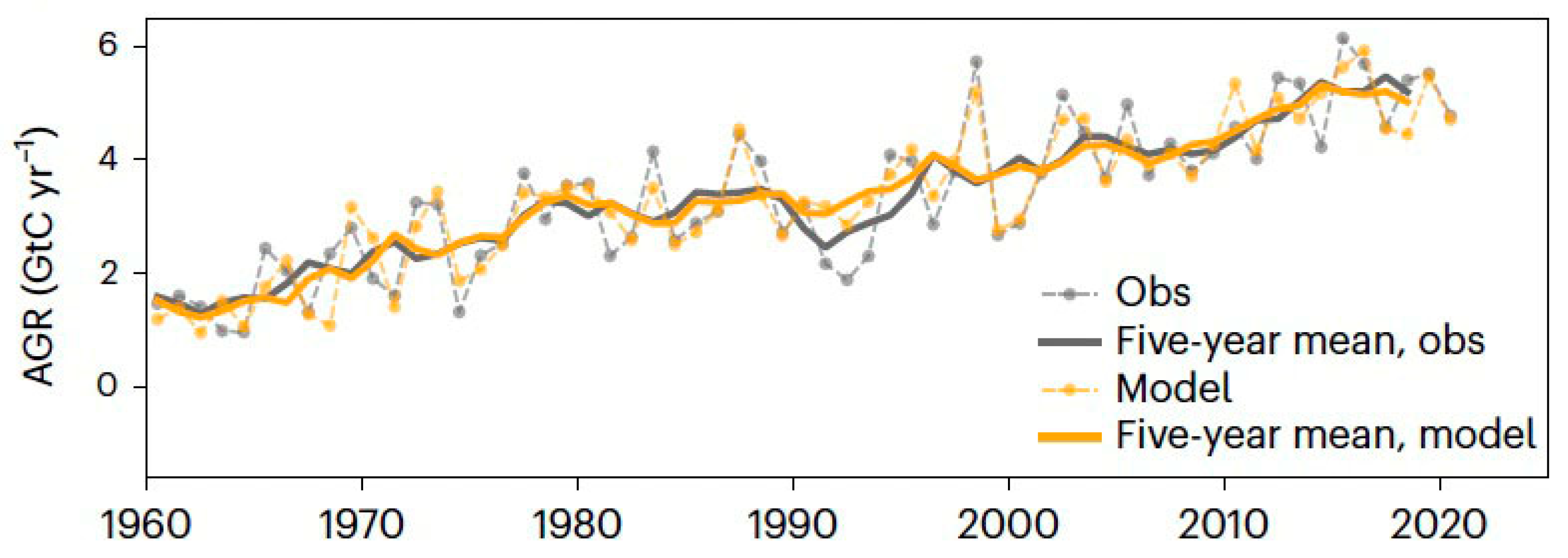
Figure 3.
Ocean Heat Content by year. Permission from National Centers for Environmental Information NCEI/NOAA.
Figure 3.
Ocean Heat Content by year. Permission from National Centers for Environmental Information NCEI/NOAA.
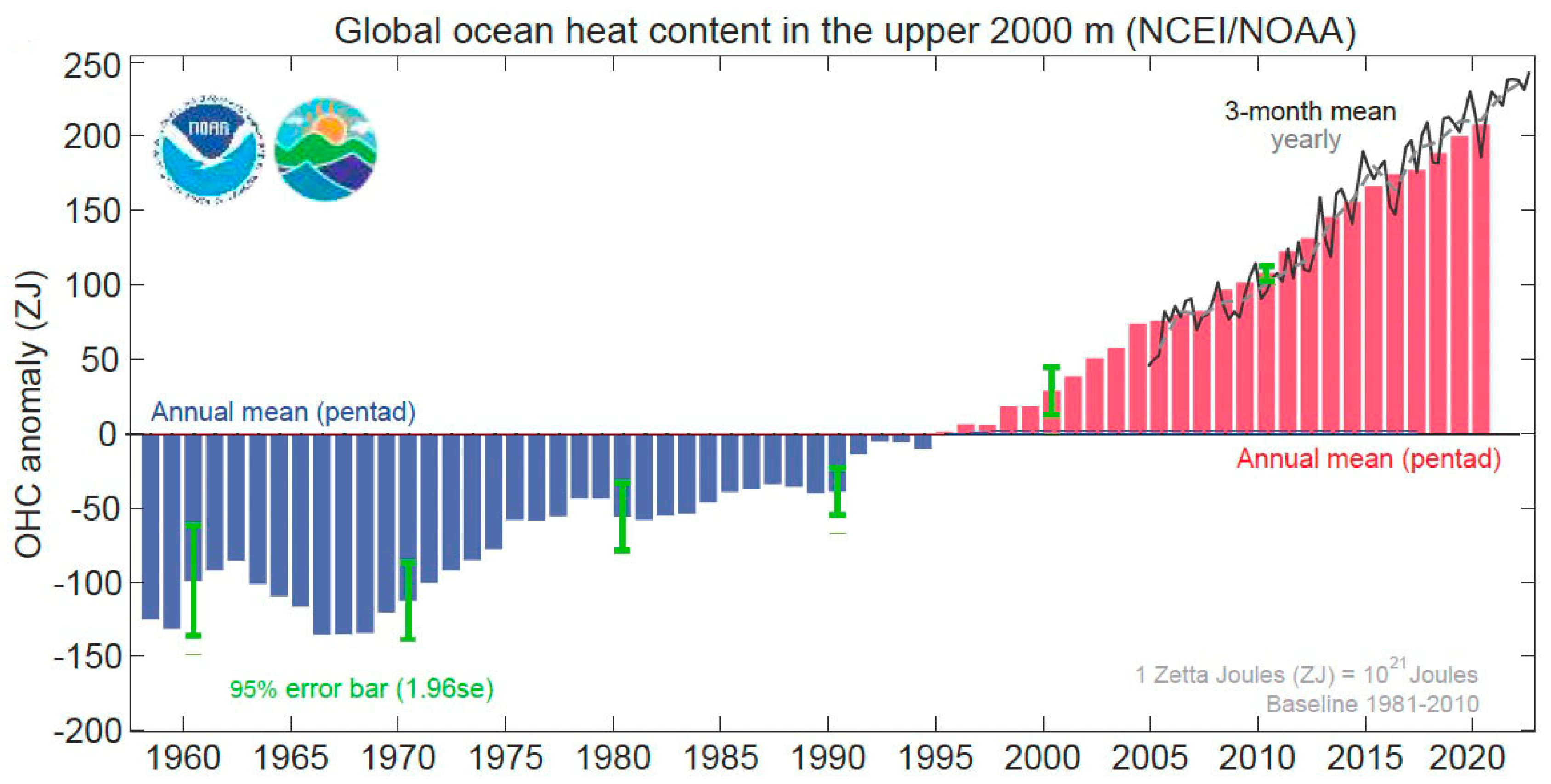
Figure 4.
Warming of the Arctic. NASA image by Robert Simmon, based on data including ship and buoy data from the Hadley Centre. Caption by Adam Voiland. (Permission from NASA Earth Observatory, Arctic Amplification).
Figure 4.
Warming of the Arctic. NASA image by Robert Simmon, based on data including ship and buoy data from the Hadley Centre. Caption by Adam Voiland. (Permission from NASA Earth Observatory, Arctic Amplification).
Disclaimer/Publisher’s Note: The statements, opinions and data contained in all publications are solely those of the individual author(s) and contributor(s) and not of MDPI and/or the editor(s). MDPI and/or the editor(s) disclaim responsibility for any injury to people or property resulting from any ideas, methods, instructions or products referred to in the content. |
© 2024 by the authors. Licensee MDPI, Basel, Switzerland. This article is an open access article distributed under the terms and conditions of the Creative Commons Attribution (CC BY) license (http://creativecommons.org/licenses/by/4.0/).
Copyright: This open access article is published under a Creative Commons CC BY 4.0 license, which permit the free download, distribution, and reuse, provided that the author and preprint are cited in any reuse.


