
Submitted:
23 August 2024
Posted:
23 August 2024
You are already at the latest version
Abstract
Artificial Intelligence (AI) and Machine Learning (ML) are rapidly advancing. These technologies have significantly impacted the consumer goods market, including the smart footwear industry. AI and ML are extensively utilized in the design and production of smart and agile footwear. There are various methods for manufacturing smart footwear, which can be categorized based on their applications. These include medical and healthcare smart footwear, assistive footwear for individuals with impairments, footwear designed for navigation in unfamiliar areas, foot-wear for studying foot movements and gait analysis, safety footwear, anti-skid footwear, foot-wear for the elderly, army shoes, and energy-harvesting footwear, among others. These smart shoes enable real-time patient monitoring and provide appropriate suggestions for their care. Additionally, smart footwear can be classified based on the tools and techniques used in their production, as well as the sensors and Internet of Things (IoT) devices integrated into them. This paper reviews the various tools and techniques used in the creation of smart footwear for dif-ferent applications.
Keywords:
Artificial Intelligence
; Machine Learning
; Smart shoes
; sensors
; IoTs
1. Introduction
“Education, more education and education is the only panacea for all country’s ills and evils”. Most Revered Sir Sahab ji Maharaj 5th Revered Leader of Ra Dha Sva Aah Mi Faith Dayalbagh, Agra, India
Any change in the society is mainly dependent on the literacy level of that society. Due to the high literacy level of people, they are more conscious about their health, keep themselves fit and good looking. It leads to increase in demand of different types shoes, which are smart and intelligent. It can not only measure your health parameters such as blood pressure, oxygen level, diabetic level and calories intake and burn etc., but also give consultation to keep yourself fit and healthy. The domestic sports shoe market in India is covered chiefly by four internationals brands REEBOK, ADIDAS, PUMA and NIKE [1,2,3]. These companies are actively involved in manufacturing the smart shoes. The NIKE has technological collaboration with Intel chip manufacturing company to incorporate intelligence in shoes. Now there is a paradigm shift from conventional mass produced shoe manufacturing to customer centred customized production to accommodate life style, fashion and moreover their health and comforts.
This paper is divided in following sections – introduction and history,
- Globally Smart shoe manufacturing companies
- Different functions of smart footwear
- Smart footwear and its components
- Different AI and ML techniques
- Applications of smart footwear
- Smart shoe manufacturing
- Issues and challenges
- Conclusion and future scope.
2. Historical Prospective
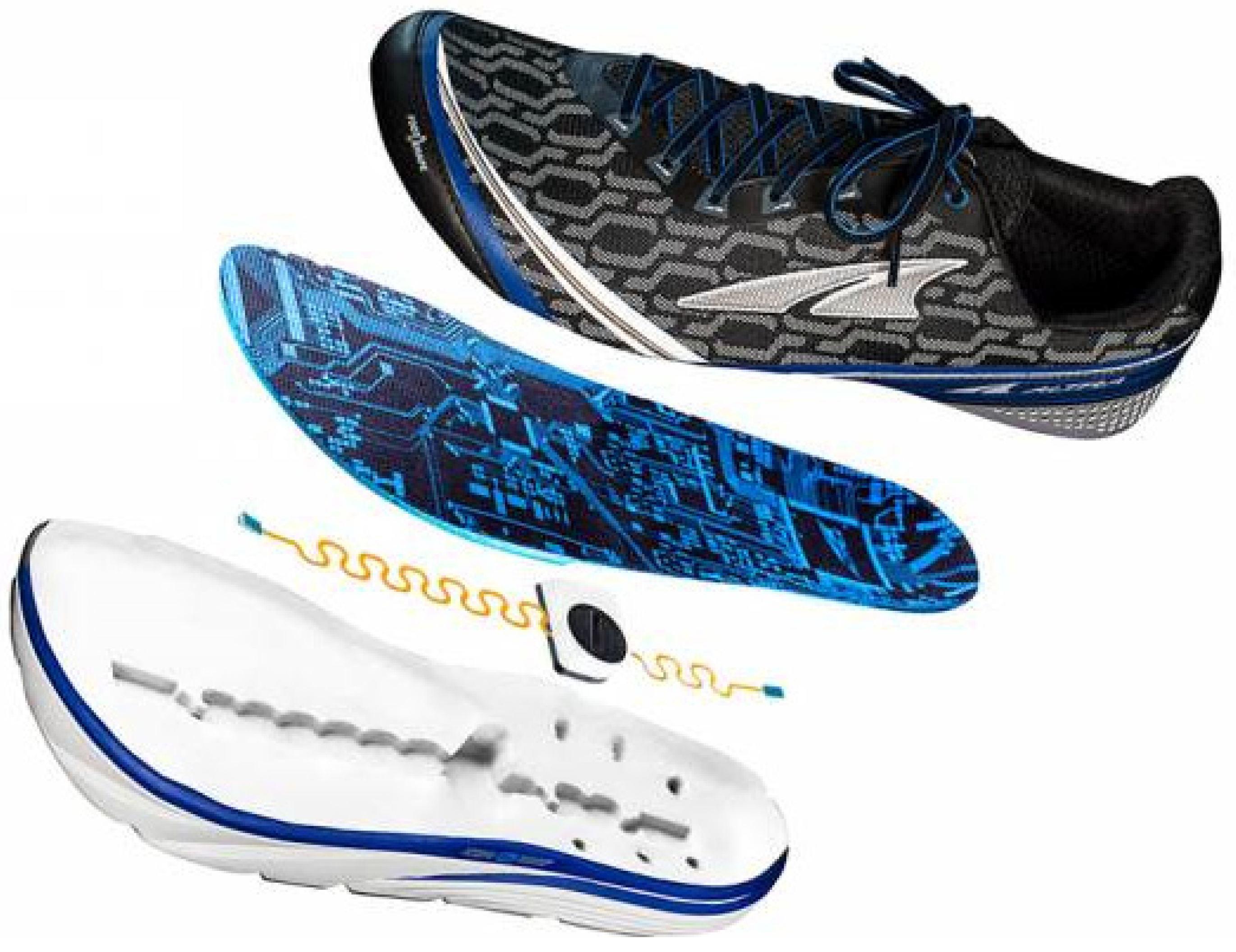
Smart footwear is an exciting area where the quality footwear integrated with the latest technology/technologies. The first commercial smart footwear is Altra Torin IQ. It has pressure sensors, power supplying battery, and a microchip that connects sensor data to mobile phone through Bluetooth. The data generated by pressure sensor are impact force, the footfall location, contact time and cadence. The prime objective of this smart footwear was to improve running performance, efficiency and prevent injuries. The data received from the performer shoe has many important information which may not be known earlier and it can completely change the performance of a sport’s person.
Figure 1.
Altra Torin smart running shoes [edgeservices.bing.com].
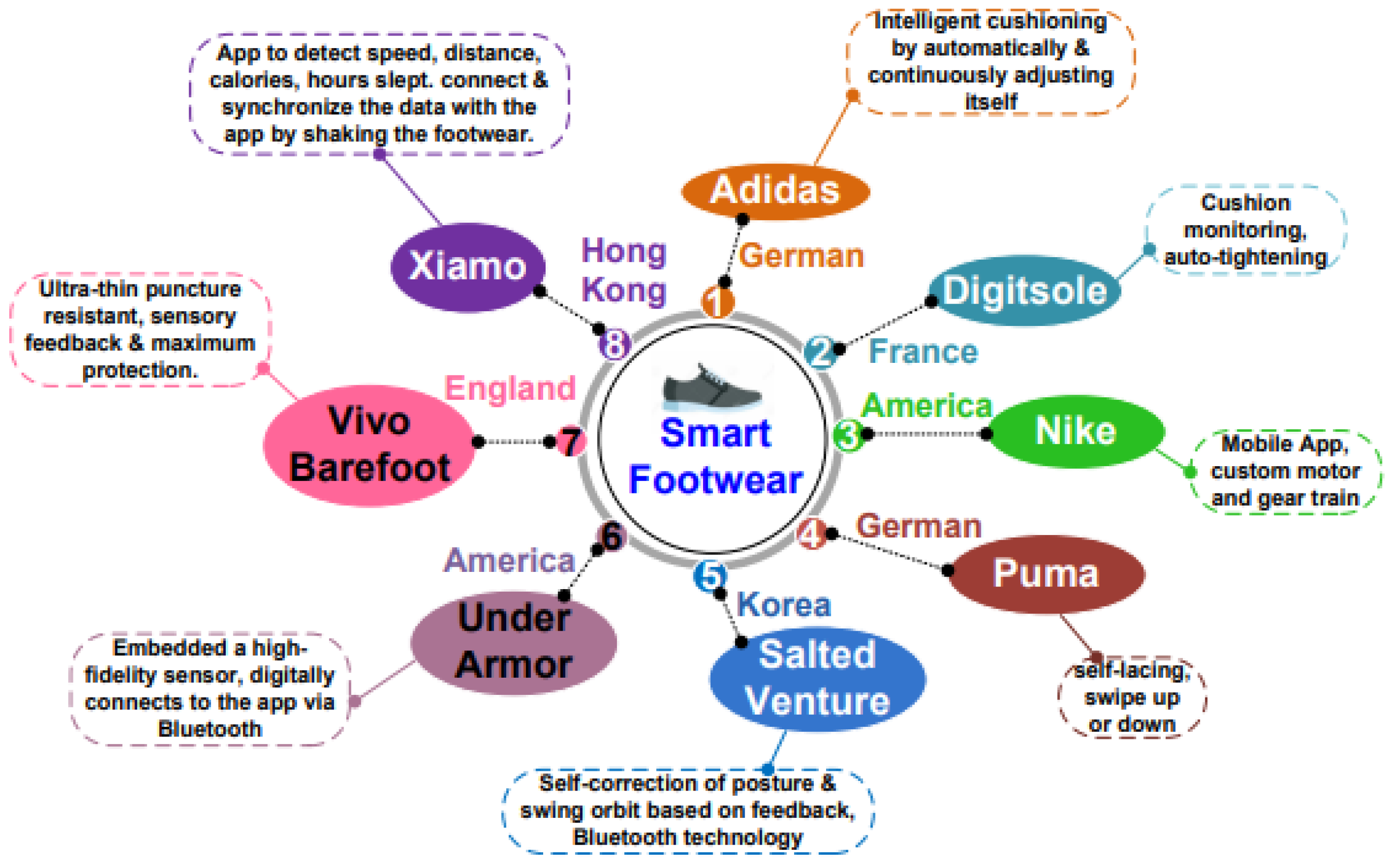
PUMA international sneaker manufacturing companies started working on smart footwear in the early 1980s [https://www.techbriefs.com/component/content/article/34453-the-story-behind-the-first-smart-shoe-puma-s-rs-computer-shoe].
After this many footwear companies globally started working on smart shoe and manufactured them. Some smart footwear manufacturing companies are shown in Figure 2.
Figure 2.
Smart shoe manufacturing companies globally [2402.01645v2 (arxiv.org)].
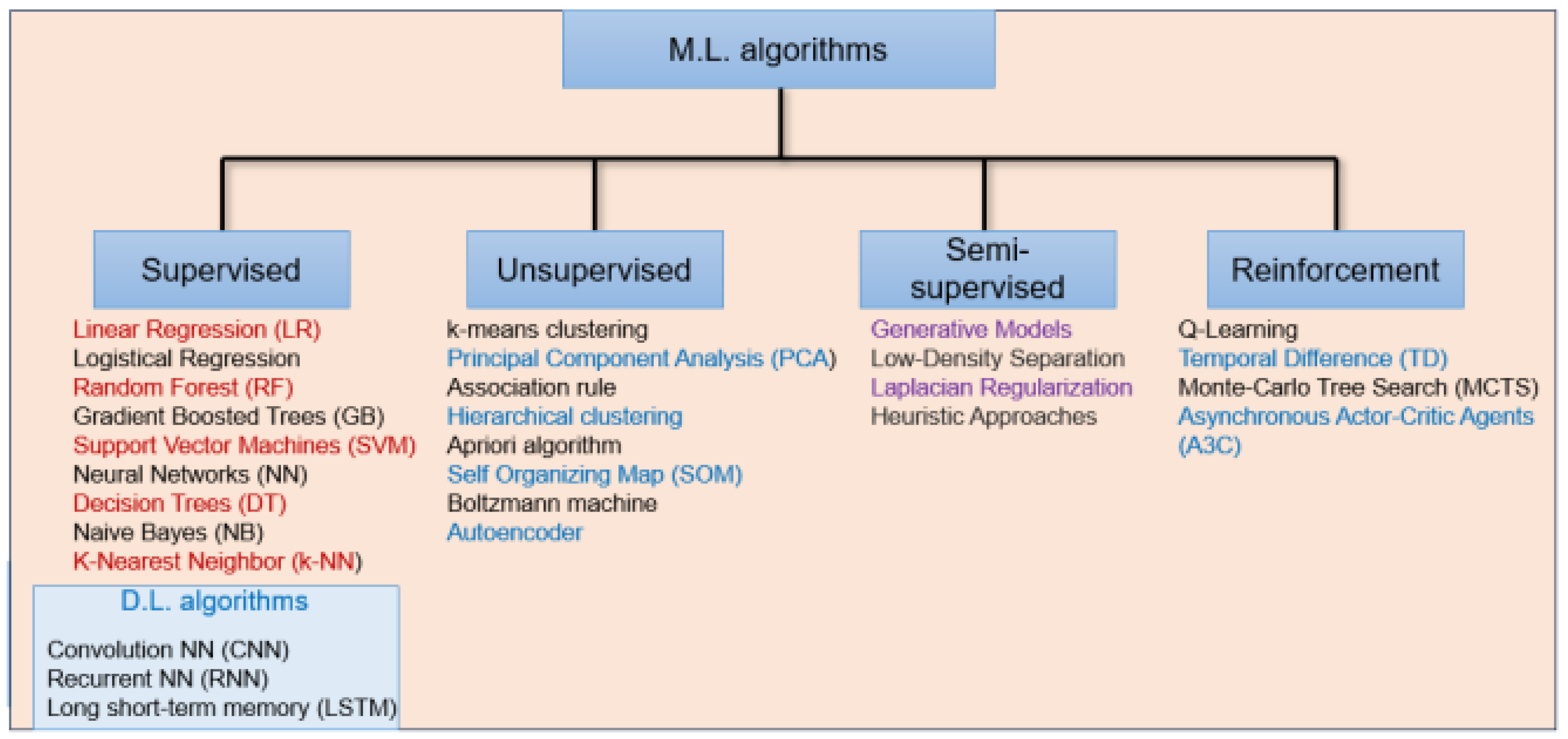
In every smart/intelligent footwear learning has an important role. The performance of smart footwear depends on how efficiently it will learn from the environment or past experience. The learning is shown in Figure 3.
Figure 3.
Different Learning algorithms [2402.01645v2 (arxiv.org)].
3. Smart Footwear and Its Functioning
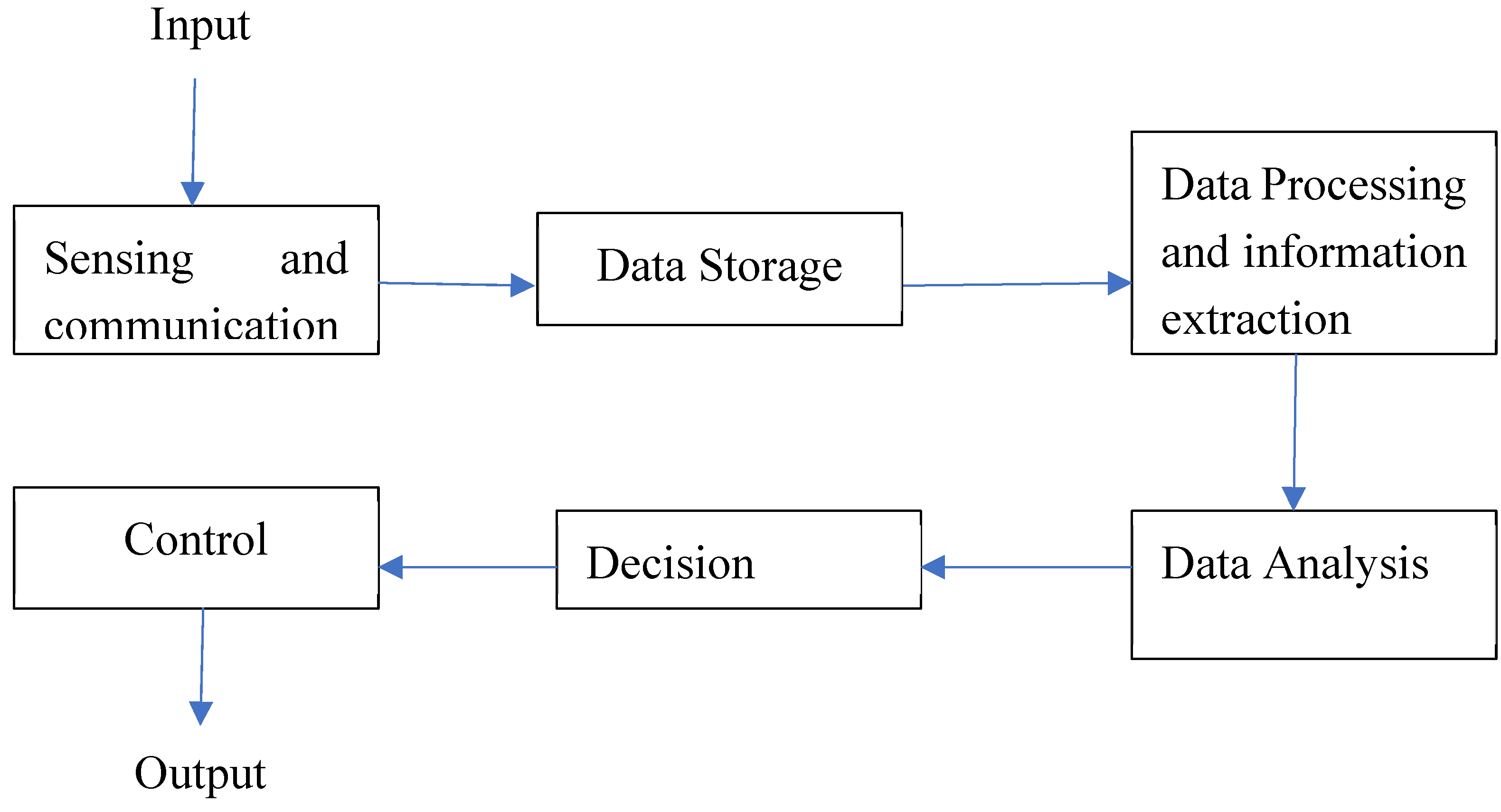
The smart footwear is normally consisting of different functional blocks as shown in Figure 5.
- Sensor and communication
Every smart footwear has some sensors or Internet of Things (IoTs) depending on the application of that footwear. For example, the motion analysis of a person for different purposes must have some pressure sensors, accelerometer and gyroscope on the footwear insole. Similarly, piezo electric sensors for energy harvesting smart shoes. In medical and health care applications temperature sensor, heart rate, blood pressure measuring sensor, step counter etc. All these sensors measure different quantities and then send them to some remote location or local memory device. Communication may be through internet or through some physical or virtual channels. The commonly used sensors/IoTs are summarised in Table 1. Different parameters tracked by sensors are also tabulated in Table 2.

Table 1.
Sensors/IoTs employed in smart footwear.
| Quantity to measure | Sensor/IoT | How to measure |
| 1. Foot Pressure | Force Sensor Resistor (FSR) | physical pressure and weight distribution and magnitude |
| Capacitive sensor (CS) | Measure change in capacitance due to pressure applied | |
| Piezo-electric sensor (PES) | Generate electric charge when pressure applied | |
| Piezo-resistance sensor (PRS) | Resistance change due to applied pressure | |
| Load cell | Measure force and weight distribution | |
| Strain gauge | To measure deformation due to pressure | |
| Pressure Sensitive Conductive Rubber (PSCR) | Changes conductivity when pressure applied. | |
| Flexible sensor | Thin and flexible sensors that can’t discomfort to foot. | |
| Micro-Electro-Mechanical sensor (MEMS) | Tiny sensor to measure pressure and acceleration | |
| Optical sensors | To measure pressure-induced changes | |
| Ultrasonic sensors | It uses high frequency sound waves to measure pressure. | |
| Resistive sensor | To measure changes in resistance due to pressure. | |
| 2 – Heart activity (Heart rate, its variability, R-R interval, Blood oxygen level), cardiac output, stroke volume) | ECG sensor | measure the electrical activity of the heart |
| Photo plethysmography (PPG) | Detect change in blood flow and oxygenation. | |
| Ballisto-cardiogram (BCG) | Measure mechanical movement of the heart | |
| Seismo-cardiogram (SCG) | Detect the vibrations produced by heart | |
| Impedance-cardiogram (ICG) | Measure changes in electrical impedance due to heart activity | |
| PES | Detect the mechanical movement of heart. | |
| Capacitive sensor | Measure change in capacitance due to heart activity. | |
| Bio-impedance sensor | Measure electrical impedance of body | |
| 3 - Measure orientation, acceleration, rotation and the inclination of the foot | Mechanical Gyroscope | Uses spinning wheel or rotor to detect changes in orientation. |
| Optical Gyroscope | Uses light to measure changes in orientation and rotation | |
| MEMS Gyroscopes | Tiny, low power sensors to detect changes in orientation and rotation | |
| Piezo-electric Gyroscopes | Use piezo-electric material to detect changes in orientation and rotation. | |
| Vibrating structure Gyroscopes | Uses vibrating elements to detect changes in orientation and rotation. | |
| Laser Gyroscopes | Uses laser light to measure changes in orientation and rotation. | |
| Fiber optic Gyroscopes | Uses fiber optic cables to detect changes in orientation and rotation. | |
| Quartz crystal Gyroscopes | Uses quartz crystal to detect changes in orientation and rotation. | |
| Solid state Gyroscopes | Uses solid state sensors to detect changes in orientation and rotation. | |
| 3-axis Gyroscopes | Measure movements and orientations in 3-D. | |
| 4- To measure acceleration of the foot, allowing the smart footwear to detect steps, pace and distance. | Piezo-electric Accelerometer | Use piezo-electric material to detect changes in acceleration |
| Capacitive accelerometer | Measure changes in capacitance due to acceleration | |
| Piezo-resistive accelerometer | Use piezo-resistive material to detect changes in acceleration | |
| MEMS Accelerometer | Low Power sensor to detect acceleration | |
| Strain gauge accelerometer | Measure change in strain due to acceleration. | |
| Quartz Crystal accelerometer | Use quartz crystal to detect changes in acceleration | |
| Surface Acoustic Wave (SAW) accelerometer | Use surface acoustic waves to detect changes in acceleration | |
| Optical accelerometer | Uses light to measure changes in acceleration. | |
| Inertial measurement Unit (IMU) accelerometer | Combine multiple sensors to measure acceleration, orientation and rotation. | |
| 3-axis accelerometer | Measure acceleration in 3-D | |
| 5 – location and tracking | GPS | Provide location, track distance, pace and route. |
| 6 - Temperature | Thermistor | Resistive sensor changes resistance with temperature. |
| Thermocouple | Generate voltage proportional to temperature | |
| IR sensor | Measure thermal radiation to detect temperature | |
| Thermopiles | Uses multiple thermos couples to detect temperature | |
| RTDs | Measure changes in resistance due to temperature | |
| Thermistor based sensor | Use thermistors to detect temperature | |
| MEMS | Small size sensor to measure temperature | |
| Fiber optic temperature sensor | Uses fiber optic cables to measure temperature | |
| Piezo-electric | Use piezo – electric materials to detect temperature | |
| Calorimetric sensor | Measure heat transfer to detect temperature | |
| 7- Measurement of sweat rate, its composition, Electrolyte level, hydration level, stress level, physical exertion, and heat stress | Electro-dermal activity (EDA) sensor | Measure electrical conductivity of sweat. |
| Galvanic Skin Resistance (GSR) sensor | Measure change in skin conductivity due to sweat. | |
| Capacitive sensor | Measure change in capacitance due to sweat. | |
| Resistive sensor | Measure change in resistance due to sweat. | |
| Hygrometer | Measuring relative humidity, including sweat levels | |
| pH sensor | Detect change in skin pH due to sweat | |
| Conductive sensor | Measure electrical conductivity of sweat | |
| Impedance sensor | Measure change in impedance due to sweat | |
| Optical sensor | Uses light absorbance or reflectance due to sweat | |
| Bio-impedance sensor | Measure change in skin impedance due to sweat. | |
| 8-Measurement of BP, Pulse transit time, Pulse wave velocity, oxygen level | Piezo – electric sensor | Measure change in pressure |
| Capacitive sensor | Measure change in capacitance due to blood flow | |
| Resistive sensor | Measure change in resistance due to blood flow | |
| Optical sensor | Use light for detecting blood flow | |
| Bio-impedance sensor | Measure impedance change due to blood flow | |
| BCG sensor | Measure mechanical movement of the heart | |
| SCG sensor | Detect vibrations produced by heart. | |
| PPG sensors | Measure change in light absorption due to blood flow |
Table 2.
Different sensors and their working principles.
| S.No. | Sensor type and working principles |
| 1 | Ultrasonic sensor for assistive smart footwear- measures the distance to an object using ultrasonic sound waves with the help of a sender and receiver. It can be classified based on –
|
| 2 | LiDAR Sensor – means laser imaging, detection, and ranging. It measures the time of laser light to travel and return back to receiver after striking with target. |
| 3 | Pressure sensor
|
| 4 | Accelerometer and Gyroscope- used to measure movement. Accelerometer is used to measure linear acceleration, while gyro is used to track rotation or twists. |
| 5 | Sweat Sensor – It is a flexible sensor for sweat analyte detection. Some of the most commonly sweat sensors measure various parameters such as
|
| 6 | Temperature sensor- Measure temperatures in different ranges. Different types of Temperature sensors are:
|
| 7 | Humidity sensors – to measure relative or absolute humidity. Different types of humidity sensors are:
|
| 8 | Gas sensors – detect and measure the presence of specific gases in ppm or ppb, gas flow rate, gas temperature or gas pressure. Different types of sensors:
|
| 9 | Piezo-electric sensor- It is sensor uses piezoelectric materials to measure physical parameters such as pressure, acceleration, vibration, force, strain and torque. The mechanical stress is converted into electric charge in PES. Different types of piezoelectric sensors are:
|
| 10 | PRS – PRS is useful to measure pressure, strain, force, acceleration, acceleration and vibration. It converts physical parameters into electric signal. Different types of piezo-resistive sensors are:
|
| 11 | EMG sensor |
Table 2.
Parameters tracked by Sensors in smart footwear.
| 1 | Parameters to track |
| 2 | Foot pressure and its distribution |
| 3 | Foot temperature |
| 4 | Humidity and sweat level |
| 5 | Motion and acceleration (includes step count, distance, speed, etc.) |
| 6 | Orientation and balance |
| 7 | GPS location and tracking |
| 8 | Biomechanical data (e.g. pronation, supination) |
| 9 | Muscle activity (e.g. EMG sensors) |
| 10 | Health parameters (e.g, Blood pressure, oxygen level, heart rate, diabetic level) |
| 11 | Obstacles in the path |
| 12 | Monitoring Centre of Gravity of body |
There are certain issues related to senors/IoTs used in smart footwear as mentioned below:
- Scalability – increase the number of sensors/IoTs
- Standardization issues– which sensors/IoTs/technology is to use
- Inter-dependency
- Programming complexity
- Handling of big data
- Battery backup and power issues
- Communication problems
- Robustness
- Customer Data security
The working of Smart insoles (SIs) of a footwear depends on sensors/IoTs, their real time data transfer to decision module such as smartphone App developed for a particular application. It is also called the brain of smart shoe, because intelligence lies there.
The data collection mdule from sensor/IoT is the key components of smart footwear. The customer data is collected in this module and used by other modules of smart footwear to optimize the behavior for taking real time decision.
2. Data Storage
The data received in the above step can be stored at suitable place, so that it can be quickly retrieved and used for further action. The amount of data generated is depending on the following five Vs:
- Velocity –Data generated per unit time.
- Volume – Amount of Data generated from different sensors/IoTs
- Variety – structure, source, and format of data
- Value – valuable proposition added to raw data to make it useful.
- Veracity – High fidelity and reliability
The smart footwear sensors/IoTs generate high speed, large volume data needs sufficient and fast memory to store and retrieve data (sometimes cloud storage is used). This big data is used for further action. The variety of sensors/IoTs used in smart insole/footwear, summarized in Table 1. These sensors/IoTs have their own merits and demerits. The selection of suitable sensors/IoTs mainly depends on the problem in hand, their speed, shape and size, accuracy, range of variable to measure, cost, and power consumption.
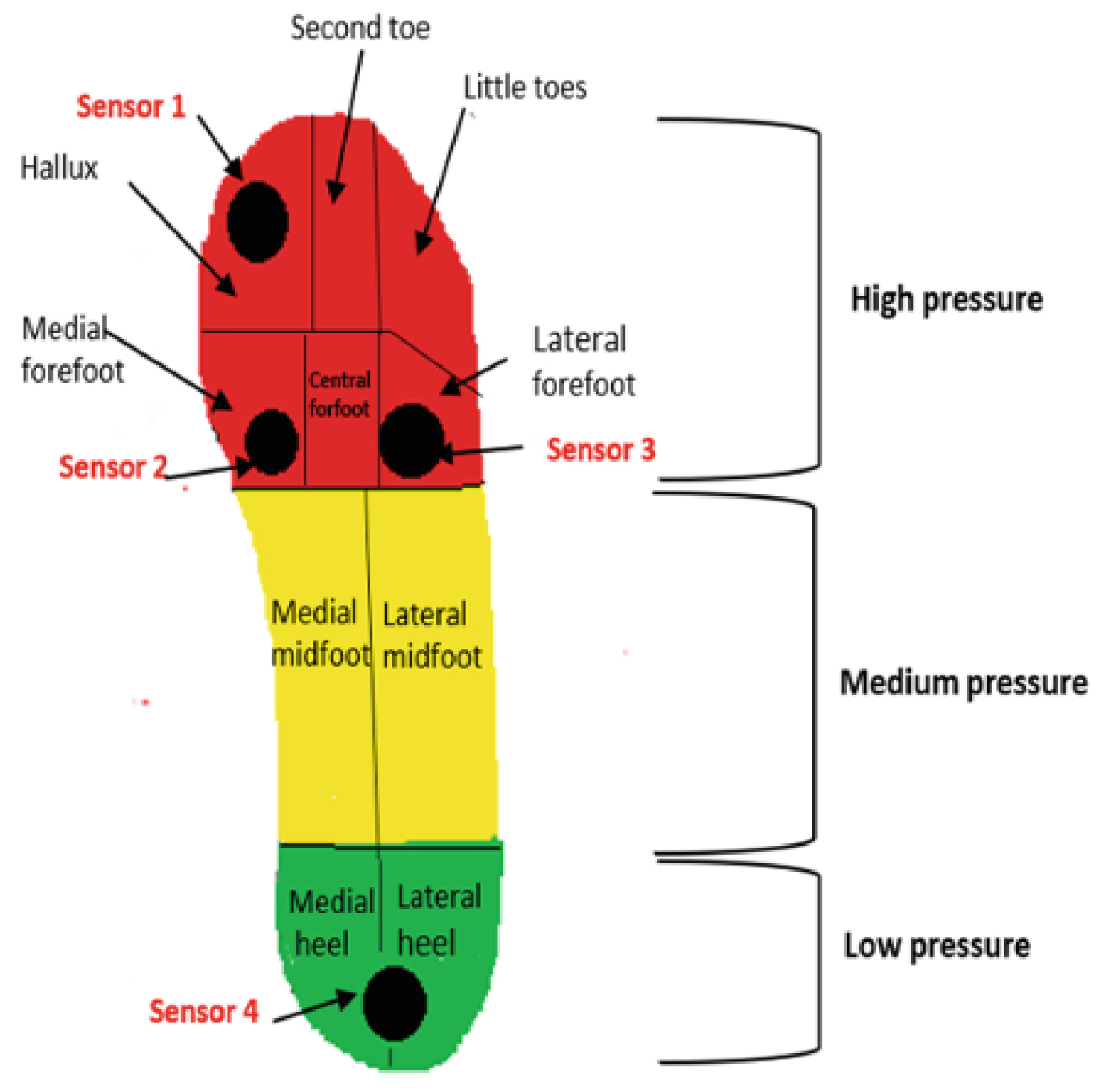
The perfect position for the placement of Planter pressure sensors in the smart footwear/insole as shown in Figure 4. The sensor/IoT is located at
Low pressure area - Heel,
High pressure areas –
Lateral Forefoot,
Medial Forefoot, and
Hallux.
Figure 4.
Pressure sensor locations at smart insole.
4. Data processing and information extraction
The data is pre-processed before using it. Mainly in pre-processing of data, the missing data is completed or removed, remove noise from the data, and also check the erroneous data. The pre-processed data is then used for information/feature extraction.
5. Data Analysis
Different soft computing techniques such as neural network, fuzzy information processing system, optimization based on nature inspired techniques, etc. are used to analyse the pre-processed collected data for some inferencing.
6. Decision making
The appropriate decision is to be taken based on the analysis.
7. Control
Once the appropriate decision has been taken using some intelligent tools, then suitable control action is initiated.
Figure 5.
Functional Block Diagram of Smart Footwear / Smart Insole.
Different components of Smart footwear
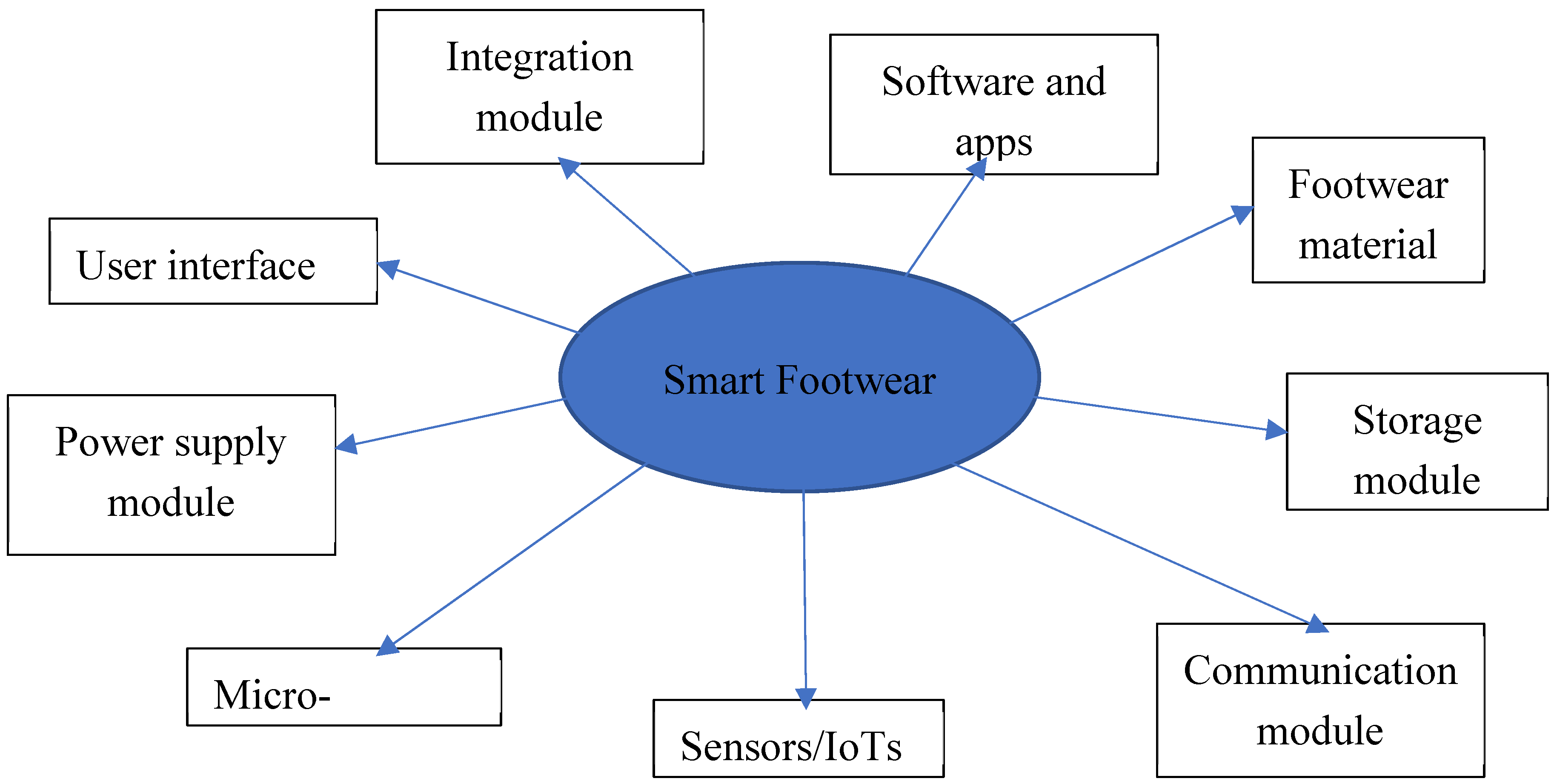
Smart Footwear has many components depending on their applications, but some commonly used components (Figure 6) are mentioned below:
- Sensors/IoTs – To measure different variables such as pressure, temperature, humidity, acceleration, speed, location etc. There are variety of sensors/IoTs available in the market based on their cost, accuracy, range, shape and size, working principle etc.
- Micro-controllers- To process data obtained from sensors/IoTs and control other components.
- Storage Module – To store data received from sensors/IoTs, suitable place and fast memory is needed. It also needs suitable transmission channel and software.
- Communication module – it enables connectivity of smart footwear to smart phones, smart home devices or other systems via blue tooth, wi-Fi, or NFC.
- Power supply module: Battery, charging (through USB, wireless or other charging methods such as energy harvesting devices) and discharging circuitry, battery management system.
- User Interface – Display of results, buttons or touch sensors for user interface.
- Footwear Material to protect electronic circuits.
- Software and applications – It is required for data analysis, feedback and customization.
- Integration module - Integration with other devices and its compatibility. Actuators, motors, alert systems and other safety mechanism.
Figure 6.
Smart Footwear Components.
Applications of Smart Footwear
- Games and Sports– Smart footwear is very commonly used in sports and games to enhance the players’ performance [7,8,9].
- Fitness of an individual – It is used in different fitness activities such as walking, running, jogging, cycling or doing exercise.
- Health care and Medical – It is used for diagnosis of different disease or abnormality in the body. It is also used to maintain the history of different bio-physical parameters of an individual. Smart footwear for diabetes and rehabilitation [18,19,20,27,28].
- Industrial and work safety- This is also a prominent area where smart footwear is used to protect the industrial worker from hazardous environment or any safety issue.
- Women and kids safety – To safeguard women and kids from any unforeseen situation.
- Gaming and virtual reality
- Fashion and life style.
- Army shoes [15,16,17]
Smart shoe manufacturing and its challenges
- Selection of suitable sensors
- Sensor accuracy and its reliability
- Power consumption and battery life
- Self-powered sensors
- Comfort and wear ability
- Durability and water resistance
- Data transmission, storage and analysis and feedback mechanisms
- Suitable tools and techniques for decision making and control
- Integration with other devices and systems
Challenges and issues related to smart footwear
- Reduction of power consumption and battery life
- Comforts and wear ability – Integration of sensors and electronic circuits can compromise comfort and wear ability.
- Withstand with environmental conditions- dust, dirt, water, mud, humidity and temperature variations.
- Data accuracy and reliability – This is mainly dependent on sensor selection and their limitations.
- User interface and feedback – Quality of smart footwear and customer satisfaction is also an important issue in its development.
- Seamless Integration is also an issue.
- Cost and affordability
- Privacy and data security
- Calibration issues related to sensors
- Lack of national and international standards
- User adoption and awareness
- Balance between fashion and functionality
- Sensor performance may be affected by humidity and sweat.
- Weight of smart footwear
- Compatibility with different footwear types
Different research articles included here are summarized in the following Table 3.
Table 3.
Different research papers on Smart footwear /insole.
| S.No. | Authors | Number of sensors | Type of sensors | Location | Data Transfer |
| 1 | James B. Wendt and Miodrag Potkonjak., 2010 [32] |
Reduction from 99 to 12 | Pressure sensors | Under the foot. | Data collected at 60 Hz |
| 2 | Lin Shu al.,2010 [29] |
6 | PRS | At metatarsal areas and heel |
Bluetooth |
| 3 | Biofoot 2012 [30] | 64 | Piezo electric | Under foot | Wi-fi USB |
| 4 | Wiisel 2013l [32] | 14 | Resistive Accelerometer Gyroscope |
insole | Bluetooth |
| 5 | E. Klimiec et al., 2014 [31] |
8 | PVDF sensors | Under foot. | Bluetooth 2.4 GHz |
| 6 | E.S. da Rocha et al.,2014 [29] |
NA | Pressure sensors | Distributed in the forefoot, midfoot (MF) and rear foot (RF). |
Plantar pressure for obese and non-obese participants at Fs=100Hz. |
| 7 | Moticon 2015 [33] | 13 | Capacitive 3D Accelerometer |
Under foot | wireless |
| 8 | Tek scan 2015 [41] | 960 | Resistive sensors |
Under foot | USB |
| 9 | Techno 2015 [35] | 58 | Resistive Accelerometer |
Under foot | Bluetooth |
| 10 | Dyna-foot 2 [54] | 58 | Resistive Accelerometer | insole | Bluetooth |
| 11 | James Coates et all.,2016 [37] |
42 | Multi-sensor (Accelero- meter, Rotation, Humidity, Temperature, GSR, Bioimpedance, Force, Temperature |
Sensors used to measure temperature and force located at heel, great toe, 1st metatarsal (MT) joint at the base of the great toe 5th MT joint at the base of the small toe, force sensor with bio-impedance placed at mid foot, GSR sensor can be placed below 5th M. |
Bluetooth and Wi-Fi with Fs= 20 Hz. |
| 12 | E Klimiec et al.,2017 [42] |
8 | Piezoelectric transducer made of polarized PVDF foil. |
Transducer-1 on heel(H), transducer-2 on MF, transducer-3 on MT, transducer-4 on great toe (GT), transducer-5 on lateral midfoot (LM), transducer -6 on MT1, transducer -7 on MT, transducer -8 on lesser toes(LT). |
Packet form Data is transmitted |
| 13 | Arion smart Insoles 2018 [39] |
8 | Accelerometer, Gyroscope and GPS. |
Insole | Bluetooth |
| 14 | Paro-tech [40] | 24 to 36 | PRS Hydro-cell |
insole | Memory Card |
| 15 | Andrei Dr˘agulinescu, et.al. 2020 [44], Sazonova et.al 2011 [43] | As per need | a clip on accelerometer and force-sensitive resistors |
insole | Bluetooth unit |
| 16 | Rescio, G.; [45], Najafi, B.; et.al. 2017 [46] | 5 | Optical fiber sensors | insole | N/A (LabVIEW interface only) |
| 17 | Bonafide, C.P.; et. al. 2018 [47] | As per need | Pulse oximeter | WiFi / Bluetooth | |
| 18 | Pedar-X Insole [55] | 99 | PES | Smart insole | Bluetooth, Optical fiber, USB, |
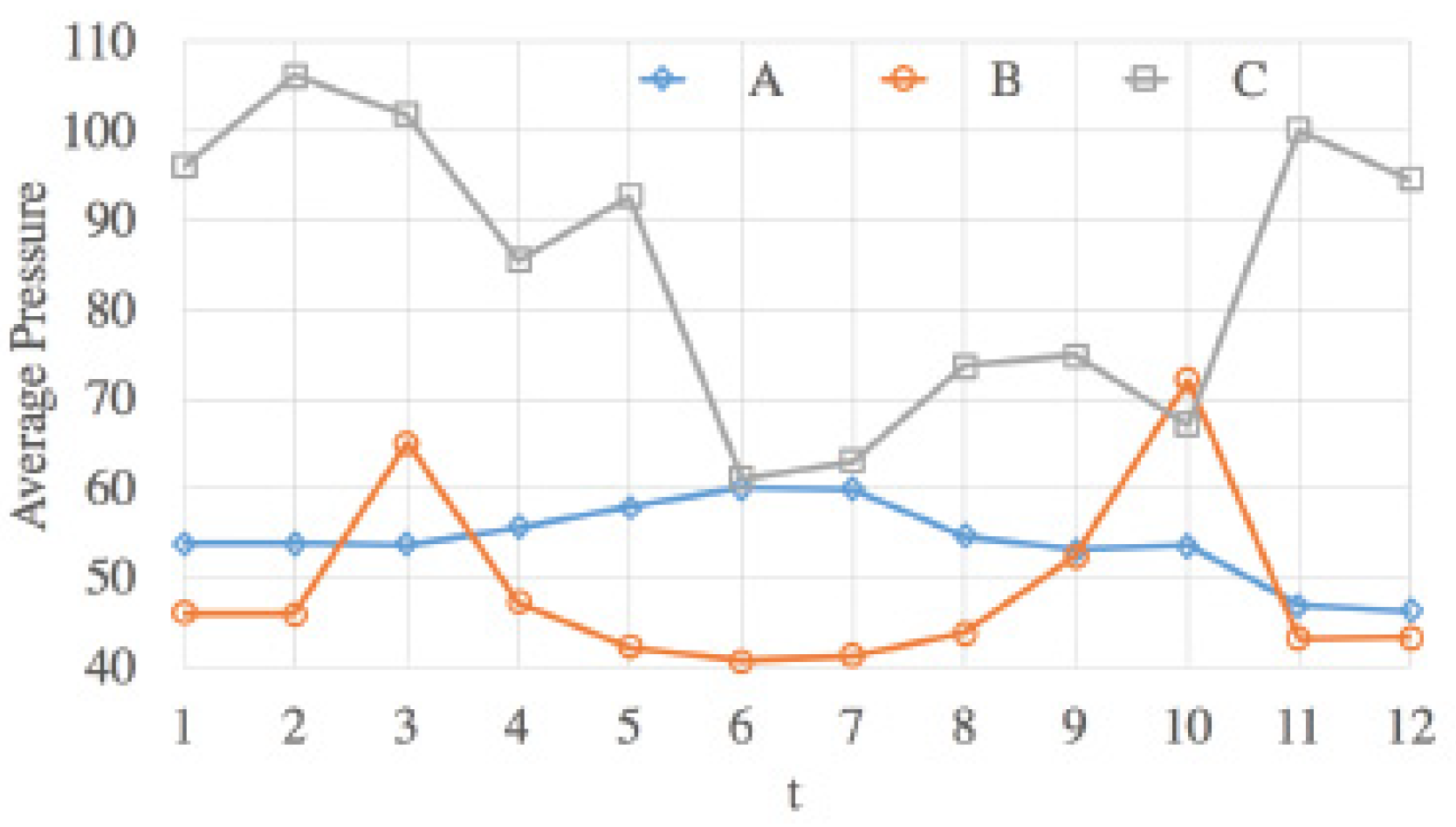
The smart soccer shoe developed by Bo Zhou and his team [50] is consisting of textile resistive pressure sensor and fitted in soccer shoe of Adidas. The sensors normally made up of 2- fabric layers with parallel metallic stripes. The sensors are placed in 3 areas; first -outside front, second-inside front and third - inside heel as shown in Figure 7. This sensors efficiently gather the football interaction parameters with smart shoe and results are shown in Figure 8.
Figure 7.
Smart Soccer shoe with three.
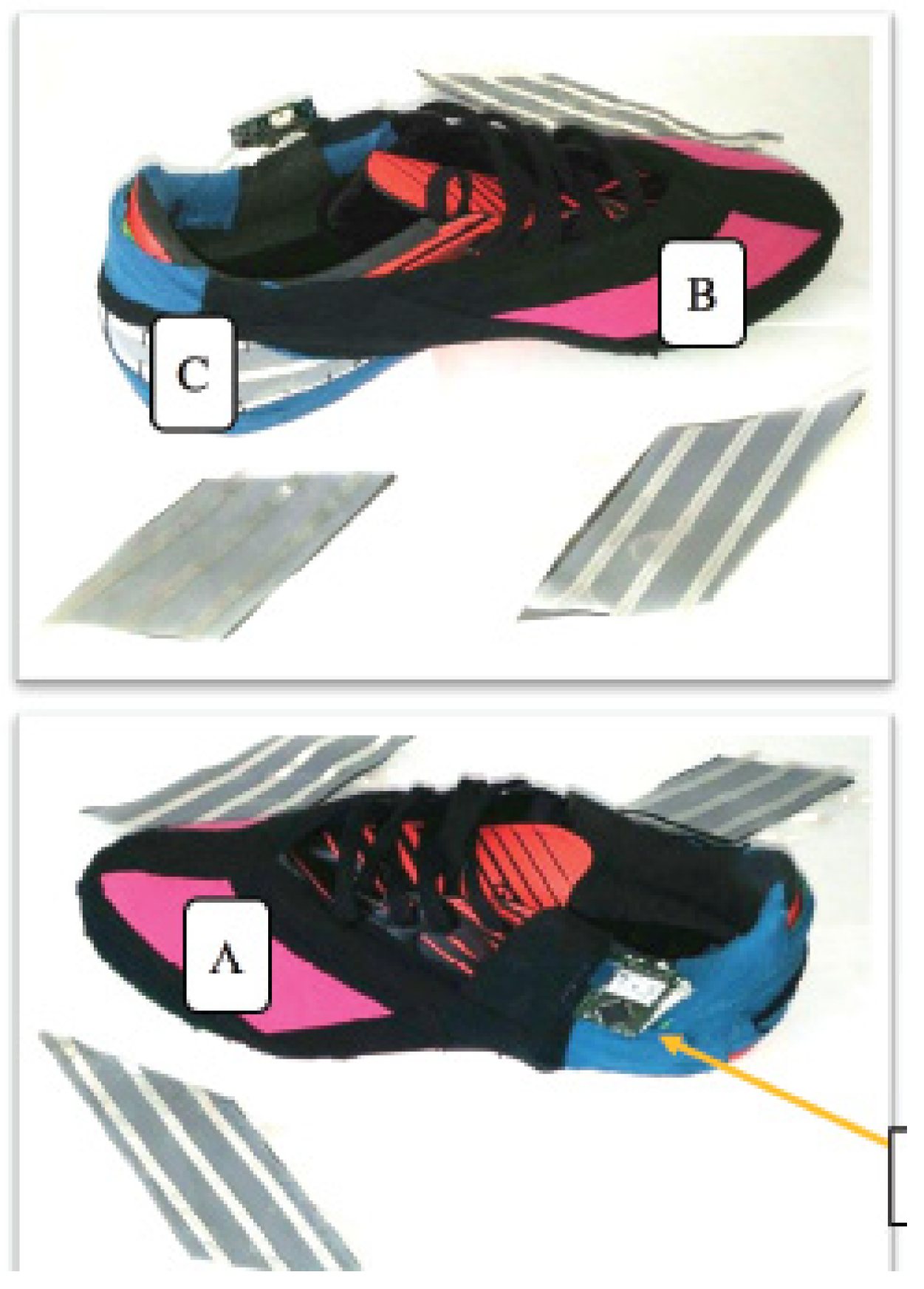
Figure 8.
Mean Pressure from every sensor patch sensors (two on sides and one on heel) during the impact of ball.
Figure 8.
Mean Pressure from every sensor patch sensors (two on sides and one on heel) during the impact of ball.
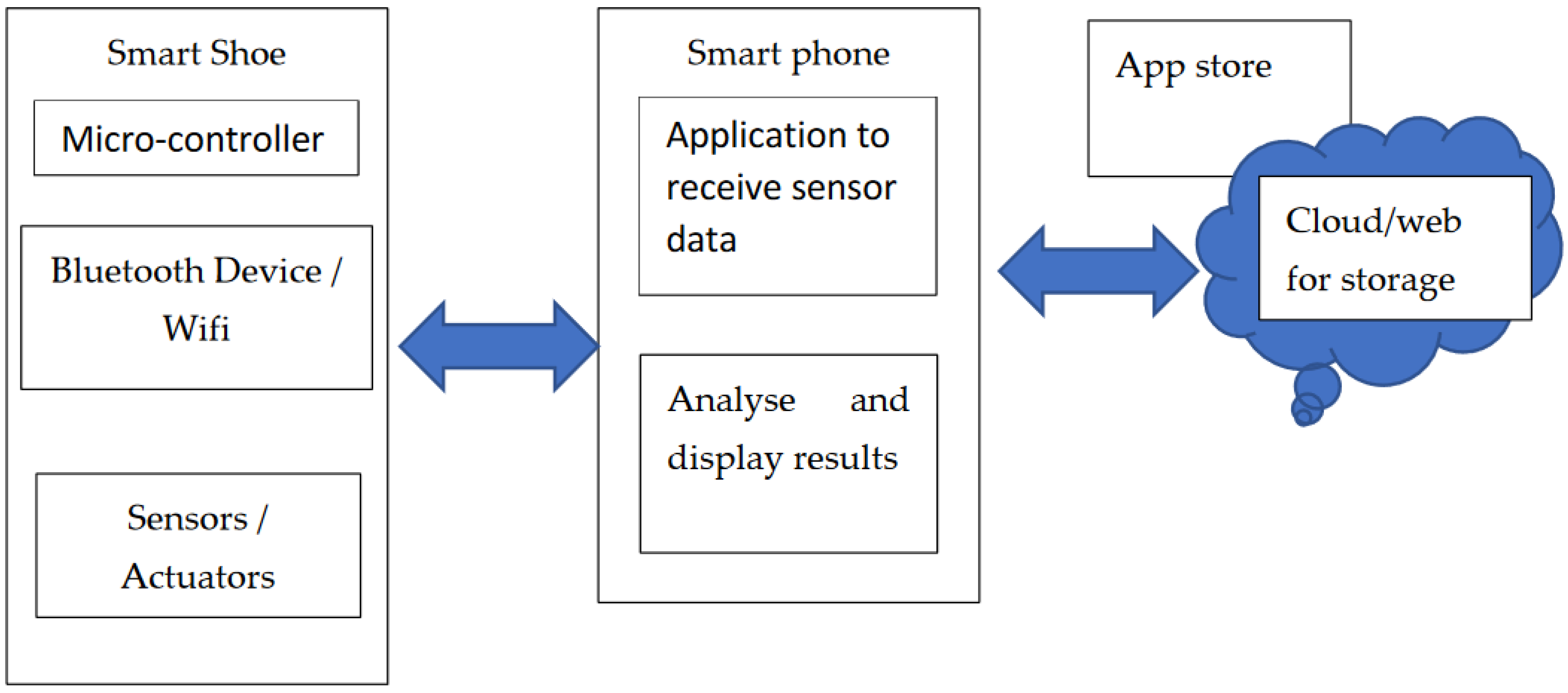
In smart tracking shoe GPS system plays an important role. Figure 9. Shows the system architecture for smart tracking shoe. The important components of smart shoe are:
Micro-controller,
Sensors,
Bluetooth Device and
Smart phone.
Figure 9.
Smart shoe architecture.
The real-time foot parameter monitoring system using a smart insole/ footwear may have two applications. One is to monitor the patient/user data on mobile and second is to use at web application. In first application, all user data such as gate cycle data over time, plantar pressure data, medical parameters (i.e. Blood pressure, Temperature, blood oxygen level, diabetic level etc.) is stored on a mobile and also send them to a Web for the doctor’s use. This application is quite useful for the doctor to analyse the situation of his patient and suggest suitable medicine.
Elderly people needs a reliable system for continuous monitoring and control all the time, while performing his/her routine works. To achieve this objective, it is necessary to use suitable sensors/IoTs of reasonable cost to ensure good, reliable and accurate monitoring of situation without an attendant. These elderly people normally face many physical, mental and health issues due to age factor such as the problem of dementia i.e. weakening of memory and delay in brain functions [51]. These challenges are real danger for them. They may fall down due to lack of attention [52] and can cause long term pain, sprained ligament, bruise, or sprained muscle, functional impairment or lead to disability or major injuries or bones fracture of joint fractures, deep cuts and head injuries, etc. Sometimes, these may cause to damage organs like kidney or liver and death also. The fall death rate is estimated about 43,000 in USA of age group 65years and above. In India, it is reported that around 95,000 deaths in 2018-19. [53].
The factors for falls in the elderly people include [56]:
Aging
Gender
Visual impairment
History of falls
Depression
Gait problems
Vertigo
Imbalance
Fear of falling
Chronic conditions
Use of antidepressants
There are various techniques for identifying the fall of elderly people. The most common technique is to use smart insole/footwear to measure different parameters with suitable sensors/IoTs to identify different routine activities.
The smart footwear architecture is shown in Figure 9 consisting of smart insole on which different sensors/IoTs are installed along with microcontroller, energy system and reliable data transfer unit to mobile and/or web.
In an another study, the Pedar system the smart insole was partitioned into 10 areas (refer Figure 10): 1—heel; 2—LM; 3–7—first to fifth MT; 8—H; 9—second toe; 10—Toes 3–5. For better clarity in Figure 11, as compared to [48], LM, instead of MF.
Figure 10.
The L-foot and R-foot insoles of Pedar system divided in 10 areas [48].
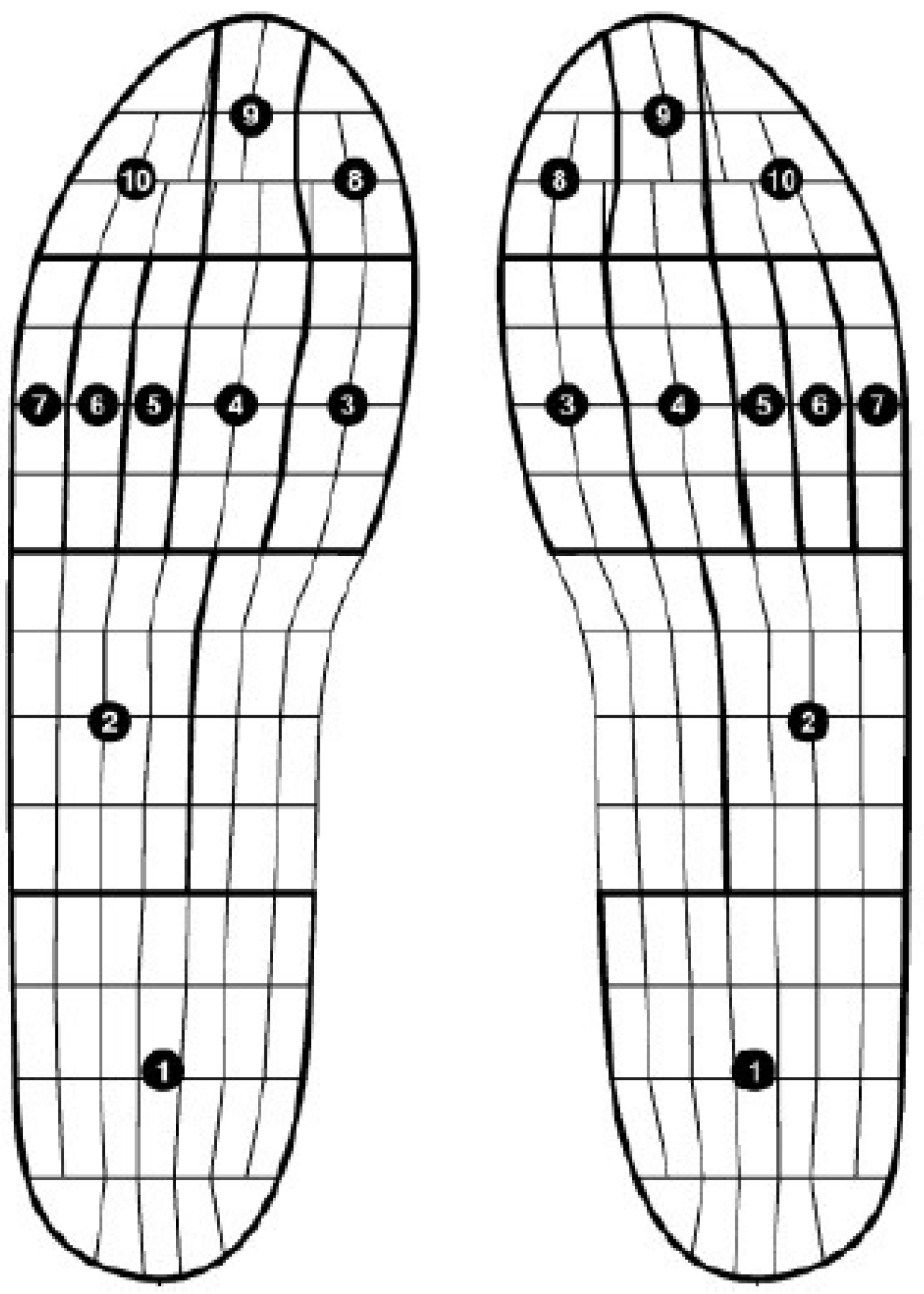
Figure 11.
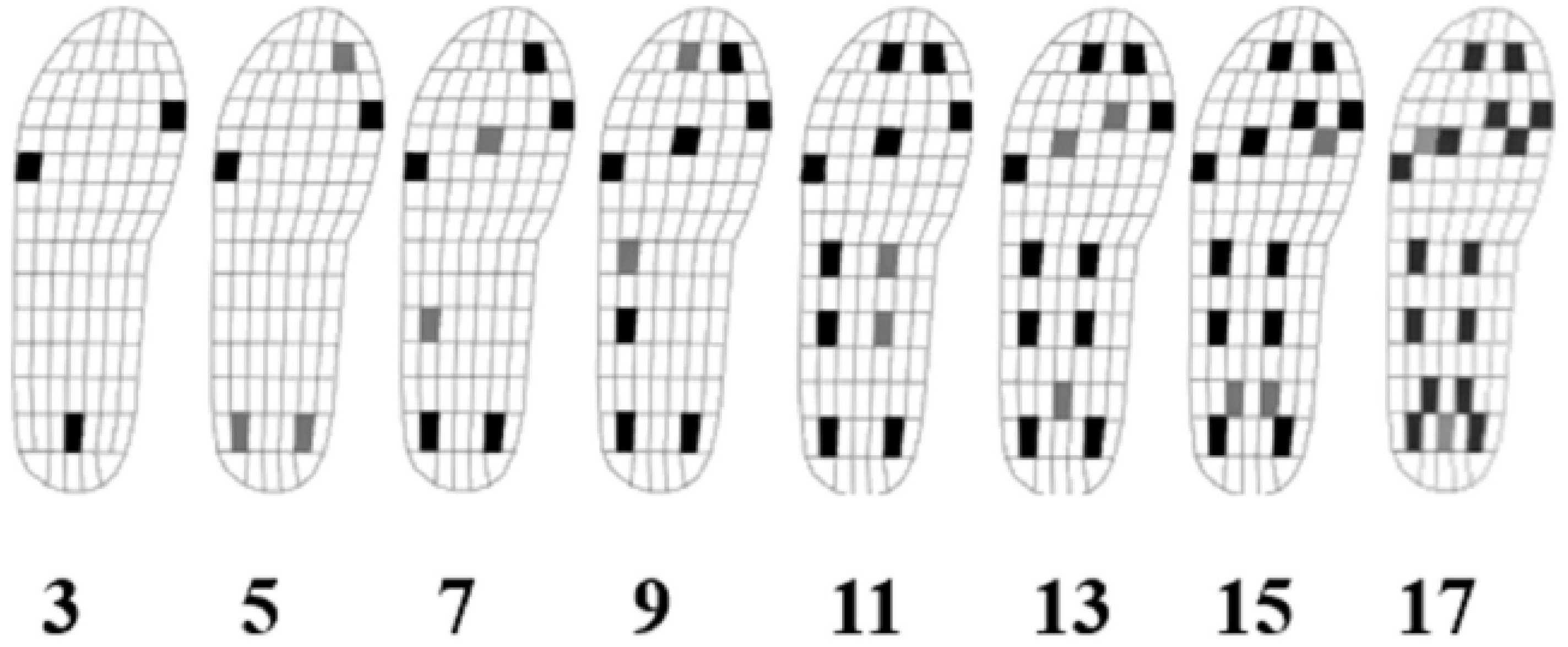
8-layouts for L-foot insole, with 3-17 sensors/IoTs to measuring CoP [49].
To maintain the repeatability of experimental results, 6 out of 18 relevant parameters are considered for the Pedar system.
Table 4.
Pedar parameters used in smart shoe [48].
| Parameter | Measure Unit |
| Peak planter Pressure | Kilo-Pa |
| Cumulative Planter Pressure | Kilo-Pa·second |
| Area of Contact | Square cm |
| Cumulative Force | Nw·second |
| Contact Time | milli-second |
| Time of maximum Pressure | milli-second |
Table 5.
Comparative evaluation of smart shoe features [36,41,44,55].
| Evaluating Parameter | Medilogic | OpenGo | Tekscan | Pedar |
| Pressure Sensor | ||||
| Model | Sohle Flex | Sport Moticon | F-Scan | Pedar-X |
| Type | R | C | R | C |
| # sensors/insole | size of insole decides number of sensors (up to 240) | 13/16 | size of insole decides number of sensors (up to 960) | 99 |
| Density | 0.79 per sq.cm | 0.1 per sq.cm | 3.9 per sq.cm | 0.57–0.78 per cm2 |
| Other sensors | - | 3-D accelerometer/gyroscope | - | - |
| Communication | Wi-Fi 2.4 GHz | ANT/BLE5.0 wired, | wireless Bluetooth, | fiber optic/TTL |
| Software | medilogic | Beaker/Moticon Science | F-Scan | Pedar |
| Thickness of Insole | 1.6 mm | 2–3 mm | 0.2 mm | 2.2 mm |
| Max. Sampling rate | 300 c/s | 50 /100 c/s | 169 c/s | 100 c/s |
| Range | 6–640 kilo-Pa | 0–400 kPa/0–500 kilo-Pa | 345–862 kilo-Pa | 20–600 kilo-Pa |
Conclusions and Future Scope
The paper discusses the history of smart footwear and companies manufacturing globally. Different learning methods and the important blocks and their functionality of smart footwear, different sensors and their working principles, issues and challenges are also discussed. Smart footwear enables the medical practitioners to maintain the history of their patient’s and analyse the present problem from current data and helps them. It can also assist people having blindness or dementia, enhance women and kids safety and security. Orthotic smart footwear can prevent the ortho problems well in time. The present paper, discusses different sensors/IoTs used in smart insole/footwear, their merits and demerits along with challenges.
The smart footwear is still evolving, and we can expect more exciting developments in the future. In future, sensors/IoTs may be self-powered and don’t need external power supply or battery. The power consumption of sensors/IoTs may reduce and the batteries discharge time may increase. The smart footwear will go in a long way to help general people in every walk of life. Presently the cost of smart footwear is not affordable by a common people and it is a challenge. Further, the user characteristics and trades can accurately be analysed from the real time data received from sensors.
Author Contributions
Both the authors contributed in the preparation of manuscript. First author contributed in AI and ML sections.
Funding
This research received no external funding.
Institutional Review Board Statement
Not applicable.
Data Availability Statement
All the information and data can be shared on request.
Acknowledgments
We are extremely thankful to Most Revered Prof. P.S. Satsangi, Chairman, Advisory committee on Education, Dayalbagh Educational Institutions, Dayalbagh, Agra for his motivation and kind guidance to work in this area. We are grateful for the support of the Department of Footwear Technology, Faculty of Engineering, Dayalbagh Educational Institute (Deemed to be University), Dayalbagh, Agra, Uttar Pradesh, 282005, India. We would also like to thank students of B.Tech. (Footwear Technology) for their contribution for collecting the data.
Conflicts of Interest
The authors declare no conflicts of interest.
References
- Raji, R.K., Han, J.L., Li, Z. and Gong, L. (2024), “Review of development trends in smart shoe applications”, Sensor Review, Vol. 44 No. 3, pp. 290-300. [CrossRef]
- Okalgandhi D, Kamdar L, Shah N. et al. 2020. A Review of Smart Technologies Embedded in Shoes. J Med Syst 44, 150. [CrossRef]
- Almuteb I, Hua R, Wang Y. 2022. Smart insoles review over the last two decade: Applications, potentials, and future. Smart Health 2022, 25, 100301.
- Chava T, Srinivas AT, Sai A L, Rachapudi V. 2021. IoT Based Smart Shoe for the Blind. 6th International Conference on Inventive Computation Technologies (ICICT), Coimbatore, India 2021:220–223. [CrossRef]
- Nathan SS, Ying Kuan J, Wen LH, Weoi LX. 2023. Design of Smart Walking Shoe for Visually Impaired People. J. Adv. Res. Appl. Mech. 101 (1):53–61. [CrossRef]
- Mandal S, Chandran A B. 2020. Low-Cost Ultrasonic-Based Shoe for Visually Impaired People. In Smart Healthcare for Disease Diagnosis and Prevention. Academic Press, ISBN 9780128179130.103–114. [CrossRef]
- Lianzhen C, Hua Z. 2021. Athlete Rehabilitation Evaluation System Based on Internet of Health Things and Human Gait Analysis Algorithm. Complexity. 1–16. [CrossRef]
- Xia Y, Gu H, Xu L, Chen XD, Kirk TV. 2021. Extending Porous Silicone Capacitive Pressure Sensor Applications into Athletic and Physiological Monitoring. Sensors (Basel) 21 (4), 1119. [CrossRef]
- Barratt GK, Bellenger C, Robertson EY, Lane J, Crowther RG. 2021. Validation of Plantar Pressure and Reaction Force Measured by Motion Pressure Sensor Insoles on a Concept 2 Rowing Ergometer. Sensors (Basel). 21 (7), 2418. [CrossRef]
- Li, J. 2021. Functional Footwear Design for Preventing Falls in the Elderly: A Systematic Research Based on Fault Tree Analysis. Leather Footwear J. 21(4):217–228. [CrossRef]
- Schiltz, R. 2022. Smart Tracking Device for Alzheimer’s, Senior Safety Advice. Available online: https://seniorsafetyadvice.com/what-are-gps-shoes/ (accessed on 10 June 2023).
- LI, J. 2021. Functional Footwear Design for Preventing Falls In the Elderly: A Systematic Research Based On Fault Tree Analysis. LFJ, 4(21):217-228. [CrossRef]
- Callari TC, Moody L, Magee P, Yang D. 2019. “Smart—not only intelligent” Co-creating Priorities and Design Direction for ‘Smart’ Footwear to Support Independent Ageing. Int. J. Fash Technol. Educ. 12 (3):313–324. [CrossRef]
- Aznar-Gimeno R, Labata-Lezaun G, Adell-Lamora A et al. 2021. Deep Learning for Walking Behaviour Detection in Elderly People Using Smart Footwear. Entropy (Basel) 23 (6):777. [CrossRef]
- St Jessica Pauline BAG, Annlet Jesgna MS. 2021. Smart Shoe for Tracking and Monitoring of Army Soldiers. In book: Smart Intelligent Computing and Communication Technology. [CrossRef]
- Friedl, K.E. 2018. Military Applications of Soldier Physiological Monitoring. J. Sci. Med. Sport 21 (11):1147–1153. [CrossRef]
- Muthusamy S, Pandiyan S, Paramasivam M et al. 2022. A Novel GPS Based Soldier Health Monitoring and Position Tracking System. [CrossRef]
- Sorrentino I, Andrade Chavez FJ, Latella C et al. 2020. A novel sensorised insole for sensing feet pressure distributions. Sensors. 20, 747.
- Zhang X, Chai R, Wang H, Ye X. 2018. A plantar pressure sensing system with balancing sensitivity based on tailored MWCNTs/Pdms composites. Micromachines. 9:466.
- N Kularathne, U Wijayathilaka, N Kottawaththa, S Hewakoralage, S Thelijjagoda. 2019. DiaShoe: A Smart Diabetic Shoe to Monitor and Prevent Diabetic Foot Ulcers. 2019 International Conference on Advancements in Computing (ICAC). [CrossRef]
- Menz HB, Auhl M, Munteanu SE. 2017. Preliminary Evaluation of Prototype Footwear and Insoles to Optimise Balance and Gait in Older People. B.M.C. Geriatr. 17(1). [CrossRef]
- Chatzaki C, Skaramagkas V, Tachos N et al. 2021. The Smart-Insole Dataset: Gait Analysis Using Wearable Sensors with a Focus on Elderly and Parkinson’s Patients. Sensors (Basel). 21(8):2821. [CrossRef]
- Alves Ferreira H, Ramos GC, Goncalves de Andrade Barbosa TM. 2021. Smart Shoes to Avoid Falls in the Elderly People. Int. J. Comput. Appl. 174(12).
- Wang Y, Truong TE, Chesebrough SW et al. 2021. Augmenting Virtual Reality Terrain Display with Smart Shoe Physical Rendering: A Pilot Study IEEE Trans. Haptics. 14 (1):174–187. [CrossRef]
- Jeong K, Lee KC. 2022, Artificial Neural Network-Based Abnormal Gait Pattern Classification Using Smart Shoes with a Gyro Sensor. Electronics. 11 (21):3614. [CrossRef]
- Gao J, Gu P, Ren Q, Zhang J, Song X. 2019. Abnormal Gait Recognition Algorithm Based on LSTM-CNN Fusion Network. IEEE Access 2019. 7:163180–163190. [CrossRef]
- Sudharshan J, Goodman G, Bourbakis N. 2020. Smart Shoes for Temporal Identification and Corrections to Assist People with Abnormal Walking Patterns IEEE 20th International Conference on Bioinformatics and Bioengineering (BIBE), Cincinnati. 2020:929–933. [CrossRef]
- Eom H, Roh J, Hariyani YS et al. 2021. Deep Learning-Based Optimal Smart Shoes Sensor Selection for Energy Expenditure and Heart Rate Estimation. Sensors (Basel). 21 (21):7058. [CrossRef]
- W. Xu, Z. Li, M.-C. Huang, N. Amini, and M. Sarrafzadeh 2011, ―e-cushion: An e-textile device for sitting posture monitoring,‖ in BSN, pp.194- 199.
- Wenyao, Xu; et al. 2012, Smart insole: A wearable system for gait analysis.2012.
- ―Sistema Biofoot/IBV,‖ Instituto de Biomec’anica de Valencia, Valencia, Spain, 2012.
- WIISEL, ―Wireless insole for independent and safe elderly living,‖2013. Available online: http://www.wiisel.eu/?q=content/documents.
- Feng Lin et al, 2015. Smart Insole: a Wearable Sensor Device for Unobtrusive Gait Monitoring in Daily Life.2016.
- Feng Lin et al 2015,.A Comparative Study of Smart Insole on Real-world Step Count.
- Techno Concepts, Pitaugier, France, 2015. ―Dynafoot 2,‖ Techno Concepts.
- Moticon GmbH, Munich, Germany, ―Moticon science,‖ Product Home,2015. Available online: http://www.moticon.de/products/producthome.
- James Coates, Andrew Chipperfield, and Geraldine Clough 2017, Wearable Multimodal Skin Sensing for the Diabetic Foot.
- Cardiovascular disease. Available online: http://www.who.int/cardiovascular_diseases/world-heartday-2017/en/.
- ARION Footpod GPS, Sensor-packed footpod with GPS.2018. Available online: https://www.arion.run/product/arion-footpodgps/.
- Paromed, ―paroTec: The high-precision foot pressure measurement system, Paromed, Neubeuern, Germany, Products. Available online: http://www.paromed.biz/paroTec-3-2.html.
- Tekscan, South Boston,, ―F-Scan in-shoe analysis system.‖. Available online: https://www.tekscan.com/products-solutions/systems/t-scan.
- E Klimiec, B Jasiewicz, J Piekarski, K Zaraska, P Guzdek and G Kołaszczyński 2017. Measuring of foot plantar pressure possible applications in quantitative analysis of human body mobility.
- Sazonova, Nadezhda, Raymond C. Browning, and Edward Sazonov, 2011,”Accurate prediction of energy expenditure using a shoe-based activity monitor.” Medicine and science in sports and exercise, vol. 43, no. 7, pp. 1312-1321.
- Andrei Dr˘agulinescu, et.al. 2020, Smart Socks and In-Shoe Systems: State-of-the-Art for Two Popular Technologies for Foot Motion Analysis, Sports, and Medical Applications, Sensors.
- Rescio, G.; Leone, A.; Pascali, C.D.; Francioso, L.; Siciliano, P. 2020, Biometric Parameters Assessment for Foot Ulcers Prevention ThroughWearable Devices. In Lecture Notes in Electrical Engineering; Springer International Publishing:Cham, Switzerland,; pp. 1–7.
- Najafi, B.; Mohseni, H.; Grewal, G.S.; Talal, T.K.; Menzies, R.A.; Armstrong, D.G. An Optical-Fiber-Based Smart Textile (Smart Socks) to Manage Biomechanical Risk Factors AssociatedWith Diabetic Foot Amputation. J. Diabetes Sci. Technol. 2017, 11, 668–677. [Google Scholar] [CrossRef] [PubMed]
- Bonafide, C.P.; Localio, A.R.; Ferro, D.F.; Orenstein, E.W.; Jamison, D.T.; Lavanchy, C.; Foglia, E.E. 2018, Accuracy of Pulse Oximetry-Based Home Baby Monitors. JAMA, 320, 717.
- Putti, A.; Arnold, G.; Cochrane, L.; Abboud, R. The Pedar® in-shoe system: Repeatability and normal pressure values. Gait Posture 2007, 25, 401–405.
- Wang, E.T.; Hsieh, C.H.; Yang, W.W.; Shih, Y.; Chan, M.S.; Shiang, T.Y. 2019, Estimating center of pressure from limited number of pressure sensors for gait tasks. Footwear Sci., 11, S118–S120.
- Bo Zhou, et.al. 2016, Smart Soccer Shoe: Monitoring Foot-Ball Interaction with Shoe Integrated Textile Pressure Sensor Matrix, ISWC ’16, SEPTEMBER 12–16, HEIDELBERG, GERMANY.
- Salma Saidani, et.al. A New Proposal of a Smart Insole for the Monitoring of Elderly Patients, Springer Nature Swit-zerland AG 2021 L. Barolli et al. (Eds.): AINA 2021, LNNS 226, pp. 273–284, 2021. [CrossRef]
- Belkacem, A.N., et al.: Brain computer interfaces for improving the quality of life of older adults and elderly patients. Neurosci. 14, 692 (2020).
- Alex Joseph, et.al. 2019, A Review of Epidemiology of Fall among Elderly in India, Indian Journal of Community Medicine, 44(2):166-168. [CrossRef]
- Concepts, T., Pitaugier, F.: Dynafoot 2. Techno Concepts (2015).
- Ramanathan, A.K., et al.: Repeatability of the Pedar-X in-shoe pressure measuring system. Foot Ankle Surg. 16(2), 70–73 (2010).
- Garc´es-G´omez, Y.A., et al.: Fall risk in the aging population: fall prevention using smartphones technology and mul-tiscale sample entropy. TELKOMNIKA 18(6), 3058–3066 (2020).
Disclaimer/Publisher’s Note: The statements, opinions and data contained in all publications are solely those of the individual author(s) and contributor(s) and not of MDPI and/or the editor(s). MDPI and/or the editor(s) disclaim responsibility for any injury to people or property resulting from any ideas, methods, instructions or products referred to in the content. |
© 2024 by the authors. Licensee MDPI, Basel, Switzerland. This article is an open access article distributed under the terms and conditions of the Creative Commons Attribution (CC BY) license (https://creativecommons.org/licenses/by/4.0/).
Copyright: This open access article is published under a Creative Commons CC BY 4.0 license, which permit the free download, distribution, and reuse, provided that the author and preprint are cited in any reuse.