

Submitted:
20 August 2024
Posted:
22 August 2024
You are already at the latest version
Abstract
Health resorts aim to create health sanctuaries, fostering an environment conducive to treatment, healing, and well-being. Material selection choices for health resort designers should comply with specific minimal requirements and criteria to provide a suitable atmosphere for health and wellness. Based on this assumption and some selection criteria, the study intended to analyse purposefully selected health resorts as the foundation for identifying acceptable materials to construct health resorts. This study had three main goals: to define the evaluated health resorts’ physical characteristics, determine their external works specifications, and investigate the material usage utilised in the interior of three primary functional spaces. We employed a case study approach as the qualitative research method.Top of Form Data was analysed using narrative and content analysis. According to the findings, natural materials, particularly those produced locally, are best suited for the outside and interior of health resort buildings. Wood is the most commonly used material, appearing in all instances studied. The findings are consistent with current worldwide trends toward environmentally friendly facilities. Adopting natural materials such as wood, stone, and soil for health resort planning would be practical, considering the health advantages of such environmentally friendly materials.
Keywords:
Asia
; Built Environment
; Finishing Materials
; Health Resort
; Interior Spaces
1.0. Introduction
Building works are a composite of various material choices of their designers. Health resorts are no exception (Vagtholm et al., 2023). Given the prime function of health resorts as health sanctuaries and a place to rejuvenate one’s health, the choice of materials for this building typology requires extra caution. Hence, there is a need to identify appropriate materials for use in the proposed health resort for Lagos City at its design stage.
Healthy living is considered wealthy; as the Publius Vergilius Maro’s old cliché, health is wealth (Potter & Valera, 2024). According to a concise yet enduring definition provided by the World Health Organization over seventy years ago, health encompasses all aspects, representing a condition of completeness in “physical, mental, and social well-being” (Christoforou et al., 2024). Health-related travels, such as journeys to holy temples, hot springs, baths, and improved climatic conditions, are some of the earliest manifestations of tourism (Cha et al., 2024; Dahanayake et al., 2023; Meloni & Maller, 2024). There is a quest to live longer, healthier, and more profitably, as well as an increased understanding of healthy lifestyles in our contemporary society. Health and well-being have received global attention as important factors shaping people’s lifestyles and consumption patterns (Li et al., 2023; Patterson & Balderas-Cejudo, 2023). As a result, in developing and developed societies, we have witnessed a proliferation of wellness services, including recreation centres, holiday tours, counselling sessions, health education, and the like. These various facilities, therefore, greatly influence current trends in individuals’ quality of health experience. Based on this comprehensive understanding, this study is a part of the research and development phase for a health resort proposal for Lagos City.
Aim
This study aims to identify acceptable building materials for developing health resort designs.
Objectives
This study had three main objectives:
- Examine the physical characteristics of the evaluated health resorts;
- Investigate the material usage utilised in the interior of three primary functional spaces and exterior works.
- Assess the use of innovative solutions.
2.0. Methodology
The study employed a qualitative case study approach by comparing existing health resort facilities to analyse the materials used in critical functional areas. Three case studies were randomly selected from three countries across the global south.
3.0. Literature Review
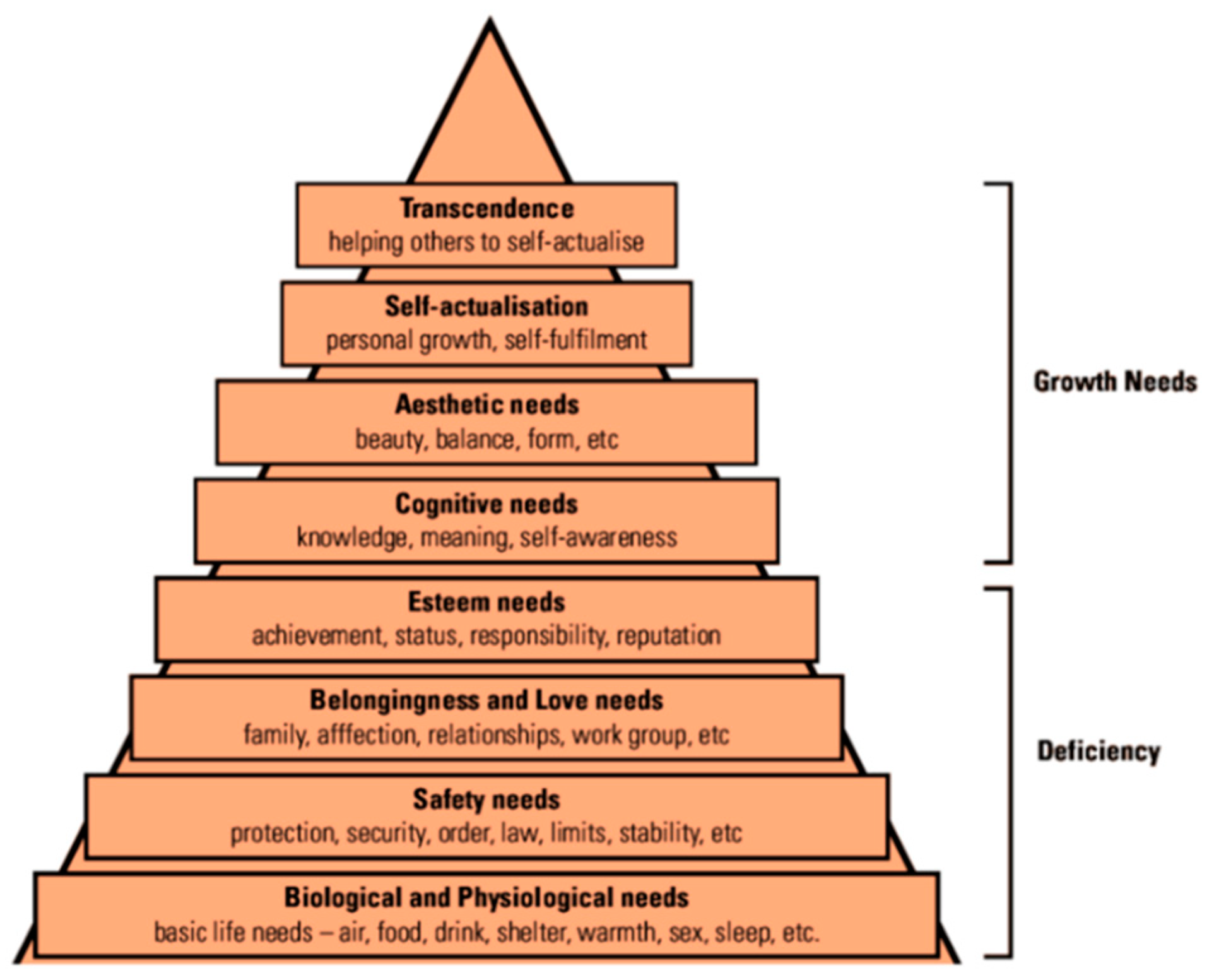
From the earliest times, Man’s daily activities have been geared towards survival and meeting a range of needs, from the very basic to more ambitious and exotic. They are evident in Abraham Maslow’s hierarchy of human needs, as illustrated in Figure 1 (Dwivedi & Badge, 2021).
Humans live within an environment that combines natural and built or artificial features (Zhong et al., 2022). All our activities, ranging from sedentary to active, are engaged within varied contexts. A classroom setting would differ from an orchestra hall, a hospital ward, or a soccer locker room. Our settings differ primarily on functional levels. However, in a classroom, hospital ward or soccer locker room, one common denominator applies to all – our health and well-being are influenced. Various factors and elements contribute to the phenomenon, and we interact with them on physiological, psychological, social, and spiritual levels (Aura et al., 2023). By these tokens, health is a foremost consideration when creating any facility for human use. As such, the materials used to create such facilities are essential. To protect ourselves from inclement weather and the elements, man has had to interfere with the natural environment, modifying it to soothe varied needs and functions. The nature and extent of the natural environment’s disruption, modification or culturing are proportionate to the environmental influence on our health outcomes (Jovanovi et al., 2023). Therefore, it is crucial to be aware of the nature of the materials used to develop our structures.The built environment encompasses a space’s layout, interior design, and surrounding - cultured-natural environment (Roberts et al., 2021; Verderber et al., 2023). The physical surroundings and situations created by human activities (e.g., buildings, streets, and parks) describe the built environment (Turnbull, 2021). As defined here, the built environment encompasses human-engineered and constructed physical buildings, such as locations where people work, live, play, and socialise. Meaningful relationships exist between these areas, including those formed by diverse natural elements and constructed infrastructure.
Creating hospitable surroundings is a cornerstone of health promotion (Nathan et al., 2018; Younis, 2019). We are aware of and appreciate the dynamic interplay between people and places and the relevance of context in attempts to enhance individual health and well-being (Nathan et al., 2018). It is becoming increasingly clear that location and space impact human health and well-being and that individual activities to enhance lifestyle or health status are likely to be impacted by the environmental and social context in which they occur (Gürdür Broo et al., 2021). The built environment makeup, including housing, neighbourhood conditions, and transportation routes, are all material determinants of health that determine the social, economic, and environmental factors on which good health depends.
The built environment has a direct or indirect impact on health. Those generally linked with infrastructure planning and environmental health, such as air quality (indoor and outdoor), climate, water quantity and quality, noise, and traffic-related injuries, directly affect health. And well-being. How built environment components and their design may influence the feelings and behaviour of people and populations are examples of indirect impacts on health and well-being. These impacts have been connected to physical and mental health outcomes and are primarily interlinked (Amerio et al., 2020; Mouratidis, 2021). The built environment is significant because it directs attention to what is modifiable. For example, aspects of the built environment can be altered to promote health and well-being, social relationships, and environmental sustainability (Engineer et al., 2021; Laddu et al., 2021; Sturge et al., 2021).
Individual beliefs, actions, and cultural influences have all proven to be influenced by the built environment, each affecting health. (Jones & Yates, 2013). Also, built-environment interventions can provide a population-wide impact and a long-term impact on behaviour modification (Hinckson et al., 2014). Emphasis on improving the citizenry’s health gradually but consistently shifts from just the health care systems to developing healthier environments (Timm et al., 2018). People spend around nine-tenth (90%) of their time indoors, mainly in a home setting. Experts increasingly recognise housing (built environment) as a critical social predictor of health (Qiu et al., 2020).
Materials are the fabric of the built environment, and the built environment is a form of fabric for man, primarily in the context of shelter (Zaman et al., 2020). Hence, it is essential to investigate facilities intended to create a space for healing – such as a health resort. The following cases are facilities harnessed from the global south, given that global south nations tend a lot more towards having alternative forms of medical care typified by health resorts. Existing health resorts were studied and analysed in order to determine the physical characteristics of a health resort.
4.0. Results
4.1. Case Study 1: Seaweed Bay Health Resort
Building Information
- Name of Building: Seaweed Bay Health Resort.
- Location: Weihai, China.
- Year of Construction: 2019.
- Facility Category: Health Resort.
-
Other Data:
- Architect(s)/Design Firm – Greyspace Architecture Design Studio.
- Area – 1,787 Square Meters.
- Client – Rongcheng Jingda Health and Wellness Co., Ltd.
- Project Background/ Brief –
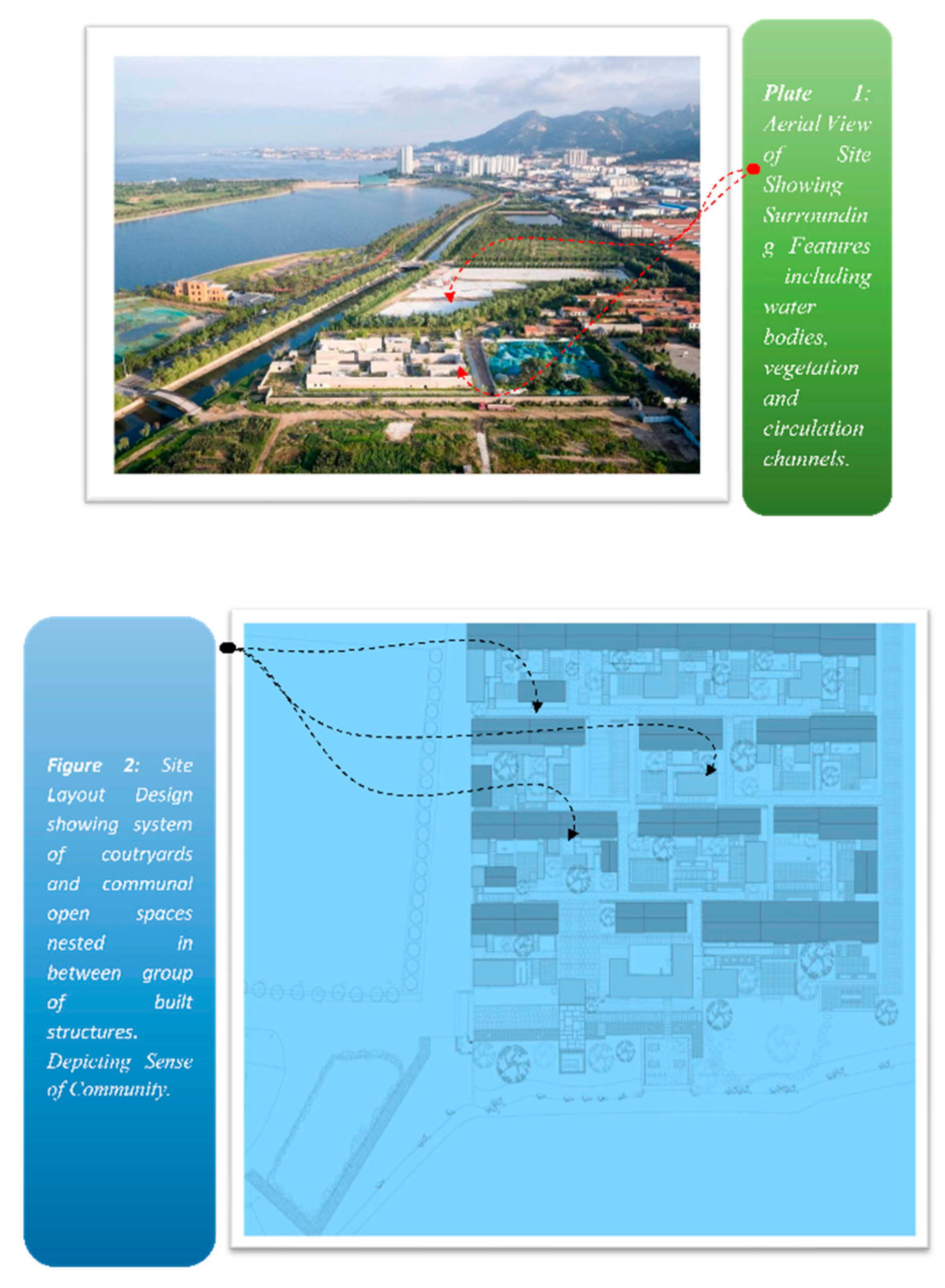
Located in Weihai City, Shandong Province’s Shidao Management Area. Fanjia Village faces the stunning Shidao Bay Inner Lake to the east. It is a traditional village in the courtyard style of the north. In recent years, Shidao has implemented the “one hundred miles of coastline, one scenic chain” policy.Creating four sections could open up an entire area dedicated to beautiful countryside tourism demonstration belts, including the “most beautiful fishing village” folklore display area, the “ten miles of the ancient township” cultural tourism combination area, the “mountain residence sea rhyme” style experience area, and the “quality agriculture” leisure and sightseeing area. The demonstration segment’s centre section is where Fanjia Village is situated. The construction of the overall scenic area and infrastructure along the coastline has gradually destroyed the traditional village and the area surrounding Fanjia Village. As of May 2020, the village has largely vanished and in its place were ranks and columns of boarded-up residential buildings and villa areas. The houses in Fanjia Village also stand deserted, with some in a run-down state and requiring renovation (ArchDaily, 2021; Svensson, 2021).Retaining nostalgia and allowing historical memories to coexist with modern life is the starting point of this design. On the one hand, the existing house layout system is a functional, barracks-style layout, and the site lacks recognition, land conservation, and the hierarchy of the courtyard space. How to adapt the space to meet the operational functions of the hotel while preserving the village fabric, courtyard space, and the pattern of the original village houses; at the same time, preserving and extending the openness of the public space and the continuity of the overall space while protecting the privacy of the hotel, was a significant challenge for this design (ArchDaily, 2021). -
List of Facilities –
- Accommodation (Ensuite Bedrooms and Non-ensuite bedrooms)
- Restaurant
- Tea Room
- Book Bar
- Shared Dining Room
- Shared Living Room
- Shared/Public Toilets
- Courtyards
- Artificial Ponds
Observations
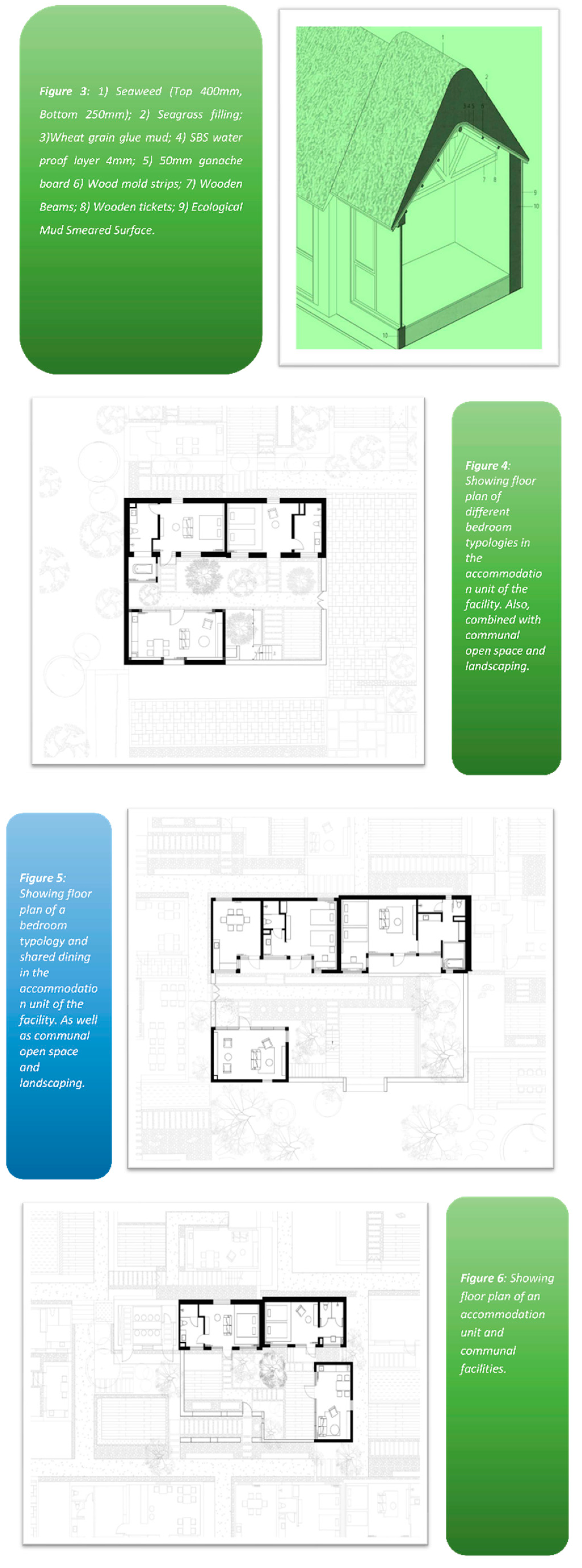
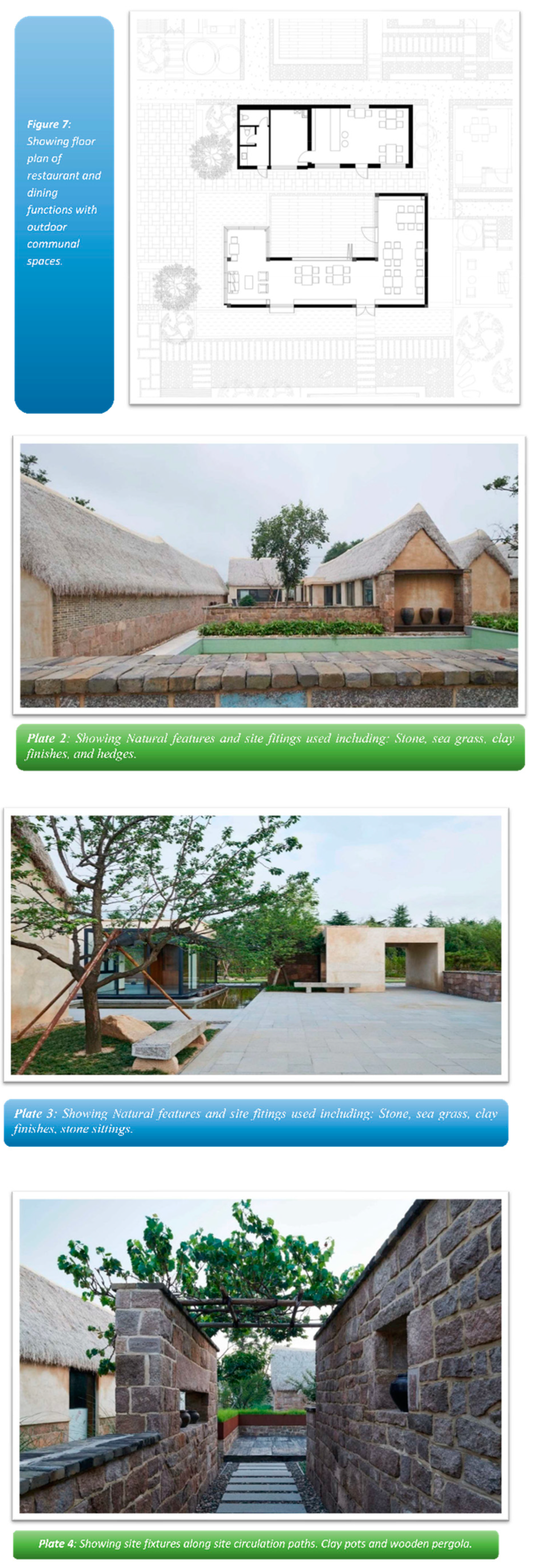
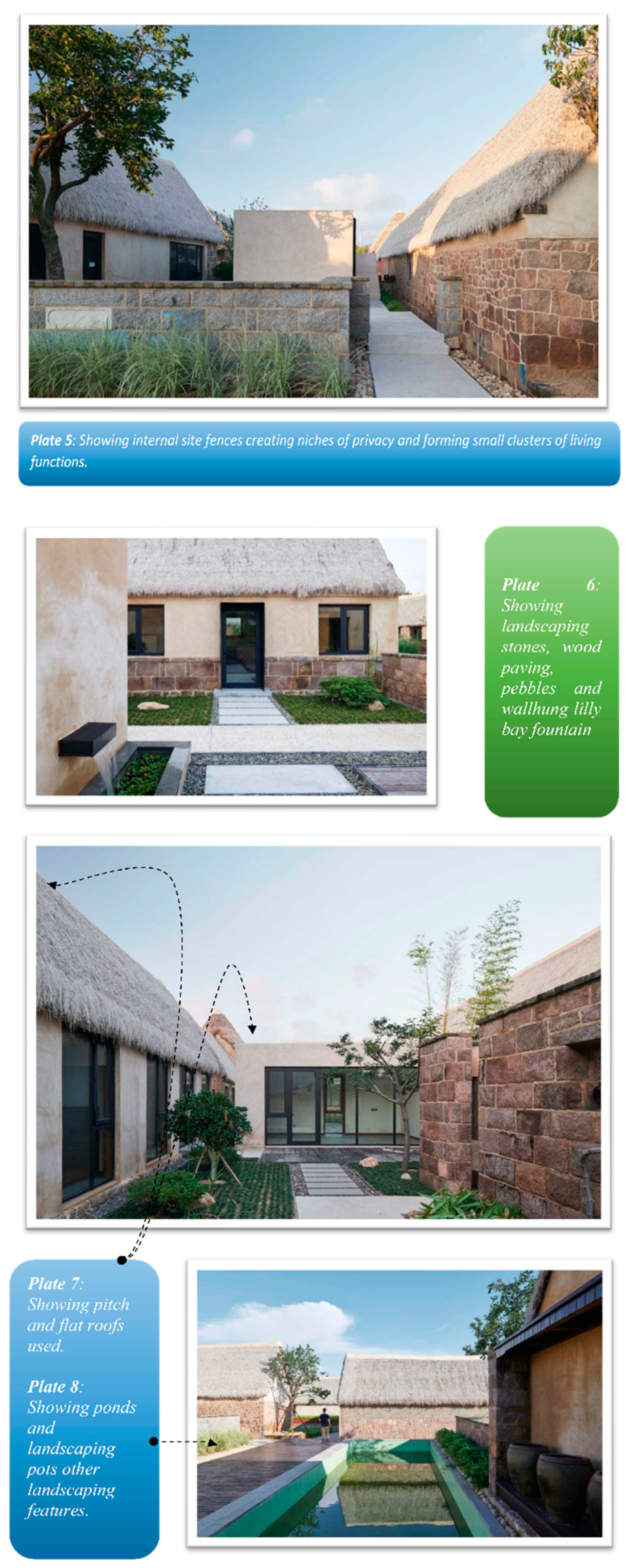

Table 1.
Showing Observations from Seaweed Bay Health Resort.
| Facility Name: Seaweed Bay Health Resort | Facility Location: Weihai, China | |||||
| C A S E S T U D Y O N E | Facility Category | Features | ||||
|
Construction Method |
Components and Materiality |
Natural Features | Facilities | |||
| Health Resort |
Use of raft foundation. The overarching building plan centred around establishing a rational connection between the construction process and the final form. Retrofitted seagrass roofs of old buildings to reflect the regional character while the new buildings with their flat roof highlight a pure masonry volume character. Fusing the old and new buildings is achieved by utilising the same building materials and maintaining similar proportional relationships. |
Ceiling Ganache Board |
Indoors No natural entities except for walling materials, which were all made out of natural materials, including – Brick; Stone; and Clay. |
Private Features Ensuite Bedrooms |
||
|
Floor Stone Flooring | ||||||
|
Wall Brick walling; Stone Walling; and Clay Plastering | ||||||
|
Roof Seagrass Pitch Roofing; and Flat Masonry Roofing | ||||||
|
Fixtures Wall-hung Water fountains |
Outdoors Landscaping Rocks/Stones; Trees; Hedges; Lawns; Stone benches. |
Public features Landscape Stone Benches; Swimming Pool; Courtyards; Book Bar; and Restaurant. |
||||
|
Fittings The nature of the fittings used is not available. | ||||||
|
Green Innovation Technology Use of naturally occurring materials for construction and finishes | ||||||
|
Biomimicry While natural materials constitute most of the facility’s development, they do not qualify as biomimetic. | ||||||
Source: Compiled from Authors’ Content Analysis.
4.2. Case Study 2: Atmantan, Wellness Centre
Building Information
- Name of Building: Atmantan, Wellness Centre.
- Location: Mulshi, Pune – 412108, Maharashtra, India.
- Year of Construction: N/A.
- Facility Category: Health Resort.
- Other Data:
Architect(s)/Design Firm – N/A.
Area – 169,967.97 Square Meters.
Clients – Sharmilee Agrawal Kapur (Creative strategist & a Pranic healing practitioner); Nikhil Kapur (Methodical Entrepreneur & Ironman Tri-athlete)
Project Background/ Brief –
The name Atmantan comes from a holistic amalgamation of atma (soul), mana (mind) and tann (body) (Atmantan Wellness Centre, 2021).
The project’s clients were inspired by their observations of their weakening lifestyles and those of people around them (including family and friends). Inspired by their observations, they decided to be a part of the solution to develop self-aware and receptive individuals by creating a unique way of enabling people to achieve their desired healthy lifestyle and maintain such conditions throughout their lifetime (Atmantan Wellness Centre, 2021).
Observations
Table 2.
Showing Observations from Atmantan, Wellness Centre.
| Facility Name: Atmantan, Wellness Centre | Facility Location: Mulshi, Pune – 412108, Maharashtra, India. | |||||
| C A S E S T U D Y T W O | Facility Category | Features | ||||
|
Construction Method |
Components and Materiality |
Natural Features | Facilities | |||
| Health Resort |
Strip foundation construction The site’s undulating and rocky terrain influences a high stone wall foundation serving as a plinth. The entire design scheme employed a minimalistic architectural style. |
Ceiling Plaster of Paris (POP) ceiling |
Indoors There were no natural elements, but big window openings and individual balconies gave every interior room a clear visual connection to the outside world. |
Private Features Ensuite Bedrooms; Private Balconies |
||
|
Floor Tile finish and carpets | ||||||
|
Wall Concrete masonry unit walling; Stone Walling; and White and beige wall paint. | ||||||
|
Roof Pitch and gable roof composed of roof tiles and wooden eaves. | ||||||
|
Fixtures Wall-hung Water fountains |
Outdoors Lily ponds; Trees; Shrubs; Adjoining lake and valley |
Public features Landscape Lakeside Benches; Swimming Pools; Dining areas Fitness studios; Gymnasiums |
||||
|
Fittings The nature of the fittings used is not available. | ||||||
|
Green Innovation Technology The facility’s design did not primarily rely on natural materials. Instead, we intentionally integrated the entire scheme with both cultured and naturally occurring green and blue scapes to condition the environment and enhance the overall quality of the facility usage experience. | ||||||
|
Biomimicry The design of the facility is not biomimetic. However, the resort seamlessly converges into the foliaged landscape. | ||||||
Source: Compiled from Authors’ Content Analysis .
They identified a requirement to create a destination that helps individuals be mindful of themselves, takes them away from their hectic lives, and provides opportunities to connect with others. Their mantra is that life is one per cent inspiration and ninety-nine per cent perspiration, so let Atmantan be the perspiration (Atmantan Wellness Centre, 2021).
List of Facilities –
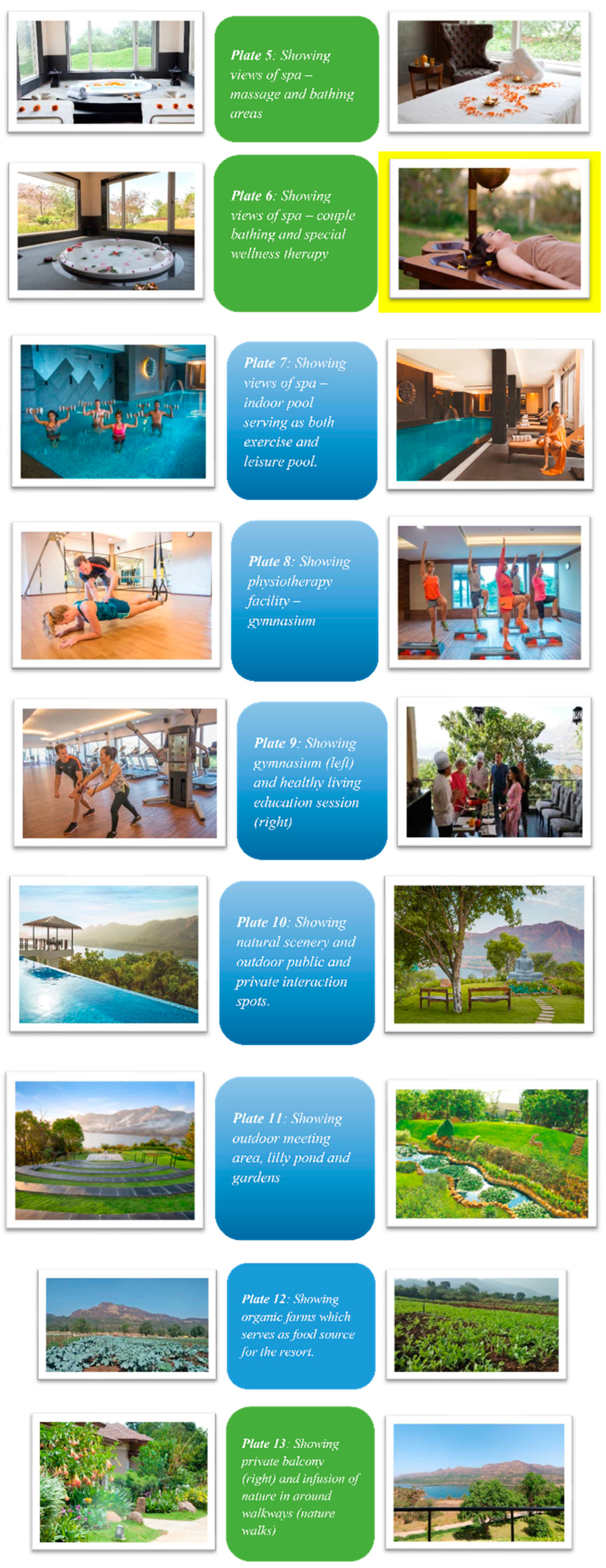
Accommodation: (Resort Houses – 106 luxurious guest rooms and villas with attached balconies or private sit-out gardens).
Dining Venues: (The main dining – Vistra, The Barbecue Lounge – Chantara; and The Juice Bar – Te’-jus).
Fitness Facilities: (High-tech gymnasium and a separate physiotherapy wing, functional studio, indoor spinning studio, expansive yoga studio, pilates and dance studio, indoor temperature-controlled chemical-free saltwater pool).
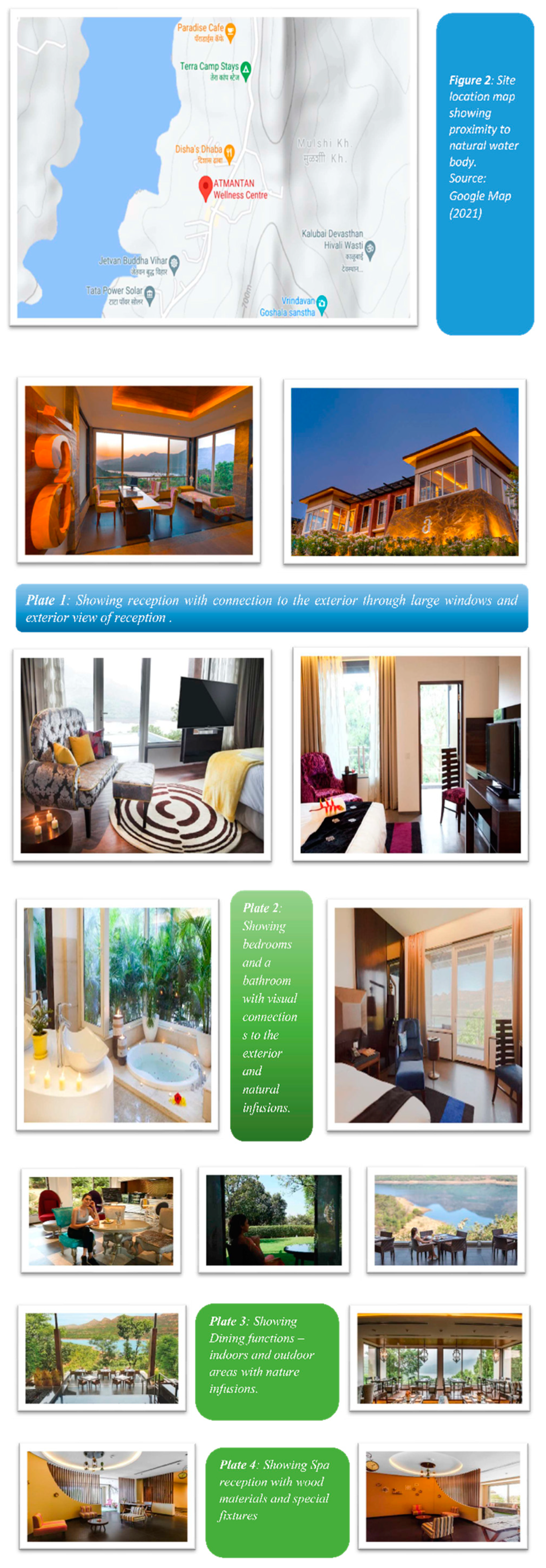
Spa Treatment Rooms, Organic Farms, and Naturally Occurring Rivers (Google Maps, 2021)
4.3. Case Study 3: Salinas Maragogi All-Inclusive Resort
Building Information
- Name of Building: Salinas Maragogi All-Inclusive Resort.
- Location: Rod. AL-101 Norte, Km 124 - S/N, Maragogi - AL - Brasil.
- Year of Construction: N/A.
- Facility Category: Health Resort.
- Other Data:
Architect(s)/Design Firm – N/A.
Area – Over 66,000 Square Meters.
Client – Amarante Hospitalidade.
Project Background/ Brief –
It is an all-inclusive resort with facilities for all age groups, allowing various user groups to use it. Amarante (the client) is an organisation that participates in and manages leisure tourism products and services in northeastern Brazil. The client seeks to promote user experiences for relaxation and well-being that are balanced and in sync with nature.
List of Facilities –
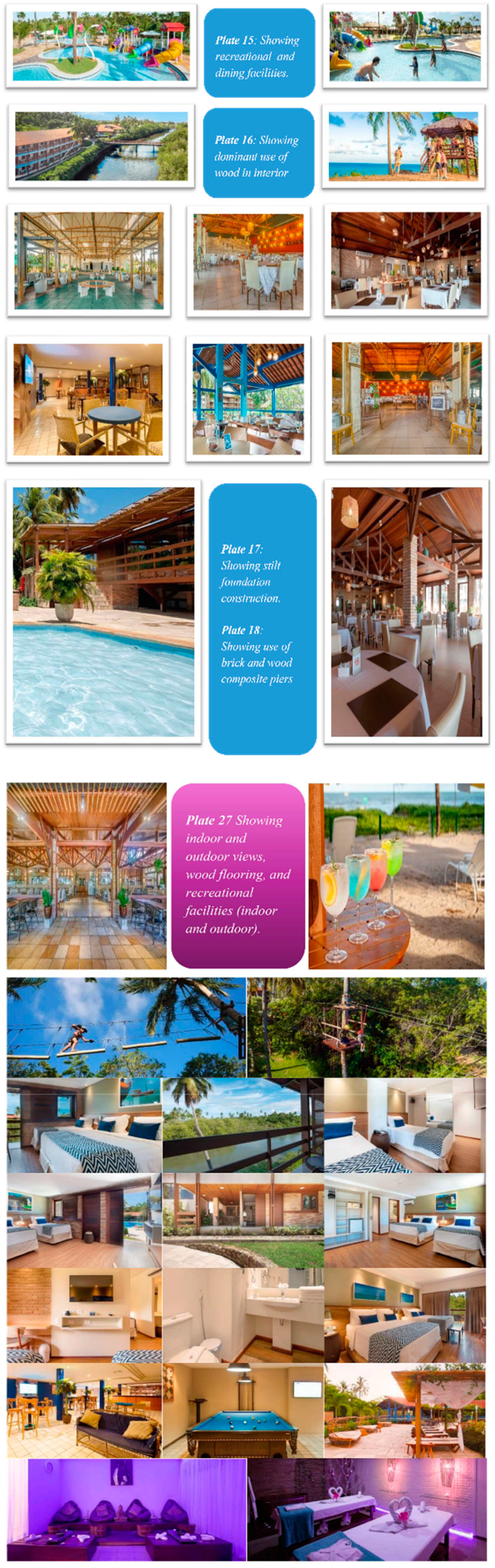
Accommodation (Ensuite Bedrooms), Private balconies
Dining Venues (4 bars – including sports and pool bars; and three restaurants)
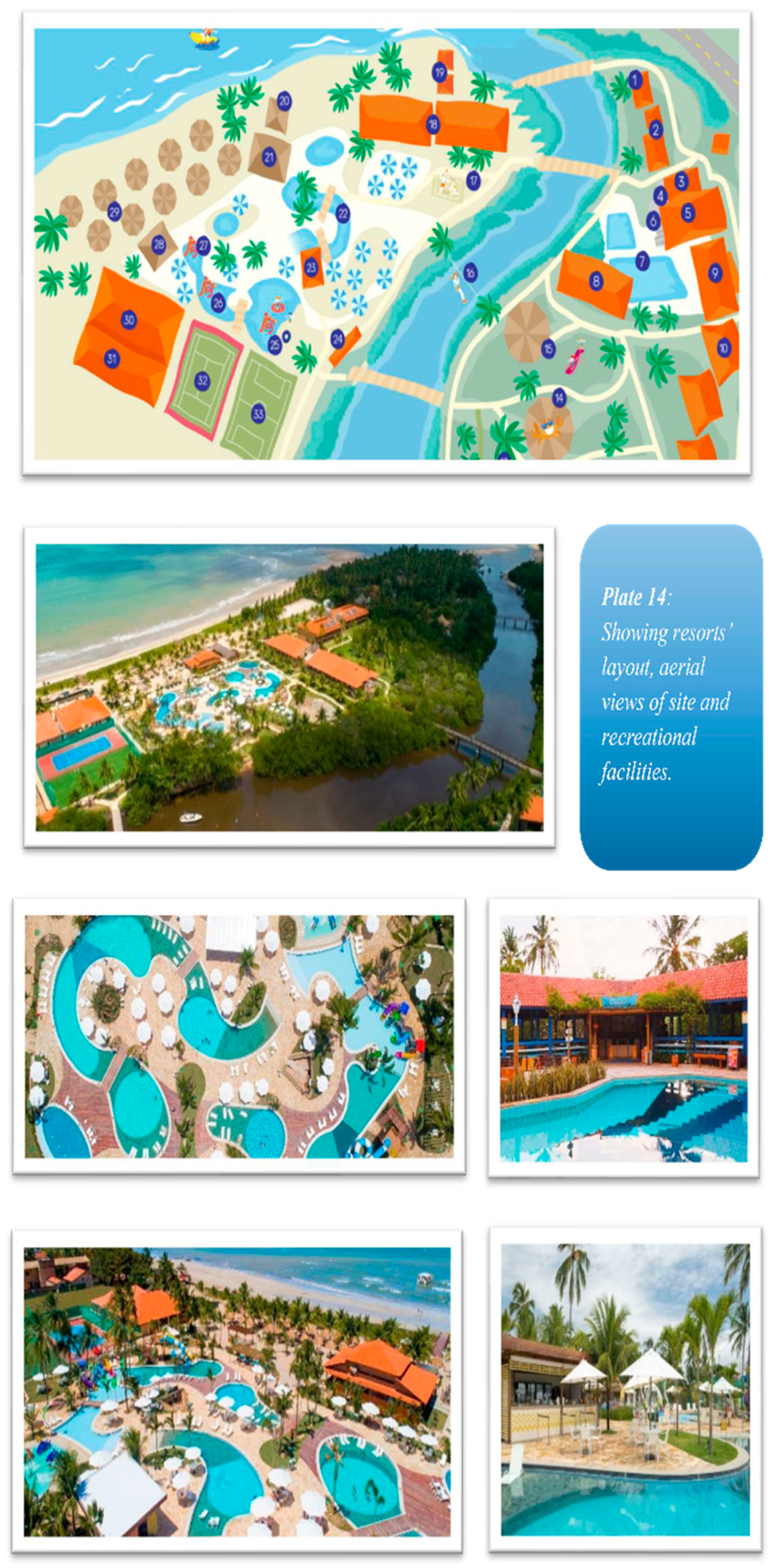
Spa and Recreation facilities (tennis courts, volleyball and soccer fields, games rooms, a complete pool complex with more than
1,500 m² and a fully equipped water sports and diving centre; kayaking and stand-up paddle boarding; tree climbing and zip-lining; mini golf.
Observations
Table 3.
Showing Observations from Salinas Maragogi All-Inclusive Resort.
| Facility Name: Salinas Maragogi All-Inclusive Resort | Facility Location: Rod. AL-101 Norte, Km 124 - S/N, Maragogi - AL - Brasil | |||||
| C A S E S T U D Y T H R E E | Facility Category | Features | ||||
|
Construction Method |
Components and Materiality |
Natural Features | Facilities | |||
| Health Resort |
Use of raft and stilt foundation types. The construction of the facilities was typically post and beam construction. |
Ceiling Plaster of Paris (POP) ceiling |
Indoors Natural elements are employed, such as brick walls and wooden floor boarding tiles. Visual connections exist between outdoor blue, green, and brown landscapes and interior settings. |
Private Features Ensuite Bedrooms The residences feature private balconies that overlook the garden or swimming pool. |
||
|
Floor Ceramic tile flooring; Wood-board tile flooring | ||||||
|
Wall Brick walling; Matte paint finish | ||||||
|
Roof Raffia Pitch roofing; Roof tile pitch roofing | ||||||
|
Fixtures Wall-hung wooden desk; The bedsides have Bedside cone downlights fitted onto wooden bedhead boards. |
Outdoors Landscaping Rocks/Stones; Trees; Hedges; Lawns; Pool fountains. |
Public features Poolside sitting; Swimming Pool; Natural Pools; Kids Pools; Tree Climbing; Sea bathing; Bars; Eco-friendly hiking; Pavilion; Spa; Minigolf Course; Diving Centre. |
||||
|
Fittings Wall paintings; Furniture is dominantly made out of wood and naturally occurring rope. | ||||||
|
Green Innovation Technology Use of naturally occurring materials for construction and finishes | ||||||
|
Biomimicry Using natural materials for most of the facility’s development is not biomimetic. | ||||||
Source: Compiled from Author’s Content Analysis.
5.0. Conclusions
The comparative analysis shows that the materials used were natural, with users’ health-beneficial outcome indicators. Some natural materials used include – stone, earth, and wood. Wood is, however, the most predominant among all materials used. It is important to note that this would be a beneficial material but requires less involvement in planting many trees to replenish the use of wood as a primary building material.
References
- Amerio, A., Brambilla, A., Morganti, A., Aguglia, A., Bianchi, D., Santi, F., Costantini, L., Odone, A., Costanza, A., Signorelli, C., Serafini, G., Amore, M., & Capolongo, S. (2020). Covid-19 lockdown: Housing built environment’s effects on mental health. International Journal of Environmental Research and Public Health, 17(16), 1–10. [CrossRef]
- ArchDaily. (2021). Seaweed Bay Health Resort / Greyspace Architecture Design Studio. ArchDaily. https://www.archdaily.com/961235/seaweed-bay-health-resort-greyspace-architecture-design-studio?ad_source=myarchdaily&ad_medium=bookmark-show&ad_content=current-user.
- Atmantan Wellness Centre. (2021). Luxury Health & Wellness Resort Near Mumbai, Pune in India - Atmantan. Atmantan Website. https://www.atmantan.com/.
- Aura, I., Hassan, L., & Hamari, J. (2023). Transforming a school into Hogwarts: storification of classrooms and students’ social behaviour. Educational Review. [CrossRef]
- Cha, J., Jo, M., Lee, T. J., & Hyun, S. S. (2024). Characteristics of market segmentation for sustainable medical tourism. International Journal of Tourism Research, 26(1), e2626. [CrossRef]
- Christoforou, R., Lange, S., & Schweiker, M. (2024). Individual differences in the definitions of health and well-being and the underlying promotional effect of the built environment. Journal of Building Engineering, 84, 108560. [CrossRef]
- Dahanayake, S., Wanninayake, B., & Ranasinghe, R. (2023). Memorable experience studies in wellness tourism: systematic review & bibliometric analysis. International Journal of Spa and Wellness, 6(1), 28–53. [CrossRef]
- Dwivedi, P., & Badge, J. (2021). Maslow Theory Revisited-Covid-19 - Lockdown Impact on Consumer Behaviour. Turkish Journal of Computer and Mathematics Education (TURCOMAT), 12(2), 2445–2450. [CrossRef]
- Engineer, A., Gualano, R. J., Crocker, R. L., Smith, J. L., Maizes, V., Weil, A., & Sternberg, E. M. (2021). An integrative health framework for well-being in the built environment. In Building and Environment (Vol. 205, p. 108253). Pergamon. [CrossRef]
- Google Map. (2021). ATMANTAN Wellness Centre. https://www.google.com/maps/place/ATMANTAN+Wellness+Centre/@18.5038207,73.5172964,15z/data=!4m5!3m4!1s0x3bc2a1f605a9045f:0xa97b65985939def0!8m2!3d18.5010536!4d73.5137654!5m1!1e4.
- Gürdür Broo, D., Lamb, K., Ehwi, R. J., Pärn, E., Koronaki, A., Makri, C., & Zomer, T. (2021). Built environment of Britain in 2040: Scenarios and strategies. Sustainable Cities and Society, 65, 102645. [CrossRef]
- Hinckson, E. A., Duncan, S., Oliver, M., Mavoa, S., Cerin, E., Badland, H., Stewart, T., Ivory, V., Mcphee, J., & Schofield, G. (2014). Built environment and physical activity in New Zealand adolescents: a protocol for a cross-sectional study. BMJ Open, 4, 1–11. [CrossRef]
- Jones, R., & Yates, G. (2013). The built environment and health: an evidence review. In Glasgow Centre for Population Health - Briefing Paper 11 Concepts Series.
- Jovanovi, O., Wang, Y., Qamruzzaman, M., & Kor, S. (2023). Greening the Future: Harnessing ICT, Innovation, Eco-Taxes, and Clean Energy for Sustainable Ecology—Insights from Dynamic Seemingly Unrelated Regression, Continuously Updated Fully Modified, and Continuously Updated Bias-Corrected Models. Sustainability 2023, Vol. 15, Page 16417, 15(23), 16417. [CrossRef]
- Laddu, D., Paluch, A. E., & LaMonte, M. J. (2021). The role of the built environment in promoting movement and physical activity across the lifespan: Implications for public health. In Progress in Cardiovascular Diseases (Vol. 64, pp. 33–40). W.B. Saunders. [CrossRef]
- Li, X., Gao, M., Chu, M., Huang, S., Fang, Z., Chen, T., Lee, C. Y., & Chiang, Y. C. (2023). Promoting the well-being of rural elderly people for longevity among different birth generations: A healthy lifestyle perspective. Frontiers in Public Health, 11, 1050789. [CrossRef]
- Meloni, M., & Maller, C. (2024). Revitalizing Air: More-than-Human Relations in Urban Health Beyond the Modern-Premodern Binary. GeoHumanities, 1–17. [CrossRef]
- Mouratidis, K. (2021). Urban planning and quality of life: A review of pathways linking the built environment to subjective well-being. Cities, 115, 103229. [CrossRef]
- Nathan, A., Villanueva, K., Rozek, J., Davern, M., Gunn, L., Trapp, G., Boulangé, C., Boulangé, B., & Christian, H. (2018). The Role of the Built Environment on Health Across the Life Course: A Call for CollaborACTION. American Journal of Health Promotion, 32(6), 1460–1468. [CrossRef]
- Patterson, I., & Balderas-Cejudo, A. (2023). Tourism towards healthy lives and well-being for older adults and senior citizens: Tourism Agenda 2030. Tourism Review, 78(2), 427–442. [CrossRef]
- Potter, D., & Valera, P. (2024). Health Is Power, and Health Is Wealth: Understanding the Motivators and Barriers of African American/Black Male Immigrants With Gastrointestinal Conditions. American Journal of Men’s Health, 18(1). [CrossRef]
- Qiu, Q.-W., Li, J., Li, J.-Y., & Xu, Y. (2020). Built form and depression among the Chinese rural elderly: a cross-sectional study. BMJ Open, 10, 38572. [CrossRef]
- Roberts, J. D., Ada, M. S. D., & Jette, S. L. (2021). NatureRx@UMD: A Review for Pursuing Green Space as a Health and Wellness Resource for the Body, Mind and Soul. In American Journal of Health Promotion (Vol. 35, Issue 1, pp. 149–152). SAGE Publications Inc. [CrossRef]
- Sturge, J., Nordin, S., Sussana Patil, D., Jones, A., Légaré, F., Elf, M., & Meijering, L. (2021). Features of the social and built environment that contribute to the well-being of people with dementia who live at home: A scoping review. Health & Place, 67, 102483. [CrossRef]
- Svensson, M. (2021). Walking in the historic neighbourhoods of Beijing: walking as an embodied encounter with heritage and urban developments. International Journal of Heritage Studies, 27(8), 792–805. [CrossRef]
- Timm, S., Gray, W. A., Curtis, T., & Chung, S. S. E. (2018). Designing for Health: How the Physical Environment Plays a Role in Workplace Wellness. In American Journal of Health Promotion (Vol. 32, Issue 6, pp. 1468–1473). [CrossRef]
- Turnbull, R. (2021). Healthy, happy places - a more integrated approach to creating health and well-being through the built environment? British Medical Bulletin, 140(1), 62–75. [CrossRef]
- Vagtholm, R., Matteo, A., Vand, B., & Tupenaite, L. (2023). Evolution and Current State of Building Materials, Construction Methods, and Building Regulations in the U.K.: Implications for Sustainable Building Practices. Buildings 2023, Vol. 13, Page 1480, 13(6), 1480. [CrossRef]
- Verderber, S., Koyabashi, U., Cruz, C. Dela, Sadat, A., & Anderson, D. C. (2023). Residential Environments for Older Persons: A Comprehensive Literature Review (2005–2022). In Health Environments Research and Design Journal (Vol. 16, Issue 3, pp. 291–337). SAGE PublicationsSage CA: Los Angeles, CA. [CrossRef]
- Younis, G. M. (2019). A theoretical framework of design strategies that stimulate the process of self-healing for occupations. Zanco Journal of Pure and Applied Sciences, 31(s3), 95–105. [CrossRef]
- Zaman, A., Huang, F., Jiang, M., Wei, W., & Zhou, Z. (2020). Preparation, Properties, and Applications of Natural Cellulosic Aerogels: A Review. Energy and Built Environment, 1(1), 60–76. [CrossRef]
- Zhong, W., Schröder, T., & Bekkering, J. (2022). Biophilic design in architecture and its contributions to health, well-being, and sustainability: A critical review. In Frontiers of Architectural Research (Vol. 11, Issue 1, pp. 114–141). Elsevier. [CrossRef]
Figure 1.
Showing Abraham Maslow’s Hierarchy of Human Needs Source: (Dwivedi & Badge, 2021).
Disclaimer/Publisher’s Note: The statements, opinions and data contained in all publications are solely those of the individual author(s) and contributor(s) and not of MDPI and/or the editor(s). MDPI and/or the editor(s) disclaim responsibility for any injury to people or property resulting from any ideas, methods, instructions or products referred to in the content. |
© 2024 by the authors. Licensee MDPI, Basel, Switzerland. This article is an open access article distributed under the terms and conditions of the Creative Commons Attribution (CC BY) license (http://creativecommons.org/licenses/by/4.0/).
Copyright: This open access article is published under a Creative Commons CC BY 4.0 license, which permit the free download, distribution, and reuse, provided that the author and preprint are cited in any reuse.


