
Submitted:
19 August 2024
Posted:
20 August 2024
You are already at the latest version
Abstract
Global warming and climate change have been the major concern for multiple disciplines. Population growth, urbanization, and industrialization are major contributing factors to such a problem by escalating the use of fossil fuels to meet their energy demands. The building sector has the largest share in using the total globally produced energy and emitting tons of greenhouse gas emissions. Emerging eco-friendly technologies such as solar and wind energy harvesting are being extensively explored but still, they are insufficient. Nature-inspired technologies can be the solution to our problem. For instance, algae are microorganisms that use water, light, and CO2 to produce energy and sustain life. Exploiting such characteristics in the built environment is termed algae building technology, a very efficient and green application for a sustainable future. Algae-integrated façades show great versatility through biomass and energy production, wastewater treatment, shading, and thermal and acoustic insulation. In this paper, algae will be introduced as a robust tool toward a greener and more sustainable future, The algae-building technology and its implementation will be demonstrated. Steps for applying this sustainable approach in Egypt will be discussed.
Keywords:
algae
; bio-active
; cultivation methods
; environmental
; sustainable approach
1. Introduction
Global warming is a tremendous obstacle. Most greenhouse gas emissions, two-thirds, are attributable to energy production [1,2]. Globally, fossil fuels currently constitute the primary energy source, yet they suffer from inherent drawbacks in terms of sustainability [3]. Based on estimates from 2013, 78.3 percent of global energy expenditure is supplied by fossil fuels. Furthermore, 40% of that energy is consumed solely by the building sector, which, in turn, generates 30% of the global GHG emissions. It is expected that the contribution of this sector will double in the next two decades. Accordingly, such a problem entails transitioning away from fossil fuels and exploring other clean and sustainable sources of energy [1]. Sustainable natural resource management prioritizes a versatile approach encompassing operational efficiency, minimizing environmental impact, and socio-economic considerations while recognizing their correlations. The growing awareness of the unsustainability of fossil fuels, driven by resource depletion and greenhouse gas emissions, has spurred robust research efforts toward development of alternative energy sources. These initiatives focus on renewable and potentially carbon-neutral resources, one of which is bioenergy produced via algae [4]. Nature provides a wide source of inspiration and guidance for architects. By getting back to nature using the technology of the current era, many problems can be solved in a sustainable way by achieving future-sustainable designs [5]. In recent years, various studies on technological resolutions based on natural systems have been implemented [6]. The replication of biological processes and the inclusion of living organisms in the planning and construction stages is known as bio-design [7]. Algae holds immense potential as a sustainable and versatile source of green energy, offering a multitude of advantages. Integrated buildings featuring algae facades and green walls offer different kinds of constructed environments that have serious environmental potential in terms of their carbon footprint and cost-effectiveness. Moreover, comfort and wellbeing relating to interior air quality can be greatly affected [8]. Firstly, their ability to efficiently capture and mitigate CO2 and other greenhouse gases accompanied by oxygen release establishes them as a substantial solution in combating climate change. Secondly, unlike traditional crops, algae exhibit rapid growth and bioengineering potential, ensuring a reliable and adaptable source of biomass. Furthermore, they contribute to waste management by utilizing nutrients present in wastewater, promoting a circular economy. Additionally, unlike land-dependent crops, algae thrive in diverse environments, mitigating competition for agricultural land. Finally, integrating algae facades into buildings not only enhances urban aesthetics but also promotes carbon sequestration and oxygen production, contributing to improved air quality and a greener cityscape. These combined advantages position algae as a frontrunner in the search for sustainable energy solutions and could also redefine buildings from being energy consumers to energy producers [9]. Globally, 88 GWh of biomass energy was produced in 2014. Thus, it has been proven that algae-derived bioenergy is no longer in transition. The utilization of algae-integrated building envelopes is pivotal in terms of energy performance and efficiency. Such use can be termed algae-building technology (ABT). This technology has enormous potential, as demonstrated in the utilization of photobioreactors (PBRs) that can simultaneously generate biomass and thermal energy [10]. This paper aims to introduce algae as a crucial element to employ in built environments to mitigate negative impacts on the environment. The research follows a theoretical analytical methodology, through literature review and real case studies. Moreover, projects applying such technology will also be investigated. Followed by an example to be applied in Egypt and its implementation towards sustainability. The main research question is how to integrate bio-active elements, especially algae, in facades as a sustainable concept in architecture. The steps of research and methodology followed responds to the research questions through the paper structure as follows:
Review literature about bio active elements, in Section 4 presents algae and its role towards sustainability, classification and lifecycle and cultivation systems.
Section 5 exploring algae building technology, where a real example is illustrated, followed by advantages and disadvantages of algae use in architecture and environmental performance of algae, maintenance, advantages, and disadvantages.
Subsequently, Section 6 presents application in Egypt, suggested ideas, achieving Sustainable development goals, Egypt vision 2030. Following with Ideas suggested on the architecture level and the urban level as well as User satisfaction through an interview. Finally, the results and conclusion.
2. Methodology
This paper focuses on the use of innovative nature-based solutions designed to improve the sustainability and performance of built environments. It provides a literature review on algae and algae building technology-based façade systems, their implementation, and the steps for applying this sustainable approach in Egypt. This is accomplished as follows:
Firstly, comprehensive yet concise information about algae, its properties, lifecycle, methods of cultivation, and environmental impacts is discussed. Then, incorporation of algae in building facades, which holds enormous potential in terms of positively influencing the environment and human wellbeing and the innovative technologies needed for maintenance.
Secondly, investigate the implementation of algae building technology in real-world ap-plications and prize-winning projects; this research suggests the integration of an algae building façade as a solution in a chosen location in Cairo: The Mohamed Ali Palace, a strategic urban-scale location where different important buildings are in a central place.
Finally, Provide the outline proposal for implementation and insights related to the development of such technology in Egypt as a sustainable solution to guide more environmentally friendly design decisions that aim to reduce our dependence on fossil fuels, minimize the building sector’s carbon footprint, and convert buildings from energy consumers to energy producers.
In relation to the aforementioned points, it is considered that the research methodology explored in this study the theortical and analytical used to facilitate and enhance the research aim and to foster great use of bio active elements in architecture towards sustainability especially in Egypt as a case study.
The research limitations and barriers of algae facades are represented in technical challenges, economic barriers and regulatory frameworks and building codes. Awareness of such technology in the construction sector on the long term.
3. Value/ Originality
This research intends to combine environmental solutions and innovative applications, which will promote the development of a new sustainable approach for algae and algae building technology-based façade systems. The immense potential of these systems as sustainable and versatile sources of green energy offers a multitude of advantages and applying these sustainable approaches in Egypt in the form of energy production, wastewater treatment, shading, and thermal and acoustic insulation offers a robust tool toward a greener and more sustainable future [11].
4. Algae and Its Versatile Role in Sustainability and Energy Production
4.1. Algae Overview
Algae contain a wide range of aquatic organisms, encompassing microscopic cells, microalgae, and large, leafy marine structures. They possess remarkable characteristics that establish them as prominent organisms in terms of both sustainability and energy production. Notably, their photosynthetic abilities, present in every single algal cell, facilitate efficient biomass generation [9]. Compared to C4 plants, algae boast a theoretical solar energy conversion efficiency of 9%, which is three times higher. Furthermore, algae act as natural carbon mitigators. They have an extraordinary capacity to sequester CO2, consuming 1.8 kg for every 1 kg of biomass produced. In addition, their oxygenation abilities contribute to over 75% of the Earth’s oxygen, presenting a cost-effective and sustainable solution when confronting global environmental concerns [10]. Moreover, algae are not restricted to freshwater; they thrive in diverse environments, including saltwater and even wastewater. This unique capability allows them to play a pivotal role in wastewater treatment, already existing in buildings in which the algae will be introduced [4]. Moreover, algae biomass is a valuable source of food, fertilizers, and animal feed. Their superiority as a third-generation biomass over other generations is elucidated in [1]. Finally, their suitability for biodiesel generation makes them ideal candidates for sustainable energy production applications [1].
4.2. Algae Classification and Life Cycle
Algae are plant-like organisms that are subdivided into two categories: aquatic and photosynthetic. Although they are plant-like organisms, they lack true leaves, roots, stems, and vascular tissue but possess simple reproductive structures [12].
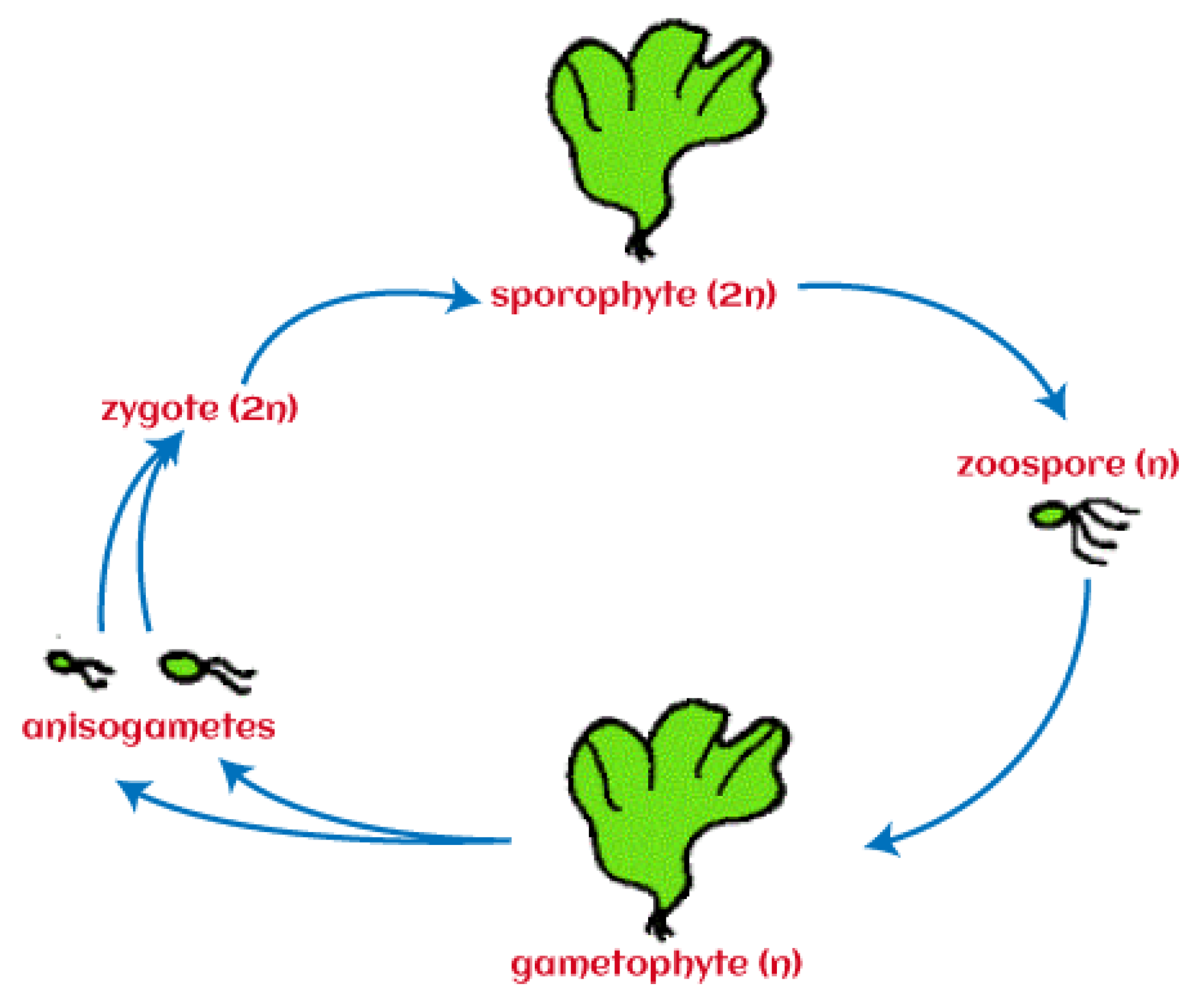
Organisms that have only one set of chromosomes are called haploid, often noted as “n.”. Diploid organisms have two sets of chromosomes, one from each parent, and “2n” is used for this stage [13].
Algae lifecycles vary depending on species; there are four different patterns, and all four patterns in the algae lifecycle alternate across generations: haplontic, diplohaplontic, and triphasic [14].
There are diploid stages and distinct haploid stages, and, in all cases, the haploid stage is called the gametophyte, and the diploid stage is called the sporophyte.
These algae convert carbon dioxide and sunlight into heat, oxygen, and biomass. The integration of microalgae, as a photobioreactor-based source of biofuel, with buildings has the prospect to alter high-performance architecture [15]. However, big challenges need to be considered concerning the requirements relating to CO2, storing systems, and maintenance.
Figure 1.
Lifecycle of algae [13].
Figure 1.
Lifecycle of algae [13].
4.3. Algae Properties
There are different requirements and essential factors needed for algae, such as carbon dioxide, water, light, and minerals. These factors play very important roles in algae cultivation, as outlined below:
- The temperature must be in a range that will support the algae and its growth; it plays an important role for all algae species. The optimal temperature for phytoplankton cultures is between 20 and 30 degrees Celsius. Temperatures of >35 degrees Celsius are lethal for a number of species, and those of <16 degrees Celsius slow down growth, thus, providing suitable environmental conditions for algae of light level and its temperature very important for the growth of various algae species by using the photo bioreactors and Raceway integrated design (ARID) which maintains the temperature and minimizes the seasonal and diurnal temperature within the optimal range 15 and 30 degree needed for the algae growth [16]
- Very weak or very strong light hinders the growth of algae. The top 3 - 4 inches of the water can be peneterated by light in most algal cultivation systems; however, the light required by algae is only 1/10th of the sunlight received by other plants, and strong, direct sunlight is harmful to algae and is detrimental to growth. In cases of dense algal growth, light can be blocked from penetrating into ponds, tanks, etc.
- Water supports the growth of algal bodies. It is a universal habitat for any algae species, and it helps to shape the organisms. They easily flow with waves and water currents. Since water surrounds algae plants from all sides, individual algal cells absorb the water, sunlight, and minerals directly from the surroundings [12,13].
4.4. Algae Cultivation
Their cultivation can be tailored using diverse methods, including photoautotrophic (utilizing sunlight and air, CO2), heterotrophic (employing organic sources), and mixotrophic (combining both). Notably, water quality is not a constraint, as algae prosper even in wastewater or low-quality sources. However, optimal growth depends on several interrelated factors, such as light intensity, temperature, nutrient balance, pH, and air circulation. In detail, temperature and pH must be optimally set at 16-17 °C and 7-9, respectively. By carefully controlling these variables, specific strains can even double their mass daily, resulting in rapid biomass production that exceeds traditional crops. Additionally, these tiny green machines act as natural wastewater treatment plants, consuming nutrients while revitalizing the water. Even the residue left after oil extraction can be repurposed as fuel, bioplastics, or fertilizers. Moreover, the remarkable carbon sequestration abilities of microalgae mean that up to 85% of CO2 emissions from power plants can be absorbed [17].
4.5. Cultivation Methods
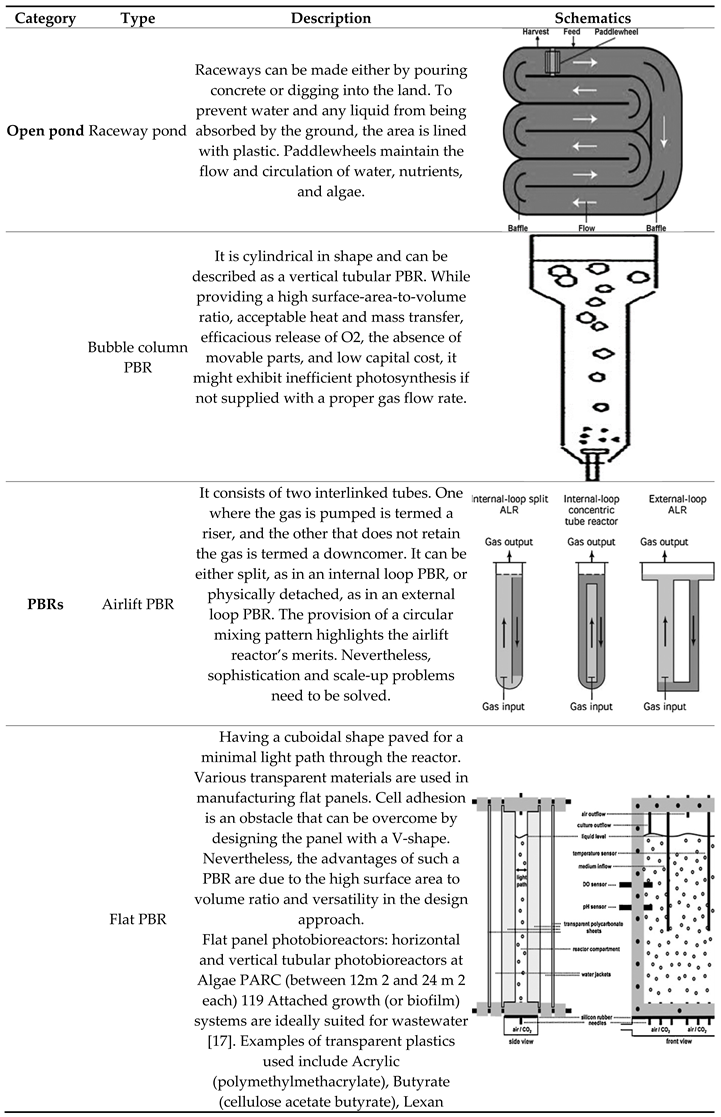
A variety of methods can be utilized to cultivate algae, including open pond, fermentation, hybrid, and closed photobioreactor methods.
Open pond: Only needing a pond, an open pond system is much less expensive compared to other cultivation systems. It also retains a large production capacity. Another merit is its simplicity and low production and operation costs. However, such systems can only support one type of algae due to the fact that different species of algae require different conditions to prosper; an open pond system cannot offer this variety of conditions [4]. While readily available, this method requires vast open spaces. These systems are also susceptible to contamination and the growth of undesired species, CO2 diffusion, loss of water due to the open environment, and the risk of reduced sunlight exposure.
Fermentation: This method requires laboratory conditions and bulky reactors, making it impractical for integration into existing buildings despite its scalability potential.
Closed photobioreactors (PBRs): This method is the most promising option due to its controlled environment, which mitigates the limitations associated with other methods. PBRs enable optimal mixing, even the distribution of CO2 and O2, and flexible light utilization (artificial or daylight). Moreover, they facilitate the cultivation of a wider range of species across extended growth periods owing to temperature control [17].

Table 1.
Different types of algae cultivation systems with descriptions [4].
Table 1.
Different types of algae cultivation systems with descriptions [4].
 |
5. Algae Building Technology (ABT)
As awareness of environmental problems increases, researchers are continuing to extensively investigate green solutions. Incorporating algae in building facades holds enormous potential in terms of positively influencing the environment and human wellbeing. Nevertheless, this application is still in its initial stages [1]. As a state-of-the-art technology intended to reduce our dependence on fossil fuels, minimize the building sector’s carbon footprint, and convert buildings from energy consumers to energy producers [7], algae building technology is a novel approach to sustainable architecture that offers diverse environmental benefits. Algae-containing facades provide improved air quality both indoors and outdoors through photosynthesis by absorbing CO2 and releasing O2. Furthermore, these systems simultaneously transform sunlight into heat and useful biomass. The variation of algal density in cultures throughout the year provides the building with sustainable, dynamic shading, acoustic benefits, and aesthetic elements [20]. Rendering wastewater into clean water that can be reused showcases the robust potential of such a technology as well. The use of algae in combination with other renewable resources will certainly boost the benefit of both technologies. Moreover, increasing green space extends comfort to nearby occupants [9]. Such technology offers a symbiotic relationship between buildings, occupants, and the environment [3,20].
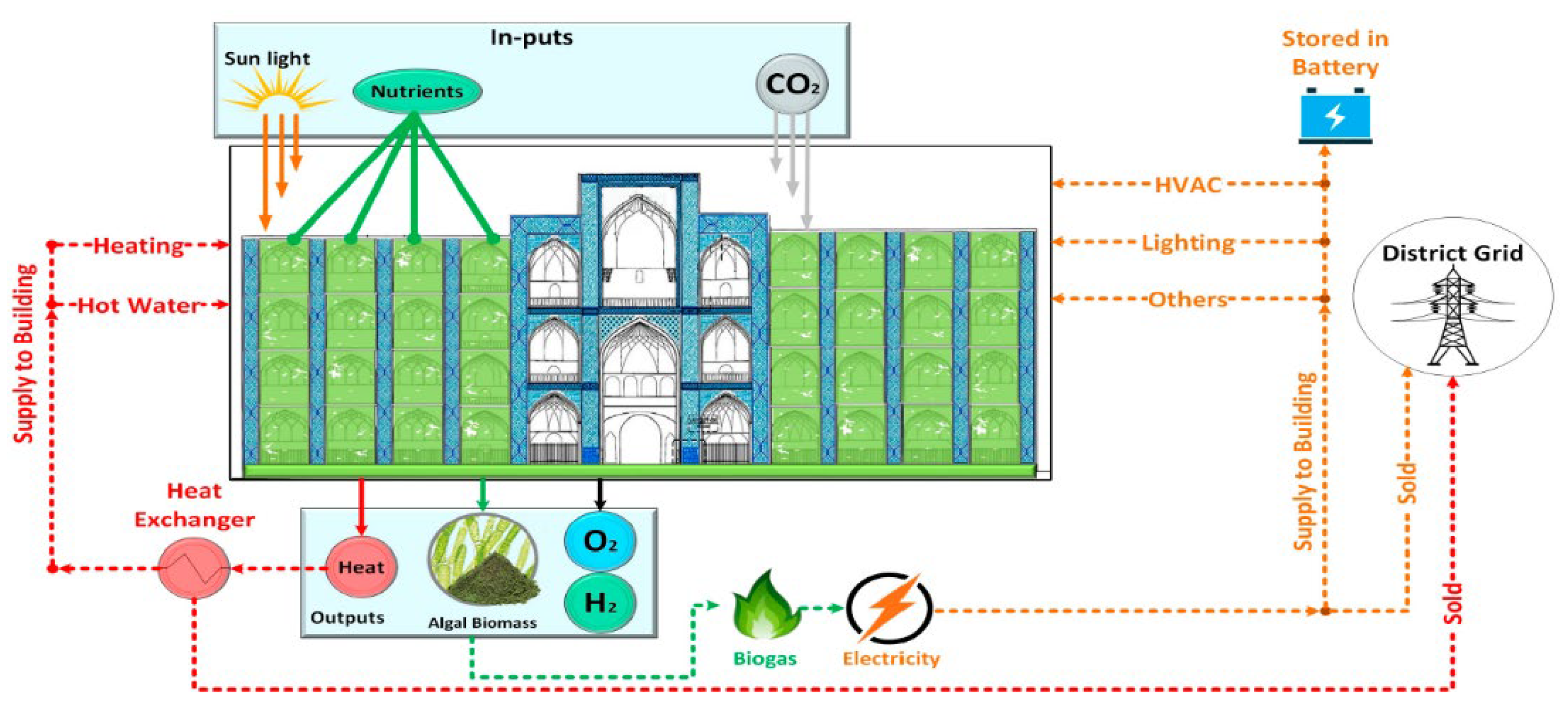
Figure 2.
A schematic elucidating the inputs and outputs of an algae-powered building and their use [20].
Figure 2.
A schematic elucidating the inputs and outputs of an algae-powered building and their use [20].
5.1. Algae-Powered Buildings
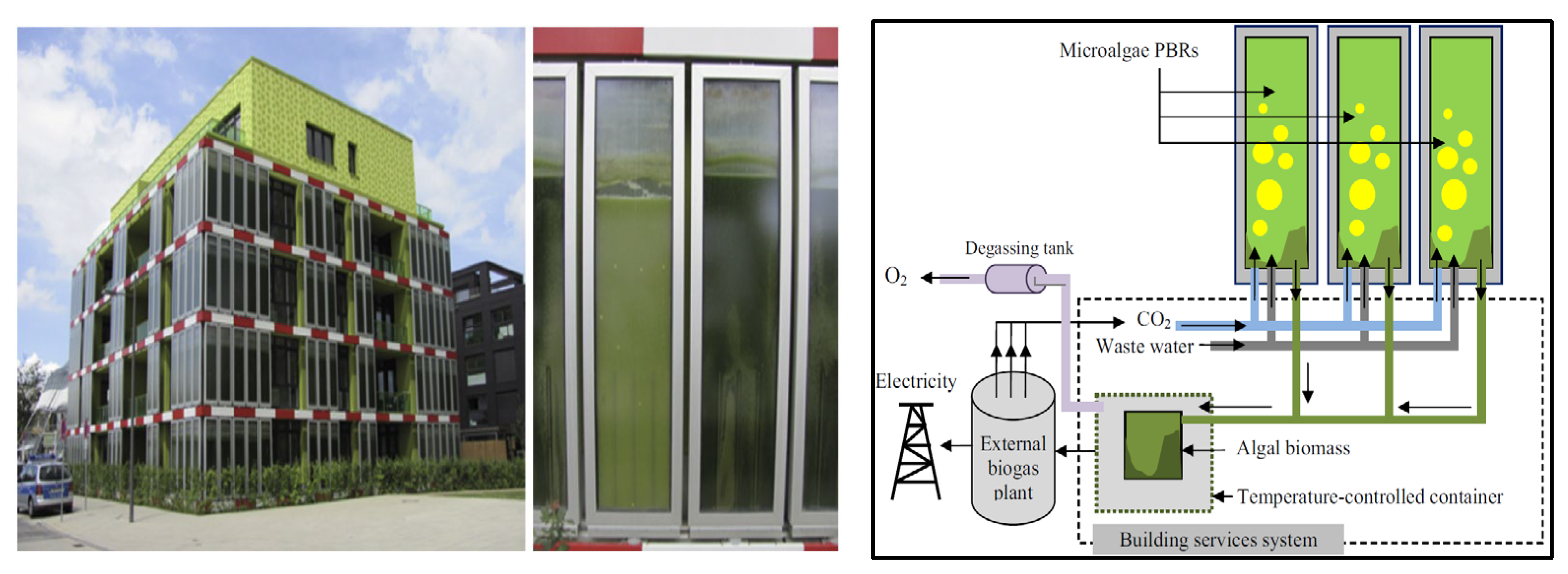
The BIQ building stands as the first real-world application of a building powered by algae. Its design integrates flat plate photobioreactors (PBRs), a novel element added to the architecture of the BIQ aimed at generating heat and biofuel, thus striving toward self-sustainability by fulfilling the building’s energy needs through algae cultivation. Publicly introduced as the “Solar Leaf” bioreactor façade, this innovative system, devised by Arup and Colt, represents a cutting-edge technology in the cultivation of microalgae on building exteriors to produce heat and biomass as renewable energy sources, drawing inspiration from photosynthesis for energy-efficient designs. This five-story residential structure hosts microalgae PBR façades on its southeastern and southwestern sides and is equipped with a comprehensive infrastructure to support its operations, including CO2 and nutrient supplies; biomass filtering and harvesting mechanisms; temperature and circulation control; and heat harvesting, storage, and distribution systems. Additionally, the harvested algae biomass is transported to a biogas plant for processing prior to subsequent utilization in energy production [1]. Featuring 129 PBR panels, each measuring 2.5 m × 0.7 m with a thickness of 0.08 m and a liquid capacity of 24 liters for microalgae culture, the system operates autonomously, thus diminishing maintenance costs. These aforementioned PBRs have the capacity to produce 150 kWh/m2 of thermal energy and 30 kWh/m2 of bioenergy. The energy demand of the building was successfully reduced by 50%, and with the intended use of solar panels to sustainably meet the operating energy needs of the PBRs, this value could become 100% [20]. By virtue of its dual processes of converting light into heat and biomass, the system has achieved an impressive overall conversion efficiency of 58%, with 10% attributable to biogas and 48% to heat, showcasing its potential as a sustainable energy solution [1]. A symbiosis relationship was built between the 200 m2 PBR façade and the outdoor gas plant, where the supply of CO2 introduced to the system comes from flue gas emanating from the gas burner while rendering the algae into biomass. The PBRs are capable of sequestering approximately six tons of CO2 yearly [10].
Figure 3.
On the left, a photo of the BIQ building and its flat plate PBR [9]. On the right, a schematic showing the flow of bioenergy and biomass production [1].
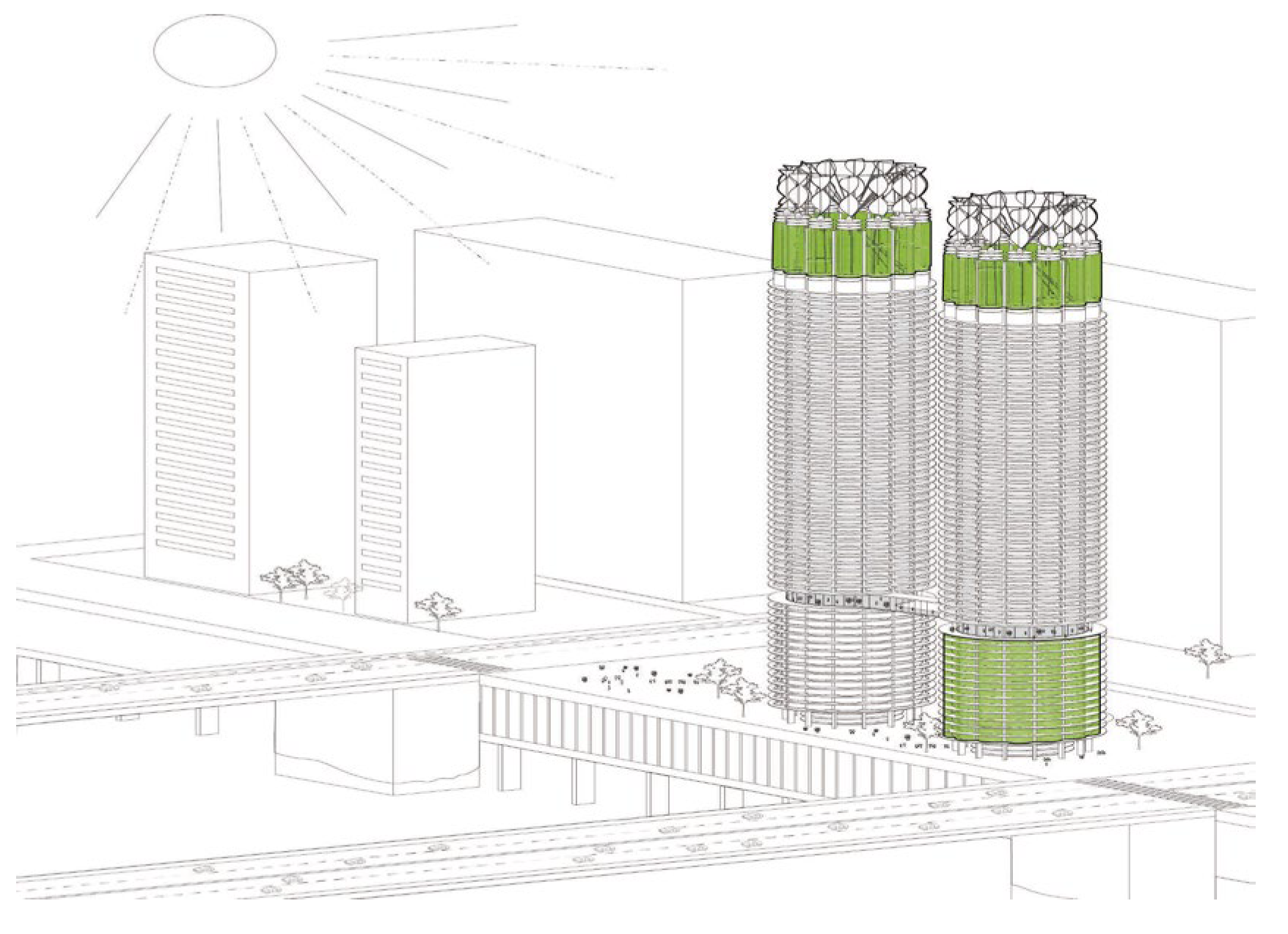
The Green Loop Tower represents an innovative approach to sustainable development that strives to upgrade existing building structures with environmentally friendly technologies. Per the Chicago Climate Action Plan’s goal of lessening GHG emissions by 80% from 1990 levels by 2050, this initiative exploits various sustainable solutions to achieve a net-zero carbon footprint [10]. The marina towers are good examples of existing buildings that can be retrofitted into greener buildings. Influx Studio came up with this project in 2011. They devised a cutting-edge CO2-scrubbing system. The project encompasses the use of algae for energy production along with other eco-friendly technologies, such as solar and wind energy harvesting. This holistic system effectively purifies the atmosphere of CO2 while concurrently generating energy, cultivating food, treating wastewater, and extracting biodiesel from algae. Positioned at the top of the two towers, the system’s two carbon-scrubbing plants consist of CO2-scrubbing modules and PBRs. This innovative carbon-scrubbing technology facilitates the provision of CO2 to the algae bioreactor, overcoming the challenges related to CO2 transportation and storage. Complementing the energy generation of the system, photovoltaic and solar thermal panels are deployed on semicircular balconies exposed to sunlight, augmenting electricity production and enhancing system autonomy. Additionally, a phytoremediation garden has been seamlessly integrated into the parking structure of the west tower. The resulting purified water can be recycled for various purposes, such as restroom usage in the Marina or irrigation for vertical farming, thereby further enhancing the sustainability of the system [1].
Figure 4.
Elucidative demonstration for the application of algae technology [21].
Figure 4.
Elucidative demonstration for the application of algae technology [21].
Many other prize-winning projects have significant potential for the same end as all aforementioned projects, a carbon-neutral environment. The use of urban-integrated algae is also being explored to promote cleaner air and improve aesthetics. Over 4 days from 21st November to 24th November 2022, The Emirates Environmental Group conducted the 22nd cycle of the annual Inter-College Environmental Public Speaking Competition, which provides a special platform for youth of the Arab region to voice their concerns on current sustainability issues and suggest some sustainable solutions [22].
The topic of this research paper was submitted in relation to these challenges, where it was subsequently named the first runner-up by the author and her students in the 22nd Cycle of Inter College Environmental Public Speaking Competition, Dubai, under the title, ‘’The next generation of cities’’; it presented a new proposal for the use of algae-powered building in new cities.
5.2. Environmental Performance and Energy Efficiency
Algae-powered buildings can serve as alternative systems and supply required energy through mechanical processes, as follows:
- Water will fill the facades of the PBRs and contain nutrients, and the algal biomass will convert CO2 and daylight through photosynthesis;
- Heat and biomass will be generated and transferred by the facades to the plant room through a closed-loop system, supplying the building’s heating and hot water, by which the two forms of energy are exchanged, respectively, by a heat exchanger and a separator in order to control the temperature levels of the heat produced [23,24].
These systems improve the building’s energy usage in terms of achieving net zero, as well as air quality and renewable power generation.
Buildings that have PBR facade will control the temperature better and reduce the energy consumption by more than 33% and electricity consumption by 10% [25].
Micro-communities can be created and integrated to restore waste from the buildings into valuable operational resources to achieve water independence via polluted wastewater treatment and air decarbonation [26]. A building constructed in Hamburg, Germany, in 2013, serves as an example of an algae-powered building [27]. Now, we need more real-world projects to be realized using these new applications.
5.3. Algae-Powered Buildings Maintenance
The presence of algae in these living spaces can improve occupants’ wellbeing, making them healthier and more productive. Nevertheless, there are some factors and challenges that make this concept hard in practice in terms of creating bioenergy infrastructure, such as high initial costs (cost is an essential factor in measuring project performance [28]), CO2 provision, and all of the technical requirements.
For indoor applications, this proposal will be effective, as the algae can be a part of the building’s system services, such as HVAC systems (ventilation, air conditioning, and heating); however, due to changing environmental factors such as air flow and sunlight, the growth of microalgae changes, as does the exterior view. These challenges require further important work: [29].
- Onsite systems to ensure daylight harvesting and control systems for CO2 [30], water, and nutrients, along with algae harvesting and bio-active compound extraction.
- Powered buildings that can generate their own electricity using their own biogas plants, which may be practically difficult to achieve at the residential level and further study is required concerning how to integrate these biorefinery systems with a building’s lease agreement and legal regulations
- New building regulations can be applied to integrate PBRs in buildings and the design of PBRs can be expanded to the building scale by considering the following: durable and lightweight materials, suitable maintenance and reasonable prices, and payoff [31].
5.6. A New Innovative Technology Advantages and Disadvantages
Algae building technology and its means of implementation are still in the early stages; however, they may provide many environmental and economic benefits:
Environmental benefits: as major indicators of environmental success [32], there are immediate advantages connecting with decreased energy utilization and further developed energy productivity, as well as those connecting with the on-location creation of biomass, age of sun powered nuclear power, biofuel creation, and wastewater treatment.
Energy savings of up to 30% can be accomplished comparable to warming, cooling, lighting, and ventilation load, which can be financially appealing and involves energy proficiency. There is likewise the conceivable income from the offer of biomass or high-esteem bioproducts to consider, and the reuse of building waste might counterbalance the energy costs [32,33].
Overall, 1–5 g/ft2/day is the potential day to day efficiency that can be accomplished while ideal developing conditions and activity modes are carried out (100 feet × 100 feet × 5 stories (65-feet tall)) in retrofitted structures with microalgae envelopes that utilization the most extreme development rate.
Utilizing this design, a medium-sized place of business size can sequester 17-85 metric lots of CO2 and produce 10-50 metric lots of dry biomass and 1400-7000 gallons of biofuel. Involving the business pace of carbon evacuation in the scope of USD 500 to USD 1690 for every significant amount of CO2, the expense reserve funds, as per this contextual analysis, could ultimately depend on USD 145,000 every year [33].
The efficiency of algae culture in eliminating the phosphorous and nitrogen is in the scope of 80-100 percent, Furthermore, the treatment of the wastewater by microalgae is likewise interesting [34].
The economic benefits include the low carbon economy, the conceivable income from the offer of biomass or high worth bioproducts, and the utilization of building waste, which might counterbalance the energy costs [33,34,35].
Algae-powered buildings could play an important role in GHG mitigation, not only in terms of generating clean energy but also as carbon-neutral power sources, and reduced operating costs, taxes, and energy will lower lifecycle costs and increase rental costs without reducing occupancy [17].
On the other hand, there are numerous ecological, innovative, monetary, and social issues that should be tended to and settled before green growth controlled structures can be carried out using these frameworks: long-term performance and effective CO2 sequestration must be addressed, as well as acoustic and thermal insulation, algal culture varieties brought about by indoor variety control endeavors connecting with green growth staining, the strength of the alga against environment changes, the appropriate upkeep required and its expenses, and development needs. Moreover, there are also negative environmental effects to consider, such as odor produced from harmful algae and potential toxins [31,33].
6. Algae Building Technology in Egypt
The issue of climate change and its repercussions has become a threat, so there must be solutions to confront this phenomenon. Egypt deals with this issue with great attention, is well aware of its repercussions and is studying its development.
Some human activities resulting from the combustion of fuel to generate energy, industrial activities, and agricultural intensification have led to an increase in the concentration of greenhouse gases in the atmosphere to a degree that has caused a change in the global climate system (global warming or greenhouse effect). Climate change is a global phenomenon, as it has crossed the borders of countries and poses a threat to the entire world.
Egypt was concerned in activating policies to mitigate and adapt to the consequences of climate change.
6.1. Inspiration by Nature-Based Solutions towards Sustainability
Ideas inspired by nature and lessons learned are among the best solutions that an architect can rely on. Bio-active elements can be integrated into a variety of buildings. Egypt is considered one of the main energy-consuming countries and is confronted by the need to find solutions for its densely populated cities that host various activities, especially for spaces that have historic or heritage characteristics because they contain distinguished architecture and urbanism. Egypt has dense areas that consume large amounts of energy. Regarding Egypt’s Sustainable Development Vision 2030 [36], it endorsed Agenda of 2030 and its 17 Sustainable Development Goals (SDGs), and as part of the required follow-up, it submitted periodic reports to the UN [37]. Diverse biomimetic methods have led to the creation of environmentally friendly, smart materials for building inspired by imitating nature [38]. This research assumes that solutions based on lessons learned from nature will achieve the sustainable development plan and Egypt’s Vision 2030.
Egypt launched its first Sustainable Development strategy: Egypt Vision 2030 in February 2016, in order to ensure growth, development and prosperity for all future generations. This is based on Egypt’s commitment to providing and ensuring a good quality of life for its population, which is in line with the seventeen Sustainable Development Goals, as Egypt’s Vision 2030 represents the governing framework for all development programs and projects that will be implemented until the year 2030.
The updated version of Egypt Vision 2030 is based on four governing principles, which place the citizen at the heart and center of development while ensuring justice and accessibility, along with the necessary flexibility and adaptation approach, all within the framework of sustainability.
Mitigation programs focus on the production and use of cleaner fuels, improving the efficiency of energy use, diversifying its sources according to prevailing economic and social conditions, expanding the use of cleaner production techniques and environmentally friendly technologies, using economic incentives to encourage the use of more efficient products, and benefiting from carbon trading and markets. Adaptation processes to climate change should be carried out through a set of activities that include: developing and disseminating methodologies and tools to assess the effects of climate change and the extent of vulnerability to it, improving adaptation planning, measures and procedures, integration into sustainable development, and working to understand, develop and disseminate measures, methodologies and tools that achieve economic diversification, with the aim of increasing Resilience of economic sectors vulnerable to climate change.
Giving priority to the adaptation process as it is an effective means of dealing with the potential effects of climate change in the first half of the twenty-first century and focusing on providing the necessary infrastructure to reduce expected risks, including mechanisms to insure against their risks and improve the efficiency of natural resource management using systems. Monitoring, surveillance, early warning and appropriate technologies, preparedness to confront disasters resulting from climate change, capacity building, making available, improving and exchanging information including climate information, raising the level of public awareness and forming partnerships. A proposal towards sustainable building and construction, manufacturing and developing materials to reduce energy consumption and reduce the waste of resources.
6.2. Application in Egypt
Using algae in Buildings to supply their energy (heat and electricity) can aid as a substitute building system. Microalgae enclosures buildings not only generate clean energy but also play a role in GHG mitigation and can be considered as a carbon-neutral power source of energy. In addition to the positive environmental effects, they moreover have financial effectiveness due to the lessening of energy and operational costs that produce lower life cycle costs.
Adopting algae façades by building sector, environmental, technical, political, economic, and the social performance of practically implemented algae-integrated buildings should be evaluated in decision-making process. Sustainable design considerations should be conducted in early stages to make the process time- and cost-efficient.
This part presents the final stage outlined in methodology and suggests integrating algae building façades as a solution on the architectural and the urban level in Egypt to guide more environmentally friendly design decisions to reduce our dependence on fossil fuels, minimize the building sector’s carbon footprint, and convert buildings from energy consumers to energy producers.
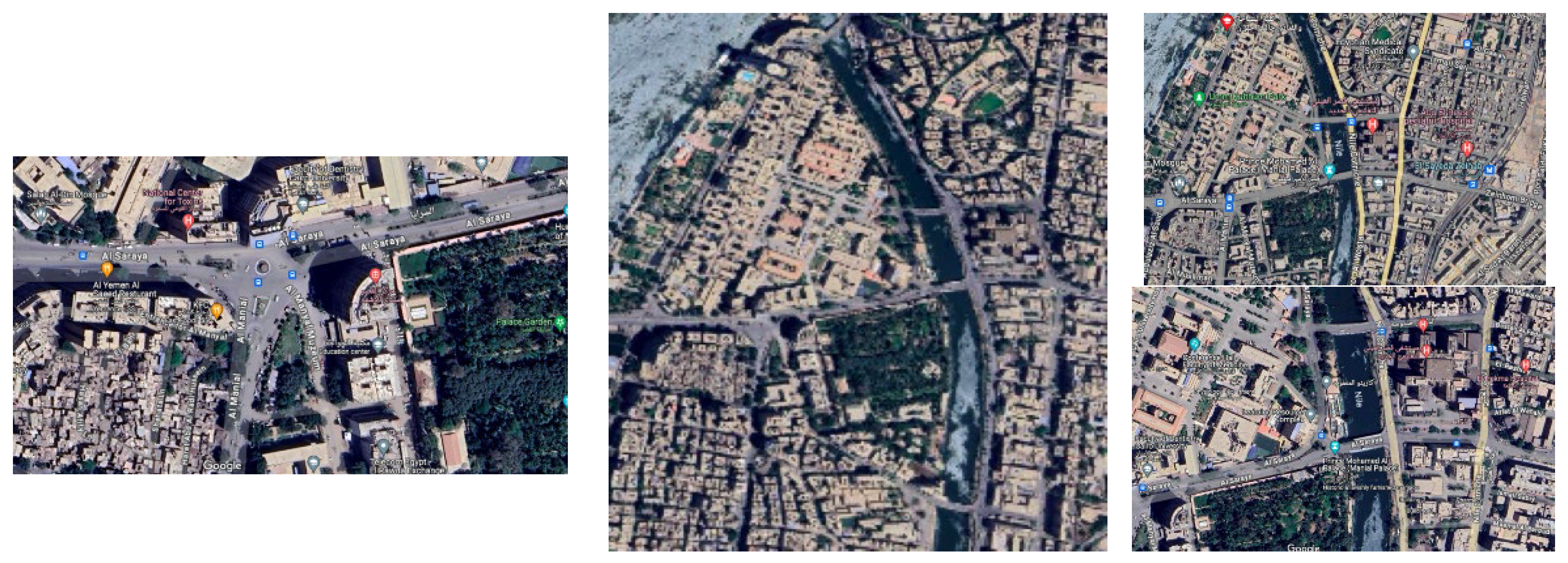
The study focused on applying these systems to the area of Prince Muhammad Ali Palace in Manial, Located in Cairo, Egypt.
Reasons for choosing the location case study:
It is a dense area with a distinguished historical location
- The Muhammad Ali Palace area is a strategic location on the urban scale where different important buildings are located in a central place (educational, medical, residential, and commercial)
Historical Background:
The palace is located in the north of Rawda Island, on the small branch of the Nile River in front of Kasr Al-Aini. The total area of the palace is approximately 61,711 square meters.
About the palace
The Prince Muhammad Ali Palace Museum in Manial is one of the most beautiful and important cultural museums in Egypt. The palace contributes to the preservation of an important period of time in the history of modern Egypt, with its creative architectural character. It is considered a universal school for various elements of Islamic arts [39].
It was established by Prince Muhammad Ali Tawfiq in the period between 1319 and 1348 AH/1900-1939. The palace consists of an external wall surrounding the entrance to the palace and includes within its walls the reception palace, the clock tower, the avenue, the mosque, the hunting museum, the residence palace, the throne palace, the private museum, the Golden Hall, and unique garden surrounding the palace.
Figure 5.
Maps of Muhammad Ali Palace and surrounded areas, Egypt (Google Maps).
The palace has been renovated and opened its doors to the public as a very important destination. Activities of Prince Muhammad Ali Palace in Manial as a tourist destination
Currently, the best activities for visitors to Prince Muhammad Ali Palace include the following:
- Visitors can walk around the place and enjoy seeing the architectural elements used when constructing this palace.
-It includes many rooms that serve specific functions. These rooms can be explored, and their design can be noted, as well as the furniture and interior architecture that adorns these rooms, and the purpose for which these rooms were created.
-Some halls display historical collectibles that mark important periods of time, including old maps, old weapons, historical documents, jewelry, and antiquities.
- Inscriptions and ornaments that decorate the walls in the reception hall can be seen.
-Art galleries featuring works of art, statues, sculptures, and paintings that the most famous artists excelled at, as well as valuable mosaic pieces, can also be seen.
-The landscaping elements of the sit include benches, water ponds, and fountains in the garden.
-The Tense Salon in the Saray Residence and the Blue Salon can be visited.
6.3. Aims of the Proposed Solutions Are as Follows
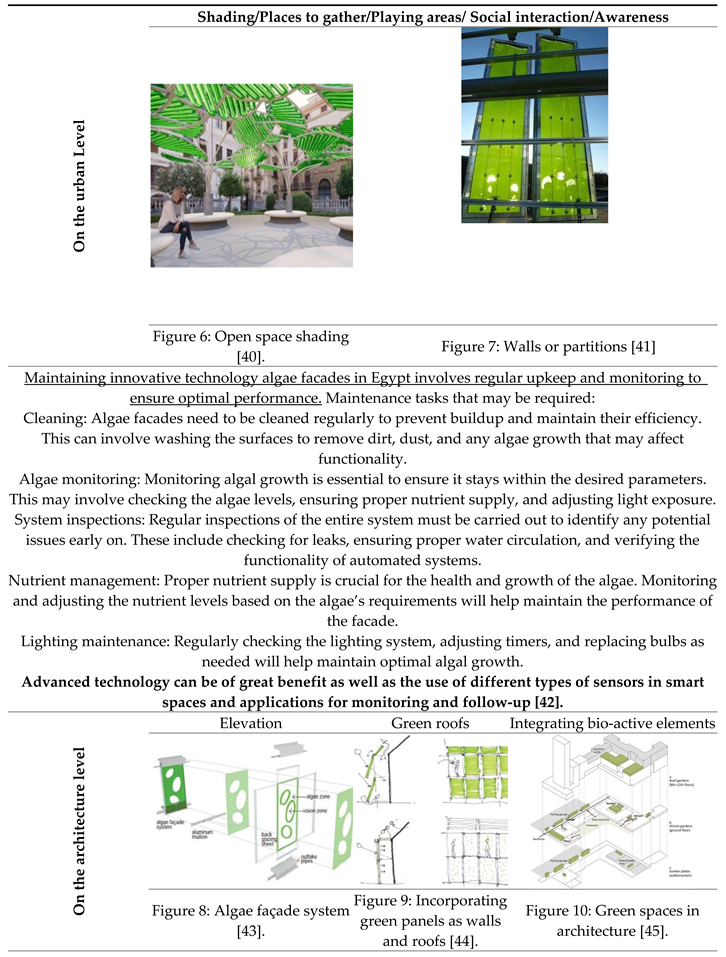
On the urban level: the aim is to provide shading and raise public awareness of alternative fuels.
-Aesthetic aspects of the biological envelope can be a potential driver of public acceptance.
-Touristic attraction and the relationship between new and old characteristics and innovative architectural features can be encouraged.
-Environmental applications that can mitigate carbon footprints, treat wastewater or other contaminants, and improve air quality can be presented.
-Green features lead to improved quality of life, better physical and psychological wellbeing, and performance for users. They can also be used to create play areas for children.
-Economic aspects can be demonstrated: minimizing the cost and consumption of energy.
- Application on the city scale can prompt a superior comprehension of this innovation and stick to normal examples.
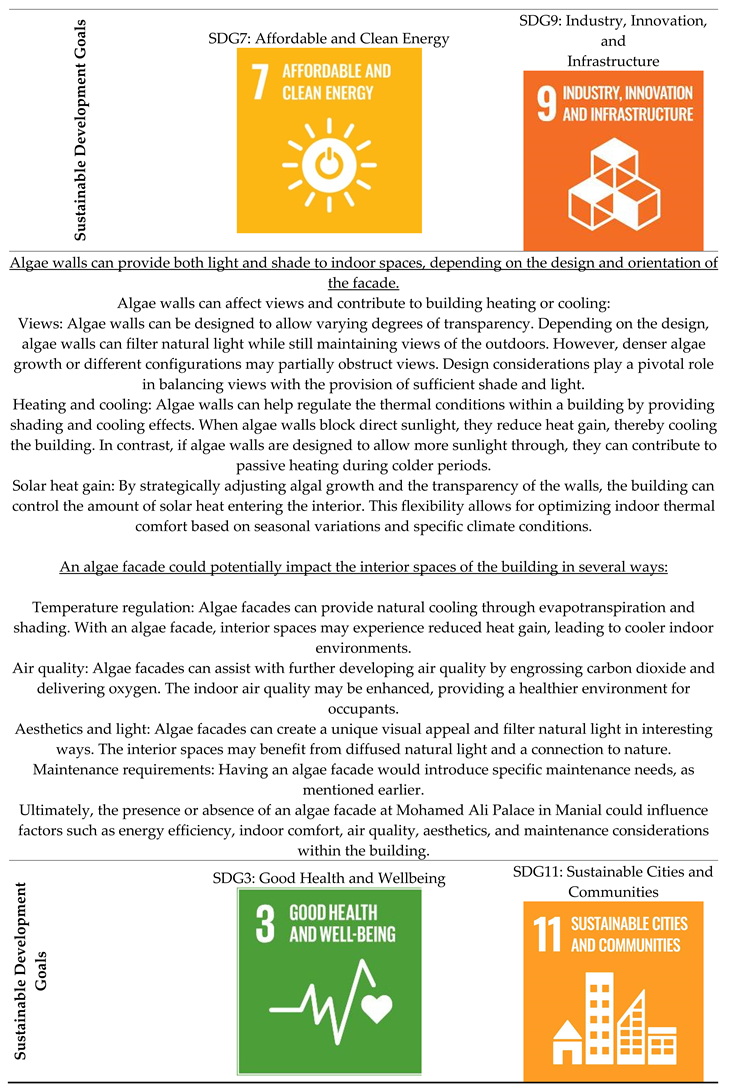
Table 3.
Suggestions and evaluation of the proposals and their relation to the Sustainable Development Goals (developed by Authors).
Table 3.
Suggestions and evaluation of the proposals and their relation to the Sustainable Development Goals (developed by Authors).
 |
 |
6.3.1. Analysis of Proposed Ideas
The ideas presented at the architectural and urban levels: The facades can be covered with panels of algae, as algae multiplies as a result of photosynthesis, and with a heat recovery system and solar panels, the building becomes autonomous in terms of its need for energy.
Algae is grown in order to generate energy, monitor the flow of light and shade the building, as the facades become in a constant state of movement and change their colour. The production of renewable energy will not take place inside a hidden energy center, but rather will be part of the idea of forming the space.
Egypt is adopting many projects and initiatives to achieve Egypt’s Vision 2030 to achieve the goals of UN Sustainable Development Goals.
This development represents a sustainable solution for urban energy production, so the idea of implementing algae in architecture in the dense spaces in Egypt showcasing this work will be tested in a real-life scenario.
Interviews have been conducted in Muhamed Ali Palace Area in Cairo, Egypt area in order to measure satisfaction by users, residents, and professionals where questions include their vision towards the social, the technical, economic, regulatory, and environmental aspects of implementing algae facades.
Finally, key opportunities and barriers that may impact the successful adoption of this technology can be taken in consideration.
Figure 11 depicts sample of interview answers of the sample that is used in this survey. The number of the sample was 350, 305 responded. The answers choices between: agree, maybe, disagree. In order to gather relevant information specific to the local context and potential challenges.
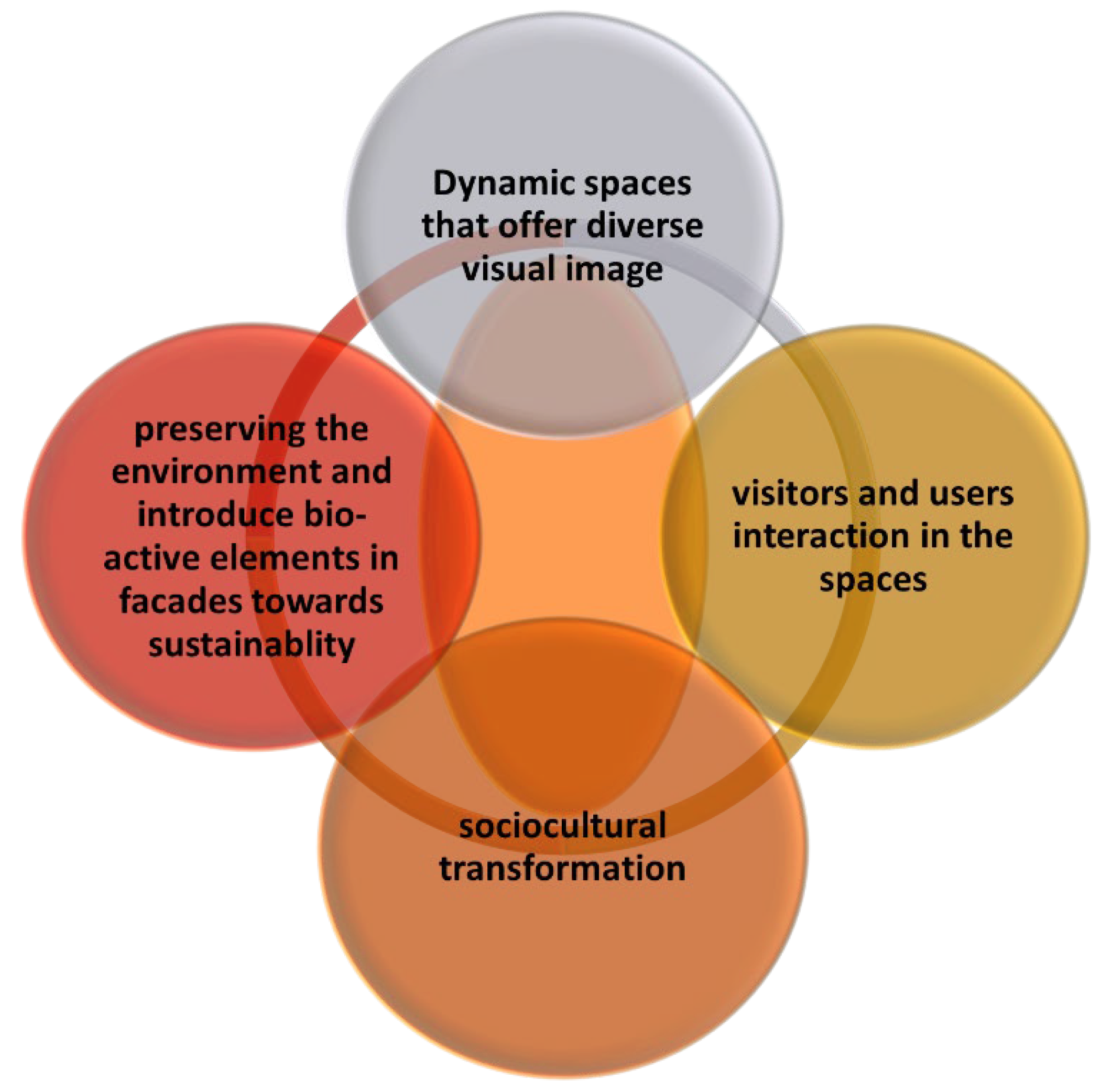
According to the interview and answers from respondents, the main positive feedback about implementing Algae has been deducted as shown in Figure 12.
6.4. Implementation of the Technology in Egypt
The following points discuss the proper steps required to implement such technology in Egypt.
- Conduct a feasibility study to evaluate the suitability and potential of using an algae facade in a specific location in Egypt, considering factors such as climate, sunlight availability, water quality, and the energy requirements of algae cultivation.
- During design and construction, collaborate with architects, engineers, and algae experts to design a facade system that integrates algae cultivation into the building’s exterior, considering aspects such as cultivation modules, flow systems, lighting conditions, and structural requirements.
- For algae selection, identify suitable algae species that can thrive in the climate and water conditions of Egypt. Consider algae species that are fast-growing, have high biomass productivity, and can withstand the local environmental conditions.
- During cultivation setup, set up the necessary infrastructure for algae cultivation, including tanks or photobioreactors, water supply systems, lighting systems, and monitoring equipment. Install the cultivation modules on the building’s facade according to the design.
- Concerning maintenance and monitoring, implement a maintenance plan to ensure proper algal growth and health. This would include regular monitoring of water quality, nutrient levels, and temperature, as well as periodic cleaning and the removal of excessive algae biomass.
- For integration with the building, connect the algae facade system to the building’s energy and water systems to optimize energy and resource use. Consider coordinating the system with the building’s HVAC (heating, ventilation, and air conditioning) and water treatment frameworks to use the algae biomass for energy creation and wastewater treatment.
- In terms of education and awareness, foster instructive projects and mindfulness missions to illuminate general society about the advantages and capability of green growth veneers. This may involve collaborating with universities, hosting public events, and providing training sessions to professionals and residents, and the challenges should be met in order to take the actions required to achieve sustainable development [46,47]
- Concerning evaluation and optimization, continuously monitor and evaluate the performance of the algae facade system, making necessary adjustments and optimizations based on the collected data. This may involve improving cultivation techniques, adjusting nutrient levels, or upgrading the infrastructure if needed.
Moreover, implementing an algae facade in Egypt would require collaboration between various stakeholders, including government bodies, research institutions, architectural firms, and construction companies. Adequate funding, regulatory support, and public acceptance would be essential for the successful implementation of such a project. In the context of Egypt, this concept can have several benefits and contribution to the sustainable development of the country.
Figure 13.
Steps of implementation (developed by the authors).
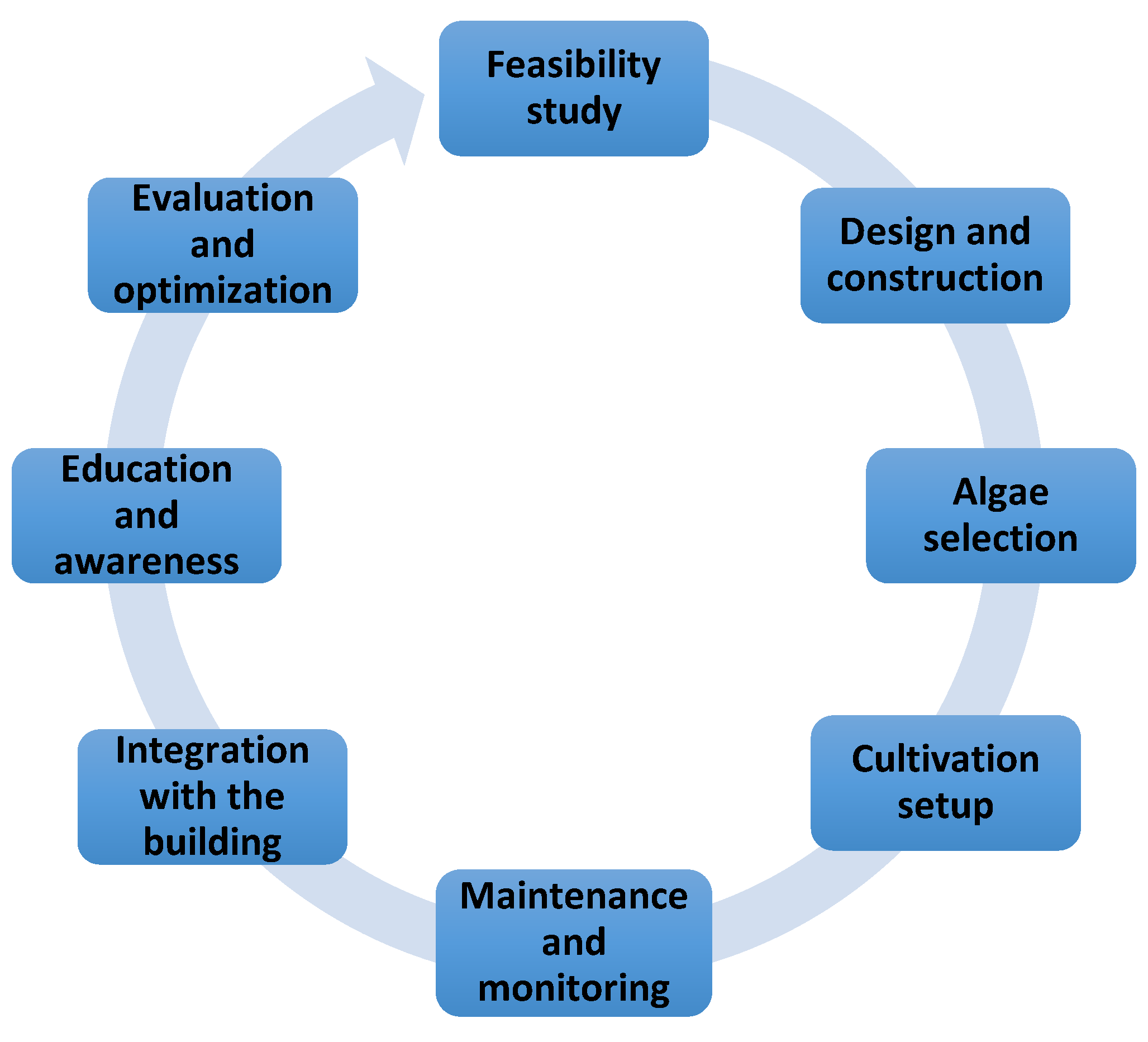
Table 2.
Elucidation of substantial aspects to consider and how to approach it.
| Aspects | Sustainable approach |
|---|---|
| Energy production | Algae can be used to produce biofuels, which can reduce Egypt’s dependence on fossil fuels. The country has ample sunlight and warm temperatures, which are favorable for algal growth. By utilizing algae for energy production, Egypt can reduce carbon emissions and promote a cleaner and more sustainable energy system. |
| Carbon capture | Algae have the ability to absorb carbon dioxide from the atmosphere through photosynthesis. By incorporating algae facades on buildings in Egypt, the country can potentially offset some of its carbon emissions and combat climate change. |
| Water treatment | Egypt faces water scarcity issues due to limited freshwater resources. Algae can be used for wastewater treatment and purification, helping to conserve and reuse water resources. By implementing algae facade systems, buildings can potentially contribute to water conservation efforts and reduce the strain on freshwater supplies. |
| Improved air quality | Algae can help develop air quality by retaining pollutants such as nitrogen dioxide and particulate matter. Egypt, particularly its urban areas, faces significant air pollution challenges, which can have detrimental effects on public health. Incorporating algae facade systems in buildings can help mitigate air pollution and create healthier environments. |
| Aesthetically pleasing design | Algae facades can also enhance the aesthetic appeal of buildings. Algae can be grown in various colors and patterns, allowing for creative and visually appealing facades. By integrating algae into architectural designs, Egypt can promote sustainable development while also creating visually striking landmarks. |
| Environmental sustainability |
Algae are highly efficient at absorbing carbon dioxide and releasing oxygen through photosynthesis. Integrating algae systems in buildings can help reduce carbon emissions and improve indoor air quality. |
| Energy efficiency | Algae can be used to produce biofuels, such as biodiesel or biogas, through the conversion of their biomass. Implementing algae-based energy systems can help reduce the dependence on fossil fuels and promote renewable energy sources. |
Adopting algae facades in Egypt can offer multiple benefits, including renewable energy production, carbon capture, water purification, improved air quality, and aesthetically pleasing designs. While this technology is still in its early stages of development, its implementation can contribute to Egypt achieving its sustainable development goals and help address environmental challenges in the country.
7. Conclusions
Buildings and humans both have growing environmental impacts, even with all the technological advancements and environmental discussions. Sustainable solutions can be derived from nature to guide more environmentally friendly design decisions. The greatest application of bio-design calls for a multidisciplinary approach incorporating input from various disciplines not typically found in the construction industry. Nature can provide creative perspectives and applications for façade designs that point to a brighter future. By implementing microalgae photobioreactors (PBRs), buildings may use fewer fossil fuels, lowering their carbon footprints. Through the transformation of algal biomass to biogas for use in infrastructure, supplying hot water, and partial electricity gains, a building’s thermal function can be improved. This symbiosis is mutually beneficial for both algae growth and building performance. It also lessens the high capital and operating costs of PBRs by integrating buildings with PBRs.
When designing and placing microalgae enclosures, it is important to balance factors like building space, window-to-wall ratio (WWR), energy savings, occupant satisfaction, and the aesthetics of microalgae growth. Algae walls can be tailored to balance views, light transmission, shading, and thermal comfort within a building. Through thoughtful design and maintenance, they can effectively manage sunlight exposure to help cool or heat indoor spaces as needed while providing unique aesthetic and functional elements to the architecture.
The growing use of renewable energy indicates that these structures are more sustainable and energy-efficient, and they can offer business, economic, and environmental opportunities. It is crucial to follow comprehensive maintenance schedules to ensure that the use of innovative algae façade technology in Egypt would continue to thrive and provide their intended benefits.
The presence of algae in the working environment can assist inhabitants with being more useful and better and upgrade prosperity. To execute green growth façades in structures, the prerequisites ought to be characterized and researched in a development project; there are some factors and challenges that should be considered when creating bioenergy infrastructure, such as high initial costs, CO2 provision, and all the technical requirements.
Sustainable design contemplations ought to be illustrated as soon as conceivable to make the cycle time and cost productive. The next generation of cities can be reimagined, with buildings serving as cells where living things coexist with buildings and natural environments and buildings exist as one.
Algae building technology provides many environmental and economic benefits; however, there are numerous natural, mechanical, monetary, and social issues that should be tackled previously and during execution, and further studies will be considered by the authors concerning this proposal, its applicability, and the further use and analyses of all the knowledge and data relating to this subject.
Funding
The article processing charges of this publication were provided by the Prince Sultan University.
Institutional Review Board Statement
Not applicable.
Informed Consent Statement
Not applicable.
Data Availability Statement
Not applicable.
Acknowledgments
The authors would like to acknowledge the support of PRINCE SULTAN UNIVERSITY for paying the article processing charges (APCs) of this publication, Additionally, the authors would like to thank Prince Sultan University: College of Architecture and Design (CAD), Architecture Department and the Educational Research Lab (ERL), Riyadh, KSA. and Pyramids Higher Institute (P.H.I.) for Engineering and Technology, Cairo, Egypt, for their support.
Conflicts of Interest
The authors declare no conflicts of interest.
References
- Elrayies, G. M. (2018). Microalgae: prospects for greener future buildings. Renewable and Sustainable Energy Reviews, 81, 1175-1191. [CrossRef]
- Sylvia E. Kelechi, Musa Adamu, Abubakar Mohammed, Ifeyinwa I. Obianyo, Yasser E. Ibrahim, And Hani Alanazi,”. (2021): Equivalent CO2 Emission and Cost Analysis of Green Self-Compacting Rubberized Concrete,”, Sustainability journal in MDPI. [CrossRef]
- Jo, H. S., & Han, S. H. (2017). Utilization of Building Colors with the Energy-Oriented Algae Façade System. KIEAE Journal, 17(1), 43-48. [CrossRef]
- Singh, R. N., & Sharma, S. (2012). Development of suitable photobioreactor for algae production–A review. Renewable and Sustainable Energy Reviews, 16(4), 2347-2353. [CrossRef]
- Elmelegy, D. & Elhassan Z. (2019). The Bio-adaptive algae contribution for sustainable architecture. IOP Conference Series: Earth and Environmental Science, Sci. 397 012007.
- Sommese, F., Badarnah, L., & Ausiello, G. (2022). A Critical Review on Biomimetic Envelopes: Towards a bio-adaptive model from nature to architecture. Renewable and Sustainable Energy Reviews, Elsevier, 169, 112850. [CrossRef]
- Tokuç, A., Özkaban F.F., Cakir, Ö. A. (2018). Biomimetic Facade Applications for a more Sustainable Future. Interdisciplinary Expansions in Engineering and Design with the power of Biomimicry. InTech.
- Warren, K., Milovanovic, J., Kim, K.H. (2023). Effect of Micro Algae Facade on Design Behaviors: A Pilot Study with Architecture Students. Buildings, 13, 611.
- Ahmad, I., Abdullah, N., Koji, I., Mohamad, S. E., Al-Dailami, A., & Yuzir, A. (2022). Role of algae in built environment and green cities: A holistic approach towards sustainability. International Journal of Built Environment and Sustainability, 9(2-3), 69-80. [CrossRef]
- Wilkinson, S., Biloria, N., & Ralph, P. (2020). The technical issues associated with algae building technology. International Journal of Building Pathology and Adaptation, 38(5), 673-688. [CrossRef]
- Khattak, A. (2023), Are environmental sustainability thoughts a panacea for environmental performance? Social innovation and moderating role of green innovation, international Journal of Innovation Science, 66- Volume: 1 Issue: 1, to Volume: 16 Issue: 3, ISSN: 1757-2223. [CrossRef]
- https://www.vedantu.com/.
- https://sciencing.com/.
- https://www.javatpoint.com/.
- Maryam Talaei, Mohammadjavad Mahdavinejad, Rahman Azari: (2019) Thermal and energy performance of algae bioreactive façades: A review, journal of Building Engineering, Volume 28, March 2020, 10101, . [CrossRef]
- S.P. Singh, Priyanka Singh. (2015): Effect of temperature and light on the growth of algae species: A review, Renewable and Sustainable Energy Reviews, Volume 50, Pages 431-444. [CrossRef]
- Biloria, N., & Thakkar, Y. (2020). Integrating algae building technology in the built environment: A cost and benefit perspective. Frontiers of Architectural Research, 9(2), 370-384. [CrossRef]
- https://www.researchgate.net/figure/6-Cultivation-systems-for-algae-growth-A-B-flat-panel-photobioreactors-at-AzCATI_fig7_317082528.
- http://www.polymerplastics.com/.
- Sedighi, M., Pourmoghaddam Qhazvini, P., & Amidpour, M. (2023). Algae-Powered Buildings: A Review of an Innovative, Sustainable Approach in the Built Environment. Sustainability, 15(4), 3729. [CrossRef]
- Kim, K. H. (2022). Microalgae Building Enclosures: Design and Engineering Principles. Routledge.
- https://www.youtube.com/watch?v=Cb9Vr9ZddnQ.
- Coltgroup. Solar-Leaf Bioreactor Façade. (2022), Available online: https://www.colt-info.de/Downloads.html?file=files/colt/pdf/ sonnenschutz/colt-solarleaf-bioreactor-facade.pdf. 63.
- Al Dakheel, J.; Tabet Aoul, K. Building Applications. (2017): Opportunities and Challenges of Active Shading Systems: A State-of-the-Art Review. Energies, 10, 1672.
- Dincer, I.; Colpan, C.O. (2019): Ezan, M.A. Environmentally-Benign Energy Solutions; Springer Nature: Berlin, Germany, [CrossRef].
- Chang, S.; Castro-Lacouture, D.; Dutt, F.; Yang, P.P.-J. (2017): Framework for evaluating and optimizing algae façades using closed-loop simulation analysis integrated with BIM. Energy Procedia, 143, 237–244. [CrossRef].
- https://www.wired.com/2013/04/algae-powered-building/.
- Khahro, S.H.; Memon, A.H.; Memon, N.A.; Memon, Z.A.; Naresh, R. Influence of Social and Economic Factors on Construction Project Performance in Pakistan. Sustainability 2023, 15, 2469. [CrossRef]
- Öncel, S.; Köse, A.; Öncel, D. (2016): Façade integrated photobioreactors for building energy efficiency. In Start-Up Creation; Elsevier: Amsterdam, The Netherlands, pp. 237–299.
- Gnana Swathika Odiyur Vathanam, Karthikeyan Kalyanasundaram, Rajvikram Madurai Elavarasan, Shabir Hussain Khahro, Umashankar Subramaniam, Rishi Pugazhendhi, Mehana Ramesh, Rishi Murugesan Gopalakrishnan. (2021): A Review on Effective Use of Daylight Harvesting Using Intelligent Lighting Control Systems for Sustainable Office Buildings in India, Sustainability journal in MDPI, 13(9), 4973; [CrossRef]
- Mahsa Sedighi, Peiman Pourmoghaddam Qhazvini, Majid Amidpour, (2023): Algae-Powered Buildings: A Review of an Innovative, Sustainable Approach in the Built Environment, Sustainability journal, Volume 15(4), 3729; [CrossRef]
- Ali, H. (2018). Egypt SDS 2030: Between Implementation and Challenges to implement, The American University in Cairo.
- El-Kholei, A & Yssein G.(2023). Embedding Sustainability and SDGs in architectural and planning education: refections from a KAP Survey, Egypt, International Journal of Architectural Research Vol. 17 No. 3, Emerlad.
- Muhammad Aashed Khan Abbasi, Shabir Hussain Khahro, Yasir Javed ,”. (2021): Carbon Dioxide Footprint and Its Impacts: A Case of Academic Buildings “, Sustainability journal in MDPI. [CrossRef]
- Wilkinson, S.J.; Stoller, P. (2018): Algae Building Technology Energy Efficient Retrofit Potential in Sydney Housing. In International Conference on Sustainability in Energy and Buildings; Springer: Berlin/Heidelberg, Germany, pp. 311–321.
- Kim, K.H. (2022): Microalgae Building Enclosures: Design and Engineering Principles; Routledge: Oxfordshire, UK.
- Genin, S.N.; Aitchison, J.S.; Allen, D.G. (2016): Photobioreactor-Based Energy Sources. In Nano and Biotech Based Materials for Energy Building Efficiency; Pacheco Torgal, F., Buratti, C., Kalaiselvam, S., Granqvist, C.-G., Ivanov, V., Eds.; Springer International Publishing: Berlin, Germany, pp. 429–455. 15-.
- Ibrahim, V.A.R., Metwally, W.M. (2024). SLIPS (Slippery Liquid-Infused Porous Surfaces) Technology: Toward Innovative Sustainable Approach in Architecture. In: Ibrahim, A., Mohamed, M.A.A., Fekry, M. (eds) Man and Place. ARCH + DESN 2023. Springer, Cham. [CrossRef]
- Ministry of Tourism and Antiquities, https://egymonuments.gov.eg/ar/museums/manial-palace-museum/.
- Villalba, María Rosa, Rosa Cervera, and Javier Sánchez. 2023. “Green Solutions for Urban Sustainability: Photobioreactors for Algae Cultivation on Façades and Artificial Trees” Buildings 13, no. 6: 1541. [CrossRef]
- https://dodosustainabilityjournal.wordpress.com/2016/03/19/algae-filled-walls-green-wall-powering-a-green-building/.
- Metwally, W.M., Ibrahim, V.A.R. (2022). The Future of the City: Towards Establishing Intelligent Cities. In: Mohamed, M., Ibrahim, A., Fekry, M. (eds) Cities of the Future. Springer, Cham. [CrossRef]
- Al Dakheel, Joud, and Kheira Tabet Aoul. 2017. “Building Applications, Opportunities and Challenges of Active Shading Systems: A State-of-the-Art Review” Energies 10, no. 10: 1672. [CrossRef]
- Trombadore, A., Paludi, B., D’Ostuni, M. (2022). Adaptive Design of Green Facades and Vertical Farm: Examples of Technological Integration of Microalgae for Energy Production in Resilient Architecture. In: Sayigh, A., Trombadore, A. (eds) The Importance of Greenery in Sustainable Buildings. Innovative Renewable Energy. Springer, Cham. [CrossRef]
- Zhong, Weijie & Schroeder, Torsten & Bekkering, Juliette. (2023). Designing with nature: Advancing three-dimensional green spaces in architecture through frameworks for biophilic design and sustainability. Frontiers of Architectural Research. 12. 732-753. 10.1016/j.foar.2023.03.001. [CrossRef]
- Eman S. Abowardah, Wafa Labib, Hadeer Aboelnagah, And Mohammad Nurunnabi. (2024): Students’ Perception of Sustainable Development in Higher Education in Saudi Arabia,”, Sustainability journal in MDPI AG. [CrossRef]
- Shabir Hussain Khahro, Yasir Javed. (2022): “ Key Challenges in 21st Century Learning: A Way Forward Towards Sustainable Higher Educational Institutions,”, Sustainability journal in MDPI. [CrossRef]
Figure 11.
Interview sample (By: Authors).
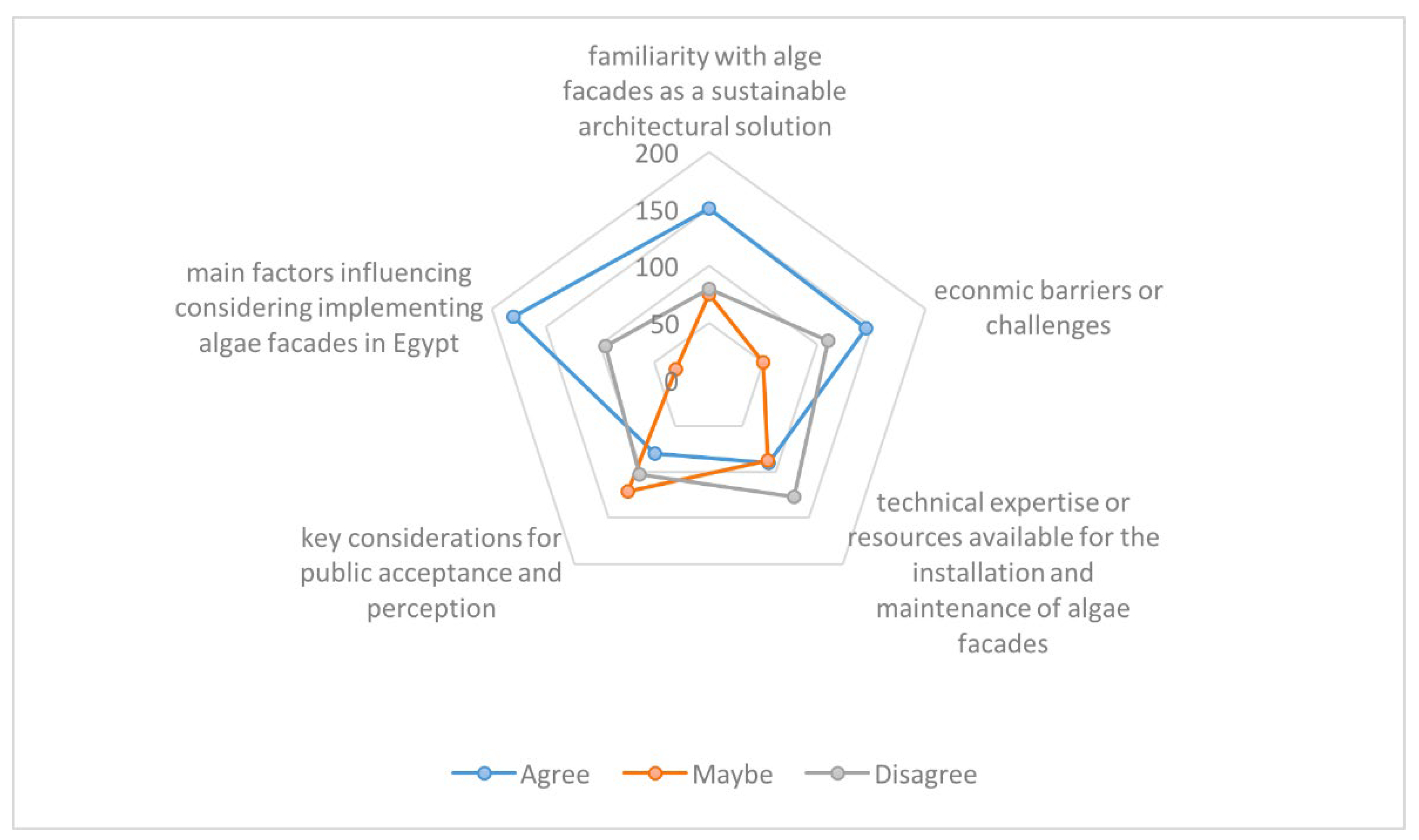
Figure 12.
Main Positive key aspects (By: Authors).
Disclaimer/Publisher’s Note: The statements, opinions and data contained in all publications are solely those of the individual author(s) and contributor(s) and not of MDPI and/or the editor(s). MDPI and/or the editor(s) disclaim responsibility for any injury to people or property resulting from any ideas, methods, instructions or products referred to in the content. |
© 2024 by the authors. Licensee MDPI, Basel, Switzerland. This article is an open access article distributed under the terms and conditions of the Creative Commons Attribution (CC BY) license (http://creativecommons.org/licenses/by/4.0/).
Copyright: This open access article is published under a Creative Commons CC BY 4.0 license, which permit the free download, distribution, and reuse, provided that the author and preprint are cited in any reuse.


