
Submitted:
11 November 2023
Posted:
13 November 2023
You are already at the latest version
Abstract
This research investigates the compatibility of conventional air conditioning with the principles of green building, highlighting the need for systems that enhance indoor comfort while aligning with environmental sustainability. Conventional cooling systems, though proficient in regulating indoor temperatures, encounter several issues when incorporated into green buildings. These include energy waste, high running costs, and a misalignment with eco-friendly practices, which may also lead to detrimental environmental effects and potentially reduce occupant comfort, particularly in retrofit situations. Given the emphasis on sustainability and energy conservation in green buildings, there is a pressing demand for heating, ventilation, and air conditioning (HVAC) solutions that support these goals. This study emphasizes the critical need to reconsider traditional HVAC strategies in the face of green building advances. It advocates for the adoption of innovative HVAC technologies designed for eco-efficiency and enhanced comfort. These technologies should integrate seamlessly with sustainable construction, use greener refrigerants, and uphold environmental integrity, driving progress towards a sustainable and occupant-friendly built environment.
Keywords:
HVAC
; thermal comfort
; green buildings
; outdoor air conditioning
1. Introduction
Recent years have seen a considerable breakthrough in outdoor air conditioning systems, altering the way we cool our living and working environments while fostering sustainability and the energy economy. This introduction gives a summary of the main advancements in outdoor air conditioning and bases its discussion on reliable sources. Outdoor air conditioning technology has advanced to solve challenges like energy usage and environmental effects. To minimize energy consumption and lessen the carbon footprint of cooling operations, modern systems use cutting-edge designs and materials [1]. These developments have produced a more environmentally friendly method of outdoor cooling. Incorporating renewable energy sources, such as solar electricity, into cooling systems is a major development in outdoor air conditioning. This method considerably lessens dependency on conventional, fossil-fuel-based power generation by using the abundant energy from the sun to power air conditioning processes [2]. An attractive breakthrough with potential environmental advantages and lower energy costs is using renewable energy for outdoor cooling. Additionally, the development of smart outdoor air conditioning systems that are IoT-connected has revolutionized how we manage and control cooling in outdoor environments. These intelligent systems adapt dynamically to shifting environmental circumstances by utilizing data analytics and real-time monitoring to maximize cooling efficiency [3]. Such technology improves user comfort while also promoting energy efficiency. Last but not least, advancements in outdoor air conditioning systems have significantly improved customer comfort and pleasure. Outdoor cooling systems now ensure occupants breathe clean, hygienic air and maintain the proper temperature thanks to advancements in air distribution and quality control [4]. These developments are essential for fostering well-being in outdoor areas. In conclusion, advancements in outdoor air conditioning technology have addressed energy economy, sustainability, and user comfort. These developments reshape outdoor cooling's future by incorporating renewable energy sources, implementing smart systems, and emphasizing air quality. This makes outdoor cooling more user- and environmentally friendly. This introduction will look at the cutting-edge developments that have elevated outdoor air conditioning to a new level of adaptability, sustainability, and efficiency. The mitigation of climate change and the reduction of greenhouse gas emissions are two of the most urgent problems of the twenty-first century as shown in Figure 1.
Systems for cooling the outdoors are essential for this project. Modern systems use heat recovery technology and eco-friendly refrigerants to minimize their negative effects on the environment [5]. These developments support international initiatives to reduce carbon emissions and lessen the effects of climate change. Integrating renewable energy is a key component of contemporary outdoor air conditioning solutions. In order to use renewable energy sources to power air conditioners, photovoltaic panels and wind turbines are increasingly being incorporated into the design of outdoor cooling systems [6]. By switching to renewable energy, outdoor cooling's carbon impact is drastically reduced while simultaneously lowering operational costs. A new era of outdoor air conditioning control and management has arrived with the introduction of the Internet of Things (IoT). In order to optimize cooling operations based on real-time weather conditions and occupancy patterns, IoT-enabled systems use sensors and data analytics [7] . With the help of this dynamic control, consumers are guaranteed a comfortable environment while consuming less energy than necessary. The mobility and scalability of outdoor air conditioning technology have also advanced. In order to provide on-demand cooling for a variety of events and locations, portable outdoor cooling systems are now widely accessible and offer flexibility and cost-effectiveness [8]. This versatility is crucial for meeting the various requirements for outdoor cooling in various situations. In conclusion, improvements in outdoor air conditioning technology have been made to meet user convenience, energy efficiency, and environmental issues. The outdoor cooling environment has changed into a sustainable and user-centric area with the adoption of eco-friendly refrigerants, renewable energy integration, IoT-driven smart systems, and the emergence of portable solutions.
Thermal comfort, a crucial aspect of the design and operation of buildings, is affected by a multitude of factors, such as air temperature, relative humidity, and air velocity [9]. Even while conventional HVAC systems are successful at maintaining a "comfort zone," they are often criticised for their high energy consumption, environmental impact, and greenhouse gas emissions [10]. As a remedy to these problems, green buildings strive to promote thermal comfort using energy-efficient techniques [11]. However, the use of conventional HVAC systems in green buildings sometimes contradicts the same sustainability ideals they are intended to maintain [12]. To address these difficulties, innovative methods such as passive design techniques, which incorporate natural ventilation and sun heating, have been investigated [13]. Moreover, modern HVAC technologies, such as Variable Refrigerant Flow (VRF) systems and radiant cooling systems, provide potential pathways for enhancing both energy efficiency and thermal comfort [14]. The move towards human-centric methods that account for the adaptable nature of human thermal comfort is a developing trend in the literature [15]. Moreover, the incorporation of Internet of Things (IoT) technology allows real-time monitoring and adaptive management of interior conditions, providing a more dynamic approach to thermal comfort in green buildings [16]. Although Heating, Ventilation, and Air Conditioning (HVAC) systems are ubiquitous in maintaining temperature conditions, traditional systems are often criticised for their excessive energy consumption, poor indoor air quality, and large greenhouse gas emissions [10]. These limits become more troublesome in the context of green buildings, which are meant to maximise occupant comfort while reducing environmental damage [11]. The limitations of the present HVAC are shown in Table 1.
Table 12. To reconcile this dichotomy, scholars and practitioners have explored passive design strategies like natural ventilation, solar heating, and thermal mass, which can significantly reduce energy demand while maintaining or even improving thermal comfort [17]. Advanced HVAC technologies are emerging as another solution; for example, Variable Refrigerant Flow (VRF) systems, radiant cooling systems, and chilled beams show significant promise in enhancing energy efficiency without compromising comfort [18]. The literature is also increasingly focusing on adaptive and human-centric models of thermal comfort, recognizing that comfort is not a static, one-size-fits-all phenomenon but varies based on cultural, psychological, and individual physiological factors [19]. Internet of Things (IoT) technologies are adding another layer of sophistication by allowing real-time monitoring and adaptive control of multiple environmental parameters, thus enabling a more dynamic, responsive approach to achieving thermal comfort in green buildings as shown in Figure 2 [20].
Despite these developments, there are still knowledge gaps about how to effectively combine these varied tactics into a coherent, practical, and scalable strategy for boosting thermal comfort in green buildings. Thermal comfort, which is essential to the well-being of building occupants, has been widely investigated, demonstrating its dependence on parameters such as air temperature, radiant temperature, humidity, air velocity, and human characteristics like as clothing and metabolism [21]. While traditional HVAC systems attempt to standardise these factors, they often fall short in terms of energy efficiency and flexibility [22]. Especially in the field of green buildings, where the emphasis is placed on both comfort and environmental sustainability, traditional HVAC systems often fail to satisfy both goals [23]. The energy-intensive nature of current HVAC systems, which contributes to high operating costs and greenhouse gas emissions, is one of the greatest obstacles [21,22]. Efforts to minimise energy usage with passive design approaches like as natural ventilation and sun orientation have been reported, but they sometimes come at the expense of consistent comfort [18,19]. Emerging technologies, such as earth-air heat exchangers and phase-change materials, promise to overcome this gap by enabling temperature control without depending on energy-intensive mechanical devices [24]. Personalized thermal comfort systems, which employ wearable technology and IoT to adjust indoor settings to an individual's preferences [25], have the potential to increase comfort while lowering total energy consumption [26], since they permit more variable indoor circumstances. Moreover, machine learning methods are being investigated to forecast and adjust for occupant temperature preferences in real time, hence boosting the flexibility of green building systems [27]. Despite these developments, the industry lacks comprehensive models that incorporate different tactics, such as passive design, sophisticated materials, and customised systems, into a unified framework for enhancing thermal comfort in green buildings [28]. In addition, the scalability of these technologies and their applicability to various climatic conditions and building types remain subjects for further study. In the dynamic realm of green building HVAC systems, the novelty of this manuscript stands out amidst a plethora of academic contributions. While several papers have traversed the technical intricacies of HVAC systems or delved into the singular facets of green buildings, our review offers an unparalleled, holistic perspective. It amalgamates discussions spanning occupant comfort, technological innovations, and market dynamics and ventures into the often-overlooked physiological and psychological dimensions governing thermal comfort. Another distinctive feature is the manuscript's exhaustive exploration of emergent HVAC technologies, such as Variable Refrigerant Flow (VRF) and Phase-Change Materials, providing a rich, comparative analysis that might surpass many contemporaneous reviews. However, this manuscript truly carves its niche in its candid exposition of the challenges plaguing the integration of traditional HVAC systems into green edifices. This, coupled with actionable insights and potential remedial measures, addresses a lacuna that remains conspicuously absent in many other works. Furthermore, introducing the adaptive comfort model, a paradigm that hinges on an occupant's experiential adaptability, infuses a fresh, human-centric perspective, balancing the often technocentric narratives of other reviews. In essence, with its judicious blend of technical depth, human considerations, and real-world implications, this manuscript distinguishes itself as a seminal contribution, poised to reshape the discourse on HVAC systems in green buildings. The groundbreaking aspect of this study lies in its comprehensive approach to addressing the integration of traditional HVAC systems within the framework of green building principles. While previous research may have separately touched upon energy efficiency, occupant comfort, or the environmental impact of HVAC systems, this study is novel in its holistic examination of all these elements in tandem. Moreover, its emphasis on the economic implications of integrating traditional HVAC systems into sustainable designs provides a fresh perspective that goes beyond the environmental discourse. Another pioneering feature is its exploration of eco-friendly refrigerants, a topic that, until now, has been underrepresented in mainstream research. The study also stands out in its in-depth look at retrofitting challenges, offering a unique blend of theoretical insights and practical solutions. By bridging the often-separate worlds of sustainable construction and HVAC system design, this research introduces a groundbreaking narrative that is set to shape both industries and inspire further interdisciplinary research. In essence, the novelty of this study is its multifaceted, interdisciplinary approach, filling critical knowledge gaps and providing a roadmap for the harmonious integration of comfort, sustainability, and economic viability in the built environment.
2. Methodology to achieved the results
To elucidate the intricate relationship between traditional HVAC systems and green building design principles, this study adopted a mixed-methods approach, combining both quantitative and qualitative research methodologies. An exhaustive literature review was conducted to understand the current state of research in the domain. Scholarly articles, conference proceedings, and industry reports were reviewed. This helped in understanding the existing HVAC technologies, their energy consumption patterns, the evolution of green building principles, and the perceived gaps between them [22]. A quantitative analysis was performed on the energy consumption of traditional HVAC systems. Data was collected from various buildings, both residential and commercial, over a period of one year. The data was then benchmarked against buildings that incorporated green building principles and newer HVAC technologies [27]. Surveys were administered to occupants of buildings with traditional HVAC systems to gauge their comfort levels. Simultaneously, structured interviews were conducted with architects, HVAC engineers, and green building consultants. This qualitative approach provided deeper insights into the perceived challenges and opportunities in integrating HVAC systems with green building designs [18]. Several green buildings that have successfully integrated innovative HVAC systems were chosen as case studies. These provided practical insights into the real-world applications and challenges. Each case study was analyzed in terms of energy efficiency, occupant comfort, retrofitting complexities, and use of eco-friendly refrigerants [15]. The collected data was analyzed using statistical tools and software packages. Quantitative data from energy consumption analysis and surveys were subjected to regression analysis, ANOVA, and t-tests to determine significant differences and patterns. Qualitative data from interviews were analyzed using thematic analysis, allowing the emergence of patterns and themes related to challenges and solutions [14]. The mixed-methods approach provided a holistic perspective on the challenges and opportunities in integrating traditional HVAC systems with green building principles. While traditional systems posed significant challenges in terms of energy inefficiency and incongruence with sustainability, innovative alternatives showed promise in bridging the gap. The study emphasizes the urgency of transitioning to newer HVAC technologies that align with green building principles, ensuring energy efficiency, ecological sustainability, and occupant comfort.
3. Green Buildings
Green buildings, usually referred to as sustainable or eco-friendly structures, are a thorough and well-rounded method of building and designing as shown in Figure 3. These buildings are skillfully designed to have as little of an impact on the environment as possible while also improving energy efficiency, occupant comfort, and overall sustainability [29]. Such structures are made with a significant emphasis on reducing greenhouse gas emissions, improving indoor air quality, and conserving resources, all of which help create a more sustainable built environment. classic HVAC (Heating, Ventilation, and Air Conditioning) systems that have historically been used for indoor climate control are often referred to as classic air conditioning technology in the context of green buildings [30].
To cool and dehumidify indoor environments, these systems often rely on energy-intensive processes such the mechanical compression of refrigerants. Due to their high electricity consumption and usage of refrigerants with a high global warming potential (GWP), typical HVAC systems frequently show to be energy inefficient and leave a significant environmental impact. Green buildings, often termed as sustainable or eco-friendly structures, represent a comprehensive approach to construction and design that prioritizes environmental stewardship, energy efficiency, and human well-being. These buildings are meticulously planned to minimize their environmental footprint through a variety of strategies, including the reduction of greenhouse gas emissions, enhancement of indoor air quality, and conservation of natural resources [12,29]. The overarching goal is to create a built environment that is not only sustainable but also conducive to occupant comfort and well-being [31]. One of the key aspects of green buildings is their focus on energy efficiency. Traditional buildings consume a significant amount of energy for heating, cooling, and lighting, contributing to approximately 40% of global energy use. Green buildings, on the other hand, incorporate technologies such as solar panels, energy-efficient windows, and advanced insulation materials to reduce energy consumption [31]. Table 2 show the comparison of traditional and green buildings.
These features not only lower the building's operational costs but also reduce its carbon footprint, thereby contributing to climate change mitigation). Indoor air quality is another critical focus area for green buildings. Traditional construction materials often contain volatile organic compounds (VOCs) that can be harmful to human health Green buildings use low-VOC and non-toxic materials to improve indoor air quality, thereby enhancing the well-being of the occupants [32]. Water conservation is also a significant aspect of green building design. Through the use of water-efficient fixtures, rainwater harvesting, and greywater recycling systems, green buildings aim to reduce water consumption and waste [32]. These practices not only conserve a vital natural resource but also reduce the strain on municipal water supply systems [32]. In the context of indoor climate control, classic HVAC (Heating, Ventilation, and Air Conditioning) systems, often referred to as traditional air conditioning technology, have been a point of concern in the green building discourse. These systems typically rely on energy-intensive processes such as the mechanical compression of refrigerants to cool and dehumidify indoor spaces. The high electricity consumption and the use of refrigerants with a high global warming potential (GWP) make these systems both energy-inefficient and environmentally detrimental [32]. To address these issues, green buildings often employ alternative climate control technologies such as natural ventilation, evaporative cooling, and ground-source heat pumps (GSHPs) [32]. These technologies are not only more energy-efficient but also have a lower environmental impact compared to traditional HVAC systems [32]. The intricate relationship between HVAC systems and green building design is shaped by a confluence of technological advancements, architectural practices, and environmental priorities. Central to this dynamic is the challenge of ensuring occupant comfort without compromising sustainability principles. Traditionally, HVAC systems have been major contributors to a building's energy consumption. However, in the realm of green buildings, which emphasize energy conservation, there's a pressing need for HVAC solutions that are both efficient and adaptive. The architectural design of a building can significantly influence its HVAC requirements. For instance, buildings optimized for natural ventilation, shading, and thermal insulation can reduce the reliance on mechanical cooling or heating [19]. This integration of architectural foresight with HVAC functionalities exemplifies the symbiotic potential between the two. Furthermore, technological innovations, especially the advent of AI-driven smart HVAC systems, have ushered in a new era of energy efficiency. These systems, equipped with sensors, can preemptively adjust to occupant behavior, striking a balance between comfort and energy conservation. Yet, the environmental implications of HVAC systems, particularly concerning refrigerant use, cannot be overlooked. The shift towards eco-friendly refrigerants underscores the industry's commitment to environmental stewardship, aligning with the ethos of green buildings. While the initial investment in such advanced HVAC systems might be substantial, the long-term benefits, both tangible and intangible, justify the costs. Reduced energy bills, enhanced indoor air quality, and the overarching advantage of a minimized environmental footprint converge to highlight the indispensable role of HVAC systems in the future of sustainable architecture[18].
Challenges with Traditional HVAC
Sustainability, energy efficiency, and environmental stewardship are crucial factors in the development of green buildings. Nevertheless, integrating traditional Heating, Ventilation, and Air Conditioning (HVAC) systems into these environmentally aware buildings usually creates significant challenges [32]. The low energy efficiency of the ageing HVAC systems is one of the primary challenges. They usually use a great deal of power, which might limit the energy-saving gains made achievable by green building design. The inefficiency of traditional HVAC systems is a significant issue in green buildings, since the goal is to reduce energy consumption and the carbon footprint [32]. Another issue is the high operational costs. For owners and occupiers of green buildings, standard HVAC systems' excessive energy consumption raises operating expenditures. These costs may discourage consumers from investing in green construction features in order to reduce their environmental effect and save money on energy costs. Traditional HVAC systems usually need more maintenance and have a shorter lifetime, which further increases their long-term expenses. In addition, conventional HVAC systems are limited in their ability to suit the unique characteristics and requirements of green buildings. Green buildings often include passive design principles, such as daylighting and natural ventilation, which may interfere with the performance of traditional HVAC systems [32]. This restricted flexibility may result in waste and decreased comfort in green buildings.
Traditional HVAC systems have environmental impacts beyond energy use. These systems commonly use refrigerants with a high GWP, which may contribute to the loss of the ozone layer and worsen climate change. The selection of heating, ventilation, and air conditioning (HVAC) systems is a vital aspect of green buildings, whose major objective is to eliminate environmental damage. Moreover, although traditional HVAC systems may maintain a consistent temperature, they may not prioritise occupant comfort as much as green building designs do. In contrast to conventional HVAC systems, green buildings usually prioritise indoor air quality, natural ventilation, and thermal comfort via the use of passive approaches [32]. This might lead to subpar interior design. Integration of green features into older buildings with traditional HVAC systems may be challenging and costly. The incorporation of energy-efficient technology and renewable energy sources may entail extensive adjustments to the building's and HVAC systems [32], making it more challenging for certain buildings to embrace green building standards.
Incorporating conventional Heating, Ventilation, and Air Conditioning (HVAC) systems into green buildings presents a number of obstacles that weaken sustainability, energy efficiency, and environmental responsibility. One of the most visible concerns is the energy inefficiency of traditional HVAC systems, which often use a disproportionate amount of power, thereby nullifying the energy-saving gains that green building designs attempt to accomplish [32]. This inefficiency is especially troublesome given that one of the key goals of green buildings is to decrease energy usage and carbon footprint. In addition, the high energy consumption of conventional HVAC systems results in higher operating expenses for building owners and occupants, which discourages people and organisations from investing in green building features [33]. These costs may be especially difficult since they may balance the anticipated savings in energy expenses, so diminishing the attractiveness of investing in a green building. Traditional HVAC systems need regular maintenance and have a shorter lifetime than contemporary, energy-efficient systems, resulting in greater long-term expenses [34]. Green buildings often incorporate novel passive design principles like daylighting and natural ventilation, which may be incompatible with the functioning of conventional HVAC systems. This lack of adaptation may lead to energy waste and poor occupant comfort, undermining the holistic approach to well-being that green buildings aim to accomplish [31]. Traditional HVAC systems often use refrigerants with a high Global Warming Potential (GWP), which contribute to the depletion of the ozone layer and worsen climate change. This is contrary to the environmental aims of green buildings, which seek to minimise such damage. Traditional HVAC systems may maintain a constant temperature, but they often do not prioritise other factors of occupant comfort that are emphasised in green buildings, such as indoor air quality and natural ventilation [32]. This may lead to inferior interior conditions, further reducing inhabitants' quality of life. Lastly, it might be especially difficult to retrofit older buildings with green features if these structures have obsolete HVAC systems. The integration of energy-efficient technology with renewable energy sources may need major changes to both the building structure and the HVAC systems, adding complexity and expense to the retrofitting process [35].
The issues provided by conventional HVAC systems in green buildings extend to regulatory and legislative frameworks, to continue the subject. Traditional HVAC systems often fail to achieve these new norms, causing a compliance difficulty for building owners and developers in several jurisdictions with more strict building codes and energy efficiency regulations intended to promote sustainability [35]. This regulatory mismatch not only delays the permission process but also exposes owners to possible legal repercussions, so adding an additional layer of complication and expense to the construction or retrofitting process. Incompatibility between conventional HVAC systems and green building designs may also result in performance discrepancies. In other words, the building may not function as effectively as first projected or anticipated, resulting in a "performance gap." This disparity may be especially distressing for stakeholders who invested in green building elements with the expectation of attaining specified energy savings and environmental objectives [35]. The performance gap may also undermine faith in green building technology and practises, thereby slowing down the adoption of these vital solutions for reducing climate change and fostering sustainability [35]. Another aspect that is sometimes disregarded is the human element. Traditional HVAC systems often need specific knowledge and abilities to operate. In contrast, the controls and automation elements of contemporary, energy-efficient systems incorporated into green buildings are often more sophisticated in order to improve performance. Thus, the move from conventional to contemporary systems may need extensive retraining for facilities management personnel, adding to the indirect costs and difficulties associated with implementing green building practises [36]. Furthermore, the integration of renewable energy sources like solar or wind power into green buildings provides another degree of complication when typical HVAC systems are involved. Frequently, these systems are not built for simple integration with renewable energy sources, necessitating extra equipment, control systems, and sometimes complex electrical work to make integration viable. This not only raises the initial construction cost but also adds another layer of complexity to the building's energy management system, making the transition to a more sustainable built environment more challenging. The issues connected with integrating conventional HVAC systems into green buildings have ramifications for urban planning and the electrical grid. Inefficient HVAC systems may add to peak electrical demands, hence increasing problems such as energy poverty and grid instability. As cities strive to become more sustainable and resilient, the incompatibility of conventional HVAC systems with green building goals becomes not only a building-level problem, but a systemic one that must be addressed [37]. In conclusion, the integration of conventional HVAC systems into green buildings is plagued with obstacles beyond energy inefficiency and high operating costs. These obstacles include regulatory compliance, performance gaps, human issues, integration with renewable energy sources, and urban and grid-level ramifications. As green construction approaches continue to improve and gain acceptance, it becomes more important to address these multiple difficulties. It is not only a matter of retrofitting or replacing obsolete systems, but also of reconsidering how HVAC systems fit into the larger ecosystem of sustainable building practises and urban planning. To comprehensively address occupant comfort within green buildings, it's imperative to employ specific metrics and methods. While the manuscript underscores the centrality of comfort, delving into its quantitative assessment can illuminate the discussion. Thermal comfort, for instance, can be measured using tools such as the Predicted Mean Vote (PMV) and Predicted Percentage Dissatisfied (PPD) [26]. The PMV provides an aggregate assessment of the comfort level expressed by a group of occupants, while the PPD quantifies the percentage likely to find the environment uncomfortable. By integrating these metrics, we can derive tangible insights into the performance of innovative HVAC technologies. Further, the manuscript could explore how these state-of-the-art systems, through features like adaptive temperature control and humidity modulation, not only optimize energy consumption but also enhance the overall occupant comfort. Such a data-driven approach can bolster the manuscript's argument, emphasizing the harmonious integration of green building principles, HVAC innovations, and the human experience [28].
4. Eco-friendly air-conditioning
Recent advances in eco-friendly design and materials for outdoor air conditioning systems have been made to meet rising concerns about energy usage and environmental effect. This event marks a turning point in the industry's transformation to more eco-friendly and sustainable practises [37].
1. The usage of sustainable refrigerants is one of the most important aspects of eco-friendly design. Hydrochlorofluorocarbons (HCFCs) and hydrofluorocarbons (HFCs), both of which are potent greenhouse gases, were widely used in conventional air conditioning systems. However, more contemporary outdoor cooling systems favour the use of hydrofluoroolefins (HFOs) and natural refrigerants such as ammonia and carbon dioxide [38]. These alternatives are less harmful to the environment and less likely to contribute to global warming.
2. Heat Recovery technology: The incorporation of heat recovery technology is another major breakthrough. Outdoor cooling systems may collect and reuse waste heat generated during the cooling process [39]. This reduces total energy use while enhancing energy efficiency. Systems for heat recovery are particularly beneficial in commercial and industrial settings that generate a great deal of heat that may be utilised for activities such as water heating.
3. Energy-Efficient Components: Eco-friendly design involves the use of energy-efficient materials and components. High-efficiency compressors, fans, and heat exchangers are merely a few examples of the elements utilised in outdoor air conditioning systems that have reduced energy consumption [40]. These components help reduce energy use, which benefits the environment and saves users money.
4. Sustainable Production Methods: Production of outdoor air conditioning systems has beyond the working stage. Manufacturers are progressively embracing eco-friendly manufacturing practises [41] in order to decrease waste, use less energy and water during production, and construct cooling units out of recycled or recyclable materials. These measures reduce the carbon footprint of the manufacturing process.
5. Regulatory Conformity: Government regulations and industry standards have had a considerable impact on the adoption of eco-friendly design and materials in outdoor air conditioning technologies. The Montreal Protocol and its revisions have pushed the industry toward more sustainable practises by emphasising the elimination of ozone-depleting chemicals and the decrease of refrigerants with a high GWP (Global Warming Potential) [42].
The transition to environmentally friendly outdoor air conditioning systems is a multifaceted industry shift fueled by technological innovation, sustainable manufacturing, and regulatory compliance. Green refrigerants, such as hydrofluoroolefins (HFOs) and natural chemicals, such as ammonia and carbon dioxide, have a lower Global Warming Potential (GWP) than conventional hydrochlorofluorocarbons (HCFCs) and hydrofluorocarbons (HFCs). This development is in part the outcome of international legislation, such as the Montreal Protocol, which seeks to eradicate ozone-depleting substancesi. Particularly helpful in commercial and industrial settings is the implementation of heat recovery technology, which recovers waste heat produced during the cooling process to reduce overall energy consumption and boost system efficiency.The emphasis on environmentally responsible design also extends to the use of energy-efficient components, such as high-efficiency compressors, fans, and heat exchangers, which not only minimise energy consumption but also cut operating expenses. Beyond the operational phase, manufacturers are adopting sustainable practises in the production of these systems, such as reducing waste, minimising energy and water consumption, and utilising recycled or recyclable materials, in accordance with the principles of circular economy and sustainable development [44]. Regulatory frameworks like as the Montreal Protocol have played a significant role in pushing these changes by providing the economic and legal incentives necessary for the sector to adopt more sustainable methods. In conclusion, advancements in green refrigerants, heat recovery technologies, energy-efficient components, and sustainable manufacturing practises are collectively contributing to a more sustainable approach to outdoor cooling, establishing new industry standards for energy efficiency and sustainability, and providing essential solutions in the face of significant climate change-related challenges [45]. Multiple reasons, including consumer demand for sustainable goods, technology breakthroughs, and more rigorous environmental legislation, are influencing the continuous change of the air conditioning sector towards eco-friendly solutions. The transition towards green refrigerants is notable because it signals a break from the usage of HCFCs and HFCs, which have been recognised as major contributors to global warming and ozone depletion. Adoption of alternative refrigerants such as hydrofluorooctane, ammonia, and carbon dioxide is a systemic reaction to global environmental concerns and not only a technical shift. This is bolstered by international accords such as the Montreal Protocol, which has established timelines for the elimination of ozone-depleting compounds and fostered innovation in the industry. Heat recovery technology is an important innovation in the search for environmentally friendly air conditioning. These systems not only cut energy consumption by collecting and recycling waste heat, but also contribute to the larger objectives of energy efficiency and sustainability. This is particularly significant in commercial and industrial contexts, where substantial quantities of waste heat may be recycled for other energy-intensive activities, hence producing a more connected and efficient energy ecosystem [46]. This multifaceted approach to sustainability includes an emphasis on energy-efficient components such as high-efficiency compressors, fans, and heat exchangers. These components are intended to perform at optimum levels, hence decreasing the air conditioning system's total energy consumption. This not only coincides with environmental goals but also translates into economic gains via lower operating costs, creating a win-win outcome for both customers and the environment [47].
Sustainable manufacturing techniques are expanding the notion of environmental friendliness beyond the product to include its full lifespan, from production to disposal. Manufacturers are increasingly emphasising on eliminating waste, employing recycled or recyclable materials, and decreasing energy and water usage throughout the manufacturing process. These behaviours adhere to the circular economy's ideas, which encourage a regenerative approach to production and consumption. Compliance with regulations acts as both a catalyst and a foundation for these adjustments. By regulating the phase-out of dangerous compounds and encouraging the use of energy-efficient technology, regulations such as the Montreal Protocol [48] have placed the sector on the road to greater sustainability. These rules sometimes include economic incentives, such as tax breaks or subsidies, which make it financially feasible for businesses to participate in the research and development of environmentally friendly technology [44]. In conclusion, the transition to environmentally friendly outdoor air conditioning systems involves a complete endeavour involving a variety of stakeholders, including manufacturers, regulators, and consumers. Advances in green refrigerants, heat recovery technology, energy-efficient components, and sustainable manufacturing processes are together leading to a more sustainable approach to outdoor cooling. These achievements are vital in the face of the substantial problems faced by climate change and environmental degradation as they establish new industry standards for energy efficiency and sustainability.
5. Revolutionizing Outdoor Cooling
The utilisation of renewable energy is a significant development in outdoor air conditioning systems, marking a paradigm shift toward ecologically benign and sustainable cooling techniques [49]. This technique largely depends on renewable energy sources, namely solar electricity, to power outdoor cooling equipment.
5.1. Solar energy integration
Solar power integration involves the incorporation of photovoltaic and solar thermal systems into outdoor air conditioners. Through the utilisation of solar panels, sunlight is transformed into energy, which is then utilised to power the cooling systems. In contrast, solar thermal systems harness the sun's energy to create heat that may be used to cool objects such as desiccant systems or absorption chillers.
5.2. Reduce fossil fuel use
One of the primary benefits of renewable energy integration is a significant reduction in reliance on conventional fossil fuels for power production. Frequently, the energy used by traditional cooling systems is derived from coal, natural gas, and other fossil fuels, which increases greenhouse gas emissions and hurts the environment. By using solar energy and other renewable energy sources, outdoor cooling systems contribute to the battle against climate change and decrease their carbon footprint.
5.3. Advantages for the Environment and Sustainability
Utilizing renewable energy allows outdoor cooling technologies to meet broader environmental aims. Solar energy is an endless and renewable resource that reduces the environmental impact of cooling operations. This contributes to global efforts to reduce carbon emissions and foster a cleaner future.
5.4. Energy-Cost Cost Savings
Integration of renewable energy brings environmental advantages as well as possible energy cost reductions over the long run. Solar panels and related infrastructure need an initial investment, but their long-term running costs are usually less than those of traditional power consumption. Renewable energy is an attractive choice for outdoor cooling applications due to its low cost.
5.5. The Grid's Independence
Incorporating renewable energy also increases the reliability and longevity of outdoor cooling systems. By creating their own power via solar panels, these systems become less dependent on the dependability of the grid. This independence is particularly important in remote or off-grid places where a consistent electrical source is difficult to maintain.
5.6. Innovation in Technology
Improvements in solar panel efficiency and storage technologies have made renewable energy integration simpler. Advanced energy storage methods store additional energy for use during cloudy or nocturnal conditions, therefore ensuring continuous cooling operation. Solar panels with greater efficiency capture more solar energy.
Recent study confirms that the use of renewable energy into outdoor air conditioning systems marks a dramatic step toward sustainability and environmental stewardship. Several significant developments define this paradigm shift. First, the inclusion of solar energy via both photovoltaic and solar thermal systems has proven revolutionary. Photovoltaic panels turn sunlight into energy to power cooling systems, while solar thermal systems utilise the sun's heat to power cooling processes such as desiccant systems or absorption chillers [50]. This dual method not only optimises solar energy consumption, but also considerably minimises reliance on fossil fuels, which are generally employed in conventional cooling systems [51]. Environmental advantages are many, helping to worldwide efforts to cut carbon emissions and build a more sustainable future. The initial investment in solar panels and associated infrastructure may be compensated by long-term energy cost reductions, making renewable energy a financially feasible choice for outdoor cooling [52]. Additionally, the utilisation of renewable energy sources improves the resilience and dependability of these systems by minimising their reliance on the electrical grid, which is especially advantageous in distant or off-grid areas [53]. Technological breakthroughs, such as increases in solar panel efficiency and energy storage technologies, have further simplified this shift, allowing for more efficient absorption and use of solar energy and guaranteeing ongoing cooling operations [54]. In conclusion, the incorporation of renewable energy into outdoor air conditioning systems is a transformative development that aligns with broader efforts to combat climate change, reduce energy costs, and enhance system resilience, setting new standards for sustainability and environmental stewardship within the industry. The dramatic trend toward incorporating renewable energy into outdoor air conditioning systems is a multidimensional phenomenon with far-reaching consequences for sustainability, environmental conservation, and energy economics. This shift is backed by a growing amount of research that demonstrates the practicality and advantages of employing renewable energy sources, especially solar power, in cooling technology. The integration of solar energy is accomplished via two basic methods: photovoltaic systems that convert sunlight directly into electricity and solar thermal systems that harness the sun's heat for cooling processes, such as desiccant systems and absorption chillers [55]. This dual method not only improves the utilisation of solar energy, but also provides a flexible solution that can be customised to particular cooling demands and regional climate conditions. Traditional sources of energy for cooling systems, such as coal, natural gas, and oil, will be drastically reduced as a result of this transition, which is one of the most important effects. By abandoning these nonrenewable resources, outdoor air conditioning systems significantly reduce their carbon footprint and contribute to global efforts to combat climate change. This is a crucial breakthrough in light of the pressing need to cut greenhouse gas emissions in order to avert catastrophic environmental repercussions. In addition, the use of renewable energy correlates with wider sustainability objectives, such as the protection of natural resources and the reduction of pollution, so providing a more comprehensive approach to environmental stewardship. Economically, the initial expenses connected with the installation of solar panels and accompanying infrastructure are often exceeded by the long-term advantages. Renewable energy sources, such as solar electricity, have lower operational costs than conventional fossil fuels, allowing for the possibility of long-term cost savings [56]. The economic feasibility of renewable energy makes it an appealing alternative for both home and business outdoor cooling systems. In addition, advances in energy storage technology, such as lithium-ion batteries and better control systems, have made it feasible to store extra solar energy for use during times of low sunshine, therefore improving the efficiency and dependability of these systems. Integration of renewable energy also has the additional benefits of greater grid resilience and independence. By producing their own power, outdoor cooling systems are less vulnerable to grid outages, which is especially advantageous in distant or off-grid areas where electricity supply may be inconsistent [53]. This aspect also has significance for emergency preparation, since systems that are independent of the grid may continue to work in the case of natural catastrophes or other interruptions to the electrical supply. Significant breakthroughs in solar panel efficiency, energy storage technologies, and intelligent control systems have facilitated this transformation via technological innovation. These advancements not only help the efficient collection and usage of solar energy, but also enable more complex system management, improving system performance and energy consumption. In conclusion, the incorporation of renewable energy into outdoor air conditioning systems is a transformational and multidimensional innovation that tackles a number of crucial challenges relating to climate change, environmental conservation, and energy economics. By utilising developments in solar power technology, energy storage, and system controls, these environmentally friendly cooling solutions provide a sustainable, cost-effective, and resilient alternative to conventional systems fueled by fossil fuels. As such, they represent a substantial advancement in the continuing endeavour to establish a more sustainable and ecologically responsible future.
Thermal comfort, while seemingly straightforward, is a multifaceted construct deeply rooted in both physiological and psychological realms. The manuscript indeed acknowledges its importance, but there's ample room to probe deeper into this intricate interplay of factors that govern an individual's sense of comfort within a built environment. At the forefront is temperature, which most directly aligns with our immediate perception of comfort [52]. However, this isn't confined to just the ambient air temperature; the radiant temperature, determined by the warmth or coolness of surrounding surfaces, plays a critical role. Imagine a scenario where an individual is in a room with an acceptable ambient temperature, but with cold walls – the feeling of discomfort can be palpable. Equally significant is humidity. The moisture content in the air profoundly influences our thermal perception. Environments with high humidity can impede our body's natural cooling mechanism – perspiration, making us feel oppressively warm even at moderate temperatures [47]. On the flip side, excessively dry conditions can lead to skin irritation, a sense of dryness in the respiratory tract, and an overall feeling of discomfort. Then there's air velocity, a factor that's often overlooked but is pivotal in shaping thermal comfort. The sensation of air moving across our skin can either be a boon or a bane, depending on the context. A gentle draft in a sweltering room can be the very epitome of relief, but the same draft in an already cold environment can make the chill almost unbearable. Beyond these physiological factors, one must consider the metabolic rate, which varies from person to person based on activities. A person engaged in rigorous physical activity generates more heat and might feel warmer than someone who's sedentary, even if both are in the same environment [51]. Clothing insulation, or the 'clo' value, further adds to this complex equation. The type and amount of clothing we wear can significantly influence our comfort, acting as a buffer between our body and the external environment. Lastly, an intriguing dimension to this discourse is the adaptive comfort model. It posits that our perception of comfort isn't static but evolves based on prior experiences. Individuals accustomed to warmer climates might find a mildly warm room comfortable, while those from colder regions might perceive it as stifling. This model underscores the importance of considering the adaptive nature of human comfort, shaped by a confluence of past experiences and immediate environmental stimuli.
Within the ever-evolving landscape of green buildings, the role of HVAC technologies has been transformative. While the manuscript touches upon the integration challenges of traditional HVAC systems, a more profound exploration of contemporary HVAC solutions tailored for green buildings can provide invaluable depth. Several innovative technologies have emerged in the market, each promising to redefine the synergy between HVAC systems and green buildings. To begin with, there's the Variable Refrigerant Flow (VRF) technology. Heralded as a game-changer, VRF systems are known for their unparalleled energy efficiency and flexibility. Unlike traditional systems that operate at constant speeds, VRF systems adjust the flow of refrigerant based on the exact cooling or heating needs of individual zones within a building. This dynamic adaptability not only conserves energy but also ensures optimal comfort [48]. However, it's worth noting that the initial installation costs of VRF systems can be steep, and they require specialized technicians for maintenance. Next, we have Earth-Air Heat Exchangers (EAHE). These systems leverage the constant temperatures of the earth to either pre-cool or pre-heat incoming air. Especially in regions with extreme seasonal temperature variations, EAHE can be a boon, reducing the load on primary HVAC systems. But the effectiveness of EAHE can vary based on soil properties and moisture content, making site-specific evaluations crucial. Phase-Change Materials (PCMs) introduce a novel approach to thermal regulation. These materials absorb or release latent heat during phase transitions, effectively acting as thermal buffers. Integrated within building components, PCMs can reduce peak temperature loads, minimizing the need for active cooling or heating. Their adaptability across various building types, from residential to commercial, underscores their versatility. However, the selection of appropriate PCMs, based on their melting points and thermal properties, is crucial to their effective deployment [50]. Lastly, Radiant Cooling systems, often touted as the future of green building HVAC, provide cooling through chilled surfaces (like floors or ceilings) rather than air. The primary advantage lies in the fact that cooling surfaces rather than air is inherently more energy-efficient. Additionally, these systems enhance comfort by reducing the disparity between ambient air temperature and surface temperatures. However, a significant concern with radiant systems is the potential for condensation, especially in high-humidity environments. Proper design and integration with dehumidification systems can mitigate such risks.
6. IoT-Enabled Systems
An important advancement in the field of outdoor cooling is represented by smart and Internet of Things (IoT)-enabled outdoor air conditioning systems as shown in Figure 4. These systems have a variety of state-of-the-art features and technologies that improve their functionality, energy efficiency, and user comfort [57].
Monitoring in real time and sensors One of the primary components of these systems is a network of sensors that collects data on a variety of environmental properties. These sensors are able to measure a variety of variables, including temperature, humidity, air quality, and occupancy. Real-time data obtained by these sensors provide the foundation for dynamic control and optimization [58]. Data management: Using advanced data analytics methods, sensor data are processed and evaluated. Using these strategies, patterns, trends, and anomalies in the data may be identified. For instance, they may detect changes in the outside temperature, which may result in adjustments to the cooling system's settings [59]. Smart outdoor air conditioning systems are capable of dynamically adjusting their operation depending on the information gained through data analysis. For instance, when exterior temperatures increase significantly, the system may adjust by boosting its cooling capability to maintain the ideal inside temperature. Alternatively, the system may operate more efficiently to save energy during periods of lower demand [60]. Energy Efficiency: These systems prioritise energy efficiency, which reduces running expenses and has a reduced effect on the environment. They may adjust the functioning of components such as pumps, fans, and compressors according to the present cooling requirement, therefore decreasing energy waste [61]. User Comfort: Smart systems are developed to provide users the highest possible comfort. To create a pleasant atmosphere, they may take user preferences into consideration and adjust elements such as temperature and ventilation. They may also preserve air quality by monitoring and adjusting ventilation rates [62].
Frequently, IoT-enabled outdoor air conditioning systems may be remotely monitored and managed. Using a smartphone application or a web interface, facility managers or homeowners may remotely inspect and modify system settings. According to Philip et al. [63], this feature facilitates proactive system maintenance and increases usability. These systems are also capable of self-diagnosing issues and sending maintenance reminders. The system may detect component failures in advance and notify maintenance personnel, therefore decreasing downtime and preventing costly breakdowns. The incorporation of smart and Internet of Things (IoT)-enabled technology into outdoor air conditioning systems represents a major leap in the industry, providing a variety of cutting-edge features that improve functionality, energy efficiency, and user comfort. A network of sensors continually monitors environmental characteristics like as temperature, humidity, air quality, and occupancy, giving real-time data that serves as the foundation for dynamic management and optimization. Using sophisticated data analytics methods, these sensor data are processed and analysed to find patterns, trends, and anomalies that might influence system modifications [64]. When the system senses a fast increase in external temperatures, for example, it may dynamically change its cooling capacity to maintain ideal internal temperatures. These intelligent systems emphasise energy efficiency by adapting the operation of components such as pumps, fans, and compressors to current cooling needs, therefore minimising energy waste and saving operating costs [65]. The devices may react to the user's preferences and modify factors such as temperature and ventilation rates to produce a pleasant atmosphere [66]. Moreover, IoT-enabled systems provide remote monitoring and management through smartphone applications or web interfaces, enabling proactive system maintenance [67]. In addition, they are equipped with self-diagnostic capabilities that may detect component failures early and notify maintenance personnel, therefore decreasing downtime and averting expensive breakdowns [68]. Overall, these smart and IoT-enabled outdoor air conditioning systems offer a significant advancement in outdoor cooling, closely correlating with larger efficiency and sustainability goals. The incorporation of Internet of Things (IoT) technology into outdoor air conditioning systems is a revolutionary breakthrough with far-reaching effects on energy savings, user comfort, and system operation. This technical breakthrough is reinforced by a growing corpus of research that demonstrates the many advantages of smart, IoT-enabled devices [69]. A network of sensors that continually monitors a variety of environmental factors, including as temperature, humidity, air quality, and even occupancy, is one of the most important aspects of these systems. This gathering of real-time data serves as the basis for dynamic system control, allowing the air conditioning units to adapt to changing circumstances and maximise performance. Using advanced data analytics methods, this abundance of sensor data is processed to detect patterns, trends, and anomalies that might influence system modifications [70]. If the system senses a rapid spike in external temperatures, for instance, it may instantly change its cooling capacity to maintain a pleasant internal atmosphere. This dynamic control enables the system to predict future situations based on existing data, thus boosting its efficiency. The energy efficiency of these intelligent systems is a top goal. By adjusting the operation of different components such as pumps, fans, and compressors to the present cooling demand, these systems may dramatically minimise energy use. This is significant not only for decreasing operating expenses but also for limiting the environmental effect of air conditioning, which is especially relevant in light of the rising concerns over climate change and resource depletion [71]. Another key emphasis of IoT-enabled air conditioning systems is user comfort. Individual user preferences may be accommodated by modifying factors like as temperature, humidity, and ventilation rates to produce a more pleasant atmosphere. In addition, they may monitor indoor air quality and change ventilation rates appropriately, so promoting a better living or working environment [72].
These systems' remote monitoring and control features give an additional degree of convenience and utility. Through smartphone applications or online interfaces, facility managers or homeowners may quickly monitor and alter system settings, allowing for more preventative system maintenance. This remote access is not only advantageous for its user-friendliness; it also provides faster reaction times in the event of system failure, hence decreasing downtime and averting expensive failures. In addition, these systems have self-diagnostic capabilities that may discover potential flaws before they become severe problems, notifying maintenance personnel and even recommending fixes. This predictive maintenance capacity is a major improvement since it extends the life of air conditioning equipment, so contributing to sustainability objectives by lowering the frequency of replacements [73]. In conclusion, the incorporation of Internet of Things (IoT) technology into outdoor air conditioning systems is a comprehensive innovation that solves a number of crucial concerns pertaining to energy efficiency, environmental sustainability, and user comfort. By integrating real-time sensor data, sophisticated analytics, dynamic control mechanisms, and remote monitoring capabilities, these intelligent systems provide an outdoor cooling solution that is extremely flexible, efficient, and user-friendly. As a result, they are ready to establish new industry norms, which correspond closely with wider goals of environmental responsibility and sustainable living. The incorporation of the Internet of Things (IoT) into HVAC systems within the realm of green architecture is emblematic of the profound technological strides the building industry is witnessing. While the authors' acknowledgment of IoT-based technologies is a step in the right direction, the depth and breadth of this integration call for a more exhaustive exploration. IoT, with its essence rooted in seamless interconnectivity, transforms HVAC systems from static entities to dynamic ecosystems that constantly communicate and adapt. This real-time data exchange is pivotal for energy conservation, a cornerstone of green buildings. Unlike traditional HVAC setups, IoT-enabled systems can discern, for instance, the occupancy of a room and modulate the cooling or heating in real-time [70]. Such nuanced adjustments, while seemingly trivial, cumulatively contribute to significant energy savings, reinforcing the sustainable ethos of green buildings. But the advantages of IoT transcend energy efficiency. Occupant comfort, often a nuanced interplay of temperature, humidity, and individual preferences, is enhanced as interconnected sensors ensure optimal environmental conditions. Furthermore, the predictive maintenance capabilities of IoT systems herald a new era of proactive system health monitoring, preempting major malfunctions and ensuring uninterrupted operation. The true magic unfolds when these IoT-driven HVAC systems synergize with other building systems, from lighting to security, crafting an intelligent building ecosystem that operates with unparalleled efficiency [71]. Moreover, the data streams from these systems, when subjected to advanced analytics, provide invaluable insights into usage patterns, inefficiencies, and future energy needs. This data-centric approach, in tandem with the adaptive capabilities of IoT, positions the integration of IoT and HVAC as a linchpin in the evolution of green architecture. The discussion on IoT in HVAC systems isn't just a technological narrative; it's a testament to the transformative potential of integrating digital intelligence with physical spaces, underscoring the future of sustainable and smart building design.
7. Portability and Scalability
The incorporation of portability and scalability into outdoor air conditioning systems is a key innovation that addresses the rising need for adaptation and flexibility in a variety of cooling conditions. Portable units are gaining popularity because to their portability and simplicity of setup, making them ideal for events, temporary workplaces, and other instances when permanent cooling systems are impracticable [25]. These devices are often lightweight and fitted with wheels or handles for easy portability, which increases their adaptability. Beneficial for temporary settings such as outdoor festivals or construction sites, the units' portability enables them to be moved as needed and to provide targeted cooling exactly where needed. This versatility is not only a godsend for moving workstations, but also a cost-effective alternative to permanent systems, lowering initial and recurring costs. The fast availability and speedy installation of portable units are particularly advantageous for giving immediate respite from extreme heat, whether for emergency cooling requirements or unexpected gatherings. Scalability, another important characteristic, permits outdoor cooling systems to adapt their cooling capacity to variable demand. This versatility is becoming more important in contemporary system designs, particularly in locations where cooling needs may change based on time, season, or occupancy levels [15]. Scalable systems provide the perfect matching of cooling capacity to real demand, so optimising energy consumption, decreasing operating costs, and minimising environmental effect. Both transportable and scalable technologies contribute to sustainability by conforming to larger energy efficiency targets. By employing just the required cooling capacity for a particular condition, these systems reduce energy consumption and the carbon footprint, so contributing to broader environmental and sustainability goals. In conclusion, the introduction of portability and scalability in outdoor air conditioning systems has ushered in a new age of adaptability, cost-efficiency, and environmental awareness. These characteristics allow the deployment of customised cooling systems that are adaptable to a broad variety of applications, representing a breakthrough advance in the area of outdoor cooling [19].
8. Conclusion
In sum, the juxtaposition of traditional air conditioning systems with green building principles underscores a critical dichotomy. The inherent inefficiencies, coupled with high operational costs of conventional HVAC systems, starkly contrast the essence of green building ethos centered on sustainability and environmental stewardship. Their limited compatibility with sustainable designs, combined with detrimental environmental footprints and potential compromises to occupant well-being, amplify the urgency for a transformative shift. Embracing the future of building design mandates the exploration and adoption of avant-garde, environmentally benign HVAC technologies. Such systems must not only champion energy efficiency but also mitigate environmental repercussions, prioritize occupant comfort, and seamlessly meld with green design philosophies. By championing these eco-centric HVAC innovations, policymakers, researchers in the field, and other stakeholders pave the way for a harmonized alignment between age-old air conditioning practices and modern green building tenets. The vision is clear: a built environment that epitomizes sustainability while ensuring the well-being of its inhabitants. Through such endeavors, we inch closer to realizing a holistic and sustainable blueprint for our future habitats. However, further refinement is needed in terms of clarity, data support, in-depth analysis, and practical recommendations to enhance its overall impact and relevance to the field."
References
- Evans, J. ‘Give Me a Laboratory and I Will Lower Your Carbon Footprint!’–Urban Laboratories and the Pursuit of Low Carbon Futures James Evans and Andrew Karvonen, University of Manchester.
- Li, S.-F.; Liu, Z.; Wang, X.-J. A Comprehensive Review on Positive Cold Energy Storage Technologies and Applications in Air Conditioning with Phase Change Materials. Appl. Energy 2019, 255, 113667. [Google Scholar] [CrossRef]
- Birgonul, Z. A Receptive-Responsive Tool for Customizing Occupant’s Thermal Comfort and Maximizing Energy Efficiency by Blending BIM Data with Real-Time Information. Smart Sustain. Built Environ. 2021, 10, 504–535. [Google Scholar] [CrossRef]
- Alonso, M.J.; Wolf, S.; Jørgensen, R.B.; Madsen, H.; Mathisen, H.M. A Methodology for the Selection of Pollutants for Ensuring Good Indoor Air Quality Using the De-Trended Cross-Correlation Function. Build. Environ. 2022, 209, 108668. [Google Scholar] [CrossRef]
- Farghali, M.; Osman, A.I.; Mohamed, I.M.A.; Chen, Z.; Chen, L.; Ihara, I.; Yap, P.-S.; Rooney, D.W. Strategies to Save Energy in the Context of the Energy Crisis: A Review. Environ. Chem. Lett. 2023, 1–37. [Google Scholar] [CrossRef] [PubMed]
- Zhang, S.; Ocłoń, P.; Klemeš, J.J.; Michorczyk, P.; Pielichowska, K.; Pielichowski, K. Renewable Energy Systems for Building Heating, Cooling and Electricity Production with Thermal Energy Storage. Renew. Sustain. Energy Rev. 2022, 165, 112560. [Google Scholar] [CrossRef]
- Yaïci, W.; Krishnamurthy, K.; Entchev, E.; Longo, M. Recent Advances in Internet of Things (IoT) Infrastructures for Building Energy Systems: A Review. Sensors 2021, 21, 2152. [Google Scholar] [CrossRef] [PubMed]
- Goetzler, B. , Guernsey, M., Kassuga, T., Young, J., Savidge, T., Bouza, A.,... & Sawyer, K. (2019). Grid-interactive efficient buildings technical report series: Heating, ventilation, and air conditioning (hvac); water heating; appliances; and refrigeration (No. NREL/TP-5500-75473; DOE/GO-102019-5228). National Renewable Energy Lab.(NREL), Golden, CO (United States).
- ASHRAE, A. ASHRAE Standard 55: Thermal Environmental Conditions for Human Occupancy. Am. Soc. Heating, Refrig. Air-Conditioning Eng. Atlanta, GA, USA, 2017. [Google Scholar]
- Pérez-Lombard, L.; Ortiz, J.; Pout, C. A Review on Buildings Energy Consumption Information. Energy Build. 2008, 40, 394–398. [Google Scholar] [CrossRef]
- Kibert, C.J. Sustainable Construction: Green Building Design and Delivery; John Wiley & Sons, 2016; ISBN 1119055172.
- Chan, A.L.S.; Chow, T.T.; Fong, K.F.; Lin, Z. Investigation on Energy Performance of Double Skin Façade in Hong Kong. Energy Build. 2009, 41, 1135–1142. [Google Scholar] [CrossRef]
- DeKay, M.; Brown, G.Z. Sun, Wind, and Light, Wiley, 2001.
- Barber, K. A., & Krarti, M. (2022). A review of optimization based tools for design and control of building energy systems. Renewable and Sustainable Energy Reviews, 160, 112359.
- Nicol, J.F.; Humphreys, M.A. Adaptive Thermal Comfort and Sustainable Thermal Standards for Buildings. Energy Build. 2002, 34, 563–572. [Google Scholar] [CrossRef]
- Tomat, V. , Ramallo-González, A. P., & Skarmeta Gómez, A. F. (2020). A comprehensive survey about thermal comfort under the IoT paradigm: is crowdsensing the new horizon?. Sensors, 20(16), 4647.
- Papadakis, N. , & Katsaprakakis, D. A. (2023). A Review of Energy Efficiency Interventions in Public Buildings. Energies 16(17), 6329.
- Goetzler, W. , Shandross, R., Young, J., Petritchenko, O., Ringo, D., & McClive, S. (2017). Energy savings potential and RD&D opportunities for commercial building HVAC systems, (No. DOE/EE-1703). Navigant Consulting, Burlington, MA (United States).
- Heschong, L.; Saxena, M. Windows and Offices: A Study of Office Worker Performance and the Indoor Environment, California Energy Commission, 2003 2019.
- Zhou, G.; Moayedi, H.; Bahiraei, M.; Lyu, Z. Employing Artificial Bee Colony and Particle Swarm Techniques for Optimizing a Neural Network in Prediction of Heating and Cooling Loads of Residential Buildings. J. Clean. Prod. 2020, 254, 120082. [Google Scholar] [CrossRef]
- Sansaniwal, S. K. , Mathur, J., & Mathur, S. (2022). Review of practices for human thermal comfort in buildings: present and future perspectives. International Journal of Ambient Energy 43(1), 2097–2123.
- Zhou, W.; Liu, Y.; Fu, J.; Zhong, Z.; Li, Y.; Liu, Z. An Interval Scaling Algorithm and Concept Lattice Building from Extended Formal Context. In Proceedings of the 2009 International Conference on Test and Measurement; IEEE, 2009; Vol. 2; pp. 409–412. [Google Scholar]
- Ganesh, G. A. , Sinha, S. L., Verma, T. N., & Dewangan, S. K. (2021). Investigation of indoor environment quality and factors affecting human comfort: A critical review. Building and Environment, 204, 108146.
- Santamouris, M.; Synnefa, A.; Karlessi, T. Using Advanced Cool Materials in the Urban Built Environment to Mitigate Heat Islands and Improve Thermal Comfort Conditions. Sol. energy 2011, 85, 3085–3102. [Google Scholar] [CrossRef]
- Kim, J.; Schiavon, S.; Brager, G. Personal Comfort Models–A New Paradigm in Thermal Comfort for Occupant-Centric Environmental Control. Build. Environ. 2018, 132, 114–124. [Google Scholar] [CrossRef]
- Zhang, H.; Arens, E.; Zhai, Y. A Review of the Corrective Power of Personal Comfort Systems in Non-Neutral Ambient Environments. Build. Environ. 2015, 91, 15–41. [Google Scholar] [CrossRef]
- Rupp, R.F.; Vásquez, N.G.; Lamberts, R. A Review of Human Thermal Comfort in the Built Environment. Energy Build. 2015, 105, 178–205. [Google Scholar] [CrossRef]
- Hoes, P.; Hensen, J.L.M.; Loomans, M.G.L.C.; de Vries, B.; Bourgeois, D. User Behavior in Whole Building Simulation. Energy Build. 2009, 41, 295–302. [Google Scholar] [CrossRef]
- Harish, V. S. K. V. , & Kumar, A. (2016). A review on modeling and simulation of building energy systems. Renewable and sustainable energy reviews 56, 1272–1292.
- Bekö, G.; Wargocki, P.; Wang, N.; Li, M.; Weschler, C.J.; Morrison, G.; Langer, S.; Ernle, L.; Licina, D.; Yang, S. The Indoor Chemical Human Emissions and Reactivity (ICHEAR) Project: Overview of Experimental Methodology and Preliminary Results. Indoor Air 2020, 30, 1213–1228. [Google Scholar] [CrossRef]
- Edwards, B.; Hyett, P. Rough Guide to Sustainable Design. Birleşik Kralık, Riba Yayınları, 2001. [Google Scholar]
- Mendell, M.J. Indoor Residential Chemical Emissions as Risk Factors for Respiratory and Allergic Effects in Children: A Review. Indoor Air 2007, 17, 259–277. [Google Scholar] [CrossRef]
- Moezzi, M.; Janda, K.B.; Rotmann, S. Using Stories, Narratives, and Storytelling in Energy and Climate Change Research. Energy Res. Soc. Sci. 2017, 31, 1–10. [Google Scholar] [CrossRef]
- Brown, M.E. Introduction to Thermal Analysis: Techniques and Applications, Springer, 2001.
- Bakker, A.; Siegel, J.A.; Mendell, M.J.; Prussin, A.J.; Marr, L.C.; Peccia, J. Bacterial and Fungal Ecology on Air Conditioning Cooling Coils Is Influenced by Climate and Building Factors. Indoor Air 2020, 30, 326–334. [Google Scholar] [CrossRef] [PubMed]
- Granderson, J.; Touzani, S.; Custodio, C.; Sohn, M.D.; Jump, D.; Fernandes, S. Accuracy of Automated Measurement and Verification (M&V) Techniques for Energy Savings in Commercial Buildings. Appl. Energy 2016, 173, 296–308. [Google Scholar]
- Seljom, P.; Lindberg, K.B.; Tomasgard, A.; Doorman, G.; Sartori, I. The Impact of Zero Energy Buildings on the Scandinavian Energy System. Energy 2017, 118, 284–296. [Google Scholar] [CrossRef]
- D’Ayala, D.; Wang, K.; Yan, Y.; Smith, H.; Massam, A.; Filipova, V.; Pereira, J.J. Flood Vulnerability and Risk Assessment of Urban Traditional Buildings in a Heritage District of Kuala Lumpur, Malaysia. Nat. Hazards Earth Syst. Sci. 2020, 20, 2221–2241. [Google Scholar] [CrossRef]
- Chun, L.; Gong, G.; Peng, P.; Wan, Y.; Chua, K.J.; Fang, X.; Li, W. Research on Thermodynamic Performance of a Novel Building Cooling System Integrating Dew Point Evaporative Cooling, Air-Carrying Energy Radiant Air Conditioning and Vacuum Membrane-Based Dehumidification (DAV-Cooling System). Energy Convers. Manag. 2021, 245, 114551. [Google Scholar] [CrossRef]
- Chua, Y.S.; Dai Pang, S.; Liew, J.Y.R.; Dai, Z. Robustness of Inter-Module Connections and Steel Modular Buildings under Column Loss Scenarios. J. Build. Eng. 2022, 47, 103888. [Google Scholar] [CrossRef]
- Moon, H.; Yu, J.; Chua, B.-L.; Han, H. Hotel Privacy Management and Guest Trust Building: A Relational Signaling Perspective. Int. J. Hosp. Manag. 2022, 102, 103171. [Google Scholar] [CrossRef]
- Liu, Y.; Lin, Y.; Yeoh, J.K.W.; Chua, D.K.H.; Wong, L.W.C.; Ang, M.H.; Lee, W.L.; Chew, M.Y.L. Framework for Automated UAV-Based Inspection of External Building Façades. Autom. Cities Des. Constr. Oper. Futur. Impact 2021, 173–194. [Google Scholar]
- Foster, G. PLANNING THE CIRCULAR CITY: FOCUS ON BUILDINGS’ENVIRONMENTAL IMPACT. BDC. Boll. Del Cent. Calza Bini 2019, 19, 117–123. [Google Scholar]
- MacArthur, E. Towards the Circular Economy. J. Ind. Ecol. 2013, 2, 23–44. [Google Scholar]
- Sorrell, S. The Rebound Effect: An Assessment of the Evidence for Economy-Wide Energy Savings from Improved Energy Efficiency 2007.
- Saidur, R. Energy Consumption, Energy Savings, and Emission Analysis in Malaysian Office Buildings. Energy Policy 2009, 37, 4104–4113. [Google Scholar] [CrossRef]
- Aynur, T.N.; Hwang, Y.; Radermacher, R. Integration of Variable Refrigerant Flow and Heat Pump Desiccant Systems for the Cooling Season. Appl. Therm. Eng. 2010, 30, 917–927. [Google Scholar] [CrossRef]
- Allwood, J.M.; Cullen, J.M.; Carruth, M.A.; Cooper, D.R.; McBrien, M.; Milford, R.L.; Moynihan, M.C.; Patel, A.C.H. Sustainable Materials: With Both Eyes Open; UIT Cambridge Limited Cambridge, UK, 2012; Vol. 2012;
- Yuan, M.; Li, Z.; Li, X.; Li, L.; Zhang, S.; Luo, X. How to Promote the Sustainable Development of Prefabricated Residential Buildings in China: A Tripartite Evolutionary Game Analysis. J. Clean. Prod. 2022, 349, 131423. [Google Scholar] [CrossRef]
- Henning, H.-M. Solar Assisted Air Conditioning of Buildings–an Overview. Appl. Therm. Eng. 2007, 27, 1734–1749. [Google Scholar] [CrossRef]
- Jacobson, M.Z. Review of Solutions to Global Warming, Air Pollution, and Energy Security. Energy Environ. Sci. 2009, 2, 148–173. [Google Scholar] [CrossRef]
- Branker, K.; Pathak, M.J.M.; Pearce, J.M. A Review of Solar Photovoltaic Levelized Cost of Electricity. Renew. Sustain. energy Rev. 2011, 15, 4470–4482. [Google Scholar] [CrossRef]
- Parida, B.; Iniyan, S.; Goic, R. A Review of Solar Photovoltaic Technologies. Renew. Sustain. energy Rev. 2011, 15, 1625–1636. [Google Scholar] [CrossRef]
- Majd, E.; McCormack, M.; Davis, M.; Curriero, F.; Berman, J.; Connolly, F.; Leaf, P.; Rule, A.; Green, T.; Clemons-Erby, D. Indoor Air Quality in Inner-City Schools and Its Associations with Building Characteristics and Environmental Factors. Environ. Res. 2019, 170, 83–91. [Google Scholar] [CrossRef]
- Henning, H.-M.; Pagano, T.; Mola, S.; Wiemken, E. Micro Tri-Generation System for Indoor Air Conditioning in the Mediterranean Climate. Appl. Therm. Eng. 2007, 27, 2188–2194. [Google Scholar] [CrossRef]
- Khamidov, A.; Akhmedov, I.; Kholmirzayev, S.; Jalalov, Z.; Yusupov, S.; Umarov, I. EFFECTIVENESS OF MODERN METHODS OF TESTING BUILDING STRUCTURES. Sci. Innov. 2022, 1, 1046–1051. [Google Scholar]
- Li, W.; Meng, W.; Au, M.H. Enhancing Collaborative Intrusion Detection via Disagreement-Based Semi-Supervised Learning in IoT Environments. J. Netw. Comput. Appl. 2020, 161, 102631. [Google Scholar] [CrossRef]
- Shi, J.; Liu, B.; He, Z.; Liu, Y.; Jiang, J.; Xiong, T.; Shi, J. A Green Ultra-Lightweight Chemically Foamed Concrete for Building Exterior: A Feasibility Study. J. Clean. Prod. 2021, 288, 125085. [Google Scholar] [CrossRef]
- Fan, C.; Yan, D.; Xiao, F.; Li, A.; An, J.; Kang, X. Advanced Data Analytics for Enhancing Building Performances: From Data-Driven to Big Data-Driven Approaches. In Proceedings of the Building Simulation; Springer, 2021; Vol. 14; pp. 3–24. [Google Scholar]
- Liu, G.; Zhou, X.; Yan, J.; Yan, G. A Temperature and Time-Sharing Dynamic Control Approach for Space Heating of Buildings in District Heating System. Energy 2021, 221, 119835. [Google Scholar] [CrossRef]
- Belussi, L.; Barozzi, B.; Bellazzi, A.; Danza, L.; Devitofrancesco, A.; Fanciulli, C.; Ghellere, M.; Guazzi, G.; Meroni, I.; Salamone, F. A Review of Performance of Zero Energy Buildings and Energy Efficiency Solutions. J. Build. Eng. 2019, 25, 100772. [Google Scholar] [CrossRef]
- Smith, A.; Pitt, M. Sustainable Workplaces and Building User Comfort and Satisfaction. J. Corp. Real Estate 2011, 13, 144–156. [Google Scholar] [CrossRef]
- Philip, A.; Islam, S.N.; Phillips, N.; Anwar, A. Optimum Energy Management for Air Conditioners in IoT-Enabled Smart Home. Sensors 2022, 22, 7102. [Google Scholar] [CrossRef] [PubMed]
- Hashem, Y.; Frank, J. The Jigsaw Puzzle of MRNA Translation Initiation in Eukaryotes: A Decade of Structures Unraveling the Mechanics of the Process. Annu. Rev. Biophys. 2018, 47, 125–151. [Google Scholar] [CrossRef] [PubMed]
- Cook, A.A.; Mısırlı, G.; Fan, Z. Anomaly Detection for IoT Time-Series Data: A Survey. IEEE Internet Things J. 2019, 7, 6481–6494. [Google Scholar] [CrossRef]
- Al-Fuqaha, A.; Guizani, M.; Mohammadi, M.; Aledhari, M.; Ayyash, M. Internet of Things: A Survey on Enabling Technologies, Protocols, and Applications. IEEE Commun. Surv. tutorials 2015, 17, 2347–2376. [Google Scholar] [CrossRef]
- Whitmore, A.; Agarwal, A.; Da Xu, L. The Internet of Things—A Survey of Topics and Trends. Inf. Syst. Front. 2015, 17, 261–274. [Google Scholar] [CrossRef]
- Atzori, L.; Iera, A.; Morabito, G. The Internet of Things: A Survey. Comput. networks 2010, 54, 2787–2805. [Google Scholar] [CrossRef]
- Bashir, M.R.; Gill, A.Q. IoT Enabled Smart Buildings: A Systematic Review. In Proceedings of the 2017 Intelligent Systems Conference (IntelliSys); IEEE; 2017; pp. 151–159. [Google Scholar]
- Marinakis, V.; Doukas, H. An Advanced IoT-Based System for Intelligent Energy Management in Buildings. Sensors 2018, 18, 610. [Google Scholar] [CrossRef] [PubMed]
- Gougar, H.D.; Petti, D.A.; Demkowicz, P.A.; Windes, W.E.; Strydom, G.; Kinsey, J.C.; Ortensi, J.; Plummer, M.; Skerjanc, W.; Williamson, R.L. The US Department of Energy’s High Temperature Reactor Research and Development Program–Progress as of 2019. Nucl. Eng. Des. 2020, 358, 110397. [Google Scholar] [CrossRef]
- O’Leary, R. The Impact of Federal Court Decisions on the Policies and Administration of the US Environmental Protection Agency. In Administrative Law; Routledge, 2018; pp. 259–284.
- Manyika, J.; Chui, M.; Bisson, P.; Woetzel, J.; Dobbs, R.; Bughin, J.; Aharon, D. Unlocking the Potential of the Internet of Things. McKinsey Glob. Inst. 2015, 1. [Google Scholar]
- Zhong, H.; Li, Y.; Zhang, P.; Gao, S.; Liu, B.; Wang, Y.; Meng, T.; Zhou, Y.; Hou, H.; Xue, C. Hierarchically Hollow Microfibers as a Scalable and Effective Thermal Insulating Cooler for Buildings. ACS Nano 2021, 15, 10076–10083. [Google Scholar] [CrossRef]
Figure 1.
Greenhouse gas emissions by region [4].
Figure 1.
Greenhouse gas emissions by region [4].

Figure 2.
Internet of thing (IoT) technologies [20].
Figure 2.
Internet of thing (IoT) technologies [20].
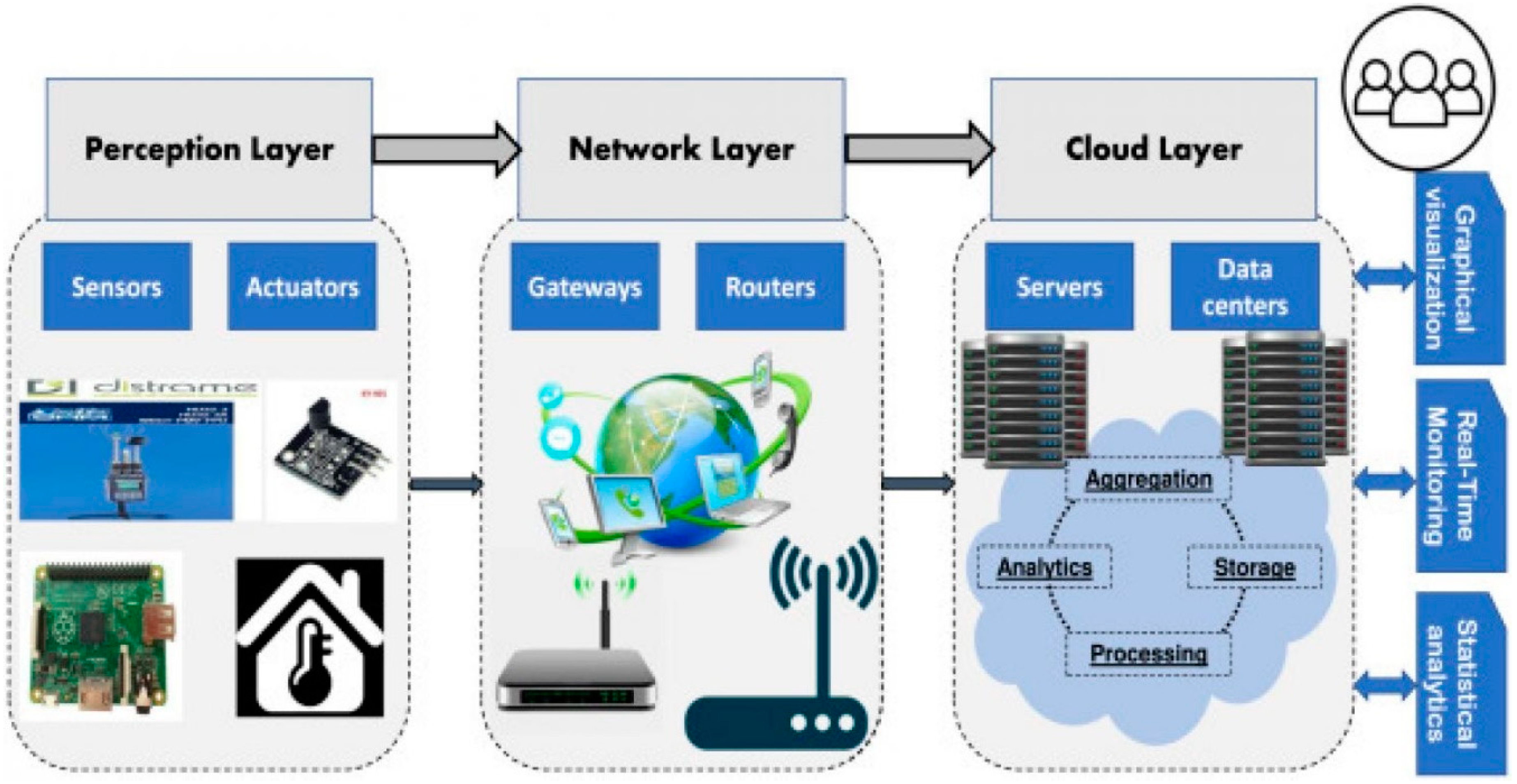
Figure 3.
Green building [29].
Figure 3.
Green building [29].
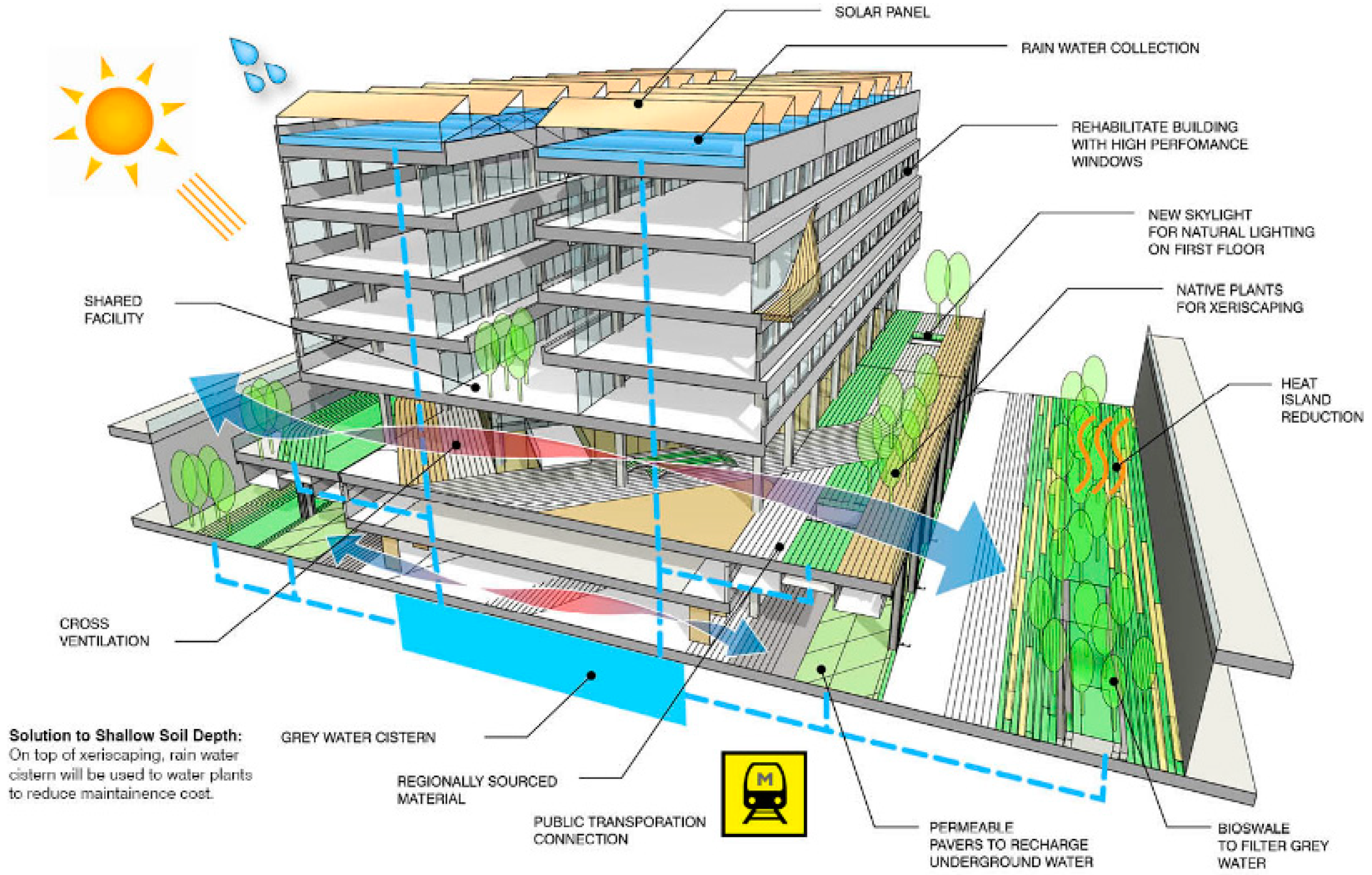
Figure 4.
Internet of Things (IoT)-enabled outdoor air conditioning systems [57].
Figure 4.
Internet of Things (IoT)-enabled outdoor air conditioning systems [57].
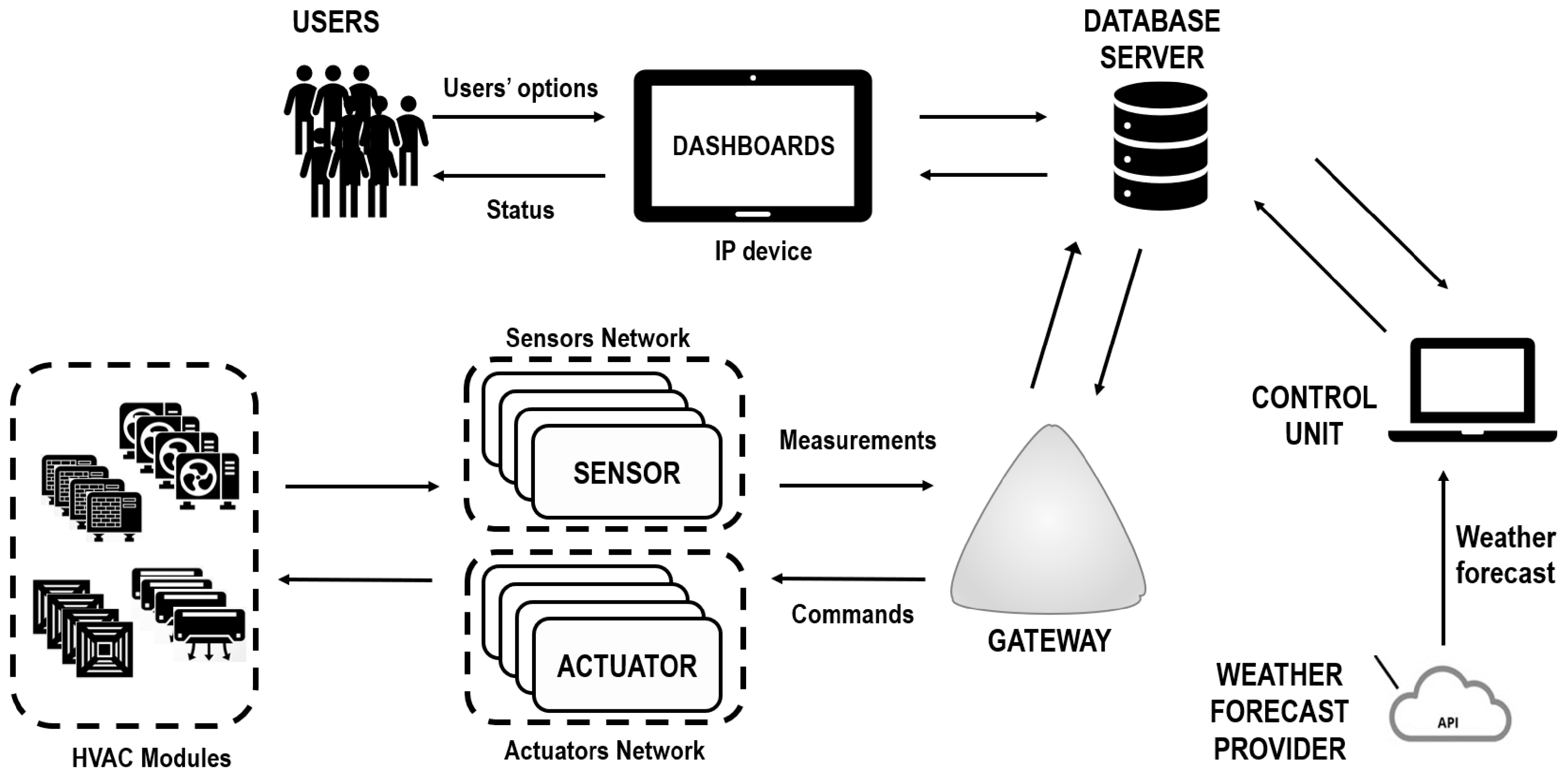

Table 1.
Limitation of HVAC.
| Limitation | Description |
|---|---|
| Energy Consumption | HVAC systems are often significant consumers of energy, contributing to high operational costs and environmental concerns. |
| Installation Cost | The initial cost of purchasing and installing HVAC systems can be high, particularly for large or sophisticated systems. |
| Maintenance Requirements | Regular maintenance is essential for HVAC systems to operate efficiently, which can incur additional costs and downtime. |
| Space Requirements | Large HVAC units require considerable space, which can be a limitation in compact or densely built environments. |
| Noise Levels | HVAC systems, especially older or larger units, can generate noise, potentially causing disturbance in quiet environments. |
| Refrigerant Environmental Impact | Some HVAC systems use refrigerants that can contribute to ozone depletion and climate change if leaked. |
| Indoor Air Quality | If not properly maintained, HVAC systems can contribute to poor indoor air quality by circulating dust, mold, and other contaminants. |
| Temperature Inconsistencies | Achieving consistent temperatures throughout a building can be challenging, leading to hot or cold spots. |
| Humidity Control Limitations | Some HVAC systems may struggle to maintain optimal humidity levels, affecting comfort and indoor air quality. |
| Lifespan | The lifespan of HVAC systems can be limited, necessitating replacement or significant upgrades. |
| Adaptability | Older HVAC systems might not be easily adaptable to new technologies or changing environmental regulations. |
| Aesthetic Impact | Large and visible HVAC equipment can have a negative impact on building aesthetics. |
Table 2.
Comparison of traditional and green buildings.
| Criteria | Traditional Buildings | Green Buildings |
|---|---|---|
| Energy Source | Primarily rely on non-renewable energy sources like fossil fuels for heating, cooling, and power. | Utilize renewable energy sources such as solar, wind, and geothermal energy, reducing reliance on fossil fuels. |
| Energy Efficiency | Generally less energy-efficient due to older technologies and materials. | Designed with energy efficiency in mind, using advanced technologies and materials to reduce energy consumption. |
| Insulation | May have poor insulation, leading to higher heating and cooling needs. | Feature high-quality insulation to minimize heat loss and reduce heating and cooling needs. |
| Lighting | Often use inefficient lighting fixtures and bulbs, consuming more electricity. | Employ energy-efficient lighting solutions like LED and CFL, and maximize natural light through design. |
| HVAC Systems | Use older, less efficient HVAC systems, consuming more energy. | Incorporate energy-efficient HVAC systems, often with smart controls to optimize performance. |
| Water Heating | Typically use standard water heating systems, which can be less efficient. | Often use energy-efficient water heating solutions such as solar water heaters or heat pumps. |
| Appliances and Fixtures | Equipped with standard appliances and fixtures that consume more energy. | Fitted with Energy Star-rated appliances and fixtures to minimize energy use. |
| Building Envelope | Conventional building materials and design may result in more energy loss. | Use sustainable building materials and design principles to enhance energy conservation. |
| Ventilation | May have less effective ventilation, requiring more energy for air quality control. | Designed for effective natural ventilation, reducing the need for mechanical ventilation. |
| Energy Management | Lack advanced energy management systems, leading to inefficient energy use. | Incorporate advanced energy management systems to monitor and optimize energy consumption. |
| Carbon Footprint | Higher carbon footprint due to higher energy consumption and reliance on fossil fuels. | Lower carbon footprint due to reduced energy consumption and use of renewable energy sources. |
Disclaimer/Publisher’s Note: The statements, opinions and data contained in all publications are solely those of the individual author(s) and contributor(s) and not of MDPI and/or the editor(s). MDPI and/or the editor(s) disclaim responsibility for any injury to people or property resulting from any ideas, methods, instructions or products referred to in the content. |
© 2023 by the authors. Licensee MDPI, Basel, Switzerland. This article is an open access article distributed under the terms and conditions of the Creative Commons Attribution (CC BY) license (http://creativecommons.org/licenses/by/4.0/).
Copyright: This open access article is published under a Creative Commons CC BY 4.0 license, which permit the free download, distribution, and reuse, provided that the author and preprint are cited in any reuse.


