
Submitted:
16 August 2024
Posted:
19 August 2024
You are already at the latest version
Abstract
The Colorado and Mississippi River Basins are crucial for water supply, agriculture, and ecological stability in the U.S., yet climate change, water management practices, and energy sector demands pose significant challenges to their sustainability. This paper highlights the potential of leveraging the Voluntary Carbon Market (VCM) to address these challenges by creating new revenue streams and incentivizing sustainable water management practices. The paper provides high-level estimates by extrapolating from existing literature. The results suggests that water projects in these basins could generate over 45 million carbon credits annually, potentially attracting around $4.5 billion in investments over the next decade. However, challenges such as high costs, complex regulations, and stakeholder coordination must be addressed. The paper also identifies opportunities for advancing water resiliency projects, including increasing public awareness, engaging corporations, and utilizing innovative financing mechanisms. Recommendations include promoting the VCM-water relationship, encouraging methodology innovation, developing pilot programs, investing in digital monitoring technologies, and conducting localized analysis to optimize carbon credit potential in water management. By integrating carbon markets with water management strategies, the paper suggests significant contributions to global climate goals and enhanced water resilience in these critical regions.
Keywords:
Voluntary carbon market
; water resilience
; Mississippi
; Colorado
; carbon credits
; climate finance
1. Introduction
The importance of the Colorado River in the Western region of the United States cannot be overstated, as it serves as a vital resource for seven basin states (Arizona, California, Colorado, Nevada, New Mexico, Utah, and Wyoming). These states rely on the river for various purposes such as water supply, hydropower generation, recreational activities, preservation of fish and wildlife habitats, and other essential benefits. While agricultural activities consume 70 percent of the river’s water, approximately 35 to 40 million individuals depend on it for at least some, if not all, of their municipal water needs [1]. During the 21st century, it is forecasted that the snowpack in basin headwaters will increase. However, warmer conditions at lower elevations are expected to lead to a shift from snowfall to rainfall, resulting in increased runoff from December to March and decreased runoff from April to July. Reductions in spring and early summer runoff could lead to decreased water availability for irrigation purposes and potentially disrupt hydropower operations at reservoirs.
Similarly, the Mississippi River serves as a crucial resource for water supply, navigation, agricultural irrigation, recreation, and the preservation of fish and wildlife habitats. It spans 31 states and supports a significant portion of the U.S. agricultural output, with 92% of the nationâs agricultural exports and 78% of the worldâs feed grains and soybeans [2]. Additionally, over 18 million people rely on the river for drinking water. Given their extensive reach and the multitude of services they provide, the Colorado and Mississippi River Basins are critical to the overall water resilience and resource management in the United States. Implementing sustainable water practices in these basins is crucial and offers opportunities to create a positive climate impact.
In the broader context of water resource management, the energy system plays a critical role, being responsible for significant freshwater withdrawals [3]. In the United States alone, the energy sector accounts for approximately 40% of total freshwater withdrawals, primarily for cooling processes in thermoelectric power plants [4]. Moreover, water management practices contribute to greenhouse gas (GHG) emissions through various processes, such as water treatment, transport, and the decomposition of wastewater. For instance, the U.S. Environmental Protection Agency (EPA) estimates that water and wastewater systems account for approximately 2% of U.S. energy use, resulting in the emission of over 45 million tons of GHGs annually (EPA, 2017). It is clear that there are linkages between the water sector, climate change, and the economy. Nevertheless, recognizing and managing water as a form of natural capital poses considerable difficulties. Its mobility, weight, non-rivalrous nature, multiple uses, and time- and place-dependent value complicate these efforts [5] and have constrained the development of water management markets. Climate finance mechanisms, such as the voluntary carbon market (VCM), address these challenges by creating new, recurring revenue sources that establish sustainable, performance-based funding streams, thereby incentivizing safe water services globally. Private sector climate financing offers an opportunity to support dependable and sustainable water systems [6]. Many companies are interested in purchasing carbon credits through the VCM to offset a portion of their remaining emissions, achieve sustainability targets linked to environmental, social, and governance (ESG) criteria, or contribute to global net zero goals. High-integrity carbon markets must ensure that credits represent genuine, verified emission reductions, uphold strict environmental and social safeguards, complement corporate decarbonization efforts, and are supported by credible claims.
A voluntary carbon credit, valued at approximately $10 for many nature-based projects [7] and over $1,000 for some direct air capture projects [8], represents the reduction or removal of one tonne of carbon dioxide. While the global market for carbon credits is substantial and growing, water has traditionally not been as easily traded due to its inherently local natureâconserving water in Louisiana, for example, does not address water insecurity in Colorado. This localization makes it challenging to develop effective financing and trading mechanisms for water, limiting the value, transactability, and liquidity of water credits, such as those created under the US Clean Water Act [7]. However, when a carbon credit incentivizes actions like water conservation in Colorado or coastal wetland restoration in Louisiana, it can access a liquid market, be traded, and generate revenue, thus encouraging water security efforts.
Given these complexities, this paper aims to explore how leveraging the VCM can enhance water resilience in the Colorado and Mississippi River Basins. We will examine existing and potential water-related carbon credit programs, estimate the potential carbon credits and financial returns, and highlight policy and programmatic innovations to strengthen the VCMâs role in supporting water resilience projects.
2. Materials and Methods
2.1. Registry Review and Proposed Typology
We examined the four primary carbon credit registries: Gold Standard, Verra, American Carbon Registry (ACR), and the Climate Action Reserve (CAR). We conducted searches within each registry using the keywords water, wastewater, and irrigation, as described in a previous study [8]. We then filtered the results to focus on projects located in the United States, specifically within the states that encompass the Colorado and Mississippi River basins.
Based on a previous global study[8] and a review of existing and potential water-related carbon credit programs within the Colorado and Mississippi River basin we propose a typology of water sector carbon projects within the region.
2.2. Water Sector Project Types
2.2.1. Watershed Restoration Alternatives to Wastewater Treatment
Estimates for this project type are based on a recent study across the contiguous United States[9]. The study compared green alternatives to wastewater treatment to conventional gray infrastructure alternatives. Using the hydrological unit code (HUC)6 numbers for the Mississippi and Colorado River basins, we used the data from the study to compare green alternatives to gray infrastructure.
2.2.2. Mitigating Wildfire Impact on Water Quality
Our estimates are based on a recent study that projected the potential carbon credits generated from emission mitigation efforts on wildfire-affected lands [10]. The analysis was conducted at the HUC8 sub-basin level. The Mississippi River basin comprises approximately 970 HUC8 sub-basins, while the Colorado River basin includes around 200. Assuming comparable wildfire risks, we extrapolate the carbon credit estimates from the study to assess the high-level potential for both basins.
2.2.3. Rice Cultivation
For this estimate, we reference a 2020 study which projects the potential global emission reductions achievable through improved water management in rice cultivation, coupled with the use of alternative hybrids and soil amendments [11]. We focus on the Mississippi River basin, where the majority of U.S. rice is cultivated (1.77 million acres) [12]. Using data from the study and the irrigated areas, we conduct a high-level, simplistic projection to estimate the potential carbon emission reductions.
2.2.4. Irrigation Efficiency
We estimate the carbon emissions associated with irrigation in the two basins using data from a recent national study on irrigation energy intensity, combined with information on U.S. carbon intensity [13].
In addition, we reference a study conducted in Kansas that assessed low-energy precision application (LEPA) irrigation technologies, which were found to reduce energy demand by nearly 20 percent without decreasing overall water usage [14].
2.2.5. Blue Carbon
For this project type, we focus on the Mississippi Delta, which experiences the most significant coastal wetland loss [15]. Our projections draw from research conducted in Louisiana, assessing the potential loss of hectares of coastal wetlands and the associated carbon emissions over the next 50 years [16]. We estimate the potential impact of the voluntary carbon market (VCM) in the region through blue carbon ecosystem restoration efforts.
3. Results
3.1. Survey of Existing Projects and Proposed Typology
In a bid to improve water resilience within the Colorado and Mississippi River basins, there is the need to first understand the existing national large-scale water resiliency programs. This section presents the results of a focused survey that delves into the landscape of current efforts to enhance water resilience in these programs.
3.1.1. Registry Review
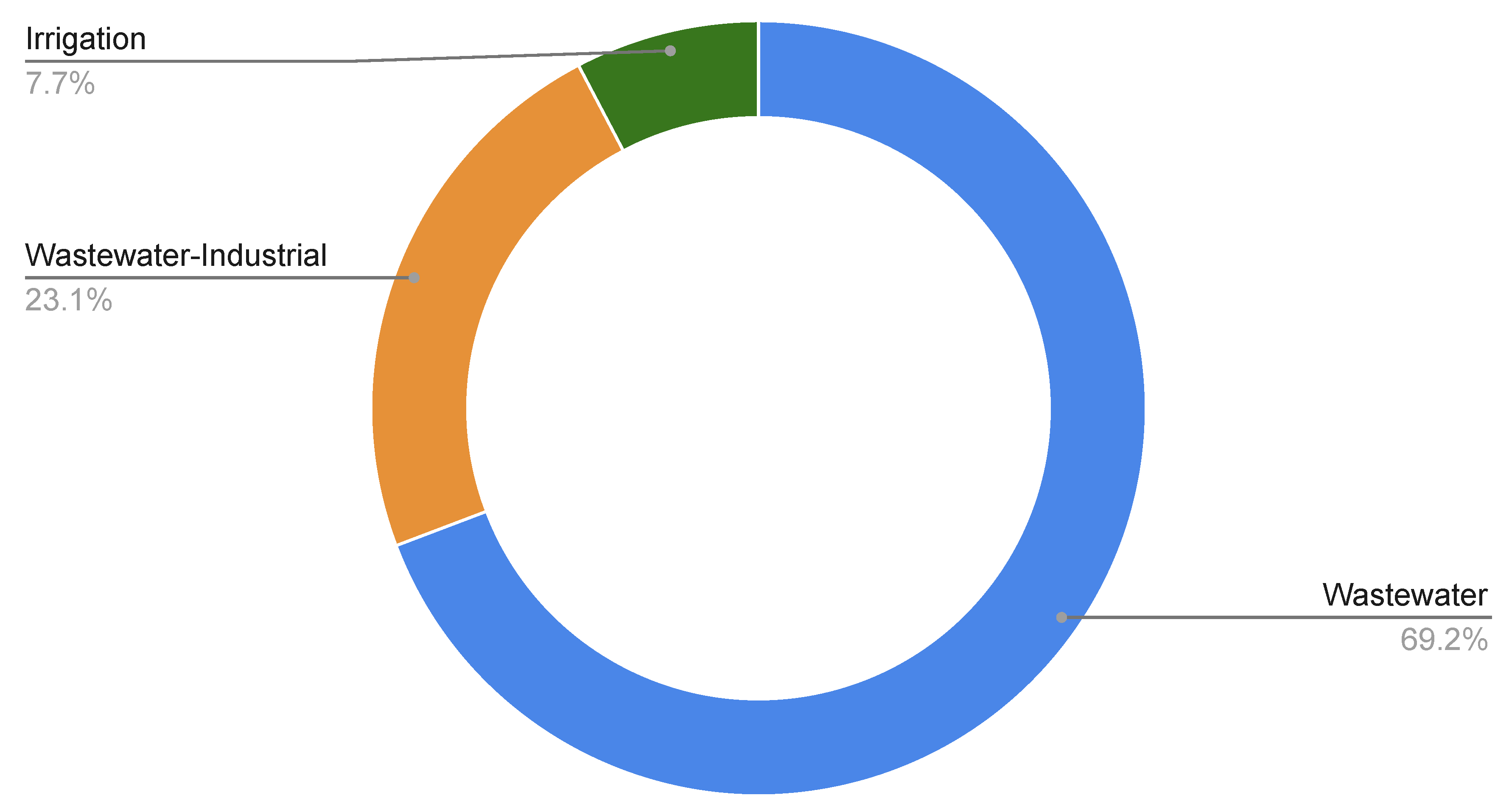
The search results from the four primary carbon credit registries returned only 19 registered water projects, collectively sequestering a total of 3.5 million tCO2e. Among these, 13 were located in the Mississippi River basin states sequestering approximately 2.8 million tCO2e, while none were found in the Colorado River basin states. The distribution of project types in the registries is illustrated in Figure 3. It is important to note that there are other registered projects within the river basins that could be included; however, these projects are not primarily focused on measuring direct water benefits. We identified 99 such projects across the US related to wildfire restoration and reforestation of land near rivers, lakes, and creeks. Of these, 27 are located within the Colorado and Mississippi River basins, sequestering approximately 18 million tCO2e.
Figure 1.
Proportion of water-related project types in registries.
3.1.2. Typology
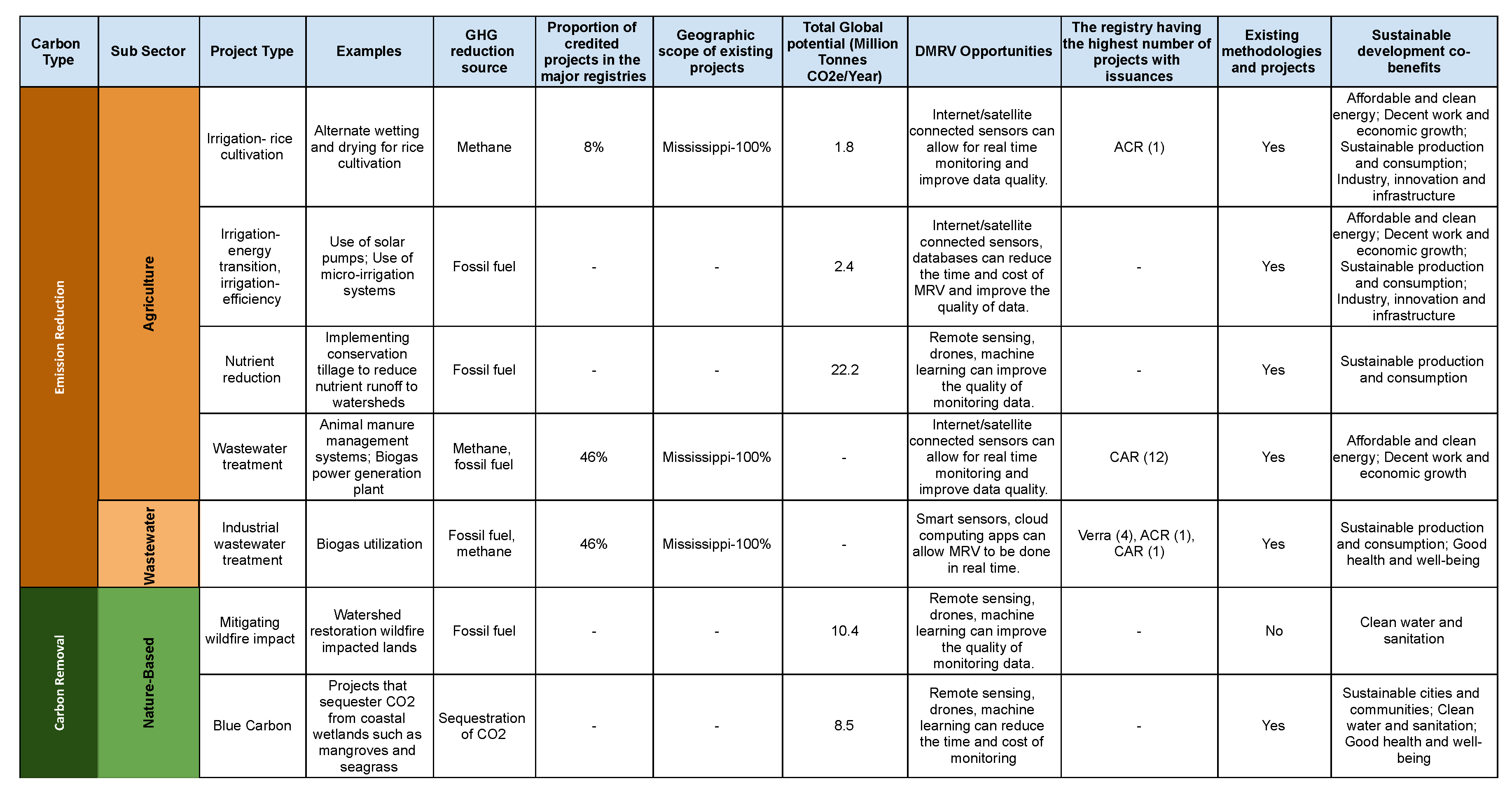
This section presents a proposed typology based on a review of existing and potential water-related carbon credit programs within the Colorado and Mississippi River basins Figure 2. This typology categorizes climate mitigation strategies into two main types: carbon removal and emission reduction. The emission reduction category covers projects that lower the amount of greenhouse gases released into the atmosphere and is further divided into key sub-sectors: wastewater and agriculture. The carbon removal category focuses on projects that actively capture and store carbon dioxide from the atmosphere. In this category, we focus on nature-based projects, particularly those related to coastal blue carbon and mitigating wildfire impact. Each sub-sector is further delineated into relevant project types, informed by registry reviews and literature, as described in other sections of this paper. Key characteristics of each project type are provided in Figure 2.
3.2. Market Potential
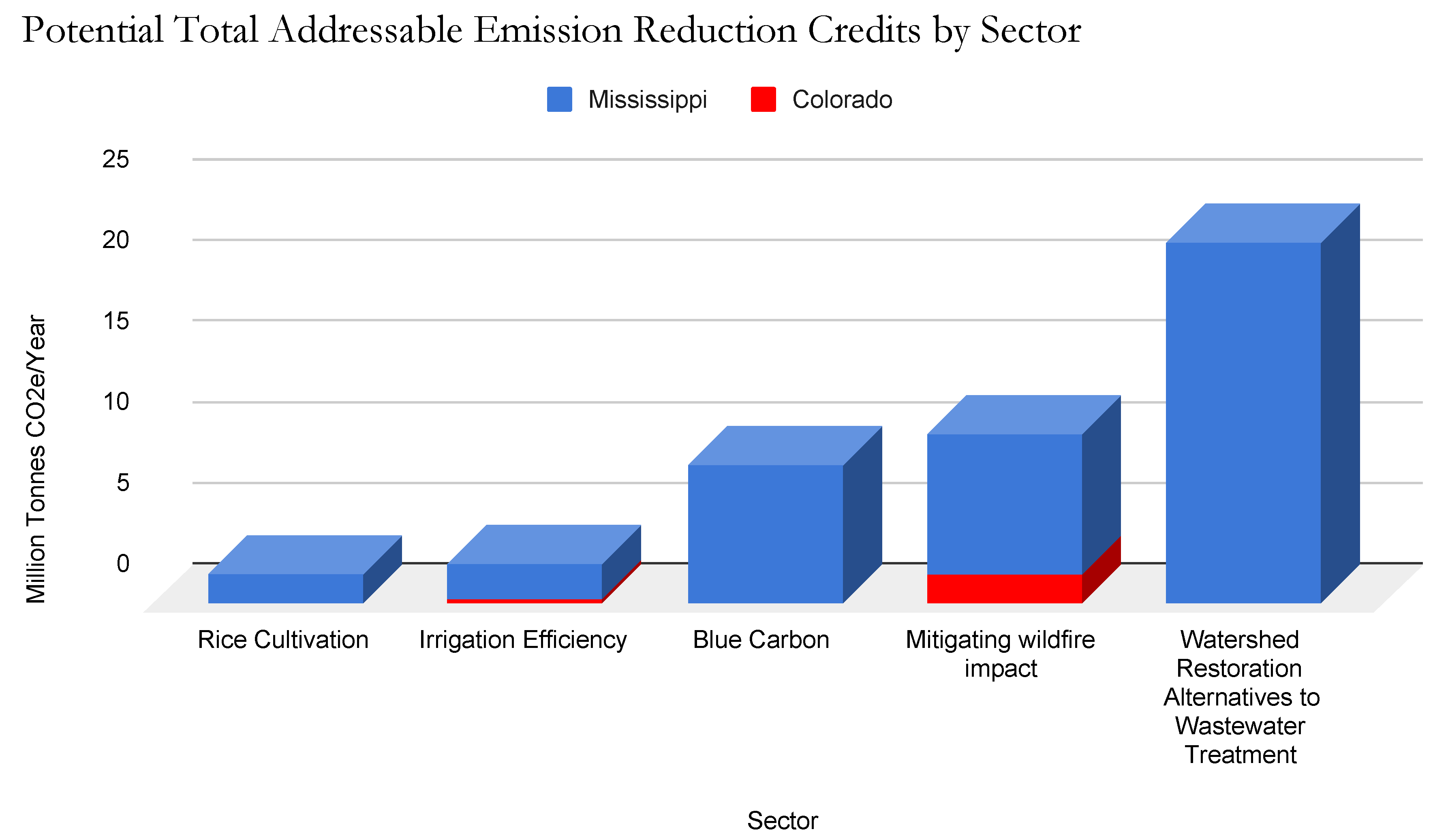
In our analysis of the potential for carbon credit generation in the Colorado and Mississippi River basins, we consider several major project types: watershed restoration alternatives to wastewater treatment, mitigating wildfire impact on water quality, rice cultivation, mitigating methane emissions from wastewater treatment, and blue carbon. Across these project types, we estimate that the regional potential for carbon credits generated through water projects exceeds 45 million annually, as shown in the Figure 3. At an average price of $10 per credit, this could result in approximately $4.5 billion invested by carbon credit buyers over the next decade. The entire global voluntary market currently stands at around $2 billion per year (although projections suggest it could grow to between $10 billion and $40 billion by 2030) therefore [17], only a portion of this $4.5 billion potential will probably be realized. Figure 3 shows that watershed restoration alternatives to wastewater treatment offer the greatest potential for emission reduction, followed by mitigating wildfire impacts, and carbon removal through blue carbon projects.
Figure 3.
Potential Total Addressable Emission Reduction Credits by Sector.
3.3. Water Sector Project Types
In this section, we breakdown the market potential by project types. These include watershed restoration alternatives to wastewater treatment, mitigating wildfire impact on water quality, improved water management in rice cultivation, mitigating methane emissions from wastewater treatment, and blue carbon.
3.3.1. Watershed Restoration Alternatives to Wastewater Treatment
Across the United States, water and wastewater treatment plants account for about 2 percent of energy use and the equivalent of over 45 million tonnes of CO2e per year [18]. Recent estimates suggest these values could almost double over the coming years as utilities must increase treatment levels, even as states transition to renewable energy sources. Additionally, across the nation, freshwater is contaminated by nonpoint sources stemming from land-use changes, agricultural and forestry practices, soil erosion, and urbanization. This pollution is further exacerbated by large-scale, short- and medium-term climate change impacts[19]. The 2020 Mississippi River watershed report card notes that the water quality in the upper basin is poor due to high nutrient runoff from agriculture within the region [20].
Rather than building electricity-consuming gray infrastructure, transitioning to green alternatives such as fertilizer reduction, riparian restoration, stream bank erosion control, and livestock exclusion can enhance instream water quality. Program developers have suggested that carbon financing could offer a new incentive to expedite this transition. A recent study indicated that, across the contiguous United States, green alternatives are more cost-effective, less energy-intensive, and less carbon-intensive compared to gray infrastructure options. These green alternatives could potentially reduce approximately 34 million tonnes of CO2e annually [9]. Our estimates indicate that in the Mississippi River basin, green solutions could save $9.6 billion annually and reduce CO2-equivalent emissions by 22.2 million tonnes per year, while also sequestering more than 2.5 million tonnes of CO2e annually over 40 years. However, in the Colorado River basin, green solutions are currently more expensive and provide only minimal CO2-equivalent emissions savings and sequestration per year.
Projects can be registered and generate carbon credits under the "GHG & Co-Benefits in Watershed Carbon v1.0" methodology of the Regen Registry [21].
3.3.2. Mitigating Wildfire Impact on Water Quality
Following wildfires, riverine water quality in forested watersheds is prone to significant degradation due to increased sediment, nutrient, and pollutant loads entering the water bodies. This degradation negatively impacts drinking water treatment processes, often necessitating more intensive treatment methods to ensure water safety. These additional treatments can lead to increased emissions because they require additional electricity consumption to operate the advanced water treatment technologies and processes required to remove the contaminants introduced by the wildfires. Consequently, the energy-intensive nature of these enhanced treatments can contribute to higher greenhouse gas emissions, exacerbating the environmental impact of the wildfires [22]
A recent study estimated that these efforts to mitigate emissions can generate about $88,500 ($10/credit) annually from carbon credits within a HUC8 sub-basin [10]. There are about 970 HUC8 sub-basin within the Mississippi River basin and about 200 HUC8 sub-basin within the Colorado River basin. Extrapolating the carbon credit estimate, we estimate a high-level potential of $85.8 million and $17.7 million in the Mississippi and Colorado River basins respectively.
3.3.3. Rice Cultivation
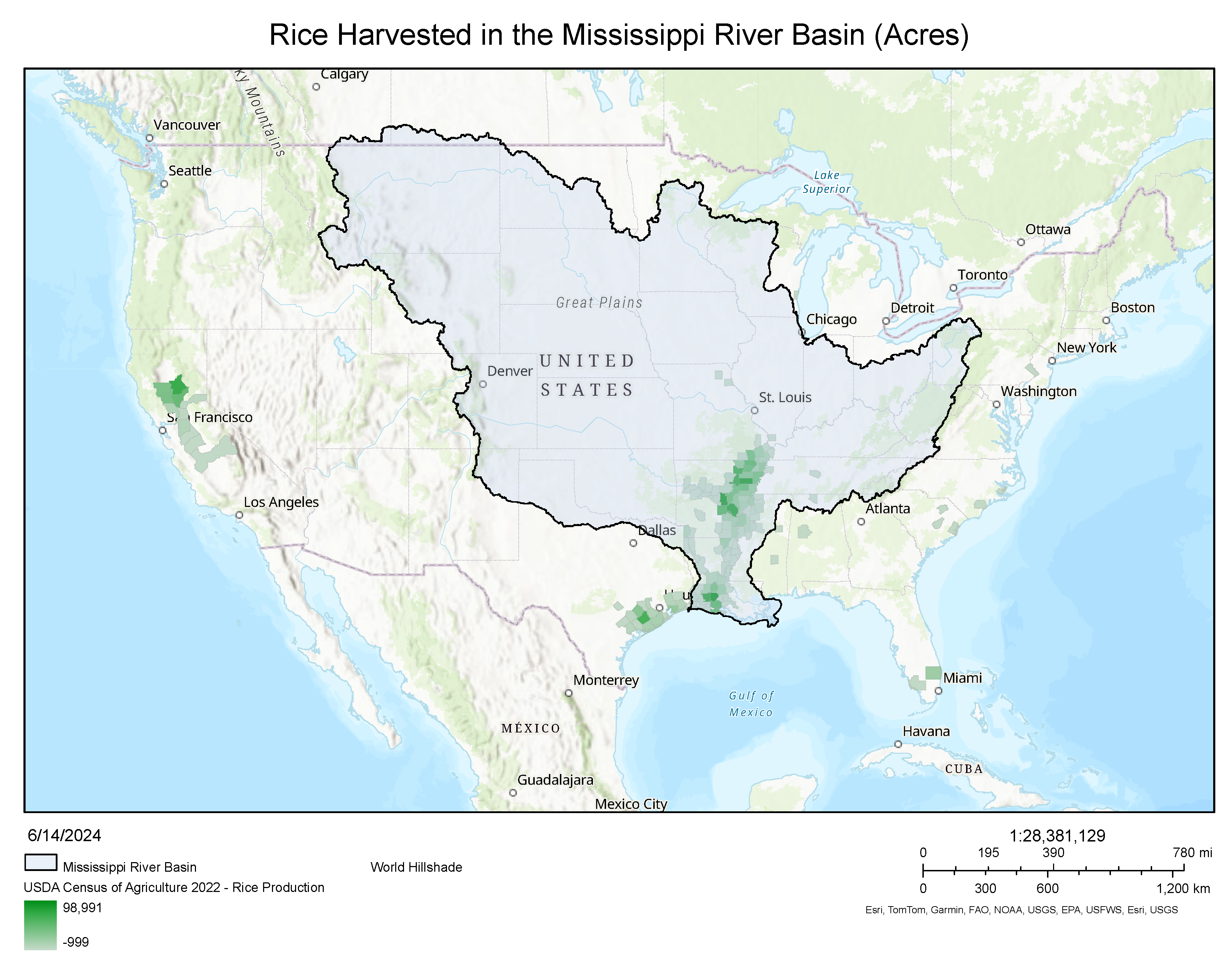
In the US, approximately 2.23 million acres of rice are harvested annually [12]. All rice production in the US occurs on irrigated fields [23], consuming significant amounts of freshwater: 2.73 billion cubic meters of surface water and 5.14 billion cubic meters of groundwater each year [24]. The Mississippi Delta, including parts of Louisiana, Missouri, Mississippi, and Arkansas, is among the four regions that produce almost the entire US rice crop [23]. Most rice is harvested within the Mississippi River basin (1.77 million acres) [12].
Globally, rice is cultivated on about 412.6 million acres of land [25]. Innovative approaches are being implemented to reduce such emissions. Innovative methods are being used to reduce these emissions. Effective strategies include adopting alternating wetting and drying cycles and intermittent flooding. These approaches not only help lower methane production but also lead to substantial water savings [28]. Based on a 2020 study [11], we estimated that around 1.75 million tCO2e per year could be saved within the Mississippi River basin.
Methodologies for reducing methane emissions through enhanced water management practices are available from both Gold Standard and Verra. Verra offers a comprehensive methodology for improved agricultural land management [29], while Gold Standard provides a specialized methodology for rice cultivation [30].
Figure 4.
Rice harvested in the Mississippi River basin.
3.3.4. Irrigation Efficiency
Approximately 55.9 million acres of land in the US are irrigated. Of this amount, about 18.5 and 2.5 million acres are irrigated in the Mississippi and Colorado river basins respectively. Irrigation in the United States is highly energy-intensive. A recent national study on irrigation energy intensity, coupled with data on U.S. carbon intensity, indicates a substantial energy and emissions burden, exceeding 22 million metric tons of CO2 equivalent annually. [13]. Based on the proportion of irrigated acres, this equates to approximately 11 million metric tons of emissions per year in the Mississippi River basin and 997 thousand metric tons per year in the Colorado River basin.
Estimates of the potential energy and associated emissions savings from irrigation upgrades are limited. However, a detailed evaluation of low-energy precision application (LEPA) irrigation technologies in Kansas found a nearly 20 percent reduction in energy demand (without a decrease in overall water use) [14]. Applying this 20 percent reduction to the Mississippi and Colorado River basins suggests potential GHG savings of approximately 2.2 million metric tons per year in the Mississippi River basin and 199 thousand metric tons annually in the Colorado River basin.
3.3.5. Mitigating Methane Emissions from Wastewater Treatment
In the US, methane emissions from wastewater treatment account for 2.5% of all anthropogenic methane emissions [26]. A recent study estimates that methane emissions from centrally treated domestic wastewater in the US are 11.6 million tCO2e per year [26]. Methane emissions from wastewater can be reduced through two primary methods. The first method, methane avoidance, involves ensuring that only CO2 is emitted by utilizing aerobic treatment for wastewater and sludge, thus preventing methane production. The second method, methane capture and reuse, involves installing biogas capture systems at existing open-air anaerobic lagoons or initiating anaerobic sludge digestion through new construction or retrofitting existing treatment systems. The biogas generated from anaerobic digesters can replace fossil fuels. However, it is important to note that these upgrades may lead to increased electricity demand and associated emissions.
Although we do not provide specific estimates for the Colorado and Mississippi River basins, research indicates significant potential to mitigate methane emissions in these regions. For example, a study in Colorado showed that approximately 39% of wastewater treatment facilities in a study used anaerobic digestion and only 17% of the anaerobic digestion facilities reuse methane [27].
Under the Gold Standard or Verra using CDM methodology âAMS-III.H.: Methane recovery in wastewater treatment - Version 19.0â [33], emissions reduction from methane recovery or reuse can be registered and verified. Technology upgrades can also be verified with âAMS-III.I.: Avoidance of methane production in wastewater treatment through replacement of anaerobic systems with aerobic systems - Version 8.0â [34].
3.3.6. Blue Carbon
Blue Carbon refers to the carbon captured and stored in coastal and marine ecosystems. Within the voluntary carbon market, blue carbon projects fall under nature-based solutions and aim to conserve and restore coastal and marine ecosystems, including mangroves, seagrasses, and salt marshes, to mitigate climate change by sequestering and storing significant amounts of carbon dioxide [35]. These ecosystems are crucial for absorbing and storing carbon from the atmosphere in biomass and sediments, making them valuable natural carbon sinks. Blue carbon ecosystems, especially mangrove forests, can store significantly more carbon than terrestrial tropical forests of the same size.
Blue carbon projects not only sequester carbon but also enhance biodiversity, protect coastlines, and support coastal community livelihoods. By engaging in the voluntary carbon market, U.S. stakeholders can invest in these initiatives, aligning climate goals with sustainable coastal ecosystem management.
The US has one of the highest rates of blue carbon ecosystems losses [28] and the most significant coastal wetland loss occurs around the Mississippi Delta, primarily due to upstream hydrology changes, sediment delivery alterations, and oil and gas extraction [15]. Restoration efforts within the Mississippi Delta present a crucial opportunity to reduce US emissions. Research indicates that Louisiana could lose between 211,800 and 467,700 hectares of coastal wetlands over the next 50 years, depending on sea-level rise scenarios, potentially releasing between 396 and 916 million metric tons of CO2. However, implementing planned restoration could reduce these emissions by 35% [16]. This means that about 65% of these emissions still need to be addressed. Assuming a mid-case scenario where 656 million metric tons of CO2 is released, the voluntary carbon market (VCM) through blue carbon ecosystem restoration could potentially mitigate 426 million metric tons of CO2 (65%) over 50 years.
4. Discussion
4.1. Challenges
Multiple Stakeholders. The Colorado and Mississippi River basins present significant challenges for water resiliency projects due to their vast size and complexity. These basins encompass diverse ecosystems and a wide range of water needs, making project implementation and coordination highly intricate. The involvement of multiple stakeholders, including federal, state, and local governments, private landowners, and indigenous communities, further complicates decision-making and project execution. The necessity to harmonize the interests and priorities of such a varied group of stakeholders adds a layer of complexity that can impede the timely and efficient progress of water resiliency initiatives.
High costs in the US. High costs represent another substantial challenge in these regions. The costs of water, energy, and labor in the United States are notably higher compared to global averages, which escalates the overall expenditure required for large-scale infrastructure projects. The significant upfront capital investment needed to initiate and sustain these projects poses a barrier to their implementation, particularly in the context of the high financial outlays associated with advanced technological solutions and extensive construction efforts. This financial burden is often a deterrent for potential investors and can stall the progress of crucial water management projects.
Complex Regulatory and Policy Landscape. Regulatory and policy barriers also hinder the advancement of water resiliency projects in the Colorado and Mississippi River basins. The complex web of regulations and policies at federal, state, and local levels creates a cumbersome and time-consuming environment for regional project development. Additionally, the potential for future policy changes adds an element of uncertainty that can affect the long-term viability of carbon-financed projects. These regulatory challenges necessitate ongoing navigation and compliance, which can divert resources and focus away from the core objectives of water resiliency initiatives.
Integrity of Monitoring and Verification. Accurate monitoring and verification of carbon and water benefits are critical yet challenging aspects of water resiliency projects. These tasks require sophisticated technology and consistent oversight to ensure reliability and credibility. Implementing advanced technologies, such as internet-of-things (IoT) and machine learning for project verification involves high costs and technical challenges. The financial and operational demands of these technologies can be prohibitive, further complicating the management and reporting of project outcomes.
Market Fluctuations. Market uncertainties compound the difficulties faced in these regions. Fluctuations in carbon credit prices and demand can significantly impact the financial stability of water resiliency projects. The volatile nature of the carbon market introduces risks that can deter investment and undermine the sustainability of projects. Additionally, uncertain future regulations regarding carbon markets contribute to investor hesitancy, making it challenging to secure consistent funding and support. These market dynamics require careful consideration and strategic planning to mitigate risks and ensure the long-term success of water resiliency efforts.
4.2. Opportunities
Urgent Need for Water Resiliency Projects. The increasing incidence of droughts, floods, and algae blooms in the Colorado and Mississippi River basins highlights the urgent ecological need for water resiliency projects. These critical water basins possess high ecological value, and preserving and restoring them can significantly enhance environmental sustainability. Addressing these ecological challenges underscores the urgent need for developing comprehensive water management and carbon sequestration projects to alleviate the negative impacts of climate change and environmental degradation.
Proximity to Local Carbon Credit Investors. Proximity to major corporations with significant carbon footprints presents a unique opportunity for investment in local carbon credits. Corporations located near these basins are likely to invest in region-specific carbon credits to meet their sustainability goals and reduce their carbon footprints. This proximity also offers marketing benefits, as companies can demonstrate their commitment to local environmental stewardship and community support. Region-specific carbon credits can appeal to corporate social responsibility (CSR) initiatives and attract substantial investments from businesses aiming to achieve net-zero emissions.
Availability of Federal and State Funding. Federal and state funding programs provide valuable support for water resiliency and climate adaptation projects in these basins. The availability of federal grant money and state-level funding initiatives can be leveraged to supplement carbon finance mechanisms, making projects more financially viable. Additionally, the growing interest in innovative financing mechanisms, such as blended finance models that combine public, private, and philanthropic capital, can fund large-scale projects. Developing new financial instruments tailored to the needs of water and carbon markets can attract diverse investment sources and enhance project sustainability.
Using Private Project Developers to Manage Complexity. In other global contexts, carbon credit project developers bring critical expertise that could address the challenges of stakeholder coordination and regulatory complexities in the Colorado and Mississippi River basins. Their experience can facilitate more efficient decision-making and project implementation. Additionally, these developers’ understanding of complex regulatory landscapes allows them to navigate compliance and adapt to policy changes effectively. Similar to how mitigation bankers operate at scale in the US, well-focused private developers can accelerate project progress and impact.
Rising Public Awareness and Technological Advancements. Increasing public awareness and support for climate action and sustainable water management is another significant opportunity. Public engagement can drive demand for voluntary carbon market (VCM) projects, fostering community involvement and co-benefits such as job creation and local economic development. Technological advancements in IoT, remote sensing, and machine learning can further improve project efficiency and verification processes. Innovations in water management and carbon sequestration technologies can enhance the impact and viability of these projects, making them more attractive to investors and stakeholders.
Synergy with Existing Water Management and Conservation Initiatives. Finally, there is considerable potential for synergy with existing water management, conservation, and restoration initiatives. Aligning VCM projects with ongoing efforts can create integrated solutions that address both carbon and water challenges simultaneously. By building on existing initiatives, new projects can leverage established networks, resources, and expertise, thereby enhancing their effectiveness and scalability. This integrated approach can maximize environmental benefits and contribute to long-term water and carbon sustainability in the Colorado and Mississippi River basins.
4.3. Strategies for Enhancing Demand for Colorado and Mississippi Generated Carbon Credits
Improving Messaging on Environmental Benefits. Improved messaging is crucial for enhancing the demand for carbon credits generated from the Colorado and Mississippi River basins. Emphasizing the direct environmental benefits of these projects, such as mitigating local droughts, floods, and water quality issues, can significantly increase their appeal. Highlighting success stories and case studies that showcase tangible improvements in these regions will help potential buyers understand the real-world impact of their investments. This localized approach not only underscores the immediate environmental benefits but also demonstrates the broader value of supporting regional carbon projects.
Highlighting Socio-Economic Impacts. Promoting the positive socio-economic impacts of carbon credit projects is another effective strategy. Emphasizing benefits such as job creation, community resilience, and local economic development can attract a wider audience. Featuring testimonials from local stakeholders, including residents, businesses, and policymakers, adds credibility and relatability to the messaging. These personal accounts can resonate with potential investors by illustrating how carbon projects directly contribute to the well-being of local communities, thereby fostering stronger support and engagement.
Leveraging the Corporate Social Responsibility (CSR) Benefits. Leveraging the CSR benefits is also key to enhancing demand. The proximity of major corporations to the Colorado and Mississippi River basins provides a unique opportunity to align carbon projects with corporate sustainability goals. By emphasizing how these credits contribute to broader environmental and social objectives, companies can be encouraged to invest in local carbon projects. Additionally, connecting the importance of water quality and availability to public health outcomes underscores the health and wellness benefits of these initiatives. Highlighting how improved water quality can enhance community health and well-being can further motivate corporate and individual investments in regional carbon credits.
Developing and Promoting Region-Specific Methodologies. To further enhance demand for carbon credits generated from the Colorado and Mississippi River basins, it is essential to develop and promote region-specific methodologies. These methodologies should be tailored to the unique environmental and socio-economic conditions of these areas. Collaborating with local experts and stakeholders ensures that the methodologies are not only practical and effective but also widely accepted by the community. This localized approach can improve the relevance and impact of carbon credit projects, making them more attractive to potential buyers who seek region-specific solutions.
Promoting Diverse Project Development. Encouraging the development of diverse project types can also drive demand for carbon credits. Projects such as wetland restoration, sustainable agriculture, reforestation, and water efficiency improvements offer multiple environmental and social co-benefits. Piloting innovative approaches that integrate carbon sequestration with water management can further enhance the overall impact of these projects. By showcasing a variety of project types, stakeholders can appeal to a broader audience with different interests and priorities, thereby increasing the market for carbon credits.
Rigorous Monitoring, Reporting, and Verification. Ensuring transparency and accountability is crucial for building trust with credit buyers. Implementing rigorous monitoring, reporting, and verification (MRV) protocols helps maintain high standards of integrity and transparency. Using third-party certification bodies to validate project outcomes further reinforces the credibility of the projects. This level of scrutiny and accountability can reassure potential investors about the legitimacy and effectiveness of the carbon credits they purchase. By upholding stringent standards, stakeholders can foster a trustworthy market environment that attracts long-term investments in carbon credits from the Colorado and Mississippi River basins.
Targeted Marketing Campaigns. To effectively engage the market and boost demand for carbon credits generated from the Colorado and Mississippi River basins, it is crucial to implement targeted marketing campaigns. These campaigns should focus on key sectors such as agriculture, energy, manufacturing, and finance, which have a significant presence in these regions. Utilizing a mix of digital marketing, social media, and traditional media channels can help reach a broad audience and raise awareness of the benefits associated with purchasing regional carbon credits. Messages that highlight the environmental, social, and economic advantages of these projects can attract diverse stakeholders and increase market penetration.
Establishing Strategic Partnerships. Strategic partnerships are essential for co-promoting and supporting carbon projects. Alliances with local governments, non-profits, industry associations, and academic institutions can amplify efforts to enhance the credibility and reach of carbon credit initiatives. Collaborating with major corporations and investors to secure long-term purchase agreements and funding commitments can provide the financial stability necessary for the success of these projects. These partnerships can also facilitate knowledge exchange and resource sharing, further strengthening the implementation and impact of carbon credit projects in the river basins.
Engaging with policymakers. Policy advocacy plays a vital role in creating a supportive environment for carbon credit generation and purchase. Engaging with policymakers to develop regulatory frameworks and incentives can drive the adoption of carbon credits. Advocacy efforts should aim to integrate carbon credits into regional and state-level sustainability and climate action plans. By influencing policy, stakeholders can ensure that carbon credits become a recognized and valuable component of broader environmental and economic strategies. Support from policymakers can increase the appeal of carbon credits to investors and buyers, helping to build a strong market for these environmental assets.
Promoting Co-Benefits. Emphasizing the co-benefits of climate-financed water projects could boost demand for these initiatives. Research indicates that projects likely to deliver the most significant co-benefits received a 30.4% higher valuation compared to those with the fewest co-benefits [29]. Although this trend pertains to international development projects within the compliance carbon market, it demonstrates that carbon markets do value co-benefits, even if this doesn’t always lead to a price premium. In the Colorado and Mississippi River basins, it would be beneficial to establish a framework that places greater emphasis on delivering co-benefits to communities.
4.4. Recommendations
This paper identifies specific opportunities at the intersection of water security programs and the Voluntary Carbon Market (VCM) within the Colorado River and Mississippi River regions. Leaders and stakeholders in both the VCM and the water sector can take several steps to realize this potential, addressing the unique challenges and opportunities of these regions.
-
Articulate and Promote the VCM-Water Relationship: Stakeholders should actively communicate the critical link between existing VCM methodologies and water-related programs in the Colorado and Mississippi River basins. Public awareness of the carbon impacts of water treatment and conveyance to regional greenhouse gas emissions is low, and the potential for nature-based practices that improve water quality and quantity outcomes while also sequestering carbon or avoiding future emissions is high. Promoting this relationship and the benefits of integrating carbon credits with water programs can support market growth and attract investments, particularly highlighting chronic issues like the depletion of the Colorado River and nutrient pollution in the Mississippi River.Regulators, utility staff, and watershed stakeholders should collaborate with watershed carbon project developers and VCM standards body staff to explore innovative approaches for attracting catalytic capital from the VCM to establish a more scalable framework for improving water quality issues. It is crucial for project developers to ensure that local community stakeholders and landowners receive adequate education about the operations of the carbon market and how they can equitably participate. Furthermore, local elected officials and water sector leaders should actively communicate the economic and ecological co-benefits of these projects to State and Federal regulators, advocating for broader VCM connectivity and acceptance. This will help to expand the implementation of these restoration projects beyond individual communities.
-
Encourage Methodology Innovation: Standards bodies governing the VCM should actively lead or promote the development of innovative methodologies specifically designed for the unique environmental conditions of the Colorado and Mississippi River basins. While recent critiques of the VCM have driven a shift towards more standardized approaches, it is essential that registries and standards bodies maintain a space for methodological and project development innovation within the water sector. This is particularly important given the lack of published methodologies for many potential water-related projects.It is critical to rapidly develop new methodologies to address water quality, water quantity, and carbon sequestration, such as protocols for wetland restoration in the Mississippi River Basin and forest management in the Colorado River Basin. Emerging protocols, like Regen Networkâs âWatershed Nature-Based and Green Infrastructure Water Methodology,â represent progress in quantifying emission reductions through improved instream water quality [21]. A particular focus should be placed on the ’Big 4’ VCM registriesâVerra, the Gold Standard, the American Carbon Registry, and the Climate Action Reserve. These leading registries should prioritize incorporating water sector into their frameworks. Moreover, existing protocols, such as the Climate Action Reserve’s "Soil Enrichment Protocol" and Verra’s "Methodology for Improved Agricultural Land Management", which address soil carbon, should be expanded to explicitly include water quality metrics [29,30]. Both registries already offer broader methodologies for emission reductions through improved agricultural land management, providing a foundation upon which to build.
- Pilot Programs and Demonstration Projects: However possible, regional stakeholders should develop regional pilot programs and demonstration projects in collaboration with leading corporations to showcase the feasibility and benefits of investing in high-priced, high-quality carbon credits. Use these projects to generate data, success stories, and best practices that can be shared with a broader corporate audience to build trust and momentum. Emphasize the co-benefits of water-related carbon credits, such as improved water security, ecosystem health, and community resilience, which can contribute to a companyâs overall sustainability goals. Highlight the potential return on investment (ROI) through enhanced corporate reputation, regulatory compliance, and long-term environmental impact.
- Invest in Digital Monitoring, Reporting, and Verification (DMRV): Investment in DMRV technologies can significantly enhance the credibility and scalability of water projects generating carbon credits. Implementing a common architecture of DMRV technologies, including sensors, remote sensing, and statistical tools, can support both carbon credit verification and the direct operation of water programs. This is particularly relevant for monitoring water flow and quality in the Colorado River and sediment control in the Mississippi River.
- Conduct High-Resolution, Localized Analysis: Future work should include higher resolution and more localized analysis of the carbon credit potential in the water sector. Developing precise estimates of emission reductions and the associated costs for specific projects or regions within the Colorado and Mississippi River basins can increase accuracy and support targeted investments. For example, focusing on specific areas of need like the Lower Colorado River Basin and the Mississippi Alluvial Plain can provide more actionable insights for stakeholders.
Author Contributions
Conceptualization, E.T., J.E. and A.J.; methodology, J.E. and E.T.; software, J.E..; validation, E.T.; formal analysis, J.E. and A.J.; investigation, J.E. and A.J.; resources, E.T. and A.J.; data curation, J.E.; writing—original draft preparation, J.E., A.J. and T.L. ; writing—review and editing, J.E., A.J., E.T. and T.L.; visualization, J.E.; supervision, A.J. and E.T.; project administration, A.J.; funding acquisition, A.J. and E.T. All authors have read and agreed to the published version of the manuscript.
Funding
This work was funded by the Walton Family Foundation and the National Science Foundation Convergence Accelerator (Award #24C0011).
Data Availability Statement
The data supporting this studyâs findings are available from the corresponding author upon reasonable request.
Acknowledgments
The views and opinions expressed in this paper are only those of the authors. We thank the expert stakeholders who participated in interviews and provided resources.
Conflicts of Interest
The authors are additionally employed by Virridy, a company specializing in generating carbon credits from water security programs globally.
References
- U.S. Department of the Interior Bureau of Reclamation. Colorado River Basin Fact Sheet. Technical report, 2016.
- U.S. National Park Service. Mississippi River Facts - Mississippi National River & Recreation Area.
- Bredariol, T. Clean energy can help to ease the water crisis, 2023.
- Grubert, E.; Sanders, K.T. Water Use in the United States Energy System: A National Assessment and Unit Process Inventory of Water Consumption and Withdrawals. Environmental Science and Technology 2018, 52, 6695–6703. [Google Scholar] [CrossRef] [PubMed]
- Garrick, D.E.; Hanemann, M.; Hepburn, C. Rethinking the economics of water: An assessment. Oxford Review of Economic Policy 2020, 36. [Google Scholar] [CrossRef]
- Webber, S.; Nelson, S.; Millington, N.; Bryant, G.; Bigger, P. Financing Reparative Climate Infrastructures: Capital Switching, Repair, and Decommodification. Antipode 2022, 54. [Google Scholar] [CrossRef]
- Johnson, A.H.; Whitworth, J.S. Enabling ecological restoration through quantification. In Broken Pumps and Promises: Incentivizing Impact in Environmental Health; 2016.
- Ecklu, J.; Barstow, C.; MacDonald, L.; Fankhauser, K.; Johnson, A.; Adler, I.; Ehrhardt, D.; Thomas, E. Decarbonizing Water: The Potential to Apply the Voluntary Carbon Market toward Global Water Security. ACS ES&T Water 2024. [CrossRef]
- Limb, B.; Quinn, J.; Johnson, A.; Sowby, R.B.; Mehrabi, Z.; Thomas, E. Greening America’s Rivers: The Potential of Climate Financing for Nature-Based Water Quality Improvement. Technical report, 2023.
- Porter, B.; Sowby, R.; Williams, G.P.; Limb, B.; Quinn, J.; Johnson, A.; Thomas, E. Mitigating Wildfire Impact on Water Quality through Climate-Based Financing: A Case Study of the Provo River Watershed. (ES&T: Under Review) 2024.
- Höglund-Isaksson, L.; Gómez-Sanabria, A.; Klimont, Z.; Rafaj, P.; Schöpp, W. Technical potentials and costs for reducing global anthropogenic methane emissions in the 2050 timeframe âresults from the gains model. Environmental Research Communications 2020, 2. [Google Scholar] [CrossRef]
- ESRI. USDA Census of Agriculture 2022 - Rice Production - Overview, 2022.
- Sowby, R.B.; Dicataldo, E. The energy footprint of U.S. irrigation: A first estimate from open data. Energy Nexus 2022, 6. [Google Scholar] [CrossRef]
- McCarthy, B.; Anex, R.; Wang, Y.; Kendall, A.D.; Anctil, A.; Haacker, E.M.; Hyndman, D.W. Trends in Water Use, Energy Consumption, and Carbon Emissions from Irrigation: Role of Shifting Technologies and Energy Sources. Environmental Science and Technology 2020, 54. [Google Scholar] [CrossRef] [PubMed]
- Crooks, S.; Sutton-Grier, A.E.; Troxler, T.G.; Herold, N.; Bernal, B.; Schile-Beers, L.; Wirth, T. Coastal wetland management as a contribution to the US National Greenhouse Gas Inventory. Nature Climate Change 2018 8:12 2018, 8, 1109–1112. [Google Scholar] [CrossRef] [PubMed]
- Couvillion, B.R.; Steyer, G.D.; Wang, H.; Beck, H.J.; Rybczyk, J.M. Louisiana’s 2012 Coastal Master Plan Technical Analysis. Journal of Coastal Research, Special Issue No 2013, 67, 29–50. [Google Scholar] [CrossRef]
- BCG. Understanding the Voluntary Carbon Market | BCG, 2023.
- EPA. Energy Efficiency for Water Utilities, 2016.
- Cheng, F.Y.; Van Meter, K.J.; Byrnes, D.K.; Basu, N.B. Maximizing US nitrate removal through wetland protection and restoration. Nature 2020, 588. [Google Scholar] [CrossRef] [PubMed]
- America’s Watershed Initiative. REPORT CARD 2020 MISSISSIPPI RIVER WATERSHED. Technical report, America’s Watershed Initiative, 2020.
- Regen Registry. GHG & Co-Benefits in Watershed Carbon v1.0, 2024.
- Bladon, K.D.; Emelko, M.B.; Silins, U.; Stone, M. Wildfire and the future of water supply. Environmental Science and Technology 2014, 48, 8936–8943. [Google Scholar] [CrossRef] [PubMed]
- USDA ERS. Rice Sector at a Glance, 2023.
- Ruess, P.J.; Konar, M.; Wanders, N.; Bierkens, M. Irrigation by Crop in the Continental United States From 2008 to 2020. Water Resources Research 2023, 59, e2022WR032804. [Google Scholar] [CrossRef]
- FAO. World rice acreage 2022 | Statista, 2024.
- Moore, D.P.; Li, N.P.; Wendt, L.P.; Castañeda, S.R.; Falinski, M.M.; Zhu, J.J.; Song, C.; Ren, Z.J.; Zondlo, M.A. Underestimation of Sector-Wide Methane Emissions from United States Wastewater Treatment. Environmental Science and Technology 2023, 57, 4082–4090. [Google Scholar] [CrossRef] [PubMed]
- Pfluger, A.; Coontz, J.; Zhiteneva, V.; Gulliver, T.; Cherry, L.; Cavanaugh, L.; Figueroa, L. Anaerobic digestion and biogas beneficial use at municipal wastewater treatment facilities in Colorado: A case study examining barriers to widespread implementation. Journal of Cleaner Production 2019, 206, 97–107. [Google Scholar] [CrossRef]
- Campbell, A.D.; Fatoyinbo, L.; Goldberg, L.; Lagomasino, D. Global hotspots of salt marsh change and carbon emissions. Nature 2022 612:7941 2022, 612, 701–706. [Google Scholar] [CrossRef] [PubMed]
- Lou, J.; Hultman, N.; Patwardhan, A.; Qiu, Y.L. Integrating sustainability into climate finance by quantifying the co-benefits and market impact of carbon projects. Communications Earth & Environment 2022 3:1 2022, 3, 1–11. [Google Scholar] [CrossRef]
- Climate Action Reserve. U.S. Soil Enrichment Protocol - Climate Action Reserve : Climate Action Reserve, 2022.
Figure 2.
Proposed typology and key characteristics of water-related carbon credit programs.
Disclaimer/Publisher’s Note: The statements, opinions and data contained in all publications are solely those of the individual author(s) and contributor(s) and not of MDPI and/or the editor(s). MDPI and/or the editor(s) disclaim responsibility for any injury to people or property resulting from any ideas, methods, instructions or products referred to in the content. |
© 2024 by the authors. Licensee MDPI, Basel, Switzerland. This article is an open access article distributed under the terms and conditions of the Creative Commons Attribution (CC BY) license (http://creativecommons.org/licenses/by/4.0/).
Copyright: This open access article is published under a Creative Commons CC BY 4.0 license, which permit the free download, distribution, and reuse, provided that the author and preprint are cited in any reuse.


