

Submitted:
15 August 2024
Posted:
19 August 2024
You are already at the latest version
Abstract
Continuous efforts are required to find ways to protect crop production against the toxicity of petroleum hydrocarbons, such as diesel, contamination of soils. There is a need for identification of candidate plants that are tolerant to diesel toxicity that might also have the potential for remediation of diesel-contaminated soils. In this study, petunia, a popular ornamental plant and a model experimental plant in research on phytoremediation of environmental pollutants, was used to evaluate a novel method for rapidly assessing diesel toxicity based on the tolerance of shoots generated through in vitro plamt cell culture selection. Petunia shoot lines (L1 to L4) regenerated from diesel-treated callus were compared with those from non-diesel-treated callus (control). Significant morphological differences were observed among the tested lines and control, notably with L1 and L4 showing superior growth. In particular, L4 exhibited remarkable adaptability, with increased root development and microbial counts in a diesel-contaminated potting mix, suggesting that the shoots exhibited enhanced tolerance to diesel exposure. Here, this rapid bioassay has been shown to effectively identify plants with varying levels of tolerance to diesel toxicity and could therefore assist accelerated selection of superior plants for phytoremediation. Further research is needed to understand the genetic and physiological mechanisms underlying tolerance traits, with potential applications beyond petunias to other environmentally significant plants.
Keywords:
bioassay
; petunia
; petroleum hydrocarbons
; phytoremediation
1. .Introduction
Soil contamination resulting from activities of petroleum hydrocarbon industries is still a global environmental problem [1], because of the large number of toxic compounds being released daily into the ecosystem [2]. Diesel fuel is one of the petroleum hydrocarbon products and the most widely used fuel product nowadays. It has more recalcitrant and less biodegradable hydrocarbons [3, 4]. The light or low-molecular-weight hydrocarbon components found in diesel are more toxic to plants than other petroleum products [5]. Diesel-contaminated soil could lead to water and oxygen deficits as well as the absence of available forms of nutrients such as nitrogen and phosphorus [3]. Polycyclic aromatic hydrocarbons (PAHs) are also present in diesel and have been recognised as posing a serious threat to public and ecosystem health [5]. A good number of plants have been shown to withstand the effects of PAH contamination in the environment [6]. Therefore, plant-assisted remediation is possible as a green technology that could help mitigate the undesirable effects of petroleum hydrocarbons such as diesel-contaminated soil [7]. Also, several research studies under field and glasshouse conditions have tested different systematic approaches to select suitable plant species that encouraged remediation of diesel-contaminated soil [8, 9]. Some of these experimental approaches have several limitations, such as an inadequate plant population that may not represent the extensive genetic diversity available for selection. This limitation is understandable due to the well-known fact that screening a substantial number of plant populations would require significantly more time and space. An in vitro practical approach involving the exposure of Petunia grandiflora (petunia) callus culture to diesel fuel toxicity was deomonstrated [4]. The objective of this in vitro approach was to emulate the selection of plant germplasm in the field, albeit at the cellular level. This allows the screening of a large population of cells that might harbour genetic variations (somaclonal variation) or mutations enabling survival against diesel toxicity. Subsequently, diesel-resistant shoots of interest could be regenerated within a reasonable timeframe [4].
Numerous studies have reported the potential of ornamental plants in remediating petroleum hydrocarbons. These investigations include the single and joint effects of heavy metals and benzo[a]pyrene on the growth of Tagetes patula [10], the remediation capability of Mirabilis jalapa in treating petroleum-contaminated soil [11], the assessment of the removal rate of eight PAHs using five ornamental species [12], and the screening of some species of ornamental flowering plants on oil-contaminated soil [13]. The uptake of PAHs by Sedum spectabile has been studied [14], along with investigations into the remediation efficiency of Helianthus annuus and T. erecta [15].
For remediation of polluted landscapes, the use of ornamental plants would be preferable to food plants as this would minimise the chance of pollutants entering the food chain [16]. Ornamental plants also have the potential to add their aesthetic value to polluted landscapes [17]. In many reports, petunia, a common ornamental bedding plant, has been used as a suitable model experimental plant system in plant biology [4, 18].
The evaluation of the growth performance of the plants, following in vitro selection for phytoremediation purposes under glasshouse conditions, is a pre-requisite before conducting field trials in various environments [19, 20], particularly. Phenotypic traits are significant parameters in the selection of plants and are controlled by key interconnected factors such as genes, the immediate environment, and developmental process [21]. Stress conditions around plants can trigger the manifestation of adaptability traits. The phenotypic differences in diesel-regenerated shoots grown on potting mix spiked with diesel fuel were studied. An in vitro-selected shoot showing better growth than control will be promising in diesel remediation as the shoot would have adequate root systems to support microbial community abundance [22].
In this study, we propose and evaluate a novel system for the rapid assessment of morphological superiority in shoots’ tolerance to diesel toxicity, produced through in vitro somaclonal mutation—a method for generating plants with extensive genetic variations. As described in [4], in vitro petunia plantlet lines and controls were deflasked and hardened off under glasshouse conditions. Screening shoots from the regenerated cell population that survived diesel exposure would provide beneficial information regarding the tolerance level of the petunia lines much faster than traditional phytoremediation screening methods. However, our study aligns with the overarching goal of phytoremediation screening methods, which aim to expedite the identification of the most tolerant plants within a specified timeframe. Therefore, the growth performance of petunia lines and controls was assessed by growing them in a potting mix spiked with diesel, and the total petroleum hydrocarbon depletion by the shoots around the root zones was also measured. Finally, the microbial density around the root zones of the shoots was investigated.
2. Materials and Methods
2.1. Plant Material
In this study, three groups of petunia shoots grown under in vitro conditions were exflasked and maintained under both mist tent beds and shade spaces in the greenhouse for growth assessment under glasshouse conditions: (a) petunia micropropagted shoots from seeds germinated in vitro (C-G), (b) lines of petunia shoots (L1, L2, L3 and L4) regenerated from diesel-exposed callus cultures, and (c) petunia shoots regenerated from non-diesel-exposed callus cultures (C-R) as described in [4]. Briefly, after 10-12 weeks of shoot propagation, 7 cm of the shoots were excised for an investigation into their growth performance in 0, 2, and 7% (w/w) diesel spiked potting mixes (Daltons 40 L Big Value Potting Mix manufactured with Dalton’s unique blend of ingredients including bark fibre, bark fines and coco fibre, controlled release fertilisers, wetting agent and starter fertiliser; Daltons, Ruakaka, New Zealand) as described in [4].
2.2. Experimental Setup and Glasshouse Conditions
There were 40 pots, and 250 g of the potting mix without diesel or contaminated with 2% or 7% diesel fuel was weighed out and placed in a pot at the start of each experiment, as described in [4]. One shoot was transferred to a plastic pot (100 mm in diameter × 77 mm in height). In each experimental block A, B, and C, there were 8 rows and 5 columns arranged in a completely randomized block design (CRBD), as described in [4].
2.3. Number of Leaves and Leaf Chlorosis Rating
After five weeks of shoot growth, at least three replicates in each of the treatments (potting mix without diesel fuel and those spiked with 2% and 7% diesel fuel were randomly selected, and the leaves were counted and examined for chlorosis using a visual chlorosis score: 1 (green), 2 (slightly chlorotic), 3 (slightly green), 4 (chlorotic) and 5 (severely chlorotic) [23]. The purpose of this was to determine the mean number of leaves and to classify different chlorosis ratings of leaves from the shoots grown under the presence of different diesel concentrations.
2.4. Shoot Growth
At the beginning and the end of the experiment (5 weeks later), the diameter of the shoots was determined. The average height of the shoot cutting used was 7 cm long, with about 2 cm of the base of the cutting planted into the potting mix. The diameters of the cuttings were measured just about 2 cm above the surface of the potting mix using a ToolPRO 150mm digital vernier caliper. The average diameter was expressed in millimeters (mm).
At the end of the experiment, shoots were carefully removed from the potting mix using a mini digging fork, and any adhered potting mix on the shoots was removed. Signs of any roots were visually examined. The shoot heights of at least three replicates in each treatment were measured from the shoot base to the apical tip using a ruler, and the means were expressed in centimeters (cm).
2.5. Microbial Plate Counts
The potting mix for each of the three randomly selected replicate pots in the treatment controls was collected at the end of the experiment (5 weeks). For shoots that formed roots or those without root formation, the potting mix was removed directly from the roots or around part of the buried shoots while for pots without shoots, potting mix was taken randomly around a different part of the pot using a spatula that was cleaned with 70% ethanol after every sampling. The root regions or part of shoots buried without root formation in the potting mix were regarded to be “regions with high rhizosphere activities” [24]. All potting mix samples were placed in a sterilised glass container, labelled, capped, and placed on ice for transport to the lab from the glasshouse. The samples of the potting mix were stored at 4 ℃ until they were analysed for the total number of culturable microbial populations (plate counts). One gram of the potting mix was placed in a sterilised glass container with 9 mL of sterilised dH2O. The containers with the potting mix were shaken for 5 min. and allowed to settle for 1–2 min. before plating. If the samples settled for more than 5 min. before plating, the potting mix was resuspended by vortexing and allowed to settle again [24]. Serial dilutions of 10−3, 10−4, and 10−5 of the supernatants were spread on the plates (yeast extract-peptone-glucose agar plates). The composition of the agar medium was as follows 0.5% yeast extract, 1.0% peptone, 1.0% glucose, and 1.5% agar [24]. Three replicates were made for each dilution. The plates were incubated at 26 ℃ for 36–48 h before the number of colony-forming units (CFUs) was counted.
2.6. Analysis of Diesel Content in Potting Mix
2.6.1. Ultrasonic Extraction (Method 3550C in [25])
Three replicates about 1 g each of the potting mix were sampled randomly from a vegetated and unvegetated pot, and the potting mix was contaminated with 0%, 2%, and 7% diesel fuel (w/w) at the beginning and end of the experiment (5 weeks). One g of anhydrous sodium sulphate (Na2SO4) was added to 1 g of the potting mix to chemically dry the potting mix [25]. Ten mL of tetrachloroethylene (C2Cl4) (analytical grade, Acros, Germany) [1:10 M (sample)/V (solvent)] was added to the potting mix samples. Ultrasonic extraction (Elma Elmasonic, Model S30, Germany) was performed for 30 minutes each time and repeated three times on each replicate [25]. Then the mixture was filtered using disposable 10 mL plastic syringes (ThermoFisher Scientific, Germany) and disposable 3.1 µM glass microfiber (ThermoFisher Scientific, United States). The extract obtained was decanted into a glass vial and stored at 4 ℃ until gas chromatograph (GC) scan flame ionisation detector (FID) analysis.
2.6.2. Total Petroleum Hydrocarbon (TPH) Analysis
The extract was analysed in a GC equipped with a flame ionisation detector (GC-FID, Shimadzu QP-2010) and an autosampler using a capillary column (Restek, RTi-5Sil-ms, 30 min × 0.32 mm i.d. × 0.25 micron) with helium as the carrier gas. Column pressure was controlled to keep the linear velocity constant. The column temperature was held at 50°C for 1 minute and then ramped at 15°C per minute to 320°C and held at that temp for 10 min. Total petroleum hydrocarbons (TPHs) were analysed using the hydrocarbon standard. The hydrocarbon standard was made at the Department of Chemistry, University of Canterbury, New Zealand. One gram each of nonane, decane, dodecane, tetradecane, and hexadecane was mixed, and then 10 µL of the mixture was diluted with 1 mL of pentane. The TPHs in the diesel were determined and expressed as a percentage of residual TPHs in a diesel by the following equation:
Percentage residual=(final TPH)/(initial TPH)×100
2.7. Statistical Analyses
All the experiments were repeated twice and conducted using a completely randomised block design with at least three replications in each treatment. Where data transformation was required, they were transformed before statistical analysis. Genstat for Windows 19th Edition and IBM SPSS (version 24) software was used to determine the analysis of variance (ANOVA) of data from the experiments with a randomised block design. The mean difference between the independent replicate at the 5% level of significance was calculated, and the Fisher’s unprotected least significant difference (LSD) test was performed and presented as a measure of variability. All graphs were plotted using GraphPad Prism software Version 7.0.
3. Results
3.1. In vitro Selected Versus Control Petunia grandiflora Lines
3.1.1. Line L1
There was a significant increase in stem diameter of the L1 shoots over those of C-R and C-G grown in the non-diesel- and diesel-contaminated potting mixes after 5 weeks (Figure 1a). The number of leaves formed was reduced in the L1, C-R, and C-G shoots as the percentage of diesel in the contaminated potting mix was increased, but the C-G shoots had the lowest number of leaves (Figure 2a). Also, in the presence of 2% diesel, the C-R shoots formed the greatest number of leaves (Figure 2a). Leaf chlorosis was relatively more severe in the L1, C-G, and C-R shoots grown in the presence of 7% diesel fuel than in 0% and 2% diesel (Figure 3a). There was no significant difference in the shoot height of the L1, C-G, and C-R shoots grown in the potting mix spiked with 7% diesel compared to those in the potting mix without diesel. Among all the treatments, the L1 shoots exhibited the greatest shoot height of about 9 cm (Figure 4a).
3.1.2. Line L2
The L2 shoots exhibited the greatest stem diameter and the highest number of leaves compared with the C-R and C-G shoots grown in the presence of 2% and 7% diesel fuel for 5 weeks (Figure 1b). Leaf chlorosis was most severe in the shoots grown in the potting mix spiked with 7% diesel (Figure 3b). The L2 shoots appeared to be slightly chlorotic even at 0% diesel compared with the C-G and C R shoots (Figures 3b). There was a slight difference in the shoot height of the L2, C-G, and C-R shoots grown in a potting mix spiked with 2% and 7% diesel compared with the control (Figure 4b). L2 exhibited the greatest shoot height of about 9 cm when grown in the absence of diesel (Figure 4b).
3.1.3. Line L3
The stem diameter of the L3, C-R, and C-G shoots decreased slightly with increasing levels of diesel in the potting mix (Figure 1c). The C-R shoots formed the highest number of leaves compared with the L3 and C-G shoots in the diesel-contaminated potting mix, while leaf formation in the L3 shoots seemed to be lower than for C-G in the presence of increasing levels of diesel (Figure 2c). The highest chlorosis scores were found in the leaves of the C-G, C-R, and L3 shoots when grown in the presence of 7% diesel (Figure 3c). The leaves of the C-R shoots were more chlorotic (slightly less green) than the L3 and C G shoots grown in the potting mix spiked with 2% diesel (Figure 3c). There was a small decrease in the shoot height of the L3, C-G, and C-R shoots grown in the potting mix spiked with 2% and 7% diesel compared with those grown in the 0% diesel (Figure 4c). The L3 shoots exhibited the greatest shoot height of about 9 cm when grown in the absence of diesel (Figure 4c).
3.1.4. Line L4
Only the stem diameter of the L4 shoots was not affected by 2% and 7% diesel (Figure 1d). In terms of the number of leaves formed, the L4 was the least sensitive to the levels of diesel contamination trialed (Figure 2d). Leaf chlorosis was higher in the C-G, C-R, and L4 shoots grown in the potting mix spiked with 7% diesel than with the lower levels of diesel (Figure 3d). Roots were only formed here in the shoot cuttings of the L4 shoots grown in the potting mix spiked with or without 2% diesel fuel (Figure 5a). The number of roots formed in the L4 shoots seemed to be affected in the presence of increasing levels of diesel (Figure 5b). There was a slight but significant difference between the shoot heights of the L4 shoots, and the controls (the C-G and C-R shoots) grown in the potting mixes with no added diesel or spiked with 2% diesel (Figure 4d).
3.2. Total Microbial Plate Count
The number of culturable microbial populations showed a very slight difference after 5 weeks of pot trial with the four experimental petunia lines and two controls. In the potting mix spiked with 0% and 2% diesel that were planted with the L4 shoots, there was a significantly greater number of culturable microbes than in the potting mix without any plants (Table 1). The number of total cultural microbial populations in the 2% diesel-contaminated potting mix used for growing the C-R or L3 shoots was slightly higher than that without any plants (Table 1). In the potting mix spiked with 7% diesel, the number of microbial counts was higher in the presence of the L1 and L3 shoots than in their absence (Table 1).
Means of three replicates in a column and row followed by the same letters are not statistically different according to the LSD test, p < 0.05. Note: C-G are control shoot cuttings from seed germinated in vitro; C-R are control shoot cuttings from shoots regenerated from non-diesel-exposed callus cultures and lines of shoots; L1–L4 are regenerated from diesel-exposed callus cultures.
3.3. Total Petroleum Hydrocarbon Analyses
The residual percentage of the total petroleum hydrocarbons (TPHs) in both 2% and 7% diesel-contaminated potting mix at the start of the glasshouse trials was taken to be 100% (data not shown). These declined drastically after 5 weeks (Table 2). However, there was no significant difference between the planted and unplanted pots in the residual percentage of TPHs of the potting mix initially spiked with 2% diesel (Table 2). In the 7% diesel-contaminated potting mix, the residual percentages of TPHs were higher in the presence of the L2 and L4 shoots (Table 2).
4. Discussion
In this study, bioassay testing based on plant growth assessment was performed to screen for putative diesel-tolerant petunia shoot lines. It has been suggested that a fast-screening method was preferable to a lengthy escape-free selection system [26, 27]. A similar comparable investigation, evaluating the phytoremediation potential of 14 ornamental plants in pots with petroleum-contaminated soil, was also reported [28]. The bioassay testing experiment was relatively short compared with the long and time-consuming traditional practice of phytoremediation screening of plants. The present study was, however, consistent with the general aim of any phytoremediation screening method to identify the most tolerant plants within a selected time frame. It considered early shoot growth parameters such as stem diameter, shoot height, number of leaves, root length, and virtual leaf chlorosis to identify putative diesel-tolerant line(s). Notably, in similar studies, based on morphological features, the ornamental plant Mirabilis jalapa was considered to exhibit tolerance to 1% petroleum [11] and Sedum spectabile seedlings showed normal growth in 14.5g/kg of petroleum hydrocarbon-contaminated soils [14].
In the present study, the petunia shoot lines generated from diesel-treated calli showed relative tolerance to the diesel-contaminated potting mix. For example, in the potting mix with 2% diesel, the stem diameters of lines L1 and L4 were larger than those of lines L2 and L3.
Stem diameter is a relatively simple, non-destructive parameter for estimating water in the shoots or shoot cuttings [29]. The stem diameter of Betula papyrifera grown on copper and nickel-contaminated slag substrate was measured to probe water availability [30]. The results of the present study suggest that water content appeared to be higher in all the petunia shoot lines grown in potting mix without diesel than in potting mix contaminated with diesel. However, diesel toxicity in the potting mix may have been caused by the presence of the different combinations of elements or compounds found in diesel. PAHs have been reported to be higher in diesel and may elevate the bioavailability level of some metals in the potting mix [31, 32]. It has been reported that a high concentration of lead (Pb) ions decreased the amount of diffusive (short-distance) water transport in young seedlings of Lupinus luteus roots, as there was a reduction in water transfer rate across the membranes and vacuoles (intercellular endoplasm system), as well as water diffusion along the apoplast [33]. Transmembrane transport permits about 75% to 95% of water flow through aquaporins (AQPs), also called water channel proteins [34]. However, it was demonstrated that zinc (Zn), Pb, Cd, and mercury (Hg) toxicity altered the conductivity function of AQPs in the epidermal cells of Allium cepa, which reduced the membrane water permeability [35]. The presence of toxic metals has suppressed the influx of water through AQPs [33]. One can, therefore, argue that the significant decrease in fresh and dry masses observed in [4] in the petunia shoot lines grown on 2% and 7% diesel-spiked potting mix compared with those grown without diesel might have been triggered by reduced uptake of water through water channel proteins [35]. It may have also interfered with the functionality of the photosynthesis process and disturbance in chloroplast metabolism, including reduction in chlorophyll biosynthesis and the activities of the enzymes involved in CO2 fixation in plants [36].
Here, the number of leaves formed in petunia shoot lines and the controls was highly sensitive to diesel levels in the potting mix. In the potting mix spiked with 7% diesel, the average number of leaves formed in the shoots was reduced by more than 50% compared with that formed in the shoots grown in the potting mix without added diesel. Presumably, there may have been an increase in the production of H2O2, protein oxidation, and level of lipid peroxidation that caused plasma membrane damage, as observed in Riccia fluitans plants exposed to phenanthrene (PHEN) [37]. For the oxidation of PAHs in the plasma membrane, nicotinamide adenine dinucleotide phosphate (NADPH) oxidase was involved [38]. There might be disturbance in chloroplastic or mitochondrial electron transport chains [37]. It is, therefore, reasonable to assume that the absence of root formation in some petunia shoot lines may have affected water to nutrient absorption. As it was also reported in the case of Dioscorea bulbifera plants grown in soil contaminated with crude oil, a delay in the production of new leaves was observed [39]. In this study, it explained the correlation between the reduced number of leaves and increased diesel concentrations.
Visual symptoms such as leaf burns and necrosis on plants grown in diesel-contaminated soil have been used as indicators to assess the impact and tolerance in plants [6]. Also, in the study of an avirulent plant-pathogen interaction, necrotic lesions were used as an indication of a hypersensitive response (HR), and the defence mechanisms involved in local cell death to restrict the spread of the pathogen [40]. Among the experimental shoot lines and the controls, the C-R petunia shoots exhibited a severely chlorotic rating and were therefore more sensitive than the L1, L2, L3, L4, and the control C-G shoots when grown in a potting mix contaminated with 7% diesel. The leaves of the C-R shoots appeared to have a burnt appearance (pale yellowish leaves with yellowish edges or mid-ribs. It was also observed that leaf burning was associated with plants grown on diesel-contaminated soil and the nature of the leaf burns varied from dominant at the leaf edges, covering the entire leaf, and sometimes the burn started at the leaf tips [6]. In a study of Arabidopsis thaliana (Arabidopsis) exposed to 0–0.5 µM of PHEN, the number of leaves with stress symptoms increased over time. Microscopic fluorescence analyses suggested that the white spots observed on the leaves were areas where PHEN or its derivatives had accumulated [38]. It was further suggested that necrotic lesions on the leaves were localised dead cells due to the defence mechanism triggered by endogenous fluorescent molecules in response to PHEN exposure, similar to a hypersensitive reaction (HR) [38].
In this study and other reports, there are no similar fluorescence analyses of different abiotic stress. In HR, fluorescent phenolic compounds were deposited in the cell wall [41], while the fluorescence of PHEN was distributed within the cytoplasm [38]. The L3 shoots, in contrast, were found to be more chlorosis-sensitive than the other experimental shoot lines and control shoots when grown in a potting mix without diesel. Their leaves had a widespread bleached-looking appearance. Chlorotic leaves have been associated with reduced leaf expansion and size [42, 43], but this was not found in the case of the L3 shoots.
In response to 0.6% diesel-contaminated soil, the growth of Pinus densiflora, Populus tomentiglandulosa, and Thuja orientalis plants was significantly reduced compared to the control [5]. In a similar study using diesel-contaminated soil, the growth of Spartina argentinensis declined more in the presence of diesel than in clean soil [44], which was in agreement with the finding in this study of petunia shoot lines. Diesel-contaminated potting mix negatively affected the shoot height of the experimental lines and control petunia shoots. For example, when grown in a potting mix without diesel or with 7% diesel, the shoot heights of the L3 shoots were about 9 cm and 7 cm, respectively. It has been observed that PAH contamination may not necessarily lead to the total shutdown of metabolic activities in plants because the expression levels of Pathogenesis-Related 1 genes (PR 1), considered housekeeping genes, were not disrupted by PHEN treatment in Arabidopsis. Instead, PAH contamination is specific to suppress the expression of a non-enzymatic protein, expansin [38]. Plant growth affected by the presence of diesel or some specific PAH fractions may be attributed to a reduction in cell division cell expansion frequency, or both [38]. In the histology of petunia calli exposed to diesel, more cells in the untreated petunia calli had prominent nuclei compared with the treated calli, indicative of a high rate of cell division [4]. The reported finding of a reduction in expansin expression further confirms that growth reduction in plants may be due to an inhibition of cell enlargement [38], because expansins are extracellular proteins attributed to a key functional role in cell wall stress relaxation and, thus, in cell and tissue growth [45]. The significant difference between the tested experimental petunia shoot lines and the control petunia shoots was the ability of L4 shoots to form an average of 13 roots per plant in the absence of diesel and an average of 8 roots per plant in a potting mix contaminated with 2% diesel. Currently, little is known about the diesel-tolerant mechanisms in plants. However, in an experiment using R. fluitans’ exposure to PHEN, for the plant to recover from or tolerate PHEN exposure, they must control ROS production and swiftly up-regulate their defence against oxidative damage [37]. This was shown by a significant increase in ascorbate and glutathione levels, as well as increased activities of the ascorbate-glutathione cycle [37]. In the same experiment, it was also reported that polyamine (PA) synthesis helps the recovery of R. fluitans exposed to PHEN, by increasing the activities of enzymes arginine decarboxylase (ADC) and S-adenosylmethionine decarboxylase (SAMDC) [37]. The critical step here is that increased PA synthesis reduces amino acid leakage and photosystem damage (higher Fv/Fm values) [37]. Presumably, petunia line L4 tolerated the diesel stress by utilising the reported mechanism of R. fluitans to PHEN and decreasing the response time between the stress and the production of new roots [46]. Another interesting finding of the tolerant mechanism of PAHs in plants is that the marker gene of the systemic acquired resistance, PR1, was induced in PHEN-exposed Arabidopsis plants 38]. The induction of PR1is regulated by salicylic acid (SA), which mediates defence responses against biotrophic pathogens ([47].
However, a previous investigation reported inhibition of petunia root elongation in diesel-contaminated water [16]. A similar result was obtained here with the L4 shoots forming roots in the potting mix spiked with 2% but not that spiked with 7% diesel. It is reasonable to hypothesise that in the presence of 7% diesel, petunia the L4 shoots were not able to control ROS production to a level that did not interfere with root formation.
It is important to note that root formation and full root development are criteria for efficient phytoremediation [48]. In this pot trial, planting diesel-tolerant plants did not appear to influence TPH losses from the potting mix. Also, there was no significant difference between the planted and unplanted pots in the residual percentage of TPHs in the potting mix initially spiked with 2% diesel. Since only one petunia shoot was planted per pot, the leaves formed after 5 weeks were not enough to create a dense canopy to cover the surface area of the pot, which might have otherwise limited the volatile and PAH components of diesel from escaping. It has been reported that benzo[a]pyrene was absorbed by the aerial part of T. patula from the ambient air, possibly originally volatilised from the soils [10].
It has been reported that 0.75% diesel-contaminated substrate reduced the total biomass of Melilotus albus by 75% [49]. A similar study observed a lower production of total grass and legume biomass in diesel-contaminated soil than for the control [6]. In another study using diesel-contaminated soil, about 88% and 75% of the total shoot and root biomasses were reduced, respectively, relative to clean soil [5].
The lack of root formation in the experimental shoot lines (L1–L3) and the control shoots could be related to the very few variations found in the microbial population of the planted and unplanted potting mix, regardless of the level of diesel contamination. The presence of roots in plants is thought to play an important role in microbial abundance in many studies [50]. For example, in this study, higher counts of total culturable microbes than the control were only found in the pots of line L4 that formed roots. In another similar investigation, Altai wild rye (Elymus angustus Trin.) encouraged the growth of hundreds more endophytic hexane degraders than the unplanted control [19].
Studies show that in plants that were under stress conditions of contaminants, their roots produced a substantial amount of certain phenolic chemicals (e.g., salicylate). These are inducers of microbial hydrocarbon degradation [51, 52]. In most phytoremediation screening studies, soil was mainly used to enumerate the culturable microbial population. However, culturable microbial counts were reported in potting mix, which is considered a pristine medium compared to natural soil [53]. Potting mix was used in this study because there may be less interference of inhabitant-microbial colonies [54]. As was mentioned earlier in this study, the shoot lines tested did not form roots and accelerate total petroleum hydrocarbon (TPH) depletion in the used potting mix. The roots in shoot line L4 grown in a potting mix contaminated with 2% diesel did not cause a significant reduction in the TPHs of diesel after 5 weeks. This was probably because the root density was not enough to extend fully over the potting mix. Root intensity and depth are the major contributors to increased remediation of TPHs of diesel [48].
The petunia line L4 outperformed the growth of the controls and other experimental plant lines under glasshouse conditions in a potting mix spiked with 2% diesel. The morphological characteristics of all the shoot lines and the controls were affected by 7% diesel. The ability to form roots only in line L4, when grown in the potting mix contaminated with 0% and 2% diesel, correlated with increased culturable microbial counts over those in the potting mix planted with the other shoot lines. Therefore, the L4 shoots seemed to be more tolerant to 2% diesel exposure than other shoot lines. It may be worthwhile to investigate the phytoremediation potential of line L4 grown in soil contaminated with diesel in future studies.
In conclusion, our findings support the feasibility of employing bioassay-based screenings for the rapid identification of plants with phytoremediation capabilities. This approach paves the way for more efficient and effective environmental remediation strategies. Our research contributes valuable insights into the mechanisms underlying diesel tolerance in petunia shoot lines, highlighting the potential of ornamental plants in phytoremediation strategies to mitigate soil contamination. Furthermore, the study reveals that petunia shoot lines exhibit varied responses to diesel contamination. Specifically, certain lines demonstrate relative tolerance by maintaining growth parameters, such as stem diameter and shoot height, even in the presence of diesel. This tolerance is critical for phytoremediation efforts, suggesting the potential of using these plants to mitigate diesel pollution in soil.
Funding
Solomon Peter Wante received support through the Tertiary Education Trust Fund (TET Fund) Scholarship PhD20152019.
Author contributions
David W.M. Leung: Conceptualization, methodology, supervision, reviewing and editing. Solomon Peter Wante: Funding acquisition, methodology, investigation, writing-original draft preparation and review. Hossein Alizadeh: Data analysis and writing review.
Data Availability Statement
The datasets collected and analysed in this study are accessible upon reasonable request from the corresponding author.
Conflicts of Interest
The authors declare no conflicts of interest.
References
- Zheng, L., Rosenzweig, R., Chen, F., Qin, J., Li, T., Han, J., Istvan, P., Diaz-Reck, D., Gelman, F., & Arye, G. (2022). Bioremediation of Petroleum-Contaminated Soils with Biosurfactant-Producing Degraders Isolated from the Native Desert Soils. Microorganisms, 10(11), 2267. [CrossRef]
- Ceccanti, B., Masciandaro, G., Garcia, C., Macci, C., & Doni, S. (2006). Soil bioremediation: combination of earthworms and compost for the ecological remediation of a hydrocarbon polluted soil. Water, Air, and Soil Pollution, 177, 383-397. [CrossRef]
- Mitter, E. K., Germida, J. J., & de Freitas, J. R. (2021). Impact of diesel and biodiesel contamination on soil microbial community activity and structure. Scientific reports, 11(1), 1-14. [CrossRef]
- Wante, S. P., & Leung, D. W. (2022). Influence of toxic diesel fuel on Petunia grandiflora calli and after plant regeneration. 3 Biotech, 12(9), 1-10. [CrossRef]
- Jagtap, S. S., Woo, S. M., Kim, T.-S., Dhiman, S. S., Kim, D., & Lee, J.-K. (2014). Phytoremediation of diesel-contaminated soil and saccharification of the resulting biomass. Fuel, 116, 292-298. [CrossRef]
- Palmroth, M. R. T., Pichtel, J., & Puhakka, J. A. (2002). Phytoremediation of subarctic soil contaminated with diesel fuel. Bioresource Technology, 84(3), 221-228. [CrossRef]
- Pittarello, M., Busato, J. G., Carletti, P., & Dobbss, L. B. (2017). Possible developments for ex situ phytoremediation of contaminated sediments, in tropical and subtropical regions–Review. Chemosphere, 182, 707-719. [CrossRef]
- Eze, M. O., Thiel, V., Hose, G. C., George, S. C., & Daniel, R. (2022). Bacteria-plant interactions synergistically enhance biodegradation of diesel fuel hydrocarbons. Communications Earth & Environment, 3(1), 1-10. [CrossRef]
- Shahsavari, E., Adetutu, E. M., Anderson, P. A., & Ball, A. S. (2013). Tolerance of selected plant species to petrogenic hydrocarbons and effect of plant rhizosphere on the microbial removal of hydrocarbons in contaminated soil. Water, Air, & Soil Pollution, 224(4), 1-14. [CrossRef]
- Sun, Y., Zhou, Q., Xu, Y., Wang, L., & Liang, X. (2011). Phytoremediation for co-contaminated soils of benzo [a] pyrene (B [a] P) and heavy metals using ornamental plant Tagetes patula. Journal of Hazardous Materials, 186(2-3), 2075-2082. [CrossRef]
- Peng, S., Zhou, Q., Cai, Z., & Zhang, Z. (2009). Phytoremediation of petroleum contaminated soils by Mirabilis Jalapa L. in a greenhouse plot experiment. Journal of Hazardous Materials, 168(2-3), 1490-1496. [CrossRef]
- Xiao, N., Liu, R., Jin, C., & Dai, Y. (2015). Efficiency of five ornamental plant species in the phytoremediation of polycyclic aromatic hydrocarbon (PAH)-contaminated soil. Ecological Engineering, 75, 384-391. [CrossRef]
- Ikeura, H., Kawasaki, Y., Kaimi, E., Nishiwaki, J., Noborio, K., & Tamaki, M. (2016). Screening of plants for phytoremediation of oil-contaminated soil. International Journal of Phytoremediation, 18(5), 460-466. [CrossRef]
- Liu, J., Wang, Y., Wang, M., Feng, X., Liu, R., Xue, Z., & Zhou, Q. (2023). Improving the uptake of PAHs by the ornamental plant Sedum spectabile using nano-SiO2 and nano-CeO2. Science of The Total Environment, 870, 161808. [CrossRef]
- Panwar, R., & Mathur, J. (2023). Comparative analysis of remediation efficiency and ultrastructural translocalization of polycyclic aromatic hydrocarbons in Medicago sativa, Helianthus annuus, and Tagetes erecta. International Journal of Phytoremediation, 1-19.
- Wante, S. P., & Leung, D. W. M. (2018). Phytotoxicity testing of diesel-contaminated water using Petunia grandiflora Juss. Mix F1 and Marigold-Nemo Mix (Tagetes patula L.). Environmental Monitoring and Assessment, 190(7), 408.
- Liu, J., Xin, X., & Zhou, Q. (2017). Phytoremediation of contaminated soils using ornamental plants. Environmental Reviews(999), 1-12.
- Lin, Y., & Jones, M. L. (2022). Evaluating the growth-promoting effects of microbial biostimulants on greenhouse floriculture crops. HortScience, 57(1), 97-109. [CrossRef]
- Phillips, L. A., Greer, C. W., & Germida, J. J. (2006). Culture-based and culture-independent assessment of the impact of mixed and single plant treatments on rhizosphere microbial communities in hydrocarbon-contaminated flare-pit soil. Soil Biology and Biochemistry, 38(9), 2823-2833. [CrossRef]
- Pilon-Smits, E. (2005). Phytoremediation. Annual Review of Plant Biology, 56, 15-39.
- Scheres, B., & Van Der Putten, W. H. (2017). The plant perceptron connects environment to development. Nature, 543(7645), 337-345. [CrossRef]
- ShirzadianGilan, R., Parvizi, Y., Pazira, E., & Rejali, F. (2023). Remediation capacity of drought-tolerant plants and bacteria in petroleum hydrocarbon-contaminated soil in Iran. South African Journal of Botany, 153, 1-10. [CrossRef]
- Başar, H. (2003). Analytical methods for evaluating iron chlorosis in peach trees. Communications in Soil Science and Plant Analysis, 34(3-4), 327-341. [CrossRef]
- Euliss, K., Ho, C.-h., Schwab, A. P., Rock, S., & Banks, M. K. (2008). Greenhouse and field assessment of phytoremediation for petroleum contaminants in a riparian zone. Bioresource Technology, 99(6), 1961-1971. [CrossRef]
- USEPA. (2007, January 30, 2017). Method 3550C: Ultrasonic Extraction, part of Test Methods for Evaluating Solid Waste, Physical/Chemical Method. United State government. Retrieved 25, May 2020.
- Hell, R. (2003). Transgenic plants and crops. Journal of Plant Physiology, 160(6), 718.
- Drizou, F., Graham, N. S., Bruce, T. J., & Ray, R. V. (2017). Development of high-throughput methods to screen disease caused by Rhizoctonia solani AG 2-1 in oilseed rape. Plant Methods, 13, 1-14. [CrossRef]
- Liu, R., Jadeja, R. N., Zhou, Q., & Liu, Z. (2012). Treatment and remediation of petroleum-contaminated soils using selective ornamental plants. Environmental Engineering Science, 29(6), 494-501. [CrossRef]
- Meng, Z., Duan, A., Chen, D., Dassanayake, K. B., Wang, X., Liu, Z., Liu, H., & Gao, S. (2017). Suitable indicators using stem diameter variation-derived indices to monitor the water status of greenhouse tomato plants. PloS one, 12(2), e0171423. [CrossRef]
- Santala, K. R., & Ryser, P. (2009). Influence of heavy-metal contamination on plant response to water availability in white birch, Betula papyrifera. Environmental and Experimental Botany, 66(2), 334-340. [CrossRef]
- Allan, I. J., Semple, K. T., Hare, R., & Reid, B. J. (2007). Cyclodextrin enhanced biodegradation of polycyclic aromatic hydrocarbons and phenols in contaminated soil slurries. Environmental Science & Technology, 41(15), 5498-5504. [CrossRef]
- Thavamani, P., Megharaj, M., & Naidu, R. (2012). Multivariate analysis of mixed contaminants (PAHs and heavy metals) at manufactured gas plant site soils. Environmental Monitoring and Assessment, 184(6), 3875-3885. [CrossRef]
- Rucińska-Sobkowiak, R., Nowaczyk, G., Krzesłowska, M., Rabęda, I., & Jurga, S. (2013). Water status and water diffusion transport in lupine roots exposed to lead. Environmental and Experimental Botany, 87, 100-109. [CrossRef]
- Henzler, T., Ye, Q., & Steudle, E. (2004). Oxidative gating of water channels (aquaporins) in Chara by hydroxyl radicals. Plant, Cell & Environment, 27(9), 1184-1195. [CrossRef]
- Rucińska-Sobkowiak, R. (2016). Water relations in plants subjected to heavy metal stresses. Acta Physiologiae Plantarum, 38(11), 257. [CrossRef]
- De Filippis, L. F., & Ziegler, H. (1993). Effect of sublethal concentrations of zinc, cadmium and mercury on the photosynthetic carbon reduction cycle of Euglena. Journal of Plant Physiology, 142(2), 167-172. [CrossRef]
- Burritt, D. J. (2008). The polycyclic aromatic hydrocarbon phenanthrene causes oxidative stress and alters polyamine metabolism in the aquatic liverwort Riccia fluitans L. Plant, Cell & Environment, 31(10), 1416-1431. [CrossRef]
- Alkio, M., Tabuchi, T. M., Wang, X., & Colon-Carmona, A. (2005). Stress responses to polycyclic aromatic hydrocarbons in Arabidopsis include growth inhibition and hypersensitive response-like symptoms. Journal of Experimental Botany, 56(421), 2983-2994. [CrossRef]
- Osuagwu, A. N., Okigbo, A. U., Ekpo, I. A., Chukwurah, P. N., & Agbor, R. B. (2013). Effect of crude oil pollution on growth parameters, chlorophyll content and bulbils yield in air potato (Dioscorea bulbifera L.). International Journal of Applied, 3(4), 37-42.
- Lamb, C., & Dixon, R. A. (1997). The oxidative burst in plant disease resistance. Annual Review of Plant Biology, 48(1), 251-275. [CrossRef]
- Mellersh, D. G., & Heath, M. C. (2001). Plasma membrane–cell wall adhesion is required for expression of plant defense responses during fungal penetration. The Plant Cell, 13(2), 413-424.
- Fernández, V., Eichert, T., Del Río, V., López-Casado, G., Heredia-Guerrero, J. A., Abadía, A., Heredia, A., & Abadía, J. (2008). Leaf structural changes associated with iron deficiency chlorosis in field-grown pear and peach: physiological implications. Plant and Soil, 311(1-2), 161. [CrossRef]
- Larbi, A., Abadía, A., Abadía, J., & Morales, F. (2006). Down co-regulation of light absorption, photochemistry, and carboxylation in Fe-deficient plants growing in different environments. Photosynthesis Research, 89(2-3), 113-126. [CrossRef]
- Redondo-Gómez, S., Petenello, M. C., & Feldman, S. R. (2014). Growth, nutrient status, and photosynthetic response to diesel-contaminated soil of a cordgrass, Spartina argentinensis. Marine Pollution Bulletin, 79(1-2), 34-38. [CrossRef]
- Pien, S., Wyrzykowska, J., McQueen-Mason, S., Smart, C., & Fleming, A. (2001). Local expression of expansin induces the entire process of leaf development and modifies leaf shape. Proceedings of the National Academy of Sciences, 98(20), 11812-11817. [CrossRef]
- Balliana, A. G., Moura, B. B., Inckot, R. C., & Bona, C. (2017). Development of Canavalia ensiformis in soil contaminated with diesel oil. Environmental Science and Pollution Research, 24(1), 979-986. [CrossRef]
- Thomma, B. P. H. J., Eggermont, K., Penninckx, I. A. M. A., Mauch-Mani, B., Vogelsang, R., Cammue, B. P. A., & Broekaert, W. F. (1998). Separate jasmonate-dependent and salicylate-dependent defense-response pathways in Arabidopsis are essential for resistance to distinct microbial pathogens. Proceedings of the National Academy of Sciences, 95(25), 15107-15111. [CrossRef]
- Hou, F. S. L., Milke, M. W., Leung, D. W. M., & MacPherson, D. J. (2001). Variations in phytoremediation performance with diesel-contaminated soil. Environmental Technology, 22(2), 215-222. [CrossRef]
- Hernández-Ortega, H. A., Alarcón, A., Ferrera-Cerrato, R., Zavaleta-Mancera, H. A., López-Delgado, H. A., & Mendoza-López, M. R. (2012). Arbuscular mycorrhizal fungi on growth, nutrient status, and total antioxidant activity of Melilotus albus during phytoremediation of a diesel-contaminated substrate. Journal of Environmental Management, 95, S319-S324. [CrossRef]
- Hutchinson, S. L., Schwab, A. P., & Banks, M. K. (2003). Biodegradation of petroleum hydrocarbons in the rhizosphere. In S. C. McCutcheon & J. L. Schnoor (Eds.), Phytoremediation: transformation and control of contaminants (pp. 355-386). John Wiley & Sons, Incoporation.
- Gaffney, T., Friedrich, L., Vernooij, B., Negrotto, D., Nye, G., Uknes, S., Ward, E., Kessmann, H., & Ryals, J. (1993). Requirement of salicylic acid for the induction of systemic acquired resistance. Science, 261(5122), 754-756. [CrossRef]
- Kamath, R., Schnoor, J. L., & Alvarez, P. J. J. (2004). Effect of root-derived substrates on the expression of nah-lux genes in Pseudomonas fluorescens HK44: implications for PAH biodegradation in the rhizosphere. Environmental Science & Technology, 38(6), 1740-1745.
- Graber, E. R., Harel, Y. M., Kolton, M., Cytryn, E., Silber, A., David, D. R., Tsechansky, L., Borenshtein, M., & Elad, Y. (2010). Biochar impact on development and productivity of pepper and tomato grown in fertigated soilless media. Plant and Soil, 337(1-2), 481-496. [CrossRef]
- Koohakan, P., Ikeda, H., Jeanaksorn, T., Tojo, M., Kusakari, S.-I., Okada, K., & Sato, S. (2004). Evaluation of the indigenous microorganisms in soilless culture: occurrence and quantitative characteristics in the different growing systems. Scientia Horticulturae, 101(1-2), 179-188. [CrossRef]
Figure 1.
The stem diameters of Petunia grandiflora shoot cuttings of lines 1, 2, 3, and 4, and controls C-G and C-R were measured after 5 weeks of growth under glasshouse conditions. The average stem diameters at the beginning of each experiment were 3.3 mm. Values represent means ± SEM of three replicates in each of the experiments (1, 2, 3, and 4). Different letters among the treatments of different plant lines at diesel concentrations in an experiment indicate means that are significantly different from each other (LSD test, p < 0.05).
Figure 1.
The stem diameters of Petunia grandiflora shoot cuttings of lines 1, 2, 3, and 4, and controls C-G and C-R were measured after 5 weeks of growth under glasshouse conditions. The average stem diameters at the beginning of each experiment were 3.3 mm. Values represent means ± SEM of three replicates in each of the experiments (1, 2, 3, and 4). Different letters among the treatments of different plant lines at diesel concentrations in an experiment indicate means that are significantly different from each other (LSD test, p < 0.05).
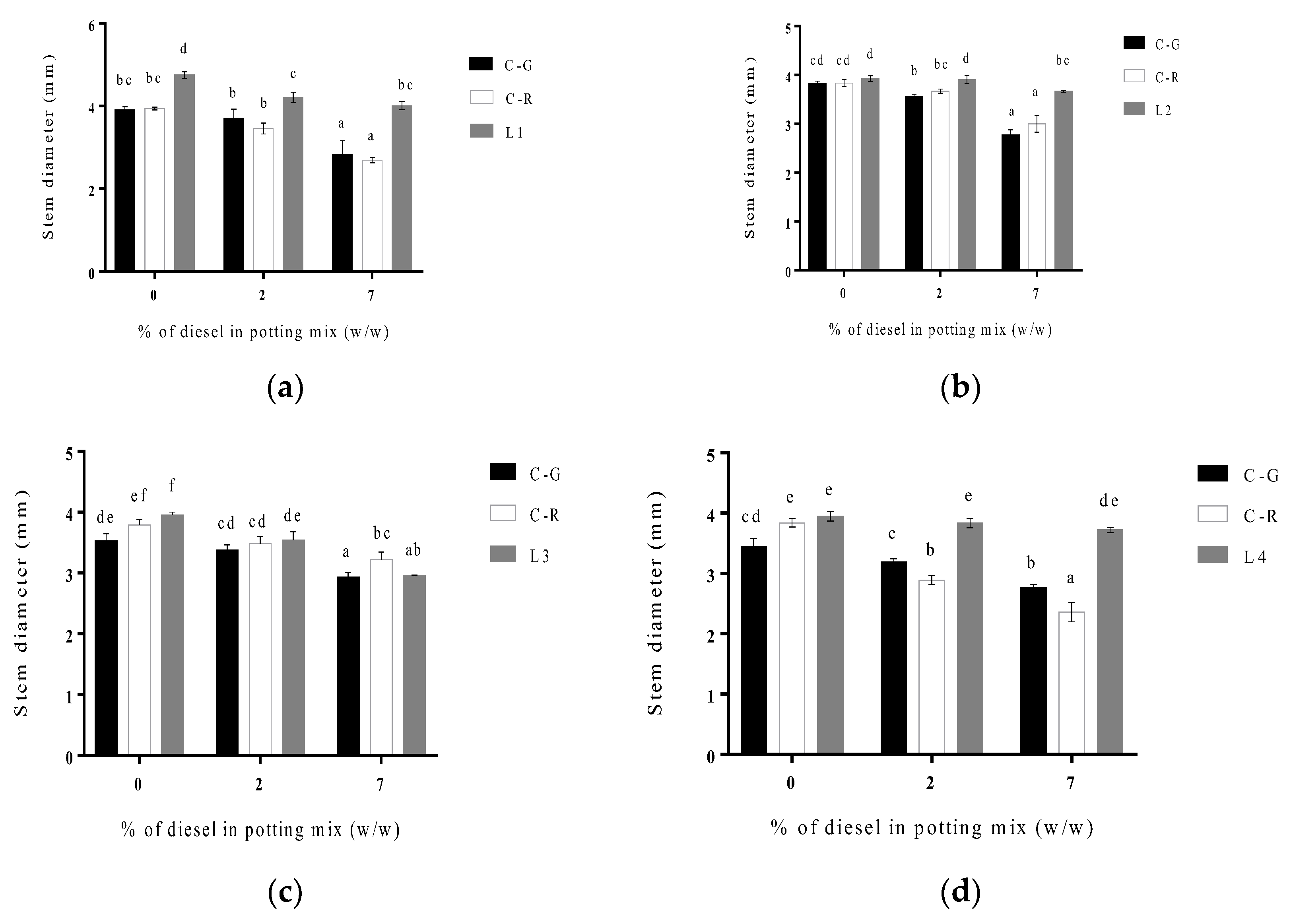
Figure 2.
The average number of leaves at the beginning of each experiment was 2. The average number of leaves of Petunia grandiflora shoot cuttings of lines 1, 2, 3, and 4, controls C-G and C-R after 5 weeks of growth under glasshouse conditions. Values represent means ± SEM of three replicates in each of the experiments (1, 2, 3, and 4). Different letters among the treatments of different plant lines at diesel concentrations in an experiment indicate means that are significantly different from each other (LSD test, p < 0.05).
Figure 2.
The average number of leaves at the beginning of each experiment was 2. The average number of leaves of Petunia grandiflora shoot cuttings of lines 1, 2, 3, and 4, controls C-G and C-R after 5 weeks of growth under glasshouse conditions. Values represent means ± SEM of three replicates in each of the experiments (1, 2, 3, and 4). Different letters among the treatments of different plant lines at diesel concentrations in an experiment indicate means that are significantly different from each other (LSD test, p < 0.05).
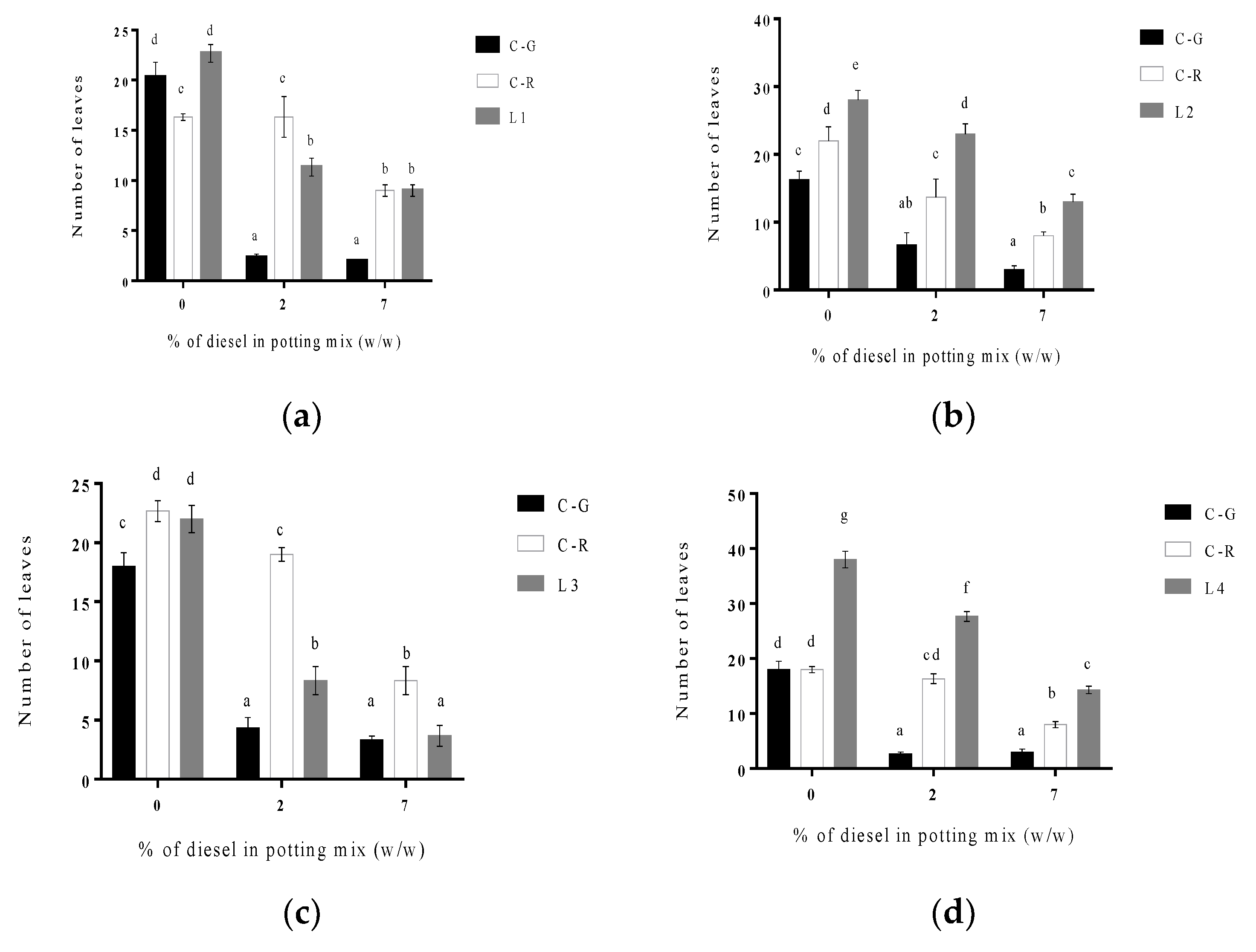
Figure 3.
Visual chlorosis rating scores of Petunia grandiflora shoot cuttings of lines 1, 2, 3, and 4, and controls C-G and C-R after 5 weeks of growth under glasshouse conditions. Values represent means ± SEM of three replicates in each of the experiments (1, 2, 3, and 4). Different letters among the treatments of different plant lines at diesel concentrations in an experiment indicate means that are significantly different from each other (LSD test, p < 0.05).
Figure 3.
Visual chlorosis rating scores of Petunia grandiflora shoot cuttings of lines 1, 2, 3, and 4, and controls C-G and C-R after 5 weeks of growth under glasshouse conditions. Values represent means ± SEM of three replicates in each of the experiments (1, 2, 3, and 4). Different letters among the treatments of different plant lines at diesel concentrations in an experiment indicate means that are significantly different from each other (LSD test, p < 0.05).
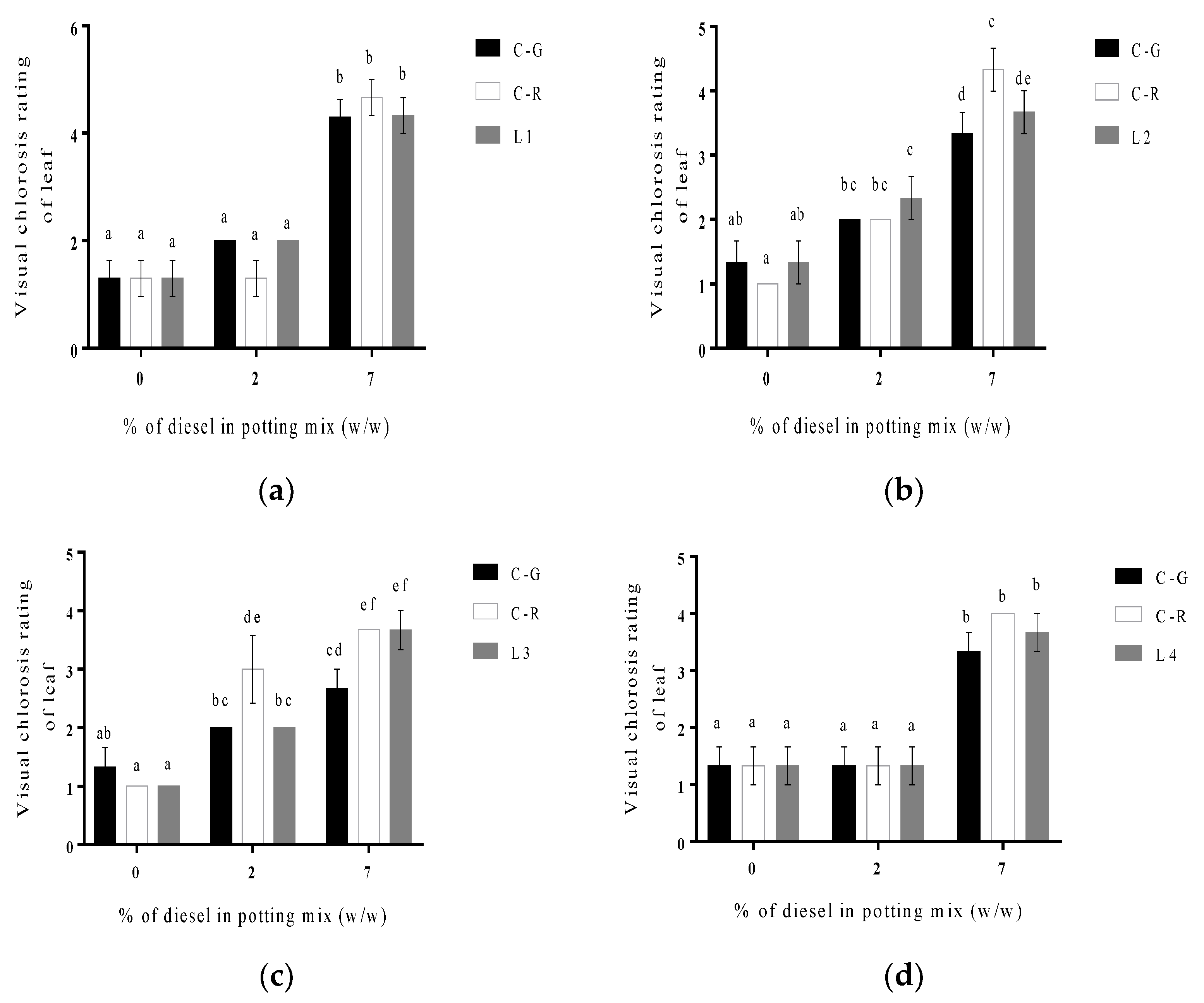
Figure 4.
The shoot height of Petunia grandiflora shoot cuttings from lines 1, 2, 3, and 4, as well as controls C-G and C-R was measured after 5 weeks of growth under glasshouse conditions. The average shoot height at the beginning of each experiment was 7 cm. Values represent means ± SEM of three replicates in each of the experiments (1, 2, 3, and 4). Different letters among the treatments of different plant lines at diesel concentrations in an experiment indicate means that are significantly different from each other (LSD test, p < 0.05).
Figure 4.
The shoot height of Petunia grandiflora shoot cuttings from lines 1, 2, 3, and 4, as well as controls C-G and C-R was measured after 5 weeks of growth under glasshouse conditions. The average shoot height at the beginning of each experiment was 7 cm. Values represent means ± SEM of three replicates in each of the experiments (1, 2, 3, and 4). Different letters among the treatments of different plant lines at diesel concentrations in an experiment indicate means that are significantly different from each other (LSD test, p < 0.05).
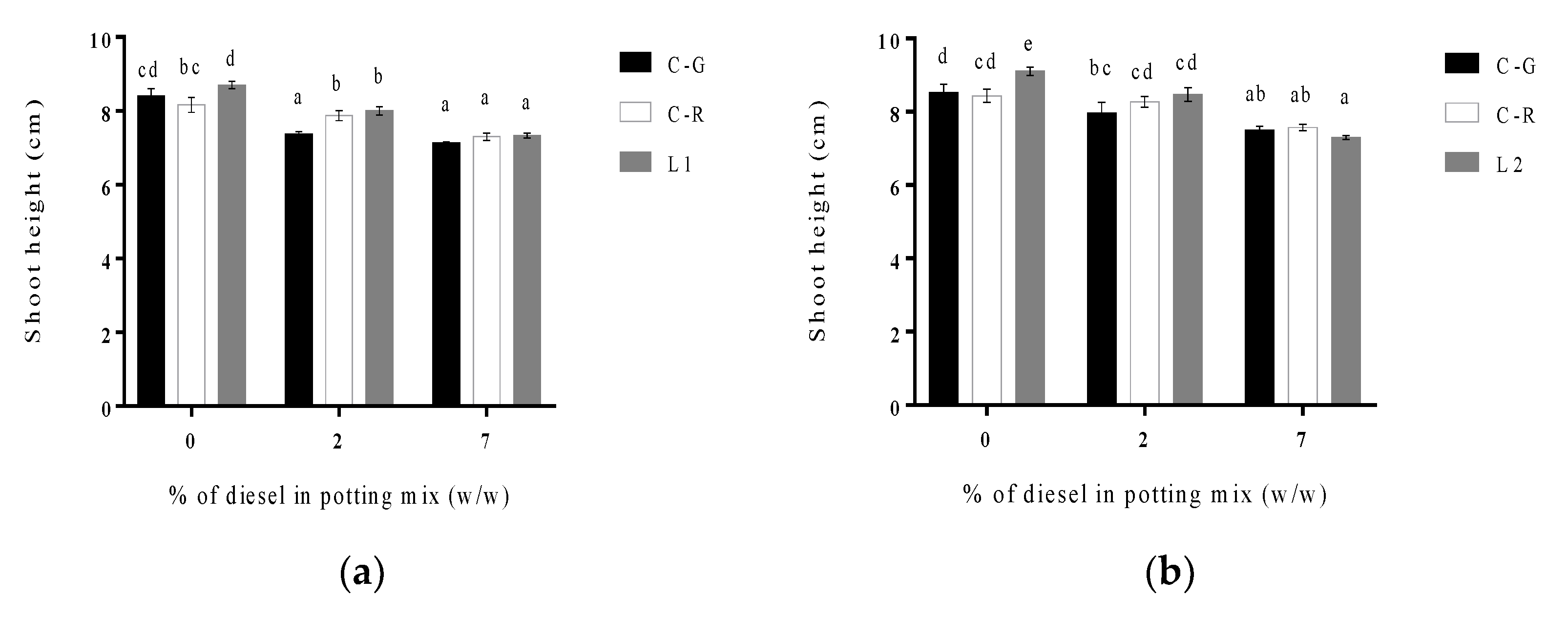
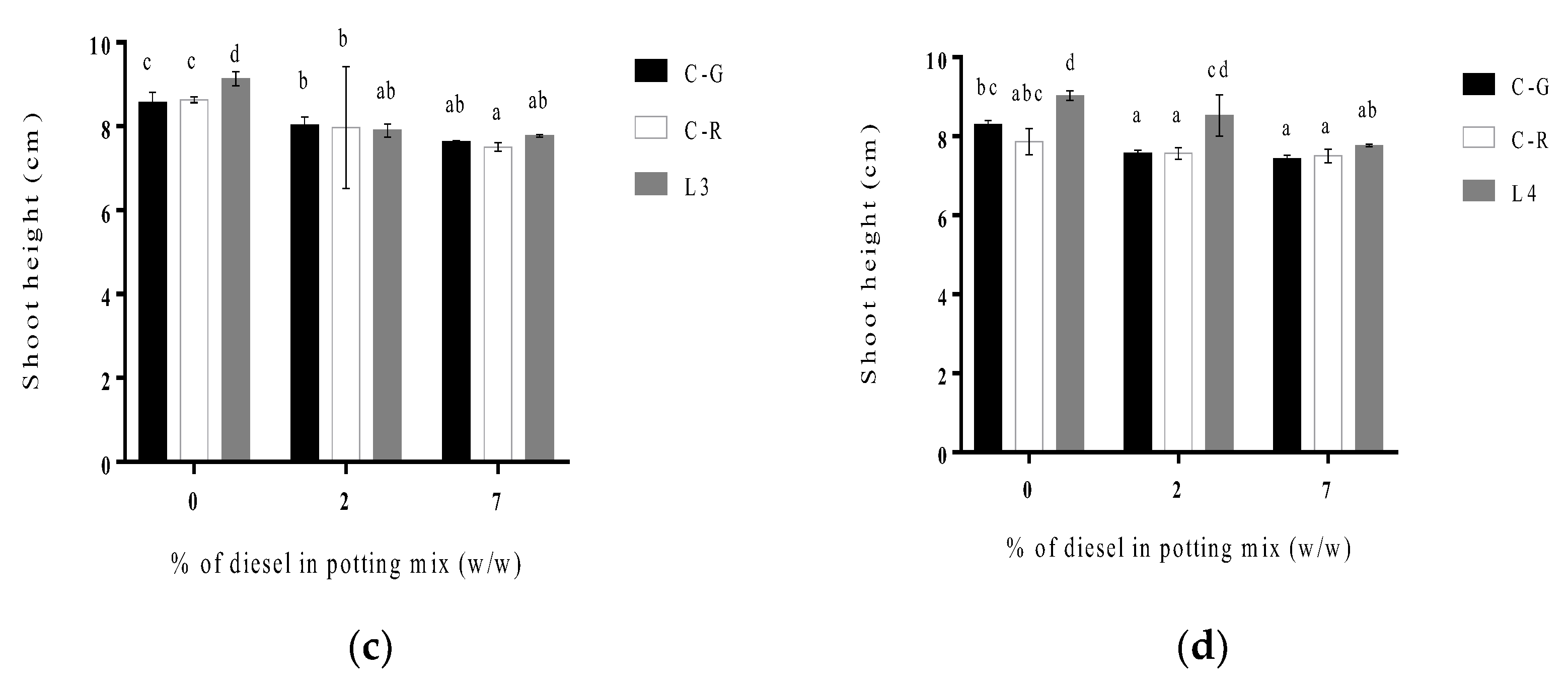
Figure 5.
Root length and the number of roots of Petunia grandiflora shoot cuttings from line 4, C-G, and C-R were measured after 5 weeks of growth under glasshouse conditions. Values represent means ± SEM of three replicates in experiment 4. Different letters among the treatments of different plant lines at diesel concentrations indicate means that are significantly different from each other (LSD test, p < 0.05).
Figure 5.
Root length and the number of roots of Petunia grandiflora shoot cuttings from line 4, C-G, and C-R were measured after 5 weeks of growth under glasshouse conditions. Values represent means ± SEM of three replicates in experiment 4. Different letters among the treatments of different plant lines at diesel concentrations indicate means that are significantly different from each other (LSD test, p < 0.05).
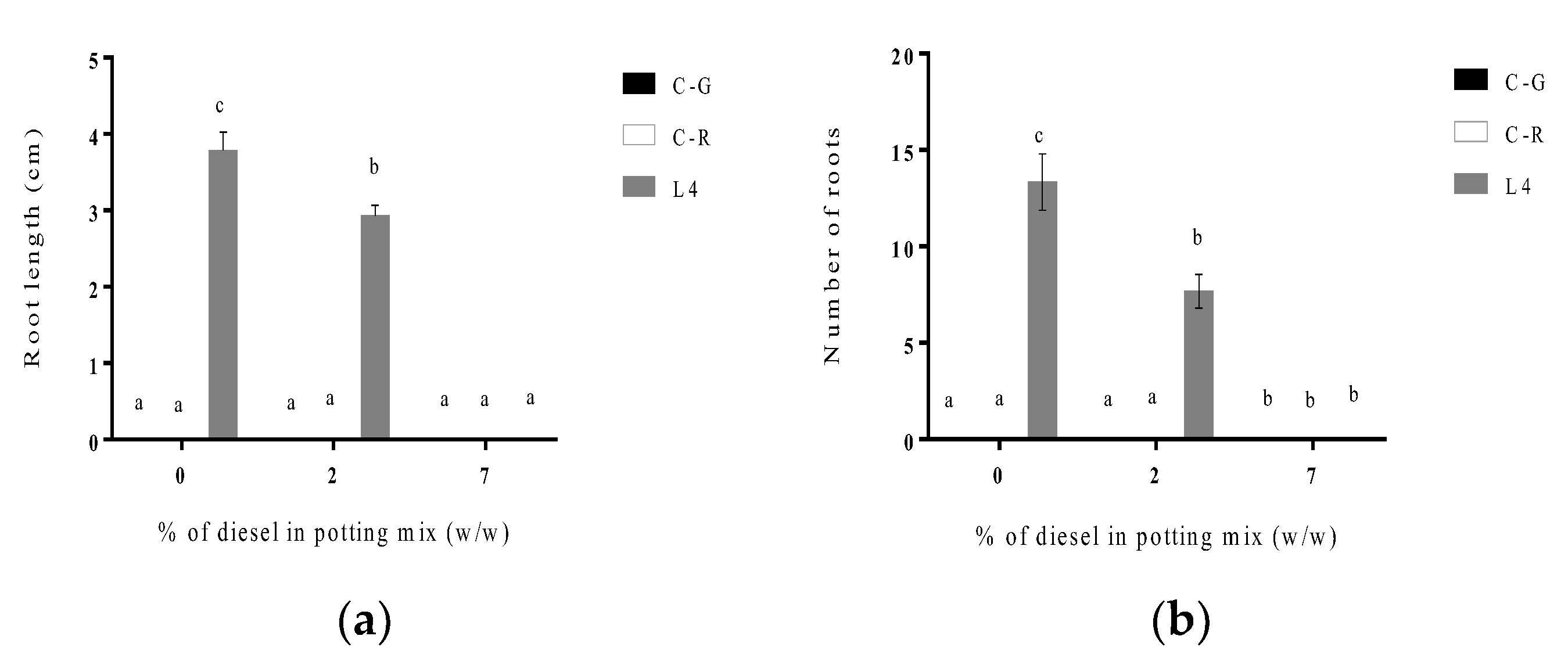

Table 1.
Number of culturable microbes in non-diesel- and diesel-contaminated potting mix with or without experimental plant materials.
Table 1.
Number of culturable microbes in non-diesel- and diesel-contaminated potting mix with or without experimental plant materials.
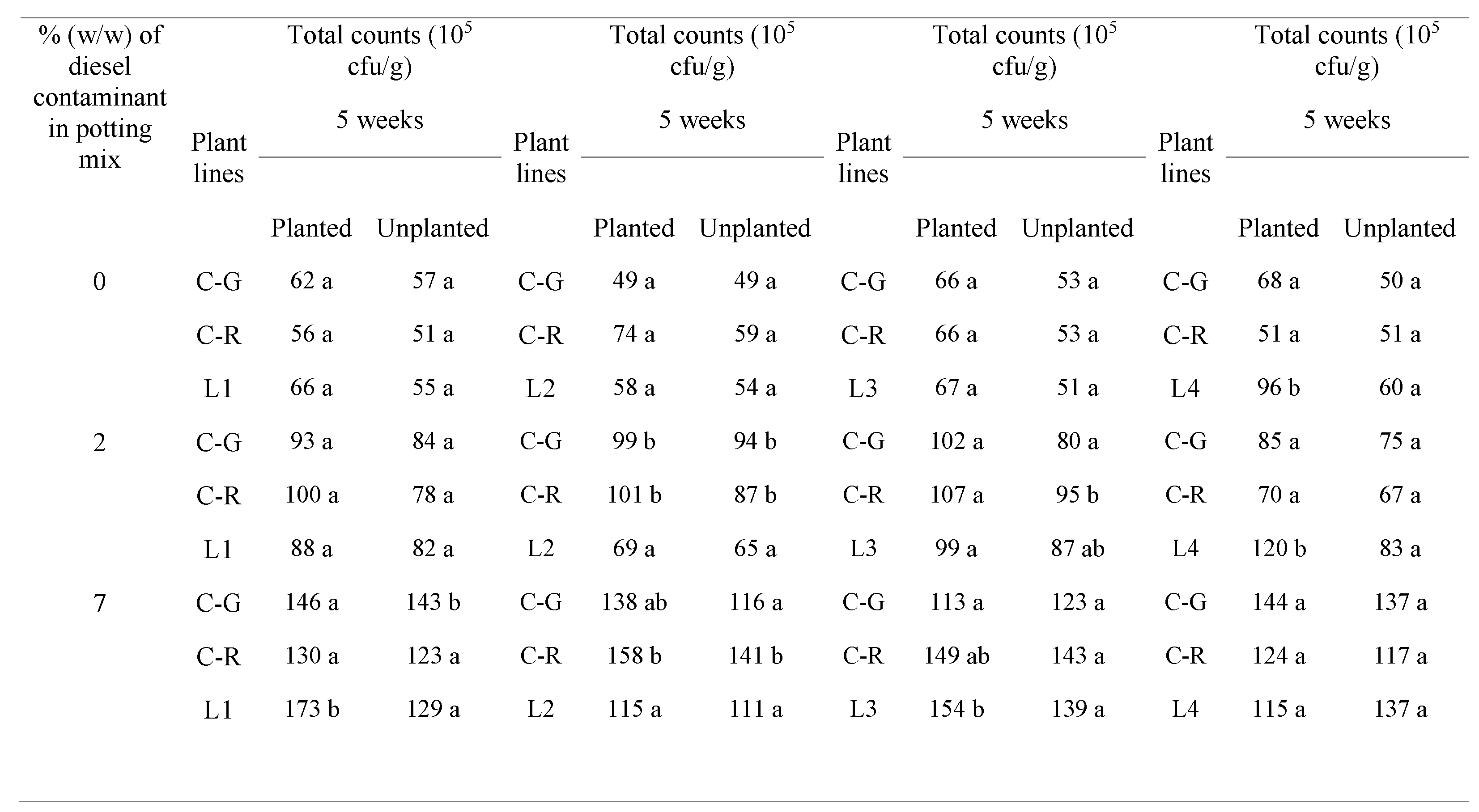 |
Table 2.
Total petroleum hydrocarbons (% TPHs) in diesel-contaminated potting mix with or without experimental plant materials.
Table 2.
Total petroleum hydrocarbons (% TPHs) in diesel-contaminated potting mix with or without experimental plant materials.
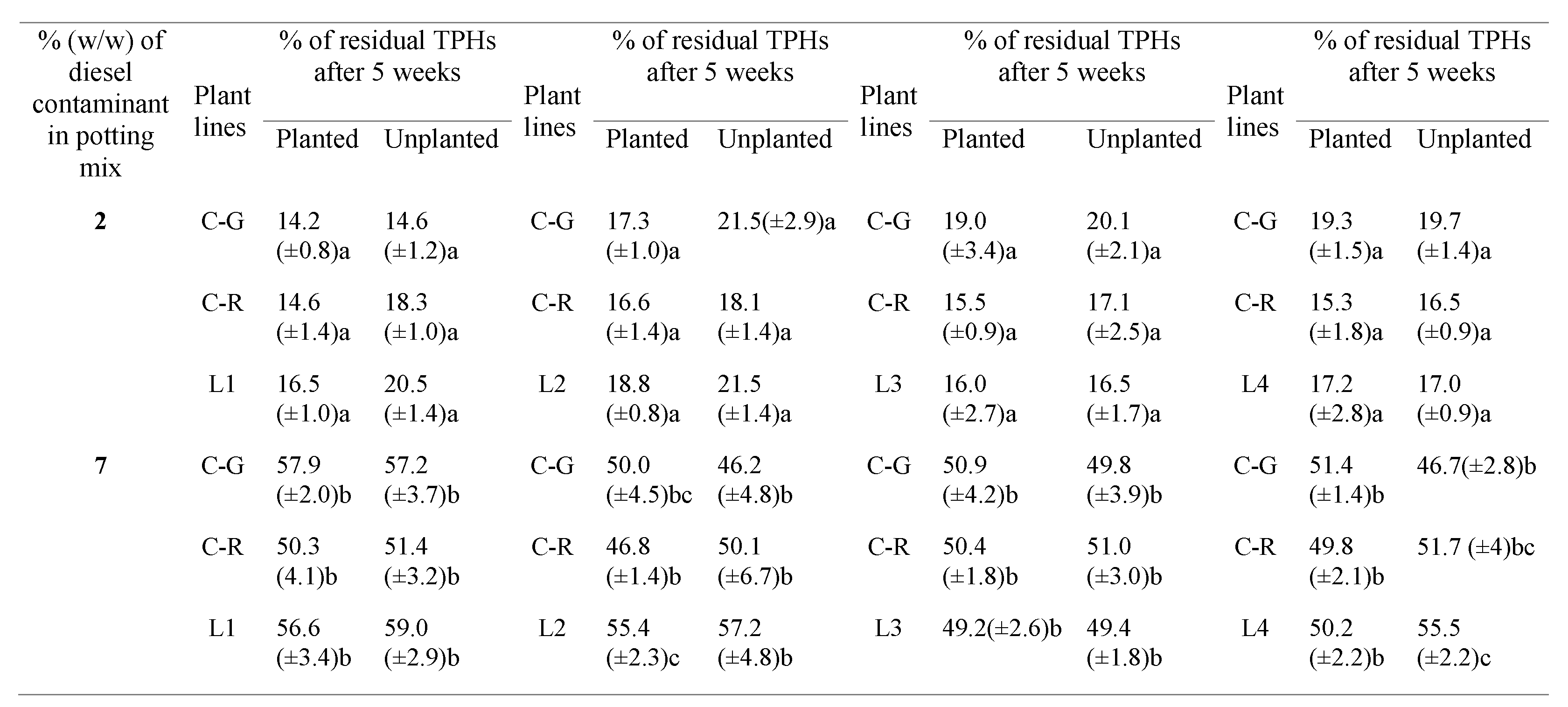 |
Means ± SEM of three replicates in a column and row followed by the same letters are not statistically different according to the LSD test, p < 0.05. Note: C-G are control shoot cuttings from Petunia grandiflora seed germinated in vitro; C-R are control shoot cuttings from Petunia grandiflora shoot regenerated from non-diesel-exposed callus culture; and Petunia grandiflora shoot lines L1-L4 are regenerated from diesel-exposed callus culture.
Disclaimer/Publisher’s Note: The statements, opinions and data contained in all publications are solely those of the individual author(s) and contributor(s) and not of MDPI and/or the editor(s). MDPI and/or the editor(s) disclaim responsibility for any injury to people or property resulting from any ideas, methods, instructions or products referred to in the content. |
© 2024 by the authors. Licensee MDPI, Basel, Switzerland. This article is an open access article distributed under the terms and conditions of the Creative Commons Attribution (CC BY) license (http://creativecommons.org/licenses/by/4.0/).
Copyright: This open access article is published under a Creative Commons CC BY 4.0 license, which permit the free download, distribution, and reuse, provided that the author and preprint are cited in any reuse.


