

Submitted:
09 August 2024
Posted:
12 August 2024
You are already at the latest version
Abstract
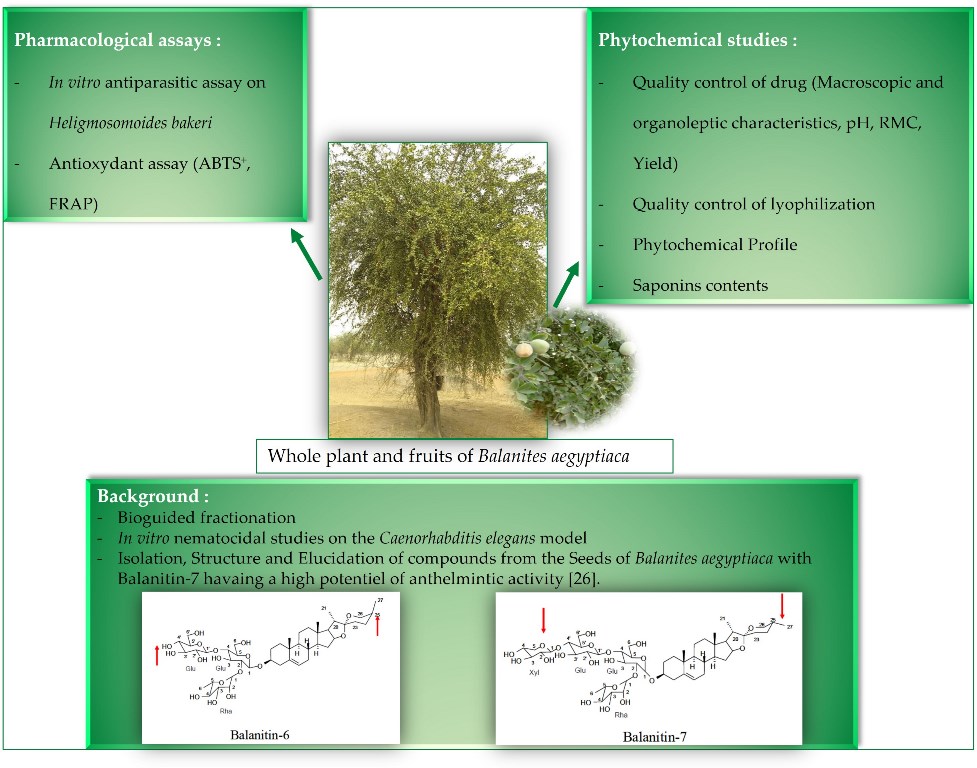
Balanites aegyptiaca del. (Zygophyllaceae) is widely used in traditional medicine, both human and veterinary, throughout Africa for its many properties, including antiparasitic properties. This experimental study aims to optimise the extraction conditions of the seeds of Balanites aegyptiaca del. Aqueous maceration was carried out with mass to volume ratios of 40%, 30%, 20%, 10% and 5% and extraction times of 6, 12, 24, 36 and 48 hours. Extraction yields, phytochemical screening, saponins assay, antioxidant activities (ABTS and FRAP) and antiparasitic tests on Heligmosomoides bakeri were used to compare the different extracts. The pharmaco-chemical study generally showed that aqueous maceration gave the best results, with a mass/volume ratio of 10% after 12 hours of maceration. The yield obtained was 28.03% with a saponins content of 13.81 mg/g. The antioxidant activities were 4.25 ± 0.17µg/mL by the ABTS method and 0.739µg/mL by the FRAP method. The larvicidal activity also showed that the 10%12h extract produced 100% larval mortality from 25ug/mL. These data provide a basis for guiding the choice of extraction process parameters in producing this antiparasitic phytomedicine.
Keywords:
optimisation
; Standardisation
; Balanites aegyptiaca
; Antiparasitic phytomedicine
1. Introduction
According to the WHO, in some developing countries in Asia, Africa and Latin America, 80% of the population relies on traditional medicine, especially in rural areas, because of the proximity and accessibility of this type of care at an affordable cost and mainly because of the lack of access to modern medicine for these populations [1].
In Burkina Faso, more than 80% of the population regularly relies on traditional medicine and medicinal plants to treat various ailments. This situation is based on traditional medical knowledge that is deeply rooted in the local culture. The development of this traditional medical knowledge offers a wealth of potential and prospects in healthcare for African countries [2,3].
With scientific progress, phytotherapy is evolving towards modern phytotherapy, also known as "rational phytotherapy" or "medical phytotherapy", which uses modern methods to extract the active ingredients contained in medicinal plants and validates their beneficial properties for health through a scientific approach of biochemical and pharmacological analyses supported by computer power, as well as clinical trials [4,5,6,7].
Modern herbal medicine is based on scientific evidence and uses active plant extracts, standardised and marketed as finished products in phytomedicines.
Phytomedicines (PMs) and Improved Traditional Medicines (ITMs) are a vital alternative to health spending in most African countries, which are still 90% dependent on foreign pharmaceutical companies and laboratories [8].
Because of the high medical, scientific and socio-economic stakes involved in the industrial exploitation of research results, the “Institut de Recherche en Sciences de la Santé (IRSS)” has developed a phytomedicine based on the seeds of Balanites aegyptiaca (B. aegyptiaca). B. aegyptiaca, or desert date palm, is a very thorny phanerophyte found in the arid regions of tropical Africa, from the Sahara to Palestine, Arabia and India. Balanites aegyptiaca is widely used in traditional human and veterinary medicine throughout Africa for its many properties [9]. Throughout the world, the different parts of this plant are used to treat many diseases, such as bacterial and fungal infections, haemorrhagic menstruation, goitre, bilharzia, malaria, colic, yellow fever, haematuria, hydrocele, haemorrhoids, dermatitis, abdominal pain, colds, diabetes, arterial hypertension and helminthic infections [10,11,12,13,14,15,16]. Numerous studies based on ethnopharmacology have reported evidence of using B. aegyptiaca seeds in treating parasitosis for over twenty years [16,17,18,19,20,21,22,23]. Several studies have also been carried out at the IRSS on extracts of the plant, demonstrating the antiparasitic properties of its seeds [24,25,26,27]. However, the method of obtaining these extracts still needs to be optimised and standardised in order to obtain products that meet quality standards, have higher yields and are safe for industrial production. The aim of this work is to optimise the conditions for obtaining freeze-dried B. aegyptiaca seeds for the formulation of phytomedicines by studying several factors that may affect the yield and quality of the final extract.
This section may be divided by subheadings. It should provide a concise and precise description of the experimental results, their interpretation, and the experimental conclusions that can be drawn.
2. Results
2.2. Figures and Tables
2.2.1. Phytochemical Studies
The residual moisture content of lyophilises, determined by drying at 105°C for 15 minutes, is shown in the figure below.
Figure 1.
Almond powder (a) and lyophilised extract (b) of Balanites aegyptiaca seeds.
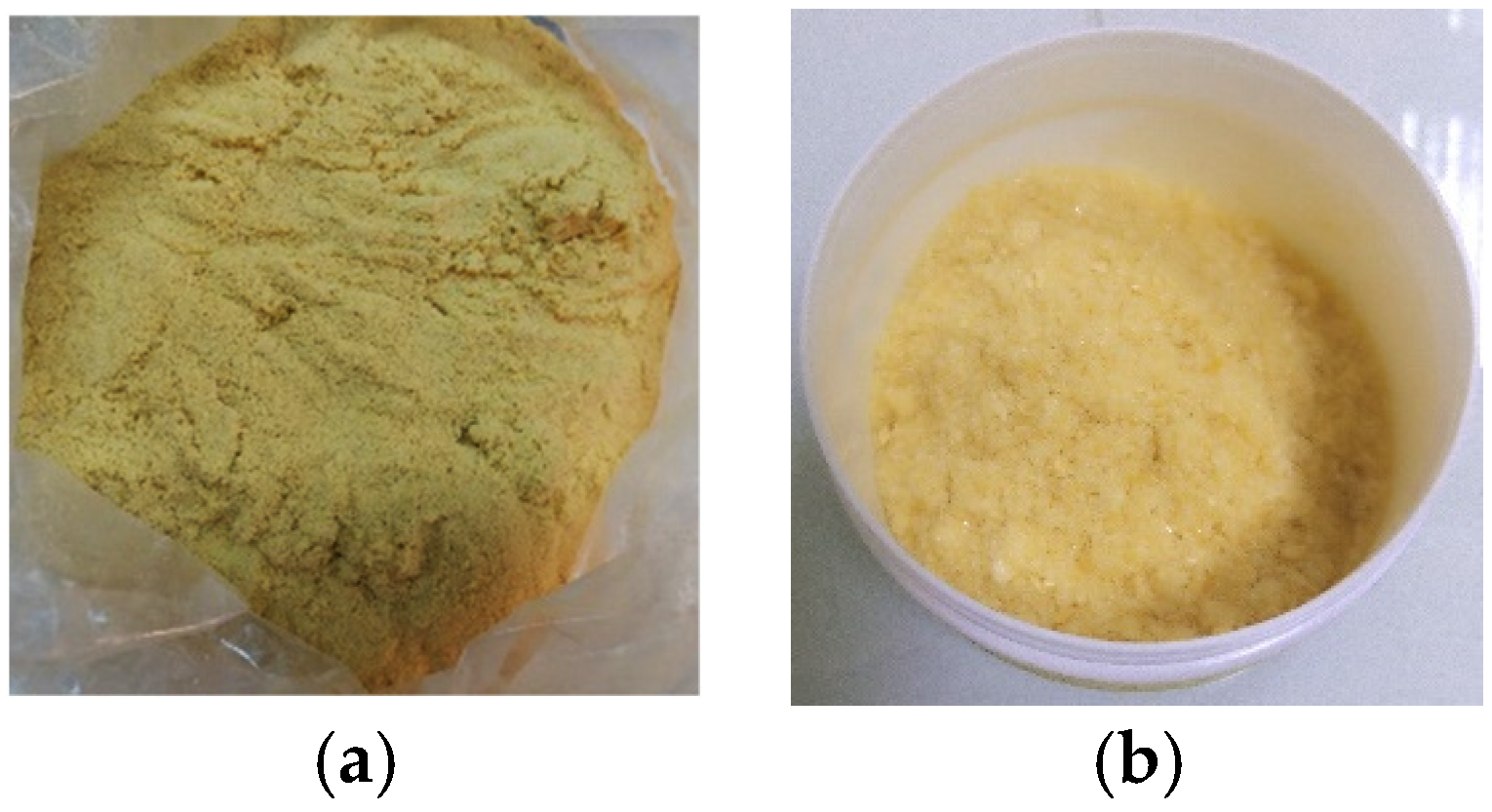

Table 1.
Macroscopic and organoleptic characteristics of Balanites aegyptiaca seeds powder and lyophilises.
Table 1.
Macroscopic and organoleptic characteristics of Balanites aegyptiaca seeds powder and lyophilises.
| Characteristics | Plant material | Lyophilised extracts |
|---|---|---|
| Color | Yellow | Light yellow |
| Odor | Very characteristic | Characteristic |
| Taste | Amer | Amer-sweet |
| Texture | coarse | Fine |
Figure 2.
The residual moisture content of different lyophilises. ** p < 0.01, **** p < 0.0001 is considered significant compared to the other % macerates (Two-way ANOVA followed by the "Tukey" Multiple Comparison Test. ns is considered not significant. n = 3.
Figure 2.
The residual moisture content of different lyophilises. ** p < 0.01, **** p < 0.0001 is considered significant compared to the other % macerates (Two-way ANOVA followed by the "Tukey" Multiple Comparison Test. ns is considered not significant. n = 3.
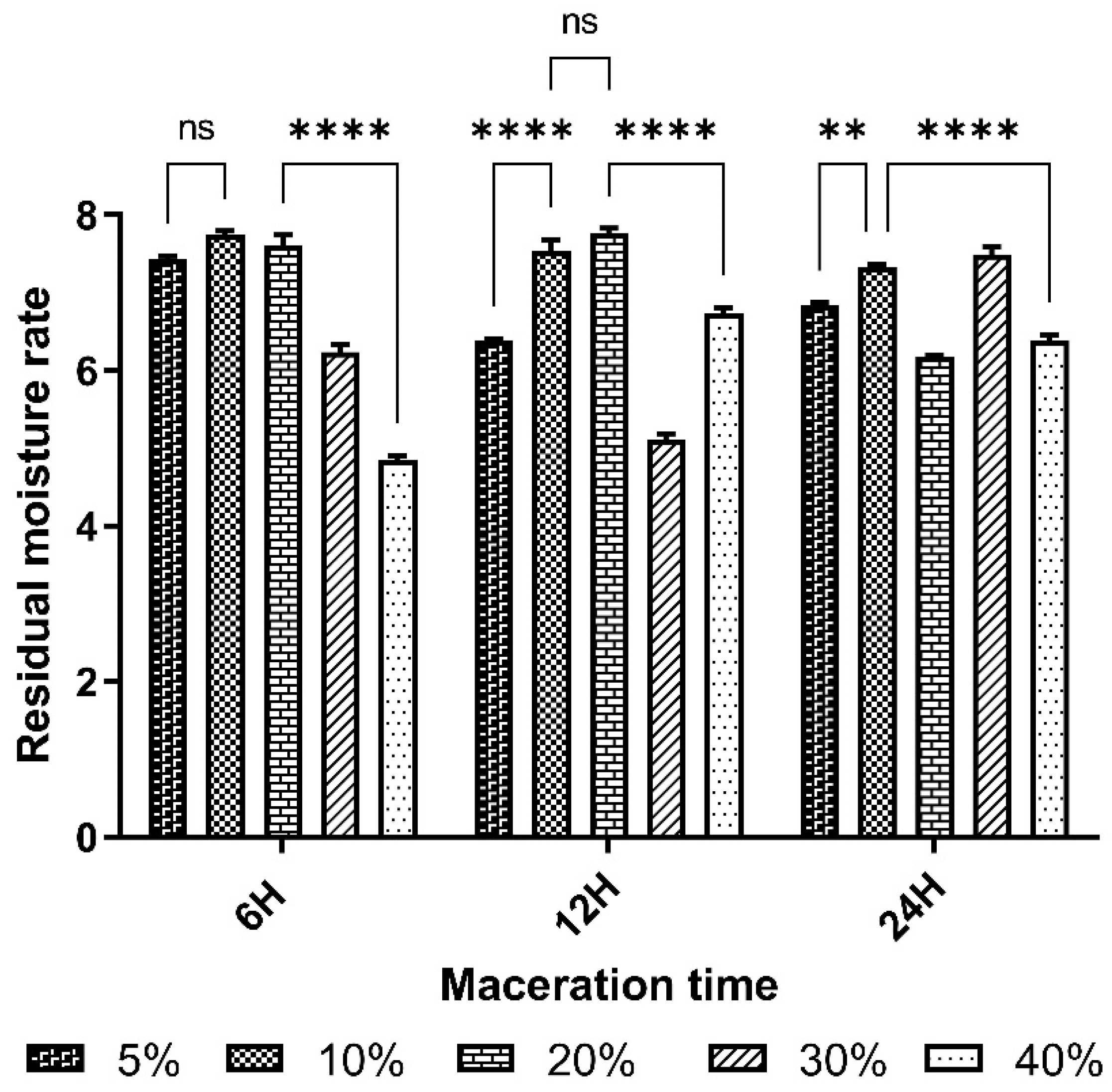
The residual moisture content of the raw material was 4.84±0.06.
The pH values of the powders are given in the table below.
Table 2.
pH of lyophilisates.
| Maceration time (h) | pH | ||||
|---|---|---|---|---|---|
| 5% | 10% | 20% | 30% | 40% | |
| 6 h | 6,99±0,04 | 6,99±0,01 | 6,89±0,01 | 6,81±0,01 | 6,81±0,02 |
| 12 h | 6,82±0,01 | 6,87±0,02 | 6,88±0,01 | 6,85±0,01 | 6,83±0,02 |
| 24 h | 6,43±0,02 | 6,61±0,02 | 6,54±0,01 | 6,60±0,02 | 6,67±0,01 |
Table 3.
Extraction yield of aqueous macerates mass/volume ratio as a function of time (hours).
| Maceration time | Rendement (%) | ||||
|---|---|---|---|---|---|
| 5 % | 10 % | 20 % | 30 % | 40% | |
| 6 h | 0,3354±0,009a | 0,2665±0,013 | 0,2240±0,01 | 0,2179±0,012b | 0,2221±0,011 |
| 12 h | 0,3512±0,011bc | 0,2803±0,01b | 0,2246±0,012b | 0,2273±0,009 | 0,2301±0,011b |
| 24 h | 0,2270±0,008 | 0,2075±0,01 | 0,1978±0,01 | 0,2003±0,01 | 0,1856±0,01 |
Figure 3.
Extraction yield Histogram of aqueous macerates mass/volume ratio as a function of time (hours). ** p < 0.01, **** p < 0.0001 is considered significant compared to the other % macerates (Two-way ANOVA followed by "Tukey" Multiple Comparison Test. ns is considered not significant. n = 3.
Figure 3.
Extraction yield Histogram of aqueous macerates mass/volume ratio as a function of time (hours). ** p < 0.01, **** p < 0.0001 is considered significant compared to the other % macerates (Two-way ANOVA followed by "Tukey" Multiple Comparison Test. ns is considered not significant. n = 3.
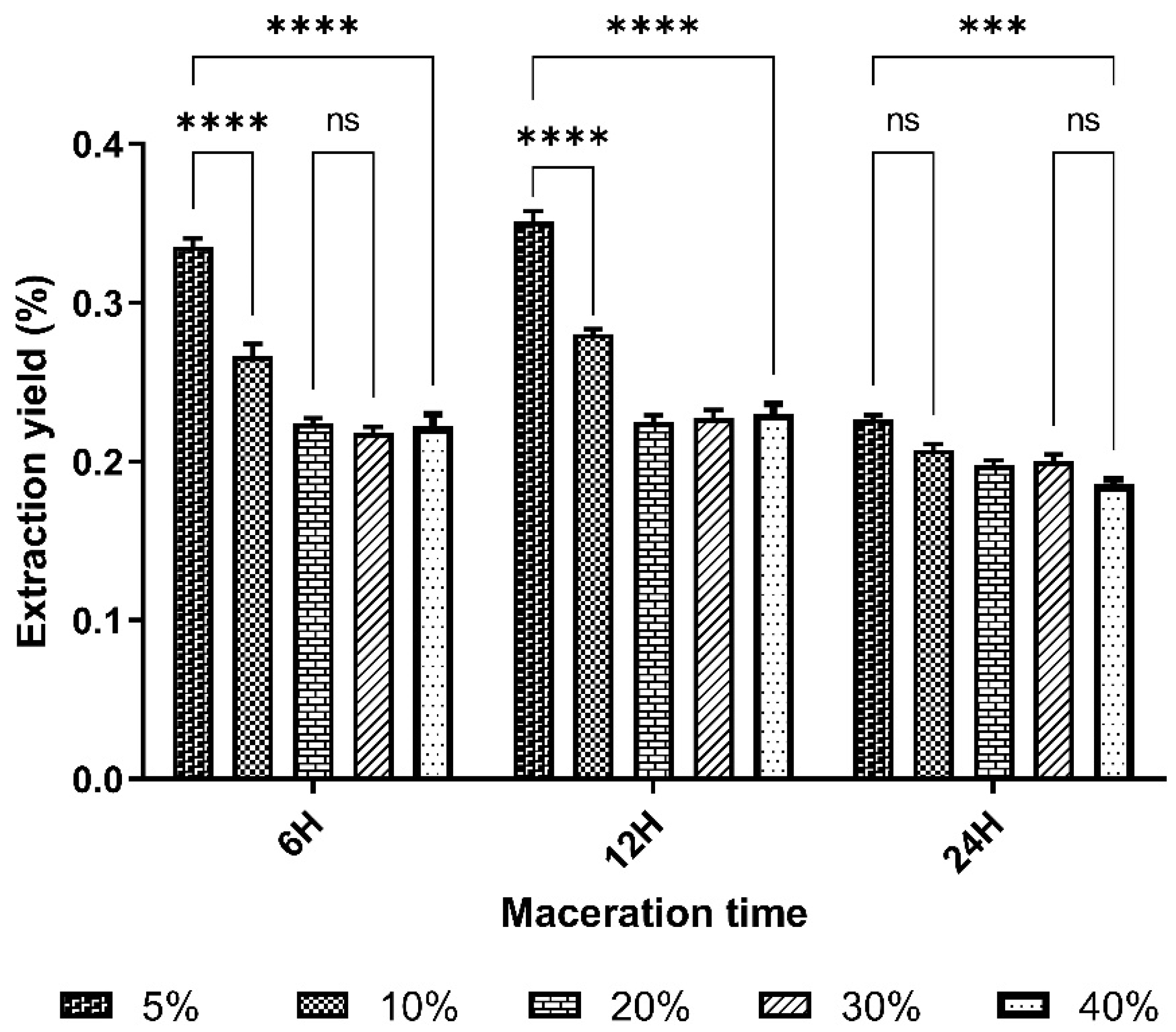
Table 4.
Phytochemical groups detected in lyophilisates.
| Phytochemical components | Lyophilisates |
|---|---|
| Saponins | + |
| Flavonoids | + |
| Tannins | - |
| Triterpenes and sterols | - |
With : + = present and - = absent.
Figure 4.
Analytical TLC profile of different extracts. a- The presence of saponins revealed by sulfuric anisaldehyde after heating the plate observed in visible light. b- Presence of flavonoids (at 254 nm) detected by NEU reagent.
Figure 4.
Analytical TLC profile of different extracts. a- The presence of saponins revealed by sulfuric anisaldehyde after heating the plate observed in visible light. b- Presence of flavonoids (at 254 nm) detected by NEU reagent.
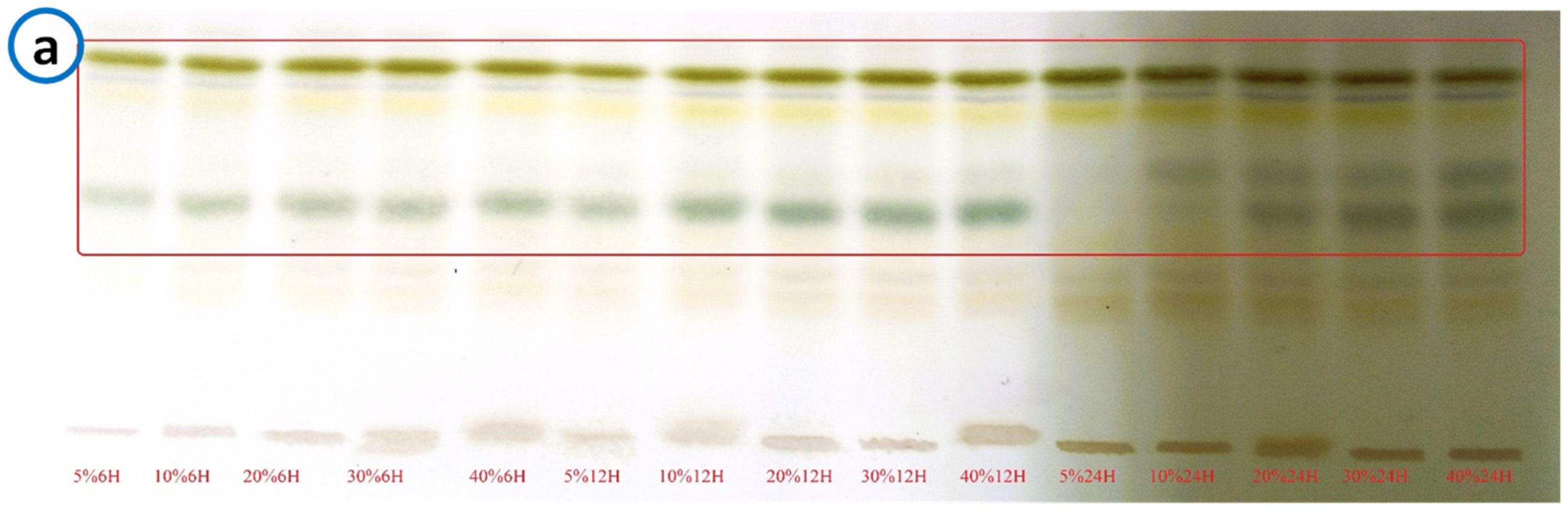
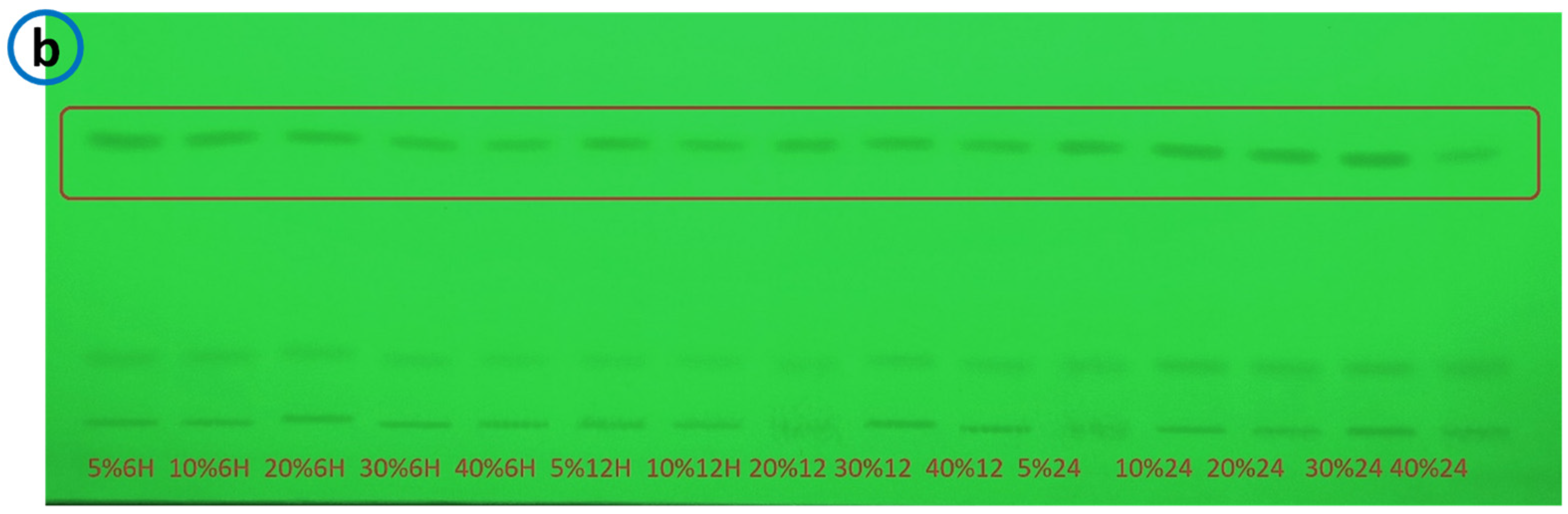
Table 5.
Saponins content of lyophilisates.
| Maceration time | Saponins content (mg/g) | ||||
|---|---|---|---|---|---|
| 5% | 10% | 20% | 30% | 40% | |
| 6 h | 10,51±0,01 | 11,83±O,03a | 11,07±0,07b | 10,56±0,02 | 9,97±0,04 |
| 12 h | 12,32±0,07b | 13,81±0,04ba | 11,61±0,02 | 12,29±0,06b | 12,39±0,02b |
| 24 h | 10,34±0,05 | 11,46±0,04 | 9,88±0,09 | 9,27±0,07 | 9,11±0,01 |
a= high content concerning the time parameter; b= high content in the mass/volume ratio parameter; c= high content concerning the time and mass/volume ratio parameters.
2.2.2. Pharmacological Studies
The concentrations of the extracts measured by the ABTS method are shown in Table 6. The 50% inhibitory concentration (IC50) of Trolox was 2.63 ± 0.04.
Table 6.
IC50 of extracts by ABTS method.
| Maceration time | 50% inhibitory concentration (5ug/mL) | ||||
|---|---|---|---|---|---|
| 5% | 10% | 20% | 30% | 40% | |
| 6 h | 4,82±0,10abc | 4,54±0,13b | 4,07±0,15 | 3,93±0,10 | 4,35±0,18 |
| 12 h | 4,52±0,19a | 4,25±0,12 | 4,025±0,17 | 3,982±0,12b | 4,36±0,13b |
| 24 h | 3,84±0,15 | 4,03±0,13 | 3,57±0,21 | 3,60±0,20 | 4,20±0,17a |
Table 7.
IC50 of extracts by FRAP method.
| Maceration time | Reduced iron content/µmolEA | ||||
|---|---|---|---|---|---|
| 5% | 10% | 20% | 30% | 40% | |
| 6 h | 0,733 | 0,727 | 0,729 | 0,736 | 0,739 |
| 12 h | 0,726 | 0,739 | 0,725 | 0,735 | 0,723 |
| 24 h | 0,734 | 0,716 | 0,745 | 0,735 | 0,741 |
Figure 5.
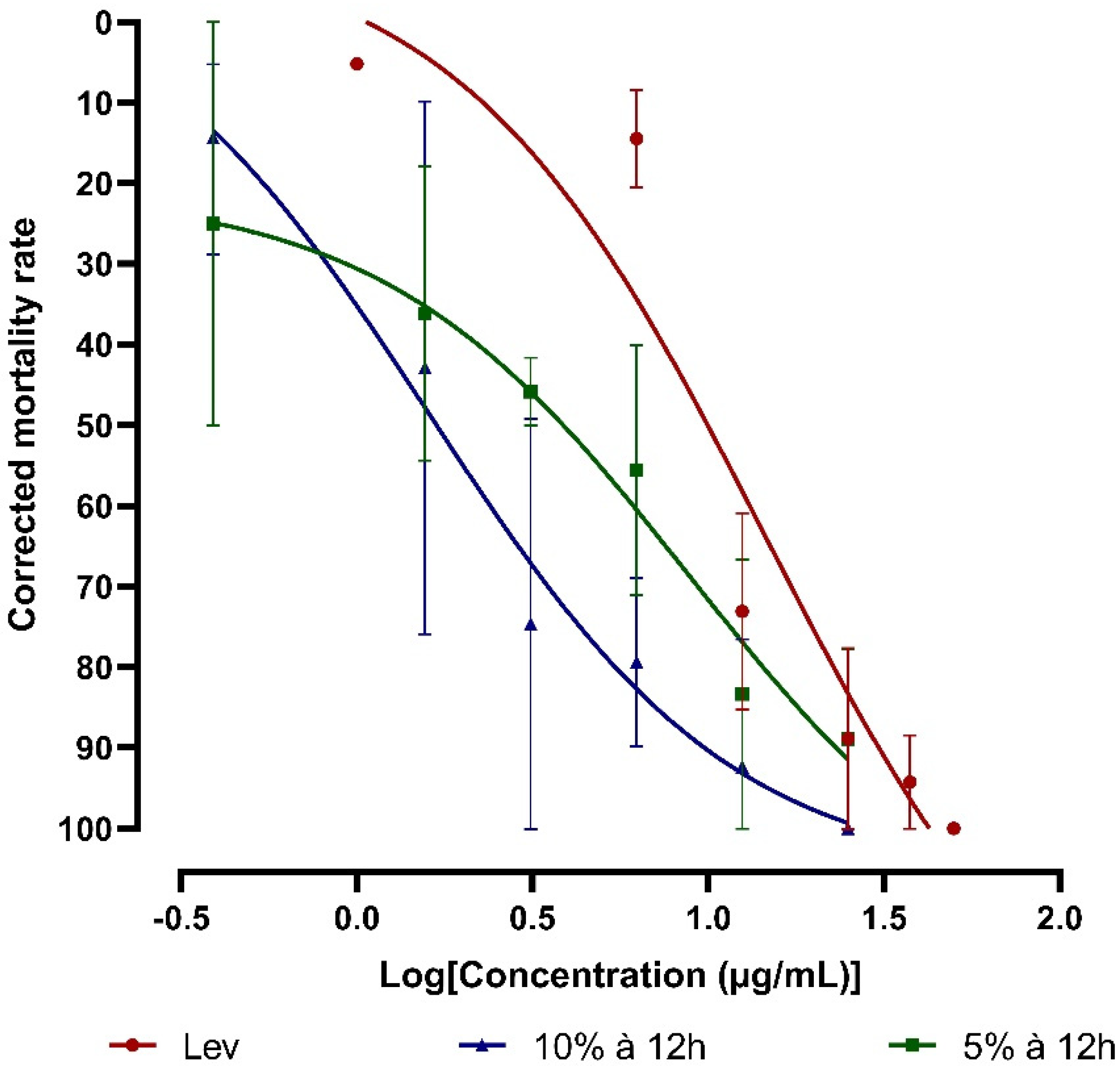
Larvicidal effect of B. aegyptiaca extracts and the standard on H. bakeri.
The 50% inhibitory concentrations of extracts and standards are shown below :
IC50 = 14.52 µg/mL for Lev, 8.805 µg/mL for 5 % extract and 1.605 µg/mL for 10 % extract.
3. Discussion
The plant material was yellow, with a coarse texture, a very characteristic odor, and a bitter taste. Aqueous extraction was performed as recommended by the health tradipratician. Water, the most polar solvent, was used to extract a wide range of polar compounds. It has the advantage of dissolving many substances; it is inexpensive, non-toxic, non-flammable and highly polar [28,29]. The lyophilizates varied in color from yellow to light yellow, depending on the mass to volume ratio, with a bitter-sweet taste, the sweetness being more pronounced in lyophilizates with a low mass to volume ratio and a fine texture. These changes in characteristics are thought to be related to extraction [30]. Organoleptic and macroscopic characteristics are parameters used in the identification and quality control of raw materials. These data help to establish quality control and assurance standards and to define the purity of herbal or synthetic drugs [31]. Visual assessment of appearance sometimes allows rapid identification of certain herbal drugs, checking their degree of purity according to the presence or absence of foreign elements, moulds, etc., and possibly detecting adulteration or falsification. A color change may indicate deterioration due to poor drying or storage conditions [29,32].
The result for the residual moisture content of the plant material was 4.84 ± 0.06. The control of this parameter reduces errors in estimating the actual weight of the plant material and guarantees the quality during the storage period [33]. This value, below 10%, indicates that the powder is sufficiently dry and can be stored during the handling period without the development of molds or yeasts, according to the standards of the European Pharmacopoeia [31]. In fact, too high a water content (above 10%) could promote enzymatic reactions with negative consequences on the appearance of the plant drug, its organoleptic characteristics and its therapeutic properties during the shelf life of the plant material powder. High residual moisture also favors the proliferation of microorganisms such as bacteria, yeasts and moulds. These results are similar to those obtained by Sanfo [24], who obtained THRs below 10%, i.e. 4.26%. The RMC of lyophilisates varied from 5.11% to 7.76%, with an average of 6.65%. These lyophilises were more or less dry and could be stored without mould or yeast growth. The best yields, 35.12±1.1% and 33.54%, respectively, were obtained from extracts macerated for 12 h and 6 h at a mass/volume ratio of 5%.
The mass/volume ratio parameter has a significant effect on yield. The yield results show that increasing the solvent volume by decreasing the m/v ratio improves the extraction yield up to a ratio of 5%; in fact, the best yields are obtained with the lowest m/v ratio. This is consistent with the principle of mass transfer, which states that the driving force during extraction is the concentration gradient between the solid and the external liquid medium. This force becomes important when the liquid/solid ratio used is higher [34]. Similar results were obtained by Cacace who evaluated the effect of the solids ratio on the extraction rates in their studies [34]. They found that increasing the volume of solvent had a positive effect on extraction regardless of the type of solvent used.
Increasing the extraction time can often improve the extraction yield. This is mainly due to the fact that a longer contact time between sample and solvent allows a better solubilisation of the target compounds in the solvent. This more efficient solubilisation leads to a more complete extraction of the desired compounds, thus increasing the overall extraction yield [35]. We can stated that a long extraction time would allow for good extraction and therefore good yield.
However, in this study, after 6 hours, increasing the time did not significantly improve the yield. This could be explained by the phenomenon of extraction saturation when time is extended over a long period [36]. This result is similar to that of Tiendrebeogo who found that the time parameter alone in maceration was not sufficient to significantly improve extraction [36]. The results of our study show that the conditions for optimal crude yield from aqueous maceration of B. aegyptiaca seeds crush would be maceration for 6 h at a mass/volume ratio of 5%.
Phytochemical screening of the extracts by thin-layer chromatography on chromatoplates using the methods described by Wagner and Bladt revealed metabolites such as saponins and flavonoids. Saponins were the most essential compounds in the extracts, as significant precipitation reactions were obtained with appropriate reagents. Chemical screening revealed spots of equal intensity in all extracts.
Assay results ranged from 9.27±0.07 mg/g to 13.81±0.04 mg/g. Analyses show that the highest levels were obtained at the 12-hour maceration time with 13.81±0.04mg/g at 10%, 12.89±0.06mg/g at 30%, 12.59±0.02mg/g at 40%, 12.32±0.07mg/g at 5%. The most significant content obtained with 12 hours time parameters and 10% mass/volume ratio was 13.81±0.04mg/g.
The antioxidant activity results by ABTS ranged from 3.57±0.21 μg/mL to 4.82±0.10μg/mL. The most active extracts (4.82±0.10), (4.54±0.13) and (4.52±0.19) were obtained at 6 h of the 5% and 10% ratios and 12 h of the 5% ratio, respectively. The lower the concentration (IC50), the higher the antioxidant effect [37]. The phytochemical groups identified, namely flavonoids, tannins and saponins, are thought to be responsible for the antioxidant activity of the extracts [38,39].
These tests allowed us to determine the anthelmintic activity of the two B. aegyptiaca seeds extracts with the highest yields while maintaining their physicochemical properties against H. bakeri L1 larvae [40,41]. The results obtained show an interesting larvicidal effect. Indeed, the 5% extract showed a maximum effect of 84.64% larval mortality at a concentration of 25 µg/mL, while the 10% extract resulted in 100% mortality of H. bakeri L1 larvae at the same concentration—also, the IC50 (extract at 5%) < IC50 (extract at 10%). Therefore, we can say that the 10% extract at 12h is more effective and potent than the 5% extract. The difference in the activity of the extracts tested may be due to the content of secondary metabolites, especially saponins, which are antiparasitic substances present in the extracts [42,43].
B. aegyptiaca has been chemically investigated for various classes of constituents. It is reported to contain several secondary metabolites and bioactive compounds, including flavonoids, alkaloids, glucosides, phenols, steroids, saponins, furanocoumarins, diosgenin, N-trans-feruloyl tyramine, N-cis-feruloyl tyramine, trigonelline, balanitol, fatty acid [26,44]. The 10% extract at 12 h has the highest saponins content compared to the other extracts. In B. aegyptiaca fruits, saponins such as balanins 4, 5, 6 and 7 have been isolated.
The activity of the different extracts obtained by successive depletion of B. aegyptiaca seeds powder was evaluated on C. elegans. Aqueous and methanolic extracts resulted in worm mortality. However, the aqueous extract (IC50 = 1.0 mg/mL) was much more nematocidal on C. elegans than the methanolic extract (IC50 = 25.3 mg/mL). Pure balanitin-7 obtained after successive column fractions showed very high nematocidal activity (IC50 = 0.1μg/mL, expressed as aqueous extract equivalent) [26]. Based on the results of his study, Gnoula hypothesised that the major nematocidal agent present in the seeds of B. aegyptiaca may be balanitin-7 (Bal-7), a heteroside of the diosgenyl saponins family [26]. Since the 10% 12 h extract is rich in saponins, we can assume that the larvicidal activity on H. bakeri is related to the high presence of this phytochemical group.
4. Materials and Methods
4.1. Plant Materials
The plant's raw material is the fruit of B. aegyptiaca. These fruits were harvested in March 2021 in Manga, in the south-central region of Burkina Faso, 100 km from the capital Ouagadougou. A plant sample was collected and identified at the Joseph KI-ZERBO University Herbarium under identification number 17928 with herbarium reference number 6916.
4.2. Quality Control of Drug
Macroscopic and organoleptic characteristics: The organoleptic characteristics (taste and smell) were determined by tasting and sniffing the powder [45].
Determination of pH: The pH was determined by putting the pH-meter electrode (Eutech, Singapore) in 1% (w/v) aqueous solutions of each vegetable material (thrice). The test was performed in triplicate, and the mean and standard deviation were calculated (m ± standard deviation, n = 3).
Residual moisture content: The residual moisture content of the powders was determined according to the thermogravimetric method of the European Pharmacopoeia 10th edition in an oven [31]. The assay was performed in triplicate on one (01) gram of powder. The mean and standard deviation were calculated (n = 3, mean, standard deviation).
Total ash content: Total ash levels were determined according to the European Pharmacopoeia 10e edition by calcining one (01) gram of each plant powder in a furnace (Bouvier, Belgium) at about 600°C. Total ash content was expressed as percentage.
Microbiological quality: The microbial load assayed were total microbial flora, Salmonella and thermo-tolerant coliforms. Total microbial flora and Salmonella were determined by the method of the European Pharmacopoeia 6th edition. Thermo-tolerant coliforms were determined according to ISO 7218. Colony counts were performed for calculations of the number of colony forming units per gram (CFU / g).
4.3. Quality Control of Lyophilisation
It involves the maceration of B. aegyptiaca almond powder, varying the parameters of mass/volume ratio and maceration time to obtain a higher yield of lyophilisation, using a technique that does not involve the use of an organic solvent, such as cryoconcentration. A 50 g test sample of B. aegyptiaca seed powder is macerated in different volumes of distilled water (1000 mL, 500 mL; 250 mL, 165 mL, 125 mL) at ratios of 5%, 10%, 20%, 30% and 40% and stirred manually. The mixture is macerated at room temperature for 6, 12, 24 or 48 hours.
At the end of the maceration time, the extracts obtained are filtered through a nylon filter. The filtrates are delipidated by freezing for 5 hours, and then the supernatant (lipid) is removed. The filtrates are centrifuged at 2000 rpm for 10 minutes and filtered again. The final filtrates are frozen and lyophilised for further analysis.
4.4.1. Macroscopic and Organoleptic Characteristics
Characteristics such as texture, color, taste and odor were determined by the method described in the 10th edition of the European Pharmacopoeia, using the sense organs. The study was carried out with three persons and the similar results obtained by the majority were accepted. Color was determined by observation with the naked eye, taste by tasting the powders, odor by sniffing, and texture by touching the powders [31].
4.4.2. Determination of pH
It is determined using a pH meter. After stabilisation, dip the pH meter electrode in a pH 7.00 buffer solution and rinse with distilled water; place the electrode in the plant material or lyophilizate and shake until the pH is stable, take the pH reading, and finally, rinse the electrode with distilled water.
4.4.3. Residual Moisture Content
The residual moisture content of the plant material or Balanites lyophilises was determined by the gravimetric method.
A test sample of 1 g of powder in an aluminium dish was placed in the halogen desiccator at a temperature of 105°C for 15 mins. After the allotted time, the RMC value is displayed, calculated according to the following formula:
THR= [(Mi-Mt)] /Mi x 100
Mi: test sample
Mt: Mass after drying
4.4.4. Extraction Yield
The extraction yield is determined by the following formula:
R = (P×100) / P0
R: extraction yield
P: weight (g) of dry extract obtained after lyophilisation
P0: weight (g) of plant material test sample.
4.5. Determination of Phytochemical Profile of Plant Material and Lyophilizate
Phytochemical screening of extracts is performed by thin-layer chromatography on chromatophores according to the methods described by Wagner and Bladt. The metabolites sought are saponins, terpene and steroid compounds, flavonoids, tannins, etc.
TLC is a separation technique in which the compounds to be separated are absorbed and partitioned according to their affinity between a solid phase (silica gel) and a mobile phase (migration solvent). TLC analyses are performed according to the method described by Wagner and Baldt [46]. A 20 mg mass of lyophilizate was dissolved in 5 mL of distilled water. A 2µL volume of the sample obtained was applied to a chromatoplate (Silica 60 F254; 10cm×5cm; rigid aluminum support). Deposits are eluted along a 7cm path in a glass tank containing a solvent system whose composition depends on the chemical group of interest. After elution, the chromatoplates are removed and dried at room temperature (25°C), then in a ventilated oven (40°C) for 5 minutes.
4.6. Saponins Contents
The following color developing reagent solutions were prepared: (A) 0.5 mL p-anisaldehyde and 99.5 mL ethyl acetate, and (B) 50 mL concentrated sulfuric acid and 50 mL ethyl acetate. 2 mL of 1 mg/mL diluted extract solution was added to a 10 mL test tube. One mL each of reagent solutions (A) and (B) were added and the test tube was sealed with a glass stopper. After shaking, the test tube was placed in a water bath maintained at 60°C for 10 minutes to develop color, and then allowed to cool in a water bath maintained at room temperature for 10 minutes. Since the boiling point of ethyl acetate is 76°C, the temperature of the water bath must be carefully controlled. The absorbance of the developed color solution was measured. Methanol was used as a control for the absorbance measurement. Solutions containing diospogenin and 2 mL of methanol were used to obtain a calibration curve [47].
4.7. Pharmacological Study
4.7.1. ABTS+ Free Radical Scavenging Assay
The original ABTS+ assay was based on the activation of metmyoglobin with hydrogen peroxide in the presence of ABTS to produce the radical cation in the presence or absence of antioxidants. This has been criticised on the basis that the faster reacting antioxidants may also contribute to the reduction of the ferryl myoglobin radical. A more appropriate format for the assay is a decolorisation technique in which the radical is directly generated in a stable form prior to reaction with putative antioxidants. The ABTS-+ radical scavenging assay was used to determine the antioxidant capacity of the extract according to Re et al. [48]. ABTS cation radical was generated by mixing in water to a concentration of 7 mM. ABTS radical cation (ABTS-+) was generated by reacting ABTS stock solution with 2.45 mM potassium persulfate and allowing the mixture to stand in the dark at room temperature for 12-16 h before use. Ethanol was added to the prepared solution to adjust the absorbance. To evaluate the extract, 200 µL of ABTS-+ radical solution was added to 20 µL of extract in a 96-well microplate. The blank for this assay was a mixture of ABTS and ethanol. Absorbance was measured at 734 nm using a BioRAd spectrophotometer (model 680, Japan) after 30 min incubation in the dark at 25°C. Trolox was used as a positive control. The data were the mean of three determinations. The antioxidant capacity using the ABTS method was expressed as trolox equivalent antioxidant capacity (TEAC).
4.7.2. Ferric-Reducing Antioxidant Power (FRAP) Assay
The reducing power of the extracts was determined by a method previously described by Ibe et al. [49]. A concentration of 1 mg/mL (0.5 mL) of sample extracts was mixed with 1.25 mL (0.2 M, pH 6.6) sodium phosphate buffer and 1.25 mL 1% potassium ferricyanide. The mixture was vortexed and incubated at 50°C for 30 minutes. After incubation, 1.25 mL of 10% trichloroacetic acid (TCA) (w/v) was added and the mixture was centrifuged at 1000 rpm in a refrigerated centrifuge for 10 min at room temperature. The top layer (0.625 mL) was mixed with 0.625 mL of deionised water and 0.125 mL of 0.1% ferric chloride (FeCl3), and the absorbance of the reaction mixture was evaluated at λ max of 700 nm.
The extract concentration giving 0.5 of the absorbance (IC50) was calculated from the graph of the absorbance registered at 700 nm against the corresponding extract concentration, and ascorbic acid was used as a positive control. The assay was performed in triplicate.
4.8. In Vitro Evaluation of Larvicidal Activity against Heligmosomoides Bakeri
The tests were conducted with the extracts that gave the best yields and maintained their physicochemical characteristics. These were the 5% and 10% extracts of B. aegyptiaca seeds. To test the effects of the extracts, 1 mL of a solution containing 50-60 parasite larvae was added to 14 Petri dishes (10 mm by 35 mm diameter) at two concentrations [50]. The concentrations were 0.39, 1.56, 3.125, 6.25, 12.5 and 25 μg/mL for the different extracts. The tests were repeated 6 times for each treatment and the controls. Levamisole (Lev) was used as a positive control at concentrations of 1; 6.25, 12.5; 25, 37.5 and 50 μg/mL. The plates were covered and the larvae were incubated at room temperature for 24 hours, after which 2 to 3 drops of formalin were added to each plate to fix the different stages of the parasite life cycle. At the end of the time, the number of dead or immobile larvae per Petri dish was counted using a light microscope (at 10X magnification). The adjusted mortality rate (%) is calculated according to the method of Wabo et al. [51]:
With : Mc % Corrected mortality rate
Mce is the mortality rate during the test
Ms is the mortality rate obtained with the control negative
4.9. Statistical Analysis
The mortality rates were analysed with GraphPad Prism 10.0.2 software. Two-way ANOVA followed by "Tukey" Multiple Comparison Test was used to compare the extracts. P < 0.05 was considered significantly different. The results were expressed as mean ± standard error of mean (SEM). The variation was considered significant at P < 0.05. ns is considered not significant. n = 3. Statistical significance was defined as * p < 0.05, ** p < 0.01, *** p < 0.001, and **** p < 0.0001.
5. Conclusions
This study aimed to determine the optimal conditions for the extraction of the seeds of B. aegyptiaca del. (Zygophyllaceae), used in formulating a phytomedicine in Burkina Faso by varying two parameters (mass/volume ratio and time) and evaluating the extraction yield, saponins content in lyophilizates, residual moisture content (RMC) and pH. Quality control and antioxidant activity were also evaluated.
A mass/volume ratio of 10% for 12 hours of maceration is the optimum parameter. The lyophilised extract obtained under the 10% to 12 hours conditions showed the highest yield with the highest saponins content.
RMC, pH and quality control were in accordance with plant raw material quality and preservation standards. Antioxidant activities showed no significant differences among the different extracts.
In view of these results, aqueous maceration with the parameters of 12 hours maceration with a mass/volume ratio of 10% could be considered as the optimal operating conditions for the extraction of B. aegyptiaca seeds for the formulation of phytomedicine. This is the first established standard for B. aegyptiaca.
Author Contributions
M.B.B. and S.O.: Conceptualisation, methodology, visualisation, writing and original draft preparation. G.A.L.B.: investigation, methodology and data curation. D.H.D. and J.T.C.: investigation, methodology, data curation and visualisation. J.C.R.P.O., S.C. and S.T.: methodology, data curation and review. M.K., E.N.H.Y. and L.B.: supervision and review. F.B.K., A.T. and S.O. supervision, review and editing. All authors have read and agreed to the published version of the manuscript.
Funding
Please add: This research was funded by the "Fond National de la Recherche et de l'Innovation pour le Développement (FONRID)", which kindly agreed to finance the project. Thanks to AAP rapide COVID-19_mala infect_1-01 FONRID, which helped us to carry out this work.
Institutional Review Board Statement
The experimental protocols were carried out according to internationally standardised protocols [guidelines established by the European Union to protect the environment]. Experiments involving laboratory animals were performed with the approval of the Institutional Ethics Committee for Health Sciences Research of the Research Institute for Health Sciences (IRSS) (Ethics N/Ref: A015-2022/CEIRES). Every effort was made to minimise animal pain and suffering in accordance with the ARRIVE guidelines.
Informed Consent Statement
Not applicable for studies not involving humans.
Data Availability Statement
All data generated or analysed in this investigation are reported in this and its supplementary information files.
Acknowledgments
The authors are grateful to the "Fond National de la Recherche et de l'Innovation pour le Développement (FONRID)", which kindly agreed to finance the project. Thanks to AAP rapide COVID-19_mala infect_1-01 FONRID, which helped us to carry out this work.
Conflicts of Interest
The authors declare no competing interests. The funder had no role in the design of the study; in the collection, analysis, or interpretation of the data; in writing the manuscript; or in the decision to publish the results.
References
- World Health Organization (WHO) WHO Traditional Medicine Strategy 2014-2023; 2013.
- Traore, A.; Ouedraogo, S.; Lompo, M.; Traore, S.; Some, N. Ethnobotanical Survey of Medicinal Plants Used to Treat Gastrointestinal Parasites in Human and Livestock in Four Geographic Areas of Burkina Faso ( West Africa ). Sch. Res. Libr. 2013, 5, 172–177.
- Dirar, A.I.; Devkota, H.P. Ethnopharmacological Uses, Phytochemistry and Pharmacological Activities of Guiera Senegalensis J.F. Gmel. (Combretaceae). J. Ethnopharmacol. 2021, 267, 113433. [CrossRef]
- Ouedraogo, S.; Traore, A.; Lompo, M.; Some, N.; Sana, B.; Guissou, I. Vasodilator Effect of Zanthoxylum Zanthoxyloïdes, Calotropis Procera and FACA, a Mixture of These Two Plants. Int. J. Biol. Chem. Sci. 2012, 5, 1351–1357. [CrossRef]
- Contents, C. Herbal Therapeutic Systems. Princ. Pract. Phyther. 2013, 3–16. [CrossRef]
- Singh, A.P.; Das, S.; Mazumder, A.; Kumar, M.; Gautam, N.; Scholar, R. A Prespective Review on a Novel Plant Balanites Aegyptiaca (Linn.). J. Pharm. Biol. Sci. 2017, 5, 273–277.
- Fokunang, T.E.; Tonge, E.H.; Herve, B.; Vanessa, T.; Borgia, N.N.; Ahidjo, N.; Ingrid, M.; Omgba, T.Y.; Roger, Z.; Emmanuel, N.N.; et al. Formulation Optimization of an Improved Traditional Medicine from the Stem Bark Extract of Mangifera Indica L. Using Design of Experiments (DOE) Strategy. J. Complement. Altern. Med. Res. 2022, 1–17. [CrossRef]
- Guedje, N.M.; Tadjouteu, F.; Dongmo, R.F.; Fokunang, C.N.; Fotso, S. Medecine Traditionnelle Africaine (Mtr) et Phytomedicaments: Defis et Strategies de Developpement. Heal. Sci. Dis 2012, 12, 2.
- Arbonnier, M. Arbres, Arbustes et Lianes Des Zones Sèches d’Afrique de l’Ouest; éditions d.; 2018; Vol. 3; ISBN 9780333227794.
- Nacoulma O. G. Plantes Médicinales et Pratiques Médicinales Traditionnelles Au Burkina Faso : Cas Du Plateau Central, Thèse d’Etat, Université de Ouagadougou, 1996.
- Compaore, S.; Belemnaba, L.; Hounkpevi, A.; Idohou, R.; Zerbo, I.; Ouedraogo, S.; Thiombiano, A. Diversity of Plants Used in the Management of Hypertension by Three Associations of Traditional Healers along a Climate Gradient in Burkina Faso. Adv. Tradit. Med. 2020, 21, 151–162. [CrossRef]
- Belemlilga, M.B.; Moyenga, F.; Boly, A.G.L.; Ouédraogo, H.; Compaoré, S.; Yoda, J.; Youl, E.N.H.; Kini, F.B.; Ouédraogo, S.; Traoré, A. Phytochemical and in Vitro Anthelmintic Properties of Mesocarp of Fruit Extracts from Balanites Aegyptiaca (L.) Delile (Zygophyllaceae). J. Herbmed Pharmacol. 2024, 13, 144–152. [CrossRef]
- Kadiatou Tata Traoré; Noufou Ouédraogo; Lazare Belemnaba; Gilchrist Abdoul Laurent Boly; Leïla Marie Esther W. Kabré; Constantin B. Atchadé; Mohamed B. Belemlilga; Sylvain Ilboudo; Marius Lompo; Sylvin Ouédraogo; et al. Anti-Inflammatory and Analgesic Activities of Extracts from Balanites Aegyptiaca L. Delile (Balanitaceae) Root Bark: Plant Used against Liver Diseases in Bukina Faso. African J. Pharm. Pharmacol. 2019, 13, 322–329, doi:doi.org/10.5897/AJPP2019.5083.
- Khamesipour, F.; Kheyri, P.; Shojaat, S.; Chelgerdi Dehkordi, B.; Basirpour, B.; Afzal, S.S.; Hejazi, S.H. A Review of the Effect of Medicinal Plant on Helminthic Infections. Infect. Dis. Herb. Med. 2021, 2. [CrossRef]
- Chothani, D.L.; Vaghasiya, H.U. A Review on Balanites Aegyptiaca Del (Desert Date): Phytochemical Constituents, Traditional Uses, and Pharmacological Activity. Pharmacogn. Rev. 2011, 5, 55–62. [CrossRef]
- Murthy, H.N.; Yadav, G.G.; Dewir, Y.H.; Ibrahim, A. Phytochemicals and Biological Activity of Desert Date (Balanites Aegyptiaca (L.) Delile). Plants 2021, 10, 1–22. [CrossRef]
- Gning, O.; Sarr, O.; Akpo, L. Richesse de La Pharmacopée Malinké : Rôle Médicinal de l’arbre a Khossanto : (Kédougou, Sénégal Oriental). J. Appl. Biosci. 2014, 74, 6043. [CrossRef]
- Abdoulaye, B.; Bechir, A.B.; Mapongmetsem, P.M. Utilités Socioéconomiques et Culturelles Du Balanites Aegyptiaca (L.) Del. (Famille Zygophyllaceae) Chez Les Populations Locales de La Région Du Ouaddaï Au Tchad. J. Appl. Biosci. 2017, 111, 10854. [CrossRef]
- Mahamadou, A.A.A.; Mahamane Sabiou, S.M.; Chaibou, Y.; Mamadou, L.; Sabo, H.; Mahamadou, A.A.A.; Abdoulaye, F.J.; Bagnou, A.I.; Issiak, B.M.; Yatta, A.T. Habitudes Alimentaires Au Niger : Cartographie Des Recettes Culinaires Des Ménages. Eur. Sci. Journal, ESJ 2022, 18, 223. [CrossRef]
- Sagna, M.B.; Diallo, A.; Sarr, P.S.; Ndiaye, O.; Guisse, A.; Moustapha, B.S.; Aly, D.; Papa, S.S.; Ousmane, N.; Deborah, G.; et al. Biochemical Composition and Nutritional Value of Balanites Aegyptiaca (L.) Del Fruit Pulps from Northern Ferlo in Senegal. African J. Biotechnol. 2014, 13, 336–342. [CrossRef]
- Dwivedi A; Joshi V; Barpete PK; Akhtar AK; Kaur A; Kumar S; Dwivedi, A.; Joshi, V.; Barpete, P.K.; Akhtar, A.K.; et al. Anthelmintic Activity of Root Bark of Balanites Aegyptiaca (L.) Del. Ethnobot. Leafl. 2009, 13, 564–567.
- Anani, K.; Adjrah, Y.; Ameyapoh, Y.; Karou, S.D.; Agbonon, A.; De Souza, C.; Gbeassor, M. Effects of Hydroethanolic Extracts of Balanites Aegyptiaca (L.) Delile (Balanitaceae) on Some Resistant Pathogens Bacteria Isolated from Wounds. J. Ethnopharmacol. 2015, 164, 16–21. [CrossRef]
- Koko, W.S.; Abdalla, H.S.; Galal, M.; Khalid, H.S. Evaluation of Oral Therapy on Mansonial Schistosomiasis Using Single Dose of Balanites Aegyptiaca Fruits and Praziquantel. Fitoterapia 2005, 76, 30–34. [CrossRef]
- Sanfo, A..; Ouedraogo, S..; Some, N..; Guissou, I.P.. Etude de l’effet Antihelminthique Des Amandes de Balanites Aegyptiaca (L) Del (Balanitacaea). Burkina Médical 1997, Vol, 1, 32–37.
- Ouattara, O.; Ouédraogo, S.; Tamboura, H.; Somé, N.; Guissou, I.P. Etude in Vivo de l’activité Anthelminthique de Balanites Aegyptiaca (L.) Del. (Balanitaceae) Chez Le Caprin Infesté. Sci. Tech. Ser. Sci. la Santé 2003, 26, 77–84.
- Gnoula, C.; Guissou, P.; Duez, P.; Frédérich, M.; And; Dubois, J. Nematocidal Compounds from the Seeds of Balanites Aegyptiaca Isolation and Structure Elucidation. Int. J. Pharmacol. 2007, 3, 280–284.
- Salfo, O.; Sidiki, T.; Jules, Y.; Aristide, T.; Kadiatou, T.; Marius, L.; Felix, K.; Sylvin, O. Formulation and Evaluation of a Syrup Based on Balanites Aegyptiaca L. Delile. J. Pharm. Res. Int. 2018, 23, 1–9. [CrossRef]
- Das, K.; Tiwari, R.K.S.; Shrivastava, D.K. Techniques for Evaluation of Medicinal Plant Products as Antimicrobial Agent: Current Methods and Future Trends. J. Med. Plants Res. 2010, 4, 104–111. [CrossRef]
- Abubakar, A.; Haque, M. Preparation of Medicinal Plants: Basic Extraction and Fractionation Procedures for Experimental Purposes. J. Pharm. Bioallied Sci. 2020, 12, 1. [CrossRef]
- Pardeshi, S.R.; Deshmukh, N.S.; Telange, D.R.; Nangare, S.N.; Sonar, Y.Y.; Lakade, S.H.; Harde, M.T.; Pardeshi, C. V.; Gholap, A.; Deshmukh, P.K.; et al. Process Development and Quality Attributes for the Freeze-Drying Process in Pharmaceuticals, Biopharmaceuticals and Nanomedicine Delivery: A State-of-the-Art Review. Futur. J. Pharm. Sci. 2023, 9. [CrossRef]
- European Treaty Series No. 50 European Pharmacopoeia 10.0; TENTH EDIT.; European Directorate for the Quality of Medicines & HealthCare of the Council of Europe (EDQM): Strasbourg, 2019; Vol. 1; ISBN 9789287189127.
- Altemimi, A.; Lakhssassi, N.; Baharlouei, A.; Watson, D.G.; Lightfoot, D.A. Phytochemicals: Extraction, Isolation, and Identification of Bioactive Compounds from Plant Extracts. Plants 2017, 6. [CrossRef]
- .
- Cacace, J.E.; Mazza, G. Mass Transfer Process during Extraction of Phenolic Compounds from Milled Berries. J. Food Eng. 2003, 59, 379–389. [CrossRef]
- Sinha, D.; Mukherjee, S.; Chowdhury, S. Methods of Extraction of Phytochemicals; 2022; ISBN 9781668473375.
- Tiendrebeogo, M.S. Essais d’optimisation des conditions operatoires d’extraction de matieres premières végétales à partir des écorces de tronc de Parkia Biglobosa (Jacq.) Benth. (Fabaceae-Mimosoideae), Université Joseph KI-ZERBO, 2022, 133p.
- Morel, S.; Arnould, S.; Vitou, M.; Boudard, F.; Guzman, C.; Poucheret, P.; Fons, F.; Rapior, S. Antiproliferative and Antioxidant Activities of Wild Boletales Mushrooms from France. Int. J. Med. Mushrooms 2018, 20, 13–29. [CrossRef]
- Silue, G.N.A.; Belemlilga, M.B.; Djadji, A.T.-L.; Traore, T.K.; Boly, G.A.L.; Koala, M.; Ouedraogo, N.; Traore, A.; Kouakou-Siransy, G. Anti-Inflammatory and Antioxidant Activities Assessment of an Aqueous Extract of Ceiba Pentandra (L.) Gaertn (Malvaceae) . RPS Pharm. Pharmacol. Reports 2023, 1–8. [CrossRef]
- Eloh, K.; Koza, B.; Simalou, O.; Sanvee, S.C.J.; Bakaï, M.F. Phytochemical Analysis, Antioxidant Potential, and in Vitro Antidiabetic Activity of Grewia Lasiodiscus (K Schum) Leaves Extract. J. HerbMed Pharmacol. 2024, 13, 129–136. [CrossRef]
- Eguale, T.; Tadesse, D.; Giday, M. In Vitro Anthelmintic Activity of Crude Extracts of Five Medicinal Plants against Egg-Hatching and Larval Development of Haemonchus Contortus. J. Ethnopharmacol. 2011, 137, 108–113. [CrossRef]
- Payne, V.K.; Pone, J.W.; Gertrude, M.T.; Claire, K.M.; Jeannette, M.Y.; Mbida, M.; Bilong, C.F.; Claire, M.; Jeannette, Y.; M, N.A.; et al. Ovicidal and Larvicidal Activities of Aqueous and Ethanolic Extracts from Erythrina Sigmoidea ( Fabaceae ) By. 2013.
- Ajiboye, A.T.; Asekun, O.T.; Familoni, O.B.; Ali, Z.; Wang, Y.H.; Ghanadian, M.; Zulfiqar, F.; Larbie, C.; Samuel, O.A.; Khan, I.A. Phytochemicals Isolated from the Root Bark of Sarcocephalus Latifolius (Sm.) E.A.Bruce. Biochem. Syst. Ecol. 2019, 86, 103909. [CrossRef]
- Belemlilga, M.B.; Traoré, A.; Ouédraogo, S.; Kaboré, A.; Tamboura, H.H.; Guissou, I.P. Anthelmintic Activity of Saba Senegalensis (A.DC.) Pichon (Apocynaceae) Extract against Adult Worms and Eggs of Haemonchus Contortus. Asian Pac. J. Trop. Biomed. 2016, 6, 945–949. [CrossRef]
- Speroni, E.; Cervellati, R.; Innocenti, G.; Costa, S.; Guerra, M.C.; Dall’Acqua, S.; Govoni, P. Anti-Inflammatory, Anti-Nociceptive and Antioxidant Activities of Balanites Aegyptiaca (L.) Delile. J. Ethnopharmacol. 2005, 98, 117–125. [CrossRef]
- William Charles Evans Trease and Evans’ Pharmacognosy; Elsevier Health Sciences, Ed.; 16th ed.; Saunders Ltd., 2009;
- Wagner, H.; Bladt, S. Plant Drug Analysis; Springer, Ed.; Second.; 1996; ISBN 9783540586760.
- Singleton, V.L.; Rossi, J.A. Colorimetry of Total Phenolics with Phosphomolybdic-Phosphotungstic Acid Reagents. Am. J. Enol. Vitic. 1965, 16, 144–158. [CrossRef]
- Re, R.; Pellegrini, N.; Proteggente, A.; Pannala, A.; Yang, M.; Rice-Evans, C. Antioxidant Activity Applying an Improved ABTS Radical Cation Decolorization Assay. Free Radic. Biol. Med. 1999, 26, 1231–1237. [CrossRef]
- Ibe, C.I.; Ajaegbu, E.E.; Ajaghaku, A.A.; Eze, P.M.; Onyeka, I.P.; Ezugwu, C.O.; Okoye, F.B.C. In Vitro and in Vivo Antioxidant Potential of the Methanol Extract, Its Fractions and Isolated Compounds of Piliostigma Thonningi. Phytomedicine Plus 2022, 2, 100335. [CrossRef]
- Belemlilga, M.B.; Traoré, A.; Belemnaba, L.; Kini, F.B.; Ouédraogo, S.; Guissou, I.P. Ovicidal and Larvicidal Activities of Saba Senegalensis (A.DC) Pichon (Apocynaceae) Extracts and Fractions on Heligmosomoides Bakeri (Nematoda, Heligmosomatidae). J. Pharm. Res. Int. 2019, 1–13. [CrossRef]
- Wabo, P.J.; Payne, V.K.; Mbogning, T.G.; Komtangi, M.C.; Yondo, J.; Ngangout, A.M.; Mbida, M.; Bilong, B.C.F. In Vitro Anthelminthic Efficacy of Dichrocephala Integrifolia (Asteraceae) Extracts on the Gastro-Intestinal Nematode Parasite of Mice: Heligmosomoides Bakeri (Nematoda, Heligmosomatidae). Asian Pac. J. Trop. Biomed. 2013, 3, 100–104. [CrossRef]
Disclaimer/Publisher’s Note: The statements, opinions and data contained in all publications are solely those of the individual author(s) and contributor(s) and not of MDPI and/or the editor(s). MDPI and/or the editor(s) disclaim responsibility for any injury to people or property resulting from any ideas, methods, instructions or products referred to in the content. |
© 2024 by the authors. Licensee MDPI, Basel, Switzerland. This article is an open access article distributed under the terms and conditions of the Creative Commons Attribution (CC BY) license (http://creativecommons.org/licenses/by/4.0/).
Copyright: This open access article is published under a Creative Commons CC BY 4.0 license, which permit the free download, distribution, and reuse, provided that the author and preprint are cited in any reuse.


