

Submitted:
08 August 2024
Posted:
09 August 2024
You are already at the latest version
Abstract
Global growth and sustainability highly depend upon the output of industries, corporations, governments, and non-governmental organisations requiring comprehensive energy transition in the face of a worldwide crisis demanding carbon neutralisation. The carbon neutralisation challenges required for energy transition could be overcome by detailed surveying, recording and the analysis of the carbon dioxide emissions. It is crucial to study innovative materials like metal-organic frameworks for their transdisciplinary applications towards carbon capture to have a sustainable strategy to capture harmful emissions. In addition, the CO2 solubility, adsorption and absorption capacity, and several reinforcing characteristics and factors for carbon dioxide capture using MOFs are discussed in detail. Further, for various multidisciplinary applications towards commercialisation, MOFs solubility, adsorption and absorption parameters were considered. Moreover, the essential organic qualities of MOFs and their organo-derivatives are considerably elaborated. Overall, to align with the current sustainable development goals, it is significant that carbon dioxide emissions must be reduced along with its capture in a scientific manner. Relevant projections for carbon capture through MOFs have been reviewed industrially and universally in alignment with the United Nations Sustainable Development Goals (UNSDGs).
Keywords:
Metal-Organic Frameworks
; Organic Chemistry
; Carbon Capture
; Sustainability
; Organo-Conversions
1. Introduction
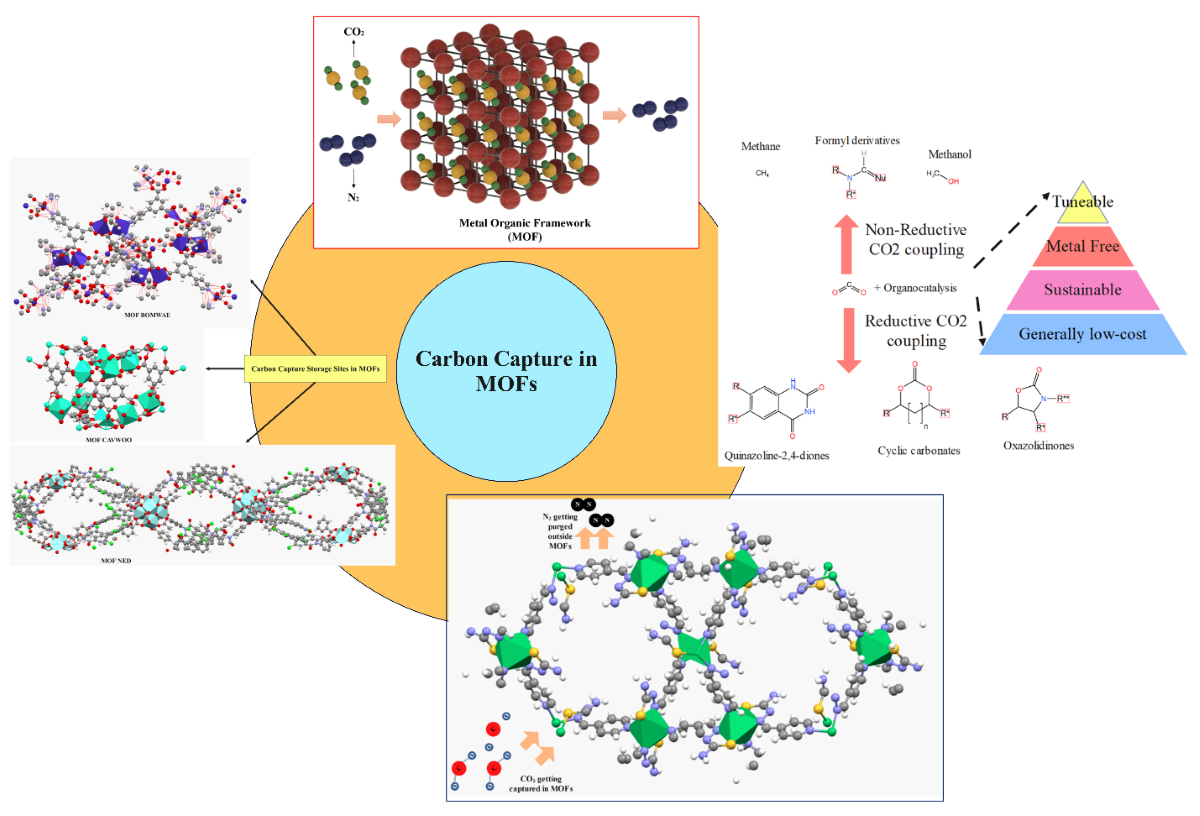
As observed and analysed through carbon capture materials, including amines, amino acids, ionic liquids or synthetic materials, there is still an imperative demand for an energy-efficient and sustainable carbon capture material towards neutralising emissions. Traditional solvent-based carbon capture methods require much energy to replenish the carbon-capturing material. In power generation applications, estimates place the energy penalty at up to 35% of the power station's output. Metal-organic frameworks (MOFs) collect carbon primarily through physical, not chemical, processes (Boycheva et al., 2022; Mittal et al., 2024; Pio et al., 2022; Ramasubramanian et al., 2022; Zhang et al., 2022). This "trapping" method requires less energy to replenish the MOFs, allowing for more energy-efficient carbon capture. By utilising MOF-based carbon capture, more generated power may be directed where intended, cutting customer energy prices and CAPEX for generators. However, it's important to note that MOFs have several limitations, which include production challenges and variable cost barriers. MOFs' repeated lattice structures, ultra-high surface areas, CO2 selectivity, and low desorption energies make them potential contenders for more energy-efficient carbon capture. The process of carbon dioxide capture in metal-organic frameworks is demonstrated in Figure 1 (Geissler and Maravelias, 2022; Bhardwaj, Kumar, and Choudhury, 2022; C. Tan, Tao, and Xu,2022).
1.1. Role of MOFs in Carbon Capture
Metal-organic frameworks are novel materials with unique carbon capture properties (Theo et al., 2016). MOFs are comprised of metal ions or clusters that are connected by organic ligands. These materials possess very high porosity, resulting in a high surface area for gas adsorption. Research and development could alter MOFs' physical and chemical properties, resulting in novel metal-organic frameworks for carbon capture. MOFs also possess high adsorption capacity and are stable in thermal and chemical stability. Metal-organic frameworks also possess multidisciplinary applications besides carbon capture, which involve wastewater treatment and other sustainable novel approaches towards decarbonisation (Meng et al., 2014; Mittal & Kushwaha, 2024c; Moh et al., 2011; J. Sun et al., 2014).
Even though MOFs are being established as some novel material for carbon capture, there has been a lack of research and development specifically for MOFs. Figure 2 (Trinh et al., 2023) signifies the number of publications on carbon capture and carbon capture in MOFs to understand the lack of usage of these materials. Based on the number of patents and publications, we can indicate the amount of attention researchers and industrialists pay towards carbon capture and their respective materials (Mittal & Kushwaha, 2024a).
It is essential to know that carbon capture publications and patents are averaging more than 1400 per year, whereas when we see the research and development status of metal-organic frameworks, less than 5% of the overall research in the carbon capture sector is being done on them. This concludes that ionic liquids and MOFs pursuing such unique properties, as shown above, should also be given the most attention in the research and development sector.
1.2. Pros and Cons of MOFs in Carbon Capture
MOFs have always been the core of futuristic research resulting in the focus of academic research rather than having genuine economic potential. However, because of proprietary reactor designs, continuous synthesis processes, and over a decade of manufacturing experience, several researchers have been currently leading the push for MOFs to be built into carbon capture and other gas separation applications. For the synthesis of metal-organic frameworks, there are usually two classes in which they can be distinguished; these distinctions could be classified as conventional and modern synthesis methods. Traditional Methods for synthesising MOFs include solvothermal, electrochemical and sol-gel methods. These methods are advantageous regarding significant structures, crystal sizes, and good yields but also have disadvantages, such as high energy and costs (Mittal & Kushwaha, 2024b). On the other hand, Modern Methods for synthesising MOFs include spray drying/evaporation, sonication and microwave. Table 1 (Moh et al., 2011; Younas et al., 2020) describes synthesis methods' significant advantages and disadvantages for metal-organic frameworks.
MOFs typically have high BET surface areas, an essential common physical feature. MOFs can be used in CC in four forms: pure, functionalised, and combined with adsorbents. The second way MOFs are often investigated in gas separation is with an extra functional group. Research is ongoing to determine the most effective functionalising chemical for CO2 capture and the optimal loading proportion. Polyethyleneimine is a prominent functionalising chemical that effectively works in integration with MOFs. Most MOFs have high carbon capture uptake values only at low temperatures (273-303 K) (Bhadra et al., 2017).
2. Organic Properties and Carbon Dioxide Uptake Capacity in MOFs
As temperature increases during the capture procedure, Carbon capture values decrease significantly. MOFs have a high moisture sensitivity, which is a significant concern. This substantially reduces their ability to trap other gasses. MOFs lose their crystalline structure when exposed to moisture. There are three techniques to boost carbon capture capacity and mitigate the effects of humidity. Metal ions in MOFs having numerous positive valences demonstrate high adsorption values. Pre-synthetic changes also offer an intriguing way to influence carbon capture values.
Pre-synthetic alterations, such as changing the solvent composition and temperature, can affect the morphology of the MOF and its carbon capture capacity. Post-synthesis functionalisation entails altering MOFs to meet specific needs. This type of modification improves hydrophobicity and selectivity towards CO2. Several carbon capture conditions (both temperature and pressure) and the carbon dioxide uptake capacity (mmol/g) for most of the metal-organic frameworks are showcased in Table 2.
There are a lot of factors that affect the morphology of metal-organic frameworks towards carbon capture. These factors usually involve the temperature of synthesis, enhancers or modifiers, synthesis type, reagents, composition and process parameters. MOF-5, synthesised at 393 and 413 K, exhibits a cube-like crystal structure, smooth morphology, and excellent carbon capture potential. MOFs synthesised at lower temperatures have lesser dimensionality, albeit no clear link exists (Mohan et al., 2006; Tai et al., 2014). Temperature, reagents, and process parameters significantly impact MOFs' crystal structure and morphology. Changing the number of ligands resulted in various forms, including long rods and squatting types. Adding enhancers/modifiers during synthesis affects the morphology of the resulting MOF. MOF morphology and design can be affected by three different synthesis methods. They include deprotonation regulation synthesis, coordination modulation synthesis, and surfactant modulation synthesis (Azdarpour et al., 2015).
Metal-organic frameworks exhibit unique features, which include high surface area, diversity of structures, stability and tunability (both physically and chemically). Synthesis of such metal organic frameworks requires specific properties for MOFs, including lewis bases, functionalisation and selective absorption. Several metrics for the carbon capture performance of metal organics frameworks (MOFs) are adsorption capacity, working capacity, selectivity, adsorption heat, water stability, thermal stability, diffusion coefficient, and heat capacity. The adsorption capacity of MOFs refers to the saturated adsorption capacity of CO2 at a specific pressure and temperature. This is a crucial criterion for assessing MOFs' carbon capture performance and determining their maximum working capacity. MOFs' CO2 adsorption depends on their structure, including pore size, volume, and surface area. MOFs often have higher CO2 adsorption rates than other porous materials like zeolites and activated carbon due to their ultrahigh pore volume and specific surface area. MOFs can improve adsorption performance through structural characteristics such as open metal sites (OMSs), Lewis primary sites (LBSs), and covalently bound polar functional groups. Scholars have undertaken thorough numerical and experimental studies on the adsorption capability of various MOFs at specified pressures and temperatures to meet carbon capture criteria (Clements, 2003; Dweck et al., 2000; L. Hu et al., 2014; Roshan et al., 2012).
While adsorption capacity is commonly tested and presented, operating capacity is a more helpful statistic for carbon capture technologies. The differential in adsorption capacity between adsorption and desorption conditions determines the quantity of CO2 adsorbed per unit of adsorbent, specifically MOFs, in carbon capture cycles. The MOF's operating capacity determines its potential for industrial applications. MOFs with better working capacity require less adsorbent in the adsorption bed to achieve the same CO2 separation effect, resulting in lower capital costs and long-term energy consumption for regeneration (Amaral et al., 2013; Liang et al., 2011). In GCMC simulations, force fields rely on Lennard-Jones (LJ) parameters and atomic partial charges. Machine learning can train predictive models from screening data to quickly identify MOFs with good working capacity before GCMC simulations.
3. Carbon Dioxide Storage Sites in MOFs
Their unique structure determines the ability of MOFs to adsorb CO2 over other gases selectively. Rigid MOFs primarily rely on size exclusion or surface contact, determined by the kinetic diameters and characteristics of adsorbates and pores. In flexible MOFs, selective adsorption is influenced by breathing and gate-opening/closing phenomena, in addition to the previously described two aspects. Due to their unique properties, flexible MOFs may selectively absorb gases at various pressures. When selecting adsorbents for carbon capture, it's essential to evaluate the stability of MOFs to water, as water vapour is present in many industrial flows. Hydrolysis events in coordination bonds can reduce the carbon-capture capacity of MOFs (X.-B. Lu & Darensbourg, 2012; Morales-Flórez et al., 2015; Song et al., 2013). Zeolites, like MOFs, are impacted by their structural properties and the conditions in which they interact with water in water-containing environments. TGA is commonly used to assess the thermal stability of MOFs. TGA analyses the weight change of MOFs at different temperatures to determine their thermal stability, breakdown temperature, and route. TGA measurements can help optimise MOF synthesis for better thermal stability. Guest molecules can also impact the thermal stability of MOFs. Desorption of guest molecules can cause heat degradation in some MOFs, destabilising framework structures. MOFs for high-temperature applications should be manufactured with guest molecules with low desorption temperatures. MOFs' thermal durability is crucial for their practical uses, particularly in high-temperature processes like adsorptive carbon capture. TGA is a valuable approach for evaluating the thermal stability of MOFs. Metal ions, organic linkers, and guest molecules all significantly impact their thermal stability. More research is needed to improve the thermal stability of MOFs for various applications (Jutz et al., 2009; Whiteoak et al., 2012, 2014).
Adsorption efficiency depends on both equilibrium and kinetics. Consider the diffusion coefficient when analysing an adsorption process. The kinetic characteristics of adsorbents are typically calculated using MD, while the diffusion coefficient is a popular indication of adsorption. This value can also be determined using dynamic gravimetric absorption curves from adsorption studies. The heat capacity of MOFs is primarily determined by the organic ligands in the framework and any guest molecules within the pores. Differential scanning calorimetry (DSC) is a standard experimental technique to measure heat flow into and out of a sample under controlled temperature changes. Another method for measuring heat capacity is adiabatic calorimetry, which measures the temperature change caused by an exothermic or endothermic process within a sample without heat exchange with the environment. This approach is efficient when investigating reactions involving extremely reactive or unstable chemicals. MOFs' heat capacity has applications beyond carbon capture, including gas storage and separation (Daval, 2018; Matter, Stute, Snæbjörnsdóttir, et al., 2016; Matter, Stute, Snæbjörnsdottir, et al., 2016; Sakakura et al., 2007). A MOF's ability to selectively adsorb gases is influenced by temperature, pressure, and the material's heat capacity. The structure of MOFs showcases novel properties in their capture of carbon dioxide molecules, making a polyhedral structure for capturing. It mostly captures carbon dioxide molecules, whereas other gases like nitrogen, methane, SOx or NOx are taken out as purges. The storage units inside the MOFs are shown in Figure 3.
Due to metal-organic frameworks' high surface area, tunability and stability, it synthesises the captured carbon dioxide inside its structure. It converts carbon dioxide for its possible utilisation and multidisciplinary applications. The primary process through which carbon capture, utilisation and storage occurs is demonstrated in Figure 4.
4. Carbon Dioxide Conversion through Metal-Organic Frameworks
Captured carbon dioxide can produce organic carbonates such as dimethyl carbonate (DMC), diallyl carbonate (DAC), diethyl carbonate (DEC), diphenyl carbonate (DPC), cyclic carbonates such as ethylene carbonate (EC), propylene carbonate (PC), cyclohexene carbonate (CC), and styrene carbonate (SC), and polycarbonates such as polypropylene carbonate and bisphenol polycarbonate (BPA-PC). This approach has limitations since it requires considerable catalyst inventory and operates at high temperatures and pressures. Another area for development in this technique is separating the catalyst and the products. Commercially available Aluminium-based catalysts are commonly used in the production of polycarbonates from the reaction of CO2 and epoxides. Captured carbon dioxide can produce organic carbonates such as dimethyl carbonate (DMC), diallyl carbonate (DAC), diethyl carbonate (DEC), diphenyl carbonate (DPC), cyclic carbonates such as ethylene carbonate (EC), propylene carbonate (PC), cyclohexene carbonate (CC), and styrene carbonate (SC), and polycarbonates such as polypropylene carbonate and bisphenol polycarbonate (BPA-PC). This approach has limitations since it requires considerable catalyst inventory and operates at high temperatures and pressures. Another area for development in this technique is separating the catalyst and the products. Commercially available Al-based catalysts are commonly used in the production of polycarbonates from the reaction of CO2 and epoxides (Ahmed et al., 2022; Jeffry et al., 2021; Mofarahi et al., 2008; Sinha et al., 2017).
Despite the large market for converting collected CO2 into chemicals and fuels, the recommended laboratory-scale methods still need to be commercialised for industry usage. This is partly because the materials now being studied are expensive to create but not chemically stable and because, most of the time, the total yields of the primary products and CO2 conversion rates are low and do not meet the requirements for widespread use. Furthermore, additional understanding of the mechanisms underpinning the chemical reactions responsible for the transformations of CO2 is required. In this field, evaluating the procedure's requirements and contributing variables is also necessary. Some of the significant challenges of chemical conversions are the high operating conditions, complexity of reaction pathways, catalyst stability for coke formation, less conversion, yield rates of products, regeneration of catalysts, and highly selective catalyst development. Even though there are several challenges for carbon dioxide chemical conversion, several opportunities for chemical modifications include methane dry reforming, formic acid catalytic reduction and its derivative, noble metal doped transition metal catalysts, synthetic fuels through biological pathways and oxidation dehydrogenation (Zheng et al., 2019).
4.1. Organo-Catalysts Pathways through Carbon Capture in MOFs
Carbon dioxide conversion occurs in metal-organic frameworks through organic salts, molten salts, ionic liquids, nitrogen-based heterocycles, and poly(phenolic and alcohol) compounds. After reacting with reductive carbon dioxide coupling, carbon dioxide forms quinazoline-2,4-diones, cyclic carbonates and oxazolidinones, whereas non-reductive carbon coupling formulates methane, formyl derivatives and methanol. Such reactions occur when carbon dioxide is equipped with organo-catalysts that possess tuneable, metal-free, sustainable and generally low-costs. Such conversion process is thoroughly demonstrated in Figure 5 (Guo et al., 2015; C. F. Martín et al., 2011; Serna-Guerrero et al., 2010; Thiruvenkatachari et al., 2009; Wall et al., 2009; Wörmeyer & Smirnova, 2013; Zhao et al., 2013).
4.2. Carbon Dioxide Conversion to Organic Compounds
The production of urea, a standard fertiliser, is now the highest usage of CO2. The annual CO2 consumption for this chemical synthesis is around 110 megatons. The chemical process that creates urea is referred to as shown in Equation (1).

CO2 also produces salicylic acid, which has applications in pharmaceuticals and cyclic organic carbonates (Genovese et al., 2013; Kalyanasundaram et al., 2010; J. H. Lee et al., 2016). The principal desired reaction for the production of salicylic acid is caused by sodium phenolate with carbon dioxide, which first produces sodium salicylate and then, through the final addition of sulphuric acid, produces salicylic acid. While aspirin is made from salicylic acid, sodium sulphate is a byproduct. Salicylic acid and aspirin are produced using the following chemical pathway as shown in Equations (2)–(4).



Carbon dioxide and hydrogen combine with a catalyst to form methanol, which is used as a fuel or a chemical reagent (B. Hu et al., 2013; Hussain et al., 2021; X. Sun et al., 2014). Methanol may also be dried out to create fuels that resemble petrol. A chemical process occurs when CO2 and H2 are combined to form methanol, as shown in Equation (5).

The conversion of CO2 into usable chemicals has received much attention in recent years because of mechanisms including mineral carbonation, new heterogeneous catalysis, thermochemical, photochemical, electrochemical, and biological reactions, carbonate fuel cells, and plasma-assisted catalysis. These strategies can significantly lower carbon emissions if commercially viable and undeniably appealing economically. Even though several of these methods are still in development, they appear to have promising financial futures.
The metalorganic framework's extremely well-organized structure allows for the distinct spatial separation of active sites. MOF-based catalysts can potentially have a large bulk concentration of active sites due to their high specific surface area. These open spots in the MOF structure provide an exceptionally high metal dispersion. One of the main benefits of MOFs, besides their high metal content, is the uniformity of their active sites, which results from their high degree of crystallinity. Because of these systems' porosity, the catalytic processes on MOFs can thus be selective in both size and form and be mediated by catalytically active sites based on transition metal ions. Furthermore, porous MOFs are distinguished as exceptional candidates for creating heterogeneous catalysts because of their capacity to include functional groups. The synthesis of MOFs typically occurs under mild circumstances, which allow for the direct introduction of different functions into the framework structure. For instance, an efficient asymmetric catalyst can be formed by directly introducing enantiopure chiral ligands or their metal complexes into the MOF framework. Since zeolites and other microporous oxide materials are typically synthesised under severe conditions (such as high-temperature calcination), this procedure cannot be used for them (Gong et al., 2009; Huang et al., 2011; Yokozeki et al., 2008; Yu et al., 2021).
5. Applications of MOFs integrated with Carbon Capture
Their hydrolytic and thermal instability restricts the application of MOFs in heterogeneous catalysis. Despite this, many MOFs show stability at high temperatures, with some even demonstrating resistance up to 450°C. Some of the catalytic application-based metal-organic framework’s utilisation comprises the classical support in a heterogenous catalytic system through MOFs, Utilisation of metal-organic frameworks through active sites in organic ligands, active sites located in the inorganic units of the framework by the running of catalytic processes and introducing the active site through host-guest interaction. Table 3 provides the catalysts based on MOFs.
The state of the art of research indicates that there are distinct applications for metal-organic frameworks compared to their classical counterparts, zeolites. MOFs are still inferior to zeolites when harsh conditions are needed for a catalytic reaction. Their primary application areas include fine organic synthesis, enantioselective synthesis, and valuable substance preparation since these catalytic processes can be completed gently. Examining available data demonstrates that full realisation of all synthesis possibilities is necessary to use the diversity of MOF properties to create catalytic systems. The goal is to develop future catalysts with a high molecular sieve selectivity. These systems need polyfunctional architecture, which is impossible to achieve outside the framework structures of metal-organic compounds. We also think fine-tuning the active site microenvironment, which controls the reactivity, is an intriguing challenge. Future research will thus be able to showcase the unique catalytic qualities that are particular to MOFs.
Recently, there has been a renewed interest in MOF applications in materials science and chemistry for fuel storage, photo-induced hydrogen evolution, fuel cells, batteries, and supercapacitors. According to research on their many applications, MOFs are promising porous materials for energy storage and conversion technologies. Moreover, MOFs have served as sacrificial materials for synthesising different nanostructures for energy applications and as support substrates for metals, metal oxides, semiconductors, and complexes. We provide the most recent research highlighting energy applications based on MOFs, their derivatives, and composites. The term "chemical hydrogen storage" refers to the potential practice of storing hydrogen in chemical bonds for fuel-cell applications. It is also a reliable and effective substitute for actual hydrogen storage. Over the past few decades, much research has been done on the chemical storage of hydrogen in both liquid and solid phases. Chemical hydrides can be contained in MOFs' nanopores, releasing hydrogen under benign circumstances with less unwanted volatile byproducts. Furthermore, MOF-supported metal nanoparticle catalysts improve the kinetics of hydrogen liberation of liquid-phase chemical hydrides (Bhadra et al., 2017).
A prevalent issue in research circles is the evolution of hydrogen from water in the presence of a photocatalyst to help replace fossil fuels. With the aid of Ru(bpy)32+ (as a photosensitiser), MV2+ (as an electron relay), and EDTA-Na2 (as a sacrificial donor), the first MOF photocatalyst, {Ru2(1,4-BDC)2}n (1,4-BDC = 1,4-benzenedicarboxylic acid), was used in 2009 to induce hydrogen evolution from water under the irradiation of visible light. Here, bpy, MV, and EDTA are, respectively, 2,20-bipyridine, N, N0 -dimethyl-4,40-bipyridinium, and EDTA. Another exciting use for MOFs is in solar cells, also called photovoltaic cells, which are electrical devices that directly convert sun energy to electricity. Solar cells' effectiveness largely depends on the regular arrangement of photoactive molecules. Liquid phase epitaxy was used to create a highly porous, crystalline, and monolithic porphyrin-based MOF thin film of Zn-SURMOF2 on a conductive fluorine-doped tin oxide (FTO) substrate (as the bottom anode).
Regarding energy storage and conversion technologies, fuel cells are crucial because they work as electrochemical converters, turning fuels like methanol, hydrogen, and natural gas into electricity that can be used to power portable electronics, stationary buildings, and automobiles. However, the USDOE's 2016 fuel-cell development targets for price, efficiency, and durability are still far from what the existing fuel cells can achieve. This necessitates improving the fuel cell's auxiliary features and developing the electrolyte membranes and electrode catalysts now in use. MOFs, MOF derivatives, and MOF composites are possible electrode catalysts and electrolyte materials in the fuel cell industry. Due to their extended lifespan and high-power density, supercapacitors (SCs), electrochemical or ultracapacitors, have garnered significant scientific interest. Pure MOF SCs often have low specific capacitance because of weak conductivity, even with their high porosities. To improve MOF conductivity, a new approach to enhancing SC performance involves incorporating MOFs with conductive materials, like graphene and conductive polymers.
Water electrolysis, encompassing the OER and the hydrogen evolution reaction, has been the subject of extensive research in the past few years. Catalysts are needed to lower their overpotential to drive these reactions at the requisite high catalytic current densities. Using MOFs, MOF derivatives, and MOF composites to facilitate the efficient evolution of hydrogen from electrolytic water splitting has become a significant approach to producing clean, renewable fuel. HER catalytically active components can be successfully integrated into MOFs to investigate high-performance electrodes. Conjugated ligands of benzenehexathiol and triphenylene-2,3,6,7,10,11-hexathiolate, respectively, have been used to develop and fabricate 2D ordered MOF films with cobalt dithiolene catalytic sites with substantial HER catalytic activity. Under acidic circumstances, metal-organic frameworks based on ε-Keggin polyoxometalate are robust HER electrocatalysts. In short, the bio-applications of metal-organic frameworks are demonstrated Figure 6 (Moh et al., 2011; H. Wang et al., 2017).
6. Conclusions
Clearly, the current scenario not only demands an alternative to reduce emissions but also to eliminate the existing atmospheric carbon dioxide; the realistic portrayal of the globe must be entirely on the path of GHG emissions reduction even though significant global investments have been made for cleaner energy and gradually going towards the energy transition of renewable energies like wind energy, hydrogen fuels, biogases, biofuels etc., from conventional energy sources like fossil fuels, crude oil, natural gas, petrol, diesel etc. Several critical and novel points were concluded through discussions, observations, study and reviews, which are as follows-
1) Several advantages and disadvantages of synthetic methods for metal-organic frameworks were concluded, with faster synthesis, fewer energy needs, excellent yields, and more significant crystal sizes being some pros. Expensive energy costs, higher durations, fewer surface areas, lesser yield, scalability issues, and longer synthesis duration are some of the disadvantages of metal-organic frameworks (MOFs).
2) The carbon uptake capacity of metal-organic framework materials was maximum in sod-ZMOF-chitosan, MIL-96(al)-Ca1, 18% NH2-ZIF-8, and Cu-BTC.
3) Based on different reactants and reaction types along with the carbon dioxide uptake capacity, the industrialisation of carbon capture materials can be scaled up with higher efficiencies.
As a fresh research area that majorly ignited after COVID, it is essential to bridge the gaps in CCUS to reach net zero emissions as soon as possible and focus on alternate energy transition to eliminate emissions.
List of Abbreviations.
| UNSDGs | United Nations Sustainable Development Goals |
| CO2 | Carbon Dioxide |
| MOF | Metal Organics Framework |
| CC | Carbon Capture |
| ZIF | Zeolitic imidazolate frameworks |
| BET | Brunauer-Emmett-Teller |
| LBS | Lewis Primary Sites |
| USDOE | United States Department of Energy |
| DMC | Dimethyl Carbonate |
| DAC | Diallyl Carbonate |
| DEC | Diethyl Carbonate |
| DPC | Diphenyl Carbonate |
| EC | Ethylene Carbonate |
| PC | Propylene Carbonate |
| CC | Cyclohexene Carbonate |
| SC | Styrene Carbonate |
References
- Ahmed Ali, K., Ahmad, M. I., & Yusup, Y. (2020). Issues, Impacts, and Mitigations of Carbon Dioxide Emissions in the Building Sector. Sustainability, 12(18), 7427. [CrossRef]
- Ahmed, S. F., Mehejabin, F., Momtahin, A., Tasannum, N., Faria, N. T., Mofijur, M., Hoang, A. T., Vo, D.-V. N., & Mahlia, T. M. I. (2022). Strategies to improve membrane performance in wastewater treatment. Chemosphere, 306, 135527. [CrossRef]
- Alabadi, A., Razzaque, S., Yang, Y., Chen, S., & Tan, B. (2015). Highly porous activated carbon materials from carbonized biomass with high CO2 capturing capacity. Chemical Engineering Journal. [CrossRef]
- Álvarez-Murillo, A., Sabio, E., Ledesma, B., Román, S., & González-García, C. M. (2016). Generation of biofuel from hydrothermal carbonization of cellulose. Kinetics modelling. Energy, 94, 600–608. [CrossRef]
- Amaral, A. J. R., Coelho, J. F. J., & Serra, A. C. (2013). Synthesis of bifunctional cyclic carbonates from CO2 catalysed by choline-based systems. Tetrahedron Letters. [CrossRef]
- Ang, M. L., Oemar, U., Kathiraser, Y., Saw, E. T., Lew, C. H. K., Du, Y., Borgna, A., Wang, C.-H., & Kawi, S. (2015). High-temperature water–gas shift reaction over Ni/xK/CeO2 catalysts: Suppression of methanation via formation of bridging carbonyls. Journal of Catalysis. [CrossRef]
- Aresta, M., Dibenedetto, A., & Angelini, A. (2014). Catalysis for the valorization of exhaust carbon: From CO2 to chemicals, materials, and fuels. technological use of CO2. Chemical Reviews. [CrossRef]
- Azdarpour, A., Guo, W., Asadullah, M., Mohammadian, E., Hamidi, H., Junin, R., & Karaei, M. A. (2015). A review on carbon dioxide mineral carbonation through pH-swing process. Chemical Engineering Journal. [CrossRef]
- Bhadra, M., Sasmal, H. S., Basu, A., Midya, S. P., Kandambeth, S., Pachfule, P., Balaraman, E., & Banerjee, R. (2017). Predesigned Metal-Anchored Building Block for In Situ Generation of Pd Nanoparticles in Porous Covalent Organic Framework: Application in Heterogeneous Tandem Catalysis. ACS Applied Materials & Interfaces. [CrossRef]
- Bhardwaj, R., Kumar, A., & Choudhury, J. (2022). An all-aqueous and phosphine-free integrated amine-assisted CO2 capture and catalytic conversion to formic acid. Chemical Communications. [CrossRef]
- Boycheva, S., Chakarova, K., Mihaylov, M., Hadjiivanov, K., & Popova, M. (2022). Effect of calcium on enhanced carbon capture potential of coal fly ash zeolites. Part II: A study on the adsorption mechanisms. Environmental Science: Processes and Impacts, 24(10), 1934–1944. [CrossRef]
- Calò, V., Nacci, A., Monopoli, A., & Fanizzi, A. (2002). Cyclic Carbonate Formation from Carbon Dioxide and Oxiranes in Tetrabutylammonium Halides as Solvents and Catalysts. Organic Letters. [CrossRef]
- Chatelet, B., Joucla, L., Joucla, L., Dutasta, J.-P., Martinez, A., Martinez, A., Szeto, K. C., & Dufaud, V. (2013). Azaphosphatranes as Structurally Tunable Organocatalysts for Carbonate Synthesis from CO2 and Epoxides. Journal of the American Chemical Society. [CrossRef]
- Chen, C., Mo, Q., Huang, Y., & Zhang, L. (2023). Selective Reduction of CO2 to Methanol via Hydrosilylation Boosted by a Porphyrinic Metal-Organic Framework. ACS Catalysis, 13(10), 6837–6845. [CrossRef]
- Clements, J. H. (2003). Reactive Applications of Cyclic Alkylene Carbonates. Industrial & Engineering Chemistry Research. [CrossRef]
- Da Costa, B. L., Rosa, I. L. A. A., Silva, V. H., Wu, Q., Samulewski, R. B., Scacchetti, F. A. P., Moisés, M. P., Lis, M. J., & Bezerra, F. M. (2022). Direct Synthesis of HKUST-1 onto Cotton Fabrics and Properties. Polymers, 14(20). [CrossRef]
- Daval, D. (2018). Carbon dioxide sequestration through silicate degradation and carbon mineralisation: Promises and uncertainties. In npj Materials Degradation (Vol. 2, Issue 1). Nature. [CrossRef]
- Decortes, A., Belmonte, M. M., Benet-Buchholz, J., & Kleij, A. W. (2010). Efficient carbonate synthesis under mild conditions through cycloaddition of carbon dioxide to oxiranes using a Zn(salphen) catalyst. Chemical Communications. [CrossRef]
- Ding, M., Flaig, R. W., Jiang, H.-L., & Yaghi, O. M. (2019). Carbon capture and conversion using metal–organic frameworks and MOF-based materials. Chemical Society Reviews. [CrossRef]
- Dweck, J., Büchler, P. M., Coelho, A. C. V., & Cartledge, F. K. (2000). Hydration of a Portland cement blended with calcium carbonate. Thermochimica Acta. [CrossRef]
- Escobar-Hernandez, H. U., Quan, Y., Papadaki, M. I., & Wang, Q. (2023). Life Cycle Assessment of Metal-Organic Frameworks: Sustainability Study of Zeolitic Imidazolate Framework-67. ACS Sustainable Chemistry and Engineering, 11(10), 4219–4225. [CrossRef]
- Fei, L., Dong, S., Xue, L., Liang, Q., & Yang, W. (2011). Energy consumption-economic growth relationship and carbon dioxide emissions in China. Energy Policy, 39(2), 568–574. [CrossRef]
- Geissler, C. H., & Maravelias, C. T. (2022). Analysis of alternative bioenergy with carbon capture strategies: Present and future. Energy and Environmental Science, 15(7), 2679–2689. [CrossRef]
- Genovese, C., Ampelli, C., Perathoner, S., & Centi, G. (2013). Electrocatalytic conversion of CO2 to liquid fuels using nanocarbon-based electrodes. Journal of Energy Chemistry. [CrossRef]
- Gong, K., Du, F., Xia, Z., Durstock, M. F., & Dai, L. (2009). Nitrogen-doped carbon nanotube arrays with high electrocatalytic activity for oxygen reduction. Science. [CrossRef]
- Guo, Y., Zhao, C., & Li, C. (2015). Thermogravimetric analysis of kinetic characteristics of K2CO3-impregnated mesoporous silicas in low concentration CO2. Journal of Thermal Analysis and Calorimetry. [CrossRef]
- Hänchen, M., Prigiobbe, V., Baciocchi, R., & Mazzotti, M. (2008). Precipitation in the Mg-carbonate system—Effects of temperature and CO2 pressure. Chemical Engineering Science. [CrossRef]
- Hu, B., Guild, C., & Suib, S. L. (2013). Thermal, electrochemical, and photochemical conversion of CO2 to fuels and value-added products. Journal of CO 2 Utilization. [CrossRef]
- Hu, L., Rexed, I., & Lagergren, C. (2014). Electrochemical performance of reversible molten carbonate fuel cells. International Journal of Hydrogen Energy. [CrossRef]
- Huang, K., Sun, C., & Shi, Z. (2011). Transition-metal-catalyzed C–C bond formation through the fixation of carbon dioxide. Chemical Society Reviews. [CrossRef]
- Hussain, I., Jalil, A. A., Hassan, N. S., & Hamid, M. Y. S. (2021). Recent advances in catalytic systems for CO2 conversion to substitute natural gas (SNG): Perspective and challenges. Journal of Energy Chemistry. [CrossRef]
- Jeffry, L., Ong, M. Y., Nomanbhay, S., Mofijur, M., Mubashir, M., & Show, P. L. (2021). Greenhouse gases utilization: A review. Fuel, 301, 121017. [CrossRef]
- Jutz, F., Jutz, F., Grunwaldt, J.-D., & Baiker, A. (2009). In situ XAS study of the Mn(III)(salen)Br catalyzed synthesis of cyclic organic carbonates from epoxides and CO2. Journal of Molecular Catalysis A-Chemical. [CrossRef]
- Kalyanasundaram, K., & Graetzel, M. (2010). Artificial photosynthesis: Biomimetic approaches to solar energy conversion and storage. Current Opinion in Biotechnology. [CrossRef]
- Lee, J. H., Lee, J. W., & Kang, Y. T. (2016). CO2 regeneration performance enhancement by nanoabsorbents for energy conversion application. Applied Thermal Engineering. [CrossRef]
- Lee, K., Liu, X., Vyawahare, P., Sun, P., Elgowainy, A., & Wang, M. (2022). Techno-economic performances and life cycle greenhouse gas emissions of various ammonia production pathways including conventional, carbon-capturing, nuclear-powered, and renewable production. Green Chemistry, 24(12), 4830–4844. [CrossRef]
- Liang, S., Liu, H., Jiang, T., Song, J., Yang, G., & Han, B. (2011). Highly efficient synthesis of cyclic carbonates from CO2 and epoxides over cellulose/KI. Chemical Communications. [CrossRef]
- Lu, L., Huang, Z., Rau, G. H., & Ren, Z. J. (2015). Microbial Electrolytic Carbon Capture for Carbon Negative and Energy Positive Wastewater Treatment. Environmental Science and Technology, 49(13), 8193–8201. [CrossRef]
- Lu, X.-B., & Darensbourg, D. J. (2012). Cobalt catalysts for the coupling of CO2 and epoxides to provide polycarbonates and cyclic carbonates. Chemical Society Reviews. [CrossRef]
- Martín, C. F., Stöckel, E., Clowes, R., Adams, D. J., Cooper, A. I., Pis, J. J., Rubiera, F., & Pevida, C. (2011). Hypercrosslinked organic polymer networks as potential adsorbents for pre-combustion CO2 capture. Journal of Materials Chemistry. [CrossRef]
- Martín, C., Fiorani, G., & Kleij, A. W. (2015). Recent advances in the catalytic preparation of cyclic organic carbonates. ACS Catalysis. [CrossRef]
- Matter, J. M., Stute, M., Snæbjörnsdóttir, S. Ó., Oelkers, E. H., Gislason, S. R., Aradóttir, E. S., Sigfússon, B., Gunnarsson, I., Sigurdardottir, H., Gunnlaugsson, E., Axelsson, G., Alfredsson, H. A., Wolff-Boenisch, D., Mesfin, K. G., de la Reguera Taya, D. F., Hall, J., Dideriksen, K., & Broecker, W. S. (2016). Rapid carbon mineralization for permanent disposal of anthropogenic carbon dioxide emissions. Science. [CrossRef]
- Matter, J. M., Stute, M., Snæbjörnsdottir, S. Ó., Oelkers, E. H., Gislason, S. R., Aradottir, E. S., Sigfusson, B., Gunnarsson, I., Sigurdardottir, H., Gunnlaugsson, E., Axelsson, G., Alfredsson, H. A., Wolff-Boenisch, D., Mesfin, K., Taya, D. F. de la R., Hall, J., Dideriksen, K., & Broecker, W. S. (2016). Rapid carbon mineralization for permanent disposal of anthropogenic carbon dioxide emissions. Science, 352(6291), 1312–1314. [CrossRef]
- Mehrpooya, M., Moftakhari Sharifzadeh, M. M., Rajabi, M., Aghbashlo, M., Tabatabai, M., Hosseinpour, S., & Ramakrishna, S. (2017). Design of an integrated process for simultaneous chemical looping hydrogen production and electricity generation with CO 2 capture. International Journal of Hydrogen Energy, 42(12), 8486–8496. [CrossRef]
- Meng, W., Huang, Y., Fu, Y., Wang, Z., & Zhi, C. (2014). Polymer composites of boron nitride nanotubes and nanosheets. J. Mater. Chem. C, 2(47), 10049–10061. [CrossRef]
- Miller, Q. R. S., Thompson, C. J., Loring, J. S., Windisch, C. F., Windisch, C. F., Windisch, C. F., Windisch, C. F., Bowden, M. E., Hoyt, D. W., Hu, J. Z., Arey, B. W., Rosso, K. M., & Schaef, H. T. (2013). Insights into silicate carbonation processes in water-bearing supercritical CO2 fluids. International Journal of Greenhouse Gas Control. [CrossRef]
- Mittal, H., & Kushwaha, O. S. (2024a). Biogas and Biofuel Production from Biowaste: Modelling and Simulation Study. In From Waste to Wealth (pp. 379–400). Springer Nature Singapore. [CrossRef]
- Mittal, H., & Kushwaha, O. S. (2024b). Machine Learning in Commercialized Coatings. In Functional Coatings (pp. 450–474). Wiley. [CrossRef]
- Mittal, H., & Kushwaha, O. S. (2024c). Policy Implementation Roadmap, Diverse Perspectives, Challenges, Solutions Towards Low-Carbon Hydrogen Economy. Green and Low-Carbon Economy. [CrossRef]
- Mittal, H., Verma, S., Bansal, A., & Singh Kushwaha, O. (2024). Low-Carbon Hydrogen Economy Perspective and Net Zero-Energy Transition through Proton Exchange Membrane Electrolysis Cells (PEMECs), Anion Exchange Membranes (AEMs) and Wind for Green Hydrogen Generation. Qeios. [CrossRef]
- Mofarahi, M., Khojasteh, Y., Khaledi, H., & Farahnak, A. (2008). Design of CO2 absorption plant for recovery of CO2 from flue gases of gas turbine. Energy. [CrossRef]
- Moh, P. Y., Cubillas, P., Anderson, M. W., & Attfield, M. P. (2011). Revelation of the Molecular Assembly of the Nanoporous Metal Organic Framework ZIF-8. Journal of the American Chemical Society. [CrossRef]
- Mohan, D., & Pittman, C. U. (2006). Activated carbons and low cost adsorbents for remediation of tri- and hexavalent chromium from water. Journal of Hazardous Materials. [CrossRef]
- Morales-Flórez, V., Santos, A., Romero-Hermida, I., & Esquivias, L. (2015). Hydration and carbonation reactions of calcium oxide by weathering: Kinetics and changes in the nanostructure. Chemical Engineering Journal. [CrossRef]
- Naranjo, T., Collado, L., Gomez-Mendoza, M., Pizarro, A. H., Barawi, M., Gándara, F., Liras, M., & de la Peña O’Shea, V. A. (2023). Solar-Driven Hydrogen Production Using a BODIPY Covalent Organic Framework Hybrid Photocatalyst. ACS Catalysis, 283–291. [CrossRef]
- North, M., Pasquale, R., & Young, C. (2010). Synthesis of cyclic carbonates from epoxides and CO2. Green Chemistry. [CrossRef]
- Olajire, A. A. (2013). A review of mineral carbonation technology in sequestration of CO2. Journal of Petroleum Science and Engineering. [CrossRef]
- Pio, D. T., Vilas-Boas, A. C. M., Rodrigues, N. F. C., & Mendes, A. (2022). Carbon neutral methanol from pulp mills towards full energy decarbonization: An inside perspective and critical review. In Green Chemistry (Vol. 24, Issue 14, pp. 5403–5428). Royal Society of Chemistry. [CrossRef]
- Prajapati, A., Sartape, R., Galante, M. T., Xie, J., Leung, S. L., Bessa, I., Andrade, M. H. S., Somich, R. T., Rebouças, M. V., Hutras, G. T., Diniz, N., & Singh, M. R. (2022). Fully-integrated electrochemical system that captures CO2 from flue gas to produce value-added chemicals at ambient conditions. Energy and Environmental Science, 15(12), 5105–5117. [CrossRef]
- Rahimi, M., Khurram, A., Hatton, T. A., & Gallant, B. (2022). Electrochemical carbon capture processes for mitigation of CO2 emissions. In Chemical Society Reviews (Vol. 51, Issue 20, pp. 8676–8695). Royal Society of Chemistry. [CrossRef]
- Ramasubramanian, B., Sundarrajan, S., Rao, R. P., Reddy, M. V., Chellappan, V., & Ramakrishna, S. (2022). Novel low-carbon energy solutions for powering emerging wearables, smart textiles, and medical devices. In Energy and Environmental Science (Vol. 15, Issue 12, pp. 4928–4981). Royal Society of Chemistry. [CrossRef]
- Roshan, K. R., Mathai, G., Kim, J., Tharun, J., Park, G.-A., & Park, D.-W. (2012). A biopolymer mediated efficient synthesis of cyclic carbonates from epoxides and carbon dioxide. Green Chemistry. [CrossRef]
- Sakakura, T., Choi, J.-C., & Yasuda, H. (2007). Transformation of carbon dioxide. Chemical Reviews. [CrossRef]
- Sanna, A., Gaubert, J., & Maroto-Valer, M. M. (2016). Alternative regeneration of chemicals employed in mineral carbonation towards technology cost reduction. Chemical Engineering Journal. [CrossRef]
- Sanna, A., Uibu, M., Caramanna, G., Kuusik, R., & Maroto-Valer, M. M. (2014). A review of mineral carbonation technologies to sequester CO2. Chemical Society Reviews. [CrossRef]
- Serna-Guerrero, R., Belmabkhout, Y., & Sayari, A. (2010). Further investigations of CO2 capture using triamine-grafted pore-expanded mesoporous silica. Chemical Engineering Journal. [CrossRef]
- Shiraishi, T., & Hirata, R. (2021). Estimation of carbon dioxide emissions from the megafires of Australia in 2019–2020. Scientific Reports, 11(1), 8267. [CrossRef]
- Sinha, A., Darunte, L. A., Jones, C. W., Realff, M. J., & Kawajiri, Y. (2017). Systems Design and Economic Analysis of Direct Air Capture of CO2 through Temperature Vacuum Swing Adsorption Using MIL-101(Cr)-PEI-800 and mmen-Mg2(dobpdc) MOF Adsorbents. Industrial & Engineering Chemistry Research. [CrossRef]
- Smith, C., Hill, A. K., & Torrente-Murciano, L. (2020). Current and future role of Haber–Bosch ammonia in a carbon-free energy landscape. Energy and Environmental Science. [CrossRef]
- Song, Q.-W., He, L.-N., Wang, J., Yasuda, H., Sakakura, T., & Sakakura, T. (2013). Catalytic fixation of CO2 to cyclic carbonates by phosphonium chlorides immobilized on fluorous polymer. Green Chemistry. [CrossRef]
- Sun, J., Cheng, W., Yang, Z., Wang, J., Xu, T., Xin, J., & Zhang, S. (2014). Superbase/cellulose: An environmentally benign catalyst for chemical fixation of carbon dioxide into cyclic carbonates. Green Chemistry. [CrossRef]
- Sun, X., Mueller, S., Liu, Y., Shi, H., Haller, G. L., Sanchez-Sanchez, M., van Veen, A. C., & Lercher, J. A. (2014). On reaction pathways in the conversion of methanol to hydrocarbons on HZSM-5. Journal of Catalysis. [CrossRef]
- Tai, M. H., Gao, P., Tan, B. Y. L., Sun, D. D., & Leckie, J. O. (2014). Highly Efficient and Flexible Electrospun Carbon–Silica Nanofibrous Membrane for Ultrafast Gravity-Driven Oil–Water Separation. ACS Applied Materials & Interfaces, 6(12), 9393–9401. [CrossRef]
- Tan, C., Tao, F., & Xu, P. (2022). Direct carbon capture for the production of high-performance biodegradable plastics by cyanobacterial cell factories. Green Chemistry, 24(11), 4470–4483. [CrossRef]
- Theo, W. L., Lim, J. S., Hashim, H., Mustaffa, A. A., & Ho, W. S. (2016). Review of pre-combustion capture and ionic liquid in carbon capture and storage. Applied Energy. [CrossRef]
- Thiruvenkatachari, R., Su, S., An, H., & Yu, X. X. (2009). Post combustion CO2 capture by carbon fibre monolithic adsorbents. Progress in Energy and Combustion Science. [CrossRef]
- Trinh, H. H., Trinh, K. A., Trinh, N., & Haouas, I. (2022). Energy Technology RD&D Budgets, sustainable transition, carbon risk, and climate change: Fresh insights from IEA member countries under policy uncertainty.
- Tsutsumi, Y., Yamakawa, K., Yoshida, M., Ema, T., & Sakai, T. (2010). Bifunctional Organocatalyst for Activation of Carbon Dioxide and Epoxide To Produce Cyclic Carbonate: Betaine as a New Catalytic Motif. Organic Letters. [CrossRef]
- Veetil, S. P., Pasquier, L.-C., Blais, J.-F., Cecchi, E., Kentish, S. E., Mercier, G., & Mercier, G. (2015). Direct gas–solid carbonation of serpentinite residues in the absence and presence of water vapor: A feasibility study for carbon dioxide sequestration. Environmental Science and Pollution Research. [CrossRef]
- Wall, T., Liu, Y., Spero, C., Elliott, L., Khare, S., Rathnam, R. K., Zeenathal, F., Moghtaderi, B., Buhre, B. J. P., Sheng, C., Gupta, R., Yamada, T., Makino, K., & Yu, J. (2009). An overview on oxyfuel coal combustion—State of the art research and technology development. Chemical Engineering Research & Design. [CrossRef]
- Wang, H., Zhu, Q. L., Zou, R., & Xu, Q. (2017). Metal-Organic Frameworks for Energy Applications. In Chem (Vol. 2, Issue 1, pp. 52–80). Elsevier Inc. [CrossRef]
- Wang, W., Hu, M., Zheng, Y., Wang, P., & Ma, C. (2011). CO2 Fixation in Ca2+-/Mg2+-Rich Aqueous Solutions through Enhanced Carbonate Precipitation. Industrial & Engineering Chemistry Research. [CrossRef]
- Whiteoak, C. J., Henseler, A. H., Ayats, C., Kleij, A. W., & Pericàs, M. A. (2014). Conversion of oxiranes and CO2 to organic cyclic carbonates using a recyclable, bifunctional polystyrene-supported organocatalyst. Green Chemistry. [CrossRef]
- Whiteoak, C. J., Kielland, N., Laserna, V., Escudero-Adán, E. C., Martin, E., & Kleij, A. W. (2013). A Powerful Aluminum Catalyst for the Synthesis of Highly Functional Organic Carbonates. Journal of the American Chemical Society. [CrossRef]
- Whiteoak, C. J., Nova, A., Maseras, F., & Kleij, A. W. (2012). Merging Sustainability with Organocatalysis in the Formation of Organic Carbonates by Using CO2 as a Feedstock. Chemsuschem. [CrossRef]
- Wörmeyer, K., & Smirnova, I. (2013). Adsorption of CO2, moisture and ethanol at low partial pressure using aminofunctionalised silica aerogels. Chemical Engineering Journal. [CrossRef]
- Yokozeki, A., Shiflett, M. B., Junk, C. P., Grieco, L. M., & Foo, T. (2008). Physical and chemical absorptions of carbon dioxide in room-temperature ionic liquids. Journal of Physical Chemistry B. [CrossRef]
- Younas, M., Rezakazemi, M., Daud, M., Wazir, M. B., Ahmad, S., Ullah, N., Inamuddin, & Ramakrishna, S. (2020). Recent progress and remaining challenges in post-combustion CO2 capture using metal-organic frameworks (MOFs). Progress in Energy and Combustion Science, 80, 100849. [CrossRef]
- Yu, M., Wang, K., & Vredenburg, H. (2021). Insights into low-carbon hydrogen production methods: Green, blue and aqua hydrogen. International Journal of Hydrogen Energy. [CrossRef]
- Zhang, Z., Lees, E. W., Habibzadeh, F., Salvatore, D. A., Ren, S., Simpson, G. L., Wheeler, D. G., Liu, A., & Berlinguette, C. P. (2022). Porous metal electrodes enable efficient electrolysis of carbon capture solutions. Energy and Environmental Science, 15(2), 705–713. [CrossRef]
- Zhao, C., Chen, X., Anthony, E. J., Jiang, X., Duan, L., Wu, Y., Dong, W., & Zhao, C. (2013). Capturing CO2 in flue gas from fossil fuel-fired power plants using dry regenerable alkali metal-based sorbent. Progress in Energy and Combustion Science. [CrossRef]
- Zheng, J., Mi, Z., Coffman, D., Milcheva, S., Shan, Y., Guan, D., & Wang, S. (2019). Regional development and carbon emissions in China. Energy Economics, 81, 25–36. [CrossRef]
- Zhong, N., Liu, H., Luo, X., Al-Marri, M. J., Benamor, A., Idem, R., Tontiwachwuthikul, P., & Liang, Z. (2016). Reaction Kinetics of Carbon Dioxide (CO2) with Diethylenetriamine and 1-Amino-2-propanol in Nonaqueous Solvents Using Stopped-Flow Technique. Industrial and Engineering Chemistry Research, 55(27), 7307–7317. [CrossRef]
Figure 1.
Carbon capture process through Metal-Organic Framework (MOFs) (L. Lu et al., 2015; Rahimi et al., 2022).
Figure 1.
Carbon capture process through Metal-Organic Framework (MOFs) (L. Lu et al., 2015; Rahimi et al., 2022).
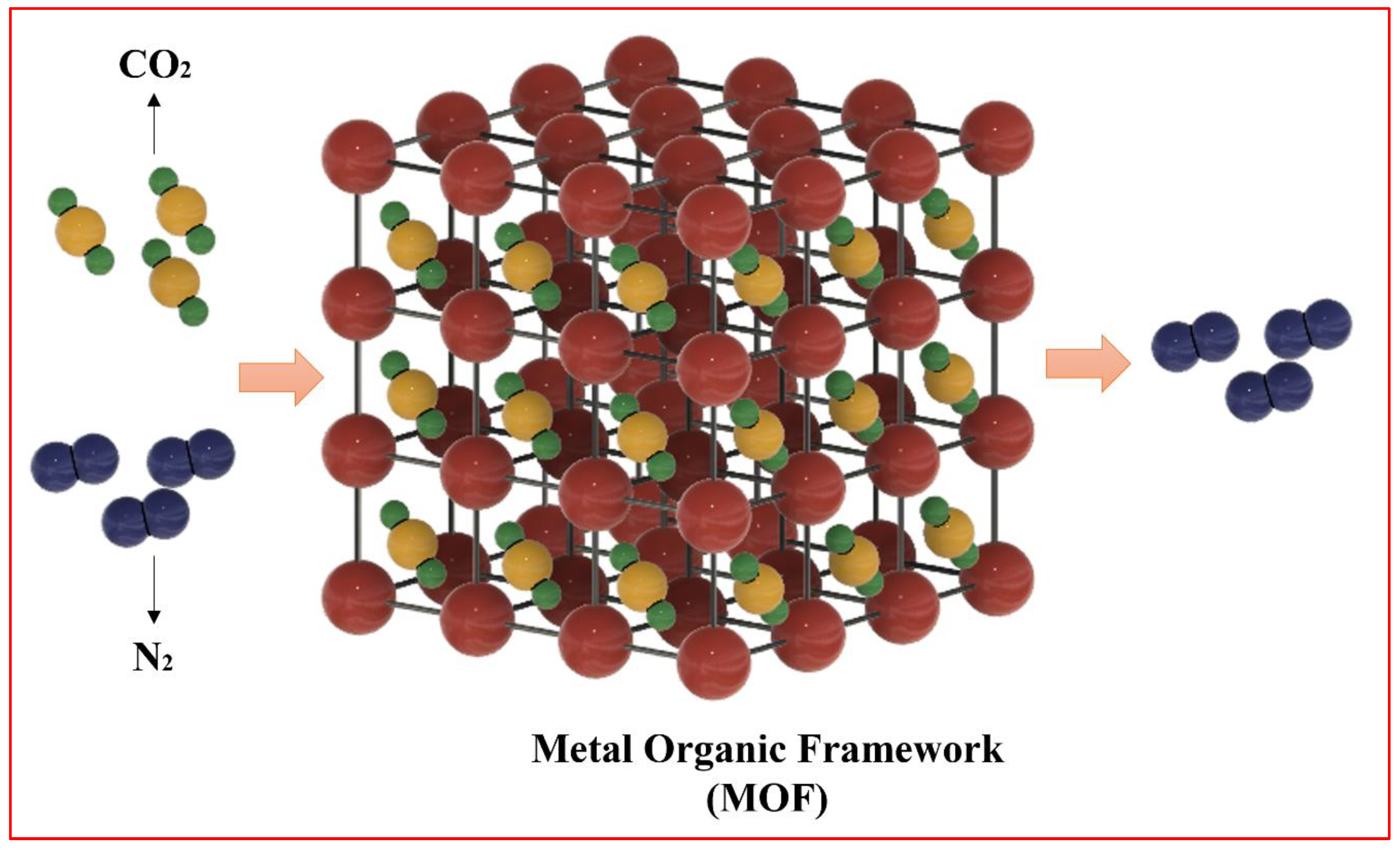
Figure 2.
Number of Publications done in carbon capture and carbon capture in metal-organic frameworks (Trinh et al., 2023).
Figure 2.
Number of Publications done in carbon capture and carbon capture in metal-organic frameworks (Trinh et al., 2023).
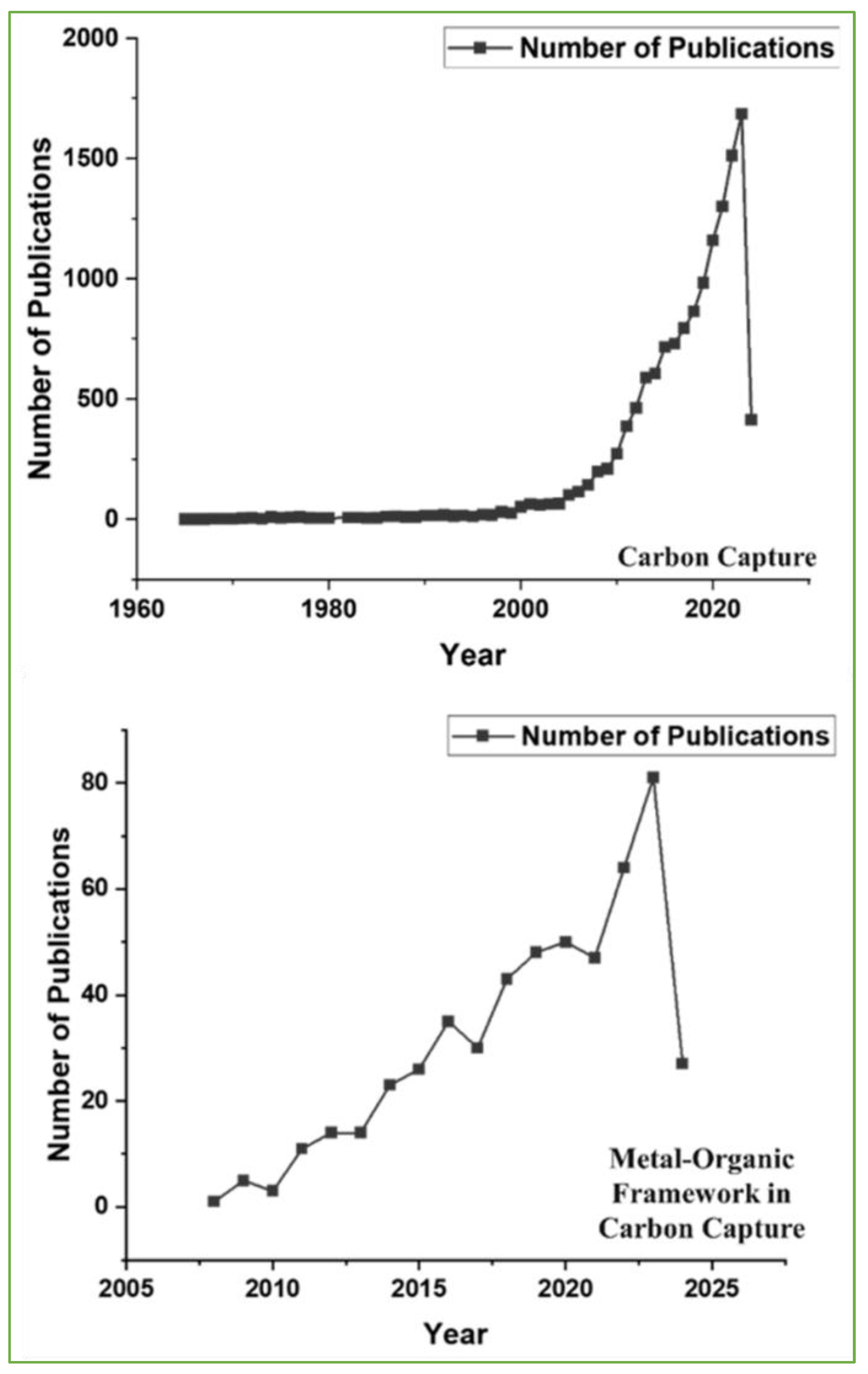
Figure 3.
Carbon Capture Storage Sites in Metal-Organic Frameworks.
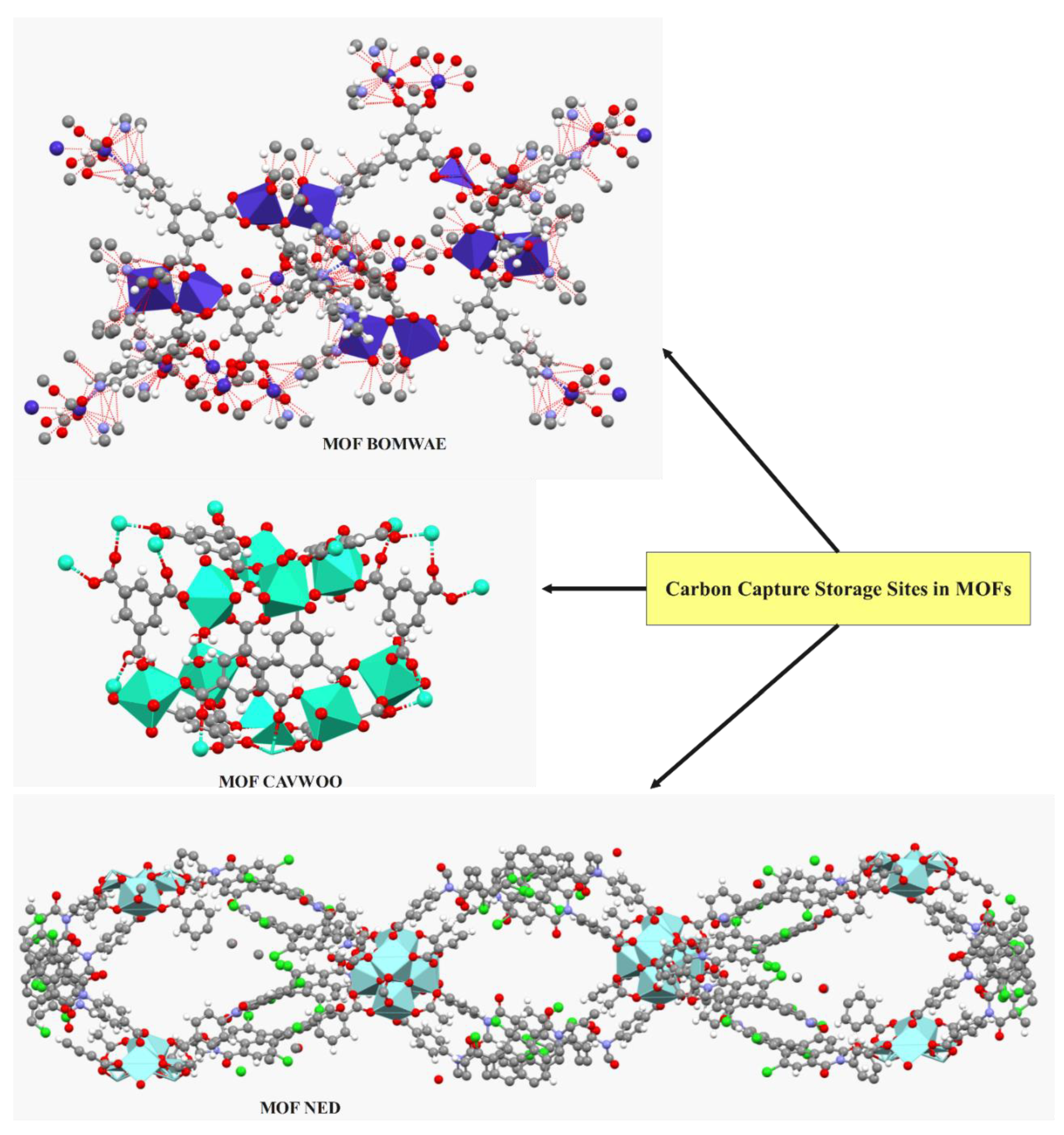
Figure 4.
Carbon Capture Process in Metal-Organic Frameworks.
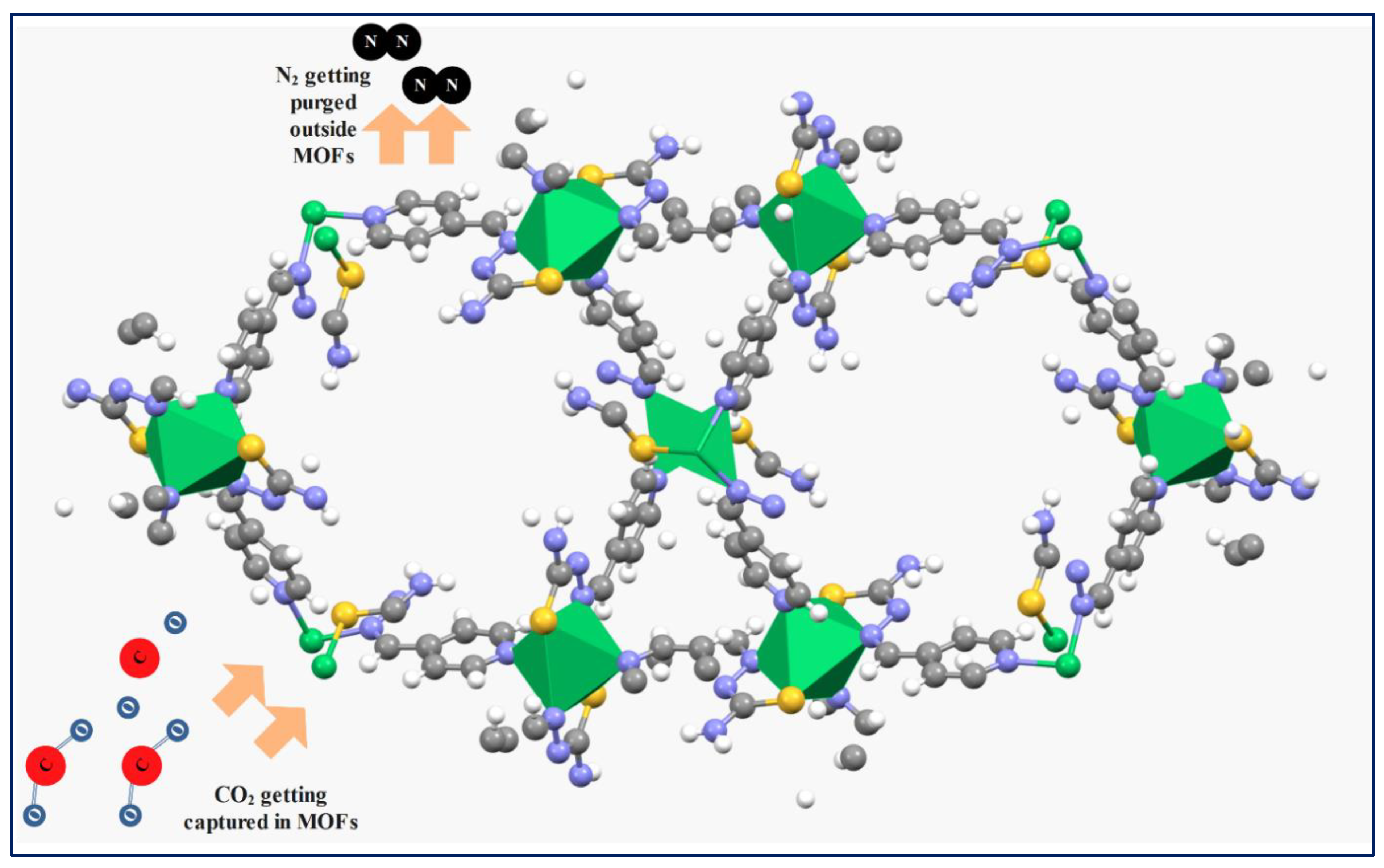
Figure 5.
Process and General Pathways of Organo-Catalysts through Carbon Capture stored in Metal-Organic Frameworks (MOFs) (Guo et al., 2015; C. F. Martín et al., 2011; Serna-Guerrero et al., 2010; Thiruvenkatachari et al., 2009; Wall et al., 2009; Wörmeyer & Smirnova, 2013; Zhao et al., 2013).
Figure 5.
Process and General Pathways of Organo-Catalysts through Carbon Capture stored in Metal-Organic Frameworks (MOFs) (Guo et al., 2015; C. F. Martín et al., 2011; Serna-Guerrero et al., 2010; Thiruvenkatachari et al., 2009; Wall et al., 2009; Wörmeyer & Smirnova, 2013; Zhao et al., 2013).
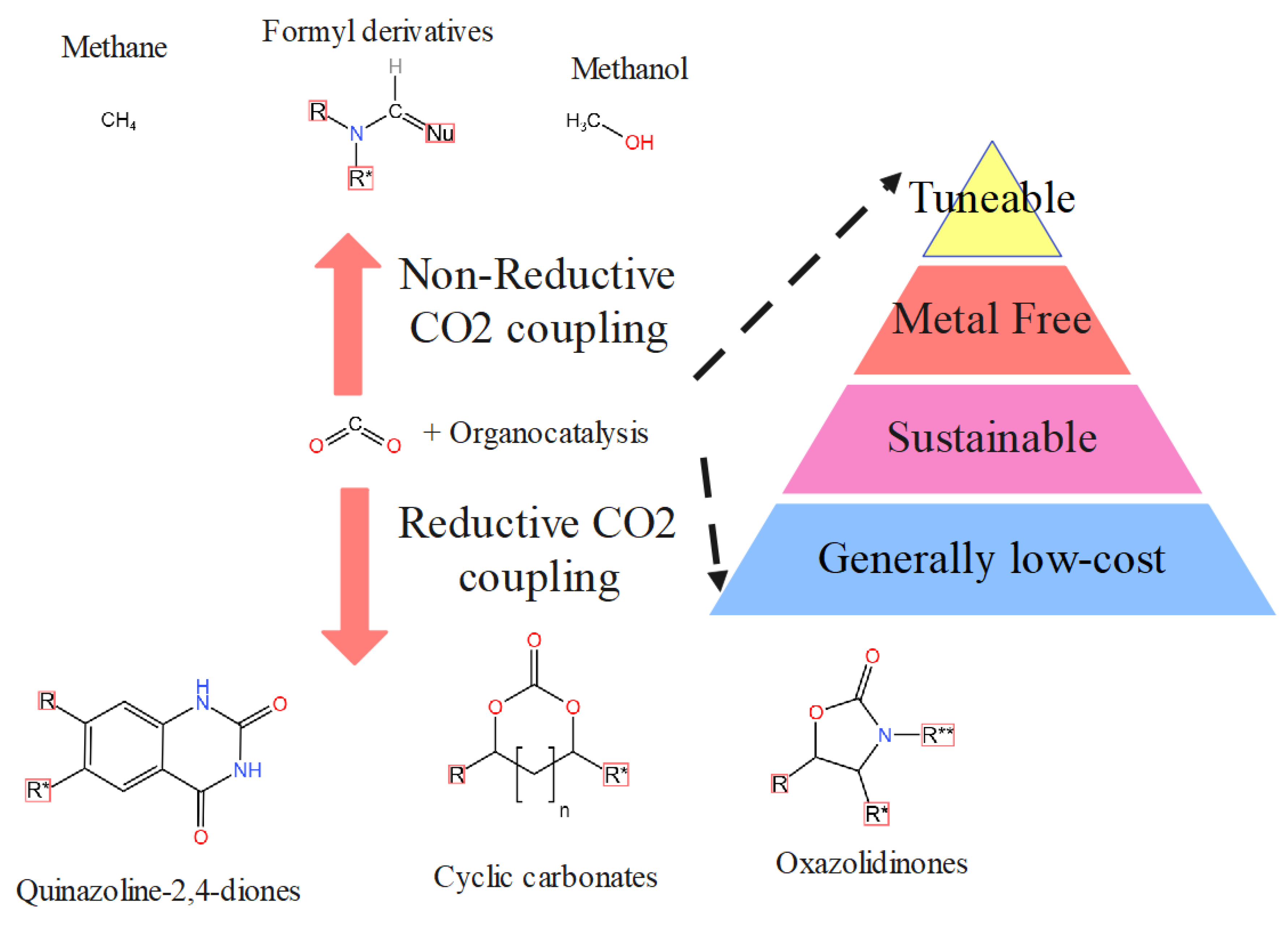
Figure 6.
Metal-Organic Frameworks bio-applications (Moh et al., 2011; H. Wang et al., 2017).
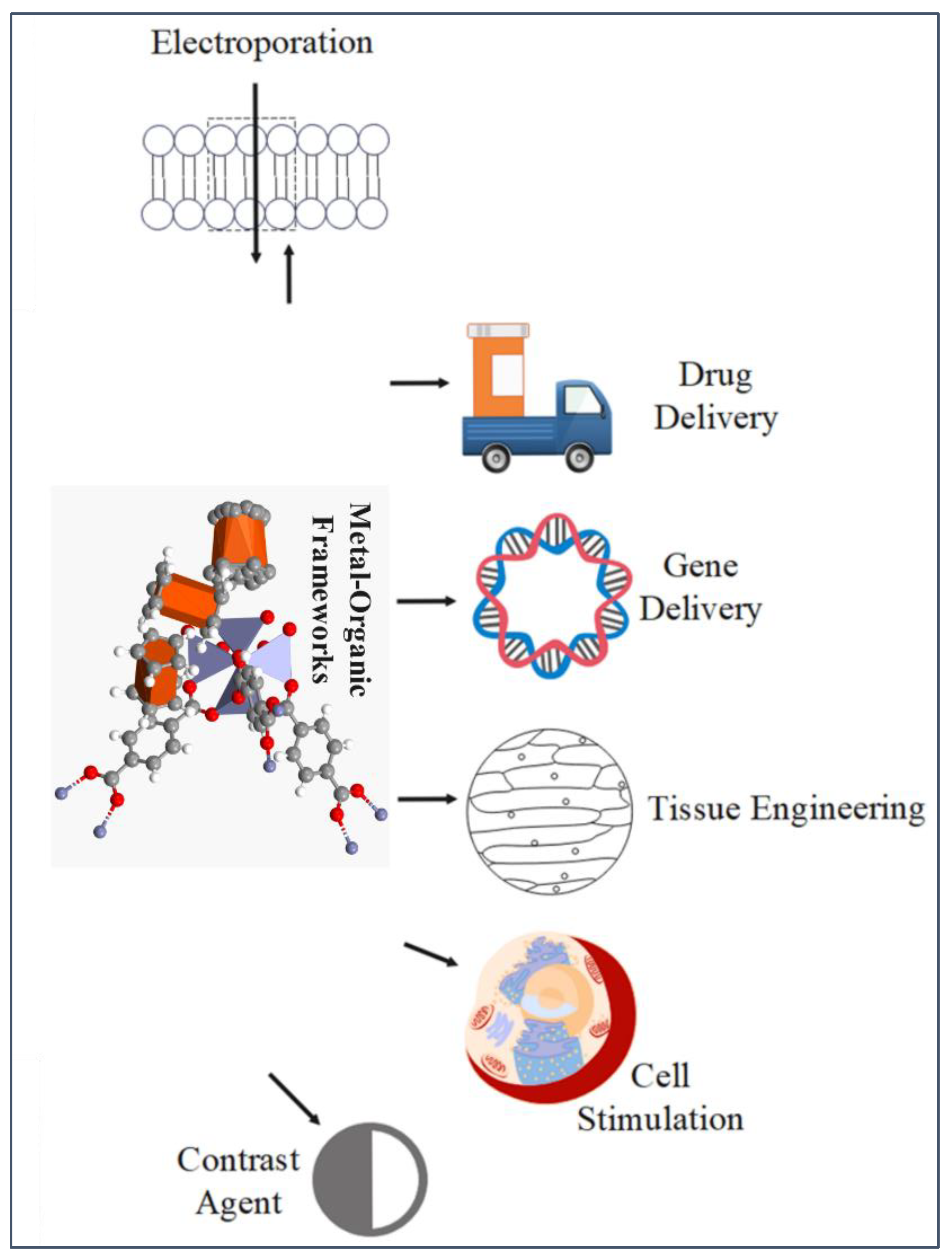

Table 1.
Major advantages and disadvantages of the synthesis methods for metal-organic frameworks (MOFs).
Table 1.
Major advantages and disadvantages of the synthesis methods for metal-organic frameworks (MOFs).
| Synthesis Methods | Classifications | Advantages | Disadvantages |
|---|---|---|---|
| Conventional Methods | Solvothermal Method | Significant structures, crystal sizes and good yields. | Expensive energy costs and higher durations. |
| Electrochemical Method | Faster Synthesis | Fewer surface areas, higher electricity needs, and weak crystal structures. | |
| Flow chemical methods | Fewer energy needs, sustainable and great yields. | Variable durations on specific reactions. | |
| Modern Methods | Microwave Synthesis | Greater Crystal Sizes, Faster Synthesis and Tunability. | Less yield and scalability issues. |
| Sonochemical Method | Faster Synthesis, Tunability | Lesser yields | |
| Spray Drying | Less energy needs | Longer synthesis duration |
Table 2.
Temperature (in K), Pressure (in atm) and Carbon Dioxide Uptake Capacity (mmol/g) in different metal-organic frameworks for carbon capture.
Table 2.
Temperature (in K), Pressure (in atm) and Carbon Dioxide Uptake Capacity (mmol/g) in different metal-organic frameworks for carbon capture.
| Metal-Organic Framework | Carbon Dioxide Uptake Capacity (mmol/g) | Temperature (K) |
Pressure (atm) |
References |
|---|---|---|---|---|
| pip-γCD-MOF | 0.0273 | 333 | 1.1 | (Zhong et al., 2016) |
| PVAm(0.4)@MIL-101 | 3 | 298 | 1 | (Zhong et al., 2016) |
| PVAm(0.7)@MIL-101 | 3.3 | 298 | 1 | (Zhong et al., 2016) |
| PVAm(1.0)@MIL-101 | 2.8 | 298 | 1 | (Zhong et al., 2016) |
| Cu-BTC | 9.59 | 273 | 1 | (K. Lee et al., 2022) |
| Cu-BTC/GO2 | 9.05 | 273 | 1 | (K. Lee et al., 2022) |
| Cu-BTC/GO5 | 8.46 | 273 | 1 | (K. Lee et al., 2022) |
| Cu-BTC/GO10 | 9.59 | 273 | 1 | (K. Lee et al., 2022) |
| HKUST-1 | 3.3 | 298 | 1 | (Zhong et al., 2016) |
| PAN/HKUST-1(40 %) fibers | 1.4 | 298 | 1 | (Prajapati et al., 2022) |
| PAN/HKUST-1(60 %) fibers | 2.5 | 298 | 1 | (Prajapati et al., 2022) |
| NH2-β-CD-MOF | 0.549 | 273 | 1 | (L. Lu et al., 2015) |
| MIL-101(Cr, Mg) | 1.9 | 301 | 1 | (L. Lu et al., 2015) |
| 5% PEI-MIL-101(Cr, Mg) | 2.5 | 301 | 1 | (Álvarez-Murillo et al., 2016) |
| 10 % PEI-MIL-101(Cr, Mg) | 3.1 | 301 | 1 | (Álvarez-Murillo et al., 2016) |
| 20% PEI-MIL-101(Cr, Mg) | 3 | 301 | 1 | (Álvarez-Murillo et al., 2016) |
| 30% PEI-MIL-101(Cr, Mg) | 2.6 | 301 | 1 | (Tsutsumi et al., 2010) |
| 40 % PEI-MIL-101(Cr, Mg) | 2.4 | 301 | 1 | (Tsutsumi et al., 2010) |
| MIL-101 Cr | 1.5 | 298 | 1 | (Álvarez-Murillo et al., 2016) |
| TEPA-MIL-101 | 3.5 | 298 | 1 | (Tsutsumi et al., 2010) |
| PEI-MIL-101 | 2 | 298 | 1 | (Tsutsumi et al., 2010) |
| UiO-66/FA_mod | 1.5 | 298 | 1 | (Tsutsumi et al., 2010) |
| Qc-5-Cu | 2.48 | 298 | 1 | (Álvarez-Murillo et al., 2016) |
| SIFSIX-3-Cu | 1.02 | 298 | 1 | (Álvarez-Murillo et al., 2016) |
| Zn(im-P-im) | 3.54 | 298 | 1 | (Álvarez-Murillo et al., 2016) |
| Ni-4PyC | 3.11 | 298 | 1 | (Smith et al., 2020) |
| 30% PEI-Zn/Co ZIF@450 ◦C | 1.4 | 298 | 1 | (Alabadi et al., 2015) |
| 40% PEI-Zn/Co ZIF@450 ◦C | 1.8 | 298 | 1 | (Alabadi et al., 2015) |
| f-MWCNTs@Zn/Co-ZIF | - | 298 | 1 | (L. Lu et al., 2015) |
| N-MWCNTs@ZIF-8 | - | 298 | 1 | (L. Lu et al., 2015) |
| N-MWCNTs@ZIF-67 | - | 298 | 1 | (L. Lu et al., 2015) |
| N-MWCNTs@Zn/Co-ZIF | - | 298 | 1 | (L. Lu et al., 2015) |
| PM24@ MIL-101 | 2.9 | 298 | 1 | (North et al., 2010) |
| PM36@ MIL-101 | 2.7 | 298 | 1 | (North et al., 2010) |
| R-PM24@ MIL-101 | 3.6 | 298 | 1 | (North et al., 2010) |
| NH2-ZIF-8 | 49.1 | 298 | 1 | (Olajire, 2013) |
| 18% NH2-ZIF-8 | 53.57 | 298 | 1 | (Olajire, 2013) |
| ZIF-90 | 2.2 | 323 | 1 | (Olajire, 2013) |
| UiO-66 | 2.32 | 298 | 1 | (Olajire, 2013) |
| Cu3(BTC)2 | 4.4 | 298 | 1 | (Olajire, 2013) |
| NH2-UiO-66 | 3.32 | 298 | 1 | (Zhong et al., 2016) |
| NH2-Cu3(BTC)2 | 3.86 | 298 | 1 | (Zhong et al., 2016) |
| UiO-66 | 2.27 | 298 | 1 | (Veetil et al., 2015) |
| UiO-66/GO | 3.37 | 298 | 1 | (Chatelet et al., 2013) |
| UiO-66-NH2 | 2.59 | 298 | 1 | (Hänchen et al., 2008) |
| UiO-66-NH2/GO | 3.8 | 298 | 1 | (Hänchen et al., 2008) |
| 30TEPA/UiO-66 | 3.7 | 348 | 1 | (Hänchen et al., 2008) |
| NH2-UiO-66 | 3.15 | 298 | 1 | (Zhong et al., 2016) |
| GMA-UiO-66 | 4.28 | 298 | 1 | (Hänchen et al., 2008) |
| MOF-200 | 1.17 | 298 | 1 | (C. Martín et al., 2015) |
| MOF-200/GO | 1.34 | 298 | 1 | (C. Martín et al., 2015) |
| GO@ZIF-8 | 0.8 | 298 | 1 | (C. Martín et al., 2015) |
| MH-0 | 4.12 | 298 | 1 | (Hänchen et al., 2008) |
| MH-1 | 3.7 | 298 | 1 | (Hänchen et al., 2008) |
| MH-2 | 4.64 | 298 | 1 | (Hänchen et al., 2008) |
| MH-3 | 4.38 | 298 | 1 | (Hänchen et al., 2008) |
| Fe(pz)[Pt(CN)4] | 4.7 | 298 | 1 | (Zhong et al., 2016) |
| MIL-101(Cr)-NH2 | 3.4 | 308 | 1 | (Zhong et al., 2016) |
| UiO-66(Hf) | 1.5 | 298 | 1 | (Zhong et al., 2016) |
| UiO-66(Hf)-NH2 | 2.8 | 298 | 1 | (Zhong et al., 2016) |
| UiO-66(Hf)-(OH)2 | 4.06 | 298 | 1 | (North et al., 2010) |
| UiO-66(Hf)-(COOH)2 | 1.2 | 298 | 1 | (North et al., 2010) |
| UiO-66(Hf)-(F)4 | 0.82 | 298 | 1 | (North et al., 2010) |
| GO-TAc/MOF-60 | 5.62 | 298 | 1 | (North et al., 2010) |
| Meso-Tetraphenyl Porphinato–Cu(II) | 1.74 | 298 | 40 | (North et al., 2010) |
| PPIA-MOF-5(40 %) | 3.5 | 298 | 1 | (North et al., 2010) |
| Ni(II)-MOF | 2.69 | 298 | 27 | (Amaral et al., 2013) |
| PAN/HK@HK3-A NFM | 3.9 | 273 | 1 | (Amaral et al., 2013) |
| Bz@InOF-1 | 2 | 298 | 1 | (Amaral et al., 2013) |
| MIL-96(Al)–Ca1 | 10.22 | 273 | 9.3 | (Amaral et al., 2013) |
| MIL-96(Al)–Ca2 | 9.38 | 273 | 9.3 | (Amaral et al., 2013) |
| 50PEI@meso-UiO66− 0.2Cu | 1.39 | 298 | 1 | (Amaral et al., 2013) |
| Zn(Bmic)(AT) | 3.53 | 353 | 5 | (Amaral et al., 2013) |
| Zn(BPZ) | 5.1 | 298 | 1 | (North et al., 2010) |
| PEI(50)@NU-1000 | 1.75 | 298 | 1 | (North et al., 2010) |
| Ca3L2(H2O)2(DMA)2 | 4.32 | 298 | 1 | (Sanna et al., 2014) |
| PCN-250(Fe2Co) | 2.23 | 298 | 1 | (Sanna et al., 2014) |
| ACN1/3@Cu-BTC | 4.32 | 298 | 1 | (da Costa et al., 2022) |
| mmen-Mg2(dobpdc) | 3.33 | 298 | 1 | (da Costa et al., 2022) |
| sod-ZMOF-chitosan | 22.23 | 298 | 1 | (da Costa et al., 2022) |
| {[(CH3)2NH2][Zn2(L) (H2O)PO4]⋅2DMF}n | 4.99 | 298 | 1 | (da Costa et al., 2022) |
| MOF-505@5GO | 3.94 | 298 | 1 | (da Costa et al., 2022) |
| UTSA-16 | 4.5 | 333 | 1 | (Naranjo et al., 2023) |
| Imi1/3@Cu-BTC | 4.4 | 298 | 1 | (Naranjo et al., 2023) |
| NbOFFIVE-1-Ni | 1.3 | 298 | 1 | (Ang et al., 2015) |
| Tb-L | 1.84 | 298 | 1 | (Aresta et al., 2014) |
| Cu-BTC-PEI-2.5 | 4.15 | 298 | 1 | (Aresta et al., 2014) |
| [Ni-4PyC, Ni9(mH2O)4(H2O)2(C6NH4O2) 18.solvent] | 8.2 | 298 | 10 | (Aresta et al., 2014) |
| LDH@ZIF-67 | 0.52 | 303 | 1 | (Sanna et al., 2014) |
| ZIF-8− 90 100 % | 5.22 | 273 | 1 | (Sanna et al., 2014) |
| MOF-505 | 5.51 | 273 | 1 | (Aresta et al., 2014) |
| HNUST-7 | 26.1 | 273 | 1 | (Sanna et al., 2014) |
| opt-UiO-66(Zr)-(OH)2 | 5.63 | 298 | 1 | (Calò et al., 2002) |
| [Zn2(NH2BDC)2(dpNDI)]n | 1.26 | 298 | 1 | (Calò et al., 2002) |
| [Zn5(btz)6(bdc)2(H2O)2]⋅7DMA | 2.16 | 298 | 1 | (Calò et al., 2002) |
| MIL-53 | 0.05 | 298 | 1 | (Calò et al., 2002) |
| MWCNT@MIL-53 | 0.3 | 298 | 1 | (Calò et al., 2002) |
| CNF@MIL-53 | 0.1 | 298 | 1 | (Calò et al., 2002) |
| MWCNT@MIL-101 | 0.003 | 298 | 1 | (Calò et al., 2002) |
| 1⋅MeCN | 0.82 | 298 | 1 | (Calò et al., 2002) |
| 1-mmen | 4.13 | 298 | 1 | (Decortes et al., 2010) |
| 1-en | 2.63 | 298 | 1 | (Sanna et al., 2014) |
| 1-ppz | 3.15 | 298 | 1 | (Sanna et al., 2014) |
| 1000-as | 3.31 | 298 | 1 | (Sanna et al., 2014) |
| 1000- clean | 3.22 | 298 | 1 | (Sanna et al., 2014) |
| MOF-888 | 1.07 | 298 | 800 torr | (Sanna et al., 2016) |
| MOF-889 | 2.46 | 298 | 800 torr | (Sanna et al., 2016) |
| MOF-890 | 2.59 | 298 | 800 torr | (Sanna et al., 2016) |
| MOF-891 | 2.59 | 298 | 800 torr | (Sanna et al., 2016) |
| 476-MOF | 1.68 | 293 | 1 | (Whiteoak et al., 2013) |
| 477-MOF | 1.92 | 293 | 1 | (Whiteoak et al., 2013) |
| ɤ-CD-MOF | 0.55 | 303 | 1 | (Whiteoak et al., 2013) |
| NPC-6 | 4.83 | 293 | 1 | (Whiteoak et al., 2013) |
| TMOF-1 | 1.45 | 298 | 1 | (Whiteoak et al., 2013) |
| [Cu2L(H2O)2]• 4H2O•2DMF | 6.65 | 273 | 1 | (Whiteoak et al., 2013) |
| Cr-MIL-101-SO3H | 2.28 | 313 | 150 mbar | (Miller et al., 2013) |
| MIL-91(Al) | - | 303 | 1 | (W. Wang et al., 2011) |
| Co2L2(AzoD)2⋅2DMF (1) | 0.56 | 298 | 1 | (W. Wang et al., 2011) |
| Al-soc-MOF-1 | - | 298 | 1 | (W. Wang et al., 2011) |
| PN@MOF-5 | 3.48 | - | 1 | (W. Wang et al., 2011) |
Table 3.
Catalysation Applications on Metal-Organic Frameworks.
| Metal-Organic Framework Type | MOF Site of Reaction | Reaction Type | Reactants | References |
|---|---|---|---|---|
| Pd@[Zn4O(BDC)3] (MOF-5) | MOF as a classical support | Hydrogenation | Cyclooctene | (Chen et al., 2023) |
| Ru@[Zn4O(BDC)3] (MOF-5) | Oxidation | Benzyl alcohol +O2 | (Jeffry et al., 2021; Mehrpooya et al., 2017; Sinha et al., 2017) | |
| Cu@[Zn4O(BDC)3] (MOF-5) | Methanol synthesis | Syngas | (Ding et al., 2019; Sinha et al., 2017) | |
| Pd@[Zn4O(BDC)3] (MOF-5) | Hydrogenation | Styrene+H2 | (Ahmed Ali et al., 2020; Fei et al., 2011) | |
| Pd@[Zn4O(BDC)3] (MOF-5) | Hydrogenation | Ethyl cinnamate+H2 | (Ahmed Ali et al., 2020; Fei et al., 2011) | |
| Cr3(F,OH)(en)2O(BDC)3(ED-MIL-101) | Post-synthetic modification of the framework | Heck condensation | Iodobenzene+acrylic acid | (Shiraishi & Hirata, 2021) |
| Cr3(F,OH)(en)2O(BDC)3(ED-MIL-101) | Knoevenagel condensation | Benzaldehyde+ethyl cyanoacetate | (Shiraishi & Hirata, 2021) | |
| [Ni(L-aspartate)bpy0.5]HCl0.9 MeOH0.5 | Methanolysis of epoxides | Cis-2,3-epoxybutane | (Shiraishi & Hirata, 2021) | |
| Ti(OiPr)4[Cd3Cl6(L1)3] 4DMF 6MeOH 3H2O | Active side in organic ligand | Addition to carbonyls | ZnEt2 + aromatic aldehyde | (Ahmed et al., 2022) |
| [Zn2(BPDC)2(L2)] 10DMF 8H2O | Epoxidation | 2,1-Dimethyl-2H-chromene + (tert-buthylsulfonyl) iodosilybenzene | (Chen et al., 2023; Escobar-Hernandez et al., 2023) |
Disclaimer/Publisher’s Note: The statements, opinions and data contained in all publications are solely those of the individual author(s) and contributor(s) and not of MDPI and/or the editor(s). MDPI and/or the editor(s) disclaim responsibility for any injury to people or property resulting from any ideas, methods, instructions or products referred to in the content. |
© 2024 by the authors. Licensee MDPI, Basel, Switzerland. This article is an open access article distributed under the terms and conditions of the Creative Commons Attribution (CC BY) license (http://creativecommons.org/licenses/by/4.0/).
Copyright: This open access article is published under a Creative Commons CC BY 4.0 license, which permit the free download, distribution, and reuse, provided that the author and preprint are cited in any reuse.


