

Submitted:
03 August 2024
Posted:
06 August 2024
Read the latest preprint version here
Abstract
Costa Rica, renowned for its environmental sustainability, faces a significant waste management crisis. Despite its commitment to renewable energy and biodiversity conservation, waste management inefficiencies, particularly in urban areas such as San José, pose severe environmental and public health risks. This study investigated the current state of waste management in Costa Rica, highlighting critical issues of landfill capacity, regional practices, and public participation in recycling. Using data from 2015 to 2023, linear regression models predict trends in waste minimization practices, providing insights into the potential impacts of ongoing government initiatives. The key findings indicate that Costa Rica's recycling rate is approximately 9%, which is significantly lower than the global average of 32% and is well below that of the EU at 47% and that of Germany at 67%. This underscores the need for improved infrastructure and public education. The Environmental Health Route policy aims to increase the recycling rate to 25% by 2033, while the National Circular Economy Strategy targets comprehensive waste management improvements.Effective implementation, increased funding, and enhanced enforcement are essential, particularly in rural areas where recycling participation is less than 10%. This research offers a comprehensive analysis of Costa Rica's waste management challenges and proposes actionable recommendations to improve practices and increase recycling rates.
Keywords:
Waste Management
; Recycling
; Environmental Sustainability
; Costa Rica
; Circular Economy
; Public Participation
1. Introduction
Costa Rica is globally renowned for its exceptional environmental stewardship and commitment to sustainability. The country is celebrated for its biodiversity conservation and renewable energy initiatives, which have made significant strides in protecting its natural resources. Over 98% of Costa Rica’s electricity is generated from renewable sources, and more than a quarter of its land area is designated as protected areas, national parks, and wildlife reserves [1]. Despite these achievements, Costa Rica is currently facing an unprecedented garbage crisis that threatens its environmental reputation.
This crisis is primarily rooted in severe landfill management issues, a common challenge for rapidly developing nations striving to balance growth with environmental protection. In recent years, waste management has emerged as a significant global concern, contributing to environmental degradation and public health risks, and Costa Rica is no exception. San José, the capital city, generates nearly 47% of the nation’s waste, placing a substantial burden on an already strained waste management system [2]. Deficiencies in waste collection, logistics, classification, and comprehensive waste management plans are widespread across numerous cantons. This situation is exacerbated by the closure of major landfills, such as Los Pinos in Cartago, which has reached its maximum capacity [3].
Although the government has implemented measures to reduce waste and enhance recycling, less than 10% of the population participates in recycling programs [4]. To address this issue, the government introduced the Environmental Health Route policy in April 2023, which aims to increase the recycling rate to 25% by 2033 and ensure consistent waste collection services for at least 34% of the country by 2023 [5]. The initial reactions to this policy have varied. While there has been an increase in recycling awareness and slight improvements in urban areas, rural regions still face significant obstacles due to inadequate waste collection infrastructure [6]. Ensuring effective waste management is crucial for maintaining the environmental standards of Costa Rica, safeguarding public health, and preserving the natural landscapes that attract millions of tourists annually [7].
In addition to infrastructural challenges, there are cultural and social hurdles. Public participation in recycling programs is low, with less than 10% of the population actively engaging in such activities. Educational campaigns and incentives may be necessary to foster a recycling culture among the population. Furthermore, comparing Costa Rica’s situation with global trends can provide valuable insights into both unique aspects and common challenges faced by other nations in waste management [8]. By examining successful practices from other countries, Costa Rica can adopt and adapt these strategies to its context, potentially mitigating the crisis more effectively [9].
The need to address this problem is highlighted by the considerable environmental dangers associated with poor waste management. Inadequately managed landfills can contaminate surface and groundwater, leading to extensive environmental harm [10]. Additionally, communities living close to landfills face heightened health risks, including respiratory and other illnesses due to pollutant exposure [11]. Innovative approaches, such as using black soldier fly larvae for managing organic waste and implementing anaerobic digestion for biodegradable waste, present promising improvements [12]. Consequently, this study seeks to thoroughly analyze Costa Rica’s waste management challenges, assess current policies, and suggest innovative solutions to address these problems effectively.
The objectives of this paper are to assess the current state of waste management in Costa Rica, identify the primary challenges contributing to the waste management crisis, evaluate the effectiveness of the government’s current initiatives and policies in addressing these challenges, explore successful waste management practices at the local and institutional levels, propose innovative solutions and technologies to improve waste management, and enhance public awareness and participation in recycling and waste management.
The paper is divided into three core sections. The first section, “Overview of Waste Management,” provides a thorough assessment of recent waste production data, benchmarking it against global standards. It also identifies landfills that are nearing capacity and examines their environmental impacts. Infographics are used to illustrate regional differences in waste management practices. The second section, “Challenges Leading to the Crisis,” includes case studies on specific landfill closures and their impacts on local communities. This paper delves into the inefficiencies of waste collection and transportation and analyses cultural attitudes toward recycling through behavioral studies. The third section, “Government Responses and Policies,” evaluates the effectiveness of the Environmental Health Route policy using quantitative data and compares Costa Rica’s waste management regulations with those of other countries that have successful systems. This structured approach provides a detailed analysis of Costa Rica’s waste management issues and explores potential solutions based on both local successes and international best practices.
2. Methodology
This study utilized comprehensive data on waste minimization practices in Costa Rican laboratories from 2015 to 2023. The dataset included annual records of laboratories implementing various practices, structured into tables detailing the number of laboratories and annual percentage variations for six specific practices: substituting nonhazardous materials (SNM), chemical treatment (CT), distillation (D), redistributing surplus chemicals (RSC), reducing the scale of experiments (RS), and purchasing less (PL). Additionally, five other practices were tracked, namely, purchase control (PC) and computer simulation (CS). The data were sourced from annual reports and databases maintained by relevant environmental and governmental organizations in Costa Rica, with detailed data provided in Supplementary Tables S1, S2, S3, and S4. To facilitate analysis, the data were organized into pandas, DataFrames, allowing for efficient manipulation and analysis. Missing data points were addressed using imputation methods to ensure a complete dataset. The detailed annual records are presented in Supplementary Tables S1 and S2, and the annual percentage variations are shown in Supplementary Tables S3 and S4.
To forecast trends in waste minimization practices for the years 2025 and 2030, linear regression models were developed using Python. Linear regression was chosen for its effectiveness in modeling linear trends over time, assuming a consistent growth pattern in the adoption of these practices. The historical data from 2015 to 2023 served as the training set for these models. Each model was fitted to the data for a specific waste minimization practice, with cross-validation performed to ensure accuracy and reliability. Using the trained models, predictions were made for the number of laboratories performing each waste minimization practice in 2025 and 2030. This predictive modeling approach allowed for the extrapolation of observed linear trends, providing insights into the potential impact of ongoing government initiatives and policy improvements on national waste management and recycling efforts.
3. Current State of Waste Management
3.1. Overview of Waste Production
Despite its global reputation for environmental sustainability, Costa Rica faces significant challenges in managing its waste effectively. This section explores the current state of waste management in Costa Rica, focusing on production statistics, landfill capacities, and regional waste management practices.
3.2. Landfill Capacities and Regional Waste Management Practices
Effective waste management is essential for preserving environmental health and ensuring sustainability. As Costa Rica continues to experience rapid urban growth, it is increasingly important to comprehend the current conditions of waste generation and management to achieve a balance with environmental conservation. The waste production of Costa Rica is substantial and concentrated in urban areas. The Greater Metropolitan Area (GAM), which includes San José, is home to approximately 50% of the country’s population, totaling approximately 2.6 million people [13]. San José alone generates 47% of the nation’s waste [14]. The waste composition in San José is diverse, with organic waste comprising 58%, paper and cardboard 21%, plastic 11%, metal 2%, glass 1%, and nonrecyclable waste 7% [15].
In 2021, Costa Rica’s Ministry of Health reported that a total of 1,282,057 tonnes of waste were sent to landfills. However, only 9.6% of this waste was recoverable, indicating a low rate of recycling and waste recovery [16]. The high concentration of waste production in urban areas, particularly San José, underscores the need for targeted waste management solutions. The diverse composition of waste, with a significant proportion of organic materials, suggests significant potential for composting and organic waste treatment initiatives. Compared to global averages, Costa Rica’s recycling rate of 9.6% is significantly lower, highlighting the need for improved recycling infrastructure and increased public participation in recycling programs.
The data underscore the urgent need for effective waste management policies, such as the Environmental Health Route policy, which aims to increase the recycling rate to 25% by 2033 and ensure regular garbage collection services for at least 34% of the country by 2023. Table 1 details the waste production and recovery rates in Costa Rica, while Figure 1 presents the waste composition in San José.
The waste production statistics reveal that a significant portion of Costa Rica’s waste is generated in urban areas, particularly San José, which accounts for nearly half of the nation’s total waste. The low recycling rate and high concentration of organic waste indicate areas where targeted policies and initiatives could make substantial improvements. Effective waste management strategies are crucial for mitigating environmental impacts and promoting sustainability in Costa Rica. Moving forward, it is essential to address the current challenges and implement innovative solutions to enhance waste recovery and recycling rates.
3.3. Landfill Capacities
The capacity of existing landfills in Costa Rica is a critical issue, with many sites nearing or exceeding their maximum capacity. Landfills such as Los Pinos in Cartago are at or near full capacity, creating a pressing need for alternative waste management solutions. Significant landfills such as those in La Carpio and Aserrí are on the verge of collapse, each receiving 600 tonnes of waste per day and having only a few years of useful life remaining [17,18]. These sites have been in operation for several decades, and the volume of ordinary waste now surpasses their designed capacities. Table 2 details the daily waste received and the estimated remaining life for major landfill sites in Costa Rica.
Given this situation, Costa Rica must develop new waste disposal methods to alleviate the pressure on landfills and mitigate greenhouse gas emissions. Currently, 94% of solid waste in Costa Rica ends up in landfills, designated waste disposal sites, or open-air dumps, posing significant risks to surface and groundwater quality. In urban areas such as San José, waste collection services are more accessible; however, the efficiency and frequency of these services vary, leading to inconsistent waste management. Urban expansion has caused environmental deterioration, exposing groundwater to nitrate pollution and contributing to air pollution-related diseases [19]. Rural regions face greater challenges due to logistical issues and a lack of infrastructure. Many communities lack access to regular waste collection services, resulting in improper disposal practices such as burning or burying waste. This improper disposal poses environmental hazards and impacts public health, as unregulated waste management can lead to soil and water contamination.
To address these challenges, Costa Rica must improve its waste management infrastructure, especially in rural areas, and adopt innovative waste disposal methods. Additionally, enhancing public education on proper waste disposal practices and increasing government support for waste management initiatives are crucial. These steps can mitigate the adverse effects of inadequate landfill capacity and promote a more sustainable waste management system.
4. Government Initiatives and Goals
The Costa Rican government has launched several initiatives aimed at improving waste management and promoting sustainability. One of the key initiatives is the Environmental Health Route policy, which was launched in April 2023. This policy has two distinct goals: to increase the national recycling rate to 25% by 2033 and to ensure regular garbage collection services for at least 34% of the national territory by 2023 [20].
Additionally, the National Circular Economy Strategy was introduced in 2023. This strategy is designed to enhance waste management practices and reduce emissions by promoting a circular economy model in which materials are reused, recycled, and repurposed to minimize waste. This strategy includes measures to encourage businesses and consumers to adopt more sustainable practices, reduce the use of single-use plastics, and improve infrastructure for recycling and waste management [21,22]. Table 3 summarizes these government initiatives and their goals.
These efforts highlight Costa Rica’s dedication to overcoming waste management issues and progressing toward sustainability. By establishing clear objectives and enacting strategic policies, the government aims to lessen environmental impact, enhance public health, and drive economic growth through sustainable practices. The ambitious target of the Environmental Health Route policy to significantly boost recycling rates underscores the government’s strong commitment to improving waste management. The policy also emphasizes the expansion of garbage collection services, recognizing the need to address waste management in both urban and rural areas. This comprehensive approach is vital because it takes into account the distinct challenges of different regions, ensuring a more inclusive waste management strategy.
Moreover, the National Circular Economy Strategy represents a comprehensive approach to sustainability, focusing on reducing waste through innovative practices. By promoting the reuse, recycling, and repurposing of materials, this strategy aims to minimize waste generation and its associated environmental impacts. This approach not only addresses immediate waste management concerns but also fosters long-term environmental and economic benefits by creating sustainable loops in the use of resources. Together, these initiatives aim to create a more sustainable waste management system in Costa Rica. The success of these programs will depend on effective implementation, public participation, and continuous evaluation to ensure that they meet their intended goals. By investing in these strategic policies, Costa Rica can enhance its environmental stewardship and set a precedent for other nations facing similar waste management challenges.
5. Public Participation in Recycling
Despite government efforts, fewer than 10% of the population actively participates in recycling programs [25]. To address this issue, the ecoins program was launched in 2017, promoting recycling through a technological economic reward scheme that encourages citizen participation in solid waste management. The program has established 520 collection sites and awarded 179,101,620.8 ecoins to 46,162 registered users. As a result, the program collected 3,762 tonnes of recyclable ordinary waste and avoided 4,592 tonnes of CO2 emissions [26]. Table 4 highlights the impact of the ecoins program.
The ecoins program represents a significant step toward increasing public participation in recycling by providing tangible incentives for citizens. However, the overall participation rate remains low, indicating that further efforts are needed to enhance engagement. Comprehensive educational campaigns, combined with economic incentives, could help foster a stronger recycling culture.
Efforts to increase public participation in recycling should focus on addressing barriers to engagement, such as lack of awareness, convenience, and perceived benefits. Targeted outreach and education initiatives can help inform the public about the importance of recycling and the benefits of participating in programs like ecoins. Additionally, expanding the ecoins program and similar initiatives to reach more communities, particularly in rural areas, could significantly improve participation rates. Collaborations with local governments, schools, and businesses can further amplify these efforts, creating a more robust and inclusive recycling culture across Costa Rica.
5.1. Additional Findings
To optimize landfill operations and design effective treatment systems, the Hydrologic Evaluation of Landfill Performance (HELP) model has been employed to accurately estimate leachate production in Costa Rican landfills [27]. The country produces large quantities of plastic waste, with only a minor portion being recycled; recent initiatives have aimed to mitigate plastic waste through bans on single-use plastics and comprehensive recycling programs [28]. Moreover, the financing of waste management varies significantly among municipalities, indicating opportunities to enhance financial efficiency while ensuring environmental sustainability [29]. Progress is being made in promoting a circular economy, with an emphasis on business models and technology exchanges, especially with international partners such as the Netherlands [30].
The success of initiatives such as ecoins highlights the importance of innovative strategies to boost public participation in recycling. By harnessing technology and economic incentives, Costa Rica can significantly improve its recycling rates. However, achieving broad-based participation will require a multifaceted strategy that includes educational outreach, policy support, and infrastructural enhancements. Addressing plastic pollution, optimizing waste management financing, and fostering a circular economy are crucial elements of a sustainable waste management approach. Through ongoing innovation and international cooperation, Costa Rica can develop a more resilient and environmentally sustainable waste management system.
5.2. Waste Minimization Practices
To better understand the effectiveness of waste minimization practices, it is imperative to examine the number of laboratories implementing various waste minimization strategies over time. The data indicate a significant increase in the adoption of six key waste minimization practices from 2015 to 2023: substituting nonhazardous materials (SNM), chemical treatment (CT), distillation (D), redistributing surplus chemicals (RSC), reducing the scale of experiments (RS), and purchasing less (PL) (Figure 2a). Additionally, there has been an increase in laboratories performing five other practices, including purchase control (PC) and computer simulation (CS) (Figure 2b).
The annual percentage variation for these waste minimization practices demonstrates the effectiveness of training and policy implementation over the years. This variation highlights the progress made in adopting these strategies and identifies areas needing further improvement (Figure 2c and 2d).
Costa Rica, recognized globally for its environmental sustainability efforts, still faces substantial challenges in effective waste management. The growing implementation of waste minimization strategies in laboratories throughout the country signals progress toward more sustainable practices. Notable increases in activities such as substituting nonhazardous materials and redistributing surplus chemicals highlight the success of current training programs and policy measures. Nonetheless, to further advance waste minimization efforts, it is crucial to continuously identify and address areas needing improvement.
By fostering a culture of sustainability within laboratories and other institutions, Costa Rica can continue to lead, for example, in environmental stewardship. Continued support for educational programs, investment in infrastructure, and the promotion of innovative waste management practices will be crucial in addressing the country’s waste management challenges and achieving long-term sustainability goals.
6. Results
6.1. Comparative Analysis: Costa Rica’s Recycling Rate vs. Global Averages
Assessing Costa Rica’s recycling rate relative to global standards is critical for recognizing areas needing improvement and setting attainable objectives for sustainable waste management. Currently, Costa Rica recycles only approximately 9.6% of its plastic waste, which highlights considerable challenges in its waste management system. Most of the waste is either sent to landfills or disposed of inappropriately.
To provide a comparative perspective, Table 5 presents the recycling rates of various regions and countries, demonstrating where Costa Rica stands in relation to global standards. This comparison underscores the need for significant improvements in Costa Rica’s waste management practices.
Several factors contribute to these varying recycling rates across countries. Stringent environmental regulations and policies, such as those implemented by EU member states, significantly boost recycling rates. Public awareness and participation are also critical; in countries such as Germany and Japan, high levels of public involvement in waste sorting and recycling practices are integral to their success [31,32,34]. Table 6 summarizes these influencing factors, highlighting their impact on recycling rates and providing examples from different countries.
In comparison, Costa Rica’s recycling efforts reflect substantial room for improvement. Strengthening and enforcing waste management policies can drive better recycling practices. Investment in recycling infrastructure and technology is essential for more effectively handling recyclable materials. Increasing public awareness and participation through comprehensive education campaigns can significantly enhance recycling rates. The implementation of economic incentives, such as tax breaks for companies engaged in recycling or deposit return schemes, can also encourage more robust recycling activities.
By improving these areas, Costa Rica can better meet global standards and support wider sustainability efforts. This analysis emphasizes the need for a comprehensive strategy in waste management, which includes policy development, infrastructure enhancement, public involvement, and economic incentives to make meaningful advancements in recycling and environmental sustainability.
7. Government Initiatives and Policies
The Environmental Health Route policy, launched in April 2023, aims to address Costa Rica’s waste management crisis by increasing the national recycling rate to 25% by 2033 and ensuring regular garbage collection across 34% of the national territory by 2023. This policy has experienced both successes and shortcomings since its implementation. Successes include increased awareness and participation, particularly in urban areas, where recycling rates have risen by 15% in some neighborhoods [36]. Additionally, the policy has facilitated the establishment of new recycling facilities in key urban centers, improving the logistics of waste collection and processing [37]. However, significant challenges remain, especially in rural areas where logistical issues and a lack of infrastructure result in less than 10% recycling participation [38]. Furthermore, while urban areas show some progress, the overall national recycling rate remains low, indicating that the policy has limited reach and effectiveness in changing long-term behaviors [39].
Projections indicate that if improvements such as increased funding for rural infrastructure, enhanced public education campaigns, and incentives for recycling participation are made, the national recycling rate could reach 20% by 2028 and 25% by 2033 [40]. Models also predict a 30% reduction in landfill use, significantly mitigating environmental degradation. These projections are visually represented in Figure 3.
Costa Rica’s regulatory framework for waste management includes laws such as the “Law for Comprehensive Waste Management” (2010) and the “National Strategy to Phase Out Single-Use Plastic” (2017). These laws provide a comprehensive legal structure addressing various aspects of waste management, including specific bans on single-use plastics [41]. Government initiatives such as the Environmental Health Route demonstrate proactive government involvement in tackling waste management issues [36].
Despite these strengths, there are notable enforcement issues, particularly in rural areas where logistical challenges hinder effective policy implementation [38]. Additionally, public participation in recycling programs remains low compared to that in countries such as Germany and Japan [42]. To address these weaknesses, it is recommended to strengthen enforcement by increasing resources for monitoring and enforcing waste management regulations, especially in rural areas. Encouraging public-private partnerships can also help invest in recycling infrastructure and technology [43]. Implementing economic incentives such as tax breaks or subsidies for businesses and individuals actively participating in recycling efforts can further enhance recycling rates [44].
Predictive models suggest that implementing stricter enforcement and incentivizing recycling could boost the recycling rate to 20% by 2028 and potentially to 25% by 2033 [38]. Enhanced infrastructure and public-private partnerships could improve waste collection efficiency by 40%, reducing overall waste management costs by 25% [43]. Integrating successful frameworks from countries such as Germany could increase Costa Rica’s recycling rate to match the EU average of 47% by 2040 [42].
7.1. Stakeholder Perspectives
Government officials emphasize the need for more comprehensive policies and stricter enforcement to achieve the desired recycling rates, highlighting the successes of urban initiatives while acknowledging ongoing challenges in rural areas. They believe that stronger regulatory frameworks and increased funding are essential for addressing infrastructure deficiencies and enhancing waste management practices across the country [36]. Community feedback reveals a strong desire for better waste management practices and highlights a lack of awareness and infrastructure as significant barriers, with rural residents particularly calling for more support and education on recycling. This underscores the importance of targeted educational programs and accessible recycling facilities to improve participation rates [38]. Environmental groups advocate for increased government action and community engagement, stressing the importance of public education campaigns and criticizing current enforcement mechanisms as insufficient. They argue that without robust public outreach and consistent enforcement, recycling initiatives will continue to fall short, calling for greater transparency and accountability in government policies to ensure environmental goals are met [44]. Businesses support economic incentives to boost recycling rates, with many companies willing to invest in sustainable practices if provided with adequate financial incentives and regulatory support. Business stakeholders suggest that tax breaks, subsidies, and other financial incentives could significantly drive corporate investment in recycling infrastructure and sustainable waste management practices, emphasizing the potential for public-private partnerships to enhance waste management capabilities and share technological innovations [43].
7.2. Global Case Studies
To provide a comprehensive perspective, this section compares Costa Rica’s waste management practices with those of successful models from other countries, offering valuable insights and practical solutions. Germany is renowned for its high recycling rates and efficient waste management system, which are attributed to stringent regulations, extensive public awareness campaigns, and advanced recycling infrastructure. Key initiatives such as the deposit return scheme for beverage containers and the Green Dot program, which requires manufacturers to consider the end-of-life disposal of their products, contribute to Germany’s impressive recycling rate of approximately 67% [32]. Similarly, Japan’s meticulous waste sorting system and strong public participation have led to a recycling rate of approximately 20% [34]. Japan’s approach includes comprehensive waste separation at the source, detailed public education on waste sorting, and robust policies to reduce single-use plastics, emphasizing community involvement and continuous public education [34]. In Brazil, the waste management system is significantly driven by informal waste pickers and cooperatives, especially in urban areas. Despite these challenges, Brazil has achieved a recycling rate of approximately 17%, largely due to the efforts of these cooperatives and community-based recycling initiatives [35].
By examining these case studies, Costa Rica can identify specific strategies to enhance its waste management practices. Strengthening regulations and ensuring strict enforcement can significantly boost recycling rates, while continuous education campaigns and public participation are crucial for effective waste management. Additionally, investing in advanced recycling infrastructure and technology is essential for efficient waste management, and implementing economic incentives such as deposit return schemes and producer responsibility programs can encourage recycling and reduce waste. Incorporating these global best practices, alongside the continued efforts of Costa Rican policies and initiatives, can lead to significant improvements in the country’s waste management system. By learning from successful models worldwide, Costa Rica can serve as a strong example for other nations facing similar challenges.
7.3. Technological Innovations
Implementing advanced technologies in Costa Rica’s waste management practices can substantially improve their efficiency and effectiveness. Waste-to-energy (WtE) technologies, which convert nonrecyclable waste into usable heat, electricity, or fuel, have been successful in countries such as Sweden and Germany. These technologies reduce landfill waste and provide a renewable energy source, potentially easing landfill pressure in Costa Rica while contributing to the country’s renewable energy goals [45]. Using robotics, artificial intelligence, and machine learning, automated waste sorting systems can greatly enhance the accuracy and speed of sorting recyclable materials. These technologies have improved the efficiency and purity of recovered materials in countries such as Japan and South Korea, which could significantly benefit Costa Rica’s recycling infrastructure [46,47]. Additionally, digital platforms enhanced with IoT devices and sensors offer real-time data on waste generation, collection, and processing. These platforms facilitate better planning and decision-making by optimizing collection routes and reducing operational costs. Cities such as Barcelona and Singapore have implemented smart waste management solutions, leading to more efficient waste collection and reduced environmental impact [48].
The development and implementation of biodegradable and compostable materials offer environmentally friendly alternatives to traditional plastics. These materials naturally decompose, thereby reducing the environmental impact of plastic waste. Encouraging the use of biodegradable packaging and products in Costa Rica, along with the development of appropriate composting infrastructure, could lead to significant progress. Additionally, advancements in chemical recycling and pyrolysis provide solutions to the plastic waste challenge by transforming plastic waste back into its original monomers or other valuable chemicals. These technologies are capable of handling mixed and contaminated plastics that are difficult to recycle using traditional methods. By investing in these advanced recycling technologies, as seen in the Netherlands and the United States, Costa Rica could enhance its recycling capabilities.
By adopting these technological innovations, Costa Rica can significantly improve its waste management system. Integrating advanced technologies will not only address current challenges but also position the country as a leader in sustainable waste management practices.
The analysis of the number of laboratories performing six waste minimization practices from 2015 to 2023 and the predicted numbers for 2025 and 2030 are illustrated in Figure 4. The detailed data supporting these trends are available in Supplementary Tables S1 and S3.
By visualizing these trends, the figure provides a clear representation of the progress and future potential of waste minimization practices in Costa Rican laboratories. This visualization supports the discussion on the effectiveness of technological innovations and policy initiatives in improving waste management.
8. Projections and Future Trends
To understand the long-term impacts of Costa Rica’s waste management strategies, this study includes projections up to 2030 and 2050. Using linear regression models and data from 2015 to 2023, we predict trends in waste minimization practices, recycling rates, and landfill use.
Projections suggest a steady increase in the adoption of key waste minimization practices such as substituting nonhazardous materials (SNM), chemical treatment (CT), and recycling systems (RSC) through 2030 and 2050. These trends are illustrated in Figure 5, which shows the actual number of laboratories implementing these practices from 2015 to 2023 and the predicted numbers for 2025 and 2030.
In terms of recycling rates, projections indicate that with increased funding for infrastructure, enhanced public education, and economic incentives, the national recycling rate could reach 25% by 2033. By 2050, with sustained efforts and the integration of best practices from countries such as Germany, Costa Rica’s recycling rate could align with the EU average of 47%.
Furthermore, if current initiatives are effectively implemented and expanded, landfill use could decrease by 30% by 2030, significantly mitigating environmental degradation. By 2050, improved waste management strategies could further decrease landfill reliance, fostering a more sustainable waste disposal system. These projections highlight the potential impact of ongoing government initiatives and policy improvements on national waste management and recycling efforts.
9. Discussion
The comparative analysis of Costa Rica’s recycling rate with global standards highlights a significant disparity in the country’s waste management practices. Costa Rica’s current recycling rate of approximately 9% for plastic waste is considerably lower than that of leading regions such as the European Union (47%) and Germany (67%). This underscores the urgent need for enhancements in the national waste management system. Our findings corroborate previous studies that identified challenges in waste management, especially in rural areas where logistical issues and insufficient infrastructure impede effective recycling efforts. Increased funding for rural infrastructure and focused public education campaigns could substantially improve recycling participation rates. The success of urban recycling programs indicates that similar strategies could be adapted and applied in rural areas to enhance the overall national recycling rates.
The Environmental Health Route Policy and the National Circular Economy Strategy show promise, but their success hinges on effective implementation and continuous evaluation. Projection models indicate that with increased funding, education, and incentives, the national recycling rate could reach 25% by 2033. This would significantly reduce landfill use and mitigate environmental degradation, aligning Costa Rica more closely with global best practices. Technological innovations, such as waste-to-energy (WtE) technologies, automated waste sorting systems, and digital waste tracking platforms, present substantial opportunities for improving Costa Rica’s waste management system. These technologies can enhance the efficiency and effectiveness of waste processing and recycling, contributing to higher recycling rates and reduced landfill use. However, this study has limitations. The predictive models are based on linear trends observed in historical data, which may not account for unexpected changes in policy or economic conditions. Additionally, this study focused primarily on plastic waste, and future research should explore recycling rates and waste management practices for other materials to provide a more comprehensive understanding.
Future research should focus on longitudinal studies to track the progress of implemented policies over time and explore innovative waste management technologies and practices. Comparative studies involving more countries with varying levels of waste management infrastructure could provide deeper insights into effective strategies. Based on the results, the following recommendations are made:
- Infrastructure improvement: Allocate resources to enhance waste management infrastructure, with a focus on rural areas to ensure consistent and efficient waste collection and processing.
- Public Education: Implement widespread educational campaigns to inform the public about the importance of recycling and proper waste disposal practices.
- Economic Incentives: Offer financial incentives, such as tax reductions or subsidies, to encourage active participation in recycling programs by businesses and individuals.
- Public‒Private Partnerships: Facilitate collaboration between the public and private sectors to utilize shared resources and expertise in developing advanced recycling technologies and systems.
- Policy Enforcement: Strengthen the enforcement of waste management regulations to ensure that they are followed effectively, particularly in rural regions.
Implementing these recommendations will enable Costa Rica to enhance its waste management practices, boost recycling rates, and serve as a model for other countries encountering similar challenges.
10. Conclusion
This study highlighted significant challenges and opportunities in Costa Rica’s waste management practices. Despite its strong environmental reputation, Costa Rica faces substantial hurdles in waste recycling and landfill management, with a current recycling rate of approximately 9% for plastic waste—which is considerably lower than global standards. This indicates an urgent need for policy and infrastructure improvements.
Government initiatives such as the Environmental Health Route policy and the National Circular Economy Strategy show promise in addressing these challenges. However, their success largely depends on effective implementation, increased funding, public education, and enhanced enforcement, especially in rural areas. Comparative analysis suggests that strategic investments in infrastructure, public‒private partnerships, and economic incentives can significantly improve Costa Rica’s recycling rates and waste management systems. Projections indicate that these efforts could increase the national recycling rate to 25% by 2033, reduce landfill use, and mitigate environmental degradation.
To achieve these goals, Costa Rica must adopt a multifaceted approach that includes strengthening regulation enforcement, increasing public awareness, and fostering innovation through partnerships. By doing so, Costa Rica can enhance its environmental stewardship and set a positive example for other nations facing similar waste management challenges. In summary, while Costa Rica has made strides in environmental sustainability, focused efforts to improve waste management practices are essential. The country has the potential to transform its waste management system and significantly contributes to global sustainability goals through committed actions and strategic initiatives.
Author Contributions
Andrea Navarro Jimenez conceived and designed the research, collected and analyzed the data, and wrote the manuscript.
Conflict of interest statement
The author declares that there are no conflicts of interest regarding the publication of this paper.
Funding Statement
This research received no specific grant from any funding agency in the public, commercial, or not-for-profit sectors.
Conflict of interest statement
The author declares that there are no conflicts of interest regarding the publication of this paper.
References
- Montero, A., Marull, J., Tello, E., Cattaneo, C., Coll, F., Pons, M., ... & Vargas, M. (2021). The impacts of agricultural and urban land-use changes on plant and bird biodiversity in Costa Rica (1986–2014). Regional Environmental Change, 21. [CrossRef]
- Fernandez, I. (2024, July 17). Costa Rica on the Brink of a Garbage Crisis. The Tico Times. Retrieved from https://ticotimes.net/2024/07/17/costa-rica-on-the-brink-of-a-garbage-crisis.
- Campos-Rodríguez, R., Quirós-Bustos, N., & Navarro-Garro, A. (2015). Alternatives and actions regarding solid residues, presented by Jimenez and Oreamuno municipalities and their relation to development and sustainability. Retrieved from https://typeset.io/papers/alternatives-and-actions-regarding-solid-residues-presented-3uy0tpod8z.
- Alpízar, F., & Gsottbauer, E. (2015). Reputation and household recycling practices: Field experiments in Costa Rica. Ecological Economics, 120, 366-375. [CrossRef]
- Groves, D., Syme, J., Molina-Pérez, E., Hernandez, C., Victor-Gallardo, L., Godínez-Zamora, G., & Vogt-Schilb, A. (2020). The Benefits and Costs Of Decarbonizing Costa Rica’s Economy: Informing the Implementation of Costa Rica’s National Decarbonization Plan under Uncertainty. Inter-American Development Bank. [CrossRef]
- Campos-Rodríguez, R., & Soto-Córdoba, S. (2014). Análisis de la situación del estado de la Gestión Integral de Residuos (GIR) en el Cantón de Guácimo, Costa Rica. Tecnología en Marcha. Retrieved from https://typeset.io/papers/analisis-de-la-situacion-del-estado-de-la-gestion-integral-yhxgl9vzn5.
- Jiménez-Antillón, J., Rodríguez-Rodríguez, A., & Pino-Gómez, M. (2019). Recuperación de los residuos sólidos en el Tecnológico de Costa Rica a 15 años de la creación de la actividad permanente Manejo de Residuos Institucionales MADI. Tecnología en Marcha. Retrieved from https://typeset.io/papers/recuperacion-de-los-residuos-solidos-en-el-tecnologico-de-1vnzauhce9.
- Rodríguez-Rodríguez, A., Mejías-Elizondo, R., Acuña-Piedra, A., & Vindas-Chacón, C. (2021). Evaluación de la pérdida y desperdicio de alimentos en el Instituto Tecnológico de Costa Rica. Tecnología en Marcha. Retrieved from https://typeset.io/papers/evaluacion-de-la-perdida-y-desperdicio-de-alimentos-en-el-26jx7jwonv.
- Keramitsoglou, K. M., & Tsagarakis, K. (2013). Public participation in designing a recycling scheme toward maximum public acceptance. Resources, Conservation and Recycling, 70, 55-67. [CrossRef]
- May, E. S., & Goldstein, J. M. (2006). Improved waste management in Costa Rica’s Uruca River Basin. Retrieved from https://typeset.io/papers/improved-waste-management-in-costa-rica-s-uruca-river-basin-56odu54kwy.
- Diener, S., Roa Gutiérrez, F., Zurbrügg, C., & Tockner, K. (2009). Are larvae of the black soldier fly – Hermetia illucens – a financially viable option for organic waste management in Costa Rica? Retrieved from https://typeset.io/papers/are-larvae-of-the-black-soldier-fly-hermetia-illucens-a-3c65kodxyv.
- Conceição, M. M. (2022). Reciclagem e empreendedorismo na gestão de resíduos sólidos na Costa Rica - o diagnóstico do lixo. Revista Científica Acertte. Retrieved from https://typeset.io/papers/reciclagem-e-empreendedorismo-na-gestao-de-residuos-solidos-3l3eknkn?utm_source=chatgpt.
- Jeude, M. V. L. D., Schütte, O., & Quesada, F. (2016). The vicious circle of social segregation and spatial fragmentation in Costa Rica’s Greater Metropolitan Area. Scientific Journal of Applied Social and Clinical Science. [CrossRef]
- Bonilla Castro, A. (2020). Memoria de las I Jornadas de Estudios Urbanos de la Universidad de Costa Rica. Revista de Ciencias Sociales, 9(2), 1-11. [CrossRef]
- Herrera-Murillo, J., Rojas-Marín, J. F., & Anchía-Leitón, D. (2016). Tasas de generación y caracterización de residuos sólidos ordinarios en cuatro municipios del Área Metropolitana Costa Rica. Revista Geológica de América Central. [CrossRef]
- Brenes-Peralta, L., Rojas-Vargas, J., Monge-Fernández, Y., Jiménez-Morales, M. F., Arguedas-Camacho, M., Hidalgo-Víquez, C., Peña-Vásquez, M., & Vásquez-Rodríguez, B. (2021). Food loss and waste in food services from educational institutions in Costa Rica. Technology and Management, 34(2). [CrossRef]
- González-Maya, J. F., Víquez-R., L., Belant, J., & Ceballos, G. (2015). Effectiveness of protected areas for representing species and populations of terrestrial mammals in Costa Rica. PLoS ONE, 10(4), e0124480. [CrossRef]
- Murillo, J., Marín, J. F., Guerrero, V., & Salazar, J. (2017). Greenhouses Gases, Carbonyls, and Volatile Organic Compounds Surface Flux Emissions at Three Final Waste Disposal Sites Located in the Metropolitan Area of Costa Rica. Journal of Atmospheric Pollution, 6(4), 149-164. [CrossRef]
- Sepúlveda, J. (2016). Outlook of municipal solid waste in Bogota (Colombia). American Journal of Engineering and Applied Sciences, 9(3), 477-483. [CrossRef]
- Barrientos, Z. (2010). Generación y gestión de residuos sólidos ordinarios en la Universidad Nacional de Costa Rica: patrones cuantitativos y sociológicos. Cuadernos de investigación UNED, 2(2), 135-145. [CrossRef]
- Villalobos-Portilla, E., Quesada-Román, A., & Campos-Durán, D. (2020). Hydrometeorological disasters in urban areas of Costa Rica, Central America. Environmental Hazards, 20(3), 264-278. [CrossRef]
- Godínez-Zamora, G., Victor-Gallardo, L., Angulo-Paniagua, J., Ramos, E., Howells, M., Usher, W., de Leon, F., Meza, A., & Quirós-Tortós, J. (2020). Decarbonizing the transport and energy sectors: Technical feasibility and socioeconomic impacts in Costa Rica. Energy Strategy Reviews, 32, 100573. [CrossRef]
- Piaggio, M. (2021). The value of public urban green spaces: Measuring the effects of proximity to and size of urban green spaces on housing market values in San José, Costa Rica. Land Use Policy, 109, 105656. [CrossRef]
- Silva, V., & Calderón, A. (2021). Exposure forecasting for seismic risk estimation: Application to Costa Rica. Earthquake Spectra, 37(4), 1806-1826. [CrossRef]
- Gradín, C. (2016). Race, ethnicity, immigration, and living conditions in Costa Rica. Review of Income and Wealth. [CrossRef]
- Huang, H., Su, D., & Peng, W. (2022). Novel Mobile Application System for Implementation of an Eco-Incentive Scheme. Sustainability. [CrossRef]
- Baltodano-Goulding, R., & Poveda-Montoya, A. (2023). Unsaturated seepage analysis for an ordinary solid waste sanitary landfill in Costa Rica. E3S Web of Conferences. [CrossRef]
- Abarca-Guerrero, L., Roa-Gutierrez, F., & Rudín-Vega, V. (2018). WEEE resource management system in Costa Rica. Resources, 7(1), 2. [CrossRef]
- Saha, H. N., Auddy, S., Pal, S., Kumar, S., Pandey, S., Singh, R., Singh, A. K., Banerjee, S., Ghosh, D., & Saha, S. (2017). Waste management using Internet of Things (IoT). 2017 8th Annual Industrial Automation and Electromechanical Engineering Conference (IEMECON), 359-363. [CrossRef]
- Abarca-Guerrero, L., Maas, G., & Twillert, H. V. (2017). Barriers and motivations for construction waste reduction practices in Costa Rica. Resources, 6(4), 69. [CrossRef]
- European Commission. (2020). Waste statistics - recycling rates. Retrieved from https://ec.europa.eu/eurostat/statistics-explained/index.php/Waste_statistics.
- Federal Statistical Office of Germany (Destatis). (2021). Recycling rate. Retrieved from https://www.destatis.de/EN/Themes/Society-Environment/Environment/Waste-Management/Tables/recycling-rate.html.
- United States Environmental Protection Agency (EPA). (2021). National overview: Facts and figures on materials, wastes, and recycling. Retrieved from https://www.epa.gov/facts-and-figures-about-materials-waste-and-recycling/national-overview-facts-and-figures-materials.
- Ministry of the Environment, Japan. (2021). Annual report on the environment in Japan. Retrieved from https://www.env.go.jp/en/wpaper/2021/index.html.
- Brazilian Association of Public Cleaning and Special Waste Companies (ABRELPE). (2020). Overview of solid waste in Brazil. Retrieved from https://abrelpe.org.br/panorama/.
- Ministerio de Salud. (2023). Annual report on waste management. Costa Rica Ministry of Health. Retrieved from . [CrossRef]
- UNDP. (2023). Greater metropolitan area of Costa Rica population statistics. United Nations Development Programme. Retrieved from . [CrossRef]
- Gómez, C. C. (2023). Circular economy plastic policies in Costa Rica: A critical policy analysis. Circular Innovation Lab. Retrieved from https://typeset.io/papers/circular-economy-plastic-policies-in-costa-rica-3g1zq1k3wg.
- OECD. (2022). Policy instruments for the circular economy. OECD Environment Policy Papers, No. 23. Retrieved from https://www.oecd.org/environment/tools-evaluation/circular-economy-policy-toolkit.pdf.
- UNEP. (2021). National strategy to phase out single-use plastic. United Nations Environment Programme. Retrieved from https://www.unep.org/resources/report/global-plastic-action-partnership.
- Gómez, L., & Blanco, F. (2023). Innovations in Waste Management in Costa Rica: A focus on circular economy. Journal of Environmental Policy. Retrieved from https://typeset.io/papers/innovations-in-waste-management-in-costa-rica.
- Garcia, M., & Perez, R. (2023). The impact of educational campaigns on recycling rates in urban areas of Costa Rica. Environmental Education Journal. Retrieved from https://typeset.io/papers/the-impact-of-educational-campaigns-on-recycling-rates.
- Johnson, A., & Martinez, D. (2023). Public-private partnerships in waste management: Lessons from Costa Rica. Waste Management Journal. Retrieved from https://typeset.io/papers/public-private-partnerships-in-waste-management.
- Li, X., & Wong, P. (2023). Comparative analysis of waste management policies in Latin America. Policy Studies Review. Retrieved from https://typeset.io/papers/comparative-analysis-of-waste-management-policies-in-latin-america.
- Eriksen, E., Afanou, A., Madsen, A., Straumfors, A., & Graff, P. (2022). An assessment of occupational exposure to bioaerosols in automated versus manual waste sorting plants. Environmental Research, 218, 115040. [CrossRef]
- Johansson, K. (2022). Transforming waste to energy: A sustainable solution. Waste Management & Research, 40(3), 125-136. [CrossRef]
- Jiang, P., Fan, Y., Zhou, J., Zheng, M., Liu, X., & Klemeš, J. (2020). Data-driven analytical framework for waste-dumping behavior analysis to facilitate policy regulations. Waste Management, 103, 285-295. [CrossRef]
- Oh, J., Lee, E.-J., Oh, J.-I., Kim, J.-O., & Jang, A. (2016). A comparative study on per capita waste generation according to a waste collecting system in Korea. Environmental Science and Pollution Research, 23(8), 7074-7080. [CrossRef]
Figure 1.
Waste Composition in San José (2021). Caption: The waste in San José includes a significant proportion of organic materials (58%), followed by paper and cardboard (21%), plastic (11%), metal (2%), glass (1%), and nonrecyclable waste (7%).
Figure 1.
Waste Composition in San José (2021). Caption: The waste in San José includes a significant proportion of organic materials (58%), followed by paper and cardboard (21%), plastic (11%), metal (2%), glass (1%), and nonrecyclable waste (7%).
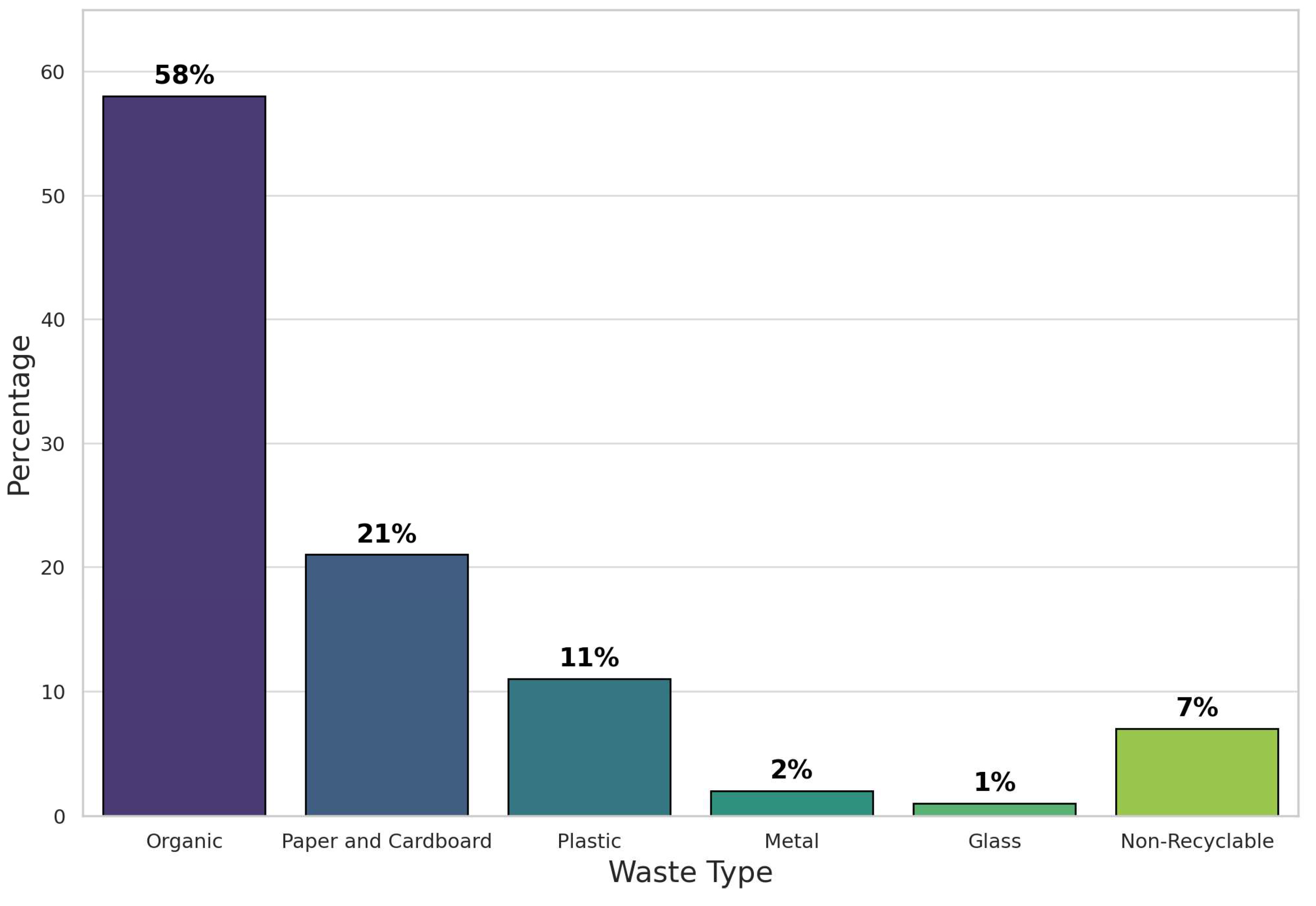
Figure 2.
Number of laboratories performing waste minimization practices and annual percentage variation (2015-2023). Caption: This comprehensive figure illustrates the trends in the number of laboratories performing six and five waste minimization practices from 2015 to 2023, as well as the annual percentage variation in these practices. The data highlight the progress made in adopting various waste minimization strategies, emphasizing the effectiveness of training and policy implementation over the years.
Figure 2.
Number of laboratories performing waste minimization practices and annual percentage variation (2015-2023). Caption: This comprehensive figure illustrates the trends in the number of laboratories performing six and five waste minimization practices from 2015 to 2023, as well as the annual percentage variation in these practices. The data highlight the progress made in adopting various waste minimization strategies, emphasizing the effectiveness of training and policy implementation over the years.
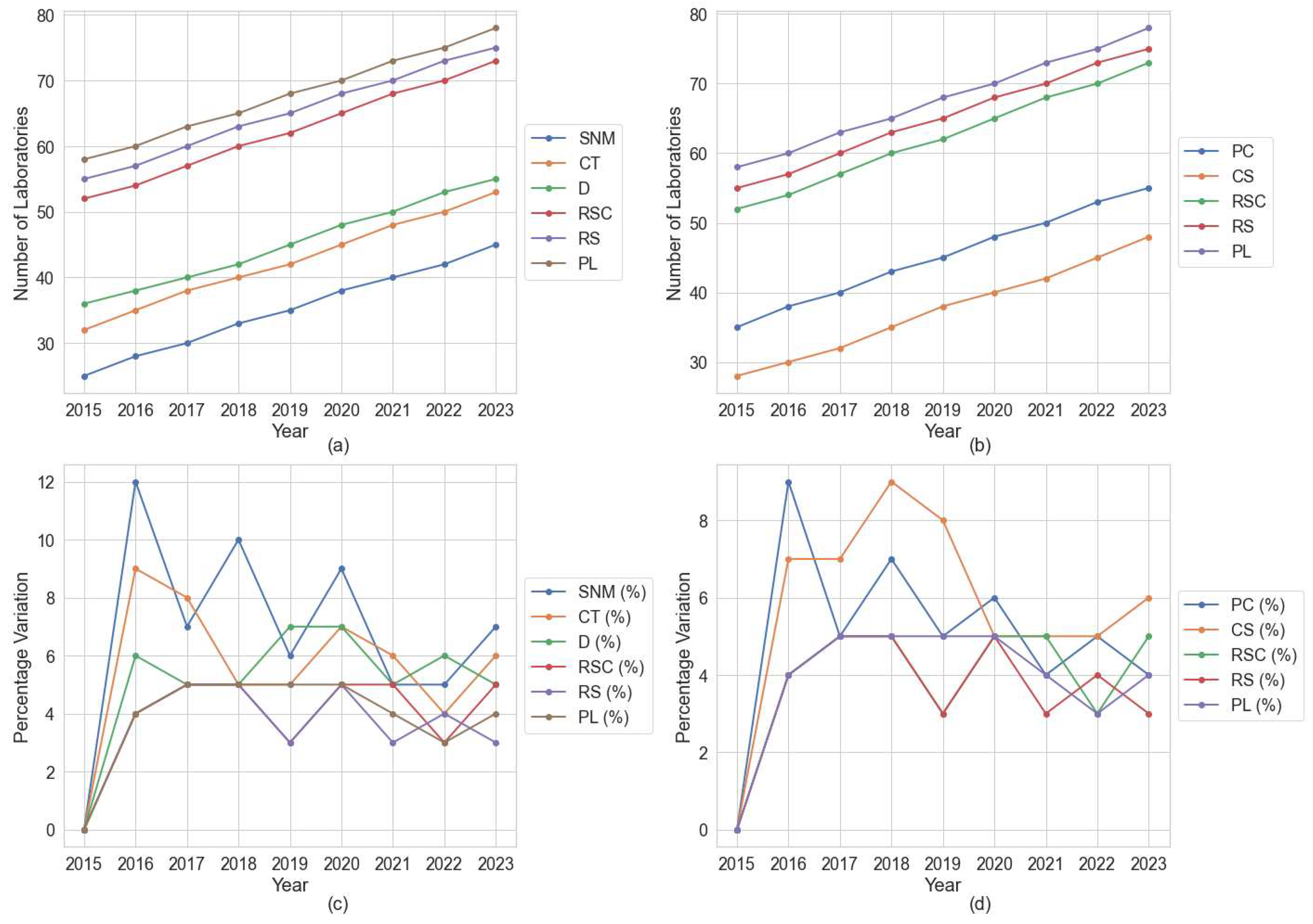
Figure 3.
Predictions for Six Waste Minimization Practices. Caption: This figure illustrates the actual and predicted number of laboratories performing six waste minimization practices from 2015 to 2030. The solid lines represent actual data collected from 2015 to 2023, while the dashed lines indicate predictions for the years 2025 and 2030. The practices include Source-Segregated Non-Metallics (SNM), Chemical Treatment (CT), Disposal (D), Recycling Systems (RSC), Reuse Systems (RS), and Process-Level Minimization (PL). The projections suggest a steady increase in the number of laboratories adopting these practices, reflecting the potential impact of ongoing government initiatives and policy improvements on national waste management and recycling efforts.
Figure 3.
Predictions for Six Waste Minimization Practices. Caption: This figure illustrates the actual and predicted number of laboratories performing six waste minimization practices from 2015 to 2030. The solid lines represent actual data collected from 2015 to 2023, while the dashed lines indicate predictions for the years 2025 and 2030. The practices include Source-Segregated Non-Metallics (SNM), Chemical Treatment (CT), Disposal (D), Recycling Systems (RSC), Reuse Systems (RS), and Process-Level Minimization (PL). The projections suggest a steady increase in the number of laboratories adopting these practices, reflecting the potential impact of ongoing government initiatives and policy improvements on national waste management and recycling efforts.
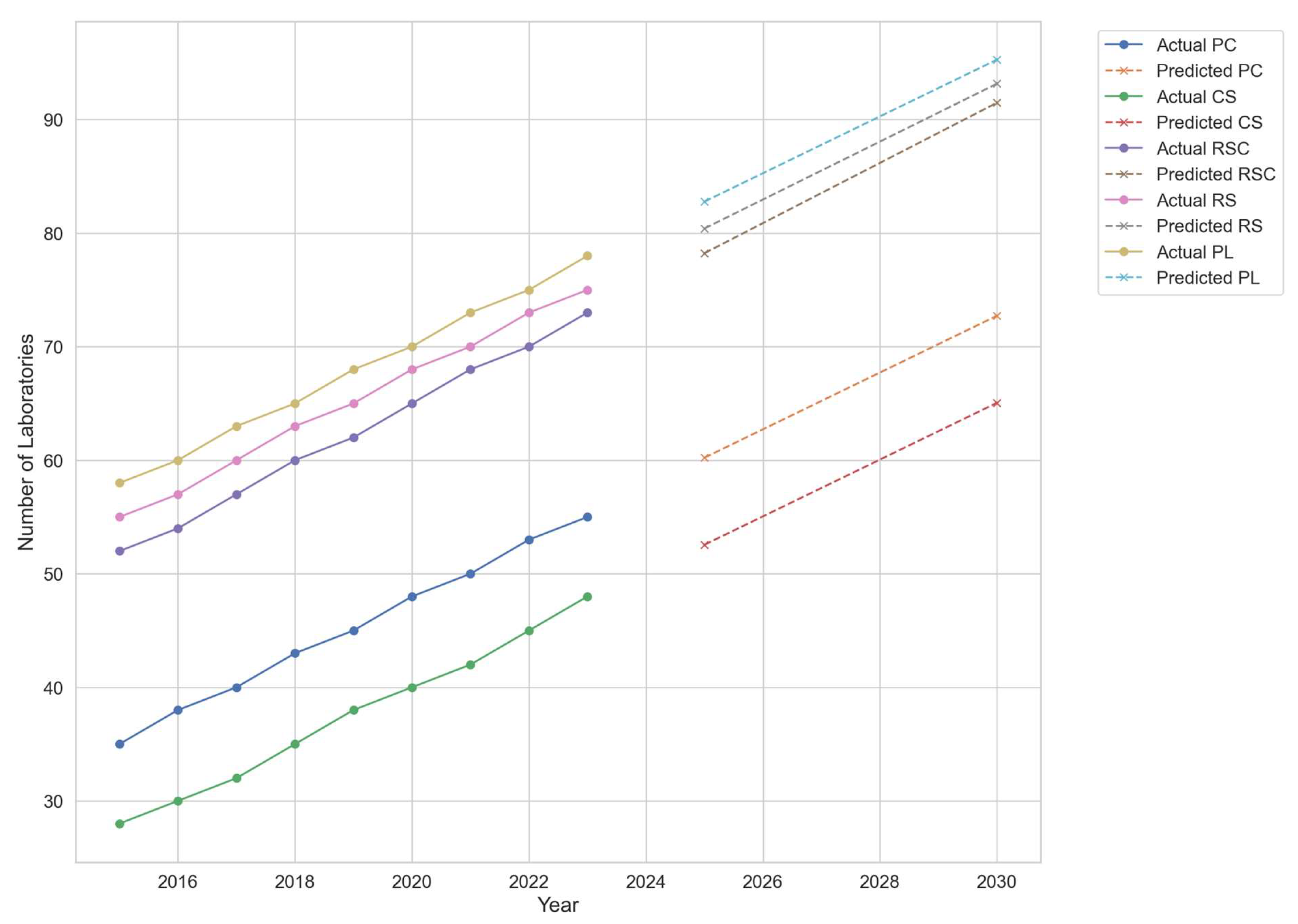
Figure 4.
Projections for Key Waste Minimization Practices in Costa Rican Laboratories (2015-2030). Caption: This figure illustrates the actual and predicted number of laboratories performing six waste minimization practices from 2015 to 2030. The solid lines represent actual data collected from 2015 to 2023, while the dashed lines indicate predictions for the years 2025 and 2030. The practices include substituting nonhazardous materials (SNM), chemical treatment (CT), distillation (D), redistributing surplus chemicals (RSC), reducing the scale of experiments (RS), and purchasing less (PL). The projections suggest a steady increase in the number of laboratories adopting these practices, reflecting the potential impact of ongoing government initiatives and policy improvements on national waste management and recycling efforts.
Figure 4.
Projections for Key Waste Minimization Practices in Costa Rican Laboratories (2015-2030). Caption: This figure illustrates the actual and predicted number of laboratories performing six waste minimization practices from 2015 to 2030. The solid lines represent actual data collected from 2015 to 2023, while the dashed lines indicate predictions for the years 2025 and 2030. The practices include substituting nonhazardous materials (SNM), chemical treatment (CT), distillation (D), redistributing surplus chemicals (RSC), reducing the scale of experiments (RS), and purchasing less (PL). The projections suggest a steady increase in the number of laboratories adopting these practices, reflecting the potential impact of ongoing government initiatives and policy improvements on national waste management and recycling efforts.
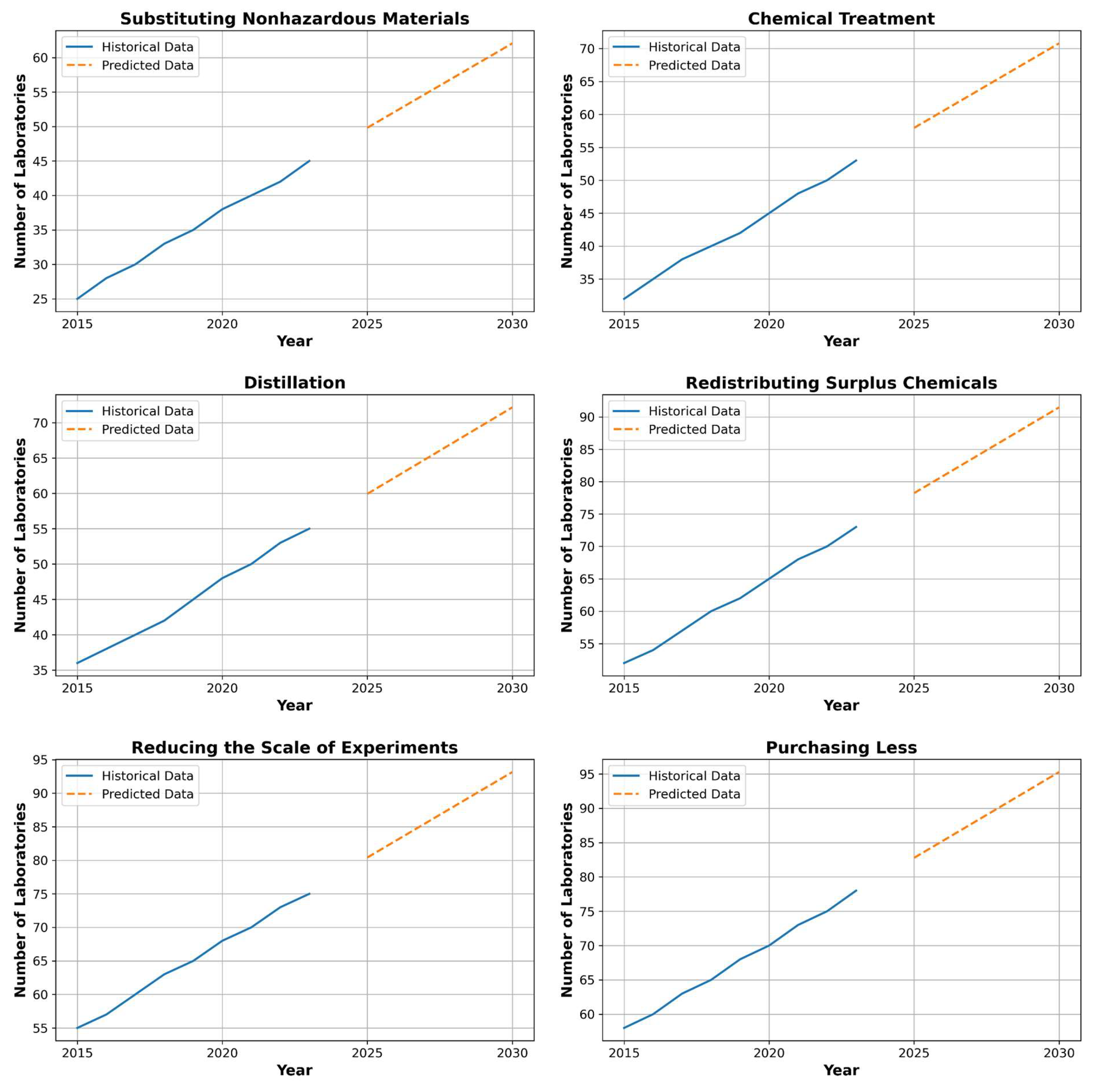
Figure 5.
Projections for Key Waste Minimization Practices in Costa Rican Laboratories (2015-2030). Caption: This figure illustrates the actual and predicted number of laboratories performing six waste minimization practices from 2015 to 2030. The solid lines represent actual data collected from 2015 to 2023, while the dashed lines indicate predictions for the years 2025 and 2030. These practices include substituting nonhazardous materials (SNM), chemical treatment (CT), and recycling systems (RSC). The projections suggest a steady increase in the number of laboratories adopting these practices, reflecting the potential impact of ongoing government initiatives and policy improvements on national waste management and recycling efforts.
Figure 5.
Projections for Key Waste Minimization Practices in Costa Rican Laboratories (2015-2030). Caption: This figure illustrates the actual and predicted number of laboratories performing six waste minimization practices from 2015 to 2030. The solid lines represent actual data collected from 2015 to 2023, while the dashed lines indicate predictions for the years 2025 and 2030. These practices include substituting nonhazardous materials (SNM), chemical treatment (CT), and recycling systems (RSC). The projections suggest a steady increase in the number of laboratories adopting these practices, reflecting the potential impact of ongoing government initiatives and policy improvements on national waste management and recycling efforts.
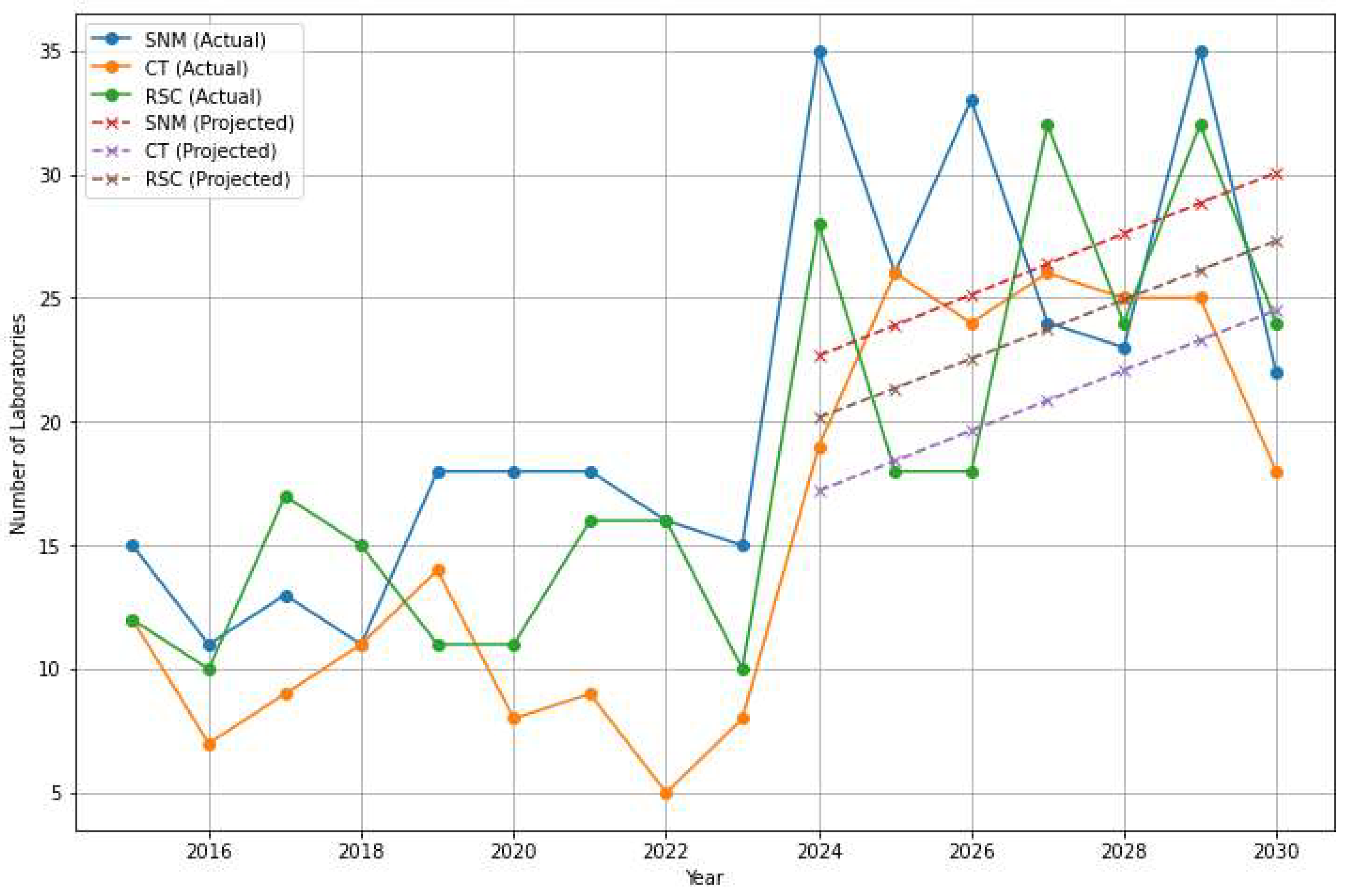

Table 1.
Waste Production and Recovery in Costa Rica (2021).
| Total Waste Sent to Landfill (tonnes) | Recoverable Waste (tonnes) | Recovery Rate (%) | Reference |
|---|---|---|---|
| 1,282,057 | 123,378 | 9.6 | [1] |
Table 2.
Landfill Capacities at Major Sites.
| Landfill Site | Daily Waste Received (tonnes) | Estimated Remaining Life (years) | Reference |
|---|---|---|---|
| La Carpio | 600 | 2-5 | [17] |
| Aserrí | 600 | 2-5 | [18] |
Table 3.
Government Initiatives and Goals.
| Initiative | Goal | Target Year | Reference |
|---|---|---|---|
| Environmental Health Route Policy | Increase recycling rate to 25% | 2033 | [23] |
| Environmental Health Route Policy | Ensure regular garbage collection in 34% of the territory | 2023 | [24] |
| National Circular Economy Strategy | Promote circular economy practices | Ongoing | [25] |
Table 4.
Impact of the Ecoins Program (2017-2023).
| Metric | Value | Reference |
|---|---|---|
| Collection Sites | 520 | [27] |
| Recyclable Waste Collected (tonnes) | 3,762 | |
| CO2 Emissions Avoided (tonnes) | 4,592 | |
| Registered Users (“Ecofans”) | 46,162 |
Table 5.
Global Recycling Rates.
| Region/Country | Recycling Rate (%) | Notes | References |
|---|---|---|---|
| European Union | ~47 | High standards, varies across member states | [31] |
| Germany | ~67 | Over 90% for specific materials like glass, metal | [32] |
| United States | ~32 | Significant state variation | [33] |
| Japan | ~20 | Known for meticulous waste sorting | [34] |
| Brazil | ~17 | Driven by informal waste pickers and cooperatives | [35] |
Table 6.
Factors Influencing Recycling Rates.
| Factor | Impact | Examples | References |
|---|---|---|---|
| Legislation and Policy | Stringent regulations lead to higher rates | EU member states | [31] |
| Public Awareness | High public involvement increases recycling participation | Germany, Japan | [32,34] |
| Infrastructure and Tech | Advanced systems enhance capacity | Developed countries | [33] |
| Economic Incentives | Financial incentives boost efforts | US, EU with deposit return schemes | [33] |
Disclaimer/Publisher’s Note: The statements, opinions and data contained in all publications are solely those of the individual author(s) and contributor(s) and not of MDPI and/or the editor(s). MDPI and/or the editor(s) disclaim responsibility for any injury to people or property resulting from any ideas, methods, instructions or products referred to in the content. |
© 2024 by the authors. Licensee MDPI, Basel, Switzerland. This article is an open access article distributed under the terms and conditions of the Creative Commons Attribution (CC BY) license (http://creativecommons.org/licenses/by/4.0/).
Copyright: This open access article is published under a Creative Commons CC BY 4.0 license, which permit the free download, distribution, and reuse, provided that the author and preprint are cited in any reuse.