

Submitted:
31 July 2024
Posted:
02 August 2024
You are already at the latest version
Abstract
The present study aimed to investigate the effect of solution of ethanol extractions of different microalgae species: Spirulina sp., Dunaliella sp. and Chlorella sp. on the accumulation of biologically active compounds in tomato fruits. Ethanol solution as well as treatment with drinking water were used as a control. Tomato cultivar ‘Belle’ F1 (Enza Zaden) was grown in 25 L pots, in peat substrate (pHKCl 5.5, producer Laflora LTd), polycarbonate greenhouse. Chemical composition – total carotenoids, lycopene and β-carotene content, total phenolics and anthocyanins, organic acids, vitamin C as well as dry matter, pH and soluble solids content – was determined in tomato fruits at the stage of full ripen. The influence of tested extracts on biologically active compounds on quality parameters of tomatoes was different, but no negative effect was observed. As only pH values as well as total phenol content and total soluble solids had statistically significant differences, results can be described with genetical stability of the cultivar.
Keywords:
microalgae
; Solanum lycopersicum L
; chemical composition
; lycopene
1. Introduction
The use of biostimulants in agriculture has emerged as a promising strategy to improve crop growth and yield. Microalgae extracts as bio-stimulants are known because of their bioactive compounds, high metabolic activity as well as ability to enhance plant growth and development [1,2,3]. Previous studies showed microalgae-based biostimulants as a promising, environmentally friendly and sustainable agricultural technique for increasing crop yield and sustainability [4]. Thus, microalgae extracts can be defined as a potential source of nutrition that reduces the need for agricultural land use, decreasing the environmental impact of food production, while improving health [5]. They are also widely used in the aquaculture and poultry industries [6], cosmetics and pharmaceutical industries [6,7,8,9,10], as a source of biofuels, for food and feed supplements [6,11], as biological fertilisers, including macro- and microelements [11]. Microalgae are microscopic single-celled plants that have high rates of growth and photosynthetic efficiency and relatively low natural resource requirements compared to traditionally grown crops [7,12].
Microalgae are photosynthetic microorganisms and one of the oldest forms of life on Earth; however, they remain rather unexplored [13]. Microalgae are a diverse group of unicellular or simple multicellular photosynthetic organisms that can be found in various aquatic environments, such as oceans, freshwater bodies and even in damp soil. They are classified under the group of microorganisms called phytoplankton [14,15]. Microalgae estimate the existence of hundreds of thousands to several million of species. Among these, only approximately 73,000 are currently identified, being a small fraction cultivated at industrial scale for commercial purposes [16]. The cultivation of microalgae has been studied extensively within the field of biotechnology [11]. Microalgae produce an extensive array of antioxidant molecules, including carotenoids, polyphenols, phycobilins, tocopherols, and essential fatty acids. Carotenoids, such as β-carotene, lutein and astaxanthin [7,8,15,17,18,19], phenolic compounds, chlorophyll a, b pigments [11,20,21] found in certain microalgae species, emerges as a “super antioxidant” with a plethora of health benefits [22]. Microalgae are rich in bioactive compounds such as proteins, carbohydrates, lipids, pigments, vitamins and minerals [8,23]. Owing to their diverse chemical properties, they can act as a nutritional supplement or represent a source of natural food colorants [6]. The antioxidant capacity of microalgae is closely linked to their biochemical composition, which varies across different species, growth conditions, and environmental factors. This variability opens a vast reservoir of potential antioxidant sources, each with unique bioactive profiles and health-promoting properties [18,24,25,26]. Microalgae are able to enhance the nutritional content of conventional food preparations and hence, to affect the health of humans and animals positively [6]. Microalgae extracts can cause plant defense responses by activating enzymes. Cyanobacteria can produce various antimicrobial substances which inhibit growth of various bacteria, fungi, nematodes or even some insects [27]. Although much less studied, microalgal biomass can be used as an organic slow-release fertilizer [11]. The application of these biofertilisers stimulates plant growth and increases crop yields. In addition, the cultivation of persimmon and tomato fruits resulted in improved fruit quality, through higher sugar and carotenoid concentrations in fruits [11,28]. Microalgae-based fertilisers also offer advantages within a larger sustainability framework. In contrast to nutrient-rich waste streams such as manure, microalgal biomass can function as a stable, predictable, transportable and concentrated fertiliser product. This allows it to be introduced in modern greenhouse horticulture. Furthermore, the additional plant growth promoting characteristics of the microalgal biomass demonstrate that nutrient recovery through microalgae cultivation gives an additional value compared with direct application of waste streams on cropland [11,29].
Tomato (Solanum lycopersicum L.) is a commercially important crop grown for fresh or processed consumption. Self-compatibility and short life cycles (90–120 days) are appealing factors for agricultural producers [30]. Tomatoes are among the most widely consumed vegetables in the human diet and serve as a source of minerals, vitamins, and antioxidant compounds [31,32,33], while high taste quality and nutritional value [34,35,36] are important for consumers. Tomatoes have gained more popularity in recent years. They contain high amounts of bioactive compounds such as flavonoids, phenolics, anthocyanins, phenolic acids as well as important nutritive compounds such as sugars, essential oils, carotenoids, vitamins, and minerals. Tomato fruits have a distinct flavour, taste together with excellent medicinal value and health care functions [37,38]. Tomato is one of the most consumed vegetables in the world [34,39]. It is grouped as the world’s 2nd essential vegetable crop, grown in almost all regions of the world [34]. Tomatoes are mainly popular as a food because of these factors, also they are important economically, especially in the agricultural sector. The economic benefit of tomatoes is that fruits are used in a wide variety of foods, including sauces, soups, juices, and ketchups [30].
The implementation of innovative nutrient recycling technologies, green fertilizers, and advanced cultivation practices are needed to increase agricultural outputs, improve nutrient use efficiencies and reduce nutrient losses. In modern greenhouses, horticulture is characterized by high crop yields and a stable year-round supply of high-quality fruits and vegetables. This high crop output is often accompanied by the intensive and unsustainable use of biocides, inorganic fertilizers and soilless cultivation techniques [11]. This indicates that nutrients recovered through microalgae cultivation can be recycled as microalgae-based fertilizers to improve the quality and market value of greenhouse crops. Nowadays greenhouse cultivation is the most intensive form of crop production. Greenhouse equipment and covering material provide a controlled microclimate that may be adapted to the needs of the crops, resulting in higher yield, quality and lengthening of the market availability of the products. Greenhouse production requires the use of large amounts of energy, water and agrochemicals, and it usually generates huge quantities of wastes to be disposed of. Investments, labour and energy costs per unit area are much larger in the greenhouse industry than in any other agricultural sector [40].
The present study aimed to investigate the effect of solution of ethanol extractions of different microalgae species: Spirulina, Dunaliella and Chlorella on the accumulation of biologically active compounds in tomato fruits.
2. Materials and Methods
2.1. Preparation of the microalgae extractions
Microalgae Spirulina sp., Chlorella sp. and Dunaliella sp. were grown autotrophycally in 14 L closed-system photo-bioreactors (VariconAqua Solutions Ltd., Great Britain). Water-ethanol extractions with final ethanol concentrations, % v/v 25.0, 25.8 and 23.8 respectively, density (20 °C, g cm-3) 0.973, 0.970 and 1.060 respectively, pH 6.9; 6.4 and 5.6 respectively, content of non-volatile substances, % 1.7, 1.3 and 2.7 respectively were obtained from the air-dried (70 °C) microalgae biomass. In the further text, the obtained extraction is considered as 100% for describing the solution concentrations for treatments.
2.2. Plant material and sampling
The experiment was provided in a polycarbonate greenhouse of the Laboratory of Horticulture and Beekeeping of the Institute of Soil and Plant Sciences, Faculty of Agriculture and Food technology, Latvia University of Life Sciences and Technologies. Seeds of tomato cultivar ‘Belle’ F1 (Enza Zaden) were sown at 1st July of 2023 in plastic cassettes with peat substrate (pH KCl 5.5, producer Laflora Ltd.,). At 18th July seedlings were replanted in 1 L pots, but in August 2023, at the age of 35 days, in 25 L pots with the same peat substrate. From seedlings growing till the start of harvesting plants were sprayed weekly, for a total of nine times, with the solution of ethanol extractions of three microalgae species: Spirulina sp., Dunaliella sp. and Chlorella sp. Two concentrations of the extracts (10% and 20% v/v) were compared with sprays with corresponding ethanol solution as a control (2% and 4% v/v) as well as with control spray with drinking water. Nine plants per treatment were used.
During experiment, plant care (irrigation, fertilisation, phytosanitary measures) was provided regularly. Plants were pruned by traditional scheme. Automatic ventilation and additional lighting, provided by high-pressure sodium lamps, were carried out by necessity. Yield was harvested 13 times, once per week, from the end of September (30/09) till the end of December (23/23), at the stage of full ripening (Figure 1).
2.3. Determination of vitamin C content
The content of vitamin C was determined titrimetrically using 2.6-dichlorophenol-indophenol [41]. For determination, 2±0.001 g of tomato fruit was quantitatively transferred in 100 mL tubes, added 50 mL of 1% HCl and 5% H3PO4 solution (1:1 v/v) and mixed thoroughly. After 30 minutes the solution was filtered through a filter paper. Then 10 mL (Va) of filtrate was titrated with 0.0005 molar solution of 2,6-dichlorophenol-indophenol (Vtitr). The content of vitamin C (mg 100 g-1) was calculating according to the equation (1):
Where:
m – content of vitamin C;
Vtitr – volume of 2.6-dichlorophenol-indophenol used for titration, mL;
0.044 v amount of ascorbic acid, which reduce 1 mL 0.0005 M 2,6 dichlorophenolindophenol solution, mg;
Vt – total filtrate volume, mL;
Va – volume of filtrate (10 mL);
weight – weighed amount of plant material.
2.4. Determination of titratable acidity (TA)
Titratable acidity (TA) was determined titrimetrically [42] with a solution of sodium hydroxide 2±0.001 g of tomato fruit was quantitatively transferred in 100 mL tubes, added 40 mL of distilled water (0.055 µS cm-1) and mixed. After 30 minutes solutions were centrifuged for 10 min at 5000 rpm. For determination 10 mL of the supernatant was titrated with 0.1 M NaOH in presence of indicator phenolphthalein.
Where:
TA – Titratable acidity;
VNaOH – volume of used 0.1 M NaOH;
Vt – total volume (20 mL);
Vs c sample volume (5mL).
Results expressed as g of citric acid 100 g-1 tomato fruit sample fresh matter (FM).
2.5. pH value measurements were determined by standard method LVS ISO 5542:2010 using JENWAY 3520 pH Meter.using a Jenway 3510 pH Meter.
2.6. Determination of lycopene and β-carotene
To determine the concentration of lycopene and β-carotene, samples of 0.5 ± 0.001 g from the tomato fruits were weighed into a tube and 10 mL of tetrahydrofuran (THF) was added [43]. The tubes were sealed and kept at room temperature for 15 min, shaking occasionally, and finally centrifuged for 10 min at 5,000 rpm. The absorbance of the supernatants obtained was determined spectrophotometrically by measuring the absorbance at 663, 645, 505, and 453 nm and then the lycopene and β-carotene contents (mg 100 mL−1) were calculated according to the following equation.
Clyc = (0.0458 × A663) + (0.2044 × A645) + (0.372 × A505) - (0.0806 × A453)
Ccar = (0.216 × A663) - (1.22 × A645) - (0.304 × A505) + (0.452 × A453)
Where:
A663, A645, A505 and A453—absorption at corresponding wavelength [44].
2.7. Determination of anthocyanins content
Total anthocyanin content was determined by spectrophotometric method according to [45,46], detected on spectrophotometer Jenway 6705 at wavelength of 540 nm. 20 g of sample was doused with 40 g of ethanol and 1.5 M HCl solution (85:15 by volume) and homogenised for 1 min. Then samples were filtered, and light absorption at 540 nm was detected with a spectrophotometer. Samples were diluted until absorption coefficient was between 0.6 and 0.8. Content mg per 100 g was calculated with the equation (5) [47].
Where:
C – total anthocyanin content;
A – absorption coefficient;
v – volume of the extraction (90 mL);
d – dilution;
m – sample weight in g (20);
Measurements were carried out in three replications.
2.8. Determination of total phenols content
The content of total phenols was determined using the spectrophotometric method (detected on spectrophotometer SHIMAZU UV-1800) with its modification. For determination, 1±0.001 g of the plant sample was placed in a graduated test tube, 10 mL of methanol-water-hydrochloric acid solution (79:20:1 v/v/v) was added, shaken for 30 minutes, then separated in a centrifuge (6000 revolutions per minute). The light absorption of the solution is only read at a wavelength of 320 nm (A320). The phenolic content of the plant material (mg GAE g-1) was calculating according to the equation (6):
Where:
m – total phenolic content;
A320 – absorption determined experimentally at 320 wavelength;
mweight – sample weight, g;
m – phenol content in plant material [48].
2.9. Determination of dry matter and total soluble solids
Dry matter was determined by drying samples in the thermostat at 60 °C.
The total soluble solids content (expressed as BRIX degree) was measured with a digital refractometer (A.KRÜSS Optronic Digital Handheld Refractometer DR301-95), calibrated at +20 °C ± 2 °C with distilled water (deviation of measuring instrument face value ± 0.1%) by standard method ISO 2173:2003.
2.10. Determination of fruits mass and taste index
In order to determine the mean weight and the dimensions of tomato fruits, during harvesting, fruits per each sample were counted and weighed using an electric balance with an accuracy of ±0.001 g. Taste index was calculated using soluble solids content and acidity [49,50].
The taste index (TI) was calculating according to the equation (7):
Where:
TSS - total soluble solids, oBrix;
TA- titratable acidity [51].
Connections between fruit mass and taste index in tomato fruits were analysed.
2.11. Statistical analysis
Analyses were performed in three replicates and each one was measured for three repetitions. SPSS 21 (Statistical Package for Social Sciences) Two-way analyses of variance (One-Way-ANOVA) was used. Scheffe post-hoc test, Homogeneity of variance test were made to determine significance of differences. For mathematical data processing p< 0.05; α=0.05 was regarded as statistically significant. Data were expressed as means ± standard deviation (S.D.).
Figure 2 depicts the general scheme of the study.
3. Results
Vitamin C, determined titrimetrically, is one of the important major phytonutrients in tomatoes. As it is well known, vitamin C is very sensitive to daylight and oxygen. Therefore, the vitamin C extraction and analysis period must be kept as short as possible [52]. Vitamin C content data is represented in Table 1.
After mathematical data processing it was proved that the influence of different microalgae species: Spirulina sp., Dunaliella sp. and Chlorella sp. extract concentrations on the Vitamin C content in tomato fruits was not significant (p=0.304; α=0.05). In the present study maximum content of vitamin C 18.55 ± 0.74 mg 100 g-1 (in fresh matter) was found in tomato fruits treated with Dunaliella, 10% v/v. In turn with control, ethanol, 4% v/v, Spirulina, 20% v/v and Chlorella, 20% v/v treated tomato vitamin C content decreased (p=1.000; α=0.05), respectively 15.68 ± 0.56 mg 100 g-1, 15,68 ± 0.94 mg 100 g-1 and 15.47 ± 0.83 mg 100 g-1 (in fresh matter) (Table 1).
The titratable acidity (TA) and pH are two important quality attributes of tomato fruits. Tomatoes are not a low-acid food. The pH of tomatoes is determined primarily by the acid content of the fruit. The acidity of the fruit is also important as a contributor to the flavour of the tomato products [53]. The results of titratable acidity content performed on the tomato fruits samples formulation revealed that titratable acidity varied in the range of 0.25 ± 0.02 g 100 g-1 to 0.45 ± 0.03 g 100 g-1 (Table 1), which indicates acidic environment. The difference between lowest and highest titratable acidity content was not significant (p=0.637; α=0.05). The highest titratable acidity content was found in tomato fruits treated with control, ethanol, 2% v/v (0.45 ± 0.03 g 100 g-1). Little lower results were gained in where tomatoes were treated with Dunaliella, 20% v/v, Spirulina, 20% v/v respectively 0.25 ± 0.02 g 100 g-1 and 0.27 ± 0.02 g 100 g-1.
The pH value indicates the hydrogen ion concentration which depicts the acidity level [54]. pH value data is represented in Figure 1. pH value of tomato fruits were significantly affected (p<0.05; α=0.05) by different microalgae species levels and their application as well as their interaction. Maximum values of pH (4.30 ± 0.11) were found in tomato fruits treated with Chlorella, 10% v/v, while minimum value of pH (4.21 ± 0.14) was noted in the control variant with Drinking water.
Carotenoids are lipophilic pigments that protect plants against photo-oxidative damage [32]. As one of the predominant carotenoids in tomatoes, lycopene is responsible for the colour of tomato fruits [55,56]. It is a bright red carotenoid pigment and phytochemical found in tomatoes and other red fruits [57].
Lycopene content data is represented in Figure 3. Lycopene content of tomato fruits was not significantly affected by different microalgae species and their application`s concentration as well as by interaction (p=0.156; α=0.05). Maximum content of lycopene 0.98 ± 0.10 mg 100 g-1 and 0.92 ± 0.06 mg 100 g-1 (in fresh matter) (p=1.000; α=0.05) was observed in tomato fruits treated with control, drinking water and Chlorella, 20% v/v, respectively. While minimum content of lycopene (0.60 ± 0.03 mg 100 g-1; 0.66 ± 0.05 mg 100 g-1 and 0.68± 0.02 mg 100 g-1 (in fresh matter) was noted, respectively in variants with control, ethanol, 2% v/v; Dunaliella, 10% v/v and Chlorella, 10% v/v.
The data in Figure 3 about the content β-carotene of tomato fruit presents no significant effect (p=0.118; α=0.05) by extractions of different microalgae species and their interaction, similar to lycopene. The maximum content of β-carotene (4.07 ± 0.19 mg 100 g-1 (in fresh matter) was found in control plants with drinking water. In turn the minimum content of β-carotene (2.62 ± 0.14 mg 100 g-1 and 2.62 ± 0.18 mg 100 g-1 in fresh matter) was noted in tomato fruits under control, ethanol, 2% and Dunaliella, 10% v/v.
Polyphenols are secondary metabolites produced by the plant against abiotic and biotic stresses, and are also involved in the processes of plant growth and reproduction [58].
Anthocyanins are blue, red, or purple pigments found in plants, especially flowers, fruits and tubers. These compounds are natural, water-soluble pigments. Anthocyanins appear as a red pigment in an acidic environment, and as a blue pigment in alkaline conditions. Significant differences are not observed for anthocyanins` content in the tomato fruits between different microalgae species: Spirulina, Dunaliella and Chlorella as well as control samples (p=0.708; α=0.05) (Table 2). On average for all tomato samples, content of anthocyanin was stated between 0.07 and 0.42 mg 100 g-1 (in fresh matter). However, it should be noted that the content was higher (p> 0.05; α=0.05) in tomato samples under control with drinking water, respectively 0.42 ± 0.04 mg 100 g-1 (in fresh matter). And the lowest anthocyanin content was shown by control, ethanol, 4% v/v (0.09 ± 0.01 mg 100 g-1) (p> 0.05; α=0.05).
Data about the total phenol content in tomato fruits is represented in Table 2. Total phenol content was significantly affected by different microalgae species and their interaction (p<0.05; α=0.05). Maximum total phenol content (166.93 ± 2.01) was found in tomato fruits under control with drinking water (p=0.04; α=0.05). In turn minimum total phenol content (137.59 ± 1.34) was noted under control, ethanol, 2% v/v.
The components in the fruit consist of water-soluble components, such as glucose, sucrose fructose, and water soluble proteins (pectin) [54]. Soluble solids is the content of total soluble sugars, determined refractometrically in oBrix units. Soluble solid is one of the most important quality factors of fruits and vegetables. On the other hand, it is known that the content of soluble solids changes during the ripening of tomato fruits. Figure 4 depicts the content of dry matter (%) and total soluble solids (oBrix) in tomato fruits which are treated with different microalgae extracts. Our study results showed that the content of total soluble solids of tomato fruits were significantly affected by different microalgae species and extracts` application as well as their interaction. Maximum content of total soluble solids were 4.4 ± 0.18 oBrix (control, drinking water) and 4.29 ± 0.05 oBrix (Dunaliella sp. extract, 20% v/v) while minimum content of total soluble solids was 3.93 ± 0.12 (Chlorella sp. extract, 20% v/v).
Content of dry matter of the tomato fruit samples presented no significant differences between different microalgae species (p=0.785; α=0.05) (Figure 4). The content of dry matter performed on the fresh tomato fruits samples formulation revealed that the content of dry matter ranged from 3.49% to 4.91%.
By fruit mass (Table 3), maximal result (325.76 g) was observed for the control variant with ethanol, 4% v/v, but the taste index was 0.34 only. Minimal fruit mass (34.7 g) was observed for the variant with Chlorella, 10% v/v, taste index 0.33 respectively. The higher taste index was observed for both variants with Spirulina sp. extract: 0.57 under 10% v/v and 0.54 under 20% v/v (Table 3). For these variants, average fruit mass was 101.66 g and 116.15 g respectively. The minimal taste index was observed for variants with drinking water (0.31), average fruit mass was 92.49 g for this variant.
In averages, the highest result (129.33) in fruit mass was observed for the variant with Dunaliella, 10% v/v, while the closest average fruit mass (92.49 g) was noted under control with drinking water. The difference between average tomato fruit mass, g (Table 3) was not statistically significant (p=0.673; α=0.05). Excluding variants with Spirulina sp., influence of the type and concentration of algae extract on the taste index was not observed.
4. Discussion
In present research, the content of vitamin C in tomatoes varied from 15.47 till 17.96 mg 100 g-1. Scientists from Romania reported that the content of vitamin C in tomatoes was 15.5 – 20.7 mg 100 g-1 [59]. From the Slovak researchers` results [60]. it is possible to conclude that the average content of vitamin C in tomato fruits was in the range 17–21 mg 100 g-1 (in fresh matter). Similar values are shown by a study of Latvian scientists where the vitamin C content in tomatoes was 4.14 – 8.07 mg 100 g-1, 11.23 – 18.43 mg 100 g-1 and 9.9 – 15.4 mg 100 g-1 [61,62,63] (in fresh matter).
By scientists from Portugal [59], more mature tomatoes have higher pH. On the other hand, the acid content has an increasing tendency during ripening to the breaker stage and then results decrease. This can describe the pH results 4.21–4.30 in curent study.
In scientific articles it is described, that the composition of carotenoids can vary quantitatively and qualitatively, and it can be affected by storage conditions and duration, variety [64,65] as well as climate, season, geographic location, maturity phase [66]. Similar results as in our research about the lycopene content in tomatoes were found in the scientific literature analysed in Latvia, where data varied 0.07 – 27.11 mg 100 g-1 [42,67].
Also in the case of β-carotene, similar results were found in the scientific literature about tomatoes analysed in Latvia: 0.04 – 11.73 mg 100 g−1 [42,67]. Slovak scientists determined the lycopene content in red tomatoes from 1.16 to 5.57 mg 100 g-1 and 0.88 to 4.20 mg 100 g-1 [68,69]. The antioxidant potential of lycopene is higher than of β-carotene [70,71]. Researchers [11] accepted that different microalgae species extract influence higher or lower concentration of carotenoids in tomato fruits.
Scientists from Latvia [42] reported that the comparison of biochemical compounds is often difficult due to the great influence of agronomic factors such as varieties, growing conditions and harvesting time. Furthermore, this content increases from the mature green stage to the red stage [72,73]. Soluble solid affects the sweetness of vegetables [74] and length of storage period, as well as quality characteristics [75].
Scientific literature mentions that the dry matter content in tomatoes was between 5.42 to 8.25% [41]. The content of soluble solids in tomatoes grown by scientists was determined similarly: from 3.8 to 10.2 oBrix [42] and 1.11 to 7.2 oBrix [59]. On the other hand, the taste index of Latvian tomatoes described in the articles varied between 0.95 and 1.38 [42,67], 0.95 to 1.26 [41]. Our data can be described that tomatoes were grown in autumn-winter, not in summer cycle. But in other article it was similar data, where the taste index was from 0.34 to 0.53 [59],
The obtained results regarding tomato fruit mass are similar with other results [41], but [76,77] reported fruit mass between 66 to 158 g and 107 to 185 g, respectively, which are lower than our study results.
Latvian scientists study [41] reported that customers often pay attention not only to the colour of tomato fruits, but also to the size. When comparing the results of fruits mass and taste index, it is observed that higher taste index is for smaller or bigger tomatoes. In turn an interesting conclusion has been discovered by researchers from China [78], who conclude in their study that when tomato fruit size is reduced due to reduced irrigation or high salinity, applying additional stress may reduce fruit susceptibility. Therefore, it is necessary to consider a reasonable water regime in the practical management of tomatoes grown in saline soil regions to ensure high-quality tomato production.
Scientists [2] have proven in their research that microalgae-based bio-stimulants stimulates cucumber and tomato seeds germination, which could possibly increase fruit mass as well, thereby [11,79] raising the biomass, stimulated plant growth and increased crop yields and quality. Furthermore, scientists [11] reported that nutrients recovered through microalgae cultivation can be recycled as microalgae-based fertilisers to improve the quality and market value of high-value fruits such as tomatoes.
5. Conclusions
The obtained results showed that maximum content of vitamin C 18.55 ± 0.74 mg 100 g-1 (in fresh matter) was found in tomato fruits treated with Dunaliella sp. extract, 10% v/v. The highest titratable acidity content was found in tomato fruits treated with control, ethanol, 2% v/v (0.45 ± 0.03). Maximal value of pH 4.30 ± 0.11 was found in tomato fruits treated with Chlorella sp. extract, 10% v/v. Maximal content of β-carotene (4.07 ± 0.19) was found in control plants with drinking water. Maximal content of lycopene 0.98 ± 0.10 mg 100 g-1 and 0.92 ± 0.06 mg 100 g-1 (in fresh matter) (p=1.000; α=0.05) was observed in tomato fruits treated with drinking water and Chlorella sp. extract, 20% v/v, respectively. The anthocyanin content was higher (p>0.05; α=0.05) in tomato samples under control variant with drinking water: 0.42 ± 0.04 mg 100 g-1 (in fresh matter). Maximum total phenol content 166.93 ± 2.01 was found in tomato fruits treated with drinking water (p=0.04; α=0.05). Maximum content of total soluble solids were 4.4 ± 0.18 oBrix under control with drinking water and 4.29 ± 0.05 oBrix under treatment with Dunaliella sp. extract, 20% v/v. The content of dry matter performed on the fresh tomato fruits samples formulation revealed that the content of dry matter ranged from 3.49% to 4.91%. By the taste index, higher results were under Spirulina sp. extract, 10% v/v and Spirulina sp. extract, 20% v/v, respectively 0.57 and 0.54.
Our study showed the influence of microalgae-based bio-stimulants Spirulina sp., Dunaliella sp. and Chlorella sp. on quality parameters of tomatoes are different. As statistically significant influence was observed only for pH values, total phenol content and total soluble solids, results can be described with the genetical stability of the cultivar. No negative effects of any tested extracts on biologically active compounds in tomatoes were observed.
Author Contributions
Conceptualization, I.A., I.S.; methodology, I.A., K.K., P.S., I.S.; formal analysis, I.A., I.S., K.K., I.M.; investigation, I.S., I.A., K.K., I.M.; resources, I.S., I.A.; data curation, I.A., I.S.; data interpretation, I.A.; writing—original draft preparation, I.A., I.S.; writing—review and editing, I.A., I.S.; visualization, I.A.; supervision, I.A.; project administration, P.S., K.K.; funding acquisition, P.S., K.K. All authors have read and agreed to the published version of the manuscript.
Funding
This study was performed within the project “Developing and testing of new microbiological preparations for improvement of crop productivity” (grant No. 22-00-A01612-000014) co-financed by European Agricultural Fund for Rural Development (EAFRD) and supported by the Ministry of Agriculture and Rural Support Service of the Republic of Latvia.
Data Availability Statement
The data presented in this study are available on request from the corresponding author.
Conflicts of Interest
The authors declare no conflict of interest.
References
- Sousa, V.; Marques, P.R.A.; Vicente, A.M.; Dias, O.; Geada, P. Microalgae biomass as an alternative source of biocompounds: new insights and future perspectives of extraction methodologies. Food Res. Int., 2023, 173, pp. 1–16. [CrossRef]
- Gharib, F. A. E. L. , Osama, K., Sattar, A. M. A. E., & Ahmed, E. Z. (2024). Impact of Chlorella vulgaris, Nannochloropsis salina, and Arthrospira platensis as bio-stimulants on common bean plant growth, yield and antioxidant capacity. Scientific Reports, 14(1), 1398. [CrossRef]
- Montuori, E.; Lima, S.; Marchese, A.; Scargiali, F.; Lauritano, C. Lutein production and extraction from microalgae: recent. [CrossRef]
- Gharib, F.A.E.L.; Osama, K.; Sattar, A.M.A.E.; Ahmed, E.Z. Impact of Chlorella vulgaris, Nannochloropsis salina, and Arthrspira insights and bioactive potential. Int. J. Mol. Sci., 2024, 25, 2892, pp.1–33.
- Ronga, D.; Biazzi, E.; Parati, K.; Carminati, D., Carminati, E.; Tava, A. Microalgal bio-stimulants and biofertilisers in crop productions. Agronomy, 2019, 9, 192, pp. 1–22.
- Mapelli-Brahm, P.; Gómez-Villegas, P.; Gonda, M.L; León-Vaz, A.; León, R.; Mildenberger, J.; Rebours, C.; Saravia, V.; Vero, S., Vila, E.; Meléndez-Martínez, A. J. Microalgae, seaweeds and aquatic bacteria, archaea, and yeasts: sources of carotenoids with potential antioxidant and anti-Inflammatory health-promoting actions in the sustainability era. Mar. Drugs, 2023; 21(6), 340, pp. 1–45. [CrossRef]
- Spolaore, P.; Joannis-Cassan, C.; Duran, E; Isambert, A. Commercial applications of microalgae. J. Biosci. Bioeng., 2006, 101(2), pp. 87–96. [CrossRef]
- Nemani, N.; Dehnavi, S. M.; Pazuki, G. Extraction and separation of astaxanthin with the help of pre-treatment of Haematococcus pluvialis microalgae biomass using aqueous two-phase systems based on deep eutectic solvents. Sc. Rep., 2024, 14:5420, pp. 1–13. [CrossRef]
- Abdelrahim, H.; Eladel, H.; Battah, M.; Radwan, A.; Saber, A.A. Antioxidant, antimicrobial, and anticancer activity of an extract of two pollution-tolerant green microalgae. Benha J. of Appl. Sc., 2024, 9(3), pp. 187–196. [CrossRef]
- Mularczyk, M.; Michalak, I.; Marycz, K. Astaxanthin and other nutrients from haematococcus pluvialis—multifunctional applications. Mar. Drugs 2020, 18(9), pp. 1–22. [CrossRef]
- Di Lena, G.; Casini, I.; Lucarini, M.; Lombardi-Boccia, G. Carotenoid profiling of five microalgae species from large-scale production. Food Res. Int. 2019, 120, pp. 810–818. [CrossRef]
- Coppens, J.; Grunert, O.; Hende, S.V.D.; Vanhoutte, I.; Boon, N.; Haesaert, G.; Gelder, L.D. The use of microalgae as a high-value organic slow-release fertilizer results in tomatoes with increased carotenoid and sugar levels. J. of App. Phyc., 2016, 28, pp. 2367–2377. [CrossRef]
- Dudina, I.; Kalashnikova, E.; Kirakosyan, R. Green microalgae chlorella in the study of the biosynthetic potential of higher plants in vitro. BIO Web of Conferences, 2024, pp.1–8. [CrossRef]
- Geada, P.; Loureiro, L.; Teixeira, J. A.; Vasconcelos, V.; Vicente, A. A.; Fernandes, B. D. Evaluation of disruption/permeabilization methodologies for Microcystis aeruginosa as alternatives to obtain high yields of microcystin release. Algal Res., 2019, 42, 101611, pp. 1–7. [CrossRef]
- Caroppo, E.; Mazza, M.; Sannella, A.; Marano, G.; Avallone, C.; Claro, A. E.; Sani, G. Will nothing be the same again?: changes in lifestyle during COVID-19 pandemic and consequences on mental health. Int. J. of Env. Res. and Pub. Health, 2021,. 18(16), 8433, pp. 1–8. [CrossRef]
- Pereira, L.; Cotas, J.; Valado, A. Antioxidants from microalgae and their potential impact on human well-being. Expl. of Drug Sc., 2024, 2, pp. 292–321. [CrossRef]
- Cunha, E.; Sousa, V.; Geada, P.; Teixeira, J. A.; Vicente, A. A.; Dias, O. Systems biology’s role in leveraging microalgal biomass potential: current status and future perspectives. Alg. Res., 2023, 69 (December 2022), 102963, pp. 1–16. [CrossRef]
- Hernández-Urcera, J.; Romero, A.; Cruz, P.; Vasconcelos, V.; Figueras, A.; Novoa, B.; Rodríguez, F. Screening of microalgae for bioactivity with antiviral, antibacterial, anti-inflammatory and anti-cancer assays. Biol., 2024, 13(4), 255–pp.1–19. [Google Scholar] [CrossRef] [PubMed]
- Izadi., Z.; Jalali, H.; Safavi, M. Izadi. Z.; Jalali, H.; Safavi, M. Protective activity of Chlorella vulgaris microalgae extract on the in vitro cultured oocytes, Iran. J. of Fish. Sc., 2024, 23(4), pp. 589–602.
- Morón-Ortiz, Á.; Karamalegkos, A.A.; Mapelli-Brahm, P.; Ezcurra, M.; Meléndez-Martínez, A.J. Phytoene and phytoene-rich microalgae extracts extend lifespan in C. elegans and protect against amyloid-β toxicity in an Alzheimer’s disease model. The Prepr. Ser. for Biol. 2024, pp.1–16. [CrossRef]
- Prabakaran, G.; Moovendhan, M.; Arumugam, A.; Matharasi, A.; Dineshkumar, R.; Sampathkumar, P. Evaluation of chemical composition and in vitro anti-inflammatory effect of marine microalgae Chlorella vulgaris. Waste. and Biom. Valor., 2018, 10, pp. 3263–3270.
- Sudhakar, M.P.; Ramesh Kumar, B.; Mathimani, T.; Arunkumar, K.A. Review on bioenergy and bioactive compounds from microalgae and macroalgae-sustainable energy perspective. J. Clean. Prod., 2019, 228, pp. 1320–1333. [CrossRef]
- Siddhnath, K.; Surasani, V.K.R.; Singh, A., Singh S.M., Hauzoukim, Narasimha Murthy L., Baraiya K.G., Bioactive compounds from micro-algae and its application in foods: a review. Disc. Food, 2024, 4:27, pp.1–20. [CrossRef]
- Garcia, M.P.; Regueiras, A.; Lopes, G.; Matos, G.; Silva, L.P.; Cerqueira, M.T.; Cardoso, H.; Correia, N.; Saraiva, J.A.; Silva, J.L.; Martins, R.; Marques, A.P. Nonthermal high-pressure microalgae extracts: A new source of natural ingredients for cosmetics. Alg. Res., 2024, 81, 103591, pp. 1–10. [CrossRef]
- Eze, C.N.; Onyejiaka, C.K.; Ihim, S.A.; Ayoka, T.O.; Aduba, C.C.; Ndukwe, J.K.; Nwaiwu, O.; Onyeaka, H. Bioactive compounds by microalgae and potentials for the management of some human disease conditions. AIMS Microb., 2023, 9(1), pp. 55–74. [CrossRef]
- Mtaki, K.; Kyewalyanga, M.S.; Mtolera, M.S.P. Assessment of antioxidant contents and free radical-scavenging capacity of chlorella vulgaris cultivated in low cost media. App. Sc., 2020, 10, pp. 1–11. [CrossRef]
- Widowati, I.; Zainuri, M.; Kusumaningrum, P.H.; Susilowati, R.; Hardivillier, Y.; Leignel, V.; Bourgougnon, N.; Mouget, J.L. Antioxidant activity of three microalgae Dunaliella salina, Tetraselmis chuii and Isochrysis galbana clone Tahiti. Earth and Env. Sc., 2017, 55, 012067, pp.1–6.
- Kampuss, K.; Semjonovs, P.; Koļesovs, S.; Afoņina, K.; Bāliņš, A. Response of raspberries to treatments with Spirulina sp., Dunaliella sp. and Chlorella sp. extractions. Res. J. of Biot., 2024, 19(3), pp. 51–57. [CrossRef]
- Kumari, R.; Kaur, I.; Bhatnagar, A.K. Effect of aqueous extract of Sargassum johnstonii Setchell & Gardner on growth, yield and quality of Lycopersicon esculentum. Mill. J Appl. Phycol., 2011, 23, pp. 623–633. [CrossRef]
- Mulbry, W.; Kondrad, S.; Pizarro, C. Biofertilizers from algal treatment of dairy and swine manure effluents. J. Veg. Sci., 2007, 12, pp. 107–125. [CrossRef]
- Conti, V.; Parrotta, L.; Romi, M.; Del Duca, S.; Cai, G. Tomato biodiversity and drought tolerance: a multilevel review. Int. J. Mol. Sci., 2023, 24, 10044, pp. 1–21. [CrossRef]
- Ali, A.; Cavallaro, V.; Santoro, P.; Mori, J.; Ferrante, A.; Cocetta, G. Quality and physiological evaluation of tomato subjected to different supplemental lighting systems. Sci. Hort., 2024, 323, pp.1–12. [CrossRef]
- Ali, M.Y.; Sina, A.A.I.; Khandker, S.S.; Neesa, L.; Tanvir, E.M.; Kabir, A.; Khalil, I.; Gan, S. H. Nutritional composition and bioactive compounds in tomatoes and their impact on human health and disease: a review. Foods, 2020, 10, 45, pp. 1–32. [CrossRef]
- Lima, G.P.P.; Gomez, H.A.G.; Seabra, S.; Maraschin, M.; Tecchio, M.A.; Borges, C.V. Functional and nutraceutical compounds of tomatoes as affected by agronomic practices, postharvest management, and processing methods: a mini review. Front. Nutr., 2022, pp. 1–7. [CrossRef]
- Ullah, N.; Basit, A.; Ahmad, I.; Ullah, I.; Shah, S.T.; Mohamed, H.I.; Javed, S. Mitigation the adverse effect of salinity stress on the performance of the tomato crop by exogenous application of chitosan. Bulletin of the Nat. Res. Centre, 2020, pp. 3–11. [CrossRef]
- Martí, R.; Roselló, S.; Cebolla-Cornejo, J. Tomato as a source of carotenoids and polyphenols targeted to cancer. Prev. Cancers, 2016, 8, 58, pp. 1–28. [CrossRef]
- Tamasi, G.; Pardini, A.; Bonechi, C.; Donati, A.; Pessina, F.; Marcolongo, P.; Gamberucci, A.; Leone, G.; Consumi, M.; Magnani, A. et al. Characterization of nutraceutical components in tomato pulp, skin and locular gel. Eur. Food Res. Techn.., 2019, 245, pp. 907–918. [CrossRef]
- Antal-Tremurici, A.; Ambăruş, S.; Bute, A.; Brezeanu, P.M.; Iosob, G.-A.; Brezeanu, C. Preliminary study on the fruit morphology, agronomic, and physio-chemical characteristics of tomato varieties in greenhouse conditions. Scien. Papers. Series B, Horticulture, 2023, LXVII, 1, pp. 511–518.
- Raza, B.; Hameed, A.; Saleem, M.Y. Fruit nutritional composition, antioxidant and biochemical profiling of diverse tomato (Solanum lycopersicum L.) genetic resource. Front. in Plant Sc., 2022, October 13, pp. 1–35. [CrossRef]
- Erdberga, I.; Alsiņa, I.; Dubova, L.; Dūma, M.; Sergejeva, D.; Augšpole, I.; Avotiņš, A. Changes in the biochemical composition of tomato fruit under the influence of illumination quality. Key Eng. Mat. Subm., 2019, 850, pp. 172–178. [CrossRef]
- Vox, G.; Teitel, M.; Pardossi, A.; Minuto, A.; Tinivella, F.; Schettini, E. Sustainable greenhouse systems. In Sustainable agriculture: technology, planning and management, Nova Science Publishers: New York, 2010, pp. 1–79.
- Duma, M.; Alsina, I.; Dubova, L.; Erdberga, I. Quality of tomatoes during storage. In Conference: 11th Baltic Conference on Food Science and Technology “Food science and technology in a changing world”, 2017, pp.130–133.
- Dūma, M.; Alsiņa, I.; Dubova, L.; Gavare, D.; Erdberga, I. Quality of different coloured tomatoes depending on the growing season. Proceedings of the Latvian Academy of Sciences, Section B, 2022, 76(1), pp. 89–95. [CrossRef]
- Duma, M; Alsina, I. The content of plant pigments in red and yellow bell peppers. Sci. Pap. B Hortic., 2012, 56:10, pp. 5–8.
- Nagata, M; Yamashita, I. Simple method for simultaneous determination of chlorophyll and carotenoids in tomato fruit. J. Jpn. Food Sci. Technol., 1992, 39(10), pp. 922–928. [CrossRef]
- Kerch, G.; Sabovics, M.; Kruma, Z.; Kampuse, S.; Straumite, E. Effect of chitosan and chitooligosaccharide on vitamin C and polyphenols contents in cherries and strawberries during refrigerated storage. Eur. Food Res. Technol., 2011, 233(2), pp. 351–358. [CrossRef]
- Moor, U.; Karp, K.; Põldma, P.; Pae, A. Cultural systems affect content of anthocyanins and vitamin C in strawberry fruits. Eur. J. Hortic. Sci., 2005, 70(4), pp. 195–201.
- Ozola, L.; Kampuse, S.; Galoburda, R. The effect of high-pressure processing on enteral food made from fresh or semi-finished ingredients. In 11th Baltic Conference on Food Science and Technology, Jelgava: Latvia University of Agriculture, 2017, pp. 80–85.
- Singleton, V.L.; Orthofer, R.M.; Lamuela-Raventos, R.M. Analysis of total phenols and other oxidation substrates and antioksidants by means of Folin – Ciocalteu reagent. Method Enzymol., 1999, 299, pp. 152–178.
- Narvez, B.; Letard, M.; Graselly, D.; Jost, M. Les criteres de qualite de la tomate. Infos Ctifl, 1999, 155, pp. 41–47.
- Nielsen, S. Food analysis, 3rd ed. New-York, Kluwer Academic/Plenum Publishers, 2003, 534 p.
- Dobrin, A.; Nedeluș, O.; Bujor, A.; Mot, M.; Zugravu, L.; Bădulescu, T.A. Nutritional quality parameters of the fresh red. Sc. Papers. Series B, Horticulture, 2019, LXIII, No. 1, pp. 439–443.
- Kantoğlu, K.Y.; Iҫ, E.; Özmen, D.; Bulut, F.S.; Ergun, E.; Kantoğlu, Ö.; Özcoban, M. Gamma rays induced enhancement in the phytonutrient capacities of tomato (Solanum Lycopersicum L.), Front. Hortic., 2023, 2:1190145, pp. 1–9. [CrossRef]
- Anthon, G.E.; LeStrange, M.; Barrett, D.M.; Changes in pH, acids, sugars and other quality parameters during extended vine holding of ripe processing tomatoes. J. Sci. Food Agric., 2011, pp. 1–7. [CrossRef]
- Astuti, S.D.; Salengke, S.; Lagac, A.; Bilangd, M.; Mochtar, H.; Waris A. Characteristics of pH, Total Acid, Total Soluble Solid on Tomato Juice by Ohmic Heating Technology. IJSBAR, 2018, 39(2), pp. 21–28.
- Yong, K.T.; Yong, P.H.; Ng, Z.H. Tomato and human health: A perspective from post-harvest processing, nutrient bio-accessibility, and pharmacological interaction. Food Front., 2023, 4, pp. 1702–1719.
- Fenni, S.; Hammou, H.; Astier, J.; Bonnet, L.; Karkeni, E.; Couturier, C.; Tourniaire, F.; Landrier, J.F. Lycopene and tomato powder supplementation similarly inhibit high-fat diet induced obesity, inflammatory response, and associated metabolic disorders. Mol. Nutr. Food Res., 2017, 61(9), 1601083, pp. 1–29. [CrossRef]
- Alda, L.M.; Gogoaşă, I.; Gogoaşă, D.M.; Gergen, I.; Alda, S.; Moldovan, C.; Niţă, L. Lycopene content of tomatoes and tomato products. J. Agroaliment. Process Technol., 2009, 15(4), pp. 540–542.
- Perez-Esteve, E.; Salata, A.; Barat, J.M.; Stepniowska, A.; Lopez-Galarza, S.; NurzynskaWierdak, R. Polyphenolic composition of spanish cultivars of globe artichoke (Cynara cardunculus L. var. Scolymus (L.) Fiori. Acta Sci. Pol. Hortorum Cultus, 2018, 17(2), pp. 177–184.
- Soare, R.; Dinu, M.; Apahidean, A.I.; Soare, M. The evolution of some nutritional parameters of the tomato fruit during the harvesting stages. Hortic. Sci. (Prague), 2019, 3, pp. 132–137. [CrossRef]
- Valsikova, M.; Komár, P.; Rehušs, M. The effect of varieties and degree of ripeness to vitamin C content in tomato fruits. Acta Hortic. Regiotecturae, 2017, 2, pp. 44–48.
- Dūma, M.; Alsiņa, I.; Dubova, L.; Erdberga, I. Bioactive compounds in tomatoes at different stages of maturity. Proceedings of the Latvian Academy of Sciences. Section B, 2018, 72, 2, 713, pp. 85–90. [CrossRef]
- Duma, M.; Alsina, I.; Dubova, L.; Augspole, I.; Erdberga, I. Suggestions for consumers about suitability of differently coloured tomatoes in nutrition. In: FoodBalt 20019: 13th Baltic conference on food science and technology “Food. Nutrition. Well-Being”: conference proceedings, 2019, Jelgava: LLU, pp. 261–264.
- Augšpole, I.; Dūma, M.; Alsiņa, I.; Dubova, L.; Sergejeva, D. Changes in tomato quality under different growing conditions. Proceedings of the Scientific and Practical Conference on Harmonious Agriculture, 2019, LLU, Jelgava, Latvia, pp. 137–142.
- Matejkova, J.; Petrikova, K. Variation in Content of Carotenoids and Vitamin C in Carrots. Not. Sci. Biol., 2010, 2(4), pp. 88–91. [CrossRef]
- Rodriguez–Concepcion, M.; Stange, C. Biosynthesis of carotenoids in carrot: An underground story comes to light. Arch. Biochem. Biophys., 2013, pp. 1–7. [CrossRef]
- Fikselová, M.; Mareĉek, J.; Mellen, M. Carotenes content in carrot roots (Daucus Carota L.) as affected by cultivation and storage. Veg. Crop Prod., 2010, 73, pp. 47–54.
- Duckena, L.; Alksnis, R.; Erdberga, I.; Alsiņa, I.; Dubova, L.; Duma, M. Non-Destructive Quality Evaluation of 80 Tomato Varieties Using Vis-NIR Spectroscopy. Foods, 2023, 12(10), 1990, pp. 1–12. [CrossRef]
- Mendelová, A.; Fikselová, M.; Mendel, Ľ. Carotenoids and lycopene content in fresh and dried tomato fruits and tomato juice. Acta Univ. Agric. Silvic. Mendel. Brun., 2013, 61(5), pp. 1329–1337. [CrossRef]
- Biesiada, A.; Tomczak, A. Biotic and abiotic factors affecting the content of the chosen antioxidant compounds in vegetables. J. Veg. Crop Prod., 2012, 76(1), pp. 55–78. [CrossRef]
- Bramley, P.M. Is lycopene beneficial to human health? Phytoch., 2000, 54, 3, pp. 233–236.
- Fraser, P.D.; Bramley, P.M. The biosynthesis and nutritional uses of carotenoids. Prog. Lipid Res., 2004, 43, 3, pp. 228–265. [CrossRef]
- Moneruzzaman, K.M.; Hossain, A.B.M.S.; Sani, W.; Saifuddin, M. Effect of stages of maturity and ripening conditions on the biochemical characteristics of tomato. Am. J. Biochem. Biotechnol., 2008, 4(4), pp. 329–335. [CrossRef]
- Vinha, A.F.; Barreira, S.V.P.; Castro, A.; Costa, A.; Oliveira, B.P.P. Influence of the storage conditions on the physicochemical properties, antioxidant activity and microbial flora of different tomato (Lycopersicon Esculentum L.) cultivars. J. Agric. Sci., 2013, 5, 2, pp. 118–128. [CrossRef]
- Gajewski, M.; Szymczak, P.; Radzanowska, J. Sensory Quality of Orange, Purple and Yellow Carrots Stored under Controlled Atmosphere. Not. Bot. Horti Agrobot., 2010, 38(3), pp. 169–176.
- Rashidi, M. Modeling of carrot firmness based on water content and total soluble solids of carrot. JABS, 2011, 6(8), pp. 62–65.
- Atallah, M.M. Physical and mechanical properties of tomato plant to Designa harvest machine. Bull. Fac, Agric., Cairo Univ., 2012, 63, pp. 8–18. [CrossRef]
- Mahmoud, W.A.; Elwakeel, A.E. Study on some Properties of Tomato Fruits for Natural Sun Drying, J. Soil Sci. Agric. Eng., Mansoura Univ., 2021, 12(11), pp. 763–767.
- Li, H.; Hou, X.; Bertin, N.; Ding, R.; Du, T. Quantitative responses of tomato yield, fruit quality and water use efficiency to soil salinity under different water regimes in Northwest China. Agric. Water Manage, 2023, 277, 108134, pp. 1–15. [CrossRef]
- Abdelrahim, H.; Eladel, H.; Battah, M.; Radwan, A.; Saber, A.A. Antioxidant, antimicrobial, and anticancer activity of an extract of two pollution-tolerant green microalgae. Benha J. Appl. Sci., 2024, 9, 3, pp. 187–196. [CrossRef]
Figure 1.
Maturity stages of tomato: from mature green till full ripening (red), trial photo.
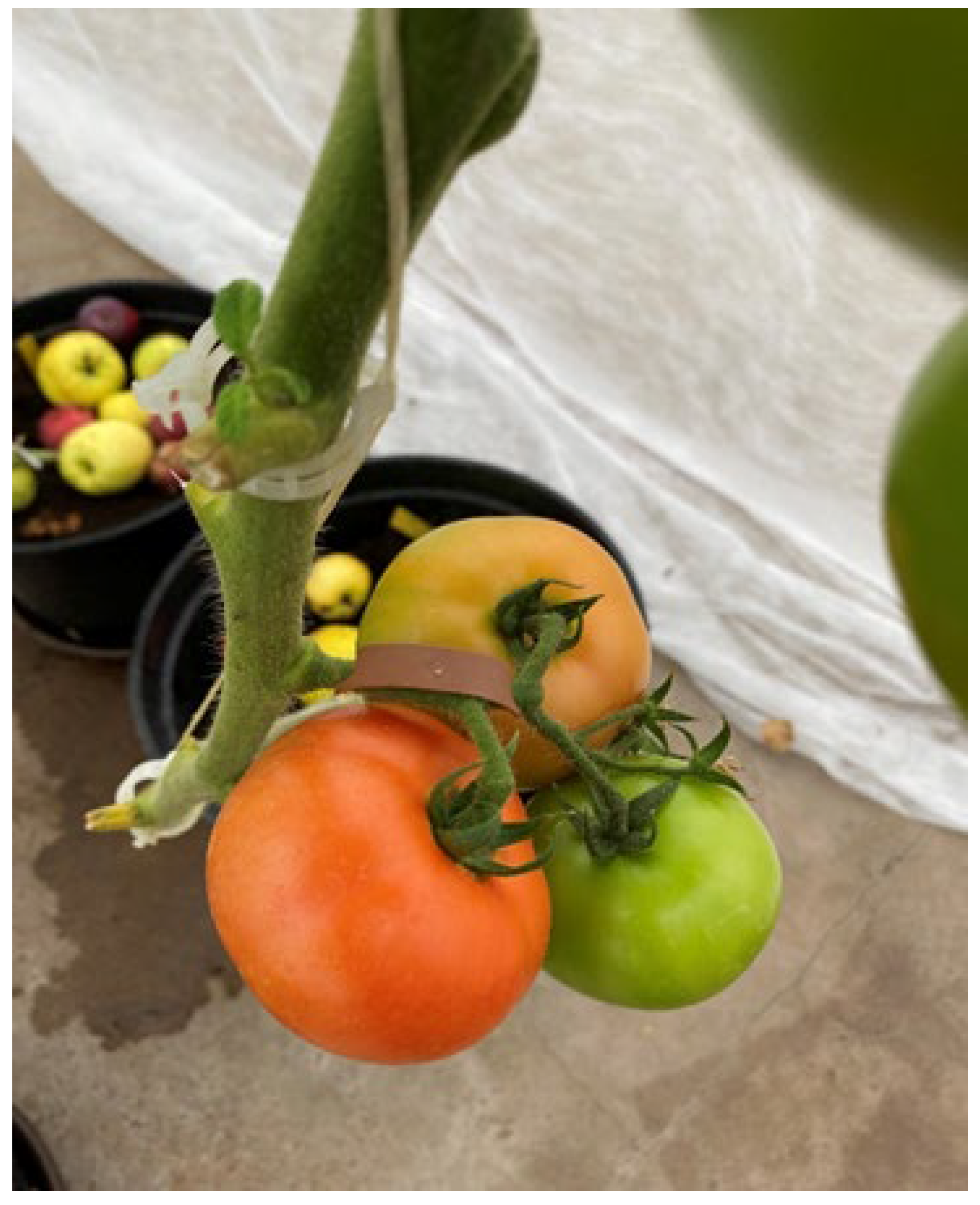
Figure 2.
General scheme of study.
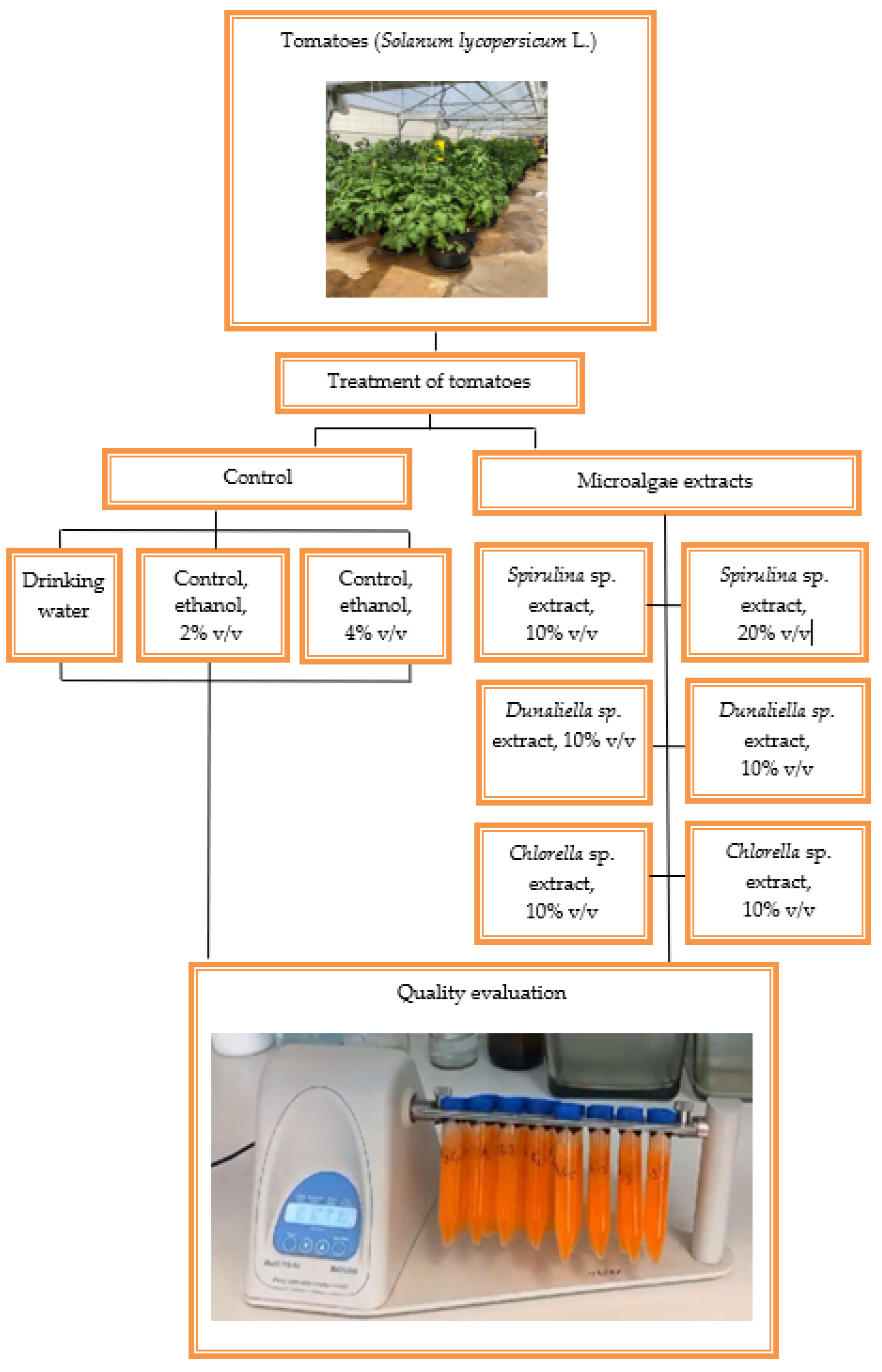
Figure 3.
Lycopene and β-carotene content in tomato fruits.
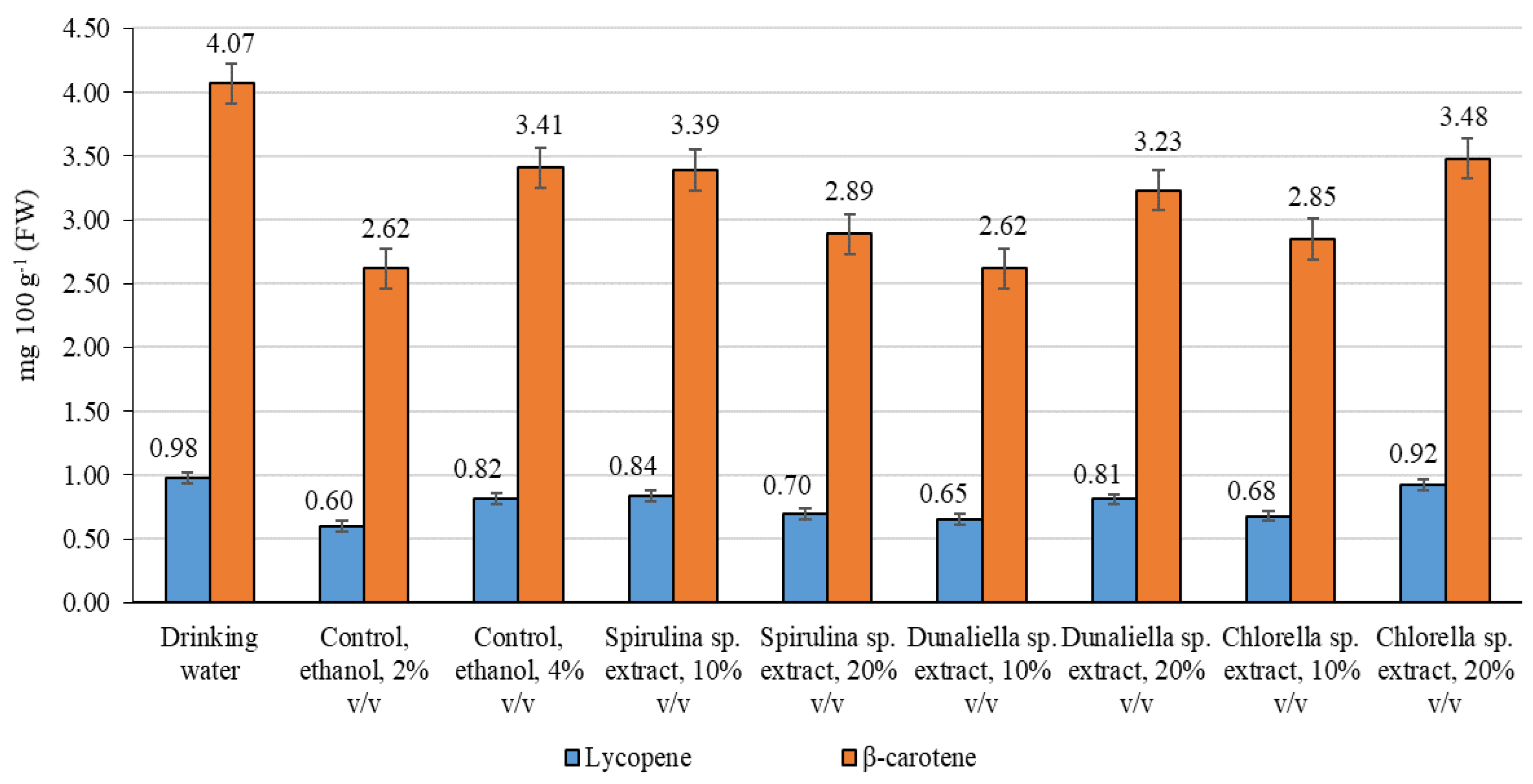
Figure 4.
Content of dry matter (%) and total soluble solids (oBrix) in tomato fruits.
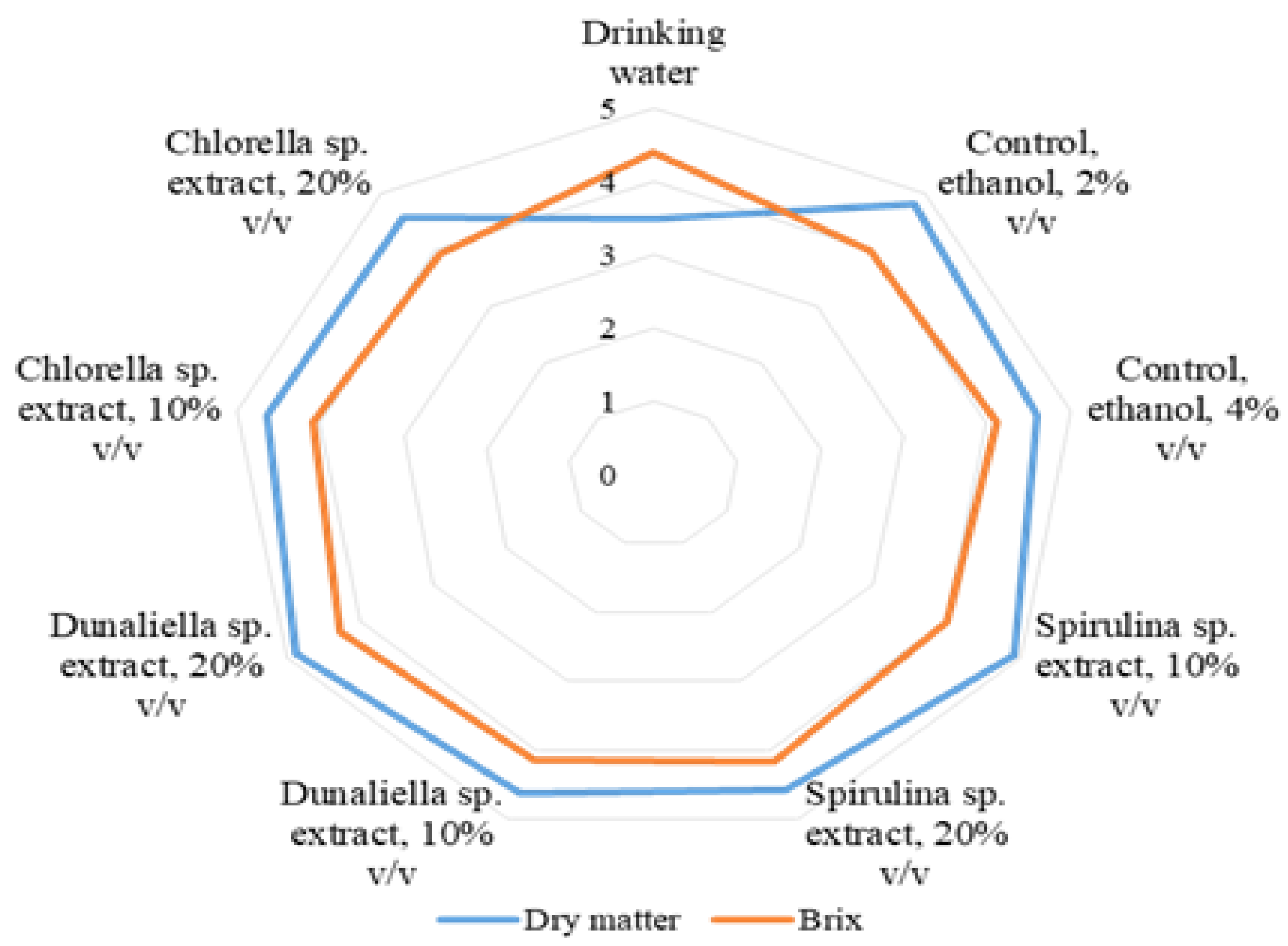

Table 1.
Quality parameters of analyzed tomato fruits.
| Plant material | Vitamin C mg 100 g-1 (in fresh matter) |
Titratable acidity g 100 g-1 (in fresh matter) |
pH |
|---|---|---|---|
| Drinking water | 17.96 ± 0.89a | 0.33 ± 0.02a | 4.21 ± 0.14a |
| Control, ethanol, 2% v/v | 16.32 ± 0.64a | 0.45 ± 0.03a | 4.24 ± 0.11abc |
| Control, ethanol, 4% v/v | 15.68 ± 0.56a | 0.31 ± 0.03a | 4.25 ± 0.14bc |
| Spirulina sp. extract, 10% v/v | 16.17 ± 0.98a | 0.32 ± 0.02a | 4.23 ± 0.16ab |
| Spirulina sp. extract, 20% v/v | 15.68 ± 0.94a | 0.27 ± 0.02a | 4.22 ± 0.10a |
| Dunaliella sp. extract, 10% v/v | 18.55 ± 0.74a | 0.28 ± 0.01a | 4.25 ± 0.15bc |
| Dunaliella sp. extract, 20% v/v | 17.21 ± 0.58a | 0.25 ± 0.02a | 4.25 ± 0.10bc |
| Chlorella sp. extract, 10% v/v | 17.47 ± 0.82a | 0.32 ± 0.03a | 4.30 ± 0.11d |
| Chlorella sp. extract, 20% v/v | 15.47 ± 0.83a | 0.28 ± 0.01a | 4.27 ± 0.12c |
* Titratable acidity expressed as g 100 g-1 of citric acid. * Values, marked with the same letter, are not significantly different (p>0.05; α=0.05).
Table 2.
Anthocyanins and total phenols in tomato fruits.
| Plant material | Anthocyanins mg 100 g-1 (in fresh matter) |
Total phenols mg 100 g-1 (in fresh matter) |
|---|---|---|
| Drinking water | 0.42 ± 0.04a | 166.93 ± 2.01c |
| Control, ethanol, 2% v/v | 0.09 ± 0.01a | 137.59 ± 1.34a |
| Control, ethanol, 4% v/v | 0.07 ± 0.01a | 142.21 ± 1.53ab |
| Spirulina sp. extract, 10% v/v | 0.12 ± 0.02a | 144.21 ± 1.87ab |
| Spirulina sp. extract, 20% v/v | 0.11 ± 0.01a | 142.23 ± 1.33ab |
| Dunaliella sp. extract, 10% v/v | 0.14 ± 0.02a | 142.22 ± 2.02ab |
| Dunaliella sp. extract, 20% v/v | 0.09 ± 0.01a | 143.33 ± 1.22ab |
| Chlorella sp. extract, 10% v/v | 0.11± 0.01a | 145.96 ± 2.04ab |
| Chlorella sp. extract, 20% v/v | 0.12± 0.01a | 145.49 ±2.25 ab |
*Values, marked with the same letter, are not significantly different (p>0.05; α=0.05).
Table 3.
Connections between fruits mass and taste index in tomato fruits.
| Plant material | Tomato fruit mass, g | Taste index |
|||
|---|---|---|---|---|---|
| Average p=0.673 |
Minimum | Maximum | S.D. | ||
| Drinking water | 92.49a | 43.05 | 200.01 | 44.81 | 0.31 |
| Control, ethanol, 2% v/v |
95.11a | 45.08 | 170.00 | 40.47 | 0.38 |
| Control, ethanol, 4% v/v |
115.21a | 37.89 | 325.76 | 67.09 | 0.34 |
|
Spirulina sp. extract, 10% v/v |
101.66a | 39.25 | 185.73 | 46.71 | 0.57 |
|
Spirulina sp. extract, 20% v/v |
116.15a | 40.34 | 213.28 | 47.77 | 0.54 |
|
Dunaliella sp. extract, 10% v/v |
129.33a | 55.71 | 273.75 | 68.08 | 0.37 |
|
Dunaliella sp. extract, 20% v/v |
102.52a | 39.45 | 218.00 | 59.36 | 0.39 |
|
Chlorella sp. extract, 10% v/v |
94.85a | 34.7 | 188.75 | 48.63 | 0.33 |
|
Chlorella sp. extract, 20% v/v |
104.78a | 55.27 | 195.21 | 42.02 | 0.33 |
*Values, marked with the same letter, are not significantly different (p>0.05; α=0.05). S.D. standard deviation.
Disclaimer/Publisher’s Note: The statements, opinions and data contained in all publications are solely those of the individual author(s) and contributor(s) and not of MDPI and/or the editor(s). MDPI and/or the editor(s) disclaim responsibility for any injury to people or property resulting from any ideas, methods, instructions or products referred to in the content. |
© 2024 by the authors. Licensee MDPI, Basel, Switzerland. This article is an open access article distributed under the terms and conditions of the Creative Commons Attribution (CC BY) license (http://creativecommons.org/licenses/by/4.0/).
Copyright: This open access article is published under a Creative Commons CC BY 4.0 license, which permit the free download, distribution, and reuse, provided that the author and preprint are cited in any reuse.