

Submitted:
01 August 2024
Posted:
02 August 2024
Read the latest preprint version here
Abstract
The article presents data on bio-morphological, reproductive and ecological-physiological features of endangered ornamental species Amberboa moschata (Asteraceae) in natural habitats of the Ararat valley of Armenia and cultivated under ex situ conditions in the Yerevan Botanical Garden. According to conducted exploration, the plants cultivated have satisfactory adaptive capacity, a complete development cycle, the ability to form mature seeds and self-renewal by seeds, and higher parameters of total moisture, transpiration intensity and photosynthesis compared to natural ones. The diploid cytotype of the species A. moschata has been found to be 2n=32. The karyotype is asymmetric, with chromosomes ranging in size from 0.77 to 1.91 µm. The average pollen fertility of A. moschata is high, 96.7–96.9% in both natural and cultivated samples. A scale of ornamental properties of A. moschata has been compiled, including 15 characteristics of the inflorescence, shoot, leaf, fruit and plant. The total duration of plant ornamental period under cultivation is about 98 days, the maximum ornamental effect is observed during the flowering period of 68–70 days. The studied species is recommended for creating living collections in botanical gardens and utilization in ornamental horticulture and landscaping as measures for its ex situ conservation. The article is illustrated with a map, original photographs and tables.
Keywords:
Amberboa moschata
; adaptive properties
; ex situ conservation
; chromosomes number
; pollen fertility
; Botanical Garden
1. Introduction
Armenia is very rich in original and beautiful, predominantly xerophytic flora that grows in all zones – from Ararat valley semi-deserts to alpine inclusive. Ornamental herbaceous plants of the wild flora of Armenia are found in 64 families of flowering plants and belong to 300 genera and 716 species [1]. On the basis of this flora, it is possible to obtain very interesting varieties of flower plants for floriculture in extreme conditions of existence – both hot and cold climates.
Many of wild ornamental plants with aesthetic values and practical interest for arid ornamental horticulture grow in the Ararat valley of Armenia due to their adaptive capabilities to dry environmental conditions with continental climate. The arid natural conditions of the Ararat valley significantly limit the use of many species and varieties of flower crops in settlements greening. Most of the protected and in need of protection natural ecosystems of Armenia are located in the desert and semidesert zone of the Ararat valley, at an altitude of 800–1000 m above sea level. On the territory of Ararat valley in the last decades the space with natural vegetation suffered a sharp decline, many species are endangered due to the development in the large spaces of fertile cultural soil irrigation. The territories of the Ararat valley with halophyte, psammophyte, gypsophyte, ephemeral and wormwood plant communities are under particularly intensive anthropogenic influence [2]. The largest number of rare and endangered species (157) included in the Red Book of Plants of the Republic of Armenia [3] are registered in the Ararat valley. As a result, a number of species that occurred in the recent past in the Ararat valley in abundance, have now become rare or can disappear. Many of them have survived only in small, rare fragments with the natural vegetation and presented by populations with low numbers of individuals. Among the ornamental plants of the Ararat valley, there is a significant number of threatened species.
One of the current trends for the protection of threatened plant species is their conservation under ex situ conditions [4]. An important role in this activity is played by Botanical Gardens, where living collections of wild plants, including aboriginal ones, are being created [4,5,6,7]. Research and ex situ conservation of threatened plant species has been carried out for many years in the Yerevan Botanical Garden, where documented living collections of local flora have been established since 1938, and bio-morphological and phenological observations are carried out on introduced plants [8,9,10]. About 200 species of wild ornamental drought-resistant species of local flora are grown at the exhibition plot “Flora and Vegetation of Armenia” of the Yerevan Botanical Garden [11]. When assessing the ornamental qualities of a plant, its morphology (external qualities of the plant) is taken into account, but when it is introduced into a culture, it is important also knowledge of the adaptive and reproductive characteristics in new conditions. Many wild plants, including ornamentals, are not used in the ornamental horticulture due to insufficient scientific botanical information and cultivation methods absence. Introduction into the practice of horticulture and landscaping of rare and endangered species can serve as one of the measures for their conservation.
Flower cultivars of Amberboa (Pers.) Less. (Asteraceae) species are popular in ornamental horticulture in some countries as a famous flower crop, but the scale of its cultivation is small. In Armenia, plants of Amberboa moschata (L.) Less. species from local wild populations of Ararat valley has not been previously used in ornamental horticulture and landscaping. The purpose of this study is to identify the bio-morphological, phenological, reproductive, some ecological-physiological and ornamental features of endangered species A. moschata, and scientifically substantiate its use in arid ornamental horticulture as one of the ways of ex situ conservation. The results of the study will make it possible the use of this wild ornamental plant in greening in the cities and villages of the arid regions of Armenia.
2. Materials and Methods
The research was carried out in natural habitats of the Ararat and Armavir provinces of Armenia, in the Yerevan Botanical Garden and in the A. Takhtajan Institute of Botany NAS RA. Yerevan Botanical Garden is located in the zone of stony wormwood semi-desert.Gypsophilichabitats of Armenia, located in the Yerevan floristic region, are characterized by climatic indicators close to those in the Yerevan Botanical Garden.The annual precipitation here is 300-365 mm, the average annual temperature is + 11˚С, the average air temperature is 24-26˚С in summer and –5(–8)˚С in winter, average annual relative air humidity is 59%.
Gypsophilic desert occupy a small area in Armenia. However, it is distinguished by its originality and floristic richness. Therefore, a separate exhibition “Flora of gypsophilic desert” was created at the “Flora and Vegetation of Armenia” Plot of the Yerevan Botanical Garden to demonstrate and study representatives of the gypsophilic flora in cultural conditions [9,10,12]. At the “Flora and Vegetation of Armenia” Plot, where the current introduction experience of A. moschata was carried out, the soils are semi-desert brown, heavy loamy, carbonate and medium stony, the subsoil is underlain by tuff. In order to create conditions approaching to natural, the local soil was replaced with clay soil rich in sulfates and containing gypsum crystals. To identify the adaptive features of the studied species A. moschata it was also sown and grown on the local soil.
The climatic indicators, such as air temperature and relative humidity, soil humidity, were measured in May-September months. The elevation of the habitat above sea level was measured by GPS, soil humidity and acidity by a PH-Moisture Meter, air temperature, aid relative humidity, intensity of light were measured by an Environment meter PCE –EM 883 Instruments (Table 1).
As the initial material for plants cultivation in the Yerevan Botanical Garden were used seeds and plants of A. moschata collected during expeditions in Ararat valley and transplanted from nature. When growing under culture conditions, the ratio of plants to such factors as irrigation rate, illumination (or shade) of exposure, microrelief were taken into account. During the growing season, biometric measurements, observations on plant growth and development, features of seed germination and seedlings, flowering and fruiting characteristics were carried out. Archival data on bio-morphological and phenological observations of A. moschata periodically growing at the “Flora and Vegetation of Armenia” exhibition Plot of the Yerevan Botanical Garden NAS RA from 1958 up to day have been studied and taken into account. Herbarium (ERE) material of A. Takhtajan Institute of Botany and plant samples collected during the expeditions were examined. The following investigation methods were utilized: a unified system of environmental monitoring [13], phenological [14], classification and cultivation of wild ornamental plants [1,11,12] assessment of plants ornamental features [15]. Since there is currently no officially registered scale for assessing the decorative value of wild plants of the natural flora in general, we chose the most significant decorative characteristics for our research object. The scale for assessing decorative value includes 15 main characteristics that characterize the decorative qualities of the inflorescence, shoot, leaf, fruit and individual as a whole. Conversion coefficients for each characteristic make it possible to determine its significance in the overall assessment of the decorativeness of the species. Morphological features of plant samples were studied using an MBC-9 stereo microscope. Plants were photographed with Nikon D3400 digital camera.
Eco-physiological features (total water content, water deficiency, intensity of transpiration and photosynthetic productivity, cell sap density content) of the A. moschata were studied based on the principal of the integrity of the plant organism. Research was implemented during the vigorous vegetative period (May-June). All the measurements were carried out within the period between 11:00 and 13:00, each measurement was done in three samples and three repetitions (7–10 shoots were chosen for each sample). Physiological research was conducted by well-known methods [16,17]. The content of photosynthetic pigments (chlorophylls “a” and “b”, and carotenoids) was determined by a modified method based on the use of an organic solvent of dimethyl sulfoxide, which allows obtaining stable extracts necessary for performing extra laboratory studies [18].
Karyological investigation was made on the mitotic metaphases of the meristematic cells from root tips of germinated seeds. The root tips were pretreated in 0.4% colchicines solution and fixed in fluid 3:1 alcohol and glacial acetic acid, after hydrolysis in HCl the stained in Schiff reagent and were squashed on a glass slide with 45% acetic acid. A minimum of 10 plates were examined for each taxon. The preparations were placed in butyl alcohol for 5 minutes, then in xylene for 5 minutes, and were placed in Canadian balsam. Slides examined under light microscope AmScope Photomicroscope using an oil immersion objective (100X).
Fertility of A. moschata pollen, taken from the flower buds in natural habitats during seasonal collections from different years and regions of Armenia and from specimens introduced in the Yerevan Botanical Garden was studied. Pollen fertility is relatively constant and practically does not change over time, so both fresh and also dry material from the ERE Herbarium were used. Pollen fertility was determined by staining with acetocarmine on temporary preparations [19]. Statistical processing of experimental data was carried out according to Dospekhov [20] and Wolf [21]. The fertility of each collected sample was tested in 5 replicates of 100 pollen grains. For data comparison, the arithmetic mean Sx was calculated according to the Sx = Σ (x-x) × k, where the absolute value was subtracted from the arithmetic average number of fertile grains and the sum was multiplied by k, that is the number of replicates. In our case, the number of replicates corresponded to the number 0.1253 [21]. Preparations were examined under a light microscope “OPTIKA microscopes B-510BF” at a magnification of 400 times.
The pollen samples of A. moschata, collected from material of the ERE Herbarium (Armenia): Abovyan distr., Zovashen, vicinity of the Azat reservoir, hammada. 14.06.1985, E. Gabrielian (ERE 130754); Abovyan distr., between villages Djrvej and Shorbulakh, on dry clay slopes, 1100-1500 m a.s.l. 27.06.1985, E. Gabrielian (ERE 139664); Near Nubarashen, on clay slopes. 02.07.1997, E. Gabrielian (ERE 145154, 145156); Near Nubarashen, on tertiary red clays. 24.05.2000, E. Gabrielian (ERE 151800); Kotayk province, Abovyan distr., between villages Shorbulakh and Vokhchaberd, 3 km SSW of Vokhchaberd, Erebouni reserve, mountain steppe, 1350 m a.s.l., 40º09’ N/44º37’ E 01.07.2003. M. Barkworth, F. Smith, E. Gabrielian, A. Nersesyan, M. Oganesyan (ERE 153193); Yerevan, southern border of city at Sovetashen, 1040 m, 40o07’22’‘ N/ 44o32’36’‘E 11.07.2003, M. Oganesian, H. Ter-Voskanyan, E. Vitek (ERE 202314); Sovetashen, 1190 m a.s.l. 40º06’100’‘ N /44º33’25’‘ E. 26.05.2006. K. Tamanyan, G. Fayvush (ERE 161644); Kotayk marz, vicinity of Vokhchaberd village, on the territory of the Erebuni Nature Reserve, on clay. 05.06.2008. J. Akopian; Vedy region, near v. Urtcadzor, on dry clay slopes, 1100 m. 24.05.2011, E. Gabrielian (ERE 182109); Ararat province, slope between river and road Vedi to Lusashogh, 3.5 km SE of Urtsadzor, 1165 m, 39o53’50’‘N/ 40º50’58’‘E 17.05.2017, Vitek E., Oganesian M., Sargsyan M., Khachatryan A. (ERE 202313); Ararat Marz 5.6 km from Lanjasar, near Azat reservoir, 40º05’13’‘ N/44º38’06’‘ E, 1110 m to 40º05’17’‘ N 44º38’05’‘ E, 1130 m, 2018.06.04, Vitek E., Escobar-Garcia P., Fayvush G. (ERE 202334).
3. Results & Discussion
3.1. Geographic Range and Occurrence in Armenia
The flora of Armenia is rich and diverse, with a variety of endemics, which is a consequence of the geographical features, the complexity and great dissection of the relief, the presence of different soil and climatic conditions. The vegetation cover of Armenia is distinguished by clearly defined vertical zonation, from desert and semidesert to alpine vegetation. Desert vegetation in Armenia occupies small areas and is confined mainly to saline, sandy, gypsum-bearing and clayey soils of the Ararat valley. Semidesert vegetation occupies significant areas and is located in conditions of rather complex terrain within the altitude range of 500-1300 (1500) m above sea level. The dry continental climate contributed to the formation in desert and semi-desert plant communities of predominantly xerophytic lifeforms, mainly subshrubs, as well as herbaceous perennials and annuals.
In Armenia, annual xeromorphic plant A. moschata occurs in the Ararat valley, in dry clayey, gypsum bearing deserts, in wormwood semidesert, on gravelly, stony places, in crops, at an altitude of 600–1500 m above sea level (Figure 1). Besides Armenia, it grows in South Transcaucasia, Northeast Anatolia, Iran and Iraq. In Armenia, A. moschata grows on gypsophytic red clays along with such species as Halanthium rarifolium, Seidlitzia florida, Eremopyrum species, Scabiosa rotata, Aphanopleura trachysperma, Diarthron vesiculosum, Xeranthemum longipapposum, Cousinia purpurea, Nigella oxypetala, N. segetalis, Chardinia orientalis, Cartamnus oxyacanthus, Chrosophora tinctoria, Strizolophus balsamitus, Euphorbia coniosperma and some others. In the composition of gravely xeromorphic gypsophytes, A. moschata grows together with Kaviria cana, K. tomentosa, Zygophyllum atriplicoides, Reamuria alternifolia, Reseda microcarpa, Rindera lanata, Tanacetum canescens, Centaurea erivanensis, Haplophyllum villosum, Matthiola farinosa, Dorema glabrum, Alyssum tortuosum, Rindera lanata, Glaucium elegans, Salvia limbata, Hedysarum formosum, Silene chlorifolia, Heliotropium eichwaldi, and others.
A. moschata is included in the Red Book of Plants of RА under the Endangered Species category (EN) based on geographic condition criteria B 1 ab(i,ii,iii) + 2 ab(i,ii,iii) (Tamanyan et al., 2010). Limiting factors posing a threat to the species are restricted extent of occurrence and area of occupancy, loss or degradation of habitats caused by land development. A part of the A. moschata population is protected in the “Erebuni” State Reserve of RA.
3.2. Bio-Morphological Characteristics
A. moschata is annual plant 20-70 cm tall, with erect, slightly branched stem and thin root. A. moschata reproduces by seeds. Achenes are large, 6–7 mm long, densely appressed-hairy; hilum lateral, surrounded by bare strongly elevated ridge, with pappus 5–7 mm long (Figure 2a). The emergence of seedlings of A. moschata after autumn sowing is observed in the first ten days of April of the next year. Cotyledons are green, fleshy, glabrous, spatulate, 0.6 × 0.3 mm, hypocotyl up to 2.5 cm long, passes into a thin rootlet, epicotyl vestigial (Figure 2b). Approximately 10 days after the emergence of seedling, the appearance of the first pair of leaves is observed (Figure 2c). The leaves are arranged crosswise to the cotyledons. The irregularity serrate of the edge leaves begins with the first pair of true leaves. At the juvenile stage of development growth form of A. moschata represent by rosette (Figure 2d). An emergence of new leaves and the formation of a basal rosette continue from the first decade of May to the end of May. Up to 7–9 leaves are formed in rosettes, in the size from 2 × 0.5 cm to 11 × 2 cm. When the sixth pair of leaves appears, the cotyledons turn yellow and dry. Budding begins in early June, and continues along with the beginning of flowering, which is observed in Mid-June. Flower buds form in the center of the rosette. By the end of June, yellowing of some of the rosette leaves is observed. Plant branching is sympodial, shoots branch up to 3-4 orders, the first leaves at the base of the shoots are opposite, the subsequent ones – alternate. The plant is heterophilous with leaves from slightly serrated along the edge at the base, to pinnatipartite and pinnately dissected. High up to 37–40 cm stems of the plant with bright green and deeply cut leaves end with fragrant single, light lilac-rose inflorescences up to 4–7 cm in diameter (Figure 2e). Baskets are single, apical, very large, broadly ovate or hemispherical on long curly-pubescent legs. The involucre is curly-woolly, appendages of involucre leaves are larger, 2-3 mm long, 4–6 mm wide, obtuse at the apex. Marginal flowers are funnel-shaped, much larger than the median ones (10–15 mm). During June-July, flowering, budding and fruit ripening occur simultaneously. Mass flowering of A. moschata in the natural conditions of the Ararat valley is observed at the end of June. Completion of the growing season and drying of the plant is observed from the second decade of July to the middle of August. However, in cultural conditions of the Yerevan Botanical Garden with regular watering, the vegetation may last and re-flowering of introduced specimens is possible. Flowers and leaves of the second vegetation are much smaller. Seed ripening continues until the end of August–beginning of September. Usually pest-free plant, but may be susceptible to powdery mildews. In the Yerevan Botanical Garden, it grows well in well-drained, neutral or alkaline soil in full sun.
3.3. Karyology
Karyologically studied samples of A. moschata collected from Ararat valley (Ararat province, near village Zovashen, 02 July 2022.Leg. J. Akopian, A. Ghukasyan, L. Martirosyan, A. Elbakyan; Ararat province, reservoir near mount Yeranos, dry slopes, 02 July 2022.Leg. & Det. J. Akopian, A. Ghukasyan, L. Martirosyan, A. Elbakyan) revealed a diploid cytorace for this species 2n=2х=32. According to the literature data, mainly the diploid cytorace is characteristic for this species (2n=32), with basic chromosomes number x=16. Our result agrees with other previous counts from Armenia [22,23,24,25,26], from Iran [27,28]. It should be noted that D. M. Moore [29] indexed two results for A. moschata: 2n=28 and 2n=32. However, all the other counts in the genus Amherboa have the basic number of x=16, which is rare in the subtribe Centaureinae.
The karyotype of A. moschata is asymmetric, with very small chromosomes, 0.77–1.91µm in size, consisting of 5 pairs of submetacentric and 11 pairs of metacentric chromosomes (Figure 3). Karyotype formula is: 2n=32=10SM+22M.
3.4. Pollen Fertility
For the successful production of fruits and seeds of flowering plants, information on fertility and pollen viability is required, which can be determined using in vitro tests. Viable or fertile pollen is that pollen which, at favorable conditions, after falling on the stigmas of the same plant or other plants of the same species, the pollen tubes germinate and the male gametes enter the embryo sac, producing fertilization.Along with pollen fertility, the size of pollen grains plays an important role. According to the morphological heterogeneity of pollen, one can assume failures in microsporogenesis, which can lead to unsuccessful seed formation. The sizes of pollen grains of each species from thecollections obtained for different years do not differ much from each other.
A. moschata pollen fertility investigation results are presented in Table 2 and Table 3. The obtained results show that the average pollen fertility of A. moschata is quite high, both in freshly collected samples (Figure 4a,b) and those taken from the Herbarium. This indicates that under favorable conditions in Botanical Garden there will be a high seed set, which will contribute to the successful reproduction of these endangered species for further use in landscaping gardens and parks in order to preserve their gene pool.
Yerevan Botanical Garden. Scale bar 30µm
3.5. Eco-Physiological Characteristics
Some physiological features of A. moschata were revealed in the natural conditions of the gypsophilic semi-desert of the Ararat plain and in ex situ conditions in the Yerevan Botanical Garden. Comparative analysis of the data obtained makes it possible to assess both the degree of their adaptability to extra-arid conditions and the degree of ecological plasticity when they are transferred to similar but excellent conditions of the Yerevan Botanical Garden. The parameters of the total water content of plants, the intensity of transpiration and photosynthetic productivity were determined (Table 4). In the Yerevan Botanical Garden, compared to natural habitats, the studied plants have a higher total water content, indicating their adaptability. With constant but moderate watering, all examined plants in the Garden showed a decrease in water deficiency.
This suggests that they have evolved structural and metabolic mechanisms to efficiently use water, typical to dry conditions. Xerophytic plants usually have characteristics such as increased concentration of cell sap and increased osmotic pressure, which contribute to increased water absorption. Moreover, their cells contain hydrophilic colloids that retain water, resulting in reduced transpiration and optimal use of water resources. These plants also maintain stable photosynthetic productivity at high temperatures, further reducing water consumption and indicating efficient water use.
The cell sap density content was also determined, which is 6.3 % in 1 g of the substance under investigation.
The absorption and transformation of solar energy during photosynthesis is carried out by photosynthetic pigments of plants, in particular, chlorophyll “a” and “b” and carotenoids. To assess the state of the photosynthetic apparatus of A. moschata, the content of these pigments in them was studied, which is a very important internal factor in plant adaptation to unfavorable environmental conditions. The main role of chlorophyll “а” is to absorb light from the orange-red-purple-blue colors of the spectrum, and chlorophyll “b” – to increase the absorption spectrum of organisms and to convert more energy into chemical energy, chlorophyll “b”, which is responsible for the adaptation of plants to extreme growing conditions (Table 5). The results of the study show that A. moschata plants are well adapted to dry climates with high summer temperatures and water high evaporation from the soil surface.
Observations at the Yerevan Botanical Garden show an increase in water content in plants, as well as an increase in the rate of transpiration and photosynthesis, leading to a significant reduction in water stress. The content of pigments in A. moschata indicates the intensity of physiological processes related to the life activity of this plant. Favorable soil and climatic conditions, combined with constant watering, promote early flowering of gypsophilic plants within one to two years after seed development, especially those propagated from plants cultivated in the “Flora and Vegetation of Armenia” Plot of the Yerevan Botanical Garden. The studied species demonstrate ecological plasticity, which allows successfully adapt to the conditions existing in the Yerevan Botanical Garden.
3.6. Ornamental Properties
The obtained data on A. moschata in natural conditions and in the Yerevan Botanical Garden allow us to draw conclusions about the prospects of this species in culture. The species showed satisfactory adaptive potential and the ability for mass reproduction by seeds under ex situ conditions, as well as significant ornamental qualities. When evaluating the ornamental qualities of the studied species, such indicators as plant habitus, the color and elegance of leaves and flowers, the abundance of flowering and some others were taken into account. At the same time, resistance to diseases and pests, as well as the ability for seed renewal were taken into account. The period of decorativeness is the total duration of the highest manifestation of aesthetic qualities, including the plant vegetative habit formation to the end of flowering and fruiting. Assessment of the decorative qualities of the herbaceous annual A. moshata includes such characteristics of inflorescences as color, resistance to fading, shape, size, petals quality, inflorescence density, number of inflorescences on a generative shoot, and the number of simultaneously open inflorescences. The listed characteristics demonstrate the maximum degree of decorativeness of the studied plants during the flowering period. The scale of ornamental properties includes 15 main characteristics characterizing the decorative qualities of the shoot, leaf, inflorescence, fruit and plant as a whole (Table 6).
Conversion coefficients for each characteristic make it possible to determine its significance in the overall assessment of the decorativeness of the species. When assessing the ornamental qualities of a shoot, its resistance to weather and climatic conditions and color were taken into account. We received 14 points because they are slightly susceptible to lodging during heavy rainfall and are able to return to their original position. The decorative qualities of leaves were assessed based on such characteristics as their resistance to fading and durability. Since the color of the leaf does not fade significantly, and the leaves themselves are decorative until fruiting, these characteristics received 13 points. Since the appearance of the fruits is insignificant, but they enhance the decorative effect in the fruiting phase, thereby prolonging the decorative period of the plants, this feature receives 9 points.
The general condition of the plants, thanks to the friendly flowering, evenness in height, their density in the absence of breaks at mass flowering, gives us the opportunity to evaluate this feature at 10 points. The originality of the plant receives 5 points. The overall score for the decorativeness of A. moshata was 131 points, which gives us the right to recommend the studied wild annual plant for landscaping in Armenia.
In general, the duration of the growing season of A. moshata is 125-130 days, the flowering period is 68-70 days, and the duration of the plant decorativeness period is about 98 days (Figure 5).
The arid natural conditions of the Ararat valley, where the capital of Armenia, the city of Yerevan, and other settlements are located, significantly limit the use of many species, forms and varieties of cultivated flower plants in landscaping. Wild ornamental species А. moschata can be used for decorating borders and mix-borders, in group plantings in a flower beds, in cottage, informal and wildlife gardens, can be used as a cut flower in bouquets, as patio and container plants, look great in rockeries, can be grown on balconies, terraces and flowerpots. The flowers are suitable for cutting and keep perfectly fresh in a vase.
4. Conclusions
Presented exploration includes data on the assessment of bio-morphological, karyological, pollen fertility and some eco-physiological features of Armenian flora endangered ornamental species A. moschata. According to the results obtained, plants introduced in the Yerevan Botanical Garden have a high adaptive ability, full development cycle, mature seed formation, and self-renewal ability by seeds, in comparison with natural ones, are distinguished by higher total humidity, intensity of transpiration and photosynthesis, and a decrease in water deficit. The diploid cytotype has been found for the species to be 2n=32, the karyotype is asymmetric, with very small chromosomes, 0.77–1.91µm in size, consisting of 5 pairs of submetacentric and 11 pairs of metacentric chromosomes. The average pollen fertility of A. moschata is quite high, both in samples collected in natural habitats and cultivated in the Yerevan Botanical Garden is in the range of 96.7-96.9%, which indicates a high seed set, contributing to the species’ reproduction. An assessment was made of the ornamental qualities of A. moschata under conditions of the Yerevan Botanical Garden and a scale of ornamental properties was compiled, including 15 main characteristics of the ornamental qualities of the inflorescence, shoot, leaf, fruit and plant habitus. The listed characteristics demonstrate the maximum degree of decorativeness of the studied plants during the flowering period. The whole duration of the decorative period is about 98 days. Based on data obtained and the analysis of phenological, biometric, ornamental features and adaptive capabilities in cultural conditions, we recommend the studied species for living collections creation in Botanical Gardens, for utilization in landscaping and ornamental gardening as the measures of its ex situ conservation. The results of the study will make it possible to scientifically substantiate the introduction of this wild species and give recommendations on growing. Due to A. moschata rarity, decorativeness and adaptive features can be considered a valuable species for using in greening in arid regions, cities and villages of the Ararat valley of Armenia.
Author Contributions
Conceptualization, J.A., A.G.; methodology, J.A., A.G., A.E., L.M., Z.H.; investigation, J.A., A.G., A.E., L.M, Z.H.; writing—original draft preparation, J.A., A.G., A.E., L.M, Z.H.; writing—review and editing, J.A.; visualization, J.A., A.G., A.E., L.M, Z.H.; supervision, J.A., A.G. All authors have read and agreed to the version of the manuscript.
Funding
This research was funded in the frames of basic research project of the A. Takhtajan Institute of Botany NAS RA “Ecological-geographical aspects of the study and conservation of the flora of Armenia” and research project 22AN:NS-plant-2757 “The Ararat valley rare and endangered ornamental plant species exploration as a source of arid floriculture” supported by the Armenian National Science and Education Fund (ANSEF).
Institutional Review Board Statement
Not applicable.
Data Availability Statement
The data presented in this study are available upon request.
Conflicts of Interest
The authors declared no potential conflicts of interest with respect to the research, authorship, and publication of this article.
References
- Mirzoeva, N.V.; Akhverdov, A.A. Ornamental herbaceous plants of the flora of Armenia. Bull. Bot. Garden Acad. Sci. Arm. SSR. 1959, 17, 89–109. [Google Scholar]
- Takhtajan, A.L.; Fedorov, An. A. Flora of Yerevan. Science, Leningrad: 1972; 372 p.
- Tamanyan, K.; Fayvush, G.; Nanagulyan, S.; Danielyan, T. (eds.). The Red Book of Plants of the Republic of Armenia. Higher Plants and Fungi. Second edition. Yerevan. 2010; 592 p.
- Convention on Biological Diversity. Global Strategy for Plant Conservation: 2011–2020; Botanic Gardens Conservation International: Richmond, UK, 2012. [Google Scholar]
- Heywood, V.H. The role of botanic gardens as resource and introduction centres in the face of global change. Biodivers. Conserv. 2011, 20, 221–239. [Google Scholar] [CrossRef]
- Krishnan, S.; Novy, A. The role of botanic gardens in the twenty-first century. CABI Rev. (2016) 2017, 1–10. [Google Scholar] [CrossRef]
- Mounce, R.; Smith, P.; Brockington, S. Ex situ conservation of plant diversity in the world’s botanic gardens. Nat. Plants 2017, 3, 795–802. [Google Scholar] [CrossRef] [PubMed]
- Akopian, J.A. Conservation of native plant diversity at the Yerevan Botanic Garden, Armenia. Kew Bulletin 2010, 65(4), 663–669. [Google Scholar] [CrossRef]
- Akopian, J.; Hovakimyan, Zh.; Paravyan, Z. Bio-morphological features of some rare and endangered sandy and gypsy desert plant species of Armenia. Biological Journal of Armenia 2017, 3(69). 201, 39–46. [Google Scholar]
- Akopian, J. A. The exhibition of Flora and Vegetation of Armenia of the Yerevan Botanical Garden NAS RA – the principles of collection formation and modeling of phytocoenoses. Landscape architecture in botanical gardens and dendroparks. Materials of the XI international scientific conference 2019. Yerevan; pp. 46–53.
- Akopian, J.A.; Ghukasyan, A.G.; Elbakyan, A.H.; Martirosyan, L.Yu. Indigenous flora as a source of arid ornamental horticulture in Armenia. Yerevan. Gitutiun NAS RA. 2023. 213 p.
- Akhverdov, A.A.; Mirzoeva, N.V. Exposition of the Flora of Armenia plot in the Yerevan Botanical Garden of the Academy of Sciences of the Armenian SSR. Bull. Bot. Garden Acad. Sci. Arm. SSR. 1961, 18, 35–53. [Google Scholar]
- Hill, D.; Fasham, M.; Tucker G.; Shrewry M.; Shaw P. Handbook of biodiversity methods: survey, evaluation and monitoring. Cambridge University Press, Cambridge. 2005. 589 p.
- Beydeman, I.N. Methods of studying the phenology of plants and plant communities. Methodical instructions. 1974. The science. Novosibirsk. 155 p.
- Bylov, V.N. Fundamentals of Comparative Variety Evaluation of Ornamental Plants. Introduction and selection of ornamental plants. 1978. M. Pp. 7–32.
- Sheremetyev, S.N. Grasses on a soil moisture gradient. Partnership of scientific publications KMK, 2005. Moscow. 271 p.
- Salnikov, A. I.; Maslov, I. L. Physiology and biochemistry of plants: workshop. 2014. Perm, Publishing House of FGBOU VPO Perm State Agricultural Academy, 300 p.
- Mezhunts, B.Kh.; Navasardyan, M.A. Method for determining the content of chlorophylls a, b and carotenoids in plant leaf extracts. Patent for Invention. No. 2439 A., 2010. Yerevan.
- Pausheva, Z. P. Workshop on plant cytology. 1980. M., Kolos. 304 p.
- Dospekhov, B.A. Field experiment methodology. 1973. M. 336 p.
- Wolf, V. G. Statistical data processing. 1966. M. Kolos. 254 p.
- Tonyan, T.R. The chromosome number of some species of the genus Centaurea. Bioligical Journal of Armenia, 1968, 21, 8, 86-96.
- Tonyan, T.R. Correlation of some morphological features with ploidy in representatives of the subtribe Centaureinea Less. Biological Journal of Armenia, 1972, 25, 11, 86–96.
- Tonyan, T.R. The relationship between the number of chromosomes and some morphological characters in representatives of the subtribe Centaureinea Less. Biol. Journ. of Armenia, 1980, 33, 5, 522–554.
- Avetisian, E.M. & Tonyan, T.R. Palynomorphology and number of chromosomes of some of the species of the subtribe Centaureinae Less. In: Academy of Sciences of Armenia, ed. Palynology. 1975. Yerevan; pp. 45–49.
- Garcia-Jacas, N., Susanna, A. & Vilatersana, R. & Guara, M. New chromosome counts in the subtribe Centaureinea (Asteraceae, Cardueae) from west Asia, II. Bot. J. Linn. Soc. 1998. 128, 403–412. [CrossRef]
- Gupta, R.C. & Gill, B.S. Compositae. 215 p. In: Löve A. (ed.). Chromosome number reports LXXI. Taxon, 1981, 30, 507–517.
- Gupta, R.C. & Gill, B.S. Cytopalynology of North and Central Indian Compositae. J. Cytol Genet. 1989, 24, 96–105. [Google Scholar]
- Moore, D.M. Index to plant chromosome numbers 1967-1971. Regnum Vegetable. 1973; 90 p.
Figure 1.
Distribution map of Amberboa moschata in the Ararat valley of Armenia.
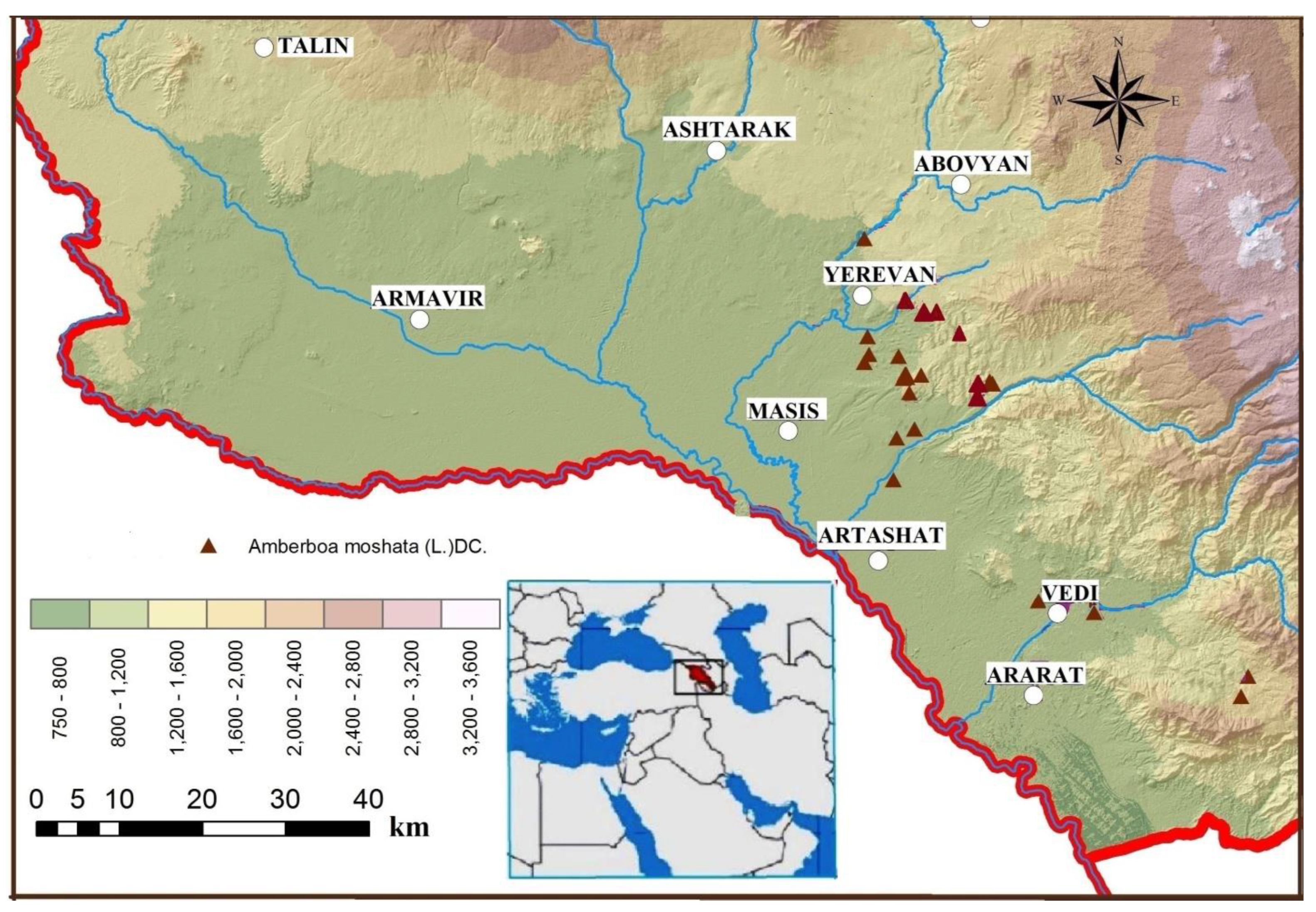
Figure 2.
Amberboa moschata: seed (a), seedlings at cotyledon stage (b), seedlings at the stage of first leaves (c) and rosettes (d), in flowering (e).
Figure 2.
Amberboa moschata: seed (a), seedlings at cotyledon stage (b), seedlings at the stage of first leaves (c) and rosettes (d), in flowering (e).
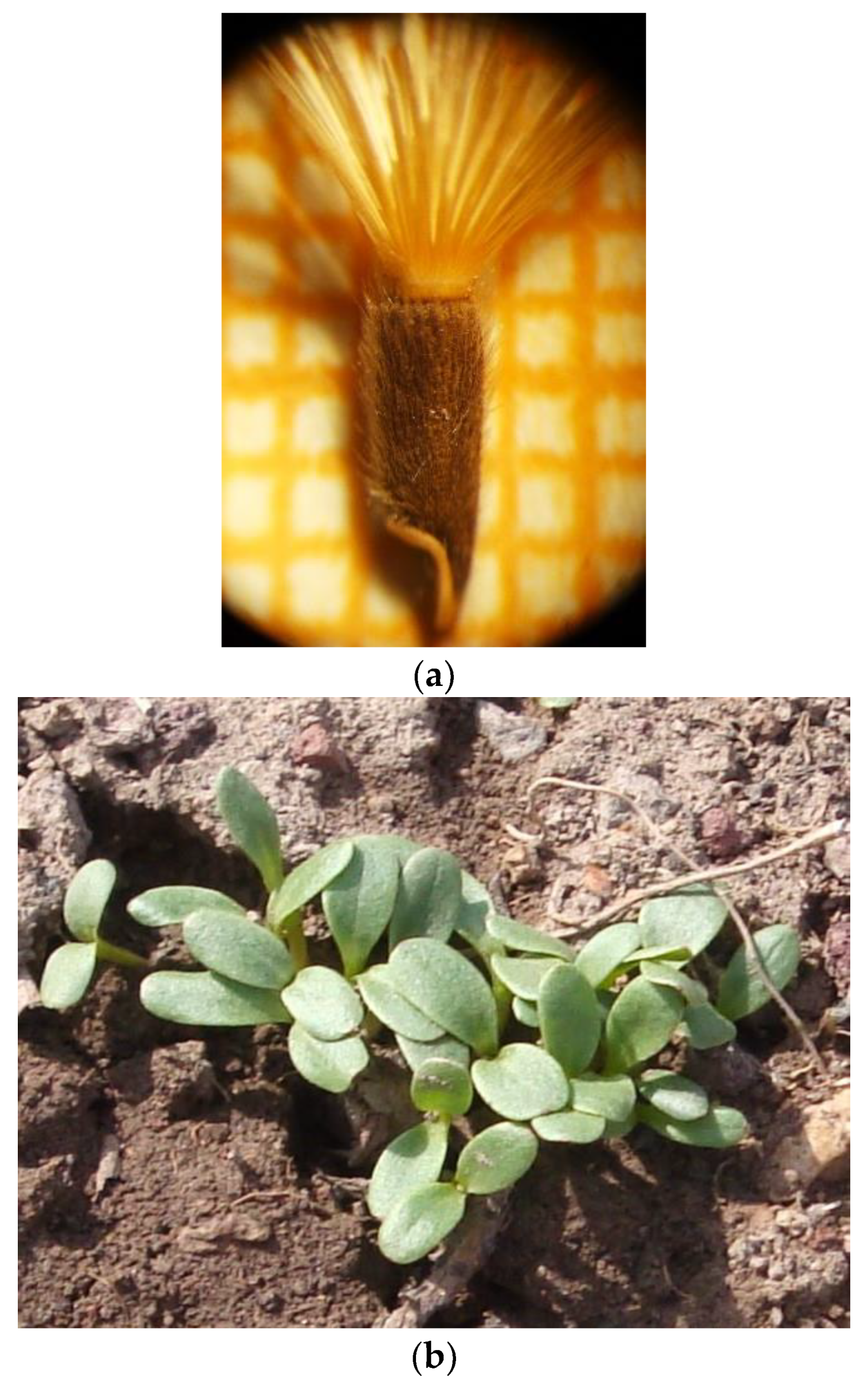
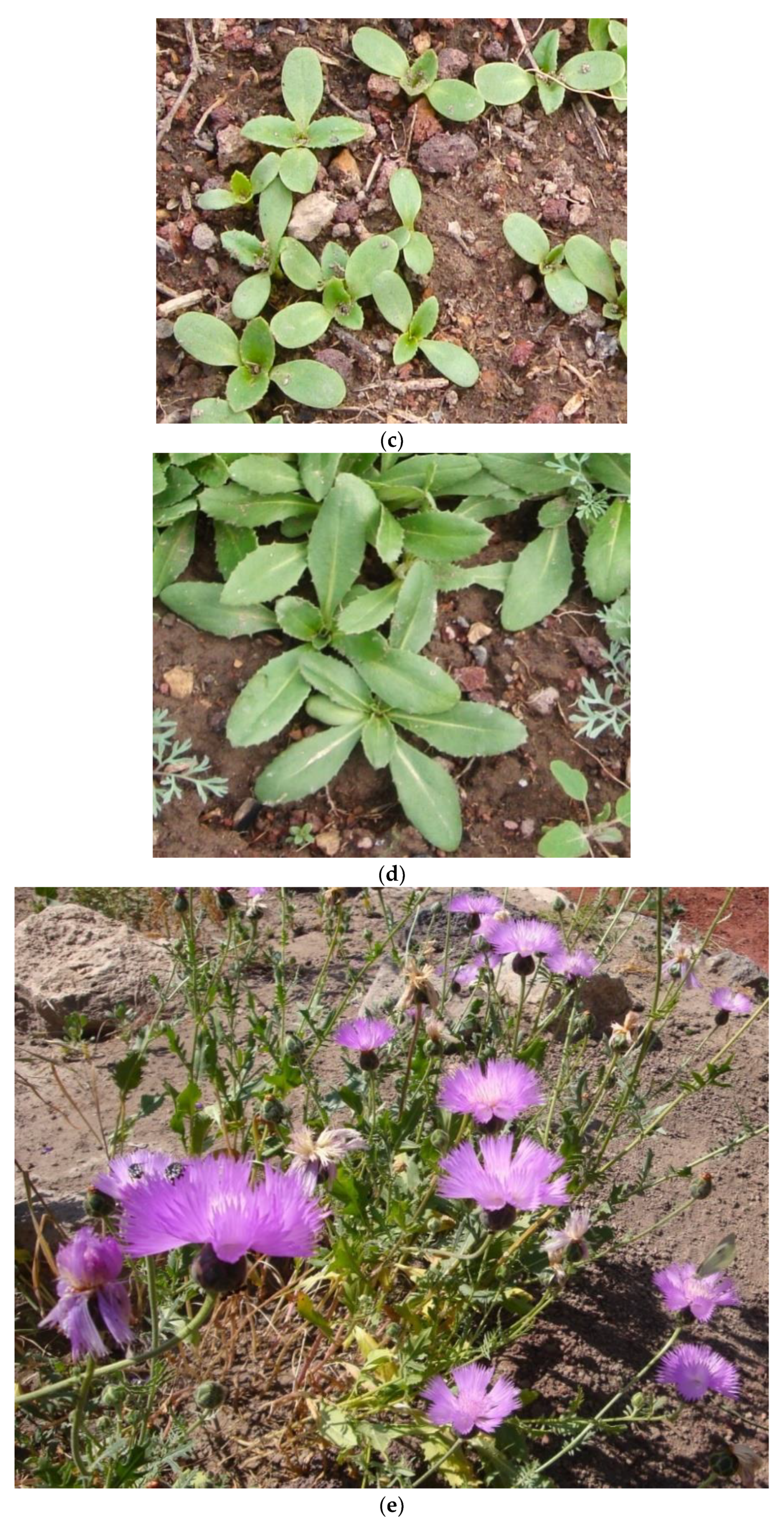
Figure 3.
Metaphase plate of Amberboa moschata (2n=32) – a, karyotype – b. Scale bar10µm.

Figure 4.
a, b. Pollen fertility of Amberboa moschata samples, cultivated in the.
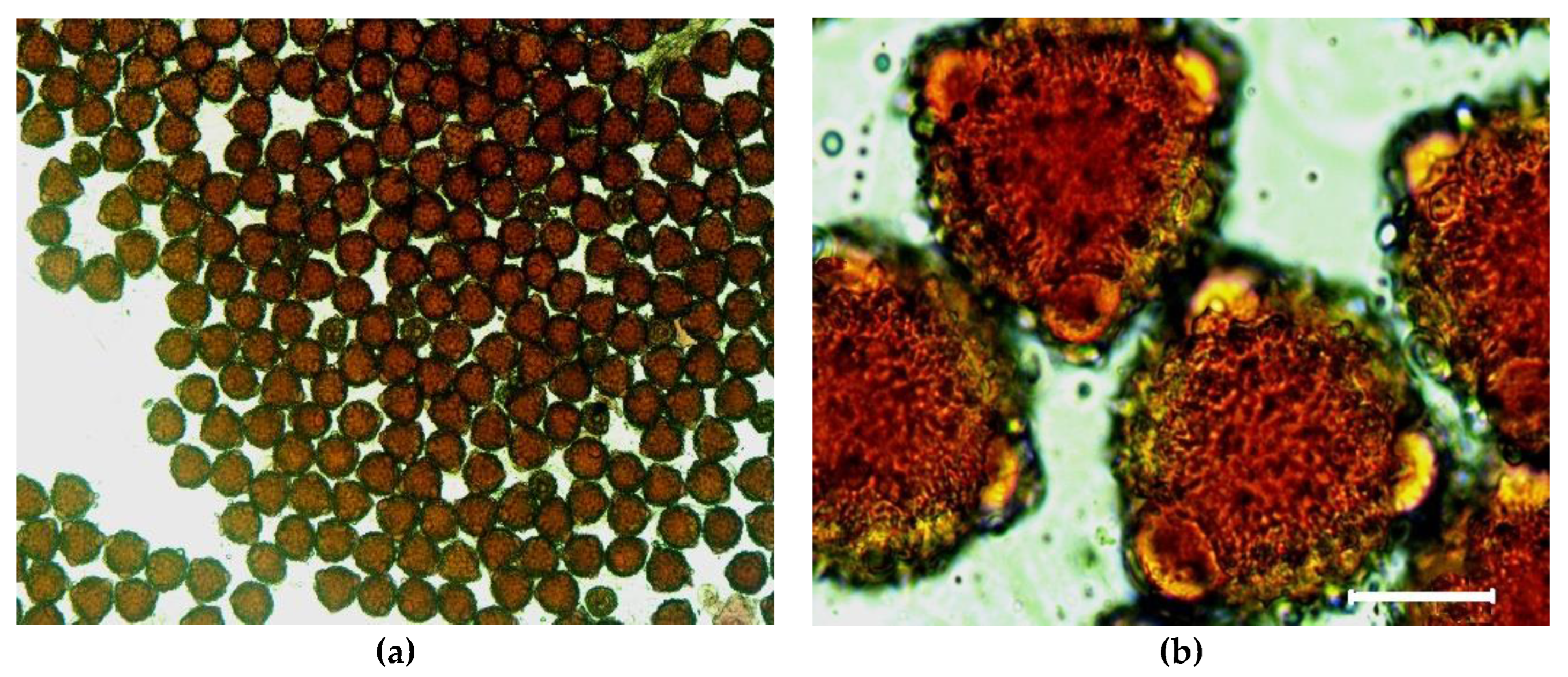
Figure 5.
Phases of development and decorativeness period of Amberboa moschata. 1 – emergence of seedlings, 2 – appearance of first pair of leaves, 3 – beginning of rosette growing, 4 – formation of plant vegetative habit, 5 – beginning of budding phase, 6 – beginning of flowering (10%), 7 – mass flowering, 8 - mass flowering, 9 – beginning of fruit ripening, 10 – mass ripening of fruits, 11 – end of fruiting, 12 – end of growing season.
Figure 5.
Phases of development and decorativeness period of Amberboa moschata. 1 – emergence of seedlings, 2 – appearance of first pair of leaves, 3 – beginning of rosette growing, 4 – formation of plant vegetative habit, 5 – beginning of budding phase, 6 – beginning of flowering (10%), 7 – mass flowering, 8 - mass flowering, 9 – beginning of fruit ripening, 10 – mass ripening of fruits, 11 – end of fruiting, 12 – end of growing season.
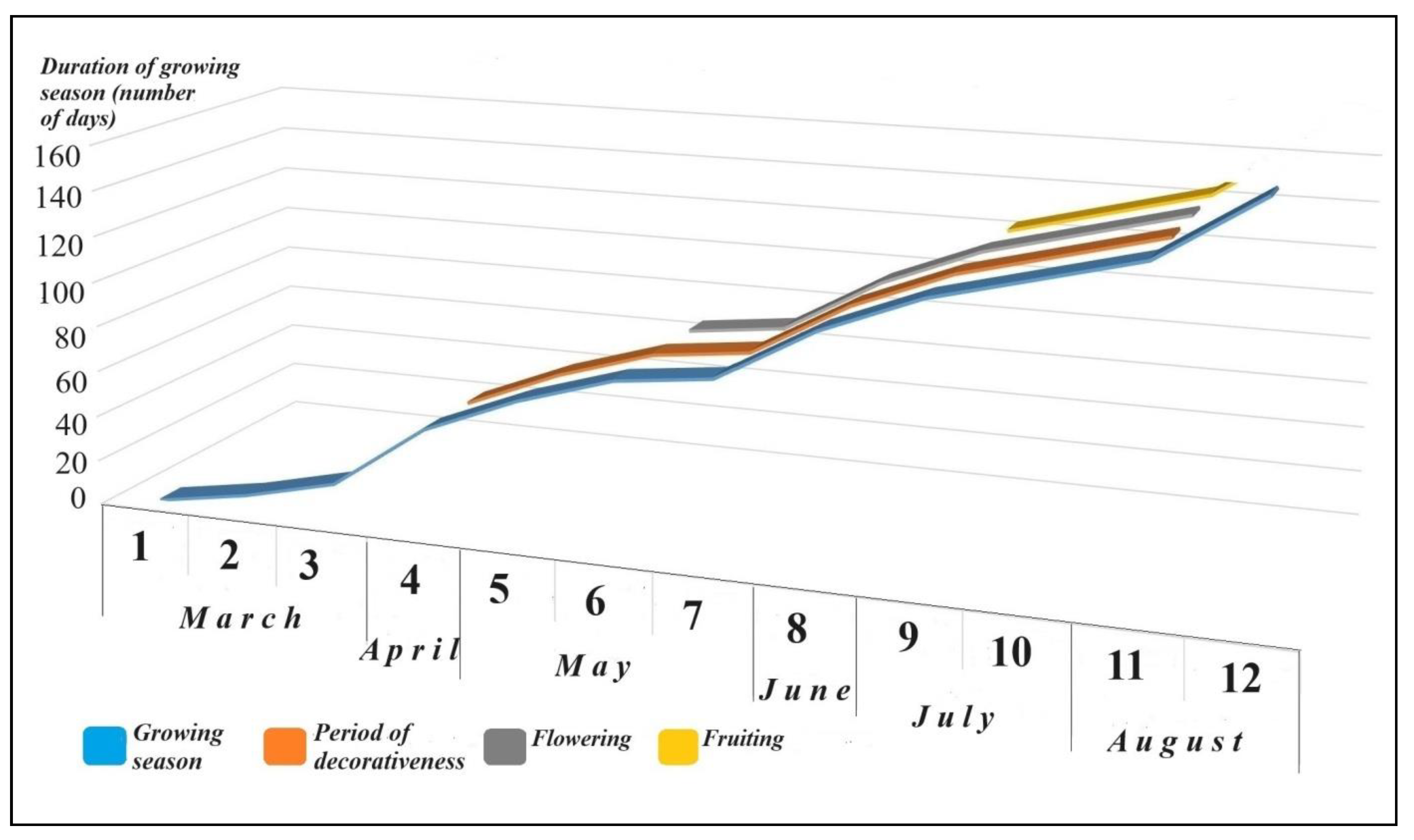

Table 1.
The profile of the microclimatic conditions of the habitat by the average data for the of 2022-2023 May-September in the Yerevan Botanical Garden.
Table 1.
The profile of the microclimatic conditions of the habitat by the average data for the of 2022-2023 May-September in the Yerevan Botanical Garden.
| Elevation (m) |
Air temperature, 0C |
Air relative humidity, % | Soil humidity,% | Soil acidity | Lighting (Lx) |
| Semidesert zone, 1200 m | 29.9 | 34.4 | 5.0 | 7.0 | 3483 |
Table 2.
Pollen size and fertility percentage of Amberboa moschata cultivated samples.
| Amberboa moschata samples, cultivated in the Yerevan Botanical Garden | Pollen grain size, μm | Pollen fertility percentage |
|
| Range | Average fertility, % |
||
| 61.4-63.2 | 92-100 | 96.7±0.9 | |
Table 3.
Pollen size and fertility percentage of Amberboa moschta from natural habitats.
|
Amberboa moschata Herbarium (ERE) specimens from natural habitats |
Pollen grain size, μm | Pollen fertility percentage |
|
| Range | Average fertility, % |
||
| N 130754 | 62.4-67.1 | 93-100 | 96.0±2.2 |
| N 139664 | 60.2-62.8 | 96-100 | 97.8±0.7 |
| N 145154 | 59.8-61.6 | 95-100 | 98.2±1.1 |
| N 151800 | 59.4-62.4 | 95- 99 | 97.4±0.9 |
| N 153193 | 62.4-63.6 | 95-100 | 97.6±1.3 |
| N 202314 | 57.4-62.6 | 92-100 | 96.8±1.4 |
| N 161644 | 58.2-62.4 | 98-100 | 99.4±0.5 |
| N 182109 | 58.8-63.0 | 94-100 | 96.6±1.3 |
| N 202313 | 60.2-62.8 | 95- 99 | 95.8±1.6 |
| N 202334 | 60.3-64.5 | 95-100 | 98.1±1.2 |
Table 4.
Indicators of the total water content, photosynthetic productivity, intensity of transpiration of Amberboa moschata in natural habitat and in the Yerevan Botanical Garden.
Table 4.
Indicators of the total water content, photosynthetic productivity, intensity of transpiration of Amberboa moschata in natural habitat and in the Yerevan Botanical Garden.
| Plant species and habitat | Total water content,% | Water deficit, % | Intensity of transpiration, mg CO2 dm2/ hour | Photosynthetic productivity, mg/g wet weight, hour |
|
Amberboa moschata cultivated in the Yerevan Botanical Garden |
50.0±0.9 | 35.8±0.8 | 135.6±0.9 | 2.13±0.9 |
|
Amberboa moschata in the natural habitat of the “Erebuni” State Reserve |
48.0±1.0 | 37.8±0.8 | 130.4±0.9 | 2.03±0.8 |
Table 5.
The content of plastid pigments in fresh leaves of Amberboa moschata, mg /g.
| Optical density of chlorophyll “a”, λ 663 | 0.932±0.015 |
| Optical density of chlorophyll “b”, λ 645 | 0.847±0.001 |
| Optical density of carotenoids, λ 440.5 | 1.261±0.014 |
| Chlorophyll “a” content, per wet leaf (mg/g) | 22.308±0.4 |
| Chlorophyll “b” content, per wet leaf (mg/g) | 26.612±0.1 |
| Chlorophyll “a”+”b” | 48.920 |
| Chlorophyll “a”/“b” | 0.8 |
| Carotenoids content, per wet leaf (mg/g) | 6.85±0.27 |
Note: λ – the length of the wave.
Table 6.
Assessment of Amberboa moschata decorativeness.
| Sign of Decorativeness | Sign Value and Score (Points) | Feature Significance Coefficient | Number of Points |
|---|---|---|---|
| 1 | 2 | 3 | 4 |
| Inflorescence color and stability | Color is bright, stable or slightly unstable (5) | 3 | 15 |
| Inflorescence shape | Large fringed basket (5) | 2 | 10 |
| Inflorescence size (diameter and height) | Diameter 5–7 cm, height from 3.5–4.5 cm (5) | 2 | 10 |
| Petal quality | Dense, retaining shape under adverse weather conditions (5) | 1 | 5 |
| Number of inflorescences on one generative shoot | Оne inflorescence (5) | 2 | 10 |
| Number of simultaneously open inflorescences on a plant | In the mass flowering phase about 70% (5) and more or about 50% (4) | 3 | 15 |
| Inflorescence density | Dense, compact (5) | 2 | 10 |
| Shoots strength | Not subject to deformation under the influence of external factors (5) | 2 | 10 |
| Shoots coloring | Bright (5) or middle bright (4) | 1 | 4 |
| Leaf color stability | Stable (5) or slightly unstable (4) | 2 | 8 |
| Durability of leaves decorativness | Most decorative during the phases of budding and flowering (5) | 1 | 5 |
| Fruit decorativness | Fruits slightly enhance the decorative effect (5) | 3 | 9 |
| General condition of plants during the flowering period | Presence or absence of breaks during flowering (5) | 2 | 10 |
| Plant originality | Habitus attractiveness (5) | 1 | 5 |
| Period of decorativness | From the phase of formed vegetative habit of the plant until the end of flowering (5) | 1 | 5 |
| Sum of points | 131 | ||
Disclaimer/Publisher’s Note: The statements, opinions and data contained in all publications are solely those of the individual author(s) and contributor(s) and not of MDPI and/or the editor(s). MDPI and/or the editor(s) disclaim responsibility for any injury to people or property resulting from any ideas, methods, instructions or products referred to in the content. |
© 2024 by the authors. Licensee MDPI, Basel, Switzerland. This article is an open access article distributed under the terms and conditions of the Creative Commons Attribution (CC BY) license (http://creativecommons.org/licenses/by/4.0/).
Copyright: This open access article is published under a Creative Commons CC BY 4.0 license, which permit the free download, distribution, and reuse, provided that the author and preprint are cited in any reuse.


