

Submitted:
30 July 2024
Posted:
01 August 2024
You are already at the latest version
Abstract
The potential influence of Artificial Intelligence (AI) is obvious in all the elements of teaching and learning processes. Some of the most used methodological approaches of the last decade have been Flipped Classroom and Flipped Learning. This article explores the intersection between Flipped Learning and AI through qualitative research based on interviews with international experts in the field. The results reveal the significant impact of AI on education, highlighting how AI tools are transforming teaching and learning methodologies. Additionally, the evolution of Flipped Learning with the integration of AI is analyzed, showing how this combination enhances personalized learning and improves student engagement. Finally, the role of the teacher in this new educational paradigm is discussed, emphasizing the need for continuous adaptation and the development of new competencies to fully leverage emerging technologies. With this study, we aim to provide an overview of the opportunities and challenges that AI presents in the context of Flipped Learning.
Keywords:
Flipped Learning
; Artificial Intelligence
; AIEd
1. Introduction
Flipped Learning was developed in 2012 by educators John Bergmann and Aaron Sams [1]. Initially, the term “Flipped Classroom” was used, but in 2016, with the creation of the Flipped Learning Global Initiative (FLGI), composed of educational leaders of the Flipped approach from around the world, the term “Flipped Classroom” was changed to “Flipped Learning,” reflecting a deeper understanding of the pedagogical model [2]. For this research, we use the following definition:
“Flipped Learning is a framework that enables educators to reach every student. The Flipped approach inverts the traditional classroom model by introducing course concepts before class, allowing educators to use class time to guide each student through active, practical, innovative applications of the course principles.” [3].
Flipped Learning, as a technology-enhanced learning methodological approach [4], is based on learning taxonomies, particularly Bloom’s Revised Taxonomy [5]. However, Marzano’s Taxonomy [6] and the SOLO Taxonomy [7] can also be considered. In traditional classes, the lower levels of Bloom’s taxonomy (remembering and understanding) take up most of the time, while the higher levels (applying, analyzing, evaluating, and creating) are done without the teacher [8]. Under the Flipped Learning approach, this is modified by assigning less complex tasks to individual work and more complex tasks to group work with the teacher [9], allocating different work times [10].
Flipped Learning has gained popularity for various reasons, including the need for new resources and models during the pandemic [11], addressing new student needs [12], and more active learning models [4], which are highly relevant in the current educational context [13].
Artificial Intelligence can play a significant role in enhancing the Flipped Learning experience by offering solutions ranging from personalized learning to task automation [14]. The different services provided by AI, such as intelligent tutoring systems [15], educational data analysis, content recommendation systems, and virtual assistants [16], are transforming how students interact with content and teachers [17]
The relationship between Flipped Learning and AI is particularly promising [18]. AI can facilitate the implementation of Flipped Learning by providing personalized and adaptive resources tailored to individual student needs. For example, AI algorithms can analyze student performance and recommend specific materials to reinforce areas of weakness [19]. Additionally, virtual assistants can offer continuous support outside the classroom, answering questions and guiding students through the content.
1.1. Model Review
Although the concept of AI is not new, it has gained greater popularity in recent years across numerous social sectors, including education. As we explained earlier, AI promises to revolutionize education by improving the efficiency of teaching and learning processes [20]. Therefore, since 2021, there has been a growing interest in researching this field, see Figure 1.
Among the multiple functionalities offered by AI, the most notable are focused on personalized learning [16], either through personalized feedback [21] or the creation of materials tailored to each student’s needs [22], even identifying students at risk of academic failure and providing specific interventions [23]. Teachers can also use these tools to validate the design of different teaching units or as support for applying different methodologies [24]. On the other hand, it is necessary to understand that the implementation of AI in education presents a series of challenges that need to be addressed [25]. Among them, we highlight the resistance to change from educators [26] and students, data privacy and security, and the accuracy of AI-generated responses [27].
If we combine the functionalities offered by AI with the characteristics of the Flipped Learning approach, we can achieve, among other things, an increase in student motivation, leading to improved engagement and academic performance [28]
1.2. Study and Research Questions
The general objective of this study is to understand the possible applications of AI within the Flipped Learning approach according to the opinions of a series of experts in the field from different countries and educational levels. To address this objective, we pose the following questions around which the entire research will revolve:
RQ1. What are the main advantages and challenges of integrating AI in education?
RQ2. How can the Flipped Learning approach evolve with the help of AI?
RQ3. What should be the role of the teacher in this new educational paradigm?
2. Methods
The methodology on which the research was based was qualitative, involving 25 semi-structured interviews with international experts in the Flipped Learning methodological approach. This allowed us to obtain a global view of the research field due to the diversity of profiles of the experts interviewed [29]. Finally, we developed an inductive analysis of the information obtained to draw a series of conclusions that answered the questions posed for the research.
2.1. Participants and Data Collection
Data collection took place between February and June 2024. Various international experts in Flipped Learning participated in the study. Sampling was done for convenience, subject to the availability of the experts to participate.
No criteria related to educational level, field of study, or teaching experience were applied for this research, but a self-assessment of each expert’s level of competence was requested using the K coefficient (1.K coefficient=½(kc+ka): kc represents a measure of knowledge about the researched topic and ka represents the measure of the sources of argumentation [30].) [30]. No personal data collection was necessary for the research, and the anonymity of the experts was maintained at all times. The interviews were conducted after obtaining informed consent from all participants , who expressed their agreement for the use of the information provided in the research. Figure 2 shows the steps followed to carry out this research:
Twenty-five interviews were conducted via videoconference between February and June 2024, each lasting approximately 45 minutes. The participants’ data are shown in Table 1, along with their demographic information in Figure 3.
The information was collected through a series of semi-structured interviews, allowing the experts to share their experiences and opinions in relation to the questions posed through a series of dialogues [31]. This approach enabled us to delve deeper into the areas that the interviewees considered most relevant to the research [32].
The interview questions are aligned with the main objectives of the study, facilitating the analysis of the advantages and challenges of integrating AI in education (RQ1), the evolution of Flipped Learning with AI (RQ2), and the role of the teacher in this new educational paradigm (RQ3). (See Table 2).
The reliability of the data collection instrument was ensured through a standardized protocol. This protocol included presenting the study’s objectives to the participants, as well as the structure and questions of the interview, reminding them once again of the acceptance of informed consent. Finally, the interviews were recorded for subsequent analysis of the responses obtained [33].
2.2. Data Analysis
The analysis of qualitative data was based on an inductive approach. The process followed was as follows: After collecting and transcribing the interviews conducted, an overview of the research was obtained. Subsequently, a coding process was carried out to identify and group recurring themes [34] (p. 237). The ATLAS.ti software was used for data analysis and coding.
3. Results
After the systematic analysis of the conducted interviews, we obtained the answers to the study questions. The results can be grouped into three categories: the impact of AI on education, the integration of AI into the Flipped Learning, and the role of the teacher in this new educational paradigm, see Figure 4.
3.1. Impact of AI on Education
AI is rapidly transforming various sectors, and education is no exception. The implementation of AI in educational settings promises to revolutionize the way teaching and learning are conducted, personalizing the educational experience, improving accessibility, and optimizing the efficiency of educational resource management. However, this advancement also presents significant challenges and ethical considerations that must be addressed to ensure the fair and effective use of technology. In the following sections, we will explain the advantages and challenges of AI in education, its impact on accessibility, and the ethical implications that arise with its adoption.
3.1.1. Advantages of AI in Education
AI, according to all the experts interviewed, has shown the potential to be a powerful tool for personalizing learning, adapting to the individual needs of each student. According to P11, “AI can provide individualized support to students, allowing them to work at their own pace and according to their specific needs.” Similarly, P7 emphasizes that AI can identify specific difficulties and provide early interventions, or, as P17 mentions, these tools can address challenges students face when studying independently, which will be crucial to avoid academic failure. P5 also sees the applicability of AI through the development of “continuous and personalized assessments,” significantly improving the learning process.
On the other hand, it is interesting how the emergence of certain AI-based educational platforms can help achieve the goal of personalized learning, as they adapt to the pace and needs of each student by offering a series of resources, in line with the student’s performance level, and providing instant feedback, both corrective and reinforcing (P4, P9, P10, P16, and P24).
Another frequently mentioned aspect among the interviewees is their experience in creating materials using AI. For example, P3 mentions that “the creation of materials with AI can benefit education in general, it doesn’t have to be in the Flipped Learning approach,” highlighting the importance of understanding the objective of these activities. In relation to this, P2 explains the importance of knowing the different levels of Bloom’s taxonomy to align AI-created activities with the proposed pedagogical objectives.
P4 and P9 add that AI can automate the creation of educational materials, allowing teachers to focus on designing learning experiences. While this is a significant advancement, many experts emphasize the need for a thorough review of the created materials to validate their effectiveness (P1, P3, P4, P5, P8, P9, P10, P12, P15, P17, and P18).
Experts have also pointed out evaluation and feedback as key aspects. Often, teachers do not have the necessary resources to meet all their students’ needs in a timely and appropriate manner. While it is true that “the teacher should have the final say when correcting and providing feedback to their students” (P5), AI and its natural language processing capabilities, along with its quick access to a vast amount of information, can be a valuable tool for providing personalized and instant feedback if used correctly.
“The essential thing is for the student to become the owner of their learning… We are working so that students can monitor and evaluate their progress, which turns out to be a great motivator. Constant feedback and conversations with students are fundamental in this process” (P16).
One of the functions mentioned during the interviews is the special effectiveness that AI presents for the development of assessment tools such as rubrics (P10 and P17), although it must be explained in detail what is intended to be evaluated to avoid generic rubrics (P15).
AI, according to experts, can also help in educational management. According to P7, it can automate many administrative tasks, reducing the bureaucratic workload for teachers and allowing them to spend more time teaching. P8 states that “AI can improve class management and predict problems” before they become significant obstacles to learning. Therefore, the implementation of AI by teachers will save time on certain tasks that can be tedious and not very applicable in the classroom and invest that time in more productive ones, such as more precise subject planning (P20).
“I believe it is a powerful tool for the teacher as a source of content and also to validate the design of a course. For example, a teacher may need to review the syllabus and think that certain points should be included” (P14).
Finally, AI can help promote 21st-century skills, such as critical thinking, creativity, and problem-solving.
“The use of AI in educational activities can challenge students to formulate higher-order questions and engage in deeper and more meaningful learning” (P9).
P10 also highlights that “AI can simulate environments and scenarios that foster collaboration and teamwork.” These skills will be crucial for the students’ professional future.
3.1.2. Challenges of AI in Education
One of the challenges that most concerns the participants in the research, and which we have mentioned earlier, is the accuracy of the information provided by AI, as P4 points out, we do not know the sources of the information in the responses offered. Therefore, it is interesting to understand how AI works and use it ethically and respectfully, referring to bibliographic sources to corroborate the information.
“The use of AI offers advantages, such as saving time on routine tasks, but it also entails risks, some of which have already been identified and are being addressed by European Union regulations” (P18).
As we have explained, it will be necessary for experts in the field, in this case, teachers, to review and validate the results to avoid possible deficiencies in the responses offered.
Technological dependence is another highlighted concern. P1 mentions that “AI is an inevitable external force that has already been installed,” so its understanding will be necessary for effective implementation.
“Currently, the use of AI in education can provide certain advantages, but in the future, not using AI could mean a disadvantage for students” (P20).
However, P17 warns about the risk of excessive dependence: “the deeper problem is that education faculties are graduating professionals who sometimes do not understand what they read.” This dependence could not only affect the quality of education (P5) but also jeopardize the autonomy and critical capacity of students and teachers (P6).
The ability to formulate prompts, or effective instructions, is essential for the effective use of AI in education. According to P24, “the real difficulty for teachers is not the complexity of the tools, but how to formulate effective questions and create appropriate prompts.” This lack of understanding can significantly limit the potential of AI, as the quality of the generated responses largely depends on the clarity and precision of the prompts.
“Students’ work contains errors because they still don’t know how to write prompts. So, I believe that what AI offers us is the possibility for them to structure their information requests, to know what they need.” (P1).
If we provide basic instructions, the information that AI will provide will not meet our expectations. Therefore, as P23 indicates, training skills related to writing correct prompts will promote the development of structured and critical thinking by students and teachers.
Another aspect to consider regarding the implementation of AI in education is economic barriers, as they could cause a greater digital divide between different economic sectors (P16). P24 indicates that “necessity is the mother of invention,” highlighting how the lack of resources can stimulate creativity but also poses a challenge when implementing certain technological tools. For example, the previously mentioned AI-based educational platforms can be seen as elitist due to their associated costs (P9), hindering equal opportunities among different social sectors.
Finally, resistance to change by teachers is the most mentioned challenge throughout the research (P1, P6, P7, P8, P9, P10, P11, P12, P13, P14, P19, P22, and P23). This is due to “teachers’ fear of losing their professional essence” (P20) or even their jobs.
“It is important for educators to overcome the fear of innovation and see technology as an ally in their teaching work. The key is to start with small steps and then expand and adapt educational practices over time” (P11).
P13 complements this idea by noting that “many teachers are afraid and feel they cannot learn to use” these new tools. This resistance not only delays the adoption of AI but can also inhibit innovation and continuous improvement in educational methods.
3.1.3. AI and Accessibility
While we previously mentioned that one of the most criticized aspects of AI is the potential increase in the technological gap between different economic sectors in society, it could also be a possible solution. P24 states that “AI provides updated knowledge and can help overcome inequality, as books are expensive and not accessible to everyone.” In this way, with a relatively affordable economic investment, one could access more information and updated resources, especially in contexts where access to education is quite limited.
P14 highlights that “AI can help identify and support students with special educational needs, allowing for earlier and more effective intervention,” ensuring that all students, regardless of their abilities, have the opportunity to reach their full potential.
As we mentioned earlier, AI offers the possibility of creating educational resources tailored to each student’s needs quickly and effectively (P7), helping teachers manage classroom diversity (P12) and enabling teachers to provide more individualized attention.
“This reminded me of a blind art history student I had. For him, we created tactile materials that allowed him to visualize works like ‘Las Meninas.’ Now, with AI tools that can describe images in text or audio, we can make learning more accessible for students with special educational needs” (P19).
AI also significantly facilitates access to multiple educational resources, offering a more dynamic and comprehensive experience, allowing students to access more complex materials (P4). This not only enriches learning but also simplifies access to a wide range of information sources (P21), leading to greater democratization of access to education (P1, P8, and P19). An example of this is AI’s ability to process language naturally, allowing educational content to be translated and adapted into different languages (P12). This capability offered by AI will be essential to ensure that students who may have language difficulties can better understand the concepts explained in class, facilitating communication and learning in multicultural contexts (P23).
3.1.4. Ethical Considerations
Data privacy is a central concern when integrating AI into education. While there is a great deal of ignorance among the vast majority of interviewees about how to address this issue, there is also great concern about it, highlighting the protection of student information as a priority (P2, P4, and P10).
The responsible use of AI-generated content is essential to ensure quality and ethics (P19) in education. According to P15, “teachers must ensure that materials created with AI are accurate and appropriate for the educational context.”
“It is important to recognize and declare when content has been generated or assisted by AI. This can be done through a notice or disclaimer indicating that the activity was created with AI and subsequently reviewed and adapted by a specific person to ensure its quality” (P22).
P6 adds that “it is essential for educators to understand how AI-generated content is created and be able to assess its suitability for their students.” On the other hand, it is important to inform students of the potential risks and ethical responsibilities of using AI-created materials (P17) since not all responses provided by these tools will be valid.
Therefore, AI should become a tool that promotes autonomous student learning and not be used as a substitute for their work or effort (P5). Consequently, teachers should propose activities that promote active learning and higher-order cognitive processes (P23). Additionally, to develop a culture of autonomous and reflective learning, certain strategies will be needed to critically evaluate AI-generated content (P13).
As we have seen earlier, AI has the potential to promote educational inclusion and adaptation to individual student needs, but it can also increase the social gap. Therefore, AI must be implemented in a way that does not perpetuate existing inequalities but actively works to reduce them (P9). P25 adds that “it is essential to develop policies and practices that promote equity in access to and use of AI, especially for historically marginalized groups.”
3.2. Integration of AI in Flipped Learning
The integration of AI in Flipped Learning can represent a significant advancement in the evolution of this educational approach. By combining the principles of Flipped Learning with the capabilities of AI, new forms of personalization and optimization of the teaching-learning process are opened up [28]
3.2.1. Evolution of the Flipped Learning
The Flipped Learning methodological approach can evolve considerably with the integration of AI, facilitating the creation of diversified educational materials. P5 mentions that “AI allows teachers to create a variety of educational resources, from videos to interactive simulations, that can be adapted to different learning styles,” enabling students to access the resources that best suit their preferences.
The Flipped Learning is characterized by its adaptability to different student paces. AI allows for the generation of different versions of the same material (P11), adapting to the different skills and prior knowledge among students.
The restructuring of work time and space inherent in the Flipped Learning approach allows for the development of higher-order cognitive skills, where analysis, evaluation, and content creation play a crucial role, promoting more competency-based work. AI can help achieve the preliminary steps by providing access to a large number of resources and facilitating research (P7), developing students’ data analysis and critical thinking skills through the formulation of more precise questions (P16). Additionally, it helps find the most relevant sources for their projects (P16), improving the quality of research.
“It’s not just about knowing how to ask good questions; the important thing is what you want your students to learn and what you want to investigate. If you ask pertinent questions and present significant challenges, the answers will be much more enriching” (P14).
In this way, a greater development of active methodologies is promoted. To respond to these methodological strategies, AI can help create interactive learning environments where students actively engage in problem-solving or even interactive simulations (P4), fostering a deeper understanding of the subject content. AI can also be useful for validating session design (P14, P20, and P21), helping to improve their quality. Additionally, if we add the possibility of providing immediate feedback to students to this AI function, their performance level can be continuously adjusted and improved (P14).
The enhancement of autonomous learning is another significant advantage of AI in the Flipped Learning approach. According to P9, students will be able to access personalized resources according to their pace and interests. This autonomy is key to developing self-learning and time management skills. Additionally, as we have mentioned, AI systems can identify areas where students need more support and provide specific resources to help them overcome those challenges (P18). This allows students to take control of their own learning and work more efficiently towards their academic goals.
3.2.2. AI Tools for Flipped Learning
One of the factors that teachers perceive as negative regarding of the Flipped Learing is the large amount of time required to prepare the materials needed to meet all the needs present in the classroom. Generative AI tools can address this challenge by saving teachers time and promoting greater diversity and personalization in resources (P10). In relation to this, P22 states that AI can create exams, study guides, and other educational materials based on course content, facilitating class preparation for teachers and fostering direct interaction between teachers and students.
Knowing the educational needs of our students to provide the appropriate resources, both in time and form, will be very interesting to help students achieve their desired goals. Therefore, AI’s ability to analyze large amounts of data about students, as well as provide detailed reports on student performance (P3), will allow identifying areas where one or more students have difficulties and adjusting methodological strategies and resources to solve those problems.
Although it is still in an early stage (P16), P25 explains that “AI can predict students’ future performance based on historical patterns and offer recommendations to improve their results.” This feature will be fundamental for the possible early detection of learning deficiencies in students.
AI-based continuous assessment platforms allow constant monitoring of students’ progress, “providing formative assessments and helping to detect their weaknesses and strengths” (P13). This automated assessment will allow students to correct their learning deficiencies automatically, provide resources based on the detected failure, and even provide formative feedback that helps better assimilate concepts (P6).
Intelligent tutoring systems (ITS) can help redesign workspaces. While in the group space, the presence of the teacher who acts as an expert guide and attends to the specific needs of the students is necessary, “these systems can provide personalized assistance, answering their questions and guiding students through complex problems” (P19), helping them in moments of greatest need. Additionally, we have another characteristic of AI, which is the ability to continuously adapt to students’ learning styles and paces, providing effective support according to the student’s needs (P19).
Adaptive learning platforms can promote personalized learning by adjusting content and activities based on students’ performance (P21). These platforms are proving especially promising for science subjects, for example, in mathematics, where it is easier to develop technical and procedural tools than for areas of other fields of knowledge (P16).
3.3. Role of the Teacher in the New Educational Paradigm
The role of the teacher in the new educational paradigm is redefined with the integration of emerging technologies such as AI. A perceived need is the creation of curricular projects, as well as pedagogical guidelines that help the effective use of these technological tools [57]. In the following section, we will analyze the opinions of the interviewed experts on the role that teachers should have, as well as the specific needs to meet the expectations of this new educational ecosystem.
3.3.1. Teacher Preparation and Training
All experts mention the widespread lack of preparation for the correct implementation of AI in the classroom, therefore adequate training is required for both teachers (P20) and students (P6). For example, P5 states that “training in the use of digital tools is essential for teachers to effectively integrate AI into their pedagogical practices.” We understand then that the starting point should be the understanding of how these tools work (P12) to be able to put their advantages into practice and minimize possible errors.
“Many teachers are experimenting with AI without a systematic strategy or a clear objective for its application in the teaching-learning process. Recently, I read that a high percentage of university students already use artificial intelligence to carry out academic work, and this trend is spreading to secondary and high school education” (P18).
Additionally, P9 emphasizes the importance of developing skills to design effective prompts, which is crucial to make the most of AI’s capabilities. The formulation of appropriate and precise prompts will determine the quality of the responses that AI can offer, determining the quality of the support offered to students.
While it is important for teachers to be trained in understanding and using these tools, students must also learn to use AI ethically and respectfully (P11). This way, possible dependencies on this technology will be avoided, and critical thinking towards its use will be encouraged (P15).
Finally, continuous updating will be necessary to develop the full potential of these tools (P13). Education and technology are constantly evolving, and teachers must be prepared to adapt to these changes (P22).
3.3.2. Attitude and Adaptation
The experts participating in the research highlight the widespread fear of using not only AI but technology in general. This change in attitude is a fundamental aspect of adapting the teacher’s role. P7 emphasizes that “it is crucial for teachers to see AI as a complementary tool and not as a substitute.” This approach ensures that technology is used to enhance and not replace the role of the teacher (P7, P8, P15, among others), highlighting that teachers should focus on tasks that AI cannot perform.
As mentioned earlier, the ability of AI to create responses has great potential, but it can also be misused by students. Therefore, many experts talk about the need for a change in teaching practice, evolving towards more creative tasks (P3), or tasks that involve higher-order cognitive processes (P2 and P23).
Additionally, P18 emphasizes that teachers must have a long-term vision and plan the integration of AI strategically and sustainably, being key to a successful and lasting implementation of AI in education.
3.3.3. Institutional Support
Experts argue the need for the positioning of institutions and governing bodies of educational centers for the successful integration of AI in education (P4, P5, P7, P9, P10, P12, P13, P15, P17, P18, P19, and P20). In this way, it should become a priority for educational institutions to train teachers (P4), promoting the development of the necessary skills to use AI effectively.
As we have previously analyzed, some AI tools and platforms require a certain economic investment for their application. P10 highlights the need for access to resources and technical support so that teachers can solve problems and improve their pedagogical practices. To make an economic investment that adapts to the needs and educational context, a proper evaluation of the functioning of AI and its effectiveness within the teaching-learning process will be necessary (P7, P9, P11, P12, P13, P14, P15, P19, P20, P21, and P23). Additionally, P14 also mentions that “the continuous evaluation and improvement of the implementation of AI in education are necessary to ensure that educational objectives are achieved, and benefits are maximized.”
Finally, P21 highlights the importance of a culture of educational innovation so that teachers feel motivated and supported in adopting new technologies. A culture of innovation that promotes experimentation and continuous improvement is essential for educational advancement.
4. Discussion and Conclusions
The research results show that the implementation of AI in the educational field can represent a revolution [35] in learning patterns and the roles of teachers and students, allowing for the modification and evolution of educational models [36] such as Flipped Learning.
Answering the first research question, the advantages of implementing AI in education mentioned by experts go beyond the generation of educational materials [37], highlighting the personalization of learning [38,39] as well as personalized evaluation and feedback systems [40]. In relation to the above and according to Vygotsky’s perspective on the Zone of Proximal Development (ZPD), there is a limit where students cannot learn independently and need the support of a teacher. AI, with its multiple possibilities, could offer solutions to this problem by providing the assistance required by students, facilitating the completion of their tasks autonomously [41,42].
Focusing on the challenges highlighted by the experts, the research participants are skeptical about the accuracy of the responses offered by AI [43,44], therefore they always recommend subsequent validation. On the other hand, the interviewees mention that excessive use of AI can generate a certain dependency, limiting students’ learning capacity [45]. Finally, it is observed that the quality of the prompts used by teachers and students will be especially significant to improve the effectiveness of this tool in education [46].
The second research question addresses the connection of the Flipped Learning approach with AI functionalities. The evolution of this educational approach occurs at mu tiple levels. In the individual space, AI can help solve problems and doubts, offering instant evaluation and feedback [47] or suggesting educational resources according to students’ needs [48]. In the group space, AI presents numerous application areas, such as support for designing teaching sessions [49], creating activities that facilitate deep understanding of content, promoting active student participation, and the ability to comprehensively track student performance, anticipating possible future needs [50].
As a result of the research conducted and answering the last question regarding the role of the teacher in this new educational paradigm, we see the need to redefine educational practice [51], making evident the need for more collaborative methodologies among students or even with AI itself, as well as ongoing training for teachers, both technological and pedagogical [52,53].
Despite the fear of a large sector of teachers [54,55], the integration of AI in different educational approaches should represent an evolution in teaching practice, improving students’ interest, active participation, and performance.
Finally, we can affirm that the incorporation of AI in the educational field presents multiple opportunities to enrich learning experiences, adapt teaching to individual needs, and redefine the role of teachers. However, it is necessary to address the multiple ethical challenges that its implementation entails and design strategies that ensure responsible and equitable implementation [56]. Attention to these considerations will be crucial to maximize the benefits of AI in education and minimize its potential risks.
5. Limitations
The research conducted on the relationship between AI and the Flipped Learning approach presents several limitations that should be considered. Firstly, data collection was based on interviews with a group of 25 experts. Although these international experts in the field offer valuable and diverse perspectives, future research could benefit from a larger and more varied sample, including more teachers from different educational levels, students, administrators, and other educational stakeholders.
Another aspect to consider is the rapid evolution of AI. This frenetic advancement may result in the conclusions of this research being modified in a short period. AI-based tools are continuously updated and could offer different solutions to the questions posed or new challenges in their implementation in education may arise.
Finally, another limitation is the variability in the degree of familiarity and experience with AI among the participants. While it is true that the participants in the research claimed to have used AI, their knowledge and mastery of this tool varied greatly. This could have influenced their perceptions and the depth of their responses.
6. Implications
The future implications of this research are broad and offer multiple directions for expanding knowledge in the field of Flipped Learning and AI. Firstly, it is crucial to delve into how AI can be effectively integrated into various educational contexts and levels of teaching. This will require a thorough evaluation of the effectiveness of implementing different AI-based tools in education, based on pedagogical, technological, and economic factors, resulting in possible practical guides for the use of this technology. This way, a coherent and effective implementation in various educational institutions could be facilitated.
Another line of research would be the development of a deeper analysis of the impact that AI can have related to Flipped Learning, differentiating both the individual and group spaces, proposing an application model that allows the maximum potential of AI and Flipped Learning to be developed.
In summary, although the current research has provided a solid foundation for understanding the potential and challenges of AI in education, and more specifically, in the Flipped Learning approach there is a need for greater depth and expansion in various areas to maximize the benefits of this emerging technology.
Author Contributions
Conceptualization, D.L., R.S. and R.P.; Data curation, D.L.; Formal analysis, D.L.; Investigation, D.L., R.S. and R.P.; Methodology, D.L.; Project administration, R.S. and R.P.; Resources, D.L.; writing—original draft preparation, D.L.; writing—review and editing, D.L., R.S. and R.P.; All authors have read and agreed to the published version of the manuscript.
Funding
This research received no external funding.
Data Availability Statement
The data presented in this study are available on request.
Conflicts of Interest
The authors declare no conflicts of interest.
References
- Talbert, R. Inverting the Linear Algebra Classroom. PRIMUS: Problems, Resources and Issues in Mathematics Undergraduate Studies 2014, 24, 361–374. [Google Scholar] [CrossRef]
- Birgili, B.; Seggie, F.N.; Oğuz, E. The trends and outcomes of flipped learning research between 2012 and 2018: A descriptive content analysis. Journal Of Computers In Education, 2021, 8, 365–394. [Google Scholar] [CrossRef]
- Academy of Active Learning Arts and Sciences [ALAS] Updated definition of Flipped Learning, 2018. Available online: https://aalasinternational.org/updated-definition-of-flipped-learning/.
- Palau, R.; Santiago, R. Las metodologías activas enriquecidas con tecnología. UTE Teaching & Technology (Universitas Tarraconensis), 2022, 1, 5–16. [Google Scholar] [CrossRef]
- Anderson, L.W.; Krathwohl, D. A Taxonomy for Learning, Teaching, and Assessing: A Revision of Bloom’s Taxonomy of Educational Objectives. Longman, 2001. [Google Scholar]
- Marzano, R.J.; Kendall, J.S. The new taxonomy of educational objectives 2007.
- Biggs, J.; Collins, K. Evaluating the Quality of Learning: The SOLO Taxonomy 1982.
- Santiago, R.; Bergmann, J. Aprender al revés: Flipped Learning 3.0 y metodologías activas en el aula. Ediciones Paidós. 2018. [Google Scholar]
- Santiago, R.; Díez, A.; Andía, L.A. Flipped Classroom: 33 experiencias que ponen patas arriba el aprendizaje 2017.
- Palau, R.; Fornons, V. Flipped Learning y su distribución de los tiempos de aprendizaje: Una experiencia en educación secundaria. Pixel Bit/Pixel-Bit. 2022, 64, 235–264. [Google Scholar] [CrossRef]
- Palau, R.; Fuentes, M.; Mogas, J.; Cebrián, G. Analysis of the implementation of teaching and learning processes at Catalan schools during the Covid-19 lockdown. Technology, Pedagogy And Education, 2021, 30, 183–199. [Google Scholar] [CrossRef]
- Fornons, V.; Palau, R. Flipped Classroom en la asignatura de matemáticas de 3º de Educación Secundaria Obligatoria. Edutec, Revista Electrónica De Tecnología Educativa, 2016, a322. [Google Scholar] [CrossRef]
- Wang, H.; Jin, T. Mixed Teaching of “MATLAB Simulation and Application” Course Based on “Micro Course + Flipped Classroom”. Proceedings Of The 2019 3rd International Seminar On Education, Management And Social Sciences (ISEMSS 2019), 2019. [Google Scholar] [CrossRef]
- You, X.; Li, M.; Xiao, Y.; Liu, H. The Feedback of the Chinese Learning Diagnosis System for Personalized Learning in Classrooms. Frontiers in Psychology. 2019, 10. [Google Scholar] [CrossRef]
- Hwang, G.J.; Xie, H.; Wah, B.J.; Gašević, D. Vision, challenges, roles and research issues of Artificial Intelligence in Education. Computers and Education, 2020; 1. [Google Scholar] [CrossRef]
- Lan, A.S.; Baraniuk, R.G. A Contextual Bandits Framework for Personalized Learning Action Selection. Proceedings Of The 9th International Conference On Educational Data Mining, 2016; 424–429. [Google Scholar]
- López-Villanueva, D.; Santiago, R.; Palau, R. ¿Es el momento de la personalización del aprendizaje? Retos y oportunidades de la Inteligencia Artificial. 2024. Libro de actas FIET, 2024; URV in press. [Google Scholar]
- Dan, L.; Mohamed, H.; Yue, Z. A review on the effect of integrating AI-based technology into flipped learning. Innovative Teaching And Learning Journal. 2023, 7, 41–50. [Google Scholar] [CrossRef]
- Liu, M.; Ren, Y.; Nyagoga, L.M.; Stonier, F.; Wu, Z.; Yu, L. Future of education in the era of generative artificial intelligence: Consensus among Chinese scholars on applications of ChatGPT in schools. Future In Educational Research, 2023, 1, 72–101. [Google Scholar] [CrossRef]
- Chaudhry, I.S.; Sarwary, S.A.M.; Refae, G.A.E.; Chabchoub, H. Time to Revisit Existing Student’s Performance Evaluation Approach in Higher Education Sector in a New Era of ChatGPT — A Case Study. Cogent Education, 2023; 10. [Google Scholar] [CrossRef]
- Marzuki, U.; Rusdin, D.; Indrawati, I. The impact of AI writing tools on the content and organization of students’ writing: EFL teachers’ perspective. Cogent Education, 2023, 10. [Google Scholar] [CrossRef]
- Tsai, M.; Ong, C.W.; Chen, C. Exploring the use of large language models (LLMs) in chemical engineering education: Building core course problem models with Chat-GPT. Education For Chemical Engineers, 2023, 44, 71–95. [Google Scholar] [CrossRef]
- Panaqué, C.R.; Castañón, C.B. La inteligencia artificial en la educación del siglo XXI: avances, desafíos y oportunidades. Presentación. Educación/EducacióN, 2024, 33, 5–7. [Google Scholar] [CrossRef]
- Núñez-Michuy, C.M.; Agualongo-Chela, L.M.; Vistin, J.M.V.; Quincha, M.L. La Inteligencia Artificial en la pedagogía como modelo de enseñanza. Revista Magazine de las Ciencias, 2023, 8, 120–135. [Google Scholar] [CrossRef]
- Adams, C.; Pente, P.; Lemermeyer, G.; Rockwell, G. Ethical principles for artificial intelligence in K-12 education. Computers And Education. Artificial Intelligence, 2023, 4, 100131. [Google Scholar] [CrossRef]
- Álvarez-álvarez, C.; Falcon, S. Students’ preferences with university teaching practices: analysis of testimonials with artificial intelligence. Educational Technology Research And Development, 2023, 71, 1709–1724. [Google Scholar] [CrossRef]
- Bolaño-García, M.; Duarte-Acosta, N. Una revisión sistemática del uso de la inteligencia artificial en la educación. Revista Colombiana de Cirugía. 2023. [Google Scholar] [CrossRef]
- Huang, A.Y.; Lu, O.H.; Yang, S.J. Effects of artificial Intelligence–Enabled personalized recommendations on learners’ learning engagement, motivation, and outcomes in a flipped classroom. Computers And Education/Computers & Education, 2023, 194, 104684. [Google Scholar] [CrossRef]
- Recker, J. Scientific research in information systems: a beginner's guide 2021.
- Herrera-Masó, J.R.; Calero-Ricardo, J.L.; González-Rangel, M.Á.; Collazo-Ramos, M.I.; Travieso-González, Y. El método de consulta a expertos en tres niveles de validación. Revista Habanera de Ciencias Médicas, 2022, 21, e4711. [Google Scholar]
- Brinkmann, S.; Kvale, S. InterViews: Learning the craft of qualitative research interviewing (3rd ed.). Sage. 2015. [Google Scholar]
- Denzin, N.K.; Lincoln, Y.S. The Sage Handbook of Qualitative Research. Sage Publications, Incorporated. 2018. [Google Scholar]
- Troncoso-Pantoja, C.; Amaya-Placencia, A. Entrevista: guía práctica para la recolección de datos cualitativos en investigación de salud. Revista de la Facultad de Medicina, 2017, 65, 329–332. [Google Scholar] [CrossRef]
- Creswell, J.W.; Creswell, J.D. Research design: Qualitative, quantitative, and mixed methods approaches. Sage publications. 2017; p. 237.
- Bates, T.; Cobo, C.; Mariño, O.; Wheeler, S. Can artificial intelligence transform higher education? International Journal Of Educational Technology In Higher Education, 2020, 17. [Google Scholar] [CrossRef]
- Holmes, W.; Bialik, M.; Fadel, C. Artificial Intelligence in Education: Promises and Implications for Teaching and Learning. Center for Curriculum Redesign, 2019; http://bit.ly/AIED-BOOK. [Google Scholar]
- Zhang, K.; Aslan, A.B. AI technologies for education: Recent research & future directions. Computers And Education. Artificial Intelligence, 2021, 2, 100025. [Google Scholar] [CrossRef]
- Chen, L.; Chen, P.; Lin, Z. Artificial Intelligence in Education: A Review. IEEE Access, 2020, 8, 75264–75278. [Google Scholar] [CrossRef]
- Walkington, C.; Bernacki, M.L. Personalizing Algebra to Students’ Individual Interests in an Intelligent Tutoring System: Moderators of Impact. International Journal Of Artificial Intelligence In Education, 2018, 29, 58–88. [Google Scholar] [CrossRef]
- Zhai, X.; Yin, Y.; Pellegrino, J.W.; Haudek, K.C.; Shi, L. Applying machine learning in science assessment: a systematic review. Studies In Science Education, 2020, 56, 111–151. [Google Scholar] [CrossRef]
- Luckin, R.; Holmes, W.; Griffiths, M.; Forcier, L.B. Intelligence Unleashed: An argument for AI in Education. Pearson. 2016. Available online: https://www.pearson.com/content/dam/corporate/global/pearson-dot-com/files/innovation/Intelligence-Unleashed-Publication.pdf.
- Dikilitaş, K.; Klippen, M.I.F.; Keles, S. A Systematic Rapid Review of Empirical Research on Students’ Use of ChatGPT in Higher Education. Nordic Journal of Systematic Reviews in Education, 2024; 2. [Google Scholar] [CrossRef]
- Day, T. A Preliminary Investigation of Fake Peer-Reviewed Citations and References Generated by ChatGPT. The Professional Geographer, 2023, 75, 1024–1027. [Google Scholar] [CrossRef]
- Elkhatat, A.M. Evaluating the authenticity of ChatGPT responses: a study on text-matching capabilities. International Journal For Educational Integrity, 2023, 19. [Google Scholar] [CrossRef]
- Seo, K.; Tang, J.; Roll, I.; Fels, S.; Yoon, D. The impact of artificial intelligence on learner–instructor interaction in online learning. International Journal Of Educational Technology In Higher Education, 2021, 18. [Google Scholar] [CrossRef]
- Walter, Y. Embracing the future of Artificial Intelligence in the classroom: the relevance of AI literacy, prompt engineering, and critical thinking in modern education. International Journal Of Educational Technology In Higher Education, 2024, 21. [Google Scholar] [CrossRef]
- Liu, M.; Huang, J. Piano playing teaching system based on artificial intelligence – design and research. Journal Of Intelligent & Fuzzy Systems, 2021, 40, 3525–3533. [Google Scholar] [CrossRef]
- Akinwalere, S.N.; Ivanov, V. Artificial Intelligence in Higher Education: Challenges and Opportunities. Border Crossing, 2022, 12, 1–15. [Google Scholar] [CrossRef]
- Bi, X.; Ye, S. The Application of Flipped Classroom Information Technology in English Teaching in the Context of 6G Network. International Journal Of Information And Communication Technology Education, 2024, 20, 1–18. [Google Scholar] [CrossRef]
- Tan, M.; Cao, Y. Evaluation of the Online Music Flipped Classroom under Artificial Intelligence and Wireless Networks. Wireless Communications And Mobile Computing, 2022; 1–9. [Google Scholar] [CrossRef]
- Tuomi, I. The impact of artificial intelligence on learning, teaching, and education: Policies for the future. Publications Office of the European Union. 2018. [Google Scholar] [CrossRef]
- Kim, K.; Kwon, K. Exploring the AI competencies of elementary school teachers in South Korea. Computers And Education. Artificial Intelligence, 2023, 4, 100137. [Google Scholar] [CrossRef]
- Ayanwale, M.A.; Sanusi, I.T.; Adelana, O.P.; Aruleba, K.D.; Oyelere, S.S. Teachers’ readiness and intention to teach artificial intelligence in schools. Computers And Education. Artificial Intelligence, 2022, 3, 100099. [Google Scholar] [CrossRef]
- Alhumaid, K. Four ways technology has negatively changed education. Journal Of Educational And Social Research, 2019, 9, 10–20. [Google Scholar] [CrossRef]
- Zawacki-Richter, O.; Marín, V.I. , Bond, M.; Gouverneur, F. Systematic review of research on artificial intelligence applications in higher education – where are the educators? International Journal Of Educational Technology In Higher Education, 2019, 16. [Google Scholar] [CrossRef]
- Holmes, W.; Porayska-Pomsta, K.; Holstein, K.; Sutherland, E.; Baker, T.; Shum, S.B.; Santos, O.C.; Rodrigo, M.T.; Cukurova, M.; Bittencourt, I.I.; Koedinger, K.R. Ethics of AI in Education: Towards a Community-Wide Framework. International Journal Of Artificial Intelligence In Education, 2021, 32, 504–526. [Google Scholar] [CrossRef]
- Su, J.; Ng, D.T.K.; Chu, S.K.W. Artificial intelligence (AI) literacy in early childhood education: The challenges and opportunities. Computers and Education: Artificial Intelligence, 2023, 4, 100124. [Google Scholar] [CrossRef]
Figure 1.
Bibliometric Analysis in Scopus under the term “Artificial Intelligence and Education”.
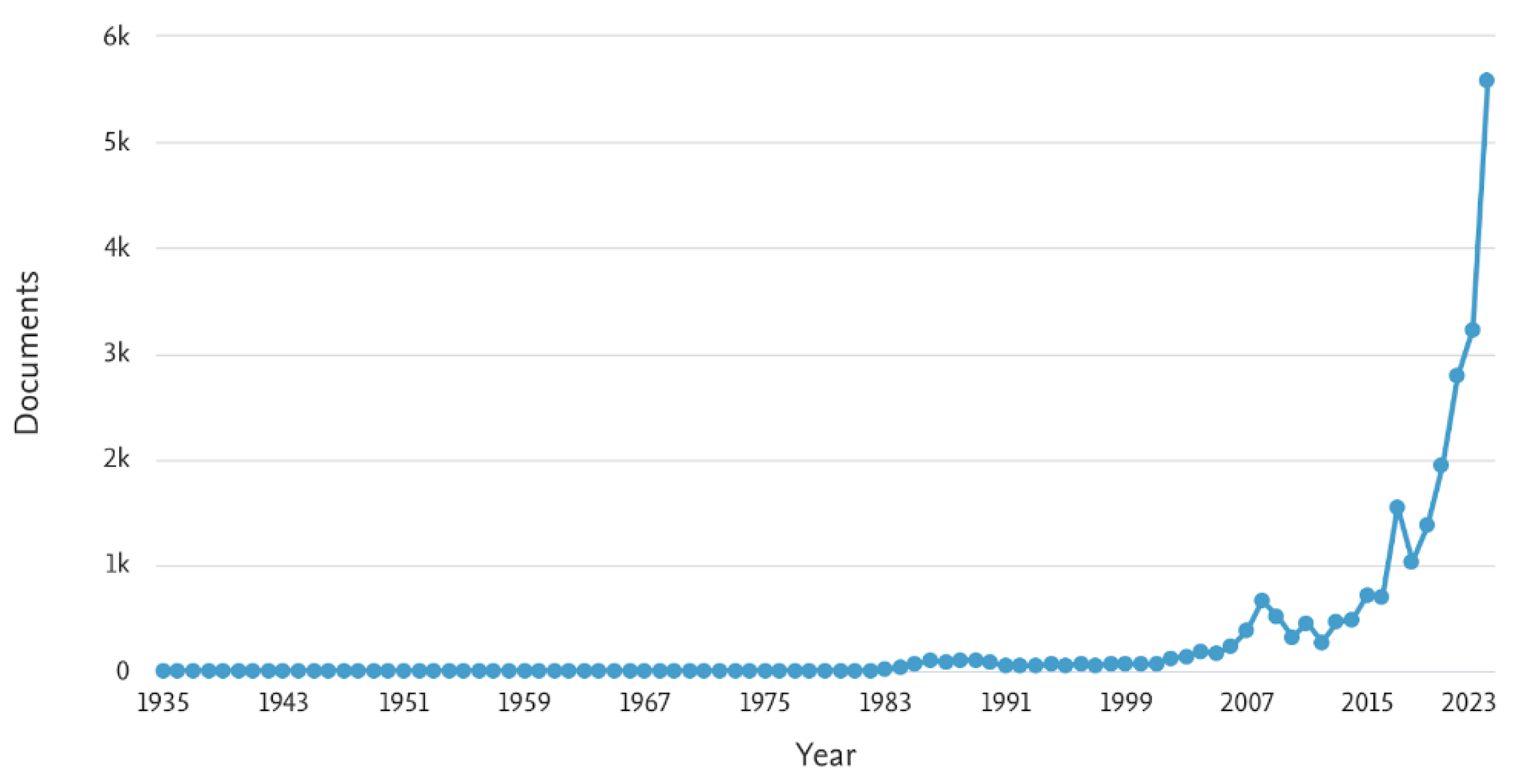
Figure 2.
Study Phases.
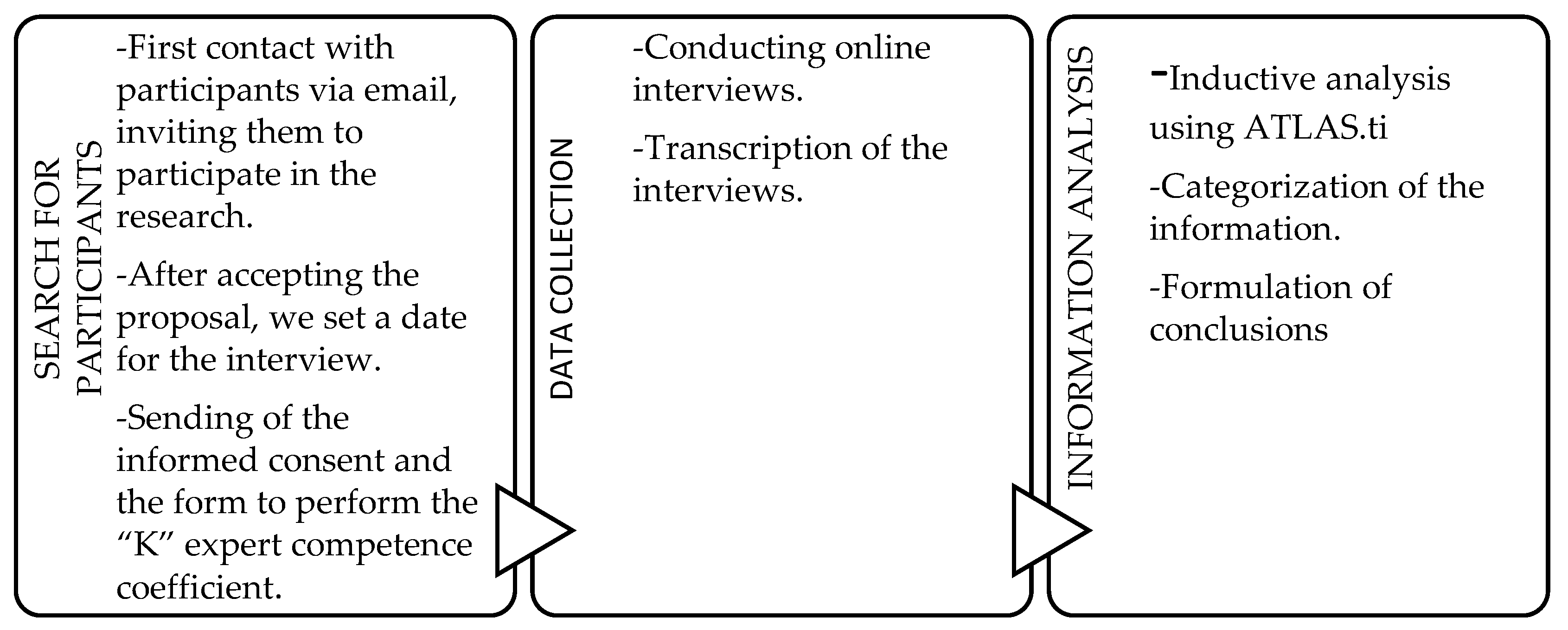
Figure 3.
Demographic data of the participants.
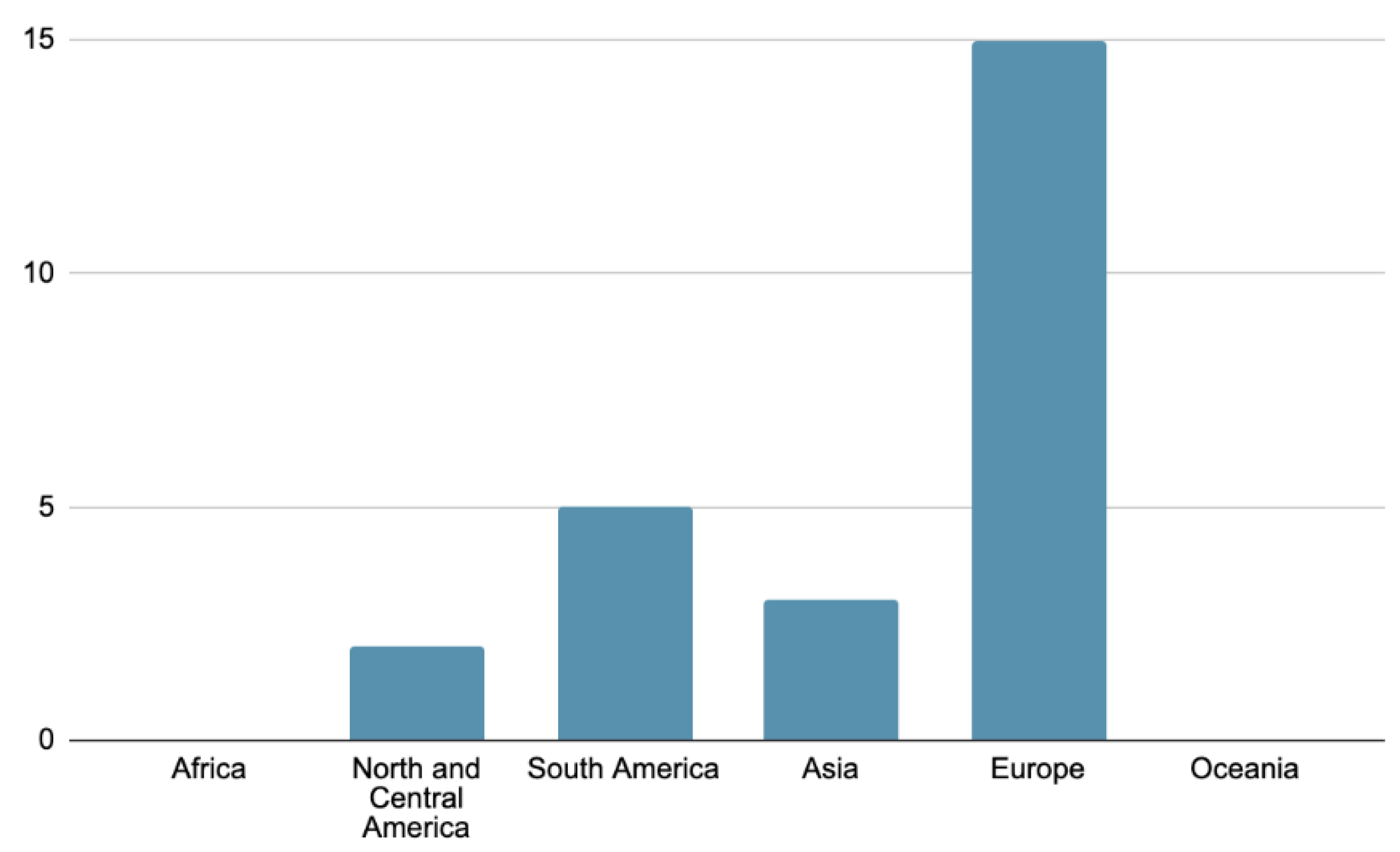
Figure 4.
Topics related to the impact of AI on Flipped Learning.
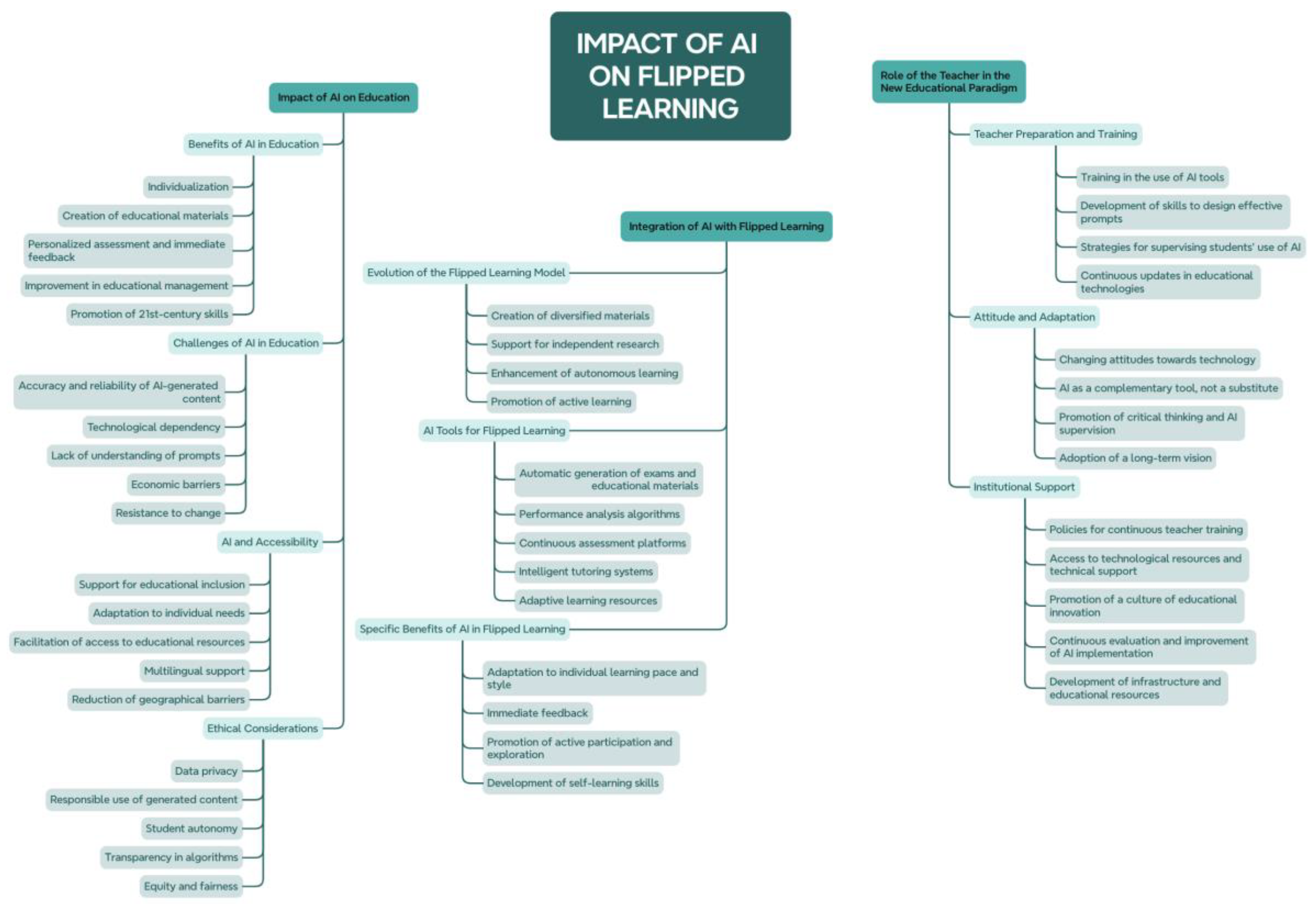

Table 1.
Experience of the experts participating in the research.
| Data | N | % |
|---|---|---|
| Educational Stage | ||
|
Primary Education Secondary Education Higher Education Other Educational Field |
0 8 15 2 |
0% 32% 60% 8% |
| Years of Experience Implementing the Methodological Approach | ||
|
No practical experience 1-3 years 3-6 years More than 6 years |
0 1 4 20 |
0% 4% 16% 80% |
| Academic Field | ||
|
Social Sciences Humanities Visual and Plastic Arts Exact and Natural Sciences Applied Sciences and Technology Performing Arts and Music Others |
4 7 1 9 3 0 1 |
16% 28% 4% 36% 12% 0% 4% |
Table 2.
Interview questions and order of formulation.
| RQ1 | 1. What do you consider to be the main advantages and challenges of integrating AI in education? |
| 2. How can AI support accessibility and inclusivity? | |
| 3. What ethical considerations should be taken into account when integrating AI tools? | |
| RQ2 | 4. How can AI evolve the Flipped Classroom approach? |
| 5. Are there AI tools that you believe have significant potential to transform the Flipped Learning? | |
| RQ3 | 6. How prepared do you think teachers or educational institutions are for the integration of AI in their classrooms? |
| 7. What specific training and professional development would educators need to integrate AI into their educational practice? | |
| 8. How can educational institutions support teachers in adapting to these changes and keeping up with emerging technologies in education? |
Disclaimer/Publisher’s Note: The statements, opinions and data contained in all publications are solely those of the individual author(s) and contributor(s) and not of MDPI and/or the editor(s). MDPI and/or the editor(s) disclaim responsibility for any injury to people or property resulting from any ideas, methods, instructions or products referred to in the content. |
© 2024 by the authors. Licensee MDPI, Basel, Switzerland. This article is an open access article distributed under the terms and conditions of the Creative Commons Attribution (CC BY) license (http://creativecommons.org/licenses/by/4.0/).
Copyright: This open access article is published under a Creative Commons CC BY 4.0 license, which permit the free download, distribution, and reuse, provided that the author and preprint are cited in any reuse.


