

Submitted:
26 July 2024
Posted:
30 July 2024
You are already at the latest version
Abstract
Firefighter hoods are essential components of personal protective equipment (PPE), protecting the head, neck, and shoulders from extreme heat and hazardous particulates. This comprehensive review evaluates recent hood design and material innovations aimed at improving comfort and protective performance. Traditionally, firefighter hoods mainly focused on thermal insulation but lacked effective particulate filtration, which posed significant health risks. Recent updates to several standards set by the US National Fire Protection Association have led to advanced mul-ti-layered hoods incorporating innovative materials for improved performance. Nevertheless, challenges remain in achieving an optimal balance between comfort and protection. Firefighter hoods must not hinder movement or increase heat stress, and the process of donning and doffing must minimize contamination risks. Current standards primarily assess material properties but fail to address practical, real-world conditions and interactions with other PPE components. This review emphasizes that these knowledge gaps can only be closed through systematic performance evaluations that replicate actual firefighting scenarios and include both human trials and simu-lations. Future research should focus on refining hood designs and materials to enhance particulate filtration efficiency, improve ergonomic fit, and reduce complications associated with use. This will ensure that firefighter hoods offer comprehensive protection while maintaining high comfort levels in demanding environments.
Keywords:
firefighter hoods
; ergonomic design
; protective clothing
; comfort
; performance
; personal protective equipment
1. Introduction
Firefighting is known to be one of the most dangerous occupations, as it requires physical activities in hazardous work environments [1]. In addition, firefighters deal with extreme temperatures caused by weather and are exposed to heat, flames, sharp objects, chemicals, blood-borne pathogens, and slippery surfaces. They face significant chemical and physical hazards, including acute dangers such as trauma, burns, and smoke inhalation [2]. Because of these risks, firefighting requires extensive training and the use of heavy-duty equipment, such as personal protective equipment (PPE), to ensure safe and effective operations in life-threatening high-temperature environments. PPE provides firefighters with protection against various mechanical and chemical hazards [3]. Therefore, turnout gear, helmets, gloves, and hoods are crucial for safeguarding firefighters from occupational hazards. Figure 1 illustrates the types of interaction between different elements of firefighter PPE.
The hood is a critical component of a firefighter’s PPE. They are designed to protect the head, neck, and shoulders from multiple hazards encountered during firefighting operations and interact with other PPE components, namely the self-contained breathing apparatus (SCBA), helmet, and turnout gear. Firefighter hoods cover parts of the body not shielded by other PPE and act as connectors between these other PPE elements [4]. Therefore, even a small gap in the hood creates a vulnerability that compromises the entire system and overall protection. Despite their importance, firefighting hoods are often considered the least protective element of the firefighter's gear ensemble [5], and only few studies have focused on them.
In 1997, the US National Fire Protection Association (NFPA) 1971 standard was updated to require protective hoods. Firefighter hoods were initially designed to protect firefighters from thermal hazards and injuries while filling gaps in turnout gear. However, they have been shown to be ineffective at blocking particulates due to a lack of adequate particulate filtration [7,8]. Recognizing the health risks from particulate exposure, the 2018 NFPA 1971 standard [9] introduced particulate-blocking hoods, which were not mandated at that time. Particulate-blocking hoods are designed to meet current standards regarding particulate filtration, thermal protection, and comfort, providing better protection against cancer-related risks. The newly proposed NFPA 1970 standard mandates particulate-blocking hoods for full protection against particulates, which is only attainable if particles are prevented from penetrating through gaps in PPE and coming into contact with the skin.
Therefore, firefighter hoods must protect firefighters from high temperatures and combustion by-products such as particulates. This dual functionality is crucial to safeguard firefighters from the intense heat and hazardous airborne particulates encountered in firefighting environments. However, they should also be comfortable to wear and not hinder movements while performing firefighting tasks [10]. Prioritizing comfort may compromise protection against thermal hazards and burns [11]; hence, a balance between performance and comfort needs to be achieved by choosing appropriate designs and materials. Thus, it is essential to understand how specific designs and materials influence the comfort and performance of firefighter hoods. This review aims to provide a comprehensive overview of recent research findings on firefighter hoods, identifying knowledge gaps while addressing the following key questions:
- How do firefighter hood designs and materials affect wearer comfort and protective performance?
- What are the current challenges or limitations associated with firefighter hoods in terms of comfort and protection?
- Are there any problems or concerns regarding existing standards for evaluating hood protection and comfort?
- What are the knowledge gaps in hood research and which areas require further investigation?
By addressing these key questions, this review aims to advance the field of firefighter PPE by analyzing current hood designs and materials. This will enable fire departments and safety managers to make informed design choices, improving the safety and comfort of firefighter hoods. The insights will guide manufacturers in developing more effective PPE and serve as a resource for researchers and policymakers, fostering future innovations. Through academic publications, industry conferences, and collaborations with PPE manufacturers and regulatory bodies, the review will inform fire departments, enhancing firefighter safety and operational efficiency.
2. Firefighter Hoods as PPE
2.1. History of Firefighter Hoods
Firefighter hoods have come a long way in terms of both protection and comfort for firefighters. The evolution of these hoods can be traced back to 1825 when John Roberts created a 'smoke filter' consisting of a leather hood with a hose attached to the leg. This design, shown in Figure 3, was based on the understanding that the best air during a fire is found near the floor. The device used woollen fabric to block particles and a wet sponge for protection against gases [12].
In the early 1900s, leather hoods started to be worn by some firefighters, but it was only in the past 50 years that designs resembling balaclavas or ski hoods became more common, although still not widely used [13]. In January 1996, FDNY (Fire Department of New York) firefighters began wearing hoods made of a double-layer, porous knit fabric composed of 20% polybenzimidazole (PBI) and 80% Lenzing rayon. These hoods had a crown vent and a bib-like design that provided protection for the scalp, ears, forehead, cheeks, chin, jaw, and neck. They were already in compliance with the NFPA 1971 standard [14]. As fire gear continued to improve, the need for protection for the head and face increased. Modern technical materials and clothing designs allowed firefighters to go deeper into structural fires and stay longer, which necessitated enhanced protection for their head and face [13].
Manufacturers have designed two main types of firefighter hoods for structural firefighting: traditional (regular) hoods and particulate-blocking hoods. Traditional hoods are crucial for providing thermal insulation and reducing heat transfer to a firefighter's head and neck. They are designed to balance thermal protection, which lowers the risk of skin burns, with breathability, aiding in heat dissipation. However, the fire service has recognized the increased risks on the fireground and has implemented strategies to minimize head and neck contamination. Traditional hoods are unable to protect firefighters from particulate hazards, so manufacturers have developed specialized fire hoods called particulate-blocking hoods. These hoods are designed to prevent particle penetration thus acting as a barrier against particulate hazards. This reduces exposure to carcinogens and other contaminants present on firegrounds. In addition to providing effective particulate-blocking performance, these hoods should also meet or exceed the standards for thermal protective performance and total heat loss [15]. It is important to note that the upcoming NFPA 1970 revisions require the transition from traditional knit hoods to particulate-blocking hoods for structural firefighting to provide additional protection for firefighters.
2.2. Firefighter Hood Standards
The NFPA 1971 Standard on Protective Ensembles for Structural Fire Fighting and Proximity Fire Fighting (NFPA 1971) aims to provide firefighters with adequate protection from thermal, physical, environmental, and bloodborne pathogen hazards. In 1997, this standard was updated to require firefighters to wear protective hoods under their helmets and around their SCBA masks [16].
Recognizing that exposure to fireground particulates poses a significant threat to firefighters' safety and health, the NFPA 1971 standard was updated again in 2018 to include a new particulate-blocking option for hoods [17]. This revision was based on research [7,8] demonstrating that traditional firefighter hoods were ineffective at blocking particulates, leading manufacturers to develop alternatives that offer better protection [18]. The revised NFPA 1971-2018 standard defined the structural firefighting protective hood as "the interface element of the protective ensemble that provides limited protection to the coat/helmet/SCBA facepiece interface area." These new standards resulted in designs that meet higher particulate-blocking requirements, while maintaining the same criteria for thermal protection performance [15]. According to NFPA 1971-2018, particulate-blocking hoods must achieve a minimum particulate-filtration efficiency (PFE) of 90%, a total heat loss (THL) value of 325 W/m², and a thermal protective performance (TPP) value of no less than 20.0 Cal/cm². TPP and THL are fundamental metrics that should account for real-world wear and fire exposure, and they are inversely related [19]. All structural firefighter gear, including protective hoods, must meet the design and performance criteria specified in the latest version of NFPA 1971 to be approved for market use [20].
The NFPA 1971(2018), also focuses on design and performance criteria specifically aimed at preventing particulate infiltration at the ensemble level and introduces specifications for particulate-blocking hoods. The previous 2013 edition [20] only contained specification regarding thermal and mechanical parameters for protective hoods [21]. Section 6.13 of NFPA 1971(2018), entitled "Protective Hood Interface Component Design Requirements for Both Ensembles," addresses crucial design aspects including the required types of threads, the body parts that the hood must protect with specific measurements, and the size of the face opening (Table 1). The 2018 edition also includes Section 6.14 on "Optional Protective Barrier Hood Interface Component Design Requirements", which incorporates all the specifications from Section 6.13 and adds the requirement for the hood to include particulate-blocking material (Table 2).
The performance criteria are also crucial for ensuring the effectiveness of the hoods. Therefore, NFPA 1971(2018) Section 7.13 on “Protective Hood Interface Component Performance Requirements for Both Ensembles” details the required performance standards for protective hoods (Table 3). Additionally, Section 7.14 on “Additional Performance Requirements for Optional Structural Fire Fighting Protective Hood Interface Components Providing Particulate Protection” outlines further performance standards for hoods designed to provide particulate protection (Table 4). These comprehensive standards ensure that protective hoods offer optimal protection and functionality for firefighters.
The upcoming revision of NFPA 1971, expected to be published as NFPA 1970 between 2024 and 2025, marks a major update by replacing traditional knit hoods with particulate-blocking hoods in structural firefighting [7]. Additionally, the updated standard will tackle sizing issues in hood design by introducing a sizing index intended to improve compatibility with other gear like helmets and SCBA masks. The update also addresses differences in materials and construction between standard and particulate blocking hoods. Furthermore, efforts were made to incorporate user expectations and enhance hood construction for increased particulate blocking efficiency and hood durability [7]. Manufactures will have to update their designs and constructions to account for modified testing requirements that will encompass seam testing of composite samples for particulate-blocking efficiency, which will extend hood longevity. A key design update involves expanding the coverage area of particulate blocking material in hoods to include the entire head, neck, and bib areas, except for a ¾-inch perimeter around the face opening to accommodate various SCBA mask designs. Furthermore, the upcoming NFPA 1970 will contain a supplement for full ensemble tests that cover insulation, heat stress, and mobility, to enhance understanding of the overall impact on protection, comfort, and functionality. These optional tests are intended not only to guide manufacturers in consistently assessing product performance but also to help end users establish criteria for integrating and evaluating the entire ensemble when selecting individual components.
2.3. Ergonomics Challenges of Firefighter Hoods
Despite the existence of detailed and comprehensive standards, there are still significant challenges for developing a hood that enhances protection while maximizing wearer comfort. This is primarily because the neck and head present a complex ergonomic challenge, particularly ensuring thermal and smoke protection for the thin layers of skin and blood vessels, while allowing necessary head movement [10]. Additionally, the skin on the head and neck plays an important role in regulating heat exchange. The neck and face skin are thinner and more absorbent than most other parts of the body and PPE elements come into direct contact with these surfaces [22]. Moreover, the relatively thin skin in the neck makes this area vulnerable to significant transdermal absorption of combustion by-products. Fent et al. [23] demonstrated that polycyclic aromatic hydrocarbons (PAHs) can enter firefighters' bodies through their skin, particularly in the neck region where hoods offer less dermal protection. This can lead to exposure and absorption of harmful substances. On the other hand, Smith and Havenith [24] studied regional sweat rates (RSR) in male athletes at exercise intensity and found that areas such as the forehead, neck, and head exhibit the highest rates of sweating (Figure 3). Additionally, Esfahani et al. [25] conducted a study on the radiant protective performance (RPP) of firefighter hood materials and showed that increased sweating in the head and neck regions raises the risk of burn injuries in this area.
Figure 3.
Median regional sweat rates of male athletes at exercise intensity (reproduced with kind permission from [24]).
Figure 3.
Median regional sweat rates of male athletes at exercise intensity (reproduced with kind permission from [24]).
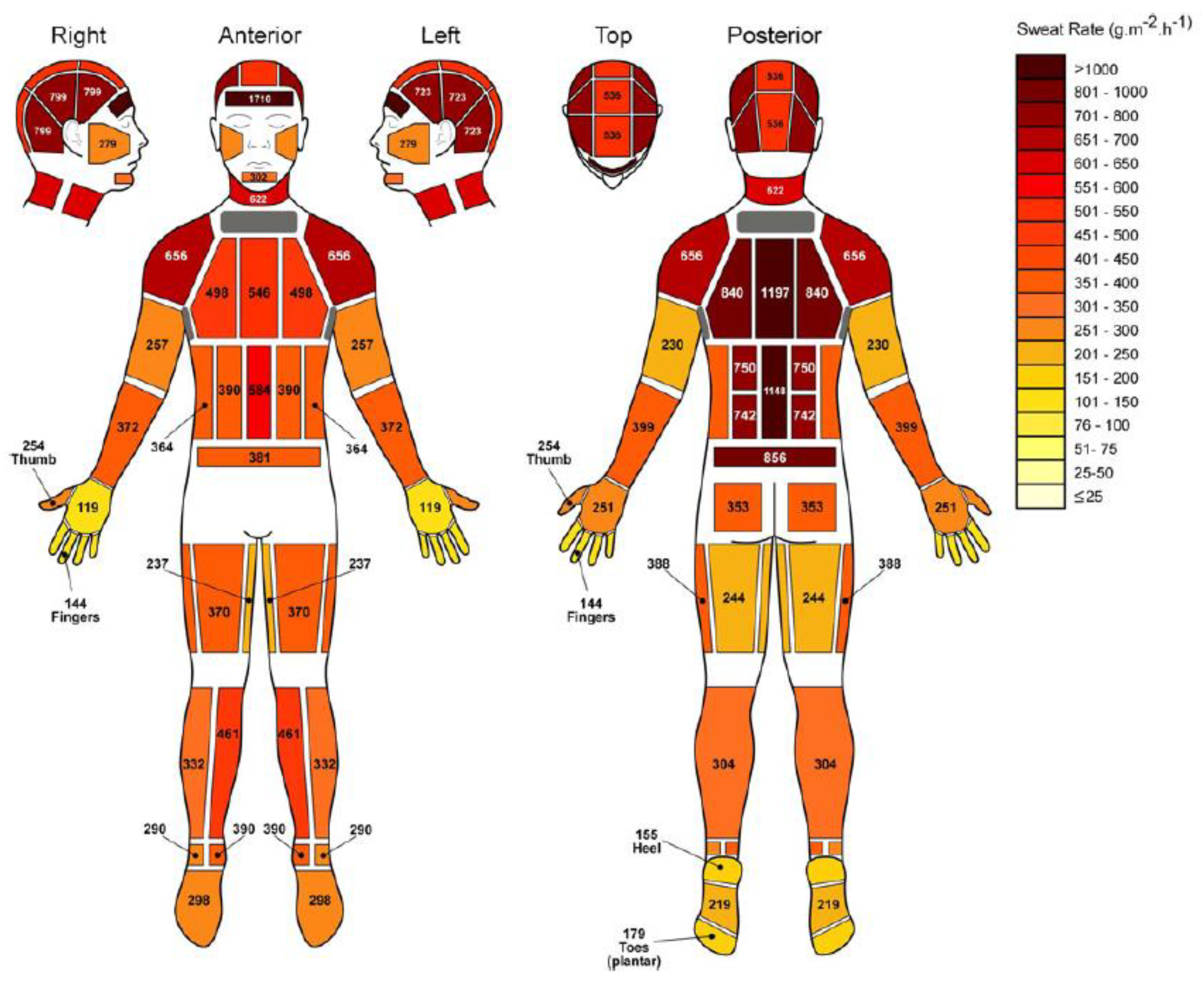
In short, the vulnerability of the head and neck area is related to certain ergonomic factors and movement requirements, to its role in regulating heat exchange, and to its potential as a significant site for transdermal absorption of PAHs. This is compounded by the thinner, more absorbent skin in this area and higher sweating rates.
2.4. Performance and Protection
Clothing serves as a barrier between the body and an unsuitable physical environment to protect the human body [26]. Protective clothing includes garments and related fabric items specifically designed to shield the wearer from severe environmental conditions that could lead to injuries or even death [27]. These garments can be categorized based on their intended use, such as protection from cold, flames, chemicals, mechanical impacts, radiation, biological agents, and electricity or to increase wearer visibility [28]. Protective clothing belongs to the category of functional clothing, which refers to textile-based products primarily valued for their performance or functional attributes, rather than their aesthetic or decorative features [29].
Firefighter hoods, as part of PPE and the firefighter’s protective ensemble, act as a barrier against heat, flames, radiant energy, and particulate hazards. Therefore, firefighter hoods must protect the wearer from high temperatures and combustion products such as particulates and gases, while also providing comfort and ensuring performance [10]. By providing thermal insulation, flame resistance, and particle protection, firefighter hoods significantly reduce the risk of burns, heat-related injuries, and exposure to harmful substances.
2.4.1. Thermal Protection
Thermal protection against heat and flame exposure in firefighter hoods is a top priority [30]. The Fire Department of the City of New York (FDNY) announced that the traditional firefighter’s hood significantly enhanced thermal protection. According to Prezant et al. [14], traditional hoods resulted in substantial reductions in burns, including a 54% decrease in neck burns, a 60% decrease in ear burns, and a 46% reduction in total head burns. In recent years, manufacturers have increased the thickness of materials and added layers of reinforcement to meet thermal protection requirements [31]. House et al., [32] demonstrated how injury incidence decreased by combining multiple layers of hoods. The most significant improvement in protection was observed when the number of hood layers was increased from 1 to 2. In the case of 1-, 2-, 3-, and 4-ply hoods, predicted likelihoods for burn injuries after 4 seconds of flame engulfment were respectively 74%, 28%, 14%, and 13%.
On the other hand, the study by Smith et al. [15] revealed that single layer knit hoods made of meta-aramid material fail to meet the minimum thermal protective performance (TPP) rating of 20 cal/cm² (as per the NFPA 1971 standard). However, when the the thickness and layering of the meta-aramid material was increased, thermal protection significantly improved, albeit resulting in a reduction of total heat loss (THL). TPP ratings are more influenced by material thickness rather than air permeability, and additional layers increase insulation. Various factors, including material layering, are critically examined in the research, which utilizes methods like continuous and abbreviated exposure testing and employs manikins for realistic evaluations. These factors have a significant impact on thermal protection, which ultimately enhances safety standards in firefighter gear [33]. Despite the significant advancements in thermal protection materials and design for firefighter hoods, they must also provide protection against other hazards, such as particulate exposure. The following section will discuss the innovations and challenges involved in enhancing particulate protection for firefighter hoods.
2.4.2. Particle Protection
Cancer is a significant concern in the fire service industry. According to a 2014 study by NIOSH, there has been a 14% increase in cancer deaths among firefighters compared to the general population, likely due to occupational exposure to harmful chemicals [34]. In 2010, the World Health Organization's International Agency for Research on Cancer classified firefighting as "possibly carcinogenic to humans." This classification is primarily based on the potential for firefighters to absorb cancer-causing compounds found in smoke through their skin [35]. Firefighters are exposed to harmful substances through their skin, and research has shown that PAHs [36,37,38,39,40,41] and volatile organic compounds (VOCs) [42,43,44] can be absorbed in this way.
Mayer et al. [45] conducted a study to assess the effectiveness of personal protective equipment (PPE) for firefighters against hazardous combustion byproducts. They examined the penetration of volatile organic compounds (VOCs) such as benzene, toluene, and naphthalene through PPE, including new and laundered particulate-blocking hoods. Air sampling inside and outside the turnout jacket revealed that hazardous compounds could still penetrate the PPE. Even when wearing a self-contained breathing apparatus, firefighters showed increased levels of benzene in their exhaled breath after a fire, indicating dermal absorption. This research emphasizes the limitations of current PPE to fully protect firefighters from certain chemical exposures. Previous research by Fent et al. [34] suggests that firefighters' necks often become chemically contaminated. This contamination is believed to occur during fires, either through the protective hood or around it.
As part of their occupation, firefighters frequently encounter smoke, both particulate and gaseous, containing various chemicals such as PAHs and flame retardants (FRs). Exposure to PAHs is particularly concerning, as some PAHs are recognized as carcinogens in humans [34]. A study conducted by the Illinois Fire Service Institute (IFSI) and NIOSH found high PAH levels in firefighter urine despite the use of a SCBA, indicating that PAHs may be absorbed through the skin [23]. The addition of a particulate-blocking layer to standard two-ply hoods reduced PAH contamination on the neck without increasing heat stress or discomfort for the wearers [10]. Furthermore, Carlton [33] discovered that adding particulate blocking layers significantly improves the thermal protective performance of firefighter hoods, which is crucial for reducing exposure to carcinogens. The study emphasizes the importance of testing materials under extreme conditions like flashovers and highlights the role of thickness and weight in providing thermal protection.
On the other hand, Hill and Hanley [8] demonstrated in a controlled laboratory exposure to fluorescent aerosol, how the traditional knit hood can allow particles to reach the firefighter's skin (Figure 4). They observed significant concentrations of aerosol deposits on the neck, cheeks, ears, and hair, indicating that smoke and particles can penetrate the hood. The relatively clean areas below the ears indicate the positions of the mask straps.
Moreover, Marshall [7] conducted research using the Fluorescent Aerosol Screening Test to compare particle ingress for no hood, a traditional knit-only hood, and a particulate-blocking hood, utilizing fluorescent powder to simulate contamination (Figure 5).
These results clearly demonstrate the excellent protective performance of particulate-blocking hoods compared to traditional hoods or no hood at all. Similarly, Kesler et al. [10] showed that wearing particulate-blocking hoods significantly reduced PAH levels on the neck compared to traditional hoods, although complete prevention of skin contamination (cross-contamination) was not achieved. In contrast, a comparison between traditional hoods and particulate-blocking hoods by Blake [17] found no visible evidence of particulate matter on the wearer’s skin when they used firefighter hoods made from Gore material (Figure 6).
Moreover, Zhou et al. [46] conducted a detailed study on the blocking and filtering properties of natural fibers, such as cotton and wool, in relation to PAHs found in cigarette smoke. Using various techniques, including scanning electron microscopy (SEM), Fourier transform infrared spectroscopy (FTIR), and fluorescence detection, they found that filter tips made of natural fibers (cotton or wool) were superior to conventional cellulose diacetate filter tips for cigarettes (CDFTC) in filtering out toxic particles. This superiority was mainly attributed to the twisting or crimping of the fibers in the longitudinal direction.
In addition, Xiang and Blankenbeckler [47] evaluated the effectiveness of a nanofiber nonwoven material in filtering carcinogenic smoke particles. They developed a composite hood by incorporating a stretchable nanofiber nonwoven between two flame-resistant layers. The study found that the hood composite utilizing the nanofiber nonwoven achieved a filtration efficiency as high as 99%, representing a fourfold improvement when tested with particle sizes ranging from 0.1 to 0.8 µm. Furthermore, this efficiency was maintained even after 50 washes. The composite's ability to block smoke particles was verified through a fluorescent aerosol screen test and practical wear trials, demonstrating its protective capabilities and ensuring situational awareness for firefighters.
2.4.3. Decontamination and Protection
While firefighters traditionally would reuse their protective hoods without washing them, more recently, many fire departments have implemented hood exchange and laundering programs to reduce the risk of contamination. Laundering firefighter hoods effectively removes a significant amount of PAHs, the predominant contaminant found on these types of garments. This process is crucial for maintaining firefighter hygiene and PPE cleanliness [34]. The study by Mayer et al. [48] found that regularly laundered hoods showed significantly lower levels of PAHs and some FRs compared to unlaundered hoods. However, laundering was ineffective at removing polybrominated diphenyl ethers (PBDEs), and there was evidence of cross-contamination during laundering, leading to higher levels of certain contaminants post-laundering. Hence, while laundering can reduce contamination, its effectiveness depends on the contaminant type and laundering conditions.
Kesler et al. [10] stated that fire departments had established a consistent practice of laundering hoods after exposure to fire, while educating firefighters on proper hood removal techniques to prevent cross-contamination via the skin. Kessler et al. found that firefighters who chose a controlled overhead doffing technique to avoid cross-contamination had significantly lower levels of PAH contamination in their neck area compared to those who used a traditional removing method. Additionally, they found that altering the method of hood removal resulted in a greater reduction in contamination than design modifications [10]. Others have suggested to separate hoods before washing based on their contamination level to avoid cross-contamination, e.g., hoods exposed to only low contaminant concentrations should not be washed together with those used in highly contaminated environments [34].
Mayer et al. [49] found that particulate-blocking hoods reduced exposure to hazardous substances like PAHs by 30% compared to traditional knit hoods. However, they also found a measurable decrease in the hood’s protective capability after just 40 laundry cycles. Interestingly, firefighters who used washed particulate-blocking hoods had a considerably lower exposure in their neck area (median of 32.6 mg/m2, average of 43.9 mg/m2, and 33.3% of samples below the detection limit) than those wearing new particulate-blocking hoods (statistically significant with p=0.016, median of 108 mg/m2, average of 43.8 mg/m2, and 41.7% non-detectable) or new knit hoods (p=0.009, median of 132 mg/m2, average of 62.3 mg/m2, and 16.7% non-detectable) [10]. For each hood type, the same hood removal method and ambient pollutant concentrations were used.
In summary, the research to date underscores the critical importance of improving particulate protection in firefighter hoods. While advancements like particulate-blocking layers and innovative materials have led to reduced exposure levels of carcinogenic substances like PAHs, there is still room for improvement to completely prevent any skin contamination. While the adoption of regular laundering and decontamination practices has significantly reduced exposure to harmful contaminants like PAHs, the effectiveness of the decontamination processes strongly depends on the contaminant type and laundering conditions. Additionally, improved hood removal techniques and separating hoods based on contamination severity can serve to minimize the risk of cross-contamination. Despite these advances, challenges persist, such as the reduced effectiveness of particulate-blocking hoods after multiple washes. These findings highlight the need for continuous refinement of decontamination practices to ensure optimal safety in firefighting gear.
2.5. Comfort
Although protection remains the main purpose of firefighter hoods, comfort also plays a crucial role in ensuring effective performance on the fireground and in other operational areas [18]. Rosenblad-Wallin [50] considers comfort and protection as the most important functional design considerations of protective clothing, with comfort depending on both climate comfort and on how a garment’s weight, pressure, and tactile properties affect how it feels against the skin. Climate comfort has been defined as the “micro-climate in the layer between the skin and the clothes” [50] (p. 280). Slater [51] defines comfort as a state of harmony between a person and their environment, encompassing physiological, psychological, neurophysiological, and physical aspects. He identifies three types of comfort: physiological comfort, which relates to the body's ability to sustain life; psychological comfort, which refers to the mind's ability to function independently; and physical comfort, which considers how the external environment affects the body. Song [26] defines and categorizes clothing comfort as “(1) Thermal comfort – attainment of a comfortable thermal and wetness state; it involves transport of heat and moisture through fabric, (2) Sensorial comfort – the elicitation of various sensations when a textile comes into contact with skin, (3) Body movement comfortability of a textile to allow freedom of movement, reduced burden, and body shaping, as required (4) Non-sensorial comfort that influenced by parameters such as air permeability, water repellency, and water resistance.”
According to Ward [16,52], firefighters often find protective hoods uncomfortable and feel that they interfere with their natural instincts and situational awareness. Traditionally, they relied on exposed skin and ears to sense heat and detect changing conditions, which helped them make quick safety decisions. Protective hoods, by covering these areas, can create a false sense of security and encourage firefighters to venture deeper into hazardous environments. Firefighters reported issues like heat stress, restricted hearing, and reduced dexterity as the main drawbacks of hoods which make them feel cumbersome. Nevertheless, some firefighters acknowledged that hoods significantly enhance survival during extreme situations like flashovers. This reflects the need to strike a balance between the desire for advanced protection and the maintenance of practical usability.
Lee et al. [53] found that firefighters commonly requested a reduction in the weight of their PPE and relief from heat stress during firefighting. However, they also noted increased discomfort arising from the overprotective features of the newly developed PPE, causing firefighters to remove their helmet and hood during recovery periods due to thermal discomfort. Kesler et al. [10] compared five different firefighter hoods in terms of wearability, specifically evaluating their impact on range of motion, noise production, and hearing. Their findings revealed that particulate-blocking hoods, especially those with more layers, restricted head movement and impaired hearing due to their thickness. Particulate-blocking hoods with membrane-based layers produced higher noise levels, with the bonded and non-bonded designs generating the most noise due to the friction between layers. Firefighters reported decreased comfort, increased stiffness, and reduced movement with hoods having more layers, which impacted communication and situational awareness. Kesler et al. [10] found that compared to traditional hoods, particulate-blocking hoods were generally perceived more negatively due to their increased noise levels, heaviness, thickness, rigidity, and inability to stretch, factors that were perceived to deteriorate even further after laundering. In an empirical study by Park et al. [6], they found that firefighter hood designs typically result in poor fits and may even lead to itchiness, especially when wet.
Smith [54] highlighted that physical hood attributes, such as size and material thickness, significantly influence the wearer's comfort. McQuerry et al. [31] argued that the addition of layers to PPE, while leading to increased protection, could compromise breathability and comfort as they reduce heat dissipation which can lead to heat stress and discomfort [10]. The reduction in heat dissipation is due to these layers creating both a thermal and evaporative heat barrier.
Other PPE design changes have been noted to lead to improved comfort, as they addressed issues such as core temperature, skin temperature, and physiological strain [31]. Furthermore, reviews posted by firefighters on websites like Amazon or on some manufacturers' websites attribute the discomfort caused by some particulate-blocking hoods to factors including lack of stretchiness, itchiness when wet, improper fit, insufficient heat dissipation, high noise levels, and impairing hearing. These insights are vital as they demonstrate that hoods must also be comfortable and manageable to ensure continued wear and thus protection from potential carcinogens.
3. Design and Material Considerations in Comfort and Performance
3.1. Materias/Polymers Used for Firefighter Hoods and Their Properties
Firefighter hoods come in a variety of compositions and styles to offer specific levels of protection and comfort. The composite construction of the hoods is crucial in determining their overall performance, with testing conducted at both the material and garment levels [54]. Firefighter hoods are made from flame-retardant materials, particle-blocking fabrics, and other materials designed to enhance wearer comfort.
Firefighter hoods, including traditional and particulate-blocking types, are typically constructed from one to four layers of 1x1 rib knit consisting of an outer shell, a moisture barrier, various particle blocking layers, and an inner lining. Knitted fabrics are commonly employed due to their outstanding mechanical and comfort attributes. Knitted fabrics are preferred for their outstanding mechanical and comfort attributes including high flexibility, stretchability, softness, breathability, moisture management, lightweight, and fit [55]. This makes them suitable for a variety of garments including underwear, socks, gloves, and hoods.
However, Stull and Stull [56] pointed out that while knitted fabrics provide significant advantages in comfort and fit, particulate-blocking hoods, which are increasingly used for enhanced protection, do not offer the same level of elasticity and stretch. The materials used in these hoods, such as polytetrafluoroethylene (PTFE) membranes and nanofiber-based nonwovens, often reduce the inherent flexibility of knitted hoods. PTFE membranes contribute to stiffness due to their microporous film structure, and nanofiber-based nonwovens add rigidity with their dense, web-like fiber arrangement. In firefighter hoods, the particulate barrier is typically sandwiched between the thermal protection layer and the comfort layer, which results in a multi-layered structure intended to optimize both safety and wearability. However, these added materials lead to a reduction in hood stretchability and elasticity, which in turn reduces wearer comfort.
Hood compositions are usually chosen based on the material properties of its composites and their intended purposes, such as moisture management, particulate blocking, and thermal protection. The following sections will focus on the eight most used materials.
3.1.1. Aramid Fibers: Nomex and Kevlar
The aramid fibers Nomex® and Kevlar® are perhaps the most commonly used materials in firefighter hoods. Aramids are similar to polyamides in terms of their chemical structures and can be produced in staple or filament form. The main difference is that aramids replace the methylene groups found in standard polyamides like nylon 6 and nylon 66 with an aromatic ring, hence their name 'aromatic polyamide' or 'aramid' for short [57]. They are known for their exceptional strength and remarkable resistance to heat, chemicals, and abrasion [33].
Aramids can be classified into two types: meta-aramids, such as Nomex®, and para-aramids, such as Kevlar®. Many flame-resistant clothing systems and ballistic protective garments are made from either of these two fabrics [58]. Kevlar® and Nomex® are registered trademarks of DuPont for a group of synthetic organic fibers in the aromatic polyamide family [59].
Nomex® was developed in the early 1960s and introduced to market by DuPont in 1967 [60]. It is highly durable, and inherently resistant to high temperatures, flames, chemicals, and radiation without compromising its structural integrity. It is comprised of four main elements: carbon, hydrogen, oxygen, and nitrogen [61]. When exposed to intense heat, the material does not melt but thickens, thereby providing a protective barrier between the heat source and the skin. Its intrinsic flame-retarding capacity is permanent and unaffected by wear or washing. Moreover, Nomex® does not drip or fuel combustion and acts as an effective insulator against electricity, offering protection against electrical arcs. The fiber's structure also makes it resistant to many chemicals, refrigerants, transformer oil, and silicon. It also offers favorable textile characteristics and dimensional stability. While its flexible polymer chain imparts Nomex® with similar qualities as a normal textile, it maintains a high-temperature resilience that is comparable to Kevlar®. Despite its many advantages, Nomex is more costly than other fabrics and has some drawbacks: it degrades under UV light, requires special dyes due to low dyeability, and lacks elasticity, making it stiff or rigid.
Kevlar® is a para-aramid fiber with numerous advantageous engineering properties, including high modulus, exceptional strength, light weight, good chemical resistance, and thermal stability [62]. Therefore, this material offers a high strength-to-weight ratio and thermal resistance. While Kevlar® is mostly known for its use in bulletproof vests, it is also used in firefighter hoods due to its lightweight but robust structure, and because it enhances the thermal and flame resistance of hoods, while still affording wearer comfort if blended with other fibers.
The choice of whether to use Nomex® or Kevlar® depends on the specific use scenario and resulting comfort and protection needs. Kevlar offers superior abrasion resistance compared to Nomex, making it suitable for professional firefighter turnout gear. Conversely, Nomex, with its softer feel, is favored for daily wear garments. Kevlar-Nomex blends are used to enhance overall garment strength and improve their break-open resistance [63].
Nomex® Nano Flex, an advanced flame-resistant material developed by DuPont, is used in particulate-blocking hoods. It reduces thermal liner thickness by up to 40%, decreasing the weight and bulk of turnout gear, which improves mobility and lessens heat stress [64]. It integrates a thin, lightweight structure with an intricate nanofiber layer that acts as a dense, web-like barrier to effectively block fine particulates such as smoke and soot. This membrane offers up to a four times higher particle blocking efficiency compared to traditional materials, while maintaining superior breathability and elasticity. This combination ensures greater safety and comfort in vulnerable areas, particularly in firefighter hoods, by allowing moisture vapor to escape, reducing heat stress, and providing inherent flame resistance.
3.1.2. Polybenzimidazole (PBI) Fiber
PBI possesses a high thermal stability and flame resistance, which makes it suitable for use in firefighter coats, space suits, hoods, and metal-working gloves [65]. It can be synthesized through a condensation reaction between diphenyl isophthalate and 3,3',4,4'-tetraaminophenyl, though other monomeric units can also be used in the synthesis process [66]. PBI has an exceptionally high decomposition temperature of 704 °C, which significantly exceeds that of Nomex (371 °C) and Kevlar (593 °C) blends, providing superior break-open resistance and thermal protection [67]. It was developed in response to the need for a high-performance material that could withstand extreme temperatures. PBI does not ignite or melt and maintains its strength and flexibility even after exposure to flame. This makes it particularly suitable for environments where high heat resistance is crucial. PBI fiber outer shells act as the primary layer of defense for firefighters, providing essential protection against the severe heat and other hazardous conditions encountered during fires. These fabrics are engineered to balance inherent flame and heat resistance with comfort and lasting durability [68]. Despite their softness, PBI fabrics maintain their integrity under high heat, resisting brittleness, shrinkage, and rupture.
3.1.3. Carbon-Based Fibers: C6
Carbon-based fiber composites provide advanced thermal protection and durability for firefighter hoods in knitted fabrics due to their unique structure and properties. These fibers are composed of carbon atoms arranged in a highly ordered crystalline structure, typically forming sheets of graphite-like planes aligned in the direction of the fiber [69]. This configuration imparts significant strength, allowing carbon fibers to be five times stronger than steel (by weight-equivalent), while remaining lightweight and exceptionally rigid. The structure also provides excellent thermal stability, enabling the fibers to withstand high temperatures without degradation, making them ideal for environments with extreme heat.
In firefighter hoods, carbon fibers are often incorporated into knitted fabrics to ensure sufficient flexibility and comfort. These knitted structures also allow for effective moisture management, wicking away sweat and reducing heat stress, while maintaining breathability [70]. The abrasion resistance and durability of carbon fibers ensure that hoods remain resilient even in harsh conditions, contributing to their longevity and effectiveness in protecting firefighters from thermal hazards. By blending carbon fibers with other flame-resistant materials, such as Nomex® or PBI, protection and performance for demanding firefighting applications are optimized.
3.1.4. Fire-Resistant Viscose Rayon: LenzingTM FR
LenzingTM FR is a flame-resistant rayon fiber made from cellulose, produced through Lenzing’s Modal process. This fiber is known for its skin-friendly properties and its ability to combine flame resistance with comfort. Lenzing FR is often blended with other high-performance fibers to create protective fabrics for various industrial applications, including firefighter hoods. These blends offer enhanced breathability, moisture management, and protection while remaining lightweight and comfortable. Studies have shown that this material can effectively manage moisture and heat which provides breathability, while reducing heat stress and fatigue if used in multi-layered clothing [71].
3.1.5. Oxidized Polyacrylonitrile (OPAN)
OPAN is a specialized form of carbon fiber derived from polyacrylonitrile (PAN) fibers. The transformation of PAN into OPAN involves cyclization and oxidation, which leads to a reorganization of the polymer structure to mimic that of carbon fibers without completing the full carbonization process [33]. Cyclization is achieved by heating PAN fibers in an oxidation oven at around 300°C in the presence of air which induces the fibers to form a cyclic structure. This partial conversion, without the extensive processing required for complete carbonization, is both less time-consuming and less costly [72].
OPAN fibers, due to their incomplete carbonization, contain residual elements like oxygen and nitrogen, which result in lower physical strength compared to fully carbonized fibers. Despite these limitations, OPAN exhibits excellent resistance to heat and flame, as it does not melt, burn, or shrink when exposed to high temperatures. This makes OPAN a practical choice for applications that demand high-performance thermal protection at a lower cost, suitable for wearable technologies but less ideal for more stringent applications such as in aerospace or pressure tanks [73].
3.1.6. Modacrylic Fibers
Modacrylic fibers, first commercially produced in 1949 by Union Carbide Corporation, are synthetic copolymers created from a combination of acrylonitrile and other monomers like vinyl chloride or vinylidene chloride. They typically contain between 35% and 85% acrylonitrile by weight and are known for their significant flame and heat resistance [74]. These fibers exhibit self-extinguishing properties and do not readily ignite, making them suitable for protective applications such as firefighter undergarments. Structurally, modacrylic fibers are characterized by a dense array of tiny filaments that capture particles effectively and are much finer than human hair. This dense network provides moderate abrasion resistance, softness, and flexibility [75]. Often blended with other materials, modacrylics enhance the comfort and safety of fabrics used in protective clothing, offering a cost-effective alternative to more expensive high-performance fibers like aramids [76]. Furthermore, they can be processed through dry or wet spinning methods and have a limiting oxygen index (LOI) ranging from 28% to 30%, which is high compared to other similar materials [77].
3.1.7. Polytetrafluoroethylene (PTFE) Membranes
Particulate-blocking firefighter hoods typically utilize two main types of barriers to prevent smoke particle penetration: PTFE membranes and nanofiber-based nonwovens, both flame-resistant and stable at high temperatures [15,47].
PTFE possesses remarkable physical and chemical characteristics, including (1) excellent thermal stability [78], (2) toughness at low temperatures [79], (3) low thermal conductivity [80], (4) good insulating and dielectric properties [81], (5) an extremely low friction coefficient, and (6) strong chemical resistance [82]. These characteristics are due to PTFE’s composition and structure: it is a helical, linear polymer consisting of a carbon chain surrounded by fluorine atoms. This tightly bound arrangement of fluorine atoms acts as a protective shield around the carbon backbone [81]. Due to the high thermal stability and low friction coefficient, PTFEs are commonly used in the manufacture of protective clothing [83]. PTFE membranes act as microporous films that block smoke particles. Hence, the inclusion of PTFE membrane-based layers not only blocks particles but also increases the time-to-burn of the composites, affording improved thermal protection [33].
Expanded Polytetrafluoroethylene (ePTFE) membranes are used in fabrics such as GORE, Hallo and Prevent as well as in particulate-blocking hoods. ePTFE consists of a microporous structure that provides high breathability and liquid resistance, enhancing both thermal protection and comfort. The abovementioned fabrics contain thin, lightweight, and durable membranes that combine uniform barriers with contamination-resistant coatings to achieve varying levels of wind proofness, liquid resistance, and breathability [84] combined with a high degree of flame resistance and durability (e.g., in Stedair© Prevent) [85].
3.1.8. Nanofiber-Based Nonwovens
Nanofiber-based nonwovens in firefighter hoods provide a high level of particulate protection due to their fine fiber structure and high surface area. According to Morpeth-Spayne [86], these nonwovens are designed with a dense network of tiny filaments, significantly smaller than a human hair, which effectively capture and block smoke particles. In typical hood designs, these nanofibers are sandwiched between two layers of knit fabrics to ensure breathability and comfort. This structural arrangement allows the hoods to effectively block harmful particulates while maintaining the necessary flexibility and moisture management. Their integration with other flame-resistant materials can lead to further enhancements of their overall performance. Recent research conducted by DuPont Personal Protection has shown that nanofiber-based nonwoven hoods offer firefighters almost complete protection against toxic smoke particulates. Hoods made with Nomex® Nano Flex demonstrated over 99% particulate filtration efficiency, along with excellent breathability and thermal insulation [47].
Each of the above materials has unique properties that make them suitable for use in high-risk, high-heat environments like fire scenes. The choice of material often depends on the specific requirements of a particular firefighting department with regard to the level of heat protection needed, durability, comfort, and available budget. Regarding material considerations, Kasebi et al. [11] noted that the bursting strength of hood fabrics, particularly those made of 100% meta-aramids or blends containing this fiber, was significantly impacted by direct exposure to ultraviolet light. Lin et al. [87] suggest that so-called phase change materials (PCMs), which store and release heat using chemical bonds, can be effectively used as latent energy storage and cooling materials in hood designs.
A detailed summary of the different types of firefighter hoods currently available on the market, including their material composition, has been provided in Table 5.
During a web search, we found several user reviews and comments posted on manufacturers and distributors’ websites stating a number of issues. A common concern appears to be that hoods made from Nomex fabric tend to fit too tightly around the head without allowing sufficient stretching, which leads to leakage issues around the face seal. Positive comments praised the Nomex hoods for their softness, comfort, light weight, and meeting higher NFPA standards. In contrast, some users complained about poor fit, discomfort due to heat, difficulties in managing the hood with a helmet (which may turn around), and challenges donning and doffing the hood.
In summary, particulate-blocking firefighter hoods come in a range of designs using various materials such as Nomex, PBI, Kevlar, and others. The choice of material is important when trying to strike a balance between heat, flame, and particulate protection and wearer comfort. These varied compositions often feature innovative layered constructions, based on each material’s unique properties regarding resistance, durability, and comfort. However, issues such as fit and heat discomfort highlighted in user feedback underscore the need for ongoing improvements in both material choice and hood design.
3.2. Firefighter Hood Designs
Firefighter hoods are available in a range of designs, styles, materials, lengths, and coverage levels. Typically, they are knitted, with a face opening designed to accommodate an SCBA. They feature bibs on the front and on both sides, allowing them to be tucked under coat collars. The hood design affects the amount of coverage it provides to the shoulders and chest, as well as the specific fabrics used in its construction. As mentioned, firefighter hoods are typically categorized as traditional or particulate-blocking. Both types are often constructed using a 1x1 rib knit for added comfort and stretch and are available in configurations of one to four layers. Typically, traditional firefighter hoods consist of two layers of fire-resistant material, whereas particulate-blocking hoods are constructed with an inner shell, an outer shell, and a middle layer acting as particulate barrier. Most firefighter hoods are designed to be flexible, accommodating various head sizes and respirator facepieces. The 'one-size fits all' nature of firefighter hoods, particularly in traditional ones, is achieved by their open knit construction. This design offers sufficient stretch and flexibility, ensuring adequate heat coverage around the wearer's head and neck [11]. Our market analysis revealed that most hood types fall into three categories based on their length and coverage. From left to right, Figure 7 shows category one, category two, and category three hoods. The first category includes shorter hoods with an overall length of 19 inches (48.26 cm) that cover the entire head and neck except for the face opening. The second category features hoods that are 2 inches longer in the chest area while offering the same shoulder coverage as the first category. These are more popular among firefighters. The third category consists of hoods with more shoulder coverage, which increases their width while maintaining the same length as the second category [88]. According to a review by Hinkle [88], the second category of hoods provide good overlap and coverage underneath, but the added fabric makes them more difficult to put on quickly.
In addition to varying lengths and widths, the manufacture of firefighter hoods also uses different construction techniques, including a variety of patterns, seam types, and material choices. Some hoods are designed with one seam on top of the head, where the helmet is placed. This has resulted in negative feedback from firefighters on manufacturers' and distributors' websites regarding discomfort, as the helmet presses down on the seam ridge, causing abrasions and general discomfort. To address these issues, some manufactures use two seams placed along the sides of the head. This design approach aims to avoid creating protrusions at the seams, leading to a smoother and more comfortable (Figure 8). This two-seam off-center design approach also affords more comfort when adding an SCBA, probably because it reduces the friction caused by the seams under the helmet against the skin.
Currently available hoods use flatlock stitching with 100% Nomex thread for increased durability and comfort. This stitching lies flat against the skin, reducing bulk and preventing snagging. Oglakcioglu et al. [89] highlighted the advantages of flatlock stitching over overlock stitching, noting its greater thermal conductivity, which likely helps dissipate heat more effectively. Additionally, flatlock stitching offers superior water vapor permeability, enhancing comfort by allowing sweat to evaporate efficiently.
Another innovation by some manufacturers involves the use of particulate-blocking materials only in specific parts of the hoods that are not covered by other PPE like helmets and turnout gear. Hence, these hoods only contain filtration materials around the neck and in those parts of the head that are not covered by the helmet.
In some two-seam off-center designs, the middle panel on top of the hood incorporates ventilation fabric, allowing body heat to escape while maintaining protection (Figure 9). Combining different fabrics and compositions to enhance functionality is another approach for manufacturers when producing firefighter hoods.
Other designs use varying patterns and coverage around the neck and shoulders, which may provide better protection and fit.
Overall, the design of firefighter hoods has evolved to encompass a range of styles, materials, and structural innovations, each aimed at enhancing protection, fit, and comfort. While traditional hoods offer basic protection, advanced designs, such as particulate-blocking hoods, incorporate specialized materials and optimized seam placements to improve comfort and protection. Despite these advances in design and material choices, there remain significant challenges and knowledge gaps.
In a summary the overall performance of the hoods including comfort and protection in terms of material and design consideration is shown in Figure 10.
In Table 6, the details of material and design considerations for providing comfort and protection are presented. This table illustrates how different materials and design elements impact both comfort and protection, highlighting the importance of each factor in the overall performance of firefighter hoods.
4. Current issues and Challenges regarding Firefighter Hoods
The field of firefighter hood research still faces many knowledge gaps and technological challenges, which will be summarized in this section to encourage and guide further research. Addressing these challenges is crucial for advancing the development and effectiveness of firefighter hoods.
4.1. Interaction of Firefighter Hoods with Other PPE
It is important to understand how hoods interact with other PPE components to ensure that both the individual components and the ensemble provide the necessary overall protection and comfort. Kesler et al. [10] noted that movement restrictions related to firefighter hoods are more likely due to interactions with other equipment rather than the hood itself. Examples of such interactions include the facepiece hitting gear around the chest when bending over or the helmet brim interfering with the SCBA harness or coat collar when tilting the head. Stull [13] emphasized that PPE can be penetrated by hazardous substances in areas where air flow is possible, such as overlapping clothing sections and where the hood meets the collar. As mentioned earlier, the interaction between one-seam hoods at the top of the head and helmets results in discomfort, mainly due to the helmet pressing on the seam ridge. These examples illustrate the importance of considering the interaction of firefighter hoods with other components to obtain designs that are both comfortable and achieve full protection and function.
4.2. Overlooked Design Considerations
Current studies predominantly evaluate hoods based on material properties, often neglecting other critical design aspects that could impact garment fit, body movement, and overall comfort and protection. For instance, some researchers only address design modifications in terms of material selection rather than exploring variations in the actual hood design and construction. Notably, only few studies have investigated design factors that contribute to discomfort and a lower protection, such as ill-fitting hoods and improper pattern design. Considering aspects such as patternmaking, construction, fit, and other design elements may afford a different perspective and lead to significant advancements. Therefore, further research is needed to comprehensively explore the design aspects of firefighter hoods, ensuring a holistic understanding of the factors that influence discomfort and protection beyond just material considerations.
While the comfort and performance attributes of hood composites are typically measured through material-level tests, it is crucial to assess hoods as a complete protective system, i.e., testing procedures should consider aspects such as coverage, seams, style, range of motion, vision, and fit, as well as the interaction with SCBA, helmets, and turnout gear. The hood design, especially around the face opening, is critical as it can impact the wearer's peripheral vision and overall visibility. More attention should also be paid to head movements and ergonomics, as they are essential to ensure firefighters' safety without hindering their tasks.
4.3. Donning and Doffing Challenges
Ensuring efficient donning and doffing of firefighter hoods remains a significant challenge in their design, particularly regarding contamination risks and material handling. The design and material of hoods must facilitate quick and safe doffing to minimize the risk of cross-contamination with hazardous substances. Traditional designs often require are relatively complicated doffing process, which increases the likelihood of contaminant transfer to the skin or other PPE components. Innovations in hood design should prioritize features that enhance the ease and safety of donning and doffing, such as improved seam placement and materials that maintain protective properties while allowing for effective removal. Addressing these aspects is crucial for both the practical use and protective effectiveness of firefighter hoods.
4.4. Sizing Issues
A common complaint in the firefighter PPE literature is the absence of specific anthropometric data for firefighters, often requiring researchers to rely on data from other fields like the military. This issue also applies to firefighter hoods. The traditional "one-size-fits-all" approach must be overcome by proposing standards that require multiple sizing options. At present, particularly individuals with larger or smaller head sizes face challenges in finding the right size equipment, especially among the hood models that use less elastic, particulate-blocking materials. Tackling these sizing issues in hood design is important as particulate blocking hoods tend to be less stretchy, which affects both comfort and fit, the latter essential for maximum protection. Furthermore, 3D scans of firefighters' head and shoulder areas could provide valuable insights to address the sizing challenges for firefighter hoods, as they will provide some measure of the diversity and variety of body types. Therefore, this paper encourages researchers and manufacturers to reconsider their designs and offer a wider range of hood sizes to better accommodate different users. This means introducing a sizing index to improve compatibility with other gear, such as helmets and SCBA masks. The results of such studies could enhance our understanding of firefighters' physiological responses and comfort levels, ultimately contributing to the design of more effective, better fitting, and comfortable protective hoods.
On the other hand, there are no firefighter hoods specifically designed for women. The current designs do not account for the unique shape and size of a woman's head and shoulders or the need to accommodate long hair. This oversight can lead to discomfort and compromised protection for female firefighters, who represent a growing segment of the workforce. Therefore, future research should focus on developing firefighter hoods that are specifically tailored to fit women better. This involves not only taking into account the different anatomical features but also considering the practical needs, such as space for tying up long hair securely within the hood. By incorporating user feedback and ergonomic studies, manufacturers can create hoods that offer enhanced comfort, fit, and protection for female firefighters. This user-centered approach will help in meeting user expectations more effectively, ensuring that all firefighters, regardless of gender, have access to equipment that provides the best possible performance and safety.
4.5. Seam Contamination Risks
Fent et al. [90] noted that airborne pollutants can infiltrate turnout gear via seams and be absorbed dermally. This was confirmed by Kasebi et al. [11] who found that the seams of PTFE-based particulate-blocking hoods exhibited lower filtration efficiencies compared to other fabric sections. However, previous research evaluating firefighter hoods often focused on material replication while neglecting the potential risks of contaminants penetrating through seams. However, recent studies have highlighted the significance of seam design for preventing the penetration of airborne engineered nanomaterials, with some designs leading to 90% higher penetration [91]. Seams represent weak points where leakage could occur, with larger needle diameters leading to higher penetration of contaminants. This impacts the overall filtration efficiency, making seam design crucial in controlling particle contamination [92]. Kasebi et al. [11] also noted that the seams of PTFE-based particulate-blocking hoods exhibited lower filtration efficiencies compared to the fabric sections, indicating that seam regions of particulate-blocking hoods have less ideal filtration efficiency. Future research should explore optimizing seam construction in firefighter hoods to enhance filtration efficiency and reduce contamination risks. This includes investigating improved stitching, sealing techniques, and innovative materials.
4.6. Insufficient Evaluation Standards
Current standards for evaluating firefighter hoods, such as NFPA 1971, emphasize material-level metrics including TPP, THL, and particulate filtration efficiency. While these criteria allow a foundational assessment, they do not adequately account for the complex, real-world conditions firefighters encounter. Existing evaluations often overlook critical aspects such as the interactions between hoods and other PPE components, seam leakage, and other dynamic environmental challenges faced during actual firefighting operations.
To address these limitations, future efforts should be directed towards developing more comprehensive and systematic performance evaluation methodologies that incorporate advanced simulations and human trials designed to replicate realistic, on-the-job exposures. Such evaluations would offer a more nuanced understanding of hood performance under practical conditions. Furthermore, enhancing seam testing protocols and employing sophisticated instrumentation for detailed analysis will contribute to a more accurate and holistic assessment of hood functionality. By adopting a system-level approach that evaluates hoods within the context of the entire PPE ensemble, these improved standards can ensure a more reliable assessment of both protection and comfort. This will facilitate the development of firefighter hoods that not only meet regulatory requirements but also provide superior performance in the diverse and challenging environments firefighters regularly encounter.
4.7. Laundering and Cross-Contamination
While laundering firefighter hoods can effectively decontaminate and clean them, it may also lead to cross-contamination. Although routine laundering has been shown to reduce contaminants like PAHs, its effectiveness varies depending on the type of substance and laundering conditions. Additionally, the process of laundering may inadvertently introduce new contaminants or transfer existing ones to other gear if not managed properly. Therefore, the impact of laundering on the secondary transfer of contaminants requires further investigation. Moreover, future research should be directed towards identifying specific detergents and materials that could reduce or eliminate cross-contamination.
4.8. Balancing Comfort and Protection
The key challenge in developing firefighter hoods lies in finding a good balance between the demands for hazard protection and human comfort without impacting firefighting performance [10,26]. While crucial, this balance is often elusive as efforts by manufacturers to increase protection may inadvertently lead to a decrease in comfort. To address this problem, researchers should focus on innovative material design and ergonomic studies to create hoods that offer optimal protection without compromising comfort or performance. This might involve exploring new materials, testing different designs, and collaborating with firefighters to gain insights into practical challenges and preferences.
5. Conclusions
This comprehensive review of firefighter hoods critically summarized current knowledge on the interplay between design and material selection, and their impact on comfort and performance. By addressing the initial research questions from the Introduction, this review describes how design and material choices influence the protective and ergonomic attributes of firefighter hoods. At the same time, we could describe the remaining challenges and limitations of existing standards, while identifying those areas that need further exploration to enhance hood efficacy.
Clearly, firefighter hoods have significantly evolved to offer improved protection against thermal hazards and particulate contamination, following improvements in both design and material composition. Multi-layered structures and the use of advanced materials such as meta-aramid and particulate-blocking fabrics have enhanced thermal resistance and particulate filtration. However, these improvements often come at the cost of increased stiffness and decreased breathability, impacting overall comfort and usability.
Despite these advancements, key challenges remain, including optimizing the interaction of hoods with other PPE components, addressing ergonomic fit and sizing, and enhancing ease of donning and doffing. These can only be overcome by adopting new evaluation approaches that include firefighter user feedback.
Current NFPA standards mostly focus on material-level assessments such as TPP, THL, and particulate filtration efficiency, and do not fully capture the practical complexities and real-life conditions encountered at fire scenes. Furthermore, they neglect the functional interactions among PPE components in often highly dynamic fire environments. Thus, the development of comprehensive performance evaluation methods that incorporate simulations, human trials, and advanced seam testing protocols is imperative, as these methodologies would offer more realistic appraisals of hood performance.
Future research should prioritize several key areas to advance firefighter hood technology. These include the improvement of particulate filtration efficiency, especially in hood seams, and the optimization of testing methods and instrumentation which will allot more realistic simulations of on-the-job exposures. The development of systematic methods for evaluating performance is crucial in bridging the gaps in current standards. This includes measuring product performance and conducting simulation trials. Additionally, it is important to investigate how laundering affects the transfer of secondary contaminants and to explore new materials and design approaches that can reduce the risk of cross-contamination. These efforts will significantly enhance the safety and effectiveness of firefighter hoods.In conclusion, achieving optimal performance in firefighter hoods requires a careful balance between comfort and protection. This balance should be supported by innovations in both material and design. Material innovations are crucial in enhancing thermal protection, and particulate filtration, while still maintaining breathability, light weight, and soft textures. At the same time, design innovations should focus on ergonomic fit, smooth integration with other protective gear, and efficient decontamination capabilities. This balance ensures that firefighter hoods can meet rigorous safety standards and provide the necessary wearability for effective and prolonged use in hazardous environments. This approach will enable firefighters to carry out their duties with both comfort and confidence, while delivering the highest levels of performance.
Author Contributions
Conceptualization, G.S. and R.E.; writing—original draft preparation, B.E.; writing—B.E., M.Z., R.L., R.E., G.S.; supervision, G.S., R.E., R.L. and M.Z.; funding acquisition, G.S. and R.L. All authors have read and agreed to the published version of the manuscript.
Funding
This research was funded by FEMA, grant number EMW-2021-FP-00088.
Institutional Review Board Statement
Not applicable.
Data Availability Statement
The original contributions presented in the study are included in the article, further inquiries can be directed to the corresponding authors.
Conflicts of Interest
The authors declare no conflicts of interest.
References
- Coca, A.; Williams, W.J.; Roberge, R.J.; Powell, J.B. Effects of firefighter protective ensembles on mobility and performance. Applied Ergonomics 2010, 41, 636–641. [Google Scholar] [CrossRef]
- Guidotti, T.L.; Clough, V.M. Occupational Health Concerns of Firefighting. Annual Review of Public Health 1992, 13, 151–171. [Google Scholar] [CrossRef]
- Decaens, J.; Vermeersch, O. Wearable technologies for personal protective equipment: Embedded textile monitoring sensors, power and data transmission, end-life indicators. In Smart Textiles and their Applications; Woodhead Publishing, 2016; pp. 519–537. [Google Scholar]
- Song, G.; Mandal, S.; Rossi, R.M. 4—Development of high performance thermal protective clothing. Thermal protective clothing for firefighters 2017, 27–55. [Google Scholar] [CrossRef]
- Avsec, R. Is your hood the weak link in your firefighting protective ensemble?. FireRescue1. 2019. Available online: https://www.firerescue1.com/fire-products/hoods/articles/is-your-hood-the-weak-link-in-your-firefighting-protective-ensemble-X9b9exnM0LpBDlcK/.
- Park, H.; Park, J.; Lin, S.-H.; Boorady, L.M. Assessment of firefighters’ needs for personal protective equipment. Fashion and Textiles 2014, 1. [Google Scholar] [CrossRef]
- Marshall, W, IV. Particulate hoods and the new mandates: Why the time has come for mandatory particulate blocking hoods and what has happened to make this a reality. Fire Engineering: PPE Supplement. 2024, pp. 14–17. Available online: https://digital.fireengineering.com/fireengineering/january_2024/MobilePagedReplica.action?pm=2&folio=S16#pg86.
- Hill, J.; Hanley, J. Fluorescent aerosol screening test (FAST) test report. RTI International. RTI Project 2015, (0212534.112). [Google Scholar]
- National Fire Protection Association. NFPA 1971: Standard on Protective Ensembles for Structural Fire Fighting and Proximity Fire Fighting. 2018.
- Kesler, R.M.; Deaton, A.S.; Ormond, R.B.; Silverstein, S.; Donlin, K.L.; Horn, G.P. Impact of firefighter hood design on range of motion, noise production and hearing. Ergonomics 2023, 1–10. [Google Scholar] [CrossRef]
- Kasebi, A.; Gaskill, M.; Ormond, R.B. Assessing the durability of firefighter protective hoods following exposure to ultraviolet light. Performance of Protective Clothing and Equipment: Innovative Solutions to Evolving Challenges, 2020; 64–80. [Google Scholar] [CrossRef]
- Spelce, D.; Rehak, T.R.; Metzler, R.W.; Johnson, J.S. Pre-World war I firefighter respirators and the U.S. Bureau of Mines Involvement in WWI. Journal of the International Society for Respiratory Protection 2017, 34, 128–135. [Google Scholar]
- Stull, J. The Coming Transformation of PPE Clothing Products and Care. In Fire Engineering; Clarion: New York, NY, USA, 2022. [Google Scholar]
- Prezant, D.J.; Barker, R.L.; Stull, J.O.; King, S.J.; Rotanz, R.A.; Malley, K.S.; Bender, M.; Guerth, C.; Kelly, K.J. The impact of protective hoods and their water content on the prevention of head burns in New York City firefighters: Laboratory tests and field results. Journal of Burn Care & Rehabilitation 2001, 22, 165–178. [Google Scholar] [CrossRef]
- Smith, M.M.; Carlton, N.P.; Ormond, R.B. Evaluating the material-level performance of particulate-blocking firefighter hoods. Performance of Protective Clothing and Equipment: Innovative Solutions to Evolving Challenges, 2020; 114–130. [Google Scholar] [CrossRef]
- Ward, B.W. Reaction to safety equipment technology in the workplace and implications: A study of the firefighter's hood. 2017.
- Blake, H. Manufacturer's Corner: Five Tips for Choosing the Right Particulate Hood. Fire Service Industry Partner Content. 2018. Available online: https://www.firehouse.com/sponsored-content/article/20998944/five-tips-for-choosing-the-right-particulate-hood-wl-gore-associates.
- Reidy, J. PPE: Why TPP and THL are important. Firehouse. 2022. Available online: https://www.firehouse.com/safety-health/ppe/article/21281841/thermal-protection-of-the-gear-that-firefighters-wear.
- Carlton, N.P.; Ormond, R.B.; Joines, J.A.; Morton-Aslanis, J.; Barker, R.L. Development of a standard testing procedure for evaluating firefighter protective hoods on Pyrohead Fire Test System. Performance of Protective Clothing and Equipment: Innovative Solutions to Evolving Challenge, 2020; 18–30. [Google Scholar] [CrossRef]
- National Fire Protection Association. NFPA 1971: Standard on Protective Ensembles for Structural Fire Fighting and Proximity Fire Fighting, 2013.
- Maness, C.R. Evaluation of Particulate-Blocking Materials for Use within Firefighting Turnout Ensembles, 2017.
- Horn, G.; Kerber, S.; Fent, K.; Smith, D. Researchers review the impact of laundering PPE to reduce exposure to harmful chemicals. Clean Gear Matters. 2018. Available online: https://www.firehouse.com/safety-health/cancer-prevention/article/21021879/research-into-gear-cleaning-to-prevent-exposure-to-harmful-chemicals.
- Fent, K.W.; Eisenberg, J.; Snawder, J.; Sammons, D.; Pleil, J.D.; Stiegel, M.A. ,... & Dalton, J. Systemic exposure to PAHs and benzene in firefighters suppressing controlled structure fires. Annals of occupational hygiene 2014, 58, 830–845. [Google Scholar] [PubMed]
- Smith, C.J.; Havenith, G. Body mapping of sweating patterns in male athletes in mild exercise-induced hyperthermia. European journal of applied physiology 2011, 111, 1391–1404. [Google Scholar] [CrossRef] [PubMed]
- Hashemian Esfahani, B.; Song, G.; Li, R.; Aghasi, F. Evaluating radiant heat resistance for firefighter’s hood materials. International Textile and Apparel Association Annual Conference Proceedings, 2024; 80. [Google Scholar]
- Song, G. Improving comfort in clothing. 2011. [CrossRef]
- Adanur, S. Wellington Sears Handbook of Industrial Textiles; Technomic Pub.: Basel, 1995; p. 348. ISBN 1-56676-340-1. [Google Scholar]
- Zhou, W.; Reddy, N.; Yang, Y. Overview of protective clothing. Textiles for protection 2005, 3–30. [Google Scholar]
- Byrne, C. Technical textiles market–an overview. Handbook of technical textiles 2000, 1–23. [Google Scholar]
- Kim, D.H.; Kim, S.; Lee, J.Y. An empirical investigation of firefighting personal protective equipment and burn injuries in Korea. Industrial health 2022, 60, 2–15. [Google Scholar] [CrossRef]
- McQuerry, M.; Barker, R.; DenHartog, E. Functional design and evaluation of structural firefighter turnout suits for improved thermal comfort. Clothing and Textiles Research Journal 2018, 36, 165–179. [Google Scholar] [CrossRef]
- House, J.R.; Squire, J.D.; Staples, R. Optimising the number of layers in firefighters' hoods. International Journal of Clothing Science and Technology 2002, 14, 111–118. [Google Scholar] [CrossRef]
- Carlton, N.P. Effective Methods for the Evaluation of Thermal Protective Performance of FirefighterProtective Hoods; North Carolina State University, 2019. [Google Scholar]
- Fent, K.; Smith, D.; Kerber, S. Clean Gear Matters. Firehouse. 2019. Available online: https://www.firehouse.com/safety-health/cancer-prevention/article/21021879/research-into-gear-cleaning-to-prevent-exposure-to-harmful-chemicals.
- Straif, K.; Baan, R.; Grosse, Y.; Secretan, B.; Ghissassi, F.E.; Bouvard, V.; Altieri, A.; Benbrahim-Tallaa, L.; Cogliano, V. Carcinogenicity of shift-work, painting, and fire-fighting. The Lancet Oncology 2007, 8, 1065–1066. [Google Scholar] [CrossRef]
- Fent, K.W.; Eisenberg, J.; Evans, D.; Sammons, D.; Robertson, S.; Striley, C.; Snawder, J.; Mueller, C.; Kochenderfer, V.; Pleil, J.; et al. Health Hazard Evaluation Report: Evaluation of Dermal Exposure to Polycyclic Aromatic Hydrocarbons in Fire Fighters, 2013. [CrossRef]
- Stec, A.A.; Dickens, K.E.; Salden, M.; Hewitt, F.E.; Watts, D.P.; Houldsworth, P.E.; Martin, F.L. Occupational exposure to polycyclic aromatic hydrocarbons and elevated cancer incidence in firefighters. Scientific Reports 2018, 8. [Google Scholar] [CrossRef]
- Brzeznicki, S.; Jakubowski, M.; Czerski, B. Elimination of 1-hydroxypyrene after human volunteer exposure to polycyclic aromatic hydrocarbons. Int Arch Occup Environ Health 1997, 70, 257–260. [Google Scholar] [CrossRef]
- VanRooij, J.G.; Bodelier-Bade, M.; Hopmans, P.; Jongeneelen, F. Reduction of urinary 1-hydroxypyrene excretion in Coke-oven workers exposed to polycyclic aromatic hydrocarbons due to improved hygienic skin protective measures. The Annals of Occupational Hygiene 1994. [Google Scholar] [CrossRef]
- VanRooij, J.G.; De Roos JHBodelier-Bade, M.; Jongeneelen, F. Absorption of polycyclic aromatic hydrocarbons through human skin: Differences between anatomical sites and individuals. Journal of Toxicology and Environmental Health 1993, 38, 355–368. [Google Scholar] [CrossRef] [PubMed]
- VanRooij, J.G.; Bodelier-Bade, M.; Hopmans, P.; Jongeneelen, F. Reduction of urinary 1-hydroxypyrene excretion in Coke-oven workers exposed to polycyclic aromatic hydrocarbons due to improved hygienic skin protective measures. The Annals of Occupational Hygiene 1994. [Google Scholar] [CrossRef]
- Franz, T.J. Percutaneous absorption of benzene. In Advances in modern environmental toxicology; Applied toxicology of petroleum hydrocarbons; Scientific Publishers: Princeton, NJ, 1984; Vol. 6, pp. 61–70. [Google Scholar]
- Morgan, D.L.; Cooper, S.W.; Carlock, D.L.; Sykora, J.J.; Sutton, B.; Mattie, D.R.; McDougal, J.N. Dermal absorption of neat and aqueous volatile organic chemicals in the fischer 344 rat. Environmental Research 1991, 55, 51–63. [Google Scholar] [CrossRef] [PubMed]
- Wester, R.C.; Maibach, H.I. Benzene percutaneous absorption: Dermal exposure relative to other benzene sources. International Journal of Occupational and Environmental Health 2000, 6, 122–126. [Google Scholar] [CrossRef] [PubMed]
- Mayer, A.C.; Fent, K.W.; Wilkinson, A.; Chen, I.C.; Kerber, S.; Smith, D.L.; Horn, G.P.; et al. Characterizing exposure to benzene, toluene, and naphthalene in firefighters wearing different types of new or laundered PPE. International journal of hygiene and environmental health 2022, 240, 113900. [Google Scholar] [CrossRef] [PubMed]
- Zhou, S.; Fu, Z.; Xia, L.; Mao, Y.; Zhang, C.; Chen, J. Blocking and filtering effect of filter tips of natural fibers against mainstream cigarettes smoke. Journal of Natural Fibers 2020, 18, 2327–2337. [Google Scholar] [CrossRef]
- Xiang, J.; Blankenbeckler, N. Evaluation of Inherently Flame-Resistant Nanofiber Nonwovens in Firefighter Protective Clothing. In 11th Symposium on Performance of Protective Clothing and Equipment: Innovative Solutions to Evolving Challenges; ASTM International, 2020; pp. 154–175. [Google Scholar] [CrossRef]
- Mayer, A.C.; Fent, K.W.; Bertke, S.; Horn, G.P.; Smith, D.L.; Kerber, S.; La Guardia, M.J. Firefighter hood contamination: Efficiency of laundering to remove PAHs and FRs. Journal of occupational and environmental hygiene 2019, 16, 129–140. [Google Scholar] [CrossRef] [PubMed]
- Mayer, A.C.; Horn, G.P.; Fent, K.W.; Bertke, S.J.; Kerber, S.; Kesler, R.M.; Newman, H.; Smith, D.L. Impact of select PPE design elements and repeated laundering in firefighter protection from Smoke Exposure. Journal of Occupational and Environmental Hygiene 2020, 17, 505–514. [Google Scholar] [CrossRef] [PubMed]
- Rosenblad-Wallin, E. User-Oriented product development applied to functional clothing design. Applied Ergonomics 1985, 16, 2790287. [Google Scholar] [CrossRef] [PubMed]
- Slater, K. Discussion paper the assessment of comfort. Journal of the textile institute 1986, 77, 157–171. [Google Scholar] [CrossRef]
- Ward, B.W. Firefighting in the new economy: Changes in skill and the impact of technology; University of Maryland: College Park, 2010. [Google Scholar]
- Lee, J.Y.; Park, J.; Park, H.; Coca, A.; Kim, J.H.; Taylor, N.A.; Tochihara, Y.; et al. What do firefighters desire from the next generation of personal protective equipment? Outcomes from an international survey. Industrial Health 2015, 53, 434–444. [Google Scholar] [CrossRef]
- Smith, M.M. The Multi-Level Comparison of the Total Heat Loss, Thermal Protective Performance, and Particulate-Blocking Efficiency of Protective Firefighter Hoods; North Carolina State University, 2020. [Google Scholar]
- Mikučionienė, D.; Milašiūtė, L.; Milašius, R. Influence of knits structure on flammability and Comfortability. Autex Research Journal 2014, 14, 226–232. [Google Scholar] [CrossRef]
- Stull, J.; Stull, G. Understanding and using protective hoods. Hoods provide a valuable portion of the protection to the firefighter. 2010. Available online: https://www.firerescue1.com/fire-products/hoods/articles/understanding-and-using-protective-hoods-s8vdeVfn4kqXJAIX/.
- Deopura, B.L.; Padaki, N.V. Synthetic textile fibres: polyamide, polyester and aramid fibres. In Textiles and Fashion; Woodhead Publishing, 2015; pp. 97–114. [Google Scholar]
- Ozgen, B. Physical properties of Kevlar and Nomex plied and covered yarns. Textile Research Journal 2012, 83, 752–760. [Google Scholar] [CrossRef]
- Vijayan, K. Effect of environmental exposures on the aramid fibre kevlar. Metals Materials and Processes 2000, 12, 259–268. [Google Scholar]
- Kirk-Othmer Encyclopedia of Chemical Technology V. 16: Noise Pollution to Perfumes; Othmer, D.F., Ed.; Wiley:, 1981. [Google Scholar]
- Gordon, M. A brief history of nomex. Carter Industries Inc. 2018. Available online: https://carterny.com/nomex-material/#:~:text=Nomex%20was%20first%20created%20back,’Synthetic%20Aromatic%20Polyamide%20Polyme.
- Dong, Z.; Sun, C.T. Testing and modeling of yarn pull-out in plain woven Kevlar fabrics. Composites Part A: Applied science and manufacturing 2009, 40, 1863–1869. [Google Scholar] [CrossRef]
- Ozgen, B. Physical properties of Kevlar and Nomex plied and covered yarns. Textile Research Journal 2012, 83, 752–760. [Google Scholar] [CrossRef]
- Available online: https://www.dupont.com/personal-protection/nomex-nano-flex.html#:~:text=Nomex%C2%AE%20Nano%20Flex%20was,weight%20than%20other%20FR%20materials.
- Matyjaszewski, K.; Moller, M. Polymer science: A comprehensive reference; Elseiver, 2012. [Google Scholar]
- Belohlav, L.R. Polybenzimidazole. Die Angewandte Makromolekulare Chemie 1974, 40, 465–483. [Google Scholar] [CrossRef]
- Li, Q.; Jensen, J.O.; Savinell, R.F.; Bjerrum, N.J. High temperature proton exchange membranes based on polybenzimidazoles for fuel cells. Progress in Polymer Science 2009, 34, 449–477. [Google Scholar] [CrossRef]
- Available online: https://www.pbiproducts.com/about-pbi.
- Dragonplate: Engineered carbon fiber composite sheets, tubes and structural components: Made in USA. Dragon Plate. (n.d.). Available online: https://dragonplate.com/what-is-carbon-fiber.
- Available online: https://www.liveactionsafety.com/majestic-pac-ii-ultra-c6-fire-hood/.
- Michel, S.; Ramer, S. Lenzing fr: The fiber of protection in all layers. textile network. 2015. Available online: https://textile-network.com/en/Technical-Textiles/Lenzing-FR-the-fiber-of-protection-in-all-layers.
- Huang, X. Fabrication and Properties of Carbon Fibers. Materials 2009, 2, 2369–2403. [Google Scholar] [CrossRef]
- Handermann, A. Oxidized Polyacrylonitrile Fiber Properties, Products and Applications. 2017. [Google Scholar]
- Gupta, B.S.; Afshari, M. Polyacrylonitrile fibers. In Handbook of Properties of Textile and Technical Fibres; Bunsell, A.R., Ed.; Elsevier: Amsterdam, 2018. [Google Scholar]
- Kim, H.A.; Kim, S.J. Flame retardant, anti-static and wear comfort properties of modacrylic/ExcelVR/anti-static PET blend yarns and their knitted fabrics. Journal of the Textile Institute 2019, 110, 1318–1328. [Google Scholar] [CrossRef]
- Jamshaid, H.; Mishra, R.; Khan, A.; et al. Flammability and comfort properties of blended knit fabrics made from inherently fire-resistant fibers to use for firefighters. Heliyon 2023, 9, e13127. [Google Scholar] [CrossRef]
- Dolez, P.I.; Marsha, S.; McQueen, R.H. Fibers and textiles for personal protective equipment: review of recent progress and perspectives on future developments. Textiles 2022, 2, 349–381. [Google Scholar] [CrossRef]
- Cox, J.M.; Wright, B.A.; Wright, W.W. Thermal degradation of fluorine-containing polymers. Part I. Degradation in vacuum. Journal of Applied Polymer Science 1964, 8, 2935–2950. [Google Scholar] [CrossRef]
- Dyment, J.; Ziebland, H. The tensile properties of some plastics at low temperatures. Journal of Applied Chemistry 1958, 8, 203–206. [Google Scholar] [CrossRef]
- Bur, A.J. Dielectric properties of polymers at microwave frequencies: a review. Polymer 1985, 26, 963–977. [Google Scholar] [CrossRef]
- Biswas, S.K.; Vijayan, K. Friction and wear of PTFE—a review. Wear 1992, 158, 193–211. [Google Scholar] [CrossRef]
- Hanford, W.E.; Joyce, R.M. Polytetrafluoroethylene. Journal of the American Chemical Society 1946, 68, 2082–2085. [Google Scholar] [CrossRef]
- Wang, R.; Xu, G.; He, Y. Structure and properties of polytetrafluoroethylene (PTFE) fibers. e-Polymers 2017, 17, 215–220. [Google Scholar] [CrossRef]
- Patton, K. What is eptfe?. Gallagher Fluid Seals. 2023. Available online: https://www.gallagherseals.com/blog/what-is-eptfe.
- STEDAIR® 4000. Stedfast. (n.d.). Available online: https://stedfast.com/protective/fire-service/stedair-4000.
- Morpeth-Spayne, R. Firefighters wearing nanofiber-based hoods 99% protected. Fire Buyer International. 2023. Available online: https://firebuyer.com/firefighters-wearing-nanofiber-based-hoods-99-protected/.
- Lin, S.-H.; Boorady, L.M.; Chang, C.-P. Firefighter hood for cooling by exploring phase change materials. 2016. [CrossRef]
- Hinkle, M. Majestic Fire Apparel Hoods Review. [Video]. YouTube. 2015. Available online: https://www.youtube.com/watch?v=daoxyzYxdOY.
- Oğlakcıoğlu, N.; İlleez, A.A.; Erdoğan M, Ç.; Marmaralı, A; Güner, M. Bisikletçi Giysilerinde Dikim İşleminin Isıl Konfor Özelliklerine Etkisi. Tekstil ve Mühendis 2013, 20, 31–41. [Google Scholar] [CrossRef]
- Fent, K.W.; Evans, D.E.; Babik, K.; Striley, C.; Bertke, S.; Kerber, S.; Smith, D.; Horn, G.P. Airborne contaminants during controlled residential fires. Journal of Occupational and Environmental Hygiene 2018, 15, 399–412. [Google Scholar] [CrossRef]
- Vinches, L.; Hallé, S. Resistance of Type 5 chemical protective clothing against nanometric airborne particles: Behavior of seams and zipper. Journal of Occupational and Environmental Hygiene 2017, 14, 939–946. [Google Scholar] [CrossRef] [PubMed]
- De Lacerda, C.R.; Bächler, P.; Schwarz, A.D.; Sartim, R.; Aguiar, M.L.; Dittler, A. Impact of seams on the operating behavior of surface filters regarding particle emissions. Chemical Engineering & Technology 2022, 45, 1354–1362. [Google Scholar] [CrossRef]
Figure 1.
Overlapping interface areas between elements of a structural firefighting ensemble (reproduced with kind permission from [4]).
Figure 1.
Overlapping interface areas between elements of a structural firefighting ensemble (reproduced with kind permission from [4]).
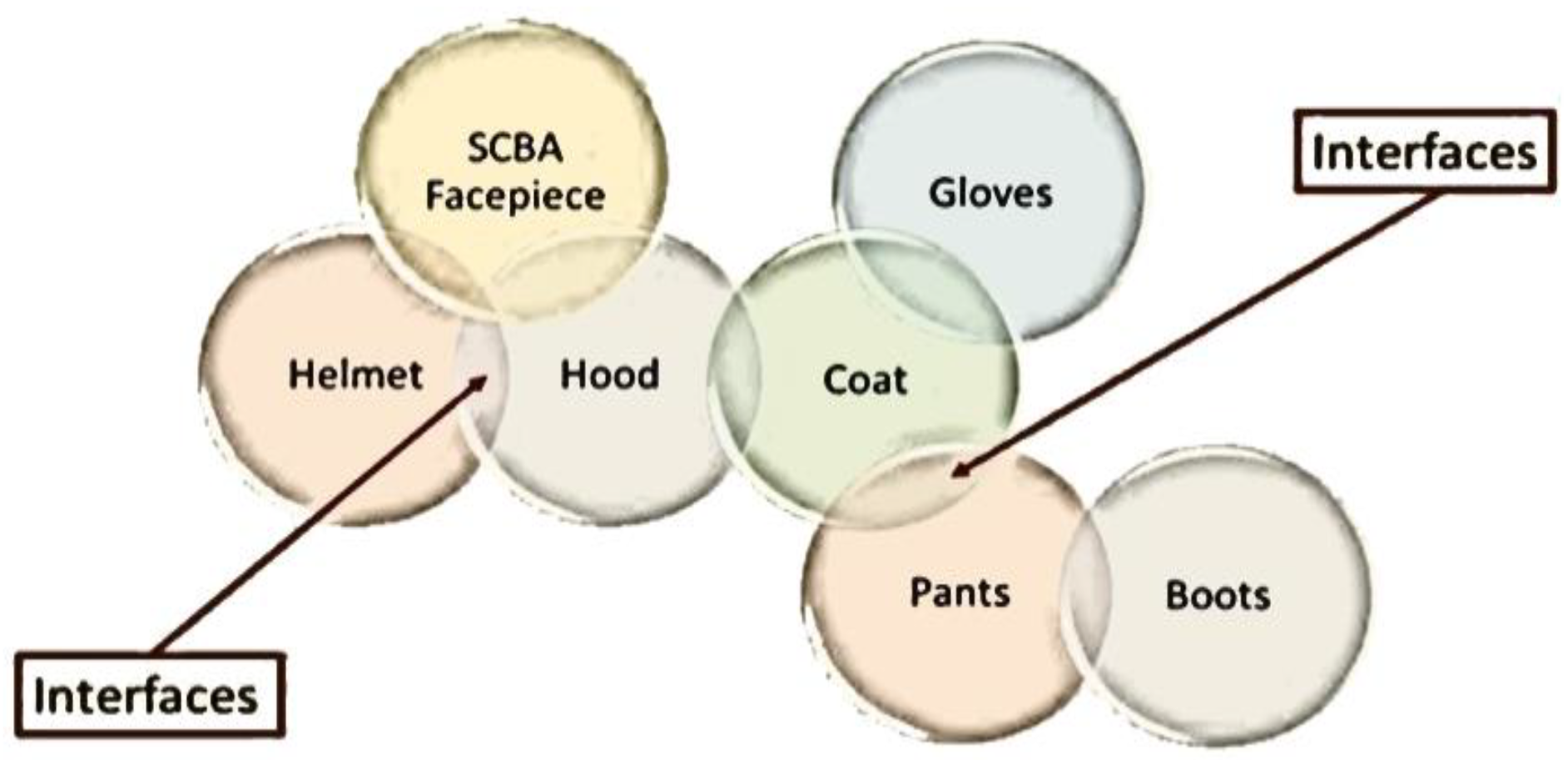
Figure 2.
Pictorial representation of firefighter PPE elements (reproduced with kind permission from [6]. © Springer Nature.
Figure 2.
Pictorial representation of firefighter PPE elements (reproduced with kind permission from [6]. © Springer Nature.
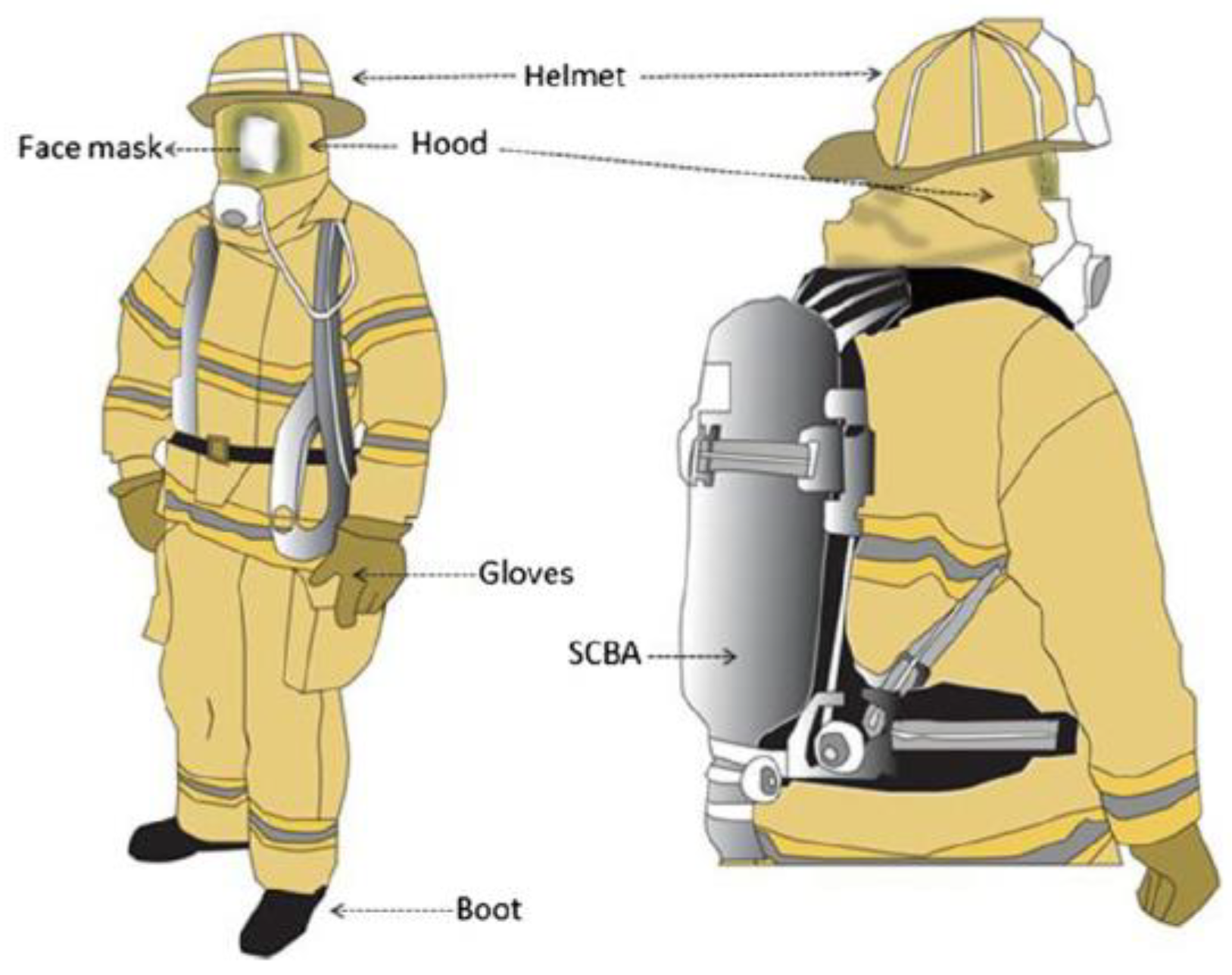
Figure 3.
The first generation of firefighter hoods (reproduced with kind permission from [12]).
Figure 3.
The first generation of firefighter hoods (reproduced with kind permission from [12]).
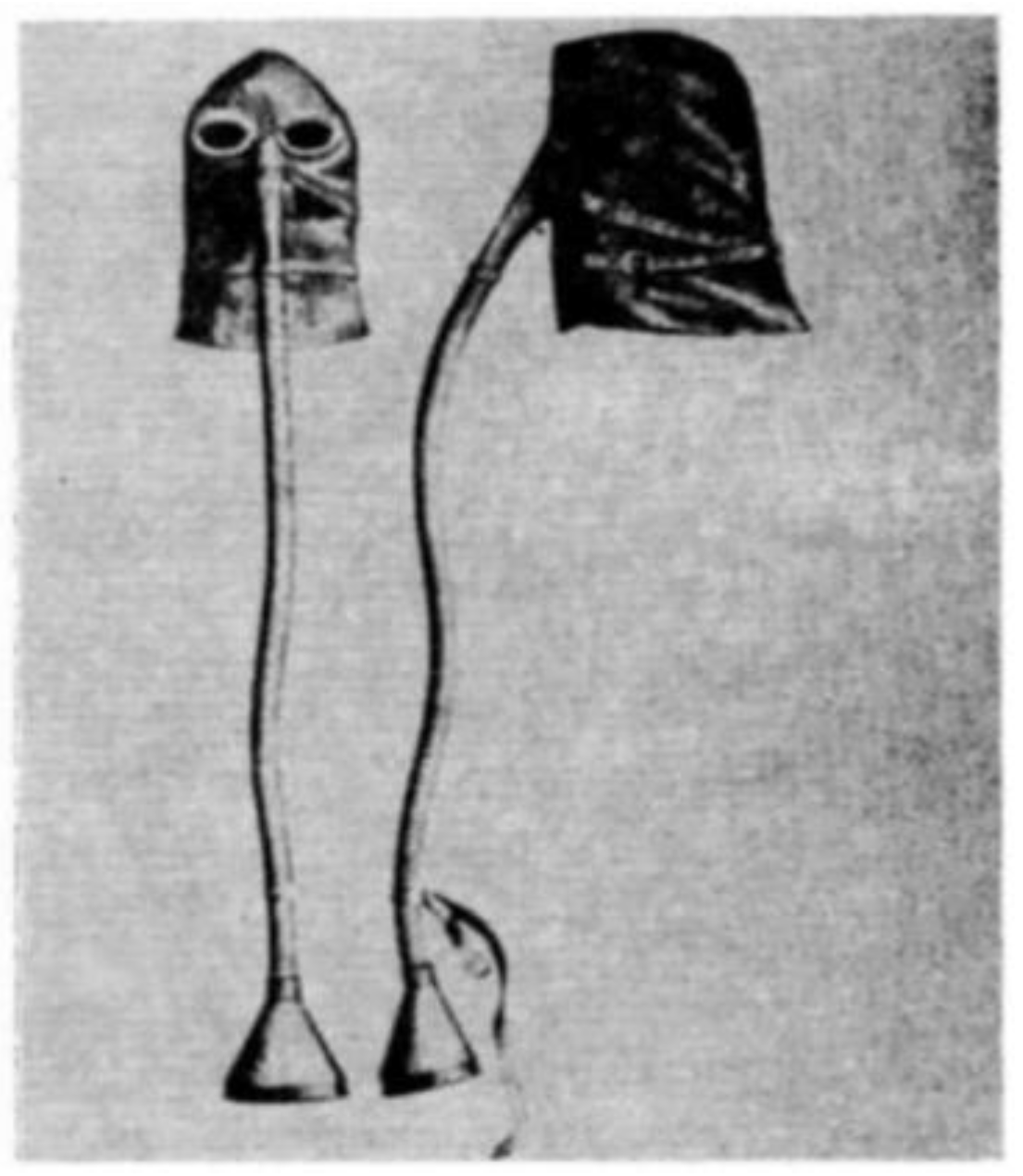
Figure 4.
Deposition of fluorescent aerosol on a test subject’s head and neck before and after exposure (reproduced with kind permission from [8]).
Figure 4.
Deposition of fluorescent aerosol on a test subject’s head and neck before and after exposure (reproduced with kind permission from [8]).
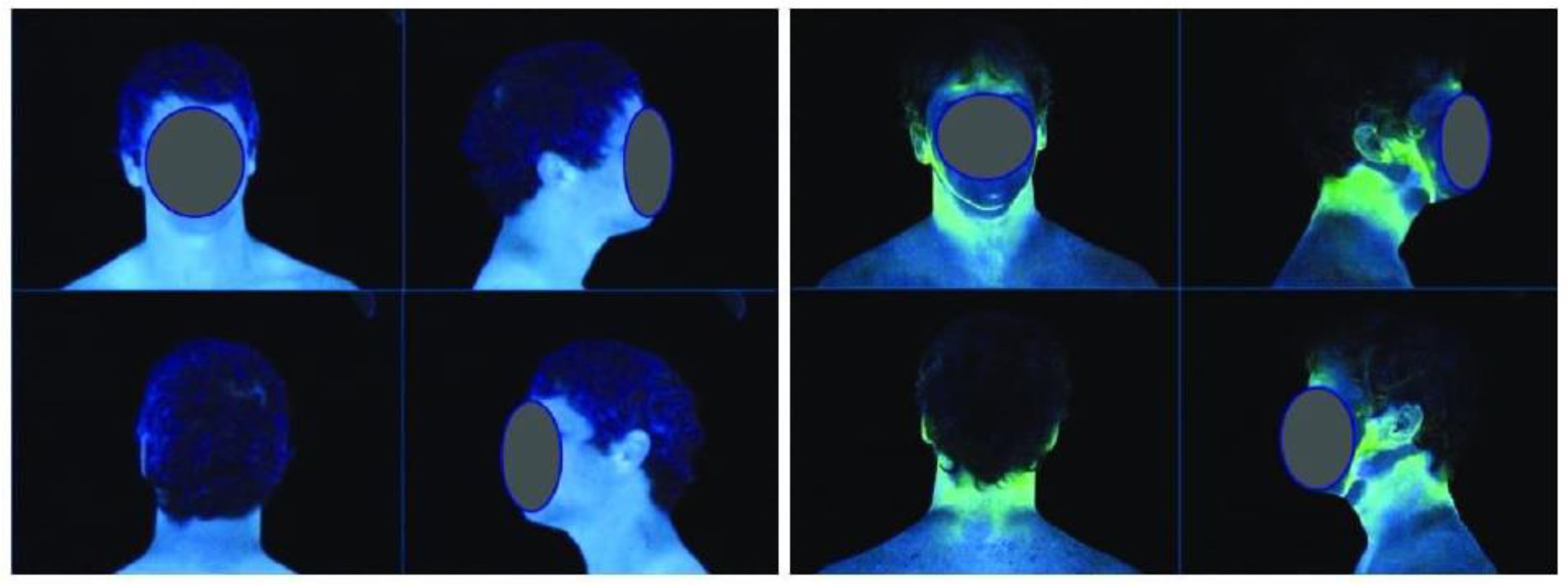
Figure 5.
Results from a fluorescent aerosol screening test for no hood, traditional knit-only hood, and particulate-blocking hood (using fluorescent powder for contamination) (reproduced with kind permission from North Carolina State University [7]).
Figure 5.
Results from a fluorescent aerosol screening test for no hood, traditional knit-only hood, and particulate-blocking hood (using fluorescent powder for contamination) (reproduced with kind permission from North Carolina State University [7]).
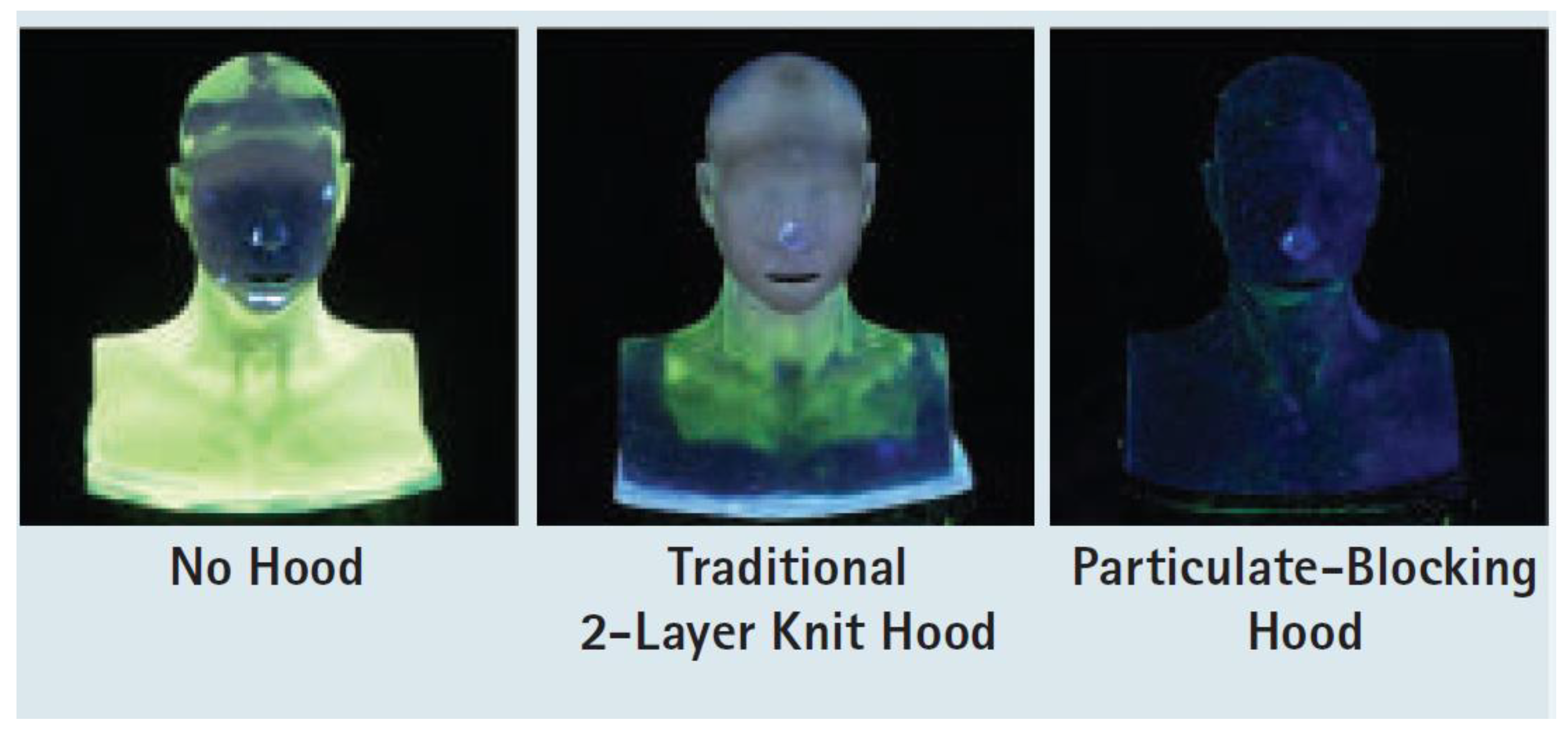
Figure 6.
Comparison between traditional hoods and particulate-blocking hoods made from Gore material (reproduced with kind permission from [17]).
Figure 6.
Comparison between traditional hoods and particulate-blocking hoods made from Gore material (reproduced with kind permission from [17]).
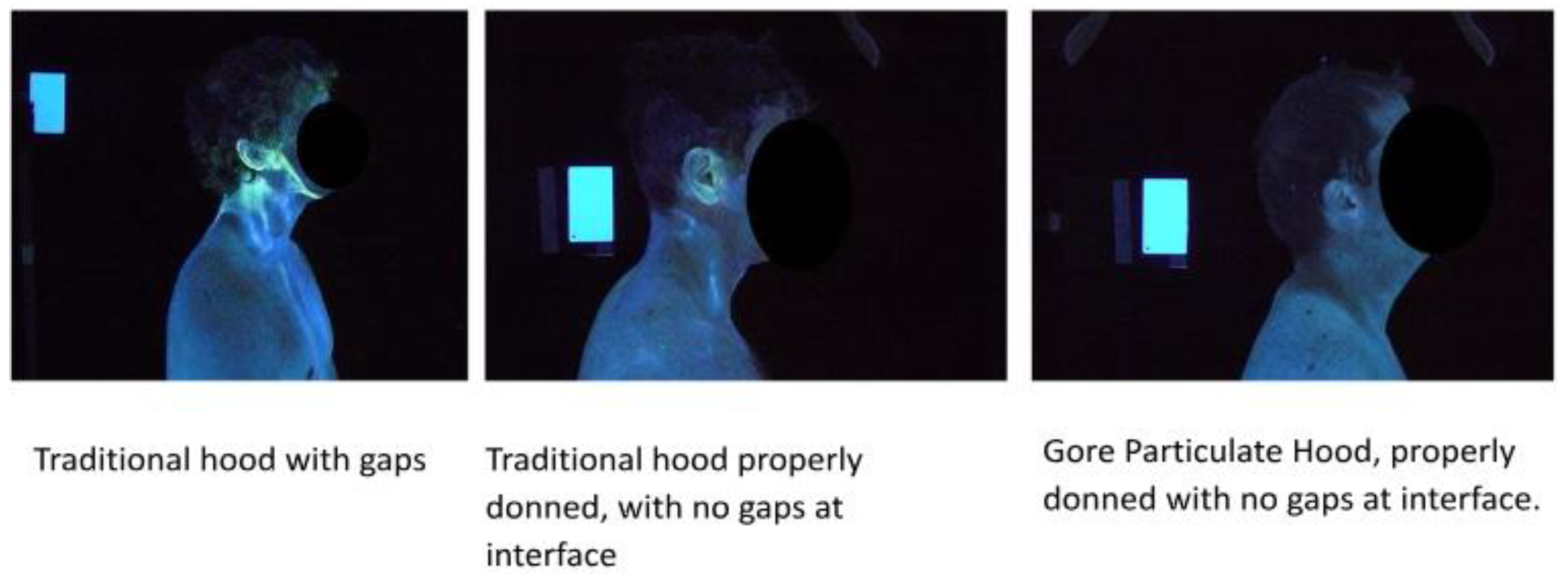
Figure 7.
Different styles of hoods in terms of length and coverage.
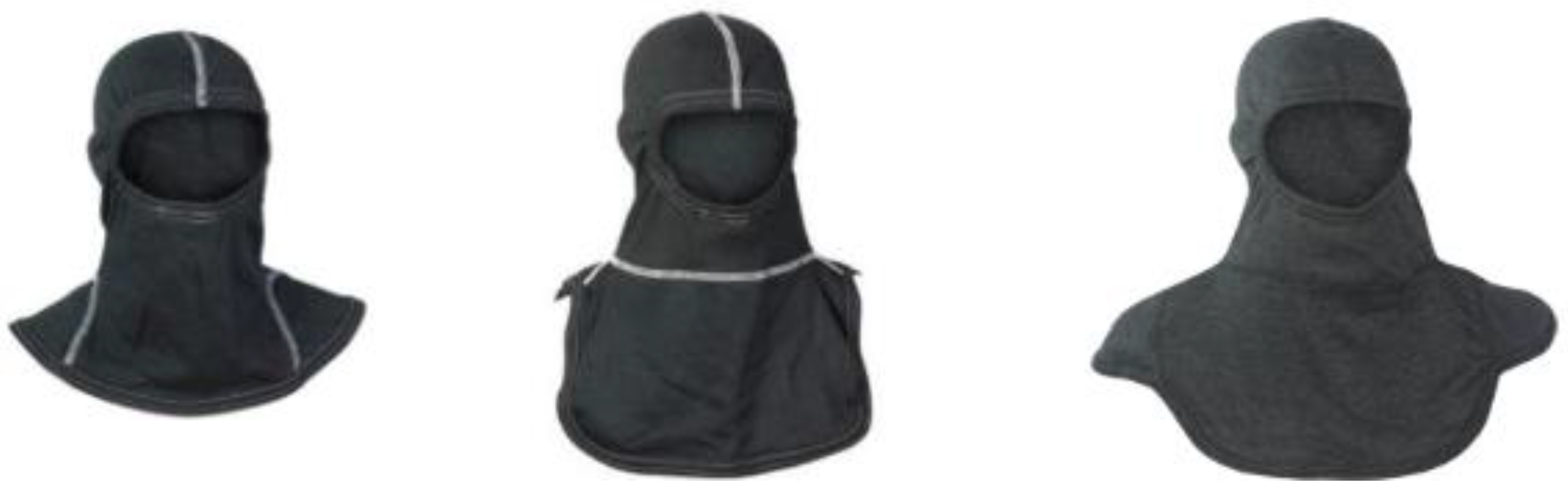
Figure 8.
Different designs of hoods based on the seams on the head.
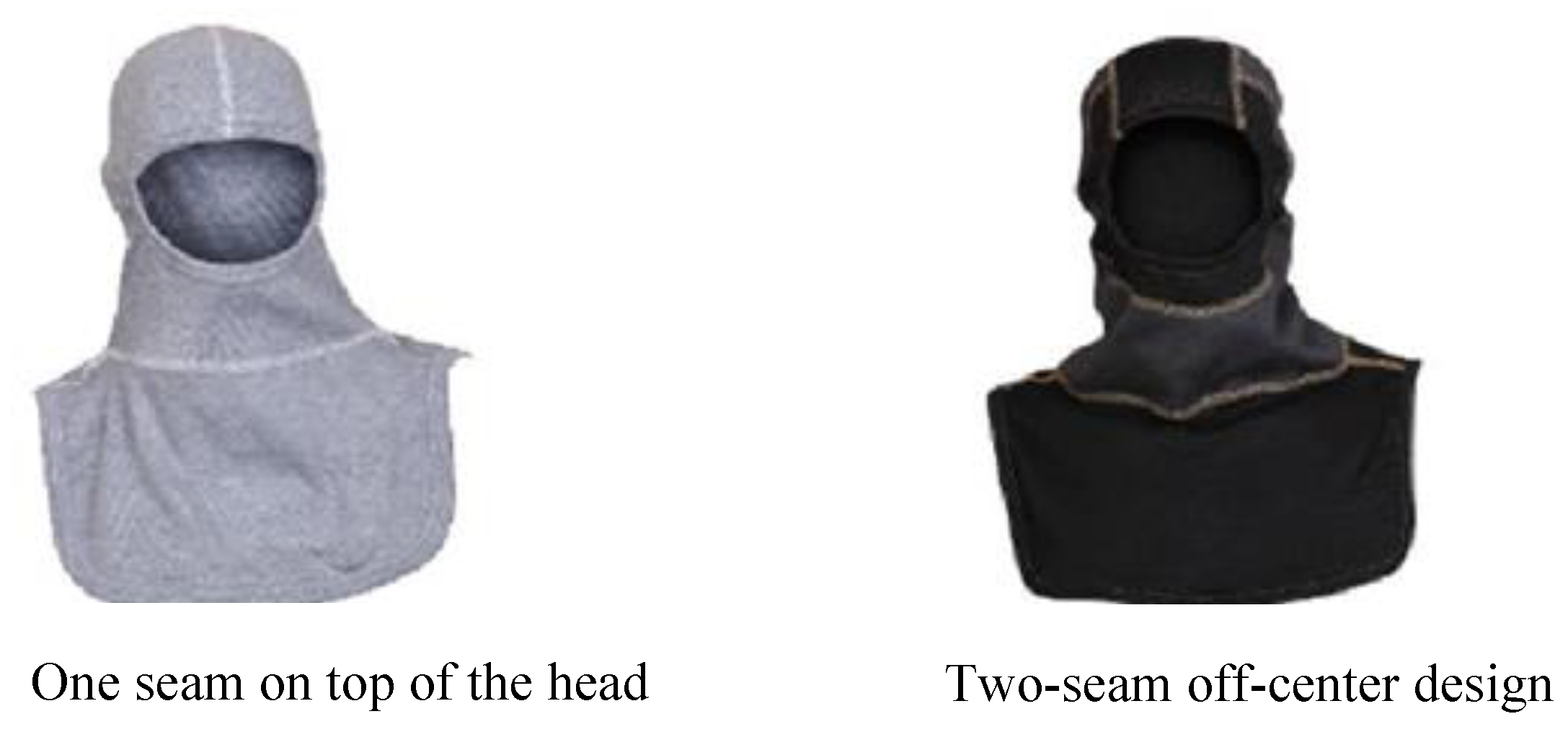
Figure 9.
Diverse fabric integration design of firefighter hoods.
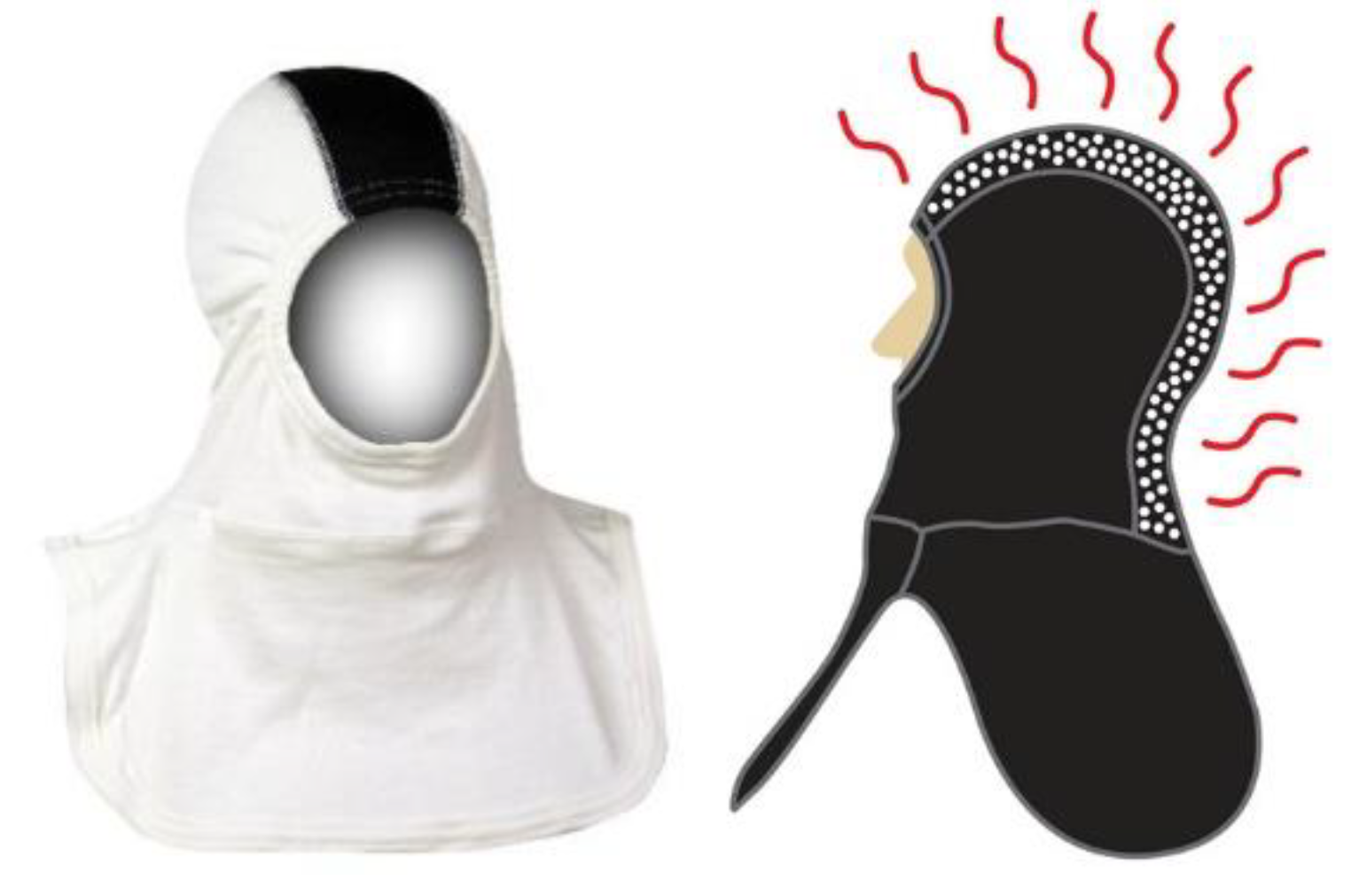
Figure 10.
Firefighter Hoods Performance in Terms of Material and Design Considerations.
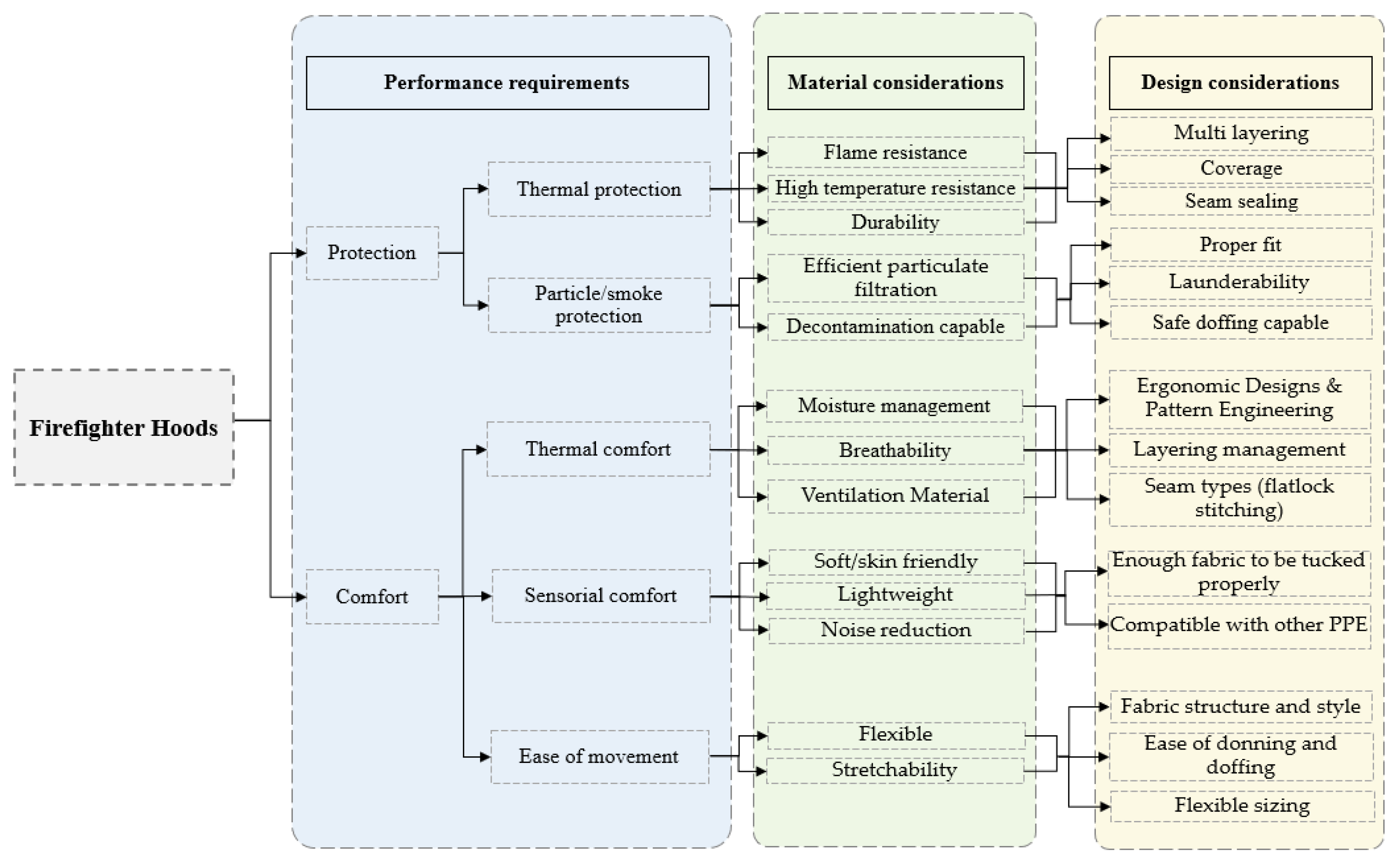

Table 1.
NFPA 1971 design requirements for protective hoods [9].
Table 1.
NFPA 1971 design requirements for protective hoods [9].
| Design Aspects | Requirement Description | NFPA 1971 (2018) Requirements |
|---|---|---|
| General Design Criteria | Hood interface components must meet all applicable design requirements. | Must comply with design requirements specified in Section 6.13. |
| Integration with Protective Coat | Hoods are permitted to be integrated with the protective coat. | Integration allowed, but integrated hoods are exempt from the design requirement in 6.13.5. |
| Coverage | The hood must cover and provide limited protection to the head, face, and neck areas, excluding the face opening specified in 6.13.6. | Hoods must meet specified coverage measurements when donned on an ISO size J head form: 225 mm (9 in.) on sides, 330 mm (13 in.) at back, 305 mm (12 in.) at front. |
| Sewing Thread | All sewing thread used in the construction of hoods must be inherently flame-resistant. | Sewing thread must be made of inherently flame-resistant fiber. |
| Proper Donning | The hood must be donned properly according to the manufacturer's instructions. | Must meet coverage requirements when worn on an ISO size J head form. |
| Face Opening | Hoods must have a face opening. | Face opening must be able to stretch to a circumference of at least 800 mm (31 in.) unless designed for a specific SCBA facepiece. |
| SCBA Facepiece Interface | If designed for a specific SCBA facepiece, the hood face opening must overlap the facepiece-to-face seal perimeter by at least 13 mm (1/2 in.). | Must comply with the interface requirements for specific SCBA facepieces. |
Table 2.
NFPA 1971 additional design requirements for particle-blocking hoods [9].
Table 2.
NFPA 1971 additional design requirements for particle-blocking hoods [9].
| Design Aspects | Requirement Description | NFPA 1971 (2018) Requirements |
|---|---|---|
| General Design Criteria | Hood composite materials must meet all design criteria specified in Section 7.13. | Must comply with all performance requirements in Section 7.13. |
| Particulate Blocking Material Coverage | Hood must include particulate blocking material to at least 37 mm (1.5 in.) above the reference plane at the coronal plane, 200 mm (8 in.) at the sides, and 225 mm (9 in.) at the front and rear at the midsagittal plane. | Must meet specific coverage measurements when placed on an ISO Size J head form. |
| Binding and Stitching | Elastic and stitching around the particulate blocking hood face opening can exclude particulate blocking material for a distance of 50 mm (2 in.) from the leading edge of the hood face opening. | Distance measured in eight locations from the innermost row of stitching to the face opening leading edge. |
Table 3.
NFPA 1971 performance requirements for protective hoods [9].
Table 3.
NFPA 1971 performance requirements for protective hoods [9].
| Performance Aspects | Test Method/Measurements | NFPA 1971 (2018) Requirements |
|---|---|---|
| Shape Retention (Hood Face Openings) | Hood Opening Size Retention Test (Section 8.47) | Face openings not designed for SCBA facepieces must slide freely and show no gaps; those designed for SCBA must overlap by at least 13 mm (1/2 in.). |
| Thermal Insulation | Thermal Protective Performance (TPP) Test (Section 8.10)-ISO 17492 | Hoods must have an average TPP rating of not less than 20.0. |
| Flame Resistance | Flame Resistance Test 1 (Section 8.2)- ASTM D6413 | Materials must have a char length of ≤ 100 mm (4 in.), after flame ≤ 2.0 seconds, and not melt or drip. |
| Heat Resistance and Shrinkage | Heat and Thermal Shrinkage Resistance Test (Section 8.6)- ISO 17493 | Materials must not shrink more than 10%, and the hood must maintain shape and functionality. |
| Cleaning Shrinkage Resistance | Cleaning Shrinkage Resistance Test (Section 8.24)- AATCC 135 | Elastic or adjustable face openings must not shrink more than 5%. |
| Thread Melting Resistance | Thread Melting Test (Section 8.11) | Sewing threads must not melt below 260°C (500°F). |
| Material Strength | Burst Strength Test (Section 8.13)- ASTM D6797 | The outermost material must have a burst strength of ≥ 225 N (51 lbf). Additional layers must also meet this requirement. |
| Seam Strength | Seam-Breaking Strength Test (Section 8.14)-ASTM D3940 | Seams must have a burst strength of ≥ 181 N (41 lbf). |
| Label Durability and Legibility | Label Durability and Legibility Test 1 (Section 8.41) | Labels must remain attached and legible. |
Table 4.
NFPA 1971 additional performance requirements for particle-blocking hoods [9].
Table 4.
NFPA 1971 additional performance requirements for particle-blocking hoods [9].
| Performance Aspects | Test Method/Measurements | NFPA 1971 (2018) Requirements |
|---|---|---|
| General Performance | Refer to Section 7.13 (follow table 1 requirements) | Hood composite materials must meet all performance criteria specified in Section 7.13. |
| Particulate Blocking Efficiency | Particulate Blocking Test (Section 8.71)-ASTM F2299M | Hood composite materials must have a particulate filtration efficiency of 90% or greater for each particle size from 0.1 μm to 1.0 μm. |
| Evaporative Heat Transfer | Total Heat Loss (THL) Test (Section 8.33)-ASTM F1868 | Hood composites with a particulate blocking layer must have a THL of not less than 325 W/m². |
Table 5.
Firefighting hoods market analysis, divided into traditional and particulate-blocking types, and listing their main material constituents.
Table 5.
Firefighting hoods market analysis, divided into traditional and particulate-blocking types, and listing their main material constituents.
| Type of Hoods | Materials |
| Traditional hoods | Ultra C6 (Carbon-based polymer) Melange (Moisture barrier layer) |
| 100% Nomex(Meta-aramid) | |
| P84(Polyimides) | |
| PBI(Polybenzimidazole) | |
| Rayon Kevlar(para-aramid) | |
| Ultra C6(Carbon-based polymer) | |
| 20% Nomex®(meta-aramid) 80% Lenzing(Flame-resistant Viscose) | |
| 20% PBI(Polybenzimidazole) 80% Rayon | |
| 40% P84(Polyimides) 55% Lenzing(Flame-resistant Viscose) 5% Kevlar®(para-aramid) | |
| Spentex® | |
| 34% Nomex®(meta-aramid )/Kevlar®( para-aramid) 33% Lyocell, 31% Modacrylic 2% antistatic fibers 220 g/m² | |
| 70% Modacrylic (modified acrylic) 23% Tencel (lyocell) 7% Lycra (elastane) knit | |
| Particulate Blocking | Interlock C6 Grey Premium-Weight (Carbon-based polymer) Ultra C6(Carbon-based polymer) HALO PTFE fabric(PTFE: Polytetrafluoroethylene) |
| GORE GEN2 NOMEX BLEND: Nomex Blend/ GORE® Particulate Blocking Layer 2.0 (GORE: expanded Polytetrafluoroethylene (ePTFE) Membranes) | |
| ULTRA C6 GORE GEN 2 PH: 65% Oxidized Polyacrylonitrile (OPF)/ 35% artificial tri-blend Proprietary ePTFE Laminate with Nomex Knit/FR Rayon Knit Laminate | |
| 20% Nomex, 80% Lenzing Barrier – Nomex® Nano Flex | |
| 20% Nomex, 80% FR Rayon Prevent ePTFE ) as barrier | |
| Spentex®/Stedair® PREVENT(ePTFE) | |
| DuPont™ Nomex® Nano Flex/PBI®/Lenzing (an inner layer of Nomex® Nano Flex laminated between two layers of 6.0oz PBI®/Lenzing (20%/80%) | |
| OPAN/Twaron/FR Rayon/Spentex (70%/28%/2%)/StedAIR Material | |
| 20% Nomex®/ 80% LENZING™/Stedair® PREVENT(ePTFE) | |
| Nomex®/Viscose FR/Elastan Non-woven meta-aramid textile sheet of DuPont ™ Nomex® Nano Flex, Composed of two layers, the first is made of a mixture of Nomex® fabric, Viscose FR and Elastan, plus an intermediate layer made of a non-woven meta-aramid textile sheet of DuPont ™ Nomex® Nano Flex, which acts as a barrier against harmful micro and nano particles. | |
| STEDAIR® PREVENT(ePTFE) | |
| 20% PBI / 80% Lenzing Interfaces-->*STEDAIR® Prevent barrier or DuPont™ Nomex® Nano (not made with PFAS). | |
| 20% Nomex (Meta-aramid) /80% Lenzing *STEDAIR® Prevent(ePTFE) barrier or DuPont™ Nomex® Nano (not made with PFAS). | |
| DUPONT™ NOMEX® NANO FLEX TECHNOLOGY 7 OSY NOMEX, Viscose |
Table 6.
Material and Design Considerations Impacting Comfort and Protection in Firefighter Hoods.
| Category | Factors | Protection Impact | Comfort Impact |
|---|---|---|---|
|
Material Considerations |
Multi layering | Provide more thermal and particle protection | Decrease comfort |
| High temperature/flame resistance | Thermal protection | - | |
| Durability | Provides sustained protection over multiple uses | - | |
| Efficient particulate Filtration | Protects against harmful particulates | - | |
| Decontamination Capable |
Maintains protection by allowing removal of contaminants | - | |
| Moisture management | Thermal comfort | ||
| Breathability | - | Thermal comfort | |
| Ventilation material (Phase Change Materials) | - | Enhances thermal comfort by reducing heat stress | |
| Soft/Skin friendly | - | Provides a soft, skin-friendly feel, reduces skin irritation | |
| Noise reduction | - | Sensorial comfort | |
| Flexible materials | - | Increases mobility and ease of movement | |
| Stretchability | - | Enhances mobility and ease of movement | |
| Light weight | - | Sensorial comfort | |
|
Design Considerations |
Coverage (Bib length, shape) | Ensures protection of all vulnerable areas | - |
| Seam sealing techniques | Prevents thermal hazard to get in | - | |
| Proper fit/ Flexible Sizing | Ensures proper fit for all users for providing better coverage | Provides a proper fit to help ease of movement | |
| Launderability | Help post-wash durability and effective contaminant removal | - | |
| Safe/Ease of Donning and Doffing | Reduces contamination risk | Reduces stress and facilitates donning/doffing | |
| Ergonomic Designs and Pattern Engineering | - | Reduces pressure, increasing wearability and ease of movement | |
| Layering management, Fabric Structure (knit/non-woven) Style (Rib) | - | Rib knitting structure, which provides more stretch to the ensemble | |
| Seam types (flatlock stitching), |
- | Reduces bulk and enhances comfort | |
| Enough Fabric to be more Manageable | - | Reduces excess weight, enhancing manageability and ease of movement | |
| Compatible with other PPE (overlaps/interaction) | Ensures no gaps in protection, fully coverage | Reduces pressure points, provides better interaction with other PPE |
Disclaimer/Publisher’s Note: The statements, opinions and data contained in all publications are solely those of the individual author(s) and contributor(s) and not of MDPI and/or the editor(s). MDPI and/or the editor(s) disclaim responsibility for any injury to people or property resulting from any ideas, methods, instructions or products referred to in the content. |
© 2024 by the authors. Licensee MDPI, Basel, Switzerland. This article is an open access article distributed under the terms and conditions of the Creative Commons Attribution (CC BY) license (http://creativecommons.org/licenses/by/4.0/).
Copyright: This open access article is published under a Creative Commons CC BY 4.0 license, which permit the free download, distribution, and reuse, provided that the author and preprint are cited in any reuse.


