

Submitted:
26 July 2024
Posted:
29 July 2024
You are already at the latest version
Abstract
Mercury is classified as one of the world’s most toxic and dangerous pollutants. It tends to bio-accumulate and biomagnify within the trophic chain and is persistent. Various approaches are available to remediate Hg-affected sites, including phytoremediation, which includes the use of plants to clean up contaminated environments. Phytoremediation of mercury contamination is at-tracting increasing attention because of its advantages: it is environmentally friendly, inexpensive, simple, and can improve soil fertility. In this report, VOSviewer, and Bibliometrix software were used to analyze 457 and 697 documents published from 2000 to 2023, retrieved from the data-bases WoS and Scopus, respectively. China, India, the United States, and Spain are the top four most productive countries. The largest topic area was environmental sciences, and the Chinese Academy of Sciences was the organization that contributed the most to the overall number of pub-lications. The keywords with the highest frequency, excluding phytoremediation and mercury in WoS, were heavy metals, accumulation, cadmium, soils, and phytoextraction. In Scopus, the most frequent keywords were bioremediation, heavy metals, soil pollution, bioaccumulation, biodeg-radation, and environmental. From the above analysis, we concluded that future research should focus on 1) finding native plants, 2) increasing remediation ability through assisted phytoremedi-ation, 3) studies of molecular mechanisms in plants with phytoremediation potential, and 4) ge-netic engineering applications. This study provides insight into trending themes and serves as a reference for future research.
Keywords:
bibliometrix
; bibliometric analysis
; mercury
; phytoremediation
; VOSviewer
1. Introduction
Mercury (Hg) is a global pollutant because of its harmful effects on human and environmental health [1]. It is among the top 10 chemicals of concern and ranks third on the Agency for Toxic Substances and Disease Registry’s priority list of substances [2]. It is poisonous, threatens health and ecosystems, and can accumulate to a high level, especially in fish, and cause serious diseases; it has carcinogenic, teratogenic, neuteratogenic, neurotoxic, and genotoxicity effects. Acute exposure to this metal also causes psychological problems, such as anxiety, sleep disorders, and depression [3]; its exposure in soils has caused kidney damage and even death [4].
This pollutant exists in elemental, organic, and inorganic forms. In gaseous form, mercury is emitted through the atmosphere and reaches long distances before settling in the soil. According to the United Nations Environment Programme, mercury emissions are around 2200 tons per year, of which artisanal and small-scale mining activities account for almost 38% of global emissions [5,6]. Volatile mercury is persistent and can be easily taken up by the plant system, accumulating in the food chain and entering the human body. The presence of reactive Hg in soil, under acidic conditions, low redox potential, and high concentration of organic matter, leads to the formation of methylmercury (MeHg) [7,8,9]. MeHg, the most common organic form, bioaccumulates efficiently in organisms and biomagnifies in the food chain. Its bioaccumulation within organisms severely distorts the biological food chain and eventually enters ecosystems [10]. Exposure to MeHg in fish is often the main concern associated with Hg contamination sites, making fish consumption the main route of mercury exposure in human beings [11,12].
Mercury does not degrade in the environment, and because of its bioaccumulative nature, it is necessary to look for alternatives for the remediation of soils contaminated with this metal so that it can be separated from the contaminating media, or otherwise transformed into less toxic species. Phytoremediation is gaining ground as a strong, alternative, environmentally friendly, and practical approach for the remediation, decontamination, and stabilization of industrial and/or environmental wastes [13]. This biological remediation technology is based on the use of plants for the recovery of areas contaminated with heavy metals without disturbing fertility and biodiversity [14,15]. Plants have developed strategies to address toxic elements through chelation, extrusion, regulatory distribution, and vascular sequestration [16]. In addition, this technology involves translocation, accumulation, transport, transformation, and volatilization processes [17,18,19].
A large fraction of the research on phytoremediation of mercury has focused on finding mercury accumulator or hyperaccumulator plants because, despite their phytotoxic characteristics, there are plant communities that grow on mercury-contaminated sites [20,21,22,23,24]. Hyperaccumulator plants can accumulate large numbers of heavy metals at concentrations 10 to 100 times higher than non-hyperaccumulator plants can tolerate [25]. The limits of mercury hyperaccumulation in plant shoots are estimated to be 10 ppm, although this threshold needs to be more clearly established [26,27]. Therefore, the search for mercury hyperaccumulators and their application in practice has become a research hotspot [1].
In recent years, researchers have found remediating plants for mercury-contaminated soils, reporting on the mechanisms associated with Hg tolerance and the improvement of phytoremediation techniques by chemical and/or microorganism-assisted remediation. For example, Cardamine violifolia has a phytoremediation effect on soils contaminated with different mercury concentrations, reaching concentrations of 6000 μg/g [28]. The addition of sodium thiosulfate (Na2S2O3) to mercury-contaminated pots showed that Oxalis corniculata can recover and remediate mercury-contaminated soils [29]. In the case of rhizobial associations, Lupinus albus L. plants were able to accumulate approximately 370 and 360 mg/kg Hg in roots and nodules, respectively, and to maintain constant levels of photosynthetic pigments when inoculated with the mercury-tolerant Bradyrhizobium canariense L-7AH strain [30]. On the other hand, the PtABCC1 transporter gene from Populus trichocarpa was overexpressed in transgenic Arabidopsis and Populus tomentosa (poplar) plants, showing higher mercury tolerance than wild-type plants [31].
Bibliometric analysis identifies and summarizes the main research points relevant to expanding, publishing, and applying up-to-date knowledge on a subject. It was initially proposed by Pritchard (1969) to analyze books and other media [32]. It integrates mathematical, statistical, and bibliographic methods to quantitatively analyze the distribution structure and quantitative changes in the literature in a given field [33]. This popular and effective method is used to determine and suggest future research trends and essential problems based on historical publications [34,35]. Therefore, a comprehensive bibliometric review in the research field will help current and future researchers strategically identify gaps and leverage their studies [36].
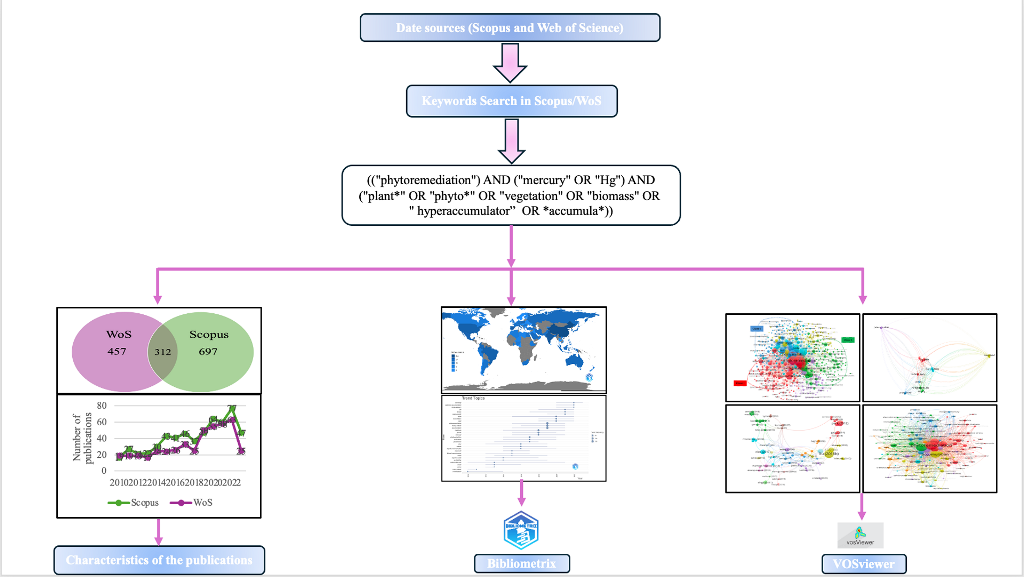
In this paper, we use VOSviewer, and Bibliometrix to analyze publications related to the phytoremediation of mercury-contaminated sites in Scopus and WOS. We wanted to show: 1) the overlap between the two databases, and the types of publications; 2) which are the countries with the highest number of publications, and how countries cooperate; 3) which publications are the most cited, and which subject area they belong; y 4) how the field of mercury contamination phytoremediation has advanced. The type of publication, citations, countries, thematic categories, and institutions were collected and analyzed. Documents co-citation analysis were considered to establish the similarity between documents based on bibliographic references, as well as co-authorship and citation analysis of documents giving information based on the number of documents in which they appear together, the kinship among documents, and the number of times in which they cite each other. Finally, words co-occurrence analysis were considered, which measures the similarity of documents, relating them according to their degree of co-occurrence. Therefore, this study aimed to analyze the distribution of publications in the field of phytoremediation of heavy metals such as mercury, to report on their critical points, and to provide reference data for new research directions, based on bibliometrics to analyze mapping and knowledge gaps.
2. Materials and Methods
A bibliometric analysis was performed to understand the trend of phytoremediation of mercury contamination using papers published from January 2000 to June 2023 in the academic databases WoS and Scopus. Traditionally, WoS and Scopus have been the two most widely used databases for bibliometric analysis [37].
In both databases, the search was performed in the subject field, including article title, abstract, and keywords. The query sets used for the literature search were (“phytoremediation”) AND (“mercury” OR “Hg”) AND (“plant*” OR “phyto*” OR “vegetation” OR “biomass” OR “hyperaccumulator” OR *accumula*). All articles were individually screened to eliminate irrelevant documents, i.e., those dealing with heavy metal phytoremediation in which mercury was not included. The search results indicated 514 articles for WoS and 812 for Scopus. After eliminating those documents that did not comply with the thematic work, it was reduced to 457 documents (88% of 514) for WoS and 697 (85.83% of 812) for Scopus. The documents included citation information, volume, year, authors, affiliations, abstracts and keywords, funding details, and other information such as conference information and references.
Different research methods have been proposed in the field of bibliometric analysis, with scientific mapping being a recent method, which not only reveals the laws of development but also graphically expresses the relationship and evolutionary laws of knowledge structure in related fields [38,39]. Currently, there are several tools for scientific mapping, including knowledge graph analysis, which have advantages and characteristics of their own [40,41]. Bibliometrix is an open-source tool for quantitative research in scientometrics and bibliometrics developed by Massimo Aria and Corrado Cuccurullo. This tool includes the main bibliometric methods of analysis and allows the construction of data matrices for co-citation, linkage, scientific collaboration analysis, and co-word analysis (https://www.bibliometrix.org). Vosviewer is a software used to plot co-occurrence maps of authors, citations, keywords, and other data. It was developed by Van Eck and Waltman [42,43]. In this article, these two tools (VOSviwer 1.6.16, Low Countries, and R-Studio’s Bibliometrix R package) were used to perform a global network map of collaborating countries, and an author co-citation analysis to analyze the relationships between highly cited references, co-authorship for the analysis of the most productive authors, keyword or term co-occurrence analysis, and the strongest citation keywords. In turn, the “Analyze results” option was used in both databases to extract information on annual research, countries, journals, funders, and thematic areas, i.e., metric information on journals and documents. Before the diagrams were made, the data were processed manually in an Excel matrix to merge synonyms or similar terms and eliminate meaningless words to avoid affecting the analysis of the results.
3. Results and Discussion
3.1. Overlap between WoS and Scopus Publications
A total of 1154 documents were found in the databases together, distributed between 457 documents for WoS and 697 for Scopus, of which 27% (312) were duplicates, i.e., they belonged to both databases (Figure 1). Scopus is the largest database of abstracts and literature citations, with a broader coverage of journals compared with the WoS, but the latter is more selective [37].
3.2. Annual Trends
The types of scientific publications related to phytoremediation of mercury contamination are presented in Table 1. The papers included research articles, review articles, books, conference papers, and short surveys. In both databases, research articles were the most published (468; 67%) for Scopus and (396; 87%) for WoS, followed by review papers (15 and 11 %, respectively).
On the other hand, the annual production of publications is shown in Figure 2. Published research on phytoremediation of mercury contamination shows an increasing trend in both databases. Minimizing mercury contamination in soil is of great significance for ensuring the quality and safety of crops and maintaining ecological safety [28]. As far as the Scopus database is concerned, there was a significant increase in publications from 2011. Between 2015 and 2023, the published papers (492) more than doubled. In 2022, 77 articles were published, 2.85 times more than in 2011. Similarly, in WoS, the same trend continues, with 359 documents published between 2015 and 2023, which is 3.3 times more than in 2011. More publications are expected in the future due to the importance of phytoremediation not only to remediate contaminated land and water bodies but also to discover Hg hyperaccumulators and aided techniques for the improvement of this ecological remediation technology [44,45,46].
3.3. Main Subject Areas
The analysis by category or subject area indicates that in both databases, most of the documents belong to the category of Environmental Sciences, represented by 33.5% for Scopus and 58.6% for WoS. It should be mentioned that in the Scopus database, the six areas that follow in order are Agricultural and Biological Sciences (16.5%), Biochemistry, Genetics and Molecular Biology (9.9%), Medicine (5.7%), Engineering (5.6%), Chemistry (5.1%) and Chemistry Engineering (5.0%) (see Figure S1A). In the case of WoS, Engineering Environmental Engineering (13.1%), Plant Sciences (10.3%), Water Resources (6.1%), Toxicology (5.0%), Biotechnology Applied Microbiology (4.8%), and Chemistry Multidisciplinary (4.6%) predominated (see Figure S1B). [47] reported that Scopus has an orientation toward biomedical research and natural sciences, while engineering seems to be represented to a greater extent in WoS.
The results of this study are similar to those reported by [48] in the Scientometric study of treatment technologies of soil pollution, who reported that environmental sciences covered most publications with 47.4% and 43.0% for WoS and Scopus, respectively. Similarly, [33,49], through a scientometric study on phytoremediation and heavy metal hyperaccumulation using the WoS database, reported that Environmental Sciences, Engineering Environmental, Water Resources, Plant Sciences, Toxicology, Soil Science, and Biotechnology Applied Microbiology were the most important categories.
3.4. Most Productive Countries and Organizations
The remediation of mercury-contaminated sites is a global concern because of its bioaccumulative nature in food chains and the environment; hence, the intensity of the investigation may vary between countries. Figure S2A,B show the number of papers published by each country in the WoS and Scopus databases. The intensity of the blue color is related to the countries with the highest number of published papers. In contrast, the gray color is related to the countries where no papers related to this topic have been published. Regarding the number of documents published by each country in the WoS database, 80 countries published research papers related to this topic. China, India, and Spain were the countries with the highest production, with 115, 58, and 40 papers, respectively.
Regarding the number of citations, this is defined as the number of publications that cite the articles published each year [50]. Similarly, China and India contain the highest number of citations (2784 and 1551), while Spain is in fifth place (867). In Scopus, 77 countries were found to have published papers on this topic. India (145), China (131), and the United States (86) have the highest production of documents. The highest number of citations by country is in China (2784), followed by India (1551) and the USA (1222). Out of 80 countries, 36 have at least 5 papers in WoS, while out of 77 countries in Scopus, 41 have at least 5 papers. In both databases, Africa has the fewest publications, followed by most of South America (except Brazil) and some Asian nations.
The co-authorship network was constructed with more than five articles for each database (Figure 3A,B). In WoS, the countries with the highest co-authorship are China, India, USA, Saudi Arabia, and South Korea, with Total Link strength (TLS) values of 52, 33, 33, 33, 26, and 23, respectively. Eight groups are distinguished, the most relevant being the first group formed by India, Italy, Germany, and Poland. Group 2: China, Japan, Taiwan, and Pakistan. Group 3: Spain, Colombia, Ecuador, and England. The USA is related to most of the countries. As in WoS, the most cooperative countries in Scopus are China, India, USA, Saudi Arabia, and South Korea, with TLS values of 59, 58, 53, 31, and 24, respectively. Eight groups were detected, of which four were the most relevant. China appears in the first group and is related to most other countries. The second group mostly comprises European countries such as the Czech Republic, Germany, Italy, Poland, and the United Kingdom. The third group includes South American countries (Argentina, Colombia, Peru, Brazil, Ecuador) and Spain. Finally, the fourth group comprises the United States and South Africa.
On the other hand, 742 and 160 institutions for WoS and Scopus, respectively, contributed to the topic of phytoremediation of mercury-contaminated sites. Institutions were ranked according to the total number of publications. In WoS and Scopus six organizations have at least 10 papers. There is a greater diversity of institutions in WoS. In both databases, the Chinese Academy of Sciences contributed the most documents on this research topic with 29 for WoS and 39 for Scopus (Table 2).
3.5. Most Productive Authors
Determining the scientific production of the authors allows us to analyze one of the most important structures that make up the scientific community on the phytoremediation of mercury-contaminated sites, reflecting the existing relationships among the members of this community. A total of 2476 authors have publications related to this topic in the Scopus database, whereas 1973 authors are registered in WoS. Table S1 shows the 10 authors with the highest number of publications related to phytoremediation of mercury-contaminated sites, totaling 77 articles for WoS and 100 for Scopus.
Similarly, Figure 4 shows the authors who to date have contributed the largest number of publications on phytoremediation of mercury contamination. Each circle in the network in Figure 4A and Figure 4B symbolizes a researcher; the closer the circles are together, the more closely the researchers collaborate. The extent of the co-citation link’s strength is shown by the size of the circle. Collaboration improves efficiency by making better use of available resources and transferring knowledge [51]. 17 authors produced at least five papers in WoS (Figure 4A). The top five authors are Liu Z. (10 publications), Feng X. (10 publications), Wang L. (9 publications), Wang J. (8), and Anderson C.W.N. (8). Three of the top writers are represented in cluster 1 of the six clusters (six colors). For Scopus, 41 authors met the requirement of at least 5 papers (Figure 4B). According to Scopus, the top five writers are Wang J. with 16 papers published, Feng X. (14), Kumar A. (11), Liu Z. (10), and Meagher R.B. (9). Three of the top authors are represented in group 1 of the five groups that were produced. From the Institute of Geochemistry, author Feng X. with 88 and 133 total links in WoS and Scopus, respectively, has the most Total Link Strength.
It should be emphasized that Feng X, Wang J, and Anderson C.W.N have together investigated Brassica juncea L plant, evaluating mercury accumulation and its exposure to different chelating agents, in which ammonium thiosulfate and sodium thiosulfate, EDTA, among others, to improve the phytoextraction of this heavy metal in the plant, as well as the leaching of bioavailable mercury caused by chelating agents [52,53]. In a recent publication, Feng X and Wang J et al., reported that the plant Cadamine violifolia could be considered a mercury hyperaccumulator due to high concentrations of mercury accumulated in its shoots and roots, translocation factors higher than 1.0, and bioconcentration between 1.8 and 223 [28].
3.6. Most Recognized Journals
Regarding the publications, the analysis of journals in a given research area can help researchers to accurately understand the top journals in the field of that research; in addition, it can guide bibliographic queries, data collection, and article writing [54,55]. In WoS, 197 journals were found, 14 of which had five or more published papers (Figure 5A). However, in Scopus, 359 sources were found, but only 20 journals matched the requirement of five or more published articles (Figure 5B).
The top 10 journals in WoS accounted for 35.4% of the total (Table S2). These journals include Environmental Science and Pollution Research with 26 papers (5.7% of publications), International Journal of Phytoremediation with 26 papers (5.7%), and Chemosphere with 23 (5.0%). As for Scopus, the top 10 journals accounted for 26.7%. The top three journals, with a combined 26 published papers (3.7%), are Chemosphere, Environmental Science and Pollution Research, and International Journal of Phytoremediation (Table S3).
Oliveira Fernandes et al., (2021), in a scientometric analysis of research on mercury in soil, found that the 10 most cited articles were 4 from the journal Science of the Total Environment and one from Chemosphere [7]. It should be mentioned that [49] in their bibliometric analysis on hyperaccumulators for potentially toxic elements in the WoS database reported that International Journal of Phytoremediation ranked first, followed by Environmental Science and Pollution Research and Chemosphere, coinciding with the information reported in this study. Meanwhile, [56] in their study on phytoremediation of heavy metal pollution reported that the top three journals are Environmental Science and Pollution Research, International Journal of Phytoremediation and Ecotoxicology, and Environmental Safety.
The WoS database shows that Science of the Total Environment has received the most citations (1551), followed by Chemosphere (875), Ecotoxicology and Environmental Safety, and other journals with citation counts between 875 and 1551. Five journals are in the top quartile (Q1), while six journals have an H-index of at least 150. Four journals are published in the Netherlands and three in the United Kingdom. The subject areas of Environmental Science, Medicine, and Agricultural and Biological Sciences are related (Table S2). The journal with the most citations in Scopus was Chemosphere (2031), followed by Science of the Total Environment (1582) and Ecotoxicology and Environmental Safety (1500). Seven journals have an H-index of 150 or more, and six of them are in the first quartile (Q1). Notably, four of the top ten most productive journals are published in the Netherlands, while three are published in the United Kingdom. Environmental Science, Medicine, Chemistry, and Agricultural and Biological Sciences are the subject areas associated with phytoremediation of mercury exposure (Table S3). Both databases index all journals, which are categorized under the Environmental Science category.
3.7. Most Cited Documents
In both databases, a document citation analysis was performed. The citation visualization network of documents is shown in Figure S3 with documents with at least 30 citations serving as the starting point. The papers “Remediation techniques for heavy metal-contaminated soils: Principles and applicability”, “The phytochelatin transporters AtABCC1 and AtABCC2 mediate tolerance to cadmium and mercury”, and “A Review on Heavy Metals Contamination in Soil: Effects, Sources, and Remediation Techniques” had the most citations in WoS, with 814 (9.2%), 382 (4.3%), and 277 (3.1%), respectively. As for Scopus, the papers “Plant responses to abiotic stresses: Heavy metal-induced oxidative stress and protection by mycorrhization” (1766; 5.7%), “Remediation technologies for metal-contaminated soils and groundwater: An evaluation” (1235; 4.0%), and “Trace elements in agroecosystems and impacts on the environment” (1171; 3.8%), were the most cited papers in the works considered for this study. In most of these papers, Hg is discussed with other toxic metals. Table S4 and Table S5 list the 20 papers with the most citations in the WoS and Scopus databases.
The articles that are most frequently cited in WoS can be categorized into four groups: 1) reviews of various remediation techniques for cleaning up heavy metal-contaminated sites. Among these, phytoremediation is a promising technique for cleaning up large sites with relatively low contaminant concentrations at shallow depths. It is considered cost-effective, ecologically beneficial, and has high public acceptance. 2) studies that explore the mechanisms used by plants to accumulate, tolerate, and overexpress transporters associated with mercury detoxification. 3) articles focused on the use of constructed wetlands to remove metals and metalloids from contaminated waters. 4) studies investigating the health risks associated with heavy metal contamination in soil, particularly mercury and cadmium. In Scopus, the most cited papers could be divided into six categories: 1) molecular mechanisms associated with the role of antioxidants as protection against heavy metal stress in roots, fungi, and mycorrhizae; 2) selection of remediation methods for heavy metal contaminated soils and sediments, which depend on site characteristics, concentration, types of contaminants to be removed and end use of the contaminated medium; 3) improvements in the phytoremediation process, such as plant-microorganism synergy; 4) use of wetlands in their restoration processes; 5) use of transgenic plants in the process of phytoremediation of heavy metals, in the case of mercury, transporters, and inclusion of mers-type genes are cited.
In WoS, more than 50% of the 20 highly cited papers came from the following five countries: China (15%), India (15%), USA (10%), Spain (10%), and Italy (10%). According to Table S4, reviews comprised 60% of the papers, whereas research articles comprised 40%. 50% of the most cited papers were published in the journals with the highest scientific production (Table S2), predominantly Ecotoxicology and Environmental Safety, Chemosphere, and Science of the Total Environmental Safety. In contrast, the 20 most often cited reviews in Scopus were written by authors from the United States (25%), China (105), India (10%), Germany (10%), and the United Kingdom (10%) (Table S5). Major journals published only 25% of the manuscripts (Table S3). China, the United States, and India worked closely together on both databases (Figure 3A,B). Information about a country is based on data provided by the corresponding author.
It should be noted that China, the United States, and India have focused on the accumulation of heavy metals by aquatic plants in aquatic matrices [57,58,59]. The potential to remove mercury from sediments was established by research on the aquatic plants Carex heterostachya, C. brevicuspis, A. selengensis, Polygonum hydropiper, and G. longituba [60]. According to Ulaganathan, E. crassipes, A. cristata, and S. natans are three more prospective candidate aquatic species for phytoremediation of hazardous metals such as Pb, As, Hg, Cd, and Ni [59]. In China, mercury-contaminated croplands account for 1.6% of all croplands contaminated with heavy metals, resulting in mercury accumulation in the food chain. For example, rice (Oryza sativa L) has been shown to absorb and accumulate mercury from the soil and transfer it to edible parts of plants, with mercury and methylmercury concentrations between 7.5 and 608 μg/kg and 7.37- 62.3 μg/kg, respectively. Methylmercury absorbed by rice accounted for more than 30% of the total mercury. These results exceed the 20 μg/kg permitted limit for food safety [61,62]. Likewise, the effect of soil microorganisms on mercury uptake in rice plants was examined to determine possible soil phytoremediation agents, and it was observed that inoculations of arbuscular mycorrhizal fungi (AMF) significantly reduced the concentration of the metal in rice. Therefore, this study suggested the possibility of using microorganisms for the remediation of heavy metal contamination of soil and provided valuable information on the reduction of human exposure to mercury through rice consumption [63].
On the other hand, recent studies in both databases on mercury phytoremediation have focused on the use of microorganisms to remediate mercury contamination, and good results have been obtained [64,65]. For example, the phytoremediation potential of Boehmeria nivea L. Gaud and the response of its rhizosphere soil microbiome to mercury contamination were evaluated, and Proteobacteria, Actinobacteria, Gemmatimonadota, Latescibacterota, and NB1-j were identified as potential mercury-tolerant taxa [66]. Furthermore, [67] demonstrated that the endophytic fungi Westerdykella aquatica P71 and Pseudomonodictys pantanalensis nov. A73 stimulated mercury uptake and promoted its accumulation in plant tissues, preferably in roots, mitigating the effects of metal phytotoxicity. Sharma et al. performed phytoremediation of heavy metals using Brevundimonas sp. in the rhizosphere zone of Saccharum munja L, revealing that heavy metals such as Fe, Mn, Pb, Cd, Cr, Cu, Zn, Ni, As, and Hg were uptake and translocated [68]. Bacterial isolates identified as Jeotgalicococcus huakuii and Bacillus amyloliquefaciens from C. dactylon and E. indica plants, respectively, showed complete detoxification and bioaccumulation of mercury, in addition to indole acetic acid (IAA) production, ammonium production, and siderophore production [69]. On the other hand, many scholars have tried to find a hyperaccumulator of mercury, and more than 200 plant species have been used to test their ability to accumulate and transfer mercury [20,22]. Cardamine violifolia could be considered a mercury hyperaccumulator, as it accumulated concentrations of up to 6000 μg/g in its roots and upper parts [28].
In general, articles in recent years have focused on finding phytoremediation plants for mercury contamination from their natural habitats, as well as on the improvement of crops for safer food through phytoremediation, use of chelating ligands and plant-microorganism symbiotic relationship for strengthening the phytoremediation capacity of plants, use of constructed wetlands to improve phytoremediation of aquatic ecosystems, and studies at the molecular level related to metal sequestration, detoxification, uptake and transport in plants, and omics approaches related to the analysis of proteins and genes expressed in plants.
3.8. Author Keyword Trend Analysis
Keywords are terms or short phrases that classify and address entries in indexing and information retrieval systems in databases for a particular manuscript or subject area. Keywords have become an essential bidirectional tool; that is, for people who write and people who search for information about related manuscripts or subject areas [48,49,70,71].
A criterion of selecting keywords with a minimum of 5 occurrences was applied. In WoS, the frequency of keywords in 457 documents was evaluated, and 188 keywords were found (Figure 6A). Meanwhile, 666 words were found in Scopus out of 697 analyzed (Figure 6B).
Excluding the terms phytoremediation and mercury in both databases, the most used keywords in WoS were heavy metals, with 242 (7.2%) occurrences, accumulation (196, 5.8%), cadmium (122; 3.6%), soils (115; 3.4%), and phytoextraction (70; 2.1%). In Scopus, excluding the words nonhuman and article, the keywords with the highest number of occurrences were bioremediation (333; 2.6%), heavy metals (299; 2.3%), soil pollution (277; 2.2%), bioaccumulation (198; 1.5%) and biodegradation, and environmental (175; 1.4%). Even though they were not included in the descriptor, these keywords had a high co-occurrence strength, indicating that they were highly important and were receiving a lot of attention.
In addition, Figure 6A displays the co-occurrence of keywords in the WoS database, categorizing them into 8 clusters. Among the three major clusters the red cluster, which uses the term phytoremediation, was the largest. It connects phrases such as “oxidative stress,” “detoxification,” “tolerance,” and “heavy metals such as cadmium and mercury.” It contains the keywords antioxidant, growth, tolerance, resistance, glutathione, proteins, and phytotoxicity. Group 2 (green) is more related to soil contamination by heavy metals, their accumulation, and remediation. It includes the term heavy metals and heavy metals such as arsenic, chromium, lead, and zinc. It appears in this cluster agricultural soils, spatial distribution, and other remediation techniques such as electrokinetic remediation. All keywords in this cluster have a close conceptual link. Group 3 (blue cluster) contains different forms of mercury: atmospheric mercury, inorganic mercury, and methylmercury. Words such as exposure, extraction, fractionation, and speciation are part of this cluster. The Scopus database findings regarding the co-occurrence of terms are divided into 6 groups or clusters (Figure 6B), with the following being the most significant. The first cluster (red) focused on phytoremediation. The effectiveness of a plant with phytoremediation potential is defined by the terms bioaccumulation, translocation, bioconcentration factor, and translocation. There is also bioremediation. The same is true for this cluster connections between phytoremediation and aquatic settings, including aquatic macrophytes, aquatic ecosystems and environments, wetlands, water pollution, and aquatic plants of the genus Thypa. Group two (green color) involves genetic engineering associated with phytoremediation, gene and protein expression, genetically modified plants, mers genes, and other processes related to plant detoxification and tolerance to heavy metals such as mercury. In addition, this group contains several mercury salts and compounds including methylmercury and mercury chloride. Cluster three (blue) includes environmental pollution by heavy metals and their removal processes. It includes phytoremediation processes such as phytoextraction, phytovolatilization, phytodegradation, and phytostabilization, and hyperaccumulation which define the effectiveness of phytoremediation. Heavy metals such as arsenic, cadmium, chromium, lead, and nickel, were found in this group. In general, the research topic can be expressed using keywords. Through these studies, it is possible to comprehend the key research areas and the field’s upcoming developments [72].
3.9. Keywords with the Strongest Citation Bursts
To learn more about the phytoremediation of mercury contamination, Bibliometrix software was used to perform a retrospective keyword analysis (Figure 7A and Supplementary Tables S6 and S7). Figure 7B shows the temporal change in frequently used keywords from 2010 to 2023. The size of the circle indicates the strongest words, and the lines indicate the period. The program yielded 31 and 24 top keywords with a minimum frequency of five for WoS and Scopus, respectively. In WoS, keywords such as diversity, stress, and Oryza sativa l. have recently much attention. From 2014 to 2020, aquatic macrophytes were widely explored. Other heavy metals researched extensively were cadmium, lead, zinc, and less frequently nickel (Figure 7A). Meanwhile, terms including agricultural land, mycorrhizae, Brassicaceae, risk assessment, and siderophore have gained popularity in Scopus in recent years (Figure 7B). There are 721 hyperaccumulator species, divided into 52 families and 130 genera, ranging from annual grasses to perennial shrubs and trees, with the Brassicaceae family being the major one [73,74,75]. China is one of the top three countries publishing papers on phytoremediation of mercury pollution and is a keyword with the highest frequency of citations.
3.10. Points of Interest in the Research
Several approaches have been widely used to improve phytoremediation capacity in the field of heavy metal pollution. For example, mycorrhizal fungi and chemical accelerators such as sodium thiosulfate, ammonium thiosulfate, and EDTA are effective in reducing mercury contamination [76,77,78,79,80]. Indian mustard (Brassica juncea L) is a very common plant used for mercury phytoextraction. Exposure to different chelating agents dramatically increased mercury accumulation in the plants, resulting in higher translocation and bioconcentration factors [76]. On the other hand, rhizosphere microorganisms in mercury-contaminated soils can reduce Hg2+ to less toxic volatile Hg0 through enzymatic reduction [81]. It is believed that beneficial fungi in the rhizosphere stimulate root proliferation and enhance plant response to soil chemical nature through plant-microbe association [82,83]. Similarly, genetic engineering has enabled increased mercury tolerance by integrating genes from other organisms to increase the capacity and accumulation of the metal in the plants and improve phytoremediation conditions. For example, the transporter gene PtABCC1 from P. trichocarpa was overexpressed in transgenic Arabidopsis and P. tomentosa (poplar) plants, resulting in greater tolerance to mercury than wild-type plants [31,84]. In general, the discovery of new plants, the application of assisted measures, and genetic engineering are being further investigated and are becoming more common to improve phytoremediation of mercury contamination.
In general, the circumstances of the contaminated site and plant communities should be taken into consideration for improving phytoremediation of mercury-affected sites. Mercury contents in hitherto unstudied plant species must be investigated [45]. Native plants are appropriate for managing pollution and the environment [56]. The formation of clusters in both databases that are connected to phytoremediation supported by microbes, chemicals, or genetically assisted measures additional systematic investigation. Many studies on phytoremediation of mercury contamination are at the laboratory stage [21,28], and very few studies have been conducted at contaminated sites [85], leaving aside the complex dynamics of the open field, such as climatic conditions, geographical conditions, and heterogeneity of mercury contamination. Therefore, more research is required to verify the effectiveness of the phytoremediation process on a larger scale and to develop a site-specific protocol that considers the variability of plant behavior.
4. Conclusions
In this study, the results show that the number of publications in this field is increasing, with 457 publications for WoS and 697 for Scopus. Environmental Science was the most prevalent subject area in both databases, followed by Agricultural and Biological Science in Scopus and Engineering Environmental in WoS. Furthermore, China has the most publications in WoS, whereas India has the most in Scopus, followed by United States, Spain, and Italy. The Chinese Academy of Sciences is the most productive institution in this field of study, and China hosts the most prolific authors. The most prominent journals of the field are Chemosphere, International Journal of Phytoremediation and Environmental Science, and Pollution Research. The top 20 most cited publications in Scopus were reviews, whereas in WoS, 60% were reviews and 40% were research articles. The most cited article in Scopus is from Germany, whereas the most cited article in WoS is from the United States.
The co-occurrence and trending themes of the keywords allowed the identification of critical points of the research and its evolution over time. For example, the terms with the highest number of occurrences include bioaccumulation and phytoextraction, both of which define the efficacy of a plant with phytoremediation potential. Genetic engineering, gene and protein expression, and genetically modified plants influence the process of assisted measures for the improvement of the phytoremediation process. Similarly, more research on the synergistic role between plants and microorganisms and on phytoremediation and chemical-assisted amendments should be included. Further research should be conducted on aquatic plants for the remediation of ecosystems and aquatic environments contaminated with heavy metals.
It should be noted that mercury is a highly toxic heavy metal, it does not degrade in the environment; therefore, it cannot be metabolized. It tends to accumulate and biomagnify within the food chain, with fish consumption the main exposure route for human beings. Alternatives for remediating Hg-contaminated ecosystems are required. Phytoremediation is an ecological technique to recover contaminated environments. The plants used are usually perennials, and those exposed to anomalous Hg concentrations can modify the availability and accumulation rates. Furthermore, these plants improve soil conditions and allow the development of an autonomous vegetation community. Similarly, the removal of biomass, especially aerial parts contaminated with mercury, should be studied to avoid airborne contamination.
Future research should include more experiments on native plants at Hg-contaminated sites and studies conducted at the laboratory scale should be transferred to field studies and significant differences analyzed. Likewise, more research on the synergistic role between plants and microorganisms and chemical-assisted phytoremediation and amendments should be included. Genetic engineering studies should be considered. Molecular mechanisms involving transport, detoxification, oxidative stress responses, and antioxidant enzymes should be considered. Researchers should continue to find strategies to permanently or mostly eliminate mercury from ecosystems, preventing it through the action of certain mechanisms from re-entering environmental matrices such as soil and water.
There were limitations to this report. For example, it is difficult to limit oneself to articles about phytoremediation of mercury contamination because there are documents in which studies include several heavy metals, implying that heavy metals, in general, should be studied more thoroughly, especially given their effects on health and the environment. Among the heavy metals other than mercury, cadmium was the heavy metal with the highest frequency and level of co-occurrence, followed by lead and arsenic, which indicates that these metals have been widely studied and that their associated environmental problems are prevalent.
Supplementary Materials
The following supporting information can be downloaded at the website of this paper posted on Preprints.org. Figure S1. Documents by subject area: A) Scopus and B) WoS; Figure S2. Countries’ Scientific production: A) WoS and B) Scopus; Figure S3. Highly cited articles: A) WoS and B) Scopus. Table S1. Top 10 authors with the highest number of articles in WoS and Scopus on phytoremediation of mercury contamination.; Table S2. Journals with the greatest scientific production in WoS.; Table S3. Journals with the greatest scientific production in Scopus.; Table S4. Most cited papers on phytoremediation of mercury pollution in WoS.; Table S5. Most cited papers on phytoremediation of mercury pollution in Scopus.; Table S6. Top 31 Keywords with the Strongest Citation Bursts in WoS.; Table S7. Top 24 Keywords with the Strongest Citation Bursts in Scopus.
Author Contributions
Conceptualization, LM.M. and P. N. C.; Methodology; LM.M. and D. P. C.; Writing—original draft preparation, LM.M. and P. N. C; Writing—review and editing, LM.M, D. P. C, A.M.L, P. N. C., and C.A.A.; Supervision, D. P. C and P. N. C. All authors have read and agreed to the published version of the manuscript.
Funding
This research received no external funding.
Acknowledgments
This work was supported by the Universidad Tecnológica del Chocó, Colombia, Universidad Tecnológica de Pereira, Colombia, the Ministry of Science, and Technology and Innovation – MINCIENCIAS (Bicentennial Doctoral Excellence Scholarship Program), Colombia, and Aarhus University.
Conflicts of Interest
The authors declare no conflicts of interest.
References
- Singh, A.D.; Khanna, K.; Kour, J.; Dhiman, S.; Bhardwaj, T.; Devi, K.; Sharma, N.; Kumar, P.; Kapoor, N.; Sharma, P.; et al. Critical review on biogeochemical dynamics of mercury (Hg) and its abatement strategies. Chemosphere 2023, 319, 137917. [Google Scholar] [CrossRef] [PubMed]
- ATSDR, “ATSDR Agency for Toxic Substances and Disease Registry. ATSDR’s Substance Priority List.,” ATSDR, Aug. 2022, Accessed: Jul. 25, 2023. [Online]. Available: https://www.atsdr.cdc.gov/spl/index.html.
- Gall, J.E.; Boyd, R.S.; Rajakaruna, N. Transfer of heavy metals through terrestrial food webs: a review. Environ. Monit. Assess. 2015, 187, 1–21. [Google Scholar] [CrossRef]
- Mahbub, K.R.; Krishnan, K.; Naidu, R.; Andrews, S.; Megharaj, M. Mercury toxicity to terrestrial biota. Ecol. Indic. 2016, 74, 451–462. [Google Scholar] [CrossRef]
- The United Nations Environment Programme (UN Environment, 2019) The United Nations Environment Programme. https://www.unep.org.
- Liu, Z.; Chen, B.; Wang, L.-A.; Urbanovich, O.; Nagorskaya, L.; Li, X.; Tang, L. A review on phytoremediation of mercury contaminated soils. J. Hazard. Mater. 2020, 400, 123138. [Google Scholar] [CrossRef] [PubMed]
- Fernandes, I.O.; Gomes, L.F.; Monteiro, L.C.; Dórea, J.G.; Bernardi, J.V.E. A Scientometric Analysis of Research on World Mercury (Hg) in Soil (1991–2020). Water, Air, Soil Pollut. 2021, 232, 1–15. [Google Scholar] [CrossRef]
- He, M.; Tian, L.; Braaten, H.F.V.; Wu, Q.; Luo, J.; Cai, L.-M.; Meng, J.-H.; Lin, Y. Mercury–Organic Matter Interactions in Soils and Sediments: Angel or Devil? Bull. Environ. Contam. Toxicol. 2019, 102, 621–627. [Google Scholar] [CrossRef] [PubMed]
- Tomiyasu, T.; Matsuyama, A.; Imura, R.; Kodamatani, H.; Miyamoto, J.; Kono, Y.; Kocman, D.; Kotnik, J.; Fajon, V.; Horvat, M. The distribution of total and methylmercury concentrations in soils near the Idrija mercury mine, Slovenia, and the dependence of the mercury concentrations on the chemical composition and organic carbon levels of the soil. Environ. Earth Sci. 2011, 65, 1309–1322. [Google Scholar] [CrossRef]
- Cai, X.; Cai, B.; Zhang, H.; Chen, L.; Zheng, C.; Tong, P.; Lin, H.; Zhang, Q.; Liu, M.; Tong, Y.; et al. Establishment of High-Resolution Atmospheric Mercury Emission Inventories for Chinese Cement Plants Based on the Mass Balance Method. Environ. Sci. Technol. 2020, 54, 13399–13408. [Google Scholar] [CrossRef] [PubMed]
- Eckley, C.S.; Gilmour, C.C.; Janssen, S.; Luxton, T.P.; Randall, P.M.; Whalin, L.; Austin, C. The assessment and remediation of mercury contaminated sites: A review of current approaches. Sci. Total. Environ. 2019, 707, 136031–136031. [Google Scholar] [CrossRef]
- Gutiérrez-Mosquera, H.; Marrugo-Negrete, J.; Díez, S.; Morales-Mira, G.; Montoya-Jaramillo, L.J.; Jonathan, M. Distribution of chemical forms of mercury in sediments from abandoned ponds created during former gold mining operations in Colombia. Chemosphere 2020, 258, 127319. [Google Scholar] [CrossRef]
- Mishra, B.; Chandra, M. Evaluation of phytoremediation potential of aromatic plants: A systematic review. J. Appl. Res. Med. Aromat. Plants 2022, 31. [Google Scholar] [CrossRef]
- Xiao, R.; Ali, A.; Wang, P.; Li, R.; Tian, X.; Zhang, Z. Comparison of the feasibility of different washing solutions for combined soil washing and phytoremediation for the detoxification of cadmium (Cd) and zinc (Zn) in contaminated soil. Chemosphere 2019, 230, 510–518. [Google Scholar] [CrossRef] [PubMed]
- Złoch, M.; Kowalkowski, T.; Tyburski, J.; Hrynkiewicz, K. Modeling of phytoextraction efficiency of microbially stimulated Salix dasyclados L. in the soils with different speciation of heavy metals. Int. J. Phytoremediation 2017, 19, 1150–1164. [Google Scholar] [CrossRef] [PubMed]
- Podar, D.; Maathuis, F.J.M. The role of roots and rhizosphere in providing tolerance to toxic metals and metalloids. Plant, Cell Environ. 2021, 45, 719–736. [Google Scholar] [CrossRef]
- Shah, V.; Daverey, A. Phytoremediation: A multidisciplinary approach to clean up heavy metal contaminated soil. Environ. Technol. Innov. 2020, 18, 100774. [Google Scholar] [CrossRef]
- Wang, J.; Feng, X.; Anderson, C.W.; Xing, Y.; Shang, L. Remediation of mercury contaminated sites – A review. J. Hazard. Mater. 2012, 221-222, 1–18. [Google Scholar] [CrossRef] [PubMed]
- Wu, G.; Kang, H.; Zhang, X.; Shao, H.; Chu, L.; Ruan, C. A critical review on the bio-removal of hazardous heavy metals from contaminated soils: Issues, progress, eco-environmental concerns and opportunities. J. Hazard. Mater. 2010, 174, 1–8. [Google Scholar] [CrossRef]
- Marrugo-Negrete, J.; Marrugo-Madrid, S.; Pinedo-Hernández, J.; Durango-Hernández, J.; Díez, S. Screening of native plant species for phytoremediation potential at a Hg-contaminated mining site. Sci. Total. Environ. 2016, 542, 809–816. [Google Scholar] [CrossRef]
- Xun, Y.; Feng, L.; Li, Y.; Dong, H. Mercury accumulation plant Cyrtomium macrophyllum and its potential for phytoremediation of mercury polluted sites. Chemosphere 2017, 189, 161–170. [Google Scholar] [CrossRef]
- Qian, X.; Wu, Y.; Zhou, H.; Xu, X.; Xu, Z.; Shang, L.; Qiu, G. Total mercury and methylmercury accumulation in wild plants grown at wastelands composed of mine tailings: Insights into potential candidates for phytoremediation. Environ. Pollut. 2018, 239, 757–767. [Google Scholar] [CrossRef]
- Petelka, J.; Abraham, J.; Bockreis, A.; Deikumah, J.P.; Zerbe, S. Soil Heavy Metal(loid) Pollution and Phytoremediation Potential of Native Plants on a Former Gold Mine in Ghana. Water, Air, Soil Pollut. 2019, 230, 267. [Google Scholar] [CrossRef]
- Muryani, E.; Sajidan, S.; Budiastuti, M.T.S.; Pranoto, P. Diversity and potential of herbaceous plants as mercury (Hg) hyperaccumulators in small-scale gold mining sites in Pancurendang, Banyumas, Indonesia. Biodiversitas J. Biol. Divers. 2023, 24. [Google Scholar] [CrossRef]
- Kukier, U.; Peters, C.A.; Chaney, R.L.; Angle, J.S.; Roseberg, R.J. The Effect of pH on Metal Accumulation in Two Alyssum Species. J. Environ. Qual. 2004, 33, 2090–2102. [Google Scholar] [CrossRef] [PubMed]
- dos Santos, G.C.G.; Rodella, A.A.; de Abreu, C.A.; Coscione, A.R. Vegetable species for phytoextraction of boron, copper, lead, manganese and zinc from contaminated soil. Sci. Agricola 2010, 67, 713–719. [Google Scholar] [CrossRef]
- Chamba-Eras, I.; Griffith, D.M.; Kalinhoff, C.; Ramírez, J.; Gázquez, M.J. Native Hyperaccumulator Plants with Differential Phytoremediation Potential in an Artisanal Gold Mine of the Ecuadorian Amazon. Plants 2022, 11, 1186. [Google Scholar] [CrossRef] [PubMed]
- Cui, L.; Tian, X.; Xie, H.; Cong, X.; Cui, L.; Wu, H.; Wang, J.; Li, B.; Zhao, J.; Cui, Y.; et al. Cardamine violifolia as a potential Hg hyperaccumulator and the cellular responses. Sci. Total. Environ. 2023, 863, 160940. [Google Scholar] [CrossRef] [PubMed]
- Liu, Z.; Wang, L.-A.; Ding, S.; Xiao, H. Enhancer assisted-phytoremediation of mercury-contaminated soils by Oxalis corniculata L., and rhizosphere microorganism distribution of Oxalis corniculata L. Ecotoxicol. Environ. Saf. 2018, 160, 171–177. [Google Scholar] [CrossRef] [PubMed]
- Quiñones, M.A.; Ruiz-Díez, B.; Fajardo, S.; López-Berdonces, M.A.; Higueras, P.L.; Fernández-Pascual, M. Lupinus albus plants acquire mercury tolerance when inoculated with an Hg-resistant Bradyrhizobium strain. Plant Physiol. Biochem. 2013, 73, 168–175. [Google Scholar] [CrossRef]
- Sun, L.; Ma, Y.; Wang, H.; Huang, W.; Wang, X.; Han, L.; Sun, W.; Han, E.; Wang, B. Overexpression of PtABCC1 contributes to mercury tolerance and accumulation in Arabidopsis and poplar. Biochem. Biophys. Res. Commun. 2018, 497, 997–1002. [Google Scholar] [CrossRef] [PubMed]
- Mao, G.; Shi, T.; Zhang, S.; Crittenden, J.; Guo, S.; Du, H. Bibliometric analysis of insights into soil remediation. J. Soils Sediments 2018, 18, 2520–2534. [Google Scholar] [CrossRef]
- Yang, L.; Wang, J.; Yang, Y.; Li, S.; Wang, T.; Oleksak, P.; Chrienova, Z.; Wu, Q.; Nepovimova, E.; Zhang, X.; et al. Phytoremediation of heavy metal pollution: Hotspots and future prospects. Ecotoxicol. Environ. Saf. 2022, 234, 113403. [Google Scholar] [CrossRef] [PubMed]
- Armah, F.A.; Obiri, S.; Yawson, D.O.; Onumah, E.E.; Yengoh, G.T.; Afrifa, E.K.A.; Odoi, J.O. Anthropogenic sources and environmentally relevant concentrations of heavy metals in surface water of a mining district in Ghana: a multivariate statistical approach. J. Environ. Sci. Heal. Part A 2010, 45, 1804–1813. [Google Scholar] [CrossRef] [PubMed]
- Han, R.; Zhou, B.; Huang, Y.; Lu, X.; Li, S.; Li, N. Bibliometric overview of research trends on heavy metal health risks and impacts in 1989–2018. J. Clean. Prod. 2020, 276, 123249. [Google Scholar] [CrossRef]
- Ubando, A.T.; Africa, A.D.M.; Maniquiz-Redillas, M.C.; Culaba, A.B.; Chen, W.-H.; Chang, J.-S. Microalgal biosorption of heavy metals: A comprehensive bibliometric review. J. Hazard. Mater. 2021, 402, 123431. [Google Scholar] [CrossRef]
- Singh, V.K.; Singh, P.; Karmakar, M.; Leta, J.; Mayr, P. The journal coverage of Web of Science, Scopus and Dimensions: A comparative analysis. Scientometrics 2021, 126, 5113–5142. [Google Scholar] [CrossRef]
- Chiu, W.-T.; Ho, Y.-S. Bibliometric analysis of tsunami research. Scientometrics 2007, 73, 3–17. [Google Scholar] [CrossRef]
- Shi, D.; Xie, C.; Wang, J.; Xiong, L. Changes in the Structures and Directions of Heavy Metal-Contaminated Soil Remediation Research from 1999 to 2020: A Bibliometric & Scientometric Study. Int. J. Environ. Res. Public Heal. 2021, 18, 7358. [Google Scholar] [CrossRef]
- Zhang, Y.; Huang, K.; Yu, Y.; Yang, B. Mapping of water footprint research: A bibliometric analysis during 2006–2015. J. Clean. Prod. 2017, 149, 70–79. [Google Scholar] [CrossRef]
- Hood, W.W.; Wilson, C.S. The Literature of Bibliometrics, Scientometrics, and Informetrics. Scientometrics 2001, 52, 291–314. [Google Scholar] [CrossRef]
- Van Eck, N.J.; Waltman, L. Software survey: VOSviewer, a computer program for bibliometric mapping. Scientometrics 2010, 84, 523–538. [Google Scholar] [CrossRef]
- Yang, F.; Qiu, D. Exploring coal spontaneous combustion by bibliometric analysis. Process. Saf. Environ. Prot. 2019, 132, 1–10. [Google Scholar] [CrossRef]
- Ismael, M.A.; Elyamine, A.M.; Moussa, M.G.; Cai, M.; Zhao, X.; Hu, C. Cadmium in plants: uptake, toxicity, and its interactions with selenium fertilizers. Metallomics 2019, 11, 255–277. [Google Scholar] [CrossRef] [PubMed]
- Liu, Z.; Chen, B.; Wang, L.-A.; Urbanovich, O.; Nagorskaya, L.; Li, X.; Tang, L. A review on phytoremediation of mercury contaminated soils. J. Hazard. Mater. 2020, 400, 123138. [Google Scholar] [CrossRef] [PubMed]
- Pasricha, S.; Mathur, V.; Garg, A.; Lenka, S.; Verma, K.; Agarwal, S. Molecular mechanisms underlying heavy metal uptake, translocation and tolerance in hyperaccumulators-an analysis. Environ. Challenges 2021, 4. [Google Scholar] [CrossRef]
- Mongeon, P.; Paul-Hus, A. The journal coverage of Web of Science and Scopus: A comparative analysis. Scientometrics 2016, 106, 213–228. [Google Scholar] [CrossRef]
- Gonzales, L.G.V.; Castañeda-Olivera, C.A.; Cabello-Torres, R.J.; Ávila, F.F.G.; Cerrón, R.V.M.; Paredes, E.A.A. Scientometric study of treatment technologies of soil pollution: Present and future challenges. Appl. Soil Ecol. 2023, 182. [Google Scholar] [CrossRef]
- Zhang, D.; Dyck, M.; Filipović, L.; Filipović, V.; Lv, J.; He, H. Hyperaccumulators for Potentially Toxic Elements: A Scientometric Analysis. Agronomy 2021, 11, 1729. [Google Scholar] [CrossRef]
- Mao, G.; Shi, T.; Zhang, S.; Crittenden, J.; Guo, S.; Du, H. Bibliometric analysis of insights into soil remediation. J. Soils Sediments 2018, 18, 2520–2534. [Google Scholar] [CrossRef]
- Gutiérrez, J.K.R.; Velasco, N.Y.G. Redes de coautoría como herramienta de evaluación de la producción científica de los grupos de investigación. Rev. Gen. De Inf. Y Doc. 2017, 27, 279–297. [Google Scholar] [CrossRef]
- Wang, J.; Xia, J.; Feng, X. Screening of chelating ligands to enhance mercury accumulation from historically mercury-contaminated soils for phytoextraction. J. Environ. Manag. 2017, 186, 233–239. [Google Scholar] [CrossRef]
- Wang, J.; Anderson, C.W.; Xing, Y.; Fan, Y.; Xia, J.; Shaheen, S.M.; Rinklebe, J.; Feng, X. Thiosulphate-induced phytoextraction of mercury in Brassica juncea: Spectroscopic investigations to define a mechanism for Hg uptake. Environ. Pollut. 2018, 242, 986–993. [Google Scholar] [CrossRef]
- Su, H.-N.; Lee, P.-C. Mapping knowledge structure by keyword co-occurrence: A first look at journal papers in Technology Foresight. Scientometrics 2010, 85, 65–79. [Google Scholar] [CrossRef]
- Hu, L.; Zhang, L.; Wu, H. Experimental study of the effects of soil pH and ionic species on the electro-osmotic consolidation of kaolin. J. Hazard. Mater. 2018, 368, 885–893. [Google Scholar] [CrossRef] [PubMed]
- Yang, L.; Wang, J.; Yang, Y.; Li, S.; Wang, T.; Oleksak, P.; Chrienova, Z.; Wu, Q.; Nepovimova, E.; Zhang, X.; et al. Phytoremediation of heavy metal pollution: Hotspots and future prospects. Ecotoxicol. Environ. Saf. 2022, 234, 113403. [Google Scholar] [CrossRef] [PubMed]
- Malar, S.; Sahi, S.V.; Favas, P.J.C.; Venkatachalam, P. Mercury heavy-metal-induced physiochemical changes and genotoxic alterations in water hyacinths [Eichhornia crassipes (Mart.)]. Environ. Sci. Pollut. Res. 2014, 22, 4597–4608. [Google Scholar] [CrossRef]
- Gupta, S.; Sireesha, S.; Sreedhar, I.; Patel, C.M.; Anitha, K. Latest trends in heavy metal removal from wastewater by biochar based sorbents. J. Water Process. Eng. 2020, 38, 101561. [Google Scholar] [CrossRef]
- Ulaganathan, A.; Robinson, J.S.; Rajendran, S.; Geevaretnam, J.; Shanmugam, S.; Natarajan, A.; I, A.A.; Karthikeyan, P. Potentially toxic elements contamination and its removal by aquatic weeds in the riverine system: A comparative approach. Environ. Res. 2021, 206, 112613. [Google Scholar] [CrossRef]
- Peng, D.; Chen, M.; Su, X.; Liu, C.; Zhang, Z.; Middleton, B.A.; Lei, T. Mercury accumulation potential of aquatic plant species in West Dongting Lake, China. Environ. Pollut. 2023, 324, 121313. [Google Scholar] [CrossRef] [PubMed]
- Qiu, G.; Feng, X.; Li, P.; Wang, S.; Li, G.; Shang, L.; Fu, X. Methylmercury Accumulation in Rice (Oryza sativa L.) Grown at Abandoned Mercury Mines in Guizhou, China. J. Agric. Food Chem. 2008, 56, 2465–2468. [Google Scholar] [CrossRef]
- Feng, X.; Li, P.; Qiu, G.; Wang, S.; Li, G.; Shang, L.; Meng, B.; Jiang, H.; Bai, W.; Li, Z.; et al. Human Exposure To Methylmercury through Rice Intake in Mercury Mining Areas, Guizhou Province, China. Environ. Sci. Technol. 2007, 42, 326–332. [Google Scholar] [CrossRef]
- Li, X.; Zhou, M.; Shi, F.; Meng, B.; Liu, J.; Mi, Y.; Dong, C.; Su, H.; Liu, X.; Wang, F.; et al. Influence of arbuscular mycorrhizal fungi on mercury accumulation in rice (Oryza sativa L.): From enriched isotope tracing perspective. Ecotoxicol. Environ. Saf. 2023, 255, 114776. [Google Scholar] [CrossRef] [PubMed]
- Saldarriaga, J.F.; López, J.E.; Díaz-García, L.; Montoya-Ruiz, C. Changes in Lolium perenne L. rhizosphere microbiome during phytoremediation of Cd- and Hg-contaminated soils. Environ. Sci. Pollut. Res. 2023, 30, 49498–49511. [Google Scholar] [CrossRef]
- Guo, Y.; Sommer, N.; Martin, K.; Rasche, F. Rhizophagus irregularis improves Hg tolerance of Medicago truncatula by upregulating the Zn transporter genes ZIP2 and ZIP6. Mycorrhiza 2023, 33, 23–32. [Google Scholar] [CrossRef] [PubMed]
- Li, X.; Wang, X.; Zhao, L.; Wang, Z.; Teng, Y.; Luo, Y. Mercury Enrichment Characteristics and Rhizosphere Bacterial Community of Ramie (Boehmeria Nivea L. Gaud.) in Mercury-Contaminated Soil. Sustainability 2023, 15, 6009. [Google Scholar] [CrossRef]
- Senabio, J.A.; Pereira, F.d.C.; Pietro-Souza, W.; Sousa, T.F.; Silva, G.F.; Soares, M.A. Enhanced mercury phytoremediation by Pseudomonodictys pantanalensis sp. nov. A73 and Westerdykella aquatica P71. Braz. J. Microbiol. 2023, 54, 949–964. [Google Scholar] [CrossRef] [PubMed]
- Sharma, P.; Chaturvedi, P.; Chandra, R.; Kumar, S. Identification of heavy metals tolerant Brevundimonas sp. from rhizospheric zone of Saccharum munja L. and their efficacy in in-situ phytoremediation. Chemosphere 2022, 295, 133823. [Google Scholar] [CrossRef]
- Ustiatik, R.; Nuraini, Y.; Suharjono, S.; Jeyakumar, P.; Anderson, C.W.N.; Handayanto, E. Mercury resistance and plant growth promoting traits of endophytic bacteria isolated from mercury-contaminated soil. Bioremediation J. 2021, 26, 208–227. [Google Scholar] [CrossRef]
- Gonzales, L.G.V.; Ávila, F.F.G.; Torres, R.J.C.; Olivera, C.A.C.; Paredes, E.A.A. Scientometric study of drinking water treatments technologies: Present and future challenges. Cogent Eng. 2021, 8. [Google Scholar] [CrossRef]
- Zhu, Y.; Jiang, S.; Han, X.; Gao, X.; He, G.; Zhao, Y.; Li, H. A Bibliometrics Review of Water Footprint Research in China: 2003–2018. Sustainability 2019, 11, 5082. [Google Scholar] [CrossRef]
- Shi, D.; Xie, C.; Wang, J.; Xiong, L. Changes in the Structures and Directions of Heavy Metal-Contaminated Soil Remediation Research from 1999 to 2020: A Bibliometric & Scientometric Study. Int. J. Environ. Res. Public Heal. 2021, 18, 7358. [Google Scholar] [CrossRef]
- Salt, D.E.; Smith, R.D.; Raskin, I. PHYTOREMEDIATION. Annu. Rev. Plant Physiol. Plant Mol. Biol. 1998, 49, 643–668. [Google Scholar] [CrossRef]
- Dushenkov, S. Trends in phytoremediation of radionuclides. Plant Soil 2003, 249, 167–175. [Google Scholar] [CrossRef]
- Reeves, R.D.; Baker, A.J.M.; Jaffré, T.; Erskine, P.D.; Echevarria, G.; van der Ent, A. A global database for plants that hyperaccumulate metal and metalloid trace elements. New Phytol. 2017, 218, 407–411. [Google Scholar] [CrossRef] [PubMed]
- Wang, J.; Xia, J.; Feng, X. Screening of chelating ligands to enhance mercury accumulation from historically mercury-contaminated soils for phytoextraction. J. Environ. Manag. 2017, 186, 233–239. [Google Scholar] [CrossRef] [PubMed]
- Liu, Z.; Wang, L.-A.; Ding, S.; Xiao, H. Enhancer assisted-phytoremediation of mercury-contaminated soils by Oxalis corniculata L., and rhizosphere microorganism distribution of Oxalis corniculata L. Ecotoxicol. Environ. Saf. 2018, 160, 171–177. [Google Scholar] [CrossRef] [PubMed]
- Leudo, A.M.; Cruz, Y.; Montoya-Ruiz, C.; Delgado, M.d.P.; Saldarriaga, J.F. Mercury Phytoremediation with Lolium perenne-Mycorrhizae in Contaminated Soils. Sustainability 2020, 12, 3795. [Google Scholar] [CrossRef]
- Sharma, P. Efficiency of bacteria and bacterial assisted phytoremediation of heavy metals: An update. Bioresour. Technol. 2021, 328, 124835. [Google Scholar] [CrossRef]
- Sharma, P.; Chaturvedi, P.; Chandra, R.; Kumar, S. Identification of heavy metals tolerant Brevundimonas sp. from rhizospheric zone of Saccharum munja L. and their efficacy in in-situ phytoremediation. Chemosphere 2022, 295, 133823. [Google Scholar] [CrossRef]
- Kumari, S.; Amit; Jamwal, R.; Mishra, N.; Singh, D.K. Recent developments in environmental mercury bioremediation and its toxicity: A review. Environ. Nanotechnology, Monit. Manag. 2020, 13, 100283. [Google Scholar] [CrossRef]
- Gupta, D.K.; Huang, H.G.; Corpas, F.J. Lead tolerance in plants: strategies for phytoremediation. Environ. Sci. Pollut. Res. 2013, 20, 2150–2161. [Google Scholar] [CrossRef]
- Fasani, E.; Manara, A.; Martini, F.; Furini, A.; DalCorso, G. The potential of genetic engineering of plants for the remediation of soils contaminated with heavy metals. Plant, Cell Environ. 2017, 41, 1201–1232. [Google Scholar] [CrossRef] [PubMed]
- Zhang, Y.; Liu, J.; Zhou, Y.; Gong, T.; Wang, J.; Ge, Y. Enhanced phytoremediation of mixed heavy metal (mercury)–organic pollutants (trichloroethylene) with transgenic alfalfa co-expressing glutathione S-transferase and human P450 2E1. J. Hazard. Mater. 2013, 260, 1100–1107. [Google Scholar] [CrossRef] [PubMed]
- Marrugo-Madrid, S.; Turull, M.; Montes, G. E.; Pico, M. V.; Marrugo-Negrete, J. L.; Díez, S. Phytoremediation of mercury in soils impacted by gold mining: A case-study of Colombia. In Biorem. Environ. Sustainability: Toxicity, Mechanisms of Contaminants Degradation, Detoxification and Challenges. 2020, Elsevier, 145–160. [CrossRef]
Figure 1.
Prisma diagram.
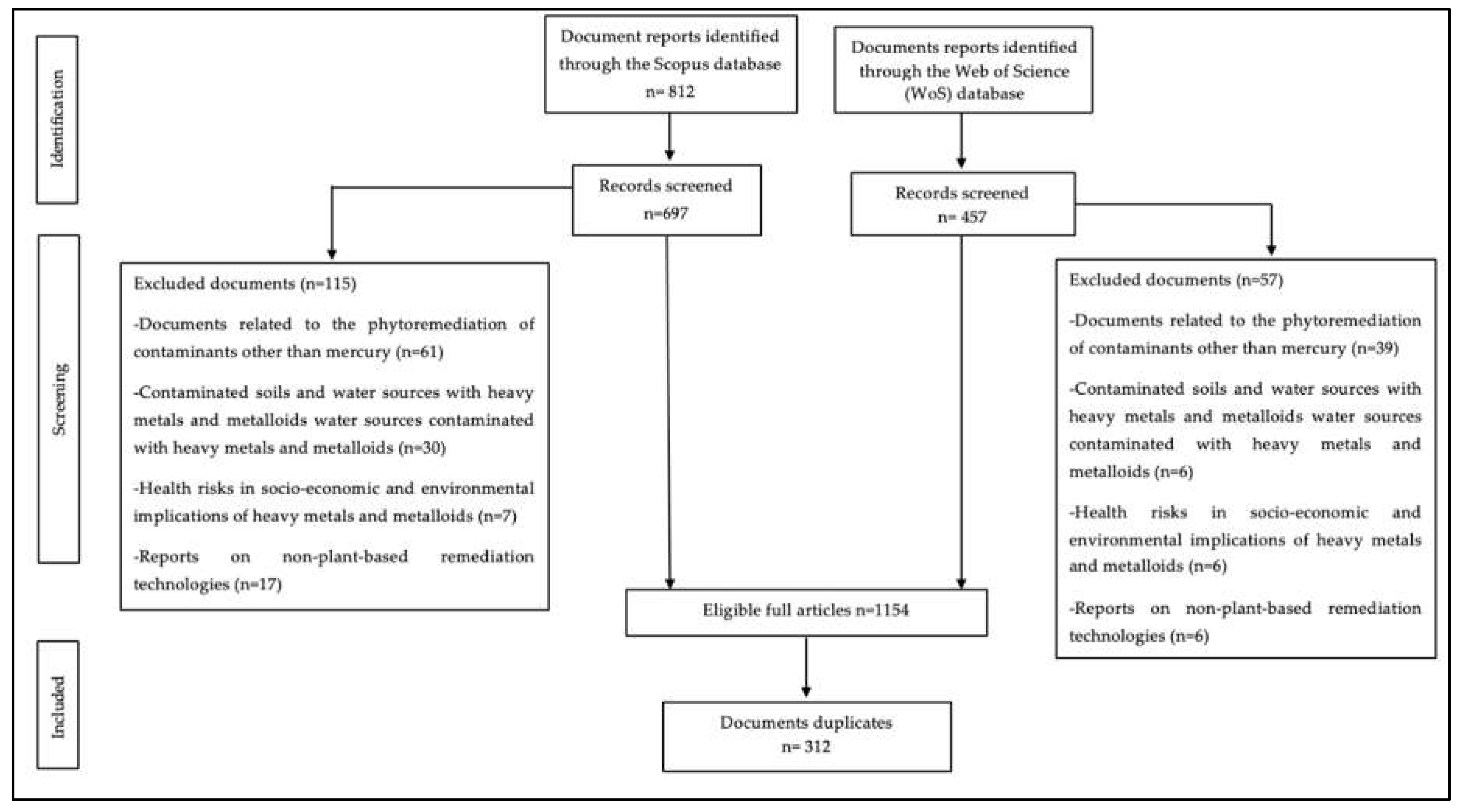
Figure 2.
Number of annual publications on the phytoremediation of mercury contamination included in the Scopus and WoS database.
Figure 2.
Number of annual publications on the phytoremediation of mercury contamination included in the Scopus and WoS database.
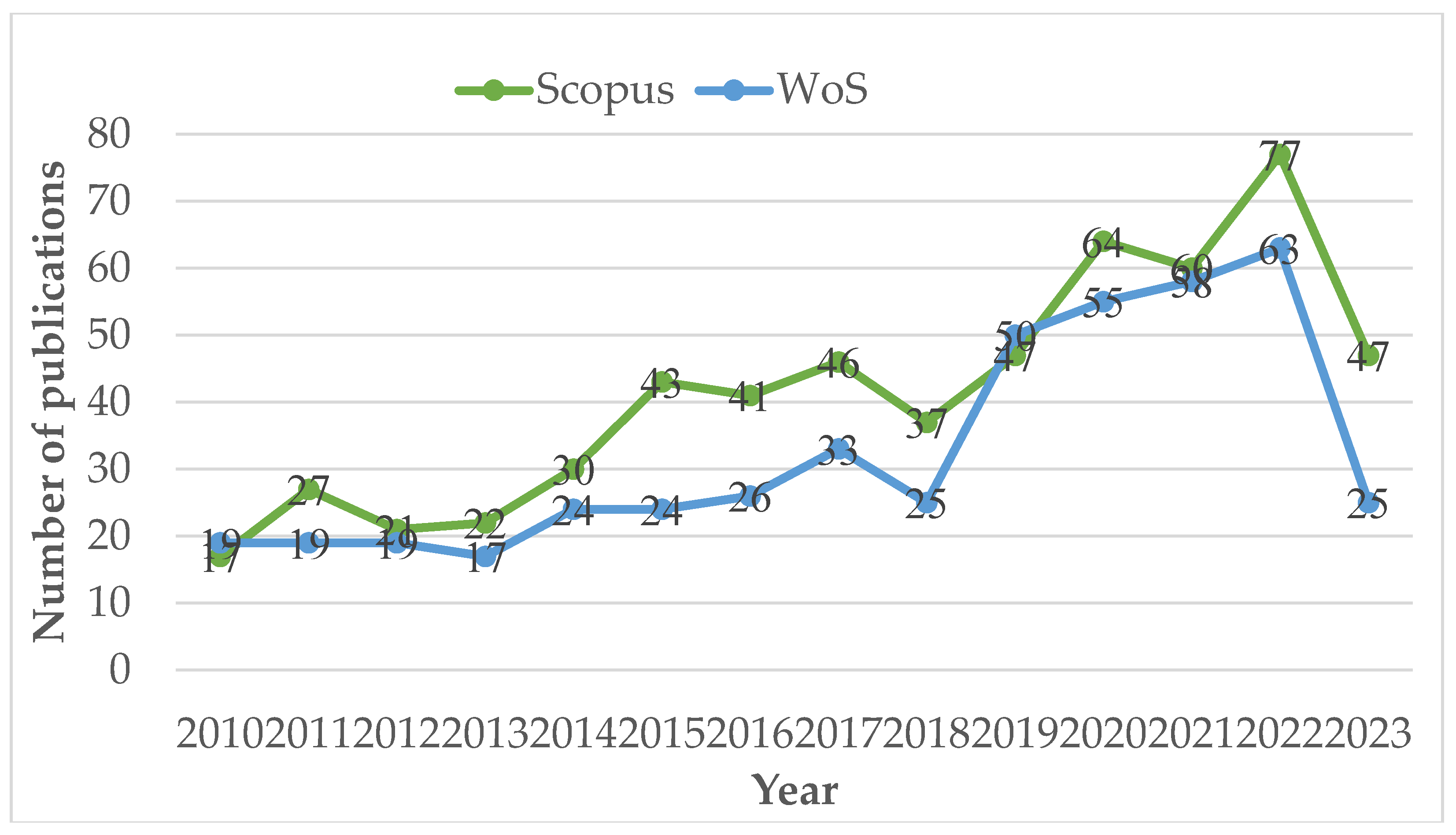
Figure 3.
Map of country cooperation: A) WoS and) Scopus.
Figure 4.
Main authors that contribute to the publication of scientific papers related to mercury phytoremediation: A) WoS and B) Scopus.
Figure 4.
Main authors that contribute to the publication of scientific papers related to mercury phytoremediation: A) WoS and B) Scopus.
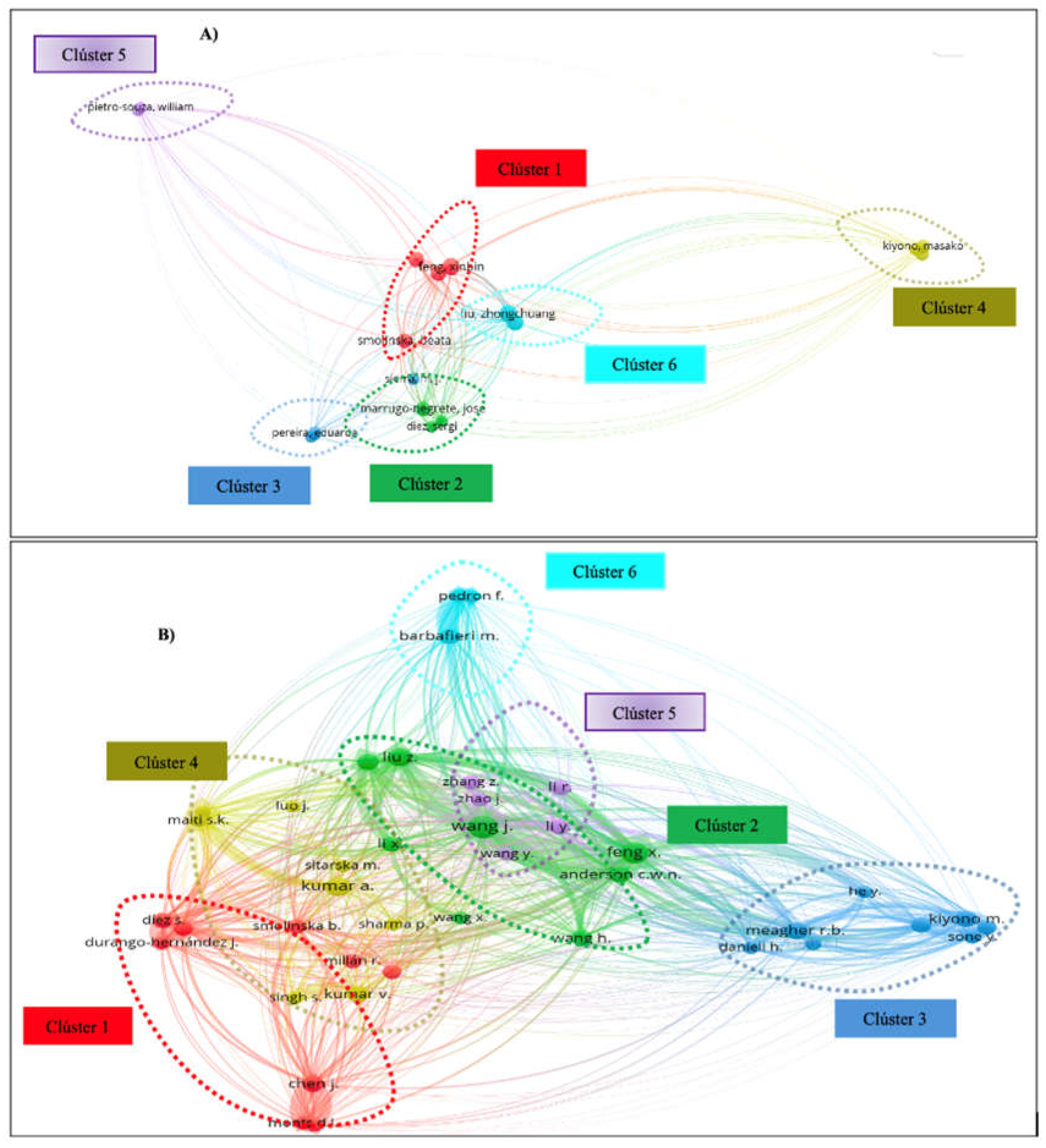
Figure 5.
Research sources: A) WoS and B) Scopus.
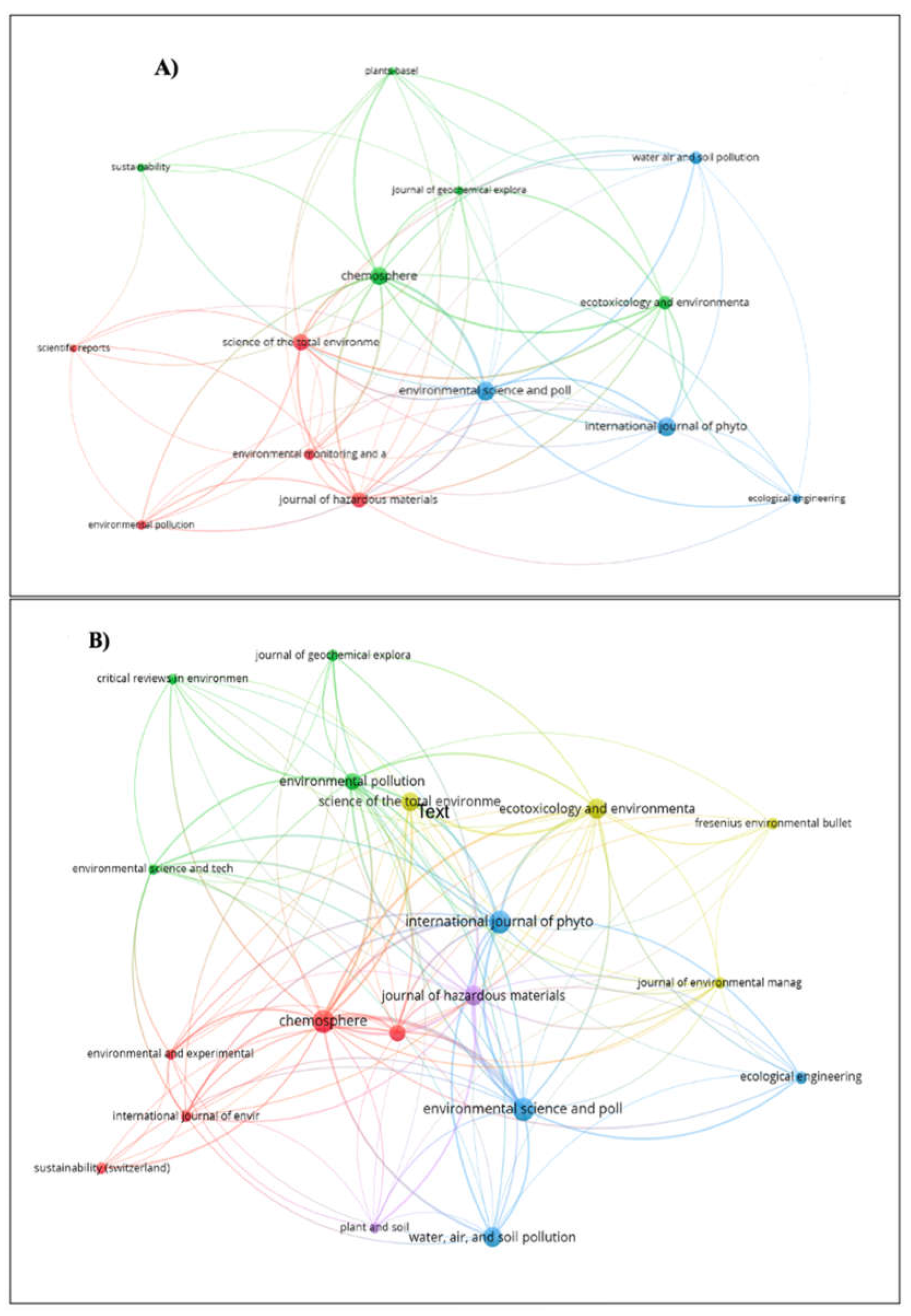
Figure 6.
Keyword co-occurrence analysis: A) WoS, B) Scopus.
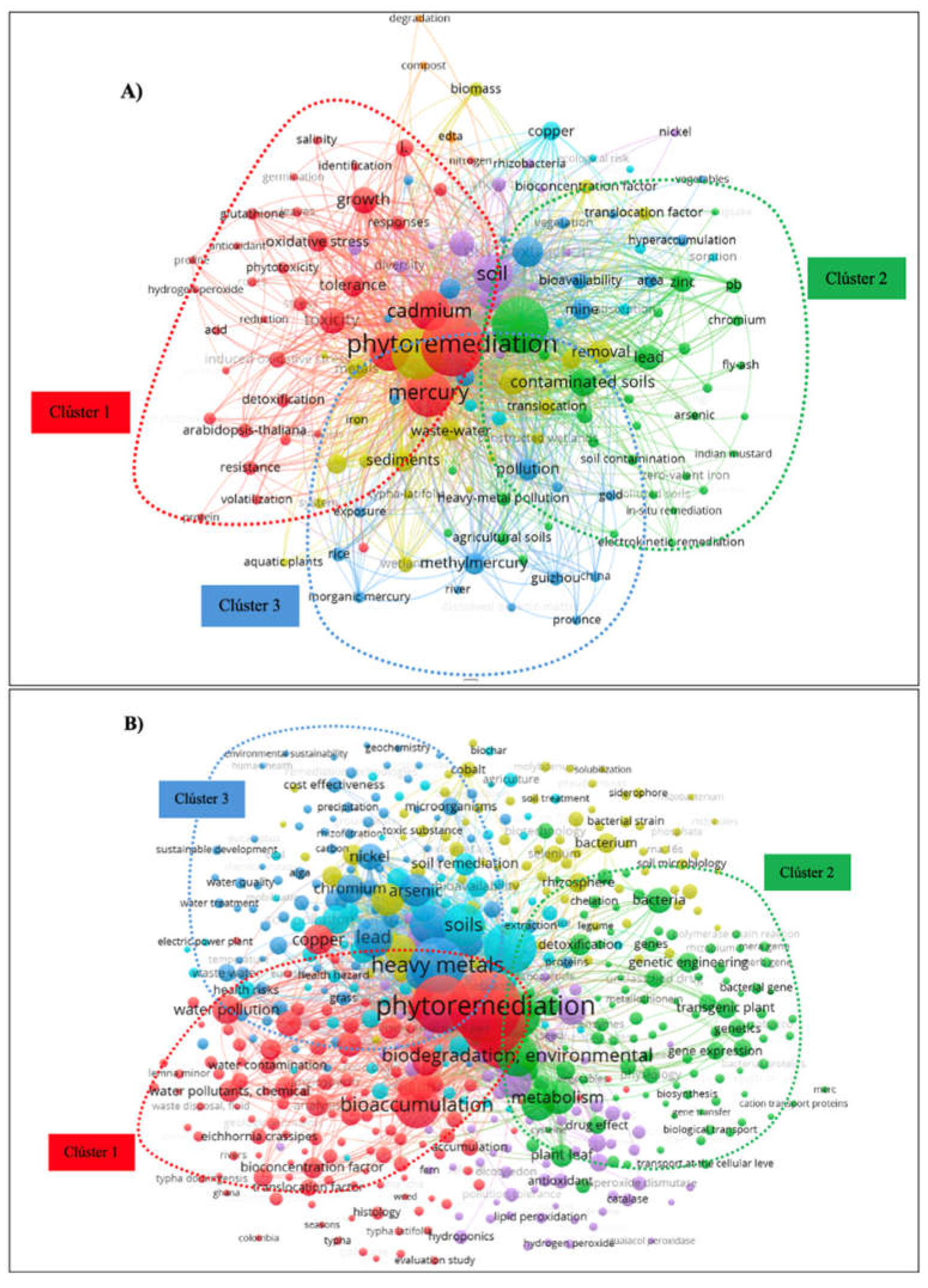
Figure 7.
Top keywords with the strongest citation bursts: A) WoS, B) Scopus.
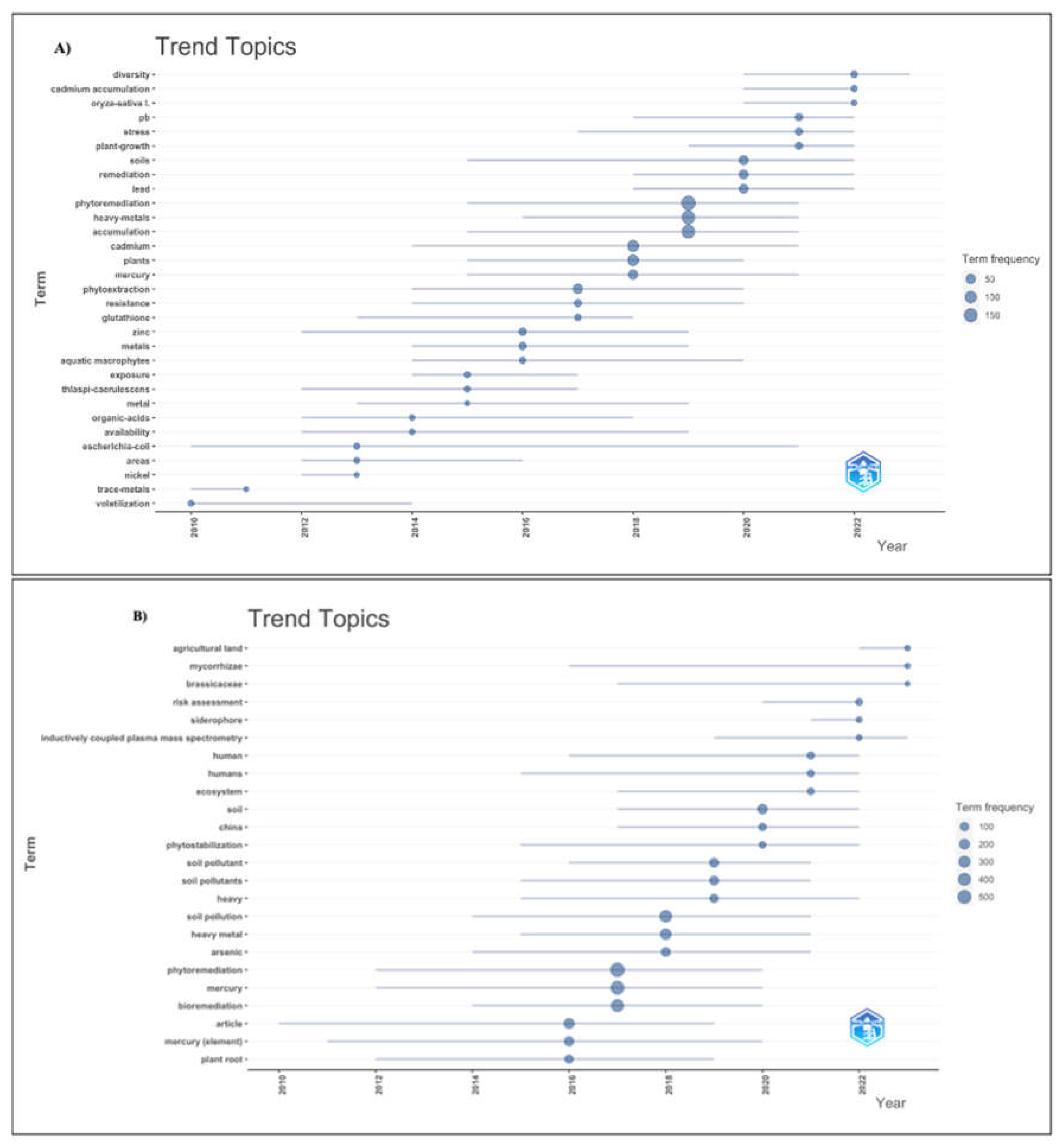

Table 1.
Types of documents published in the period from 2000 to 2023.
| Scopus | WoS | ||||
|---|---|---|---|---|---|
| Document type | Documents | Percentage (%) | Document type | Documents | Percentage (%) |
| Article | 468 | 67.1 | Article | 396 | 86.7 |
| Review Article | 107 | 15.4 | Review Article | 50 | 10.9 |
| Book Chapter | 76 | 10.9 | Proceeding paper | 5 | 1.1 |
| Conference paper | 35 | 5.0 | Early Access | 5 | 1.1 |
| Others | 11 | 1.6 | Others | 1 | 0.2 |
| Total | 697 | 100 | Total | 457 | 100 |
Table 2.
Top 10 most prolific institutions in phytoremediation of mercury contamination.
| Rank | WoS | Scopus | ||
|---|---|---|---|---|
| Organization | Documents | Organizations | Documents | |
| 1 | Chinese Academy of Sciences | 29 (6.3%) | Chinese Academy of Sciences | 39 (5.5%) |
| 2 | Guiyang Institute of Geochemistry Cas | 15 (3.3%) | Institute of Geochemistry Chinese Academy of Sciences | 20 (2.8%) |
| 3 | University of Chinese Academy of Sciences Cas | 15 (3.3%) | University of Chinese Academy of Sciences | 17 (2.4%) |
| 4 | Chongqing University | 10 (2.2%) | Universidade de Aveiro | 11 (1.6%) |
| 5 | Consejo Superior de Investigaciones Cientificas Csic | 10 (2.2%) | Massey Universitu | 10 (1.4%) |
| 6 | Universidade De Aveiro | 10 (2.2%) | University of Georgia | 10 (1.4%) |
| 7 | Centro de Investigaciones Energeticas Medioambientales Tecnologicas | 8 (1.8%) | Ministry of Education of the People’s Republic of China | 9 (1.3%) |
| 8 | Massey University | 8 (1.8%) | Chongqing University | 9 (1.3%) |
| 9 | Yangtze Normal University | 8 (1.8%) | Universidad de Castilla – La Mancha | 8 (1.1%) |
| 10 | Council of Scientific Industrial Research Csir India | 7 (1.5%) | Kitasato University | 8 (1.1%) |
Disclaimer/Publisher’s Note: The statements, opinions and data contained in all publications are solely those of the individual author(s) and contributor(s) and not of MDPI and/or the editor(s). MDPI and/or the editor(s) disclaim responsibility for any injury to people or property resulting from any ideas, methods, instructions or products referred to in the content. |
© 2024 by the authors. Licensee MDPI, Basel, Switzerland. This article is an open access article distributed under the terms and conditions of the Creative Commons Attribution (CC BY) license (http://creativecommons.org/licenses/by/4.0/).
Copyright: This open access article is published under a Creative Commons CC BY 4.0 license, which permit the free download, distribution, and reuse, provided that the author and preprint are cited in any reuse.


