

Submitted:
24 July 2024
Posted:
25 July 2024
You are already at the latest version
Abstract
Periodontal disease, a multifactorial inflammatory condition affecting the supporting structures of the teeth, has been increasingly recognized for its association with various systemic diseases. Understanding the molecular comorbidities of periodontal disease is crucial for elucidating shared pathogenic mechanisms and potential therapeutic targets. In this study, we conducted comprehensive literature and biological database mining utilizing tools such as DisGeNET2R, Romin, and Rentrez R libraries to identify diseases sharing associated genes, proteins, or molecular pathways with periodontitis. Our analysis revealed significant molecular overlaps between periodontal disease and several systemic conditions, including cardiovascular diseases, diabetes mellitus, rheumatoid arthritis, and inflammatory bowel diseases. Shared molecular mechanisms implicated in the pathogenesis of these diseases and periodontitis encompassed dysregulation of inflammatory mediators, immune response pathways, oxidative stress pathways, and alterations in the extracellular matrix. Furthermore, network analysis unveiled key hub genes and proteins that play pivotal roles in the crosstalk between periodontal disease and its comorbidities, offering potential targets for therapeutic intervention. Insights gained from this integrative approach shed light on the intricate interplay between periodontal health and systemic well-being, emphasizing the importance of interdisciplinary collaboration in developing personalized treatment strategies for patients with periodontal disease and associated comorbidities.
Keywords:
Periodontal disease
; Comorbidities
; Molecular mechanisms of systemic diseases
; Genetic associations
; Biological databases
; Inflammatory pathways
Introduction
Periodontal disease, a chronic inflammatory condition affecting the supporting structures of the teeth, has long been recognized as a significant public health concern globally. Beyond its impact on oral health, accumulating evidence suggests that periodontal disease is intricately linked to various systemic conditions, thereby emphasizing the need for a deeper understanding of its molecular comorbidities [1]. The recognition of shared pathogenic mechanisms between periodontal disease and systemic diseases holds profound implications for both clinical management and therapeutic interventions.
Periodontal disease is an extremely prevalent condition among adults [2,3], yet not uncommon in children [4,5]. There is a diverse spectrum of inflammatory ailments that affect the periodontium, an overarching term encompassing gingiva, cementum, periodontal ligament, and alveolar bone [6]. Periodontitis typically commences with an uncontrolled inflammatory response triggered by gradual bacterial colonization of tooth surfaces and soft gingival tissues—referred to as Gingivitis [7]. However, it is generally thought that is the host’s inflammatory reaction to microbial challenges that primarily instigates the degradation of the periodontium, leading to Periodontitis [8].
In Periodontitis, pathogens incite leukocytes of the innate immune system to release pro-inflammatory mediators like cytokines, which significantly contribute to the progression of chronic periodontitis (CP) [9]. Although infection is a prerequisite for periodontitis, it alone does not suffice for disease advancement. Pathogens instigate the acquired immune system, exacerbating the inflammatory condition’s progression and inflicting severe damage on soft and hard periodontal tissues [9]. Individual susceptibility tied solely to organismal immune and inflammatory responses is deemed crucial, as most signaling pathways and cellular events common to these disorders can be traced back to concurrent molecular origins [6,10].
The Genetic and Molecular Origins of Periodontitis
Genetic factors linked to susceptibility, severity, and progression of periodontitis have identified various gene variants of interest [11,12]. Notably, certain genetic polymorphisms in genes like IL1B, IL1RN, FcRIIIb, VDR, and TLR4 have been associated with aggressive periodontitis susceptibility, while others in IL1B, IL1RN, IL6, IL10, VDR, CD14, TLR4, and MMP-1 are linked to chronic periodontitis [13]. The heritability of periodontal disease susceptibility has been discussed extensively, with studies estimating a heritability of up to 50% after adjusting for behavioral and environmental factors, although no evidence of heritability has been found in gingivitis, a precursor to periodontitis [14]. Genome-wide association studies have provided valuable insights into the genetics of periodontal disease, revealing heritability dependencies and identifying associated loci, with most of them located in non-coding genomic regions that likely modulate gene expression through regulatory interactions [15]. However, pinpointing causal variants remains challenging in GWAS, hindering elucidation of molecular mechanisms crucial for diagnostics and therapeutics. Nevertheless, systematic reviews and meta-analyses have identified significant associations between genetic variants in genes like IL-1A, IL-1B, IL-6, IL-10, MMP-3, and MMP-9 and periodontitis risk [16].
Furthermore, investigations combining periodontal disease with other conditions, such as cardiovascular diseases, have uncovered potential shared genetic backgrounds. Studies have identified genes like ANRIL/CDKN2B-AS1, PLG, and CAMTA1/VAMP3 implicated in both periodontitis and coronary artery disease pathogenesis, shedding light on functional features and accounting for some missing heritability of periodontal disease [17]. Additionally, joint genetic and functional studies have highlighted disrupted immunogenetic blueprints associated with inflammation, revealing a signature of over 65 genes involved in inflammatory processes and their association with cardiovascular diseases [18]. Genes related to bone morphogenetic and developmental processes have also been implicated in periodontal disease. For instance, single nucleotide polymorphisms (SNPs) in BMP2, BMP4, SMAD6, and RUNX2 genes have been significantly associated with persistent apical periodontitis, suggesting epistatic interactions contributing to increased risk [19]. Moreover, larger genetic variants like long runs of homozygosity (LROH) spanning multiple genes have been linked to various stages of periodontitis severity [20].
The complex relationship between microbial infections and hosts, particularly in chronic infections like those underlying periodontal disease, involves intricate molecular mechanisms triggering and sustaining infection-associated inflammation [21]. Genetic immunodeficiencies like leukocyte adhesion deficiency-1 (LAD1) result in severe periodontal inflammation and bone loss, with recent evidence implicating enhanced inflammatory responses mediated by IL-17 [22,23]. Genetic variants in chemokine receptor CXCR2 have also been associated with susceptibility to prolonged periodontal bacteremia leading to chronic periodontitis [24].
Periodontitis and Systemic Health
Historically, the association between oral health and systemic health has been debated, with early observations often dismissed as anecdotal. However, over the past few decades, epidemiological studies have consistently demonstrated compelling associations between periodontal disease and a spectrum of systemic conditions, including cardiovascular diseases, diabetes mellitus, rheumatoid arthritis, and inflammatory bowel diseases. These associations transcend mere coincidence and suggest underlying molecular connections that warrant exploration.
The advent of high-throughput technologies and bioinformatics tools has revolutionized our ability to dissect complex molecular networks underlying disease pathogenesis. In this context, integrative approaches that leverage literature mining and biological databases provide valuable insights into the shared molecular signatures and pathways between periodontal disease and its comorbidities. By systematically analyzing genetic associations, protein interactions, and pathway crosstalk, researchers can unravel the molecular underpinnings of these complex relationships.
Understanding the molecular comorbidities of periodontal disease holds immense promise for advancing both oral and systemic health. By elucidating shared molecular mechanisms and identifying novel therapeutic targets, this interdisciplinary approach has the potential to transform clinical practice and improve patient outcomes in the management of periodontal disease and its associated comorbidities.
This paper aims to review and synthesize the current knowledge on the molecular comorbidities of periodontal disease, with a particular focus on diseases sharing associated genes, proteins, or molecular mechanisms. By integrating data from diverse sources, including DisGeNET2R, Romin, and Rentrez R libraries, we seek to elucidate the intricate interplay between periodontal health and systemic well-being at the molecular level. Furthermore, we aim to identify potential therapeutic targets and pathways for intervention, thereby paving the way for personalized treatment strategies tailored to individuals with periodontal disease and associated systemic conditions.
Materials and Methods
Molecular Association Analysis
Primary genetic associations with periodontal disease was performed using the R Entrez and ROmim libraries. The R Entrez library (https://cran.r-project.org/web/packages/rentrez/index.html), provides a powerful interface for accessing biological data from the National Center for Biotechnology Information (NCBI) through the Entrez Programming Utilities (E-utilities) API. The ROmim library (https://github.com/davetang/romim), in turn was used to query the Online Mendelian Inheritance in Man (OMIM) database (https://www.omim.org/). Both database tools where used first, to look up for molecular information about periodontal disease, this information allowed to generate customized queries used to gather further information about diseases sharing genes and other biomolecules, as well as functional biological and biochemical pathways with periodontitis.
Molecular Comorbidity and Diseasome Networks
Once preliminary queries were carried out, a systematic molecular comorbidity network analysis and a diseasome network construction were performed by using the disgenet2r package (https://www.disgenet.org/disgenet2r). disgenet2r is an Application Programming Interface (API) to the DisGeNET database (https://www.disgenet.org/). DisGeNET is a discovery platform containing one of the largest publicly available collections of genes and variants associated to human diseases. DisGeNET consolidates information sourced from meticulously curated repositories, GWAS catalogs, animal models, and scholarly publications. The data within DisGeNET are uniformly annotated using standardized vocabularies and collaborative ontologies. Furthermore, DisGeNET offers various novel metrics aimed at aiding the prioritization of relationships between genotypes and phenotypes. An annotated pipeline to reproduce the workflow to built comorbidity and diseasome networks for periodontitis can be found at github.com/CSBIG/.
Molecular Comorbidity Network Reconstruction
A molecular comorbidity network, defined as a set of diseases that share associated genes, proteins or biomolecular pathways with a given disease was built for periodontitis using the module of disgenet2r. Parameters were set to include only Curated molecular interactions, i.e., genetic and biomolecular associations supported by direct experimental evidence. Breadsearch score was set to 0.4 (medium-high) and confidence score was set to 1 (maximum confidence based on the available experimental evidence). PODNet was used not only to build the comorbidity network but also to generate a heatmap of shared molecules among the different diseases and a Protein class heatmap that displays functional information of the different biomolecules for the different diseases in the comorbidity network.
Diseasome Network Reconstruction
Diseasomes are network-based approaches that allow researchers to explore the complex relationships between diseases, identify common underlying mechanisms, and uncover potential targets for therapeutic intervention. They serve as valuable resources for studying disease etiology, understanding disease comorbidities, and developing strategies for precision medicine and personalized healthcare. Diseasome networks centered in periodontal disease were built using the disease2disease_by_gene module of disgenet2r. Only Curated associations were retained and the maximum number of connected diseases was considered. A disease-disease network centered in Periodontitis and a full diseasome of periodontitis-associated diseases were built. A bar plot visualization depicting number and fraction of shared genes were also generated using the disease2disease_by_gene module.
Functional Enrichment Analysis
Functional enrichment analysis, was performed by using the gProfileR2 tool (https://cran.r-project.org/web/packages/gprofiler2/index.html) to mine the g:Profiler webserver (https://biit.cs.ut.ee/gprofiler/gost). Hypergeometric tests were applied to the list of periodontitis comorbidity network genes. Only annotated genes were considered. Statistical significance was set for all categories with g:SCS corrected p-value (equivalent to non-independent FDR tests, i.e., is a form of multiple testing correction that considers that Gene Ontology (GO) categories for instance form a hierarchy and thus are not all independent) less than . Values less than were capped in the visualizations. gProfiler parameters used were as follows: version e111_eg58_p18_30541362, query date: 28/3/2024,14:37:37, organism: hsapiens.
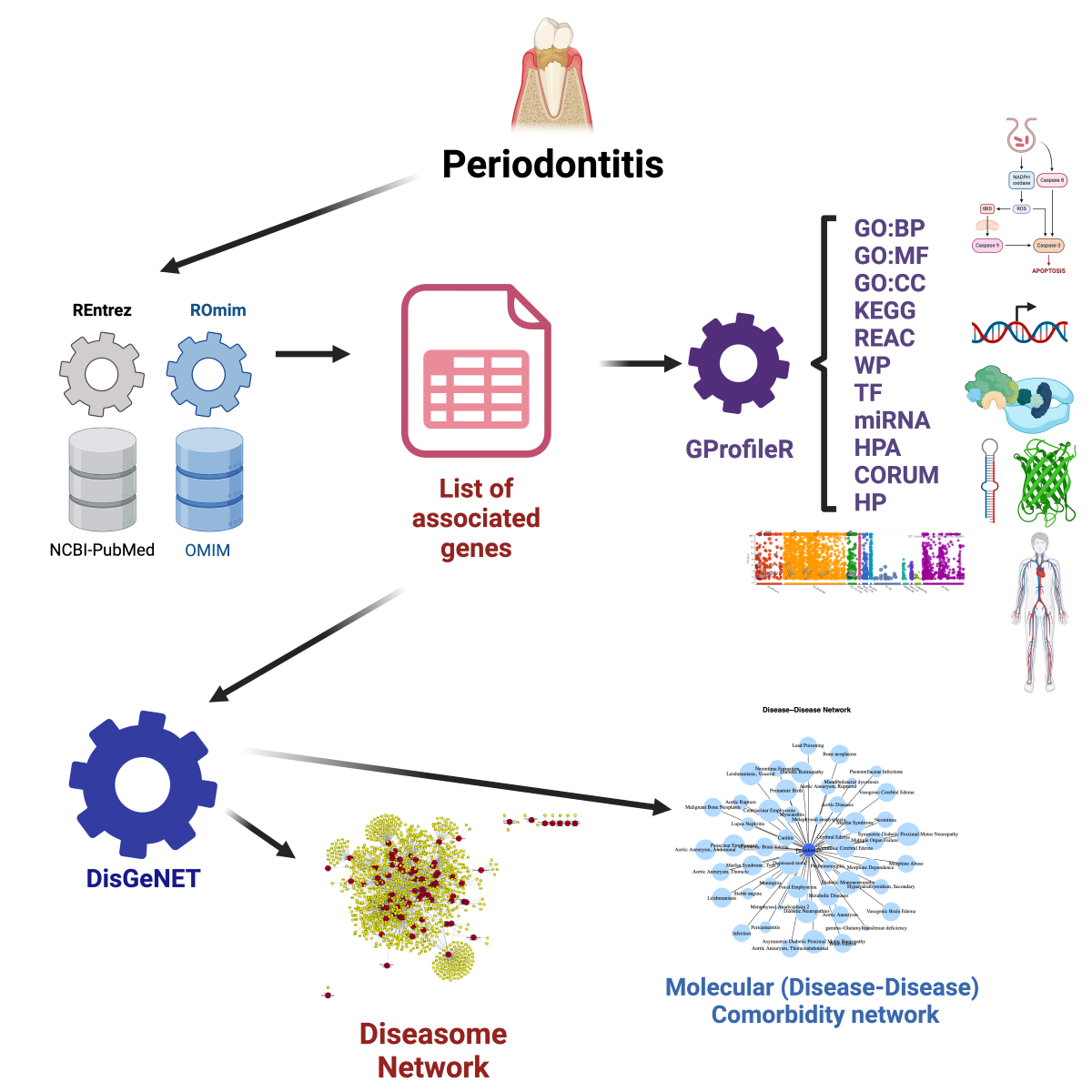
A general workflow for the methods and analyses performed in this work is presented in Figure 1.
Results
Molecular Comorbidity Network
The molecular comorbidity network of periodontitis spanned over 2,219 curated gene-disease interactions involving 80 different disease conditions. The top 10 periodontitis comorbidity conditions ordered by the gene PLI index of their leading gene interactions are: Malignant neoplasm of breast, Breast Carcinoma, Malignant neoplasm of prostate, Atrial fibrillation, Depressive disorder, Obesity, Adenocarcinoma, Diabetes mellitus, non-insulin dependent, Rheumatoid arthritis, Alzheimer’s Disease. Gene PLI (Probability of being Loss-of-function Intolerant) is an estimate of the probability that a gene is intolerant to loss-of-function (LoF) mutations, meaning that these mutations are likely to have a deleterious effect on the function of the gene. The PLI score is derived from large-scale sequencing data, such as data from the Exome Aggregation Consortium (ExAC), which aggregates exome sequencing data from thousands of individuals. Genes with high PLI scores are less likely to be found in the general population and may be thus more likely to cause severe phenotypic consequences when present.
In DisGeNET, the gene PLI score provides valuable information about the functional importance of a gene and its potential relevance to human diseases. Genes with high PLI scores may be prioritized for further investigation in disease studies, as mutations in these genes are more likely to contribute to disease susceptibility or pathogenesis. For the full annotated list of 2,219 gene-disease interactions covering 80 highly significant comorbidities of periodontitis, please refer to Supplementary Table 1.
Periodontitis Centered Disease Network
A periodontitis-centered comorbidity network is presented in Figure 2. It can be noticed that periodontitis comorbidities are quite diverse in nature, ranging from expected oral conditions such as Pericementitis, to inflammatory, immune and autoimmune diseases, infections, cardiovascular damage, to neoplasms and psychiatric conditions including substance abuse. When we consider this in addition to the information reported in Supplementary Table 1, it calls to attention the systemic nature of periodontal disease.
Figure 3 presents a plot depicting the absolute number and relative size of the intersection of the gene sets (Jaccard Index) associated to the different diseases with periodontitis. It can be observed that some diseases share up to 25% of their associated genes with Periodontitis.
A Diseasome of Periodontitis Related Conditions
An even more comprehensive view of the systemic nature of the biomolecular landscape of periodontitis and its comorbidity associated diseases is presented when we consider its diseasome. This network represents a comprehensive map of disease connections, illustrating how different diseases are interconnected based on shared genetic and biomolecular factors.
Figure 4 shows a visualization of the periodontitis associated diseasome including the known molecular interconnections between all of the comorbidities of periodontitis on a pairwise basis. We can see that constitutes a quite entangled web, were particular interactions and even individual diseases are difficult to discern (to navigate on every possible link in this network, please refer to the network object included as Supplementary table 2). The take home message is that there are many connections at a systemic level. This can also be observed since most of the nodes and interactions in this diseasome are clustered in a giant connected component with the most of the diseases and genes forming a core with only a few diseases and genes in the periphery.
The molecular diseasome network (Figure 4) associated with periodontitis encompasses a diverse array of diseases, each sharing a varying number of genes with periodontitis. Among the diseases identified, several are well-known systemic conditions with established links to periodontal disease, such as Coronary artery disease, Atherosclerosis, and Alzheimer’s disease. These diseases share a substantial number of genes with periodontitis, indicating potential common molecular pathways or genetic factors underlying their co-occurrence. A disease-disease map (Figure 5) is a projection from the bipartite network in Figure 4. We can notice that these diseases form an extremely entangled network in which structure is difficult to discern since most of the diseases are strongly interconnected to each other.
Within this intricate network, the Top10 diseases linked to a higher number of genes (in parentheses) are Malignant neoplasm of breast (278), Breast carcinoma (260), Malignant neoplasm of prostate (164), Diabetes mellitus, Non-Insulin-Dependent (116), Atrial fibrillation (112), Obesity (106), Rheumatoid arthritis (77), Depressive disorder (75), Alzheimer’s disease (66) and Asthma (54). The top10 genes (actually 11 genes because of ties) implicated in the higher number of diseases (also in parentheses) in this diseasome are: TNF (24), IL6 (23), PTGS2 (14), IL10 (13), NOS3 (12), IL1B (12), VEGFA (11), BCL2 (11), STAT3 (11), LEP (11) and TP53 (11). For a comprehensive list please refer to Supplementary Table 2.
Analyzing the relative numbers of genes involved in the molecular diseasome network associated with periodontitis reveals interesting patterns and potential insights into disease relationships. Some diseases exhibit a higher number of shared genes with periodontitis compared to others. For example, diseases like Alzheimer’s disease, Depressive disorder, and Breast carcinoma show a relatively large number of shared genes with periodontitis, suggesting closer molecular associations or shared genetic underpinnings (Supplementary Table 2).
On the other hand, certain diseases have a smaller number of shared genes with periodontitis. Conditions like Acute coronary syndrome, Acute monocytic leukemia, and Adrenal gland hypofunction exhibit a limited overlap in genes with periodontitis within the diseasome network. However, even diseases with fewer shared genes may still have significant implications for understanding disease pathogenesis and comorbidities, as even a small number of shared genes can indicate potential molecular connections or common biological pathways (Supplementary Table 3).
Overall, the distribution of shared genes across different diseases in the diseasome network underscores the complexity of disease interactions and highlights the multifactorial nature of both periodontitis and systemic diseases. Such is the case, for instance of BCL2 (involved in such disparate conditions within the Periodontitis diseasome such as Alzheimer’s disease, Polycystic ovary syndrome, Myocardial infarction and several tumors such as Adenocarcinoma, Malignant neoplasm of breast, Multiple myeloma, Malignant Head and neck neoplasm, Esophageal neoplasms, and Malignant neoplasm of prostate); of ESR1 (involved in Myocardial infarction, Depressive disorder, Breast carcinoma and Atherosclerosis, to name a few); and of GSTM1 (associated with Parkinson’s disease, Leukemia, Diabetes mellitus, non-insulin-dependent, and Asthma). These are just come examples representative of the diversity of conditions spanned in the Periodontitis diseasome network (further information can be found in Supplementary Table 1).
The varying degrees of overlap in genes between periodontitis and different diseases suggest heterogeneous molecular relationships and underscore the importance of considering diverse factors, such as genetic predisposition, environmental influences, and shared biological processes, in understanding disease comorbidities and developing targeted therapeutic interventions.
Looking at groups of somewhat similar diseases in the list provided in Supplementary Table 2, we can observe several clusters based on disease categories or shared pathophysiological mechanisms. We have for instance the following general categories:
- Cardiometabolic Diseases: Diseases like Acute coronary syndrome, Atrial fibrillation, Coronary artery disease, and Coronary heart disease are all cardiovascular conditions that share a common underlying feature of vascular dysfunction or cardiac abnormalities. The presence of shared genes between these diseases (say, Myocardial infarction, Atrial fibrillation, Cerebrovascular accident, or Coronary artery disease) and periodontitis suggests potential molecular links related to inflammation, endothelial dysfunction, or immune dysregulation, which are known to contribute to both periodontal disease and cardiovascular disorders. Other conditions related to metabolism associated with cardiovascular health and present in the molecular (gene) comorbidity space of periodontitis are: Diabetes mellitus, non-insulin-dependent, Non-alcoholic fatty liver disease and Dyslipidemias, as well as Essential hypertension and Peripheral arterial diseases.
- Inflammatory Disorders and Immunological Diseases: Conditions such as Rheumatoid arthritis, Crohn’s disease, Chronic obstructive airway disease, and Asthma are all characterized by chronic inflammation and immune dysregulation. These diseases share overlapping inflammatory pathways with periodontitis, indicating potential common mechanisms contributing to their co-occurrence. The shared genes between these inflammatory disorders and periodontitis suggest that immune-mediated processes may play a critical role in the interplay between oral health and systemic inflammation as exemplified for instance, in Sjogren’s Syndrome, Rheumatoid arthritis and Lupus erythematosus systemic, but also in Psoriasis, Glomerulonephritis, and Graves disease .
- Cancer: Several types of cancer are represented in the list, including Breast cancer, Cervical cancer, Carcinoma of lung, and Adenocarcinoma. Although cancer types vary in their tissue origins and molecular profiles, they all involve dysregulated cell growth and proliferation. The presence of shared genes between these cancers and periodontitis may reflect shared molecular pathways related to cell cycle regulation, tumor progression, or immune evasion, highlighting potential links between periodontal health and cancer development such is the case of Breast carcinoma, Pancreatic Neoplasm, and Cervical cancer, Prostate cancer, as well as Multiple myeloma, Hodgkin disease, and some types of Leukemia.
- Neurological and Psychiatric Disorders: Diseases like Alzheimer’s disease and Depressive disorder represent neurological and psychiatric conditions that have been associated with chronic inflammation and immune activation. The shared genes between these disorders and periodontitis suggest potential bidirectional relationships, where systemic inflammation may contribute to neuroinflammation and cognitive decline, while neurological conditions may influence systemic inflammatory responses and periodontal health.
- Other Diseases: There are other less-general conditions such as Pneumonia, Osteoporosis, Amyloidosis, aside from hormonal diseases like Polycystic ovary syndrome, Adrenal gland hypofunction, Hereditary angioedema type III, as well as Chronic kidney diseases and connective tissue diseases like Marfan syndrome that also share relevant biomolecular players with Periodontitis.
As we can see, groups of somewhat similar diseases in the list exhibit commonalities in pathophysiological mechanisms, such as inflammation, immune dysregulation, and cell proliferation, which may contribute to their co-association with periodontitis in the molecular diseasome network. Further context upon this central issue will be presented in the discussion.
More specific information can be derived of the top genes in significance within this diseasome that can be found in Figure 6. One can see a number of well known disease-associated genes ranging from DNASes like DNASE1, tyrosine kinases such as PTPN22, PIK3CA, AKT2, and oncogenes such as BRCA 1, tumor suppresors like PTEN and ATM, all commonly associated with neoplasms; nuclear receptors such as PPARG associated to metabolic diseases, extracellular matrix glycoproteins such as FBN1, often found in inflammatory and collagen related diseases, etc.
Further systemic functional information can be found in the heatmap shown in Figure 7. There one can see a summary of the different biological functions carried out by the set of genes/proteins within the periodontitis diseasome. A prevalence of Enzymes as well as Signaling and Kinase proteins can be seen associated with most of the different diseases. Still relevant, though less generalized, is the presence of Transporter, Nucleic acid binding and Enzyme modulator proteins.
Other functional categories however, even if not present in most of the diseases are prevalent (as a class) within a given one. Such is the case of Transcription factors and Cellular structure proteins in Acute coronary syndrome or G-protein coupled receptors in Rheumatoid arthritis, for instance.
Functional Enrichment of the Diseasome Genes
Biological function enrichment analysis plays a crucial role in understanding the underlying molecular mechanisms and pathways associated with periodontitis within the context of the diseasome. Periodontitis is a multifactorial inflammatory disease influenced by various genetic, environmental, and microbial factors. By conducting enrichment analysis on genes or proteins associated with periodontitis within the broader diseasome network, we have been able to identify common biological functions, pathways, and processes that are dysregulated in both periodontitis and closely-related diseases as mentioned.
One key aspect of biological function enrichment analysis is its ability to uncover shared pathways and molecular signatures among diseases within the diseasome. For instance, enrichment analysis (see Figure 8) revealed enrichment of inflammatory pathways, immune response processes, or extracellular matrix remodeling functions in both periodontitis and other inflammatory diseases such as rheumatoid arthritis or inflammatory bowel disease. This suggests common underlying mechanisms driving inflammation and tissue destruction across different diseases within the diseasome. Understanding these shared pathways not only enhances our knowledge of disease pathogenesis but also offers potential targets for therapeutic intervention that may have broader implications beyond periodontitis alone. Additionally, biological function enrichment analysis can help prioritize genes or proteins for further experimental validation, providing guidance towards key players in the pathophysiology of periodontitis and its interplay with other systemic conditions within the diseasome network.
A glimpse at Figure 8 reveals an outstanding issue. There is a very large number of highly significant biological features enriched in the periodontitis-associated diseasome. There are 221 Gene Ontology (GO) Molecular Function (GO:MF) categories, 2720 GO biological process categories (GO:BP), 176 GO cellular components (GO:CC), 153, 174 and 270 molecular pathways as reported by the KEGG, Reactome (REAC) and Wikipathways (WP) databases respectively. There are also 18 statistically significant transcription factor binding site signatures, 38 associated microRNAs, 113 hits from the Human Protein Atlas (HPA), 24 mammalian protein complexes from the CORUM database and 506 matching conditions in the Human Phenotype Ontology (HPO), a standardized vocabulary of phenotypic abnormalities encountered in human diseases. The full list of features has been included as Supplementary Table 3.
Some outstanding results include strong binding in membrane receptor and immune signaling, enzymatic activity and transcriptional regulation (GO:MF); response to stress, proliferation, cell adhesion and communication, development and regulation of cell death mechanisms (GO:BP); nearly all cellular locations are enriched a fact that, in addition to the just mentioned GO:MFs and GO:BPs, point out to extremely systemic phenomena. From the multiplicity of biochemical pathways in the diverse databases, we can highlight those related to extreme abnormalities in cancer, hormone deregulation, muscle failure, inflammation, senescence and atherosclerosis. Transcription factor (TF) binding motifs (See Figure 8 and Supplementary Table 3), belong to the MAZ, GKLF, WT1, MED8, ZNF148, OPATZ, CKROX, SMAD3, EGR-1, and PAX4 TFs. A number of these TFs are indeed master regulators associated to development (e.g., SMAD3, PAX4).
We can also notice how different regulatory non-coding transcripts, corresponding to 38 miRNAs are associated with the core genes in the periodontitis diseasome. Each one of these regulatory transcripts is able to regulate a large number of gene targets (from a few dozens to close to a hundred) in the periodontitis diseasome (to examine the full list of miRNAs and their gene targets please refer to Supplementary Table 3). An additional dimension of complexity is the one formed by active proteins (113) and protein complexes (24) reported as significantly enriched in the periodontitis diseasome. Furthermore, in addition to the 80 diseases directly related to periodontitis by sharing associated genes, there is a staggering set of 506 different health conditions reported significantly enriched in the set of genes in the periodontitis diseasome (see Supplementary Table 3).
Discussion
In recent years, numerous research and clinical investigations have documented connections between periodontitis and various systemic inflammatory conditions, including Arthritis, Type 2 diabetes mellitus, and Atherosclerosis [3]. The infectious, molecular, and physiological underpinnings of these relationships have been explored in previous sections. Now, we delve into their implications for the onset and progression of a wide spectrum of diseases, encompassing cardiovascular disease, gastrointestinal and colorectal cancer, diabetes and insulin resistance, Alzheimer’s disease, respiratory tract infection, adverse pregnancy outcomes, among others [2,25].
Understanding the association between periodontitis and other systemic inflammatory diseases gains significance due to the availability of therapeutic interventions, such as cytokine-based treatment strategies, with potential benefits for both periodontitis and systemic health [26]. Immune markers linking CP and diabetes, such as glycation dynamics and TNF-, have been identified as reliable indicators of inflammation in gingival crevicular fluid and serum [27]. The glycemic status has been linked to periodontitis through mechanisms of systemic inflammation [28]. Moreover, interactions between local inflammation and innate immune responses have been observed in bone marrow stem cells co-cultured with macrophages obtained from diabetic periodontitis patients, further emphasizing the interplay between these conditions [29]. Conversely, evidence suggests that periodontal treatment can mitigate systemic inflammation in type 2 diabetes [30].
Recent experimental (mouse) models have demonstrated how periodontitis can induce systemic inflammation, exacerbating atherosclerosis through mechanisms driving endothelial-mesenchymal transitions [31,32]. Similar mechanisms have been discussed in the clinical care of human patients with lacunar infarct [33]. In what follows, we will further analyze different disease categories that share molecular origins with Periodontitis.
Cardiometabolic Diseases
Consistent epidemiological evidence underscores the association between periodontitis and heightened risk for cardiovascular diseases (CVDs) [26,34]. Given the inflammatory nature of vascular diseases like Atherosclerosis, where immune reactions mediated by cytokines contribute to pathogenesis, the link with periodontitis is not unexpected [26]. Chronic infections in the vessel wall can incite a pro-inflammatory milieu, driving autoimmunity to vascular cells and initiating Atherosclerosis [35]. Consequently, the sustained inflammatory state of periodontitis correlates with increased cardiovascular risk, with bacteremia and systemic inflammation precipitating endothelial lesions and vascular wall inflammation [33]. Moreover, periodontal treatment has been shown to reduce systemic inflammation and endothelial dysfunction, albeit with limited evidence of modifying atherosclerotic vascular disease outcomes [26,30].
Persistent periodontal inflammation exacerbates endothelial dysfunction and vascular inflammation [10,36]. Notably, inflammatory mediators like TNF- and IL-6 impair nitric oxide production and endothelial function, contributing to atherosclerosis and CVD development [10]. Periodontitis is associated with inflammation, the molecular players common to both types of disease may be indeed related to pathways impacting endothelial function and vascular structure [10]. Severe periodontitis heightens risks for acute myocardial infarction and stroke, with periodontal treatment also significantly reducing their incidence [2,10].
Endocrine and metabolic dysfunction is another molecular and physiological component of the association of Periodontitis and Cardiometabolic diseases. Non-insulin-dependent Diabetes mellitus for instance has been associated with periodontal disease for at least two decades [37,38]. This relationships has indeed many components, including the role of inflammation and signaling crosstalk [39,40], immune responses and immune cell infiltrates [41,42], the effects of the microbiome [43,44,45], as well as epidemiologic and common risk factors [46,47,48]. Insulin resistance has also been considered in these associations [49,50,51]. Obesity is a complex trait that has been related to Periodontitis [52]. Similarly, molecular, epidemiological and lifestyle factors conform this association [53,54,55,56].
Several conditions related to metabolic disruption have been discussed regarding their connections with periodontal disease, such is the case of Dyslipidemias [57,58,59,60], and Non-alcoholic fatty liver disease (now renamed Metabolic Dysfunction-Associated Steatotic Liver Disease (MASLD)) [61,62,63,64], in the latter case a clearer genomic molecular picture of the associated mechanisms has even been proposed [65]. Heart conditions with molecular links to Periodontitis also include Atrial fibrillation [66,67,68], Coronary heart disease [69,70,71,72,73], as well as vascular maladies such as Essential hypertension [74,75,76,77,78,79] and Peripheral arterial disease [80,81,82,83,84].
Inflammatory and Immunological Disorders
The comorbidity profile of periodontal disease encompasses various conditions, including autoimmune disorders like Rheumatoid arthritis (RA), Systemic lupus erythematosus (SLE), and Inflammatory bowel diseases (IBD). Disturbances in the delicate balance between innate and adaptive immunity, often triggered by chronic infections, may lead to autoimmune responses. For instance, in RA, patients exhibit increased bacterial loads and dysbiotic oral microbiota similar to those seen in periodontitis, with shared genetic susceptibility factors contributing to both conditions [3,85,86]. The inflammation observed in RA synovitis mirrors the immune response seen in periodontitis, involving a complex network of cytokines and immune cells that contribute to joint damage [87,88]. Additionally, periodontal pathogens like P. gingivalis may exacerbate RA progression by increasing mucosal permeability and facilitating immune cell migration to the joints [89]. Similar parallels exist between periodontitis and SLE, where disrupted microbiome composition and upregulated pro-inflammatory cytokines contribute to disease pathogenesis [10,90].
IBDs, such as ulcerative colitis and Crohn’s disease, share common inflammatory pathways with periodontitis, potentially arising from dysbiotic intestinal microbiota and genetic predisposition [91,92]. Furthermore, periodontal disease has been linked to hematological conditions like leukemia and thrombocytopenia, where oral manifestations and impaired immune function contribute to disease progression and oral complications [93,94,95,96].
Other conditions related to immune and inflammatory changes that share molecular basis with Periodontitis include Psoriasis [97,98,99,100], IGA glomerulonephritis –though in spite of the molecular association, most studies have centered around the microbiological component of this association [101,102], Graves disease [103,104,105] and Sjogren’s syndrome [106,107,108], although in this latter case some studies have found inconsistencies and ambiguities between the epidemiological and biomarker findings [109,110,111].
Cancer
In recent years, numerous research and clinical studies have unveiled connections between periodontitis and several systemic conditions, including cancer [112]. While the precise relationship remains debated, individuals with periodontitis exhibit an elevated risk of fatal cancer, particularly Lung cancer, other consistent correlations have been observed for Oral and esophageal carcinomas [113,114,115]. For Breast cancer, meta-analyses have confirmed significant associations with periodontitis, albeit the risk diminishes in patients with a history of periodontitis who underwent periodontal treatment [116]. Importantly, it has been stated that periodontitis leading to tooth loss is associated with increased cancer risks [117,118].
Systemic inflammation, a hallmark of periodontitis, is implicated in various phases of cancer development, from initiation to metastasis, reflecting the complex interplay between inflammation, immune responses, and genetic instability [26]. Notably, studies have shown positive correlations with Pancreatic, Head and neck, and Lung cancers [2,112]. Periodontal pathogens, particularly P. gingivalis and F. nucleatum, have been implicated in oral cancer pathogenesis through mechanisms involving direct interaction with oral epithelial cells and modulation of the host immune response [119]. Furthermore, chronic inflammation may influence carcinogenesis and cancer mortality, as observed in Breast cancer, where periodontal inflammation promotes the recruitment of Metastatic breast cancer cells [120,121].
Neurological and Psychiatric Diseases
Periodontitis exhibits intricate connections with neuroinflammation and neurodegenerative diseases, notably Parkinson’s and Alzheimer’s disease (AD). Studies have revealed a higher prevalence of periodontitis in patients with Parkinson’s disease, suggesting a bidirectional relationship between neurological conditions and periodontitis [2,10,123,124,125]. Evidence suggests that pro-inflammatory cytokines released from ulcerated periodontal pockets may weaken the blood-brain barrier, facilitating the entry of inflammatory mediators into the brain and triggering neurodegenerative cascades [10,126].
Activated glial cells in the brain produce inflammatory cytokines similar to those implicated in AD, exacerbating neuronal damage caused by -amyloid plaques and aggregates [127]. The presence of periodontal pathogens, such as P. gingivalis and T. denticola, in peri-postmortem human brains with AD further supports the role of these pathogens in brain inflammation associated with neurodegenerative diseases [2]. Moreover, the association between depression and chronic periodontitis underscores the involvement of systemic inflammatory processes in psychiatric conditions, implicating neuroinflammation in depressive disorders [36,128,129]. Inflammatory dysregulation is also involved in the sensitisation of nociceptive fibres, thus leading to pro-pain processes that may unleash Hyperalgesia [130,131,132,133].
Respiratory Diseases
Some diseases of the respiratory tract share also molecular and other factors with Periodontitis [134,135,136]; Such is for instance the case of Asthma [137,138,139,140], Pneumonia [141,142,143], Sleep apnea [144,145,146,147,148] and Chronic obstructive airway disease (COAD/COPD) [149,150,151,152]. We can notice, however, that most studies in the current literature (with some exceptions such as in COAD/COPD) consider these associations based on epidemiological rather than relying on their molecular and mechanistic origins which gain support in view of our results presented above.
Musculoskeletal and connective tissue diseases
More comprehensive –yet still incomplete– molecular and mechanistic links have been established between Periodontitis and musculoskeletal and connective tissue diseases such as Osteoporosis [153,154,155,156,157,158], Amyloidosis [159,160,161,162] and Marfan syndrome [163,164,165,166,167]. The common axis to these maladies seems to be crosstalk between inflammation and tissue development pathways [168,169] involving in some cases oxidative stress deregulation [170,171,172,173,174].
Hormonal Diseases
Common genetic molecular origins between Periodontitis and conditions related to hormone dysruption have also arise in our analysis. For instance, Polycystic ovary syndrome [175,176,177,178], Adrenal gland hypofunction [179,180,181,182] and Hereditary angioedema type III [183,184,185,186]. Interestingly it seems that a common link between many of the molecular pathways involved is via crosstalk with the complement system [187,188,189,190,191].
Kidney Diseases
Oxidative stress also plays a role in the connections between Periodontitis and Chronic kidney disease [192,193,194], under some circumstance via mechanisms driven by intertwining with gluthatione [195], phosphatidylcholine [196] or even vitamin D [197] metabolism. Other mechanisms and risk associations have been found though [198,199,200,201].
Some Open-Ended Avenues for Future Inquiry
Interestingly, some diseases in the network are seemingly unrelated to periodontitis from a clinical standpoint, such as Acute monocytic leukemia, Cervical cancer, and Alcoholic intoxication. However, the presence of shared genes between these diseases and periodontitis (See Supplementary Materials 2) suggests possible molecular connections or shared pathogenic mechanisms that warrant further investigation. As previously mentioned, the immune dysregulation and chronic inflammation characteristic of periodontitis may intersect with pathways involved in cancer development or hematological disorders, contributing to their co-association in the diseasome network.
The top10 genes (actually 11 genes because of ties) implicated in the higher number of diseases (number of hits in parentheses) in this diseasome are: TNF (24), IL6 (23), PTGS2 (14), IL10 (13), NOS3 (12), IL1B (12), VEGFA (11), BCL2 (11), STAT3 (11), LEP (11) and TP53 (11). For a comprehensive list please refer to Supplementary Table 2. One can see that, unsurprisingly, most of these molecules are associated with immunity and signaling pathways.
The extent to which these genes are able to modulate relevant biological functions from inflammation, hormone function, metabolism, development and differentiation processes, nutrient intake and processing, cell cycle and DNA repair further highlights their relevance in multimorbidity associated with periodontal disease. This, in turn help us to provide a molecular and physiological basis [32,202,203,204,205] to the growing body of epidemiological evidence on these associations [206,207,208,209,210]. Thus systematic exploration of the biologically functions of these molecules in the context of such (and other potential) comorbidities seems to be a worth pursuing endeavor.
Conclusions
This study aimed to provide a comprehensive analysis of the molecular comorbidity network of periodontal disease, revealing extensive gene-disease interactions that highlight the systemic nature of periodontitis. By leveraging robust bioinformatics tools and databases, we identified significant overlaps in genetic and molecular pathways between periodontitis and a wide array of systemic conditions. Our findings underscore the importance of inflammatory mediators, immune response pathways, oxidative stress pathways, and extracellular matrix alterations in the shared pathogenesis of these diseases.
Notably, the identification of key hub genes and proteins central to the crosstalk between periodontal disease and its comorbidities offers promising targets for therapeutic intervention. The diseases most strongly linked to periodontitis, including cardiovascular diseases, diabetes mellitus, rheumatoid arthritis, and inflammatory bowel diseases, are characterized by shared molecular mechanisms that may inform the development of personalized treatment strategies.
The visualization of the periodontitis-centered comorbidity network and the associated diseasome highlights the complexity and interconnectedness of these conditions. The entangled web of interactions emphasizes the need for interdisciplinary collaboration in both research and clinical practice. Our integrative approach not only advances the understanding of the molecular underpinnings of periodontal disease and its comorbidities but also sets the stage for future investigations aimed at unraveling the intricate relationships between oral health and systemic diseases.
In conclusion, this study elucidates the molecular comorbidities of periodontal disease, providing valuable insights into the shared pathogenic mechanisms and potential therapeutic targets. By integrating literature mining and biological database interrogation, we have identified a broad spectrum of diseases sharing significant molecular overlap with periodontitis. This overlap encompasses critical genes, proteins, and biological pathways, highlighting potential shared pathogenic mechanisms. Network analysis revealed a highly interconnected web of diseases associated with periodontitis, (its diseasome). This intricate network underscores the complex interplay between oral and systemic health, emphasizing the influence of periodontal disease on overall well-being. Furthermore, the identification of key hub genes within the network offers promising targets for therapeutic intervention strategies aimed at managing both periodontitis and its associated comorbidities. These findings pave the way for more holistic approaches to patient care, considering the multifaceted interactions between periodontal and systemic health. Future investigations aimed at functionally validating the identified molecular connections and exploring targeted therapeutic strategies hold then significant promise for improving patient outcomes.
Supplementary Materials
The following supporting information can be downloaded at website of this paper posted on Preprints.org.
Author Contributions
Conceptualization—E.H.L., M.M.G. ; methodology—E.H.L.; validation—M.M.G., E.H.L.; formal analysis—E.H.L., M.M.G.; investigation—M.M.G., E.H.L.; resources— E.H. L.; data curation—M.M.G., E.H.L.; writing—original draft preparation— E.H.L., writing—review and editing— M.M.G., E.H.L. All authors have read and agreed to the published version of the manuscript.
Funding
This work was supported by Intramural funds from the National Institute of Genomic Medicine. The funders had no role in study design, data collection and analysis, decision to publish, or preparation of the manuscript.
Conflicts of Interest
The authors declare that the research was conducted in the absence of any commercial or financial relationships that could be construed as a potential conflict of interest.
References
- Martínez-García, M.; Hernández-Lemus, E. Periodontal inflammation and systemic diseases: an overview. Frontiers in physiology 2021, 12, 709438. [Google Scholar] [CrossRef] [PubMed]
- Bui, F.Q.; Almeida-da Silva, C.L.C.; Huynh, B.; Trinh, A.; Liu, J.; Woodward, J.; Asadi, H.; Ojcius, D.M. Association between periodontal pathogens and systemic disease. Biomedical journal 2019, 42, 27–35. [Google Scholar] [CrossRef] [PubMed]
- de Molon, R.S.; Rossa, C., Jr.; Thurlings, R.M.; Cirelli, J.A.; Koenders, M.I. Linkage of periodontitis and rheumatoid arthritis: current evidence and potential biological interactions. International journal of molecular sciences 2019, 20, 4541. [Google Scholar] [CrossRef] [PubMed]
- Alrayyes, S.; Hart, T.C. Periodontal disease in children. Disease-a-Month 2011, 57, 184–191. [Google Scholar] [CrossRef] [PubMed]
- Reis, A.A.; Paz, H.E.d.S.; Monteiro, M.d.F.; Casati, M.Z.; Steiner-Oliveira, C.; Pascon, F.M.; Casarin, R.C.V. Early Manifestation of Periodontal Disease in Children and Its Association with Familial Aggregation. Journal of Dentistry for Children 2021, 88, 140–143. [Google Scholar] [PubMed]
- Kinane, D.F.; Stathopoulou, P.G.; Papapanou, P.N. Periodontal diseases. Nature Reviews Disease Primers 2017, 3, 1–14. [Google Scholar] [CrossRef] [PubMed]
- Graves, D. Cytokines that promote periodontal tissue destruction. Journal of periodontology 2008, 79, 1585–1591. [Google Scholar] [CrossRef] [PubMed]
- Balta, M.G.; Loos, B.G.; Nicu, E.A. Emerging concepts in the resolution of periodontal inflammation: a role for resolvin E1. Frontiers in immunology 2017, 8, 1682. [Google Scholar] [CrossRef] [PubMed]
- Ramadan, D.E.; Hariyani, N.; Indrawati, R.; Ridwan, R.D.; Diyatri, I. Cytokines and chemokines in periodontitis. European Journal of Dentistry 2020, 14, 483. [Google Scholar] [CrossRef] [PubMed]
- Cecoro, G.; Annunziata, M.; Iuorio, M.T.; Nastri, L.; Guida, L. Periodontitis, Low-Grade Inflammation and Systemic Health: A Scoping Review. Medicina 2020, 56, 272. [Google Scholar] [CrossRef] [PubMed]
- Shaddox, L.M.; Morford, L.A.; Nibali, L. Periodontal health and disease: The contribution of genetics. Periodontology 2000 2021, 85, 161–181. [Google Scholar] [CrossRef] [PubMed]
- Haworth, S.; Kho, P.F.; Holgerson, P.L.; Hwang, L.D.; Timpson, N.J.; Rentería, M.E.; Johansson, I.; Cuellar-Partida, G. Assessment and visualization of phenome-wide causal relationships using genetic data: an application to dental caries and periodontitis. European Journal of Human Genetics 2021, 29, 300–308. [Google Scholar] [CrossRef] [PubMed]
- Laine, M.L.; Crielaard, W.; Loos, B.G. Genetic susceptibility to periodontitis. Periodontology 2000 2012, 58, 37–68. [Google Scholar] [CrossRef] [PubMed]
- Michalowicz, B.S.; Diehl, S.R.; Gunsolley, J.C.; Sparks, B.S.; Brooks, C.N.; Koertge, T.E.; Califano, J.V.; Burmeister, J.A.; Schenkein, H.A. Evidence of a substantial genetic basis for risk of adult periodontitis. Journal of periodontology 2000, 71, 1699–1707. [Google Scholar] [CrossRef] [PubMed]
- Shungin, D.; Haworth, S.; Divaris, K.; Agler, C.S.; Kamatani, Y.; Lee, M.K.; Grinde, K.; Hindy, G.; Alaraudanjoki, V.; Pesonen, P.; others. Genome-wide analysis of dental caries and periodontitis combining clinical and self-reported data. Nature communications 2019, 10, 1–13. [CrossRef]
- da Silva, M.K.; de Carvalho, A.C.G.; Alves, E.H.P.; da Silva, F.R.P.; Pessoa, L.d.S.; Vasconcelos, D.F.P. Genetic factors and the risk of periodontitis development: findings from a systematic review composed of 13 studies of meta-analysis with 71,531 participants. International journal of dentistry 2017, 2017.
- Aarabi, G.; Zeller, T.; Seedorf, H.; Reissmann, D.; Heydecke, G.; Schaefer, A.; Seedorf, U. Genetic susceptibility contributing to periodontal and cardiovascular disease. Journal of dental research 2017, 96, 610–617. [Google Scholar] [CrossRef] [PubMed]
- Loos, B.G.; Van Dyke, T.E. The role of inflammation and genetics in periodontal disease. Periodontology 2000 2020, 83, 26–39. [Google Scholar] [CrossRef] [PubMed]
- Küchler, E.C.; Hannegraf, N.D.; Lara, R.M.; Reis, C.L.B.; de Oliveira, D.S.B.; Mazzi-Chaves, J.F.; Andrades, K.M.R.; de Lima, L.F.; Salles, A.G.; Antunes, L.A.A.; others. Investigation of Genetic Polymorphisms in BMP2, BMP4, SMAD6, and RUNX2 and Persistent Apical Periodontitis. Journal of Endodontics 2021, 47, 278–285.
- Mezzavilla, M.; Navarra, C.O.; Di Lenarda, R.; Gasparini, P.; Bevilacqua, L.; Robino, A. Runs of homozygosity are associated with staging of periodontitis in isolated populations. Human Molecular Genetics 2021, 30, 1154–1159. [Google Scholar] [CrossRef] [PubMed]
- Ari, G.; Cherukuri, S.; Namasivayam, A. Epigenetics and periodontitis: a contemporary review. Journal of clinical and diagnostic research: JCDR 2016, 10, ZE07. [Google Scholar] [CrossRef] [PubMed]
- Shaddox, L.; Mullersman, A.; Huang, H.; Wallet, S.; Langaee, T.; Aukhil, I. Epigenetic regulation of inflammation in localized aggressive periodontitis. Clinical epigenetics 2017, 9, 94. [Google Scholar] [CrossRef] [PubMed]
- Bunte, K.; Beikler, T. Th17 cells and the IL-23/IL-17 axis in the pathogenesis of periodontitis and immune-mediated inflammatory diseases. International journal of molecular sciences 2019, 20, 3394. [Google Scholar] [CrossRef]
- Kavrikova, D.; Borilova Linhartova, P.; Lucanova, S.; Poskerova, H.; Fassmann, A.; Izakovicova Holla, L. Chemokine Receptor 2 (CXCR2) Gene Variants and Their Association with Periodontal Bacteria in Patients with Chronic Periodontitis. Mediators of Inflammation 2019, 2019. [Google Scholar] [CrossRef] [PubMed]
- Khumaedi, A.I.; Purnamasari, D.; Wijaya, I.P.; Soeroso, Y. The relationship of diabetes, periodontitis and cardiovascular disease. Diabetes & Metabolic Syndrome: Clinical Research & Reviews 2019, 13, 1675–1678. [Google Scholar]
- Cardoso, E.M.; Reis, C.; Manzanares-Céspedes, M.C. Chronic periodontitis, inflammatory cytokines, and interrelationship with other chronic diseases. Postgraduate medicine 2018, 130, 98–104. [Google Scholar] [CrossRef] [PubMed]
- Singhal, S.; Pradeep, A.R.; Kanoriya, D.; Garg, V. Human soluble receptor for advanced glycation end products and tumor necrosis factor-α as gingival crevicular fluid and serum markers of inflammation in chronic periodontitis and type 2 diabetes. Journal of oral science 2016, 58, 547–553. [Google Scholar] [CrossRef] [PubMed]
- Torrungruang, K.; Ongphiphadhanakul, B.; Jitpakdeebordin, S.; Sarujikumjornwatana, S. Mediation analysis of systemic inflammation on the association between periodontitis and glycaemic status. Journal of clinical periodontology 2018, 45, 548–556. [Google Scholar] [CrossRef] [PubMed]
- Wang, J.; Li, H.; Li, B.; Gong, Q.; Chen, X.; Wang, Q. Co-culture of bone marrow stem cells and macrophages indicates intermediate mechanism between local inflammation and innate immune system in diabetic periodontitis. Experimental and Therapeutic Medicine 2016, 12, 567–572. [Google Scholar] [CrossRef] [PubMed]
- Preshaw, P.M.; Taylor, J.J.; Jaedicke, K.M.; De Jager, M.; Bikker, J.W.; Selten, W.; Bissett, S.M.; Whall, K.M.; van de Merwe, R.; Areibi, A.; others. Treatment of periodontitis reduces systemic inflammation in type 2 diabetes. Journal of Clinical Periodontology 2020, 47, 737–746. [Google Scholar] [CrossRef] [PubMed]
- Suh, J.S.; Kim, S.; Boström, K.I.; Wang, C.Y.; Kim, R.H.; Park, N.H. Periodontitis-induced systemic inflammation exacerbates atherosclerosis partly via endothelial–mesenchymal transition in mice. International journal of oral science 2019, 11, 1–12. [Google Scholar] [CrossRef] [PubMed]
- Schenkein, H.A.; Papapanou, P.N.; Genco, R.; Sanz, M. Mechanisms underlying the association between periodontitis and atherosclerotic disease. Periodontology 2000 2020, 83, 90–106. [Google Scholar] [CrossRef] [PubMed]
- Leira, Y.; Rodríguez-Yáñez, M.; Arias, S.; López-Dequidt, I.; Campos, F.; Sobrino, T.; D’Aiuto, F.; Castillo, J.; Blanco, J. Periodontitis is associated with systemic inflammation and vascular endothelial dysfunction in patients with lacunar infarct. Journal of periodontology 2019, 90, 465–474. [Google Scholar] [CrossRef] [PubMed]
- Carrizales-Sepúlveda, E.F.; Ordaz-Farías, A.; Vera-Pineda, R.; Flores-Ramírez, R. Periodontal disease, systemic inflammation and the risk of cardiovascular disease. Heart, Lung and Circulation 2018, 27, 1327–1334. [Google Scholar] [CrossRef] [PubMed]
- Hamilton, J.A.; Hasturk, H.; Kantarci, A.; Serhan, C.N.; Van Dyke, T. Atherosclerosis, periodontal disease, and treatment with resolvins. Current atherosclerosis reports 2017, 19, 57. [Google Scholar] [CrossRef]
- Furutama, D.; Matsuda, S.; Yamawaki, Y.; Hatano, S.; Okanobu, A.; Memida, T.; Oue, H.; Fujita, T.; Ouhara, K.; Kajiya, M.; others. IL-6 Induced by Periodontal Inflammation Causes Neuroinflammation and Disrupts the Blood–Brain Barrier. Brain sciences 2020, 10, 679. [Google Scholar] [CrossRef] [PubMed]
- Preshaw, P.M.; Alba, A.L.; Herrera, D.; Jepsen, S.; Konstantinidis, A.; Makrilakis, K.; Taylor, R. Periodontitis and diabetes: a two-way relationship. Diabetologia 2012, 55, 21–31. [Google Scholar] [CrossRef] [PubMed]
- Lalla, E.; Papapanou, P.N. Diabetes mellitus and periodontitis: a tale of two common interrelated diseases. Nature Reviews Endocrinology 2011, 7, 738–748. [Google Scholar] [CrossRef] [PubMed]
- Pan, S.; Hu, B.; Sun, J.; Yang, Z.; Yu, W.; He, Z.; Gao, X.; Song, J. Identification of cross-talk pathways and ferroptosis-related genes in periodontitis and type 2 diabetes mellitus by bioinformatics analysis and experimental validation. Frontiers in immunology 2022, 13, 1015491. [Google Scholar] [CrossRef] [PubMed]
- Leite, R.S.; Marlow, N.M.; Fernandes, J.K.; Hermayer, K. Oral health and type 2 diabetes. The American journal of the medical sciences 2013, 345, 271–273. [Google Scholar] [CrossRef] [PubMed]
- Agrafioti, P.; Morin-Baxter, J.; Tanagala, K.K.; Dubey, S.; Sims, P.; Lalla, E.; Momen-Heravi, F. Decoding the role of macrophages in periodontitis and type 2 diabetes using single-cell RNA-sequencing. FASEB journal: official publication of the Federation of American Societies for Experimental Biology 2022, 36, e22136. [Google Scholar] [CrossRef] [PubMed]
- Almubarak, A.; Tanagala, K.K.K.; Papapanou, P.N.; Lalla, E.; Momen-Heravi, F. Disruption of monocyte and macrophage homeostasis in periodontitis. Frontiers in immunology 2020, 11, 330. [Google Scholar] [CrossRef] [PubMed]
- Silva, D.N.d.A.; Casarin, M.; Monajemzadeh, S.; Bezerra, B.d.B.; Lux, R.; Pirih, F.Q. The microbiome in periodontitis and diabetes. Frontiers in oral health 2022, 3, 859209. [Google Scholar] [CrossRef] [PubMed]
- Xiao, E.; Mattos, M.; Vieira, G.H.A.; Chen, S.; Corrêa, J.D.; Wu, Y.; Albiero, M.L.; Bittinger, K.; Graves, D.T. Diabetes enhances IL-17 expression and alters the oral microbiome to increase its pathogenicity. Cell host & microbe 2017, 22, 120–128. [Google Scholar]
- Lu, C.; Zhao, Q.; Deng, J.; Chen, K.; Jiang, X.; Ma, F.; Ma, S.; Li, Z. Salivary microbiome profile of diabetes and periodontitis in a Chinese population. Frontiers in Cellular and Infection Microbiology 2022, 12, 933833. [Google Scholar] [CrossRef] [PubMed]
- Wu, C.z.; Yuan, Y.h.; Liu, H.h.; Li, S.s.; Zhang, B.w.; Chen, W.; An, Z.j.; Chen, S.y.; Wu, Y.z.; Han, B.; others. Epidemiologic relationship between periodontitis and type 2 diabetes mellitus. BMC Oral Health 2020, 20, 1–15. [Google Scholar] [CrossRef]
- Bitencourt, F.; Nascimento, G.; Costa, S.; Andersen, A.; Sandbæk, A.; Leite, F. Co-occurrence of periodontitis and diabetes-related complications. Journal of Dental Research 2023, 102, 1088–1097. [Google Scholar] [CrossRef] [PubMed]
- Kocher, T.; König, J.; Borgnakke, W.S.; Pink, C.; Meisel, P. Periodontal complications of hyperglycemia/diabetes mellitus: epidemiologic complexity and clinical challenge. Periodontology 2000 2018, 78, 59–97. [Google Scholar] [CrossRef] [PubMed]
- Gurav, A.N. Periodontitis and insulin resistance: casual or causal relationship? Diabetes & metabolism journal 2012, 36, 404–411. [Google Scholar]
- Bains, V.K.; Mahendra, J.; Mahendra, L.; Mittal, M.; Valli, G. Markers, pathways, and current evidence for periodontitis-associated insulin resistance: a narrative review. Journal of International Society of Preventive and Community Dentistry 2022, 12, 475–487. [Google Scholar] [PubMed]
- SKM, A.I.; Seo, M.; Lee, Y.S.; Moon, S.S. Association of periodontitis with insulin resistance, β-cell function, and impaired fasting glucose before onset of diabetes. Endocrine journal 2015, 62, 981–989. [Google Scholar]
- Zhao, P.; Xu, A.; Leung, W.K. Obesity, bone loss, and periodontitis: the interlink. Biomolecules 2022, 12, 865. [Google Scholar] [CrossRef] [PubMed]
- Arboleda, S.; Vargas, M.; Losada, S.; Pinto, A. Review of obesity and periodontitis: an epidemiological view. British dental journal 2019, 227, 235–239. [Google Scholar] [CrossRef] [PubMed]
- Kim, C.M.; Lee, S.; Hwang, W.; Son, E.; Kim, T.W.; Kim, K.; Kim, Y.H. Obesity and periodontitis: A systematic review and updated meta-analysis. Frontiers in Endocrinology 2022, 13, 999455. [Google Scholar] [CrossRef] [PubMed]
- Ladeira, L.L.C.; Nascimento, G.G.; Leite, F.R.M.; Alves-Costa, S.; Barbosa, J.M.A.; Alves, C.M.C.; Thomaz, E.B.A.F.; Batista, R.F.L.; Ribeiro, C.C.C. Obesity, insulin resistance, caries, and periodontitis: syndemic framework. Nutrients 2023, 15, 3512. [Google Scholar] [CrossRef] [PubMed]
- Moura-Grec, P.G.d.; Marsicano, J.A.; Carvalho, C.A.P.d.; Sales-Peres, S.H.d.C. Obesity and periodontitis: systematic review and meta-analysis. Ciencia & saude coletiva 2014, 19, 1763–1772. [Google Scholar]
- Gomes-Filho, I.S.; Oliveira, M.T.; Cruz, S.S.d.; Cerqueira, E.d.M.M.; Trindade, S.C.; Vieira, G.O.; Couto Souza, P.H.; Adan, L.F.F.; Hintz, A.M.; Passos-Soares, J.d.S.; others. Periodontitis is a factor associated with dyslipidemia. Oral diseases 2022, 28, 813–823. [Google Scholar] [CrossRef] [PubMed]
- Bitencourt, F.V.; Nascimento, G.G.; Costa, S.A.; Orrico, S.R.P.; Ribeiro, C.C.C.; Leite, F.R.M. The role of dyslipidemia in periodontitis. Nutrients 2023, 15, 300. [Google Scholar] [CrossRef] [PubMed]
- Zhou, X.; Zhang, W.; Liu, X.; Zhang, W.; Li, Y. Interrelationship between diabetes and periodontitis: role of hyperlipidemia. Archives of oral biology 2015, 60, 667–674. [Google Scholar] [CrossRef] [PubMed]
- Kadhim, S.S.; Al-Windy, S.A.; Al-Nami, M.S.; Al Kuraishy, H.M.; Al Gareeb, A.I. Statins improve periodontal disease–induced inflammatory changes and associated lipid peroxidation in patients with dyslipidemia: Two birds by one stone. Journal of International Oral Health 2020, 12, 66–73. [Google Scholar]
- Akinkugbe, A.A.; Slade, G.D.; Barritt, A.S.; Cole, S.R.; Offenbacher, S.; Petersmann, A.; Kocher, T.; Lerch, M.M.; Mayerle, J.; Völzke, H.; others. Periodontitis and Non-alcoholic Fatty Liver Disease, a population-based cohort investigation in the Study of Health in Pomerania. Journal of clinical periodontology 2017, 44, 1077–1087.
- Hatasa, M.; Yoshida, S.; Takahashi, H.; Tanaka, K.; Kubotsu, Y.; Ohsugi, Y.; Katagiri, T.; Iwata, T.; Katagiri, S. Relationship between NAFLD and periodontal disease from the view of clinical and basic research, and immunological response. International Journal of Molecular Sciences 2021, 22, 3728. [Google Scholar] [PubMed]
- Alakhali, M.S.; Al-Maweri, S.A.; Al-Shamiri, H.M.; Al-Haddad, K.; Halboub, E. The potential association between periodontitis and non-alcoholic fatty liver disease: a systematic review. Clinical oral investigations 2018, 22, 2965–2974. [Google Scholar] [CrossRef]
- Qiao, F.; Li, X.; Liu, Y.; Zhang, S.; Liu, D.; Li, C. Periodontitis and NAFLD-related diseases: A bidirectional two-sample Mendelian randomization study. Oral Diseases 2023. [Google Scholar] [CrossRef] [PubMed]
- Xu, W.; Zhang, Z.; Yao, L.; Xue, B.; Xi, H.; Wang, X.; Sun, S. Exploration of shared gene signatures and molecular mechanisms between periodontitis and nonalcoholic fatty liver disease. Frontiers in genetics 2022, 13, 939751. [Google Scholar] [CrossRef] [PubMed]
- Sen, S.; Redd, K.; Trivedi, T.; Moss, K.; Alonso, A.; Soliman, E.Z.; Magnani, J.W.; Chen, L.Y.; Gottesman, R.F.; Rosamond, W.; others. Periodontal disease, atrial fibrillation and stroke. American heart journal 2021, 235, 36–43. [Google Scholar] [CrossRef] [PubMed]
- Miyauchi, S.; Nishi, H.; Ouhara, K.; Tokuyama, T.; Okubo, Y.; Okamura, S.; Miyamoto, S.; Oguri, N.; Uotani, Y.; Takasaki, T.; others. Relationship between periodontitis and atrial fibrosis in atrial fibrillation: histological evaluation of left atrial appendages. Clinical Electrophysiology 2023, 9, 43–53. [CrossRef]
- Leelapatana, P.; Limpuangthip, N. Association between oral health and atrial fibrillation: A systematic review. Heliyon 2022, 8. [Google Scholar] [CrossRef] [PubMed]
- Shrihari, T. Potential correlation between periodontitis and coronary heart disease—An overview. Gen Dent 2012, 60, 20–4. [Google Scholar] [PubMed]
- Bokhari, S.A.H.; Khan, A.A.; Butt, A.K.; Hanif, M.; Izhar, M.; Tatakis, D.N.; Ashfaq, M. Periodontitis in coronary heart disease patients: strong association between bleeding on probing and systemic biomarkers. Journal of clinical periodontology 2014, 41, 1048–1054. [Google Scholar] [CrossRef] [PubMed]
- Hujoel, P.P.; Drangsholt, M.; Spiekerman, C.; DeRouen, T.A. Periodontal disease and coronary heart disease risk. Jama 2000, 284, 1406–1410. [Google Scholar] [CrossRef] [PubMed]
- Bahekar, A.A.; Singh, S.; Saha, S.; Molnar, J.; Arora, R. The prevalence and incidence of coronary heart disease is significantly increased in periodontitis: a meta-analysis. American heart journal 2007, 154, 830–837. [Google Scholar] [CrossRef] [PubMed]
- Nocini, R.; Favaloro, E.J.; Sanchis-Gomar, F.; Lippi, G. Periodontitis, coronary heart disease and myocardial infarction: treat one, benefit all. Blood Coagulation & Fibrinolysis 2020, 31, 339–345. [Google Scholar]
- Franek, E.; Klamczynska, E.; Ganowicz, E.; Blach, A.; Budlewski, T.; Gorska, R. Association of chronic periodontitis with left ventricular mass and central blood pressure in treated patients with essential hypertension. American journal of hypertension 2009, 22, 203–207. [Google Scholar] [CrossRef] [PubMed]
- Szczepaniak, P.; Mikołajczyk, T.P.; Cześnikiewicz-Guzik, M.; Guzik, T.J. Periodontitis as an inflammatory trigger in hypertension: From basic immunology to clinical implications. Polish Heart Journal (Kardiologia Polska) 2021, 79, 1206–1214. [Google Scholar] [CrossRef] [PubMed]
- Munoz Aguilera, E.; Suvan, J.; Buti, J.; Czesnikiewicz-Guzik, M.; Barbosa Ribeiro, A.; Orlandi, M.; Guzik, T.J.; Hingorani, A.D.; Nart, J.; D’Aiuto, F. Periodontitis is associated with hypertension: a systematic review and meta-analysis. Cardiovascular research 2020, 116, 28–39. [Google Scholar] [CrossRef] [PubMed]
- Leong, X.F.; Ng, C.Y.; Badiah, B.; Das, S. Association between hypertension and periodontitis: possible mechanisms. The Scientific World Journal 2014, 2014, 768237. [Google Scholar] [CrossRef] [PubMed]
- Rosa, R.A.C.; Rodrigues, J.V.S.; Cláudio, M.M.; Franciscon, J.P.S.; Mulinari-Santos, G.; Cirelli, T.; de Molon, R.S.; Gouveia Garcia, V.; Theodoro, L.H. The relationship between hypertension and periodontitis: a cross-sectional study. Journal of Clinical Medicine 2023, 12, 5140. [Google Scholar] [CrossRef] [PubMed]
- Surma, S.; Romańczyk, M.; Witalińska-Łabuzek, J.; Czerniuk, M.R.; Łabuzek, K.; Filipiak, K.J. Periodontitis, blood pressure, and the risk and control of arterial hypertension: epidemiological, clinical, and pathophysiological aspects—review of the literature and clinical trials. Current Hypertension Reports 2021, 23, 27. [Google Scholar] [CrossRef] [PubMed]
- Yang, S.; Zhao, L.S.; Cai, C.; Shi, Q.; Wen, N.; Xu, J. Association between periodontitis and peripheral artery disease: a systematic review and meta-analysis. BMC cardiovascular disorders 2018, 18, 1–8. [Google Scholar] [CrossRef] [PubMed]
- Wang, J.; Geng, X.; Sun, J.; Zhang, S.; Yu, W.; Zhang, X.; Liu, H. The risk of periodontitis for peripheral vascular disease: a systematic review. Reviews in Cardiovascular Medicine 2019, 20, 81–89. [Google Scholar] [CrossRef] [PubMed]
- Cho, D.H.; Song, I.S.; Choi, J.; Gwon, J.G. Risk of peripheral arterial disease in patients with periodontitis: A nationwide, population-based, matched cohort study. Atherosclerosis 2020, 297, 96–101. [Google Scholar] [CrossRef]
- Kure, K.; Sato, H.; Aoyama, N.; Izumi, Y. Accelerated inflammation in peripheral artery disease patients with periodontitis. Journal of periodontal & implant science 2018, 48, 337–346. [Google Scholar] [CrossRef]
- Jacobi, N.; Walther, C.; Borof, K.; Heydecke, G.; Seedorf, U.; Lamprecht, R.; Beikler, T.; Debus, S.E.; Waldeyer, C.; Blankenberg, S.; others. The association of periodontitis and peripheral arterial occlusive disease in a prospective population-based cross-sectional cohort study. Journal of clinical medicine 2021, 10, 2048. [CrossRef]
- Berlin-Broner, Y.; Febbraio, M.; Levin, L. Apical periodontitis and atherosclerosis: is there a link? Review of the literature and potential mechanism of linkage. Quintessence Int 2017, 48, 527–53. [Google Scholar] [CrossRef]
- Hickey, N.A.; Shalamanova, L.; Whitehead, K.A.; Dempsey-Hibbert, N.; van der Gast, C.; Taylor, R.L. Exploring the putative interactions between chronic kidney disease and chronic periodontitis. Critical Reviews in Microbiology 2020, 46, 61–77. [Google Scholar] [CrossRef] [PubMed]
- Ceccarelli, F.; Saccucci, M.; Di Carlo, G.; Lucchetti, R.; Pilloni, A.; Pranno, N.; Luzzi, V.; Valesini, G.; Polimeni, A. Periodontitis and rheumatoid arthritis: the same inflammatory mediators? Mediators of inflammation 2019, 2019. [Google Scholar] [CrossRef] [PubMed]
- Schulz, S.; Pütz, N.; Jurianz, E.; Schaller, H.G.; Reichert, S. Are there any common genetic risk markers for rheumatoid arthritis and periodontal diseases? A case-control study. Mediators of inflammation 2019, 2019. [Google Scholar] [CrossRef] [PubMed]
- Gómez-Bañuelos, E.; Mukherjee, A.; Darrah, E.; Andrade, F. Rheumatoid arthritis-associated mechanisms of Porphyromonas gingivalis and Aggregatibacter actinomycetemcomitans. Journal of clinical medicine 2019, 8, 1309. [Google Scholar] [CrossRef] [PubMed]
- Pessoa, L.; Aleti, G.; Choudhury, S.; Nguyen, D.; Yaskell, T.; Zhang, Y.; Li, W.; Nelson, K.E.; Neto, L.L.S.; Sant’Ana, A.C.; others. Host-microbial interactions in systemic lupus erythematosus and periodontitis. Frontiers in immunology 2019, 10, 2602. [CrossRef]
- Lira-Junior, R.; Figueredo, C.M. Periodontal and inflammatory bowel diseases: Is there evidence of complex pathogenic interactions? World journal of gastroenterology 2016, 22, 7963. [Google Scholar] [CrossRef] [PubMed]
- Piras, V.; Usai, P.; Mezzena, S.; Susnik, M.; Ideo, F.; Schirru, E.; Cotti, E. Prevalence of apical periodontitis in patients with inflammatory bowel diseases: a retrospective clinical study. Journal of Endodontics 2017, 43, 389–394. [Google Scholar] [CrossRef]
- Hajishengallis, G. New developments in neutrophil biology and periodontitis. Periodontology 2000 2020, 82, 78–92. [Google Scholar] [CrossRef] [PubMed]
- Acharya, A.B.; Shetty, I.P.; Jain, S.; Padakannaya, I.; Acharya, S.; Shettar, L.; Thakur, S. Neutrophil-to-lymphocyte ratio and platelet-to-lymphocyte ratio in chronic periodontitis before and after nonsurgical therapy. Journal of Indian Society of Periodontology 2019, 23, 419. [Google Scholar] [CrossRef] [PubMed]
- Wang, Y.; Hu, Y.; Pan, K.; Li, H.; Shang, S.; Wang, Y.; Tang, G.; Han, X. In-vivo imaging revealed antigen-directed gingival B10 infiltration in experimental periodontitis. Biochimica et Biophysica Acta (BBA)-Molecular Basis of Disease 2020, 1867, 165991. [Google Scholar] [CrossRef] [PubMed]
- Chi, A.C.; Neville, B.W.; Krayer, J.W.; Gonsalves, W.C. Oral manifestations of systemic disease. American family physician 2010, 82, 1381–1388. [Google Scholar] [PubMed]
- Sharma, A.; Raman, A.; Pradeep, A. Association of chronic periodontitis and psoriasis: periodontal status with severity of psoriasis. Oral Diseases 2015, 21, 314–319. [Google Scholar] [CrossRef] [PubMed]
- Ungprasert, P.; Wijarnpreecha, K.; Wetter, D. Periodontitis and risk of psoriasis: A systematic review and meta-analysis. Journal of the European Academy of Dermatology and Venereology 2017, 31, 857–862. [Google Scholar] [CrossRef] [PubMed]
- Dalmády, S.; Kemény, L.; Antal, M.; Gyulai, R. Periodontitis: a newly identified comorbidity in psoriasis and psoriatic arthritis. Expert review of clinical immunology 2020, 16, 101–108. [Google Scholar] [CrossRef] [PubMed]
- Mendes, V.S.; Cota, L.O.M.; Costa, A.A.; Oliveira, A.M.S.D.; Costa, F.O. Periodontitis as another comorbidity associated with psoriasis: A case-control study. Journal of periodontology 2019, 90, 358–366. [Google Scholar] [CrossRef] [PubMed]
- Ito, S.; Misaki, T.; Nagasawa, Y.; Nomura, R.; Naka, S.; Fukunaga, A.; Matsuoka, D.; Matayoshi, S.; Matsumoto-Nakano, M.; Nakano, K. Porphyromonas gingivalis infection in the oral cavity is associated with elevated galactose-deficient IgA1 and increased nephritis severity in IgA nephropathy. Clinical and Experimental Nephrology 2024, 28, 192–200. [Google Scholar] [CrossRef] [PubMed]
- Nagasawa, Y.; Misaki, T.; Ito, S.; Naka, S.; Wato, K.; Nomura, R.; Matsumoto-Nakano, M.; Nakano, K. Title IgA nephropathy and oral bacterial species related to dental caries and periodontitis. International journal of molecular sciences 2022, 23, 725. [Google Scholar] [CrossRef] [PubMed]
- Wang, Y.Y.; Lin, X.P. Detection and significance of IL-6 and TNF-α in patients with Graves disease and periodontitis. Shanghai kou Qiang yi xue= Shanghai Journal of Stomatology 2018, 27, 43–47. [Google Scholar] [PubMed]
- Gao, Y.; Huang, D.; Liu, Y.; Qiu, Y.; Lu, S. Periodontitis and thyroid function: A bidirectional Mendelian randomization study. Journal of Periodontal Research 2024, 59, 491–499. [Google Scholar] [CrossRef] [PubMed]
- Inchingolo, F.; Inchingolo, A.M.; Inchingolo, A.D.; Fatone, M.C.; Ferrante, L.; Avantario, P.; Fiore, A.; Palermo, A.; Amenduni, T.; Galante, F.; others. Bidirectional Association between Periodontitis and Thyroid Disease: A Scoping Review. International Journal of Environmental Research and Public Health 2024, 21, 860. [CrossRef]
- Yang, B.; Pang, X.; Guan, J.; Liu, X.; Li, X.; Wang, Y.; Chen, Z.; Cheng, B. The association of periodontal diseases and Sjogren’s syndrome: a systematic review and meta-analysis. Frontiers in Medicine 2023, 9, 904638. [Google Scholar] [CrossRef] [PubMed]
- Gheorghe, D.N.; Popescu, D.M.; Dinescu, S.C.; Boldeanu, M.V.; Surlin, P.; Vreju, F.; Ciurea, P.L. Clinical Evaluation of Periodontal Status and IL-6 Gingival Fluid Level in Patients with Sjogren’s Syndrome. Current health sciences journal 2023, 49, 163. [Google Scholar] [PubMed]
- Moreno-Quispe, L.A.; Serrano, J.; Virto, L.; Sanz, M.; Ramírez, L.; Fernández-Castro, M.; Hernández, G.; López-Pintor, R.M. Association of salivary inflammatory biomarkers with primary Sjögren’s syndrome. Journal of Oral Pathology & Medicine 2020, 49, 940–947. [Google Scholar] [CrossRef]
- Liu, Y.; Liu, N.; Sun, P.; Liu, Y.; Hua, W. Periodontitis and Sjogren’s syndrome: a bidirectional two-sample mendelian randomization study. BMC Oral Health 2024, 24, 380. [Google Scholar] [CrossRef] [PubMed]
- Maarse, F.; Jager, D.H.J.; Alterch, S.; Korfage, A.; Forouzanfar, T.; Vissink, A.; Brand, H.S. Sjogren’s syndrome is not a risk factor for periodontal disease: a systematic review. Clinical and experimental rheumatology 2019, 37, S225–S233. [Google Scholar]
- Wu, S.Y.; Wu, C.Y.; Chen, M.H.; Huang, H.Y.; Chen, Y.h.; Tsao, Y.P.; Lai, Y.L.; Lee, S.Y. Periodontal conditions in patients with Sjögren’s syndrome: a meta-analysis. Journal of Dental Sciences 2021, 16, 1222–1232. [Google Scholar] [CrossRef] [PubMed]
- Galvão-Moreira, L.V.; da Cruz, M.C.F.N. Oral microbiome, periodontitis and risk of head and neck cancer. Oral oncology 2016, 53, 17–19. [Google Scholar] [CrossRef] [PubMed]
- Hujoel, P.P.; Drangsholt, M.; Spiekerman, C.; Weiss, N.S. An exploration of the periodontitis–cancer association. Annals of epidemiology 2003, 13, 312–316. [Google Scholar] [CrossRef] [PubMed]
- Fitzpatrick, S.G.; Katz, J. The association between periodontal disease and cancer: a review of the literature. Journal of dentistry 2010, 38, 83–95. [Google Scholar] [CrossRef] [PubMed]
- Shin, Y.; Choung, H.; Lee, J.; Rhyu, I.; Kim, H. Association of periodontitis with oral cancer: a case-control study. Journal of dental research 2019, 98, 526–533. [Google Scholar] [CrossRef] [PubMed]
- Shao, J.; Wu, L.; Leng, W.D.; Fang, C.; Zhu, Y.J.; Jin, Y.H.; Zeng, X.T. Periodontal disease and breast cancer: a meta-analysis of 1, 73,162 participants. Frontiers in oncology 2018, 8, 601. [Google Scholar] [CrossRef] [PubMed]
- Michaud, D.S.; Fu, Z.; Shi, J.; Chung, M. Periodontal disease, tooth loss, and cancer risk. Epidemiologic reviews 2017, 39, 49–58. [Google Scholar] [CrossRef] [PubMed]
- Maisonneuve, P.; Amar, S.; Lowenfels, A.B. Periodontal disease, edentulism, and pancreatic cancer: a meta-analysis. Annals of Oncology 2017, 28, 985–995. [Google Scholar] [CrossRef] [PubMed]
- Fine, N.; Chadwick, J.; Sun, C.; Parbhakar, K.; Khoury, N.; Barbour, A.; Goldberg, M.; Tenenbaum, H.; Glogauer, M. Periodontal Inflammation Primes the Systemic Innate Immune Response. Journal of Dental Research, 2020; 0022034520963710. [Google Scholar] [CrossRef]
- Heikkilä, P.; But, A.; Sorsa, T.; Haukka, J. Periodontitis and cancer mortality: Register-based cohort study of 68,273 adults in 10-year follow-up. International journal of cancer 2018, 142, 2244–2253. [Google Scholar] [CrossRef]
- Cheng, R.; Billet, S.; Liu, C.; Haldar, S.; Choudhury, D.; Tripathi, M.; Hav, M.; Merchant, A.; Hu, T.; Huang, H.; others. Periodontal inflammation recruits distant metastatic breast cancer cells by increasing myeloid-derived suppressor cells. Oncogene 2020, 39, 1543–1556. [CrossRef]
- da Silva, A.P.B.; Alluri, L.S.C.; Bissada, N.F.; Gupta, S. Association between oral pathogens and prostate cancer: building the relationship. American journal of clinical and experimental urology 2019, 7, 1. [Google Scholar] [PubMed]
- Kaur, T.; Uppoor, A.; Naik, D. Parkinson’s disease and periodontitis–the missing link? A review. Gerodontology 2016, 33, 434–438. [Google Scholar] [CrossRef] [PubMed]
- Sansores-España, D.; Carrillo-Avila, A.; Melgar-Rodriguez, S.; Díaz-Zuñiga, J.; Martínez-Aguilar, V. Periodontitis and Alzheimers disease. Med. Oral Patol. Oral Cir. Bucal 2020, 23, 23940. [Google Scholar] [CrossRef] [PubMed]
- Diomede, F.; Thangavelu, S.R.; Merciaro, I.; D’Orazio, M.; Bramanti, P.; Mazzon, E.; Trubiani, O. Porphyromonas gingivalis lipopolysaccharide stimulation in human periodontal ligament stem cells: role of epigenetic modifications to the inflammation. European journal of histochemistry: EJH 2017, 61. [Google Scholar] [CrossRef] [PubMed]
- Gil Montoya, J.A.; Barrios, R.; Sanchez-Lara, I.; Ramos, P.; Carnero, C.; Fornieles, F.; Montes, J.; Santana, S.; Luna, J.d.D.; Gonzalez-Moles, M.A. Systemic inflammatory impact of periodontitis on cognitive impairment. Gerodontology 2020, 37, 11–18. [Google Scholar] [CrossRef] [PubMed]
- Leira, Y.; Carballo, Á.; Orlandi, M.; Aldrey, J.M.; Pías-Peleteiro, J.M.; Moreno, F.; Vázquez-Vázquez, L.; Campos, F.; D’Aiuto, F.; Castillo, J.; others. Periodontitis and systemic markers of neurodegeneration: A case–control study. Journal of Clinical Periodontology 2020, 47, 561–571. [CrossRef]
- Hashioka, S.; Inoue, K.; Hayashida, M.; Wake, R.; Oh-Nishi, A.; Miyaoka, T. Implications of systemic inflammation and periodontitis for major depression. Frontiers in neuroscience 2018, 12, 483. [Google Scholar] [CrossRef]
- Teixeira, F.B.; Saito, M.T.; Matheus, F.C.; Prediger, R.D.; Yamada, E.S.; Maia, C.S.; Lima, R.R. Periodontitis and Alzheimer’s disease: a possible comorbidity between oral chronic inflammatory condition and neuroinflammation. Frontiers in aging neuroscience 2017, 9, 327. [Google Scholar] [CrossRef] [PubMed]
- Toraman, A.; Toraman, E.; Özkaraca, M.; Budak, H. Increased nociceptive sensitivity is associated with periodontal inflammation and expression of chronic pain genes in gingival tissues of male rats. Chemico-biological interactions 2022, 366, 110128. [Google Scholar] [CrossRef] [PubMed]
- Toraman, A.; Toraman, E.; Özkaraca, M.; Budak, H. Evaluated periodontal tissues and oxidative stress in rats with neuropathic pain-like behavior. Molecular Biology Reports 2023, 50, 9315–9322. [Google Scholar] [CrossRef] [PubMed]
- Wang, S.; Nie, X.; Siddiqui, Y.; Wang, X.; Arora, V.; Fan, X.; Thumbigere-Math, V.; Chung, M. Nociceptor neurons magnify host responses to aggravate periodontitis. Journal of Dental Research 2022, 101, 812–820. [Google Scholar] [CrossRef] [PubMed]
- de Avila, E.D.; de Molon, R.S.; de Godoi Gonçalves, D.A.; Camparis, C.M. Relationship between levels of neuropeptide S ubstance P in periodontal disease and chronic pain: a literature review. Journal of investigative and clinical dentistry 2014, 5, 91–97. [Google Scholar] [CrossRef] [PubMed]
- Gomes-Filho, I.S.; Cruz, S.S.d.; Trindade, S.C.; Passos-Soares, J.d.S.; Carvalho-Filho, P.C.; Figueiredo, A.C.M.G.; Lyrio, A.O.; Hintz, A.M.; Pereira, M.G.; Scannapieco, F. Periodontitis and respiratory diseases: A systematic review with meta-analysis. Oral diseases 2020, 26, 439–446. [Google Scholar] [CrossRef] [PubMed]
- Muthu, J.; Muthanandam, S. Periodontitis and respiratory diseases: what does the recent evidence point to? Current Oral Health Reports 2018, 5, 63–69. [Google Scholar] [CrossRef]
- Molina, A.; Huck, O.; Herrera, D.; Montero, E. The association between respiratory diseases and periodontitis: A systematic review and meta-analysis. Journal of Clinical Periodontology 2023, 50, 842–887. [Google Scholar] [CrossRef] [PubMed]
- Moraschini, V.; Calasans-Maia, J.d.A.; Calasans-Maia, M.D. Association between asthma and periodontal disease: A systematic review and meta-analysis. Journal of periodontology 2018, 89, 440–455. [Google Scholar] [CrossRef] [PubMed]
- Ferreira, M.K.M.; de Oliveira Ferreira, R.; Castro, M.M.L.; Magno, M.B.; Carvalho, A.P.C.P.S.; Fagundes, N.C.F.; Maia, L.C.; Lima, R.R.; others. Is there an association between asthma and periodontal disease among adults? Systematic review and meta-analysis. Life Sciences 2019, 223, 74–87. [Google Scholar] [CrossRef] [PubMed]
- Park, S.J.; Jung, H.J.; Park, M.W.; Choi, H.G.; Kim, H.; Wee, J.H. Association between Asthma and Periodontitis. Diagnostics 2023, 13, 3637. [Google Scholar] [CrossRef] [PubMed]
- Trindade, S.C.; others. Humoral Immunity in the Context of the Relationship between Periodontitis and Severe Asthma Literature Review. EC Dental Science 2019, 18, 82–90.
- Mainas, G.; Nibali, L.; Ide, M.; Mahmeed, W.A.; Al-Rasadi, K.; Al-Alawi, K.; Banach, M.; Banerjee, Y.; Ceriello, A.; Cesur, M.; others. Associations between periodontitis, COVID-19, and cardiometabolic complications: molecular mechanisms and clinical evidence. Metabolites 2022, 13, 40.
- Jeronimo, L.S.; Abreu, L.G.; Cunha, F.A.; Lima, R.P.E. Association between periodontitis and nosocomial pneumonia: a systematic review and meta-analysis of observational studies. Oral Health and Preventive Dentistry 2019. [Google Scholar] [CrossRef]
- Hutomo, S.; Putri, D.U. The role of the immune response in the development of pneumonia arising from oral periodontitis: a literature review. Bali Medical Journal 2023, 12, 2527–2531. [Google Scholar] [CrossRef]
- Loke, W.; Girvan, T.; Ingmundson, P.; Verrett, R.; Schoolfield, J.; Mealey, B.L. Investigating the association between obstructive sleep apnea and periodontitis. Journal of periodontology 2015, 86, 232–243. [Google Scholar] [CrossRef] [PubMed]
- Lembo, D.; Caroccia, F.; Lopes, C.; Moscagiuri, F.; Sinjari, B.; D’Attilio, M. Obstructive sleep apnea and periodontal disease: a systematic review. Medicina 2021, 57, 640. [Google Scholar] [CrossRef] [PubMed]
- Zhu, J.; Yuan, X.; Zhang, Y.; Wei, F.; Hou, Y.; Zhang, Y. A meta-analysis on the association between obstructive sleep apnea and periodontitis. Sleep and Breathing 2023, 27, 641–649. [Google Scholar] [CrossRef]
- Gamsiz-Isik, H.; Kiyan, E.; Bingol, Z.; Baser, U.; Ademoglu, E.; Yalcin, F. Does obstructive sleep apnea increase the risk for periodontal disease? A case-control study. Journal of periodontology 2017, 88, 443–449. [Google Scholar] [CrossRef] [PubMed]
- Zhang, Z.; Ge, S.; Zhai, G.; Yu, S.; Cui, Z.; Si, S.; Chou, X. Incidence and risk of periodontitis in obstructive sleep apnea: A meta-analysis. Plos one 2022, 17, e0271738. [Google Scholar] [CrossRef] [PubMed]
- Liu, S.; Fu, Y.; Ziebolz, D.; Li, S.; Schmalz, G.; Li, F. Transcriptomic analysis reveals pathophysiological relationship between chronic obstructive pulmonary disease (COPD) and periodontitis. BMC medical genomics 2022, 15, 130. [Google Scholar] [CrossRef] [PubMed]
- Sapey, E.; Yonel, Z.; Edgar, R.; Parmar, S.; Hobbins, S.; Newby, P.; Crossley, D.; Usher, A.; Johnson, S.; Walton, G.M.; others. The clinical and inflammatory relationships between periodontitis and chronic obstructive pulmonary disease. Journal of clinical periodontology 2020, 47, 1040–1052. [CrossRef]
- Takeuchi, K.; Matsumoto, K.; Furuta, M.; Fukuyama, S.; Takeshita, T.; Ogata, H.; Suma, S.; Shibata, Y.; Shimazaki, Y.; Hata, J.; others. Periodontitis is associated with chronic obstructive pulmonary disease. Journal of Dental Research 2019, 98, 534–540. [CrossRef]
- Ramesh, A.; Varghese, S.S.; Jayakumar, N.; Malaiappan, S. Chronic obstructive pulmonary disease and periodontitis–unwinding their linking mechanisms. Journal of Oral Biosciences 2016, 58, 23–26. [Google Scholar] [CrossRef]
- Yu, B.; Wang, C.Y. Osteoporosis and periodontal diseases–An update on their association and mechanistic links. Periodontology 2000 2022, 89, 99–113. [Google Scholar] [CrossRef] [PubMed]
- Straka, M.; Straka-Trapezanlidis, M.; Deglovic, J.; Varga, I. Periodontitis and osteoporosis. Neuroendocrinology Letters 2015, 36. [Google Scholar]
- Wang, C.W.J.; McCauley, L.K. Osteoporosis and periodontitis. Current osteoporosis reports 2016, 14, 284–291. [Google Scholar] [CrossRef] [PubMed]
- Hong, S.J.; Yang, B.E.; Yoo, D.M.; Kim, S.J.; Choi, H.G.; Byun, S.H. Analysis of the relationship between periodontitis and osteoporosis/fractures: a cross-sectional study. BMC oral health 2021, 21, 1–8. [Google Scholar] [CrossRef] [PubMed]
- Sufaru, I.G.; Solomon, S.M.; Pasarin, L.; Martu-Stefanache, M.A.; Oanta, A.C.; Martu, I.; Ciocan-Pendefunda, A.; Martu, S. Study regarding the quantification of RANKL levels in patients with chronic periodontitis and osteoporosis. Romanian Journal of Oral Rehabilitation 2016, 8, 42–46. [Google Scholar]
- Penoni, D.; Vettore, M.; Torres, S.; Farias, M.; Leão, A. An investigation of the bidirectional link between osteoporosis and periodontitis. Archives of osteoporosis 2019, 14, 1–10. [Google Scholar] [CrossRef] [PubMed]
- Gil-Montoya, J.A.; Barrios, R.; Santana, S.; Sanchez-Lara, I.; Pardo, C.C.; Fornieles-Rubio, F.; Montes, J.; Ramírez, C.; González-Moles, M.A.; Burgos, J.S. Association between periodontitis and amyloid β peptide in elderly people with and without cognitive impairment. Journal of periodontology 2017, 88, 1051–1058. [Google Scholar] [CrossRef] [PubMed]
- Ardila, C.M.; Guzmán, I.C. Comparison of serum amyloid A protein and C-reactive protein levels as inflammatory markers in periodontitis. Journal of Periodontal & Implant Science 2015, 45, 14–22. [Google Scholar] [CrossRef]
- Fentoğlu, Ö.; Dinç, G.; Doğru, A.; Karahan, N.; İlhan, İ.; Kırzıoğlu, F.Y.; Şentürk, M.F.; Orhan, H. Serum, salivary, and tissue levels of plasminogen in familial Mediterranean fever, amyloidosis, and chronic periodontitis. Journal of Periodontology 2018, 89, 456–465. [Google Scholar] [CrossRef] [PubMed]
- Hirai, K.; Furusho, H.; Kawashima, N.; Xu, S.; de Beer, M.; Battaglino, R.; Van Dyke, T.; Stashenko, P.; Sasaki, H. Serum amyloid A contributes to chronic apical periodontitis via TLR2 and TLR4. Journal of dental research 2019, 98, 117–125. [Google Scholar] [CrossRef] [PubMed]
- Suzuki, J.i.; Aoyama, N.; Izumi, Y.; Isobe, M.; Komuro, I.; Hirata, Y. Effect of periodontitis on cardiovascular manifestations in Marfan syndrome critical common role of TGF-β. International heart journal 2015, 56, 121–124. [Google Scholar] [CrossRef] [PubMed]
- Venza, N.; Danesi, C.; Contò, D.; Fabi, F.; Mampieri, G.; Sangiuolo, F.; Laganà, G. Periodontal condition in growing subjects with Marfan Syndrome: A case-control study. PeerJ 2019, 7, e6606. [Google Scholar] [CrossRef]
- Cervino, G.; Cicciù, M.; De Stefano, R.; Falcomatà, D.; Bianchi, A.; Crimi, S.; Laino, L.; Herford, A.S.; Gaeta, M.; Fiorillo, L. Oral health in patients with Marfan syndrome. Archives of Oral Biology 2020, 116, 104745. [Google Scholar] [CrossRef] [PubMed]
- Handa, K.; Abe, S.; Suresh, V.V.; Fujieda, Y.; Ishikawa, M.; Orimoto, A.; Kobayashi, Y.; Yamada, S.; Yamaba, S.; Murakami, S.; others. Fibrillin-1 insufficiency alters periodontal wound healing failure in a mouse model of Marfan syndrome. Archives of Oral Biology 2018, 90, 53–60. [Google Scholar] [CrossRef] [PubMed]
- Hanisch, M.; Wiemann, S.; Jung, S.; Kleinheinz, J.; Bohner, L. Oral health-related quality of life in people with rare hereditary connective tissue disorders: Marfan syndrome. International Journal of Environmental Research and Public Health 2018, 15, 2382. [Google Scholar] [CrossRef]
- da Costa, T.A.; Silva, M.J.B.; Alves, P.M.; Chica, J.E.L.; Barcelos, E.Z.; Giani, M.A.A.; Garlet, G.P.; da Silva, J.S.; Rodrigues Júnior, V.; Rodrigues, D.B.R.; others. Inflammation biomarkers of advanced disease in nongingival tissues of chronic periodontitis patients. Mediators of Inflammation 2015, 2015, 983782. [Google Scholar] [CrossRef] [PubMed]
- Elburki, M.; Moore, D.; Terezakis, N.; Zhang, Y.; Lee, H.M.; Johnson, F.; Golub, L. A novel chemically modified curcumin reduces inflammation-mediated connective tissue breakdown in a rat model of diabetes: periodontal and systemic effects. Journal of periodontal research 2017, 52, 186–200. [Google Scholar] [CrossRef] [PubMed]
- Sczepanik, F.S.C.; Grossi, M.L.; Casati, M.; Goldberg, M.; Glogauer, M.; Fine, N.; Tenenbaum, H.C. Periodontitis is an inflammatory disease of oxidative stress: We should treat it that way. Periodontology 2000 2020, 84, 45–68. [Google Scholar] [CrossRef] [PubMed]
- Shcherba, V.; Kyryliv, M.; Bekus, I.; Krynytska, I.; Marushchak, M.; Korda, M. A comparative study of connective tissue metabolism indices in experimental comorbidity-free periodontitis and periodontitis combined with thyroid dysfunction. Journal of medicine and life 2020, 13, 219. [Google Scholar] [CrossRef]
- Dionigi, C.; Larsson, L.; Difloe-Geisert, J.C.; Zitzmann, N.U.; Berglundh, T. Cellular expression of epigenetic markers and oxidative stress in periodontitis lesions of smokers and non-smokers. Journal of Periodontal Research 2022, 57, 952–959. [Google Scholar] [CrossRef] [PubMed]
- Kocaman, G.; Altinoz, E.; Erdemli, M.; Gul, M.; Erdemli, Z.; Zayman, E.; Bag, H.; Aydın, T. Crocin attenuates oxidative and inflammatory stress-related periodontitis in cardiac tissues in rats. Advances in clinical and experimental medicine: official organ Wroclaw Medical University 2021, 30. [Google Scholar] [CrossRef] [PubMed]
- Dionigi, C.; Larsson, L.; Carcuac, O.; Berglundh, T. Cellular expression of DNA damage/repair and reactive oxygen/nitrogen species in human periodontitis and peri-implantitis lesions. Journal of Clinical Periodontology 2020, 47, 1466–1475. [Google Scholar] [CrossRef]
- Machado, V.; Escalda, C.; Proença, L.; Mendes, J.J.; Botelho, J. Is there a bidirectional association between polycystic ovarian syndrome and periodontitis? A systematic review and meta-analysis. Journal of clinical medicine 2020, 9, 1961. [Google Scholar] [CrossRef] [PubMed]
- Dou, Y.; Xin, J.; Zhou, P.; Tang, J.; Xie, H.; Fan, W.; Zhang, Z.; Wu, D. Bidirectional association between polycystic ovary syndrome and periodontal diseases. Frontiers in Endocrinology 2023, 14, 1008675. [Google Scholar] [CrossRef] [PubMed]
- Young, H.E.; Ward, W.E. The relationship between polycystic ovarian syndrome, periodontal disease, and osteoporosis. Reproductive Sciences 2021, 28, 950–962. [Google Scholar] [CrossRef] [PubMed]
- Wu, P.; Zhang, X.; Zhou, P.; Zhang, W.; Li, D.; Lv, M.; Liao, X. Assessment of bidirectional relationships between polycystic ovary syndrome and periodontitis: Insights from a mendelian randomization analysis. Frontiers in Genetics 2021, 12, 644101. [Google Scholar] [CrossRef] [PubMed]
- Dănciulescu Miulescu, R.E.; Guja, L.; Socea, B.; Dumitriu, A.; Paunica, S.; Ștefănescu, E. Oral pathology induced by excess or deficiency of glucocorticoids in adults. Journal of Mind and Medical Sciences 2020, 7, 141–147. [Google Scholar] [CrossRef]
- Bugălă, N.M.; Carsote, M.; Stoica, L.E.; Albulescu, D.M.; Ţuculină, M.J.; Preda, S.A.; Boicea, A.R.; Alexandru, D.O. New approach to addison disease: oral manifestations due to endocrine dysfunction and comorbidity burden. Diagnostics 2022, 12, 2080. [Google Scholar] [CrossRef] [PubMed]
- Mahendra, J.; Mahendra, L.; Janani, M.; Sharma, V. Influence of Systemic Conditions on Periodontium-Exploring the Oral Systemic Connection: A Mini-Review. International Journal Of Drug Research And Dental Science 2022, 4, 61–75. [Google Scholar]
- Tunheim, E.G.; Skallevold, H.E.; Rokaya, D. Role of hormones in bone remodeling in the craniofacial complex: A review. Journal of oral biology and craniofacial research 2023, 13, 210–217. [Google Scholar] [CrossRef]
- Singh, U.; Lumry, W.R.; Busse, P.; Wedner, H.J.; Banerji, A.; Craig, T.J.; Li, H.H.; Tachdjian, R.; Jacobs, J.S.; Riedl, M.A.; others. Association between self-reported dental hygiene practices and dental procedure-related recurrent angioedema attacks in HAE subjects: a multicenter survey. The Journal of Allergy and Clinical Immunology: In Practice 2020, 8, 3162–3169. [CrossRef]
- Hanisch, M.; Hoffmann, T.; Bohner, L.; Hanisch, L.; Benz, K.; Kleinheinz, J.; Jackowski, J. Rare diseases with periodontal manifestations. International Journal of Environmental Research and Public Health 2019, 16, 867. [Google Scholar] [CrossRef] [PubMed]
- Hajishengallis, G. Complement and periodontitis. Biochemical pharmacology 2010, 80, 1992–2001. [Google Scholar] [CrossRef] [PubMed]
- Wang, X.; Cao, Y.; Zhi, Y. Throat microbiota alterations in patients with hereditary angioedema. World Allergy Organization Journal 2022, 15, 100694. [Google Scholar] [CrossRef] [PubMed]
- Ricklin, D.; Hajishengallis, G.; Yang, K.; Lambris, J.D. Complement: a key system for immune surveillance and homeostasis. Nature immunology 2010, 11, 785–797. [Google Scholar] [CrossRef] [PubMed]
- Hajishengallis, G.; Reis, E.S.; Mastellos, D.C.; Ricklin, D.; Lambris, J.D. Novel mechanisms and functions of complement. Nature immunology 2017, 18, 1288–1298. [Google Scholar] [CrossRef] [PubMed]
- Reis, E.S.; Mastellos, D.C.; Hajishengallis, G.; Lambris, J.D. New insights into the immune functions of complement. Nature Reviews Immunology 2019, 19, 503–516. [Google Scholar] [CrossRef] [PubMed]
- Hajishengallis, G.; Lambris, J.D. Crosstalk pathways between Toll-like receptors and the complement system. Trends in immunology 2010, 31, 154–163. [Google Scholar] [CrossRef] [PubMed]
- Qian, H.; Jia, J.; Yang, Y.; Bian, Z.; Ji, Y. A follicle-stimulating hormone exacerbates the progression of periapical inflammation through modulating the cytokine release in periodontal tissue. Inflammation 2020, 43, 1572–1585. [Google Scholar] [CrossRef] [PubMed]
- Sharma, P.; Fenton, A.; Dias, I.H.; Heaton, B.; Brown, C.L.; Sidhu, A.; Rahman, M.; Griffiths, H.R.; Cockwell, P.; Ferro, C.J.; others. Oxidative stress links periodontal inflammation and renal function. Journal of Clinical Periodontology 2021, 48, 357–367. [Google Scholar] [CrossRef] [PubMed]
- Li, L.; Zhang, Y.L.; Liu, X.Y.; Meng, X.; Zhao, R.Q.; Ou, L.L.; Li, B.Z.; Xing, T. Periodontitis exacerbates and promotes the progression of chronic kidney disease through oral flora, cytokines, and oxidative stress. Frontiers in microbiology 2021, 12, 656372. [Google Scholar] [CrossRef] [PubMed]
- Shang, J.; Liu, H.; Zheng, Y.; Zhang, Z. Role of oxidative stress in the relationship between periodontitis and systemic diseases. Frontiers in physiology 2023, 14, 1210449. [Google Scholar] [CrossRef] [PubMed]
- Palathingal, P.; Mahendra, J.; Annamalai, P.T.; Varma, S.S.; Mahendra, L.; Thomas, L.; Baby, D.; Jose, A.; Srinivasan, S.; Ambily, R. A cross-sectional study of serum glutathione peroxidase: An antioxidative marker in chronic periodontitis and chronic kidney disease. Cureus 2022, 14. [Google Scholar] [CrossRef]
- Ademowo, O.S.; Sharma, P.; Cockwell, P.; Reis, A.; Chapple, I.L.; Griffiths, H.R.; Dias, I.H. Distribution of plasma oxidised phosphatidylcholines in chronic kidney disease and periodontitis as a co-morbidity. Free Radical Biology and Medicine 2020, 146, 130–138. [Google Scholar] [CrossRef] [PubMed]
- Ganimusa, I.; Chew, E.; Lu, E.M.C. Vitamin D deficiency, Chronic kidney disease and Periodontitis. Medicina 2024, 60, 420. [Google Scholar] [CrossRef] [PubMed]
- Serni, L.; Caroti, L.; Barbato, L.; Nieri, M.; Serni, S.; Cirami, C.L.; Cairo, F. Association between chronic kidney disease and periodontitis. A systematic review and metanalysis. Oral diseases 2023, 29, 40–50. [Google Scholar] [CrossRef] [PubMed]
- Schuetz, J.d.S.; De Azambuja, C.B.; Cunha, G.R.; Cavagni, J.; Rösing, C.K.; Haas, A.N.; Thomé, F.S.; Fiorini, T. Association between severe periodontitis and chronic kidney disease severity in predialytic patients: A cross-sectional study. Oral diseases 2020, 26, 447–456. [Google Scholar] [CrossRef] [PubMed]
- Valenzuela-Narváez, R.V.; Valenzuela-Narváez, D.R.; Valenzuela-Narváez, D.A.O.; Córdova-Noel, M.E.; Mejía-Ruiz, C.L.; Salcedo-Rodríguez, M.N.; Gonzales-Aedo, O. Periodontal disease as a predictor of chronic kidney disease (CKD) stage in older adults. Journal of International Medical Research 2021, 49, 03000605211033266. [Google Scholar] [CrossRef] [PubMed]
- Priyamvara, A.; Dey, A.K.; Maddi, A.; Teich, S. The relationship between periodontal and kidney disease: a critical review. Quintessence International 2022, 53. [Google Scholar] [CrossRef]
- Hajishengallis, G.; Chavakis, T. Local and systemic mechanisms linking periodontal disease and inflammatory comorbidities. Nature Reviews Immunology 2021, 21, 426–440. [Google Scholar] [CrossRef] [PubMed]
- Hajishengallis, G. Interconnection of periodontal disease and comorbidities: Evidence, mechanisms, and implications. Periodontology 2000 2022, 89, 9–18. [Google Scholar] [CrossRef] [PubMed]
- Polak, D.; Sanui, T.; Nishimura, F.; Shapira, L. Diabetes as a risk factor for periodontal disease—plausible mechanisms. Periodontology 2000 2020, 83, 46–58. [Google Scholar] [CrossRef] [PubMed]
- Hajishengallis, G.; Li, X.; Divaris, K.; Chavakis, T. Maladaptive trained immunity and clonal hematopoiesis as potential mechanistic links between periodontitis and inflammatory comorbidities. Periodontology 2000 2022, 89, 215–230. [Google Scholar] [CrossRef] [PubMed]
- Larvin, H.; Kang, J.; Aggarwal, V.; Pavitt, S.; Wu, J. Systemic multimorbidity clusters in people with periodontitis. Journal of Dental Research 2022, 101, 1335–1342. [Google Scholar] [CrossRef] [PubMed]
- O’Dwyer, M.C.; Furgal, A.; Furst, W.; Ramakrishnan, M.; Capizzano, N.; Sen, A.; Klinkman, M. The Prevalence of Periodontitis Among US Adults with Multimorbidity Using NHANES Data 2011–2014. The Journal of the American Board of Family Medicine 2023, 36, 313–324. [Google Scholar] [CrossRef] [PubMed]
- Larvin, H.; Kang, J.; Aggarwal, V.R.; Pavitt, S.; Wu, J. Periodontitis and risk of immune-mediated systemic conditions: A systematic review and meta-analysis. Community Dentistry and Oral Epidemiology 2023, 51, 705–717. [Google Scholar] [CrossRef] [PubMed]
- Mirza, A.; Watt, R.; Heilmann, A.; Stennett, M.; Singh, A. Social Disadvantage and Multimorbidity Including Oral Conditions in the United States. Journal of Dental Research 2024, 103, 477–483. [Google Scholar] [CrossRef] [PubMed]
- Alqahtani, H.M.; Koroukian, S.M.; Stange, K.C.; Schiltz, N.K.; Bissada, N.F. Investigating the influence of periodontal disease on the association between complex multimorbidity and health: A cross-sectional study. Journal of International Society of Preventive and Community Dentistry 2023, 13, 247–255. [Google Scholar] [CrossRef] [PubMed]
Figure 1.
Workflow for the analysis presented. A list of Periodontitis associated genes was curated from a literature (NCBI-Pubmed) and database (OMIM) rigurous search. This list was used to mine high-confidence reported associations for diseases and conditions sharing genetic and molecular hits with periodontitis (DISGENET) to build Comorbidity and Diseasome Networks. The same list was also used to mine (GProfileR) biomolecular, pathway and phenotype databases and to perform statistical tests for functional over-representation.
Figure 1.
Workflow for the analysis presented. A list of Periodontitis associated genes was curated from a literature (NCBI-Pubmed) and database (OMIM) rigurous search. This list was used to mine high-confidence reported associations for diseases and conditions sharing genetic and molecular hits with periodontitis (DISGENET) to build Comorbidity and Diseasome Networks. The same list was also used to mine (GProfileR) biomolecular, pathway and phenotype databases and to perform statistical tests for functional over-representation.
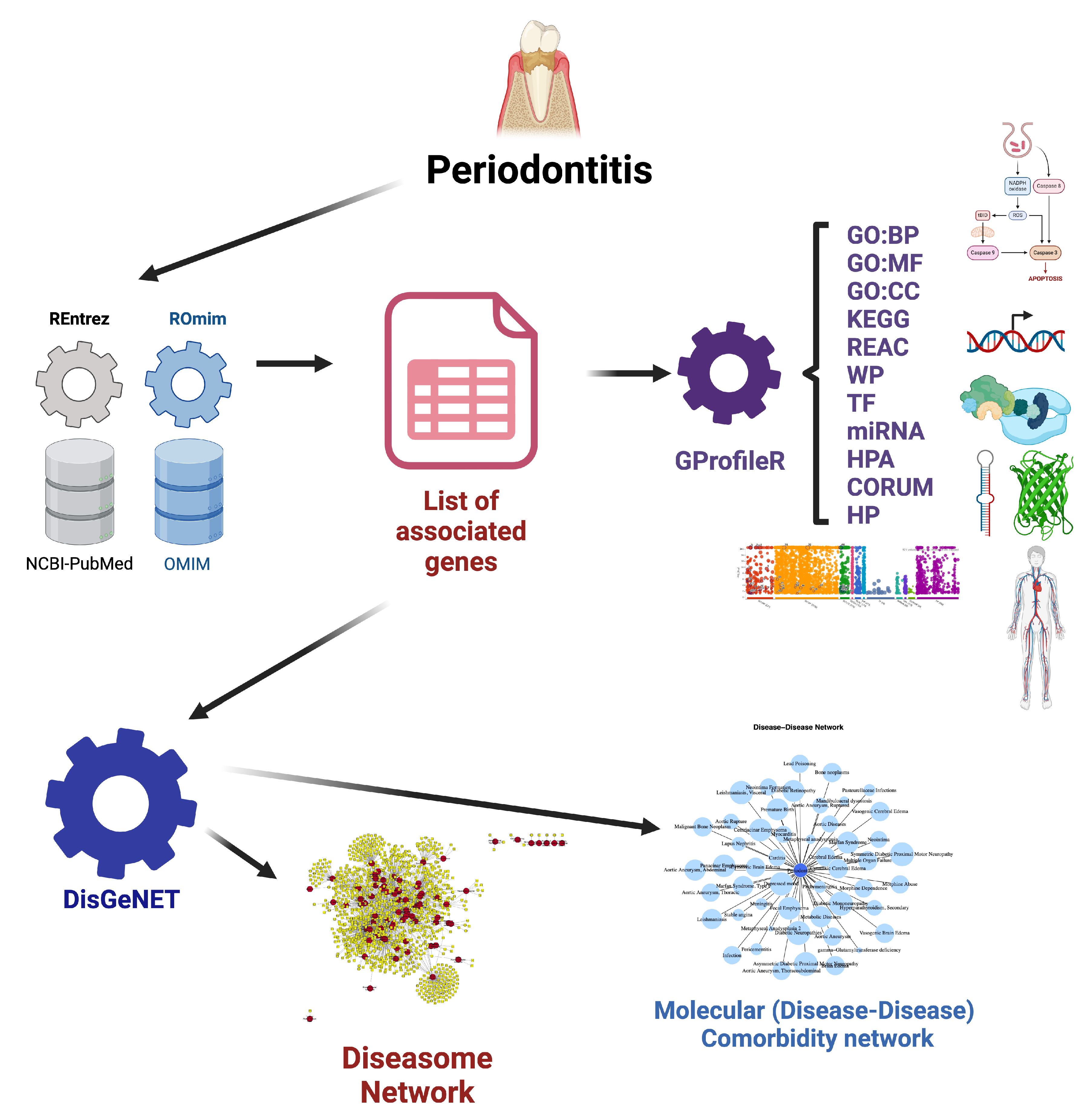
Figure 2.
A periodontitis centered molecular comorbidity network. Diseases sharing biomolecular players with Periodontitis are shown. Node sizes correspond to the Jaccard index (relative size of the intersection of the gene sets) with Periodontitis.
Figure 2.
A periodontitis centered molecular comorbidity network. Diseases sharing biomolecular players with Periodontitis are shown. Node sizes correspond to the Jaccard index (relative size of the intersection of the gene sets) with Periodontitis.
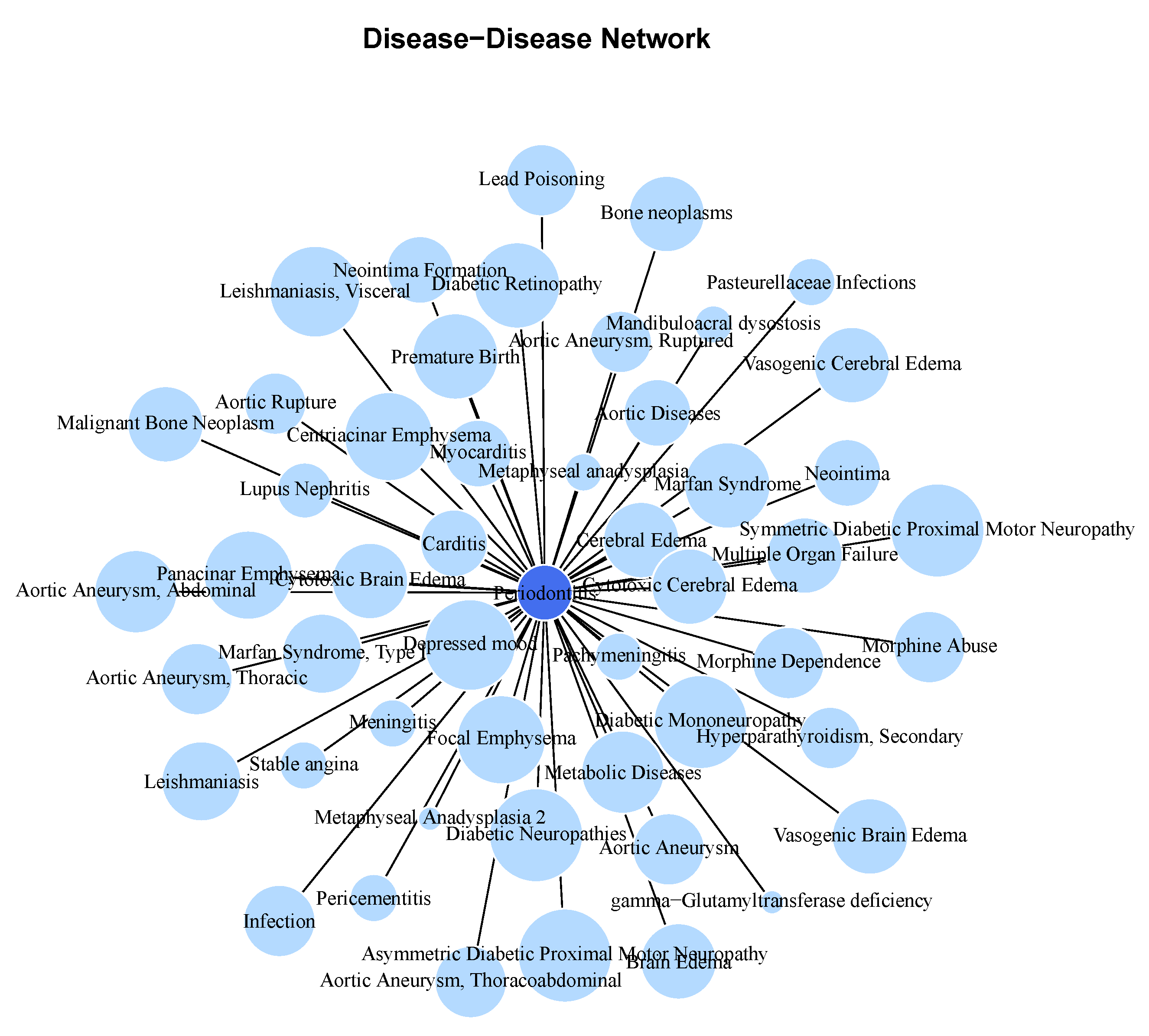
Figure 3.
Numbers of genes shared between Peridontities and its main comorbidities. Diseases are also tagged according with the relative size of their intersection as given by Jaccard indices.
Figure 3.
Numbers of genes shared between Peridontities and its main comorbidities. Diseases are also tagged according with the relative size of their intersection as given by Jaccard indices.
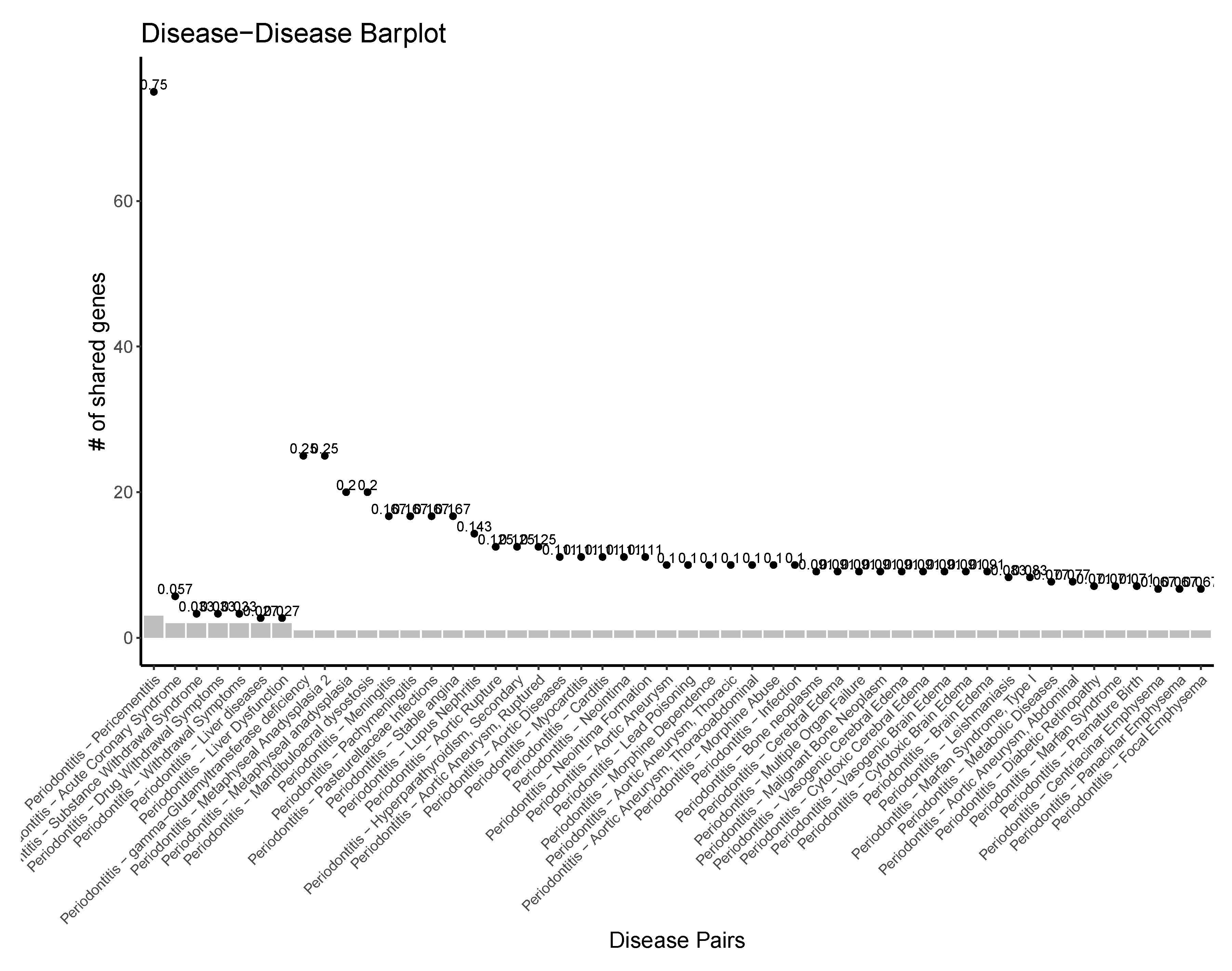
Figure 4.
Molecular Diseasome network depicting the interconnections created between periodontitis other diseases sharing common genetic associations. Red nodes correspond to the more significant health conditions associated with periodontitis. Yellow nodes correspond to the genes linked with each condition. This bipartite network consists in 80 disease-nodes, 1,197 gene-nodes and 2,212 genetic associations between them.
Figure 4.
Molecular Diseasome network depicting the interconnections created between periodontitis other diseases sharing common genetic associations. Red nodes correspond to the more significant health conditions associated with periodontitis. Yellow nodes correspond to the genes linked with each condition. This bipartite network consists in 80 disease-nodes, 1,197 gene-nodes and 2,212 genetic associations between them.
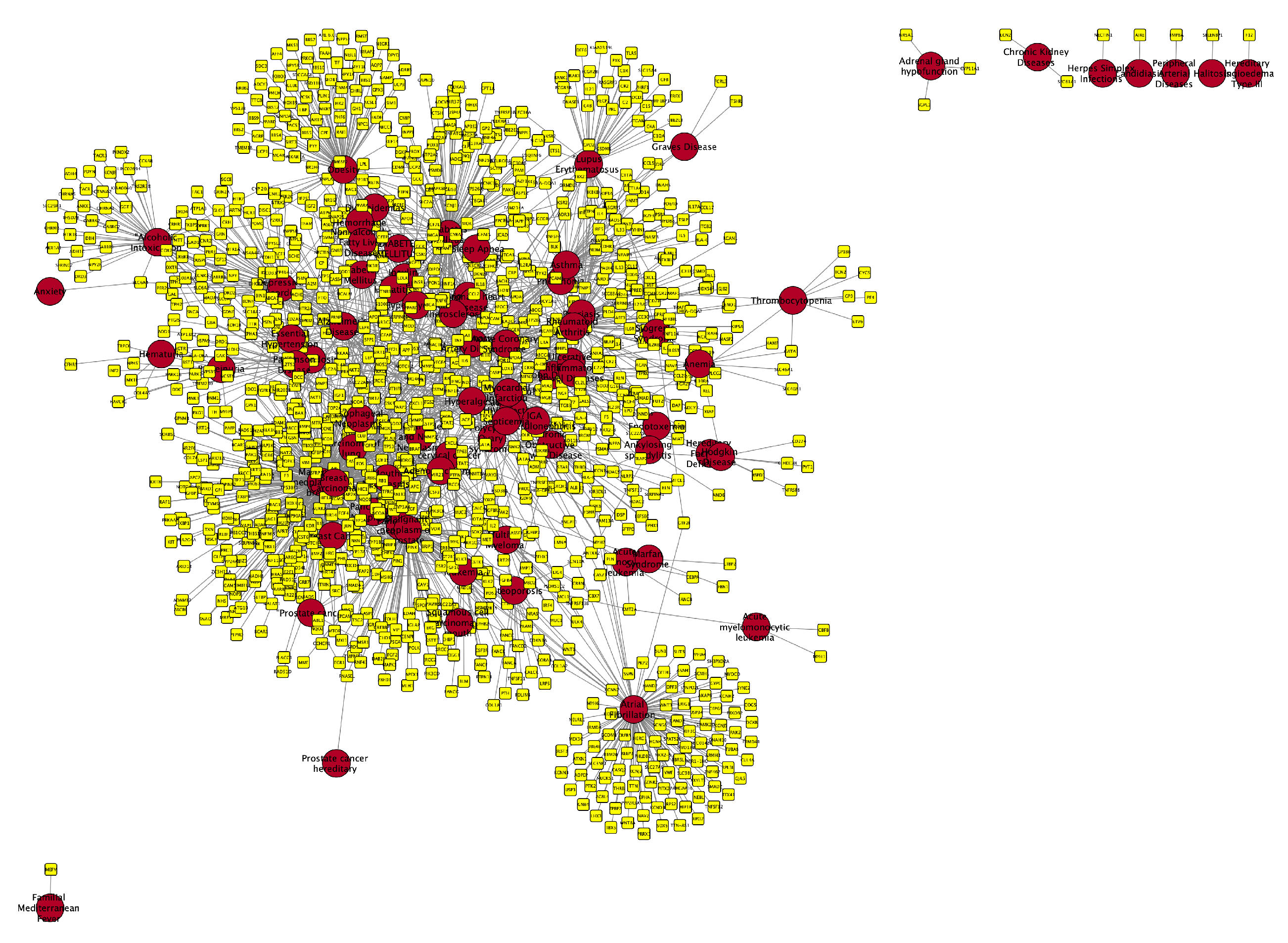
Figure 5.
Diseasome network depicting the interconnections between periodontitis and its significant related conditions in a comprehensive manner. It considers molecular associations between any pair of conditions with a comorbidity relationship with periodontitis.
Figure 5.
Diseasome network depicting the interconnections between periodontitis and its significant related conditions in a comprehensive manner. It considers molecular associations between any pair of conditions with a comorbidity relationship with periodontitis.
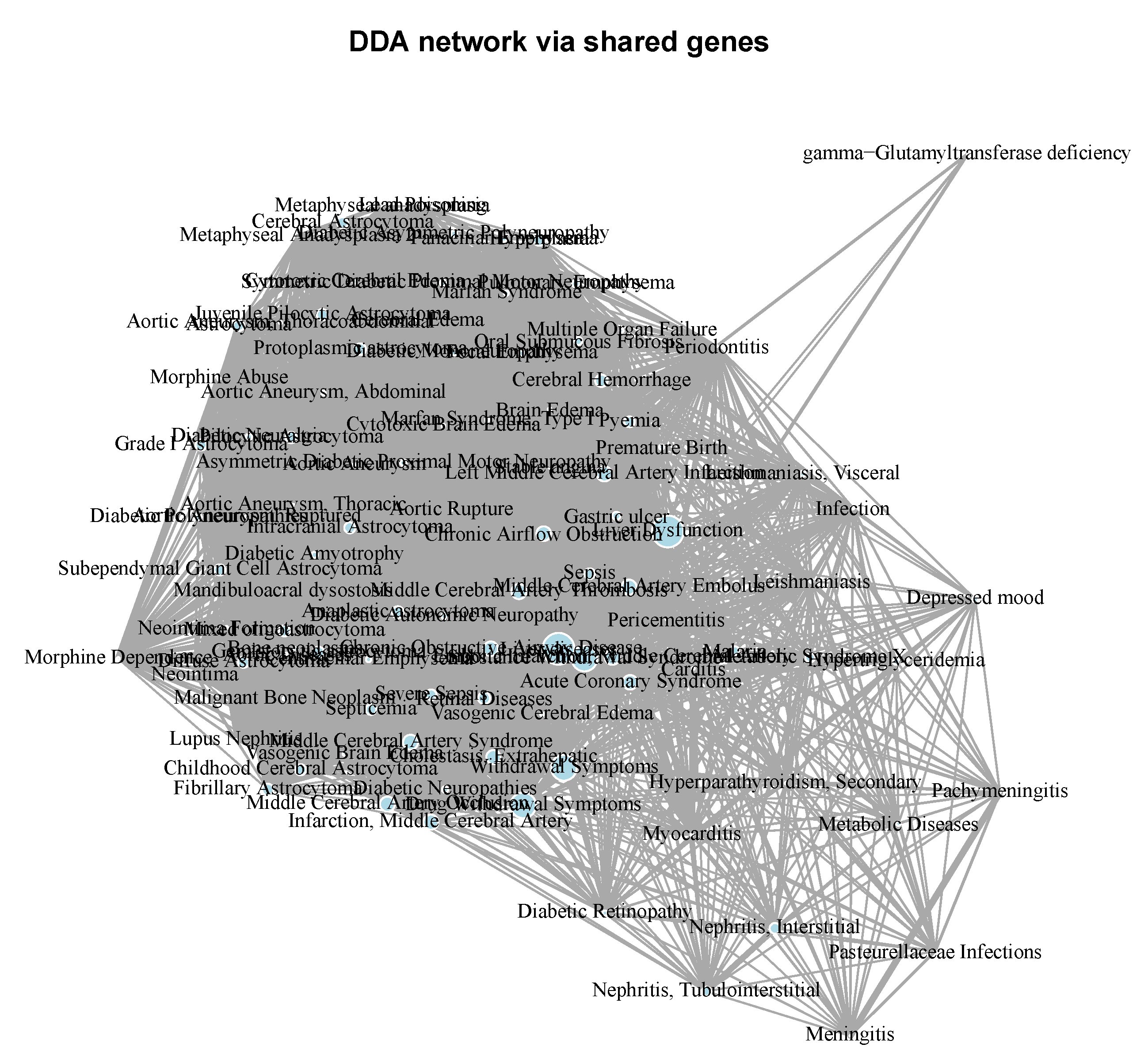
Figure 6.
Top significant genes in the gene-disease map projected from the Periodontitis associated diseasome.
Figure 6.
Top significant genes in the gene-disease map projected from the Periodontitis associated diseasome.
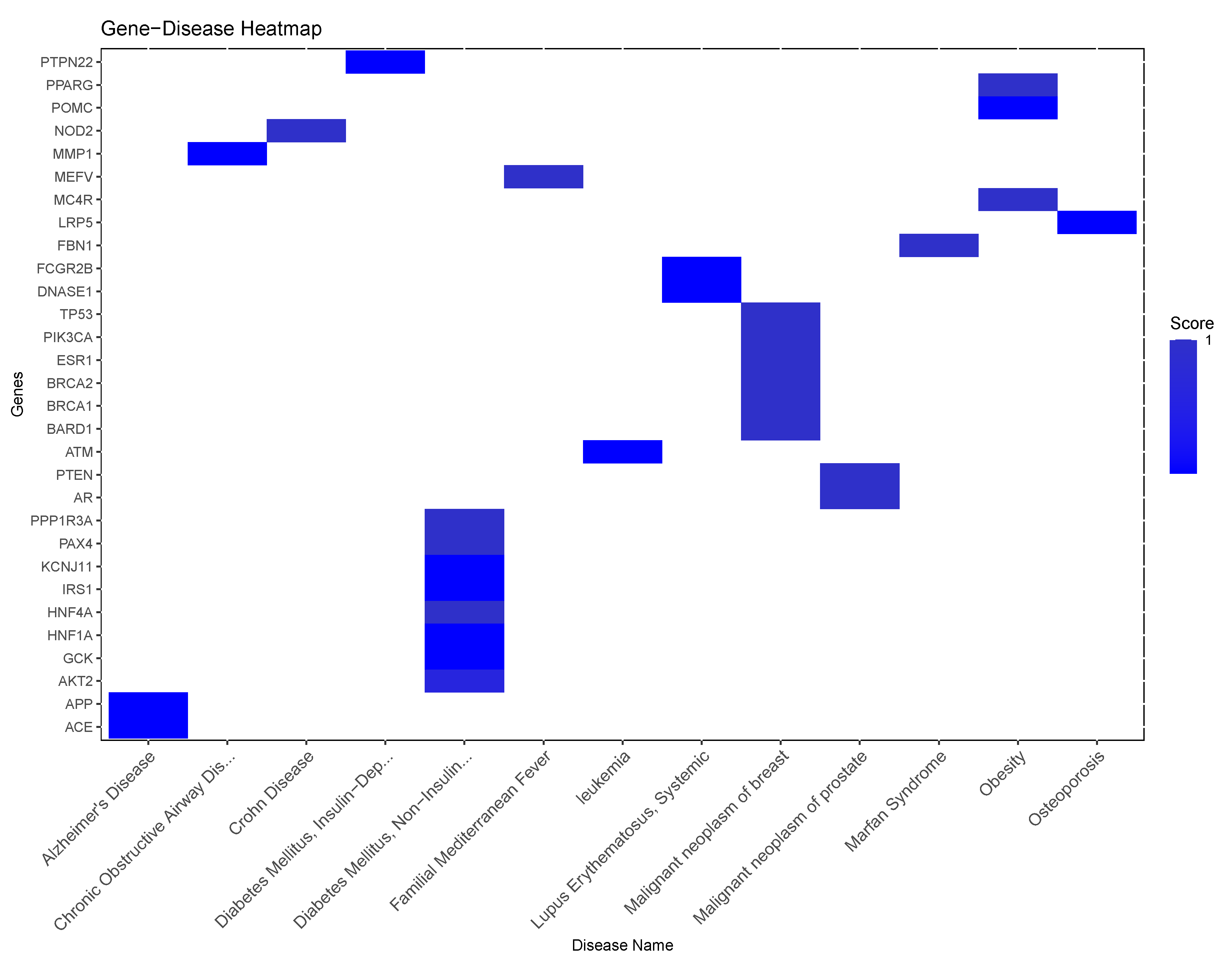
Figure 7.
Heatmap of protein classes for the genes in the Periodontitis associated diseasome.
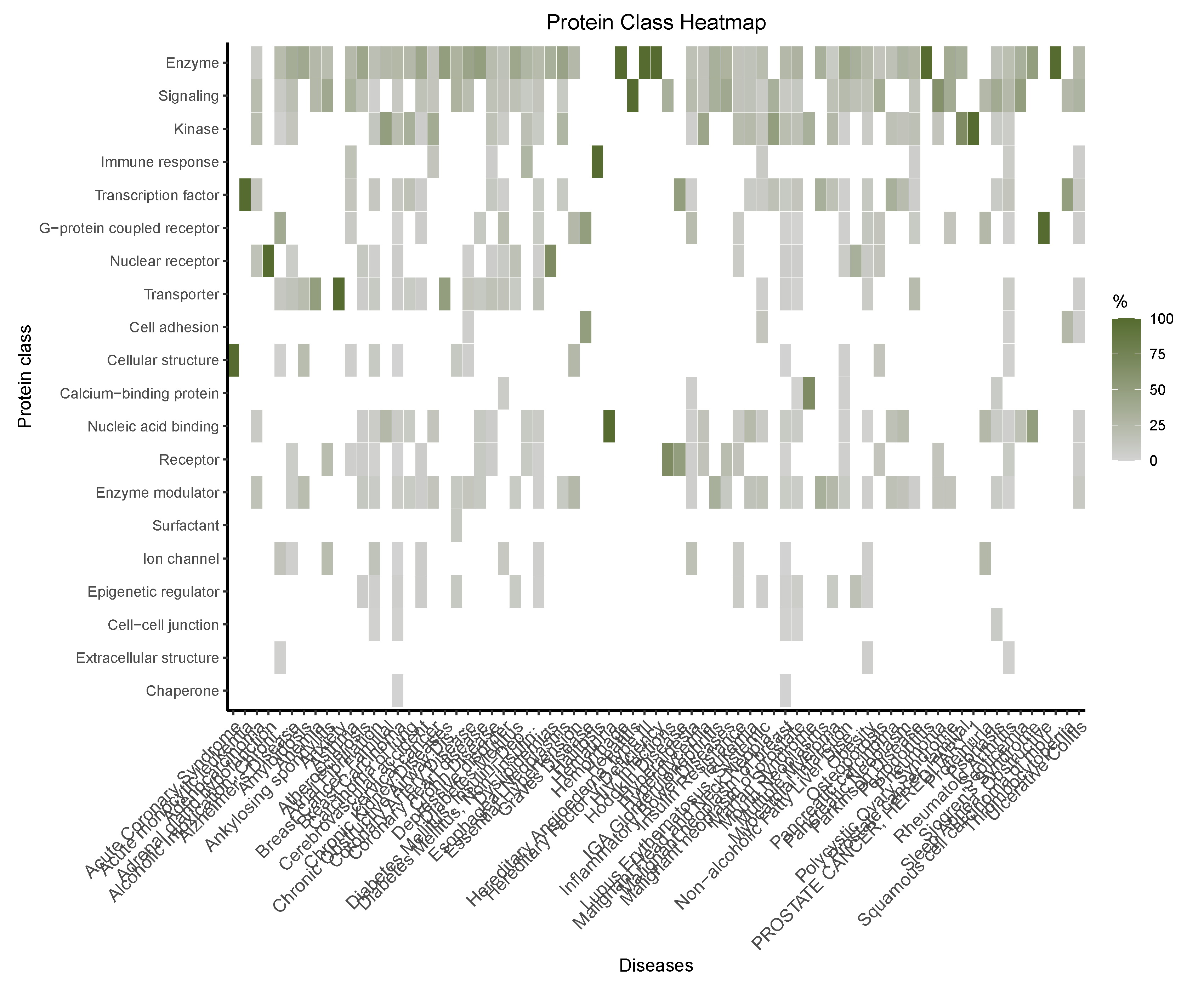
Figure 8.
Functional enrichment analysis (over-representation) of genes shared by periodontitis and its comorbidity-related diseases. Notice that g:SCS-corrected p-values less than are capped.
Figure 8.
Functional enrichment analysis (over-representation) of genes shared by periodontitis and its comorbidity-related diseases. Notice that g:SCS-corrected p-values less than are capped.
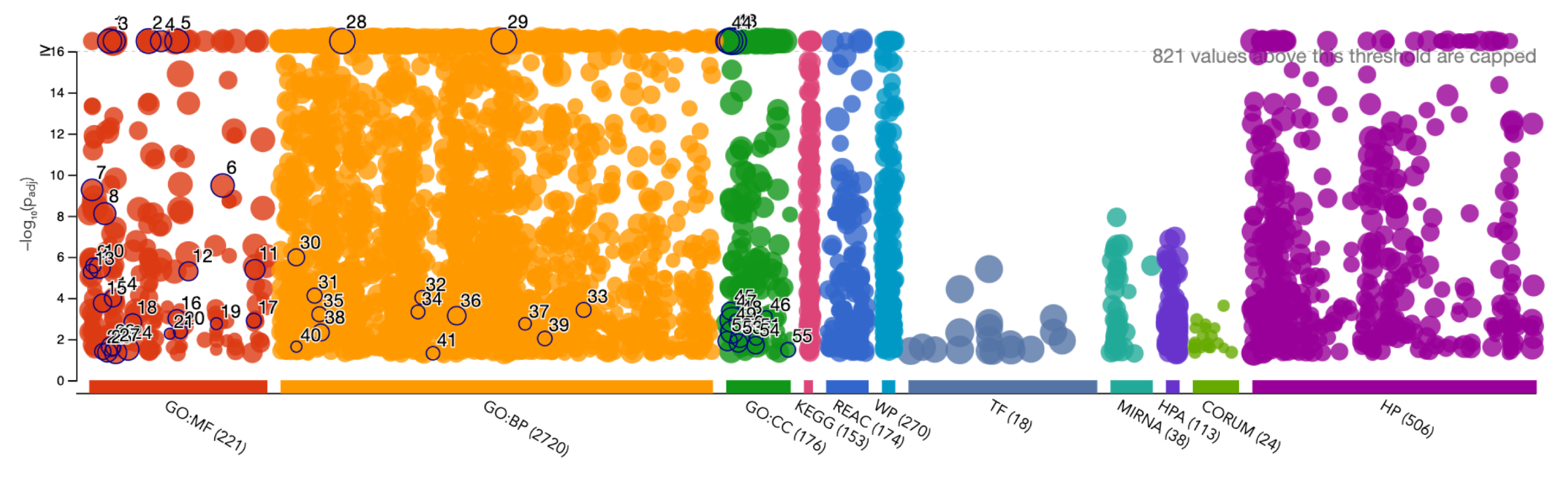
Disclaimer/Publisher’s Note: The statements, opinions and data contained in all publications are solely those of the individual author(s) and contributor(s) and not of MDPI and/or the editor(s). MDPI and/or the editor(s) disclaim responsibility for any injury to people or property resulting from any ideas, methods, instructions or products referred to in the content. |
© 2024 by the authors. Licensee MDPI, Basel, Switzerland. This article is an open access article distributed under the terms and conditions of the Creative Commons Attribution (CC BY) license (http://creativecommons.org/licenses/by/4.0/).
Copyright: This open access article is published under a Creative Commons CC BY 4.0 license, which permit the free download, distribution, and reuse, provided that the author and preprint are cited in any reuse.


