

Submitted:
16 July 2024
Posted:
16 July 2024
You are already at the latest version
Abstract
In central area of Liaoning province, the thermal performance of rural building envelopes are mostly non-standardized in Northern China, resulting in a significant heat loss. In this study, The objective was to propose some low-cost and energy-efficient solutions. Through a field of inves-tigations, heating energy consumption was saved by 20% and increased construction costs was less than 8000 RMB, which was acceptable for rural residents. In order to achieve this target, NSGA-II algorithm was integrated with Rhino+Grasshopper and EnergyPlus simulation kernel to establish a thermal performance optimization model for heat transfer of the rural building envelopes. Among the above Pareto optimal solutions, the recommended thickness of insulation layer for the room floors, ceilings, and external walls were 70mm, 50mm, and 40mm respectively. Furthermore, try to reduce the window to wall ratio as much as possible. Finally, based on the lower total cost, three technical solutions that rural residents could select according to their specific needs have been put forward.
Keywords:
Rural dwelling
; Building envelope
; Multi-objective optimization
; Building energy efficiency
1. Introduction
With rapid economic development and social progress, demand for a higher living standard among rural residents is constantly rising. However, traditional rural dwellings were constructed in an autonomous manner, posing challenging in ensuring the quality of the indoor environment and leading to high energy consumption. Most of the traditional rural dwellings in the Northeast were rural residents' self-built brick and concrete structures with poor thermal performance of the envelope [1], and the heat transfer coefficient of rural building envelopes exceeds the standard by 335% [2]. In addition, the long and low-temperature winters in the cold regions, the scattered living of rural residents for individual heating and high energy consumption, with an annual disposable per capital of 14,000 yuan was about half of that of urban residents [3]. Therefore, predicting construction cost, energy consumption, and indoor thermal environment in the early stage of building design is the key to improve the indoor environment in an energy-efficient yet economical way. Coley [4] intersected optimization algorithms with building creation in an interdisciplinary way to study low-energy building design methods in the Mediterranean. Ehsan [5] proposed a multi-objective optimization model to explore the optimal combination of building envelope under the dual objectives of residential economics and energy efficiency. In 2016, Yu Wei [6] applied the multi-objective optimization algorithm to create indoor environments in the Chongqing area. Zhu Li [7] employed Rhino-Grasshopper to construct three northern quadrangle dwelling models and combined them with the Octopus multi-objective optimization tool to optimize the energy consumption, lighting, and thermal comfort of the building comprehensively. Existing studies have demonstrated that multi-objective optimization methods hold promising potential for solving nonlinear coupled optimization problems under the action of multiple variables in buildings. Through comparative analysis, Zhu Dardan [8] found it was feasible to choose EnergyPlus as the computational core for the energy consumption simulation of agricultural buildings. Among them, the genetic algorithm (NSGA-II) exhibited advantages such as fast running speed and good convergence of the solution sets, making it one of the most popular multi-objective genetic algorithms.
In this study, the dual objectives of cost-effectiveness and low energy consumption were prioritized in the initial design of buildings, considering local climate, rural house structure, and rural residents' living habits. The NSGA-II algorithm was combined with Rhino+Grasshopper as the platform, and Ladybug+Honeybee was utilized to integrate the EnergyPlus simulation kernel as the objective function solver. This comprehensive approach enabled the establishment of an optimized heat transfer model for the rural building envelope structure. The study aims to address the practical needs of rural life, enhance the indoor living environment of rural dwellings, and reduce heating energy consumption, thereby contributing significantly to sustainable rural development.
2. Characteristics of rural building envelopes
2.1. Investigations and measurements
Based on a residential basic information survey questionnaire, a statistical analysis was primarily conducted on fundamental building details such as construction age, floor area, heating methods, etc. Furthermore, characteristics investigations of rural residences in severe cold Northeast region (Shenyang) have been carried out. Record photos for the process of investigations and measurements were shown in Table 1. Basic information such as building information, insulation types, and annual income was obtained and listed in Table 2.
As results listed in Table 2, the statistical results of the characteristics of rural dwellings in the surveyed area were described in the following five parts:
(1) Most traditional rural dwellings in the severe cold region of Northeast China were built between 2000 and 2010 (25%), while a considerable number of households (68%) still reside in old rural houses constructed from 1980 to 2000. There are relatively few newly constructed buildings after 2010 (7%). Most rural houses have a small number of functional rooms, including bedrooms, kitchens, and storage spaces, resulting in low space utilization.
(2) 68% of the rural houses had an area of 80-110m2, which could meet the daily living needs. To ensure adequate lighting, 90.5% of the rural houses face south. According to on-site visits, usually only the bedrooms and living rooms were heated.
(3) The thickness of exterior walls of all rural houses were 370mm. 86% of the exterior walls were not designed thermal insulation, while only 14% of them had implemented insulation measures. Additionally, the floors and roofs of these houses were generally not insulated.
(4) The proportion of dwellings which have set up vestibules or buffered film spaces (plastic greenhouses) is 52%, while 48% of dwellings instead opting to seal windows with plastic film. It could be seen that the thermal insulation effect of the indoor thermal environment in rural houses during winter was closely related to the construction of buffered film spaces.
(5) According to survey data, the average annual household income in rural areas was approximately 38,000 yuan, and the average per capita annual income was about 13,400 yuan, slightly lower than the per capita disposable income data of 17,000 yuan provided by the Liaoning Provincial Bureau of Statistics. This indicates that rural residents' income levels were relatively low. Therefore, economic factors were an important consideration when evaluating dwellings' willingness to renovate their rural houses.
The central area of Liaoning, belongs to the severe cold region in building thermal engineering zoning, with annual sunshine hours surpassing 3000 hours and total solar radiation ranging between 5020 and 6280 MJ/m² [8]. Focusing on rural houses in the central area of Liaoning, this study conducted comprehensive tests to determine typical thermal parameters. These tests encompassed measurements of wall surface temperatures, indoor and outdoor temperatures and humidity, heating equipment surface temperatures (e.g., Kang and earth heating), and heat flow density of a typical dwelling in Shenyang during January 2019 and January 2020. The key test parameters and instruments used are outlined in Table 3, All measurements are based on the national standards of Reference 9-11.
2.2. Heat Transfer Characteristics of Kang-Heated Dwelling
The formula for calculating the heat consumption index of rural dwellings is as follows:
where, qH is the heat consumption index of the building, W/m2; qHT is the heat transfer through the building envelope per unit time per unit area, W/m2; qINF is the Heat loss caused by cold air infiltration, W/m2; qIH is the heat gain inside the building per unit time per unit area, W/m2.
The typical heating method for rural houses involved either heated Kang or in combination with soil heating, and the main heat transfer methods were radiation and convection heat transfer. The heat exchange area on the surface of the Kang was about 4m2, and the dynamic changes in the inner surface of each enclosure structure and the temperature of the Kang surface of the dwelling were shown in Figure 1. It could be seen that the temperature of the ceiling, sloping roof, and east wall were relatively high.
To identify the heat transfer of building envelopes in the Kang heating room, the process of heat transfer has been calculated. During the testing, the Kang body generated approximately 201 kW/m² of total heat, with 83% transferred via radiation and 17% via convection into the room. The radiation heat transfer between the Kang surface and the inner wall surface has also been calculated using Formula (2).
where, σb is the blackbody radiation coefficient, W/(m2·K4); ɛ is the emissivity of the heated ground; ɛi is the emissivity of the surface, with a value of 0.95 for concrete floors and interior wall plastering; Fi is the angle coefficient of the i-th surface facing the heating ground; Ai is the surface area, m2; Td is the surface temperature of the heating floor, ℃; Tw, i is the surface temperature of the wall, ℃.
By integrating the measured data from dwelling I and II with test data from dwelling III [12], the relative distribution of radiant heat to the interior wall surfaces of the heating room was determined. As shown in Figure 2, it reveals that the roof exhibited the most significant radiant heat exchange, followed by the inner and outer walls in direct contact with the Kang. These two building envelopes primarily influence the indoor thermal comfort and energy consumption of Kang-heated rural dwellings, thus thermal performance optimization of building envelope should be studied.
3. Multi-Objective Optimization Model
3.1. Calculation Process
The NSGA-II algorithm, operating on the Rhino+Grasshopper platform, served as the search engine for solutions. The Ladybug+Honeybee visualization environment analysis plug-in, coupled with the EnergyPlus energy consumption simulation software, functioned as a multi-objective function solver, converting decision variables into fitness values. This setup enabled the establishment of an optimization model for the envelope structure heat transfer in rural houses, as depicted in Figure 3. To establish this model, a benchmark rural house model was first created to determine the decision variables and their corresponding constraints. Through N generations of genetic operation optimization calculations, a non-dominated solution set for the design scheme was ultimately obtained. This solution set considers the optimal thickness range for the envelope structure's insulation layer, balancing economic considerations, energy consumption, and thermal comfort.
3.2. Model Establishment
3.2.1. Objective Function
This paper focused on solving the optimization of heating energy consumption. By reviewing relevant standards, it was found that both the Ministry of Housing and Urban-Rural Development of the People's Republic of China (JGJ 26-2018) [13] and ISO 52016-1: 2017[14] recommend using the dynamic calculation method of building energy consumption to obtain the annual heating energy density as an index for evaluating building energy consumption. The economic evaluation used the envelope cost as the optimization objective. The specific building optimization objective function was as follows.
(1) Annual heating energy consumption density
The factors influencing the indoor thermal environment in rural residential areas mainly include indoor and outdoor air temperature, heat transfer characteristics of enclosure structures, and air exchange frequency. Considering that the frequency of indoor air exchange in winter was difficult to control in architectural design, the main focus was on exploring the thermal performance of the enclosure structure.
The average annual heating energy consumption density was calculated using formula (3). The lower the value, the better the energy-saving effect of rural houses.
where,is the vector of decision variables, given in the next section, N is heating period days, Qh is Heating load in heating period, ti is indoor calculated temperature during heating period, ta is average outdoor temperature during heating period, to.h is calculated outdoor temperature for heating, HEC is the annual average heating energy consumption density indicator, which means the annual heating energy consumption per unit area.
(2) Building envelope cost
The building envelope cost (BEC) index indicates the cost of wall, roof, and floor insulation in yuan. The calculation formula is as follows:
where Cw, Cn, Croof, and Cfloor respectively represent the cost of external walls, inner and outer walls in contact with the heated Kang, suspended ceilings, and ground insulation materials, in yuan. In this study, the extruded polystyrene foam insulation board (XPS board) was taken as an example to optimize the design. Its thermal conductivity is 0.030W/m·K, and the market price is 380 yuan/m3.
3.2.2. Decision Variable
Utilizing the EnergyPlus simulation software, as illustrated in Figure 4, the effect of variations in thermal performance parameters of the building envelope on energy consumption in rural houses was analyzed. The results indicate that incorporating insulation layers in the walls, ceilings, and floors of the benchmark rural house led to a reduction in heating energy consumption ranging from 0 to 30%. Notably, floor insulation exhibited the most significant impact, followed by insulation on the ceiling and exterior wall of the heated room. Furthermore, as the thickness of the insulation layer increased, the residential heating energy consumption decreased, translating to a higher overall energy saving rate. Specifically, when the insulation layer thickness varied between 0 and 100mm, the energy-saving effect was most significant. However, for thicknesses between 100mm and 200mm, the reduction in energy consumption was approximately 5%. Additionally, once the insulation layer thickness exceeded 200mm, the annual heating energy consumption and energy saving rate remained largely unchanged, suggesting that further increments in insulation do not significantly contribute to energy reduction in rural houses. Based on these findings, nine parameters were selected as decision variables, including varying insulation layer thicknesses and north-south window-to-wall ratios in rural houses. XPS board was chosen as the insulation material, with the thickness of the insulation layer serving as a variable in the optimization process.
3.2.3. Constraint Condition
(1) Thermal neutral operating temperature
According to the regression analysis of 213 survey results in rural areas of Liaozhong, a significant correlation was found between the operating temperature and MTS voting (F=2.533, P=0.001<0.01). The fitting result of MTS voting and operating temperature to was depicted in Figure 5, yielding the regression equation: MTS= 0.214 to-3.722 (R2=0.705), indicting in a thermally neutral operating temperature of 17.4℃. By setting MTS= [-0.5, 0.5], a 90% acceptable temperature range of [15.0℃, 18.1℃] was derived. This study adopted 17.4℃ as the target value [15].
(2) Thickness of insulation layer
As the energy-saving effect was not linearly improved when the thickness of the insulation layer was infinitely increased, the range of simulation parameters should be limited. As shown in Figure 4, the energy-saving effect experienced a significant increase when the thickness of the insulation layer varies between 1mm and 100mm. Consequently, for the purpose of optimization, the range of variation for each decision variable was set as between 1mm and 100mm. Table 4 summarized the decision variables and their respective parameter values. Each decision variable had its own constraints. In this study, the thickness of the insulation layer on the exterior wall, ceiling, and ground was limited to values between 0 and 100mm, while the window-wall ratio was constrained by the practical values commonly found in rural houses, specifically 0.45 on the south side and 0.30 on the north side.
3.2.4. Mathematical Model
Based on the aforementioned analysis, a mathematical model was established with the structure of the envelope of the heating rural residence serving as the decision variable, the economy and energy consumption as the optimization objectives, and the limit value of the heat transfer coefficient of the envelope given in the specification as the limiting condition. The specific mathematical expression of rural housing objective optimization was as follows:
where the total cost of construction and renovation and the total heating energy consumption are chosen as the objective functions in this study, and the objective function, is the construction cost, is the heating energy consumption value;is the decision vector, n is the number of decision variables, n = 9 in this study; m andare the number of inequality constraints and their vectors, each decision variable has its constraint, m = 9. X and S denote the feasible decision and criterion space, respectively.
3.3. Boundary Condition
The 3D modeling of the dwelling was conducted using Rhino software, combining with measured data and relevant references to determine the thermal parameters of the enclosure structure, heating equipment parameters, ground temperature conditions, and initial conditions for the heated dwelling with Kang.
(1) Thermal parameters of the enclosure structure
The common practice for the exterior walls of rural houses was a non-insulated "three-seven wall" with the main material being sintered clay bricks with a heat transfer coefficient of 1.53W/(m2·K). The exterior windows were ordinary 3mm single-glazed windows with a heat transfer coefficient of 5.8W/(m2·K). The window-to-wall ratio on the south side was 50%, while that on the north side was 30%. There were no exterior windows on the east and west sides. Combining the calculation method given in literature [16], taking CO2 as a tracer gas, the ventilation rate of the heated room with a Kang was calculated to be 1.6 times/h.
(2) Indoor condition setting
Based on the heat loss path of the reference fireplace, the radiation heat dissipation ratio of the fireplace was set to 0.83, while for the radiator, it was set to 0.45[17]. Additionally, based on the research results, the heating schedule and personnel presence in the main functional rooms had been determined, as shown in Table 5.
(3) Ground temperature
The average ground temperature data from November to March in Shenyang rural dwelling was measured as the ground temperature design data for this study, listed in Table 6.
In order to enhance the convergence and computational efficiency of NSGA-II algorithm, the values of population size, crossover probability, and mutation probability were listed in Table 7 respectively.
3.4. Verification of Model Accuracy
To verify the accuracy of the model, an energy consumption comparison was conducted on the initial building model. The calculated annual average heating energy density of the building was 242 kWh/(m2·a). When converted to standard coal, it amounted to 2.4t/a, which was similar to the standard coal consumption of 2.1t/a for northern rural houses with combined heating by suspended heated Kang and earthen heating [18], proving the credibility of the calculation results. At the same time, Simultaneously referring to the two evaluation indicators provided by ASHRAE14-2014: Normalized Mean Deviation Error (NMBE) and Coefficient of Variation (CVRMSE) of Root Mean Square Error, the expressions were shown in formulas (6) and (7) for validation, the NMBE and CVRMSE calculation results were 3.4% and 29.8%, respectively, both within the range required by ASHRAE14-2014 specifications (NMBE within 10%, CVRMSE within 30%), indicating that the established rural house model had a certain level of accuracy and could be used for subsequent discussion and calculation. The discrepancy in the results was attributed to the selection of a higher outdoor air temperature than the actual outdoor air temperature, leading to a lower simulation value of unit time heat consumption in the afternoon period.
4. Analysis of Results
4.1. Verification of Model Accuracy
After 200 iterations, the results converged, yielding a total of 20,100 feasible solutions, including 200 Pareto-optimal solutions. Figure 6 illustrated the distribution of the optimization calculation population and the Pareto-optimal solutions, considering the dual objectives of economic efficiency and energy consumption. The initial design scheme had an average annual heating energy consumption density ranging from 100 to 220 kWh/(m2·a), while the final generation of buildings had an average annual heating energy consumption density ranging from 180 to 230 kWh/(m2·a), indicating a maximum reduction of 22% in building energy consumption. The total cost of the rural housing reconstruction amounted to 8,000 yuan, which was lower than the annual disposable income of rural residents, making it economically feasible.
Figure 7 illustrated the threshold distribution of the insulation layer of the envelope structure in the case of Pareto-optimal solutions, where the thickness of the insulation layer was ranked from high to low as follows: bedroom and living room floor(70mm), ceiling(50mm), exterior wall(40mm), and the remaining rooms' floor, exterior wall (30mm, 20mm). These areas should be prioritized for insulation.
4.1. Preferred Solution
The comprehensive optimal solution set was grouped into three categories of technology templates based on cost, allowing rural residents to select the optimal design solution according to their needs. Figure 8 illustrates the Pareto-optimal solutions and the three types of envelope threshold energy-saving technology grouping.
(1) Economically optimal energy-saving technology. The Pareto-optimal solution with the transformation cost lower than 2000 yuan is selected, as shown in Figure 8(a). In this case, the insulation is concentrated in the bedroom-living room floor and the bedroom-living room ceiling, with average thickness of 40 mm and 10 mm, indicating that the insulating this area, yields a better energy-saving effects and higher economy benefits. Rural residents should give priority to the renovation of this area when upgrading their farm houses. Compared to the reference building, the energy-saving rate is within 10%, making it a more economically viable technology within the calculation cycle.
(2) Assessing the optimal energy saving technology. The Pareto-optimal solution with retrofit costs ranging from 2000 to 6000 yuan is selected, as shown in Figure 8(b). In this case, the thickness of the insulation layer is prioritized for the bedroom living room floor, ceiling, external wall, followed by the remaining room floor external wall, with thickness of 90mm, 60mm, 50mm, 20mm, 10mm, respectively. Given limited funds, rural residents focus on retrofitting the bedroom living room exterior envelope insulation of their rural dwellings yield better results. Furthermore, compared to the reference building, the energy-saving rate is 10%~18%, which is the technical template that weighs the energy saving effect and economy.
(3) Optimal technology for energy saving effect. The Pareto-optimal solution with the retrofit costs exceeding 6000 yuan is selected, as shown in Figure 8(c). In this scenario, where the exterior envelope insulation of the bedroom-living room is already well-insulated, additional insulation is added to the ground, exterior walls, and ceiling of other rooms, with average thicknesses of 90 mm, 80 mm, and 30 mm, respectively. Furthermore, additional interior wall insulation can be considered. Compared with the reference building, the energy saving rate is more than 20%, but the cost increment is also the highest.
5. Conclusions
In this paper, a multi-objective optimization technology process that considers both energy consumption and cost control is constructed based on the characteristics of rural houses in cold regions and the application of energy-saving technologies. An example of a rural house in Liaozhong area is employed for application and analysis, leading to the following conclusions:
(1) In Kang-heated rural dwellings, ceiling, internal walls, and external walls directly in contact with the Kang exhibit the highest radiation heat losses, ranging from 30% to 38%, 26% to 30% and 17% to 22%, respectively. This indicates that insulation measures must be added in these areas.
(2) The average annual heating energy consumption density of buildings corresponding to the optimal solution set for low-cost and low-energy consumption ranges from 180 and 230 kWh/(m2·a), resulting in a potential reduction in building energy consumption of up to 22%. The total cost of energy-saving renovations for rural houses can reach up to 8,000 yuan, which is lower than the annual disposable income of rural residents, rendering economically feasible.
(3) By employing multi-objective optimization algorithms, a Pareto-optimal solution was obtained with a cost ranging from 2,000 to 6,000 yuan and an energy saving rate from 10% to18%. In this case, the prioritized insulation areas include floor, ceiling, and exterior wall, with optimal insulation layer thicknesses of 90mm, 60mm, and 50mm respectively in a Kang-heated room. A range of optimal solution sets comprising three types of schemes was provided, offering rural residents various options for renovation optimization.
Author Contributions
X.Z. and X.Z. designed the study, X.Z. conducted the data analyses and wrote the first draft of the manuscript, B.C., JOE.Z., J.S., J.Z., B.W. and J.Z. contributed to the discussion and revisions.
Funding
This research was funded by X.Z., grant number No. 52078098, No. 51608092 and No. 2018YFDll00701-2.
Acknowledgments
This work was supported by National Nature Science Foundation of China (No. 52078098 and No. 51608092), and National Key point Research and Invention Program of the Thirteenth (No. 2018YFDll00701-2). The authors would like to thank the survey participants to carry out this research.
Conflicts of Interest
The authors declare no conflict of interest.
References
- Jiang, Y.; Peng, C. , Shan, H. Classification of building energy consumption in China. Construction Science and Technology 2015, 19, 22–26. [Google Scholar]
- Liu, K.C. Energy consumption testing and analysis of existing brick residential envelope in severe cold regions. Petroleum and Petrochemical Energy Conservation, 2013, 3, 18–19. [Google Scholar]
- Wang, H.W.; Chen, S.; Guo, J.X. A study on the current situation and influencing factors of farm household income. Cooperative Economics and Technology, 2020, 24, 54–56. [Google Scholar]
- David, A. Coleya, Stefan, Schukatb. Low-energy design: combining computer-based optimisation and human judgement[J]. Building and environment, 2002, 37, 1241–1247. [Google Scholar]
- Ehsan Asadi, Manuel Gameiro da Silva,Carlos Henggeler Antunes, et al. Multi-objective optimization for building retrofit strategies: A model and an application[J]. Energy and Buildings, 2012, 44, 81–87.
- Yu, W.; Wang, D.; Li, B.Z. A multi-objective design approach for the creation of low energy consumption in indoor thermal environment of residential buildings. Civil Architecture and Environmental Engineering, 2016, 38, 13–19. [Google Scholar]
- ZHUL; WANGB; SUNY Multi-objective optimization for energy consumption, daylighting and thermal comfort performance of rural tourism buildings in north China[J]. BUILDING AND ENVIRONMENT, 2020, 176, 106841. [CrossRef]
- Zhu, D.D.; Yan, D.; Wang, B.; Hong, T.Z. Comparison of building energy simulation software: DeST, EnergyPlus and DOE-2[J]. Building Science, 2012, 28, 213–222. [Google Scholar]
- Ministry of Housing and Urban-Rural Development of the People's Republic of China. GB/T 50785-2012. Evaluation standard for indoor thermal environment in civil buildings. Beijing: China Construction Industry Press, 2012.
- General Administration of Quality Supervision, Inspection and Quarantine of the People& Republic of China. GB/T 15405-2006. Thermal specifications and testing method for passive solar houses. Beijing: China Construction Industry Press, 2006.
- Ministry of Housing and Urban-Rural Development of the People's Republic of China. JGJ/T 358-2015. Technical specification for rural Kang system. Beijing: China Construction Industry Press, 2015.
- Fan, X.Y.; Chen, B.; Zhang, X.Y. Field study on heat transfer and pollutant diffusion paths characteristics of overall rural houses based on stove Kang in northern china [J]. Building Science, 2019, 35, 9–15. [Google Scholar]
- Ministry of Housing and Urban-Rural Development of the People's Republic of China. JGJ 26-2018. Energy-saving design standards for residential buildings in severe cold and cold regions [S]. Beijing: China Construction Industry Press, 2019.
- SC I T. ISO 52016-1:2017.. Energy performance of buildings - Energy needs for heating and cooling, internal temperatures and sensible and latent heat loads - Part 1: Calculation procedures [S], 2017.
- Zhao, J.Y. Research on the Low-Cost Energy-Effcient Optimization of Rural House in Central Liaoning to Meet Indoor Thermal Requirements, 2021.
- Qi, M.W. Discussion on Measuring Ventilation Rates of Dorms through Tracer Gas Method with Human Body as CO Release Source [J]. Building Science, 2013, 29, 50–57. [Google Scholar]
- Zhang, X.; Chen, W.-L.; Yu, W.-J.; Ma, Y.-X.; Yang, R.-Q. Experimental study of radiation-convection heat release ratio of commonly used heating radiators. 1994, HVAC (06).
- Jin, X.; Tan, Y.F.; Yu, K.C. Test and analysis of the thermal performance of combined elevated Kang and radiator heating system in northern rural areas. [J]. Journal of Harbin Institute of Technology. 2019, 51, 179–186. [Google Scholar]
Figure 1.
Temperature dynamics ((a) Dwelling I (b) Dwelling II).
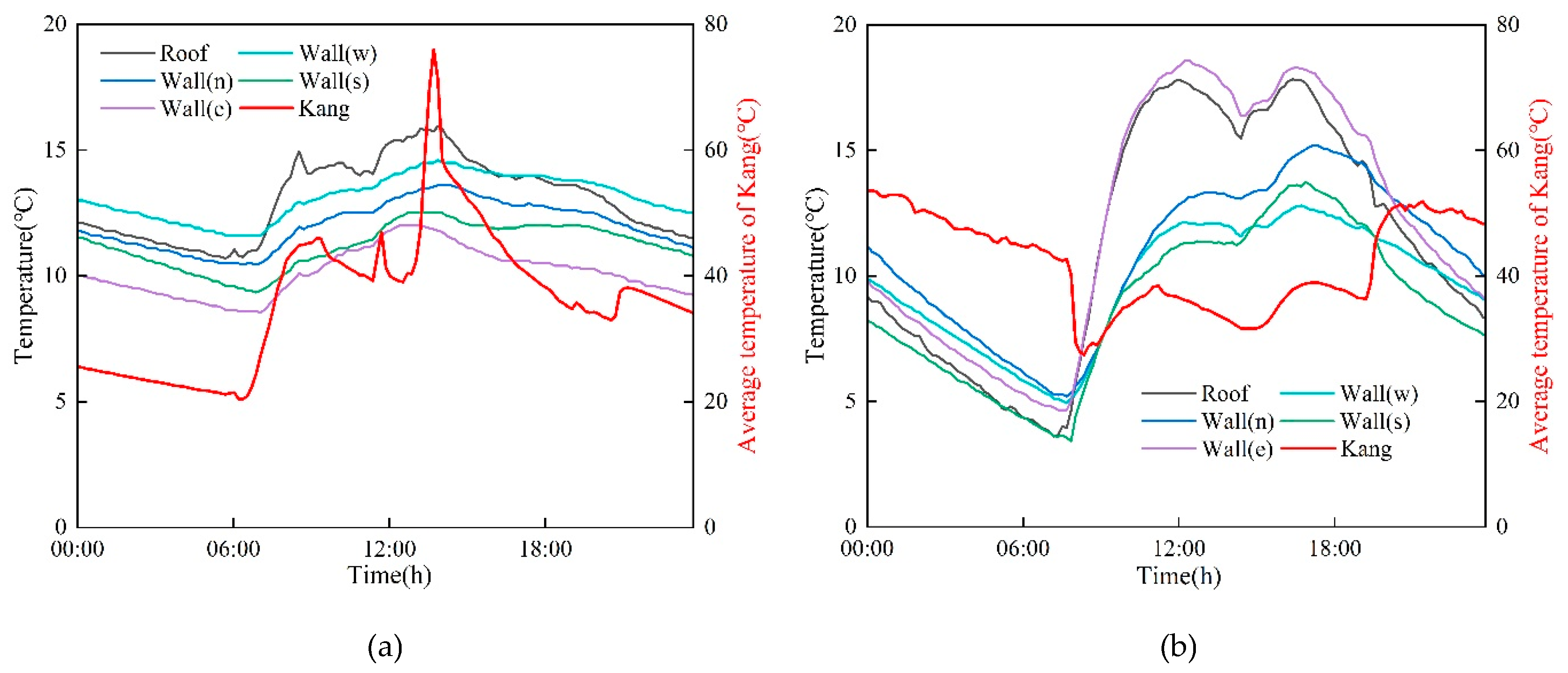
Figure 2.
Comparison of radiant heat exchange on each enclosure surface of the heating room((a) Heat exchange proportion through each wall in different measured rural dwellings (b) Proportion of heat loss from radiant heat exchange on the surface of building envelope).
Figure 2.
Comparison of radiant heat exchange on each enclosure surface of the heating room((a) Heat exchange proportion through each wall in different measured rural dwellings (b) Proportion of heat loss from radiant heat exchange on the surface of building envelope).
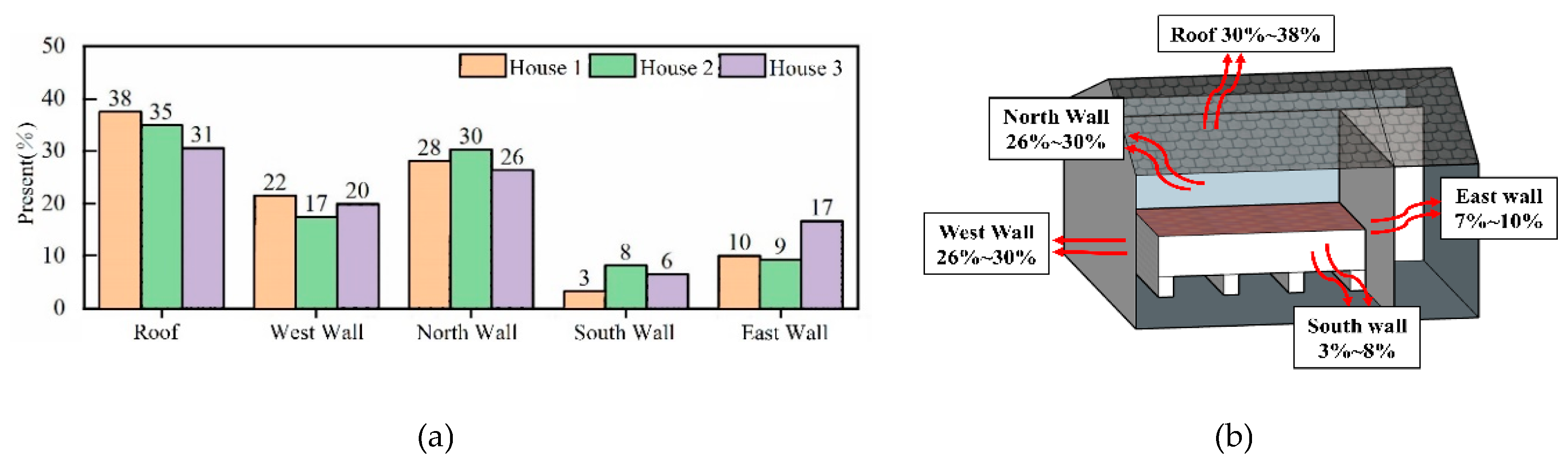
Figure 3.
Optimization process of energy consumption and economic rural housing.
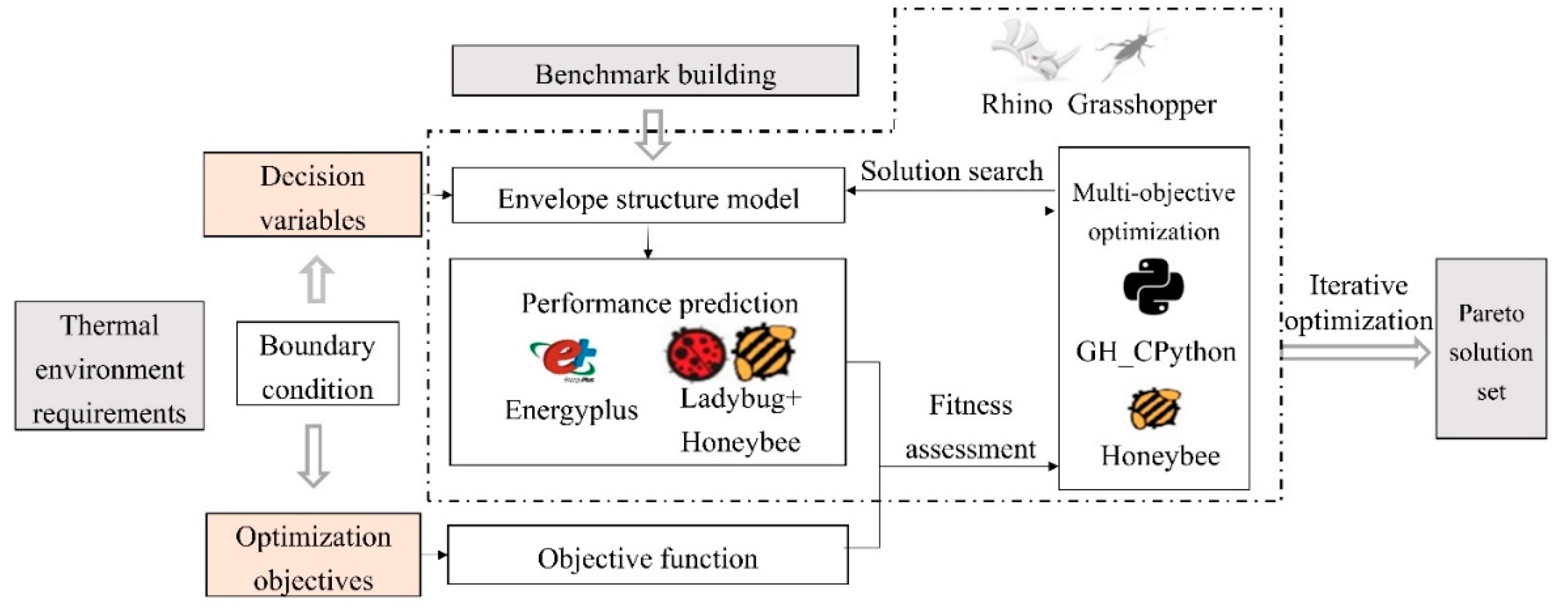
Figure 4.
Effects of insulation thickness on annual energy consumption and energy saving rate ((a) Annual heating energy consumption (b) Energy saving rate).
Figure 4.
Effects of insulation thickness on annual energy consumption and energy saving rate ((a) Annual heating energy consumption (b) Energy saving rate).
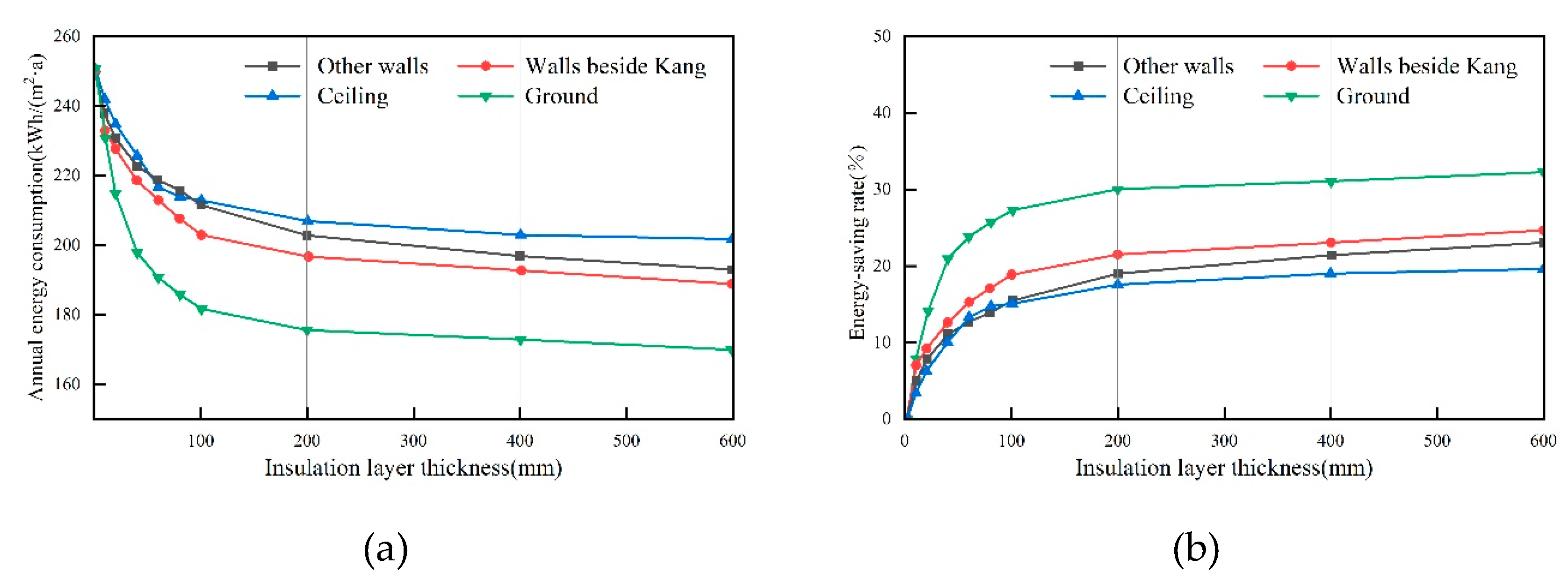
Figure 5.
Thermal neutral operating temperature.
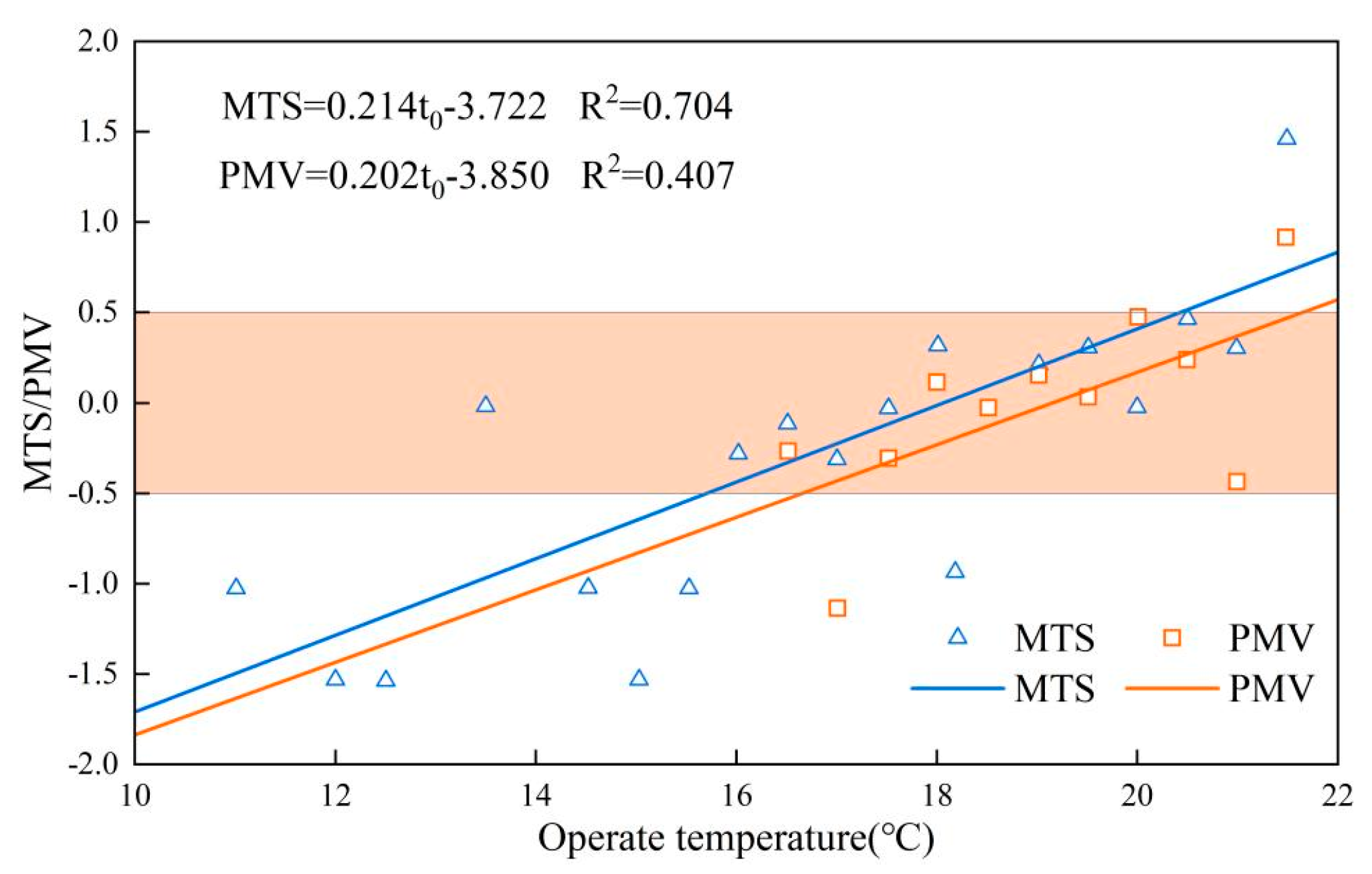
Figure 6.
The results of multi-objective optimization.
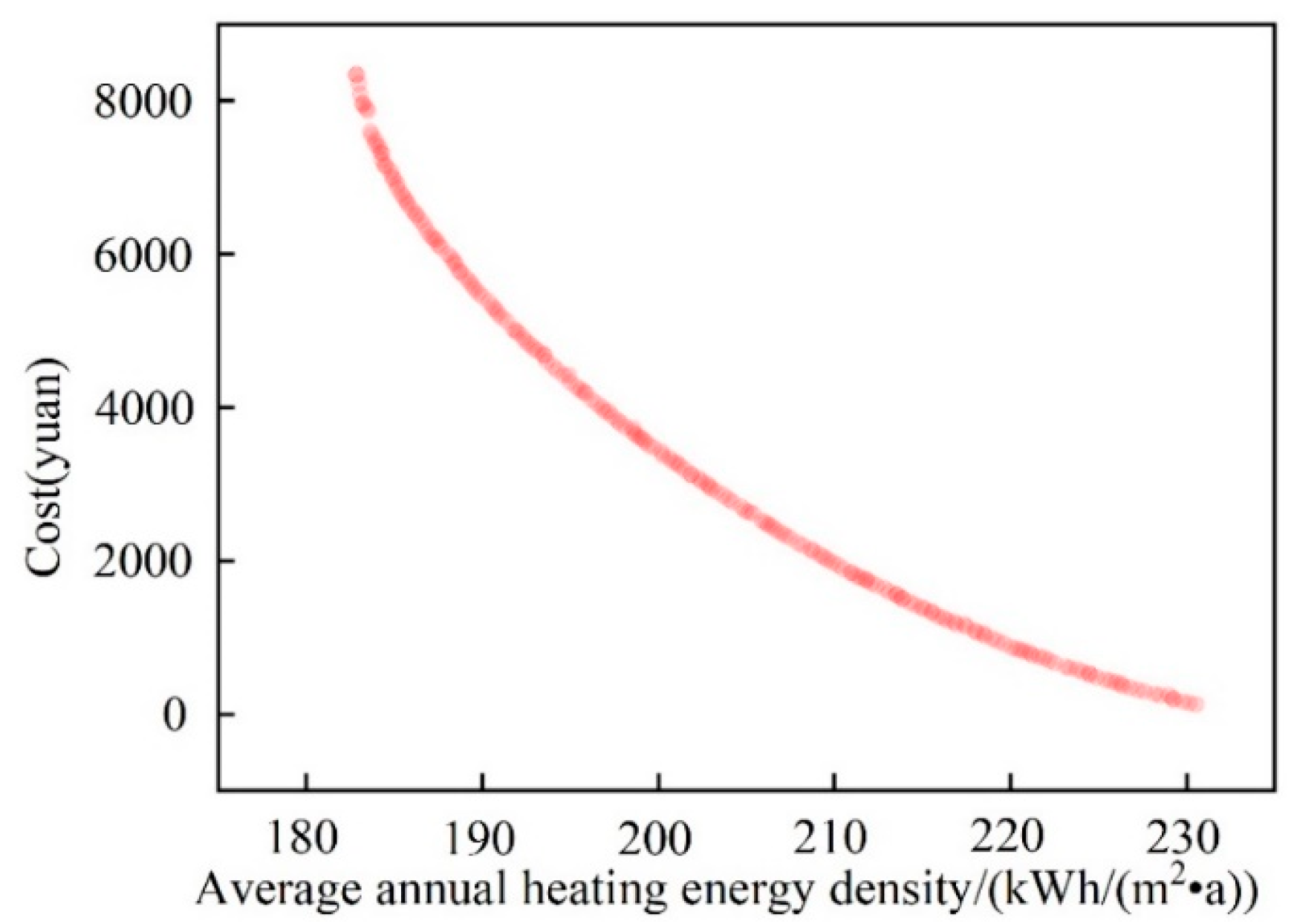
Figure 7.
The parameter range of the Pareto optimal envelope structure.
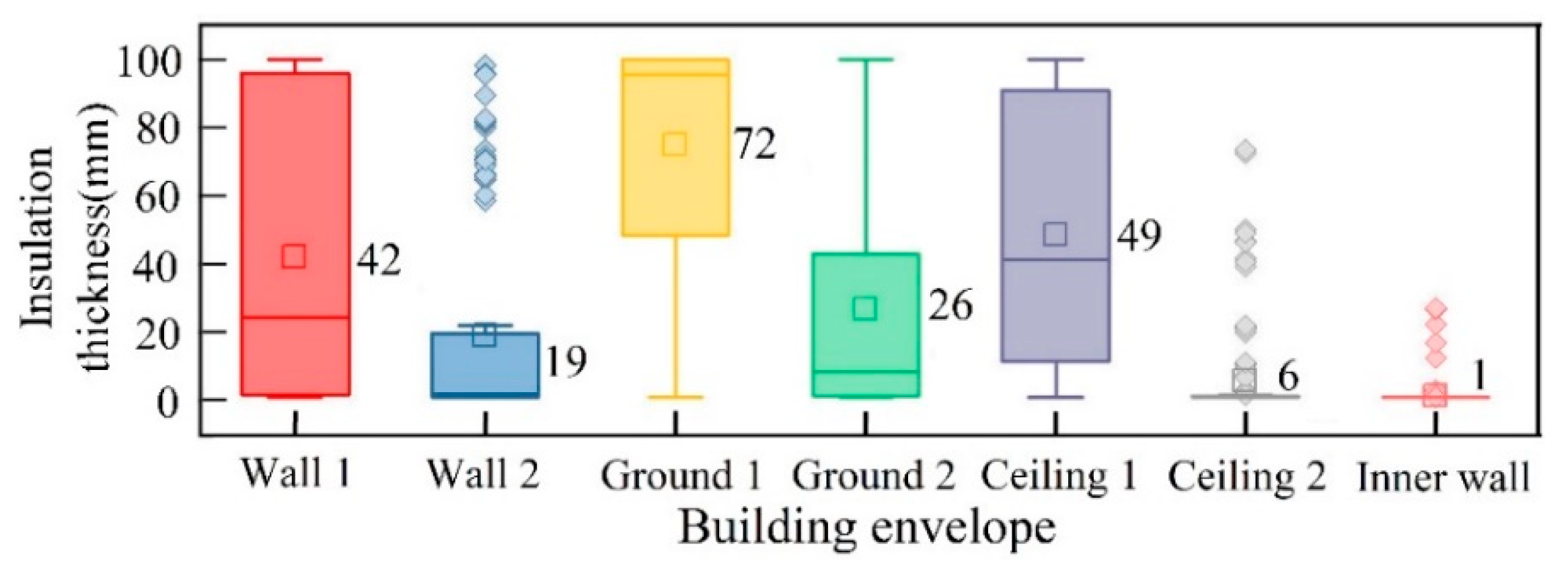
Figure 8.
Energy saving technology grouping ((a) Economically optimal technology (b) Trade-off optimal technology (c) Optimal energy-saving technology). * where marker 1 represents the bedroom and living room group; marker 2 represents the kitchen utility room group.
Figure 8.
Energy saving technology grouping ((a) Economically optimal technology (b) Trade-off optimal technology (c) Optimal energy-saving technology). * where marker 1 represents the bedroom and living room group; marker 2 represents the kitchen utility room group.


Table 1.
Record photos for the process of investigations and measurements.
| Content | Record photos |
|---|---|
| Architectural appearances as examples | 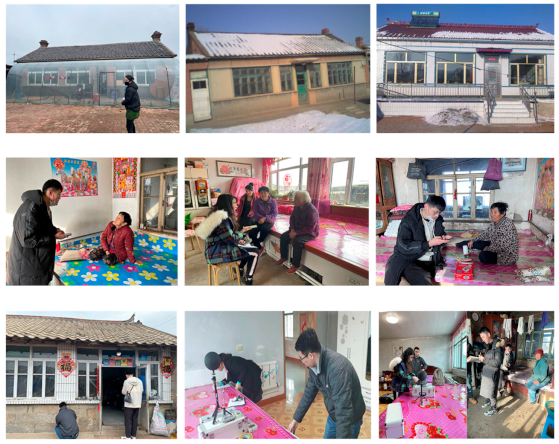 |
| Investigation process | |
| Measurement process |
Table 2.
Statistical results of field research in the severe cold region of Northeast China.
| Characteristics | Unit | Feature proportion statistics | ||||
|---|---|---|---|---|---|---|
| Areas | (m2)(%) | ≤50 | 50-80 | 80-100 | 100-110 | >110 |
| 2 | 13 | 33 | 37 | 17 | ||
| Architectural form | (%) | Monolayer | Bilayer | |||
| 80.3 | 19.7 | |||||
| Plan layout | (%) | Three bays | Four bays | Others | ||
| 65.8 | 13.9 | 20.3 | ||||
| Buffer space | (%) | Only on the South | Only on the North | Both North and South | Neither north nor south | |
| 37 | 12 | 33 | 18 | |||
| Construction year | (%) | 1980~2000 | 2000~2010 | After 2010 | ||
| 68 | 25 | 7 | ||||
| Insulation type | (%) | External insulation | Intermediate insulation | Internal insulation | No insulation | |
| 6 | 2 | 6 | 86 | |||
| Ground insulation | (%) | Yes | No | |||
| 2 | 98 | |||||
| Roof insulation | (%) | Yes | No | |||
| 6 | 94 | |||||
| Annual income | RMB(Yuan)(%) | <20000 | 20000~32000 | 32000~44000 | 44000~56000 | >56000 |
| 12 | 21 | 24 | 22 | 21 | ||
Table 3.
Instrument parameters used for testing.
| Test Parameters | Testing Instruments | Instrument Accuracy |
| Surface temperature/ heat flow | JTNT-A multi-channel temperature and heat flow test system | ±0.1℃/±0.1W/m2 |
| Air temperature and humidity | WSZY-2 temperature and humidity recorder | ±0.1℃/±0.1%RH |
| CO2 concentration | WEZY-1 Carbon Dioxide Recorder | 0~5000ppm (±75ppm) |
| opening and closing frequency of door and window | CKJM-1 type magnetic switch recorder | Maximum magnetic field induction distance 30mm |
Table 4.
Variable parameters.
| Insulation layer location | Type | Minimum value (m) | Maximum value (m) | Step length (m) |
Initial value (m) |
|---|---|---|---|---|---|
| Bedroom and living room exterior walls | Continuous Variables | 0.001 | 0.100 | 0.001 | 0.001 |
| Kitchen and utility room exterior walls | Continuous Variables | 0.001 | 0.100 | 0.001 | 0.001 |
| Internal walls in direct contact with the Kang | Continuous Variables | 0.001 | 0.100 | 0.001 | 0.001 |
| Bedroom and living room ceiling | Continuous Variables | 0.001 | 0.100 | 0.001 | 0.001 |
| Kitchen and utility room ceiling | Continuous Variables | 0.001 | 0.100 | 0.001 | 0.001 |
| Bedroom and living room floors | Continuous Variables | 0.001 | 0.100 | 0.001 | 0.001 |
| Kitchen and utility room floor | Continuous Variables | 0.001 | 0.100 | 0.001 | 0.001 |
| South side window to wall ratio | Continuous Variables | 1% | 45% | 1% | 1% |
| North side window to wall ratio | Continuous Variles | 1% | 30% | 1% | 1% |
Table 5.
The practical occupancy in rural house.
| Room | Time | Number of personnel |
| Master Bedroom | 17:00~next day 8:00 | 2 |
| Living room | 9:00~17:00 | 2 |
| Kitchen | 7:00~8:00, 11:00~12:00, 16:00~18:00 | 1 |
Table 6.
Monthly distribution of ground temperature.
| Month | 11 | 12 | 1 | 2 | 3 |
| Average temperature | 0.2 | -9.3 | -12.6 | -8.1 | 1 |
(4) Parameter setting of NSGA-II algorithm
Table 7.
Algorithm parameter settings.
| Mutation probability | Crossover probability | Population size | |
| Recommended scope | 0.005~0.10 | 0.75~0.95 | 20~200 |
| Value | 0.10 | 0.90 | 100 |
Disclaimer/Publisher’s Note: The statements, opinions and data contained in all publications are solely those of the individual author(s) and contributor(s) and not of MDPI and/or the editor(s). MDPI and/or the editor(s) disclaim responsibility for any injury to people or property resulting from any ideas, methods, instructions or products referred to in the content. |
© 2024 by the authors. Licensee MDPI, Basel, Switzerland. This article is an open access article distributed under the terms and conditions of the Creative Commons Attribution (CC BY) license (http://creativecommons.org/licenses/by/4.0/).
Copyright: This open access article is published under a Creative Commons CC BY 4.0 license, which permit the free download, distribution, and reuse, provided that the author and preprint are cited in any reuse.


