

Submitted:
13 July 2024
Posted:
16 July 2024
Read the latest preprint version here
Abstract
Recent studies have suggested significant antimicrobial properties of some metallic nanoparticles during the height of antibiotic resistance. The silver nanoparticle (AgNPs) is one of the most prominent candidates due to its noble nature and better tolerance profile in humans. The synthesis of AgNPs was carried out using silver nitrate using five different chemical reduction methods and comparing their activity with silver nitrate, also known to possess antimicrobial properties. AgNPs have been synthesized with varying combination of reducing agents, and subsequently characterized by UV-visible spectroscopy, thermogravimetric analysis (TGA), scanning electron microscopy (SEM), and dynamic light scattering (DLS). Chemical reduction with both trisodium citrate and sodium borohydride provided better particle size and controlled uniformity, whereas hydrogen peroxide was used as a stabilizer to increase the stability of AgNPs. The minimum bactericidal concentration (MBC) for all AgNP formulations was determined against gram-negative E. coli, and AgNPs synthesized with only trisodium citrate were found to be the most effective. The synthesized AgNPs were tested against the resistant strains of E. coli, Salmonella, Klebsiella, Bacillus, and Staphylococcus by the well diffusion method to evaluate and compare their inhibition zones and AgNPs synthesized with polyethylene glycol and polyvinyl pyrrolidine were found to be the most efficient.
Keywords:
Silver nanoparticle
; Chemical reduction
; Resistant bacteria
; Antibacterial activity
1. Introduction
In its essence, nanotechnology can be defined as the study of particles at the size range of 1–100 nm [1]. Nanoscience is the study of particles and atoms on this scale. Since all matter is made of atoms and molecules, it can be stated that nanoscience relates to any scientific discipline continues to connect disciplines at the fundamental sciences to related fields [2,3].
Nanoscience is the most knowledge-intensive area the field of topics and is the foundation for amazing technical applications. When it involves the adjustment of product residential or commercial properties based on the exploration of exactly how they influence the performance of other systems, it is referred to as nanotechnology [3]. Nanoscience is the study of materials and structures of the size of 1-100 nanometers, of the quantal properties of such structures, and of disciplines that have access to or use such structures. On the other hand, is the level at which such materials and structure are in the neighborhood of 20 to 15,000 atoms and fit in a domain which straddles quantum and Newtonian physics [2,4]. Nanoscience is about the unique chemical and physical properties of materials that are determined by their size [4].
In order to generate new materials with particular characteristics, nanotechnology allows the control and manipulation of objects at the nanoscale scale [3]. Because there are fewer crystal flaws in nanocrystalline substances than in their bulk counterparts, they have higher rigidity [5]. The optical and electromagnetic properties of materials at the nanoscale can be substantially altered by the quantum size effect, which is the outcome of quantum limitation, making them very different from their bulk counterparts [6]. The prime objectives of nanoscience are to modify matter at the nanoscale level to produce useful materials, tools, and structures, and to harness the unique physical and biochemical phenomena and characteristics [7,8,9].
The ongoing rise in antibiotic resistance in human disease-causing pathogenic bacteria leads to the resurgence of multi drug resistant (MDR) bacteria [10,11]. Since the ancient time, silver metal, and silver nitrate have been used for the treatment of burn-associated wound, oral healthcare procedures, medical devices for urinary drainage, and measures to prevent the spread of bacterial infections [12]. The utilization of silver against bacterial contaminations got to be unpopular after the discovery of penicillin in the 1940s [13]. The later rise of antibiotic-resistant microscopic organisms and the constrained viability of antibiotics Revived the practicality of using silver, particularly in wound dressings [14]. Thus, by manipulating the nanoscale, increasing the surface-area-to-volume proportion, and altering the physical and chemical characteristics, one might enhance the antibacterial viability of silver [9,15,16].
Yamanaka et al. (2005) have analyzed the bactericidal mechanism of silver containing salt on the E. coli as model organism using electron microscopic, and gel electrophoresis combined with mass spectrometric method. The research revealed that the silver nanoparticles subsequently infiltrate into the bacterial cells and bind to a key ribosomal subunit protein as well as an enzyme they believe is glyoxalase 1, which supports dozens of essential cellular processes in vivo [10].
In 2007, Kim et al. had already researched the bacteriostatic effect of silver nanoparticles sized between 1 and 100 nm on E. coli, a Gram-negative bacterium. To explore the interaction of silver nanoparticles with bacteria, the authors cultured the bacterial cells until they reached the mid-log stage, recorded OD at 595 nm, determined the effect of different silver concentrations on bacterial growth and found medium with a silver content 3.3 nM to 6.6 nM to be bacteriostatic [11].
By listing out the antibacterial activity of nineteen different antibiotics when used in combination with a solution containing dispersed silver in water, Souza et al. (2006) showed that multi drug resistant bacteria like E. coli, Sh. flexneri, S. typhi, B. subtilis, S. aureus are sensitive to both amoxicillin and clindamycin. In a second, quite similar type of experiment, the dispersion of silver in water with amoxicillin or clindamycin acted additively against S. typhi, S. aureus, Sh. flexneri, and B. subtilis, whereas they revealed antagonistic interactions with the methicillin-resistant S. aureus strain (MRSA) [12].
Duran et al. (2007) utilize Fusarium oxysporum, a fungus, to prepare silver nanoparticle. They then tested how well the nanoparticles killed bacteria by putting them on fabric and confirmed their findings using high resolution microscopic and spectroscopic methods. The researchers found that cotton apparel that had been treated with silver nanoparticles possessed effective bactericidal activity [13].
Jia et al. (2007) proposed and tested the strong and effective antibacterial potential of polyvinyl alcohol nanofibers infused with silver nanoparticles against S. aureus and E. coli in wound dressings [14]. Baker et al. (2005) manufactured silver nanoparticles using the condensation and co-condensation methods of idle gas, and they conducted a study to assess the ability of nanoparticles to inhibit the growth of E. coli in solid as well as liquid environments and concluded that the nanoparticles demonstrated bactericidal activity against E. coli [15].
Shahverdi et al. (2007) studied the combined antibacterial properties of silver nanoparticles and common antibiotics such as ampicillin, amoxicillin, vancomycin, clindamycin, and erythromycin against E. coli and S. aureus. The study findings suggest that the combination of silver nanoparticles and certain antibiotics could function together as a potential antibacterial agent showing synergy, and this new hybrid approach would provide a hopeful strategy to fight the multi drug-resistant bacteria [16]. They concluded that, silver nanoparticles of 10 to 100 nm size have a very high toxicity against wide spectra of bacteria including the multi-drug resistant strain of P. aeruginosa and S. aureus (MRSA) as well as the ampicillin-resistant strain of E. coli, vancomycin-resistant strain of S. aureus (VRSA), erythromycin-resistant strain of S. pyogenes [16].
2. Materials and Methods
2.1. Materials
Silver nitrate (AgNO3) was collected from Honeywell Fulka, polyvinylpyrrolidone (PVP 40000), Polyethylene glycol, and sodium borohydride from Sigma-Aldrich. In addition, hydrogen peroxide. Trisodium citrate was purchased from Roth, whereas ethanol and ammonium hydroxide were purchased from Merck. All chemicals and reagents were used as received without further purification. Water used in all procedures was obtained from a water purification system (Purelab from ELGA) and had a measured resistivity of 18.2 MΩ cm−1.
2.2. Instruments
Experiments were conducted using various instruments like UV–vis double beam spectrophotometer (PG Instrument, UK T60 U), Scanning Electron Microscope (SEM) (Model Joel JSM-7600FE, Japan). In addition, Ultra Sonicator (Power-Sonic, Korea), Hotplate Stirrer (Stuart), Micro Centrifuge Machine (Tomy, MX-305), Orbital shaker Incubator (JSR) and Laboratory incubator (Incucell), Particle Size Analyzer (Malvern), Freeze Dryer, TGA (Hitachi instrument—TG/DTA 7200) are also used as per manufacturer’s instructions.
2.3. Methods
2.3.1. Formula One (F1). AgNP Synthesis Using Trisodium Citrate as a Reducing Agent
150 ml of 7 mM Trisodium Citrate solution was prepared in a beaker at room temperature and placed on a magnetic stirrer. The solution was first brought to boil while being stirred and then 1.5 ml of 0.1 M aqueous silver nitrate was added to start the reaction. The color of the reaction was observed to change slowly from colorless to yellow, then turbid. At last, no more change took place indicating that the reaction was completed [17].
4Ag+ + C6H5O7Na3 + 2H2O → 4Ag0 + C6H5O7H3 + 3Na+ + H+ + O2↑
2.3.2. Formula Two (F2). AgNP Synthesis Using Sodium Borohydride as Reducing Agent
About 30 ml of 2 mM Sodium Borohydride solution was prepared and chilled at 4°C for 20 minutes. The solution was poured into a beaker and placed on a magnetic stirrer. A 2.5 ml solution of 0.01M Silver Nitrate was added dropwise to the beaker while the mixture was continuously stirred. The solution turned pale yellow after only a few drops and brighter yellow after all the solution had been poured, following which stirring was stopped [18].
Ag+ + BH4- + 3H2O → Ago+ B(OH)3 + 3.5H2
2.3.3. Formula Three (F3). AgNP Synthesis by a Combined Method Using Sodium Borohydride as Primary Reductant and Trisodium Citrate as Secondary Reductant
A mixture of 72 mL of distilled water, 2 mL of 0.01M trisodium citrate, and 2 mL of 0.01 M silver nitrate was stirred for 3 minutes at 10°C. Then, 3 mL of 0.002 M sodium borohydride was added to the mixture, and immediately after the addition, stirring was stopped. Following that, the color of the solution turned golden yellow, indicating the formation of nanoparticles [19].
2.3.4. Formula Four (F4). AgNP Synthesis by a Combined Method Using Trisodium Citrate and Sodium Borohydride as Reducing Agent in the Presence of Hydrogen Peroxide
At first, an aqueous solution combining 0.05 M, 50 μL silver nitrate, 0.075 M, 0.5 mL trisodium citrate, and 30% (v/v) 20 μL H2O2, each prepared separately, was stirred vigorously at room temperature to allow homogenous mixing. Then 100 mM, 250 μL sodium borohydride was injected into the solution mixture to initiate the reaction. Initially, the color of the solution was light yellow, which gradually became deep reddish yellow after 3-4 minutes under continuous stirring [20].
2.3.5. Formula Five (F5). AgNP Synthesis Using Polyethylene Glycol as a Reducing Agent
0.5 g of polyethene glycol (PEG) was completely dissolved in 60 mL of distilled water under magnetic stirring by heating at 120°C. Then, 1.5 g of Polyvinyl pyrrolidine (PVP) and 0.05 g AgNO3 were added to the solution and stirred for 1 hour, continuing heating. The solution’s color slowly changed from light to brighter yellow, and the stirring was stopped [21].
2.4. Purification
The previously synthesized silver nanoparticle has been purified using centrifugation at 14000 rpm for 15 minutes. For all methods where NaBH4 was used as a reducing agent, the nanoparticle formulation was freeze-dried before centrifugation to reduce two-thirds of the volume. After centrifugation, the supernatant was discarded, and the pellet was resuspended in 80 ml ethanol and centrifuged again at 14000 rpm for another 15 minutes. Finally, the pellet was collected.
In the formula where PEG was used as a reducing agent, the pellet obtained after the first centrifugation was suspended in 150 ml acetone and centrifuged at 14000 rpm for 15 minutes. After that, a small amount of orange floating pellet appeared at the bottom of the falcon tube, carefully collected by discarding the supernatant from the top. Then, 20 ml of ethanol was added to the pellet and centrifuged under the same parameters, and the final pellet was collected.
2.5. Characterization
The optical absorption spectra for nanoparticles in colloidal preparation were recorded using a double beam PG UV-Visible spectrophotometer, UK-T60 U. Rectangular quartz cells of path length 1 cm were used throughout the investigation. The Malvern DLS measurement Instrument measured the size and size distribution of the nanoparticles synthesized in the colloidal solution. The same equipment was used to determine zeta potential (ζ) for a surface charge of Ag nanoparticles. The cuvette used in this experiment was the universal dip cell. The Huckel equation was used to calculate the electrophoretic mobilities of silver nanoparticles.
Morphological analyses of nanoparticles were carried out using the JEOL analytical scanning electron microscope (SEM) model JSM-7600FE. Dried purified nanosilver powder was spread on the carbon-coated aluminum stubs for the measurements at an acceleration voltage of 20 kV. TGA was studied by a Hitachi instrument (TG/DTA 7200) in the 20–800°C temperature range under a Nitrogen gas atmosphere at a per-minute heating rate of 10°C.
2.6. Microbiological Studies
The antimicrobial studies of this research were carried out in the laboratory of Microbiology of the Department of Mathematics and Natural Sciences of BRAC University. The antibacterial activities of silver nanoparticles synthesized by five methods were observed and compared through the Well Diffusion Method. The efficiency of the same concentration of silver nitrate was also measured, as silver nitrate was the basis of silver nanoparticle synthesis in all five methods. Apart from that, the Minimum Bactericidal Concentration (MBC) of five nanoparticles was determined against an E. coli isolate.
2.6.1. Bacterial Strains Collection
Klebsiella spp. was collected from Mohakhali TB Hospital, and a few sample strains of E. coli were collected at Uttara Adhunik Medical College Hospital. Salmonella Typhi, Staphylococcus spp., and Bacillus spp. were also collected from BRAC University Microbiology laboratory. These strains were subcultured in Nutrient Agar Media every week without fail, ensuring their viability and preventing contamination. The freshly cultured colonies were then used in the procedure, providing reliable and consistent results.
2.6.2. Well Diffusion Test
For well diffusion method, two isolates of Klebsiella species, two isolates of E. coli, one isolate of Bacillus species, one isolate of Salmonella species, and two isolates of Staphylococcus were used. Muller Hilton agar was used as culture media for the well diffusion procedure. Each isolate was cultured on separate petri dishes. In each petri dish, six wells were made to observe the antimicrobial efficiency of five nanoparticles and silver nitrate of the same concentration. It must be mentioned that the same amount of silver nitrate was used in each formula of silver nanoparticle synthesis. Thus, the assumed concentration of silver nanoparticles is supposed to be constant in each procedure if the total amount of silver nitrate is evenly transformed into a nanoparticle state. The approximate nanoparticle concentration for each method was adjusted to 80 ppm, and a solution of silver nitrate was prepared to measure the same concentration. 40 μl of nanoparticle solution was applied per well from each type of nanoparticle alongside the same amount of silver nitrate in the last well. After overnight incubation, the zone of inhibition was measured for each nanoparticle and silver nitrate.
2.6.3. Determination of Minimum Bactericidal Concentration (MBC)
E. coli was used to determine each formula’s MBC of silver nanoparticles. E. coli culture was grown on Luria Bertani broth till the desired range of Optical Density was reached. 1 ml of culture was diluted ten times before using the organism in a series of test tubes containing different concentrations of silver nanoparticles. For each type of silver nanoparticle formulation, a series of test tubes containing Luria Bertani broth was prepared using the serial dilution method. Five test tubes contained 0 ppm, 5 ppm, 10 ppm, 20 ppm, 40 ppm of silver nanoparticle, and an additional test tube contained only LB broth. 50 μl of the cell from the diluted culture was applied to each test tube except the last one, which contains LB broth only. After 2 hours of incubation, 5 μl from each test tube were spread into separate petri dishes containing nutrient agar. This step was followed by overnight incubation before counting the colonies per petri dish. The LB broth was cultured to ensure a contamination-free procedure in determining MBC for each type of AgNP.
3. Results and Discussions
3.1. Chemical Characterization
3.1.1. Quantitative Analysis
Due to surface plasmon resonance, Ag nanoparticle shows a strong absorption peak around 400 nm (Figure 1). Formulation of AgNPs produced from different methods showed absorption peaks exactly in that region which confirmed nanoparticle formation.
Formulation four due to the presence of H2O2 showed the highest absorbance and the second highest absorbance was found for formulation one. This confirmed the highest abundance of nanoparticle formation for these two methods. Analysis for Total Dissolved Solids (TDS) by TDS Meter (Table 1) also supports the increase of concentration for different formulations like following -
F2 < F5 < F3 < F1 < F4
3.1.2. Thermogravimetric Analysis
TG thermograms of AgNP (Figure 2) give us information about the percent weight loss of silver nanoparticles upon increasing temperature. To decompose the silver nanoparticles the samples were heated from 20∘ C to 800∘ C; at 270–350∘C the decomposition of the samples starts and its size decreases gradually up to 470–590∘C.
3.1.3. Morphological Analysis
SEM image of nanoparticle (Figure 3) formed Provides an idea on the size and shape of particle synthesized by five methods, which also supported with the DLS data (Table 1).
Particle size analysis using DLS (Figure 4) confirmed nanoparticle formation and conjugation. The size of nanoparticles for all five methods was below or around and 100 nm and the smallest particle was formed for method four. Electrical Conductivity (EC) Analysis (Table 1) by EC Meter also supports the increase of size for different formulations like following –
F4 < F3 < F1 < F2 < F5
3.1.4. Stability Analysis
3.2. Microbiological Study
3.2.1. Determination of MBC
Before inoculation, the OD of the E. Coli culture was set to 0.440. The numbers of colonies of each petri dish (Figure 6) were counted. The petri dish containing only LB broth showed no visible microbial colony growth. Thus, it was ensured that the procedure was contamination-free. Also, 402 colonies were found for 0 ppm concentration of silver nanoparticles, which contained no nanoparticles. The number of colonies for other ppm concentrations was also counted to determine the survival rate of E. Coli. The number of colonies significantly declined even on a lower concentration of silver nitrate (5 ppm) for formula one. Besides, the number of colonies moderately declined at 5 ppm concentration of formulas two, three, and five. Lastly, the number of colonies very slowly declined for formula four.
The survival percentage of E. Coli for silver nanoparticles (Figure 6) synthesized by formula one, two, and five was at least at 20 ppm concentration, whereas it declined to zero at 40 ppm concentration. Thus, it can be concluded that 40 ppm or a lower ppm concentration of silver nanoparticles was MBC of formula one, two, and five. On the other hand, nanoparticles of formula three and four had the lowest survival rate at 40 ppm concentration. Similarly, MBC for formula three and four nanoparticles would be more than 40 ppm concentration. After analyzing MBC, a silver nanoparticle of formula one is most effective, followed by formula five and formula two. Lastly, formulas three and four were the least effective in the case of MBC.
3.2.2. Well Diffusion Test
Nanoparticle synthesized by formula one was most effective against the second isolate of E. Coli, Bacillus, and the first isolate of Staphylococcus species (Figure 7). It was found to be least efficient against the first isolate of Klebsiella. It should be mentioned that silver nitrate showed almost the same efficiency as formula one except for Bacillus isolate (Figure 7). On the contrary, formula one is least effective against the first isolate of Klebsiella (Figure 7). However, nanoparticles synthesized by formula two seemed ineffective against any isolates. Apart from that, nanoparticles synthesized by formula three were observed to be most effective against the Bacillus isolate and least effective against the first isolate of Klebsiella. Besides, nanoparticles of formula four were most effective against Bacillus and the second isolate of E. Coli and least effective against the first isolate of Klebsiella and the second isolate of Staphylococcus (Figure 7). Furthermore, nanoparticles synthesized by formula five were observed to be the most effective against all the clinical strains except Bacillus.
4. Conclusion
Nanoparticles synthesized with trisodium citrate were most effective against the gram-negative E. coli due to the optimum particle size and stability. From the data of well diffusion assay, formula one seems to be the most effective of all, preceding formula five, formula three, and formula four according to that order, whereas formula two was observed to be the least effective due to its unstable nature. The well diffusion assay provides evidence of the highest activity of formulation five against the most resistant bacterial strains. Further investigation of the impact of particle size and stability on the antibacterial activity of silver nanoparticles is necessary to optimize the formulation.
Author Contributions
Abdul Mazid and Lutful Kabir designed and coordinated the research, and Muhammad Salehuddin Ayubee, Farhana Akter, Nadia Tasnim Ahmed carried out nanoparticle synthesis and conjugation. Lutful Alam isolated clinical isolates and performed antimicrobial studies. Mahboob Hossain, and Mohsin Kazi helped in drafting, reviewing and editing the manuscript. All authors have gone through the final manuscript and approved it.
Funding
This study was supported by the Grants for Advanced Research in Education (GARE) program (No. 37.20.0000.004.033.020.2016.7725) of Ministry of Education, Government of the People’s Republic of Bangladesh. The authors are thankful to the Researcher Supporting Project number (RSP2023R301) at King Saud University, Riyadh, Saudi Arabia, and the article processing charge (APC) is also supported by RSP. The authors are also thankful to the Department of Pharmaceutical Chemistry, Faculty of Pharmacy, University of Dhaka, Bangladesh and Centre for Advance Research in Sciences (CARS), University of Dhaka, Bangladesh for providing laboratory support.
Data Availability Statement
The data presented in this study are available on request from the corresponding author.
Acknowledgments
The authors would like to extend their sincere appreciation to the Researchers Supporting Project Number (RSP2023R301), King Saud University, Riyadh, Saudi Arabia.
Conflicts of Interest
The authors declare no conflict of interest.
Abbreviations
AgNP = Silver nanoparticle, TSC = Trisodium citrate, NaBH4 = Sodium borohydride, H2O2 = hydrogen peroxide, PEG = Polyethylene glycol, PVP = Polyvinyl pyrrolidine
References
- Chaturvedi, S.; Dave, P.N.; Shah, N.K. Applications of nano-catalyst in new era. Journal of Saudi Chemical Society 2012, 16, 307–325. [Google Scholar] [CrossRef]
- Liu, W.T. Nanoparticles and their biological and environmental applications. J Biosci Bioeng. 2006, 102, 1–7. [Google Scholar] [CrossRef] [PubMed]
- Blackman, J.A.; Binns, C. Chapter 1 Introduction. In Handbook of Metal Physics; Blackman, J.A., Ed.; Elsevier: Amsterdam, The Netherlands, 2008; pp. 1–16. [Google Scholar]
- Mulvaney, P. Nanoscience vs Nanotechnology—Defining the Field. ACS Nano 2015, 9, 2215–2217. [Google Scholar] [CrossRef] [PubMed]
- Meyers, M.A.; Mishra, A.; Benson, D.J. Mechanical properties of nanocrystalline materials. Progress in materials science 2006, 51, 427–556. [Google Scholar] [CrossRef]
- Murphy, C.J.; Sau, T.K.; Gole, A.M.; Orendorff, C.J.; Gao, J.; Gou, L.; et al. Anisotropic metal nanoparticles: Synthesis, assembly, and optical applications. The Journal of Physical Chemistry B 2005, 109, 13857–13870. [Google Scholar] [CrossRef]
- Banerjee, D.; Harfouche, R.; Sengupta, S. Nanotechnology-mediated targeting of tumor angiogenesis. Vascular cell. 2011, 3, 3. [Google Scholar] [CrossRef]
- Thiruvengadam, M.; Rajakumar, G.; Chung, I.M. Nanotechnology: Current uses and future applications in the food industry. 3 Biotech. 2018, 8, 74. [Google Scholar] [CrossRef] [PubMed]
- Bayda, S.; Adeel, M.; Tuccinardi, T.; Cordani, M.; Rizzolio, F. The History of Nanoscience and Nanotechnology: From Chemical-Physical Applications to Nanomedicine. Molecules 2019, 25, 112. [Google Scholar] [CrossRef] [PubMed]
- Yamanaka, M.; Hara, K.; Kudo, J. Bactericidal actions of a silver ion solution on Escherichia coli, studied by energy-filtering transmission electron microscopy and proteomic analysis. Applied and environmental microbiology. 2005, 71, 7589–7593. [Google Scholar] [CrossRef]
- Kim, J.S.; Kuk, E.; Yu, K.N.; Kim, J.H.; Park, S.J.; Lee, H.J.; et al. Antimicrobial effects of silver nanoparticles. Nanomedicine nanotechnology, biology, and medicine 2007, 3, 95–101. [Google Scholar] [CrossRef] [PubMed]
- Souza, A.D.; Mehta, D.S.; Leavitt, R.W. Bactericidal activity of combinations of Silver-Water Dispersion™ with 19 antibiotics against seven microbial strains. Curr Sci. 2006, 91, 926–929. [Google Scholar]
- Durán, N.; Marcato, P.D.; De Souza, G.I.H.; Alves, O.L.; Esposito, E. Antibacterial Effect of Silver Nanoparticles Produced by Fungal Process on Textile Fabrics and Their Effluent Treatment. Journal of Biomedical Nanotechnology. 2007, 3, 203–208. [Google Scholar] [CrossRef]
- Jia, J.; Duan, Y.-Y.; Wang, S.-H.; Zhang, S.-F.; Wang, Z.-Y. Preparation and characterization of antibacterial silver-containing nanofibers for wound dressing applications. Journal of US-China Medical Science. 2007, 4, 52–54. [Google Scholar]
- Baker, C.; Pradhan, A.; Pakstis, L.; Pochan, D.J.; Shah, S.I. Synthesis and antibacterial properties of silver nanoparticles. Journal of nanoscience and nanotechnology. 2005, 5, 244–249. [Google Scholar] [CrossRef] [PubMed]
- Shahverdi, A.R.; Fakhimi, A.; Shahverdi, H.R.; Minaian, S. Synthesis and effect of silver nanoparticles on the antibacterial activity of different antibiotics against Staphylococcus aureus and Escherichia coli. Nanomedicine Nanotechnology, Biology and Medicine. 2007, 3, 168–171. [Google Scholar] [CrossRef] [PubMed]
- Dong, X.; Ji, X.; Wu, H.; Zhao, L.; Li, J.; Yang, W. Shape Control of Silver Nanoparticles by Stepwise Citrate Reduction. The Journal of Physical Chemistry C. 2009, 113, 6573–6576. [Google Scholar] [CrossRef]
- Mulfinger, L.; Solomon, S.D.; Bahadory, M.; Jeyarajasingam, A.V.; Rutkowsky, S.A.; Boritz, C. Synthesis and Study of Silver Nanoparticles. Journal of Chemical Education. 2007, 84, 322. [Google Scholar] [CrossRef]
- Brown, A.N.; Smith, K.; Samuels, T.A.; Lu, J.; Obare, S.O.; Scott, M.E. Nanoparticles functionalized with ampicillin destroy multiple-antibiotic-resistant isolates of Pseudomonas aeruginosa and Enterobacter aerogenes and methicillin-resistant Staphylococcus aureus. Applied and environmental microbiology. 2012, 78, 2768–2774. [Google Scholar] [CrossRef]
- Zhang, Q.; Li, N.; Goebl, J.; Lu, Z.; Yin, Y. A systematic study of the synthesis of silver nanoplates: Is citrate a “magic” reagent? Journal of the American Chemical Society 2011, 133, 18931–18939. [Google Scholar] [CrossRef] [PubMed]
- de Oliveira, J.F.A.; Saito, A.; Bido, A.T.; Kobarg, J.; Stassen, H.K.; Cardoso, M.B. Defeating Bacterial Resistance and Preventing Mammalian Cells Toxicity Through Rational Design of Antibiotic-Functionalized Nanoparticles. Sci Rep. 2017, 7, 1326. [Google Scholar] [CrossRef] [PubMed]
Figure 1.
UV- visible absorption spectra of AgNP formulations.
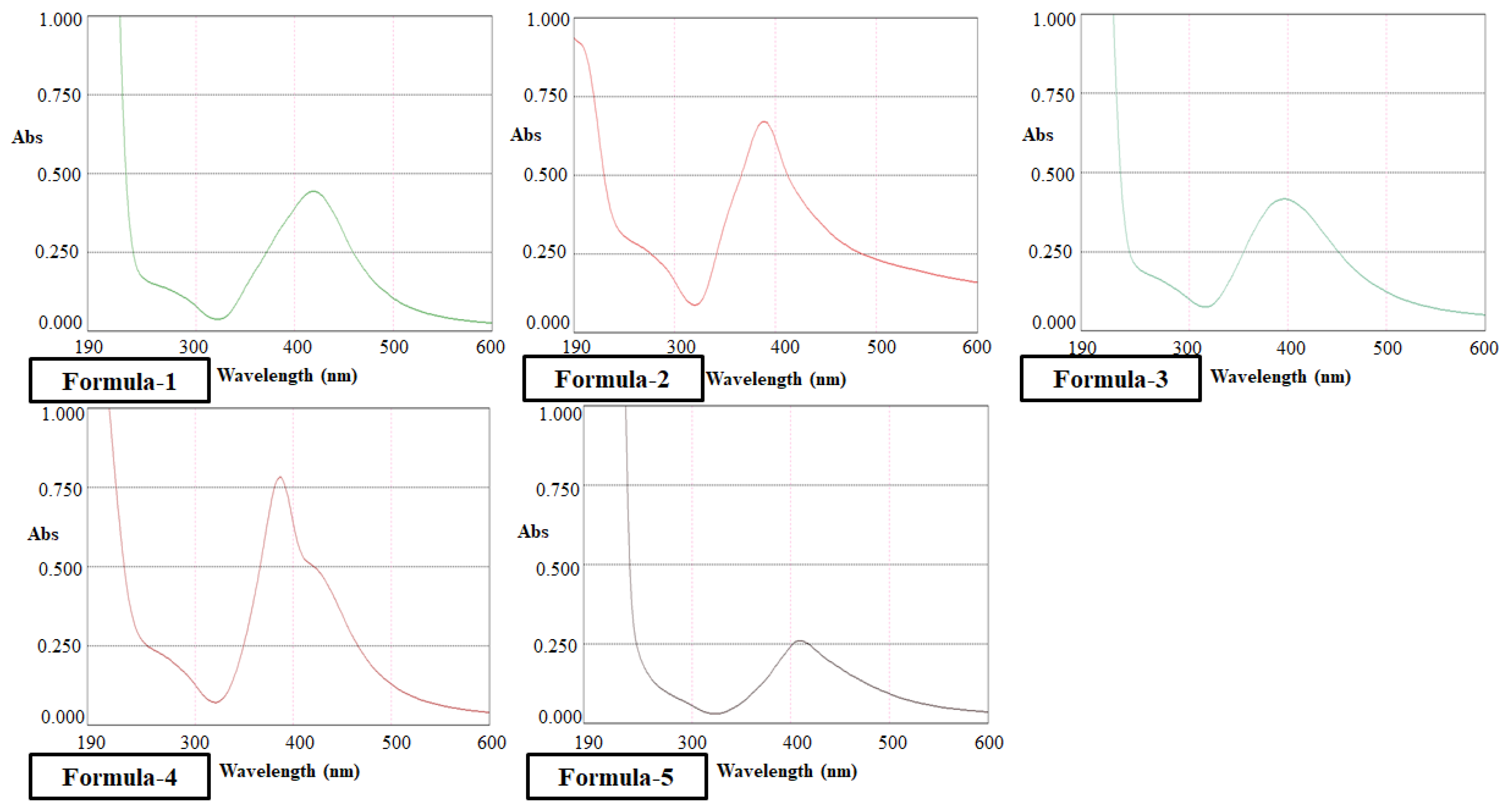
Figure 2.
Thermogravimetric analysis (TGA) of synthesized and freeze-dried AgNPs.
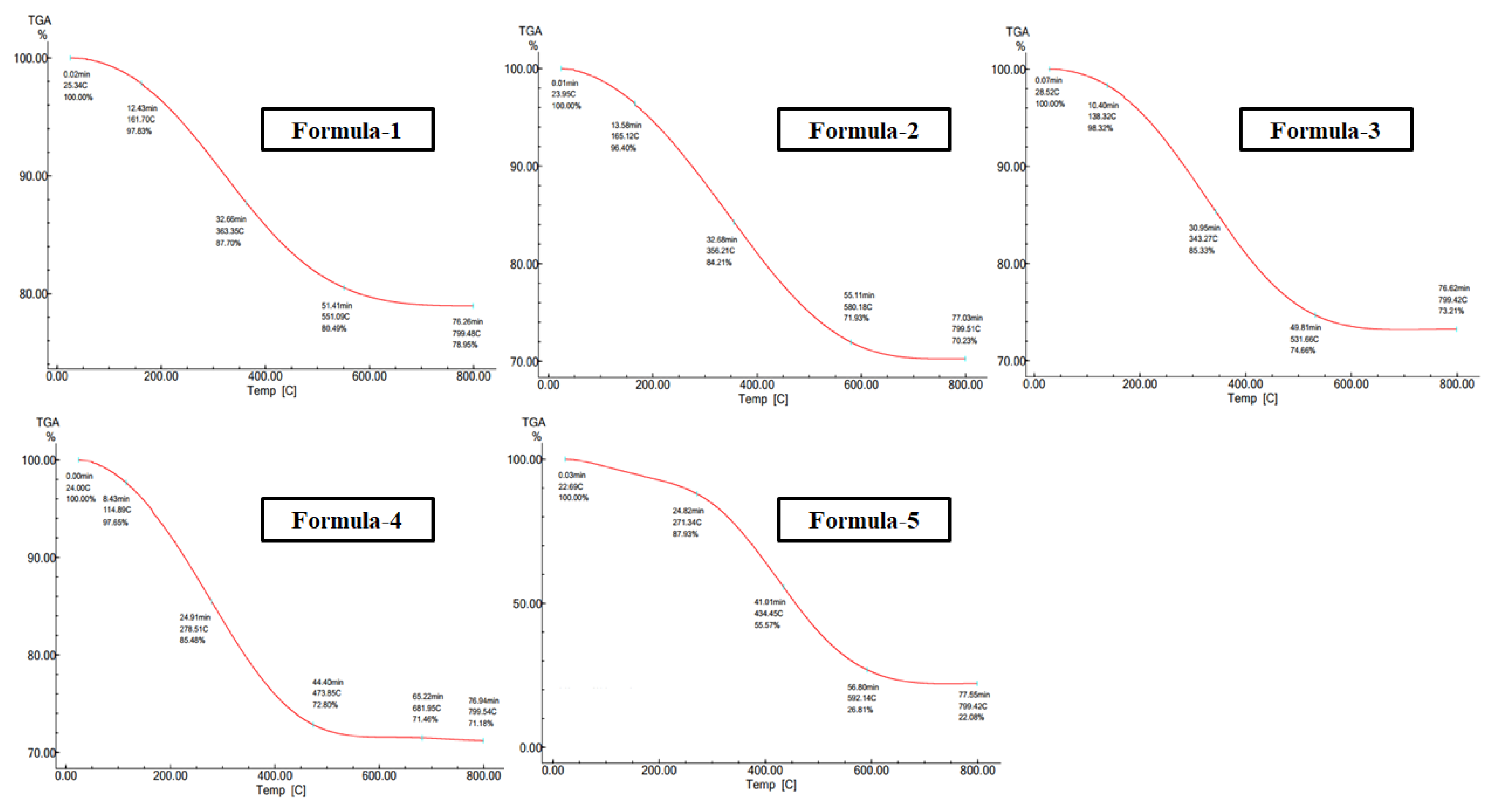
Figure 3.
Scanning Electron Microscopic (SEM) images of freeze-dried AgNPs.
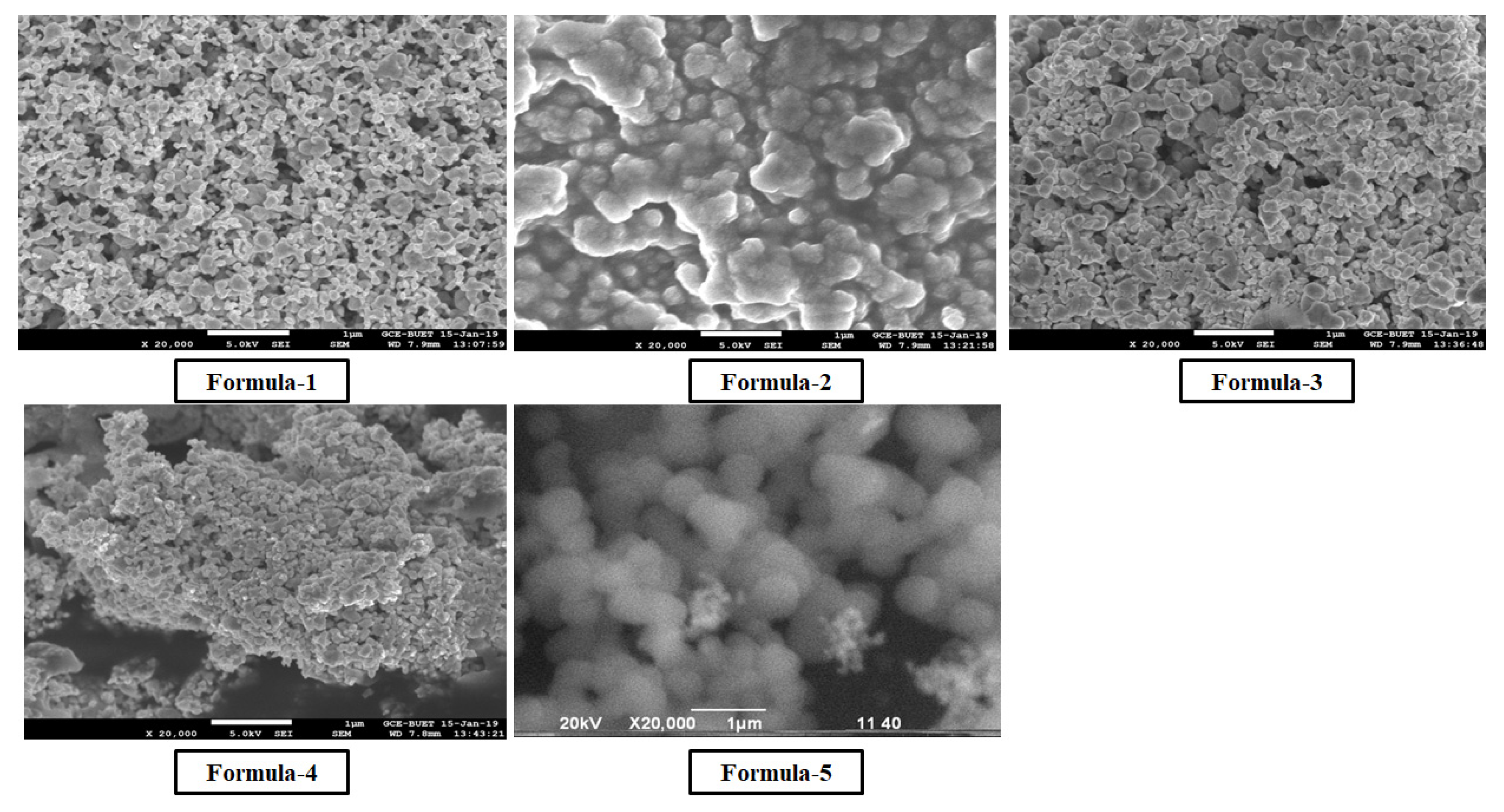
Figure 4.
Size distribution by the intensity of AgNP formulations using DLS.
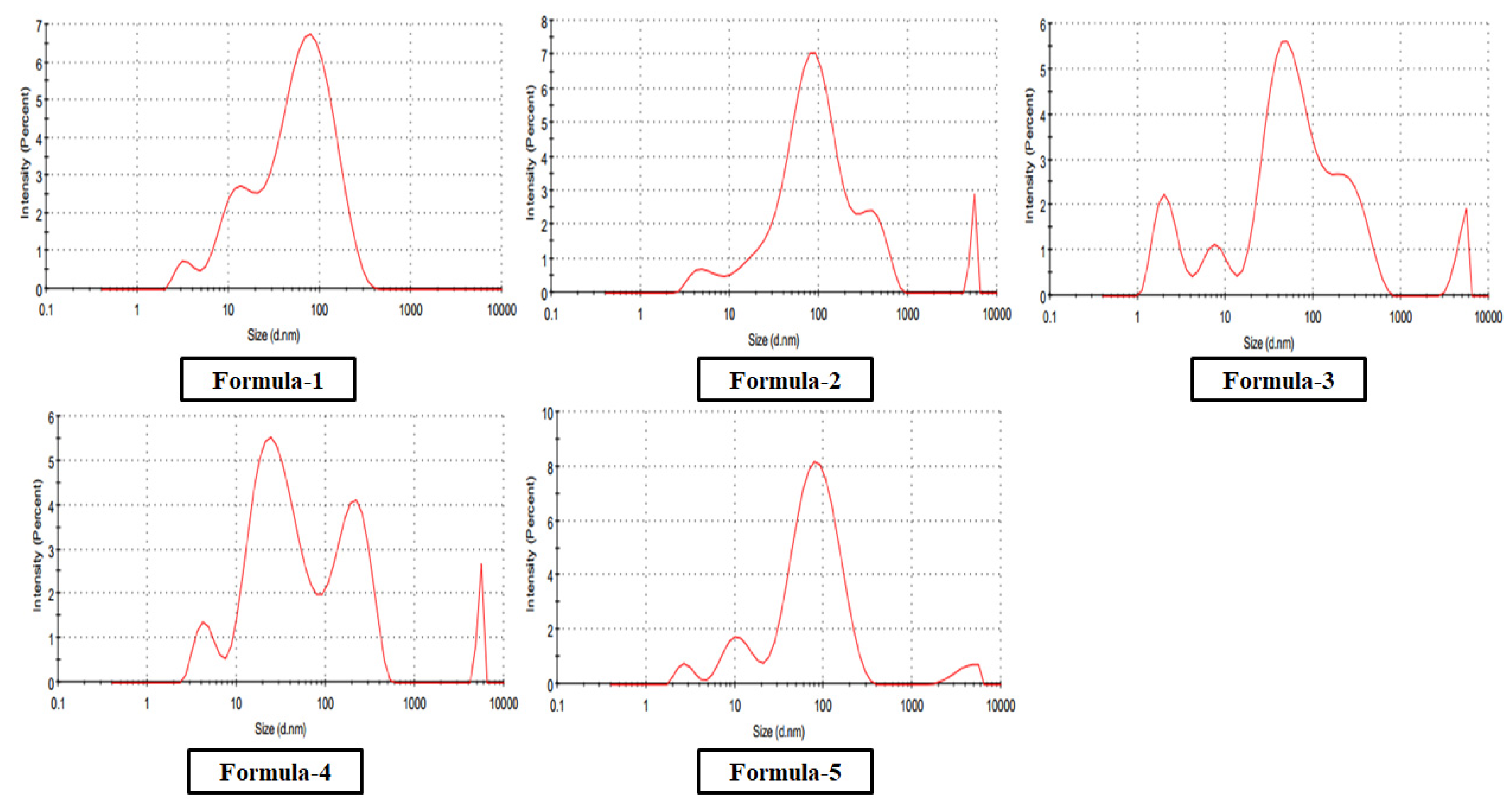
Figure 5.
Zeta potential distribution of AgNP formulations.
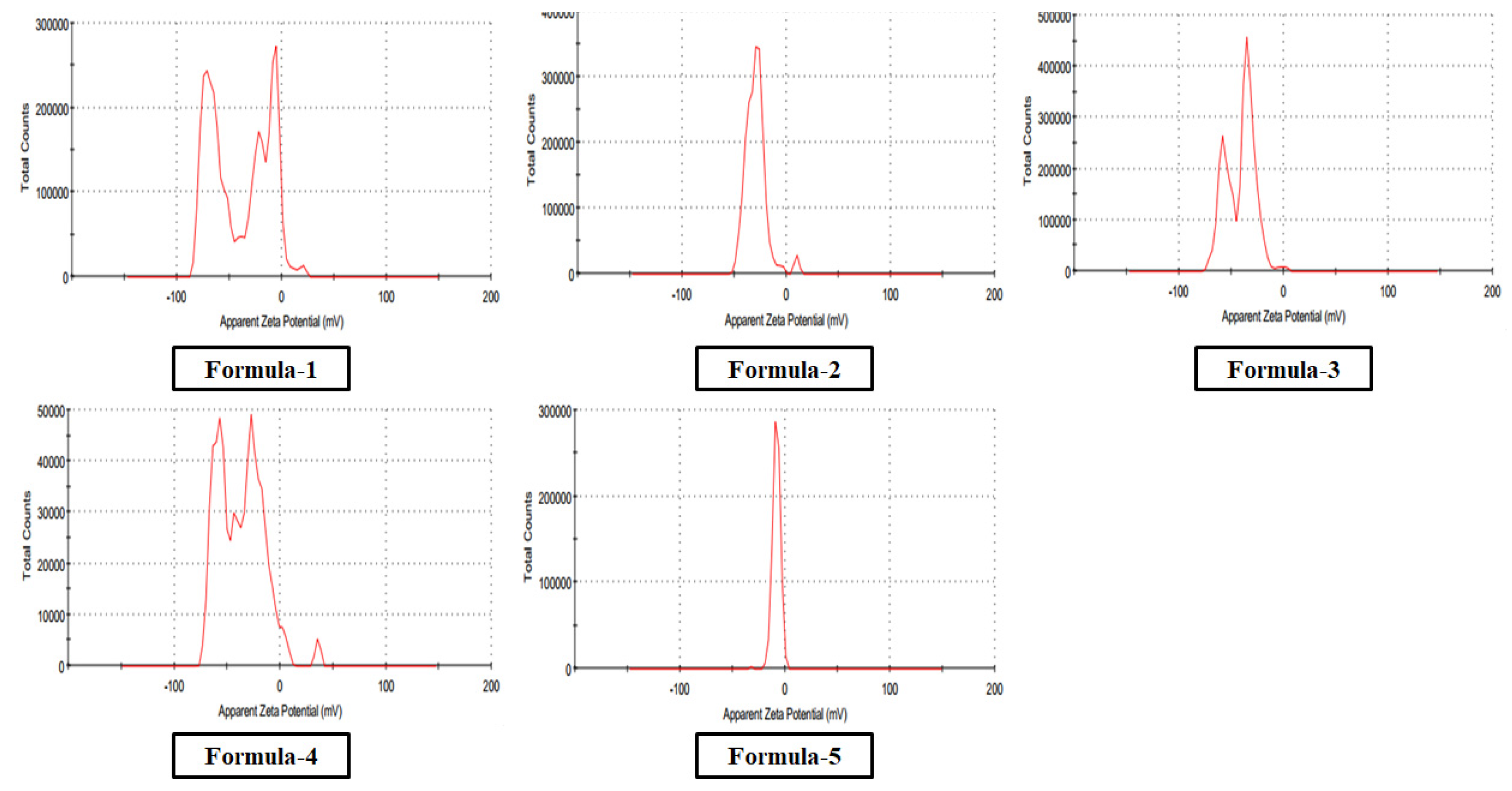
Figure 6.
Survival percentage of E. coli in nutrient agar for AgNP formulations of different concentrations.
Figure 6.
Survival percentage of E. coli in nutrient agar for AgNP formulations of different concentrations.
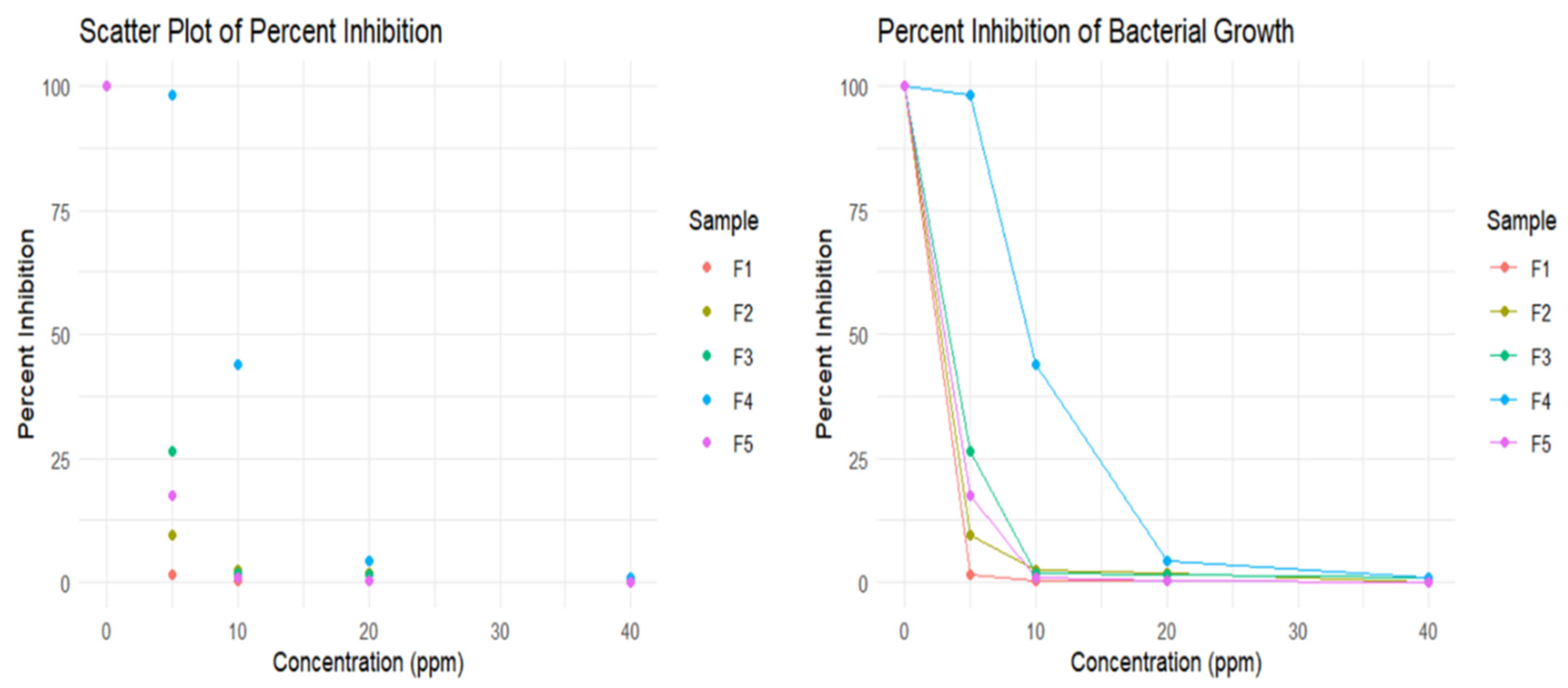
Figure 7.
Comparing the anti-bacterial activities of AgNPs synthesized by five formulas along with silver nitrate.
Figure 7.
Comparing the anti-bacterial activities of AgNPs synthesized by five formulas along with silver nitrate.
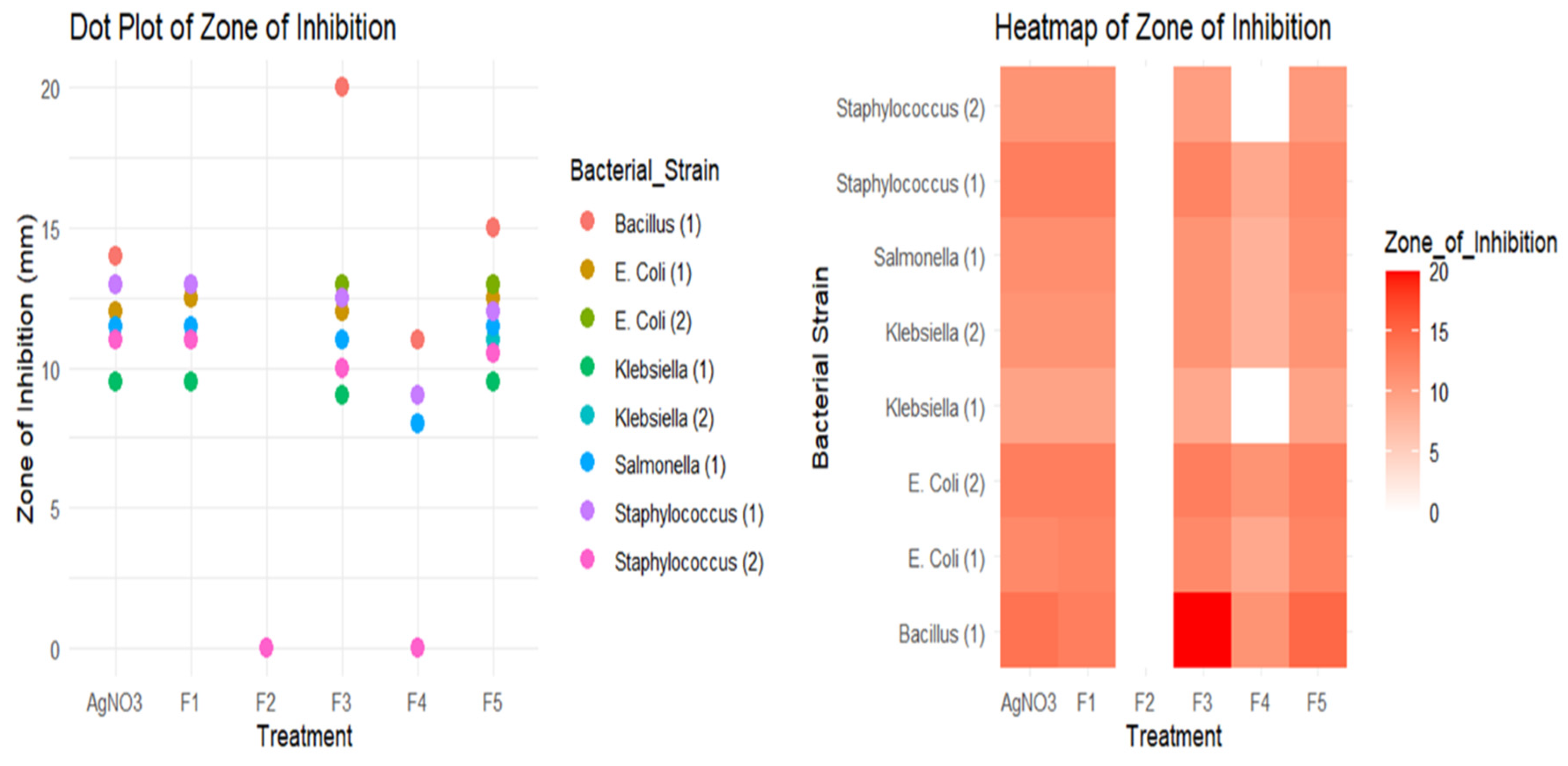

Table 1.
Electrical Conductivity, Total Dissolved Solid, Zeta potential and Particle size of synthesized AgNP Formulations.
Table 1.
Electrical Conductivity, Total Dissolved Solid, Zeta potential and Particle size of synthesized AgNP Formulations.
| Formula (Reducing Agent) |
Electrical Conductivity | Total Dissolved Solid (Solution Volume = 30 ml) |
Zeta Potential | Particle Size (Diameter) |
|---|---|---|---|---|
| Formula-1 (TSC) |
818 µS | 314 ppm | -39.4 mV | 87.15 nm |
| Formula-2 (NaBH4) |
848 µS | 176 ppm | -29.1 mV | 91.71 nm |
| Formula-3 (NaBH4 & TSC) |
779 µS | 297 ppm | -41.1 mV | 65.07 nm |
| Formula-4 (NaBH4 & TSC, H2O2) |
758 µS | 609 ppm | -36.7 mV | 30.91 nm |
| Formula-5 (PEG & PVP) |
871 µS | 191 ppm | -8.0 mV | 93.85 nm |
Disclaimer/Publisher’s Note: The statements, opinions and data contained in all publications are solely those of the individual author(s) and contributor(s) and not of MDPI and/or the editor(s). MDPI and/or the editor(s) disclaim responsibility for any injury to people or property resulting from any ideas, methods, instructions or products referred to in the content. |
© 2024 by the authors. Licensee MDPI, Basel, Switzerland. This article is an open access article distributed under the terms and conditions of the Creative Commons Attribution (CC BY) license (http://creativecommons.org/licenses/by/4.0/).
Copyright: This open access article is published under a Creative Commons CC BY 4.0 license, which permit the free download, distribution, and reuse, provided that the author and preprint are cited in any reuse.