

Submitted:
13 July 2024
Posted:
16 July 2024
You are already at the latest version
Abstract
Case studies (CS) attempt to help students increase critical thinking skills and engagement while working through a real-life scenario in various disciplines, including medicine, law, and business. However, the CS method has not been heavily utilized in biological sciences. The present study investigated the effect of the CS method on undergraduate biology students’ conceptual understanding, academic outcomes, and perspectives. A case study was applied in a one-semester undergraduate biology course, which was compared to ten semesters of standard sections. Participants completed course pre- and post-tests, pre- and post-case tests, and an online survey to assess their conceptual understanding and engagement. The initial lowest quartiles were determined from the individual course pre-test scores, which were lower than class averages. Results suggested that the CS method helped students in learning outcomes, critical thinking, and conceptual understanding toward biology. In post-test learning gains, the CS group did 20% better than the non-CS group, with the largest benefit seen in the initially lowest pre-test quartile of the class. Moreover, post-case learning gains were 55% improved in the case test. Survey results indicated that students had positive attitudes toward CS for their engagement in plant biology content. Overall, the distribution of A grades improved by 2.6-fold from standard to CS groups. We conclude that the use of CS may address course content engagement and have the potential to effectively boost academic performance, especially for the initially lowest quartile in undergraduate plant biological sciences courses.
Keywords:
teaching with case studies
; active learning
; STEM
; improvement
; student success
; case method teaching
1. Introduction
Active learning teaching strategies have emerged in college classrooms as a means for effective teaching, interactive learning, and engagement [1]. While active learning lets students take the lead, it is also more likely to help students engage in higher-order critical thinking and learning toward mastery of the course content [2,3].
Across college disciplines, common teaching approaches include lectures, flipped classrooms, clickers, project-based teaching, and case-based teaching. Case studies (CS) are an important teaching method in law, business, and medical schools to engage students with real-world scenarios and complex problems related to the lecture subject matter [4,5].
Teaching with CS has a number of advantages, including enhancing critical thinking, collaboration and active learning, increasing student engagement, and bridging the gap between theory and practice [6]. Numerous cases are available to adapt to various undergraduate courses [5,7]. A case study is a teaching tool with several major parts, including a problem, relevant data, and an expectation of student practice, to solve the case problems while learning the context of the subject matter [8]. Case study types can include problem-based cases, interrupted cases, clicker cases, jigsaw cases, journal article cases, and flipped cases, among others [5,8]. These case study types could provide a valuable resource for effective lessons in biological sciences.
Implementing CS in teaching has been documented in several undergraduate courses. For example, it was reported by Goudsouizan and Lo [9] at DeSales University that case studies increased knowledge of concepts in a molecular biology class. A research study conducted by Alani et al. [10] in Canada concluded that a class conducted using CS resulted in higher final averages and induced a deeper understanding of course concepts in biotechnology. A research study conducted by Bonney [11] at CUNY concluded that CS was more effective than other methods of content delivery and increased student exam grades. Finally, a research study conducted by White et al. at UW Colleges concluded that CS increased student engagement and had a broad potential impact on teaching and learning [12].
While CS has been successfully adapted in college biology courses, so far, no research has been reported on their implementation in HBCUs. Therefore, the objectives of this study were: (1) to describe the experience of implementing CS in a biology course at an HBCU; and (2) to assess student learning and perspectives resulting from completing CS in an HBCU biology course.
2. Materials and Methods
2.1. Course Structure and Participants
This study was carried out over the course of one semester using CS, as compared to ten semesters of a standard biology course (BOT2313) at Florida A&M University, a midsize public historically black university (HBCU) located in Tallahassee, Florida, USA.
The course was designed for biology students to cover fundamental concepts related to plant anatomy and development. It deals with general aspects of plants, such as physiology, systematics, genetics, hormonal regulation, cellular mechanisms, mineral nutrition, and response to the environment. This is a required course for all biology and pre-medical majors.
Table 1 summarizes the general characteristics of the courses involved in this study.
2.2. Case Studies Section
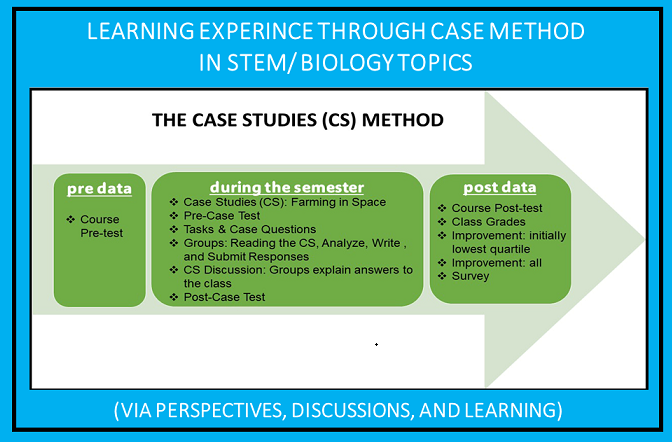
A summary of the case studies (CS) flow diagram is provided in Figure 1. In the CS section, case studies were used to supplement lectures and replace a term project. The case used was obtained from the NCCTS case collection [13]. The case study “Farming in space? Developing a sustainable food supply on Mars” was used as an application for the chapter “Plant Nutrition and Soils” in the plant anatomy and development course. The full case is available from the National Science Teaching Association website (https://www.nsta.org) [13]. Briefly, the case presents 12 food crop plants for production on Mars with the potential availability of 1000 acres of land. The case study challenges students to select three crops for sustainable farming in a harsh environment, simulating conditions on Mars. Working in groups, students discuss factors influencing sustainability, establish selection criteria, and rank food crops accordingly. The case questions guide students to justify their criteria and assess how they apply to chosen food crops. The CS encourages students to research and generate both a list of food crops and their own list of criteria as well.
The case study targets undergraduate students in plant biology, food science, and agriculture with fostering critical thinking and problem-solving higher order skills as they justify their choices and evaluate their application to their chosen crops [13]. The copies of the case study article, along with its discussion questions, were distributed to students via the learning management system (LMS) (Figure 1).
The case was administered as follows: nine groups of approximately five students per group were formed, and the case was assigned as homework to turn in via LMS upload. After each group analyzed the case and completed writing their responses, the case was discussed during a 50-min class period in which each of the groups explained their answers to the class.
2.3. Assessment
This study used various assessment techniques to evaluate the effectiveness of CS on the students’ performance in an undergraduate biology course. Student overall learning gains were assessed via course pre-test and post-test given on the first and last day of the class, respectively. The course pre-test had 10 multiple-choice questions to measure baseline knowledge before instruction, while the post-test measured gain of knowledge after instruction.
Case impact was assessed using pre- and post-case tests given before and after the case was completed. The pre-case test had five multiple-choice questions to measure baseline knowledge before the case, while the post-case test measured the gain of knowledge after the case.
Student perceptions were assessed using an online survey questionnaire that inquired about their experience of learning, their understanding of course concepts, and their engagement with the course. The survey used a Likert-like scale ranging from strongly disagree to strongly agree.
2.4. Assessment
All data were collected and summarized using Microsoft Excel (Microsoft, Redmond, WA USA) and SigmaPlot (SPSS Inc., Chicago, IL) as described previously [14]. The variables were analyzed by two-sample Welch’s t-tests to compare group differences by semester. The quantitative variables were examined using means, standard errors (SE), and Student’s t-test (course pre- and post-tests and case tests). The initial lowest quartiles were determined from the individual course pre-test scores, which were lower than class averages.
2.5. Ethics Statement
The Institutional Review Board at Florida Agricultural and Mechanical University has approved the work described in this study under “FAMU IRB Approval Number 013–28”. All data were analyzed anonymously.
3. Results
3.1. Course General Characteristics Evaluation
Table 1 summarizes the demographic information for the 11 semesters of the BOT2313 course used in the current study. A total of 467 students enrolled and completed the course during the 11 semesters studied. A section either used case studies (CS group) or did not use case studies (non-CS, standard group). All other course features remained the same, including the instructor, the textbook, the modality, and the class duration. Attendance was required in all sections as a university rule. Overall, students were undergraduate junior or senior students in biology majors.
3.2. Student Perceptions of Case Studies
The survey results indicated that overall, students had positive attitudes toward case studies (Figure 2). A vast majority of students agreed that CS helped them to think creatively about scientific problems (mean= 4.28 out of 5), CS enhanced their understanding of the topic (mean= 3.86 out of 5), and CS helped them collaborate with their peers (mean= 3.97 out of 5). Moreover, students agreed that they enjoyed the learning process in this class (mean= 4.03 out of 5) and they would like greater use of CS in other courses (mean= 3.42 out of 5) (Figure 2a). Furthermore, seventy-six (76%) of the students indicated that the CS offered good, great, or super fascinating levels of class enjoyment in their multiple-choice (Figure 2b) and long-answer responses (Figure 2c).
3.3. Case before and after Assessment
To measure student knowledge gain on case topics, a required five (5) questions pre- and post-case test was administered before and after the case study, respectively. The knowledge and concepts on the case topics were significantly improved with the case study. Overall, there was a 55% increase in case-topics knowledge on the post-case test compared with the pre-case test (Figure 3).
3.4. Improvement of Initially Lowest Quartile
A required course pre-test and post-test were administered on the first and the last day of each semester, respectively. Post-test improvements for all students, as well as the improvement for the initially lowest quartile of students are presented in Figure 4. There were no statistically significant differences in course pre-test results between CS and non-CS standard sections (Figure 4a). However, more importantly, for the initially lowest quartile of the class, CS group students had a 20% significantly higher course post-test averages compared to the non-CS groups (Figure 4b).
3.5. Academic Performance
Analysis of final course GPA outcomes for CS and non-CS standard groups indicates no statistically significant differences (Figure 5a). However, the overall “A” grades improved by 2.6-fold from the non-CS standard groups to CS group (Figure 5b). The overall “DF” grades decreased 5.8% (Figure 5c). Specifically, the CS group had more “A”s, fewer “DF”s, and a 4.8% improvement in mean final percentages compared to non-CS standard groups (Figure 5).
4. Discussion
Case studies (CS) help learners effectively engage with course content in various fields of science, technology, engineering, and math (STEM), as well as non-STEM fields [4,5]. While the benefits of CS are well documented in many non-STEM fields [4], this study aimed to determine if CS use in plant biological sciences improves student engagement and academic achievement (Figure 1).
The findings of this study evaluated BOT2313 Plant Anatomy and Development, a junior-level undergraduate course at a large public historically black college or university (HBCU) in Florida. The comparison was between 10 semesters taught using standard (non-CS) teaching methods and one semester using CS, with a total of 467 students across 11 semesters. All other aspects of the course were unchanged.
First, one prominent finding of this study was that academic outcomes measured by the improvement in scores from pre-test to post-test were enhanced by the CS method, with the largest benefit seen in the initially lowest quartile of the class (Figure 4b). In terms of the rate of “A” grades received, the CS group displayed a statistically significant improvement compared to the non-CS group. The findings from this study agree with previous research in other fields that indicated students who learned through CS benefit from increased content delivery [11] and a deeper understanding of concepts [10].
Second, our results indicated that students who completed the CS showed significant improvement (55%) in answering the post-case assessment questions (Figure 3). It is possible that the improvement in the gain of knowledge may be due to CS, considering the lower-pre-case averages (Figure 3). Similarly, Cook-Snyder and Ehlinger [15] showed that CS helped neuroscience courses to accomplish their student learning outcomes and student engagement as well.
Next, our survey results showed that most students liked the CS technique and would recommend it for other courses. The impact of results from the current study is encouraging for numerous reasons, including increasing student success rates, retention rates, and graduation rates, especially for undergraduates from groups who have been historically underrepresented in STEM fields.
5. Conclusions
The combined analysis of 467 students in the BOT2313 course from a total of 11 semesters demonstrated that implementing CS into a biology undergraduate course can substantially boost academic outcomes, especially for the initially lowest quartile of the class. To our knowledge, this is the first report on the usage of CS in undergraduate plant biology courses at an HBCU. These results suggest that the course described here could be used as a model in other colleges and universities for improving student success via CS as an effective teaching tool.
Author Contributions
Conceptualization, methodology, resources, data curation, writing, review and editing: G.H.
Funding
This research received no external funding.
Institutional Review Board Statement
The current study was undertaken following approval from the university’s Institutional Review Board.
Acknowledgments
We would like to acknowledge the students for being part of this Case Study, as well as the reviewers and the editor for providing detailed feedback. We thank K. McGraw for technical editing. We would like to thank FAMU College of Science & Technology and the Biology Department for their continuous support.
Conflicts of Interest
The authors declare no conflicts of interest.
References
- Freeman, S.; Eddy, S.L.; McDonough, M.; Smith, M.K.; Okoroafor, N.; Jordt, H. Active Learning Increases Student Performance in Science, Engineering, and Mathematics. Proceedings of the National Academy of Sciences, 2014, 111, 8410–15. [Google Scholar] [CrossRef] [PubMed]
- Handelsman, J.; Ebert-May, D.; Beichner, R.; Bruns, P.; Chang, A.; DeHaan, R. Scientific teaching. Science 2004, 304, 521–522. [Google Scholar] [CrossRef] [PubMed]
- Hacisalihoglu, G.; Stephens, D.; Johnson, L.; Edington, M. The use of active learning approach in a SCALE-UP learning space improves academic performance in UG Gen Biology. PLOSONE 13(5), 2018, e0197916. [CrossRef]
- Gabel, C. Using case studies to teach science. Annual Meeting of the National Association for Research in Science Teaching, 1999, Boston, Mass.
- Herreid, C.F. Start with a story: The case study method of teaching college science. NSTA Press. 2007.
- Kireeti, A.; Shanker, R. Case based learning (CBL), a better option to traditional teaching for undergraduate students in curriculum of Pediatrics, Asian Journal of Biomedical and Pharmaceutical Sciences, 2015, 5(45), 39–41.
- Hacisalihoglu, G.; Strickland, C. Fields of Gold: Plant Prospecting for Precious Metals. National Science Teaching Association, 2019, 1-15. https://www.nsta.org/ncss-case-study/fields-gold.
- Herreid, C.F.; Prud’homme-Genereux, A.; Schiller, N.A.; Herreid, K.F.; Wright, C. What Makes a Good Case, Revisited: The Survey Monkey Tells All. Journal of College Science Teaching, 2016, 46(1), 60.
- Goudsouzian, L.K.; Lo, S.M. A case study on genomic imprinting facilitates student learning. Advances in Physiology Education, 2023, 47, 139–43. [Google Scholar] [CrossRef] [PubMed]
- Alani, F.; Geng, F.; Toribio, M.; Grewal, R. Effect of Case-Based Learning (CBL) on Student Performance in Engineering Biotechnology Education. International Journal of. Engineering Education, 2022, 38, 543–48. [Google Scholar]
- Bonney, K.M. Case study teaching method improves student performance and perceptions of learning gains. Journal of Microbiology & Biology Education, 2015, 16, 21–28. [Google Scholar] [CrossRef]
- White, T.K.; Whitaker, P.; Gonya, T.; Hein, R.; Kroening, D.; Lee, K.; Lukowiak, A.; Hayes, A. The use of interrupted case studies to enhance critical thinking skills in biology. Journal of Microbiology & Biology Education, 2009, 10, 25–31. [Google Scholar] [CrossRef]
- Joyner, H.S.; Allen, M.L. Farming in Space? Developing a Sustainable Food Supply on Mars. National Center for Case Study Teaching in Science 2015, 1–5. [Google Scholar]
- Hacisalihoglu G; Kantanka S; Miller N; Gustin JL; Settles AM. Modulation of early maize seedling performance via priming under sub-optimal temperatures. PLOSONE 2018, 13(11): e0206861. [CrossRef]
- Cook-Snyder, D.R.; Ehlinger, D.G. Adapting case studies for synchronous and asynchronous online courses. Journal of Undergraduate Neuroscience Education, 2022, 20, A183–A188. [Google Scholar]
Figure 1.
The flow diagram summary of the case studies (CS) used in this study.
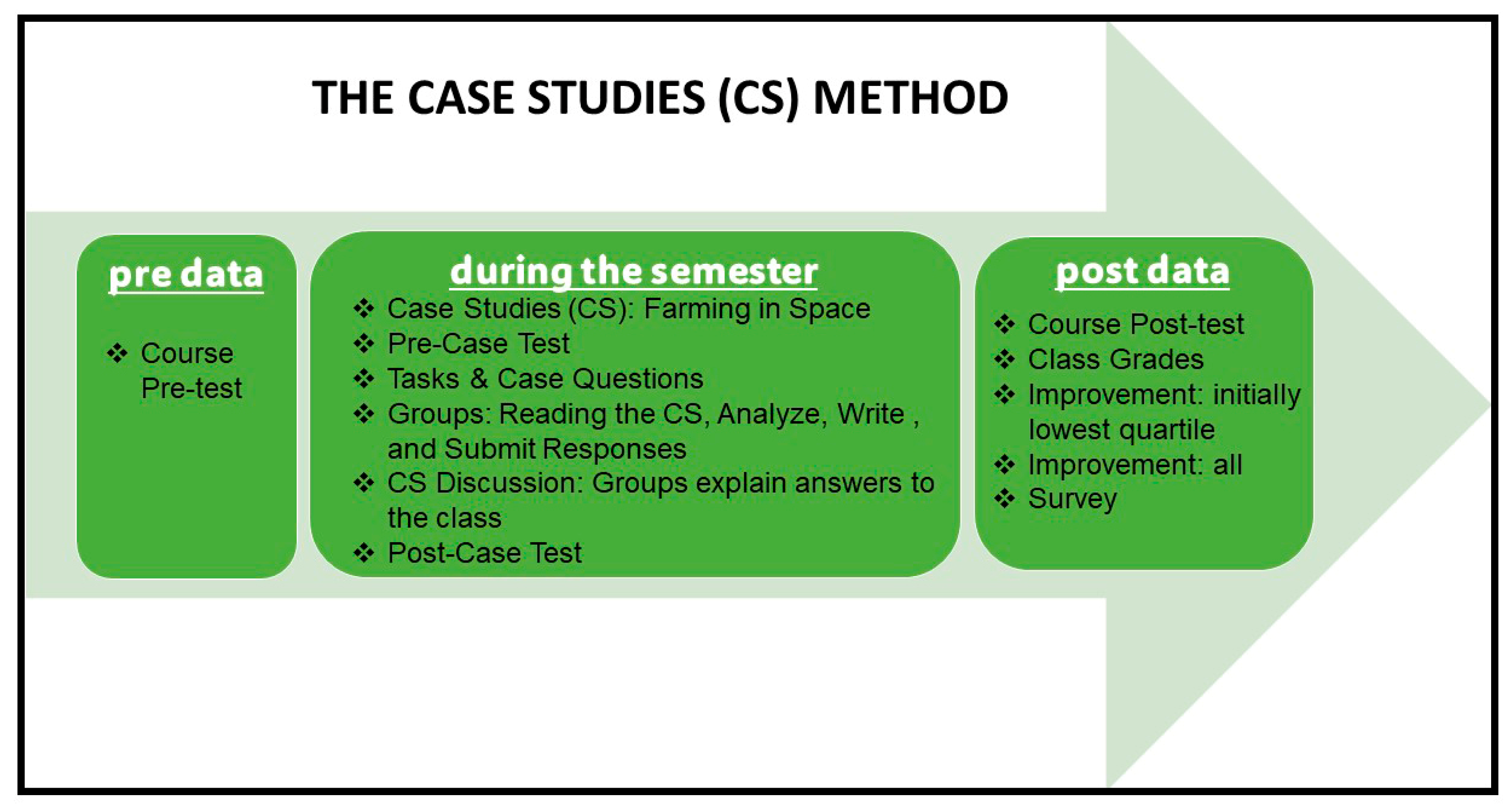
Figure 2.
a) Mean scores of student experiences survey items with standard errors (SE). b) Student responder’s overall opinion of the case studies (CS). c) Word cloud with a summary of the students’ long answer responses.
Figure 2.
a) Mean scores of student experiences survey items with standard errors (SE). b) Student responder’s overall opinion of the case studies (CS). c) Word cloud with a summary of the students’ long answer responses.
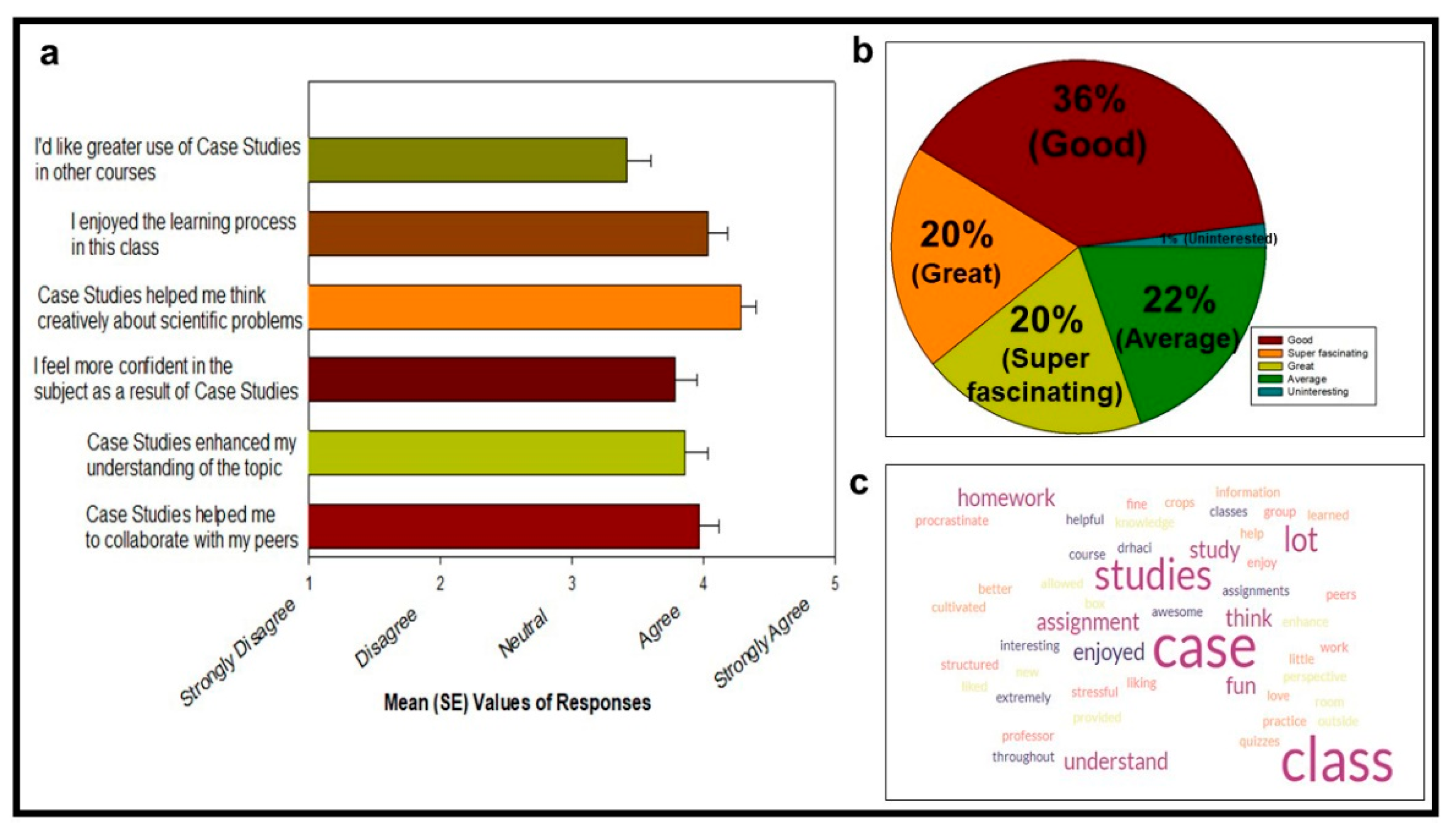
Figure 3.
Case assessment before and after gain of knowledge of case topics and concepts. Means were significantly different (student t-test, *, p <0.01).
Figure 3.
Case assessment before and after gain of knowledge of case topics and concepts. Means were significantly different (student t-test, *, p <0.01).
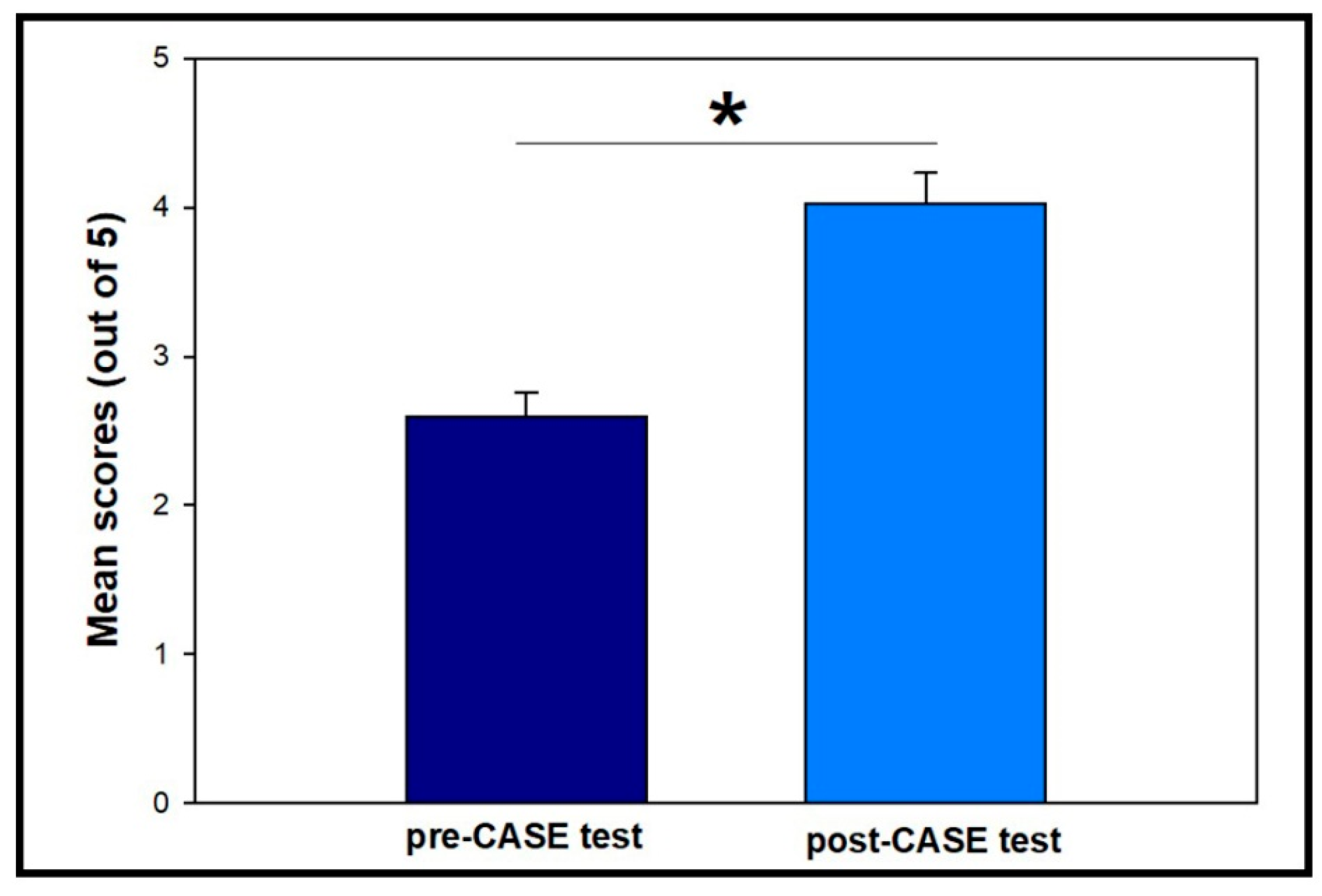
Figure 4.
Comparison of course pre- and post-test gain of knowledge in BOT2313 course. a) Improvement of all students (course pre-test vs post-test). b) Improvement of initially lowest quartile (course pre-test vs post-test). Means were significantly different (student t-test, *, p <0.001).
Figure 4.
Comparison of course pre- and post-test gain of knowledge in BOT2313 course. a) Improvement of all students (course pre-test vs post-test). b) Improvement of initially lowest quartile (course pre-test vs post-test). Means were significantly different (student t-test, *, p <0.001).
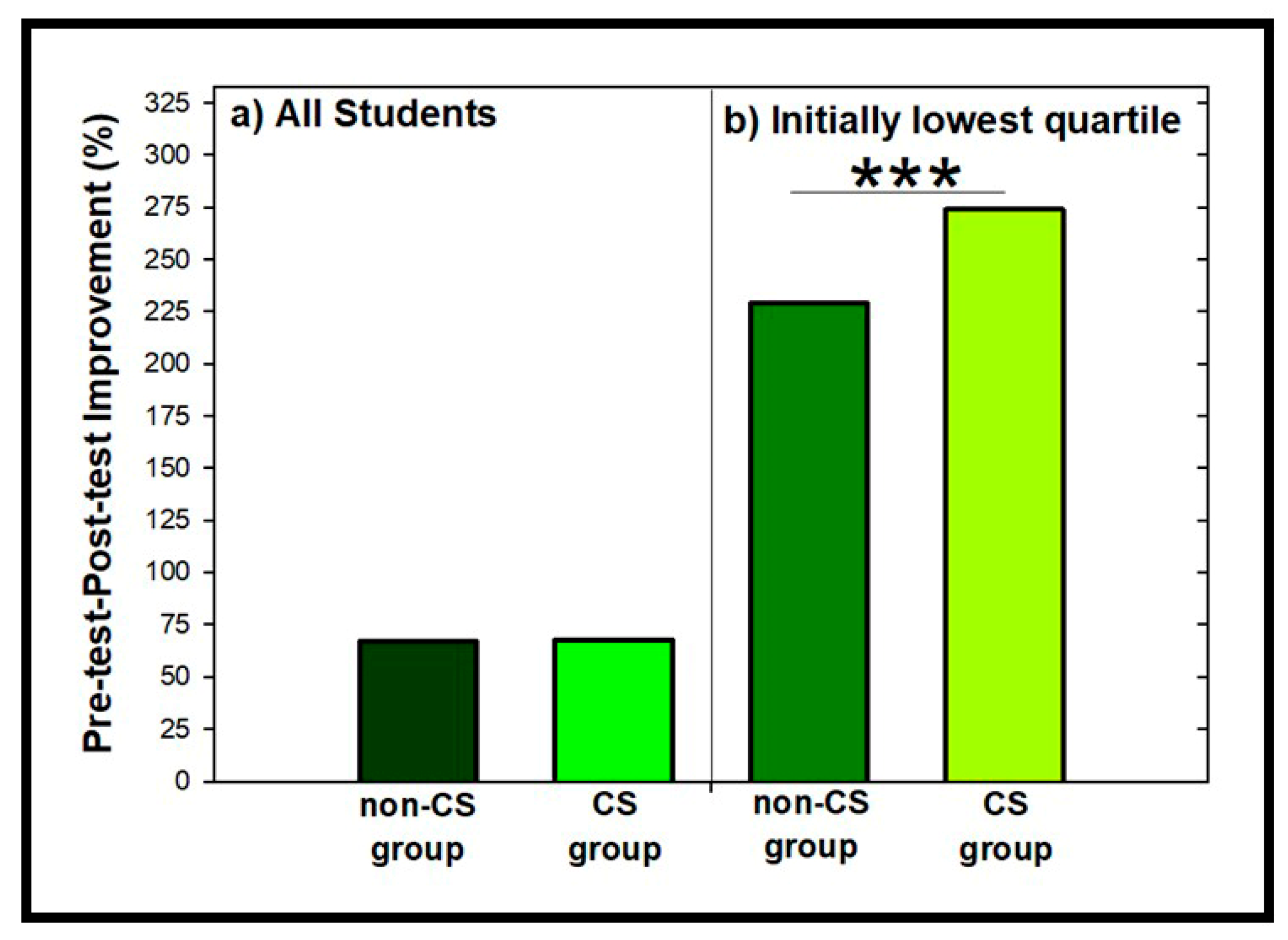
Figure 5.
Comparison of case studies (CS) and non-CS (standard) groups. a) Overall course mean final percentages. b) Overall “A” grade distribution. C) Overall “DF” grades distribution. Means were significantly different (student t-test, *, p <0.01). NS, non-significant.
Figure 5.
Comparison of case studies (CS) and non-CS (standard) groups. a) Overall course mean final percentages. b) Overall “A” grade distribution. C) Overall “DF” grades distribution. Means were significantly different (student t-test, *, p <0.01). NS, non-significant.
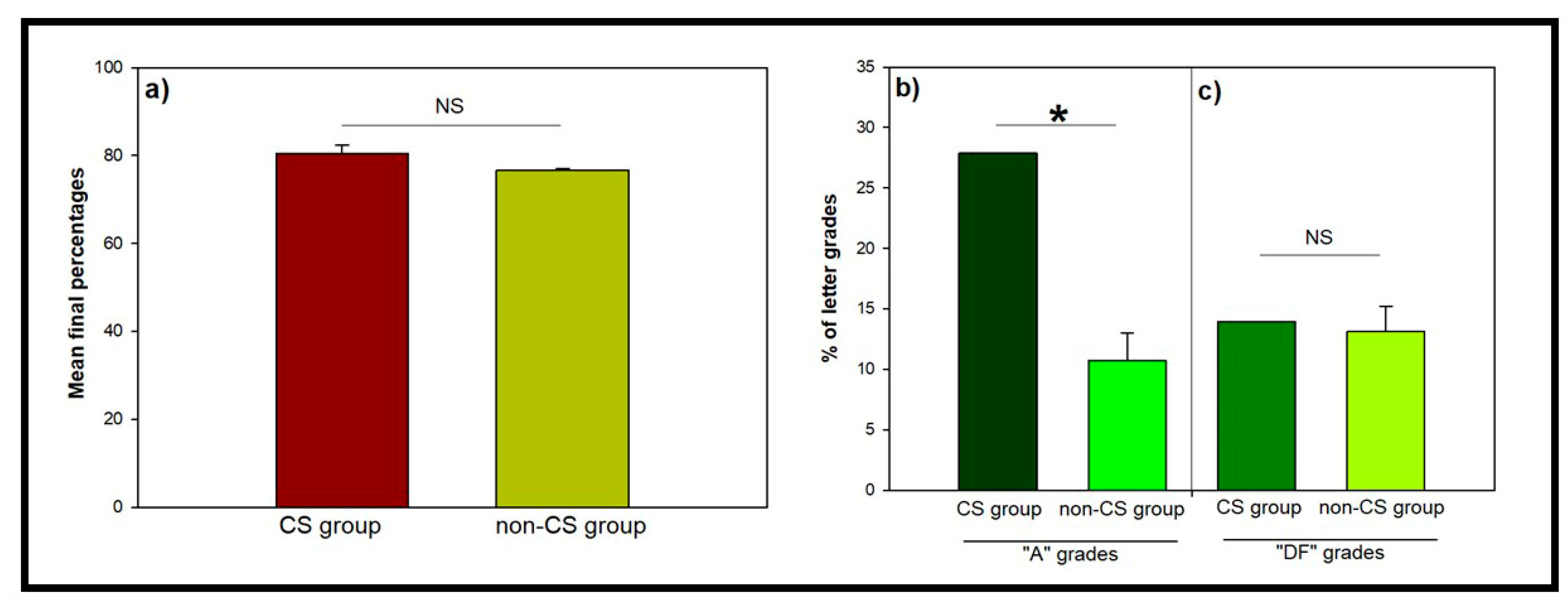

Table 1.
Summary of demographic info of students who attended BOT2313 courses under the study. min; minutes. Pre-Med; pre-medicine. Standard group; non-case studies (non-CS) group.
Table 1.
Summary of demographic info of students who attended BOT2313 courses under the study. min; minutes. Pre-Med; pre-medicine. Standard group; non-case studies (non-CS) group.
| Semester | Class Group | Class size | Male | Female | Class Time/ Week | Majors | |
|---|---|---|---|---|---|---|---|
| Fall’23 | Case Studies (CS) Group | 43 | 2 | 41 | 100 min. | Biology, Pre-Med | |
| Fall’22 | Standard Group | 52 | 7 | 45 | 100 min. | Biology, Pre-Med | |
| Fall’21 | Standard Group | 45 | 4 | 41 | 100 min. | Biology, Pre-Med | |
| Fall’17 | Standard Group | 49 | 6 | 43 | 100 min. | Biology, Pre-Med | |
| Fall’16 | Standard Group | 47 | 6 | 41 | 100 min. | Biology, Pre-Med | |
| Fall’15 | Standard Group | 30 | 2 | 28 | 100 min. | Biology, Pre-Med | |
| Fall’13 | Standard Group | 47 | 7 | 40 | 100 min. | Biology, Pre-Med | |
| Fall’12 | Standard Group | 41 | 7 | 34 | 100 min. | Biology, Pre-Med | |
| Fall’11 | Standard Group | 42 | 9 | 33 | 100 min. | Biology, Pre-Med | |
| Fall’08 | Standard Group | 42 | 10 | 32 | 100 min. | Biology, Pre-Med | |
| Fall’07 | Standard Group | 29 | 7 | 22 | 100 min. | Biology, Pre-Med | |
Disclaimer/Publisher’s Note: The statements, opinions and data contained in all publications are solely those of the individual author(s) and contributor(s) and not of MDPI and/or the editor(s). MDPI and/or the editor(s) disclaim responsibility for any injury to people or property resulting from any ideas, methods, instructions or products referred to in the content. |
© 2024 by the authors. Licensee MDPI, Basel, Switzerland. This article is an open access article distributed under the terms and conditions of the Creative Commons Attribution (CC BY) license (http://creativecommons.org/licenses/by/4.0/).
Copyright: This open access article is published under a Creative Commons CC BY 4.0 license, which permit the free download, distribution, and reuse, provided that the author and preprint are cited in any reuse.


