

Submitted:
12 July 2024
Posted:
15 July 2024
You are already at the latest version
Abstract
Community engagement in climate action and adaptation planning is an essential prerequisite for overcoming existing and projected environmental injustices associated with the negative impacts of climate change. Diversity and inclusion of stakeholders are crucial for addressing equity both in the development and implementation of local climate plans. Our study attempts to evaluate and compare consideration of equity in climate action and climate adaptation plans of Michigan cities and its association with a diversity of stakeholders involved in the planning process. Data analysis is based on the content of eight municipal climate action and/or climate adaptation plans, related documents, and interviews with city planners along with community activists. Data derived from climate action and adaptation plans were also compared to the strategies outlined in the Tribal Climate Adaptation Menu, which integrates climate science and indigenous knowledge. The study concludes that municipalities that engage more diverse groups of stakeholders appear to be more attentive to social equity and more likely to offer specific climate action and adaptation measures focusing on vulnerable groups. Integration of indigenous knowledge could provide valuable insights for municipalities through collaboration with tribal communities and climate adaptation experts.
Keywords:
adaptation
; equity
; diversity
; urban
; indigenous knowledge
Introduction
To address the growing challenges of climate change, many communities in the United States and worldwide have been developing climate action and/or climate adaptation plans [1,2]. Climate action plans (CAPs) are mostly concerned with climate change mitigation, including reduction of Green-House Gas emissions (GHGs) and intentional increase of carbon sinks through nature-based solutions, such as deforestation and urban gardens. On the other hand, climate adaptation planning seeks to reduce negative impacts of climate change and to take advantage of some of its benefits. Very few cities in the United States have both a CAP and a climate adaptation plan [3] but some CAPs include climate adaptation strategies. Integrated climate action and adaptation plans (CAAPs) are becoming more popular as a way to balance climate change mitigation and adaptation priorities [4] and prevent maladaptations [5]. In some advanced economies, such as France and Japan, development of integrative multi-sectoral climate action and adaptation plans by all municipalities, is now a national policy requirement [6,7] guided by the national guidelines. In the United States, historically, climate action and adaptation planning initiatives have been driven by the bottom-up approach by municipal, tribal, and state initiatives [8]. When localities pursue federal climate planning policies, they tend to be non-prescriptive, situational, and adopt a de-centered mode of governance [9]. Due to the absence of uniform federal or state guidelines, municipalities adopt their own methodological frameworks and set their own diversity, equity, and inclusion (DEI) standards. As a result, there is an abundance of locally proposed strategies with limited implementation guidance [10] and no comparable frameworks for evaluating climate justice [11].
Michigan has recently positioned itself as a climate leader with its new Michigan Healthy Climate Plan [12], Clean Energy Future Package (Senate Bills 271, 273, 277, 502, 519) [13], and the Clean Energy and Jobs Act (House Bills 5120, 5121) [13]. The state is also home to numerous local plans including CAPs and adaptation plans developed by cities, counties, and tribes. Therefore, Michigan provides an important case study for the entire nation. After the publication of the first Michigan Climate Action Plan [14], there was a spike in development of local climate action and adaptation plans in 2011-2015. Currently, the interest in local climate planning is high again, stimulated by abundant funding opportunities for local climate planning projects that became available through the Inflation Reduction Act (IRA). The IRA funding allocated through the EPA Climate Pollution Reduction Grants Program aims to reduce the U.S. GHG emissions by 40% by 2030, transition to renewable energy, while also supporting disadvantaged and vulnerable communities [15]. Since the end of 2023, this program has provided more than $250 million in grants to help states, major metropolitan areas, U.S. territories, and over 200 indigenous tribes to develop local climate action plans, assess vulnerabilities, and ensure that vulnerable communities are included in the planning [15].
Low-income and BIPOC (Black, Indigenous, and People of Color) communities, elderly people, young children, pregnant women, and people with disabilities and/or health challenges are often more vulnerable to the negative impacts of climate change, such as heat waves, air pollution, wildfires, and other hazards. Their experiences, however, often remain underrepresented in climate planning because vulnerable populations face many barriers in contributing their voices due to the lack of time, resources, and systematic exclusion from decision making. In the absence of national or state standards for equity and justice in climate adaptation planning, it remains unclear whether these existing and emerging plans address equity and climate justice [16]. The research study adopts the definition of equity as “the state, quality or ideal of being just, impartial and fair” [17]. This social concept is closely related to the legal term “justice”, which offers a human rights perspective on climate change, acknowledging its social, economic, health, and other adverse impacts on the underprivileged population. There is a significant gap in understanding how consideration of equity in climate planning is linked to diversity and inclusion of stakeholders participating in the planning process [11]. Diversity involves various social categories based on class, gender, occupation, income, education, race, ethnicity, age, and ability. They may have very different levels of exposure, sensitivity, and adaptive capacity to climate impacts [18]. Observable dimensions of diversity include characteristics such as gender, race, ethnicity, and age, but can also include many other characteristics, such as education, socioeconomic background, immigration status, income, and various cultural associations (e.g., religion, ancestry, or social causes) [19]. Diversity is closely related to the concept of inclusion, which is much more than demographic representation because it involves an authentic sense of belonging [17].
The lack of authentic inclusion in climate planning is especially acute when it comes to overcoming barriers between indigenous communities and cities. Although Michigan is home to twelve (12) federally acknowledged indigenous tribes that enjoy a special status under federal law and treaties, there are currently no mechanisms for coordinating climate action and adaptation planning between tribal and non-tribal communities. The Anishinaabe communities in Michigan and across the Great Lakes region have a long history of environmental stewardship, rooted in their ongoing relationships with the lands, waters, and other beings of the Great Lakes Region. They maintain important traditional knowledge, shared across generations, including the recent changes in climate and ecosystems. In recent years, tribes have led important efforts in climate action and, especially, climate adaptation planning across the state. For example, in 2014, the White House Climate Champions Program recognized the Sault Ste. Marie Tribe of Chippewa Indians as a Climate Action Champion. Two years later, the Inter-Tribal Council of Michigan, in collaboration with nine federally recognized tribes in Michigan developed and published the guiding document “Adapt: Collaborative Tribal Climate Adaptation Planning”. The document connects tribal-driven climate change vulnerability assessments, identifies climate sensitive tribal assets, and develops adaptation strategies to support coordinated tribal decision-making [20]. Another important document, Dibaginjigaadeg Anishinaabe Ezhitwaad (Tribal Climate Adaptation Menu) was published by the Great Lakes Indian Fish and Wildlife Commission in 2019, stressing that “many climate adaptation planning tools fail to address the unique needs, values, and cultures of indigenous communities” [21]. The Tribal Climate Adaptation Menu (TCAM), which was developed by a diverse group of collaborators representing tribal, academic, intertribal, and government entities in Minnesota, Wisconsin, and Michigan, provides a powerful framework to integrate indigenous knowledge, culture, language, and history along with scientific data into the climate adaptation planning process. Blending traditional knowledge, climate science, and environmental planning, this document is intended to empower not only tribal governments, but also federal and state agencies, as well as other organizations in the Great Lakes region to incorporate the Anishinaabe perspectives into a climate adaptation framework [21]. Strategies presented in this document provide important insights on adaptation planning equally relevant for non-indigenous communities. Climate change and many other ecological crises we face today are the result of the pervasiveness of the Western worldview in decision-making around the globe. While the Western perspectives value exploration, domination, exploitation, and extraction, the Anishinaabe and other indigenous frameworks call for observation, deliberation, recognition, and adaptation. All localities, tribal and non-tribal, could benefit from practicing the “Etuamptmumk” (Two-Eyes Seeing) approach, which integrates both Western and Indigenous knowledge [22].
Using Michigan as a case study, our inquiry is driven by two following questions:
- How have Michigan cities addressed equity in their climate plans across various sectors and what groups of stakeholders have been included in the planning process?
- How the Two-Eyes Seeing approach reflected in the TCAM strategies could help cities to improve their planning efforts?
Although this study focuses on Michigan, we hope that the proposed conceptual framework would make a useful contribution to the reanalysis of existing plans and optimization of guidelines for local climate action and adaptation plans nationwide. Therefore, this research study has three interrelated objectives:
- To evaluate and compare consideration of equity in climate action and adaptation plans of Michigan cities.
- To evaluate and compare inclusion of various groups of stakeholders engaged in development of existing and forthcoming climate action and adaptation plans in Michigan; and
- To evaluate how the TCAM framework could inform and improve cities’ climate adaptation planning strategies.
2. Methodology
2.1. Selection of Climate Action and Adaptation Plans
This study examines eight climate plans of seven Michigan cities, including both CAP/CAAPs and stand-alone adaptation plans (Table 1, Figure 1). The seven cities reviewed include: Ann Arbor, Detroit, East Lansing, Grand Rapids, Marquette, Royal Oak, and Traverse City. For the City of Traverse City, both CAP [23] and the Climate Adaptation Case Study [24] were examined. The City of Grand Rapids CAAP is expected to be published by December 2024 [25]. Therefore, only the planning process and engagement of stakeholders but not the content of the forthcoming Grand Rapids CAAP were examined. The choice of case studies aims to offer a good representation of Michigan’s geography and chronological range of plans including the oldest and the most recent plans between 2011 and 2022. It is, however, not intended to provide a comprehensive list of all local climate plans. This study intentionally omits sustainability plans, strategic plans, community resiliency plans, and other planning documents that sometimes address but are not fully dedicated to climate change mitigation and/or adaptation. Furthermore, the research is limited to urban communities.
2.2. Assessment Framework for Equity and Diversity of Stakeholders
To evaluate the consideration of equity and climate plans fourteen (14) following sectors of climate action and adaptation planning were identified: emergency management, housing security, food security, water security, energy security, multimodality of mobility, energy decarbonization, access to urban green infrastructure, health and wellness, environmental education, access to water resources, air quality, waste management, and business/economic activity. Consideration of equity in each of these domains was evaluated on a scale from 0 to 4 (Table 2, column 2), based on the rubric adopted with modifications from [26,27].
To evaluate and compare the inclusion of stakeholders involved in co-production of climate action and climate adaptation plans twelve (12) groups of diverse groups of participants were identified. These are vulnerable groups, social justice advocacy groups, residents and their associations, environmental advocacy groups, colleges and universities, schools, citizen science groups, local elected officials, city planning and services, local businesses, state agencies, and external private firms. Their level of inclusion in the process of co-creation of climate plans was evaluated on a scale from 0 to 4 (Table 2, column 3). Due to a wide chronological range of climate action and adaptation plans in the sample, the study aimed to examine consideration of equity-related objectives articulated across the plans rather than their implementation progress.
All climate plans were read, searched for specific keywords describing adaptation sectors/planning stakeholders, discussed, and rated by all five co-authors based on both rubrics. Ratings were discussed and documented with citations in Excel spreadsheets. When the readers disagreed, the ratings were reconciled through additional readings and discussions till consensus could be reached. The ratings were used to compute percentage scores for each city in order to compare and visualize the ratings for equity-centered climate action and adaptation measures as well as for diversity of stakeholders involved in development of the plans.
Consideration of equity (CE) was calculated as CE = Ʃ (x1,2,3…14) /56 ×100%, where “x” is a number of possible adaptation planning sectors addressed in a plan, ranging from 1 to 14 examined categories, with consideration of equity in each rated on a scale from 0 to 4 based on the rubric (table 2, column 1).
Inclusion of stakeholders (IS) was calculated as IS = Ʃ (y1,2,3…12)/48 ×100%, where “y” is a number of categories of stakeholders involved, ranging from 1 to 12 possible categories, and their engagement was rated on a scale from 0 to 4 based on the rubric (table 2, column 2).
2.3. Interviews and a Survey
As an extension of inclusion of stakeholders, the interest in which groups or individuals provided funding for the various plans was also a point of focus for this study. An online Qualtrics survey with questions about climate action and adaptation planning was sent in January 2023 to all agencies, listed as the primary authors of the plans included in our study. The response level was low, possibly due to a wide publication date range of the plans. Being inconclusive, the survey results have not been included in this analysis. To obtain more information about the planning process and to clarify questions remaining after our own evaluation of the plans, we conducted five in-depth semi-structured interviews with sustainability officers, climate adaptation planners, and leaders of the state and local environmental justice and climate action groups. The interviews were conducted between February 26 and April 4, 2024, via Zoom. They were recorded, transcribed, and analyzed in MAXQDA - a software program designed for computer-assisted qualitative data analysis. Each interview lasted approximately one hour and was based on eleven (11) questions about successes, challenges, and examples of equity goals and inclusion of stakeholders in climate planning. These interactions have provided a rich tapestry of insights into the challenges and proactive measures shaping local policy and community involvement, summarized in Table 3.
3. Results and discussion
The results of our assessment of equity consideration in all municipal CAPs/CAAPs are summarized in Figure 2. Based on the consideration of equity calculations, the City of Ann Arbor “A2Zero Plan” [28] received by far the highest score (54%) and clearly stands out among the other plans based on the number of the included sectors addressed, and the consideration of equity in each individual sector. Areas of particular strength of “A2Zero” include housing, energy decarbonization, waste management, multimodal transportation, and health and wellness (Figure 3a). Equity measures related to air quality, food security, and business/economic activity are also present but with fewer details about their implementation. Ann Arbor has a population of 123,349 [29], ranking as the 5th most populous city in Michigan. Best known as home to the University of Michigan, Ann Arbor is a vibrant high-capacity college town with a median income of $78,546 per household and $52,276 per capita [30], much higher than the state and national average. Nevertheless, Ann Arbor’s poverty rate is 23.3%, twice as high as the national average of 11.5% [30].
Based on our computation of CE, it ranges in all other plans between 21% and 33% (Figure 2). A closer examination of CE in specific sectors reveals significant differences among the cities. For example, the Detroit Climate Action Plan [31], discusses equity in business/economic opportunities and community environmental education. It also mentions, without elaborating details, equity in air quality and housing security but omits some other sectors. Detroit is the largest city in Michigan, with a population of 620,376 [32]. In a striking contrast with Ann Arbor, Detroit’s median household income and per capita income are only $37,761 and $22,861 respectively, associated with one of the highest urban poverty rates (31.5%) in the country [32]. On the other hand, the CAP of Traverse City [23], pays attention to equity in energy security, while the Climate Adaptation Case Study of Traverse City [24] considers equity in the access to quality of water resources. Traverse City is a small city with a population of 15,702 enjoying median household income of $70,700 and per capita income $48,883 [33]. An important tourist destination, the city is reputable for its exceptional quality of life, natural beauty, and the presence of numerous environmental advocacy groups. Its poverty rate (11%) is lower than the state and nations averages [33]. The CAP of East Lansing considers equity in access to green infrastructure, while Marquette’s adaptation plan prioritizes equitable environmental education and health/wellness. The CAP of Royal Oak mentions CE in the context of its energy security and multimodality goals.
Although almost all climate plans in our study acknowledge the importance of equity, very few of them offer concrete steps for achieving it. Most plans include statements about the disproportionate impacts of climate change on vulnerable populations and the importance of environmental justice, but do not offer clear strategies for addressing these issues. This finding echoes the concerns raised by stakeholders during the interviews, emphasizing the need for more substantive equity considerations in the planning processes. Affordable housing, energy decarbonization and efficiency, multi-modal transportation, and nature-based solutions through the expansion of infrastructure emerge as sectors where equity considerations are beginning to take shape concretely in some CAPs. Initiatives aimed at improving energy efficiency in low-income neighborhoods and enhancing mobility through affordable electric vehicle programs reflect an attempt to align climate action with equity goals. However, the effectiveness and reach of these initiatives remain subjects for further evaluation.
Scholarly studies worldwide indicate that CE in climate adaptation goals often goes hand in hand with diversity of stakeholders engaged in development of climate plans and representation of their priorities [18,34,35]. Our computation of IS in development of climate plans in Michigan appears to confirm this connection (Figure 4). The IS scores of Ann Arbor’s and Detroit’s CAPs stand out as 60% and 58% respectively, followed by other plans with scores below 40%.
The higher scores reflect both broader coalitions of stakeholders involved in developments of plans and their higher levels of engagement. For example, CAPs of Ann Arbor and Detroit reflect collaboration of city planning staff with social justice advocacy groups, universities, local businesses, and environmental advocacy groups (Figure 5b).
Efforts to engage diverse community stakeholders, particularly those from marginalized and vulnerable groups, were frequently mentioned in climate plans. However, the extent to which these efforts have influenced planning strategies varies. The interviews highlighted initiatives like the Community Collaborative on Climate Change (C4) in Grand Rapids as positive examples of community engagement. Yet, there remains a gap between engaging minority voices and ensuring these voices shape decision-making processes effectively. Stakeholders also identified financial resources as critical to implementing climate action plans, with a mix of federal grants, state funding, and private philanthropy playing roles. However, the most consistent theme was the challenge of securing funding that specifically targets equity goals within climate action initiatives, which is mostly due to the lack of time and personnel dedicated to grant writing. The need for dedicated staff and resources to implement plans was also emphasized by all respondents, pointing to a broader issue of capacity within municipal governments to tackle climate change in an equitable manner.
The twelve (12) federally acknowledged native American tribes that share their land with the State of Michigan enjoy a special status under federal law and treaties [36]. They are sovereign nations that exercise direct jurisdiction over their members and territory and, under some circumstances, over other citizens residing on their land. Tribal governments provide a wide array of governmental services to their members including climate change mitigation and adaptation planning. Dibaginjigaadeg Anishinaabe Ezhitwaad [21], in particular, provides a powerful blueprint for tribal and non-tribal communities interested in indigenous approaches to climate adaptation and the needs and values of tribal communities. Organized in a flexible multi-level framework, the Menu outlines fourteen (14) strategies, over fifty (50) approaches, and over one hundred (100) implementation tactics, developed through focus group discussions, workshops, and assessment of existing climate adaptation tools.
Unfortunately, none of the Michigan cities examined in our study acknowledges indigenous people, their land, their sovereign rights, and their ecological knowledge. Their current climate plans are also missing strategies and goals related to cultural practices, traditions, spiritual guidance, reciprocity with non-human beings, and respectful relationship with nature. Such concepts, however, are foundational in tribal adaptation planning [21] and indigenous culture in general. Indigenous ethics expands the definition of “community” to include not only humans, but also soils, waters, plants, animals, and spiritual beings. It is a moral code of conduct that grows out human kinship with nature, which is a centerpiece of indigenous and many other non-western cultures [37]. Cities, such as Marquette, Traverse City, and Grand Rapids are located in close proximity to native communities, who have already developed their own climate adaptation plans, such as the Match - e -be -nash -she -wish Band of Pottawatomi Indians Climate Adaptation Plan [38] and/or have integrated climate change adaptation in their Hazard Mitigation Plans [39,40]. The Anishinaabe philosophy recognizing the intrinsic value of the environment is urgently needed today to overcome the climate crisis [41]. Further research is needed to examine opportunities for Etuapmumk (Two-Eyes Seeing Approach) integrating modern science and indigenous knowledge and cultural practices in environmental action [22]. Indigenous and traditional knowledge strategies are absent across all municipal plans, without as little as collaboration with tribal stakeholders. This gap underscores a critical area for future investigation of policies that could encourage the “Two-Eyed Seeing Approach”, collaboration with tribal entities, and holistic integration of western and indigenous frameworks of local climate action and adaptation plans. Further research is necessary to develop methodologies for effectively integrating indigenous perspectives, engaging tribal experts, and adopting policy making that honors culturally appropriate practices.
Future efforts are also needed to explore and develop mechanisms for enhancing the engagement of diverse stakeholder groups, including underrepresented BIPOC communities, in the planning process. This could include developing participatory planning frameworks that ensure all voices are heard and valued. There is a need for longitudinal studies to evaluate the implementation and outcomes of climate action and adaptation plans. Such research would provide insights into the effectiveness of different strategies over time, including those inspired by Indigenous knowledge. Future research should consider cross-comparative analyses between municipalities that have incorporated Indigenous and traditional knowledge in their climate plans and those that have not. This would offer empirical evidence of the impact of such integration on climate resilience and social equity.
4. Conclusions
Michigan's approach to climate action is notably fragmented, with only a select few cities having dedicated climate action and/or climate adaptation plans. These existing plans lack cohesion and uniformity, a consequence of the decentralized nature of climate governance in the United States. This results in a patchwork of strategies that may fail to address the environmental challenges facing the state and its regions effectively. To make meaningful progress towards climate goals, Michigan must bolster support and provide guidelines and peer-learning opportunities to harmonize local initiatives with statewide objectives.
Based on the interviews, there is a pronounced need for additional funding, training, and staffing support at the local level, especially for organizing meaningful community engagement and compensating community members for their time, which is often diverted from paid work and family time. Individual communities within the same city have unique needs that, if met with adequate resources and support, could lead to impactful changes at the local level, significantly benefiting the entire community. Another critical gap in current climate plans is the lack of DEI standards. This omission can reduce the effectiveness of climate action and adaptation strategies by not fully addressing the needs of all community members, especially the most vulnerable groups. The integration of DEI principles is vital, echoing findings from both national and international studies that advocate for an inclusive approach to environmental sustainability, one that acknowledges the diverse impacts of climate change on different demographic groups.
Recent federal and state initiatives have provided significant funding for climate action, presenting a valuable opportunity for cities. However, the cities' ability to fully capitalize on these funds is often hampered by insufficient infrastructure, expertise, or planning capacity. Enhancing the capabilities of local governments through training and resource provision is essential to ensure these funds are utilized effectively to enhance climate resilience.
Since the initial publications of the first climate plans by Michigan communities, there has been a notable improvement in the incorporation of diversity of stakeholders and equity concerns in their goals. This evolution indicates a growing recognition of the importance of these factors in effective climate planning. However, none of the municipal plans have included tribal stakeholders and cities could learn valuable lessons in coordinated climate adaptation planning from Native American tribes. These communities use a blend of traditional knowledge and modern science in their approaches, particularly through the "Two-Eyed Seeing" approach, which merges Indigenous and Western knowledge systems to create comprehensive and culturally sensitive solutions. There is no evidence of such collaborative practices in municipal plans, which is a missed opportunity for gaining deeper insights and fostering partnerships.
The insights from Michigan cities resonate with broader trends identified in the national and global scholarly literature on climate action planning [2]. The recognition of equity as a crucial component of climate action is gaining traction globally, with cities around the world increasingly seeking to integrate social justice into their climate strategies [42]. However, the translation of equity from a conceptual consideration to a concrete element of planning and implementation remains a significant challenge. Other studies emphasize the importance of meaningful community engagement, transparent decision-making processes, and targeted financial support to ensure equity considerations lead to actionable outcomes [16]. Moreover, the findings underline the importance of local contexts in shaping climate action plans, suggesting that one-size-fits-all solutions are unlikely to address the unique challenges faced by different communities effectively. As a large Midwestern state with relatively advanced local and state climate policies, Michigan is not unique in facing challenges revealed in our study. Most of our findings and recommendations are applicable nationwide. These recommendations are:
- Develop and enforce statewide guidelines that include DEI standards to ensure uniformity while allowing for adaptations to local conditions.
- Improve the capability of local governments to manage and implement climate strategies through comprehensive training and resources.
- Create forums for cities to share best practices and lessons learned, promoting a collaborative atmosphere that expedites the adoption of effective climate solutions.
- Establish formal collaboration frameworks between cities and tribal governments to ensure climate strategies are respectful and integrative of traditional ecological knowledge.
- Develop participatory planning processes that actively involve all community members, especially underrepresented groups, to ensure that diverse perspectives are considered in climate planning.
- Shift focus from planning to execution, with robust mechanisms to monitor and evaluate the impact of climate strategies, allowing for continuous feedback and improvement.
Our study highlights that while Michigan cities are advancing in their climate action and adaptation strategies, there is a substantial opportunity to improve these initiatives by more thoroughly integrating equity considerations and Indigenous knowledge. This approach not only broadens stakeholder engagement, including pivotal contributions from Indigenous communities, but also ensures that climate strategies are both comprehensive and culturally attuned. The "Tribal Climate Adaptation Menu" provides an essential framework for embedding Indigenous perspectives into climate planning. Municipalities that adopt this framework can achieve a more integrated approach to climate action. As municipal strategies evolve, incorporating traditional knowledge and practices can effectively address today’s environmental challenges while respecting and preserving Indigenous cultural heritage.
Acknowledgement
This research was supported by the R.G. Mawby Fellowship at the Dorothy A. Johnson Center for Philanthropy. We would like thank Bazile Minogiizhigaabo Panek, the Founder and CEO of Good Sky Guidance, Ziigwanikwe Katy Bresette and Gidigaa bizhiw Jerry Jondreau of Dynamite Hill Farms, for pointing us towards Dibaginjigaadeg Anishinaabe Ezhitwaad: A Tribal Climate Adaptation Menu. We thank Rob Larson, an affiliate professor of natural resources management at Grand Valley State University and a member of the Nottawaseppi Huron Band of the Potawatomi, for integrating the Two-Eyed Seeing approach in his teaching and sharing his knowledge with us. We are also grateful to five anonymous climate adaptation professionals and climate activists in Ann Arbor and Grand Rapids, who contributed to our study through interviews. We are grateful to Dr. Lesley D. Slavitt, Executive Director of the Johnson Center for Philanthropy, for insightful conversations that greatly improved the research framework of this study.
References
- ICLEI Local Governments for Sustainability, "Changing Climate Changing Communities: Guide and Workbook for Municipal Change Adaptation," ICLEI-Canada, 2019.
- M. Araos, L. Berrang-Ford, J. D. Ford, S. E. Austin, R. Biesbroek and A. Lesnikowski, "Climate adaptation planning in large cities: A ystematic global assessment.," Environmental Science and Policy, pp. 375-382, 2016.
- Georgetown Climate Center, "Adaptation Clearinghouse," 27 10 2021. [Online]. Available: https://www.adaptationclearinghouse.org/.
- Sharifi, "Trade-offs and conflicts between urban climate change mitigation and adaptation measures: A literature review," Journal of Cleaner Production, vol. 276, p. 122813, 2020. [CrossRef]
- C.-F. Chi, S.-Y. Lu, W. Hallgren, D. Ware and R. Tomlison, "Role of Spatial Analysis in Avoiding Climate Change Maladaptation: A Systematic Review," Sustainability, vol. 13, no. 6, p. 3450, 2021. [CrossRef]
- ADEME — Agence de la transition écologique, "Observatoire Territoires et Climat," 2022. [Online]. Available: https://www.territoires-climat.ademe.fr/observatoire.
- National Institute for Environmental Studies, "A-Plat: Climate Change Adaptation Information PLatform," 2024. [Online]. Available: https://adaptation-platform.nies.go.jp/en/index.html. [Accessed 30 05 2024].
- R. Bierbaum, J. Smith, A. Lee, M. Blair, L. Carter, F. Chapin, P. Fleming, S. Ruffo, M. Stults, S. McNeeley, E. Wasley and L. Verduzco, "A comprehensive review of climate adaptation in the United States: More than before, but less than needed.," Mitigation and Adaption Strategies for Global Change, vol. 18, p. 361–406, 2013. [CrossRef]
- C. Herrick and J. Vogel, "Climate Adaptation at the Local Scale: Using Federal Climate Adaptation Policy Regimes to Enhance Climate Services," Sustainability, vol. 14, no. 13, p. 8132, 2022. [CrossRef]
- S. C. Woodruff and M. Stults, "Numerous strategies but limited implementation guidance in US local adaptation plans.," Nature Climate Change, vol. 6, p. 796, 2016. [CrossRef]
- E. Lioubimtseva, "The role of inclusion in climate vulnerability assessment and equitable adaptation goals in small American municipalities," Discover Sustainability, vol. 3, no. 3, 2022. [CrossRef]
- Michigan Department of Environment, Great Lakes, and Energy (EGLE), "MI Healthy Climate Plan," 2022. [Online]. Available: https://www.michigan.gov/egle/about/organization/climate-and-energy/mi-healthy-climate-plan. [Accessed 07 05 2024].
- Michigan Legislature, "Bills," 2023. [Online]. Available: https://legislature.mi.gov/Bills/. [Accessed 2024].
- Michigan Climate Action Council, "Michigan Climate Action Plan," 2009. [Online]. Available: https://uccrnna.org/wp-content/uploads/2017/06/Michigan_2009_Climate-Action-Plan.pdf. [Accessed 07 05 2024].
- US EPA, "Summary of Inflation Reduction Act provisions related to renewable energy," 25 10 2023. [Online]. Available: https://www.epa.gov/green-power-markets/summary-inflation-reduction-act-provisions-related-renewable-energy. [Accessed 13 03 2024].
- E. K. Chu and C. E. Cannon, "Equity, inclusion, and justice as criteria for decision-making on climate adaptation in cities.," Current Opinion in Environmental Sustainability, vol. 51, pp. 85-94, 2021. [CrossRef]
- AECF, "The Annie E. Casey Foundation," 16 October 2021. [Online]. Available: https://www.aecf.org/blog/racial-justice-definitions?gclid=CjwKCAjw8KmLBhB8EiwAQbqNoHL0r04pzkQfSOyPGFt0r5_J3Ksk1JgEG84EQFCvCEiFp6CC4Qvm-BoCBA0QAvD_BwE.
- D. Reckien, S. Lwasa, D. Satterthwaite, D. McEvoy and F. Creutzig, "Equity, Environmental Justice, and Urban Climate Change," in Climate Change and Cities: Second Assessment Report of the Urban Climate Change Research Network, New York, Cambridge University Press, 2018, pp. 173-224.
- Q. M. Roberson, "Disentangling the Meanings of Diversity and Inclusion," Center for Advanced Human Resource Studies/Cornell University Working Paper Series, Vols. CAHRS WP 04-05 , pp. 2-31, June 2004.
- Inter-Tribal Council of Michigan, "Adapt: Collaborative Tribal Climate Adaptation Planning.," 2016. [Online]. Available: https://www.itcmi.org/wp-content/uploads/2022/04/Climate-Adaptation-Planning-Booklet.pdf. [Accessed 10 04 2024].
- Tribal Adaptation Menu Team, "Dibaginjigaadeg Anishinaabe Ezhitwaad: A Tribal Climate Adaptation Menu," Great Lakes Indian Fish and Wildlife Commission, Odanah, Wisconsin, 2019.
- T. McMillan, "Anishinaabe Values and Servant Leadership: A Two-Eyed Seeing Approach. The Journal of Values-Based Leadership.," The Journal of Values-Based Leadership, vol. 12, 2022. [CrossRef]
- S. Townsend , B. Kirk and M. Powers, "City of Traverse City Climate Action Plan," SEEDS Inc., Traverse City, MI, 2011.
- L. e. a. White, "Climate Adaptation in the Great Lakes Region A Case Study of Traverse City, Michigan.," University of Michigan School of Natural Resources and Environment., Ann Arbor, 2015.
- City of Grand Rapids, "Climate Action and Adaptation Plan," 2024. [Online]. Available: https://www.grandrapidsmi.gov/Government/Departments/Sustainability/Climate-Change/Climate-Action-and-Adaptation-Plan. [Accessed 12 05 2024].
- E. Lioubimtseva, "The role of inclusion in climate vulnerability assessment and equitable adaptation goals in small American municipalities," Discover Sustainability, vol. 3, no. 3, p. 1686, 2022. [CrossRef]
- E. Lioubimtseva and C. da Cunha, "The Role of Non-Climate Data in Equitable Climate Adaptation Planning: Lessons from Small French and American Cities," Sustainability, vol. 15, no. 2, p. 1556, 2023. [CrossRef]
- City of Ann Arbor Office of Sustainability and Innovations, "A2ZERO Action Plan 4.0," City Of Ann Arbor, Ann Arbor, 2020.
- PopulationU, " PopulationU.com," 2024. [Online]. Available: https://www.populationu.com/cities/ann-arbor-mi-population. [Accessed 02 04 2024].
- U.S. Census Bureau, "QuickFacts: Ann Arbor City, Michigan," 2022. [Online]. Available: https://www.census.gov/quickfacts/fact/table/annarborcitymichigan/PST045223. [Accessed 2 4 2024].
- Detroiters Working for Environmental Justice, "Detroit Climate Action Plan," DetroitEnvironmentalJustice.org, Detroit, 2017.
- U.S. Census Bureau, " QuickFacts: Detroit city, Michigan; United States.," 2022. [Online]. Available: https://www.census.gov/quickfacts/fact/table/detroitcitymichigan,US/INC110222. [Accessed 2 4 2024].
- U.S. Census, "QuickFacts: Traverse City city, Michigan," 2022. [Online]. Available: https://www.census.gov/quickfacts/fact/table/traversecitycitymichigan,wixomcitymichigan/LND110210. [Accessed 3 4 2024].
- H. Caggiano, D. Kocakuşak, P. Kumar and M. O. Tier, "U.S. cities’ integration and evaluation of equity considerations into climate action plans.," npj Urban Sustainability, vol. 3, 2023. [CrossRef]
- E. Lioubimtseva and C. da Cunha, "Community Engagement and Equity in Climate Adaptation Planning: Experience of Small- and Mid-Sized Cities in the United States and in France.," in Justice in Climate Action Planning. Strategies for Sustainability., D. H. Petersen B., Ed., Springer, 2022, pp. 257-276.
- Inter-Tribal Council of Michigan, Inc., "Member Tribes," 2021. [Online]. Available: https://www.itcmi.org/home/tribes/. [Accessed 25 06 2024].
- K. Sangha, I. J. Gordon and R. Constanza, "Ecosystem Services and Human Wellbeing-Based Approaches Can Help Transform Our Economies," Frintiers in Ecology and Evolution, vol. 13, pp. 1-11, 2022. [CrossRef]
- Match-E-Be-Nash-She-Wish Band of Pottawatomi Indians, "Climate Change Adaptation Plan," Match-E-Be-Nash-She-Wish Band of Pottawatomi Indians, Gun Lake Tribe, 2015.
- Keweenaw Bay Indian Community, "Keweenaw Bay Indian Community Hazards Mitigation Plan," Keweenaw Bay Indian Community, 2021.
- Grand Traverse Band of Ottawaand Chippewa Indians, "Grand Traverse Band of Ottawaand Chippewa Indians Natural Hazard Mitigation Plans," Grand Traverse Band of Ottawaand Chippewa Indians, 2023.
- K. Menzies, E. Bowles, M. Gallant, H. Patterson, C. Kozmik and S. Chiblow, "“I see my culture starting to disappear”: Anishinaabe perspectives on the socioecological impacts of climate change and future research needs," FACETS, vol. 7, 2022. [CrossRef]
- Anguelovski, L. Shi, E. Chu, D. Gallagher, K. Goh, Z. Lamb, K. Reeve and H. Teicher, "Equity Impacts of Urban Land Use Planning for Climate Adaptation: Critical Perspectives from the Global North and South," Journal of Planning Education and Research, vol. 36, no. 3, pp. 333-348, 2016. [CrossRef]
- United States Environmental Protection Agency, "Climate Adaptation," 19 06 2022. [Online]. Available: https://www.epa.gov/climate-adaptation.
- Institute for Local Government, "Climate Adaptation and Resilience," 26 10 2021. [Online]. Available: https://www.ca-ilg.org/.
- California Energy Commission, State of California, "Cal-Adapt," 2021. [Online]. Available: https://cal-adapt.org/. [Accessed 5 7 2022].
- MICAN, "Michigan Communities Leading on Climate," Michigan Climate Action Network, 2022.
- E. Lioubimtseva and C. Da Cunha, "Local climate change adaptation plans in the US and France: Comparison and lessons learned in 2007-2017," Urban Climate, vol. 31, p. 100577, 2020. [CrossRef]
Figure 1.
Climate action and/or climate adaptation plans of Michigan cities examined in this study.
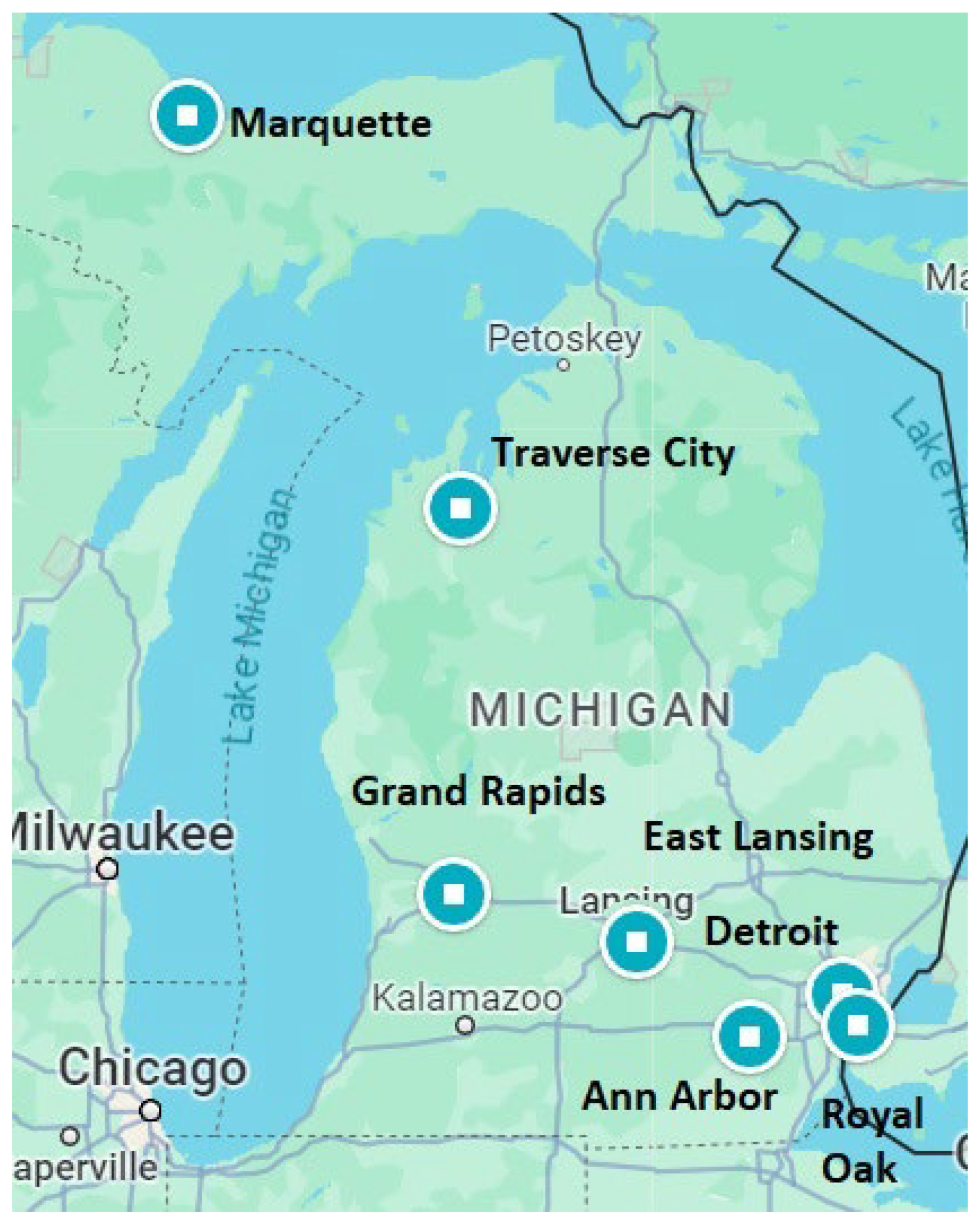
Figure 2.
Consideration of Equity in Climate Plans of Michigan Cities...
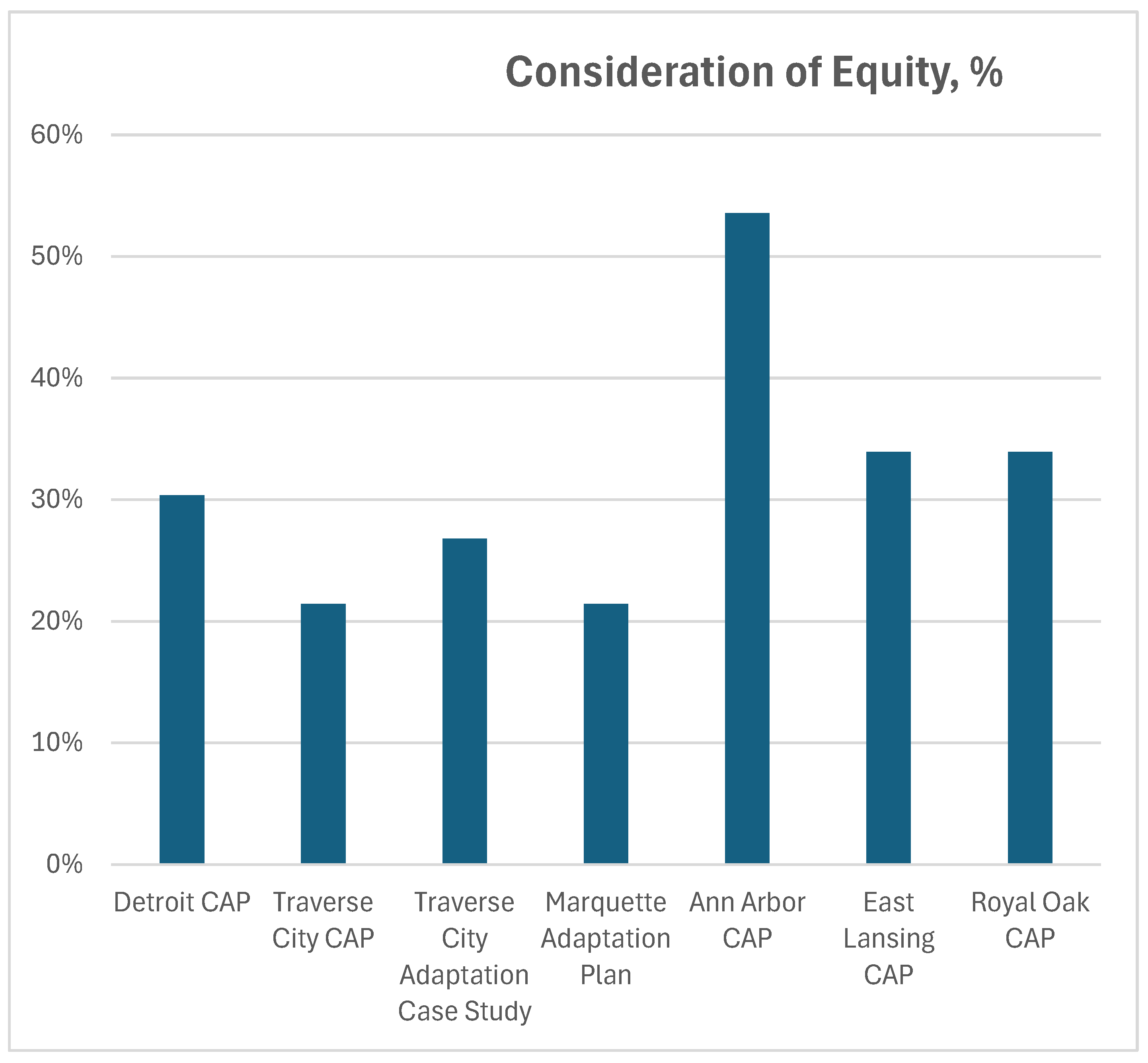
Figure 3.
Examples of CE in (a) Ann Arbor and (b) Detroit CAPs.
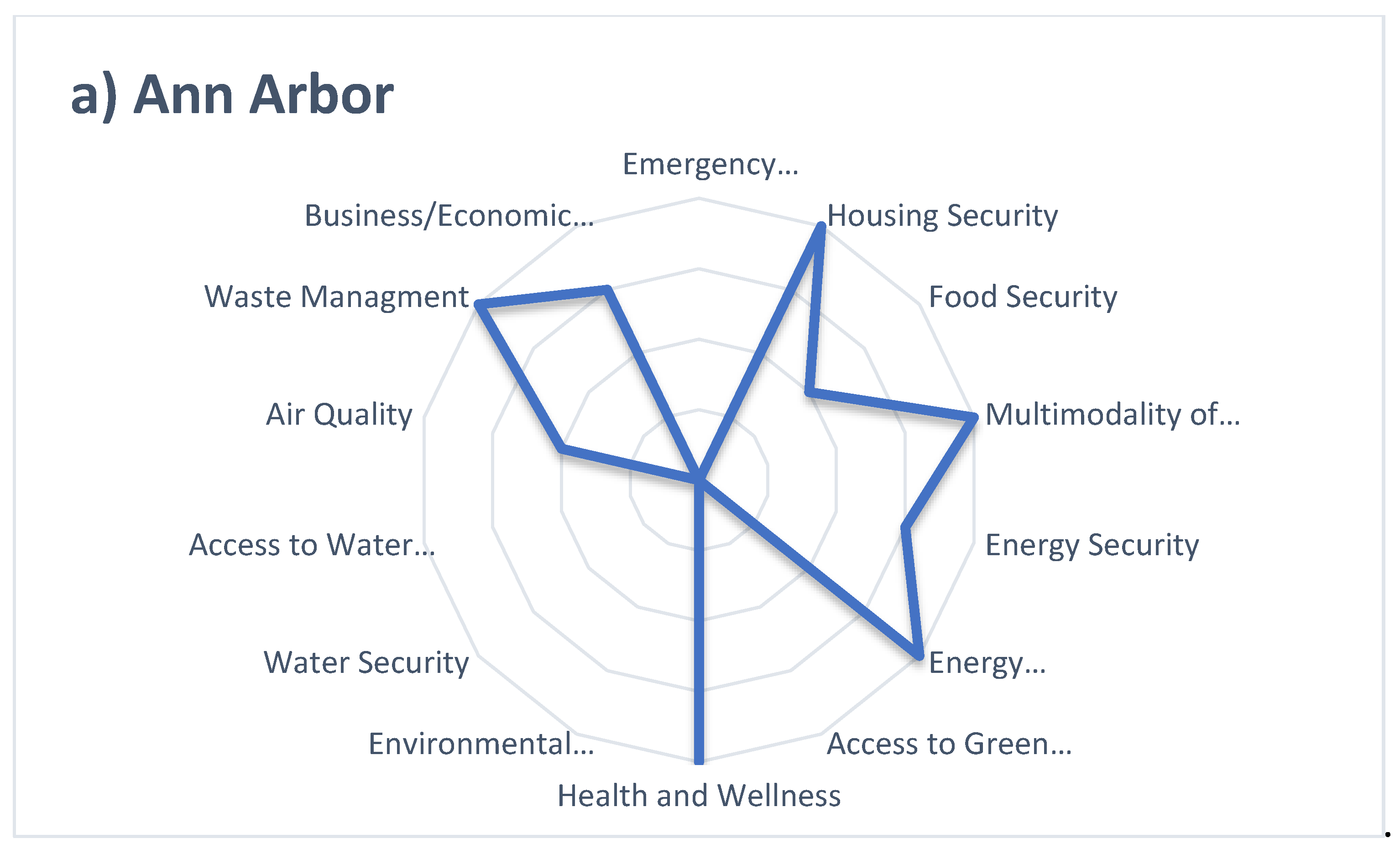
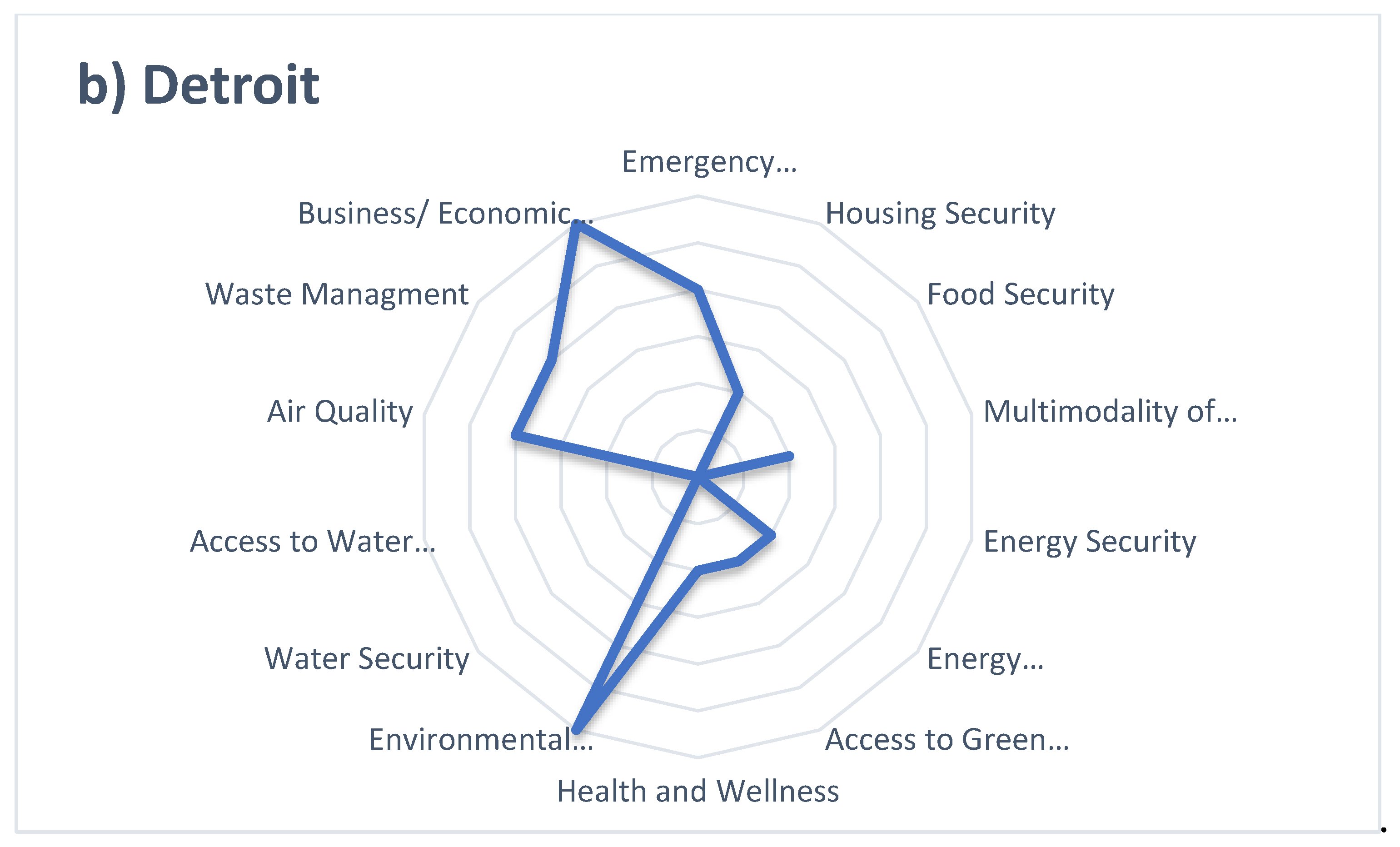
Figure 4.
Diversity of stakeholders in all CAPs/CAAPs.
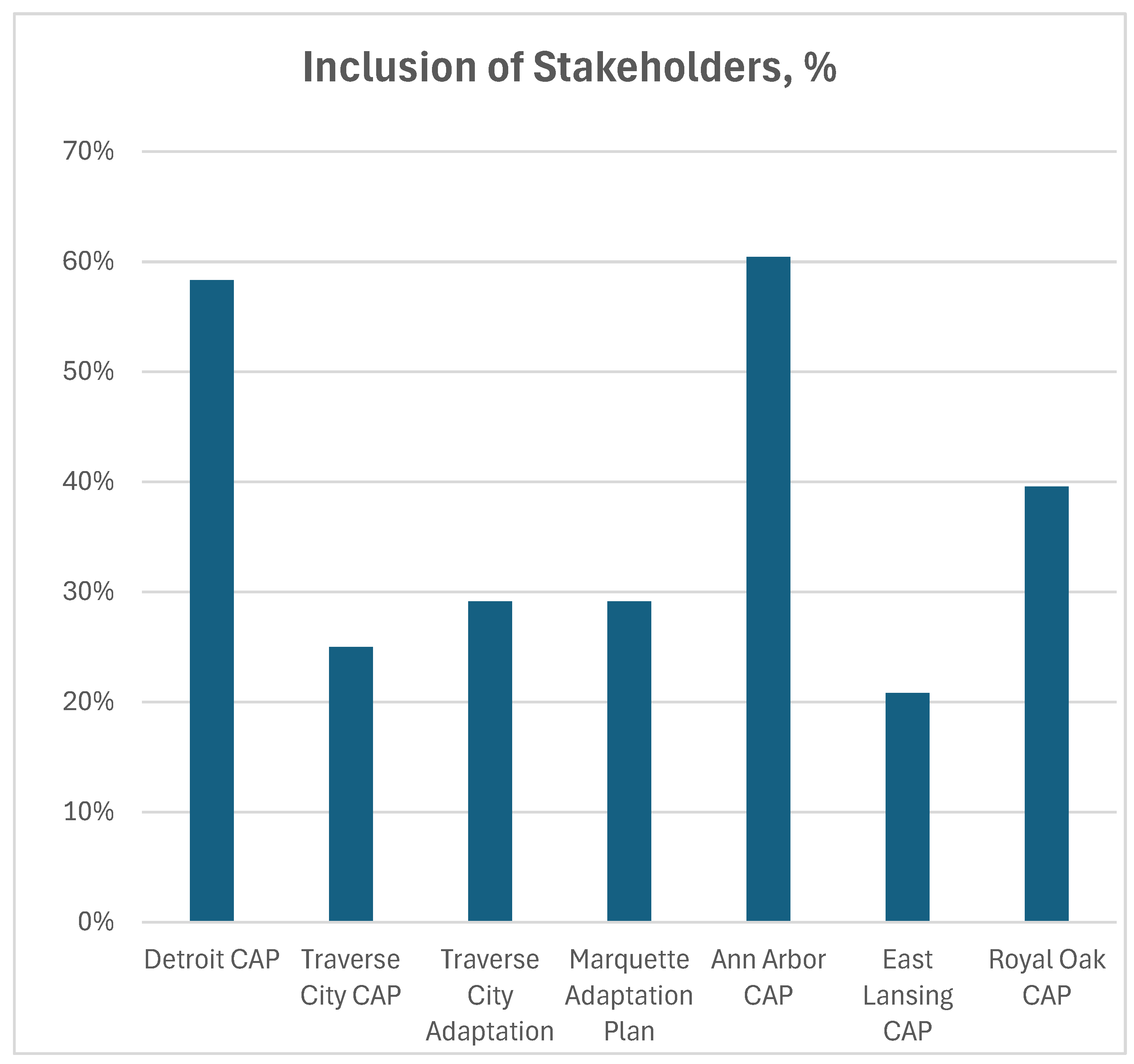
Figure 5.
Groups stakeholders engaged in (a) Ann Arbor and (b) Detroit CAPs.
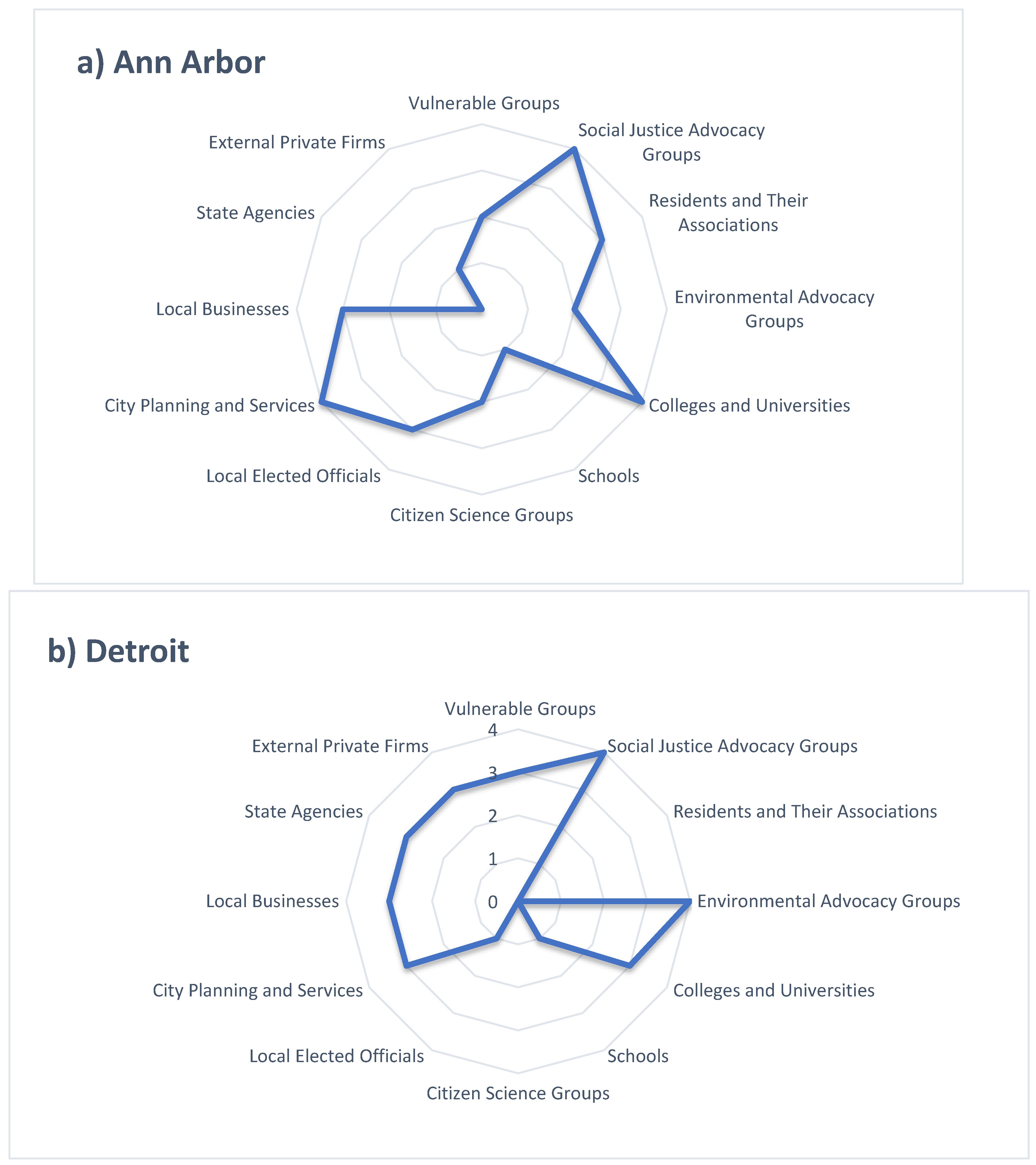

Table 1.
Climate action and/or climate adaptation plans of Michigan cities examined in this study.
| City | Title | Goals | Year |
| Ann Arbor | A2Zero: Ann Arbor Living Carbon Neutrality Plan | Mitigation with elements of adaptation | 2020 |
| Detroit | Detroit Climate Action Plan: Detroiters Working for Environmental Justice | Mitigation with elements of adaptation | 2017 |
| East Lansing | Climate Sustainability Plan: Meeting our Climate Action and Green Community Goals | Mitigation with elements of adaptation | 2012 |
| Grand Rapids | Climate Action and Adaptation Plan | Mitigation and adaptation | 2024 (expected) |
| Marquette | Adapting to Climate Change and Variability | Adaptation | 2013 |
| Royal Oak | Royal Oak Sustainability and Climate Action Plan | Mitigation and adaptation | 2022 |
| Traverse City | City of Traverse City Climate Action Plan Climate Adaptation in the Great Lakes Region: A Case Study of Traverse City, Michigan |
Mitigation Adaptation |
2011 2015 |
Table 2.
Evaluation rubric for equity in planning domains and inclusion of stakeholders.
| # | Consideration of climate equity in each adaptation planning domain | Diversity and inclusion of stakeholders |
| 0 | Planning domain is absent | None |
| 1 | Planning domain is present in general, but does not address equity measures | Participant (attended community meetings, participated in surveys or interviews, recognized in the plan) |
| 2 | Planning domain is present, and equity is mentioned as a value or aspirational goal but strategies for achieving equity are not explained | Content co-creator (contributed specific data and information, referenced in the plan) |
| 3 | Planning domain is present and strategies for achieving equity are explained | Collaborator (engaged in decision making, acknowledged in the plan) |
| 4 | Planning domain is present and strategies for achieving equity are explained. Evaluation plan is provided. | Author/Co-author (listed on a cover page) |
Table 3.
Summary of Interview Insights.
| Participant | Equity Consideration | Collaboration Across Sectors | Inclusion of Stakeholders | Funding Sources | Specific Actions or Goals |
| 1 | Equity and adaptation recently integrated more deeply. Formation of a community steering committee shows a community-driven approach. | Focus on connecting housing to mobility and development of warming/cooling centers. Community-driven efforts highlighted. | Local officials and community groups' involvement emphasizes community-driven implementation. | Public and private funding with a focus on aligning with DEI goals. Highlights funding strategy aimed at equity. | Decarbonization and transportation improvements with community input. Reflects targeted action towards sustainability and equity. |
| 2 | Creation of equity frameworks for advisory teams to ensure decision-making includes equity. Partnership with C4 for diverse community voices. | Advisory teams with mixed expertise and resident experience for transportation planning. Emphasizes structured collaboration. | C4 ensures inclusion of diverse voices in planning. Reflects a partnership model for inclusivity. | Grants from foundations for projects indicate targeted funding approach. Partnership with C4 for specific community projects. | Sustainability and equity are key in the citywide strategic plan, indicating an integrated approach to planning. |
| 3 | Focus on initiatives like the '0' program for energy efficiency in low-income areas. Proactive community engagement for BIPOC inclusion. | BIPOC community engagement for input into planning through surveys and sessions. Specific efforts to engage underrepresented communities. | Efforts to include BIPOC communities through targeted engagement strategies. Focus on accessible participation. | Mentions possible federal funds without specifics. Indicates a need for exploring diverse funding sources. | Energy efficiency pilot projects in focus neighborhoods. Demonstrates actionable steps towards equity in climate action. |
| 4 | Each action in the climate plan has an equity section, emphasizing a systematic integration of equity across the board. | Wide range of stakeholders involved, including housing commissions, CBOs, and universities, illustrating an inclusive collaboration approach. | Rethought engagement for inclusivity with tactical models and targeted outreach. Engagement positions outside traditional settings. | Climate tax and philanthropic funding for community partners. Innovative funding approaches for community-based initiatives. | Actions include energy, circular economy, and comprehensive engagement. Highlights a holistic approach to climate action. |
| 5 | Prioritizations of equitable climate solutions by engaging with financially constrained communities, ensuring climate actions benefit those who need it the most. | Involvement in multi-city pilot programs, particularly in the area of waste management and sustainability. They also work with labor unions and housing commissions. | Advocating for union participation in green installations and fostering community engagement. Various stakeholders, including those from labor, housing, and marginalized communities, have a voice in climate action planning and implementation. | Utilized philanthropic funds for climate advocacy and has adapted to incorporate various public funding sources. Strategic use of county rebates and city mileages, which provided significant financial resources for Ann Arbor's sustainability office and their climate action efforts. | Actions include advocating for the development of affordable, green housing projects, contributing to public policy for sustainable city planning, and engaging in community projects such as the establishment of resilience hubs and tree planting campaigns to mitigate the heat island effect and enhance urban green spaces |
Disclaimer/Publisher’s Note: The statements, opinions and data contained in all publications are solely those of the individual author(s) and contributor(s) and not of MDPI and/or the editor(s). MDPI and/or the editor(s) disclaim responsibility for any injury to people or property resulting from any ideas, methods, instructions or products referred to in the content. |
© 2024 by the authors. Licensee MDPI, Basel, Switzerland. This article is an open access article distributed under the terms and conditions of the Creative Commons Attribution (CC BY) license (http://creativecommons.org/licenses/by/4.0/).
Copyright: This open access article is published under a Creative Commons CC BY 4.0 license, which permit the free download, distribution, and reuse, provided that the author and preprint are cited in any reuse.


