

Submitted:
13 July 2024
Posted:
15 July 2024
You are already at the latest version
Abstract
It is well established that the reaction cycles involving some halogenated alkanes (so-called ozone-depleting substances, ODS) contribute to the depletion of ozone in the stratosphere, thus causing the Montreal Protocol (initially signed in 1987) and later amendments. The Protocol called for the scheduled phase-out of ODS, including chlorofluorocarbons (CFC), hydrochloro-fluorocarbons (HCFC), carbon tetrachloride (CCl4), halon, methyl chloroform (CH3CCl3), me-thyl chloride (CH3Cl), and even hydrofluorocarbons (HFCs). In view of the urgent importance of ozone layer protection to the globally ecological environment, the Taiwan government took regulatory actions on reducing ODS consumption since 1993 by the joint-venture of the central competent authorities. Under the regulatory requirements and the industry’s efforts by adopt-ing the alternatives to ODS and abatement technologies, the phase-out of some ODS (i.e., CFC, CCl4, halon, and CH3CCl3) have been achieved prior to 2010. The consumptions of HCFCs and methyl chloride have been significantly declined over the past three decades (1993-2022). However, HFC emission indicated a V-type variation during the period. Due to the local pro-duction and extensive use of HFC in Taiwan, its emissions increased from 663 kilotons of carbon dioxide equivalents (CO2eq) in 1993 to 2,330 kilotons of CO2eq in 2001, and then decreased to 373 kilotons of CO2eq in 2011. Since then, the emissions of HFC largely used as the alternatives to ODS showed an upward trend, increasing to 1,555 kilotons of CO2eq in 2022. To be in compliance with the Kigali Amendment (KA-2015) to the Montreal Protocol for mitigating global warming, the Taiwan government has taken regulatory actions in reducing the consumption of some HFC substances with high global warming potential (GWP) under the authorization of the Climate Change Response Act in 2023, aiming at the baseline consumption in 2024 by 80 % reduction by 2045.
Keywords:
ozone-depleting substance
; hydrofluorocarbon
; regulatory compliance
; phase-out
; promotion measure
1. Introduction
Ozone depleting substances (ODS), including Chlorofluorocarbons (CFCs), hydrochlorofluorocarbons (HCFCs), halons, methyl bromide, carbon tetrachloride, and methyl chloroform, contribute to stratospheric ozone depletion. Due to the high stability of these compounds in the troposphere, they could be transferred into the stratosphere where they break down under intense ultraviolet (UV), thus releasing chlorine or bromine atoms and then depleting ozone. In view of the environmental importance of the ozone layer to the global ecological system and human health protection, the Montreal Protocol was signed in 1987 and entered into force in 1989. It is a global agreement to implement and take actions on protecting the stratospheric ozone layer by phasing out ODS production and consumption [1]. Under the scheduled targets of the Protocol, the status of ODS production and consumption has been significantly inclined over the past decades [2,3,4]. The parties to the Protocol further agreed to call for the phase-down of hydrofluorocarbons (HFCs) in 2015 for meeting the Paris Agreement goal with the 1.5 degrees C throughout this century, which is so-called the Kigali Amendment [1,5,6]. Although these HFCs do not deplete the ozone layer, they were used as replacements for ODS eliminated by the original Montreal Protocol. More significantly, most of them are powerful greenhouse gases (GHGs) and thus contribute to global warming.
To be in compliance with the Montreal Protocol in 1987, the Taiwan government established an inter-ministerial working group in 1989 to draw up countermeasures. The central competent authorities include Ministry of Environment (MOENV), Ministry of Agriculture (MOA), and Ministry of Economic Affairs (MOEA). Thereafter, the regulatory measures were triggered by revising the Air Pollution Control Act on 19 June 2002. The central competent authority (i.e., MOENV), in consultation with relevant agencies, shall establish the regulations regarding the prohibition or restriction on substances controlled under international environmental protection conventions (e.g., Montreal Protocol) that are prone to cause air pollution. Based on the authorization of the Act, the relevant regulations have been promulgated to be in accordance with the Intergovernmental Panel on Climate Change (IPCC) guidelines for national GHG inventories [7]. They include “Regulation for Management of Montreal Protocol Controlled Substances”, “Regulation for Management of HCFCs Consumption” and “Regulation for Management of Methyl Bromide” [8]. The relevant central agencies (e.g., MOEA) also promoted ODS and HFC emission reduction. The most important case was to ban the domestic production of HCFC-22 (one of refrigerants), thus reducing the emission of HFC-23 from the HCFC-22 manufacturing process [9]. Over the past three decades, it showed a significant reduction in ODS consumption in Taiwan [10]. In addition, the Taiwan government announced the policy (“Taiwan’s Pathway to Net-Zero Emissions in 2050”) on 30 March 2022 [11], which thus prompted the promulgation of the Climate Change Response Act on 15 February 2023. To be in compliance with the Kigali Amendment to the Montreal Protocol, MOENV pre-announced the draft (“Regulation for Management of Hydrofluorocarbons” on 20 November 2023 under the authorization of the Act.
In the previous study [12], the emission trends and regulatory measures of F-gases, including HFCs, perfluorocarbons (PFCs), sulfur hexafluoride (SF6), and nitrogen trifluoride (NF3), in Taiwan were discussed and focused on the semiconductor and optoelectronic industries by using the national GHG emission database [13]. To provide a regional case study in the environmental policies and countermeasures for phasing out ODS over the last 30 years in Taiwan, this work summarized the regulatory progress on phase-out of ODS and its current achievements on ODS consumption using the official database [8,10,13,14]. In addition, the regulatory countermeasures for mitigating Taiwan’s emissions of HFCs from the air-conditioning and refrigeration equipment as refrigerants and foam agents in the near future were also addressed to be in line with the Kigali Amendment to the Montreal Protocol.
2. Data Mining and Methodology
In this work, a systematic methodology was depicted in Figure 1, which was based on the main objectives of this case study, including development process of ODS phase-out in Taiwan, regulatory measures for reducing ODS emissions and achievements for phase-out of ODS consumption. Therefore, the official websites of the central competent authorities were accessed to mine the relevant database. The regulatory countermeasures for the reduction in ODS emissions and consumption were extracted from the official database of the Ministry of Justice [8]. These relevant regulations were set forth in accordance with the Air Pollution Control Act and the Climate Change Response Act. It should be noted that the latter was formerly called the Greenhouse Gas Reduction and Management Act promulgated on July 1, 2015. However, the fundamental regulations in Taiwan for controlling the manufacture, import, export, sale, or use of ODS are based on the Air Pollution Control Act prior to 2018 and the Climate Change Response Act since 2023. To be in accordance with the revisions of the Air Pollution Control Act and the Amendments to the Montreal Protocol, these regulations were thus revised several times.
Concerning the ODS consumption, the calculation was mainly based on the database of ODS import and export, which were accessed on the trade statistics (Customs Administration, Ministry of Finance) [14]. The emissions of HFCs (the alternatives to ODS) from the industrial process and product use (IPPU) sector were extracted from the national GHG inventory report [15], which was obtained by using the IPCC methods (“2006 IPCC Guidelines for National Greenhouse Gas Inventories”) [9]. According to the Guidelines, the sub-sector of the alternatives to ODS was coded as 2F in the IPPU sector. A further search was conducted on the achievements of ODS phase-out [10], which was connected with the official actions on ozone layer protection and the amazing progress over the past three decades.
3. Regulatory Progress on Phase-Out of Ozone-Depleting Substance (ODS) in Taiwan
As required under Title VI of the Clean Air Act. the US Environmental Protection Agency (EPA) is responsible for developing and implementing the relevant programs that protect the stratospheric ozone layer. These regulatory programs include ODS Phaseout Program, Nonessential Products Ban, Significant New Alternatives Policy (SNAP) Program, Stationary Refrigeration and Air Conditioning Program, and Motor Vehicle Air Conditioning Program [16]. In 1993, these ODS were regulated for control in the “Regulation Concerning Control of Chemical Substances Listed for Control by the Montreal Protocol”, which was announced by the Industrial Development Bureau (IDB) of the Ministry of Economic Affairs (MOEA). However, the fundamental regulations in Taiwan for controlling the manufacture, import, export, sale, or use of ODS are based on the Air Pollution Control Act prior to 2018 and the Climate Change Response Act (formerly called as “Greenhouse Gas Reduction and Management Act”) since 2023 [8]. MOEVV, a central competent authority in Taiwan, has promulgated some relevant regulations for phasing out ODS by setting different reduction targets and countermeasures, which include baseline level, freezing schedule, reduction percentage, and conditions for exemption. These regulatory measures will be further addressed in the following sub-sections.
3.1. CFCs, Halons, and HCFCs
To be in compliance with the Montreal Protocol, the Taiwan governance promulgated the relevant regulations for reducing the consumption of halon to zero since 1994 and reducing the consumption of chlorofluorocarbons (CFCs) to zero since 1996 under the authorization of the Air Pollution Control Act. On the other hand, the hydrochlorofluorocarbons (HCFCs) consumption baseline was set at 638.156 ozone depleting potential (ODP) metric tons based on the consumption amount in 1996, and gradually reduced it to 0.5% of the HCFCs consumption baseline (i.e., 3.191 ODP metric tons) from 2020. Moreover, HCFCs was limited to the maintenance of refrigerating and air-conditioning equipment in use. These regulations were given below:
- -
- “Regulation for Management of Montreal Protocol Controlled Substances”
The regulation was initially promulgated on 4 May 1997 under the Article 31 of the Air Pollution Control Act. HCFCs and methyl bromide (CH3Br) was excluded from the regulated ODS.
- -
- “Regulation for Management of HCFCs Consumption”
Also authorized by the Article 31 of the Air Pollution Control Act, the regulation became effective from 15 January 2003. In Taiwan, there was no HCFCs production. Therefore, the government has phased out most of ODS since 2006 according to the following reduction stages.
- (1)
- Since 1 January 2004, annual HCFCs consumption shall not exceed 65% of the baseline (i.e., 414.801 ODP metric tons).
- (2)
- Since 1 January 2010, annual HCFCs consumption shall not exceed 25% of the baseline (i.e., 159.539 ODP metric tons).
- (3)
- Since 1 January 2015, annual HCFCs consumption shall not exceed 10% of the baseline (i.e., 63.816 ODP metric tons).
- (4)
- Since 1 January 2020, annual HCFCs consumption shall not exceed 0.5% of the baseline (i.e., 3.191 ODP metric tons). In addition, the HCFCs consumption was limited to the maintenance requirements for refrigeration and air-conditioning equipment in use.
- (5)
- Since 1 January 2030, annual HCFCs consumption shall be reduced to zero.
3.2. Methyl Bromide
It is well known that methyl bromide is a fumigant used to control pests in agriculture. In this regard, its phase-out or restricted use regulation was promulgated later. In Taiwan, the “Regulation for Management of Methyl Bromide”, also based on the authorization (Article 31) of the Air Pollution Control Act, was announced on 21 May 2004. Its use was limited to the quarantine, pre-shipment purposes, or academic research. In addition, its import source (countries/regions) must follow the requirements by the Montreal Protocol and limit to those by the recognition announcement of the central competent authority.
3.3. HFCs
HFCs are commonly used in a variety of commercial and industrial applications. Although HFCs are not listed in the Montreal Protocol, some of them are potent GHG substances. To be response to the Kigali Amendment to the Montreal Protocol, MOENV pre-announced the draft (“Regulation for Management of Hydrofluorocarbons” on 20 November 2023 under the authorization (i.e., Article 38) of the Climate Change Response Act. The regulated HFCs with high global warming potential (GWP) include eighteen compounds and its mixtures as commonly used refrigerants in Taiwan, which are summarized in Table 1 [17] and Table 2 [18,19], respectively. However, HFC-32 and HFC-134a are commonly used as refrigerants because of their relatively low GWP (i.e., 771 for HFC-32 and 1530 for HFC-134a, as seen in Table 1) [20]. In this regard, the commercial refrigerants by HFC mixture often contain HFC-32. For instance, R410A is a mixture of HFC-125 (50%) and HFC-32 (50%). Another refrigerant R407C is a mixture of HFC-125 (25%), HFC-134a (52%) and HFC-32 (23%). The relevant measures for phasing down their production and consumption, maximizing reclamation and minimizing releases from in-use and exhausted equipment, will be further addressed in the subsequent section. In addition, the F-gas regulation on certain fluorinated GHGs (e.g., HFCs) has been promulgated by the European Union (EU) according to the European Regulation (EC) No. 517/2014 [21]. This regulation intends to reduce the EU’s F-gas emissions by two-thirds by 2030 as compared with 2014 levels. The regulatory countermeasures include the control emissions of F-gases by requiring leak check and proper maintenance of refrigeration equipment, recovering F-gases at end of life, and also introducing the bans on the use of F-gases with high GWP value. Furthermore, the Regulation (EU) 2024/573 has been adopted as the EU legislative revision on 7th February 2024. It enters force on 11th March 2024 and repeals the Regulation (EU) 517/2014 [22]. The target is to phase-out HFCs by 2050 by limiting them in the quota system that can be sold, produced, or imported in the EU.
4. Achievements for Phase-Out of Ozone-Depleting Substance (ODS) in Taiwan
As mentioned above, Taiwan always followed the Montreal Protocol to align with the international efforts by the developed countries in phasing out ODS production and also reducing the ODS consumption. Both the government and industries have successfully achieved the protocol’s production and consumption targets by formulating regulatory reduction strategies accordingly. During the early 2000s, Taiwan only produced HCFCs in Production Table C under Category 1. However, the production freezing schedule of HCFC substances in this category began in 2004, so stopping the production of HCFC-141b and HCFC-142b by the only chemical manufacturer in Taiwan. In the next year (2005), the production of HCFC-22 only reached 80 ODP metric tons. In 2006, all HCFCs production has been terminated as of June 2005, marking the end of Taiwan’s HCFCs and other ODS production in 2006. It should be noted that the HFC production in Taiwan was only HFC-23, a by-product emitted from in the process of HCFC-22 manufacturing. Therefore, the HFC-32 production has been stopped since 2006. However, total HFCs emissions in Taiwan even reached approximately 2,100 kilotons of CO2eq during the early 2000s [15].
Regarding the ODS consumption, the Taiwan government and commercial & industrial sectors have been working closely to meet the requirements of the Montreal Protocol. The significant achievements of the consumption goals for the targeted ODS were summarized as follows:
- -
- Halon has been at zero consumption since 1994.
- -
- Consumption of methyl bromide has been regulated since 1 January 1995.
- -
- CFCs, carbon tetrachloride (CCl4), and 1,1,1-trichloroethane (or methyl chloroform, CH3CCl3) have been below-zero consumption since 1996.
- -
- HCFC allocations became effective on 1 Jan 1996 to freeze its consumption, set to reach zero consumption by 1 January 2030.
In Taiwan, the HCFC consumption has been reduced since 1996, complying with the requirement level of the Montreal Protocol. Figure 2 showed the staged declination of HCFC consumption since 1996, which was based on the regulatory requirements as mentioned above (Sec. 3.1) [10]. From the baseline level (i.e., 638.156 ODP tons), the target HCFC consumption was set at 414.801 ODP tons in 2004 (65% of the baseline level), 159.539 ODP tons in 2010 (25%), 63.816 ODP tons in 2015 (10%), and 3.191 ODP tons in 2020 (0.5%). To effectively cut down HCFC consumption, some countermeasures were performed by adopting allocations and bans for specific uses in different stages. For example, the regulatory bans on all types of HCFCs in aerosol propellants and foaming agents in manufacturing processes, HCFC-141b in cleaning solvents in the manufacturing processes, and filling HCFC coolants in the manufacture of new refrigerating or air conditioning equipment or new construction. Figure 3 further depicted the amounts of methyl bromide import since 2008, which was accessed on the database of the Ministry of Finance [14]. Obviously, the imported amount of methyl bromide has been significantly declined over the past decade (2014-2023). It could be attributed to the extensive use of the alternatives to methyl bromide, including phosphine and other fumigants (e.g., sulfuryl fluoride, carbonyl sulfide) [23,24,25]. However, phosphine a highly toxic substance, possibly causing severe respiratory tract irritation when exposing to its vapor or fume. Although sulfuryl fluoride (SO2F2) is a powerful fumigant for termite control in structure and lumber, it a potent GHG with high GWP value [17]. In the previous study [26], this substance also poses occupational health risks when exposed to it and its decomposition products.
5. Official Actions in Further Mitigating the Use of HFCs and Their Emissions
In the previous study [12], the Taiwan’s emissions of HFCs indicated an increasing trend since 2011 due to the extensive use of HFCs in the fields of refrigeration, fire extinguishing, electronics cleaning and foaming. Figure 4 depicted the HFC emission from the alternatives to ODS using the database of National Greenhous Gas Inventory Report [15]. It showed that the major HFC emission source has been from the alternatives to ODS, accounting for about 90% in recent years. In 2022, this HFC emission has reached 1,405 kilotons of carbon dioxide equivalent (CO2eq). In contrast, this HFC emission in 2010 only had 226 kilotons of CO2eq. Although HFCs are not ODS, some of them have high GWP values (seen in Table 3), also facing the international agreements to gradually reduce their consumption and production due to global warming [27].
To be in compliance with the Kigali Amendment (KA-2015) to the Montreal Protocol for mitigating global warming, Taiwan government has taken further actions in reducing the consumption of HFCs under the authorization of the Climate Change Response Act. According to the Draft (“Regulations for the Management of hydrofluorocarbons”) announced on 20 November 2023, the Draft focused on prohibiting or restricting the manufacture, import, export, sale, use or emission of HFCs with high GWP values and the products that use such GHGs which are regulated by international environmental conventions. The mandatory measures in the Draft include the following highlights:
- -
- Eighteen HFC substances (seen in Table 3) and their mixtures are listed in the Draft because they have been extensively used in a variety of commercial and industrial applications, especially in refrigeration equipment, and wafer etching & cleaning solvent in electronics.
- -
- HFCs allocations became effective on 1 January 2024 to freeze its consumption.
- -
- National baseline for HFCs consumption was set at 24,523,864.2 metric tons CO2eq. The staged consumption reduction targets were 22,071,477.8 metric tons CO2eq since 1 January 2029 (90% of the baseline), 17,166,704.9 metric tons CO2eq since 1 January 2035 (70% of the baseline), 12,261,932.1 metric tons CO2eq since 1 January 2040 (50% of the baseline), and 4,904,772.8 metric tons CO2eq since 1 January 2045 (20% of the baseline).
- -
- Regarding the production of HFCs, it will be effective on 1 January 2024.
- -
- The imports and exports of HFCs will not be allowed unless with approval.
- -
- The enterprises using and supplying HFCs need to file an application for approved allocation and then for customs declaration in accordance with the import and export regulations.
6. Conclusions and Future Outlook
In this case study, the regulatory countermeasures on the production, use, and phase-out of ozone-depleting substances (ODS) and its current achievements on the consumption in Taiwan have been summarized to echo the Montreal Protocol over the period of 1993-2022. On the basis of the official database, we can see great progress over the last 30 years, especially for the significant reduction in the emissions from the chemical and electronic industries. Under the joint-venture efforts by the regulatory implementations and the industrial technologies, the phase-out of some ODS (i.e., CFC, CCl4, halon, and CH3CCl3) have been achieved prior to 2010. Moreover, the consumptions of HCFCs and methyl chloride have been significantly declined over the past three decades (1993-2022). However, the emissions of HFC mainly used as the refrigerant alternatives to ODS indicated an upward trend, increasing from 373 kilotons carbon dioxide equivalents (CO2eq) in 2011 to 1,555 kilotons of CO2eq in 2022.
Obviously, the future efforts will focus on the emission reduction in HFC, which are potent greenhouse gases. According to the Kigali Amendment to the Montreal Protocol, the relevant regulations have been announced by some developed countries. The cores are to phase down their production and consumption, maximize reclamation and minimize releases from air-conditioning & refrigeration equipment, and facilitate the transition to next-generation environment-friendly technologies or refrigerants. In this regard, the Taiwan government pre-announced the regulation (“Regulations for the Management of hydrofluorocarbons”) on 20 November 2023, listing 18 HFC and their mixtures as targets for control and also aiming at reducing baseline consumption in 2024 by 80 % by 2045. As compared to the F-gas regulation by the European Union (EU), the HFC reduction schedule in Taiwan is obviously much looser. In the near future, the best way to cut HFC emissions may be to promulgate the regulations banning the production of HFC and using the new-generation alternatives to commonly used HFC refrigerants like hydrofluoroolefins (HFOs).
Funding
This research received no external funding.
Institutional Review Board Statement
Not applicable.
Informed Consent Statement
Not applicable.
Data Availability Statement
Data is contained within the article.
Conflicts of Interest
The authors declare no conflict of interest.
References
- The Montreal Protocol on Substances that Deplete the Ozone Layer. Available online: https://ozone.unep.org/treaties/montreal-protocol (accessed on 2 July 2024).
- Gareau, B.J. A critical review of the successful CFC phase-out versus the delayed methyl bromide phase-out in the Montreal Protocol. Int Environ Agreements 2010, 10, 209–231. [Google Scholar] [CrossRef]
- Hu, L.; Montzka, S.A.; Lehman, S.J.; Godwin, D.S.; Miller, B.R.; Andrews, A.E.; Thoning, K.; Miller, J.B.; Sweeney, C.; Siso, C.; Elkins, J.W.; Hall, B.D.; Mondeel, D.J.; Nance, D.; Nehrkorn, T.; Mountain, M.; Fisher, M.L.; Biraud, S.C.; Chen, H. Considerable contribution of the Montreal Protocol to declining greenhouse gas emissions from the United States. Geophys Res Lett 2017, 44, 8075–8083. [Google Scholar] [CrossRef]
- Western, L.M.; Daniel, J.S.; Vollmer, M.K.; Clingan, S.; Crotwell, M.; Fraser, P.J.; Ganesan, A.L.; Hall, B.; Harth, C.M.; Krummel, P.B.; Muhle, J.; O’Doherty, S.; Salameh, P.K.; Stanley, K.M.; Reimann, S.; Vimont, I.; Young, D.; Rigby, M.; Weiss, R.F.; Prinn, R.G.; Montzka, S.A. A decrease in radiative forcing and equivalent effective chlorine from hydrochlorofluorocarbons. Nat Clim Chang 2024. [Google Scholar] [CrossRef]
- Roberts, M.W. Finishing the job: The Montreal Protocol moves to phase down hydrofluorocarbons. Rev Eur Comp Int Environ Law 2017, 26, 220–230. [Google Scholar] [CrossRef]
- Pallav Purohit, P.; Borgford-Parnell, N.; Klimont, Z.; Höglund-Isaksson, L. Achieving Paris climate goals calls for increasing ambition of the Kigali Amendment. Nat Clim Chang 2022, 12, 339–342. [Google Scholar] [CrossRef]
- 2006 IPCC Guidelines for National Greenhouse Gas Inventories. Available online: https://www.ipcc-nggip.iges.or.jp/public/2006gl/ (accessed on 2 July 2024).
- Laws and Regulations Database (Ministry of Justice, Taiwan). Available online: https://law.moj.gov.tw/Eng/index.aspx (accessed on 3 July 2024).
- Miller, B.R.; Rigby, M.; Kuijpers, L.J.M.; Krummel, P.B.; Steele, L.P.; Leist, M.; Fraser, P.J.; McCulloch, A.; Harth, C.; Salameh, P.; Mühle, J.; Weiss, R.F.; Prinn, R.G.; Wang, R.H.J.; O’Doherty, S.; Greally, B.R.; Simmonds, P.G. HFC-23 (CHF3) emission trend response to HCFC-22 (CHClF2) production and recent HFC-23 emission abatement measures. Atmos. Chem. Phys. 2010, 10, 7875–7890. [Google Scholar] [CrossRef]
- Ozone Layer Protection (Ministry of Environment, Taiwan). Available online: https://air.moenv.gov.tw/airepaEn/EnvTopics/AirQuality_5.aspx (accessed on 20 June 2024).
- Taiwan’s Pathway to Net-Zero Emissions in 2050 (National Development Council, Taiwan). Available online: https://www.ndc.gov.tw/en/Content_List.aspx?n=B927D0EDB57A7A3A&upn=A2B386E427ED5689 (accessed on 20 June 2024).
- Tsai, W.T.; Tsai, C.H. A Survey on fluorinated greenhouse gases in Taiwan: Emission trends, regulatory strategies, and abatement technologies. Environments 2023, 10, 113. [Google Scholar] [CrossRef]
- Ministry of Environment (MOENV). Taiwan Greenhouse Gases Inventory; MOENV: Taipei, Taiwan, 2023. [Google Scholar]
- Trade Statistics (Customs Administration, Ministry of Finance, Taiwan). Available online: https://portal.sw.nat.gov.tw/APGA/GA30 (accessed on 12 June 2024).
- Ministry of Environment (MOENV). Taiwan Greenhouse Gases Inventory, MOENV: Taipei, Taiwan, 2024.
- Regulating Ozone-Depleting Substances Under the Clean Air Act. Available online: https://www.epa.gov/ozone-layer-protection/regulating-ozone-depleting-substances-under-clean-air-act (accessed on 2 July 2024).
- Climate Change 2021: The Physical Science Basis (Intergovernmental Panel on Climate Change). Available online: https://www.ipcc.ch/report/sixth-assessment-report-working-group-i/ (accessed on 2 July 2024).
- Technology Transitions GWP Reference Table (US EPA). Available online: https://www.epa.gov/climate-hfcs-reduction/technology-transitions-gwp-reference-table (accessed on 2 July 2024).
- Llopis, R.; Sánchez, D.; Cabello, R.; Nebot-Andrés, L.; Catalán-Gil, J. R-407H as drop-in of R-404A. Experimental analysis in a low temperature direct expansion commercial refrigeration system. Int J Refrig 2017, 80, 11–23. [Google Scholar] [CrossRef]
- Heredia-Aricapa, Y.; Belman-Flores, J.M.; Mota-Babiloni, A.; Serrano-Arellano, J.; García-Pabón, J.J. Overview of low GWP mixtures for the replacement of HFC refrigerants: R134a, R404A and R410A. Int J Refrig 2020, 111, 113–123. [Google Scholar] [CrossRef]
- Müllerová, M.; Krtková, E.; Rošková, Z. F-Gases: Trends, applications and newly applied gases in the Czech Republic. Atmosphere 2020, 11, 455. [Google Scholar] [CrossRef]
- European Commission Adopts New F-gas Regulation. Available online: https://www.complianceandrisks.com/blog/regulation-eu-2024-573-european-commission-adopts-new-f-gas-regulation/ (accessed on 12 July 2024).
- Dunway, J.M. Status of chemical alternatives to methyl bromide for pre-plant fumigation of soil. Phytopathology 2002, 92, 1337–1343. [Google Scholar] [CrossRef] [PubMed]
- Fields, P.G.; White, N.D.G. Alternatives to methyl bromide treatments for stored-product and quarantine insects. Annu Rev Entomol. 2002, 47, 331–359. [Google Scholar] [CrossRef] [PubMed]
- Ruzo, L.O. Physical, chemical and environmental properties of selected chemical alternatives for the pre-plant use of methyl bromide as soil fumigant. Pest Manag Sci 2006, 62, 99–113. [Google Scholar] [CrossRef] [PubMed]
- Tsai, W.T. Environmental and health risks of sulfuryl fluoride, a fumigant replacement for methyl bromide. J Environ Sci Health C 2010, 28, 125–145. [Google Scholar] [CrossRef] [PubMed]
- Velders, G.J.M.; Daniel, J.S.; Montzka, S.A.; Vimont, I.; Rigby, M.; Krummel, P.B.; Muhle, J.; O’Doherty, S.; Prinn, R.G.; Weiss, R.F.; Young, D. Projections of hydrofluorocarbon (HFC) emissions and the resulting global warming based on recent trends in observed abundances and current policies. Atmospheric chemistry and physics 2022, 22, 6087–6101. [Google Scholar] [CrossRef]
Figure 1.
Framework items of this study.
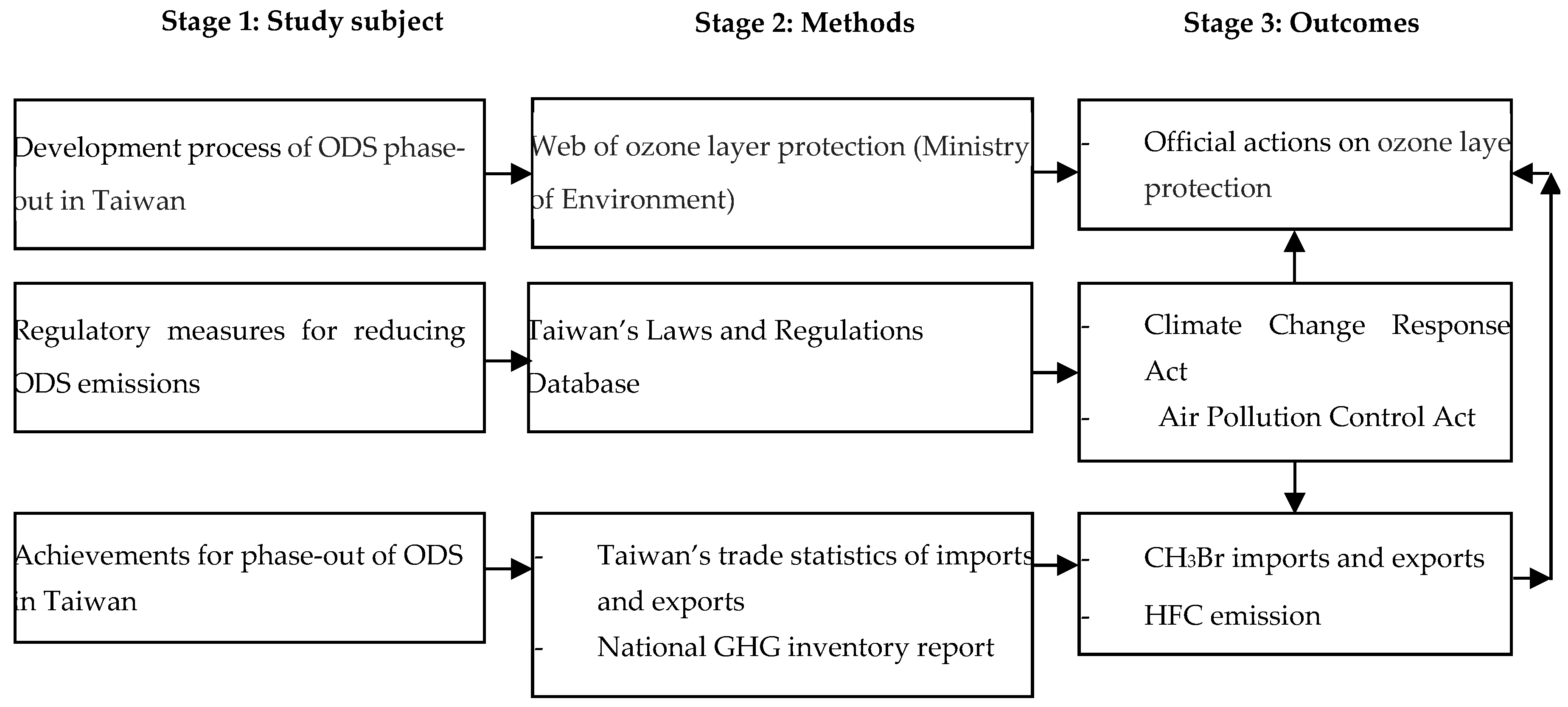
Figure 2.
HCFC consumption in Taiwan since 1996.
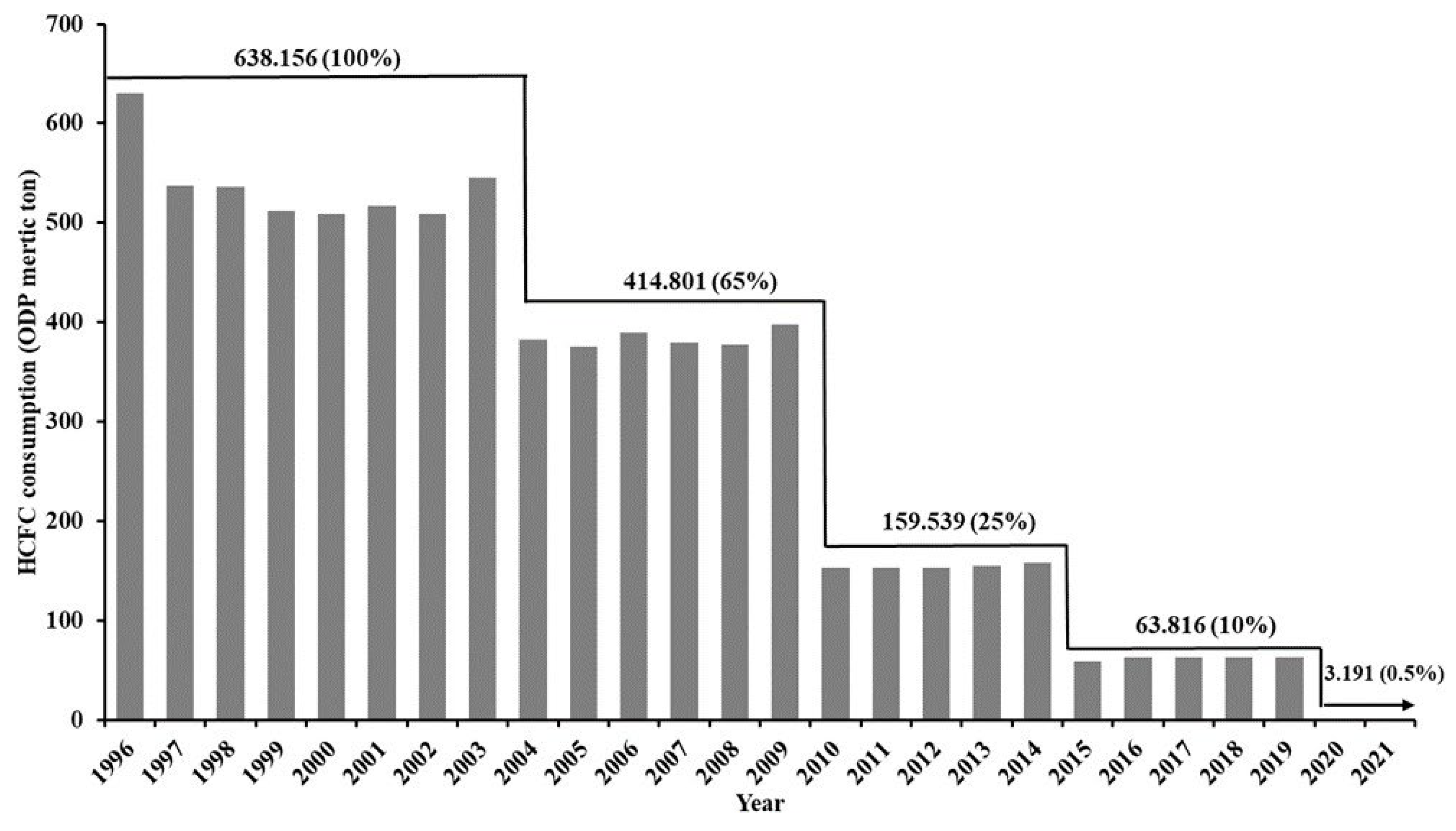
Figure 3.
Imported amount of methyl bromide in Taiwan during the period of 2008-2023.
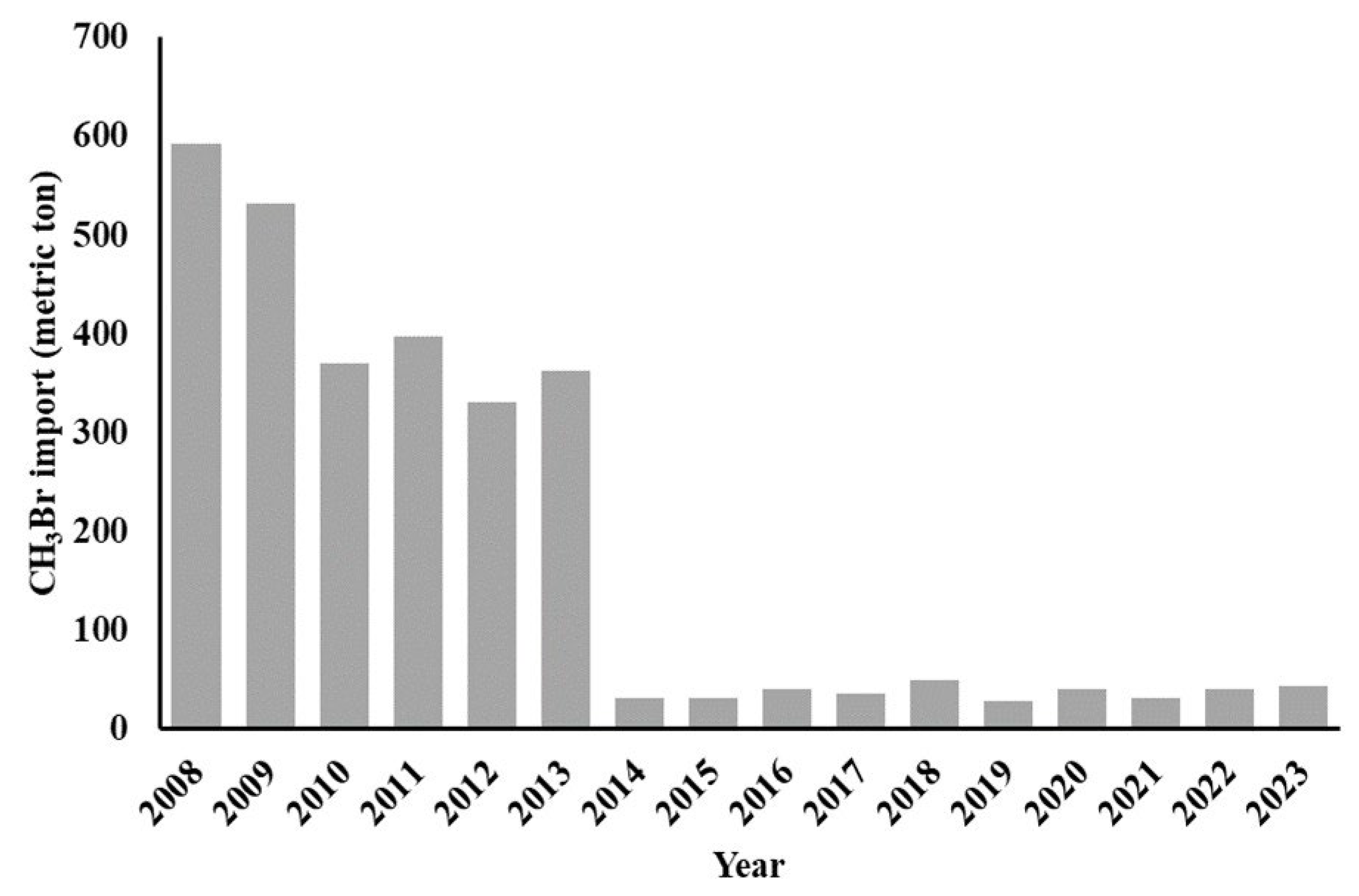
Figure 4.
HFC emission from the alternatives to ODS in Taiwan during the period of 2001-2022.
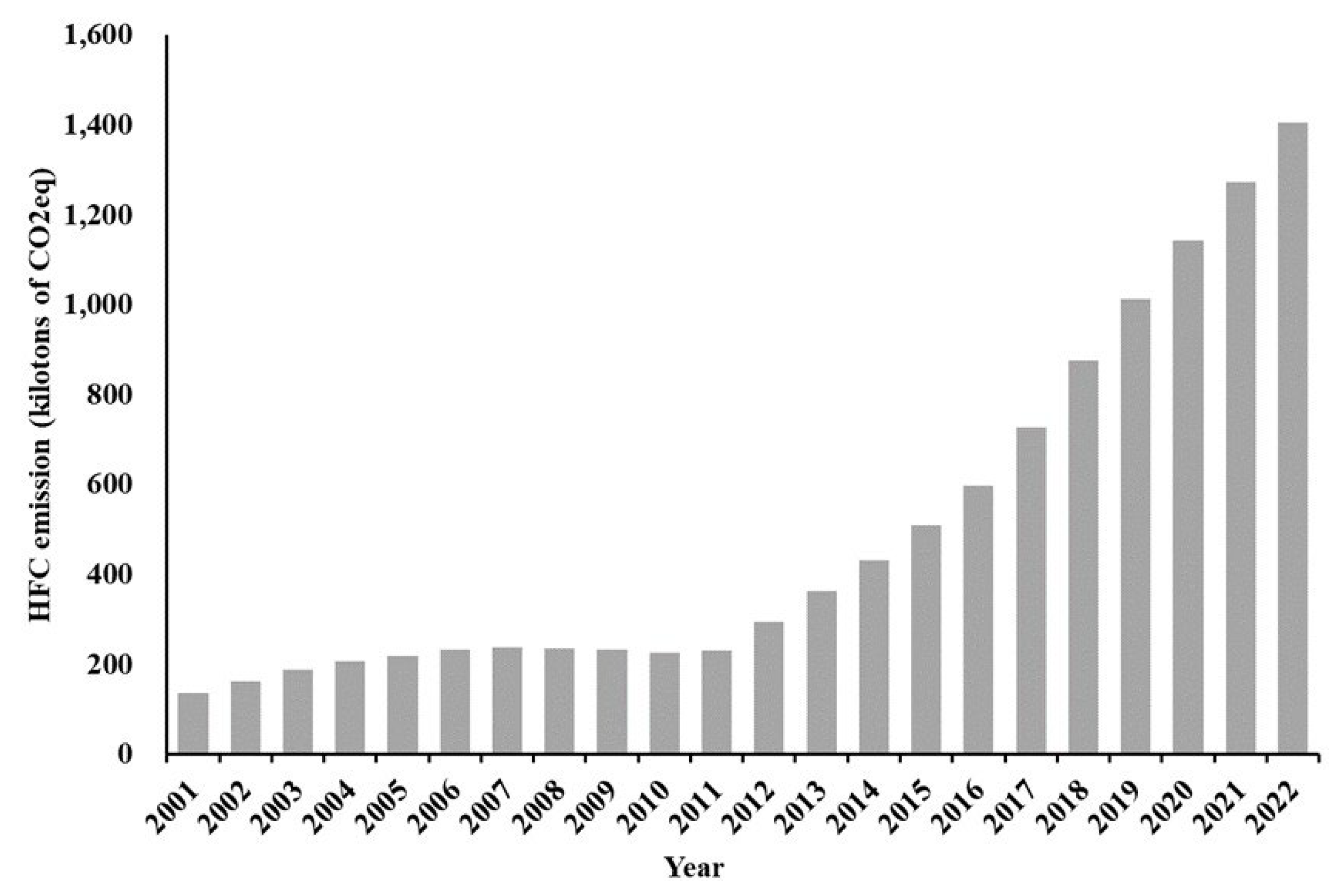

Table 1.
Lifetime, global warming potential (GWP) and main applications of commonly used HFCs.
| HFC | Formula | Lifetime a (Year) |
GWP a | Main applications | |||||
| Refrigerant | Solvent | Foaming | Extinguishing | Etching | Others b | ||||
| HFC-23 | CHF3 | 228 | 14,600 | v | v | v | |||
| HFC-32 | CH2F2 | 5.4 | 771 | v | |||||
| HFC-41 | CH3F | 2.8 | 135 | v | |||||
| HFC-125 | CHF2CF3 | 30 | 3,740 | v | v | v | |||
| HFC-134 | CHF2CHF2 | 10 | 1,260 | v | v | v | v | ||
| HFC-134a | CH2FCF3 | 14 | 1,530 | v | v | v | |||
| HFC-143 | CH2FCHF2 | 3.6 | 364 | v | |||||
| HFC-143a | CH3CF3 | 51 | 5,810 | v | v | ||||
| HFC-152 | CH2FCH2F | 0.471 | 21.5 | v | v | v | v | ||
| HFC-152a | CH3CHF2 | 1.6 | 164 | v | v | v | |||
| HFC-227ea | CF3CHFCF3 | 36 | 3,600 | v | v | v | |||
| HFC-236cb | CH2FCF2CF3 | 13.4 | 1,350 | v | |||||
| HFC-236ea | CHF2CHFCF3 | 11.4 | 1,500 | v | |||||
| HFC-236fa | CF3CH2CF3 | 213 | 8,690 | v | v | v | v | ||
| HFC-245ca | CH2FCF2CHF2 | 6.6 | 787 | v | |||||
| HFC-245fa | CHF2CH2CF3 | 7.9 | 962 | v | v | ||||
| HFC-365mfc | CF3CH2CF2CH3 | 8.9 | 914 | v | v | ||||
| HFC-41-10mee | CF3CHFCHFCF2CF3 | 17 | 1,600 | v | |||||
a Source [17]. b Including dielectric gas, shielding gas (for the production of aluminum/magnesium), propellant (for the delivery of pharmaceuticals), and so on.
Table 2.
Commonly used refrigerant by HFC mixture and its compositions.
| Refrigerant by HFC mixture |
GWP a | Composition (vol%) | |||
| HFC-32 | HFC-125 | HFC-134a | HFC-143a | ||
| R-404A | 3,922 | 44 | 54 | 4 | |
| R-407C | 1,774 | 23 | 25 | 52 | |
| R-407F | 1,825 | 30 | 30 | 40 | |
| R-407H | 1,495 b | 32.5 | 15.0 | 52.5 | |
| R-410A | 2,088 | 50 | 50 | ||
| R-507A | 3,985 | 50 | 50 | ||
Disclaimer/Publisher’s Note: The statements, opinions and data contained in all publications are solely those of the individual author(s) and contributor(s) and not of MDPI and/or the editor(s). MDPI and/or the editor(s) disclaim responsibility for any injury to people or property resulting from any ideas, methods, instructions or products referred to in the content. |
© 2024 by the authors. Licensee MDPI, Basel, Switzerland. This article is an open access article distributed under the terms and conditions of the Creative Commons Attribution (CC BY) license (http://creativecommons.org/licenses/by/4.0/).
Copyright: This open access article is published under a Creative Commons CC BY 4.0 license, which permit the free download, distribution, and reuse, provided that the author and preprint are cited in any reuse.


