

Submitted:
13 July 2024
Posted:
15 July 2024
Read the latest preprint version here
Abstract
The Aether Physics Model (APM) presents a radical reinterpretation of fundamental physics, offering potential solutions to long-standing problems in Quantum Mechanics and General Relativity. This paper explores the core concepts and equations of the APM, demonstrating how they provide a unified framework for understanding the nature of space, time, matter, and fundamental forces. We examine the implications of the APM's quantized Aether structure, the role of the Singularity and Gforce, and the reinterpretation of fundamental constants and forces. The model's predictions regarding dark matter, neutron content in stable matter, and the unification of forces are discussed, along with potential experimental tests. Additionally, we introduce the loxodrome concept and toroidal particle topology as central elements in explaining fundamental particles and forces. While highly speculative, the APM offers a thought-provoking alternative to standard physics models and warrants further investigation.
Keywords:
aether physics model
; quantum aether
; unified field theory
; singularity
; Gforce
; chronovibration
; dark matter
; magnetic charge
1. Introduction
The quest for a unified theory of physics, one that can reconcile Quantum Mechanics with General Relativity and provide a comprehensive explanation for all observed phenomena, has been a driving force in theoretical physics for decades. Despite significant advances, a fully satisfactory unification remains elusive, with issues such as the nature of dark matter and dark energy, the hierarchy problem, and the reconciliation of Quantum Mechanics with gravity continuing to challenge our understanding of the Universe [1].
The Aether Physics Model (APM) represents a novel approach to these fundamental questions [2]. The APM offers a radically different perspective on the nature of reality by proposing a quantized Aether structure as the foundation of space itself and introducing concepts such as the Singularity, Gforce, and magnetic charge.
This paper aims to provide a comprehensive overview of the APM’s key concepts and equations, exploring their implications for our understanding of fundamental physics and their potential to resolve long-standing issues in the field. We will examine how the APM addresses the unification of forces, the nature of dark matter and dark energy, and the structure of space and time, among other topics.
While the APM remains a speculative model that challenges many established principles of modern physics, its innovative approach and potential to offer solutions to persistent problems warrant serious consideration and further investigation.
2. The Singularity and the Origin of the Universe
At the heart of the Aether Physics Model lies the concept of the Singularity, a radical departure from both the Big Bang singularity of standard cosmology and the mathematical singularities encountered in General Relativity [3]. In the APM, the Singularity is conceived as a dimensionless point of infinite potential, the eternal wellspring from which all matter, energy, and the fundamental forces of our Universe continuously emerge [2].
Unlike the initial singularity of Big Bang cosmology, which represents a state of infinite density and temperature at the beginning of time, the APM’s Singularity exists outside of space and time as we understand them. It is not a historical event but an ongoing process, constantly giving birth to the fundamental building blocks of reality [4].
From this Singularity, four primordial entities are proposed to emerge: dark matter, Gforce, electrostatic charge, and magnetic charge. These form the basis for all subsequent structures and phenomena in the Universe. This concept challenges our understanding of causality and the nature of physical laws, suggesting that the fundamental constants and forces we observe are emergent properties rather than fixed, intrinsic features of the Universe [5].
This view has profound implications. It suggests that the Universe is in a constant state of creation, with the fundamental fabric of reality continuously emerging from the Singularity. This perspective could potentially resolve issues related to the universe’s initial conditions, the fine-tuning problem, and the nature of time itself [6].
Furthermore, the concept of the Singularity in the APM offers a new approach to understanding the relationship between Quantum Mechanics and gravity. By proposing a common origin for all forces and particles, it provides a framework for unification that does not rely on the problematic reconciliation of quantum field theory with General Relativity [7].
However, the concept of the Singularity in the APM also raises significant questions. How can we mathematically describe or empirically investigate a dimensionless point that exists outside of space and time? How does this concept relate to the observable Universe and the laws of physics as we currently understand them? These questions present both challenges and opportunities for further theoretical development and potential experimental investigations [8].
3. Gforce and the Unification of Fundamental Forces
Central to the Aether Physics Model is the concept of Gforce, a universal, reciprocal force that permeates all of space and interacts with Aether units to give rise to all fundamental forces and phenomena [2]. This concept represents a significant departure from the standard model of particle physics and offers a novel approach to the unification of forces.
Figure 1.
The three forces are manifestations of the one Gforce. The charges and mass could be depicted as three colored glass panes through which we view a light. The same light illuminates each pane of glass, even though each color is different.
Figure 1.
The three forces are manifestations of the one Gforce. The charges and mass could be depicted as three colored glass panes through which we view a light. The same light illuminates each pane of glass, even though each color is different.
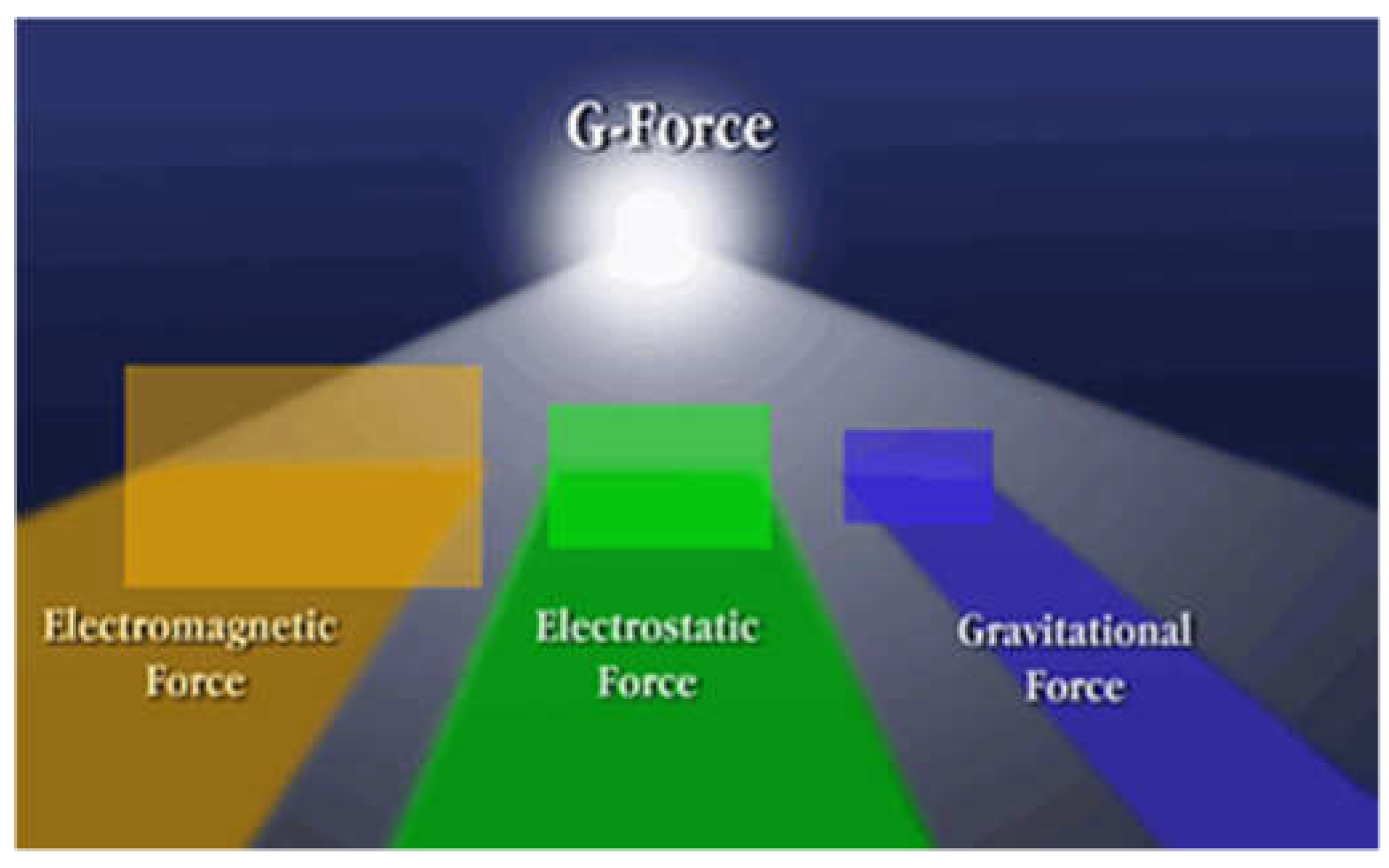
In the APM, Gforce is not just another fundamental force to be unified with the others, but the underlying principle from which all forces emerge. The gravitational, electrostatic, and strong nuclear forces are all considered manifestations of Gforce interacting with different aspects of the Aether units [9].
The relationship between Gforce and the fundamental force constants is expressed through a series of equations:
Where is Newton’s gravitational constant, is the Aether unit constant, is Coulomb’s constant, is the Compton wavelength, is the maximum mass of an Aether unit, and is the maximum charge of an Aether unit. [10].
These equations demonstrate how the APM unifies the fundamental forces by expressing them all in terms of Gforce and the properties of Aether units. This approach offers several advantages:
1. It provides a geometrical basis for unification, rooted in the structure of space itself.
2. It potentially resolves the hierarchy problem by deriving all force strengths from a single, underlying principle.
3. It offers a natural way to include gravity in a unified theory, something that has proven challenging in other approaches [11].
In the APM, the strong nuclear force is reinterpreted as a magnetic force, closely related to the concept of magnetic charge. The weak nuclear force, while not considered a fundamental force in the APM, emerges as a proportion between electrostatic and magnetic charge interactions [42].
The concept of Gforce also has implications for our understanding of dark energy. In the APM, what we perceive as dark energy could be a large-scale manifestation of Gforce, driving the expansion of space through its interaction with Aether units [12,43].
The APM’s approach to unification challenges the current paradigm of particle physics, which seeks to unify forces through symmetry principles and gauge theories. Instead, it suggests that unification should be sought in the fundamental structure of space itself [44].
However, the Gforce concept also raises questions. How can we experimentally isolate or measure Gforce independently of its manifestations as the known forces? How does the strength of Gforce relate to the observed strengths of the fundamental forces? How can we experimentally test the predictions of this unified model? These questions present both challenges and opportunities for further theoretical development and experimental investigation [13,45].
The pursuit of answers to these questions could lead to innovative approaches in both theoretical physics and experimental design, potentially pushing the boundaries of our understanding of fundamental forces and the structure of the Universe.
4. Aether Units and the Quantized Structure of Space
The Aether Physics Model proposes a return to the concept of an Aether, but in a form radically different from the luminiferous Aether of 19th-century physics. In the APM, space itself is composed of discrete, quantized units called Aether units, which have a specific geometric structure [2].
Figure 2.
Aether Unit viewed in five dimensions of space resonance.
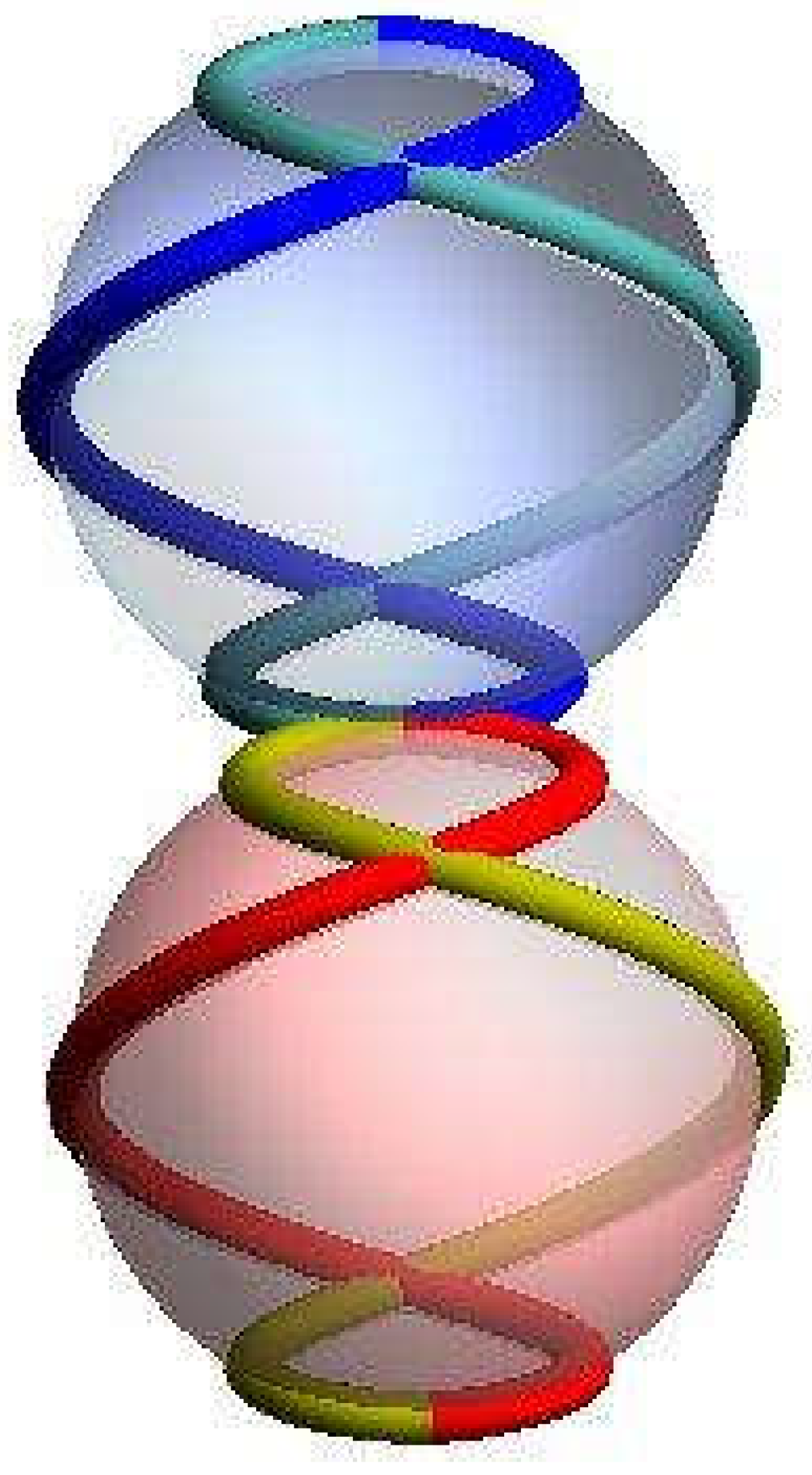
Each Aether unit is described as having two spherical surfaces that reciprocally coexist with four tubular loxodromes. The spherical surfaces are associated with electrostatic charge, while the tubular loxodromes are related to magnetic charge [14]. The Aether unit constant quantifies this geometric structure:
Where is the Aether unit constant, and is Coulomb’s constant. [10].
Aether units provide a physical basis for quantum phenomena and potentially resolve the wave-particle duality. In this view, particles are not point-like entities but emergent structures arising from the interactions of one-dimensional strings of mass (dark matter) with the Aether units [15].
4.1. Mathematical Description of the Loxodrome:
The equation mathematically describes the path of the loxodrome in the APM over the spherical surfaces of the proposed Aether unit. When applied to the model’s multidimensional framework, this simple equation gives rise to complex geometric structures.
4.2. Geometric Progression: 2π to 16π2
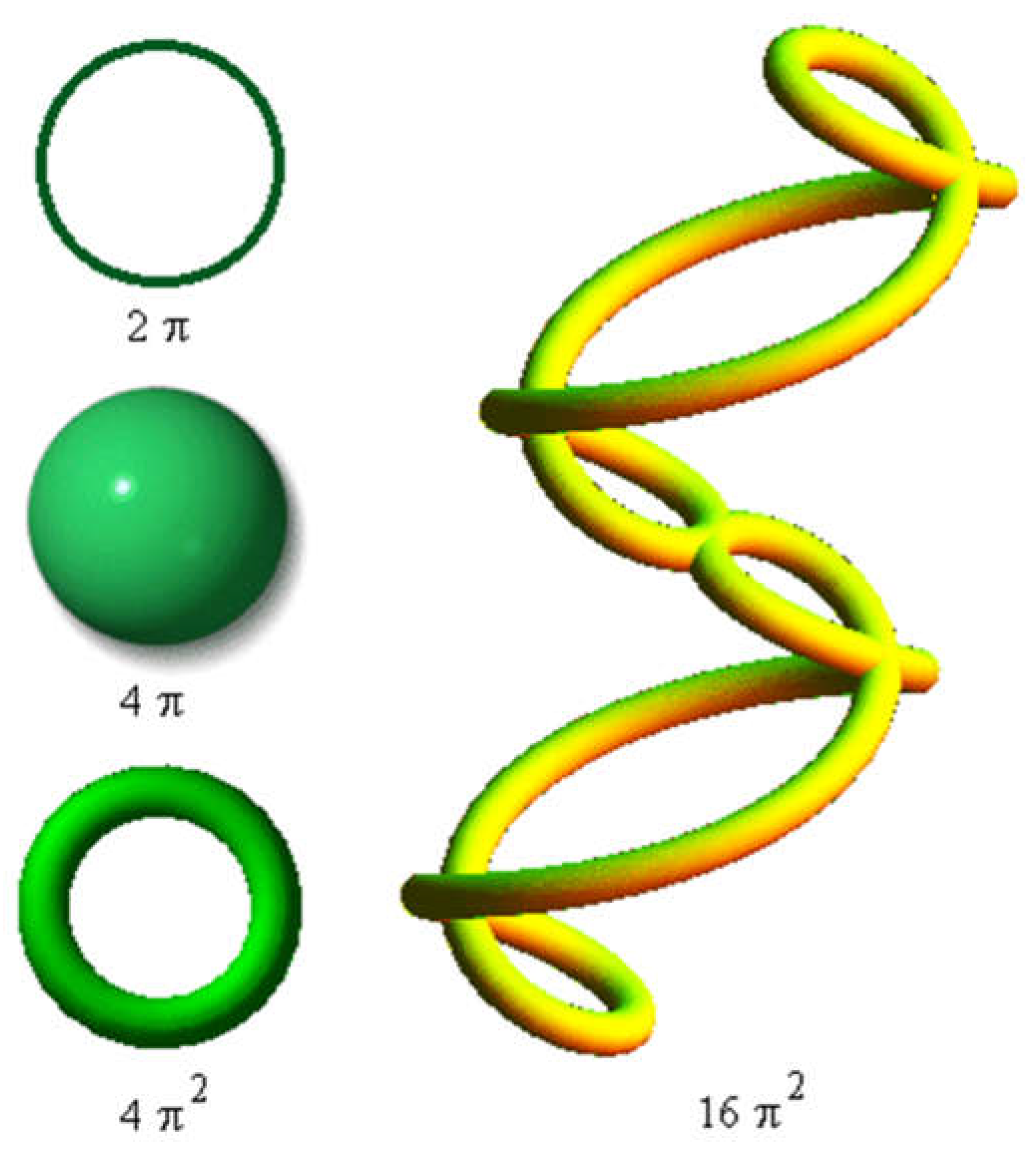
Figure 3.
The development of the loxodrome concept involved exploring a geometric progression from 2π to 4π, to 4π2, and finally to 16π2. This progression is fundamental to the APM’s description of Aether units and their interactions.
Figure 3.
The development of the loxodrome concept involved exploring a geometric progression from 2π to 4π, to 4π2, and finally to 16π2. This progression is fundamental to the APM’s description of Aether units and their interactions.
4.3. The Aether Unit Constant: (Equation (4))
The Aether unit constant, defined as = · (where is Coulomb’s constant), quantifies the geometric structure of the proposed Aether units. This constant plays a central role in the APM’s formulation of fundamental forces and particle properties.
4.4. Toroidal Topology of Subatomic Particles
Figure 4.
The toroids in this figure have different radii but identical surface areas. This is why all subatomic particles share the same quantum surface area as the Compton wavelength squared.
Figure 4.
The toroids in this figure have different radii but identical surface areas. This is why all subatomic particles share the same quantum surface area as the Compton wavelength squared.
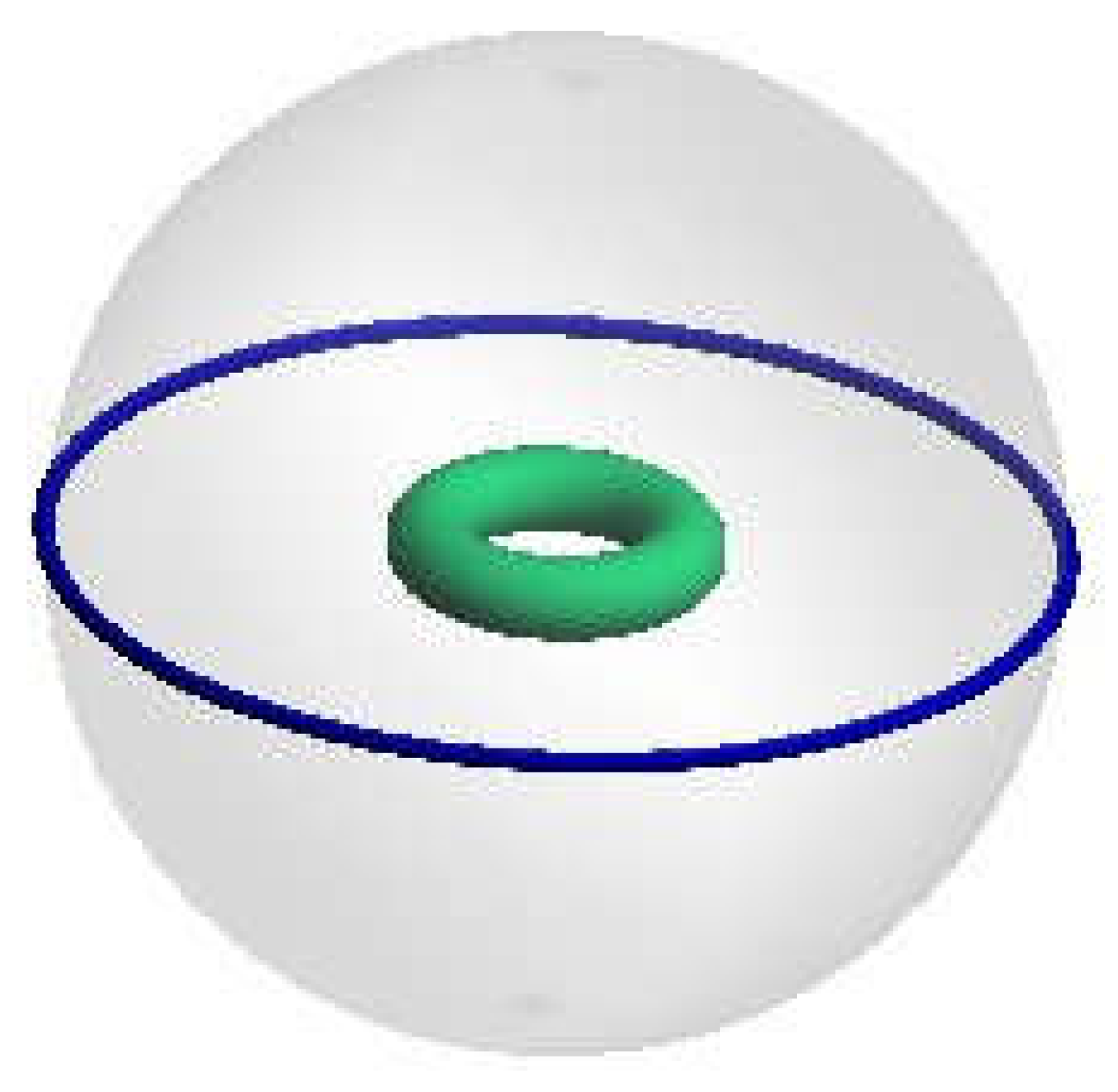
A key aspect of the APM is its proposal that subatomic particles have a toroidal structure. This concept aligns with the model’s loxodrome geometry and provides a novel way to conceptualize particle properties. Because toroids have two radii, the minor radius and the major radius, they can have varying radii lengths but still have the same surface area. Because all subatomic particles have the same surface area, we can graphically represent them as twin tubular loxodromes (referred to simply as “loxodromes”) while using the quantum distance squared as their surface area.
4.5. Applications of the Loxodrome and Toroidal Particle Model The Loxodrome and Toroidal Particle Concepts Are Applied to Various Aspects of the APM:
- Particle properties and classification: The four tubular loxodrome positions within an Aether unit are associated with different particle types, such as electrons, positrons, protons, and antiprotons.
- Fundamental forces: The loxodrome geometry and toroidal particle structure are used to explain the nature of fundamental forces, suggesting that electromagnetic and gravitational forces arise from interactions between the loxodrome structures of different Aether units and the toroidal geometries of particles.
- Space-resonance concept: The APM introduces the concept of “space-resonance” as more fundamental than traditional space-time, intimately tied to the loxodrome geometry and toroidal particle structure.
- Particle transformations and interactions: The toroidal model provides a framework for understanding particle transformations and interactions, such as the contraction of protons and neutrons when binding in atomic nuclei.
The quantized nature of space in the APM has several important implications:
1. It suggests that the Planck length might not be the fundamental limit of space quantization, potentially resolving issues related to infinities in quantum field theories [16].
2. It provides a new perspective on the nature of the vacuum state and zero-point energy, suggesting that these are manifestations of the Aether unit properties rather than fluctuations in empty space [17].
3. It offers a geometrical basis for understanding spin and other quantum numbers, relating them to the specific structure of the Aether units [18].
The quantum frequency equation in the APM is given by:
Where is the quantum frequency, Where is the speed of photons and is the Compton wavelength. [10].
This equation defines the fundamental chronovibration frequency of the Aether, linking the speed of photons to the Compton wavelength. Unlike in standard Quantum Mechanics, where this relationship is derived from the particle-wave duality, in the APM, it represents the inherent temporal oscillation rate of the Aether units themselves [19].
While speculative, the concept of Aether units offers a novel approach to some of the most persistent puzzles in modern physics. However, it also raises significant questions. How can we experimentally detect or measure individual Aether units? How does this quantized space structure relate to the continuous spacetime of General Relativity? These enigmas serve as catalysts for refining abstract constructs and developing cutting-edge experimental techniques. [20].
5. Chronovibration and the Nature of Time
The Aether Physics Model introduces a novel perspective on the nature of time through chronovibration. In this view, time is not a smooth, unidirectional flow but a result of oscillations between forward and backward time [2].
Chronovibration is described as having two frequency dimensions:
1. A forward-backward temporal oscillation that, by the manner of half-spin subatomic particles, gives rise to our perception of the flow of time.
2. A right-left temporal torque is associated with forming matter and antimatter [21].
This dual-frequency model of time offers a new framework for understanding temporal phenomena in Quantum Mechanics and potentially resolving paradoxes related to time in physics. It suggests that our perception of time’s arrow is an emergent property arising from these underlying oscillations [22].
The quantum frequency equation (Equation (5)) plays a crucial role in the concept of chronovibration. In the APM, this frequency is not just a property of particles but a fundamental oscillation rate of the Aether units themselves [23].
The implications of chronovibration are far-reaching:
1. It suggests a physical basis for quantum superposition and entanglement, with particles potentially existing in multiple temporal states simultaneously [24].
2. It offers a new perspective on the nature of antimatter, suggesting that matter and antimatter are differentiated by their orientation in the right-left temporal dimension [25].
3. It potentially resolves the time problem in quantum gravity by treating time as an emergent property of more fundamental oscillations rather than a background parameter [26].
However, the concept of chronovibration also raises significant questions. How can we experimentally detect or measure these temporal oscillations? How does this view of time relate to the spacetime of General Relativity? Such queries stimulate progress in both theoretical formulations and practical investigative methods. [27].
6. Dark Matter as One-Dimensional Strings
The Aether Physics Model offers a unique perspective on the nature of dark matter, proposing that it consists of one-dimensional circular strings of mass (ligamen circulatus) that interact with Aether units to form visible matter [2]. This concept significantly differs from current dark matter models in standard cosmology and particle physics.
Figure 5.
Subatomic particle geometry in five dimensions of space resonance.
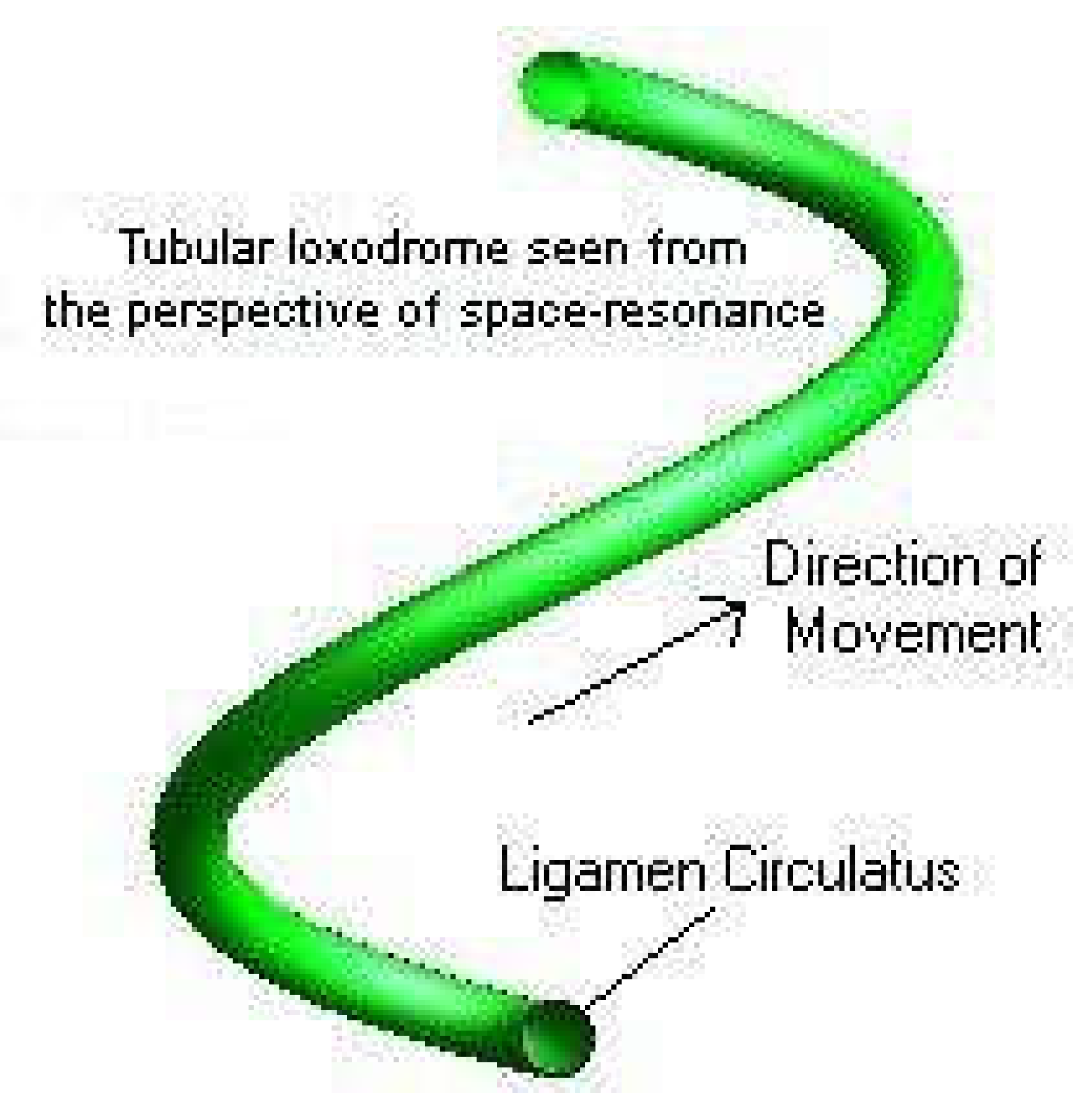
In the APM, these one-dimensional strings are seen as the most fundamental form of matter, emerging directly from the Singularity. They are not particles in the conventional sense but rather primitive elements that can become “trapped” within Aether units to form the subatomic particles we observe [28].
This view of dark matter has several important implications:
1. It provides a natural explanation for the gravitational effects attributed to dark matter, as these strings interact with the Aether units to influence space’s structure [29].
2. It offers a mechanism for forming visible matter, suggesting that particles emerge when dark matter strings become confined within specific configurations of Aether units [30].
3. It potentially resolves the discrepancy between the observed and predicted amounts of dark matter in the Universe, by proposing a more intimate relationship between dark and visible matter [31].
The interaction between dark matter strings and Aether units is central to the APM’s explanation of particle properties. For example, a particle’s mass in this model is related to the length of a dark matter string confined within an Aether unit. At the same time, charge and spin arise from the specific configuration of this confinement [32].
This concept of dark matter challenges current detection strategies, which often assume dark matter particles have properties similar to known particles. It suggests that direct detection of dark matter might require fundamentally new approaches that can probe the structure of space itself [33].
However, the one-dimensional string model of dark matter also raises questions. How can we experimentally distinguish between this model and other dark matter candidates? How does this concept relate to the success of -CDM cosmology in explaining large-scale structure formation? Such inquiries offer avenues for advancing both conceptual frameworks and empirical studies. [34].
7. Magnetic Charge and Quantum Hall Effect
One of the most radical proposals of the Aether Physics Model is the introduction of magnetic charge as a fundamental property distinct from electric charge. This concept challenges the standard electromagnetic theory and offers new interpretations of various electromagnetic phenomena [2].
In the APM, the magnetic charge is associated with the tubular loxodrome structures of the Aether units, while the electric charge is related to the spherical surfaces. The relationship between electric and magnetic charge is given by:
Where is the elementary electric charge, is the fine structure constant, and is the maximum magnetic charge of an Aether unit [10].
This distinction between electric and magnetic charges leads to a reinterpretation of various electromagnetic phenomena. One of the most striking examples is the APM’s explanation of the quantum Hall effect, particularly the fractional quantum Hall effect [35].
The fractional quantum Hall effect is explained in terms of fractional electric charges in standard physics. However, the APM suggests that these apparent fractional charges manifest quantized magnetic charges. This is expressed through the equation:
Where ϕ₀ is the quantum magnetic flux constant, is the charge conversion factor, and is the magnetic flux unit in Quantum Measurement Units (QMU) [10].
This reinterpretation has several implications:
1. It provides a geometrical basis for understanding quantum Hall states, relating them to specific configurations of magnetic charge in the Aether units [36].
2. It offers a potential resolution to the puzzle of fractional charges, suggesting that the fractional charges are not fundamental but emerge from the interaction of magnetic charges [37].
3. It provides a new perspective on the relationship between electricity and magnetism, suggesting that they are distinct but interrelated phenomena rather than different aspects of a single electromagnetic field [38].
The concept of magnetic charge also has implications for other areas of physics, such as why magnetic monopoles do not exist and the fundamental structure of gauge theories [39].
However, introducing magnetic charge as a fundamental property also raises significant questions. How can we experimentally isolate or measure magnetic charge independently of electric charge? How does this concept relate to quantum electrodynamics’ success in predicting electromagnetic phenomena? These questions present both challenges and opportunities for further research [40].
8. Quantum Measurement Units (QMU)
The Aether Physics Model introduces a novel system of units called Quantum Measurement Units (QMU). This system is based on quantum measurements and the distinction between electrostatic and magnetic charges, representing a fundamental rethinking of quantifying physical phenomena [2].
The QMU system’s units are constructed from quantum measurements rather than arbitrary or macroscale standards. This approach aims to provide more precise and physically meaningful units for quantum processes and structures [46].
One of the critical features of the QMU system is its treatment of charge dimensions. In the APM, charge dimensions are always distributed as charge squared, and most are expressed in terms of magnetic charge instead of elementary charge. This leads to reevaluating several standard electrical equations involving conductance, capacitance, inductance, permittivity, and permeability [47].
The QMU system also introduces the concept of opposing magnetic units, which arise when two electrons oppose each other. This concept is crucial for understanding phenomena such as resistance [48].
The implications of the QMU system are far-reaching:
1. Our choice of units might obscure underlying physical principles, particularly in quantum phenomena [49].
2. It offers the potential for more precise definitions of physical quantities, possibly revealing hidden relationships between different phenomena [50].
3. It provides a new framework for understanding the relationships between different physical constants and potentially predicting new ones [51].
However, the introduction of a new unit system also presents challenges. We can relate QMU to existing SI units using the charge conversion factor (), which allows for comparison with established experimental results. But how might adopting QMU affect our understanding and interpretation of physical laws? These unresolved issues pave the way for enhancing theoretical models and designing novel experiments. [52].
9. Neutron Content in Stable Matter
One of the most striking predictions of the Aether Physics Model is related to the neutron content of stable matter. The APM suggests that approximately half of the mass of stable matter, such as stars (excluding neutron stars) and planets, is composed of neutrons [2].
This prediction arises from the APM’s interpretation of gravity and space structure within neutrons. In the APM, neutrons are thought to contain “folded” space, where Aether units are compressed or folded, contributing significantly to space density gradient (Einstein gravitational) effects [53].
The implications of this prediction are profound:
1. It challenges current stellar structure and evolution models, which typically assume a much lower neutron content in ordinary stars [54].
2. It suggests that our understanding of planetary formation and structure may need significant revision [55].
3. It offers a new perspective on the nature of space density gradients (Einstein gravity), suggesting that General Relativity effects are intimately tied to the presence of neutrons and their impact on space structure [56].
This high neutron content is also related to the APM’s explanation of gravity as the tendency of space to be filled with mass. The gravitational constant in the APM is expressed as:
where is the Compton wavelength, is the quantum frequency, and is the maximum amount of mass an Aether unit may contain. [10]. Einstein’s Circular Deflection Angle equation is expressed as:
where is a QMU equal in MKS units to These equations suggest that gravity is an emergent property arising from the structure of Aether units [57] and their interaction with mass, and twice the length density (mass per length) of matter is proportional to half the space curl.
However, this prediction also raises significant questions. How can we experimentally verify the neutron content of stable matter, particularly in the interiors of stars and planets? How does this high neutron content affect our understanding of nuclear processes in stellar interiors? These enigmas serve as catalysts for refining abstract constructs and developing cutting-edge experimental techniques. [58].
10. Experimental Predictions and Tests
While the Aether Physics Model offers a novel and comprehensive framework for understanding fundamental physics, its validity ultimately depends on experimental verification. The APM makes several predictions that diverge from standard physics models, offering opportunities for crucial experimental tests [59].
Some key experimental predictions and potential tests of the APM include:
1. Quantum Hall Effect: The APM predicts that precise measurements of the quantum Hall effect should reveal plateaus corresponding to whole units of magnetic charge rather than fractional electric charges. This could be tested by re-analyzing existing high-precision quantum Hall data or conducting new experiments with enhanced sensitivity to magnetic effects [60].
2. Casimir Effect: The APM predicts that extremely precise measurements of the Casimir force at very small plate separations should reveal a small deviation from the standard Casimir equation, aligning more closely with the APM’s magnetic charge-based equation. This deviation should become more pronounced as the plate separation approaches the Compton wavelength of the electron [61].
3. Neutron Content in Stable Matter: The APM’s prediction about the high neutron content in stable matter could potentially be tested through detailed spectroscopic analysis of stellar atmospheres and improved models of planetary interiors [62].
4. Gravitational Effects: The APM’s reinterpretation of gravity as a property of Aether units suggests that extremely precise tests of relativistic effects should reveal that they are a consequence of space compression rather than time dilation. This could be tested through high-precision atomic clock experiments in various gravitational fields or at high velocities [63]. Also, an interferometer plane of rotation aligned perpendicular to the Earth’s surface should reveal clear signals of a space density gradient.
5. Dark Matter Distribution: The APM’s description of dark matter as one-dimensional strings interacting with Aether units suggests that the distribution of dark matter in galaxies should show patterns reflecting this interaction. This could potentially be tested through detailed gravitational lensing studies and high-resolution galaxy rotation curves [64].
6. Magnetic Charge Detection: While challenging, experiments could be designed to detect the APM’s proposed magnetic charge directly. This might involve adapting existing particle detection technologies or developing entirely new detection methods based on the predicted properties of magnetic charge [65].
These experimental predictions offer concrete ways to test the validity of the Aether Physics Model. However, it’s important to note that many of these tests would require extremely high precision measurements, pushing the boundaries of current experimental capabilities. Furthermore, interpreting the results of such experiments would require careful consideration to distinguish between the predictions of the APM and those of standard physics models [66].
11. Conclusion
The Aether Physics Model represents a bold and comprehensive attempt to reformulate our understanding of fundamental physics. By proposing a quantized Aether structure as the foundation of space itself and introducing concepts such as the Singularity, Gforce, and magnetic charge, the APM offers a radically different perspective on the nature of reality [67].
The model’s approach to unifying fundamental forces, its reinterpretation of dark matter and dark energy, and its novel explanations for phenomena such as gravity and the quantum Hall effect present intriguing alternatives to standard physics models. The APM’s predictions regarding neutron content in stable matter and the nature of time through chronovibration offer potential resolutions to long-standing puzzles in physics [68].
However, the Aether Physics Model also faces significant challenges. Many of its concepts, such as the Singularity and Gforce, are difficult to relate directly to observable phenomena. Its reinterpretation of established principles in electromagnetism and particle physics requires a substantial shift in our understanding of fundamental physics [69].
Despite these challenges, the Aether Physics Model’s potential to offer solutions to persistent problems in physics, such as the unification of forces and the nature of dark matter and dark energy, warrants further investigation. The model’s comprehensive and geometrically-based approach to fundamental physics could potentially open new avenues for theoretical and experimental research [70].
As with any new scientific theory, the ultimate test of the Aether Physics Model will be its ability to make accurate predictions and withstand rigorous experimental scrutiny. While much work remains to be done in developing the mathematical formalism of the APM and designing crucial experiments to test its predictions, the model represents a thought-provoking alternative to standard physics paradigms [71].
In conclusion, while the Aether Physics Model remains a speculative and controversial theory, its innovative approach to fundamental physics questions makes it a valuable contribution to the ongoing dialogue in theoretical physics. Whether it ultimately proves to be a revolutionary new understanding of the Universe or a stepping stone to other new ideas, the APM challenges us to think deeply about the fundamental nature of reality and the foundations of our physical theories [72].
Funding
This research received no specific grant from any funding agency in the public, commercial, or not-for-profit sectors
Data Availability Statement
The datasets generated for this study are available at: https://www.researchgate.net/publication/380357063_Unifying_Physics_with_the_Aether_An_Introduction_to_the_Aether_Physics_Model and on request to the authors.
Conflicts of Interest
The authors declare that the research was conducted in the absence of any commercial or financial relationships that could be construed as a potential conflict of interest.
References
- Weinberg, S. (1999). The Quantum Theory of Fields, Volume 3: Supersymmetry. Cambridge University Press.
- Thomson, D. W. , & Bourassa, J. (2005). Secrets of the Aether. Quantum AetherDynamics Institute (https://sota.aetherwizard.com).
- Hawking, S. W. , & Ellis, G. F. R. (1973). The Large Scale Structure of Space-Time. Cambridge University Press.
- Penrose, R. (2004). The Road to Reality: A Complete Guide to the Laws of the Universe. Jonathan Cape.
- ‘t Hooft, G. (1993). Dimensional Reduction in Quantum Gravity. arXiv:gr-qc/9310026.
- Rovelli, C. (2004). Quantum Gravity. Cambridge University Press.
- Witten, E. (1995). String Theory Dynamics in Various Dimensions. Nuclear Physics B, 443(1-2), 85-126.
- Ashtekar, A. , & Lewandowski, J. (2004). Background Independent Quantum Gravity: A Status Report. Classical and Quantum Gravity, 21(15), R53.
- Wilczek, F. (2008). The Lightness of Being: Mass, Ether, and the Unification of Forces. Basic Books.
- Thomson, D. W. , & Bourassa, J. (2007). A New Foundation for Physics. Quantum AetherDynamics Press. (https://aetherwizard.com/files/NewFoundationPhysics.pdf).
- Randall, L., & Sundrum, R. (1999). Large Mass Hierarchy from a Small Extra Dimension. Physical Review Letters, 83(17), 3370.
- Perlmutter, S. , et al. (1999). Measurements of Ω and Λ from 42 High-Redshift Supernovae. The Astrophysical Journal, 517(2), 565.
- Arkani-Hamed, N. , Dimopoulos, S., & Dvali, G. (1998). The Hierarchy Problem and New Dimensions at a Millimeter. Physics Letters B, 429(3-4), 263-272.
- Bohm, D. , & Hiley, B. J. (1993). The Undivided Universe: An Ontological Interpretation of Quantum Theory. Routledge.
- Greene, B. (1999). The Elegant Universe: Superstrings, Hidden Dimensions, and the Quest for the Ultimate Theory. W. W. Norton & Company.
- Garay, L. J. (1995). Quantum Gravity and Minimum Length. International Journal of Modern Physics A, 10(02), 145-165.
- Milonni, P. W. (2013). The Quantum Vacuum: An Introduction to Quantum Electrodynamics. Academic Press.
- Penrose, R. (1989). The Emperor’s New Mind: Concerning Computers, Minds, and the Laws of Physics. Oxford University Press.
- de Broglie, L. (1925). Recherches sur la théorie des quanta. Annales de Physique, 10(3), 22-128.
- Amelino-Camelia, G. (2002). Relativity in Space-Times with Short-Distance Structure Governed by an Observer-Independent (Planckian) Length Scale. International Journal of Modern Physics D, 11(01), 35-59.
- Price, H. (1996). Time’s Arrow and Archimedes’ Point: New Directions for the Physics of Time. Oxford University Press.
- Barbour, J. (1999). The End of Time: The Next Revolution in Physics. Oxford University Press.
- Smolin, L. (2013). Time Reborn: From the Crisis in Physics to the Future of the Universe. Houghton Mifflin Harcourt.
- Zurek, W. H. (2003). Decoherence, Einselection, and the Quantum Origins of the Classical. Reviews of Modern Physics, 75(3), 715.
- Sakharov, A. D. (1967). Violation of CP Invariance, C Asymmetry, and Baryon Asymmetry of the Universe. Pisma Zh. Eksp. Teor. Fiz., 5, 32-35.
- Isham, C. J. (1993). Canonical Quantum Gravity and the Problem of Time. In Integrable Systems, Quantum Groups, and Quantum Field Theories (pp. 157-287). Springer.
- Zeh, H. D. (2007). The Physical Basis of the Direction of Time. Springer Science & Business Media.
- Witten, E. (1985). Cosmic Superstrings. Physics Letters B, 153(4-5), 243-246.
- Bertone, G. , Hooper, D., & Silk, J. (2005). Particle Dark Matter: Evidence, Candidates and Constraints. Physics Reports, 405(5-6), 279-390.
- Feng, J. L. (2010). Dark Matter Candidates from Particle Physics and Methods of Detection. Annual Review of Astronomy and Astrophysics, 48, 495-545.
- Clowe, D., et al. (2006). A Direct Empirical Proof of the Existence of Dark Matter. The Astrophysical Journal Letters, 648(2), L109.
- Arkani-Hamed, N. , Dimopoulos, S., & Dvali, G. (1998). The Hierarchy Problem and New Dimensions at a Millimeter. Physics Letters B, 429(3-4), 263-272.
- Aprile, E. , et al. (2018). Dark Matter Search Results from a One Ton-Year Exposure of XENON1T. Physical Review Letters, 121(11), 111302.
- Springel, V., et al. (2005). Simulations of the Formation, Evolution and Clustering of Galaxies and Quasars. Nature, 435(7042), 629-636.
- Laughlin, R. B. (1983). Anomalous Quantum Hall Effect: An Incompressible Quantum Fluid with Fractionally Charged Excitations. Physical Review Letters, 50(18), 1395.
- Jain, J. K. (2007). Composite Fermions. Cambridge University Press.
- Wen, X. G. (2004). Quantum Field Theory of Many-Body Systems: From the Origin of Sound to an Origin of Light and Electrons. Oxford University Press.
- Jackson, J. D. (1999). Classical Electrodynamics. John Wiley & Sons.
- Dirac, P. A. M. (1931). Quantised Singularities in the Electromagnetic Field. Proceedings of the Royal Society of London. Series A, Containing Papers of a Mathematical and Physical Character, 133(821), 60-72.
- Polyakov, A. M. (1974). Particle Spectrum in Quantum Field Theory. JETP Letters, 20, 194-195.
- Georgi, H. , & Glashow, S. L. (1974). Unity of All Elementary-Particle Forces. Physical Review Letters, 32(8), 438.
- Glashow, S. L. (1961). Partial-Symmetries of Weak Interactions. Nuclear Physics, 22(4), 579-588.
- Riess, A. G., et al. (1998). Observational Evidence from Supernovae for an Accelerating Universe and a Cosmological Constant. The Astronomical Journal, 116(3), 1009.
- Weinberg, S. (1967). A Model of Leptons. Physical Review Letters, 19(21), 1264.
- ‘t Hooft, G. (1980). Gauge Theories of the Forces between Elementary Particles. Scientific American, 242(6), 104-137.
- Taylor, B. N. , & Mohr, P. J. (2001). The Role of Fundamental Constants in the International System of Units (SI): Present and Future. IEEE Transactions on Instrumentation and Measurement, 50(2), 563-567.
- Jackson, J. D. (1999). Classical Electrodynamics. John Wiley & Sons.
- Landauer, R. (1957). Spatial Variation of Currents and Fields Due to Localized Scatterers in Metallic Conduction. IBM Journal of Research and Development, 1(3), 223-231.
- Duff, M. J., Okun, L. B., & Veneziano, G. (2002). Trialogue on the Number of Fundamental Constants. Journal of High Energy Physics, 2002(03), 023.
- Uzan, J. P. (2003). The Fundamental Constants and Their Variation: Observational and Theoretical Status. Reviews of Modern Physics, 75(2), 403.
- Barrow, J. D. (2002). The Constants of Nature: From Alpha to Omega--the Numbers that Encode the Deepest Secrets of the Universe. Pantheon Books.
- Mills, I. M. , et al. (2011). Redefinition of the Kilogram, Ampere, Kelvin and Mole: A Proposed Approach to Implementing CIPM Recommendation 1 (CI-2005). Metrologia, 48(2), 83.
- Glendenning, N. K. (2000). Compact Stars: Nuclear Physics, Particle Physics, and General Relativity. Springer Science & Business Media.
- Bahcall, J. N. (1989). Neutrino Astrophysics. Cambridge University Press.
- Guillot, T. (2005). The Interiors of Giant Planets: Models and Outstanding Questions. Annual Review of Earth and Planetary Sciences, 33, 493-530.
- Will, C. M. (2014). The Confrontation between General Relativity and Experiment. Living Reviews in Relativity, 17(1), 4.
- Misner, C. W. , Thorne, K. S., & Wheeler, J. A. (1973). Gravitation. W. H. Freeman.
- Lattimer, J. M., & Prakash, M. (2004). The Physics of Neutron Stars. Science, 304(5670), 536-542.
- Ellis, J. (2002). Physics Beyond the Standard Model. Nuclear Physics A, 702(1-4), 1-11.
- von Klitzing, K. (1986). The Quantized Hall Effect. Reviews of Modern Physics, 58(3), 519.
- Lamoreaux, S. K. (1997). Demonstration of the Casimir Force in the 0.6 to 6 μm Range. Physical Review Letters, 78(1), 5.
- Christensen-Dalsgaard, J. (2002). Helioseismology. Reviews of Modern Physics, 74(4), 1073.
- Ashby, N. (2003). Relativity in the Global Positioning System. Living Reviews in Relativity, 6(1), 1.
- Massey, R., et al. (2007). Dark Matter Maps Reveal Cosmic Scaffolding. Nature, 445(7125), 286-290.
- Cabrera, B. (1982). First Results from a Superconductive Detector for Moving Magnetic Monopoles. Physical Review Letters, 48(20), 1378.
- Adelberger, E. G. , Heckel, B. R., & Nelson, A. E. (2003). Tests of the Gravitational Inverse-Square Law. Annual Review of Nuclear and Particle Science, 53(1), 77-121.
- Smolin, L. (2006). The Trouble with Physics: The Rise of String Theory, the Fall of a Science, and What Comes Next. Houghton Mifflin Harcourt.
- Wilczek, F. (2015). A Beautiful Question: Finding Nature’s Deep Design. Penguin Press.
- Ellis, G. F. R. (2014). Does the Multiverse Really Exist? Scientific American, 305(2), 38-43.
- Arkani-Hamed, N. , Dimopoulos, S., & Dvali, G. (1998). The Hierarchy Problem and New Dimensions at a Millimeter. Physics Letters B, 429(3-4), 263-272.
- ‘t Hooft, G. (2005). The Conceptual Basis of Quantum Field Theory. In Handbook of the Philosophy of Science. Philosophy of Physics. Part A (pp. 661-729). Elsevier.
- Rovelli, C. (2018). Physics Needs Philosophy. Philosophy Needs Physics. Foundations of Physics, 48(5), 481-491.
Disclaimer/Publisher’s Note: The statements, opinions and data contained in all publications are solely those of the individual author(s) and contributor(s) and not of MDPI and/or the editor(s). MDPI and/or the editor(s) disclaim responsibility for any injury to people or property resulting from any ideas, methods, instructions or products referred to in the content. |
© 2024 by the authors. Licensee MDPI, Basel, Switzerland. This article is an open access article distributed under the terms and conditions of the Creative Commons Attribution (CC BY) license (http://creativecommons.org/licenses/by/4.0/).
Copyright: This open access article is published under a Creative Commons CC BY 4.0 license, which permit the free download, distribution, and reuse, provided that the author and preprint are cited in any reuse.