

Submitted:
05 July 2024
Posted:
08 July 2024
Read the latest preprint version here
Abstract
In this study, we demonstrate a high luminous efficacy of 118 lm/W and high reliability through 450°C thermal aging of white LEDs (WLEDs) utilizing four-inch YAG: Ce3+ phosphor-in-glass (PiG) plates designed for vehicle headlights. The sintering process of mixing glass and phosphor typically generates pores, which can scatter light and reduce the luminous efficacy of the fabricated PiG. In this study, we produced four-inch PiG plates under four different fabrication conditions to evaluate their luminous efficacy. Our results revealed that the PiG plate with a thin thickness of 0.08 mm exhibited a 16.83% increase in luminous efficacy compared to the 0.15 mm plate, attributed to reduced light interaction with the pores. Unlike silicone-based phosphor WLEDs, which offer high performance but lower reliability due to the silicone resin's low transition temperature (150°C), our novel thin PiG plate achieves high performance and reliability. This advancement suggests that the proposed thin PiG plate could replace traditional silicone-based phosphors, enabling the development of high-quality WLEDs for vehicle headlights in automotive applications.
Keywords:
phosphor-in-glass
; white LED
; thin plate
1. Introduction
High-power phosphor-converted white LEDs (pc-WLEDs) are increasingly in demand due to their low cost, reliability, and high luminous efficacy. These remarkable properties enable pc-WLEDs to quickly replace traditional light sources in interior lighting, exterior lighting, and automotive headlights [1,2,3]. In particular, the reliability of the high-power pc-WLEDs is crucial for automotive headlight applications due to driving safety considerations [4,5]. However, the traditional method of the encapsulating pc-WLEDs is to embed phosphor in a silicone resin. Silicone resin has poor thermal stability and is easy to cause yellowing and cracking, which will affect the optical characteristics and service life of the pc-WLEDs [6,7]. Currently, there are many studies using ceramic, single crystal, and glass-based inorganic materials instead of the silicone resin to solve the thermal stability problem [1,8,9]. According to studies, these high-temperature fabrications are difficult to apply to commercial production because the fabrication temperatures of the ceramic-based phosphor and single crystal-based phosphor exceed 1300°C (Spark Plasma Sintering) and 1900°C, respectively [9,10]. Therefore, the development of the phosphor-in-glass (PiG)-based pc-WLED for automotive headlight applications is necessary. However, due to the voids present between the powder particles, pores always be generated when the mixture of the glass and phosphor is sintered, and the formed pores cause light scattering in the obtained PiG, resulting in the luminous efficacy of the PiG being lower than that of the silicone-based phosphor. It is essential to study the possibility using the PiG to replace silicone-based phosphor [11,12,13,14]. Recently, high-performance and high-reliability of the two-inch PiG for pc-WLED employing a novel wet-type cold isostatic pressing (CIP) have been reported [14]. In previous report, a novel wet-type CIP was used to reduce the pores in the PiG. However, there are still a certain degree of pores in the PiG, which deteriorates the characteristics of the PiG. Also, a two-inch diameter PiG for automotive headlight applications may not meet economical size requirements for commercial use. Therefore, there is a need to conduct research on large-size PiG and reduce the interaction between pores and light to develop high-performance and high-reliability four-inch Y3Al5O12: Ce3+ (YAG: Ce3+) PiG to further increase the adoption of the PiG in the solid-state lighting market.
In this study, high-performance and high-reliability WLEDs employing four-inch YAG: Ce3+ PiG plates for vehicle headlights are presented and demonstrated. A glass matrix (SiO2-Na2O-Al2O3-CaO) has high-transparency and excellent thermal stability, so that the obtained PiG exhibits satisfactory optical properties and thermal performance durability [15,16]. Through precisely adjusting the thickness of the four golden formula four-inch PiG plates to 0.08, 0.10, 0.12, and 0.15 mm, the four golden formula four-inch PiG plates have similar chromaticity and correlated-color temperature (CCT) to compare the differences in their luminous efficacy. The study found that the luminous efficacy of the PiG plate with a thickness of 0.08 mm was 16.83% higher than that of 0.15 mm due to the reduced interaction between the pores and light. Finally, the four-inch PiG plates with a thickness of 0.08 mm was verified by an accelerated aging test at a stress temperature of 450°C and 1008 hours. As the results, the International Commission on Illumination (CIE) shift was 4.9×10⁻³, and the lumen loss was 1.7%. This indicates that the PiG plates also have high thermal stability due to the high transition temperature of the glass matrix up to 550oC. At present, high-performance silicone-based phosphor WLEDs have been commercially used in vehicle headlights, but due to the low transition temperature (150°C) and low reliability of commercial silicone resin. Due to cost considerations, even materials with high transition temperatures (≤250) are not currently used [17]. In contrast to silicone-based phosphor WLEDs, this study presents a novel thin PiG plate having both high-performance and high-reliability WLEDs for vehicle headlights. The benefit of proposed thin PiG plate may provide an opportunity to replace traditional silicone-based phosphors to achieve high-quality WLEDs for vehicle headlights in automotive applications.
2. Experimental Methodology
2.1. Manufacturing the Phosphor-In-Glass
A glass matrix composed of 60 mol% SiO2, 25 mol% Na2CO3, 9 mol% Al2O3 and 6 mol% CaO (D263, Schott AG, Jena, Germany) was mixed uniformly, then heated and melted at 1300°C, and then gradually cooled to room temperature. The resulting cullet was ground into glass powder and then sieved to a particle size of about 10 μm. The yellow luminescence center was YAG: Ce3+ phosphor (NYAG4454, Intematrix Corp., Fremont, California, U.S.A), and its particle size was about 15 μm. Then, YAG: Ce3+ phosphor with four different weight ratios were uniformly spread out into the glass powder under atmospheric pressure. A wet-type CIP technique was performed to form a formed precursor with a high-uniform bulk density, to be sintered at a temperature of 700°C for 30 minutes. Finally, the four fabricated conditions of the four-inch YAG: Ce3+ PiG bulks were sliced to the thicknesses of 0.08, 0.10, 0.12, and 0.15 mm. In this study, a total of four four-inch PiG fabrication conditions were generated. The YAG: Ce3+ phosphor weight ratio and thickness of PiG-0.08 mm, PiG-0.10 mm, PiG-0.12 mm, PiG-0.15 mm are 30wt% and 0.08 mm, 24wt% and 0.10 mm, 20wt% and 0.12 mm, 16wt % and 0.15 mm, respectively. Table 1 lists the four fabricated conditions of the four-inch PiG. Figure 1(a), 1(b), 1(c), ,1(d) and 1(e) show a four-inch PiG bulk, a PiG plate, PiG chips on a blue tape for placement, WLEDs package with PiG chips, and the structure diagram of packing module in the WLED (BGB 1 R45 A, 450nm of InGaN Blue LED Chip, Huaian Aucksun Optoelectronics Technology Co.,Ltd). The parameters of InGaN Blue LED Chip were wavelength in 460nm when the input current in the 700mA, the dimension in the 1070±30μm × 1070±30μm x 135±15μm, and the packing material used the silicone resin.
2.2. Measurements of Phosphor-In-Glass
The glass transition temperature and melting temperature of the glass powder were measured by a differential thermal analysis (DTA, PerkinElmer STA 6000). Use a fluorescence spectrometer (HITACHI F-4500) to evaluate the photoluminescence excitation spectroscopy and light emission spectrum of the yellow YAG: Ce3+ phosphor. The crystalline phase of the four-inch PiG powder was evaluated by an X-ray diffraction analyzer (XRD, BRUKER D8 SSS). An integrating sphere measurement system (Isuzu OPTICS ISM-360 series) was used to measure the light emission spectrum, chromaticity coordinates of the International Commission on Illumination (CIE), luminous efficacy, and CCT of the four-inch PiG plates. A spectrophotometer (Hitachi U3900-H) was used to measure the transmittance of the four-inch PiG plates with thicknesses of 0.08 and 0.15 mm, respectively. The porosity on the surface of the four-inch PiG plate was determined using a field-emission scanning electron microscope (FE-SEM, JEOL JSM-7800F).
2.3. Thermal Stress Aging Tests
The thermal stability of the four-inch PiG plates with a thickness of 0.08 mm was evaluated by thermal aging test. The four-inch PiG plates were aged at 150°C, 250°C, 350°C, and 450°C for 1008 hours. The optical properties including chromaticity coordinates, and luminous efficacy were characterized to assess the thermal stability of the four-inch PiG plates before and after the thermal aging test.
3. Results and Discussion
As shown in Figure 2, the DTA curve of the glass powder has been measured by a differential thermal analysis to show the glass transition temperature (Tg) and melting temperature (Tm) of the glass matrix. Figure 2 shows that the Tg and Tm are 557℃ and 603℃, respectively. Therefore, a sintering temperature of 700℃ in this study may be suitable for the fabrication of the four-inch PiG. The photoluminescence excitation (PLE) spectrum and emission spectrum of the YAG: Ce3+ phosphor have been measured by a fluorescence spectrometer, as shown in Figure 3. Figure 3 shows the excitation and emission spectrum of the YAG: Ce3+ phosphor with peaks at 450 nm and 563 nm, respectively. The mixture of the two will present white light due to the complementary colors of yellow and blue in chromatics. The XRD patterns of the four-inch PiG powder, sintered at a temperature of 700°C, were determined using an X-ray diffraction analyzer. As shown in Figure 4, all the diffraction peaks corresponded to the JCPDS card no. 33-0040 pattern, indicating that no crystallization of the glass phase was found.
In this study, a total of four four-inch PiG fabrication conditions were generated to develop high-performance and high-reliability four-inch YAG: Ce3+ PiG for automotive headlight applications. Through precisely adjusting the thickness of the four golden formula four-inch PiG plates to 0.08, 0.10, 0.12, and 0.15 mm, the four golden formula four-inch PiG plates have similar chromaticity and CCT, as shown in Table 1, Table 2 ,and Figure 5. Table 2 lists the optical properties of the four fabricated condition four-inch PiG plates, which excited by a 450 nm blue LED chip. The high luminous flux was 264.32 for the PiG plates with a thickness of 0.08 nm. Table 2 shows that the luminous efficacy of the four-inch PiG plates decreases as thickness increases. The luminous efficacy of the PiG plate with a thickness of 0.08 mm was about 16.83% higher than that of the PiG plate with a thickness of 0.15 mm. The CCT data and graphs show phosphor thickness only has little effect on color temperature. Therefore, the thickness of the four-inch PiG plate was significantly affecting the optical characteristics and needs further study. Based on the results in Table 2, we performed further analysis to determine the cause of the low luminous efficacy for four-inch PiG plates with a thickness of 0.15 mm. The results are shown in Figure 6, Figure 7, Figure 8 and Table 3.
The microstructure measurements of the four-inch PiG plates are shown in Figure 6 and Table 3. Figure 6 shows FE-SEM micrographs of the four-inch PiG plates with the thicknesses of (a) 0.08 mm and (b) 0.15 mm, respectively. As shown in Table 3, the porosity of the four-inch PiG plates with the thicknesses of 0.08 mm, 0.10 mm, 0.12 mm, and 0.15 mm, estimated from the micrographs, are in the range of 1.34%, 1.37%, 1.38%, and 1.33%, respectively. From the measurement results, there was no significant difference in the porosity of the four-inch PiG plates under the four fabrication conditions. However, the number of pores increases as the thickness increases. This indicates that the interaction between the pores and light in the PiG plate increases, resulting in greater light scattering, which in turn affects the optical performance of the PiG plate [12,13]. This may be one of the reasons why the luminous efficacy of the PiG plate with a thickness of 0.15 mm is lower than that of the PiG plate with a thickness of 0.08 mm. Figure 7 depicts the light emission spectrum of the four-inch PiG plates. The peak intensities of the emission spectrum at 450 nm and 563 nm decrease as the thickness of the PiG plate increases. It can be clearly seen that the luminous efficacy of the PiG plate will also decrease with the increase of the thickness of the PiG plate. As a result, the PiG plate with a thickness of 0.08 mm for vehicle headlight applications obtained significantly improved luminous efficacy due to the reduced interaction between the pores and light. This was consistent with the result of Table 2. Figure 8 shows the measured transmittance of the PiG plates with the thicknesses of 0.08 mm and 0.15 mm. This was due to number of pores increased as the thickness of the PiG plate increased. These induced interaction between the pores and light, resulting in more light scattering. Therefore, the transmittance value of PiG plate with a thickness of 0.08 mm was higher than that of PiG plate with a thickness of 0.15 mm. The result was consistent with the light emission spectrum of the four-inch PiG plates in Figure 7. As shown in Figure 9, we further measured the uniformity of the five four-inch PiG plates with a thickness of 0.08 mm using an integrating sphere measurement system, at points (A), (B), (C), (D), (E), (F), (G), (H), and (I). The measured results of a total of 45 points were shown in Figure 10. The differences in CIE (x, y) of a total of 45 points were less than 3.9×10⁻³. From the nine-point measurement results, the precisely fabricating process achieved the four-inch PiG plates with a thickness of 0.08 mm with good uniformity and excellent performance. To study the thermal stability of the PiG plate with a thickness of 0.08 mm, a thermal aging test at stress temperature of 150°C, 250°C, 350°C, and 450°C for 1008 hours were performed. Figure 11 shows the results of the PiG plate with a thickness of 0.08 mm before and after thermal aging tests at stress temperature of 150°C, 250°C, 350°C, and 450°C for 1008 hours. The optical performance of the CIE and luminous efficacy only shifted in 4.9×10⁻³ (Δuv=0.0002 SDCM) and decayed by 1.7%, which used the LED accelerated aging test standards (IES LM-82-11) to analyze component reliability. It can be seen from the data performance in Figure 11 that the measurement data did not significantly change before and after thermal aging. This indicates that the PiG plate with a thickness of 0.08 mm is also with high thermal stability.
4. Discussion and Conclusion
In summary, we have demonstrated a novel thin PiG plate showing both high-performance and high-reliability WLEDs employing four-inch YAG: Ce3+ PiG plates for vehicle headlight applications. The luminous efficacy of the PiG plate with a thin thickness of 0.08 mm was increased by 16.83% compared 0.15 mm due to the reduction of the interaction between the pores and light. From the nine-point measurement results, the precisely fabricating process achieved the four-inch PiG plates with a thickness of 0.08 mm with good uniformity and excellent luminous efficacy of 118 lm/W. The four-inch PiG plates with a thickness of 0.08 mm was verified by an accelerated aging test at a stress temperature of 450°C and 1008 hours. The results showed that there was no significant change in CIE and luminous efficacy before and after thermal aging. This indicated that the PiG plate was high thermal stability. In this study, the benefit of proposed thin PiG plate may provide an opportunity to replace traditional silicone-based phosphor to achieve high-quality WLEDs for vehicle headlights in automotive applications.
Funding
Ministry of Science and Technology, Taiwan (MOST) (108-2218-E-005-018 and 107-2218-E-005-025).
Conflicts of Interest
The authors declare no conflicts of interest.
References
- Shih, H. K.; Liu, C. N.; Cheng, W. C.; Cheng, W. H. High color rendering index of 94 in white LEDs employing novel CaAlSiN3: Eu2+ and Lu3Al5O12: Ce3+ co-doped phosphor-in-glass. Opt. Express 2020, 28, 28218-28225.
- Singh, P.; Tan, C. M. Degradation physics of high-power LEDs in outdoor environment and the role of phosphor in the degradation process. Sci. Rep. 2016, 6, 24052. [CrossRef]
- Sun, C. C.; Wu, C. S.; Lin, Y. S.; Lin, Y. J.; Hsieh, C. Y.; Lin, S. K.; Yang, T. H.; Yu, Y. W. Review of optical design for vehicle forward lighting based on white LEDs. Opt. Eng. 2021, 60, 091501. [CrossRef]
- Toney, G.; Bhargava, C. Adaptive Headlamps in Automobile: A Review on the Models, Detection Techniques, and Mathematical Models. IEEE Access. 2021, 9, 87462-87474. [CrossRef]
- Jiao, J.; Wang, B. Etendue Concerns for Automotive Headlamps Using White LEDs, Proc. SPIE 2004, 5187, 234-242.
- Xu, Y.; Long, J.; Zhang, R.; Du, Y.; Guan, S.; Wang, Y.; Huang, L.; Wei, H.; Liu, L.; Huang, Y. Greatly improving thermal stability of silicone resins by modification with POSS. Polym. Degrad. Stabil. 2020, 174, 109082.
- Liu, C. N.; Shih, H. K.; Chen, Y. C.; Chen, Y. H.; Cheng, W. C.; Cheng, W. H. High reliability and luminance of the color wheel by phosphor-in-inorganic silicone. Opt. Mater. Express 2023, 13, 1092-1100.
- Chen, D.; Chen, Y. Transparent Ce3+: Y3Al5O12 glass ceramic for organic-resin-free white-light-emitting diodes. Ceram Int. 2014, 40, 15325-15329.
- Shih, H. K.; Chang, Y. P.; Liu, C. N.; Li, K.; Cheng, W. H. Laser-excited single crystal phosphor in white LED for wide field of view and high enhanced central brightness for vehicle headlights. AIP Advances 2022, 12, 015018.
- Long, T.; Yin, X.; Zou, C.; Zhang, D.; Zhuang, S. Ba0.75Al11O17.25:Cr3+ red-emitting ceramic phosphor with luminescence thermal stability, Opt. Mater. Express 2022, 12, 981-990.
- Yoon, C. B.; Kim, S.; Choi, S. W.; Yoon, C.; Ahn, S. H.; Chung, W. J. Highly improved reliability of amber light emitting diode with Ca –α–SiAlON phosphor in glass formed by gas pressure sintering for automotive applications. Opt. Lett. 2016, 41, 1590-1593.
- Kim, S.; Yie, H.; Choi, S.; Sung, A.; Kim, H. Pore characteristics for improving luminous efficacy of phosphor-in-glass. Opt. Express 2015, 23, A1499-A1511.
- Tan, C. M.; Singh, P.; Zhao, W.; Kuo, H.-C. Physical Limitations of Phosphor Layer Thickness and Concentration for White LEDs. Sci. Rep. 2018, 8, 2452.
- Shih, H. K.; Liu, C. N.; Cheng W. C.; Cheng, W. H. High Performance and Reliability of Two-Inch Phosphor-in-Glass for White Light-Emitting Diodes Employing Novel Wet-Type Cold Isostatic Pressing. IEEE Photonics J. 2021, 13, 1-10.
- Chen, L. Y.; Cheng, W. C.; Tsai, C. C.; Chang, J. K.; Huang, Y. C.; Huang, J. C.; Cheng, W. H. Novel broadband glass phosphors for high CRI WLEDs. Opt. Express 2014, 22, A671-A678.
- Chen, L. Y.; Chang, J. K.; Cheng, W. C.; Huang, J. C.; Huang, Y. C.; Cheng, W. H. Chromaticity tailorable glass-based phosphor-converted white light-emitting diodes with high color rendering index. Opt. Express 2015, 23, A1024-A1029.
- Silicone Resins & Oligomers. Available online: https://www.shinetsusilicone-global.com/catalog/pdf/Resins_Oligomers_E.pdf (accessed on 30th June 2024).
Figure 1.
The related photos of a diameter of four-inch PiG.
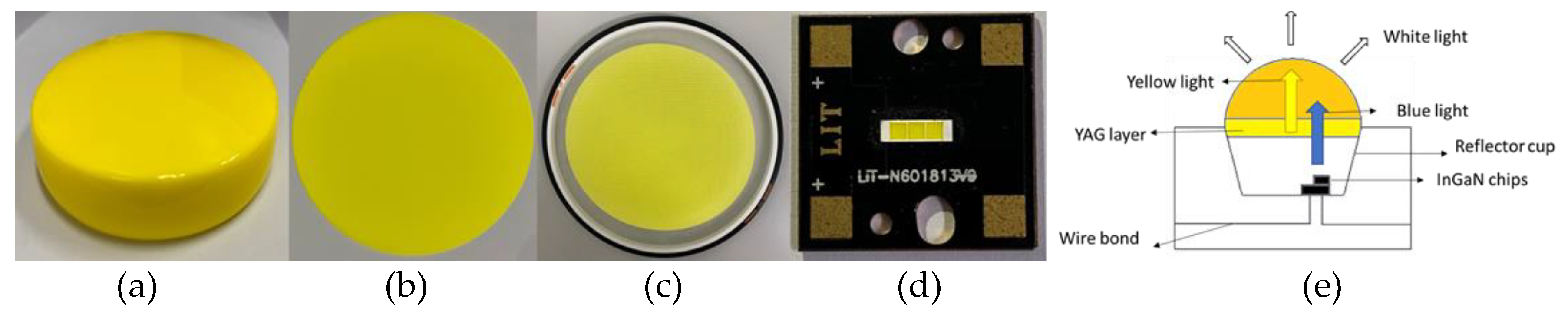
Figure 2.
DTA thermogram of the glass powder.
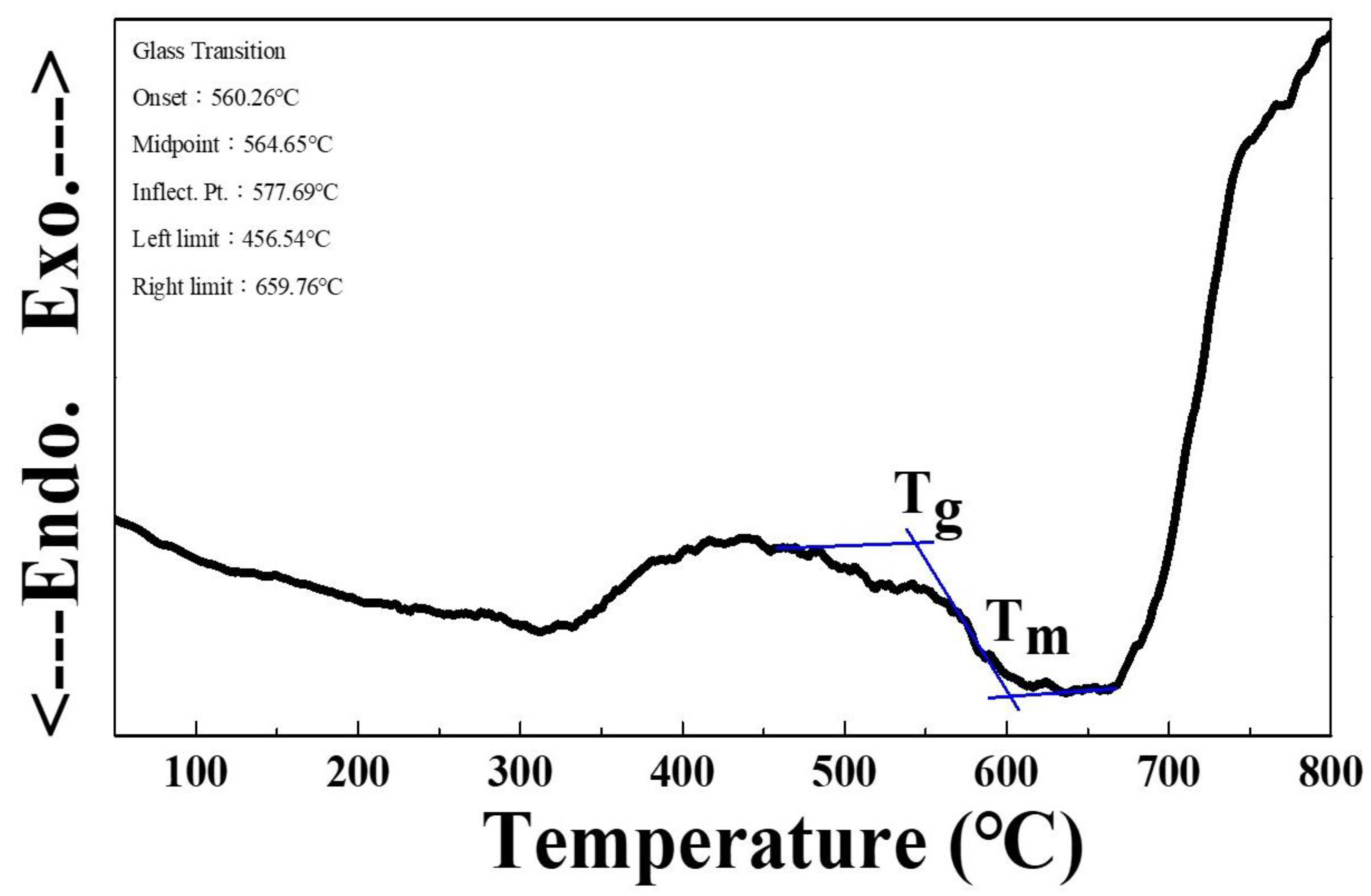
Figure 3.
PLE and emission spectrum of the YAG: Ce3+ phosphor.
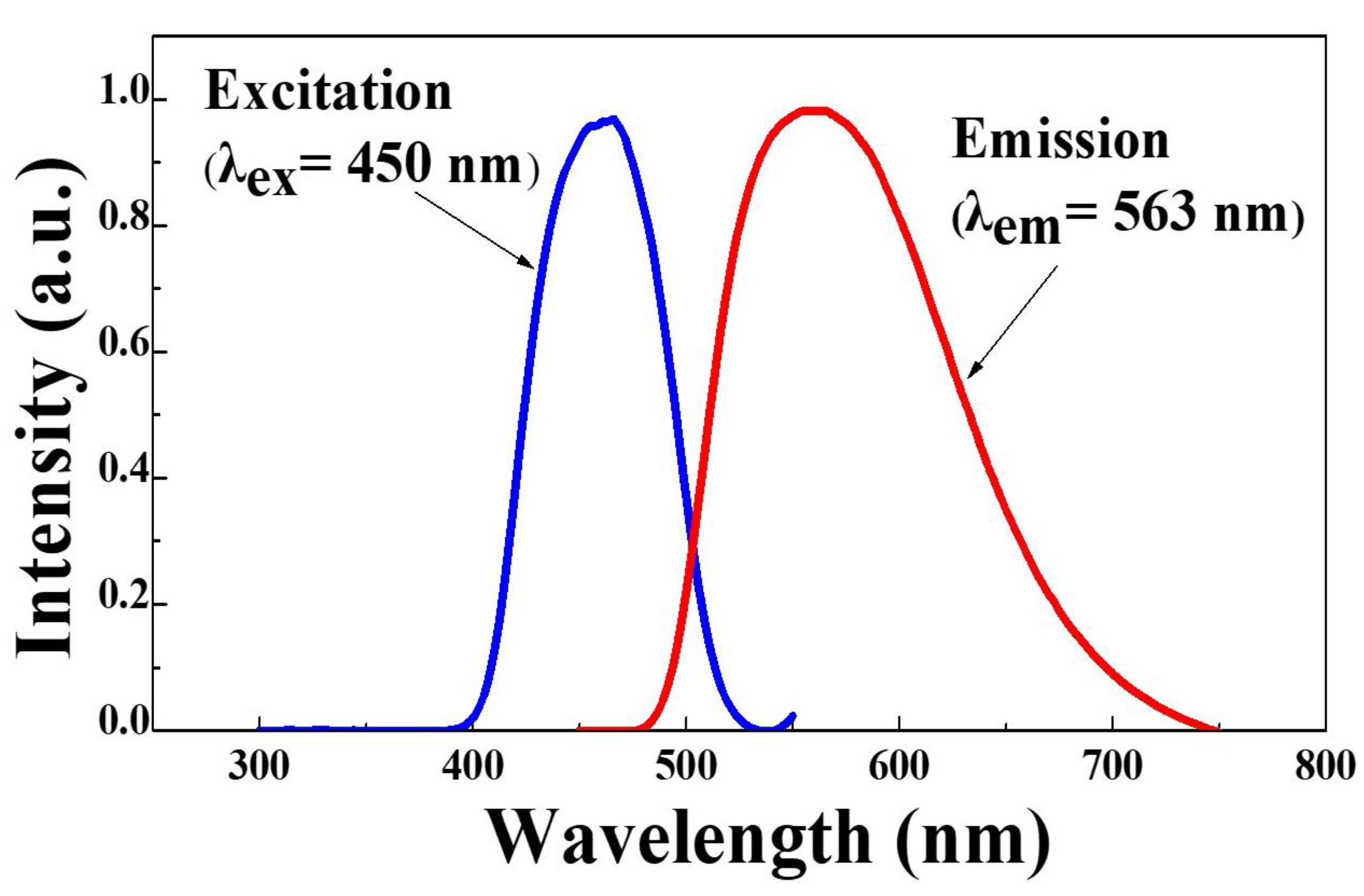
Figure 4.
XRD patterns of the four-inch PiG powder.
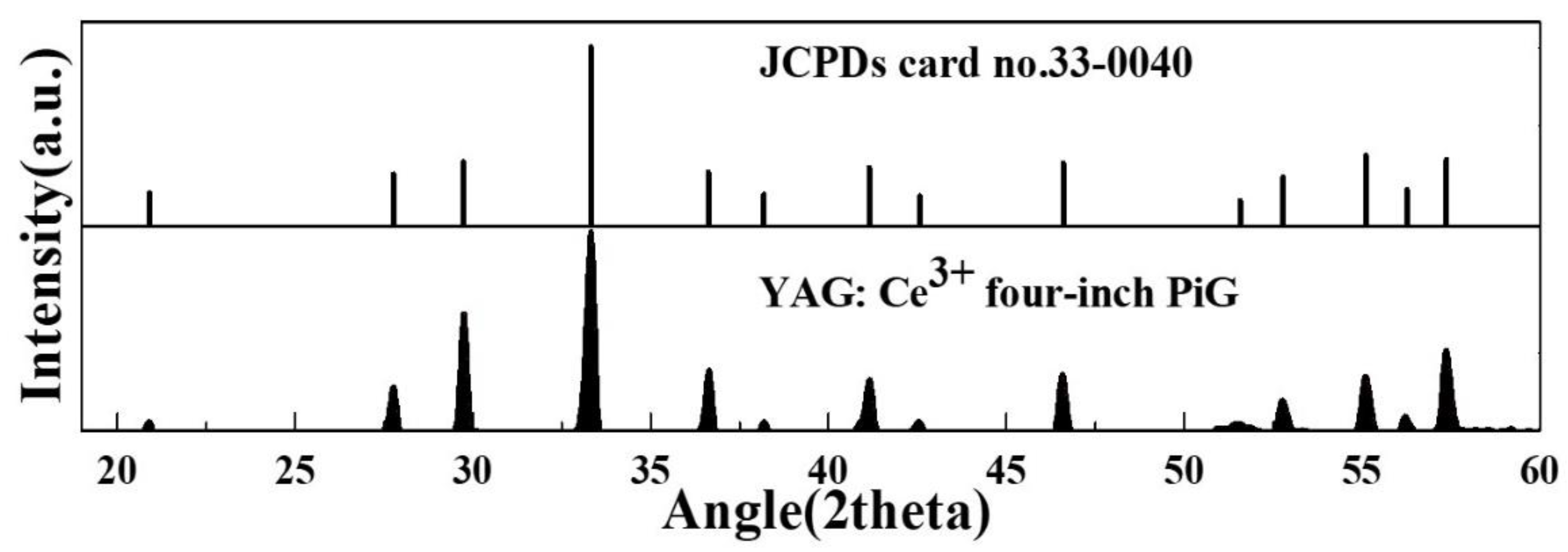
Figure 5.
The measurement values of the CIE (x,y) and the CCT in different thickness which the thickness were in (a) 0.15mm, (b) 0.12 mm, (c) 0.10mm and (d) 0.06mm, respectively.
Figure 5.
The measurement values of the CIE (x,y) and the CCT in different thickness which the thickness were in (a) 0.15mm, (b) 0.12 mm, (c) 0.10mm and (d) 0.06mm, respectively.
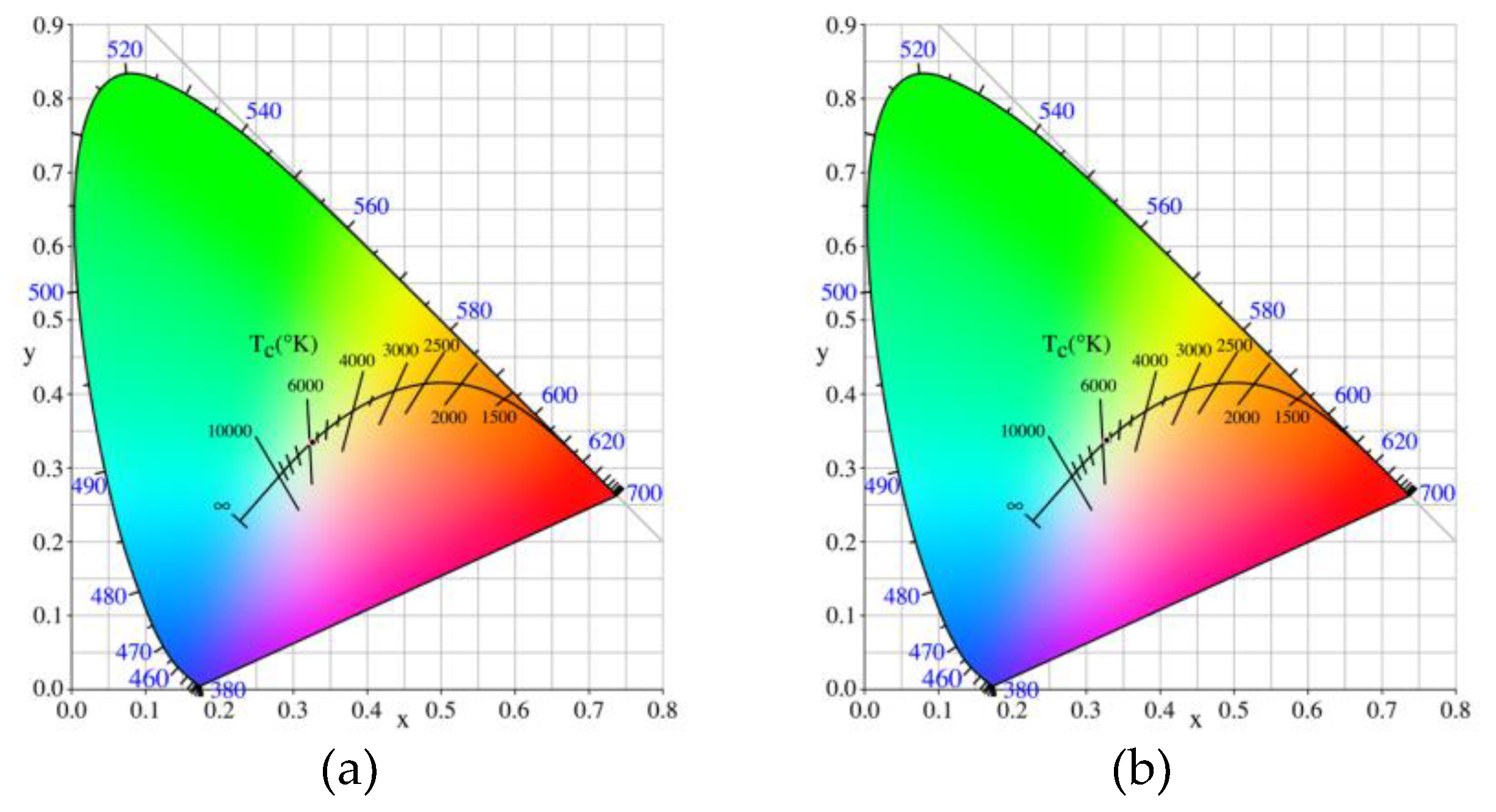
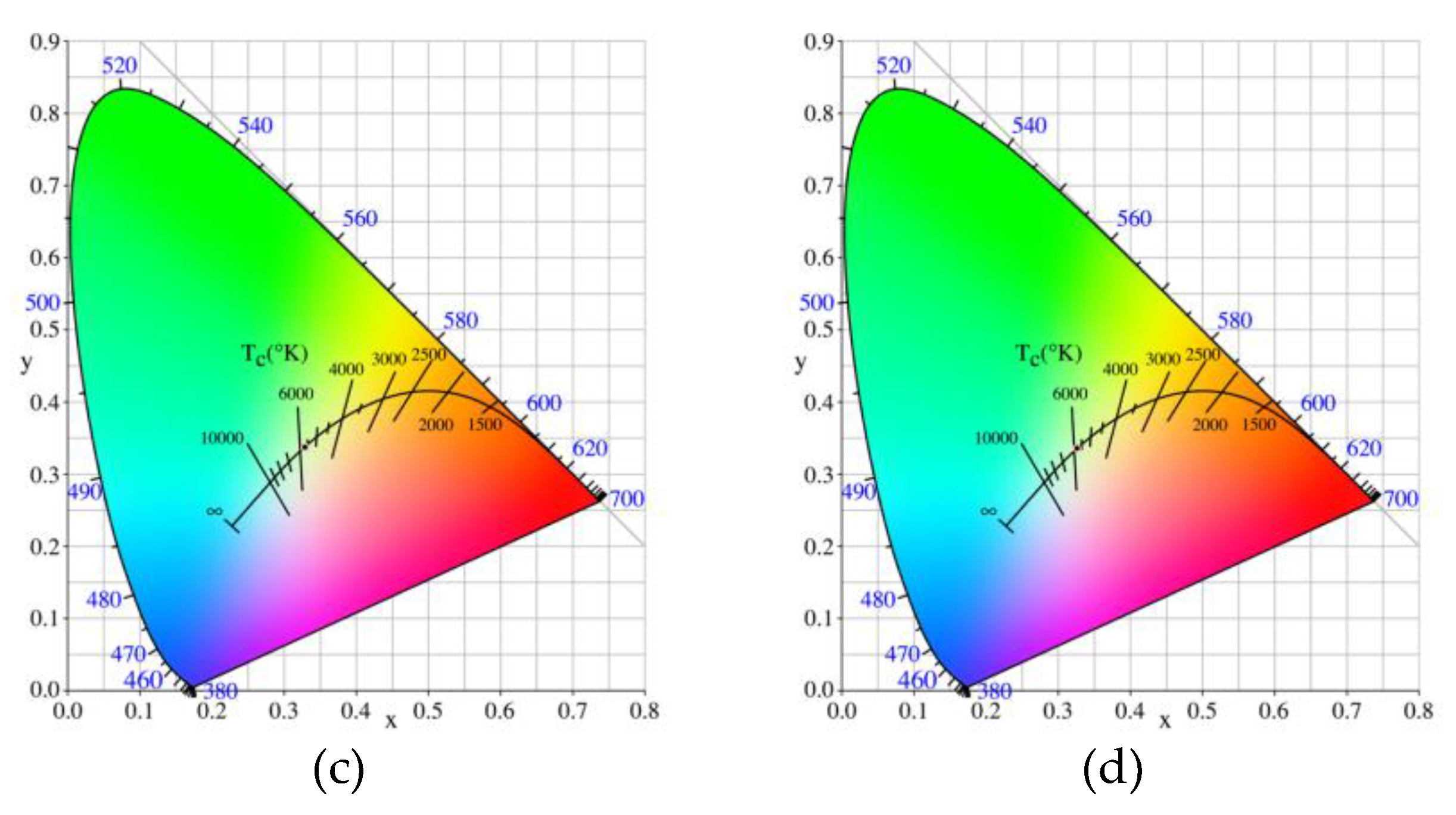
Figure 6.
FE-SEM micrographs of the PiG plates with the thickness of (a) 0.08 mm and (b) 0.15 mm.
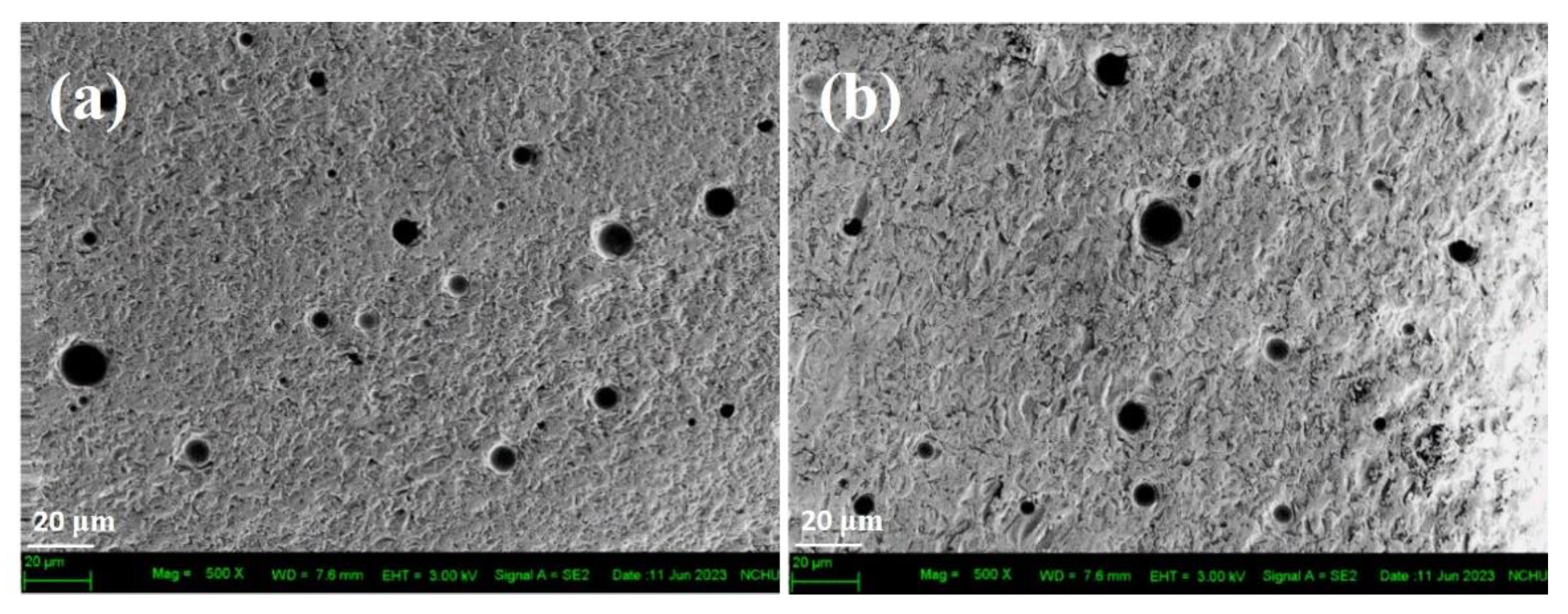
Figure 7.
Emission spectrum of the four fabricated condition four-inch PiG plates.
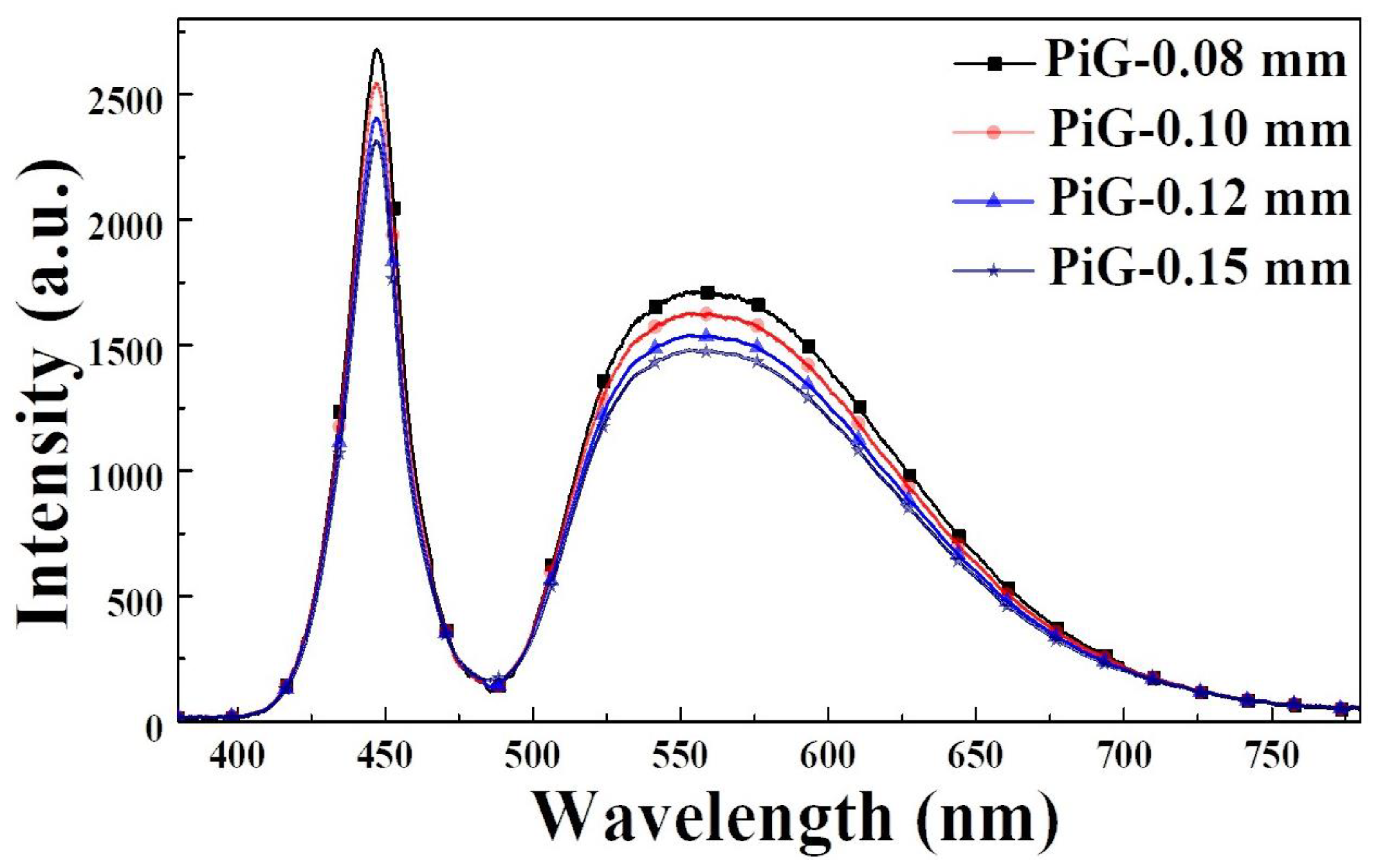
Figure 8.
Measured transmittance of the PiG plates with the thickness of 0.08 mm and 0.15 mm.
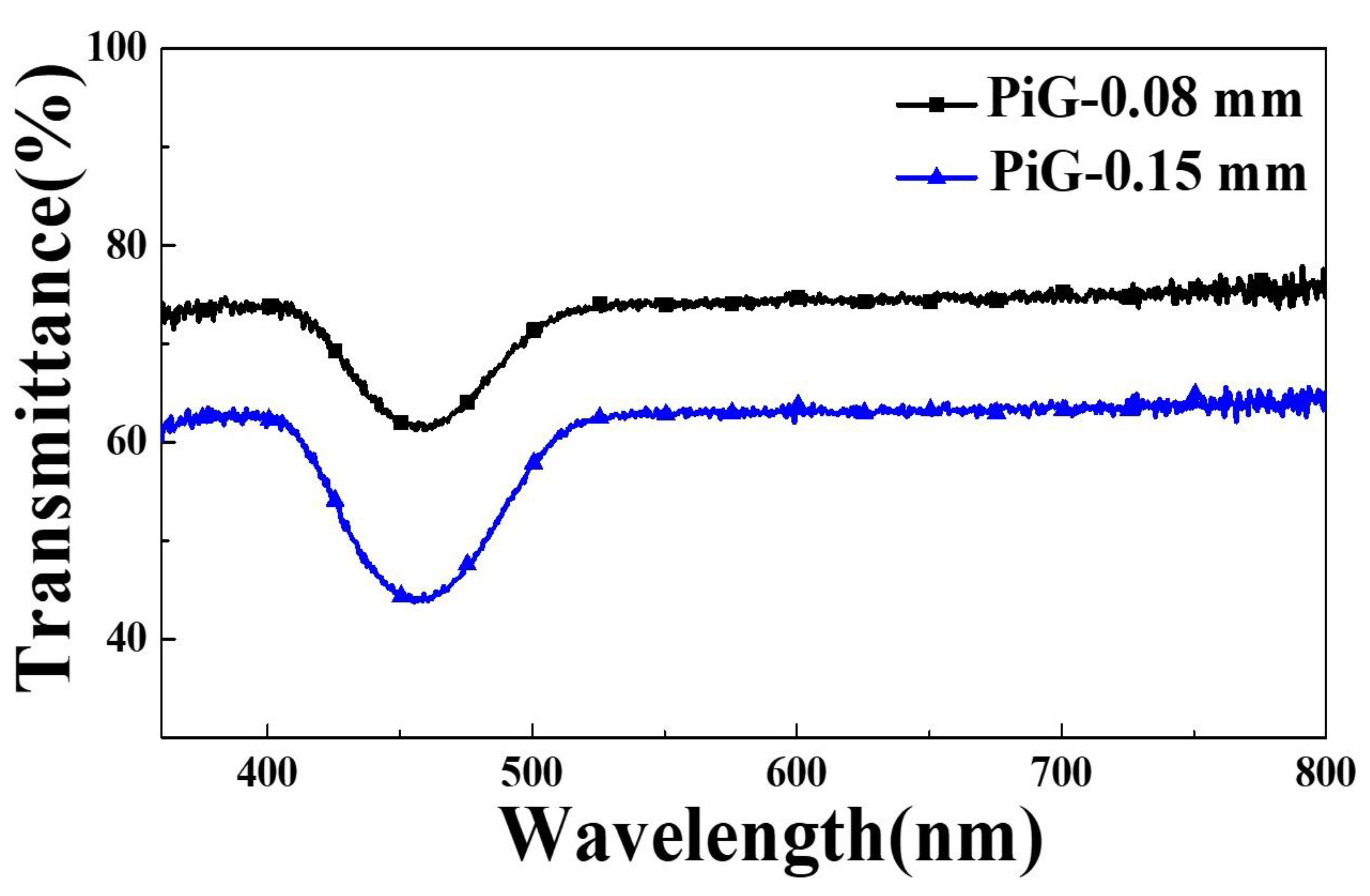
Figure 9.
Nine-point measurement for four-inch PiG plate with a thickness of 0.08 mm. Its average color temperature is 5700K, and it can be used in indoor lighting after being excited by blue LED chips.
Figure 9.
Nine-point measurement for four-inch PiG plate with a thickness of 0.08 mm. Its average color temperature is 5700K, and it can be used in indoor lighting after being excited by blue LED chips.
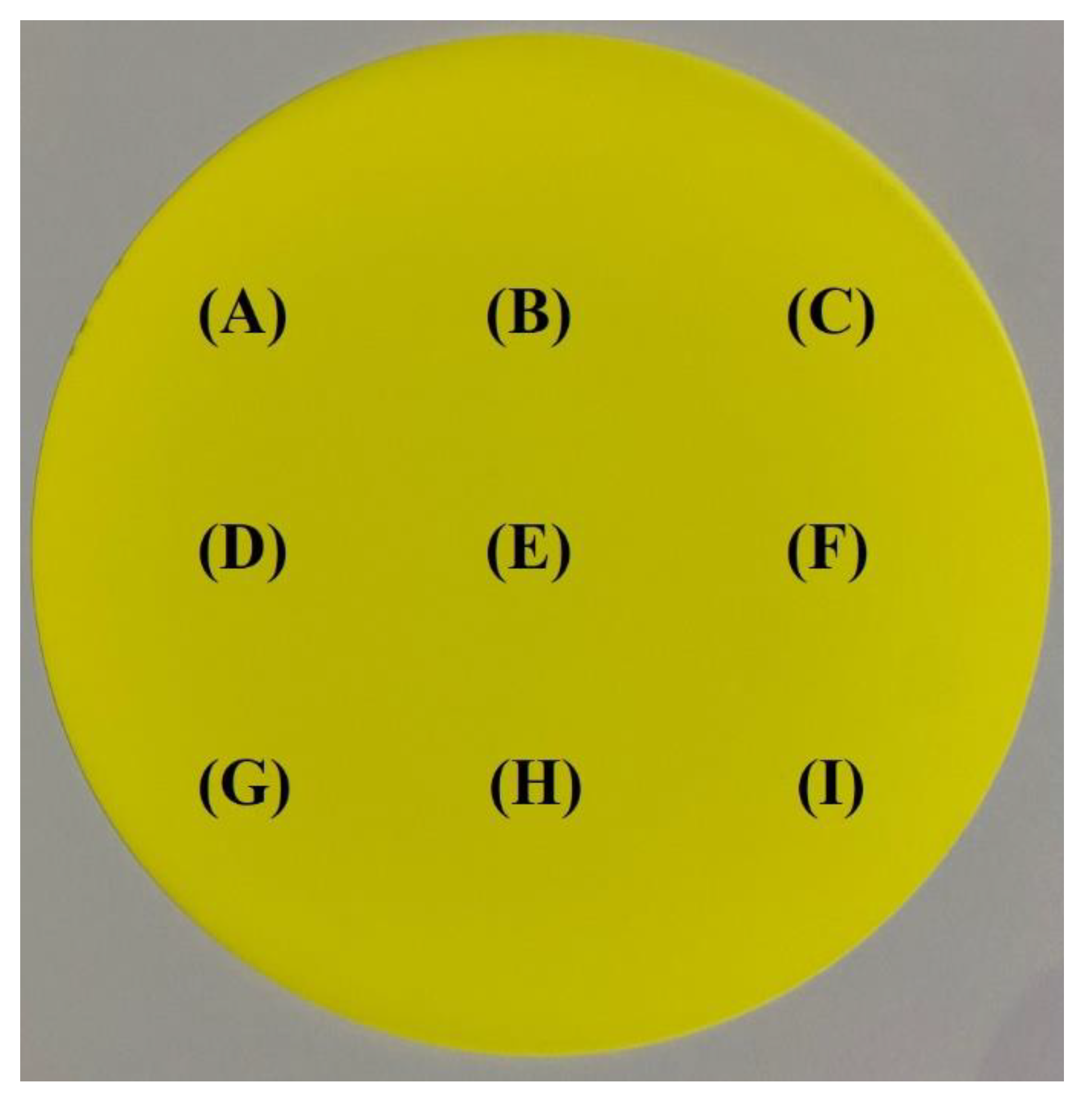
Figure 10.
CIE 1931 (x, y) chromaticity coordinates of the PiG plate with a thickness of 0.08 mm.
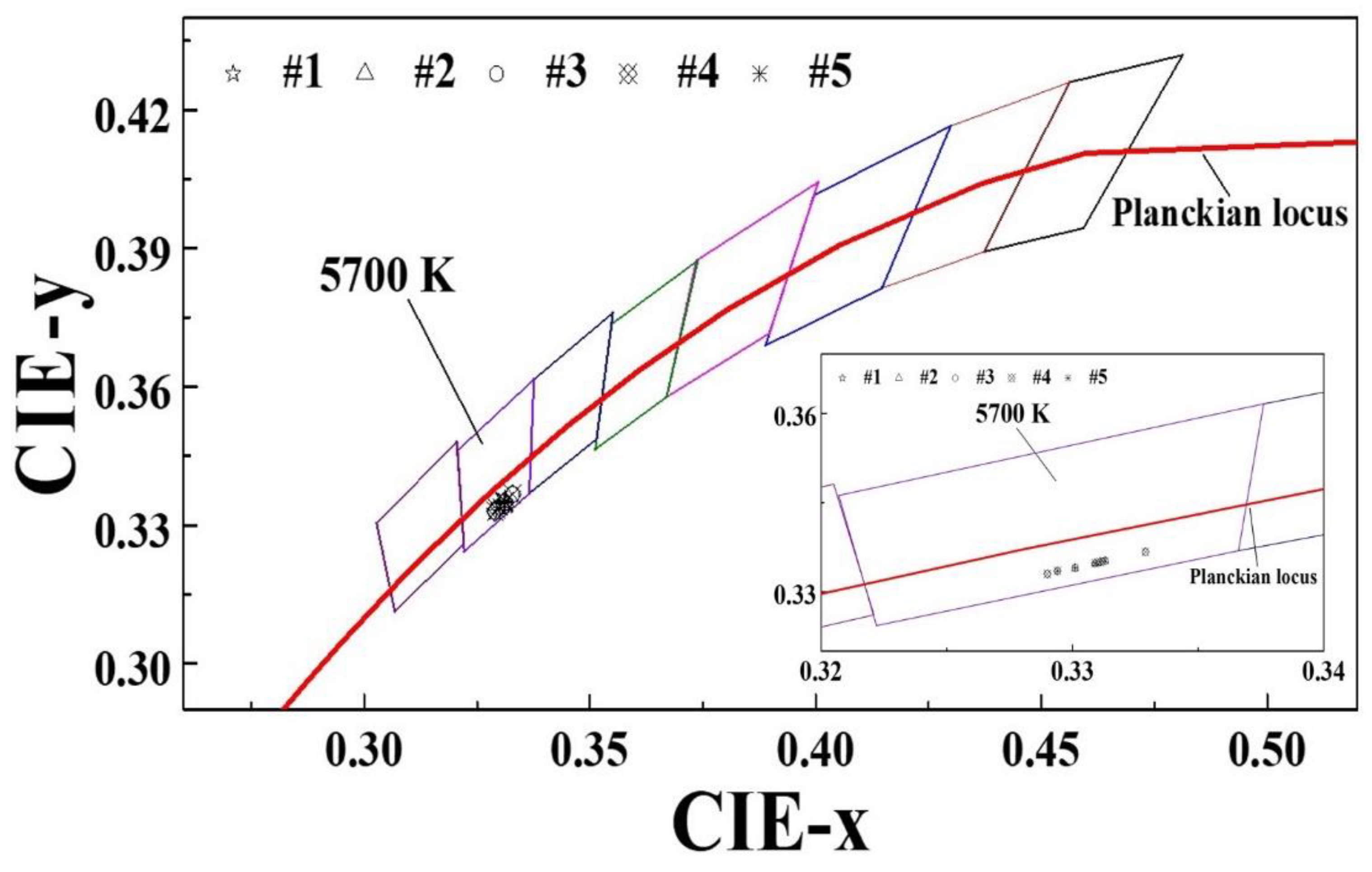
Figure 11.
Thermal aging tests of the PiG plate with a thickness of 0.08 mm for the (a) CIE shift, and (b) lumen loss.
Figure 11.
Thermal aging tests of the PiG plate with a thickness of 0.08 mm for the (a) CIE shift, and (b) lumen loss.
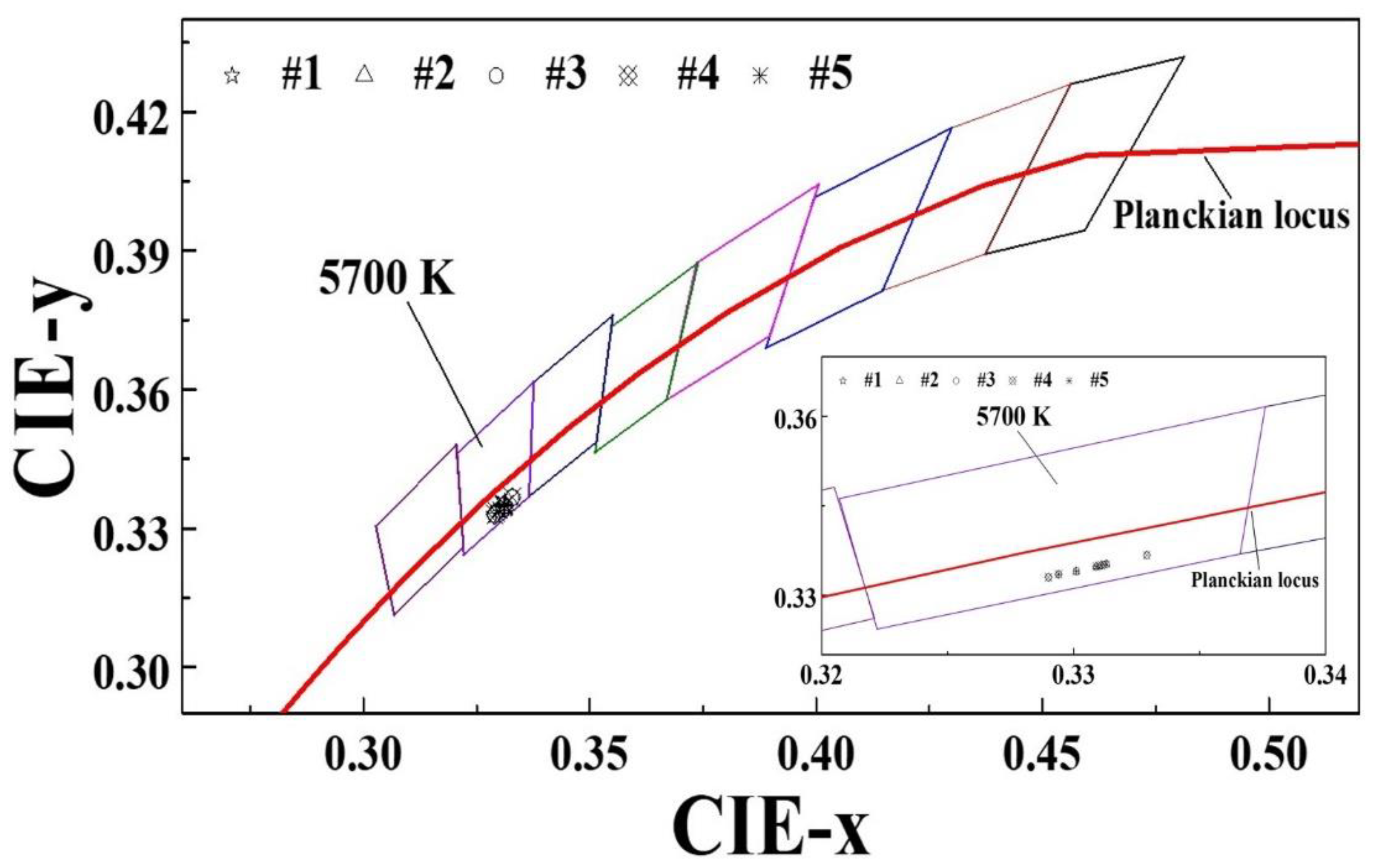

Table 1.
Four fabricated conditions of the four-inch PiG.
| Formula | PiG-0.08 mm | PiG-0.10 mm | PiG-0.12 mm | PiG-0.15 mm |
|---|---|---|---|---|
| Amount of mixture (g) | 500 | 500 | 500 | 500 |
| Amount of glass matrix (g) | 350 | 380 | 400 | 420 |
| Amount of YAG: Ce3+ (g) | 150 | 120 | 100 | 80 |
| Sintering temperature (°C) | 700 | 700 | 700 | 700 |
| Diameter (inch) | 4 | 4 | 4 | 4 |
| Thickness of PiG bulk/plate (mm) | 25/0.08 | 25/0.10 | 25/0.12 | 25/0.15 |
Table 2.
Optical properties of the four fabricated condition four-inch PiG plates.
| Formula | Thickness (mm) | Light up | CIE (x, y) | CCT (K) | Luminous flux (lm) |
|---|---|---|---|---|---|
| PiG-0.15 mm | 0.15 |  |
(0.326, 0.335) | 5,798 | 226.24 |
| PiG-0.12 mm | 0.12 |  |
(0.328, 0.337) | 5,700 | 235.20 |
| PiG-0.10 mm | 0.10 |  |
(0.329, 0.338) | 5,653 | 248.64 |
| PiG-0.08 mm | 0.08 |  |
(0.327, 0.336) | 5,748 | 264.32 |
Table 3.
Porosity of the four fabricated condition four-inch PiG plates.
| Formula | PiG-0.08 mm | PiG-0.10 mm | PiG-0.12 mm | PiG-0.15 mm |
|---|---|---|---|---|
| Porosity of four-inch PiG (%) | 1.34 | 1.37 | 1.38 | 1.33 |
| Area of four-inch PiG (mm2) | 107.98 | 110.39 | 111.20 | 107.17 |
| Volume of four-inch PiG (mm3) | 644.63 | 805.79 | 966.95 | 1208.68 |
| Volume of Porosity in the four-inch PiG (mm3) | 8.64 | 11.04 | 13.34 | 16.08 |
Disclaimer/Publisher’s Note: The statements, opinions and data contained in all publications are solely those of the individual author(s) and contributor(s) and not of MDPI and/or the editor(s). MDPI and/or the editor(s) disclaim responsibility for any injury to people or property resulting from any ideas, methods, instructions or products referred to in the content. |
© 2024 by the authors. Licensee MDPI, Basel, Switzerland. This article is an open access article distributed under the terms and conditions of the Creative Commons Attribution (CC BY) license (http://creativecommons.org/licenses/by/4.0/).
Copyright: This open access article is published under a Creative Commons CC BY 4.0 license, which permit the free download, distribution, and reuse, provided that the author and preprint are cited in any reuse.


