

Submitted:
03 July 2024
Posted:
04 July 2024
You are already at the latest version
Abstract
Effective and sustainable water resource management requires flexibility and adaptation to local contexts. Our study analyzes how local water self-governing associations have emerged, using an adapted version of the Combined IAD-SES framework, also known as CIS. Through a compara-tive analysis of two distinct Chilean cases, the research highlights the critical role of historical factors alongside institutional support, political landscapes, and financial realities in shaping current water management practices. The findings suggest that when these elements are aligned and supportive of local water users’ associations, positive outcomes emerge, leading to more effi-cient, sustainable, and user-centered water resource management. Furthermore, this study reveals how the experiences and successes of these local user associations have shaped national policies, particularly regarding the development of monitoring mechanisms and the promotion of public-private cooperation in water governance.
Keywords:
water governance
; institutional analysis and development framework
; collective action
; water user association
; integrated water resource management
; Chilean water system
1. Introduction
By 2030, global water demand is projected to outstrip supply by 40% [1]. Faced with this scenario, effective water governance that fosters collaboration and collective action is crucial [2,3]. Such governance can contribute to achieving sustainable water management practices that promote economic growth, social inclusiveness and environmental sustainability [4].
Traditionally, water governance structures involve a division of responsibilities between national and local levels. Public institutions at the national level often handle tasks like resource planning, initial allocation, and system oversight [5,6]. However, the effectiveness of this centralized approach hinges on successful collaboration with local institutions, which can take various forms, including public agencies, concessions, and private organizations [5,6]. Considering the later, research suggests that self-governed systems, where local user communities establish their own rules and norms, can be particularly effective in adapting water management practices to local needs [7,8,9]. These decentralized, multi-level governance structures, characterized by limited autonomy within a broader framework, mirror the complexities of social-ecological systems (SES) and may offer advantages in managing such systems' challenges [10].
Even though national water governance structures establish overarching policies that define local water management practices [11], successful local initiatives can also serve as pilot examples, scaling up towards the development of national policies [12]. This interplay highlights the complex relationship between national and local levels. National governments typically plan and develop water resources with the goal of water security, improving national or local welfare, achieving self-sufficiency, preserving environmental quality, and reducing conflicts [11]. Effective and sustainable water governance requires a dynamic exchange between these levels, where national policies provide a framework while local user associations can adapt and innovate within that framework, potentially influencing future national water management strategies [13,14].
Because of its high climatic and hydrological diversity, a specific water system was developed in Chile where the government assigns robust water rights per basin, managed by private associations formed by rights holders [15]. Thus, the distribution of water management powers is divided between national public agencies and locally managed private associations. This decentralization of water management aligns with broader trends in global water governance, which advocate towards multi-level governance structures that integrate local, regional, and national levels [16,17]. The benefits of such decentralized systems include increased responsiveness to local conditions, enhanced stakeholder participation, and improved resource stewardship [18,19].
However, the Chilean system faces challenges towards the implementation of this model. Many local water associations struggle to govern water resources efficiently, exhibiting considerable variability in their management outcomes [20,21]. In some areas, local associations have yet to be established, particularly regarding groundwater associations [22]. They generally have low management capacity and participation of users; they lack monitoring systems; and possess limited infrastructure [21,23,24,25]. Despite these challenges, local successes in water management have had a demonstrable impact on national policies, promoting a shift towards more decentralized and user-centered approaches [13,21,24].
Even though the system faces challenges that require ongoing attention, the structure has fostered localized decision-making, enabling tailored solutions that address specific regional challenges [21,26,27]. The argument is that these local successes have demonstrably influenced national water management policies, prompting consideration for more decentralized and user-centered support in the country.
Thus, the aim of this paper is to study and analyze two Chilean local water systems that have embarked in some form of local collective water management and their impact in nation-wide policies. Both cases have different public-private structures, allowing us to explore how local water collective action is sustained under different scenarios and challenges. Through this study, besides showing the Chilean system and how local associations distribute their water, it was possible to identify the advantages and deficiencies of the case study’s decision-making dynamics in water governance towards fulfilling a sustainable local water management. Also, to unravel how seemingly positive local practices have promoted national policies and shaped the water management system at a larger scale.
The structure of the article starts by presenting the general Chilean system in section two. The details of the method and data used are presented in sector three. Afterwards, the results regarding the analysis of the case studies are exhibited, together with the linkages to national policies. The article closes with a section of discussions reflecting on the broader policy and management lessons learned from the Chilean case study, applicable to problematic water systems elsewhere.
2. The Chilean Water System and Its Particularities
Chile is 4,329 km. long, and thus the longest country in the world, and consequently it faces high hydroclimatic diversity, along with varying needs and challenges. For example, although average water runoff is 53,000m3/person/year, a value considered high in terms of the world’s average of 6,600 m3, water runoff is also heterogeneous varying from 510 m3/person/year in the North to 2,300,000 m3/person/year in the southernmost regions [15,28].
Urban, industrial and agricultural growth have led to a significant increase in the extraction of groundwater [29]. The number of granted groundwater rights has increased 4,350% between 2001 and 2017, while surface water rights grew 207% during the same period [22]. Annual estimated recharge in the north is 10 m3/s while average discharge ranges between 10 m3/s to 20 m3/s [30]. Therefore, in most of the northern regions of the country, there is uncertainty with respect to the sustainability of groundwater use.
Studies on the possible impacts of climate change show that there is high probability that rainfall will decrease in most of the Country (20-30% reduction), together with a temperature increase [32]. Thus, a reduction in the area covered by glaciers is expected, with an added pressure on the snow-based hydrological regimes and a reduction of groundwater recharge.
Consistent with the above, since the beginning of the 2010s and up until 2022, Chile had been experiencing a situation of unprecedented drought. The conjunction of several years in a row with extremely low rainfall was characterized as a “mega-drought” [33]. Studies conclude that a quarter of the phenomenon would be associated with the impact of global climate change and the rest with historical climate variability [33,34]. In addition, the projections made from global climate models warn that, although droughts with these characteristics had a return period of 100 years in the past, in the new climate conditions they would present return periods of 20 years [33,34].
The Chilean economy is mainly concentrated on exports based on non-renewable natural resources (mining) and renewable (agriculture, aquaculture, fishing and forest plantations), which depend heavily on water resources. Therefore, the set of goods whose production and competitiveness in the markets depend on adequate water management is extremely relevant for the country's economy. They reach a value of USD 58,000 million, which represented 83% of national exports in 2019 [35]. Because of the profound impact of drought and water availability uncertainty, the Chilean water system has adapted, for instance, empowering local water management organizations and strengthening the decentralized system that is in place.
2.1. Chilean Water System
The Chilean Water System is considered to have a dual structure. On the one hand, the Government assigns Water Rights according to how much water there is available in each water basin [15]. On the other hand, users, organized in Water User Associations, oversee the management and distribution of these Rights [15]. The system is surrounded by a highly fragmented institutional framework, complemented by ordinary courts that deal with conflict resolution [36].
2.1.1. Water Rights
Water management in Chile has been governed throughout its history by water rights granted by the State. Water rights are water concessions expressly granted only for the use of water, and in no way referred to the domain of the water resource [38]. They were strengthened and allowed to be transferable by the Water Code of 1981, a regulation that had the purpose of incorporating market criteria in the reallocation of water [37,39,40].
Thus, the Water Code established that to use water from natural sources it is necessary to be the holder of a Water Right -except for the use that is destined for domestic consumption outside the urban or rural water system’s reach. In all other possible cases, users require a Water Right, which must be requested from the General Water Directorate (DGA) under the Ministry of Public Works (MOP).
The DGA grants water rights to the petitioner, provided that water is available. That is, that this request does not affect the rights of third parties, and that the body of water where the right is requested is not legally exhausted. Once a water source is declared depleted, to obtain water from that supply source, the reallocation of existing water rights is required, through buying water rights or leasing water in the market. Thus, it is expected that water rights will be mobilized towards those uses of greater economic benefit. Water transactions have indeed developed, with more frequency during relative dry years [41,42,43]. It has been studied that water rights markets have been active in several basins [44,45,46]. However, markets are thin mainly due to the lack of an efficient price revealing mechanism [45].
2.1.2. Water User’s Associations
Water is locally managed by water rights holders through water users’ associations. These organizations are formed solely by water right’s holders and are in charge of distributing the resource in accordance with the water rights that each one has. These are established within each water basin and can either be: i) Water Communities and ii) River Canal Associations, in the case of waters that are distributed through artificial canals; and iii) Vigilance Boards in the case of natural rivers or other natural source and iv) Groundwater Communities, for managing water extraction of a groundwater aquifer [47].
If established, each association must form a board of directors that will be responsible for enforcing the law and taking decisions regarding water management. The powers of the State to influence the operation of the water users’ associations are limited. Thus, it does not participate in decisions about how water is managed and can only act in cases of complaints about financial management or water distribution problems that do not respect established rights.
This management system is organized in sections of rivers and not at the basin level. Each vigilance board and groundwater community manages water from its natural source, independently of the other river or aquifer sections in the basin. This generates a situation of competition and not integration between associations. However, in those areas of the country characterized by water scarcity, and even more so, when irrigation water uses have significant economic productivity, user organizations have been established and operated adequately [25].
Water users’ associations do not incorporate those uses that do not have water rights, such as ecological (maintenance of ecosystems), environmental (recharge of aquifers, transport of materials, landscape, or others) or non-traditional (informal tourism, ancestral, cultural, to name a few). Also, in a large part of the country, customary water uses, that are recognized as a real and effective right, have not being regularized, and thus are not registered [48]. These elements imply that, in most of the basins, the users’ association distributes the waters among those who have been their historical users, some of them with regularized formal rights and others without regularization.
2.2. Institutional Framework
The water management institutional system in Chile is broad and complex and comprises very diverse organisms. Multiple institutions from the public administration must complement the job that private organizations in the form of water users’ associations do. The State is responsible of the legal framework maintaining functions of promotion and supervision of water users’ associations and, through the different public institutions, fulfills a wide range of functions regarding the resource.
Two OECD studies compared the number of public actors participating in water issues, pinpointing Chile as the leader in both studies, with 15 actors involved [5,6]. A subsequent study identified a total of 42 institutions participating in the water management process [36]. Public and private actors in the form of agencies, management units and stakeholders composed the system. The General Water Directorate (DGA), is the leading government agency in water resources management, develops and enforces national water regulation.
The system is dependent on the judicial branch to resolve multiple procedures and conflicts. Even though water users’ associations are a first step in water conflict resolutions, the Judicial Power, through the Courts of Justice, is in charge of resolving conflicts that were not resolved in this first private instance [49]. The Legislative Power is also involved since it constitutes the channel for discussing reforms of water regulations [13,50]. This generates a highly fragmented system that requires significant organization and coordination.
Significant reforms were introduced in 2022. New water rights have temporary limits of up to 30 years; these can be renewed by the DGA under established conditions. Water Rights established prior to 2022 cannot expire, unless proven that they weren’t being used. In addition, they can be sold and transferred, rented, inherited [51]. The 2022 reform also provided for a prioritization or preference of uses, being human consumption and sanitation and the environment prioritized with respect to other productive uses [52]. Prior to the reform, water rights were not defined by a specific use, and no priority was stablished between a water right used for urban or sanitary purposes than one used for agriculture. Also, a new category of water rights for non-extractive purposes, such as environmental conservation and sustainable tourism, was included. These ongoing reforms highlight the system's capacity to respond to evolving social, environmental, and economic needs.
2.4. Relevance of Studying the Chilean Water System
Chile offers a valuable case study for other water-dependent economies facing drought and climate change. The success of local systems in adapting and building resilience can provide insights for other regions. Also, as mentioned, the Chilean system is unique in its decentralized structure, where local water management systems have significant freedom. Thus, studying how local needs and innovations influence national policies could provide for valuable lessons in managing water resources across diverse scales.
At the same time, Chile’s water reforms have addressed some social and environmental concerns, but challenges remain. There are still issues with unregistered historical water rights and a lack of user associations, particularly for groundwater [25,53], that hinder effective management and participation. Additionally, the system is still being criticized for not developing a strong environmental protection system [37,54] Studying these challenges can also support developing strategies for balancing water use with environmental and social protection policies.
2.5. Case Studies to Analyze
To analyze water resources self-management in Chile, two collective water management cases with different structures and results have been studied. To provide context for the location of the two case studies, Figure 1 illustrates their location within Chile.
Aconcagua Case Study: Public-Private Governance Structure
The first case study focuses on public-private water governance structures, characterized by significant private sector participation in the local water management system. Here, the Aconcagua basin is an interesting experience since it crosses the Valparaíso Region, in north central Chile from east to west (see Figure 2). Its main economic activities are agriculture, mining and industry. These sectors compete for water with urban uses, supplying Valparaíso and other important cities of the region, rural communities, and with environmental uses. They have also been subject to conflict, regarding distributing water among different uses, water contamination, and disagreements regarding water infrastructure, among others. The Aconcagua Plan emerged under a Water Emergency situation declared in September 2018. It included the formation of a technical committee between representatives of the five surface self-managed Vigilance Committees, four of the Aconcagua river and one from Putaendo river, its tributary, as well as the public sector, represented by the DGA. They continuously met until November 2020, organizing and formulating short, medium and long-term actions for the basin.
This case study provides insights into how the collaboration between the local public sector and user associations has influenced water governance and management practices reducing water conflicts. The analysis reveals the key strengths and weaknesses of this structure, shedding light on its effectiveness in addressing the challenges posed by the mega-drought and the hydroclimatic diversity in Chile.
Copiapó case study: Private Groundwater Association with public support
In contrast, the second case, represents a groundwater conflicted basin. Copiapó is located in a highly productive area in the Atacama Region in the north of Chile, where withdrawals far exceed the average recharge of the alluvial aquifer [56] leading to significant water conflicts (see Figure 3). It also presents high heterogeneity of the actors involved, including representatives of different economic activities. All these elements are commonly found in other intra-national water basins that are characterized by growing water scarcity. In Copiapó, the first groundwater self-managed user’s community was created, and, over time, other four communities followed. Currently, the whole aquifer of the basin is collectively managed by these communities. Thus, this case study delves into a particular structure, where the local collective water management system is predominantly led by users with minimal involvement of the public sector. By examining this model, the study identifies the dynamics of decision-making, resource allocation, and the impact of user associations on national policies.
This analysis elucidates the differences in governance and management approaches between the two structures and provides valuable insights into their respective abilities to drive sustainable water management practices at the local and national levels.
3. Method: The Combined IAD-SES Framework Adapted Towards Water Systems
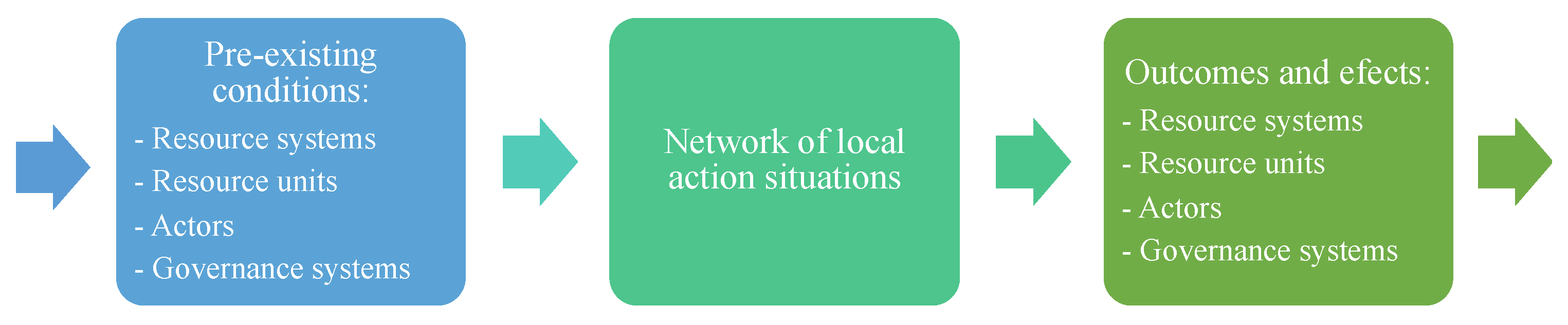
To analyze these cases, the combined Institutional Analysis and Development (IAD)-Social-Ecological Systems (SES) Framework has been used, CIS for short [58]. The framework emphasizes the analysis of action situations within the broader social-ecological system (SES). Here, action situations represent specific contexts where actors interact and make decisions about water resources. As seen in Figure 3, the framework highlights the relation between the resource system, the resource units, the actors, and the governance system, and how these interact in the action situations with external social, economic, and political settings to produce diverse outcomes.
Traditionally, SES research relied on analyzing variables within the system. The combined framework departs from this approach, prioritizing the study of action situations. This shift aligns with Elinor Ostrom's later work [59], where she incorporated the concept of "action situations" explicitly into the SES framework. By combining the frameworks, Cole et al. [58] propose a simplified version. They suggest merging the components of action situations, interactions, and outcomes (separate entities in the IAD framework) into a single unit within the SES framework. This simplification allows for a clearer focus on the dynamic interplay within action situations. The combined framework acknowledges feedback loops within the system, hence, outcomes from action situations can influence the surrounding context, potentially triggering changes in the broader SES. This "endogenous determination" of contextual conditions is a crucial aspect to consider. Finally, the framework proposes a temporal progression of events, providing for a cyclical process, where context influences action situations, which in turn produce outcomes that reshape the context for future action situations, which is also closer from the reality, when observing water SES.
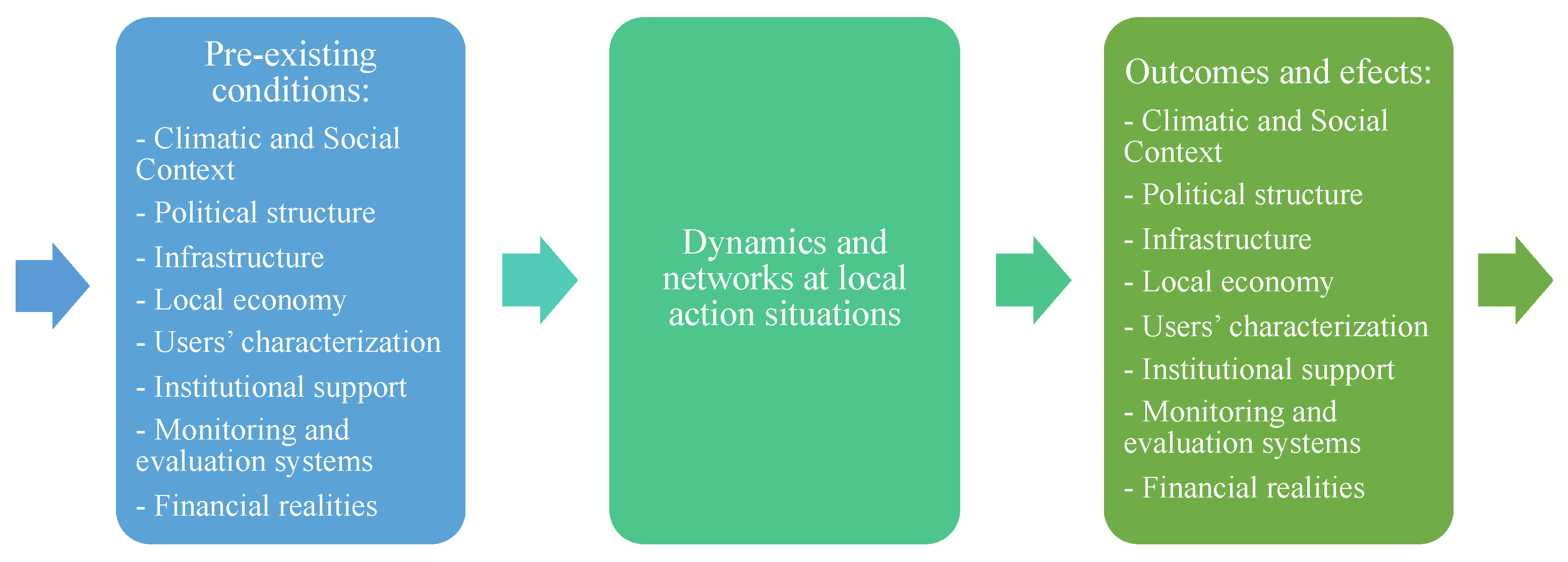
Thus, by applying the combined IAD-SES framework to the Chilean water system, we can delve into specific action situations involving water governance, reviewing its dynamics, while acknowledging the endogenous determination and cyclical process. In this analysis we focus on the following elements (Figure 4):
- Climatic and Social Context (CSC): the unique climatic characteristics of the area, for example, if it has faced long periods of drought or variable precipitation patterns, combined with its social landscape, shapes decision-making within action situations related to water governance. These factors influence how actors perceive water, prioritize decisions, and allocate resources.
- Political structure (PS): How the system has organized, specially at the decision-making level, which affects the action arena and interactions among actors. For example, differentiating from more centralized water management, or if it has promoted a more decentralized system.
- Infrastructure (I): Existing water infrastructure, such as dams, canals, and irrigation systems, along with any limitations or lack of them. These directly affect interactions and outcomes within action situations. For example, limited infrastructure can lead to competition for scarce resources and conflict over access.
- Local Economy (LE): Refers to the economic activities and structures that are directly or indirectly dependent on water resources. The health of the local economy is intricately linked to water availability and management practices. Water scarcity or unsustainable water use can significantly impact economic productivity, livelihoods, and job security.
- Users' Characterization (UC): Local water management may involve several or few groups of water users. These may include farmers, urban residents, industrial users, environmental organizations, among others. Their interests, knowledge, and power dynamics significantly influence decision-making within action situations.
- Institutional Support (IS): Formal institutions, such as government agencies with water management mandates, and informal institutions, such as user associations and customary practices, play a critical role in facilitating or hindering collaboration within action situations. Effective institutions can provide a framework for coordination and conflict resolution, while weak or absent institutions can exacerbate tensions.
- Monitoring and Evaluation Systems (MES): Monitoring and evaluation systems assess water use, environmental impacts, and compliance with regulations. Effective systems within action situations provide data for informed decision-making, promote accountability, and ensure sustainable water management practices. Conversely, weak monitoring and evaluation systems hinder transparency and can lead to resource misuse.
- Financial Realities (FR): Financial resources available for water management, user fees, and cost-sharing mechanisms significantly shape decision-making within action situations. Limited funding can restrict investment in infrastructure improvements and constrain the ability to implement effective water management practices. User fees and cost-sharing mechanisms can incentivize efficient water use and promote collaboration, but their design and implementation can also contribute to inequities.
By examining these elements through the lens of action situations within the combined IAD-SES framework, we gain a deeper understanding of the Chilean local water governance system. This approach allows us to identify key challenges and opportunities for promoting sustainable water management and achieving water security at the basin level reducing conflicts.
Figure 2.
Adapted components of the combined IAD-SES framework towards the analysis of Chilean water cases.
Figure 2.
Adapted components of the combined IAD-SES framework towards the analysis of Chilean water cases.
4. Results
The methodology was applied in two Chilean basins, representing different institutional schemes and situational issues. These were selected since they represent multiple problems a water social-ecological system faces, namely: scarcity issues, summer floods, the need for distributing water between multiple users, conflicts between users, groundwater monitoring and enforcement, among others. Both cases have some form of local collective water management, with different structures, that allowed us to test the framework under different institutional schemes. Thus, the location of the study and methodology allows us to understand water systems under the added complexity of the institutional fragmentation.
4.1. Surface Vigilance Committee Aliance at the Aconcagua Basin
Our analysis of the valley's water management focuses on two distinct periods: pre-2018 and post-2018. This distinction is crucial because the year 2018 marked a significant shift in governance processes. The development of the Aconcagua Plan and the establishment of a working committee involving all five vigilance committees from the Aconcagua and Putaendo rivers represented the first attempt at basin-level water management in the area. The information to support this case study comes from the analysis of secondary literature, together with almost 90 workshops meeting minutes, complemented with an interview of a local vigilance committee manager.
Pre-2018, disperse private management with little public intervention
From a social point of view (CSC), the Valparaíso region is characterized by a population density of 93.9 inhabitants /km2, the second highest in Chile, made up mostly of low-income families, with a regional average of practically USD 6,500/year, compared to the national average of USD 10,300/year [60]. Furthermore, from an economic point of view (LE), the Aconcagua River basin is important for agricultural activity, especially in the production of fruits and vegetables for exports, producing approximately 41% of the country's total avocados, 29.7% of grapes and 30% peaches [61].
The ongoing drought (CSC) has significantly impacted agricultural activities (LE) in the region, reducing irrigation water availability and consequently affecting farmer production and income [62]. Water scarcity, a persistent challenge in the area (CSC), has historically fueled competition and conflicts among various user groups, mainly between mining, agriculture, and urban populations (UC) supplying drinking water to Valparaíso and surrounding communities [63]. These competing demands have led to conflicts surrounding water distribution, pollution, and infrastructure development.
From a political point of view (PS), water management in the Aconcagua River basin has been subject of controversy. The responsibility for the administration of water resources has been placed on water users themselves organized in vigilance boards (UC), with no participation of public agencies (IS). In the Aconcagua River basin, through judicial resolutions from the public authority, the DGA, in the years 1878 and 1916 [64] defined five hydrological sections for the basin, in such a way that there should be a surveillance board organized for each of them. This aspect has been criticized, arguing it limits integrated water management at the basin level, laying the foundations for conflicts [64,65]. The lack of coordination and the absence of a comprehensive plan for water management in the area have generated conflicts and tensions between the different actors involved [64,65]. Even though there was an attempt in 2001, to manage water resources with a basin-level organization through the "Acta de Aconcagua", not all the Vigilance boards of the river where involved, and it was mainly led by public agencies, such as the MOP, congress persons and mayors [66].
From 2018 to 2022, private river basin association with public support
Due to the extraordinary situation of water scarcity in 2018, representatives of the Vigilance Boards of the Aconcagua River signed an agreement to redistribute water between sections. In 2019, due to the prolonged drought, a new agreement was signed that included the formation of an Executive Committee to monitor and ensure the execution of the agreement, propose modifications if necessary and manage conflicts for an adequate solution [67]. The MOP identified three working groups for water management in the development of the “Aconcagua Plan” [65]. The Aconcagua Roundtable, made up of the vigilance boards of each of the sections of the river and the public sector, was created to monitor and ensure the execution of the agreement, manage conflicts and propose compliance measures with the terms of the Protocol [65]. With the creation of the Aconcagua Roundtable, in addition to contemplating the participation of the vigilance boards, formed only by private users, the public sector is incorporated into the roundtable, through the participation of representatives of the DGA, the National Irrigation Commission (CNR) and others [68].
The spirit of the Aconcagua agreement is to be able to deliver water to those who do not have it, leaving no one behind. The focus is that i) water for human consumption is guaranteed; (ii)water is available to farmers, whether large, medium or small; and iii) to address actions that will face drought in the medium and long term (Meeting minutes 15). For this, representatives of the three main sections were present at each meeting of the Aconcagua Roundtable, occasionally accompanied by the drinking water and sanitation company, the main user of the fourth section, and by the Putaendo river representative, the fifth and final section [68]. This participation validates the agreements.
Likewise, the presence of the public sector, through the DGA (IS), is permanent throughout the meetings [68]. Here, the other participants requested the express assistance of DGA to supervise compliance with the agreement, always in the exercise of their powers and attributions; in addition to contributing to the role of mediator that the DGA implicitly fulfills during these meetings [65]. Thus, within the meetings, the DGA itself commits actions, resources, and also acts as a mediator with other key actors. An example of this are the actions of the DGA on monitoring issues (MES), committing to expedite the calibration of monitoring stations (Meeting minute 1), as well as supervising that users carry out distribution agreements (Meeting minutes 2 and 3).
In addition, the meetings are attended by other public actors (regional representative of the MOP, regional representative of the Ministry of Agriculture, Directorate of hydraulic infrastructure, CNR, among others) and private actors (local water company, Rural domestic water supply committees, etc.) depending on the topics discussed in each session [68]. The workshop table does not include other private entities such as mining companies or other producer associations, nor does it include members of civil society (indigenous communities, environmental organizations, tourism), thus, this body would not be part of a process of effective integrated participation and collaboration [68].
Regarding political implications of the roundtables, the meetings also involved extending requests and demands to other actors and sectors involved. One case worth mentioning is a letter addressed to the MOP and the Minister of Agriculture, written during the first meetings, inviting them to be part of the Board (Meeting minutes 2 and 3). At times, the hierarchy of the table extended beyond local political decisions. As an example, users opposed a decision made by the municipality to halt some well operations, arguing that the mayor does not have the legal power to do so (Meeting minute 15). Consequently, the MOP was requested to use its authority to resume them and the DGA was requested to conduct the inspections.
Because of the meetings, infrastructure plans and other public investment were promoted (I). The Undersecretary of MOP, for example, gave instructions to advance in a study of the headwater reservoir of the basin, in an infrastructure plan encompassing different hydraulic projects across the watershed, and the installation of several wells in communities in need (Meeting minute 31) (IS).
Also, because of the organization, it was possible to adapt rules to quickly respond to needs. In the period of extreme drought, a complete cut-off of water use was carried out in upstream sections, with the aim of allowing the river to recover in downstream sections and to deliver water to those who were not receiving it (Meeting minute 13). This agreement, although it is formal and very rigorous, has been able to be modified, always with the approval and consensus of the rest of the board. An example of this is the rule of maintaining the floodgates open for 36 hours, despite the fact that due to the flow figures, it was only appropriate to open them for 24 hours (Meeting minute 9). Another solution taken quickly throughout the meetings was the initiative to assign vigilance boards the responsibility of monitoring and cleaning the channels that lead to the river (Meeting minute 13). These channels were being filled with water from a battery of wells installed during the emergency and had been continuously vandalized. Users evaluated that the alliance had led to better coordination, improvements in distribution efficiency with the consequent greater availability of water, reduction of conflicts and developed long-term planning. For example, in a meeting, it is pointed out that the season has been better than the previous ones in terms of water management, even though this season has brought less available water (Meeting minute 18). The attendees agree that the operation of the agreement and this committee is carried out in an environment of trust. Additionally, users pointed out that the main value of the agreement and water table formation was its own existence, since it has been a space to debate long-term issues, as well as the distribution of water on a voluntary and consensual basis (Meeting minute 14).
In each meeting, in addition to reviewing short-term issues such as the weekly river operation agreements, medium and long-term issues are also discussed. These time frames are included as standard agenda items, revealing that planning constitutes an important objective for the group (Meeting minute 15). An example of this is the review of major infrastructure works projects that involve the entire section of the river, and the establishment of monitoring systems (Meeting minutes 1-14); strategy of holding meetings and leaflets and other strategies to inform the rest of the community about the meetings extensively (Meeting minutes 3 and 6).
Communication is also relevant, MOP proposed and promoted a Strategic Communication Plan, to maintain coordination and disseminate the same communication messages through the media, social networks and direct contact with all actors linked to the Aconcagua Plan (Meeting minutes 24).
Lessons learned from the Aconcagua case are especially interesting regarding the Action situation, where all actors -users, public agencies, and water service agencies- have clear positions with respect to the decision-making process and do not interfere between them. The case shows the relevance of allowing flexible and adaptive rules, provided there are justified reasons for placing them, unanimous agreement, transparency, a proper monitoring system in place and a mechanism to allow raising complaint from potential affected parties. The allegiance invested in gaining trustful data and information towards quantifying the outputs of different actions. This is a key element that has led to reaching an unpresented agreement on water distribution which should be strengthened, or at least secured.
4.2. Groundwater Communities in the Copiapó Basin
The Copiapó basin represents a highly conflicted groundwater basin, located in a productive area in northern Chile, with a situation of over-extraction [56]. Here, groundwork to directly assess the formation and empower groundwater communities was conducted by the authors between the year 2012 and 2015. Thus, this period serves as a demarcation point, allowing for an analysis of conditions and developments both before and after 2012. The work involved different instances of participation with local water users, including the development of their written operational rules, that were used as material. For any missing information and to verify the whole case study, the manager was contacted and interviewed.
Pre-2012, extreme overallocation with little monitoring and conflicts
The climate in the Copiapó basin is arid, with an average annual precipitation of just 28 mm [69] (CSC). According to studies, the groundwater recharge of the basin equals 3.7 m³/s (DGA, 2011), while records developed by SITAC [70] and DICTUC [57], reveal that groundwater users had permits up to 23 m³/s (CSC). The later was rectified towards 19.6 m³/s [69]. However, the values still reveal that the aquifer was significantly over exploited. Also, inconsistencies in values and research findings reveal gaps in the information and monitoring systems (MES), affecting the basins' general water accounting [56,69].
The Atacama Region, where the Copiapó basin is located, has historic economic activities of agriculture and mining (UC). Agriculture focuses on fruit production for export, vineyards, and vegetable farming [69]. The mining sector includes the Paipote smelter and companies producing copper, iron, gold, and silver [69]. Both sectors heavily depend on the basin's water resources, making water stress (CSC) a critical factor that can significantly impact the local economy (LE). Evidence of discrepancies and conflicts between water users and the vigilance committee were also common (UC) and highlighted a weak management situation [69].
The only large infrastructure in the valley, corresponds to the Lautaro Dam (I), located 15 km. downstream of the Copiapó River’s source, with a total volume of 42 million m³ [57]. Its original construction did not account for the water filtration through its gravel and sand base, resulting in the recharge of up to 50% of its volume, and the formation of an important groundwater aquifer downstream [57]. Prior to 2012, there was a project in development, the Lautaro 2.0, to line the dam to limit infiltration, but up to this day, it is still under study [71] (I).
Since the river dries out before reaching the city, only groundwater is available downstream. To manage it, since 2004, the first groundwater community was developed (PS), the CASUB [72]. However, until 2012, the community still lacked knowledge on the legal regulations governing water use rights, had poor compliance with user duties on issues such as fee payment, participation in assemblies, or knowledge of their statutes, and used precarious monitoring mechanisms [69]. Thus, the water management system had significant gaps in terms of institutional development, monitoring systems, and financial subsistence that was not helping alleviate the overallocation problem.
Post-2012, moving towards more sustainable water management practices
After the process that started in 2012, what can be seen in Copiapó valley, is that users have organized, especially groundwater users, and have adapted their rules and mechanisms towards their needs. This can be seen when developing a monitoring plan with a public agency’s agreement to partially fund it [73]. Also, when establishing alliances with other groundwater communities [56].
The private alliance between users has had periodical gatherings, with a valid number of users participating [73]. Over the years, the users’ associations have remained active. This, even though there are issues of trust, social justice and transparency still pending [72]. The alliance between groundwater communities has been harder to sustain, since there are no legal options for establishing supra-organizations [74] The communities have creatively solved this issue, by establishing the same set of rules and naming the same manager and technical team to perform periodical operations [73]. This led to the joint management of three upstream communities [73]. These communities also had similar users -for example, most of them are farmers-, and a smaller number of members to downstream communities, which could also explain their association [9]. The two other downstream communities, even though have different boards and managers, are continuously in touch [75]. A creative solution towards the river’s full alliance was done by the downstream groundwater community, as they bought surface water rights to become a part of the surface Vigilance Committee, the community that controls and operate the upstream Lautaro dam, that significantly affects groundwater aquifers [75]. This was a solution taken by groundwater users without the public agency’s support and going beyond, and not against, the established norm.
The major issues for coordination are related to the high heterogeneity encountered, regarding the different purposes and situation of users involved, the technology used and the information they possess [72]. The continuity of the community can be attributed to the fact that leaders are aware of the situation and come from different backgrounds, a common understanding of local priorities, that they have official rules in place, and since the formation of the community was conducted by an external and neutral party [72].
The communities developed monitoring plans to gradually establish monitoring devices in all wells and created an alliance with a public agency to partially fund this monitoring system [56,75]. Also, they developed a set of official rules, written and known by everybody [73,75] Here, they specified all duties and obligations of users, as well as the fines for non-compliance. The communities also focused their efforts on bringing clarity to all granted water rights in the basin, and the registry of users to be continuously updated [72].
Even though the users are the ones that make all decisions, they have developed alliances with the regional offices of specific public agencies when needed. Also, they have hired staff to support with the operational aspects, and generally engage with technical advisers for specific topics. They coordinate between each other for voting and regular decisions, and these are seen as valid processes, inside the community and out. Small communities have raised complains regarding not-being considered, even though mechanisms and special dispositions have been developed for their support [56].
As lessons learned from this case study, the relevance of developing transparent accounting methods, either for the monitoring of water flows and individual extractions, as well as for the decisions made in meetings can be identified. This should also apply towards formal conflict resolution processes. Special attention should be placed on the funding scheme, from the community’s origin, regarding the neutrality of the organizing agent, up to their operations and monitoring funding. Even though public support is needed, public agencies should have limited power, to allow the local organization to empower in the decision-making process.
4.3. Lessons Learned towards Local Self Water Resources Management
The comparative analysis of two distinct Chilean cases reveals the critical role of historical factors, institutional support, political landscapes, and financial realities in shaping current water management practices. The findings suggest that when these elements are aligned and supportive of local water users’ associations, positive outcomes emerge, leading to more efficient, sustainable, and user-centered water resource management. Furthermore, this study reveals how the experiences and successes of these local user associations have shaped national policies, particularly regarding the development of monitoring mechanisms and the promotion of public-private cooperation in water governance.
Combining both case studies, the analysis identified several key aspects for successful local water management systems: i) the relevance of having the support of the institutional system, especially of public agencies, towards local water associations; ii) effective conflict resolution mechanisms and coordination regimes are crucial for managing water resources, especially among diverse users; iii) the ability to implement and adapt technological and innovative solutions is essential for developing a sustainable water management; iv) reliable devices and systems for water accountability are crucial to ensure transparency; and v) long-term financial strategies are necessary to maintain and support local water associations.
These elements, identified from the case studies, provide a framework that can be helpful when analyzing other contexts. However, each water management system has its own particularities, and these conclusions cannot be blindly extended to other water basins.
From the Aconcagua case, the participation process was promoted for policy development processes. Here, a bill on basin-level water associations was being discussed, in which the Parliamentary Commission requested to nominate possible guests, and the vigilance committees were invited to present (Meeting minute 31). This participation process has been instrumental in shaping current policies to establish strategic basin organizations (Mesas Estratégicas de Recursos Hídricos).
Regarding groundwater, the Copiapó basin has been leading national policies on the matter. Following the implementation of their groundwater monitoring system, the DGA issued a resolution in 2016 (Res. Ex. 2129 on July 29, 2016) ordering holders of groundwater use rights (covering almost all groundwater users from the Valparaíso region in Central Chile to the north) to adjust their extraction control systems and periodic information reporting. While causality cannot be proven, this modification underscores the government's commitment to improving water management through advanced monitoring and data transmission technologies, likely influenced by the successful system implementation in the Copiapó case.
To fund the implementation of these new technologies, strategies were derived from the Copiapó case as well. Here, a specific public funding was opened, targeting the monitoring of groundwater flows in specific water basins. This approach demonstrates how creative solutions developed by local communities for their specific situations can be adapted to other scenarios, leading to broader national policies.
The experiences and successes of these local user associations have significantly influenced national policies. The development of monitoring mechanisms and the promotion of public-private cooperation in water governance have been directly shaped by the practices observed in the Aconcagua and Copiapó basins. The national institutional scheme has adapted to incorporate successful ideas from local communities, demonstrating the importance of bottom-up approaches in water management policy development.
5. Discussion
The successful implementation of local water practices can significantly influence the development and refinement of national water policies. By examining cases where local initiatives have yielded positive results, policymakers can identify effective strategies and adapt them to broader regulatory frameworks. For instance, the pilot project conducted in the Copiapó Basin demonstrated the value of local solutions in addressing groundwater monitoring challenges. This initiative informed national legislation, leading to the modification of the norms in 2016. The updated regulation now includes provisions that mandate the installation and maintenance of measurement systems for flow rates, extracted volumes, and static or dynamic levels, as well as the transmission of this information. Decentralization benefits these processes by empowering local communities, fostering greater stakeholder engagement, and ensuring that water management practices are tailored to specific regional needs.
This approach underscores the importance of allowing local entities the flexibility and adaptability needed to develop context-specific solutions. It not only enhances the sustainability of water resources, but also promotes more resilient and adaptive water governance systems. Local stakeholders, who are intimately familiar with their unique environmental and socio-economic conditions, are often best positioned to devise and implement effective water management practices. When these local practices prove successful, they offer valuable insights and models that can be scaled up or adapted for national policy.
The integration of local practices into national policy frameworks not only enhances the relevance and effectiveness of regulations but also fosters innovation and responsiveness within the water management sector. By maintaining a degree of flexibility at the local level, national policies can accommodate diverse conditions and emerging challenges, ensuring sustainable and resilient water management across different regions.
Moreover, the Combined IAD-SES framework supported enhancing our understanding of the complexities inherent in local water systems. By pinpointing failures and facilitating context-specific solutions, this framework supports cooperative efforts, strengthens community engagement, and fosters sustainable water management practices. Ultimately, it empowers local associations to collaborate effectively, promoting efficient, equitable, and sustainable water governance across diverse regions.
The Combined IAD-SES framework also proved applicable for studying and analyzing local water communities elsewhere, as demonstrated by its successful application in two distinct cases. While these cases share similarities inherent to their national context, they also encompass a variety of water challenges typical of other regions worldwide. The framework has shown efficacy at the local level by analyzing local water systems, yet its potential extends to explaining complex dynamics at higher levels of water management. Its adaptability suggests promising applications in sub-national and national water SES.
In conclusion, the interaction between local practices and national policies is crucial for the advancement of effective water management. Encouraging local innovation and adaptability, while leveraging successful examples to shape national regulations, creates a dynamic and responsive approach that benefits both local communities and the nation as a whole.
Supplementary Materials
All meeting minutes are available upon request.
Funding
This research was funded by the Chilean National Research and Development Agency (Agencia Nacional de Investigación y Desarrollo, ANID) Anillo Research Project N° 230046.
Ethical review and consent
Also, the study has gone through the review and approval of the Comité Ético y Científico (Ethical and Scientific Committee) of the Pontificia Universidad Católica de Chile regarding the interviews carried out, and the subjects have signed an approved informed consent.
Data Availability Statement
No new data was created.
Conflicts of Interest
The authors declare no conflict of interest.
References
- UN Water; UNESCO Valuing Water. The United Nations World Water Development Report 2021. Facts and Figures; 2022.
- Sullivan, A.; White, D.D.; Hanemann, M. Designing Collaborative Governance: Insights from the Drought Contingency Planning Process for the Lower Colorado River Basin. Environ Sci Policy 2019, 91, 39–49. [Google Scholar] [CrossRef]
- Jiménez, A.; Saikia, P.; Giné, R.; Avello, P.; Leten, J.; Liss Lymer, B.; Schneider, K.; Ward, R. Unpacking Water Governance: A Framework for Practitioners. Water (Basel) 2020, 12, 827. [Google Scholar] [CrossRef]
- OECD Implementing the OECD Principles on Water Governance: Indicator Framework and Evolving Practices; OECD Publishing, Paris, 2018; ISBN 9789264292666.
- OECD Water Governance in OECD Countries: A Multi-Level Approach; OECD Publishing, 2011; ISBN 9789264119284.
- OECD Gobernabilidad Del Agua En América Latina y El Caribe : Un Enfoque Multinivel; Éditions OCDE, 2012.
- Ostrom, E. The Evolution of Institutions for Collective Action; 1990; ISBN 9780521405997.
- Ostrom, E. Governing the Commons; Cambridge university press, 2015; ISBN 1107569788.
- Poteete, A.R.; Janssen, M.A.; Ostrom, E. Working Together: Collective Action, the Commons, and Multiple Methods in Practice; 2010; ISBN 9781400835157.
- Martínez-Fernández, J.; Banos-González, I.; Esteve-Selma, M.Á. An Integral Approach to Address Socio-Ecological Systems Sustainability and Their Uncertainties. Science of The Total Environment 2021, 762, 144457. [Google Scholar] [CrossRef] [PubMed]
- Jain, S.K.; Singh, V.P. Water Resources Systems Planning and Management, Elsevier, 2023.
- Gain, A.K.; Hossain, S.; Benson, D.; Di Baldassarre, G.; Giupponi, C.; Huq, N. Social-Ecological System Approaches for Water Resources Management. International Journal of Sustainable Development & World Ecology 2021, 28, 109–124. [Google Scholar] [CrossRef]
- Engler, A.; Melo, O.; Rodríguez, F.; Peñafiel, B.; Jara-Rojas, R. Governing Water Resource Allocation: Water User Association Characteristics and the Role of the State. Water 2021, Vol. 13, Page 2436 2021, 13, 2436. [Google Scholar] [CrossRef]
- Chilima, J.S.; Blakley, J.; Diaz, H.P.; Bharadwaj, L. Understanding Water Use Conflicts to Advance Collaborative Planning: Lessons Learned from Lake Diefenbaker, Canada. Water (Basel) 2021, 13, 1756. [Google Scholar] [CrossRef]
- Donoso, G. Water Policy in Chile, Springer, 2018.
- Ostrom, E.; Hess, C. Private and Common Property Rights. Property Law and Economics 2010, 5, 53. [Google Scholar] [CrossRef]
- Pahl-Wostl, C. A Conceptual Framework for Analysing Adaptive Capacity and Multi-Level Learning Processes in Resource Governance Regimes. Global Environmental Change 2009, 19, 354–365. [Google Scholar] [CrossRef]
- Grafton, Q.R.; Horne, J.; Wheeler, S.A. On the Marketisation of Water: Evidence from the Murray-Darling Basin, Australia. Water Resources Management 2016, 30, 913–926. [Google Scholar] [CrossRef]
- Meinzen-Dick, R.; Pradhan, R. Legal Pluralism and Dynamic Property Rights, 2002.
- Jara, J.; López, M.A.; Salgado, L.; Melo, Ó. Administration and Management of Irrigation Water in 24 User Organizations in Chile. Chil J Agric Res 2009, 69, 224–234. [Google Scholar]
- Peña, H. Integrated Water Resources Management in Chile: Advances and Challenges. In Water Policy in Chile; Donoso, G., Ed.; Springer, 2018; pp. 197–207.
- Donoso, G.; Lictevout, E.; Rinaudo, J.D. Groundwater Management Lessons from Chile. Sustainable Groundwater Management. Global Issues in Water Policy 2020, 24, 481–509. [Google Scholar] [CrossRef]
- Donoso, G. Water Markets: Case Study of Chile’s 1981 Water Code. Cienc Investig Agrar 2006, 33, 157–171. [Google Scholar] [CrossRef]
- Donoso, G. Overall Assessment of Chile’s Water Policy and Its Challenges. In Water Policy in Chile; 2018; pp. 209–219.
- Fuster, R. Diagnóstico Nacional de Organizaciones de Usuarios, 2018.
- Bauer, C.J. Water Conflicts and Entrenched Governance Problems in Chile’s Market Model. Water Alternatives 2015. [Google Scholar]
- Hearne, R.R.; Donoso, G. Water Institutional Reforms in Chile. Water Policy 2005, 7, 53–69. [Google Scholar] [CrossRef]
- Santibáñez, F. El Cambio Climático y Los Recursos Hídricos de Chile, Santiago, 2016.
- DIRECOM Comercio Exterior de Chile Enero-Septiembre 2018; 2018.
- McPhee, J. Hydrological Setting. In Water Policy in Chile; Donoso, G., Ed.; Springler, 2018; pp. 13–23.
- World Bank Diagnóstico de La Gestión de Los Recursos Hídricos. Chile. Departamento del Medio Ambiente y Desarrollo Sostenible 2011. [Google Scholar] [CrossRef]
- Donoso, G.; Vicuña, S. Pobres de Agua. Radiografía Del Agua Rural de Chile: Visualización de Un Problema Oculto. Santiago, Chile. Fundación Amulén, 2019. [Google Scholar]
- CR2 Informe a La Nación: La Megasequía En Chile La Megasequía 2010-2019: Una Lección Para El Futuro; 2019.
- World Bank El Agua En Chile: Elemento de Desarrollo y Resiliencia ; Washington, DC. 2021.
- Banco Central de Chile Base de Datos Estadísticos (BDE) 2021.
- World Bank Estudio Para El Mejoramiento Del Marco Institucional Para La Gestión Del Agua. Chile. Departamento del Medio Ambiente y Desarrollo Sostenible 2013. [Google Scholar]
- Fuster, R. El Estado de La Gestión Integrada de Los Recursos Hídricos En Chile: Estudio de Casos En La Cuenca Del Río Limarí. Tesis Doctoral, 2013.
- Ugarte, P. Derecho de Aprovechamiento de Aguas: Análisis Histórico, Extensión y Alcance En La Legislación Vigente., Universidad de Chile: Santiago, 2003.
- Budds, J. Water, Power, and the Production of Neoliberalism in Chile, 1973–2005. Environ Plan D 2013, 31, 301–318. [Google Scholar] [CrossRef]
- Prieto, M.; Fragkou, M.C.; Calderón, M. Water Policy and Management in Chile. In Encyclopedia of Water; Wiley, 2019; pp. 1–11.
- Donoso, G.; Montero, J.P.; Vicuña, S. Análisis de Los Mercados de Derechos de Aprovechamiento de Agua En Las Cuencas Del Maipo y El Sistema Paloma En Chile: Efectos de La Variabilidad de La Oferta Hídrica y de Los Costos de Transacción. Revista Derecho Administrativo Económico 2001, 6, 367–387. [Google Scholar] [CrossRef]
- Donoso, G.; Cancino, J.; Melo, Ó.; Rodríguez, C.; Contreras, H. Análisis Del Mercado Del Agua de Riego En Chile: Una Revisión Crítica a Través Del Caso de La Región de Valparaíso 2010.
- Donoso, G. Water Policy in Chile. In Water Policy in Chile; 2018 ISBN 978-3-319-76701-7.
- Alevy, J.E.; Cristi, O.; Melo, O. Right-to-Choose Auctions: A Field Study of Water Markets in the Limari Valley of Chile. Agric Resour Econ Rev 2010, 39, 213–226. [Google Scholar] [CrossRef]
- Hearne, R.R. Water Markets. In Water Policy in Chile; 2018; pp. 117–127.
- Hearne, R.R.; Donoso, G. Water Markets in Chile: Are They Meeting Needs? In Easter K., Huang Q. (eds) Water Markets for the 21st Century. Global Issues in Water Policy, vol 11. Springer, Dordrecht; 2014.
- Peña, H.; Brown, E.; Ahumada, G.; Berroeta, C.; Carvallo, J.; Contreras, M.; Cristi, O.; Espíldora, B.; Gómez, R.; Muñoz, J.F.; et al. Temas Prioritarios Para Una Política Nacional de Recursos Hídricos. Comisión de Aguas, Instituto de Ingenieros de Chile, 2011. [Google Scholar]
- Rivera, D. Usos y Derechos Consuetudinarios de Aguas. Su Reconocimiento, Subsistencia y Ajuste. Thompson Reuters, 2013. [Google Scholar]
- Rivera, D.; Godoy-Faúndez, A.; Lillo, M.; Alvez, A.; Delgado, V.; Gonzalo-Martín, C.; Menasalvas, E.; Costumero, R.; García-Pedrero, Á. Legal Disputes as a Proxy for Regional Conflicts over Water Rights in Chile. J Hydrol (Amst) 2016. [Google Scholar] [CrossRef]
- Blanco, E.; Donoso, G.; Camus, P. Water Conflicts in Chile: Have We Learned Anything from Colonial Times? Sustainability 2023, 15, 14205. [Google Scholar] [CrossRef]
- Donoso, G. Integrated Water Management in Chile. In Integrated Water Resources Management in the 21st Century: Revisiting the paradigm (Ch. 12); 2014.
- Jaque, S. Reforma Al Código De Aguas Chileno: Nuevas Reglas Sobre Propiedad y Ejercicio de Los Derechos de Aprovechamiento de Aguas. Actualidad Jurídica (1578-956X) 2022, 26. [Google Scholar]
- DGA Atlas Del Agua. 2016.
- Budds, J. Securing the Market: Water Security and the Internal Contradictions of Chile’s Water Code. Geoforum 2020, 113, 165–175. [Google Scholar] [CrossRef]
- Bown, F.; Rivera, A.; Acuña, C. Recent Glacier Variations at the Aconcagua Basin, Central Chilean Andes. Ann Glaciol 2008, 48, 43–48. [Google Scholar] [CrossRef]
- Rinaudo, J.D.; Donoso, G. State, Market or Community Failure? Untangling the Determinants of Groundwater Depletion in Copiapó (Chile). Int J Water Resour Dev 2019, 35, 283–304. [Google Scholar] [CrossRef]
- DICTUC Analisis Integrado de Gestion En Cuenca Del Rio Copiapo, Chile, Informe Final Tomo 1. 2010.
- Cole, D.H.; Epstein, G.; McGinnis, M.D. The Utility of Combining the IAD and SES Frameworks. Int J Commons 2019, 13, 244. [Google Scholar] [CrossRef]
- McGinnis, M.D.; Ostrom, E. Social-Ecological System Framework: Initial Changes and Continuing Challenges. Ecology and Society 2014, 19. [Google Scholar] [CrossRef]
- INE Encuesta Suplementaria de Ingresos (ESI) Síntesis de Resultados 2021 Región de Valparaíso. 2021.
- GORE Economía Región de Valparaíso, Chile; Valparaíso. 2020.
- Aldunce, P.; Araya, D.; Sapiain, R.; Ramos, I.; Lillo, G.; Urquiza, A.; Garreaud, R. Local Perception of Drought Impacts in a Changing Climate: The Mega-Drought in Central Chile. Sustainability 2017, 9, 2053. [Google Scholar] [CrossRef]
- Larrain, S.; Poo, P. Conflictos Por El Agua En Chile: Entre Los Derechos Humanos y Las Reglas Del Mercado; Larraín, S., Poo, P., Eds.; Chile Sustentable, 2010; ISBN 9789567889426.
- CNR Diagnóstico Para Desarrollar Plan de Riego En Cuenca de Aconcagua. 2016.
- DGA Plan Estratégico de Gestión Hídrica En La Cuenca Del Aconcagua. 2020.
- Jorquera, L. Gestión Del Agua En La Cuenca Del Aconcagua. Vertiente 2020, 402–447. [Google Scholar]
- DGA (Dirección General de Aguas) Acuerdo de Redistribución de Las Aguas y Medidas Por Declaración de Zona de Escasez Hídrica En La Cuenca Del Río Aconcagua; Dirección General de Aguas, DGA del Ministerio de Obras Públicas de Chile. 2019.
- DGA (Dirección General de Aguas) Actas Del Comité Ejecutivo y Comité Técnico Del Plan Aconcagua. Available online: https://dga.mop.gob.cl/Paginas/plan_aconcagua.aspx (accessed on 10 April 2023).
- PUC Informe Trimestral de Avance N°1, Programa: “Capacitación y Apoyo a Comunidades de Aguas Subterráneas En El Valle de Copiapó, Región de Atacama”; 2012.
- SITAC Levantamiento Catastro de Usuarios de Aguas Del Valle Del Río Copiapó y Sus Afluentes III Región de Atacama. 2008.
- JVRC Lautaro 2.0. Junta de Vigilancia Río Copiapó (JVRC), 2022.
- Blanco, E.; Donoso, G. Drivers for Collective Groundwater Management: The Case of Copiapó, Chile. In Global Water Security Issues (GWSI) 2020 Theme: The role of sound groundwater resources management and governance to achieve water security.; Choi, S.H., Shin, E., Makarigakis, A.K., Sohn, O., Clench, C., Trudeau, M., Eds.; UNESCO, International Centre for Water Security and Sustainable Management, 2021; pp. 59–75 ISBN 978-92-3-100468-1.
- PUC Informe Final Programa: “Capacitación y Apoyo a Comunidades de Aguas Subterráneas En El Valle de Copiapó, Región de Atacama”; 2014.
- Rojas, C. Autogestión y Autorregulación Regulada de Las Aguas: Organizaciones de Usuario de Aguas (OUA) y Juntas de Vigilancia de Ríos. Ius et Praxis 2014, 20, 123–162. [Google Scholar] [CrossRef]
- Abrigo, G. Propuesta Metodológica Para La Organización y Funcionamiento de Comunidades de Aguas Subterráneas, 2019.
- Vemaps Outline Map of Chile. Available online: https://vemaps.com/chile/cl-01#google_vignette (accessed on 25 June 2024).
Figure 1.
Outline map of Chile, positioning the two case studies. Source: own editing based on [76].
Figure 1.
Outline map of Chile, positioning the two case studies. Source: own editing based on [76].
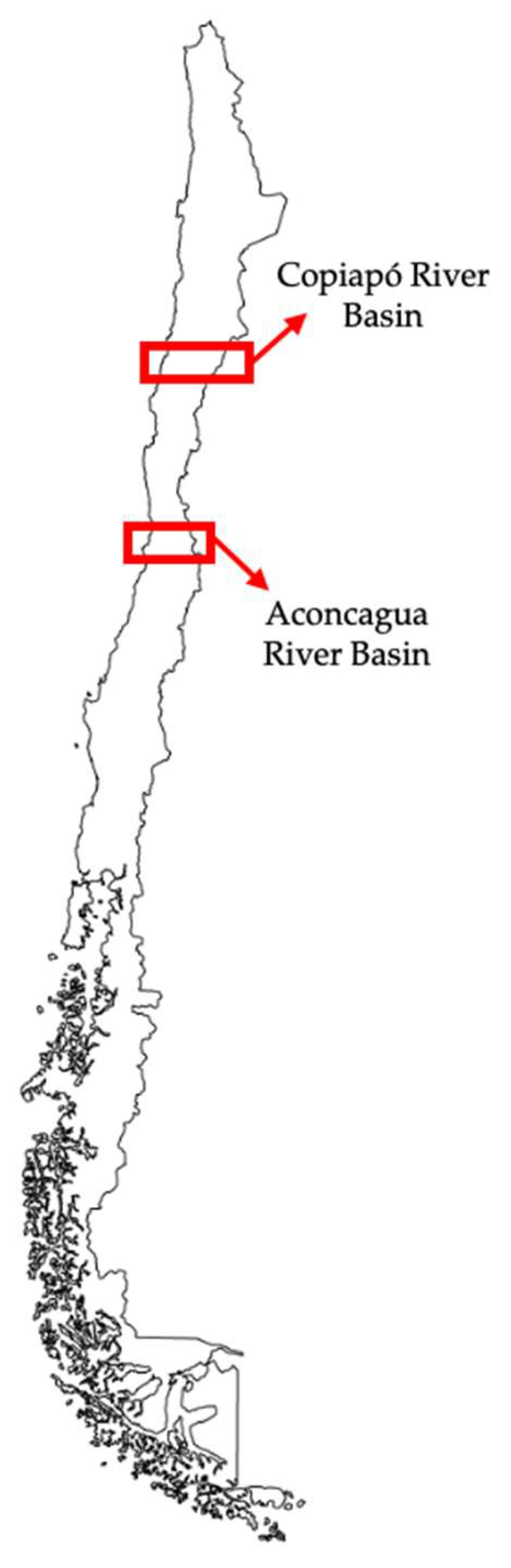
Figure 2.
Map of the Aconcagua River Basin [55].
Figure 2.
Map of the Aconcagua River Basin [55].
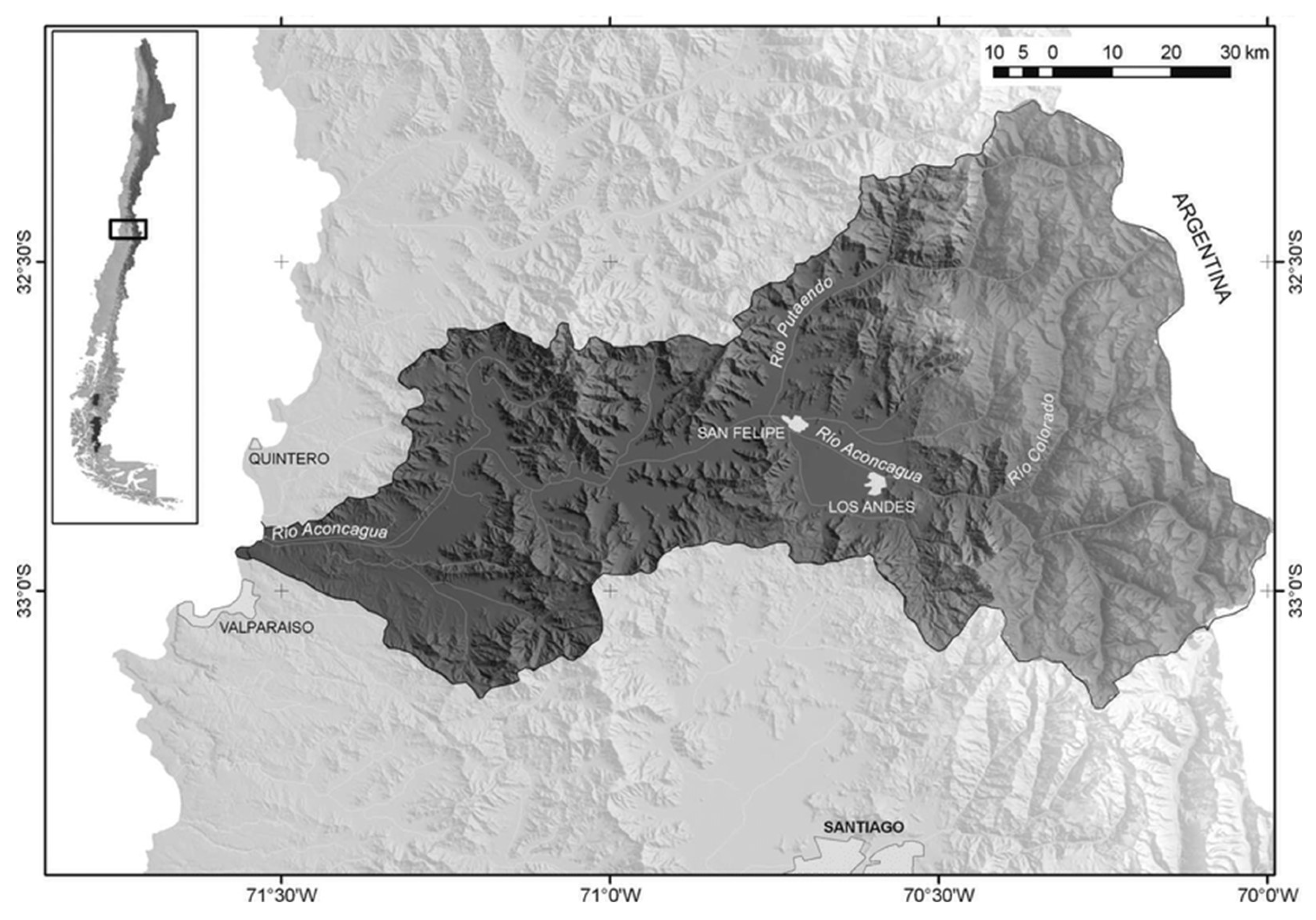
Figure 3.
Map of the Copiapó groundwater basin [57].
Figure 3.
Map of the Copiapó groundwater basin [57].
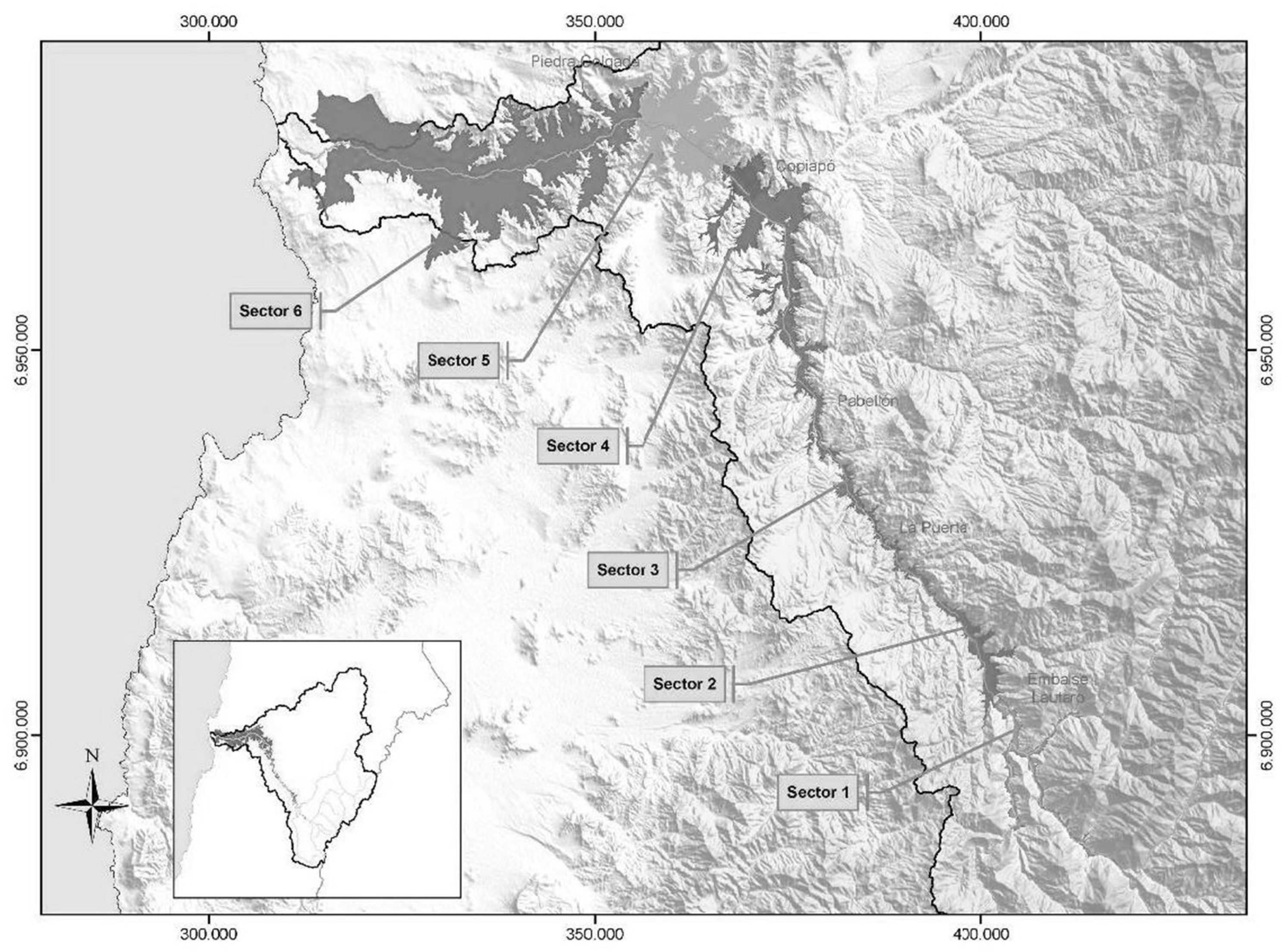
Figure 3.
Basic scheme and components of the combined IAD-SES framework (adapted from Cole, 2019).
Disclaimer/Publisher’s Note: The statements, opinions and data contained in all publications are solely those of the individual author(s) and contributor(s) and not of MDPI and/or the editor(s). MDPI and/or the editor(s) disclaim responsibility for any injury to people or property resulting from any ideas, methods, instructions or products referred to in the content. |
© 2024 by the authors. Licensee MDPI, Basel, Switzerland. This article is an open access article distributed under the terms and conditions of the Creative Commons Attribution (CC BY) license (https://creativecommons.org/licenses/by/4.0/).
Copyright: This open access article is published under a Creative Commons CC BY 4.0 license, which permit the free download, distribution, and reuse, provided that the author and preprint are cited in any reuse.


