
Submitted:
02 July 2024
Posted:
02 July 2024
You are already at the latest version
Abstract
The construction industry, a major player in economic development, is facing increased pressure to address sustainability concerns amidst rapid population growth and urbanization. With global projections indicating a significant rise in building demand by 2050 , sustainability emerges as a crucial focus area and paradigm shift to enhance environmental friendliness, improved quality, and project outcomes. The UAE, renowned for its vibrant construction industry, offers a unique context for examining the integration of sustainable practices. The growing use of sustainable construction practices is growing in the U.A.E., where the built environment plays a key role in economic growth and environmental stewardship.
The United Arab Emirates (UAE) aims to foster long-term sustainability while enhancing the standard of living for current as well as future generations by integrating social, environmental, and economic aspects within construction projects, while also reevaluating conventional sustainable development frameworks and embracing a Triple -Bottom Line approach. Through an exploration of the significance of sustainable construction materials, this researcher underscores the multifaceted benefits of locally sourced, recyclable, and renewable materials in reducing environmental impacts, fostering economic and social well-being, and improving overall project performance, and project management practices. The construction sector's role in economic development and its substantial environmental impact are discussed in, alignment with sustainable construction materials, sustainable construction practices, and the need to enhance environmental sustainability; and create healthier built environments.
In the realm of sustainable construction materials, project management knowledge areas encompass a range of factors. These include the properties of materials sourced regionally;, the incorporation of recycled content;, considerations for indoor air quality, energy, and water efficiency parameters;, and how these properties relate to project scope, scheduling constraints, and challenges. Additionally, the availability of resources and competency levels, quality control standards, specifications, communication strategies, and stakeholder involvement play crucial roles. It is important to assess both the positive and negative risks associated with these elements across construction projects.
Keywords:
Sustainability
; Sustainable Materials
; Construction Materials
; Building Construction
; Construction Projects
1. Introduction
1.1. Construction Industry
Urbanization and the swift rise in the human population are placing a high demand on the construction sector to create more infrastructure, buildings, and facilities in order to meet the needs and ambitions of current and future generations (Aslam et al., 2020). According to projections, the world's population will probably grow from 8.1 billion people in 2023 to 9.3–10.1 billion individuals by the year 2050. (Calautit et al., 2023). Consequently, by 2050, an additional 230 billion square meters of new construction will be required to handle the growing population (Dorling, 2021).
The construction industry plays a crucial role in the advancement of any nation, serving as a cornerstone of its economy. Economic prosperity often coincides with a thriving state of the construction sector (Osuizugbo et al., 2023). The construction sector is a fundamental driver of economic development, as it not only furnishes essential shelter for society but also possesses the capacity to stimulate production in interconnected sectors (Su et al., 2021). The construction industry significantly influences the global economy, representing approximately 10% of the Gross Domestic Product (GDP) in developed nations and 25% in developing countries (Ibrahimkhil et al., 2020). As per the international journal Building and Environment vol 40, issue 1, January 2005 (Ngowi et al., 2005), in the Middle East and North Africa, economic booms in oil-rich countries have created substantial demand in the construction industry.
The construction industry is crucial to the economy of any country. It involves building and maintaining structures, and it is a significant capital investment for the country's GDP (Article ID: IJCIET_11_01_011, Factors Effecting the Cost Management in Construction Projects, 2020). Over the past years, the construction industry has prospered by developing essential infrastructure for sectors such as healthcare, education, and transportation (O. I. et al., 2018). While the construction industry is important to both the economy and society, it grapples with significant challenges, including inefficiency, subpar standards, environmental issues, and legal hurdles. It is suggested that if the construction industry fails to expand at a rate exceeding that of the overall economy, it could impede national development (World Economic Forum, 2016)(Schwab, 2016).
1.2. Sustainability and Construction Industry
In recent years, sustainability issues have taken centre stage in the construction industry. Despite its substantial contributions to national economies, the construction sector has emerged as a significant player in economic, social, and environmental challenges ((PDF) Overview of operational and regulatory framework for occupational safety and health in the Zimbabwean construction industry, 2014).
The construction industry serves as a cornerstone in contemporary society, moulding the infrastructure of regions and providing vital support to the daily lives of residents. However, its substantial environmental impact has spurred a crucial reassessment of traditional construction methods. Processes such as raw material extraction, intensive manufacturing, and high emissions during construction and operation have highlighted the necessity for a fundamental change. The notion of sustainable materials and practices in construction entails embracing eco-friendly, recycled, or renewable materials; implementing waste reduction techniques; and prioritizing long-term performance (Sustainable Materials and Construction Practices in Industrial Buildings, 2023).
In 2017, the United Nations Educational, Scientific, and Cultural Organization (UNESCO) promoted sustainable development through education and training, emphasizing the inclusion of climate change, biodiversity, and consumption and production. Solutions are realized by fostering sustainability literacy, which guides our behaviour and attitudes toward technological advancements in the industry. The sustainability strategies of developed and developing countries may not be universally interchangeable, as a country-specific approach is often necessary (Wan et al., 2016).
The World Commission on Environment and Development WCED 1987:24 (Brundtland Report | Sustainable Development & Global Environmental Issues | Britannica, 1987).
Sustainability is defined as humanity's capacity to fulfil present needs without jeopardizing the ability of future generations to fulfil their own. It focuses on ensuring continuity and resilience, providing a framework to address the socio-economic and environmental challenges confronting humanity (Murray et al., 2007) and emphasizing the ways in which the built environment can support the sustainability of the planet (William Dobson et al., 2013).
Sustainable construction focuses on building projects that advance social, economic, and environmental benefits for both present and future generations (Sustainable Construction in Malaysia - Developers’ Awareness, 2009).
As an important industrial sector, construction accounts for 25% of total global CO2 emissions (Chau et al., 2012). The demand for sustainable construction has surged in recent years, fuelled by public and regulatory expectations. This increased focus directly addresses the growing recognition of climate change, environmental degradation, and the depletion of resources. Individuals are now actively seeking eco-friendly, energy-efficient buildings with minimal carbon footprints to advance environmental welfare (Kim et al., 2020).
Significantly, economic operations within the construction sector have consumed a substantial amount of renewable energy, making it one of the most energy-intensive sectors across all industries. Consequently, this has resulted in a significant volume of carbon emissions (Su et al., 2022).
Concurrently, governments are implementing more stringent standards and regulations to promote the adoption of sustainable construction practices. This transition towards sustainable development is driven by the pressing necessity to tackle climate change, conserve resources, and enhance the quality of life for future generations (Yin et al., 2018).
The progression of urbanization and economic growth has generated significant emissions, posing serious challenges to global sustainability efforts. The construction industry holds a central position in global resource consumption and environmental impact, being responsible for 36% of total energy usage and 40% of raw material consumption worldwide (UNEP, 2019). Historically, industrial construction has heavily relied on conventional materials such as concrete and steel, along with energy-intensive manufacturing processes, leading to considerable carbon emissions and the depletion of resources (Cabeza et al., 2013).
Nevertheless, over the past few decades, there has been an increasing acknowledgment of the necessity to embrace sustainable methodologies within the construction industry to alleviate environmental repercussions and foster enduring resilience. The notion of sustainable materials and construction practices in industrial buildings entails a multifaceted approach aimed at minimizing the environmental impacts linked to building construction and operations. This involves employing eco-friendly, recycled, or renewable materials, along with adopting construction techniques that emphasize energy efficiency, waste reduction, and lifecycle performance (Sustainable Materials and Construction Practices in Industrial Buildings, 2023).
The business case for implementing sustainable practices in construction is strengthened by various economic advantages, such as lower operational expenses, enhanced occupant welfare, and increased market value (Leskinen et al., 2020). Progress in material science and construction technology has enabled the creation and advancement of sustainable materials, including recycled steel, bamboo composites, and high-performance insulation. These alternatives offer viable replacement options for conventional materials (Zabalza Bribián et al., 2011). These materials have improved thermal, acoustic, and structural qualities, in addition to having lower embodied energy and carbon footprints.
1.3. Sustainable Construction Materials
The construction sector has the potential to drive economic and industrial growth by enhancing total factor productivity and embracing environmental considerations. By re-evaluating the construction industry, its various subsectors, and their products (like construction materials), along with project management practices, we can foster green and sustainable total factor productivity growth across all industries (Sertyesilisik, 2023).
Buildings exert a significant environmental footprint, accounting for 30% of the global carbon emissions, with an expected 40% increase in energy consumption in the EU in the future. The European Commission has introduced a unified policy aimed at promoting sustainable buildings and environmentally friendly construction materials. The Construction Product Regulation (CPR) was implemented to guarantee accurate information regarding the performance of construction products (European Regulation 305/2011 Construction Product Regulation) (Construction Products Regulation 305/2011 - cemarking.net, 2011).
The International Energy Agency report for 2021 predicted that the population growth rate would intensify environmental changes (I.E.A. Empowering Cities for a Net Zero Future IEA, Paris 2021) (“Empowering Cities for a Net Zero Future,” 2021). The built environment contributes significantly to carbon emissions, making up 50% of global emissions. This is because the sector uses large amounts of energy and raw materials; this consumption is fuelled by ongoing construction projects meant to meet the demands of an expanding population (U. Environment Emissions Gap Report, UNEP—UN Environment Program 2020) (Emissions Gap Report 2020, 2020).
Furthermore, the environmental effects of constructed buildings do not change throughout their lifetime. The building sector needs to move toward a circular economy and efficiently prioritize resources to address these urgent problems (Hossain et al., 2020).
This change will make it easier to create sustainable products. The building industry has the potential to decrease its dependence on non-renewable resources, curtail waste production, and promote sustainable material management over a building's lifecycle (Chan et al., 2022).
Among many other businesses, the construction sector provides durable products with complex supply chains and is vital to economically developing nations (Pomponi et al., 2016).
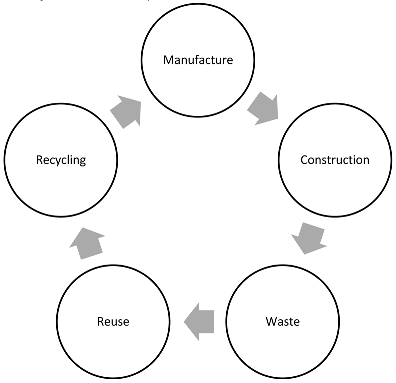
The sustainable building material lifecycle is as follows.
2. Materials and Methods
The materials and methods used in this review include a detailed overview of sustainable construction materials, knowledge, and practices within construction projects in the UAE. This review explains various definitions of sustainability in construction and their benefits throughout the project lifecycle. Additionally, it examines barriers and challenges to adopting sustainable practices, as well as the current international and UAE-specific sustainability landscapes in the building construction industry. While the UAE construction sector is progressing towards sustainability, driven largely by government mandates, there is a need for greater emphasis on providing professionals with access to sustainable construction industry resources. Data for this research were retrieved from academic journals, textbooks, magazines, news sources, industry papers, government documents, and reports.
2.1. Sustainable Building Construction Materials
As per the Scopus database and a synthesis review, sustainable construction materials have three main advantages. First, sustainable material significantly reduces the environmental impact of buildings and contributes to achieving the United Nations' Sustainable Development Goals (UNSDGs); second, it aligns environmental and financial sustainability and fosters social well-being and equity; third, it creates healthier and more energy-efficient built environments for future generations (Kong Yap et al., 2024). In the world of construction, civil works and building construction consume 60% of raw materials extracted from the lithosphere. From this volume, buildings represent 40%; in other words, buildings represent 24% of global raw material extraction (Bribián et al., 2010).
2.2. Construction in UAE
The construction industry holds pivotal significance for the economic advancement of any developing nation. It serves as a significant driver of economic growth and development, contributing to the creation and maintenance of essential infrastructure such as workplaces, schools, hospitals, and residential spaces that underpin societal services. A dynamic and efficient construction sector not only fosters innovation but also enhances productivity, ultimately leading to greater economic prosperity.
In the UAE, the construction industry stands out as a vibrant and dynamic component of the overall economy. Its role in shaping the built environment, which forms the backbone of infrastructure crucial for competitiveness, cannot be overstated. The quality and efficacy of constructed structures often sway the decisions of potential investors, highlighting the industry's pivotal role in sustaining economic growth.
Moreover, beyond its economic significance, the construction sector holds substantial importance in addressing climate change and sustainability imperatives. Given its significant resource consumption, the built environment plays a crucial role in meeting environmental and societal obligations. Consequently, there is a growing emphasis on integrating sustainability practices within construction to promote environmentally responsible economic development (Cherian, 2008).
2.3. Sustainable Building Construction in UAE
The Emirate of Dubai has re-evaluated the conventional understanding of sustainability as outlined by the Brundtland Commission in 1987. In this reassessment, Dubai reconsiders the widely accepted principle of sustainability known as the "Triple Bottom Line." This framework extends beyond mere economic considerations and encompasses three key dimensions: social, environmental, and economic. Represented as interlocking circles, the Triple Bottom Line approach aims to harmonize the opportunities and challenges presented by each dimension, thereby ensuring positive outcomes across the board.
Buildings exert a significant environmental footprint, spanning from the production of construction materials to the various phases of building construction, operation, maintenance, and eventual disposal. Achieving sustainability in the built environment necessitates prioritizing key factors such as energy and water conservation, emission reduction, pollution mitigation, and the efficient utilization of natural resources. Throughout a building's lifespan, numerous economic considerations are tied to both its construction and operational phases. Cost–benefit analyses allow for an examination of efficiency across the entire lifecycle of a building project. The ability to quantify costs aids in optimizing the benefits derived from the development of sustainable projects.
Striking a balance between cost efficiency and sustainable benefits involves focusing on the incorporation of environmentally friendly materials throughout the lifecycle of construction projects. Buildings ultimately designed for human occupancy place a significant emphasis on promoting health, well-being, and overall liveability. Addressing these factors within a sustainable strategy is crucial for advancing the goal of enhancing the quality of life for both current and future generations. This is accomplished through adopting measures like using low-VOC paints and coatings, maintaining adequate ventilation, and banning the use of asbestos-containing materials (A PRACTICE GUIDE FOR BUILDING A SUSTAINABLE DUBAI 100, 2020).
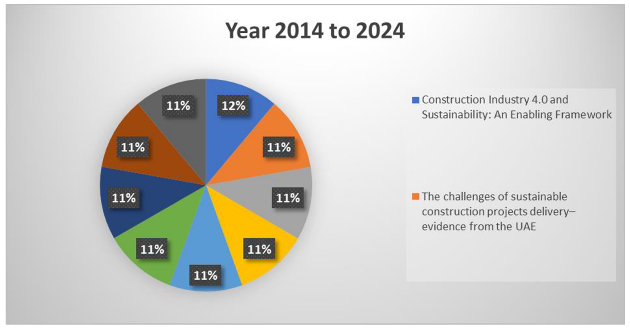
Sustainability forms the foundation upon which regulations are constructed, aiming for ongoing enhancement in building development throughout the buildings’ entire lifecycles, guided by the integrated principles of environmental, social, and economic considerations. The chart below presents studies from the Scopus database on sustainable building construction during the period of 2014 to 2024 in the UAE.
2.4. Sustainable Construction Materials’ Attributes
The goal is to achieve a balanced triple bottom line of environmental, social, and economic value by focusing on the key specifications of sustainable construction materials with demonstrated properties.
2.4.1. Recycled Content
Enhanced production results in an escalation in waste output, which presents environmental risks due to toxic exposure. An economically viable remedy to this problem involves repurposing waste materials for crafting new products, thereby reducing the burden on the country's landfills. By recycling waste from construction endeavours, natural resources and energy are preserved, while solid waste build-up, air and water pollution, and greenhouse gas emissions are reduced. In acknowledgment of the benefits of utilizing waste and recycled materials, the construction sector is increasingly adopting these approaches.
Several research efforts have delved into the feasibility of integrating permissible waste, recycled, and reusable materials. The adoption of a wide array of materials such as swine manure, animal fat, silica fume, roofing shingles, empty palm fruit bunches, citrus peels, cement kiln dust, fly ash, foundry sand, slag, glass, plastic, carpet, tire scraps, asphalt pavement, and concrete aggregates in construction is gaining momentum, fuelled by the scarcity and rising expenses associated with raw materials.
Crucial considerations in this context include gaining deeper insights into contemporary practices and the broad integration of waste and recycled materials, comprehending the current strengths and weaknesses in implementation, and formulating effective policies regarding the utilization of these materials (Polyportis et al., 2022).
2.4.2. Regional Materials
The procurement of building materials often entails considerable resource consumption and carbon emissions associated with transportation to project sites. The use of locally sourced materials can significantly alleviate these burdens by minimizing transportation distances and resource consumption. Furthermore, opting for regionally produced materials benefits the local economy by stimulating production and fostering community opportunities while also streamlining the supply chain, resulting in faster delivery times and enhanced economic viability within the project procurement domain. This approach also aligns with sustainable construction practices, adding value to the overall project.
In the UAE, materials and essential construction components sourced from within the Gulf Cooperation Council (GCC) countries are categorized as regional materials, recognizing economic collaboration among the member states of the GCC (A PRACTICE GUIDE FOR BUILDING A SUSTAINABLE DUBAI 100, 2020).
2.4.3. Solar Reflective Index (SRI)
The Solar Reflective Index (SRI) quantifies a material's capacity to reflect solar radiation and its emissivity. Materials with higher SRI values reflect less solar heat, while those with lower SRI values, often darker in colour, absorb a greater portion of solar light. Additionally, a material's specific heat capacity, governing its ability to retain and release heat, influences its energy absorption. The use of materials with higher SRI values contributes to reduced cooling demands. All solid external roofing surfaces must adhere to specified SRI standards, covering a minimum of 75% of the roof area. For steeply sloped roofs (with a slope exceeding 1:6), the minimum required SRI is 29, whereas for flat and low-sloped roofs, it stands at 78. Table 1 below lists some typical roofing materials' indicative SRI values.
2.4.4. Light Reflectance Value (LRV)
The energy absorbed and retained by a building is influenced by the colour of its surfaces. Light colours reflect a significant portion of solar energy, whereas dark colours absorb more solar energy, leading to heating of the object and its surroundings. The Light Reflectance Value (LRV) of surface finishing materials is typically indicated in material data sheets and can be confirmed through third-party laboratory testing. External walls are required to have a minimum LRV of 45%. The LRV measures the total amount of usable and visible light reflected by a surface on a scale from 0% to 100%. Absolute black is considered to have an LRV of 0%, while perfectly reflective white has an LRV of 100% (British Standards Institute 2010. BS 8493:2008 A1: Light reflective value LRV of a surface).
2.4.5. Volatile Organic Compounds (VOCs): Low-Emitting Materials, Paints, and Coatings
Many building materials contain volatile organic compounds (VOCs), which pose risks to indoor air quality and outdoor pollution levels. Prolonged exposure to high VOC concentrations has been linked to chronic health conditions such as asthma, chronic obstructive pulmonary disease, and cancer. Short-term exposure to VOCs can cause immediate reactions like irritation of the eyes, nose, and throat. The negative impacts of using products with high VOC levels affect not only building occupants but also those involved in their installation or application during construction. Choosing low-VOC materials is essential for improving indoor air quality (A practice guide for building a sustainable Dubai 100, 2021).
Table 2 below lists some typical building materials' indicative VOC values.
2.4.6. Low-Emitting Materials: Adhesives and Sealants
All adhesives, primers, and sealants utilized in building construction contain certain amounts of volatile organic compounds (VOCs), which can impact indoor air quality and the health of occupants. The following table provides indicative VOC values for such building materials.

Table 3.
Maximum VOC content limit values for adhesives and sealants.
| Max. VOC Limit | g/l |
| Architectural Application | |
| Indoor carpet adhesive | 50 |
| Carpet pad adhesive | 50 |
| Wood floor adhesive | 100 |
| Rubber floor adhesive | 60 |
| Subfloor adhesive | 50 |
| Ceramic tile adhesive | 65 |
(Dubai municipality 2015 standard DMS 20:2015, specs for paints and varnishes, Dubai central laboratory 2018, Specs rules for FA certification of low emitting materials as per Al Safat Dubai green building system.).
2.4.7. Thermal Transmittance U-Value
Thermal transmittance refers to the rate at which heat moves through the various components of a building envelope, such as the material assembly, roof, and external walls. It is measured as the heat flow rate in watts (W) per square meter for a temperature difference of 1 Kelvin across the structure. Typically, materials with lower U-values exhibit superior insulation properties.
The materials and layers comprising the building envelope offer resistance to heat flow and significantly affect the thermal performance of the building. The U-values of building envelope components like the walls, roof, floor, and glazing, along with the shading coefficient and solar heat gain coefficient, are key determinants of a building's overall thermal performance.
The U-value is calculated by summing the reciprocals of the R-values of the individual material layers. Building materials with higher R-values (thermal resistance) contribute to lower U-values, indicating better thermal insulation characteristics for the building.
Utilizing thermal cement blocks for external walls, employing glass with an improved shading coefficient (SC) and solar heat gain coefficient (SHGC) for external windows and skylights, and incorporating appropriate insulation layers in the roof can enhance a building's insulation properties (Dubai municipality 2003, DM administrative resolution 66 of 2003).
2.4.8. Water-Efficient Fittings
Preserving natural resources such as water is crucial for both current and future sustainability needs. Excessive potable water consumption in buildings not only depletes this vital resource but also involves a significant energy demand for treatment and transportation.
Achieving water efficiency in buildings involves installing water-efficient fixtures that adhere to designated flow and flush rates. Low-flow plumbing fixtures, equipped with aerator nozzles that blend air with water to create the perception of a higher flow rate, consume less water than traditional fixtures.
The integration of dual-flush toilets, featuring two distinct levers or buttons linked to separate exit valves, provides users with flexibility and options to optimize flush usage (European committee for standardization 2008, EN 817: Sanitary tapware mechanical valves PN10, general technical specifications), (A PRACTICE GUIDE FOR BUILDING A SUSTAINABLE DUBAI 100, 2020).
2.4.9. Sustainable Concrete
Concrete plays a vital role in construction projects, with increasing industry demands driving the need for greater concrete production. However, the production of cement, a key component of concrete, results in the accumulation of embodied CO2 during raw material extraction, processing, and transportation, making cement one of the primary sources of anthropogenic CO2 emissions globally. This poses serious environmental challenges, including land degradation and pollution. To address the environmental impact associated with concrete production, the Emirate of Dubai has established a sustainable concrete baseline. This framework aims to promote the best practices throughout the lifecycle of concrete in the built environment, balancing sustainability requirements with other performance parameters.
An effective approach to reduce emissions associated with concrete production involves substituting a portion of the cement in concrete mixes with industrial by-products like Ground Granulated Blast Furnace Slag (GGBS), fly ash, or silica fume, commonly known as supplementary cementitious materials (SCMs). The integration of SCMs not only improves the environmental impact of concrete but also helps decrease greenhouse gas emissions (A practice guide for building a sustainable Dubai 100,2021).
The Emirate of Dubai released Circular 225 in 2018, specifying sustainable concrete mixes of different grades with supplementary cementitious materials like GGBS, silica fume, and fly ash (Dubai Municipality 2018, circular 225 environmentally friendly concrete mix designs).
2.4.10. Certified/Accredited Timber
The escalating pace of construction projects has heightened the demand for timber and its derivatives, with accompanying recognition that forests serve as the sole source of this invaluable resource. The mismanagement of timber sourced from forests could yield adverse consequences, encompassing human health risks, deforestation, loss of wildlife habitats, soil erosion, and pollution of air and water.
In response, a globally adopted approach involves the implementation of certified forest management systems to safeguard forest ecosystems. Various internationally recognized schemes are emerging to ensure the responsible sourcing of timber and promote sustainable forest management practices. These initiatives prioritize the health and well-being of local populations, endeavour to minimize the use of hazardous chemicals, and aim to mitigate the environmental impact of logging activities by protecting wildlife and biodiversity.
Regulations have been established to stipulate that a minimum of 25% of the volume of timber and timber-related products utilized in construction projects must originate from certified sources. Noteworthy among the internationally recognized schemes are the following:
The Forest Stewardship Council (FSC), which assures that products come from responsibly managed forests;
The Program for the Endorsement of Forest Certification (PEFC), which guarantees that non-timber forest products adhere to the highest ecological, social, and ethical standards;
The Sustainable Forestry Initiative (SFI), which encompasses a comprehensive framework of principles, objectives, and performance measures developed by forestry professionals, conservationists, and scientists. The SFI promotes the sustainable growth and harvesting of trees while simultaneously protecting wildlife, plants, soil, and water quality for the long term (A PRACTICE GUIDE FOR BUILDING A SUSTAINABLE DUBAI 100, 2020).
2.4.11. Asbestos-Containing Materials
Asbestos, a naturally occurring mineral silicate fibre renowned for its remarkable fire and heat resistance, finds widespread use in various construction materials like roof insulation, textured paints, coatings, and resilient floor tiles. These materials typically comprise a mixture of individual asbestos fibres and binding agents.
When disturbed or crushed, asbestos-containing materials can release asbestos fibres into the air, increasing airborne asbestos levels and exposing occupants to inherent health hazards. Once inhaled, asbestos fibres do not dissolve or break down in the human body due to their composition. Prolonged exposure to asbestos can lead to serious health risks, including chest and abdominal cancers, as well as lung diseases, often resulting in fatalities. The utilization of asbestos products has been restricted or prohibited in numerous countries, including the UAE, through measures such as Cabinet Resolution No. 39 of 2006 (A PRACTICE GUIDE FOR BUILDING A SUSTAINABLE DUBAI 100, 2020).
2.4.12. Lead- or Heavy-Metal-Containing Materials
Lead and its compounds have historically found applications in a wide range of building products, including paints, ceramics, pipes, and plumbing materials. Among these, lead-based paint has been particularly problematic, significantly contributing to lead poisoning in both children and adults. Exposure to lead can lead to permanent brain damage, impairing mental and physical development in children and causing nerve damage and hypertension in adults.
To address human exposure and the associated health risks posed by these materials, it is crucial to minimize or eliminate the use of paints and materials containing lead and other heavy metals. This proactive approach aims to prevent adverse health effects and protect public health. The maximum allowable limits for these materials in any product are detailed in the table below (Dubai municipality 2015, standard 20:2015, specification for paints and varnishes).
Table 4.
Maximum permissible limits for heavy metals.
| Heavy metal | Max. limit allowed(mg/kg) |
| Lead | 100 |
| Cadmium | 500 |
| Chromium VI | 500 |
| Mercury | 100 |
| Arsenic | 100 |
3. Results and Discussion
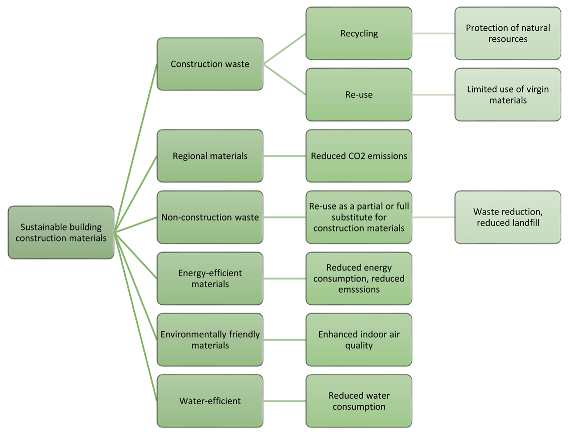
The building construction industry is a significant contributor to environmental degradation, but by adopting sustainable practices, it could become a facilitator. The aim is to introduce a paradigm of sustainable materials that promotes recycling and reuse and to adopt sustainable solutions. Considering eco-friendly materials is key to integrating sustainable design into construction projects.
Sustainable construction materials are sourced and produced locally, reducing transportation distances and emissions from vehicles while supporting regional economies. These materials are tailored to match local climatic conditions and promote regional economic growth. They aim to enhance recyclability, minimize waste and pollution, reduce energy consumption during manufacturing, and utilize renewable resources. They also generate minimal or zero toxic emissions and have low maintenance costs.
Recycling efforts focus on both construction and non-construction waste, with construction waste being reduced and reused, while non-construction waste is repurposed as alternatives to traditional construction materials, thereby reducing landfill waste.
The use of energy-efficient material reduces the need for energy consumption by considering sustainability metrics such as the R-value (the insulating capability, enhancing insulation of the building envelope), shading coefficient, solar heat gain, and limiting coefficient, while minimizing or preventing infrared radiation transmission.
Improved indoor air quality with the use of sustainable materials results from the limited values of volatile organic contents, enhancing the quality of life and protecting the health of the occupants.
Water-efficient fixtures with limited flow and flush rates conserve energy and natural resources.
Sustainable construction materials with reduced CO2 emission properties can be manufactured by using additives to reduce CO2 emissions during the production and construction phases.
In the construction phase, the selection of the right construction materials is crucial, as these materials define the structural integrity of the building in terms of sustainability. It is the need of the hour to opt for eco-friendly materials rather than traditional ones, considering the long-term benefits. The process typically re-evaluates functional, technical, and financial aspects. Researchers are continuously striving to discover alternative materials to achieve sustainable and affordable construction.
Sustainable building materials are sourced locally with reduced transportation costs and CO2 emissions, while reused and recycled materials have a lower environmental impact, are thermally efficient, and require less energy than conventional materials. Renewable resources are associated with limited emissions of harmful substances and are economically significant.
Sustainable building materials have the following key properties:
- Locally produced and sourced;
- Lower transportation costs and environmental impacts;
- Thermally efficient;
- Provide better and healthier indoor air quality to occupants;
- Financially viable;
- Can be obtained by recycling used materials or demolished construction waste;
- Use removable resources;
- A greater initial cost but a lower long-term cost with more sustainable benefits.
4. Conclusion
This review focused on the sustainability aspect of construction materials, recognizing the significant resource consumption and environmental impact inherent in the construction industry, from resource extraction to demolition. Sustainable construction endeavours mitigate these impacts by promoting development that minimizes harm to the environment.
The current perspective on sustainability in building materials extends beyond traditional attributes and encompasses factors such as regional sourcing, recycled content, waste reduction, lifecycle considerations, enhanced durability, and the reusability of construction waste. Examples of alternative sustainable construction materials include recycled concrete aggregate and cement blocks.
The overall conclusions emphasize the necessity of incorporating sustainable practices to minimize environmental impacts, boost operational efficiency, and strengthen long-term resilience in the face of evolving challenges. A primary focus lies in selecting suitable materials. Options like recycled material offer significant reductions in environmental impact due to their lower embodied energy and carbon footprint, aligning with the principles of a circular economy and promoting resource efficiency. Passive strategies such as insulation, glazing, and natural ventilation play key roles in reducing energy consumption.
Regulatory frameworks, as demonstrated by the 2020 edition of "A PRACTICE GUIDE FOR BUILDING A SUSTAINABLE DUBAI 100," have been instrumental in encouraging and enforcing sustainable construction practices. These frameworks ensure adherence to standards and promote environmental accountability.
Considering the body of project management knowledge in the context of sustainability has enhanced project coordination, project scope requirements, stakeholder’s interest, and cost–benefit analysis in the application of sustainable construction materials. Sustainable construction materials’ contributions within the realm of building construction underscore the wide-ranging benefits, from reducing environmental impacts to enhancing the well-being of occupants, aligning closely with global goals related to climate change, resource conservation, resilient communities, carbon footprint reduction, and energy efficiency, leading to significant cost savings over a building's lifespan. The improved indoor air quality also leads to healthier living spaces.
Furthermore, the sustainable utilization of non-construction materials, as a whole or in proportion as an alternative construction material from municipal waste for improved thermal comfort, contributes to the manufacture of eco-friendly construction materials that enhance energy efficiency and environmental protection and reduce greenhouse gas emissions and water usage.
The use of environmentally friendly materials in construction projects enhances the indoor air quality, energy efficiency, thermal comfort, and water efficiency of the building and has long-lasting benefits for the occupants, the community, and the nation.
This research underscores the evolving perspective of the UAE's sustainable construction industry, which serves as a model for other developing nations in the Middle East and beyond.
References
- A PRACTICE GUIDE FOR BUILDING A SUSTAINABLE DUBAI 100. (2020).
- Article ID: IJCIET_11_01_011, Factors Effecting the Cost Management in Construction Projects. (2020). Retrieved from https://www.researchgate.net/publication/343722659_Article_ID_IJCIET_11_01_011_Factors_Effecting_the_Cost_Management_in_Construction_Projects.
- Aslam, M. S., Huang, B., & Cui, L. (2020). Review of construction and demolition waste management in China and USA. Journal of Environmental Management, 264, 110445. [CrossRef]
- Bribián, I. Z., Capilla, A. V., & Usón, A. A. (2010). Life cycle assessment of building materials: Comparative analysis of energy and environmental impacts and evaluation of the eco-efficiency improvement potential. [CrossRef]
- Brundtland Report | Sustainable Development & Global Environmental Issues | Britannica. (1987). Retrieved from https://www.britannica.com/topic/Brundtland-Report.
- Cabeza, L. F., Rincón, L., Vilariño, V., Pérez, G., & Castell, A. (2013). Life cycle assessment (LCA) and life cycle energy analysis (LCEA) of buildings and the building sector: A review. [CrossRef]
- Calautit, J. K., & Yong, L. X. (2023). Fad or future? Navigating challenges and proposing holistic solutions in sustainable building design. One Earth, 6(11), 1430–1434. [CrossRef]
- Chan, M., Masrom, M. A. N., & Yasin, S. S. (2022). Selection of Low-Carbon Building Materials in Construction Projects: Construction Professionals’ Perspectives. Buildings, 12(4), 486. [CrossRef]
- Chau, C. K., Hui, W. K., Ng, W. Y., & Powell, G. (2012). Assessment of CO 2 emissions reduction in high-rise concrete office buildings using different material use options. 22–34. [CrossRef]
- Cherian, A. (2008). The Construction Industry in the Perspective of an Economic Boost of The United Arab Emirates (UAE). International Research Journal of Engineering and Technology, 9001. Retrieved from www.irjet.net.
- Construction Products Regulation 305/2011 - cemarking.net. (2011). Retrieved from https://cemarking.net/eu-ce-marking-directives/construction-products-regulation-3052011/.
- Dorling, D. (2021). World population prospects at the UN: Our numbers are not our problem? In The Struggle for Social Sustainability: Moral Conflicts in Global Social Policy (pp. 129–154). Policy Press. [CrossRef]
- Emissions Gap Report 2020. (2020). Retrieved from https://www.unep.org/emissions-gap-report-2020.
- Empowering Cities for a Net Zero Future. (2021). Empowering Cities for a Net Zero Future. [CrossRef]
- Hossain, M. U., Ng, S. T., Antwi-Afari, P., & Amor, B. (2020). Circular economy and the construction industry: Existing trends, challenges and prospective framework for sustainable construction. Renewable and Sustainable Energy Reviews, 130, 109948. [CrossRef]
- Ibrahimkhil, M. H., Shen, X., & Barati, K. (2020). Enhanced Construction Progress Monitoring through Mobile Mapping and As-built Modeling.
- Kim, S. Y., Nguyen, M. V., & Luu, V. T. (2020). A performance evaluation framework for construction and demolition waste management: stakeholder perspectives. Engineering, Construction and Architectural Management, 27(10), 3189–3213. [CrossRef]
- Kong Yap, C., Seng Leow, C., & Goh, B. (2024). Sustainable construction materials under ESG: a literature review and synthesis. [CrossRef]
- Leskinen, N., Vimpari, J., & Junnila, S. (2020). A Review of the Impact of Green Building Certification on the Cash Flows and Values of Commercial Properties. [CrossRef]
- Murray, P. E., & Cotgrave, A. J. (2007). Sustainability literacy: The future paradigm for construction education? Structural Survey, 25(1), 7–23. [CrossRef]
- Ngowi, A. B., Pienaar, E., Talukhaba, A., & Mbachu, J. (2005). The globalisation of the construction industry-a review. Building and Environment, 40, 135–141. [CrossRef]
- Osuizugbo, I. C., Aina, O. O., & Onokwai, A. O. (2023). Roles of clients in buildability improvement in Nigeria: an exploratory factor analysis. Built Environment Project and Asset Management, 13(6), 862–879. [CrossRef]
- (PDF) Overview of operational and regulatory framework for occupational safety and health in the Zimbabwean construction industry. (2014). Retrieved from https://www.researchgate.net/publication/349311971_Overview_of_operational_and_regulatory_framework_for_occupational_safety_and_health_in_the_Zimbabwean_construction_industry.
- Polyportis, A., Mugge, R., & Magnier, L. (2022). Consumer acceptance of products made from recycled materials: A scoping review. [CrossRef]
- Pomponi, F., & Moncaster, A. (2016). Circular economy for the built environment: A research framework. [CrossRef]
- Schwab, K. (2016). Insight Report.
- Sertyesilisik, B. (2023). Carbon capturing smart construction industry model to foster green and sustainable total factor productivity growth of industries. The Impact of Environmental Emissions and Aggregate Economic Activity on Industry: Theoretical and Empirical Perspectives, 11–23. [CrossRef]
- Sustainable Construction in Malaysia - Developers’ Awareness. (2009). Retrieved from https://www.researchgate.net/publication/242768280_Sustainable_Construction_in_Malaysia_-_Developers’_Awareness.
- Sustainable Materials and Construction Practices in Industrial Buildings. (2023). Retrieved from https://www.researchgate.net/publication/375495465_Sustainable_Materials_and_Construction_Practices_in_Industrial_Buildings.
- Su, Y., Zou, Z., Ma, X., & Ji, J. (2022). Understanding the relationships between the development of the construction sector, carbon emissions, and economic growth in China: Supply-chain level analysis based on the structural production layer difference approach. Sustainable Production and Consumption, 29, 730–743. [CrossRef]
- Su, Y., Zou, Z., Ma, X., Ji, J., & Pomponi, F. (2021). Sustainable Production and Consumption 29 (2022) 730-743 Sustainable Production and Consumption Understanding the relationships between the development of the construction sector, carbon emissions, and economic growth in China: Supply-chain level analysis based on the structural production layer difference approach. [CrossRef]
- Wan, L., & Ng, E. (2016). Assessing the sustainability of the built environment in mountainous rural villages in Southwest China. Mountain Research and Development, 36(1), 4–14. [CrossRef]
- William Dobson, D., Sourani, A., Sertyesilisik, B., & Tunstall, A. (2013). Sustainable Construction: Analysis of Its Costs and Benefits. American Journal of Civil Engineering and Architecture, 1(2), 32–38. [CrossRef]
- Yin, B. C. L., Laing, R., Leon, M., & Mabon, L. (2018). An evaluation of sustainable construction perceptions and practices in Singapore. Sustainable Cities and Society, 39, 613–620. [CrossRef]
- Zabalza Bribián, I., Valero Capilla, A., & Aranda Usón, A. (2011). Life cycle assessment of building materials: Comparative analysis of energy and environmental impacts and evaluation of the eco-efficiency improvement potential. Building and Environment, 46(5), 1133–1140. [CrossRef]
Table 1.
SRI values of roofing materials.
| Roofing Material | SRI Value | Roofing Material | SRI Value |
| Grey EPDM (ethylene propylene diene monomer) | 21 | Light beige concrete tiles | 76 |
| Unpainted cement tiles | 25 | Light brown concrete tiles | 48 |
| Red clay tiles | 36 | Pink and grey concrete tiles | 63 |
| Light gravel | 37 | White ceramic tiles | 90 |
| Aluminium | 56 | White coating | 100 |
(Al Safat Dubai green building system practice guide version 2.0, Oct 2020, Administrative Resolution no. 125, 2001, section 34.1 urban heat island effect.).
Table 2.
Maximum VOC content limit values for paints and coatings.
| Product Sub-category | Type | VOCs (g/l) | Product Sub-category | Type | VOCs (g/l) |
| Interior matt wall and ceiling (Gloss <25 @60º) | Water-based | 30 | Two-pack reactive performance coating for specific ends such as floors | Water-based | 140 |
| Solvent-based | 30 | Solvent-based | 500 | ||
| Interior matt wall and ceiling (Gloss >25 @60º) | Water-based | 100 | Multi-coloured coatings | Water-based | 100 |
| Solvent-based | 100 | Solvent-based | 100 | ||
| Interior walls of mineral substrate | Water-based | 40 | Decorative effect coatings | Water-based | 200 |
| Solvent-based | 430 | Solvent-based | 200 | ||
| Interior/exterior trim and cladding paints for wood and metal | Water-based | 130 | Primers | Water-based | 30 |
| Solvent-based | 300 | Solvent-based | 350 | ||
| Interior/exterior minimal build wood stains | Water-based | 130 | Binding primers | Water-based | 30 |
| Solvent-based | 400 | Solvent-based | 750 | ||
| Interior/exterior minimal build wood stains | Water-based | 130 | One-pack performance coatings | Water-based | 140 |
| Solvent-based | 700 | Solvent-based | 500 |
(Dubai municipality 2015 standard DMS 20:2015, specs for paints and varnishes, Dubai central laboratory 2018, Specs rules for FA certification of low emitting materials as per Al Safat Dubai green building system.).
Disclaimer/Publisher’s Note: The statements, opinions and data contained in all publications are solely those of the individual author(s) and contributor(s) and not of MDPI and/or the editor(s). MDPI and/or the editor(s) disclaim responsibility for any injury to people or property resulting from any ideas, methods, instructions or products referred to in the content. |
© 2024 by the authors. Licensee MDPI, Basel, Switzerland. This article is an open access article distributed under the terms and conditions of the Creative Commons Attribution (CC BY) license (http://creativecommons.org/licenses/by/4.0/).
Copyright: This open access article is published under a Creative Commons CC BY 4.0 license, which permit the free download, distribution, and reuse, provided that the author and preprint are cited in any reuse.