

Submitted:
28 June 2024
Posted:
01 July 2024
You are already at the latest version
Abstract
Optimizing warehouse operations and leveraging data insights are driving forces behind the rise of automation. This research explores the development of the SWIF warehouse management system (WMS) using the Agile methodology, a departure from traditional software development approaches. Agile’s iterative and step-by-step approach facilitated a streamlined development process. It allowed for quick adjustments based on evolving needs and feedback from stakeholders. This resulted in a substantial decrease in development time and a noticeable improvement in the final product’s quality. The study emphasizes the positive effect of Agile on teamwork and customer satisfaction. Developers reported enhanced communication and collaboration, leading to a stronger sense of ownership and engagement. Customers expressed greater satisfaction with the features and functionalities delivered in stages. The successful implementation of Agile in SWIF’s development showcases its effectiveness in managing complex and ever-changing software development projects. The study encourages the adoption of Agile methodology for similar projects to boost responsiveness, quality, and overall project success.
Keywords:
Warehouse Automation
; Agile Methodology
; Software development
; Warehouse
; Shiping
; Website
I. INTRODUCTION
In today’s fiercely competitive business landscape, the sig- nificance of efficiency and precision in warehouse manage- ment cannot be overstated. Traditional manual approaches to warehouse management, encompassing tasks such as receiving and dispatching items, inventory control, and shipping, often prove to be error-prone and inefficient. Recognizing these challenges as impediments to operational excellence, our team embarked on the development journey of the Smart Ware- house Information Flow (SWIF) system, a web-based solution meticulously crafted to streamline and automate warehouse management processes.
SWIF heralds a paradigm shift by replacing antiquated man- ual practices with a sophisticated computerized framework. This transition promises to elevate the accuracy and efficiency of warehouse operations to unprecedented levels. Through the seamless integration of diverse warehouse management facets into a unified digital platform, SWIF empowers stakeholders with real-time data insights and advanced analytics, facilitating data-driven decision-making with unparalleled precision and agility.
The genesis of SWIF was rooted in the identification and resolution of critical pain points pervasive in traditional ware- house management practices. Challenges such as inaccurate inventory tracking and the absence of real-time stock visibility were among the primary issues addressed by SWIF’s inno- vative functionalities. By automating these processes, SWIF mitigates the likelihood of errors and discrepancies, while con- currently enhancing the accuracy and reliability of inventory management. Furthermore, SWIF optimizes the orchestration of shipping and receiving operations, ushering in a new era of efficiency and seamless in item processing and dispatch [1].
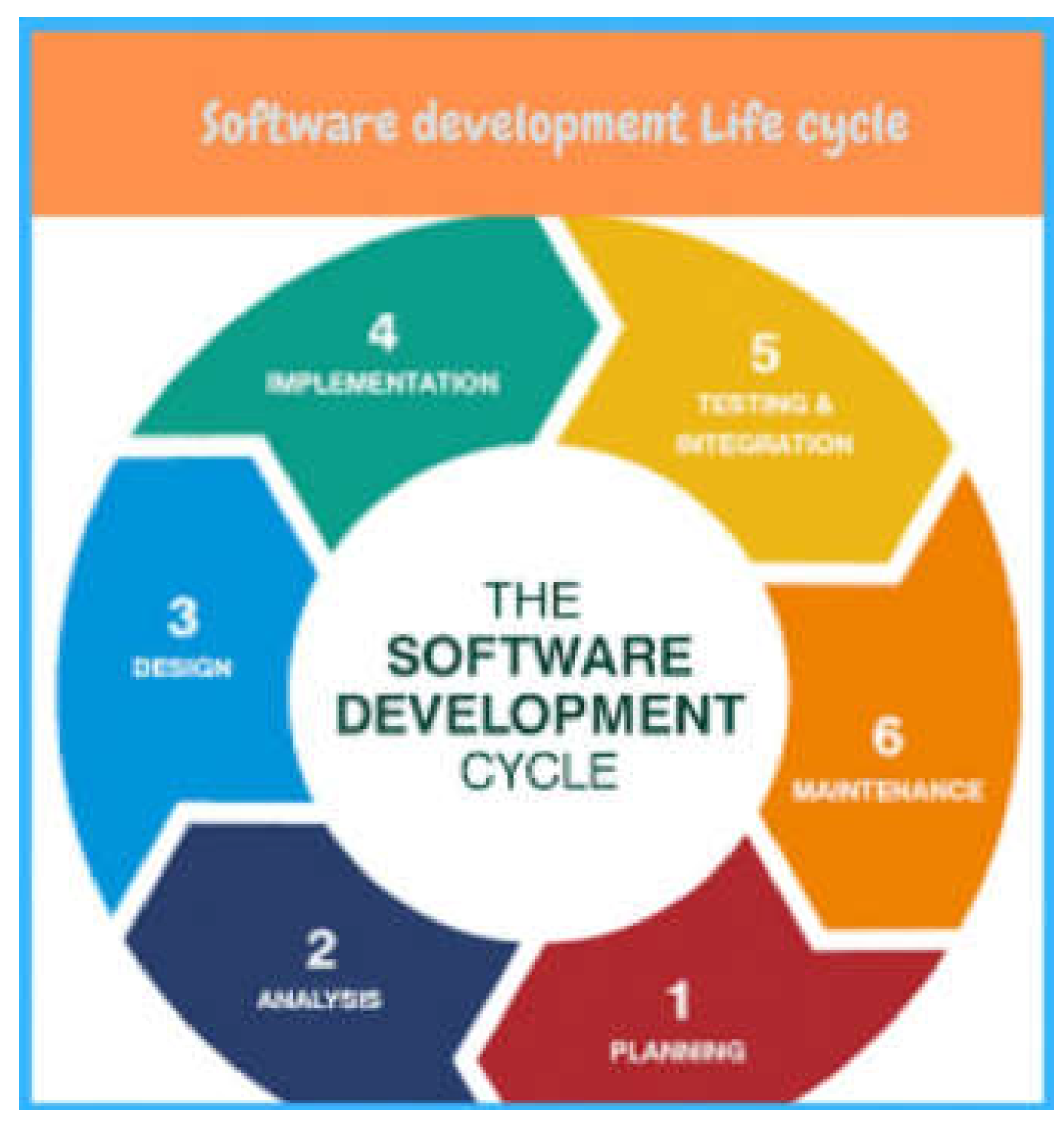
The development journey of SWIF was underpinned by the adoption of Agile methodology, complemented by the principles of the Software Development Life Cycle (SDLC). This strategic amalgamation ensured the nimbleness and adapt- ability of the project, enabling iterative refinement and contin- uous enhancement in response to evolving user feedback and dynamic requirements. The Agile approach fostered an envi- ronment conducive to collaboration, transparency, and rapid iteration, thereby expediting the realization of SWIF’s full potential as a transformative force in warehouse management.
II. RELATED WORK
A. Agile Software Development: Methodologies and Trends by Samer Sawalha and Hiba Abdel Nabi (2020)
Software engineering has evolved to keep up its pace with technological advancements and modern business re- quirements. A significant improvement worth mentioning is the adoption of agile method in software development, a lightweight approach designed to overcome the limitations of traditional development methods. Agile aims to reduce overhead costs and enhance flexibility by allowing changes in requirements at any stage. This is achieved through a set of values and principles that manage tasks and their coordination. This paper outlines the core agile values and principles and highlights the key differences between agile and traditional methods. It also discusses the most popular agile methodolo- gies, their life cycles, roles, advantages, and disadvantages. Additionally, it explores recent trends in agile development, particularly in cloud computing, big data, and coordination. The review concludes by providing guidance on selecting the most suitable agile methodology based on the task, product sensitivity, and organizational structure.
Traditional software development projects often face sig- nificant issues, especially regarding maintenance and user- requested changes, which can lead to major problems. Agile method address these issues by speeding up development and effectively responds to changes, making them a preferred option in many scenarios [2].
B. Agile Software Development Methods: Review and Analysis by Pekka Abrahamsson, Outi Salo, Jussi Ronkainen and Juhani Warsta (2017)
Agile software development methods emphasize nimble- ness, readiness for motion in response to the demands of the rapidly growing and volatile Internet software and mobile application industries. These methods aim to provide lighter, faster, and more responsive development processes, addressing the business community’s needs.
The central values of the agile community include:
- 1)
- Human Relationships and Team Spirit: Emphasizing the importance of relationships and community among software developers, agile practices foster close team relationships and working environments, prioritizing hu- man roles over institutionalized processes and tools.
- 2)
- Continuous Delivery of Working Software: Agile teams aim to produce tested, working software at frequent intervals. This approach encourages keeping the code simple and advanced, reducing the documentation bur- den.
- 3)
- Developer-Client Cooperation: Agile methods prioritize collaboration between developers and clients over strict contracts. Negotiation is seen as a means to maintain a viable relationship, focusing on delivering business value immediately and reducing non-fulfillment risks.
- 4)
- Flexibility and Competence: Agile teams, including both developers and customer representatives, should be well- informed, competent, and authorized to make necessary adjustments during the development life-cycle. Contracts should support and allow for these enhancements [3].
C. Improving Warehouse Operation Digitally by Felipe Busta- mante, Ashutosh Dekhne, Jo¨rn Herrmann, and Vedang Singh (2020)
Warehouse operations are becoming increasingly complex due to the growth of e-commerce, which has led to a pro- liferation of SKUs and a need for super fast fulfillment. Additionally, new automation technologies pose challenges for operations leaders who must keep pace with advancements and determine their impacts.
Improving warehouse operations requires careful planning, as trial-and-error approaches are not feasible. However, com- panies can now use ”digital twin” simulations to create virtual models of their warehouses. These simulations allow them to test various scenarios, such as different floor plans and workflows, without disrupting actual operations. This approach enables operations leaders to evaluate the impact of changes on factors like SKU mix, order profiles, seasonal demand, productivity, and automation options.
The digital warehouse design process typically takes six to ten weeks and can improve efficiency by 20 to 25 percent be- fore any physical changes are made. It has broad applications, including productivity initiatives, mergers, consolidations, and new warehouse construction, consistently leading to significant savings in operating and capital expenses.
This approach identifies the full potential of a facility, optimizes slotting and product flows, and evaluates mecha- nization and automation options, helping to avoid issues from inappropriate automation. Ultimately, digital warehouse design allows companies to make informed investment decisions and achieve optimal efficiency and effectiveness [4].
D. Manifesto for Agile Software Development by Kent Beck, Mike Beedle, Arie van Bennekum, Alistair Cockburn, Ward Cunningham, Martin Fowler, James Grenning, Jim Highsmith, Andrew Hunt, Ron Jeffries, Jon Kern, Brian Marick, Robert
E. Martin, Steve Mellor, Ken Schwaber, Jeff Sutherland, and Dave Thomas (2001)
This paper talks about an overview of notable figures in Agile software development. Mike Beedle, founder and CEO of e-Architects Inc., specializes in application development using Scrum and XP and has introduced Scrum to several organizations. Arie van Bennekum, active in DSDM since 1997, focuses on agile methods that meet end-user needs. Alis- tair Cockburn, founder of Humans and Technology, developed the Crystal family of agile methodologies and collaborates with Jim Highsmith. Ward Cunningham, founder of Cun- ningham and Cunningham, Inc., contributed to object-oriented programming, Extreme Programming, and the WikiWikiWeb. Martin Fowler, Chief Scientist at ThoughtWorks, is a key figure in object-oriented techniques and software design. Jim
Highsmith, developer of Adaptive Software Development, co- authored ”The Agile Manifesto” with Martin Fowler. Andrew Hunt, partner in The Pragmatic Programmers, co-authored ”The Pragmatic Programmer” and specializes in agile de- velopment. Ron Jeffries, proprietor of XProgramming.com, was the first Extreme Programming coach. Jon Kern helps clients deliver business value through software development and contributed to Feature-Driven Development. Brian Marick explores ”Agile Testing” and its integration with Agile Devel- opment. Robert C. Martin, president of Object Mentor Inc., is an author and speaker on software development and agile processes. Ken Schwaber, president of Advanced Development Methods, co-formulated the Scrum development process. Jeff Sutherland, CTO of PatientKeeper, co-invented Scrum and in- troduced agile processes to various companies. Dave Thomas, co-author of ”The Pragmatic Programmer,” emphasizes the importance of people in projects and individual involvement in agile methodologies [5].
F. Warehouse Management System for Smart Digital Order Picking Systems by Dina Fitria Murad, Bambang Dwi Wija- narko, Widya Ratnasari, and Bhumyamka Yala Saputra (2019)
A Warehouse Management System (WMS) is designed to control the movement and storage of materials within a warehouse and handle related transactions such as shipping, receiving, cancellation, and retrieval of goods. WMS uses a database to improve efficiency by directing tasks and main- taining accurate inventory records, with data synchronization occurring either in batches or in real-time. The implementation of a new digital order picking system aims to streamline the order picking process by reducing the steps involved from ten to three, thereby speeding up order fulfillment and reducing cancellations. This system was developed based on user needs and aims to enhance the productivity of pickers and sorters, and accelerate the outbound process. Pickers can use a web- based application accessible via smartphones to log in, retrieve goods according to picking instructions, and update the system with transaction details. The progress of these activities can be monitored through a dashboard, providing real-time data and performance metrics. The improved system significantly reduces the order picking time from 28 minutes to 2 minutes for validation, achieving a total time reduction of 26 minutes. However, the efficiency of the process also depends on the condition and performance of the users, including pickers, sorters, and warehouse managers. The study highlights the importance of digital order picking systems that are accessible via smartphones and user-friendly for mobile operations [6].
III. METHODOLOGY
In this context, the survey describes the input features for the accepted samples credit scoring.
A. Search
For beginning as undergraduated in computer science, we collected articles primarily relevant to the ’Agile Method’. We collected articles and journals based on our topic. This relevance to facilitate the identification and review of the software we develop for fulfill our assessment. We used a method known as ’snowballing’ for collecting references. Snowballing is a method of collected numerous items to create an idea [7]. This method will ease our process and increase our confidence in the software we will develop using the Agile method. As argued by Petersen, ”in the particular context studied all relevant studies identified by the search could also be obtained by snowball sampling. The key to success is to define a good start set [8].”
We collected papers from website based references such as Semantic Scholar, Google Scholar, and ScienceDirect. Through these websites, we gathered a total of (18) papers. We selected these papers based on the relevance we had previously determined. In other side, we also considered the identity and quality of the journals. To achieve more accurate research results, we selected references that had international standards or status.
After collecting the articles, we identified them. In the iden- tification process, we found two interesting topics related to the Agile Method: ”software failure” [9] and ”documentation in software development” [10]. These topics was interested for us because software can be failed uniquely. Software is con- sidered unsuccessful or failed if the user cannot use it properly [9]. From this, we agreed that software development should not only focus on functional but also consider capability of user in its operation. That thing becomes an essential part of the software development project.
B. Objective
In this research, we will focus on the software development methodology known as Agile. Agile emphasizes the respon- siveness of the software we develop and customer satisfaction. Responsiveness performance will depict the effectiveness of the software we develop and how it resists errors. Responsive- ness performance is responsible for managing and fulfilling user requests. This will then become one of the bench- marks for software quality, especially in the representation of information [11]. Meanwhile, customer satisfaction will describe how easily the software which we will develop can be used and understood by the user. Customer satisfaction is a benchmark that developers must consider so that the software does not become a ”failed software”. Some software, although functionally capable of executing, aren’t usable by user or client due to misunderstanding [9].
We implement Agile Method with to try make a sofware. The software named ’SWIF WAREHOUSE”. The software is automatization of warehouse traditional system which will our configure to computing system. With computing system, it can shorten operational time than usual, with increased accuracy and minimal mistake. According to the Agile Method, we make the software with functionality base on client’s require- ment. And for avoid a ”failed software”, we teach and make documentation for client to operation the software. We always focus and stay look about responsiveness and satisfication of customer even while the software development was done because these will influence of feedback. We consider about feedback from client was most important thing for us.

Table 1.
ISO IEC 25010:2011 software product quality model.
| Characteristic | Sub-Characteristic |
|---|---|
| Functional Suitability |
Functional Completeness, Functional Correctness, Functional Appropriatness |
| Perfomance Ef- ficiency |
Time Behavior, Resource Utilization, Capacity |
| Compability | Co-existence, Interoperability |
| Usability | Appropriateness, Recognizability, Learnability, Oper- ability, User Error Protection, User Interface Aesthet- ics, Accesibility |
| Integrity | Non-repudiation, Authenticity, Accountability |
| Maintability | Modularity, Reusability, Analysability, Modifiability, Testability |
| Portability | Adaptability, Installability, Replaceability |
To measure responsiveness performance and customer sat- isfaction, we use a measurement concept known as ’Quality Measurement Concepts based on ISO Standard’ [7]. This concept measures software by focusing on its ability to fullfill user demands. This concept can serve as a representative tool for assessing software quality, particularly performance and efficiency [7]. One most important thing reviewed aspect for evaluation is the entity. ISO Measurement standard include (functional Suitability, Perfomance Efficiency, Compability, Usability, Reliability, Security, Maintability and Portability) [7]. All attributes that represent success indicators in software development.
C. Data Collection and Design
Our team comprises computer science lecturers and six computer science students who have studied for approximately 4th semesters or 2th years. Our lecturer will be the supervisor and scrum master because they have the best experience and skills among the team. The students will be given guidance during the software development.
Adopting the Agile method in developing the software project, we collect data iteratively. This is because client requests may change over time, and we need initiation as a direction for the next development stage. We collect data by communicating with clients either face-to-face or through online meeting platforms like Google Meet. We believe that client approval is paramount in our project
To provide a clearer picture, we also give the client a design representing our software project. Using the online design platform ’Figma’, we can show the client how the software will be used in the future. Client need to know to reduce concerns and distrust towards the developer team. This is also a step to prevent failed software projects.
D. Data Analysis and Evaluation
Based on the existing data and design, the next stage is identification and selection. Data analysis is a crucial step for developer to allocate all resources accurately. Improper resource allocation will have negative impacts for developer and client. The most influential resources in software devel- opment are cost or funding and time allocation. The time and cost required during this software development shall match the needs and urgency of the client.
Using the Agile method, we perform iterative data analysis similar as our the data collection phase [12]. Although changes are possible, the data from the collection stage must still be processed to form a provisional decision.Decisions made by the developers must be based on the client’s urgency. Developers can set aside existing theories if they do not align with the client’s urgency [12].
In this data analysis phase, our team has started coding [13]. Just little story, in most companies, they selection team with coding tests for recruiting a developer team. However, in our case, the developer team members have already been determined, so our team starts coding after the design phase is complete. For programming language, we use Laravel Framework. Reason why our team choose Laravel because Laravel make easier for our task about software development. With MVC feature and capability, Laravel help us to fulfill our project related on Agile Method. The coding must match the design presented to the client. If changes or issues arise during development, the developer team must transparently inform the client.
Indirectly, the Agile method makes the data analysis stage iterative like evaluations. Usually, evaluations focus on two things: the process (coding and sample design) and data collection [13]. However, in our case, there is a difference. As undergraduate, we also iteratively evaluate the theoretical foundation used in this software development.
E. Validation
This is the final and most crucial stage in Agile. At this stage, the client and developer reach final agreement. The developer team must ensure that the software developed can fulfill the client’s criteria. Developers must convince the client to agree to terms or contracts previously made. Developers also need to assist the client in checking the accuracy and documentation, which will guide the client in using the devel- oped software [12]. Fortunately, in our case, client accept our software and he has deal with us.
IV. RESULT AND DISCUSSION
A. Result
Having delved into the intricacies of warehouse operations and the principles of Agile methodology, we now shift our focus to the practical implementation of these concepts. Our objective is to transform the methodology into a tangible product design, laying the groundwork for efficient future development. This entails a structured approach encompassing several key steps:
1. Use Case Diagram: A Use Case Diagram serves as a visual representation of the interaction between an admin user and our program, highlighting the functionalities and capabil- ities offered by the program. It effectively communicates the program’s purpose and demonstrates how an admin can utilize it to perform various tasks.
Figure 1.
Use Case Diagram of SWIF.
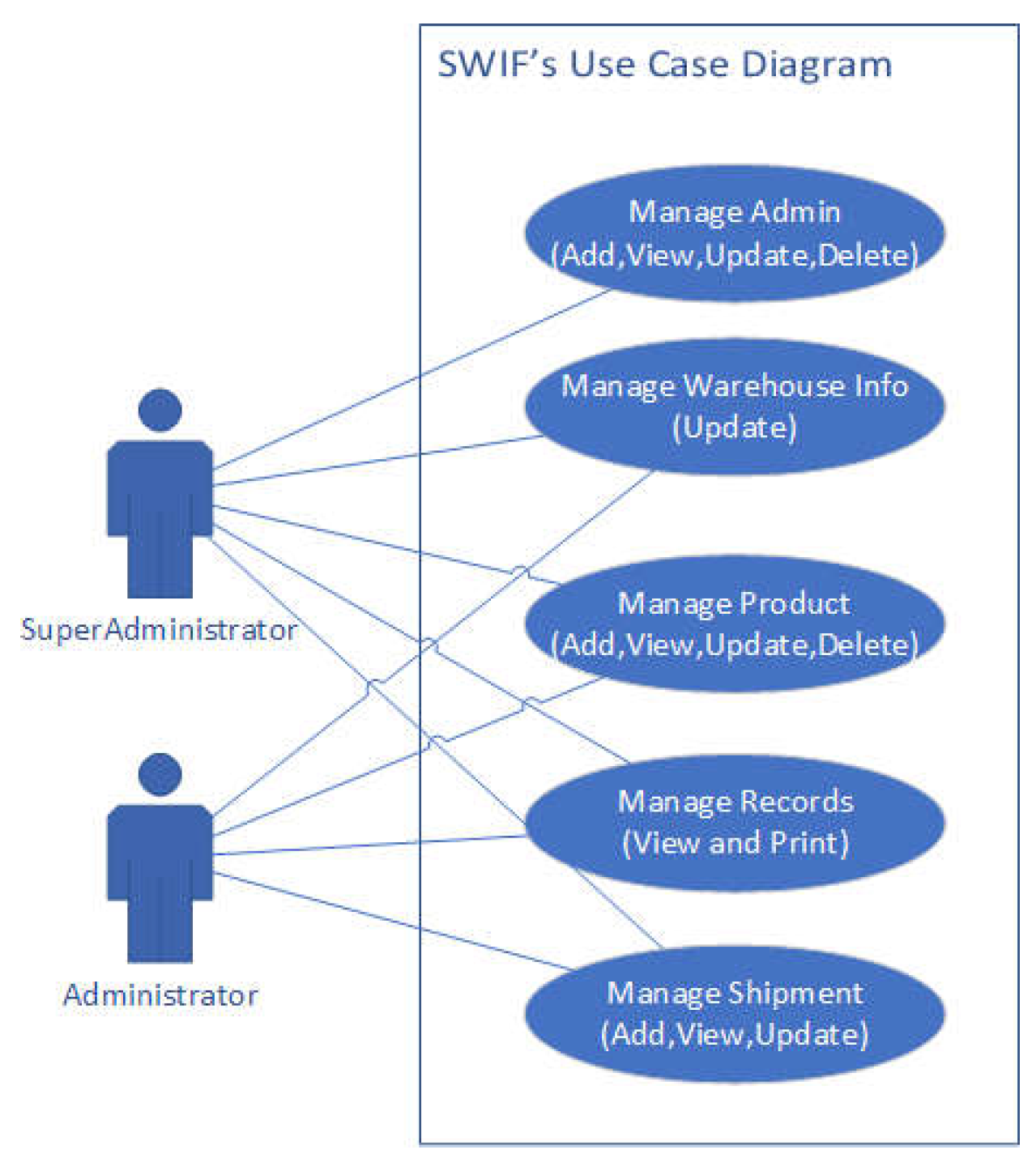
Based on the provided Use Case Diagram 1, it is evident that the administrator role possesses a wide range of func- tionalities, yet it falls short of the capabilities granted to the higher-authority actor. This higher-authority actor, presumably a system administrator or manager, holds the privilege to per- form critical tasks such as modifying warehouse information and adding new administrators.
2. Physical Data Model: A Physical Data Model (PDM) serves as a crucial tool for representing the final or preliminary design of a database schema for a warehouse management system. It provides a comprehensive overview of the data structures, relationships, and constraints within the database, facilitating efficient database development and management.
Figure 2.
Physical Data Model of SWIF.
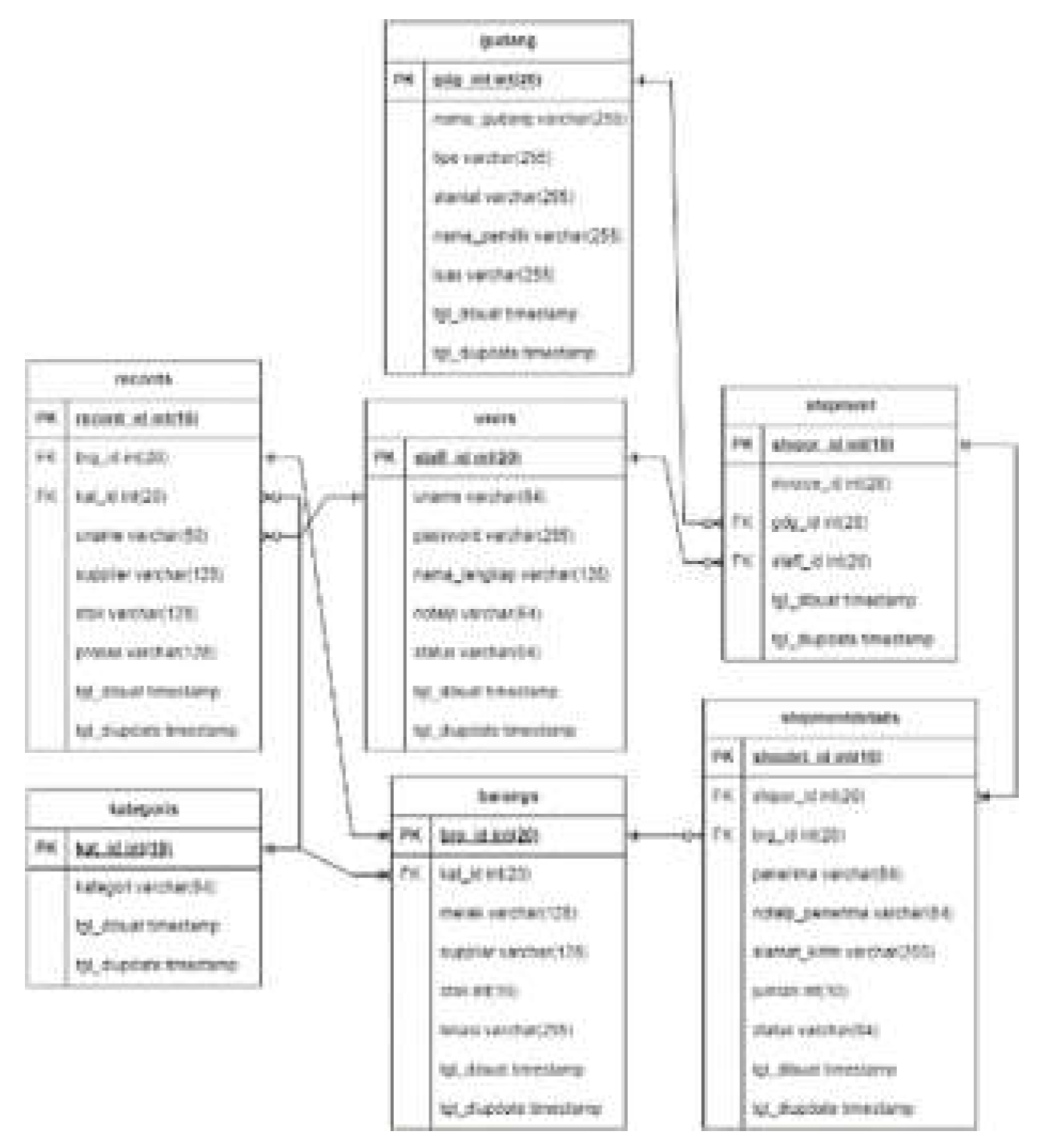
A well-structured Physical Data Model (PDM) 2 serves as a cornerstone for designing an efficient and scalable database, particularly in the context of a Warehouse Management Sys- tem (WMS). By carefully defining entities, their relationships, and data attributes, the PDM 2 empowers developers to minimize data redundancy, optimize storage utilization, and enhance the overall performance of the database system.
Consider a scenario where you want to retrieve data from the barangs table using information from the shipmentdetails table. With a well-designed PDM, you can achieve this efficiently by utilizing a single column, such as the id column, that uniquely identifies the relevant records in both tables. This approach eliminates the need to join multiple columns, reducing the complexity and improving the performance of the data retrieval operation.
Figure 3.
Design Prototype of SWIF.
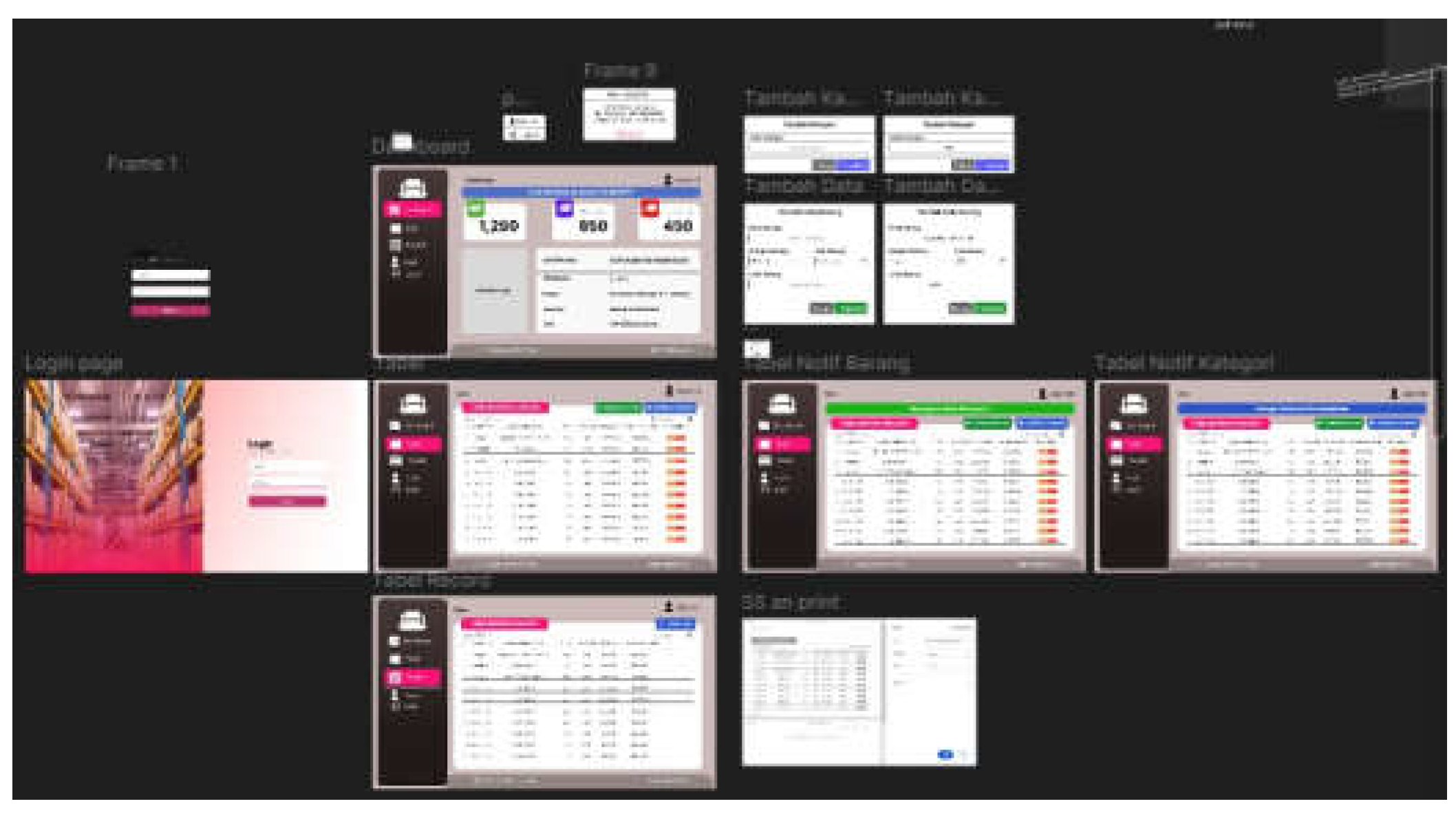
3. Design Prototype: Within the realm of software development, the design prototype plays a pivotal role in establishing the foundation for an intuitive and user-centric in- terface. It serves as a tangible representation of the software’s layout, functionality, and overall aesthetic, enabling developers and designers to meticulously refine the user experience before embarking on the intricate coding process.
To ensure a user-friendly experience, we created a stream- lined prototype3 for our warehouse management system. The design prioritizes clarity and ease of use, while incorporating a touch of visual appeal through a calming pink color palette and well-chosen icons. This Figma prototype serves as a blueprint for the final software, guaranteeing a seamless and intuitive interface that contributes to the overall success of the system.
Figure 4.
Agile Software Development Life Cycle.
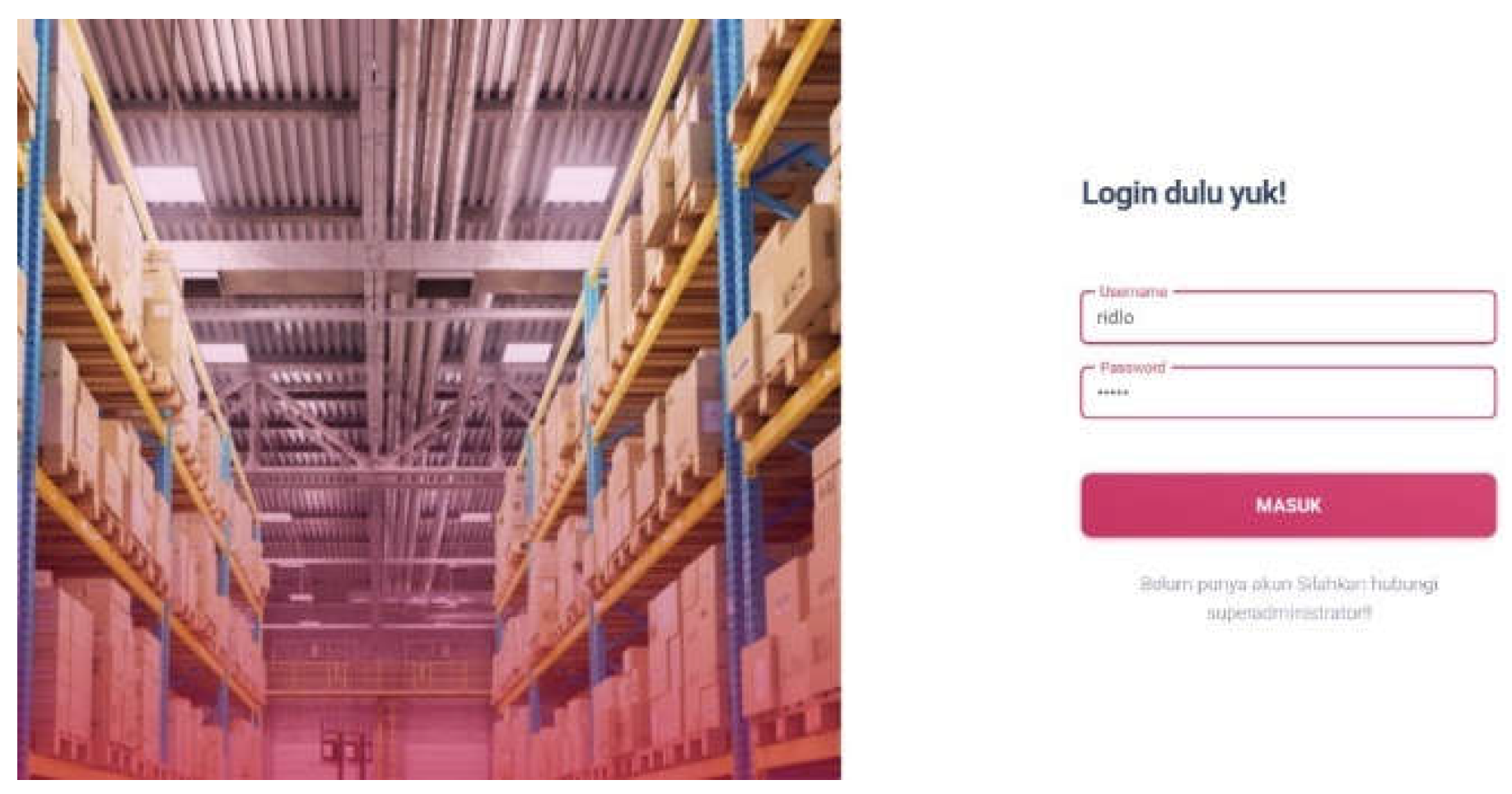
User Interface 4.1 Authentication Authentication is a process of verifying the identity of a user who wants to access a software system. The purpose of authentication is to protect data from misuse by unauthorized parties. In SWIF, we use sign-in and log-in as steps for authentication. This way, every user who operates SWIF can be tracked for identification if necessary. In addition, this authentication also plays a role in protecting the data of each user from misuse. Figure 5 and Figure 6 are the authentication views of SWIF.
Figure 5.
Demo: Log In.
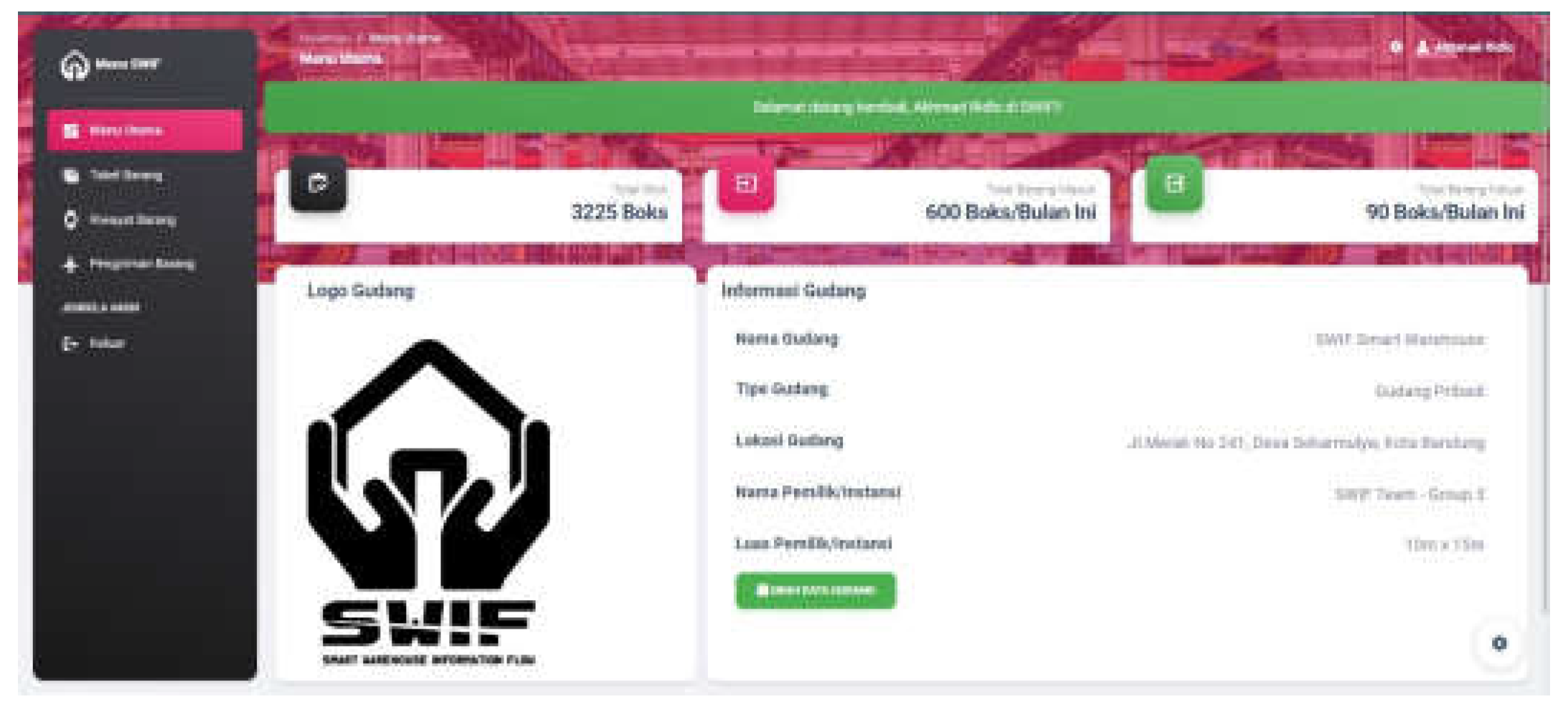
Main Menu Upon successful authentication, the user will be directed to the main menu page. In the main menu, users can view the overall report of expenses and income of goods, as well as information about the identity of the warehouse that the software is operating on. On the other hand, only the SuperAdministrator can change the warehouse identity on the main menu page.
Figure 6.
Demo: List Admin Page.
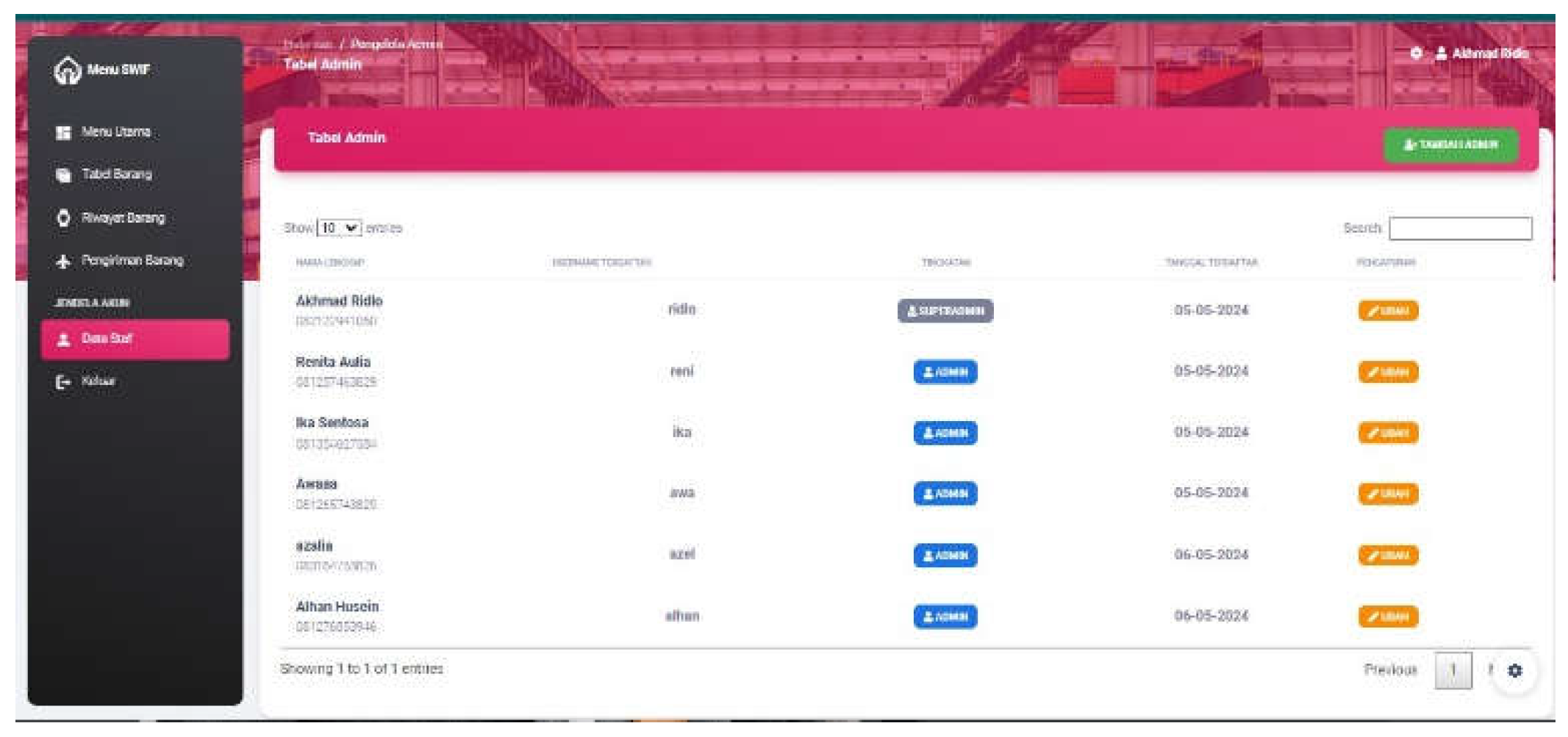
Figure 7.
Demo: Main Menu.
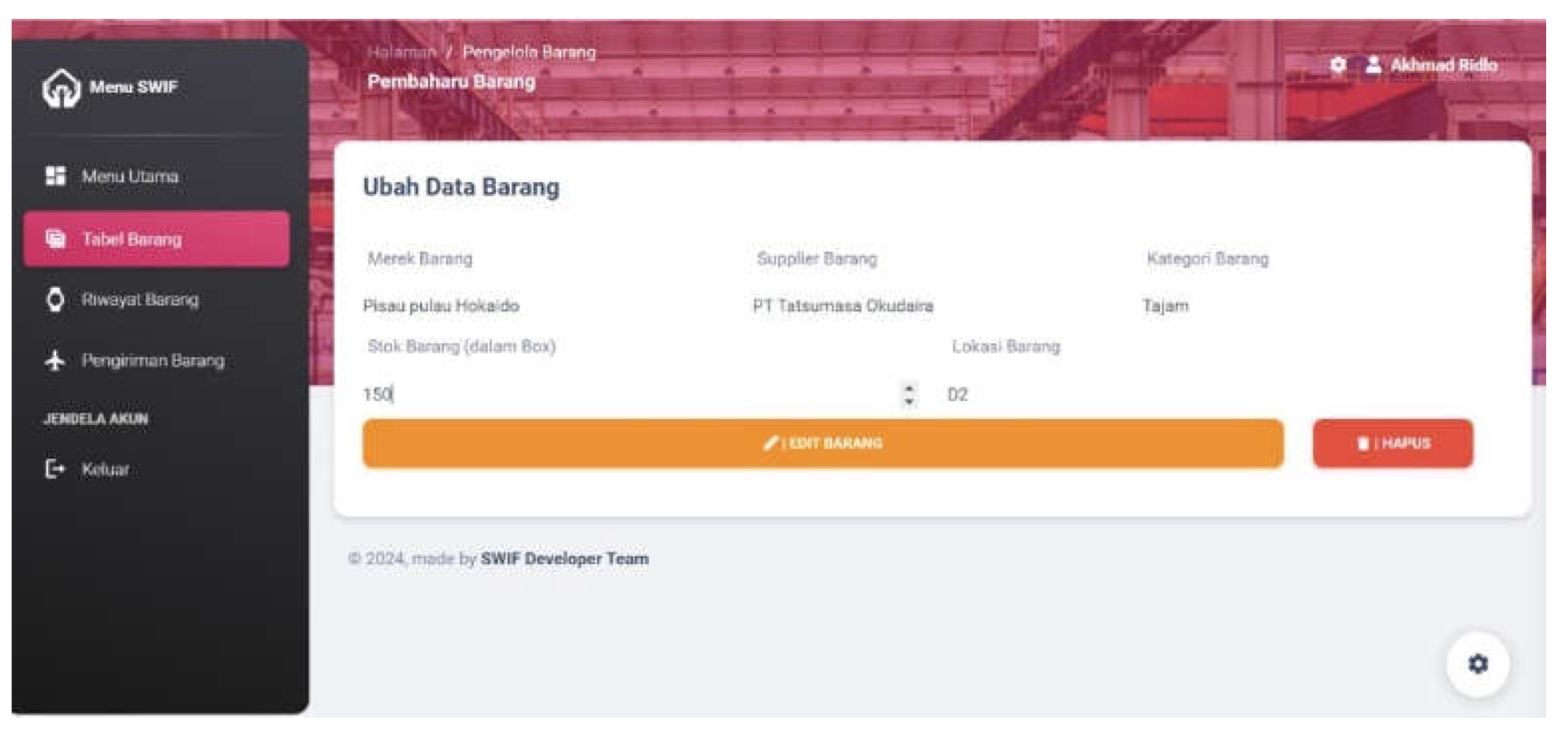
Item Table The SWIF website also has another feature, which is a page for the item table. The purpose of this item table is for users to add categories and items to be entered along with their identities. In addition, on this page users can also change the identity or attributes of items from before. In addition, this item table page is also equipped with a search feature to make it easier to find items.
Figure 8.
Demo: Add Item.
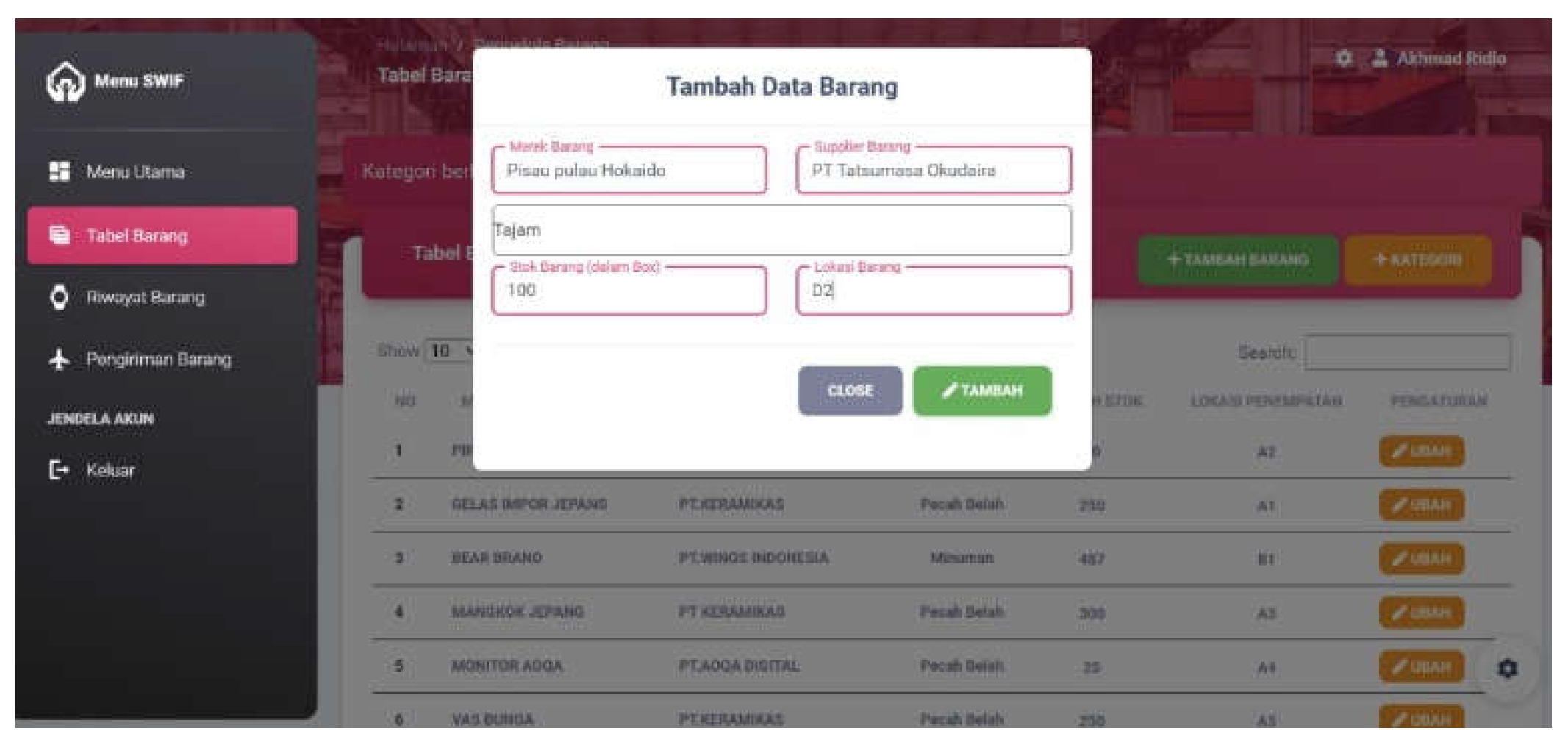
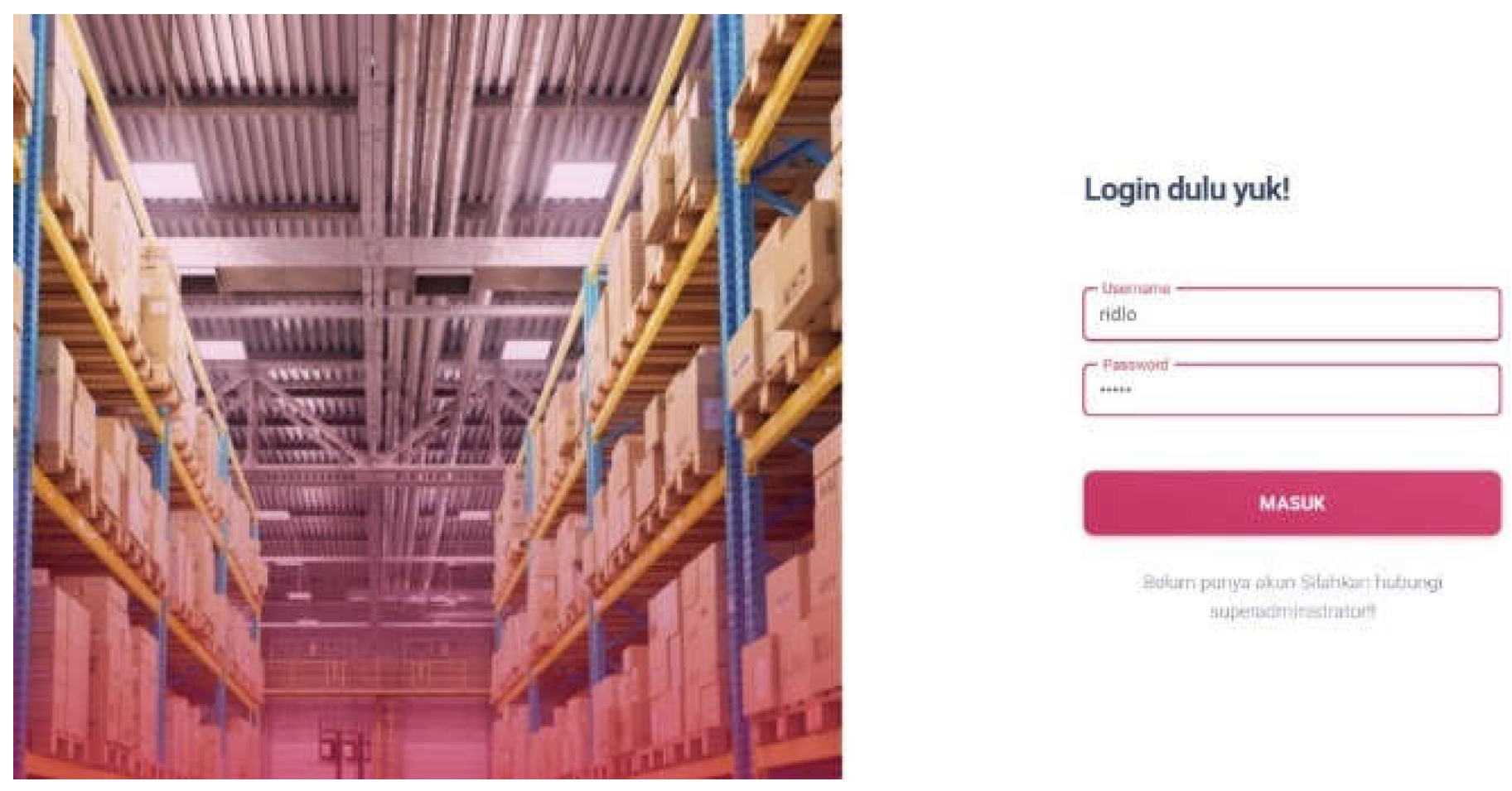
Figure 9.
Demo: Search Items and Edit Item Result.
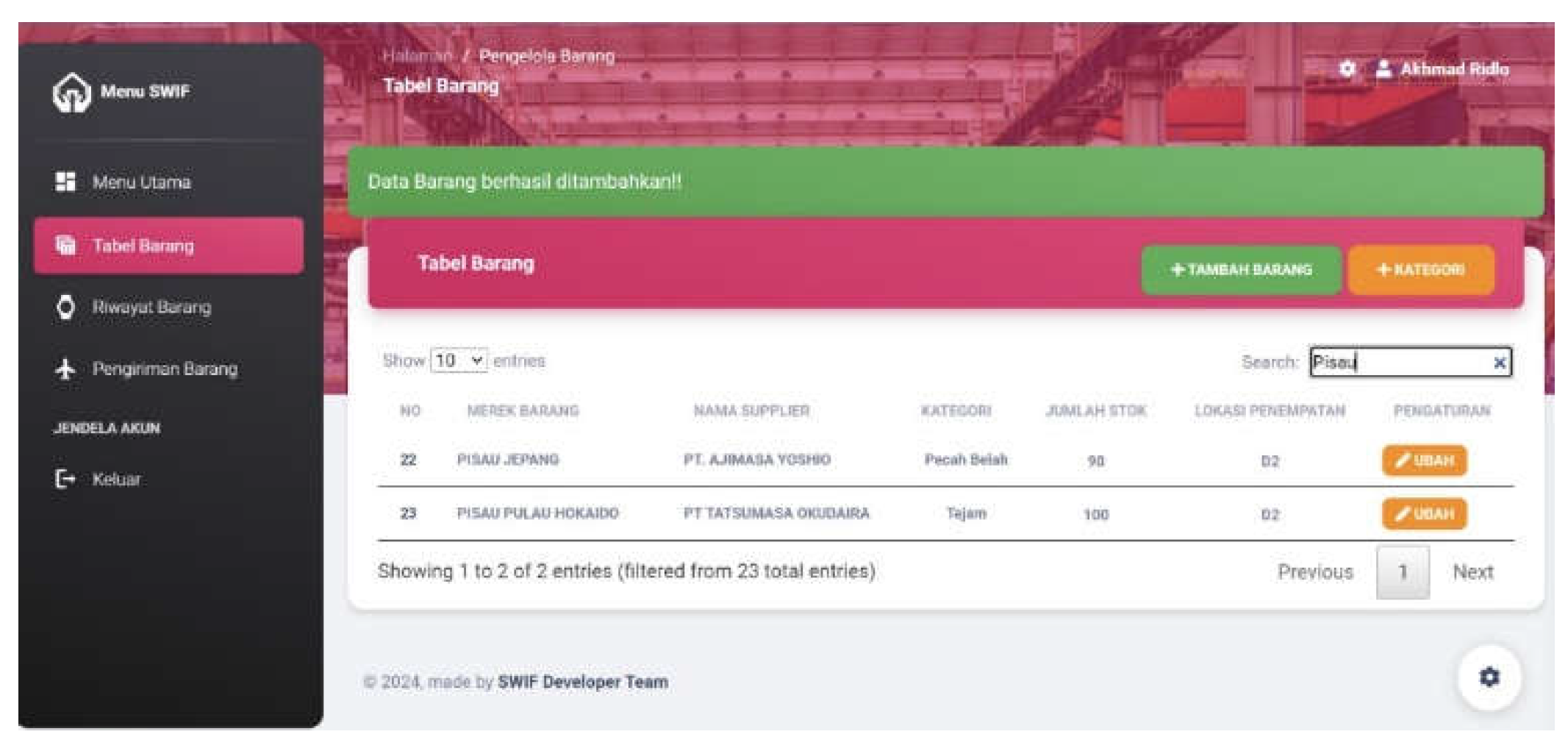
Figure 10.
Demo: Edit Item.
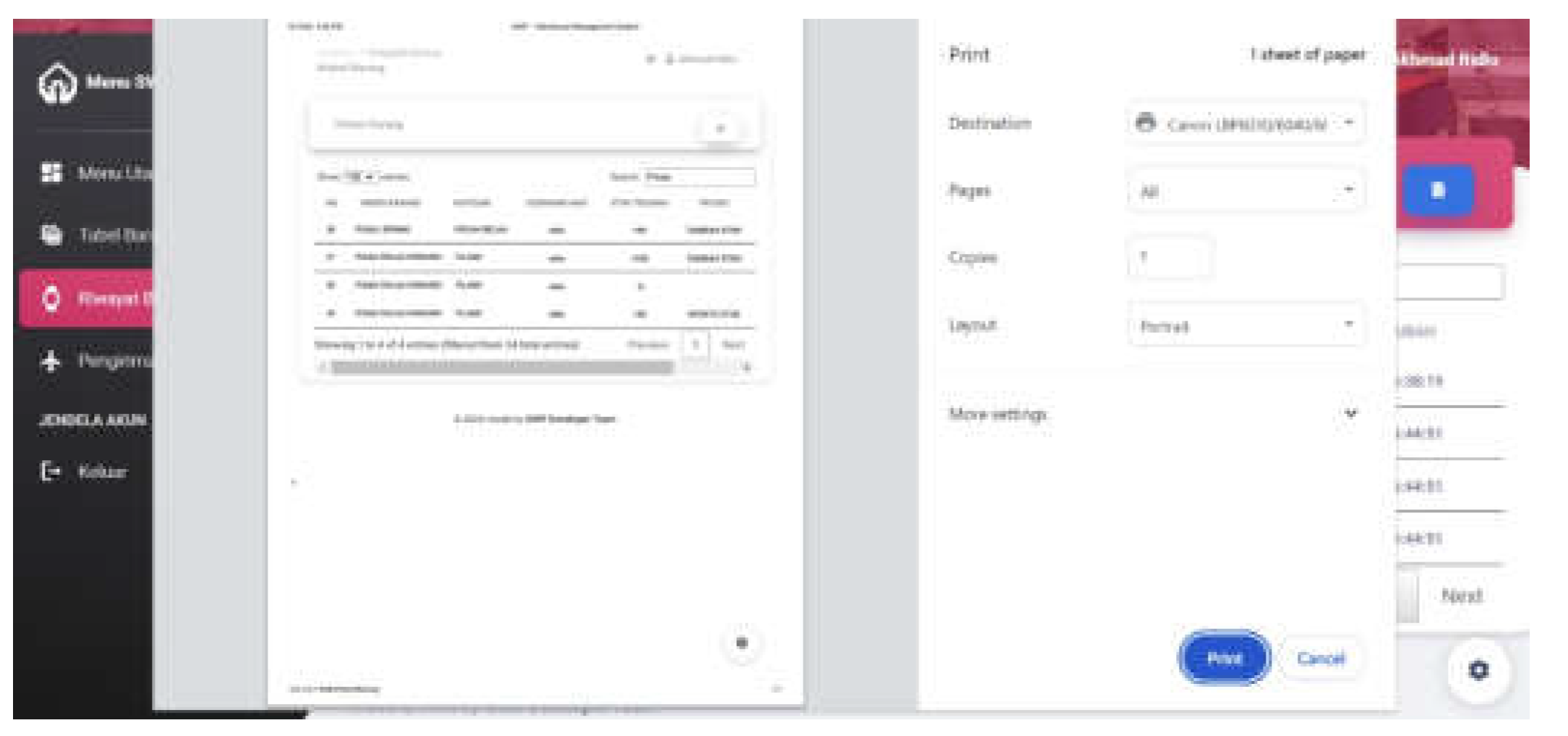
Item History The SWIF website also has a feature in the form of a page for item history. With this feature, users can view and monitor changes in the stock of each item. This feature has also been designed to detect users who make changes to the stock of these items. Similar to the item table, this page is also equipped with a search feature to make it easier to find the data needed in the history. In addition, in the item history, users can also print out the data on the table feature.
Table 2.
SWIF Development Phase based on Agile Method.
| Cycle | Implementation |
|---|---|
| Planning | Defining the Scope and Setting the Stage: The planning phase lays the foundation for the project, outlining the features, pages, budget, timeline, and team size. For SWIF, this involved: 1. Features: - Data management (inbound and outbound) - Streamlined stock adjustments through an interface - Automated data recording across various processes - Comprehensive shipment tracking capabilities - PDF report generation of data records - Invoice generation based on shipment details - Real-time stock level tracking - Robust privilege-based access control system (staff and super admin roles) 2. Pages: - Login page - Record page - Table page - Dashboard page - Item notification table page - Category notification table page - Add category page - Add data page 3. Budget: Zero budget (utilizing available resources) 4. Timeline: 4 months 5. Team Group: 6 people |
| Analysis | Understanding Requirements and Leveraging Existing Designs: The analysis phase delves into the details of each feature, ensuring a clear understanding of requirements and utilizing existing designs. For SWIF, this included: 1. Analyzing existing designs: - Login page (Figma) - Admin page (Figma) - Dashboard (Figma) 2. Defining field requirements: - User authentication for login - Data fields for record page and table page - Dashboard metrics - Notification table fields 3. Reviewing database: Existing MySQL database structure 4. Ensuring design consistency: Aligning all pages with functional requirements and Figma designs |
| Design | Creating the Blueprint and Selecting Technologies: The design phase translates requirements into a detailed blueprint, encompassing business rules, layouts, themes, and frameworks. For SWIF, this involved: 1. Establishing business rules: - Access control permissions - Data validation rules - Stock adjustment procedures 2. Designing layouts: - User-friendly interfaces for all pages - Consistent design language across the application 3. Selecting themes: Color schemes and typography that align with the brand identity 4. Choosing frameworks: - Front-end frameworks for building responsive and interactive interfaces (Bootstrap 5) - Back-end frameworks for efficient development (Laravel 8) |
| Implementation | Bringing the App to Life: The implementation phase brings the design to life, developing the application code, testing it for functionality, and integrating it with the backend infrastructure. For SWIF, this included: 1. Backend development: - Setting up servers and databases - Implementing APIs for data exchange - Creating physical data models 2. Ensuring code quality: - Following best practices for code structure and maintainability - Conducting unit tests to verify individual components 3. Integrating frontend and backend: - Connecting the UI/UX elements to the backend functionalities - Ensuring seamless data flow between the frontend and backend |
| Testing | Ensuring Quality and Bug-Free Operation The testing phase rigorously scrutinizes the application to identify and fix bugs, ensuring it meets quality standards. For SWIF, this involved: 1. Thorough testing: - Unit testing for individual components - Integration testing for inter- component interactions - System testing for overall functionality - User acceptance testing to gather feedback from potential users 2. Bug identification and resolution: - Identifying and tracking bugs throughout the testing process - Implementing fixes and re-testing to ensure bug-free operation 3. Quality assurance: - Ensuring the application meets all defined quality criteria - Addressing any performance or usability issues |
| Maintenance | Continuous Improvement and Support: The maintenance phase ensures the application’s long-term health, addressing issues, implementing enhancements, and ensuring team alignment. For SWIF, this involves: 1. Performance monitoring: - Tracking application performance metrics - Identifying and resolving performance bottlenecks 2. Issue resolution: - Responding promptly to user reported issues - Implementing bug fixes and patches 3. Continuous improvement: - Gathering user feedback and suggestions - Prioritizing and implementing enhancements to improve the application |
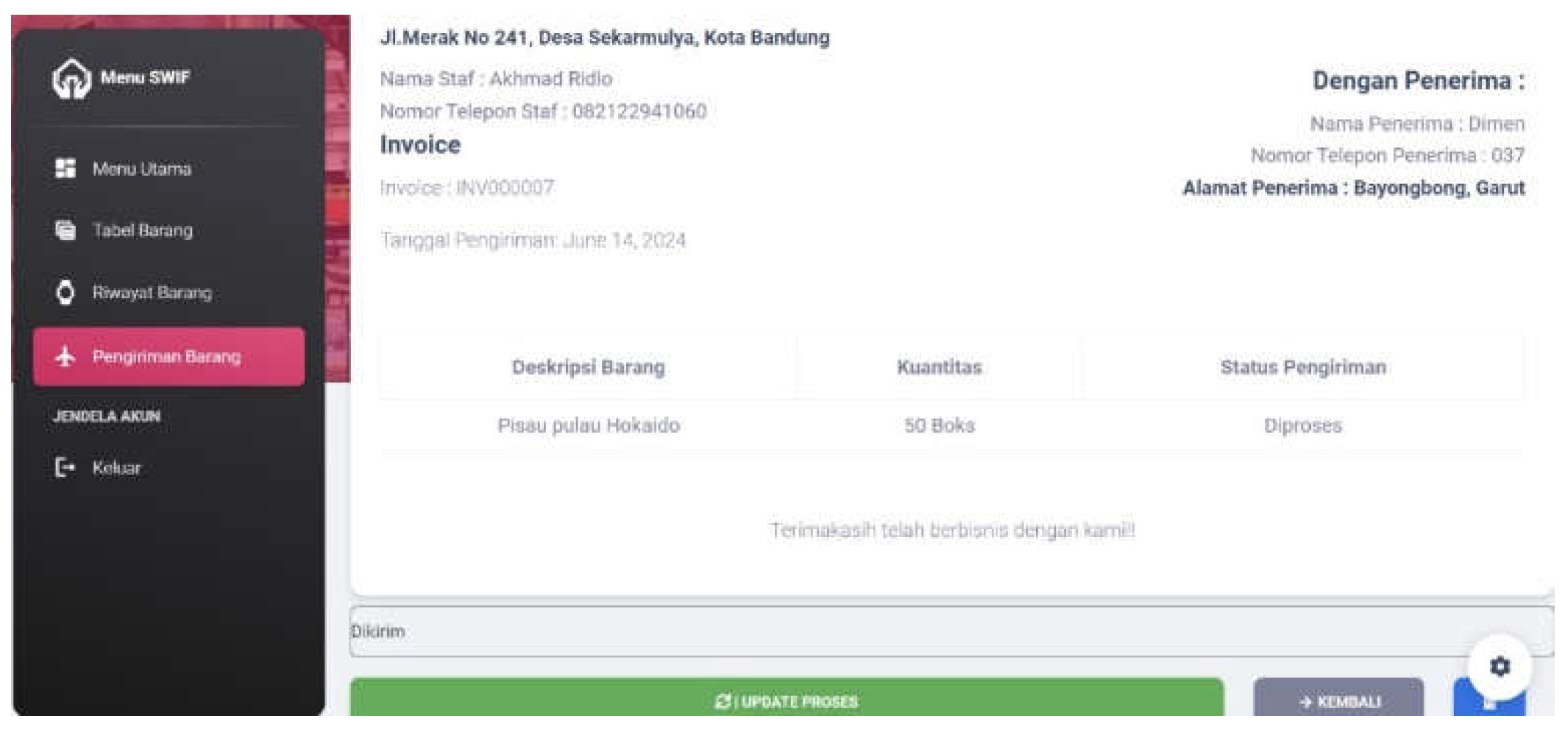
transactions. To do this, users need to fill out a form with the necessary information. Once the form is complete, the order data will appear in the item delivery table. Here, users can view the order attributes and change the order status by clicking the green button shown in Figure 19. The order status can be changed according to the user’s wishes, and the changes can be seen in Figure 20.
Figure 11.
Demo: History.
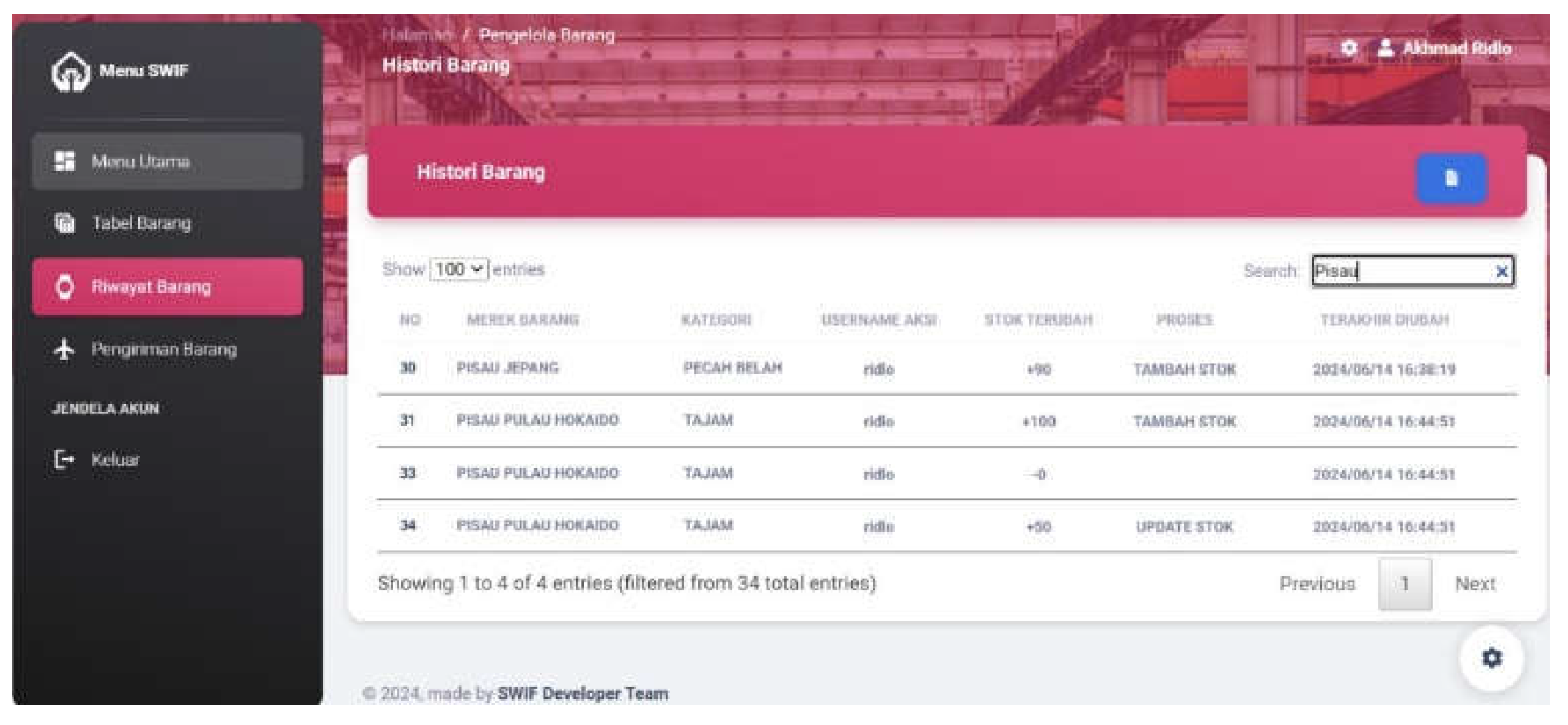
Figure 12.
Demo: Print Record / History.
Item Delivery Item delivery is another important feature of SWIF. This feature allows users to process item delivery
Figure 13.
Demo: Shipment.
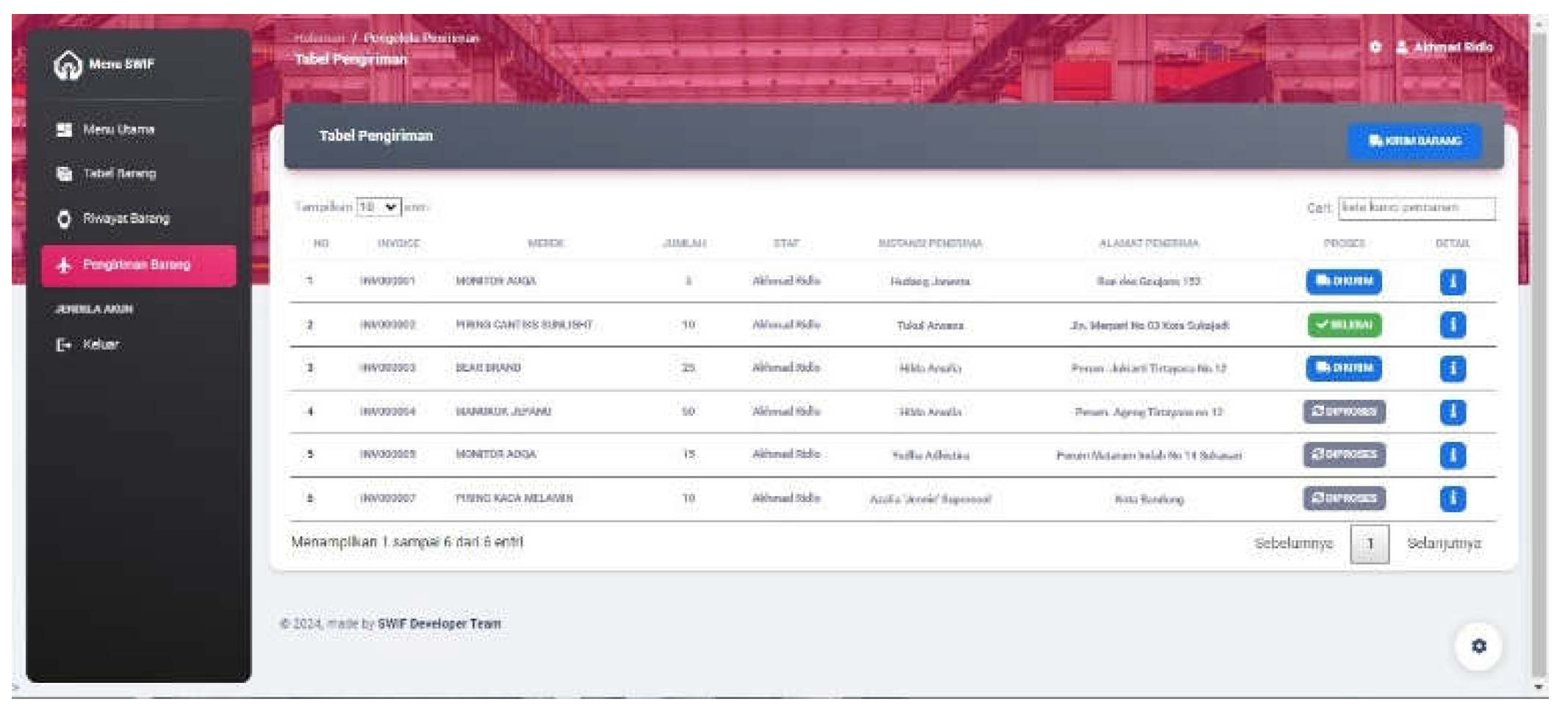
Figure 14.
Demo: Shipment Form.
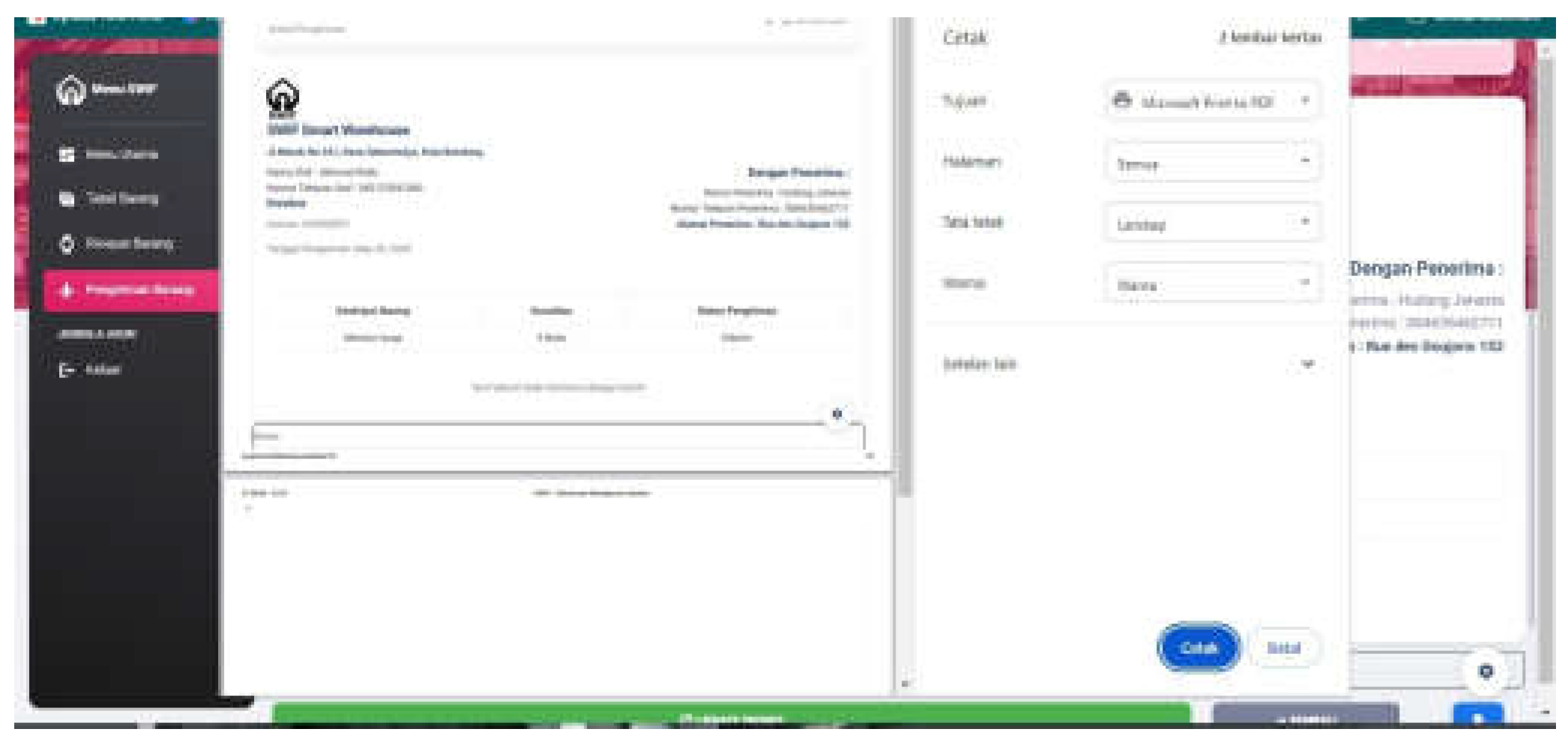
Figure 15.
Demo: Shipment Search.
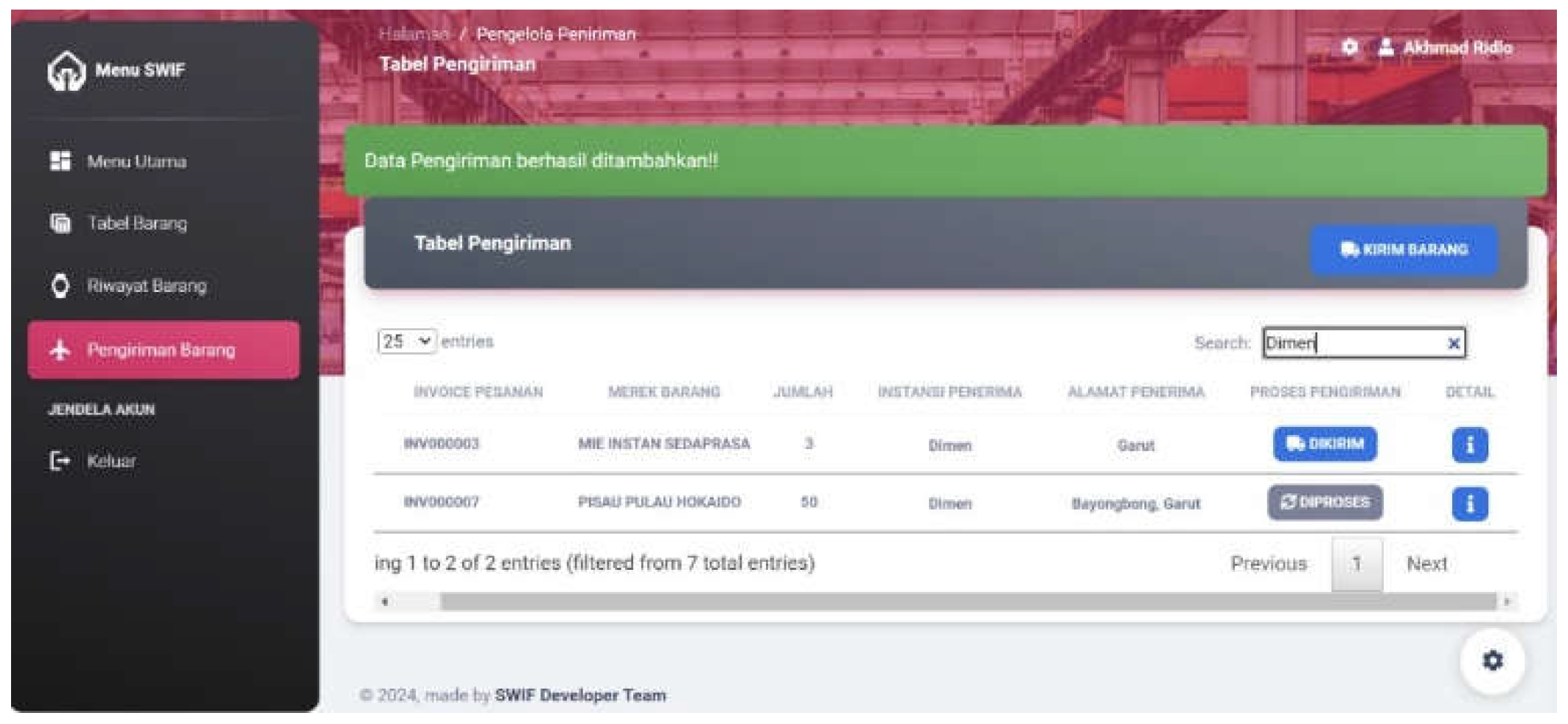
Figure 16.
Demo: Shipment Update Process.
A. Discussion
Implementation of Agile Methodology in the development of our warehouse management website has proven highly ben- eficial for us as developer. Agile’s iterative approach allowed us as developer to continue this project’s development and adaptation throughout it’s life cycle, ensuring that the website will always remains usable in long term condition and meets the required needs and expectation from users.
Based on the problem formulation that we identified in the beginning, the website we developed has effectively addressed these issues. It has optimized all warehouse management processes, reduced both natural and human resources involved in warehouse management operations and mitigated accuracy and data storage issues associated with manual warehouse management. With SWIF, all warehouse management pro- cesses have become highly efficient due to automation, thereby reducing resource requirements as traditional methods such as books for tracking are no longer necessary.
Based on the related work Warehouse Management System for Smart Digital Order Picking Systems [6]. We mutually agreed that automation in all warehouse management pro- cesses have significantly enhanced efficiency compared to traditional methods involving manual record-keeping.
This research was constrained by limited resources in terms of detailed warehouse information that available to the researchers, our individual knowledge and experience gaps in software engineering development also proved to be a hindrance for us as a team. For future research, a detailed exploration of the specific cases addressed in this study would greatly assist in managing and further developing the software solution presented.
Figure 17.
Demo: Shipment Update Process Result.
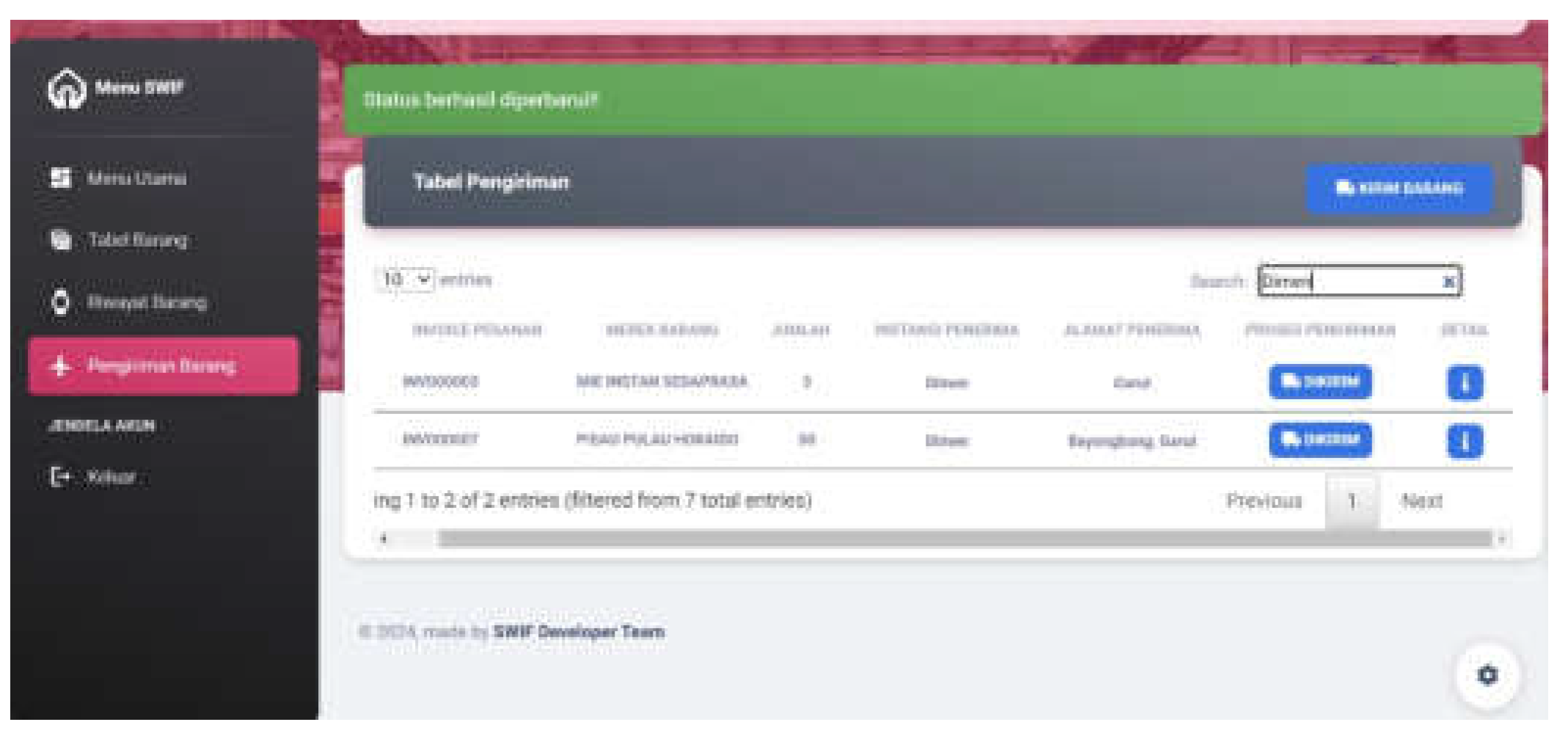
Figure 18.
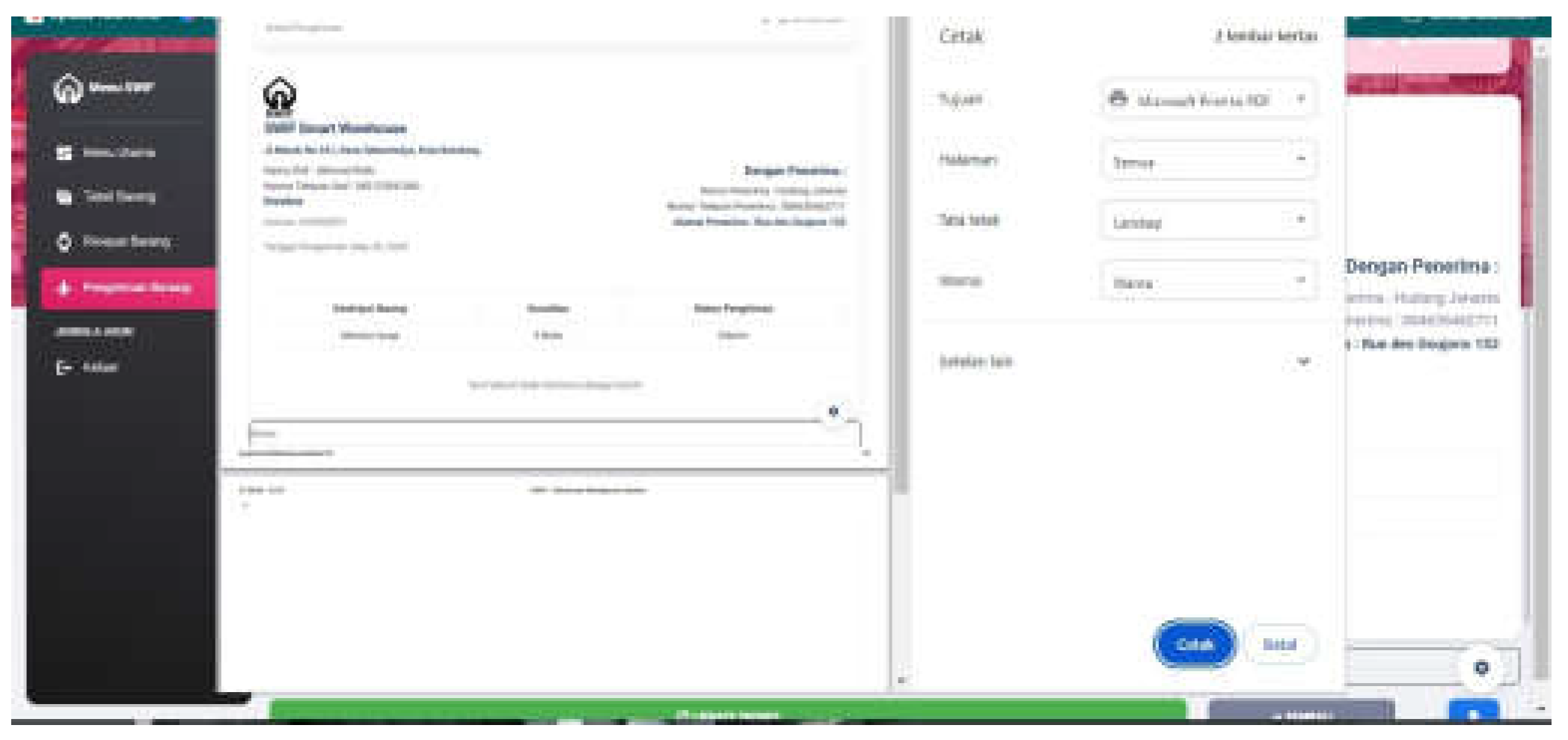
Demo: Shipment Invoice.
V. CONCLUSIONS
This study presents an automated SWIF application to streamline warehouse operations and enhanced efficiency. The SWIF application integrates various functionalities, manages inbound and outbound data, streamlines stock adjustments through an interface, automates data recording across various processes, provides comprehensive shipment tracking capabil- ities, generates PDF reports of data records, generates invoices based on shipment details, provides real-time tracking of stock levels, implements a robust privilege-based access control system, differentiating between staff and super admin roles.
The system is designed for ease of use and adaptability to diverse warehouse environments.
Our findings demonstrate that the system provides real-time visibility into warehouse performance, enabling data-driven decision-making and continuous improvement.
While the study yielded promising results, it is important to acknowledge its limitations. The research was conducted the- oretically, and generalization of findings may require further investigation in different settings (empirically). Additionally, the long-term impact of the SWIF application on warehouse operations and employee satisfaction warrants further explo- ration.
Based on the findings and limitations of this study, we recommend several directions for future research. First, repli- cating the study in multiple warehouse environments with varying scales and complexities will enhance the generalizabil- ity of the results. Second, investigating the long-term impact of the WMS application on warehouse operations, employee satisfaction, and overall business performance will provide valuable insights for long-term sustainability. Lastly, adding encryption to the application was constrained in this study due to limited funding and financing.
Acknowledgment
The researchers’ wish to acknowledge the Informatics De- partment UIN Sunan Gunung Djati Bandung, which partially supports this research work.
References
- Pereira, J.C.; de F, R. “Design thinking integrated in agile software development: A systematic literature review,” Procedia Computer Science, vol. 38, pp. 775– 782, 2018, cENTERIS 2018 - International Conference on ENTERprise Information Systems / ProjMAN 2018 - International Conference on Project MANagement / HCist 2018 - International Conference on Health and Social Care Information Systems and Technologies, CENTERIS/ProjMAN/HCist 2018. [Online]. Available: https://www.sciencedirect.com/science/article/pii/S1877050918317484.
- Al-Saqqa, S.; Sawalha, S.; AbdelNabi, H. “Agile software develop- ment: Methodologies and trends.” International Journal of Interactive Mobile Technologies 2020, 14.
- Abrahamsson, P.; Salo, O.; Ronkainen, J.; Warsta, J. R: soft- ware development methods; arXiv:1709.08439, 2017.
- Bustamante, F.; Dekhne, A.; Herrmann, J.; Singh, V. “Im- proving warehouse operations—Digitally,” McKinsey & Company, available at: https://www. mckinsey. com/capabilities/operations/our- insights/improving-warehouse-operations-digitally, 2020.
- Manifesto, A. “Manifesto for agile software development,” 2001.
- Murad, D.F.; Ratnasari, W.; Saputra, B.Y.; Wijanarko, B.D. “Ware- house management system for smart digital order picking systems,” IJNMT (International Journal of New Media Technology 2019, 6, 74–80, 2019.
- Lo, L.; Burgue, X.; Mart, S.; Vollmer, A.M.; Be- hutiye, W.; Karhapa, P.; Rodr, X.F.P.; Oivo, M. “Quality measurement in agile and rapid software development: A systematic mapping,” Journal of Systems and Software 2022, 186, 111187. 186.
- Petersen, K.; Vakkalanka, S. ; L. uzniarz, “Guidelines for conducting systematic mapping studies In software engineering: An update,” Information and Software Tech- nology, vol. 64, pp. 1–18, 2015. [Online]. Available: https://www.sciencedirect.com/science/article/pii/S0950584915000646.
- Effendy, G.Y.; Suherman, I.C.; Adianto, A.I.; Handayani, F. ; muchammad arief wujdi; Aini, N. “Pentingnya menelaah macam- macam kesalahan rekayasa perangkat lunak,” Journal of Information Engineering and Educational Technology, vol. 2, no. 2, 2019. [Online].
- Available: https://api.semanticscholar.org/CorpusID:127788094.
- Singh, K. “Agile methodology for product development: A conceptual study,” International Journal of Recent Technol- ogy and Engineering, vol. 10, 2021. [Online]. Available: https://api.semanticscholar.org/CorpusID:236403099.
- Ghozali, R.P.; Saputra, H.; Nuriawan, M.A. ; Suharjito; Utama, D. N.; Nugroho, A. “Systematic literature review on decision- making of requirement engineering from agile software development,” Procedia Computer Science 2019, 157, 274–281, the 4th International Conference on Computer Science and Computational Intelligence (ICCSCI 2019) : Enabling Collaboration to Escalate Impact of Research Results for Society. [Online]. Available: https://www.sciencedirect.com/science/article/pii/S1877050919310853. [Google Scholar]
- Alami, A.; Krancher, O.; Paasivaara, M. “The journey to technical excellence in agile software development,” Information and Software Technology 2022, 150, 106959. [Online]. Available: https://www.sciencedirect.com/science/article/pii/S0950584922001021.
- Ouriques, R.; Wnuk, K.; Gorschek, T.; Svensson, R.B. “The role of knowledge-based resources in agile software development contexts,” Journal of Systems and Software 2023, 197, 111572. 197.
Disclaimer/Publisher’s Note: The statements, opinions and data contained in all publications are solely those of the individual author(s) and contributor(s) and not of MDPI and/or the editor(s). MDPI and/or the editor(s) disclaim responsibility for any injury to people or property resulting from any ideas, methods, instructions or products referred to in the content. |
© 2024 by the authors. Licensee MDPI, Basel, Switzerland. This article is an open access article distributed under the terms and conditions of the Creative Commons Attribution (CC BY) license (https://creativecommons.org/licenses/by/4.0/).
Copyright: This open access article is published under a Creative Commons CC BY 4.0 license, which permit the free download, distribution, and reuse, provided that the author and preprint are cited in any reuse.


