

Submitted:
28 June 2024
Posted:
01 July 2024
Read the latest preprint version here
Abstract
Human beings are positively or negatively affected by their environment. This effect has been a topic of interest by environmental psychologists, who have strived over years for understanding the environmental characteristics, which would be good for people in physical, mental, and psychological terms. The present study is about biophilic design, one of the popular theories in the architectural literature aimed to create high quality and liveable environments. The positive effects of biophilic design have been investigated from different perspectives and thus it has become a well-accepted approach in the relevant architectural literature. Accordingly, the present study aimed to investigate to what extent biophilic design principles were put into practice. In the context thereof, contemporary university structures were analysed within the framework of biophilic design principles. The results were suggestive of the fact that although biophilic elements were encountered in the design of these structures, they were not meant to be biophilic, nevertheless, there was an approach based on human-nature interaction. Accordingly, the principles of biophilic design were equivalent to the required parameters of a good design and that architects considered nature as an important design input.
Keywords:
biophilia
; biophilic design
; biophilic design principles
; nature and built environment relationship
; contemporary architecture
; university structures
Introduction: The Relationship between Nature and the Built Environment
A number of studies on the relationship between human health and the environment since the 1980s (Ulrich, 1981) have proven that nature is good for human health. There is a wealth of studies on the positive effects of natural environments, including on mental health (Abdelaal & Seobarto, 2019; Berman et al., 2012; Bratman et al., 2015; Ghaziani et al., 2021; Ryan et al., 2010;), on cognitive and attentive abilities (Dadvand et al., 2015; Taylor & Kuo, 2011; Han, 2010; Jeon et al., 2018; MacNaughton et al., 2017), on production (Bringslimark et al., 2007; Romm & Browning, 1998), and on mood (Ghaziani et al., 2021). Abdelaal (2019) tabulated all the aforementioned benefits in his study.
Recent studies (Fuller & Irvine, 2010; Newman & Dale, 2013) suggested that natural environments that were good for human health and that improved quality of life might not necessarily reside in the midst of wilderness far from built environment, but the urban ecosystem accessible during the daily routine, where people could engage in active or passive terms, was of uttermost importance as well. Kardan et al. (2015) suggested that the individuals lived in urban areas with dense greenery were healthier and had less cardiometabolic conditions compared to individuals lived in urban areas with less greenery, and accordingly underlined the requirement that greenery should be included in the areas frequently used by the individuals. Similarly, based on an approach that envisaged nature and built environment not as opposite poles but considered the same complementary, Richards (2018) investigated how the built environment and natural environment could coexist and suggested design recommendations on how the green and grey infrastructures could be integrated in order for the human beings, who had to live and work in increasingly artificial environments beginning from the Industrial Revolution, could achieve sustainable life spaces in ecologic, economic, and social terms. The said recommendations underscored the fact that it was possible to make a room for and truly protect the natural in our cities, where development was inevitable.
Communication with nature is also a very important parameter for schools and universities that directly affect the educational processes of students. It was reported that natural factors improved academic performance (Boyle, 2007; Fjeld et al., 1998) and education/learning opportunities (Clayton, 2007). It was also suggested that concentration and memory ability (Greenleaf et al., 2013; Tennessen & Cimprich, 1995) and inspiration (Fredrickson & Anderson, 1999) increased thanks to natural factors. Kellert (2005) emphasized that educational buildings that disconnect students from nature during their education might give a rise to mental and physical health conditions in students. Based on the aforementioned perspectives, Abdelaal (2019) suggested that the university campuses of the day should be designed and strengthened to become more biophilic, innovative, and sustainable, considering nature “a resource that restored human abilities”.
In the context thereof, it is seen that for modern individuals, who have to spend most of their daily lives in buildings, the inclusion of “nature” as a concept in the design is an important parameter in creating environments that people will enjoy being in and that nurture them from various aspects. As a matter of fact, it was recently emphasized that environments that brought together people with nature were one of the greatest requirements of the time (Beatley, 2017; Ives et al., 2018).
The inclusion of nature in design as a component of architectural space is certainly not a new phenomenon. From the very beginning of history to the present, nature has taken its place in architectural design in various forms. Natural elements have been a part of the built environment since the earliest periods of history sometimes in the form of just a motif and other times as the context itself (Tereci, 2020; Zhong et al., 2022). The examples for reflection of nature on architectural design as a concept include lion-headed sphinx in Egypt, plant motifs decorating Greek temple columns, Hanging Gardens of Babylon, Renaissance gardens, and the rib vaults of Gothic architecture. The English word baroque is originated from French, literally meaning “irregularly shaped.” The term, originally used for crooked pearls used in jewellery, was also adopted by the Baroque Architecture, which opposed the rule-based approach of the Renaissance. Famous for its curved surfaces, curly lines, and light and shadow games, the Baroque architectural style possessed references from nature (Harbison, 2002; Neuman, 2013).
The relationship between nature and space was scrutinized from a broader perspective during the 19th Century. Art Nouveau evokes nature with its elegant floral patterns. Antonio Gaudi’s fascinating forms, structural details, and mosaics are the products of an admiration for the structural logic of nature. Louis Sullivan’s floral ornaments, Wright’s organic architecture, Le Corbusier’s roof gardens and band windows, Mies’ transparency, and Utzon’s shells are among the examples of different perspectives of nature and human integration. The traces of nature in architecture were maintained also in postmodernism and a number of architects from Hadid to Gehry reflected the lines and concepts inspired by nature in their designs (El-Ghobashy & Mosaad, 2016).
This historical background is also manifest in educational buildings. Al Ajlouni (2012), points to specific applications of quasiperiodic patterns in Islamic architecture on the inner courtyard walls of the Al-Attarin madrasah in Fez, Morocco, as an example of nature-specific patterns in the madrasahs, a significant type of educational building in Islamic architecture. Ramzy (2015) refers to the triforium at John Rylands University in Manchester for the concepts of enticement and mystery, and the palm-like vaults of Divinity Hall at Oxford University for the Savanna-like environment. The most comprehensive study on the application of biophilic design principles in historical education facilities is an article published by Abdelaal and Soebarto in 2018. Upon a literature review on the interrelationship between nature, the built environment, and innovation and the authors performed a detailed investigation into the origins of the nature related design of innovative learning spaces in traditional architecture. Accordingly, the roots of design principles for higher education environments as integrated with natural features that improve physical, psychological, cognitive and intellectual performance could be traced back in history. The authors underlined that biophilic/multi-sensory design concepts and features associated with the traditional “university campus” characteristic were used during the Islamic era. In the context thereof, water, material connection with nature, connection with natural systems, thermal and airflow variability, biomorphic forms, visual connection with nature, order and complexity, change and metaphor of biomorphic forms, expectation and shelter, temptation and risk were present in traditional madrasa architecture.
Along with certain concepts, including sustainability, green design, and ecological design, Biophilia Hypothesis, which aims to integrate with nature, or to create higher quality and liveable environments based on the effect of nature on human beings, is one of the popular theories in the architectural literature today. Originally used by Erich Fromm in 1964 to describe the “love for life”, biophilia was defined as “the innate tendency to focus on life and lifelike processes” by Edward Wilson (1984, 1), who developed the biophilia hypothesis. In the said hypothesis, Wilson (1993) argued that the emotional attachment of human beings to other living things was hereditary and that humans continued to feel this bond even when they started living in a built environment. During the 20th century, the centre of gravity of this dependency theory shifted towards the relationship between human beings and the natural environment, and finally in the 21st century, it was adopted by the architectural discipline, which focused on people’s need to interact with nature in the built environment. Accordingly, a number of academic studies were carried out with an aim to investigate the required characteristics of the architectural design or space that established the human-nature relationship through different terms. Heerwagen and Hase’s study of 2001 is the first publication on the character of the biophilic design (Zhong et al., 2022). They mentioned eight key dimensions and 24 attributes and qualities to describe the character of biophilic design. Thereafter, Kellert (2008) defined six biophilic design elements and 72 related biophilic design attributes. This was later revised by Kellert and Calabrese (2015), and 24 attributes of biophilic design were listed under three different types of experience. This framework was updated once again by Kellert in 2018. In 2014, Terrapin Bright Green (Browning et al., 2014) summarized fourteen biophilic design patterns based on three similar user experience categories proposed by Cramer and Browning (2008) for biophilic buildings. In their study on updating green building rating tools to include the concept of biophilia, Xue et al. (2019) derived a biophilic framework to address the human sensory experience and its health benefits through indoor-outdoor and building-nature connections.
Today, the most current and systematic publication that qualifies a design guide on biophilic architecture, belongs to Browning & Ryan (2020). They classified people’s experiences of nature in the built environment under three main headings of “Nature in the Space”, “Natural Analogues”, and “Nature of the Space” in the above study. Nature in the Space is the user’s direct encounter with natural elements in the built environment and contains seven different patterns. These patterns focus on the perception and experience of nature as a result of visual, auditory, tactile, olfactory, cognitive, and other stimuli. Natural Analogues constitute an indirect or symbolic experience of nature. It is very similar to “Biomimicry” and can be built upon form, material, and spatial organization. Nature of the Space is the reflection of spatial experiences that can be experienced in nature to the built environment. Patterns included in the aforementioned category also coincide with the environmental psychology concepts, including Prospect-Refuge Theory (Appleton, 1975), the Savanna Hypothesis (Orians & Heerwagen, 1992), and The Aesthetics of Survival (Hildebrand, 1999). Table 1 includes the positive effects of the categories and patterns suggested by Browning and Ryan (2020) as compiled from various sources by the same researchers (275) and the possible application of the said patterns in the field of design.
Purpose of the Study
As mentioned above, utmost importance was attached to biophilic design by theoreticians and scholars beginning from the early 2000s, with positive effects on humans were suggested from diverse perspectives. Furthermore, there are studies about the effects of biophilic design on students’ learning, academic performance, and innovation skills in educational buildings (Abdelaal, 2019; Peters & D’Penna, 2020). Nevertheless, since the immediate practical response could not be determined given the relatively short period of time upon the realization of the projects, the present study aimed to investigate the extent the biophilic design principles were considered in university campus designs beginning from the 2012. Despite the fact that there is a wealth of studies on the roots, definition, patterns, and uses of biophilic design, there is only limited data on the practical reflection of the foregoing design approach or which patterns were used comparatively less or more. The present study aimed to help fill the said information gap and to see to what extent this theory, which had been widely adopted and investigated in a number of studies, was reduced to practice.
Materials and Methods
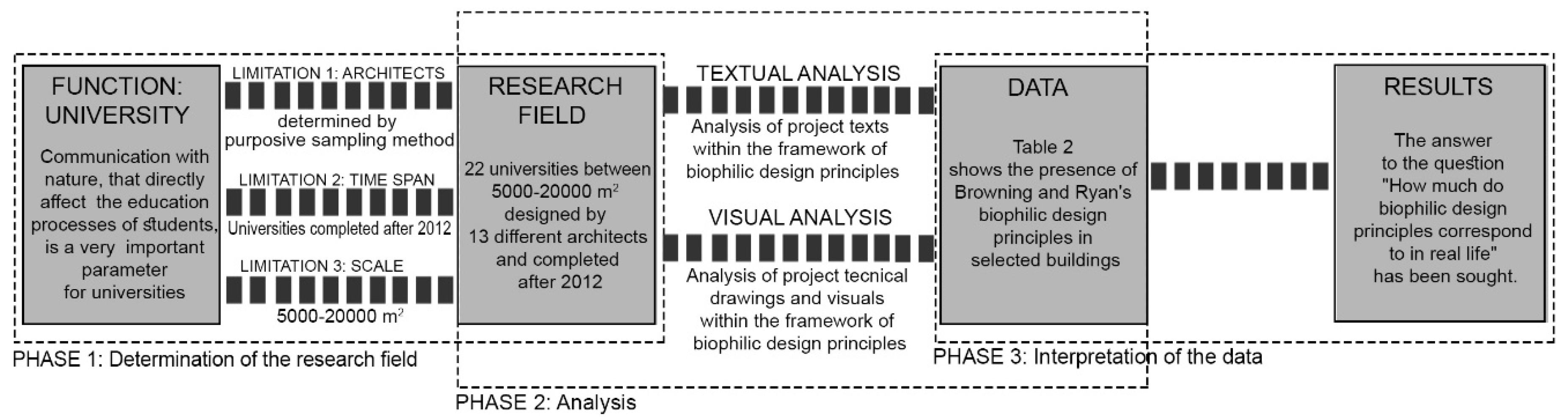
The strategy of the research was based on the analysis of university campuses within the framework of the biophilic elements as defined by Browning and Ryan in the relevant literature.
Research Field: 24 university campuses were included in the study. Three basic selection criteria were used to identify those campuses. The first was associated with the selection of architects. A total of thirteen internationally recognized architects, five women and eight men, were selected in the scope of the study. Two sub-strategies of the purposive sampling method were employed to identify those architects. First, there was the maximum variation sampling technique, which involved a deliberate selection of a wide range of variation (Mugo, 2002). Initially, 150 architects with international recognition were selected for the purposes of the above stage. Subsequently, the architects without university campus designs were removed from this list, and thus a second list of 42 architects from different nationalities was created using the random purposive sampling technique. For the latter technique, a sampling frame with a purposefully selected sample is used to randomly select cases. Accordingly, the first step is to create a list of individuals based on purposive sampling method followed by a random selection of required number of individuals based on the foregoing list (Onwuegbuzie & Leech, 2007, 113).
The second criterion was associated with selecting a timeframe for the university campuses to be incorporated into the study. Although the theoretical reflections of biophilic design marked the beginning of the 2000s, the university campuses as designed by selected architects in 2012 and later were included in the scope of the study. It is because of the fact that it would take time to see its reflections in practice, and furthermore, the same allowed an up-to-date analysis, where the previous designs were excluded.
The third criterion was based on limiting the buildings to a reasonable scale for a coherent analysis. Therefore, the buildings were limited to an acreage ranging between 5,000 and 35,000 square meters. The resultant list of 42 architects and those randomly picked therefrom using purposive sampling technique are given in Table 2 in alphabetical order, where the architects included in the study were emphasized with grey colour. Therefore, Zaha Hadid, Yvonne Farrell, Francine Houben, Elizabeth Diller, Kimberly Dowdell, Ieoh Ming Pei, Santiago Calatrava, Renzo Piano, Bjarke Ingels, Kengo Kuma, Daniel Libeskind, Cesar Pelli, and Nicholas Grimshaw were included in the scope of the study. Consequently, the research area was determined as twenty-four university campuses, with an acreage between 5,000 and 35,000 square meters, which were completed by those architects after 2012.
Research Method: A dual method pattern including textual and visual was used for the purposes of the present research. The texts describing the projects of the selected architects were analysed by means of textual analysis method based on the biophilic design principles of Browning and Ryan. Visual analysis method was used to see the extent those principles were applied in the relevant buildings.
The architects’ own texts that they described their buildings on their websites as well as texts published in publicly available journals including Architect Magazine, Dezeen, and Archdaily were used for the purposes of textual analysis. The texts allowed an analysis of the architects’ ideas as regards their design approaches and to understand the data they included in their designs, the problems they identified, and the solutions they produced to these problems. Thereafter, those texts were analysed in conceptual terms within the framework of Browning and Ryan’s biophilic design principles. For instance, an analysis of the brief by Kimberly Dowdell on the Emory University Health Sciences Research Building II in Atlanta, indicated that the architect strived for designing a building that would facilitate the discovery of new ways to improve human health. In the context thereof, the architect used transparent surfaces and lightwells indicative of the Dynamic and Diffuse Light principle, preferred local and natural materials in compliance with the Material Connection with Nature principle, and incorporated a number of other biophilic principles into her design. An example for textual analysis is given in Figure 1.
For the purposes of the visual analysis method, another tool employed in the study, the structures were analysed within the framework of biophilic principles, by means of two-dimensional drawings in terms of plan, section, and appearance, and/or three-dimensional images in the form of 3D renderings and photographs. Those images were collected from the architects’ public websites and the aforementioned public architectural journals. An example for visual analysis is presented in Figure 2.
Importance of the Research
Although the biophilic design is a relatively new approach, there are a wealth of studies in the relevant literature (Zhong et.al., 2022). However, despite such volume of publications on the basics, principles, and introduction of sample projects of the biophilic design approach, no comprehensive research has yet been conducted on the extent this novel approach was reflected in actual projects, to the best knowledge of the authors. With an objective of seeking an answer to the “To what extent, the biophilic design, which has a strong theoretical background, is reflected in practice?” question, the present study aimed to inspire other studies in that sense. Although the research did not include a sample covering all the university buildings across the world, it would close an important gap by contributing to the formation of a general perspective. Besides, the present study would offer a basis for future research on different functional typologies and/or the extent the biophilic design principles were applied in a particular country.
Figure 3.
Research Management Scheme.
Analysis Data
The data based on the analyses are presented in Table 3. Accordingly, + (plus) indicates the existence of a given feature and – (minus) indicates it is non-existent.
24 university buildings analysed in the scope of the research were located in 12 different countries, including USA (9), Germany (2), France (2), Japan (2), and Netherlands (2). A distribution of the buildings by country is given in Figure 4.
The acreage of those buildings ranged between 5,000 square meters, to 35.000 square meters. A distribution of the university buildings in question by acreage is given in Figure 5.
The Köppen climate classification method was used for the purposes of an analysis of the buildings in terms of climatic context vis-à-vis their location. 9 out of 24 buildings were in the Cfa (humid subtropical climate) zone and 7 were in the Cfb (marine west coast climate) zone. A distribution of the regions, where the buildings were located, by the climatic zones is given in Figure 6.
Results
The biophilic and/or biophilia terms appeared only in two of the analysed texts, one pertaining to the Emory University Health Sciences Research Building II as designed by Kimberly Dowdell and another to the University of Southampton Boldrewood Campus as designed by Nicholas Grimshaw.
Although the terms biophilic design or biophilia were used “as is”, the principles that encompassed the biophilic design character were included in the analysed texts. Dynamic and Diffuse Light, Visual Connection with Nature, Connection with Natural Systems, Thermal and Airflow Variability, and Non-visual Connection with Nature principles under the Nature in the Space heading were the most prominent biophilic design patterns adopted by the selected architects. In that context, the relationship with the geographical, biotic, and abiotic environment was considered an important parameter and that the data obtained from the environment were considered essential design inputs by the selected architects. For example, almost all the buildings included in the analysis featured large openings that provided vista to nature and/or semi-open spaces that opened to the garden or sea, thus enabling users to establish a visual relationship with the natural environment. Similarly, the architects incorporated climatic data into their designs by adopting mobile shading elements, facades that allowed airflow, and orientation against the wind, which were indicative of the Thermal and Airflow Variability principle. The Dynamic and Diffuse Light, again under the same heading, was the primary pattern considered by almost all the selected architects in their designs. The transparent/semi-transparent spaces that allowed generous intake of natural light and light and shadows created indoors by imitating the nature were remarkable elements in that sense. The results suggested that the Non-rhythmic Sensory Stimuli and Presence of Water principles were the least used patterns under the heading of Nature in the Space. In that respect, kinetic and interactive surfaces, mobile active landscape elements as well as water-related elements were not prevalently included in university buildings.
The results indicated that the use of natural and local materials in the university buildings was popular, and that materials specific to the nature and/or region were preferred, especially including natural stone and wood. The relationship between the nature and material, both on the facades and indoors, offered a more inviting and warmer image of the building. Despite, the Material Connection with Nature principle under the Natural Analogues heading was frequently incorporated into the designs, the Biomorphic Forms and Patterns and Complexity and Order principles, under the same title, were less frequently adhered to. In the context thereof, it is possible to assert that forms and orders, which emulated the nature, were not highly preferred in the university buildings. The buildings in question rather adopted symmetrical, easy-to-perceive, and central layouts in spite of biomorphic forms, patterns, and layouts.
The Awe, Risk/Peril, and Mystery principles under the heading of Nature of the Space were the least encountered patterns across the twenty-four university buildings analysed for the purposes of the present study. Nevertheless, the Prospect principle of the same heading existed in almost all the buildings. This principle was implemented not only providing views through wide openings from the inside out, but also through various spatial perspectives created with different elevations. Another prominent principle was the Refuge. The existence of this principle is tested by the existence of tree coverings that can be taken as shelter in the outdoor gardens, low ceilings in interior spaces, vertical surfaces and/or colours encompassing the space. The numerical data on the extent the biophilic design principles were implemented in the university buildings are presented in Table 4.
The most popular biophilic patterns among the 24 university campuses in question and the corresponding design strategies are given in Table 5.
Some examples of these design strategies are shown in Figure 7 through section, plan and perspective illustrations.
Conclusion
In conclusion, as an approach based on human-nature interaction, the biophilic design principles were reflected into practice along with its theoretical dimension. As a matter of fact, the present study suggested that the above-mentioned different principles were somehow incorporated in the design of the university buildings. Nature is also known to contribute to creativity, thus the fact that it was incorporated into the design farther than such principles as natural light and natural ventilation in the selected university buildings was a positive indicator. In that respect, visual and physical connection with nature, shapes that allow the observance of processes of natural systems, the use of local and natural materials, and spatial organizations that allow unobstructed visibility were the prominent patterns, which were indicative of the fact that principles of biophilic design were considered in the design of the university buildings. Therefore, despite the fact that the architects did not mention about any direct use of biophilic design concept in their works, they did make use of nature and attach importance to harmony with nature in their designs. Furthermore, 75% of the designs (18 designs) received various awards, including RIBA Award for International Excellence, the annual AIANY Design Awards, ENR Southeast Best Projects, Outstanding International Architecture Project, which was indicative of the fact that biophilic design principles matched with the necessary parameters for a “good” design as well.
Thus, biophilic design is a powerful approach that can be considered a basis to create more livable, quality, sustainable, and human-friendly spaces. This approach has been considered a proven conceptual framework in the relevant architectural literature, with increased importance. Further studies with a strong emphasis on practical implementation associated with diverse functional buildings will help a better understanding of the practical significance of biophilic design.
Funding
The authors received no financial support for the research, authorship and/or publication of this article.
Declaration of conflicting interests
The authors declared no potential conflicts of interest with respect to the research, authorship and/or publication of this article.
References
- Abdelaal, M.S.; Veronica, S. History matters: The origins of biophilic design of innovative learning spaces in traditional architecture. International Journal of Architectural Research 2018, 12, 108–127. [Google Scholar] [CrossRef]
- Abdelaal, M.S. Biophilic campus: An emerging planning approach for a sustainable innovation-conducive university. Journal of Cleaner Production 2019, 215, 1445–1456. [Google Scholar] [CrossRef]
- Abdelaal, M.S.; Seobarto, V. Biophilia and salutogenesis as restorative design approaches in healthcare architecture. Architectural Science Review 2019, 62, 195–205. [Google Scholar] [CrossRef]
- Al Ajlouni, R. The global long-range order of quasi-periodic patterns in Islamic architecture. Acta Crystallographica Section A: Foundations of Crystallography 2012, 68, 235–243. [Google Scholar] [CrossRef]
- Appleton, J. (1975). The Experience of Landscape, John Wiley & Sons.
- Beatley, T. Biophilic cities and healthy societies. Urban Plan 2017, 2, 1–4. [Google Scholar] [CrossRef]
- Berman, M.G.; Ethan, K.; et al. Interacting with nature improves cognition and affect for individuals with depression. Journal of Affective Disorders 2012, 140, 300–305. [Google Scholar] [CrossRef]
- Boyle, M.E. Learning to neighbor? Service-learning in context. Journal of Academic Ethic 2007, 5, 85–104. [Google Scholar] [CrossRef]
- Bratman, G.N.; Hamilton, J.P.; et al. Nature experience reduces rumination and subgenual prefrontal cortex activation. Proceedings of the National Academy of Sciences of the United States of America 2015, 112, 8567–8572. [Google Scholar] [CrossRef]
- Bringslimark, T.; Terry, H.; et al. Psychological benefits of indoor plants in workplaces: putting experimental results into context. Hortscience 2007, 42, 581–587. [Google Scholar] [CrossRef]
- Browning, W.D. , Catherine, O. R.; et al. (2014). 14 Patterns of Biophilic Design: Improving Health & Well-Being in the Built Environment.
- Browning, W.D.; Ryan, C.O. (2020). Nature Inside: A Biophilic Design Guide. RIBA.
- Clayton, S. Domesticated nature: motivations for gardening and perceptions of environmental impact. Journal of Environmental Psychology 2007, 27, 215–224. [Google Scholar] [CrossRef]
- Cramer, J.S.; William, D.B. (2008). Transforming building practices through biophilic design. In Kellert S. R., Judith H.; Martin, M. (Eds.), Biophilic Design: The Theory, Science and Practice of Bringing Buildings to Life, (pp. 335-346). John Wiley & Sons.
- Dadvand, P. , Nieuwenhuijsen, J.M.; et al. Green spaces and cognitive development in primary schoolchildren. Proceedings of the National Academy of Sciences of the United States of America 2015, 112, 7937–7942. [Google Scholar] [CrossRef]
- El-Ghobashy, S.; Masaad, G. Nature influences on architecture interior designs. Procedia Environmental Sciences 2016, 34, 573–581. [Google Scholar] [CrossRef]
- Fjeld, T. , Veiersted, B.; et al. The effect of indoor foliage plants on health and discomfort symptoms among office workers. Indoor and Built Environment 1998, 7, 204–209. [Google Scholar] [CrossRef]
- Fredrickson, L.M.; Anderson, D.H. A qualitative exploration of the wilderness experience as a source of spiritual inspiration. Journal of Environmental Psychology 1999, 19, 21–39. [Google Scholar] [CrossRef]
- Fridah, M. (2002). Sampling in research. http://erepository.uonbi.ac.ke/bitstream/handle/11295/54895/mugo02sampling.pdf?se.
- Fuller, R.A.; Irvine, K.N. (2010). Interactions between people and nature in urban environments. In Gaston, K.J. (Ed.), Urban Ecology, (pp. 134-171). Cambridge University Press.
- Ghaziani, R. , Lemon, M.; et al. Biophilic Design Patterns for Primary Schools. Sustainability 2021, 13, 12207. [Google Scholar] [CrossRef]
- Grant, H. (1999). Origins of Architectural Pleasure.
- Greenleaf, A.T. , Bryant, R.; et al. Nature-based counseling: integrating the healing benefits of nature into practice. International Journal for the Advancement of Counselling 2013, 36, 162–174. [Google Scholar] [CrossRef]
- Harbison, R. (2002). Reflections on Baroque. Reaktion.
- Heerwagen, J. & Gregory, B. (2008). Biophilia and sensory aesthetics. In Kellert, S., Heerwagen, J. & Mador, M. (Eds.), Biophilic Design: The Theory, Science and Practice of Bringing Buildings to Life, (pp. 227 242). John Wiley & Sons.
- Heerwagen, J.H.; Hase, B. Building biophilia: connecting people to nature in building design. Environmental Design Construction 2001, 3, 30–36. [Google Scholar]
- Hildebrand, G. (2008). Biophilic architectural space. In Kellert S. R., Judith H.; Martin, M. (Eds.), Biophilic Design: The Theory, Science and Practice of Bringing Buildings to Life, (pp. 263-275). John Wiley & Sons.
- Ives, C.D. , Abson, D.J.; et al. Reconnecting with nature for sustainability. Sustainability Science 2018, 13, 1389–1397. [Google Scholar] [CrossRef] [PubMed]
- Jeon, J.Y. , Poung, S.Y.; et al. The influence of indirect nature experience on human system. Forest Science and Technology 2018, 14, 29–32. [Google Scholar] [CrossRef]
- Kardan, O. , Gozdyra, P.; et al. Neighbourhood greenspace and health in a large urban center. Scientific Reports 2015, 5, 11610. [Google Scholar] [CrossRef]
- Ke-Tsung, H. An exploration of relationships among the responses to natural scenes: scenic beauty, preference, and restoration. Environment & Behaviour 2010, 42, 243–270. [Google Scholar] [CrossRef]
- Kellert, S.R. Designing Healthy Schools. Independent School 2005, 65, 58–61. [Google Scholar]
- Kellert, S.R. (2008). In Kellert S. R., Judith H.; Martin, M. (Eds.), Biophilic Design: The Theory, Science and Practice of Bringing Buildings to Life, (pp. 3-19). John Wiley & Sons.
- Kellert, S.R.; Calabrese, E.F. , (2015). The Practice of biophilic design. http://www.biophilic-design.com.
- Kellert, S.R. (2018). Nature by Design: the practice of biophilic design. Yale University Press.
- MacNaughton, P. , Satish, U.; et al. The impact of working in a green certified building on cognitive function and health. Building and Environment 2017, 114, 178–186. [Google Scholar] [CrossRef]
- Neuman, R. (2013). Baroque and Rococo Art and Architecture, Pearson.
- Newman, L.; Dale, A. Celebrating the Mundane: nature and the built environment. Environmental Values 2013, 22, 401–413. [Google Scholar] [CrossRef]
- Onwuegbuzie, A.J.; Leech, N., L. A call for qualitative power analyses. Quality & quantity: International Journal of Methodology 2007, 41, 105–121. [Google Scholar]
- Orians, G.H.; Heerwagen, J.H. (1992). Evolved responses to landscapes.” In J. H. Barkow, L. Cosmides & J. Tooby (Eds.), The Adapted Mind: Evolutionary Psychology and the Generation of Culture, (pp. 555-580). Oxford University Press.
- Peters, T.; D’Penna, K. Biophilic Design for restorative university learning environments: A critical review of literature and design recommendations. Sustainability 2020, 12, 7064. [Google Scholar] [CrossRef]
- Ramzy, N.S. Biophilic qualities of historical architecture: In quest of the timeless terminologies of ‘life’in architectural expression. Sustainable Cities and Society 2015, 15, 42–56. [Google Scholar] [CrossRef]
- Richards, M.A. (2018). Regreening the built environment: Nature, Green Space, and Sustainability. Routledge.
- Romm, J.J.; Browning, W.D. (1998). Greening the building and the bottom line: increasing productivity through energy-efficient design, Rocky Mountain Institute.
- Ryan, R.M. , Weinstein, N.; et al. Vitalizing effects of being outdoors and in nature. Journal of Environmental Psychology 2010, 30, 159–168. [Google Scholar] [CrossRef]
- Taylor, A.F.; Kuo, F. E Could exposure to everyday green spaces help treat ADHD? evidence from children’s play settings. Applied Psychology: Health and Well-Being 2011, 3, 281–303. [Google Scholar] [CrossRef]
- Tennessen, C.M.; Cimprich, B. Views to nature: Effects on attention. Journal of Environmental Psychology 1995, 15, 77–85. [Google Scholar] [CrossRef]
- Tereci, A. Biophilic wisdom of the thirteenth and fourteenth century Seljukians. Mosque architecture in Beyşehir, Anatolia. Architectural Science Review 2020, 63, 3–14. [Google Scholar] [CrossRef]
- Tove, F. , Veiersted, B.; et al. The effect of indoor foliage plants on health and discomfort symptoms among office workers. Indoor Built Environment 1998, 7, 204–209. [Google Scholar] [CrossRef]
- Ulrich, R.S. Natural vs. urban scenes: some psychophysiological effects. Environment and Behavior 1981, 13, 523–556. [Google Scholar] [CrossRef]
- Ulrich, R.S. View through a window may influence recovery from surgery. Science 1984, 224, 420–421. [Google Scholar] [CrossRef] [PubMed]
- Wilson, E.O. (1984). Biophilia: The human bond with other species. Harvard University Press.
- Xue, F. , Stephen, S.Y.L.; et al. Incorporating biophilia into green building rating tools for promoting health and wellbeing. Environmental Impact Assessment Review, 2019, 76, 98–112. [Google Scholar] [CrossRef]
- Zhong, W. , Schroeder, T.; Bekkering, J. Biophilic design in architecture and its contributions to health, well-being, and sustainability: A critical review. Frontiers of Architectural Research 2022, 11, 114–141. [Google Scholar] [CrossRef]
Figure 1.
An Example for Textual Analysis.
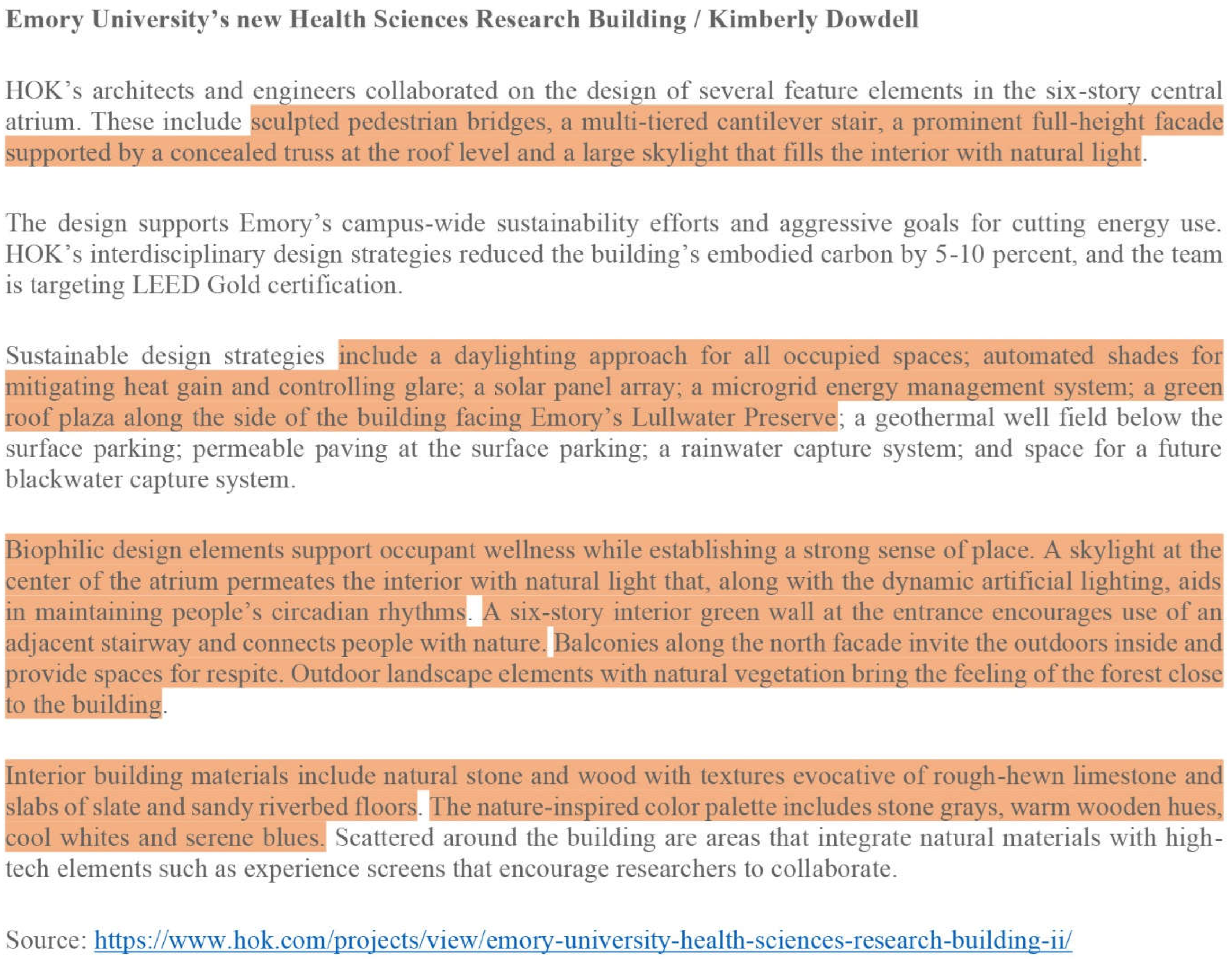
Figure 2.
An Example for Visual Analysis.
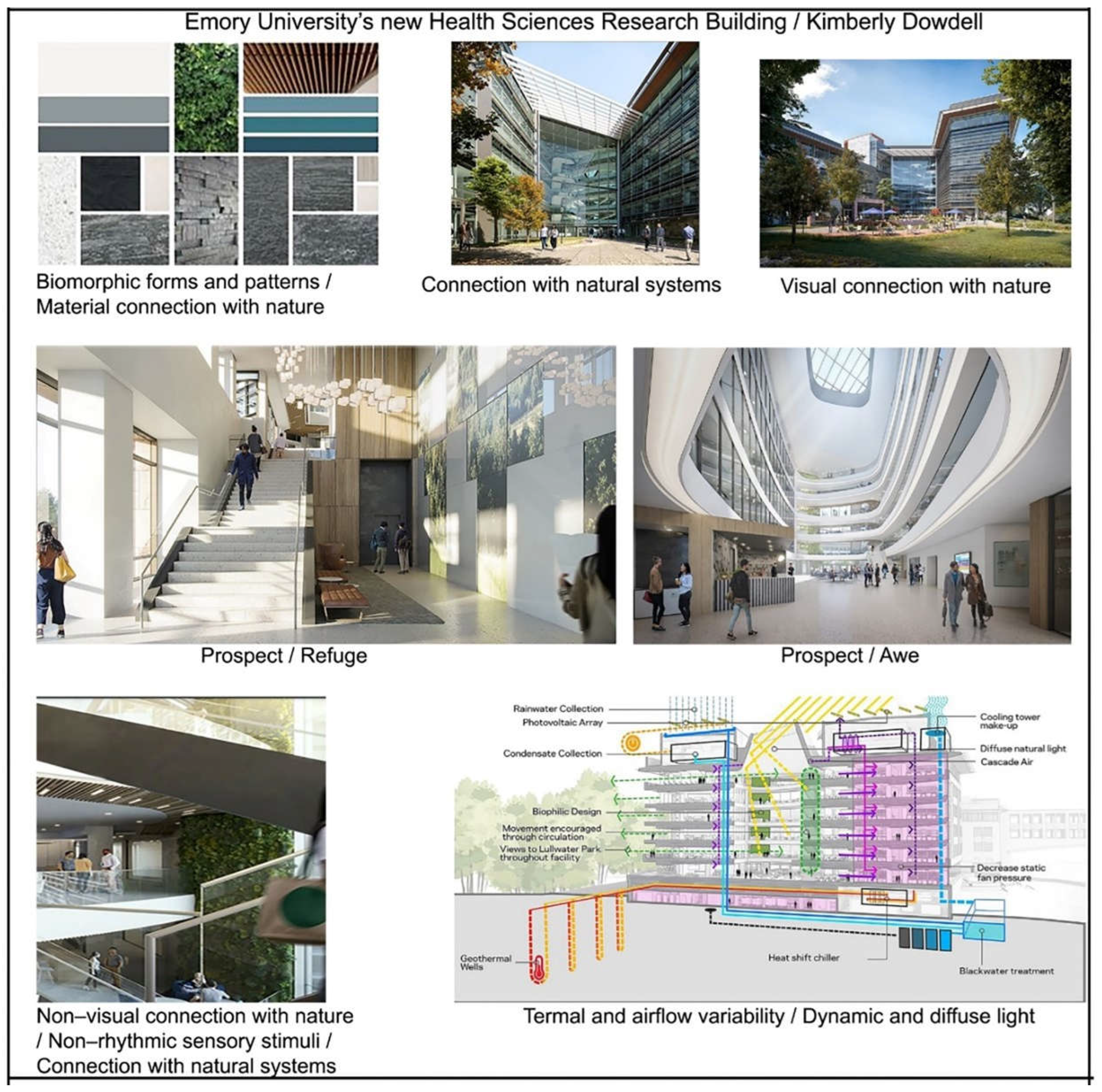
Figure 4.
A Distribution of Analysed Buildings by Country.
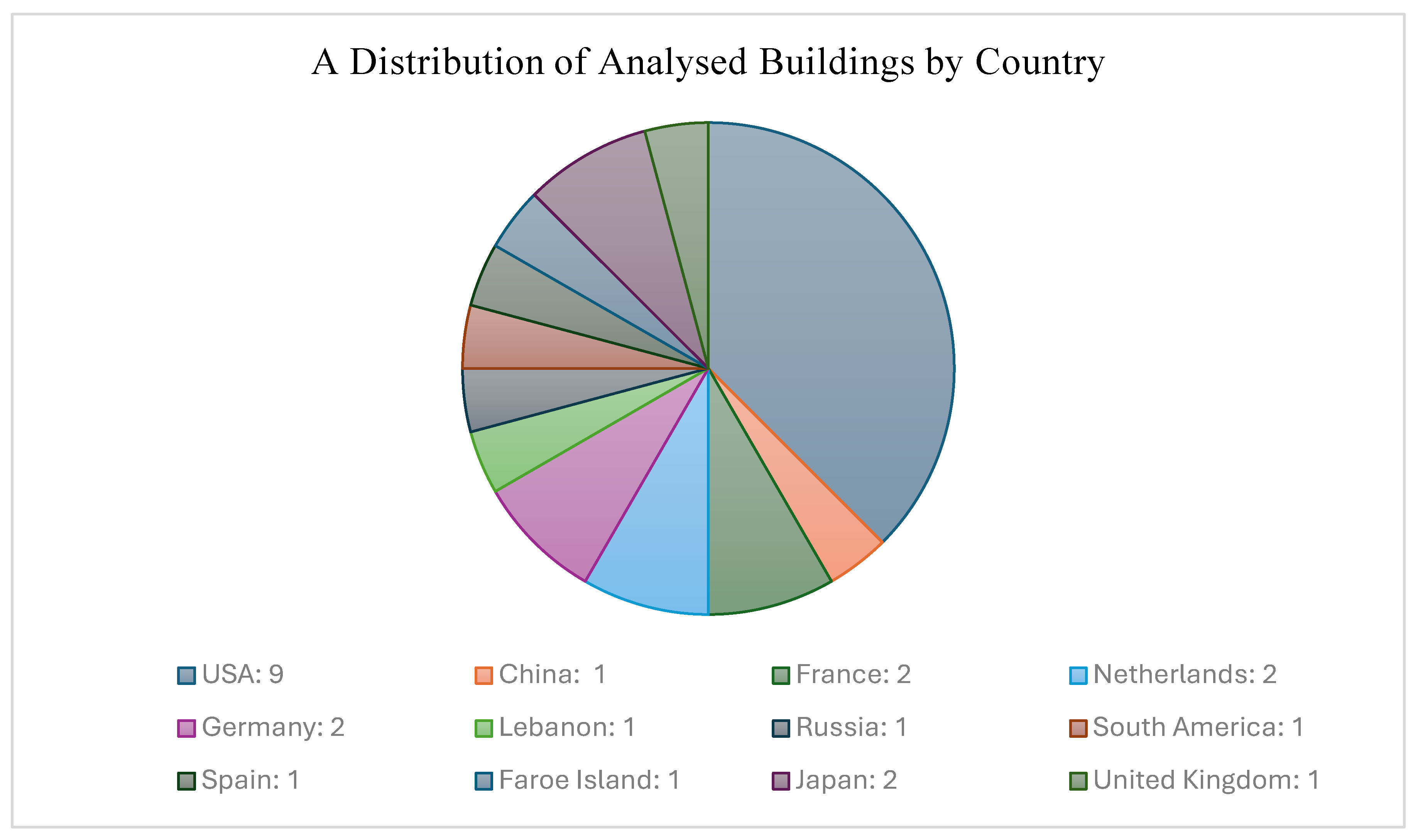
Figure 5.
A Distribution of Analysed Buildings by Acreage.
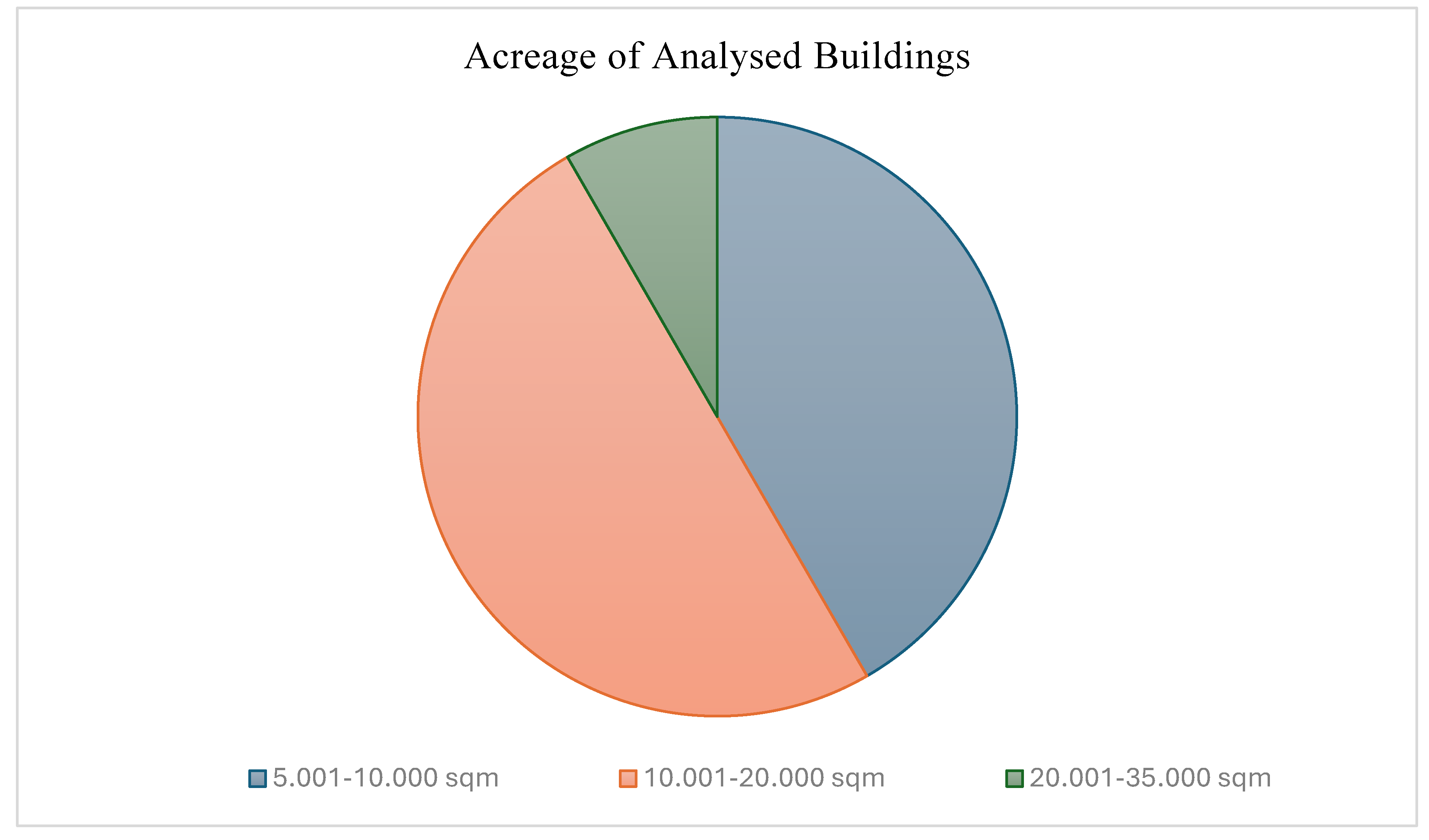
Figure 6.
A Distribution of Analysed Buildings by Climatic Zone.
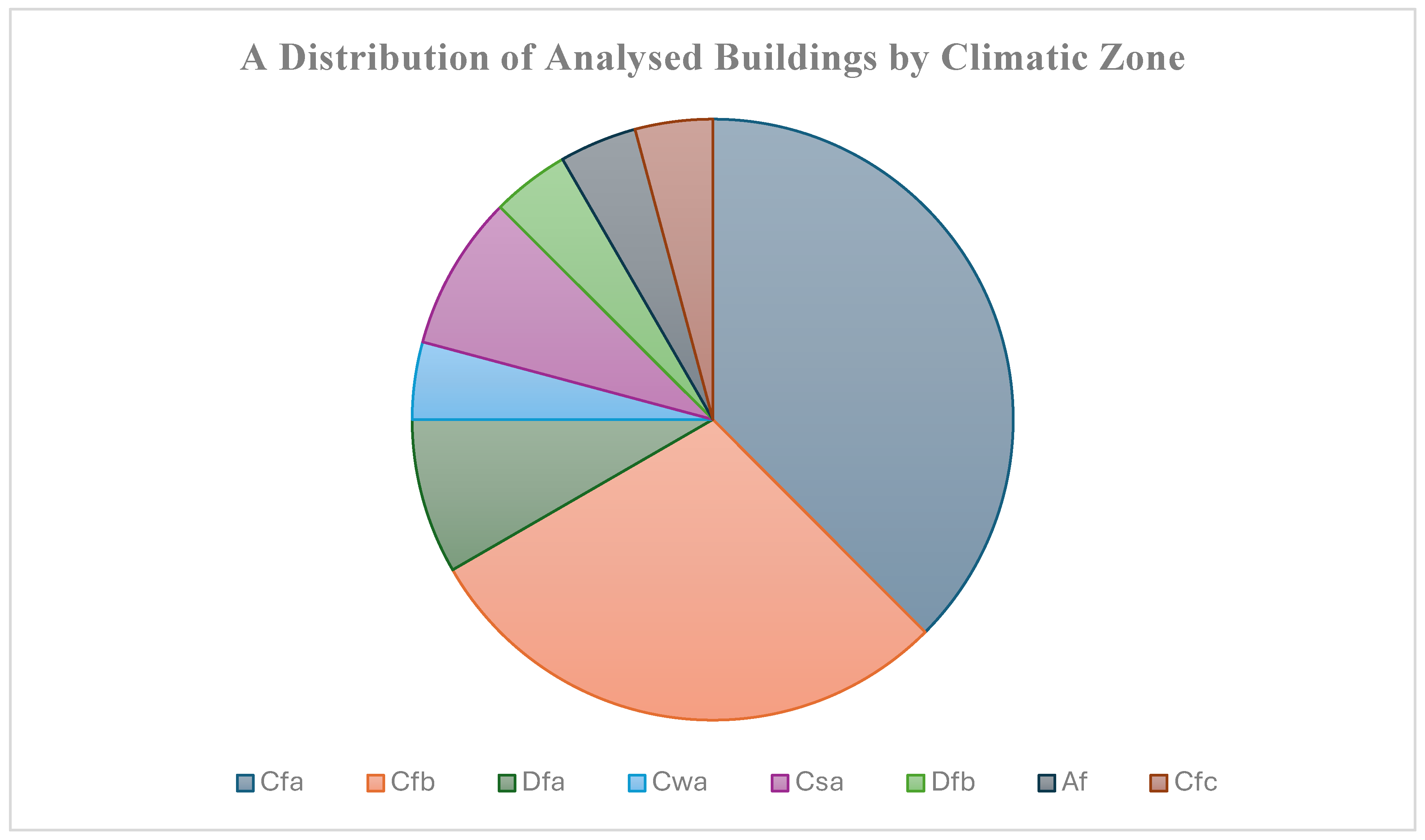
Figure 7.
Some Examples of The Most Popular Design Strategies.
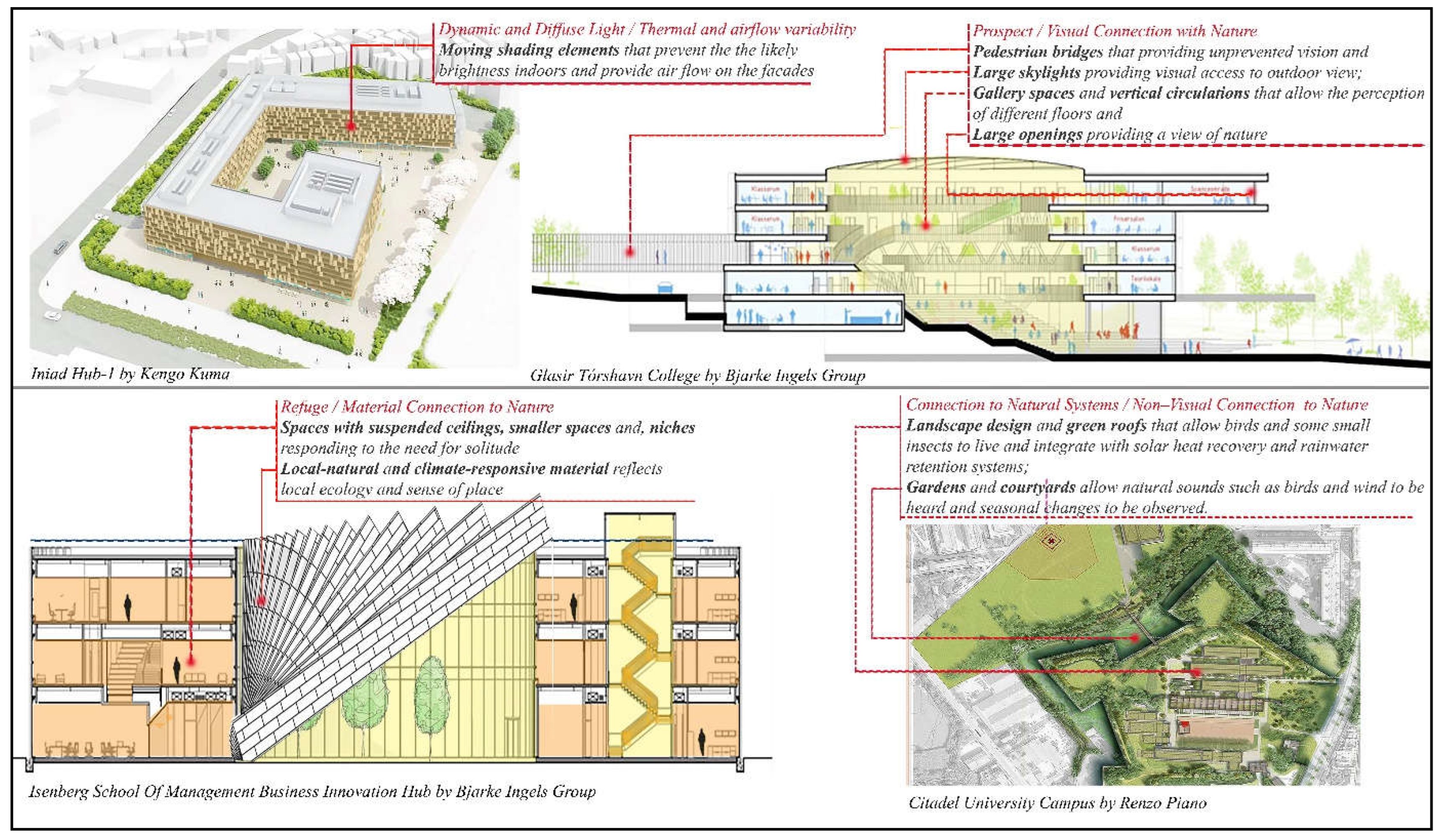

Table 1.
Positive effects and possible design strategies of biophilic patterns defined by Browning and Ryan (2020).
Table 1.
Positive effects and possible design strategies of biophilic patterns defined by Browning and Ryan (2020).
| Nature in the Space | ||
|---|---|---|
| Patterns and Definitions | Positive Effects | Possible design strategies |
|
Visual connection with nature- “a view to an element of nature, living systems and natural processes” |
Reducing anxiety and stress Focusing Spiritual and physical serenity Reducing deep thinking Motivating |
Openings or transparent surfaces that provide visual communication (doors, windows, porticos, patios etc.) Natural elements used in the interiors |
| Non‒Visual Connection with Nature- “auditory, haptic, olfactory or other stimuli that engender a deliberate and positive reference to nature, living systems and/or natural processes.” | Reducing anxiety and stress Physical relaxation Increase in immunity Increase in Creativity Improvements in mental health |
Auditory, olfactory, and tactile elements used in the interior, (natural scents, nature sounds, natural textures etc.) |
| Non‒rhythmic sensory stimuli – “stochastic and ephemeral connection with nature that may be analysed statistically but may not be predicted precisely.” | Improvement in the circulatory and nervous system | Kinetic and interactive surfaces, active landscape elements etc. |
| Thermal and airflow variability – “changes in air temperature, relative humidity, airflow and/or surface temperatures that mimic natural environments.” | Feeling physically more comfortable. Increase in production Decrease in sick building syndrome cases |
Openable surfaces, semi-open and open spaces, use of materials with different thermal values, building details that provide air circulation etc. |
|
Presence of Water — “a condition that enhances the experience of a place through seeing, hearing or touching water.” |
Reducing stress Physical calmness and peace Increase in cognitive performance and creativity Temporal and spatial satisfaction |
Indoor and outdoor water elements, water sound, or water decoration etc. |
| Dynamic and Diffuse Light —“varying intensities and color of light and shadow that change over time to createconditions similar to those that occur in nature.” | Contribution to the Circadian rhythm Increase in visual comfort Increase in cognitive and behavioural performance Positive affection |
Transparent or semi-transparent surfaces, hollow surfaces that filter light, sunshades, lighting tubes, light chimneys, artificial light selection in natural light colour etc. |
| Connection with Natural Systems — “awareness of natural processes, especially seasonal and temporal changes characteristic of healthy ecosystems.” | Improvement in physical health Change in environmental perception |
Gardens, courtyards, terrace or roof gardens, winter gardens, vertical gardens etc. |
| Natural Analogues | ||
| Patterns and Definitions | Positive Effects | Possible design strategies |
| Biomorphic Forms and Patterns — “symbolic references to contoured, patterned, textured or numerical arrangements that persist in nature.” | Coping with stress Improvement in learning outcomes Visual complacency |
Shapes and forms resembling those in nature, natural colours, nature motifs, nature images, etc. |
| Material Connection with Nature — “materials and elements from nature that, through minimal processing, reflect the local ecology or geology and create a distinct sense of place.” | Improvement in body health and increase in comfort Calming effect |
Use of local and natural materials |
|
Complexity and Order — “rich sensory information that adheres to spatial hierarchies similar to those encountered in nature.” |
Positive response to stress Perceptual and physiological responses Cognitive relaxation Improvement in environmental navigation and learning outcomes Personal preference |
Rhythm, symmetry and balance, fractal geometric order, modularity etc. |
| Nature of the Space | ||
| Patterns and Definitions | Positive Effects | Possible design strategies |
|
Prospect — “an unimpeded view over a distance for surveillance and decision making.” |
Reducing stress Sense of security Sense of comfort Reduction in boredom and fatigue Visual preference |
Fluent and open interior organization, perspective creation, elevation differences, etc. |
|
Refuge — “a place for withdrawal, from environmental conditions or the main flow of activity, in which the individual is protected from behind and overhead.” |
Sense of security Visual preference |
Niches, semi-enclosed spaces, cabins, items that surround the body, etc. |
|
Mystery — “the promise of more information, achieved through partially obscured views or other sensory devices that entice the individual to venture deeper into the physical environment.” |
Visual preference and satisfaction | Maze-like spatial organization, hidden corners, visual twists, etc. |
| Risk/Peril —“an identifiable threat coupled with a reliable safeguard.” | Dopamine increase Pleasure responses |
Atrium, narrow surfaces connecting different levels, transparent floors, underwater spaces, images that create a sense of danger and decoration etc. |
| Awe — “stimuli including other biophilic patterns that defy an existing frame of reference and lead to a change in perception.” | Decrease in stress-related symptoms Pro-social behaviour tendency Feeling of happiness and well-being |
High ceilings, structures with wide openings, intense ornamentation, water elements resembling waterfalls, a feeling of intensity established with light and material, etc. |
Table 2.
Architects Selected by Random Purposive Sampling.
| Ben Van Berkel | Herzog De Meuron | Rem Koolhaas | ||
| Bernard Tschumi | Ieoh Ming Pei | Renzo Piano | ||
| Bjarke Ingels | Jean Nouvel | Ricardo Bofill | ||
| Cesar Pelli | Jeanne Gang | Richard Meier | ||
| Daniel Libeskind | Kengo Kuma | Richard Rogers | ||
| David Childs | Kenzo Tange | Robert A. M. Stern | ||
| David Chipperfield | Kimberly Dowdell | Santiago Calatrava | ||
| Dominique Perrault | Mario Botta | Steven Holl | ||
| Eduardo Souto de Moura | Massimiliano Fuksas | Tadao Ando | ||
| Elizabeth Diller | Moshe Safdie | Tatiana Bilbao | ||
| Francine Houben | Nicholas Grimshaw | Thom Mayne | ||
| Frank Gehry | Norman Foster | Winy Maas | ||
| Helmut Jahn | Rafael Moneo | Yvonne Farrell | ||
| Herman Hertsberger | Rafael Vinoly | Zaha Hadid |
Table 3.
Analysis Data
| Nature in the Space | Natural Analogues | Nature of the Space | |||||||||||||||
|---|---|---|---|---|---|---|---|---|---|---|---|---|---|---|---|---|---|
| Visual connection with nature | Non‒Visual Connec. with Nature | Non‒rhythmic sensory stimuli | Termal and airflow variability | Presence of Water | Dynamic and Diffuse Light | Connection with Natural Systems | Biomorphic Forms and Patterns | Material Connection with Nature | Complexity and Order | Prospect | Refuge | Mystery | Risk/Peril | Awe | |||
| Fraunhofer ISC Technikum III / Würzburg /2013/Zaha Hadid / |
+ |
- |
- |
+ |
- |
+ |
+ |
- |
- |
- |
+ |
+ |
- |
- |
- |
||
| Jockey Club Innovation Tower / Hong Kong /2014 /Zaha Hadid |
- |
- |
- |
- |
- |
+ |
+ |
- |
- |
- |
+ |
- |
+ |
+ |
- |
||
| Issam Fares Institute for Public Policy and International Affairs /Beyrut /2014/Zaha Hadid |
+ |
- |
+ |
+ |
- |
+ |
+ |
- |
- |
- |
+ |
+ |
+ |
- |
- |
||
| Toulouse School of Economics / Toulouse /2018/Yvonne Farrell |
+ |
+ |
- |
+ |
- |
+ |
+ |
- |
+ |
- |
+ |
+ |
- |
- |
- |
||
| Amsterdam University College / Amsterdam /2012/ Francine Houben | + | - | + | - | + | + | + | - | + | - | + | - | - | - | - | ||
| iPabo University of Applied Sciences / Amsterdam /2015/Francine Houben | + | + | + | - | - | + | + | - | + | - | + | - | - | - | - | ||
| OMK Corporate University Vyksa /ongoing /Francine Houben | + | + | + | + | - | + | + | - | + | - | + | + | - | - | + | ||
| Roy and Diana Vagelos Education Center / New York /2016/ Elizabeth Diller | + | + | - | - | - | + | + | - | + | - | + | - | - | - | - | ||
| Clemson University Allen N. Reeves Football Operations Complex / South Carolina /2017/ Kimberly Dowdell | + | + | + | + | + | + | + | - | + | - | + | - | - | - | - | ||
| Penn State University Chemical and Biomedical Engineering Building / Pennsylvania /2019/Kimberly Dowdell |
+ |
+ |
- |
+ |
- |
+ |
+ |
- |
+ |
- |
+ |
- |
- |
- |
+ |
||
| Emory University Health Sciences Research Building II / Atlanta / Kimberly Dowdell | + | + | + | + | - | + | + | + | + | - | + | + | - | - | + | ||
| McGlothlin Medical Education Center / Virginia /2013/Ieoh M. Pei | + | - | - | - | - | + | - | - | + | - | + | - | - | - | - | ||
| Unıversıdad Europea De Madrıd / Madrid /2012/Ieoh M. Pei |
+ |
+ |
- |
+ |
- |
+ |
- |
- |
+ |
- |
+ |
- |
- |
- |
- |
||
| Florida Polytechnic University / Florida /2014/S. Calatrava |
+ |
+ |
+ |
+ |
+ |
+ |
+ |
+ |
+ |
+ |
- |
- |
+ |
- |
- |
||
| Citadel University Campus / Amiens /2018/Renzo Piano | + | + | - | + | - | + | + | - | - | - | + | - | - | - | - | ||
| The Forum / New York /2018/Renzo Piano | - | - | - | - | - | + | - | - | - | - | + | - | - | - | - | ||
| Isenberg School Of Management Business Innovation Hub / Massachusetts /2019/Bjarke Ingels |
+ |
- |
- |
+ |
- |
+ |
+ |
- |
+ |
+ |
+ |
+ |
- |
- |
- |
||
| Glasir Tórshavn College / Tórshavn /2018/Bjarke Ingels | + | + | - | + | + | + | + | - | - | - | + | - | - | - | - | ||
| Iniad Hub-1 / Osaka /2017/Kengo Kuma |
- |
- |
- |
+ |
- |
+ |
- |
- |
+ |
- |
- |
+ |
- |
- |
- |
||
| International Christian University New Physical Education Facility / Mitaka /2018/Kengo Kuma |
+ |
+ |
+ |
+ |
+ |
+ |
+ |
- |
+ |
- |
+ |
- |
- |
- |
- |
||
| Forum At Leuphana University/ Lüneburg /2017/Daniel Libeskind |
+ |
+ |
- |
+ |
- |
+ |
+ |
- |
- |
- |
+ |
+ |
- |
- |
- |
||
| Center for Innovation in Medical Professions, Cleveland State Uni / Cleveland /2015/Cesar Pelli |
+ |
- |
- |
- |
- |
+ |
- |
- |
+ |
- |
+ |
+ |
- |
- |
- |
||
| University of Southampton Boldrewood Campus / Southampton / Nicholas Grimshaw |
+ |
+ |
+ |
+ |
+ |
+ |
+ |
- |
+ |
- |
+ |
+ |
- |
- |
- |
||
| University of Florida, Herbert Wertheim Laboratory for Engineering Excellence / Florida /2021/Nicholas Grimshaw |
+ |
+ |
- |
+ |
- |
+ |
- |
- |
+ |
- |
+ |
+ |
- |
- |
- |
||
Table 4.
Data by frequency (%).
| Pattern Frequency (%) Percentage display % Frequency (%) | ||
|---|---|---|
| Nature in the Space60 % | ||
| Visual connection with nature | 21 |
87.5 |
| Non‒Visual Connection with Nature | 15 |
62.5 |
| Non‒rhythmic sensory stimuli | 9 |
37.5 |
| Thermal and airflow variability | 17 |
70.8 |
| Presence of Water | 6 |
25.0 |
| Dynamic and Diffuse Light | 24 |
100 |
| Connection with Natural Systems | 18 |
75.0 |
|
Natural Analogues 13.3 % | ||
| Biomorphic Forms and Patterns | 1 |
4.2 |
| Material Connection with Nature | 17 |
70.9 |
| Complexity and Order | 2 |
8.3 |
|
Nature of the Space 26.7 % | ||
| Prospect | 22 |
91.7 |
| Refuge | 11 |
45.9 |
| Mystery | 3 |
12.5 |
| Risk/Peril | 1 |
4.2 |
| Awe | 2 |
8.3 |
Table 5.
The Most Popular Biophilic Patterns and Design Strategies.
| The Most Popular Biophilic Patterns and Design Strategies | |
|---|---|
| Biophilic Patterns | Design Strategies |
|
Dynamic and Diffuse Light (24 / 24) |
Interiors generously illuminated by natural daylight; natural daylight that can penetrate deep into the spaces; large skylights, shading elements in place on the facades with an aim to prevent the likely brightness indoors; artificial lighting used for guidance in indoor circulation areas; shadows created indoors by imitating nature, etc. |
| Prospect (22 / 24) |
Visual access to outdoor view; floors that can see each other; gallery spaces; ability to perceive different floors in vertical circulation; fluid space configurations providing unprevented vision; pedestrian bridges, etc. |
| Visual Connection with Nature (21 / 24) | Semi-open spaces introduced to large openings and/or garden or sea providing a view of nature; interior gardens/courtyards rich of vegetation and trees; green walls used indoors and/or landscape elements etc. |
| Connection to Natural Systems (18 / 24) |
Landscape designs, green roofs, etc., where birds and some small insect species can live, which are integrated with solar heat recovery, rainwater retention and treatment systems as well. |
| Thermal and airflow variability (17 / 24) | Mobile shading elements; facades that allow air flow; open/semi-open spaces allowing contact with air; photovoltaic panels used to reduce energy costs, etc. |
| Material Connection to Nature(17 / 24) | Choice of natural and local materials, both on the façade and indoors; selecting climate-responsive of material, the preference for fabric materials such as wood and stone, etc. |
| Non‒Visual Connection to Nature (15 / 24) |
Gardens and courtyards, which allow natural sounds, such as that of birds and wind, etc. are heard, seasonal transitions can be perceived, and the characteristics of plants and trees such as growth and changing colour by seasons can be observed, etc. |
| Refuge (11 / 24) |
Spaces with suspended ceilings, warm shaded lights, smaller spaces that allow solitude, niches, etc. |
Disclaimer/Publisher’s Note: The statements, opinions and data contained in all publications are solely those of the individual author(s) and contributor(s) and not of MDPI and/or the editor(s). MDPI and/or the editor(s) disclaim responsibility for any injury to people or property resulting from any ideas, methods, instructions or products referred to in the content. |
© 2024 by the authors. Licensee MDPI, Basel, Switzerland. This article is an open access article distributed under the terms and conditions of the Creative Commons Attribution (CC BY) license (http://creativecommons.org/licenses/by/4.0/).
Copyright: This open access article is published under a Creative Commons CC BY 4.0 license, which permit the free download, distribution, and reuse, provided that the author and preprint are cited in any reuse.