

Submitted:
19 October 2024
Posted:
30 October 2024
You are already at the latest version
Abstract
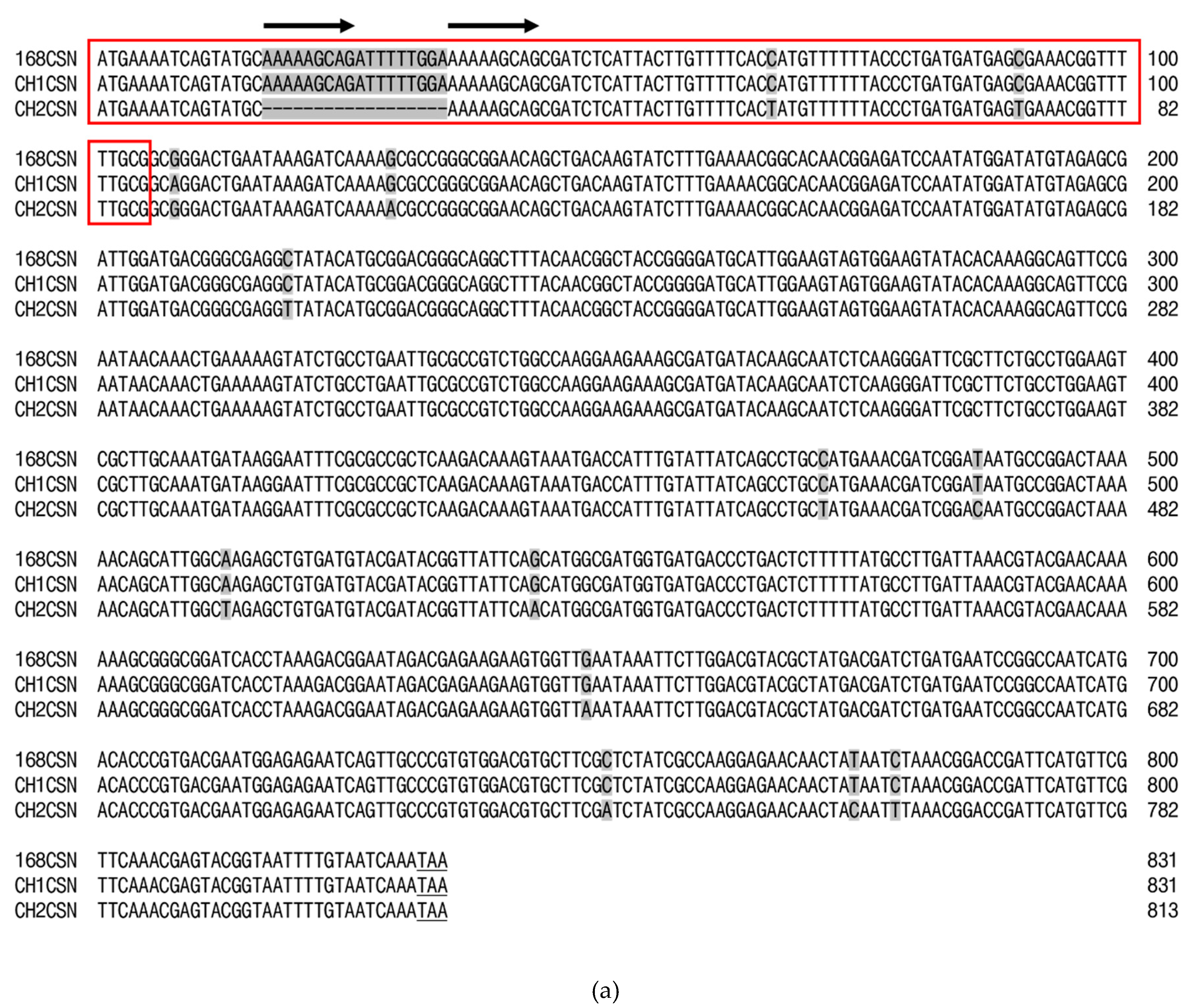
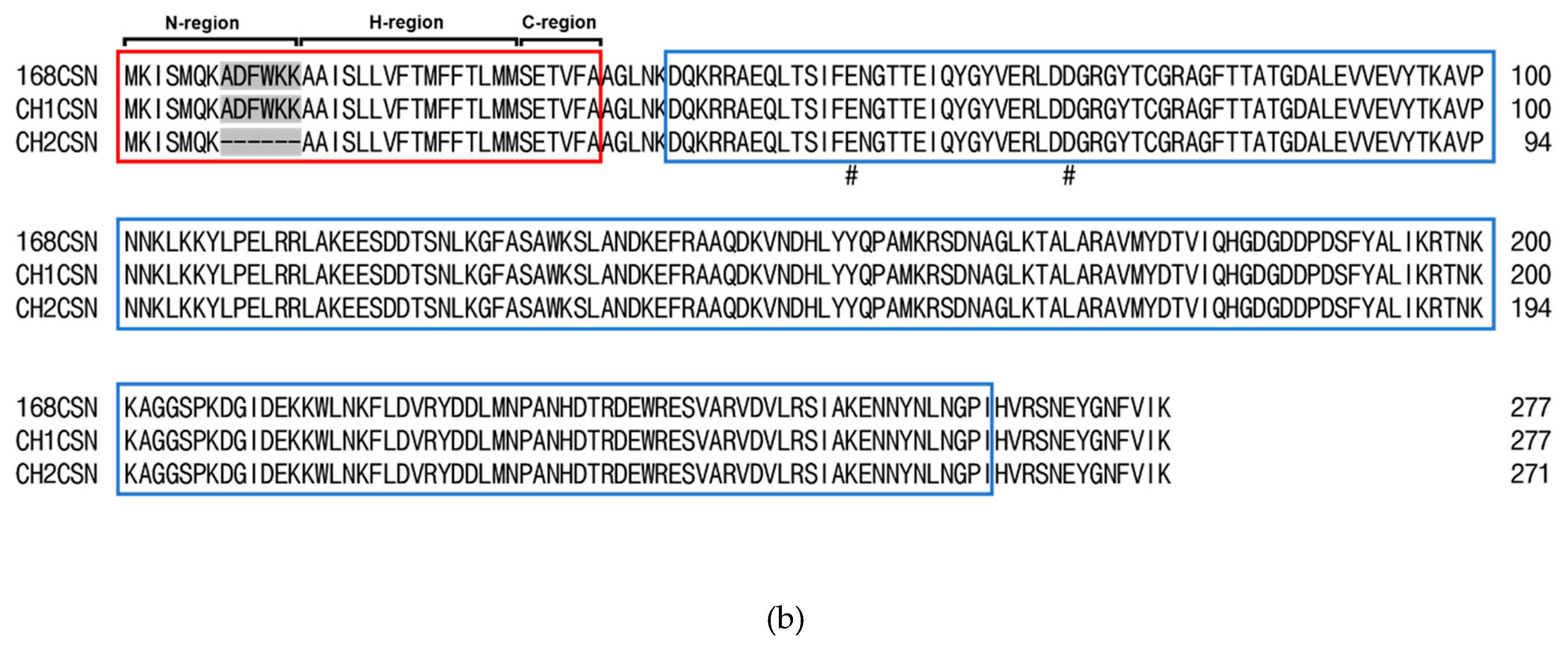
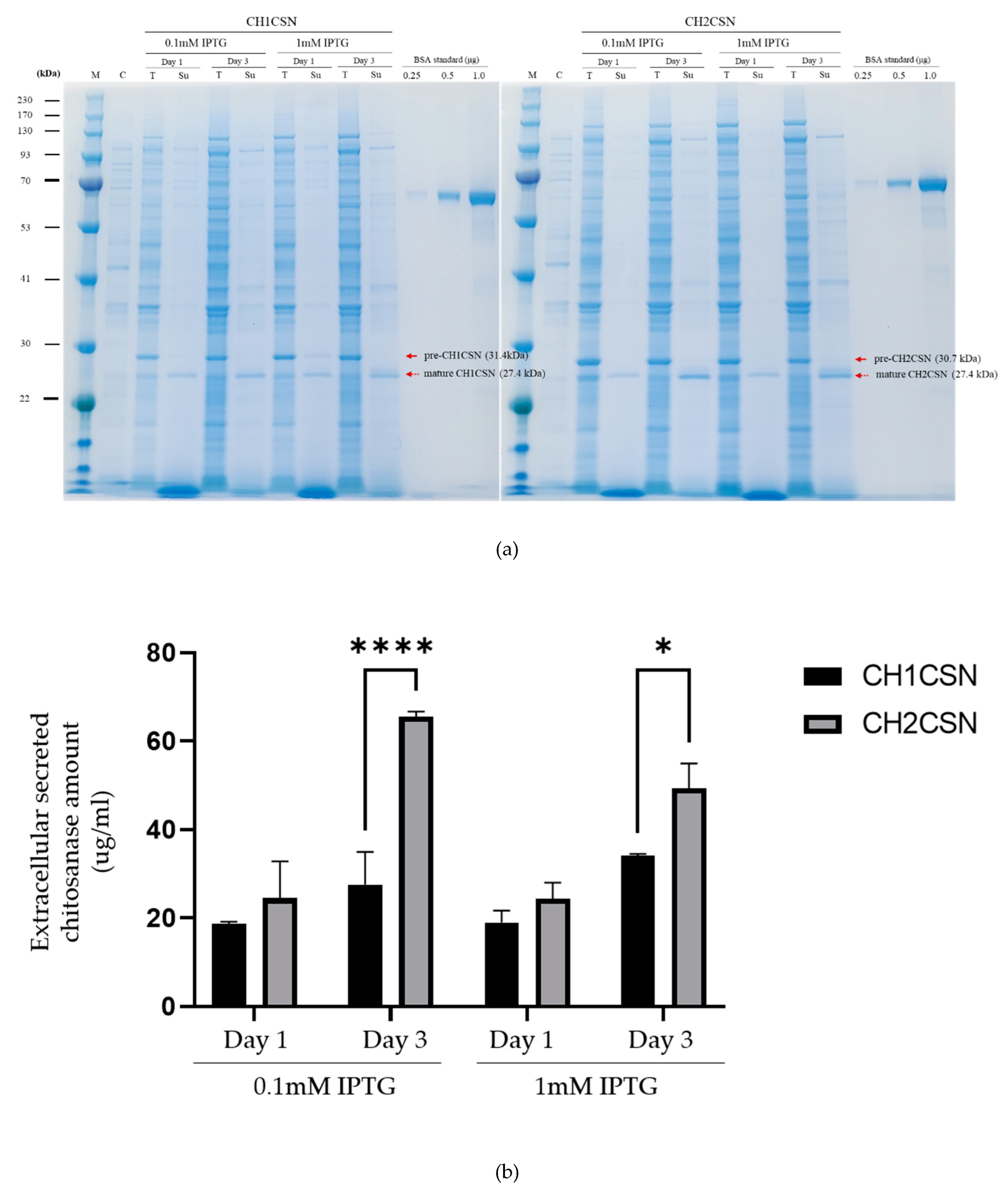
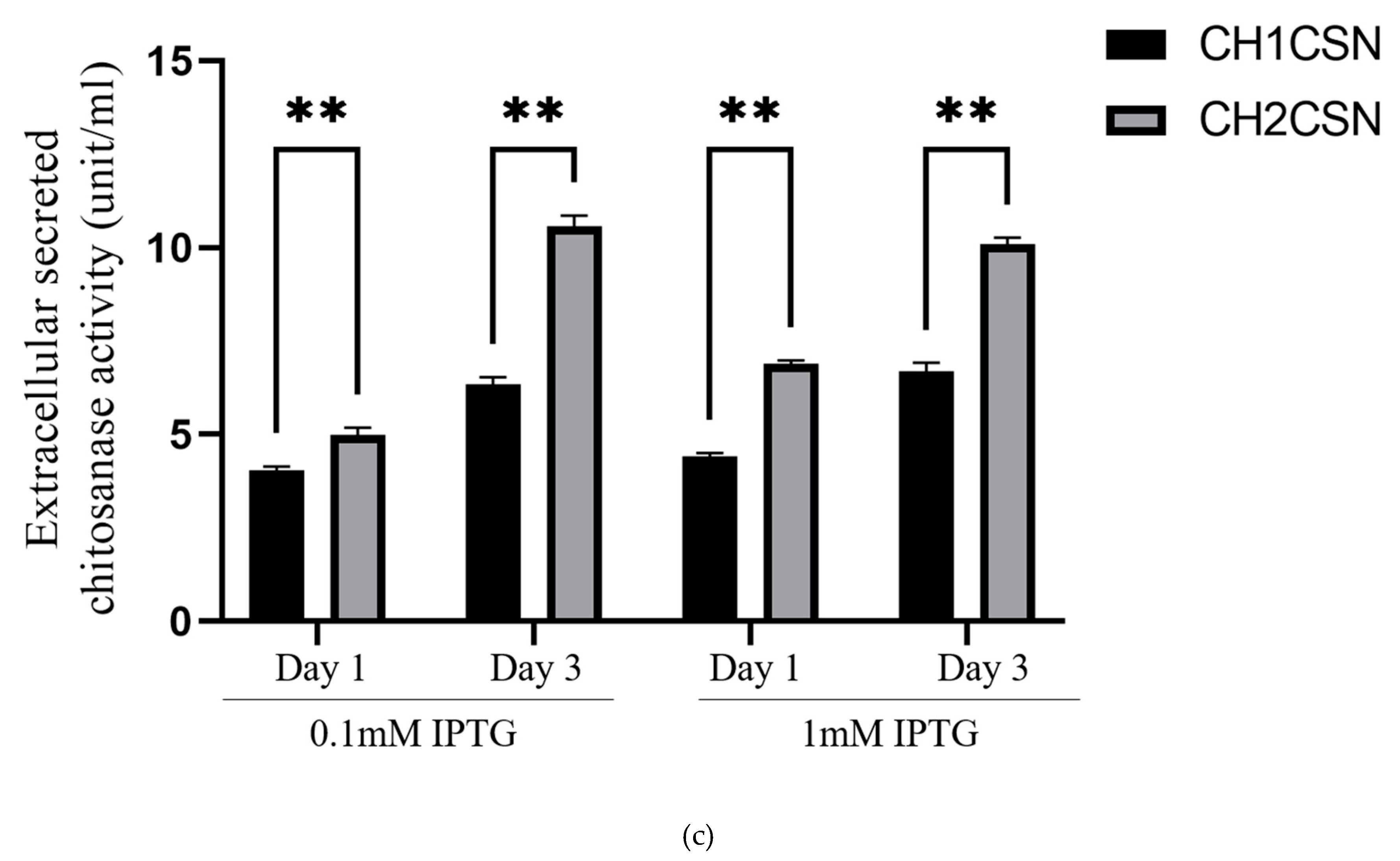
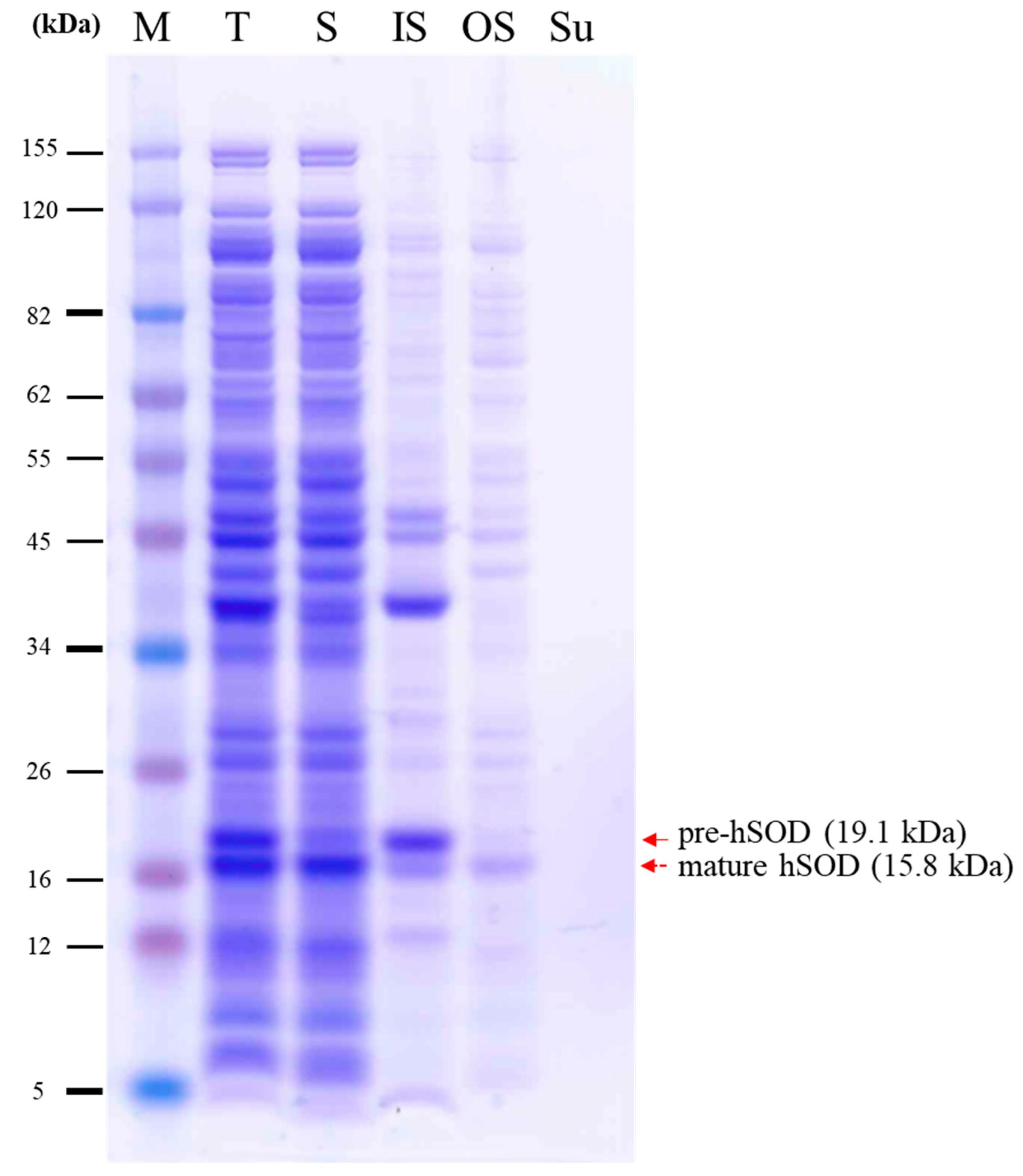
The production of recombinant proteins in Escherichia coli is often challenged by cytoplasmic expression due to proteolytic degradation and inclusion body formation. Extracellular expression can overcome these problems by simplifying downstream processing and improving protein yields. This study aims to compare the efficiency of two Bacillus subtilis chitosanase signal peptides in mediating extracellular secretion in E. coli. We identified a naturally occurring mutant signal peptide (mCsn2-SP) from B. subtilis CH2 chitosanase (CH2CSN), which is characterized by a deletion of six amino acids in the N-region relative to the signal peptide (Csn1-SP) from B. subtilis CH1 chitosanase (CH1CSN). The CH1CSN and CH2CSN genes were cloned into the pET-11a vector and protein secretion was evaluated in E. coli BL21(DE3) host cells. Expression was induced with 0.1 mM and 1 mM isopropyl β-D-1-thiogalactopyranoside (IPTG) at 30°C for one and three days. CH2CSN showed higher secretion levels compared to CH1CSN under all experimental conditions, especially with 0.1 mM IPTG induction for 3 days, which resulted in a 2.37-fold increase in secretion. Furthermore, it was demonstrated that mCsn2-SP is capable of secreting human Cu,Zn-superoxide dismutase (hSOD) in E. coli BL21(DE3) and successfully translocating it to the periplasmic region. This study represents the inaugural investigation into the utilisation of a naturally modified signal peptide, thereby corroborating the assertion that signal peptide deletion variants can influence protein secretion efficiency. Furthermore, the findings substantiate the proposition that such variants can serve as a viable alternative for the secretion of heterologous proteins in E. coli.
Keywords:
Introduction
Materials and Methods
Molecular Characterization of Chitosanases from B. subtilis Strains
Genomic DNA Extraction
Gene Cloning of Chitosanases from B. subtilis CH1 and CH2
Overexpression of Chitosanases from B. subtilis CH1 and CH2 in E. coli
Protein Measurement
Chitosanase Assay
Application of mCsn2-SP to hSOD
Statistical Analysis
Results
Molecular Characterization of Chitosanase
Expression and Extracellular Secretion Analysis of Chitosanase in E. coli
Expression of mCsn2-SP Linked hSOD in E. coli
Discussion
Acknowledgements
Conflicts of Interest
Ethical Statements
References
- Baldi, L., Hacker. Recombinant protein production by large-scale transient gene expression in mammalian cells: state of the art and future perspectives. Biotechnology letters 2007, 29, 677–684. [Google Scholar] [CrossRef] [PubMed]
- Baneyx, F., & Mujacic, M. (2004). Recombinant protein folding and misfolding in Escherichia coli. Nat Biotechnol, 22(11), 1399-1408. [CrossRef]
- Beckwith, J. (2013). The Sec-dependent pathway. Res Microbiol, 164(6), 497-504. [CrossRef]
- Beena, K., Udgaonkar. Effect of signal peptide on the stability and folding kinetics of maltose binding protein. Biochemistry 2004, 43, 3608–3619. [Google Scholar] [CrossRef] [PubMed]
- Brockmeier, U., Caspers, M., Freudl, R., Jockwer, A., Noll, T., & Eggert, T. (2006). Systematic screening of all signal peptides from B. subtilis: A powerful strategy in optimizing heterologous protein secretion in gram-positive bacteria. Journal of Molecular Biology, 362(3), 393-402. [CrossRef]
- Bzymek, M., & Lovett, S. T. (2001). Instability of repetitive DNA sequences: the role of replication in multiple mechanisms. Proc Natl Acad Sci U S A, 98(15), 8319-8325. [CrossRef]
- Choi, J. H., & Lee, S. Y. (2004). Secretory and extracellular production of recombinant proteins using Escherichia coli. Appl Microbiol Biotechnol, 64(5), 625-635. [CrossRef]
- Costa, T. R., Felisberto-Rodrigues, C., Meir, A., Prevost, M. S., Redzej, A., Trokter, M., & Waksman, G. (2015). Secretion systems in Gram-negative bacteria: structural and mechanistic insights. Nature Reviews Microbiology, 13(6), 343-359. [CrossRef]
- Crane, J. M., & Randall, L. L. (2017). The Sec System: Protein Export in Escherichia coli. EcoSal Plus, 7(2). [CrossRef]
- Forster, S., Brandt, M., Mottok, D. S., Zschuttig, A., Zimmermann, K., Blattner, F. R., Gunzer, F., & Pohlmann, C. (2013). Secretory expression of biologically active human Herpes virus interleukin-10 analogues in Escherichia coli via a modified Sec-dependent transporter construct. BMC Biotechnol, 13, 8. [CrossRef]
- French, C., Keshavarz-Moore, E., & Ward, J. M. (1996). Development of a simple method for the recovery of recombinant proteins from the Escherichia coli periplasm. Enzyme and Microbial Technology, 19(5), 332-338. [CrossRef]
- Freudl, R. (2018). Signal peptides for recombinant protein secretion in bacterial expression systems. Microbial Cell Factories, 17. [CrossRef]
- Mao, L., Stathopulos, P. B., Ikura, M., & Inouye, M. (2010). Secretion of human superoxide dismutase in Escherichia coli using the condensed single-protein-production system. Protein Sci, 19(12), 2330-2335. [CrossRef]
- Mergulhao, F. J., & Monteiro, G. A. (2007). Periplasmic targeting of recombinant proteins in Escherichia coli. Methods Mol Biol, 390, 47-61. [CrossRef]
- Mergulhao, F. J., Summers, D. K., & Monteiro, G. A. (2005). Recombinant protein secretion in Escherichia coli. Biotechnol Adv, 23(3), 177-202. [CrossRef]
- Mierendorf, R. C., Morris, B. B., Hammer, B., & Novy, R. E. (1998). Expression and Purification of Recombinant Proteins Using the pET System. Methods Mol Med, 13, 257-292. [CrossRef]
- Miksch, G., Ryu. Factors that influence the extracellular expression of streptavidin in Escherichia coli using a bacteriocin release protein. Applied Microbiology and Biotechnolog 2008, 81, 319–326. [Google Scholar] [CrossRef] [PubMed]
- Oh, C.-H., & Lee. Isolation, purification and characterization of chitosanase from Bacillus subtilis CH1. Journal of Aquaculture 2006, 19(1), 40–46. [Google Scholar]
- Oh, C., De Zoysa, M., Kang, D. H., Lee, Y., Whang, I., Nikapitiya, C., Heo, S. J., Yoon, K. T., Affan, A., & Lee, J. (2011). Isolation, purification, and enzymatic characterization of extracellular chitosanase from marine bacterium Bacillus subtilis CH2. J Microbiol Biotechnol, 21(10), 1021-1025. [CrossRef]
- Owji, H., Nezafat, N., Negandaripour, M., Hajiebrahimi, A., & Ghasemi, Y. (2018). A comprehensive review of signal peptides: Structure, roles, and applications. European Journal of Cell Biology, 97(6), 422-441. [CrossRef]
- Pechsrichuang, P., Songsiriritthigul, C., Haltrich, D., Roytrakul, S., Namvijtr, P., Bonaparte, N., & Yamabhai, M. (2016). OmpA signal peptide leads to heterogenous secretion of B. subtilis chitosanase enzyme from E. coli expression system. Springerplus, 5, 1-10.
- Rondle, C. J., & Morgan, W. T. (1955). The determination of glucosamine and galactosamine. Biochem J, 61(4), 586-589. [CrossRef]
- Rusch, S. L., & Kendall, D. A. (2007). Interactions that drive Sec-dependent bacterial protein transport. Biochemistry, 46(34), 9665-9673. [CrossRef]
- Shi, L., Liu, H., Gao, S., Weng, Y., & Zhu, L. (2021). Enhanced Extracellular Production of IsPETase in Escherichia coli via Engineering of the pelB Signal Peptide. J Agric Food Chem, 69(7), 2245-2252. [CrossRef]
- Takahara, M., Sagai, H., Inouye, S., & Inouye, M. (1988). Secretion of Human Superoxide Dismutase in Escherichia Coli. Bio/Technology, 6(2), 195-198. [CrossRef]
- Teufel, F., Almagro Armenteros, J. J., Johansen, A. R., Gíslason, M. H., Pihl, S. I., Tsirigos, K. D., Winther, O., Brunak, S., von Heijne, G., & Nielsen, H. (2022). SignalP 6.0 predicts all five types of signal peptides using protein language models. Nature biotechnology, 40(7), 1023-1025.
- Vale, F. F., Lehours, P., & Yamaoka, Y. (2022). Editorial: The Role of Mobile Genetic Elements in Bacterial Evolution and Their Adaptability [Editorial]. Frontiers in Microbiology, 13. [CrossRef]
- Wang, J., Zhou, W., Yuan, H., & Wang, Y. (2008). Characterization of a novel fungal chitosanase Csn2 from Gongronella sp. JG. Carbohydr Res, 343(15), 2583-2588. [CrossRef]
- Wang, P., Ma, J., Zhang, Y., Zhang, M., Wu, M., Dai, Z., & Jiang, M. (2016). Efficient Secretory Overexpression of Endoinulinase in Escherichia coli and the Production of Inulooligosaccharides. Appl Biochem Biotechnol, 179(5), 880-894. 5). [CrossRef]
- Yabuki, M., Uchiyama, A., Suzuki, K., Ando, A., & Fujii, T. (1988). Purification and Properties of Chitosanase from Bacillus-Circulans Mh-K1. Journal of General and Applied Microbiology, 34(3), 255-270. [CrossRef]
- Yoon, S. H., Kim, S. K., & Kim, J. F. (2010). Secretory production of recombinant proteins in Escherichia coli. Recent Pat Biotechnol, 4(1), 23-29. [CrossRef]

| 0.1mM IPTG | 1mM IPTG | ||||
|---|---|---|---|---|---|
| day 1 | day 3 | day 1 | day 3 | ||
|
CH1CSN (μg/ml) |
Cytoplasm | 48.04 ± 0.87 | 38.80 ± 2.87 | 47.08 ± 1.45 | 33.51 ± 0.51 |
| Supernatant | 18.75 ± 0.44 | 27.60 ± 7.39 | 18.95 ± 2.77 | 34.12 ± 0.38 | |
|
CH2CSN (μg/ml) |
Cytoplasm | 60.70 ± 1.92 | 51.80 ± 1.93 | 41.08 ± 1.90 | 28.49 ± 2.82 |
| Supernatant | 24.52 ± 8.29 | 65.48 ± 1.22 | 24.37 ± 3.65 | 49.31 ± 5.65 | |
Disclaimer/Publisher’s Note: The statements, opinions and data contained in all publications are solely those of the individual author(s) and contributor(s) and not of MDPI and/or the editor(s). MDPI and/or the editor(s) disclaim responsibility for any injury to people or property resulting from any ideas, methods, instructions or products referred to in the content. |
© 2024 by the authors. Licensee MDPI, Basel, Switzerland. This article is an open access article distributed under the terms and conditions of the Creative Commons Attribution (CC BY) license (http://creativecommons.org/licenses/by/4.0/).