

Submitted:
19 June 2024
Posted:
21 June 2024
You are already at the latest version
Abstract
This article aims to identify the relationship between sustainability and strategic management to determine whether sustainability can be considered a strategic management research fashion. This involves a bibliometric analysis of recent academic literature from 2021 to 2023 to identify the latest academic research, key trends, collaboration and keyword networks within this relationship. The analysis was conducted using two datasets from the Scopus database. These datasets focus on English-language journal articles on business, management and accounting. The first covers academic research on strategic management, while the second expands to sustainability and sustainable development. The results show that strategic management research focusing on sustainability has recently grown faster (24.70%) than the whole strategic management research area (14.30%). Furthermore, the geographical analysis of co-authorship identified articles from 88 countries, suggesting a broad interest in this relationship. Notably, the strategic management network mapping revealed a unique, sustainable development, corporate social responsibility and sustainability cluster. Moreover, extended mapping revealed four clusters covering crisis management, strategic and creative sustainable development, operational and regulatory sustainability, sustainable supply chains, and resource management. The results thus confirm the rapid growth and widespread coverage of research on sustainability and strategic management, highlighting sustainability as a strategic management research fashion.
Keywords:
strategic management
; sustainability
; corporate social responsibility
; bibliometric analysis
; management research fashion.
1. Introduction
In a rapidly changing environment and society, two main themes have become essential to discussing organisational longevity and societal progress. First, strategic management (SM), a hybrid academic field combining economics and sociology, is essential for the long-term existence and expansion of organisations and focuses on creating and implementing comprehensive strategies to achieve organisational goals [1,2,3]. As an academic field of research, SM emphasises creating and maintaining competitive advantage, promoting the common good and sharing wisdom to help organisational members understand the future [4,5]. Second, the importance of sustainability and environmental initiatives is receiving increasing attention in corporate, consumer, and individual behaviour [6]. This shift is further supported by the 17 Sustainable Development Goals (SDGs) established by the United Nations, which aim to promote global sustainability by 2030, targeting a wide range of goals from poverty reduction to environmental sustainability by mobilising new agents of change such as businesses, cities and civil society [7,8,9,10]. Sustainability, therefore, plays an important role in organisational strategy [11].
Academic research fashion is characterised by a rapid acceptance of scientific information as a result of rapid growth in a scientific field, influenced by theoretical development and the number of scientists attracted to it [12]. Scientists following fashions often adopt the lead and styles of their respective disciplines [13]. On the other hand, management fashions at the organisational level influence the techniques used and adopted by managers to tackle complex managerial issues and organisational gaps and often result in rapid, bell-shaped shifts in the popularity of these techniques [14]. Accordingly, these fashions, characterised by a fluctuating number of publications, should be rational and progressive, utilising social, psychological, technical, and economic forces to influence their demand [14,15,16,17]. Accordingly, management fashions can be conceptualised as the production and consumption patterns of temporarily intensive management discourse, along with the organisational changes this discourse induces [18]. Notably, academic research and management fashions are similar in that both are cyclical and influenced by larger socio-economic factors in their development and adoption. Both management fashions indicate shifts in focus and concentration caused by new theoretical insights and their impact on management practice.
Numerous studies suggest a relationship between SM and sustainability, indicating that their integration can generate value for businesses, society, and the environment, resulting in a competitive advantage for sustainable firms, which reflects a firm's ability to outperform its competitors by offering superior value to customers [19,20,21]. Although sustainability is increasingly being incorporated into business strategies to create value for companies, society and the environment, the question of whether sustainability is a SM research fashion in the academic literature remains unanswered [19]. This study, therefore, seeks to fill this gap by applying a bibliometric analysis to recent academic research to investigate whether sustainability is increasingly being considered in SM research.
This paper systematically reviews the relationship between SM and sustainability in academic research. It enables the mapping of the current state of research and the identification of future avenues for growth in sustainability and SM research [22]. Following an introduction that outlines the scope and objectives of this research, the following section examines the theoretical frameworks that underpin both fields, setting the stage for the research questions. The methodology section discusses bibliometric analysis techniques to examine the academic literature from the most recent period, 2021–2023, reflecting the latest academic insights into this approach. The results section presents a comprehensive analysis of the findings, focusing on the key trends and patterns identified from the bibliometric data. This discussion presents the current environment the gaps and opportunities identified for future research. The concluding section synthesises these findings, identifies implications for the study and suggests future research directions.
2. Literature Review
With its origins in military science, SM emphasises aligning organisational structure with strategy, focusing on achieving superior performance, reducing costs and improving customer satisfaction [2,23,24]. It is a creative activity that uses scientific principles to improve management effectiveness and has evolved significantly over the past decades [25,26]. To achieve effective management, SM requires the input of distributed wisdom, planning and execution, promoting the common good, and shared understanding among organisational members [5,27]. Meanwhile, sustainability, which originated in forestry, initially emphasised avoiding overharvesting [28]. Later, the Club of Rome report predicted resource depletion within one or two generations, influencing global public policy [29]. The World Commission on Environment and Development's Brundtland report, which promoted current and future-oriented development that guarantees the satisfaction of current needs without jeopardising the capacity of future generations to meet their own, made sustainable development more widely recognised [30,31].
Corporate social responsibility (CSR), which originated as a neoliberal idea to decrease government regulation, has developed into a progressive coregulatory approach that seeks to voluntarily include social and environmental issues in business operations [32]. Thus, studies examining the impact of CSR and sustainability on various areas, including responsible consumption, production, human resources, supply chain management, industry, innovation, infrastructure, national culture, decision-making, the circular economy, affordable and clean energy, and more, demonstrate that sustainable development and CSR are emerging as global trends [33,34,35,36,37,38,39,40,41]. Identifying these research trends allows researchers to recognise and analyse research topics promptly, thus facilitating the advancement of knowledge in these fields [42].
The relationship between sustainability and SM has evolved from initial concepts to a sophisticated framework for managing business organisations, guiding them to integrate sustainability into their corporate, competitive, and functional strategies [43]. It also highlights that integrating sustainability and change management as part of decision-making, value creation, and across all business units, functions, and reporting structures is a critical success factor in driving strategic sustainability initiatives [44]. Therefore, such a framework should consider various organisational influences, both internal and external, and identify factors that support or hinder this integration within SM [45].
The long-term stability of superior resources, the ex-post and ex-ante limits to competition, and imperfect resource mobility create a sustainable competitive advantage [46,47]. A company's competitive advantage also depends on the transfer of internal best practices, but implementing these practices may present challenges [48]. As a result, integrating sustainability into strategic decision-making may enhance an organisation's competitiveness and ensure its long-term sustainability, suggesting that SM and sustainability can result in a long-term competitive advantage [49]. Moreover, many studies demonstrate that, although previously seen as cost drivers, sustainability innovations improve company competitiveness by increasing value creation, lowering costs, and acquiring nonfinancial assets [50,51].
However, despite its widespread popularity, sustainable development remains to be seen because of continued questions about its meaning, history and implications [52]. This background establishes the context for the research question: whether sustainability can effectively be viewed as a SM research fashion [46]. Therefore, this study assesses sustainability as a SM research fashion, marked by a swift and extensive surge in interest within academic research. The following section of this study will focus on the methods used to investigate this research question, presenting the tools, techniques and datasets used to conduct a comprehensive bibliometric analysis of the topic.
3. Materials and Methods
This study utilised bibliometric analysis, a widely used method for analysing large volumes of scientific data that allows studying evolutionary nuances and emerging areas to examine the evolving sustainability and SM research environment and determine whether sustainability is an academic research fashion [53]. The bibliometric dataset was created from academic research in the SCOPUS database. Only recent English journal publications on accounting, management and business research were included in this analysis. The SCOPUS database was selected due to its careful content selection and review process, as well as for its comprehensive coverage of academic research [54].
A bibliometric search in Scopus was carried out in two steps, as shown in Figure 1 and Table 1. These queries were formulated in Scopus using Boolean operators. First, the keyword strategic management was used in Query 1 (n=19,525) with a missing data check (n=52, based on Bibliometrix) to identify SM studies' most common related keywords. The resulting studies (n=5,209) were included in the subsequent bibliometric analysis. Second, the search was extended by combining the terms strategic management, sustainable development and sustainability in Query 2 to find academic literature on the sustainability environment and SM research field (n=4,901). After applying the Query 2 parameters from Table 2 (n=4,069) and checking for missing data (n=8, based on Bibliometrix), the study obtained the second dataset for further bibliometric analysis (n=832). The Query results may change over time due to the continuous quality assurance activities conducted by Scopus and the regular updates [54,55].
Analysis and visualisation tasks were performed using VOSviewer software (version 1.6.20), Tableau (version 2024.1) and Bibliometrix software (version 4.1.4). Microsoft Excel (version 2402) was used for data processing. The VOSviewer software is a freeware tool that facilitates the analysis and creation of bibliometric maps by building and displaying bibliometric relationships between several variables [56,57]. The Bibliometrix tool was used in this study to perform performance analysis and science mapping to assess the environment of the sustainability and SM research fields [53,58]. In addition, Tableau was used for generating visual and geographical representations to analyse data [59].
This section explains the methods and techniques used to analyse the relationship between sustainability and SM in academic research. The next sections will present the results and discuss the implications of these findings to enhance the understanding of the relationship between sustainability and SM research.
4. Results and Discussion
Table 2 displays the key statistics from Query 1 and Query 2 used in this section. Query 1, which focused on SM, resulted in 5,209 articles from 1,009 journals. With sustainability and sustainable development added to SM, the improved Query 2 produced 832 articles from 361 journals. In Query 2, the yearly growth rate of articles was significantly higher, at 24.70%, compared to 14.30% in Query 1. This shows an interest in expanding research activity on SM and sustainability topics. It is also supported by a higher average number of citations per paper (9.9 vs. 8.2), co-authors per paper (3.2 vs. 3.1) and international co-authorship (33.7% vs. 32.8%). This shows that sustainability is attracting academic attention, with a thriving and collaborative global research community focused on sustainability and SM.
Analysing the annual scientific output within Queries 1 and 2 provides insights into the evolving environment of SM and sustainability. Within Query 1 it increased gradually, as seen in Figure 2, from 1,524 studies in 2021 to 1,991 in 2023. However, the number of studies in sustainability and SM (Query 2) increased faster, from 225 in 2021 to 350 in 2023. The ratio of Query 2 / Query 1 annual scientific production increased from 14.8% in 2021 to 17.6% in 2023. This growth suggests an increasing meaning and the recognition of sustainability as an important part of SM. Thus, it represents a broader societal and organisational shift towards sustainability and its integration into strategies and decision-making.
Figure 3 shows a network map of keyword co-occurrences derived from the results of Query 1, with a threshold of 100 co-occurrences to indicate the most common keywords (n=23) that meet the specified requirement. The network map highlights the relationship between SM, sustainability, sustainable development and other relevant keywords, including strategic approach, supply chain management, decision-making, strategic planning and innovation. Furthermore, the relationship between CSR, sustainability, SM and strategic approach shows that CSR significantly impacts these studies, especially in the context of sustainability. This further confirms that the SDGs have recently influenced CSR research, leading to an increased focus on strategic aspects of the community, companies, consumers, investors, and employees [60].
Table 3 provides information about the bibliometric map shown in Figure 3, including a description of the keywords contained in each cluster. Brackets indicate the strength of the links and the co-occurrence of the keywords, while colour code identifies each cluster. The yellow cluster, which places sustainability and sustainable development in a separate cluster alongside CSR, is notable for its relatively high co-occurrence (n=578) and link strength (n=748), showing the academic research concentration on sustainability and SM.
The network map in Figure 4 shows the co-occurrences of the keywords (n=37) obtained from the results of Query 2. The threshold for the bibliometric map is set at 15 co-occurrences to represent the most common keywords. The network map places the keyword sustainability and sustainable development at the centre of SM and sustainability research, indicating their importance as a concept around which other issues related to SM and sustainability evolve.
Table 4 provides information on the bibliometric map shown in Figure 4 and each cluster in the network map:
- Red cluster. This cluster highlights the importance of sustainability in SM, with key themes such as sustainability (n=220), strategic management (n=65) and innovation (n=45) (e.g., [61,62,63]). This emphasises how sustainability shapes strategy research. It influences leadership, climate change, project management, knowledge management, human resource management, and integrating environmental and SDGs into strategies.
- Green cluster. It emphasises sustainability in regulatory, operational and competitive terms, focusing on sustainable development (n=229), CSR (n=51) and environmental management (n=37) (e.g., [64,65,66]). This cluster thus emphasises how academic research motivated by CSR initiatives and environmental compliance applies to sustainability concepts. The attention paid to corporate sustainability, economic and social effects, competition, and sustainable development suggests a wide involvement with the SDGs from different organisational perspectives.
- Blue cluster. It focuses on strategic development in response to global disruptions and market dynamics, including strategic approach (n=63), pandemic (n=33) and stakeholder engagement (n=19) (e.g., [67,68,69,70]). Thus, the keyword pandemic, along with the strategic approach, emphasises the need to take disruptions and resilience into account in academic research together with stakeholders and business strategy.
- Yellow cluster. This cluster focuses on sustainable supply chain management and resource efficiency and emphasises the need to enhance supply chain sustainability and resource optimisation in SM. Among the topics covered are supply chain management (n=58), SDGs (n=21), circular economy (n=37), and waste management (n=21) (e.g., [71,72,73,74]), highlighting academic research focused on waste reduction, circular economy, resource reuse and achieving the SDGs.
Figure 5 shows that research on sustainability in SM has recently attracted widespread interest on a global scale, representing 88 countries, or 45.6% of all 193 United Nations member states that adopted the SDGs in 2015 [75,76]. India is a major contributor (n=74), representing 8.9% of global research. The US (n=53) and China (n=52) are close behind, with 6.4% and 6.3% of articles, respectively. The United Kingdom (n=43) and Italy (n=42) also contribute significantly. With 33.7% of international co-authorship, academic research in sustainability and SM has a broad and global reach beyond regional and economic boundaries. This makes SM and sustainability an enduring academic research area.
Overall, the results of this study show that the environment of sustainability and SM research is rapidly growing, diverse and widespread. This environment includes topics such as climate change, innovation, competition, corporate social responsibility, strategic planning, environmental economics, strategic approach, circular economy, decision-making, supply chain management, etc. Therefore, the findings presented in this section confirm the research question, suggesting that sustainability is a SM research fashion.
5. Conclusions
This study provides a comprehensive analysis of the relationship between sustainability and strategic management (SM) by examining the increasing attention given to these areas in academic research, particularly in economics, management and accounting [41]. The study used bibliometric analysis in VOSviewer and Bibliometrics, as well as Tableau for geographical visualisation to address the gap in the existing literature by investigating whether sustainability can be considered a SM research fashion.
The results indicate a notable rise in academic attention to sustainability and SM concerns. This is supported by the annual growth rate of sustainability and SM articles, which demonstrates a notably higher growth rate than the overall SM articles (24.70% vs. 14.30%). The growing and collaborative research community focused on sustainability and SM is evidenced by the higher average number of citations per document (9.9 vs. 8.2) and international co-authorship (33.7% vs. 32.8%). This is also reflected in the global coverage of academic research, including 88 countries, with India, the USA and China leading the way. This indicates a broad acknowledgement of sustainability and SM in academic research.
Notably, the network mapping from a SM perspective indicates a distinct cluster that emerged in recent academic research that focuses solely on sustainability-related issues. This cluster includes terms such as sustainability, sustainable development and corporate social responsibility. To gain further insight into academic research on sustainability and SM, a second set of network mapping exercises was carried out. The results identified four primary thematic clusters covering crisis management, strategic and creative sustainable development, operational and regulatory sustainability, sustainable supply chains and resource management.
The study has some significant limitations that need to be addressed. It is based on a selection of journal-type articles in English from the Scopus database between 2021 and 2023, focusing on business, management, and accounting. Still, additional databases and articles can be explored through search queries. As a result, broadening the field's scope and considering the influence of emerging research areas and topics is a potential avenue for future bibliometric analysis. In addition, it would be recommended that the results of this study be replicated in the future to determine whether sustainability is a short-term or long-term SM fashion.
Notwithstanding these research limitations, the results of this study provide further evidence that sustainability is a prominent SM research area. This suggests that sustainability, characterised by observed growth, interdisciplinary collaboration and global participation [12], is SM research fashion.
This study and the methods used have implications for both researchers and practitioners. For instance, managers adopt management fashions to learn techniques to address issues caused by technical and economic environmental changes [14]. Accordingly, researchers and practitioners can gain an understanding of the importance and current state of the fields of SM and sustainability. However, to develop further sustainable SM research, it is essential to continue investigating this relationship.
Future research could build on this study by incorporating more bibliometric analysis approaches, extending the scope to other academic databases, analysing theoretical and conceptual frameworks, evaluating digitisation, identifying the relationship between sustainability, SM and global disruptions, comparing sustainability efforts across different geopolitical contexts, and investigating stakeholder engagement and collaboration in promoting sustainability. Such techniques contribute to a deeper understanding of how the sustainable development agenda influences SM and how organisations can use these insights to become sustainable and gain a sustained competitive advantage.
Author Contributions
Conceptualisation, E.S. and T.V.; methodology, E.S.; software, E.S; validation, E.S. and T.V.; formal analysis, E.S.; data curation, E.S.; writing – original draft preparation, E.S.; writing – review and editing, T.V.; visualisation, E.S.; supervision, T.V. All authors have read and agreed to the published version of the manuscript.
Funding
This research was funded by the BA School of Business and Finance.
Conflicts of Interest
The authors declare no conflict of interest.
References
- Bhalla, A.; Lampel, J.; Henderson, S.; Watkins, D. Exploring Alternative Strategic Management Paradigms in High-Growth Ethnic and Non-Ethnic Family Firms. Small Business Economics 2009, 32. [Google Scholar] [CrossRef]
- Bracker, J. The Historical Development of the Strategic Management Concept. Academy of Management Review 1980, 5. [Google Scholar] [CrossRef]
- Chakravarthy, B.S. Adaptation: A Promising Metaphor for Strategic Management. Academy of Management Review 1982, 7. [Google Scholar] [CrossRef]
- Bowman, E.H.; Singh, H.; Thomas, H. The Domain of Strategic Management: History and Evolution. In Handbook of Strategy and Management; 2012.
- Nonaka, I.; Toyama, R. Strategic Management as Distributed Practical Wisdom (Phronesis). Industrial and Corporate Change 2007, 16. [Google Scholar] [CrossRef]
- Cho, Y.N.; Thyroff, A.; Rapert, M.I.; Park, S.Y.; Lee, H.J. To Be or Not to Be Green: Exploring Individualism and Collectivism as Antecedents of Environmental Behavior. J Bus Res 2013, 66. [Google Scholar] [CrossRef]
- Hajer, M.; Nilsson, M.; Raworth, K.; Bakker, P.; Berkhout, F.; de Boer, Y.; Rockström, J.; Ludwig, K.; Kok, M. Beyond Cockpit-Ism: Four Insights to Enhance the Transformative Potential of the Sustainable Development Goals. Sustainability (Switzerland) 2015, 7. [Google Scholar] [CrossRef]
- Hák, T.; Janoušková, S.; Moldan, B. Sustainable Development Goals: A Need for Relevant Indicators. Ecol Indic 2016, 60. [Google Scholar] [CrossRef]
- Qureshi, M.A.; Ahsan, T.; Gull, A.A. Does Country-Level Eco-Innovation Help Reduce Corporate CO2 Emissions? Evidence from Europe. J Clean Prod 2022, 379. [Google Scholar] [CrossRef]
- United Nations United Nations Sustainable Development (SDGs) – 17 Goals to Transform Our World. United Nations 2020.
- Amui, L.B.L.; Jabbour, C.J.C.; de Sousa Jabbour, A.B.L.; Kannan, D. Sustainability as a Dynamic Organizational Capability: A Systematic Review and a Future Agenda toward a Sustainable Transition. J Clean Prod 2017, 142. [Google Scholar] [CrossRef]
- Crane, D. Fashion in Science: Does It Exist? Soc Probl 1969, 16. [Google Scholar] [CrossRef]
- Hagstrom, W.O. Social Influences and Scientists: The Scientific Community. In Science; Basic Books: New York, 1965; pp. 177–194. [Google Scholar]
- Abrahamson, E. Management Fashion. Academy of Management Review 1996, 21. [Google Scholar] [CrossRef]
- Abrahamson, E. Managerial Fads and Fashions: The Diffusion and Rejection of Innovations. Academy of Management Review 1991, 16. [Google Scholar] [CrossRef]
- Nijholt, J.J.; Benders, J. Coevolution in Management Fashions: The Case of Self-Managing Teams in the Netherlands. Group Organ Manag 2007, 32. [Google Scholar] [CrossRef]
- Abrahamson, E.; Fairchild, G. Management Fashion: Lifecycles, Triggers, and Collective Learning Processes. Adm Sci Q 1999, 44. [Google Scholar] [CrossRef]
- Benders, J.; Van Veen, K. What’s in a Fashion? Interpretative Viability and Management Fashions. Organization 2001, 8. [Google Scholar] [CrossRef]
- Baumgartner, R.J.; Rauter, R. Strategic Perspectives of Corporate Sustainability Management to Develop a Sustainable Organization. J Clean Prod 2017, 140. [Google Scholar] [CrossRef]
- Lloret, A. Modeling Corporate Sustainability Strategy. J Bus Res 2016, 69. [Google Scholar] [CrossRef]
- Porter, M.E. Competitive Strategy: Creating and Sustaining Superior Performance. Creating and Sustaining Competitive Advantage 1985.
- Radhakrishnan, S.; Erbis, S.; Isaacs, J.A.; Kamarthi, S. Novel Keyword Co-Occurrence Network-Based Methods to Foster Systematic Reviews of Scientific Literature. PLoS ONE 2017, 12. [Google Scholar]
- Myers, K.H.; Chandler, A.D. Strategy and Structure: Chapters in the History of the Industrial Enterprise. The Mississippi Valley Historical Review 1962, 49. [Google Scholar] [CrossRef]
- Porter, M.E. How Competitive Forces Shape Strategy. In Readings in Strategic Management; 1989.
- Bourgeois, L.J. Strategic Management and Determinism. The Academy of Management Review 1984, 9. [Google Scholar] [CrossRef]
- Hoskisson, R.E.; Hitt, M.A.; Wan, W.P.; Yiu, D. Theory and Research in Strategic Management: Swings of a Pendulum. J Manage 1999, 25. [Google Scholar] [CrossRef]
- Bryson, J.M. Strategic Planning for Public and Nonprofit Organizations. In International Encyclopedia of the Social & Behavioral Sciences: Second Edition; 2015.
- Wiersum, K.F. 200 Years of Sustainability in Forestry: Lessons from History. Environ Manage 1995, 19. [Google Scholar] [CrossRef]
- Meadows, D.H.; Meadows, D.L.; Randers, J.; Behrens, W.W. The Limits to Growth, Club of Rome; 1972.
- Merkel, C.M.; Aulake, K.; Esposito, M.; Weiß, R.; Baeke, F. Stormy Times. Nature and Humans: Cultural Courage for Change; Luxembourg, 2022.
- Keeble, B.R. The Brundtland Report: “Our Common Future.”. Med War 1988, 4. [Google Scholar] [CrossRef]
- Steurer, R. The Role of Governments in Corporate Social Responsibility: Characterising Public Policies on CSR in Europe. Policy Sci 2010, 43. [Google Scholar] [CrossRef]
- Assoratgoon, W.; Kantabutra, S. Toward a Sustainability Organizational Culture Model. J Clean Prod 2023, 400. [Google Scholar] [CrossRef]
- Baumgartner, R.J.; Ebner, D. Corporate Sustainability Strategies: Sustainability Profiles and Maturity Levels. Sustainable Development 2010, 18. [Google Scholar] [CrossRef]
- Carter, C.R.; Rogers, D.S. A Framework of Sustainable Supply Chain Management: Moving toward New Theory. International Journal of Physical Distribution and Logistics Management 2008, 38. [Google Scholar] [CrossRef]
- Gallego-Álvarez, P.I.; Ortas, P.E. Corporate Environmental Sustainability Reporting in the Context of National Cultures: A Quantile Regression Approach. International Business Review 2017, 26. [Google Scholar] [CrossRef]
- Hutchins, M.J.; Sutherland, J.W. An Exploration of Measures of Social Sustainability and Their Application to Supply Chain Decisions. J Clean Prod 2008, 16. [Google Scholar] [CrossRef]
- Korhonen, J.; Honkasalo, A.; Seppälä, J. Circular Economy: The Concept and Its Limitations. Ecological Economics 2018, 143. [Google Scholar] [CrossRef]
- Kramar, R. Beyond Strategic Human Resource Management: Is Sustainable Human Resource Management the next Approach? International Journal of Human Resource Management 2014, 25. [Google Scholar] [CrossRef]
- Lazar, S.; Klimecka-tatar, D.; Obrecht, M. Sustainability Orientation and Focus in Logistics and Supply Chains. Sustainability (Switzerland) 2021, 13. [Google Scholar] [CrossRef]
- Meseguer-Sánchez, V.; Gálvez-Sánchez, F.J.; López-Martínez, G.; Molina-Moreno, V. Corporate Social Responsibility and Sustainability. A Bibliometric Analysis of Their Interrelations. Sustainability (Switzerland) 2021, 13. [Google Scholar] [CrossRef]
- Lu, W.; Huang, S.; Yang, J.; Bu, Y.; Cheng, Q.; Huang, Y. Detecting Research Topic Trends by Author-Defined Keyword Frequency. Inf Process Manag 2021, 58. [Google Scholar] [CrossRef]
- Stead, J.G.; Stead, W.E. Sustainable Strategic Management: An Evolutionary Perspective. International Journal of Sustainable Strategic Management 2008, 1. [Google Scholar] [CrossRef]
- Sroufe, R. Integration and Organizational Change towards Sustainability. J Clean Prod 2017, 162. [Google Scholar] [CrossRef]
- Engert, S.; Rauter, R.; Baumgartner, R.J. Exploring the Integration of Corporate Sustainability into Strategic Management: A Literature Review. J Clean Prod 2016, 112. [Google Scholar] [CrossRef]
- Barney, J. Firm Resources and Sustained Competitive Advantage. J Manage 1991, 17. [Google Scholar] [CrossRef]
- Peteraf, M.A. The Cornerstones of Competitive Advantage: A Resource-based View. Strategic Management Journal 1993, 14. [Google Scholar] [CrossRef]
- Szulanski, G. Exploring Internal Stickiness: Impediments to the Transfer of Best Practice within the Firm. Strategic Management Journal 1996, 17. [Google Scholar] [CrossRef]
- Bonn, I.; Fisher, J. Sustainability: The Missing Ingredient in Strategy. Journal of Business Strategy 2011, 32. [Google Scholar] [CrossRef]
- Hermundsdottir, F.; Aspelund, A. Sustainability Innovations and Firm Competitiveness: A Review. J Clean Prod 2021, 280. [Google Scholar] [CrossRef]
- Dey, P.K.; Malesios, C.; De, D.; Chowdhury, S.; Abdelaziz, F. Ben The Impact of Lean Management Practices and Sustainably-Oriented Innovation on Sustainability Performance of Small and Medium-Sized Enterprises: Empirical Evidence from the UK. British Journal of Management 2020, 31. [Google Scholar] [CrossRef]
- Mensah, J. Sustainable Development: Meaning, History, Principles, Pillars, and Implications for Human Action: Literature Review. Cogent Soc Sci 2019, 5. [Google Scholar] [CrossRef]
- Donthu, N.; Kumar, S.; Mukherjee, D.; Pandey, N.; Lim, W.M. How to Conduct a Bibliometric Analysis: An Overview and Guidelines. J Bus Res 2021, 133. [Google Scholar] [CrossRef]
- Baas, J.; Schotten, M.; Plume, A.; Côté, G.; Karimi, R. Scopus as a Curated, High-Quality Bibliometric Data Source for Academic Research in Quantitative Science Studies. Quantitative Science Studies 2020, 1. [Google Scholar] [CrossRef]
- Falagas, M.E.; Pitsouni, E.I.; Malietzis, G.A.; Pappas, G. Comparison of PubMed, Scopus, Web of Science, and Google Scholar: Strengths and Weaknesses. The FASEB Journal 2008, 22. [Google Scholar] [CrossRef] [PubMed]
- Kirby, A. Exploratory Bibliometrics: Using VOSviewer as a Preliminary Research Tool. Publications 2023, 11. [Google Scholar] [CrossRef]
- van Eck, N.J.; Waltman, L. Software Survey: VOSviewer, a Computer Program for Bibliometric Mapping. Scientometrics 2010, 84. [Google Scholar] [CrossRef] [PubMed]
- Aria, M.; Cuccurullo, C. Bibliometrix: An R-Tool for Comprehensive Science Mapping Analysis. J Informetr 2017, 11. [Google Scholar] [CrossRef]
- Batt, S.; Grealis, T.; Harmon, O.; Tomolonis, P. Learning Tableau: A Data Visualization Tool. Journal of Economic Education 2020, 51. [Google Scholar] [CrossRef]
- ElAlfy, A.; Palaschuk, N.; El-Bassiouny, D.; Wilson, J.; Weber, O. Scoping the Evolution of Corporate Social Responsibility (CSR) Research in the Sustainable Development Goals (SDGS) Era. Sustainability (Switzerland) 2020, 12. [Google Scholar] [CrossRef]
- Freeman, R.E.; Dmytriyev, S.D.; Phillips, R.A. Stakeholder Theory and the Resource-Based View of the Firm. J Manage 2021, 47. [Google Scholar] [CrossRef]
- Snihur, Y.; Bocken, N. A Call for Action: The Impact of Business Model Innovation on Business Ecosystems, Society and Planet. Long Range Plann 2022, 55. [Google Scholar] [CrossRef]
- Yuan, B.; Cao, X. Do Corporate Social Responsibility Practices Contribute to Green Innovation? The Mediating Role of Green Dynamic Capability. Technol Soc 2022, 68. [Google Scholar] [CrossRef]
- Bahuguna, P.C.; Srivastava, R.; Tiwari, S. Two-Decade Journey of Green Human Resource Management Research: A Bibliometric Analysis. Benchmarking 2023, 30. [Google Scholar] [CrossRef]
- Khanra, S.; Kaur, P.; Joseph, R.P.; Malik, A.; Dhir, A. A Resource-Based View of Green Innovation as a Strategic Firm Resource: Present Status and Future Directions. Bus Strategy Environ 2022, 31. [Google Scholar] [CrossRef]
- Le, T.T. How Do Corporate Social Responsibility and Green Innovation Transform Corporate Green Strategy into Sustainable Firm Performance? J Clean Prod 2022, 362. [Google Scholar] [CrossRef]
- Dhanda, K.K.; Sarkis, J.; Dhavale, D.G. Institutional and Stakeholder Effects on Carbon Mitigation Strategies. Bus Strategy Environ 2022, 31. [Google Scholar] [CrossRef]
- Kim, J.; Kim, J.; Wang, Y. Uncertainty Risks and Strategic Reaction of Restaurant Firms amid COVID-19: Evidence from China. Int J Hosp Manag 2021, 92. [Google Scholar] [CrossRef] [PubMed]
- Kumar, A.; Mangla, S.K.; Kumar, P.; Song, M. Mitigate Risks in Perishable Food Supply Chains: Learning from COVID-19. Technol Forecast Soc Change 2021, 166. [Google Scholar] [CrossRef]
- Mukhuty, S.; Upadhyay, A.; Rothwell, H. Strategic Sustainable Development of Industry 4.0 through the Lens of Social Responsibility: The Role of Human Resource Practices. Bus Strategy Environ 2022, 31. [Google Scholar] [CrossRef]
- Agrawal, R.; Wankhede, V.A.; Kumar, A.; Luthra, S. Analysing the Roadblocks of Circular Economy Adoption in the Automobile Sector: Reducing Waste and Environmental Perspectives. Bus Strategy Environ 2021, 30. [Google Scholar] [CrossRef]
- Calabrese, A.; Costa, R.; Ghiron, N.L.; Tiburzi, L.; Pedersen, E.R.G. How Sustainable-Orientated Service Innovation Strategies Are Contributing to the Sustainable Development Goals. Technol Forecast Soc Change 2021, 169. [Google Scholar] [CrossRef]
- Centobelli, P.; Cerchione, R.; Esposito, E.; Passaro, R. Shashi Determinants of the Transition towards Circular Economy in SMEs: A Sustainable Supply Chain Management Perspective. Int J Prod Econ 2021, 242. [Google Scholar] [CrossRef]
- Negri, M.; Cagno, E.; Colicchia, C.; Sarkis, J. Integrating Sustainability and Resilience in the Supply Chain: A Systematic Literature Review and a Research Agenda. Bus Strategy Environ 2021, 30. [Google Scholar] [CrossRef]
- Kubiszewski, I.; Mulder, K.; Jarvis, D.; Costanza, R. Toward Better Measurement of Sustainable Development and Wellbeing: A Small Number of SDG Indicators Reliably Predict Life Satisfaction. Sustainable Development 2022, 30. [Google Scholar] [CrossRef]
- United Nations Transforming Our World: The 2030 Agenda for Sustainable Development: Resolution Adopted by the General Assembly, Seventieth Session. Resolution adopted by the General Assembly 2015, 22.
Figure 1.
Research process flow chart. Source: SCOPUS, prepared by authors.
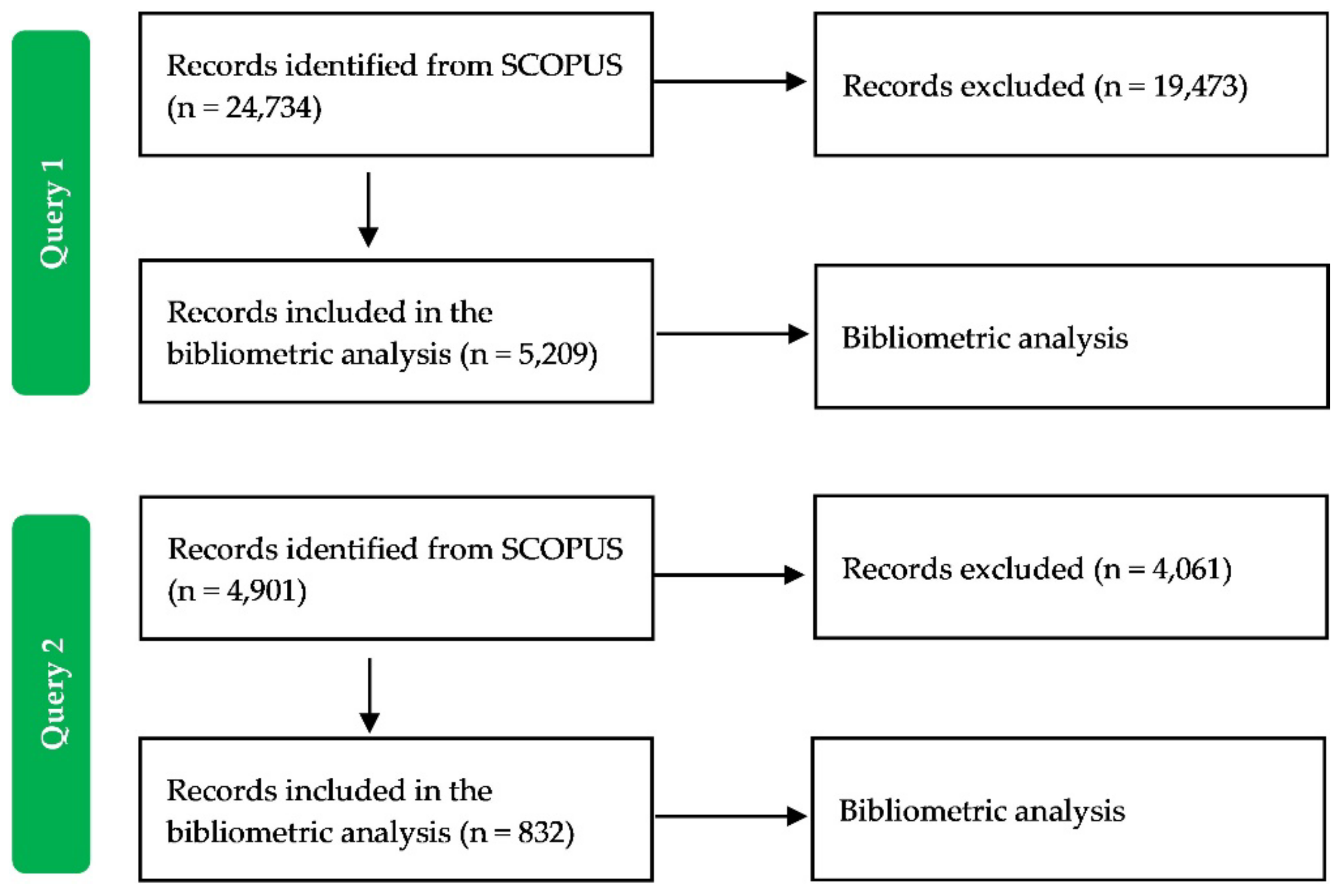
Figure 2.
Comparison of annual scientific production based on Query 1 and 2. Source: SCOPUS article keywords, prepared by the authors using Bibliometrix and Microsoft Excel.
Figure 2.
Comparison of annual scientific production based on Query 1 and 2. Source: SCOPUS article keywords, prepared by the authors using Bibliometrix and Microsoft Excel.
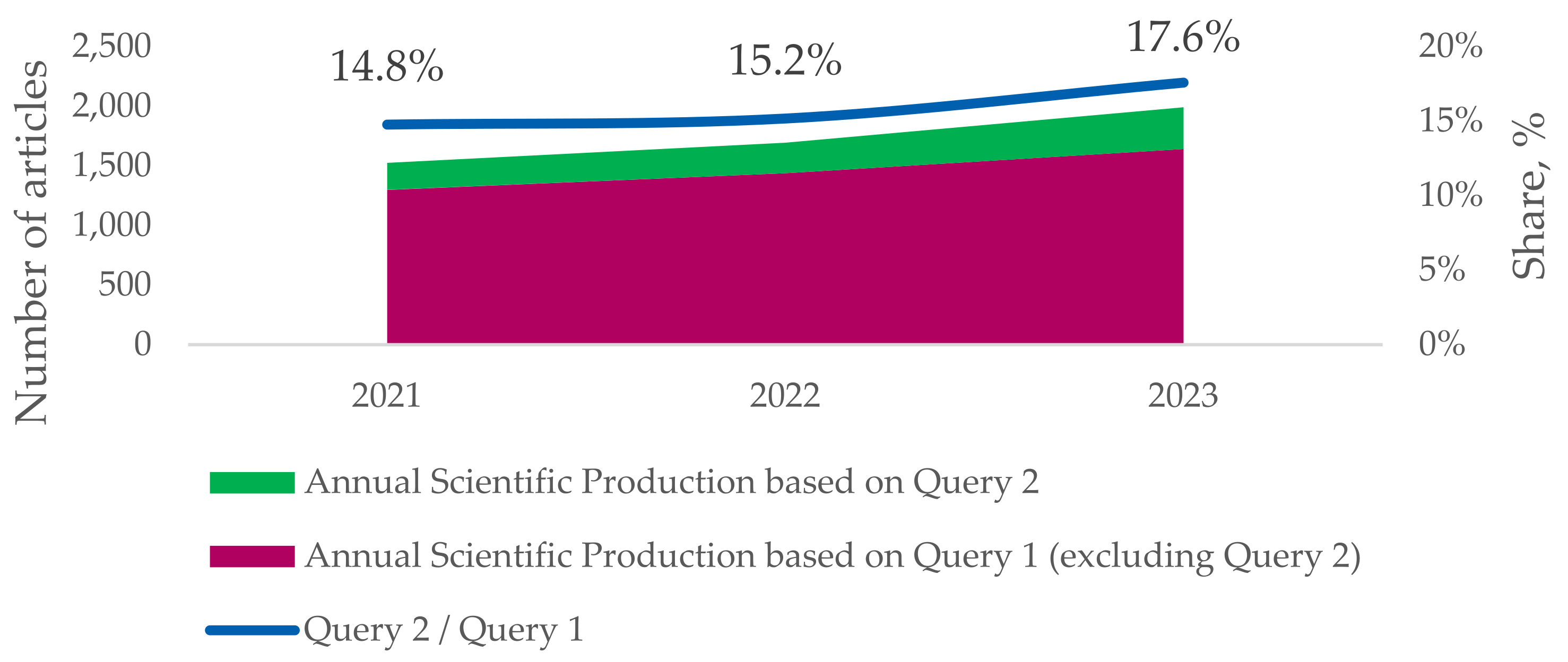
Figure 3.
Strategic management keyword co-occurrence network map based on Query 1. Source: SCOPUS article keywords, prepared by authors using VOSviewer.
Figure 3.
Strategic management keyword co-occurrence network map based on Query 1. Source: SCOPUS article keywords, prepared by authors using VOSviewer.
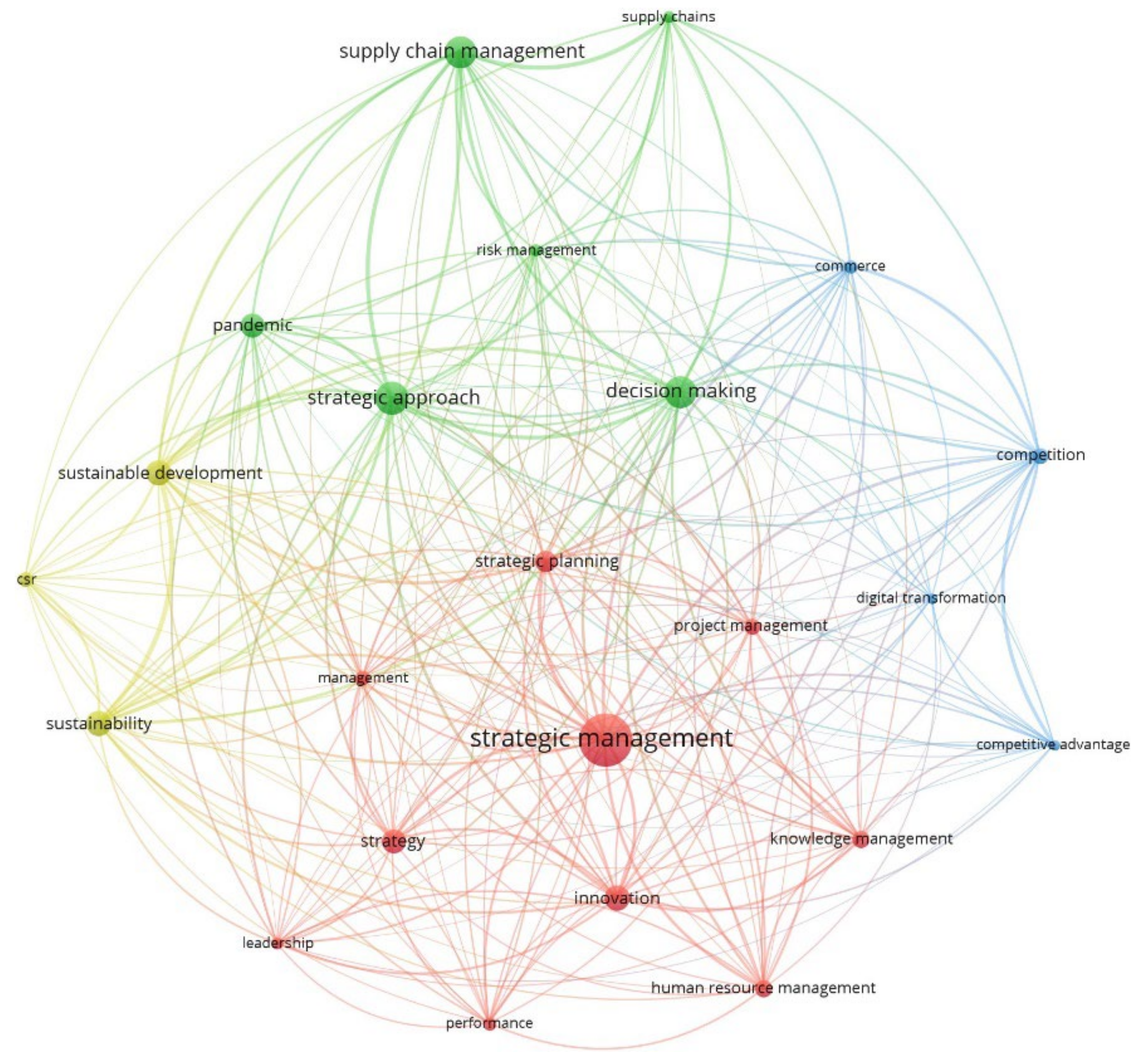
Figure 4.
Co-occurrence network map of strategic management and sustainability keywords based on Query 2. Source: SCOPUS article keywords, prepared by authors using VOSviewer.
Figure 4.
Co-occurrence network map of strategic management and sustainability keywords based on Query 2. Source: SCOPUS article keywords, prepared by authors using VOSviewer.
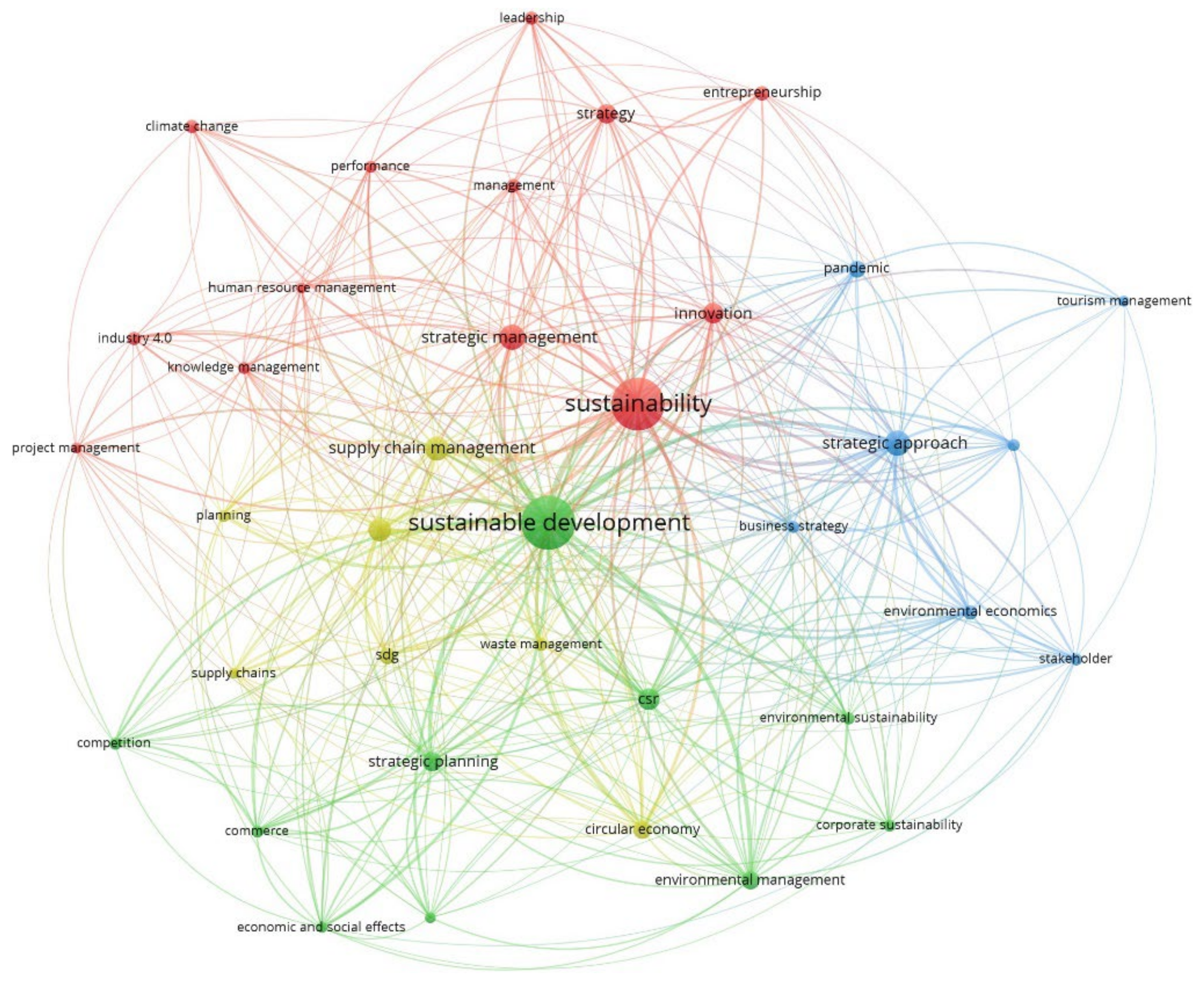
Figure 5.
Geographical map of co-authorship based on Query 2. Source: SCOPUS article keywords, prepared by authors using VOSviewer, Tableau and OpenStreetMap.
Figure 5.
Geographical map of co-authorship based on Query 2. Source: SCOPUS article keywords, prepared by authors using VOSviewer, Tableau and OpenStreetMap.
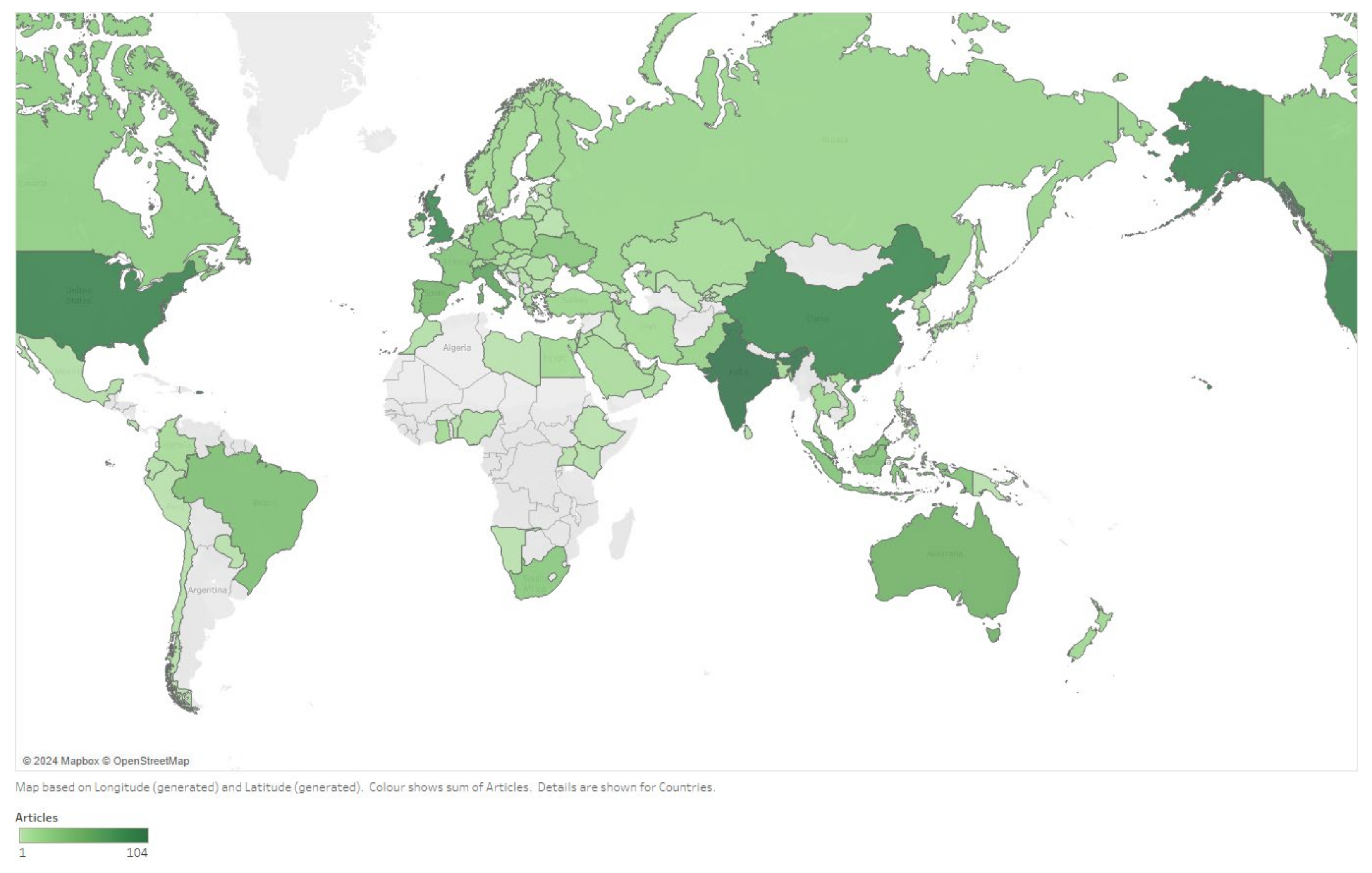

Table 1.
Queries used in the Scopus database exploration and their preliminary results.
| Name | Query code | Results |
|---|---|---|
| Query 1 | (TITLE-ABS-KEY(strategic management) AND PUBYEAR > 2020 AND PUBYEAR < 2024 AND ( LIMIT-TO ( SUBJAREA,"BUSI" ) ) AND ( LIMIT-TO ( LANGUAGE,"English" ) ) AND ( LIMIT-TO ( DOCTYPE,"ar" ) ) AND ( LIMIT-TO ( SRCTYPE,"j" ) ) ) | 5,261 1 |
| Query 2 | ( ( TITLE-ABS-KEY ( strategic AND management ) AND TITLE-ABS-KEY ( sustainability ) OR TITLE-ABS-KEY ( sustainable AND development ) ) AND PUBYEAR > 2020 AND PUBYEAR < 2024 ) AND ( LIMIT-TO ( SRCTYPE , "j" ) ) AND ( LIMIT-TO ( SUBJAREA , "BUSI" ) ) AND ( LIMIT-TO ( DOCTYPE , "ar" ) ) AND ( LIMIT-TO ( LANGUAGE , "English" ) ) | 840 2 |
1 5,209 after checking for missing data in Bibliometrix. 2 832 after checking for missing data in Bibliometrix.
Table 2.
Key statistics on queries used in the Scopus database exploration.
| Description | Query 1 | Query 2 | Query 2 / Query 1 |
|---|---|---|---|
| Timespan | 2021:2023 | ||
| Number of journals | 1,009 | 361 | 35.8% |
| Number of articles | 5,209 | 832 | 16.0% |
| Annual growth rate | 14.3% | 24.7% | |
| Document average age | 1.9 | 1.9 | |
| Average citations per document | 8.2 | 9.9 | |
| Number of keywords (keywords plus and author's keywords) | 22,492 | 4,889 | 21.7% |
| Number of authors | 13,174 | 2,449 | 18.6% |
| Number of authors of single-authored documents | 565 | 87 | 15.4% |
| Number of authors of multi-authored documents | 12,609 | 2,362 | 18.7% |
| Single-authored documents | 610 | 90 | 14.8% |
| Co-Authors per document | 3.1 | 3.2 | |
| International co-authorships | 32.8% | 33.7% | |
| Number of countries involved (co-authorship) | 193 | 88 | |
Table 3.
Clusters of strategic management keyword network map based on Query 1.
| Cluster colour | Keywords (link strength, co-occurrences) | Link strength | Co- occurrences |
|---|---|---|---|
| Red | Human resource management (159, 160), innovation (244, 230), knowledge management (140, 151), leadership (119, 107), management (111, 133), performance (107, 116), project management (147, 143), strategic management (360, 461), strategic planning (234, 192), strategy (176, 212) | 1,797 | 1,905 |
| Green | Decision-making (379, 281), pandemic (160, 211), risk management (116, 112), strategic approach (381, 292), supply chain management (316, 279), supply chains (180, 114) | 1,532 | 1,289 |
| Blue | Commerce (210, 120), competition (249, 139), competitive advantage (128, 101), digital transformation (76, 101) | 663 | 461 |
| Yellow | CSR (115, 129), sustainability (291, 220), sustainable development (342, 229) | 748 | 578 |
Table 4.
Clusters of strategic management and sustainability keyword network map based on Query 2.
| Cluster colour | Keywords (link strength, co-occurrences) | Link strength | Co- occurrences |
|---|---|---|---|
| Red | Climate change (28, 21), entrepreneurship (40, 27), human resource management (41, 16), industry 4.0 (34, 21), innovation (111, 45), knowledge management (37, 19), leadership (41, 21), management (35, 23), performance (37, 18), project management (30, 17), strategic management (99, 65), strategy (57, 41), sustainability (420, 220) | 1,010 | 554 |
| Green | Commerce (59, 18), competition (52, 20), corporate sustainability (41, 20), CSR (109, 51), economic and social effects (59, 15), environmental management (110, 37), environmental sustainability (48, 20), investments (42, 15), strategic planning (102, 40), sustainable development (544, 229) | 1,166 | 465 |
| Blue | Business development (65, 19), business strategy (56, 20), environmental economics (112, 27), pandemic (55, 33), stakeholder (62, 19), strategic approach (195, 63), tourism management (24, 17) | 569 | 198 |
| Yellow | Circular economy (108, 37), decision-making (176, 55), planning (59, 18), SDG (75, 34), supply chain management (145, 58), supply chains (51, 16), waste management (65, 21) | 679 | 239 |
Disclaimer/Publisher’s Note: The statements, opinions and data contained in all publications are solely those of the individual author(s) and contributor(s) and not of MDPI and/or the editor(s). MDPI and/or the editor(s) disclaim responsibility for any injury to people or property resulting from any ideas, methods, instructions or products referred to in the content. |
© 2024 by the authors. Licensee MDPI, Basel, Switzerland. This article is an open access article distributed under the terms and conditions of the Creative Commons Attribution (CC BY) license (http://creativecommons.org/licenses/by/4.0/).
Copyright: This open access article is published under a Creative Commons CC BY 4.0 license, which permit the free download, distribution, and reuse, provided that the author and preprint are cited in any reuse.


