

Submitted:
17 June 2024
Posted:
20 June 2024
You are already at the latest version
Abstract
Before the Bronze age, when agricultural practices spread throughout the Iberian Peninsula, the diet of natives was based on hunting, fishing and gathering wild plants. On spite of modern agriculture, the popular gathering of wild species for medical use, feeding, craftwork, etc. for centuries, has left a deep knowledge on the use of many of those species. Of the 6.176 Angiosperms native to the Iberian Peninsula and the Balearic Islands, over 200 species were introduced into cultivation from the Neolithic outside the Iberian Peninsula. The name of 30 of the progenitors still popularly used as food, are listed in this paper, together with the name of the derived crops. Special attention is paid to five wild species, including their composition and pharmacological properties, collected as food from ancient times, that in response to their great demand, have been recently introduced into cultivation in Spain and are now harvested and commercialized as new crops.
Keywords:
wild relatives
; cultivated plants
; new crops
; Iberian Peninsula
; Borago
; Prunus
; Silene
; Scolymus
; Asparagus
1. Introduction
The flora of the Iberian Peninsula, the Balearic Islands included, consist of 6.176 vascular plant species [1], many of them with two or more subspecies. Over 200 of these species are progenitors of widely cultivated plants. Some were introduced into cultivation in the Near East already in the Neolithic; this is the case, by instance, of Linum bienne Mill., the progenitor of flax (L. usitatissimum L.) and Lathyrus cicera L., the most likely progenitor of grass pea (L. arvensis L.). Some other were introduced into cultivation latter, in the Bronze Age, also in the Near East, including some herbaceous crops, as the fenugreek (Trigonella foenum-graecum L.) and the three more characteristic Mediterranean woody crops: fig (Ficus carica L.), olive (Olea europaea L.) and grape vine (Vitis vinifera L.). Some crops are cultivated since Greek and Roman times, by instance hazel (Corylus avellana L.), apple (Malus pumila Mill.), pear (Pyrus communis L. var. communis), laurel (Laurus nobilis L.), cabbage and cauliflower (Brassica oleracea L.), celery (Apium graveolens L.) and many others. A few have been introduced into cultivation in more recent times, such as chard and sugar beet (Beta vulgaris L.).
Before the Bronze age, when agricultural practices spread throughout the Iberian Peninsula, the diet of natives was based on hunting, fishing and gathering wild plants, that is, native species that grow and reproduce naturally in their natural habitats without being cultivated [2]. Rests of hazel (Corylus avellana L.), stony pine (Pinus pinea L.), wild olive (Olea europaea var. sylvestris L.), grape vine (Vitis vinifera L.), white beam (Sorbus aria L.), mastic (Pistacia lentiscus L.) and other plants are found in Epipaleolithic, Mesolithic and Neolithic archeological sites [3] (pp. 40-43). The presence of rests of acorns of Quercus is permanent in archeological sites. It may be said that the sweet fruits of these trees, particularly Quercus ilex subsp. ballota (Desf.) Samp., provided an important part of the diet of natives of the Iberian Peninsula [4], at least until the extensive cultivation of cereals (mainly tetraploid and hexaploid wheats) in Roman times.
On spite of modern agriculture, the popular gathering of wild species for medical use, feeding, craftwork, etc. for centuries, has left a deep knowledge on the use of many of those species. Acorns of the green oak, by instance, are still a part of the popular cuisine in the Iberian Peninsula, mainly in W Spain: raw or roasted are directly eaten or used to prepare stews; or fruits are ground to use the flour to bake bread or to prepare cookies, or to make soup [5]; macerate in spirit produce an excellent “licor de bellota”, a beverage very characteristic of the region of Extremadura.
Many of these wild plants are popular greens to prepare salads as the dandelion (Taraxacum spp.), native everywhere, or the water-cress (Roripa nasturtium-aquaticum (L.) Hayek) that grows along the streams and springs. The leaves, stems or inflorescences of many other plants are used as pot vegetables either cooked or stewed. Many aromatic plants are used as pot herbs, as it is the case of the rock tea (Jasonia glutinosa (L.) DC.), the chamomile (Chamaemelum nobile (L.) All.) or the penny-royal (Menta pulegium L.), or for seasoning olives (Thymus mastichina (L.) L., T. albicans Hoffmanns. & Link and Thymbra capitata (L.) Cav.). The fleshy fruits of several trees and shrubs are eaten or macerated in spirit to elaborate alcoholic beverages, as those of the strawberry tree (Arbutus unedo L.), the rowan (Sorbus domestica L.) or the sloe or blackthorn (Prunus spinosa L.).
The consumption of several of these wild species is so rooted, mainly among the rural population, that the amount of plant material collected for personal use or to be sold in local markets is not enough to cover the demand. Hence the need to introduce into cultivation those wild species more widely demanded. Its introduction into cultivation facilitates the easy access to these plants to any potential user. But, above all, its cultivation may contribute to the protection of wild populations. This was, in fact, the proposal by Hernandez Bermejo & al. to avoid the extinction of the chamomile of Sierra Nevada (Artemisia granatensis Boiss.), an endemic plant that was about to disappear due to the excessive collecting to be used as pot herb in bars and restaurants of Granada and other neighboring cities [6] (p. 63).
2. Materials and Methods
To establish whether any wild progenitor of Mediterranean crops is still popularly collected to be used as food, a comparison has been made between the information contained in the quite complete revision of ethnobotanical use of Spanish native plants by Morales and co-workers [7] and the catalogue of wild relatives of cultivated plants native to Europe, published by Heywood & Zohary [8]. The results of this comparative study have been complemented mainly with the information provided by Zohary & Hopf [9] on domestication of plants in the Old World.
A throughout revision of agronomic literature has been made, to try to know whether attempts are currently done in the Iberian Peninsula to introduce native plant species into cultivation.
For the five new Iberian Peninsula crops so far found, their content in bioactive chemical compounds has been investigated through the appropriate literature, to know whether, in addition to their nutritional usefulness, these crops could have any pharmacological value.
3. Ethnobotany in Spain
Spain may be the European country with the highest number of scientific works devoted to Ethnobotany, this is, the dynamic relationship between plants and people [10]. They have been compiled by Morales and co-workers [7] in a review in which 225 bibliography references are given, including PhD and Graduation thesis, books and papers. Each of these sources give information on the popular use of wild plants in one or more of the 17 autonomous communities in which Spain is divided, in one or more of the 50 provinces of this country, in a particular area, or in the natural areas around a particular city or village. Many deal with the popular uses of one or several species. According to this review, about 1.200 wild species are used in folk medicine, and around 500 are used as food plants.
Tardío & al. [11] (p. 33) indicate that 490 species are collected from nature as food, which represent about 6% of the Iberian Peninsula vascular flora. They can be separated into several groups. Green vegetables constitute the highest group, with 49% of the species used; 31% are plants used for beverages; 16% provide fruits and sweets; 6% are preservatives, and the remaining 5% are used for other purposes.
Many of these wild species are widespread in the Mediterranean area, and are also traditionally used in other countries. This is why 318 wild edible plants, including pot teas, are coincident in their use in Spain, Italy and Greece [12].
Although agriculture has displaced the traditional use of wild plants, it is still a very deeply rooted custom in many areas of the Iberian Peninsula to collect wild plants to be consumed at home or to be sold in local markets, particularly in rural areas. There are even groups of friends and clubs who go out to the field together to collect edible plants, to prepare later certain cooking recipes and to share the food.
Many of these currently collected plants are progenitors of cultivated plans which were introduced into cultivation from the Neolithic outside the Iberian Peninsula. The name of 30 of these progenitors are listed below arranged by families. Their scientific names are followed by the name of the derived crop and, in bold type, the common name of the crop. Data are based on Heywood & Zohary [8] and Zohary & Hopf [9]; nomenclature follows Castroviejo & al. [13]. An asterisk marks the potential relative, when this is not clearly established.
Corylaceae
Corylus avellana L. (C. avellana L., hazel)
Chenopodiaceae
Beta marítima L. (B. vulgaris L.; sugar beet, chard, etc.)
Capparidaceae
Capparis spinosa L. (C. spinosa L.; caper)
Brassicaceae
Brassica nigra (L.) W.D.J. Koch (B. nigra W.D.J. Koch, black mustard)
Brassica oleracea L. (B. oleracea L.; cabbage, cauliflower, etc.)
Eruca vesicaria (L.) Cav. subsp. vesicaria (E. vesicaria subsp. sativa (Mill.) Thell.; rucola)
*Rhaphanus raphanistrum L. (R. sativus L.; radish)
Rorippa nasturtium-aquaticum (L.) Hayek (R. nasturtium-aquaticum (L.) Hayek; green water-cress)
*Sinapis alba subsp. mairei (H. Lindb. fil.) Maire (S. alba L. subsp. alba; white mustard)
Rosaceae
Malus sylvestris (L.) Mill. (M. pumila Mill.; apple)
Prunus avium L. var. avium (P. avium var. juliana (L.) Thuill.; sweet cherry)
Pyrus communis var. pyraster L. (P. communis L. var. communis; pear)
Rubus idaeus L. (R. idaeus L.; raspberry)
Fabaceae
Ceratonia siliqua L. (C. siliqua L.; carob)
Glycirrhyza glabra L. (G. glabra L.; liquorice)
*Lathyrus cicera L. (L. sativus L.; green pea)
Pisum sativum subsp. elatius (M. Bieb.) Asch. & Graebn. (P. salivum L. subsp. sativum; pea)
Trigonella foenum-graecum L. (T. foenum-graecum L.; fenugreek)
Vitaceae
Vitis vinifera subsp. sylvestris (C.C. Gmel.) Berger (V. vinifera L. subsp. vinifera; grape vine)
Apiaceae
Apium graveolens L. (A. graveolens L.; celery)
Carum carvi L. (C. carvi L.; caraway)
Daucus carota L. subsp. carota (D. carota subsp. sativus (Hoffm.) Schübl. & G. Martens; carot)
Foeniculum vulgare subsp. piperitum (Ucria) Bég. (F. vulgare Mill. subsp. vulgare; celery)
Oleaceae
Olea europaea var. sylvestris (Mill.) Lehr. (O. europaea L. var. europaea; olive)
Asteraceae
Cychorium endivia subsp. divaricatum (Schousb.) P.D. Sell (C. endivia L. subsp. endivia; endive)
Cychorium intybus L. var. intybus (C. intybus var. sativum Lam. & DC.; cichory)
Cynara cardunculus subsp. sylvestris L. (C. cardunculus L. subsp. cardunculus, cardoon; subsp. scolymus (L.) Hayek, artichoke)
*Lactuca serriola L. (L. sativa L.; lettuce)
Liliaceae
*Allium ampeloprassum L. subsp. ampeloprassum (A. porrum L.; leek)
Allium schoenoprassum L. (A. schoenoprassum L.; chives)
4. Wild Edible Plants Recently Introduced into Cultivation in Spain
Some wild edible plants are so appreciated as food or to produce beverages, that collecting them in the field is not sufficient to cover the demand. Consequently, attempts have been made in modern times to cultivate them to make them available in markets, supermarkets and greengrocers. They are borage (Borago officinalis L.), sloe or blackthorn (Prunus spinosa L.), bladder campion (Silene vulgaris L.), golden thistle (Scolymus hispanicus L.) and wild asparagus (Asparagus acutifolius L.).
- Borage (Borago officinalis L.)
Borago officinalis is an erect, setose-hispid annual Boraginaceae up to 70 cm high, with petiolate leaves with a petiole up to 15 cm and an ovate to elliptic blade up to 15 x 10 cm, flowers blue, sometimes white, and dark nutlets of 4-5 mm (Figure 1). It is a common weed in the Mediterranean and Macaronesian areas and SW Asia, and has been introduced and naturalized in most of Europe. Borage is much appreciated as food in some regions of N Spain, particularly La Rioja, Navarra and Aragón, where the petiole and midrib of the leaves are consumed raw in salads, but more frequently stewed or in soups, omelettes, etc. Since ancient times borage has been cultivated in orchards to be medically used as a diuretic, sudorific, anti-inflamatory and sedative, and in recent times the oil obtained from the nutlets is used to control blood pressure and to lower cholesterol [14] (p. 332). At the beginning of the 16th century, Herrera [15] said that borage “is very salutary, more than other vegetables”, but that they were not appreciated because “they were not known”. Three centuries later, in an addition to the Agricultura General of Herrera, Boutelou [16] (p. 60) said that “It is cultivated sometimes in the orchards, although it is considered rather as a medicinal plant than as a kind of vegetable”. This indicates that its introduction in agriculture as a new crop should have taken place in Spain along the 19th century. In 2018 the area devoted to cultivation of borage covered 167 ha with a production of 6.606 tons; its cultivation in a greenhouse was initiated in the decade of 1980 [17] (p. 27).
Outside Spain, Borago officinalis is cultivated commercially as an oil crop, particularly in United Kingdom, Canada and New Zealand [18] to get ɣ-linolenic acid (GLA) (Figure 2), an unusual fatty acid in plants, appreciated because of its nutritional, cosmetic and medicinal value [19,20].
The plant also contains pyrrozidine alkaloids, some of which are hepatotoxic, mutagenic and carcinogenic [21]. An overview of the main constituents is shown in Table 1. Apart from the mentioned fatty acids and pyrrolizydine alkaloids, Borago officinalis also contains flavonoids, mucus compounds, tannins, mineral salts, organic acids, saponins, vitamins and essential oil [22,23].

Table 1.
Bioactive compounds and their pharmacological activity.
| Bioactive compounds | Pharmacological activity | Reference |
|---|---|---|
| Fatty acids: γ-linolenic acid, linoleic acid, α-linolenic acid, palmitic, stearic, oleic and elaidic acid | Synthesis of eicosanoids, prevention of atherosclerosis | [22,23] |
| Pyrrolizydine alkaloids: likopsamine, supinidine, amabiline, intermedine | Toxic to the liver parenchymal | [22] |
| Phenolic acids: vanillic acid, p-coumaric acid, p-hydroxybenzoic, gentisic acid, caffeic acid, rosmarinic acid, chlorogenic acid, sinapic acid | Antioxidant | [22,24] |
| Flavonoids: quercetin, isoquercetin, isorhamnetin, kaempferol glycosides, vitexin and isovitexin | Antioxidant | [22,25] |
Borago officinalis possesses antispasmodic, bronchodilator and cardiovascular inhibitory effects [26]. It is beneficial for patients with atopic dermatitis, psoriasis and obsessive-compulsive disorder [27]. Ramezani and co-workers. reported antioxidant, antinociceptive, radioprotective, hepatoprotective and memory improvement properties of borage [28]. Because of the fact that borage seed oil is rich in GLA, it is also used in the form of a food supplement [27].
- Sloe or blackthorne (Prunus spinosa L.)
Prunus spinosa (Figure 3) is a deciduous intricately branched rosaceae shrub up to 3 (-6) m high native of most of Europe, N Africa and W Asia, that forms part of the shrubby plant formations of most of the Iberian Peninsula and Balearic Islands [29] (p. 448). The sub-globose 10-15 mm pruinose dark bluish-black fruits, inedible due to their high tannin content, have traditionally been used in Navarra and Basque Country (N Spain) to elaborate by maceration a very popular beverage with 25-30 degrees of alcohol known as “pacharán” (sloe brandy), whose use is documented from the 15th century [30] (p. 6). To prepare pacharán fruits are harvested from the wild in September, although in the last decades fruits have also been imported from E European countries.
To increase pacharán production and to lower sloe fruits importation, an agronomic program to introduce Prunus spinosa into cultivation was started in 1989 for initiative of INTIA (Instituto Navarro de Tecnologías e Infraestructura Alimentarias, S.A.; Navarrese Institute for Food Technologies and Infrastructures, A.S), with the collaboration of the two Navarrese universities [30]. Cuttings collected from different wild populations through the province of Navarra were planted in the Experimental Field of Sartaguda (Stella, Navarra), where different cultivation and graft patterns methods were tested. The best results were obtained when cuttings were grafted in myrobalan plum (Prunus cerasifera Ehrh.). Plants are pruned to form trees with a trunk 80-90 cm high. Fruits are harvested mechanically by a vibrator system with an inverted canvas umbrella applied to gather the fruits, that are carried to a palot by a conveyer belt [30] (p. 8).
In 2022 the area dedicated in Navarra to monoculture production of Prunus spinosa covered 115 ha, with a fruit production of about 800 tons, that allowed the elaboration of over 3,3 million liters of pacharán [31], this being about 90% of the total production of this liquor in the province of Navarra.
Today, it is a very successful new crop.
The phytochemical composition of the fruits of Prunus spinosa L. is shown in Table 2. The fruits are rich in antioxidants - vitamin C (Figure 4), polyphenols, anthocyanins and beta-carotene - which help the body to reduce the harmful effect of the free radicals, produced by the reactive oxygen species [32].
This antioxidant activity is crucial in the prevention and treatment in many diseases. For example, it is beneficial on the wound healing process, it may possess cytotoxic activity on some cancer cell lines, and selective inhibitory effect on the growth of some strains of potentially pathogenic bacteria [33]. Antioxidants in the fruits of Prunus spinosa could be beneficial in some neurodegenerative (dementia, Alzheimer’s, and Parkinson’s disease) and in the prevention of some cardiovascular diseases, too.
Table 2.
Bioactive compounds and their pharmacological activity.
| Bioactive compounds | Pharmacological activity | References |
|---|---|---|
| Vitamin C | Antioxidant | [32] |
| Phenolic acids: protocatehuic acid, caffeoylquinic acid, coumarolquinic acid, feruloquinic acid, caffeoylshikimic acid | Antioxidant | [34,35] |
| Anthocyanins: cyanidine, peonidine, pelargonidine and petunidin glycosides | Antioxidant | [32,34] |
| Beta-carotene | Antioxidant | [32] |
| Flavonols: quercetin glycosides, kaempferol glycosides, isorhamnetin glycoside | Antioxidant | [34,35] |
Prunus spinosa can be used to make processed products like marmalade, jam, and jelly, but the thermal processing of fresh blackthorn pulp leads to a significant decrease in phytochemicals and antioxidant activity [36].
- Bladder campion (Silene vulgaris (Moench) Garke subsp. vulgaris)
This is a glabrous perennial herb of family Caryophyllaceae, with several stems up to 80 cm, narrow elliptic-lanceolate to ovate leaves and an open dichasial inflorescence with white flowers (Figure 5). Native of Europe and the Mediterranean area, it has been introduced and has been naturalized in N and S America. It grows in cultivated fields, road sides and in general in anthropogenic areas [37] (p. 400).
Its tender stems and leaves are eaten mainly in omelettes, scrambled eggs or stews, or, more rarely, raw in salads, all around Spain [38] and in many Mediterranean countries, including Portugal [39] (p. 6), Morocco [40] (pp. 24, 35), France [41], Italy [42,43,44], Greece and Cyprus [44] (p. 398) and Turkey [45] (p. 159), [46] (p. 335).
The deep habit to consume this appreciative green in Spain makes it insufficient to collect it from the field. This is why the best way to turn the bladder campion into a crop is investigated in several Spanish agronomic centers, particularly in the fields of “El Encín” (Alcalá de Henares, Madrid) of INIA (Instituto Madrileño de Investigación y Tecnología Agraria y Alimentaria; Institute of Agricultural Research and Technology of Madrid) (see, by instance Alarcón Villora & al., 2000 [47] and García Gonzalo & Alarcón Villora, 2007 [48]), in the experimental field “Finca Tomás Ferro” of the Polytechnical University of Cartagena (Murcia) (see, by instance, Conesa & al., 2009 [49] and Ortega Calzada, 2013 [50]), and in the Agro-Environmental Research Center of Albacete [51].
The phytochemical composition of the fruits of Silene vulgaris is shown in Table 3. Silene vulgaris is rich in carbohydrates, proteins and fibers, and could be used to enrich the energy content of diets. It also contains triterpene saponins (like silenoside A, Figure 6), flavonoids, tannins, phytoectosteroids and essential oil. It contains slow amounts of alkaloids and phytic acid (anti-nutrients) which could be decreased by boiling, soaking and frying [52].
Table 3.
Bioactive compounds and their pharmacological activity.
| Bioactive compounds | Pharmacological activity | References |
|---|---|---|
| Triterpene saponins: silenosides A−C | Detergent properties Anti-inflammatory properties Lowering plasma lipid concentrations |
[52,53] |
| Essential oils: longifolene, cyclo-hexane-methanol, camphor, elemol, thymol | Antioxidant Anti-inflammatory Immunomodulatory |
[54] |
| Organic acids: malic acid, p-coumaric acid, quinic acid | Antifungal and anticholinesterase activity | [55] |
| Phytoecdysteroids | Mimic insect molting hormones | [52] |
| Flavonoids: hyperoside, rutin, hesperidin | Antioxidant | [52,55] |
| Tannins | Antioxidant | [52] |
The pharmacological profile of Silene vulgaris is poorly studied. A study, comparing the composition and bioactive properties of 6 wild edible Silene species showed that Silene vulgaris possess relatively high enzyme inhibitory and lower antifungal, antimicrobial and antioxidant capacity than the other Silene species [55].
- Golden thistle (Scolymus hispanicus L.)
After the bladder campion and the wild asparagus, the most popular wild edible plant in the Iberian Peninsula is the golden thistle. It is a biennial herbaceous spiny compositae, with simple erect winged and leafy stem up to 150 (- 250 cm), basal divided leaves forming a rosette and yellow flower heads (Figure 7).
It is native of C Europe, Mediterranean region and W Asia, where it grows mainly in uncultivated agricultural fields and roadsides. Only the petiole and midrib of the rosette leaves are eaten before the marginal spines develop.
Golden Thistle is much appreciated as food all over Spain [38], particularly in the southern and western regions. But it is also consumed in many Mediterranean countries, such as Portugal [56,57] (p. 368), Morocco [40] (p. 617), [58] (pp. 23, 32), Italy [43,44] (p. 398), Greece [44,59], Cyprus [44] and Turkey [45] (p. 166), [46] (pp. 224, 338).
The diuretic sesquiterpenic lactones of the golden thistle give the food a very characteristic slightly bitter taste, which makes this vegetable particularly attractive. This property gives golden thistle the ability to stimulate appetite, enhance bile secretion, decrease flatulence, and aid digestion [60].
The demand of Scolymus hispanicus as food is so high that attempts have been made to introduce it into cultivation [47]. But in Spain, the successful cultivation of this plant as a crop is owed to the initiative of farmers of the La Janda area in Cadiz province, particularly in the city of Conil, where some decades ago farmers started to cultivate in their fields Scolymus hispanicus subsp. occidentalis F.W. Vázquez, with basal leaves up to 25 cm, which is distributed by the western half of the Mediterranean area [61]. Farmers formed a cooperative with registered office in the city of Conil, to market vegetables produced in their fields. In this way, Scolymus hispanicus is available in spring in all local markets of the area. Currently, this cooperative associates almost 500 farmers. Golden thistle is also collected from wild and commercialized in many other Spanish areas.
Scolymus hispanicus contains triterpenes and sesquiterpenes (like the recently discovered in Scolymus hispanicus iso-japonicolactone, Figure 8), polyphenols, flavonoids and tannins, as shown on Table 4. Due to the high content of dietary fiber, Scolymus hispanicus L. flour could be used in the preparation of low-fat, high-fiber dietetic products [60].
Figure 6.
Iso-japonicolactone.
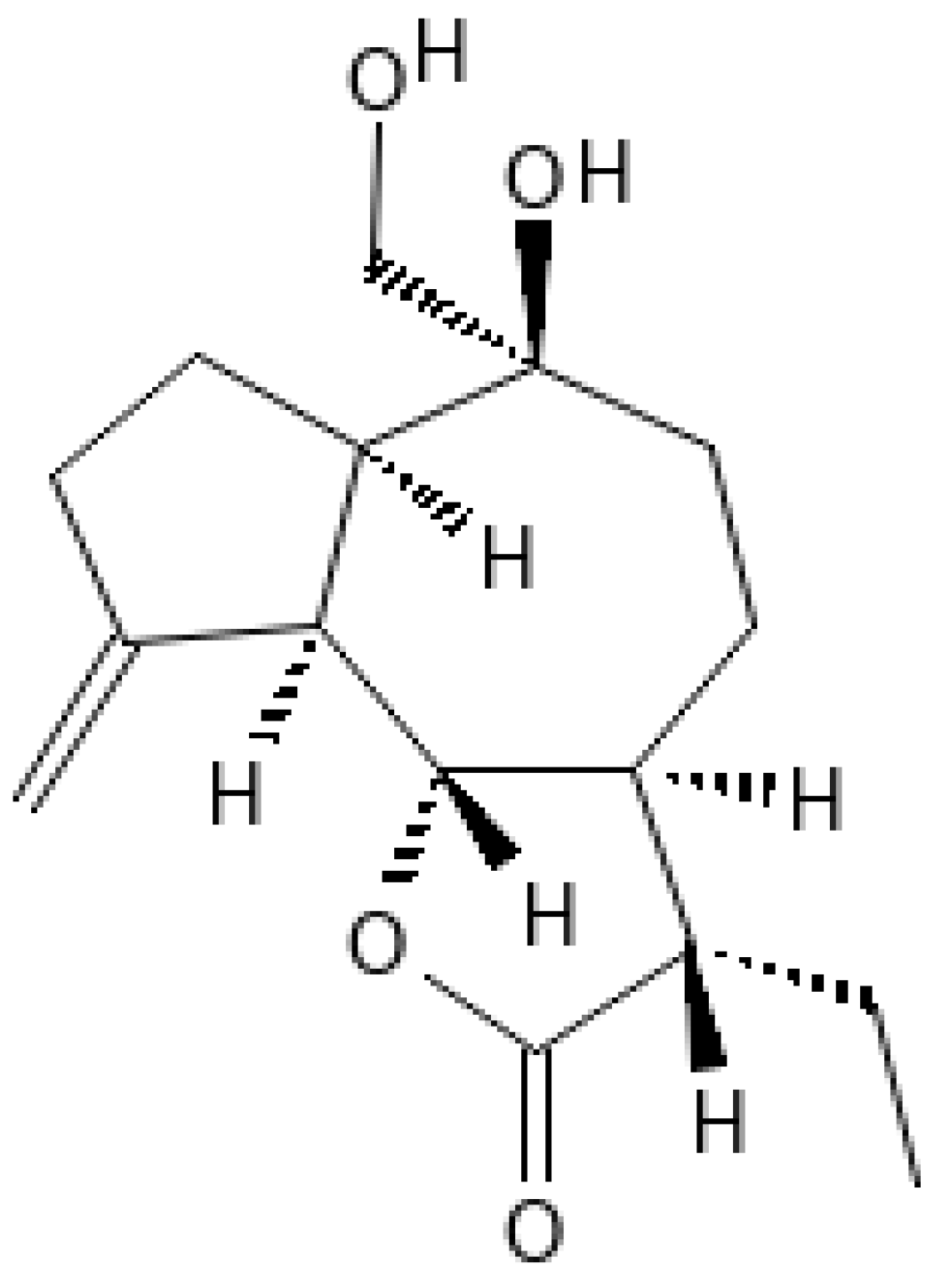
Table 4.
Bioactive compounds and their pharmacological activity.
| Bioactive compounds | Pharmacological activity | References |
|---|---|---|
| Sesquiterpenes (iso-japonicolactone, guaianolide sesquiterpene) | Anti-inflammatory Antioxidant |
[62] |
| Triterpenes: lupeol, lupeol acetate | Anti-inflammatory Antioxidant |
[62] |
| Phytosterols (stigmasterol) | Antioxidant Local anti-inflammatory |
[62] |
| Polyphenols | Antioxidant, anti-aging, anti-inflammatory and anti-proliferative | [63,64] |
| Flavonoids | Antioxidant | [63,64] |
| Tannins | Antioxidant | [63] |
Scolymus hispanicus possesses antioxidant and antimicrobial pharmacological effects. Moreover, the plant is a good source of macro- and micronutrients, which contributes to fighting against malnutrition [63]. A study by Berdja & al. [64] showed that Scolymus hispanicus possesses lipid-lowering, hypoglycemic, anti-inflammatory activities. Özel Taşcı & al. [65] reported also cytotoxic activity.
- Wild asparagus (Asparagus acutifolius L.)
As the bladder campion and the golden thistle, the wild asparagus grows all around the Mediterranean, where it is collected for food practically in all countries.
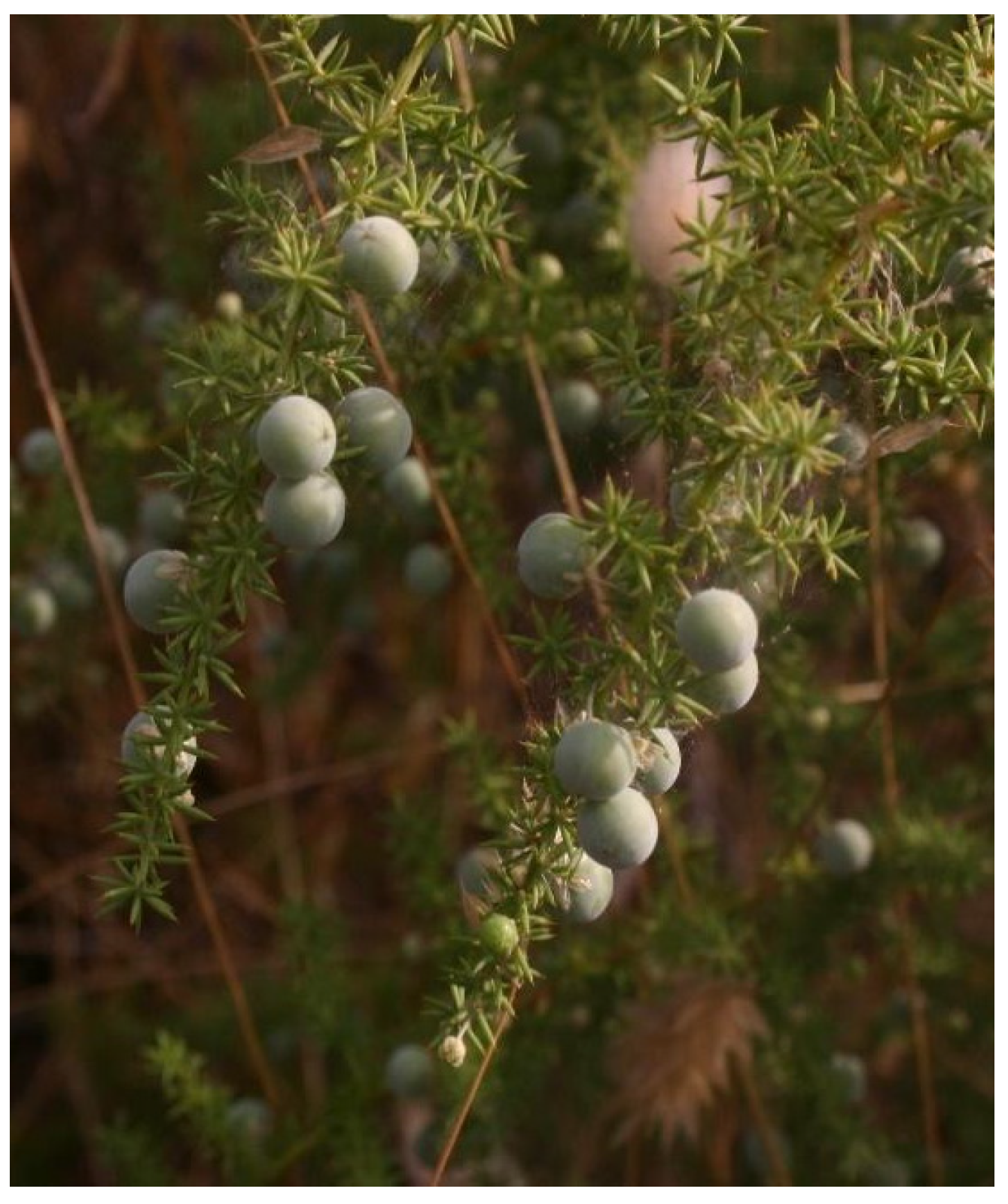
It is a very thorny bush because its cladodes are lignified and transformed in sub-equal spines up to 8 mm (Figure 7). Young shoots are gathered before lignifying and consumed boiled in omelets or stewed, rarely raw in salads. Strongly diuretic, its slightly bitter taste is much appreciated. Shuts of the other not so common Mediterranean asparagus (A. aphyllus L., A. horridus L. and A. albus L.), are also collected and consumed in the same way.
Figure 7.
Asparagus acutifolius L. (Photo by B. Valdés).
Attempts have recently been done to introduce A. acutifolius into cultivation. Those in Spain have not been, so far, satisfactory. But Rosatti & al. succeeded to cultivate this species in Italy (Umbria) [66].
The phytochemical composition of Asparagus acutifolius is shown in Table 5. A study by Hamdi & al. revealed that the stem of A. acutifolius contains high amounts of total flavonoids and simple phenolics [67]. Moreover, flavonoid glycosides were only found in the stems. Highest amount of saponins were found in the rhizome extract followed by the pericarp, leaf and stem [68]. Kaska and co-workers’ study [69] showed that tannins are also present in water extracts of the fruit and leaves from A. acutifolius. A study of the carotenoid content of wild edible species in Spain showed that the young shots of A. acutifolius contains carotenoids (mainly lutein, Figure 8 and neoxanthin) [70].
5. Discussion
It is estimated that the worlds’ flora comprises above 400,000 species. A very high percentage of it can’t be consumed because of their unpleasant taste, toxicity, inability to be cultivated, etc. Only three of the words edible plants (around 50 000) - rice, maize and wheat - provide 60 percent of the world’s food energy intake [72]. And only 103 species contribute 90% of national per capita supplies of food plants [73]. Most of these species were cultivated long ago, and their quality as crops and food are gradually adjusted to today’s needs.
As science advances, more and more wild species are being studied. Phytochemical and pharmacological studies provide a basis on whether a plant could be used as a food source or for medicinal purposes and botanical and agronomy studies show the possibilities for their introduction in culture. The five aforementioned species, Borago officinalis, Prunus spinosa, Scolymus hispanicus, Silene vulgaris, Asparagus acutifolius were recently introduced into cultivation in Spain. Although some of them have a long history of consumption, special attention must be paid to their toxicological profile to prove their safety.
Borago officinalis is predominantly used as an oilseed crop. Its properties as food are famous not only in Spain, but also in Germany, Italy, Crete, France, Great Britain [74]. It is known that the plant contains pyrrolizidine alkaloids that cause toxicity on the liver. In a systematic review and quality assessment of case reports of adverse events of three plant species, containing pyrrolizidine alkaloids, no case reports referring to Borago officinalis were located [75]. However, their carcinogen activity based on the genotoxic mechanism of action has been shown in animal studies. Moreover, consumption of borage is prohibited for pregnant women due to their adverse effects on the fetus development [76]. Borage’s oil, which contains high amounts of ɣ-linolenic acid, does not contain pyrrolizidine alkaloids, or at least, if present, are at levels lower than 200 ppt [76,77].
Prunus spinosa bluish-black fruits have astringent properties, and besides for making sloe brandy, can be used also in the food industry as natural colorant and preservative [78]. Studies on this species stress on the antioxidant properties of the fruits, which are far too astringent for direct human consumption, but can be used as flavoring in liqueurs, wine, vinegar, jams, jellies, preserves [79,80]. Information on toxicology of the sloe fruits is scarce.
Silene vulgaris stems and leaves can be consumed both fresh and cooked. The plant contains phytoecdysteroids, which possess adaptogenic, anabolic, antidiabetic, antitumor, antiosteoporosis, immunoprotective/immunostimulant effects and hepatoprotective effects. Early pharmacological experiments have shown low toxicity of ecdysteroids in mammals (LD50 > 6 g/kg) [81]. Another important group of secondary metabolites in Silene vulgaris comprises the saponins. Hairy roots of Silene vulgaris can be even used as an alternative approach for production of saponins [82]. Many plants, used as food, contain saponins (e.g., chickpeas, soybeans, lentil, lucerne), which, taken with the food, have the ability to lower plasma lipid concentration. Toxicological studies show that short term consumption of saponins from soybeans, lucerne, or quillaia are safe at levels of below 50 mg/kg body weight - about 3 g/day [83].
Scolymus hispanicus midribs (i.e., the central leaf veins), petioles, and roots are usually consumed boiled, mashed or baked, while the young tender leaves and the blanched leaf stalks are consumed as a fresh salad, according to the traditional Mediterranean cuisine [84]. Sergio & al. [84] studied how the cooking method of Scolymus hispanicus affected the phenolic content and composition, antioxidant activity, sugar and inorganic ion content, organoleptic characteristics, and microbial safety. They discovered that boiling caused a decrease in the values of these parameters, even though it was the most preferred way of cooking when it comes to taste. When prepared by steaming and ‘sous vide’, the antioxidant activity, total phenols, and chlorogenic acid content was preserved. Moreover, ‘sous vide’ resulted in the best cooking method also regarding microbial safety during shelf life. A study by 63 Aboukhalaf & al. shows that the crude extract of S. hispanicus aerial parts is safe with a LD50 higher than 5000 mg.kg-¹ [63].
Asparagus acutifolius shoots can be consumed boiled, stewed and rarely raw. Although its safety profile is poorly studied, there are studies of its close edible relative Asparagus officinalis. Ito & al. [85] studied the acute and subchronic oral toxicity, as well as genotoxicity of enzyme-treated Asparagus officinalis extract (a novel anti-stress functional material) in rats. The 90-day subchronic study (500, 1000 and 2000 mg/kg body weight, delivered by gavage) reported no significant adverse effects in food consumption, body weight, mortality, urinalysis, hematology, biochemistry, necropsy, organ weight, histopathology as well as no genotoxicity was observed. In a double-blind and randomised controlled trial of a standardised extract of Asparagus officinalis, no severe side effects were observed [86].
As a wild edible plant, Asparagus acutifolius can be easily confused with some non-edibles by non-professionals. During 1995 - 2007, 31 patients presented clinical features of Aconite poisoning following the ingestion of young shoots and leaves, that they suppose “wild asparagus” [87]. Another plant, Baptisia, can also be confused with wild asparagus, and its consumption can cause generalized nicotinic agonist toxicity [88].
6. Conclusions
In the Iberian Peninsula over 500 wild plant species are popularly collected as food. Thirty of these wild plants, widely distributed throughout the Mediterranean area were introduced into cultivation, some already in the Neolithic but most of them in classical times, and they are currently important crops cultivated worldwide. But the traditional use of many others, not commercially available, has resulted in the attempt to introduce them into cultivation. The introduction of borago, blackthorne and golden thistle has been successful, while attempts to cultivate bladder campion and wild asparagus are still in progress. It is expected that new wild food and medicinal plants will be introduced into cultivation in the near future. A review of phytochemistry and pharmacology of Borago officinalis L., Prunus spinosa L., Silene vulgaris L., Scolymus hispanicus L. and Asparagus acutifolius L. provide a basic knowledge of their safety and beneficial properties, but further research should be carried out to determine their characteristics as food.
Author Contributions
Conceptualization, B.V.; methodology, B.V.; investigation, B.V. and C.S; writing—original draft preparation, B.V., and C.S.; writing—review and editing, B.V. and C.S.; visualization, B.V. and C.S..; supervision, B.V.; authors have read and agreed to the published version of the manuscript. All authors have read and agreed to the published version of the manuscript.
Funding
This research received no external funding.
Acknowledgments
The authors wish to express their gratitude to Ana Valdés for correcting the English of the manuscript and to Prof. Ekaterina Kozhuharova for her support and precious remarks.
Conflicts of Interest
The authors declare no conflicts of interest.
References
- Aedo, C. Preámbulo In Romero Zarco, C. & al. (eds.) Flora Iberica. Plantas vasculares de la Península Ibérica e Islas Baleares. Real Jardín Botánico de Madrid, C.S.I.C., Madrid, Spain, 2021, 19(3), XI-XII.
- Motti, R. Wild edible plants: A challenge for future diet and health. Plants 2022, 11.3, 344. [Google Scholar] [CrossRef] [PubMed]
- Buxó, R. and Raquel P. Arqueobotánica. Los usos de las plantas en la península Ibérica, 1st ed., Barcelona, Spain, 2008.
- García Gómez, E.; Pereira Sieso, J. Las bellotas y el ser humano. Avatares de un símbolo en la Península ibérica. Toledo, Editorial Cuarto Centenario, 2022.
- Gómez, E. G.; Arturo R., T.; Juan P., S. El vareo de bellotas: pervivencia de una técnica de recolección prehistórica en el bosque mediterráneo. Complutum 2020, 31.1, 159. [Google Scholar] [CrossRef]
- Hernández Bermejo, E.; Contreras, P.; Clemente, M. Artemisia granatensis Boiss., Biblioth. Univ. Genève, sér. 2, 13: 409 (1838), In Blanca, G.; Cabezudo, B.; Hernández Bermejo, J.E.; Herrera, C.M.; Molero Mesa, J.; Muñoz, J.; Valdés, B. (eds.). Libro rojo de la flora silvestre amenazada de Andalucía. Tomo I: Especies en peligro de extinción, Consejería de Medio Ambiente, Junta de Andalucía, Sevilla, Spain, 1999, 60-63.
- Morales, R.; Tardío, J.; Aceituno, L.; Molina, M.; Pardo de Santayana, M. Biodiversidad y etnobotánica en España. Mem. Real Soc. Esp. Hist. Nat. 2011, 9, 157–207. [Google Scholar]
- Heywood, V. H.; Zohary, D. A cathalogue of the wild relatives of cultivated plants native to Europe. Flora Mediterranea 1995, 5: 375-415.
- Zohary, D.; Hopf, M. Domestication of plants in the Old World, 3rd ed. Oxford, Oxford University Press, 2000.
- Martin, G. J. Ethnobotany: a methods manual, Chapman y Hall. Nowy Jork, 1995.
- Tardío, J.; Pardo de Santayana, M.; Morales, R. Ethnobotanical review of wild edible plants in Spain. Bot. J. Linn. Soc. 2006, 152(1), 33. [Google Scholar] [CrossRef]
- Rivera, D.; Verde A.; Fajardo J.; Inocencio C.; Obón C. & Heinrich M. (eds.). Guía etnobotánica de los alimentos locales recolectados en la provincia de Albacete. Instituto de Estudios Albacetenses don Juan Manuel, Albacete, Spain, 2006.
- Castroviejo, S. & al., (eds.). Flora Iberica. Plantas vasculares de la Península Ibérica e Islas Baleares, 1-21. Real Jardín Botánico de Madrid, C.S.I.C., Madrid, Spain, 1986-2021.
- Valdés, B. Borago L n Castroviejo, S. & al. (eds.) in Flora Iberica. Plantas vasculares de la Península Ibérica e Islas Baleares. Real Jardín Botánico de Madrid, C.S.I.C, Madrid, Spain, 2012, 11, pp. 329-332.
- Herrera, G. A. Libro de Agricultura. Arnao Guillén de Brocal, Toledo, Spain, 1520.
- Boutelou, C. De las borrajas. Adición. In Agricultura General de Gabriel Alonso de Herrera, corregida según el texto original y adicionada por la Real Sociedad Económica Matritense. Madrid, 1819, 3: 59-60.
- Mallor Giménez, C. La borraja (Borago officinalis L.). Una planta emblemática de Aragón. Institución Fernando el Católico, Excma. Diputación de Zaragoza, Zaragoza, Spain, 2020, p. 27.
- Galambosi, B.; J. Domokos; J. Sairanen. Experiences with different methods of harvesting borage (Borago officinalis L.). Z. Arznei-Gewürzflanzen. 2014, 19(2): 61-66.
- Abu-Qaoud, H.; Shawarb, N.; Hussen, F.; Jaradat, N.; Shtaya, M. Comparison of qualitative, quantitative analysis and antioxidant potential between wild and cultivated Borago officinalis leaves from Palestine. Pak. J. Pharm. Sci. 2018, 31(3), 953–959. [Google Scholar] [PubMed]
- Montaner, C., Zufiaurre R., Movila M.; Mallor C.Evaluation of borage (Borago officinalis) genotypes of nutraceutical value based on leaves fatty acids composition. Foods 2022, 11(1), 19. [CrossRef]
- Seifzadeh, A. R., Khaledian M. R., Zavazeh M., Shahinrokhsar P.; A. Damalas C. A. European borage (Borago officinalis L.) yiel and profitability under different irrigation systems. Agriculture 2020, 10(4), 136. [CrossRef]
- Wu, S.; Xu, T.; Huang, D. Chemical compositions of the volatile extracts from seeds of Dendranthema nankingense and Borago officinalis. Journal of food and drug analysis 2015, 23(2), 253–259. [Google Scholar] [CrossRef] [PubMed]
- Borowy, A., Chwil, M., & Kapłan, M. Biologically active compounds and antioxidant activity of borage (Borago officinalis L.) flowers and leaves. Acta Scientiarum Polonorum. Hortorum Cultus 2017, 16(5), 169–180. [CrossRef]
- Mhamdi, B., Aidi, W. W., Chahed, T., Ksouri, R.; Marzouk, B. Phenolic compounds and antiradical scavenging activity changes during Borago officinalis stalk leaf development. Asian J. Chem, 2010, 22, 6397-6402.
- Zemmouri, H., Ammar, S., Boumendjel, A., Messarah, M., El Feki, A., & Bouaziz, M. Chemical composition and antioxidant activity of Borago officinalis L. leaf extract growing in Algeria. Arabian journal of chemistry 2019, 12(8), 1954–1963. [CrossRef]
- Gilani, A.H.; Bashir, S.; Khan, A. Pharmacological basis for the use of Borago officinalis in gastrointestinal, respiratory and cardiovascular disorders. Journal of Ethnopharmacology 2007, 114.3, 393–399. [Google Scholar] [CrossRef] [PubMed]
- Asadi-Samani, M., Bahmani, M.; Rafieian-Kopaei, M. The chemical composition, botanical characteristic and biological activities of Borago officinalis: a review. Asian Pacific J. Tropical Medicine 2014, 7, S22-S28. [CrossRef]
- Ramezani, M.; Amiri, M.S.; Zibaee, E; Boghrati, Z.; Ayati, Z., Sahebkar, A.; Emami, S.A. A review on the phytochemistry, ethnobotanical uses and pharmacology of Borago species. Current Pharmaceutical Design, 2020, 26(1), 110-128. [CrossRef]
- Blanca, G.; Díaz de la Guardia, C. Prunus L. In Castroviejo, S. & al. (eds.), Flora Iberica 6, 1998, 444-466.
- Arrizabalaga, B. El pacharán Navarro. El ultimo cultivo demesticado. Navarra Agraria 2001, 128, 5–10. [Google Scholar]
- San Gil, M. Reconocimiento a quienes apostaron por el cultivo del endrino. Pacharán navarro celebró ayer en Serna la I Fiesta de Floración del Endrino con diversos homenajes. Diario de Noticias 2022, 144.
- Sikora E.; Bieniek M.I.; Borczak B. Composition and antioxidant properties of fresh and frozen stored blackthorn fruits (Prunus spinosa L.). Acta Sci.Pol. Technol. Aliment. 2013, 12 (4), 365-372.
- Bei, M.F.; Apahidean, A.I.; Budău, R.; Rosan, C.A.; Popovici, R.; Memete, A.R.; Domocoș, D.; Vicas, S.I. An Overview of the Phytochemical Composition of Different Organs of Prunus spinosa L., Their Health Benefits and Application in Food Industry. Horticulturae 2024, 10(1), 29. [Google Scholar] [CrossRef]
- Mikulic-Petkovsek, M.; Stampar, F.; Veberic, R.; Sircelj, H. Wild Prunus fruit species as a rich source of bioactive compounds. Journal of Food Science 2016, 81(8), C1928–C1937. [Google Scholar] [CrossRef] [PubMed]
- Magiera, A.; Czerwińska, M.; Owczarek, A.; Marchelak, A.; Granica, S.; Olszewska, M. A. Polyphenols and Maillard reaction products in dried Prunus spinosa fruits: Quality aspects and contribution to anti-inflammatory and antioxidant activity in human immune cells ex vivo. Molecules 2022, 27(10), 3302. [Google Scholar] [CrossRef] [PubMed]
- Nistor, O. V.; Milea, Ș. A.; Păcularu-Burada, B.; Andronoiu, D. G.; Râpeanu, G.; Stănciuc, N. Technologically Driven Approaches for the Integrative Use of Wild Blackthorn (Prunus spinosa L.) Fruits in Foods and Nutraceuticals. Antioxidants 2023, 12(8), 1637. [Google Scholar] [CrossRef] [PubMed]
- Talavera, S. Silene L. In Castroviejo, S. & al. (eds.). Flora Iberica. Plantas vasculares de la Península Ibérica e Islas Baleares. Real Jardín Botánico de Madrid, C.S.I.C., Madrid, Spain, 1990, 2, 313-406.
- Tardío, F. J.; Pardo de Santayana, M.; Morales, R. Ethnobotanical review of wild edible plants in Spain. Bot. J. Linn. Soc. 2006, 152(1), 27–72. [Google Scholar] [CrossRef]
- Franzão-Moreira, A.; Carvalho, A.M.; Martins, M.E. (2007). Conocimientos acerca de plantas en la nueva ruralidad. Cambio rural y agroecología en el Parque Natural de Montesinho (Portugal). Perifèria. Rev. Recerca Form. Antrop. 2007, 7, 1-14.
- Nassif, F.; Tanji, A. Gathered food plants in Morocco: the long forgotten species in ethnobotanical research. Life Sci.e Leafl. 2013, 3, 17–54. [Google Scholar]
- Couplan, F. Le régal vegetal. Plantes sauvages comestibles. Encyclopédie des plantes sauvages comestibles de l’Europe. Equilibres Aujourd´oui, 1989, 1.
- Arcidiacono, S.; Pavone, P.; Salmeri, C. (1996). Le erbe comestibili dell´Etna. 1996. Available online: http://www.dipbot.unict.il/webnature/pavone/erbecomm.htm (accessed on 17 July 2023).
- Lentini, F.; Venza, F. Wild food plants of popular use in Sicily. J. Ethnobiol. Ethnomed 2007, 3, 15. [Google Scholar] [CrossRef] [PubMed]
- Hadjichambis, A. Ch.; Paraskeva-Hadjichambi D.; Della A.; Giusti M.E.; de Pascuale C.; Lenzarini C.; Censorii E.; Gonzales-Tejero M.R.; Sánchez-Rojas, P.C. and nine more authors. Wild and semidomesticated food plant consumption in seven circum-Mediterranean areas. Int. J. Food Sci. Nutr. 2008, 59, 383-414. [CrossRef]
- Ertug, F. Wild edible plants of the Bodrum Area (Mugla, Turkey). Turk. J. Bot. 2004, 28, 161–174. [Google Scholar]
- Dogan, Y. Traditionally used wild edible greens in the Aegean region of Turkey. Acta Soc. Bot. Poloniae 2012, 81(4), 329–342. [Google Scholar] [CrossRef]
- Alarcón Villora, R., P. Gonzalo G.; Tardío J. Adaptación al cultivo de dos especies silvestres comestibles de uso tradicional (Silene vulgaris y Scolymus hispanicus). Recolección, caracterización y evaluación agronómica. IV Congreso SEAE, Córdoba. 2000. Available online: https://fci.uib.es/Servicios/libros/conferencias/seae/Adaptación-al-cultivo-de-dos-especies-silvestres.cid221514 (accessed on 22 July 2023).
- García Gonzalo, P.; Alarcón Villora, R. La colleja (Silene vulgaris) una verdura silvestre de calidad. Informe técnico. Agricultura: Revista Agropecuaria y Ganadera 2007, 901, 802–805. [Google Scholar]
- Conesa, E.; Lara, L.J.; Niñirola, D.; Ochoa, J.; Fernández, J.A. Efecto de la dosis de nitrógeno sobre el desarrollo y el contenido de nitratos y oxalatos en colleja cultivada en bandejas flotantes. III Jornadas del Grupo de Fertilización de la SECH, 2009: 70-74.
- Ortega Calzada, C. Efecto de diferentes niveles de aireación en la solución nutritiva en dos variedades de colleja (Silene vulgaris) cultivadas en bandejas flotantes. Proyecto Fin de Carrera. Cartagena, Escuela Técnica Superior de ingenieros Agrónomos, Cartagena, Spain, 2013.
- Fernández García, J.; López Donate, J.A. La colleja, el cultivo de una verdura silvestre tradicional. Agricultura: Revista Agropecuaria y Ganadera 2005, 876, 548-550.
- Thakur, A.; Singh, S.; Puri, S. Nutritional evaluation, Phytochemicals, Antioxidant and Antibacterial activity of Stellaria monosperma Buch.-Ham. ex D. Don and Silene vulgaris (Moench) Garcke: wild edible plants of Western Himalayas. Jordan Journal of Biological Sciences 2021, 14(1), 83-90. [CrossRef]
- Glensk, M.; Wray, V.; Nimtz, M.; Schöpke, T. Silenosides A−C, triterpenoid saponins from Silene vulgaris. Journal of natural products 1999, 62(5), 717–721. [Google Scholar] [CrossRef] [PubMed]
- Yildirim, B.; Kumlay, A. M.; Rezaeieh, K. A. P. Chemical composition of bioactive volatile oils from Silene vulgaris L. International Scientific Researches Journal 2016, 72, 213. [Google Scholar]
- Zengin, G.; Mahomoodally, M. F.; Aktumsek, A.; Ceylan, R.; Uysal, S.; Mocan, A., … & Soković, M. Functional constituents of six wild edible Silene species: A focus on their phytochemical profiles and bioactive properties. Food bioscience 2018, 23, 75-82. [CrossRef]
- Barão, M.J.; Soveral, A. The traditional use of edible thistles in the Evora region of Alentejo (Southeastern Portugal). Ninth International Congress of Ethnobiology: Ethnobiology, Social change and Displacement. Abstracts book. University of Canterbury, A9. Cantenbury, UK, 2004.
- Carvalho, L.M.M. Estudos de Etnobotánica e Botánica Económica no Alentejo. PhD Thesis. Facultade de Ciências e Tecnologia. Universidade de Coimbra, Portugal, 2006.
- Tangi, A.; Nassif, F. Edible weeds in Morocco. Weed Techn. 1995, 9, 617-620. [CrossRef]
- Papademitriou, D.; Daliakopoulos I., N.; Kontaxakis, E.; Sabathianakis, M.; Manios, T.; Savvas, D. Effects of moderate salinity on Golden Thistle (Scolymus hispanicus L.) grown in a soilless cropping system. Scietia Horticulturae 2022, 303(94), 111182. [CrossRef]
- Altiner, D. D.; Sahan, Y. A functional food additive: Scolymus Hispanicus L. Flour. International Journal of Food Engineering 2016, 2(2), 124–27. [Google Scholar] [CrossRef]
- Vázquez, F. The genus Scolymus Tourn. ex L. (Asteraceae): Taxonomy and distribution. Anales Jard. Bot. Madrid 2000, 58(1), 83-100.
- Kandil, Z. A.; Esmat, A.; El-Din, R. S.; Ezzat, S. M. Anti-inflammatory activity of the lipophilic metabolites from Scolymus hispanicus L. South African Journal of Botany 2020, 131, 43–50. [Google Scholar] [CrossRef]
- Aboukhalaf, A.; Moujabbir, S.; El Amraoui, B.; Naciri, K.; Kalili, A.; Essaih, S., … & Belahsen, R. Phytochemical screening, nutritional value, antioxidant and antimicrobial activities and acute toxicity of Scolymus hispanicus: A wild edible plant in Morocco. Food Science and Applied Biotechnology 2023 6(2), 372-382. [CrossRef]
- Berdja, S.; Boudarene, L.; Smail, L.; Neggazi, S.; Boumaza, S.; Sahraoui, A. , … & Aouichat Bouguerra, S. Scolymus hispanicus (Golden Thistle) ameliorates hepatic steatosis and metabolic syndrome by reducing lipid accumulation, oxidative stress, and inflammation in rats under hyperfatty diet. Evidence-Based Complementary and Alternative Medicine 2021, 1-14. [CrossRef]
- Özel Taşcı, C. Physiologic effects of the golden thistle (Scolymus hispanicus L.) hydromethanolic extracts: Outcomes of phytochemical health benefits. Thesis (Doctoral)--İzmir Institute of Technology, Food Engineering, Izmir, 2022.
- Rosatti, A.; Castellini, C.; Dal Bosco, A.; Mugnai, C.; Paoletti, A. Manuale per la coltivazione consociata Olivo, Asparago selvático, Pollo rustico. 2012. Available online: https://www.researchgate.net/publication/282653171 (accessed on 19 July 2023).
- Hamdi, A.; Jaramillo-Carmona, S.; Rodríguez-Arcos, R.; Jiménez-Araujo, A.; Lachaal, M.; Karray-Bouraoui, N.; Guillén-Bejarano, R. Phytochemical characterization and bioactivity of Asparagus acutifolius: a focus on antioxidant, cytotoxic, lipase inhibitory and antimicrobial activities. Molecules 2021, 26(11), 3328. [Google Scholar] [CrossRef] [PubMed]
- Sautour, M., Miyamoto, T., & Lacaille-Dubois, M. A. Steroidal saponins from Asparagus acutifolius. Phytochemistry 2007, 68(20), 2554–2562. [PubMed]
- Kaska, A.; Deniz, N.; Mammadov, R. Biological Activities of Wild Asparagus (Asparagus acutifolius L.). International Journal of Secondary Metabolite 2018, 5(3), 243-251. [CrossRef]
- García-Herrera, P.; Sánchez-Mata, M.C.; Cámara, M.; Tardío, J.; Olmedilla-Alonso, B. Carotenoid content of wild edible young shoots traditionally consumed in Spain (Asparagus acutifolius L., Humulus lupulus L., Bryonia dioica Jacq. and Tamus communis L.). Journal of the Science of Food and Agriculture 2013, 93(7), 1692-1698. [CrossRef]
- Kasture, S.; Kasture, A.; Ballero, M.; Maxia, A. Antioxidant, anti-inflammatory, and adaptogenic activity of Asparagus acutifolius extract. Advances in Traditional Medicine 2009, 9(1), 83–89. [Google Scholar] [CrossRef]
- Food and agriculture organisation of United Nations. Available online: https://www.fao.org/ (accessed on 18 April 2024).
- Prescot-Allen, R.; Prescot-Allen, C. How many plants feed the world? Conservation Biology 1990, 4(4), 365–374. [Google Scholar] [CrossRef]
- Fantasma, F. , Samukha, V., Saviano, G., Chini, M. G., Iorizzi, M., & Caprari, C. Nutraceutical Aspects of Selected Wild Edible Plants of the Italian Central Apennines. Nutraceuticals 2024, 4(2), 190–231. [Google Scholar] [CrossRef]
- Avila, C.; Breakspear, I.: Hawrelak, J.; Salmond, S.; Evans, S. A systematic review and quality assessment of case reports of adverse events for borage (Borago officinalis), coltsfoot (Tussilago farfara) and comfrey (Symphytum officinale). Fitoterapia 2020, 142, 104519. [CrossRef]
- Pieszak, M.; Mikolajczak, P.L.; Manikowska, K. Borage (Borago officinalis L.) -a valuable medicinal plant used in herbal medicine. Herba Polonica 2012, 58(4). [Google Scholar]
- Vacillotto, G.; Favretto, D.; Seraglia, R.; Pagiotti, R.; Traldi, P. Mattoli, L. A rapid and highly specific method to evaluate the presence of pyrrolizidine alkaloids in Borago officinalis seed oil. Journal of Mass Spectrometry 2013, 48(10), 1078–1082. [Google Scholar] [CrossRef]
- Marčetić, M.; Samardžić, S.; Ilić, T.; Božić, D.D.; Vidović, B. Phenolic Composition, Antioxidant, Anti-Enzymatic, Antimicrobial and Prebiotic Properties of Prunus spinosa L. Fruits. Foods 2022, 11(20), 3289. [Google Scholar] [CrossRef] [PubMed]
- Fraternale, D.; Giamperi, L.; Bucchini, A.; Sestili, P.; Paolillo, M.; Ricci, D. Prunus spinosa fresh fruit juice: antioxidant activity in cell-free and cellular systems. Natural product communications 2009, 4(12). [CrossRef]
- Popescu, I.; Caudullo, G. Prunus spinosa in Europe: distribution, habitat, usage and threats. U: European Atlas of Forest Tree Species 2016, (San-Miguel-Ayanz, J., de Rigo, D., Caudullo, G., Houston Durrant, T., Mauri, A. ured.), Luxembourg, str, 145.
- Bajguz, A.; Bąkała, I.; Talarek, M. Ecdysteroids in plants and their pharmacological effects in vertebrates and humans. Studies in Natural Products Chemistry 2015, 45, 121–145. [Google Scholar]
- Kim, Y.B.; Reed, D.W.; Covello, P.S. Production of triterpenoid sapogenins in hairy root cultures of Silene vulgaris. Natural product communications 2015, 10(11). [Google Scholar] [CrossRef]
- Oakenfull, D. Saponins in food—a review. Food chemistry 1981, 7(1), 19–40. [Google Scholar] [CrossRef]
- Sergio, L.; Di Venere, D.; Gonnella, M.; D’Imperio, M.; Baruzzi, F.; Pinto, L.; Candido, V. Quality and safety of ready-to-eat Golden thistle (Scolymus hispanicus L.): A new product for traditional Italian dishes. Plants 2023, 12(8), 1622. [CrossRef]
- Ito, T.; Ono, T.; Sato, A.; Goto, K.; Miura, T.; Wakame, K.; Maeda, T. Toxicological assessment of enzyme-treated asparagus extract in rat acute and subchronic oral toxicity studies and genotoxicity tests. Regulatory Toxicology and Pharmacology 2014, 68(2), 240–249. [Google Scholar] [CrossRef] [PubMed]
- Yasueda, A.; Sakaue, M.; Maeda, K.; Hayashi, N.; Ito, T. Safety Evaluation of a Standardised Extract of Asparagus officinalis Stem in Healthy Volunteers: a Double-Blind and Randomised Controlled Trial. Journal of Herbal Medicine 2023, 42, 100789. [Google Scholar] [CrossRef]
- Colombo, M.L.; Assisi, F.; Della Puppa, T.; Moro, P.; Sesana, F.M.; Bissoli, M.; Davanzo, F. Most commonly plant exposures and intoxications from outdoor toxic plants. Journal of pharmaceutical sciences and research 2010, 2(7), 417. [Google Scholar]
- Anderson, M.J.; Kurtycz, D.F.; Cline, J.R. Baptisia poisoning: a new and toxic look-alike in the neighborhood. The Journal of emergency medicine 2015, 48(1), 39–42. [Google Scholar] [CrossRef] [PubMed]
Figure 1.
Borago officinalis L. flower (Photo by B. Valdés): (a) flower; (b) inflorescence.
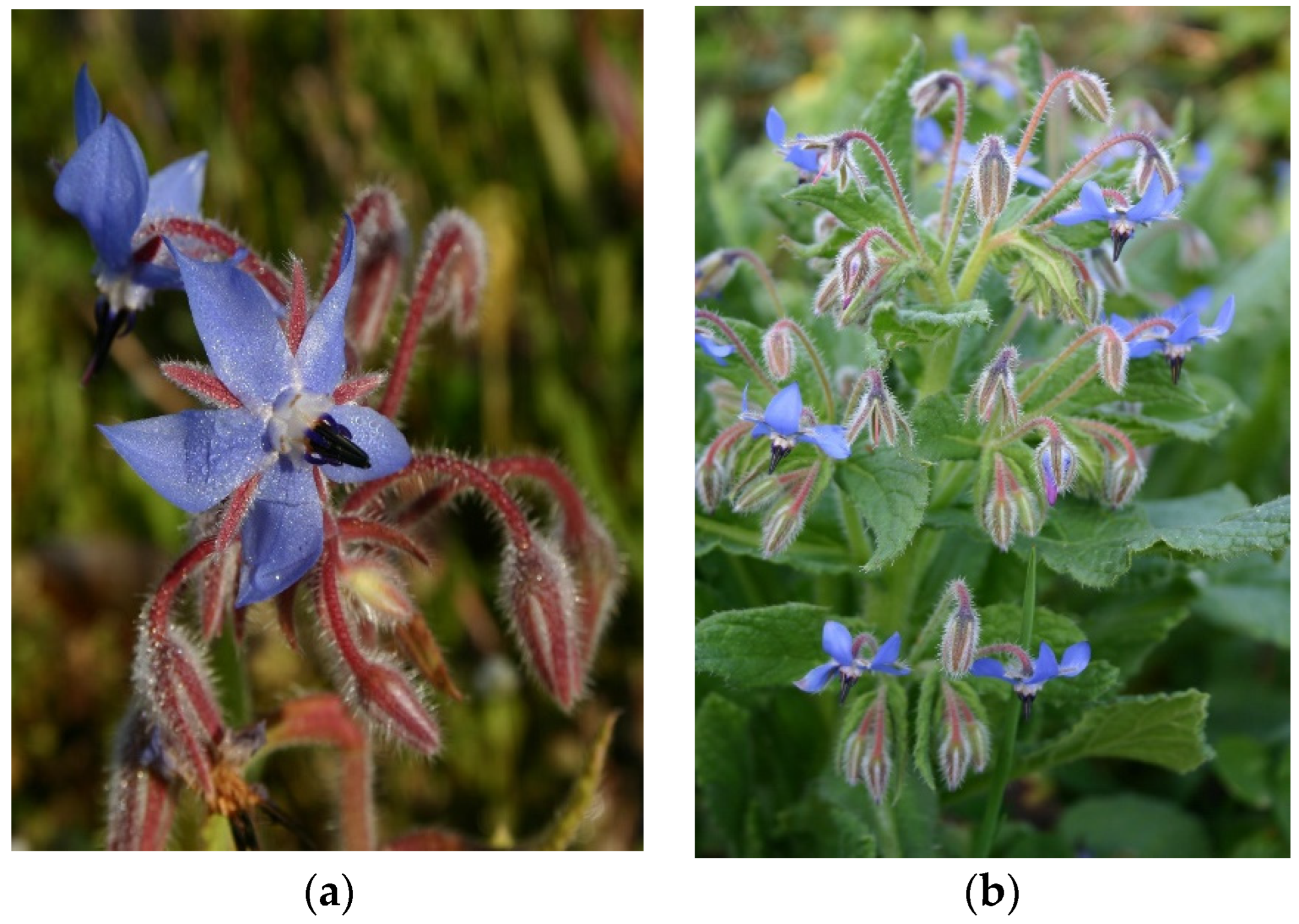
Figure 2.
ɣ-linolenic acid.
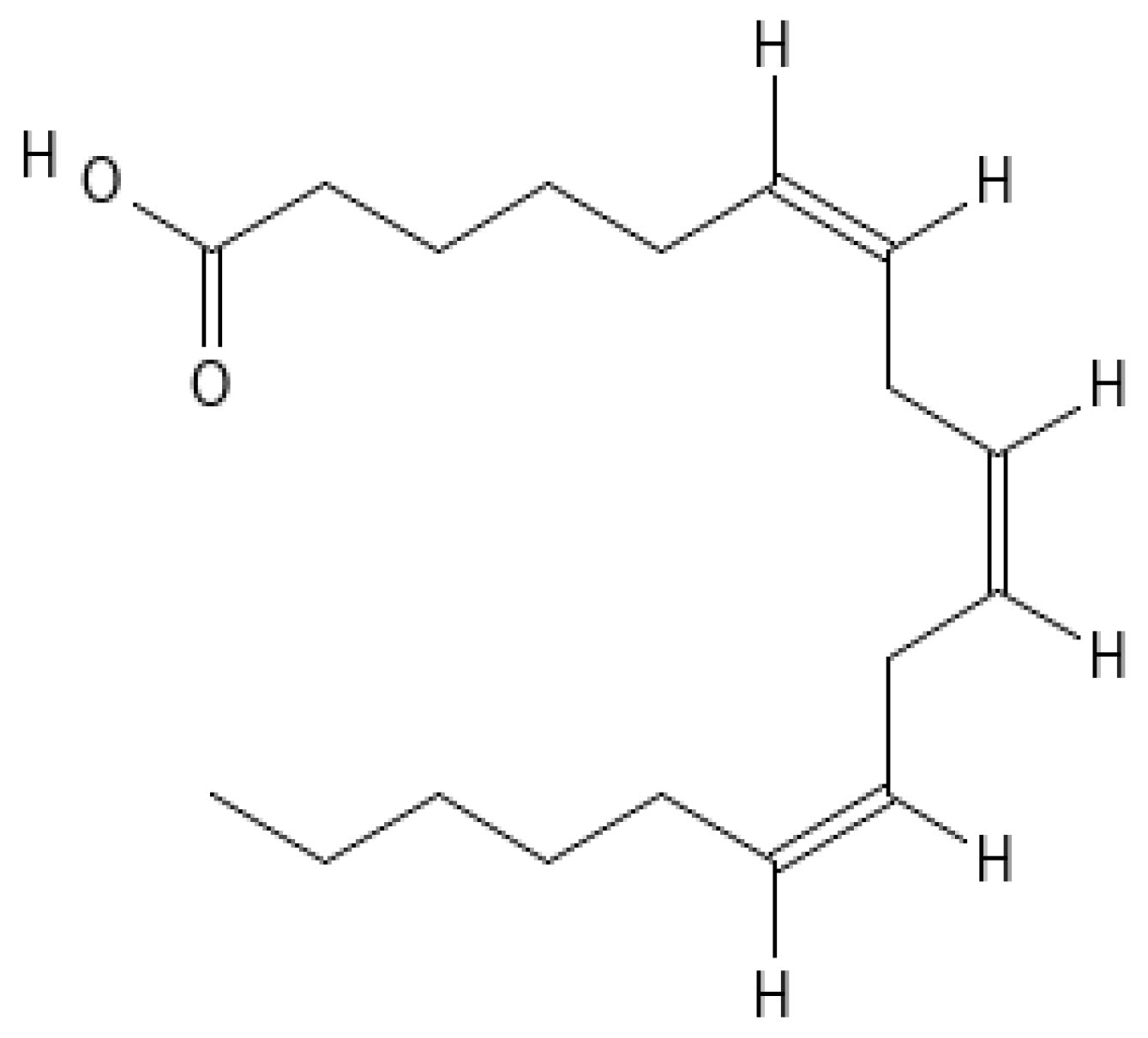
Figure 3.
Prunus spinosa L. fruit (Photo by E. Kozuharova).
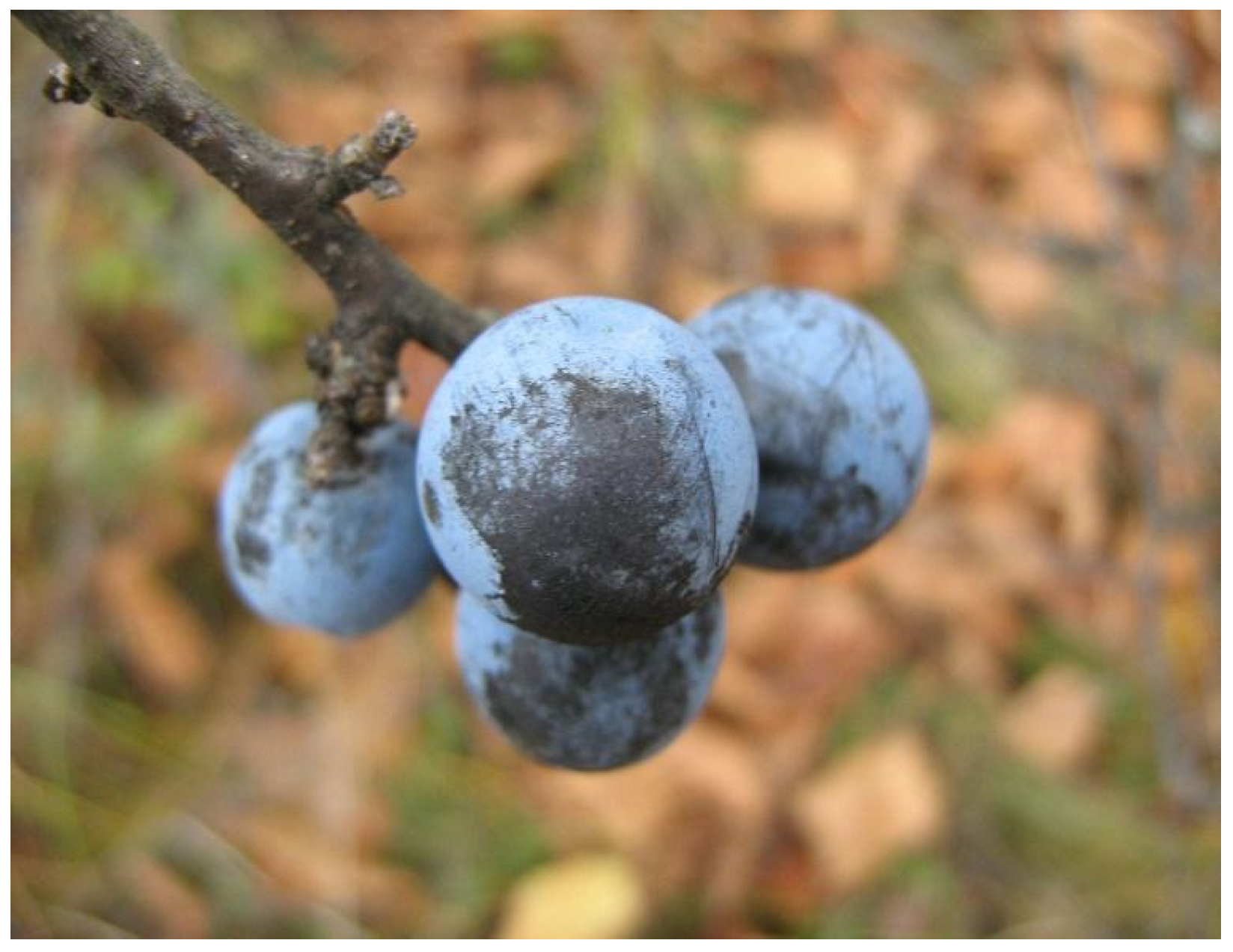
Figure 4.
Vitamin C (ascorbic acid).

Figure 5.
Silene vulgaris (Moench) Garke subsp. vulgaris (Photo by B. Valdés).
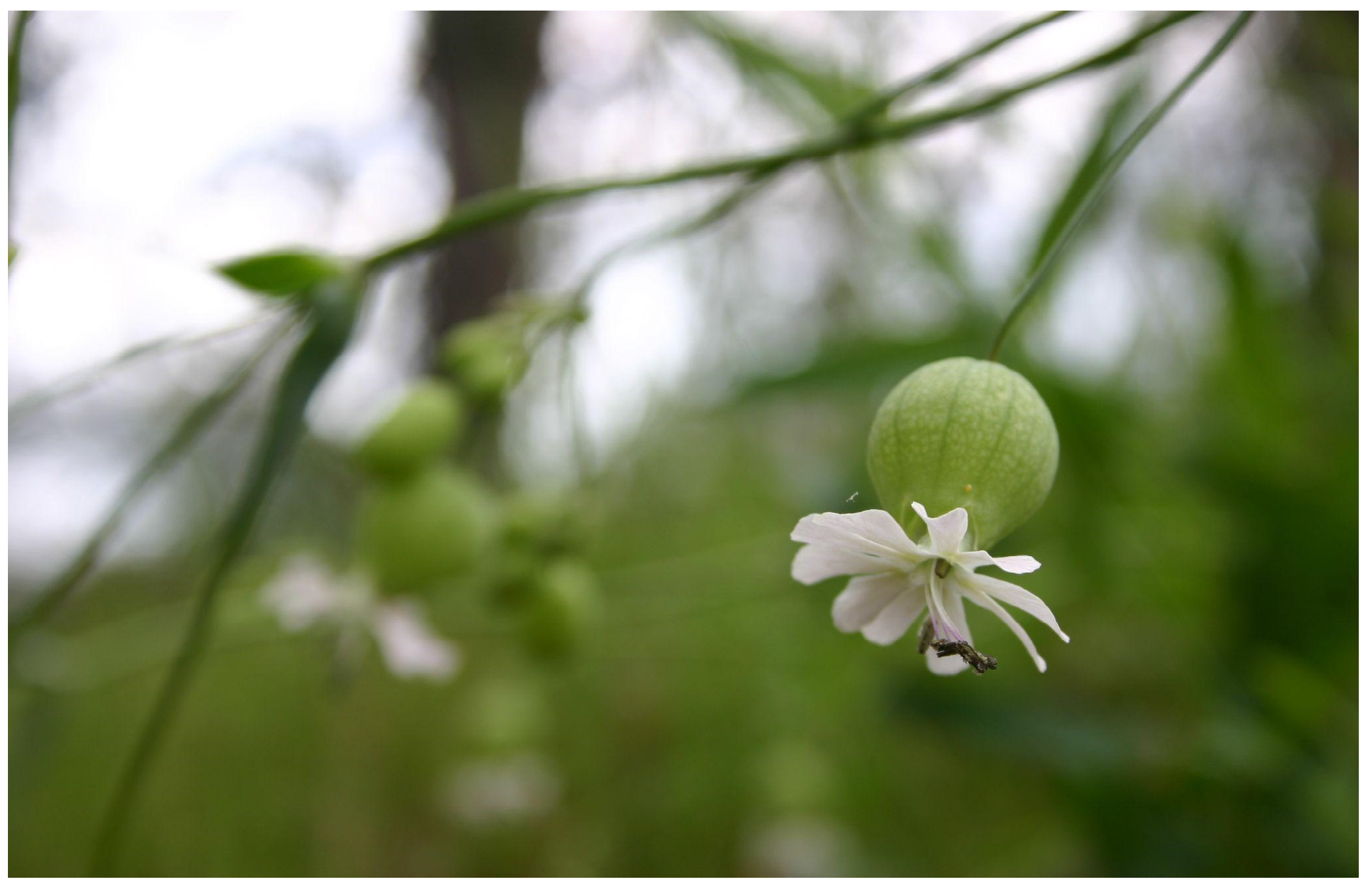
Figure 6.
Silenoside A.
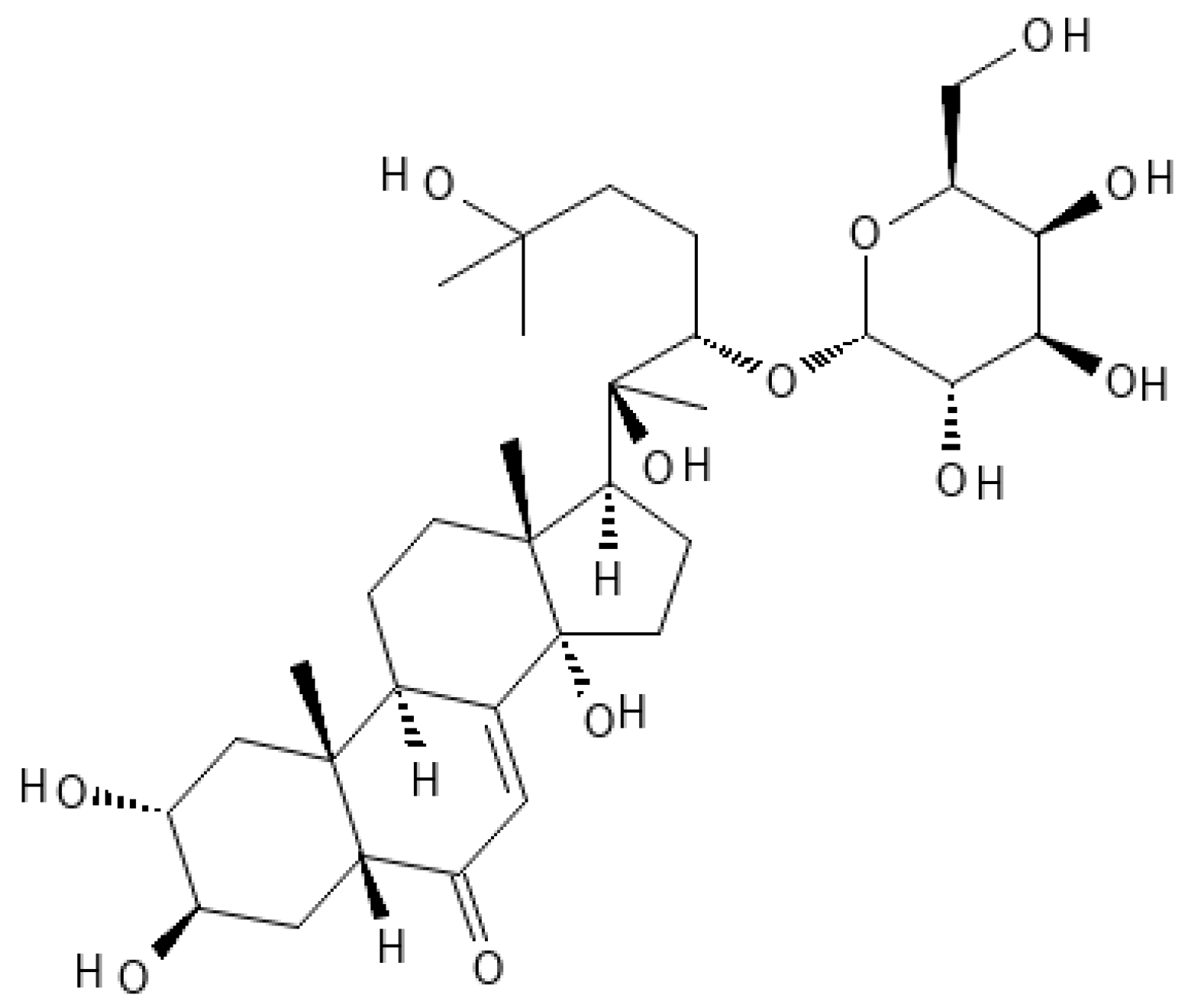
Figure 7.
Scolymus hispanicus L. (Photos by B. Valdés) (a) stem and flower heads (b) flower heads.
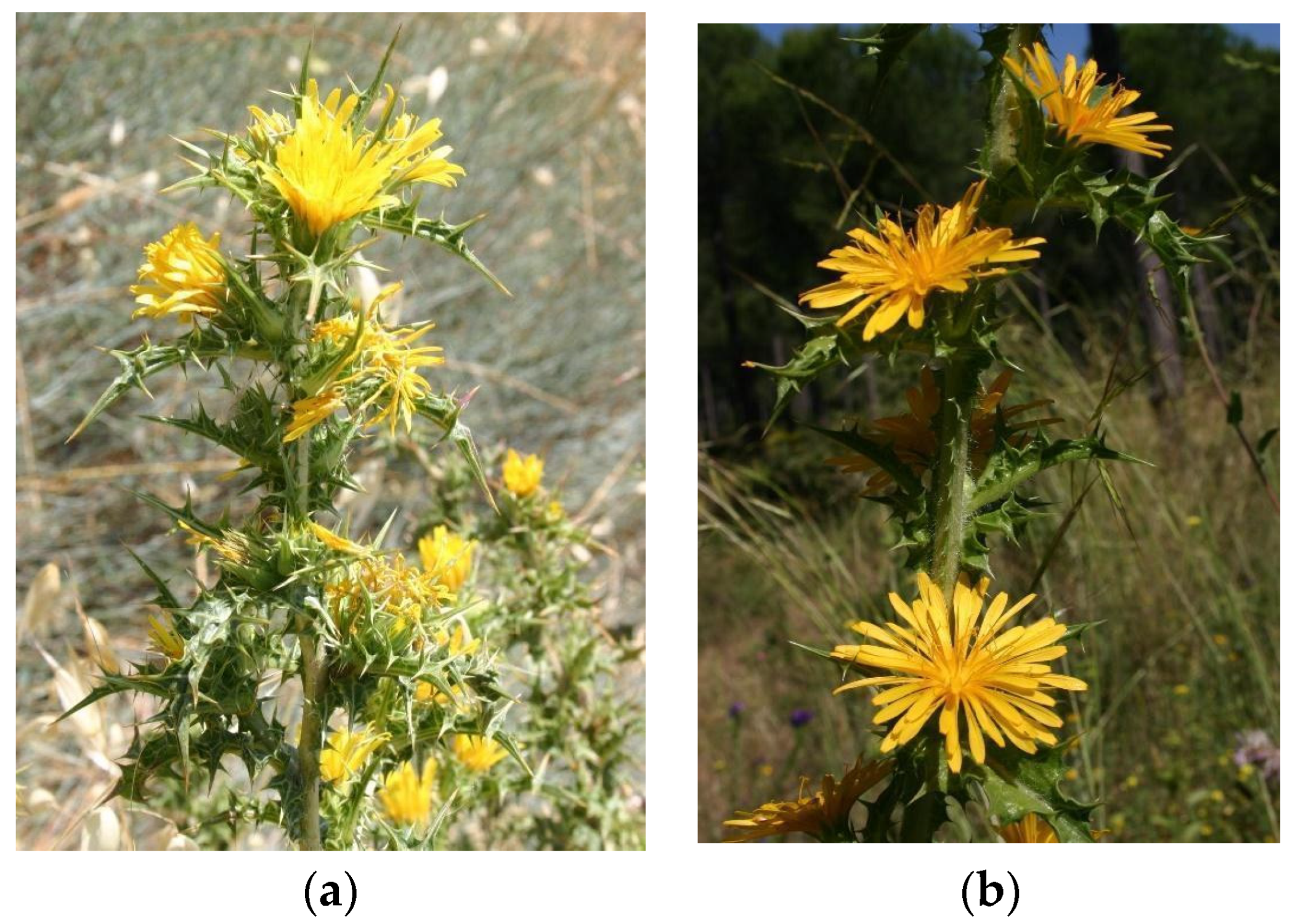
Figure 8.
Lutein.
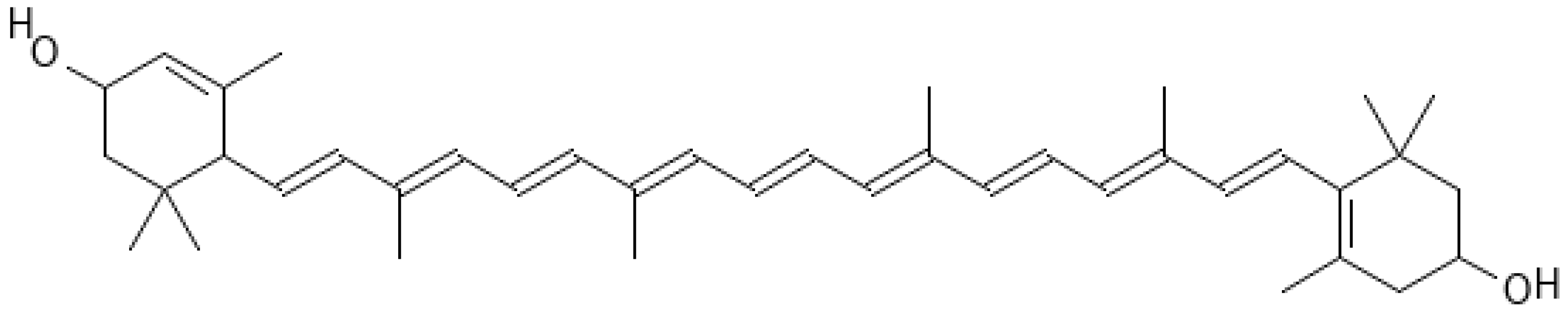
Table 5.
Bioactive compounds and their pharmacological activity.
| Bioactive compounds | Pharmacological activity | References |
|---|---|---|
| Phenolic acids: caffeic acid, ferulic acid, p-hydroxybenzoic, protocatechuic acid, vanillic acid | Antioxidant | [67,70] |
| Flavonoids: rutin, narcissin, quercetin, naringenin, kampferol | Antioxidant | [67] |
| Steroidal saponins | Antifungal activity | [68] |
| Tannins | Antioxidant | [69] |
| Carotenoids (lutein, β-carotene, neoxanthin, violaxanthin) | AntioxidantAnti-inflamatory | [70] |
Disclaimer/Publisher’s Note: The statements, opinions and data contained in all publications are solely those of the individual author(s) and contributor(s) and not of MDPI and/or the editor(s). MDPI and/or the editor(s) disclaim responsibility for any injury to people or property resulting from any ideas, methods, instructions or products referred to in the content. |
© 2024 by the authors. Licensee MDPI, Basel, Switzerland. This article is an open access article distributed under the terms and conditions of the Creative Commons Attribution (CC BY) license (https://creativecommons.org/licenses/by/4.0/).
Copyright: This open access article is published under a Creative Commons CC BY 4.0 license, which permit the free download, distribution, and reuse, provided that the author and preprint are cited in any reuse.


