
Submitted:
17 June 2024
Posted:
17 June 2024
You are already at the latest version
Abstract
Safety and the apprehension of crime persist as significant concerns in both urban and rural locales. Crime Prevention Through Environmental Design (CPTED) guidelines, an architectural approach to crime deterrence, mitigate the likelihood of criminal activity by implementing strategic defensive design plans, particularly through effective lighting schemes within urban settings, thereby alleviating fear of crime. This comprehensive set of principles serves to enhance overall quality of life. Additionally, within the realm of environmental crime prevention, enhanced street lighting has been identified as a crucial factor in diminishing both actual crime rates and the perceived risk of criminal activity in built environments. While current recommendations advocate for the installation of lighting in poorly lit areas for safety reasons, evaluating visibility solely based on the presence of existing streetlights proves insufficient for analyzing road surface luminance comprehensively. Thus, this study proposes establishing standardized illumination levels specifically tailored for facial recognition of potential criminal offenders. Furthermore, we advocate for defining specific thresholds for color temperature and colorimetric criteria to aid in distinguishing characteristics of individuals' attire. To analyze photometric safety and crime frequency in Seoul, Korea, new primary evaluation indicators were developed, including the Brightness index, Informatization index, and Safety index. By incorporating quantitative data into lighting design strategies, particularly within the framework of CPTED, there exists the potential to mitigate fear of crime during nighttime hours. These strategies facilitate the creation of well-lit environments conducive to the swift recognition and identification of potential perpetrators, thereby presenting a proactive approach to crime prevention. Consequently, this study introduces quantitative lighting standards to augment the efficacy of CPTED guidelines, ultimately contributing to the reduction of crime incidence.
Keywords:
Urban safety
; CPTED
; Street lighting
; Security lighting
; Facial cognition
; Visibility
; Visual environment
1. Introduction
Crimes that occur in cities create anxiety and mutual distrust among citizens, and cause mental and physical pain to victims over a long period of time, emerging as a social problem due to crime. Looking at the most important factors of anxiety in society (multiple responses, 2016 for population aged 13 or older) in the social survey by the National Statistical Office of Korea, from 2008 to 2016, economic risk (36.6%), national security (34.3%), lack of morality (29.9%), and it was found that anxiety (61.4%) due to the occurrence of crime felt the most [1].
According to the Korea Criminal Policy Institute’s ‘Estimation of the Social Cost of Crime’ report, the social cost of various crimes in Korea reached about 113.91 billion USD per year as of 2008. This is equivalent to about 16.2% of the Republic of Korea’s GDP in 2008, and each citizen pays about 3,000 dollars a year in crime-related expenses. [2].
In addition, it was investigated that 68.1% of violent crime damages occurred mainly at night between 18:00 and 06:00 [3]. According to ‘Criminal Psychology’, the probability of punishment rather than the severity of punishment affects the reduction of crime [2,4]. If an environment is created in which the features of the face or clothes of a crime perpetrator can be sufficiently recognized during the night time, the possibility of a crime will be reduced by the fear that the pre-criminal perpetrator may be exposed [5].
In this regard, this study suggests one way to lower the possibility of crimes that often occur at night time. Through the presentation of quantitative data on lighting in the CPTED (Crime Prevention Through Environmental Design) guidelines, it will reduce citizens’ anxiety about crime and reduce the frequency of crime by criminal perpetrators.
To this end, an effective research methodology will be derived through the concept and principle of CPTED, lighting installation standards and preceding research for pedestrians, correlation analysis between street lights and crime, and actual condition investigation of existing security lights.
2. Literature Review on CPTED and Street Lighting
2.1. Concept of CPTED
The mere idea behind the whole concept of CPTED is that “the proper design and effective use of the built environment can lead to a reduction in the fear and actual occurrence of crime, and an improvement in the quality of life” [6]. It ranges back since the mid-twentieth century and was first introduced through the works of Jane Jacobs and was referred to as “defensible space” [7] and later broadened by Oscar Newman [8]. When first the concept of CPTED was published, it received a range of theoretical criticisms accusing the concept of understating and marginalizing the role played by social-economic and demographic factors in reducing and preventing crime [9,10], the full knowledge behind such criticism is discussed elsewhere including the later parts of this review but only in relation to street lights.
In an attempt to respond to the mounting criticisms, a more robust and rigorous approach of CPTED evolved, this new approach came to be known as Second-generation CPTED and the previous one was denoted the term First generation CPTED. Second generation CPTED extends further to include risk assessments, social-economic as well as demographic factors as compared to the First generation CPTED which deals with only physical characteristics of the space.
Newman and Moffat [11] proposed that there existed six characteristics to First generation CPTED concepts. The six characteristic included territoriality, surveillance, access control, maintenance, activity support and target hardening (see Figure 1). In accordance to these broad characteristics, street lights belong to the surveillance category of the CPTED concept and its detailed analysis are discussed in the paper. However, other CPTED characteristics mentioned here are discussed elsewhere as they have little relation to the subject of the current paper.
According to a review of studies by Sorenson [12], burglars tend to avoid areas that on time to time surveillance by neighbors or by passers. In addition, low levels of lighting at night or thick vegetation provide opportunities to offenders to carry out crimes especially when close to points of access such as windows and doors. Natural surveillance as provided by guards or policemen have also proven crucial in the past as well as of recent. Studies that involved increasing guardianship at parking lots and garages produced positive results in regards to reduced car thefts and other car-related crimes [13,14]. Although, one other study by Hesseling shows no significant correlation between increased guardianship and car thefts [15], many other studies have acknowledged the impact of increased guardian ship on reduced theft of property or mere robberies.
The advancements in technology have allowed us to keep a look on the property in our areas even in our absence. A large number of studies have reported positive findings in regards to the ability of CCTV to reduce crime. A study performed by Poyner produced positive reports regarding reductions in vandalism on buses that utilized a CCTV monitoring system [16]. Similarly, Web and Laycock revealed that CCTV systems had a greater impact on reducing robberies in London underground stations than control groups [17]. Although, a few other studies have argued that the evidence that “CCTV works” needed to be researched further [18], many more studies including those done by governmental institutions have acknowledged beyond doubt that the use of CCTV systems do indeed reduce crime-related activities.
2.2. CPTED and Street Lighting
Since the current part discusses the impact of street lights on crime prevention and street lights are part of the elements that make up the physical aspect of the environment. We ought to go a bit deep in the subject so as to understand better the scope of the matter presented in this paper.
Street lighting for safety purposes as well as for the deterrence of crime is also part the surveillance component of CPTED. This portion of the mechanical surveillance category is the center focus the current review papers. Therefore, it will be discussed briefly here since a more detailed and wider analysis of the subject is given in the section that follows.
In the early 1960s, many cities across the developed western world began illuminating their streets with a primary goal of reducing crime and the fear of crime. They based on the idea that surveillance opportunities during the dark hours of the day were hugely affected by the lighting conditions available. Ever since then there has been a growing interest in this field of research. Over the years, a number of publications have showed positive results regarding the contributions of street lighting in reducing crime while other publications have reported otherwise.
Generally, no one wishes to become a victim of crime. Nevertheless, crime and fear of crime are pervasive and endemic concerns in the modern post-industrial society and criminal justice systems are clearly failing to tackle both issues [19]. Consequently, different measures aimed at tackling the issue of crime in our societies are of crucial importance to us all. Illuminating our streets may seem an obvious and assuring way to reduce crime on the streets, particularly the kinds of crimes committed at night or in dark areas. However, researchers in this field of study have failed to come up with a concrete conclusion regarding the subject of the matter.
While some studies have acknowledged the importance of street lighting in regards to the reduction of crime rates, others have argued that street lighting generally results in no effect or a reduction in crime [20]. Paul Marchant attributed the widely accepted theory that street lighting has the potential to bring upon a reduction in crime rates to the poor use of statistical reasoning by those scientists and researchers that agree with the idea [21]. He went ahead to back up his reasoning by carrying out the study which involved measuring the ratio of number of crimes before and after in number of areas in thirteen American cities (Birmingham, Stoke, Dudley, Atlanta, Fort Worth, Milwaukee, Bristol Kansas City, Dover, Harrisburg, New Orleans, Portland, Indianapolis) that had received brighter lighting and still concluded that the claim that brighter lighting reduces crime is unfounded [22].
Similarly, the study by Atkins that was performed in Wandsworth showed no correlation between street lights and reduced crime [23].Also, Ramsay concluded that no relation existed between street lighting and reduction of crime [24]. Davison and Goodey [25] performed related studies, however just like many others [26,27] failed to come up with a clear conclusion regarding street lights and prevention of crime. Other academic criticisms included the claim that improved street lighting causes glare and thus the victim of a given crime might not be able to sport the offender before he commits the crime. Similarly, it is thought that street lighting would make it easy for criminals to spot their victims and areas of target.
On the contrary, other academic works have shown that improved street lighting does have a positive impact in reducing crime rates. A review by David P and Brandon C on the connection between crime rates and brighter street lighting in sixteen relevant studies showed that in most of these studies improved street lighting was followed by a decrease in crime [28]. Furthermore, Kenna and Samuel conducted a similar study, they measured the number of crime levels basing on the number of received calls for police services (CFS: Call for Service), first in areas which had just received improved street lighting and secondly they compared four other locations whereby two of them had received improved street lighting and the other two had not. The essence of the second approach was to provide a control variable where no changes in street lighting had been made. They obtained mixed results from their study in that six out of nine areas, three intersections and two multi-addresses grouping showed evidence of fewer volumes of CFS after street lights were installed.
On the other hand, however, two other areas that were compared against control areas that did not obtain improved street lighting showed vice-versa results from the expected results sometimes with areas that received improved street lighting showing higher volumes of CFS and the other way around [29]. In a related study, Farringdon and Welsh carried out a systematic review on crime prevention through street lighting in the year 2002. The review involved 8 studies and 5 studies from both the USA and UK respectively. The review also dealt with street lights that considered to be properly designed and hence more accuracy as of the results. They concluded that, recorded crime was reduced by 7% in the 8 American studies and 30% in the 5 UK studies as a result of improved street lighting [30].
The famous work of Painter and Farrington [31] performed in the town of Dudley in the United Kingdom helped shine light on the effect of improved street lighting on crime. The study was based on the replacement of mercury lamps by high-pressure sodium (white). The new technology was installed on a 1500 meters of road way in an experimental area. The new replacements came with improved visual lighting as they followed the British Standard Recommendation of 6 lux maximum illuminance and 2.5 lux minimum illuminance. The pre-existing installations had not followed such regulations and therefore provided less efficient visual lighting during the night. In addition a “Before and after victimization surveys” were conducted to measure household victimizations, altitudes, behavior and so forth both before and after the lighting improvements were adopted. The results showed that all the crime in the experimental area decreased by 23% after the street lighting conditions were improved.
In Summary, the disagreements between existing research work to whether the part of CPTED that involves increased lighting is effective in reducing crime / fear of crime are worth investigating. The issue is still highly debatable as the existing literature shows that certain studies report positively on the impact of street lighting on the prevention of crime while other studies report otherwise. However, the literature discussed in this review focus mainly on the mechanical surveillance portion of CPTED that deals with street lighting. The conclusion derived from the literature is not similar through the components of CPTED. In fact, studies have indicated that CPTED as a whole is an effective and improving approach in regards to reduction of crime/ fear of crime [32].
Looking at the preliminary studies on the recognition of the prevention effect of crime prevention facilities, there are many studies on the recognition of the crime prevention effect of individual prevention facilities rather than provisional comparative analysis. In particular, there have been many studies on the effectiveness of CCTV.
According to a previous study on the perception of the effectiveness of public crime prevention facilities, urban residents feel more psychologically secure with CCTV and streetlights. In this study, statistical data is used to analyze whether CCTV and streetlights actually have an effect on crime prevention. As a preliminary analysis, the number of crimes during the day and at night was compared [33].
2.3. Domestic CPTED Lighting Guideline of Korea
According to the CPTED guidelines of local governments, it is induced to ensure uniform illumination by installing sufficient lighting to prevent blind spots and installing security lights with sufficient illumination. In addition, it is proposed to reduce excessive glare and install a lot of low-intensity lighting.
As shown in Table 1, referring to the section on lighting facilities on public streets in the CPTED Guidelines on Korea CPTED Research Information Center website, ‘It is effective to install lighting facilities at an illumination level that can recognize objects and people within 10 m in front at night. (Surveillance)’.
The illuminance that can recognize objects within 10 m is the horizontal surface illuminance, and the illuminance that can recognize people should be the vertical surface illuminance. Therefore, when establishing the CPTED guidelines, the horizontal illuminance and vertical illuminance standards must be presented separately.
2.4. Domestic Lighting Guideline for Pedestrians of Korea
Road lighting for pedestrians should be installed so that pedestrian users can identify and avoid hazards by recognizing the presence of each other and obstacles at the same time, and consider preventing various crimes and securing a sense of safety for citizens. Roads with few users should be installed with sufficient brightness as security lights to suppress crime-inducing psychology, and lighting levels with appropriate illumination should be maintained at all times of the night.
In addition, the visual characteristics of drivers and pedestrians differ in many respects. Particularly, for pedestrians who move slowly, nearby obstacles are more important than distant obstacles or other pedestrians.
The representative standard for road lighting for pedestrians in Korea is the KS A 3701:2014 road lighting standard (Table 2). The level of illumination to be maintained on the road used by pedestrians shall be higher than the value presented in the Table 2 according to the pedestrian traffic volume, region and place. Depending on the traffic volume and area of pedestrians at night, standards are presented by dividing horizontal and vertical illuminance. Vertical surface illuminance is suggested as 0.5 lx to 4 lx depending on the traffic volume and area.
3. Research Design
3.1. On-Site Verification of Vertical Illuminance for CPTED
The lighting required by the CPTED guidelines is a lighting scheme that can enhance surveillance and intelligibility from criminals. What is needed for this is 1) Establishment of quantitative vertical surface illumination that can monitor crime in pedestrian space. It is necessary to create a safe nighttime environment for citizens to reduce anxiety from crime, and for criminals to secure visibility that makes it difficult to commit crimes by exposing their faces. 2) It is necessary to secure an environment that strengthens clarity so that the characteristics of criminals’ clothes, etc. can be easily identified by using security lights with appropriate color rendering and appropriate color temperature.
According to the CPTED guidelines of Korea CPTED Research Information Center, the illumination must be maintained with lighting that can recognize people and objects within 10 m in front. In order to create a safe night distance, it is necessary to quantify the quantitative lighting intensity capable of face recognition within 10 m.
Utilizing solely the vertical surface illumination ranging from 1 lx to 20 lx as a variable, real people were placed at a distance of 10 m, and the subject’s awareness was investigated through a questionnaire survey to simultaneously conduct awareness surveys on security lights and crime prevention facilities.
3.2. Color Temperature and Color Rendering for CPTED
In order to enhance clarity and recognition, the criteria for color temperature and color rendering index are required. For this assessment, using the Munsell color wheel and the 10-color color wheel, the color seen according to the color temperature of the security light are compared with the actual picture. Then, the optical physical quantity is extracted, and the range of color rendering of security lights is presented through comparison with sunlight.
3.3. Proposed Indicators for Photometric Safety and Crime Frequency
To analyze photometric safety and crime frequency in Seoul, Rep. of Korea, new main evaluation indicators such as the Brightness index, Informatization index, number of crimes and Safety index were developed as follows.
First, Brightness index [LA: Light/Area] is calculated as the number of streetlights divided by the area of each autonomous district (1 km²). With [LA], it can be seen whether the environment can recognize the characteristics of the criminal perpetrator’s appearance.
The second is Informatization index [CA: CCTV/Area] for each autonomous district. CCTV has a crime prevention effect and provides information that can be traced after a crime has occurred. The Informatization index [CA] is calculated as the quantity of CCTV divided by the area of each autonomous district (1 km²).
The third is the Number of crimes [CrA: Crime/Area] which is determined by dividing the total number of crimes by the district area (1 km²). Among the crimes that occurred in each district, only crimes that could occur in dark spaces were calculated based on area.
The fourth index is the Safety index [LACA: LA+CA], defined as the sum of the Brightness index [LA] and the Informatization index [CA]. Through the safety index, it will be possible to compare and evaluate how well the crime prevention facilities in each district are equipped.
4. Results
4.1. Photometric Safety and Crime Frequency Analysis in Seoul, Korea
In order to analyze the correlation between street lights and crime, the daytime hours are set from 06:00 to 17:59, and the night times are set from 18:00 to 05:59. As shown in Figure 2, the number of crimes is still high at night even though the nighttime floating population is smaller than during the daytime.
The Safety index, which combines the Brightness and Informatization indices, was highest in Jung-gu at 1,022, followed by Gwangjin-gu and Dongdaemun-gu at 641, and Yangcheon-gu at 574, as depicted in Figure 3.
Utilizing the proposed metrics, we investigated whether there is a significant relationship between the Safety index and streetlights by crime type in Seoul. The area, number of population, number of streetlights, number of CCTVs, and number of crimes were investigated for each district in Seoul. At first, the number of crimes against the number of population was calculated and the Brightness index for each district was calculated by dividing the area of each district by the number of streetlights, and the crime occurrence and its correlation were analyzed (Table 3).
However, it was highly unexpected that Jung-gu, with the highest Safety index, exhibited the highest crime incidence per unit area. The reason for this can be inferred from the 2014 Seoul Floating Population Survey Report [36]. By examining the weekday and weekend floating population in each district, it is evident that ‘Jung-gu,’ ‘Jongno-gu,’ ‘Dongjak-gu,’ ‘Gwanak-gu,’ and ‘Seodaemun-gu’ were identified as the top five districts with the highest floating population. It was observed that the higher the floating population, the relatively higher the incidence of crimes.
Six crime types were found to have a significant relationship with the Safety index with a score of 0.5 or higher. By type of crime, the order was assault, kidnapping and luring, theft, arson, confinement, and injury. Residential trespassing was 0.079, and acts of violence 2 (organization, activity, etc.) were 0.156. These values indicate that these crimes are unrelated to street lighting.
4.2. Security Light Brightness Recognition Survey
4.2.1. Overview
To identify the vertical illuminance range formed by streetlights for facial recognition of potential criminals outdoors, real experiments and surveys were conducted. Referring to the guidelines for CPTED, it is necessary to simplify the distance variable and conduct an experiment outdoors at a distance of 10 m. However, if the background luminance is too strong, it is difficult to recognize a human face. Therefore, the necessary vertical surface illumination was reviewed through a survey in the production green area corresponding to the second type as a lighting environment management area where the background luminance is not strong. In addition, visual clarity is required to accurately recognize obstacles and human faces.
A total of 52 subjects were surveyed, of which 20 were female and 32 were male. The average age was 39.88 years old, the smallest age was 17 years old, and the highest age was 65 years old. The average corrected visual acuity was 1.015 and 1.017 on the left and right, respectively, and the lowest visual acuity was 0.4.
The experiment was conducted in a stream called Tancheon in Bundang-gu, Seongnam-si, Gyeonggi-do, Republic of Korea. The current status of the target area is shown in the Figure 4. There is a pedestrian walkway on both sides of Tancheon stream, and there is a bike-only road on the outside. Two-light LED security lights with a color temperature of 4,000K are installed only on bicycle roads. Security lights are installed at intervals of about 40 m, and the brightest horizontal surface illuminance is 78 lx. The light distribution of the security lights does not spread widely, forming a dark space between the security lights.
The experiment was conducted after 19:00 for two days from October 24 to 25, 2020. Since the outdoor experiment is aimed at people who exercise outdoors, it is judged that the eyes are adapted to visual darkness, so the dark adaptation time is not considered. The experiment was conducted by placing a real person in the vertical surface illuminance 1, 5, 10, and 20 lx section at the same distance of 10 m without a distance variable. In order to minimize errors in identifying individuals based on their clothing, participants were instructed to wear different tops for each assessment.
4.2.2. Security Light Brightness Recognition Survey Analysis
Prior to the face recognition survey, the crime prevention effects of security lights and CCTV, which are crime prevention facilities, were first investigated as illustrated in Figure 5. A total of five questions were asked to specify their feelings about security in numbers on a scale of 10 points. According to each question, if they had a very anxious feeling (very dark, no crime prevention effect), they were specified close to 1, and if they felt very safe (very bright, very effective in crime prevention), they were specified close to 10.
To the first question, “How do you feel about safety when walking alone around your house at night?” the average answer was 7.01, indicating a sense of safety. Females were surveyed at 6.2, which is below average. The second question, “What do you think about the brightness of the security lights near your residential area at night?” showed an average score of 6.17, and women also scored 5.4 on this question, which was smaller than the average.
The third question, “What do you think about the brightness of the security lights at the place where you are currently filling out the questionnaire?”, was surveyed with an average of 5.28, a more negative result than the brightness of security lights around the house, and this question was also surveyed less frequently by women with an average of 5. The fourth question, “How effective do you think the security lights installed in alleys are in preventing crime?” was surveyed with an average score of 8.07. Men scored 8.31 points, which is higher than average, and it was investigated that men feel less anxiety if they are slightly brighter.
The fifth and last question, “How effective do you think CCTV installation is to prevent crime?” was surveyed that CCTV is effective in crime prevention, with an average score of 8.78, which is about 8.8% higher than that of security lights.
It has been investigated that security lights are less effective in preventing crime than CCTV, but they are recognized to be more effective than other crime prevention facilities. Therefore, it is judged to be a way to relieve anxiety about crime through brightness control of security lights.
In addition, a survey on the brightness perception of security lights around the house was conducted for the test subjects. Based on this, the SPSS program was used to analyze the descriptive statistics and correlation of the feeling of safety around the house, the degree of brightness of security lights around the house, the crime prevention effect of both security light and CCTV. There was a correlation between the high feeling of safety around the house and the amount of high brightness around the house (r=0.73, p<0.01).
Also, it can be observed that the presence of CCTV cameras has a slight correlation with people’s sense of safety while walking at night (r=0.33, p<0.01). However, the correlation between the presence of CCTV cameras and feeling safe is not statistically significant.
The brighter the brightness of the security lights around the house, the more people feel safe when walking at night, and the existence of CCTV also gives a feeling of safety, but it can be seen that it is not as effective as the security lights. As a crime prevention facility, CCTV was expected to be more effective in preventing crime than security lights, but it was investigated that security lights were more effective in making citizens feel safe from crime.
4.3. Outdoor Vertical Surface Illuminance Distribution Analysis for Face Recognition
The outdoor survey was an experiment to find out whether a standing person’s face was recognized in the case of vertical surface illumination of 1, 5, 10, and 20 lx. If the distance is too far, there is a possibility that vision may be an important variable rather than recognition, so the separation distance for the experiment was fixed at 10 m. It was selected by referring to the fact that it should be recognized within 10 m in the CPTED guidelines.
Four photos of a person similar to one photo of the subject of vertical illumination were presented. In addition, it was prevented from writing an answer arbitrarily by checking the item “I did not recognize”. The degree of recognition was quantified by marking the degree of recognition in a 4-choice format and assigning a score.
A recognition score of 100% was given when it was possible to identify who it was, and 66.6% was given when it was possible to identify the location and characteristics of eyes, nose, and mouth. The case where the direction of the face could be identified was a score of 33.3%, and a recognition rate score of 0% was given to ‘not recognized at all’.
The accuracy rate represents the proportion of correct answers, while the recognition rate signifies the proportion of accurately recognized faces. Even if recognition is inaccurate, correct answers can still be provided. Therefore, these were delineated into accuracy rate and recognition rate.
The results of the experiment are shown in Figure 6. The average correct answer rate according to the four types of vertical surface illumination was 60.1%, and the overall average recognition rate was 58.15%. In the case of vertical surface illumination of 1 lx, 17 out of 52 people checked the correct answer, showing a correct answer rate of 32.63%. In the case of 1 lx, 10.3 out of 17 correct answers found the correct answer even though they did not recognize 100%.
In the case of vertical surface illumination of 5 lx, 23 people answered correctly, and the average correct answer rate was 44.23%. In the case of 10 lx, 37 people checked the correct answer, the correct answer rate was 71.15%, and the average recognition rate was 73.68%. In the case of 20 lx, 48 out of 52 people checked the correct answer, and the average correct answer rate was 92.31% and the recognition rate was 95.50%. From 5 lx or higher, the correct answer rate and recognition rate came out similar, and the higher the vertical surface illumination, the higher the recognition degree compared to the correct answer rate. In the case of 20 lx, the recognition rate was 3.19% higher than the correct answer rate.
4.4. Color Rendering and Color Temperature Analysis for Clear Face Recognition
4.4.1. Overview
In CPTED lighting, clarity is required to accurately recognize obstacles and human faces, and to recognize the natural color of objects. Therefore, it is necessary to plan considering color rendering and color temperature when designing lighting fixtures. A 10-color ring was produced and compared with the CRI and color temperature values of the light source and the photo using an illuminance spectrometer under daytime sunlight, indoor light, and nighttime security light.
In order to maintain the original color of the 10 color wheel, printed materials were not used, and 10 colors of Vivid Tone, the same as those of the 10 color wheel among 120 Colors of colored paper for color practice, were attached to a matte white board and tested. In the case of sunlight, it was measured at 1:00 pm, and as indoor artificial lighting, 36W * 3EA fluorescent lamps, LED spotlights, and LED stands capable of changing color temperature were used. LED, sodium, metal, and fluorescent lamps were selected for security light at night, and each was measured using a photograph and an illuminance spectrometer.
4.4.2. Result of the Experiment
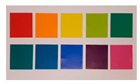
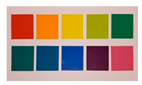
As shown in Table 4, color temperature, color rendering, spectrum, color rendering index (R1 to R14), and hue circle were compared for a total of 6 light sources including sunlight. Sunlight, which is the basis of all colors, has a color temperature of 4,732 K and a color rendering property of Ra of 99.1. The sodium security light came out the least with a color temperature of 1,799 K and a color rendering index of Ra of 25.8. In the case of spectrum, in LED, the lower the color temperature, the higher the 580 to 640 nm range, and the higher the color temperature, the higher the 440 to 460 nm wavelength range.
In terms of Color Rendering Index (R1 to R14) values compared to sunlight, LEDs were inferior to sunlight on average in R1 to R8, but higher than fluorescent lights, sodium, and metal light sources. However, the area of R9 to R15, which expresses colors with high saturation, was lower overall than that of sunlight on average. In particular, in the R9 area, the numerical difference between sodium and sunlight was 276, and the numerical value of other light sources varied from 51 to 122.
In the case of artificial light sources, CRI (R1 to R8) values were not significantly different from those of sunlight on average, but in the high-saturation color range (R9 to R15), it has not yet caught up with the color reproduction of sunlight. In particular, in the red area of R9, it is judged that the color reproduction ability is remarkably low. In the Hue Circle, it was judged that the color reproduction ability of sodium anodized light was much lower than that of other light sources even when observed with the naked eye.
10 color circles taken under sunlight, indoor lights, stand lights, and security lights have been compared as shown on Table 5. First, when using the Pallet Color Picker of Adobe Photoshop CS5 to extract the colors from the original 10-color image in a computer JPEG file, red was R: 248, G: 24, B: 0, and orange was R: 254, G: 89, B: 25. The color wheel made using colored paper shows that red has the values of R: 182, G: 29, B: 32, and orange has the values of R: 228, G: 110, and B: 2 in a photo taken using a cell phone camera under sunlight, which has the best color rendering. Red and blue values were extracted. It is believed that the original color of the data taken using the camera has been altered. For comparison of color rendering, the color rendering taken under sunlight was the best at Ra 99.1, so the color rendering was assumed to be 1 and compared.
First, the sunlight with the best color rendering and the sodium security light with the poorest measurement were compared in Table 6 and Figure 7. Compared to sunlight, the red color of the sodium security light was measured 1.260 times more, the green color was slightly lower at 0.791, but the blue color was measured 0.489 times less. In particular, the blue value was measured to be significantly lower for green, cyan, blue, indigo, purple, and purple.
This means that people wearing cold-colored clothes will have difficulty distinguishing the color of their clothes under a sodium security light. In particular, it has been found that dark blue colors show a color deviation of about 145/765 around a sodium security light compared to sunlight.
Second, the fluorescent security light (3,320 K) and LED stand light (3,355 K), which had similar color temperatures, were compared in Table 6 and Figure 8. The color rendering difference was about 10, but the overall color reproduction was measured to be poor, and the color reproduction showed a ratio difference of 0.723 for red, 0.766 for green, and 0.693 for blue. It was found that the color reproduction capability of fluorescent security lights generally lags behind that of LED stand lamps.
5. Conclusions and Discussion
CPTED design allows citizens to live with a sense of safety by reducing their fear of crime and reducing the incidence of crime through appropriate defensive design plans such as appropriate architecture, landscaping, and lighting design within the urban environmental space. It is a comprehensive crime prevention design that can improve the quality of crime. In this way, CPTED design can be said to be a universal crime prevention design. This study raised questions about the limitations of lighting, which are only qualitatively presented in the CPTED guidelines, and attempted to derive a quantitative lighting physical quantity standard that took into consideration the qualitative aspects felt by the general public as a solution to this problem. The effectiveness of the lighting part of the CPTED guidelines was improved by presenting quantitative standards for the vertical illuminance range, color temperature, and color rendering that enable human face recognition within a certain distance.
This study can be summarized as follows.
The Brightness index, Informatization index, and Safety index for each autonomous district in Seoul were determined based on the status of streetlights, the number of CCTVs, various crime occurrences, and population density. Using the SPSS program, we examined the significant relationship between crime rates relative to district area (dependent variable) and the Safety index (independent variable). The analysis revealed that crimes such as assault, kidnapping, theft, arson, arrest, confinement, and injury exhibited a significant correlation of over 50% with the Safety index.
To determine the vertical illuminance range for facial recognition outdoors, a random survey was conducted with 52 participants from the general public. Actual individuals were tested for facial recognition as potential criminals. Additionally, a survey was conducted on factors such as satisfaction with the brightness of streetlights around their homes at night. Through SPSS correlation analysis, it was found that the perceived safety at night is more influenced by the brightness of streetlights than by the presence of CCTV cameras.
For vertical illuminance levels of 1 lx, 5 lx, 10 lx, and 20 lx, it was observed that as the illuminance increased, the accuracy of facial recognition also increased. The average accuracy and recognition rates were 59.62% and 58.15%, respectively. There was not a significant difference in accuracy and recognition rates among the 5, 10, and 20 lx ranges, excluding the 1 lx range.
It was concluded that a lighting plan that takes color rendering and color temperature into account is necessary to increase clear perception for crime prevention. It is easy to see that there is a big difference in the color wheel between solar and sodium security lights. LED’s Color Rendering Index (R1 to R8) range is somewhat lower than that of sunlight, but is higher than that of sodium, fluorescent lamps, and metal light sources. In a comparison between sodium and sunlight derived using the color wheel and Adobe Photoshop Pallet Color Picker, the overall color reproduction of the sodium light source is poor. In order to clearly distinguish the color of another person’s clothes and face, it is judged necessary to specify and present the color rendering standard in the CPTED guidelines as Ra 80 or higher and the color temperature of 2,800 K or higher.
In the future, with more precise sample data obtained from a larger pool of subjects and considering various experimental settings to account for errors, it is anticipated that a more accurate relationship between facial recognition and illuminance can be determined.
Author Contributions
Conceptualization, K.K. and G.K.; methodology, K.K. and G.K.; software, K.K.; validation, K.K., T.H. and G.K.; formal analysis, K.K., T.H. and G.K.; resources, K.K. and G.K.; data curation, K.K.; writing—original draft preparation, G.K.; writing—review and editing, K.K., T.H. and G.K; visualization, K.K.; supervision, G.K. All authors have read and agreed to the published version of the manuscript.
Conflicts of Interest
The authors declare no conflict of interest.
References
- Kang, Boo-sung, Crime prevention through environmental design. 2012.
- Sung, Yong-Eun and Noh, Kee-Yoon, Women’s Fear of Victimization: Violent and Sexual Violent Crime in South Korea, Korean Criminal Psychology Review, 2015, Vol.11 No.2.
- The Korean National Police Agency, The Ministry of Public Safety and Security, The desirable direction of Crime Prevention Through Environmental Design (CPTED) Policies, 2020.
- The Supreme Prosecutors’ Office of Korea, Crime Analysis (https://www.spo.go.kr/site/jinju/crimeAnalysis.do), 2017.
- Kim, Young Hwan, A study on the crime prevention of residential zone through the application of CPTED, 2008.
- Crowe, Timothy D. Crime prevention through environmental design: Applications of architectural design and space management concepts. Butterworth-Heinemann, 2000.
- Jacobs, J. The death and life of great American cities. New York: Random House, 1961.
- Newman, O. Defensible space; crime prevention through urban design. New York: Macmillan, 1972.
- Cozens, Paul, David Hillier, and Gwyn Prescott. “Crime and the design of residential property–exploring the theoretical background-Part 1.” Property management 19.2, 2001; pp. 136-164.
- Mayhew, Pat. “Defensible space: The current status of a crime prevention theory.” The Howard Journal of Criminal Justice 18.3, 1979; pp. 150-159.
- Moffatt, R. E. “Crime prevention through environmental design-a management perspective.” Canadian J. Criminology 25, 1983; pp. 19.
- Sorensen, D. The nature and prevention of residential burglary: a review of the international literature with an eye towards prevention in Denmark, 2003.
- Poyner, B. and Webb, B. Crime Free Housing, Butterworths-Architecture, London, 1991.
- Poyner, B. Lessons from Lisson Green: an evaluation of walkway demolition on a British housing estate, in Clarke, R.V. (Ed.), Crime Prevention Studies, Vol. 3, Criminal Justice Press, Monsey, NY, 1994.
- Hesseling, R. Theft from cars: reduced or displaced?, European Journal of Criminal Policy and Research, 1995, Vol. 3 No. 1, pp. 79-92.
- Poyner, B. Video cameras and bus vandalism, Journal of Security Administration, 1988, Vol. 11 No. 2, pp. 44-51.
- Webb, B. and Laycock, G. Reducing Crime on the London Underground: An Evaluation of Three Pilot Projects, Crime Prevention Unit Paper 30, HMSO, London, 1992.
- Armitage, R. To CCTV or not to CCTV? A review of current research into the Effectiveness of CCTV systems in reducing crime, NACRO Crime and Social Policy Newsletter, 2002, May.
- Cozens, Paul Michael, Greg Saville, and David Hillier. Crime prevention through environmental design (CPTED): a review and modern bibliography, Property management 23.5, 2005; pp. 328-356.
- Clark, Barry AJ. A rationale for the mandatory limitation of outdoor lighting.” Document Version 2, 2008; pp. 29.
- Marchant, Paul. “Shining a light on evidence-based policy: street lighting and crime, 2005; pp. 18-45.
- Marchant, Paul R. “A demonstration that the claim that brighter lighting reduces crime is unfounded.” British Journal of Criminology 44.3, 2004; pp. 441-447.
- Atkins, S., Husain, S. and Storey, A. The Influence of Street Lighting on Crime and Fear of Crime, Crime Prevention Unit Paper Number 28, Crown Copyright, London, 1991.
- Ramsay, M. The Effect of Better Street Lighting on Crime and Fear: A Review, Crime Prevention Unit Paper Number 29, Crown Copyright, London, 1991.
- Davidson, N. and Goodey, D. Street Lighting and Crime, the Hull Project, Hull University, Hull, 1991.
- Burden, T. and Murphy, L. Street Lighting, Community Safety and the Local Environment, The Leeds Project, Leeds Polytechnic, Leeds, 1991.
- Ditton, J., Nair, G. and Phillips, S. Crime in the dark: a case study of the relationship between street lighting and crime, in Jones, H. (Ed.), Crime and the Urban Environment, Avebury, Aldershot, 1993.
- Farrington, David P., and Brandon C. Welsh. Effects of improved street lighting on crime: a systematic review, 2002.
- Quinet, Kenna Davis, and Samuel Nunn. Illuminating Crime the Impact of Street Lighting on Calls for Police Service. Evaluation Review 22.6, 1998; pp. 751-779.
- Farrington, D.P. and Welsh, C. Effects of Improved Street Lighting on Crime: A Systematic Review, Home Office Research Study 251, Development and Statistics Directorate, Crown Copyright, London, 2002.
- Casteel, Carri, and Corinne Peek-Asa. “Effectiveness of crime prevention through environmental design (CPTED) in reducing robberies.” American Journal of Preventive Medicine 18.4, 2000 ; pp.99-115.
- Painter, Kate, and David P. Farrington. “The crime reducing effect of improved street lighting: The Dudley project.” Situational crime prevention: Successful case studies, 1997; pp. 209-226.
- Jeong, Cheol Woo, A Study on the Public Perception on the Effectiveness of Crime Preventive Facilities, Police Science Research, 2010, Vol. 24, No 2.
- Korea CPTED Research Information Center, CPTED guidelines, (http://www.cpted.kr/?r=home&c=04/0401/040101), 2021.
- Korean Agency for Technology and Standards (KATS), Road Lighting Standards KS A 3701, 2014.
- Seoul Metropolitan Government, Korea Information Society Development Institute, Seoul Floating Population Survey Report, 2014.
Figure 1.
Key concepts of First-generation CPTED [11].
Figure 1.
Key concepts of First-generation CPTED [11].
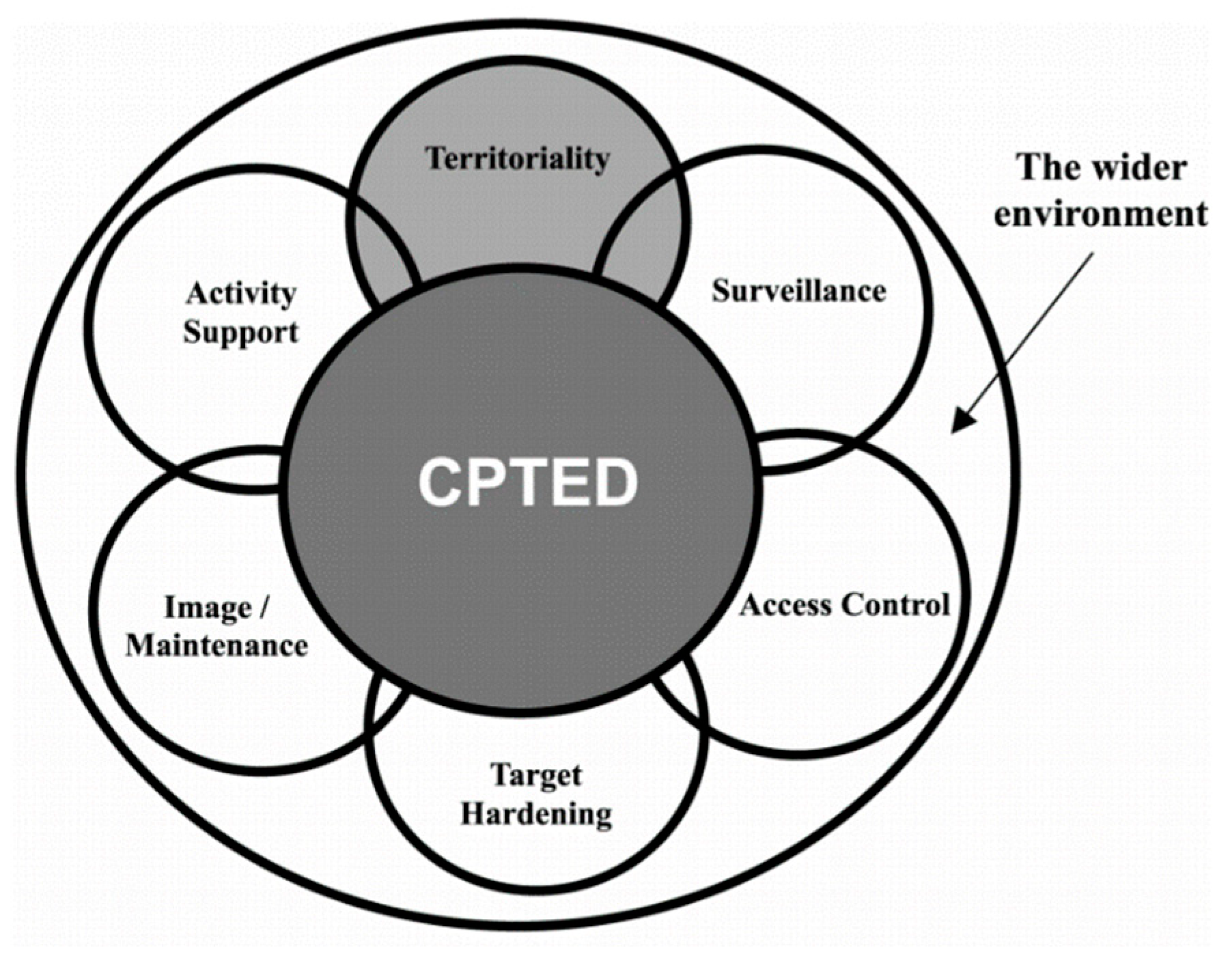
Figure 2.
Number of crimes by time of occurrence in Korea.
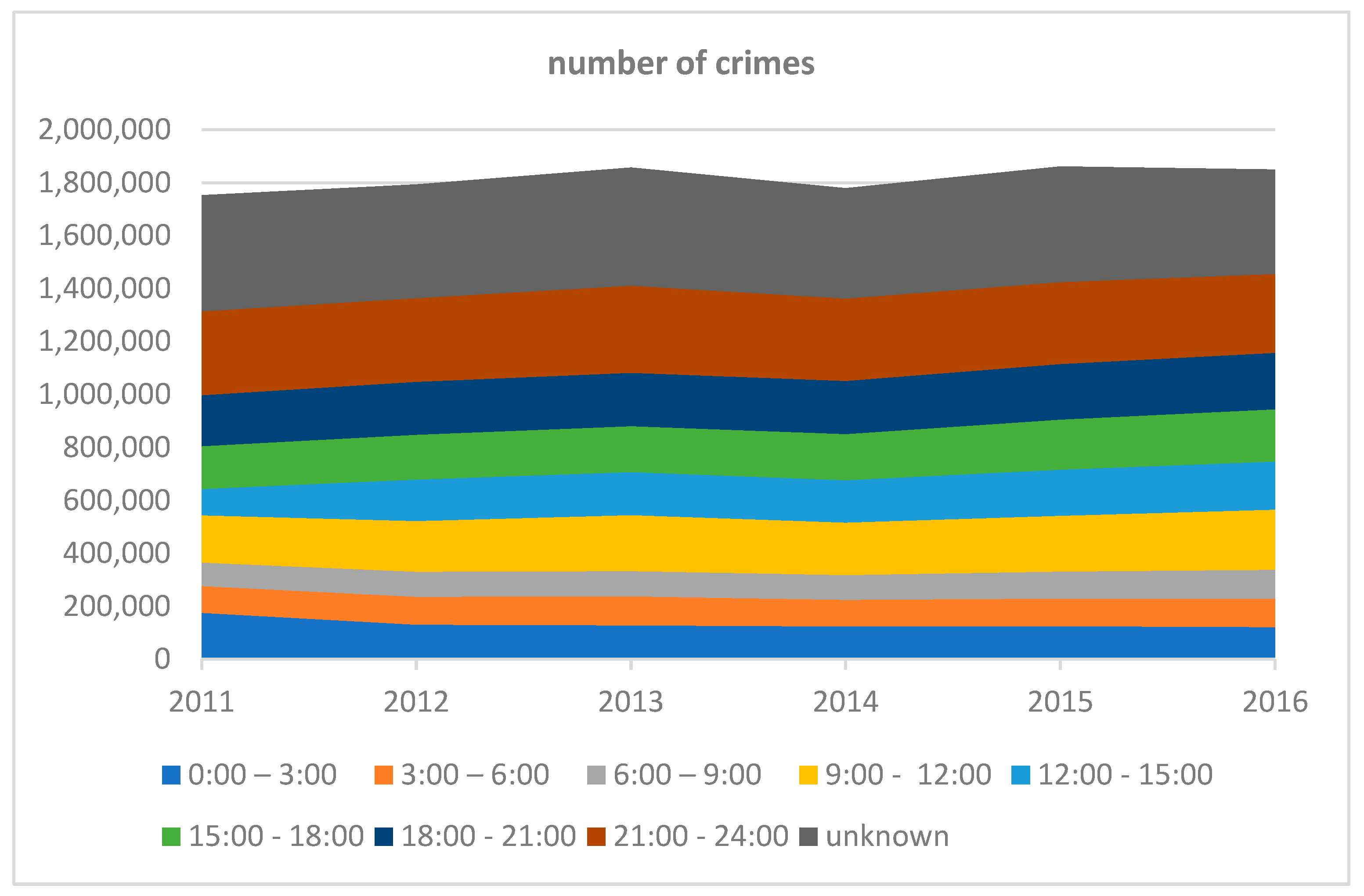
Figure 3.
Safety index (LA+CA) per district of Seoul, Korea.
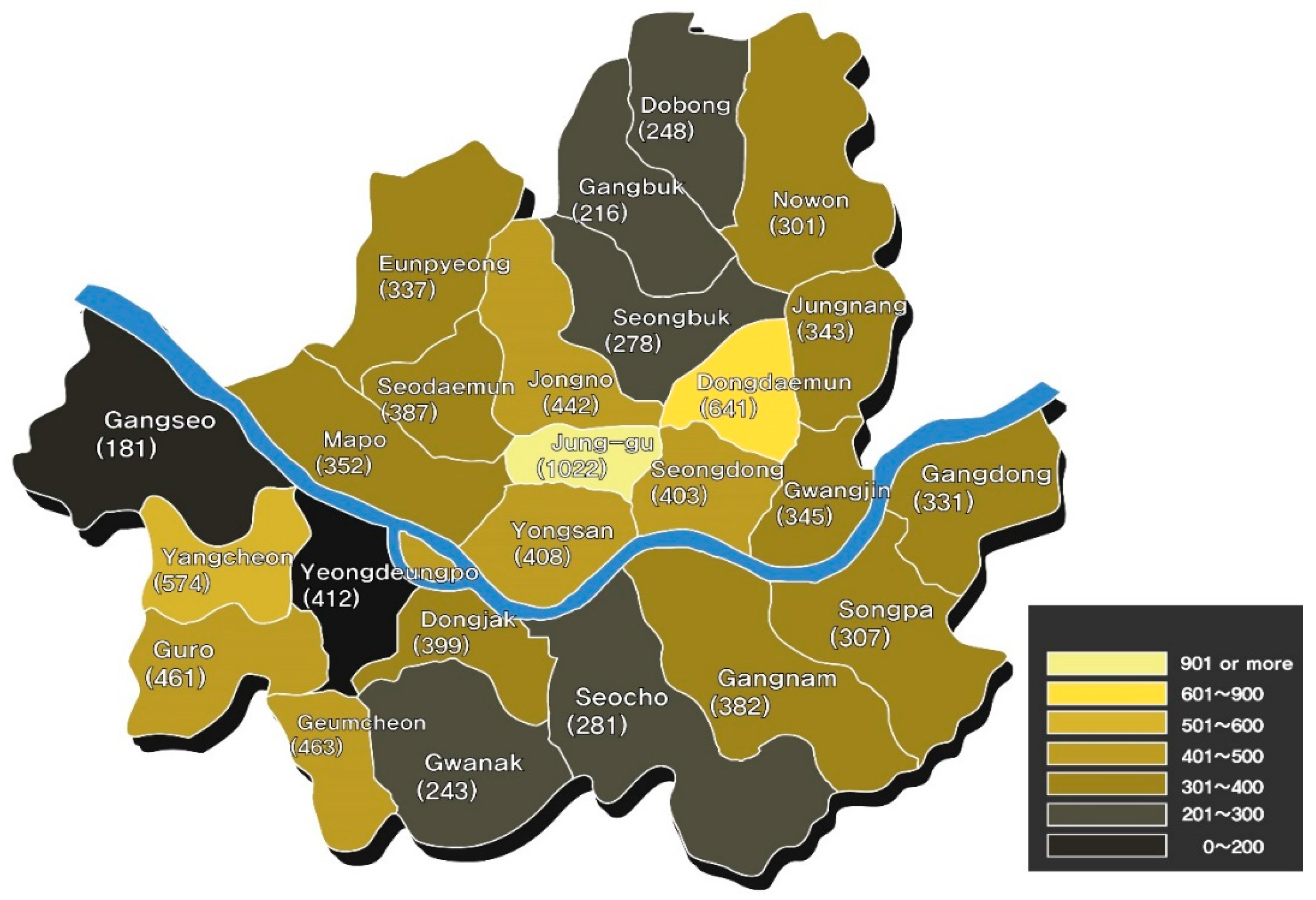
Figure 4.
Map status of Tancheon, Korea, an outdoor test site (by courtesy of Google).
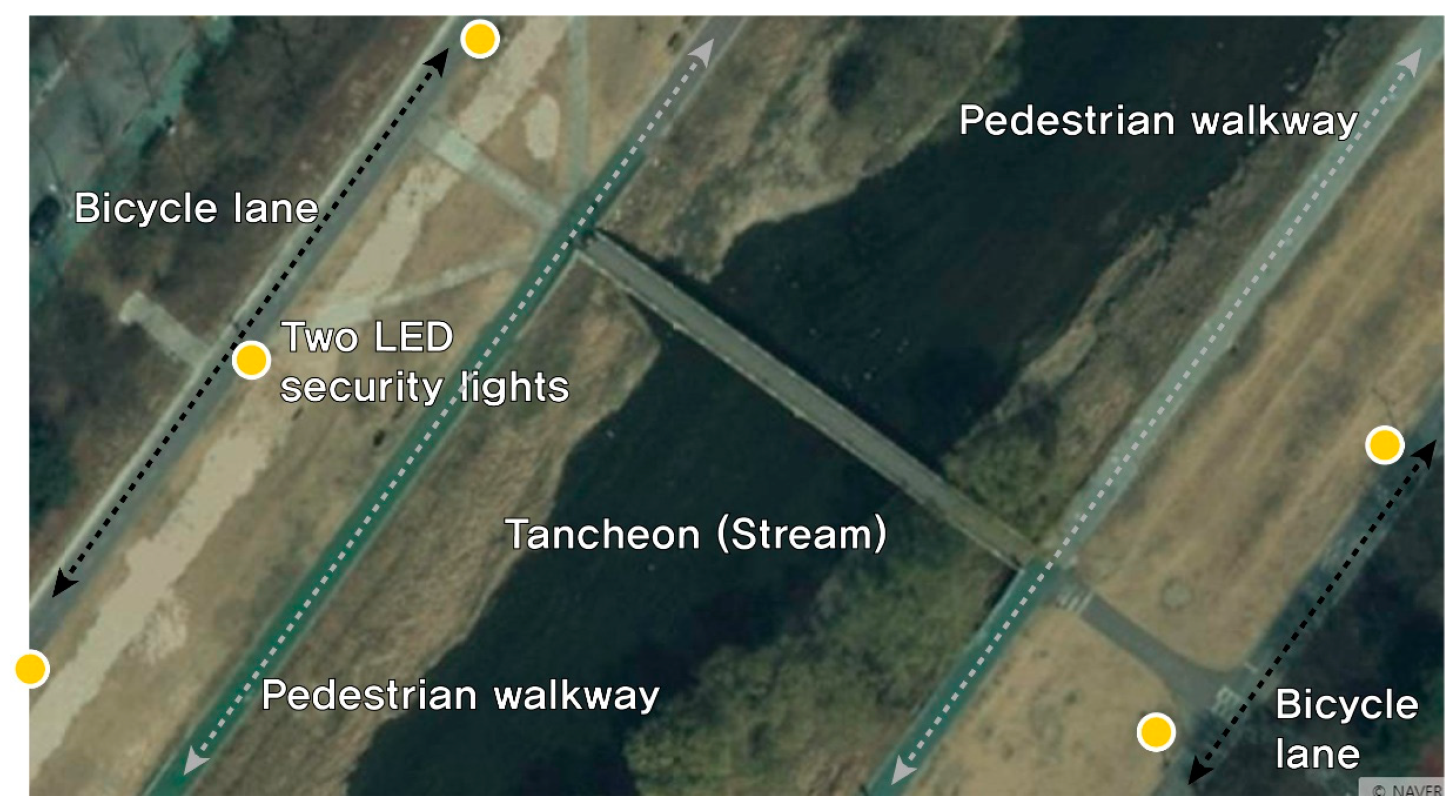
Figure 5.
Survey results on perception of security lighting brightness.
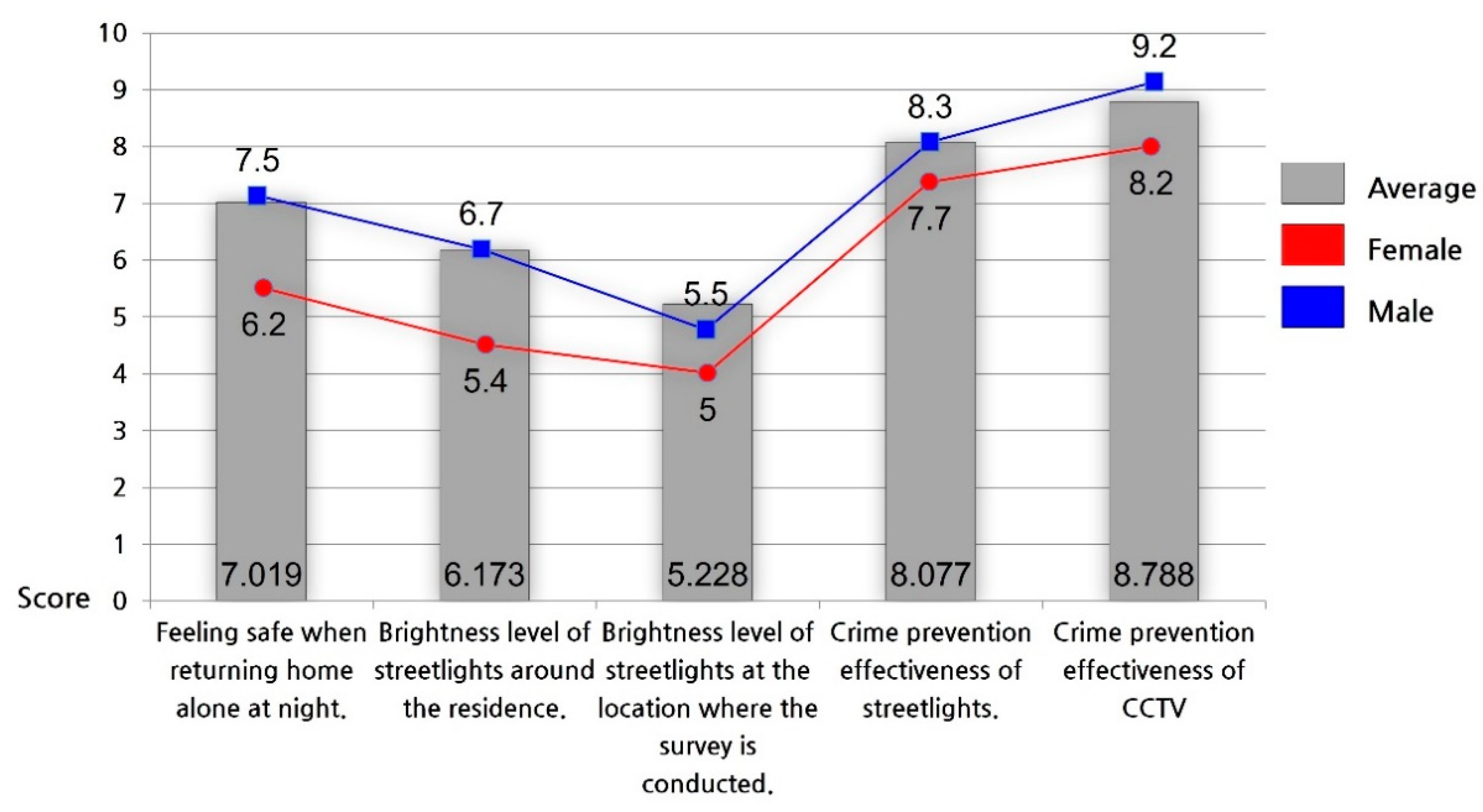
Figure 6.
Correct answer rate and recognition rate according to the brightness of the security light.
Figure 6.
Correct answer rate and recognition rate according to the brightness of the security light.
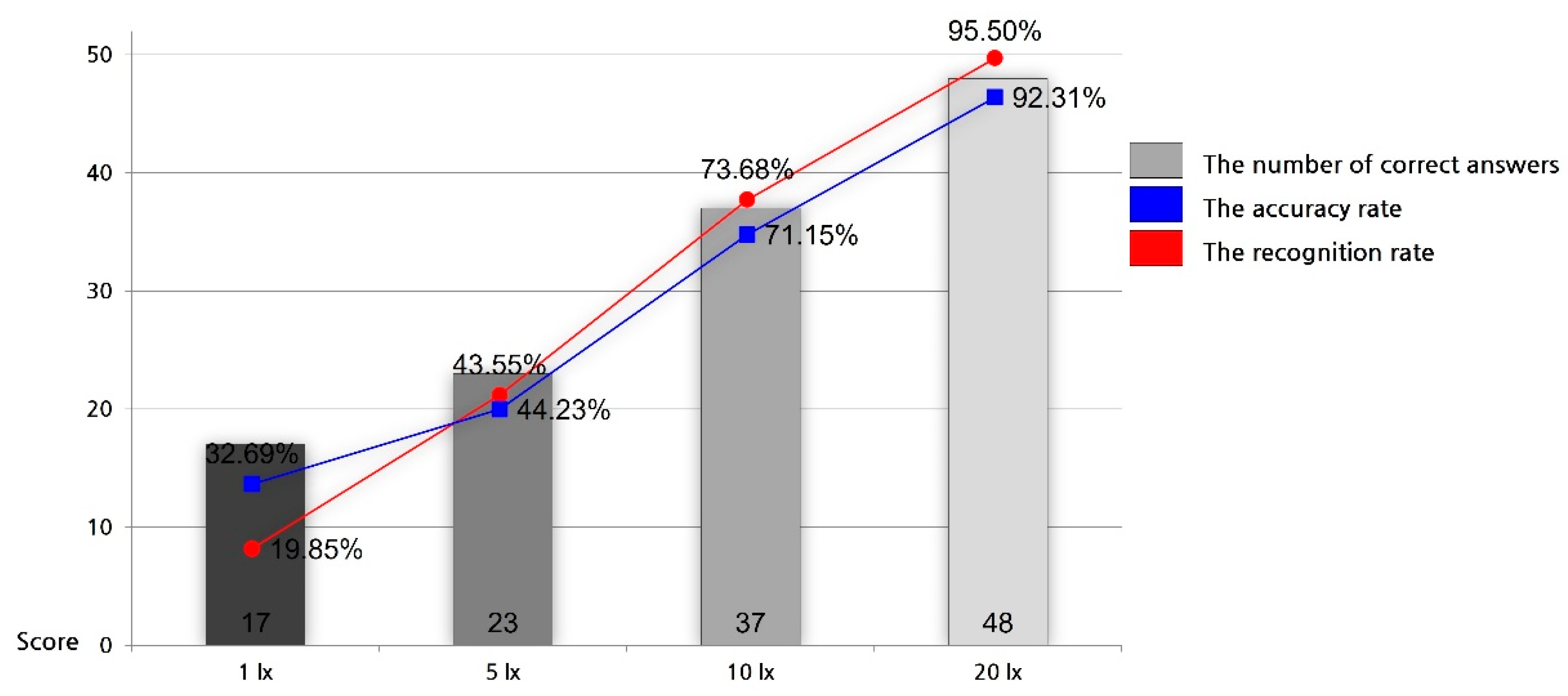
Figure 7.
Comparison of Sunlight and Sodium security lights (‘score’ signifies the difference value).
Figure 7.
Comparison of Sunlight and Sodium security lights (‘score’ signifies the difference value).
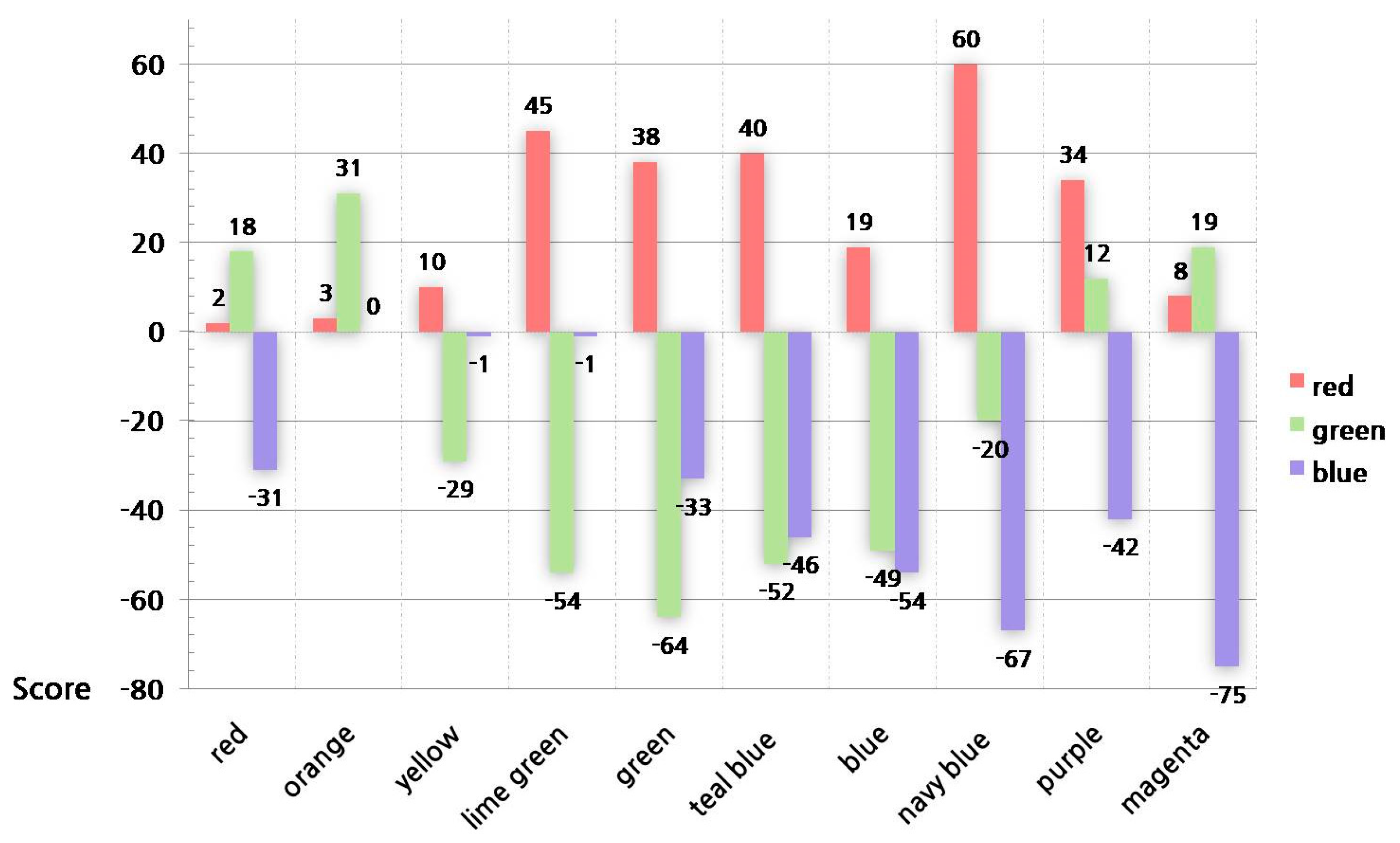
Figure 8.
Comparison of LED stand lights and fluorescent security lights (‘score’ signifies the difference value).
Figure 8.
Comparison of LED stand lights and fluorescent security lights (‘score’ signifies the difference value).
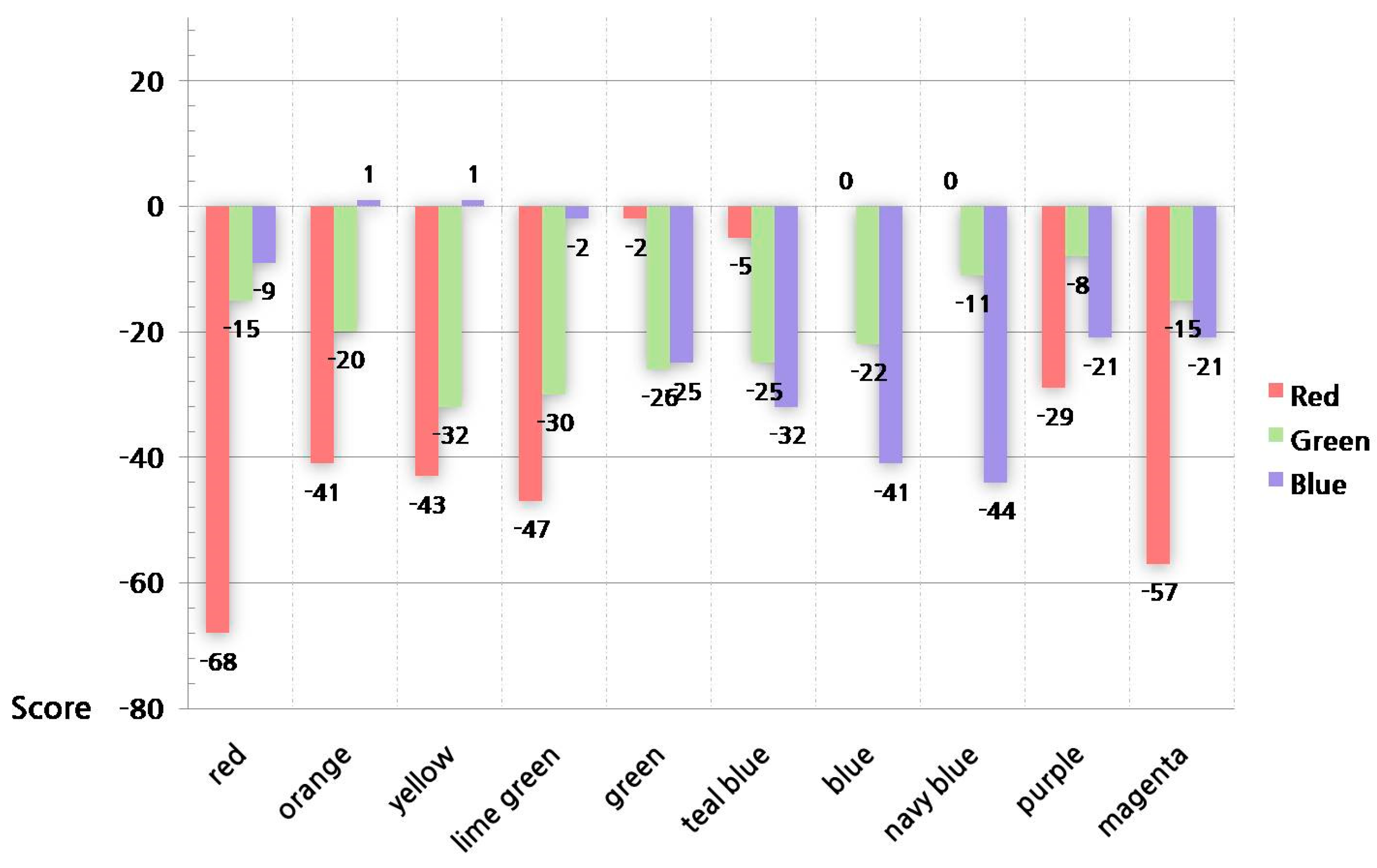

Table 1.
CPTED Guidelines—Public Facility (Lighting) by Korea CPTED Research Information Center [34].
Table 1.
CPTED Guidelines—Public Facility (Lighting) by Korea CPTED Research Information Center [34].
| Strategies and techniques | |
| Lighting facility arrangement and facility installation criteria |
|
Table 2.
Road lighting standards for pedestrians KS A 3701:2014 [35].
Table 2.
Road lighting standards for pedestrians KS A 3701:2014 [35].
| pedestrian traffic at night | region | illuminance (lx) | |
| horizontal (a) | vertical (b) | ||
| road with heavy traffic | residential area | 5 | 1 |
| commercial area | 20 | 4 | |
| low traffic road | residential area | 3 | 0.5 |
| commercial area | 10 | 2 | |
| |||
Table 3.
Area-specific Brightness Index (LA), Informatization Index (CA), Crime Incidence (CrA), and Safety Index (LA+CA) per district in Seoul, Korea (2014).
Table 3.
Area-specific Brightness Index (LA), Informatization Index (CA), Crime Incidence (CrA), and Safety Index (LA+CA) per district in Seoul, Korea (2014).
| Index / District | Brightness index [LA: Light/Area] | Informatization index [CA: CCTV/Area] | Number of crimes [CrA : Crime/Area] | Safety index [LACA: LA+CA] |
| Jongno | 375 | 67 | 208 | 442 |
| Jung-gu | 920 | 102 | 531 | 1022 |
| Yongsan | 313 | 95 | 180 | 408 |
| Seongdong | 325 | 78 | 213 | 403 |
| Gwangjin | 293 | 52 | 373 | 345 |
| Dongdaemun | 516 | 125 | 294 | 641 |
| Jungrang | 295 | 48 | 281 | 343 |
| Seongbuk | 212 | 66 | 186 | 278 |
| Gangbuk | 181 | 35 | 168 | 216 |
| Dobong | 209 | 39 | 148 | 248 |
| Nowon | 256 | 45 | 154 | 301 |
| Eunpyeong | 267 | 70 | 180 | 337 |
| Seodaemun | 317 | 70 | 270 | 387 |
| Mapo | 311 | 41 | 246 | 352 |
| Yangcheon | 428 | 146 | 278 | 574 |
| Gangseo | 159 | 22 | 131 | 181 |
| Guro | 367 | 94 | 278 | 461 |
| Geumcheon | 359 | 104 | 272 | 463 |
| Yeoungdeungpo | 361 | 51 | 284 | 412 |
| Dongjak | 318 | 81 | 259 | 399 |
| Gwanak | 172 | 70 | 243 | 243 |
| Seocho | 232 | 49 | 121 | 281 |
| Gangnam | 301 | 81 | 223 | 382 |
| Songpa | 275 | 32 | 237 | 307 |
| Gangdong | 291 | 40 | 213 | 331 |
| Average | 322 | 68 | 239 | 390 |
Table 4.
10 color circles and color rendering index (CRI) of various light sources.
| Light source | 10 color circles | CRI | Light source | 10 color circles | CRI |
| Sunlight |  |
Ra 99.1 | Florescent | 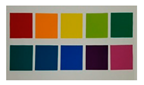 |
Ra 77.1 |
| LED security |
 |
Ra 84.0 | Sodium | 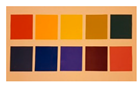 |
Ra 25.8 |
| Metal halide |
 |
Ra 82.7 | LED stand | 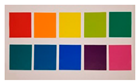 |
Ra 89.9 |
Table 5.
Comparison of color rendering and color temperature of sunlight and sodium security lights using Adobe Photoshop Pallet Color Picker.
Table 5.
Comparison of color rendering and color temperature of sunlight and sodium security lights using Adobe Photoshop Pallet Color Picker.
| classification | Sunlight | Sodium security lights | Daylight vs. Sodium light difference | Total difference | ||||||
| Red | Green | Blue | Red | Green | Blue | Red | Green | Blue | ||
| Red | 182 | 29 | 32 | 184 | 47 | 1 | 2 | 18 | -31 | 51 |
| Orange | 228 | 110 | 2 | 231 | 141 | 2 | 3 | 31 | 0 | 34 |
| Yellow | 218 | 194 | 2 | 228 | 165 | 1 | 10 | -29 | -1 | 40 |
| Light green | 134 | 170 | 3 | 179 | 116 | 2 | 45 | -54 | -1 | 100 |
| Green | 2 | 111 | 72 | 40 | 47 | 39 | 38 | -64 | -33 | 135 |
| Turquoise | 1 | 89 | 96 | 41 | 37 | 50 | 40 | -52 | -46 | 138 |
| Blue | 1 | 81 | 132 | 20 | 32 | 78 | 19 | -49 | -54 | 122 |
| Navy blue | 2 | 63 | 174 | 62 | 43 | 107 | 60 | -20 | -67 | 147 |
| Purple | 50 | 13 | 63 | 84 | 25 | 21 | 34 | 12 | -42 | 91 |
| Maroon | 178 | 43 | 109 | 186 | 62 | 34 | 8 | 19 | -75 | 102 |
| Total | 996 | 903 | 685 | 1,255 | 715 | 335 | 259 | -188 | -350 | 960 |
Table 6.
Comparison of LED stand light and fluorescent security light using Adobe Photoshop Pallet Color Picker.
Table 6.
Comparison of LED stand light and fluorescent security light using Adobe Photoshop Pallet Color Picker.
| classification | LED stand light | Fluorescent security light | Fluorescent vs. LED light difference | ||||||
| Red | Green | Blue | Red | Green | Blue | Red | Green | Blue | |
| Red | 182 | 30 | 19 | 114 | 15 | 10 | -68 | -15 | -9 |
| Orange | 230 | 116 | 1 | 189 | 96 | 2 | -41 | -20 | 1 |
| Yellow | 225 | 191 | 2 | 182 | 159 | 3 | -43 | -32 | 1 |
| Light green | 152 | 164 | 10 | 105 | 134 | 8 | -47 | -30 | -2 |
| Green | 4 | 97 | 68 | 2 | 71 | 43 | -2 | -26 | -25 |
| Turquoise | 7 | 74 | 83 | 2 | 49 | 51 | -5 | -25 | -32 |
| Blue | 2 | 68 | 122 | 2 | 46 | 81 | 0 | -22 | -41 |
| Navy blue | 4 | 57 | 169 | 4 | 46 | 125 | 0 | -11 | -44 |
| Purple | 68 | 23 | 62 | 39 | 15 | 41 | -29 | -8 | -21 |
| Maroon | 181 | 51 | 93 | 124 | 36 | 72 | -57 | -15 | -21 |
| Total | 1,055 | 871 | 629 | 763 | 667 | 436 | -292 | -204 | -193 |
Disclaimer/Publisher’s Note: The statements, opinions and data contained in all publications are solely those of the individual author(s) and contributor(s) and not of MDPI and/or the editor(s). MDPI and/or the editor(s) disclaim responsibility for any injury to people or property resulting from any ideas, methods, instructions or products referred to in the content. |
© 2024 by the authors. Licensee MDPI, Basel, Switzerland. This article is an open access article distributed under the terms and conditions of the Creative Commons Attribution (CC BY) license (http://creativecommons.org/licenses/by/4.0/).
Copyright: This open access article is published under a Creative Commons CC BY 4.0 license, which permit the free download, distribution, and reuse, provided that the author and preprint are cited in any reuse.