

Submitted:
17 June 2024
Posted:
17 June 2024
You are already at the latest version
Abstract
Non-destructive testing has many advantages, such as the ability to obtain a large number of data without destroying existing structures. However, the reliability of the estimation accuracy and the limited range of applicable targets remains an issue. This study proposes to a novel pin penetration test method to determine the early age compressive strength of concrete before demolding. The timing of demolding and initial curing are determined according to the strength development of concrete. Therefore, it is important to determine the compressive strength at the early age before demolding at the actual construction site. The applicability of this strength estimation methodology at actual construction is investigated. Small test holes (12 mm in diameter) are prepared on the mold surface in real construction sites and mock-up specimens in advance. The pin is penetrated into these test holes to obtain the relationship between the compressive strength and the penetration depth. As a result, it is confirmed that the pin penetration test method is suitable to measure the early age compressive strength at actual construction site. This allows the benchmark values for compressive strength, necessary to avoid early frost damage, to be directly verified on the concrete structural members at the construction site. For instance, the compressive strengths of greater than 5 MPa and 10 MPa can be confirmed by the penetration depths benchmark values of 8.0 mm and 6.7mm or less, respectively.
Keywords:
Compressive strength estimation
; Pin penetration test
; non-destructive test
; on-site test
; Demolding
; Early age compressive strength
; Cold weather concreting
1. Introduction
It is important to determine the early age compressive strength at the actual construction site when concrete work is executed in cold weather conditions to prevent early-age frost damage. Most of the international norms and guidelines for cold weather concreting are recommending to obtain at least 5 MPa strength before exposing concrete to early age freezing. However, there are no suitable methods available for measurement of low strength concrete at very early age, in particular before demolding at the construction site. As well known, cement hydration is quite sensitive to temperature, and strength development would be delayed at low temperatures [1]. Mold provides important protection function against low temperature for early age concrete. Therefore, it is desirable to extend the period during which the concrete mold remains in place as much as possible to ensure sufficient initial curing. Japanese Architectural Standard Specification for Reinforced Concrete Works, JASS 5 [2] provided by the Architectural Institute of Japan specifies that the period where the mold remains in place shall be controlled by strength. JASS 5 requires the removal of the mold after confirming that the compressive strength of the structural concrete attains specific criteria depending on the planned service life. In the case of the ‘short-term’ and ‘standard’ service life level, the compressive strength should be 5 N/mm2 or more for demolding. In the case of the ‘long-term’ and ‘extra-long-term’ service life level, the compressive strength should be 10 N/mm2 or more. In case of cold weather concreting, the recommendation for practice of cold weather concreting [3] and its commentary also require initial curing until the compressive strength exceeds 5 N/mm2 in order to avoid initial frost damage.
As mentioned above, the timing of demolding and initial curing are determined according to the strength development of concrete. However, since compressive strength is obtained by compressive strength tests using test pieces, it undergoes different curing conditions from the structural concrete placed in the mold. To obtain the compressive strength of the actual structural concrete, it is desirable to take cores from the hardened structure and test them, which is destructive. However, it is challenging to take cores from unmatured concrete members before demolding. In addition, conducting a compression test is not easy to do at the construction site, and it is unavoidably costly in terms of time and economics, such as transportation to the testing location and the testing procedure itself.
There are various non-destructive testing (NDT) methods available for the assessment of the in-situ concrete strength. Non-destructive and micro-destructive testing methods for estimating the compressive strength of concrete have been studied extensively, and many methods have been put into practical use and standardized. The most commonly used NDT methods are a rebound hammer test [4,5,6,7] and ultrasonic pulse velocity [8,9,10,11,12,13,14]. A combination of those methods [15,16,17] is also widely used to evaluate the existing concrete structures. However, most of them have been applied to the concrete surface to estimate the internal mechanical properties (compressive strength). Any of those methods are only applicable for the existing or hardened concrete structures, but not applicable to the unmatured concrete structures before demolding. The target concrete of these NDTs is post-cured concrete or structures that have deteriorated over time, and there are not enough tests available for young concrete, especially before demolding.
Non-destructive testing has many advantages, such as the ability to obtain a large number of data without destroying existing structures on a large scale [18]. However, the reliability of the estimation accuracy remains an issue. For example, Figure 1(a) shows the rebound hammer test which is an extremely simple test method and has been standardized in Japan as JIS A 1155 “Method for measuring the degree of rebound of concrete,” which is modified from ISO 1920-7 “Testing of concrete - Part 7: Non-destructive tests on hardened concrete.” However, the method of estimating strength from the degree of rebound is not included in these standards due to a unified calculation method for estimating strength from the degree of rebound has not been obtained [19,20,21,22].
There are several studies that investigated the NDT methods to use for alternative assessment of in-situ concrete strength. Gunes et al. [23] have studied the drilling-based test methodology for non-destructive estimation of in-situ concrete strength and carried out to develop a relationship between the drilling resistance parameter and compressive strength. However, they concluded that the most accurate estimations for strength are obtained when the drilling resistance measurements are combined with rebound hammer or ultrasonic pulse velocity measurements as additional NDT data. Al-Sabah et al. [24] have investigated the post-installed screw pull-out test for the assessment of the compressive strength of in-situ concrete and they found that the correlation between the compressive strength of mortar and the peak load was significant. In addition, one of our previous studies [25] investigated the screening method to evaluate the low-strength concrete using the combination of two low-energy non-destructive testing devices, type L rebound hammer and a scratching test. As a result, a concrete classification chart is proposed based on the boundary values of two NDT methods and it is provided a concrete strength range via a classification chart and a conservative estimate of the compressive strength. Nguyen et al. [26] studied the simple non-destructive method for evaluating the cover concrete quality and they concluded that the water intentional spray test method can sensitively detect the poor-quality concrete caused by high water-cement ratio and short curing time. However, the all NDT methods mentioned here were performed on the surface of concrete, it is difficult to apply it directly to concrete before demolding, when the surface has not yet been exposed.
The mold plays a role in protecting the concrete from external stimuli and ensuring its quality, it is undesirable to remove even a part of the mold for the purpose of confirming the strength of young aged concrete. A proposal to estimate the strength of the concrete with mold have been considered. In the BOSS (Broken Off Specimens by Splitting) specimen method [27,28,29] shown in Figure 1(b), which has been standardized in Japan as JIS A 1163, concrete is poured into the mold with the mold for the BOSS specimen installed in advance to obtain a specimen that has hardened in the same environment as the structural concrete. By performing a compressive test on this BOSS specimen, strength estimation can be performed with high accuracy. However, there are some problems in the simplicity of the test, such as the fact that the compressive test cannot be performed at the construction site, the need for repair after demolding, and the limited number of specimens.
The strength of concrete generally depends on the strength of the hardened cement. Therefore, a non-destructive testing method called the penetration resistance method has been proposed [30,31,32,33], in which pins or needles are inserted into the mortar portion of concrete, and the strength is estimated from the penetration depth. Maliha et al. also used a same pin penetration device used in this study, they obtained a correlation between the penetration depth and compressive strength, but confirmed that it was affected by coarse aggregate [32]. Conversely, if the influence of coarse aggregate can be eliminated, strength estimation can be performed with higher accuracy. For example, the accuracy of strength estimation for mortar without coarse aggregate is high, and there are also standardized methods for strength estimation, such as shotcrete [33].
In addition, a method called ‘smart sensor mold’, in which a mold is equipped with a sensor that can measure the surface temperature history of concrete, etc., has been proposed to confirm the development of standard strength at demolding [34]. However, this method cannot be applied to conventional mold easily because it requires the use of a mold with special devices.
Based on above backgrounds, this study proposes to use the pin penetration test method to determine the early age compressive strength before demolding. There are two main advantages on this method that is reason to use in this study. First, the proposed pin penetration test is applicable to use before demolding. Second, this method is suitable to use for low strength concrete. However, the previous studies [35] have only shown the effectiveness of this method on laboratory-sized specimens and have not examined it on full-size concrete specimens, which may include different conditions, e.g., compaction conditions and uncontrolled temperature. In this study, the applicability of this strength estimation method at actual construction is investigated. Small test holes (12 mm in diameter) are prepared on the mold surface in real construction sites and mock-up specimens in advance. The pin is penetrated into these test holes to obtain the relationship between the compressive strength and the penetration depth.
2. Testing Method and Materials
2.1. Pin Penetration Testing Device
The pin penetration testing device used in this study is shown in Figure 2 and its specifications are in Table 1. In this device, a metal pin of 2.5 mm in diameter and 60 mm in length is ejected with constant energy (6 Nm) from an internally compressed spring, pushing the pin at the tip up to a predetermined height, and the penetration depth is then measured. The measured penetration depth is digitally displayed on a control unit connected to the main unit of the tester. The measuring principle is similar to that of conventional pin penetration testers [31,33] used for concrete. This device was originally developed to estimate the degree of decay or deterioration of wood based on the penetration depth. In previous studies [32,35], this device was employed to determine the compressive strength of concrete on the cubic mold in laboratory-scale. No result has been verified on full-size mock-up specimens and/or actual construction sites. This study investigated the applicability of this method in actual construction sites to determine the early compressive strength. Two types of pipes with different materials were used to compare the effect of material type on penetration depth as shown in Figure 2.
2.2. Technique of Measuring Strength before Demolding
Figure 3 shows the pin penetration test of the mock-up specimen. As shown in this photo, the specimens were not demolded. The pin penetration testing device is compact and lightweight, does not require an external power source other than the built-in dry cell batteries and can be brought to the construction site easily. The pin penetration tests were performed on mortar filled in the holes as shown in Figure 4. The measurement results were obtained from each hole.
Figure 4, Figure 5 and Figure 6 show the experimental procedure for preparing the test holes on the mold. The pre-assembled test piece consists of an aluminum (Al) or acrylic (Ac) pipe, a plastic cover, and a needle as shown in Figure 4. The holes in the mold have the same diameter as those used for ordinary separators of the mold, and the test can be conducted simply by placing an aluminum pipe with a coarse aggregate penetration prevention needle and a plastic cap with holes on the side facing the outside of the mold. At first, test holes with a diameter of 12 mm were drilled in the mold before inserting the test piece as shown in Figure 4. The space between holes was not less than 40 mm. After that, the pre-assembled test pieces were inserted into drilled holes as shown in Figure 5. The concrete was poured into the mold after finishing the preparation of the mold. The internal and surface vibrators were used to compact the concrete until cement paste leaked from the plastic cap as shown in Figure 6.
2.3. Pin penetration Test at Construction Site and Mock-Up Mold
Figure 7 shows the outline of experimental work for the pin penetration test. The pin penetration test was performed at both the laboratory and the actual construction site to investigate the applicability of this method. Also, mock-up specimens were prepared to conduct pin penetration tests to simulate the actual construction site. Cylindrical specimens with a size of 100 × 200 mm were prepared to determine the compressive strength of concrete. Concrete temperatures and ambient temperatures were measured for each type of specimens and on construction site using the digital thermometer. The temperature measurement interval was 5 minutes.
In the scope of this study, penetration tests were conducted with 30 holes with both Al and Ac pipes. For each series, pin penetration tests were conducted according to the schedule shown in Table 2. At the same accumulated temperature, the compressive strength tests were also conducted to obtain the corresponding compressive strength.
Figure 8 shows the schematic diagram of the mock-up mold. The size of the mock-up mold was 1800 × 900 × 200 mm each in length, height and thickness. In the case of the mock-up mold, pin penetration test was performed once 15 hours after casting, and then repeated every 3 hours. Therefore, testing times were 15, 18, 21, 24, 27, and 48 hours. The core drilled specimens were taken from mock-up mold at a time interval of 21, 24, 27, and 48 h. The core drilling was conducted with the mold in place, as opposed to the usual situation. Temperatures were measured from the surface of the mock-up mold using the digital thermometer.
On construction site, pin penetration tests were performed at 18, 21, 24, and 48 hours due to limitation of working time at construction site. The temperature was also measured from the concrete surface. Figure 9 shows the prepared test holes at the construction site and mock-up mold before conducting pin penetration test.
2.4. Concrete Used in the Experiment
The concrete for the specimens was supplied by a ready-mixed concrete plant near Sendai City, Japan. Table 3 shows its specifications and Table 4 shows its mix proportions. As shown in these tables, tests were conducted on the different concretes with different nominal strength, slump, and curing conditions also were different. After casting, the cylindrical specimens were sealed and cured at the construction site until testing.
2.5. Compressive Strength Test
Compressive strength tests were conducted in accordance with JIS A 1108. For each series of tests, three cylindrical specimens were used for compressive strength tests to confirm the strength. The testing time was determined by temperature measurement, which was reached when the cured specimens obtained the same accumulated temperature as site concrete. The accumulated temperatures were calculated using Equation (1) [3].
Where M:Accumulated temperature (ºD·D)
T:Temperature at ∆t
∆t:time
3. Results and Discussion
3.1. Temperature Difference between Site Concrete and Specimens
Figure 11, Figure 12, Figure 13 and Figure 14 show the temperature histories of construction site and mock-up specimens. The temperature measured from site or mock-up specimen concrete give the highest temperature profiles and their temperatures slightly decreased to ambient air temperature. The cylindrical specimens were cured at the same ambient air temperature as mock-up molds and construction sites. However, the highest temperature profile occurred within the first 8 hours and then decreased to ambient air temperature. In general, cylindrical specimens’ temperatures depend on the ambient air temperature. Therefore, it is confirmed that even if the ambient air temperature is the same, the actual construction site concrete temperature is higher than the temperature of site-cured specimens.
3.2. Accumulated Temperature and Strength Delaying Time
As defined by Saul [36], the concrete of the same mix at the same maturity has approximately the same strength whatever combination of temperature and time that leads to maturity. Therefore, the strength delaying time was determined based on the time to reach the same accumulated temperature for all series. For instance, Figure 15 shows the accumulated temperature and curing time for MS-1. As shown in this figure, the accumulated temperature of the mock-up specimens (MS-1) was 27.5 ºD∙D, 43.5 ºD∙D and 81.2 ºD∙D after 15 h, 24h and 48 hours, respectively. However, cylindrical specimens obtained the same accumulated temperature after 17 h 45 min, 29 h 26 min and 56 h 40 min, respectively. Therefore, the strength delaying time is 2 h 45 min, 5 h 26 min and 8 h 40 min for the cylindrical specimens, respectively. It confirms that the on-site cured specimens are not suitable to evaluate the actual compressive strength of concrete at the construction site and the direct measurement method is important to determine the pre-curing time especially in cold weather conditions.
3.3. Relationship between Compressive Strength and Penetration Depth
The relationship between the penetration depth d and compressive strength is shown in Figure 16. In the case of Al pipe (Figure 16a), the same depth of penetration was measured even when the strength was increased. Al pipes are stronger than Ac pipes which are difficult to expand when the pin penetrates into the cement mortar filled in Al pipes. This is the reason why Al pipe gives the same penetration depth even when the strength is different. Therefore, it is not suitable to use strong materials for pipe, because the concrete-filled steel pipe structures have high bearing capacity and strong deformation ability [37,38]. In the case of Ac pipe (Figure 16b), the depth of penetration tends to decrease exponentially as the compressive strength increases. When the compressive strength is less than 5 MPa, the depth of penetration shows significant variation. However, the obtained result was different from the previous curve which was determined in laboratory experiments [35]. The compressive strength range that can be estimated by the proposed method in this study is set to 3 MPa to 15 MPa. A regression curve is set up to obtain the strength estimation equation using the measurement points whihin this strength range. Here, based on the graph shown in Figure 16, we use the inverse proportionality equation shown in Equation (2) below.
Where, :compressive strength [MPa]
:Corrected Penetration Depth [mm]
:Experimental constant
The correlation between the compressive strength and the penetration depth is determined from the least squares method as in the following equations (3) and (4). The coefficients of determination are , respectively. It can be confirmed that acrylic pipe shows the higher correlation. Therefore, result from acrylic pipe is used to determine early age compressive strength before demolding.
where, :Corrected penetration depth of aluminium pipe [mm] :Corrected penetration depth of acrylic [mm]
Finally, a reference value of the penetration depth is determined with sufficient certainty that the strength required before demolding or prevent from early age freezing has been obtained from the depth of penetration obtained in one penetration test and the corresponding compressive strength . The corresponding experimental constantin Equation (2) is calculated by the following equation (5).
Here, is pin penetration depth for acrylic pipe. is assumed to follow a normal distribution, and the mean value s of is calculated by Equation (6) and the standard error by Equation (7) for the acrylic pipes.
The 99% confidence interval when considering the distribution of the experimental constant is expressed by the following equations (8) and (9). and are calculated for acrylic pipe.
Substituting and into equation (2) yields the estimated intensity intervals. These equations are expressed in equations (10) and (11)
Here,:Estimated upper strength of acrylic pipe [MPa] :Estimated lower strength of acrylic pipe [MPa]
These estimated intervals are indicated by the dashed lines in Figure 17, confirming that it is possible to estimate the early age compressive strength from the depth of penetration obtained. The standard error of was . Considering the respective estimated strength intervals, the penetration depths that ensure the development of the early age strength required before demolding are shown in Table 5. Figure 17 shows these values for the relationship between penetration depth and compressive strength. If the penetration depth is less than these values, it confirms that the minimum required strength before demolding is achieved.
However, fewer values were obtained at lower strength levels due to higher strength development during testing. Therefore, it is necessary to conduct more experiments to get more data at low strength level in the future. Although, we were able to propose reference values.
3.5. Surface Condition of Concrete after Demolding
The condition of the surface of the structure after demolding is shown in Figure 18. As shown in these figures, the test hole marks after demolding are small, with acceptable unevennesses. It is considered possible to repair these test marks easily without damaging the structural frame. Additionally, when installing finishing materials or insulation, these marks can be covered without any special treatment.
4. Conclusions
In this study, the pin penetration test method was investigated to determine the early age compressive strength at the actual construction site before demolding. The mock-up specimens were prepared to determine the relationship between penetration depth and compressive strength. The findings of this study are described below.
- It is confirmed that the pin penetration test method is suitable to measure the early age compressive strength before demolding at actual construction site.
- The relationship between pin penetration depth and compressive strength of concrete was determined at actual construction site using the mock-up specimens. The obtained results were different from the existing curves obtained in laboratory experiments.
- The strength development of specimens was significantly delayed compared to mock-up specimens even when specimens were cured at same ambient air temperatures. Therefore, it confirms that the pin penetration test method is important to determine early-age compressive strength before demolding at actual construction site.
- The relationship between pin penetration depth and compressive strength gives higher correlation when using the acrylic pipes.
- It is confirmed that when the compressive strengths are greater than 5 MPa and 10MPa, the penetration depths are smaller than 8.0 mm and 6.7 mm, respectively.
Author Contributions
Conceptualization, B.N., T.N.; methodology, B.N., T.N.; validation, Y.D., T.N.; formal analysis, B.N., F.T; investigation, B.N., F.T., K.K., T.L., A.J and F.D; data curation, B.N., F.T; writing—original draft preparation, B.N.; writing—review and editing, T.N., Y.D., F.T., K.K., T.L., A.J and F.D.; visualization, B.N.; supervision, T.N.; project administration, T.N.; All authors have read and agreed to the published version of the manuscript.
Funding
This research received no external funding.
Data Availability Statement
Not applicable.
Acknowledgments
We would like to express our gratitude to Sumitomo Mitsui Construction Co., Ltd. for their great support and for allowing us to conduct experiments at their construction site. We also appreciate the supports provided by Taihaku Corporation and the Sendai Concrete Testing Center in the preparation and execution of the mock-up specimens.
Conflicts of Interest
The authors declare no conflict of interest.
References
- Narantogtokh, B.; Nishiwaki, T.; Pushpalal, D.; Taniguchi, M. Influence of pre-curing period at sub-zero temperature (-20 ℃) on the compressive strength of concrete. Cem. Sci. Concr. Technol. 2022, 76, 379–385. [Google Scholar] [CrossRef]
- Architectural Institute of Japan. Japanese Architectural Standard Specification JASS 5 Reinforced Concrete Work. Japan, <bold>2018.</bold> (In Japanese).
- Architectural Institute of Japan. Recommendation for Practice of Cold Weather Concreting. Japan, <bold>2010</bold> (in Japanese).
- Revilla-cuesta, V.; Ortega-lopez, V.; Faleschini, F.; Espinosa, A.B.; Serrano-lopez, R. Hammer rebound index as an overall-mechanical-quality indicator of self-compacting concrete containing recycled concrete aggregate. Constr. Build. Mater. 2022, 347, 128549. [Google Scholar] [CrossRef]
- Szilágyi, K.; Borosnyói, A.; Zsigovics, I. Extensive statistical analysis of the variability of concrete rebound hardness based on a large database of 60 years experience. Constr. Build. Mater. 2014, 53, 333–347. [Google Scholar] [CrossRef]
- Kumavat, N.R.; Chandak, N.R.; Patil, I.T. Factors influencing the performance of rebound hammer used for non-destructive testing of concrete members: A review. Case Stud. Constr. Mater. 2021, 14. [Google Scholar] [CrossRef]
- Odimegwu, T.C.; Amrul Kaish, A.B.M.; Zakaria, I.; Abood, M.M.; Jamil, M.; Ngozi, K.O. Nondestructive determination of strength of concrete incorporating industrial wastes as partial replacement for fine aggregate. Sensors. 2021, 21. [Google Scholar] [CrossRef] [PubMed]
- Mata, R.; Ruiz, R.O.; Nunez, E. Correlation between compressive strength of concrete and ultrasonic pulse velocity : A case of study and a new correlation method. Constr. Build. Mater. 2023, 369, 130569. [Google Scholar] [CrossRef]
- Bogas, J. A.; Gomes, M.G.; Gomes, A. Compressive strength evaluation of structural lightweight concrete by non-destructive ultrasonic pulse velocity method. Ultrasonics, 2013, 53, 962–972. [Google Scholar] [CrossRef] [PubMed]
- Andrade, M.; Lopes, A.; Júnior, M.; Cristina, G. Ultrasonic testing on evaluation of concrete residual compressive strength: A review. Constr. Build. Mater. 2023, 373, 130887. [Google Scholar] [CrossRef]
- Moreira, R.; Gondim, L.; Haach, V.G. Monitoring of ultrasonic velocity in concrete specimens during compressive loading-unloading cycles,” Constr. Build. Mater. 2021, 302, 124218. [Google Scholar] [CrossRef]
- Liang, M.T.; Wu, J. Theoretical elucidation on the empirical formulae for the ultrasonic testing method for concrete structures. Cem. Concr. Res. 2002, 32, 1763–1769. [Google Scholar] [CrossRef]
- Lencis, U.; Udris, A.; Korjakins, A. Frost influence on the ultrasonic pulse velocity in concrete at early phases of hydration process. Case Stud. Constr. Mater. 2021, 15, e00614. [Google Scholar] [CrossRef]
- Solis-Carcaňo, R.; Moreno, E. I. Evaluation of concrete made with crushed limestone aggregate based on ultrasonic pulse velocity. Constr. Build. Mater. 2008, 22, 1225–1231. [Google Scholar] [CrossRef]
- Ali-benyahia, K.; Kenai, S.; Ghrici, M.; Sbartaï, Z. Analysis of the accuracy of in-situ concrete characteristic compressive strength assessment in real structures using destructive and non-destructive testing methods. Constr. Build. Mater. 2023, 366, 130161. [Google Scholar] [CrossRef]
- Hobbs, B.; Kebir, M.T. Non-destructive testing techniques for the forensic engineering investigation of reinforced concrete buildings. Forensic. Sci. Intern. 2007, 167, 167–172. [Google Scholar] [CrossRef] [PubMed]
- Poorarbabi, A.; Ghasemi, M.; Moghaddam, M.A. Concrete compressive strength prediction using non-destructive tests through response surface methodology. Ain Shams Eng. J. 2020, 11, 939–949. [Google Scholar] [CrossRef]
- Yuasa, N. Research and practical application of non-destructive and micro-destructive testing of concrete structures. JTCCM Journal. 2013, 49, 2–8. (in Japanese). [Google Scholar] [CrossRef]
- Technical Committee on Concrete Strength Estimation, The Society of Materials Science Japan. Guideline for Compressive Strength Estimation of Concrete by Schmidt Hammer (Draft). Material Testing. 1958, 7, 426–430. (in Japanese). [Google Scholar] [CrossRef]
- Shiba, A.; Ishikawa, S.; Watanabe, S.; Kawakami, H. The Proposal and Evaluation of Concrete Strength Estimation by Rebound Hammer. Concr. J. 2005, 43, 35–40. (in Japanese). [Google Scholar] [CrossRef]
- Yuasa, N. Topic for Concrete Strength Presumption Using Rebound Hammer ─ Comparison between Rebound Numbers Using Various Hammers and Proposal of Requesting Method for Relationship between Rebound Numbers and Compressive Strength. Concr. J. 2010, 48, 23–30. (in Japanese). [Google Scholar] [CrossRef]
- Breysse, D. Nondestructive Evaluation of Concrete Strength: An Historical Review and a New Perspective by Combining NDT Methods. Const. Build. Mater. 2012, 33, 139–163. [Google Scholar] [CrossRef]
- Gunes, B.; Karatosun, S.; Gunes, O. Drilling resistance testing combined with SonReb methods for nondestructive estimation of concrete strength. Constr. Build. Mater. 2023, 362, 129700. [Google Scholar] [CrossRef]
- Al-sabah, S.; Sourav, S.N.A.; Mcnally, C. The post-installed screw pull-out test : Development of a method for assessing in-situ concrete compressive strength. J. Build. Eng. 2021, 33, 101658. [Google Scholar] [CrossRef]
- Maliha, M.; Nishiwaki, T.; Amin, A.F.M.S. A Screening Method for Very-Low-Strength Concrete. ACI Mater. J. 2022, 119. [Google Scholar] [CrossRef]
- Nguyen, M.H.; Nakarai, K.; Kubori, Y.; Nishio, S. Validation of simple nondestructive method for evaluation of cover concrete quality. Constr. Build. Mater. 2019, 201, 430–438. [Google Scholar] [CrossRef]
- Shinozaki, T.; Kemi, T.; Fujii, K.; Jitousono, H.; Shirayama, K. Assessment of Concrete Strength in Structure by Boss Specimen: Study on Soundness Evaluation of Reinforced Concrete Structures. AIJ Journal of Technology and Design. 2002, 8, 31–34. (in Japanese). [Google Scholar] [CrossRef]
- Shinozaki, T.; Fujii, K.; Jitosono, H.; Watanabe, K.; Kemi, T.; Shirayama, K. Assessment of Strength in Structure of High-Strength Concrete by Boss Specimen: Study on Soundness Evaluation of Reinforced Concrete Structures. AIJ Journal of Technology and Design. 2002, 8, 41–44. (in Japanese). [Google Scholar] [CrossRef]
- Shinozaki, T.; Sawamoto, T.; Morihama, K.; Hakamaya, H. A Study on Measurement of Early Age Concrete Strength with BOSS Specimen. Proceedings of the Japan Concrete Institute. 2015, 37, 1735–1740. (in Japanese). [Google Scholar]
- Miura, T.; Iwaki, I.; Itabashi, H. Study on Evaluating Deterioration of Concrete Structure Using Needle Penetration Test. Doboku Gakkai Ronbunshu. 1999, 43, 245–255. (in Japanese). [Google Scholar] [CrossRef]
- Miyabe, K.; Tanigawa, Y.; Mori, H.; Kurokawa, Y. Estimation of Mortar Strength by Windsor-Pin Method. Proceedings of the Japan Concrete Institute. 2004, 26, 1833–1838. (in Japanese). [Google Scholar]
- Maliha, M.; Nishiwaki, T.; Fujiwara, T.; Minemura, T. In-Place Test Method with Penetration Resistance for Low-Strength Concrete. Proceedings of the Japan Concrete Institute, 1732. [Google Scholar]
- Iwaki, K.; Hirama, A.; Mitani, K.; Kaise, S.; Nakagawa, K. A Proposal of Control Method on Shotcrete Strength by Pin Penetration Test Using Air Pressure. Doboku Gakkai Ronbunshu. 2000, 46, 99–112. (in Japanese). [Google Scholar] [CrossRef]
- Noguchi, T. Quality Control System in Curing Concrete Using Small Integrated Circuit for Monitoring Temperature and Attitude on Formworks. JACIC Research and Development Report 2010, 2010. (in Japanese). [Google Scholar]
- Nishiwaki, T.; Takasugi, F.; Narantogtokh, B.; Hara, S.; Maliha, M. A method to estimate the early age compressive strength of concrete before demolding using a pin penetration device. J. Struct. Constr. Eng. 2022, 88, 18–26. (in Japanese). [Google Scholar] [CrossRef]
- Popovics, S. Strength and Related Properties of Concrete: A Quantitative Approach; John Wiley & Sons: Hoboken, NJ, USA, 1998; p. 12. [Google Scholar]
- Zhou, S.; Sun, Q.; Wu, X. Impact of D/t Ratio on Circular Concrete-Filled High-Strength Steel Tubular Stub Columns under Axial Compression. Thin-Walled Struct. 2018, 132, 461–474. [Google Scholar] [CrossRef]
- Chen, H.; Wu, L.; Jiang, H.; Liu, Y. Seismic Performance of Prefabricated Middle Frame Composed of Special-Shaped Columns with Built-in Lattice Concrete-Filled Circular Steel Pipes. Structures 2021, 34, 1443–1457. [Google Scholar] [CrossRef]
Figure 1.
Non-destructive testing methods. (a) Rebound hammer (b) BOSS specimen [27].
Figure 1.
Non-destructive testing methods. (a) Rebound hammer (b) BOSS specimen [27].
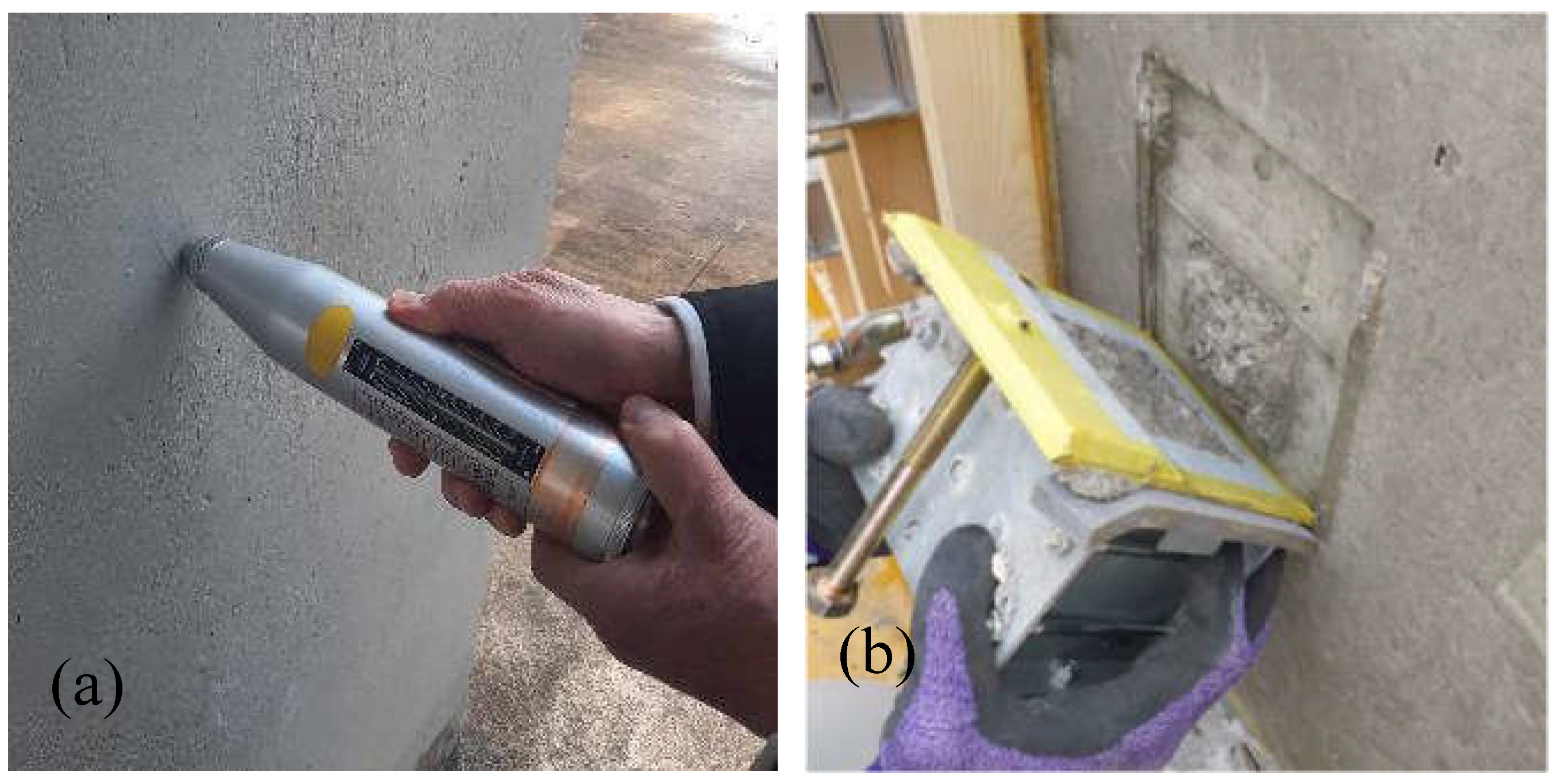
Figure 2.
Pin Penetration Tester.
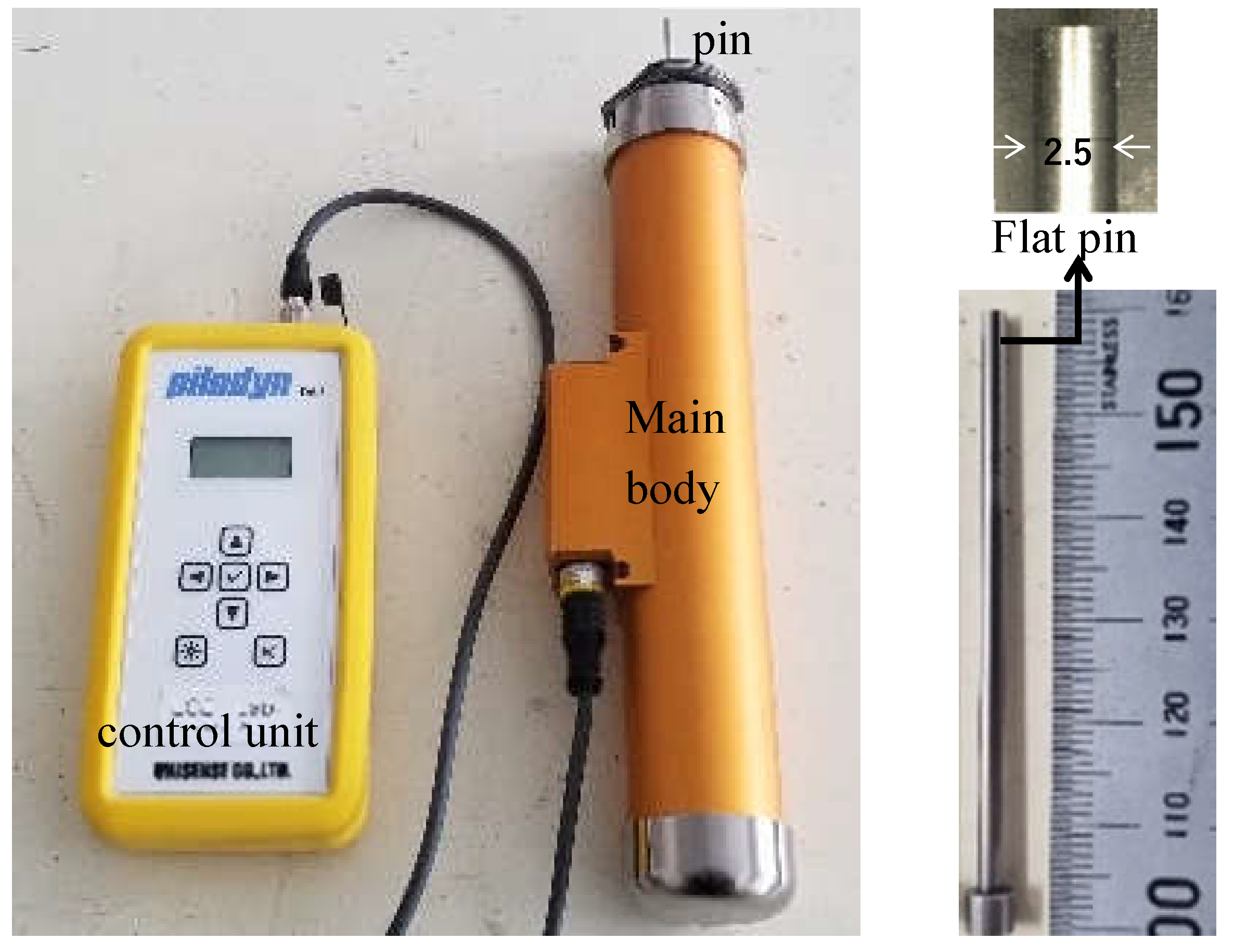
Figure 3.
Pin penetration test of the mock-up mold before demolding.
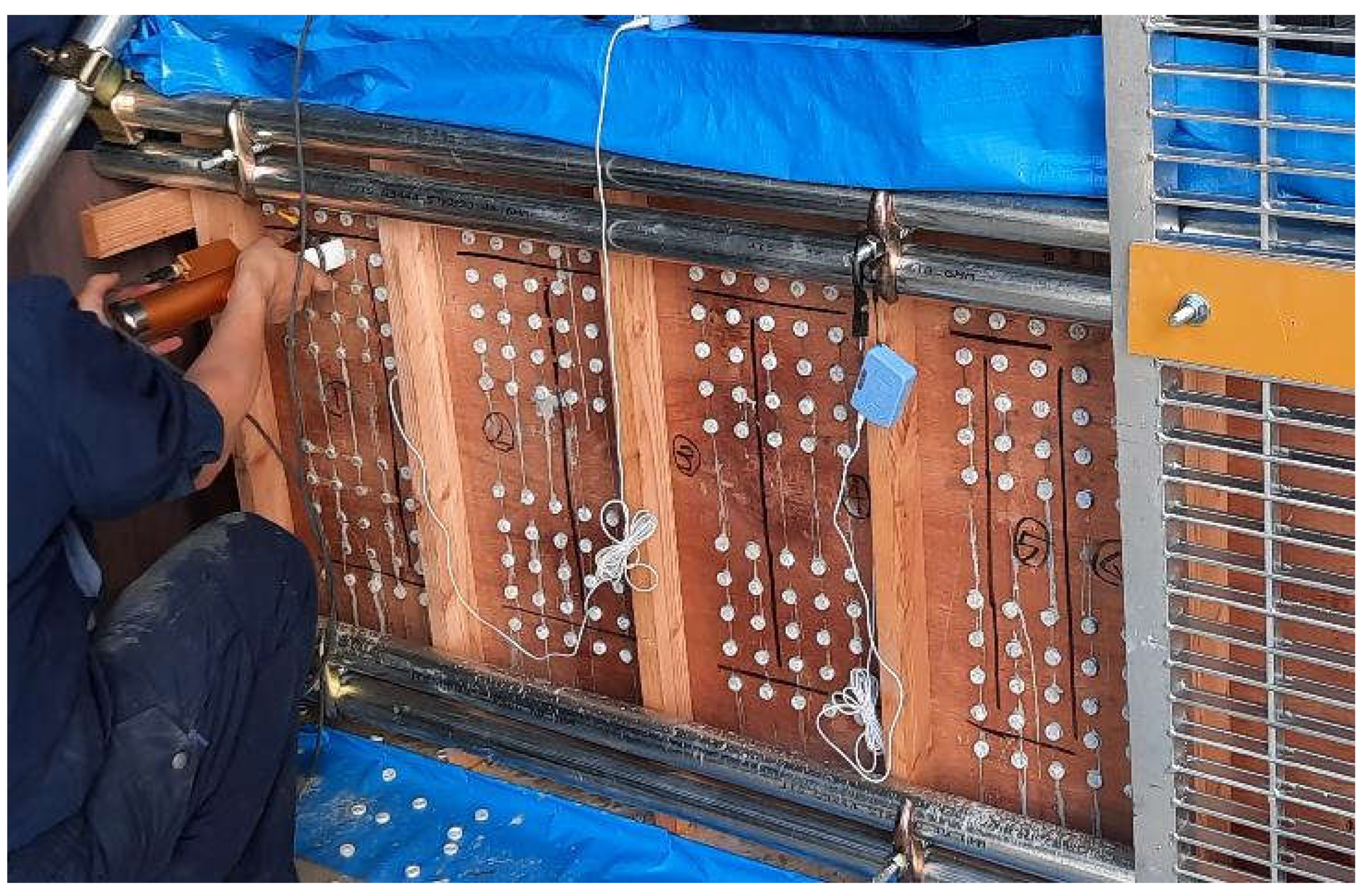
Figure 4.
Test hole before inserting the pipe.
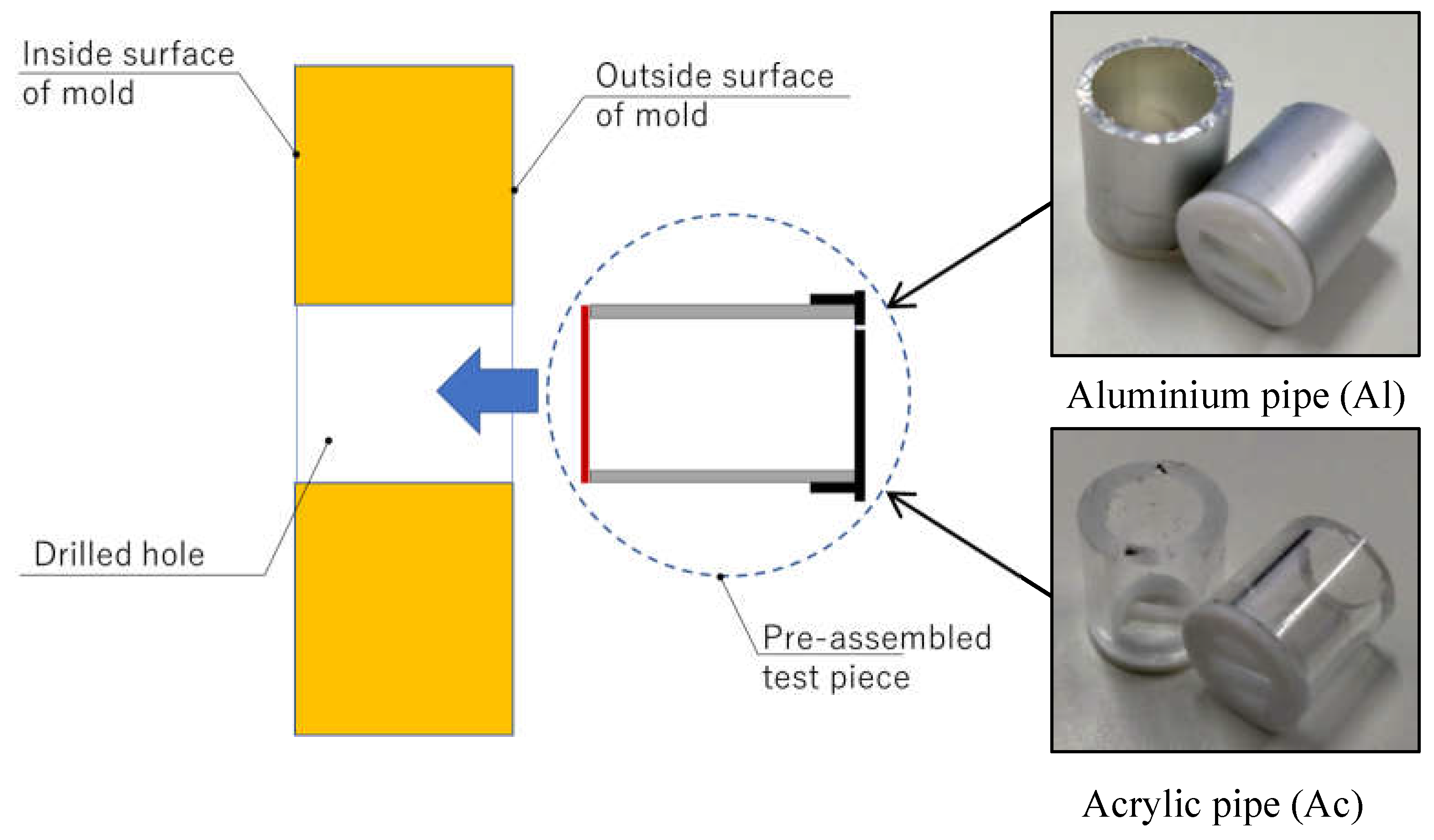
Figure 5.
Test piece after inserting the pipe.
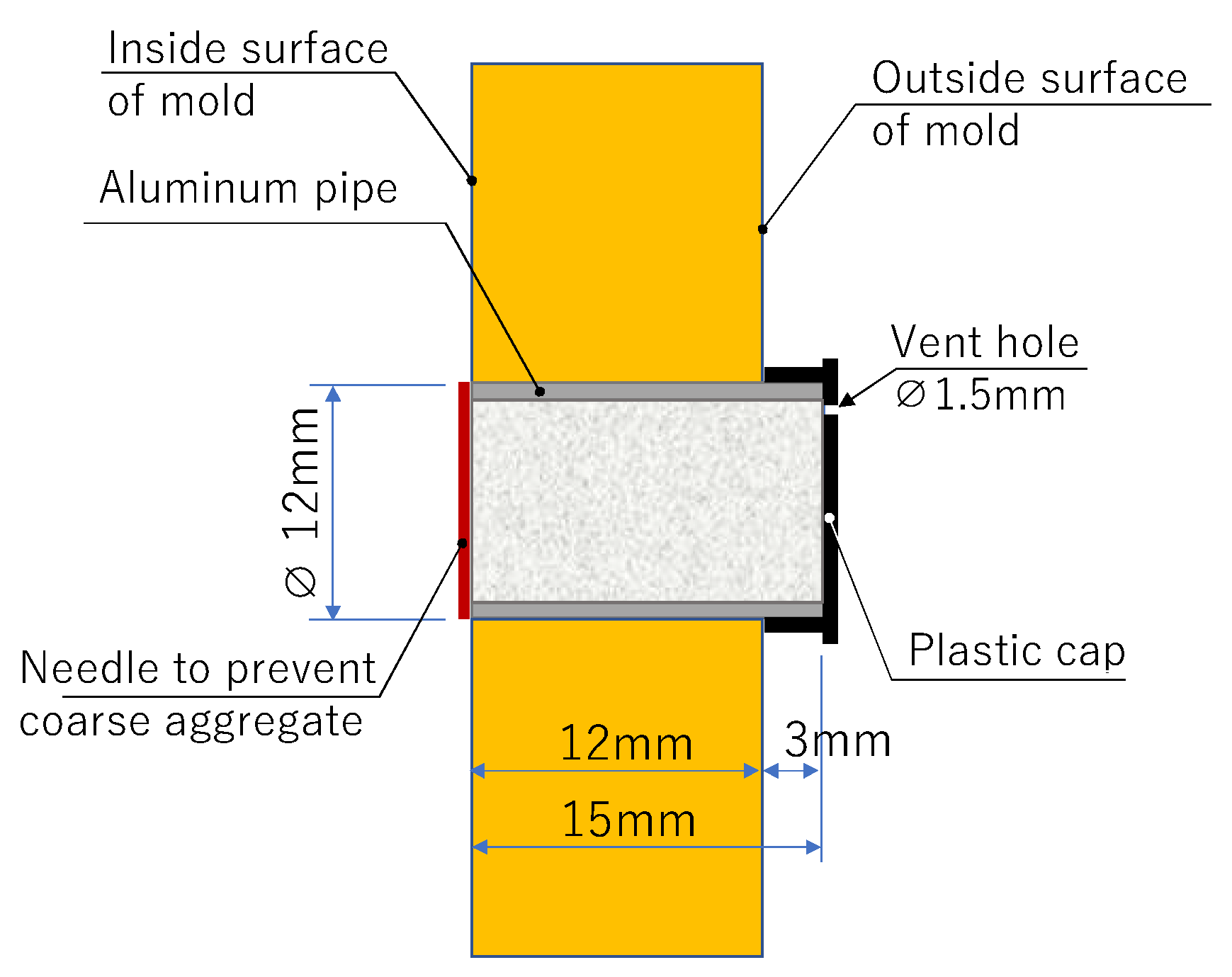
Figure 6.
Test hole after concrete casting.
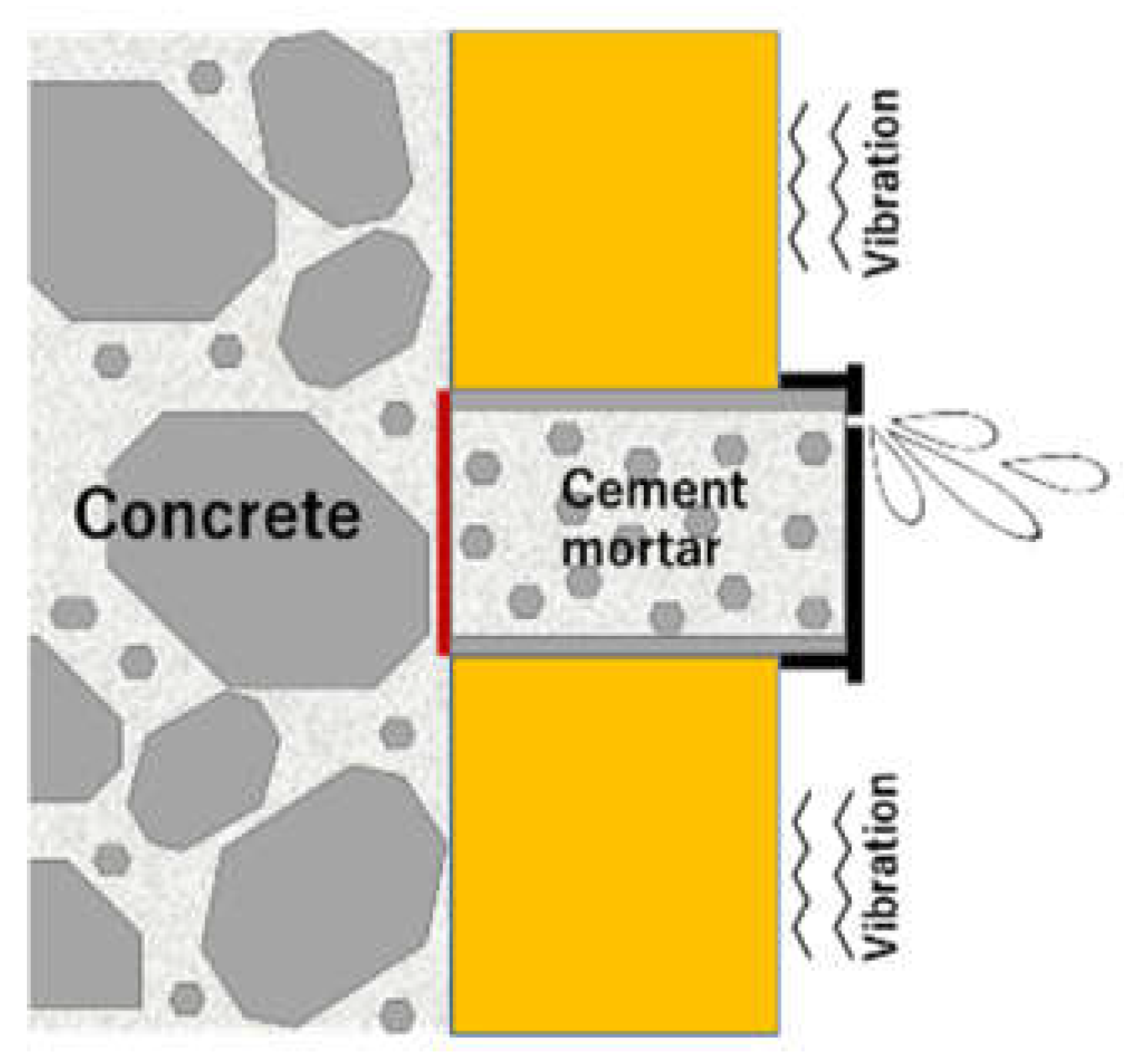
Figure 7.
Outline of experimental work.
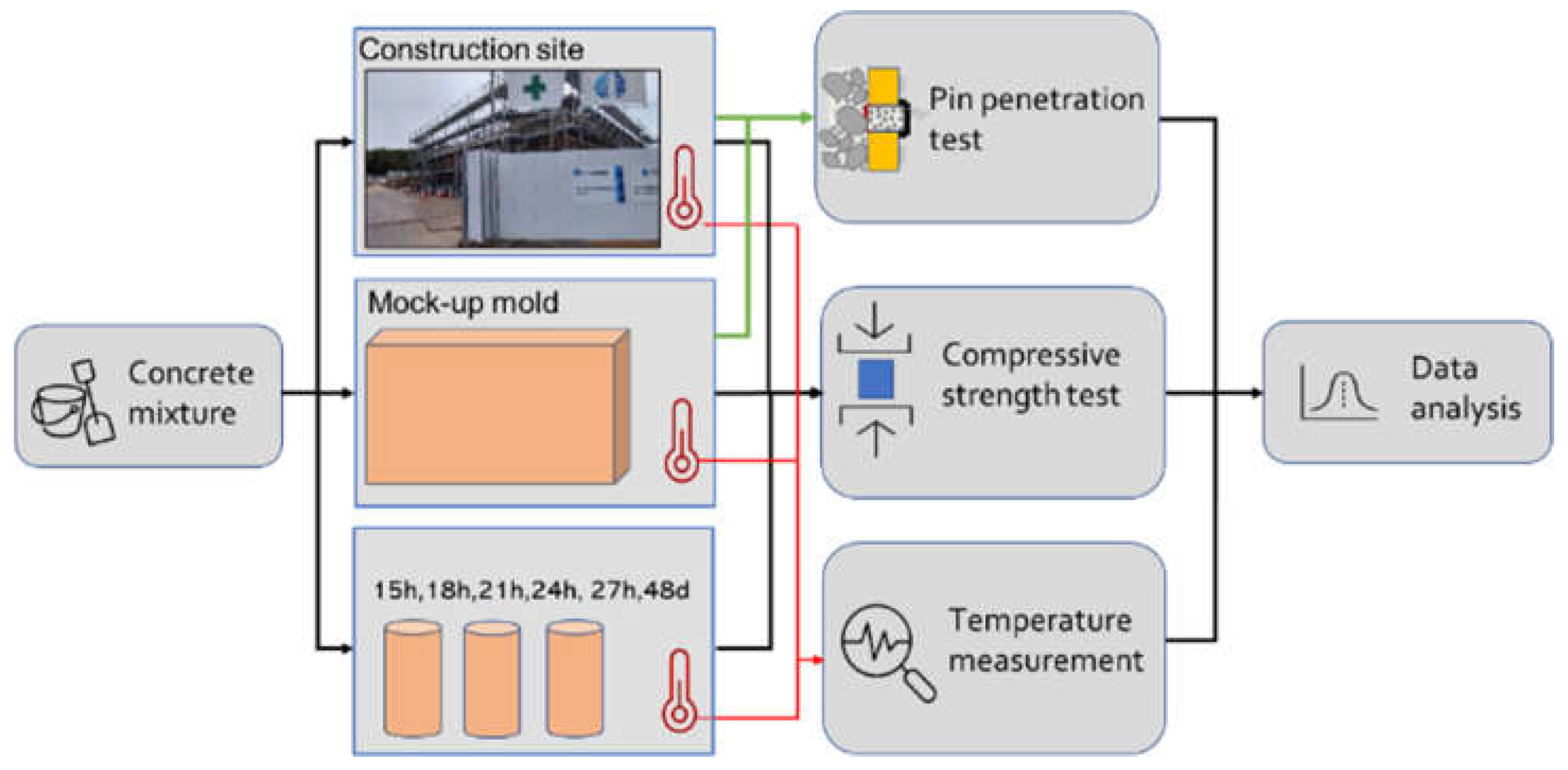
Figure 8.
Design of mock-up mold.
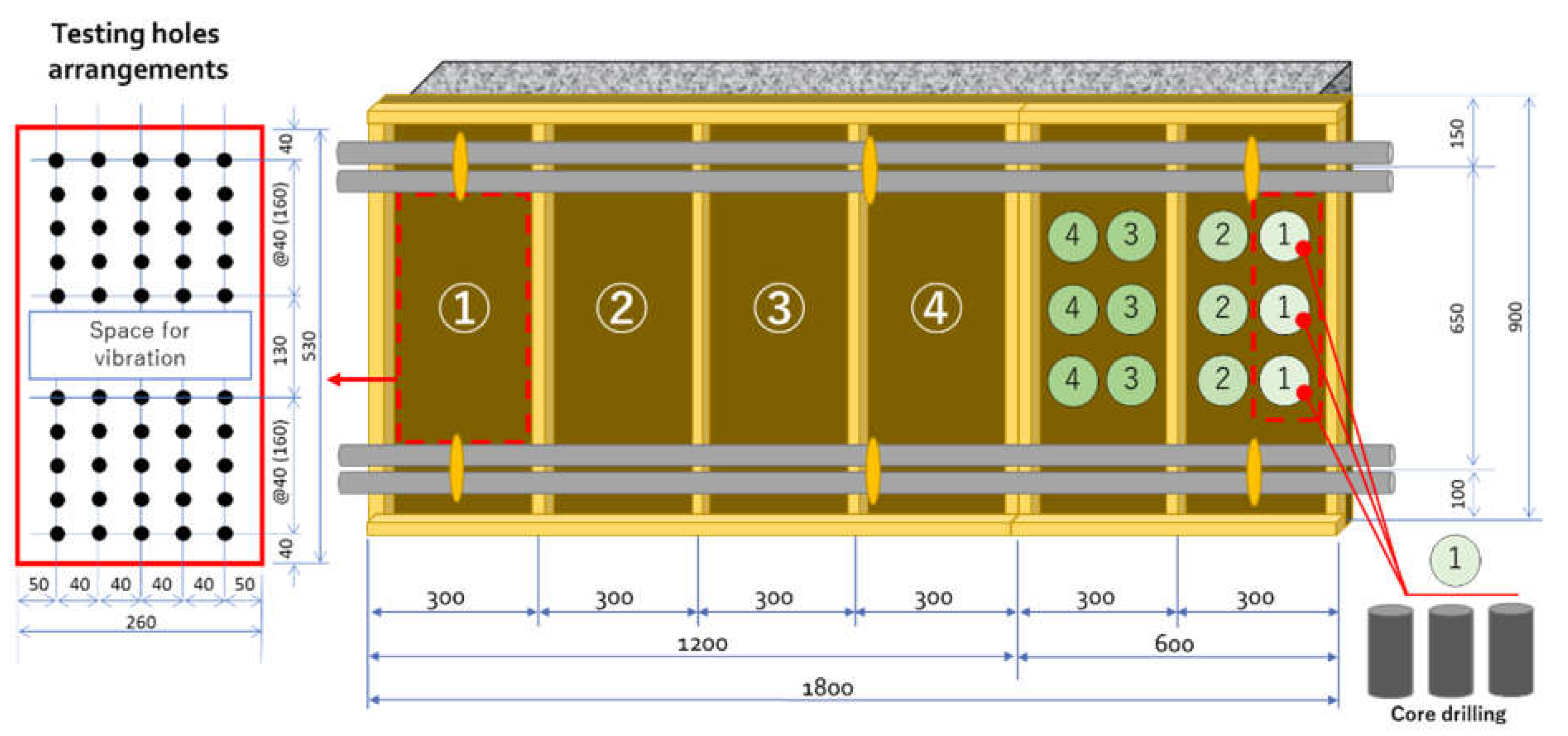
Figure 9.
Test holes at mold (a) mock-up mold (b) Construction site.
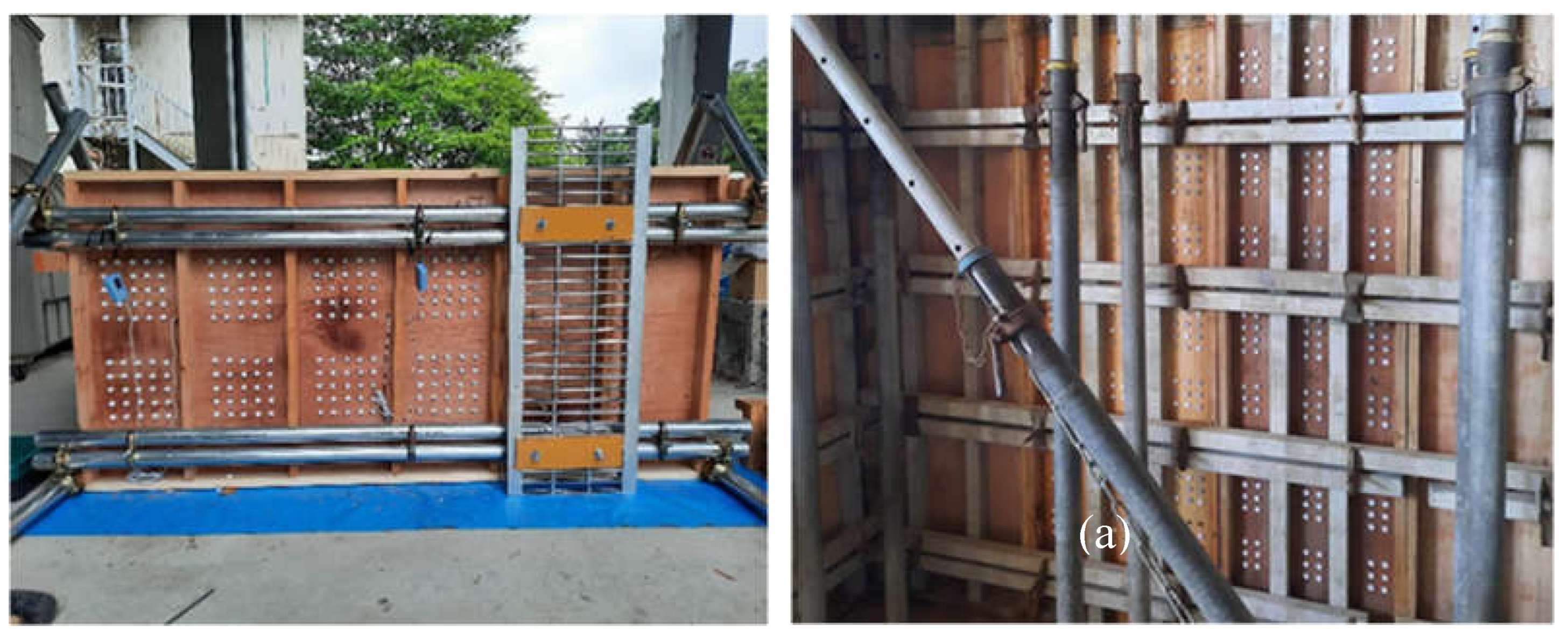
Figure 10.
Compressive strength test.
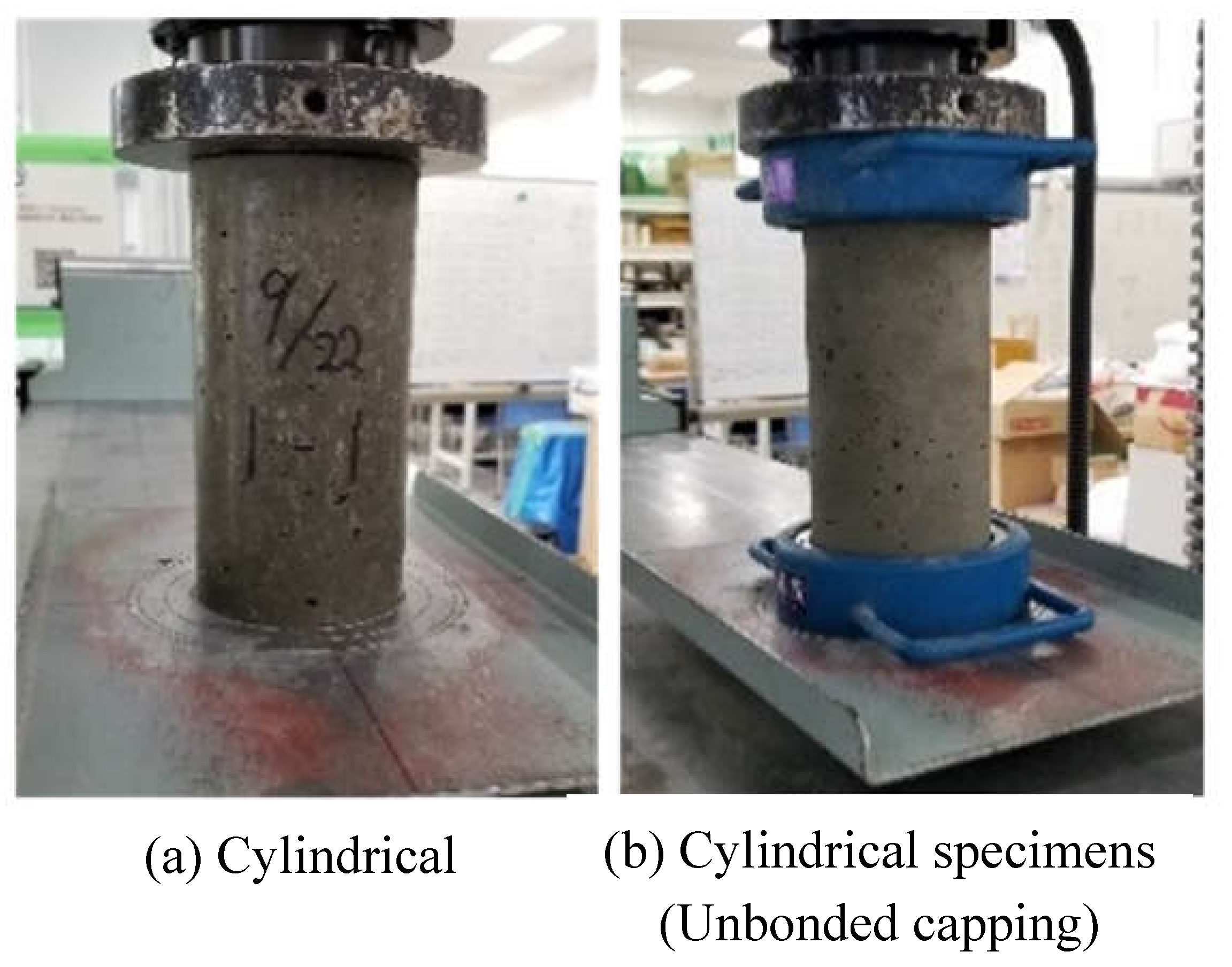
Figure 11.
Temperature history of construction site (CS-1).
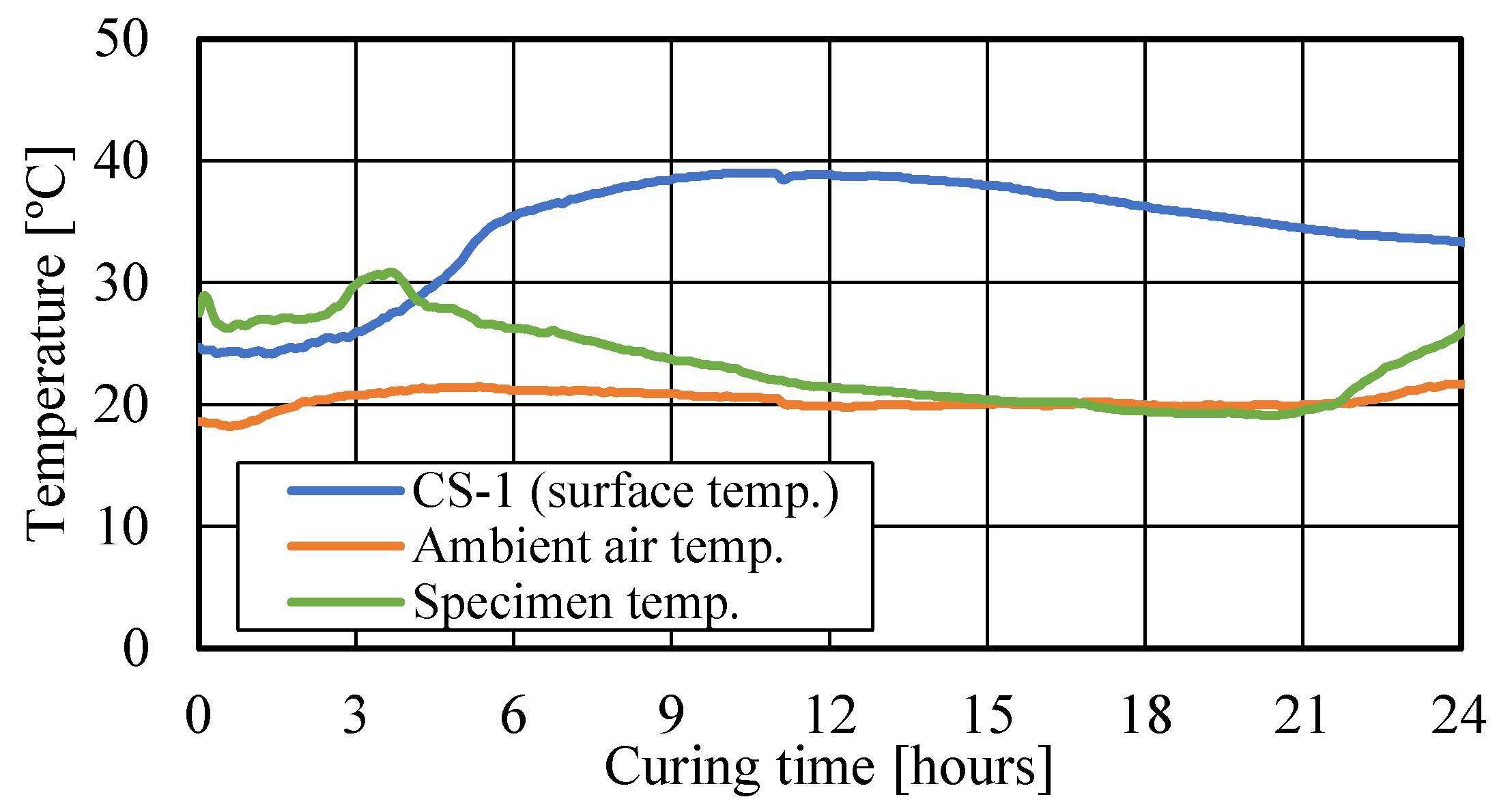
Figure 12.
Temperature history of construction site (CS-2).
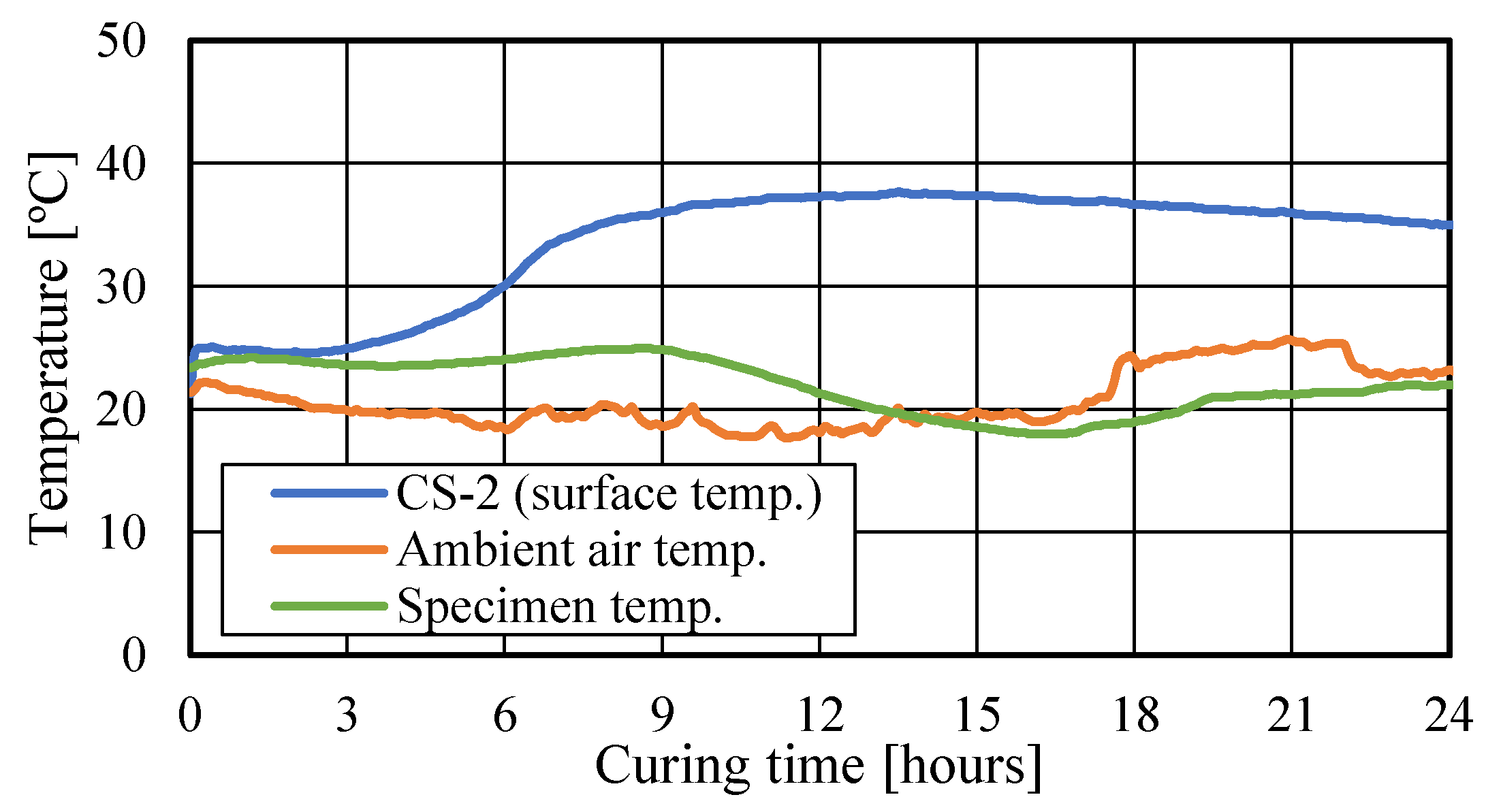
Figure 13.
Temperature history of mock-up specimens (MS-1).
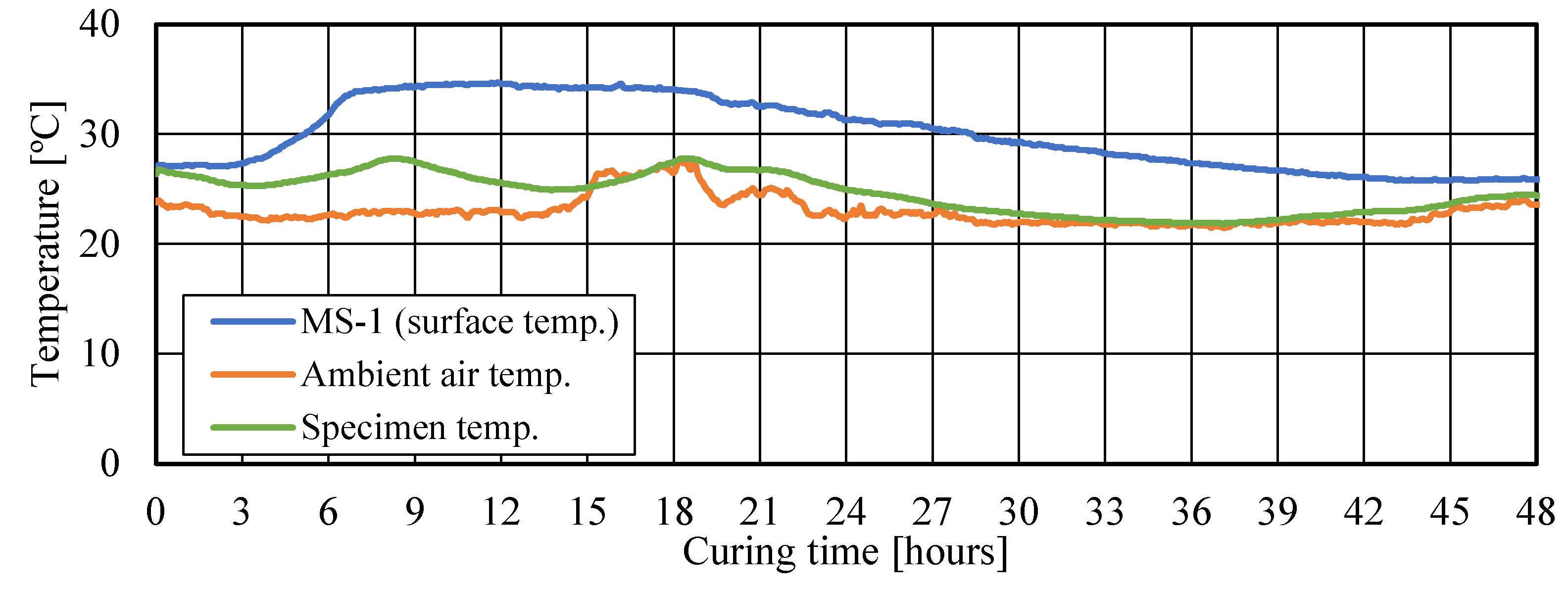
Figure 14.
Temperature history of mock-up specimens (MS-1).
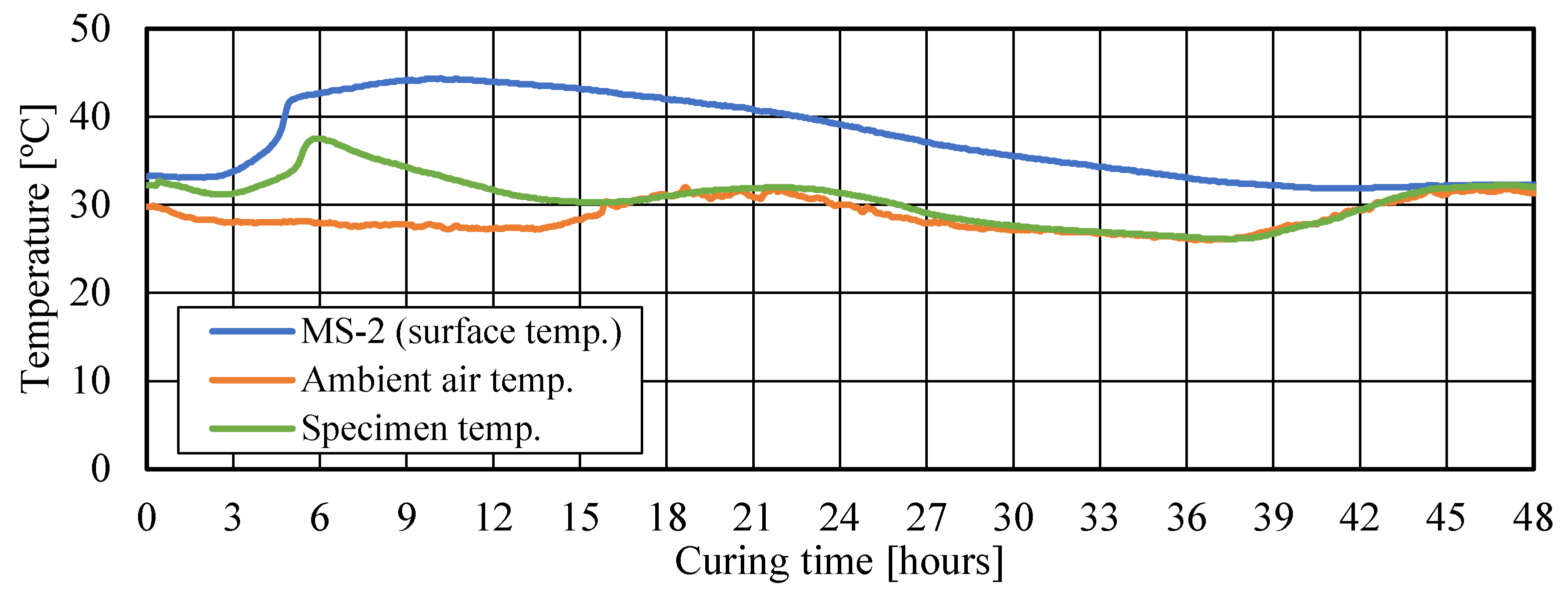
Figure 15.
Accumulated temperature and curing time (MS-1).
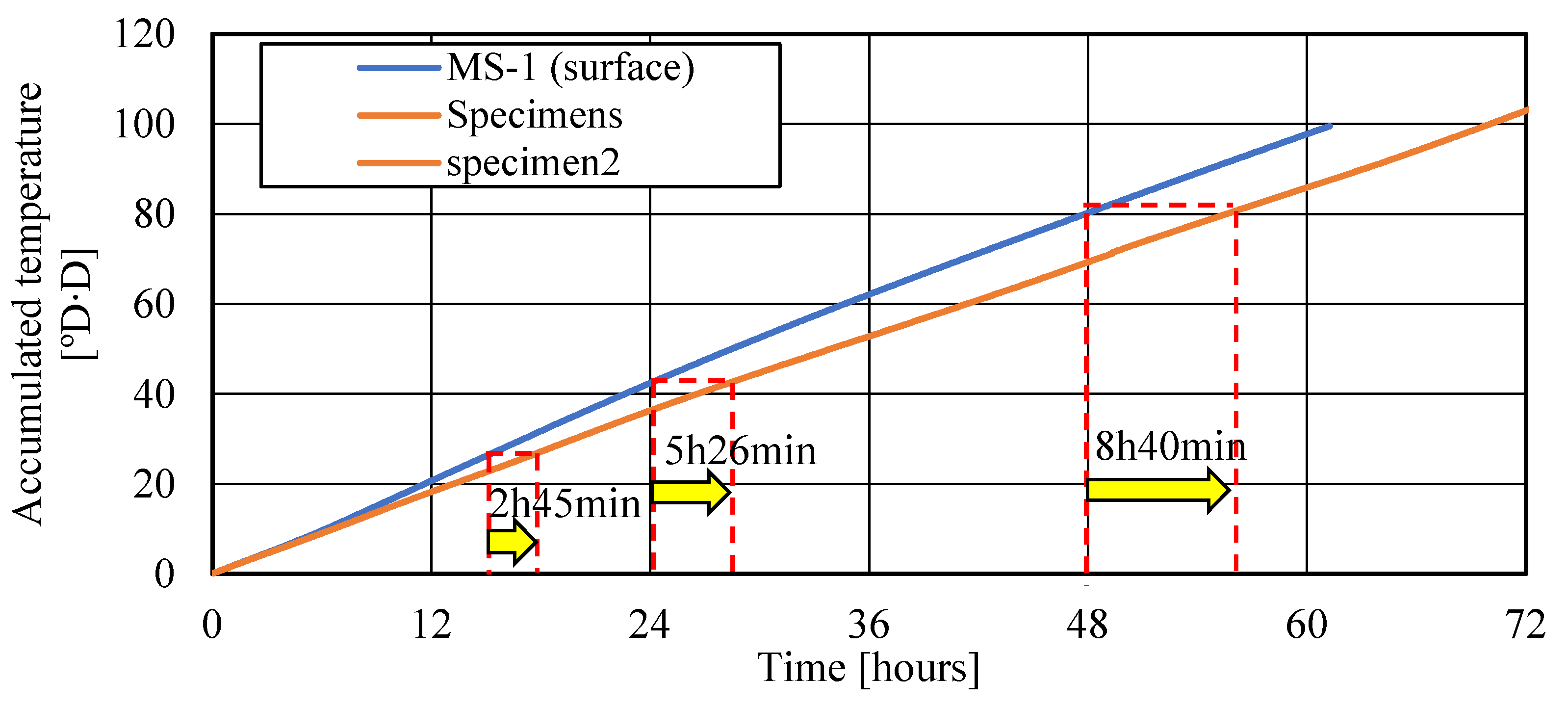
Figure 16.
Relationship between modified penetration depth and compressive strength.
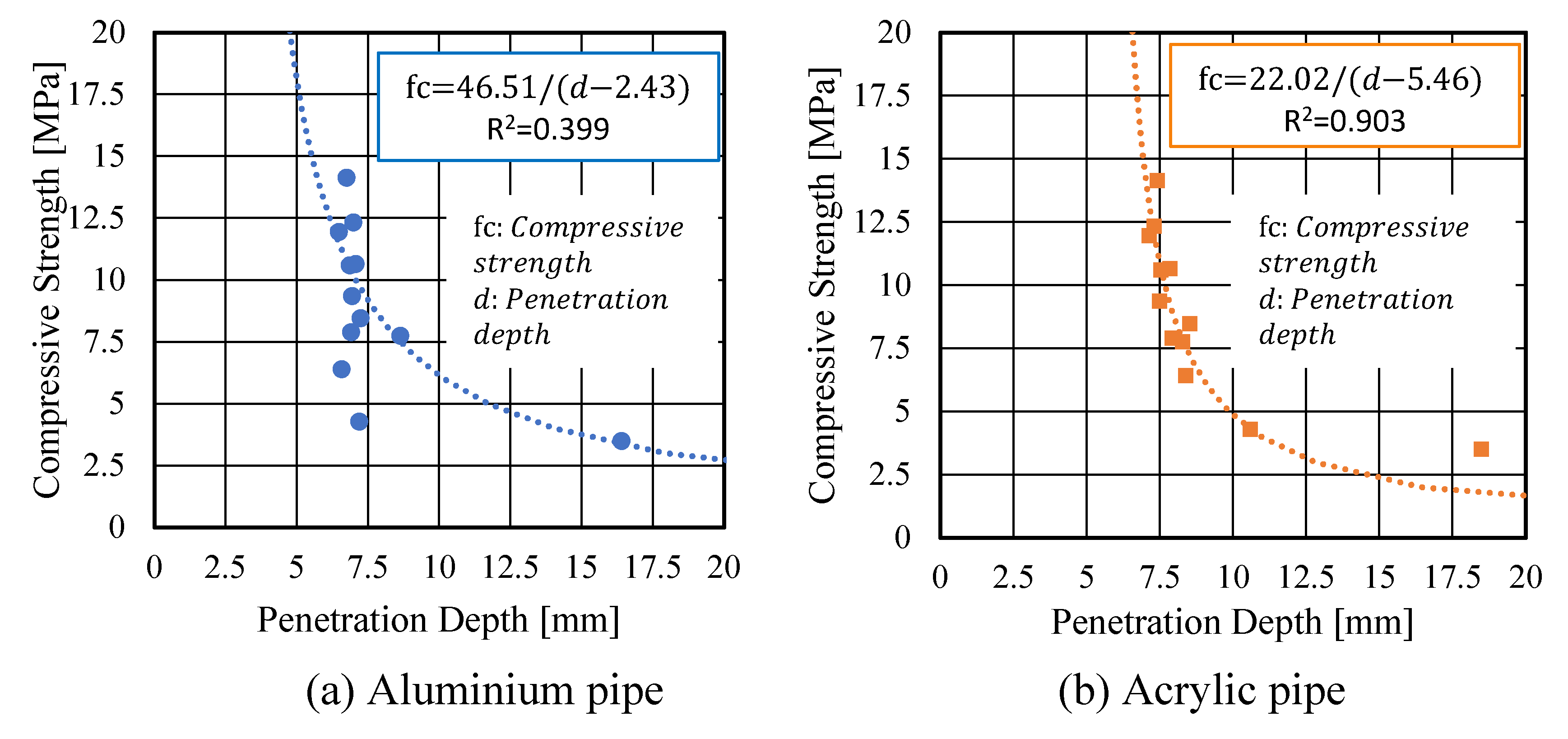
Figure 17.
Pin penetration depth to ensure minimum required strength. (Ac pipe).
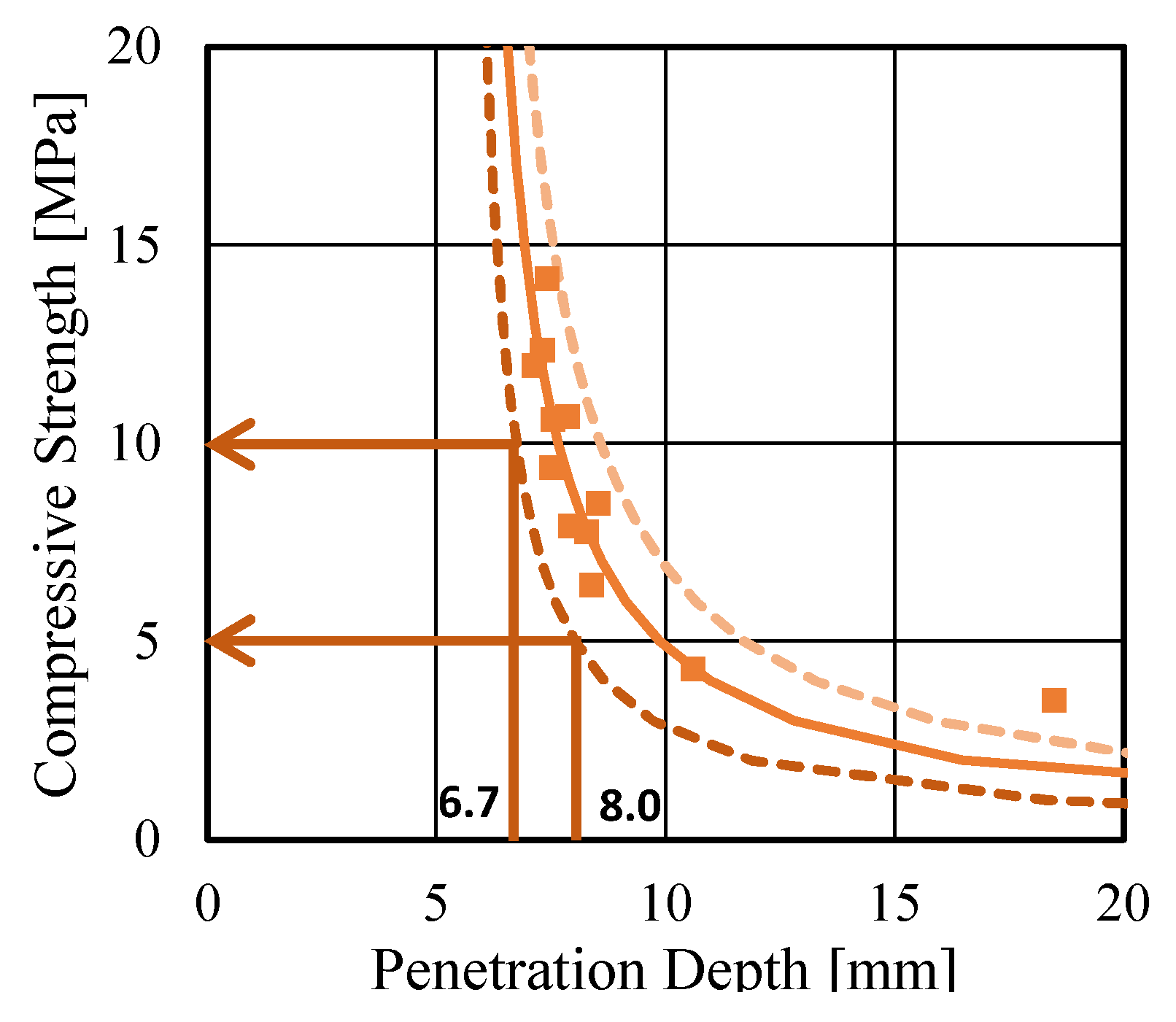
Figure 18.
Surface of concrete after demolding (a) mock-up specimen (b) construction site.
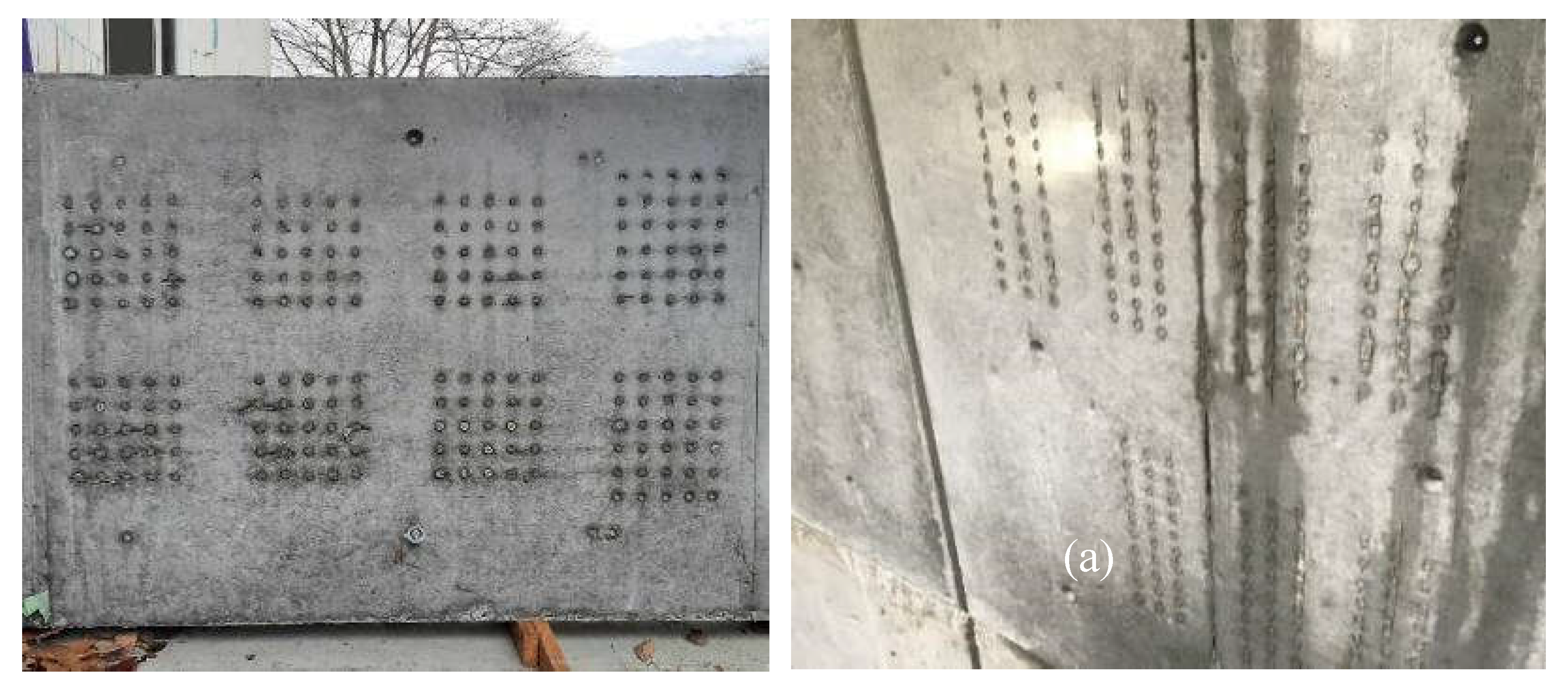

Table 1.
Pin penetration device specifications.
| Measuring range | 0 ~ 35 mm |
| Measurement accuracy | 0.1 mm |
| Dimensions of device | 50 × 70 × 335 mm |
| Weight | ~2 kg |
| Energy | 6 J(Nm) |
Table 2.
Testing schedule.
| Determination | Curing time | ||||||
| 15h | 18h | 21h | 24h | 27h | 48h | ||
| Specimens at construction site and mock-up mold | |||||||
| Mock-up mold | Al pipe | ○ | ○ | ○ | ○ | ○ | ○ |
| Ac pipe | ○ | ○ | ○ | ○ | ○ | ○ | |
| Construction site | Al pipe | ○ | ○ | ○ | ○ | ||
| Ac pipe | ○ | ○ | ○ | ○ | |||
Table 3.
Used concrete specifications.
| Series | Testing condition | Nominal Strength [MPa] |
Slump [cm] |
|
| CS-1 | Construction site (at ambient air temperature) |
36 | 21 | |
| CS-2 | 36 | 21 | ||
| MS-1 | Mock-up specimens (at ambient air temperature) |
24 | 18 | |
| MS-2 | 30 | 18 |
Table 4.
Mix proportions. (kg/m3).
| Series | W/C [%] |
Cement | Water | Fine aggregate* | Coarse aggregate | Admixture |
| CS-1 | 41.0 | 427 | 175 | 598, 158 | 969 | 6.41 |
| CS-2 | 41.0 | 427 | 175 | 598, 158 | 969 | 6.41 |
| MS-1 | 54.0 | 324 | 175 | 659, 165 | 990 | 3.24 |
| MS-2 | 46.5 | 376 | 175 | 626, 157 | 990 | 3.76 |
* The fine aggregate contains a combination of two different sources.
Table 5.
Penetration depth to ensure minimum required compressive strength before demolding.
| Compressive strength [MPa] |
Penetration depth [mm] (Acrylic pipe) |
| 5.0 | 8.02(8.0) |
| 10.0 | 6.74 (6.7) |
Disclaimer/Publisher’s Note: The statements, opinions and data contained in all publications are solely those of the individual author(s) and contributor(s) and not of MDPI and/or the editor(s). MDPI and/or the editor(s) disclaim responsibility for any injury to people or property resulting from any ideas, methods, instructions or products referred to in the content. |
© 2024 by the authors. Licensee MDPI, Basel, Switzerland. This article is an open access article distributed under the terms and conditions of the Creative Commons Attribution (CC BY) license (http://creativecommons.org/licenses/by/4.0/).
Copyright: This open access article is published under a Creative Commons CC BY 4.0 license, which permit the free download, distribution, and reuse, provided that the author and preprint are cited in any reuse.


