

Submitted:
14 June 2024
Posted:
14 June 2024
You are already at the latest version
Abstract
Organic soil amendments, such as composts, mitigate the environmental burdens associated with wasting organic resources. Although compost application to soil enhances an agroecosystem's capacity to store carbon and produce food, studies investigating the agronomical efficacy and their ability to ameliorate drought stress when used as a soil amendment are minimal. In this study, we produced and used a nutrient rich co-compost through the composting of sludge, a nitrogen-rich organic material with carbon rich municipal solid wastes (MSW) to evaluate the agronomic efficacy of the MSW derived co-compost and their ability to ameliorate drought stress. Application of co-compost significantly enhanced growth and yield of lettuce and maize, by a magnitude comparable to chemical fertilizers. Furthermore, under drought stress, lettuce plants grown under co-compost soil amendment grew much better with less wilting, more biomass and yield, and improved root growth. Also, co-compost application enhanced relative root mass ratio (RRMR) under drought stress, indicative that co-compost amendment increased the allocation of biomass to the roots, which is an important morphological attribute for drought adaptability. K content in both leaves and roots of plants amended with co-compost was also higher under drought stress, which may have played a role in osmotic adjustment, consequently, the plants exhibited higher leaf relative water content (RWC). Other nutrient elements that were significantly enhanced by co-compost application included Mg, Ca, Fe and Cu. These results provide evidence that MSW co-composting could optimize organic resource recycling for climate change mitigation and agricultural productivity while minimizing nutrient losses from agroecosystems.
Keywords:
Compost
; Co-compost
; Drought
; Soil amendment
; Municipal Solid Waste
; Sludge
; Circular economy
Introduction
Malawi is experiencing one of the fastest population growth rates especially in urban areas and it is projected to quadruple in the next 80 years. Over the course of 50 years from 1970, Malawi’s population has seen a 400 % increase (United Nations Population Prospects, 2022), a consequence of which entails enormous increase in waste generation resulting into pollution and greenhouse gas (GHG) emissions. Malawi’s urban population generates substantial amounts of municipal solid wastes (MSW), amounting to 0.65 kg per capita per day grossing to 4.8 M tons per year. Unfortunately, Malawi’s waste management is still in its infancy, with only fewer households having access to proper waste collection and disposal facilities. As a result, a big chunk of this waste is dumped in waterways and roadsides, or taken to landfills (UNEP, 2022) where it is left to breakdown anaerobically thereby polluting the environment and generating large quantities of methane.
Composting MSW represents an economically, environmentally and socially advantage that could inspire all stakeholders involved in urban planning, within an integrated municipal waste management system, since the MSW that is daily generated has a significant percentage of organic waste that could be easily recycled within the cities in order to close the carbon cycle. In pursuit for a circular economy and identification viable alternatives to supplement fertilizers, municipal solid wastes are a potential resource that can be transformed into valuable wealth through composting, thereby providing the much-needed nutrients for plant growth.
Nutrient recycling embedded in the concept of composting supports the idea of transitioning to a circular economy, which is currently being discussed in many international circles. A circular approach to agriculture through the recovery and reuse of waste materials is important for waste management and agriculture (Ellen Macarthur Foundation, 2014). Increasing recycling and composting has been cited as being key to dealing with the increasing generation of organic waste globally (Boonrod et al., 2015). Composting has also been gaining increasing attention as an alternative way of waste processing. In addition to the organic fraction of municipal solid waste (MSW), it is now also being adapted for treatment of various other types of organic waste such as farm manures, sewage sludge, and industrial sludge (Otoo and Drechsel 2018; Azim et al. 2018; Barker 1997).
Composting of municipal solid waste (MSW) has recently gained good attention from the point of protection of environmental degradation, saving of landfilling area, cost of incineration and scope of its use for crop production. However, the use of MSW compost is limited since MSW compost is generally poor in essential plant nutrients and the crops do not respond to its exclusive addition. Co-composting MSW and with nutrient rich biosolids is attracting increasing attention. The advantages accruing from co-composting are readily apparent. MSW serves as a bulking agent. The contribution by the biosolids is a readily available source of nitrogen and other nutrients. Co-composting slightly deviates from the traditional composting technologies. Co-compost of MSW provides a sustainable option to manage soil health and has over the years demonstrated great ability to improve soil physiochemical properties (Arthur et al., 2012). Additionally, it cleans up the environment and minimizes pollution. Co-composting of sewage sludge and organic solid waste is advantageous because the two materials complement each other well. Sewage sludge has a relatively high nitrogen while organic solid waste is high in organic carbon and has good bulking properties. The thermophilic conditions (i.e., temperatures greater than 50°C) achieved through the co-composting process are effective in killing pathogens such as Ascaris eggs contained in excreta. Thus, both wastes are converted into a hygienically safe soil conditioner and fertilizer. The use of co-compost in agriculture can supplement, complement or substitute chemical fertilizers while replenishing soil health. Long-term trials with co-compost show high bioavailability of macro and micro-nutrients. Composts are also slow-release fertilizers that ensure a steady supply of nutrients over a long time with an additional positive effect of reducing greenhouse gas emissions when compared to inorganic fertilizers.
In Malawi, although the use of compost derived from MSW is not widespread, some studies in the continent have attested the fertilizing and soil conditioning efficacy of co-compost. The main focus of this study was to assess the quality and possible functions of compost derived from municipal solid waste (MSW) in Malawi agricultural Systems. The study had a specific focus on agronomic efficacy and drought amelioration effect of co-compost derived from municipal solid wastes as a soil amendment. This study complements the existing studies that have revealed a remarkable potential of co-compost derived MSW as a soil amendment, in enhancing soil physical and chemical attributes, as well as growth and yield of crops.
Materials and Methods
Composting
In this study, fertilizer sources used on overall were; (1) NPK (inorganic fertilizer/ positive control), (2) conventional compost made from a mixture of MSW and plant residues (3) Co-compost made from MSW and fecal sludge, and (4) processed sewage sludge (sludge) obtained from Kauma sewer processing unit by Lilongwe city council.
Conventional Compost
Compost was made by smallholder nursery operators situated in Likuni township, Lilongwe. The following materials were used for making the compost; easy to decompose leaves of small-leaved trees, grass (usually dried dropped leaves), maize stalks, sugarcane remains, banana leaves, groundnut leaves, rice husks (used to soften the compost), soil and water. These materials (except water) were put in a heap, and a layer of soil was added to the heap. Then, more organic wastes were added to the heap on top of the soil, this step is repeated until the heap attains the required size. Once the required heap size is attained, some water was added to the heap to a saturation point until it drained freely. More water was added after 14 days. After one month (30 days), the heap was turned, and more water was added to a saturation point, and was let to decompose further for an additional month.
MSW Derived Co-Compost
This co-compost was made by a MSW management and processing non-profit waste management specialist firm located in Lilongwe and Blantyre cities, Malawi. Their co-composting uses thermophilic decomposition utilizing both mesophilic and thermophilic microbes principally using municipal solid wastes (MSW). The following materials were used to make the compost; Market wastes/ municipal solid wastes (MSW) principally including banana leaves, cabbage leaves, food wastes, groundnut shells, fruits and other vegetable wastes, sewage sludge (10 %) to supply nitrogen and speed up decomposition, green plant wastes free from plastic materials (make up 50 % of total heap, mainly supply N), dry plant wastes samples (make up 40 % of total heap, mainly supply Carbon), and water (1,000 L per 12 m3 heap per turn).
The procedure for making the co-compost was as follows. A pile was made using market wastes/ Municipal solid wastes (MSW), groundnut shells, sewage sludge (10 %), green plant wastes and dry plant wastes samples making a 12 m3 heap measuring 3 m x 2 m by 2 m (Figure 1 and Figure 2) (surface to volume ratio is key). Then 1,000 L of water was added to the pile. After 3 days, the pile was turned when temperature reached 70 – 80 oC (to ensure O2 circulation and avoid anerobic respiration), after which another 1,000 L of water was added. After 3-4 days the heap was turned again. These steps were repeated while reducing the amount of water applied due to shrinkage of the pile, to about 600 L. The turning was made up to 7th time, after which no more water was added. Thereafter, the co-compost was spread out to air dry, and sieved on a 1 cm diameter sieve to remove large and undecomposed residues. The undecomposed residues were used to make a new heap.
Site of the Experiments
Agronomic experiments were conducted at the Lilongwe University of Agriculture and Natural Resources (LUANAR), Lilongwe, Malawi. Composting and co-composting activities were conducted by various entities outside the university as described in the previous section.
Description of Agronomic Experiments
Experiment 1: Determination of Optimal compost Application Rates for the Growth of Maize
This experiment was conducted to determine the optimum application rates for the growth and yield of maize (Zea mays). Maize was selected as the most important staple crop in the Malawian food system. The trial was conducted under field conditions. Compost obtained from municipal solid waste was used for this experiment. Application rates were as follows: none (negative control), 200 g, 350 g, and 500 g per planting station of one plant. These application rates were determined based on the recommendation of 350 g per station from a manufacturer of one of the composts used, hence the experimental rates were ± 150g of the recommended rate. Basal fertilization was applied before planting in ridges on planting stations to allow mineralization, while top dressing was done three weeks after planting. Plants were harvested after physiological maturity.
Experiment 2: Evaluation of Growth, Yield Response of Maize and Lettuce, and Changes in Soil Physicochemical Properties under Varying Compost Amendments
This experiment was conducted to evaluate the agronomic effectiveness of different types of compost on growth and yield of maize and lettuce. Lettuce was selected as an exotic leafy vegetable. Two experiments were conducted with lettuce. In the first experiment, the growth and yield of lettuce was studied under greenhouse conditions with different compost amendments, using both virgin (collected from the forest) and frequently cultivated soils. For maize, the experiment was conducted under field conditions to evaluate the agronomic effectiveness of different compost types on growth and yield. Three sources of organic amendments were studied: co-compost from municipal waste, conventional compost and sewage sludge. These were applied at a rate of 350 g per planting station as recommended by the results of experiment 1. Inorganic fertilizer (NPK) was applied at a rate of 8g per station as recommended from our preliminary experiments.
Experiment 3: Evaluation of the Response of Lettuce to Drought Stress under Composted and Non-Composted Soil
This experiment was conducted to evaluate the response of lettuce to drought stress in composted and non-composted soil under greenhouse conditions. This experiment was based on the known property of organic matter in enhancing the water holding capacity of soils. It was hypothesized that soils enriched with composted material would have better water retention capacity and thus could improve plant survival under drought conditions. In this experiment, plants were grown in pots with soils uniformly enriched with co-compost, conventional compost, sewage sludge, or no any fertilization (none). Five pots, each containing two plants, were used for each treatment. As growth progressed, the number of plants was reduced to one. Water capacity of the pots was determined prior to planting using a gravimetric method previously described in Kamanga, (2020). Drought stress was induced three weeks after planting until harvest 40 % of pot water capacity.
Measurement of Leaf Relative Water Content (RWC)
Leaf water status was measured using leaf relative water content (RWC). Leaf RWC was determined on one of the third inner leaves of the lettuce head of each plant on the last day of harvest. For this purpose, the leaf was immediately weighed to determine the fresh weight (FW) and then completely immersed in distilled water in a 15 mL falcon tube and left overnight under light conditions. After 24 hours, the turgid leaves were carefully removed from the tubes, wiped with a soft cloth to remove surface water, and then weighed to obtain the turgid weight (TW) before being oven dried at 80oC for 72 hours to obtain the dry weight (DW). The leaf RWC of the leaves was then calculated as follows;
Tissue Elemental Analysis
Elemental analysis was performed according to Asch et al., (2022). For this purpose, leaf and root samples were oven dried at 80oC for 72 hours. About 2 g each of the leaf and root samples were ashed in a muffle furnace at 450°C for 3 h. The ash was transferred to 100-mL measuring flasks, containing 50 mL deionized water and 10 mL hydrochloric acid (25%). The solutions were heated to 90°C for 2 h in a water bath, cooled, transferred to 100-mL volumetric flasks, and filled up to the mark with deionized water. Samples that were not clear were filtered before measurements. Concentrations of macronutrients (K, Mg, Ca and Na) and micronutrients (Fe, Zn, Mn and Cu) were determined using an atomic absorption spectrometer (Varian, SpectrAA – 20, Melbourne, Australia).
Soil Analysis
Soil analyses were done following standard methods of soil analysis for the parameters of interest. These are indicated in Table 1 below. All laboratory measurements were conducted in quadruplicate.
Results
Determination of Optimal Compost Application Rates for Growth of Maize
In order to determine the optimum application rates for the growth and yield of maize, plants were provided with four rates of MSW derived co-compost. These were 0, 200, 350 and 500 g per planting station. In vegetative growth parameters (shoot and root dry weight, plant height, and stem diameter, there were hardly any significant differences between composted and non-compost soils (Table 2). However, for grain yield parameters (cob fresh weight, cob dry weight, grain dry weight and average grain size), co-compost incorporation resulted into a significant increase in grain yield parameters by almost two-folds (Table 3). There were no significant differences in grain yield parameters within the compost application rates (200, 350, and 500), although 500 g per station produced a relatively higher yield. However, from an economic perspective, 350 g per planting station yielded nearly similar results, so it was recommended that 350 g be the ideal application rate.
Evaluation of Growth and Yield Response of Lettuce to Varying Compost Amendments under Greenhouse Conditions
To evaluate the growth and yield responses of lettuce to different compost and co-compost amendments, lettuce plants were treated with 350 g of compost and co-composting both greenhouse and field conditions. Two different soil types were used in the greenhouse: virgin soil from the forest, which was richer in organic matter, and soils collected from a frequently cultivated farm. It was hypothesized that lettuce would respond more strongly to compost amendments in relatively poorer soils as observed by Chan et al., (2007). In general, plant growth was much higher in lettuce plants grown in virgin soils than cultivated soils (Figure 3 and Figure 4). There were no significant differences in plant height and stem diameter among the different fertilizer sources in both cultivated and virgin soils (Figure 3A and D). However, root length was significantly increased by co-compost amendment especially in cultivated soils, while differences were insignificant in virgin soil (Figure 3B). Leaf fresh weight was also significantly increased by co-compost application, followed by sewage sludge, these responses were similar in both virgin soil and cultivated soil (Figure 3C). Biomass accumulation as measured through shoot dry weight almost doubled in co-compost treated plants, in both virgin soil and cultivated soil (Figure 4A), followed by sludge, whereas in NPK treated plants, differences were insignificant from untreated plants. Root dry weight was also considerably increased by co-compost soil amendment compared to none, conventional compost and NPK treated plants (Figure 4B), whereas no significant differences were shown for leaf relative water content (Figure 4C). Chlorophyl concentration as measured using SPAD meter showed a significant increase by co-compost and sewage sludge especially in cultivated soils relative to “none” treatment, whereas in virgin soil, NPK application showed the highest chlorophyl concentration (Figure 4D).
Evaluation of Growth and Yield Response of Lettuce to Varying Compost Amendments under Field Conditions
Under open field conditions, lettuce was cultivated under rainfed conditions, and it was shown that co-compost amendment exhibited the highest yield in terms of leaf fresh weight and leaf dry weight (Table 4), this was followed by NPK fertilizer application and sewage sludge. Furthermore, root fresh and dry weight were also significantly enhanced by co-compost application, also followed by NPK application and sewage sludge, in a manner similar to leaf fresh and dry weight (Table 4). Co-compost amended plants also exhibited the highest number of leaves. Also, root and stem diameter were significantly enhanced by co-compost application followed by NPK fertilizer application and sewage sludge, whereas conventional compost wasn’t significantly different from non-compost amended treatment (Table 5). Strikingly though, control plants (None) produced the longest roots, albeit the differences being insignificant (Table 5). Chlorophyl concentration was highest in NPK fertilizer treatment and co-compost amended plants, however, the differences were also not as pronounced (Table 5).
Tissue element analysis was then conducted in dried leaf and root samples to evaluate whether growth and yield parameters could be attribute to tissue nutrient concentration. It was shown that in leaf samples, plants applied with co-compost had the highest K concentration followed by sewage sludge whereas the lowest was in none-treatment. In roots, similar observation was made for co-compost treated plants which also had highest K concentration (Table 6). A striking observation was the very high Na concentration in plant tissues from sewage sludge treated plants, especially in the roots. Ca concentration was also higher in co-compost and sewage sludge treated plants. These also had highest concentrations of Fe and Cu (particularly pronounced in co-compost) whereas Zn and Mn was particularly higher in sewage sludge treated plants in both leaves and roots.
In order to evaluate the residual efficacy of the soil amendments in lettuce grown field, various soil chemical attributes were evaluated. No significant differences were found in soil pH among the soils applied with various amendments. However, soils amended with sewage sludge had significantly higher electrical conductivity (Table 7). Application of co-compost significantly improved residual organic matter content in the soil, whereas no significant improvements were observed in N content. On mineral element analysis, soils amended with co-compost had considerably higher P and K concentrations, whereas Ca and Mg were significantly improved by all amendments (conventional compost, co-compost and sewage sludge (Table 7). Micronutrient element Cu was also significantly improved by co-compost and compost whereas Zn was significantly improved by all amendments (Table 7).
Evaluation of Growth and Yield Response of Maize to Varying Compost Amendments under Field Conditions
In order to evaluate the growth and yield response of maize to soil amendments, maize plants were grown on soil amended with none (negative control), co-compost, conventional compost, sewage sludge and inorganic fertilizer (positive control), and various vegetative and reproductive growth parameters were evaluated. Plant height and root length did not show any significant differences among the soil amendments (Figure 5A and B). However, shoot and root dry weight were significantly higher in maize grown on soils amended with co-compost, whereas conventional compost did not significantly differ from non-amended soil (Figure 5C and D). Root dry weight was also significantly higher under NPK fertilizer and sewage sludge (Figure 5 D). Secondary growth, measured as stem diameter was not significantly different in all treatments. Chlorophyll concentration showed considerable increases by all soil amendments, especially more pronounced in NPK and co-compost amended soils (Figure 5E). Yield and yield components were also evaluated, and showed significant increases in cob fresh and dry weights, by all soil amendments, especially co-compost and NPK fertilizer (Figure 6A and B). Cob weight represented the weight of a whole maize cob including the cob, grains and sheath. Grains were then separated from the cob and measured separately, and the grain weight per cob was also considerably higher in all soil amendments, especially co-compost (Figure 6C). In order to compensate for the differences in cob size that may likely influence grain weight per cob, we determined the weight of 50 grains (Figure 6D), and the pattern was also similar to cob fresh weight, cob dry weight and cob grain weight shown in Figure 6A – C, albeit the differences being smaller. This prompted the measurement of average grain size, which also showed a similar pattern, and was highest in co-compost soil amended plants (Figure 6E). A striking observation, however was the harvest index (HI), which measures the ratio of grain to total shoot dry matter, and represents a plant’s reproductive efficiency (Porker et al., 2020). Here, HI was highest in plants grown under NPK, and lowest in plants grown on soils without any soil amendment (Figure 6F), and those amended with co-compost, signifying less reproductive efficiency in co-compost amendment.
Plant tissue analysis showed highest K concentration in leaves whose plants were applied with sewage sludge and co-compost. In roots, higher K concentration was observed in co-compost and NPK (Table 8). Similar to observation in lettuce (Table 6), Na concentration was also significantly higher in plant leaves whose plants were applied with sewage sludge (Table 8). Ca concentration was also higher in plants amended with co-compost and sewage sludge. Also, sludge treated plants had unusually higher Mg concentration in the leaves, which was nearly thrice higher than average values for the other treatments followed by co-compost. Co-compost treated plants exhibited highest Fe and Cu concentration in both leaf and root tissues followed by sewage sludge. No significant differences were shown for Zn concentration in both leaf and root samples whereas Mn concentration was significantly higher in leaves of plants applied with inorganic NPK fertilizer, in roots Mn was highest in co-compost amended plants.
Evaluation of Lettuce’s Response to Drought Stress under Compost and Non-Compost Amended Soil
This experiment was conducted on a premise that soil amendment with compost would improve soil water holding capacity and subsequently enhance plants’ response to drought stress. Figure 7 shows a photograph of plants grown under drought and well-watered soil conditions amended with compost, co-compost and sludge. Under drought stress, growth in terms of plant height, root length and number of leaves was reduced, albeit with limited statistical significance (Figs. 8A – C) and so were differences among soil amendments. Under drought stress, important differences among soil amendments were observed in total leaf area (Figure 8D), wherein two key observations were made. Firstly, plants amended with co-compost had significantly higher leaf area than all other amendments. Secondly, co-compost amended plants growing under drought stress had comparable growth with those growing on well-watered conditions, signifying that co-compost amendment ameliorated drought stress. Leaf biomass accumulation, on both fresh and dry weight basis was significantly reduced by drought stress, however, amendment with co-compost significantly improved both parameters followed by sewage sludge (Figure 9A and B). In contrast, differences were less apparent in roots. In fact, plants whose soil was amended with co-compost exhibited considerably higher root growth under drought stress, on both fresh and dry weight basis (Figure 9C and D). Relative water content (RWC) was significantly lower under drought stress in soils without any amendment whereas in co-compost amended soils, RWC was exceptionally high and comparable between drought stress and well-watered conditions (Figure 10A). Differences in chlorophyll concentration were less pronounced between drought stress and well-watered conditions but values were generally higher under sewage sludge soil amendment (Figure 10B). The most recognizable indication of drought stress is a reduction in shoot growth, which in turn changes the allocation of biomass between roots and shoots. This change in allocation of resources can be described using the root mass ratio (RMR). In this study, it was found that RMR was generally higher under drought stress, signifying that more biomass was being allocated to roots under drought stress (Table 9) except for plants amended with compost under control conditions which had remarkably higher RMR than drought stressed plants. Then, we obtained relative root mass ratio (RRMR), a more objective indicator of biomass allocation under abiotic stress conditions. Using RRMR, lettuce plants whose soil was amended with co-compost had a much higher RRMR, indicative that co-compost amendment increased the allocation of biomass to the roots to a greater extent when subjected to drought stress (Table 9), which is an important morphological attribute for drought adaptability.
In order to evaluate whether soil amendments affected uptake of macro and micronutrients under drought stress, elemental analysis was conducted in dried leaf and root samples. It was shown that under drought stress, co-compost and sewage sludge amendments improved K concentration in both leaves and roots. These observations held on well-watered conditions alike (Table 10). Under drought stress, sewage sludge treated plants had significantly higher Na concentration in the roots similar to observations in lettuce under open field conditions (Table 6) and maize (Table 8). Ca concentration was significantly higher in leaves of co-compost and compost amended plants under both well-watered and drought stress conditions. In roots, this was true for co-compost and sewage sludge treated plants under drought stress, and all treatments (except none) under well-watered conditions. No significant differences in Mg concentration were found except for roots under drought stress in which sewage sludge accumulated significantly higher Mg concentration (Table 10). Micronutrient concentration was generally higher in both leaves and roots of co-compost amended plants under both well-watered and drought stress conditions, followed by sewage sludge application, this was particularly true for Fe and Cu which was higher in co-compost whereas Zn and Mn was higher in sewage sludge treated plants (Figure 9).
After harvesting the plants, soil samples were sampled and analyzed for various chemical properties and mineral elements to evaluate the residual effect of soil amendments. Soil pH ranges were all within the slightly acidic range for all soil amendments under both well-watered and drought conditions (Table 11). Electrical conductivity (EC) was generally significantly higher in soils amended with sewage sludge under both water conditions. Organic matter (OM %) content was significantly enhanced by both compost applications; conventional compost and co-compost, especially pronounced in co-compost amended soils whereas N content was significantly higher in sewage sludge and co-compost amended soils. Mineral concentrations were also measured and showed significantly high P, K, Ca and Mg concentration in compost and co-compost amended soils under well-watered conditions and co-compost amended soils under drought conditions (Table 11). No significant differences were shown in Cu concentration among the soils amended with different amendments under both water conditions. Zn concentration was significantly higher under well-watered conditions in soils amended with compost and co-compost whereas under drought stress, concentration was higher in sewage sludge and co-compost amended soils (Table 11).
Discussion
Agricultural intensification, with a drive to keep up with the increasing food demands has also meant indiscriminate use of agro-chemicals, excessive and deep tillage, and luxury irrigation. These agricultural practices have degraded soils in addition to polluting surface and groundwaters while also causing immense air contamination (Lal, 2008). Cognizant of these effects and in support for developing a circular economy, the application of composted organic material on cropped soils is being encouraged in degraded soils. Composted organic material represents potential sources of nutrients for crops and can partially substitute the use of mineral fertilizers (Chalhoub et al., 2013). Besides, regular soil amendment with composted material restores soil organic matter content in intensively cultivated soils and contributes to carbon (C) storage in soils.
In this study, we evaluated the response of various crops to various organic soil amendments. In order to effectively derive the optimal benefits of organic soil amendments, the determination of proper application rates is a critical step. Here, we evaluated different application rates using maize crops. In maize, relative to no soil amendment, significant increases in shoot and root biomass, as well as yield parameters were observed by all rates of the co-compost amendment (0, 200, 350, and 500 g), however, no significant differences were shown among these rates (Table 2 and Table 3). On the basis of these results, 350 g was chosen as the ideal application rate per station of 2-3 plants. Despite 500g producing better results, the lack of statistical significance entails a limited return on investment to justify a further increase in application rates (data not shown). Besides, the bulkiness of organic fertilizers and difficulty in transportation have often been cited as major drawbacks discouraging farmers from widely using them as a soil amendment (Viaene et al., 2016), hence if similar benefits of applying 500 g would be derived at 350 g application, adoption of the latter rate would be more economical and would reduce unnecessary bulkiness and transportation constraints. This rate was thus subsequently adopted for use in the study.
Consequently, the study evaluated the agronomic efficacy of various organic soil amendments; compost, co-compost, and sewage sludge. These organic amendments were made by different procedures with different substrates (refer to materials and methods). Compost was principally made from plant residues and had fewer turning cycles. Co-compost was made from a mixture of MSW, plant residues and sewage sludge. It has been suggested that composts prepared from different organic wastes differ in their quality and stability, which further depends upon the composition of raw material used for compost production. Unlike fast-release fertilizers such as mineral fertilizers and slurry, compost contains large amounts of organic matter, which enhances the soil organic carbon (SOC) content (Vanden Nest et al., 2016) but relatively lower nutrient elements. In order to fortify compost for nutrients and to speed up decomposition, 10 % sewage sludge was added to the composting process, deriving a nutrient dense material that we termed co-compost (Giagnoni et al., 2020). An analysis of the residual efficacy showed that soils amended with co-compost had increased concentrations of K, P, Ca and Mg, as well as micronutrients (Table 7 and 11). This may suggest that the soil amendment enhanced the soil’s cation exchange capacity (CEC) which consequently led to higher electrical conductivity of the soil in tandem. These values were much higher than conventional compost and slightly higher than sewage sludge. Addition of sewage sludge in a composting process has been exploited to optimize a C:N ratio (Azim et al., 2018; Garg & Tothill, 2009). Sewage sludge is a N rich material, hence lowers the C:N ratio and reduces the time taken for the decomposition and mineralization process during aerobic fermentation phase. It has been observed that farmers often have a disdain for choosing compost relative to sludge and other fast release organic sources. For example, Viaene et al., (2016) showed that in areas with ready supply of slurry/ manure, the use of other organic soil amendments such as compost is a less attractive option due to the limited amounts of N and P that may be derived from them. Therefore, this study has shown that enhancing the conventional compost quality through co-composting by addition of sewage sludge may overcome the nutritional barriers, as well as reducing the composting time. These beneficial results were demonstrated in two different crops; lettuce and maize. In lettuce, co-compost application enhanced leaf yield (Figure 3C and 4A) and root growth (Figure 4B), in both virgin and cultivated soils, albeit comparative growth/ yield gains with no compost amendment being higher in cultivated than virgin soils, whereas absolute growth/ yield were higher in virgin soils. This observation suggests that nutrient poor degraded and frequently cultivated soils with less organic matter would obtain maximal gains from co-compost amendment. These findings have also been reported in previous studies (Chan et al., 2007; Oueriemmi et al., 2021; Zebarth et al., 1999), hinting at a possibility that efficacy of compost amendments may be dependent on inherent soil fertility levels. In maize, co-compost application significantly improved both shoot and root dry weight (Figure 5C and D) as well as chlorophyll concentration (Figure 5F). The high chlorophyl concentration may have primarily been linked to high Fe and Mg concentration which were considerably accumulated in leaves (Table 9). This study also reports significant enhancements in grain yield parameters by all amendments and applications, especially co-compost, sludge and NPK fertilizer (Figure 6A – D). Strikingly though, co-compost amendment resulted into a lower harvest index (HI) that was comparable to no amendment (Figure 6F). HI is the ratio of grain yield to biological yield or biomass, which represents a crop’s success in partitioning total photosynthate to harvestable product. This finding is in synch with a study by Liu et al., (2020) which reported that under high maize grain yield, economic yield is mainly dependent on increase in biological yield (biomass) than harvest index. This suggests that increase in above ground biomass beyond a certain threshold does not translate into a higher harvest index as plants may have reached their maximum capacity for photosynthetic partitioning and grain filling. This point of view is also supported by a previous study (Zelalem, 2014) which showed that, while increasing P application rate in maize beyond certain threshold increased maize grain yield, it did not result into a higher harvest index, signifying that increases in biological yield superseded gains in economic yield. These observations warn against absolute consideration of HI as a selection criteria in predicting maize grain yield, and rather advocate for careful evaluation of growth conditions such as soil fertility, which have been reported to significantly influence harvest index in maize (Liu et al., 2020).
Moreover, unlike fast-release fertilizers such as mineral fertilizers and slurry, compost contains large amounts of organic matter, which enhances the SOC content (Vanden Nest et al., 2016). In the present study, it was shown that soils amended with both compost and co-compost had higher organic matter content than non-amended as well as sewage sludge in both greenhouse and open field conditions (Table 7 and 10). Under open field conditions for example, co-compost amended soils had OM % of 5.65 whereas sewage sludge had an OM % of 4.73. Under greenhouse conditions, co-compost amended soils had OM % of 7.4, whereas sewage sludge had 5.1 and non-amended had 4.5. The relatively higher values under greenhouse conditions were due to the differences in soil type used in these experiments. Under greenhouse experiment, virgin soil was used which is higher in OM compared to open field conditions which are intensively cultivated. As a result of the high OM accrued from co-compost soil amendment, soil physical properties such as available water content (Curtis & Claassen, 2009) and aggregate stability (Annabi et al., 2007), are also improved which in turn protects the soil against erosion. Viaene et al., (2016) reported that organic carbon in co-compost is more stable and resistant to decomposition than in fresh manure or plant residues, where a larger share of the carbon decomposes after application. Similar sentiments were made in Azim et al., (2018). It was from this basis therefore, that the benefits of co-compost application were also particularly pronounced under drought stress, where it reduced wilting of lettuce plants (Figure 7), enhanced total leaf area (Figure 8D), leaf yield (Figure 9A and B), root growth (Figure 9C and D) and relative water content (Figure 10A). In a study by Alsherif et al., (2023), it was shown that compost soil amendment improved growth and yield of corn cultivated under both drought and control conditions. Under drought stress, better growth in co-compost amended soils may have been attributed to the enhanced water holding capacities due to high organic matter content. This property was also reflected by a higher leaf water status as shown by leaf relative water content which was similar between drought stressed and control plants (Figure 8A). Zebarth et al., (1999) observed that amendment of sandy, infertile soils with compost significantly enhanced its water holding capacity. In the present study, the amelioration of drought stress by co-compost amendment may be ascribed to increased soil organic matter content (Table 10) and aggregate stability (Widowati et al., 2020). These attributes increase soil micropores which are key determinants of soil’s water holding capacity. Furthermore, enhancement of relative root mass ratio (RRMR) under drought stress in co-compost amended treatment may also have been crucial in enhancing growth. High RRMR depicts that co-compost amendment increased the allocation of biomass to the roots to a greater extent when subjected to drought stress. This enhancement in root growth is a key attribute for exploration of limited water resources under drought stress. Therefore, in light of the increased drought incidences as a result of the changing climate scenario, farmers can considerably benefit from organic soil amendment to maintain crop growth and productivity in nutrient poor and dehydrated soil conditions.
Conclusion
The results from the present study therefore provide the much-needed evidence on the benefits of organic soil amendments in both enhancement of soil physiochemical properties and increasing crop yields. The study has shown that with a proper composting process and pre-fortification with sewage sludge, co-compost offers a remarkable potential in increasing crop yields, in a manner similar to, or even more than inorganic fertilizers. It has demonstrated this potential in lettuce and maize. Maize is a critical staple crop in Malawi whose yield over the recent years has declined due to diminishing soil fertility levels coupled with limited smallholder farmer’s access to inorganic fertilizers. Moreover, Malawi and the entire world have experienced sharp increases in the cost of inorganic fertilizers over the past 5 years. It must be noted that despite the Malawi Government’s effort to provide affordable farm inputs to smallholder farmers through the affordable inputs program (AIP) and its predecessor, the farm inputs subsidy program (FISP), many farmers still have no access to the said inputs and have to still buy them at prevailing exorbitant prices (Nyondo et al., 2021; Kateta, 2022; MWAPATA Institute, 2022). For example, since the start of 2022, fertilizer prices have risen by over 60 % as driven by a confluence of factors, including surging input costs, supply disruptions caused by sanctions and export restrictions (Baffes & Koh, 2022). These events are judicious wake up calls to reconsider our over-dependence on inorganic fertilizers, whose sources may not only become exhausted in the immediate future, but also extremely unaffordable to the resource constrained smallholder farmer. Organic soil amendments are relatively inexpensive, easier to make and their substrates are locally available and normally disdained. Utilization of wastes such as municipal solid wastes, animal wastes, human wastes and plant residues thereby also offers a way to clean up the environment. Furthermore, they offer a holistic soil health management approach and supports the current advocacy for a circular economy and sustainable food systems.
Author Contributions
RMK, AS, HC, VMM and JGC conceptualized and designed the experiments, JM, IM, GC, JS, TC and CD conducted the experiments and collected data, RMK and MN supervised the trials and analyzed the data, RMK wrote the manuscript, AS, HC, VMM and JGC edited the manuscript, all authors approved the final version of the submitted manuscript.
Data Availability Statement
The data presented in this study are available on request from the corresponding author.
Acknowledgement
The work was supported by a grant from the United Nations Development Agency (UNDP) Malawi under the Accelerator Labs Initiative.
Conflict of Interest
Authors declare no any conflicts of interest in this submission
References
- Alsherif, E. A., Almaghrabi, O., Elazzazy, A. M., Abdel-Mawgoud, M., Beemster, G. T. S., & AbdElgawad, H. (2023): Carbon nanoparticles improve the effect of compost and arbuscular mycorrhizal fungi in drought-stressed corn cultivation. Plant Physiology and Biochemistry, 194. [CrossRef]
- Annabi, M., Houot, S., Francou, C., Poitrenaud, M., & Bissonnais, Y. Le. (2007): Soil Aggregate Stability Improvement with Urban Composts of Different Maturities. Soil Science Society of America Journal, 71(2). [CrossRef]
- Arthur, E., Cornelis, W., & Razzaghi, F. (2012): Compost Amendment to Sandy Soil Affects Soil Properties and Greenhouse Tomato Productivity. Compost Science & Utilization, 20(4), 215–221. [CrossRef]
- Asch, J., Johnson, K., Mondal, S., & Asch, F. (2022): Comprehensive assessment of extraction methods for plant tissue samples for determining sodium and potassium via flame photometer and chloride via automated flow analysis. [CrossRef]
- Azim, K., Soudi, B., Boukhari, S., Perissol, C., Roussos, S., & Thami Alami, I. (2018): Composting parameters and compost quality: a literature review. In Organic Agriculture (Vol. 8, Issue 2). [CrossRef]
- Bradstreet, R. B. (1954). Kjeldahl Method for Organic Nitrogen: Analytical Chemistry, 26(1), 185–187.
- Chalhoub, M., Garnier, P., Coquet, Y., Mary, B., Lafolie, F., & Houot, S. (2013): Increased nitrogen availability in soil after repeated compost applications: Use of the PASTIS model to separate short and long-term effects. Soil Biology and Biochemistry, 65. [CrossRef]
- Chan, K. Y., Dorahy, C., Wells, T., Fahey, D., Donovan, N., Saleh, F., & Barchia, I. (2007): Use of garden organic compost in vegetable production under contrasting soil P status. Crop & Pasture Science, 59(4), 374–382. [CrossRef]
- Christone Nyondo, Makaiko Khonje, Julius Mangisoni, William J. Burk, Jake Ricker-Gilbert, & Lemekezani Chilora. (2021): Lessons Learnt: Promises, Achievements, Shortcomings, and Pitfalls of Malawian Input Subsidies.
- Curtis, M. J., & Claassen, V. P. (2009): Regenerating topsoil functionality in four drastically disturbed soil types by compost incorporation. Restoration Ecology, 17(1). [CrossRef]
- Garg, A., & Tothill, ibtisam E. (2009): A Review of Solid Waste Composting Process-The UK Perspective. Journal Dynamic Soil, Dynamic Plant, 3(1).
- Giagnoni, L., Martellini, T., Scodellini, R., Cincinelli, A., Renella, G., Giagnoni, L., Martellini, T., Scodellini, · R, Cincinelli, A, & Renella, G. (2020): Co-composting: An Opportunity to Produce Compost with Designated Tailor-Made Properties. Organic Waste Composting through Nexus Thinking, 185–211.
- John Baffes, & Wee Chian Koh. (2022, May 11). Fertilizer prices expected to remain higher for longer. Published on Data Blog.
- Kamanga, R. M. (2020): Screening and differential physiological responses of tomato (Solanum lycopersicum L.) to drought stress. Plant Physiology Reports, 1–4.
- Kateta, M. M. (2022): Can Malawi’s agricultural inputs program improve food security? | Devex. Devex. https://www.devex.com/news/can-malawi-s-agricultural-inputs-program-improve-food-security-102499.
- Lal, R. (2008). Soils and sustainable agriculture: A review. In Agronomy for Sustainable Development (Vol. 28, Issue 1).
- Liu, W., Hou, P., Liu, G., Yang, Y., Guo, X., Ming, B., Xie, R., Wang, K., Liu, Y., & Li, S. (2020): Contribution of total dry matter and harvest index to maize grain yield—A multisource data analysis. Food and Energy Security, 9(4). [CrossRef]
- Mehlich, A. (1953): Determination of P, Ca, Mg, K, Na, NH4. North Carolina Soil Tests Division. https://www.ncagr.gov/AGRONOMI/pdffiles/mehlich53.pdf.
- MWAPATA Institute. (2022): Rethinking Agricultural Input Subsidy Programs and the Role of Agricultural Extension: Lessons for Future Programming . https://www.mwapata.mw/pp1.
- Oueriemmi, H., Kidd, P. S., Trasar-Cepeda, C., Rodríguez-Garrido, B., Zoghlami, R. I., Ardhaoui, K., Prieto-Fernández, Á., & Moussa, M. (2021): Evaluation of composted organic wastes and farmyard manure for improving fertility of poor sandy soils in arid regions. Agriculture (Switzerland), 11(5). [CrossRef]
- Porker, K., Straight, M., & Hunt, J. R. (2020): Evaluation of G × E × M Interactions to Increase Harvest Index and Yield of Early Sown Wheat. Frontiers in Plant Science, 11, 994. [CrossRef]
- Raina, J. N., Sharma, J. C., & Sharma, I. P. (2007): Manual on Methods for Physical and Chemical Analysis. Departmentof Soil Science and Water Management, Dr Y.S Parmar University of Horticulture and Forestry.
- Vanden Nest, T., Ruysschaert, G., Vandecasteele, B., Houot, S., Baken, S., Smolders, E., Cougnon, M., Reheul, D., & Merckx, R. (2016): The long term use of farmyard manure and compost: Effects on P availability, orthophosphate sorption strength and P leaching. Agriculture, Ecosystems and Environment, 216.
- VanReeuwijk, L. P. (1993): Guidelines for Quality Management in Soil and Plant Laboratories - Food and Agriculture Organization of the United Nations - Google Books. International Soil Reference and Information Centre.
- Viaene, J., Van Lancker, J., Vandecasteele, B., Willekens, K., Bijttebier, J., Ruysschaert, G., De Neve, S., & Reubens, B. (2016): Opportunities and barriers to on-farm composting and compost application: A case study from northwestern Europe. Waste Management, 48. [CrossRef]
- Walkley, A., Science, I. B.-S., & 1934, U. (1934): An examination of the Degtjareff method for determining soil organic matter, and a proposed modification of the chromic acid titration method. Journals.Lww.Com, 37, 29–38.
- Widowati, Sutoyo, Karamina, H., & Fikrinda, W. (2020): Soil amendment impact to soil organic matter and physical properties on the three soil types after second corn cultivation. AIMS Agriculture and Food, 5(1). [CrossRef]
- Zebarth, B. J., Neilsen, G. H., Hogue, E., & Neilsen, D. (1999): Influence of organic waste amendments on selected soil physical and chemical properties. Canadian Journal of Soil Science, 79(3). [CrossRef]
- Zelalem, B. (2014): Effect of enriched farmyard manure and inorganic fertilizers on grain yield and harvest index of hybrid maize (bh-140) at Chiro, eastern Ethiopia. African Journal of Agricultural Research, 9(7). [CrossRef]
Figure 1.
An illustration of the composting heap size of MSW derived co-compost.
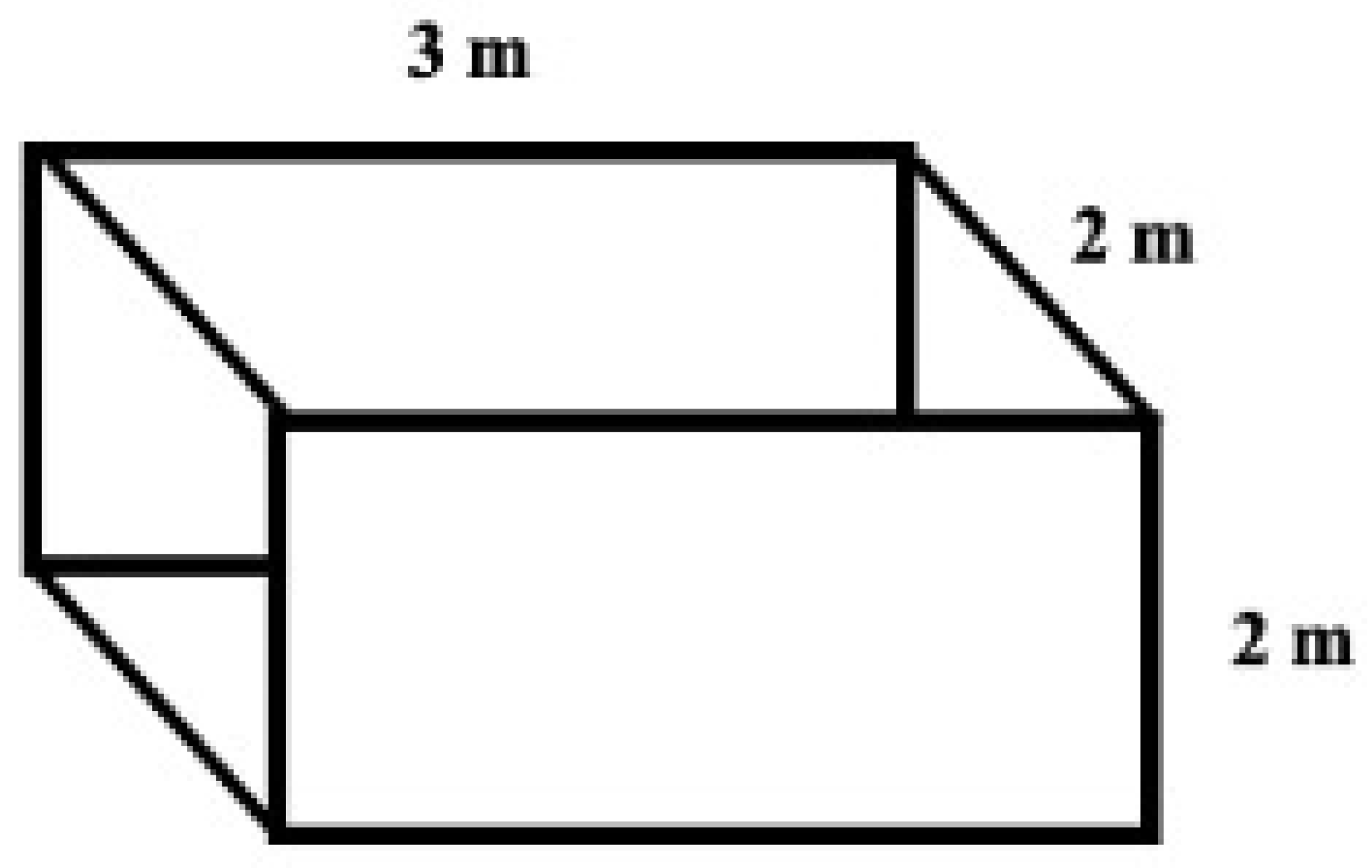
Figure 2.
A photograph of a newly started composting heap (left) and a near maturity heap (right).
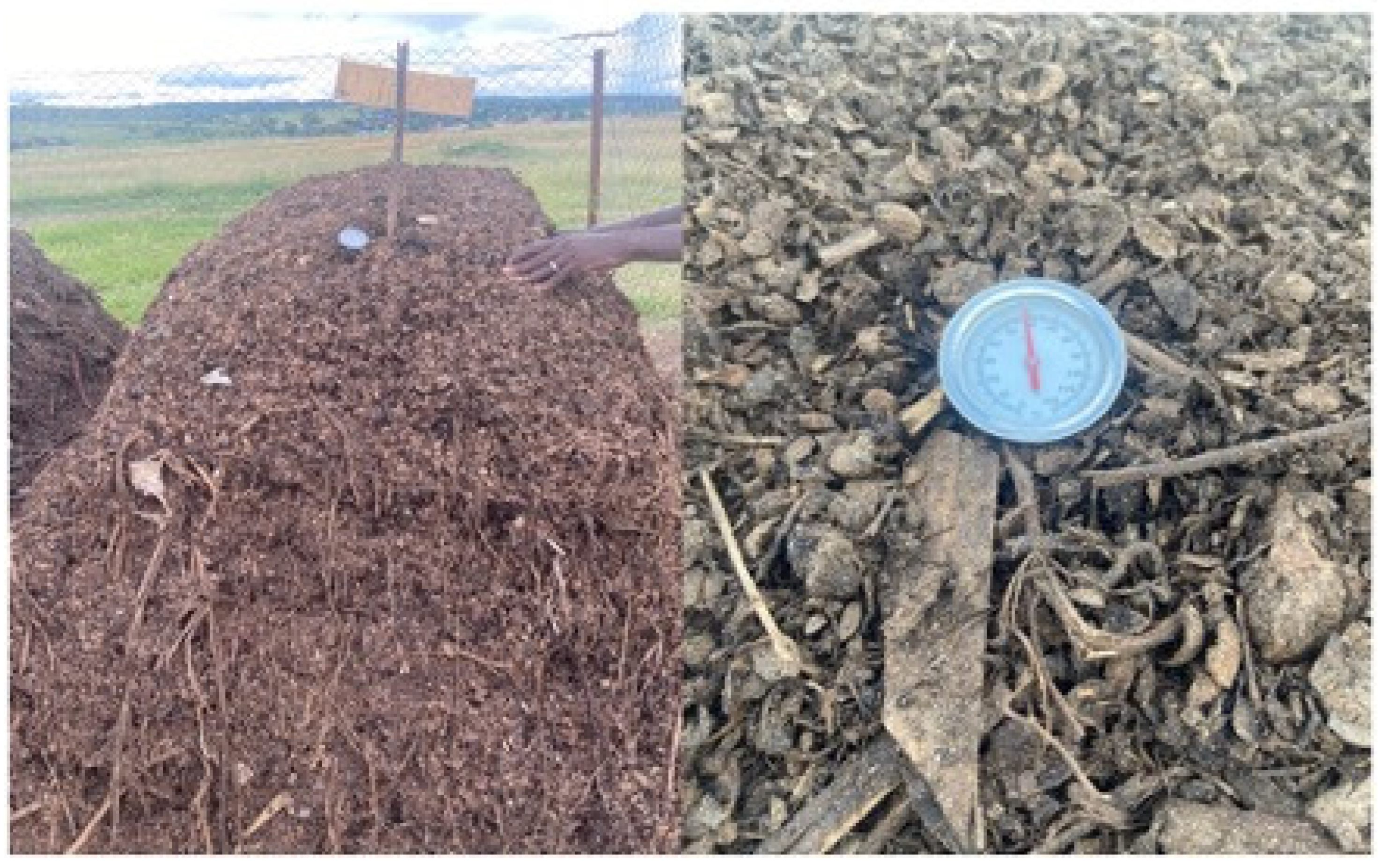
Figure 3.
Effect various organic soil amendments and soil type on growth and leaf yield of lettuce under greenhouse conditions showing plant height (A), root length (B), leaf fresh weight (C) and stem diameter (D). Results represents means and standard errors from 6 biological replicates. Letters indicate results from multiple comparison tests using Tukey test. Different letters indicate significant differences between means at 0.05 level of significance. Similar letters indicate lack of statistical significance at 0.05 level of significance.
Figure 3.
Effect various organic soil amendments and soil type on growth and leaf yield of lettuce under greenhouse conditions showing plant height (A), root length (B), leaf fresh weight (C) and stem diameter (D). Results represents means and standard errors from 6 biological replicates. Letters indicate results from multiple comparison tests using Tukey test. Different letters indicate significant differences between means at 0.05 level of significance. Similar letters indicate lack of statistical significance at 0.05 level of significance.
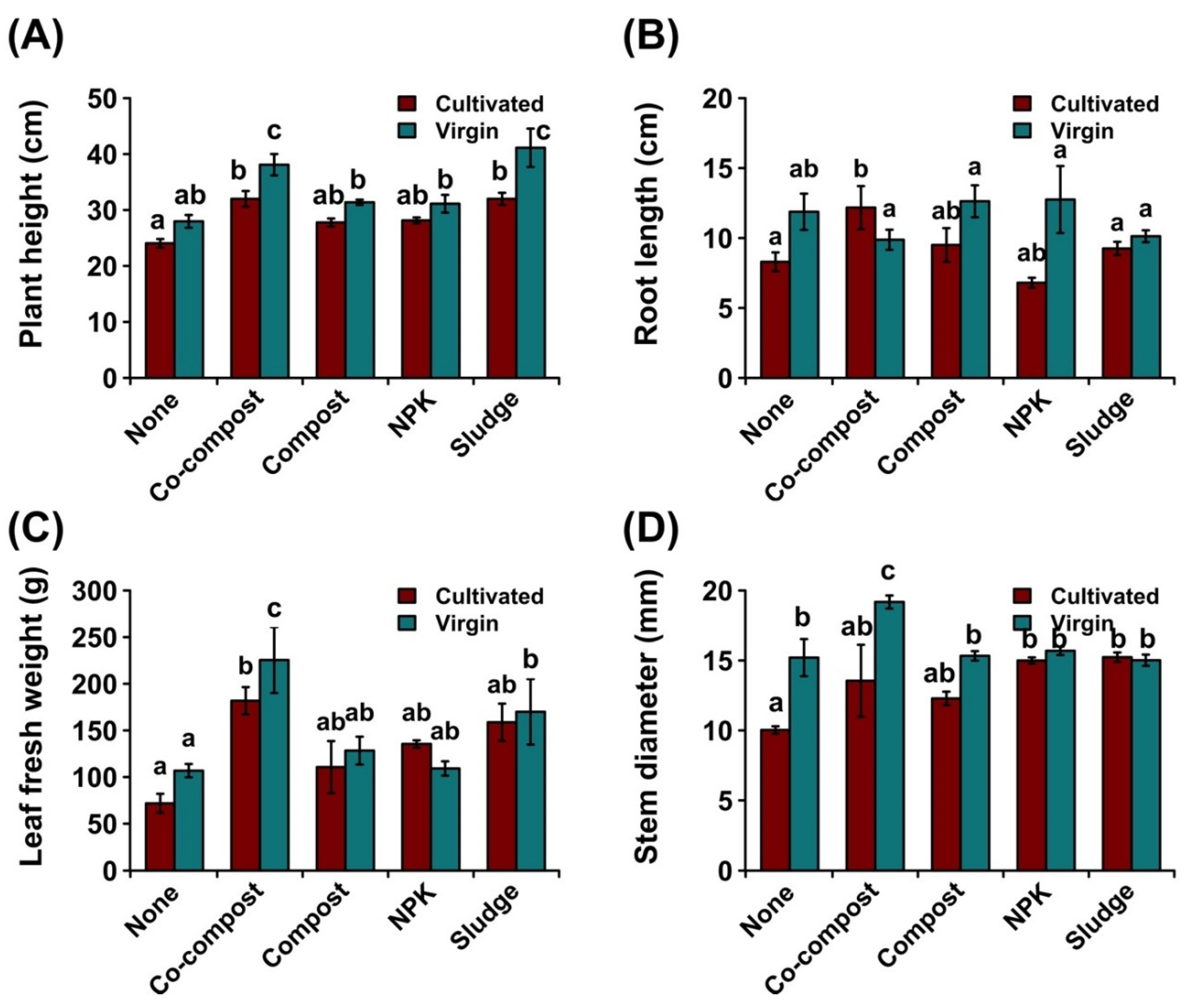
Figure 4.
Effect various organic soil amendments and soil type on biomass accumulation and physiological parameters in lettuce under greenhouse conditions showing shoot dry weight (A), root dry weight (B), leaf relative water content (C) and leaf chlorophyll content using SPAD meter (D). Results represents means and standard errors from 6 biological replicates. Letters indicate results from multiple comparison tests using Tukey test. Different letters indicate significant differences between means at 0.05 level of significance. Similar letters indicate lack of statistical significance at 0.05 level of significance.
Figure 4.
Effect various organic soil amendments and soil type on biomass accumulation and physiological parameters in lettuce under greenhouse conditions showing shoot dry weight (A), root dry weight (B), leaf relative water content (C) and leaf chlorophyll content using SPAD meter (D). Results represents means and standard errors from 6 biological replicates. Letters indicate results from multiple comparison tests using Tukey test. Different letters indicate significant differences between means at 0.05 level of significance. Similar letters indicate lack of statistical significance at 0.05 level of significance.
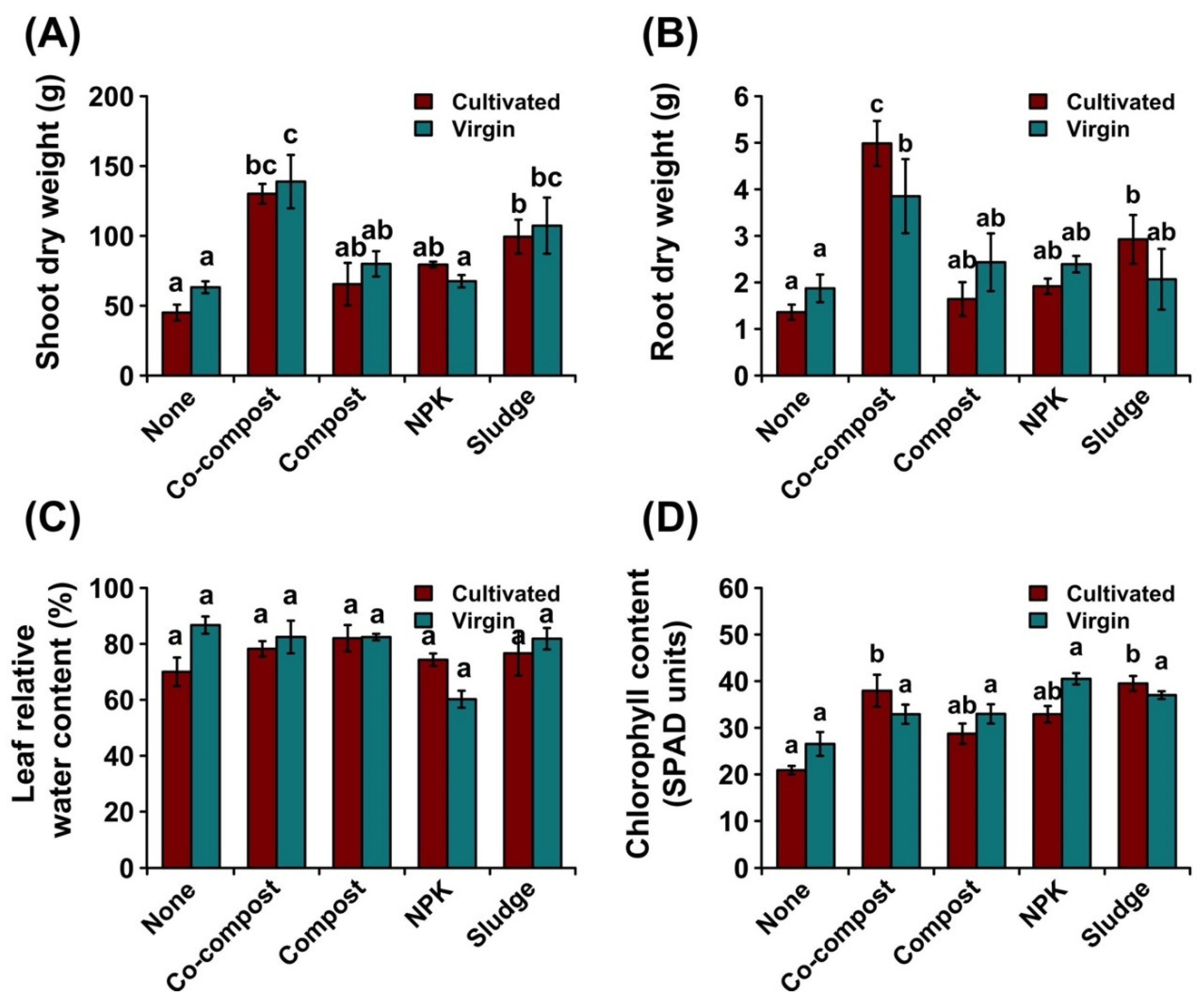
Figure 5.
Effect various organic and inorganic soil amendments on growth, biomass accumulation and physiological parameters in maize under open field conditions showing plant height (A), root length (B), shoot dry weight (C), root dry weight (D), stem diameter (E) and leaf chlorophyll content using SPAD meter. Results represent means and standard errors from 6 biological replicates. Letters indicate results from multiple comparison tests using Tukey test. Different letters indicate significant differences between means at 0.05 level of significance. Similar letters indicate lack of statistical significance at 0.05 level of significance.
Figure 5.
Effect various organic and inorganic soil amendments on growth, biomass accumulation and physiological parameters in maize under open field conditions showing plant height (A), root length (B), shoot dry weight (C), root dry weight (D), stem diameter (E) and leaf chlorophyll content using SPAD meter. Results represent means and standard errors from 6 biological replicates. Letters indicate results from multiple comparison tests using Tukey test. Different letters indicate significant differences between means at 0.05 level of significance. Similar letters indicate lack of statistical significance at 0.05 level of significance.
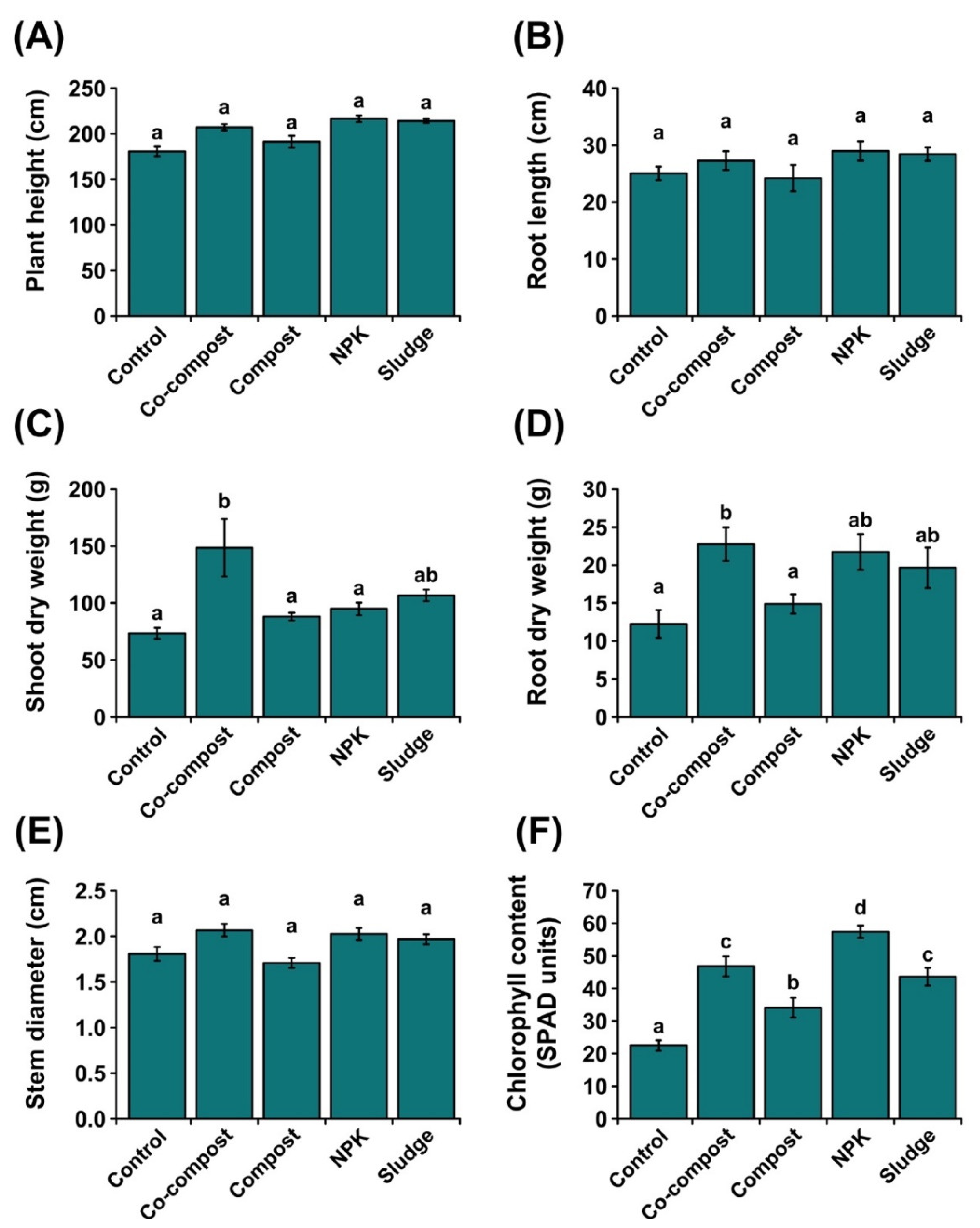
Figure 6.
Effect various organic and inorganic soil amendments on yield and yield parameters of maize under open field conditions showing cob fresh weight (A), cob dry weight (B), cob grain weight (C), 50 grain weight (D), average grain size (E) and harvest index (F). Results represent means and standard errors from 6 biological replicates. Letters indicate results from multiple comparison tests using Tukey test. Different letters indicate significant differences between means at 0.05 level of significance. Similar letters indicate lack of statistical significance at 0.05 level of significance.
Figure 6.
Effect various organic and inorganic soil amendments on yield and yield parameters of maize under open field conditions showing cob fresh weight (A), cob dry weight (B), cob grain weight (C), 50 grain weight (D), average grain size (E) and harvest index (F). Results represent means and standard errors from 6 biological replicates. Letters indicate results from multiple comparison tests using Tukey test. Different letters indicate significant differences between means at 0.05 level of significance. Similar letters indicate lack of statistical significance at 0.05 level of significance.
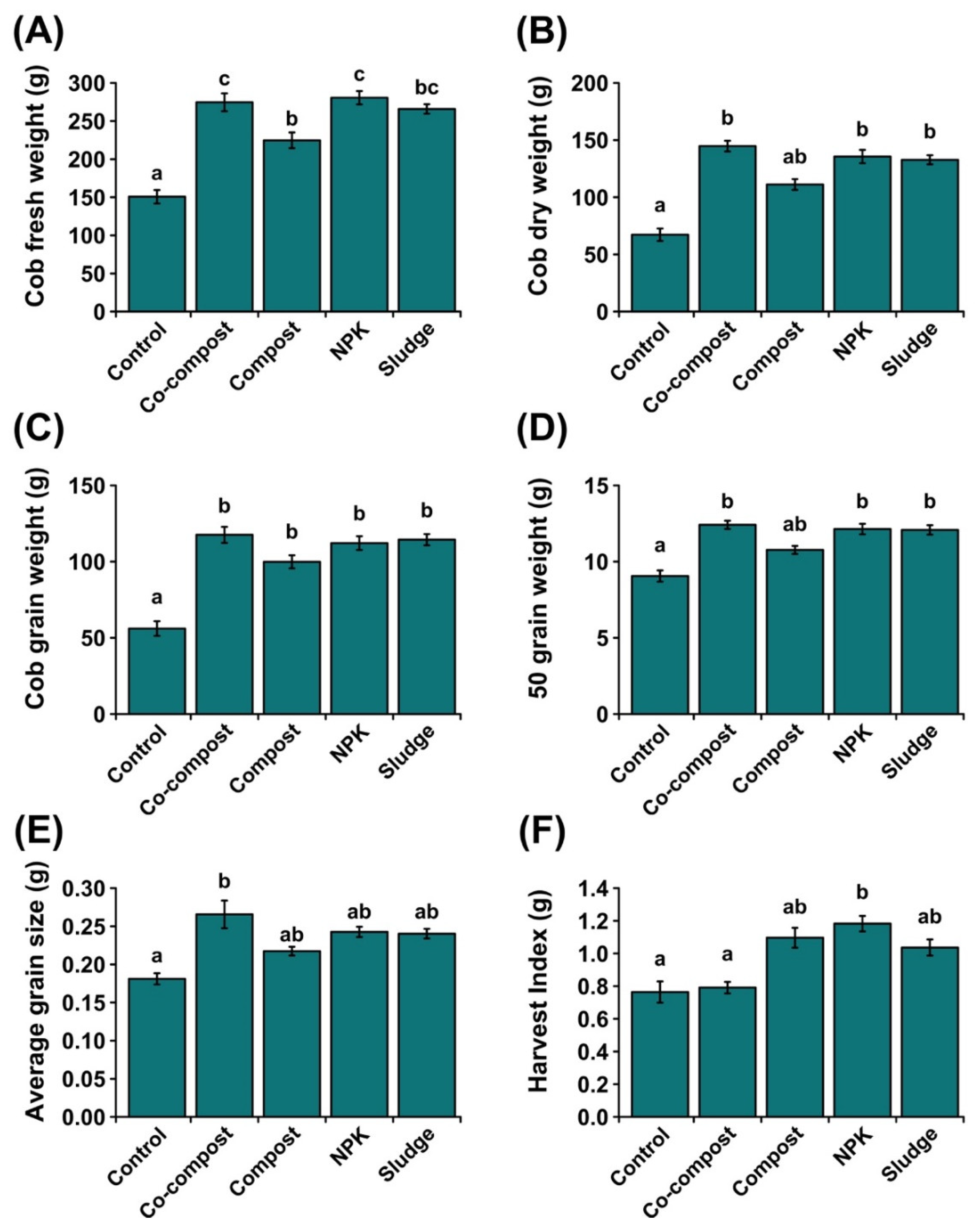
Figure 7.
A photograph of lettuce plants grown under greenhouse conditions amended with various organic soil amendments under well-watered (A) and drought conditions (B), three weeks after imposition of drought stress.
Figure 7.
A photograph of lettuce plants grown under greenhouse conditions amended with various organic soil amendments under well-watered (A) and drought conditions (B), three weeks after imposition of drought stress.
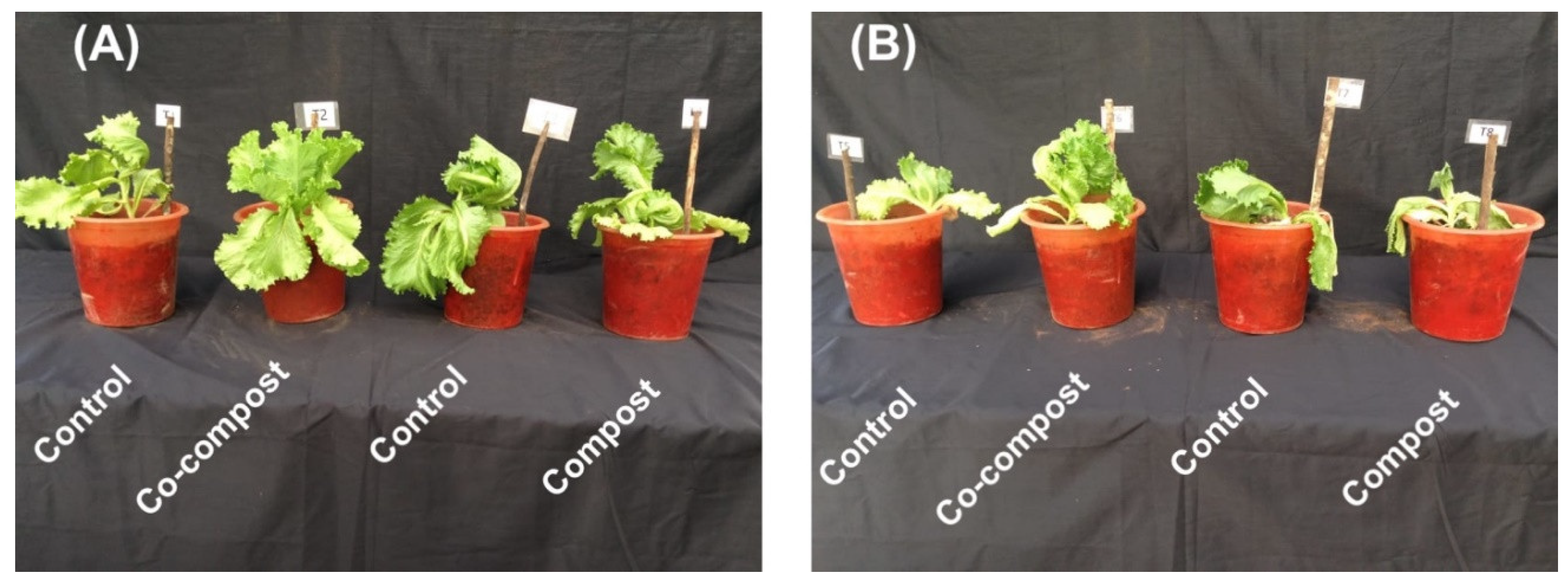
Figure 8.
Effect of various organic soil amendments on amelioration of drought stress in lettuce plants under greenhouse conditions four weeks after drought stress showing plant height (A), root length (B), number of leaves (C) and total leaf area (D). Results represent means and standard errors from 6 biological replicates. Letters indicate results from multiple comparison tests using Tukey test. Different letters indicate significant differences between means at 0.05 level of significance. Similar letters indicate lack of statistical significance at 0.05 level of significance.
Figure 8.
Effect of various organic soil amendments on amelioration of drought stress in lettuce plants under greenhouse conditions four weeks after drought stress showing plant height (A), root length (B), number of leaves (C) and total leaf area (D). Results represent means and standard errors from 6 biological replicates. Letters indicate results from multiple comparison tests using Tukey test. Different letters indicate significant differences between means at 0.05 level of significance. Similar letters indicate lack of statistical significance at 0.05 level of significance.
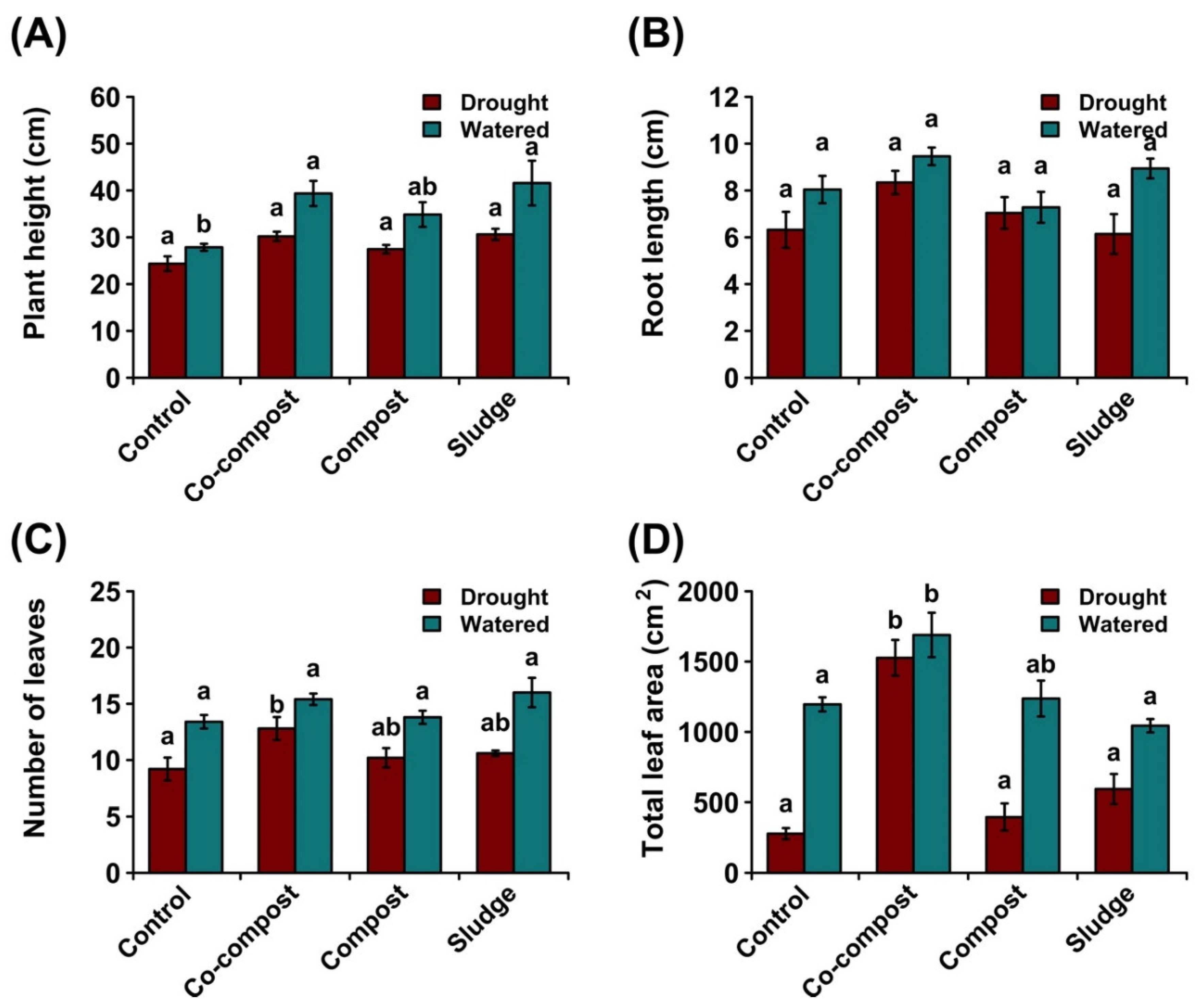
Figure 9.
Effect of various organic soil amendments on amelioration of drought stress in lettuce plants under greenhouse conditions four weeks after drought stress showing leaf fresh weight (A), leaf dry weight (B), root fresh weight (C) and root dry weight (D). Results represent means and standard errors from 6 biological replicates. Letters indicate results from multiple comparison tests using Tukey test. Different letters indicate significant differences between means at 0.05 level of significance. Similar letters indicate lack of statistical significance at 0.05 level of significance.
Figure 9.
Effect of various organic soil amendments on amelioration of drought stress in lettuce plants under greenhouse conditions four weeks after drought stress showing leaf fresh weight (A), leaf dry weight (B), root fresh weight (C) and root dry weight (D). Results represent means and standard errors from 6 biological replicates. Letters indicate results from multiple comparison tests using Tukey test. Different letters indicate significant differences between means at 0.05 level of significance. Similar letters indicate lack of statistical significance at 0.05 level of significance.
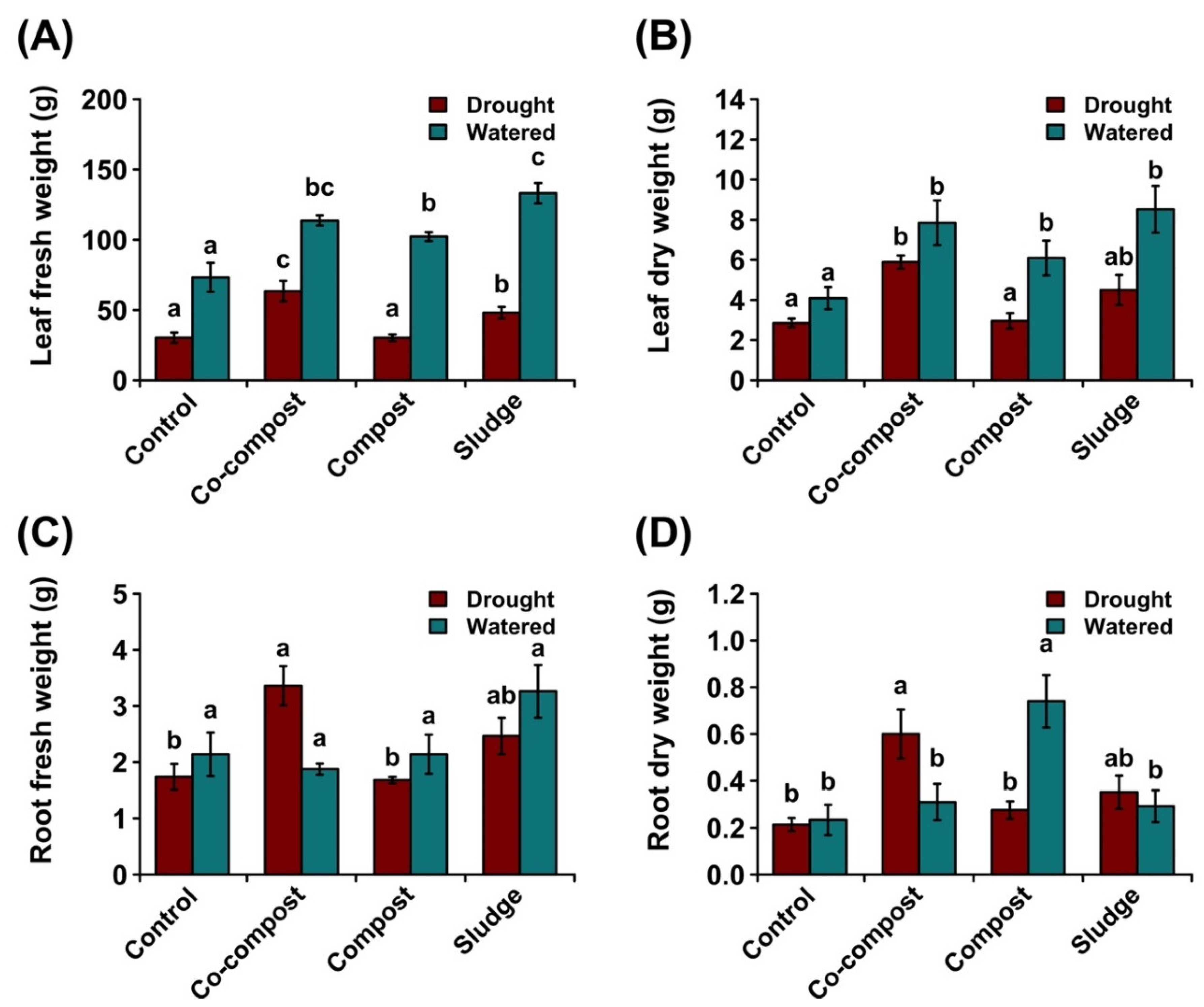
Figure 10.
Effect of various organic soil amendments on amelioration of drought stress in lettuce plants under greenhouse conditions four weeks after drought stress showing leaf relative water content (A) and leaf chlorophyll content (B). Results represent means and standard errors from 6 biological replicates. Letters indicate results from multiple comparison tests using Tukey test. Different letters indicate significant differences between means at 0.05 level of significance. Similar letters indicate lack of statistical significance at 0.05 level of significance.
Figure 10.
Effect of various organic soil amendments on amelioration of drought stress in lettuce plants under greenhouse conditions four weeks after drought stress showing leaf relative water content (A) and leaf chlorophyll content (B). Results represent means and standard errors from 6 biological replicates. Letters indicate results from multiple comparison tests using Tukey test. Different letters indicate significant differences between means at 0.05 level of significance. Similar letters indicate lack of statistical significance at 0.05 level of significance.
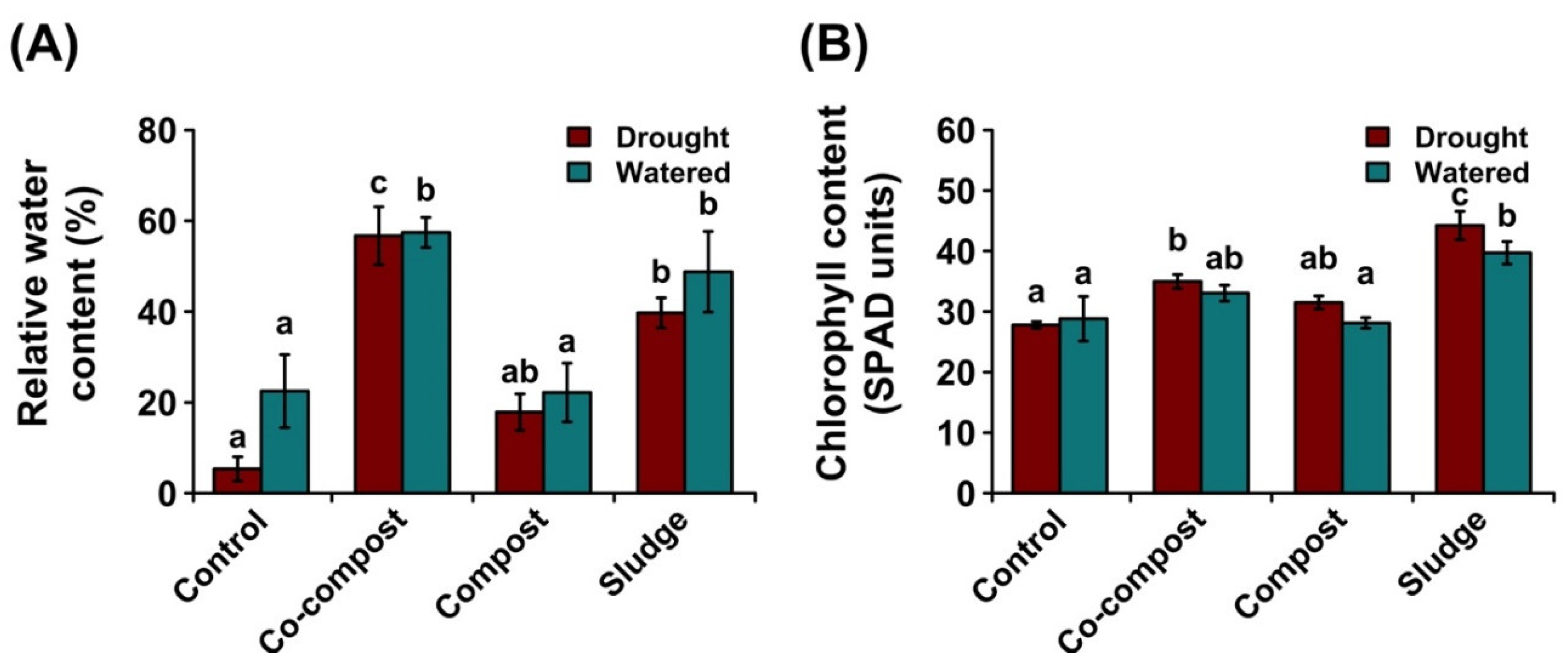

Table 1.
Summary of methods used for soil analyses.
| Nutrient Variable | Units of Measurement | Method used | Reference |
|---|---|---|---|
| pH (water) | pH | 1:1 (soil H2O) | VanReeuwijk, (1993) |
| Organic carbon | % | Walkley and Black | Walkley et al., (1934) |
| Total N | % | Kjeldal method | Bradstreet, (1954) |
| Available P | mg/Kg | Mehlich 3 method, spectrophotometry | Mehlich, (1953) |
| Exchangeable K, Ca, Mg | mg/Kg | Mehlich 3 method, spectrophotometry | Mehlich, (1953) |
| Cu, Zn | mg/Kg | 1 M NH4Cl, spectrophotometry | VanReeuwijk, (1993) |
| EC | Electrical conductivity meter | Raina et al., (2007) |
Table 2.
Effect of compost application rates on plant growth parameters and grain yield components of maize.
Table 2.
Effect of compost application rates on plant growth parameters and grain yield components of maize.
| Treatment | SDW (g) | RDW (g) | SD (cm) | Plant Height (cm) | SPAD |
|---|---|---|---|---|---|
| 0g | 90.86 + 7.1a | 10.14 + 0.75a | 1.71 + 0.07a | 170.72 + 9.61a | 23.10 + 1.75a |
| 200g | 115.47 + 9.84b | 14.36 + 1.34a | 1.88 + 0.07a | 195.53 + 5.57b | 36.74 + 1.92b |
| 350g | 94.75 + 5.07a | 16.16 + 1.03a | 1.88 + 0.07a | 193.61 + 4.25b | 39.65 + 1.92b |
| 500g | 98.71 + 4.67a | 22.41 + 2.17b | 2.09 + 0.06a | 192.88 + 8.33b | 44.09 + 2.56b |
Table 3.
Effect of compost application rates on plant growth parameters and grain yield components of maize.
Table 3.
Effect of compost application rates on plant growth parameters and grain yield components of maize.
| Treatment | CFW (g) | CDW (g) | GDW (g) | AGS (mg) |
|---|---|---|---|---|
| 0g | 134.32 + 7.34a | 61.88 + 4.88a | 49.01 + 4.51a | 175.60 + 6.63a |
| 200g | 246.74 + 8.40b | 117.74 + 4.83b | 97.49 + 4.34b | 225.23 + 6.56b |
| 350g | 245.90 + 7.47b | 122.22 + 4.53b | 101.29 + 4.23b | 221.40 + 6.54b |
| 500g | 261.01 + 8.34b | 128.21 + 5.53b | 105.94 + 5.01b | 228.47 + 8.13b |
Table 4.
Comparative agronomic efficacy of different composts and NPK fertilizer on growth and yield of lettuce.
Table 4.
Comparative agronomic efficacy of different composts and NPK fertilizer on growth and yield of lettuce.
| Treatment | LFW | LDW (g) | RDW (g) | RFW (g) | # Leaves |
|---|---|---|---|---|---|
| 0g | 190.75 + 30.57a | 10.89 + 8.26a | 0.76 + 0.09a | 5.68 + 0.83a | 17.92 + 1.65a |
| Co-compost | 394.74 + 42.72c | 17.71 + 1.63b | 1.23 + 0.15b | 12.79 + 1.59b | 26.50 + 1.20b |
| Compost | 204.58 + 30.91a | 11.19 + 1.01a | 0.87 + 0.15a | 7.82 + 1.13a | 19.83 + 1.47ab |
| NPK | 322.72 + 36.43c | 16.89 + 1.92b | 1.22 + 0.22b | 10.82 + 1.57ab | 23.17 + 0.97ab |
| Sludge | 307.33 + 37.93c | 12.96 + 1.20ab | 1.10 + 0.14ab | 9.51 + 0.96ab | 22.33 + 1.53ab |
Table 5.
Comparative agronomic efficacy of different composts and NPK fertilizer on growth and yield of lettuce.
Table 5.
Comparative agronomic efficacy of different composts and NPK fertilizer on growth and yield of lettuce.
| Treatment | RD (cm) | SD (cm) | Root length | SPAD |
|---|---|---|---|---|
| None | 1.17 + 0.13a | 1.30 + 0.13a | 14.00 + 0.92a | 29.78 + 1.75a |
| Co-compost | 1.50 + 0.07a | 2.24 + 0.13b | 13.09 + 1.20a | 38.66 + 1.31b |
| Compost | 1.09 + 0.06a | 1.42 + 0.10a | 12.18 + 1.20a | 35.96 + 1.97ab |
| NPK | 1.43 + 0.11a | 1.81 + 0.15ab | 13.95 + 1.06a | 39.83 + 1.58b |
| Sludge | 1.33 + 0.07a | 1.76 + 0.13ab | 12.09 + 0.83a | 36.04 + 1.30ab |
Table 6.
Effect of compost types on macro and micronutrient accumulation in leaves and roots of lettuce plants under open field conditions.
Table 6.
Effect of compost types on macro and micronutrient accumulation in leaves and roots of lettuce plants under open field conditions.
| Concentration (µg/g DW) | |||||||||
|---|---|---|---|---|---|---|---|---|---|
| Organ | Compost | K | Na | Ca | Mg | Zn | Mn | Fe | Cu |
| Leaf |
NPK | 2355.9 | 236.7 | 2618.0 | 314.4 | 49.4 | 276.9 | 1717.0 | 4.2 |
| Sludge | 2501.1 | 279.1 | 2893.2 | 215.2 | 66.6 | 312.4 | 2551.9 | 6.3 | |
| None | 2029.5 | 182.8 | 2063.1 | 205.5 | 50.9 | 205.6 | 2096.2 | 6.4 | |
| Co-compost | 3730.7 | 167.7 | 2686.4 | 252.5 | 63.6 | 259.5 | 2961.7 | 9.2 | |
| Compost | 2245.6 | 202.3 | 2334.5 | 233.5 | 60.4 | 267.9 | 2345.3 | 7.5 | |
| Root |
NPK | 1109.8 | 370.5 | 1729.5 | 49.5 | 45.5 | 188.9 | 1864.4 | 1.9 |
| Sludge | 1552.3 | 943.2 | 2677.3 | 65.7 | 54.5 | 194.2 | 1942.4 | 12.2 | |
| None | 1176.5 | 497.0 | 1826.5 | 74.3 | 42.4 | 182.7 | 1790.2 | 9.8 | |
| Co-compost | 2159.1 | 185.6 | 2437.1 | 71.0 | 57.0 | 170.3 | 2440.2 | 12.5 | |
| Compost | 2034.4 | 475.5 | 2348.5 | 70.4 | 48.4 | 174.4 | 1974.4 | 10.3 | |
Table 7.
Effect of soil amendments on residual mineral concentration and soil chemical properties in lettuce grown under field conditions.
Table 7.
Effect of soil amendments on residual mineral concentration and soil chemical properties in lettuce grown under field conditions.
| Treatment | pH | EC | % OM | % N | Concentration (mg/Kg) | |||||
| P | K | Ca | Mg | Cu | Zn | |||||
| None | 5.8 | 94.37 | 4.05 | 0.13 | 12.30 | 312.83 | 2038.23 | 334.34 | 0.074 | 0.843 |
| Co-compost | 6.1 | 89.60 | 5.65 | 0.15 | 25.98 | 1220.75 | 3699.75 | 674.75 | 0.123 | 1.775 |
| Compost | 6.2 | 106.85 | 5.03 | 0.14 | 16.23 | 586.00 | 3387.75 | 671.25 | 0.298 | 1.575 |
| Sludge | 5.5 | 162.53 | 4.73 | 0.14 | 15.40 | 351.25 | 3143.50 | 617.75 | 0.087 | 1.300 |
Table 8.
Effect of compost types on macro and micronutrient accumulation in leaves and roots of maize plants under open field conditions.
Table 8.
Effect of compost types on macro and micronutrient accumulation in leaves and roots of maize plants under open field conditions.
| Concentration (µg/g DW) | |||||||||
| Organ | Compost | K | Na | Ca | Mg | Zn | Mn | Fe | Cu |
| Leaf |
Sludge | 299.1 | 59.5 | 2034.7 | 214.0 | 33.5 | 134.7 | 1685.2 | 4.7 |
| NPK | 239.5 | 41.1 | 1634.3 | 88.8 | 29.5 | 154.9 | 1308.7 | 5.2 | |
| None | 165.7 | 43.4 | 1359.7 | 87.4 | 28.6 | 118.4 | 1241.9 | 4.4 | |
| Co-compost | 288.2 | 26.3 | 1972.5 | 137.1 | 27.0 | 102.1 | 1894.2 | 7.9 | |
| Compost | 220.3 | 49.4 | 1745.3 | 86.4 | 28.4 | 105.3 | 1357.5 | 5.3 | |
| Root |
Sludge | 314.8 | 34.8 | 1646.6 | 46.7 | 25.9 | 121.3 | 2325.6 | 11.6 |
| NPK | 360.8 | 32.2 | 1375.0 | 47.1 | 20.5 | 135.7 | 1883.9 | 6.1 | |
| None | 262.3 | 37.1 | 1048.3 | 47.3 | 24.6 | 99.5 | 2048.1 | 7.0 | |
| Co-compost | 380.5 | 21.4 | 1719.7 | 46.2 | 19.2 | 147.8 | 2980.3 | 12.5 | |
| Compost | 284.5 | 33.5 | 1233.8 | 46.9 | 22.3 | 113.2 | 2420.3 | 8.3 | |
Table 9.
Effect of soil amendments and drought stress on biomass allocation.
| Treatment | RMR | RRMR | |
|---|---|---|---|
| Drought | Control | ||
| None | 5.7651b | 4.7388a | 1.2166b |
| Co-compost | 7.4276b | 3.0132a | 2.4650c |
| Compost | 6.8216a | 8.7059b | 0.7836a |
| Sludge | 5.8981b | 2.7340a | 2.1573c |
Table 10.
Effect of compost types on macro and micronutrient accumulation in leaves and roots of lettuce plants under drought stress under greenhouse conditions.
Table 10.
Effect of compost types on macro and micronutrient accumulation in leaves and roots of lettuce plants under drought stress under greenhouse conditions.
| Concentration (µg/g DW) | ||||||||||
|---|---|---|---|---|---|---|---|---|---|---|
| Organ | Treatment | Compost | K | Na | Ca | Mg | Zn | Mn | Fe | Cu |
| Leaf |
Watered |
None | 7434.3 | 50.0 | 1541.7 | 221.2 | 44.5 | 219.4 | 896.5 | 11.3 |
| Sludge | 8012.3 | 53.8 | 1574.2 | 232.8 | 95.7 | 266.3 | 705.8 | 10.7 | ||
| Co-compost | 8696.6 | 43.8 | 1922.2 | 195.1 | 55.1 | 186.6 | 1117.2 | 12.5 | ||
| Compost | 7874.5 | 52.4 | 1734.8 | 199.8 | 58.8 | 192.3 | 846.3 | 10.2 | ||
| Drought |
None | 6119.3 | 52.2 | 1062.7 | 216.9 | 55.3 | 122.4 | 1077.8 | 10.3 | |
| Sludge | 8865.9 | 58.4 | 1187.1 | 216.7 | 59.7 | 174.2 | 1068.4 | 10.8 | ||
| Co-compost | 8820.5 | 48.2 | 1357.4 | 200.1 | 57.6 | 178.1 | 1385.6 | 15.8 | ||
| Compost | 7732.3 | 50.3 | 1220.3 | 203.3 | 55.3 | 164.5 | 1102.3 | 11.2 | ||
| Root |
Watered | None | 2084.7 | 53.9 | 485.0 | 76.6 | 30.9 | 119.5 | 833.1 | 13.4 |
| Sludge | 3665.2 | 65.6 | 747.0 | 88.2 | 52.6 | 146.5 | 1356.8 | 12.3 | ||
| Co-compost | 3584.5 | 61.3 | 771.5 | 63.6 | 41.1 | 138.2 | 1464.0 | 16.0 | ||
| Compost | 2938.4 | 63.2 | 734.4 | 70.3 | 39.3 | 122.3 | 1123.3 | 12.3 | ||
| Drought | None | 1594.9 | 30.0 | 575.5 | 93.4 | 27.6 | 107.2 | 812.3 | 8.9 | |
| Sludge | 2403.8 | 61.8 | 1150.3 | 113.5 | 32.5 | 116.4 | 1218.0 | 11.2 | ||
| Co-compost | 2568.2 | 27.5 | 1277.7 | 47.9 | 28.8 | 150.6 | 1288.1 | 19.8 | ||
| Compost | 1845.3 | 34.3 | 849.4 | 69.5 | 37.4 | 123.3 | 1083.3 | 9.3 | ||
Table 11.
Effect of soil amendments on residual mineral concentration and soil chemical properties in pot-grown lettuce under greenhouse conditions.
Table 11.
Effect of soil amendments on residual mineral concentration and soil chemical properties in pot-grown lettuce under greenhouse conditions.
| Treatment | Water | pH | EC | % OM | % N | Concentration (mg/Kg) | |||||
|---|---|---|---|---|---|---|---|---|---|---|---|
| P | K | Ca | Mg | Cu | Zn | ||||||
| Well-Watered |
None | 4.76 | 846.3 | 4.5 | 0.117 | 10.9 | 425 | 1934 | 235 | 0.09 | 0.7 |
| Compost | 5.81 | 947.0 | 6.3 | 0.174 | 20.5 | 1384 | 3381 | 652 | 0.16 | 1.8 | |
| Co-compost | 4.26 | 1280.0 | 7.4 | 0.219 | 25.0 | 1665 | 3847 | 690 | 0.17 | 1.8 | |
| Sludge | 4.37 | 2024.7 | 5.1 | 0.247 | 13.2 | 364 | 2035 | 277 | 0.11 | 1.5 | |
| Droughted |
None | 4.38 | 720.0 | 4.6 | 0.164 | 10.3 | 382 | 2034 | 348 | 0.13 | 1.1 |
| Compost | 5.79 | 698.7 | 6.2 | 0.231 | 12.0 | 718 | 2142 | 308 | 0.13 | 1.3 | |
| Co-compost | 5.11 | 515.0 | 7.9 | 0.272 | 23.5 | 1177 | 3041 | 624 | 0.13 | 1.9 | |
| Sludge | 4.73 | 1211.0 | 4.5 | 0.281 | 13.9 | 811 | 2663 | 576 | 0.15 | 2.2 | |
Disclaimer/Publisher’s Note: The statements, opinions and data contained in all publications are solely those of the individual author(s) and contributor(s) and not of MDPI and/or the editor(s). MDPI and/or the editor(s) disclaim responsibility for any injury to people or property resulting from any ideas, methods, instructions or products referred to in the content. |
© 2024 by the authors. Licensee MDPI, Basel, Switzerland. This article is an open access article distributed under the terms and conditions of the Creative Commons Attribution (CC BY) license (http://creativecommons.org/licenses/by/4.0/).
Copyright: This open access article is published under a Creative Commons CC BY 4.0 license, which permit the free download, distribution, and reuse, provided that the author and preprint are cited in any reuse.


