

Submitted:
13 June 2024
Posted:
14 June 2024
You are already at the latest version
Abstract
Chronic wounds remain a significant clinical challenge, necessitating the exploration of novel therapeutic agents. Sedum telephium L. (syn. Hylotelephium telephium (L.) H. Ohba) leaf juice, known for its traditional medicinal uses, was evaluated for its wound healing properties. This study aimed to chemically characterize the leaf juice and assess its efficacy in promoting wound healing in vitro. Fresh leaves were collected and processed to obtain the juice, which was analyzed for polyphenols, flavonoids, polysaccharides, and proteins. Key bioactive compounds, including flavonols such as kaempferol glycosides and quercetin glycosides, were identified. The juice and its polysaccharidic fraction were tested on human keratinocytes (HaCaT) and fibroblasts (HFF-1) to assess cell viability, wound closure, and the production of growth factors and pro-collagen I. Our results indicated that the whole juice significantly enhanced wound closure in both cell types, with a marked increase in fibroblast growth factor (FGF) and LAP(TGF-β1) production in keratinocytes, highlighting its potential mechanisms of action. The polysaccharidic fraction alone showed limited efficacy, emphasizing the importance of the complete phytocomplex. These findings suggest that Sedum telephium L. represents a promising candidate in the setting of skin regeneration and repair.
Keywords:
phytomedicine
; Sedum telephium L.
; wound healing
; skin.
1. Introduction
The healing process is a physiological complex of events comprising hemostasis, chemotaxis and inflammatory cascade, cell proliferation and tissue remodeling[1,2,3].
A multitude of strategies are currently available to address acute injuries and promote tissue regeneration [4,5,6,7]. Several safe and effective options to address minor and acute injuries include the use of topical antibiotics and/or disinfectants (including silver sulfadiazine, benzalkonium chloride, ethanol, povidone iodine). On the other hand, chronic ulcers pose a persistent challenge, often being resistant to conventional treatments and prone to complications [8]. Chronic wounds are characterized by prolonged healing time and propensity for recurrence, with subsequent diminished quality of life for patients and increased healthcare costs [6,9,10]. The social impact is profound, as chronic wounds can result in pain, disability, and reduced mobility, impairing patients' ability to perform daily activities and to engage in social interactions [11]. Depression, anxiety, and social isolation further exacerbate the burden on affected individuals [10,12]. Millions of individuals are affected worldwide, giving reason to the unbearable economic burden for healthcare systems [9,13].
Available strategies include traditional and advanced dressings, dermal scaffolds, growth factors, stem cells, systemic treatments [5,14,15]. The therapeutic choice varies upon the type of ulcer, patient comorbidities and the expertise of the healthcare team in treating cutaneous ulcers [2,16]. However, no definitive treatment for the cure of chronic wounds is available to date. As such, there is an urgent need for innovative therapies tailored specifically to these recalcitrant wounds. Current research is increasingly focusing on phytoderivatives, bioactive compounds derived from plants, as promising candidates for addressing this unmet medical need [17]. These natural compounds offer a multifaceted approach to wound healing, targeting inflammation, infection, and tissue repair processes [18,19,20]. With growing evidence supporting their efficacy and safety, phytoderivatives represent a compelling frontier in the quest for novel therapies to combat chronic ulcers and improve patient outcomes.
On the one hand, the interest towards medicinal plants in wound healing is supported by a vigorous push provided by growing literature in the setting of ethnopharmacology; on the other hand, another stimulus to the growing interst towards phytomedicine is provided by the official recognition of several herbal products, marketed as conventional drugs, enlisted in the Monographs on Selected Medicinal Plants of the World Health Organization (WHO) (who.int) and, in the European Union (UE), in those of the European Medicines Agency (EMA) (www.ema.europa.eu). The aim of this work is to provide an insight on the potential use of Sedum telephium L. (syn. Hylotelephium telephium (L.) H. Ohba) (Crassulaceae), in the setting of wound healing. S. telephium is a medicinal plant initially studied by Balatri and collaborators[21,22]. More in details, the juice obtained from fresh leaves was demonstrated to contain mucilage that have showed immunomodulatory and anti-inflammatory activity [20,23] and flavonols that in vitro demonstrated to have antioxidant and photoprotective ability [21,24].
Products for topical application containing S. telephium extract are currently commercially available and possess interesting potential implications in the dermatological setting. We aimed at assessing the in vitro regenerative and immunomodulating properties of fresh juice obtained from S. telephium fresh leaves.
In the present paper, we characterized the extract obtained from S. telephium leaves from a chemical point of view and, more importantly, we report on its trophic action though in vitro wound healing assay both on keratinocytes and fibroblasts. We also performed comparative assessment of the efficacy of whole fresh juice and its polysaccharidic fraction only. Lastly, we assessed the production of pro-collagen I by fibroblasts and the secretion of growth factors by keratinocytes induced by S. telephium in order to better clarify its potential mechanism of action in the setting of wound healing.
2. Materials and Methods
Sampling
Fresh leaves of S. telephium were collected from domesticated plants at the end of July, classified and authenticated at the Botanical Garden of the University of Siena. At least 200 g of fresh leaves were taken. Plants were selected according to the following criteria: integrity, absence of parasite infestations, provenience from areas not subject to phytosanitary treatments. Sedum juice (SED) was obtained by squeezing fresh leaves, using a kitchen centrifuge (Vitafruit, Moulinex).
Phytochemicals analyses
Polyphenols and flavonoids content
The total amount of polyphenols in SED was determined by Folin-Ciocâlteu colorimetric method, optimized as described by Finetti et al. [25]. Gallic acid (Merck Sigma-Aldrich, Darmstadt, Germany) was used as reference standard and results were expressed as gallic acid equivalents (GAE). Flavonoids content was quantified by means of direct absorbance [26]. Briefly, SED was diluted 100 mg/ml in bidistilled water, and the absorbance was detected at a wavelength of. Quercetin (Merck Sigma-Aldrich) was used as a reference standard with 366 nm being its peak of absorbance. Results were expressed as quercetin equivalents (QE). A Shimadzu UV 1900 spectrophotometer (Kyoto, Japan) was used for absorbance quantification. All analyses were performed in triplicate.
Quantification and isolation of polysaccharides
SED polysaccharides (SEDPOL) were isolated through conventional ethanol precipitation. Basically, 1 g of SED was diluted 1:2 with bidistilled water and placed in a bain-marie at 100 °C for 15 minutes to promote sugar solubilization. The obtained solution was centrifuged at 2000 rpm for 5 minutes and precipitated material was discarded. Absolute ethanol (Merck Sigma-Aldrich) at -80 °C was added to the solution in a 1:1 ratio and determined precipitation of the polysaccharides, in the form of a whitish gel. The solution was centrifuged and the supernatant was removed. The precipitate was recovered with 10 ml of bidistilled water and assayed through the colorimetric phenol-sulphuric method, already used and described in [18]. Briefly, 20 μl of the sample was diluted with 380 μl of bidistilled water and placed in a reaction tube; then, 200 μl of 6% m/v (mass/volume) aqueous phenol solution were added. Subsequently, 0.5 ml of 98% m/m sulphuric acid was added and the reaction tube was quickly closed. After 10 min. at 80 °C, the absorbance was read at 490 nm with a Shimadzu UV 1900 spectrophotometer. The amount of polysaccharides was calculated interpolating data on the standard curve constructed with D(+)-glucose (Merck Sigma-Aldrich) and by multiplying x0.9 to convert D(+)-glucose in polysaccharides.
The test was conducted in experimental triplicate.
Protein dosage
The validated Bradford method [27] was used for the quantification of proteins in SED. Five µL of the SED sample were placed in 96-well plates; Double-distilled water was used as a control. An amount of 245 µL of Bradford's solution (B6916-500mL, Merck Sigma-Aldrich) was added to each well and plates were incubated for 15 minutes in the dark at room temperature. The plates were then read through Victor NIVO 3S (Perkin Elmer, Waltham, Massachusetts, United States) at 595 nm. The calibration curve was obtained using bovine serum albumin (BSA) (A3059-100G, Merck Sigma-Aldrich). All the measurements were conducted in triplicate.
Flavonols profile
HPLC-DAD (High Performance Liquid Chromatography coupled with a Diode Array Detector) analysis was performed by using a Shimadzu Prominence LC 2030 3D instrument (Shimadzu, Kyoto, Japan) equipped with a Bondapak® C18 column, 10 mm, 125 Å, 3.9 mm x 300 mm column (Waters Corporation, Milford, Massachusetts, United States).
Water solutions containing 0.1% (v/v) formic acid (A) and acetonitrile with 0.1% (v/v) of formic acid (B) were used as mobile phases. The following program was applied: B from 10% at 0 min to 25% at min, then B 50% at 26 min to 10% at 35 min. Flow rate was set at 0.9 ml/min. Chromatograms were recorded at 366 nm. Analyses were performed using 20 µl of SED diluted 1:5 in bidistilled water; quercetin, kaempferol, isoquercitrin, hyperoside and kaempferitrin (Merck Sigma-Aldrich) were used as external standards. Three independent runs were performed.
Cell biology analysis
Cells cultures
Aneuploid immortal keratinocytes from adult human skin (HaCaT) and Human Foreskin Fibroblasts (HFF-1) (gently furnished by Dept. of Life Sciences, University of Modena and Reggio Emilia) were cultured in polystyrene flasks (Sarstedt AG & Co. KG, Nümbrecht Germany) using Dulbecco’s Modified Eagle’s Medium – High glucose (DMEM-Hi glucose – D5796, Merck Sigma-Aldrich) supplemented with 10% v/v Fetal Bovine Serum (FBS Merck Sigma-Aldrich) and 1 % v/v 1:100 diluted Antibiotic-Antimycotic solution (Merck Sigma-Aldrich) at 37 °C in 5% CO2 atmosphere.
Buffer Saline (PBS) solution and 1x Trypsin-EDTA solution (Merck Sigma-Aldrich) were used to detach cells from flasks when reaching 70% confluence; by means of centrifugation at 800 rpm for 5 minutes the cell pellet was obtained and then resuspended into fresh medium. Therefore, cells underwent 2 passages in culture. Cells count was performed using a hemocytometer after staining with Trypan Blue dye (Merck Sigma-Aldrich).
Cell viability
The Cell Counting Kit – 8 (CCK-8, Merck Sigma-Aldrich) was used to evaluate cell viability of HaCaT and HFF in response to treatments with SED, SEDPOL and the reference drug (REFDRUG). SED was tested at different dilutions (0.1, 1 and 5 mg/ml respectively), SEDPOL was tested at a concentration of 0.03 mg/ml and REFDRUG was a cream containing 15% m/m Triticum vulgare L. standardized water extract + 1% m/m phenoxyethanol, tested at 0.1 mg/ml.
Cells were seeded at a density of 5,000 cells/well in a 96-well plate and incubated for 24 hours at 37 °C in 5% CO2 atmosphere. Supernatants were then removed and wells were filled with 90 μL of culture medium and 10 μL of treatment samples and again incubated for 24 hours as described above. Then, fresh DMEM and CCK-8 (9:1) was added in each well and incubated for 30-60 minutes. Absorbance was measured at 450 nm using Perkin Elmer Victor Nivo 3S Microplate Reader.
Scratch test - wound healing assay
We performed a revised version of the protocol published by Chen et al. [28], as also already described by Chiocchio et al. and Pressi et al.[29,30]. HaCaT and HFF cells were seeded into 6-wells plates (Sarstedt AG & Co. KG) at a density of 50,000 cells/well with DMEM supplemented with 10% FBS and incubated at 37 °C in 5% CO2 atmosphere until the achievement of approximately 80 % confluence as a monolayer. Using a 1 ml pipette tip, the monolayer was scratched to create a cross at the center of each well. Supernatant (together the detached cells) was then discarded and DMEM supplemented with 3 % FBS together with different treatment samples (SED 1 mg/ml, SEDPOL 0.03 mg/ml and REFDRUG 0.1 mg/ml) were added to the wells. Two independent experiments in technical triplicates (n=6) were performed. Microscopic images of each well were taken at 0, 6 and 24 hours after treatment by using a Leica DMIL microscope (Leica, Wetzlar, Germany). The wound size was evaluated using IC Measure software (The Imaging Source LLC, Version 2.0.0.286, https://www.theimagingsource.com/en-us/support/download/icmeasure-2.0.0.286/). Two different measurements were performed for each well. Untreated scratched cells represented the control. The percentage of wound closure was calculated using the following formula: [(Wound area t0 − Wound area t)/Wound area t0] × 100.
Growth factors dosages
ELISA (Enzyme-Linked ImmunoSorbent Assay) test was used for the measurement of fibroblast growth factor (FGF), epidermal growth factor (EGF), precursor transforming growth factor latency-associated peptide (LAP(TGF-β1)) and procollagen I. While EGF, FGF and LAP(TGF-β1) were dosed on HaCaT-grown media, procollagen I measurement was performed on HFF-1 supernatant.
Cells were seeded into 24-well plates (10,000 cells/well) and treated with SED 1 mg/ml, SEDPOL 0.03 mg/ml and REFDRUG 0.1 mg/ml for 6 and 24 hours. At the end of the treatments 10 µL of protease inhibitor (Merck Sigma-Aldrich) 1x were added to each well and the plates were frozen. Following, 3 cycles of freezing and thawing were performed in order to obtain complete cell lysis. Finally, the supernatants were collected in 1 ml tubes.
The human FGF-7 ELISA kit (RAB0188, Merck Sigma-Aldrich), human EGF ELISA kit (RAB0149, Merck Sigma-Aldrich), human LAP(TGF-β1) (88-50390-22, Thermo Fisher Scientific Inc., Waltham, Massachusetts, United States) and procollagen I α1 ELISA kit (ab210966, Abcam, Cambridge, United Kingdom) were used for ELISA assays. All ELISA dosages were performed following suppliers’ data sheets. A Victor Nivo 3S Multimode Microplate Reader (Perkin Elmer) was used to read plates. Dosages were performed in two independent experiments with technical triplicates (n=6).
Statistical analysis
The one-way analysis of variance (ANOVA) followed by Tukey post-hoc test was used to compare datasets and to assess the statistical analysis; p<0.05 was set as significance level. y. Data are presented as mean of replicates ± standard deviation (SD). Analyses were conducted using SPSS for Windows® v.25 (SPSS Inc., Chicago, USA) and Graphpad Prism (San Diego, USA).
3. Results
3.1. Chemical characterization of Sedum telephium L. leaves juice
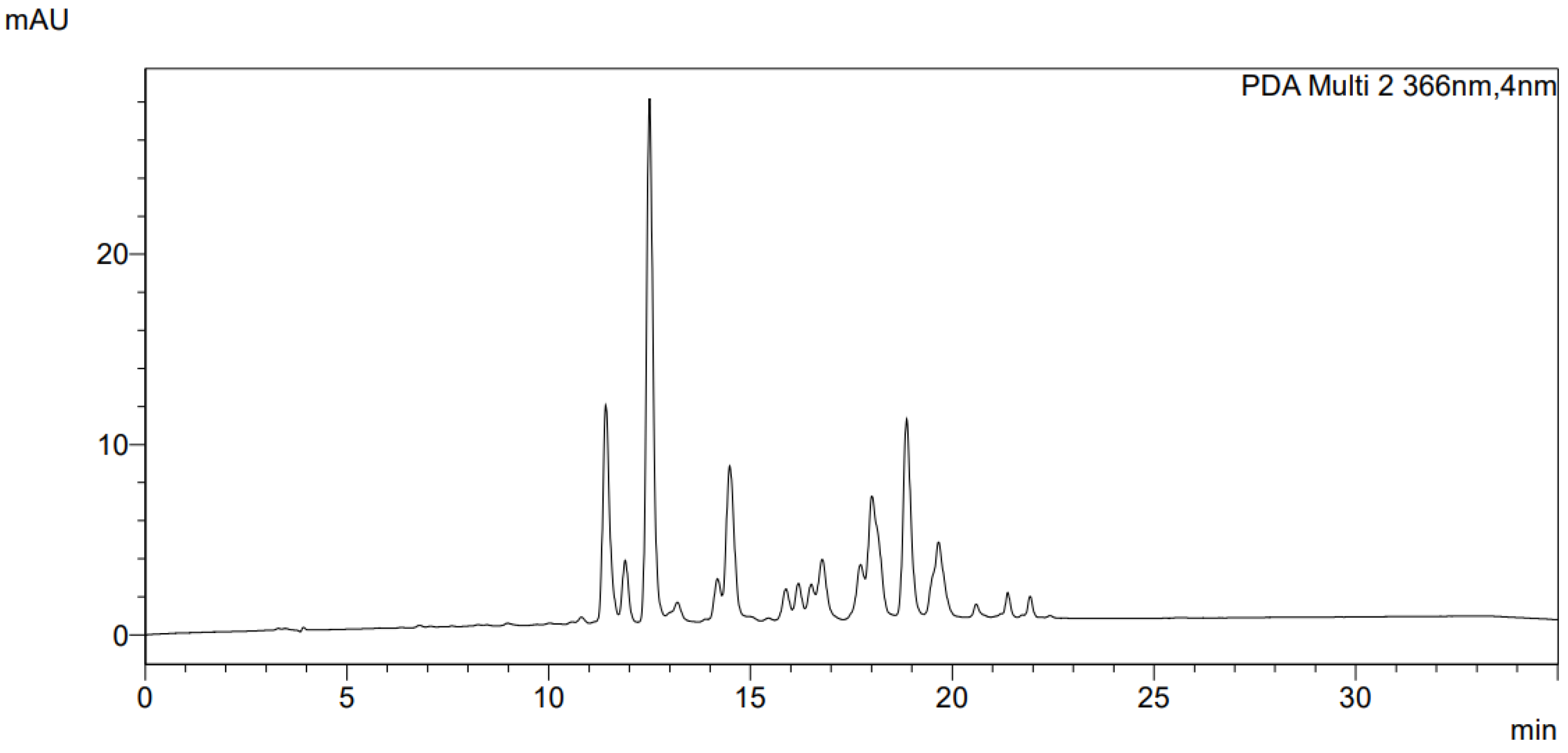
In accordance with published literature previously published on S. telephium, chemical analyses showed that also in SED polysaccharides were the main constituents, 2.47% m/m in fresh leaves; in this work we highlighted the presence of proteins in SED, very plausibly as part of mucilage, also composed by glycoproteins[31]. Moreover, as previously reported, SED was enriched in polyphenols (793 mg GAE/Kg), especially flavonols, quantified by means of UV method (420 mg QE/Kg), and clearly individuated through an HPLC-DAD analysis. From UV spectra, the main peaks with retention time (RT) between 11.9 and 18.1 minutes could be attributed to kaempferol glycosides: considering the method used, is plausible to identify the main peaks as kaempferol tri- and di-glycosides, as already reported by Mulinacci et al. [21] for S. sedum subsp. maximum; kaempferitrin was identified in the number at RT=18.1 min. (0.007%); in accordance with the cited reference, quercetin glycosides were also identified, including isoquercitrin and hyperoside, partially overlapped at RT=18.8 and 19.0 min. Quercetin and kaempferol as aglycones were identified only at very low concentrations.

Table 1.
chemical composition of Sedum telephium L. leaves juice. Polyphenols are expressed as gallic acid equivalents, flavonoids as quercetin equivalents, protein as bovine serum albumin equivalent and, finally, polysaccharides as D(+)-glucose.
Table 1.
chemical composition of Sedum telephium L. leaves juice. Polyphenols are expressed as gallic acid equivalents, flavonoids as quercetin equivalents, protein as bovine serum albumin equivalent and, finally, polysaccharides as D(+)-glucose.
| Chemical class | Content % (m/m) |
| Total polyphenols | 0.08 ± 0.01 |
| Total flavonoids | 0.04 ± 0.01 |
| Total proteins | 0.16 ± 0.02 |
| Total polysaccharides | 2.52 ± 0.22 |
Figure 1.
chromatogram of the flavonolic fraction of Sedum telephium L. leaves juice. Main peaks could be attributed to kaempferol. tri- (at lower retention time, RT) and di-glycosides, also including kaempferitrin (RT = 18.1 min.); a quercetin tri-glycoside is recorded at RT = 11.2 min. and monoglycosides matching RT of isoquercitin and hyperoside are recorded at RT = 18.8 and 19.0 min.
Figure 1.
chromatogram of the flavonolic fraction of Sedum telephium L. leaves juice. Main peaks could be attributed to kaempferol. tri- (at lower retention time, RT) and di-glycosides, also including kaempferitrin (RT = 18.1 min.); a quercetin tri-glycoside is recorded at RT = 11.2 min. and monoglycosides matching RT of isoquercitin and hyperoside are recorded at RT = 18.8 and 19.0 min.
3.2. Wound healing activity of Sedum telephium L. leaves juice in human keratinocytes
Cell viability assays in human keratinocytes showed that SED 5 mg/ml slightly decreased the cell viability at 6h (-19% vs ctrl, p<0.01) even if it did not alter the cell viability at 24h; on the other hand, SED 0.1 and 1 mg/ml and SEDPOL 0.03 mg/ml and REFDRUG 0.1 mg/ml did not impact cell viability nor at 6h neither at 24h. For this reason, we chose SED 1 mg/ml for subsequent test, together with SEDPOL 0.03 mg/ml and REFDRUG 0.1 mg/ml. Also in human fibroblasts, these samples did not impact cell viability.
Skin healing tests were performed on both keratinocytes and fibroblasts: considering the preponderance of polysaccharide components within the SED phytocomplex, it was decided to also test SEDPOL alone at the same concentration than in SED phytocomplex.
As shown in the representative images in Figure 2 and in the panel in Figure 3, there was a clear improvement in the healing rate in keratinocytes treated with SED, especially at 24h, with a mean of +33% of wound closure compared to the control (p<0.01 vs ctrl). A slight improvement (mean: +13%, p>0.05 vs ctrl) over the control was also observed at 6 hours. In both cases, the activity of SED on keratinocytes was found to be higher than that of REFDRUG at 6 and 24h (+3 and +8 % respectively, p>0.05 vs ctrl at 24h). A null effect was recorded for SEDPOL in the wound closure, confirming the importance of the whole phytocomplex in exerting skin healing activity.
3.3. Wound healing mechanism of Sedum telephium L. leaves juice
To better understand the mechanism of action whereby SED acted in healing processes in HaCaT cells, the main growth factors produced by keratinocytes were dosed: FGF, EGF and the precursor of TGF-β1, LAP(TGF-β1).
As shown in Figure 4, SED was able to increase FGF and LAP(TGF-β1), at 6h and, in a higher extent at 24h: +21% (p<0.001 vs ctrl) and +60% (p<0.01 vs ctrl) respectively, compared to the control.
No upregulation of these growth factors was found for REFDRUG 0.1 mg/ml. On the other hand, the tested samples, were devoid of any effect on EGF.
3.4. Wound healing activity of Sedum telephium L. leaves juice and pro-collagen I dosage in human fibroblasts
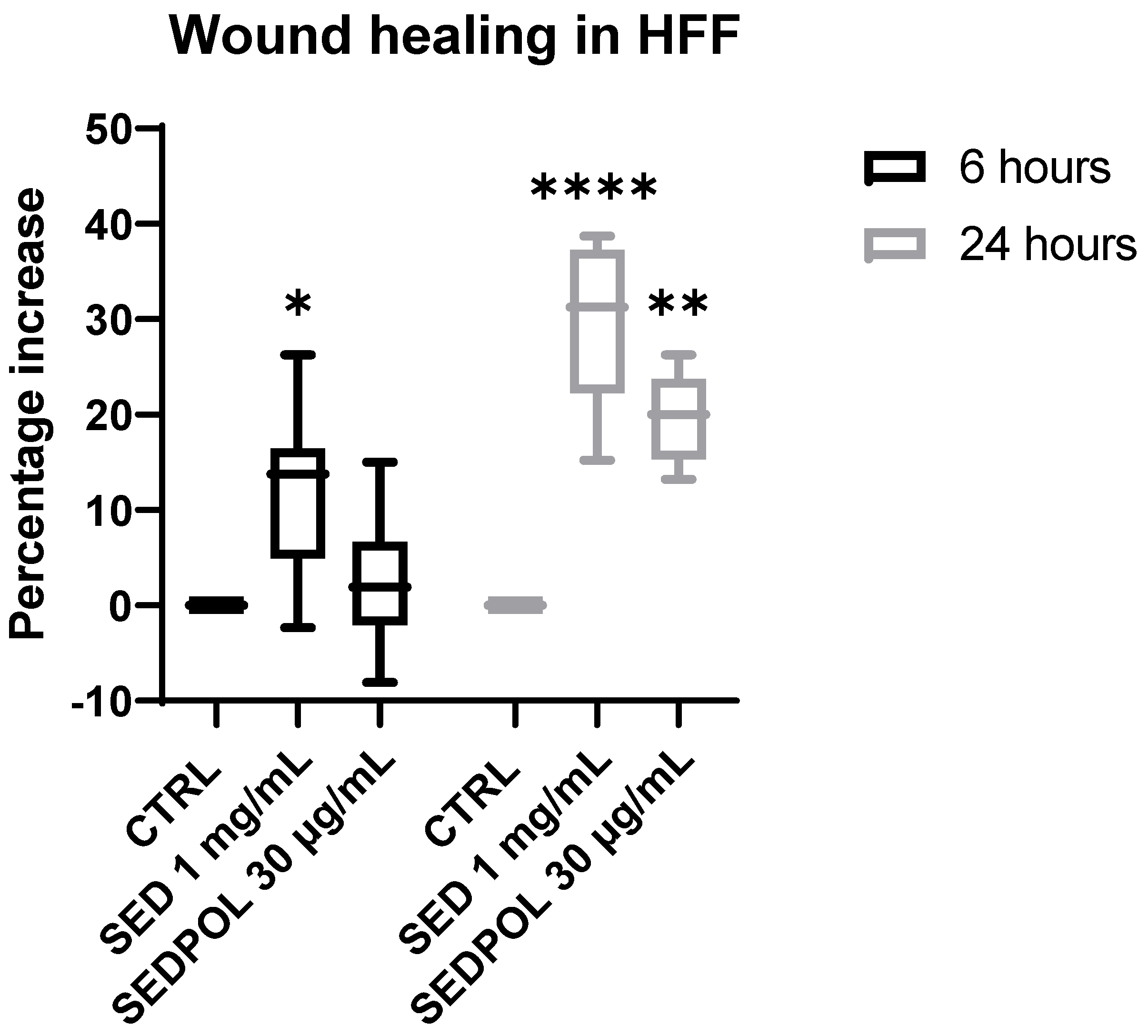
In order to further investigate the wound healing potential of SED, we tested it also in human fibroblasts HFF-1 Also in the fibroblast line, as shown in Figure 5 and in Figure S1, SED implemented cell migration and increased the rate of regeneration of the simulated wound maximally at 24h, with an increase of 30% over the control (p<0.0001). An increase in wound closure was also recorded at 6h. In human fibroblasts, SEDPOL was also able to increase the rate of wound healing at 24h of treatment (20%, p<0.01 vs ctrl), but confirming the above statement regarding the importance of the whole phytocomplex.
In fibroblasts we also focused on the pro-collagen I expression as an indicator of SED trophic and stimulating activity, but we failed to observe any effect.
4. Discussion
Skin wounds have always represented a very important problem for human health, as they lead to a disruption of the skin barrier[32]. Maintaining skin integrity is fundamental not only for the protection against infectious agents, but also for regulation of body temperature, trans-epidermal water loss, and sensory perception[33,34,35,36]. Skin healing may be affected by several factors including age, metabolic conditions, drug consumption, inflammation, and oxidative stress. For these reasons, wound healing continues to be a challenging area for dermatological research[37]. This focus is particularly important for addressing minor wounds, which are frequently underestimated and often not managed adequately[38,39]. Despite their seemingly insignificant nature, even minor wounds can lead to complications if not properly treated, highlighting the necessity for improved therapeutic approaches and increased awareness of their potential impact on overall health [8,39].
The use of herbal preparations, which leverage synergistic and multifaceted activities, is a hallmark of phytotherapy within pharmacology. EMA and WHO have all acknowledged that treating skin disorders and minor wounds is one of the most common applications for many medicinal plants globally. An in-depth review of medicinal plants officially recognized for their therapeutic role in wound healing reveals that their use is grounded in ethnobotanical knowledge and traditional medicine. This traditional knowledge is enhanced by contemporary clinical and experimental research aimed at elucidating their mechanisms of action. Recently, there has been a renewed interest in ethnobotanical knowledge and traditional medicine practices. Promoting the traditional use of medicinal plants could represent a highly effective approach to pharmaceutical research, especially during challenging times for synthetic pharmaceutical chemistry [40,41].
In this work we investigated the in vitro wound healing effect of a medicinal plant with a consolidated traditional use in our country, Sedum telephium L. The pro-epithelizing properties of Sedum telephium are primarily attributed to its rich phytochemical composition. The plant contains various bioactive compounds such as flavonoids, phenolic acids, triterpenoids, and polysaccharides, which have demonstrated wound-healing potential. These compounds possess antioxidant, anti-inflammatory, antimicrobial, and immunomodulatory properties, all of which are crucial for promoting skin regeneration[23].
Notably, Sedum telephium extracts have been shown to scavenge free radicals and reduce oxidative stress, which is known to impair wound healing processes[24]. By neutralizing reactive oxygen species (ROS), the plant helps protect cells from oxidative damage and supports survival and proliferation of keratinocytes. Sedum telephium also inhibits the growth of pathogenic bacteria, thereby promoting a sterile wound environment. In addition to that, Sedum telephium extracts have been found to stimulate collagen synthesis by fibroblasts and to promote angiogenesis, enhancing the integrity and strength of newly formed tissue.
Our findings reinforce the notion that Sedum extract (referred to in this work SED) is crucial both for the proliferative phase of wound healing, promoting cell migration and proliferation, and for tissue remodeling, though the secretion of TGF1b. In particular, SED showed to promote wound closure both in keratinocytes and in fibroblasts monolayers and, even more importantly, we clearly demonstrated the ameliorative effect of the whole phytocomplex compared to the polysaccharides fraction, the most enriched one in SED.
In keratinocyte cultures, SED induced the secretion of TGFβ1 and FGF, two growth factors intrinsically connected [42] and dependent by the master TGF signalling [43]. Noteworthy, the upreguation of TGFβ1 and FGF is a pivotal mechanism also displayed by the well-known aloe gel (Aloe vera (L). Burm f. gel ex folia sine cute)[44].
As expected, SED showed a higher efficacy in wound closure compared to the reference drug available in the market because this sample was used at a very low concentration, chosen after having preliminarily verified the negative interference at high concentrations plausibly produced by phenoxyethanol, used in the formulation as disinfectant and not as trophic agent; indeed, the trophic effect of the patented water extract of Triticum vulgare L. water extract alone has been demonstrated in in vitro studies at very high, but not toxic concentrations 30 and 150 mg/ml [45].
Overall, the pro-epithelizing properties of Sedum telephium make it a promising candidate for the development of novel wound-healing therapies. This makes it suitable for various types of wounds, including surgical incisions, burns, and traumatic injuries.
Beyond its pro-epithelizing properties, Sedum telephium extract holds promise for various other applications in dermatology due to its multifaceted pharmacological profile. For example, certain components of Sedum telephium extract, such as polysaccharides and amino acids, have moisturizing and hydrating properties. The antioxidant activity of Sedum telephium extract can help counteract oxidative stress-induced skin damage, including premature aging caused by environmental factors such as UV radiation and pollution[46,47,48]. By scavenging free radicals and protecting skin cells from oxidative damage, the Sedum telephium extract may hold promise as an anti-aging agent.
The anti-inflammatory and antimicrobial effects of Sedum telephium extract make it beneficial for managing various dermatological conditions characterized by inflammation and infection[20]. These include, among others, acne, atopic dermatitis, psoriasis, and rosacea, where reducing inflammation and controlling microbial overgrowth are key therapeutic goals.
We are clearly aware that this work represents only a small step forward in the road of the research on S. telephium, but it is undoubtful that this insight on healing activity of the phytocomplex compared to its main fraction and on the main trophic mechanism was necessary. Coming back to the beginning, this work also allowed us to consider how the quality control of S. telephium leaf juice could be assessed from now by monitoring the total polysaccharides content and the flavonolic profile with kaempferitrin representing a good specific marker, available in the market as standard.
Encouraged by the confirms obtained in this work, the next steps of the research focused on this medicinal plant will take into consideration moisturizing and hydrating properties, potentially exerted by polysaccharides and glycoproteins, as well as antimicrobial activity.
5. Conclusions
Sedum telephium L. leaf juice represents a versatile botanical ingredient with a range of potential applications in dermatology. Its wound-healing properties, accompanied by additional features such as anti-inflammatory and antioxidant activities, make it a promising candidate for the development of novel skincare products targeting various skin conditions and concerns. However, further research, including larger clinical trials, is needed to validate its efficacy and safety for dermatological use.
Supplementary Materials
The following supporting information can be downloaded at the website of this paper posted on Preprints.org, Figure S1: title.
Author Contributions
Conceptualization: G.C. and M.B.; methodology and investigation: G.C.; formal analysis: M.B.; validation and data curation: A.P.; writing—original draft preparation, A.P.; writing—review and editing: G.C., E.M., M.B.; project administration: E.M. All authors have read and agreed to the published version of the manuscript.
Funding
This research received no external funding.
Institutional Review Board Statement
Not applicable.
Informed Consent Statement
Not applicable
Data Availability Statement
Data are available from the authors upon reasonable request.
Acknowledgments
This work has been carried out in the frame of the ALIFAR project of the University of Parma, funded by the Italian Ministry of University through the program ‘Dipartimenti di Eccellenza 2023-2027’
Conflicts of Interest
The authors declare no conflicts of interest.
References
- Pazyar, N.; Yaghoobi, R.; Rafiee, E.; Mehrabian, A.; Feily, A. Skin Wound Healing and Phytomedicine: A Review. Skin Pharmacol Physiol 2014, 27, 303–310. [Google Scholar] [CrossRef] [PubMed]
- Azevedo, M.; Lisboa, C.; Rodrigues, A. Chronic Wounds and Novel Therapeutic Approaches. Br J Community Nurs 2020, 25, S26–S32. [Google Scholar] [CrossRef] [PubMed]
- Wallace, H.A.; Basehore, B.M.; Zito, P.M. Wound Healing Phases. In StatPearls; StatPearls Publishing: Treasure Island (FL), 2022. [Google Scholar]
- Ireton, J.E.; Unger, J.G.; Rohrich, R.J. The Role of Wound Healing and Its Everyday Application in Plastic Surgery: A Practical Perspective and Systematic Review. Plast Reconstr Surg Glob Open 2013, 1, e10–e19. [Google Scholar] [CrossRef] [PubMed]
- Nicholas, M.N.; Yeung, J. Current Status and Future of Skin Substitutes for Chronic Wound Healing. J Cutan Med Surg 2017, 21, 23–30. [Google Scholar] [CrossRef]
- Powers, J.G.; Higham, C.; Broussard, K.; Phillips, T.J. Wound Healing and Treating Wounds: Chronic Wound Care and Management. J Am Acad Dermatol 2016, 74, 607–625; quiz 625–626. [Google Scholar] [CrossRef] [PubMed]
- Kaisang, L.; Siyu, W.; Lijun, F.; Daoyan, P.; Xian, C.J.; Jie, S. Adipose-Derived Stem Cells Seeded in Pluronic F-127 Hydrogel Promotes Diabetic Wound Healing. Journal of Surgical Research 2017, 217, 63–74. [Google Scholar] [CrossRef] [PubMed]
- Han, G.; Ceilley, R. Chronic Wound Healing: A Review of Current Management and Treatments. Adv Ther 2017, 34, 599–610. [Google Scholar] [CrossRef] [PubMed]
- Olsson, M.; Järbrink, K.; Divakar, U.; Bajpai, R.; Upton, Z.; Schmidtchen, A.; Car, J. The Humanistic and Economic Burden of Chronic Wounds: A Systematic Review. Wound Repair Regen 2019, 27, 114–125. [Google Scholar] [CrossRef] [PubMed]
- Klein, T.M.; Andrees, V.; Kirsten, N.; Protz, K.; Augustin, M.; Blome, C. Social Participation of People with Chronic Wounds: A Systematic Review. Int Wound J 2021, 18, 287–311. [Google Scholar] [CrossRef]
- Gethin, G.; Probst, S.; Stryja, J.; Christiansen, N.; Price, P. Evidence for Person-Centred Care in Chronic Wound Care: A Systematic Review and Recommendations for Practice. J Wound Care 2020, 29, S1–S22. [Google Scholar] [CrossRef]
- Costa, D.; Ielapi, N.; Caprino, F.; Giannotta, N.; Sisinni, A.; Abramo, A.; Ssempijja, L.; Andreucci, M.; Bracale, U.M.; Serra, R. Social Aspects of Diabetic Foot: A Scoping Review. Social Sciences 2022, 11, 149. [Google Scholar] [CrossRef]
- Nussbaum, S.R.; Carter, M.J.; Fife, C.E.; DaVanzo, J.; Haught, R.; Nusgart, M.; Cartwright, D. An Economic Evaluation of the Impact, Cost, and Medicare Policy Implications of Chronic Nonhealing Wounds. Value Health 2018, 21, 27–32. [Google Scholar] [CrossRef] [PubMed]
- Alma, A.; Marconi, G.D.; Rossi, E.; Magnoni, C.; Paganelli, A. Obesity and Wound Healing: Focus on Mesenchymal Stem Cells. Life (Basel) 2023, 13, 717. [Google Scholar] [CrossRef] [PubMed]
- Paganelli, A.; Naselli, A.G.; Bertoni, L.; Rossi, E.; Azzoni, P.; Pisciotta, A.; Cesinaro, A.M.; Benassi, L.; Kaleci, S.; Garbarino, F.; et al. Wound Healing after Acellular Dermal Substitute Positioning in Dermato-Oncological Surgery: A Prospective Comparative Study. Life (Basel) 2023, 13, 463. [Google Scholar] [CrossRef] [PubMed]
- Lindholm, C.; Searle, R. Wound Management for the 21st Century: Combining Effectiveness and Efficiency. Int Wound J 2016, 13 Suppl 2, 5–15. [Google Scholar] [CrossRef]
- El-Sherbeni, S.A.; Negm, W.A. The Wound Healing Effect of Botanicals and Pure Natural Substances Used in in Vivo Models. Inflammopharmacology 2023, 31, 755–772. [Google Scholar] [CrossRef] [PubMed]
- Pressi, G.; Rigillo, G.; Governa, P.; Borgonetti, V.; Baini, G.; Rizzi, R.; Guarnerio, C.; Bertaiola, O.; Frigo, M.; Merlin, M.; et al. A Novel Perilla Frutescens (L.) Britton Cell-Derived Phytocomplex Regulates Keratinocytes Inflammatory Cascade and Barrier Function and Preserves Vaginal Mucosal Integrity In Vivo. Pharmaceutics 2023, 15, 240. [Google Scholar] [CrossRef] [PubMed]
- Paganelli, A.; Pisciotta, A.; Bertani, G.; Di Tinco, R.; Tagliaferri, N.; Orlandi, G.; Azzoni, P.; Bertoni, L. Food Supplements for Skin Health: In Vitro Efficacy of a Combination of Rhodiola Rosea, Tribulus Terrestris, Moringa Oleifera and Undaria Pinnatifida on UV-Induced Damage. Cosmetics 2023, 10, 83. [Google Scholar] [CrossRef]
- Altavilla, D.; Polito, F.; Bitto, A.; Minutoli, L.; Miraldi, E.; Fiumara, T.; Biagi, M.; Marini, H.; Giachetti, D.; Vaccaro, M.; et al. Anti-Inflammatory Effects of the Methanol Extract of Sedum Telephium Ssp. Maximum in Lipopolysaccharide- Stimulated Rat Peritoneal Macrophages. Pharmacology 2008, 82, 250–256. [Google Scholar] [CrossRef]
- Mulinacci, N.; Vincieri, F.F.; Baldi, A.; Bambagiotti-Alberti, M.; Sendl, A.; Wagner, H. Flavonol Glycosides from Sedum Telephium Subspecies Maximum Leaves. Phytochemistry 1995, 38, 531–533. [Google Scholar] [CrossRef]
- Raimondi, L.; Banchelli, G.; Dalmazzi, D.; Mulinacci, N.; Romani, A.; Vincieri, F.F.; Pirisino, R. Sedum Telephium L. Polysaccharide Content Affects MRC5 Cell Adhesion to Laminin and Fibronectin. Journal of Pharmacy and Pharmacology 2010, 52, 585–591. [Google Scholar] [CrossRef]
- Sendl, A.; Mulinacci, N.; Vincieri, F.F.; Wagner, H. Anti-Inflammatory and Immunologically Active Polysaccharides of Sedum Telephium. Phytochemistry 1993, 34, 1357–1362. [Google Scholar] [CrossRef]
- Bonina, F.; Puglia, C.; Tomaino, A.; Saija, A.; Mulinacci, N.; Romani, A.; Vincieri, F.F. In-Vitro Antioxidant and in-Vivo Photoprotective Effect of Three Lyophilized Extracts of Sedum Telephium L. Leaves. J Pharm Pharmacol 2000, 52, 1279–1285. [Google Scholar] [CrossRef] [PubMed]
- Finetti, F.; Biagi, M.; Ercoli, J.; Macrì, G.; Miraldi, E.; Trabalzini, L. Phaseolus Vulgaris L. Var. Venanzio Grown in Tuscany: Chemical Composition and In Vitro Investigation of Potential Effects on Colorectal Cancer. Antioxidants (Basel) 2020, 9, 1181. [Google Scholar] [CrossRef]
- Governa, P.; Biagi, M. Copaifera Langsdorffii Desf.: In Vitro Investigation on Anti- Helicobacter Pylori and Anti-Inflammatory Activities of Oleoresin and Fruit Methanolic Extract. Plant Biosystems - An International Journal Dealing with all Aspects of Plant Biology 2020, 154, 117–124. [Google Scholar] [CrossRef]
- Zhang, Y.; Cheng, W.; Di, H.; Yang, S.; Tian, Y.; Tong, Y.; Huang, H.; Escalona, V.H.; Tang, Y.; Li, H.; et al. Variation in Nutritional Components and Antioxidant Capacity of Different Cultivars and Organs of Basella Alba. Plants 2024, 13, 892. [Google Scholar] [CrossRef] [PubMed]
- Chen, X.; Peng, L.-H.; Li, N.; Li, Q.-M.; Li, P.; Fung, K.-P.; Leung, P.-C.; Gao, J.-Q. The Healing and Anti-Scar Effects of Astragaloside IV on the Wound Repair in Vitro and in Vivo. J Ethnopharmacol 2012, 139, 721–727. [Google Scholar] [CrossRef] [PubMed]
- Chiocchio, I.; Poli, F.; Governa, P.; Biagi, M.; Lianza, M. Wound Healing and in Vitro Antiradical Activity of Five Sedum Species Grown within Two Sites of Community Importance in Emilia-Romagna (Italy). Plant Biosystems - An International Journal Dealing with all Aspects of Plant Biology 2019, 153, 610–615. [Google Scholar] [CrossRef]
- Pressi, G.; Bertaiola, O.; Guarnerio, C.; Barbieri, E.; Rigillo, G.; Governa, P.; Biagi, M.; Guzzo, F.; Semenzato, A. In Vitro Cell Culture of Rhus Coriaria L.: A Standardized Phytocomplex Rich of Gallic Acid Derivatives with Antioxidant and Skin Repair Activity. Cosmetics 2022, 9, 12. [Google Scholar] [CrossRef]
- Cakmak, I.; Lambers, H.; Grant, C.A.; Zhao, F.-J. Arbuscular Mycorrhizal Fungi: Key Players in Avoiding Cadmium Accumulation in Food Crops. Plant Soil 2023, 484, 13–32. [Google Scholar] [CrossRef]
- Jensen, J.M.; Proksch, E. The Skin’s Barrier. G Ital Dermatol Venereol 2009, 144, 689–700. [Google Scholar] [PubMed]
- Wong, R.; Geyer, S.; Weninger, W.; Guimberteau, J.-C.; Wong, J.K. The Dynamic Anatomy and Patterning of Skin. Exp Dermatol 2016, 25, 92–98. [Google Scholar] [CrossRef] [PubMed]
- Nguyen, A.V.; Soulika, A.M. The Dynamics of the Skin’s Immune System. Int J Mol Sci 2019, 20, 1811. [Google Scholar] [CrossRef] [PubMed]
- Harris-Tryon, T.A.; Grice, E.A. Microbiota and Maintenance of Skin Barrier Function. Science 2022, 376, 940–945. [Google Scholar] [CrossRef] [PubMed]
- Tomic-Canic, M.; Burgess, J.L.; O’Neill, K.E.; Strbo, N.; Pastar, I. Skin Microbiota and Its Interplay with Wound Healing. Am J Clin Dermatol 2020, 21, 36–43. [Google Scholar] [CrossRef]
- Baron, J.M.; Glatz, M.; Proksch, E. Optimal Support of Wound Healing: New Insights. Dermatology 2020, 236, 593–600. [Google Scholar] [CrossRef] [PubMed]
- Davis, E. Minor Traumatic Wounds. Nurs Stand 2016, 31, 64–65. [Google Scholar] [CrossRef] [PubMed]
- Langford, J.H.; Artemi, P.; Benrimoj, S.I. Topical Antimicrobial Prophylaxis in Minor Wounds. Ann Pharmacother 1997, 31, 559–563. [Google Scholar] [CrossRef] [PubMed]
- Tsioutsiou, E.E.; Miraldi, E.; Governa, P.; Biagi, M.; Giordani, P.; Cornara, L. Skin Wound Healing: From Mediterranean Ethnobotany to Evidence Based Phytotherapy. AJS 2017, 4, 199–212. [Google Scholar] [CrossRef]
- Tsioutsiou, E.E.; Giordani, P.; Hanlidou, E.; Biagi, M.; De Feo, V.; Cornara, L. Ethnobotanical Study of Medicinal Plants Used in Central Macedonia, Greece. Evidence-Based Complementary and Alternative Medicine 2019, 2019, 1–22. [Google Scholar] [CrossRef]
- Song, Q.H. TGF-Beta1 Regulates TGF-Beta1 and FGF-2 mRNA Expression during Fibroblast Wound Healing. Molecular Pathology 2002, 55, 164–176. [Google Scholar] [CrossRef] [PubMed]
- Li, X.; Xie, R.; Luo, Y.; Shi, R.; Ling, Y.; Zhao, X.; Xu, X.; Chu, W.; Wang, X. Cooperation of TGF -β and FGF Signalling Pathways in Skin Development. Cell Proliferation 2023, 56, e13489. [Google Scholar] [CrossRef] [PubMed]
- Hormozi, M.; Assaei, R.; Boroujeni, M.B. The Effect of Aloe Vera on the Expression of Wound Healing Factors (TGFβ1 and bFGF) in Mouse Embryonic Fibroblast Cell: In Vitro Study. Biomedicine & Pharmacotherapy 2017, 88, 610–616. [Google Scholar] [CrossRef] [PubMed]
- Tito, A.; Minale, M.; Riccio, S.; Grieco, F.; Colucci, M.G.; Apone, F. A Triticum Vulgare Extract Exhibits Regenerating Activity During the Wound Healing Process. CCID 2020, Volume 13, 21–30. [Google Scholar] [CrossRef]
- Ngoc, L.T.N.; Moon, J.-Y.; Lee, Y.-C. Antioxidants for Improved Skin Appearance: Intracellular Mechanism, Challenges, and Future Strategies. Int J Cosmet Sci 2023. [CrossRef] [PubMed]
- Eftekhari, A.; Dizaj, S.M.; Chodari, L.; Sunar, S.; Hasanzadeh, A.; Ahmadian, E.; Hasanzadeh, M. The Promising Future of Nano-Antioxidant Therapy against Environmental Pollutants Induced-Toxicities. Biomed Pharmacother 2018, 103, 1018–1027. [Google Scholar] [CrossRef] [PubMed]
- Fernandes, A.; Rodrigues, P.M.; Pintado, M.; Tavaria, F.K. A Systematic Review of Natural Products for Skin Applications: Targeting Inflammation, Wound Healing, and Photo-Aging. Phytomedicine 2023, 115, 154824. [Google Scholar] [CrossRef]
Figure 2.
Microscopic images documenting of the in vitro healing effect of S. telephium leaves juice (SED) 1 mg/ml, of the isolated polysaccharides (SEDPOL) at the same concentration in which they are present in SED (30 μg/ml) and of the reference drug (T. vulgare extract + phenoxy-ethanol, REFDRUG 100 μg/ml) in human keratinocytes through scratch test.
Figure 2.
Microscopic images documenting of the in vitro healing effect of S. telephium leaves juice (SED) 1 mg/ml, of the isolated polysaccharides (SEDPOL) at the same concentration in which they are present in SED (30 μg/ml) and of the reference drug (T. vulgare extract + phenoxy-ethanol, REFDRUG 100 μg/ml) in human keratinocytes through scratch test.
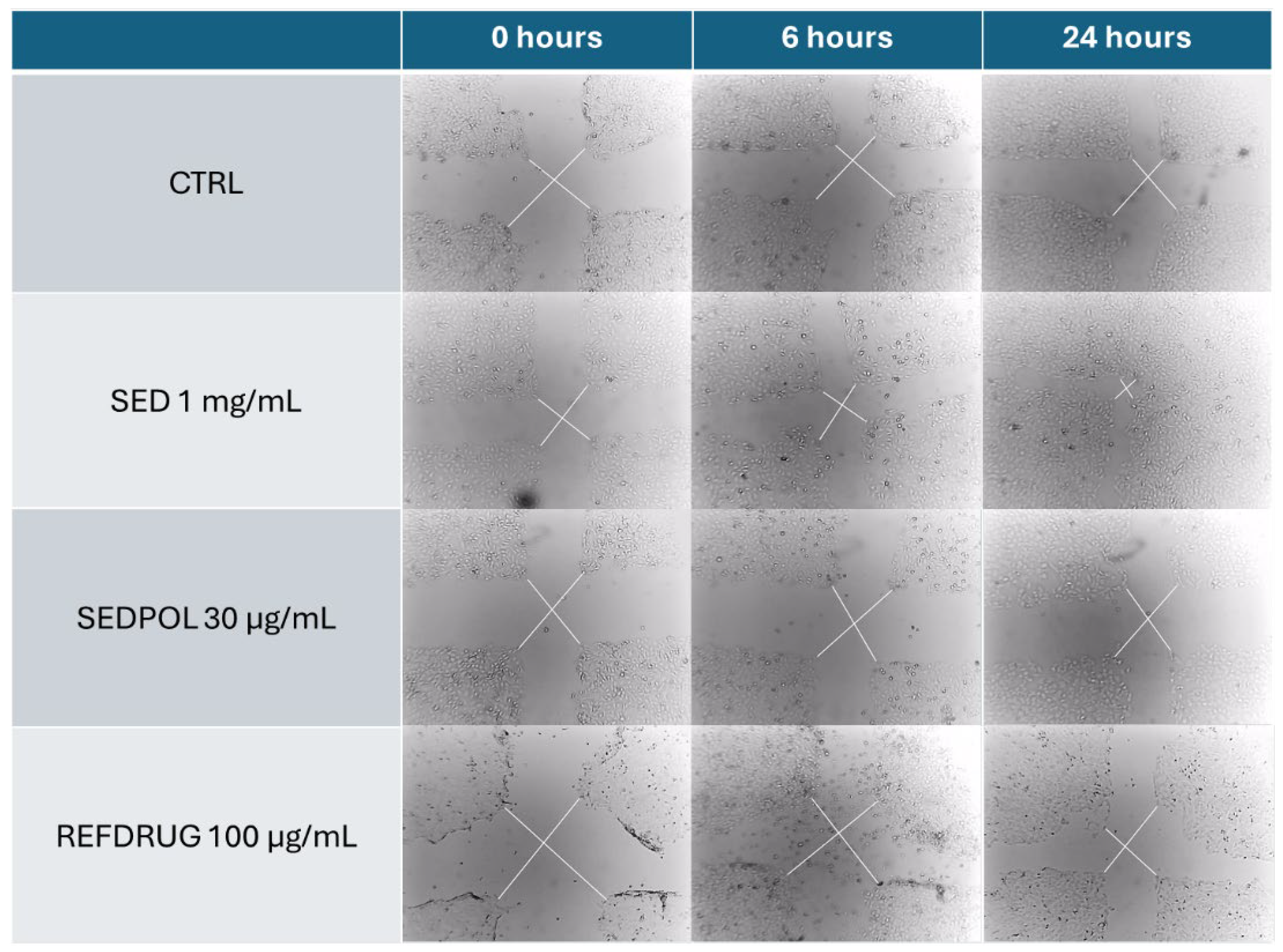
Figure 3.
Box Plot graphical representation of the in vitro wound healing effect of S. telephium leaves juice (SED), of isolated polysaccharides (SEDPOL) and of the reference drug (REFDRUG) in human keratinocytes. **: p<0.01 vs ctrl. (One-way ANOVA).
Figure 3.
Box Plot graphical representation of the in vitro wound healing effect of S. telephium leaves juice (SED), of isolated polysaccharides (SEDPOL) and of the reference drug (REFDRUG) in human keratinocytes. **: p<0.01 vs ctrl. (One-way ANOVA).
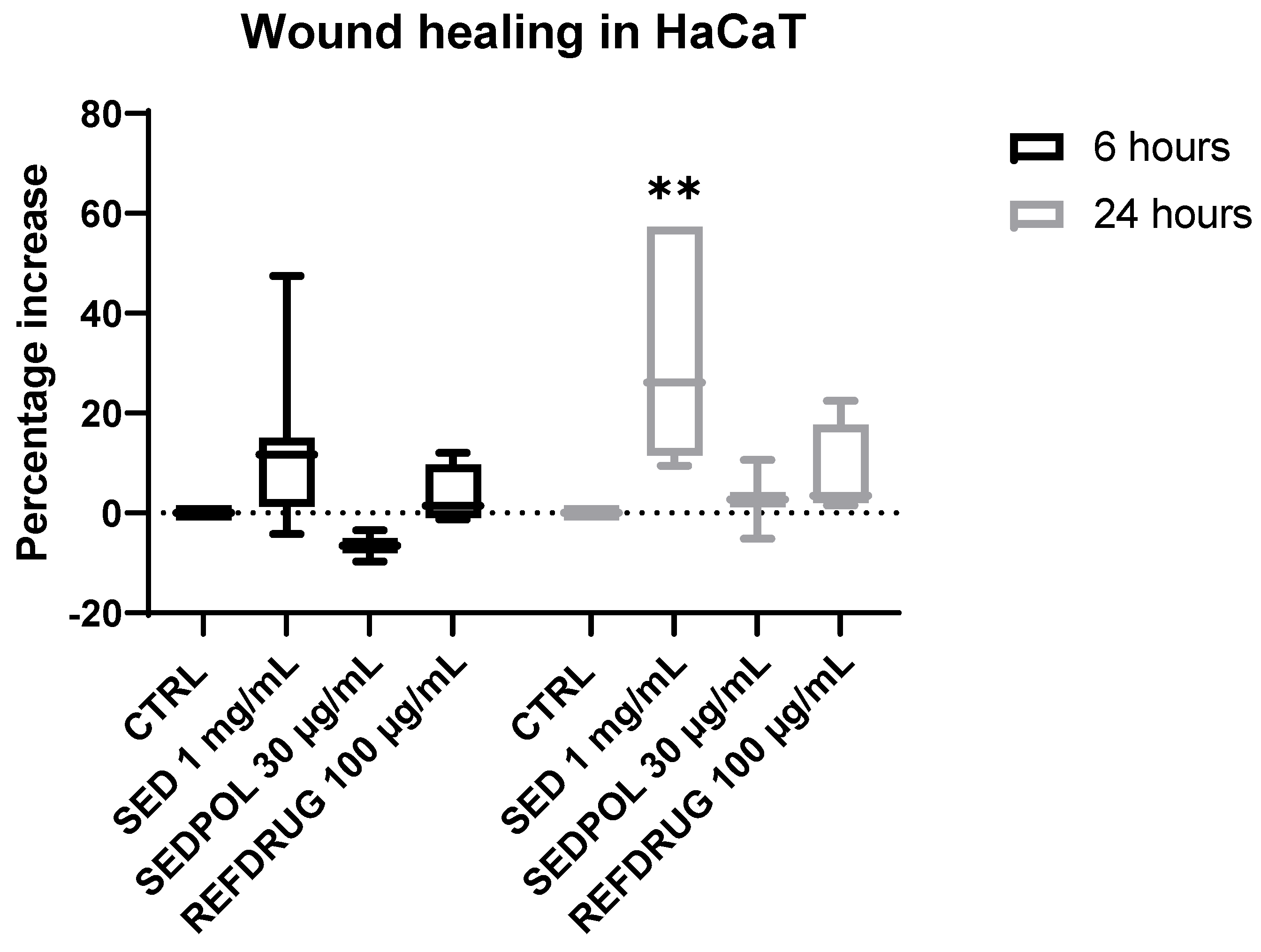
Figure 4.
Histogram representation of growth factor production induced by of S. telephium leaves juice (SED) 1 mg/ml, and of the reference drug (REFDRUG) 100 μg/ml. The upregulation of FGF and LAP(TGF-β1) produced by SED is related to the scratching wound healing assay as SED at 24h.*: p<0.05 vs ctrl; ***: p<0.001 vs ctrl. (One-way ANOVA).
Figure 4.
Histogram representation of growth factor production induced by of S. telephium leaves juice (SED) 1 mg/ml, and of the reference drug (REFDRUG) 100 μg/ml. The upregulation of FGF and LAP(TGF-β1) produced by SED is related to the scratching wound healing assay as SED at 24h.*: p<0.05 vs ctrl; ***: p<0.001 vs ctrl. (One-way ANOVA).
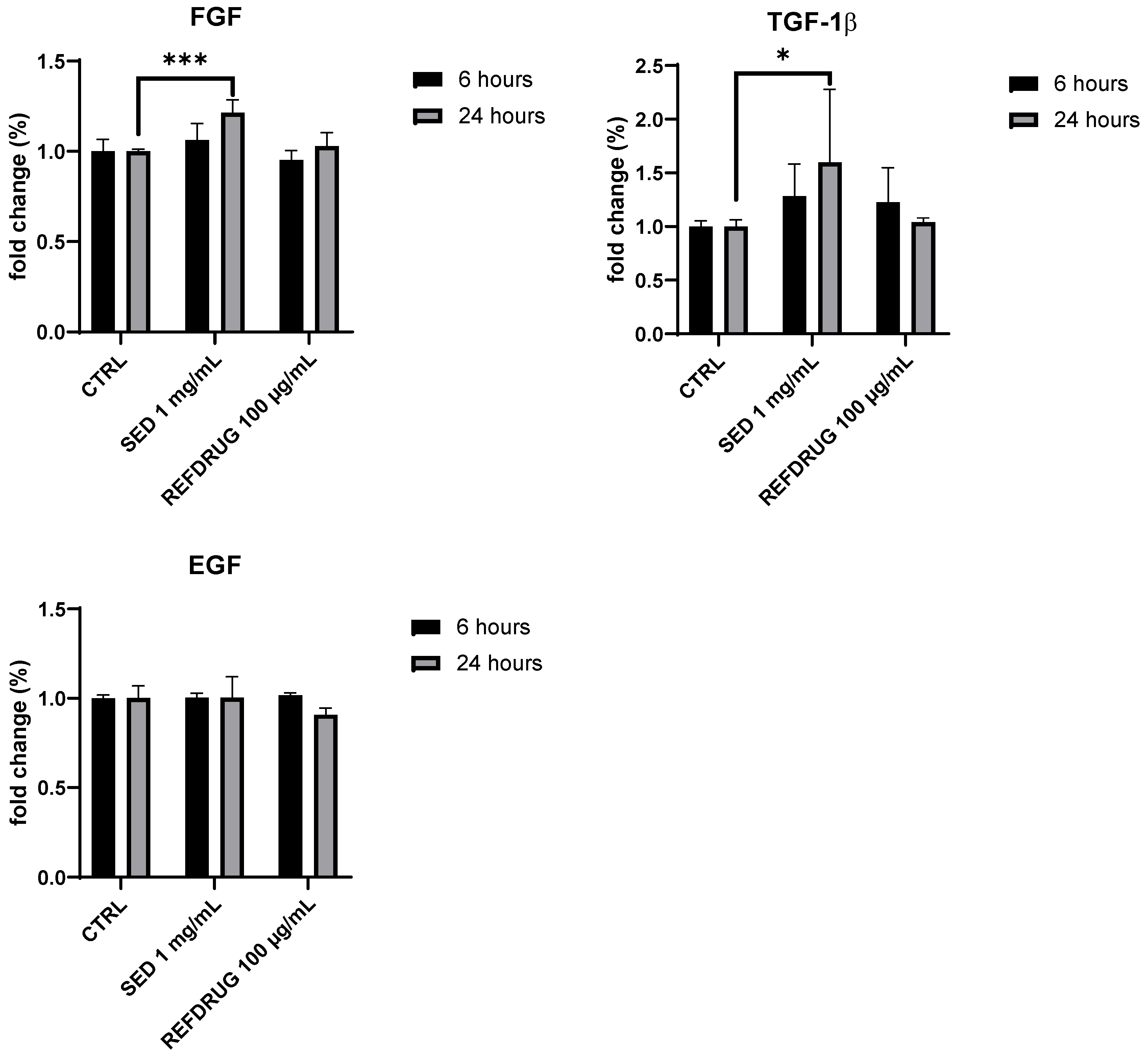
Figure 5.
Box Plot graphical representation of the in vitro wound healing effect of S. telephium leaves juice (SED) and of the polysaccharidic fraction (SEDPOL) in human fibroblasts. *<0.05 vs ctrl. **: p<0.01 vs ctrl. ****: p<0.0001 vs ctrl. (One-way ANOVA).
Figure 5.
Box Plot graphical representation of the in vitro wound healing effect of S. telephium leaves juice (SED) and of the polysaccharidic fraction (SEDPOL) in human fibroblasts. *<0.05 vs ctrl. **: p<0.01 vs ctrl. ****: p<0.0001 vs ctrl. (One-way ANOVA).
Disclaimer/Publisher’s Note: The statements, opinions and data contained in all publications are solely those of the individual author(s) and contributor(s) and not of MDPI and/or the editor(s). MDPI and/or the editor(s) disclaim responsibility for any injury to people or property resulting from any ideas, methods, instructions or products referred to in the content. |
© 2024 by the authors. Licensee MDPI, Basel, Switzerland. This article is an open access article distributed under the terms and conditions of the Creative Commons Attribution (CC BY) license (http://creativecommons.org/licenses/by/4.0/).
Copyright: This open access article is published under a Creative Commons CC BY 4.0 license, which permit the free download, distribution, and reuse, provided that the author and preprint are cited in any reuse.


