

Submitted:
10 June 2024
Posted:
11 June 2024
You are already at the latest version
Abstract
China’s greenhouse industry has thousands of years of development history, although the development of modern greenhouses has come late. After decades of development of China, its greenhouse industry is in the forefront of the world. China’s greenhouse industry is experiencing rapid development, transformation and upgrading. China ranks first in the world in terms of greenhouse area, used mainly for vegetable cultivation and plays an important role in the utilization of agricultural resources and food production. In 2023, the cumulative area of new greenhouses nationwide was 1835.87 million ha. In this paper we present the latest developments in the greenhouse sector. More specifically, we present a greenhouse market development overview, the greenhouse production, the greenhouse industry, and technology development. Current problems are underpinned, development opportunities and prospects are analyzed, and measures and specific proposals are detailed for the technological development of the greenhouse sector both for increasing product quantity and quality.
Keywords:
China
; facility-based agriculture
; greenhouses
; technology status
; development prospects
1. Introduction
Facility agriculture in China is referred to a modern agricultural production method with the characteristics of high input, high output, and high yield, and it is capable of anti-seasonal and year-round uninterrupted production, and the yield of facility agriculture is generally 2 to 10 times that of conventional production [1]. Facility horticulture refers to an environmentally controllable agriculture that uses specific facilities (multi-span greenhouses, solar-greenhouses, plastic covered greenhouses, small arched greenhouses, and breeding sheds) to artificially create environments that are suitable for crop growth, to produce high-quality, high-yield, and stable horticultural products such as vegetables, flowers, and fruits [2].
Although greenhouses have been developed in China for thousands of years [3], the rise of the modern greenhouse only began in the late 1950s, when China began experimenting with simple plastic-covered shelters to cope with harsh winter weather and increase year-round crop yields. Initially, these structures were rudimentary, with farmers using bamboo, sticks and other locally sourced materials to build frames covered in plastic sheeting that could only grow a few specific vegetables. After China’s reform and opening up in the 1980s, with the population growth people’s demand for vegetables and other crops continue to increase, coupled with China’s rapid development of science and technology, China began to increase investment in agricultural technology including greenhouses and greenhouse facilities have jumped to the forefront of the world’s growing area. Crossing into the 21st century, China’s greenhouse area has steadily ranked, by far, first in the world.
With the growing concern for food security and sustainable development, greenhouse technology is gradually becoming an effective means of addressing the challenges facing food production and plantation development. At present, China’s greenhouse industry is experiencing rapid development and transformation and upgrading. In the recent years, with the rapid development of science and technology and the convenience of transportation means and logistics, although these developments have led to the continuous improvement of greenhouse operation and management and the reduction of the prices of crop production, the rapid transport of vegetables across the country, has led to the reduction of the number of greenhouses year after year. At present, China’s greenhouse industry is experiencing rapid development and transformation and upgrading.
In the following the article will provide basic information about the greenhouse sector status in China and its development prospects.
2. The Current Situation of Greenhouse Development in China
2.1. China Greenhouse Market Development Overview
China’s greenhouse development started late, and through the course of time, its greenhouse development has experienced three stages, (Figure 1); The first stage in the 1960s, China’s gradual emergence of agricultural greenhouses, are structurally simple, single-function plastic greenhouses; the second stage in the 1970s, followed the “Eleventh Plenary Session of the Third Plenary Session of the Third Central Committee”. The second stage in the 1970s, greenhouse sector in China has received special attention, greenhouse area grew considerably, and the first solar greenhouse (also named solarium) began to appear. The third stage for the 1990s to the present, through the continuous efforts of China’s researchers, combined with advanced greenhouse control equipment from abroad and the introduction of advanced crop production technologies, resulted to further modernization of China’s greenhouse structure and crop production quality while the productivity has also increased. Today, with the introduction of the “double carbon” policy, today’s greenhouses are moving towards low energy consumption, high efficiency, high yield direction.
Structurally, China’s greenhouse development has gone through four main stages: from simple plastic shed, bamboo and wood structure shed, steel structure shed, and then to the current intelligent shed. From the initial simple plastic tunnels to bamboo and wood structure greenhouses to steel structure greenhouse. The intelligent greenhouse is based on the steel structure greenhouse, with automation equipment, such as room temperature control through a thermostat sensor to monitor the air temperature and when the temperature is lower that the set temperature the heating system will be automatically switched on, while when the temperature reaches the set value, the heating system will be automatically switched off. Advanced automation in greenhouses can not only control the room temperature, but also automatically control irrigation, fertilizer supply, lighting, ventilation, etc.
2.2. Development Status of Greenhouse Industry in China
In recent decades, China’s greenhouses have been developing steadily, and the area of greenhouses in China now ranks first in the world, accounting for a large proportion of the area used for fruit and vegetable cultivation, and greenhouses play an important role in improving the utilization rate of agricultural resources and the yield and quality of agricultural products. In 2023, the cumulative total area of new greenhouses in the country was 1835.87 ha, of which the area of new plastic film greenhouses is 1094.1 ha, accounting for about 60% of the total, glass greenhouse area is 234.32 ha, polycarbonate greenhouse area is 12.48 ha, solar greenhouse area is 144.17 ha, and other types of greenhouses (landscape greenhouse, greenhouse restaurant, etc.) are 350.8 ha (Figure 2) [4].
As can be seen in Figure 3 [5], there was a gradual change in the total area of greenhouses in China, which has shown a year-to-year decline, from 2168 thousand ha in 2015 to 1864 thousand ha in 2021, a 14% decrease compared to 2015 with a slight increase in 2022. There are three main reasons for this trend: first, as crop yields rise, more greenhouses are no longer needed. The second is that modern transport is becoming more convenient and efficient, making it cheaper to transport vegetables from the south (warmer climate), which reduces the demand for greenhouses in the north (colder climate) of the country. Third, with the improvement of environmental protection requirements, plastic has a greater impact on the environment, resulting in a decrease in construction of plastic greenhouses.
2.3. Industry Chain Analysis of Greenhouse Shed Industry in China
The structure of China’s greenhouse industry chain is relatively straightforward, mainly composed of the upstream industry, the midstream industry, and the downstream industry (Figure 4). The upstream industry includes the production of raw materials and parts for building greenhouses, mainly composed of steel greenhouse structural parts, plastic films and plastic parts, glass panes, and agricultural machinery; its production cost practically determines the construction cost of greenhouses. The midstream industry is the greenhouse manufacturing industry while the downstream industry regards the horticultural activities themselves, crop production, (vegetables, fruits, and flowers) and other agricultural by-products. The quality and quantity of the products in turn determine the quality and the size of the market chain and a better market chain improves economic income.
2.4. China Greenhouse Investment Analysis
The year-to-year increase in the planting area of the continuous growth of the downstream industry has led to increasing the confidence in investing in the greenhouse sector, and we can see in Figure 5 the greenhouse investments in China has undergone a substantial increase in the years 2021 and 2022 although a variation is noticed in the period 2015 to 2020 [5]. The investment increase in the period 2021 to 2022 is due to the introduction of relevant government policies and the end of the three-year COVID epidemic which resulted in increasing the confidence of investors.
2.5. Problems Faced during the Development of Greenhouses in China
China’s greenhouse crop production quality and crop productivity has not reached a high level as compared to developed countries; although there was a considerable development in the recent years, the gap is large, and it seems the country faces difficulties to adapt to the needs of building a strong high-tech agriculture with high productivity. China has a large of greenhouse area, however the distribution is not reasonable, nearly 80% of the area is around Yellow Sea, Huai River and Bohai Sea, and the middle and lower reaches of the Yangtze River. The equipment is outdated, 70% of the area is covered by small and medium-sized tunnel plastic greenhouses and the area utilized by solar greenhouses is about 40% of the total greenhouse area. The varieties grown in the greenhouses are only a few and there is a need to further diversify crop production. At present, most of the fruit and vegetable varieties come from other countries and there is a need to develop domestic new varieties. The large-scale multi-span modern greenhouses in the country are foreign models and, in most cases, they are not adapted to local climatic conditions. Irrigation, environmental control, and other core equipment are foreign products. There is a lack of professional production management personnel and trained technicians in large-size greenhouses, there is a need to introduce environmental control management, automations in cultivation technology, more efficient and environmentally friendly plant protection, equipment maintenance. China’s technology for precision agriculture is still in its infancy and there is a need to further develop and accelerate capacity building in the sector.
3. Types of Greenhouses in China
3.1. Solar Greenhouses
The development of greenhouses in China has gone through three phases: In the first phase in the 1960s, the gradual emergence of greenhouses in China, are simple structures, plastic greenhouses; In the second phase in the 1970s, considerable attention was given to the structure which has become more complex, while the greenhouses are equipped with control equipment usually introduced from the Netherlands, the United States and other developed countries at a high cost and did not meet the national conditions of the time; In the third stage in the 1990s, after the country’s long-term attention and the continuous efforts of its researchers, a series of significant achievements have been introduced in the greenhouse sector.
The cold winter weather in northern China has hampered the development of Chinese agriculture, and in order to solve this problem, China has designed and introduced a unique facility: the solar greenhouse. The solar greenhouse (Figure 6) is an agricultural facility built using simple but durable materials, consisting of three main parts: the south (transparent) roof and north roof and north wall; the south roof is made of transparent material (plastic film), the north roof is made of opaque thermal insulation material, and movable thermal blanket are placed on the outside of the south roof, which are unfolded at night on the north roof and laid on top of the south roof for thermal insulation, and the north wall is made of a passive solar energy storage system [6]. In most of the commercial solar greenhouses there is no heating equipment, the north wall and the thermal blanket maintain an adequate level of indoor air temperature to meet the needs of the growth of vegetable crops. Figure 7 shows the structural section of the solar greenhouse [7], the thickness of the north wall base is 0.4 m - 8 m according to the demand, and the height of the north wall is mostly in the range of 2 m- 4 m. The span of the solar greenhouses (north to south length) is 7 m - 12 m. Larger spans improve the efficiency of solar energy utilization and expand the available space for production.
In addition to the Chinese solar greenhouses there are also facility cultivation units known as Gobi cropping systems [8]. These cultivation systems in China make full use of crop straw, animal manure and other agricultural wastes to create a cultivation substrate for crop cultivation [9]. In Western China the land is not fertile, such as in the Gobi Desert, and this facility cultivation system alleviates the difficulty of growing agricultural crops in western China. The Gobi Cultivation System offers the opportunity to produce large quantities of fresh fruits and vegetables year-round on a land area as large as 2.2 million ha [10].
China’s facility-based agriculture is booming, and solar greenhouses are an important part of China’s facility-based agriculture. In the 1980s, solar greenhouses developed rapidly in northern China’s facility-based agriculture, and the application of new solar greenhouses has further facilitated the cultivation of crops. Currently, the north wall of Chinese solar greenhouses is composed of packed earth and soil, and although this structure provides good thermal storage performance, the wall width is too large and wastes land resources. In addition, its construction produces CO2 emissions, which contribute to the atmospheric greenhouse effect.
A lot of research has been conducted in China to study the north wall materials, especially trying to build the wall by using non-soil materials. Guan et al. [11] developed a novel active-passive thermal storage wall system using phase change materials to improve the thermal performance of the wall and increase its internal temperature. Experiments showed that this new active-passive heat storage wall with phase change materials increased the heat storage and heat release capacity. Liu et al. [12] proposed that the north wall of the solar greenhouse can be made of fine coal ash bricks, which fits well in high latitudes, with long winter areas such as the north of China. Heating devices were also added to the walls. Zhou et al. [13] added a heat pump system to the storage system and the experiments showed that the nighttime air temperature in the experimental greenhouse increased from 2 °C to 4.5 °C on average compared to the reference greenhouse.
3.2. Simple Bamboo Shed
In China’s first phase of greenhouse development in the 60s the simple bamboo frame plastic covered greenhouse was introduced, (Figure 8) of low cost, easy to build and dismantle, effectively controlling pests and diseases and handling soil problems [14]. However, its service life is shorter, it has maintenance problems, and the greenhouse internal available width is small. This simple bamboo frame plastic greenhouse has a very low cost, of about 5 - 8 yuan per square metre, initially suitable in rural areas with low-income farmers.
3.3. Steel Frame Shed
Steel frame greenhouses (Figure 9) are currently the most common type of horticultural facility in China, and by 2022, steel frame greenhouses occupy a total area of 1,225,000 ha, accounting for 65.4% of the total area of China’s horticultural facilities, with the cost of each square metre of steel frame greenhouses being around 30–100 yuan. Compared with the simple bamboo frame greenhouses, the steel frame greenhouses not only maintain the advantages of simple bamboo frame greenhouses, but also overcome its shortcomings, they are also simple structures, they are strong and durable, they have longer service life, and large internal space. Around Weifang City, where the major greenhouse area in Shandong Province is located, most of the greenhouses are of steel frame covered with plastic films. These greenhouses are usually unheated and during nighttime the roof is covered with an insulation blanket to preserve as much as possible of the heat collected during the daytime.
The advantages of the steel frame greenhouse over the simple bamboo frame greenhouse have rendered it the most popular type of horticultural facilities in China. Figure 10 shows a cross section of a steel frame greenhouse which may have a variable span width of 8, 10, 12 and 14 m, shed edge 0.5 m at a height of 1.5 m. Other dimensions are shown in Table 1.
3.4. Glass Greenhouses
In a glass greenhouse glass panes are used instead of plastic as cladding material. Glass greenhouse has the longest life service, and it is suitable for all climates and environments. In 2021 according to the national greenhouse statistics, the area of glass greenhouses grew to 718.14 ha. The cost of a glass greenhouse is between 500 and 1000 yuan per square metre. For the heating of glass greenhouses various heating methods are used and their energy consumption cost is at a medium level. Compared with plastic greenhouses, glass greenhouses have the advantages of larger cultivation area, larger solar radiation transmissivity, more uniform solar radiation distribution, longer service time, stronger anti-corrosion properties, and fire resistant. At the same time, the glass greenhouse can fully correspond to China’s “green mountains are golden mountains” call, its energy saving and environmental protection as well as easiness to control the humidity is highly preferred. The industry provides different construction models in terms of the size of the span and ventilation openings and further categorized into vegetable glass greenhouses, flower glass greenhouses, nursery glass greenhouses.
In recent years, China introduced the greenhouse Venlo type (originated from the Netherlands) (Figure 11).
Through the research on Venlo-type multi-span glass greenhouse, Song et al. [15], studied the effect of different covering materials and concluded that a scheme of double glass panes (4 mm glass + 9 mm space + 4 mm glass) on the side walls, and 10 mm glass panes on the roof, has better energy-saving and heat preservation properties. Zhou et al. [16] found that the use of double insulating glass in Venlo-type greenhouses save about 30% of energy compared with a single-glass greenhouse and can considerably reduce the operating cost of such greenhouses.
4. Production Analysis of Greenhouse Industry in China
In 19th century, China’s primary crop production sector was strongly affected by the location and its climatic conditions, often making it impossible to perform open-air operations, allowing to cultivate only a few crop varieties which negatively affected the income of people. The development of science and technology and the emergence of greenhouses has largely facilitated these problems and farmers had the opportunity to diversify and increase production and productivity.
With the improvement of agricultural production techniques and technology, China’s facility-based agriculture has made significant breakthroughs in the horticultural production such as vegetables, fruits and melons, flowers and seedlings, and the growth of greenhouses and relevant equipment has progresses rapidly. In recent years, China’s vegetable, orchard and flower planting area has shown a year-to-year rising trend, associated with the county’s economic development and improvement of national income, while at the same time the demand for these products increased. It can be seen in Figure 12 [17,18,19], that in the period 2015 to 2023 the sown area of vegetables was grown from 19,613,000 ha in 2015 to 23,029,000 ha in 2023 and the cultivation area of orchards and flowers also rose considerably.
In recent years, with the continuous growth of population and the acceleration of urbanization, the vegetable market has been expanding, and the production of greenhouse vegetables has gradually taken an important position. Greenhouse vegetable cultivation has been proven to be an effective means of increasing farmers’ income, by artificially creating a suitable environment for vegetable growth, adjusting the vegetable production season, and expanding the cultivation period, although the annual output of greenhouse vegetables variates due to several factors, mainly the type of vegetables planted, the level of management, planting technology, and regional climatic conditions.
Facility cultivation of fruit trees (Figure 13) [20] refers to improving or controlling the environment in the facility with the help of greenhouse structures, rain shelters and other protection facilities based on making full use of local natural resource conditions in seasons that are not suitable for the growth and development of fruit trees [21]. Environmental factors such as light, temperature, humidity and CO2 concentration provide suitable conditions for the growth of fruit trees are artificially regulated, and the adjusted cultivation techniques help to achieve production goals in this highly -capital, -labor and -technology intensive industry. As a new production technique, protected cultivation of fruit trees is an important way to achieve high-quality development of the fruit industry in China and it has a great practical significance, expanding the cultivation area of excellent varieties, extending the supply period of fresh fruits, and achieving annual supply while preventing natural disasters and controlling pests and diseases, produce safe, high-quality, high-end fruits, improve production efficiency and increase the economic and social benefits of the sector [22]. Tree species mainly include northern fruits such as grapes, peaches, cherries, plums, and apricots, as well as southern fruits such as citrus, dragon fruit, lotus root, guava and papaya. Protected cultivation of fruit trees has become one of the pillar industries for poverty alleviation and rural revitalization in many areas in China.
Flowers, with their unique value, have become an important part of the beautification and greening of the human environment. A modern flower industry has already been formed in many countries around the world while it is also developing rapidly [23]. As a kind of “delicate” crop, flowers have higher requirements for the growing environment, and the continuous improvement of greenhouse facilities has led to the continuous improvement of flower production. In 2023, China’s total flower import and export trade amounted to USD 710 million, a decrease of USD 0.10 billion compared with that of 2022, or a year-to-year decrease of 1.38%. Among them, the export value of USD 438 million, a year-to-year decline of 9.74%; imports of USD 272 million, a year-to-year increase of 15.95% [24].
China’s flower production is much smaller as compared to that of the Netherlands which is accounted for about half of the world’s total, the world’s largest flower producer. However, China has a huge and growing market, which according to the State Forestry and Grassland Administration in the 10th China Flower Expo press conference in 2020, the national flower sales exceeded the amount of 250 billion yuan [25]. Greenhouse cultivation of flowers has become an indispensable part of the market. Greenhouses allow flowers to bloom free from seasonal restrictions and secure the required conditions for their growth.
To sum up, the continuous development of China’s greenhouse technology, the continuous improvement of agricultural science and technology, constantly expand the vegetables, fruits and flowers and other horticultural products industry.
5. Research on Chinese Greenhouse Technology
5.1. Heat Supply
The heating methods of Chinese greenhouses is constantly changing and improving with the development of science and technology. In the 1960s, greenhouse cultivation used no heating and during the winter the cultivation was affected by the weather [26]. With the development of technology, greenhouse heating is gradually applied and equipment such as boilers and electric heaters are being used to maintain suitable air temperature level in the greenhouse [27]. Heating sources used include coal or oil, electricity, even open fire heating, which is very polluting to the environment. Nowadays, a variety of equipment is used for heating greenhouses such as solar collectors, biomass boilers, water source heat pumps, air source heat pumps. The new equipment is safe, energy-saving and environmentally friendly and may be conveniently used by the growers.
One of the more researched areas is the combination of greenhouses with several types of solar collectors. Solar energy is recognized as a renewable energy source, and the use of vacuum tube solar collectors placed onto the south side of a typical Chinese solar greenhouse, such as those shown in Figure 14, can be used to collect and store heat from the sun. The use of solar energy for greenhouse heating can reduce CO2 emissions and heating costs by using vacuum tube solar collectors as solar water heaters to assist electric heat pumps for greenhouse heating, and the internal air temperature of the heated greenhouse is 2 to 3 °C higher than that in the unheated greenhouse [28]. Hu et al. [29] developed and analyzed an active solar heating system (ASHS) consisting of five solar water heaters equipped with vacuum tube solar collectors, a hot water storage tank, and a heating system including a booster pump and heating tubes. During the day, water is heated in the solar collectors and stored in the tank, then circulated into the heating tubes to distribute heat to the aerial and root environment of the plants. The results of the study showed that the ASHS was successful in providing 76% of the annual heating demand, heating the solar greenhouse for four months and keeping the temperature inside the greenhouse above 8 °C at night.
Sun et al. [30] designed a greenhouse heating system based on a dual-source heat pump consisting of an air source and an ambient air source inside a solar greenhouse, which collects waste heat from the interior of a Chinese solar greenhouse to heat a multi-span greenhouse. The test results show that the dual-source heat pump achieves a COP of 3.4 - 4.2, which is 6 - 11% higher than that of the air-source heat pump, depending on its setup for switching the sources during the winter heating process. Yang et al. [31] constructed a ground source heat pump (GSHP) heating system with seasonal solar thermal storage (SSTES) and diurnal solar thermal storage (DSTES). During the non-heating season, SSTES overcomes the thermal imbalance of the GSHP heating system in agricultural greenhouses while in the heating season, DSTES can take part of the heating load of the greenhouse, reduce the electric energy consumption of GSHP heating, and improve the annual coefficient of performance of the heating system COP.
Other heating systems are also available. Huang et al. [32] designed a heating system using biomass flue gas as a thermodynamic medium to heat shallow soil in a greenhouse through a buried flue gas-soil heat exchanger. The results showed that the biomass heating system could increase the average air and soil temperatures by 5.1 °C and 8.2 °C, respectively.
Although considerable research has been done (in China and internationally) to introduce renewable energy systems in the greenhouses in commercial practice the active heating systems used mainly refer to conventional systems of hot water circulating in a closed circuit of steel pipes and of the forced hot air heating system [33]. Therefore, the North wall greenhouse remains the most popular passive solar heating system in China.
5.2. Automation
Although there is a continuous progress in China in research and implementation of automation control systems and artificial intelligence there is still a gap between China and other developed countries [34]. One major difficulty is due to the fact that greenhouse cultivation is still dominated by plastic covered greenhouses where automation is more difficult than in modern glass covered greenhouses. Many trials in applied research have been carried out to narrow this gap by automating most of the environmental monitoring and control systems in greenhouses and this gap is gradually narrowing.
Fu et al.l. [35] proposed a solar greenhouse light environment control system based on the opening of rolling shutters (ORS), which controls the light environment of greenhouses by operating the shutters under different conditions. The experimental results showed that the ORS control system was able to regulate the greenhouse light environment to the desired value and effectively regulate the light level as needed. Chen et al. [36] studied and designed a multi-energy supply system for intelligent control system of a greenhouse with an improved adaptive genetic algorithm. The experimental results show that through the intelligent control of greenhouses, the deviation of air temperature setting is less than 0.5 °C, and the deviation in the air relative humidity setting is less than 1% while the maximum deviation value of carbon dioxide concentration variation is less than 2.5%. Luo et al. [37] proposed a suspended-rail automatic variable-distance target spraying system that uses a laser sensor to measure crop position and spraying distance in real time, which is used to solve the problems of low level of automation of spraying machinery, low spraying efficiency, and lack of spraying equipment suitable for vertically grown crops. The results showed that, compared with the fixed-distance mode, the automatic variable-distance mode increased pesticide application efficiency by 16.7% and reduced pesticide use by 29.6%.
Research has also been performed on automation during plant growth. Yuan et al. [38] designed a cucumber harvesting robot based on machine vision algorithms for cucumber fruit recognition and detection using near-infrared spectral imaging. The results showed that the robot’s recognition accuracy and success rate in effectively acquiring the grasping area was 83.3%. Han et al. [39] developed a multitasking robotic transplanting workcell for greenhouse seedlings. The cell has a multi-gripper transplanting system designed to automatically pick up and plant entire rows of seedlings. Test results showed that the overall success rate of the transplanting operation was as high as 90%.
Despite the many research trials for applying smart automated systems, the systems currently used in a small number of modern greenhouses in China mainly regard automated irrigation systems, air temperature regulation systems and ventilation systems. Such automated systems include sensors such as temperature, humidity, CO2, solar radiation, soil moisture.
6. Analysis of Key Regions of China’s Greenhouse Market
6.1. Eastern China
China has a vast territory, with a total land area of about 9.6 million square kilometers, its southernmost point at the Nansha Islands in the South China Sea has a latitude of about 4 degrees; the country’s latitude has a range of 50 degrees that is China crosses five climatic zones, including tropical, subtropical, warm temperate, temperate, and cold temperate zones. The climatic condition for each specific location requires a different greenhouse structure.
Shandong Province is in East China, where the average winter temperature range is -4 to -2 oC, with strong winds and heavy snow, poor sunlight, and cloudy winters. Shandong is influenced by the ocean, and the winter is mostly cloudy; the soil layer is deep, the groundwater level is deep, shallow groundwater level can only be found near the Yellow River. These are basic reasons that East China implemented small span arch greenhouses, the Shandong type shed [40]. In Shandong Province, the types of greenhouses used are: simple bamboo and wood structure greenhouses (discussed in Section 3.2) which are mainly distributed around small towns and rural areas, for spring, autumn and winter long-season cultivation, mainly growing vegetables, such as tomatoes, cauliflower. Steel sheds (discussed in Section 3.3) are also popular in Shandong Province as they are suitable for all kinds of crops (including edible mushrooms), flower production, dwarf fruit trees such as peaches, apples, pears, forestry seedlings. Glass greenhouses (discussed in Section 3.4) are also used in the cultivation of vegetables, fruits, and flowers.
For North China and China as a whole, vegetable cultivation is best known in Shouguang City, Shandong Province. Shouguang City, Shandong Province is a famous vegetable production base in China and is home to the largest multi-span intelligent greenhouse (8 ha) in China, which represents a high level of modern agriculture in Shandong Province and the whole country. Shouguang City not only has a large area of greenhouse cultivation, with a vegetable growing area of 40,000 ha and an annual output of 4.5 million tonnes, but also has a high technological level, focuses on energy saving, emission reduction and environmental protection, adopts advanced greenhouse climate control technology, reduces the use of chemical fertilizers and pesticides, improves the quality and safety of vegetables, and applies a full traceability of all aspects of the processes, from seedling breeding to production, harvesting, packaging, transportation, and sales. Also, several growers have introduced vegetable branding which comprehensively enhances the competitiveness of their products.
6.2. North and Central China
Let us take Hebei Province as an example, located in the North China Plain, which is both a key province for northern facility vegetable production and a major supplier of off-season vegetables. Hebei Province has a good solar radiation potential in the winter so that it has been developed as a key province for greenhouse vegetable production; greenhouse vegetables are grown on 240,000 hectares, and winter fresh vegetable production is about 100,000 tonnes per day [41]. The average temperature in Hebei Province range is between -8 and -4 oC, the wind speed and snowfall are higher in winter and spring, but there are also many sunny days with good solar intensity while the soil layer is deep as also the water table.
Hebei Province’s climatic conditions differ greatly from north to south, and its topography is complex and variable, creating a unique regional layout of vegetable production facilities. In the northern part of Hebei Province, where the climate is colder, vegetable growing facilities are dominated by larger solar greenhouses (Section in 3.1), which are mainly used for vegetable production before spring and after autumn. Windy coastal areas in North and Central China mainly use solar greenhouses with lower structural height and smaller spans; regions far from the sea use large solar greenhouses, (with larger span and height).
China is focusing on building four vegetable industry production belts in North China, namely the Fuyang River basin vegetable industry belt, Xiongan facilities fruit and vegetable industry around Beijing and Tianjin high-end boutique vegetable industry belt and provincial capital boutique vegetable industry belt [42]. These four belts aim to develop modern agriculture and promote the upgrading of the agricultural industry, introduce advanced growing technology and facilities, promote new varieties, and improve the quality and yield of vegetables, while strengthening the processing and marketing of agricultural products.
6.3. Northeastern Part of China
The north-eastern region of China has always been a major agricultural production center. This land is rich in natural resources, suitable climatic conditions, and a long agricultural tradition. In recent years, with the progress of science and technology and agricultural technology innovation, the northeast region also began to focus on the development of greenhouses. Firstly, the northeast climate conditions offer unique advantages for the development of greenhouses. Northeast China is colder in winter, but the weather in spring and autumn is relatively warm, which is very beneficial for the growth of greenhouse vegetables. At the same time, the summer temperature in Northeast China is also relatively low, which makes the vegetables and fruits grown in greenhouses to preserve a good taste. Secondly, the Northeast is rich in land resources and fertile soil, which provides a good foundation for the construction and development of greenhouses. In addition, the transport in the Northeast region is also very convenient, which provides convenient conditions for the transport and sale of greenhouses.
Greenhouses in the northeast region are mainly represented by Liaoning Province, which is one of the famous birthplaces of solar greenhouses in China, and the development of solar greenhouses dates to the 1950s [43]. The average winter temperature of Liaoning region is -12 to -8 oC, with good daytime solar radiation levels and large temperature difference between day and night; most of the soil layer is deep, as also the ground water table; the shape of the solar greenhouse adopted has the specific features of large arc, small span of the shed, and large slope of the North rear roof to increase both the light penetration and the heat preservation performance. Liaoning Province is the largest facility vegetable base in the Northeast, with a 2020 vegetable production of 19.6 million tonnes [44]. Liaoning’s facility vegetable area and solar greenhouse vegetable area and production are among the highest in China, and it is the earliest province in northern China to produce fresh vegetables in winter.
7. China Greenhouse Development Opportunities and Prospects Analysis
7.1. Challenges and Opportunities in China’s Greenhouse Market in the New Era
With the support of relevant national policies, the development of greenhouse in China is expected to flourish. Greenhouse agriculture as a golden opportunity for future agriculture has a huge potential for development. Further developing of the greenhouse sector would require the provision of technical support, follow the market demand, and comply with environmental requirements. It should constantly innovate and adapt to the changing market environment.
The Chinese government has put forward a new food concept for the development of facility agriculture and for creating a diversified food supply system. The Chinese government considers that the development of facility agriculture is of high importance, and it has increased the investment in human resources and funding. With the development of science and technology, greenhouse related technology continues to innovate, which produces new plant varieties, new technologies, new equipment so that to help develop an intelligent greenhouse industry.
China’s residents living standards and income level continue to improve, the demand for vegetables and generally safe and high-quality food products will also continue to increase and the country’s large-scale market will become even larger in the coming years.
Wise decisions in the next years for increasing investment and introduce new technologies in the greenhouse sector will allow the greenhouse sector in China to seize the opportunity and accelerate its transformation.
7.2. Development Prospects
The greenhouses in China should be transformed into green greenhouses. Green greenhouses use non-toxic and environmentally friendly construction materials that do not pollute and protect the environment, and at the same time, can ensure that crops grow at optimum conditions. Green greenhouses use solar, geothermal, wind and other renewable energies to reduce CO2 emissions and save energy. In addition, green greenhouses reduce the development of pests and diseases, reduce the use of pesticides and chemical fertilizers, and protect the environment. Although research in China for the development of green greenhouses has been intensified in the recent years, at present, overall, it is still in its infancy, and there are still many technical problems to be solved [45].
The current greenhouses are gradually moving towards being transformed to intelligent greenhouses with the use of smart equipment and with the development of Internet technology. They use environmental monitoring systems, constantly collecting environmental parameters to be used by the automatic greenhouse control system which takes decisions using AI. Sensors and devices are added to detect and monitor the growth status of crops, identify pests and diseases for early warning of the grower to take appropriate actions.
Greenhouse diversified production refers to a reasonable cycling of crops according to the growth cycle of the different plants and seasons. For example, after the strawberry harvest, immediately after the growing of melons and green leafy vegetables, through a diversified growing plan, the greenhouse multiple vegetable growing is realized, and a variety of vegetables are harvested in a year, thus improving the income of the grower. Three-dimensional planting including vertical growing, according to the height of different species, improves land use efficiency, forms a more complex multi-level group structure, to increase productivity. Other techniques include simultaneous cultivation of different species such as growing melons and other vegetables under cherry trees.
China’s greenhouse development has made remarkable achievements, but still faces many challenges. In the future, scientific and technological innovation should be increased, promote the further development of greenhouse technology, strengthen environmental protection, and achieve the sustainable development of greenhouse agriculture. At the same time, close attention should be paid to the changes in the market demand and grow different kinds of vegetables following the trends of the market; adjust the growing structure of greenhouse crops, adopt a reasonable multi-level growing mode; combine the growing of high plants of fruit trees with low plants of melons; improve the competitiveness of greenhouse products; put forward new types of high-quality products. In this way the greenhouse sector will adapt and achieve the required transformation.
Author Contributions
For research articles with several authors, a short paragraph specifying their individual contributions must be provided. The following statements should be used “Conceptualization, G.P., B.G. and J.C.; methodology, G.P., B.G. and J.C.; formal analysis, B.Z., Z.Z., K.L.; investigation, B.Z., Z.Z., K.L., B.G.; resources, B.Z., Z.Z., K.L.; data curation, B.Z., Z.Z., K.L.; writing—original draft preparation, B.Z., Z.Z., K.L. B.G.; writing—review and editing, G.P., B.G., J.C.; visualization, B.Z., Z.Z., K.L.; supervision, G.P.; project administration, G.P.; funding acquisition, G.P., J.C. and B.G. All authors have read and agreed to the published version of the manuscript.
Funding
This research was funded by the Shandong province, China.
Institutional Review Board Statement
Not applicable.
Informed Consent Statement
Not applicable.
Data Availability Statement
No new data was created or analyzed in this study. Data sharing is not applicable to this article.
Conflicts of Interest
The authors declare no conflicts of interest. The funders had no role in the design of the study; in the collection, analyses, or interpretation of data; in the writing of the manuscript; or in the decision to publish the results.
References
- Li, H. Research on development status, obstacles and countermeasures of facility agriculture in China. Southern Agricultural Machinery. 2021, 52, 34–37. (in Chinese). [Google Scholar]
- Sun, J.; Gao, H.B.; Tian, J.; Wang, J.W.; Du, C.X.; Guo, S.L. Current situation and trend of facility horticulture in China. Journal of Nanjing Agricultural University. 2019, 42, 594–604. (in Chinese). [Google Scholar]
- Zhang, X.B.; Song, X.Q.; Zhong, Y.F.; Li, C.R. Greenhouse development in China. Northern Horticulture. 2001, 2, 1–2. (in Chinese). [Google Scholar]
- Richland Sources. National Greenhouse New Construction Area Statistics for FY2023. 2024. Available online: https://weibo.com/6179997425/O5a7Rl6dS (accessed on 1 May 2024).
- Huaon. Analysis of the Development Status of Greenhouses in China in 2022. 2023. Available online: https://www.huaon.com/channel/trend/876772.html (accessed on 1 May 2024).
- Zhang, X.; Lv, J.; Dawuda, M.M.; Xie, J.; Yu, J.; Gan, Y.; Zhang, J.; Tang, Z.; Li, J. Innovative passive heat-storage walls improve thermal performance and energy efficiency in Chinese solar greenhouses for non-arable lands. Solar Energy. 2019, 190, 561–575. [Google Scholar] [CrossRef]
- Reza, M.N.; Islam, M. N.; Iqbal, M.Z.; Kabir, M.S.N.; Chowdhury, M.; Gulandaz, M.A.; Ali, M.; Jang, M.K.; Chung, S.O. Spatial, Temporal, and Vertical Variability of Ambient Environmental Conditions in Chinese Solar Greenhouses during Winter. Applied Sciences 2023, 13, 9835. [Google Scholar] [CrossRef]
- Xie, J.M.; Yu, J.H.; Chen, B.H.; F, Z.; Li, J.; Zhao, C.; Lyu, J.; Hu, L.L.; Gan, Y.T.; Siddique, K.H.M. Facility cultivation systems “sic”: A Chinese model for the planet. Advances in Agronomy. 2017, 145, 1–42. [Google Scholar]
- Zhang, Y.; Wang, P.J.; Wang, L.; Sun, G.Q.; Zhao, J.Y.; Zhang, H.; Du, N. The influence of facility agriculture production on phthalate esters distribution in black soils of northeast China. Science of the Total Environment. 2015, 118–125. [Google Scholar] [CrossRef] [PubMed]
- Xie, J.M.; Yu, J.H.; Chen, B.H.; Feng, Z.; Lyu, J.; Hu, L.L.; Gan, Y.T.; Siddique, K.H.M. Gobi agriculture: an innovative farming system that increases energy and water use efficiencies. A review. Agronomy for Sustainable Development. 2018, 1–16. [Google Scholar] [CrossRef]
- Guan, Y.; Chen, Y.; Zhou, L.; Wei, Z.X.; Hu, W.L.; Yang, Y.C. The Thermal Properties of an Active–Passive Heat Storage Wall System Incorporating Phase Change Materials in a Chinese Solar Greenhouse. Sustainability. 2024, 2624. [Google Scholar] [CrossRef]
- Liu, X.G.; Li, Y.M.; Liu, A.H.; Yue, X.; Li, T.L. Effect of north wall materials on the thermal environment in Chinese solar greenhouse (Part A: Experimental Researches). Open Physics. 2019, 752–767. [Google Scholar] [CrossRef]
- Zhou, S.; Zhang, Y.; Yang, Q.; Cheng, R.; Fang, H.; Ke, X.; Lu, W.; Zhou, B. Performance of active heat storage-release unit assisted with a heat pump in a new type of Chinese solar greenhouse. Applied Engineering in Agriculture. 2016, 641–650. [Google Scholar]
- Guo, X.H. , Wang, J.; Chen, J.W.; Li, S.L.; Li, L.Q.; Sun, H.J.; Lu, L.F.; Wang, M.L. Cultivation technology of morel mushrooms in simple bamboo frame greenhouses in winter fields in Qiandongnan Prefecture. J. Edible Mushroom. 2022, 44, 41–43. (in Chinese). [Google Scholar]
- Song, B.W.; Cao, X.W.; Ma, H.C.; Xiao, L.G.; Shi, H.F.; Wu, L.T. Effects of different cover materials on heat load of Venlo-type continuous greenhouse. J. Chinese Journal of Agricultural Mechanical Chemistry. 2016, 37, 53–57. (in Chinese). [Google Scholar]
- Zhou, Z.C.; Zhang, X.W.; Yang, R.Q.; Li, X.G.; Pu, Y.L.; Liu, H.M.; Wu, S. Research and application of double-layer hollow glass continuous greenhouse J. Agricultural Engineering Technology (Greenhouse Horticulture). 2006, (11), 19–21. (in Chinese)
- Guangdong Organic Agriculture Association. Analysis of the status and development of the vegetable industry in China. 2024. Available online: https://mp.weixin.qq.com/s?__biz=MzU0Nzc4NDg3NQ==&mid=2247503196&idx=3&sn=c2d5bae23efcc86324353fe4a36226b0&chksm=fb4b9c98cc3c158e4c8bb0f739fa861a128a54754aa41b6fa58f3e723348284bdab5c9f6752e&scene=27 (accessed on 3 May 2024).
- China Business Intelligence Network. Analysis of China’s Orchard Area and Fruit Production Forecast to 2023. 2023. Available online: https://www.163.com/dy/article/I15CNO4I051481OF.html (accessed on 3 May 2024).
- National Forestry and Grassland Administration. Area under flower cultivation in China. 2024. Available online: https://www.forestry.gov.cn/ (accessed on 3 May 2024).
- Rong, Y. Application technology of facility fruit tree cultivation in Binzhou, Shandong. J. Agricultural Engineering Technology. 2024, 44, 85–86. (in Chinese). [Google Scholar]
- Chen, G.; Boddu, R. Study on Double-Layer Stereo Ecological Cultivation Technology of Greenhouse Gardening Fruit Trees. Journal of Food Quality. 2022. [CrossRef]
- Martínez-Gómez, P.; Rahimi Devin, S.; Salazar, J. A.; López-Alcolea, J.; Rubio, M.; Martínez-García, P. J. Principles and prospects of prunus cultivation in greenhouse. Agronomy. 2021, 11, 474. [Google Scholar] [CrossRef]
- Li, Y.M.; Gao, Z.M. On the sustainable development of China’s flower industry. J. World Forestry Research. 2001, 03, 40–46. (in Chinese). [Google Scholar]
- China Flower Association. National flower import and export data for 2023 released. 2024. Available online: https://www.forestry.gov.cn/c/hhxh/lycy/548514.jhtml (accessed on 5 May 2024).
- Shanghai Municipal People’s Government. 2021. Available online: https://www.shanghai.gov.cn/nw12344/20210510/4ba73dc798fa4f3ba1900eaf4375478d.html (accessed on 5 May 2024).
- Arapati, T. Cultivation environment of vegetables in active daylight storage solar greenhouse and its influence on cultivation characteristics of tomato. D. Xinjiang Agricultural University, 2022. (in Chinese) [Google Scholar]
- Zhou, S. M.; Liu, H.Q.; Liu, F.M.; Zhu, B.B. Biomass energy firewall heating system for greenhouse vegetable greenhouse. Science Technology & Engineering, 2022; 22. (in Chinese) [Google Scholar]
- Reda Hassanien Emam, H.; Li, M.; Tang, Y.L. The evacuated tube solar collector assisted heat pump for heating greenhouses. Energy and Buildings. 2018, 169, 305–318. [Google Scholar] [CrossRef]
- Hu, Y.X.; Miao, L.L.; Song, L.; Li, C.H.; Xiao, J.X.; Wang, H.; Chao, Y.F.; Sun, G.T.; Li, J.M. Active solar collector located on roof ridge assisted Chinese solar greenhouse for thermal environment enhancement. Energy Sources, Part A: Recovery, Utilization, and Environmental Effects. 2022; 44, 8959–8979. [Google Scholar]
- Sun, W.T.; Wei, X.M.; Zhou, B.C.; LU, C.G.; Guo, W.Z. Greenhouse heating by energy transfer between greenhouses: System design and implementation. J. Applied Energy. 2022, 325, 119815. [Google Scholar] [CrossRef]
- Yang, X.F.; Sun, D.L.; Li, J.F.; Yu, C.Y.; Deng, Y.J.; Yu, B. Demonstration study on ground source heat pump heating system with solar thermal energy storage for greenhouse heating. Journal of Energy Storage. 2022, 54, 105298. [Google Scholar] [CrossRef]
- Huang, T.; Li, H.Q.; Zhang, G.Q.; Xu, F. Experimental study on biomass heating system in the greenhouse: A case study in angtan, China. Sustainability. 2020, 12, 5673. [Google Scholar] [CrossRef]
- Lv, K.P. Analysis of technical measures for heat preservation and warming in solar greenhouse. J. Contemporary agricultural machinery, 8979; 05, 79–80. (in Chinese) [Google Scholar]
- Fan, Y.Y. Application of automatic control technology in agricultural machinery. J. Southern Agricultural Machinery. 2024, 55, 158–160. (in Chinese). [Google Scholar]
- Fu, Q.Q.; Li, X.X.; Zhang, G.X.; Ma, Y.F. Revolutionizing solar greenhouses: A lighting environment control system for renewable vegetable cultivation, empowered by roller shutter control. Journal of Food Process Engineering. 2024, 47, e14494. [Google Scholar] [CrossRef]
- Chen, Q.X.; Hu, X.H. Design of intelligent control system for agricultural greenhouses based on adaptive improved genetic algorithm for multi-energy supply system. Energy Reports 8. 2022, 12126–12138. [Google Scholar] [CrossRef]
- Luo, Y.H.; Huang, D.F.; Jiang, P.; Xiang, S.L.; Liu, J.F.; Xu, M.Z.; Shi, Y.X. Design and Experimental Testing of an Overhead Rail Automatic Variable-Distance Targeted Spray System for Solar Greenhouses. Agriculture. 2023, 13, 1853. [Google Scholar] [CrossRef]
- Yuan, T.; Xu, C.G.; Ren, Y.X.; Feng, Q.C.; Tan, Y.Z.; Li, W. Detecting the information of cucumber in greenhouse for picking based on NIR image. Spectroscopy and Spectral Analysis. 2009, 29, 2054–2058. [Google Scholar] [PubMed]
- Han, L.; Mao, H.; Kumi, F.; Hu, J. Development of a multi-task robotic transplanting workcell for greenhouse seedlings. Applied Engineering in Agriculture. 2018, 34, 335–342. [Google Scholar] [CrossRef]
- Li, Q.M.; Wei, M.; Zhang, D.L. Structural types of solar greenhouses in Shandong Province. Agricultural Engineering Technology (Greenhouse Horticulture). 2018; 38, 28–34. (in Chinese) [Google Scholar]
- Great Wall Network. Status of vegetable greenhouses in Henan Province. 2023. Available online: https://www.163.com/dy/article/I52GKLT60514R9PL.html (accessed on 29 May 2024).
- Hebei Financial Information Network. Hebei focuses on creating four demonstration zones for the vegetable industry. 2022. Available online: https://czt.hebei.gov.cn/xwdt/zhxw/202205/t20220510_1587606.html (accessed on 10 May 2024).
- Wang, H. Research on the development of facility horticulture industry in Northeast China. Diss. Changchun: Jilin Agricultural University, 2020. (in Chinese) [Google Scholar]
- Chinese vegetables. Liaoning Provincial Vegetables. 2022. Available online: https://mp.weixin.qq.com/s?__biz=MzA3MTA3OTczMw==&mid=2675098118&idx=1&sn=f2e14a43d9f2fee9c26964ed39491b7f&chksm=85b5605cb2c2e94a8713662a8bf4f97f62a0957f2d3608acad008e7eccc6ad454c7734848818&scene=27 (accessed on 10 May 2024).
- Kong, Q. Suggestions for the development of greenhouse greenhouses in facility agriculture. J. Agricultural Engineering Technology. 2023, 43, 30–31. (in Chinese). [Google Scholar]
Figure 1.
The development of facility-based agriculture in China.
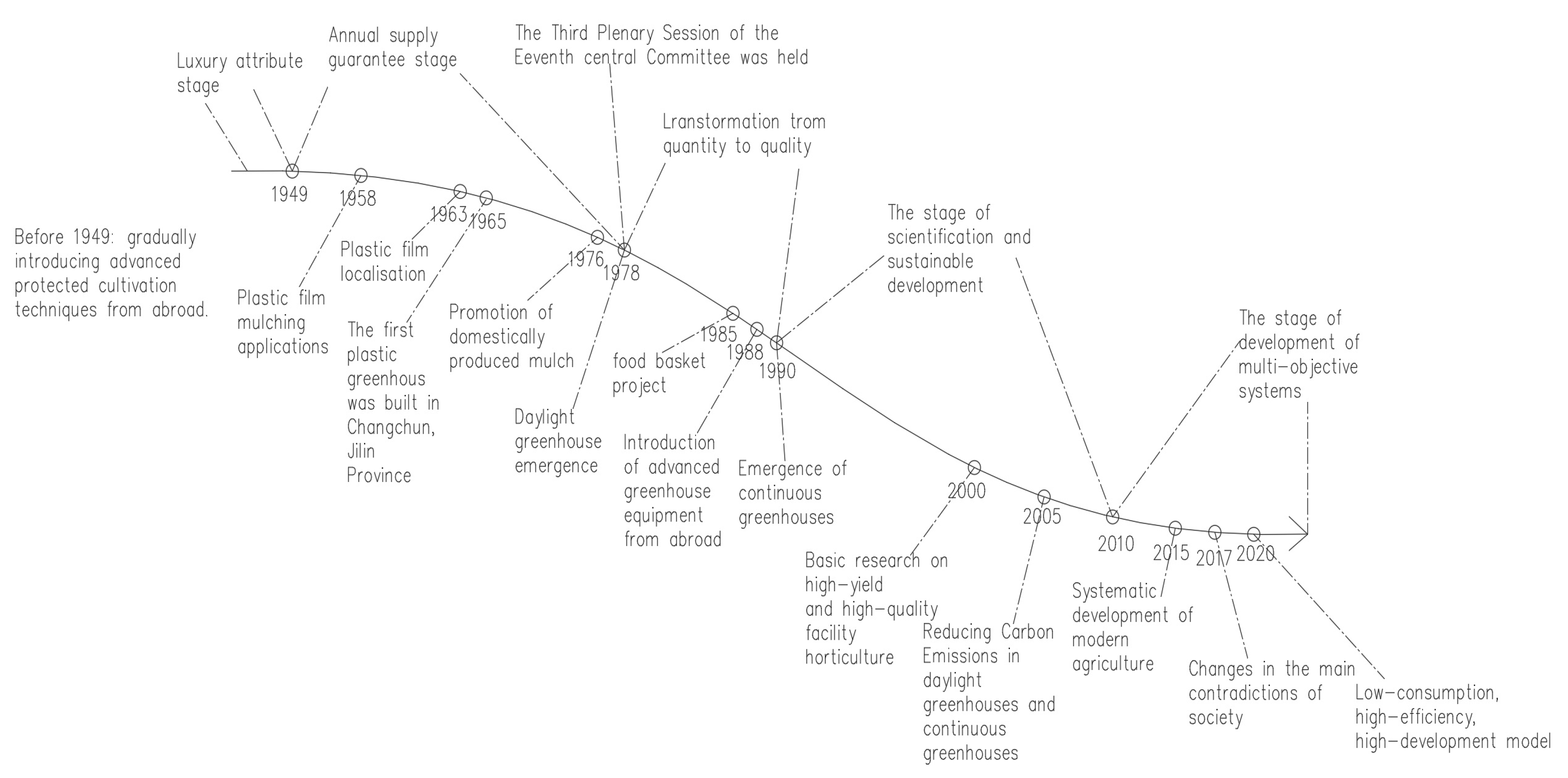
Figure 2.
Types and share of new greenhouses in China.
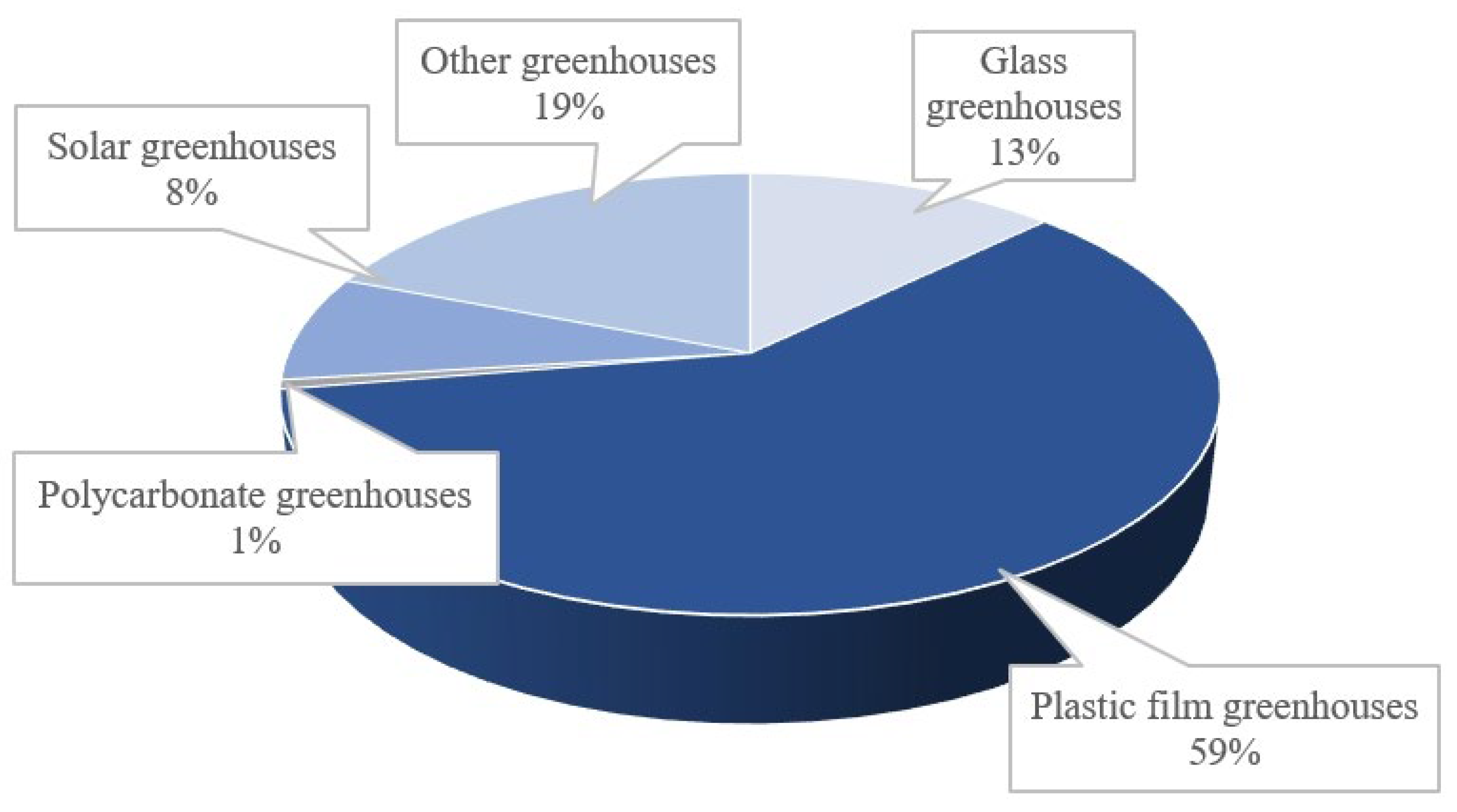
Figure 3.
Changes in the cultivated area of greenhouses in China, 2015-2022.
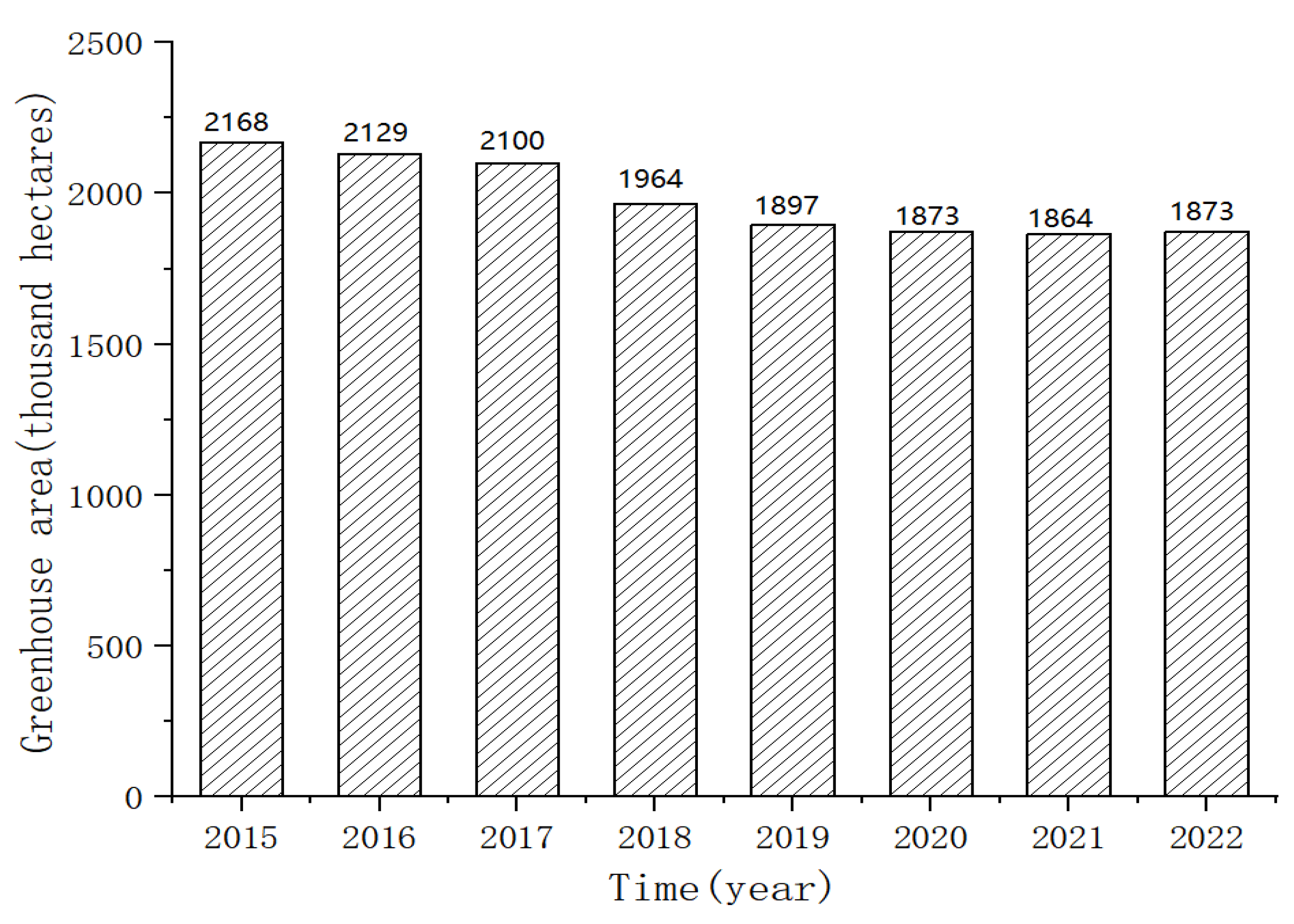
Figure 4.
Greenhouse industry chain diagram.
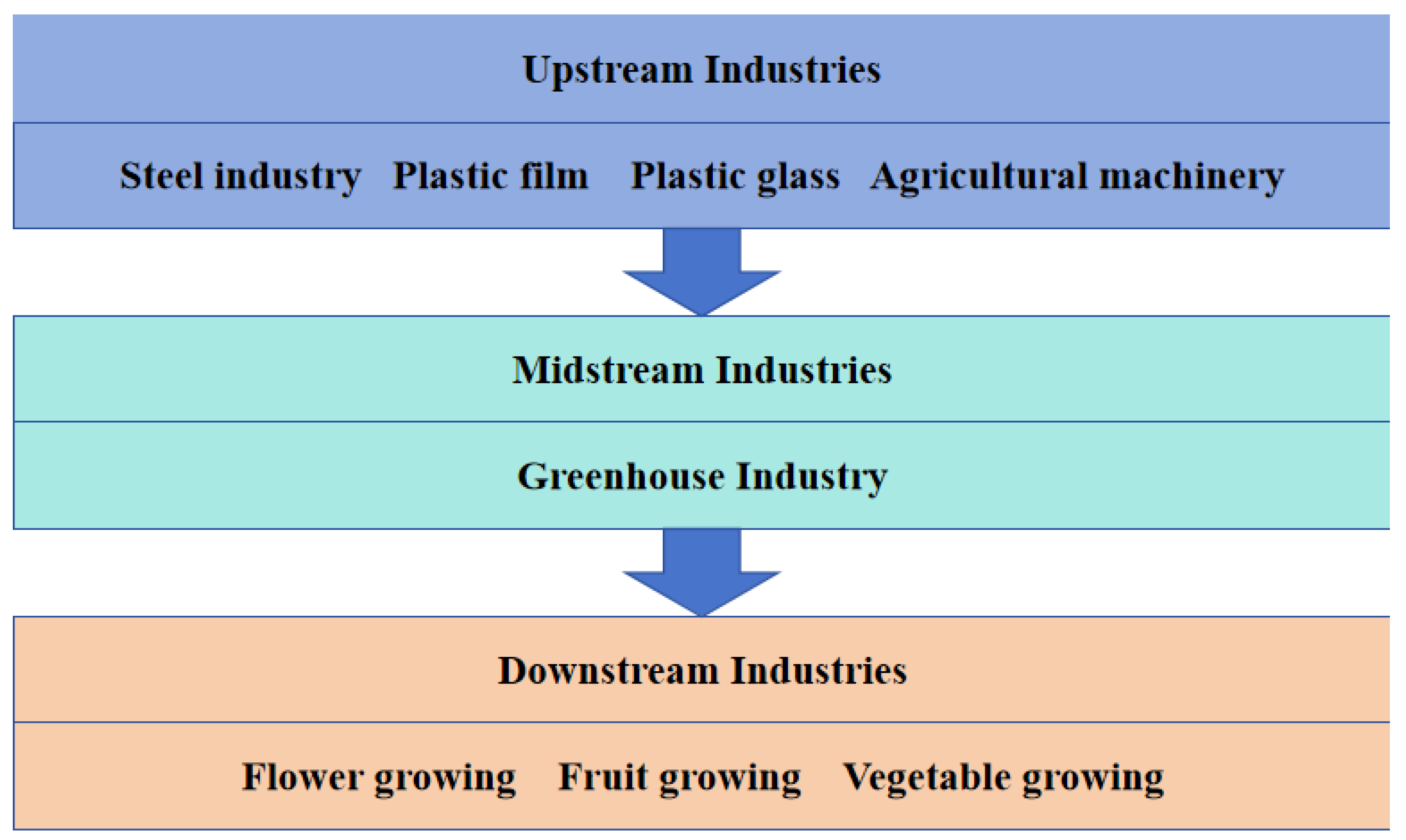
Figure 5.
Scale of investment in greenhouses in China.
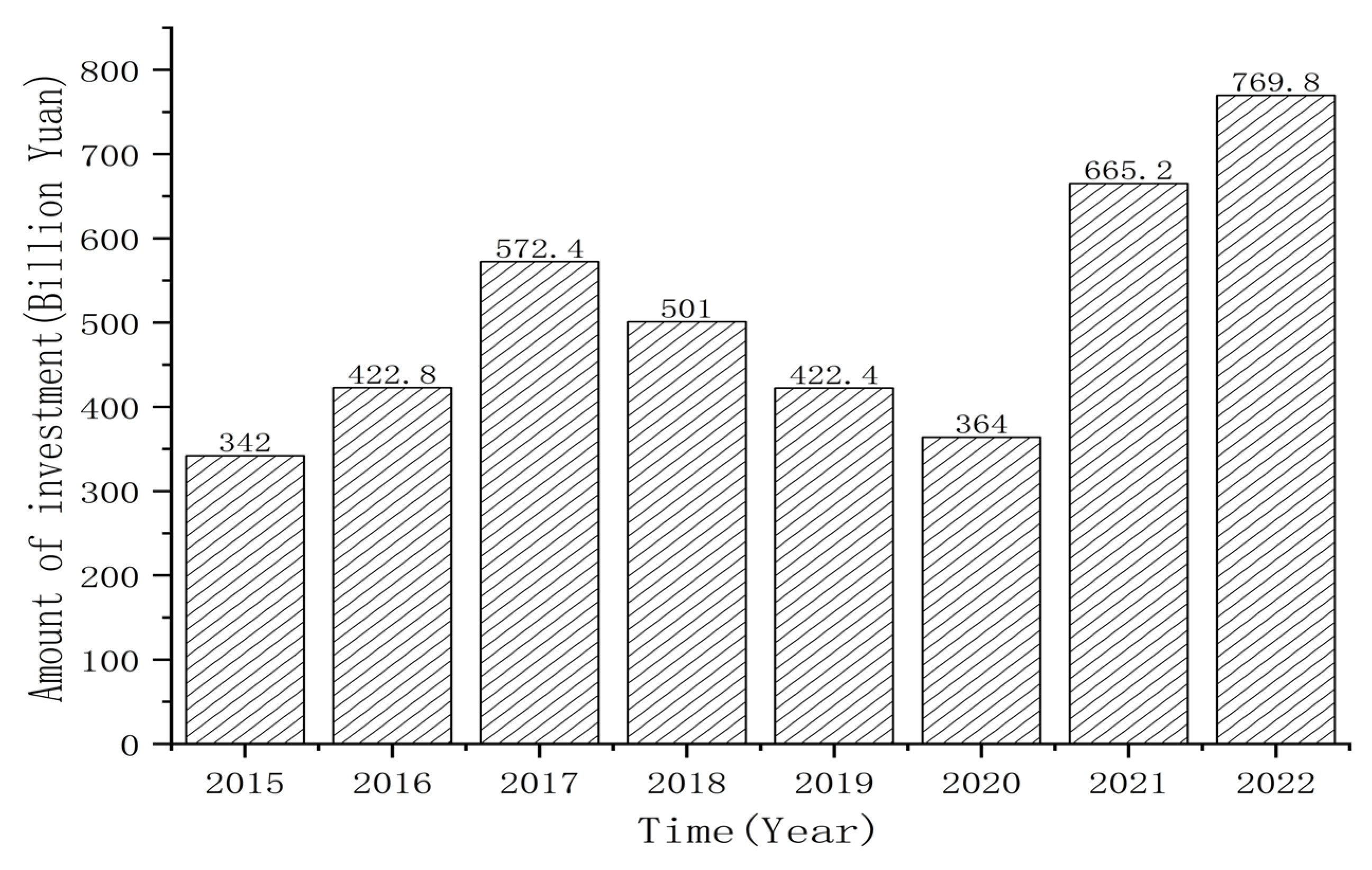
Figure 6.
Solar greenhouse internal structure diagram [5].
Figure 6.
Solar greenhouse internal structure diagram [5].
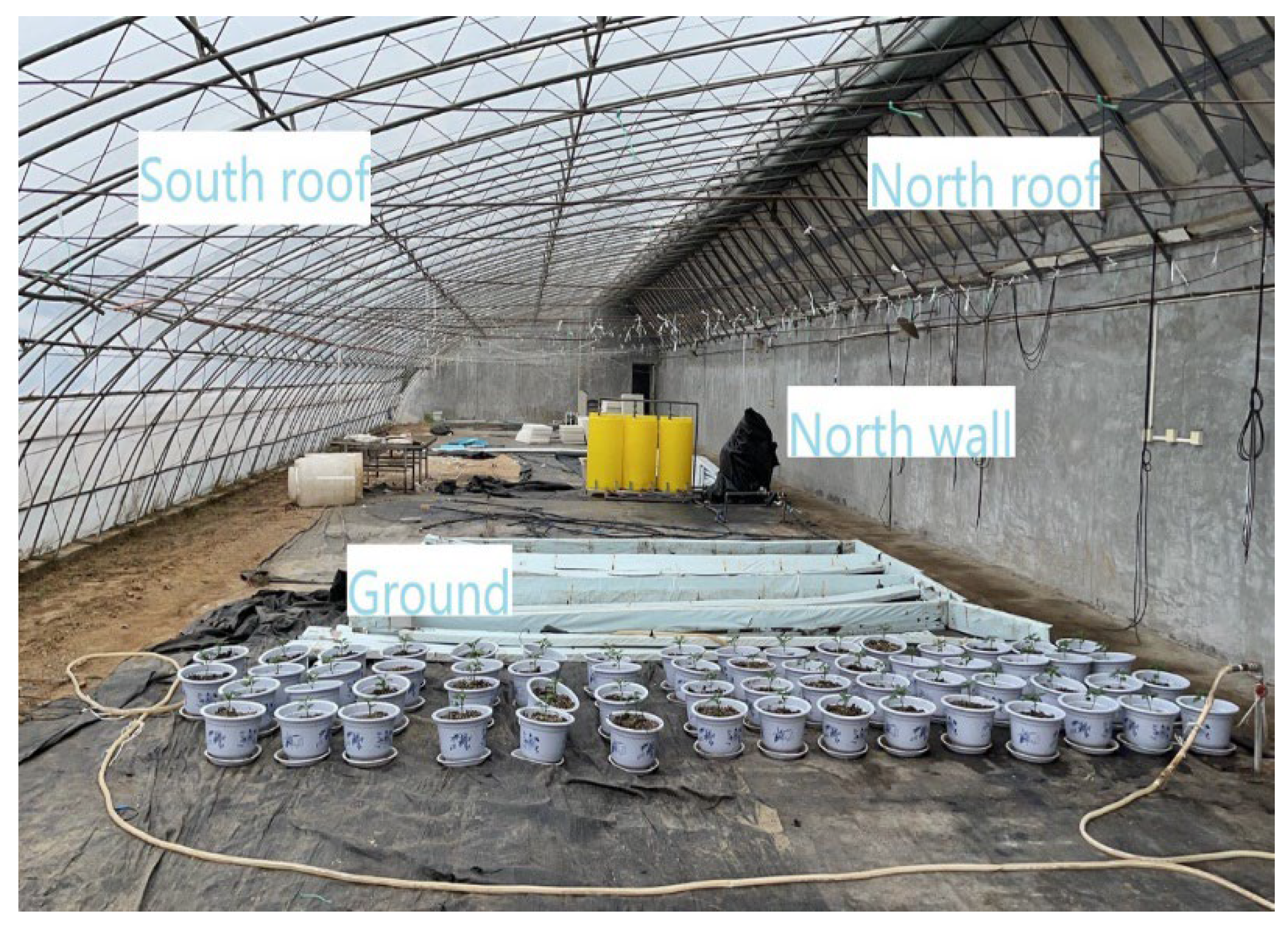
Figure 7.
Cross section of a typical Chinese solar greenhouse.
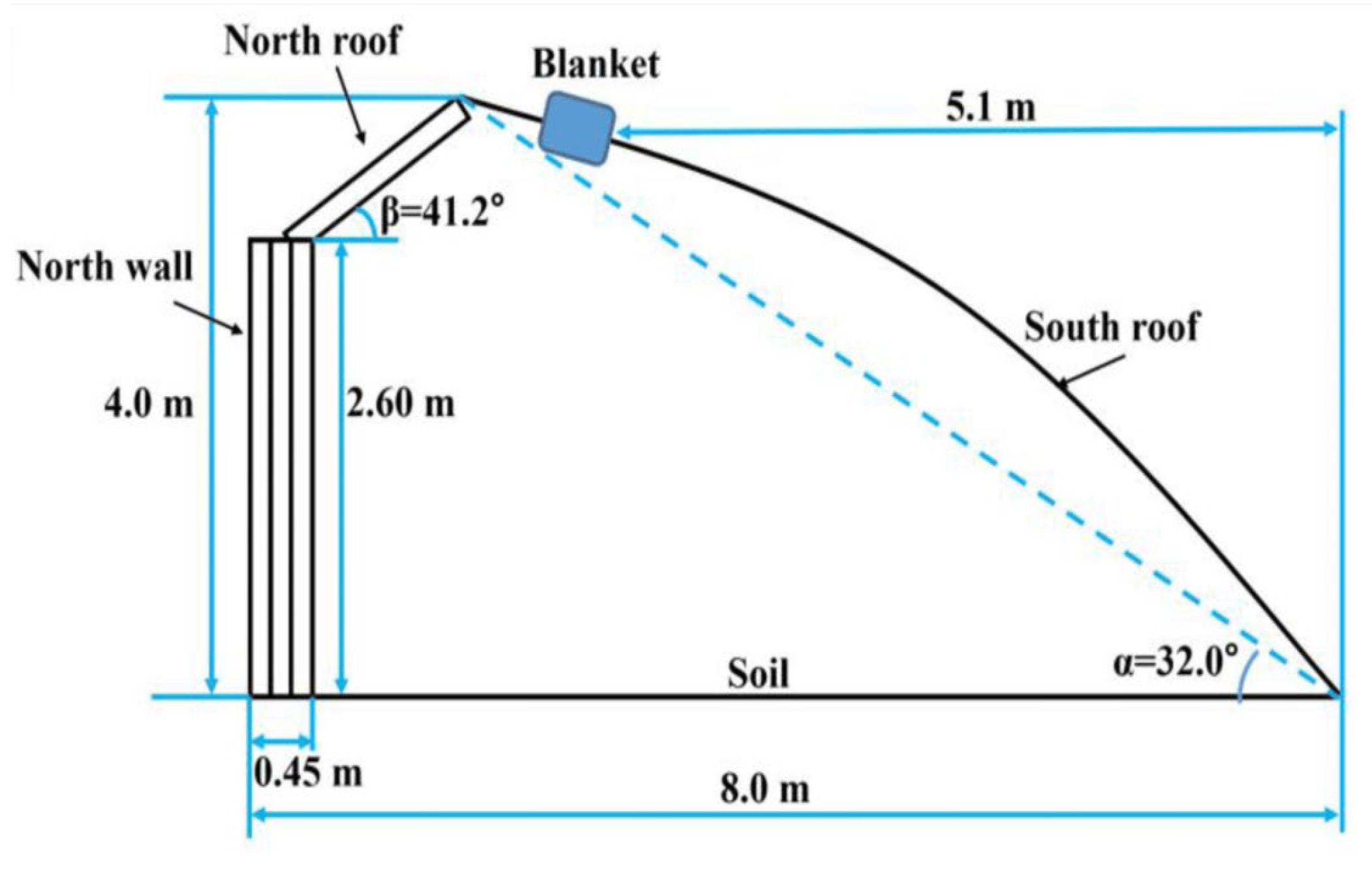
Figure 8.
The interior of a simple bamboo frame greenhouse.
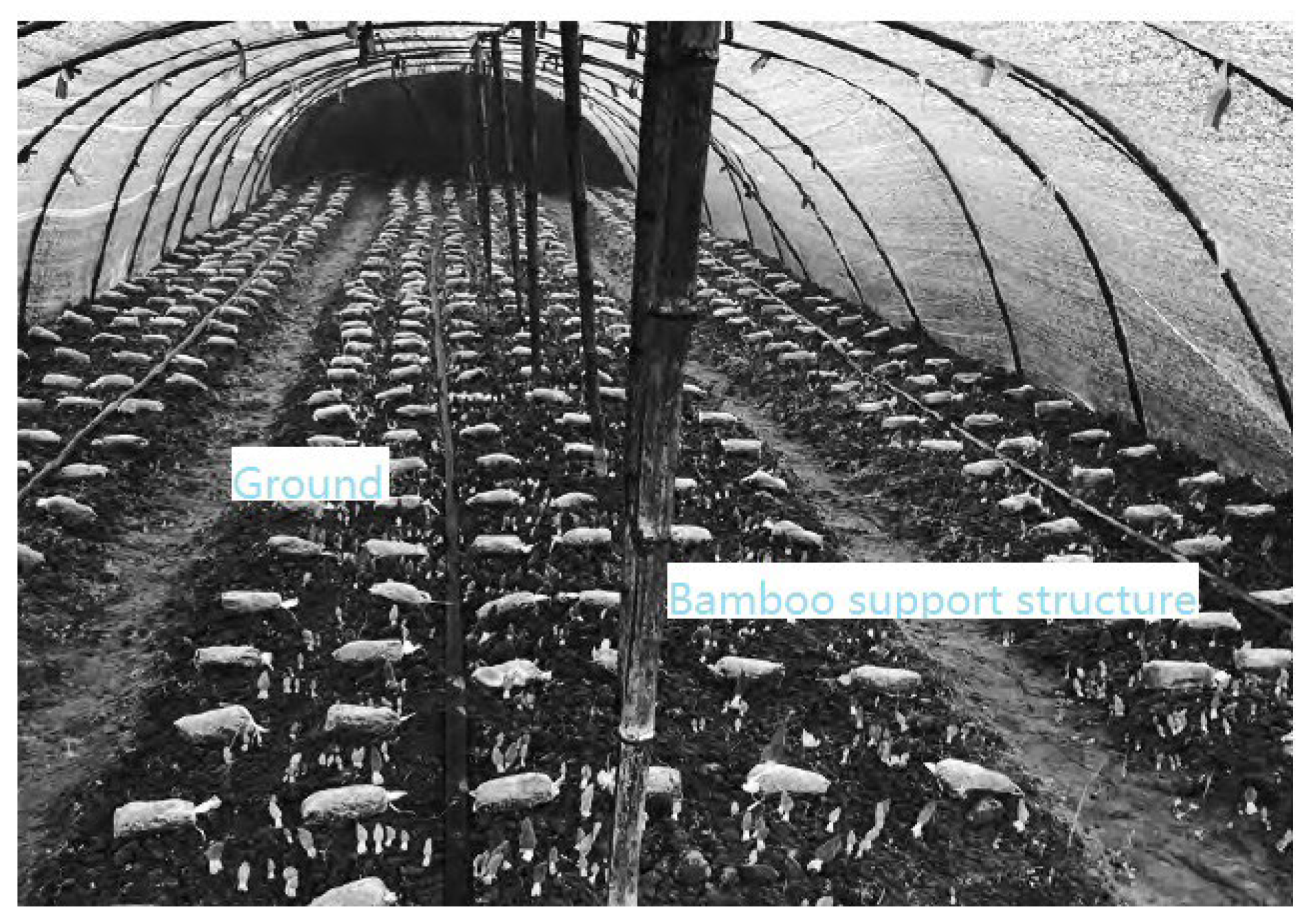
Figure 9.
Schematic diagram of steel frame shed structure.
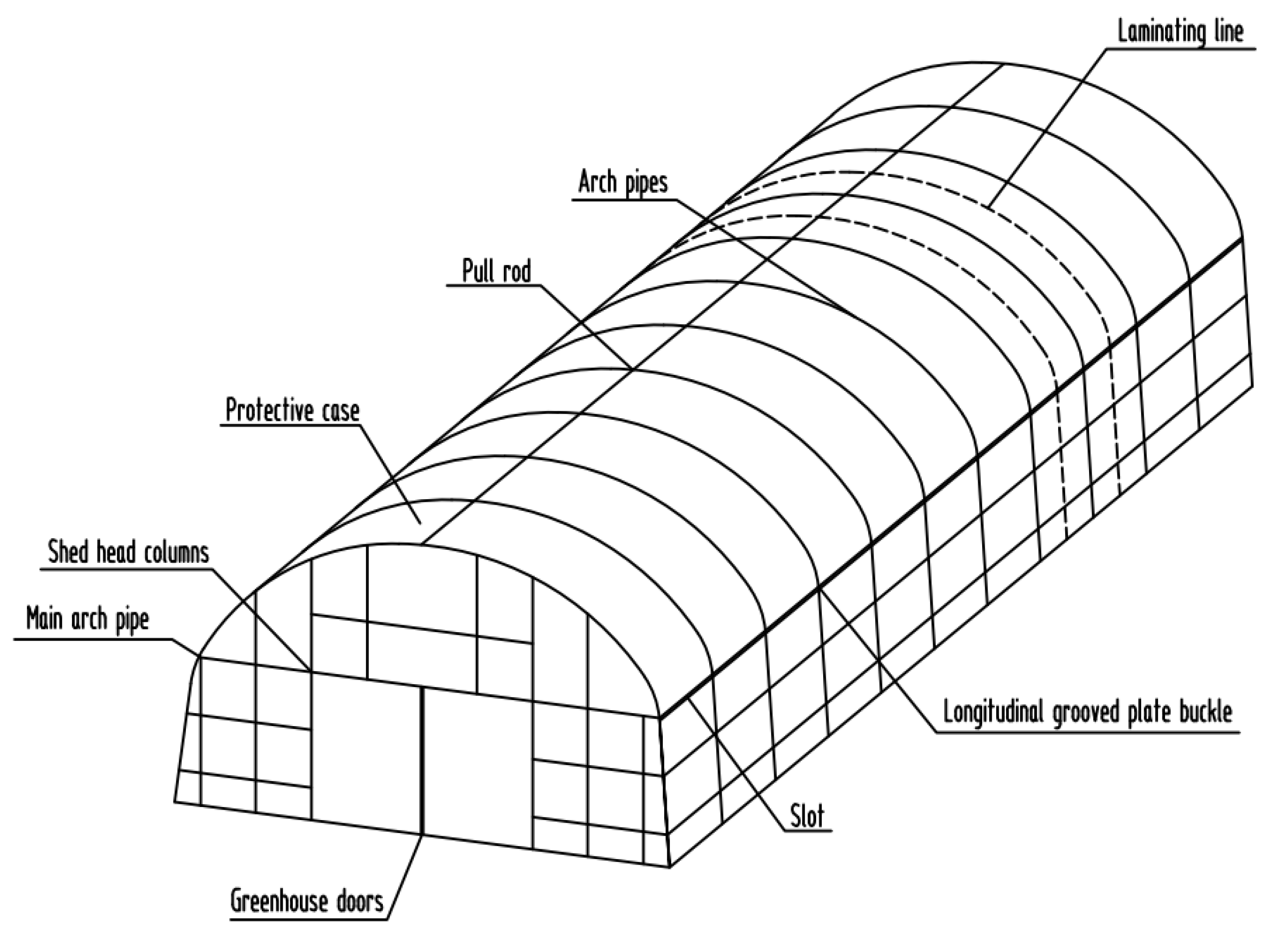
Figure 10.
Schematic diagram of steel frame shed section.
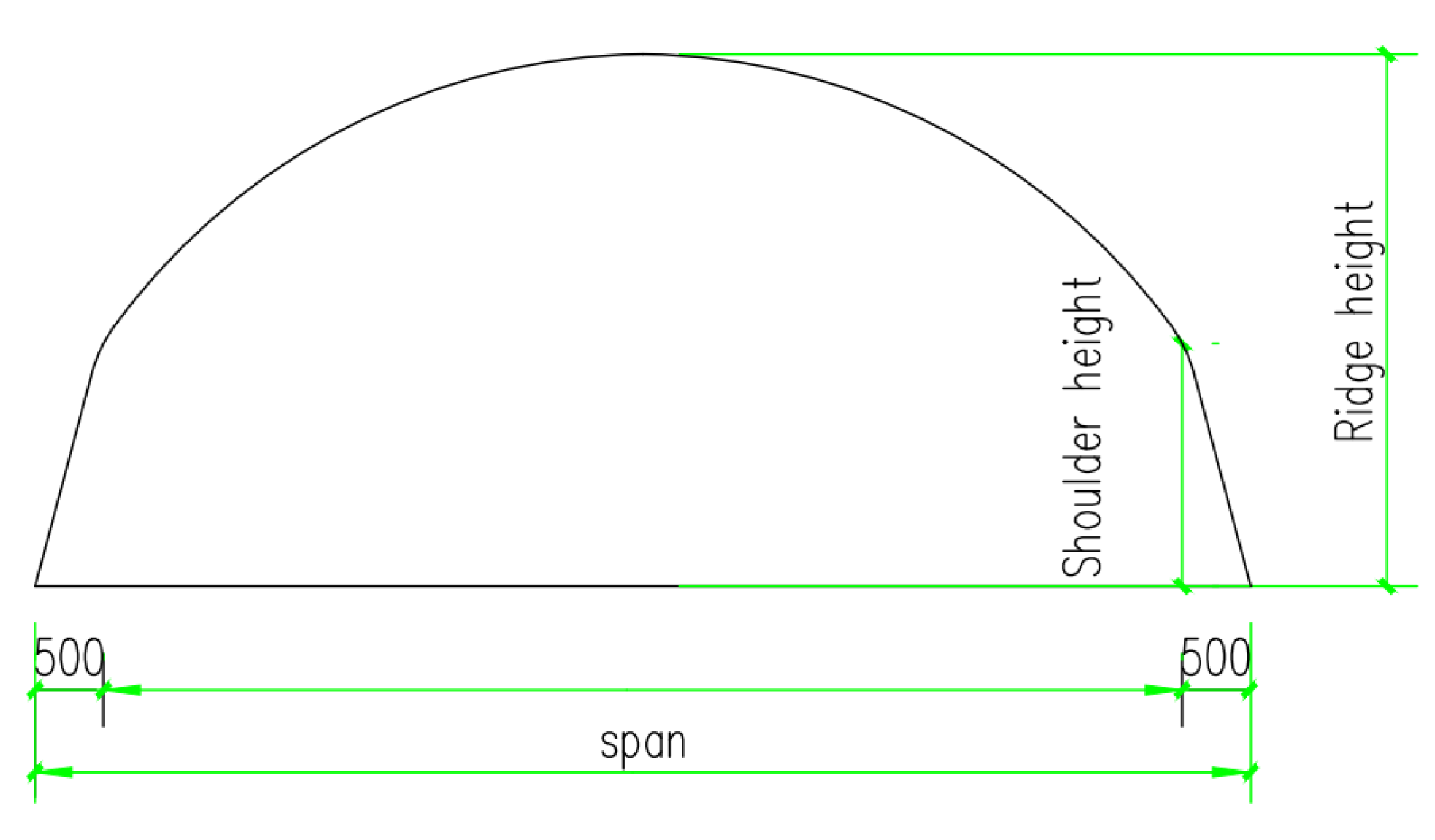
Figure 11.
Venlo-type glass greenhouse fully equipped with forced ventilator system, internal and external screens.
Figure 11.
Venlo-type glass greenhouse fully equipped with forced ventilator system, internal and external screens.
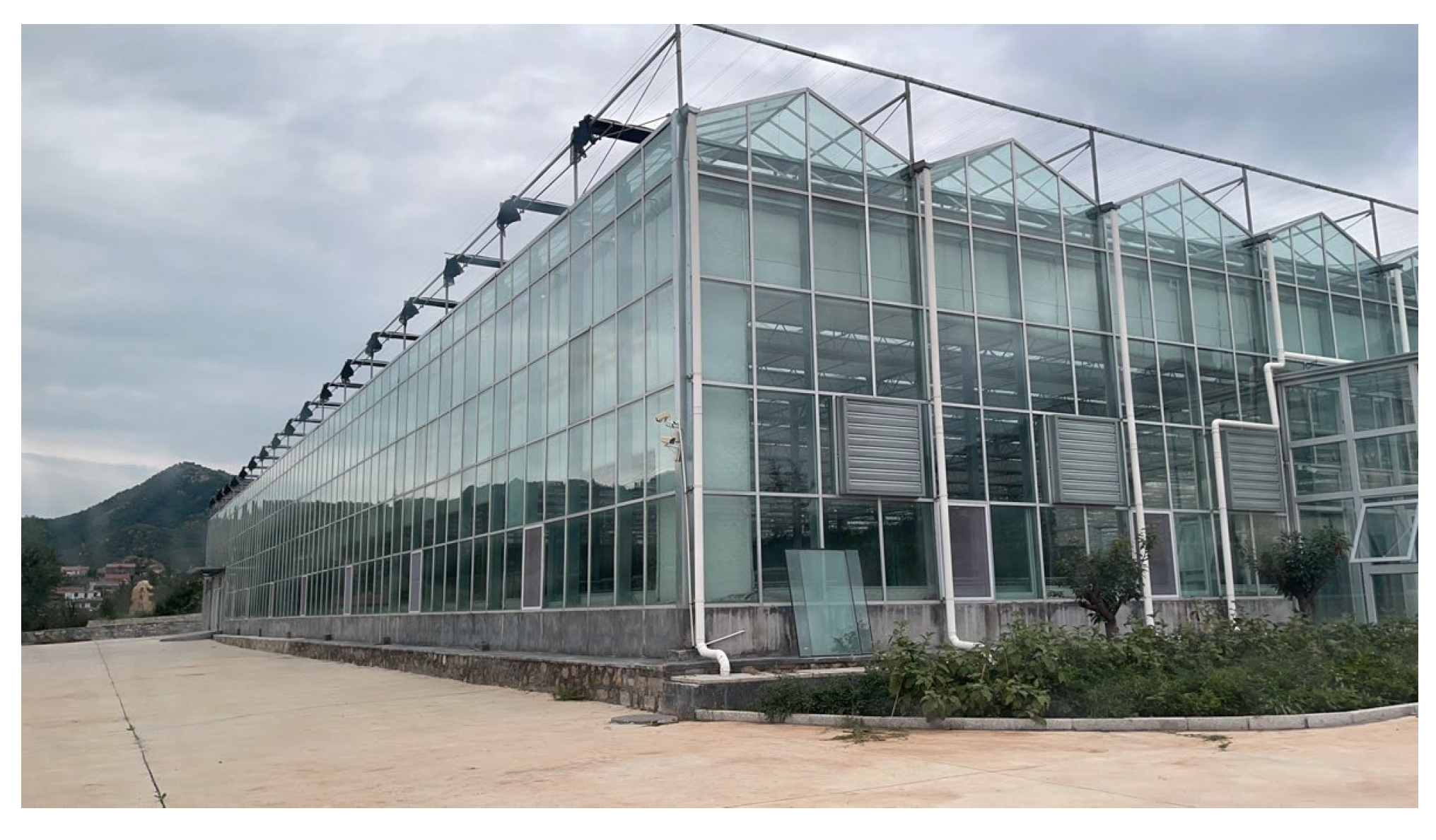
Figure 12.
Area under vegetable, orchard, and flower cultivation in China, 2015-2023.
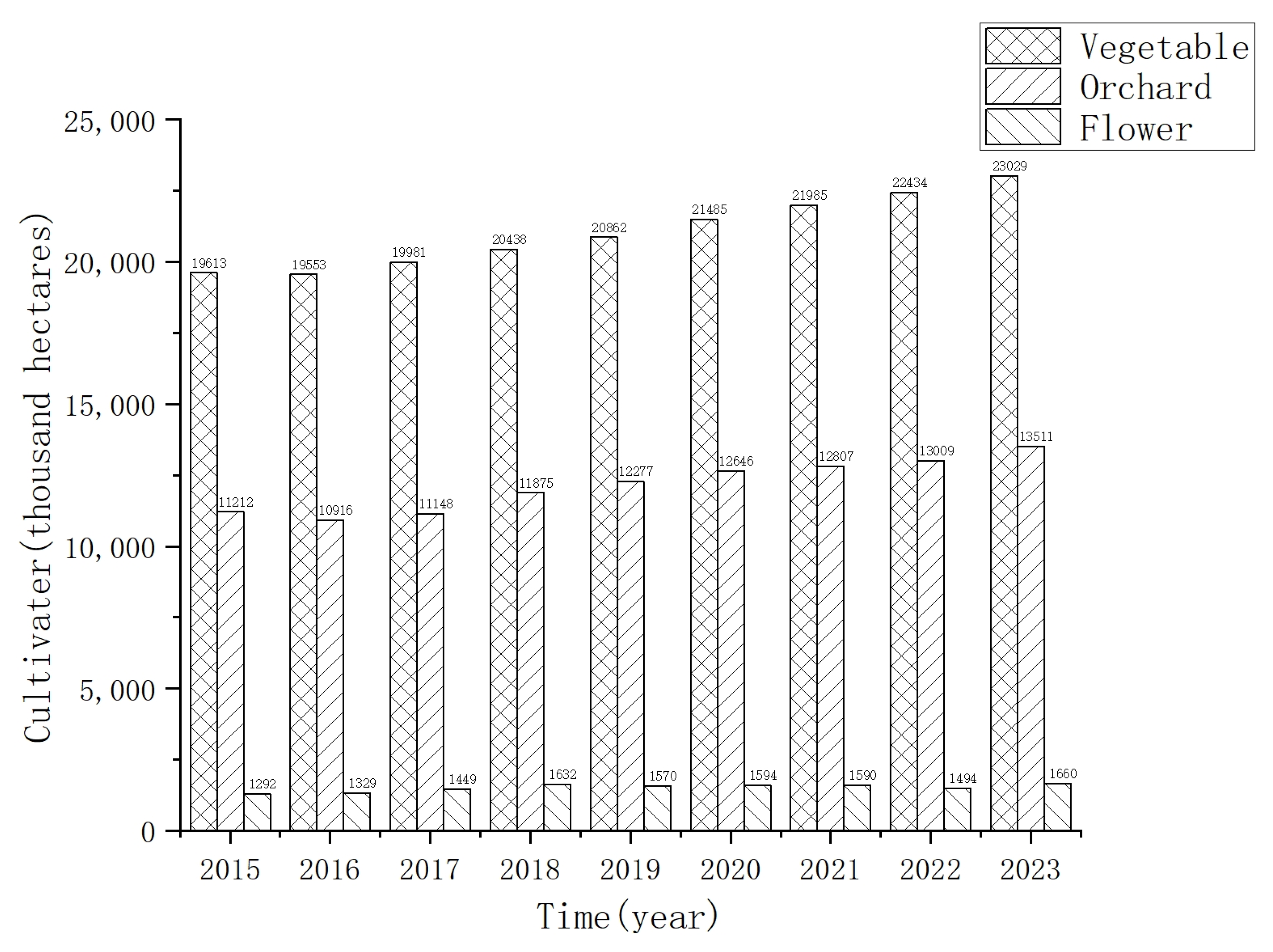
Figure 13.
Orchard under protected cultivation.
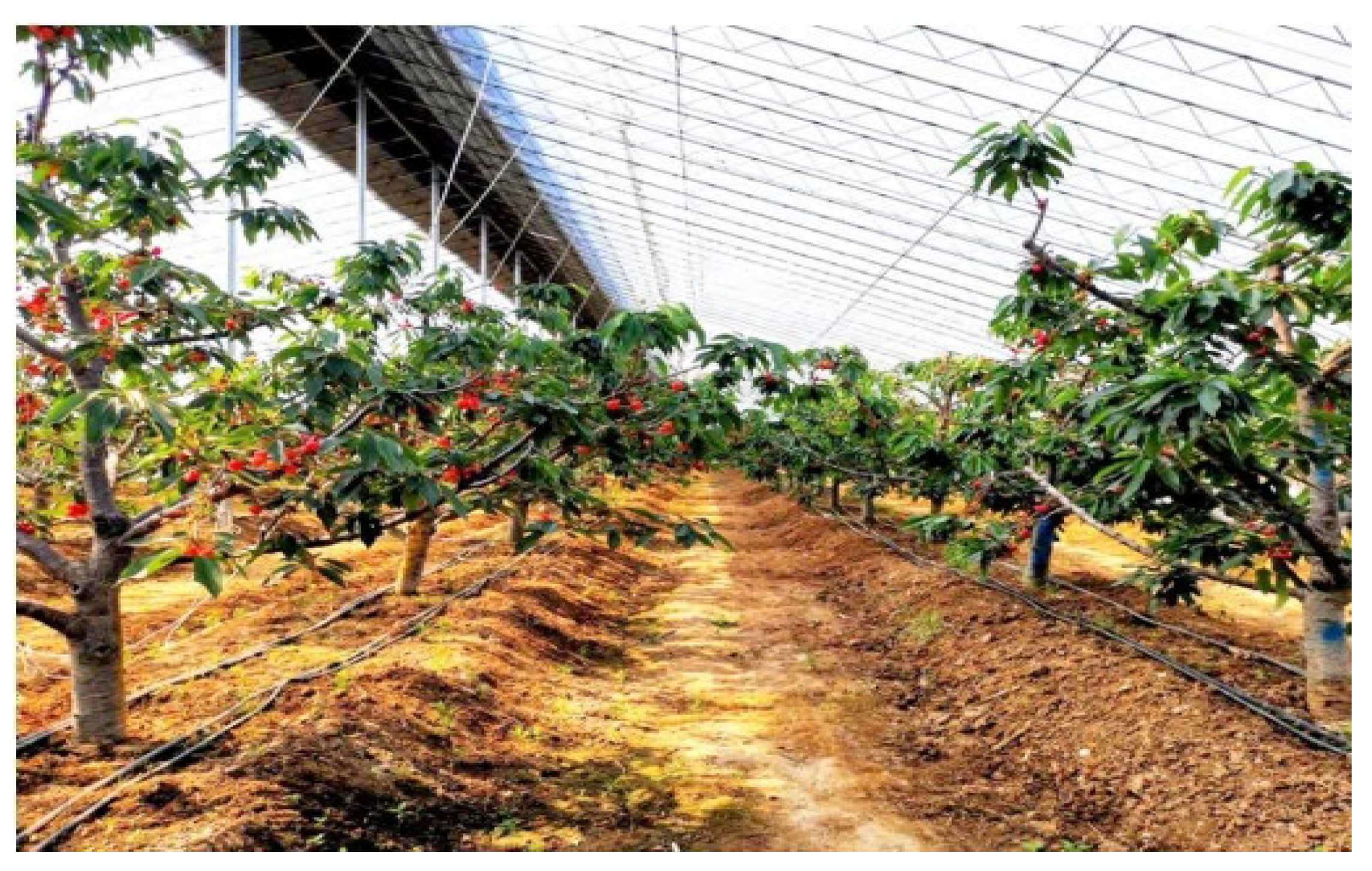
Figure 14.
A vacuum tube solar collector system, (courtesy of Mr. Xufeng Chen, Binzhou Xinrui New Energy Technology Co., Ltd., China).
Figure 14.
A vacuum tube solar collector system, (courtesy of Mr. Xufeng Chen, Binzhou Xinrui New Energy Technology Co., Ltd., China).
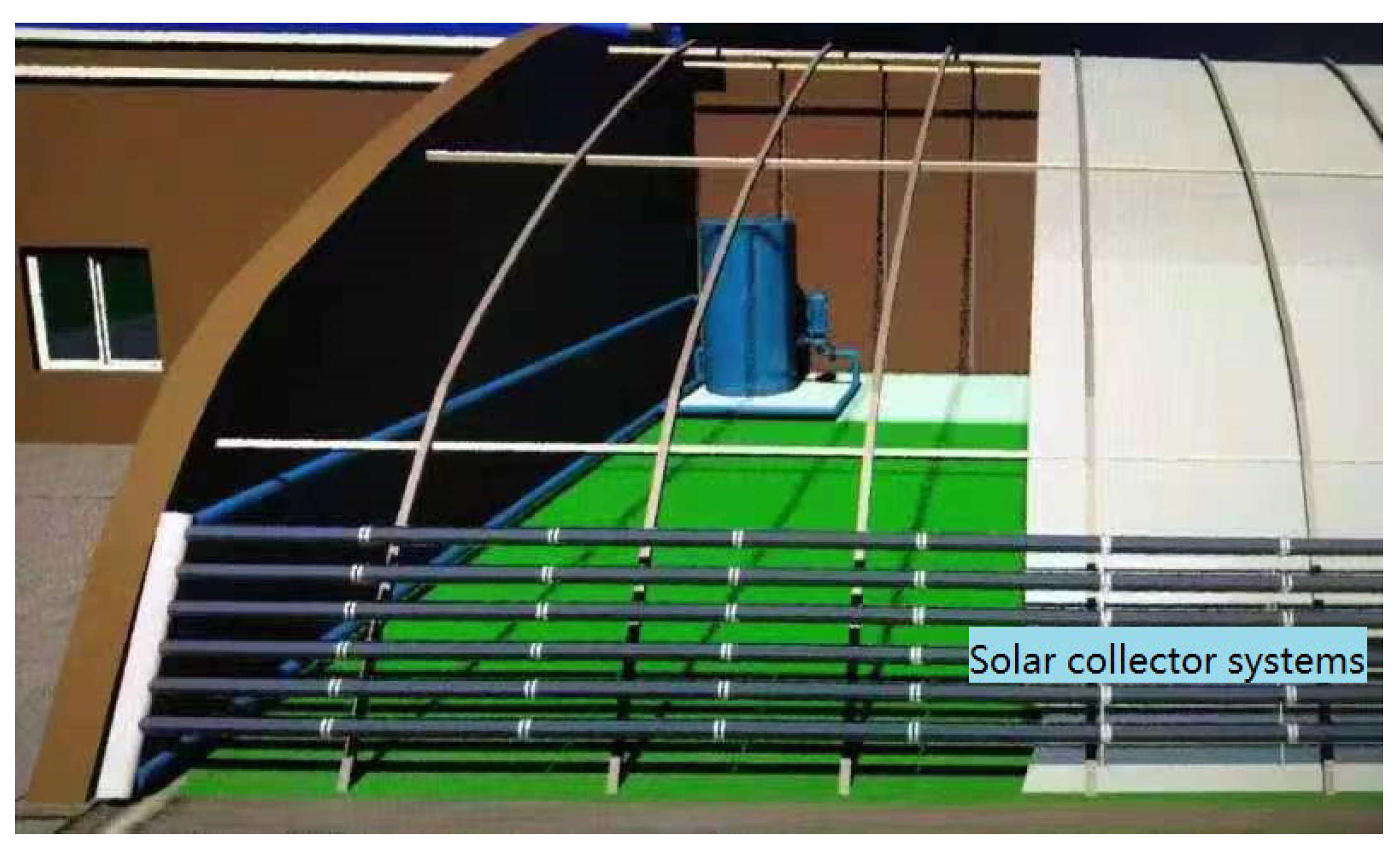

Table 1.
Span widths, ridge heights and shoulder heights for steel frame greenhouses.
| Span width (m) | Ridge height (m) | Shoulder height (m) |
|---|---|---|
| 8 | 2.9 | 1.5 |
| 10 | 3.3 | 1.5 |
| 12 | 3.7 | 1.5 |
| 14 | 4.1 | 1.5 |
Disclaimer/Publisher’s Note: The statements, opinions and data contained in all publications are solely those of the individual author(s) and contributor(s) and not of MDPI and/or the editor(s). MDPI and/or the editor(s) disclaim responsibility for any injury to people or property resulting from any ideas, methods, instructions or products referred to in the content. |
© 2024 by the authors. Licensee MDPI, Basel, Switzerland. This article is an open access article distributed under the terms and conditions of the Creative Commons Attribution (CC BY) license (http://creativecommons.org/licenses/by/4.0/).
Copyright: This open access article is published under a Creative Commons CC BY 4.0 license, which permit the free download, distribution, and reuse, provided that the author and preprint are cited in any reuse.


