
Submitted:
05 June 2024
Posted:
07 June 2024
You are already at the latest version
Abstract
Objective: This study aims to investigate the relationship between sports psychological capital, coach leadership behavior, and satisfaction among middle school students in the 2023 sports college entrance examination in Chongqing. Methods: Using the structural questionnaire design, this paper carries out a questionnaire survey on the candidates who come to participate in the volleyball specialty college entrance examination in Chongqing, the corresponding database was established and the data were statistically processed by spss21.0 and amos18.0. Results: 1) there was a significant positive correlation between sports psychological capital, coach leadership behavior and examinees satisfaction; 2) sports psychological capital and coach leadership behavior had a certain influence on five dimensions of examinees' personal treatment, personal performance, team integration, team interaction and support from relatives and friends; 3) The sense of self-efficacy in sports psychological capital and coach's leading behavior are the most important to examinees' satisfaction; 4) Both coaches' leadership behavior and sports psychological capital can directly affect examinees' satisfaction, but sports psychological capital is the most important. It can not only directly affect examinees' satisfaction, but also act as an intermediary between coaches' leadership behavior and examinees' satisfaction. Conclusion: Sports College Entrance Examination Students can improve training satisfaction and sports performance by strengthening sports psychological capital training and perceiving coach's leadership behavior; In the leadership behavior of coaches, we should emphasize training and appropriately weaken authoritative teaching, while the training of sense of hope and toughness should be highlighted in sports psychological capital.
Keywords:
Sports psychological capital
; Coach leadership behavior
; training satisfaction
; structural equation model
; Sports Entrance Examinees
Preface
In the physical education college entrance examination, examinees are under the pressure of high-intensity training and cultural course learning for a long time, which is easy to produce many negative emotions and avoidance behaviors, including self limiting (Lars-Eric, 2014), anxiety (Haraldsen et al., 2020), fear of failure (Conroy, 2001) and burnout (Isoard-Gautheur & Guillet-Descas, 2018). Most of the previous theories of sports psychology advocated how to deal with negative emotions or behaviors. However, in recent years, some sports psychology scholars have tried to apply the concept of positive psychology to the field of sports (YaJun,2016; NaiYi, JianWei, & LiKang, 2017), including hope theory or mindfulness theory, and produced many positive research results. Among them, positive psychological capital is a very valuable research hotspot. Positive psychological capital can understand the essence of individuals through self-efficacy, sense of hope, optimism and resilience. Self-efficacy is that individuals have confidence in their own ability to achieve desired goals or specific results (Staszkiewicz et al., 2023; Annesi,2018); The sense of hope is that after evaluating their own ability, individuals come up with one or more strategies to achieve their desired goals. At the same time, individuals must have motivation to promote individuals to start and maintain their actions, and complete the goals in the way they think of (Anderson & Feldman, 2020); Optimism is the ability to attribute good results to internal stability (Proyer, Gander, & Wellenzohn, 2016); Resilience is the ability to endure adversity and recover quickly (Perrin, 2019). In sports psychology, self-efficacy or self-confidence plays a key role in the performance of any sport (YaJun,2016; Kim & Park, 2018). It is found that the positive psychological emotions of physical education teachers help to strengthen organizational identity (Anderson et al.,2023) and enhance interpersonal interaction (Yu et al., 2020; Kim et al., 2020). The higher the personal positive psychological capital, the more timely they can adjust their mentality, face the challenge bravely and overcome it when the pressure comes (Yu et al., 2020); At the same time, individuals with higher psychological capital tend to have higher job satisfaction and organizational commitment.
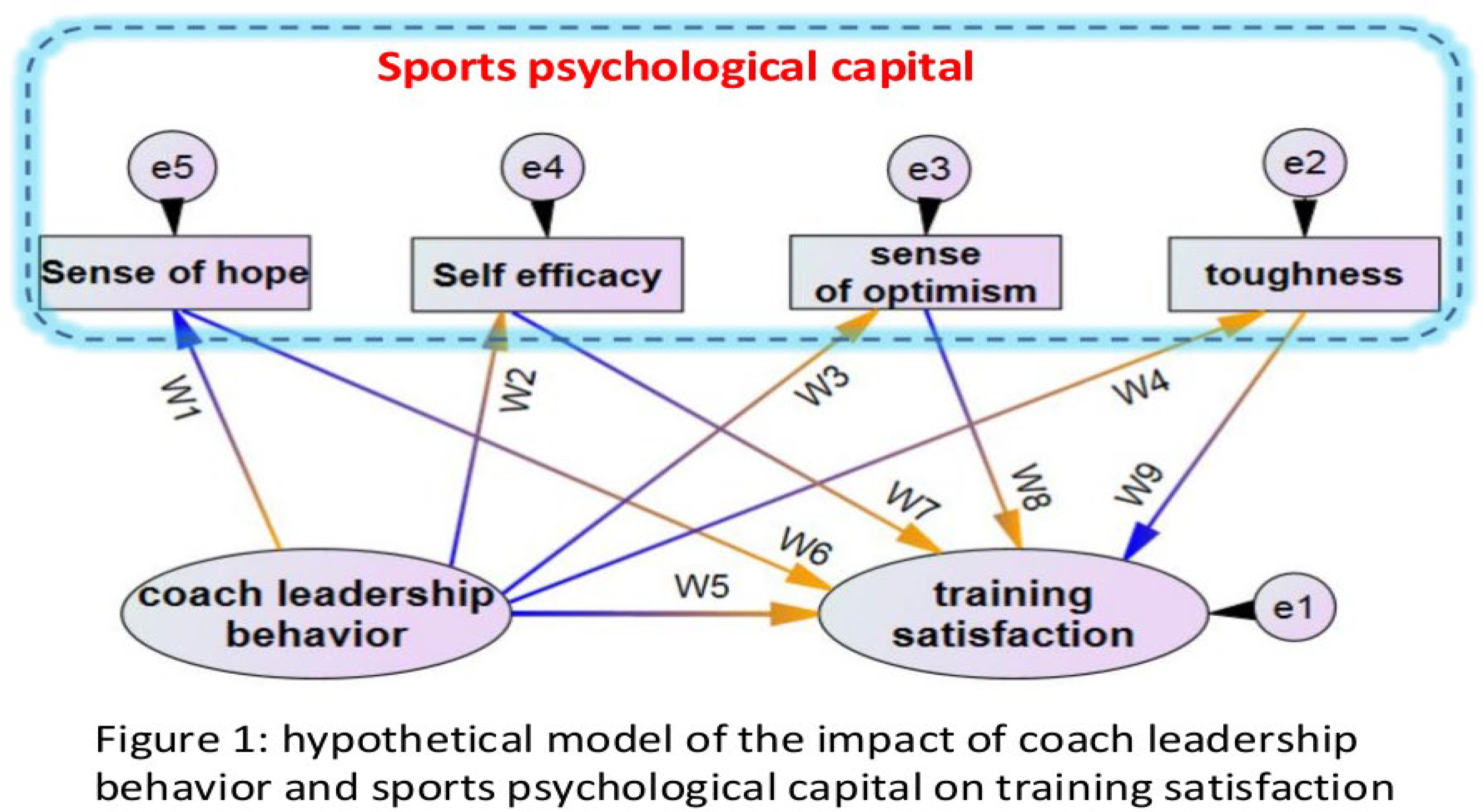
Leadership refers to the use of one’s own influence in the organization, Under the consideration of organizational objectives and individual needs of members, Effectively develop the potential of members to achieve the common goals of the organization. Coach leadership behavior is a process of interpersonal interaction between coaches and examinees. This interactive relationship will directly affect examinees’ participation satisfaction (Yenen, Atamturk, & Atamturk,2023). In competitive sports, coaches can help and improve examinees’ further mastery of their sports performance. Moreover, excellent coach leadership behavior can stimulate examinees’ mature sports performance and psychological aspects, and can give play to their excellent leadership philosophy to help examinees in the face of various high-intensity and high-pressure competitions, Can show excellent psychological quality and mature and exquisite technology to strive for the best results (Crisp, 2020). Previous studies on perceived coach leadership behavior mostly focused on the role played by the coach (Newland, Newton & Podlog, 2016), but one of the most important goals of a coach is to create a good training and learning environment so that examinees can obtain the required skills and win opportunities for individual and team success (Smith, Young & Figgins, 2017). Relevant studies show that the roles and duties of coach leadership behavior are diverse and complex, and provide assistance and guidance according to the physiological and psychological needs of examinees. Coaches are the main soul of the whole sports team (Kim, 2018), and coach leadership behavior is not only an important index affecting the satisfaction of teams or examinees, but also an important factor affecting examinees’ continuous participation in sports (Van Puyenbroeck et al., 2019; Hwang, Kang, & Choi, 2023). In addition, the essential attribute of sports performance depends on the examinees ‘s personal ability, and the main beneficiary is the examinees itself. If examinees can enjoy participating in training or competition in a happy mood, they will have more opportunities to show their sports skills and even play beyond their level. Therefore, improving examinees’ satisfaction and enhancing positive emotion management are obviously beneficial to improving sports performance. It is found that the organizational climate and cohesion of the training team will have a great impact on Examinees’ Sports satisfaction (Kim, 2018; MingYue,2010).
In short, the improvement of personal psychological capital of sports college entrance examination students will also relatively enhance their ability to interpret negative emotions or overcome adversity pressure. Due to the enormous pressure faced by college entrance examination students in the exam room, from the psychological perspective of candidates, only by strengthening their positive psychology can they overcome the challenges that come one after another, achieve joy and satisfaction in their hearts, and show their best performance in the exam room. However, currently there are few scholars in China who can explore the relationship between sports psychological capital, coach leadership behavior, and athlete satisfaction with training among sports college entrance examination candidates. The impact of positive psychological capital and coach leadership behavior on the psychological response of candidates and how to transform this influence into favorable candidates to perform at their best in the college entrance examination are indeed of great practical value. Therefore, this study aims to explore the impact of perceived coach leadership behavior and satisfaction among sports college entrance examination students by leveraging the self psychological capital of athletes as an important factor, in order to clarify the relationship between sports psychological capital, coach leadership behavior, and training satisfaction of college entrance examination students, and provide relevant suggestions and strategies to improve their sports performance in exams.
1. Object and Method
1.1. Respondents
The survey focuses on more than 7000 sports college entrance examination students recruited by ordinary universities in Chongqing in 2023. A stratified random sampling method was used to obtain 1500 samples, and a questionnaire survey was conducted on the psychological status of these sports major candidates, including their sports psychological capital, coach leadership behavior, and training satisfaction. A total of 1487 valid questionnaires were obtained (895 males and 592 females), with an average age of 21.28 ± 2.52 years and an average training time of 4.65 ± 1.55 years for specialized sports
1.2. Research Tool
A structured questionnaire was used in this study. The rolling surface is divided into four parts.
1) Personal background information of subjects. The content includes gender, age, place of origin, whether it is the only child, parents’ marital status, special type, sports level, training years, training status (training time, frequency, intensity) and other information.
2) Sports psychological capital scale. Using the “athlete’s psychological capital scale” modified by JianWei (2018) and Likert’s 5-point measurement, the higher the score, the more sound the intended psychological capital, and vice versa.
3) Coach leadership behavior scale. Using the Chinese version of Sports Leadership Behavior Scale revised by Jian and other scholars (Jian, ShuangJun & LiPing, 2007), using Likert’s 5-point measurement, the higher the score, the more the intention agrees with the coach’s leadership behavior, and vice versa.
4) Training satisfaction scale. The player satisfaction scale compiled by Xie (2013) is adopted, and the Likert 5-point measurement is adopted. The higher the score, the higher the player satisfaction, and the opposite is true.
1.3. validity and Reliability of the Questionnaire
Table 1 shows:
1) The sports psychological capital scale contains 23 questions and is divided into three dimensions. The average score of each dimension is more than 3 points. In terms of reliability, Cronbach’s four dimensions α coefficients were 0.88, 0.85, 0.78 and 0.71 respectively (all exceeding the standard of 0.70); The confirmatory factors showed that the measurement model fitness indexes AGFI, CFI, NFI and IFI were 0.90, 0.93, 0.94 and 0.92, which were all greater than 0.90; The combined reliability CR of the four dimensions (potential variables) were 0.77, 0.84, 0.71 and 0.76, respectively. These indicators fully show that the scale has good reliability and validity.
2) The coach leadership behavior scale contains 30 questions and is divided into 5 dimensions. The average score of each dimension exceeds 3 points. In terms of reliability, Cronbach ‘of five dimensions α The coefficients were 0.90, 0.85, 0.79, 0.77 and 0.73 respectively (all exceeding the standard of 0.70). Confirmatory factor analysis showed that the values of AGFI, CFI, NFI and IFI were 0.91, 0.93, 0.90 and 0.94 respectively (all greater than the standard of 0.90); The combined reliability CR of the five dimensions were 0.83, 0.81, 0.77, 0.83 and 0.75 respectively. These indicators fully show that the scale has good reliability and validity.
3) The training satisfaction scale contains 25 questions and is divided into 5 dimensions. The average score of each dimension is also more than 3 points. In terms of reliability, Cronbach ‘of five dimensions α The coefficients were 0.87, 0.90, 0.88, 0.83 and 0.86 respectively (all exceeding the standard of 0.70); Confirmatory factor analysis showed that the values of AGFI, CFI, NFI and IFI were 0.94, 0.91, 0.92 and 0.93 respectively (all greater than the standard of 0.90); The combined reliability CR of the five dimensions (potential variables) were 0.83, 0.79, 0.82, 0.80 and 0.82 respectively. These indicators fully show that the scale has good reliability and validity.
1.4. Mathematical Statistics
SPSS 21.0 and amos20.0 are used to process the research database. The specific statistical methods mainly include descriptive analysis, Pearson product moment correlation analysis, multiple regression analysis, etc. the significance level of all statistics is set as α= 0.05.
2. Results
2.1. Correlation Analysis among Sports Psychological Capital, Coach Leadership Behavior and Training Satisfaction
Table 2 shows: as far as the overall situation is concerned, there is a significant positive correlation between the dimensions of sports psychological capital and coach leadership behavior, there is a significant positive correlation between coach leadership behavior and training satisfaction, and there is also a significant positive correlation between sports psychological capital and training satisfaction; The average score of each dimension is more than 3.0, and the deviation is less than 1, indicating that the average of each explanatory variable is well representative. The details are as follows:
1) There are 20 kinds of correlations between the five dimensions of coach leadership behavior and the four dimensions of sports psychological capital, and they all reach a significant level. Among them, the correlation coefficients of training style and sense of hope (0.41**), caring style and sense of hope (0.45**), caring style and democratic style and sense of self-efficacy (0.42**, 0.41**), reward type and authority type and toughness (0.45**, 0.46**) are more than 0.4, The lowest correlation coefficient among the other dimensions is 0.20** (Such as reward and optimism).
2) There are 25 kinds of correlations between the five dimensions of coach leadership behavior and the five dimensions of training satisfaction, and they all reach a significant level. Among them, the correlation coefficient of more than 0.6 is training style and personal treatment (0.63**), caring style and personal treatment (0.62**); The correlation coefficients between 0.4 and 0.6 include raining style and team integration (0.53**) and relatives and friends support (0.40**), caring style and personal performance (0.45**), caring style and team integration (0.40**), caring style and family and relatives and friends support (0.41**), democratic style and personal treatment (0.49**), democratic style and team integration (0.41**) Reward style and individual treatment (0.46**) and team integration (0.42**); Only the correlation coefficients between Authoritative style and training satisfaction are below 0.40.
3) There are 20 kinds of correlations between the four dimensions of sports psychological capital and the five dimensions of training satisfaction, all of which have reached a significant level. Among them, the correlation between self-efficacy and personal performance is the highest (0.60**), while the correlation coefficient between the five dimensions Sense of hope and training satisfaction is between 0.40 and 0.60, Except that the correlation coefficient between self-efficacy and team integration (0.34**) of training satisfaction is lower than 0.40, the correlation coefficient with the other four dimensions is more than 0.40. Only the correlation coefficient between toughness in sports psychological capital and training satisfaction is basically maintained at about 0.30.
2.2. Prediction and Analysis of Sports Psychological Capital and Coach Leadership Behavior on Training Satisfaction
Table 3 shows:
1) The predictive power of sports psychological capital on personal treatment was 54% (R2=0.54, F=71.55), and the predictive power of coach leadership behavior on personal treatment was 57% (R2=0.57, F=120.47); The four dimensions of sports psychological capital reach a significant level in the prediction model of personal treatment. From the standardized path coefficient, the sense of hope (β= 0.45**) contributes the most, followed by toughness (β= 0.31**), self-efficacy (β= 0.24**) and optimism (β=0.17**) contribution is relatively small; The five dimensions of coach leadership behavior also reach a significant level in the prediction model of personal treatment. The standardized path coefficient shows that training style (β= 0.40**)and caring style (β=0.37**) have higher contribution, followed by democratic style (β=0.29**) and reward style (β= 0.25**), and authoritative style (β= 0.16*) has the lowest contribution.
2)The predictive power of sports psychological capital and coach leadership behavior on personal performance reached a significant level, and the explanatory variables of both on personal performance were 46% (R2= 0.46); F = 80.27) and 34% (R2=0.34; F=31.26). The standardized regression coefficient in the regression equation shows that the contribution of the four dimensions of sports psychological capital to personal performance is that toughness (β= 0.53**) is the highest, sense of hope (β= 0.26**) is the second, and self-efficacy (β= 0.20**) is the lowest, optimism has no influence (β=0.14, not significant); Among the five dimensions of coach leadership behavior, the caring type is the highest (β= 0.30**), the training type is the second (β= 0.23**), the Democratic type is the lowest (β=0.17*), and the reward stype (β=0.14, not significant) and authority stype (β= 0.11, not significant) have no influence.
The predictive power of sports psychological capital and coach leadership behavior on team integration was respectively 36% (R2=0.36); F =33.55) and 40% (R2=0.40; F=49.59).The standardized coefficients of the two regression equations show that among the contributions of the four dimensions of sports psychological capital to team integration, the sense of hope is the highest (β= 0.31**), the sense of optimism (β= 0.23**)and toughness (β= 0.25**) are the second, and self-efficacy (β= 0.15, not significant) has no influence; Among the contributions of the five dimensions of coach leadership behavior to team integration, the training type (β=0.36**) is the highest, the caring style (β=0.25**) and democratic type (β= 0.21**) is the second, the reward type is the lowest (β= 0.18**), and the authority type (β= 0.13, not significant) has no effect.
The predictive power of sports psychological capital and coach leadership behavior on team interaction was 41% (R2=0.41; F=50.87)and 35% (R2=0.35; F=38.45)respectively. Among the four dimensions of sports psychological capital, the sense of hope (β=0.30) and toughness (β= 0.32**) are relatively high, followed by self-efficacy (β= 0.23**) and sense of optimism (β= 0.19**); Among the influence and contribution of the five dimensions of coach leadership behavior on team interaction, the training style (β=0.24**) and caring type (β=0.23**) are relatively higher, followed by the Democratic type (β= 0.20**), and the reward type (β=0.18**) and authority type (β=0.17*)are the least.
5)The predictive power of sports psychological capital and coach leadership behavior to family and friends support was 37 (R2=0.37; F=40.26)% and 33% (R2=0.33; F =33.61)respectively. Among the four dimensions of sports psychological capital, the sense of hope (β= 0.41**) is the highest, the sense of self-efficacy (β=0.35**) is the second, and the influence of sense of optimism and toughness is not significant; Among the influence of the five dimensions of coach leadership behavior on the support of relatives and friends, the training type (β= 0.27**) and caring type (β=0.28**) are relatively high, followed by the Democratic type (β= 0.17*) and reward type (β= 0.17*), and the authoritative type (β= 0.12, not significant) has no significant influence.
2.3. Analysis on the Intermediary Role of Sports Psychological Capital
2.3.1. Structural Model Verification
Table 4 shows:
1) From the results of absolute fit test: the initial mode absolute fit index X2=104.69, X2/DF=15.54, P=0.000 < 0.05, indicating that the covariance matrix of the hypothetical model is not well matched with the observed data (generally, X2/DF value should be between 1 and 3); GFI=0.851 (>0.90 is the adaptation), AGFI=0.784 (>0.90 is the adaptation), RMSEA=0.369 (generally, RMSEA<0.05 is excellent, and 0.05~0.08 is good). From Increment fit test results, NFI=0.766 (adaptation > 0.90), IFI= 0.836 (adaptation > 0.90), CFI= 0.801 (adaptation > 0.90), RFI = 0.816 (adaptation>0.90). In short, whether absolute fit or Increment fit test, the initial correlation model of this study is not well matched with the actual data, so the correlation model must be corrected.
2) According to the path suggested by the correction index in the initial model, this study modifies the initial model with the original theoretical framework, and adds the covariance relationship between the measurement index error terms (e7-e8, e6-e8, e6-e7, e13-e7, e5-e14, e4-e9, e4-e14, e5-e7, e2-e9, e1-e9, e1-e15, e1-e14) one by one. The results show that the absolute adaptation index of the modified model X2=18.57, X2/DF= 2.09, P= 0.084 > 0.05, indicating that the covariance matrix of the model is adapted to the observed data (X2/DF=1.78, which is between 1 and 3); GFI= 0.946, AGFI= 0.925, RMSEA= 0.051, NFI=0.954, IFI= 0.941, CFI=0.936 and other indicators meet the adaptation range. It can be seen that the initial correlation model of this study is well adapted to the actual data after correction (see Figure 2).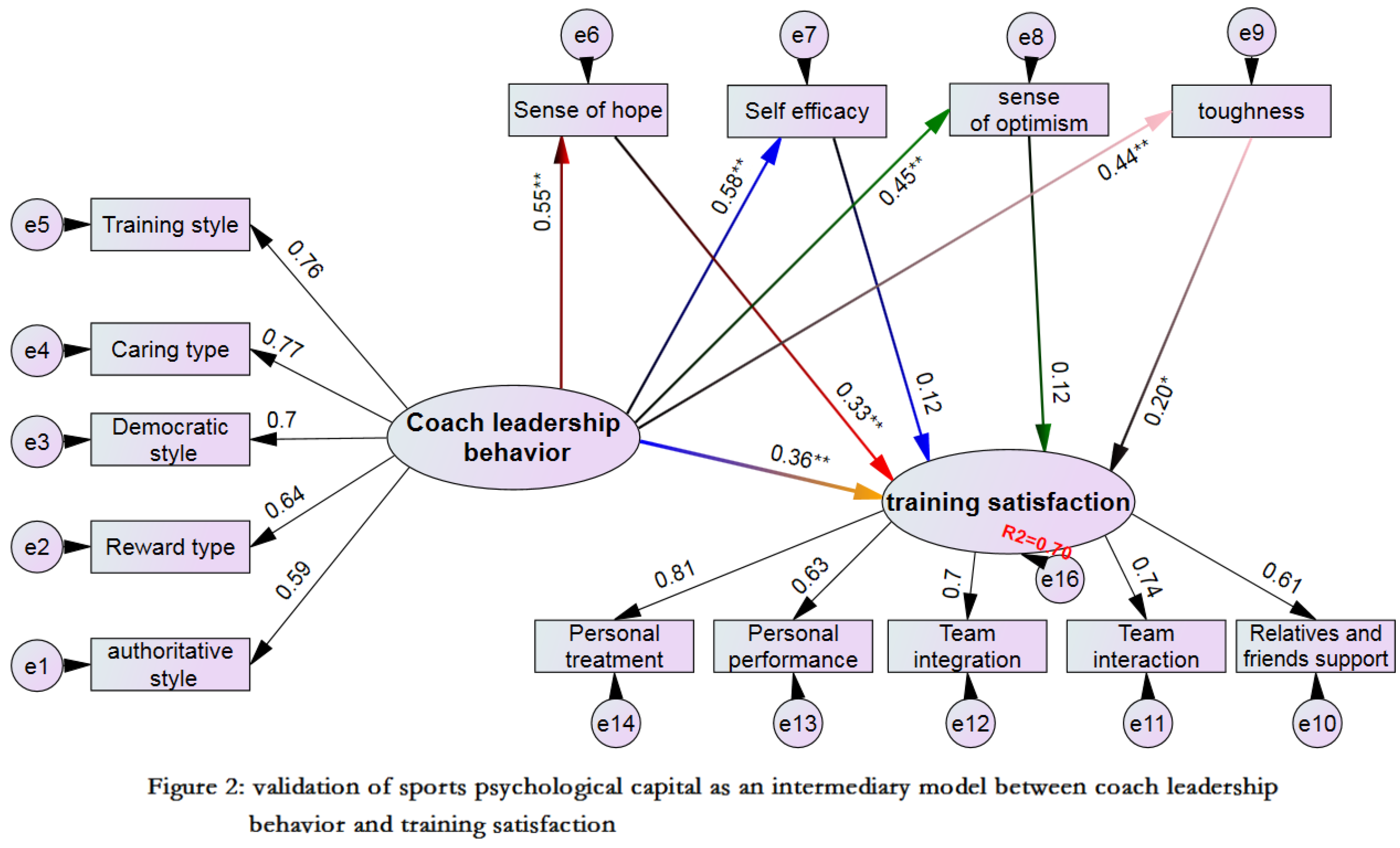
2.3.2. Intermediary Effect Analysis
The mediating effect of physical activity was discussed and calculated according to bootstrap method (Liu et al., 2017). In this study, nonparametric percentile bootstrap was used to test the significance of mediating effect. The original data were sampled 2000 times and the 95% confidence interval (CI) was estimated. Firstly, it is judged that the indirect effect does not contain 0 within the 95% confidence interval and reaches a significant level, indicating that there is an intermediary effect. At this time, if the direct effect contains 0 within the 95% confidence interval, it means that the direct effect is not significant and is a complete intermediary effect; If the indirect effect and direct effect do not include 0 in the 95% confidence interval, both reach a significant level, and the total effect does not include 0 in the 95% confidence interval, reaching a significant level, it is a partial intermediary effect.
Figure 2 combined with Table 5 shows that there are four mediators. Intermediary model I: coach leadership behavior → sense of hope → training satisfaction. The indirect effect of coach leadership behavior on training satisfaction is 0.18**, which is very significant. The confidence interval is 0.079 ~ 0.281, which obviously does not contain zero, while the direct effect of coach leadership behavior on training satisfaction is 0.36**, which is very significant. The confidence interval is 0.157 ~ 0.484, which obviously does not contain zero. At the same time, the total effect is 0.54**, and the confidence interval is 0.301 ~ 0.625, which also does not contain zero, Therefore, it can be determined that the sense of hope plays a partial intermediary role between the coach’s leadership behavior and the training’s satisfaction. Intermediary model II: coach leadership behavior → self-efficacy → training satisfaction. The indirect effect of coach leadership behavior on training satisfaction is 0.07**, which is very significant. The confidence interval is -0.031 ~ 0.189, which obviously contains zero. Therefore, it can be judged that the mediating effect of self-efficacy does not exist. Intermediary model III: coach leadership →sense of optimism → training satisfaction. The indirect effect of coach leadership behavior on training satisfaction is 0.05*, which is very significant. The confidence interval -0.056 ~ 0.213 obviously contains zero, so it can be judged that the intermediary effect of sense of optimism does not exist. Intermediary model Ⅳ: coach leadership →toughness → training satisfaction. The indirect effect of coach leadership behavior on training satisfaction is 0.09**, which is very significant. The confidence interval is 0.005 ~ 0.176, which obviously does not contain zero, while the direct effect of coach leadership behavior on training satisfaction is 0.36**, which is very significant. The confidence interval is 0.157 ~ 0.484, which obviously does not contain zero. At the same time, the total effect is 0.45**, and the confidence interval is 0.261 ~ 0.613, which also does not contain zero, Therefore, it can be determined that resilience plays a partial intermediary role between coach leadership behavior and training satisfaction.
From Figure 2, we can further find the overall influence of coach leadership behavior and sports psychological capital (sense of hope, self-efficacy, sense of optimism and toughness) on training satisfaction. Due to the judgment coefficient R2 = 0.70, it shows that 70% of the variation in training satisfaction is caused by the change of coach leadership behavior and psychological capital. The direct influence (coach leadership behavior, sense of hope, self-efficacy, sense of optimism and toughness) were 13% (0.36×0.36), 11% (0.33×0.33), 1.4% (0.12×0.12), 1.4% (0.12×0.12) and 4.0% (0.20×0.20), respectively. The sum of direct influence = 33.8%; The four indirect influences were 18.2% (0.55×0.33), 7.0% (0.58 ×0.12),5.0% (0.45 × 0.12) and 9.0% (0.44 × 0.20), respectively. the total indirect influence = 39.2%. Therefore, the total influence of coach leadership behavior and sports psychological capital on training satisfaction = 33.8% + 39.2% = 70%.
3. Discussion
By exploring the correlation among sports psychological capital, coach leadership behavior and training satisfaction, it is found that there is a high correlation between sports psychological capital and coach leadership behavior, coach leadership behavior and training satisfaction, and sports psychological capital and training satisfaction. The reason may be that the respondents in this study directly feel that the training mode led by the coach’s leadership behavior is popular, resulting in goodwill emotions, which affect the training’s satisfaction (Pichardo et al., 2019; Pulido et al., 2020). The survey objects of this study are all middle school students. Most of the examinees’ goals and motives are relatively simple. They are all for the purpose of accepting challenges and trying to achieve their goals under the condition of voluntary training. Therefore, the examinees’ inner thoughts can show a positive attitude, so the correlation coefficient between various variables also shows a high correlation.
Table 3 shows that among the dimensions of sports psychological capital on training satisfaction, examinees ‘ sense of hope has the strongest influence, followed by toughness, self-efficacy and optimism; From the impact of each dimension of coach leadership behavior on each dimension of training satisfaction, the training type has the best influence, followed by caring type, democratic type, reward type and authority type. These findings are slightly different from the Previous research findings (Fontes & Dello, 2020). The reason may be that the research objects are different. The survey object of this study is middle school students, which has the pressure of entering a higher school, Therefore, his self subjective consciousness is strong and his mentality is relatively immature; Fontes & Dello (2020) survey subjects are High level athletes, whose thoughts are mature and dependent, and worry about whether can get the medal in the competition. The coach’s teaching and training method will not adopt democratic style, so the Democratic leadership influence reflected by the examinees will be reduced (Kim & Cruz, 2016). From the data in Table 3, it can also be found that the judgment coefficient R2 of the impact of sports psychological capital and coach leadership behavior on all dimensions of training satisfaction has reached a significant level, among which the sense of hope, toughness in sports psychological capital and the training behavior of coach leadership behavior have the most critical impact on training satisfaction. These findings are consistent with the previous research results of some scholars (ShengYen, LiCheng, & Ya, 2020; Chang et al.,2019).
This study found that the “sense of hope” in sports psychological capital not only has a significant direct impact on training satisfaction, but also plays a partial intermediary role between coach leadership behavior and training satisfaction, of which the mediating force is 18.2%. As we all know, the sense of hope is a cognitive thinking process for individuals to achieve goals. In this thinking process, individuals will set meaningful and clear goals, generate motivation and relevant strategies according to the previously set goals, and finally promote the successful realization of goals. The sense of hope is of great significance to examinees’ daily training adaptation, investment, performance and physical and mental health. Hope theory holds that hope is related to the social connections throughout the entire process of human development (Zhang et al., 2023). Generally, individuals with good social connections have a more sense of hope, because the existence of reference groups will stimulate the sense of competition and promote individuals to have a stronger enterprising spirit for the future, so as to improve the level of dynamic thinking. In the field of sports training and competition, if examinees and coaches can coexist harmoniously, on the one hand, examinees can form a safe attachment style, get rid of the psychological constraints of fear of failure, maintain a high level of internal drive, and continuously enhance their dynamic thinking; On the other hand, it can get more positive feedback and personal care from coaches, form a positive evaluation of their own ability, experience more pleasure, psychological satisfaction and sense of achievement, and then improve the sense of hope. The higher the sense of hope, the stronger the athlete’s will to achieve the goal, “where there is a will, there is a way”, and the higher the satisfaction of sports performance is more predictable (Corti et al., 2023). Hope is the fuse to detonate the potential of life and the catalyst to stimulate the passion of life. In adversity, the indelible faith and hope in the heart is a strong support for people to withstand all kinds of hardships and tests. It is found that individuals with high hopes can often set specific, clear and valuable goals, have internal languages such as “I can’t stop” and “I can do it”, and tend to overcome various obstacles through flexible path transformation and unremitting efforts to ensure high personal performance in the process of pursuing goals Team cooperation and team cohesion investment status (Eren, 2016; ZhongQiu, 2012). These studies further prove the important role of sense of hope in coach leadership behavior and training satisfaction.
This study also found that “resilience” in sports psychological capital not only has a significant direct impact on training satisfaction, but also plays a partial intermediary role between coach leadership behavior and training satisfaction, with an intermediary effect of 9.0%. We know that psychological toughness is a natural or developing psychological advantage possessed by examinees. It can enable examinees to better cope with the needs of competition, training and daily life, especially enable examinees to maintain excellent and continuous decision-making, self-confidence, focus and stress control in special situations (Gonzalez et al., 2019). Relevant studies have found that toughness in sports psychological capital is closely related to sports events, sports level and sports performance (Tang et al., 2023; Cowden et al., 2019). Sports psychological toughness is the core feature for examinees to achieve excellent performance. The training of psychological toughness can improve the satisfaction of examinees, and then increase the will quality of examinees when they encounter difficulties (gucciardi et al., 2016) and give full play to the technical and tactical level. Therefore, examinees must maintain high psychological toughness in training and competition in order to achieve excellent performance (Murray et al., 2020).
In addition, among the five dimensions of training satisfaction, personal treatment seems to be most affected by sports psychological capital and coach leadership behavior, followed by personal performance and family and friend support. This fully shows that examinees have high self ability to deal with setbacks and solve problems, are not afraid of the challenge of failure, are willing to accept the coach’s training style and work together to defeat their opponents. At the same time, the stronger the self adjustment ability and technology of the examinees themselves, the higher the chance of winning. However, College entrance examination students often lack toughness in the face of frustration, so they should strengthen the toughness training of examinees (Sood & Puri, 2022). According to the personal needs of examinees, whether the coach’s training method can be more accepted and understood by the examinees, so as to cultivate the positive psychological quality of the examinees, achieve the purpose of comprehensively improving the satisfaction of the examinees, and finally achieve excellent sports performance.
4. Conclusion
1) Among the constituent elements of sports psychological capital, the sense of hope and toughness are more important, while the explanatory power of self-efficacy and optimism is slightly insufficient; Among the constituent elements of coach’s leadership behavior, training style is the most important, followed by Democratic and caring style, while the explanatory power of Authoritative style is slightly insufficient; Among the constituent elements of training satisfaction, personal treatment is the most important, team integration is the second, and the explanatory power of personal performance, team interaction and family and friend support is poor.
2) There is a high correlation among sports psychological capital, coach leadership behavior and examinees training satisfaction. Among the four dimensions of sports psychological capital, the sense of hope has the strongest influence on training satisfaction, followed by toughness, while Among the five dimensions of coach leadership behavior, the influence of training style on examinees satisfaction is the strongest, followed by caring style, and the other three dimensions are relatively small.
3) Both coach leadership behavior and sports psychological capital can directly affect training satisfaction, but the sense of hope and toughness in sports psychological capital are the most key to examinees training satisfaction. They not only directly affect examinees training satisfaction, but also act as part of the intermediary between coach leadership behavior and training satisfaction, with intermediary influence of 18.2% and 9.0% respectively.
Author Contributions
Wenyan Huang is mainly responsible for the design of the paper and the preparation of the questionnaire, and participates in the writing of the paper. Rui Wang, Jiong Luo are mainly engaged in the distribution of the questionnaire and data processing and analysis. Yanmei Chen provided decision-making and financial support for this study.
Institutional Review Board Statement
This study was reviewed and approved by the ethics review committee of Southwest University. However, this study does not involve human and animal experiments, and written informed consent is not required.
Data Availability Statement
The raw data supporting the conclusions of this article will be made available by the authors, without undue reservation.
Acknowledgments
All authors thank the leaders of the school of physical education of Southwest University and relevant colleagues for their full support and help.
Conflicts of Interest
The authors declare that the research was conducted in the absence of any commercial or financial relationships that could be construed as a potential conflict of interest.
References
- Lars-Eric, P. (2014). Self-compassion and self-protection strategies: The impact of self-compassion on the use of self-handicapping and sandbagging [J]. Personality and Individual Differences. 56:133-138. [CrossRef]
- Haraldsen, H.M. , Nordin-Bates, S.M., Abrahamsen, F.E., and Halvari, H. (2020). Thriving, Striving, or Just Surviving? TD Learning Conditions, Motivational Processes and Well-Being Among Norwegian Elite Performers in Music, Ballet, and Sport. Journal on Gifted Education. 42 (2):109-125. [CrossRef]
- Conroy, D. E. (2001). Fear of failure: An exemplar for social development research in sport. Quest. 53 (2): 165-183. [CrossRef]
- Isoard-Gautheur, S. , Martinent, G., & Guillet-Descas, E. (2018). Development and Evaluation of the Psychometric Properties of a New Measure of Athlete Burnout: The Athlete Burnout Scale. International Journal of Stress Management. 25: 108-123. [CrossRef]
- YaJun,W. (2016). Intervention effect of secondary physical exercise on College Students’ physical self-esteem and psychological capital. School health in China.11:1161-1163. [CrossRef]
- NaiYi, X. , JianWei, C., & LiKang, J. (2017). Prediction of self handicapping by sports hope and fear of failure of college group a examinees. Sports research. 26 (1):57-72. [CrossRef]
- Staszkiewicz M, Kulesa-Mrowiecka M, Szklarczyk J & Jaworek J (2023). Life satisfaction, generalized sense of self-efficacy and acceptance of illness in rheumatoid arthritis patients depending on age and severity of the disease. 61 (3),175-185. [CrossRef]
- Annesi, J. J. (2018). Effects of self-regulatory skill usage on weight management behaviours: Mediating effects of induced self-efficacy changes in non-obese through morbidly obese women. British Journal of heath Psychology. 23 (4): 1066-1083. [CrossRef]
- Anderson, C. L. , & Feldman, D. B. (2020). Hope and Physical Exercise: The Contributions of Hope, Self-Efficacy, and Optimism in Accounting for Variance in Exercise Frequency. Psychological Report. 123 (4):1145-1159. [CrossRef]
- Proyer, R.T. , Gander, F.,& Wellenzohn, S. (2016). Addressing the role of personality, ability, and positive and negative affect in positive psychology interventions: Findings from a randomized intervention based on the authentic happiness theory and extensions. Journal of Positive Psychology.11 (6): 609-621. [CrossRef]
- Perrin, H.T. (2019). Ordinary Magic: Resilience in Development. Journal of Developmental and Behavioral Pediatrics. 40 (7): 529. [CrossRef]
- Kim, W.K. , & Park, C. B. (2018). The Mediated Effect of Self-management Behaviors with Correlation between Achievement-goal Orientation and Self-confidence in the University Dance Sports Athletes.The Journal of Learner-Centered Curriculum and Instruction. 18 (13):309-326. [CrossRef]
- Anderson SN, Harenberg S, Nieto M, & Vosloo J. (2024). Exploring the Multidimensional Model of Leadership Through the Lens of Coaches: An Examination of the Relationship Between Personality, Leader Behaviors, and the Coach-Athlete Relationship. INTERNATIONAL SPORT COACHING JOURNAL, 103 (3), 411-423. [CrossRef]
- Yu, Z. , YanJie, Y., & XiaoHui, Q. (2020). Analysis of the impact of psychological capital, professional identity and organizational commitment on turnover intention of hospital nurses in Harbin. Medicine and society. 1:116-119. [CrossRef]
- Kim, M. , Oja, B. D., & Kim, H. S. (2020). Developing Student-Athlete School Satisfaction and Psychological Well-Being: The Effects of Academic Psychological Capital and Engagement [J]. Journal of sport management, 2020, 34 (4): 378-390. [CrossRef]
- Yenen E, Atamturk H, & Atamturk N (2023). Exploring leadership behaviors of the coaches of champion teams. FRONTIERS IN PSYCHOLOGY, 13, 1091703. [CrossRef]
- Crisp, P. (2020). Leadership, Bridging, and Group-Game Engineering: Guidelines for Community Sport Coaches. International sport coaching journal. 7 (2): 229-238. [CrossRef]
- Newland, A. , Newton, M., & Podlog, L. (2016). Exploring the nature of transformational leadership in sports: a phenomenological examination with female athletes. Qualitive Research in sport exercise and Healh. 7 (5): 663-687.. [CrossRef]
- Smith, M. J. , Young, D. J., & Figgins, S. G. (2017). Transformational Leadership in Elite Sport: A Qualitative Analysis of Effective Leadership Behaviors in Cricket. Sport Psychology. 31 (1): 1-15. [CrossRef]
- Kim, J. (2018). Effects of Team Leadership Behavior of SME Organization on Teamwork and Job Satisfaction. Journal of Convergence for Information Technology. 8 (2): 105-112. [CrossRef]
- Van Puyenbroeck, S. , Stouten, J., & Vande Broek, G. (2019). Can losing teams cope with destructive voice behaviour? The role of game results and athletes’ perceived motivational climate. Journal of sports sciences. 37 (7): 819-826. [CrossRef]
- Hwang CY, Kang SW, & Choi SB. (2023). Coaching leadership and creative performance: A serial mediation model of psychological empowerment and constructive voice behavior. FRONTIERS IN PSYCHOLOGY, 14, 1077594. [CrossRef]
- MingYue,W. (2010). Structural model of billiards coach’s leadership behavior and organizational climate, team cohesion and sports satisfaction. Special issue of physical education. 12 (3):53-64. [CrossRef]
- JianWei, C. (2018). Revision of sports psychological capital scale and its application to college tennis players. Taiwan Journal of sports psychology. 18 (1):. [CrossRef]
- Jian, S. , ShuangJun, L., & LiPing, W. (2007). Test of reliability and validity of Sports Leadership Behavior Scale (LSS) — A Study on track and field coaches in sports colleges and universities. Journal of Beijing University of physical education. 7:964-966. [CrossRef]
- Bin, X. (2013). Development and application of training satisfaction scale for Chinese professional athletes. Journal of Capital Institute of physical education. 3:270-276. [CrossRef]
- Liu, Q. , Kang, X., Guo, Y., Su, Y., Shi L.P., and Yang, F.X. (2017). Influence Mechanism of External Social Capital of University Teachers on Evolution of Generative Digital Learning Resources of Educational Technology of University Teachers -Empirical Analysis of Differential Evolution Algorithm and Structural Equation Model of Bootstrap Self-extraction Technique. Eurasia Journal of Mathematics Science and Technology education. 13 (8): 5327-5341. [CrossRef]
- Pichardo, A.W. , Oliver, J.L., Harrison, C. B., Maulder, P. S., Lloyd, R. S., and Kandoi, R. (2019). Effects of Combined Resistance Training and Weightlifting on Motor Skill Performance of Adolescent Male Athletes. Journal of strength and conditioning research. 12 (33):3226-3235. [CrossRef]
- Pulido, J. J. , Garcia-Calvo, T., Leo, F. M., Figueiredo, A. J., Sarmento, H., and Sanchez-Oliva, D. (2020). Perceived Coach Interpersonal Style and Basic Psychological Needs as Antecedents of Athlete-Perceived Coaching Competency and Satisfaction With the Coach: A Multi-Level Analysis. Sport exercise and Performance psychology. 9 (1):16-28. [CrossRef]
- Fontes, A. , & Dello Russo, S. (2020). An Experimental Field Study on the Effects of Coaching: The Mediating Role of Psychological Capital. Applied Psychology-An international Review-Psychologie Appliquee-Revue Internationale. 70 (2):459-488. [CrossRef]
- Kim, H. D. , & Cruz, A. B. (2016). The influence of coaches’ leadership styles on athletes’ satisfaction and team cohesion: A meta-analytic approach. International Journal of sports science & Coaching. 11 (6):900-909. [CrossRef]
- ShengYen, L. , LiCheng, W., & Ya, F. (2020). The effect of the middle and high school basketball coach’s leadership style on the team cohesion and the performance. Korean Journal of Youth Studies. 27 (2):335-362. . [CrossRef]
- Chang, C. M. , Huang, H,C., Huang, F. M., Hsieh, H. H. (2019). A Multilevel Analysis of Coaches’ Paternalistic Leadership on Burnout in Taiwanese Athletes. Perceptual and Motor Skills. 126 (2): 286-304. [CrossRef]
- Zhang DF, Lyu B, Wu JT, Li WZ, & Zhang KY. (2023). Effect of boxers’ social support on mental fatigue: Chain mediating effects of coach leadership behaviors and psychological resilience. WORK-A JOURNAL OF PREVENTION ASSESSMENT & REHABILITATION, 76 (4), 1465-1479. [CrossRef]
- Corti J, Raimundi M, Celsi I, Alvarez O, & Castillo I. (2023). The Moderating Effect of Athletes’ Personal Values on the Relationship between Coaches’ Leadership Behaviors and the Personal and Social Skills of Young Basketball Players. SUSTAINABILITY, 15 (5), 4554. [CrossRef]
- Eren, A. (2016). Investigating prospective teachers’ teaching-specific hopes as predictors of their sense of personal responsibility. ASIA-PACIFIC JOURNAL OF TEACHER EDUCATION. 45 (3): 267-284. [CrossRef]
- ZhongQiu, Z. (2012). Research, development and application of sports psychology in competitive sports. Journal of Tianjin Institute of physical education. 27 (3):185-191. [CrossRef]
- Gonzalez, L. , Castillo, I., & Balaguer, I. (2019). Exploring the Role of Resilience and Basic Psychological Needs as Antecedents of Enjoyment and Boredom in Female Sports. Revista De Psicodidactica. 24 (2): 131-137. [CrossRef]
- Tang YW, Liu Y, Jing LJ, Wang HL,& Yang JY. (2022). Mindfulness and Regulatory Emotional Self-Efficacy of Injured Athletes Returning to Sports: The Mediating Role of Competitive State Anxiety and Athlete Burnout. INTERNATIONAL JOURNAL OF ENVIRONMENTAL RESEARCH AND PUBLIC HEALTH, 19 (18). [CrossRef]
- Cowden, R. G. , Crust, L., Jackman, P. C., Duckett, T. R. (2019). Perfectionism and motivation in sport: The mediating role of mental toughness. South African Journal of Science. 115 (1-2):57-63. [CrossRef]
- Gucciardi, D. F, Peeling, P., Ducker, K. J., and Dawson, B. (2016). When the going gets tough: Mental toughness and its relationship with behavioural perseverance. Journal of Science and Medicine in sport. 19 (1): 81-86. [CrossRef]
- Murray, R. M. , Dugdale, J. H., Habeeb, C. M., and Arthur, C. A. (2020). Transformational parenting and coaching on mental toughness and physical performance in adolescent soccer players: The moderating effect of athlete age. European Journal of Sport Science. 21 (4): 580-589. [CrossRef]
- Sood S, & Puri D. (2022). Psychological capital and positive mental health of student-athletes: Psychometric properties of the sport psychological capital questionnaire. CURRENT PSYCHOLOGY, 42 (25), 21759-21774. [CrossRef]

Table 1.
quality analysis of three measurement scales: coach leadership behavior, sports psychological capital and training satisfaction.
Table 1.
quality analysis of three measurement scales: coach leadership behavior, sports psychological capital and training satisfaction.
| Dimension name | Dimension interpretation | Number of items | Mean±SD | composite reliability | Cronbach α coefficient | |
|---|---|---|---|---|---|---|
| Sense of hope | I hope to stick to my goals and make good use of my methods to achieve them successfully | 7 | 3.74±0.69 | 0.77 | 0.88 | |
| Sports psychological capital scale | self-efficacy | When encountering difficult things, he can affirm his own ability and overcome it | 6 | 3.68±0.71 | 0.84 | 0.85 |
| sense of optimism | In the face of any difficult thing, I will hold a positive attitude | 5 | 3.81±0.55 | 0.71 | 0.78 | |
| toughness | A positive psychological ability that can quickly recover from negative situations | 5 | 3.60±0.79 | 0.76 | 0.71 | |
| Verification of measurement model: AGFI, CFI, NFI and IFI are 0.90, 0.93, 0.94 and 0.92 in order. | ||||||
| training style | Emphasis is placed on training and teaching examinees’ movement skills, organization coordination | 7 | 4.11±0.84 | 0.83 | 0.90 | |
| Coach leadership behavior scale | caring style | Care about the welfare of examineess and pay attention to team interpersonal relationship | 7 | 3.51±0.70 | 0.81 | 0.85 |
| Democratic style | Allow examineess to participate in decisions such as setting team goals and practice methods | 5 | 3.49±0.89 | 0.77 | 0.79 | |
| Reward style | Identify and reward examineess for their outstanding performance | 5 | 3.90±0.66 | 0.83 | 0.77 | |
| Authoritative style | Emphasis on individual self decision-making | 6 | 3.57±0.77 | 0.75 | 0.73 | |
| Verification of measurement model: AGFI, CFI, NFI and IFI are 0.91, 0.93, 0.90 and 0.94 in order. | ||||||
| Personal treatment | Coach’s attitude towards examineess and satisfaction with guidance and assistance | 5 | 4.11±0.76 | 0.83 | 0.87 | |
| trianing satisfaction scale | Personal performance | Satisfaction of individual performance and achievement of goals | 5 | 3.72±0.71 | 0.79 | 0.90 |
| Team integration | Examinees’ satisfaction with team members’ performance and tasks | 5 | 4.01±0.89 | 0.82 | 0.88 | |
| Team interaction | Examinees’ satisfaction with team interpersonal relationships | 5 | 3.56±0.50 | 0.80 | 0.83 | |
| Relatives and friends support | Support examinees’ emotional and academic satisfaction | 5 | 3.78±0.88 | 0.82 | 0.86 | |
| Verification of measurement model: AGFI, CFI, NFI and IFI are 0.94, 0.91, 0.92 and 0.93 in order. | ||||||
Table 2.
statistical table of correlation coefficient among sports psychological capital, coach leadership behavior and training satisfaction (*<0.05; **<0.01).
Table 2.
statistical table of correlation coefficient among sports psychological capital, coach leadership behavior and training satisfaction (*<0.05; **<0.01).
| (1) | (2) | (3) | (4) | (5) | (6) | (7) | (8) | (9) | (10) | (11) | (12) | (13) | (14) | |
| (1)Sense of hope | 1.00 | |||||||||||||
| (2)self-efficacy | 0.51** | 1.00 | ||||||||||||
| (3)sense of optimism | 0.43** | 0.45** | 1.00 | |||||||||||
| (4)toughness | 0.17** | 0.18** | 0.26** | 1.00 | ||||||||||
| (5)training style | 0.41** | 0.31** | 0.29** | 0.34** | 1.00 | |||||||||
| (6)caring style | 0.45** | 0.42** | 0.32** | 0.24* | 0.59** | 1.00 | ||||||||
| (7)Democratic style | 0.34** | 0.41** | 0.25** | 0.38** | 0.60** | 0.48** | 1.00 | |||||||
| (8)Reward style | 0.35** | 0.28** | 0.20** | 0.45** | 0.51** | 0.58** | 0.42** | 1.00 | ||||||
| (9)Authoritative style | 0.23** | 0.34** | 0.38** | 0.46** | 0.39** | 0.43** | 0.51** | 0.37** | 1.00 | |||||
| (11)Personal treatment | 0.57** | 0.46** | 0.40** | 0.35** | 0.63** | 0.62** | 0.49** | 0.46** | 0.27** | 1.00 | ||||
| (12)Personal performance | 0.44** | 0.60** | 0.36** | 0.26** | 0.32** | 0.45** | 0.27** | 0.21** | 0.20** | 0.52** | 1.00 | |||
| (13)Team integration | 0.43** | 0.34** | 0.27** | 0.41* | 0.53** | 0.40** | 0.41** | 0.42** | 0.23** | 0.59** | 0.47** | 1.00 | ||
| (14)Team interaction | 0.46** | 0.44** | 0.35** | 0.33** | 0.36** | 0.37** | 0.31** | 0.31* | 0.29** | 0.61** | 0.55** | 0.57** | 1.00 | |
| (15)Relatives and friends support | 0.51** | 0.46** | 0.26** | 0.24** | 0.40** | 0.41** | 0.28** | 0.28** | 0.26** | 0.47** | 0.42** | 0.45** | 0.41** | 1.00 |
| mean | 3.89 | 3.45 | 3.64 | 3.18 | 4.11 | 3.65 | 3.76 | 4.20 | 3.05 | 3.91 | 3.62 | 4.09 | 3.92 | 3.37 |
| SD | 0.71 | 0.69 | 0.84 | 0.90 | 0.68 | 0.81 | 0.83 | 0.66 | 0.81 | 0.67 | 0.79 | 0.71 | 0.80 | 0.77 |
Table 3.
multiple regression analysis of the impact of sports psychological capital and coach leadership behavior on training satisfaction (*<0.05; **<0.01).
Table 3.
multiple regression analysis of the impact of sports psychological capital and coach leadership behavior on training satisfaction (*<0.05; **<0.01).
| Athlete satisfaction scale | ||||||
| Personal treatment | Personal performance | Team integration | Team interaction | Relatives and friends support | ||
| Sense of hope | 0.45** | 0.26** | 0.31** | 0.30** | 0.41** | |
| Sports psychological capital scale | self-efficacy | 0.24** | 0.20** | 0.15 | 0.23** | 0.14 |
| sense of optimism | 0.17* | 0.14 | 0.25** | 0.19** | 0.13 | |
| toughness | 0.31** | 0.53** | 0.23** | 0.32** | 0.35** | |
| Determination coefficient R2 | 0.54 | 0.46 | 0.36 | 0.41 | 0.37 | |
| test F | 71.55 | 80.27 | 33.55 | 50.87 | 40.26 | |
| training style | 0.40** | 0.23** | 0.36** | 0.24** | 0.27** | |
| Coach leadership behavior scale | caring style | 0.37** | 0.30** | 0.25** | 0.23** | 0.28** |
| Democratic style | 0.29** | 0.17* | 0.21** | 0.20** | 0.17* | |
| Reward style | 0.25** | 0.14 | 0.18** | 0.18** | 0.17* | |
| Authoritative style | 0.16** | 0.11 | 0.13 | 0.17* | 0.12 | |
| Determination coefficient R2 | 0.57 | 0.34 | 0.40 | 0.35 | 0.33 | |
| test F | 120.47 | 31.26 | 49.59 | 38.45 | 33.61 | |
Table 4.
statistical table of fitness test for model evaluation (* P<0.05, indicating that the model is not suitable; P>0.05, indicating adaptation).
Table 4.
statistical table of fitness test for model evaluation (* P<0.05, indicating that the model is not suitable; P>0.05, indicating adaptation).
| Absolute fit test | Increment fit test | |||||||||
| X2 | X2/df | P | RMSEA | GFI | AGFI | NFI | IFI | CFI | RFI | |
| initial model | 104.69 | 15.54 | 0.000 | 0.369 | 0.851 | 0.784 | 0.766 | 0.836 | 0.801 | 0.816 |
| Modified model | 18.57 | 2.09 | 0.084 | 0.051 | 0.946 | 0.925 | 0.954 | 0.941 | 0.947 | 0.936 |
Table 5.
Analysis on the intermediary effect of sports psychological capital as coach leadership behavior and training satisfaction.
Table 5.
Analysis on the intermediary effect of sports psychological capital as coach leadership behavior and training satisfaction.
| Intermediary model I: coach leadership behavior→sense of hope→ training satisfaction | Intermediary model II: coach leadership behavior→ self-efficacy→ training satisfaction | ||||
| Standardization coefficient | 95% confidence interval | Standardization coefficient | 95% confidence interval | ||
| Indirect effect: coach leadership behavior → sense of hope → training satisfaction | 0.18** | 0.079~0.281 | Indirect effect: coach leadership behavior → self-efficacy → training satisfaction | 0.07* | -0.031~0.189 |
| Direct effect: coach leadership behavior → training satisfaction | 0.36** | 0.157~0.484 | Direct effect:coach leadership behavior → training satisfaction | 0.36* | 0.157~0.484 |
| Total effect:coach leadership behavior → sense of hope → training satisfaction | 0.54** | 0.301~0.625 | Total effect: coach leadership behavior → training satisfaction | 0.43** | 0.241~0.608 |
| Intermediary model III: coach leadership →sense of optimism → training satisfaction | Intermediary model Ⅳ: coach leadership →toughness → training satisfaction | ||||
| Indirect effect:coach leadership →sense of optimism → training satisfaction | 0.05* | -0.056~0.213 | Indirect effect:coach leadership →toughness → training satisfaction | 0.09* | 0.005~0.176 |
| Direct effect:coach leadership behavior → training satisfaction | 0.36** | 0.157~0.484 | Direct effect:coach leadership behavior → training satisfaction | 0.36** | 0.157~0.484 |
| Total effect:coach leadership behavior → training satisfaction | 0.41** | 0.231~0.614 | Total effect:coach leadership behavior → training satisfaction | 0.45** | 0.261~0.613 |
Note: direct effect, indirect effect and total effect are directly derived from Amos.
Disclaimer/Publisher’s Note: The statements, opinions and data contained in all publications are solely those of the individual author(s) and contributor(s) and not of MDPI and/or the editor(s). MDPI and/or the editor(s) disclaim responsibility for any injury to people or property resulting from any ideas, methods, instructions or products referred to in the content. |
© 2024 by the authors. Licensee MDPI, Basel, Switzerland. This article is an open access article distributed under the terms and conditions of the Creative Commons Attribution (CC BY) license (https://creativecommons.org/licenses/by/4.0/).
Copyright: This open access article is published under a Creative Commons CC BY 4.0 license, which permit the free download, distribution, and reuse, provided that the author and preprint are cited in any reuse.


