

Submitted:
05 June 2024
Posted:
06 June 2024
You are already at the latest version
Abstract
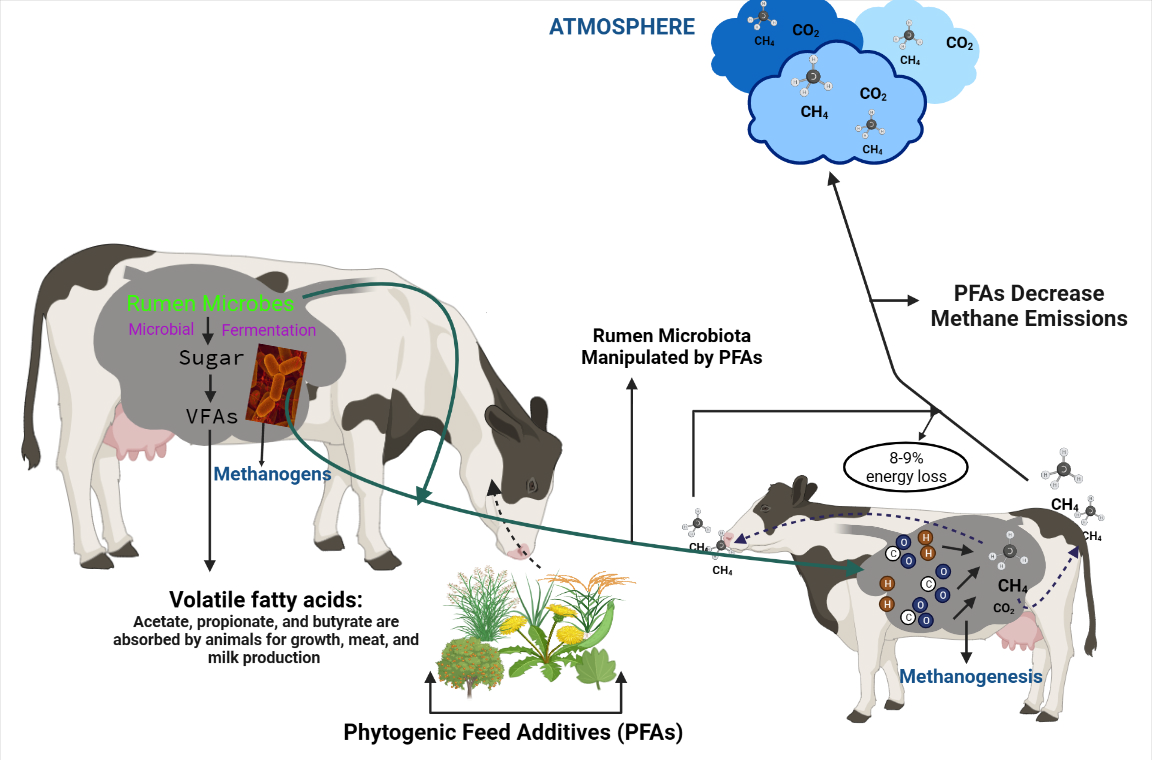
Ruminant animals naturally emit methane gas owing to anaerobic microbial fermentation in the rumen, and these gases are considered major contributors to global warming. Scientists worldwide are attempting to minimize methane emissions from ruminant animals. Some of these attempts include the manipulation of rumen microbes using antibiotics, synthetic chemicals, dietary interventions, probiotics, propionate enhancers, stimulation of acetogens, manipulation of rumination time, vaccination, and genetic selection of animals that produce low methane (CH4). The majority of synthetic additives are harmful to both beneficial rumen microbes and the host or only temporarily affect methanogenesis. Phytogenic feed additives (PFAs) have recently emerged as the best alternatives to antibiotics and synthetic chemicals because of growing public concerns regarding drug resistance and the negative impacts of antibiotics and synthetic chemicals on humans, livestock, and the environment. These additives reduce methane production and improve the volatile fatty acid profile. In this review, we provide an overview of PFA sources and how their bioactive components affect the rumen microbiome to reduce methane emissions. Additionally, we highlight the mechanisms of action of PFAs as a whole as well as some of their bioactive components.
Keywords:
Global warming
; Microbial fermentation
; Phytogenic feed additives
; Rumen microbiome
1. Introduction
The world’s human population is anticipated to reach almost 10 billion people by the year 2050; therefore, an increase in ruminant animal production is necessary to meet the demand for animal protein needs of humans by supplying daily meat and dairy products worldwide (Rojas-Downing et al., 2017). This has resulted in the intensification of agriculture, especially livestock production, and consequently inflated the global index of methane (CH4) produced by livestock by almost 2.5-fold (Van Lingen et al., 2019). Methane accounts for 16% of the global greenhouse gas emissions. It is estimated that ruminant animals contribute to 33% of the global methane emissions index (Yusuf et al., 2012). Approximately 81 million tons of enteric methane is produced annually by livestock worldwide. It is primarily emitted from the rumen and lower digestive tract when carbohydrates are fermented by microbes (Tyagi et al., 2022). These animals are among the largest producers of enteric methane, and they contribute to global warming by adding greenhouse gases to the ozone layer. This process is gaining attention worldwide for identifying rumen microbes that are important for methane production to develop the best methane mitigation strategy (Black et al., 2021). Rumen fermentation produces a variety of beneficial products, including methane. Cattle alone contribute 15-20% of the global methane production every year (Houghton et al., 2001). Methane is the most abundant hydrogen sink synthesized by methanogens in the rumen. In addition to contributing to global warming, enteric methane emissions contribute 8–9% of the total energy lost by ruminants, which, if not lost, can be used by animals for growth, meat, and milk production (Johnson & Johnson, 1995).
Most work done to reduce methane emissions in the 1950s focused on reducing feed energy loss, whereas recent efforts have focused on both energy savings and their effects on climate change. Despite the success of manipulating rumen fermentation using antibiotics and ionophores, their use has been limited by environmental and human health concerns (McGuffey, 2017). Because phytogenic feed additives (PFAs; additives derived from plants) contain many bioactive compounds, unlike antibiotics and ionophores, the global scenario has shifted toward the use of phytogenic feed additives rather than antibiotics or ionophores. This compound is capable of manipulating the microbiota in the rumen through more potent mechanisms of action, including inhibition of the activities of protozoa, methanogenic archaea, and some fiber degraders through its antimicrobial potential and decreasing hydrogen availability (Soltan et al., 2018). PFAs have been reported to manipulate ruminal fermentation and to successfully reduce methane emissions from ruminants (Soltan & Patra, 2021).
PFAs are increasingly being used in animal nutrition because of the negative effects of antibiotics and synthetic chemicals (Ahsan et al., 2022). These additives have sparked interest because of their potential to improve nutrient utilization and promote health (Durmic & Blache, 2012; Rochfort et al., 2008). PFA comprises various phytochemicals that are biologically active during fermentation. Various metabolic pathways are believed to mediate their antimicrobial, metabolic, immune, and antioxidant effects (FrAnKIČ et al., 2009). PFAs have been tested in various ruminant models to manipulate enteric fermentation (Hassan, Arshad, Ebeid, et al., 2020). The use of plant bioactive compounds (PBC) such as tannins, saponins, and essential oils for methane mitigation has been reviewed; however, most studies have focused on PBC rather than providing insight into the sources of these compounds. However, given the current trend and importance of research on climate change and global warming, more research and review are required. In this review, we explore the impact of PFAs on reducing methane emissions, with an emphasis on their effects on rumen ecology as well as the possible underlying mechanisms and factors affecting these effects.
2. Insight into the Role of Rumen Microbial Ecology on Methanogenesis
Rumen microbes and ruminant animals have a symbiotic relationship. These microbes obtain their substrate when ruminant animals ingest feed and, in return, ferment the feed and supply valuable nutrients to the host, producing methane as a byproduct (Figure 1) (Mizrahi, 2013). The microbial community in the rumen is one of the most diverse gut ecosystems hitherto described in the animal kingdom. It consists of anaerobic bacteria (1010–1011 organisms/ml), archaea (108–109 organisms/ml), ciliated protozoa (105–106 organisms/ml), anaerobic fungi (103–104 organisms/ml), and viral community that is largely uncharacterized (Weimer, 2015). To date, only a few of these microbes in microbial ecologies have been cultured and characterized (Morgavi et al., 2013). The use of culture-based approaches to study ruminal content has decreased in recent years. However, the introduction of high-throughput sequencing techniques has allowed us to gain a better understanding of the rumen microbiome in different diets, species, and geographical locations (Tapio et al., 2017). These advancements can provide a deeper understanding of the diverse microbial species in the rumen ecosystem. Using metagenomics, it will be much easier to determine which rumen microbial community is responsible for methane production. This information will enable scientists to develop the best methane mitigation strategy, which in turn will reduce the negative impacts of ruminant animals on the environment.
3. Phytogenic Tools for Reducing Methane Emissions and Their Effects on Ruminal Microbial Ecology
Since the 18th century, the loss of energy in the rumen as CH4 has been well-documented in a journal titled “Zeitschrift für Biologie” (Journal of Biology), written by German Scientist Tappeiner in 1884 (Armsby, 1916). Since then, scientists worldwide have been working to reduce CH4 emissions without affecting livestock growth and productivity. Owing to the greenhouse gas potential of CH4 and the importance of ruminant contributions, policymakers worldwide are currently seeking effective mitigation strategies. In recent years, numerous studies have been conducted to reduce ruminant CH4 emissions (Patra et al., 2017).
Recently, PFAs have attracted the attention of researchers worldwide. These additives have been reported to increase feed conversion efficiency; enhance growth, productivity, and animal health; and reduce CH4 emissions (Flachowsky & Lebzien, 2012). PFAs have been tested by scientists and found to significantly reduce CH4 emissions, manipulate rumen microbial ecology, and change the fermentation dynamics of ruminants (Figure 2) (Cieslak et al., 2013). These additives include; plants, part of plants, plant oil extracts, trees, shrubs, grasses, and legumes. These PFAs are rich in plant bioactive compounds (PBC) such as saponins, tannins, organosulfur compounds, essential oils, flavonoids, propolis, terpenes, and glycosides.
Figure 2 Legend: These bioactive compounds inhibit the activity of methanogens and protozoa (1). This bioactive compound decreases the number of protozoa (defaunation) (2). They also induce the rechanneling of metabolic hydrogen from CH4 to propionate (3).
3.1. Mechanism of Action of Phytogenic Feed Additives on Rumen Microbial Cells
Compared to antibiotics, PFAs have a greater potential to modify the ruminal microbiome and reduce methane emissions by disrupting cell membranes, modulating signal transduction and gene expression pathways, inhibiting enzyme activity, and inhibiting bacterial colonization (Bodas et al., 2012). Generally, PFAs increase the permeability and fluidity of cellular membranes, resulting in the efflux of metabolites and ions and leading to cell leakage and microbial death (Figure 3). Moreover, they can manipulate the rumen metabolism by increasing the permeability of a specific group of rumen bacteria (Omojate Godstime et al., 2014). There are several possible mechanisms of action, including disruption of the cytoplasmic membrane, disruption of the proton motive force, electron flow, active transport mechanisms, and coagulation of the cell composition (Lillehoj et al., 2018).
Figure 3 Legend: The bioactive compounds of phytogenic feed additives have a greater potential to modulate the ruminal microbiome and reduce CH4 emissions, as indicated in figure: 1) disruption of cell membranes; 2) inhibition of gene transcription, translation, and protein synthesis; 3) inhibition of enzyme activity; 4) inhibition of cell wall formation; 5) increasing permeability and fluidity of cellular membranes; 6) resulting in an influx of metabolites and ions, leading to cell leakage; and 7) microbial death.
3.2. Phytogenic Feed Additives: Sources and Effects
3.2.1. Trees, Shrubs, and Forages
Several trees, shrubs, and forages are used for methane mitigation because they are rich in bioactive compounds that can suppress methanogenic activity. Trees, shrubs, and forages contain many bioactive compounds including terpenes, saponins, cyanogenic glycosides, flavones, isoflavones, tannins, coumarins, and other phenolics (Tava et al., 2022). In addition to these, trees, shrubs, and forages provide an excellent source of protein. Therefore, feeding trees, shrubs, and forage can be beneficial protein sources and methane reducers (Wina, 2012). Bioactive compounds in these plants can manipulate the rumen microbial ecosystem, thereby reducing methane production (Dhanasekaran et al., 2020). The mechanism of action of these bioactive compounds could have direct effects on methanogens, anti-protozoal effects, or inhibition of fiber digestion, followed by a lower H2 supply to the methanogens (Table 1).
3.2.2. Trees and Shrubs
Italian Plumeless Thistle (Carduus pycnocephalus)
This plant belongs to the Astraceae family and genus Carduus (Chaudhary, 2000). This plant is also popularly used in Traditional Chinese Medicine to treat various human diseases, such as colds, rheumatism, and stomachache (Esmaeili et al., 2005). They also possess anti-inflammatory, anti-spasmodic, anticancer, antiviral, and antibacterial properties (Orhan et al., 2009). Carduus contains numerous classes of phytochemicals, including lignans, flavonoids, alkaloids, sterols, triterpenes, coumarins, essential oils, hexadecanoic acid, sterols, and triterpenes (Rustaiyan & Faridchehr, 2021). Flavone glycosides in C. pycnocephalus are antimicrobials (El-Lakany et al., 1997). The leaves of C. pycnocephalus contain tannins and saponins (G Goel et al., 2008). C. pycnocephalus decreases methane production in a hay-based diet while improving microbial protein synthesis in dairy cattle (Gunjan Goel et al., 2008). An in vitro screening of 450 plants for their potential anti-methanogenic effects concluded that C. pycnocephalus was the first among the six selected species, and had the potential to reduce methane emissions by more than 25% without adverse effects on digestibility, total volatile fatty acids, and gas and production (Bodas et al., 2008). Owing to the antimicrobial properties of C. pycnocephalus, its mode of action in reducing methanogenesis may be its effect in reducing the number of rumen methanogens.
Chinese Peony (Paeonia lactiflora)
Chinese peony (Paeonia lactiflora) is commonly known as chishao (赤芍) in China. More than 1200 years ago, P. lactiflora root was used in Traditional Chinese Medicine. It treats rheumatoid arthritis, systemic lupus erythematosus, hepatitis, dysmenorrhea, muscle cramps, and fever (He & Dai, 2011). Glucosides of Peony, or Total Glucosides of Peony (TGP), are extracted from P. lactiflora and contain almost 15 components, including albiflorin, benzoyl paeoniflorin, galloylpaeoniflorin, lactoferrin, oxybenzone-paeoniflorin, oxypaeoniflorin, paeony, phenol, phonolite, paeoniflorin, paeoniflorin, paeoniflorin, paeoniflorin, and paeoniflorin (Lim, 2014). The structures of most of these extracts are monoterpene glucosides, among which paeoniflorin is a water-soluble compound, the most abundant (>90%) has a molecular weight of 480.45 and has the highest pharmacological effects among all TGP in both in vitro and in vivo studies (He & Dai, 2011). P. lactiflora extracts have anti-inflammatory, antiviral, antibacterial, and antioxidant properties (Parker et al., 2016). P. lactiflora reduces methane emissions by 8–53% in cattle (Kobayashi, 2010). Methane reduction is caused by the inhibition of gram-positive bacteria (CASTILLO-GONZÁLEZ et al., 2016). Considering its potential antimicrobial and anti-methanogenic effects, this plant requires further investigation.
Leucaena (Leucaena leucocephala)
The Leucaena tree belongs to the family Mimosaceae, genus; Leucaena and the best-known species is Leucocephala it has many common names Worldwide, in China, it is called "Yin ho huan" (Shelton & Brewbaker, 1994). Phytochemical analysis of Leucaena leaves revealed the presence of almost 30 compounds including tannins, squalene, phytol, phylobatanins, alkaloids, cardiac glycosides, flavonoids, saponins, and glycosides (Zayed & Samling, 2016). Phytochemicals in Leucaena have been shown to have several biological effects, including antioxidant, antimicrobial, anti-methanogenic, hepatoprotective, antiparasitic, insecticidal, nematicidal, pesticide, anti-coronary, anti-arthritic, antiandrogenic, hypocholesterolemic, cancer-preventive, anticancer, analgesic, anesthetic, and allergenic (Zayed & Samling, 2016). Leucaena decreased methane production in crossbred cows housed in an open-circuit respiration chamber (Montoya-Flores et al., 2020). However, this treatment did not affect the microbial community. Supplementation with Leucaena decreased methane emissions by up to 20% in Colombian Lucerna heifers (Molina et al., 2016). Another 20% decrease in methane emissions has been reported in grazing cows consuming leucaena pastures in Australia (Harrison et al., 2015). Leucaena is a major source of condensed tannins (CT), and in vitro studies of CT extracts from Leucaena resulted in 99% and 83% reductions in the total number of methanogens and protozoa, respectively (Tan et al., 2011).
Gliricidia (Gliricidia sepium)
Gliricidia is a member of the family Fabaceae (legume family), subfamily Faboideae (Papilionoideae), and tribe Robinieae. Medium-sized semi-deciduous trees with broad canopies, native to Central America and perhaps northern South America, typically grow to a height of 10 m (occasionally 15 m) (Elevitch & Francis, 2006). Gliricidia foliage is rich in tannins and saponins, making it useful for mitigating methane emissions (Molina-Botero, Arroyave-Jaramillo, et al., 2019). The effect of long-term supplementation with G. sepium foliage reduced CH4 production in heifers, and this response persisted over time, without affecting the microbial population and VFA concentration and a slight reduction in CPD digestibility (Molina-Botero, Montoya-Flores, et al., 2019). Zaina et al. reported that 30% supplementation with G. sepium decreased methane gas production and the number of protozoa while increasing digestibility and rumen fermentation parameters. A diet supplemented with 20% Gliricidia sepium leaf meal has the potential to modify rumen fermentation, resulting in improved post-ruminal nutrient utilization (Adelusi et al., 2022).
Calliandra (Calliandra calothyrsus)
Calliandra are shrubs native to the American continent that belong to the Mimosoideae family. These shrubs are rich in tannins (Cardoso-Gutierrez et al., 2021). Tiemann et al. (2008) reported that adding tannin-rich Calliandra plants reduced methane emissions by 24% per day as well as per unit of feed and energy intake. They believed that the mechanism of this reduction was a reduction in the available H2 required for methane production. In vitro, supplementation with C. calothyrsus reduces methane production without any negative effects on rumen fermentation parameters (Muhlisin, 2017). According to Ridwan et al. (2014), 50% silage containing C. calothyrsus decreased enteric CH4 production by reducing the total number of methanogens and Methanobacteriales but decreased bacterial diversity and organic matter digestibility. PE dairy goats supplemented with C. calothyrsus had reduced enteric methane emissions and improved milk production (Sukmawati et al., 2011).
Mulberry (Morus spp.)
Mulberry is a fast-growing deciduous tree of the Moraceae family that is native to India and China's Himalayan foothills (Rohela et al., 2020). The leaves of mulberry trees are widely used as livestock feed because of their high crude protein content and metabolizable energy. In addition, they are rich in flavonoids, a plant bioactive compound known to reduce enteric methane emissions (Hassan, Arshad, Li, et al., 2020). The in vitro supplementation of mulberry leaf flavonoids at a concentration of 15 mg/100 g decreased methane emission, improved dry matter digestibility, and improved the Total Volatile Fatty Acids (TVFA) profile of sheep (Mohammad & Hassan). Considering its potential, further research is needed to test its effect on reducing methane emissions while improving the TVFA profile of ruminants.
3.2.3. Forages
Brassica Forages
In temperate countries, Brassica is an annual plant that has been traditionally used in grazing systems to cover periods of feed deficits for ruminants. Brassica forage crops have four main types that are usually used worldwide to provide food for ruminant livestock feeds during shortage, this includes; kale (Brassica oleracea spp. acephala), turnips (Brassica rapa spp. rapa), swedes (Brassica napus spp. napobrassica), and forage rape (Brassica napus spp. biennis) (Barry, 2013). Brassica leaves, stems, bulbs and roots are used as phytogenic additives (Sun, 2020). They contain bioactive compounds such as S-methyl-cysteine sulfoxide (SMCO) and glucosinolates (Barry, 2013). Brassica forages were reported to reduce CH4 emissions in sheep by 37%; however, the experiment did not examine the effect on rumen microbial ecology (Sun et al., 2016). However, dairy cows fed Brassica forage did not show any methane mitigation effects, and the protozoal count did not significantly differ from those fed 250 g/kg DM grains as a control diet (Williams et al., 2016). This may be due to species variation or the methane measurement method used. However, Sun (2020) reported that Brassica is rich in glucosinolates (GSLs) when ruminants consume Brassica forages, which are broken down in the rumen, resulting in absorption into the blood, which stimulates the secretion of thyroid hormone FT3 in ruminants, and the altered thyroid hormone concentration changes rumen physiology. This would alter the mean retention time of digestion in the rumen, resulting in a reduction in methane emissions.
Alfalfa (Medicago sativa L)
Alfalfa (Medicago sativa), also known as lucerne, is a perennial flowering legume belonging to the Fabaceae family. It is the most important legume forage species in the world (Fu et al., 2015). Alfalfa is rich in saponins, which are known to reduce methane emissions. Kozłowska et al. (2020) reported that ensiled Verko and Kometa alfalfa varieties (rich in saponins) reduced methane production without adversely affecting fermentation parameters. Dietary inclusion of alfalfa hay in crossbred Simmental cattle feed improves nitrogen utilization efficiency and reduces methane emissions (Du et al., 2019). Sheep-fed alfalfa hay as a substitute for concentrate decreases CH4 emissions, digestibility, and urinary N and NH4+-N outputs (Wang et al., 2020). A study conducted by Hironaka et al. (1996) indicated that cattle fed pelleted alfalfa hay produced less methane than those fed chopped alfalfa hay.
Clover (Trifolium species)
Clover belongs to the Fabaceae family, genus Trifolium, and has approximately 240 species distributed over the temperate and subtropical regions of the Mediterranean Basin, western North America, and eastern Africa (Lamont et al., 2001). Several flavonoids, saponins, chloramines, and phenolic acids have been found in Trifolium plants (Kolodziejczyk-Czepas, 2012). Methane yield (g/kg DM) was significantly lower in cattle-fed red clover silage (17.8 ± 3.17) than in those fed grass silage (Bica et al., 2022). A linear increase in dry matter intake (DMI) and reduced methane output per kilogram of DM consumed were observed when white clover was increased in dairy cattle diets (Lee et al., 2004). The methane yield per kilogram of dry matter and digestible organic matter intake was lower for heifers fed red and white clover silage (Parnian-Khajehdizaj et al., 2023). Based on in vitro experiments, white clover leaves containing soluble CTs of 1.6–2.4% DM reduced methane production by 19% (p ≤0.01) and ammonia production by 60% (Roldan et al., 2022). Dairy cattle fed white clover pastures produce less CH4 than those fed ryegrass pastures in small-scale dairy systems (ARRIAGA JORDAN & González Ronquillo, 2021). Navarro-Villa et al. (2011) reported that red clover showed reduced in vitro rumen methane output compared to that of perennial ryegrass. In a study using portable accumulation chambers, sheep that graze subterranean clover produced lower daily CH4 emissions (23.5 g/day) compared with sheep grazing lucerne (27.3 g/day) and perennial ryegrass (32.3 g/day) (Muir et al., 2020).
Chinese Lespedeza (Sericea lespedeza)
Lespedeza is a perennial herb in the family Leguminosae (Fabaceae), which is native to Japan, the Korean Peninsula, China, the Himalayas, Afghanistan, and Malaysia. Lespedeza is rich in condensed tannins and other phenolics (Terrill et al.). Regardless of the feeding level, goats fed CT-containing Lespedeza forage showed decreased CH4 emissions (Animut et al., 2008). Substituting Eragrostis curvula hay with 60% S. lespedeza on a DM basis resulted in the greatest reduction in CH4 yield (21.4 %) compared to a diet of 100% Eragrostis curvula (Du Toit et al., 2020). Dietary inclusion of S. lespedeza increases propionate production and reduces CH4 production in the rumen (Pech-Cervantes et al., 2021). H. Liu et al. (2019) reported that Alpine doelings fed on S. lespedeza forage emit less methane compared to the control. A study was conducted to assess nutrient digestibility, volatile fatty acid (VFA) concentrations, microbial protein synthesis, bacterial nitrogen (N) efficiency, and enteric methane (CH4) production in four grass-legume diets rich in condensed tannins (CT) (alfalfa, birdsfoot trefoil, crown vetch, and S. lespedeza). The results indicated that the lowest total CH4 production was observed in the S. lespedeza diet (Roca-Fernández et al., 2020).
3.2.4. Plant Oil Extracts
Plant oil extracts are high in lipids, making them an excellent option for mitigating methane emissions (Table 1). Numerous studies have indicated that the addition of oils to ruminant diets reduces methane production (Alvarez-Hess et al., 2019). This supplementation decreases the number of protozoa and methanogens in the rumen and bio-hydrogenates unsaturated fatty acids, thereby reducing methane production (Patra, 2013). The shift from carbohydrates to lipids in ruminant diets modifies gas production in the rumen, reducing CH4 emissions (Haque, 2018; Islam & Lee, 2019).
Rapeseed Oil
Rapeseed is the third most popular vegetable oil in the world and is extracted from rape (canola) brassica forage. Rapeseed oil is low in erucic acid and glucosinolates (Piazza & Foglia, 2001). The inclusion of rapeseed oil in the diet of dairy cows decreased enteric CH4 emissions and modified the microbial community structure without affecting the total counts of bacteria, archaea, or ciliate protozoa (Bayat et al., 2018). Cattle supplemented with canola oil (rapeseed oil) and nitrate reduce enteric methane emissions and protozoal populations in the rumen (Villar et al., 2020). Supplementation of nursing dairy cows with 5% rapeseed oil to nursing dairy cows reduced 23% of CH4 emissions with no effect on archaea and bacterial abundance (Ramin et al., 2021). Dietary supplementation of rapeseed (41 g oil/kg DM) decreased daily CH4 emissions from lactating dairy cows by up to 22.5 %, which increased the relative abundance of Methanosphaera and Succinivibrionaceae in the rumen and decreased the abundance of Bifidobacteriaceae (Chagas et al., 2021). An in vitro experiment reported a decrease in the population of Thermoplasmata archaea (a methylotrophic methanogen) in the rumen after adding rapeseed oil to silage (Poulsen et al., 2013). Growing cattle supplemented with a diet containing 46 g of rapeseed oil/kg of diet DM decreased CH4 emissions, but reduced feed intake (Beauchemin & McGinn, 2006).
Camelina Sativa Oil
Camelina sativa oil is a rich source of unsaturated fatty acids, particularly linoleic, linolenic, and oleic acids (Flachowsky et al., 1997). The rich unsaturated fatty acid profile of Camelina sativa oil makes it a very good supplement for ruminants because it has high-quality fat (Hurtaud & Peyraud, 2007). In addition to being rich in unsaturated fatty acids, it also has a rich antioxidant profile (Hurtaud & Peyraud, 2007). Researchers have established that oilseeds are generally one of the most effective ways to reduce enteric CH4 production from ruminants, as they can mitigate CH4 emissions by directly inhibiting rumen protozoa and methanogens while increasing the bio-hydrogenation of polyunsaturated fatty acids to serve as a sink for hydrogen produced by rumen microbes (Hassan, Arshad, Ebeid, et al., 2020). Supplementation with C. sativa oil at different levels in an in vitro study significantly decreased CH4 production (Hossam M Ebeid et al., 2020). Camelina oil at all levels significantly affected ammonia nitrogen and microbial protein in all rations because it altered the proportions of individual ruminal volatile fatty acids and decreased CH4 production by altering the total number of bacteria, protozoa, and methanogens ((Hossam M. Ebeid et al., 2020). Dietary supplements of camelina oil in Finnish Ayrshire cows in vivo decreased ruminal CH4 and CO2 production, but there was no change in the total number of bacteria, methanogens, protozoa, and fungi in the rumen (Bayat et al., 2015).
Garlic Oil
Garlic oil was produced from ground garlic cloves and collected as a distillate from the vapor when the cloves were heated at a temperature of 100oC. Garlic oil is a mixture of various bioactive organosulfur compounds; including diallyl disulfide (C6H10S2), diallyl sulfide (C6H10S), allicin (C6H10S2O), and allyl mercaptan (C3H6S) and others (Lawson, 1996). This metabolic profile makes it difficult to determine the exact mechanism of fermentation in the rumen. Both gram-positive and gram-negative bacteria are sensitive to the antibacterial effects of garlic oil (Reuter, 1996). In an in vitro experiment, garlic oil was reported to decrease methane emissions by 74%, increase propionate and butyrate proportions, and decrease acetate and branch-chain VFA proportions (Busquet et al., 2005). Garlic oils and their components have been found to modify fermentation parameters in the rumen and inhibit methane production by reducing the abundance of protozoa (Kongmun et al., 2010).
Palm Oil
Palm oil is an edible vegetable oil extracted from the fruit of palm oil trees by squeezing or crushing fleshy fruits or kernels. It contains saturated fatty acids (palmitate, 44.3%; stearate, 4.6%; myristate, 1%), monounsaturated fatty acids (oleic acid, 38.7%), and polyunsaturated fatty acids (linoleic acid, α-linoleic acid 10.5%, and others 0.9%) (Sutapa & Analava, 2009). Recent research on supplementation of three levels of palm oil ( 20, 40, and 60 g/kg) to heifers fed low-quality grass on enteric CH4 emissions were reported, the results show that total daily CH4 production decreased by 4% for every 10 g/kg palm oil added while feed conversion efficiency, apparent digestibility, intake of nutrients were not affected by the inclusion (Flores-Santiago et al., 2022). It has also been reported that the addition of 4% palm oil decreases in vitro methane production and the number of ciliate protozoa (Yilmaz & Kara, 2022).
3.3. Mechanism of Actions of Plant Bioactive Compounds (PBC) and Their Role in Reducing Methane Emissions
PBCs are bioactive compounds that have various effects on plants and other living organisms. Many PBCs exhibit anti-methanogenic, antioxidant, antimicrobial, anti-inflammatory, anti-helminthic, anticoagulant, antidiabetic, and lipid-lowering properties (Teoh & Teoh, 2016). They are biologically active metabolites that can exert beneficial effects on methane emission, feed digestion, rumen fermentation productivity, and the health of livestock animals (Kholif et al., 2021).
These compounds were extracted from the plants. These include tannins, saponins, and essential oils that affect methanogenesis by inhibiting the growth, development, and activities of the methanogen population, both directly and indirectly, by reducing the number of protozoa associated with methanogens (Table 3). They may also result in a shift toward propionate production, which reduces hydrogen competition, thereby affecting methanogenesis (Cieslak et al., 2013). PBC additives can be used instead of antibiotics in ruminants owing to their antibacterial properties against ruminal bacteria, protozoa, and methanogens (Kholif & Olafadehan, 2021). These metabolites are believed to have beneficial effects on livestock end products by altering fermentation in the rumen without causing microbial resistance (Wallace et al., 2002).
These phytochemicals can modify the rumen microbiome to alter its physiology because of their excellent antimicrobial activity (Casamiglia et al., 2017). Numerous experiments on the potential effects of these phytochemicals on fermentation have been conducted both in vitro and in vivo, and have been found to significantly improve feed digestibility and decrease methanogenesis in the rumen (Patra et al., 2017). Despite various strategies to modify the microbiome of the rumen, PBC has significant potential to replace antibiotics in modifying rumen ecology and decreasing methane production through various mechanisms used by antimicrobial compounds (Reddy et al., 2020). Some of the recognized mechanisms of action include disruption of proton motive force, disruption of cytoplasmic membranes, active transport mechanisms, coagulation of cell composition, and electron flow (Lillehoj et al., 2018). PBC also significantly affects rumen microflora, resulting in the modification of fermentation and improved productivity of livestock (Reddy et al., 2020).
Several PBCs, including tannins, saponins, essential oils (EO), flavonoids, and propolis have been found to have a significant impact on methanogens, protozoal population, feed conversion efficiency, absorption, and fermentation parameters as well as reducing CH4 emissions from animals (Hassan, Arshad, Ebeid, et al., 2020).

Table 2.
Results from recent research on the effect of plant bioactive compounds (PBC) on methane emission in the rumen.
Table 2.
Results from recent research on the effect of plant bioactive compounds (PBC) on methane emission in the rumen.
| Sources of PBC | Type of Experiment | Dosage | Diet | Methane Emission | Reference |
|---|---|---|---|---|---|
| Tannins | |||||
| Acacia mimosa Extracts – CT | In vivo (6 Cannulated Nellore cattle) | 1.25% and 2.25% | Grazing | 28% | Fagundes et al. (2020) |
| Extracts of Lipid encapsulated- Acacia Tannin |
In vivo (4 rumen-cannulated Merino withers) | 50 g/kg feed | Eragrotis Lucerne hay |
19% | Adejoro et al. (2019) |
| Extracts of Crude-Acacia Tannin | In vivo (4 rumen-cannulated Merino withers) | 40 g/kg feed | Eragrotis Lucerne hay |
30% | Adejoro et al. (2019) |
| Extracts of Acacia nilotica Leaves and Pods |
In Vitro (Sheep rumen fluid) |
Leaves (187g/kg DM HT) Pods (350g/kg/DM HT) |
Acacia nilotica Leaves and Pods |
64% | Rira et al. (2019) |
| Tannin-containing – Birdsfoot trefoil, Sainfoin, and Small burnet | In Vitro (Heifer) | 2.5% CT 4.5% HT |
Hay | 21 – 34% | Stewart et al. (2019) |
| Tannic acid | in vivo (Beef Cattle) | 6.5, 13.0, or 26.0 g/kg DM | Corn silage and Concentrate mixture | 11.1%, 14.7% and 33.6% | Yang et al. (2017) |
| Purified hydrolyzable (chestnut and sumach) and Condensed tannins (mimosa and quebracho) | In vitro (Cattle) | 0.5, 0.75 and 1.0 mg/ml | 70% Hay 30% Concentrate |
22 – 37% | Jayanegara et al. (2015) |
| Saponins | |||||
| Tea saponin | In vivo (Sheep) | 2.0g/Day | Basal diet | 8.8% | Y. Liu et al. (2019) |
| Tea saponin | In Vitro (Bovine) | 0.50g/L | 54% Corn silage 6% Hay 40% Concentrate |
29% | Guyader et al. (2017) |
| Extracts of Yucca schidigera | In vivo (Sheep) | 170 mg per day | 75% Hay 35% Concentrate |
16% | Wang et al. (2009) |
| Extracts of Knautia arvensis leaves | In vitro (Holstein Cow) | 10.2 & 20.4 g/kg | 50% Hay 50% Concentrate |
5.5 & 6.4% | G Goel et al. (2008) |
| Leaves of Sesbania sesban | In vitro (Holstein Cow) | 174 g/kg |
32% Hay: 68% Concentrate |
12% | Gunjan Goel et al. (2008) |
| Seeds of Trigonella foenum-graecum | In vitro (Holstein Cow) | 30.4 g/kg |
50% Hay 50% Concentrate |
2% | Gunjan Goel et al. (2008) |
| Essential Oil | |||||
| Essential Oil Blend | In vivo (Dairy cow) | 1g/d/cow | Total Mixed Ration | 8.8% | Belanche et al. (2020) |
| Essential Oil Blend (Coriander, geranyl acetate, and eugenol) | In vivo (Dairy cow) | 1 g/d/cow | Total Mixed Ration | 6% | Hart et al. (2019) |
| Anise oil | In vivo (Sheep) | 0, 50, 100, 200, 400 mg/L | 40% Hay 60% corn-based concentrate |
47% | Wang et al. (2018) |
| Garlic oil Eucalyptus oil Origanum oil Clove oil Peppermint oil |
In vitro (Lactating Jersey Cow) | 0.25, 0.50 and 1.0 g/l Fermentation medium | Ground alfalfa hay and concentrate 50% each | 22 – 42% 17 – 26% 12 – 86% 11 – 34%8 – 16% |
Patra and Yu (2015) |
CT – Condense Tannins, HT – Hydrolysable Tannins, DM – Dry Matter Intake.
Table 3.
The effects of plant bioactive compounds (PBCs) on rumen ecology and potential mechanisms.
| Plant Bioactive Compound | Effect on Rumen Ecology | Potential Mechanism | References |
|---|---|---|---|
| Tannin | Bacteriostatic in rumen | Inhibit the activities of rumen microbes | McSweeney et. al. (2001); (Jayanegara et al., 2015) |
| Reduce fiber digestion in the rumen. | Reduce methanogenesis by decreasing the level of available H2 needed for the production of methane | Amlan K Patra, (2012); Bodas et al. (2012) | |
| Increase in the abundance of butyrate-producing bacteria and other probiotic bacteria, such as Bifidobacterium and Lactobacillusamino | Decreased the production of short-chain fatty acids like acetate and reduced methane production | Buccioni et al. (2015); (Correa et al., 2020). | |
| Suppressing the archaea communities and increasing total rumen bacteria populations | Lower methane production | Fagundes et al. (2020) | |
| Suppressing the growth of methanogens directly | Reduce CH4 production | (Aboagye & Beauchemin, 2019) | |
| Decreased organic matter digestion in the rumen | Reduce methanogenesis | (Grainger et al., 2009) | |
| Decreased the relative abundance of protozoa, methanogens, and Ruminococcus albus | Reduce methanogenesis by inhibiting methanogen and protozoal growth | Yang et. al. (2017); (Volpe et al., 2018); (Witzig et al., 2018) | |
| Saponins | Inhibition of protozoal ecology in rumen and other methanogens associated with protozoa | Reduce protozoal population by interaction with sterol moiety present in the protozoa membrane thereby reducing methanogenesis | (Patra & Saxena, 2009); (Bodas & Prieto, 2012); (Jayanegara et al., 2014); (Ramírez-Restrepo et al., 2016); (Guyader et al., 2017); (Y. Liu et al., 2019); (Tan et al., 2020) |
| Essential oil | Alteration of rumen microbial ecology. Inhibit the growth of methanogenic Archaea in the rumen | Inhibit the HMG-CoA reductase, which will lead to membrane instability and ultimately, death of methanogenic archaea cells. Reduce methanogenesis | (Patra & Yu, 2015).; (Ye et al., 2018); (Lei et al., 2019); (Belanche et al., 2020) |
| Inhibition activity of gram-positive (+ve) and gram-negative (-ve) bacteria | Antimicrobial capabilities are mainly due to their interface with the cell membrane of rumen microbes by disrupting membrane stability of lips bilayers of bacterial cells. This inhibition in the rumen may lead to an increase in propionate levels in the rumen, thereby reducing the rate of methane production | (Zengin & Baysal, 2014); (Cobellis et al., 2016); (Schären et al., 2017); (Poudel et al., 2019) | |
| Increased the abundance of Succinivibrio species, Bacteroides species, and Succinivibrio species in rumen. | Shift in rumen fermentation pattern, favoring propionate production over acetate. This may reduce methane production | (Evans & Martin, 2000); (Lei et al., 2019). | |
| Flavonoids | Antimicrobial properties | Their interaction with rumen microbes can decrease the population of methanogenic archaea | (Purba et al., 2020) |
| Increase the abundance of Fibrobacter succinogenes diversity and decrease Ruminoccocus albus and Ruminoccocus flavefaciens population | Create a competition for hydrogen between rumen microbes and other methanogens for VFA production and methanogenesis. | (Kim et al., 2015) | |
| Reduce ciliate protozoa and hydrogenotrophic methanogens population | Inhibit methanogenesis | (Oskoueian et al., 2013); (Seradj et al., 2014) | |
| Propolis | Reduce the population of methanogenic Archaea | Inhibit methanogenesis | (Morsy et al., 2021) |
4. Conclusions
This review highlights various phytogenic feed additives capable of changing the rumen microbial ecology and reducing methane production. Trees, shrubs, and legumes are the most effective sources of phytogenic substances that reduce methane while improving the volatile fatty acid profile of ruminants because they contain numerous bioactive compounds. Most of the results in this review are from in vitro experiments; however, to understand the efficiency of phytogenic substances and their effects on methanogenesis, animal performance, animal health and welfare, rumen ecology, safety of phytogenic substances, environmental influence, quantity and quality of animal products, and applicability of phytogenic additives, in vivo studies over a longer period and across various parts of the world are needed. These are paramount to providing livestock farmers, policymakers, and climate change agencies with reliable information on the precise effect of phytogenic feed additives in reducing methane emissions while improving animal production.
Authors Contribution: Ibrahim Bature: wrote the manuscript, Wu Xiaohu, Feng Yang and Zeyi Liang: proofread the draft, Yang Chen, Liu Jing, and Sun Xu designed figures, Xuezhi Ding: conceived, reviewed, edited, supervision and funding acquisition.
Acknowledgments
The authors acknowledge the financial support from the Key Laboratory of Yak Breeding Engineering, Lanzhou Institute of Husbandry and Pharmaceutical Sciences, Chinese Academy of Agricultural Sciences, Lanzhou, Gansu Province, People’s Republic of China.
Declaration of Competing Interest: The authors declare that the research presented in this article is not influenced by any competing financial interests or personal relationships.
References
- Aboagye, I. A., & Beauchemin, K. A. (2019). Potential of molecular weight and structure of tannins to reduce methane emissions from ruminants: A review. Animals, 9(11), 856. [CrossRef]
- Adejoro, F. A., Hassen, A., & Akanmu, A. M. (2019). Effect of lipid-encapsulated acacia tannin extract on feed intake, nutrient digestibility and methane emission in sheep. Animals, 9(11), 863. [CrossRef]
- Adelusi, O., Idowu, O., Adebayo, K., Balogun, M., & Oni, A. (2022). In vitro degradability of diets containing varying levels of Gliricidia sepium and cassava leaf meals.
- Ahsan, U., Adabi, S. G., Sayın Özdemir, Ö., Sevim, Ö., Tatlı, O., Kuter, E., & Cengiz, Ö. (2022). Growth performance, carcass yield and characteristics, meat quality, serum biochemistry, jejunal histomorphometry, oxidative stability of liver and breast muscle, and immune response of broiler chickens fed natural antioxidant alone or in combination with Bacillus licheniformis. Archives Animal Breeding, 65(2), 183-197. [CrossRef]
- Alvarez-Hess, P., Williams, S., Jacobs, J., Hannah, M., Beauchemin, K., Eckard, R., Wales, W., Morris, G., & Moate, P. (2019). Effect of dietary fat supplementation on methane emissions from dairy cows fed wheat or corn. Journal of Dairy Science, 102(3), 2714-2723. [CrossRef]
- Animut, G., Puchala, R., Goetsch, A., Patra, A., Sahlu, T., Varel, V., & Wells, J. (2008). Methane emission by goats consuming diets with different levels of condensed tannins from lespedeza. Animal Feed Science and Technology, 144(3-4), 212-227. [CrossRef]
- Armsby, H. P. (1916). The use of energy values in the computation of rations for farm animals. US Department of Agriculture.
- ARRIAGA JORDAN, C., & González Ronquillo, M. (2021). Feeding Forage Mixtures of Ryegrass (Lolium spp.) with Clover (Trifolium spp.) Supplemented with Local Feed Diets to Reduce Enteric Methane Emission E.
- Barry, T. (2013). The feeding value of forage brassica plants for grazing ruminant livestock. Animal Feed Science and Technology, 181(1-4), 15-25. [CrossRef]
- Bayat, A., Kairenius, P., Stefański, T., Leskinen, H., Comtet-Marre, S., Forano, E., Chaucheyras-Durand, F., & Shingfield, K. (2015). Effect of camelina oil or live yeasts (Saccharomyces cerevisiae) on ruminal methane production, rumen fermentation, and milk fatty acid composition in lactating cows fed grass silage diets. Journal of Dairy Science, 98(5), 3166-3181. [CrossRef]
- Bayat, A. R., Tapio, I., Vilkki, J., Shingfield, K., & Leskinen, H. (2018). Plant oil supplements reduce methane emissions and improve milk fatty acid composition in dairy cows fed grass silage-based diets without affecting milk yield. Journal of Dairy Science, 101(2), 1136-1151. [CrossRef]
- Beauchemin, K., & McGinn, S. (2006). Methane emissions from beef cattle: Effects of fumaric acid, essential oil, and canola oil. Journal of animal science, 84(6), 1489-1496. [CrossRef]
- Belanche, A., Newbold, C. J., Morgavi, D. P., Bach, A., Zweifel, B., & Yáñez-Ruiz, D. R. (2020). A meta-analysis describing the effects of the essential oils blend agolin ruminant on performance, rumen fermentation and methane emissions in dairy cows. Animals, 10(4), 620. [CrossRef]
- Bica, R., Palarea-Albaladejo, J., Lima, J., Uhrin, D., Miller, G. A., Bowen, J., Pacheco, D., Macrae, A., & Dewhurst, R. (2022). Methane emissions and rumen metabolite concentrations in cattle fed two different silages. Scientific Reports, 12(1), 5441. [CrossRef]
- Black, J. L., Davison, T. M., & Box, I. (2021). Methane emissions from ruminants in Australia: mitigation potential and applicability of mitigation strategies. Animals, 11(4), 951. [CrossRef]
- Bodas, R., López, S., Fernandez, M., García-González, R., Rodríguez, A., Wallace, R., & González, J. (2008). In vitro screening of the potential of numerous plant species as antimethanogenic feed additives for ruminants. Animal Feed Science and Technology, 145(1-4), 245-258. [CrossRef]
- Bodas, R., & Prieto, N. (2012). Garcia-Gonzales; Andres, S.; Giraldez, F. J.; Lopez, S. Anim. Feed Sci. Technol, 176, 78-93.
- Bodas, R., Prieto, N., García-González, R., Andrés, S., Giráldez, F. J., & López, S. (2012). Manipulation of rumen fermentation and methane production with plant secondary metabolites. Animal Feed Science and Technology, 176(1-4), 78-93. [CrossRef]
- Busquet, M., Calsamiglia, S., Ferret, A., Cardozo, P., & Kamel, C. (2005). Effects of cinnamaldehyde and garlic oil on rumen microbial fermentation in a dual flow continuous culture. Journal of Dairy Science, 88(7), 2508-2516. [CrossRef]
- Cardoso-Gutierrez, E., Aranda-Aguirre, E., Robles-Jimenez, L., Castelán-Ortega, O., Chay-Canul, A., Foggi, G., Angeles-Hernandez, J., Vargas-Bello-Pérez, E., & González-Ronquillo, M. (2021). Effect of tannins from tropical plants on methane production from ruminants: A systematic review. Veterinary and Animal Science, 14, 100214. [CrossRef]
- Casamiglia, S., Busquet, M., Cardoza, P., Castillejos, L., & Ferrett, A. (2017). Essential oils as modifiers of rumen microbial fermentation: A review. J. Dairy Sci, 90, 2580-2595.
- CASTILLO-GONZÁLEZ, A. R., BURROLA-BARRAZA, M. E., RIVAS-MARTÍNEZ, M. I., Dominguez-Viveros, J., ORTEGA-GUTIÉRREZ, J. A., & Dominguez-Diaz, D. (2016). Relationships between ruminal Gram-positive bacteria and methane from lactating dairy cows supplemented with monensin and tallow, alone or in combination. Med. Weter, 72(8), 498-504. [CrossRef]
- Chagas, J. C., Ramin, M., Exposito, R. G., Smidt, H., & Krizsan, S. J. (2021). Effect of a Low-Methane Diet on Performance and Microbiome in Lactating Dairy Cows Accounting for Individual Pre-Trial Methane Emissions. Animals, 11(9), 2597. [CrossRef]
- Chaudhary, S. (2000). Flora of the Kingdom of Saudi Arabia, vol II, parts 1–3. Ministry of Agriculture and Water, Riyadh.
- Cieslak, A., Szumacher-Strabel, M., Stochmal, A., & Oleszek, W. (2013). Plant components with specific activities against rumen methanogens. Animal, 7 Suppl 2, 253-265. [CrossRef]
- Cobellis, G., Trabalza-Marinucci, M., & Yu, Z. (2016). Critical evaluation of essential oils as rumen modifiers in ruminant nutrition: A review. Science of the Total Environment, 545, 556-568. [CrossRef]
- Correa, P. S., Mendes, L. W., Lemos, L. N., Crouzoulon, P., Niderkorn, V., Hoste, H., Costa-Júnior, L. M., Tsai, S. M., Faciola, A. P., & Abdalla, A. L. (2020). Tannin supplementation modulates the composition and function of ruminal microbiome in lambs infected with gastrointestinal nematodes. FEMS Microbiology Ecology, 96(3), fiaa024. [CrossRef]
- Dhanasekaran, D. K., Dias-Silva, T. P., Filho, A. L. A., Sakita, G. Z., Abdalla, A. L., Louvandini, H., & Elghandour, M. M. (2020). Plants extract and bioactive compounds on rumen methanogenesis. Agroforestry Systems, 94, 1541-1553. [CrossRef]
- Du Toit, C. J. L., Van Niekerk, W. A., Meissner, H., Erasmus, L. J., & Coertze, R. J. (2020). Methane emissions from sheep fed Eragrostis curvula hay substituted with Lespedeza cuneata. Animal Production Science, 60(15), 1777-1784. [CrossRef]
- Du, W., Hou, F., Tsunekawa, A., Kobayashi, N., Ichinohe, T., & Peng, F. (2019). Effects of the diet inclusion of common vetch hay versus alfalfa hay on the body weight gain, nitrogen utilization efficiency, energy balance, and enteric methane emissions of crossbred Simmental cattle. Animals, 9(11), 983. [CrossRef]
- Durmic, Z., & Blache, D. (2012). Bioactive plants and plant products: Effects on animal function, health and welfare. Animal Feed Science and Technology, 176(1-4), 150-162. [CrossRef]
- Ebeid, H. M., Hassan, F.-u., Li, M., Peng, L., Peng, K., Liang, X., & Yang, C. (2020). Camelina sativa L. Oil Mitigates Enteric in vitro Methane Production, Modulates Ruminal Fermentation, and Ruminal Bacterial Diversity in Buffaloes [Original Research]. Frontiers in Veterinary Science, 7. [CrossRef]
- Ebeid, H. M., Hassan, F.-u., Li, M., Peng, L., Peng, K., Liang, X., & Yang, C. (2020). Camelina sativa L. oil mitigates enteric in vitro methane production, modulates ruminal fermentation, and ruminal bacterial diversity in buffaloes. Frontiers in Veterinary Science, 7, 550. [CrossRef]
- El-Lakany, A., Abdel-Kader, M., Hammoda, H., Ghazy, N., & Mahmoud, Z. (1997). A new flavone glycoside with antimicrobial activity for Carduus pycnocephalus L. Pharmazie, 52(1), 78-79.
- Elevitch, C. R., & Francis, J. K. (2006). Gliricidia sepium (gliricidia). Species Profiles for Pacific Island Agroforestry, 2(1), 1-18.
- Esmaeili, A., Rustaiyan, A., Nadimi, M., Masoudi, S., Tadayon, F., Sedaghat, S., Ebrahimpur, N., & Hajyzadeh, E. (2005). Volatile constituents of Centaurea depressa MB and Carduus pycnocephalus L. two compositae herbs growing wild in Iran. Journal of essential oil research, 17(5), 539-541. [CrossRef]
- Evans, J. D., & Martin, S. A. (2000). Effects of thymol on ruminal microorganisms. Current microbiology, 41(5), 336-340. [CrossRef] [PubMed]
- Fagundes, G. M., Benetel, G., Welter, K. C., Melo, F. A., Muir, J. P., Carriero, M. M., Souza, R. L., Meo-Filho, P., Frighetto, R. T., & Berndt, A. (2020). Tannin as a natural rumen modifier to control methanogenesis in beef cattle in tropical systems: friend or foe to biogas energy production? Research in Veterinary Science, 132, 88-96. [CrossRef]
- Flachowsky, G., Langbein, T., Böhme, H., Schneider, A., & Aulrich, K. (1997). Effect of false flax expeller combined with short-term vitamin E supplementation in pig feeding on the fatty acid pattern, vitamin E concentration and oxidative stability of various tissues. Journal of Animal Physiology and Animal Nutrition, 78(1-5), 187-195. [CrossRef]
- Flachowsky, G., & Lebzien, P. (2012). Effects of phytogenic substances on rumen fermentation and methane emissions: A proposal for a research process. Animal Feed Science and Technology, 176(1-4), 70-77. [CrossRef]
- Flores-Santiago, E. d. J., González-Garduño, R., Vaquera-Huerta, H., Calzada-Marín, J. M., Cadena-Villegas, S., Arceo-Castillo, J. I., Vázquez-Mendoza, P., & Ku-Vera, J. C. (2022). Reduction of Enteric Methane Emissions in Heifers Fed Tropical Grass-Based Rations Supplemented with Palm Oil. Fermentation, 8(8), 349. [CrossRef]
- FrAnKIČ, T., Voljč, M., Salobir, J., & Rezar, V. (2009). Use of herbs and spices and their extracts in animal nutrition. Acta Agric Slov, 94(2), 95-102. [CrossRef]
- Fu, C., Hernandez, T., Zhou, C., & Wang, Z.-Y. (2015). Alfalfa (Medicago sativa L.). Agrobacterium Protocols: Volume 1, 213-221. [CrossRef]
- Goel, G., Makkar, H., & Becker, K. (2008). Changes in microbial community structure, methanogenesis and rumen fermentation in response to saponin-rich fractions from different plant materials. Journal of Applied Microbiology, 105(3), 770-777. [CrossRef]
- Goel, G., Makkar, H. P., & Becker, K. (2008). Effects of Sesbania sesban and Carduus pycnocephalus leaves and Fenugreek (Trigonella foenum-graecum L.) seeds and their extracts on partitioning of nutrients from roughage-and concentrate-based feeds to methane. Animal Feed Science and Technology, 147(1-3), 72-89. [CrossRef]
- Grainger, C., Clarke, T., Auldist, M., Beauchemin, K., McGinn, S., Waghorn, G., & Eckard, R. J. (2009). Potential use of Acacia mearnsii condensed tannins to reduce methane emissions and nitrogen excretion from grazing dairy cows. Canadian Journal of Animal Science, 89(2), 241-251. [CrossRef]
- Guyader, J., Eugène, M., Doreau, M., Morgavi, D., Gérard, C., & Martin, C. (2017). Tea saponin reduced methanogenesis in vitro but increased methane yield in lactating dairy cows. Journal of Dairy Science, 100(3), 1845-1855. [CrossRef] [PubMed]
- Haque, M. N. (2018). Dietary manipulation: a sustainable way to mitigate methane emissions from ruminants. Journal of animal science and technology, 60(1), 1-10. [CrossRef]
- Harrison, M. T., McSweeney, C., Tomkins, N. W., & Eckard, R. J. (2015). Improving greenhouse gas emissions intensities of subtropical and tropical beef farming systems using Leucaena leucocephala. Agricultural Systems, 136, 138-146. [CrossRef]
- Hart, K. J., Jones, H. G., Waddams, K. E., Worgan, H. J., Zweifel, B., & Newbold, C. J. (2019). An essential oil blend decreases methane emissions and increases milk yield in dairy cows. Open Journal of Animal Sciences, 9(03), 259. [CrossRef]
- Hassan, F.-u., Arshad, M. A., Ebeid, H. M., Rehman, M. S.-u., Khan, M. S., Shahid, S., & Yang, C. (2020). Phytogenic additives can modulate rumen microbiome to mediate fermentation kinetics and methanogenesis through exploiting diet–microbe interaction. Frontiers in Veterinary Science, 7, 575801. [CrossRef]
- Hassan, F.-u., Arshad, M. A., Li, M., Rehman, M. S.-u., Loor, J. J., & Huang, J. (2020). Potential of mulberry leaf biomass and its flavonoids to improve production and health in ruminants: Mechanistic insights and prospects. Animals, 10(11), 2076. [CrossRef]
- He, D.-Y., & Dai, S.-M. (2011). Anti-inflammatory and immunomodulatory effects of Paeonia lactiflora Pall., a traditional Chinese herbal medicine. Frontiers in pharmacology, 2, 10. [CrossRef]
- Hironaka, R., Mathison, G. W., Kerrigan, B. K., & Vlach, I. (1996). The effect of pelleting of alfalfa hay on methane production and digestibility by steers. Science of The Total Environment, 180(3), 221-227. [CrossRef]
- Houghton, J. T., Ding, Y., Griggs, D. J., Noguer, M., van der Linden, P. J., Dai, X., Maskell, K., & Johnson, C. (2001). Climate change 2001: the scientific basis: contribution of Working Group I to the third assessment report of the Intergovernmental Panel on Climate Change. Cambridge university press.
- Hurtaud, C., & Peyraud, J.-L. (2007). Effects of feeding camelina (seeds or meal) on milk fatty acid composition and butter spreadability. Journal of Dairy Science, 90(11), 5134-5145. [CrossRef] [PubMed]
- Islam, M., & Lee, S.-S. (2019). Advanced estimation and mitigation strategies: a cumulative approach to enteric methane abatement from ruminants. Journal of animal science and technology, 61(3), 122. [CrossRef]
- Jayanegara, A., Goel, G., Makkar, H. P., & Becker, K. (2015). Divergence between purified hydrolysable and condensed tannin effects on methane emission, rumen fermentation and microbial population in vitro. Animal Feed Science and Technology, 209, 60-68. [CrossRef]
- Jayanegara, A., Wina, E., & Takahashi, J. (2014). Meta-analysis on methane mitigating properties of saponin-rich sources in the rumen: influence of addition levels and plant sources. Asian-Australasian Journal of Animal Sciences, 27(10), 1426. [CrossRef]
- Johnson, K. A., & Johnson, D. E. (1995). Methane emissions from cattle. Journal of animal science, 73(8), 2483-2492. [CrossRef]
- Kholif, A., Hassan, A., El Ashry, G. M., Bakr, M., El-Zaiat, H., Olafadehan, O., Matloup, O., & Sallam, S. (2021). Phytogenic feed additives mixture enhances the lactational performance, feed utilization and ruminal fermentation of Friesian cows. Animal Biotechnology, 32(6), 708-718. [CrossRef]
- Kholif, A. E., & Olafadehan, O. A. (2021). Essential oils and phytogenic feed additives in ruminant diet: chemistry, ruminal microbiota and fermentation, feed utilization and productive performance. Phytochemistry Reviews, 20(6), 1087-1108. [CrossRef]
- Kim, E. T., Lee, S. J., Lee, S. M., Lee, S. S., Lee, I. D., Lee, S. K., & Lee, S. S. (2015). Effects of flavonoid-rich plant extracts on in vitro ruminal methanogenesis, microbial populations and fermentation characteristics. Asian-Australasian Journal of Animal Sciences, 28(4), 530. [CrossRef]
- Kobayashi, Y. (2010). Abatement of methane production from ruminants: trends in the manipulation of rumen fermentation. Asian-Australasian Journal of Animal Sciences, 23(3), 410-416. [CrossRef]
- Kolodziejczyk-Czepas, J. (2012). Trifolium species-derived substances and extracts—Biological activity and prospects for medicinal applications. Journal of ethnopharmacology, 143(1), 14-23. [CrossRef]
- Kongmun, P., Wanapat, M., Pakdee, P., & Navanukraw, C. (2010). Effect of coconut oil and garlic powder on in vitro fermentation using gas production technique. Livestock Science, 127(1), 38-44. [CrossRef]
- Kozłowska, M., Cieślak, A., Jóźwik, A., El-Sherbiny, M., Stochmal, A., Oleszek, W., Kowalczyk, M., Filipiak, W., & Szumacher-Strabel, M. (2020). The effect of total and individual alfalfa saponins on rumen methane production. Journal of the Science of Food and Agriculture, 100(5), 1922-1930. [CrossRef] [PubMed]
- Lamont, E.-J. , Zoghlami, A., Hamilton, R. S., & Bennett, S. J. (2001). Clovers (Trifolium L.). In Plant genetic resources of legumes in the Mediterranean (pp. 79-98). Springer.
- Lawson, L. (1996). The composition and chemistry of garlic cloves and processed garlic. Garlic: The science and therapeutic applications of Allium sativum L. and related species, 37-109.
- Lee, J., Woodward, S., Waghorn, G., & Clark, D. (2004). Methane emissions by dairy cows fed increasing proportions of white clover (Trifolium repens) in pasture. Proceedings of the New Zealand Grassland Association. [CrossRef]
- Lei, Z., Zhang, K., Li, C., Jiao, T., Wu, J., Wei, Y., Tian, K., Li, C., Tang, D., & Davis, D. I. (2019). Ruminal metagenomic analyses of goat data reveals potential functional microbiota by supplementation with essential oil-cobalt complexes. BMC microbiology, 19(1), 1-10. [CrossRef]
- Lillehoj, H., Liu, Y., Calsamiglia, S., Fernandez-Miyakawa, M. E., Chi, F., Cravens, R. L., Oh, S., & Gay, C. G. (2018). Phytochemicals as antibiotic alternatives to promote growth and enhance host health. Veterinary research, 49(1), 1-18. [CrossRef]
- Lim, T. (2014). Paeonia lactiflora. In Edible Medicinal and Non Medicinal Plants (pp. 559-596). Springer.
- Liu, H., Puchala, R., LeShure, S., Gipson, T. A., Flythe, M. D., & Goetsch, A. L. (2019). Effects of lespedeza condensed tannins alone or with monensin, soybean oil, and coconut oil on feed intake, growth, digestion, ruminal methane emission, and heat energy by yearling Alpine doelings. Journal of Animal Science, 97(2), 885-899. [CrossRef]
- Liu, Y., Ma, T., Chen, D., Zhang, N., Si, B., Deng, K., Tu, Y., & Diao, Q. (2019). Effects of tea saponin supplementation on nutrient digestibility, methanogenesis, and ruminal microbial flora in dorper crossbred ewe. Animals, 9(1), 29. [CrossRef]
- McGuffey, R. (2017). A 100-Year Review: Metabolic modifiers in dairy cattle nutrition. Journal of Dairy Science, 100(12), 10113-10142. [CrossRef]
- Mizrahi, I. (2013). Rumen symbioses. In The prokaryotes: prokaryotic biology and symbiotic associations (pp. 533-544). Springer-Verlag Berlin Heidelberg.
- Mohammad, A.-B., & Hassan, A. Effects of in vitro supplementation of mulberry leaf flavonoids on microbial flora, methanogenesis and fermentative products in rumen fluid of sheep.
- Molina-Botero, I. C., Arroyave-Jaramillo, J., Valencia-Salazar, S., Barahona-Rosales, R., Aguilar-Pérez, C. F., Burgos, A. A., Arango, J., & Ku-Vera, J. C. (2019). Effects of tannins and saponins contained in foliage of Gliricidia sepium and pods of Enterolobium cyclocarpum on fermentation, methane emissions and rumen microbial population in crossbred heifers. Animal Feed Science and Technology, 251, 1-11. [CrossRef]
- Molina-Botero, I. C., Montoya-Flores, M. D., Zavala-Escalante, L. M., Barahona-Rosales, R., Arango, J., & Ku-Vera, J. C. (2019). Effects of long-term diet supplementation with Gliricidia sepium foliage mixed with Enterolobium cyclocarpum pods on enteric methane, apparent digestibility, and rumen microbial population in crossbred heifers. Journal of Animal Science, 97(4), 1619-1633. [CrossRef]
- Molina, I., Angarita, E., Mayorga, O., Chará, J., & Barahona-Rosales, R. (2016). Effect of Leucaena leucocephala on methane production of Lucerna heifers fed a diet based on Cynodon plectostachyus. Livestock Science, 185, 24-29. [CrossRef]
- Montoya-Flores, M. D., Molina-Botero, I. C., Arango, J., Romano-Muñoz, J. L., Solorio-Sánchez, F. J., Aguilar-Pérez, C. F., & Ku-Vera, J. C. (2020). Effect of dried leaves of Leucaena leucocephala on rumen fermentation, rumen microbial population, and enteric methane production in crossbred heifers. Animals, 10(2), 300. [CrossRef]
- Morgavi, D. P., Kelly, W., Janssen, P., & Attwood, G. (2013). Rumen microbial (meta) genomics and its application to ruminant production. Animal, 7(s1), 184-201. [CrossRef]
- Morsy, A., Soltan, Y., El-Zaiat, H., Alencar, S., & Abdalla, A. (2021). Role of bee propolis extract on diet digestibility, purine derivatives, mitigating methane formation, and blood metabolites in late pregnant ewes. Animal Feed Science and Technology, 273, 114834.
- Muhlisin, M. (2017). Calliandra calothyrsus as tannins source for in vitro methane production inhibitor agents. International Seminar on Tropical Animal Production (ISTAP).
- Muir, S., Kennedy, A., Kearney, G., Hutton, P., Thompson, A., Vercoe, P., & Hill, J. (2020). Offering subterranean clover can reduce methane emissions compared with perennial ryegrass pastures during late spring and summer in sheep. Animal Production Science, 60(11), 1449-1458. [CrossRef]
- Navarro-Villa, A., O’Brien, M., López, S., Boland, T., & O’kiely, P. (2011). In vitro rumen methane output of red clover and perennial ryegrass assayed using the gas production technique (GPT). Animal Feed Science and Technology, 168(3-4), 152-164. [CrossRef]
- Omojate Godstime, C., Enwa Felix, O., Jewo Augustina, O., & Eze Christopher, O. (2014). Mechanisms of antimicrobial actions of phytochemicals against enteric pathogens–a review. J Pharm Chem Biol Sci, 2(2), 77-85.
- Orhan, I., Deliorman-Orhan, D., & Özçelik, B. (2009). Antiviral activity and cytotoxicity of the lipophilic extracts of various edible plants and their fatty acids. Food chemistry, 115(2), 701-705. [CrossRef]
- Oskoueian, E., Abdullah, N., & Oskoueian, A. (2013). Effects of flavonoids on rumen fermentation activity, methane production, and microbial population. BioMed research international, 2013. [CrossRef]
- Parker, S., May, B., Zhang, C., Zhang, A. L., Lu, C., & Xue, C. C. (2016). A pharmacological review of bioactive constituents of Paeonia lactiflora Pallas and Paeonia veitchii Lynch. Phytotherapy Research, 30(9), 1445-1473. [CrossRef]
- Parnian-Khajehdizaj, F., Noel, S., Johansen, M., Weisbjerg, M., Hellwing, A., Højberg, O., Hall, M., & Lund, P. (2023). Methane emission, nutrient digestibility, and rumen microbiota in Holstein heifers fed 14 different grass or clover silages as the sole feed. Journal of Dairy Science, 106(6), 4072-4091. [CrossRef]
- Patra, A., Park, T., Kim, M., & Yu, Z. (2017). Rumen methanogens and mitigation of methane emission by anti-methanogenic compounds and substances. Journal of animal science and biotechnology, 8(1), 1-18. [CrossRef]
- Patra, A., & Yu, Z. (2015). Effects of garlic oil, nitrate, saponin and their combinations supplemented to different substrates on in vitro fermentation, ruminal methanogenesis, and abundance and diversity of microbial populations. Journal of Applied Microbiology, 119(1), 127-138. [CrossRef]
- Patra, A. K. (2013). The effect of dietary fats on methane emissions, and its other effects on digestibility, rumen fermentation and lactation performance in cattle: A meta-analysis. Livestock Science, 155(2-3), 244-254. [CrossRef]
- Patra, A. K., & Saxena, J. (2009). Dietary phytochemicals as rumen modifiers: a review of the effects on microbial populations. Antonie van Leeuwenhoek, 96(4), 363-375. [CrossRef]
- Pech-Cervantes, A. A., Terrill, T. H., Ogunade, I. M., & Estrada-Reyes, Z. M. (2021). Meta-analysis of the effects of dietary inclusion of sericea lespedeza (Lespedeza cuneata) forage on performance, digestibility, and rumen fermentation of small ruminants. Livestock Science, 253, 104707. [CrossRef]
- Piazza, G. J., & Foglia, T. A. (2001). Rapeseed oil for oleochemical usage. European journal of lipid science and technology, 103(7), 450-454.
- Poudel, P., Froehlich, K., Casper, D. P., & St-Pierre, B. (2019). Feeding essential oils to neonatal Holstein dairy calves results in increased ruminal Prevotellaceae abundance and propionate concentrations. Microorganisms, 7(5), 120. [CrossRef] [PubMed]
- Poulsen, M., Schwab, C., Borg Jensen, B., Engberg, R. M., Spang, A., Canibe, N., Højberg, O., Milinovich, G., Fragner, L., & Schleper, C. (2013). Methylotrophic methanogenic Thermoplasmata implicated in reduced methane emissions from bovine rumen. Nature communications, 4(1), 1-9. [CrossRef] [PubMed]
- Purba, R. A. P., Paengkoum, S., Yuangklang, C., & Paengkoum, P. (2020). Flavonoids and their aromatic derivatives in Piper betle powder promote in vitro methane mitigation in a variety of diets. Ciência e Agrotecnologia, 44.
- Ramin, M., Chagas, J. C., Smidt, H., Exposito, R. G., & Krizsan, S. J. (2021). Enteric and fecal methane emissions from dairy cows fed grass or corn silage diets supplemented with rapeseed oil. Animals, 11(5), 1322. [CrossRef]
- Ramírez-Restrepo, C. A., Tan, C., López-Villalobos, N., Padmanabha, J., Wang, J., & McSweeney, C. S. (2016). Methane production, fermentation characteristics, and microbial profiles in the rumen of tropical cattle fed tea seed saponin supplementation. Animal Feed Science and Technology, 216, 58-67. [CrossRef]
- Reddy, P. R. K., Elghandour, M., Salem, A., Yasaswini, D., Reddy, P. P. R., Reddy, A. N., & Hyder, I. (2020). Plant secondary metabolites as feed additives in calves for antimicrobial stewardship. Animal Feed Science and Technology, 264, 114469. [CrossRef]
- Reuter, H. D. (1996). Therapeutic effects and applications of garlic and its preparations. Garlic.
- Ridwan, R., Rusmana, I., Widyastuti, Y., Wiryawan, K., Prasetya, B., Sakamoto, M., & Ohkuma, M. (2014). Methane mitigation and microbial diversity of silage diets containing Calliandra calothyrsus in a rumen in vitro fermentation system. Media Peternakan, 37(2), 121-121. [CrossRef]
- Rira, M., Morgavi, D. P., Genestoux, L., Djibiri, S., Sekhri, I., & Doreau, M. (2019). Methanogenic potential of tropical feeds rich in hydrolyzable tannins. Journal of animal science, 97(7), 2700-2710. [CrossRef]
- Roca-Fernández, A. I., Dillard, S. L., & Soder, K. J. (2020). Ruminal fermentation and enteric methane production of legumes containing condensed tannins fed in continuous culture. Journal of Dairy Science, 103(8), 7028-7038. [CrossRef] [PubMed]
- Rochfort, S., Parker, A. J., & Dunshea, F. R. (2008). Plant bioactives for ruminant health and productivity. Phytochemistry, 69(2), 299-322. [CrossRef] [PubMed]
- Rohela, G. K., Jogam, P., Mir, M. Y., Shabnam, A. A., Shukla, P., Abbagani, S., & Kamili, A. N. (2020). Indirect regeneration and genetic fidelity analysis of acclimated plantlets through SCoT and ISSR markers in Morus alba L. cv. Chinese white. Biotechnology reports, 25, e00417. [CrossRef] [PubMed]
- Rojas-Downing, M. M., Nejadhashemi, A. P., Harrigan, T., & Woznicki, S. A. (2017). Climate change and livestock: Impacts, adaptation, and mitigation. Climate risk management, 16, 145-163. [CrossRef]
- Roldan, M. B., Cousins, G., Muetzel, S., Zeller, W. E., Fraser, K., Salminen, J.-P., Blanc, A., Kaur, R., Richardson, K., & Maher, D. (2022). Condensed tannins in white clover (Trifolium repens) foliar tissues expressing the transcription factor TaMYB14-1 bind to forage protein and reduce ammonia and methane emissions in vitro. Frontiers in Plant Science, 12, 777354. [CrossRef]
- Rustaiyan, A., & Faridchehr, A. (2021). Constituents and biological activities of selected genera of the Iranian Asteraceae family. Journal of Herbal Medicine, 25, 100405. [CrossRef]
- Schären, M., Drong, C., Kiri, K., Riede, S., Gardener, M., Meyer, U., Hummel, J., Urich, T., Breves, G., & Dänicke, S. (2017). Differential effects of monensin and a blend of essential oils on rumen microbiota composition of transition dairy cows. Journal of Dairy Science, 100(4), 2765-2783. [CrossRef] [PubMed]
- Seradj, A. R., Abecia, L., Crespo, J., Villalba, D., Fondevila, M., & Balcells, J. (2014). The effect of Bioflavex® and its pure flavonoid components on in vitro fermentation parameters and methane production in rumen fluid from steers given high concentrate diets. Animal Feed Science and Technology, 197, 85-91. [CrossRef]
- Shelton, H. M. , & Brewbaker, J. L. (1994). Leucaena leucocephala-the most widely used forage tree legume. Forage tree legumes in tropical agriculture.(Eds. RC Gutteridge and HM Shelton). CAB International. Wallingford, UK, 15.
- Soltan, Y. A. Soltan, Y. A., Natel, A. S., Araujo, R., Morsy, A. S., & Abdalla, A. L. (2018). Progressive adaptation of sheep to a microencapsulated blend of essential oils: Ruminal fermentation, methane emission, nutrient digestibility, and microbial protein synthesis. Animal Feed Science and Technology, 237, 8-18. [CrossRef]
- Soltan, Y. A. , & Patra, A. K. (2021). Ruminal Microbiome Manipulation to Improve Fermentation Efficiency in Ruminants. In Animal Feed Science and Nutrition-Production, Health and Environment. IntechOpen London.
- Stewart, E. K., Beauchemin, K. A., Dai, X., MacAdam, J. W., Christensen, R. G., & Villalba, J. J. (2019). Effect of tannin-containing hays on enteric methane emissions and nitrogen partitioning in beef cattle. Journal of animal science, 97(8), 3286-3299. [CrossRef]
- Sukmawati, M. , Permana, I., Thalib, A., & Kompiang, S. (2011). Effect of complete rumen modifier (CRM) and Calliandra calothyrus on productivity and enteric methane productions of PE dairy goat.
- Sun, X. (2020). Invited review: Glucosinolates might result in low methane emissions from ruminants fed Brassica forages. Frontiers in Veterinary Science, 7, 588051. [CrossRef]
- Sun, X., Pacheco, D., & Luo, D. (2016). Forage brassica: a feed to mitigate enteric methane emissions? Animal Production Science, 56(3), 451-456. [CrossRef]
- Sutapa, M., & Analava, M. (2009). Health effects of palm oil. Journal of Human Ecology, 26(3), 197-203. [CrossRef]
- Tan, C., Ramírez-Restrepo, C. A., Shah, A. M., Hu, R., Bell, M., Wang, Z., & McSweeney, C. (2020). The community structure and microbial linkage of rumen protozoa and methanogens in response to the addition of tea seed saponins in the diet of beef cattle. Journal of animal science and biotechnology, 11(1), 1-10. [CrossRef]
- Tan, H., Sieo, C., Abdullah, N., Liang, J., Huang, X., & Ho, Y. (2011). Effects of condensed tannins from Leucaena on methane production, rumen fermentation and populations of methanogens and protozoa in vitro. Animal Feed Science and Technology, 169(3-4), 185-193. [CrossRef]
- Tapio, I., Snelling, T. J., Strozzi, F., & Wallace, R. J. (2017). The ruminal microbiome associated with methane emissions from ruminant livestock. Journal of animal science and biotechnology, 8(1), 1-11. [CrossRef]
- Tava, A., Biazzi, E., Ronga, D., Pecetti, L., & Avato, P. (2022). Biologically active compounds from forage plants. Phytochemistry Reviews, 1-31. [CrossRef]
- Teoh, E. S., & Teoh, E. S. (2016). Secondary metabolites of plants. Medicinal orchids of Asia, 59-73.
- Terrill, T. H., Smith, V., Morning, B., Courson, E., Muir, J. P., Cherry, N., & Morris, J. Concentration and Bioactivity of Condensed Tannins and Total Phenolics of Lespedeza Species From a Germplasm Collection.
- Tiemann, T. T., Lascano, C. E., Wettstein, H.-R., Mayer, A., Kreuzer, M., & Hess, H. (2008). Effect of the tropical tannin-rich shrub legumes Calliandra calothyrsus and Flemingia macrophylla on methane emission and nitrogen and energy balance in growing lambs. Animal, 2(5), 790-799. [CrossRef]
- Tyagi, N., Mishra, D. B., Vinay, V., & Kumar, S. (2022). Feasible Strategies for Enteric Methane Mitigation from Dairy Animals. Animal Manure: Agricultural and Biotechnological Applications, 335-354.
- Van Lingen, H. J., Niu, M., Kebreab, E., Valadares Filho, S. C., Rooke, J. A., Duthie, C.-A., Schwarm, A., Kreuzer, M., Hynd, P. I., & Caetano, M. (2019). Prediction of enteric methane production, yield and intensity of beef cattle using an intercontinental database. Agriculture, Ecosystems & Environment, 283, 106575. [CrossRef]
- Villar, M. L., Hegarty, R. S., Nolan, J. V., Godwin, I. R., & McPhee, M. (2020). The effect of dietary nitrate and canola oil alone or in combination on fermentation, digesta kinetics and methane emissions from cattle. Animal Feed Science and Technology, 259, 114294. [CrossRef]
- Volpe, M., Goldfarb, J. L., & Fiori, L. (2018). Hydrothermal carbonization of Opuntia ficus-indica cladodes: Role of process parameters on hydrochar properties. Bioresource Technology, 247, 310-318. [CrossRef]
- Wallace, R. J., McEwan, N. R., McIntosh, F. M., Teferedegne, B., & Newbold, C. J. (2002). Natural products as manipulators of rumen fermentation. Asian-Australasian Journal of Animal Sciences, 15(10), 1458-1468. [CrossRef]
- Wang, B., Jia, M., Fang, L., Jiang, L., & Li, Y. (2018). Effects of eucalyptus oil and anise oil supplementation on rumen fermentation characteristics, methane emission, and digestibility in sheep. Journal of animal science, 96(8), 3460-3470. [CrossRef] [PubMed]
- Wang, C., Wang, S., & Zhou, H. (2009). Influences of flavomycin, ropadiar, and saponin on nutrient digestibility, rumen fermentation, and methane emission from sheep. Animal Feed Science and Technology, 148(2-4), 157-166. [CrossRef]
- Wang, C., Zhang, C., Yan, T., Chang, S., Zhu, W., Wanapat, M., & Hou, F. (2020). Increasing roughage quality by using alfalfa hay as a substitute for concentrate mitigates CH4 emissions and urinary N and ammonia excretion from dry ewes. Journal of animal physiology and animal nutrition, 104(1), 22-31. [CrossRef] [PubMed]
- Weimer, P. J. (2015). Redundancy, resilience, and host specificity of the ruminal microbiota: implications for engineering improved ruminal fermentations. Frontiers in microbiology, 6, 296. [CrossRef]
- Williams, S., Moate, P., Deighton, M., Hannah, M., Wales, W., & Jacobs, J. (2016). Milk production and composition, and methane emissions from dairy cows fed lucerne hay with forage brassica or chicory. Animal Production Science, 56(3), 304-311. [CrossRef]
- Wina, E. (2012). The use of plant bioactive compounds to mitigate enteric methane in ruminants and its application in Indonesia. WARTAZOA. Indonesian Bulletin of Animal and Veterinary Sciences, 22(1), 24-34.
- Witzig, M., Zeder, M., & Rodehutscord, M. (2018). Effect of the ionophore monensin and tannin extracts supplemented to grass silage on populations of ruminal cellulolytics and methanogens in vitro. Anaerobe, 50, 44-54. [CrossRef] [PubMed]
- Yang, K., Wei, C., Zhao, G., Xu, Z., & Lin, S. (2017). Effects of dietary supplementing tannic acid in the ration of beef cattle on rumen fermentation, methane emission, microbial flora and nutrient digestibility. Journal of Animal Physiology and Animal Nutrition, 101(2), 302-310. [CrossRef] [PubMed]
- Ye, D., Karnati, S., Wagner, B., Firkins, J., Eastridge, M., & Aldrich, J. (2018). Essential oil and monensin affect ruminal fermentation and the protozoal population in continuous culture. Journal of Dairy Science, 101(6), 5069-5081. [CrossRef] [PubMed]
- Yilmaz, K., & Kara, K. (2022). The effect of vegetable and animal oils added to different forages and concentrates on the in vitro fermentation parameters in ruminants. Journal of Applied Animal Research, 50(1), 548-559. [CrossRef]
- Yusuf, R. O., Noor, Z. Z., Abba, A. H., Hassan, M. A. A., & Din, M. F. M. (2012). Methane emission by sectors: a comprehensive review of emission sources and mitigation methods. Renewable and Sustainable Energy Reviews, 16(7), 5059-5070. [CrossRef]
- Zaina, M. , Putria, E. M., Rusmana, W., & Erpomena, M. M. Effects of Supplementing Gliricidia Sepium on Ration based Ammoniated Rice Straw in Ruminant Feed to Decrease Methane Gas Production and to Improve Nutrient Digestibility (In-Vitro).
- Zayed, M. Z., & Samling, B. (2016). Phytochemical constituents of the leaves of Leucaena leucocephala from Malaysia. Int J Pharm Pharm Sci, 8(12), 174-179. [CrossRef]
- Zengin, H., & Baysal, A. H. (2014). Antibacterial and antioxidant activity of essential oil terpenes against pathogenic and spoilage-forming bacteria and cell structure-activity relationships evaluated by SEM microscopy. Molecules, 19(11), 17773-17798. [CrossRef]
Figure 1.
Process of methane production and role of rumen microbes.
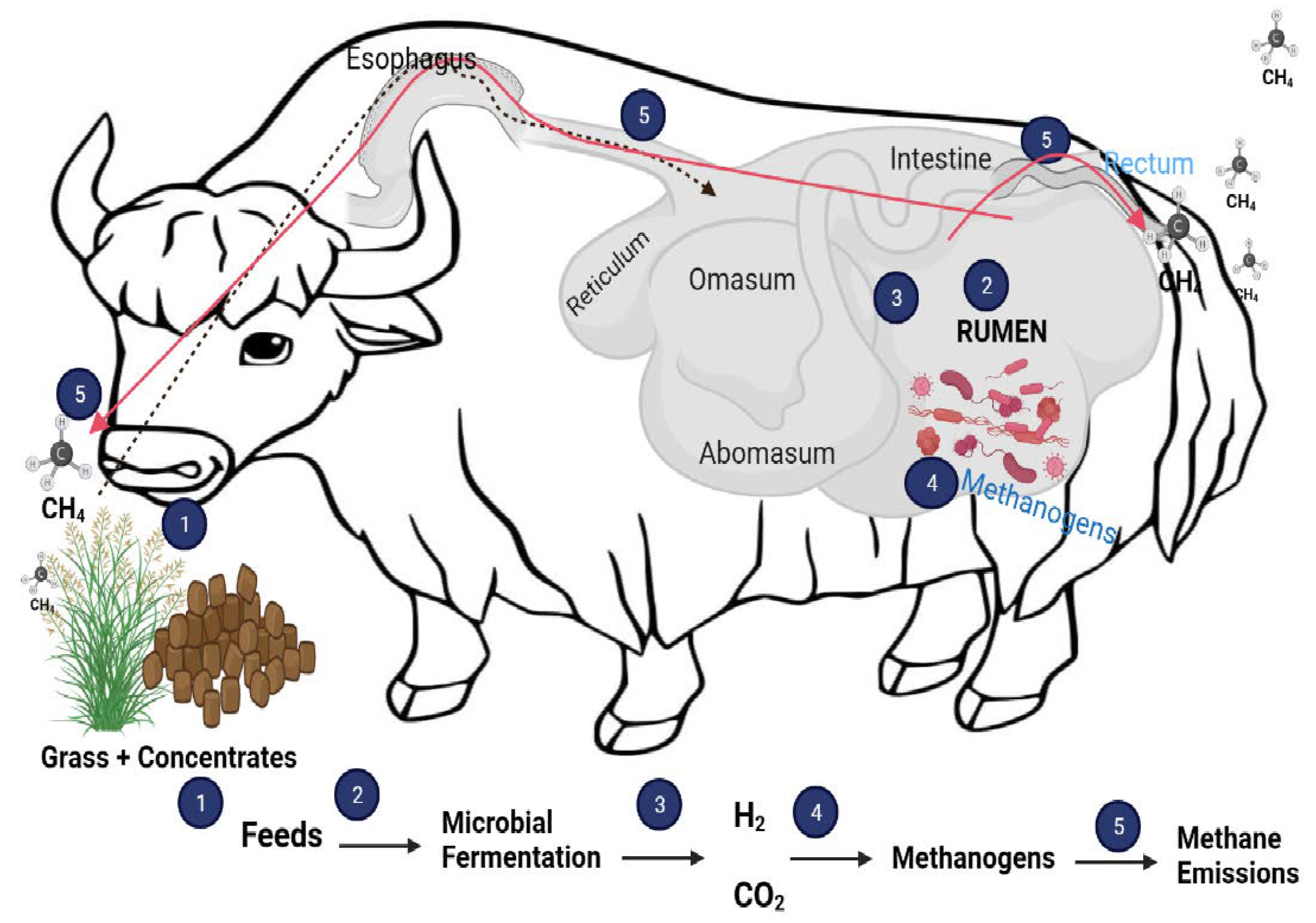
Figure 2.
Biochemical pathways of methanogenesis affected by plant bioactive compounds to decrease methane production in the rumen.
Figure 2.
Biochemical pathways of methanogenesis affected by plant bioactive compounds to decrease methane production in the rumen.
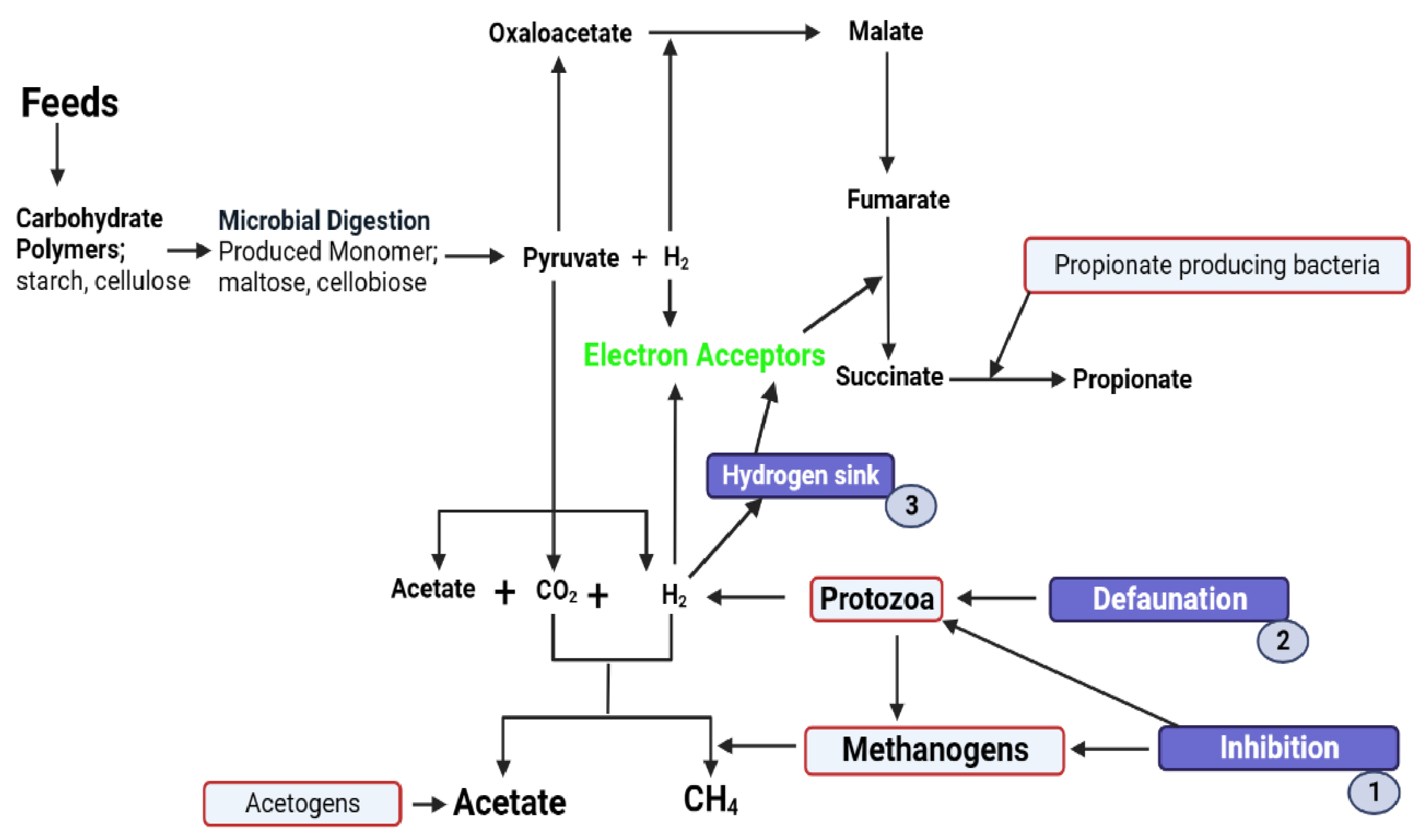
Figure 3.
Mechanism of action of the bioactive compounds of phytogenic feed additives (PFAs) on rumen microbial cells.
Figure 3.
Mechanism of action of the bioactive compounds of phytogenic feed additives (PFAs) on rumen microbial cells.
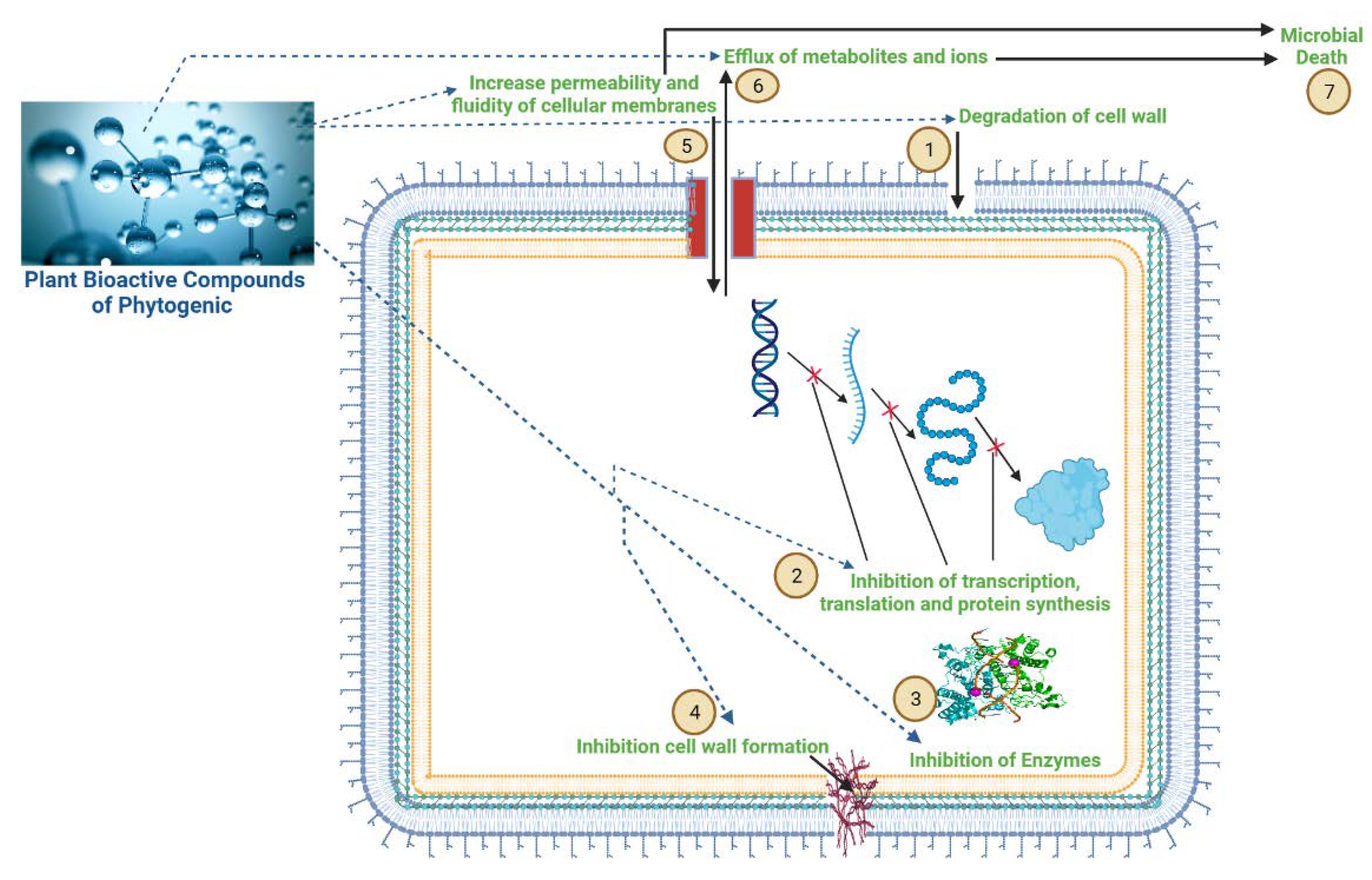
Table 1.
Mechanism of actions of some phytogenic feed additives sources on methane emissions.
| Sources of PFAs | Plant bioactive compounds (PBC) | Mechanism of Mitigation | Reference |
|---|---|---|---|
| Carduus pycnocephalus | Essential oil, Flavonoids, Terpenes | Inhibit methanogens | Bodas et al. (2008) |
| Paeonia lactiflora | Total glucosides of peony | Inhibition of Gram-positive bacteria | CASTILLO-GONZÁLEZ et al. (2016). |
| Leucaena leucocephala | Tannins | Reduction in the total number of methanogens and protozoa | Tan et al. (2011). |
| Brassica | Glucosinolates | Alter the mean retention time of digestion in the rumen | Sun (2020) |
| Rapeseed oil | Sterols and tocopherols | Decrease protozoal population in the rumen | Villar et al. (2020). |
| Camelina sativa oil | Unsaturated fatty acids and antioxidant | Inhibiting rumen protozoa and methanogens. Hydrogen sink |
Hassan, Arshad, Ebeid, et al. (2020). |
| Garlic oil | Organosulfur | Reducing the abundance of protozoa | Kongmun et al. (2010). |
| Palm oil | Fatty acids | Decrease the number of ciliate protozoa | Yilmaz and Kara (2022) |
Disclaimer/Publisher’s Note: The statements, opinions and data contained in all publications are solely those of the individual author(s) and contributor(s) and not of MDPI and/or the editor(s). MDPI and/or the editor(s) disclaim responsibility for any injury to people or property resulting from any ideas, methods, instructions or products referred to in the content. |
© 2024 by the authors. Licensee MDPI, Basel, Switzerland. This article is an open access article distributed under the terms and conditions of the Creative Commons Attribution (CC BY) license (http://creativecommons.org/licenses/by/4.0/).
Copyright: This open access article is published under a Creative Commons CC BY 4.0 license, which permit the free download, distribution, and reuse, provided that the author and preprint are cited in any reuse.