

Submitted:
03 June 2024
Posted:
04 June 2024
You are already at the latest version
Abstract
Cultural heritage is a fundamental part of the society’s identity, and its conservation is of great relevance as it transcends time and memory. To minimize its deterioration, cultural heritage has traditionally undergone diverse preservation and maintenance treatments and the attention of researchers to develop new and innovative methods for state diagnosis and protection treatments has been increasing in the recent decades. Therefore, in this study, a literature review using a bibliometric analysis and LDA methodology was conducted to systematically map scientific research outputs on cultural heritage conservation and protection. Data was retrieved from the Scopus database and the annual publications, countries, most-cited publications, authors, institutions, and keywords have been comprehensively analyzed, leading to the detection of research trends. Findings show an increasing number of studies in this field in the last decades, particularly since 2010. Italy, home to the largest number of UNESCO heritage sites, is the most prolific country. Most of the studies are related to metal, paper and stone as substrate to be protected. Significant progress has been made in understanding the deterioration processes through precise diagnosis and the development of innovative treatments for protection. In this sense, latest trends have been detected such as the use of non-invasive techniques for diagnosis and the use of nanotechnology and nature-based treatments for the conservation treatments.
Keywords:
cultural heritage
; conservation
; protection
; preservation
; treatment
; bibliometric analysis
; scientific mapping
; LDA
1. Introduction
Since the formulation and adoption of the World Heritage Convention in 1972 [1], the preservation and conservation of cultural heritage has attracted worldwide attention. In this sense, scientific research plays a crucial role, driven by a commitment of preserving the world’s diverse cultural legacy for future generations [2]. Furthermore, cultural heritage must be contextualized and integrated with a holistic perspective with synergies and collaboration across multiple disciplines to guarantee the prosperity of interdependent natural, social, and economic systems.
Over the past few decades, significant progress has been made in understanding the complex processes involved in the deterioration of cultural monuments and sites and there is a growing interest in the development of different treatments for the conservation and protection of different invaluable assets. Addressing the main challenges in cultural heritage preservation requires a multi-faceted approach, beginning with a precise diagnosis followed by an adequate treatment, typically involving cleaning, consolidation, and protection processes [3,4].
In order to achieve a good diagnosis, it is necessary to firstly understand the mechanisms of deterioration. Various factors contribute to the degradation, including environmental conditions, biological agents, and human activities [5,6,7]. In recent years, there has been a proliferation of diagnostic technologies that have revolutionized the field of cultural heritage conservation. Advanced analytical techniques, preferably non-destructive, have been employed to analyze the composition and condition of heritage materials without causing harm [8,9]. These technologies provide invaluable insights into the structural integrity of heritage structures and facilitate the early detection of potential risks.
The development of innovative conservation treatments is another area of active research in cultural heritage preservation [10]. Traditional conservation methods have often involved invasive interventions that could alter the original integrity of the heritage. However, recent advancements have led to the emergence of minimally invasive techniques that prioritize authenticity while effectively mitigating deterioration. Nanotechnology, for example, has opened new possibilities for the consolidation and protection of cultural heritage materials, offering enhanced durability without compromising aesthetic value [11,12,13,14,15,16].
In this context, the existing scientific literature in the field of conservation and protection of cultural heritage offers numerous reviews and articles. However, as the volume of information is broad for a manual review, bibliometric analysis can help to effectively manage the information. Bibliometric analysis has emerged as a powerful tool for evaluating and understanding scientific literature and academic productivity [17]. By quantifying various aspects of research output, such as citation patterns, publication trends, and collaboration networks, bibliometric analysis provides valuable insights into the dynamics of scientific knowledge. In this sense, bibliometric analysis offers a data-driven approach to understanding the landscape of a specific research field.
In this article, a comprehensive bibliometric analysis of scientific articles related to the conservation and protection of cultural heritage is presented, shedding light on the most prominent research trends.
2. Methods
2.1. Data Collection
Data for this study were collected from the Scopus database, using a combination of different search terms to find publications, as it can be observed in Figure 1. Scopus database offers broader coverage of literature, providing around 20% more than Web of Science and more accuracy than Google Scholar [18]. The combination of search words was considered for the titles, abstracts, and keywords (TITLE-ABS-KEY) and the results were filtered by subject area (Materials Science, Arts and Humanities, etc), excluding areas out of the scope. The dataset was retrieved on 27th December 2023 as a comma-separated value format (.csv) file and it was composed of 1501 documents, including articles, reviews, conference papers, books and book chapters. The dataset included documents published in the period 1990-2023.
2.2. Bibliometric Analysis
The determination of bibliometric parameters allows the quantitative analysis of scientific literature and the assessment of academic productivity [17]. There are different types of bibliometric indicators, that can be classified in: quantity indicators, which measure the productivity of journals or authors; quality indicators, which measure the relevance and influence of authors, publications, and journals, and structural indicators, which measure interconnections and relationships between publications, authors, and areas of research [19].
According to Rogers et al. (2020) [20], it is recommended to conduct bibliometric analysis only when there is a minimum of 200 documents to be reviewed. They found that smaller sample sizes (<200) result in a high variance in the average category-normalized citation impacts of bibliometric analyses, making this method not advisable.
In this study, the database was composed of 1501 documents. Indicators such as the number of citations and the h-index of authors were obtained directly from Scopus. In addition, VOSviewer (University of Leiden, Netherlands, version 1.6.19) [21], a freely available software, was used to conduct the correlations and visualization among countries/regions, topics and citations. VOSviewer allows to construct networks of scientific publications, scientific journals, researchers, research organizations, countries, keywords, or terms and display bibliometric relationships between a variety of variables such as co-authorship, cooccurrence, citation, bibliographic coupling, or co-citation links [22].
2.3. Latent Dirichlet Allocation (LDA) Methodology
Latent Dirichlet Allocation (LDA) methodology was also employed. LDA is a popular machine learning technique used in natural language processing (NLP) to uncover underlying topics within a collection of documents. LDA assumes that each document is a mixture of various topics and that each word in the document is generated from one of these topics. The goal of LDA is to infer the topic distribution of each document and the word distribution of each topic. This unsupervised learning algorithm operates by iteratively assigning words to topics and updating the topic distributions based on statistical inference. By analyzing the co-occurrence patterns of words across multiple documents, LDA can identify distinct topics and their prevalence within the corpus. LDA provides a probabilistic framework to explore the hidden thematic structure of a document collection, enabling researchers to gain insights into the main themes and uncover the relationships between topics.
In the context of bibliometrics, LDA offers valuable insights and tools for analyzing large volumes of scholarly publications. By applying LDA to a collection of scientific articles, researchers can identify the underlying topics that emerge from the corpus. This topic modeling approach can assist in various bibliometric analyses, such as identifying research trends, mapping the intellectual structure of a field, and uncovering interdisciplinary connections. LDA can also aid in document clustering and categorization, allowing researchers to group related articles based on their thematic similarity. Furthermore, LDA can help in measuring the influence of individual articles or authors within a topic, facilitating the identification of key contributors or influential works. By leveraging LDA, bibliometric studies can gain a deeper understanding of the knowledge landscape, discover emerging areas of research, and make informed decisions based on the extracted topics and their associated metrics.
Numerous researchers have utilized the LDA technique for thematic organization within article databases. Gupta et al. (2017) [23] employed LDA for trend analysis and prediction across a dataset of 3269 articles from the Journal of Applied Intelligence spanning three decades. Kim et al. (2019) [24] crafted a classification system that merges TF-IDF and LDA methods, effectively grouping research papers by subject similarity. George et al. (2023) [25] further expanded the utility of LDA by combining it with clustering and BERT, presenting a hybrid model that enhances topic detection and improves the performance of topic modeling across extensive text collections. These instances underscore the adaptability of LDA in bibliometric studies, facilitating everything from forecasting research trends to refining the precision of topic models through the integration of sophisticated computational techniques.
3. Results and Discussion
3.1. Annual Publications and Document Type
Observing the annual frequency of publications is the most fundamental way to understand the performance in a specific field. Figure 2a illustrates the annual distribution of the number of publications. The number of publications in the field has increased exponentially in the period of study (1990-2023). The first literature document was published in 1990. However, in the first few years (1990-2000 inclusive) the number of articles did not exceed 5 publications per year and the data suggest that greater attention was given since 2010. The maximum number of publications was reached in 2022 with a total of 150 documents. Regarding the type of documents (Figure 2b), most of the publications are articles and conference papers.
3.2. Countries and Institutions
The retrieved 1501 articles composing the study database were obtained from more than 90 contributing countries. The geographical distribution of publications is shown in Figure 3 and the number of documents per country is represented in Figure 4. Italy is home to the largest number of UNESCO heritage sites, and it is also the most prolific country in terms of publications in the field of conservation of cultural heritage, followed by Spain. Both together constitute 43% of the total publications in the field. Together with China and United States, they are far from the next countries in the list, which have less than 100 documents. It is worth to mention that in other scientific fields, China and the United States tend to be the most prolific countries, but this is not the case in the field of cultural heritage.
However, the number of publications is not relevant if articles are not cited. Thus, the total number of citations, together with the number of documents, was also evaluated in Figure 4. Italy and Spain outstand again with the highest number of citations. It is also worth mentioned that China, a country with a high number of publications, has a low rate of citations compared to the rest of the top-10 countries.
Moreover, the co-authorship between countries is shown in Figure 5. Co-authorship analysis can aid in identifying the trends and nature of research collaborations, as well as uncover the existence of certain research groups in terms of collaborations [27]. Only countries with a minimum number of 8 documents have been included in the map and the co-authorship analysis revealed the existence of eight clusters.
Italy was found to have the strongest research collaboration, with the highest total link strength (TLS=170). In terms of collaboration, Italy is followed by United States (TLS=72), France (TLS=69), United Kingdom (TLS=68) and Spain (TLS=64). This means than United States, France and United Kingdom have a similar number of collaborations although the number of published documents is considerably inferior to the ones of Spain. In the case of China, although it is the fourth country in number of publications, only has a TLS of 20.
3.3. Most Cited Articles
The most cited publications from the document collection are listed in Table 1. The number of citations that a publication receives serves to measure its quality and influence [17].
With 288 citations, the book titled “Microclimate for cultural heritage” [28] is the most cited document of the collection. It is a handbook, targeted at conservators and specialists in various fields, covering non-destructive diagnostics, and practical strategies for mitigating atmospheric damage of works of art, integrating theoretical knowledge with extensive research and field experience.
The rest of the publications consist of scientific articles or reviews, which could be classified into two main groups: those focused on materials and those related to characterization techniques applied in the field of cultural heritage.
Articles included in the first group (materials) can be divided, at the same time, according to the type of treatment intervention they are involved in:
- Cleaning: The use of gels has been widely extended in the field of cultural heritage restoration as they reduce the permeation of solvents used to clean surfaces. However, the utilization of gels presents some difficulties in their removal and may release residues on the surface of the work of art after the application. In this sense, Carretti et al. 2010 [29] discusses a possible solution to the removal problem of gels in artwork conservation through three types of innovative responsive gels: rheoreversible, magnetic, and “peelable” gels. These gels can be easily and rapidly removed via a response to a “chemical switch” (rheoreversible gels) or an external magnet (gels with embedded magnetic nanoparticles).
- Consolidation: As reported by Giorgi et al [30] and many other researchers, the consolidation of paintings, stone, paper and wood frequently involve the use of calcium hydroxide dispersions, ensuring complete compatibility with the original materials. This has been also the focus of the investigation of Dei et Salvadori [31], where limestones and painted surfaces affected by different kinds of decay were consolidated by using nanosized particles of calcium hydroxide dispersed in alcoholic medium. On the other hand, Bertolino et al. [32] also reviewed works where composites containing halloysite nanotubes were used for the consolidation of paper and wooden artifacts.
- Protection: La Russa et al. [33] developed an organic coating to get biocidal and hydrophobic functionalities. The coating was composed of an aqueous dispersion containing an acrylic polymer and anatase TiO2 nanoparticles and was applied to marble and limestone specimens. Results showed a great growth inhibition efficiency and a good water repellence after the treatments on both lithotypes. Also, Manoudis et al. [34] used common nanoparticles (SiO2, Al2O3, SnO2 and TiO2) and siloxane products to obtain superhydrophobicity functionality on stone surfaces. Results showed that nanoparticles induced superhydrophobicity but affected the aesthetic appearance of the studied stones.
The other three documents of the top-10 most cited articles are related to characterization techniques applied to the field of cultural heritage. The application of diverse characterization techniques is of paramount significance in assessing the condition of cultural heritage and evaluating the efficacy of conservation interventions to ensure the preservation and longevity of cultural heritage. Employing a range of methodologies such as spectroscopic analysis, imaging techniques, and material testing enables a comprehensive understanding of, among others, the composition, deterioration mechanisms, and structural integrity of cultural assets. These techniques facilitate the identification of specific materials, the detection of hidden features or damages, and the monitoring of changes over time. Moreover, through the integration of multiple characterization methods, conservation efforts are enriched with accurate data, fostering informed decision-making, and enhancing the safeguarding of our cultural legacy. In this context, Cano et al. [35] reviewed the utilization of Electrochemical Impedance Spectroscopy (EIS) for the study of protective coatings for metallic cultural heritage. They concluded that this technique, initially used for metallic coatings, has gained popularity for the evaluation of metallic cultural heritage, proving to be a valuable tool for conservators in selecting appropriate coatings and evaluating protective characteristics. On the other hand, Chércoles et al. [8] reported the use of ATR-FTIR spectroscopy to analyse polymeric materials used for cultural heritage. In the same line, Prati et al. [36] described the advances in FTIR spectroscopy and microscopy for the characterization of artistic materials. As Fourier Transform Infrared (FTIR) spectroscopy is the most frequently used technique to identify not only polymers but also additives and fillers, its use has been widely reported in the field of cultural heritage [37,38].
3.4. Journals and Authors
The 1501 publications studied were published in 680 different sources. Information about the journals in which articles are most frequently published is presented in Table 2. The number of documents, citations and JCR impact index are depicted for the top-10 journals. A total of 291 publications were published in the 10 most productive journals, representing 20% of all papers.
As the leading journal, Journal of Cultural Heritage published 80 articles (5%), followed by Studies in Conservation and Coatings. The JCR impact factor measures the quality of the journal by taking into account indexed citations [17]. Most of the top-10 journal have a JCR impact factor >1 and the journal with the highest impact factor is Progress in Organic Coatings.
According to the data, most authors have conducted independent academic research, having weak cooperative relationships, except those belonging to the same institution who have been frequently co-authors. In Table 3, the most prolific authors are listed. Nine out of the top-10 authors work in Italian academic institutions, once again demonstrating that Italy is the most prominent country in the field of cultural heritage conservation.
3.5. Keywords
Firstly, Latent Dirichlet Allocation (LDA) methodology has been employed to identify key research themes and trends by clustering the documents based on shared topics. A fixed number of 8 topics was chosen as the target for topic identification. To automatically assign names to the resulting groups, the OpenAI API was utilized. The prompt provided to the API was: “Define the following groups obtained through LDA by assigning a name to each topic.” As GPT4 model provides different responses each time an input is entered, the assignment name process was iterated five times, and the authors selected the most appropriate topic name for each group. The number of articles where the topic score exceeds 0.1 varies across the groups, ranging from nearly a thousand to few articles to, reflecting the prevalence and importance of these topics in scientific collection.
Table 4 presents 8 distinct groups, each associated with a set of words derived through LDA methodology from the database of scientific articles provided. For instance, Group 0 includes the largest number of articles because the keywords that define the topic are those used in the initial search. Group 1, labeled as “Stone Conservation and Surface Treatment,” emphasizes the preservation and treatment of stone, which is the oldest and most common material used in built cultural heritage, mainly limestones, marbles, sandstones and granites [39]. The presence of high humidity and the microorganism’s colonization reduces stone mechanical properties [40]. However, preservation of stone in cultural heritage is a more effective way of intervention that substitution of the altered stones. Group 2, termed “Urban Heritage and Cultural Preservation,” group together documents related the preservation of urban heritage as most of the cultural heritage assets are located in cities. Groups 3 and 5 include documents that cover the most relevant degradation mechanisms in the field of cultural heritage: corrosion and biodeterioration, respectively. Group 4, named as “Digital Imaging and Modeling Techniques,” gather papers related to characterization techniques mainly based on digital imaging. Diagnostic investigations are vital in Cultural Heritage studies, and in this context, the use of innovative and non-destructive techniques such as imaging and the development of transportable and versatile devices allow the retrieval of relevant hidden information [41] . Group 6, labeled as “Eco-Environmental Studies,” gathers research on the intersection of ecology and cultural heritage, examining how ecosystems, soil, and local knowledge contribute to the conservation of cultural assets. With 21 articles, this theme explores the role of natural elements and environmental services in preserving cultural landscapes and materials, reflecting a growing interest in sustainable conservation practices. Lastly, Group 7, “Historical Artifacts and Materials,” with the smallest cluster of 6 articles, focuses on the specific materials and techniques associated with historical artifacts, including unique methods of preservation and analysis of items from specific cultural or historical contexts, such as temples and ancient metallurgy.
Furthermore, an analysis of these highlighted topics over time has been conducted and is represented in Figure 6. It can be observed that most articles have been produced in Topic Groups 0, 1, and 2 in the last six years.
Together with this analysis, keyword co-occurrence maps are useful for the identification of hot topics. In these maps, each word is depicted as a node, while each co-occurrence of a pair of words is represented as a link [42]. The size of the node indicates the importance of the term and the frequency of occurrences of a word pair across various articles determines the strength of the connection linking them.
Figure 7 provides a visual representation of the network of keyword co-occurrence obtained with VOSviewer with the document collection. First, a keyword co-occurrence map including all the keywords used in the documents contained in the collection was created. However, the output revealed that, as expected, the most important words were those used in the initial search in Scopus. For this reason, the words “cultural heritage”, “monument”, “conservation”, “protection”, “consolidation”, “restoration”, “maintenance”, “preservation”, “treatment”, “coating” and “film” were excluded, in order to identify significant terms not included in the search. The minimum number of occurrences of a keyword established was 25 and a new map was generated (Figure 7).
As it can be seen in the Keyword co-occurrence map, the majority of the highlighted words are related to types of substrates (lime, marble…), treatment materials (nanoparticles, nanocomposites...), analytical techniques (F-TIR, SEM…), and functionalities (deterioration, cleaning, biodegradation...).
Based on these four major groups, a refined analysis of word frequency was conducted. For this purpose, a list of terms and their synonyms for each group was compiled. Then, a Python script was developed to search through the document database, counting “1” each time a term or its synonym appeared in the Title, Keywords, or Abstract sections. This method enabled the counting of articles that mention any of the terms or their synonyms, as defined for the four groups. The results of this analysis are represented in Figure 8.
Regarding the substrates (Figure 8a), most of the studies are related to metal, paper and stone. Metals such as bronze, iron, gold, and silver have been extensively used along history due to the high mechanical resistance and durability in producing tools such as weapons, jewelry, and other structures. However, metals can present long-term corrosion problems, and there are many research works related to the development of different corrosion protection treatments. Paper, in the second place, though more fragile than other materials, revolutionized the recording and dissemination of information, making it an indispensable material in written heritage. Manuscripts, books, maps, and documents are primary sources of historical knowledge. Stone is one of the oldest and most durable materials used in cultural heritage. Monuments, sculptures, temples, and historical buildings from various civilizations are made from different types of stone, such as marble, granite, limestone, and sandstone. Its durability has made stone a fundamental material in constructing significant structures. However, it is affected by weathering and there are plenty of research work to improve its resistance without affecting the aesthetic appearance, assuring a good permeability for water vapor, and decreasing the amount of water absorbed by capillarity [34].
On the other hand, the top materials related to protection treatments are displayed in Figure8b. The five most common materials that resulted from the analysis were SiO2, cellulose, acrylic, silane and TiO2. The use of SiO2 and TiO2, more recently at the nanoscale, provides effective protection by enhancing their resistance to environmental degradation and biological growth. The high frequency of cellulose may be likely due to the fact that, as previously mentioned, paper is the second most common substrate, and this frequency analysis cannot make that distinction. However, cellulose has been also widely used for the conservation, lately at the nanoscale. Moreover, the most commonly used materials as matrix have been based on organic resins, including acrylic ones [43]. Nevertheless, protective formulations must not only offer protection but also meet a series of aesthetic requirement and, in this sense, such types of resins present some drawbacks. Over time, they can undergo physicochemical changes, leading to yellowing and embrittlement of the film, which complicates the removal process and potentially harms the artwork [30]. In this case, it is also worth mentioning that acrylic resins are used in modern painting. That is, the high frequency does not directly imply they are part of the protection treatment, but rather they may have been employed in the painting base itself. Lastly, the high frequency of silanes may be due to the fact that these compounds are widely used to achieve hydrophobicity and superhydrophobicity functionalities.
The keyword frequency analysis related to the functionalities to be achieved (Figure 8c) revealed that the most commonly sought properties in cultural heritage protection treatments are cleaning, consolidation, and corrosion resistance. Functional treatments can be tailored to the specific needs of different materials Effective cleaning method is crucial because it removes dirt, pollutants, and biological growth that can cause damage and aesthetic changes. Consolidation treatments reinforce the structural integrity of these items, preventing further decay and extending their lifespan and corrosion resistance is important mainly for metal structures, which are particularly susceptible to degradation from environmental exposure.
Finally, the frequency of appearance of characterization techniques is represented in Figure 8d. The usefulness of listing these techniques can aid future research by identifying the most used methods in the field and enabling results comparisons with other studies. The most used technique for characterizing cultural heritage is FTIR, as it has been discussed throughout the present study. It is followed by EDX, which indicates that the predominant type of characterization applied to cultural heritage assets is compositional analysis. Subsequently, there are techniques for measuring other types of characteristics such as water absorption (permeability/porosity), colour, contact angle, etc.
3.6. Research Trends
3.6.1. Non-Invasive Analytical Techniques
The current practices for conservation and protection of Cultural Heritage must be preceded by an exhaustive analysis to determine the deterioration level. Moreover, decision making to select the type of intervention and the conservation materials should be based on precise diagnostic results.
In this context, advancements in physical and chemical characterization techniques have been successfully implemented in the field over the last decades and have enabled researchers to implement ultrasensitive detection [44]. In particular, non-invasive and portable analytical techniques have emerged as indispensable tools, offering in situ application without destructive sampling [45,46] (e.g. X-ray flurorescence, raman spectroscopy...). Moreover, the emergence of hybrid systems, combining simultaneously various analytical methods, has facilitated a more uniform and time-efficient approach to acquiring data [47,48]. However, the wide variety of analytical techniques require the application of chemometric methods to extract meaningful information from complex physicochemical datasets [48,49].
As non-invasive and non-destructive techniques, neutron-based [50] and synchroton radiation [51,52] technologies are very promising for quantitative investigation. Synchrotron and neutron scientific facilities are advanced resources with high potential for material research [51]. Over the last years, there has been an increasing demand for access to these type of facilities as they provide a better characterization with high spatial resolution and accurate compositional information and, thus, deeper understanding on aging studies [53].
Also, the interest for the use of monitoring sensors has notably increased, allowing an early detection of risks [54,55]. Modern sensors, designed for preserving cultural heritage, can combine physicochemical measurements with advanced data processing algorithms [56,57]. Due to the diversity of materials characteristics, there is a need for the continuous development of new measurement methods and their integration in sensors. The combination of sensors and Machine Learning (ML) techniques have opened new opportunities and challenges in the analysis and protection of cultural heritage, allowing to advance one step further in the prediction of damages and risks.
3.6.2. Nanotechnology
As previously stated, current trends in treatments and coatings for cultural heritage focus on protection (against corrosion, colonization, friction, wear, etc.), the addition of functionalities (such as hydrophobicity and self-repair), and even the development of smart coatings (sensors, dynamic adhesion, controllable hydrophobicity). For technical and economic reasons, the search of innovative materials with maximized performance by fully utilizing their inherent properties has gained increasing interest. Recent developments have demonstrated that conservation efforts for cultural heritage can be effectively and satisfactorily carried out through the use of nanomaterials [13,16], opened up a new era of possibilities for producing materials with enhanced characteristics and functionalities¡Error! Marcador no definido.. Nanomaterials (in the range of 1-100 nm) exhibit a high specific surface area, leading to increased reactivity with their environment and the ability to penetrate substrates due to their reduced size. This still makes them excellent candidates in future’s strategies for consolidating and protecting cultural heritage [12].
Among the most common nanoparticles utilized, silica and its derivatives stand out. The formulations of SiO2 nanoparticles can vary based on the specific requirements of the substrate and the conservation objectives. For instance, colloidal silica-based consolidants are commonly used due to their ability to penetrate porous materials effectively. These consolidants form durable bonds with the substrate, enhancing its mechanical strength and resistance to weathering without altering its appearance. SiO2-based materials are also frequently formulated into coatings [58]. Functionalized SiO2 nanoparticles can impart functionalities such as hydrophobicity [58,59] , self-cleaning [60] and antimicrobial activity [53], further enhancing the durability and longevity of treated surfaces.
Another fundamental category of nanomaterials extensively utilized in cultural heritage protection is titanium dioxide (TiO2). TiO2 is very well-known for its photocatalytic properties, notably reducing the environmental degradation. When applied as a thin coating, TiO2 serves as a protective barrier against UV radiation and pollutants [33] and microbial growth [61]. Both, SiO2 and TiO2 nanoparticles have been formulated together, mainly to combine the hydrophobic properties of the SiO2 and the catalytic effect of the TiO2 [59,60,62].
Also, nanocellulose-based materials are arousing growing interest for the protection of cultural heritage. Fornari et al. [63] reviewed the application of nanocellulose for the restoration of wood artifacts, paintings and ancient papers. As many collections of artistic patrimony are made of cellulose-based materials, interventions with these materials certainly gives better results compared to synthetic products, and, moreover, they do not alter the optic effect of artistic surfaces.
Other innovative alternatives to traditional formulations and treatments are based on graphene and graphene-related materials (GRMS) [64]. The GRMs’ unique properties make them excellent candidates for protective performance, including anti-corrosion, UV-aging resistance, or impermeability. Galvagno et al. [65] reviewed the use of graphene and GRMs in cultural heritage. They stated that the research works on GRMS for this purpose are still limited and much work has to be done in the coming years. However, they outlined the most relevant applications across various materials and substrates. Graphene has been shown to serve as an effective protective coating for paintings and figurative art [66], offering barriers against light, oxygen, moisture, and other harmful agents while demonstrating reversibility in the treatments. Apart from GRMS, Kotsidi et al. [67] also investigated other 2D innovative materials for the protection of dyes and inks like tungsten disulfide (WS2), molybdenum disulfide (MoS2) and hexagonal boron nitride (hBN).
3.6.3. Green Chemistry / Nature-Based Solutions
Preserving cultural heritage is not only about safeguarding the past but also about ensuring a sustainable future. The conventional practices employed in cultural heritage conservation often involve the use of highly toxic and poorly biodegradable compounds [68]. Unfortunately, these substances pose a risk not only to the materials being treated but also to the environment, Therefore, introducing a more sustainable approach to the preservation of cultural materials is required [69].
In recent years, the adoption of green chemistry principles has revolutionized conservation practices, leading to the development of environmentally friendly materials that minimize harm to both heritage artifacts and the surrounding ecosystem. While certain advanced materials currently meet sustainability standards, there is significant opportunity and necessity to transition them into fully green’ approaches [70] that achieve the requirements outlined in the European Green Deal. Considering this, the development of innovative eco-friendly products has become imperative and particular attention is being dedicated to “green” chemistry systems, using low-toxicity solvents, natural compounds or bio-based/waste materials [4].
Recent advancements in conservation science offer promising alternatives to conventional treatments and innovative materials derived from nature have been introduced, such as chitosan [43], nano-cellulose [63], and oils [71,72]. These materials get closer to sustainability standards and exhibit better compatibility with historical substrates.
Biopolymers have emerged as versatile materials for consolidating and protecting cultural heritage materials [73,74]. Derived from natural sources like plant extracts, proteins, and polysaccharides, biopolymers can offer compatibility with historical substrates and exhibit excellent adhesive properties. Biopolymer-based consolidants and coatings provide mechanical reinforcement, stabilize fragile structures, and offer protection against environmental factors such as moisture, UV radiation, and microbial degradation. Furthermore, biopolymers offer the advantage of biodegradability, ensuring long-term compatibility with cultural artifacts and minimizing environmental impact [75].
Another key aspect of green chemistry in cultural heritage conservation is the use of environmental-friendly solvents for cleaning and restoration. Traditional organic solvents such as chlorinated hydrocarbons and petroleum-based compounds can cause irreversible damage to the surfaces and even contribute to air and water pollution. In contrast, green solvents offer effective alternatives with reduced environmental impact. These solvents not only facilitate the gentle removal of dirt, pollutants, and coatings but also promote the preservation of original materials and surface integrity.
A notable class of green solvents is Deep Eutectic Solvents (DESs). These solvents have unique chemical-physical characteristics, including being non-toxic, biodegradable, non-flammable, and stable in the presence of water [69,76]. The most common components used for DESs are choline chloride (ChCl) or urea as hydrogen bond acceptors (HBA), and glucose or oxalic acid as hydrogen bond donors (HBD). Several DESs documented in the literature have demonstrated a biocidal and inhibiting action against some bacteria [77], especially against Gram-positives, and eukaryotic microorganisms, mainly fungi [78]. Moreover, DES have been also employed to dissolve and harvest biopolymers [77].
In many cases, it is the nature itself that acts as a deteriorating agent, which is known as biodeterioration. Existing literature on biodeterioration and biocide treatments is extensive, while simultaneously, a new trend on bioprotection is emerging. These innovative approaches to microbial control in conservation focus on natural or sustainable biocides that prevent microbial attachment or disperse existing colonies without harmful effects [79]. Research highlights the efficacy of plant essential oils and other natural biocides in safeguarding stone cultural heritage [80]. Ashraf et al. [81] reviewed the use of green biocides such as enzymes or laser techniques and its applications to industry, that could be extended to the field of cultural heritage.
This emphasis on adopting green chemistry and exploring innovative compounds showcases a commitment to not only safeguarding cultural heritage but also minimizing the ecological footprint associated with conservation and restoration efforts, ensuring the longevity and integrity of our cultural heritage.
4. Conclusions
This study applied bibliometric methodology to systematically map scientific research on cultural heritage conservation and protection, using data retrieved from the Scopus database. The analysis was conducted with VOSviewer software and LDA methodology, and the annual publications, countries, most-cited publications, authors, institutions, and keywords have been comprehensively analyzed, leading to the detection of hot topics and research trends.
Results showed a rising trend in the number of studies, particularly since 2010. Italy, home to the largest number of UNESCO heritage sites, is the most prolific country in this field. Significant progress has been made in understanding the deterioration processes, and there is growing interest in developing diverse treatments to protect these invaluable assets. Understanding deterioration mechanisms is crucial for accurate diagnostics and innovative conservation treatments have emerged, prioritizing minimally invasive techniques to maintain authenticity while mitigating deterioration. Topics identified in the current research are expected to continue to grow, such as non-invasive analytical techniques, and the use of nanotechnology and nature-based solutions for the conservation.
Further research and studies are needed to better understand the complex relationship between heritage conservation and its dimensions. The approach must be multi-faceted, including natural sciences, digital sciences, sustainable development, and the application of advanced and large-scale infrastructures, among others. In the coming years, particular focus should be also given to how climate change impact the state of cultural heritage.
Author Contributions
Conceptualization, L.P.G. and A.C.; methodology, L.P.G., C.M. and A.C..; software, L.P.G. and A.C.; validation, L.P.G., C.M., A.Y. and A.C..; formal analysis, L.P.G. and A.C.; investigation, L.P.G. and C.M.; resources, L.P.G. and C.M.; data curation, L.P.G. and A.C.; writing—original draft preparation, L.P.G. and C.M.; writing—review and editing, A.Y. and A.C.; visualization, L.P.G. and A.C; supervision, A.Y. and A.C; project administration, L.P.G. and A.Y.; funding acquisition, L.P.G., C.M. and A.Y. All authors have read and agreed to the published version of the manuscript.
Funding
This work has been supported by the NANOCULT project, Grant No. PLEC2021-007704 funded by Ministry of Science and Innovation of Spain.
Institutional Review Board Statement
Not applicable.
Informed Consent Statement
Not applicable.
Data Availability Statement
Not applicable.
Acknowledgments
As part of NANOCULT’s consortium, authors would like to acknowledge I. Costantini and J.M. Madariaga from the University of the Basque Country; T. Oroz and B. Yécora from Lurederra Centro Tecnológico and M. Sanz from Garanza Rehabilitación y Restauración.
Conflicts of Interest
The authors declare no conflicts of interest.
References
- “https://whc.unesco.org/en/convention/.”.
- P. Baglioni and D. Chelazzi, “How Science Can Contribute to the Remedial Conservation of Cultural Heritage,” Chemistry - A European Journal, vol. 27, no. 42, pp. 10798–10806, 2021. [CrossRef]
- Artesani, F. Di Turo, M. Zucchelli, and A. Traviglia, “Recent Advances in Protective Coatings for Cultural,” Coatings, vol. 10, no. 217, 2020.
- Casini, D. Chelazzi, and P. Baglioni, “Advanced methodologies for the cleaning of works of art,” Sci China Technol Sci, vol. 66, no. 8, pp. 2162–2182, 2023. [CrossRef]
- F. Cappitelli, C. Cattò, and F. Villa, “The control of cultural heritage microbial deterioration,” Microorganisms, vol. 8, no. 10, pp. 1–20, 2020. [CrossRef]
- K. Sterflinger, “Fungi: Their role in deterioration of cultural heritage,” Fungal Biol Rev, vol. 24, no. 1–2, pp. 47–55, 2010. [CrossRef]
- K. Vidović, S. Hočevar, E. Menart, I. Drventić, I. Grgić, and A. Kroflič, Impact of air pollution on outdoor cultural heritage objects and decoding the role of particulate matter: a critical review, vol. 29, no. 31. Springer Berlin Heidelberg, 2022. [CrossRef]
- R. Chércoles Asensio, M. San Andrés Moya, J. M. De La Roja, and M. Gómez, “Analytical characterization of polymers used in conservation and restoration by ATR-FTIR spectroscopy,” Anal Bioanal Chem, vol. 395, no. 7, pp. 2081–2096, 2009. [CrossRef]
- F. G. France, “Advanced spectral imaging for noninvasive microanalysis of cultural heritage materials: Review of application to documents in the U.S. library of congress,” Appl Spectrosc, vol. 65, no. 6, pp. 565–574, 2011. [CrossRef]
- D. Chelazzi and P. Baglioni, “From Nanoparticles to Gels: A Breakthrough in Art Conservation Science,” Langmuir, vol. 39, no. 31, pp. 10744–10755, 2023. [CrossRef]
- Sierra-Fernandez, L. S. Gomez-Villalba, M. E. Rabanal, and R. Fort, “New nanomaterials for applications in conservation and restoration of stony materials: A review,” Materiales de Construccion, vol. 67, no. 325, 2017. [CrossRef]
- A. P. Kanth and A. K. Soni, “Application of nanocomposites for conservation of materials of cultural heritage,” J Cult Herit, vol. 59, pp. 120–130, 2023. [CrossRef]
- J. Becerra, A. P. Zaderenko, M. A. Gómez-Morón, and P. Ortiz, “Nanoparticles Applied to Stone Buildings,” International Journal of Architectural Heritage, vol. 15, no. 9, pp. 1320–1335, 2021. [CrossRef]
- S. Di Salvo, “Nanotechnology for Cultural Heritage,” International Journal of Science, Technology and Society, vol. 2, no. 2, p. 28, 2014. [CrossRef]
- P. Baglioni, E. Carretti, and D. Chelazzi, “Nanomaterials in art conservation,” Nat Nanotechnol, vol. 10, no. 4, pp. 287–290, 2015. [CrossRef]
- M. E. David, R. M. Ion, R. M. Grigorescu, L. Iancu, and E. R. Andrei, “Nanomaterials used in conservation and restoration of cultural heritage: An up-to-date overview,” Materials, vol. 13, no. 9, 2020. [CrossRef]
- F. Choudhri, A. Siddiqui, N. R. Khan, and H. L. Cohen, “Understanding bibliometric parameters and analysis,” Radiographics, vol. 35, no. 3, pp. 736–746, 2015. [CrossRef]
- P. E. M. G. P. G. Falagas ME, “Comparison of PubMed, Scopus, Web of Science, and Google Scholar: strengths and weaknesses,” FASEB J., vol. 22 (2), pp. 338–342, 2008.
- G. PA. Durieux V, “Bibliometric indicators: quality measurements of scientific publication,” Radiology, vol. 255 (2), pp. 342–351, 2010.
- G. Rogers, M. Szomszor, and J. Adams, “Sample size in bibliometric analysis,” Scientometrics, vol. 125, no. 1, pp. 777–794, 2020. [CrossRef]
- “https://www.vosviewer.com/”.
- Kirby, “Exploratory Bibliometrics: Using VOSviewer as a Preliminary Research Tool,” Publications, vol. 11, no. 1, 2023. [CrossRef]
- R. K. Gupta, R. Agarwalla, B. H. Naik, J. R. Evuri, A. Thapa, and T. D. Singh, “Prediction of research trends using LDA based topic modeling,” Global Transitions Proceedings, vol. 3, no. 1, pp. 298–304, 2022. [CrossRef]
- S. W. Kim and J. M. Gil, “Research paper classification systems based on TF-IDF and LDA schemes,” Human-centric Computing and Information Sciences, vol. 9, no. 1, 2019. [CrossRef]
- L. George and P. Sumathy, “An integrated clustering and BERT framework for improved topic modeling,” International Journal of Information Technology (Singapore), vol. 15, no. 4, pp. 2187–2195, 2023. [CrossRef]
- “https://www.mapchart.net/.”.
- N. G.-B. F. V. Leonardo Reyes-Gonzalez, “Using co-authorship and citation analysis to identify research groups: a new way to assess performance,” Scientometrics, vol. 108(3), pp. 1171–1191, 2016.
- D. Camuffo, Microclimate for cultural heritage . 1998.
- E. Carretti et al., “New frontiers in materials science for art conservation: Responsive gels and beyond,” Acc Chem Res, vol. 43, no. 6, pp. 751–760, 2010. [CrossRef]
- R. Giorgi, M. Baglioni, D. Berti, and P. Baglioni, “New Methodologies for the conservation of cultural heritage: Micellar solutions, microemulsions, and hydroxide nanoparticles,” Acc Chem Res, vol. 43, no. 6, pp. 695–704, 2010. [CrossRef]
- L. Dei and B. Salvadori, “Nanotechnology in cultural heritage conservation: nanometric slaked lime saves architectonic and artistic surfaces from decay,” J Cult Herit, vol. 7, no. 2, pp. 110–115, 2006. [CrossRef]
- V. Bertolino, G. Cavallaro, S. Milioto, and G. Lazzara, “Polysaccharides/Halloysite nanotubes for smart bionanocomposite materials,” Carbohydr Polym, vol. 245, no. March, p. 116502, 2020. [CrossRef]
- M. F. La Russa et al., “Multifunctional TiO 2 coatings for Cultural Heritage,” Prog Org Coat, vol. 74, no. 1, pp. 186–191, 2012. [CrossRef]
- P. N. Manoudis, I. Karapanagiotis, A. Tsakalof, I. Zuburtikudis, B. Kolinkeová, and C. Panayiotou, “Superhydrophobic films for the protection of outdoor cultural heritage assets,” Appl Phys A Mater Sci Process, vol. 97, no. 2, pp. 351–360, 2009. [CrossRef]
- E. Cano, D. Lafuente, and D. M. Bastidas, “Use of EIS for the evaluation of the protective properties of coatings for metallic cultural heritage: A review,” Journal of Solid State Electrochemistry, vol. 14, no. 3, pp. 381–391, 2010. [CrossRef]
- S. Prati, E. Joseph, G. Sciutto, and R. Mazzeo, “New advances in the application of FTIR microscopy and spectroscopy for the characterization of artistic materials,” Acc Chem Res, vol. 43, no. 6, pp. 792–801, 2010. [CrossRef]
- G. Bitossi, R. Giorgi, M. Mauro, B. Salvadori, and L. Dei, “Spectroscopic Techniques in Cultural Heritage Conservation: A Survey,” Applied Spectroscopy Reviews - APPL SPECTROSC REV, vol. 40, pp. 187–228, May 2005. [CrossRef]
- F. Casadio and L. Toniolo, “The analysis of polychrome works of art: 40 years of infrared spectroscopic investigations,” Journal of Cultural Heritage - J CULT HERIT, vol. 2, pp. 71–78, May 2001. [CrossRef]
- J. P. Calvo and M. y González-Barros, “Carbonate rocks in the Mediterranean region - from classical to innovative uses of building stone,” Geological Society, London, Special Publications, vol. 331, pp. 27–35, May 2010. [CrossRef]
- S. Scheerer, O. Morales, and C. Gaylarde, “Chapter 5 Microbial Deterioration of Stone Monuments-An Updated Overview,” Adv Appl Microbiol, vol. 66, pp. 97–139, May 2009. [CrossRef]
- E. Peccenini et al., “Advanced imaging systems for diagnostic investigations applied to Cultural Heritage,” in Journal of Physics: Conference Series, May 2014. [CrossRef]
- S. , E. S. , I. J. A. , & K. S. Radhakrishnan, “Novel keyword co-occurrence network-based methods to foster systematic reviews of scientific literature,” PLoS One, vol. 12(3), 2017.
- F. Boccaccini et al., “Toward a Green and Sustainable Silver Conservation: Development and Validation of Chitosan-Based Protective Coatings,” Int J Mol Sci, vol. 23, no. 22, 2022. [CrossRef]
- J. Madariaga, “Analytical Chemistry in the field of Cultural Heritage,” Anal. Methods, vol. 7, May 2015. [CrossRef]
- G. F. Pehlivan, “Analysis of Cultural Heritage by Non-Destructive Methods: The Case of Sivas Congress Museum,” Architecture and Urban Planning, vol. 19, no. 1, pp. 1–16, 2023. [CrossRef]
- Moropoulou, K. C. Labropoulos, E. T. Delegou, M. Karoglou, and A. Bakolas, “Non-destructive techniques as a tool for the protection of built cultural heritage,” Constr Build Mater, vol. 48, pp. 1222–1239, 2013. [CrossRef]
- D. Magrini et al., “A multi-analytical approach for the characterization of wall painting materials on contemporary buildings,” Spectrochim Acta A Mol Biomol Spectrosc, vol. 173, pp. 39–45, 2017. [CrossRef]
- G. Musumarra and M. Fichera, “Chemometrics and cultural heritage,” Chemometrics and Intelligent Laboratory Systems, vol. 44, no. 1–2, pp. 363–372, 1998. [CrossRef]
- J. Riu and B. Giussani, “Analytical chemistry meets art: The transformative role of chemometrics in cultural heritage preservation,” Chemometrics and Intelligent Laboratory Systems, vol. 247, no. December 2023, p. 105095, 2024. [CrossRef]
- G. Festa et al., “Neutrons for cultural heritage—techniques, sensors, and detection,” Sensors (Switzerland), vol. 20, no. 2, 2020. [CrossRef]
- Y. Ren and X. Zuo, “Synchrotron X-Ray and Neutron Diffraction, Total Scattering, and Small-Angle Scattering Techniques for Rechargeable Battery Research,” Small Methods, vol. 2, no. 8, 2018. [CrossRef]
- L. Bertrand, L. Robinet, M. Thoury, K. Janssens, S. X. Cohen, and S. Schöder, “Cultural heritage and archaeology materials studied by synchrotron spectroscopy and imaging,” Appl Phys A Mater Sci Process, vol. 106, no. 2, pp. 377–396, 2012. [CrossRef]
- Franco-Castillo, L. Hierro, J. M. de la Fuente, A. Seral-Ascaso, and S. G. Mitchell, “Perspectives for antimicrobial nanomaterials in cultural heritage conservation,” Chem, vol. 7, no. 3, pp. 629–669, 2021. [CrossRef]
- C. Antomarchi et al., “Guide to Risk Management,” p. 117, 2016, [Online]. Available: https://www.iccrom.org/it/publication/guide-risk-management.
- A. Adriaens, “European actions to promote and coordinate the use of analytical techniques for cultural heritage studies,” TrAC - Trends in Analytical Chemistry, vol. 23, no. 8, pp. 583–586, 2004. [CrossRef]
- J. Villacorta et al., “Design and Validation of a Scalable, Reconfigurable and Low-Cost Structural Health Monitoring System,” Sensors, vol. 21, p. 648, May 2021. [CrossRef]
- I. Garrido et al., “Introduction of deep learning in thermographic monitoring of cultural heritage and improvement by automatic thermogram pre-processing algorithms,” Sensors (Switzerland), vol. 21, no. 3, pp. 1–44, 2021. [CrossRef]
- L. Guo, L. Wang, X. Zhao, and M. Peng, “Non-whitening superhydrophobic coating for heritage protection,” Colloids Surf A Physicochem Eng Asp, vol. 676, no. PB, p. 132294, 2023. [CrossRef]
- C. Kapridaki and P. Maravelaki-Kalaitzaki, “TiO2–SiO2–PDMS nano-composite hydrophobic coating with self-cleaning properties for marble protection,” Prog Org Coat, vol. 76, pp. 400–410, May 2013. [CrossRef]
- V. Crupi et al., “TiO2–SiO2–PDMS nanocomposite coating with self-cleaning effect for stone material: Finding the optimal amount of TiO2,” Constr Build Mater, vol. 166, pp. 464–471, 2018. [CrossRef]
- L. Graziani et al., “Evaluation of inhibitory effect of TiO2 nanocoatings against microalgal growth on clay brick façades under weak UV exposure conditions,” Build Environ, vol. 64, pp. 38–45, 2013. [CrossRef]
- L. Pinho, F. Elhaddad, D. S. Facio, and M. J. Mosquera, “A novel TiO 2 -SiO 2 nanocomposite converts a very friable stone into a self-cleaning building material,” Appl Surf Sci, vol. 275, pp. 389–396, 2013. [CrossRef]
- A. Fornari, M. Rossi, D. Rocco, and L. Mattiello, “A Review of Applications of Nanocellulose to Preserve and Protect Cultural Heritage Wood, Paintings, and Historical Papers,” Applied Sciences (Switzerland), vol. 12, no. 24, 2022. [CrossRef]
- M. Kotsidi et al., “Graphene as effective anti-fading agent for the protection of artworks,” Invention Disclosure, vol. 2, no. June, p. 100005, 2022. [CrossRef]
- E. Galvagno et al., “Present Status and Perspectives of Graphene and Graphene-related Materials in Cultural Heritage,” Adv Funct Mater, vol. 2313043, 2024. [CrossRef]
- M. Kotsidi et al., “Preventing colour fading in artworks with graphene veils,” Nat Nanotechnol, vol. 16, pp. 1–7, May 2021. [CrossRef]
- M. Kotsidi et al., “Graphene nanoplatelets and other 2D-materials as protective means against the fading of coloured inks, dyes and paints,” Nanoscale, vol. 15, May 2023. [CrossRef]
- L. Casorri et al., “Natural substances as biocides in the fungi treatment on artistic products to protect the environment and health of restoration workers,” Ital J Mycol, vol. 52, pp. 89–111, 2023. [CrossRef]
- A. Macchia et al., “Deep Eutectic Solvents (DESs): Preliminary Results for Their Use Such as Biocides in the Building Cultural Heritage,” Materials, vol. 15, no. 11, 2022. [CrossRef]
- J. Zimmerman, P. Anastas, H. Erythropel, and W. Leitner, “Designing for a green chemistry future,” Science (1979), vol. 367, pp. 397–400, May 2020. [CrossRef]
- A. Marco, S. Santos, J. Caetano, M. Pintado, E. Vieira, and P. R. Moreira, “Basil essential oil as an alternative to commercial biocides against fungi associated with black stains in mural painting,” Build Environ, vol. 167, no. July 2019, p. 106459, 2020. [CrossRef]
- D. Bandelli, R. Mastrangelo, G. Poggi, D. Chelazzi, and P. Baglioni, “New sustainable polymers and oligomers for Cultural Heritage conservation,” Chem Sci, vol. 15, no. 7, pp. 2443–2455, 2024. [CrossRef]
- Y. Ocak, A. Sofuoglu, F. Tihminlioglu, and H. Böke, “Protection of marble surfaces by using biodegradable polymers as coating agent,” Prog Org Coat, vol. 66, no. 3, pp. 213–220, 2009. [CrossRef]
- E. Balliana, G. Ricci, C. Pesce, and E. Zendri, “Assessing the value of green conservation for cultural heritage: Positive and critical aspects of already available methodologies,” International Journal of Conservation Science, vol. 7, no. SpecialIssue1, pp. 185–202, 2016.
- B. O. Ortega-Morales and C. C. Gaylarde, “Bioconservation of historic stone buildings—an updated review,” Applied Sciences (Switzerland), vol. 11, no. 12, pp. 1–18, 2021. [CrossRef]
- D. Osch, C. Dietz, S. Warrag, and M. Kroon, “The Curious Case of Hydrophobic Deep Eutectic Solvents: A Story on the Discovery, Design, and Applications,” ACS Sustain Chem Eng, vol. XXXX, May 2020. [CrossRef]
- N. Akbar et al., “Antimicrobial Activity of Novel Deep Eutectic Solvents,” Sci Pharm, vol. 91, no. 1, 2023. [CrossRef]
- I. Juneidi, M. Hayyan, and O. Mohd Ali, “Toxicity profile of choline chloride-based deep eutectic solvents for fungi and Cyprinus carpio fish,” Environmental Science and Pollution Research, vol. 23, May 2016. [CrossRef]
- M. R. Fidanza and G. Caneva, “Natural biocides for the conservation of stone cultural heritage: A review,” J Cult Herit, vol. 38, pp. 271–286, 2019. [CrossRef]
- R. Russo and F. Palla, “Plant Essential Oils as Biocides in Sustainable Strategies for the.pdf,” pp. 1–16, 2023.
- M. A. Ashraf, S. Ullah, I. Ahmad, A. K. Qureshi, K. S. Balkhair, and M. Abdur Rehman, “Green biocides, a promising technology: Current and future applications to industry and industrial processes,” J Sci Food Agric, vol. 94, no. 3, pp. 388–403, 2014. [CrossRef]
Figure 1.
Search terms for data collection.
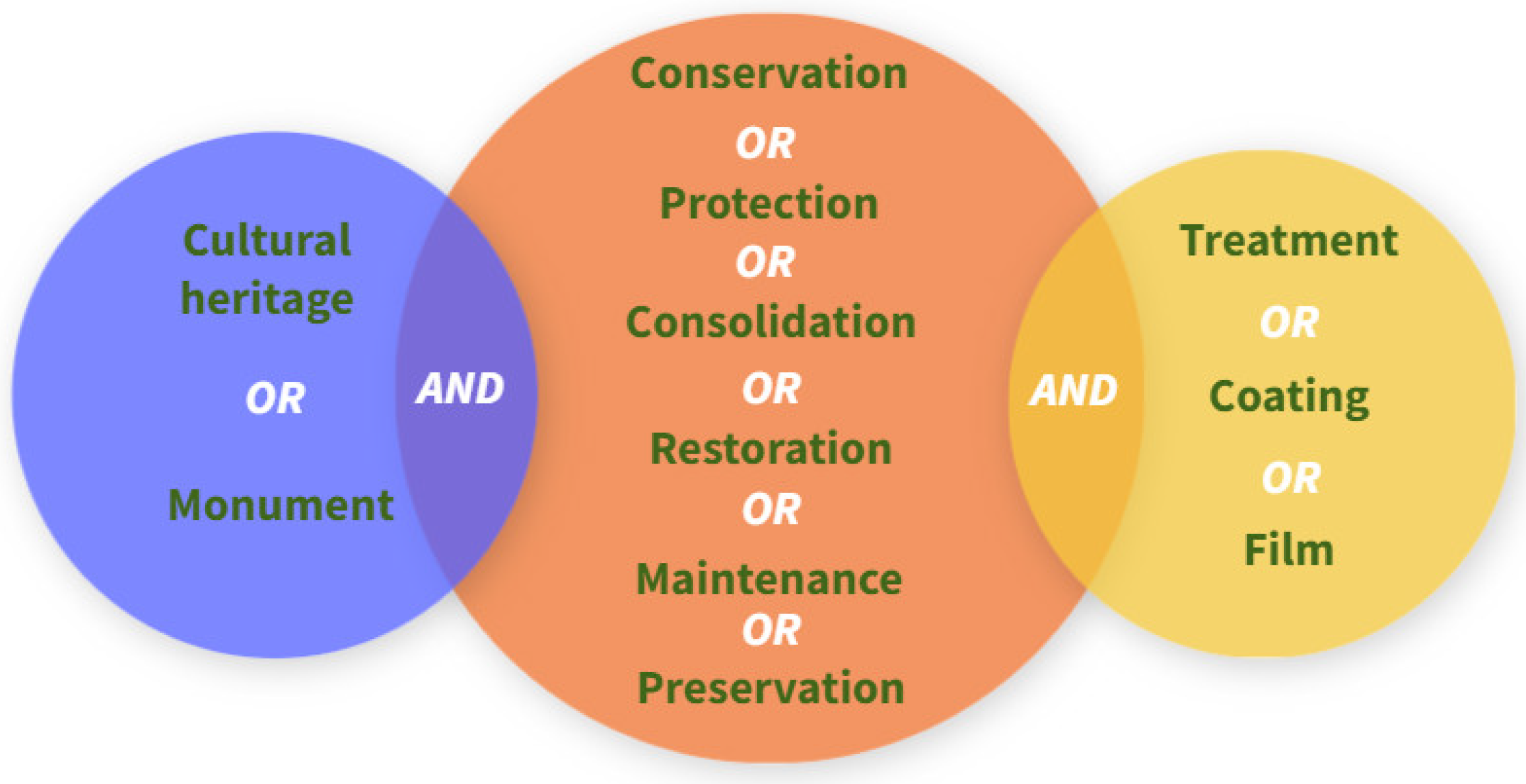
Figure 2.
(a) Number of publications per year; (b) Document classification.
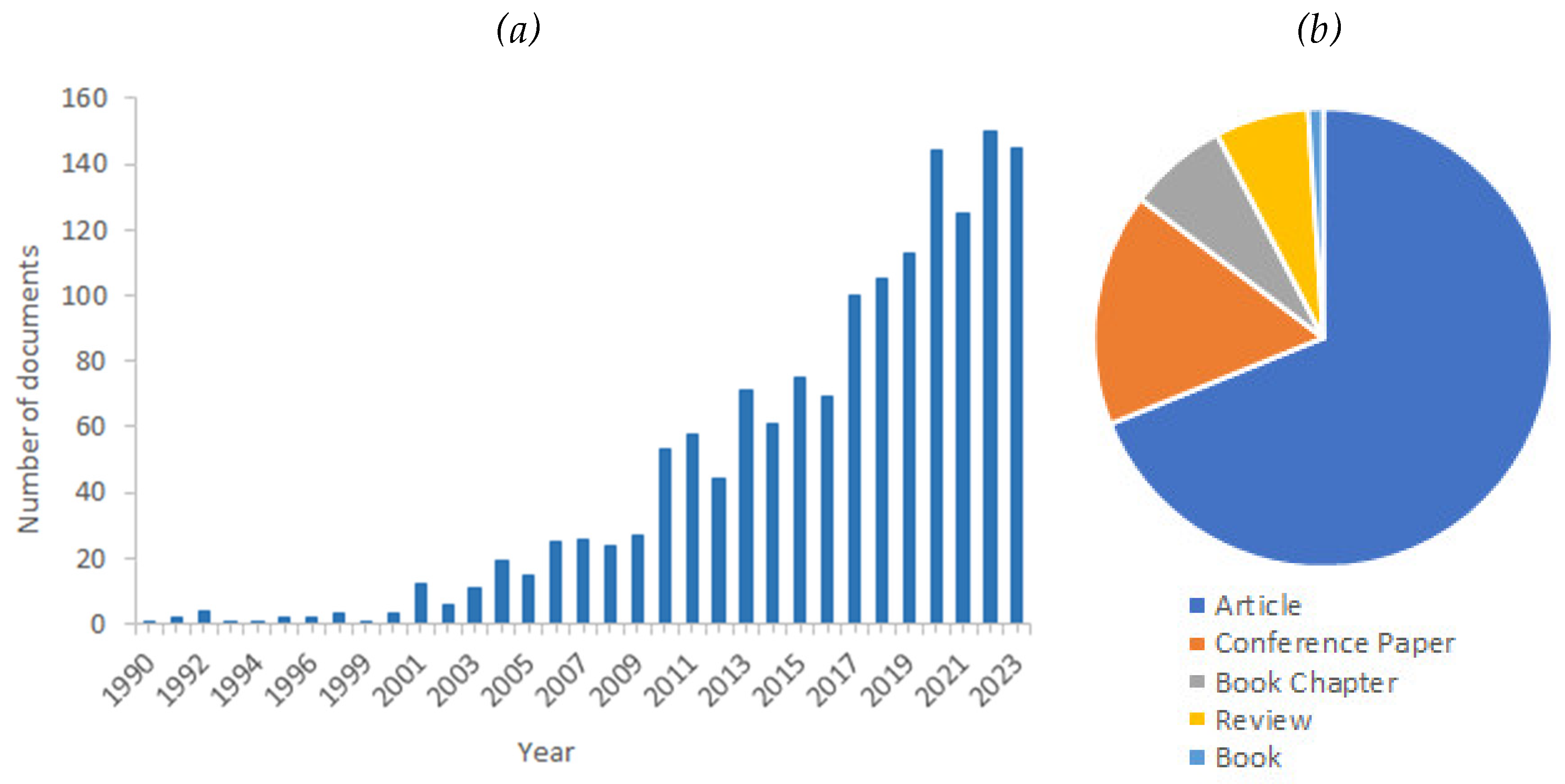
Figure 3.
Geographical distribution of publications (Created with Mapchart [26]).
Figure 3.
Geographical distribution of publications (Created with Mapchart [26]).
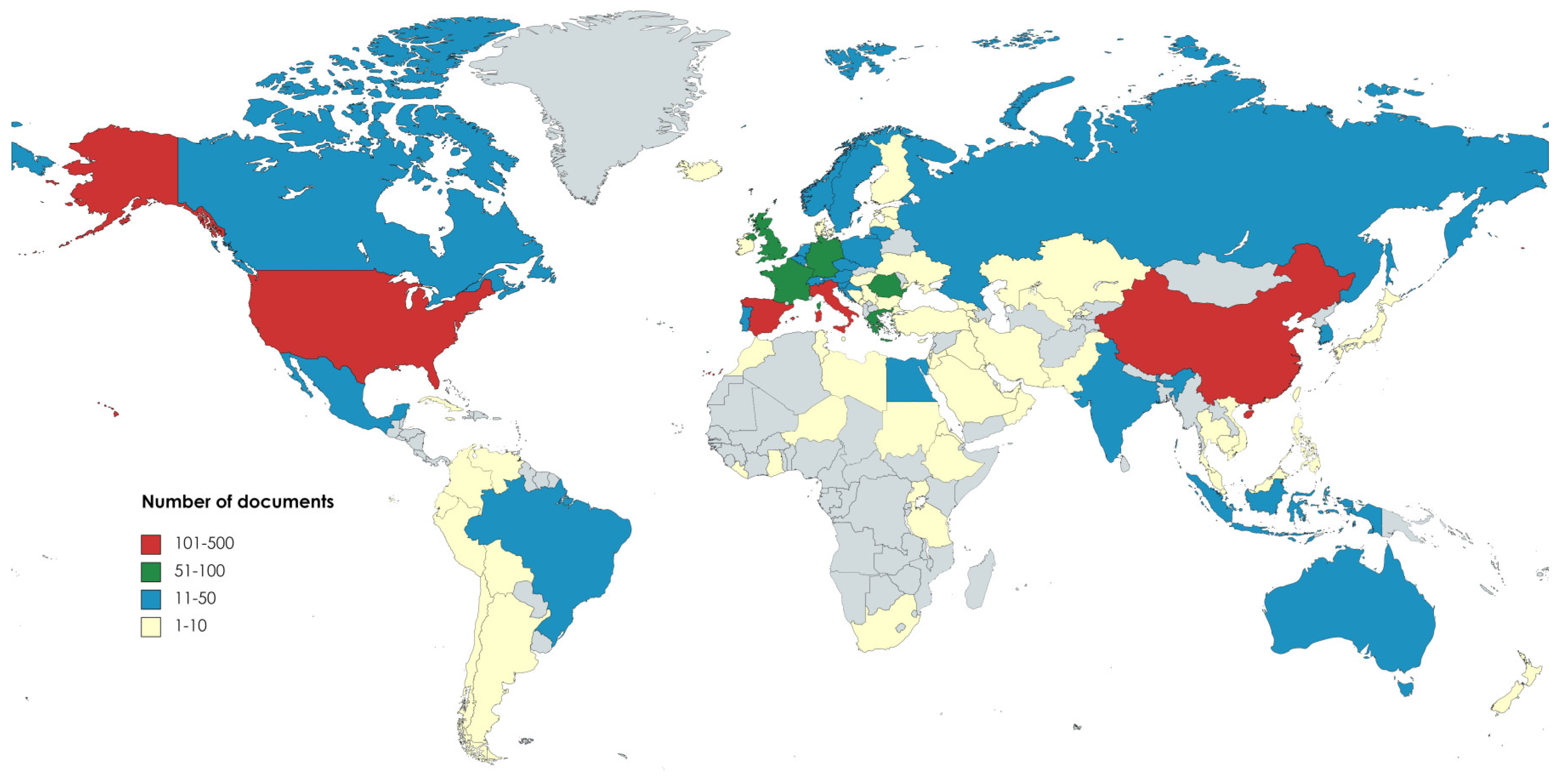
Figure 4.
Top-10 countries by number of publications.
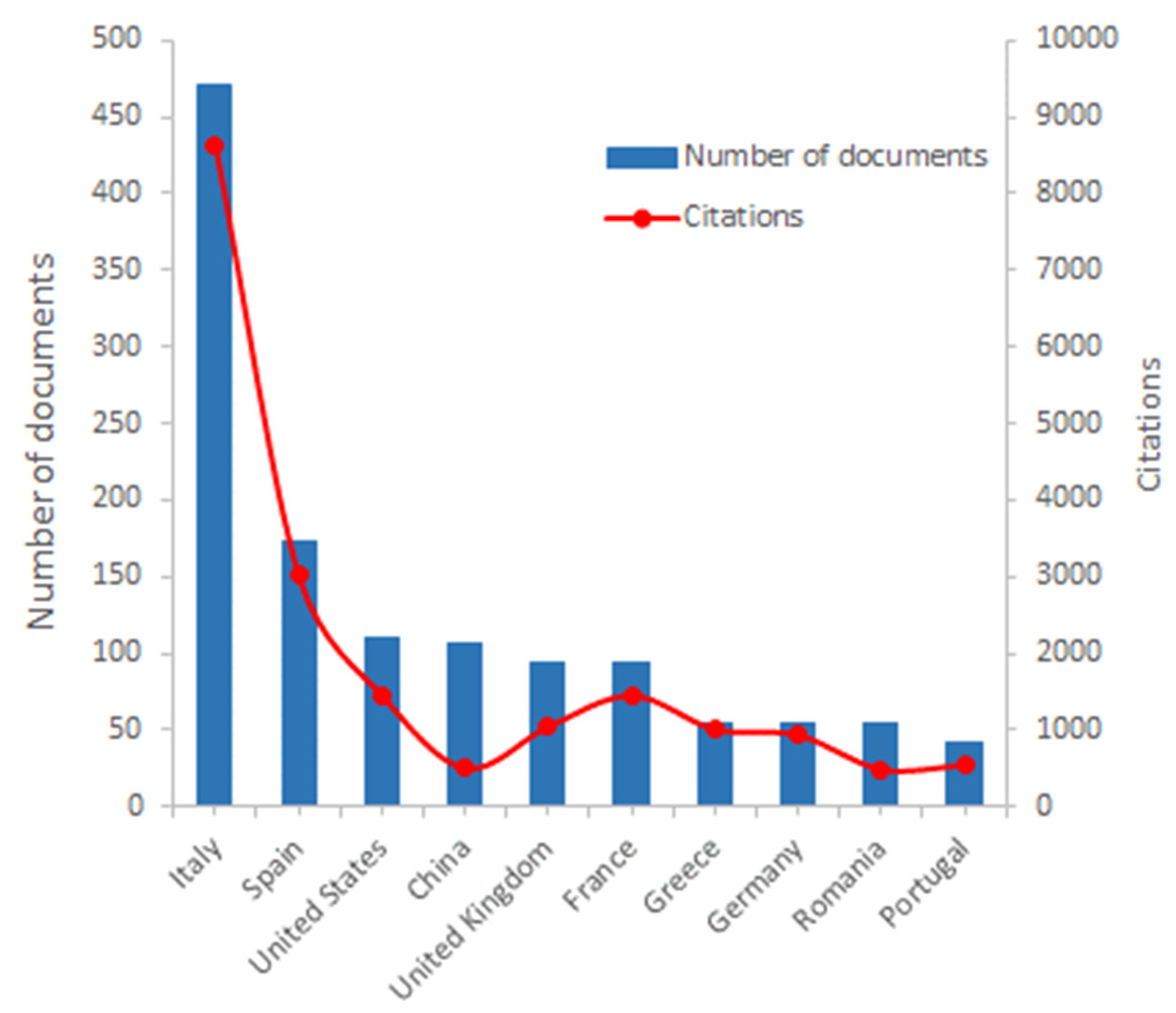
Figure 5.
Co-authorship between countries.
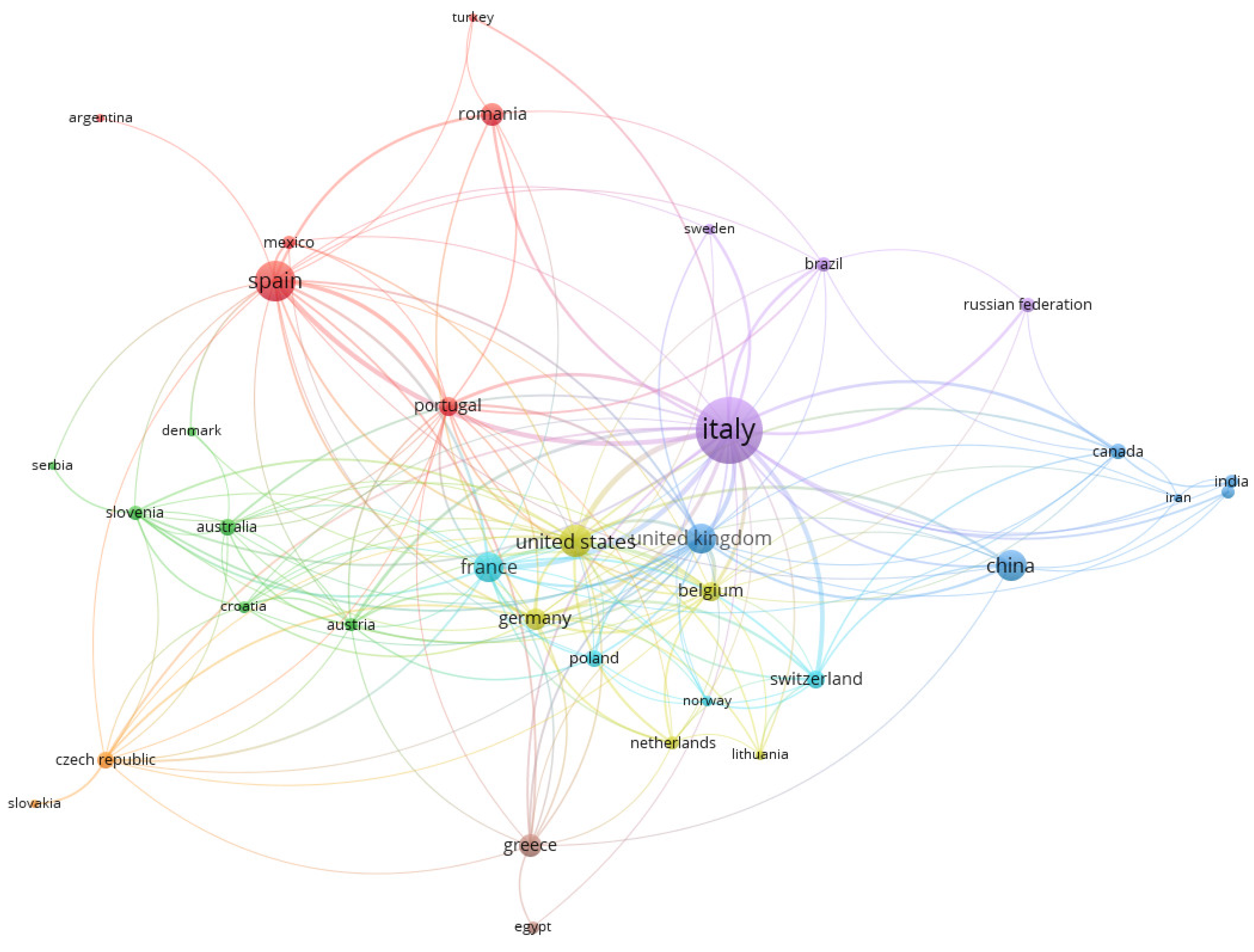
Figure 6.
Heatmap with the evolution of the topics determined by LDA method (included in Table 4).
Figure 6.
Heatmap with the evolution of the topics determined by LDA method (included in Table 4).
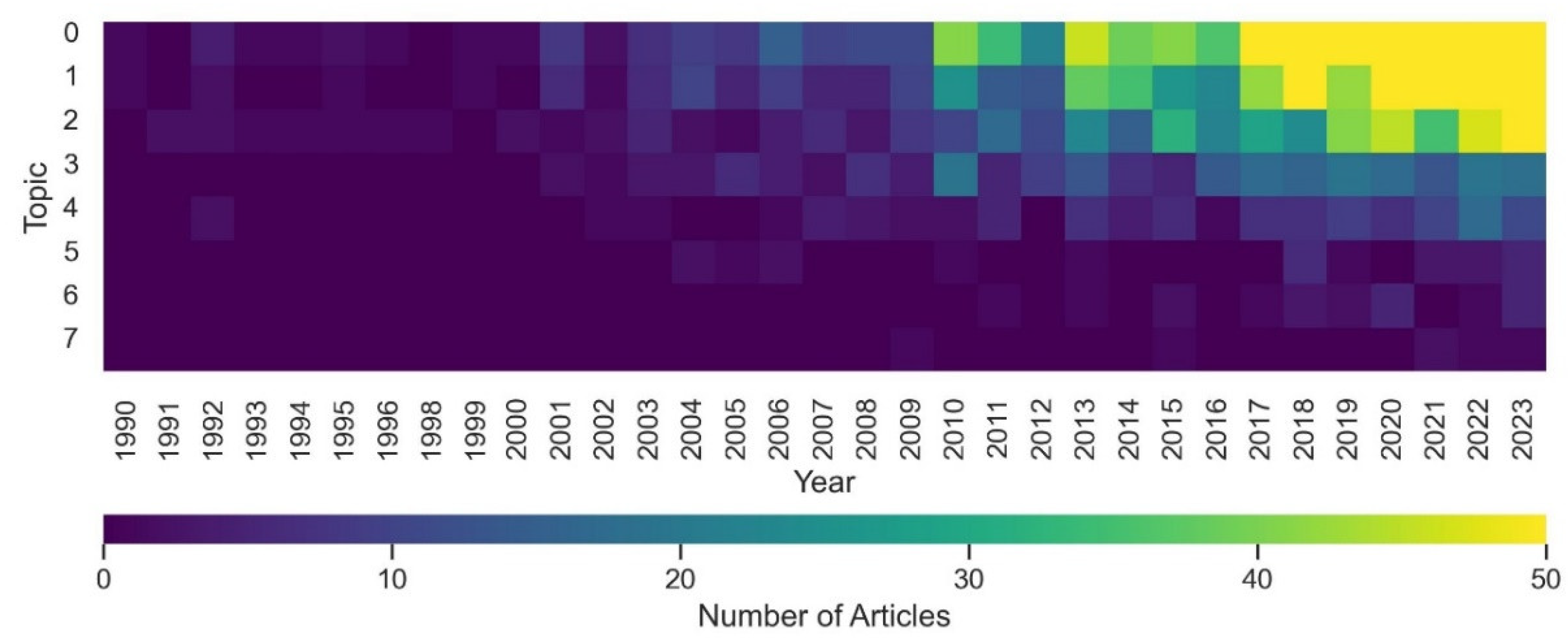
Figure 7.
Keyword co-occurrence map (without keywords of search).

Figure 8.
Frequency of keywords classified by (a) Substrate; (b) Materials treatment; (c) Functionality and (d) Characterization techniques.
Figure 8.
Frequency of keywords classified by (a) Substrate; (b) Materials treatment; (c) Functionality and (d) Characterization techniques.
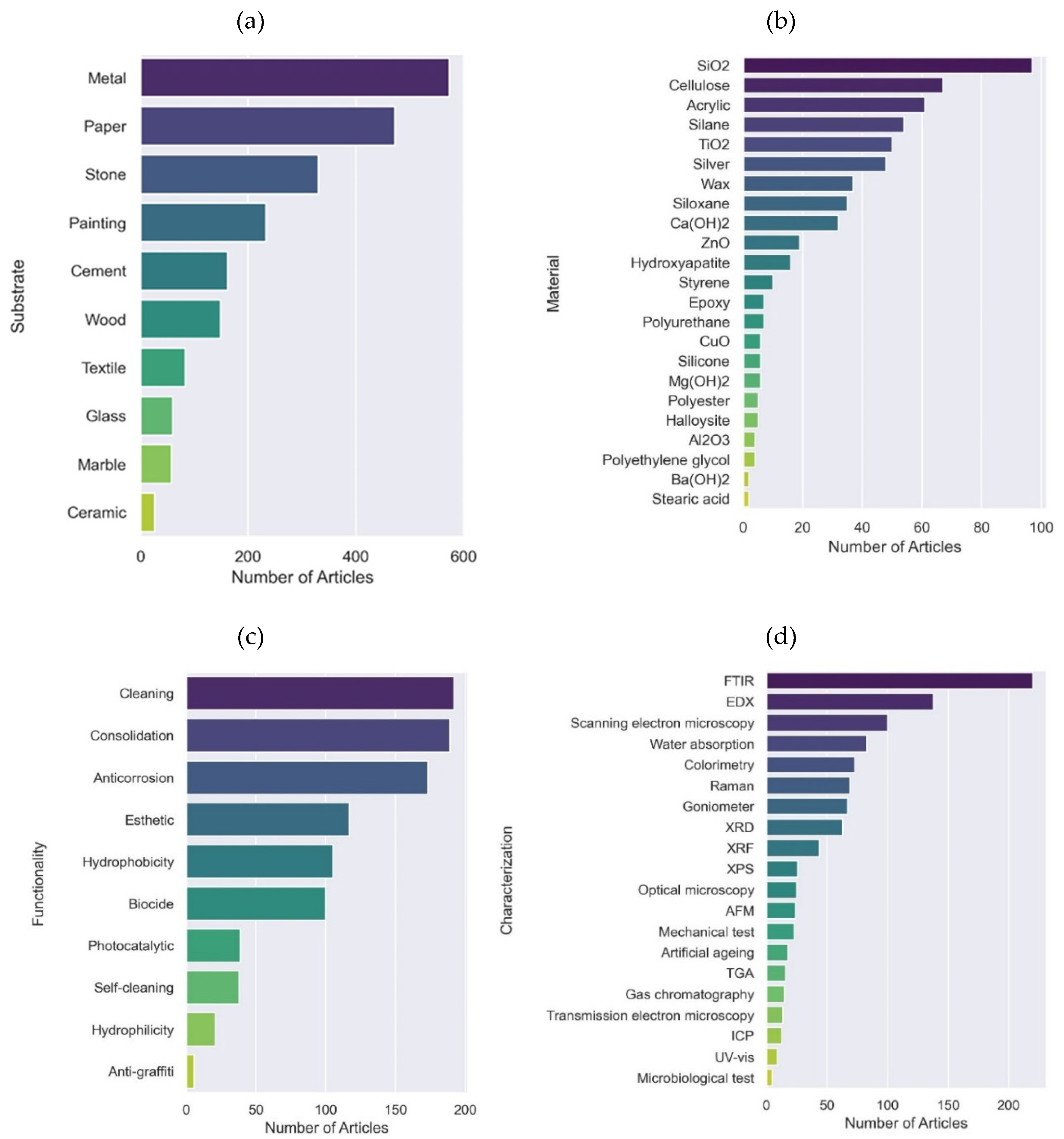

Table 1.
Top-10 cited publications.
| # | Title | Authors | Year | Source | Type | Cites | Ref. |
|---|---|---|---|---|---|---|---|
| 1 | Microclimate for cultural heritage | Camuffo | 1998 | Microclimate for cultural heritage | Book | 288 | [28] |
| 2 | New frontiers in materials science for art conservation: Responsive gels and beyond | Carretti et al. | 2010 | Accounts of Chemical Research | Article | 202 | [29] |
| 3 | Use of EIS for the evaluation of the protective properties of coatings for metallic cultural heritage: A review | Cano et al. | 2010 | Journal of Solid State Electrochemistry | Review | 201 | [35] |
| 4 | Analytical characterization of polymers used in conservation and restoration by ATR-FTIR spectroscopy | Chércoles et al. | 2009 | Analytical and Bioanalytical Chemistry | Article | 198 | [8] |
| 5 | Multifunctional TiO2 coatings for Cultural Heritage | La Russa et al. | 2012 | Progress in organic coatings | Article | 190 | [33] |
| 6 | Polysaccharides/Halloysite nanotubes for smart bionanocomposite materials | Bertolino et al. | 2020 | Carbohydrate Polymers | Review | 170 | [32] |
| 7 | New Methodologies for the conservation of cultural heritage: Micellar solutions, microemulsions, and hydroxide nanoparticles | Giorgi et al. | 2010 | Accounts of Chemical Research | Article | 156 | [30] |
| 8 | Nanotechnology in cultural heritage conservation: nanometric slaked lime saves architectonic and artistic surfaces from decay | Dei et Salvadori | 2006 | Journal of Cultural Heritage | Article | 139 | [31] |
| 9 | New advances in the application of FTIR microscopy and spectroscopy for the characterization of artistic materials | Prati et al. | 2010 | Accounts of Chemical Research | Article | 138 | [36] |
| 10 | Superhydrophobic films for the protection of outdoor cultural heritage assets | Manoudis et al. | 2009 | Applied Physics A: Materials Science and Processing | Article | 136 | [34] |
Table 2.
Top-10 journals with higher number of articles.
| Journal | Documents | Citations | JCR impact factor (2022) |
|---|---|---|---|
| Journal of Cultural Heritage | 80 | 1631 | 3.1 |
| Studies in Conservation | 37 | 159 | 0.8 |
| Coatings | 34 | 337 | 3.4 |
| Progress in Organic Coatings | 28 | 867 | 6.6 |
| Heritage Science | 22 | 402 | 2.5 |
| Heritage | 19 | 71 | 1.7 |
| Radiation Physics and Chemistry | 19 | 250 | 2.9 |
| Applied Sciences (Switzerland) | 18 | 201 | 2.7 |
| Applied Physics A: Materials Science and Processing | 17 | 592 | 2.7 |
| International Biodeterioration and Biodegradation | 17 | 686 | 4.8 |
Table 3.
Top-10 authors with higher number of publications in the field.
| Author | Country | Affiliation | Documents | Citations | H index |
|
|---|---|---|---|---|---|---|
| 1 | Baglioni, P. | Italy | Università degli Studi di Firenze | 29 | 1022 | 64 |
| 2 | La Russa, M.F. | Italy | Università della Calabria | 18 | 575 | 32 |
| 3 | Grassini, S. | Italy | Politecnico di Torino | 15 | 115 | 24 |
| 4 | Karapanagiotis, I. | Greece | Aristotle University of Thessaloniki | 15 | 653 | 33 |
| 5 | Sassoni, E. | Italy | Alma Mater Studiorum Università di Bologna | 15 | 438 | 27 |
| 6 | Chelazzi, D. | Italy | Università degli Studi di Firenze | 14 | 261 | 34 |
| 7 | Giorgi, R. | Italy | Università degli Studi di Firenze | 14 | 570 | 35 |
| 8 | Angelini, E. | Italy | Politecnico di Torino | 12 | 138 | 35 |
| 9 | Franzoni, E. | Italy | Alma Mater Studiorum Università di Bologna | 12 | 396 | 33 |
| 10 | Ruffolo, S.A. | Italy | Università della Calabria | 12 | 569 | 30 |
Table 4.
Categorization of Topics in Cultural Heritage Conservation using LDA.
| Group number |
Top ten words that define each Topic | Assigned Topic Name by GPT4 model | Number of articles where topic score is > 0.1 |
|---|---|---|---|
| 0 | conservation, heritage, cultural, material, treatment, paper, study, method, used, restoration | Cultural Conservation and Restoration | 965 |
| 1 | stone, coating, surface, water, treatment, heritage, material, cultural, based, property | Stone Conservation and Surface Treatment | 625 |
| 2 | heritage, cultural, film, preservation, building, research, value, urban, treatment, conservation | Urban Heritage and Cultural Preservation | 439 |
| 3 | corrosion, wood, silver, coating, electrochemical, iron, sample, treatment, spectroscopy, metallic | Corrosion Protection and Material Conservation | 223 |
| 4 | image, model, digital, data, painting, lacquer, imaging, information, virtual, technique | Digital Imaging and Modelling Techniques | 104 |
| 5 | fungal, fungi, bacteria, bacterial, strain, film, specie, cinematographic, gelatin, aspergillus | Microbial Biodeterioration and Conservation | 26 |
| 6 | plant, ecosystem, soil, service, wetland, medicine, wastewater, masseur, knowledge, local | Eco-Environmental Studies | 21 |
| 7 | temple, hong, coppice, bronze, worn, coat, sucrose, tabia, eicp, phou | Historical Artifacts and Materials | 6 |
Disclaimer/Publisher’s Note: The statements, opinions and data contained in all publications are solely those of the individual author(s) and contributor(s) and not of MDPI and/or the editor(s). MDPI and/or the editor(s) disclaim responsibility for any injury to people or property resulting from any ideas, methods, instructions or products referred to in the content. |
© 2024 by the authors. Licensee MDPI, Basel, Switzerland. This article is an open access article distributed under the terms and conditions of the Creative Commons Attribution (CC BY) license (http://creativecommons.org/licenses/by/4.0/).
Copyright: This open access article is published under a Creative Commons CC BY 4.0 license, which permit the free download, distribution, and reuse, provided that the author and preprint are cited in any reuse.


