
Submitted:
03 June 2024
Posted:
04 June 2024
You are already at the latest version
Abstract
Aiming at the removal of radioactive cobalt ions from water by graphene oxide (GO), the adsorption mechanism of Co2+ on graphene oxide was analyzed using the quantum chemical calculation software Gaussian 16 based on the density functional theory. The influence of material structure factors such as carboxyl group, hydroxyl group, epoxy group and graphene sheet as well as external environmental factors such as pH, temperature and interfering ions on the adsorption effect was determined, and the influence of external environment was verified through experiments. Through calculation and experiment, it was found that the existence of oxygen-containing functional groups on graphene oxide can improve the adsorption efficiency of the materialappropriately,and increasing pH under acidic conditions was also helpful to improve the adsorption effect, and the material had certain selectivity for Co2+, the adsorption capacity and selectivity could be further improved when it was modified by increasing hydroxyl group.
Keywords:
GO
; Gaussian
; pH
; temperature
; interfering ions
1. Introduction
When nuclear power plants use light water as moderator and coolant, high-purity water will decompose H2O2 and O2 under the action of radiation, resulting in corrosion of fuel surface and core structural materials. Corrosion materials become corrosion products after neutron activation and are important radioactive sources in nuclear facilities wastewater. Compared with other nuclides in radioactive wastewater, 60Co has a longer half-life (5.27a) and a higher content. Once it enters the environment and human body, it is bound to cause serious harm, and it is the object that needs to be focused on and removed in wastewater treatment.
As a new type of carbon material, graphene oxide (GO) has the characteristics of large specific surface area, many oxygen-containing functional groups (including hydroxyl, carboxyl and epoxide groups), and can be further modified, etc. It can be combined with radionuclides through coordination, electrostatic interaction and hydrogen bonding [1,2,3], and is expected to become an ideal adsorption material for removing radioactivity in water. In the process of adsorption of metal ions by GO and GO modified functional materials, experimental methods are usually adopted to explore the adsorption kinetics, thermodynamics and the influencing factors of water environment, the study on the mechanism of interaction between GO and metal ions from the microscopic level is still in the initial stage. The research on the modification direction of increasing adsorption sites to improve adsorption performance is also lack of theoretical guidance. Especially in the process of treating radioactive waste water, blind experiments will also increase the radiation dose of the experimental personnel. In this paper, GO is used to remove radioactive cobalt ions from water. Based on density functional theory (DFT),The quantum chemistry calculation software Gaussian 16 is used to calculate the adsorption mechanism of Co2+ by the material, analyze the factors affecting the adsorption effect of the material structure, and validate the calculation results through experiments, so as to provide more effective theoretical guidance for the functional modification of GO and more efficient adsorption experiments.
2. Density Functional Theory
Density functional theory (DFT) is a method of calculating energy as the density of particles in a system. Since the energy of a molecular system has a one-to-one correspondence with the electron density, and the electron density of a molecule is only a function of the position of each atom in space (x, y, z), the distribution of electron density in space can be obtained by solving the 3n degrees of freedom of n particles, and then the motion state of microscopic particles can be described qualitatively or quantitatively [4]. The energy expression of the currently used construction energy and density is shown as follows:
The first term represents the attraction potential between the nucleus and the electron; The second term is about the electrostatic energy of the density distribution; The third term is the kinetic energy of the system; The fourth term is commutation-correlation energy, which is difficult in the process of solving DFT. In order to solve the equation more accurately and quickly, various types of density functional calculation programs have emerged, such as Gaussian and VASP, etc. These software can efficiently and quickly carry out simulation calculation under microscopic conditions, so that density functional theory has been increasingly applied to material design and synthesis, macromolecules and biological systems.
Gaussian is a powerful quantum chemistry comprehensive software package, which can be used to calculate the structure and energy, molecular orbital, polarization and hyperpolarization, vibration frequency, infrared and Raman spectra, magnetic properties, etc. It also has multiple functions such as predicting chemical reaction paths and calculating transition state energy and structure [5]. When using the Gaussian software, you can use the GaussView GUI to draw the Gaussian molecular structure diagram and create the input file.gjf that contains the molecular coordinates, method, and group information. Then import the input file to the Gaussian calculation and analyze the system information based on the obtained output file. Gaussian has a strong computing capability for periodic structure compared with other computing software. GO is composed of graphene with periodic structure and rich oxygen-containing functional groups on the surface. In addition, considering the possible graft structure of derivatives, the periodicity of material molecules will be destroyed. Therefore, the adsorption mechanism of graphene and its derivatives was investigated by using Gaussian in this paper.
3. GO Model Construction
In order to study the adsorption process theoretically, it is necessary to first construct the theoretical model of GO, and then obtain the corresponding energy, electrostatic potential and charge distribution of the system by calculating and optimizing the structure through Gaussian, so as to complete the analysis of adsorption mechanism and influencing factors.
Due to the diversity of graphite structures and the limitations of characterization and analysis techniques, the exact structure of GO has been controversial. At present, Hofmann [6], Ruess [7], Nakajima-Matsuo [8] and other structural models have been proposed successively, among which the “Lerf-Klinowski model” [9] proposed by Lerf and Klinowski has been widely recognized. The carbon skeleton of GO is divided into two parts: the unoxidized aromatic region and the oxidized fat six-membered ring region. Epoxides, hydroxyl groups and carbon-carbon double bonds are randomly distributed on the base level formed by them, and a large number of hydroxyl and carboxyl groups are distributed on the edge of the base level.
In this paper, the GO structure is constructed according to Lerf-Klinowski model, the plane plan is drawn by ChemDraw, and the result file obtained by ChemDraw is converted by GaussianView6.0, and the input file containing the coordinates of each atom in GO in space is obtained.
In the process of building the model, GO was optimized when the number of six-membered rings and the types and quantities of oxygen-containing functional groups were different, and their optimal configurations and energies were calculated, and the optimization results were tested by frequency calculation. In the optimization of the model, since the system containing only C, H and O involves only strong interactions and main group elements, the traditional hybrid functional b3lyp and the polarization basis group 6-31G(d) are used for calculation. Considering the possible Π-Π stacking between GO molecules, the gd3 dispersion correction part is added to the keywords. The subsequent adsorption reaction occurs in the water phase, so the implicit solvent model SMD is also used to consider the effect of water.
3.1. GO with Different Number of Rings
GO can be seen as a derivative of graphene, that is, graphene is oxidized by a variety of oxygen-containing functional groups. Its adsorption on metal ions can be divided into two categories: physical adsorption and chemical adsorption. In terms of structure, the carbon atoms connected by sp² hybrid are tightly packed into a single two-dimensional honeycomb graphene, which is mainly bound to metal ions through physical adsorption. In order to explore the influence of different number of six-membered rings in GO on structural stability and adsorption, Graphene containing 4, 7, 10, 13, 16 and 22 six-membered rings (named GO4, GO7, GO10, GO13, GO16 and GO22, respectively) were constructed and their structures were optimized, and their energy changes were shown in Table 1. By observing the change of its energy, it is found that the GO energy decreases proportionally with the increase of the number of its six rings, indicating that the molecular structure gradually tends to be stable with the increase of the number of rings, and the probability of occurrence is greater in practice. However, due to the increase in the number of atoms in the molecule, the calculation amount will be greatly increased. Therefore, in the process of exploring GO, GO containing 10 six-membered rings is selected for simulation calculation.
3.2. GO Containing Different Functional Groups
In order to analyze the influence of different types of functional groups on the adsorption process in the subsequent calculation, GO models containing different types of functional groups should be constructed. To simplify the calculation, it is assumed that each GO molecule contains only one functional group, that is, hydroxyl group, carboxyl group or epoxy group, where the hydroxyl group exists on the base plane and on the edge of the base plane. The structure and energy of GO configurations containing different types of functional groups in the stable state are shown in Figure 1.
3.1.1. Subsubsection
Bulle
Through energy calculation, it was found that GO(COOH) had the lowest energy in the stable state, indicating that compared with other types of functional groups, combining more carboxyl groups could improve the stability of the adsorbent.
4. Study on the Mechanism of GO Adsorption Process
Judging the adsorption mechanism of cobalt and manganese ions in radioactive wastewater by GO is an important way to improve the adsorption effect and further improve the performance of adsorbents. The outer electron arrangement of cobalt is 3d74s2, respectively. In radioactive wastewater, cobalt loses two electrons, and the outer electron arrangement is 3d7, which exists in the form of positive bivalent ions. The adsorption effect of GO on CO2+ is more affected by GO structure and external environment. To further explore, Gaussian is used to calculate the relevant parameters of GO’s adsorption of CO2+. The keywords in the input file are the same as those in Section 3. When metal ions are involved in the simulation process, the pseudopotential combined with the lanl2dz base set is used for calculation.
4.1. Influence of GO Structure on Adsorption
GO can be divided into graphene sheets and oxygen-containing functional groups on them. The loose porous structure of GO enables it to have strong physical adsorption capacity. In addition, cation-π bond interaction can occur between the π bond and Co2+ on the graphene sheet [10]. However, although the metal cation-π bond interaction can improve the adsorption capacity of a single GO to a certain extent, it also weakens the negative charge and hydrophilicity of GO, thus inducing the GO aromatic layer to form multiple structures and gather around the cation [11], resulting in a decrease in the overall adsorption efficiency of the adsorbent.
Oxygen-containing functional groups on GO also play an important role in the adsorption of metal ions. By calculating the electrostatic potential of GO containing different functional groups in a stable configuration, it is found that the graphene sheet is mainly positively charged, while the oxygen atoms in the oxygen-containing functional groups on it are surrounded by negative areas. Among all functional groups, the oxygen atoms on the epoxy group are the most electronegative, followed by hydroxyl, carboxyl and base-edge hydroxyl groups. The more electronegative the group is, the easier it is to bond with metal cations. The electrostatic potential diagram of GO containing different functional groups in a stable configuration is shown in Figure 2.
Figure 3. Elec.
4.2. Influence of External Environment on Adsorption
The adsorption reaction of GO to metal ions is usually carried out in aqueous solution, so the pH value, temperature and interfering ions of aqueous solution will affect the adsorption effect. In this paper, the influence of various influencing factors on the adsorption process was analyzed through DFT theoretical calculation, so as to lay a foundation for quickly finding the appropriate reaction conditions during the experiment.
4.2.1. pH
The pH value of the adsorption solution is closely related to the existence of hydrogen functional groups and metal ions on GO. When the acid is strong, a large amount of H+ in the solution surrounds the material, increasing the protonation degree of GO, and the functional groups on the surface of GO exist in their original form. In this case, metal ions and adsorbents may be combined through coordination. When the pH of the solution gradually increases, H+ on the GO surface gradually decreases, and some hydroxyl and carboxyl groups even remove H+ in the form of -O- and -COO-, which are directly combined with positively charged metal ions through electrostatic adsorption. If the pH continues to increase to more than 7, cobalt and manganese ions will be hydrolyzed and precipitated, which can also maintain a high removal rate, but it loses the significance of studying adsorption, so this paper only considers the case that the solution is acidic. In the acidic solution, GO(COOH), GO(OH)s, GO(OH)b and their structures after hydrogen ion removal GO(COO)-, GO(O)s-, GO(O)b- and Co2+ are placed in the same space, and Gaussian is used to calculate the following results:
(1) When GO(COOH), GO(OH)s and GO(OH)b form complexes with Co2+, the adsorption energy is negative, it’s means the adsorption process requires external energy absorption, indicating that the complexes formed by them are difficult to exist stably.
(2) When the pH gradually rises in the acidic range,GO(COO)- and GO(O)s- can rapidly combine with Co2- to form a stable structure.However,the existence form of GO(O) is not affected by pH changes, and can also combine with Co2+ to form a stable configuration. When GO(COO)- combined with Co2+, the hydroxyl oxygen atom on the carboxyl group is connected with the metal ion,the structure is recorded as [GO(COO)... Co]+,and the energy of stable structure is -1561.056966hartree.The stable structure formed by GO(O)s- and Co2+ is written as [GO(O)s... Co]+ ,its energy is -1448.23174hartree, and the stable structure formed by GO(O) and Co2+ is written as [GO(O)... Co] with energy of -1449.352687hartree.
(3)When GO(O)b- and Co2+ are placed in the same space ,they also can form a stable configuration, but Gaussian shows that no chemical bond is formed between Co2+ and GO. Since the chemical bond type shown in Gaussian does not correspond to the actual situation one by one, in order to further determine whether there is a bond between them, this paper calculates the Mayer bond level of the complex through Multifwn [14]. The Mayer bond level is calculated based on the wave function in quantum chemistry, which can be physically understood as the logarithm of electrons shared between atoms [15]. For single/double/triple bonds, the Mayer level is closer to 1.0/2.0/3.0, while for atoms with no or little bonding, the Mayer level is closer to 0. If the Mayer level is less than 0.5, it is considered weak bonding [16]. The Mayer bond level between the hydroxyl oxygen and Co2+ at the edge of the GO lamella is calculated to be close to 0, which proves that the chelation between the metal and the O atom is weak, which also corresponds to the weak electronegativity of the hydroxyl group at the edge of the graphene lamella.
After calculation, in a stable configuration, the energy of Co2+ is -144.742875hartree, and the energies of GO(COO)+, GO(O)s- and GO(O) are -1415.785741hartree, -1302.989132hartree and -1304.337224Hartree. The binding energy between GO and metal ions = metal energy +GO energy - energy after binding. The calculated adsorption energies of GO containing different functional groups on metal ions are shown in Table 2.
The larger the binding energy value, the more energy released during the adsorption process, the easier the reaction will be, and the better the adsorption effect will be. It can be inferred from the simulation calculation results in Table 2 that under weakly acidic conditions, the carboxyl group on GO and the hydroxyl group on the base level have certain electronegativity, and electrostatic adsorption is the main force in the binding process with Co2+. The epoxy group is more likely to bind to Co2+ through coordination.
4.2.2. Temperature
Temperature change will not only affect the energy of the adsorbent and the adsorbent in the stable existence, but also change the motion speed and contact probability of the particles in the solution, thus promoting or inhibiting the adsorption process of Co2+ by GO. In order to explore the effect of temperature on adsorption, the temperature was calculated by keyword “temperature” setting in Gaussain, and the stable configurations and adsorption energy changes of [GO(COO)... Co]+, [GO(O)s... Co]+ and [GO(O)... Co] at 20℃, 30℃, 40℃ and 50℃ were respectively solved. It is found that: (1) With the gradual increase of temperature, [GO(COO)... Co]+ gradually changed from Co2+ connected with hydroxyl oxygen on carboxyl group at 20℃ to a ring structure connected with Co2+ and two carboxyl oxygen at other temperatures, and its energy also increases correspondingly by 0.108951hartree, its stability decreases somewhat. The structure and energy changes of [GO(COO)…Co]+ are shown in Figure 3:
(2)With the increase of temperature, the structure of [GO(O)s... Co]+ and [GO(O)... Co] also undergo similar changes, from Co2+ connected to GO through hydroxyl oxygen atoms at 20℃ and 30℃ to the structure of Co2+ and hydroxyl group separated from the graphene sheet, as shown in Figure 4.
It can be seen from the above calculation results that the influence of temperature on the adsorption capacity of different functional groups on GO is not the same. In order to accurately determine the influence of temperature on the adsorption, it is necessary to combine the analysis with experiments.
4.2.3. Interfering Ions
Radioactive wastewater produced by nuclear facilities is often mixed with a certain amount of equipment, valves, pipeline drainage and leakage, as well as surface drainage and domestic water, which contains Na+, K+, Ca2+, Mg2+ may affect the adsorption capacity of GO on Co2+. In order to analyze the influence of coexisting ions on adsorption, Gaussian is used to calculate the adsorption process when GO and the above ions are placed in the same space under suitable pH and temperature conditions. It is found by calculation that:
(1) Co-existing ions can bind to the hydroxyl oxygen atom on GO(COO)- . The energy of Na+, K+, Ca2+ and Mg2+ in the stable state is -0.159212401hartree, -28.09549138hartree, -36.4406424hartree and -0.628838916hartree. The binding energy between GO(COO)- and co-existing ions can be obtained as shown in Table 3:
It can be seen from Table 3 that the adsorption capacity of GO containing only carboxyl groups is equivalent to that of all interfering ions. Compared with Co2+, the relationship between binding energy is E[GO(COO)-... Co2+] > E[GO(COO)-... Na+] > E[GO(COO)-... K+] > E[GO(COO)-... K+] > E[Go (COO)-... Mg2+] > E[GO(COO)-... Ca2+], it can be seen that the carboxyl group on GO has a certain selectivity for Co2+.
(2) As shown in Figure 5, GO(O)-s forms a stable configuration with each interfering ion. After Na+, K+, Ca2+, and Mg2+ combine with the O atom on the hydroxyl group, the C-O bond length gradually extends and finally breaks, forming graphene sheets and H-C-X (X represents interfering ion).
(3) When GO(O) is placed in the same space with Na+, K+, Ca2+ and Mg2+, the metal ion is bound to the O atom on the epoxy group and adsorbed on the GO surface. However, through calculation, it is found that the adsorption energy of GO(O) and interfering ions is negative, indicating that the adsorption process is energy release and adsorption is not easy to occur. The adsorption energy of GO(O) combined with different ions is shown in Table 4.
It can be seen from the above calculation results that during the adsorption of Co2+ by GO, different functional groups and different adsorption conditions have different influences on the adsorption effect: appropriately increasing the pH of solution within a certain range is conducive to the adsorption of metal ions by carboxyl groups and hydroxyl groups on the base plane; The effect of temperature change on adsorption efficiency should be considered comprehensively. The interaction between co-existing ions and the hydroxyl group on the GO surface is weak, but they can be strongly adsorbed by the carboxyl group on the GO surface and destroy the epoxy group on the surface of the material. In order to improve the selectivity of GO to Co2+, GO can be modified by increasing the number of hydroxyl group.
5. Experimental Verification of Adsorption Properties of GO
To verify the Gaussian calculation results, experimental methods are used to determine the effects of pH value, temperature and interfering ions on the adsorption solution.
5.1. Experimental
5.1.1. Reagents and Instruments
The chemicals required for the experiment include: graphite(325mesh, Qingdao Tengshengda), sodium nitrate(Aladdin), 98% concentrated sulfuric acid(Tianjin Damao), potassium permanganate(Tianjin Damao), 30% hydrogen peroxide(Tianjin Damao), sodium hydroxide(Tianjin Damao), hydrochloric acid(Tianjin Damao), all of which are commercially available analytical pure, and the experimental water is deionized water.
The analytical instruments required for the experiment is atomic absorption spectrometer(ContrAA700,Jena,Germany),which is used to determine the concentration of Co2+ in solution before and after adsorption ;the equipment required for material preparation includes ultrasonic constant temperature oscillation box, constant temperature oscillation box, blast drying box, freeze dryer,precision pH meter, etc.
5.1.2. Preparation of Graphene Oxide
Graphite oxide was prepared by Hummer method [17]. Firstly,add appropriate amount of graphite and NaNO3 into concentrated H2SO4 and stir for 30min,slowly add a certain amount of KMnO4 in ice bath and stir evenly; then,remove the ice bath and heat up to 30℃,add a certain amount of deionized water, keep the temperature above 98℃ and continue stirring for 30min; add a small amount of deionized water and 30%H2O2, when the solution becomes bright yellow, stand and pour away the supernatant; finally, use a large amount of 5% HCl solution and deionized water to wash the materials, and dry the graphite oxide at 60℃ to constant weight.
5.1.3. Adsorption Experiments
The 0.02gGO powder was added to 50mLCo2+ solution and placed in a constant temperature shock chamber for shock, and the shock frequency was set to 140min-1. During the experiment, the atomic absorption spectrometer (flame method) was used to determine the concentration changes of Co2+ in the solution before and after adsorption under different conditions, and the adsorption capacity was calculated, so as to determine the influence of pH, temperature, interfering ions and other factors on adsorption. Adsorption capacity qt (mg/g) was calculated using Equation (1):
 Where, c0 is the initial concentration of Co2+, mg/L; ct is the concentration of Co2+ after adsorption, mg/L; V is the volume of solution, L; m is the mass of the adsorbent, g.
5.2. Results and Discussions
5.2.1. Effect of pH on Adsorption
Under the conditions of initial concentration c0=10mg/L, adsorption temperature T=30℃, adsorption time t=3h, the effect of pH on the adsorption of Co2+ by GO is shown in Figure 9. In the acidic range, the adsorption capacity also increases gradually with the increase of pH value. When pH=6, the adsorption capacity of Co2+ by GO is 8.04875mg/g, which is consistent with the Gaussian simulation results.
5.2.1. Effect of Temperature on Adsorption
Under the conditions of pH=6, c0=10mg/L, and t=3h, the influence of temperature on the adsorption of Co2+ by GO is shown in Figure 10. When the temperature ranges from 30℃ to 60℃, the adsorption capacity of GO for Co2+ reaches the highest value at 50℃, which is 11.23mg/g, indicating the uncertainty of the effect of temperature on the adsorption effect.
5.3. Interfering Ions
The effects of the coexistence of Na+, K+, Ca2+ and Mg2+ on the adsorption of Co2+ by GO were investigated at 40℃ and 50℃ respectively. During the adsorption process, pH=6, t=3h, and the initial concentrations of Co2+ c0=10mg/L, the results are shown in Figure 11. It can be seen that Na+, K+, Ca2+ and Mg2+ contained in the solution have an inhibitory effect on the adsorption of Co2+ on GO. With the increase of the concentration of interfering ions in the solution, the equilibrium adsorption capacity of GO for Co2+ decreases rapidly at first, and then gradually slows down until it approaches 0. The above experimental phenomena further verify the results of DFT theoretical calculation.
6. Conclusion
By establishing the GO simulation configuration, the stability of the structure, the electrostatic potential, the orbital energy level and the binding energy between the structure and Co2+ under different environmental conditions were calculated, the adsorption mechanism and adsorption conditions of graphene oxide were analyzed, and the calculated results were verified by static adsorption experiments. Thus, the influences of carboxyl group, hydroxyl group, epoxy group, graphene sheet and external environment such as pH, temperature and co-existing ions on the adsorption effect were determined, which provided theoretical guidance for the modification direction of graphene oxide and the selection of adsorption conditions. Through calculation and experiment, the following conclusions can be drawn:
- (1)
- With the increase of the number of six-membered rings on the graphene sheet, the material structure becomes more and more stable. The oxygen-containing functional groups on graphene oxide not only have certain electronegativity but also can combine with Co2+ to form stable complexes, but the adsorption capacity of different functional groups is also different under different conditions;
- (2)
- pH has a great influence on the existence form of graphene oxide, and the adsorption effect is the best under weak acidic conditions. At this time, carboxyl group and hydroxyl group on the base level are negatively charged due to proton loss and bind to Co2+ through electrostatic adsorption, while epoxy group and Co2+ have strong stabilization energy and are easier to bind to Co2+ through coordination;
- (3)
- The influence of temperature change on the adsorption capacity of different functional groups on GO is uncertain. Although it will increase the contact probability between adsorbent and adsorbent to a certain extent, it will also affect the stability of adsorbed materials. Through static adsorption experiments, it is found that the adsorption capacity of Co2+ by GO reaches its maximum value at 50℃;
- (4)
- For the wastewater containing Na+, K+, Ca2+, Mg2+ and other interfering ions, although the carboxyl group on GO can effectively adsorb coexisting ions, it is difficult for the hydroxyl group and epoxy group on the base level to combine with it to form a stable structure, indicating that GO still has certain selective adsorption properties for Co2+, and the static adsorption experiment also verified this calculation result. Since interfering ions can destroy the stability of the binding of epoxy groups to graphene sheets, increasing the number of hydroxyl groups on GO may be an effective way to improve the selective adsorption performance of materials.
References
- Chai, L. , Wang T. , Zhang L., et al. A Cu-m-phenylenediamine complex induced route to fabricate poly(m-phenylenediamine)/reduced graphene oxide hydrogel and its adsorption application. Carbon, 2015, 81, 748–757. [Google Scholar]
- Sui, N. , Wang L., Wu X., et al. Polyethylenimine modified magnetic graphene oxide nanocomposites for Cu2+ removal [J]. RSC Advances, 2014, 5, 746–752.Author 1, A.; Author 2, B. Book Title, 3rd ed.; Publisher: Publisher Location, Country, 2008; pp. 154–196. [Google Scholar]
- Liu, L. , Zhang Y. , He Y., et al. Preparation of montmorillonite-pillared graphene oxide with increased single- and co-adsorption towards lead ions and methylene blue. RSC Advances, 2014, 5, 3965–3973. [Google Scholar]
- Fundamentals of molecular simulation,53 pages.Li Y. J.,Central China Normal University Press.11. 20 December.
- Frisch M J,Trucks G W,et al.Gaussian 09[CT],2009.
- Hofmann, U. Graphit und Graphitverbindungen[M].Berlin Heidellberg, Springer,1939.
- Ruess, G. Uber das Graphitoxyhydroxyd [J].Monatshefte Fur Chemie Und Verwandte Teile Anderer Wissenschaften, 1947, 76, 381–417. [CrossRef]
- Nakajima Tsuyoshi,Matsuo Yoshiaki. Formation process and structure of graphite oxide[J].Carbon, 1994, 32, 469–475.
- Lerf, A. Structure of Graphite Oxide Revisited[J]. The Journal of Physical Chemistry B, 2010, 102, 4477–4482. [Google Scholar] [CrossRef]
- Gao, Y. Environmental behavior and biological effects of graphene oxide nanomaterials [D]. University of Science and Technology of China,2020.
- Duan M., Y. , Song B. , Shi G. S., et al. Cation-3π:Cooperative interaction of a cation and three benzenes with an anomalous order in binding energy[J].Journal of the American Chemical Society, 2012, 134, 12104–12109. [Google Scholar]
- J Madadrang Clemonne,Yun Kim Hyun,Gao Guihua,et al. Adsorption behavior of EDTA-graphene oxide for Pb(Ⅱ) removal[J].Acs Appl Mater Interfaces 2012, 4, 1186–1193.
- Li Q, Z. Study on the treatment of heavy metal wastewater by modified wheat grains adsorbent [D]. Changsha: Central South University, 2011.
- Tian Lu, Feiwu Chen, J Comput. Chem. 2012, 33, 508–592.
- Tian Lu, Feiwu Chen. Multiwfn: A multifunctional wavefunction analyzer[J]. Journal of Computational Chemistry, 2012, 33, 580–592.
- Liu Zhigao. Computational analysis of characteristic structural units of Diospyros tannins and their interaction with metal ions and antioxidant activity [D]. Guilin: Guilin University of Electronic Technology,2022.
- ZHU G,YI Y, CHEN J. Recent advances for cyclodextrin-based materials in electrochemical sensing[J]. TrAC Trends in Analytical Chemistry, 2016, 80, 232–241.
Figure 1.
Structural model of GO with different functional groups in steady state. (a)GO(OH)s,E=-1303.8118Hartree,(b)GO(OH)b,E=-1303.28401hartree,(c)GO(COOH), E=-1416.640815Hartree,(d)GO(O),E=-1304.337224Hartree.
Figure 1.
Structural model of GO with different functional groups in steady state. (a)GO(OH)s,E=-1303.8118Hartree,(b)GO(OH)b,E=-1303.28401hartree,(c)GO(COOH), E=-1416.640815Hartree,(d)GO(O),E=-1304.337224Hartree.
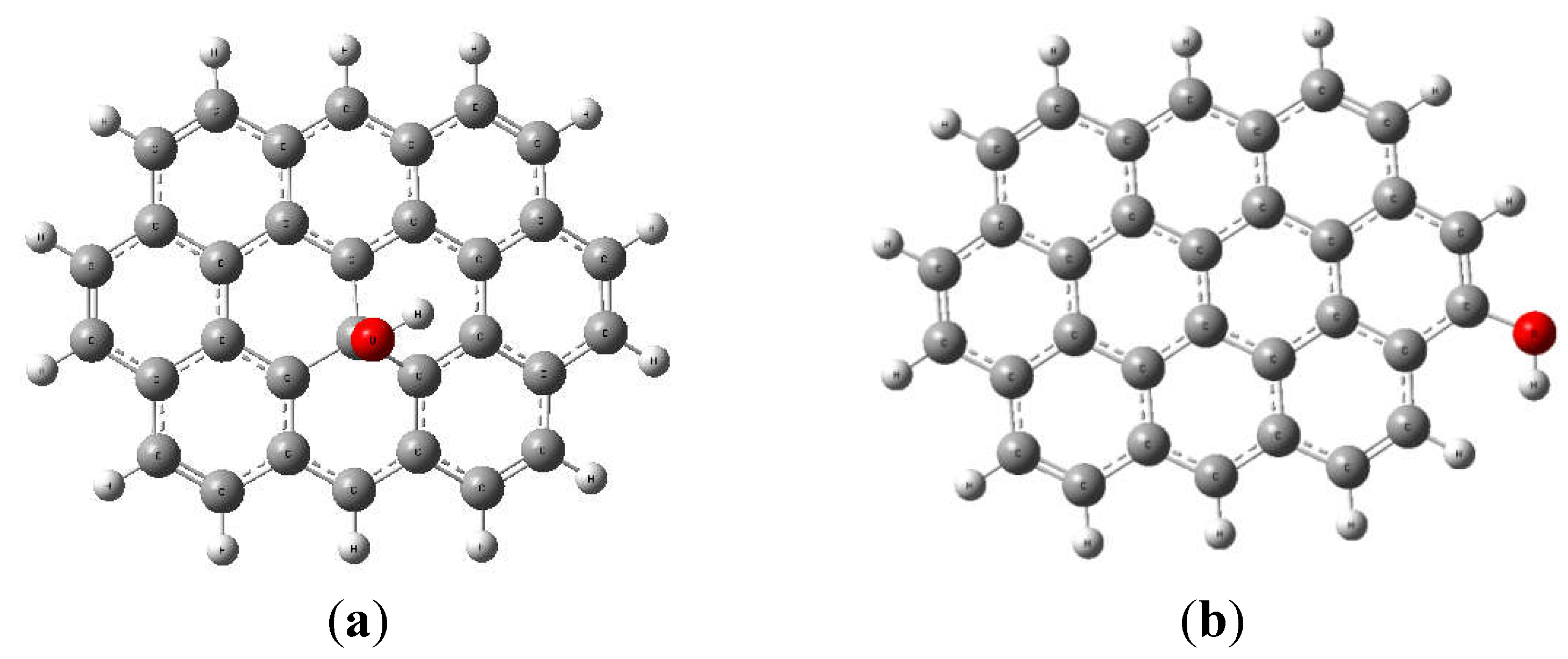
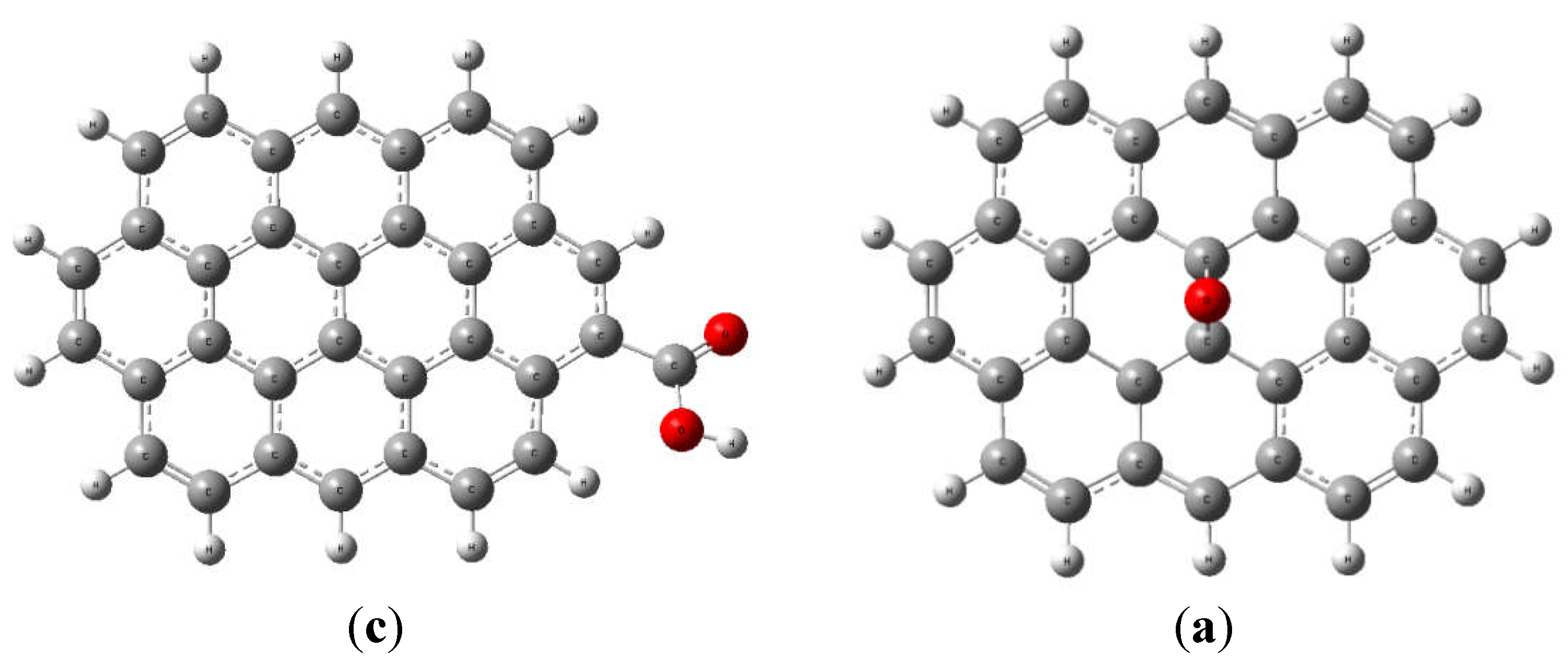
Figure 2.
Electrostatic potential diagram of GO with different functional groups in stable configuration.(a)GO(OH)s ,(b)GO(O),(c)GO(OH)b,(d)GO(COOH).
Figure 2.
Electrostatic potential diagram of GO with different functional groups in stable configuration.(a)GO(OH)s ,(b)GO(O),(c)GO(OH)b,(d)GO(COOH).
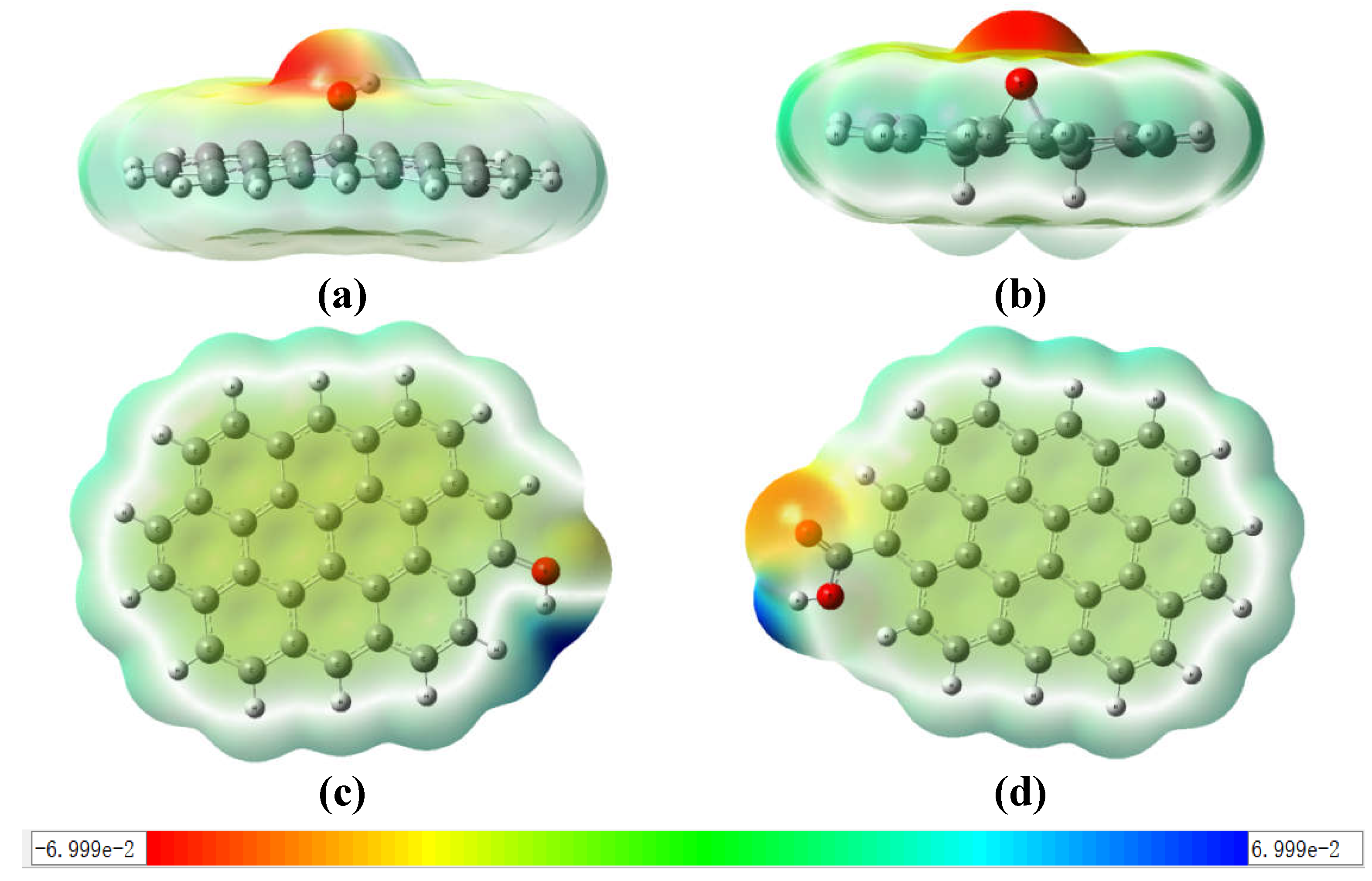
Figure 3.
Influence of temperature change on [GO(COO)... Co]+ structure(a)The structure of [GO(COO)... Co]+ at 20℃,(b)The structure of [GO(COO)... Co]+ at 30℃,40℃ and 50℃.
Figure 3.
Influence of temperature change on [GO(COO)... Co]+ structure(a)The structure of [GO(COO)... Co]+ at 20℃,(b)The structure of [GO(COO)... Co]+ at 30℃,40℃ and 50℃.
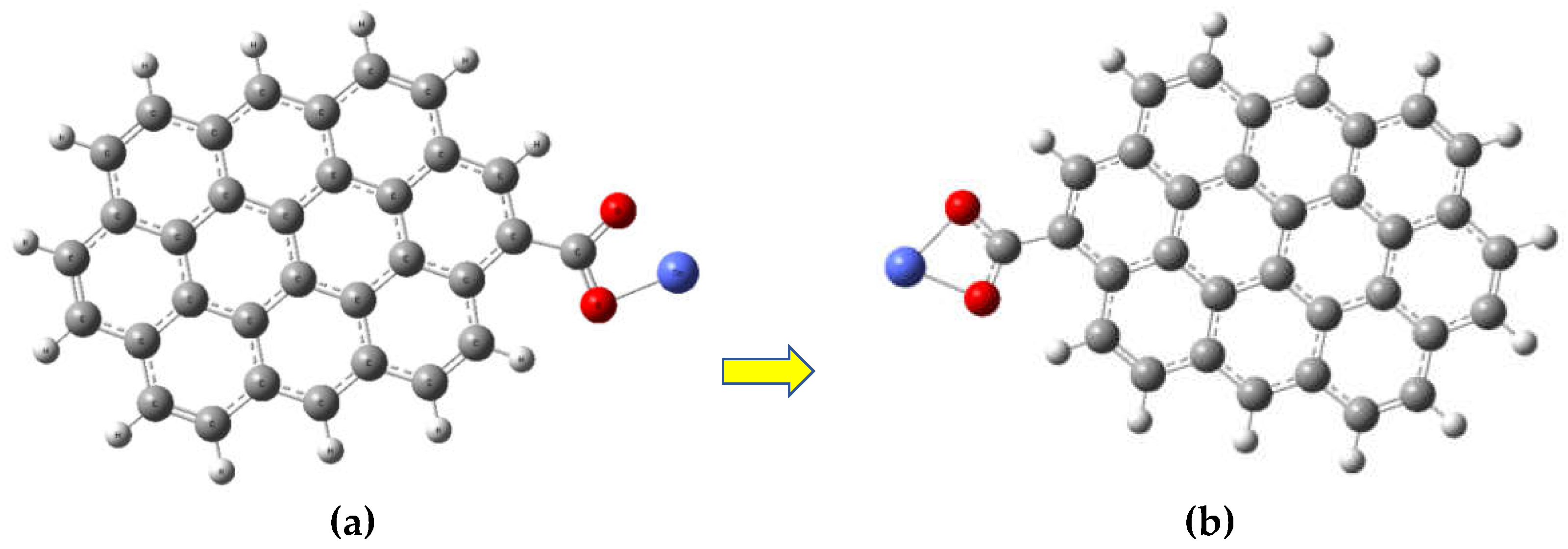
Figure 4.
Influence of temperature change on [GO(O)... Co]+ structure(a)The structure of[GO(O)... Co]+ at 20℃,(b)The structure of[GO(O)... Co]+ at 30℃,40℃ and 50℃.
Figure 4.
Influence of temperature change on [GO(O)... Co]+ structure(a)The structure of[GO(O)... Co]+ at 20℃,(b)The structure of[GO(O)... Co]+ at 30℃,40℃ and 50℃.
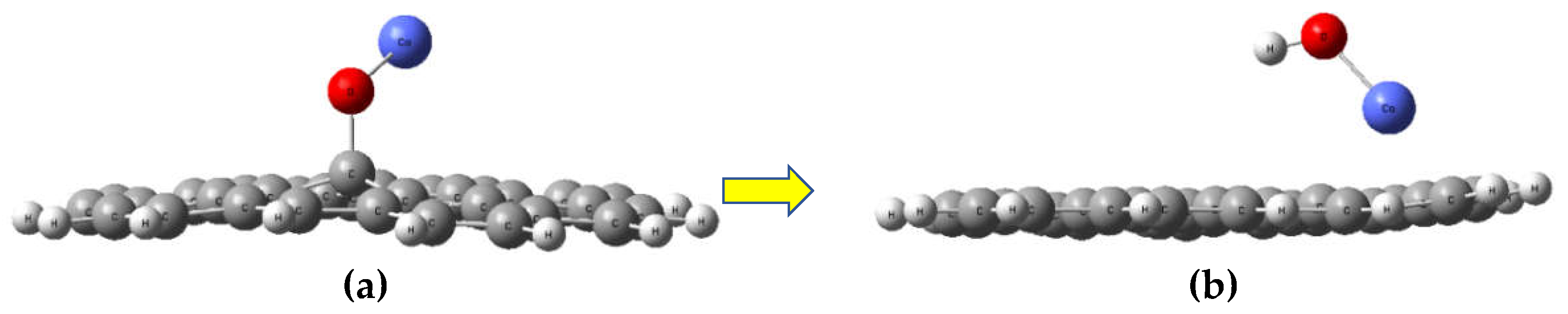
Figure 5.
Stable configuration of GO(O)-s and each interfering ion.(a)The stable configuration of GO(O)-s and Na+,(b)The stable configuration of GO(O)-s and K+,(c)The stable configuration of GO(O)-s and Ca2+,(d)The stable configuration of GO(O)-s and Mg2+.
Figure 5.
Stable configuration of GO(O)-s and each interfering ion.(a)The stable configuration of GO(O)-s and Na+,(b)The stable configuration of GO(O)-s and K+,(c)The stable configuration of GO(O)-s and Ca2+,(d)The stable configuration of GO(O)-s and Mg2+.
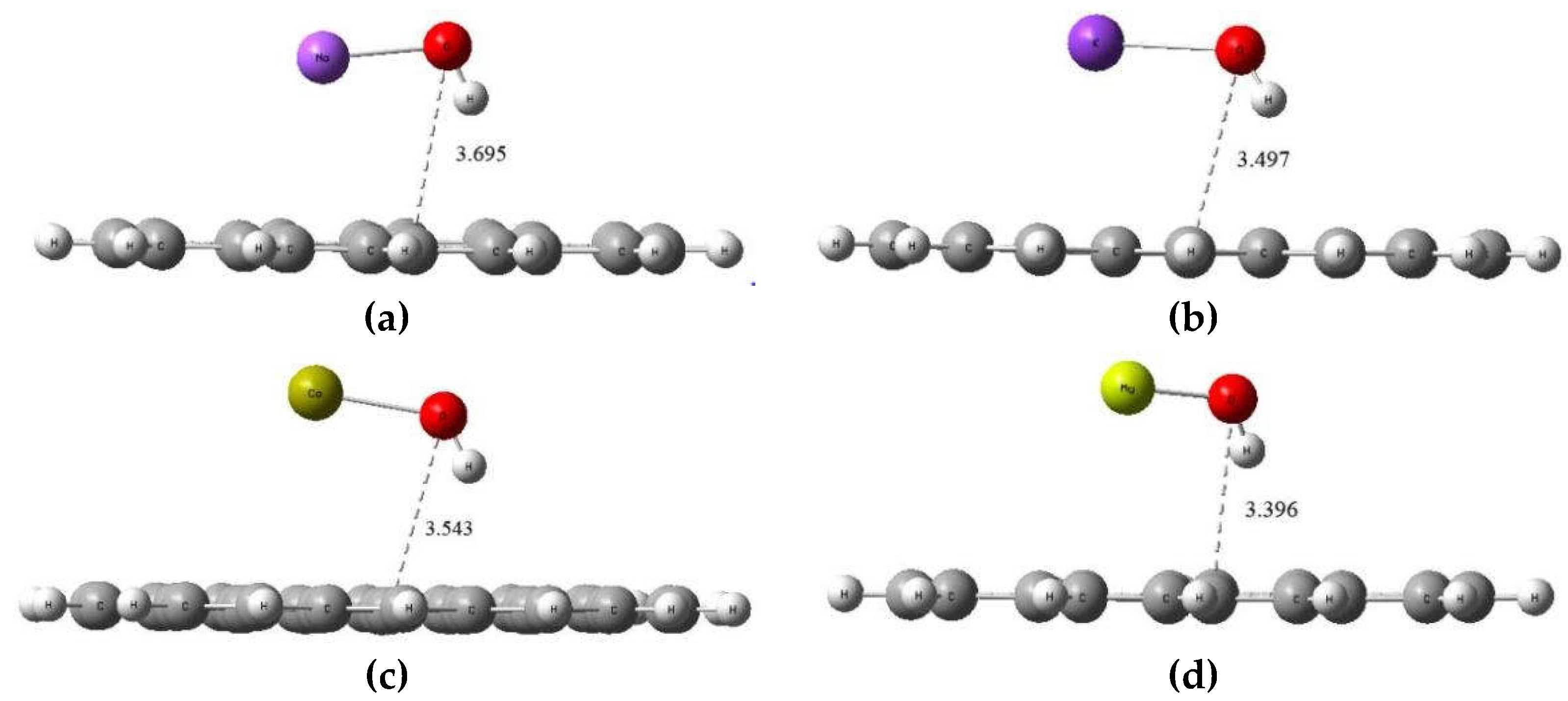
Figure 9.
Effect of pH value on Co2+ adsorption by GO.
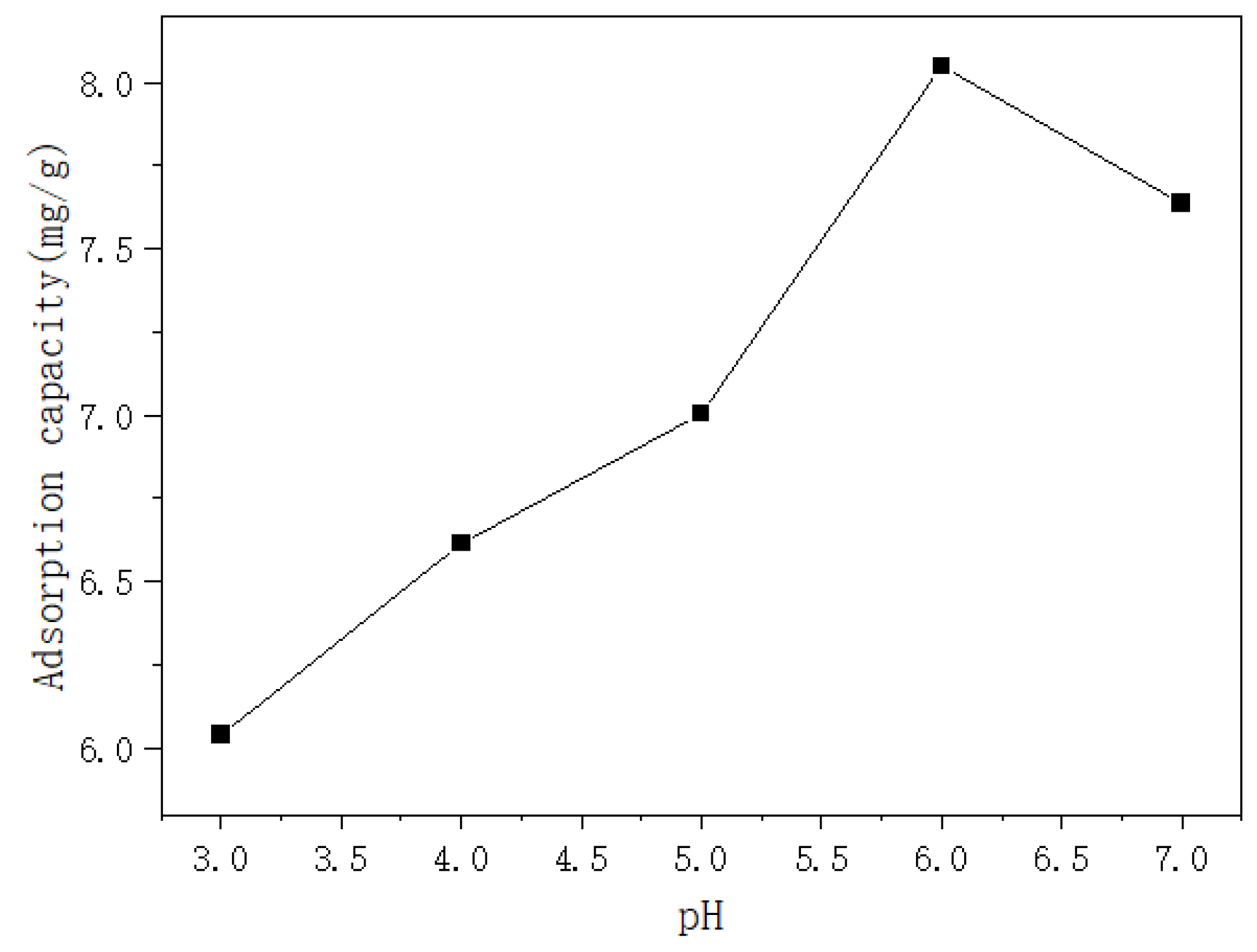
Figure 10.
Effect of temperature value on Co2+ adsorption by GO.
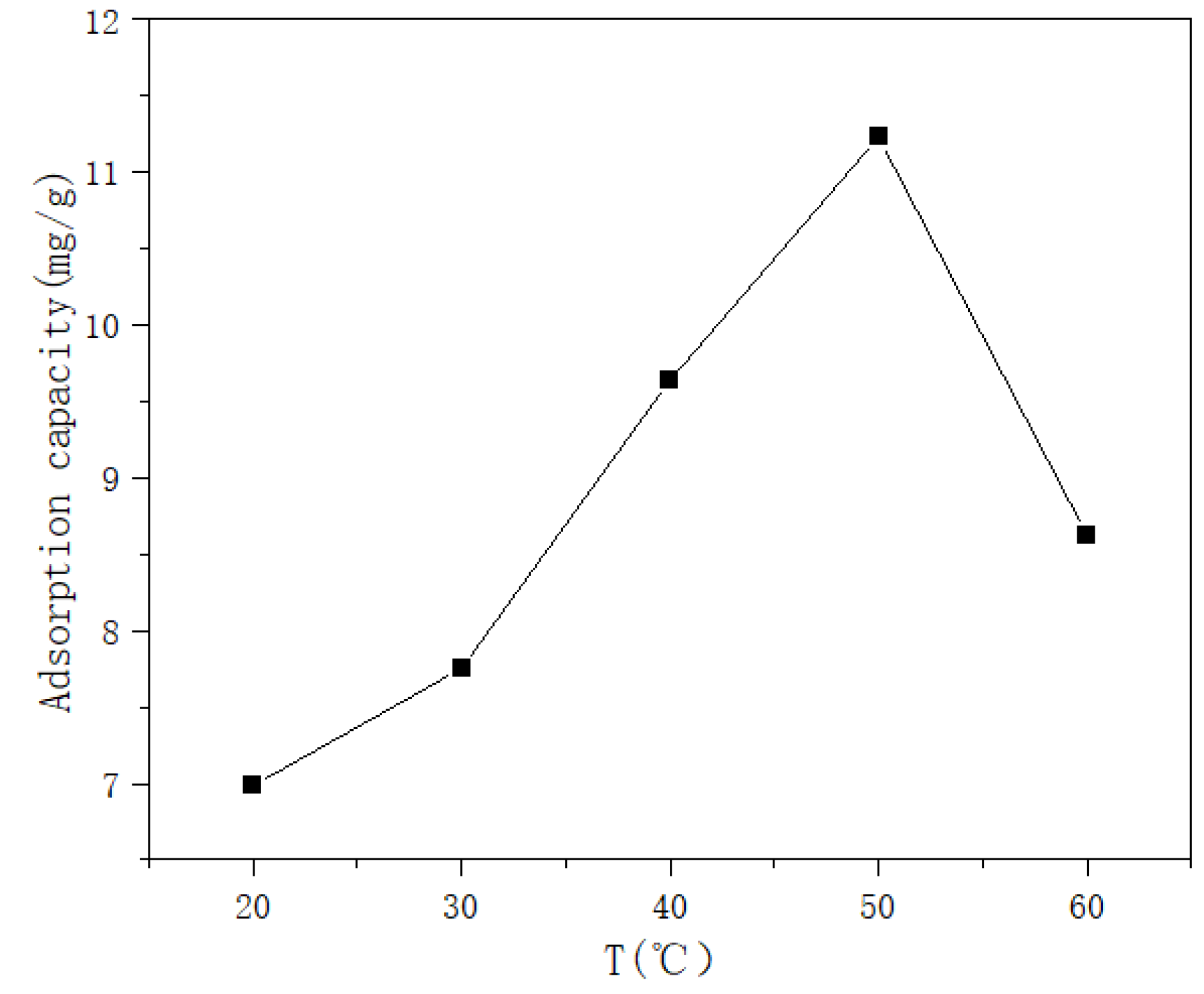
Figure 11.
Effect of coexisting ions on the adsorption of Co2+ by GO.


Table 1.
The energy of GO containing different numbers of six-membered rings.
| The type of GO | Energe/hartree |
|---|---|
| GO4 | -618.0725301 |
| GO7 | -961.2273546 |
| GO10 | -1228.065433 |
| GO13 | -1534.185656 |
| GO16 | -1840.29426229 |
| GO22 | -2376.2528108 |
Table 2.
Adsorption energy of Co2+ by GO containing different functional groups.
| The type of [GO…Co] | Binding Energe/hartree |
|---|---|
| [GO(COO)…Co]+ | 0.52835 |
| [GO(O)s…Co]+ | 0.499733 |
| [GO(O)…Co] | 0.272588 |
Table 3.
Adsorption energy of GO(COO)- with different ions.
| The type of [GO(COO)…different ions] | Binding Energe/hartree |
|---|---|
| GO(COO)…Na | 0.379858599 |
| GO(COO)…K | 0.37362262 |
| [GO(COO)…Ca]+ | 0.3308726 |
| [GO(COO)…Mg]+ | 0.367036084 |
Table 4.
Adsorption energy of GO(O) with different.
| The type of [GO(O)…different ions] | Binding Energe/hartree |
|---|---|
| GO(CO)…Na | -0.0120014 |
| GO(CO)…K | -0.01213938 |
| [GO(CO)…Ca]+ | -0.0684884 |
| [GO(CO)…Mg]+ | -0.04796992 |
Disclaimer/Publisher’s Note: The statements, opinions and data contained in all publications are solely those of the individual author(s) and contributor(s) and not of MDPI and/or the editor(s). MDPI and/or the editor(s) disclaim responsibility for any injury to people or property resulting from any ideas, methods, instructions or products referred to in the content. |
© 2024 by the authors. Licensee MDPI, Basel, Switzerland. This article is an open access article distributed under the terms and conditions of the Creative Commons Attribution (CC BY) license (https://creativecommons.org/licenses/by/4.0/).
Copyright: This open access article is published under a Creative Commons CC BY 4.0 license, which permit the free download, distribution, and reuse, provided that the author and preprint are cited in any reuse.


