

Submitted:
29 May 2024
Posted:
29 May 2024
You are already at the latest version
Abstract
This study examines the recovery efforts at Gran Tarajal Harbor following a significant oil spill, employing innovative technologies. Initial response efforts were hampered by inadequate contingency plans and bureaucratic delays, underscoring the need for improved preparedness. Cleanup operations utilized advanced methods such as enhanced absorbent sponges, absorbent granulates, bioremediation with allochthonous species, and a combination of barriers and sponges. These technologies proved effective in minimizing environmental impact, reducing hydrocarbon concentrations in sediments from nearly 60,000 mg/kg to less than 1,600 mg/kg in seven months. Heavy metal analysis revealed lead and copper concentrations associated as well as with routine port activities, while mercury levels linked to the spill decreased over time. Tissue analysis indicated minimal contamination in local organisms, suggesting limited impact from the spill, and evaluation of the biological communities in sediments suggest an ecological recovery. Study underscores the importance of rapid response, advanced technologies, and detailed contingency plans tailored to each port. Despite the successful cleanup and ecosystem recovery, political and bureaucratic challenges remain significant obstacles to implementing these improved methods. The findings advocate for a re-evaluation of current oil spill response protocols to incorporate more effective, sustainable, and cost-efficient technologies, aligning with the principles of a circular economy.
Keywords:
Oil Spill Response
; reusable sponge absorbent
; bioremediation
; granulates absorbent
; new oil content barriers
; oil circular economy.
1. Introduction
Since its inception, the oil and gas industry has been characterized as a highly conservative sector. As a result of this mentality, technological advances have been few and far between throughout its history. However, if there is one sector where this delay stands out, it is environmental protection, where the few advances that have been made have been the result of accidents in the United States or some European country [1,2,3,4,5,6].
As a result, the technology for dealing with oil spills at sea has not evolved for many years, and we are left with a series of systems which, although extremely expensive, are not capable of carrying out the work for which they were designed with a minimum of solvency. In a brief analysis of the technology currently used to combat oil spills at sea, we can start with the systems known as skimmers, which group together a number of products that are theoretically capable of collecting spilled oil from the surface of the water.
Perhaps the best way to sum up the shortcomings of these systems is to say that the mere mention of their use makes the hairs on the back of the technicians responsible for their use stand on end, because they are extremely inefficient systems for recovering any type of oil from the surface of the water, they are very complicated to use, a great deal of specialization and experience is required to select the right skimmer for each situation, they are enormously expensive, and the end result produces a mixture of water and oil together with particles that pose new problems for their proper management.
Proof of the shortcomings of these devices is that during the response to the Deep Water Horizon accident in the Gulf of Mexico, where the deployment of resources was the largest in history and the expenditure reached 40 billion dollars, only between 2 and 4% of the oil that came to the surface was collected by these systems. [4,7,8]
In addition to skimmers, another method for removing oil from water surfaces involves the use of single-use absorbents, typically reserved for small, controlled spills. However, their limited effectiveness poses challenges for subsequent hazardous waste management due to their expense and complexity.
Booms are often touted as essential tools for controlling oil slicks on water surfaces, yet they too struggle to achieve their intended purpose. Even in port environments with minimal wind and wave activity, booms often fail to contain oil slicks adequately.
Consequently, the predominant response strategy employed by oil and gas companies and spill operators revolves around dispersion systems, both mechanical and chemical. However, the use of chemical dispersants, particularly in the Gulf of Mexico spill, has sparked controversy due to their adverse environmental impacts, as evidenced by research conducted within the GOMRI program by independent scientists. These dispersants merely shift the oil from the visible water surface to the sediments and water column, masking the true environmental effects and exacerbating the situation. [9,10,11,12,13,14,15,16,17,18]
Mechanical dispersion maneuvers, another increasingly popular approach, involve introducing floating oil into the water column, often with the aid of homemade dispersants like industrial soaps. However, this method amplifies the environmental impact of surface oil. [19,20]
This article will compare and contrast these traditional response systems with new technologies employed in the recovery efforts following an oil spill incident in the port of Gran Tarajal, Fuerteventura, Canary Islands, Spain. This case study serves as a prime example of alternative approaches to oil contamination management, showcasing innovative technologies that significantly enhance response capabilities and efficiencies beyond conventional methods.
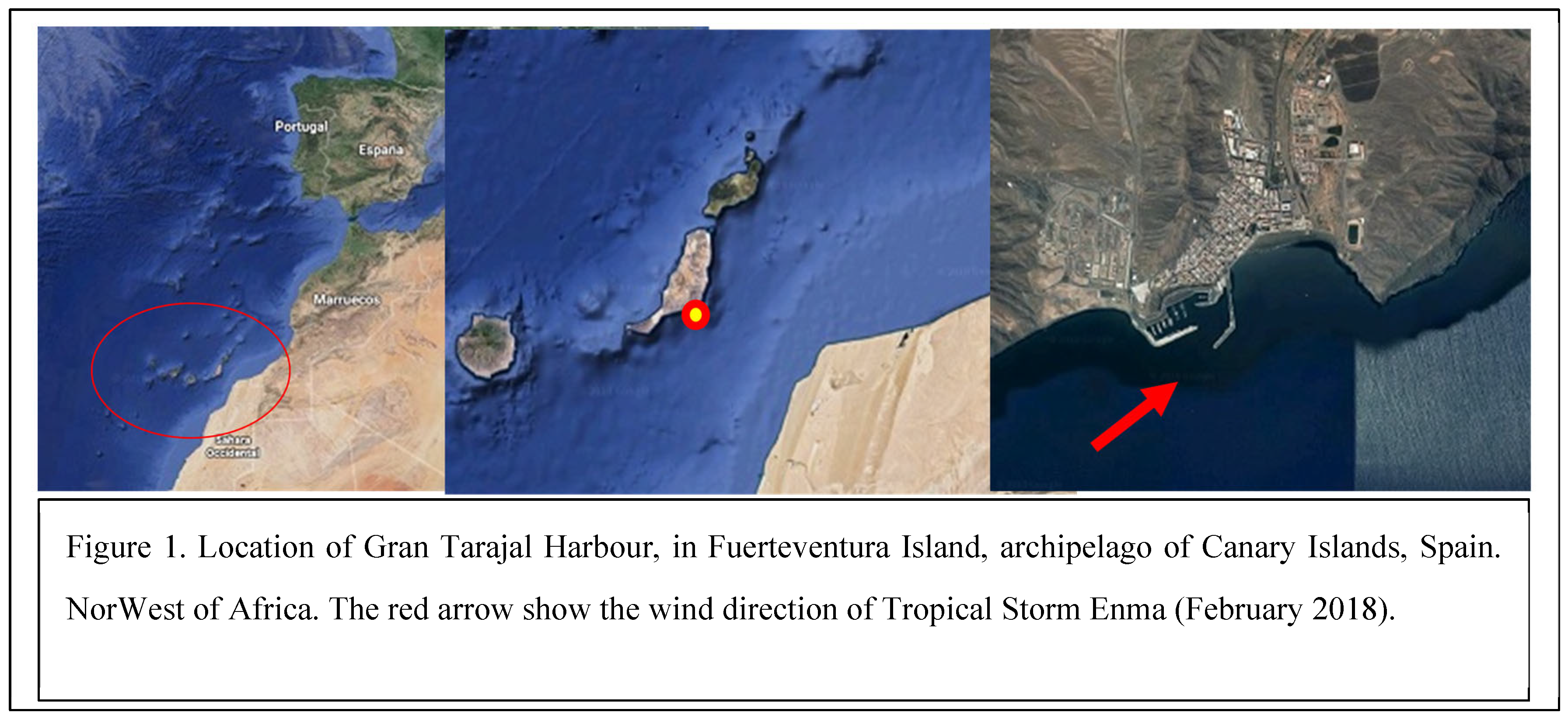
The spill resulted from the sinking of five out of six barges loaded with construction materials, including trucks, cranes, compressors, generators, hydrocarbon tanks, and various oils, during the tropical storm Enma in February 2018. This storm caused significant turmoil in the commercial port of Gran Tarajal, which lacks protection against south-facing storms, uncommon in the area. Three of the four tugboats transporting the fleet also sank.
Estimating the exact amount and type of spilled oil is challenging, but it mainly consisted of diesel (approximately 100 tons) and fuel oil (about 25 tons), along with hydraulic oils and lubricants. Due to the fleet's poor condition, complete decontamination of the barges' and tugboats' tanks was impossible. Consequently, spills continued throughout the cleanup efforts from February to October 2018. This posed additional challenges, requiring the maintenance of mechanical oil recovery systems and bioremediation inoculums until December 2018. (Video-1, before and after)
2. Description of the accident
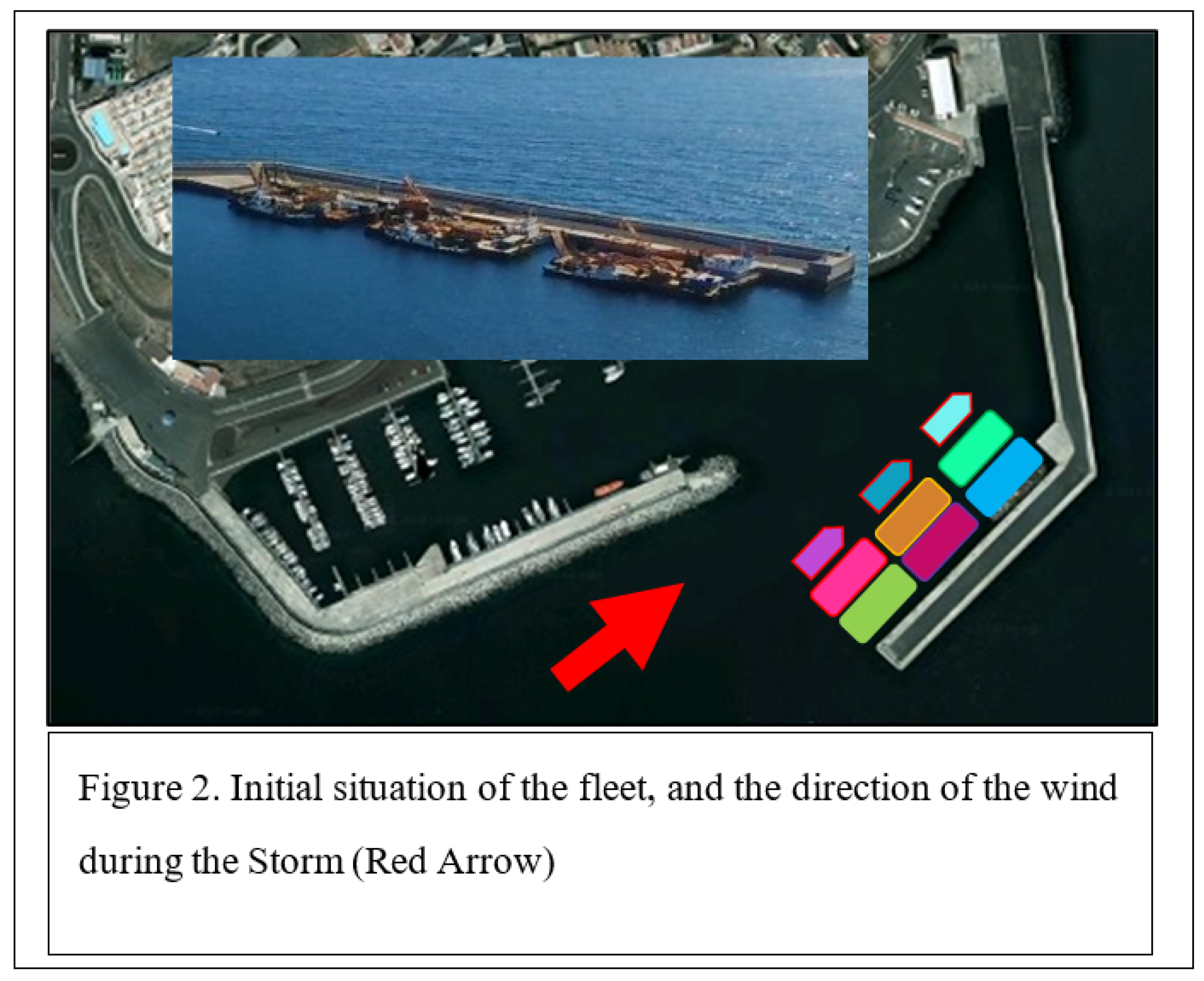
In Figure 2, the initial arrangement of the fleet is depicted, illustrating the vessels' positions at the entrance of the commercial port. The port's design, lacking protection in the southwest area, amplifies wave force in that direction, creating a funnel effect of energy accumulation, which led to the accident. Fortunately, there were no personal injuries, but the storm's energy severely damaged all the vessels.
Only one tugboat and a pontoon boat survived the accident, albeit with significant damage, requiring immediate securing to prevent sinking. The remaining vessels sank, along with all their equipment.
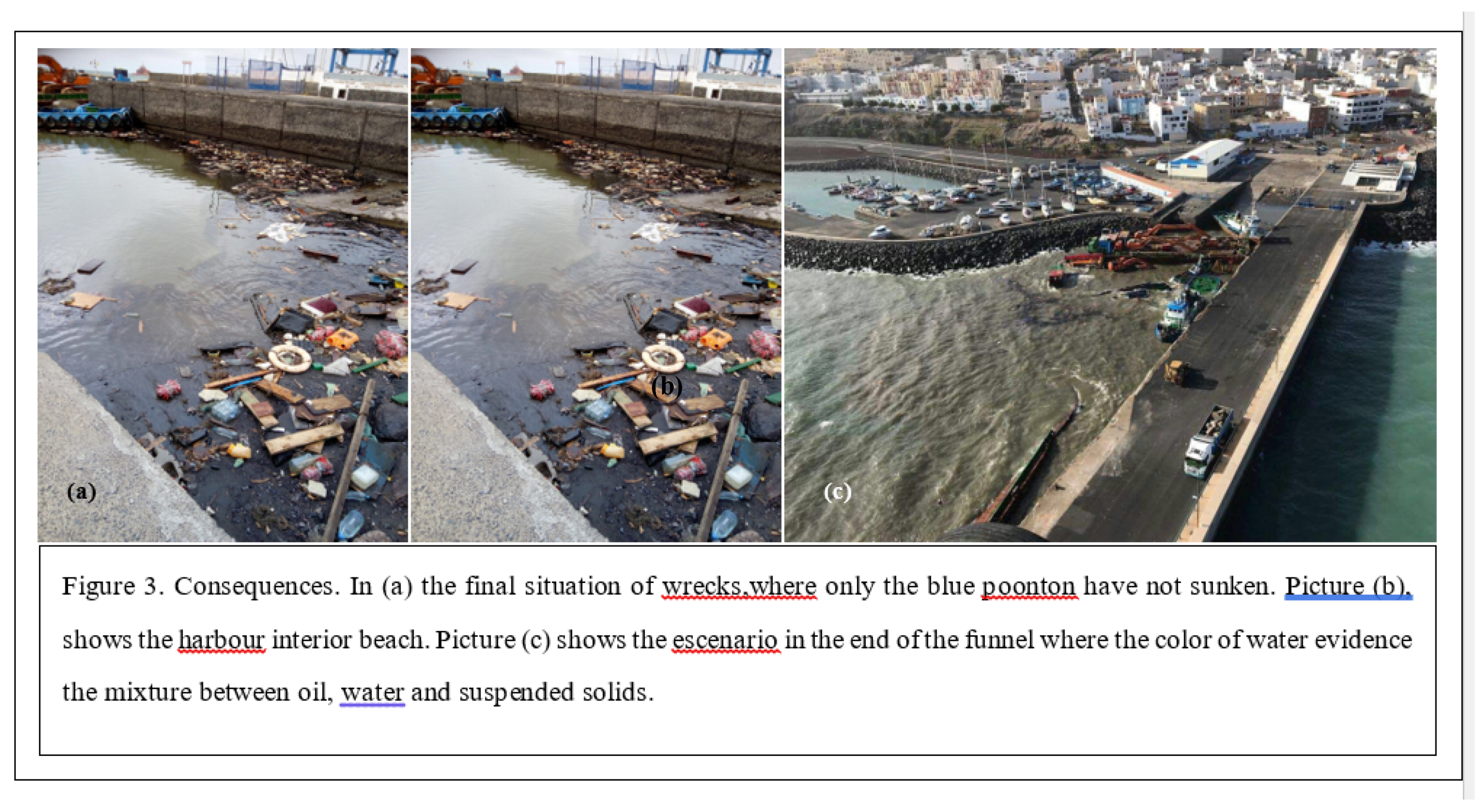
The aftermath is depicted in Figure 3, where the vessels broke their moorings and collided with each other, gradually descending towards the bottom of the funnel where a small black sand beach is situated. Figure 3B illustrates the condition of the beach adjacent to the ramp, revealing not only the presence of oil but also a substantial accumulation of solid waste and seaweed debris dislodged by the storm. Figure 3 (c) presents an aerial image captured shortly after the incident. The wind and wave forces propelled surface oil and floating debris towards the beach and ramp at the funnel's base. Meanwhile, agitation mingled the oil with water and suspended particles, leading to emulsification, a process known as Marine Oil Snow Sedimentation and Flocculent Accumulation (MOSSFA). This process transports oil from the surface to the port's bottom, retaining a significant amount in the mid-water region (water column). [21,22,23,24]. (Video-2, MOSSSFA Images).
Incident also had repercussions on the health and well-being of the local residents. The powerful winds carried the spilled oil towards the low-lying areas, where it accumulated and evaporated, emitting a potent odor across the municipality. This odor was so intense that it led to several instances of fainting among the populace. As a precautionary measure, residents were advised to remain indoors with their windows closed until the majority of the oil was cleared from the water's surface using sponge reusable absorbents [25]. Within three days, these absorbents successfully mitigated the sanitary crisis.
3. Materials and Methods
3.1. Organization of Cleaning Operations at the Port of Gran Tarajal
The advanced age and inadequate maintenance of the vessels, compounded by the intensity of the storm within the port, inflicted significant damage to their hulls. This rendered salvaging the entire wrecks and conducting thorough decontamination operations with sufficient safety unfeasible. Moreover, certain fuel tanks remained incompletely emptied, and various types of oil containers inside the hulls could not be entirely removed.
To address these challenges, a decision was made to employ diamond wire cutting techniques to sever the hulls, followed by the removal of the resulting sections using cranes for subsequent dismantling within the port premises. However, these cutting and extraction manoeuvres led to intermittent oil spillages of varying volumes throughout the months of operation, occurring both directly into the water and on land when the cut sections of the vessel were transferred onto the dock using cranes.
3.2. Mechanical Oil Collection
Initial efforts focused on removing the layer of oil driven by the wind against the beach and the ramp at the bottom end of the harbor. While the floating oil comprised various types, predominantly diesel, wind and sun exposure caused evaporation of this lighter hydrocarbon, exacerbating atmospheric conditions, and leading to health issues among residents, prompting advisories to stay indoors with windows closed.
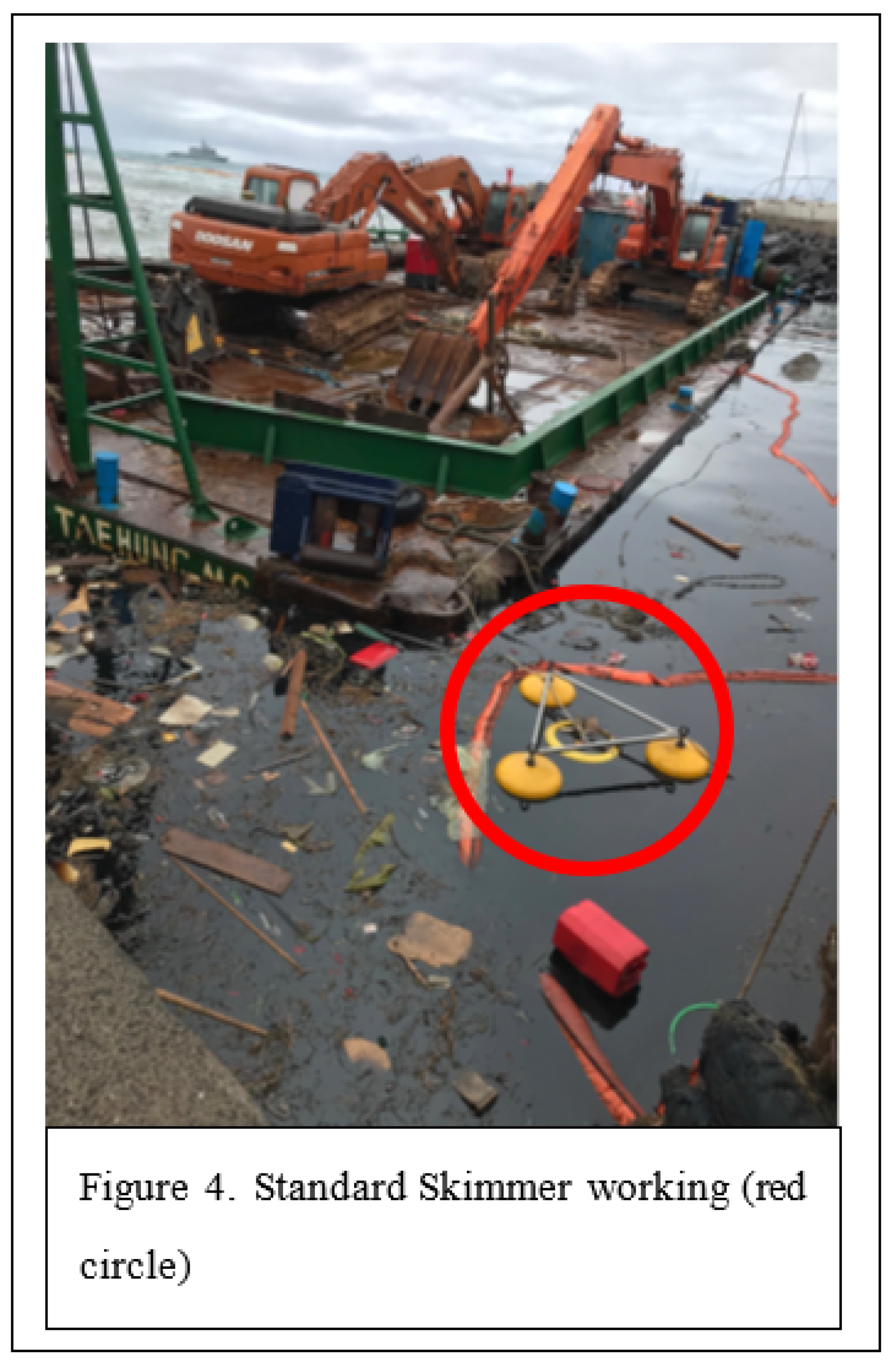
The presence of solid debris alongside the oil further hampered traditional skimmer efficiency, despite meticulous operation by specialized personnel tons recovered from the water surface.
For instance, the skimmer depicted in Figure 4 managed to collect approximately 500 liters of a water, oil, and particle mixture over three days, with water content hovering around 50%.
Meanwhile, a newly developed reusable absorbent, weighing 20 kg and equipped with two manual wringers, demonstrated remarkable capabilities. Operated by eight untrained individuals in oil spill response, it successfully removed 57 cubic meters of oil from the water within the same timeframe, with minimal water content (well under 5%) and devoid of any particles.
Notably, the quality of the recovered oil was evidenced by the direct utilization of irregularly removed 4 cubic meters in municipal bread ovens without additional purification, underscoring its purity. Over consecutive days, the afternoon shifts removed 20, 22, and 15 cubic meters of oil, respectively, alleviating the health emergency and permitting safe outdoor activities for citizens by the following Monday.
The absorbent sponge, capable of absorbing 20 to 25 times its weight in oil per use, efficiently releases absorbed oil upon pressure wringing, restoring full absorption capacity. With at least 200 uses per sponge, it guarantees total absorption of over 6 tons of oil per kilogram without compromising its original characteristics or hydrophobic properties.
Throughout the harbor cleanup spanning nine months, the sponge continued to be effective, contributing to the removal of an additional 23 cubic meters of oil, totaling 80 tons recovered from the water surface. (Video-3, First Day Working with Sponges)
3.3. Oil Slick Containment Systems
Traditional oil slick containment systems, such as various types of booms and single-use absorbents in the form of cylinders (boomers), were utilized. However, these systems once again demonstrated their limited capacity to effectively contain and absorb hydrocarbons.
The prevailing strong winds, particularly in the initial days, posed significant challenges in controlling the oil slick within the port. This was observed across all types of booms, including oceanic booms equipped with a 2-meter skirt, which proved ineffective in efficiently containing the oil and allowed it to pass through. Consequently, oil slicks were lost to the sea during periods of wind shifts until the development of a new boom system.
Leveraging the design of reusable absorbents, an effective system was devised to both contain and absorb oil. Figure 5 depicts one of the initial designs that combined booms with sponge absorbent.
By integrating these two systems, the barriers supplemented with sponges successfully prevented the passage of any oil type for the first time, effectively trapping it within the sponge. Subsequently, in collaboration with a small barrier manufacturer, a new barrier design was developed with an adaptation to accommodate the sponge, ensuring it remains floating at water level and attached to the barrier (refer to Figure 5).
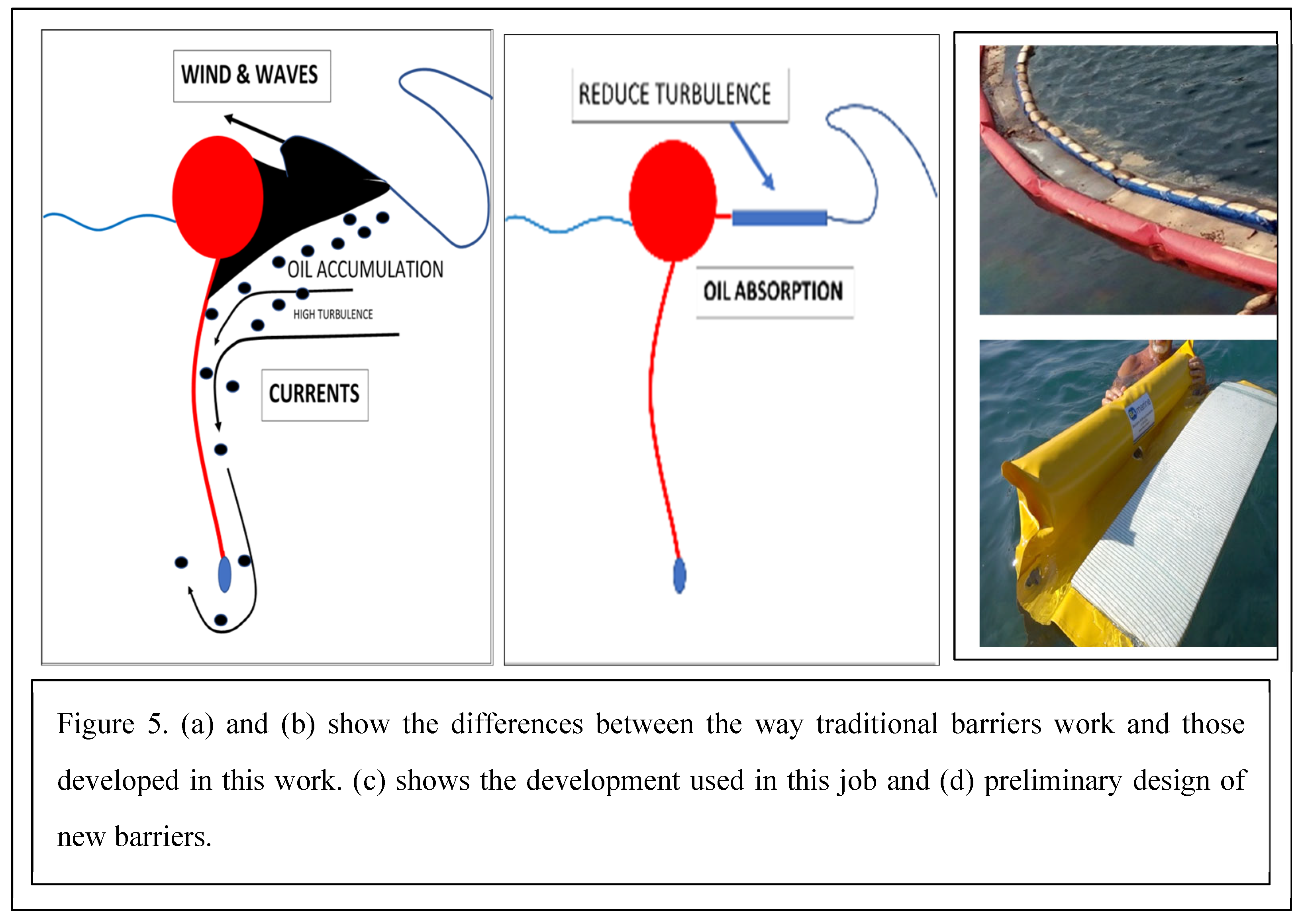
This innovative design not only enables the effective surface containment of oil, subsequently absorbed by the sponge, but also facilitates the rapid attachment and removal of sponges. This allows for the periodic renewal of sponges to remove absorbed oil accumulated during their deployment in the water.
3.4. Removal of Vessels and Equipment
The process of removing the wreckage commenced concurrently with oil removal operations, following a reorganization of the initial deployment of containment booms, which had been positioned to assist the fleet during its sinking.
The initial focus was on extracting machinery, trucks, cranes, compressors, and other equipment using cranes, creating space to address the sunken vessels.
Figure 6 illustrates the progression of hydrocarbon collection during the dock cleaning activities. Notably, until the end of November, sponge absorbents were employed extensively, both directly on spills and by draining the sponges adhered to the booms, which had also absorbed oil.
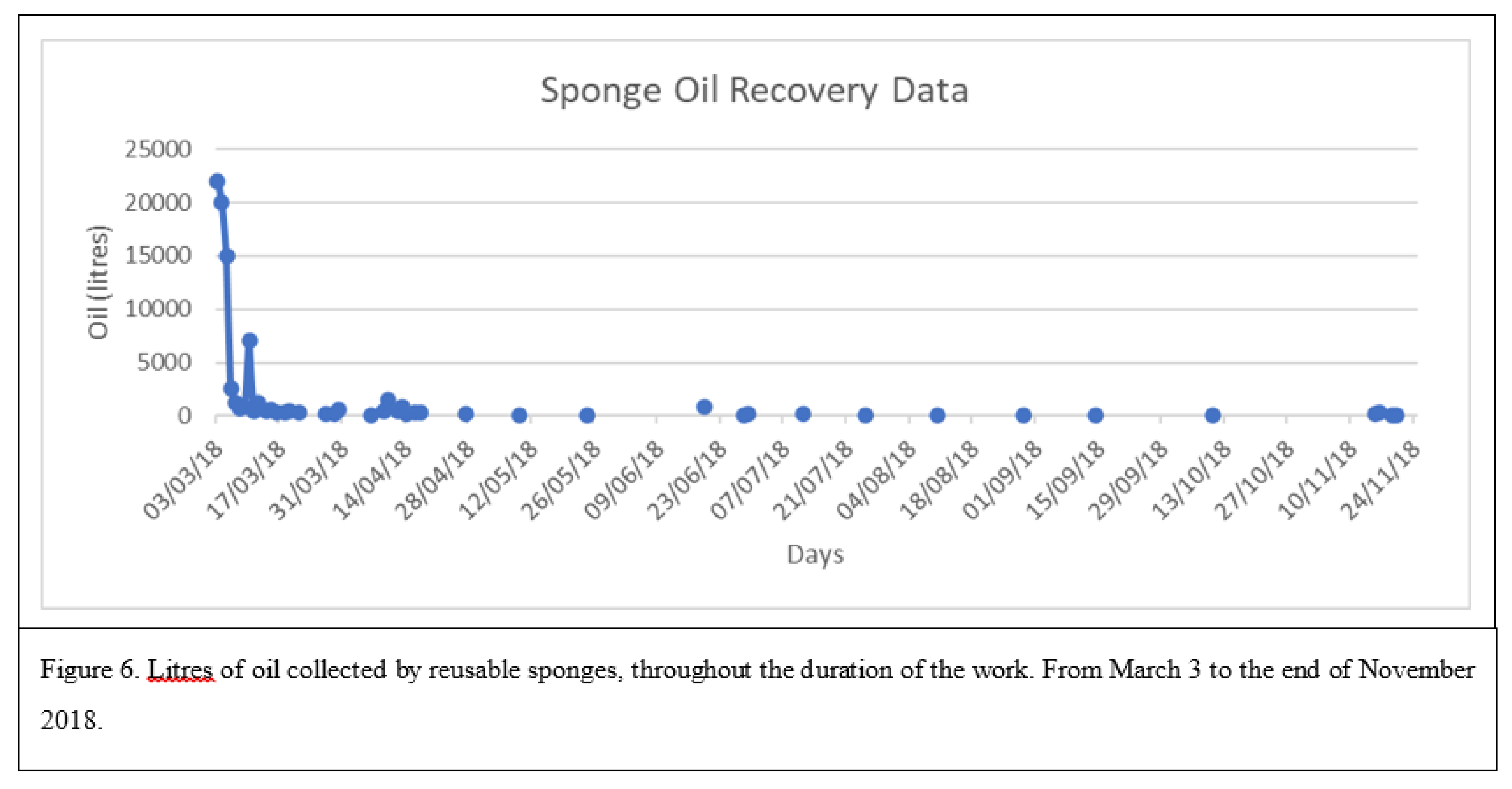
A notable characteristic of these sponges is their ability to absorb oil upon contact while repelling water from their interior, rendering them suitable for prolonged deployment. Tests have shown that they can function effectively in seawater for over two years without compromising their oleophilic and hydrophobic properties. Additionally, barriers can be left in place for extended periods, with periodic draining to recover retained oil.
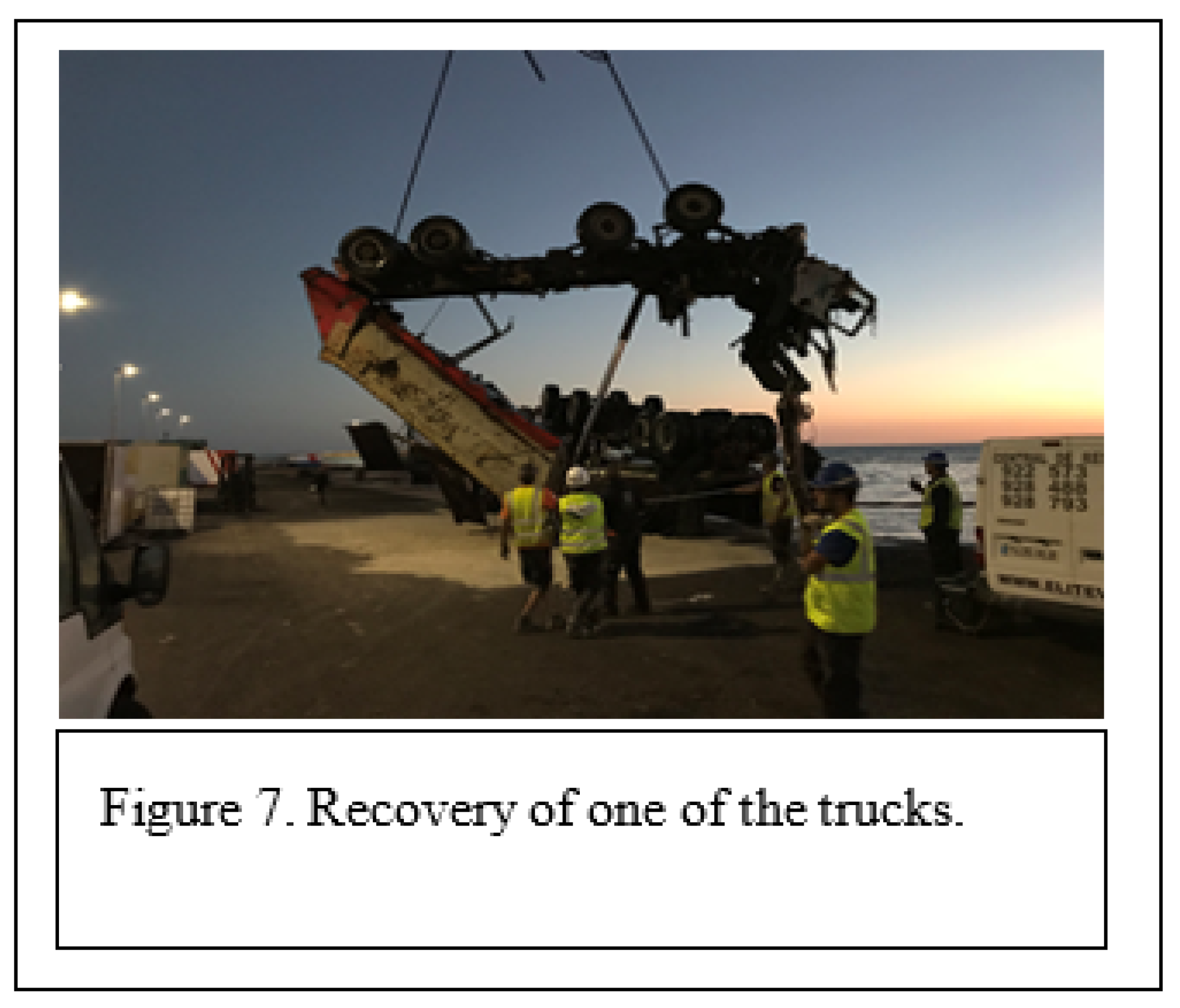
Furthermore, the cut segments of the vessels and heavy machinery (See figure 7) contained residual hydrocarbons, posing a risk of spillage upon deposition in the port. These hydrocarbons, when mixed with water, could contaminate again the water, soil the port floor, and impede operations, endangering workers. This challenge was addressed with the introduction of another innovation in oil spill response: absorbent granules.
The absorbent granulates possess high hydrophobic and oleophilic properties along with a low density, enabling them to float on water and effectively address many of the challenges typically encountered during land-based oil spill cleanups. In this scenario, their use proved particularly advantageous because depositing pieces of ships or heavy machinery on the harbor floor inevitably led to spills. Water draining from these objects mixed with diesel or oil and reentered the water, while oil could permeate the ground, posing risks in these areas and causing significant damage to the asphalt.
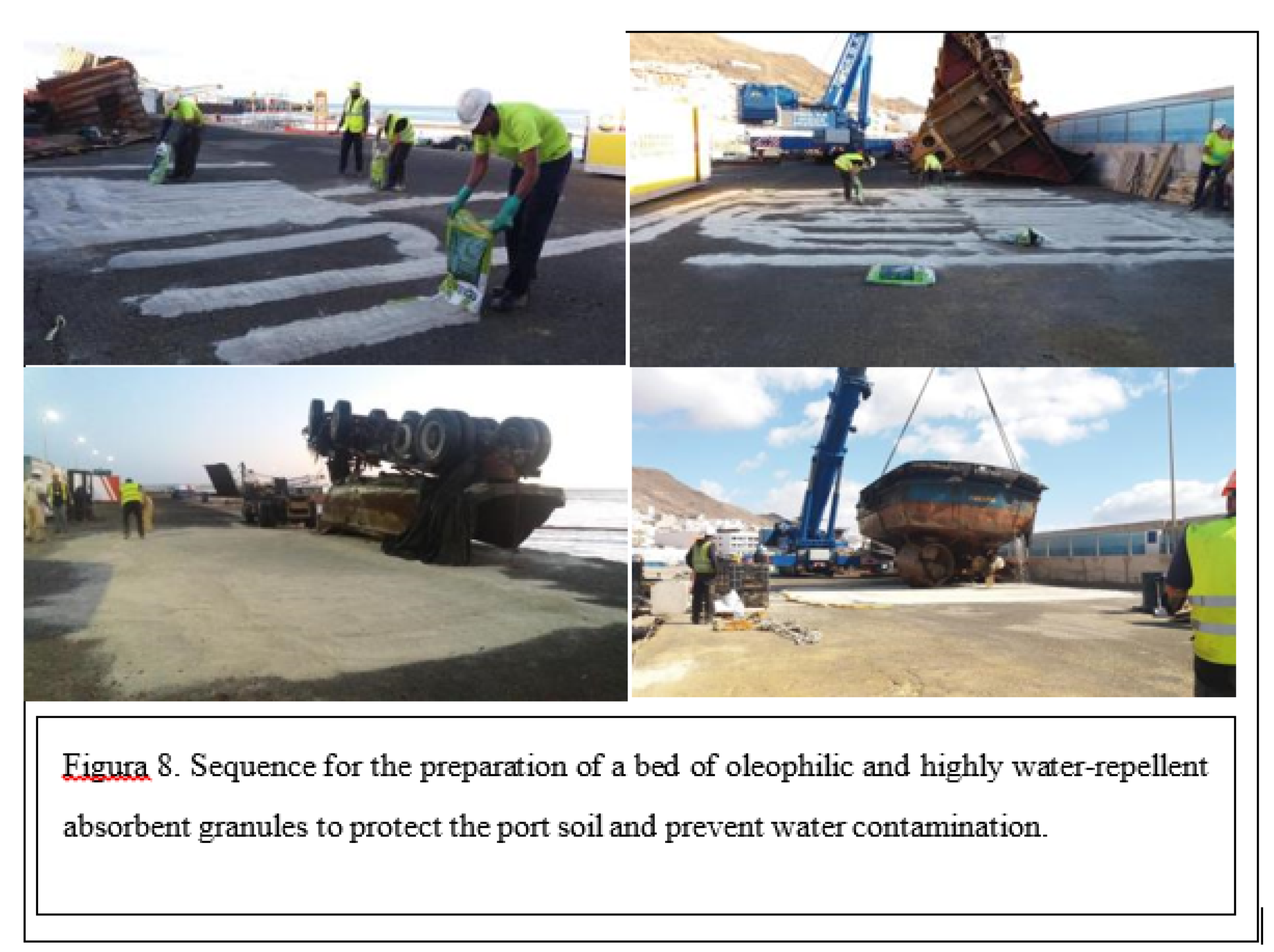
To mitigate these contamination risks, a system was devised to receive contaminated materials at the port, whereby objects, machinery, or cut ship pieces were supported on a bed of granulates.
Figure 8 illustrates the sequence for preparing a granulate bed to prevent soil and water contamination in the event of an oil leak from a ship's cut part.
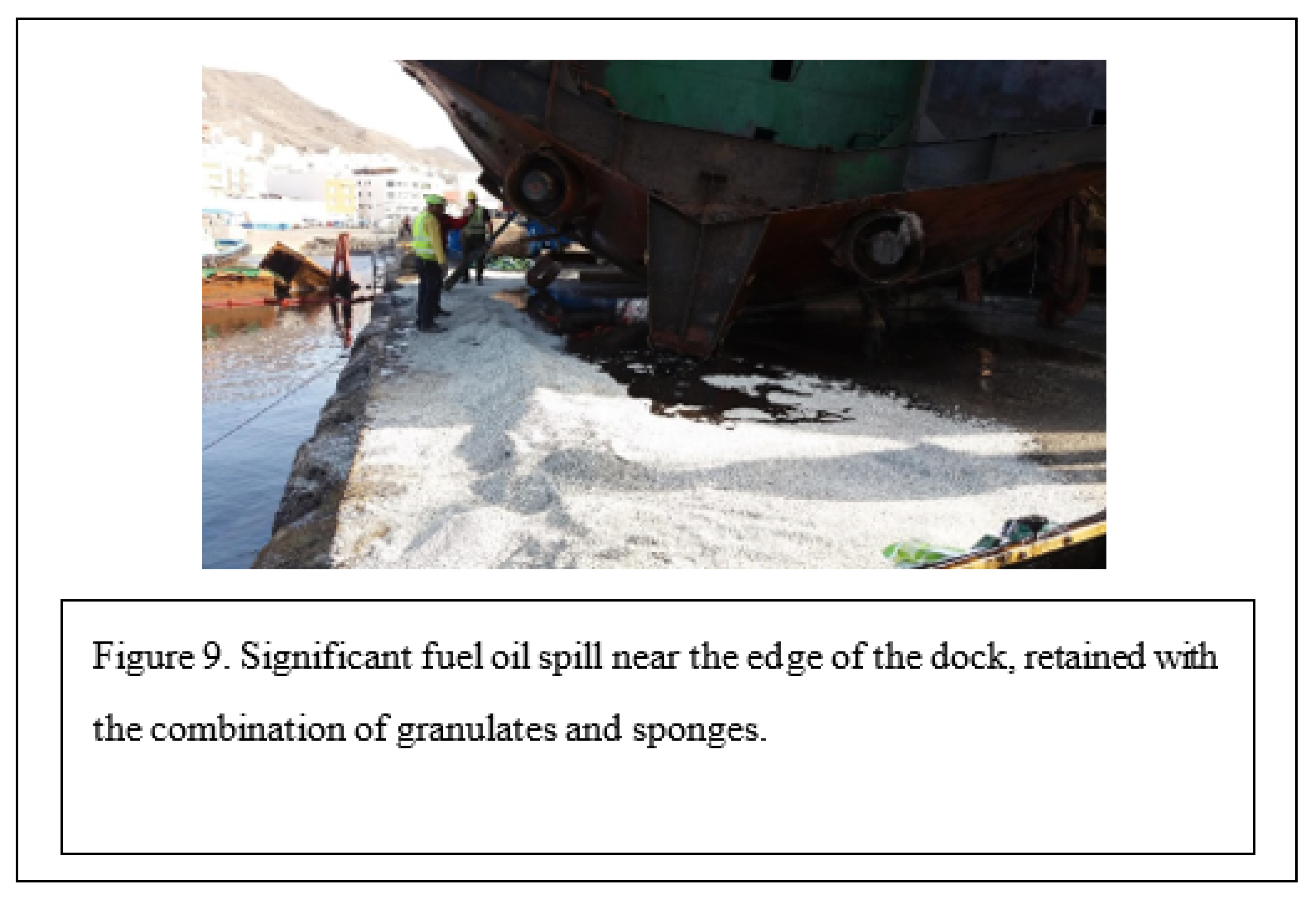
Despite efforts to scrap recovered pieces immediately, space constraints at the port bottom occasionally necessitated placing pieces near the dock edge. In such cases, a specialized barrier combining sponge with granulates was employed to manage substantial spills near the shore, as depicted in Figure 9, which demonstrates the retention of a major fuel oil spill close to the dock.
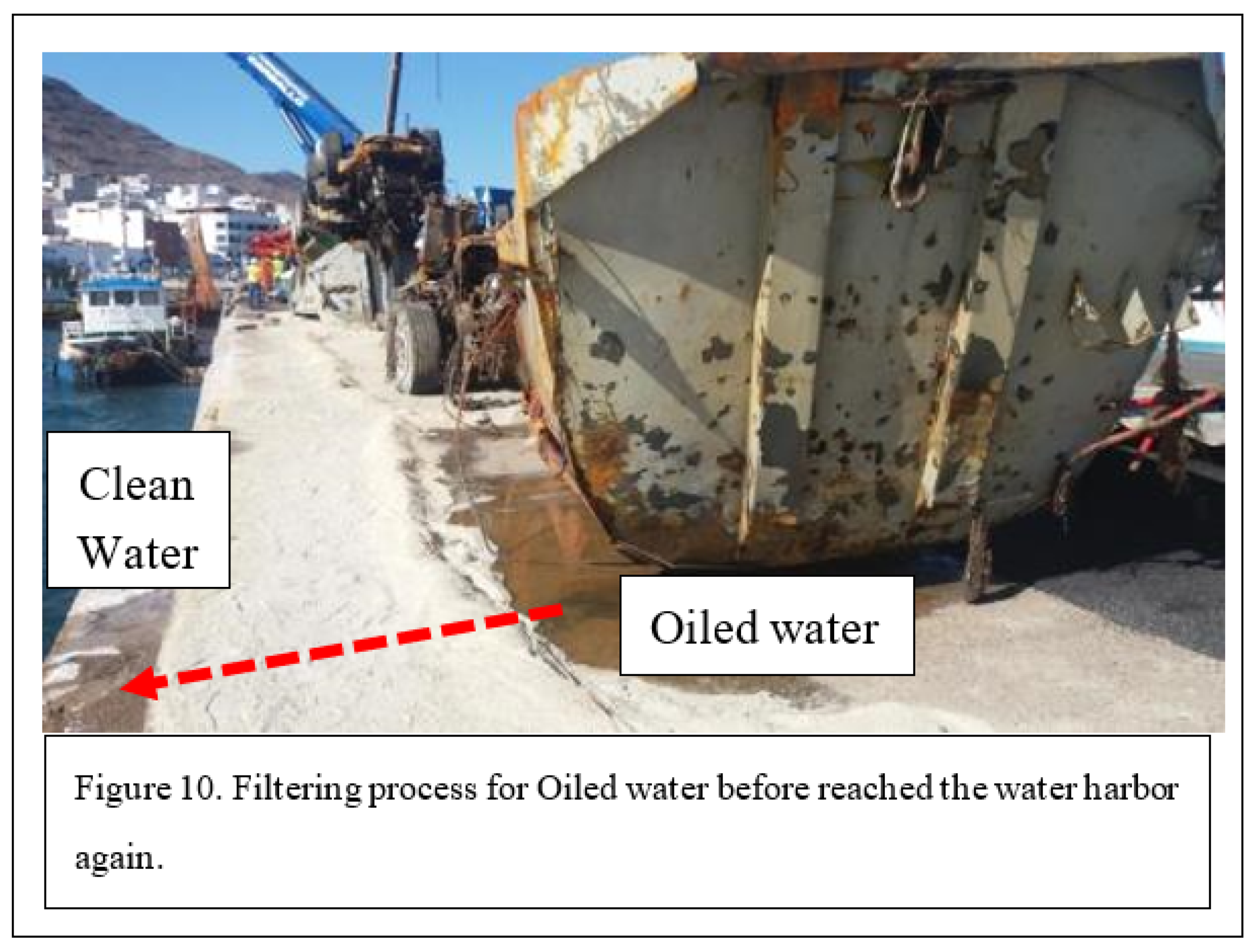
This barrier was particularly effective when dealing with water containing hydrocarbons, as the hydrophobic granulates allowed water to pass through while retaining the hydrocarbon, as shown in Figure 10.
Given that draining large pieces could take several hours, and new spills could occur during scrapping, either of hydrocarbon or contaminated water, the granulate bed was maintained until scrapping was completed.
The use of granulates significantly enhanced employee safety and operational quality. They were utilized to clean personal equipment, machinery, tools, protective gear, gloves, skin, clothing, and other utensils, reducing exposure to hydrocarbon odors, which are known to pose health risks during such operations.
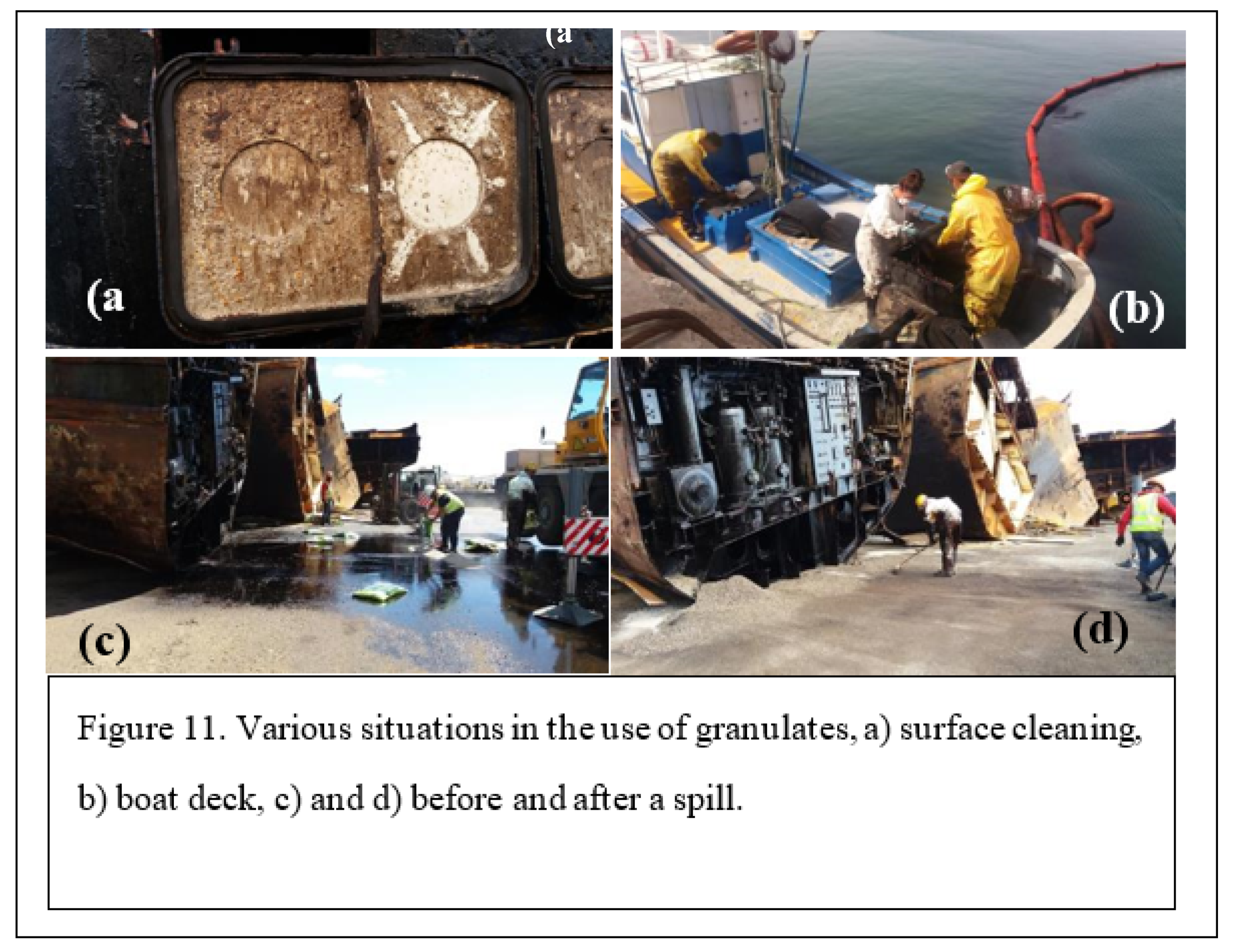
Figure 11 depicts various scenarios demonstrating the utility of granulates in enhancing safety: (a) showcases their capacity to clean various surfaces, even dry fuel oil; (b) demonstrates safe deck conditions, preventing slipping by removing oil from boot soles and the floor; and (c) and (d) depict asphalt floor cleaning before and after granulate use, without causing damage.
The highly hydrophobic, oleophilic nature and low density of granulates facilitate the creation of filters, as shown in Figure 10, allowing hydrocarbon water to pass while retaining the hydrocarbon. This distinguishes them from absorbents like sepiolite, which lack these characteristics and can form impermeable barriers, hindering the passage of contaminated water and potentially leading to spillage beyond the barrier.
The low density of granulates facilitates easy and rapid handling, enabling the covering of large surface areas or the creation of barriers swiftly, meeting the demands of oil spill response tasks requiring flexibility and speed.
3.5. Bioremediation
The application of a cocktail of allochthonous oleophilic bacteria completes the action plan. These bacteria degrade the oil film formed during contamination on any surface, including water, sediments, rocks, dock faces, ropes, buoys, and booms.
Due to the continuous spills caused by this accident, daily application of bacterial inoculants was necessary to address the newly spilled oil. This daily inoculation process resulted in unforeseen positive collateral effects, observed in only a few instances where their use has been permitted.
Bacteria rapidly reduce the oil's ability to adhere to surfaces, decreasing its viscosity and surface tension, which in turn reduces its environmental impact and enhances its degradation.
The bacterial cocktail used consisted almost entirely of Pseudomona putida, supplemented with other bacterial strains to balance its growth. These bacteria belong to Group I, fulfilling several fundamental conditions for application in natural environments:
1) They are completely dependent on hydrocarbons for sustenance and do not consume other natural or artificial products, limiting their progression in the absence of hydrocarbons.
2)They do not exhibit any form of parasitism and cannot proliferate in other organisms, posing no threat to humans or other living organisms.
3)They lack the capacity to form resistance stages, such as spores or photosynthetic capabilities, rendering them inactive in the absence of hydrocarbons.
4)They possess a high capacity to degrade hydrocarbons, surpassing any local species. [26-28]
The bacterial cocktail is certified and recommended by the Spanish Ministry of Transport for hydrocarbon degradation, following over 20 years of testing by most official research organizations in the field. It has demonstrated its environmental safety and high efficiency in degrading hydrocarbons in seawater, freshwater, and terrestrial environments. Periodic inoculations are necessary to maintain an adequate bacterial level, which must be evaluated for each incident depending on the evolving scenario.
Figure 6 illustrates the approximate progression of spills and the oil collected by reusable absorbent sponges. From the initial intervention in early March until late November 2018, there were spills almost daily, necessitating daily inoculum applications in varying amounts depending on the approximate quantity of spilled oil.
The bacteria are provided in a freeze-dried organic medium in 2 kg sachets, activated in a reactor where 10 kg of freeze-dried bacteria are mixed with 1 cubic meter of harbor water, nutrients (N, P, K, amino acids), and the hydrocarbon to be degraded, which in this case was the oil collected by the sponges from the harbor surface. This mixture is recirculated through a pump to maintain high oxygen levels, as degradation occurs under aerobic conditions. Oxygen is critical for the degradation process, as it is required for the oxidation process that breaks the hydrocarbon bonds.
The degradation process produces a substantial amount of CO2, as the bacteria utilize the hydrocarbon not only as a carbon source but also for energy.
One of the primary concerns regarding the use of allochthonous bacteria for hydrocarbon degradation is the potential for these microorganisms to invade and disrupt local environments. Despite these concerns, extensive research has consistently demonstrated that the proliferation of these bacteria is highly unlikely once the hydrocarbon source is depleted.
Hydrocarbon spills, among other significant environmental issues, also lead to imbalances in local microorganism communities. It is important to note that over 200 bacterial species possess some level of oil lytic capability. In each port, due to continuous chronic spills, there has been a proliferation of these hydrocarbon-degrading bacteria over those that lack such capacities.
When a major spill occurs, this microbial hierarchy becomes even more pronounced, as only the species with the greatest adaptability to the hydrocarbon-rich environment tend to survive. This imbalance can persist for an extended period, as these dominant species are capable of metabolizing natural substances, allowing them to maintain their prevalence even after the pollutant source diminishes or is eliminated. As a result, the local microbial community structure remains skewed towards these hydrocarbon-degrading bacteria, creating a prolonged state of imbalance.
A practical advantage of using these bacteria is their availability in lyophilized form, which allows for rapid deployment in the event of a spill anywhere in the world. This is not feasible with local bacteria, as it would require identifying the most effective oleo lytic strains, followed by production, lyophilization, and storage specific to each port. Given the significant variability in bacterial communities even between nearby locations, this process would need to be repeated for each port, making it impractical.
In the event of an oil spill, rapid response is crucial to minimize environmental impact. The prompt application of specialized bacteria reduces the hydrocarbons' capacity to harm the environment and adhere to surfaces, facilitating subsequent cleanup efforts.
Using local bacteria would exacerbate the existing microbial imbalance within the port ecosystem. The proliferation of these bacteria would inhibit the growth of other species, maintaining the imbalance longer than if allochthonous bacteria were used, which cannot survive once the pollutant is removed.
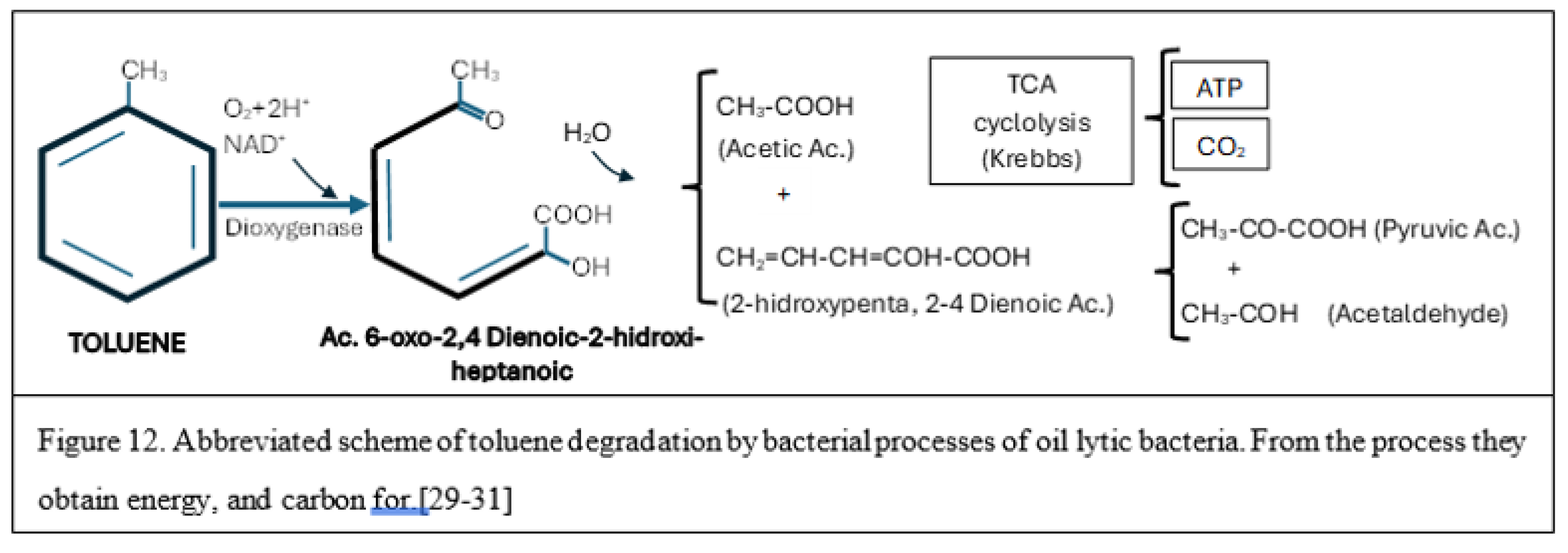
Another significant advantage of using specialized bacteria is their ability to degrade hydrocarbons completely, converting them into final products that provide energy and carbon sources for bacterial growth (see Figure 12).
It is crucial to improvise and leverage the opportunities offered by each port or working area. In this case, the port of Gran Tarajal hosts a small fleet of fishing boats equipped for artisanal tuna fishing, which involves the dispersion of water on the surface to facilitate capture using a small rod.
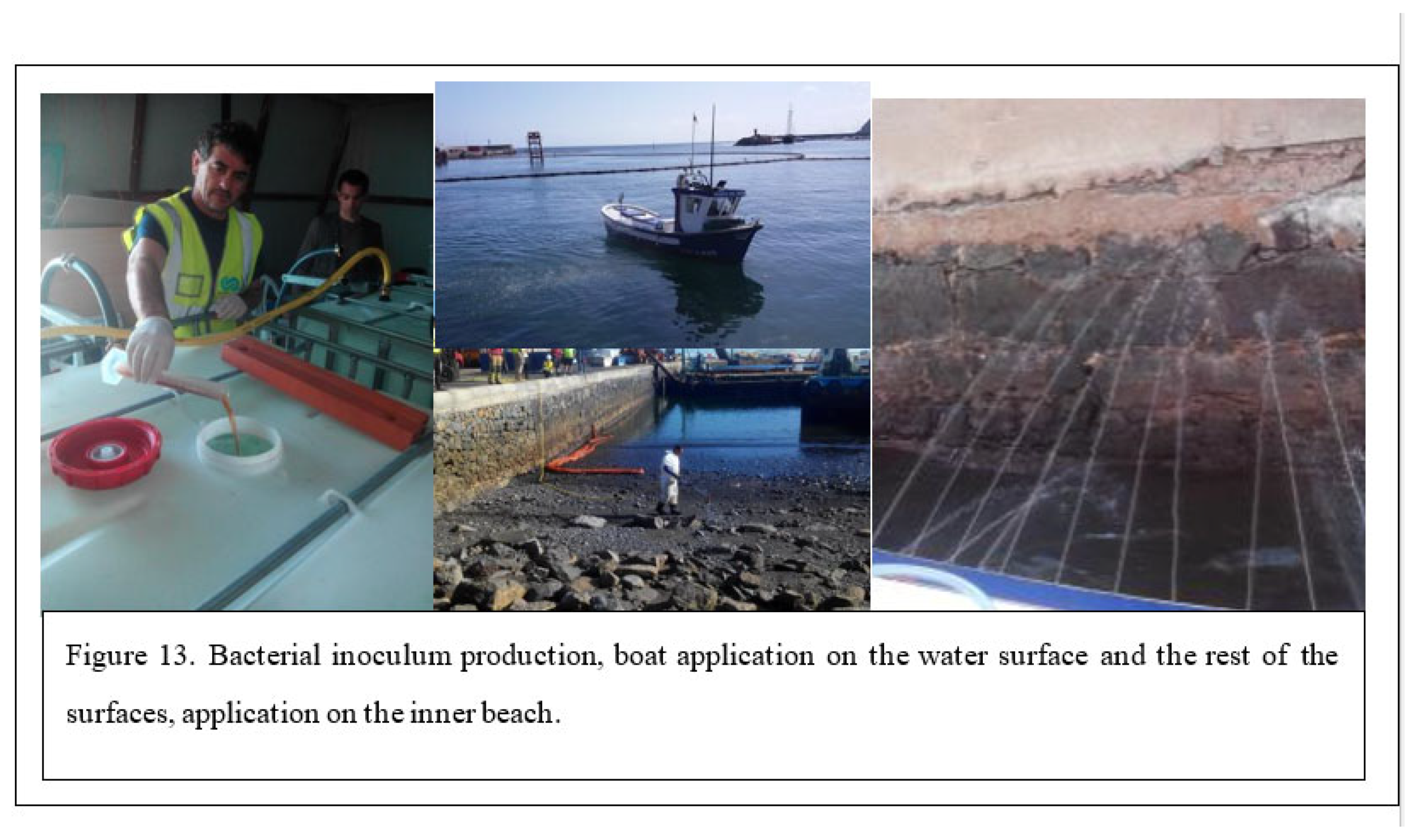
Figure 13 illustrates how this feature of the fishing vessels was utilized to apply the inoculum over large areas affected by contamination. During the application, the aim was to cover as much area as possible and ensure that the inoculum reached every affected surface. This method proved highly effective for irrigating breakwaters, quay walls, and the water surface uniformly and relatively quickly. Other systems were also employed from the land to treat the sand of the inner beach of the port, which had been significantly affected, as any spill, in addition to the initial spill, ended up in the bottom of the sack forming the beach.
The effect of the inoculum was visibly noticeable in less than 20 minutes when the surface of the oil began to crack (Figure 14.a), indicating the degradation process as the oil lost its physical characteristics, particularly viscosity and surface tension. The oil degraded until it formed an orange layer that accumulated in corners due to wind action, or it dissolved with minimal wind activity due to its lack of consistency.
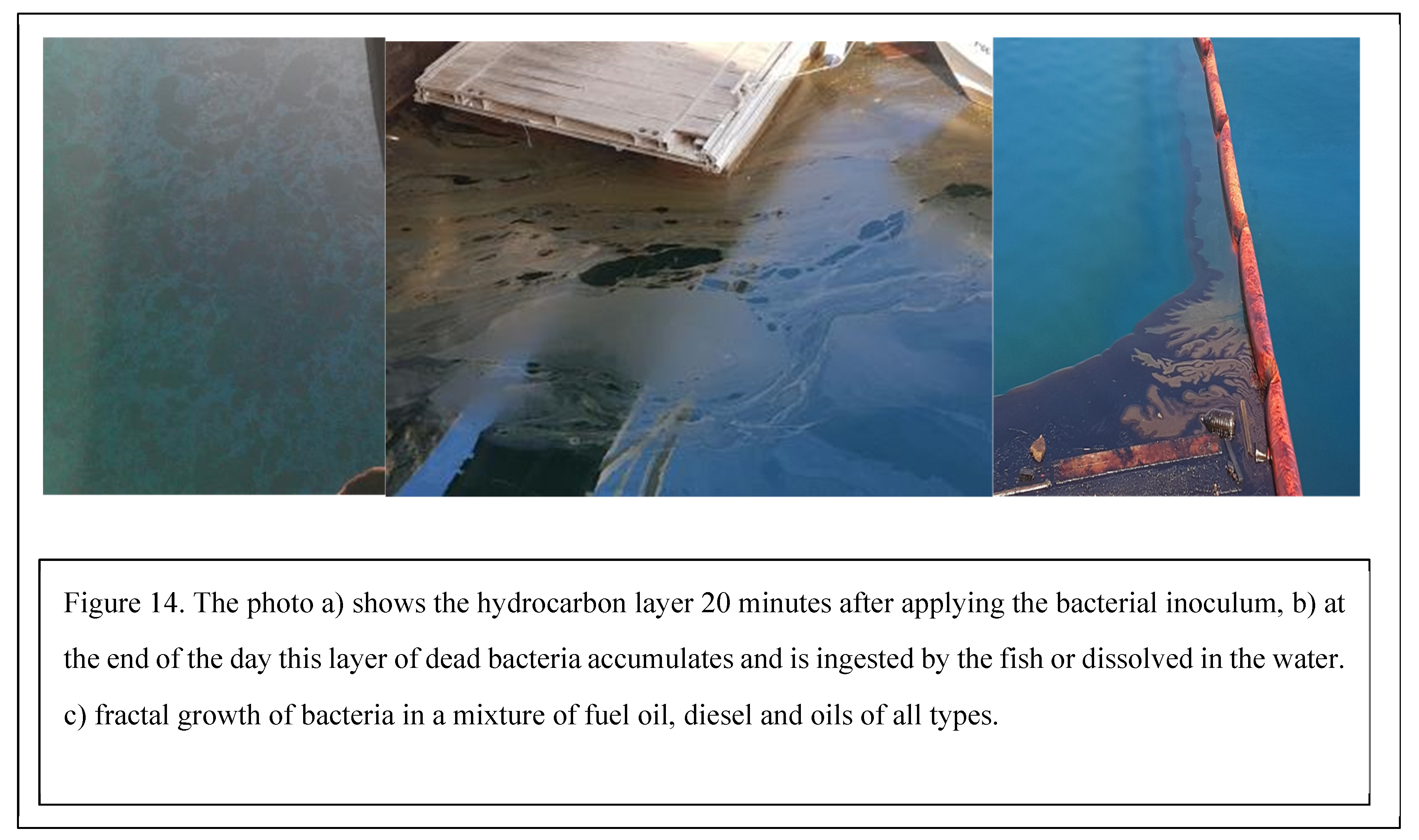
It was verified that all surfaces were free of hydrocarbons, even those affected by a major spill of fuel oil, which had coated the entire port with a dark layer. It was unnecessary to clean the booms, as the bacteria's cleaning capacity ensured that any unused booms remained in the water, with all
traces of oil disappearing, and only the adhered algae needing removal. By the end of the operations, 327 cubic meters of bacterial inoculum had been deployed to address the continuous spills that occurred over the 7 months, with the last spill occurring on November 24 when the final piece of the vessel was removed.
3.6 Sampling Cruises.[33]
3.6.1. Water Samples
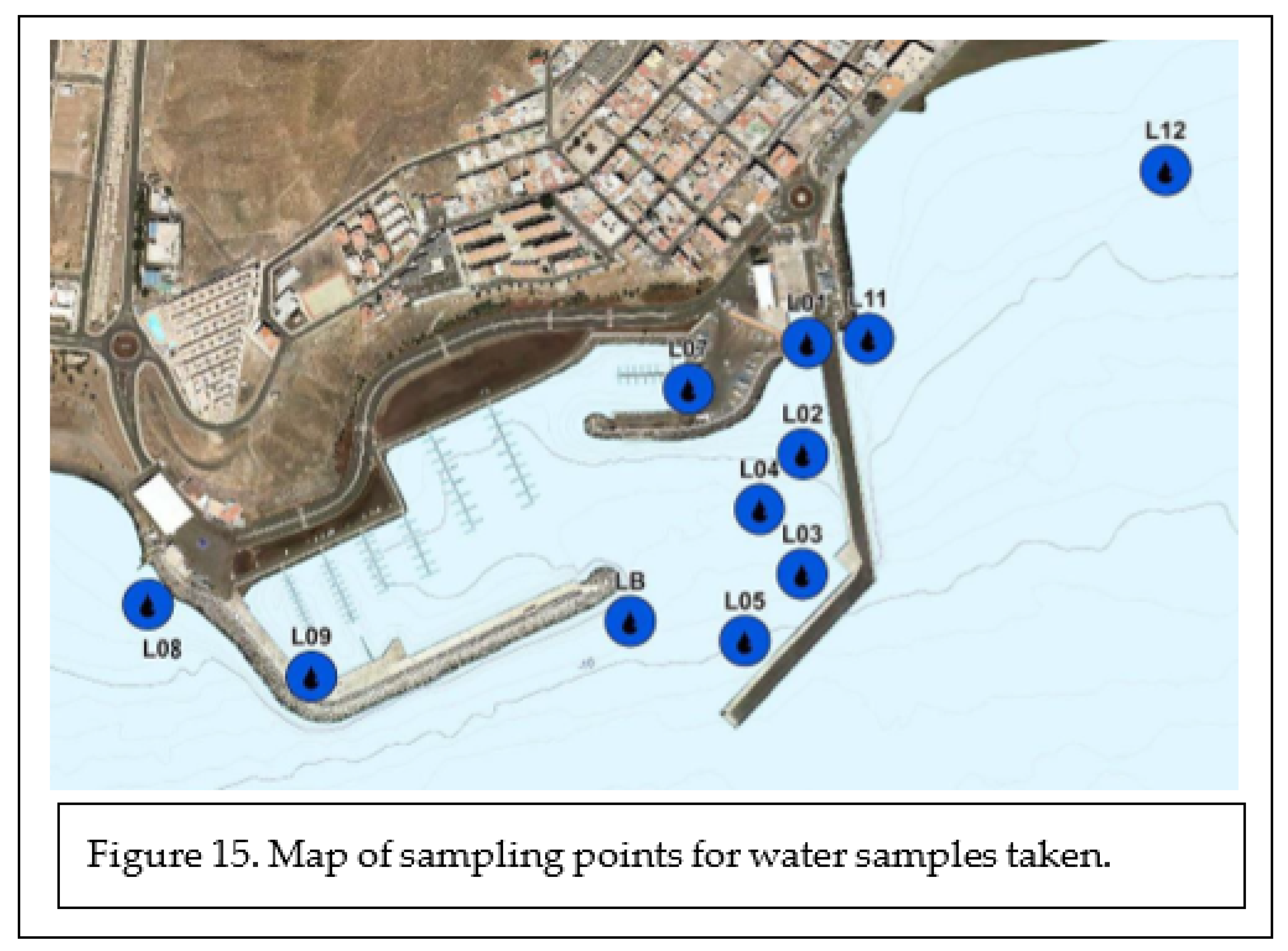
Surface water sampling was conducted from a boat. At all stations, a single sample was collected at the surface of the water column (approximately 25 cm from the surface), except for the station located at the mouth of the harbor (station LB), where three additional samples were taken at depths of 3m, 5m, and bottom using a Niskin oceanographic bottle. Figure 15 illustrates a map of the port with the water sampling points.
The parameters analyzed in the water samples included:
- Trace elements: Zn, Cd, Pb, Cu, Ni, Cr, As, Hg, and Se, analyzed using spectrophotometry (UV-Visible).
- TBT's (tributyl tin) and its degradation products DBT (dibutyl tin) and MBT (monobutyl tin), analyzed by gas chromatography and mass detector.
- PCB's (polychlorinated biphenyls) with IUPAC numbers 28, 52, 101, 118, 138, 153, and 180, analyzed by gas chromatography and mass detector.
- Preliminary toxicity test (TPT) for luminescence inhibition.
- Total Petroleum Hydrocarbons (TPH's) analyzed using Gas Chromatography and Flame Detector.
- Polycyclic Aromatic Hydrocarbons (16 PAH's) analyzed using gas chromatography and flame detector.
3.6.2. Sediment Samples
Sediment sampling was conducted manually by divers using a PVC corer with a length of 20 cm and an inner diameter of 46.2 mm. The sampling protocol followed UNE, ISO, Standard Methods, and EPA standards for both analysis and sampling. Guidelines for the characterization of dredged material and its relocation in waters of the maritime-terrestrial public domain were adhered to, as per the Interministerial Commission for Marine Strategies 2017.
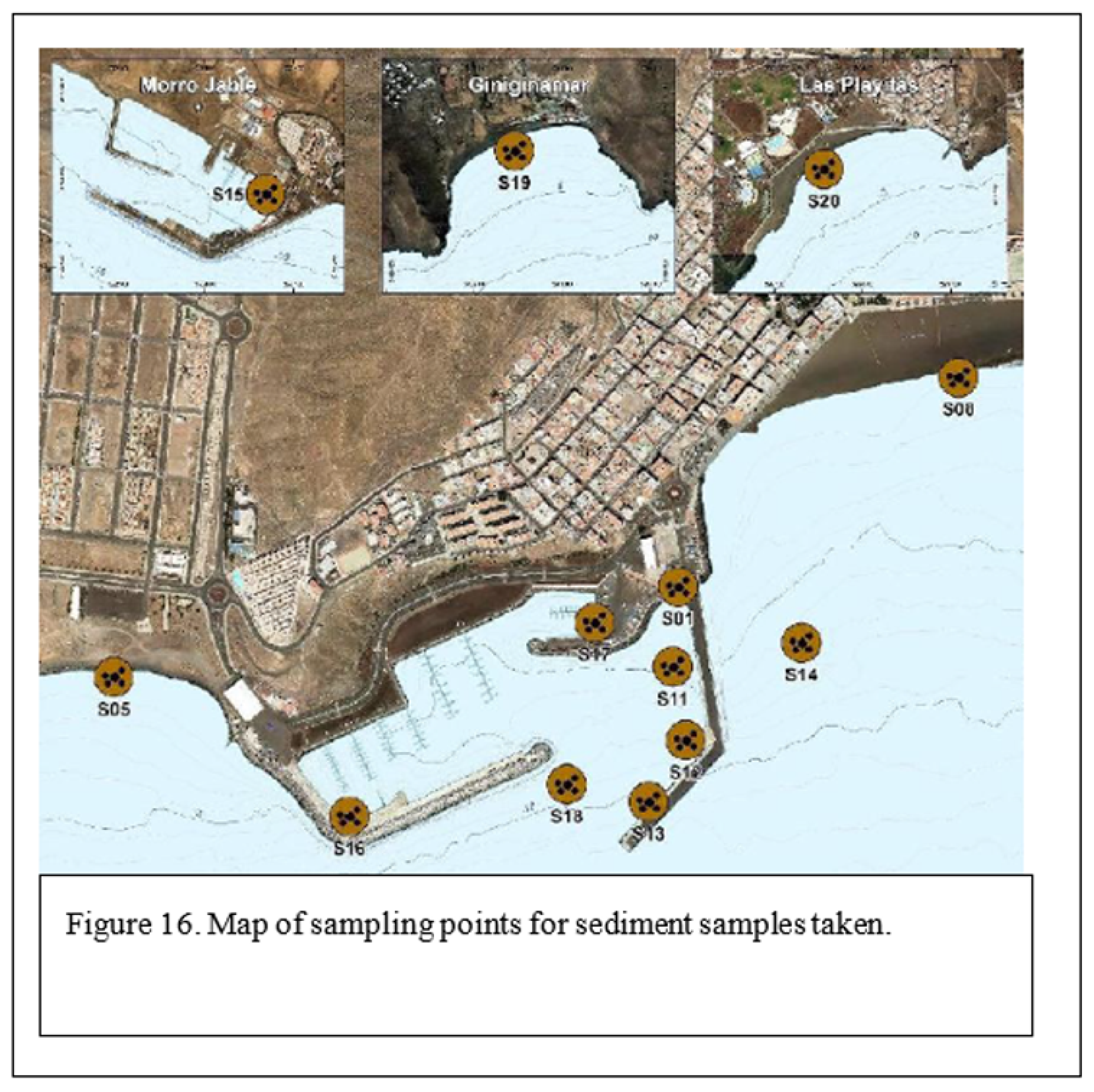
Figure 16 illustrates a map of the port indicating the sediment sampling points. Reference points
S15, S19, and S20 were established nearby to serve as a baseline for comparison, as there was no initial sediment quality baseline for the port before the accident.
The parameters analyzed in the sediment samples included:
- Trace elements: Zn, Cd, Pb, Cu, Ni, Cr, As, Hg, and Se, analyzed using VIS spectrophotometry.
- TBT's (tributyl tin) and its degradation products DBT (dibutyl tin) and MBT (monobutyl tin), analyzed by gas chromatography and mass detector.
- PCB's (polychlorinated biphenyls) with IUPAC numbers 28, 52, 101, 118, 138, 153, and 180, analyzed by gas chromatography and mass detector.
- Preliminary toxicity test (TPT) for luminescence inhibition.
- Total Petroleum Hydrocarbons (TPH's) analyzed using Gas Chromatography and Flame Detector.
- Polycyclic Aromatic Hydrocarbons (16 PAH's) analyzed using gas chromatography and flame detector.
- Organic matter content (%COT), determined by volumetry.
- Granulometry assessed through gravimetry and sieving of the material.
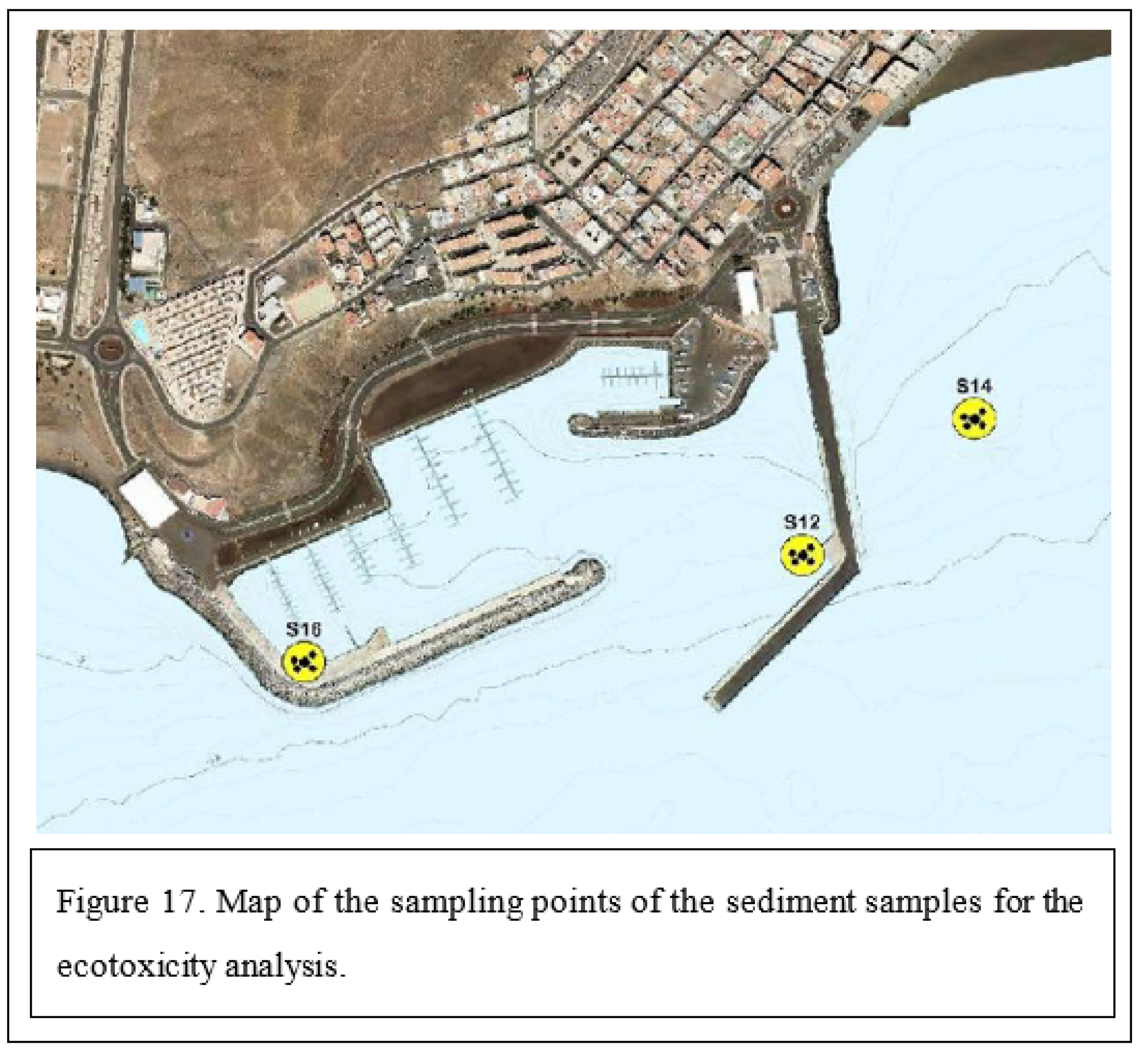
For toxicity bioassays, three sampling points were selected: two within the port and one outside, as depicted in Figure 17.
Biological sediment characterization analyses assessed infauna, meiofauna (0.063-0.5 mm), and macrofauna (>0.5 mm) populations. The sampling points corresponded to those used for sediment analyses within the harbor, excluding S18, S19, and S20.
For macrofauna analysis, various parameters of biological diversity in both natural and modified communities (Alpha diversity) were evaluated, along with the rate of biodiversity change between different communities (Beta diversity).
Alpha biodiversity was assessed using several methods, including species richness (S) and total number of individuals (N), Margalef species richness index, Simpson's dominance index, Shannon-Wiener's evenness index, and Pielou's evenness index. For Beta diversity analysis, Multidimensional Scaling Ordination (MDS), dominance curves, and Principal Component Analysis (PCA) were employed. Additionally, the Multivariate-AZTI's Marine Biotic Index (M-AMBI) was calculated.
3.6.3. Organisms Samples
Sampling of organisms involved the analysis of contaminants in various species, including limpet fish and sea urchins. Tissues from Sparisoma cretense, Chelon labrosus, Sarpa salpa, Muraena helena, sea urchin Diadema antillarum, crab species Grapsus adscensionis, holothurian Holoturia sanctori, and sea snail Phorcus atratus were examined.
The analysis focused on determining the concentrations of heavy metals (Zn, Pb, Cu, Ni, and Hg), polycyclic aromatic hydrocarbons (16 PAHs), and linear hydrocarbons (LH) in these organisms.
4. Results
The environmental impact remained minimal despite the volume of the spill occurring within a confined area. Swift response actions and the deployment of advanced technologies resulted in limited organism fatalities, primarily concentrated in isolated pockets that were initially inaccessible due to their position amidst the vessels and wreckage. This underscores the criticality of prompt intervention in mitigating oil spill consequences. Over the span of a week, these localized zones harbored an oil layer influenced by storm dynamics, facilitating MOSSFA formation. Consequently, pollutants were transported to the seabed, adversely affecting sea urchins and holothurians unable to escape these zones. Daily inspections revealed sporadic losses in other areas, with several organisms remaining unaffected by the contamination.
4.1. Solid Material Removed From The Port
Recovery efforts yielded six transport trucks, two backhoe loaders, a two-ton forklift, four large compressors, three power generators, and various smaller machinery. Additionally, 224.3 cubic meters of diverse solid waste, including wood pieces, plastics, ropes, hydrocarbon-infused water, sludge, mattresses, blankets, and assorted debris, were extracted.
4.2. Contaminant Material Extracted
Table 1 delineates the quantities of diesel (170,270 l.), hydraulic oil for machinery (14,854 l.), and unidentified fuel oil (42,720 l.) retrieved from accessible tanks. The decontamination process extended beyond spilled materials to encompass potentially hazardous substances contained within the vessels. Various types of contaminant materials were extracted from the sunken vessels and the harbor bottom, all of which remained confined within their containers during the cleanup operations.
Table 2 provides an overview of the quantities removed from both the sunken vessels and the harbor bottom. Fortunately, none of these materials were released into the harbor, allowing for their recovery prior to any contamination, except the batteries.
4.3. Sampling Cruises.
Due to the extensive sampling and data collected, this discussion will focus solely on comparative results across four sampling campaigns conducted in March, April, May, and September. This approach allows for a clear assessment of the port's recovery progress.
Heavy metal values, including arsenic, initially displayed no discernible downward trend until it was revealed that the volcanic soils in the area naturally contained elevated levels of these elements.
Measurements taken from the ravine draining into the port revealed significant concentrations: As (>11.49 ppm), Cd (1.45-2.22 ppm), Cr (>122.09 ppm), Cu (>43.60 ppm), Hg (<0.03 ppm), Ni (>129.43 ppm), Pb (22.97-29.62 ppm), and Zn (80.25-93.47 ppm), as documented in previous studies conducted on the island's soil composition. [32]
Mercury emerged as the only element directly linked to the accident, alongside hydrocarbon contamination, evident in both water and sediment samples. Notably, no values exceeding the detection limit were observed in other areas with higher maritime traffic, such as the port of Morrojable.
4.3.1. Water Samples
Results are shown in Table 3. Ad hoc water sampling is not an optimal indicator of pollution levels in a coastal area where tidal currents continuously move contaminants, potentially altering the water quality within a few days, especially during significant tidal events. Due to the low values of the samples, all values obtained from the different stations were aggregated to present a single value per campaign for each parameter. The organization of the sampling was delayed due to complicated bureaucratic processes involved in contracting and the absence of a contingency plan that clearly defined the necessary actions in the event of an accident. Additionally, there was no collaboration from public analysis laboratories of research organizations or universities, leading to the loss of the first samples without analysis.
Consequently, the first samples were analyzed one month after the beginning of the incident. As a result, the water samples are not very representative of the initial state. Factors such as the renewal rate of the port waters, rapid removal of oil using reusable absorbents, the application of bioremediation, and spill control measures using absorbent booms reduced the contamination in the port.
Trace element values, which are quite abundant, do not correspond to the accident and port cleanup activities due to the volcanic origin of the area, which has high levels of these elements. The clearest example is arsenic (As), which has high values throughout the port and surrounding areas. This is reflected in all analyses conducted in the area and for sediments of the ports and surrounding coastal areas (S15, S19, S20).
The values of copper (Cu) and lead (Pb), in addition to the natural volcanic contribution, are influenced by port activities. In September, an important international swordfish fishing event brings together hundreds of boats, increasing boat painting and repairs during that month.
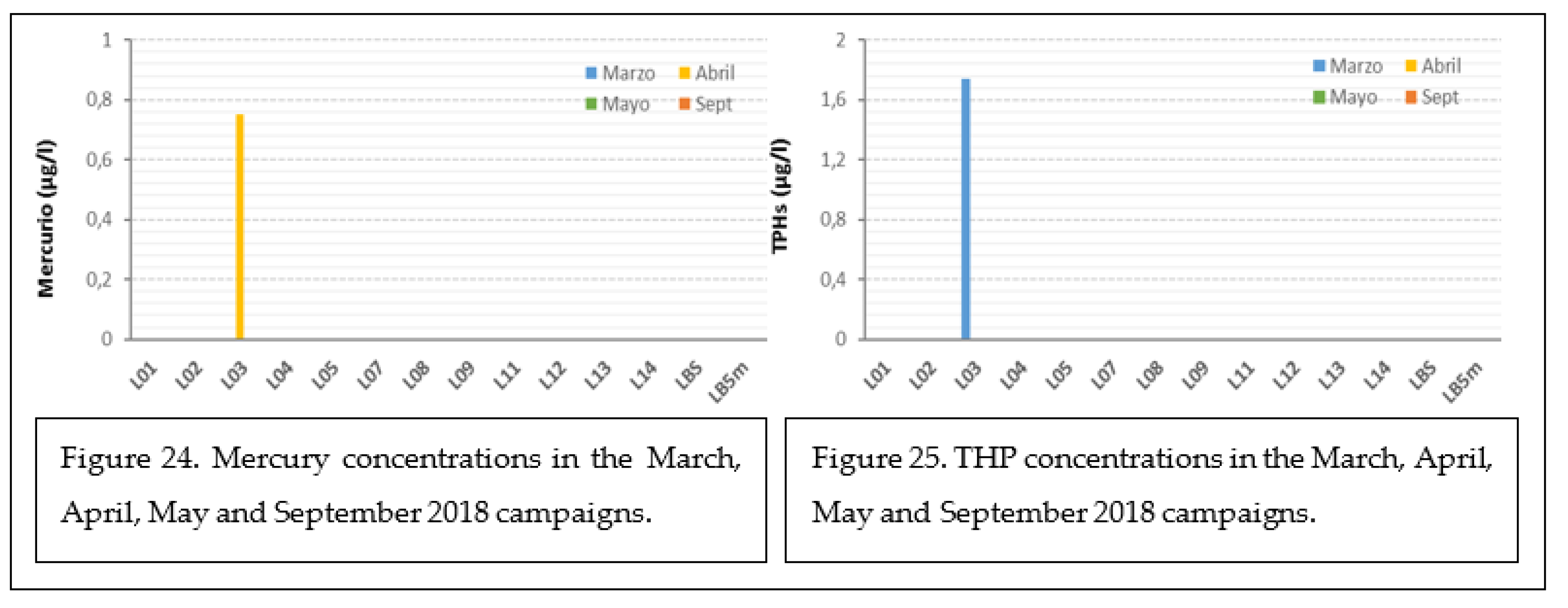
The incidence of mercury (Hg) is very low, with only one signal detected in the April sampling, and it was of low intensity. This parameter is the only one that could be exclusively related to the accident because many mercury thermometers were present in all vessels associated with engines and control systems.
Values of PCBs and TBT were always below the detection limit of the analysis method. For hydrocarbons directly related to the accident, there is only a sign of contamination in the total petroleum hydrocarbons (TPH) value from the first campaign conducted from March 25 to 28, almost a month after the accident.
Results for each station across the four sampling campaigns are shown below, taking the Spanish Ministry's Environmental Quality Standards (EQS) for port waters as a reference. (RD 817/2015)
In the March sampling, high values of cadmium (Cd) were measured, above the EQS. From April onwards, this element disappeared from all stations, although a notable natural signal persisted, except at station L05 where values were nearly undetectable (Figure 18).
Lead concentrations were similar in the first three campaigns, consistently complying with the EQS except for station L01, where in the March campaign, the standard was not met. In the September campaign, the presence of lead was detected in fewer stations but with slightly higher concentrations than in the previous campaigns, although always within the EQS (Figure 19). Lead contamination may be related to the accident, and the elevated values at the station on the inner beach of the port, where contamination was concentrated during the first days and subsequent spills, support this assumption.
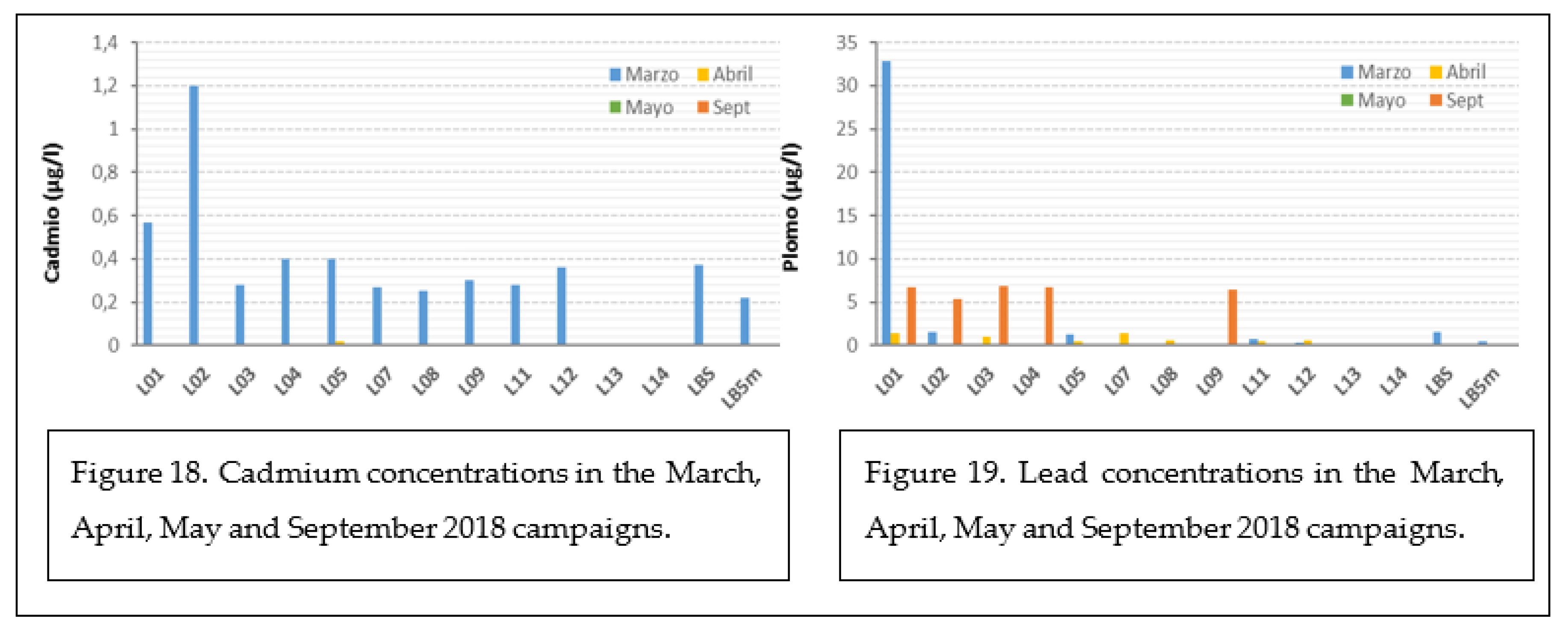
The evolution of copper concentrations between campaigns is very uneven and does not seem to follow any pattern. In general, it can be seen that in the stations where the presence of this metal was detected in the March campaign, it does not appear in the April campaign and vice versa, with the exceptions of stations L07 and LB5m, whose values are higher in April. In the May campaign, copper appears in all stations (except in L13 and L14, which were not included in this sampling) and with concentrations generally higher than in previous campaigns, although always below the EQS. In September, there was a general increase in the concentrations of this metal at all stations, especially at L03 and L04, which do not comply with the EQS (Figure 20). The figure shows a second axis of concentrations on the right, which refers to the September campaign, since the concentrations are very high with respect to the rest of the values. Chromium appears in all stations of the first three sampling campaigns, but with a decreasing trend between campaigns (Figure 21).
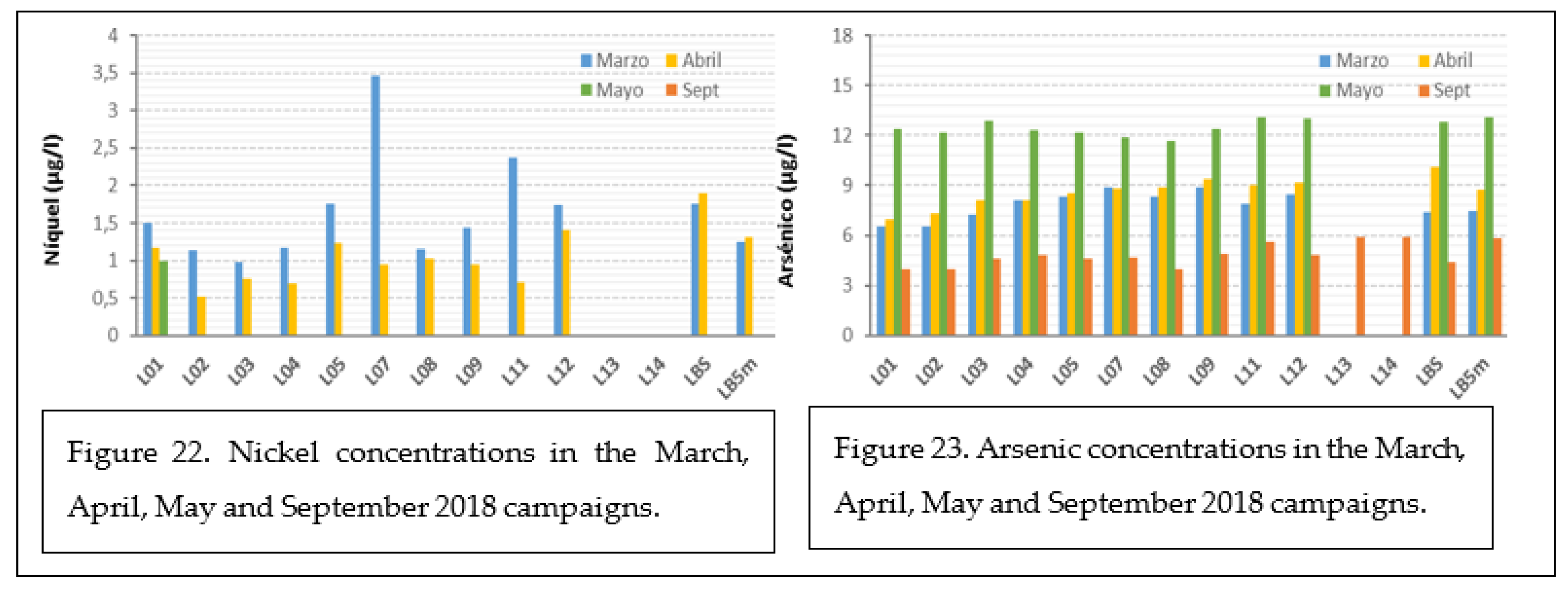
Nickel concentrations have been gradually decreasing between campaigns until disappearing in all sampling stations (Figure 22).
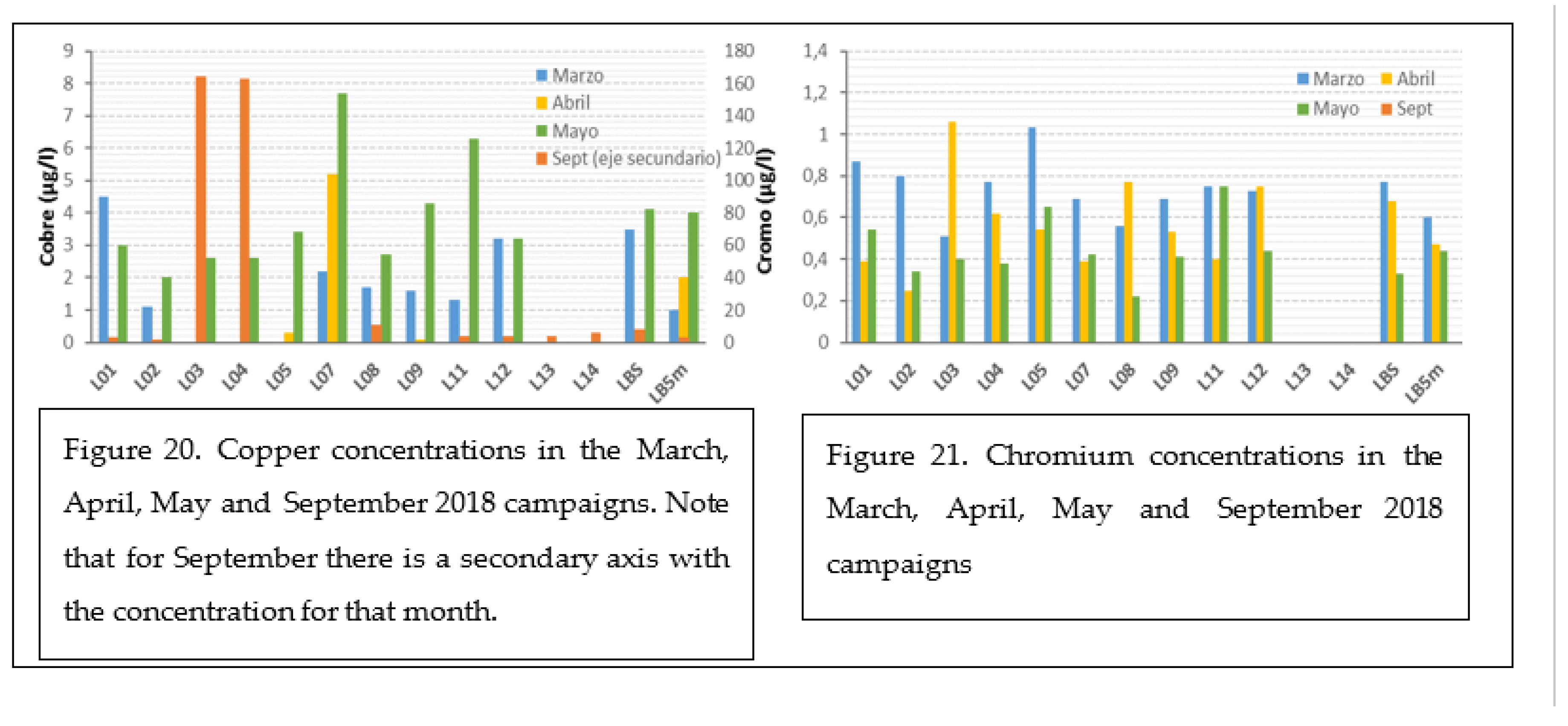
In the first three campaigns, arsenic concentration has been increasing, especially in May, although it has always remained below the EQS. In the September campaign, this dynamic was reversed, and the lowest concentrations were recorded (Figure 23).
The presence of total hydrocarbons and mercury was only detected at station L03, the former in the March campaign (Figure 24) and the latter in April (Figure 25).
4.3.2. Sediment Samples
Sediment sampling provides a more accurate reflection of contamination incidence in a harbor, with less variability in values due to the greater stability of settled particles. This offers better insight into both the accident's impact and the recovery progression.
Lack of prior sampling data and absence of renewal or sedimentation rate values necessitate approximate conclusions, despite the insightful data.
Table 4 presents a comparison across campaigns, displaying the sum of concentration values from all points per campaign for various samplings. Trace element concentration values are expressed in milligrams of contaminant per kilogram of dry sediment weight.
Of particular interest are parameters concerning hydrocarbon values, showcasing a notable decrease in total hydrocarbon concentration over a couple of weeks, representing roughly 40% reduction from the total port sediment content. This reduction persisted the following month, likely due to a sustained level of discharges, before dropping below 1600 mg/kg in September. Polycyclic Aromatic Hydrocarbon (PAH) values also decreased, approaching detection limits, consistent with concentration maintenance dynamics observed between April and May campaigns, with slight increases. Mercury likely indicates an accident-related consequence, owing to the significant mercury content in thermometers aboard vessels. Mercury concentrations fell below detection limits by the May campaign.
Remaining values appear linked to background sediment levels in this volcanic island area, encompassing arsenic, nickel, zinc, chromium, and cadmium.
Copper and lead values are influenced by both the volcanic origin of the terrain and port activities, potentially obscuring any decrease due to port cleaning efforts. Port activities, particularly repairs and painting, peak around September during the international fishing competition.
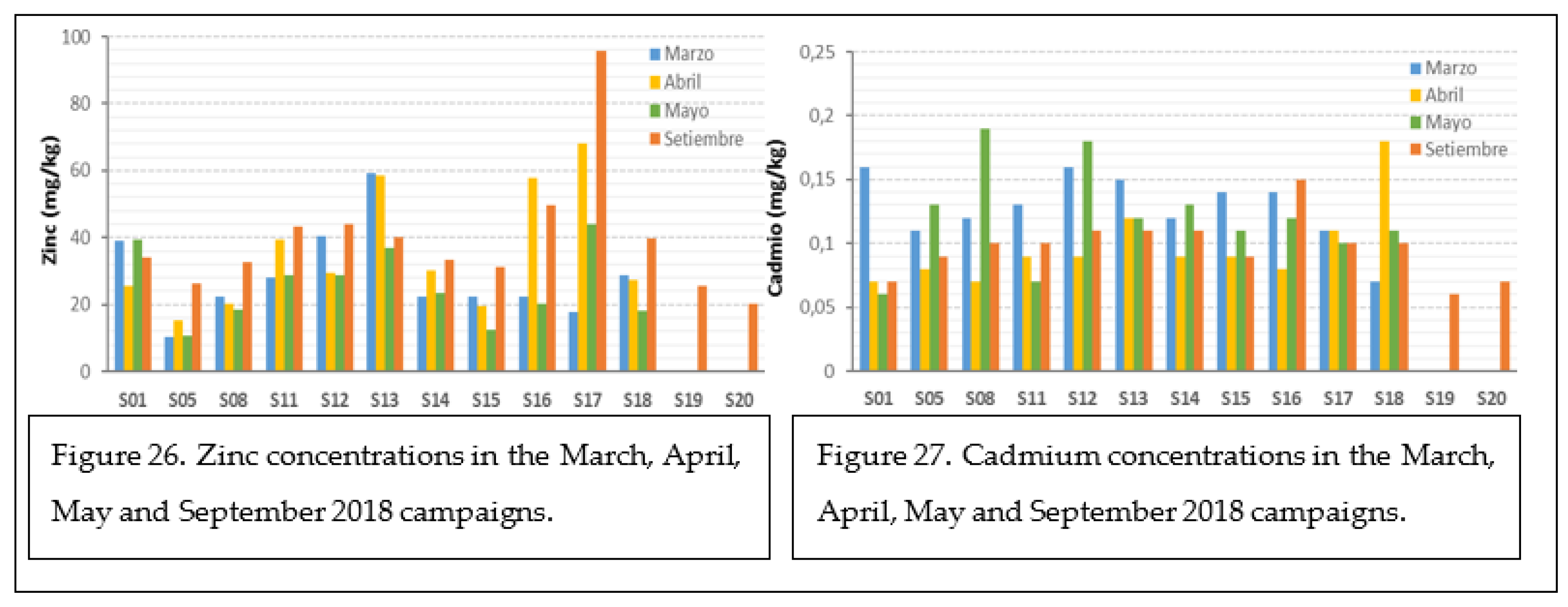
Values obtained per station during the four campaigns are shown below. Notably, stations S19 and S20 represent nearby bays lacking port facilities, providing a comparison of natural values in the absence of industrial activity or submarine outfalls. Station S15, from the port of Morrojable, serves as a reference for higher maritime activity and industrial influence. Zinc concentrations have remained relatively stable across the three campaigns, except for significant increases at stations S16 and S17 during the April and
September campaigns, likely due to sedimentation accumulation at station S13, characterized by fine sediments in the harbor (Figure 26).
Cadmium levels decreased in the April campaign compared to March, except for station S18, where they nearly tripled. However, May and September campaigns generally recorded higher values than the preceding ones (Figure 27).
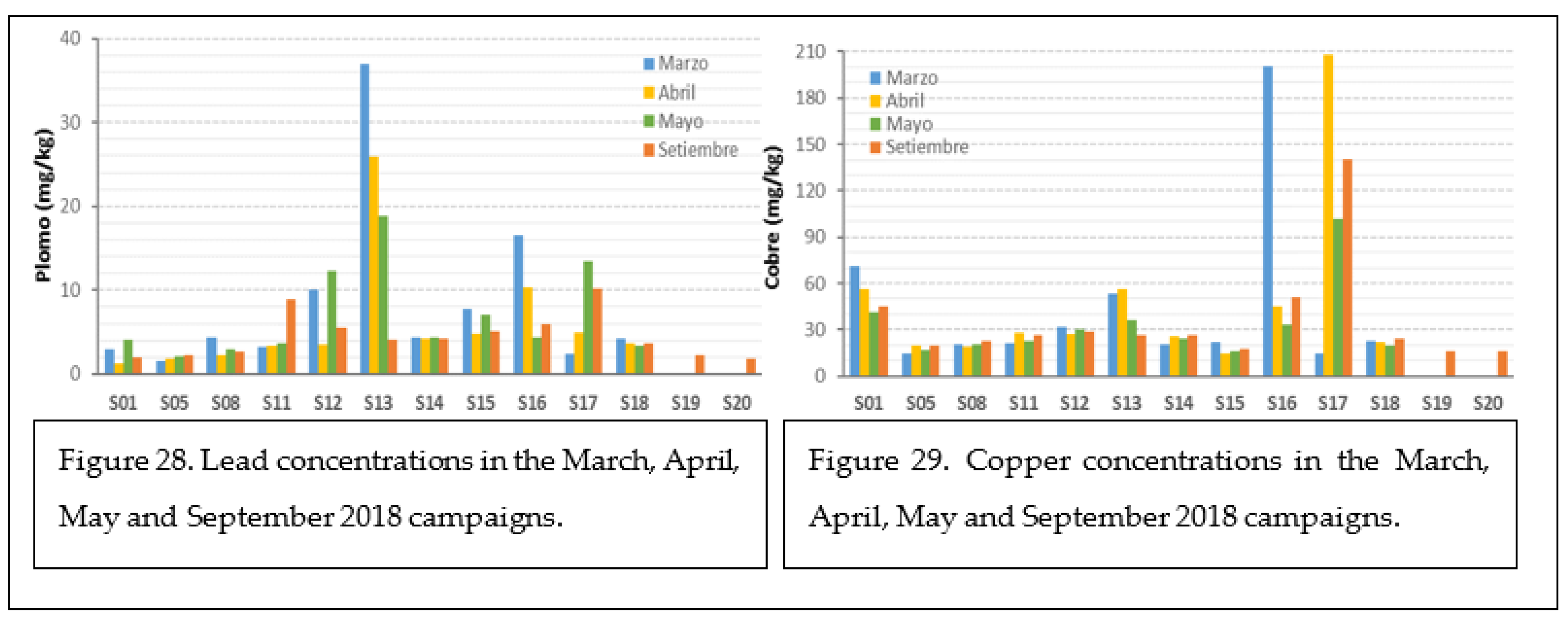
Lead concentrations remained relatively consistent during the first three campaigns, consistently below the A-action level and decreasing in the final campaign. Notably, station S13 consistently exhibited the highest lead concentrations (Figure 28).
Copper values were similar across all seasons, except for stations S16 and S17 (Figure 29). The March campaign and the first campaign observed values four times higher than those in subsequent campaigns. The increase at stations S16 and S17 likely relates to boat maintenance and hull painting activities at the fishing port and marina dock, respectively.
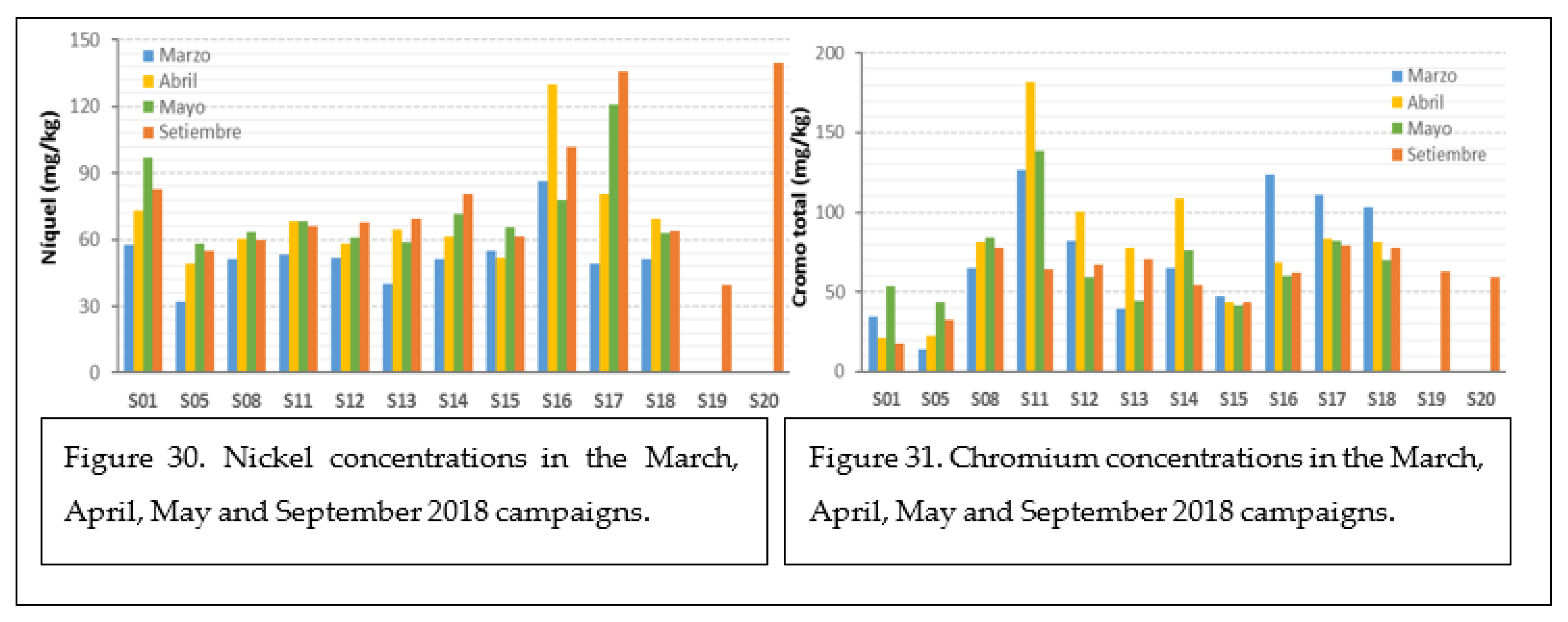
Nickel (See Figure 30) concentrations have remained relatively constant across seasons for all stations. The consistently high concentrations of this metal may indicate the volcanic origin of the sediment in the area, with some influence from port activities, particularly noticeable at stations S17 and S16, although station S15 does not show a significant difference. The data from stations S19 and S20 suggest that nickel is naturally present in relevant concentrations in the area.
Overall, chromium (Figure 31) concentrations showed a slight increase during the April sampling but decreased during the May and September samplings, except at station S11 during the April sampling, where a significant amount of material from the accident accumulated. This parameter also reflects the significant natural influence of the area, as the values at comparison stations (S19 and S20) are comparable to those obtained in the port.
Arsenic concentrations in the sediment have generally increased between samplings, although they exhibit a strong influence from natural values in the area, as evidenced by stations S19 and S20 (Figure 32).
Mercury concentrations experienced a drastic decrease in the April campaign compared to the March campaign (91% reduction), particularly at station S13, which was approximately 11 times lower (Figure 33). In the May and September campaigns, this metal was not detected. Except for station S13 during the initial sampling, the remaining values are below 0.3 mg/kg, after which this parameter falls below detection limits. Its likely association with the accident suggests accumulation in the port area where granulometry is lower, indicating sedimentation as the cause of the peak concentration in that specific point.
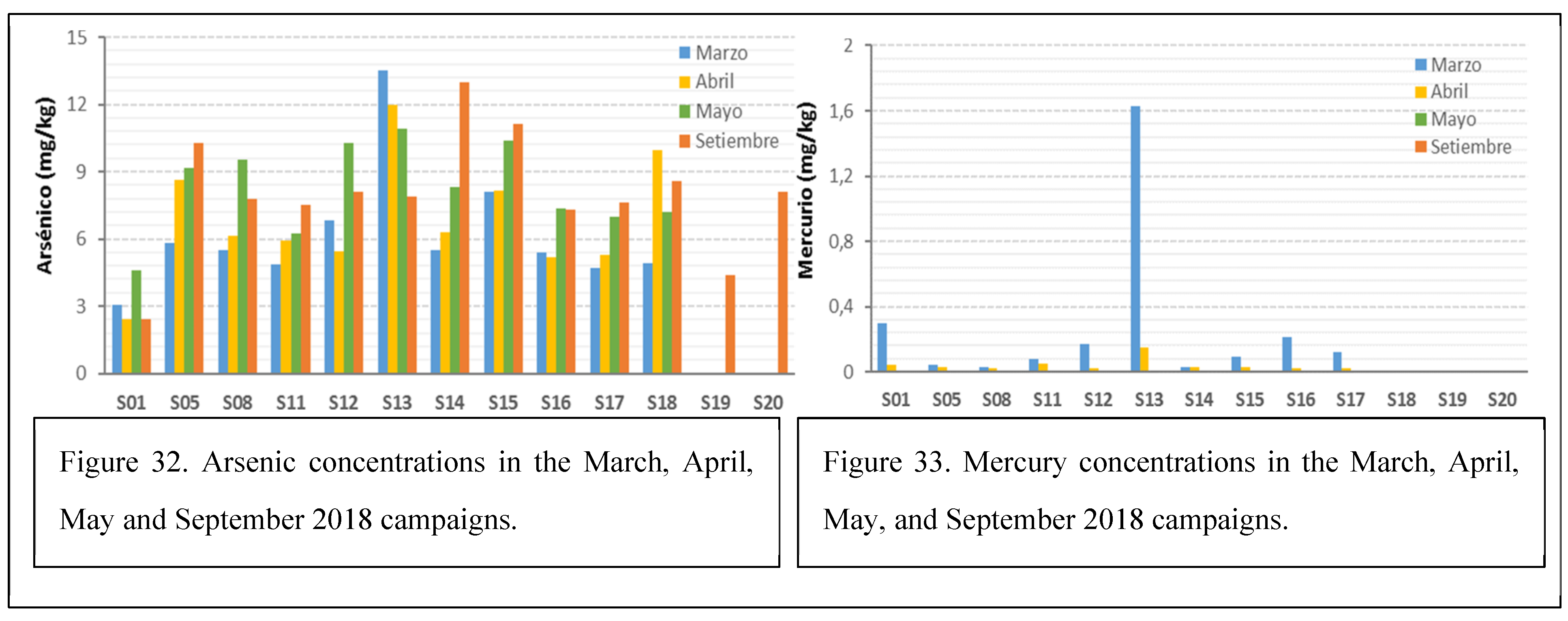
Since mercury is not naturally occurring in the area and port activity does not manifest its presence in the sediments of other ports (S15) or in areas with higher port activity within this port (S16 and S17), nor in adjacent areas (S19 and S20) without port activity or contamination.
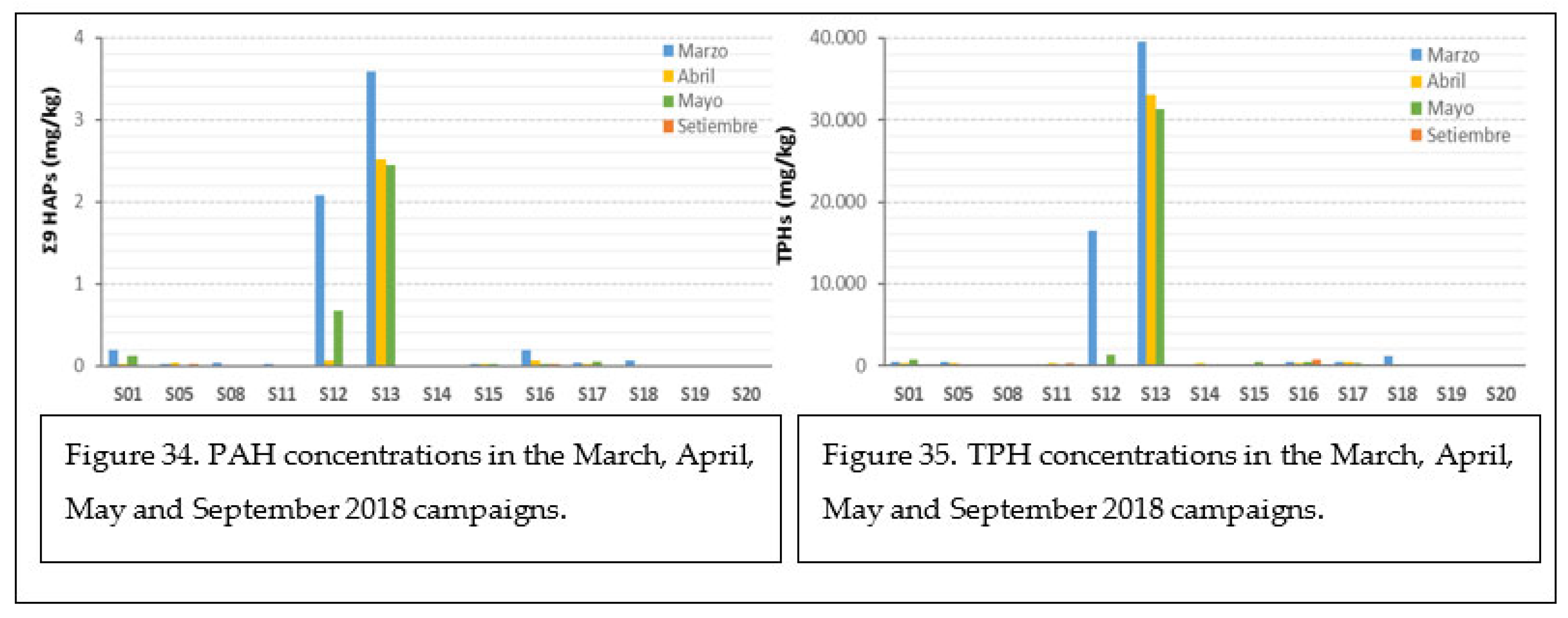
In the March campaign, concentrations of polycyclic aromatic hydrocarbons (PAHs) and total hydrocarbons remained relatively constant for all stations, (Figure 34 and Figure 35) except for S12 and especially S13, which showed high peaks of these substances. This pattern was repeated in the April and May campaigns, although only one peak was recorded at station S13, with slightly lower concentrations than in the March campaign. In the September campaign, the presence of PAHs was not detected, and the values of total hydrocarbons were much lower than in previous campaigns. Once again, the significant sedimentation in the areas of S13 (see video 1) and S12 is identified as responsible for the accumulation of hydrocarbons in the sediment, highlighting the significant difference compared to the other stations. The formation of MOSSFA during the accident confirms the transport capacity from the water column to the sediment of various pollutants, especially hydrocarbons.
Ecotoxicity tests analysis
Sediment ecotoxicity tests revealed no significant toxicity, except for point S16 (See Figure 17) during the April sampling, situated within the marina where the accumulation of floating substances is common due to prevailing north-northeast winds. Positive ecotoxicity values were observed at this point, unlike others which remained below the criterion value.
Biological characterization
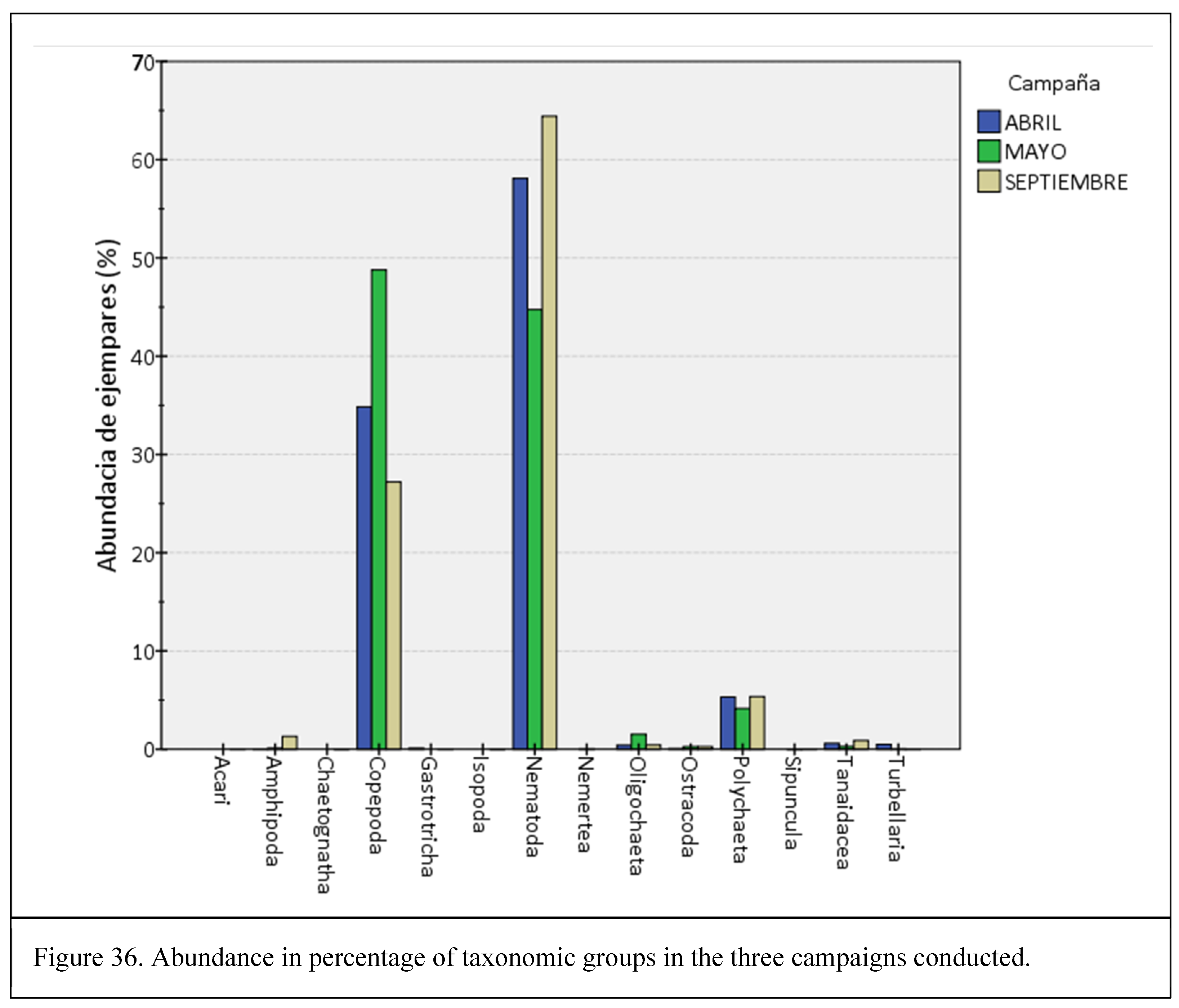
Upon analyzing data from the three campaigns, certain patterns emerge. Overall, the community structure remains consistent across the campaigns (Figure 36), characterized by a dominance of two taxonomic groups: Nematoda (comprising 58%, 45%, and 64% of the community in the April, May, and September campaigns, respectively) and Copepoda (accounting for 35%, 49%, and 27% in the April, May, and September campaigns, respectively).
The Polychaeta group represents a smaller proportion, comprising 5%, 4%, and 5% in the April, May, and September surveys, respectively. Other taxa are present in minimal percentages across all three campaigns.
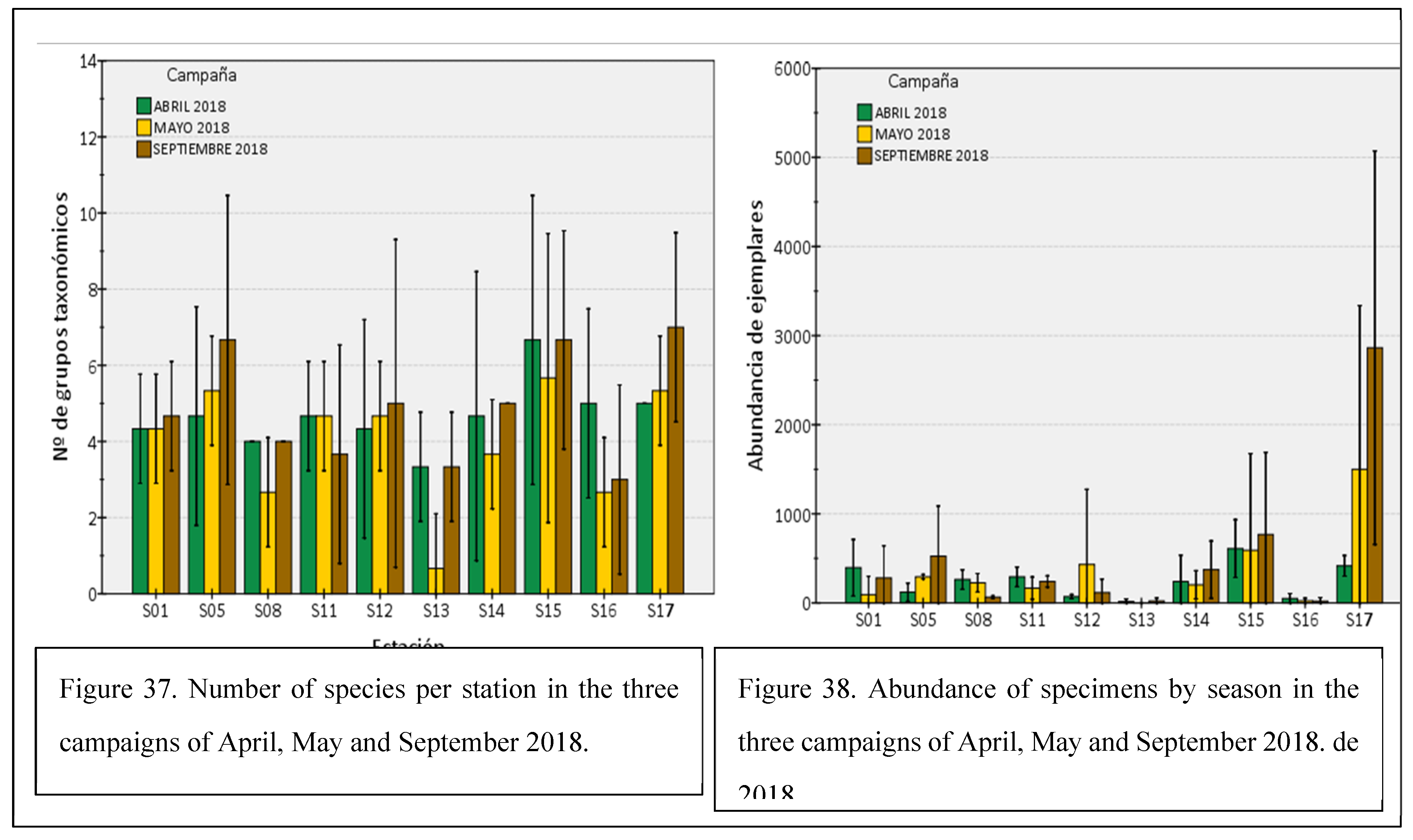
The number of taxonomic groups varied between seasons, with a progressive increase at stations S05 and S17. Station S13, which experienced a decline from the April field season (3.3 taxonomic groups) to the May field season (0.6 taxonomic groups), rebounded in the September field season (3.3 taxonomic groups) (Figure 37). The Acari (5 specimens), Chaetognatha (1 specimen), and Isopoda (1 specimen) groups appeared only in the September survey, while the Nemertea group (6 specimens) was identified solely in the May survey. The total number of individuals increased in September compared to April and May, primarily due to the rise in stations S05, S15, and S17. However, at stations S08 and S16, the number of individuals decreased in September compared to April and May (Figure 38). Overall, there is an increase in the number of individuals and taxonomic groups, suggesting a potential improvement in the environmental status of the sediments.
Contaminants in Organisms
One of the most concerning consequences of pollution is the introduction of toxic substances into the food chain. In this study, an attempt was made to assess whether there was a transfer of these compounds into the local ecosystem.
The investigation commenced during the week of April 7 to 11, 2018, approximately 38 to 42 days after the accident, due to logistical constraints preventing data collection in March 2018. Analysis included heavy metals such as zinc, lead, copper, nickel, and mercury, as well as 16 PAHs and linear hydrocarbons.
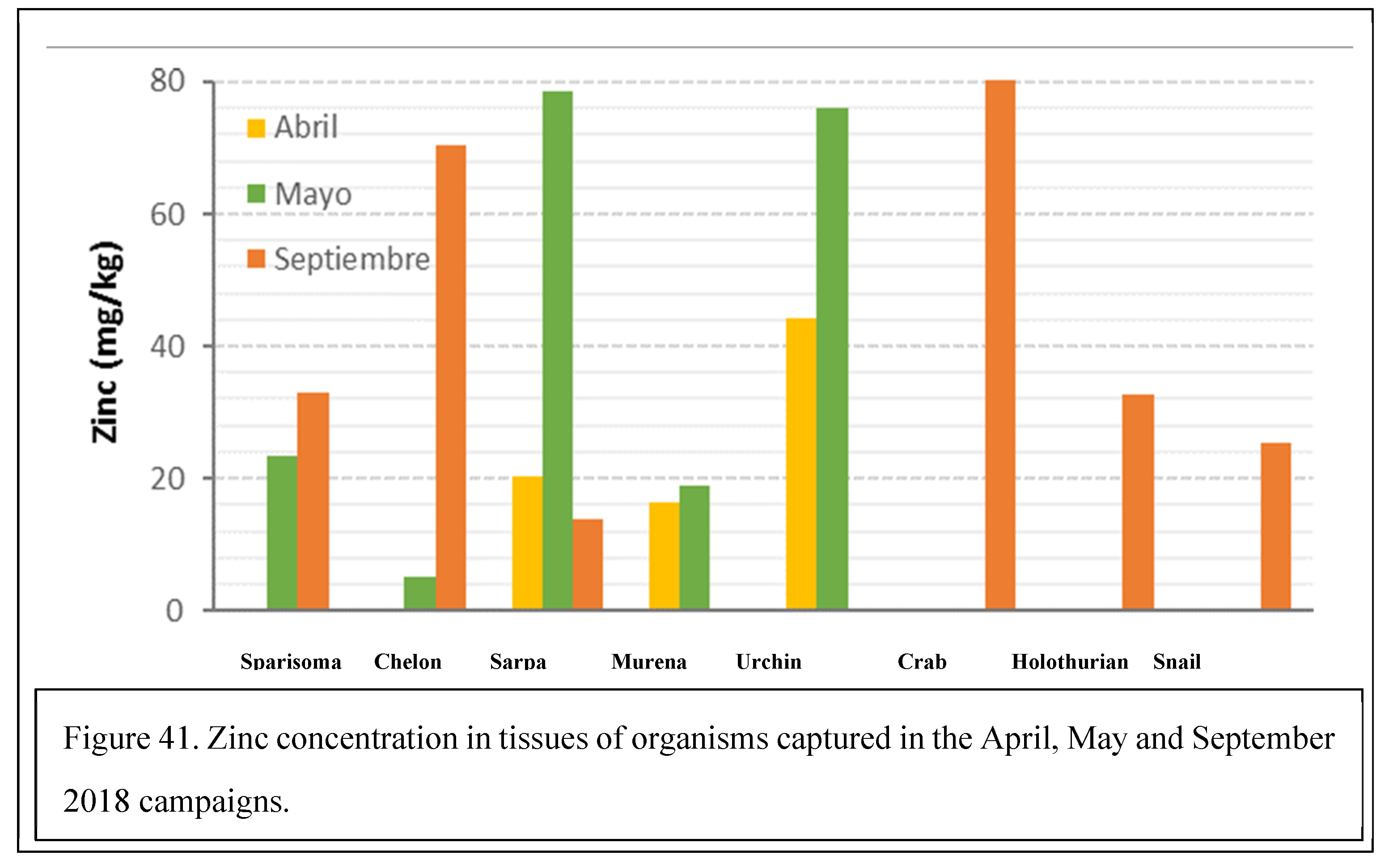
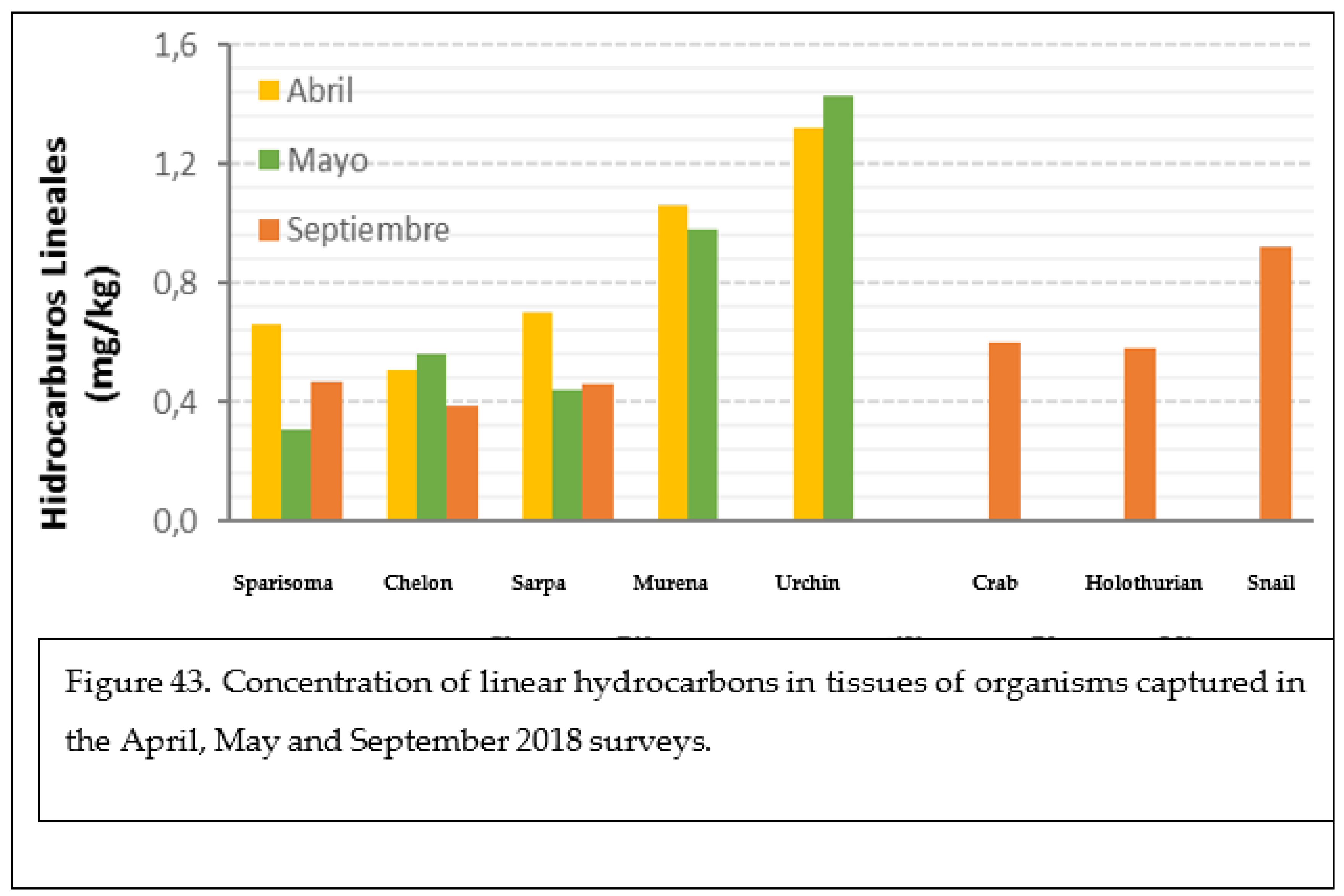
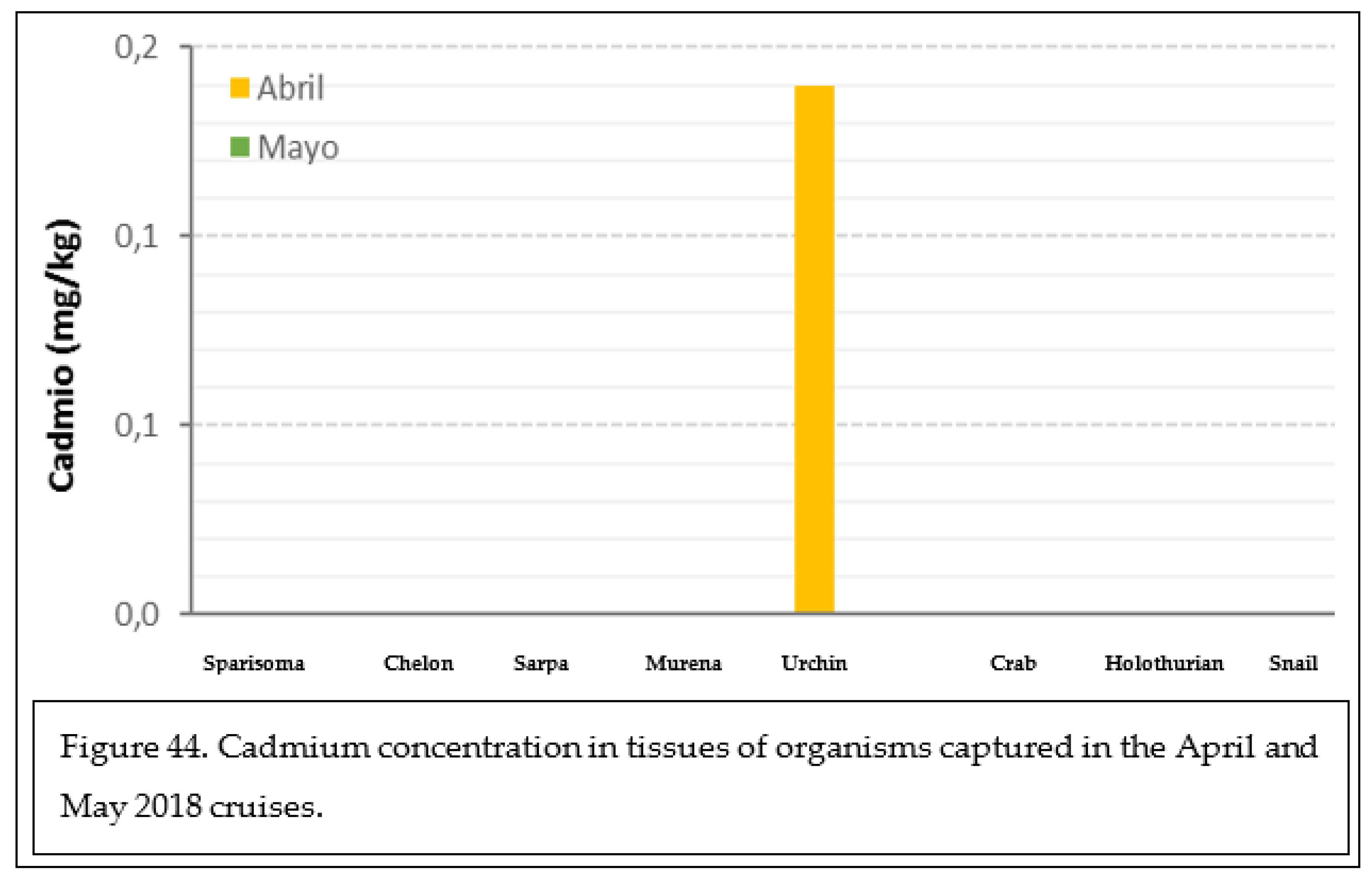
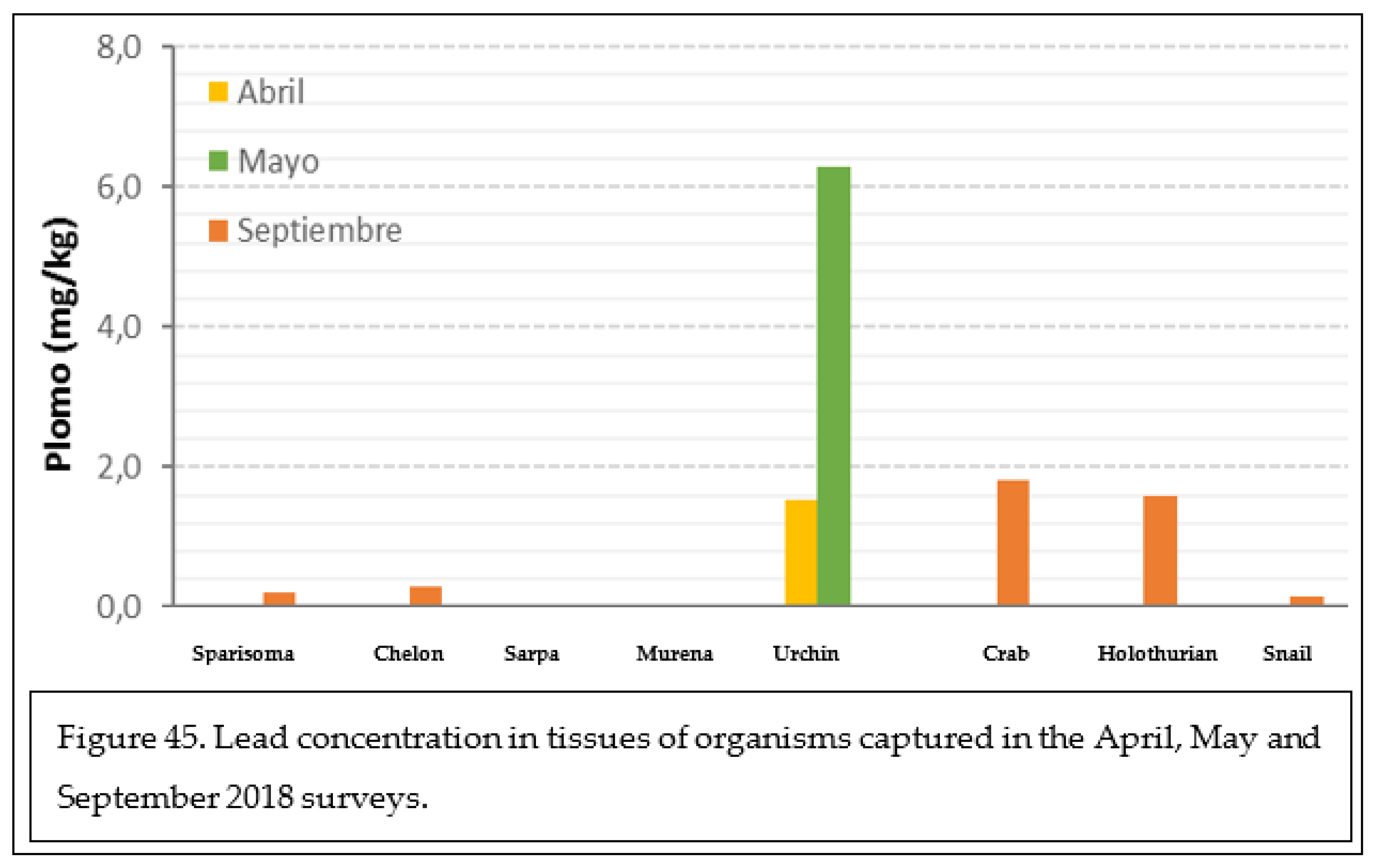
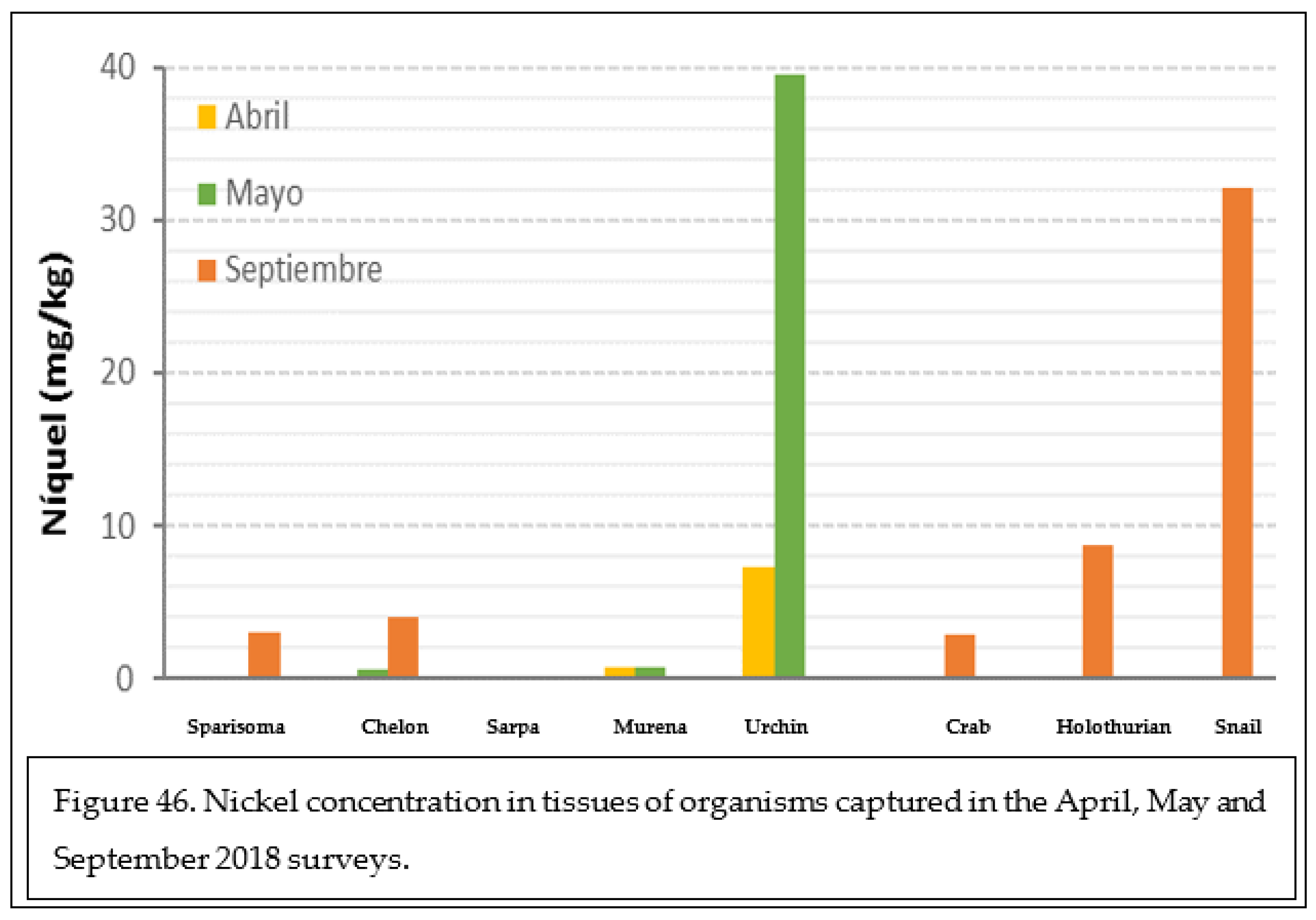
Figure 39, Figure 40, Figure 41, Figure 42, Figure 43, Figure 44, Figure 45 and Figure 46 depict comparisons of organisms sampled in April, May, and September. Key findings include:

In April and May, similar organisms were collected for comparison. However, in September, sea urchins and moray eel specimens were absent, replaced by crabs, holothurians, and sea snails.
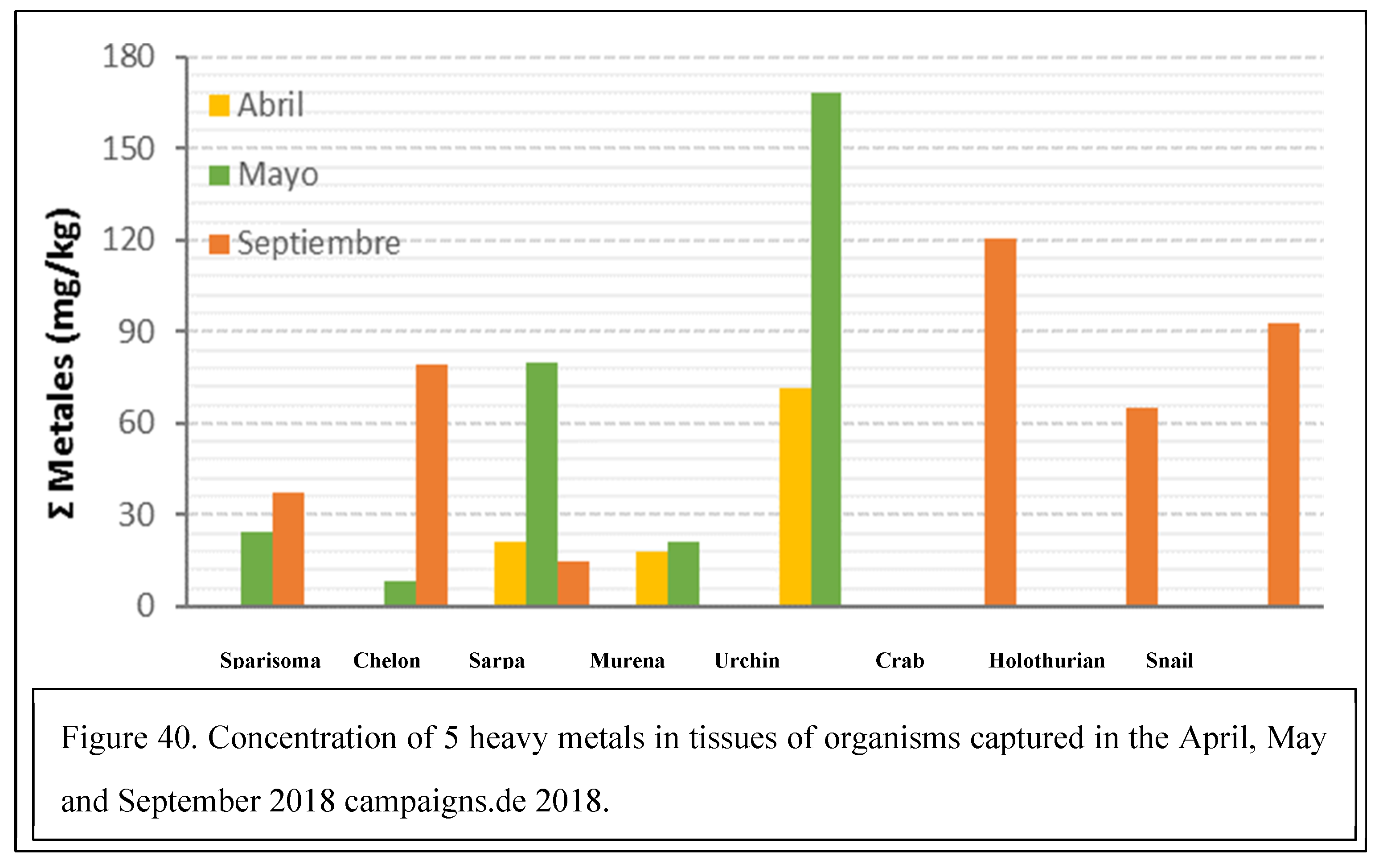
Sea urchins exhibited the highest bioaccumulation of contaminants in April and May campaigns, whereas crabs took precedence in September (Figure 39).
There is a general increase in the concentration of heavy metals in all organisms (Figure 40), especially zinc (Figure 41) and to a lesser extent copper (Figure 42).
Linear hydrocarbon concentrations remain relatively uniform (Figure 43). Figure 39 does not show a clear trend of accumulation over time, but it does demonstrate the affinity of organisms to accumulate more or less metals, likely influenced by their nutritional characteristics or the specific traits of each organism. Although limited data are available, it can be inferred that the moray eel species does not accumulate significant levels of metals, even among the selected metals, such as zinc.
Lead, copper, and nickel are naturally occurring elements in the environment. Since mercury consistently falls below the detection limits, it does not contribute significantly to these values.
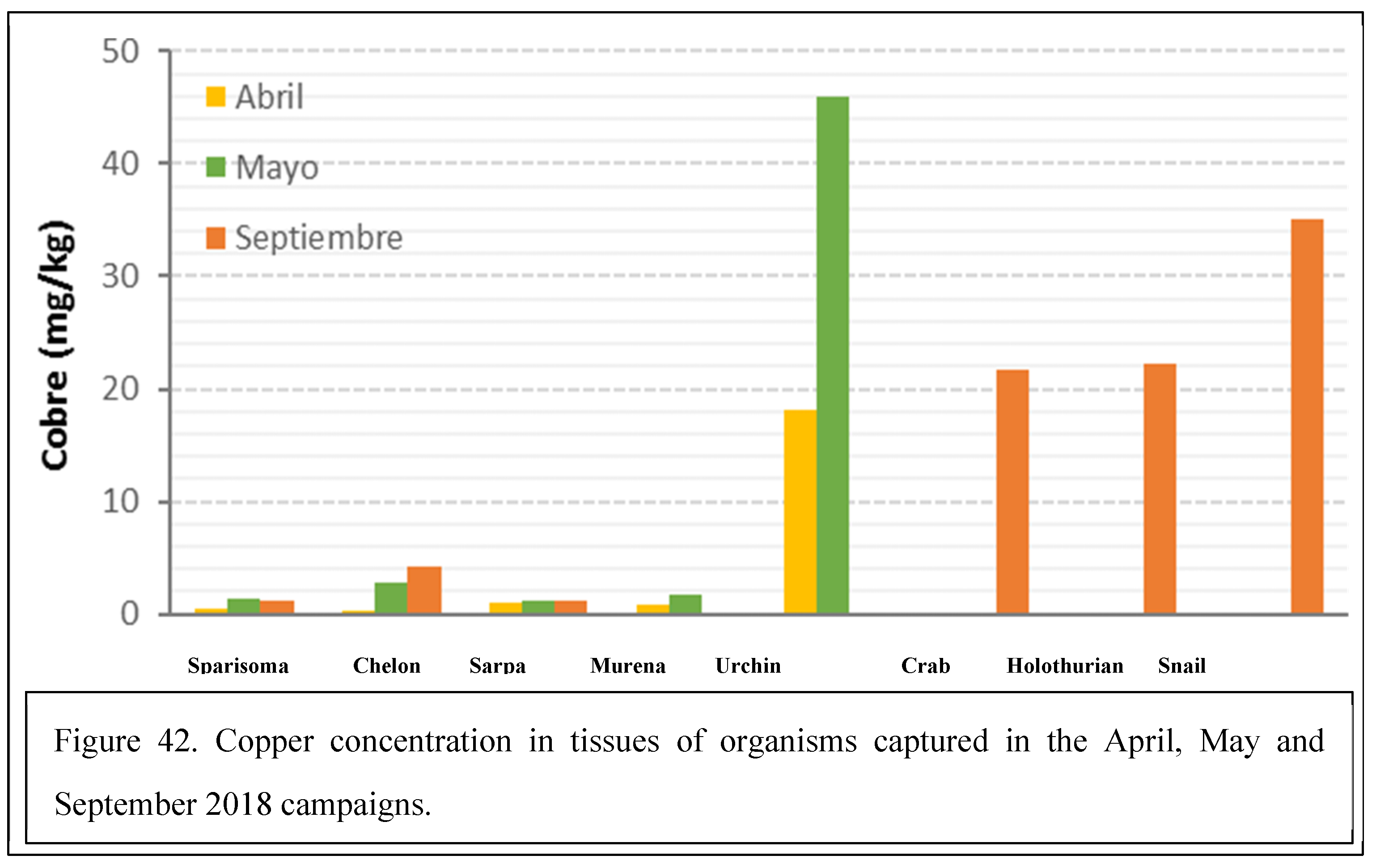
Figure 41 illustrates the presence of zinc in organisms within the port, primarily attributed to the natural concentration of zinc in the port environment, influenced by the quality of volcanic materials in that area of the island. It is challenging to discern a clear trend that could indicate the incorporation of this element into the trophic chain of the port, independent of contamination stemming from the accident.
Figure 42 clearly demonstrates a preference for copper incorporation in harbor organisms. Fish have accumulated significantly less copper compared to benthic organisms, showing an order of magnitude difference. The copper originates from daily boat maintenance activities, particularly from antifouling paints, as well as from the natural composition of the soils in the area.
Figure 43 shows the concentration of linear hydrocarbons in the tissues of living organisms. In this case, it appears that the moray eel, as a carnivorous fish, has a higher concentration than the rest of the predominantly herbivorous fish. Among the organisms associated with the bottom, the urchin stands out in both campaigns in terms of its capacity to incorporate these compounds. However, it is difficult to make a definitive projection without more data.
Cadmium, which was detected only in sea urchins during the April sampling, was not found in any of the organisms sampled in the May campaign (Figure 44).
In the initial two surveys, lead was solely detected in sea urchins, showing a fourfold increase in concentration during the May sampling. In the September sampling, concentrations of this metal were measured in all the organisms analyzed, although no sea urchins or moray eels were found in September (Figure 45).
Nickel concentrations were generally very low or absent in the April and May campaigns across all organisms, except for sea urchins, which exhibited high values, particularly during the April sampling, where they increased fivefold. In the September campaign, concentrations of this metal were measured in all the organisms analyzed, with the exception of salema fish, (Figure 46).
Given the length of this article, several data points have been omitted from the discussion. These will be explored in detail in an upcoming article, focusing on the effectiveness of bioremediation techniques and presenting comprehensive chemical and biological analyses. These analyses will directly address the reduction of contamination and the restoration of the port ecosystem with greater precision.
5. Conclusions
The cleanup of the port of Gran Tarajal demonstrates the feasibility of effectively addressing a major oil spill and achieving highly positive outcomes. By swiftly implementing new technologies and taking prompt action, widespread mortality of marine organisms was averted, and the contamination of the port's trophic chain was prevented, thereby avoiding potential long-term impacts on local species. These innovative technologies not only offer a proven alternative to conventional response systems but also result in significant cost savings.
The initial stages of the cleanup were complicated by the lack of established contingency plans, leading to delays and missed opportunities for effective action. Bureaucratic hurdles and unclear contracting processes further hindered response efforts, despite the availability of suitable materials for immediate intervention.
The inadequacy of legislation at various levels of governance, from European to regional and national institutions, reflects a systemic disregard for pollution issues and environmental monitoring. This deficiency is particularly evident in the absence of guidelines for relevant sampling protocols and the lack of a centralized database for monitoring port conditions.
The overreliance on bureaucratic processes and the insufficient preparedness of technicians and authorities exacerbate the complexity of managing environmental accidents. Inadequate sampling protocols and reliance on outdated technologies contribute to ineffective response measures, with dispersants often exacerbating the problem rather than mitigating it. Additionally, bureaucratic obstacles impede the adoption of innovative solutions, stifling progress in pollution management.
The authorities' proposed solution, involving the widespread use of dispersants and chemical solvents followed by pressure washing, would have caused irreparable harm to the harbor ecosystem. This underscores the urgent need for comprehensive and proactive measures to address pollution incidents, including the adoption of efficient technologies and the establishment of clear protocols for response and monitoring.
Fortunately, the experience of our team in real actions, the new oil pollution control systems we were developing, the research results of the Gulf of Mexico Research Initiative (GOMRI) project, which confirmed what was known about the negative impact of dispersants, together with enormous social pressure to solve the problem as soon as possible due to the health problems caused by the spill, led the local administration to allow us to act with the new systems.
In the response described in this article, four new developments were used that have addressed many of the deficiencies of current systems. This began with the utilization of sponges with enhanced characteristics, the application of absorbent granules, bioremediation with allochthonous species, and a combination of barriers and sponges that improved stain retention efficiency.
Our intervention commenced on Saturday, March 3, 2018, two days after the last sinking, and by the end of the day on Monday, March 5, we had already removed 57 tons of hydrocarbons (with less than 5% water), filtered and directly reusable, using the absorbent sponges. This significantly reduced social pressure, as it was now possible to go outside without danger. It's worth noting that the smell had permeated over 5 kilometers from the pier.
The granules played a crucial role on land, cleaning equipment, boots, tools, and floors, thereby alleviating pressure on employees. Additionally, granulate beds and barriers on land prevented further contamination as machinery and ship parts were removed.
Only on Sunday, March 11 of that month, was it possible to commence the application of the petroleolitic bacterial inoculum, which visibly reduced the foul odors in various areas of the port, decreasing the contamination visible to the naked eye.
The combined use of traditional booms and reusable absorbent sponges facilitated easier and more efficient control of oil slicks, preventing further damage by promptly collecting the continuous spills that occurred.
Analytical values clearly demonstrate the success of the cleaning process, with minimal impact on the marine ecosystem and a reduction in organism fatalities practically to zero upon our intervention.
The lack of an initial study of the port's contamination levels (baseline) complicated the analysis of contamination incidence due to the accident. It was necessary to monitor the progress of sampling analysis results to gauge the cleanup progress.
Point water samples are not highly indicative of coastal zone conditions; therefore, these analyses did not provide substantial information. Sampling could only commence almost a month after the accident. Consequently, the focus shifted to sediment analyses, contaminant content in organisms, mortality counts, and analysis of infauna communities.
Despite sampling limitations, sediment analyses indicate a significant reduction in total hydrocarbons from nearly 60,000 mg/kg to less than 1,600 mg/kg by the end of September, despite continuous discharges for 7 of the 9 months of action.
Only mercury was linked to the consequences of the accident, and its values decreased as the cleanup progressed. Copper and lead were also associated with the maintenance of fishing and sports boats, in addition to natural concentrations. High values of these two elements were obtained, particularly in the vicinity of the beaching area for boat maintenance.
Tissue analysis of organisms shows minimal contamination incidence due to the accident, as they do not exhibit values above detection in mercury or polycyclic aromatic hydrocarbons (PAHs), and only show low linear hydrocarbon contents. This could also be related to the chronic contamination suffered by the port due to the usual spills in fuel handling with little care.
Although the data on heavy metals and arsenic seem independent of the accident, they show certain preferences between organisms and situations within the port. However, these data are insufficient to establish a study of their impact on the environment.
The values obtained from the study of communities are intriguing, showing a clear recovery of the ecosystem associated with the sediments, with an increase in both the number of species and individuals in practically all the stations.
This example underscores the need to review the means currently used to respond to an oil pollution episode, emphasizing the existence of much better alternatives that are easy to handle and provide significant savings, increase the reusability of both the recovered products and the equipment used, and thus promote the circular economy philosophy.
Furthermore, it emphasizes the importance of having perfectly defined contingency plans for each port with these new technologies and a study of the quality of its sediments and water to establish.
The additional difficulty of political interference in actions is notable, which should depend exclusively on highly qualified and internationally recognized technicians with experience. The recovery of the port and the use of these new technologies, after the first two days of lack of control, was due to a firm political decision to allow trained professionals to act with a certain degree of freedom.
Despite the clearly positive performance and improvement compared to standard performance with classical technologies, there has been no movement by anyone in charge to at least attempt to initiate an evaluation of the new systems used, and attempts to introduce these have been systematically blocked. (Video-4, Good Bye))
References
- Lionel Camus, Mathijs G.D. Smit, Environmental effects of Arctic oil spills and spill response technologies, introduction to a 5 year joint industry effort, Marine Environmental Research, Volume 144, 2019, Pages 250-254, ISSN 0141-1136. [CrossRef]
- Pavlov, V. (2020). Arctic Marine Oil Spill Response Methods: Environmental Challenges and Technological Limitations. In: Pongrácz, E., Pavlov, V., Hänninen, N. (eds) Arctic Marine Sustainability. Springer Polar Sciences. Springer, Cham. [CrossRef]
- IVSHINA, Irena B., et al. Oil spill problems and sustainable response strategies through new technologies. Environmental Science: Processes & Impacts, 2015, vol. 17, no 7, p. 1201-1219.
- Lehr, W., Bristol, S., & Possolo, A. (2010). Oil budget calculator Deepwater Horizon. Retrieved from Federal Interagency Solutions Group, Oil budget calculator science and Engineering team. http://www.restorethegulf.gov/sites/default/files/documents/pdf/OilBudgetCalc_Full_HQ-Print_111110.pdf.
- United States Department of Commerce. 2016. Final programmatic damage assessment and restoration plan and final programmatic environmental impact statement. National Oceanic and Atmospheric Administration. The Deepwater Horizon natural resource trustees. https://www.gulfspillrestoration.noaa.gov/sites/default/files/wp-content/uploads/Front-Matter-and-Chapter-1_Introduction-and-Executive-Summary_508.pdf.
- Westerholm, D. G., Ainsworth, C. H., Barker, C. H., Brewer, P. G., Farrington, J. W., Justić, D., Solo-Gabriele, H. M. (2021). Preparedness, planning, and advances in operational response. Oceanography, 34(1), 212–227.
- Özgökmen, T. M., Chassignet, E. P., Dawson, C. N. Dukhovskoy, D., Jacobs, G., Ledwell, J., . . . Skancke, J. (2016). Over what área did the oil and gas spread during the 2010 Deepwater Horizon oil spill? Oceanography, 29(3), 96-107.
- Passow, U., & Overton, E. (2021). The complexity of spills: The fate of Deepwater Horizon oil. The Annual Review of Marine Science, 13, 109-136.
- Quigg, A., Farrington, J. W., Gilbert, S., Murawski, S. A., & John, V. T. (2021). A decade of GoMRI dispersant science. Oceanography, 34(1), 98-111.
- National Academies of Sciences, Engineering, and Medicine (NASEM). (2020). The use of dis-persants in marine oil spill response. The National Academies Press. https://www.nap.edu/catalog/25161/the-use-of-dispersants-in-marine-oil-spillresponse#.
- John, V., Arnosti, C., Field, J., Kujawinski, E., & McCormick, A. (2016). The role of dis-persants in oil spill remediation: Fundamental concepts, rationale for use, fate, and transport issues. Oceanography, 29(3), 108–117.
- Bailey, D., Dannreuther, M. N., Maung-Douglass, E., Partyka, M., Sempier, S., Skelton, T., & Wil-son, M. (2021). Dispersant use and impacts after the Deepwater Horizon oil spill. GOMSG-G-21-008.
- Maung-Douglass, E., Graham, L., Hale, C., Sempier, S., Skelton, T., Swann, L., and Wilson, M. (2019). Frequently asked questions: Dispersants edition. GOMSG-G-19-001.
- Maung-Douglass, E.S., Graham, L., Hale, C., Sempier, S., Swann, L., and Wilson, M. (2015). Oil Spill Science: Responses of Aquatic Animals in the Gulf of Mexico to Oil and Dis-persants. GOMSG–G–15-001.
- Graham, L., Hale, C., Maung-Douglass, E., Sempier, S., Swann, L., and Wilson, M. (2016). Oil Spill Science: Chemical dispersants and their role in oil spill response. MASGP-15-015.
- Wilson, M., Graham, L., Hale, C., Maung-Douglass, E., Sempier, S., and Swann, L. (2015). Oil Spill Science: Persistence, Fate, and Effectiveness of Dispersants used during the Deep-water Horizon Oil Spill. GOMSG-G-15-004.
- Maung-Douglass, E., Graham, L., Hale, C., Sempier, S., Skelton, T., Swann, L., and Wilson, M. (2017). Oil spill science: Emerging surfactants, sorbents, and additives for use in oil spill clean-up. GOMSG-G-17-003.
- National Academies of Sciences, Engineering, and Medicine 2020. The Use of Disper-sants in Marine Oil Spill Response. Washington, DC: The National Academies Press. [CrossRef]
- Brandvik, Per Johan, et al. Subsea mechanical dispersion (SSMD) a possible new option for the oil spill response toolbox?. En International Oil Spill Conference. 2021. p. 689545.
- Brandvik, P. J., Davies, E., Krause, D. F., Beynet, P. A., Agrawal, M., & Evans, P. (2016, April). Subsea mechanical dispersion, adding to the toolkit of oil spill response technology. In SPE International Conference and Exhibition on Health, Safety, Environment, and Sustainability? (p. D031S051R003). SPE.
- Vonk, S. M., Hollander, D. J., & Murk, A. J. (2015). Was the extreme and wide-spread marine oil-snow sedimentation and flocculent accumulation (MOSSFA) event during the Deepwater Horizon blow-out unique?. Marine Pollution Bulletin, 100(1), 5-12.
- Ross, J., Hollander, D., Saupe, S., Burd, A. B., Gilbert, S., & Quigg, A. (2021). Integrating marine oil snow and MOSSFA into oil spill response and damage assessment. Marine Pollution Bulletin, 165, 112025.
- Murk, A. J., Hollander, D. J., Chen, S., Hu, C., Liu, Y., Vonk, S. M., ... & Foekema, E. M. (2020). A predictive strategy for mapping locations where future MOSSFA events are expected. Scenarios and Responses to Future Deep Oil Spills: Fighting the Next War, 355-368.
- Quigg, A., Passow, U., Daly, K. L., Burd, A., Hollander, D. J., Schwing, P. T., & Lee, K. (2020). Marine oil snow sedimentation and flocculent accumulation (MOSSFA) events: learning from the past to predict the future. Deep Oil Spills: Facts, Fate, and Effects, 196-220.
- Daniel Niehaus, Sebastian Hofmann, Srividya Bairamangala Kumar, Marko Hoffmann, Jesus Cisneros-Aguirre, Michael Schlüter. Experimental characterization and field experience of a reusable,modified polyurethane foam for the mechanical clean-up of oil spills at sea surface. JMSE. Marine Pollution. September 2022. https://www.mdpi.com/journal/jmse/special_issues/oil_clean. https://susy.mdpi.com/user/manuscripts/review_info/cbee0ed40af5bae50495f8375ca2e526.
- CSIC, Bioremediation test in Salvora Island (Arosa, Galicia, Spain) during Prestige Oil Spill. March-Oct. 2003. Report.
- CSIC. Bioremediation test in Villanova Harbour, Barcelona, Spain. May 2004. Report.
- CSIC. Bioremediation in Montserrat Mountain soil, Barcelona, Spain. Oct.2004. Report.
- RITTMAN, B. 1994. In situ bioremediation. 2 ed. Noyes Publication. New Jersey, USA. 255 p.
- CAPRETTE, D.. 2000. Substrate oxidation: Krebs reaction. Rice Unix Facility,Rice University.Houston,USAhttp://www.ruf.rice.edu/~bioslabs/studies/mitochondria/mitokrebs.html.
- Van Beilen, J. ; Duetz, W. ; Smits, T. ; Witholt, B. 2003. Diversity of alkane hydroxylase systems in the environment. Oil & Gas Science and Technology. 58:427-440.
- González-Díaz V.; Hernández-Moreno, J.M.; Jiménez-Abizanda, A. I.; Jiménez-Moreno, F.; Levels of Heavy Metals in Canary Islands Soils. December 2003. Report I-QA-469/10: Canary Islands Regional Government Environmental Department & La Laguna University. 230 p.
- Monterroso, O., M. Rodríguez, E. Ramos, O. Pérez, O. Álvarez, L. Cruces, M. Ruiz, A. Miguel y M. González. Plan de vigilancia ambiental de marzo a septiembre en el puerto de Gran Tarajal. Caracterización de muestras de sedimento, aguas y organismos para la valoración ambiental de un vertido accidental en Fuerteventura. Campaña de septiembre 2018. CIMA S.L. Informe Técnico 2019-12: 130 pp.

Table 1.
Hydrocarbon retrieved from vessel’s tanks.
| Oil Type | Quantity |
|---|---|
| Diesel | 170,270 l. |
| Hydraulic Oil | 14,854 l. |
| Fuel Oil | 42,720 l. |
Table 2.
Contaminating materials recovered.
| Material Recovered | Quantity |
|---|---|
| 504 cans 5 kg each of paint | 2,875 kg |
| 5 cans 15 kg each of paint | |
| 14 cans 20 kg each of paint | |
| 67 cans 3 l. each of dissolvent | 381 l |
| 20 cans 5 l. each of dissolvent | |
| 4 cans 20 l. each of dissolvent | |
| 5 cans 4 kg each of glue | 20 kg |
| 2 cans 3 l. each of soap | 6 l |
| 1 carafe of 3 l. Sulfuric Acid | 28 l |
| 1 carafe of 25 l. Sulfuric Acid | |
| 33 cans 15 kg each of Engine Grease | 495 kg |
| 1 can 10 kg of sepiolite | 10 kg |
| 18 carafes 5 l each antifreeze | 133 l |
| 1 carafe of 18 l antifreeze | |
| 1 carafe of 25 l antifreeze | |
| Heavy Lead batteries | 57 units |
| Boat Tire fenders | 183 units |
Table 3.
Results of water samples analysis, as sum of all samples values, for every cruise.
| Parameter | 25-28 March | 7-11 April | 17-21 May | 23-27 Sept. |
|---|---|---|---|---|
| Mercury (µg/l) | 0,0 | 0,8 | 0,0 | 0,0 |
| Cadmium (µg/l) | 4,9 | 0,0 | 0,0 | 0,0 |
| Lead (µg/l) | 39,3 | 6,5 | 0,0 | 32,0 |
| Copper (µg/l) | 20,1 | 8,9 | 45,9 | 372,0 |
| Zinc (µg/l) | 0,0 | 0,0 | 0,0 | 0,0 |
| Crome (µg/l) | 8,8 | 6,9 | 5,3 | 0,0 |
| Niquel (µg/l) | 19,7 | 12,6 | 1,0 | 0,0 |
| Arsenic (µg/l) | 93,9 | 103,1 | 150,0 | 68,0 |
| Selenium (µg/l) | 0,0 | 0,0 | 0,0 | 0,0 |
| Ʃ 7 PCB’s (µg/l) | 0,0 | 0,0 | 0,0 | 0,0 |
| Ʃ 16 HAP’s (µg/l) | 0,0 | 0,0 | 0,0 | 0,0 |
| TPT’s (Equitox/m³) | 0,0 | 0,0 | 0,0 | - |
| TBT’s (µg/l) | 0,0 | 0,0 | 0,0 | 0,0 |
| TPH’s (mg/l) | 1,7 | 0,0 | 0,0 | 0,0 |
Table 4.
Results of Sediment Samples Analyses, as sum of all values for every cruise.
| Parameter | 25-28 March | 7-11 April | 17-21 May | 23-27 Sept. |
|---|---|---|---|---|
| Mercury (µg/l) | 2,6 | 0,4 | 0,0 | 0,0 |
| Cadmium (µg/l) | 1,4 | 1,1 | 1,3 | 1,3 |
| Lead (µg/l) | 80,1 | 66,2 | 76,8 | 58,5 |
| Copper (µg/l) | 306,6 | 522,4 | 362,8 | 461,1 |
| Zinc (µg/l) | 308,1 | 391,6 | 281,2 | 515,8 |
| Crome (µg/l) | 800,6 | 869,9 | 756,0 | 769,3 |
| Niquel (µg/l) | 542,0 | 766,3 | 804,9 | 1.022,1 |
| Arsenic (µg/l) | 67,5 | 75,4 | 90,9 | 104,1 |
| Selenium (µg/l) | 0,0 | 0,0 | 0,0 | 0,0 |
| Ʃ 7 PCB’s (µg/l) | 0,0 | 0,0 | 0,0 | 0,0 |
| Ʃ 16 HAP’s (µg/l) | 6,3 | 2,8 | 3,4 | 0,1 |
| TPT’s (Equitox/m³) | 8,6 | 3,8 | 4,6 | 0,1 |
| TBT’s (µg/l) | 0,0 | 0,0 | 0,0 | 0,0 |
| TPH’s (mg/l) | 59.962 | 35.780 | 35.016 | 1.593 |
Disclaimer/Publisher’s Note: The statements, opinions and data contained in all publications are solely those of the individual author(s) and contributor(s) and not of MDPI and/or the editor(s). MDPI and/or the editor(s) disclaim responsibility for any injury to people or property resulting from any ideas, methods, instructions, or products referred to in the content. |
© 2024 by the authors. Licensee MDPI, Basel, Switzerland. This article is an open access article distributed under the terms and conditions of the Creative Commons Attribution (CC BY) license (http://creativecommons.org/licenses/by/4.0/).
Copyright: This open access article is published under a Creative Commons CC BY 4.0 license, which permit the free download, distribution, and reuse, provided that the author and preprint are cited in any reuse.


