

Submitted:
22 May 2024
Posted:
23 May 2024
You are already at the latest version
Abstract
In this research work the study of Buongiorno Model Darcy Forchheimer flow of Hybrid nanofluid flow on isothermal permeable stretch/shrink sheet with homogeneous and heterogeneous reaction is investigated. The effects of MHD, thermal radiation, viscous dissipation, Joule heating, and heat generation/absorption are taken into account. Hybrid nanofluids can act as a medium for heterogeneous-homogeneous reactions. The nanoparticles dispersed in the fluid can influence reaction kinetics and species transport, potentially, altering reaction rates and pathways. The applications of HNF in reactions, both homogeneous and heterogeneous, lie in leveraging their enhanced thermal properties, catalytic potential, and improved mixing capabilities to optimize reaction efficiency and control reaction conditions. Similarity transformation is used to convert a set of PDEs into a set of ODEs. HAM is used for the solution of the obtained ODEs system. In a heterogeneous reaction, the concentration gradient is amplified; in a homogeneous reaction, the impact is opposite. Moreover, at higher compositions of HNPs, the concentration and velocity rise while the temperature falls. Furthermore, as the values of homogeneous and heterogeneous reactions increase, the concentration falls. It is reliable with the idea that a greater reaction rate lowers the diffusion rate. Nevertheless, these parameters do not affect temperature or velocity.
Keywords:
Hybrid nanofluid flow
; Darcy Forcheimer
; Bongiorno Model
; heat generation/absorption
; thermal radiation
; Homogeneous and Heterogeneous reaction
1. Introduction
A nanofluid is a fluid that has been mixed with a base fluid, like water, ethylene glycol, or oil, and contains nanoparticles, which are particles smaller than 100 nanometers. Researcher are highly interested in studying nanofluids due to their enhance thermal and physical properties compared to base fluid. Nanoparticles in nanofluids can significantly increase thermal conductivity, improve heat transfer rates, and other properties like viscosity and stability. Nanofluid have a numerous of potential uses like cooling and heat transfer, energy sector, biomedical applications, manufacturing and materials, Automotive and Transportation, renewable energy, nanofluid based sensors and devices. The new class of heat transmission fluid, known as a nanofluid, was created by suspending nanoparticles in a base fluid and was considered by Choi and Eastman [1]. Xuan et al. [2] scrutinized performance of heat transmission of NF and predicting convective heat transmission of nanofluid by single phase fluids and multiphase feature of the nanofluid. Buongiorno [3] scrutinized the impacts of thermophoresis and Brownian diffusion on the properties of NF for boundary layer flow. Dharmalingam et al. [4] described experimently and mathematically flow of NF with heat transmission. Tielke et al. [5] investigated water based nanofluid for their thermal conductivity measurements and potential applications. A novel scaled correlation to forecast the measurement of NF thermal conductivity was presented by Coccia et al. [6]. Alami et al. [7] explored the implications and limitations of conventional heat transmission coefficient calculation methods. Eswara et al. [8] studied bioconvection nanofluid flow on stretching porous media permeable sheet with MHD. The 2-D micropolar NF laminar incompressible flow in a steady channel with MHD was studied by Alahmadi et al. [9]. Ali et al. [10] examined 2-D NF flow with EMHD, variable heat flux, thermal radiation. The research work related to nanofluid flow has seen in [11,12,13].
Hybrid nanfluid are a type of nanofluid that combines nanoparticles with different types, shapes, or materials to form a synergistic mixture within a base fluid. These combinations include a mix of metallic nonmetallic, or polymeric nanoparticles. The goal is to enhance specific properties by leveraging the unique characteristics of each type of nanoparticle. Research on hybrid nanofluids is ongoing, exploring different nanoparticle combinations and base fluid to achieve enhanced heat transfer, rheological behavior, and stability. Hybrid nanofluids have a significance application in various fields like heat exchangers and cooling system, Solar thermal system, electronics and thermal management, nuclear reactors, biomedical applications, manufacturing and materials processing, automotive, aerospace, renewable energy etc. Rosca et al. [14] studied Buongiorno model of HNF flow on a permeable stretch/shrink sheet. Hayat et al. [15] investigated 3-D HNF rotating flow on stretch sheet with radiation and heat generation impacts. Boundary layer flow of HNF with heat transmission on stretch/shrink sheets was discussed by Waini et al. [16]. El-Zahar et al. [17] described thermal convective boundary condition of HNF flow through a circular cylinder with MHD impact. The uses and advantages of HNF in photovoltaic systems and solar energy were covered by Rasheed et al. [18]. waini et al. [19] explored radiated HNF flow on steady nonlinear stretch/shrink sheet. Nadeem et al. [20] scrutinized HNF flow on a convective heat permeable shrink/stretch sheet at a stagnation point with MHD impacts. MHD HNF flow on an exponential stretch/shrink surface with heat generation/apsorption was studied by Sarfaraz et al. [21] and bvp4c is used for numerical solution. The related work has been seen in [22,23,24].
Homogenous and heterogeneous reactions refer to different types of chemical reactions on based on the phases of the reactants involved. In homogeneous reaction, all the products and reactants are in the same phase (e.g., all liquid, all solid, or all gaseous). In a heterogeneous reaction, reactant and products are in different phases (e.g., gas reaction with a solid, liquid reacting with a gas, etc). Homogenous and heterogeneous reactions have many applications in chemistry and other related fields, some of them are catalysis, environmental science, chemical engineering, material science, biological system, etc. HNF flow at the stagnation point on a stretch/shrink sheet with heterogeneous- homogeneous reactions was described by Waini et al. [25]. Xu et al. [26] explored Buongiorno Model of NF with homogeneous - heterogeneous reaction. Alarabi et al. [27] discussed HNF flow for Darcy-Forchheimer in stretch/shrink cylinder with MHD, Joule heating, and hetrogeneous-homogeneous reaction. Ramzan et al [28] studied NF flow with MHD impacts and homogeneous and heterogeneous reaction and utilized bvp4c for numerical computation. Anuar et al. [29] explored MHD flow of HNF at a stagnation point with heterogeneous - homogeneous reaction. Bala et al [30] scrutinized Casson NF flow on an unsteady porous media stretch/shrink sheet with heat source/sink and heterogeneous-homogeneous reaction.
The branch of physics deals with the study of the behavior of electrically conducting fluids in the occurrence of magnetic fields, including salt water, liquid metals, and plasma is known as MHD. Some uses of MHD are astrophysics, fusion energy research, electric power generation, MHD propulsion, geophysics, material processing, plasma and space research, environmental science, etc. Khashi’ie et al. [31] examined HNF flow with heat transmission and Joule heating effects on a moving plate. Reddy et al. [32] scrutinized MHD effects of viscous fluid flow with heat transmission in a porous media cylinder. Abbas et al. [33] explored incompressible MHD fluid flow on steady cylinder with variable thermal conductivity. MHD 2-D Williamson HNF incompressible flow with Joule heating influence was deliberated by Rashad et al. [34]. MHD Casson NF flow on stretched surface was scrutinized by Suresh et al. [35] along with the impacts of activation energy and thermal radiation. Hybrid nanofluid obtained by adding and in Base fluid as shown in Figure 1.
The following points highlight the novelty, goal, and aspects that this research communication and paper attempt to investigate:
- The mathematical 2-D flow model of HNF over porous stretch/shrink sheet using water as the base fluid and as nanoparticles.
- This analysis investigates an appropriate interpretation of Darcy-Forchhiemer and Buongiorno models of HNF flow on stretch/shrink sheet.
- The use of significant mechanisms such as heat generation/absorption, viscous dissipation, and Joule heating effect, homogeneous and heterogeneous reaction enhances the originality of this work.
- A system of PDEs is converted into a set of ODEs using similarity variables, and then HAM is applied for the solution of the obtained ODEs.
- Tables and graphs are used to explain the results of the numerical analysis. The percentage % comparison of NF and HNF of velocity and energy are shown through graph.
2. Problem Formulation
In this study, we examine Darcy-Forchheimer MHD flow of HNF with heterogeneous-homogeneous reaction on steady stretch/shrink sheet. Velocity components in and directions are signified as . The plate normal coordinate is in -direction, and stream wise flow is in direction. It is supposed that the mass flux velocity is with, for suction and for injection or withdraw of the fluid and the surface velocity is . Surface and ambient temperatures and concentrations are given as , and .
Homogeneous-heterogeneous reactions can write as
Where the chemical concentrations and for species, , with rate constant and . The governing equations of the flow problem are
Where the temperature of HNF is and is the concentration. While, are the diffusion coefficients of species and . Thermophoretic diffusion coefficient is , is the inertia coefficient. Table 1 and Table 2 signify the thermophysical possessions of HNF.
Specific heat capacity of HNF is , density of HNF is , density of base fluid is , dynamic viscosity of HNF is , electrical conductivity of base fluid is , is the kinematic viscosity of base fluid and electrical conductivity of HNF is . is the thermal conductivity of HNF and base fluid. Nanoparticle’s volume frictions are .
Similarity transformations are;
By using the Equation (11) in Equations (3)–(10), Equation (3) is identically proved, other equations are gotten as;
.
Where Schmidt number , permeability parameter , magnetic field parameter , is interial parameter, is thermophoresis parameter, is the thermal radiation, is Brownian motion parameter, is the ratio of diffusion coefficient, is the strength of homogeneous, is Eckert number, is the Prandtl number, is the strength of heterogeneous. Skin friction, Sherwood number, and Nusselt number are
Where
In Non-dimensional form, , , and are written as
3. HAM Solution
HAM is used for finding the solution of Equations (12)–(16) with BCs (17). Mathematica software is used for this purpose. The initial guesses are taken as:
The linear operators are discoursed as:
With properties
Where are constants.
The zero-order deformations are:
Here is the embedding parameter, and the non-zero auxiliary parameters are, , and ., , , and are the nonlinear operators which are defined as:
.
4. Result and Discussion
In this section we explain in Figure 7, Figure 8, Figure 9, Figure 10, Figure 11, Figure 12, Figure 13, Figure 14, Figure 15, Figure 16, Figure 17, Figure 18, Figure 19, Figure 20, Figure 21, Figure 22, Figure 23 and Figure 24 the impacts of different parameters like, on . The influence of growing the on is shown in Figure 7 It has now been extensively established that reduces velocity by creating drag force, which opposes the fluid’s motion. Transfer phenomena are resisted by the. This is because, due to the , changes in the also cause changes in the Lorentz force, which increases resistance to transportation events. Under all conditions, decline at a significant distance from the Stretch/shrink surface. Figure 8 shows the effect of the on . When perceived in Figure 8, the thickness of the thermal BL raises as is improved.
The effects of on are shown in Figure 9. It is evident that the presence of porous medium consequences is augmented fluid flow restriction, instigation it to move more and more slightly, which therefore decline . So, the impedance to fluid motion enlargements as augments. Then, the temperature rises as a consequence of a decline in . Thus, it can be discussed that upsurge in lessens the thickness of the BL, subsequent in an upsurge in the rate of heat transmission. The influence on is shown in Figure 10. When is increased, the velocity of HNF is increased, this is because the increment in produced inertial drag force, which is a barrier to .
The impact of on is scrutinized in Figure 11. Augmentation in in declined in the thermal BL, which outcomes in reduction in . When is augmented, becomes larger than density, creating an opposing force against the fluid flow. For dissimilar values of for stretch /Shrink surface the feature of is show in Figure 12. With the augmentation of , the is upsurges as shown in Figure 7. Here it is noted that confines the fluid motion and signifies no viscous dissipation. The cause behind is means it is the ratio of the square of the velocity of fluid far away from the surface of the boundary to the product of the specific heat at constant temperature. In case of , so that the thermal BL upsurges.
The increment in for growing in can be detected in Figure 13. The Rd describes the rate at which conduction heat transmission to thermal radiation transmission occurs. Rd augments heat transmission because the augmentation in will rise the thickness of the boundary layer. The thickness of the thermal boundary layer and increased when is increased, which supplying more heat to HNF flow.
The behavior of the in mass species is depicted in Figure 14. When was inclined, the particle concentration dropped. Physically, is the ratio of mass diffusivity to kinematic viscosity. The kinematic viscosity of fluid particles is skewed in relation to the influence of Schmidt number due to their physical characteristics. On the other hand, mass diffusivity decreases with variation. In comparison to the Schmidt number role, concentration layers have a decreasing function.
The effects and on are shown on Figure 15 and Figure 16. The declining pattern of of HNF is perceived. It is reliable with the fact that the reaction rate rises as the values of and rise, which reason the lessening in diffusion rate.
Furthermore, the effects are shown in Figure 17 and Figure 18, which displays that both and are the growing functions of . Physically, rise in as a result in an increasing in Lorentz force. Lorentz force creates retardation force in fluid particles. So this decelerate force slows down flow of HNF and rises in both and .
Figure 13 and Figure 14 displays the influences of and on . When growing occur in and of HNF is augmented.
Figure 21 and Figure 22 are drawn to scrutinize the incentive of and on . The reverse effect is detected for upsurge in and . Base fluids with higher nanoparticle concentrations exhibit improved thermal physical properties. The concentration of additional nanoparticles within the base fluid rises with their addition, increasing the likelihood of an intermolecular collision and raising K.E raised the temperature. As a result, HNF experiences an increase in . Also, an upsurge in caused the movements of nanoparticles to shift from lower to higher concentrated regions. Figure 23 and Figure 24 shows the reverse impact of and on . Figure 25a,b shows the percentage comparison of NF and HNF of velocity and energy.
5. Table Discussion
The impacts of on are presented in Table 3. Growing in , is increased. The impacts of on are presented in Table 3. Nusselt number is augmented when the values of is enlarged, while decline for increasing in . The impacts of on are presented in Table 4. Sherwood number is increased for increasing in and decline for increasing in .
6. Conclusions
In this research work we examine homogenous and heterogen ous reaction of Bongiorno model Darcy-Forchheimer MhD HNF flow through stretching /shrinking sheet with the impact heat viscous dissipation, thermal radiation, generation/absorption, Joule heating effect. The system of ODEs is derived from the set of PDEs by applying the proper transformations for similarity variables. The obtained ODEs is then solved by using HAM on mathematica software. The concluding remarks are obtained from the study are follows
- The is a declining function of .
- Increasing in is decreased.
- Augmenting in decline the .
- The decreasing pattern of is observed for increasing in .
- is the growing function of Nu and is the growing function of.
- The reverse impact is observed for and , while increasing in .
Declaration of Interest
The authors declare that they have no known competing financial interests or personal relationships that could have appeared to influence the work reported.
Competing interests
The authors declare no competing interests.
Nomenclature
| Surface velocity | For injection | ||
| Ambient temperature | Velocity components in and directions. | ||
| For suction | Mass flux velocity | ||
| Density of base fluid | Ambient concentration | ||
| Dynamic viscosity of HNF | Rate constant | ||
| Chemical concentration | Temperature | ||
| Diffusion coefficients of species | Thermophoretic diffusion | ||
| Inertia coefficient | Surface concentration | ||
| Specific heat capacity of HNF | Electrical conductivity of HNF | ||
| Surface temperature | Kinematic viscosity of base fluid | ||
| Thermal conductivity of base fluid | Thermal conductivity of HNF | ||
| Density of HNF | Electrical conductivity of base fluid | ||
| Nanoparticles volume friction | Schmidth number | ||
| Porosity Parameter | Magnetic parameter | ||
| Inertial parameter | Prandtl number | ||
| Ratio of Diffusion Cosfficient | Strength of homogeneous | ||
| Thermophoresis parameter | Nusselt number | ||
| Brownian motion parameter | Sherwood number | ||
| Strength of hetrogeneous | Skin friction | ||
| Eckert number | Dimensionless concentration | ||
| Dimensionless velocity | Dimensionless temperature | ||
| ODEs | Ordinary differential equations | HNPs | Hybrid nanoparticles |
| PDEs | Partial differential equations | HAM | Homotopy Analysis Method |
| HNF | Hybrid nanofluid | NF | Nanofluid |
| BL | Boundary layer |
References
- Choi, S.U. Enhancing thermal conductivity of fluids with nanoparticles, developments and applications of non-Newtonian flows. ASME, FED, MD 1995, 231, 99–105. [Google Scholar]
- Xuan, Y.; Roetzel, W. Conceptions for heat transfer correlation of nanofluids. Int. J. Heat Mass Transf. 2000, 43, 3701–3707. [Google Scholar] [CrossRef]
- Buongiorno, J. Convective Transport in Nanofluids. J. Heat Transfer. 2006, 128, 240–250. [Google Scholar] [CrossRef]
- Dharmalingam, R.; Sivagnanaprabhu, K.; Kumar, B.S.; Thirumalai, R. Nano Materials and Nanofluids: An Innovative Technology Study for New Paradigms for Technology Enhancement. Procedia Eng. 2014, 97, 1434–1441. [Google Scholar] [CrossRef]
- Tielke, J., Maas, M., Castillo, M., Rezwan, K. and Avila, M., 2021. Statistical analysis of thermal conductivity experimentally measured in water-based nanofluids. Proceedings of the Royal Society A, 477(2250), p.20210222.
- Coccia, G.; Tomassetti, S.; Di Nicola, G. Thermal conductivity of nanofluids: A review of the existing correlations and a scaled semi-empirical equation. Renew. Sustain. Energy Rev. 2021, 151, 111573. [Google Scholar] [CrossRef]
- Alami, A.H.; Ramadan, M.; Tawalbeh, M.; Haridy, S.; Al Abdulla, S.; Allahu, H.; Ayoub, M.; Alashkar, A.; Abdelkareem, M.A.; Olabi, A.G. A critical insight on nanofluids for heat transfer enhancement. Sci. Rep. 2023, 13, 1–14. [Google Scholar] [CrossRef]
- Rao, M.E.; Sankari, M.S.; Nagalakshmi, C.; Rajkumar, S. On the Role of Bioconvection and Activation Energy for MHD-Stretched Flow of Williamson and Casson Nanofluid Transportation across a Porous Medium Past a Permeable Sheet. J. Nanomater. 2023, 2023, 1–11. [Google Scholar] [CrossRef]
- Alahmadi, R.A.; Raza, J.; Mushtaq, T.; Abdelmohsen, S.A.M.; Gorji, M.R.; Hassan, A.M. Optimization of MHD Flow of Radiative Micropolar Nanofluid in a Channel by RSM: Sensitivity Analysis. Mathematics 2023, 11, 939. [Google Scholar] [CrossRef]
- Ali, A.; Khan, H.S.; Saleem, S.; Hussan, M. EMHD Nanofluid Flow with Radiation and Variable Heat Flux Effects along a Slandering Stretching Sheet. Nanomaterials 2022, 12, 3872. [Google Scholar] [CrossRef] [PubMed]
- Jawad, M.; Shah, Z.; Islam, S.; Bonyah, E.; Khan, A.Z. Darcy-Forchheimer flow of MHD nanofluid thin film flow with Joule dissipation and Navier’s partial slip. J. Phys. Commun. 2018, 2, 115014. [Google Scholar] [CrossRef]
- Jawad, M.; Saeed, A.; Khan, A.; Islam, S. MHD bioconvection Darcy-Forchheimer flow of Casson nanofluid over a rotating disk with entropy optimization. Heat Transf. 2020, 50, 2168–2196. [Google Scholar] [CrossRef]
- Jawad, M.; Saeed, A.; Kumam, P.; Shah, Z.; Khan, A. Analysis of boundary layer MHD Darcy-Forchheimer radiative nanofluid flow with soret and dufour effects by means of marangoni convection. Case Stud. Therm. Eng. 2020, 23, 100792. [Google Scholar] [CrossRef]
- Roşca, N.C.; Roşca, A.V.; Aly, E.H.; Pop, I. Flow and Heat Transfer Past a Stretching/Shrinking Sheet Using Modified Buongiorno Nanoliquid Model. Mathematics 2021, 9, 3047. [Google Scholar] [CrossRef]
- Hayat, T.; Nadeem, S. Heat transfer enhancement with Ag–CuO/water hybrid nanofluid. Results Phys. 2017, 7, 2317–2324. [Google Scholar] [CrossRef]
- Waini, I.; Ishak, A.; Pop, I. Hybrid nanofluid flow and heat transfer past a permeable stretching/shrinking surface with a convective boundary condition. J. Physics: Conf. Ser. 2019, 1366, 012022. [Google Scholar] [CrossRef]
- El-Zahar, E.R., Rashad, A.M., Saad, W. and Seddek, L.F., 2020. Magneto-hybrid nanofluids flow via mixed convection past a radiative circular cylinder. Scientific Reports, 10(1), p.10494.
- Rasheed, T.; Hussain, T.; Anwar, M.T.; Ali, J.; Rizwan, K.; Bilal, M.; Alshammari, F.H.; Alwadai, N.; Almuslem, A.S. Hybrid Nanofluids as Renewable and Sustainable Colloidal Suspensions for Potential Photovoltaic/Thermal and Solar Energy Applications. Front. Chem. 2021, 9. [Google Scholar] [CrossRef] [PubMed]
- Jaafar, A.; Waini, I.; Jamaludin, A.; Nazar, R.; Pop, I. MHD flow and heat transfer of a hybrid nanofluid past a nonlinear surface stretching/shrinking with effects of thermal radiation and suction. Chin. J. Phys. 2022, 79, 13–27. [Google Scholar] [CrossRef]
- Nadeem, M.; Siddique, I.; Awrejcewicz, J.; Bilal, M. Numerical analysis of a second-grade fuzzy hybrid nanofluid flow and heat transfer over a permeable stretching/shrinking sheet. Sci. Rep. 2022, 12, 1–17. [Google Scholar] [CrossRef]
- Sarfraz, M.; Yasir, M.; Khan, M. Multiple solutions for non-linear radiative mixed convective hybrid nanofluid flow over an exponentially shrinking surface. Sci. Rep. 2023, 13, 1–10. [Google Scholar] [CrossRef] [PubMed]
- Jawad, M.; Khan, Z.; Bonyah, E.; Jan, R. Analysis of Hybrid Nanofluid Stagnation Point Flow over a Stretching Surface with Melting Heat Transfer. Math. Probl. Eng. 2022, 2022, 1–12. [Google Scholar] [CrossRef]
- Jawad, M., Khan, A. and Shah, S.A.A., 2021. Examination of couple stress hybrid nanoparticles (CuO-Cu/blood) as a targeted drug carrier with magnetic effects through porous sheet. Brazilian Journal of Physics, 51(4), pp.1096-1107.
- Jawad, M.; Saeed, A.; Tassaddiq, A.; Khan, A.; Gul, T.; Kumam, P.; Shah, Z. Insight into the dynamics of second grade hybrid radiative nanofluid flow within the boundary layer subject to Lorentz force. Sci. Rep. 2021, 11, 1–14. [Google Scholar] [CrossRef] [PubMed]
- Waini, I.; Ishak, A.; Pop, I. Hybrid Nanofluid Flow with Homogeneous-Heterogeneous Reactions. Comput. Mater. Contin. 2021, 68, 3255–3269. [Google Scholar] [CrossRef]
- Xu, N.-L.; Xu, H.; Raees, A. Homogeneous-heterogeneous reactions in flow of nanofluids near the stagnation region of a plane surface: The Buongiorno’s model. Int. J. Heat Mass Transf. 2018, 125, 604–609. [Google Scholar] [CrossRef]
- Alarabi, T.H.; Rashad, A.M.; Mahdy, A. Homogeneous–Heterogeneous Chemical Reactions of Radiation Hybrid Nanofluid Flow on a Cylinder with Joule Heating: Nanoparticles Shape Impact. Coatings 2021, 11, 1490. [Google Scholar] [CrossRef]
- Ramzan, M.; Chaudhry, H.; Ghazwani, H.A.S.; Kadry, S.; Shahmir, N.; Abbas, M.; Saleel, C.A. Impact of homogeneous–heterogeneous reactions on nanofluid flow through a porous channel – A Tiwari and Das model application. Numer. Heat Transfer, Part A: Appl. 2023; 14. [Google Scholar] [CrossRef]
- Anuar NS, Bachok N, Pop I. Cu-Al2O3/water hybrid nanofluid stagnation point flow past MHD stretching/shrinking sheet in presence of homogeneous-heterogeneous and convective boundary conditions. Mathematics. 2020 Jul 28;8(8):1237.
- Reddy, P.B.A.; Suneetha, S.; Subbarayudu, K.; Al-Arabi, T.; Rashad, A. Exploration of physical features of homogeneous–heterogeneous chemical action in a nanofluid film dispensed with MOS2 in diathermic oils. J. Taibah Univ. Sci. 2021, 15, 826–839. [Google Scholar] [CrossRef]
- Khashi’Ie, N.S.; Arifin, N.M.; Pop, I. Magnetohydrodynamics (MHD) boundary layer flow of hybrid nanofluid over a moving plate with Joule heating. Alex. Eng. J. 2021, 61, 1938–1945. [Google Scholar] [CrossRef]
- Reddy, Y.D.; Goud, B.S.; Nisar, K.S.; Alshahrani, B.; Mahmoud, M.; Park, C. Heat absorption/generation effect on MHD heat transfer fluid flow along a stretching cylinder with a porous medium. Alex. Eng. J. 2023, 64, 659–666. [Google Scholar] [CrossRef]
- Abbas, N.; Shatanawi, W.; Shatnawi, T.A.M.; Hasan, F. Theoretical analysis of induced MHD Sutterby fluid flow with variable thermal conductivity and thermal slip over a stretching cylinder. AIMS Math. 2023, 8, 10146–10159. [Google Scholar] [CrossRef]
- Rashad, A.M.; Nafe, M.A.; Eisa, D.A. Heat variation on MHD Williamson hybrid nanofluid flow with convective boundary condition and Ohmic heating in a porous material. Sci. Rep. 2023, 13, 1–14. [Google Scholar] [CrossRef] [PubMed]
- Kumar, Y.S.; Hussain, S.; Raghunath, K.; Ali, F.; Guedri, K.; Eldin, S.M.; Khan, M.I. Numerical analysis of magnetohydrodynamics Casson nanofluid flow with activation energy, Hall current and thermal radiation. Sci. Rep. 2023, 13, 1–19. [Google Scholar] [CrossRef] [PubMed]
Figure 1.
Hybrid Nanofluid.
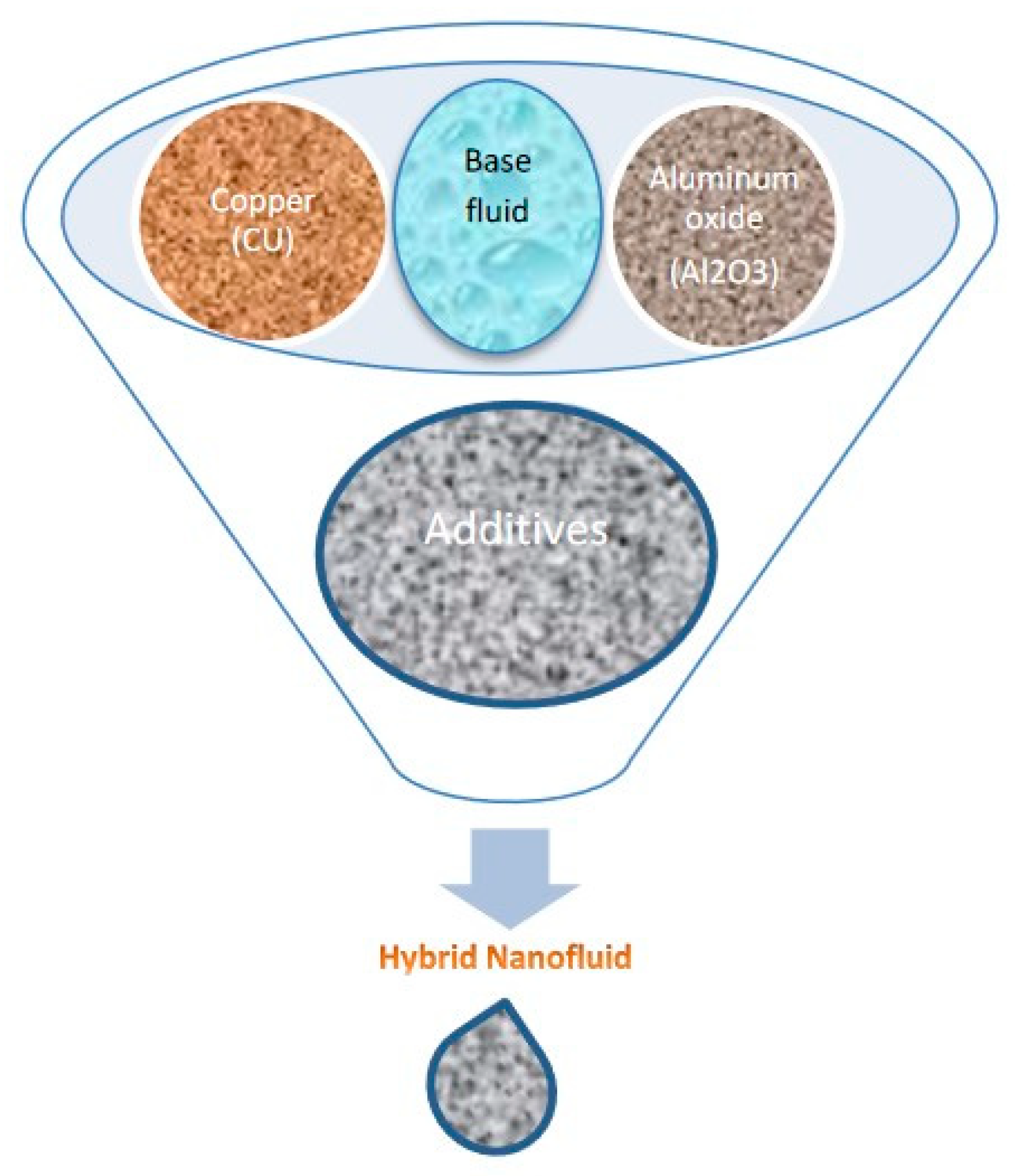
Figure 2.
Geometries of the flow problem.
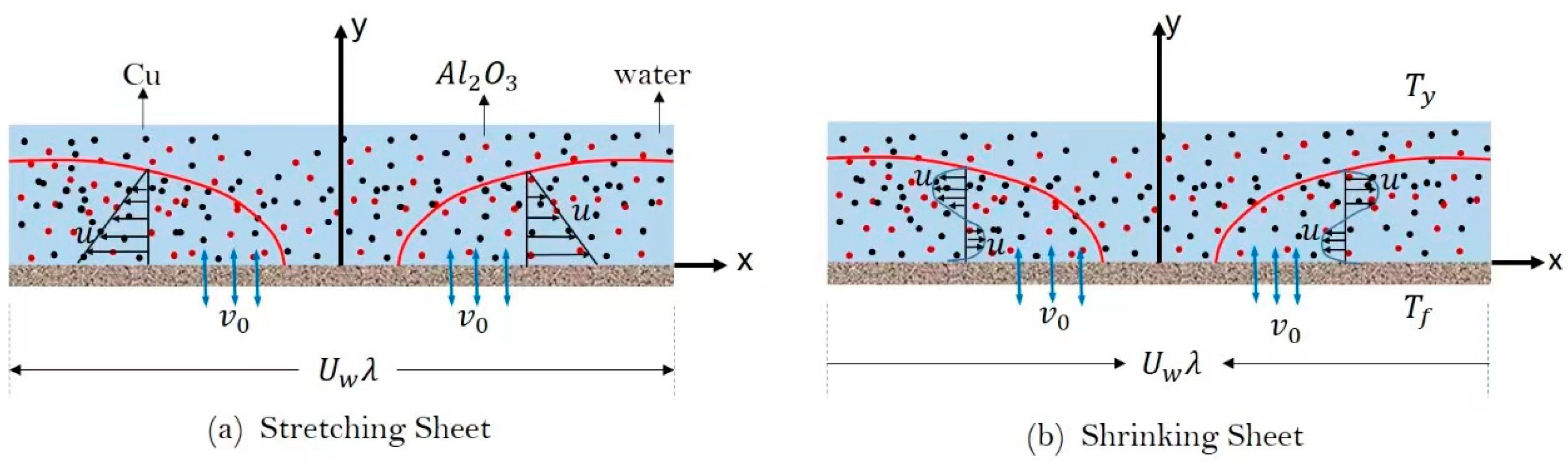
Figure 3.
Nanoparticle with interfacial nanolayer structure.
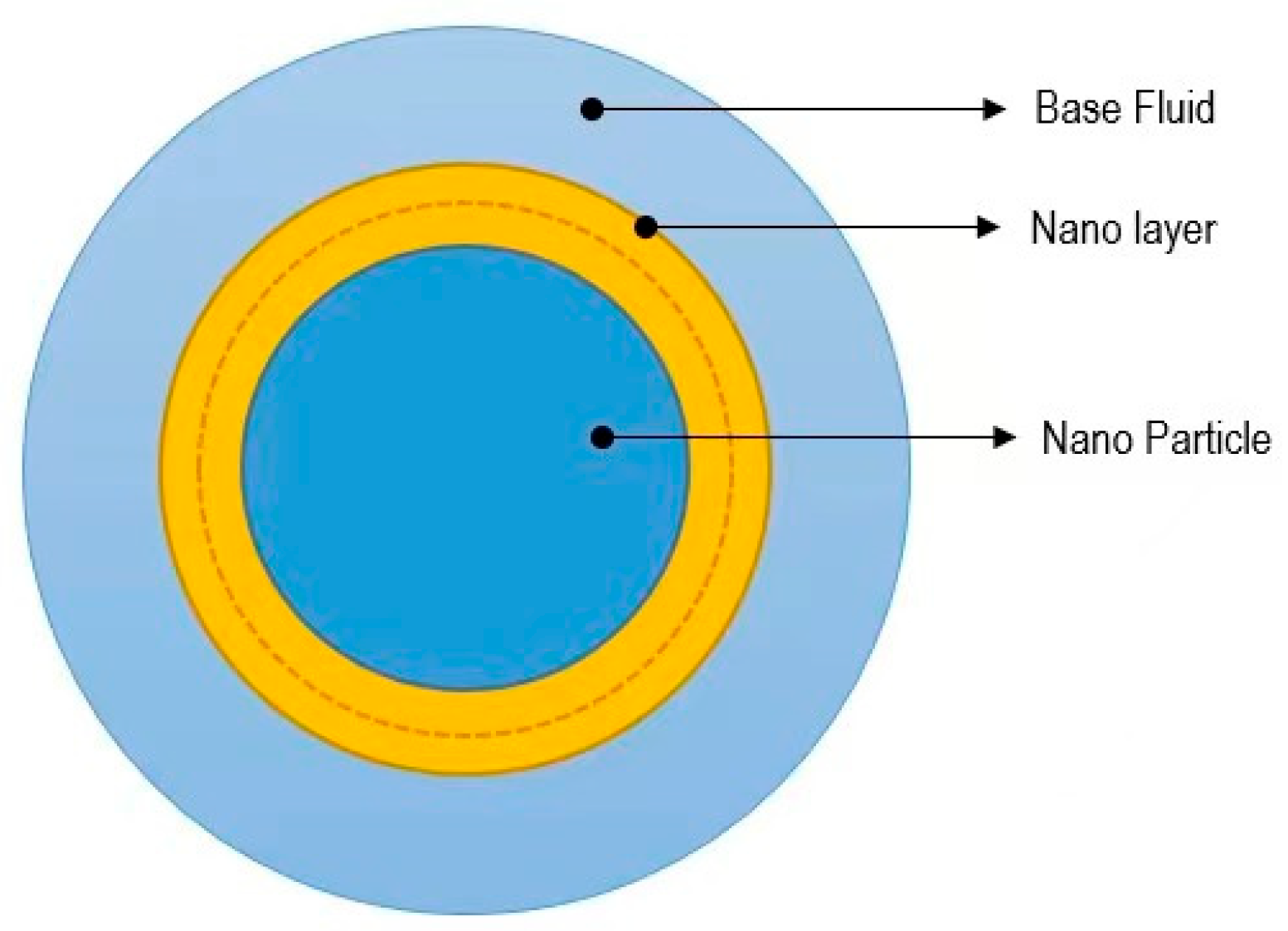
Figure 4.
Copper has various uses.

Figure 5.
Applications of nanoparticle.
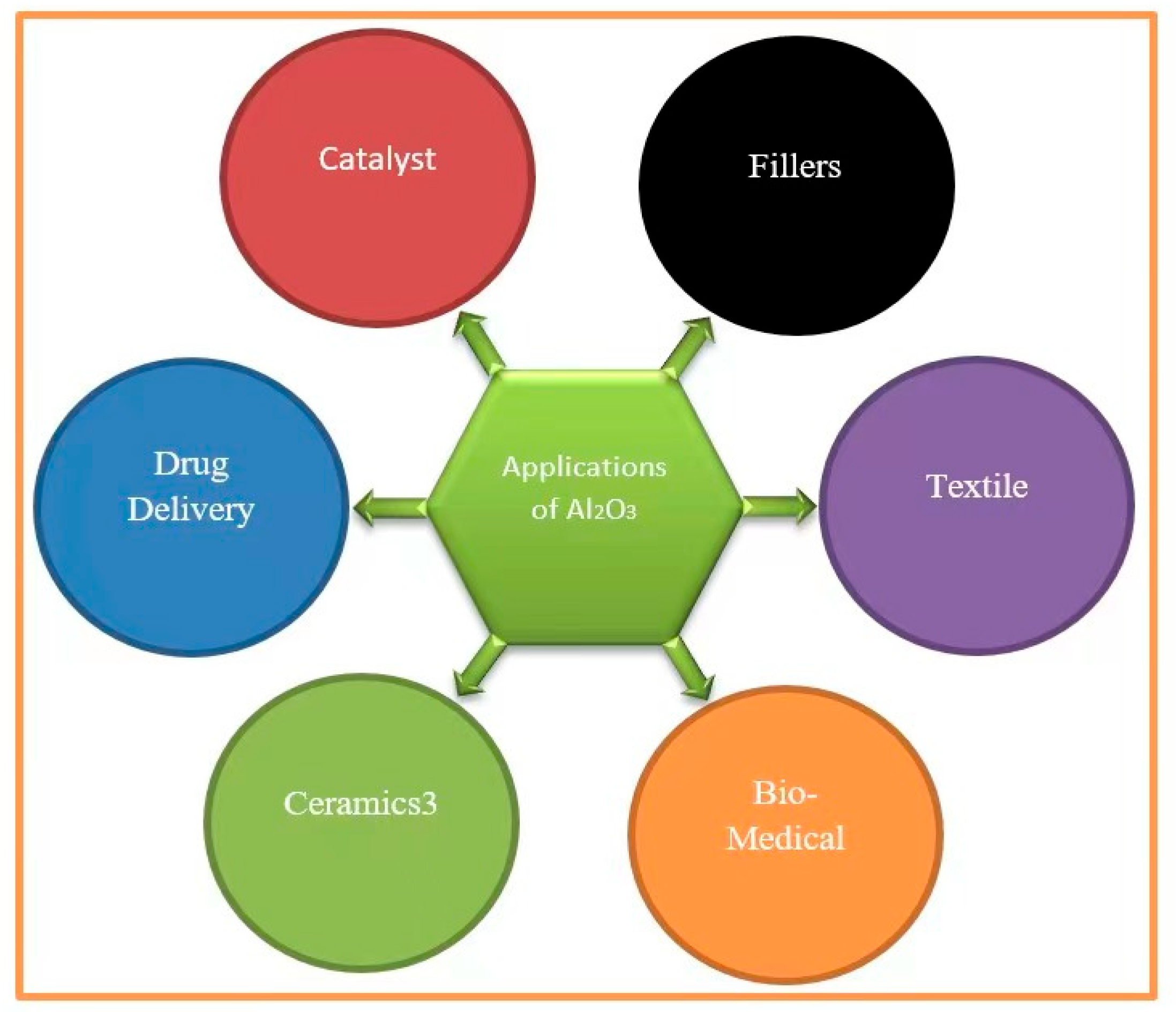
Figure 6.
Block diagram of Homotopy Analysis Method.
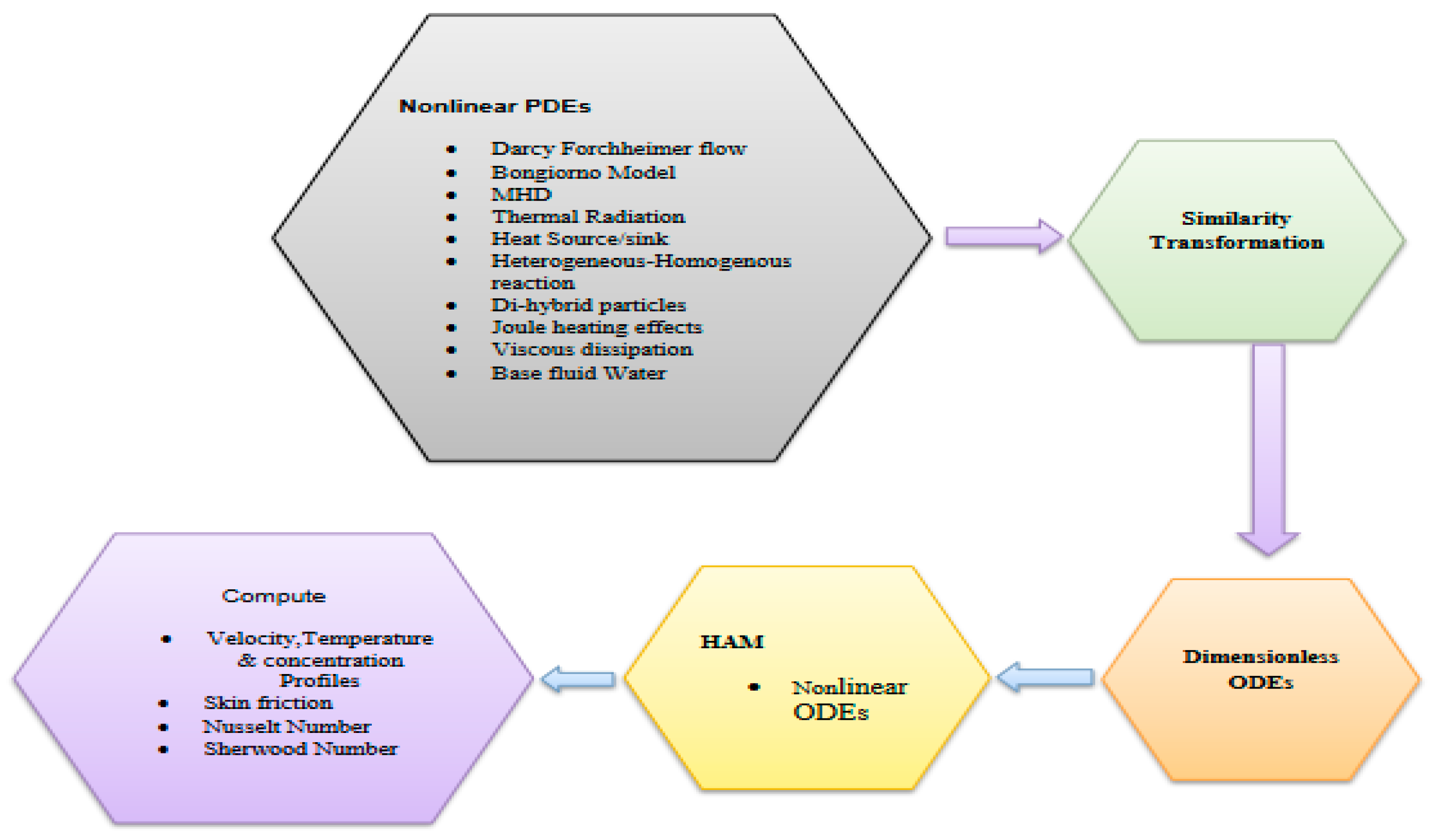
Figure 7.
Effect of on .
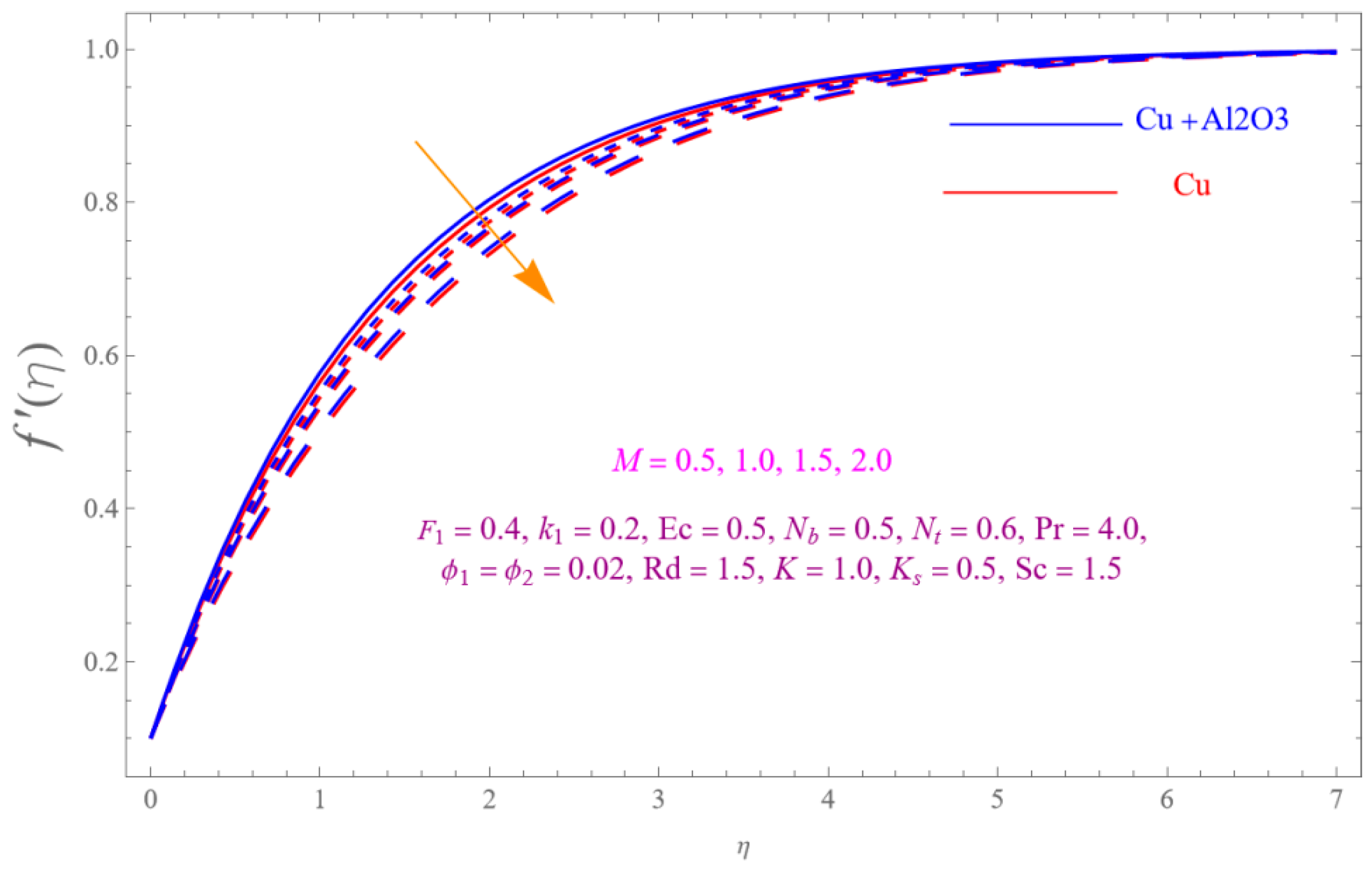
Figure 8.
Effect of on .
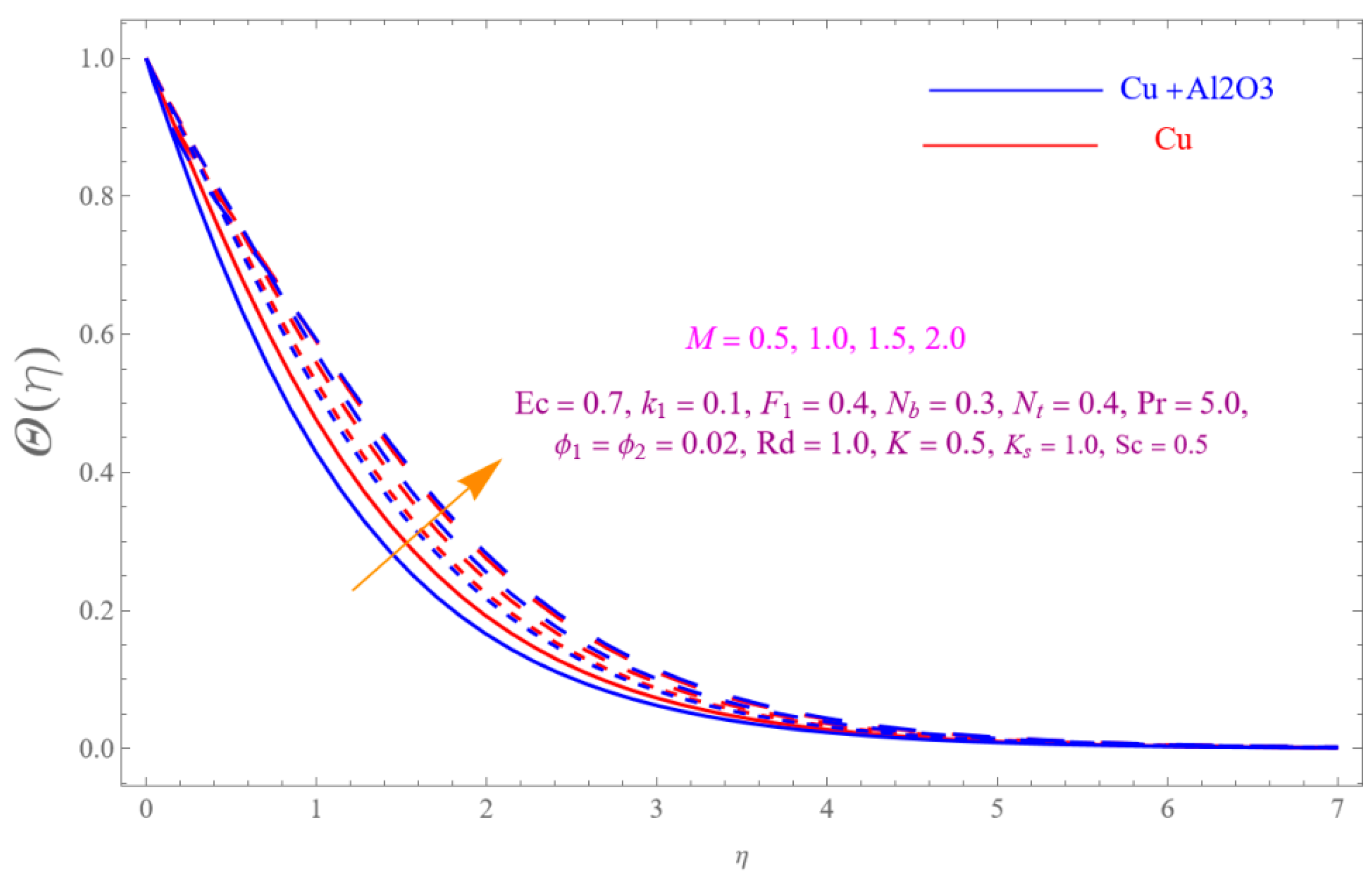
Figure 9.
Influence of on .
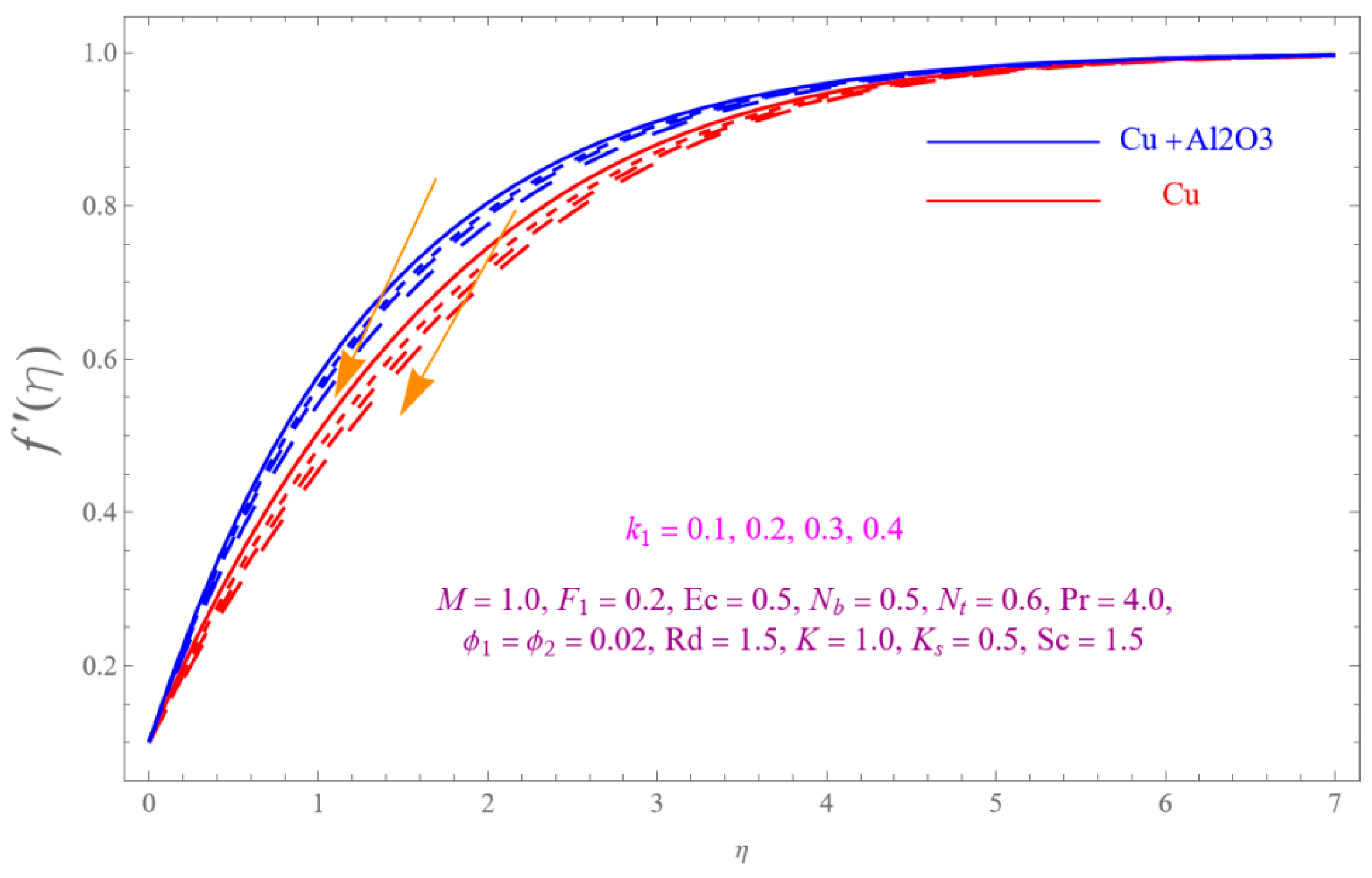
Figure 10.
Influence of on .
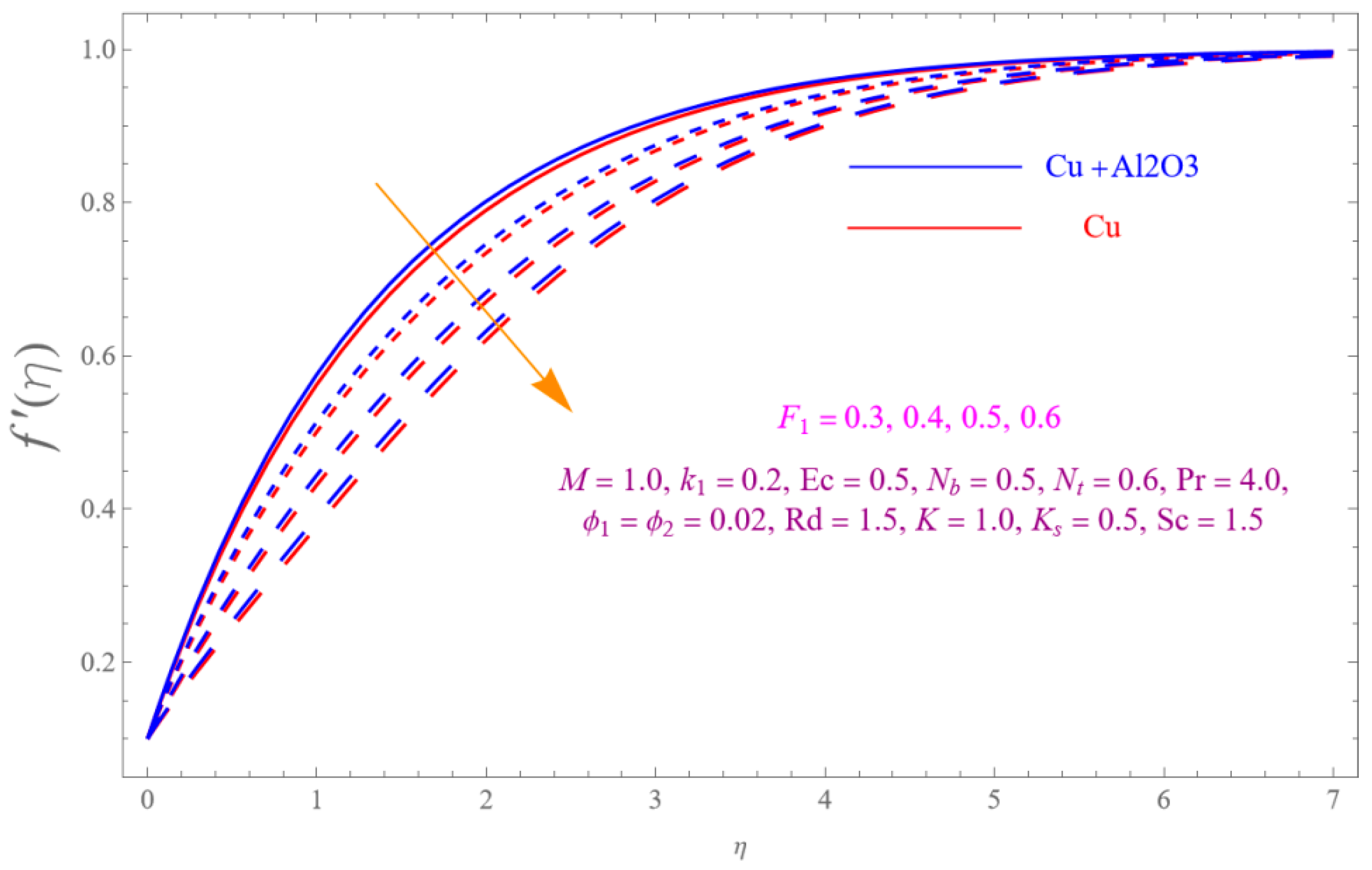
Figure 11.
Effect of on .
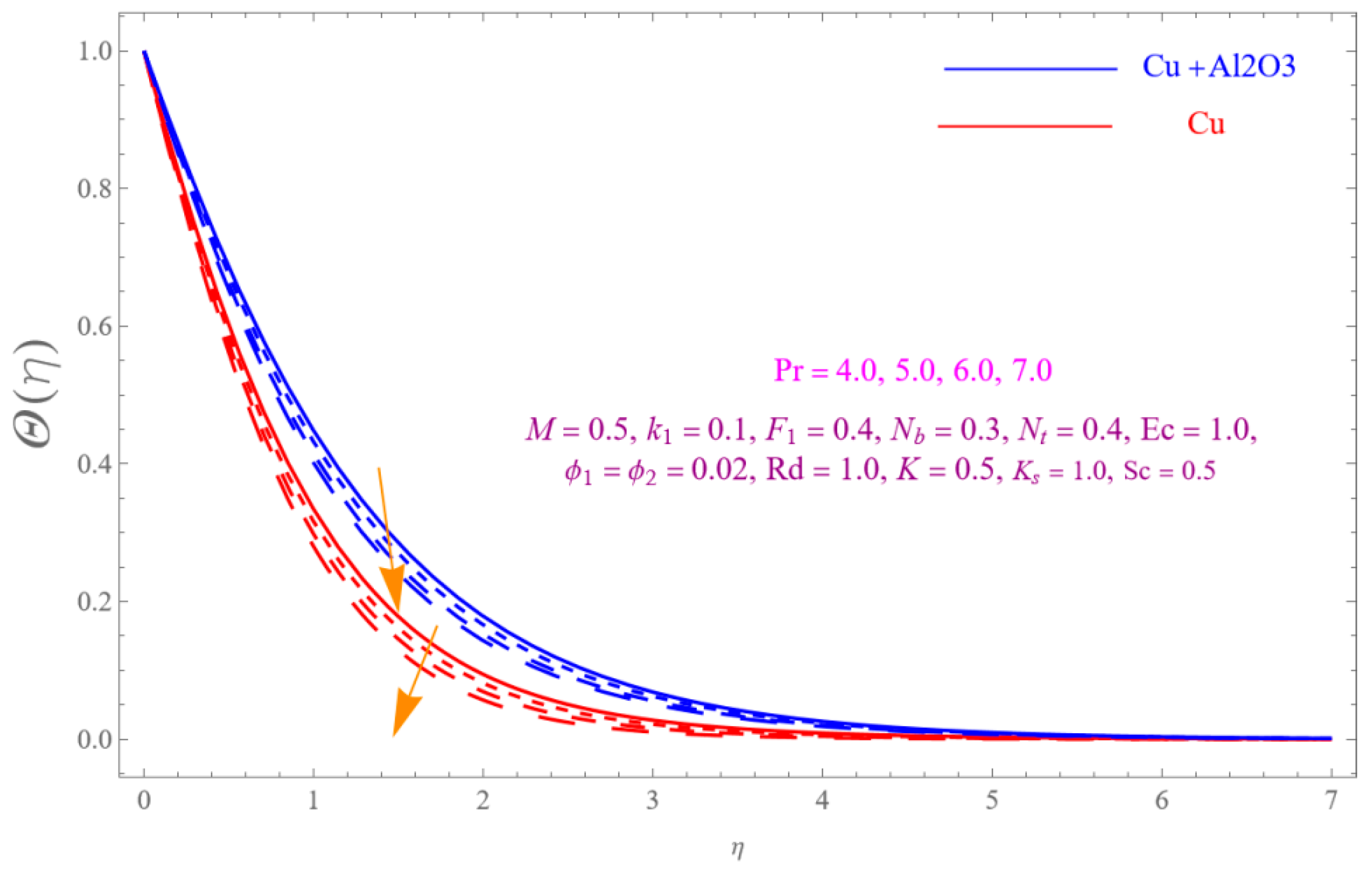
Figure 12.
Influence of on .
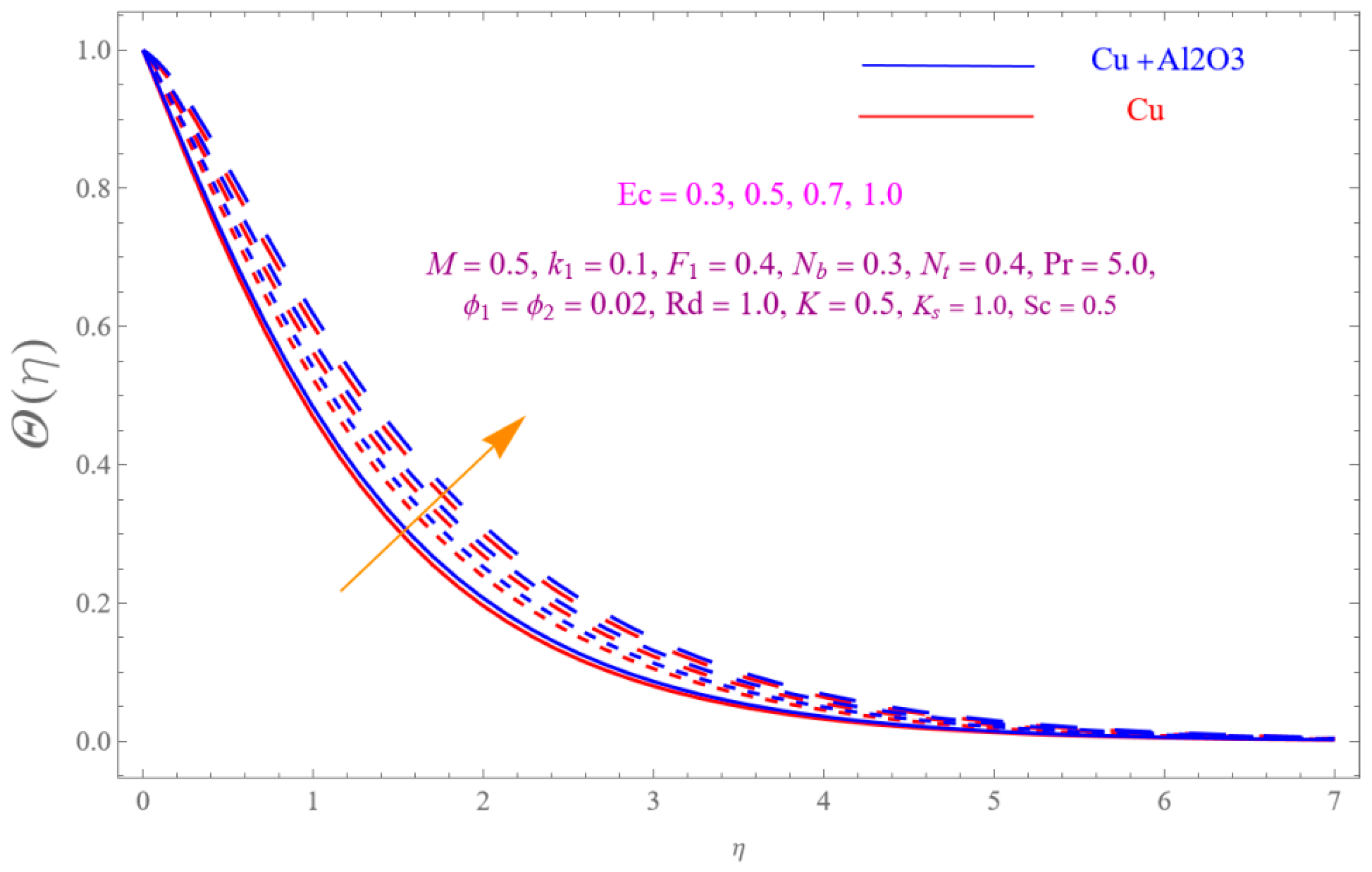
Figure 13.
Effect of on .
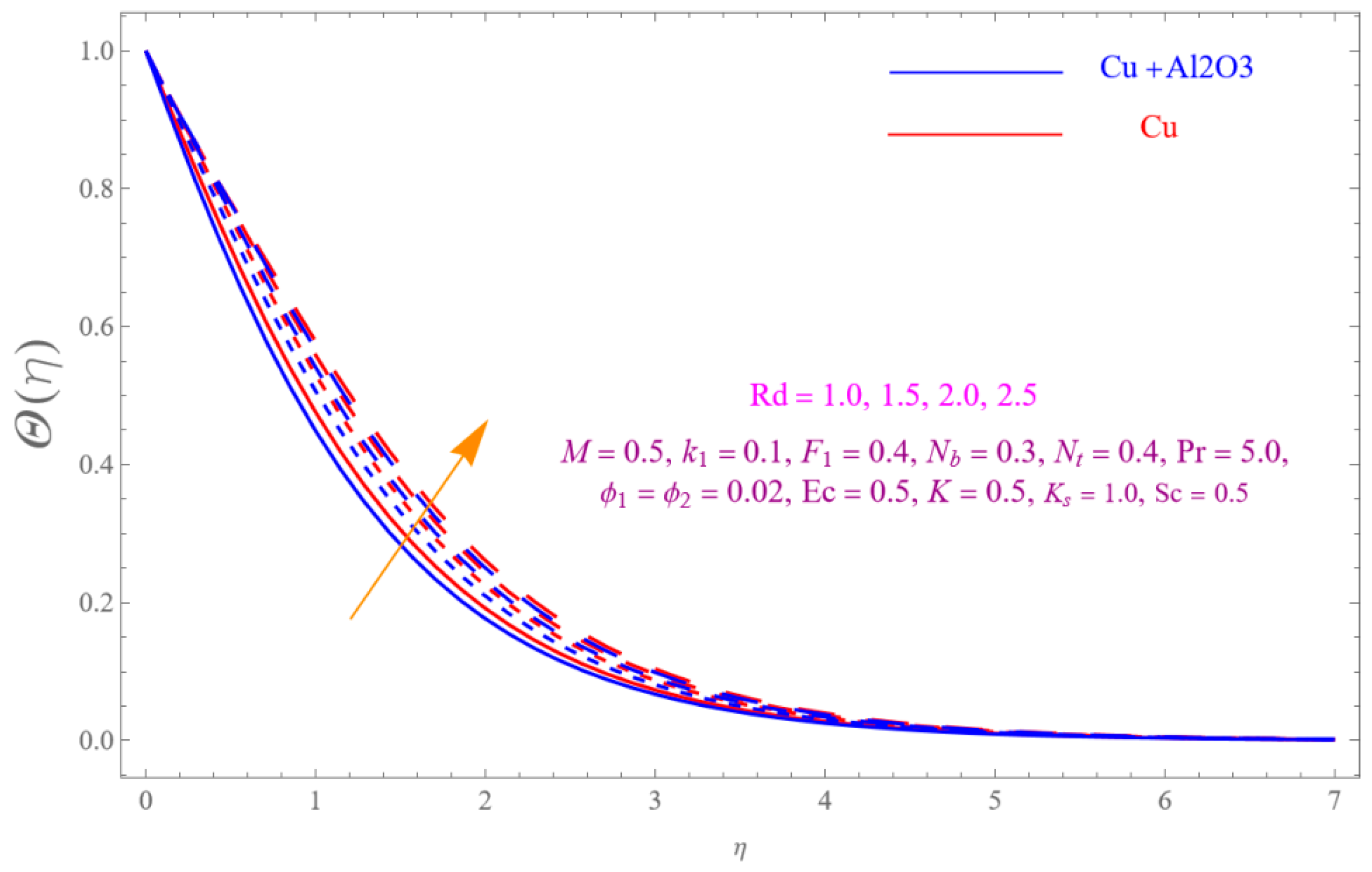
Figure 14.
Influence of on .
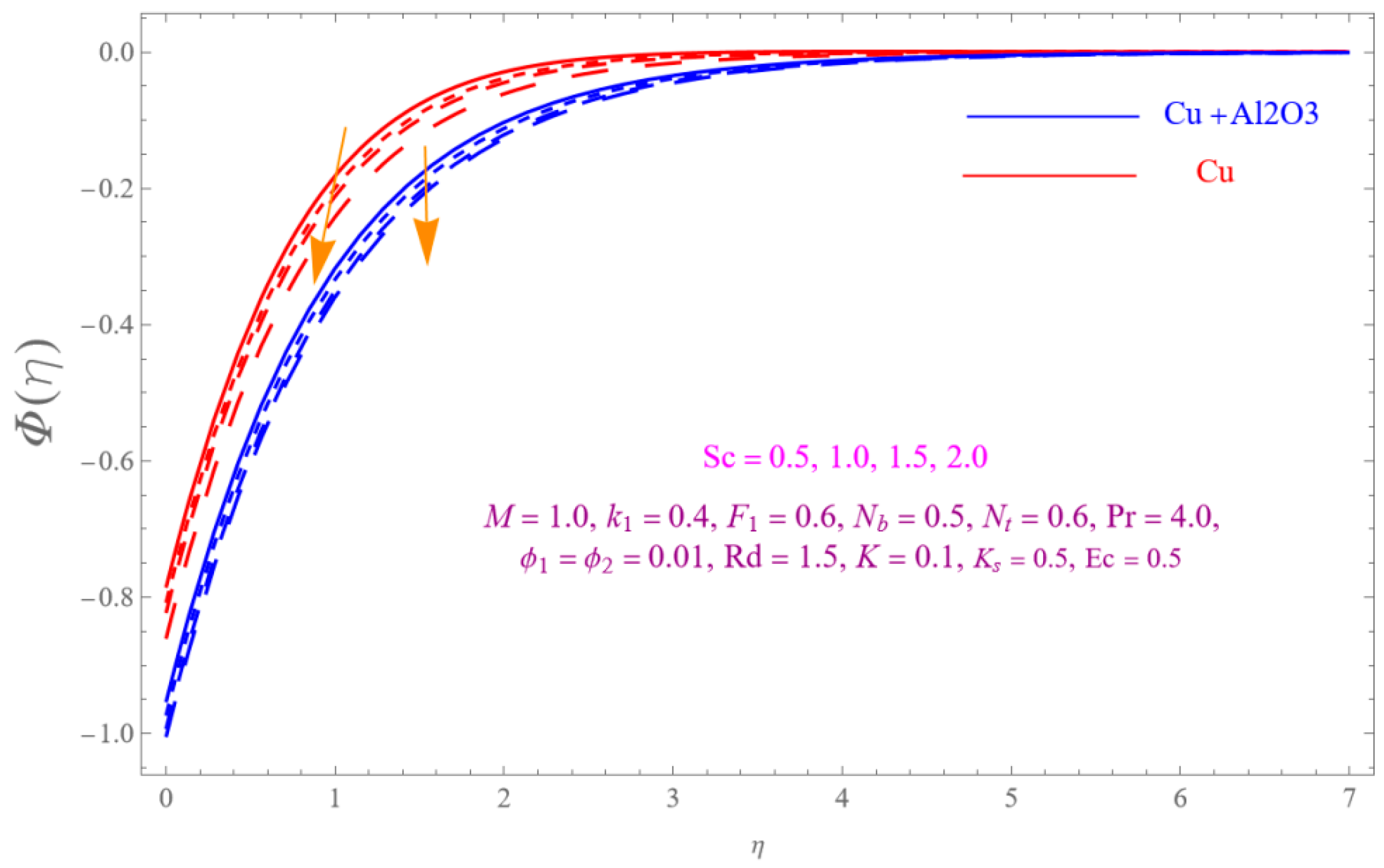
Figure 15.
Effect of on .
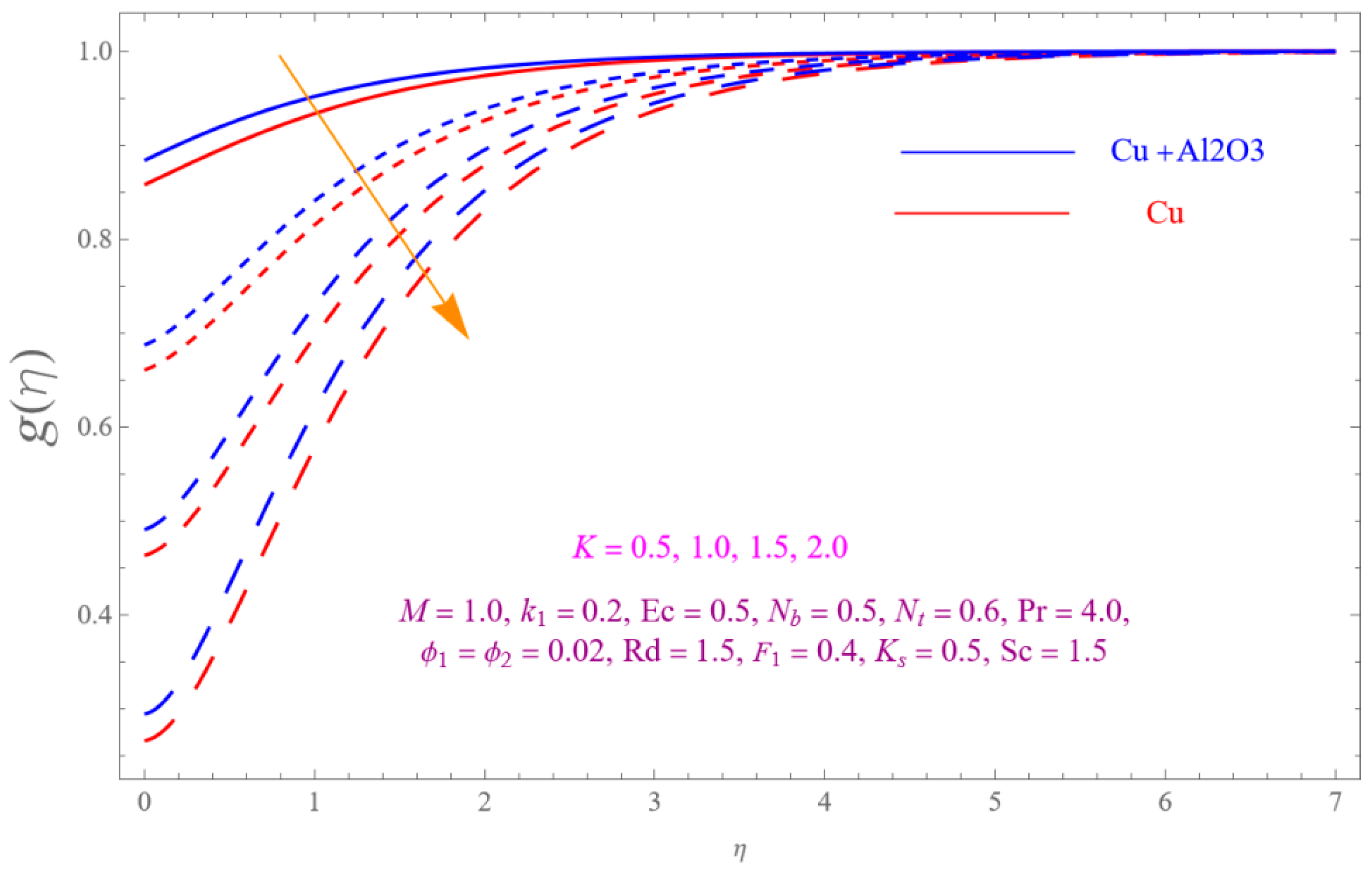
Figure 16.
Influence of on .
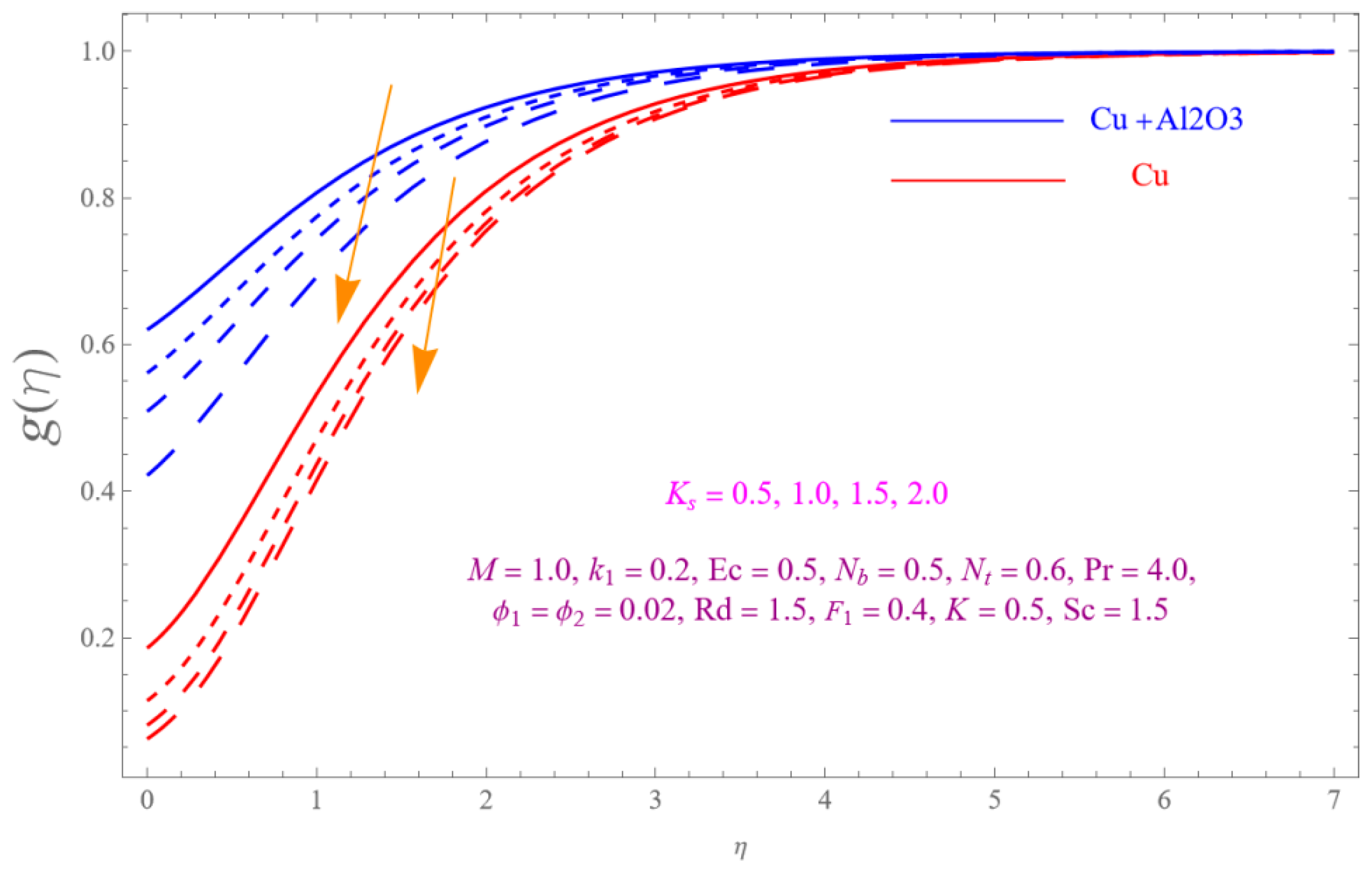
Figure 17.
Impact of on .
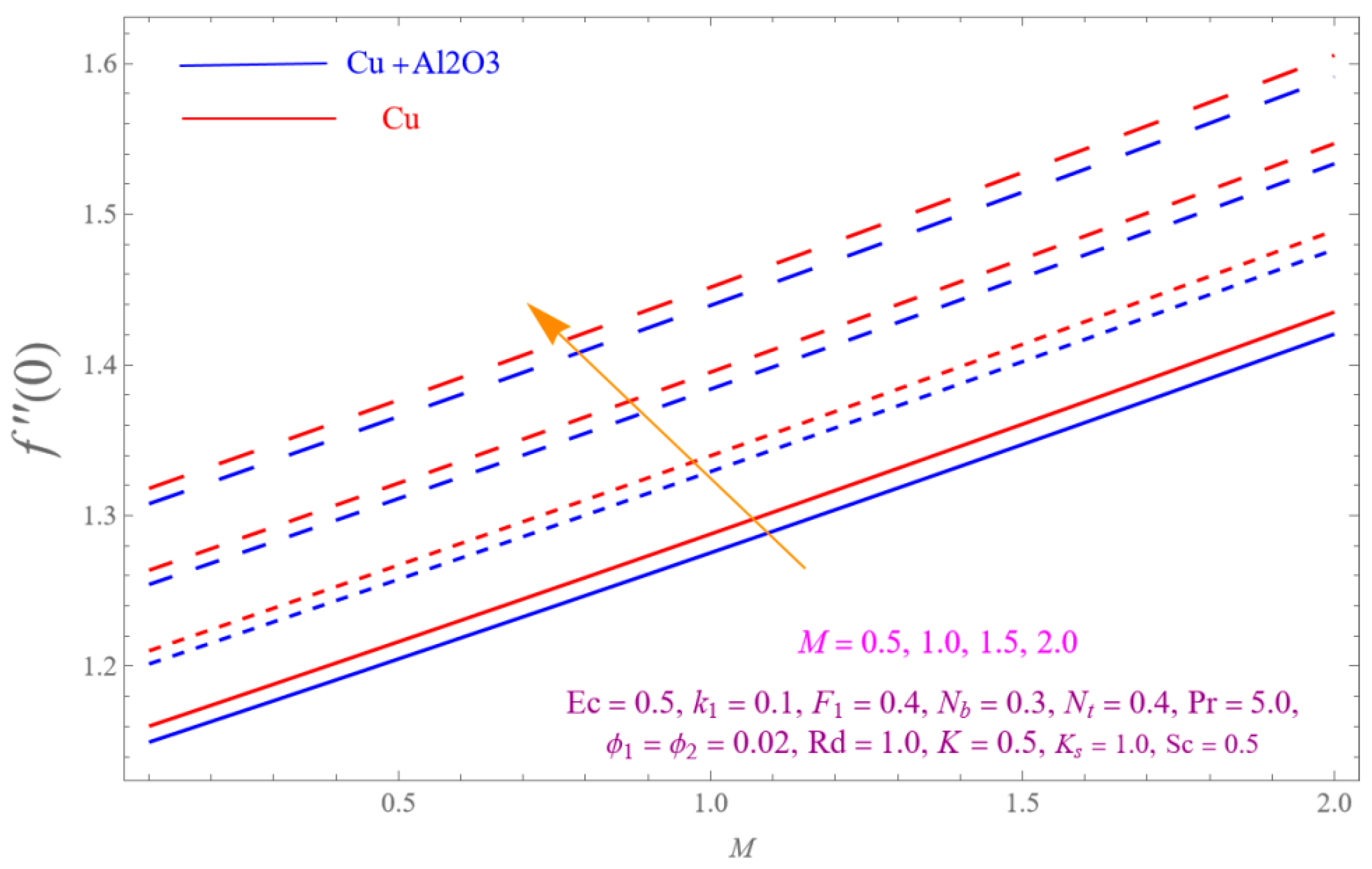
Figure 18.
Effect of on .
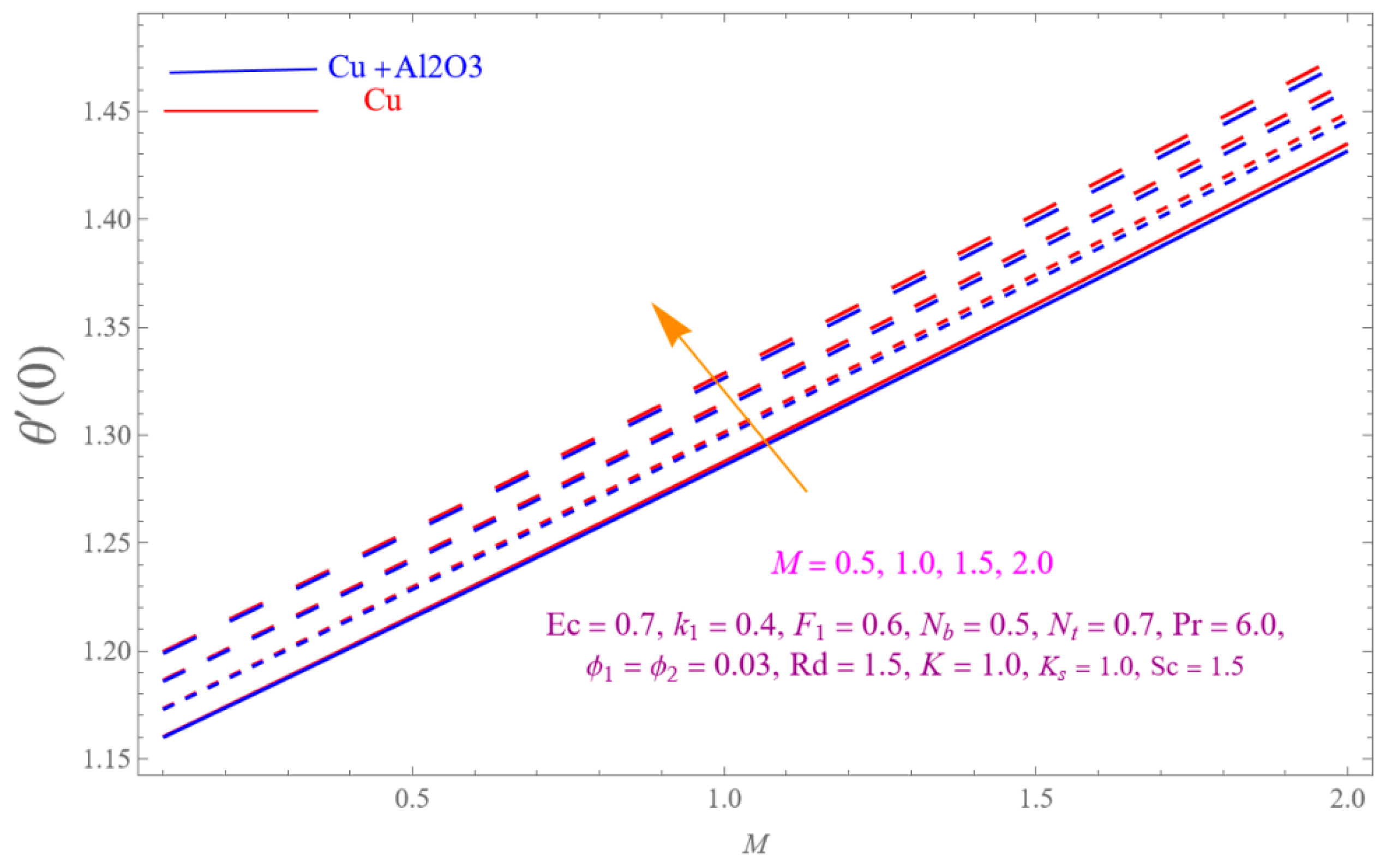
Figure 19.
Influence of on .
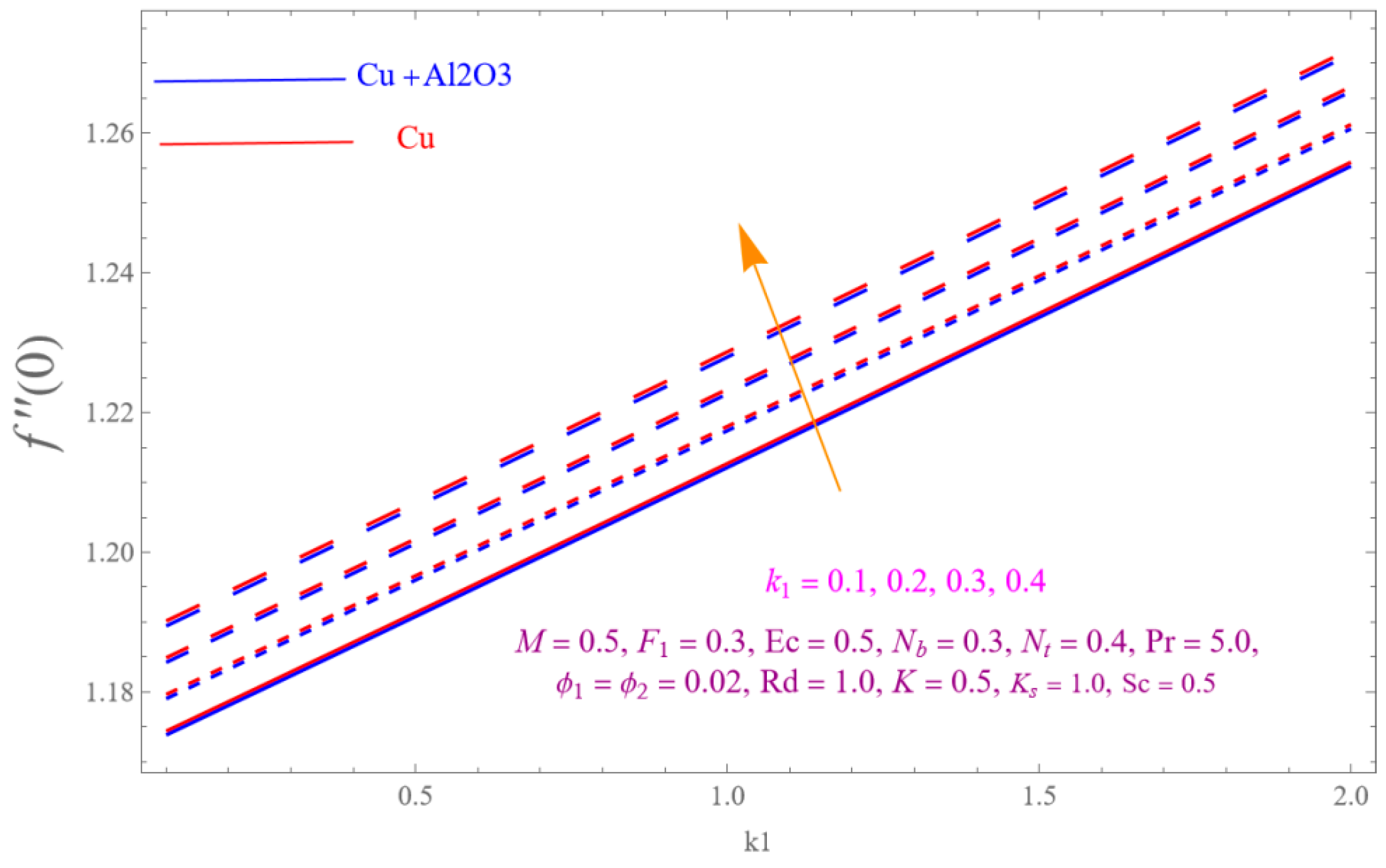
Figure 20.
Effect of on .
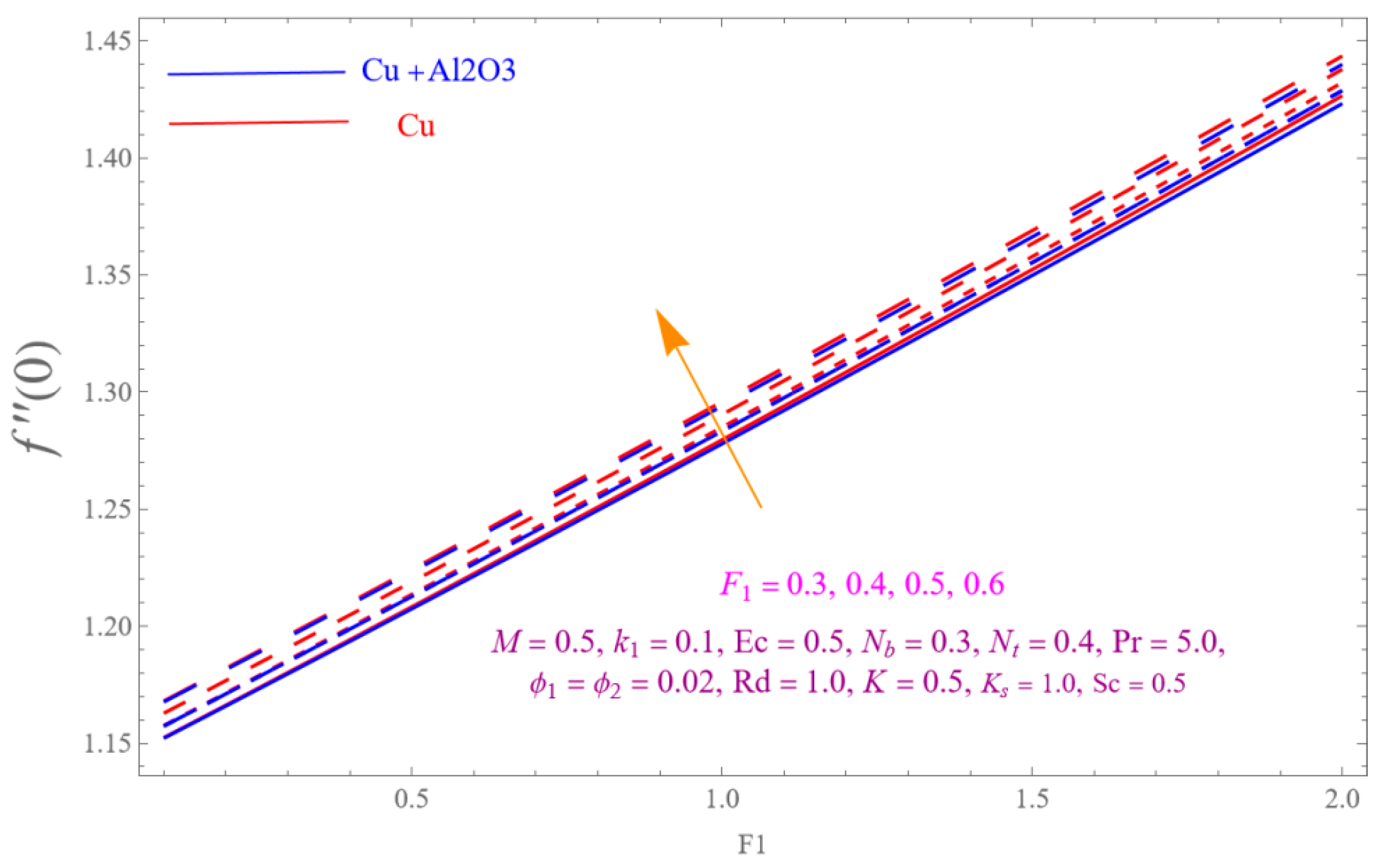
Figure 21.
Impact of on .
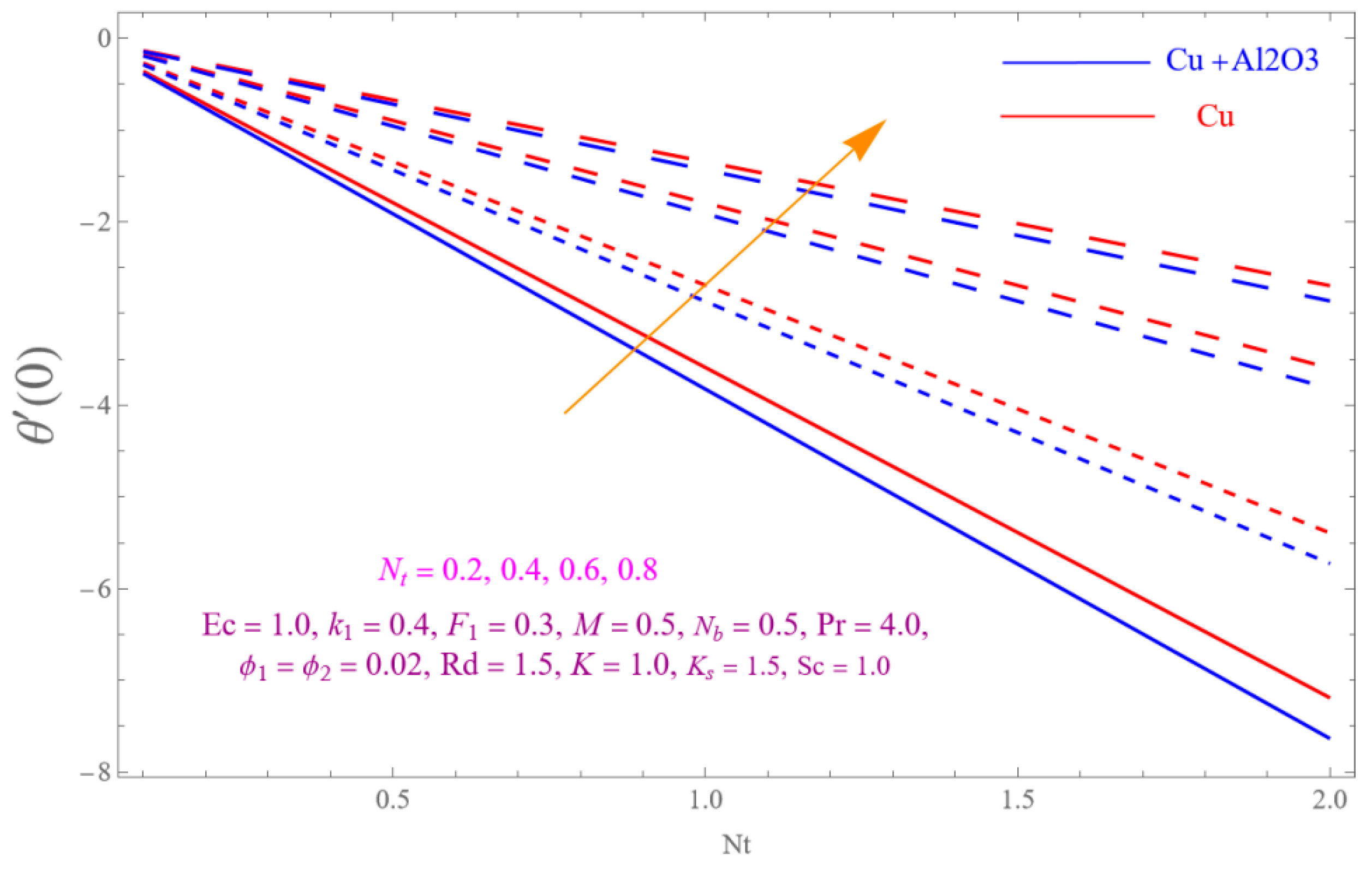
Figure 22.
Effect of on .
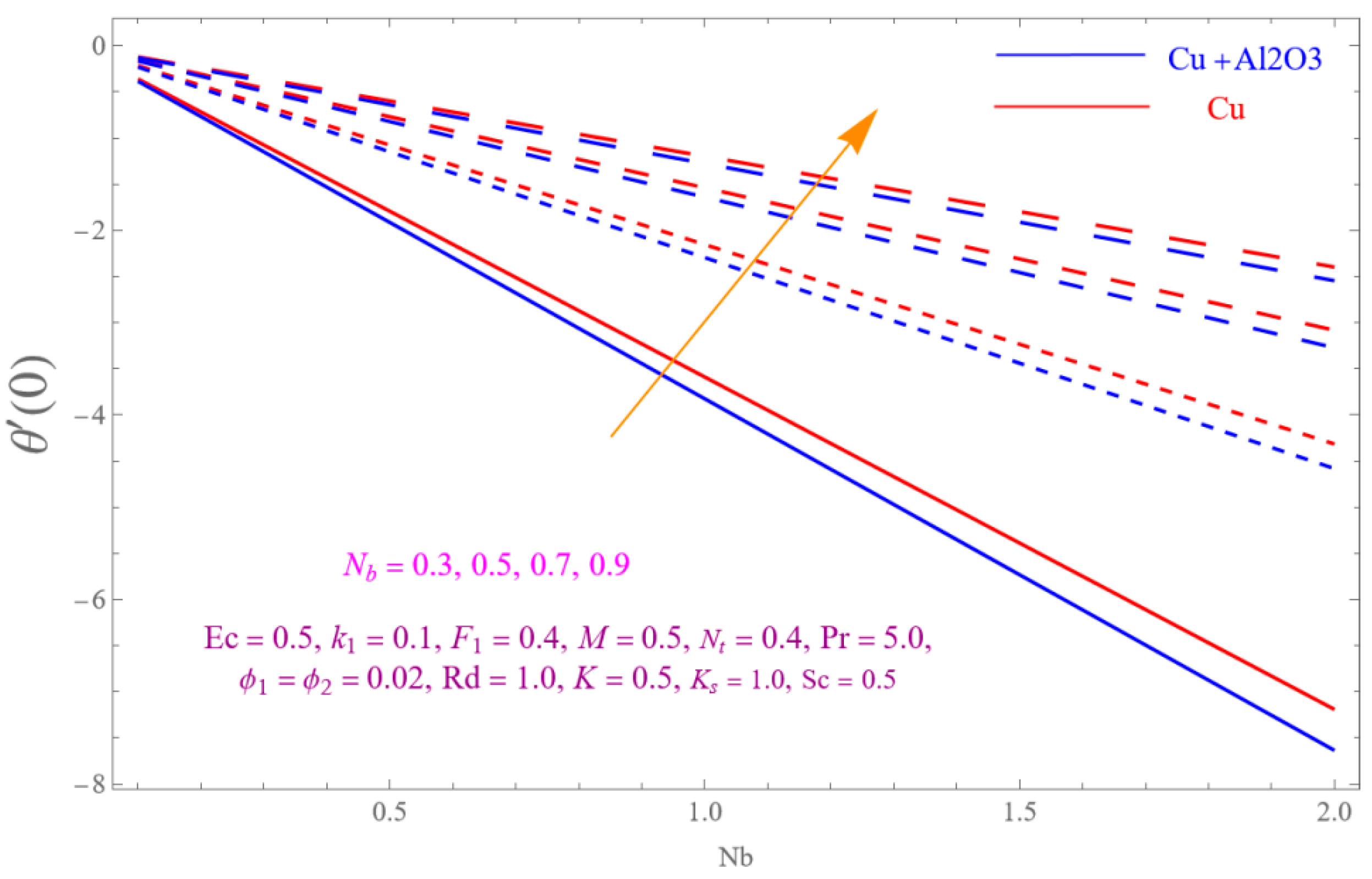
Figure 23.
Effect of on .
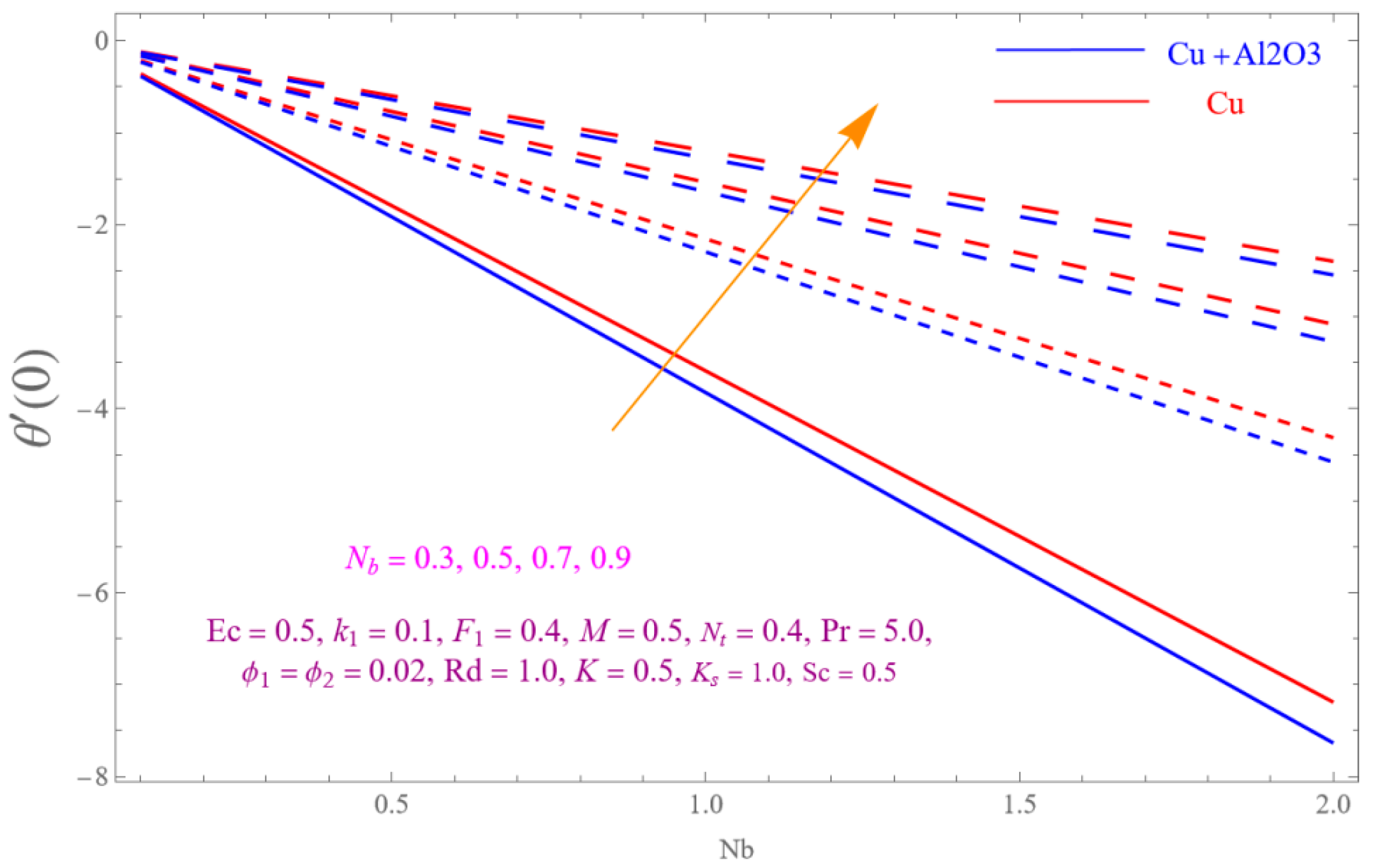
Figure 24.
Influence of on .
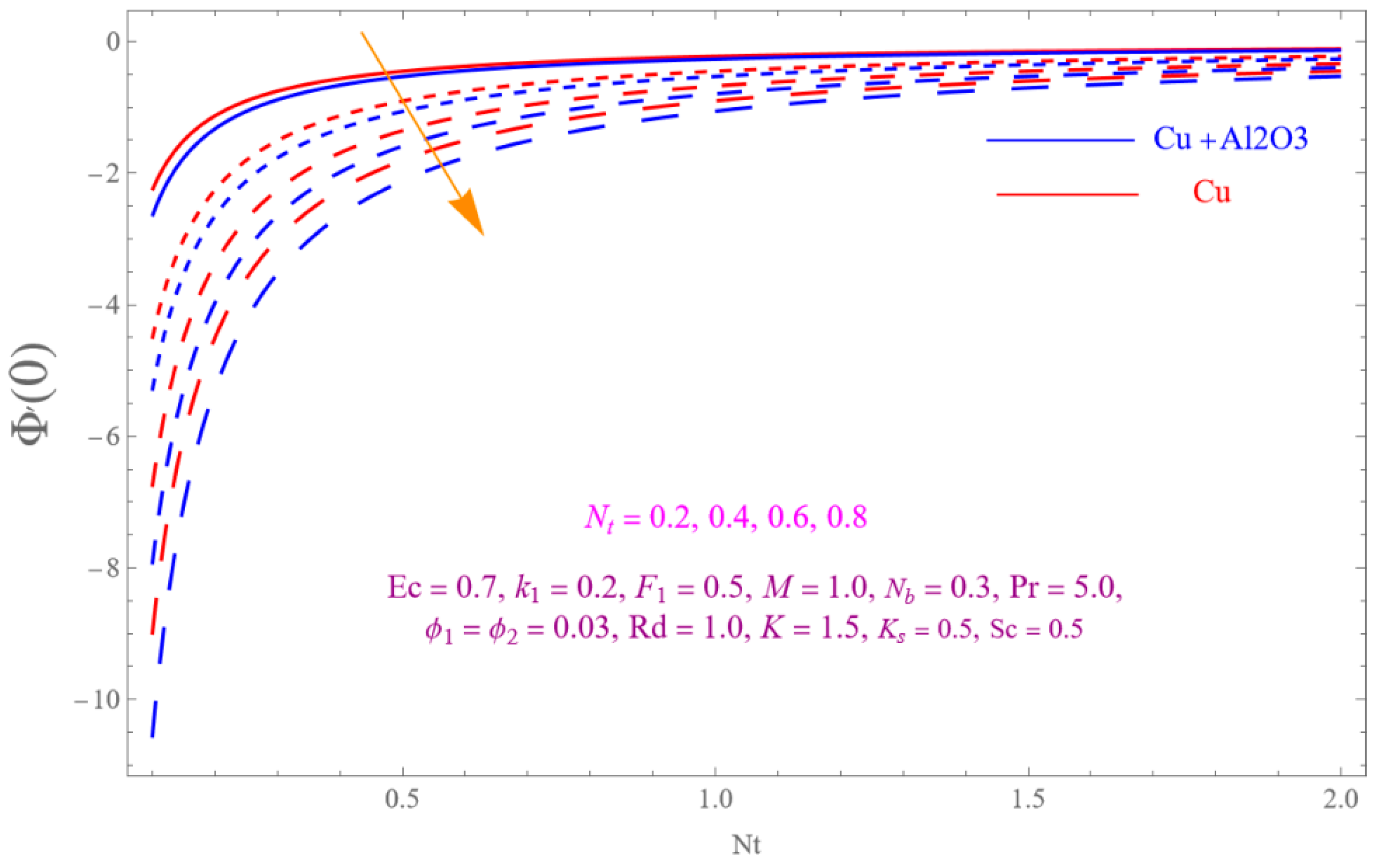
Figure 25.
(a) The percentage comparison of NF and HNF of velocity. (b) The percentage comparison of NF and HNF of energy.
Figure 25.
(a) The percentage comparison of NF and HNF of velocity. (b) The percentage comparison of NF and HNF of energy.
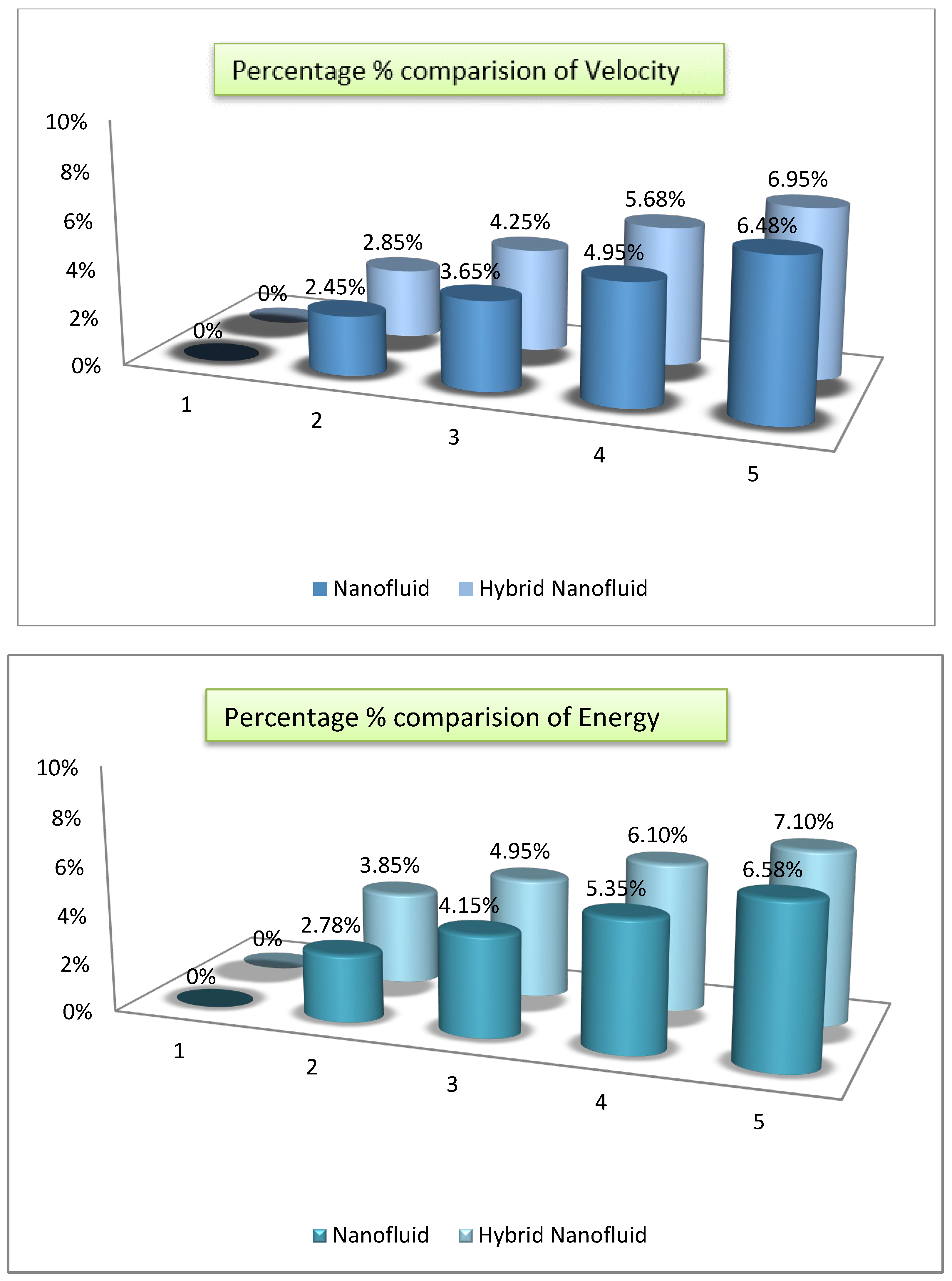

Table 1.
Thermophysical properties of beside with and [4].
Table 1.
Thermophysical properties of beside with and [4].

Table 2.
Illustration of the thermophysical properties of the applied model [4].
Table 2.
Illustration of the thermophysical properties of the applied model [4].

Table 3.
Effect of different physical parameters on and .
| 0.3 | 0.1 | 0.5 | 4.0 | 0.3 | 0.2 | 1.0 | 0.3 | 00.01 | 00.01 | ............ | |
| 0.4 | ............ | ||||||||||
| 0.5 | ............ | ||||||||||
| 0.1 | ............ | ||||||||||
| 0.2 | ............ | ||||||||||
| 0.3 | ............ | ||||||||||
| 0.5 | |||||||||||
| 1.0 | |||||||||||
| 1.5 | |||||||||||
| 4.0 | ............ | ||||||||||
| 5.0 | ............ | ||||||||||
| 6.0 | ............ | ||||||||||
| 0.3 | ............ | ||||||||||
| 0.5 | ............ | ||||||||||
| 0.7 | ............ | ||||||||||
| 0.2 | ............ | ||||||||||
| 0.4 | ............ | ||||||||||
| 0.6 | ............ | ||||||||||
| 1.0 | ............ | ||||||||||
| 1.5 | ............ | ||||||||||
| 2.0 | ............ | ||||||||||
| 0.3 | ............ | ||||||||||
| 0.5 | ............ | ||||||||||
| 0.7 | ............ | ||||||||||
| 0.01 | ............ | ||||||||||
| 0.02 | ............ | ||||||||||
| 0.03 | ............ | ||||||||||
| 0.01 | ............ | ||||||||||
| 0.02 | ............ | ||||||||||
| 0.03 | ............ |
Table 4.
Effect of different physical parameters on .
| 0.5 | 0.3 | 0.2 | 0.01 | 0.01 | |
| 1.0 | |||||
| 1.5 | |||||
| 0.3 | |||||
| 0.5 | |||||
| 0.7 | |||||
| 0.2 | |||||
| 0.4 | |||||
| 0.6 | |||||
| 0.01 | |||||
| 0.02 | |||||
| 0.03 | |||||
| 0.01 | |||||
| 0.02 | |||||
| 0.03 |
Disclaimer/Publisher’s Note: The statements, opinions and data contained in all publications are solely those of the individual author(s) and contributor(s) and not of MDPI and/or the editor(s). MDPI and/or the editor(s) disclaim responsibility for any injury to people or property resulting from any ideas, methods, instructions or products referred to in the content. |
© 2024 by the authors. Licensee MDPI, Basel, Switzerland. This article is an open access article distributed under the terms and conditions of the Creative Commons Attribution (CC BY) license (http://creativecommons.org/licenses/by/4.0/).
Copyright: This open access article is published under a Creative Commons CC BY 4.0 license, which permit the free download, distribution, and reuse, provided that the author and preprint are cited in any reuse.


