

Submitted:
22 May 2024
Posted:
23 May 2024
You are already at the latest version
Abstract
The Galápagos Islands are one of the most emblematic protected areas on the planet, and also one of the most studied. Their main economic activity is tourism, which has grown rapidly in recent years. The increase in tourists is associated with the increase in population and the introduction of invasive species, which puts conservation at risk. This makes adequate management even more necessary and relevant on an international scale, since the economy of Galápagos depends on the good state of conservation of its ecosystems and species. Numerous studies have shown that social factors, rather than physical-natural ones, determine the success or failure of a marine protected area (MPA), so they must be urgently incorporated into all phases of MPA management. In this study we have analyzed the management of the protected areas of Galápagos: the National Park and the Marine Reserve. The methodology used presents five prescribed scenarios in which priority is given to one or other factors, each of which has an impact on biophysical and socio-economic systems that are influenced by the MPA. These scenarios have been called: proactive, interactive, centralized, learning, and formal management. The results show that the archipelago's protected areas follow a proactive management model, with a continuous feedback loop. This feedback is a key element in any adaptive management process, which also allows practitioners to anticipate future problems. Both public participation and strategic planning are essential.
Keywords:
assessment
; Galápagos
; management
; marine protected areas
; socio-ecosystem.
1. Introduction
The designation of marine protected areas (MPAs) has increased worldwide in recent decades, which places value on protection as one of the most effective tools to conserve biodiversity and natural resources, and to decrease human impacts [1,2]. However, the protection of biodiversity is no longer an end in itself, but has evolved towards more ambitious goals, such as the conservation of the planet’s natural capital or the fight against climate change [2,3].
MPAs can have different levels of protection and/or use of spaces and their resources. Generally, the benefits for local communities and the general population, as well as for biodiversity, tend to be greater as the level of protection increases [4,5,6,7]. However, the results are not always obvious or immediate. This increase in the number of MPAs has often caused resistance from local communities, who see the protection of the oceans as a limitation on their rights in the use of resources [8,9,10,11]. Because of this, there has also been increased work on the impact that MPAs have on the lifestyle and well-being of coastal communities [12,13]. Numerous studies have shown that social factors, rather than physical-natural factors, determine the success or failure of an MPA [14,15,16,17], so they must be incorporated into all phases of MPA management [9,10]. The inclusion of the social dimension in the design, implementation and management of MPAs is more recent than that of the biological aspects. In many MPAs, it has received little attention [14,18,19].
The Galapagos Islands are one of the most emblematic protected areas on the planet, and also one of the most studied and best preserved archipelagos. An exceptionally high percentage of the flora and fauna are endemic, including 42% of the vascular plants, 67% of the terrestrial vertebrates and 20% of the coastal fish, marine algae and marine invertebrates [20]. It has a great abundance of marine megafauna, including sharks, manta rays, turtles, sea lions and fur seals [21]. There is also a great deal of variation among the islands, as they are home to genetically distinct populations, races and species, reflecting the different stages of genetic diversification [20].
Since its constitution as a National Park (NP) in 1959, a management system based on scientific research has been developed. Although numerous studies have been carried out, these have mainly focused on biodiversity, which is undoubtedly necessary for the protected area to be considered successful, while those in the socio-economic field are more recent and scarce, and mainly address the fisheries sector [22,23,24,25,26] and tourism [27,28,29,30]. Today the main economic activity is tourism, which has grown rapidly in recent years [27,29,31,32]. The increase in tourists is associated with population growth and the introduction of invasive species, which puts conservation at risk. This makes adequate management even more necessary and relevant at an international scale, since the economy of Galapagos depends on the good state of its ecosystems and species.
The declaration of the Marine Reserve (MR) in 1998, caused major conflicts between the administration and fishers, who saw their opportunities for development limited. This led to a lack of respect for fishing restrictions, the drastic decrease of the main fish species and effects on the marine ecosystem and the local economy [33,34]. Due to problems of local development, the increase in internal and external pressures and the conflicts generated between the population and the administration [35], there is a need for multidisciplinary and applied research, which considers Galapagos as a socio-ecosystem and allows local interests to be combined with better management of the ecosystems. According to Salas et al. [36], a socio-ecosystem is a complex and adaptive system that refers to the processes of coupling and interaction between social systems (culture, economy, social and political organization) and ecological systems (nature) in a given space-time.
Protected areas are especially important in remote islands, both for local people and conservation organizations due, among other factors, to the concentration of human activities in coastal areas and the high dependence on marine ecosystem services [37,38,39]. In this regard, recent publications suggest that marine spatial planning (MSP), including MPAs, should evolve towards a bottom-up model, in which local population are involved in planning processes [40], or towards an intermediate model that combines elements of both top-down and bottom-up [41,42,43], as exemplified in Figure 1 for Galapagos.
The World Database on Protected Areas (WDPA) is the most comprehensive global database on terrestrial and marine protected areas. It is a joint project between the United Nations Environment Programme (UNEP) and the International Union for Conservation of Nature (IUCN), managed by UNEP World Conservation Monitoring Centre (UNEP-WCMC). The IUCN-WDPA has developed a framework for evaluation based on indicators. It comprises an iterative cycle of context, vision, planning, inputs, management processes, products, results and evolution [44]. The indicators measure the inputs and outputs of management to evaluate strengths, weaknesses and needs. Based on this framework, several specific methodologies have been developed with a consistent and global approach that assess the effectiveness of management (Table 1).
Evidence suggests that organizational and social factors determine the overall success or failure of a MPA, indicating the inherent need for increased consideration of human dimension [11,18,50,51,52,53]. Also, MPA success has been found to be significantly hampered by governance shortcoming (e.g., lack of participation) and capacity shortfalls (e.g., inadequate management processes) [54,55]. In this context, the analysis of management in the NP and MR of Galapagos is proposed as a tool to understand the current situation of the actions and management components and to detect strengths and weaknesses, which will allow effective decisions to be made and future errors to be avoided [44].
In this regard, the Directorate of the Galapagos National Park (DPNG in Spanish) has conducted three evaluations of management effectiveness, in 1998, 2003 and 2012, being a pioneer in Latin America [56]. On all three occasions the same methodology was used: Measurement of Management Effectiveness of Protected Areas [1], based on the WDPA. This evaluation generated information that was fundamental in defining management programme strategies [56]. Also noteworthy is the work by Heyling and Bravo [35], who analyzed the co-management regime then in place in the MR. The analysis was based on nine elements of governance: strategic vision, participation, responsible representation, consensus orientation, empowerment, equity, credibility, resilience and efficiency. They concluded that the Galapagos co-management process performed well in terms of strategic vision, participation, empowerment, consensus orientation and resilience, but not so well in terms of responsible representation, equity and credibility. In addition, an evaluation of the new zoning of the MR of Galapagos has recently (2024) been carried out by Castrejón et al. [23].
The objective of this paper is to analyze the management model of the Galapagos National Park and Marine Reserve, with the intention of highlighting the weaknesses and strengths of the management of one of the most iconic protected areas in the world. We have chosen a methodology proposed by Maestro et al. [57], which presents five possible management scenarios and allows us to see how an MPA is evolving, and to propose a series of improvements.
2. Materials and Methods
2.1. Study Area
The Galapagos archipelago is made up of islands, islets and rocks or promontories of volcanic origin located in the Pacific Ocean, 960 km from continental Ecuador (Figure 2). The importance of its biodiversity is recognized at an international level and in 1979 it was declared the first UNESCO World Heritage Site. It also has been designated as Biosphere Reserve, Whale Sanctuary, RAMSAR Site, National Park and Marine Reserve [56].
Its protected area consists of the National Park (1959) and the Marine Reserve (1998), covering 97% of the land area and 100% of the marine area, respectively. The NP covers approximately 8,006 km² and occupies most of the 234 emerging land units. The MR comprises the entire marine area within a forty-nautical-mile strip measured from the straight baselines of the archipelago and its territorial waters. It has a total area of approximately 138,000 km², of which 70,000 km² is inland, and 1,753 km of coastline [56].
It should be noted that Galapagos has recently (2022) expanded its marine area with the creation of the Hermandad Marine Reserve [58]. This new MPA is justified, among other reasons, by the declaration signed at the XXVI United Nations Conference on Climate Change (Glasgow, Scotland) for the Conservation and Management of Ecosystems within the Eastern Tropical Pacific Marine Corridor (CMAR), which aims to properly manage the biodiversity and resources found between the Galapagos (Ecuador), Cocos (Costa Rica), Mapelo (Colombia) and Coiba (Panama) islands. The Hermandad Marine Reserve adds 60,000 km² to the marine area, of which 30,000 km² are for the protection of critical ecosystems and migratory species, and another 30,000 km² for responsible fishing [58]. This paper will examine the management of the Galapagos NP and MR.
The Directorate of the Galapagos National Park administers and manages the two areas and reports directly to the Minister of Environment. This differentiates them from other coastal and marine protected areas of Ecuador, which are administered through the Undersecretary of Marine and Coastal Management. However, the Directorate is subject to national, regional and provincial laws and regulations.
In 2014, the management instruments of the NP and the MR were unified into a single document that makes it possible to manage the archipelago as a socio-ecosystem, integrating both areas and these with the inhabited areas of the province. So, at the time of decision-making, the archipelago is considered as a whole, promoting integrated and comprehensive management.
2.2. Methodology
The methodology used to evaluate the management of the Galapagos National Park and the Marine Reserve has been designed by Maestro et al. and it has been applied before in the Azores Marine Park in Portugal [57], Santa Rosa, Marino Ballena and Cahuita National Parks in Costa Rica [59] and Brijuni National Park, Telašcica Nature Park and Pakleni Islands Significant Landscape in Croatia [60]. This work has a socio-economic perspective, focusing on the analysis of two fundamental elements: processes and people involved.
The main feature of this methodology is the classification of the MPAs analyzed in one of the 5 scenarios proposed: proactive, learning, interactive, centralized and formal. This offers a valuable tool to decision-makers, as it focuses on those weaknesses and strengths that need to be addressed for the management of the protected area to be improved or maintained (depending on the case). In brief, the steps to be taken are as follows:
Step 1. Selection of key management aspects
Based on the bibliography reviewed and analyzed, four management aspects were identified as key. Key aspects are considered to be those of a transversal nature and that also encompass different elements. These are: management body, planning stage, public participation, and implementation stage. Based on the methodologies developed by the WDPA (Table 1), these four aspects have been chosen because, in a first approach, we aim to cover the whole process of planning and execution, and the people involved in the management: the managers and stakeholders.
Step 2. Identification of specific indicators
A series of specific indicators (in question form) were selected for each aspect. This resulted in 26 indicators (Table 2), which were chosen based on the literature reviewed and on our expert criteria.
Some of them have been developed by the authors, while others have been adapted from WDPA-derived methodologies. From these methodologies, we have selected indicators that address specific management issues, rather than those that assess the natural physical elements. Table 3 shows the general themes that have been drawn from these sources.
Step 3. Assessment of indicators: score from 1 to 3 points
Each of the indicators has been rated on a scale of one to three, with one being the most unfavorable situation and three the optimum. It has been decided to respond with three options because, although it is a simple form, it covers the entire spectrum of responses, from a negative assessment of the indicator to an optimal situation, passing through an intermediate state. This system facilitates responses and future proposals for improvement. For each indicator, each of the ranges has been specified to identify what “optimal state” means (Table 2).
To respond to the indicators, several sources of information have been used. A comprehensive literature review has been carried out, including scientific publications and official government documents, which has allowed us to obtain information from secondary sources. Moreover, primary data have been collected through in-depth interviews carried out with representatives of the management body (in this case, the 7 area directors of the DPNG), with the president of the fishermen’s association COPROPAG and with an official from the Ministry of Tourism. In addition to this, the author spent 2 months (August-October 2019) at the DPNG offices conducting in situ observations.
The information obtained from the bibliographic sources (academic, institutional and from international organizations) was contrasted with the interviews and what was observed in the field to determine the score obtained by each indicator.
Step 4. Definition of five possible management scenarios: expert criteria
Once all the indicators have a value from 1 to 3, the average of each of the four key aspects is calculated, to see what score they obtain. Depending on the value from 1 to 3 of each of the aspects, the different possibilities that can be found are considered. From this combination, we have proposed five scenarios that represent five realities, depending on four variables each (Table 4).
A method of analysis and projection of reality through the construction of scenarios has been used. Alternative (five options) and contrasted (can be compared) scenarios are used [57]. It is a tool for understanding the potential and limits of management. The factors that define these scenarios can change over time, thus, are images of present, future, and/or desirable situations [63,64]. Therefore, it is a proposal that allows us to understand the evolution of a management model. In addition, it can be seen whether certain specific changes (in any of the indicators) cause significant changes to the general model or not.
Ordered from the ideal situation to the least favorable, are as follows:
Scenario 1: Proactive management: The team that makes up the management body is multidisciplinary and highly-trained. They collaborate and cooperate with other institutions. Participatory management is carried out where all stakeholders are represented. It is planned years ahead and possible problems are anticipated.
Scenario 2: Learning management: All 4 elements have the same intermediate value, therefore, they are in a situation where they could be improved. The management body is multidisciplinary. It is planned for the medium term and is managed in response to past mistakes and successes. There is public participation but it is not fully representative or well consolidated.
Scenario 3: Interactive management: The authority responsible for management falls largely on social actors. All stakeholders are well represented and have appropriate participation mechanisms. Planning and implementation stages are carried out transparently by the authorities. Awareness is high among the population.
Scenario 4: Centralized management: The management body is sound and multidisciplinary in its training and activities and functions correctly. It can function at different scales. It has responsibility, determines the management objectives and develops and executes the management plan. However, public participation is not very common in decision-making.
Scenario 5: Formal management: Priority is given to short-term management. Planning is extremely static, public participation in decision-making is not carried out, nor are there evaluation mechanisms or strategic medium to long-term objectives.
3. Results and Discussion
3.1. Evaluation of Indicators
Figure 3 shows the results obtained for each of the indicators of the four elements analyzed. It is followed by the discussion of the results.
3.1.1. Management Body
From the institutional point of view, the DPNG is divided into seven directorates, each with a director and internal planning. There is no doubt that training is essential to successfully address the management of protected areas. In the DPNG there is an interdisciplinary team that covers a large number of areas of knowledge, including, for example, graduates in biology, tourism or fisheries technicians. All managers have a master’s degree. However, there is no solid training programme, although technical training is offered sporadically. Often, the courses are due to mandatory requirements. This has led to the absence of an institutional training culture and a focus on the short term [56].
There is extensive cooperation and collaboration with other public and private institutions at different scales. These include the Ministry of Tourism, the Navy Oceanographic Institute, the Galapagos Special Regime Government Council, the Charles Darwin Foundation, Conservation International, WWF, Galapagos Conservation and several universities. In addition, on several occasions, park rangers have undertaken exchange programmes with other national and international parks. This extensive network of collaboration and exchange is crucial for enhancing the conservation efforts, ensuring the sustainable management of the NP and MR unique biodiversity, and sharing valuable knowledge and practices that can lead to more effective environmental protection strategies globally.
The stability of the management body is fundamental, especially in intermediate positions and management structures. In the case of Galapagos, successive changes in the leadership of the Ministry of the Environment and the DPNG intensified the complexity and conflicts during the process of rezoning the MR approved in 2016 (six DPNG’s directors from November 2012 to December 2018) [23,65].
3.1.2. Planning State
As mentioned above, since 2014 there has been a single Management Plan that includes both the NP and the MR. It is presented as an innovative management tool that recognizes Galapagos as a socio-ecosystem, and therefore becomes an integral part of the planning and territorial management of the province. Some aspects of the Plan represent a significant change in the approach of the previous one, like the explicit consideration of ecosystem services and the combination of terrestrial, aquatic and coastal-marine ecosystems in a single management scheme.
Planning for future (mission, vision and goals) and for carrying out current activities (strategy) is necessary to achieve better MPA effectiveness [66]. Goals should be quantitative and refined through time and should have appropriate metrics. Data collection protocols should be selected and standardized to track the degree of goals achieved. The strategy should be designed consistently with the formalized mission, vision and goals, to provide clarity on crucial activities, like enforcement, environmental education and monitoring [66]. This all takes place in the Galapagos. The basic objectives are articulated in a series of management programs with specific objectives, strategies and adapted indicators [56].
Although the management plan is valid indefinitely, a 10-year reference horizon has been established for the development of the programmes, with a view to objectively measuring the achievements made. The plan will have two highly participatory evaluation processes of its effectiveness, one after year four and another after year eight, preparing and strategically ordering information on the socio-ecological system of Galapagos [56]. The first of these reviews began in 2019.
In parallel with the last evaluation of management effectiveness (2012), an analysis of the problems affecting the management of protected areas was carried out from five main approaches: conservation, territorial, institutional, social and scientific-technological. The main problems identified were: 1) ecological integrity and biodiversity threatened by some anthropogenic activities; 2) lack of an integral and shared vision of the territory; 3) lack of articulation between the management model of the organizational structure and the objectives of the management plan; 4) minimum support for management from the Galapagos population; and 5) insufficient use of interdisciplinary research for management by decision makers. This diagnosis is published together with the management plan.
3.1.3. Public Participation
The management plan for the NP and MR is characterized by a participatory and representative process during all phases of its preparation, which was innovative in its creation and development at national level, allowing for greater legitimacy in decision-making processes. However, the lack of evaluation and monitoring of this system has caused it to be weakened. This has generated serious criticism of the DPNG by the fishing sector, affecting the credibility of its decisions.
In 1998, the Organic Law for the Special Regime of Galapagos (LOREG) introduced the concept of participatory management, for which a Participatory Management Board (PMB) was created, allowing management decisions to be made by mutual agreement between the stakeholders, and not exclusively by the environmental authority [67,68]. In 2015 a new LOREG came into force, and the PMB became an advisory council [65,67], which led to the exclusion of local stakeholders, particularly the fishing community, from management decision processes [23].
These changes in the management structure of the MR might have influenced both conservation and socio-economic outcomes, resulting in a decrease in rule adherence, diminishing trust, and negative economic effects on local livelihoods [23,65,69]. A decrease in stakeholder participation has introduced difficulties to the adaptability of management practices needed to tackle critical governance issues. For example, there has been a delay of over nine years in a participatory process intended to revise fishing regulations, underscoring a lack of ongoing follow-up and accountability mechanisms previously supported by the PMB [35].
The creation of the MR caused controversy among the inhabitants of the archipelago. This rejection of an MPA is very common, as traditional resource users see their use rights limited [70,71]. Since then, the DPNG has worked to involve stakeholders and local communities in management decisions [72]. For example, prior to changes in the zoning of the MR, the DPNG consulted with various community groups and workshops were held in the cities of Puerto Ayora (Santa Cruz Island), Puerto Villamil (Isabela Island) and Puerto Baquerizo Moreno (San Cristobal Island). A similar rezoning process took place in the Great Barrier Reef National Park, where there was an unprecedented participatory process [73]. However, in Galapagos, the process was not fully known, as it was decided to create the Darwin and Wolf Marine Sanctuary without prior communication with the fishermen, which weakened confidence in the administration and damaged the previous work [23,65]. For their part, fishermen feel that decision-making processes should be more inclusive, take into account their livelihood needs and leave more time for debate and deliberation. In general, they claim that the rezoning process did not include adequate participation, and that the zoning plan should not have been imposed without prior consultation [65]. According to Pazmiño et al. [74], for the perceptions of Galapagos inhabitants to influence decision-making, there is an urgent need to increase local technical and organizational capacity.
Information management is crucial to achieve valid and informed decision-making results. Stakeholders should have access to the rules, decisions, actions and responsibilities of the MPA [75]. In the case of Galapagos, information regarding the park is available to any interested party on the DPNG website. This aspect is highly advantageous, as it is not universally observed across all MPAs (i.e., [75]).
3.1.4. Implementation State
The 2014 Management Plan recommended a new zoning for Galapagos NP and MR, which was approved in 2016. In the case of the MR, the protected area, which until then had been closely related to use (tourism, artisanal fishing, conservation) and limited to the coastal strip (up to two nautical miles from the coast line), was considerably expanded. The new zoning includes both coastal and marine habitats. The non-extraction zone was increased from 0.8% to 34%. In addition, there was a shift in focus from a traditional model of conservation and biodiversity indicators to one focused on ecosystem services [65,76]. Despite efforts, the process remains incomplete as of March 2024 [23].
Protected areas are under increasing pressure on their ecosystems and their capacity to generate services [77], and Galapagos is no exception. This increases the difficulties in obtaining an adequate budget to meet all management needs. Lack of adequate financial support is often a factor preventing MPAs from meeting their objectives [78]. The largest source of funding for Galapagos comes from the Central Government and the income derived from paying the entrance fee to protected areas [56]. Both sources are subject to global economic dynamics, which affect the mobilization of tourists to Galapagos and, therefore, have a direct impact on annual budgets. Similarly, international support is indispensable to complement the implementation of conservation and development programmes in Galapagos.
The evaluation and monitoring of protected area management is a topic of particular interest and importance. According to Sarker et al. [79], the success of a MPA depends on the continuous evaluation and monitoring of biophysical, socio-economic and governance aspects, and their corresponding adjustments. Monitoring and evaluation is part of the management of Galapagos protected areas. It makes it possible to determine the level of execution of the various programmes and strategies and to analyze the impact of the objectives. In addition, it helps to identify weaknesses and strengths, analyze costs and benefits and generate greater transparency in management. The NP has been a pioneer in Latin America in adopting, implementing and improving a management effectiveness evaluation methodology with the experiences of 1998, 2003 and 2012. The results of the last evaluation served as a starting point for the development of the current Management Plan. The DPNG also controls the visitors that the park receives through the Visitor Management System, which monitors the main visitor sites to avoid impacts. In the case of marine resources, the monitoring is done in collaboration with local fishermen, a key and decisive sector in the management of the park.
Much research has been carried out in Galapagos, which has generated a great deal of information from national and international sources. However, the scientific-technical information does not have an integrated system, limiting its usefulness for management, and in many cases it is lost. In addition, in the MR, research efforts have often centered mainly on biological and ecological perspectives over human and social dimensions, ignoring the role of existing collaborative approaches in building adaptive capacity, although this is gradually changing, and the socioeconomic perspective is gaining importance [24].
The ecosystem approach includes human and social dimensions. While the biophysical components may be easy to delineate, humans are more complex and dynamic, but including the social component can help build public support for an MPA [65,80,81]. For example, in New Zealand, Aotearoa’s planning evolved from a conflictive to a collaborative process, which was accompanied by improvements in management efficiency and greater support for MPA implementation [75]. In Galapagos, the social element is considered just as important as the natural part. This demonstrates the high value that protected areas have as a livelihood for the local population, thanks to the provision of ecosystem services. In this context, as one of the most important aspects to guarantee the future of the local population, the plan promotes the maintenance of the ecological integrity and resilience of the ecosystems [82], and as such their capacity to generate a rich flow of services for the sustenance of the population of the archipelago [56].
3.2. General Evaluation
After examining the 4 key elements, the Galapagos protected areas have obtained a score of 2.7 for the management body, 3 for the planning stage, 2.6 for public participation and 2.8 for the implementation stage (Figure 4). It was determined that the management is currently adapted to a proactive scenario, since all elements are close to or equal to 3.
The challenge presented by this type of scenario is to maintain proactive management sustained over time. Conflict with some extractive activities, mainly the fishing sector, is a constant. There are tools that could be used to improve this situation, such as early warning systems, consultation of standards, creation of spaces for dialogue, advisory councils, awareness campaigns, etc. [83].
Another threat is the annual budget, which is often unstable and dependent on international sources. In the case of Galapagos, it is positive that protected areas have private financing mechanisms, which reduce public dependence (i.e., tourism fees and private foundations), and could reduce the linkage to the federal budget and finance maintenance, monitoring and surveillance programs, increasing management efficiency [84].
Even well-managed MPAs have to deal with direct or indirect threats such as climate change, overfishing or pollution [85,86], although this does not mean that they are not beneficial. There is evidence to suggest that marine reserves with complex, intact ecosystems are often more resilient and recover better from disturbance than unprotected areas [87]. Despite the problems faced by Galapagos protected areas, the management process follows a proactive scenario, which is continually being fed back. This feedback is a key element in any adaptive management process, which also allows it to anticipate future problems.
The unification of the two plans into one and the consideration of the archipelago as a socio-ecosystem represent a great innovation with respect to previous management. This integrative scenario favors the proactive scenario and adapts to international trends that advocate an ecosystem approach [2]. Galapagos is an international reference in terms of management and conservation of its ecosystems and associated services. This is possible thanks to rational management, which also includes participation in the different stages of the process. All these factors contribute to the successful management of one of the most symbolic parks in the world, with unique biodiversity, on which the population depends.
5. Conclusions and Recommendations
This section is not mandatory but can be added to the manuscript if the discussion is unusually long or complex. Our management analysis demonstrates the value of a broad set of metrics for assessing protection that go beyond biophysical parameters. Collectively, these indicators help guide efforts towards more adaptive and participatory management that also strengthens biodiversity conservation.
In the case of Galapagos, planning stands out, in which all indicators have obtained the maximum score, so from the theoretical point of view it is very satisfactory. The most notable deficiency, where more emphasis should be placed, is in public participation. While other aspects are well-developed, this is where the most weaknesses are shown and where attention should be paid to the successful development of future plans. Participation between stakeholders and managers should be strengthened (especially the fishing sector), and it should be ensured that adequate tools are available so that the stakeholders can intervene in management decisions, which will inevitably affect their lives. Eliminating the deficiencies in the participation system will improve the relations and trust that the population has in the park, especially the fishing sector. Therefore, it is convenient to make a serie of recommendations to strengthen some of the indicators with the lowest scores:
- Implement a permanent training program for technicians and managers. This program would consist of specific courses related to MPA management and would be taught by specialized university professors and experienced managers.
- Hold regular meetings in Galapagos between the DPNG and research associations or foundations (Charles Darwin Foundation and Galapagos Conservancy) between technicians and scientists. The main objective is to improve training through the exchange of experiences, best practices and the search for solutions to problems.
- Sign collaboration agreements between the DPNG and associations or foundations dedicated to research (Charles Darwin Foundation and Galapagos Conservancy) for the creation of a biophysical and socioeconomic database, including all research conducted in the archipelago, which is updated and available to interested parties.
- Create the Galapagos Participation Forum. It should be a place for free, open (maximum 150-200 members) and transparent discussion of issues of interest to the community.
- Create a Communication System that disseminates the evolution of the implementation process of the management plan. In addition, an Annual Management Report will be edited and published, describing the main achievements obtained during that period of time, as well as pointing out those projects that encounter obstacles to their development.
- Create a public fund for the conservation and management of Galapagos. This instrument will serve to encourage and channel the joint actions of the various administrations and individuals. It could also be fed by proportional shares of certain real estate investments linked to leisure and recreation, which would be earmarked for the conservation of the natural heritage.
With these recommendations, some of the problems that were already identified in the evaluation conducted in 2012, and that still persist, could be at least partially solved (specifically, low support from the population). These recommendations can also help to strengthen and maintain those indicators that have obtained the highest scores, thus ensuring a proactive management scenario over time. It is encouraging that the application of this methodology in a case as significant as Galapagos revealed that the archipelago is moving towards a consistent system of protected areas, through consolidated strategic planning and the inclusion of the population in all phases of the management process.
Author Contributions
Conceptualization, M.M.; methodology, M.M., M.L.P.-C. and J.A.C.-R.; resources, J.A.C.-R., H.R.; writing—original draft preparation, M.M.; writing—review and editing, M.L.P.-C. and J.A.C.-R. All authors have read and agreed to the published version of the manuscript.
Funding
This research received no external funding.
Institutional Review Board Statement
Not applicable.
Informed Consent Statement
Not applicable.
Data Availability Statement
The data presented in this study are available on request from the corresponding author.
Acknowledgments
The authors would like to thank the Galapagos National Park Directorate and the Campus of International Excellence of the Sea (CEIMAR) for their support during the research.
Conflicts of Interest
The authors declare no conflicts of interest.
References
- Cifuentes, M.; Izurieta, A.; de Faria, H. Medición de la efectividad del manejo de áreas protegidas; Serie técnica. WWF, UICN y GTZ: Turrialba, Costa Rica, 2000; p. 105 pp. [Google Scholar]
- Maestro, M.; Pérez-Cayeiro, M.L.; Chica-Ruiz, J.A.; Reyes, H. Marine protected areas in the 21st century: Current situation and trends. Ocean & Coastal Management 2019, 171, 28–36. [Google Scholar] [CrossRef]
- Sala, E.; Lubchenco, J.; Grorud-Colvert, K.; Novelli, C.; Roberts, C.; Sumaila, U.R. Assessing real progress towards effective ocean protection. Marine Policy 2018, 91, 11–13. [Google Scholar] [CrossRef]
- Wilson, J. R.; Bradley, D.; Phipps, K.; Gleason, M.G. Beyond protection: Fisheries co-benefits of no-take marine reserves. Marine Policy 2020, 122, 104224. [Google Scholar] [CrossRef]
- Navarro, M.; Kragt, M.E.; Hailu, A.; Langlois, T.J. Recreational fishers’ support for no-take marine reserves is high and increases with reserve age. Marine Policy 2018, 96, 44–52. [Google Scholar] [CrossRef]
- Buglass, S.; Reyes, H.; Ramirez-González, J.; Eddy, T.D.; Salinas-de-León, P.; Jarrin, J.M. Evaluating the effectiveness of coastal no-take zones of the Galapagos Marine Reserve for the red spiny lobster, Panulirus penicillatus. Marine Policy 2018, 88, 204–212. [Google Scholar] [CrossRef]
- Sala, E.; Giakoumi, S. No-take marine reserves are the most effective protected areas in the ocean. ICES J. Marine Science 2017, 75, 1166–1168. [Google Scholar] [CrossRef]
- Jones, N.; Graziano, M.; Dimitrakopoulos, P.G. Social impacts of European Protected Areas and policy recommendations. Environmental Science & Policy 2020, 112, 134–140. [Google Scholar]
- Yates, K.L.; Clarke, B.; Thurstan, R.H. Purpose vs performance: What does marine protected area success look like? Environmental Science & Policy 2019, 92, 76–86. [Google Scholar]
- Sowman, M.; Sunde, J. Social impacts of marine protected areas in South Africa on coastal fishing communities. Ocean & Coastal Management 2018, 157, 168–179. [Google Scholar] [CrossRef]
- Jentoft, S.; Pascual-Fernandez, J.; De la Cruz Modino, R.; Gonzalez-Ramallal, M.; Chuenpagdee, R. What stakeholders think about marine protected areas: case studies from Spain. Human Ecology 2012, 40, 185–197. [Google Scholar] [CrossRef]
- Eriksson, B.; Johansson, F.; Blicharska, M. Socio-economic imipacts of marine conservation efforts in three Indonesian fishing communities. Marine Policy 2019, 103, 59–67. [Google Scholar] [CrossRef]
- Mallol, S.; Goñi, R. Unintended changes of artisanal fisheries métiers upon implementation of an MPA. Marine Policy 2019, 101, 237–245. [Google Scholar] [CrossRef]
- McKinley, E.; Acott, T.; Yates, K.L. Marine social sciences: Looking towards a sustainable future. Environmental Science & Policy 2020, 108, 85–92. [Google Scholar]
- Zorondo-Rodríguez, F.; Díaz, M.; Simonetti-Grez, G.; Simonetti, J.A. Why would new protected areas be accepted or rejected by the public?: Lessons from an ex-ante evaluation of the new Patagonia Park Network in Chile. Land Use Policy 2019, 89, 104248. [Google Scholar] [CrossRef]
- Morea, J.P. A framework for improving the management of protected areas from a social perspective: The case of Bahía de San Antonio Protected Natural Area, Argentina. Land Use Policy 2019, 87, 104044. [Google Scholar] [CrossRef]
- Walton, A.; Gomei, M.; Di Carlo, G. Stakeholder Engagement: Participatory Approaches for the Planning and Development of Marine Protected Areas; World Wide Fund for Nature and NOAA-National Marine Sanctuary Program, Roma, Italia, 2013; 23 pp.
- Di Franco, A.; Thiriet, P.; Di Carlo, G.; Dimitriadis, C.; Francour, P.; Gutiérrez, N.L.; de Grissac, A.J.; Koutsoubas, D.; Milazzo, M.M.; Otero, M.; Piante, C.; Plass-Johnson, J.; Sainz-Trapaga, S.; Santarossa, L.; Tudela, S.; Guidetti, P. Five key attributes can increase marine protected areas performance for small-scale fisheries management. Scientific reports 2016, 6, 38135–10. [Google Scholar] [CrossRef] [PubMed]
- Christie, P.; Bennett, N.J.; Gray, N.J.; Aulani, T.; Lewis, N.A.; Parks, J.; Ban, N.; Gruby, R.L.; Gordon, L.; Day, J.; Taei, S.; Friedlander, A.M. Why people matter in ocean governance: incorporating human dimensions into large-scale marine protected areas. Marine Policy 2017, 84, 273–284. [Google Scholar] [CrossRef]
- Danulat, E. & Edgar, G. (eds.). Reserva Marina de Galapagos. Línea Base de la Biodiversidad. Fundación Charles Darwin, Servicio Parque Nacional Galapagos, Santa Cruz, Galapagos, Ecuador, 2022; 484 pp.
- Cerutti-Pereyra, F.; Moity, N.; Dureuil, M.; Ramírez-González, J.; Reyes, H.; Budd, K.; Marín, J.; Salinas-de-León, P. Artisanal longline fishing the Galapagos Islands–effects on vulnerable megafauna in a UNESCO World Heritage site. Ocean & Coastal Management 2020, 183, 104995. [Google Scholar] [CrossRef]
- Castrejón, M.; Defeo, O.; Reck, G.; Charles, A. Fishery Science in Galapagos: From a Resource-Focused to a Social–Ecological Systems Approach. In The Galapagos Marine Reserve. Social and Ecological Interactions in the Galapagos Islands, 1st ed.; Denkinger, J., Vinueza, L., Eds.; Springer: New York, U.S.A, 2014. [Google Scholar] [CrossRef]
- Castrejón, M.; Moity, N.; Charles, A. The bumpy road to conservation: Challenges and opportunities in updating the Galapagos zoning system. Marine Policy 2024, 163, 106146. [Google Scholar] [CrossRef]
- Caceres, R.; Pittman, J.; Castrejón, M.; Deadman, P. The Galapagos small-scale fishing sector collaborative governance network: Structure, features and insights to bolster its adaptive capacity. Regional Studies in Marine Science 2023, 59, 102800. [Google Scholar] [CrossRef]
- Carr, L.A.; Stier, A.C.; Fietz, K.; Montero, I.; Gallagher, A.J.; Bruno, J.F. Illegal shark fishing in the Galapagos Marine Reserve. Marine Policy 2013, 39, 317–321. [Google Scholar] [CrossRef]
- Schuhbauer, A.; Koch, V. Assessment of recreational fishery in the Galapagos Marine Reserve: Failures and opportunities. Fisheries Research 2013, 144, 103–110. [Google Scholar] [CrossRef]
- Burbano, D.V.; Valdivieso, J.C.; Izurieta, J.C.; Meredith, T.C.; Ferri, D.Q. “Rethink and reset” tourism in the Galapagos Islands: Stakeholders’ views on the sustainability of tourism development. Annals of Tourism Research Empirical Insights 2022, 3(2), 100057. [Google Scholar] [CrossRef]
- Mestanza-Ramón, C.; Chica-Ruiz, J.A.; Anfuso, G.; Mooser, A.; Botero, C.M.; Pranzini, E. Tourism in Continental Ecuador and the Galapagos Islands: An Integrated Coastal Zone Management (ICZM) Perspective. Water 2020, 12, 1647. [Google Scholar] [CrossRef]
- Muñoz, A. La contradicción del turismo en la conservación y el desarrollo en Galapagos-Ecuador. Estudios y perspectivas en turismo 2015, 24(2), 399-413. https://dialnet.unirioja.es/servlet/articulo?codigo=5215615.
- Mejía, C.; Brandt, S. Managing tourism in the Galapagos Islands through Price incentives: A choice experiment approach. Ecological Economics 2015, 117, 1–11. [Google Scholar] [CrossRef]
- Alencastro, L.A.; Carvache-Franco, M.; Carvache-Franco, W. Preferences of Experiential Fishing Tourism in a Marine Protected Area: A Study in the Galapagos Islands, Ecuador. Sustainability 2023, 15(2), 1382. [Google Scholar] [CrossRef]
- Burke, A. The crossroads of ecotourism dependency, food security and a global pandemic in Galápagos, Ecuador. Sustainability 2021, 13(23), 13094. [Google Scholar] [CrossRef]
- Jones, P.J.S. A governance analysis of the Galapagos Marine Reserve. Marine Policy 2013, 41, 65–71. [Google Scholar] [CrossRef]
- Castrejón, M.; Charles, A. Improving fisheries co-management through ecosystem-based spatial management: the Galapagos Marine Reserve. Marine Policy 2013, 38, 235–245. [Google Scholar] [CrossRef]
- Heylings, P.; Bravo, M. Evaluating governance: A process for understanding how co-management is functioning, and why, in the Galapagos Marine Reserve. Ocean & Coastal Management 2007, 50, 174–208. [Google Scholar] [CrossRef]
- Salas Zapata, W.; Ríos Osorio, L.; Álvarez, J. Bases conceptuales para una clasificación de los sistemas socioecológicos de la investigación en sostenibilidad. Revista Lasallista de Investigación 2012, 8, 136–142. [Google Scholar]
- Sena, N.; Veiga, A.; Semedo, A.; Abu-Raya, M.; Semedo, R.; Fujii, I.; Makino, M. Co-Designing Protected Areas Management with Small Island Developing States’ Local Stakeholders: A Case from Coastal Communities of Cabo Verde. Sustainability 2023, 15(20), 15178. [Google Scholar] [CrossRef]
- Benítez-Capistros, F.; Hugé, J.; Koedam, N. Environmental impacts on the Galapagos Islands: Identification of interactions, perceptions and steps ahead. Ecological Indicators 2014, 38, 113–123. [Google Scholar] [CrossRef]
- Costa, R.; Longnecker, N.; Schmidt, L.; Clifton, J. Marine Conservation in remote small island settings: Factors influencing marine protected area establishment in the Azores. Marine Policy 2013, 40, 1–9. [Google Scholar] [CrossRef]
- Arévalo-Valenzuela, P. , Peña-Cortés, F. & Pincheira-Ulbrich, J. Ecosystem services and uses of dune systems of the coast of the Araucanía Region, Chile: A perception study. Ocean & Coastal Management 2021, 200, 105450. [Google Scholar] [CrossRef]
- Ballarini, E.; D’Adamo, R.; Pazienza, G.; Zaggia, L.; Vafeidis, A. Assessing the applicability of a bottom-up or top-down approach for effective management of a coastal lagoon area. Ocean & Coastal Management 2021, 200, 105417. [Google Scholar] [CrossRef]
- Ferreira, A.; Seixas, S.; Marques, J.C. Bottom-up management approach to coastal marine protected areas in Portugal. Ocean & Coastal Management 2015, 118, 275–281. [Google Scholar] [CrossRef]
- Cowel, C.; Bissett, C.; Ferreira, S.M. Top-down and bottom-up processes to implement biological monitoing in protected areas. Journal of Environmental Management 2020, 257, 109998. [Google Scholar] [CrossRef] [PubMed]
- Pomeroy, R.S.; Parks, J.E.; Watson, L.M. Cómo evaluar una AMP. Manual de Indicadores Naturales y Sociales para Evaluar la Efectividad de la Gestión de Áreas Marinas Protegidas. UICN: Gland, Suiza and Cambridge, Reino Unido, 2006; XVI + 216 pp.
- Ervin, J. WWF: Rapid Assessment and prioritization of Protected Area Management (RAPPAM) Methodology. WWF: Gland, Switzerland, 2003.
- Stolton, S.; Hockings, M.; Dudley, N.; MacKinnon, K.; Whitten, T.; Leverington, F. Reporting Progress in Protected Areas. A Site-Level Management Effectiveness Tracking Tool, 2nd ed. World Bank, WWF: Gland, Switzerland, 2007.
- Hockings, M.; Stolton, S.; Courrau, J.; Dudley, N.; Parrish, J.; James, R.; Mathur, V.; Makombo, J. The World Heritage Management Effectiveness Workbook: 2007 Edition. UNESCO, IUCN, University of Queensland, The Nature Conservancy: Queensland, Australia, 2007; 105 pp. https://www.cbd.int/doc/pa/tools/iucn-tnc-2007-02-en.pdf.
- Pomeroy, R.S.; Parks, J.E.; Watson, L.M. How is your MPA doing? A Guidebook of Natural & Social Indicators for Evaluating Marine Protected Area Management Effectiveness. IUCN, WWF, US National Oceanic and Atmospheric Administration: Gland and Cambridge, 2004.
- ICMBio (Instituto Chico Mendes de Conservação da Biodiversidade). Relatório de aplicação do sistema de análise e monitoramento de gestão SAMGe - Ciclo 2020. MMA: Brasilia, Brasil, 2021; 138 pp.
- Bennett, N.J.; Di Franco, A.; Calò, A.; Nethery, E.; Niccolini, F.; Milazzo, M.; Guidetti, P. Local support for conservation is associated with perceptions of good governance, social impacts, and ecological effectiveness. Conservation letters 2019, 12(14), e12640. [Google Scholar] [CrossRef]
- Di Cintio, A.; Niccolini, F.; Scipioni, S.; Bulleri, F. Avoiding “Paper Parks”: A Global Literature Review on Socioeconomic Factors Underpinning the Effectiveness of Marine Protected Areas. Sustainability 2023, 15(5), 4464. [Google Scholar] [CrossRef]
- Marzo, D.; Cavallini, I.; Scaccia, L.; Guidetti, P.; Di Franco, A.; Calò, A.; Niccolini, F. Drivers of Small-Scale Fishers’ Acceptability across Mediterranean Marine Protected Areas at Different Stages of Establishment. Sustainability 2023, 15(11), 9138. [Google Scholar] [CrossRef]
- Muccitelli, S.; Pozzi, C.; D’Ascanio, R.; Magaudda, S. Environmental Contract: A Collaborative Tool to Improve the Multilevel Governance of European MPAs. Sustainability 2023, 15(10), 8174. [Google Scholar] [CrossRef]
- Di Franco, A.; Hogg, K.E.; Calo, A.; Bennett, N.J.; Sévin-Allouet, M.A.; Alaminos, O.E.; Lang, M.; Koutsoubas, D.; Prvan, M.; Santarossa, L.; Niccolini, F.; Milazzo, M.; Guidetti, P. Improving marine protected area and governance through collaboration and co-production. Journal of Environmental Management 2020, 269, 110757–10. [Google Scholar] [CrossRef] [PubMed]
- Gill, D.A.; Mascia, M.B.; Ahmadia, G.N.; Glew, L.; Lester, S.E.; Barnes, M.; Craigie, I.; Darling, E.; Free, C.; Geldman, J.; Holst, S.; Jensen, O.; White, A.; Basurto, A.; Coad, L.; Gated, R.; Guannel, G.; Mumby, P.; Thomas, H.; Whitmee, S.; Woodley, S.; Fox, H. Capacity shortfalls hinder the performance of marine protected areas globally. Nature 2017, 543(7647), 665-669. https://www.nature.com/articles/nature21708.
- DPNG (Dirección del Parque Nacional Galápagos). Plan de Manejo de las Áreas Protegidas de Galapagos para el Buen Vivir. Ministerio del Ambiente: Puerto Ayora, Galapagos, Ecuador, 2014; 209 pp.
- Maestro, M.; Chica-Ruiz, J.A.; Pérez-Cayeiro, M.L. Analysis of marine protected area management: The Marine Park of the Azores (Portugal). Marine Policy 2020, 119, 104104. [Google Scholar] [CrossRef]
- MAATE (Ministerio del Ambiente, Agua y Transición Ecológica). Plan de Manejo de la Reserva Marina Hermandad. Dirección del Parque Nacional Galápagos. Subsecretaría de Patrimonio Natural. Fundación de Conservación Jocotoco, Puerto Ayora, Galapagos, Ecuador, 2023.
- Maestro, M.; Pérez-Cayeiro, M.L.; Morales-Ramírez, A.; Chica-Ruiz, J.A. Evaluation of the management of marine protected areas. Comparative study in Costa Rica. Journal of Environmental Management 2022, 308, 114633–10. [Google Scholar] [CrossRef] [PubMed]
- Maestro, M.; Chica-Ruiz, J.A.; Popović Perković, Z.; Pérez-Cayeiro, M.L. Marine protected areas management in the Mediterranean Sea. The case of Croatia. Diversity 2022, 14(6), 448. [Google Scholar] [CrossRef]
- Coad, L.; Leverington, F.; Knights, K.; Geldmann, J.; Eassom, A.; Kapos, V.; Kingston, N.; de Lima, M.; Zamora, C.; Cuardros, I.; Nolte, C.; Burgess, N.D.; Hockings, M. Measuring impact of protected area management interventions: current and future use of the Global Database of Protected Area Management Effectiveness. Phil. Trans. R. Soc. B 2015, 370, 20140281. [Google Scholar] [CrossRef] [PubMed]
- Gillespie, A. PESTEL analysis of the macro-environment. Foundations of Economics. Additional Chapter on Bussiness Strategy. Oxford University Press: Oxford, UK, 2007.
- Licha, I. La construcción de escenarios: herramienta de la gerencia social. Banco Interamericano de Desarrollo, Instituto Interamericano para el Desarrollo (INDES), 2000; 11 pp. http://ibcm.blog.unq.edu.ar/wp-content/uploads/sites/28/2018/04/Licha-2000.pdf.
- Nygrén, N.A. Scenario workshops as a tool for a participatory planning in a case of lake management. Futures 2019, 107, 29–44. [Google Scholar] [CrossRef]
- Burbano, D.; Meredith, T.; Mulrennan, M. Exclusionary decision-making processes in marine governance: The rezoning plan for the protected áreas of the ‘iconic’ Galapagos Islands, Ecuador. Ocean & Coastal Management 2020, 185, 105066. [Google Scholar] [CrossRef]
- Scianna, C.; Niccolini, F.; Giakoumi, S.; Di Franco, A.; Gaines, S.; Bianchi, C.; Scaccia, L.; Bava, S.; Cappanera, V.; Charbonnel, E.; Culioli, J.M.; Di Carlo, G.; De Franco, F.; Cimitriadis, C.; Panzalis, P.; Santoro, P.; Guidetti, P. Organization Science improves management effectiveness of Marine Protected Areas. Journal of Environmental Science 2019, 240, 285–292. [Google Scholar] [CrossRef]
- Llerena, E.; Quisingo, T.; Maldonado, R. Analysis of agreements reached in the Participatory Management Board 2010-2015. Galapagos Report 2015-2016. GNPD 105, 111, 2017.
- Erazo, C. (2005). Informe final: Entre el conflicto y la colaboración: El manejo participativo en la Reserva Marina de Galápagos. Fundar Galápagos, Puerto Ayora, Ecuador. http://hdl.handlenet/10625/32669. 1062. [Google Scholar]
- Burbano, D.V.; Meredith, T.C. Conservation strategies through the lens of small-scale fishers in the Galapagos Islands, Ecuador: perceptions underlying local resistance to marine planning. Society & Natural Resources 2020, 33(10), 1194-1212.
- Steinvorth, K. Evaluación integral del impacto de los bienes y servicios ecosistémicos provistos por el Parque Nacional Marino Ballena sobre las estrategias y medios de vida locales. Centro Agronómico Tropical de Investigación y Enseñanza, Escuela de Posgrado: Turrialba, Costa Rica, 2012.
- Hind, E.J.; Hiponia, M.C.; Gray, T.S. From community - based to centralised national management - a wrong turning for the governance of the marine protected area in Apo Island, Philippines. Marine Policy 2010, 34, 54–62. [Google Scholar] [CrossRef]
- Barragán-Paladines, M.J.; Chuenpagdee, R. A step zero analysis of the Galapagos Marine Reserve. Coastal Management 2017, 45(5), 339–359. [Google Scholar] [CrossRef]
- Emslie, M.; Logan, M.; Williamson, D.; Ayling, A.; MacNeil, M.; Ceccarelli, D.; Cheal, A.; Evans, R.; Johns, K.; Jonker, M.; Miller, I.; Osborne, K.; Russ, G.; Sweatman, H. Expectations and outcomes of reserve network performance following re-zoning of the Great Barrier Reef Marine Park. Current Biology 2015, 25(8), 983–992. [Google Scholar] [CrossRef]
- Pazmiño, A.; Serrao-Neumann, S.; Low Choy, D. Towards comprehensive policy integration for the sustainability of small islands: A landscape-scale planning approach for the Galápagos Islands. Sustainability 2018, 10(4), 1228. [Google Scholar] [CrossRef]
- Davies, K.; Murchie, A.; Kerr, V.; Lundquist, C. The evolution of marine protected area planning in Aotearoa New Zeland: Reflections on participation and process. Marine Policy 2018, 93, 113–127. [Google Scholar] [CrossRef]
- Smith, F.; Pazmiño, C.; Calvopiña, M. Propuesta del Plan de Monitoreo para la zonificación de las Áreas Protegidas de Galapagos. Conservación Internacional: Puerto Ayora, Ecuador, 2018.
- De Andrés, M.; Barragán, J.; García, J. Ecosystem services and urban development in coastal Social-Ecological Sustem: The Bay of Cádiz case study. Ocean & Coastal Management, 2018; 154, 155–167. [Google Scholar] [CrossRef]
- Da Silva, J.M.; de Castro Dias, T.C.; da Cunha, A.C.; Cunha, H.F. Funding deficits of protected areas in Brazil. Land Use Policy 2021, 100, 104926. [Google Scholar] [CrossRef]
- Sarker, S.; Rahman, M.; Yadav, A.; Islam, M. Zoning of marine protected areas for biodiversity conservation in Bangladesh through socio-spatial data. Ocean & Coastal Management 2019, 173, 114–122. [Google Scholar] [CrossRef]
- Bennett, N.J.; Teh, L.; Ota, Y.; Christie, P.; Ayers, A.; Day, J.C.; Franks, P.; Gill, D.; Gruby, R.L.; Kittinger, J.N.; Koehn, J.Z.; Lewis, N.; Parks, J.; Vierros, M.; Whitty, T. S.; Wilhelm, A.; Wright, K.; Aburto, J.A.; Finkbeiner, E.M.; Gaymer, C.F.; Govan, H.; Gray, N.; Jarvis, R.M.; Kaplan-Hallam, M.; Satterfield, T. An appeal for a code of conduct for marine conservation. Marine Policy 2017, 81, 411–418. [Google Scholar] [CrossRef]
- Day, J.C. Effective public participation is fundamental for marine conservation-lessons from a large-scale MPA. Coastal Management 2017, 45(6), 470–486. [Google Scholar] [CrossRef]
- Noble, M. , Harasti, D., Pittock, J. & Doran B. Linking the social to the ecological using GIS methods in marine spatial planning and management to support resiliente: A review. Marine Policy 2019, 108, 103657. [Google Scholar] [CrossRef]
- Mora, N. y Bernales, M. Guía práctica para el abordaje de conflictos en el sector pesquero artesanal. Informe especializado; WWF: Lima, Perú, 2019. [Google Scholar]
- Mills, M.; Magris, R.A.; Fuentes, M.P.B.; Bonaldo, R.; Herbst, D.F.; Limaf, M.C.S.; Kerber, I. K,G.; Gerhardinger, L.C.; de Mourai, R.L.; Domitj, C.; Teixeira, J.B.; Pinheirol, H.T.; Vianna, G.M.S., Rodrigues de Freitas, R. Opportunities to close the gap between science and practice for Marine Protected Areas in Brazil. Perspectives in Ecology and Conservation 2020, 18, 161–168. [Google Scholar] [CrossRef]
- Hughes, T. , Kerry, J., Alvarez-Noriega, M., Alvarez-Romero, J., Anderson, K., Baird, A., Babcock, R. et al. Global warming and recurrent mass bleaching of corals. Nature 2017, 543, 37–377. [Google Scholar]
- Rodgers, K.S. , Bahr, K.D., Jokiel, P.L. & Donà, A.R. Patterns of bleaching and mortality following widespread warming events in 2014 and 2015 at the Hanauma Bay Nature Preserve, Hawai‘i. PeerJ 2017, 5, e3355.10. [Google Scholar]
- Roberts, C.M. , O’Leary, B.C., McCauley, D.J., Cury, P.M., Duarte, C.M., Lubchenco, J., Pauly, D., Sáenz-Arroyo, A., Sumaila, U.R., Wilson, R.W., Worm, B. & Castilla, J.C. Marine reserves can mitigate and promote adaptation to climate change. PNAS 2017, 114, 6167–6175. [Google Scholar]
Figure 1.
Bottom-up vs. top-down models in MPAs applied in Galapagos.

Figure 2.
Galapagos archipelago. Source: adapted from Schuhbauer and Koch [26].
Figure 2.
Galapagos archipelago. Source: adapted from Schuhbauer and Koch [26].
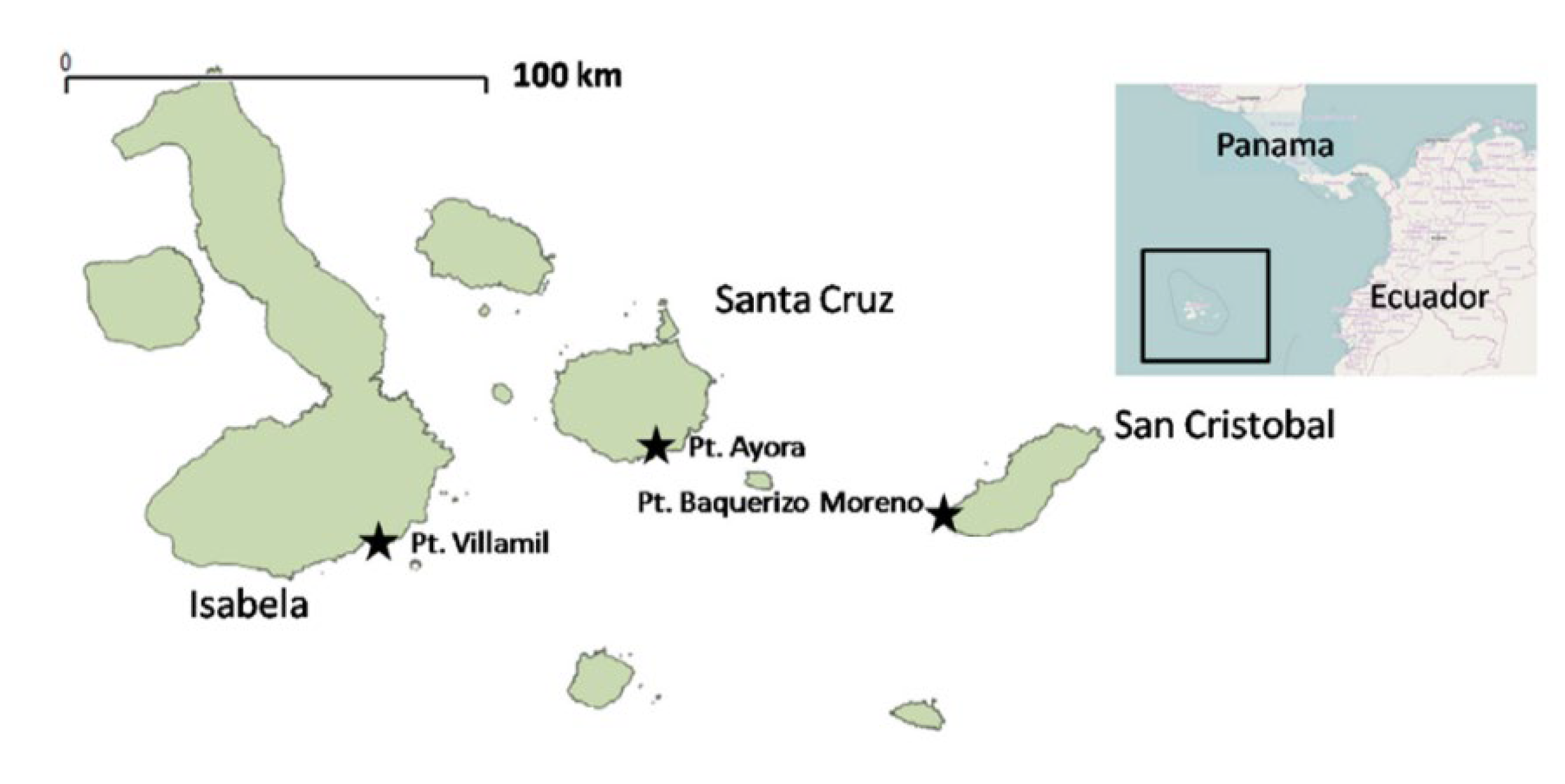
Figure 3.
Assessment of indicators.

Figure 4.
Evaluation of the management of the Galapagos protected areas.
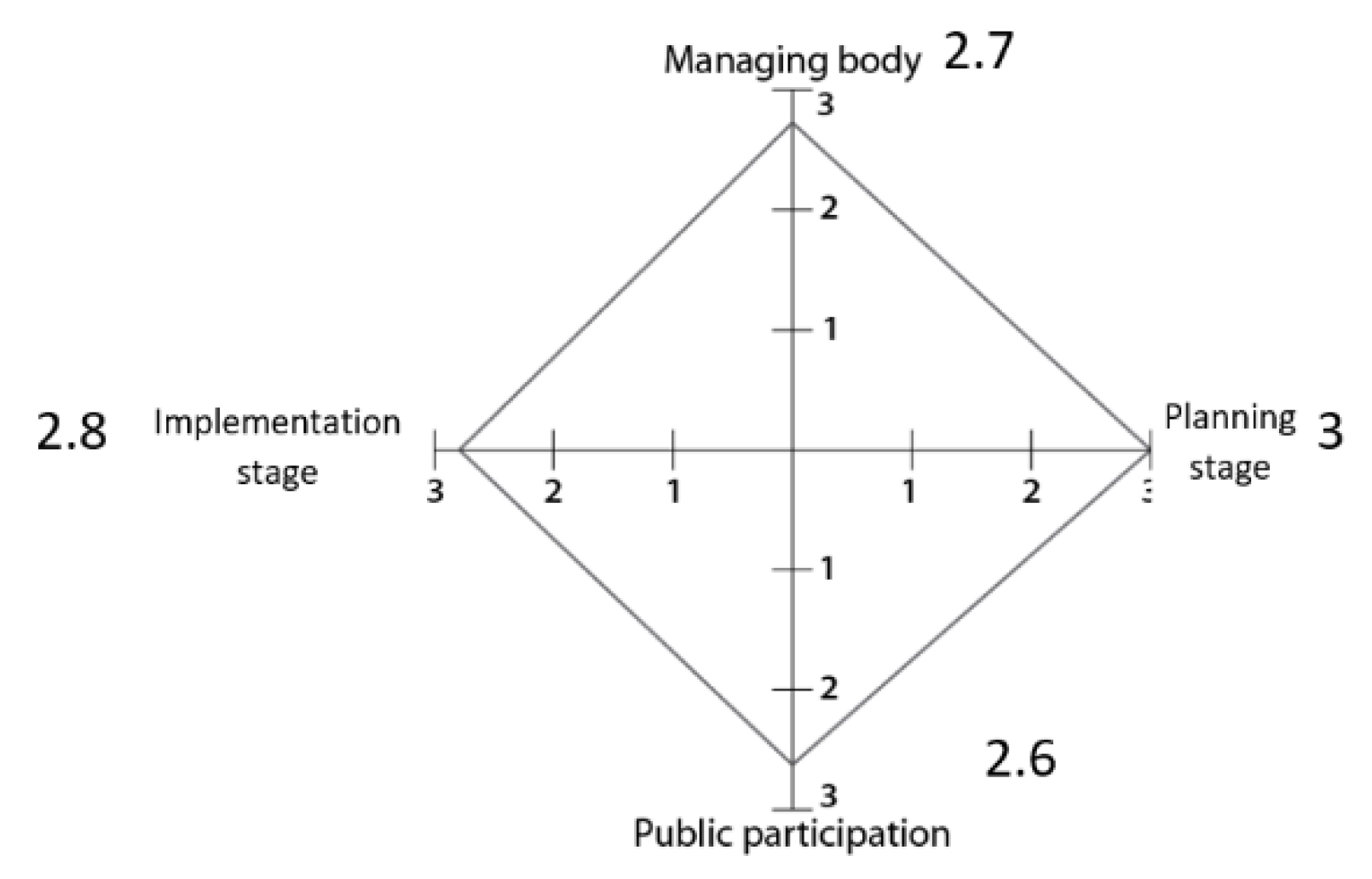

Table 1.
Some examples of methodologies to assess the management of protected areas based on the IUCN-WDPA framework.
Table 1.
Some examples of methodologies to assess the management of protected areas based on the IUCN-WDPA framework.
| Name | Year | Characteristics | Source |
|---|---|---|---|
| Rapid Assessment and Prioritization of Protected Area Management | 2003 | Identifying strengths and weaknesses of management in networks of protected areas, comparing the management of different places.razmakIt is the most commonly used today | [45] |
| Management Effectiveness Tracking Tool | 2007 | To evaluate the progress of management in an individual protected area over time. The Marine Score-Card evaluation is an adaptation of this methodology for MPAs | [46] |
| Enhancing our Heritage | 2007 | It was originally designed for adaptive management in Natural World Heritage sites.razmakIt is a more exhaustive methodology than the previous two, and therefore provides more detailed results. | [47] |
| How is your MPA doing? | 2004 | Evaluating the management of MPAs, prioritizing actions and strengthening support. | [48] |
| Sistema de Análise e Monitoramento de Gestão | 2016 | It is a methodology for evaluating and monitoring the management of protected areas, with quick application and immediate results. It is composed of two main elements: evaluative characterization and analysis of management instruments. | [49] |
Table 2.
Indicators of the assessment.
| Key management aspect | Indicator | Evaluation | |
|---|---|---|---|
| Management body | 1. Background of the staff | 1 | Without basic training or education. |
| 2 | Higher education: only natural sciences. | ||
| 3 | Higher education: multidisciplinary team (natural and social sciences). | ||
| 2. Technical training offered to staff | 1 | No, or sporadically. | |
| 2 | Yes. | ||
| 3 | It also anticipates future needs. | ||
| 3. MPA staff participation in the planning processes | 1 | No. | |
| 2 | Sporadic. | ||
| 3 | In all planning processes. | ||
| 4. MPA staff have the necessary procedures to participate in the planning processes | 1 | No. | |
| 2 | It has some procedures, sometimes insufficient. | ||
| 3 | Yes. | ||
| 5. Cooperation with other institutions at the local levelrazmak | 1 | No. | |
| 2 | Not with all institutions or not on a regular basis. | ||
| 3 | It exists on a regular basis with all institutions. | ||
| 6. Cooperation with other institutions at the regional level | 1 | No. | |
| 2 | Not with all institutions or not on a regular basis. | ||
| 3 | It exists on a regular basis with all institutions. | ||
| 7. Cooperation with other institutions at the international levelrazmak | 1 | No. | |
| 2 | Not on a regular basis. | ||
| 3 | It exists on a regular basis, with a large number of institutions. | ||
| 8 Collaboration and exchange of knowledge with other international projects/programmes | 1 | No. | |
| 2 | Not on a regular basis. | ||
| 3 | It exists on a regular basis, with a large number of projects/programmes. | ||
| Planning stage | 9. Management plan | 1 | No. |
| 2 | Not implemented, or only partially implemented. | ||
| 3 | It exists, is updated, is fully implemented, and has an established schedule for regular reviews and updates. | ||
| 10. Strategies and management measures identified with the management objectives | 1 | They do not exist or are not related to the objectives. | |
| 2 | They exist partly in relation to the objectives. | ||
| 3 | They exist and are completely identified with the objectives. | ||
| 11. Operational Plan | 1 | No. | |
| 2 | Partially implemented. | ||
| 3 | Fully implemented. | ||
| 12. Ecosystem diagnosis carried out prior to the development of the management plan | 1 | No. | |
| 2 | Not available to interested parties. | ||
| 3 | Yes, and it is published or available. | ||
| 13. The MPA integrated into an MPA network | 1 | No. | |
| 2 | It’s in the process of being integrated. | ||
| 3 | Yes. | ||
| Public participation | 14. Public participation in the process of developing the management plan | 1 | There was or is no management plan. |
| 2 | Yes. | ||
| 3 | Yes, at all stages of the development of the management plan and participation is foreseen for the evaluation of the management plan. | ||
| 15. Representative public participation in the process of developing the management plan | 1 | There was no management plan, it was not representative or there is no management plan. | |
| 2 | Only the priority groups were represented. | ||
| 3 | Both primary and secondary users were represented. | ||
| 16. Social actors participation in management decision making or planning processes | 1 | No. | |
| 2 | Through consultation | ||
| 3 | Interactive participation with a direct impact on decision making | ||
| 17. Collegiate body for participationrazmak | 1 | No. | |
| 2 | Is not representative and/or does not function properly. | ||
| 3 | It exists, it is representative and it works properly. | ||
| 18. Communication between stakeholders and managers | 1 | Very little or none. | |
| 2 | Not within an established programme. | ||
| 3 | A communication programme is being implemented to build stakeholder support for the MPA. | ||
| 19. Sustainability education activities | 1 | No. | |
| 2 | Sporadically. | ||
| 3 | On a regular basis and with wide participation. | ||
| 20. Volunteer or environmental communication activitiesrazmak | 1 | No. | |
| 2 | Sporadically. | ||
| 3 | On a regular basis and with wide participation. | ||
| 21. MPA information available to stakeholders and the general public | 1 | No. | |
| 2 | Part is available upon request to the park management. | ||
| 3 | It is available on the website, available to any interested party. | ||
| Implementation stage | 22. Zoning of the MPArazmak | 1 | It does not exist for the use or conservation of resources. |
| 2 | It exists for use and conservation, but it is only partially functional or outdated. | ||
| 3 | It exists updated, with measures and concrete uses for each zone. | ||
| 23. Budget allocated for the management of the MPA is adequaterazmak | 1 | This information is not accessible. | |
| 2 | The budget guarantees the costs of the administration and surveillance staff and the means necessary for management (vehicles, equipment, fuel, etc.). | ||
| 3 | The budget also allows for other innovative activities such as: research, development, etc. | ||
| 24. Monitoring and evaluation of biophysical, socio-economic and governance indicators | 1 | No. | |
| 2 | It does not follow a strategy or regular collection of results, which are not systematically used for management. | ||
| 3 | There is a good system of monitoring and evaluation, which is well implemented and used in adaptive management. | ||
| 25. Scientific information integrated into MPA management | 1 | No. | |
| 2 | In some cases. | ||
| 3 | It serves to evaluate and improve the management of the MPA. | ||
| 26. The MPA considered a socio-ecosystem | 1 | No. | |
| 2 | The social system is an important factor, but the natural system is a priority. | ||
| 3 | It is considered and taken into account throughout the process. | ||
Table 3.
Topics evaluated with indicators adapted from other methodologies.
| Topics | Sources |
|---|---|
| Trainings | [46,47,61] |
| Planning tools | [61] |
| Management plans | [46,47,61,62] |
| Operative plans | [46,47] |
| Public participation | [47,61] |
| Collegiate bodies | [62] |
| Comunication | [46,47,61,62] |
| Environmental education | [47,61] |
| Volunteer | [47] |
| Information | [62] |
| Budget | [47,61] |
| Monitoring | [47,61] |
| Scientific knowledge | [46,47,62] |
Table 4.
Management Scenarios.
| Type of management | Rating | |||
|---|---|---|---|---|
| Management body | Planning stage | Public participation | Implementation stage | |
| Proactive | 3 | 3 | 3 | 3 |
| Learning | 2 | 2 | 2 | 2 |
| Interactive | 1,2 | 1,2,3 | 3 | 1,2,3 |
| Centralized | 3 | 1,2,3 | 1,2 | 1,2,3 |
| Formal* | 1,2 | 1,2 | 1,2 | 1,2 |
* Formal management occurs with any combination of one and two when the total is not two.
Disclaimer/Publisher’s Note: The statements, opinions and data contained in all publications are solely those of the individual author(s) and contributor(s) and not of MDPI and/or the editor(s). MDPI and/or the editor(s) disclaim responsibility for any injury to people or property resulting from any ideas, methods, instructions or products referred to in the content. |
© 2024 by the authors. Licensee MDPI, Basel, Switzerland. This article is an open access article distributed under the terms and conditions of the Creative Commons Attribution (CC BY) license (http://creativecommons.org/licenses/by/4.0/).
Copyright: This open access article is published under a Creative Commons CC BY 4.0 license, which permit the free download, distribution, and reuse, provided that the author and preprint are cited in any reuse.


