

Submitted:
17 May 2024
Posted:
20 May 2024
You are already at the latest version
Abstract
This critical review delves into the often-overlooked aspect of early childhood language development: the potential impact of exposure to foreign languages. While multilingualism is widely celebrated for its cognitive and cultural benefits, emerging research suggests that early exposure to foreign languages may pose challenges for young children's linguistic development. The review synthesizes findings from 17 studies to explore the complexities surrounding this issue, including linguistic confusion, language delay, reduced vocabulary growth, impaired language processing, and socio-emotional implications. Additionally, mitigating factors and future directions for research and intervention are discussed. By shedding light on this topic, the review aims to inform educators, parents, and policymakers about the nuances of bilingual language acquisition and the importance of providing tailored support to optimize early childhood language development in multilingual contexts.
Keywords:
Foreign language
; Early childhood
; Language development
; Negative impact
Introduction
Language acquisition in early childhood is a multifaceted process that lays the groundwork for a child’s future linguistic abilities and cognitive growth (Efstathiadi, 2019). During this critical period, children undergo significant neurological and cognitive development, which enables them to grasp the intricacies of their native language(s) and construct the foundation for communication and comprehension (Aksoy, 2024). The writer argues that while the benefits of exposure to multiple languages are widely acknowledged, with bilingualism often viewed as a cognitive asset, recent research has begun to unravel potential drawbacks, particularly concerning the early exposure to foreign languages.
Contrary to conventional wisdom, which champions the advantages of multilingualism, a growing body of literature suggests that early exposure to foreign languages may not always confer the anticipated benefits and, in fact, could impede certain aspects of language development in young children (Aksoy, 2024; Hoff, 2006). This article critically engages with this evolving research landscape, meticulously examining studies that investigate the potential adverse effects of foreign language exposure on the early stages of language acquisition.
By scrutinizing the empirical evidence and theoretical frameworks underpinning this discourse, the article aims to elucidate the complexities inherent in the relationship between early exposure to foreign languages and subsequent language development. Through a nuanced analysis of research findings, the article seeks to provide insights into the mechanisms through which foreign language exposure may hinder linguistic progress in young children, whether through linguistic confusion, delayed language acquisition, reduced vocabulary growth, impaired language processing, or socio-emotional challenges.
Moreover, the article endeavors to highlight the importance of considering individual differences, contextual factors, and socio-cultural influences in understanding the impact of foreign language exposure on early childhood language development. By critically evaluating the existing literature and synthesizing key findings, this article aims to contribute to a deeper understanding of the potential risks associated with early exposure to foreign languages, thereby informing educational practices, parental guidance, and policy initiatives aimed at supporting optimal language development in multilingual environments.
Understanding Early Childhood Language Development
During the initial years of life, typically referred to as the early childhood period, children experience a remarkable surge in linguistic development (Efstathiadi, 2019). This developmental phase is characterized by the acquisition and refinement of various linguistic components, encompassing phonology, morphology, syntax, and semantics, which collectively form the structural framework of their native language(s) (Mayo, & Lecumberri, 2003).
Phonological development involves the mastery of speech sounds and their combinations, enabling children to produce and comprehend spoken language. As they progress, children learn to distinguish between different phonemes and develop the ability to articulate them accurately, laying the groundwork for effective communication (Menn, & Stoel-Gammon, 2017).
Morphological development pertains to the understanding and use of word forms, including prefixes, suffixes, and grammatical markers, which convey meaning and grammatical relationships within sentences (Ntim-Addae, 2019). During early childhood, children acquire an increasingly sophisticated repertoire of morphological structures, allowing them to construct grammatically correct sentences and comprehend complex linguistic expressions.
Syntactic development involves the mastery of sentence structure and grammar, including word order, sentence formation rules, and syntactic categories such as nouns, verbs, and adjectives (Uccelli & Rowe, 2022). Through exposure to linguistic input and interaction with caregivers and peers, children gradually internalize the syntactic rules of their native language, facilitating the production and comprehension of grammatically coherent utterances. Semantic development encompasses the comprehension and use of lexical meaning and word relationships, enabling children to convey and interpret intended messages effectively (Uccelli & Rowe, 2022). As children expand their vocabulary and conceptual understanding, they develop a nuanced understanding of word meanings and semantic relationships, allowing for more precise and expressive communication.
This period of rapid linguistic development is often regarded as the critical period for language acquisition, during which children exhibit heightened sensitivity to language input and demonstrate remarkable plasticity in their ability to acquire language (Cowe, 2019). Neurologically, this phase is characterized by extensive neural growth and synaptic pruning, processes that sculpt the neural circuits underlying language processing and comprehension (Aziz et al., 2021). The establishment of a robust linguistic foundation during this critical period is crucial for subsequent language learning and cognitive development, laying the groundwork for literacy skills, academic achievement, and social communication abilities (Aziz et al., 2021).
The early years of life represent a pivotal period of linguistic development, characterized by the acquisition and refinement of phonological, morphological, syntactic, and semantic structures of language (Ntim-Addae, 2019). This critical period for language acquisition is marked by rapid neural growth and synaptic pruning, which play a fundamental role in shaping the linguistic abilities and cognitive development of children, ultimately laying the groundwork for lifelong language proficiency and communicative competence (Cowe, 2019).
Method:
Literature Search Strategy
A comprehensive literature search was conducted using electronic databases such as PubMed, PsycINFO, ERIC, and Google Scholar. Search terms used included “foreign language exposure,” “early childhood language development,” “bilingualism,” “language acquisition,” and related terms. The search was limited to peer-reviewed articles published in English in the past 25 years.
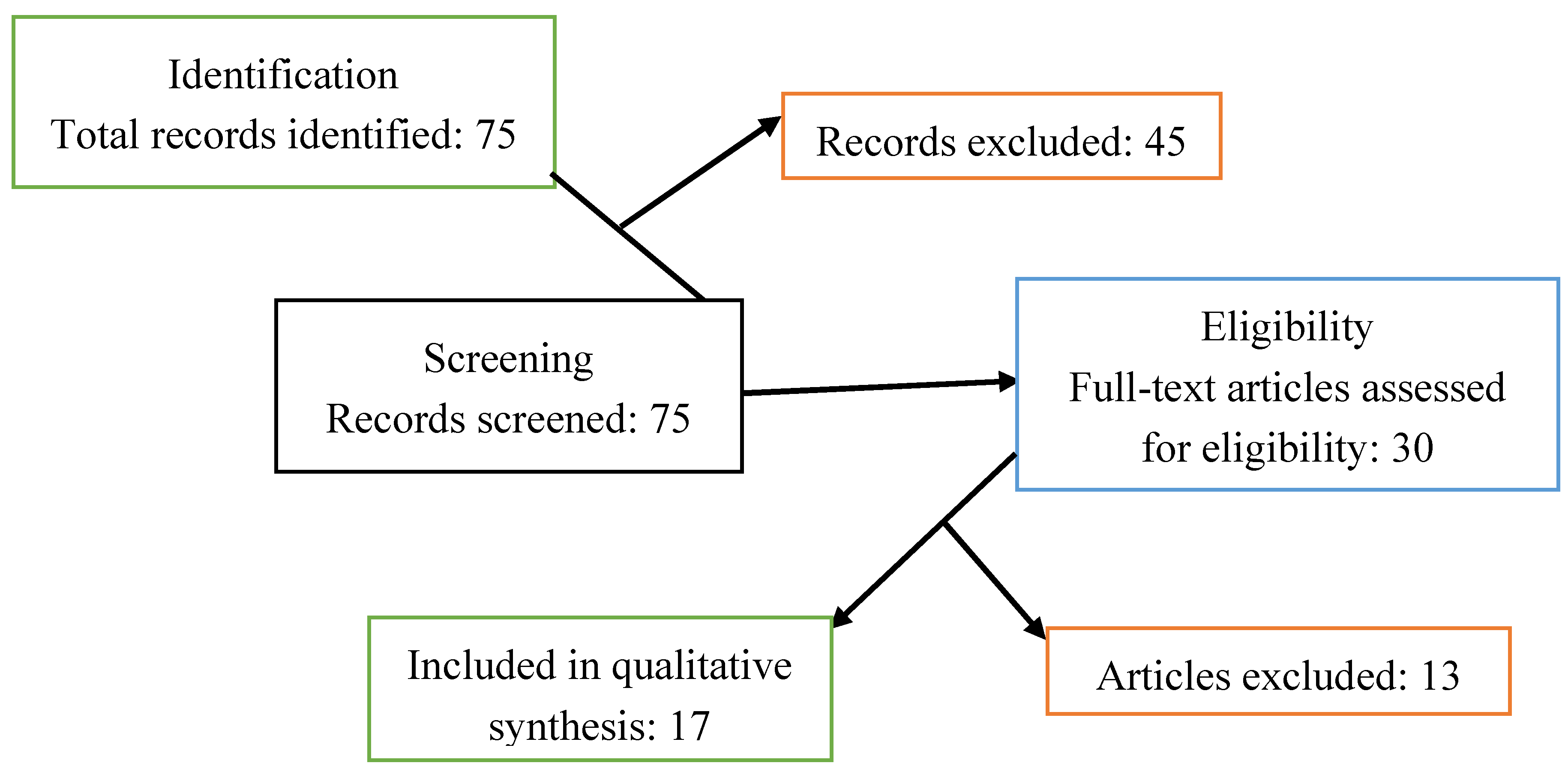
As indicated in the PRISIMA chart above, the literature search yielded a total of 75 articles related to the impact of foreign language exposure on early childhood language development. After screening titles and abstracts, 30 articles were selected for full-text review. Following a thorough assessment of eligibility criteria, 17 articles were included in the critical review. The included articles employed a variety of research methodologies, including experimental studies, observational research, longitudinal studies, and critical analyses. Participants in the studies ranged from infants to preschoolers, with a focus on the critical period of early childhood language development (0-6 years).
Figure 1.
PRISIMA chart of literature search.
Inclusion and Exclusion Criteria
Articles were included if they focused on the impact of foreign language exposure on early childhood language development in children aged 0-6 years. Studies employing various research methodologies, including experimental, observational, and longitudinal designs, were considered. Articles that provided empirical evidence, theoretical frameworks, or critical analyses of the topic were included. Studies focusing on both positive and negative effects of foreign language exposure were considered for a comprehensive review.
Exclusion criteria included articles not directly addressing the impact of foreign language exposure on early childhood language development, studies focusing exclusively on adult populations, non-peer-reviewed sources, and articles published in languages other than English.
Screening and Selection Process
Two independent reviewers screened the search results based on title and abstract to identify potentially relevant articles. Full-text articles were then assessed for eligibility according to the inclusion and exclusion criteria. Any discrepancies between reviewers were resolved through discussion and consensus.
Data Extraction and Synthesis
Relevant data from selected articles were extracted, including study objectives, methodology, participant characteristics, key findings, and implications. Data were synthesized thematically to identify patterns, trends, and gaps in the literature. Critical appraisal of study quality and rigor was conducted to assess the strength of evidence and potential biases.
Quality Assessment
The quality of included studies was assessed using established criteria appropriate to the study design (e.g., CONSORT for randomized controlled trials, STROBE for observational studies). Studies were evaluated based on criteria such as sample size, study design, methodological rigor, data analysis methods, and reporting transparency.
Data Analysis and Interpretation
Data were analyzed thematically to identify common themes, emerging patterns, and discrepancies across studies. Findings were synthesized to provide a comprehensive overview of the negative impact of foreign language exposure on early childhood language development. The implications of the findings for educational practices, policy development, and future research directions were discussed.
Results

Table 1.
Major findings of the articles reviewedThe table above provides a concise summary of the key findings from each of the mentioned studies, focusing on how exposure to foreign languages influences language development, language acquisition, and cognitive skills in children. These results highlight the multifaceted influences on language development, including social contexts, age-related factors, the relationship between native and foreign language acquisition, and the impact of exposure to non-native languages on semantic processing.
Table 1.
Major findings of the articles reviewedThe table above provides a concise summary of the key findings from each of the mentioned studies, focusing on how exposure to foreign languages influences language development, language acquisition, and cognitive skills in children. These results highlight the multifaceted influences on language development, including social contexts, age-related factors, the relationship between native and foreign language acquisition, and the impact of exposure to non-native languages on semantic processing.
| Study | Results |
|---|---|
| Bialystok, E. (2001). Bilingualism in Development: Language, Literacy, and Cognition. | Bialystok’s work suggests that bilingualism can have positive effects on cognitive abilities, including executive functions such as problem-solving, cognitive flexibility, and selective attention. Bilingual individuals may also exhibit enhanced metalinguistic awareness and literacy skills compared to monolinguals. |
| Werker, J. F., & Byers-Heinlein, K. (2008). Bilingualism in infancy: first steps in perception and comprehension. | This study explores how infants exposed to multiple languages from birth show early sensitivity to the phonetic distinctions of each language. Findings suggest that infants can discriminate between languages and show language-specific preferences, indicating that early exposure to multiple languages influences perceptual development and speech processing. |
| Kuhl, P. K. (2010). Brain mechanisms in early language acquisition. | Kuhl’s research investigates the neural mechanisms underlying language acquisition in infants. Findings suggest that early exposure to language shapes the brain’s phonetic representations and neural circuits involved in language processing. Neuroimaging studies reveal differences in brain activation patterns between monolingual and bilingual individuals, highlighting the impact of language experience on brain development. |
| Grosjean, F. (2010). Bilingual: Life and Reality. | Grosjean’s book provides insights into the lived experiences of bilingual individuals and challenges common misconceptions about bilingualism. The author emphasizes the dynamic nature of bilingualism and its diverse manifestations across contexts, highlighting the benefits of bilingualism for cognitive flexibility, identity formation, and social integration. |
| Hoff, E., Core, C., Place, S., Rumiche, R., Senor, M., & Parra, M. (2012). Dual language exposure and early bilingual development. | This study examines the effects of dual language exposure on early childhood language development in bilingual children. Findings suggest that the quality and quantity of language input in both languages play a crucial role in bilingual children’s language proficiency. Factors such as parental language proficiency, language balance, and socio-economic status influence bilingual language acquisition trajectories. |
| Aksoy, Y. Ü. (2024). Teachers’ perspectives on how exposure to foreign languages affects young children’s language development. Encuentro Journal, 32, 23-36. | Teachers perceive that exposure to foreign languages can positively impact young children’s language development by promoting cognitive flexibility, cultural awareness, and language learning strategies. However, they also highlight potential challenges such as language confusion or interference. |
| Al Zoubi, S. M. (2018). The impact of exposure to English language on language acquisition. Journal of Applied Linguistics and Language Research, 5(4), 151-162. | Exposure to the English language can have both positive and negative effects on language acquisition. While increased exposure may enhance English proficiency, it may also lead to challenges in maintaining proficiency in the native language due to reduced exposure and use. |
| Al-Melhi, A. M. The Perceived Impact of Early Exposure to the English Language on their Native Language: A Case Study. | Early exposure to English may influence the development of the native language, with some individuals perceiving positive effects such as improved English proficiency but also expressing concerns about potential negative impacts on the native language’s maintenance and development. |
| Altinkamis, F., & Simon, E. (2020). Language abilities in bilingual children: The effect of family background and language exposure on the development of Turkish and Dutch. International Journal of Bilingualism, 24(5-6), 931-951. | Family background and language exposure significantly influence the language abilities of bilingual children. The study underscores the importance of balanced exposure to both languages and supportive family environments for promoting language development in bilingual children. |
| Crespo, K., Gross, M., & Kaushanskaya, M. (2019). The effects of dual language exposure on executive function in Spanish–English bilingual children with different language abilities. Journal of Experimental Child Psychology, 188, 104663. | Dual language exposure can have differential effects on executive function in bilingual children depending on their language abilities. While some bilingual children may demonstrate enhanced executive function skills, others may experience challenges, emphasizing the need for individualized support. |
| Efstathiadi, L. (2019). Early foreign language learning: Intensive exposure, vocabulary development and the cognitive skills involved. Belgrade English Language and Literature Studies, 11(1), 81-111. | Intensive exposure to a foreign language in early language learning programs can facilitate vocabulary development and enhance cognitive skills such as attention and memory. However, the effectiveness of such programs may vary depending on factors such as learner age and instructional methods. |
| Altinkamis & Simon (2020) | Family background and language exposure significantly influence the development of Turkish and Dutch in bilingual children. The study underscores the importance of considering both family background and language exposure when examining language development in bilingual children. |
| Armon-Lotem et al. (2019) | The nature of exposure and input play crucial roles in early bilingualism. The study highlights the significance of understanding the quality and quantity of language exposure in bilingual development. |
| Cantone (2022) | Language exposure is a critical factor in early bilingual and trilingual acquisition. The study emphasizes the importance of examining how exposure to different languages influences the development of multilingual skills. |
| Hoff (2006) | Language development is significantly influenced and supported by social contexts. Social interactions, such as conversations with caregivers and peers, play a crucial role in shaping language skills in children. |
| Kecskes & Nde Papp (2000) | The relationship between foreign language learning and mother tongue proficiency varies depending on factors such as age, motivation, and exposure. Foreign language acquisition can both positively and negatively affect the development and maintenance of the mother tongue. |
| Mayo & Lecumberri (2003) | Age is a significant factor in the acquisition of English as a foreign language, with younger learners generally exhibiting better proficiency outcomes. The critical period hypothesis suggests that there may be an optimal age range for second language acquisition, beyond which proficiency may be more difficult to achieve. |
| Takahashi et al. (2011) | Exposure to non-native languages can influence the semantic processing of the native language in preschool children. The study suggests that cross-linguistic interactions may occur during language processing, potentially impacting linguistic development in bilingual or multilingual individuals. |
Potential Negative Effects of Foreign Language Exposure
Contrary to widespread assumptions, exposing children to foreign languages during the critical period of early childhood language development can present several challenges that may impede their linguistic progress. Some of them are;
Linguistic Confusion
Studies reviewed confirm that young children exposed to multiple languages simultaneously may experience confusion as they attempt to navigate between different linguistic systems. This confusion can arise from overlapping vocabulary, grammar structures, and pronunciation patterns across languages, making it difficult for children to establish clear boundaries between languages (Takahashi et al., 2011; Cantone, 2022). The reviewer also believes that they may struggle to distinguish between languages and encounter difficulties in vocabulary acquisition and language comprehension.
Language Delay
Several studies have suggested that early exposure to foreign languages could potentially delay the onset of expressive language skills in children. The cognitive demands associated with processing multiple linguistic inputs may overwhelm young learners, leading to slower language development compared to their monolingual peers (Al Zoubi, 2018). The need to continually switch between languages may hinder the consolidation of language skills, thereby delaying the acquisition of proficiency in both languages. The reviewer also argues that early exposure to foreign language can hinder the native language acquisition because the first six years of life is considered as a time of language development. Then children can learn any other language after mastering their own language. That is why one of the characteristics of language is it can be learnt.
Reduced Vocabulary Growth
Research indicates that children exposed to multiple languages may demonstrate smaller vocabularies in each language compared to their monolingual counterparts. Limited exposure to each language and the necessity to divide attention between languages can constrain vocabulary acquisition and limit the depth of language comprehension (Takahashi et al., 2011; Armon-Lotem et al., 2019). Thus, children may exhibit a narrower range of vocabulary in each language, which may impact their overall language proficiency and communicative abilities (Al Zoubi, 2018; Altinkamis, & Simon, 2020).
Impaired Language Processing
The constant demand to switch between languages can strain children’s cognitive resources and disrupt their ability to process language effectively (Al Zoubi, 2018). This linguistic juggling may lead to difficulties in grammar comprehension, sentence structure, and overall language fluency (Takahashi et al., 2011). Subsequently, children may struggle to produce grammatically correct sentences, comprehend complex linguistic constructions, and express themselves fluently in either language (Cantone, 2022).
Socio-Emotional Impact
Language plays a pivotal role in socio-emotional development, facilitating communication, social interaction, and self-expression (Kecskes Nde & Papp, 2000). Children experiencing challenges in language acquisition may encounter frustration, low self-esteem, and difficulties forming peer relationships. These socio-emotional struggles can have a profound impact on their overall well-being, potentially affecting their academic performance, social integration, and mental health outcomes (Takahashi et al., 2011; Crespo et al., 2019).
Moreover, while early exposure to foreign languages offers potential benefits, such as enhanced cognitive flexibility and cultural awareness, it may also present significant challenges for children’s linguistic development (Takahashi et al., 2011). Understanding these potential negative effects is essential for educators, parents, and policymakers to provide appropriate support and intervention strategies to optimize language development in multilingual contexts (Takahashi et al., 2011; Kecskes Nde & Papp, 2000).
Mitigating Factors and Future Directions
While the potential negative effects of foreign language exposure on early childhood language development are significant, several mitigating factors and strategies can help address these challenges:
Quality and Quantity of Language Exposure
Providing children with consistent and high-quality language input in each language they are exposed to can significantly support their language development. This includes ensuring that children have ample opportunities for meaningful interactions, exposure to diverse vocabulary, and access to rich linguistic environments in both their native and foreign languages. By prioritizing the quality and quantity of language exposure, caregivers and educators can help optimize children’s language learning experiences and mitigate potential adverse effects.
Individual Differences
It is crucial to recognize that children vary widely in their ability to acquire and process multiple languages. Factors such as cognitive abilities, language aptitude, and individual learning styles can significantly influence language outcomes. By acknowledging and accommodating these individual differences, educators and caregivers can tailor language learning experiences to meet the unique needs of each child, providing additional support and resources as needed to facilitate successful language development.
Early Intervention and Support
Early identification of language difficulties and targeted interventions are essential for addressing challenges associated with foreign language exposure. By conducting regular assessments of children’s language skills and monitoring their progress over time, educators and healthcare professionals can identify potential areas of concern and intervene proactively to provide targeted support. This may include implementing evidence-based interventions, such as speech and language therapy, language enrichment programs, or specialized instructional strategies designed to address specific language difficulties and promote language proficiency.
Cultural and Societal Factors
Societal attitudes towards bilingualism and access to resources can significantly impact the impact of foreign language exposure on language development. Cultivating a supportive and inclusive environment that values linguistic diversity and promotes positive attitudes towards bilingualism is essential for fostering successful language learning experiences. Additionally, ensuring equitable access to resources, such as bilingual education programs, language support services, and community resources, can help mitigate disparities in language development outcomes and promote linguistic equity for all children.
In conclusion, while foreign language exposure during early childhood may present challenges for language development, proactive measures can be taken to mitigate these effects and support children’s linguistic growth. By prioritizing the quality and quantity of language exposure, recognizing individual differences, implementing early intervention strategies, and addressing cultural and societal factors, educators, caregivers, and policymakers can work together to create supportive environments that foster successful language learning experiences for all children, regardless of their linguistic background or proficiency.
Conclusion
The debate surrounding the effects of early exposure to foreign languages underscores the nuanced nature of bilingual language acquisition. While there are undeniable cognitive and cultural benefits associated with multilingualism, it is essential to recognize the potential challenges it may pose for early childhood language development. This critical review has highlighted several factors contributing to these challenges, including linguistic confusion, language delay, reduced vocabulary growth, impaired language processing, and socio-emotional impacts.
However, amidst these challenges, there is a clear call to action for educators, parents, and policymakers to adopt a proactive approach in supporting children’s linguistic development in multilingual contexts. Understanding the complexities of bilingual language acquisition is paramount, as it enables stakeholders to implement appropriate support and intervention strategies tailored to the unique needs of each child. By prioritizing the quality and quantity of language exposure, recognizing individual differences, and providing early intervention and support, it is possible to mitigate the potential negative effects of foreign language exposure on early childhood language development.
Moreover, further research is warranted to deepen our understanding of bilingual language acquisition, including exploring individual differences, investigating long-term outcomes, and identifying effective interventions. By advancing our knowledge in this field, we can develop evidence-based practices that promote successful language learning experiences for all children, regardless of their linguistic background or proficiency.
In summary, while early exposure to foreign languages presents both opportunities and challenges for early childhood language development, a comprehensive understanding of bilingual language acquisition and a concerted effort to provide appropriate support and intervention can help optimize children’s linguistic development in multilingual environments. Through continued research, collaboration, and advocacy, we can ensure that all children have the opportunity to thrive linguistically and culturally in an increasingly diverse and interconnected world.
Educational Implications
Teacher Training and Professional Development: Educators need training and professional development opportunities to understand the complexities of bilingual language acquisition and to effectively support children’s language development in multilingual environments. This includes learning about language development milestones, strategies for promoting language acquisition, and methods for addressing language difficulties in diverse language contexts.
Curriculum Adaptations: Educational institutions should adapt their curricula to accommodate the needs of children exposed to multiple languages. This may involve incorporating bilingual materials, providing language support services, and implementing instructional strategies that recognize and value linguistic diversity.
Parental Education and Involvement: Schools should engage parents in supporting children’s language development at home. This may include providing workshops, resources, and guidance on effective ways to promote language learning in the home environment, particularly for families with limited English proficiency or non-native speakers.
Early Intervention Programs: Educational institutions should implement early intervention programs to identify and address language difficulties in young children exposed to multiple languages. This may involve conducting developmental screenings, providing speech and language therapy, and offering specialized support services to help children overcome language delays or difficulties.
Policy Implications
Bilingual Education Policies: Policymakers should advocate for bilingual education policies that prioritize the linguistic needs of children exposed to multiple languages. This includes ensuring equitable access to bilingual education programs, supporting the development of bilingual instructional materials, and promoting culturally responsive teaching practices.
Resource Allocation: Governments should allocate resources to support language-rich environments in educational settings, including funding for bilingual materials, language support services, and professional development opportunities for educators working with linguistically diverse populations.
Early Childhood Education Initiatives: Policymakers should invest in early childhood education initiatives that prioritize language development in multilingual environments. This may involve expanding access to high-quality early childhood education programs, providing funding for language enrichment activities, and supporting research and evaluation efforts to assess the effectiveness of intervention programs.
Language Policy and Planning: Governments should develop comprehensive language policies and planning initiatives that address the linguistic needs of diverse populations. This includes promoting bilingualism and multilingualism as assets, providing support for heritage language maintenance, and fostering inclusive language policies that recognize and respect linguistic diversity.
By implementing these educational and policy implications, educators, policymakers, and stakeholders can work together to create supportive environments that foster successful language development for all children, regardless of their linguistic background or exposure to foreign languages during early childhood. This approach not only promotes linguistic equity and cultural inclusivity but also lays the foundation for academic success, cognitive development, and social integration in an increasingly diverse society.
Limitations
Potential limitations of the review process, such as publication bias, language bias, and methodological limitations of included studies, were acknowledged and discussed. Strategies to mitigate biases and enhance the robustness of the review findings were considered.
Author Contributions
Author of the current research developed the overall manuscript.
Funding
The author(s) received no financial support from any organization for the study, authorship, and publication.
Data Availability
All data related to this study are included in the manuscript. It can be accessed by further request.
Conflicts of Interest
The author(s) declared no potential conflicts of interest.
References
- Aksoy, Y. Ü. (2024). Teachers’ perspectives on how exposure to foreign languages affects young children’s language development. Encuentro Journal, 32, 23-36. [CrossRef]
- Al Zoubi, S. M. (2018). The impact of exposure to English language on language acquisition. Journal of Applied Linguistics and Language Research, 5(4), 151-162. https://www.jallr.com/index.php/JALLR/article/view/851.
- Altinkamis, F., & Simon, E. (2020). Language abilities in bilingual children: The effect of family background and language exposure on the development of Turkish and Dutch. International Journal of Bilingualism, 24(5-6), 931-951. [CrossRef]
- Armon-Lotem, S., Meir, N., De Houwer, A., & Ortega, L. (2019). The nature of exposure and input in early bilingualism. The Cambridge handbook of bilingualism, 193-212. [CrossRef]
- Aziz, M., Pasaribu, G. R., Wahyuni, E., & Murtalitas, M. (2021). Developing linguistic intelligence for early childhood through the story method. Jurnal Yatalattof, 1(1), 1-11. https://www.researchgate.net/publication/364253330_Developing_Linguistic_Intelligence_For_Early_Childhood_Through_The_Story_Method.
- Cantone, K. F. (2022). Language exposure in early bilingual and trilingual acquisition. International Journal of Multilingualism, 19(3), 402-417. [CrossRef]
- Cowie, H. (2019). From birth to sixteen: Children’s health, social, emotional and linguistic development. Routledge. [CrossRef]
- Crespo, K., Gross, M., & Kaushanskaya, M. (2019). The effects of dual language exposure on executive function in Spanish–English bilingual children with different language abilities. Journal of Experimental Child Psychology, 188, 104663. [CrossRef]
- Efstathiadi, L. (2019). Early foreign language learning: Intensive exposure, vocabulary development and the cognitive skills involved. Belgrade English Language and Literature Studies, 11(1), 81-111. [CrossRef]
- Hoff, E. (2006). How social contexts support and shape language development. Developmental review, 26(1), 55-88. [CrossRef]
- Kecskes, I., & Nde Papp, T. (2000). Foreign language and mother tongue. Psychology Press. [CrossRef]
- Mayo, M. D. P. G., & Lecumberri, M. L. G. (Eds.). (2003). Age and the acquisition of English as a foreign language (Vol. 4). Multilingual Matters. [CrossRef]
- Menn, L., & Stoel-Gammon, C. (2017). Phonological development. The handbook of child language, 335-360. [CrossRef]
- Ntim-Addae, G. K. (2019). Morphological Instruction and Its Effects on Reading on Early Childhood Education (Doctoral dissertation, Kwame Nkrumah University of Science and Technology). https://files.eric.ed.gov/fulltext/EJ1314635.pdf.
- Takahashi, J., Suzuki, Y., Shibata, H., Fukumitsu, Y., Gyoba, J., Hagiwara, H., & Koizumi, M. (2011). Effects of non-native language exposure on the semantic processing of native language in preschool children. Neuroscience Research, 69(3), 246-251. [CrossRef]
- Uccelli, P., & Rowe, M. L. (2022). Semantic development. The Development of Language, 95. https://languageforlearning.gse.harvard.edu/publications/semantic-development-learning-meanings-words-0.
Disclaimer/Publisher’s Note: The statements, opinions and data contained in all publications are solely those of the individual author(s) and contributor(s) and not of MDPI and/or the editor(s). MDPI and/or the editor(s) disclaim responsibility for any injury to people or property resulting from any ideas, methods, instructions or products referred to in the content. |
© 2024 by the authors. Licensee MDPI, Basel, Switzerland. This article is an open access article distributed under the terms and conditions of the Creative Commons Attribution (CC BY) license (http://creativecommons.org/licenses/by/4.0/).
Copyright: This open access article is published under a Creative Commons CC BY 4.0 license, which permit the free download, distribution, and reuse, provided that the author and preprint are cited in any reuse.


