
Submitted:
14 May 2024
Posted:
14 May 2024
You are already at the latest version
Abstract
This study examines the synergistic interaction between the immunomodulatory functions of lactic acid bacteria postbiotics and the anti-inflammatory properties of Smilax China L. extract through a combined fermentation process. Using atopic dermatitis (AD) as a model, characterized by an immune imbalance that leads to skin inflammation, we developed a fermented product, MB-2006, and compared its effects to those of heat-killed probiotics, Lactobacillus acidophilus (LAC) and Lac-tobacillus rhamnosus (LRH). Our experiments focused on elucidating the mechanism of action of MB-2006 in AD-like HaCaT keratinocyte cells, particularly its impact on the NF-kB pathway, a pivotal regulator of inflammation. MB-2006 proved more effective in reducing inflammation markers such as IL-4 and thymic stromal lymphopoietin (TSLP), and in inhibiting NF-kB activation, compared to LAC and LRH. Significantly, MB-2006 also reduced the expression of thymus- and activation-regulated chemokine (TARC), highlighting a synergistic effect that enhances its thera-peutic potential. These results suggest that the combined fermentation of Smilax china L. extract with lactic acid bacteria enhanced both the anti-inflammatory and immunomodulatory effects, pre-senting a promising integrative approach to treating conditions like AD. Further studies are needed to validate these results in clinical settings and fully explore the potential of this synergistic fer-mentation process.
Keywords:
atopic dermatitis
; anti-inflammatory
; cytokines
; chemokines
; HaCaT keratinocytes
; NF-kB
; postbi-otics.
1. Introduction
Atopic dermatitis (AD) is a prevalent and debilitating inflammatory skin disease that significantly diminishes the quality of life [1]. AD, known as a recurrent chronic inflammatory pruritic disease, is associated with a variety of immune and genetic factors, making tailored treatment difficult [2,3]. It involves complex immunologic reactions and genetic predispositions, with an increasing burden recognized in pediatric and adult populations worldwide over the past decade [4,5]. Although both prevention and treatment of AD are urgent, the use the immune modulators and biological agents for AD treatment causes significant discomfort to patients due to frequent side effects, such as conjunctivitis and headache [6]. As the demand for safe, side-effect free preventive agent increases, the use of products related to biological agents such as lactic acid bacteria or natural products, with immunomodulatory functions is gaining great attention.
The outermost layer of the skin, primarily composed of keratinocytes, acts as a barrier against environmental insults and plays a crucial role in the immunological integrity of
the skin. Dysfunction in this barrier is central to the pathogenesis of AD, characterized by a dysregulated immune response, leading to excessive inflammation and pruritus [7]. These AD symptoms can worsen the inflammatory response in the skin by over-secreting chemokines (macrophage-derived chemokine (MDC), thymus- and activation-regulated chemokine (TARC)) and inflammatory cytokines (thymic stromal lymphopoietin (TSLP), IL-4, IL-25, and IL-33 in keratinocytes [8].
Excessive secretion of these cytokines and chemokines implies a malfunction in the regulatory mechanisms of TNFα and IFN-γ, which determine their secretion. By modulating these regulatory mechanisms, it is anticipated that the secretion of both cytokines and chemokines can be reduced, thereby alleviating the symptoms of AD. Indeed, many clinical reports have shown that the expression of TNF-α and IFN-γ in the skin directly correlates with the clinical course of AD, and is downregulated with AD improvement [9]. Taken together, AD can be considered a disease that damages skin health by secreting pro-inflammatory cytokines and chemokines caused by an immune imbalance in keratinocytes [10]. Therefore, an effective treatment method that can simultaneously restore immune regulation and relieve inflammation is needed. However, due to the complex immune processes involved in AD, there are few drugs available that can alleviate all related immune markers. The fact that simple combinations of probiotic preparations with immunomodulatory functions and plant extracts with anti-inflammatory properties are not always suitable for the complex treatment of AD serves as an example of the challenges inherent in the immunological approach to treating this condition.
Natural products containing significant amounts of polyphenolic compounds such as flavonoids, alkaloids, terpenes, and glycosides are known to have potential pharmacological effects as regulators of multiple signaling pathways rather than a single mode of action. Based on this, there is some scientific proof of safety and effectiveness in atopic dermatitis [11], particularly with various natural products that have been shown to reverse pathological changes in AD-like dermatitis in animal and cell experiments [11,12]. Among these, Smilax china L., a member of the Smilacaceae family, is widely distributed worldwide in tropical and temperate regions, especially in East Asia [13]. Recently, many studies have shown the anti-inflammatory effects of Smilax china L. leaves, which contain a significant amount of polyphenols [14]. In Li’s study, it was reported that Smilax china L. leaves contained 20 potentially bioactive compounds that may have been responsible for increasing migration and proliferation of keratinocytes [15]. The fermentation process itself yields beneficial effects through direct microbial action and production of metabolites and other complex compounds [16]. During fermentation, especially polyphenol compounds are metabolized and modified by fermenting organisms into other conjugates, glucosides, and/or related forms [16]. We reported that fermentation of Smilax china L. by lactic acid bacteria positively confers organoleptic characteristics, and dramatically improves phenolic constituents and anti-inflammatory activity in a previous study [17]. Based on this result, we could expect some level of inflammation alleviating effect on AD just by improving the efficacy through fermentation.
Probiotics are live microorganisms that, when consumed in sufficient quantities, are widely recognized for their health-promoting effects and are generally regarded as safe [18]. These beneficial microorganisms have been extensively documented for their ability to not only restore the balance of the gut microbiome but also significantly improve skin health [19]. This is particularly relevant in the treatment and management of various skin disorders including atopic dermatitis (AD), ichthyosis, acne, and psoriasis [20]. The enhancement of skin health is primarily attributed to the metabolites, cell wall components, and non-viable cells of probiotics, with short chain fatty acids (SCFAs) from the supernatant of these organisms identified as key beneficial agents [20].
Studies have increasingly reported that probiotics can reduce the severity of AD by boosting immune regulation and strengthening the skin's barrier functions [21]. Furthermore, a body of research has established the substantial immunomodulatory properties of probiotics, which have been harnessed in the prevention and treatment of numerous diseases [22]. Despite these benefits, the use of live bacterial strains has raised significant safety concerns [23]. There are risks associated with bacterial translocation to the bloodstream or infected tissues, potentially leading to complications in immunocompromised individuals [24]. Additionally, there is a risk of excessive immune stimulation in individuals who are particularly sensitive to live probiotics [25].
Amid these concerns, the scientific community has turned its attention to postbiotics. Defined by the International Scientific Association of Probiotics and Prebiotics (ISAPP) as preparations of inanimate microorganisms and/or their components that confer health benefits, postbiotics include heat-killed bacteria, cell-free supernatants, and purified microbial components [26]. These elements are processed through methods such as heat treatment, chemical inactivation using agents like formalin, irradiation with gamma or ultraviolet light, and mechanical disruption through sonication [27]. Such methods ensure the non-viability of probiotics while maintaining their beneficial properties for safe pharmaceutical applications [28].
The rising interest in postbiotics reflects their potential to provide similar benefits to probiotics without the associated risks of using live organisms. Postbiotics, consisting of non-viable microbial cells, cell components, or metabolites, are garnering attention for their safety, stability, and efficacy in therapeutic uses. They offer an advantageous alternative, especially in mitigating the concerns related to live microbial treatments and are increasingly explored for their enduring immunomodulatory effects and enhanced safety profiles in clinical and pharmaceutical settings [29].
Research indicates that inactivated bacteria possess immunomodulatory effects comparable to those of live bacteria [28]. Interestingly, bacterial inactivation, which involves loss of viability and cell lysis, may result in more complex immunomodulation than initially anticipated [28]. Probiotic metabolites are known to exhibit anti-inflammatory and antioxidant properties, initially affecting intestinal epithelial cells and subsequently influencing immune cells, with effects varying by probiotic strain [30]. In vitro studies have shown that exposure to secreted products from Lactobacillus and Bifidobacterium species reduces the production of pro-inflammatory mediators in immune cells [30]. A study involving various probiotic strains, including Lactobacillus sp. and Bifidobacterium sp., on peripheral blood mononuclear cells highlighted that anti-inflammatory immune responses are modulated by the metabolites of these bacteria [31]. In models of colon epithelial cells, soluble purified peptides secreted by Lactobacillus rhamnosus GG have prevented cytokine-induced cell apoptosis, thus promoting intestinal epithelial homeostasis. [32]. And cell-free supernatants of Lactobacillus strains, containing metabolites, were able to downregulate the production of PGE-2 and IL-8 [30].
Among the probiotics, strains such as Lactobacillus Rhamnosus GG and Bifidobacterium sp. have been notably effective in treating AD. These strains work by suppressing excessive Th2 cytokines, which are implicated in AD, and by enhancing Th1 cytokines to restore immunological balance [33]. Notably, a significant therapeutic effect has been observed when probiotics are administered to infants with atopic dermatitis, prompting extensive research to further verify the safety and efficacy of these strains [34]. Probiotics produce various beneficial substances, including low molecular weight bacteriocins, SCFAs, and organic acid metabolites [27]. These components contribute significantly to their therapeutic effects, which is a key reason why postbiotics are garnering increased attention. Even when inactivated, postbiotics maintain the efficacy of these substances and can sometimes enhance the effects observed with live bacteria. SCFAs, in particular, display pronounced anti-inflammatory and immunomodulatory properties and are crucial in maintaining gut homeostasis. They act as mediators between the gut microbiota and the immune system [35]. Moreover, SCFAs are involved in a wide array of functions including the protection and regeneration of the intestinal epithelial barrier [36,37], the prevention of gut dysbiosis through the inhibition of pathogenic microbes [38,39], the modulation of gut immunity [40,41], the maintenance of harmonious interactions between gut microbiota and extraintestinal tissues [42], and the suppression of intestinal inflammation by reducing the production of pro-inflammatory cytokines by immune cells [43].
Looking at recent research trends, research into the regulation of microbial communities is increasingly shifting towards postbiotics. Numerous studies have demonstrated the potential of natural products and probiotics to bolster immune regulation in AD-like keratinocyte models, although the clinical outcomes have often not met expectations [20,44,45]. Postbiotics are emerging as a promising alternative to address these shortcomings. However, research into the establishment of AD in keratinocytes and the effectiveness of postbiotics in these models remains limited. Further investigation is required to elucidate the role of postbiotics in improving AD treatment efficacy.
Recent research has illuminated the complex mechanisms of immune dysregulation associated with AD [46]. As already mentioned, postbiotics are attracting attention due to their immunomodulatory and anti-inflammatory properties, which promise not only to treat AD but also to enhance gut health and overall well-being. Additionally, studies have indicated that active compounds from plants, particularly those rich in diverse flavonoids, may mitigate AD symptoms. Consequently, employing a fermentation process that uses flavonoid-rich plants in conjunction with lactic acid bacteria known for their strong anti-inflammatory and immune-modulating effects and incorporating non-viable microbial cells, may offer a robust approach to tackle the multifaceted challenges of AD.
Here, we established a well-known AD in vitro model and we investigated the AD improvement effect of MB2006, prepared through Smilax china L. fermentation by Lactobacillus stain, for inflammation relief and immune modulating functions on this model. We verified the efficacy of our postbiotics by constructing an AD-like model in Keratinocytes that allows us to compare various postbiotics products. As a result, we confirmed that various immune biomarkers (cytokines and chemokines) that were elevated in complex AD tended to be alleviated, demonstrating the effectiveness of our product. Also, we observed the effect of MB-2006 related to modulating the NF-κB signal pathway in AD keratinocytes model.
2. Materials and Methods
2.1. Preparation of Postbiotics (MB-2006)
Smilax china L. leaves (SCL) were collected at Uiryong-gun, southern region of Korea and were dried. The dried samples were pulverized into fine powder using a stainless steel blender (RT-08; MHK Co., Seoul, Korea). The strain used in this study was Lactobacillus acidophilus (KCTC15475BP, MNH Bio Co. Ltd.,), and it was cultured in MRS broth (BD Biosciences, USA) added with 2% (w/v) fine powder of Smilax china L. at 37℃ for 48h. After 48h, the fermented cultures were heat-killed at 121°C for 15 min and centrifuged at 1,200 x g at 4℃ for 15 min, and the bacterial pellets were diluted in the supernatant of the fermented culture to a final density (MB-2006). Lactobacillus acidophilus (KCTC 15475BP, LAC) and Lactobacillus rhamnosus UBC90 (MNH Bio Co. Ltd., LRH) were isolated from Kimchi. They were used as a positive control and were cultivated in MRS broth (BD Biosciences, USA) at 37℃ for 48 h. After 48h, the fermented cultures were heat-killed at 121°C for 15 min and centrifuged at 1,200 x g at 4℃ for 15 min, and the bacterial pellets were diluted in PBS to a final density.
2.2. Cell Line and Cell Culture
HaCaT keratinocytes (Korea Cell Line Bank, South Korea) were cultured in DMEM (Gibco) containing 10% FBS (Gibco) and 1% penicillin and streptomycin (Gibco) [4]. The cells were cultured at 37℃ under 5% CO2 conditions.
2.3. Cell Viability
First, HaCaT keratinocytes were seeded at a density of 1x10⁵ cells/well in 96-well plates and cultured for 24 h. To evaluate cell toxicity, heat-killed MB-2006 was treated at 1x10⁷, 1x10⁸ and 1x10⁹ cells/ml of the cultured supernatant for 24h. For comparison, heat-killed LAC and LRH were also treated at the same cell concentrations as heat-killed MB-2006. All postbiotics treated samples were incubated in CO2-incubator at 37℃ for 24h. After incubating cells, each cell viability was determined using the MTT(3-(4,5-dimethylthiazol-2-yl)-2,5-diphenyltetrazolium bromide) assay, a colorimetric assay for reflecting the number of viable cells present [5]. For detecting colorimetric change, absorbance at 540nm was measured using a microplate spectrophotometer (Bioteck, South Korea).
2.4. Measurement of Cytokines and Chemokines in TNF-α/IFN-γ-induced HaCaT Keratinocytes
The HaCaT cells were seeded in 96-well plates at a density of 1 × 10⁵ cells/well and incubated at 37℃ for 24h. Then the cultured HaCaT cells were treated with MB-2006 and other postbiotics (LAC and LRH) at the concentrations of 1x10⁷, 1x10⁸ and 1x10⁹ cells/ml for 1h. The pretreated HaCaT cells were stimulated with TNF-α (10 ng/ml; R&D Systems, MN, USA) and IFN-γ (10 ng/ml; R&D Systems, Minneapolis, MN) to induce an AD-like physiological state.
Cytokine levels in each supernatant were measured by the enzyme-linked immunosorbent assay (ELISA) method. The levels of cytokines (IL-4, IL-13, IL-10 and IL-31) were measured using a commercial cytokine ELISA kit (BD Biosciences, San Jose, CA) for each cytokine. The levels of chemokines (TSLP, TARC and MDC) were also measured using a commercial chemokine ELISA kit (BD Biosciences, San Jose, CA) for each chemokine.
2.5. Western-blotting
For protein extraction from HaCaT cells, protein lysates were prepared using radioimmunnoprecipitation assay (RIPA) cell lysis buffer (HanLab, South Korea) including phosphatase and protease inhibitors (Roche). To evaluate NF-κB p65, and phosphorylated NF-κB p65, they were resolved on 10% polyacrylamide gels, transferred to nitrocellulose membranes (Amersham Pharmacia Biotech, Piscataway, NJ). For detection of target protein, the appropriate primary and secondary antibodies were used. Membranes were visualized using an enhanced ChemiDoc MP imaging system (BioRad) and quantified using ImageJ software.
2.6. Statistical Analysis
The experiments were carried out in triplicates for each combination. Experimental data were analyzed by the statistical package GraphPad Prism 6 (GraphPad Software, Inc., La Jolla CA). Data are presented as means ± standard deviation (SD). Statistical analysis was performed by applying two-way ANOVA, followed by Tukey´s post-hoc test for multiple comparisons. A p-value of p≤0.05 was considered significant. (*p≤0.05; **p≤0.01; ***p≤0.001).
3. Results and Discussion
3.1. Cytotoxicity of MB-2006 and Other Strains
HaCaT keratinocytes were incubated with various concentrations of MB-2006, LAC and LRH to investigate their toxic effects. Concentrations of 1x10⁹ cell/ml of MB-2006 and LRH appeared to be slightly cytotoxic to HaCaT keratinocytes, but all tested concentrations of postbiotics did not exhibit serious cytotoxicity compared with the PBS control (Figure 1). Based on these results, subsequent experiments related to efficacy were performed at the same concentrations (1x10⁷~1x10⁹ cells/ml). The occurrence of mild cytotoxicity in the high concentration treatment group (1x10⁹ cells/ml) is presumed to be an interference effect due to the high concentration of residual cell components, characteristic of postbiotics.
3.2. Inhibition of Cytokines Related to Immune Response by MB-2006 in TNF-α/IFN-γ-induced HaCaT Keratinocytes
Pro-inflammatory cytokines, pivotal in context of AD, are known for their role in promoting allergic reactions and triggering various biological effects within the immune system. [6]. These cytokines exacerbate the inflammatory response and contribute to immune dysregulation typically observed in AD cases. The scientific investigation into natural products and lactic acid bacteria has primarily focused on their roles in immune regulation. A recent study utilized a TNF-α/IFN-γ–induced AD model to simulate a more intricate immune response, which closely resembles cytokine and chemokine secretion profiles found in AD patients keratinocytes, providing a realistic reflection of immune-modulatory dynamics in AD [7].
AD, a complex inflammatory skin condition characterized by defects in the epidermal barrier and a dysregulated Th2 immune response is not fully understood [8]. Research indicates that human keratinocytes respond more robustly to Th1-derived lymphocytes than to Th2-derived ones in terms of chemokine release [9], highlighting an elaborate inflammatory network essential in driving AD-like skin alterations. Furthermore, IL-4 is known to influence Th1-type responses, including those involved in antigen-induced autoimmune diseases [10]. These findings suggest that Th1 and Th2 cytokines participate in a complex inflammatory network driving AD-like alterations. Consequently, the TNF-α/IFN-γ-induced HaCaT cell line, which presents a mixed chronic and aggravated status of AD, was used to evaluate the efficacy of functional foods or drugs [8,47].
Using this AD-like HaCaT cell line, we investigated how MB-2006 postbiotics may control immune biomarkers associated with AD responses. As shown in Figures 2A and 2B, both IL-4 and IL-13 levels in HaCaT keratinocytes were significantly elevated by TNF-α/IFN-γ induction, establishing a reasonable AD model. Based on this established model, immunomodulatory functions were investigated. IL-4 and IL-13, along with IL-3, IL-5, and IL-9, belong to the Th2 family of cytokines [48]. These cytokines are key mediators of allergic inflammation. IL-4 and IL-13 have important immunomodulatory activities and affect various immune cells such as keratinocytes. Recent findings suggest that IL-4 and IL-13 play an important role in the downregulation of inflammatory processes underlying atopic dermatitis pathology and may favorably regulate the disease course [46]. As shown in Figure 2A & 2B, the increased IL-4 and IL-13 were significantly alleviated by treatment with MB-2006 and other postbiotics. Among the tested postbiotics, MB-2006 was found to be more effective in stabilizing cytokines compared to LAC and LRH (p<0.001).
Additionally, both TSLP, related to the initiation of the inflammatory response[8] and IL-31, related to the induction of itching [49], were elevated in our AD model induced by TNF-α/IFN-γ stimulation, but were partially alleviated (Figure 3C and 3D). According to Nygaard et al, clinical studies have shown significantly increased expression levels of TSLP and IL-31 in the serum of AD patients compared to controls [50]. Within this framework, these mitigated TSLP and IL-31 may be key biological indicators for improving AD symptoms.
IL-10 is a cytokine with potent anti-inflammatory properties that plays a central role in limiting host immune responses to pathogens, thereby preventing damage to the host and maintaining normal tissue homeostasis [51]. As shown in Figure 5E, IL-10, which has anti-inflammatory properties and can help regulate the immune response, was restored in proportion to concentration by all postbiotics, demonstrating their potential in improving IL-10 dysregulation associated with the risk of developing many autoimmune diseases.
Figure 2.
MB-2006 and other strains affects the expression of cytokines in TNF-α/IFN-γ-induced HaCaT keratinocytes. Evolution of cytokines (IL-4, IL-13, IL-31, TSLP and IL-10) in concentration at 1x10⁷ bacteria/ml ( ), 1x10⁸ bacteria/ml (
 ) and 1x10⁹ bacteria/ml (
 ). The bars indicate the mean ± SD, and significant differences are shown in comparison to T+I(TNF-α/IFN-γ only treated group). #p<0.001 vs. the negative control; **p<0.01, ***p<0.001 vs. T+I.
), 1x10⁸ bacteria/ml () and 1x10⁹ bacteria/ml (). The bars indicate the mean ± SD, and significant differences are shown in comparison to T+I(TNF-α/IFN-γ only treated group). #p<0.001 vs. the negative control; **p<0.01, ***p<0.001 vs. T+I.
Figure 2.
MB-2006 and other strains affects the expression of cytokines in TNF-α/IFN-γ-induced HaCaT keratinocytes. Evolution of cytokines (IL-4, IL-13, IL-31, TSLP and IL-10) in concentration at 1x10⁷ bacteria/ml (), 1x10⁸ bacteria/ml () and 1x10⁹ bacteria/ml (). The bars indicate the mean ± SD, and significant differences are shown in comparison to T+I(TNF-α/IFN-γ only treated group). #p<0.001 vs. the negative control; **p<0.01, ***p<0.001 vs. T+I.
), 1x10⁸ bacteria/ml () and 1x10⁹ bacteria/ml (). The bars indicate the mean ± SD, and significant differences are shown in comparison to T+I(TNF-α/IFN-γ only treated group). #p<0.001 vs. the negative control; **p<0.01, ***p<0.001 vs. T+I.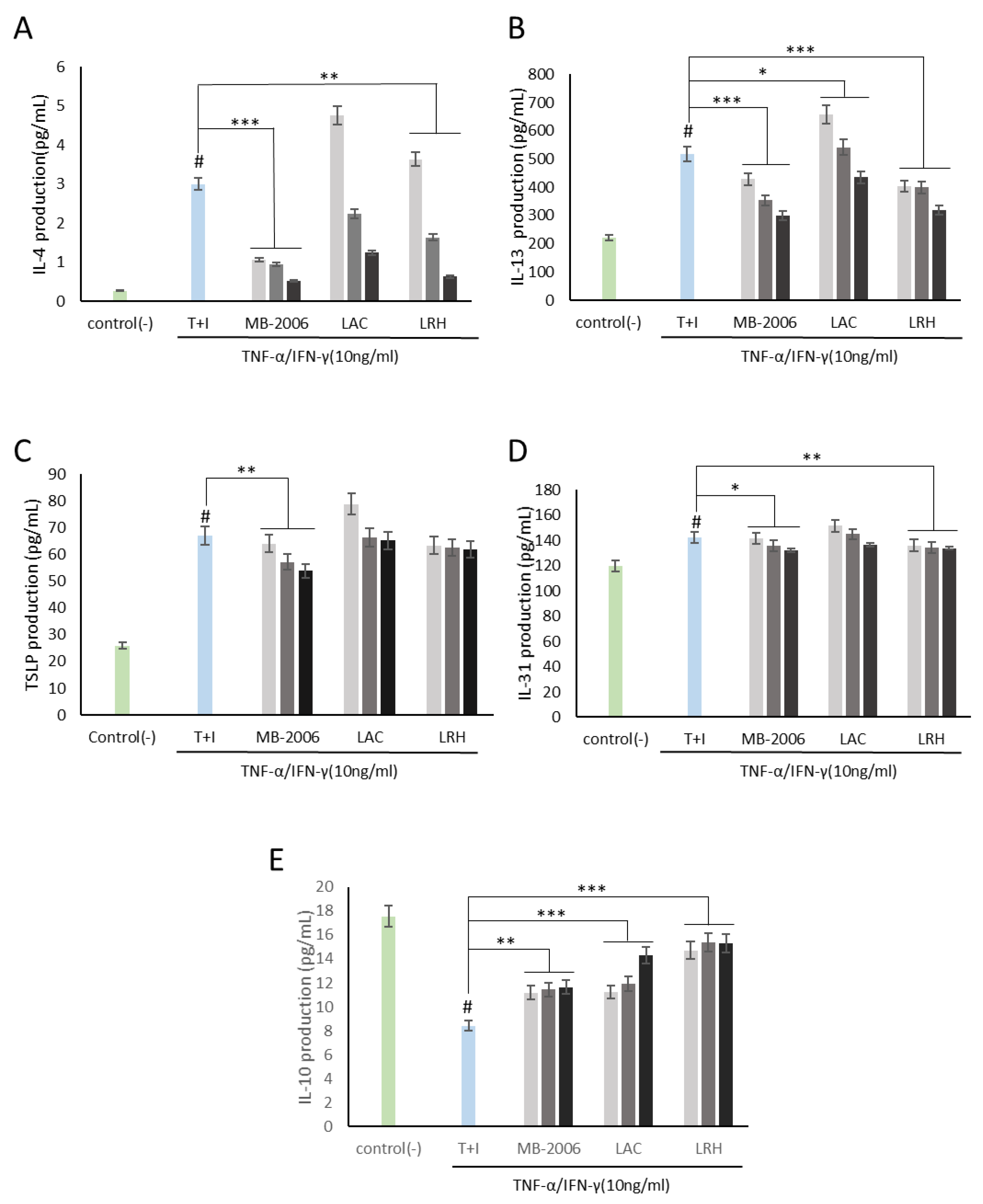
Figure 3.
MB-2006 and other strains affects the expression of chemokines in TNF-α/IFN-γ-induced HaCaT keratinocytes. Evolution of chemokines (TARC, and MDC) in concentration at 1x10⁷ bacteria/ml (), 1x10⁸ bacteria/ml () and 1x10⁹ bacteria/ml (). The bars indicate the mean ± SD, and significant differences are shown in comparison to T+I(TNF-α/IFN-γ only treated group). #p<0.001 vs. the negative control; **p<0.01, ***p<0.001 vs. T+I.
), 1x10⁸ bacteria/ml () and 1x10⁹ bacteria/ml (). The bars indicate the mean ± SD, and significant differences are shown in comparison to T+I(TNF-α/IFN-γ only treated group). #p<0.001 vs. the negative control; **p<0.01, ***p<0.001 vs. T+I.
Figure 3.
MB-2006 and other strains affects the expression of chemokines in TNF-α/IFN-γ-induced HaCaT keratinocytes. Evolution of chemokines (TARC, and MDC) in concentration at 1x10⁷ bacteria/ml (), 1x10⁸ bacteria/ml () and 1x10⁹ bacteria/ml (). The bars indicate the mean ± SD, and significant differences are shown in comparison to T+I(TNF-α/IFN-γ only treated group). #p<0.001 vs. the negative control; **p<0.01, ***p<0.001 vs. T+I.
), 1x10⁸ bacteria/ml () and 1x10⁹ bacteria/ml (). The bars indicate the mean ± SD, and significant differences are shown in comparison to T+I(TNF-α/IFN-γ only treated group). #p<0.001 vs. the negative control; **p<0.01, ***p<0.001 vs. T+I.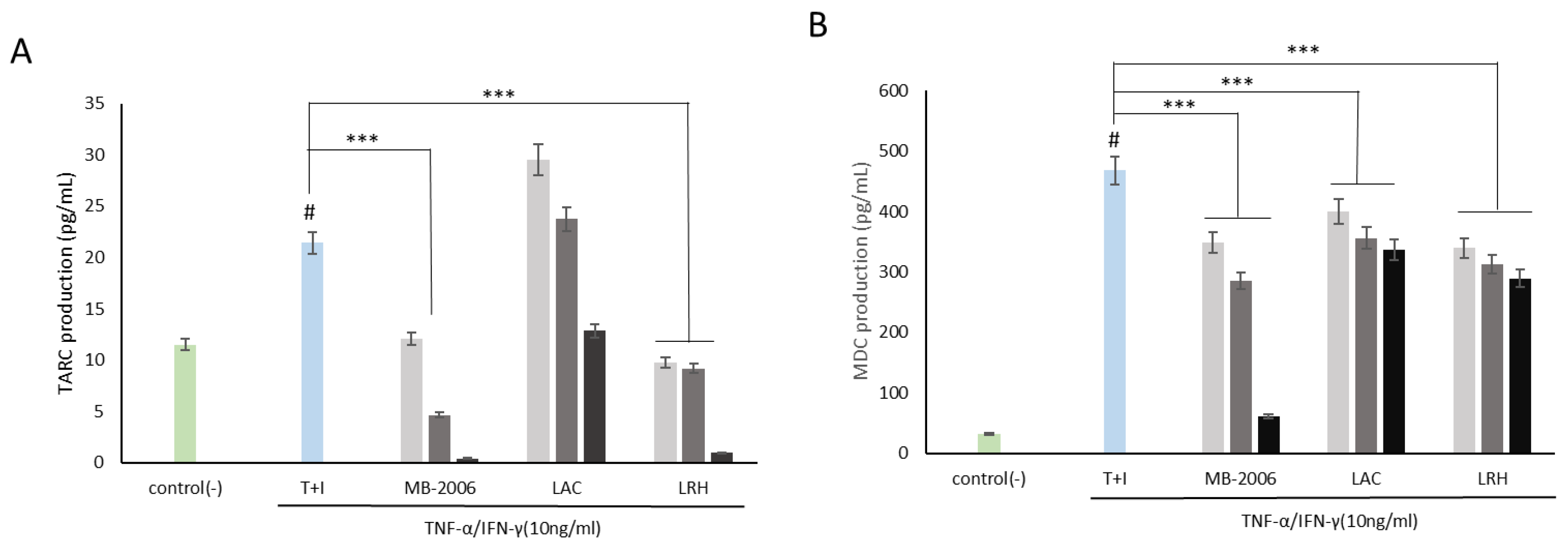
3.3. Inhibition of Chemokines Related to Immune Response by MB-2006 in TNF-α/IFN-γ-induced HaCaT Keratinocytes
Smilax china L. contains several bioactive components such as flavonoids, polyphenols, steroid saponins, and polysaccharides, and has shown potential against various pathologies due to its anti-inflammatory properties. In particular, chemokines such as TARC and MDC are inflammatory markers that also show the correlation in AD symptom and are known to be important mediators of inflammation and immune responses [52]. Additionally, it has been reported that the regulatory function of various inflammatory chemokines is amplified through lactic acid bacteria fermentation. The induction of TNF-α/IFN-γ leads to the upregulation of numerous cytokines (such as members of the IL family and TSLP) and chemokines (including TARC and MDC) in keratinocytes [53]. TARC and MDC, serving as specific ligands for the CC motif chemokine ligand 4 (CCR4) expressed by Th2 cells, have been associated with the pathogenesis of AD [20]. In a TNF-α/IFN-γ induced AD-like model using keratinocytes, our result showed that the levels of the inflammatory chemokines, TARC and MDC, were significantly elevated (Figure 3). These chemokines are pivotal in exacerbating the immune response and contribute to the chronic and persistent nature of AD, thereby making them essential therapeutic targets for effective treatment strategies.
As known well, AD is recognized as a complex inflammatory skin condition primarily driven by Th2 immune responses [54]. It is characterized by elevated levels of cytokines such as IL-4, IL-5, and IL-13, hallmark features of Th2 dominance. However, the disease pathology also involves Th1 cells and innate inflammatory cytokines, such as IFN-γ and IL-12, present in chronic AD lesions. Notably, IFN-γ expression correlates with the clinical progression of AD and decreases as the condition improves, which is associated with a broader immune response. This study utilized the TNF-α/IFN-γ induced HaCaT cell line as a model to simulate AD-like features, including changes in epidermal differentiation proteins influenced by both Th1 and Th2 cytokines (Figure 2 and 3). This model effectively mimicked the inflammatory changes observed in AD, making it a pertinent choice for investigating the disease’s pathogenic mechanisms. Despite primary human epidermal keratinocytes being the ideal model for studying AD skin characteristics, immortalized keratinocytes like HaCaT cells can provide a viable alternative for in vitro assays due to their adaptability and consistent response to cytokine stimulation [8].
Upon treatment with MB-2006, the levels of TARC and MDC decreased in a concentration-dependent manner (p<0.001) (Figure 3). This effect was most pronounced at a concentration of 1x10⁹ cells/ml, as shown in Figures 3A and 3B. These decreases of the levels of TARC and MDC were significantly more effective when compared to other postbiotics tested in the study, indicating the distinctive efficacy of MB-2006 in modulating inflammatory responses within this model. The potent anti-inflammatory effects of MB-2006 are likely due to the action of fermented flavonoids derived from Smilax china L., aligning with the well-documented anti-inflammatory capabilities of natural plant flavonoids. These results clearly indicate the synergistic effect of MB-2006 on the AD-like model and its therapeutic potential. Our findings validated the effects of postbiotics treatments in the AD model where Th1 and Th2 cytokines interact, highlighting the potential of MB-2006, to influence both innate and adaptive immune responses in the development and progression of AD.
Taken together, these results indicate that MB-2006 not only significantly alleviates AD symptoms by effectively reducing key inflammatory chemokines but also operates through a clearly defined biochemical pathway. The distinctive properties of MB-2006, especially its formulation with fermented Smilax china L, distinguished it from other postbiotics and showed its potential as a superior therapeutic agent in the treatment of AD. To further understand its mechanism, we investigated whether this suppression of AD symptoms was mediated through the NF-κB signaling pathway, which is known to regulate immune and inflammatory responses in Th2 [52].
3.4. Effect of MB-2006 on NF-κB Signaling Pathway in TNF-α/IFN-γ-induced HaCaT Keratinocytes
AD is driven by complex inflammatory pathways, where NF-κB, a key transcription factor, plays a central role. As known well, NF-κB, a key inflammatory transcription factor, is crucial for the expression of genes related to allergies, inflammation, and immune responses by regulating cytokines [54]. This NF-κB signaling pathway is regarded as the primary pre-inflammatory pathway, due to NF-κB’s role in expressing pre-inflammatory genes such as adhesion molecules, chemokines, and cytokines [55]. Cellular responses to extracellular stimuli, like bacterial or viral infections and stress, require rapid and precise signal transmission from cell-surface receptors to the nucleus [56]. These signaling pathways involve protein phosphorylation, leading to the activation of transcription factors such as NF-κB, which is essential for inflammation, immunity, cell proliferation, and apoptosis. NF-κB remains in a latent state and is activated via pathways that typically involve the phosphorylation and subsequent degradation of its inhibitor, IκB. This activation allows NF-κB to enter the nucleus and modulate gene expression, underlining its pivotal role in inflammatory responses as observed in AD models [57].
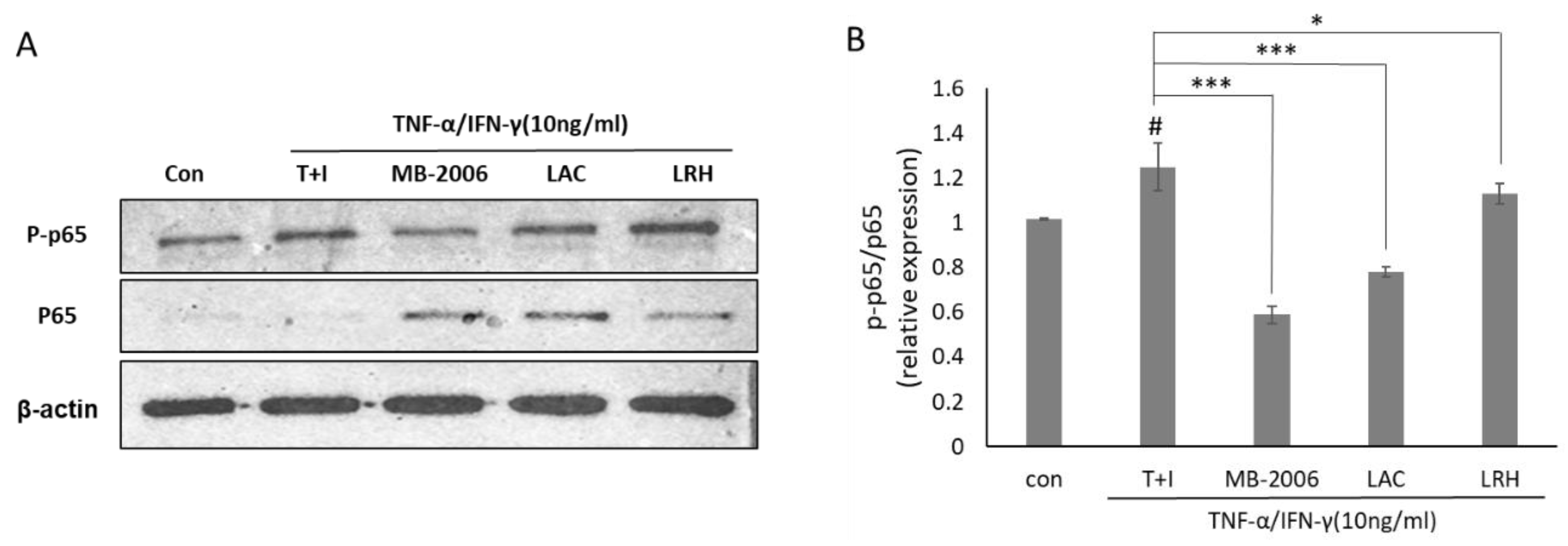
Since upregulation of NF-κB activity is directly associated with the inflammatory response in AD, the change in NF-κB activity in AD-like models may explain its relevance for the effects of MB-2006. To further investigate the impact of MB-2006 on the NF-κB signaling pathway in TNF-α/IFN-γ-induced HaCaT keratinocytes, it was analyzed using western blotting (Figure 4A). This results showed increased phosphorylation of p65 following TNF-α/IFN-γ treatment, while non-phosphorylated p65 was almost undetectable. To clarify this observation, we examined the relative p-p65/p65 ratio (Figure 4B). The p-p65/p65 ratio was elevated in TNF-α/IFN-γ induced HaCaT keratinocytes (p<0.05), whereas it was decreased in samples treated with other postbiotics. Notably, the p-p65/p65 relative ratio in MB-2006-treated cells was significantly reduced (p<0.001). This observation indicates a typical mechanism of action that involves downregulating the pathogenic process by reducing NF-κB activation rather than merely controlling its expression level to alleviate the inflammatory response in the AD-like model HaCaT cells. This result mean that MB-2006 can mitigate NF-κB activation by dephosphorylating p65, leading to a decrease in the inflammatory response in the AD-like model HaCaT cells. Particularly, when compared to other lactic acid bacteria, the greater NF-κB reduction effect observed with MB2006 can be attributed to the synergistic effect of Smilax china L. fermentation. Thus, it can be concluded that MB2006 suppresses the AD response by effectively regulating chemokines and cytokines through the reduction of NF-κB activity driven by inflammation.
5. Conclusions
In this study, we used TNF-α/IFN-γ-induced HaCaT keratinocytes as an in vitro model to mimic the inflammatory conditions characteristic of AD, enabling us to assess the therapeutic potential of the novel postbiotics, MB-2006. MB-2006, which was fermented with Smilax china L. extract, demonstrated significant immunomodulatory and anti-inflammatory effects. Our findings indicated that MB-2006 significantly affected the modulation of AD symptoms by reducing key inflammatory cytokines and chemokines such as IL-4, IL-13, TARC, and MDC, crucial to the pathogenesis of AD.
This effect appeared to result from the inhibition of NF-κB signaling, particularly through the reduction of NF-κB phosphorylation, a key factor in inflammatory responses. Furthermore, MB-2006 proved to be more effective than traditional heat-killed probiotics, due to the synergistic effects of Smilax china L. extract combined with its probiotic components. This combination seemed to mitigate its inflammatory responses and enhance vital anti-inflammatory cytokines, including IL-10, essential for immune regulation and maintaining tissue homeostasis. Collectively, these results suggest that MB-2006 has significant potential as a potent therapeutic alternative for treating AD.
MB-2006's impact could extend beyond just symptom management, potentially suggesting better approaches to AD treatment through its dual action on both cytokine production and immune regulation. The positive results from this study lay a foundational step towards the initiation of clinical trials aimed at further validating the effects of MB-2006. Therefore, future research should focus on conducting clinical trials to firmly establish MB-2006's efficacy and safety profile, ensuring its role as a transformative agent in the management of atopic dermatitis and potentially broadening its application to other immune-related skin conditions.
Author Contributions
Conceptualization, Y.-K.K.; methodology, Y.-K.K, M-J Cho.; validation, D.-J.K.; formal analysis, Y.-K.K.; writing-original draft preparation, Y.-K.K.; supervision, D.-J.K.; project administration, D.-J.K.; funding acquisition, D.-J.K. All authors have read and agreed to the published version of the manuscript.
Funding
This research was funded by MNH Bio Co., Ltd., Geonggi-do, Republic of Korea.
Conflicts of Interest
The authors are employed by the company MNHBio, and Author D.J. Kang owns stocks in MNH Bio Co, Ltd. The authors declare that the research was conducted in the absence of any commercial or financial relationships that could be construed as a potential conflict of interest. The authors declare that this study received funding from MNHBio. The funder was not involved in the study design, collection, analysis, interpretation of data, the writing of this article or the decision to submit it for publication. The funder was not involved in the study design, collection, analysis, interpretation of data, the writing of this article or the decision to submit it for publication" in the Conflict of Interest Section.. Author Y.K. Kim has received research grants from MNH Bio Co., Ltd. Author D.J. Kang owns stocks in MNH Bio Co, Ltd.
References
- Di Marzio, L.; Centi C Fau - Cinque, B.; Cinque B Fau - Masci, S.; Masci S Fau - Giuliani, M.; Giuliani M Fau - Arcieri, A.; Arcieri A Fau - Zicari, L.; Zicari L Fau - De Simone, C.; De Simone C Fau - Cifone, M.G.; Cifone, M.G. Effect of the lactic acid bacterium Streptococcus thermophilus on stratum corneum ceramide levels and signs and symptoms of atopic dermatitis patients. Experimental Dermatology 2003, 12, 615–620. [Google Scholar] [CrossRef] [PubMed]
- Kondo, H.; Ichikawa Y Fau - Imokawa, G.; Imokawa, G. Percutaneous sensitization with allergens through barrier-disrupted skin elicits a Th2-dominant cytokine response. European Journal of Immunology 1998, 28, 769–779. [Google Scholar] [CrossRef]
- Taïeb, A. Hypothesis: from epidermal barrier dysfunction to atopic disorders. Contact Dermatitis 1999, 41, 177–180. [Google Scholar] [CrossRef]
- Lee, J.Y.; Kim, Y.; Kim, J.-I.; Lee, H.-Y.; Moon, G.-S.; Kang, C.-H. Improvements in Human Keratinocytes and Antimicrobial Effect Mediated by Cell-Free Supernatants Derived from Probiotics. Fermentation 2022, 8. [Google Scholar] [CrossRef]
- Tolosa, L.; Donato, M.T.; Gómez-Lechón, M.J. General Cytotoxicity Assessment by Means of the MTT Assay. In Protocols in In Vitro Hepatocyte Research, Vinken, M., Rogiers, V., Eds.; Springer New York: New York, NY, 2015; pp. 333–348. [Google Scholar]
- Guenounou, M. [Cytokines and allergic response]. Ann Biol Clin (Paris) 1998, 56, 297–304. [Google Scholar] [PubMed]
- Ha, Y.; Lee, W.-H.; Kim, J.K.; Jeon, H.-K.; Lee, J.; Kim, Y.-J. Polyopes affinis Suppressed IFN-γ- and TNF-α-Induced Inflammation in Human Keratinocytes via Down-Regulation of the NF-κB and STAT1 Pathways. Molecules 2022, 27. [Google Scholar] [CrossRef] [PubMed]
- Kim, H.J.; Baek, J.; Lee, J.R.; Roh, J.Y.; Jung, Y. Optimization of Cytokine Milieu to Reproduce Atopic Dermatitis-related Gene Expression in HaCaT Keratinocyte Cell Line. Immune Network 2018, 13, e9. [Google Scholar] [CrossRef]
- Albanesi, C.; Scarponi C Fau - Sebastiani, S.; Sebastiani S Fau - Cavani, A.; Cavani A Fau - Federici, M.; Federici M Fau - Sozzani, S.; Sozzani S Fau - Girolomoni, G.; Girolomoni, G. A cytokine-to-chemokine axis between T lymphocytes and keratinocytes can favor Th1 cell accumulation in chronic inflammatory skin diseases. Journal of Leukocyte Biology 2001, 70, 617–623. [Google Scholar] [CrossRef] [PubMed]
- Ramanathan, S.; de Kozak Y Fau - Saoudi, A.; Saoudi A Fau - Goureau, O.; Goureau O Fau - Van der Meide, P.H.; Van der Meide Ph Fau - Druet, P.; Druet P Fau - Bellon, B.; Bellon, B. Recombinant IL-4 aggravates experimental autoimmune uveoretinitis in rats. The Journal of Immunology 1996, 1, 2209–2215. [Google Scholar] [CrossRef]
- Wu, S.; Pang, Y.; He, Y.; Zhang, X.; Peng, L.; Guo, J.; Zeng, J. A comprehensive review of natural products against atopic dermatitis: Flavonoids, alkaloids, terpenes, glycosides and other compounds. Biomed Pharmacother 2021. [Google Scholar] [CrossRef]
- Man, G.; Hu, L.-Z.; Elias, P.M.; Man, M.-Q. Therapeutic Benefits of Natural Ingredients for Atopic Dermatitis. Chinese journal of integrative medicine 2018, 24, 308–314. [Google Scholar] [CrossRef] [PubMed]
- Challinor, V.L.; Parsons Pg Fau - Chap, S.; Chap S Fau - White, E.F.; White Ef Fau - Blanchfield, J.T.; Blanchfield Jt Fau - Lehmann, R.P.; Lehmann Rp Fau - De Voss, J.J.; De Voss, J.J. Steroidal saponins from the roots of Smilax sp.: structure and bioactivity. Steroids 2012, 77, 504–511. [Google Scholar] [CrossRef] [PubMed]
- Huang, H.-L.; Lu, Z.-Q.; Chen, G.-T.; Zhang, J.-Q.; Wang, W.; Yang, M.; Guo, D.-A. Phenylpropanoid-Substituted Catechins and Epicatechins from Smilax china. Helvetica Chimica Acta 2007, 90, 1751–1757. [Google Scholar] [CrossRef]
- Li, Y.; Won, K.J.; Kim, D.Y.; Kim, H.B.; Kang, H.M.; Lee, S.Y.; Lee, H.A.-O. Positive Promoting Effects of Smilax China Flower Absolute on the Wound Healing/Skin Barrier Repair-Related Responses of HaCaT Human Skin Keratinocytes. Chem Biodivers 2021. [Google Scholar] [CrossRef] [PubMed]
- Huynh, N.T.; Van Camp, J.; Smagghe, G.; Raes, K. Improved release and metabolism of flavonoids by steered fermentation processes: a review. International Journal of Molecular Sciences 2014, 15, 19369–19388. [Google Scholar] [CrossRef] [PubMed]
- Kim, Y.-K.; Kang, D.-J. Anti-Pollution Activity, Antioxidant and Anti-Inflammatory Effects of Fermented Extract from Smilax china Leaf in Macrophages and Keratinocytes. Cosmetics 2022, 9. [Google Scholar] [CrossRef]
- Hill, C.; Guarner, F.; Reid, G.; Gibson, G.R.; Merenstein, D.J.; Pot, B.; Morelli, L.; Canani, R.B.; Flint, H.J.; Salminen, S.; et al. The International Scientific Association for Probiotics and Prebiotics consensus statement on the scope and appropriate use of the term probiotic. Nature Reviews Gastroenterology & Hepatology 2014, 11, 506–514. [Google Scholar] [CrossRef] [PubMed]
- Lizardo, M.V.P.; Tavaria, F.K. Chapter 19 - Probiotics and skin health. In Probiotics, Brandelli, A., Ed.; Academic Press: 2022; pp. 389-405.
- Lee, J.Y.; Park, J.Y.; Jeong, Y.; Kang, C.H. Anti-Inflammatory Response in TNFα/IFNγ-Induced HaCaT Keratinocytes and Probiotic Properties of Lacticaseibacillus rhamnosus MG4644, Lacticaseibacillus paracasei MG4693, and Lactococcus lactis MG5474. Journal of Microbiology and Biotechnology 2023, 28, 1039–1049. [Google Scholar] [CrossRef]
- Rusu, E.; Enache, G.; Cursaru, R.; Alexescu, A.; Radu, R.; Onila, O.; Cavallioti, T.; Rusu, F.; Posea, M.; Jinga, M.; et al. Prebiotics and probiotics in atopic dermatitis. Experimental and Therapeutic Medicine 2019, 19, 926–931. [Google Scholar] [CrossRef]
- Lew, L.C.; Liong, M.T. Bioactives from probiotics for dermal health: functions and benefits. Journal of Applied Microbiology 2013, 114, 1241–1253. [Google Scholar] [CrossRef]
- Doron, S.; Snydman, D.R. Risk and safety of probiotics. Clin Infect Dis 2015. [Google Scholar] [CrossRef] [PubMed]
- Kataria, J.; Li N Fau - Wynn, J.L.; Wynn Jl Fau - Neu, J.; Neu, J. Probiotic microbes: do they need to be alive to be beneficial? Nutr Rev 2009. [Google Scholar] [CrossRef] [PubMed]
- Lopetuso, L.; Graziani C Fau - Guarino, A.; Guarino A Fau - Lamborghini, A.; Lamborghini A Fau - Masi, S.; Masi S Fau - Stanghellini, V.; Stanghellini, V. Gelatin tannate and tyndallized probiotics: a novel approach for treatment of diarrhea. Eur Rev Med Pharmacol Sci 2017. [Google Scholar]
- Vinderola, G.; Sanders, M.E.; Cunningham, M.; Hill, C. Frequently asked questions about the ISAPP postbiotic definition. Front Microbiol 2023, 14, 1324565. [Google Scholar] [CrossRef]
- Piqué, N.; Berlanga, M.; Miñana-Galbis, D. Health Benefits of Heat-Killed (Tyndallized) Probiotics: An Overview. International Journal of Molecular Sciences 2019, 20. [Google Scholar] [CrossRef]
- Taverniti, V.; Guglielmetti, S. The immunomodulatory properties of probiotic microorganisms beyond their viability (ghost probiotics: proposal of paraprobiotic concept). Genes & Nutrition 2011, 6, 261–274. [Google Scholar] [CrossRef]
- Adams, C.A. The probiotic paradox: live and dead cells are biological response modifiers. Nutrition Research Reviews 2010, 23, 37–46. [Google Scholar] [CrossRef]
- De Marco, S.; Sichetti, M.; Muradyan, D.; Piccioni, M.; Traina, G.; Pagiotti, R.; Pietrella, D. Probiotic Cell-Free Supernatants Exhibited Anti-Inflammatory and Antioxidant Activity on Human Gut Epithelial Cells and Macrophages Stimulated with LPS. Evid Based Complement Alternat Med 2018, 2018, 1756308. [Google Scholar] [CrossRef] [PubMed]
- Ashraf, R.; Vasiljevic, T.; Smith, S.C.; Donkor, O.N. Effect of cell-surface components and metabolites of lactic acid bacteria and probiotic organisms on cytokine production and induction of CD25 expression in human peripheral mononuclear cells. J Dairy Sci 2014. [Google Scholar] [CrossRef]
- Bermudez-Brito, M.; Plaza-Díaz J Fau - Muñoz-Quezada, S.; Muñoz-Quezada S Fau - Gómez-Llorente, C.; Gómez-Llorente C Fau - Gil, A.; Gil, A. Probiotic mechanisms of action. Ann Nutr Metab 2012. [Google Scholar] [CrossRef]
- Ljungh, A.; Wadström, T. Lactic acid bacteria as probiotics. Curr Issues Intest Microbiol 2006, 7(2), 73–89. [Google Scholar] [PubMed]
- Nermes, M.; Salminen S Fau - Isolauri, E.; Isolauri, E. Is there a role for probiotics in the prevention or treatment of food allergy? Curr Allergy Asthma Rep 2013, 13(6), 622–630. [Google Scholar] [CrossRef]
- Gill, P.A.-O.; van Zelm, M.A.-O.; Muir, J.A.-O.; Gibson, P.A.-O. Review article: short chain fatty acids as potential therapeutic agents in human gastrointestinal and inflammatory disorders. Aliment Pharmacol Ther 2018, 48(1), 15–34. [Google Scholar] [CrossRef]
- van der Hee, B.; Wells, J.M. Microbial Regulation of Host Physiology by Short-chain Fatty Acids. Trends Microbiol 2021, 29(8), 700–712. [Google Scholar] [CrossRef] [PubMed]
- Siddiqui, M.A.-O.; Cresci, G.A.-O. The Immunomodulatory Functions of Butyrate. J Inflamm Res. 2021, 14, 6025–6041. [Google Scholar] [CrossRef]
- Parada Venegas, D.; De la Fuente, M.K.; Landskron, G.; González, M.J.; Quera, R.; Dijkstra, G.; Harmsen, H.J.M.; Faber, K.N.; Hermoso, M.A. Short Chain Fatty Acids (SCFAs)-Mediated Gut Epithelial and Immune Regulation and Its Relevance for Inflammatory Bowel Diseases. Front Immunol 2019, 11, 10:277. [Google Scholar]
- Jenab, A.; Roghanian, R.; Emtiazi, G.A.-O. Bacterial Natural Compounds with Anti-Inflammatory and Immunomodulatory Properties (Mini Review). Drug Des Devel Ther 2020, 18, 14:3787. [Google Scholar] [CrossRef] [PubMed]
- Ranjbar, R.; Vahdati, S.N.; Tavakoli, S.; Khodaie, R.; Behboudi, H. Immunomodulatory roles of microbiota-derived short-chain fatty acids in bacterial infections. Biomed Pharmacother, 1118. [Google Scholar]
- Kim, C.A.-O. Control of lymphocyte functions by gut microbiota-derived short-chain fatty acids. Cell Mol Immunol 2021, 18(5), 1161–1171. [Google Scholar] [CrossRef]
- Blacher, E.A.-O.; Levy, M.; Tatirovsky, E.A.-O.; Elinav, E. Microbiome-Modulated Metabolites at the Interface of Host Immunity. J Immunol.
- Yue, X.; Wen, S.; Long-kun, D.; Man, Y.; Chang, S.; Min, Z.; Shuang-yu, L.; Xin, Q.; Jie, M.; Liang, W. Three important short-chain fatty acids (SCFAs) attenuate the inflammatory response induced by 5-FU and maintain the integrity of intestinal mucosal tight junction. BMC Immunology 2022, 23, 19. [Google Scholar] [CrossRef]
- Seung-Je, L.; Eun-Gyeong, L.; Ga-Yeon, K.; Mi-Ji, J.; Sang-Yong, K.; Young-Min, K.; Geun, Y. Study of Anti-atopic Dermatitis Effects of Juice of Raphanus sativus var in HaCaT Cell Line. KSBB Journal 2017, 32, 311–318. [Google Scholar] [CrossRef]
- Yan, F.; Li, F.; Liu, J.; Ye, S.; Zhang, Y.; Jia, J.; Li, H.; Chen, D.; Mo, X. The formulae and biologically active ingredients of Chinese herbal medicines for the treatment of atopic dermatitis. Biomedicine & Pharmacotherapy 2020, 127, 110142. [Google Scholar] [CrossRef] [PubMed]
- Kim, K.; Kim, H.; Sung, G.Y. An Interleukin-4 and Interleukin-13 Induced Atopic Dermatitis Human Skin Equivalent Model by a Skin-On-A-Chip. International Journal of Molecular Sciences 2022, 23. [Google Scholar] [CrossRef] [PubMed]
- Hwang, D.H.; Koh, P.O.; Kang, C.; Kim, E. Rosa davurica Pall. improves DNCB-induced atopic dermatitis in mice and regulated TNF-Alpa/IFN-gamma-induced skin inflammatory responses in HaCaT cells. Phytomedicine 2021, 91, 153708. [Google Scholar] [CrossRef] [PubMed]
- Iwaszko, M.; Biały, S.; Bogunia-Kubik, K.A.-O. Significance of Interleukin (IL)-4 and IL-13 in Inflammatory Arthritis. LID - 10.3390/cells10113000 [doi] LID - 3000. Cells. [CrossRef]
- Datsi, A.A.-O.; Steinhoff, M.A.-O.; Ahmad, F.A.-O.; Alam, M.A.-O.; Buddenkotte, J.A.-O. Interleukin-31: The "itchy" cytokine in inflammation and therapy. European Journal of Allergy and Clinical Immunology 2021, 76, 2982–2997. [Google Scholar] [CrossRef] [PubMed]
- Nygaard, U.; Hvid, M.; Johansen, C.; Buchner, M.; Fölster-Holst, R.; Deleuran, M.; Vestergaard, C. TSLP, IL-31, IL-33 and sST2 are new biomarkers in endophenotypic profiling of adult and childhood atopic dermatitis. J Eur Acad Dermatol Venereol 2016. [Google Scholar] [CrossRef]
- Iyer, S.S.; Cheng, G. Role of interleukin 10 transcriptional regulation in inflammation and autoimmune disease. Crit Rev Immunol 2012. [Google Scholar] [CrossRef] [PubMed]
- Oh, J.H.; Kim, S.H.; Kwon, O.K.; Kim, J.H.; Oh, S.R.; Han, S.B.; Park, J.A.-O.; Ahn, K.S. Purpurin suppresses atopic dermatitis via TNF-α/IFN-γ-induced inflammation in HaCaT cells. International Journal of Immunopathology and Pharmacology 2022, 36, 03946320221111135. [Google Scholar] [CrossRef] [PubMed]
- Yang, C.-C.; Hung, Y.-L.; Ko, W.-C.; Tsai, Y.-J.; Chang, J.-F.; Liang, C.-W.; Chang, D.-C.; Hung, C.-F. Effect of Neferine on DNCB-Induced Atopic Dermatitis in HaCaT Cells and BALB/c Mice. International Journal of Molecular Sciences 2021, 22. [Google Scholar] [CrossRef] [PubMed]
- Liu, T.; Zhang, L.; Joo, D.; Sun, S.-C. NF-κB signaling in inflammation. Signal Transduction and Targeted Therapy 2017, 2, 17023. [Google Scholar] [CrossRef]
- Choi, J.H.; Lee, G.H.; Jin, S.W.; Kim, J.Y.; Hwang, Y.A.-O.; Han, E.A.-O.; Kim, Y.A.-O.; Jeong, H.A.-O. Impressic Acid Ameliorates Atopic Dermatitis-Like Skin Lesions by Inhibiting ERK1/2-Mediated Phosphorylation of NF-κB and STAT1. LID - 10.3390/ijms22052334 [doi] LID - 2334. International Journal of Molecular Sciences 2021, 26, 2334. [Google Scholar] [CrossRef]
- Karin, M.; Hunter, T. Transcriptional control by protein phosphorylation: signal transmission from the cell surface to the nucleus. Current Biology 1995, 5, 747–757. [Google Scholar] [CrossRef] [PubMed]
- Karin, M.; Ben-Neriah, Y. Phosphorylation Meets Ubiquitination: The Control of NF-??B Activity. Annual review of immunology 2000, 18, 621–663. [Google Scholar] [CrossRef] [PubMed]
Figure 1.
Effect of MB-2006 and other strains on cell viability. The HaCaT cells were treated with MB-2006 (1x10⁷, 1x10⁸ and 1x10⁹ cells/ml of culture supernatant), and LAC and LRH (1x10⁷, 1x10⁸ and 1x10⁹ cells/ml of PBS). The data are presented as the mean±SEM (n=3).
Figure 1.
Effect of MB-2006 and other strains on cell viability. The HaCaT cells were treated with MB-2006 (1x10⁷, 1x10⁸ and 1x10⁹ cells/ml of culture supernatant), and LAC and LRH (1x10⁷, 1x10⁸ and 1x10⁹ cells/ml of PBS). The data are presented as the mean±SEM (n=3).
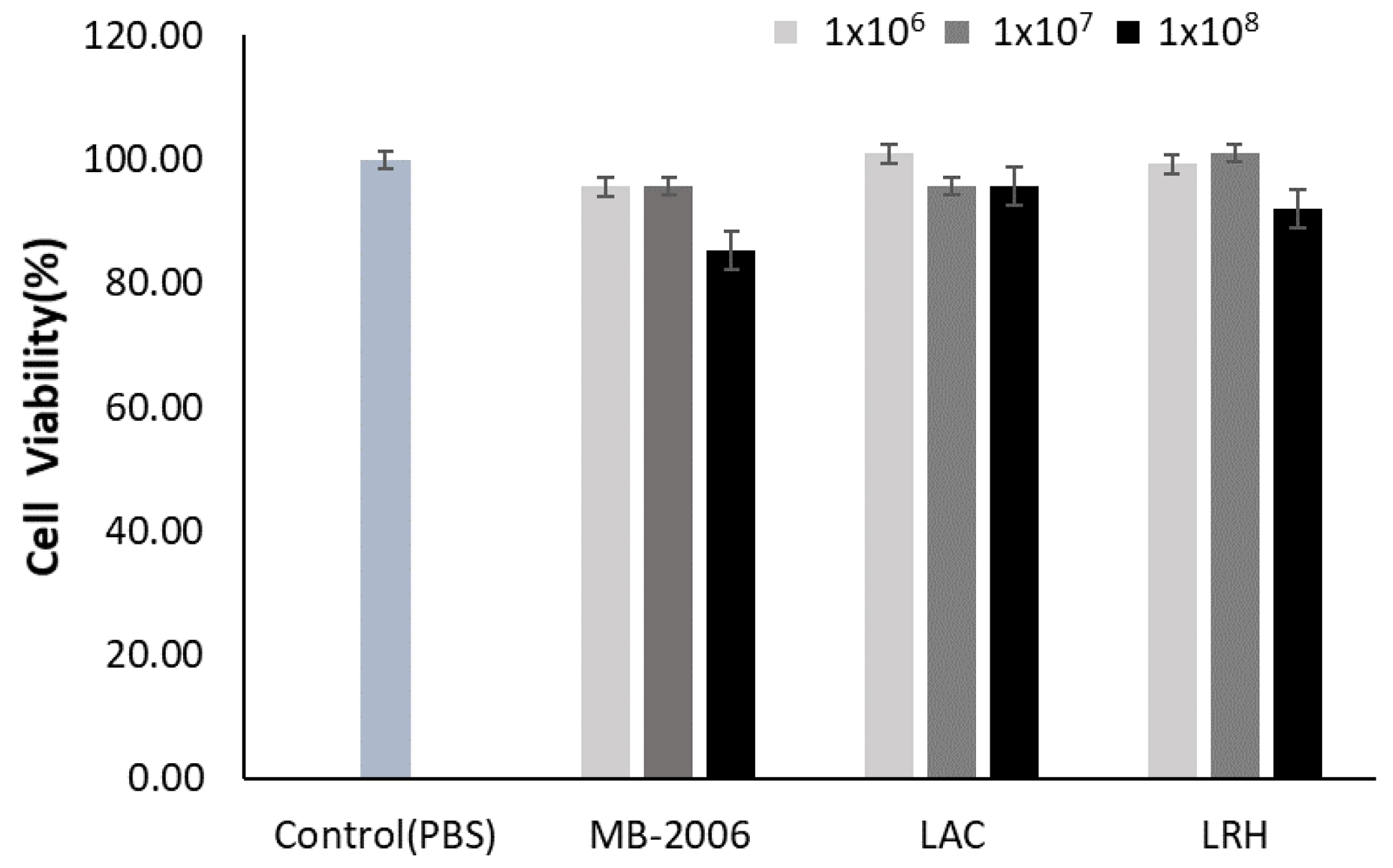
Figure 4.
Effect of MB-2006 and other strains on TNF-α/IFN-γ-induced NF-κB activation in HaCaT cells. The protein expression of NF-κB (A) were normalized ton non-phosphorylated protein. The bars (B) indicate the mean±SD, and significant differences are shown in comparison to T+I(TNF-α/IFN-γ only treated group). #p<0.001 vs. the negative control; **p<0.01, ***p<0.001 vs. T+I.
Figure 4.
Effect of MB-2006 and other strains on TNF-α/IFN-γ-induced NF-κB activation in HaCaT cells. The protein expression of NF-κB (A) were normalized ton non-phosphorylated protein. The bars (B) indicate the mean±SD, and significant differences are shown in comparison to T+I(TNF-α/IFN-γ only treated group). #p<0.001 vs. the negative control; **p<0.01, ***p<0.001 vs. T+I.
Disclaimer/Publisher’s Note: The statements, opinions and data contained in all publications are solely those of the individual author(s) and contributor(s) and not of MDPI and/or the editor(s). MDPI and/or the editor(s) disclaim responsibility for any injury to people or property resulting from any ideas, methods, instructions or products referred to in the content. |
© 2024 by the authors. Licensee MDPI, Basel, Switzerland. This article is an open access article distributed under the terms and conditions of the Creative Commons Attribution (CC BY) license (http://creativecommons.org/licenses/by/4.0/).
Copyright: This open access article is published under a Creative Commons CC BY 4.0 license, which permit the free download, distribution, and reuse, provided that the author and preprint are cited in any reuse.


