

Submitted:
11 May 2024
Posted:
14 May 2024
You are already at the latest version
Abstract
The review emphasizes the importance of the petroleum refining industry in Iraq, highlighting the environmental obstacles it presents. The industry's significant role in the country's economy necessitates a crucial evaluation and improvement of the environmental impact of oil refining in Iraq. The study scrutinizes the progression of crude oil refining techniques, from basic distillation to advanced technologies like vacuum distillation, thermal cracking, and catalytic cracking, all of which are associated with environmental damage. The refining processes produce hazardous gases such as carbon dioxide, carbon monoxide, sulfur oxides, and nitrogen oxides. Refineries also consume substantial amounts of water and discharge effluent, causing environmental issues. It highlights that significant solid waste is produced throughout the refining process, contributing to the environmental difficulties caused by the petroleum industry in Iraq. The paper proposes several approaches to enhancing the environmental performance of Iraq's petroleum refining processes through a comprehensive environmental impact assessment, focusing on identifying problematic areas, measuring environmental damage, and proposing solutions. It provides insights into the types of waste generated in Iraqi refineries, such as polluted hydrocarbon liquids, and highlights the environmental impact of leaks and spills from oil and byproducts, affecting groundwater and soil quality. The paper suggests reusing consumable auxiliary agents and mineral elements in other industrial fields to minimize waste generation, as well as employing advanced technologies like artificial intelligence and machine learning for efficient refining processes and reduced effluents. By offering suggestions to policymakers, industry stakeholders, and environmental regulators in Iraq, the study aims to inform sustainable practices and environmental management strategies within the petroleum refining sector, contributing to improved environmental outcomes and sustainable development in the industry.
Keywords:
petroleum refining industry
; environmental impact assessment
; Iraq
; sold wastes
; wastewater
; gaseous emissions
; sustainable development
1. Introduction
Iraq is one of the biggest oil producers, so it is in the lead when it comes to the problem of petroleum industry impact on the environmental [1]. The petroleum refining industry is very important to the country's income [2], but it also causes a lot of problems for the environment. Realizing how important it is for recovery to last, there is an urgent need to evaluate and improve the environmental impact of oil refining in Iraq [3,4]. The oil industry is crucial to Iraq's economy because it provides the country's primary revenue stream. Both the production and export of crude oil and its refining are fundamental to the oil sector and contribute to Iraq's air, water, and other forms of pollution [5]. Over the past century, crude oil refining has progressed from a relatively straightforward process of distillation [6], to one that requires increasingly sophisticated methods executed in extremely hot and pressurized environments [7,8]. For instance, vacuum distillations, thermal cracking, and catalytic cracking are only a few examples [9]. Refineries in the oil industry take used of crude oil to create new petroleum products like gasoline, diesel, kerosene, fat, and more [10,11]. Gases such as carbon dioxide (CO2), carbon monoxide (CO), sulfur oxides (SOx), and nitrogen oxides (NOx) are produced in enormous quantities as a consequence [12]. Refining processes are consuming and discharging vast quantities of water and wastewater, respectively [13]. Cooling towers and heat exchangers use a lot of water to transfer heat, and when they're done, they release some of that water back into the environment, which often contains a lot of contaminants and hydrocarbons [14]. Lastly, petroleum refining like other heavy polluting industrial processes, at which substantial solid wastes are generated during extensive sediment refining processes; these leftovers are disposed of immediately because they cannot be recycled for industrial use [15,16,17].
Environmental impact control and sustainable resource management are important issues for companies all over the world today. One of these that stands out is the oil refining business, which has huge impacts on ecosystems all over the world [18,19]. As people worry more about climate change and environmental damage, it becomes more important to look at how oil processing affects the environment and find ways to make it better[20]. The environmental impact assessment (EIA) gives us a complete way to look at how an object or process affects the environment throughout its whole life, from being made to being thrown away. When it comes to refining gasoline [21], EIA gives us useful information about the environmental impacts of different steps in the process, such as recovery the crude oil, the refining steps, and distributing the finished products.
The primary objective of this research is to improve the environmental performance of Iraq's petroleum refining processes through a comprehensive environmental impact assessment. This research aims to find the most problematic areas of the refining processes from an environmental perspective, measure the damage they do, and suggest ways to fix it. Sustainable practices and environmental management strategies within the petroleum refining sector can be better informed by the findings of this study, which are likely to offer significant recommendations to policymakers, industry stakeholders, and environmental regulators in Iraq. In addition, our study adds to the larger conversation about sustainable development by drawing attention to the possibilities and threats posed by petroleum refining in resource-rich but ecologically fragile regions like Iraq. Iraq may work towards a petroleum refining business that is more sustainable and resilient by working together to improve environmental performance. This industry can then adhere to the ideals of environmental sustainability and long-term socio-economic development.
2. Refining Processes in Iraqi Refineries
The primary refining employed in Iraqi oil refineries is comprising several main processes, these processes are essential for transforming crude oil into various refined products that usually conducted in main refineries in Iraq, see Figure 1.
Distillation, the cornerstone of refining, this process stands as the most crucial operation within Iraqi refineries, present in all facilities regardless of size or complexity [22]. During distillation, crude oil undergoes heating to temperatures exceeding the boiling points of its constituent components. This heating facilitates the separation of these components based on their differing volatilities [23]. Iraqi refineries utilize various distillation techniques, including atmospheric and vacuum distillation, to achieve optimal separation [24].
Refining processes deal with crudes containing impurities [25], larger refineries in Iraq incorporate dedicated units for the removal of undesirable impurities from refined oil products. These impurities typically include sulfur, nitrogen, and heavy metals. Their elimination enhances the quality and performance of the final products [26].
Upgrading quality, similar to impurity removal units, processes dedicated to quality improvement are primarily found in larger Iraqi refineries. These processes, often employing auxiliary factors, elevate the quality of refined products to meet specific market demands [27].
Blending for desired properties, across refinery sizes, mixing and blending operations play a vital role in achieving products with specific qualities. These units may exist in both large and small refineries. The process involves calculated blending of various oil derivatives, such as gasoline, fuel oil, or grease, to yield products with targeted properties. Examples include gasoline blending units, fuel oil blending units, and fat blending units [28].
Iraqi oil refineries rely on a combination of distillation, impurity removal, quality improvement, and blending processes to transform crude oil into a diverse range of refined products. The presence of certain processes, like impurity removal and quality improvement, is primarily concentrated in larger refineries. This summary provides a foundational understanding of the essential production processes utilized in Iraqi oil refineries [29].
Iraq has a variety of refineries, with a production capacity ranging from 10 to 310 barrels per day [30]. There are about seventeen refineries distributed over the geographical area of Iraq. The total refining capacity of Iraqi refineries in 2017 was about 594 thousand barrels per day of various oil products.
3. Environmental Impact of Iraqi Oil Refineries
Oil refineries are considered sources of pollution due to the handling of significant amounts and different forms of hydrocarbons under high-temperature conditions [31]. the air, water, and soil can be polluted in various ways. Leaks and spills of oil and its byproducts from reservoirs and pipelines at refineries have impacted groundwater sources and soil at various oil sites [32].
3.1. Gaseous and Particulate Emissions
These pollutants consist of gases and particulates resulting from production processes. These pollutants are formed as the combustion products of the fuel used in refining units, furnaces, boilers, and lubricating oil units and are emitted into the air through chimneys prepared for this purpose and distributed between these units. The discarded gases contain a high percentage of combustion products such as carbon monoxide CO, carbon dioxide CO2, sulfur oxides (SO2 and SO3), nitrogen oxides (NO2 and NO3), hydrogen sulfide H2S, and water vapor [33]. The percentages of these gases vary depending on the quality of the fuel used and the type of combustion, whether integrated or non-integrated, or as products of the same production processes. Hydrocarbon gases that are not used are generated and burned through burner systems equipped for each refinery, resulting in particulates that are emitted into the air [34]. These gases contain varying proportions of hydrocarbon gases such as methane, ethane, propane, butane, etc., and also contain other gases such as carbon oxides (COx), sulfur oxides (SOx), nitrogen oxides (NOx), and H2S [35]. Table 1 shows some of results of these emissions [36,37].
Various gaseous pollutants resulting from leaks in valves, pumps, and pipes, as a result of the age of the equipment, the lack of necessary maintenance, and the lack of spare parts, led to the emergence of this situation [38]. Air-emitting soot particulate residues, which are formed in the case of incomplete combustion of fuel used in boilers and furnaces in unstable quantities and are volatile with combustion products, and there are no available means of controlling such residues [39]. For instance, at the Kirkuk Oil Refinery, the quantity of total suspended particles (TSP) in the air reaches 956.8 μg/m3. This shows how oil refineries significantly affect the air quality in the nearby regions[40].
3.2. Liquid Wastes
These wastes are categorized into two primary types: polluted hydrocarbon liquids generated during operational activities in the refinery units. Leakage of these liquids can happen due to equipment corrosion or fracture, such as in heat exchangers, boilers, or pipelines transporting petroleum products or crude oil near refineries [41]. Refinery operations generate wastewater including chemicals, biological agents, and heat, particularly in units processing light oils and fats [42]. These units contain equipment including heat exchangers, boilers, and those used for cleaning or firefighting. The amount of liquid waste generated by refineries varies depending on their output capacity and operating efficiency. The effluents from Iraqi refineries could significantly affect the environmental quality of the rivers they are released into [43,44,45,46,47], as seen in Table 2.
3.3. Solid Wastes
These wastes consist of the remaining solid hydrocarbon deposits in the refining process, which cannot be used industrially, are called sludge, contain a high percentage of moisture, and are collected in certain places to be processed later [48]. These solid wastes do not form in all Iraqi refineries, as most of these refineries do not form these wastes for the simplicity of the production process in them, and the refinery in which the largest amount of sludge waste accumulates is the Al-Dura refinery, where it generates 400 m3 per month of solid wastes before treatment. In addition, the other source of solid waste in large refineries is the waste of solid spent auxiliary factors, which do not accumulate periodically but intermittently depending on the operational life of these auxiliary factors.
4. Means Employed for Waste Management and Treatment in Iraqi Refineries
4.1. Gaseous Wastes Controlling
Gaseous pollutants are generated from various refining units such as furnace units and boilers as a result of fuel combustion or from other units. They are emitted into air by either through flare gas system or reused in combustion processes throughout the refinery, because they contain combustible gases of hydrocarbon components and others [49]. The gases resulting from combustion consist of primarily CO and CO2, in addition to other gases such as sulfur oxides (SOx), nitrogen oxides (NOx), etc., as previously mentioned, depending on the quality of the fuel and the type of combustion [50]. As for the gases resulting from the operational operations of the refinery, which contain gases such as methane, ethane, propane, butane, and others gases, they are burned through the flaring system in the refinery to get rid of the environmentally affecting properties of these gases. The Iraqi refineries are flaring about 17 billion cubic meters in 2020 as Watkins stated in his article [51]. Some Iraqi refineries such as Al-Dura refinery uses desulfurization technique to eliminate or reduce sulfur oxides gases emission from refinery products.
4.2. Liquid Effluents Treatment
The means of treating liquid wastes vary depending on the production capacity of the Iraqi refineries and the destination of disposal of these wastes and their quantities, as stated in Figure 2. For large refineries such as the Al-Dura refinery, the treatment of liquid waste is carried out in stages: First, physical treatment, hydrocarbons and suspended solids are isolated in basins that contain special skimmers for hydrocarbons that float on the surface [52]. There are other skimmers at the bottom of the basin in which stagnant solids are collected after pre-treatment. Second, chemical treatment, chemicals such as alum or polyelectrolyte, which act as agglomerates of pollutants, are added on the basis of the formation of nuclei for these agglomerates [53]. Therefore, after the agglomeration of the pollutants, they are removed by making them float on the surface with the help of a stream of pressurized oxygen through special devices to release air bubbles, lifting the agglomerated particles to the surface and then removing them through scrapers. Third, biological treatment, the organic and inorganic substances dissolved in the lagging water are removed by aerobic bacteria [54], where phosphoric acid and urea are added as nutrients to these bacteria with the presence of aerators to generate the oxygen necessary for bacterial respiration and oxidation [55,56]. After these stages, the treated water is discharged into the river after being examined and samples are withdrawn on a daily basis to monitor the variables affecting the environment [57]. In the event that the wastewater is not thrown into the rivers, the liquid waste is initially treated limited to the physical stage of recovering the hydrocarbon materials that can be used and then disposed into a land adjacent to the refinery as in most small refineries [58].
A new concept for the treatment of petroleum refineries waste is the recycling of wastewater, which represents the reprocessing of materials formed in waste and their treatment to produce products with a harmless impact on the environment and at the lowest possible cost and energy [59]. There are different techniques in the treatment of waste resulting from oil refineries and they are in continuous development, as for the treatment of liquid waste containing phenol compounds, electrochemical techniques can be used to treat them.
4.3. Solid Wastes
During the refining process, the generated solid waste consists of items that cannot be reused and do not contain any gas or liquid. Solid waste from refining processes must be properly disposed of [60], when compared to other chemical industries, the amount of solid waste produced by refining processes is often lower. Two types of solid waste are generated by the Iraqi refineries. One type is harmless to the environment, while the other poses a threat due to factors like high metal or hydrocarbon content [61].
The quantity of solid waste is influenced by the efficiency of production methods and the output capacity of the refinery. Small refineries do not produce considerable amounts of this waste. In large refineries, large quantities of solid waste (sludge) are generated, such as the Al-Dura refinery, where it is estimated at 400 m3/ month before treatment, where it shrinks to 100 m3/ month after the evaporation process, and the residue remains a residual solid, where these residues are treated with a solution of light as an oxidant, so that these residues are converted from contaminated materials to uncontaminated materials, and then these residues are collected in the form of piles in pits to be exposed again to the sun to dry completely to become ready for dumping in the refinery's landfill site.
5. Environmental Impact Assessment of Iraqi Refineries
Iraqi refineries are a significant environmental concern and issue due to their emission of gaseous, liquid, and solid pollutants, handling of hazardous materials, widespread geographical presence in Iraq, and proximity to water sources [62]. The reality of gas emissions in Iraqi refineries is one of the environmentally important problems due to the diversity of emitted materials, as it includes combustion products and polluting gases such as sulfur oxides (SOx), nitrogen oxides (NOx), hydrocarbon gases, hydrogen sulfide gas and other gases, which negatively affect the public health of nearby communities. The liquid wastewater of the Iraqi refineries discharged to water sources, despite their treatment, causes pollution to these sources due to the obsolescence of the treatment units operating in these refineries or their lack of means or techniques necessary for the full treatment of liquid effluents [63]. The refining technologies in Iraqi refineries have not kept up with global advancements in crude oil refining, leading to the release of large amounts of waste [64]. This issue can be addressed by implementing modern technologies to enhance production efficiency [65].
The lack of spare parts for equipment and pipes, along with the use of temporary substitutes, are contributing factors to the rise in various pollutants, including gaseous emissions and liquid releases like leaks, malfunctions, and equipment corrosion [66]. Not all Iraqi refineries have treatment units for liquid wastewater. When accessible, these machines may lack appropriate treatments or be unable to handle the quantities of residual liquid waste due to small design capacity or obsolescence [67]. The analysis of liquid leftovers from Iraqi refineries discharged into the river shows high levels of sulfate or chloride components, which comply with current environmental regulations [68]. The absence of adequate measurement tools for the gases emitted in Iraqi refineries results in a lack of understanding of the quantities of these gases. This leads to a lack of control mechanisms for emissions if certain pollutants exceed acceptable limits.
The infrastructure of Iraqi refineries can be developed and upgraded using modern operational technologies [69]. This will lead to increasing the efficiency of the refining process and thus reducing the quantities of waste of all kinds. For example, by developing the available equipment and equipping it with accurate control means that can take full advantage of the fuel used and burn it completely. At the same time, improving the quality of the fuel used will reduce the pollutants released to the air. Emissions of sulfur oxides (SOx), nitrogen oxides (NOx), and hydrogen sulfide H2S can be reduced through the use of fuels with low content or through the establishment of desulfurization and nitrogen removal units of emitted gases, as it is being applied in AL-Dura refinery [70].
To reduce liquid effluents, it is possible to use as little water as possible by recycling the water used in cooling. This technology is applied in some refineries, but it can be applied in all refineries currently operating.
To develop the treatment of solid waste called sludge, it is preferable to find ways to analyze the components of this sludge for two reasons. To know whether it contains toxic components with harmful environmental effects so that it can be treated. The second is the possibility of benefiting from this sludge in other industrial fields, for example, its use after certain treatments as a chemical fertilizer in the field of agriculture as applied in some international technologies [71].
The consumable auxiliary agents can be reused after reactivation or in the event that they cannot be reused, the mineral elements can be used in the auxiliary agents after extraction in other industrial fields, for example as additives in the cement industry [72,73]. To control the unstable quantities of soot generated in boilers and ovens, means of control such as cyclone or various precipitators can be established. Employing artificial intelligence and machine learning techniques will induce an efficient refining process leading to reduce effluents generated from this industry [74].
Conclusions
The study emphasizes the importance of conducting environmental impact assessments to improve the environmental performance of Iraq's petroleum refining industry, given its significant impact on air, water, and soil quality. Recommendations include reusing consumable auxiliary agents, utilizing mineral elements in other industrial fields, and implementing advanced technologies like artificial intelligence and machine learning for efficient refining processes and reduced effluents. The study seeks to inform policymakers, industry stakeholders, and environmental regulators in Iraq about sustainable practices and environmental management strategies within the petroleum refining sector, contributing to improved environmental outcomes and sustainable development in the industry.
To support its environmental impact assessments and recommendations, the study examined some Iraqi oil refinery data. The study did not examine the economic impact of the planned environmental rules on Iraq's petroleum refining company. AI and machine learning applications for improving the environmental impact of Iraqi oil refineries may be important for future researches. Social effects and community views of Iraq's petroleum refining industry's environmental effects should be addressed. Future studies on sustainable methods and environmental management in Iraqi oil refineries must consider legislative or government restrictions.
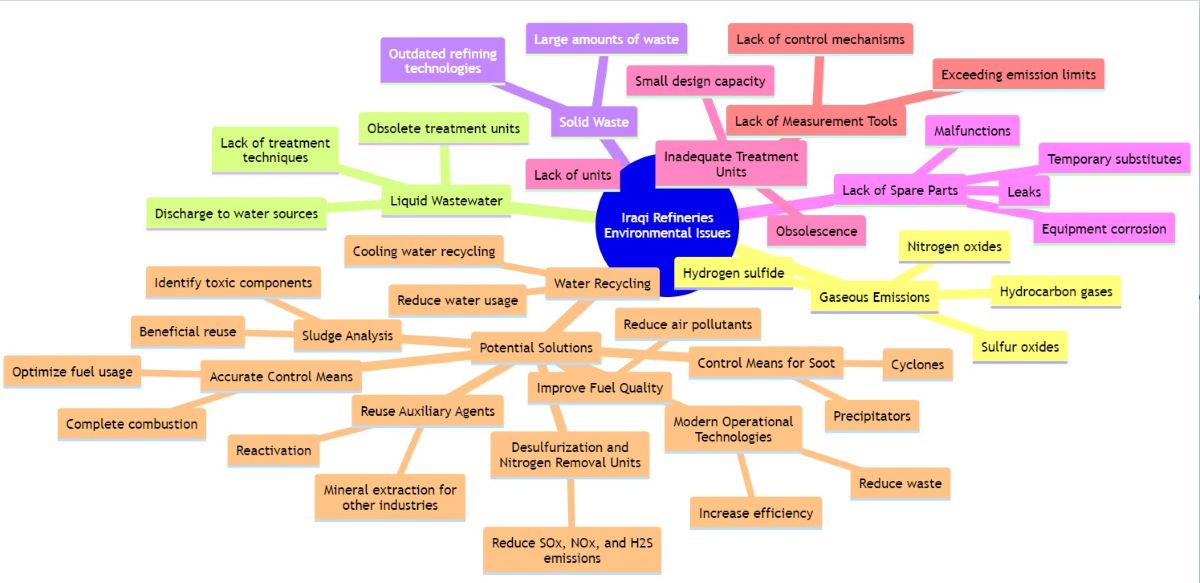
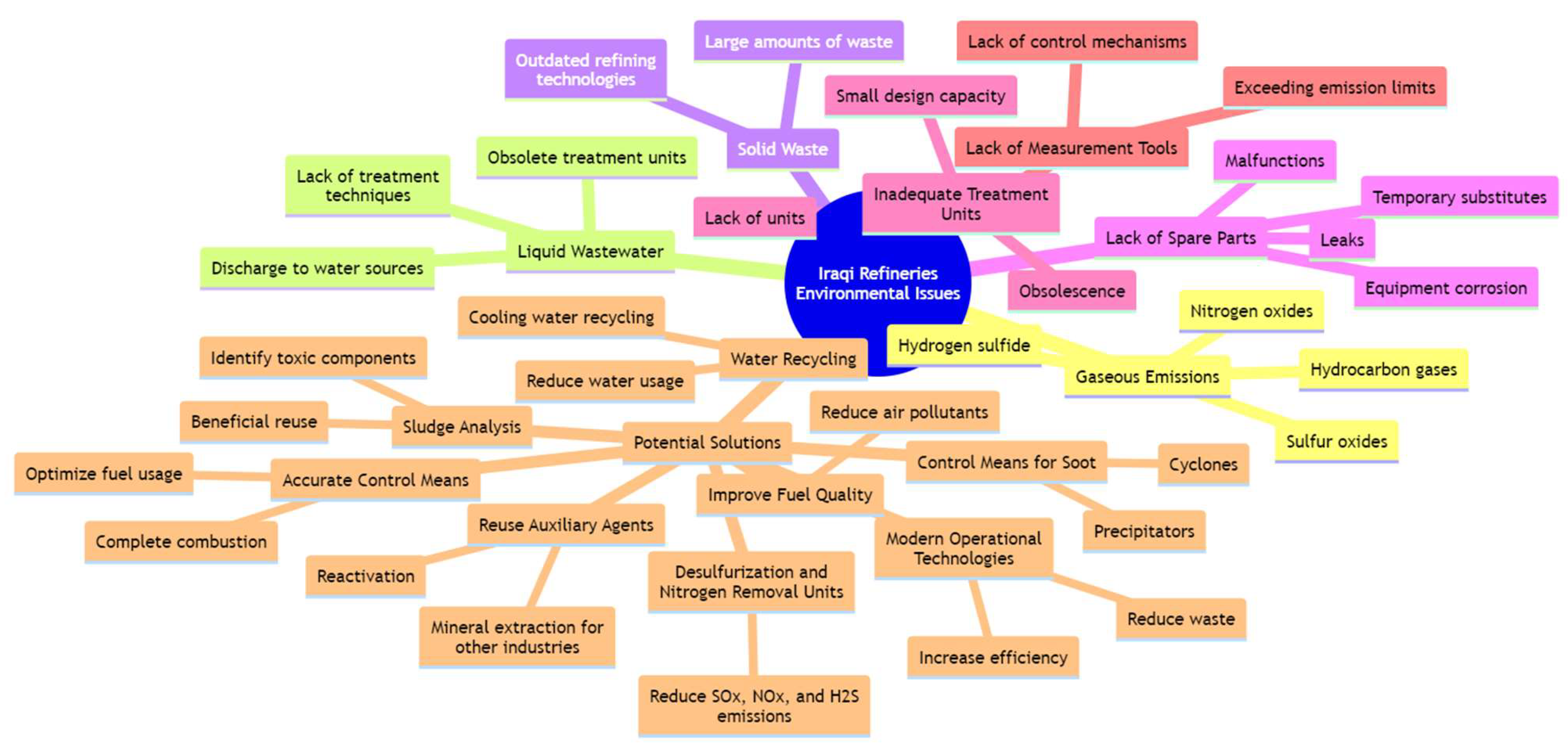
Figure 3.
Mind map for all issues concerning environmental impact assessment of Iraqi refineries.
References
- Issa, H.M. Streamlining aromatic content detection in automotive gasoline for environmental protection: Utilizing a rapid and simplified prediction model based on some physical characteristics and regression analysis. Results Eng. 2024, 21. [Google Scholar] [CrossRef]
- Semenova, T.; Al-Dirawi, A. Economic Development of the Iraqi Gas Sector in Conjunction with the Oil Industry. Energies 2022, 15, 2306. [Google Scholar] [CrossRef]
- Soltanieh, M.; Zohrabian, A.; Gholipour, M.J.; Kalnay, E. A review of global gas flaring and venting and impact on the environment: Case study of Iran. Int. J. Greenh. Gas Control. 2016, 49, 488–509. [Google Scholar] [CrossRef]
- Issa, H.M. Prediction of octane numbers for commercial gasoline using distillation curves: a comparative regression analysis between principal component and partial least squares methods. Pet. Sci. Technol. 2024, 42, 1233–1249. [Google Scholar] [CrossRef]
- Mokif, L.A.; Jasim, H.K.; Abdulhusain, N.A. Petroleum and oily wastewater treatment methods: A mini review. Mater. Today: Proc. 2022, 49, 2671–2674. [Google Scholar] [CrossRef]
- Essa, H.M. Removal of Corrosion Product from Inside Heat Exchanger Tubes Used in Topping Unit in Azzawia Refinery/Libya by Chemical Methods. J. Corros. Sci. Eng. 2006, 10, 1–10. [Google Scholar]
- Fahad, A.Y.; Shaalan, H.Y. Investment Trends in the Iraqi Oil Sector (Upstream–Oil Refining–Gas Treatment-Transportation-Distribution)(2003–2020). J. Pet. Res. Stud. 2022, 12, 123–147. [Google Scholar]
- Abdullah, I.S. Foreign Direct Investment and its Impact on the Oil Sector in Iraq. Al-Anbar University Journal of Economic & Administration Sciences 2020. 12(31).
- Aljamali, N.M.; Salih, N.S. Review on chemical separation of crude oil and analysis of its components. J. Pet. Eng. Technol. 2021, 11, 35–49p. [Google Scholar]
- Ekaab, N.S.; Hamza, N.H.; Chaichan, M.T. Performance and emitted pollutants assessment of diesel engine fuelled with biokerosene. Case Stud. Therm. Eng. 2019, 13, 100381. [Google Scholar] [CrossRef]
- Issa, H.M.; Salih, R.H.H. Efficient and Simplified Modeling for Kerosene Processing Quality Detection Using Partial Least Squares-Discriminant Analysis Regression. ARO-THE Sci. J. KOYA Univ. 2024, 12, 135–142. [Google Scholar] [CrossRef]
- Adebiyi, F.M. Air quality and management in petroleum refining industry: A review. Environ. Chem. Ecotoxicol. 2022, 4, 89–96. [Google Scholar] [CrossRef]
- Issa, H.M. An initial environmental assessment for the potential risk of the developing industry impact on the surface water resources in the Kurdistan Region-Iraq. J. Garmian Univ. 2014, 1, 35–48. [Google Scholar]
- Abdulhussein, Z.A.; Al-Sharify, Z.T.; Alzuraiji, M. Flow of crude oil in pipes and its environmental impact. A review. PROCEEDINGS OF THE TIM20-21 PHYSICS CONFERENCE. LOCATION OF CONFERENCE, RomaniaDATE OF CONFERENCE;
- Glushkov, D.O.; Paushkina, K.K.; Shabardin, D.P. Co-combustion of coal processing waste, oil refining waste and municipal solid waste: Mechanism, characteristics, emissions. Chemosphere 2019, 240, 124892. [Google Scholar] [CrossRef] [PubMed]
- Elmobarak, W.F.; Hameed, B.H.; Almomani, F.; Abdullah, A.Z. A Review on the Treatment of Petroleum Refinery Wastewater Using Advanced Oxidation Processes. Catalysts 2021, 11, 782. [Google Scholar] [CrossRef]
- Haruna, A.; Tanimu, G.; Ibrahim, I.; Garba, Z.N.; Yahaya, S.M.; Musa, S.G.; Merican, Z.M.A. Mitigating oil and gas pollutants for a sustainable environment – Critical review and prospects. J. Clean. Prod. 2023, 416. [Google Scholar] [CrossRef]
- Radelyuk, I.; Tussupova, K.; Klemeš, J.J.; Persson, K.M. Oil refinery and water pollution in the context of sustainable development: Developing and developed countries. J. Clean. Prod. 2021, 302, 126987. [Google Scholar] [CrossRef]
- Shahbaz, M.; Rashid, N.; Saleem, J.; Mackey, H.; McKay, G.; Al-Ansari, T. A review of waste management approaches to maximise sustainable value of waste from the oil and gas industry and potential for the State of Qatar. Fuel 2023, 332. [Google Scholar] [CrossRef]
- Issa, H.M.; Albarzanji, A.A. Quantitative prediction of Reid vapor pressure for a light crude oil using a simplified and proper correlation. Pet. Sci. Technol. 2020, 38, 745–753. [Google Scholar] [CrossRef]
- Ramesh, M.; Deepa, C.; Kumar, L.R.; Sanjay, M.R.; Siengchin, S. Life-cycle and environmental impact assessments on processing of plant fibres and its bio-composites: A critical review. J. Ind. Text. 2022, 51, 5518S–5542S. [Google Scholar] [CrossRef]
- Jabbar, K.J.; Zein, S.H.; Hasan, A.H.; Ahmed, U.; Jalil, A.A. Process design Optimisation, heat integration, and techno-economic analysis of oil refinery: A case study. Energy Sources, Part A: Recover. Util. Environ. Eff. 2023, 45, 4931–4947. [Google Scholar] [CrossRef]
- Semenov, A.; Podkamennyi, Y.; Bebikhov, Y.; Yakushev, I. Saving the environment by automation of crude oil distillation in a rectification column. E3S Web Conf. 2023, 371, 01093. [Google Scholar] [CrossRef]
- Al-Nidawi, M.R.; Ahmed, D.J.; Chali, M.; Bahjat, A. Purification of Used Lubricating Oils Using Vacuum Distillation. J. Pet. Res. Stud. 2024, 14, 111–130. [Google Scholar] [CrossRef]
- Zhao, Z.; Qin, W.; Long, J.; Lei, J.; Xu, W.; Wang, Z. The removal of organic impurities from industrial waste salt by pyrolysis. Environ. Sci. Pollut. Res. 2022, 30, 21671–21682. [Google Scholar] [CrossRef] [PubMed]
- Almaliky, M. and J. Alkazrajy, Oxidative Techniques for Naphtha Desulfurization: Review for Materials and Challenges in Refineries. 2023.
- Bekheet, H.N.; Al-Sudany, N.K.; Najm, S.S. Iraqi Economy and Renewable Energy Projects Between Economic Necessity and Investment Challenges. Int. J. Prof. Bus. Rev. 2023, 8, e03435–e03435. [Google Scholar] [CrossRef]
- Ismayyir, D.K.; Dawood, L.M. Analytical Study of Affecting Gasoline Quality Properties on Environment and Its Conformity with Specifications. Eng. Technol. J. 2021, 39, 306–315. [Google Scholar] [CrossRef]
- A Naji, F.; Ateeq, A.A.; Al-Mayyah, M.A. Optimization of blending operation for the Iraqi oils. J. Physics: Conf. Ser. 2021, 1773, 012037. [Google Scholar] [CrossRef]
- Jawad, E.H. Statistical Methods for Controlling the Quality of Crude Oil Products in Iraq. J. Econ. Adm. Sci. 2023, 29, 101–120. [Google Scholar] [CrossRef]
- Ahmad, W.; Muhammad, T.; Ahmad, I.; Khan, M.; Nazneen, S. Adsorption of hydrocarbon pollutants from wastewater using Cu- and Zn-loaded activated carbon derived from waste tires. Environ. Prog. Sustain. Energy 2024. [Google Scholar] [CrossRef]
- Nematollahi, M.J.; Mehr, M.R.; Shakeri, A.; Amjadian, K.; Ebrahimi, P.; Pirouei, M. Polycyclic aromatic hydrocarbons (PAHs) in soils around oil refineries; Case study: Erbil and Kirkuk refineries, Iraq- A modelling approach. J. Environ. Heal. Sci. Eng. 2022, 20, 699–716. [Google Scholar] [CrossRef]
- Al-Rubaye, A.H.; Jasim, D.J.; Jassam, S.A.; Jasim, H.M.; Ameen, H.F.M.; Al-Robai, H.A. The Side Effect of Oil Refineries on Environment: As a mini Review. IOP Conf. Series: Earth Environ. Sci. 2023, 1262. [Google Scholar] [CrossRef]
- Issa, H.M. A new correlation for vapor pressure prediction of natural gas mixture. Pet. Sci. Technol. 2016, 34, 1913–1919. [Google Scholar] [CrossRef]
- Issa, H.M. An Investigation of the Comparative Performance of Diverse Vapor Pressure Prediction Techniques of Sour Natural Gas. Pet. Sci. Technol. 2015, 33, 1443–1448. [Google Scholar] [CrossRef]
- Rahi, M.N.; Jaeel, A.J.; Abbas, A.J. Treatment of petroleum refinery effluents and wastewater in Iraq: A mini review. IOP Conf. Series: Mater. Sci. Eng. 2021, 1058, 012072. [Google Scholar] [CrossRef]
- Murtadah, I.; Al-Sharify, Z.T.; Hasan, M.B. Atmospheric Concentration Saturated and Aromatic Hydrocarbons Around Dura Refinery. IOP Conf. Series: Mater. Sci. Eng. 2020, 870. [Google Scholar] [CrossRef]
- Al-Abadi, N.J.A. The role of the oil industry in environmental pollution-effects and suggested solutions. British Journal of Global Ecology and Sustainable Development 2023, 12, 67–87. [Google Scholar]
- Salman, N.A. , et al., Air Pollution in the Southern Part of Iraq and Its Health Risks, in Aerosol Optical Depth and Precipitation: Measuring Particle Concentration, Health Risks and Environmental Impacts, S. Gautam, R.P. Kumar, and C. Samuel, Editors. 2024, Springer Nature Switzerland: Cham. p. 107-122.
- Al-Dabbas, M., L. Ali, and A. Afaj, The effect of Kirkuk oil refinery on air pollution of Kirkuk city-Iraq. Iraqi Journal of Science, 2012. 53(Remote Sensing-Conf): p. 8-18.
- Samanta, M. and D. Mitra, Treatment of Petroleum Hydrocarbon Pollutants in Water, in Water Pollution and Remediation: Organic Pollutants, Inamuddin, M.I. Ahamed, and E. Lichtfouse, Editors. 2021, Springer International Publishing: Cham. p. 229-275.
- Sultan, M.A.; Sultan, H.H. Biological Reduction of Chemical Oxygen Demand (COD) & Biological Oxygen Demand (BOD) of AL-Najaf Oil Refinery Wastewater Using Locally Bacterial Isolates of Pseumonasaeruginosa, Alcaligenesfaecalis. Annals of the Romanian Society for Cell Biology 2021, 25, 6021–6030. [Google Scholar]
- Mohammed, W.J.; Salih, M.I. Studying the Physical and Chemical Properties of the Industrial Wastewater of the North Refineries Company-Beiji. J. Res. Appl. Sci. Biotechnol. 2023, 2, 274–283. [Google Scholar] [CrossRef]
- Abbas, A.R.; Junh, Q.H. Environmental problems arising from the Dora industrial refinery complex site. lark 2020, 13, 937–912. [Google Scholar]
- Obiad, A.J.; A Al-Sultan, A. CWWQI on the Evaluation of Effluent Wastewater from Al-Dora Refinery WWTP. IOP Conf. Series: Mater. Sci. Eng. 2020, 737. [Google Scholar] [CrossRef]
- Mahmood, M.S. Impact of Iraqi Refinery Operations in the Surrounding Environment of Air Quality, Water Sources and Soil. Journal of Education College 2016, 8, 1–15. [Google Scholar]
- Issa, H.M.; Alshatteri, A.H. Impacts of wastewater discharge from Kalar city on Diyala-Sirwan river water quality, Iraq: pollution evaluation, health risks of heavy metals contamination. Appl. Water Sci. 2021, 11, 1–13. [Google Scholar] [CrossRef]
- Abdulqader, M.A.; Syed-Hassan, S.S.A.; Jawad, A.H.; Habeeb, O.A. Characterization Study of Oily Sludge Produced from North Refineries Company Baiji to Determine the Suitability for Conversion into Solid Fuel. Egypt. J. Chem. 2021, 64, 2775–2781. [Google Scholar] [CrossRef]
- Hashim, B.M.; Sultan, M.A.; Al Maliki, A.; Al-Ansari, N. Estimation of Greenhouse Gases Emitted from Energy Industry (Oil Refining and Electricity Generation) in Iraq Using IPCC Methodology. Atmosphere 2020, 11, 662. [Google Scholar] [CrossRef]
- Saleh, S.H.; Hassoon, A.F. Atmospheric stability classes and its effect on co concentration emission around Kirkuk refinery. J. Physics: Conf. Ser. 2021, 1963. [Google Scholar] [CrossRef]
- Watkins, S. , Gas Flaring Deals Could Solve One Of Iraq’s Biggest Problems, in OILPRICE. 2021: UK.
- Issa, H. Evaluation of Water Quality and Performance for a Water Treatment Plant: Khanaqin City as a Case Study. J. Garmian Univ. 2017, 3, 802–821. [Google Scholar] [CrossRef]
- Jabbar, H.A.; Alatabe, M.J. COAGULATION/FLOCCULATION PROCESS FOR OILY WASTEWATER TREATMENT. J. Eng. Sustain. Dev. 2021, 25, 3–68. [Google Scholar] [CrossRef]
- Azeez, R.A.; Al-Zuhairi, F.K. Bio-Treatment Technologies of Produced Water: A Review. Eng. Technol. J. 2022, 40, 1–15. [Google Scholar] [CrossRef]
- Shuokr, Q.A.; Sazan, M.A. Characteristics, treatment techniques, and operational limitations for refinery wastewater: Review. Reciklaza i odrzivi Razvoj 2021, 14, 19–30. [Google Scholar] [CrossRef]
- Waheeb, O.M., M. M. Salman, and R.Q. Kadhim, Study of Change Surface Aerator to Submerged Nonporous Aerator in Biological Pond in an Industrial Wastewater Treatment in Daura Refinery. 2022.
- Grmasha, R.A.; Stenger-Kovács, C.; Bedewy, B.A.H.; Al-Sareji, O.J.; Al-Juboori, R.A.; Meiczinger, M.; Hashim, K.S. Ecological and human health risk assessment of polycyclic aromatic hydrocarbons (PAH) in Tigris river near the oil refineries in Iraq. Environ. Res. 2023, 227, 115791. [Google Scholar] [CrossRef]
- Kareem, K.K.H.; Abdulla, S.S. DETERMINATION OF HEAVY METALS AND TOTAL PETROLEUM HYDROCARBONS IN SOIL SAMPLES AND PLANT LEAVES AROUND OIL REFINERIES LOCATED ON ERBIL-GWER ROAD. Sci. J. Univ. Zakho 2023, 11, 492–498. [Google Scholar] [CrossRef]
- Zaki, H.F.; et al. A case study of industrial wastewater treatment for the petrochemical industry with a full recycling system/iraq: A review article. Academia Repository 2023, 4, 24–35. [Google Scholar]
- Syed Hassan, S.S.; Jawad, A.H.; Habeeb, O.A. Characterization Study of Petroleum Oily Sludge Produced from North Refineries Company Baiji to Determine the Suitability for Conversion into Solid Fuel. Egyptian Journal of Chemistry 2021, 64, 2775–2781. [Google Scholar]
- Almukhtar, R.; Hammoodi, S.I.; Omar, R. Comparison study between pyrolysis products of oil refinery sludge and sludge from municipal wastewater treatment plants. THIRD VIRTUAL INTERNATIONAL CONFERENCE ON MATERIALS, MANUFACTURING AND NANOTECHNOLOGY. LOCATION OF CONFERENCE, IndiaDATE OF CONFERENCE; p. 030022.
- Al-Bari, E.S.A. Reality of the environmental of oil refineries Al Doura refinery as a case study. in AIP Conference Proceedings. 2023. AIP Publishing.
- Issa, H.M. Optimization of Wastewater Treatment Plant Design using Process Dynamic Simulation: A Case Study from Kurdistan, Iraq. ARO-THE Sci. J. KOYA Univ. 2019, 7, 59–66. [Google Scholar] [CrossRef]
- Al-Doury, M.M.I. Upgrading of crude oil desalting unit of Baiji oil refinery. Petroleum Science and Technology 2024, 2024. 42, 689–705. [Google Scholar] [CrossRef]
- Issa, H. , A Perception Analysis of Environmental Sustainability Processes in Industry: A Prospective Eco-Innovation Strategy Implementation in An Electrical Motor Manufacturing Plant, in ChemRxiv. 2024, ChemRxiv.
- ALMokhef, A.; et al. The importance of lean management principles for maintenance in iraqi refineries. Journal of Engineering Science and Technology 2023, 18, 3029–3046. [Google Scholar]
- Ajeel, M.A.; Ajeel, A.A.; Nejres, A.M.; Salih, R.A. Assessment of Heavy Metals and Related Impacts on Antioxidants and Physiological Parameters in Oil Refinery Workers in Iraq. J. Heal. Pollut. 2021, 11. [Google Scholar] [CrossRef] [PubMed]
- Issa, H.M. Long-term Evaluation of Temporal Variation in Groundwater Physicochemical Quality: A Case Study of Erbil City. Eurasian Journal of Science & Engineering 2018, 4, 32–48. [Google Scholar]
- Issa, H.M. Parametric and Nonparametric Approaches of Reid Vapor Pressure Prediction for Gasoline Containing Oxygenates: A Comparative Analysis Using Partial Least Squares, Nonlinear, and LOWESS Regression Modelling Strategies with Physical Properties. Model. Simul. Eng. 2024, 2024, 1–15. [Google Scholar] [CrossRef]
- Hassoon, A.F.; Fattah, A.H.; Shubbar, R.M. Evaluate Air Pollution Dispersion in Al-Daura Refinery After Used Desulfurization Techniques. Iraqi Geol. J. 2021, 54, 43–56. [Google Scholar] [CrossRef]
- Issa, H.M. Energy-water nexus in East Iraq: capacity potential analysis and spatial assessment for an integrated CSP solar power & RO brackish water desalination plant in Khanaqin area. Water Pr. Technol. 2021, 16, 904–923. [Google Scholar] [CrossRef]
- Alanood, A.A. , et al., Remove Liquid Radioactive Wastes Utilizing Nanofiltration, Ultrafiltration, and Microfiltration Membranes. Engineering and Technology Journal 2022, 2022. 40, 1231–1259. [Google Scholar]
- Kulkarni, S.J. , Petroleum and Refining Sector: Towards Cost Effective and Sustainable Practices. 2019: Literatureslight Publishing.
- Alzahawy, A. and H. Issa, Intelligent Petroleum Processing: A Short Review on Applying AI/ML to Petroleum Products Optimization, in Preprints. 2024, Preprints.
Figure 1.
Flowchart of applied refining processes in main Iraqi refineries.
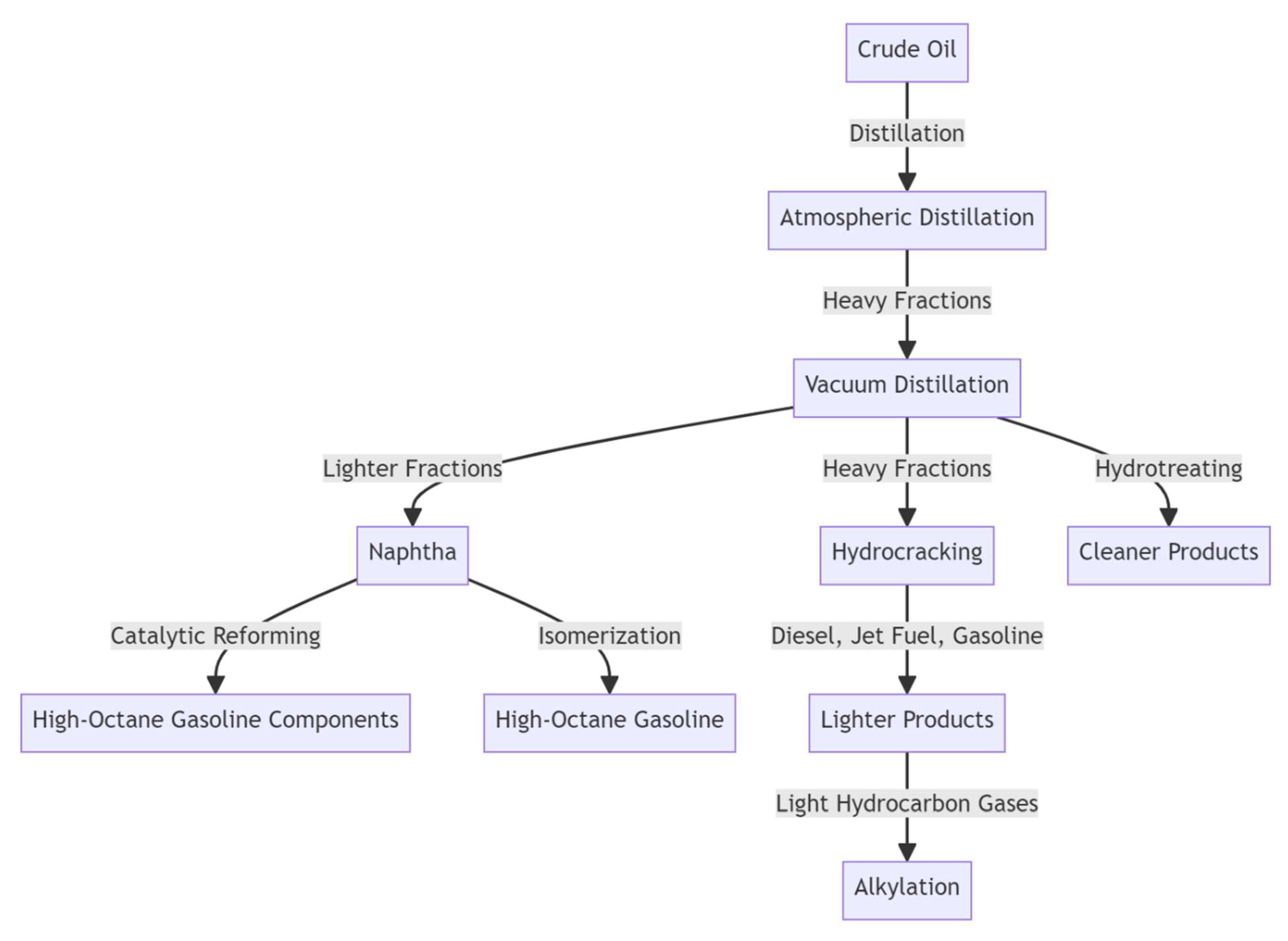
Figure 2.
Flowchart of wastewater treatment plant in some Iraqi refineries.
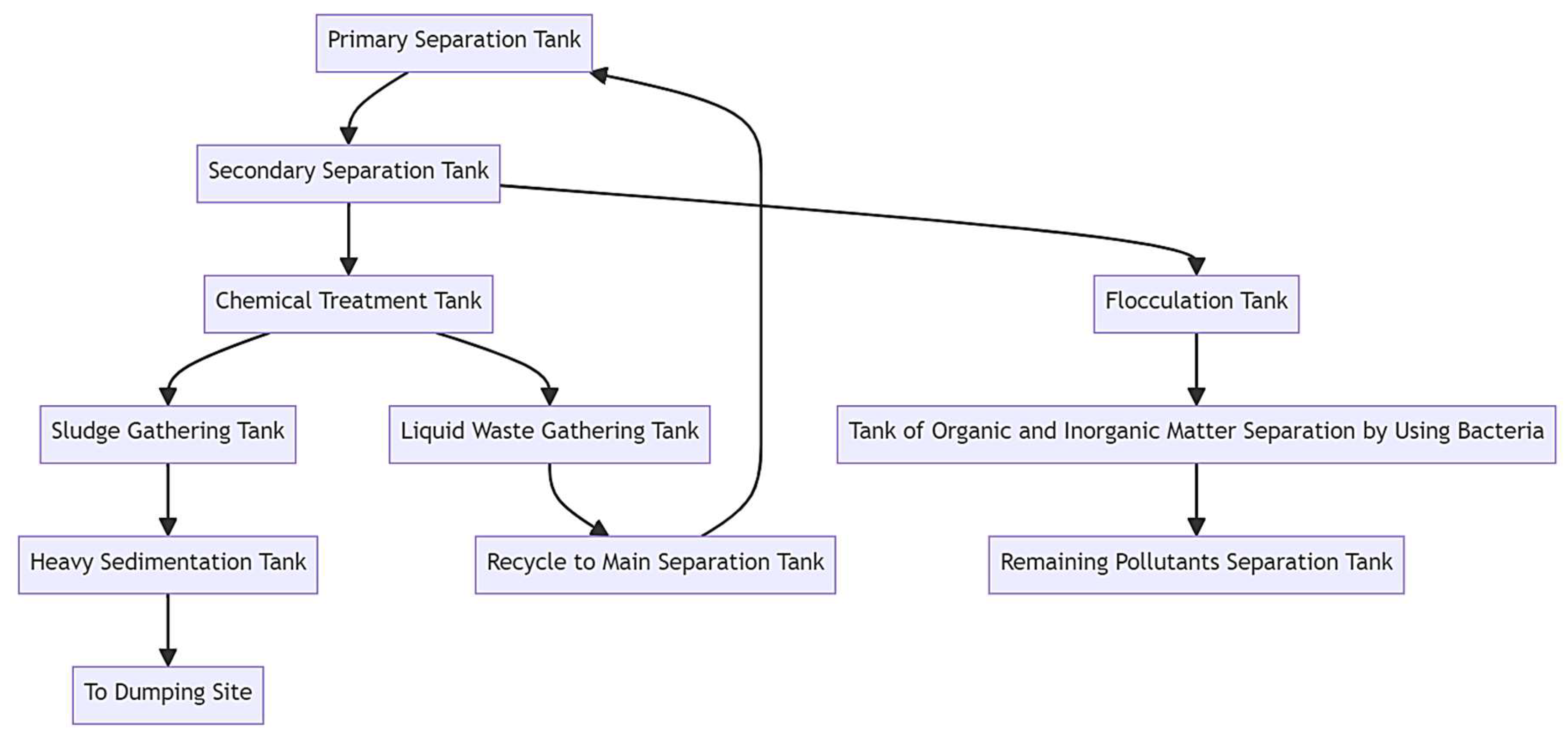

Table 1.
Some of gaseous emissions measured for some Iraqi refineries (tons/month).
| Refinery | SOx | NOx | CO2 |
| Midland Refineries Company, Al-Dura | 4862.6 | 641.6 | 204948.13 |
| Southern Refineries Company | 3545 | 4041 | 13593713 |
Table 2.
Some of yearly average physical and chemical parameters of liquid effluents measured for three Iraqi refineries.
Table 2.
Some of yearly average physical and chemical parameters of liquid effluents measured for three Iraqi refineries.
| Refinery | Discharge/ rate | BOD | pH | Oil and grease | NO3 | SO3 | Cl- | TDS | PO3 |
| Midland Refineries Company, Al-Dura | Tigris, 600 m3/h |
9.82 | 7.7 | 2.36 | 2.1 | 350 | 129 | 1954 | 0.38 |
| Northern Refineries Company, Baiji | Tigris, 50 m3/h |
9.35 | 7.6 | 7.59 | - | - | 602.14 | 391.29 | 0.93 |
| Southern Refineries Company, Basra | Shat Alarab, 450 m3/h |
10.8 | 7.2 | 8.4 | 7.2 | 420 | 688.2 | 1622 | 0.31 |
Disclaimer/Publisher’s Note: The statements, opinions and data contained in all publications are solely those of the individual author(s) and contributor(s) and not of MDPI and/or the editor(s). MDPI and/or the editor(s) disclaim responsibility for any injury to people or property resulting from any ideas, methods, instructions or products referred to in the content. |
© 2024 by the authors. Licensee MDPI, Basel, Switzerland. This article is an open access article distributed under the terms and conditions of the Creative Commons Attribution (CC BY) license (http://creativecommons.org/licenses/by/4.0/).
Copyright: This open access article is published under a Creative Commons CC BY 4.0 license, which permit the free download, distribution, and reuse, provided that the author and preprint are cited in any reuse.


