

Submitted:
10 May 2024
Posted:
13 May 2024
You are already at the latest version
Abstract
Proper Post-Activation Performance Enhancement helps to improve athletic performance. This study aimed to investigate the effects of two different velocity loss (VL), 10%VL and 20%VL, on post-activation performance enhancement (PAPE) in 20m sprint performance among sprint athletes. Twenty-four male sprint athletes (100m sprint time: 10.96±0.15 s) were recruited. A randomized crossover experimental design was used for traditional group (TG), 10%VL, and 20%VL interventions. Sprint tests were conducted at the 4th, 8th, 12th, and 16th minutes after the intervention. Two-way repeated measures ANOVA revealed an interaction effect between group and time on 20m sprint performance (F=2.817, p=0.037, partial η²=0.585). Simple effect analyses showed significant differences compared to baseline at the 4th minute for the 20%VL group (P<0.05). Cohen's d values indicated improvement in 10m sprint times at the 8th minute of the rest interval for all three intervention groups (TG: ES=-0.270, 10%VL: ES=-0.038, 20%VL: ES=-0.279). Improvement in 20m sprint times was observed at the 4th minute for the 20%VL group (ES=-0.296) and at the 16th minute for the 10%VL group (ES=-0.276). Compared to traditional PAPE schemes based on 1RM, PAPE schemes based on velocity loss (20%VL) can better induce PAPE effects in sprint athletes.
Keywords:
post-activation performance enhancement
; velocity-based strength training
; velocity loss
; sprinter
1. Introduction
Pre-event warm-up activities are crucial for enhancing athletes' performance as they can elevate body temperature, increase the speed of neural impulse conduction, and alleviate pre-competition anxiety[1]. Post-activation performance enhancement (PAPE) is an effective warm-up protocol that can improve athletic performance. PAPE refers to a physiological phenomenon where brief high-intensity resistance training conducted beforehand leads to an increase in muscle explosiveness and force generation speed [2]. Unlike the classic post-activation potentiation (PAP) effect, the enhancement effect of PAPE on muscle strength can last for several minutes after the activity, whereas the effect of PAP reaches its maximum shortly after the activity, approximately around 28 seconds [3]. Unlike PAP, the mechanism of PAPE may involve factors such as muscle temperature, muscle/cellular water content, and muscle activation [3,4]. The post-activation enhancement effect has also been applied to various other sports to enhance athletic performance. In pre-event warm-up activities for sprinters, using a 10% load can be more effective in improving the 20m sprint performance of elite female sprinters compared to schemes incorporating resistance training with 5% or 15% of body weight[5]. Interventions involving squats with either 90% 1RM for 3 repetitions or 60% 1RM for 6 repetitions can lead to a slight increase in mean power output for sprinters, although there is no statistically significant difference between the two different loads. Additionally, squat schemes with elastic bands can also improve sprinters' performance [6].
In the current formulation of protocols inducing PAPE effects, most studies have used PAPE training schemes, such as those based on the maximum number of repetitions (Repetition Maximum, RM), to determine the intensity of the load, which suffer from the problem of inability to accurately control intensity [7,8]. These loading schemes (e.g., 90% 1RM squats) may overlook the individual differences in physical function status among different athletes. The fundamental issue with these differences lies in the fact that the selected load intensity (such as RM) cannot accurately reflect the neuromuscular status of the athletes. Factors such as athletes' nutrition, sleep, and fatigue status can affect their neuromuscular status and athletic performance [9]. Therefore, to better design loading schemes for PAPE, it is necessary to further optimize these schemes.
In strength training, as muscle fatigue accumulates, the execution speed of movements may decrease. Utilizing movement speed to adjust or formulate training loads is a potential approach to address the issue of precise load monitoring [9]. Velocity loss (VL), which refers to the percentage decrease in movement speed relative to the initial speed, is a commonly used indicator to quantify movement speed. Studies have found a high correlation between 1RM and movement speed in different strength training exercises (r=0.998) [10]. Research analyzing the load-velocity relationship in exercises such as push-ups, pull-ups, half squats, full squats, and leg presses has also revealed a strong correlation between load magnitude and bar speed (equation predictive capacity R² = 0.96-0.98), which is independent of training background and athletes' strength levels [11]. Therefore, in addressing the issue of objectively quantifying and monitoring athletes' actual training loads, it is suggested to monitor the load based on the magnitude of VL achieved in each set of strength training, rather than being limited to fixed repetitions prescribed by relative loads (%1RM). Additionally, monitoring VL load can not only ensure accurate matching of target intensity with actual training intensity but also control the level of fatigue during each set, avoiding excessive fatigue and achieving consistency in stimulus levels among individuals [12,13].
Regarding the selection range of VL, studies have found that 20% VL is a critical value, where VL lower than 20% is more conducive to rapid strength improvement, while VL exceeding 20% is more conducive to muscle hypertrophy (20%-40% VL), and when the difference in VL is within 10%, there seems to be no significant difference in training effects [14]. However, there is considerable controversy surrounding the critical value of 20% VL in many studies. Some research suggests that compared to 20% VL, strength training with 10% VL is more beneficial for explosiveness and muscle strength gains [15]. Meanwhile, studies have also compared the relationship between 10% VL and 20% VL with a 15m sprint time and found that both VLs achieve similar effects [16]. So far, there is no evidence to suggest that the effect of velocity loss-induced PAPE is necessarily superior to traditional load-based RM schemes, which requires further exploration.
Therefore, this study, with elite sprinters as participants, sets two velocity loss load intensities of 20% VL and 10% VL as the experimental groups, and traditional %1RM load intensity as the control group, aims to investigate the effects of different velocity loss (10% VL, 20% VL) on sprinters' PAPE. The goal is to provide new insights into the personalized load adjustment of PAPE training programs in the daily training and pre-competition preparation activities of sprinters. It was hypothesized that (1) training programs based on velocity loss (VL) load intensity and traditional %1RM load intensity can both improve sprint performance, and (2) stride length and stride frequency are potential factors influencing sprint performance.
2. Materials and Methods
Participants
Twenty-four male sprinters voluntarily participated in this study (mean age: 20.19 ± 1.72 years, height: 179.90 ± 4.96 cm, weight: 70.41 ± 4.78 kg, squat 1RM: 138.53 ± 14.24 kg, 100m sprint time: 10.96 ± 0.15 s). All participants had at least one year of resistance training experience and a squat 1RM value ≥ 1.5 times their body weight. The study was approved by the Ethics Committee of Sports Science at Beijing Sport University, and all participants were informed of the purpose and procedures of the experiment before participating, and they signed a written informed consent form.
Training Protocol
The participants were divided into three groups according to the principles of a randomized controlled trial: the Traditional Group (TG), the 10% velocity loss (10%VL) group, and the 20% velocity loss (20%VL) group, as follows:
TG Group: (1) Participants were instructed to perform a standardized warm-up lasting 30-40 minutes before the formal intervention. (2) The first 20m sprint test was conducted. (3) A 5-minute rest followed. (4) Participants performed three squats at 85% of their 1RM to familiarize themselves with the movement. (5) A 4-minute rest followed. (6) Participants were instructed to perform two sets of squats at 85% 1RM, completing 6 repetitions per set with a 2-minute rest interval between sets. (7) Using the Smartspeed timer, sprint times were recorded at 4, 8, 12, and 16 minutes after the completion of squats. Additionally, the Optojump evaluation system was used to collect information on stride length and frequency.
10%VL Group: (1) Participants followed the same warm-up procedure as the TG group. (2) The first 20m sprint test was conducted. (3) A 5-minute rest followed. (4) Participants performed three squats at 85% 1RM to familiarize themselves with the movement, while the Gymware linear sensor recorded the highest average speed of three squats. (5) A 4-minute rest followed. (6) Participants were instructed to perform two sets of squats at 85% 1RM, aiming to achieve a 10% velocity loss. The same rest intervals were observed as in the TG group. (7) Sprint times were recorded at the same intervals as in the TG group, and stride length and frequency were measured using the Optojump system.
20%VL Group: The intervention for participants in the 20%VL group was the same as that for the 10%VL group, except in step (6) where they were instructed to achieve a 20% velocity loss. The experimental procedure is depicted in Figure 1.
Indicator Testing
Movement Speed Monitoring
The Gymaware linear sensor (GymAware, Australia) was employed to monitor the vertical movement speed of the barbell during the squat training of the participants, with the repetition count determined based on the VL target (10%VL group and 20%VL group). Before squatting, the Gymaware device was placed on one side of the squat rack, and the participant's weight and 85% 1RM weight were inputted into the computer. Participants were instructed to squat with a load corresponding to 85% 1RM, and the squatting was stopped when the participant reached 10%VL or 20%VL. Each participant underwent three tests. The Gymaware software recorded the participants' movement speed in real time, capturing the highest average speed during the three squatting sessions.
20. m Sprint Test
The Smartspeed segmented timing real-time feedback system (Smartspeed, Australia) was utilized to collect the time taken by the participants for the 10m and 20m sprints. During the test, participants adopted a fixed spike shoe and a crouching start position. To ensure the accuracy of the test, participants recorded the distance between their feet and the angle of the force plate under their feet before each test. To prevent premature contact with the infrared sensor, the support points for the participants' hands were set at a certain distance behind the instrument. At the start of the test, participants indicated their readiness to the tester, and the experimenter manually clicked the start button upon hearing the "beep" sound. Participants then commenced the sprint. As participants passed each segment of infrared emitted by the transmitter to the receiver, the sprint data collection was completed.
Stride Length and Frequency Testing
The Optojump system (Microgate, Bolzano, Italy) was utilized to collect the stride length and frequency indicators during the participants' sprints. The Optojump system has a testing range of 20 meters. Prior to testing, the Optojump transmitter and receiver units were placed parallel and flat on both sides of the digital running track, and the connectors were then inserted sequentially. The Optojump software was opened on the computer, and basic information about the participants (name, age, height, weight, etc.) was inputted. The repeated sprint test item was selected, and the test was initiated by clicking "execute," indicating to the participants to begin the test. Data collection commenced when any foot of the participant touched the ground, and the infrared in the transmitter and receiver units was successfully detected. Data was saved after the participant exited the Optojump detection area.
Statistical Analysis
SPSS 27.0 was used as the statistical tool for data analysis. Descriptive statistics were presented as "mean ± standard deviation" (M ± SD). The normality of the data in each group was verified by the Shapiro-Wilk test. A two-way repeated measures analysis of variance (group * time) was conducted for the research data, with the between-group factor being the grouping factor (TG group, 10%VL group, 20%VL group), and the within-group factor being the time factor (Pre, 4min, 8min, 12min, 16min). When an interaction effect was present, a simple effect analysis was performed for each factor (significance level set at P < 0.05). Cohen's d value was calculated as the effect size measure to evaluate the differences within the groups, using the absolute value direction scale. The evaluation criteria were as follows: 0 < |ES| < 0.2 for a very small effect size; 0.2 < |ES| < 0.5 for a small effect size; 0.5 < |ES| < 0.8 for a moderate effect size; |ES| > 0.8 for a large effect size.
3. Results
Effects of Different Velocity Loss on PAPE in the 0-10m Phase
Following the intervention, a repeated measures analysis of variance revealed no significant interaction between the time effect and group intervention effect for the 0-10m sprint performance (F = 2.223, p = 0.083, partial η² = 0.526). Time main effect analysis indicated that the sprint times for the 0-10m phase at each testing point (4 minutes, 8 minutes, 12 minutes, 16 minutes) did not significantly decrease across the three groups (F = 1.474, p = 0.247, partial η² = 0.228). The main effect of group intervention showed no statistically significant differences in the sprint times for the 0-10m phase among the three groups at each testing point (F = 1.931, p = 0.169, partial η² = 0.149) (Figure 2A).
Subsequent effect size analysis revealed that the effect sizes for the TG group at each testing point were 0.081, -0.270, 0, and 0.081, respectively. For the 10%VL group, the effect sizes at each testing point were 0.202, -0.038, -0.038, and -0.071, respectively. As for the 20%VL group, the effect sizes at each testing point were -0.289, -0.279, -0.126, and -0.261, respectively (Figure 2B).
Effects of Different Velocity Loss on PAPE in the 10-20m Phase
Following the intervention, a repeated measures analysis of variance revealed no significant interaction between the time effect and group intervention effect for the 10-20m sprint performance (F=0.969, p=0.493, partial η²=0.326). Time main effect analysis indicated that the sprint times for the 10-20m phase at each testing point (4 minutes, 8 minutes, 12 minutes, 16 minutes) did not significantly decrease across the three groups (F=1.539, p=0.237, partial η²=0.123). The main effect of group intervention showed no statistically significant differences in the sprint times for the 10-20m phase among the three groups at each testing point (F=0.903, p=0.481, partial η²=0.153) (Figure 3A).
Subsequent effect size analysis revealed that the effect sizes for the TG group at each testing point were -0.204, -0.056, -0.241, and -0.167, respectively. For the 10%VL group, the effect sizes at each testing point were 0.067, 0, -0.107, and 0.053, respectively. As for the 20%VL group, the effect sizes at each testing point were -0.079, 0.095, 0.032, and 0.048, respectively (Figure 3B).
Effects of Different Velocity Loss on PAPE in the 0-20m Phase
Following the intervention, a repeated measures analysis of variance revealed a significant interaction between the time effect and group intervention effect for the 0-20m sprint performance (F=2.817, p=0.037, partial η²=0.585). Further analysis indicated that the 20%VL group exhibited significant differences at 4 minutes (p<0.05). Regarding the main effect of time, participants across all three groups did not show significant decreases in sprint times for the 0-20m phase at each testing point (F=0.852, p=0.509, partial η²=1.146). Similarly, there were no statistically significant differences in sprint times for the 0-20m phase among the three groups at each testing point for the main effect of group intervention (F=1.687, p=0.208, partial η²=0.133) (Figure 4A).
The calculated Cohen's d values for individual effect sizes are as follows: For the TG group, the effect sizes at each testing point were 0.188, 0.038, 0.05, and 0. For the 10%VL group, the effect sizes were 0.051, 0.071, -0.184, and -0.296, respectively. As for the 20%VL group, the effect sizes were -0.286, -0.263, -0.180, and -0.226, respectively (Figure 4B).
Impact of Different Velocity Loss on Stride Length in the 0-20m Phase
The results of repeated measures analysis of variance indicated that there was no significant interaction between the time effect and group intervention effect for stride length in the 0-20m phase (F=1.065, p=0.388, partial η²=0.034). Regarding the main effect of time, participants across all three groups did not exhibit significant changes in stride length for the 0-20m phase at each time point (F=2.282, p=0.061, partial η²=0.036). Similarly, for the main effect of group intervention, there were no significant differences in stride length among the different intervention groups at each time point (F=1.856, p=0.159, partial η²=0.015) (Figure 5A).
Individual effect sizes calculated using Cohen's d values revealed that for the TG group, the effect sizes at each testing point were -0.021, -0.002, -0.007, and 0.016, respectively. For the 10%VL group, the effect sizes were -0.016, 0.015, 0.030, and 0.027, respectively. As for the 20%VL group, the effect sizes were 0.022, 0.028, 0.037, and 0.012, respectively (Figure 5B).
Impact of Different Velocity Loss on Stride Frequency in the 20m Phase
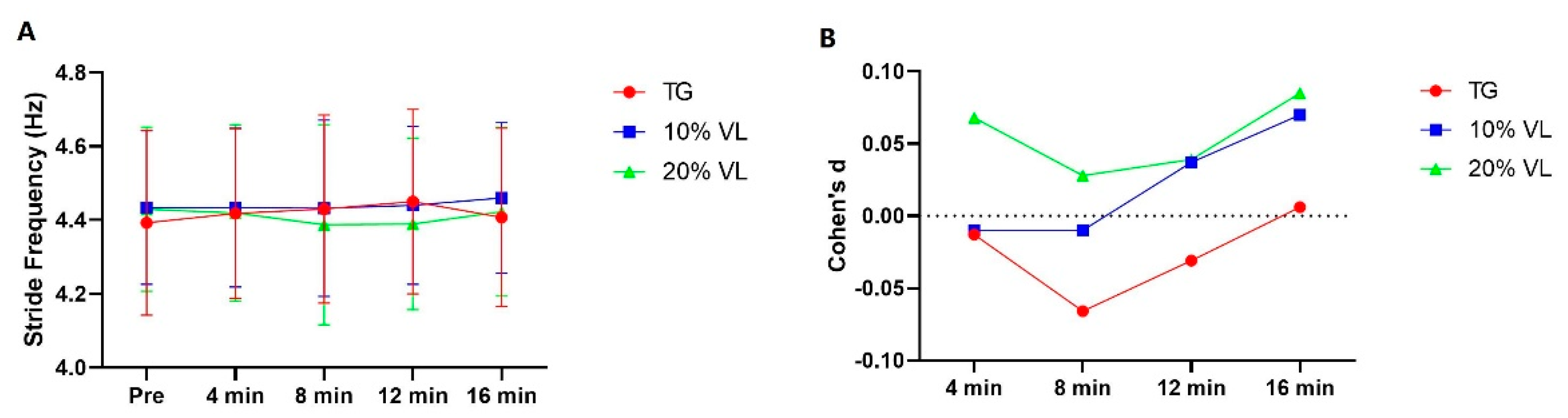
The results of repeated measures analysis of variance revealed no significant interaction between the time effect and group intervention effect for stride frequency in the 0-20m phase (F=0.392, p=0.924, partial η²=0.013). Regarding the main effect of time, participants across all three groups did not exhibit significant changes in stride frequency for the 0-20m phase at each time point (F=0.625, p=0.645, partial η²=0.010). Similarly, for the main effect of group intervention, there were no significant differences in stride frequency among the different intervention groups at each time point (F=1.924, p=0.148, partial η²=0.015) (Figure 6A).
Individual effect sizes calculated using Cohen's d values showed that for the TG group, the effect sizes at each testing point were -0.013, -0.066, -0.031, and 0.006, respectively. For the 10%VL group, the effect sizes were -0.010, -0.010, 0.037, and 0.070, respectively. Notably, the 20%VL group exhibited effect sizes of 0.068, 0.028, 0.039, and 0.085 at each testing point (Figure 6B).
4. Discussion
The purpose of this study is to investigate the effects of different velocity losses on inducing PAPE in sprint athletes. The study primarily revealed that a 20% VL induces PAPE more effectively than a 10%VL. When employing a 20% VL warm-up, a significant improvement in sprint performance in the 0-20m phase was observed at the 4-minute mark. Although no significant differences were observed at other time intervals (8, 12, and 16 minutes), the time taken for both the 0-10m and 0-20m sprints was lower when using the 20%VL warm-up compared to the 10%VL and 1RM-based warm-up activities. This finding provides valuable insight for sprinters, suggesting that incorporating velocity-based warm-up protocols may replace traditional 1RM-based PAPE approaches, thereby addressing the limitation of traditional training methods in accurately controlling training loads based on individual states. A 20%VL warm-up may represent an optimal load for inducing PAPE in sprinters, enhancing their ability to initiate and accelerate during sprints. Due to the lack of significant changes in the data and considering the effect size, we believe that the results partially support our hypothesis.
The purpose of PAPE is to optimize an athlete's physical state before engaging in sports activities, aiming to enhance overall athletic performance. PAPE is commonly believed to improve explosive muscle capabilities, as observed in activities like vertical jumps and sprints, leading to more powerful and rapid muscle contractions, thereby elevating an athlete's explosive performance [17]. It is generally accepted that the potential effect can be induced as long as the minimum intensity and sufficient rest time are provided. While the intensity of 65% 1RM is sufficient to elicit a potentiation effect, intensities ranging from 85% to 90% 1RM can yield even greater results [18].
In this study, the use of a 20% VL significantly improved sprint performance in the 0-20m phase at the 4-minute mark. This suggests that performing squats with a 20% VL, followed by sprinting after 4 minutes, maximizes the PAPE effect. Similar findings have been reported in research involving sprinters, where a study focusing on sprinters revealed that PAPE induced by 90% 1RM significantly improved arrowhead agility test performance (p < 0.001) and repeated sprint ability (p = 0.002), with a shorter 20m sprint time post-PAPE (p = 0.005), demonstrating the effectiveness of PAPE on sprint performance [19].
In the context of long-term training, a study based on Velocity-Based Training (VBT) indicated that, despite the 5% VL group having only 32.6% of the repetitions compared to the 20% VL group, after 7 weeks of VBT training, both groups showed similar gains in strength, jumping, and sprinting performance [20].
Following intervention with 20% VL at other time points (8 minutes, 12 minutes, and 16 minutes), there were no significant differences in athletic performance, indicating a time-dependent occurrence of PAPE. A study inducing PAPE through Barbell Hip Thrusts (BHT) found that at 15 seconds, only 85% 1RM load induced PAPE, while the 50% 1RM load did not significantly impact performance. However, both PAPE-inducing protocols resulted in significant improvements in 10m and 15m sprints at 4 minutes and 8 minutes [21]. After a pre-stimulus of 91% 1RM, a notable improvement in sprint performance was observed compared to baseline, characterized by the best sprint time within 8 minutes [22].
Furthermore, the occurrence of PAPE may be influenced by the evaluation metrics. In a meta-analysis examining the acute effects of rest intervals on jump performance, it was found that intervals within 0-3 minutes had an adverse impact, while the range of 8-12 minutes positively influenced jump height [23]. Another meta-analysis reported that, for power output, a rest interval of 7-10 minutes was deemed the most ideal for inducing PAPE effects (ES = 0.70) [24].
In this study, not all load stimuli resulted in performance gains. Specifically, both traditional squat training based on 1RM load intensity and squat training with a 10% VL load intensity were found to be ineffective in enhancing performance in the 0-10m, 10-20m, and 0-20m phases. Although it has been suggested that a load intensity of 65% 1RM can induce a potentiation effect, some studies still report negative outcomes. For instance, Reardon et al. found that moderate and high-intensity schemes (3 sets of 10 repetitions or 3 repetitions, at 75% 1RM and 90% 1RM, respectively) did not improve performance scores, despite inducing acute muscle structural changes [25]. Several reasons could explain this phenomenon, such as considerable variability in individual responses to pre-activation stimuli, as well as the nature, intensity, and duration of the stimuli, all of which may influence the occurrence of PAPE. Additionally, the pre-activation state of individuals, including fatigue level, psychological state, and nutritional status, may impact the manifestation of the PAPE effect [3]. In the context of this study, neither the 85% 1RM nor the 10% VL load intensity elicited a PAPE effect. It is plausible to suggest that highly trained athletes, due to their extensive professional training, may have adapted their neuromuscular systems to typical pre-activation stimuli. This adaptation could potentially result in their neural systems being less responsive to stimuli that induce PAPE.
Several factors influence Post-Activation Potentiation (PAPE), including interindividual variability, pre-activation methods, recovery time, and the type of training. From an anatomical and physiological perspective, research suggests that PAPE is linked to increased calcium ion sensitivity in muscle cells, enhanced recruitment capacity of fast muscle fiber motor units, and alterations in the pennation angle during muscle contraction [26]. Studies indicate that enhancing the sensitivity of myosin and actin-binding sites to calcium ions and increasing the influx of calcium ions into the sarcoplasmic reticulum, requires rapid muscle contraction [27]. Pre-activating muscle contraction may increase the release of neurotransmitters, enhance the efficiency of neurotransmitter transmission, or reduce the likelihood of failure in action potential transmission at axon branch points, thereby increasing the recruitment of fast muscle fiber units [14,28]. Additionally, changes in the pennation angle of muscle fibers under 20% VL resistance activation are conducive to transferring force to relevant tendons, thereby improving the mechanical efficiency of muscle fibers [29]. Santanielo et al. found that the pennation angle increased to some extent after non-exhaustive strength training loads that approximated 20% VL [30].
In the context of a 100m sprint, both stride length and stride frequency can impact performance. Stride length can be trained through methods such as improving flexibility, enhancing technique, and exerting more force on the ground, while stride frequency training focuses more on the central nervous system's reaction time [31]. In theory, PAPE may enhance muscle strength and central nervous system reactivity, thus influencing stride length and frequency. Changes in stride length and frequency could ultimately be the reasons behind variations in sprint performance. Therefore, this study attempts to explain the reasons for PAPE from the perspectives of stride length and frequency. Changes in stride length and frequency before and after the intervention were tested, but no significant alterations were observed. Looking at the trend, at the 8-minute and 12-minute stages, the 20% VL group showed slightly higher stride lengths than the 10% VL group and TG group, while their stride frequency was slightly lower than that of the 10% VL group and TG group. Some studies suggest that in a 100m sprint, stride length contributes more significantly to speed than stride frequency. Excessive acceleration (correlated with high stride frequency) during rapid strides after the start negatively affects speed throughout the entire 100m sprint. Therefore, it is necessary to control stride frequency and increase stride length in the initial stages of rapid strides after leaving the starting line to reduce or eliminate the negative impact of excessive acceleration [32]. This to some extent explains why the 20% VL group in this study exhibited a trend of better performance than the 10% VL group and TG group.
Limitations of the Study
While this study offers new strategies for improving starting ability in sprinters during both competition and training, several limitations should be acknowledged. Firstly, the investigation only explored two levels of load intensity (10% VL and 20% VL). In reality, each 5% VL increment could potentially induce different PAPE effects. Future research should incorporate a broader range of load intensity gradients to examine the impact of VL on PAPE more comprehensively. Secondly, concerning the evaluation metrics, this study only focused on the 20m sprint performance, potentially overlooking PAPE effects on other metrics such as vertical jumping, 100-m sprint time, and power output. Thirdly, while this study concentrated on stride length and frequency as PAPE influencing factors, muscle neuromechanical function and fatigue status might be more directly reflected through surface electromyography signals [33]. Therefore, future investigations could focus on surface electromyography signals for a deeper analysis. Finally, some indicators in this study did not reach statistical significance. Instead, the study placed greater emphasis on trends and effect sizes (Cohen's d) rather than solely relying on statistical significance. This approach was adopted because our study subjects were elite sprinters, where even slight improvements in time may have practical significance surpassing statistical thresholds. Analyzing trends and effect sizes provides a more specific and intuitive assessment. In practical applications, even if not statistically significant, enhancing athlete performance may positively influence training, coaching decisions, or athlete confidence.
5. Conclusions
Compared to traditional PAPE protocols based on 1RM, the velocity-based PAPE protocol can more effectively induce PAPE effects in sprinters. While PAPE is a highly individualized phenomenon, optimal rest intervals may be influenced by individual factors such as fast-twitch fiber composition and strength levels. However, considering practical convenience and applicability, utilizing a 20% VL load intensity with a 4-minute rest interval appears to yield the best PAPE outcomes.
Author Contributions
L.L. and L.M. contributed equally to this study. Liang Li, Ling Mo and Tao Mei; Data curation, Liang Li, Ling Mo and Yanxu Liu; Formal analysis, Liang Li, Ling Mo and Yanxu Liu; Investigation, Liang Li, Ling Mo and Yanxu Liu; Methodology, Liang Li, Ling Mo and Tao Mei; Project administration, Tao Mei; Resources, Liang Li, Ling Mo and Yanxu Liu; Software, Liang Li and Ling Mo; Supervision, Tao Mei; Validation, Liang Li and Ling Mo; Visualization, Tao Mei; Writing – original draft, Liang Li, Ling Mo and Tao Mei; Writing – review & editing, Tao Mei.
Funding
This research was funded by the National Key R&D Program of China, grant number 2018YFC2000602 and The APC was funded by the National Key R&D Program of China.
Institutional Review Board Statement
The study was conducted in accordance with the Declaration of Helsinki, and approved by the Ethics Committee of the Ethics Committee of Sports Science at Beijing Sport University (protocol code 2023347H and date of approval is 12 June 2023).
Informed Consent Statement
Informed consent was obtained from all subjects involved in the study.
Data Availability Statement
The authors declare that the dataset is available upon request.
Acknowledgments
The authors would like to thank all the participants who took part in this study.
Conflicts of Interest
The authors declare no conflicts of interest.
References
- McGowan, C.J.; Pyne, D.B.; Thompson, K.G.; Rattray, B. Warm-Up Strategies for Sport and Exercise: Mechanisms and Applications. Sports Med 2015, 45, 1523–1546. [Google Scholar] [CrossRef]
- Hodgson, M.; Docherty, D.; Robbins, D. Post-activation potentiation: underlying physiology and implications for motor performance. Sports Med 2005, 35, 585–595. [Google Scholar] [CrossRef]
- Blazevich, A.J.; Babault, N. Post-activation Potentiation Versus Post-activation Performance Enhancement in Humans: Historical Perspective, Underlying Mechanisms, and Current Issues. Front Physiol 2019, 10, 1359. [Google Scholar] [CrossRef]
- Prieske, O.; Behrens, M.; Chaabene, H.; Granacher, U.; Maffiuletti, N.A. Time to Differentiate Postactivation "Potentiation" from "Performance Enhancement" in the Strength and Conditioning Community. Sports Med 2020, 50, 1559–1565. [Google Scholar] [CrossRef]
- Matusinski, A.; Pietraszewski, P.; Krzysztofik, M.; Golas, A. The Effects of Resisted Post-Activation Sprint Performance Enhancement in Elite Female Sprinters. Front Physiol 2021, 12, 651659. [Google Scholar] [CrossRef]
- Krcmar, M.; Krcmarova, B.; Bakalar, I.; Simonek, J. Acute Performance Enhancement Following Squats Combined With Elastic Bands on Short Sprint and Vertical Jump Height in Female Athletes. J Strength Cond Res 2021, 35, 318–324. [Google Scholar] [CrossRef]
- Liao, K.F.; Wang, X.X.; Han, M.Y.; Li, L.L.; Nassis, G.P.; Li, Y.M. Effects of velocity based training vs. traditional 1RM percentage-based training on improving strength, jump, linear sprint and change of direction speed performance: A Systematic review with meta-analysis. PLoS One 2021, 16, e0259790. [Google Scholar] [CrossRef]
- Dorrell, H.F.; Smith, M.F.; Gee, T.I. Comparison of Velocity-Based and Traditional Percentage-Based Loading Methods on Maximal Strength and Power Adaptations. J Strength Cond Res 2020, 34, 46–53. [Google Scholar] [CrossRef]
- Gonzalez-Badillo, J.J.; Sanchez-Medina, L. Movement velocity as a measure of loading intensity in resistance training. Int J Sports Med 2010, 31, 347–352. [Google Scholar] [CrossRef]
- Weakley, J.J.S.; Mann, B.; Banyard, H.G.; McLaren, S.J.; Scott, T.J.; García-Ramos, A. Velocity-Based Training: From Theory to Application. Strength and Conditioning Journal 2020. [Google Scholar] [CrossRef]
- Pareja-Blanco, F.; Sanchez-Medina, L.; Suarez-Arrones, L.; Gonzalez-Badillo, J.J. Effects of Velocity Loss During Resistance Training on Performance in Professional Soccer Players. Int J Sports Physiol Perform 2017, 12, 512–519. [Google Scholar] [CrossRef] [PubMed]
- Schilling, B.K.; Falvo, M.J.; Chiu, L.Z. Force-velocity, impulse-momentum relationships: implications for efficacy of purposefully slow resistance training. J Sports Sci Med 2008, 7, 299–304. [Google Scholar] [PubMed]
- Sanchez-Medina, L.; Gonzalez-Badillo, J.J. Velocity loss as an indicator of neuromuscular fatigue during resistance training. Med Sci Sports Exerc 2011, 43, 1725–1734. [Google Scholar] [CrossRef]
- Pareja-Blanco, F.; Rodriguez-Rosell, D.; Sanchez-Medina, L.; Sanchis-Moysi, J.; Dorado, C.; Mora-Custodio, R.; Yanez-Garcia, J.M.; Morales-Alamo, D.; Perez-Suarez, I.; Calbet, J.A.L.; et al. Effects of velocity loss during resistance training on athletic performance, strength gains and muscle adaptations. Scand J Med Sci Sports 2017, 27, 724–735. [Google Scholar] [CrossRef]
- Pareja-Blanco, F.; Alcazar, J.; Sanchez-Valdepenas, J.; Cornejo-Daza, P.J.; Piqueras-Sanchiz, F.; Mora-Vela, R.; Sanchez-Moreno, M.; Bachero-Mena, B.; Ortega-Becerra, M.; Alegre, L.M. Velocity Loss as a Critical Variable Determining the Adaptations to Strength Training. Med Sci Sports Exerc 2020, 52, 1752–1762. [Google Scholar] [CrossRef]
- Perez-Castilla, A.; Garcia-Ramos, A.; Padial, P.; Morales-Artacho, A.J.; Feriche, B. Effect of different velocity loss thresholds during a power-oriented resistance training program on the mechanical capacities of lower-body muscles. J Sports Sci 2018, 36, 1331–1339. [Google Scholar] [CrossRef] [PubMed]
- Finlay, M.J.; Bridge, C.A.; Greig, M.; Page, R.M. Upper-Body Post-activation Performance Enhancement for Athletic Performance: A Systematic Review with Meta-analysis and Recommendations for Future Research. Sports Med 2022, 52, 847–871. [Google Scholar] [CrossRef]
- Garbisu-Hualde, A.; Santos-Concejero, J. Post-Activation Potentiation in Strength Training: A Systematic Review of the Scientific Literature. J Hum Kinet 2021, 78, 141–150. [Google Scholar] [CrossRef]
- Rumeau, V.; Grospretre, S.; Babault, N. Post-Activation Performance Enhancement and Motor Imagery Are Efficient to Emphasize the Effects of a Standardized Warm-Up on Sprint-Running Performances. Sports (Basel) 2023, 11. [Google Scholar] [CrossRef]
- Galiano, C.; Pareja-Blanco, F.; Hidalgo de Mora, J.; Saez de Villarreal, E. Low-Velocity Loss Induces Similar Strength Gains to Moderate-Velocity Loss During Resistance Training. J Strength Cond Res 2022, 36, 340–345. [Google Scholar] [CrossRef]
- Dello Iacono, A.; Padulo, J.; Seitz, L.D. Loaded hip thrust-based PAP protocol effects on acceleration and sprint performance of handball players. J Sports Sci 2018, 36, 1269–1276. [Google Scholar] [CrossRef]
- Bevan, H.R.; Cunningham, D.J.; Tooley, E.P.; Owen, N.J.; Cook, C.J.; Kilduff, L.P. Influence of postactivation potentiation on sprinting performance in professional rugby players. J Strength Cond Res 2010, 24, 701–705. [Google Scholar] [CrossRef]
- Gouvea, A.L.; Fernandes, I.A.; Cesar, E.P.; Silva, W.A.; Gomes, P.S. The effects of rest intervals on jumping performance: a meta-analysis on post-activation potentiation studies. J Sports Sci 2013, 31, 459–467. [Google Scholar] [CrossRef]
- Wilson, J.M.; Duncan, N.M.; Marin, P.J.; Brown, L.E.; Loenneke, J.P.; Wilson, S.M.; Jo, E.; Lowery, R.P.; Ugrinowitsch, C. Meta-analysis of postactivation potentiation and power: effects of conditioning activity, volume, gender, rest periods, and training status. J Strength Cond Res 2013, 27, 854–859. [Google Scholar] [CrossRef]
- Reardon, D.; Hoffman, J.R.; Mangine, G.T.; Wells, A.J.; Gonzalez, A.M.; Jajtner, A.R.; Townsend, J.R.; McCormack, W.P.; Stout, J.R.; Fragala, M.S.; et al. Do changes in muscle architecture affect post-activation potentiation? J Sports Sci Med 2014, 13, 483–492. [Google Scholar]
- Zimmermann, H.B.; MacIntosh, B.R.; Dal Pupo, J. Does postactivation potentiation (PAP) increase voluntary performance? Appl Physiol Nutr Metab 2020, 45, 349–356. [Google Scholar] [CrossRef]
- Moore, R.L.; Stull, J.T. Myosin light chain phosphorylation in fast and slow skeletal muscles in situ. Am J Physiol 1984, 247, C462–C471. [Google Scholar] [CrossRef]
- Güllich, A.; Sehmidtbleicher, D. MVC-induced short- term potentiation of explosive force.
- Folland, J.P.; Williams, A.G. The adaptations to strength training : morphological and neurological contributions to increased strength. Sports Med 2007, 37, 145–168. [Google Scholar] [CrossRef]
- Santanielo, N.; Nobrega, S.R.; Scarpelli, M.C.; Alvarez, I.F.; Otoboni, G.B.; Pintanel, L.; Libardi, C.A. Effect of resistance training to muscle failure vs non-failure on strength, hypertrophy and muscle architecture in trained individuals. Biol Sport 2020, 37, 333–341. [Google Scholar] [CrossRef]
- Bezodis, I. Investigations of the step length-step frequency relationship in sprinting: applied implications for performance. In Proceedings of ISBS-Conference Proceedings Archive.
- Shen, W. The effects of stride length and frequency on the speeds of elite sprinters in 100 meter dash. In Proceedings of ISBS-Conference Proceedings Archive.
- Bartolomei, S.; De Luca, R.; Marcora, S.M. May a Nonlocalized Postactivation Performance Enhancement Exist Between the Upper and Lower Body in Trained Men? J Strength Cond Res 2023, 37, 68–73. [Google Scholar] [CrossRef] [PubMed]
Figure 1.
Experimental Procedure.
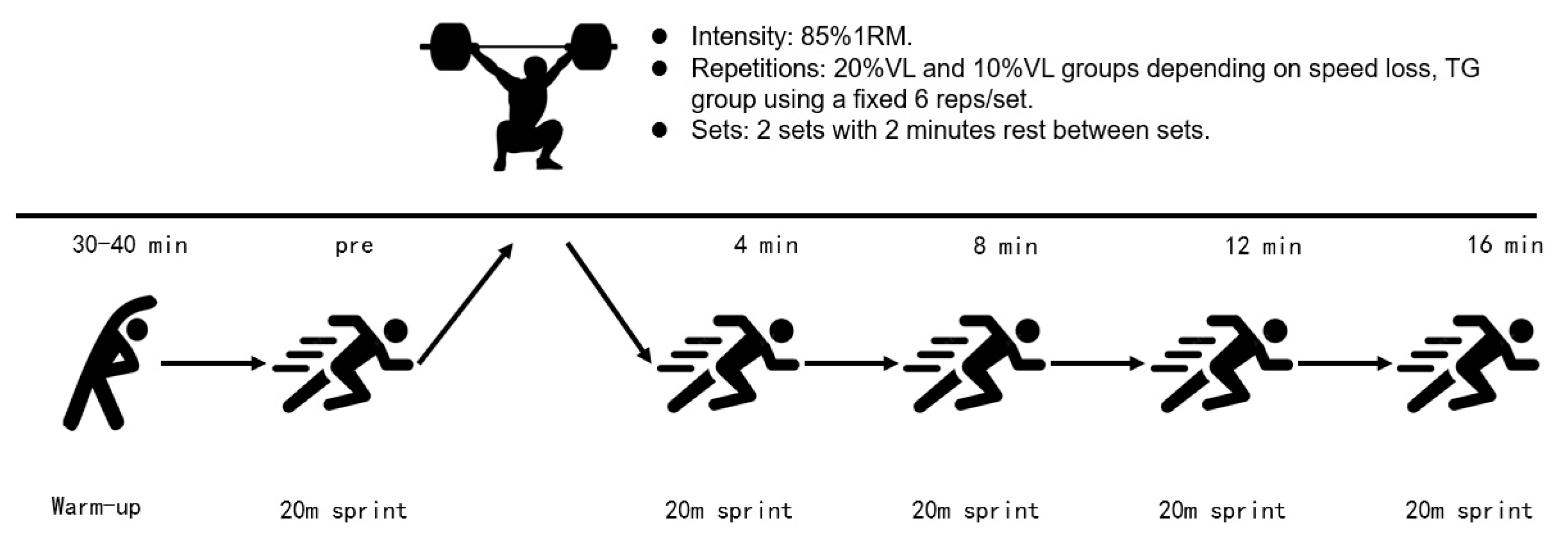
Figure 2.
Effects of TG, 10% VL, and 20% VL Interventions on PAPE in the 0-10m Phase.
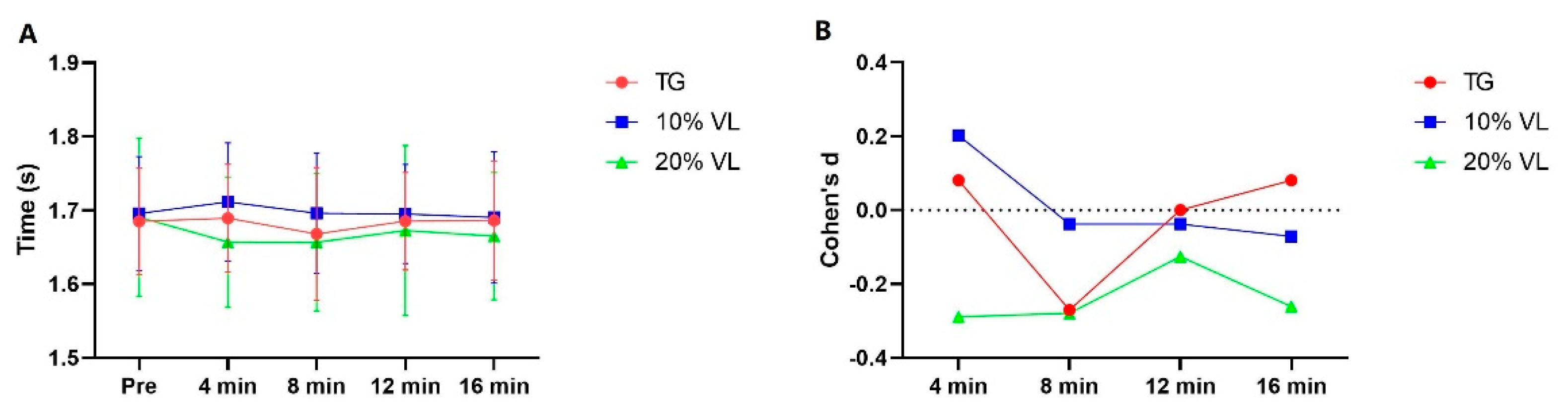
Figure 3.
Effects of TG, 10% VL, and 20% VL Interventions on PAPE in the 10-20m Phase.
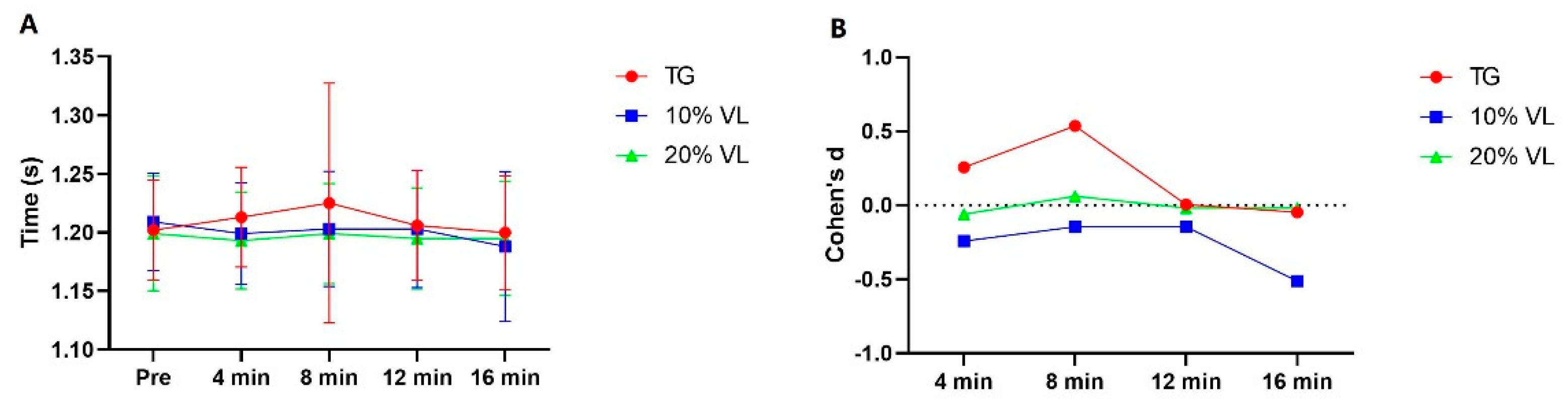
Figure 4.
Effects of TG, 10% VL, and 20% VL Interventions on PAPE in the 0-20m Phase.
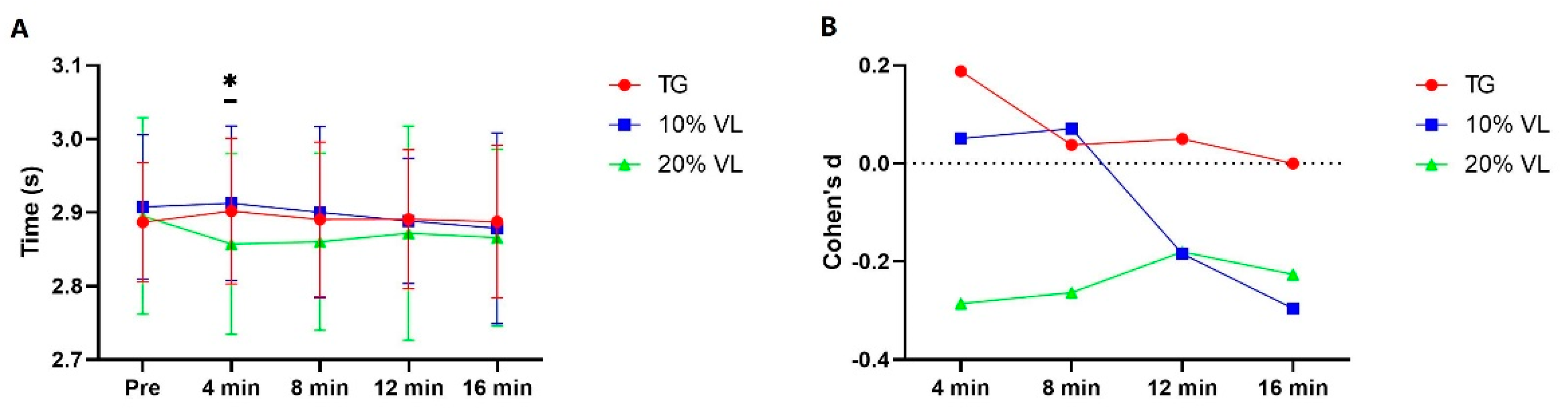
Figure 5.
Effects of TG, 10% VL, and 20% VL Interventions on Stride Length in the 0-20m Phase.
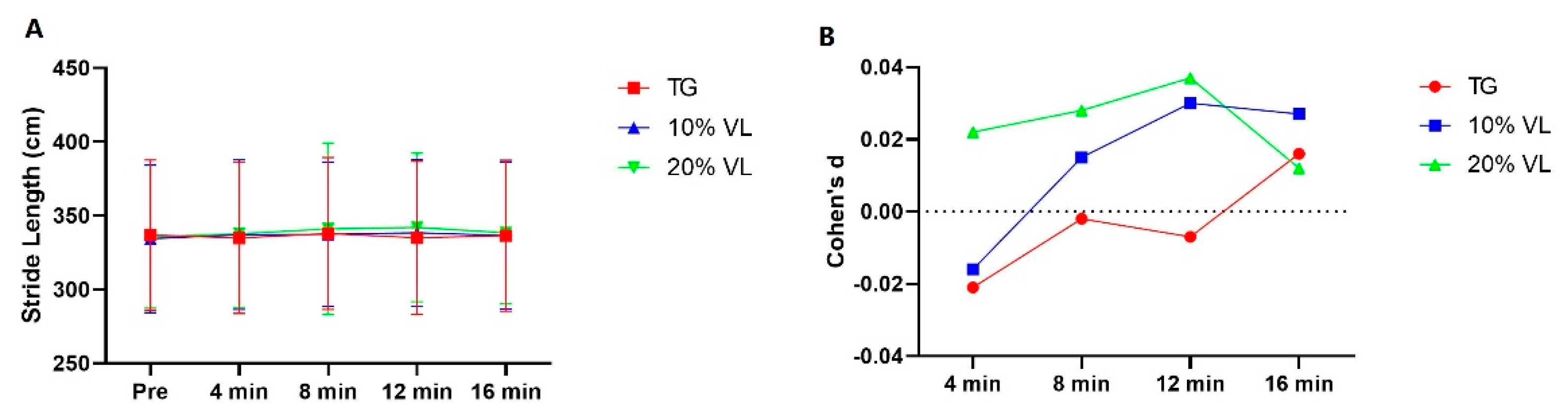
Figure 6.
Effects of TG, 10% VL, and 20% VL Interventions on Stride Frequency in the 20m Phase.
Disclaimer/Publisher’s Note: The statements, opinions and data contained in all publications are solely those of the individual author(s) and contributor(s) and not of MDPI and/or the editor(s). MDPI and/or the editor(s) disclaim responsibility for any injury to people or property resulting from any ideas, methods, instructions or products referred to in the content. |
© 2024 by the authors. Licensee MDPI, Basel, Switzerland. This article is an open access article distributed under the terms and conditions of the Creative Commons Attribution (CC BY) license (http://creativecommons.org/licenses/by/4.0/).
Copyright: This open access article is published under a Creative Commons CC BY 4.0 license, which permit the free download, distribution, and reuse, provided that the author and preprint are cited in any reuse.


