

Submitted:
10 May 2024
Posted:
10 May 2024
You are already at the latest version
Abstract
This paper explores the development of life support systems (LSS) for human space exploration, emphasizing the need for sustainable solutions to support long-term missions beyond Low Earth Orbit. As humanity seeks to explore and potentially colonize distant planets, maintaining a habitable environment in space poses significant challenges. Life support systems must manage air quality, water supply, temperature, humidity, and waste while ensuring crew safety in environments devoid of breathable air and exposed to harmful cosmic radiation. The International Space Station's (ISS) Environmental Control and Life Support System (ECLSS) represents a significant advancement, demonstrating that humans can live in space for extended periods with a combination of recycling and Earth-based resupply. However, future missions to the Moon, Mars, and beyond require more advanced, self-sustaining systems. This paper examines technological advancements such as closed-loop systems, bio-regenerative life support systems (BLSS), and In-Situ Resource Utilization (ISRU), focusing on their potential to reduce reliance on Earth-based resupply. Projects like NASA's Mars Oxygen In-Situ Resource Utilization Experiment (MOXIE) and ESA's MELiSSA initiative offer promising solutions for future deep space exploration. By enhancing recycling, integrating ISRU, and improving energy efficiency, future life support systems will support humanity's journey into the cosmos, paving the way for sustainable space exploration and eventual colonization.
Keywords:
ECLSS
; International Space Station (ISS)
; NASA
; MELISSA
; BLSS
; MOXIE
; ISRU
Introduction
As humanity ventures into the cosmos, the dream of exploring distant planets and possibly establishing human settlements becomes more tangible. However, one of the key challenges in making this dream a reality is sustaining human life in environments that are inherently hostile to our existence. In the vacuum of space, there is no breathable air, potable water, or readily available food sources (Johnson, 2019), and harmful cosmic radiation poses serious health risks. By creating and maintaining conditions that allow astronauts to live and work safely in space, life support systems (LSS) aim to address these challenges.
A combination of engineering innovation, scientific research, and practical experience from space missions has driven the evolution of life support systems. The capacity of early spacecraft to sustain life for extended periods was limited, necessitating frequent resupply, and posing significant risks during missions. However, with the advent of the International Space Station (ISS) (Reuter & Reysa, 2001), a collaborative effort among various space agencies, life support systems have advanced significantly. These advancements have laid the groundwork for future exploration, including missions to the Moon, Mars, and beyond. Crewed space missions, like those on the Space Shuttle and Russian Mir, have demonstrated that technology can support human life in Low Earth Orbit (LEO) for extended periods, provided resupply from Earth is feasible (NASA Facts, 2004). The International Space Station (ISS), like previous missions, depends on Earth-based replenishment for most of its consumable resources. The ISS can recover water from humidity, wastewater, and urine with an efficiency between 80 and 90 percent, but it still requires resupply for food and oxygen.
A significant technological challenge is creating advanced life support (ALS) systems that are self-sustaining, reducing the need for costly resupply missions, especially for longer missions beyond LEO. These systems must efficiently recycle resources, ensuring crew safety while reducing dependence on earth-based support. Because current technology cannot recycle food or oxygen from waste, these materials must be stored or returned to Earth. NASA has been working on developing closed-loop life support technologies to make longer missions feasible, focusing on enhanced recycling and regeneration of resources (Figure 1). In 2008, the Institute of Space Systems began investigating microalgae for space applications, which led to the development of the photobioreactor in 2014. A 180-day trial in orbit evaluated the stability and performance of this system. The objective was to enable longer space missions with reduced system size and a decreased need for resupply (Johnson, 2019). The eventual goal is to process algae into edible food and produce enough oxygen for one astronaut, which could be crucial for future Mars missions and other deep space explorations.
A significant technological challenge is creating advanced life support (ALS) systems that are self-sustaining, reducing the need for costly resupply missions, especially for longer missions beyond LEO. These systems must efficiently recycle resources, ensuring crew safety while reducing dependence on earth-based support. Because current technology cannot recycle food or oxygen from waste, these materials must be stored or returned to Earth. NASA has been working on developing closed-loop life support technologies to make longer missions feasible, focusing on enhanced recycling and regeneration of resources (Figure 1). In 2008, the Institute of Space Systems began investigating microalgae for space applications, which led to the development of the photobioreactor in 2014. A 180-day trial in orbit evaluated the stability and performance of this system. The objective was to enable longer space missions with reduced system size and a decreased need for resupply (Johnson, 2019). The eventual goal is to process algae into edible food and produce enough oxygen for one astronaut, which could be crucial for future Mars missions and other deep space explorations.
NASA’s efforts to develop advanced life support systems are vital for future missions beyond LEO, like those to Mars or other distant destinations (Advanced Closed Loop System, n.d.). The Life Support Systems (LSS) programs at NASA focus on providing technology to support long-duration space missions, covering various aspects like air pressure, oxygen levels, waste management, water supply, and fire detection (Figure 1). To ensure astronauts’ health and safety on deep space missions, these systems must be reliable and robust, given the impracticality of frequent resupply missions.
NASA’s in-flight technology demonstration programs aim to test and validate advanced life support technologies for future space exploration missions, such as the ANITA-2 and 3D metal printing. These innovations will pave the way for missions to the Moon, Mars, and beyond, supporting longer-duration missions with minimal reliance (Ad Astra | Future Plans for the International Space Station - NASA, 2022) on Earth-based resupply. NASA’s Environmental Control and Life Support Systems (ECLSS) encompass various functional areas, including environmental monitoring, logistics, life support, and fire safety (Broyan et al., 2021). The agency is focusing on enhancing these systems to support upcoming deep space missions, providing the necessary technology (Advanced Closed Loop System, n.d.) for the lunar gateway, the lunar surface, and ultimately Mars. In-situ resource Utilization (ISRU) is another promising aspect of future life support systems. This concept involves harvesting local resources, such as water on the Moon or Mars, to reduce reliance on Earth. By extracting and processing local materials, life support systems can become more efficient and adaptable to different environments.
The exploration of bio-regenerative life support systems is another significant development. Projects like the European Space Agency’s (ESA) MELiSSA (Micro-Ecological Life Support System Alternative) aim to create a self-sustaining ecosystem in space, using plants and algae to generate oxygen, absorb carbon dioxide, and even produce food. This approach aligns with long-term missions, where resupply from Earth is impractical.
Environmental Control and Life Support System (ECLSS)
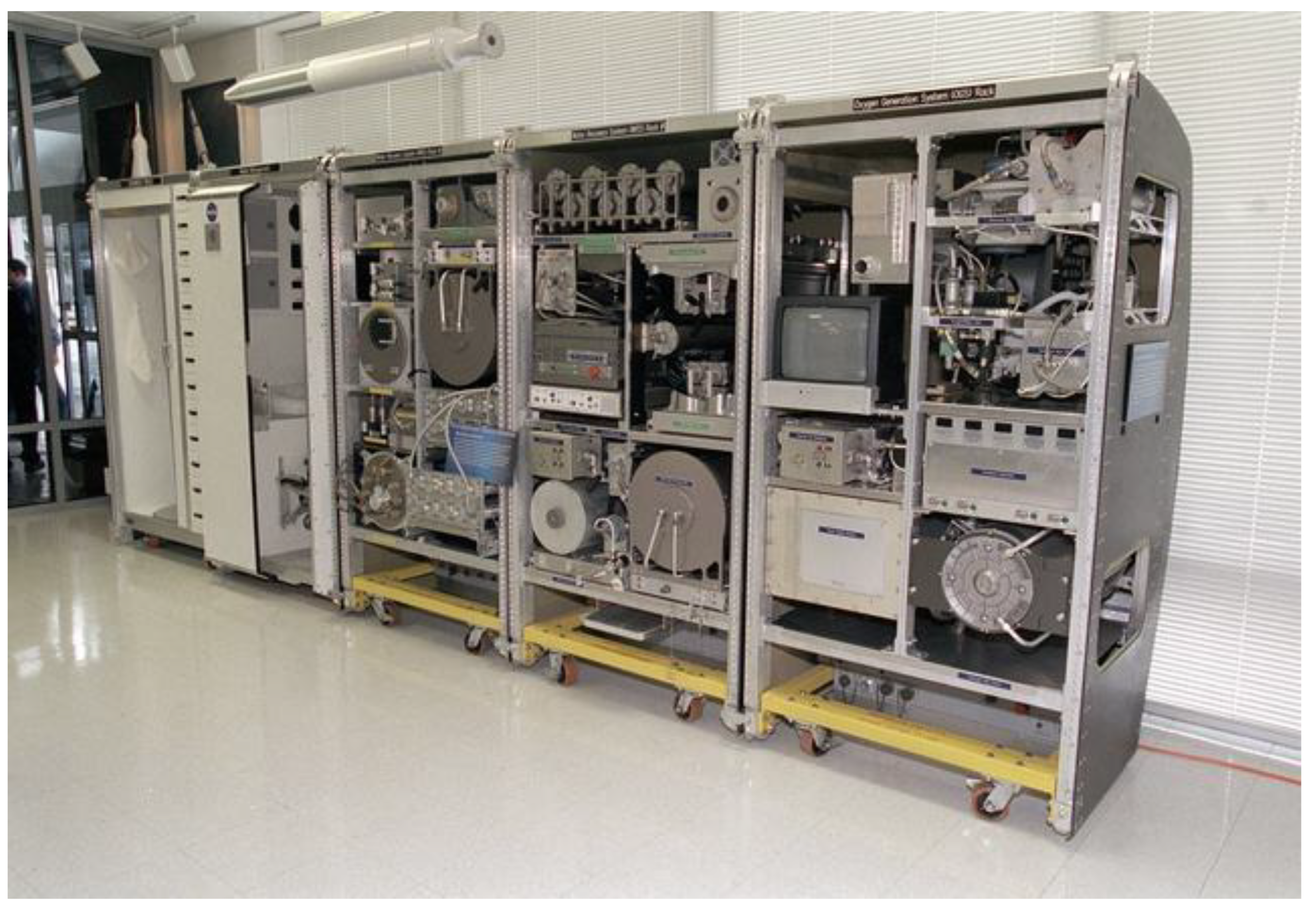
NASA’s Marshall Space Flight Centre in Huntsville, Alabama, designs, constructs, and evaluates the Environmental Control and Life Support System, which is responsible for regenerative life support hardware on the International Space Station (NASA Facts, 2004). It is a complex system of subsystems that work together to maintain a habitable environment for astronauts (Figure 2). It performs several functions:
- Provides oxygen for breathing
- Removes carbon dioxide from the cabin air
- Recovers and recycles oxygen from carbon dioxide to resupply the crew
- It filters particulates and microorganisms from the cabin air and maintains cabin cleanliness, pressure, temperature, and humidity levels.
- Removes volatile organic trace gases, such as ethanol, that are colourless, odorless and can build up over time.
- Distributes cabin air between each room, or module, of the station
- Provides potable water for consumption, food preparation, and hygiene
- Purifies recycled water from multiple sources back to potable water
Figure 2.
NASA Environmental Control and Life Support System (James E. Scarborough, Wikimedia Commons)- A working replica of ECLSS. The floor aligns five wheeled units, each resembling a double-door refrigerator. The leftmost unit, covered with a curtain, is the shower. Next is the waste management system with a closed white front panel. The two central units are water recovery systems, open at the front, revealing various metallic components. On the far right is the oxygen generation system, similar in design to the water recovery units.
Figure 2.
NASA Environmental Control and Life Support System (James E. Scarborough, Wikimedia Commons)- A working replica of ECLSS. The floor aligns five wheeled units, each resembling a double-door refrigerator. The leftmost unit, covered with a curtain, is the shower. Next is the waste management system with a closed white front panel. The two central units are water recovery systems, open at the front, revealing various metallic components. On the far right is the oxygen generation system, similar in design to the water recovery units.
The ISS’s main components are:
Water Recovery System
The Water Recovery System comprises the Urine Processor Assembly (UPA) and the Water Processor Assembly (WPA). Utilizing a low-pressure vacuum distillation process (Environmental Control and Life Support System (ECLSS), n.d.), water is extracted from urine. This process takes place within a rotating distillation assembly, which compensates for the absence of gravity (Lewis, 2018), aiding in the separation of liquids and gases in space. The product water from the Urine Processor is combined with other wastewater and directed to the Water Processor for further treatment (NASA Facts, 2004).
Within the Water Processor, free gas and solid materials like hair and lint are removed initially. The water then undergoes purification through a series of multi- filtration beds. Following this, a high-temperature catalytic reactor assembly (Figure 2) eliminates any remaining organic contaminants and microorganisms. Ensure the purity of the product water, electrical conductivity sensors are employed, as the presence of typical contaminants increases the water’s conductivity. The crew reprocesses the water they deem unacceptable and directs the clean water to a storage tank for crew use.
The Air Revitalization System
The spacecraft’s atmosphere revitalization subsystem converts carbon dioxide from the cabin air into breathable oxygen using an oxygen generation assembly (Figure 3). The process involves several steps including:
- To remove carbon dioxide from the cabin air, utilize the Carbon Dioxide Removal Assembly (CDRA).
- Water undergoes electrolysis to split into hydrogen gas and oxygen.
- We then filter the fresh oxygen to remove any unwanted contaminants before releasing it back into the cabin.
Figure 3.
Overall block diagram of the Air Revitalization System (ARS) sub-systems.
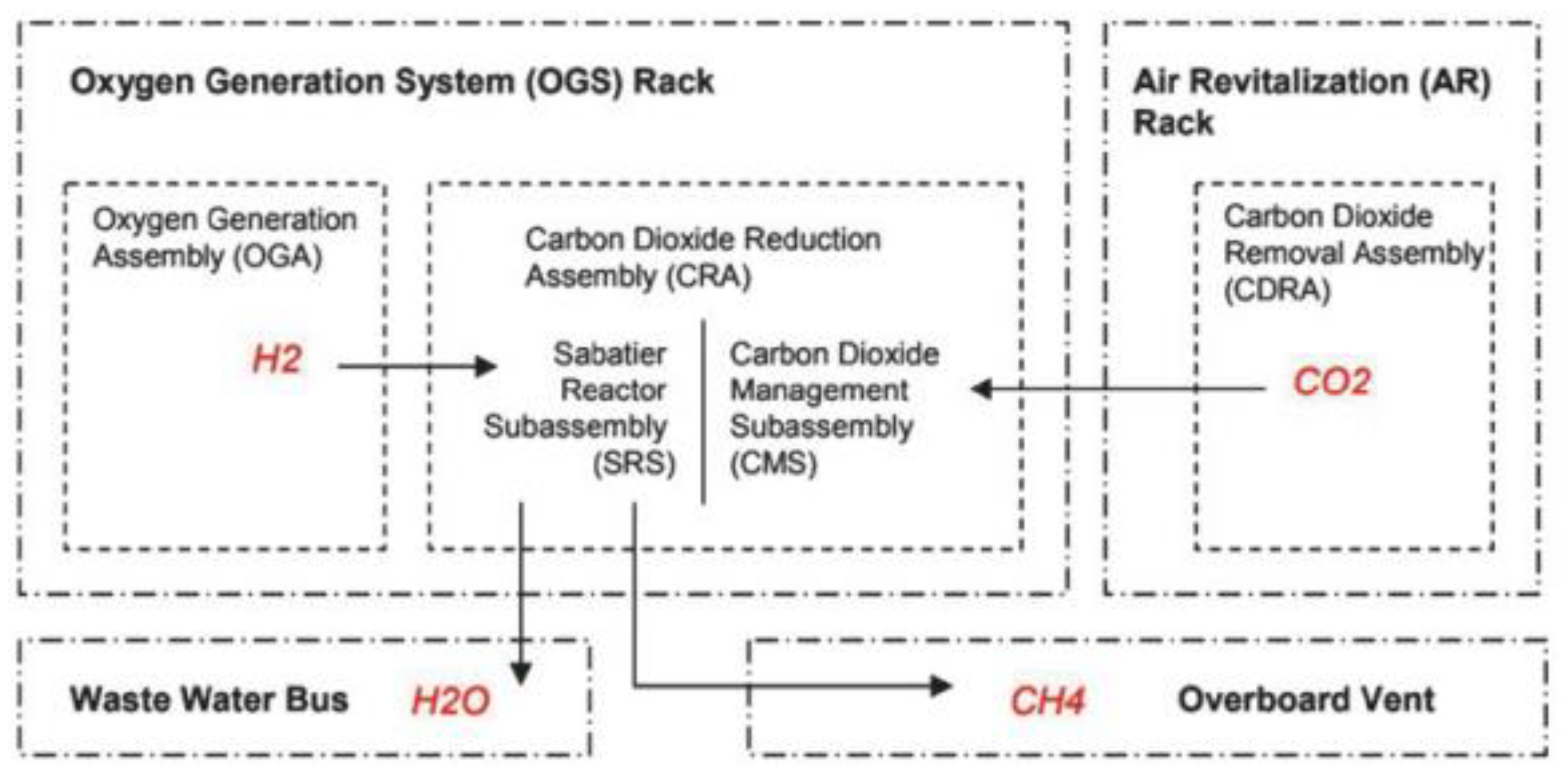
The Oxygen Generation System replenishes oxygen lost due to experiment use, airlock depressurization, module leakage, and carbon dioxide venting, and provides oxygen for the crew (Environmental Control and Life Support System (ECLSS , n.d.) and laboratory animals. The system includes the Oxygen Generation Assembly (OGA) and a Power Supply Module. The OGA’s core component is the cell stack, which electrolyzes water (Figure 3) from the Water Recovery System, separating it into oxygen and hydrogen (Seedhouse, 2020). The oxygen is supplied to the cabin, while hydrogen is vented outside. The Power Supply Module powers the electrolytic process.
The system can run continuously or cyclically, producing 5 to 20 pounds (2.3 to 9 kg) of oxygen per day in continuous mode, with a standard rate of 12 pounds (5.4 kg) per day in cyclic mode. The Oxygen Generation System can also work with a Carbon Dioxide Reduction Assembly (CReA), which uses the hydrogen from the OGA to react with carbon dioxide from the cabin, creating water and methane. Treating this extra water for reuse reduces the need for resupply from Earth (Understanding the Different Types of Space Station Life Support System, 2023).
Temperature and Humidity Control: This system maintains optimal temperature and humidity levels within a spacecraft or space station to ensure crew comfort and to prevent condensation, which could damage equipment or encourage mold growth.
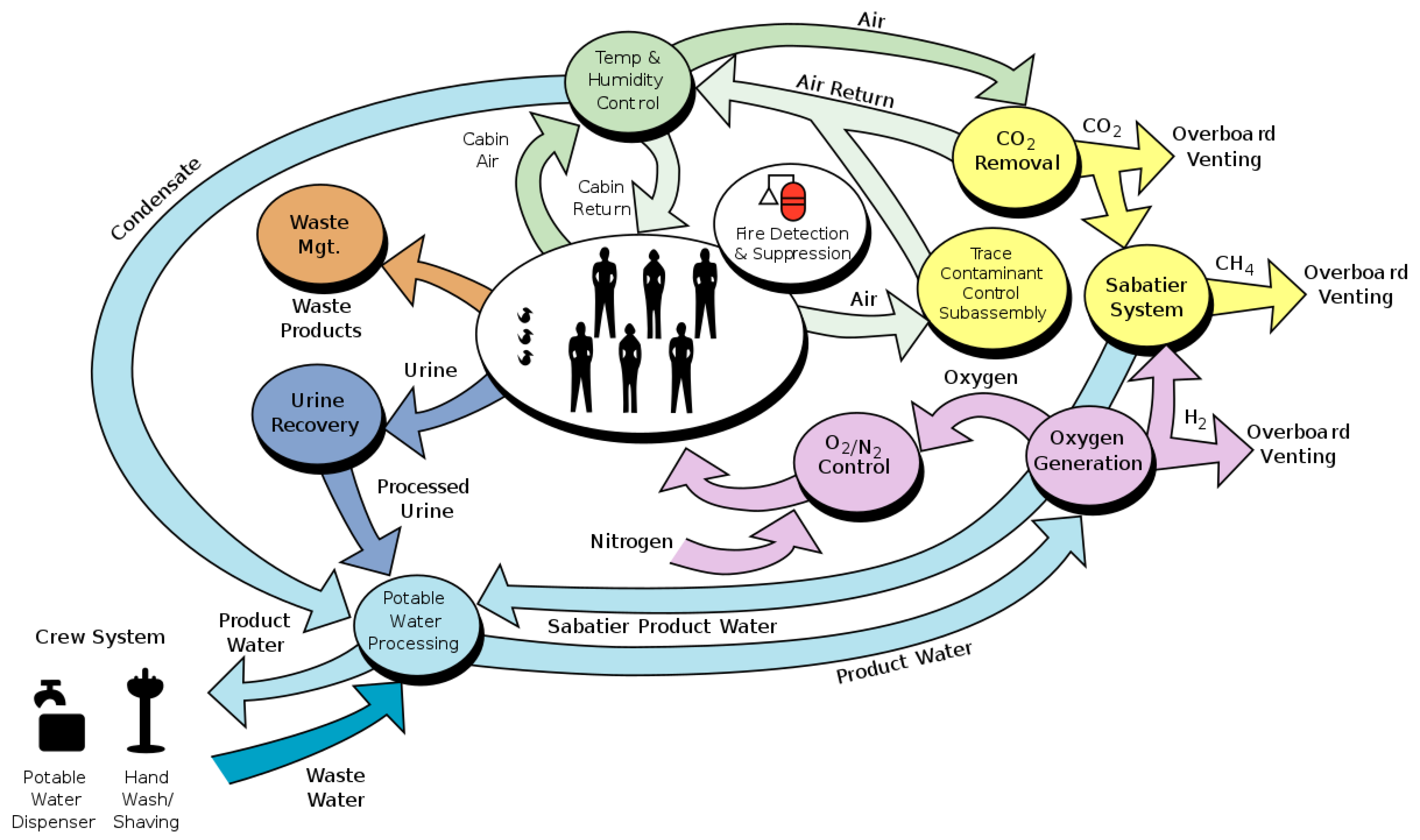
Water Recovery and Management: The ECLSS contains mechanisms for recovering and purifying water from a variety of sources (Figure 4), including urine and condensation. The ECLSS treats processed water to make it fit for drinking and other uses.
Waste Management: The ECLSS oversees managing the crew’s waste, both solid and liquid, making sure to store it safely and recycle it whenever possible.
Atmospheric Monitoring: This system keeps a constant check on air quality, looking for harmful gases and other potential safety risks. It notifies the crew of any unusual conditions and can trigger backup systems if needed.
Space Station Regenerative ECLSS Flow Diagram
Figure 4.
This diagram illustrates the circulation of recyclable resources within the ISS. The regenerative Environmental Control and Life Support System (ECLSS), primarily consisting of the water recovery system and the oxygen generation system, retrieves and reuses water and oxygen.
Figure 4.
This diagram illustrates the circulation of recyclable resources within the ISS. The regenerative Environmental Control and Life Support System (ECLSS), primarily consisting of the water recovery system and the oxygen generation system, retrieves and reuses water and oxygen.
ADVANCED CLOSED-LOOP SYSTEM:
ESA (Figure 5) designs an Advanced closed-loop system to sustain life in space for extended periods by recycling critical resources and minimizing reliance on Earth’s resupply. It integrates various subsystems to create a self-sufficient environment. Water recovery and purification are central, reclaiming water from sources like urine and condensation and treating it for reuse. Waste management focuses on processing solid and liquid waste, extracting valuable resources, and reducing storage needs (Advanced Closed Loop System, n.d.).
The system maintains a stable atmosphere by controlling oxygen and carbon dioxide levels, often using electrolysis and carbon dioxide reduction technologies. The system filters out atmospheric contaminants to ensure the safety of the crew. Nutrient recycling (Broyan et al., 2021) in advanced closed-loop systems converts organic waste into nutrients for plant growth (Figure 6), thereby supporting sustainable food production. Automation and sophisticated monitoring ensure the system’s reliability and adaptability, allowing for quick responses to any changes or malfunctions. This comprehensive approach is crucial for long-duration space exploration missions.
BIO-REGENERATIVE LIFE SUPPORT SYSTEM
The Bio-Regenerative Life Support System (BLSS) is an advanced environmental control and life support system that mimics Earth’s natural processes to sustain human life in space. This system utilizes biological components such as plants, algae, and microbes (Liu et al., 2021) to recycle air, water, and nutrients, reducing dependence on external resupply missions.
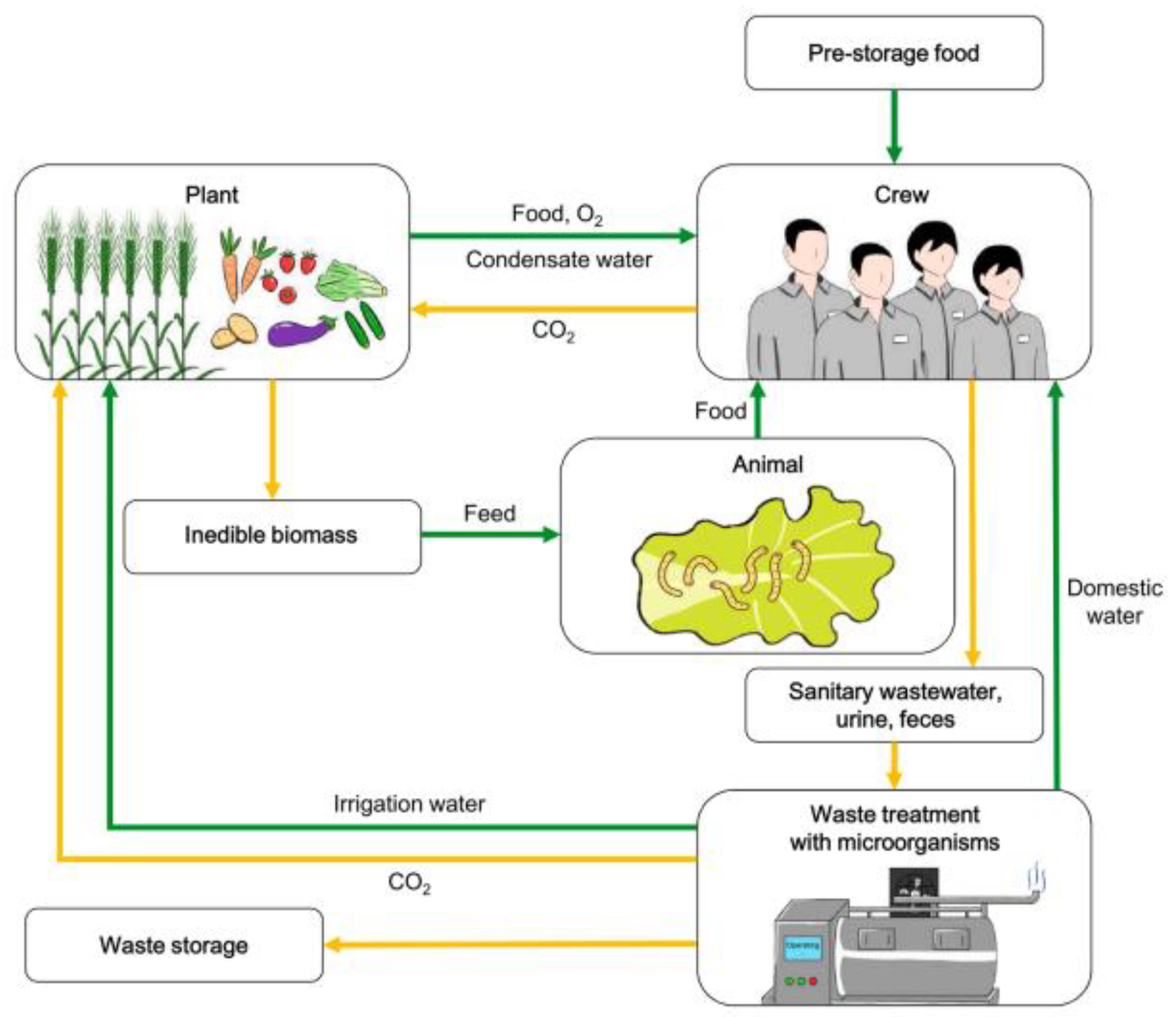
In a BLSS, plants play a crucial role in generating oxygen through photosynthesis and removing carbon dioxide from the air (Fu et al., 2016). Microorganisms break down organic waste into nutrient-rich compost, which can be used to fertilize plants and support food production as shown in Figure 7 below. Various biological and physical processes, such as plant transpiration and microbial purification, recycle water.
BLSS technology aims to create a closed-loop system where waste products are continuously recycled and converted into valuable resources (Gòdia et al., 2002), minimizing the need for resupply from Earth. These systems offer potential benefits for long-duration space missions (A Decade-Long Quest to Build an Ecosystem in a Room, n.d.), including reduced logistical requirements and increased sustainability. Ongoing research and development are focused on optimizing BLSS performance and reliability for future space exploration endeavors.
Figure 7.
Material cycles in BLSS.
MELISSA
The European Space Agency (ESA) developed the Micro-Ecological Life Support System Alternative (MELISSA), a bio-regenerative life support system. It is designed to create a closed-loop system for sustaining life in space, based on ecological principles and biological processes. The goal of MELISSA is to provide a sustainable way to recycle air, water, and waste, while also producing food and oxygen, reducing the need for constant resupply from Earth (MELiSSA Life Support Project, an Innovation Network in Support to Space Exploration, n.d.).
MELISSA integrates these compartments to create a self-sustaining ecosystem, where waste from one process becomes input for another, forming a closed loop. The system’s design aims to ensure efficiency, stability, and adaptability for long-term space missions. The MELISSA project has applications not only for space exploration but also for sustainable practices on Earth, as it models a micro-ecological system (Gòdia et al., 2002) with potential benefits for environmental management and resource recovery.
The natural processes in the lake convert each output into a new input in such a system. These processes take place, thanks to the interaction of organisms (Fu et al., 2016) such as bacteria, fungi, and algae as shown above in Figure 8. Four bioreactors and a higher plant compartment (HPC) in the MELiSSA system replicate these processes. Each bioreactor (Fig. 9) functions as a recycling system for wastes and by-products that are funneled into the HPC, which is where plants are grown.
Figure 8.
MELiSSA is based on an aquatic ecosystem depicted above. Credit: ESA.
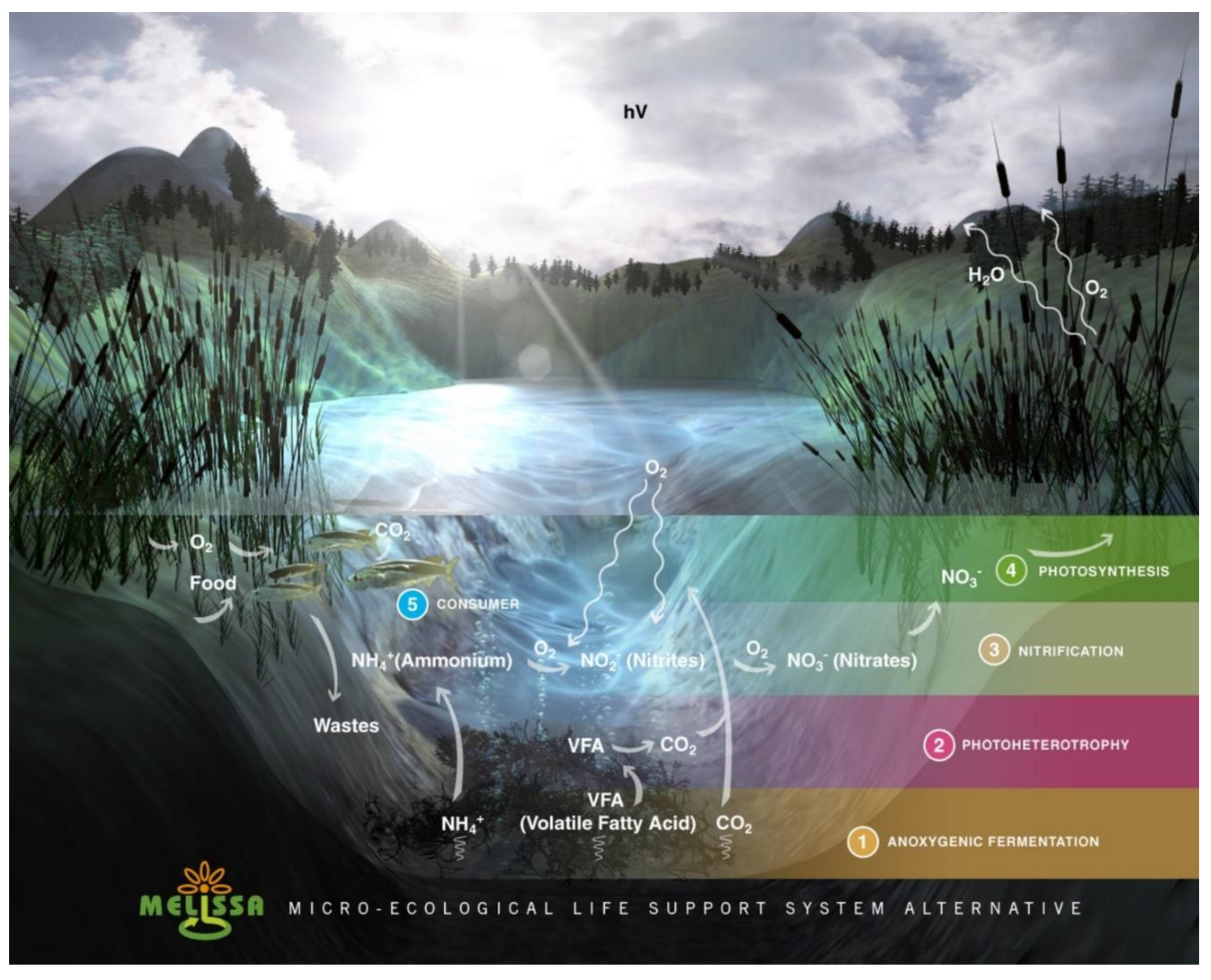
MELISSA consists of several interconnected compartments (Seedhouse, 2020), each with a specific function:
Figure 9.
Melissa Loop. Credit: ESA.
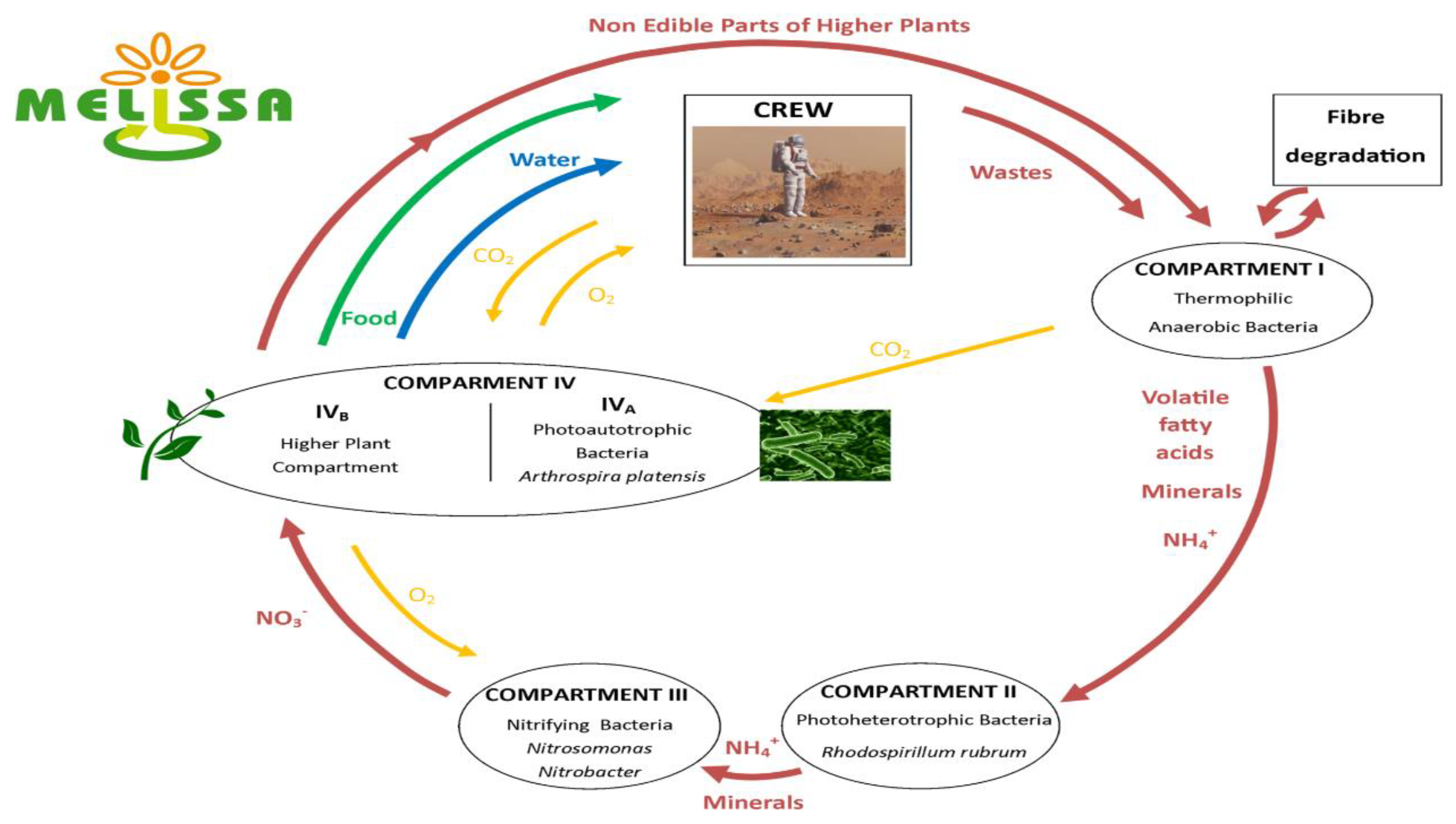
- ➢
- Compartment 1: Involves the breakdown of organic waste by anaerobic bacteria, producing biogas (such as methane) and nutrient-rich byproducts (Francesc Gòdia et al., 2004).
- ➢
- Compartment 2: Contains phototrophic bacteria that use light to further process waste and create additional nutrients.
- ➢
- Compartment 3: Features nitrifying bacteria that convert ammonia into nitrates, useful for plant growth.
- ➢
- Compartment 4: Contains plants, which use the nitrates to grow and produce oxygen through photosynthesis, removing carbon dioxide from the atmosphere.
- ➢
- Compartment 5: Supports higher organisms, such as fish, creating an aquaponic system to produce food or rats (MELiSSA Pilot Plant - Melissa Foundation, 2018).
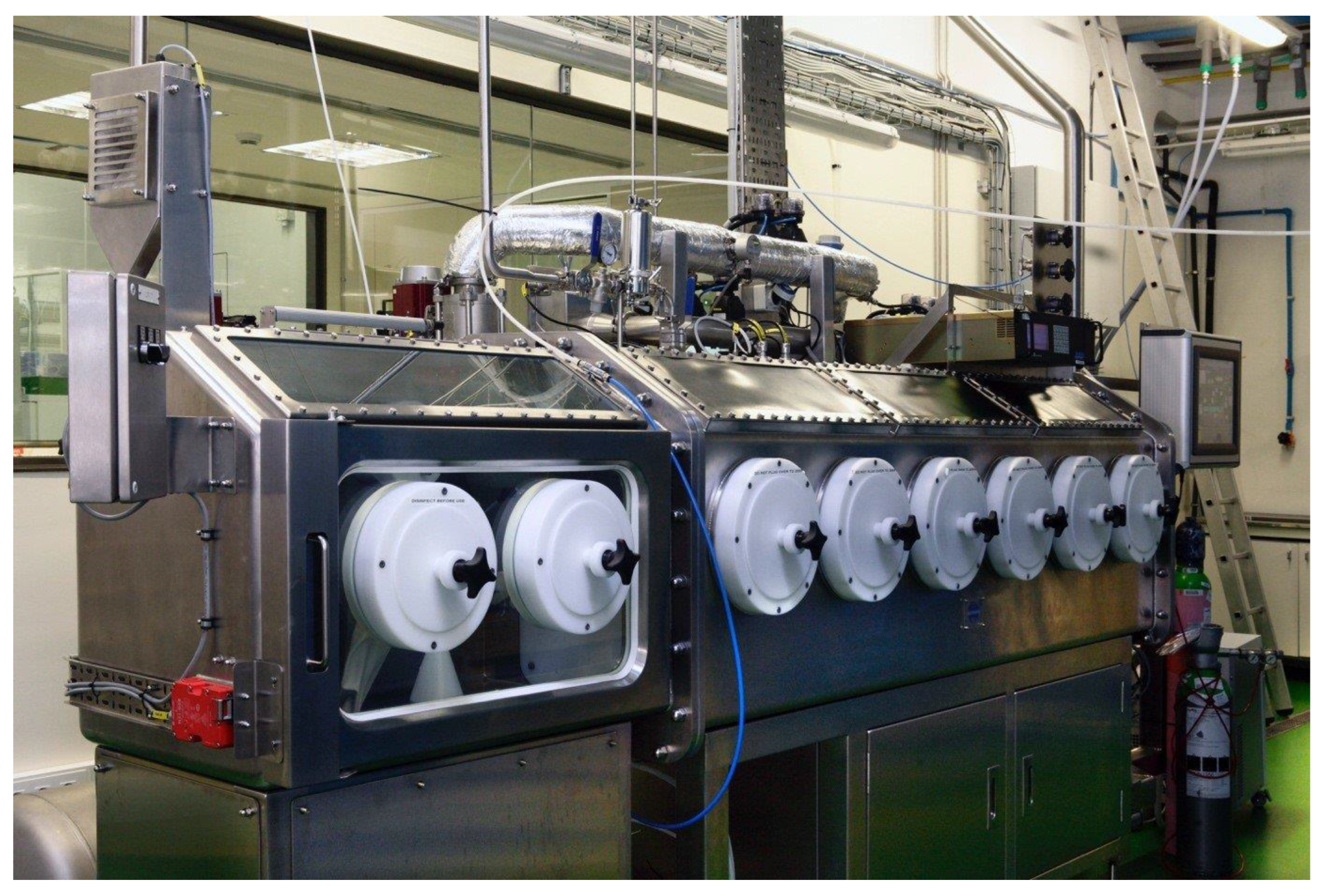
Figure 10.
The “crew compartment” within the Melissa Pilot Plant serves as an exceptionally airtight habitat and is currently inhabited by rats during this phase of colonization.
Figure 10.
The “crew compartment” within the Melissa Pilot Plant serves as an exceptionally airtight habitat and is currently inhabited by rats during this phase of colonization.
ISRU
In-situ resource utilization (ISRU) is the practice of using local resources on other planets or moons to support human life and reduce reliance on Earth resupply missions. This approach is key for long-duration space missions and future colonization efforts, lowering costs and increasing sustainability. On the Moon, water ice, found in the polar regions, can be extracted, and processed to provide drinking water and generate oxygen (Hoffman et al., 2015) and hydrogen for breathable air and rocket fuel. Lunar regolith, rich in silicon, aluminum, and iron, can be used to create construction materials.
Mars also offers abundant resources. Its carbon dioxide-rich atmosphere (James Lee Broyan, 2010) can be processed to extract oxygen, while water ice, found in polar caps and beneath the surface, can be utilized for drinking, oxygen production, and agriculture. We can use Mars’ regolith for construction and radiation shielding. By harnessing ISRU, future space missions become more sustainable, enabling longer stays and reducing the need for frequent resupply from Earth. This paves the way for longer exploration missions and human settlements on other celestial bodies.
The Mars Oxygen In-Situ Resource Utilization Experiment (MOXIE), led by MIT, successfully produces oxygen from the carbon dioxide-rich atmosphere on Mars (NASA’s Oxygen-Generating Experiment MOXIE Completes Mars Mission - NASA, 2023). During seven test runs, MOXIE consistently generated six grams of oxygen per hour, equivalent to the output of a small tree on Earth. The experiment was conducted under various atmospheric conditions, including day and night, as well as Martian seasons.
A scaled-up MOXIE could generate oxygen (Green Smoothies in Space, n.d.) at a pace of several hundred trees, potentially supporting future human missions. It would provide enough oxygen to support life and power rockets for return journeys to Earth. This accomplishment marks the first successful demonstration of in-situ resource utilization (ISRU), using a planet’s natural materials to create vital resources.
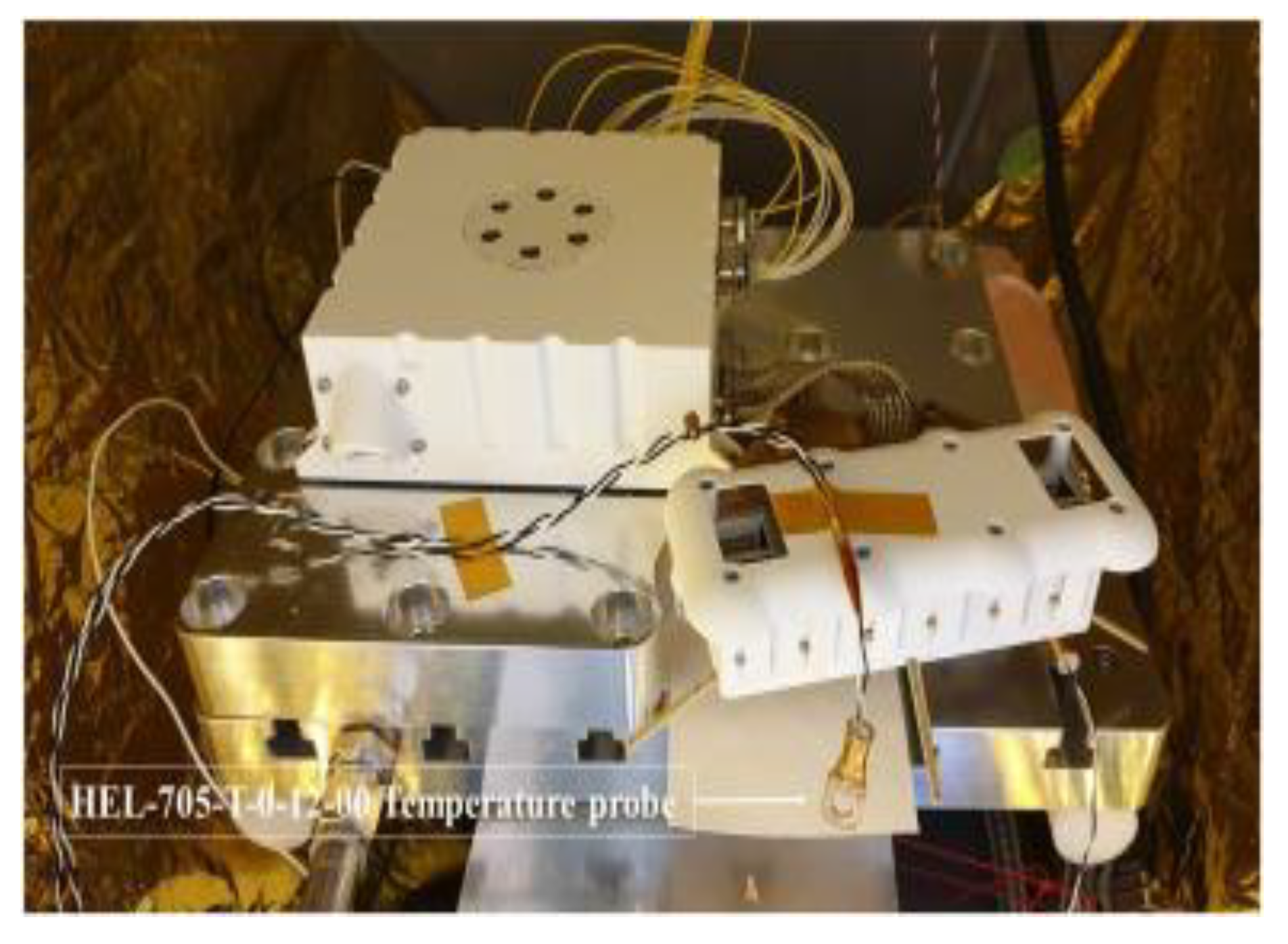
Similarly, In Figure 11 HABIT (Habitability: Brines, Irradiation, and Temperature) is a scientific instrument designed for space missions, particularly those focusing on astrobiology and planetary habitability (Martín-Torres et al., 2020). The European Space Agency developed it for the ExoMars mission, which is a part of the Trace Gas Orbiter project. The purpose of HABIT is to investigate the environmental conditions on Mars, specifically focusing on factors like brines, radiation, and temperature that may impact the potential for life.
FUTURE DEVELOPMENTS
Integration with In-Situ Resource Utilization (ISRU): Using local resources (like extracting water from Martian soil) to support life support needs.
Sustainable Food Production: Research into hydroponics, aquaponics, and other space farming methods to produce food in space (Ad Astra | Future Plans for the International Space Station - NASA, 2022).
Advanced Recycling Technologies: Improving Efficiency and Reducing Energy Consumption for Water and Waste Recycling.
Conclusion
As human exploration ventures further into space, the need for reliable and efficient life support systems (LSS) becomes crucial. The advancement of technology has significantly improved the capacity to maintain a habitable environment in space, with systems that regulate air quality, temperature, humidity, water supply, and waste management. The development of closed-loop systems, which prioritize recycling and resource recovery, is a pivotal step towards sustainable space exploration.
The Environmental Control and Life Support System (ECLSS) used on the International Space Station has proven that humans can live in space for extended periods with a combination of recycled resources and Earth-based resupply. However, future missions to the Moon, Mars, and beyond will require more advanced, self-sustaining systems that minimize the need for costly resupply missions from Earth. Technologies like photobioreactors and bio-regenerative systems, such as MELiSSA, hold promise for creating self-sustaining ecosystems in space. These systems not only generate oxygen and recycle water but also offer the potential for sustainable food production, a critical aspect for long-duration missions.
NASA and ESA are spearheading efforts to create life support systems that can withstand the challenges of deep space exploration. Innovations such as the Mars Oxygen In-Situ Resource Utilization Experiment (MOXIE) demonstrate that it is possible to extract resources from local environments, further reducing the reliance on Earth. This approach, known as In-Situ Resource Utilization (ISRU), will play a significant role in enabling long-term human presence on other planets and moons.
Future developments in LSS will focus on integrating ISRU, enhancing closed-loop technologies, and improving recycling and regeneration efficiencies. These advancements will ensure that astronauts can safely explore and inhabit distant worlds, paving the way for humanity’s journey into the cosmos.
The vision of human exploration beyond Low Earth Orbit is becoming a reality, thanks to innovative life support systems. The goal is to create a sustainable human presence in space, allowing for exploration, research, and even colonization. As technology continues to advance, the possibilities for human space exploration will expand, bringing us closer to becoming a multi-planetary species.
References
- A decade-long quest to build an ecosystem in a room. (n.d.). Www.esa.int. https://www.esa.int/Science_Exploration/Human_and_Robotic_Exploration/Research/A_decade-long_quest_to_build_an_ecosystem_in_a_room.
- Ad Astra | Future Plans for the International Space Station - NASA. (2022, July 24). https://www.nasa.gov/missions/station/iss-research/ad-astra-future-plans-for-the-international-space-station/.
- Advanced Closed Loop System. (n.d.). Www.esa.int. https://www.esa.int/Science_Exploration/Human_and_Robotic_Exploration/Research/Advanced_Closed_Loop_System.
- Broyan, J., Gatens, R., Schneider, W., Shaw, L., McKinley, M., Ewert, M., Meyer, M., Ruff, G., Owens, A., & Meyer, C. (2021). NASA Environmental Control and Life Support Technology Development for Exploration: 2020 to 2021 Overview.
- Environmental Control and Life Support System (ECLSS). (n.d.). https://www.nasa.gov/wp-content/uploads/2020/10/g-281237_eclss_0.pdf.
- Francesc Gòdia, Albiol, J., J. Mercado Pérez, N. Creus, Cabello, F., A. Montras, A. Masot, & Ch. Lasseur. (2004). The MELISSA pilot plant facility as an integration test-bed for advanced life support systems. The MELISSA Pilot Plant Facility as an Integration Test-Bed for Advanced Life Support Systems, 34(7), 1483–1493. [CrossRef]
- Fu, Y., Li, L., Xie, B., Dong, C., Wang, M., Jia, B., Shao, L., Dong, Y., Deng, S., Liu, H., Liu, G., Liu, B., Hu, D., & Liu, H. (2016). How to Establish a Bioregenerative Life Support System for Long-Term Crewed Missions to the Moon or Mars. Astrobiology, 16(12), 925–936. [CrossRef]
- Gòdia, F., Albiol, J., Montesinos, J. L., Pérez, J., Creus, N., Cabello, F., Mengual, X., Montras, A., & Lasseur, C. (2002). MELISSA: a loop of interconnected bioreactors to develop life support in Space. Journal of Biotechnology, 99(3), 319–330. [CrossRef]
- Green smoothies in space. (n.d.). Www.esa.int. Retrieved May 4, 2024, from https://www.esa.int/Science_Exploration/Human_and_Robotic_Exploration/Research/Green_smoothies_in_space.
- Hoffman, J. A., Rapp, D., & Hecht, M. H. (2015). The Mars Oxygen ISRU Experiment (MOXIE) on the Mars 2020 Rover. AIAA SPACE 2015 Conference and Exposition. [CrossRef]
- James Lee Broyan. (2010). International Space Station Crew Quarters Ventilation and Acoustic Design Implementation. 40th International Conference on Environmental Systems. [CrossRef]
- Johnson, M. (2019, April 26). Better Life Support Systems for Space Travel. NASA. http://www.nasa.gov/mission_pages/station/research/news/photobioreactor-better-life-support.
- Lewis, R. (2018). Recycling in Space: Waste Handling in a Microgravity Environment. Recycling in Space: Waste Handling in a Microgravity Environment Challenge.
- Liu, H., Yao, Z., Fu, Y., & Feng, J. (2021). Review of research into bioregenerative life support system(s) which can support humans living in space. Life Sciences in Space Research. [CrossRef]
- Martín-Torres, J., Zorzano, M.-P., Soria-Salinas, Á., Nazarious, M. I., Konatham, S., Mathanlal, T., Ramachandran, A. V., Ramírez-Luque, J.-A., & Mantas-Nakhai, R. (2020). The HABIT (HabitAbility: Brine Irradiation and Temperature) environmental instrument for the ExoMars 2022 Surface Platform. Planetary and Space Science, 190, 104968. [CrossRef]
- MELiSSA life support project, an innovation network in support to space exploration. s(n.d.).Www.esa.int.https://www.esa.int/Enabling_Support/Space_Engineering_Technology/MELiSSA_life_support_project_an_innovation_network_in_support_to_space_exploration.
- MELiSSA Pilot Plant - Melissa Foundation. (2018). Melissafoundation.org. https://www.melissafoundation.org/page/melissa-pilot-plant.
- NASA Facts. (2004). https://www.nasa.gov/wp-content/uploads/2016/01/174687main_eclss_facts.pdf?emrc=0ab55e.
- NASA’s Oxygen-Generating Experiment MOXIE Completes Mars Mission - NASA. (2023, September 6). NASA. https://www.nasa.gov/missions/mars-2020-perseverance/perseverance-rover/nasas-oxygen-generating-experiment-moxie-completes-mars-mission/.
- Reuter, J. L., & Reysa, R. P. (2001). International Space Station Environmental Control and Life Support System Status: 2000–2001. [CrossRef]
- Seedhouse, E. (2020). Life Support Systems For Humans In Space. Springer Nature.
- Understanding the Different Types of Space Station Life Support System. (2023, May 17). Space Mesmerise. https://spacemesmerise.com/en-gb/blogs/space-technology/understanding-the-different-types-of-space-station-life-support-systems.
Figure 1.
Engineers at NASA’s Marshall Space Flight Centre in Huntsville, Alabama, designed and built the life support systems that provide the crew of the International Space Station with clean air and water and a comfortable, safe work environment. Image Credit: NASA/MSFC.
Figure 1.
Engineers at NASA’s Marshall Space Flight Centre in Huntsville, Alabama, designed and built the life support systems that provide the crew of the International Space Station with clean air and water and a comfortable, safe work environment. Image Credit: NASA/MSFC.
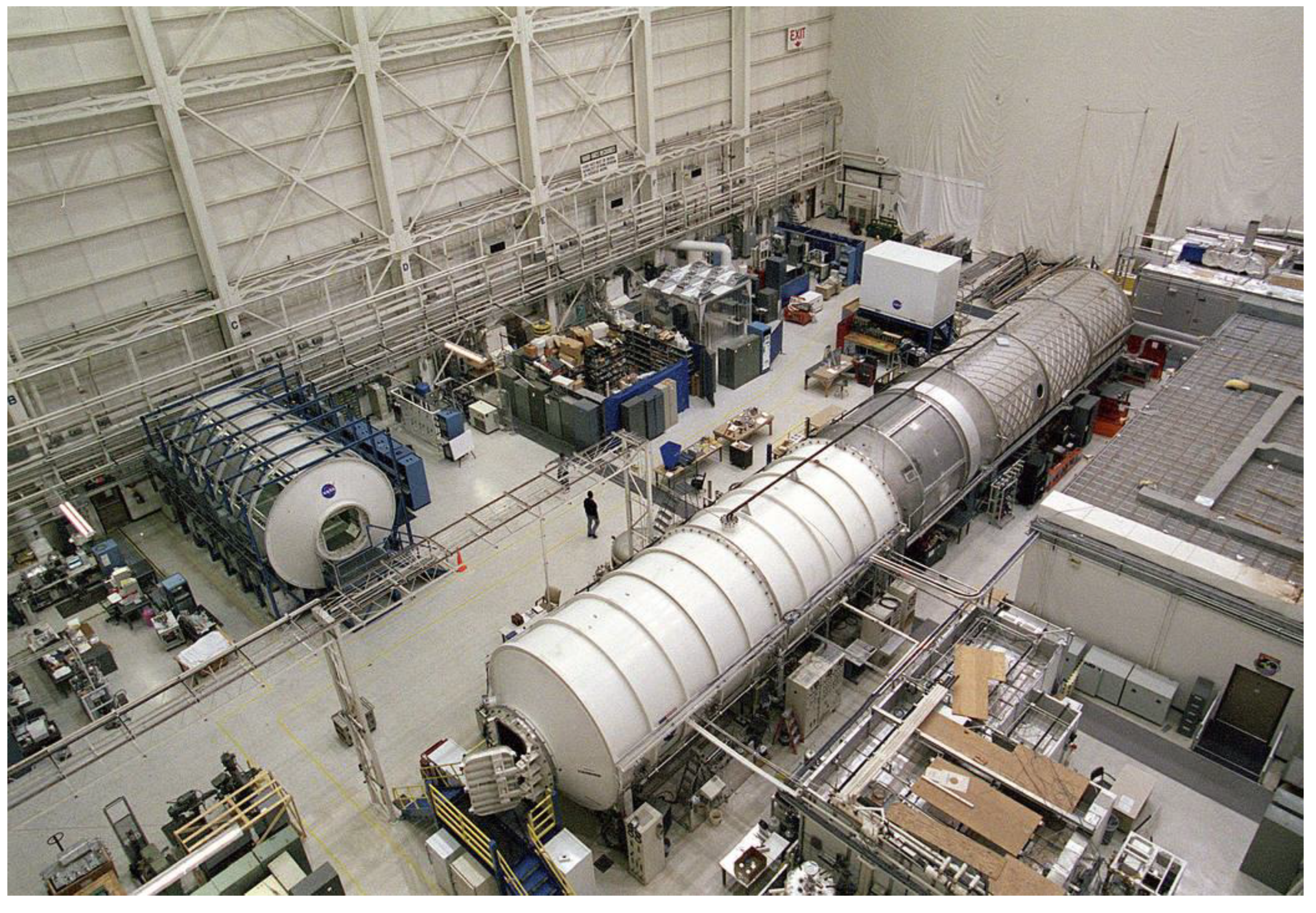
Figure 5.
ESA - Advanced Close Loop System life support rack. Credit: ESA/ NASA.
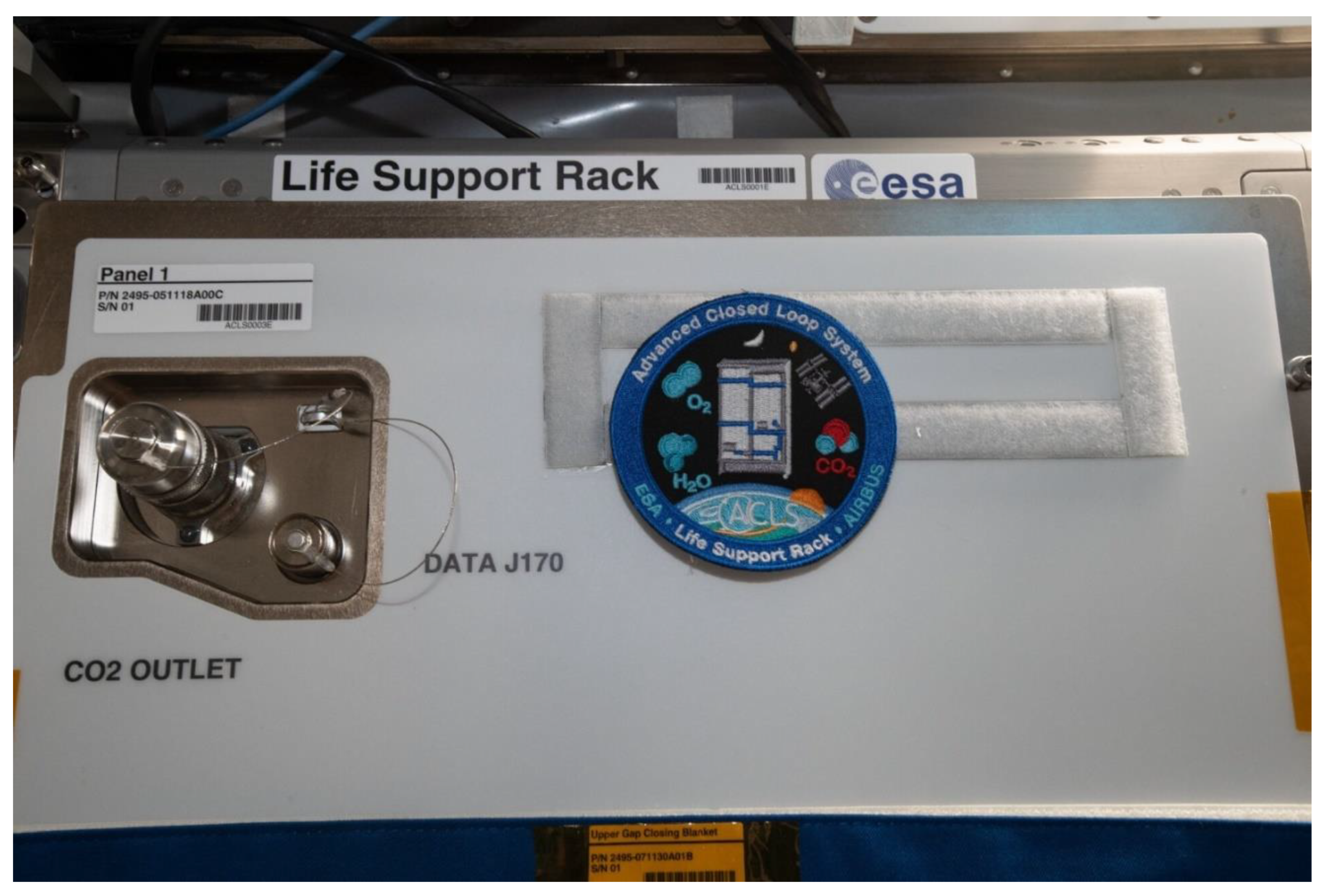
Figure 6.
ESA’s Advanced Closed Loop System (ACLS) on the Space Station transforms carbon dioxide into oxygen. Previously, the Space Station. produced oxygen from imported water from Earth, a costly process with limited supply. The ACLS addresses this drawback by recycling half of the carbon dioxide, reducing the amount of water needed on the ISS by about 400 litres per year.
Figure 6.
ESA’s Advanced Closed Loop System (ACLS) on the Space Station transforms carbon dioxide into oxygen. Previously, the Space Station. produced oxygen from imported water from Earth, a costly process with limited supply. The ACLS addresses this drawback by recycling half of the carbon dioxide, reducing the amount of water needed on the ISS by about 400 litres per year.
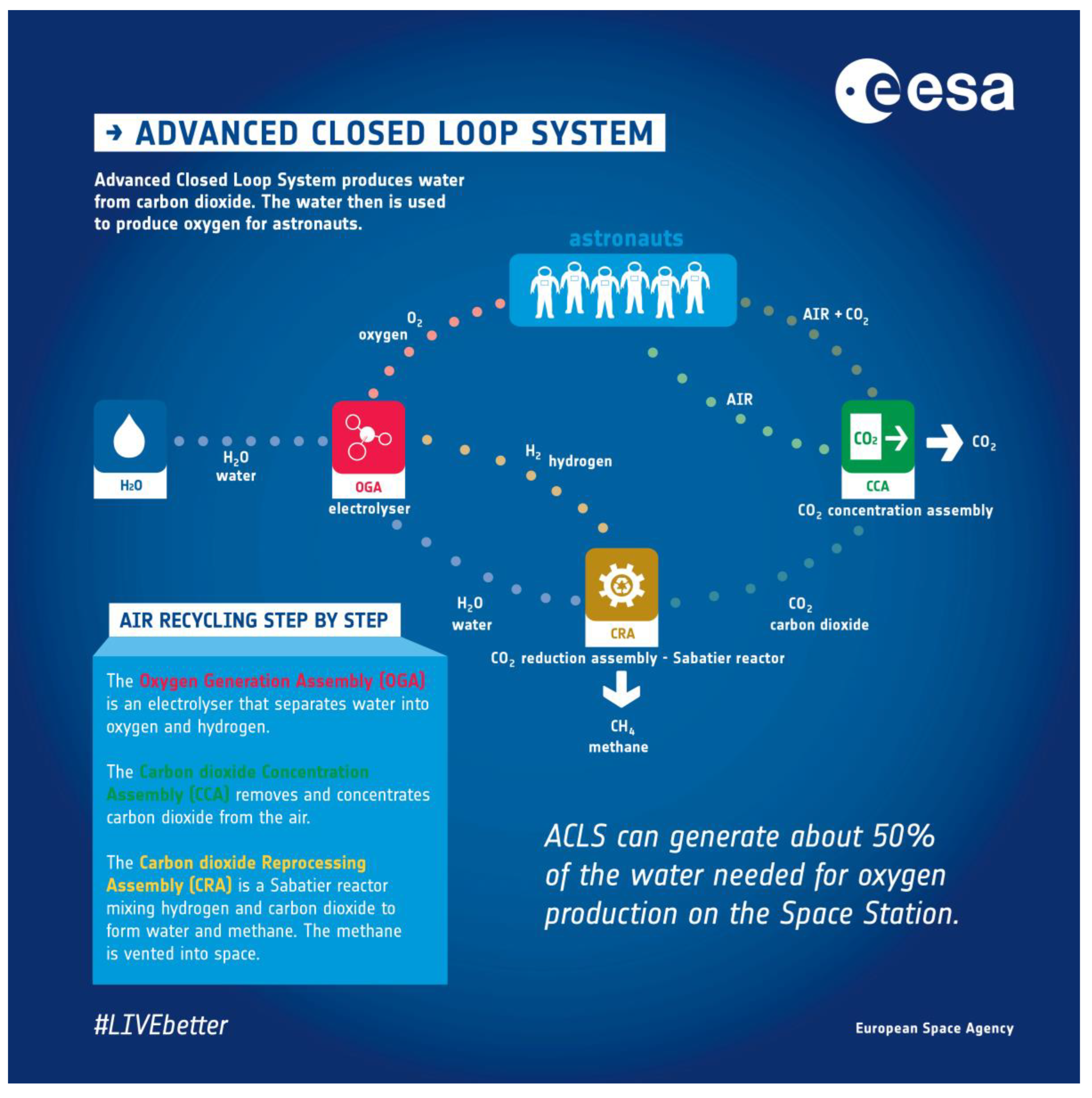
Figure 11.
The setup used for the HABIT flight model (FM). within the Omnisys Instruments AB TVAC chamber.
Figure 11.
The setup used for the HABIT flight model (FM). within the Omnisys Instruments AB TVAC chamber.
Disclaimer/Publisher’s Note: The statements, opinions and data contained in all publications are solely those of the individual author(s) and contributor(s) and not of MDPI and/or the editor(s). MDPI and/or the editor(s) disclaim responsibility for any injury to people or property resulting from any ideas, methods, instructions or products referred to in the content. |
© 2024 by the authors. Licensee MDPI, Basel, Switzerland. This article is an open access article distributed under the terms and conditions of the Creative Commons Attribution (CC BY) license (http://creativecommons.org/licenses/by/4.0/).
Copyright: This open access article is published under a Creative Commons CC BY 4.0 license, which permit the free download, distribution, and reuse, provided that the author and preprint are cited in any reuse.


