

Submitted:
07 May 2024
Posted:
07 May 2024
You are already at the latest version
Abstract
To support the integration of renewable energy sources and preserve grid stability, this study examines several approaches for controlling the temperature of Battery Energy Storage Systems (BESS) in modern energy settings. Specifically, the usage of BESS in Virtual Power Plants (VPPs) is the focus of this study. The effectiveness, safety features, dependability, affordability, and suitability for VPP applications of these systems are examined. Among the various hybrid cooling alternatives, two particularly promising combinations emerge. Firstly, the integration of heat pipes and phase change materials leverages their ability to conduct heat efficiently away from heat sources with minimal temperature differences, making them excellent for rapid heat transfer. Secondly, an approach employing heat pipes and liquid passive cooling a combination that capitalizes on the efficient heat transfer capabilities of heat pipes and the consistent cooling offered by liquid passive systems. The study underscores the importance of improving BESS performance and sustainability within VPPs by providing useful recommendations for choosing the best thermal management system depending on climate conditions and geographic location.
Keywords:
active liquid cooling
; battery energy storage systems
; hybrid systems
; passive cooling
; thermal management systems
; virtual power plants
1. Introduction
The study contributes significantly to the new body of knowledge in the field of thermal management systems (TMS) for VPPs. VPPs represent a novel method for managing energy, integrating multiple energy sources into a single, adaptable power generation and distribution system using advanced technologies. As the shift towards renewable energy sources and decentralized power generation continues, VPPs play a crucial role in improving grid stability, dependability, and efficiency. Efficient TMS are essential for controlling the temperature of energy storage systems, particularly BESS, within VPPs. These systems ensure the optimal performance and long-term health of BESS by effectively managing heat dissipation and mitigating temperature changes. Despite advancements in TMS technologies, critical knowledge gaps remain, hindering the smooth integration and operation of VPPs. One significant knowledge gap pertains to the optimization of phase change materials (PCM) and natural convection, which are cost-effective passive cooling techniques. While these methods are affordable and straightforward, their effectiveness in high energy consumption scenarios is not well understood, necessitating further research to enhance their reliability and performance. Moreover, challenges associated with the complexity and potential hazards [1] of heat pipes and liquid cooling TMS must be addressed. Despite their excellent thermal performance, issues such as leaks and short lifespans pose significant obstacles that require innovative solutions. Active cooling techniques like liquid active cooling and air-forced convection also present challenges due to their high energy consumption. Balancing energy efficiency with accurate temperature control is a complex task, underscoring the need for research aimed at maximizing energy use without compromising thermal regulation capabilities. Furthermore, designing robust cooling technologies capable of withstanding harsh operating conditions and temperature fluctuations is a top priority. The resilience of TMS in VPPs is crucial for minimizing downtime and ensuring uninterrupted power supply, necessitating further research to enhance system durability and dependability. In light of these knowledge gaps, this study aims to explore and assess different TMS technologies for BESS in VPPs. By addressing significant obstacles and advancing the state-of-the-art in thermal management within contemporary energy systems, the research contributes to filling critical gaps in TMS for VPPs [2]. This introduction underscores the importance of addressing these knowledge gaps and sets the stage for the research goals and methodologies outlined in subsequent sections. It investigates TMS BESS within VPPs, starting with an extensive literature review in Chapter 2 which discusses current advancements and challenges. The study employs a multi-criteria decision-making (MCDM) approach using the analytical hierarchy process (AHP-OS) in Chapter 3, combining it with a detailed comparative analysis in Chapter 4, to assess various TMS options alongside their metrics, elucidating the intricate relationship between them. Chapter 5 summarizes these findings to recommend the most suitable TMS for optimizing BESS performance in VPPs while suggesting future research directions to further the field of renewable energy integration and grid stability.
2. Literature Review
2.1. Heat Generation
The electrochemical redox processes that power lithium-ion batteries have both exothermic and ohmic losses in the solid and electrolyte phases [3]. Thermal coupling between modules allows the heating to spread from one cell to another, eventually impacting the entire battery pack. This heat rise affects entropy, which impacts battery performance as well. Heat generation also happens during charging and draining. Because this heat has the potential to become a thermal runaway, which could result in an explosion or fire hazard if left unchecked, it could be disastrous to the entire VPP battery system.
2.2. Cooling for a Static BESS in VPPS
Lithium-ion batteries used in BESS produce heat during cycles of charging and discharging, hence a cooling system is necessary [4]. If the heat is not adequately dissipated, it may have an impact on the batteries' lifespan, safety, and performance. Thermal runaway, a hazardous situation in which the battery temperature rises uncontrollably and causes a fire or explosion, can be evaded with the help of a cooling system, which can also help preserve the batteries' ideal temperature range. By lowering internal resistance and boosting electrochemical reactions, a cooling system can also increase the batteries' capacity and efficiency. Lithium-ion battery cooling systems come in a variety of forms, including liquid, air, and PCM cooling systems. Every TMS possesses unique benefits and drawbacks concerning expenses, intricacy, dependability, and efficiency.
This study focuses on BESS operating within VPPs and unlike traditional power plants, VPPs are not centralized but rather consist of geographically dispersed networks of medium-sized power generators [5] solar farms, wind turbines, and co-generation units together with flexible customers and BESS itself, which runs from a central control station.
The BESS is stationary and located anywhere within the network and could be in buildings, open spaces, or wherever the power-generating units are. In addition, the use of VPPs is generally for demand control [6], where they relieve the load on the grid by smartly distributing the generated power during peak load periods. Furthermore, the combined generated and consumed power is traded on the energy exchange while at the same time providing frequency and voltage regulation while stabilizing the grid.
2.2. Classifications and Characteristics of TMS
Natural convection is one type of passive cooling technique. It doesn't require any mechanical parts because it works on the basic principles of heat rising and colder air sinking [7]. Because of its passive design, which lowers the possibility of component failures or leakage, it is regarded as safe.
Air-forced convection is an active cooling technique using blowers or fans to improve heat dispersion [8]. This approach has mechanical components, such as fans, which might be dangerous if improperly maintained. As a result, extra safety precautions could be needed. In addition to requiring regular maintenance and safety precautions, it also uses electricity.
Liquid passive cooling is in the category of passive cooling where heat is transferred and dispersed using a liquid usually water or a specific coolant instead of active cooling systems or mechanical pumps [9]. To circulate the liquid and remove heat from a source, the cooling process uses passive techniques such as natural convection. Because it depends on passive fluid movement, which lowers the possibility of component failures, it is generally safe. To ensure safety and stop leaks, proper fluid maintenance is crucial. Low energy usage and environmental friendliness characterize liquid passive cooling. The cooling fluid selection might affect the system's overall environmental impact.
Liquid active cooling uses the primary and secondary loops as active cooling loops. The primary loop is similar to the passive liquid system, which circulates heat through a pump. Instead of a cooler, a high-performance heat exchanger acts as a bridge between the primary and secondary loops, enabling the air conditioning system to function as the secondary loop and provide cooling through evaporation [10]. Pump malfunctions and fluid leaks are among the risks, underscoring the significance of routine maintenance. Selecting environmentally friendly cooling fluids that comply with environmental requirements might have an impact on the environment. Its significant power consumption worsens its environmental impact.
Heat pipes are a type of passive cooling device that transfers heat between two solid interfaces using phase transition [11]. Because they operate passively, they do not affect the environment, are usually safe, and have sealed systems, which lower the possibility of fluid leakage. Heat pipes can maintain constant temperatures while using less energy, improving safety and having a smaller environmental impact.
PCMs are classified as passive coolers because they use materials capable of absorbing or releasing thermal energy during phase changes, such as freezing and thawing, to enable a certain degree of heating or cooling [10]. Due to their low energy consumption, stability under varying conditions, and passive operation without mechanical components, they are both safe and environmentally friendly. However, during hot conditions, they might be less effective, which could affect performance and safety.
Thermoelectric cooling uses the Peltier effect, which is an improved active heat pump, to provide refrigeration. Its exceptional scalability and high durability make it the perfect choice for cooling electronic parts, such as batteries. Its benefits over conventional cooling techniques include easy arrangement, noiselessness, and accurate temperature control [12]. Ensuring safe material handling and building a robust heat sink is critical for thermoelectric cooling, as both prevent overheating and potential risks associated with it.
Hybrid cooling systems include a variety of passive and active cooling techniques to maximize heat dissipation [13]. The particular combination of techniques employed determines the safety and environmental impact of hybrid systems. For them to operate safely, appropriate safety procedures and flexible decision-making are crucial. The selection of cooling materials and fluids, as well as the hybrid configuration's efficiency, all influence the environmental impact.
2.2. TMS Metrics and Their Assessment
When combined, these metrics offer an all-inclusive picture of how well a BESS operates and whether or not it achieves the objectives of its use. Stakeholders can make appropriate decisions concerning the installation, use, and investment in BESS by taking these metrics into account. Heat dissipation, a gauge of how successfully a cooling system extracts extra heat from battery cells [14], is one example of this. Another metric where the cost of implementing a specific TMS approach is taken into account is cost-effectiveness. The cost of the many materials needed, the technology employed, the upkeep and service of extra devices and equipment, the cost of electricity, security, safety, and environmental mitigations, among other things, are all included [15,16]. Additionally, reaction to dynamic loads [17], a statistic that assesses a BESS's ability to promptly and precisely adjust its power production in response to variations [15] in grid supply or demand, should be taken into account. The final factor is safety and the environment, which entails taking several precautions to avoid risks like explosions, fires, and exposure to harmful gases and liquids that might result from battery operation [18]. It entails taking precautions to protect the environment from waste products and possible pollution that may occur in the event of an accident or from subsequent releases.
2.2. Case Studies and Practical Applications
- i
- Liquid active cooling
Liquid active cooling as shown in Figure 1 is widely utilized in BESS to control the temperature of lithium-ion batteries[19].
Notable examples include the Hornsdale Power Reserve in Australia[20], the Mira Loma BESS in California[21], the Noor Power Station in Morocco[22], the Hokkaido Tomatoh-Atsuma BESS in Japan[23], and the Big Battery Eland project in South Africa[24]. These installations serve as key components of their respective energy grids, providing stability, managing renewable energy fluctuations, and ensuring continuous power supply during peak demand hours and emergencies.
- ii
- Natural convection
Natural convection finds useful application in smaller-scale home energy storage systems as shown in Figure 2 prioritizing ease of use and energy efficiency [25]. Examples include the Tesla Powerwall[26], LG Chem RESU[27], Sonnen eco[28], and Enphase Encharge[29]. These systems utilize lithium-ion or lithium-iron-phosphate battery technology to store excess energy from solar panels or the grid, offering homeowners greater energy independence, flexibility, and the ability to optimize energy usage. Additionally, they provide backup power capabilities during grid outages, contributing to enhanced reliability and resilience for residential energy needs.
- iii
- Heat pipes
Heat pipes are extensively utilized in electric vehicles (EVs) [30] with examples such as the Tesla Model S/X/3/Y, Nissan Leaf, Chevrolet Bolt EV, BMW i3, BYD e6, Audi e-tron, and Hyundai Kona Electric. These vehicles incorporate various types of lithium-ion batteries supplied by manufacturers such as Tesla, LG Chem, Samsung SDI, BYD Auto, and SK Innovation [31]. Figure 3 displays a summarized arrangement of the heat pipe cooling TMS.
- iv
- Liquid and air as cooling media in hybrid cooling
By using both liquid and air as cooling media as shown in Figure 4 hybrid cooling systems represent a unique method to TMS in BESS [32]. These systems are particularly valuable in grid-scale BESS operations, especially those integrated with renewable energy sources, as they effectively manage variable climatic conditions and load fluctuations.
For instance, the CryoBattery in the United Kingdom, located in Manchester[33], supports the local electricity network by storing excess renewable energy from wind and solar sources, ensuring grid stability during extreme weather events. Similarly, the Wattway Solar Panel BSS in France[34], combines solar PV panels with battery energy storage to efficiently harness solar energy, providing backup power and offsetting grid demand as needed. Additionally, Hecate Energy's grid-scale battery storage projects in the United States integrate with renewable sources like solar and wind, mitigating intermittency and stabilizing the grid under varying climatic conditions and load circumstances. These examples highlight the versatility and effectiveness of hybrid cooling systems in enhancing the performance and resilience of grid-scale BESS integrated with renewable energy generation.
- v
- PCM based cooling
Practical applications of PCM-based TMS in lithium-ion batteries include electric vehicles (EVs), grid-scale energy storage systems, and portable electronic devices [35]. By effectively managing battery temperature, PCM-based TMS contributes to improved battery performance, efficiency, and safety, ultimately enhancing the overall reliability and longevity of lithium-ion battery systems. Figure 5 provides a schematic arrangement of PCM TMS. One of the key advantages of PCM-based TMS is its passive nature, requiring no active components like fans or pumps. This leads to simplified system design, reduced complexity, and lower energy consumption compared to traditional active cooling methods. Additionally, PCMs offer high thermal stability, reliability, and compatibility with lithium-ion batteries.
- vi
- Liquid passive cooling
Liquid passive TMS is widely applied in Vanadium Redox Flow Batteries (VRFB) to improve its efficiency and dependability[36]. Vanadium ions in various oxidation states are used as the active materials in VRFBs, and they are kept in external electrolyte tanks. Moreover, it offers temperature control without requiring the addition of labor-intensive or energy-intensive cooling equipment. As a result, heat is automatically released from this system by making use of the characteristics that the flowing vanadium electrolyte has to offer.
Liquid passive TMS is particularly well-suited for VRFBs due to their large-scale and stationary nature. The simplicity and effectiveness as shown in Figure 6 contributes to the overall efficiency and dependability of VRFB systems, enabling them to operate reliably under various operating conditions.
- vii
- Air-forced convection
Air-forced TMS as shown in Figure 7 is essential for extending the life and performance of lead-acid batteries, which are widely used as energy storage in applications like telecommunications, automotive, and backup power. Air-forced TMS is an active way to keep lead-acid batteries at the right temperature during their charging and discharging cycles [37], whether flooded or valve-regulated (VRLA).
One of the primary benefits of air-forced TMS in lead-acid batteries is its ability to maintain a steady temperature profile, even under varying load conditions. By continuously circulating air, these systems prevent overheating during charging cycles and maintain optimal operating temperatures, thus preserving battery performance and extending their lifespan.
3. Methodology
In this study, AHP-OS was used to assess the metrics that form the TMS criteria parameters and the TMSs according to their adjudged priorities and weights based on the comparative findings from other published literature and data forming respective comparison tables. The AHP-OS is a statistical analysis tool that assists via multi-criteria choice-making [38]. On top of that, AHP-OS allows for minor judgmental discrepancies and generates ratio scales from paired criteria comparisons. Likewise, subjective views as well as precise measurements can be used as inputs. Consequently, a consistency ratio and priority (weights) are computed [39]. In this case, the parameters used were indeterminate quantitatively despite their significance in determining the best TMS for use in BESS for VPP.
3.1. TMS Metrics Comparison
The study identified with the four key TMS metrics: heat dissipation efficiency, cost-effectiveness, response to dynamic loads, and safety & environment. These metrics were assigned weights based on their relative importance. Through a Saaty scale [40], two elements were compared in AHP with their attributing values varying from 1 to 9. The scale determines the relative importance of an alternative when compared with another as shown in Table 1.
Odd numbers are always preferred to ensure reasonable distinction among the measurement points, even numbers are only adopted whenever there is a need for negotiation between evaluators. Table 2 shows the TMS metrics weights on the scale.
In this case, the first step was to determine the criteria as shown in Figure 1 where they were evaluated in pairs to determine the relative importance between them and the relative weight to the goal. The evaluation started by determining the relative weight of the TMS metrics to produce a priority vector (Eigenvector) matrix as shown in Table 3.
Then normalization was done to give relative weight to each criterion [41]by dividing each value by the total column value as shown in Table 4.
Now, the contribution of each criterion was determined by calculations made using the priority vector, which showed the relative weights between each criterion obtained by calculating the average of all criteria as indicated in Table 5.
The total of the values per column is 1; therefore, this approximation was applied to simplify the calculation process because the difference between the exact and approximate values is designed to be less than 10% [38].
For comparison, Python mathematical software with NumPy and SciPy was used to determine the exact Eigenvector values through the potential matrices. (Appendix A1 shows the Python Code used).
The approximate and exact Eigenvector values are very close to each other as indicated in Table 6, therefore the calculation of the exact vector requires a mathematical effort that can be exempted.
The next step was to determine the inconsistencies to capture enough information to decide whether the decisions made have been consistent with the choices. The consistency index comes in and is based on the maximum Eigenvector value calculated by summing up the product of each element in the Eigenvectors by the respective column of the original comparison matrix [39] as shown in Table 7.
The calculation of the consistency index is given by equation (1).
where CI is the consistency index, λmax is the maximum Eigenvalue, and n is the number of the evaluated criteria.
Now, CI == 0.015
In order to verify whether the consistency index (CI) is adequate, the consistency rate (CR) was determined.
CR is the ratio between the consistency index and the random consistency index (RI) and the matrix would be consistent if the resulting ratio was less than 10% shown by equation (2).
where CR is the consistency ratio, CI is the consistency index and RI is the random consistency index.
The RI value is fixed on the number of criteria as shown by Table 8 the AHP criteria table which provides determined values.
Now, CR = which is 1.7%
Since the value is less than 10%, the matrix was considered consistent and the priority criteria results for the first level are shown in Figure 2.
This formed the criteria level 1 computations as shown in Figure 8, which the AHP-OS can do at a good CR. Therefore, for criteria level 2 to the end, data analyzed by the AHP software will be presented. (Appendix A2 shows the results as given by AHP-OS for TMS metrics).
3.1. Comparison Data Concerning TMS Metrics
Using the prioritized TMS metrics, another hierarchy for criteria level 2 was established where various TMS options were evaluated based on their performance in each metric by comparing data from different previous studies to establish the Saaty scale. Pairwise comparisons were again conducted to establish the relative importance of different TMS options within each metric. The software was able to perform sensitivity analysis to assess the weight uncertainties overlap and robustness of the decision-making process [40]. This involved varying the weights assigned to each criterion and observing the impact on the overall rankings of TMS options. It helped identify the relative importance of different criteria and their influence on the final decisions.
- i
- Heat dissipation
Heat dissipation is an important consideration when evaluating thermal management solutions for BESS in VPPs. The restricted heat dissipation capability of natural convection, which depends on passive airflow, makes it less effective for bigger BESS installations [42]. Forced air convection, facilitated by fans or blowers [43], improves heat dissipation; yet, air is less efficient than other media [44] due to its lower specific heat and heat transfer coefficient. With liquids having greater heat transfer coefficients than air, active cooling with liquids entails actively circulating [35] cooling fluids to promote efficient heat dissipation. Heat pipes have excellent thermal conductivity, which enables fast heat transfer. [35]. PCM offers variable but steady temperature control and modest heat dissipation [35]. Using the Peltier effect, thermoelectric modules transform power into thermal differences, freeing thermoelectric cooling, which is frequently combined with other cooling techniques, to provide heat later [45]. Hybrid cooling, whose efficacy varies based on particular configurations, optimizes [45] heat dissipation by combining active and passive tactics to reduce vulnerabilities in cooling systems. From this information, the weights were assigned to every TMS as shown in Table 9. Following that, the criteria were assessed in pairs once again using AHS-OS, yielding 28 pairwise comparisons.
Table 10 presents the criterion consolidated priorities and normalized pairwise comparison matrix for heat dissipation as produced from the run in the AHP-OS with twenty-eight (28) comparisons, and CR of 0.7%.
- ii
- Cost-effectiveness
Natural convection is cost-effective for smaller BESS due to its passive design, low energy usage, and minimal [49] maintenance. Air-forced convection is moderately cost-effective [50] for medium to large-scale BESS, but requires additional equipment like fans or blowers [49]. Liquid passive cooling is suitable for medium to large-scale BESS, balancing efficiency and cost-effectiveness, while liquid active cooling, though effective for larger-scale BESS with high heat dissipation requirements, has higher upfront costs [48]. Heat pipes provide an economical solution for medium to large-scale BESS, offering low costs, passive operation, and minimal maintenance. PCM is cost-effective across all BESS scales, with easy installation, low energy consumption, and little maintenance. Thermoelectric cooling is less economical due to additional components, higher energy consumption, and complex installations [51]. The cost-effectiveness of hybrid cooling depends on the combination [52] of techniques used, with optimization involving tailoring the combination to meet specific BESS requirements. Table 11 presents the TMS performance outcome for cost-effectiveness which was applied in AHP-OS.
Table 12 shows the criterion consolidated priorities as well as normalized pairwise comparison matrix for cost-effectiveness from AHP-OS with twenty-eight (28) comparisons, and a CR of 1.1%.
- iii
- Response to dynamic loads
Natural convection, while inexpensive and appropriate for smaller BESSs, may have trouble responding [57] to abrupt changes in load because it depends on natural airflow, according to TMSs for BESS VPPs. When combined with fans or blowers, air-forced convection provides superior reactivity for medium- to large-scale BESSs experiencing recurrent load variations. [57]. While liquid active cooling is appropriate for big load fluctuations due to its pump-driven [58,59] cooling loop, liquid passive cooling responds poorly [58] but can manage tiny load changes. Heat pipes work well with both small and large-scale BESSs because of their remarkable responsiveness. At greater discharge rates [57], pure PCM is less effective due to its modest response. Excellent responsiveness is a feature of thermoelectric cooling [60], which makes it appropriate for specialized BESS applications that need accurate temperature control. The reactivity of hybrid cooling varies depending on which strategies are combined, but its adaptability allows it to be employed in a variety of load scenarios [61]. Table 13 presents the TMS performance outcome for response to dynamic loads which was applied in AHP-OS and the results.
Likewise, the AHS-OS was able to generate 28 pairwise comparisons, for response to dynamic loads metric using the consolidated priorities and normalized pairwise comparison matrix as shown in Table 14 with a CR of 0.8%.
- iv
- Safety and environment
While air-forced convection can be risky if fans or blowers break, resulting in overheating, thermal runaway, and fire, together with electronic garbage, it also adds to noise pollution [63]. Natural convection is safe and environmentally beneficial [64]. The type of coolant used in liquid passive cooling can affect system safety as well as the environment [65]. Because there is a risk of fluid leaks and pump failures, liquid active cooling calls for increasingly stringent safety measures. Except for leaks, heat pipes are secure and eco-friendly [66]. Though they can break down and become pollutants over time [54], PCM is environmentally benign and harmless. Owing to their higher energy consumption and potential for overheating, thermoelectric cooling systems need to be handled and designed carefully. Hybrid cooling systems' effects on the environment and safety are dependent upon the combination of approaches employed [46]. Hybrid cooling maximizes temperature control and consistency in battery packs by combining the benefits of liquid and air cooling. In addition to improving battery performance and safety, this lessens the negative environmental effects of utilizing toxic coolants or using excessive amounts of energy. Table 15 presents the TMS performance outcome for safety and environment which was applied in AHP-OS and the results displayed.
Table 16 presents the consolidated priorities and normalized pairwise matrix for safety and environment as produced from the run in the AHP-OS with twenty-eight (28) comparisons, and CR of 0.8%.
4. Results and Discussion
The comparative review of TMS for BESS highlights the critical importance of effectively managing heat dissipation, especially in dynamic operating conditions typical of VPPs.
Table 17 presents the overall score for each TMS across the four metrics as processed by AHP-OS. To visualize the relationship between the different TMS and the four metrics, a bar chart was generated by AHP-OS as shown in Figure 11.
Heat dissipation efficiency emerged as the top priority TMS metric at 36.6%, followed by response to dynamic loads at 27.8%, safety, and environment at 23.3%, and cost-effectiveness at 12.4%.
Figure 10.
TMS score across the metrics graph.
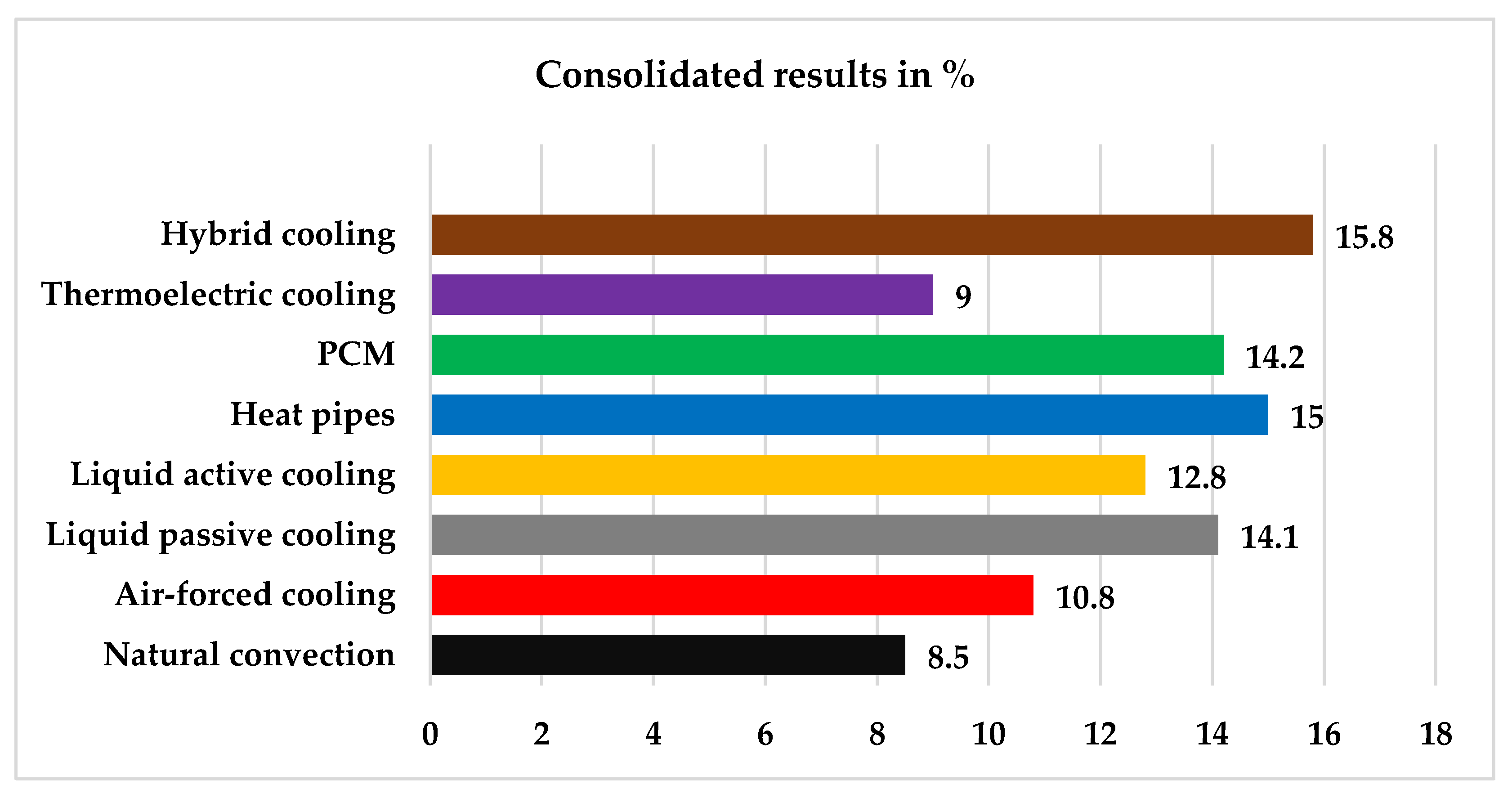
Hybrid cooling has the highest overall score and the lowest standard deviation, which means it is the most similar to the ideal TMS and has the most balanced performance across all metrics. Thermoelectric cooling has the lowest overall score and the highest standard deviation, which means it is the least similar to the ideal TMS and has the most variable performance across the metrics.
Heat pipes and liquid active cooling are leading with scores of 16.1%, showcasing their superior capability in heat dissipation. On the contrary, natural convection and thermoelectric cooling are at the lower end, scoring 4.3% and 7.7%, respectively, indicating lesser effectiveness in heat management. Natural convection emerges as the most economical option at 19.6%, followed by liquid passive and PCM at 14.9% while thermoelectric cooling trails with the least cost-effectiveness at 2.3%. Liquid active cooling, heat pipes, and hybrid cooling stand out with a 15.1% score, reflecting their adaptability to dynamic operational demands while natural convection and air-forced convection are less responsive, with scores of 4.2% and 9.2%, respectively. Heat pipes, natural convection, and PCM all score highly at 14.3%, underscoring their safety and minimal environmental impact while liquid active cooling and thermoelectric cooling have the lowest scores 7.9%, suggesting concerns in these areas.
Thermoelectric has low scores for all metrics except for response to dynamic loads, which means it is poor at removing heat, costly, and unsafe, but it is fast to react to changing conditions.
Effective combinations within the hybrid cooling system include:
- i.
- Heat pipes + PCM: This combination yields an average effectiveness score of 14.60%. Heat pipes are renowned for their ability to conduct heat efficiently away from heat sources with minimal temperature differences, making them excellent for rapid heat transfer. When combined with PCM, which absorbs and releases thermal energy during phase changes, this hybrid system can offer continuous thermal regulation. This is especially advantageous during peak load conditions where the BESS experiences significant thermal stress. The PCM component provides a buffer that absorbs excess heat, thereby preventing overheating and enhancing the system's response to thermal fluctuations.
- ii.
- Heat pipes + liquid passive cooling: With an average effectiveness score of 14.55%, this combination capitalizes on the efficient heat transfer capabilities of heat pipes and the consistent cooling offered by liquid passive systems. Liquid passive cooling utilizes a coolant to transfer heat away from the battery cells, operating on the principle of natural convection without the need for mechanical pumps. This method is inherently reliable and requires minimal maintenance. Coupled with heat pipes, it ensures that heat is not only quickly removed from hot spots but also evenly dissipated across the BESS, maintaining an optimal operational temperature range.
Balancing performance and cost is crucial, requiring tailored solutions for different applications and load profiles. Sensitivity analysis confirms the robustness of the decision-making process [70], aiding in the identification of key factors driving TMS selection. The findings have significant implications for BESS design and operation in VPPs, guiding stakeholders in maximizing reliability, efficiency, and sustainability. By considering multiple criteria and conducting sensitivity analysis, stakeholders can optimize TMS selection to enhance overall BESS performance while minimizing costs and environmental impacts. Ultimately, the study provides a structured approach to TMS decision-making, offering valuable insights for stakeholders seeking to deploy BESS effectively within VPPs.
5. Conclusions
This comparative review has identified hybrid cooling systems as the most effective approach for managing the thermal environment of BESS in VPPs. Specifically, the combinations of heat pipes with PCMs and liquid passive cooling have shown outstanding performance. Heat pipes paired with PCMs prove especially robust in environments with fluctuating thermal loads, offering stable thermal regulation and preventing overheating. In contrast, the integration of heat pipes and liquid passive cooling provides consistent and efficient cooling under varied operational conditions. These hybrid systems not only optimize thermal management but also enhance the safety, longevity, and performance of BESS, thereby supporting the stability and efficiency of VPPs. Future studies are encouraged to explore and refine these combinations, with a focus on discovering new materials and optimizing configurations to advance BESS thermal management solutions further. This research directs stakeholders towards implementing more reliable and efficient energy storage systems within VPPs, crucial for advancing grid stability and renewable energy integration.
Funding
This research was funded by Kepco International Nuclear Graduate School.
Conflicts of Interest
The authors declare no conflicts of interest. The funder had no role in the design of the study; in the collection, analyses, or interpretation of data; in the writing of the manuscript; or in the decision to publish the results.
Appendix
Figure A1.
Python mathematical software code for exact Eigenvector determination.
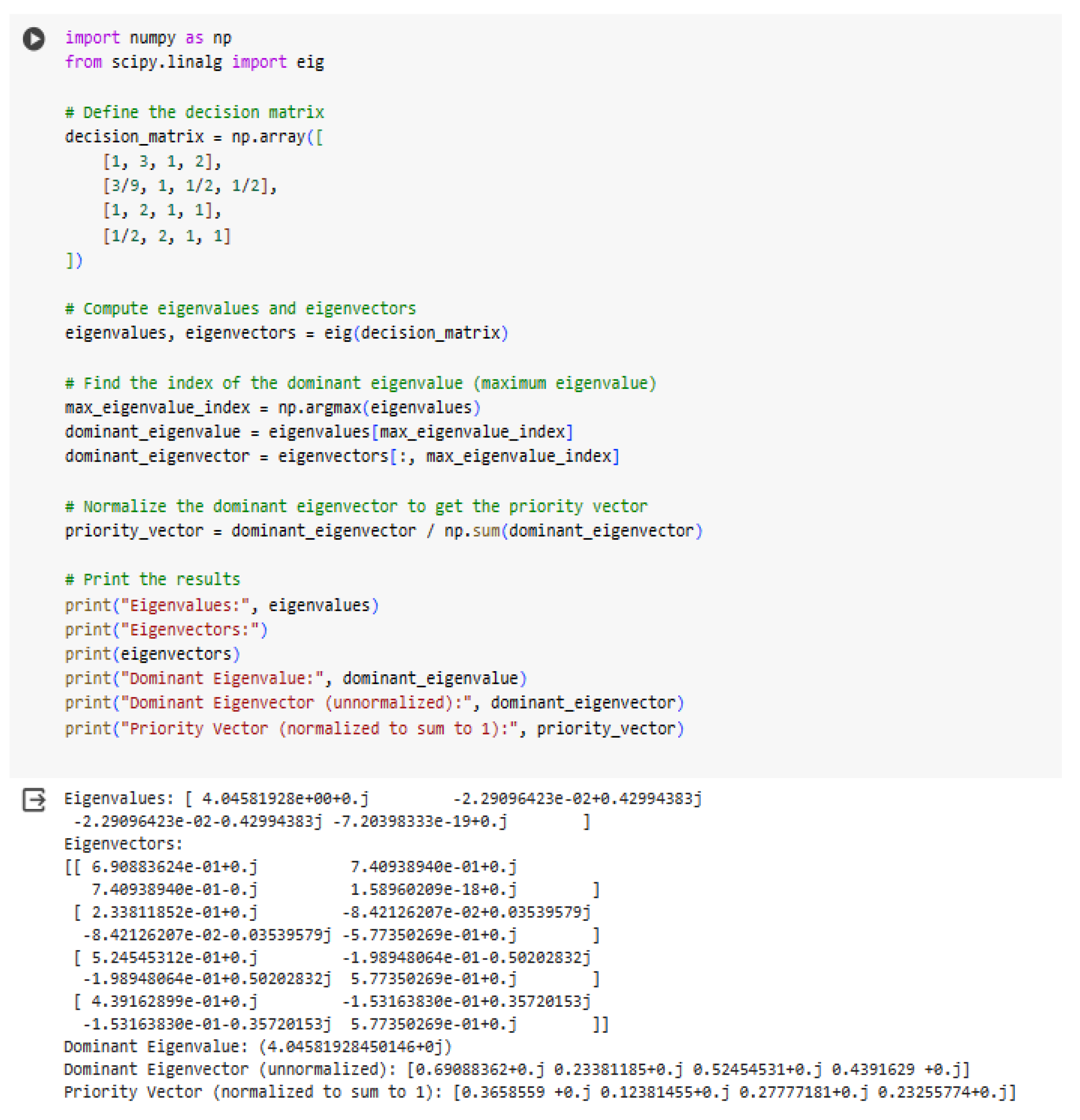
Figure A2.
AHP – OS results for TMS metrics.

Figure A3.
AHP – OS TMS results in every TMS metric.

Figure A4.
AHP – OS consolidated results for TMS metrics and TMSs.

References
- Dehghani-Sanij, A.R.; Tharumalingam, E.; Dusseault, M.B.; Fraser, R. Study of energy storage systems and environmental challenges of batteries. Renew. Sustain. Energy Rev. 2019, 104, 192–208. [Google Scholar] [CrossRef]
- Zichen, W.; Changqing, D. A comprehensive review on thermal management systems for power lithium-ion batteries. Renew. Sustain. Energy Rev. 2021, 139, 110685. [Google Scholar] [CrossRef]
- Shahjalal, M.; Shams, T.; Islam, E.; Alam, W.; Modak, M.; Bin Hossain, S.; Ramadesigan, V.; Ahmed, R.; Ahmed, H.; Iqbal, A. A review of thermal management for Li-ion batteries: Prospects, challenges, and issues. J. Energy Storage 2021, 39, 102518. [Google Scholar] [CrossRef]
- Hannan, M.A.; Al-Shetwi, A.Q.; Begum, R.A.; Young, S.E.; Hoque, M.M.; Ker, P.; Mansur, M.; Alzaareer, K. The value of thermal management control strategies for battery energy storage in grid decarbonization: Issues and recommendations. J. Clean. Prod. 2020, 276, 124223. [Google Scholar] [CrossRef]
- Boulaire, F.; Love, J.; Mackinnon, I. An adaptive renewable energy plant (AREP)-To power local premises and vehicles with 100% renewables. Energy Strat. Rev. 2021, 38, 100703. [Google Scholar] [CrossRef]
- Sakr, W.S.; El-Sehiemy, R.A.; Azmy, A.M.; El-Ghany, H.A.A. Identifying optimal border of virtual power plants considering uncertainties and demand response. Alex. Eng. J. 2022, 61, 9673–9713. [Google Scholar] [CrossRef]
- Sharaf, M.; Yousef, M.S.; Huzayyin, A.S. Review of cooling techniques used to enhance the efficiency of photovoltaic power systems. Environ. Sci. Pollut. Res. 2022, 29, 26131–26159. [Google Scholar] [CrossRef]
- Ye, X.; Zhao, Y.; Quan, Z. Experimental study on heat dissipation for lithium-ion battery based on micro heat pipe array (MHPA). Appl. Therm. Eng. 2018, 130, 74–82. [Google Scholar] [CrossRef]
- Liu, H.; Wei, Z.; He, W.; Zhao, J. Thermal issues about Li-ion batteries and recent progress in battery thermal management systems: A review. Energy Convers. Manag. 2017, 150, 304–330. [Google Scholar] [CrossRef]
- Hamed, M.M.; El-Tayeb, A.; Moukhtar, I.; El Dein, A.; Abdelhameed, E.H. A review on recent key technologies of lithium-ion battery thermal management: External cooling systems. Results Eng. 2022, 16, 100703. [Google Scholar] [CrossRef]
- Fathoni, A.M.; Putra, N.; Mahlia, T.I. A systematic review of battery thermal management systems based on heat pipes. J. Energy Storage 2023, 73, 109081. [Google Scholar] [CrossRef]
- Liu, X.; Yao, L.-C.; Su, C.-Q.; Xiong, X.; Wang, Y.-P. A hybrid battery thermal management system coupling with PCM and optimized thermoelectric cooling for high-rate discharge condition. Case Stud. Therm. Eng. 2023, 49, 103269. [Google Scholar] [CrossRef]
- Hu, S.; Wang, S.; Ma, C.; Li, S.; Liu, X.; Zhang, Y. A hybrid cooling method with low energy consumption for lithium-ion battery under extreme conditions. Energy Convers. Manag. 2022, 266, 115831. [Google Scholar] [CrossRef]
- Martín-Martín, L.; Gastelurrutia, J.; Nieto, N.; Ramos, J.C.; Rivas, A.; Gil, I. Modeling based on design of thermal management systems for vertical elevation applications powered by lithium-ion batteries. Appl. Therm. Eng. 2016, 102, 1081–1094. [Google Scholar] [CrossRef]
- Odukomaiya, A.; Woods, J.; James, N.; Kaur, S.; Gluesenkamp, K.R.; Kumar, N.; Mumme, S.; Jackson, R.; Prasher, R. Addressing energy storage needs at lower cost via on-site thermal energy storage in buildings. Energy Environ. Sci. 2021, 14, 5315–5329. [Google Scholar] [CrossRef]
- Rao, Z.; Lyu, P.; Du, P.; He, D.; Huo, Y.; Liu, C. Thermal safety and thermal management of batteries. Batter. Energy 2022, 1, 1–19. [Google Scholar] [CrossRef]
- Haiyang Liu, “Contribution of Battery Energy Storage System (BESS) to Power Systems Resilience,” 2022.
- Diaz, L.B.; He, X.; Hu, Z.; Restuccia, F.; Marinescu, M.; Barreras, J.V.; Patel, Y.; Offer, G.; Rein, G. Meta-Review of Fire Safety of Lithium-Ion Batteries: Industry Challenges and Research Contributions. J. Electrochem. Soc. 2020, 167, 090559. [Google Scholar] [CrossRef]
- Jeevarajan, J.A.; Joshi, T.; Parhizi, M.; Rauhala, T.; Juarez-Robles, D. Battery Hazards for Large Energy Storage Systems. ACS Energy Lett. 2022, 7, 2725–2733. [Google Scholar] [CrossRef]
- Rangarajan, A.; Foley, S.; Trück, S. Assessing the impact of battery storage on Australian electricity markets. Energy Econ. 2023, 120, 106601. [Google Scholar] [CrossRef]
- D. R. Borneo, “Grid Energy Storage? Overview and Trends.,” 2019, [Online]. Available: https://www.osti.gov/servlets/purl/1678820.
- Laaroussi, A.; Laaroussi, O.; Bouayad, A. Environmental impact study of the NOOR 1 solar project on the Southern Region of Morocco. Renew. Energy Environ. Sustain. 2023, 8, 9. [Google Scholar] [CrossRef]
- Fraser, T.; Chapman, A.J. Social equity impacts in Japan's mega-solar siting process. Energy Sustain. Dev. 2018, 42, 136–151. [Google Scholar] [CrossRef]
- Marema, B. Tlokolo, and A. Pandarum, “Socio-economic benefits of renewable and storage technologies in South Africa 2,” pp. 1–11, 2022, [Online]. Available: https://www.ameu.co.za/Socio-economic benefits of renewable energy technologies - Abram Marema.pdf.
- Pinel, P.; Cruickshank, C.A.; Beausoleil-Morrison, I.; Wills, A. A review of available methods for seasonal storage of solar thermal energy in residential applications. Renew. Sustain. Energy Rev. 2011, 15, 3341–3359. [Google Scholar] [CrossRef]
- Truong, C.N.; Naumann, M.; Karl, R.C.; Müller, M.; Jossen, A.; Hesse, H.C. Economics of Residential Photovoltaic Battery Systems in Germany: The Case of Tesla’s Powerwall. Batteries 2016, 2, 14. [Google Scholar] [CrossRef]
- Georgakarakos, M. Mayfield, A. H. Buckman, S. A. Jubb, and C. Wootton, “What are Smart Grid Optimised Buildings ?,” Living Sustain. An Environ. Crit. Des. Build. Pract. Local. Glob. London South Bank Univ. London, 08 – 09 Febr. 2017, no. November, pp. 21–36, 2018.
- Martin, S.; Mosier, N.; Nnorom, O.; Ou, Y.; Patel, L.; Triebe, O.; Cezar, G.; Levis, P.; Rajagopal, R. Software defined grid energy storage. BuildSys '22: The 9th ACM International Conference on Systems for Energy-Efficient Buildings, Cities, and Transportation. LOCATION OF CONFERENCE, United StatesDATE OF CONFERENCE;
- D. Peftitsis, “Systems : Practices, Difficulties and Prospects,” 2021.
- Lu, M.; Zhang, X.; Ji, J.; Xu, X.; Zhang, Y. Research progress on power battery cooling technology for electric vehicles. J. Energy Storage 2020, 27, 101155. [Google Scholar] [CrossRef]
- Walvekar, H.; Beltran, H.; Sripad, S.; Pecht, M. Implications of the Electric Vehicle Manufacturers’ Decision to Mass Adopt Lithium-Iron Phosphate Batteries. IEEE Access 2022, 10, 63834–63843. [Google Scholar] [CrossRef]
- Akbarzadeh, M.; Kalogiannis, T.; Jaguemont, J.; Jin, L.; Behi, H.; Karimi, D.; Beheshti, H.; Van Mierlo, J.; Berecibar, M. A comparative study between air cooling and liquid cooling thermal management systems for a high-energy lithium-ion battery module. Appl. Therm. Eng. 2021, 198, 117503. [Google Scholar] [CrossRef]
- S. Karlsson, “Life Cycle Assessment of Borehole Thermal Energy Storage,” no. 2019, 2022, [Online]. Available: http://urn.kb.se/resolve?urn=urn:nbn:se:kth:diva-310321. 2022.
- S. Colagrande and G. D’Ovidio, “Electric energy harvesting solutions review from roads pavements,” Transp. Means - Proc. Int. Conf., vol. 2018-Octob, no. Dc, pp. 5–10, 2018.
- Landini, S.; Leworthy, J.; O'Donovan, T.S. A Review of Phase Change Materials for the Thermal Management and Isothermalisation of Lithium-Ion Cells. J. Energy Storage 2019, 25, 100887. [Google Scholar] [CrossRef]
- Wang, H.; Soong, W.L.; Pourmousavi, S.A.; Zhang, X.; Ertugrul, N.; Xiong, B. Thermal dynamics assessment of vanadium redox flow batteries and thermal management by active temperature control. J. Power Sources 2023, 570, 233027. [Google Scholar] [CrossRef]
- Wang, H.; Li, H.; Ji, Z.; Yang, Z.; Jiang, C.; Lin, H. Cooling the electrode tabs with air to manage the heat transferred through the collectors in traction battery. J. Energy Storage 2022, 48, 103982. [Google Scholar] [CrossRef]
- Goepel, K.D. Implementation of an Online Software Tool for the Analytic Hierarchy Process (AHP-OS). Int. J. Anal. Hierarchy Process 2018, 10, 469–487. [Google Scholar] [CrossRef]
- Das, D.; Sharma, R.K.; Saikia, P.; Rakshit, D. An integrated entropy-based multi-attribute decision-making model for phase change material selection and passive thermal management. Decis. Anal. J. 2021, 1, 100011. [Google Scholar] [CrossRef]
- Dwivedi, A.; Kumar, A.; Goel, V. A consolidated decision-making framework for nano-additives selection in battery thermal management applications. J. Energy Storage 2023, 59, 106565. [Google Scholar] [CrossRef]
- Bulut, M.; Özcan, E. A novel approach towards evaluation of joint technology performances of battery energy storage system in a fuzzy environment. J. Energy Storage 2021, 36, 102361. [Google Scholar] [CrossRef]
- Napa, N.; Agrawal, M.K.; Tamma, B. Design of novel thermal management system for Li-ion battery module using metal matrix based passive cooling method. J. Energy Storage 2023, 73, 109119. [Google Scholar] [CrossRef]
- Martín-Martín, L.; Gastelurrutia, J.; Larraona, G.S.; Antón, R.; del Portillo-Valdés, L.; Gil, I. Optimization of thermal management systems for vertical elevation applications powered by lithium-ion batteries. Appl. Therm. Eng. 2018, 147, 155–166. [Google Scholar] [CrossRef]
- Hassan, A.M.; Alwan, A.A.; Hamzah, H.K. Numerical Study of Fan Coil Heat Exchanger with Copper Foam. Int. J. Fluid Mach. Syst. 2023, 16, 73–88. [Google Scholar] [CrossRef]
- Can, A.; Selimefendigil, F.; Öztop, H.F. A review on soft computing and nanofluid applications for battery thermal management. J. Energy Storage 2022, 53, 105214. [Google Scholar] [CrossRef]
- Wüllner, J.; Reiners, N.; Millet, L.; Salibi, M.; Stortz, F.; Vetter, M. Review of Stationary Energy Storage Systems Applications, Their Placement, and Techno-Economic Potential. Curr. Sustain. Energy Rep. 2021, 8, 263–273. [Google Scholar] [CrossRef]
- Kaczorowska, D.; Rezmer, J.; Jasinski, M.; Sikorski, T.; Suresh, V.; Leonowicz, Z.; Kostyla, P.; Szymanda, J.; Janik, P. A Case Study on Battery Energy Storage System in a Virtual Power Plant: Defining Charging and Discharging Characteristics. Energies 2020, 13, 6670. [Google Scholar] [CrossRef]
- Hailu, G.; Henke, M.; Petersen, T. Stationary Battery Thermal Management: Analysis of Active Cooling Designs. Batteries 2022, 8, 23. [Google Scholar] [CrossRef]
- Tao, F.; Zhang, W.; Guo, D.; Cao, W.; Sun, L.; Jiang, F. Thermofluidic modeling and temperature monitoring of Li-ion battery energy storage system. Appl. Therm. Eng. 2020, 181, 116026. [Google Scholar] [CrossRef]
- Qin, P.; Sun, J.; Yang, X.; Wang, Q. Battery thermal management system based on the forced-air convection: A review. eTransportation 2020, 7, 100097. [Google Scholar] [CrossRef]
- M. M. A. Elmaaref, A. A. M. M. A. Elmaaref, A. A. Askalany, M. Salem, and K. Harby, “Solar thermoelectric cooling technology,” Proc. 3rd Int. Conf. Energy Eng., no. December 2017, pp. 1–7, 2015.
- Peng, Z.; Li, Z.; Zeng, J.; Yu, J.; Lv, S. Thermo-economic analysis of absorption-compression hybrid cooling systems with parallel subcooling and recooling for small scale low-grade heat source and low temperature application. Int. J. Refrig. 2022, 138, 220–232. [Google Scholar] [CrossRef]
- Cai, S.; Li, Y. Incentive Policy for Battery Energy Storage Systems Based on Economic Evaluation Considering Flexibility and Reliability Benefits. Front. Energy Res. 2021, 9, 1–12. [Google Scholar] [CrossRef]
- Nižetić, S.; Papadopoulos, A.M.; Giama, E. Comprehensive analysis and general economic-environmental evaluation of cooling techniques for photovoltaic panels, Part I: Passive cooling techniques. Energy Convers. Manag. 2017, 149, 334–354. [Google Scholar] [CrossRef]
- Chen, Z.; Yu, Z.; Fu, J.; Yang, J. Analysis and design of air-heat pipe composite cooling of high power density motor. Appl. Therm. Eng. 2024, 236, 121495. [Google Scholar] [CrossRef]
- Nadjahi, C.; Louahlia, H.; Lemasson, S. A review of thermal management and innovative cooling strategies for data center. Sustain. Comput. Inform. Syst. 2018, 19, 14–28. [Google Scholar] [CrossRef]
- Behi, H.; Karimi, D.; Jaguemont, J.; Gandoman, F.H.; Kalogiannis, T.; Berecibar, M.; Van Mierlo, J. Novel thermal management methods to improve the performance of the Li-ion batteries in high discharge current applications. Energy 2021, 224, 120165. [Google Scholar] [CrossRef]
- Xin, Q.; Xiao, J.; Yang, T.; Zhang, H.; Long, X. Thermal management of lithium-ion batteries under high ambient temperature and rapid discharging using composite PCM and liquid cooling. Appl. Therm. Eng. 2022, 210, 118230. [Google Scholar] [CrossRef]
- Xu, K.; Zhang, H.; Zhu, J.; Qiu, G. Thermal Management for Battery Module with Liquid-Cooled Shell Structure under High Charge/Discharge Rates and Thermal Runaway Conditions. Batteries 2023, 9, 204. [Google Scholar] [CrossRef]
- Li, X.; Zhong, Z.; Luo, J.; Wang, Z.; Yuan, W.; Zhang, G.; Yang, C.; Yang, C. Experimental Investigation on a Thermoelectric Cooler for Thermal Management of a Lithium-Ion Battery Module. Int. J. Photoenergy 2019, 2019, 1–10. [Google Scholar] [CrossRef]
- Wazeer, A.; Das, A.; Abeykoon, C.; Sinha, A.; Karmakar, A. Phase change materials for battery thermal management of electric and hybrid vehicles: A review. Energy Nexus 2022, 7, 100131. [Google Scholar] [CrossRef]
- Hekmat, S.; Molaeimanesh, G. Hybrid thermal management of a Li-ion battery module with phase change material and cooling water pipes: An experimental investigation. Appl. Therm. Eng. 2019, 166, 114759. [Google Scholar] [CrossRef]
- Rahman, N.M.A.; Haw, L.C.; Kamaluddin, K.A.; Abdullah, M.S.I. Investigating photovoltaic module performance using aluminium heat sink and forced cold-air circulation method in tropical climate conditions. Energy Rep. 2023, 9, 2797–2809. [Google Scholar] [CrossRef]
- Youssef, R.; Hosen, S.; He, J.; Jaguemont, J.; De Sutter, L.; Van Mierlo, J.; Berecibar, M. Effect analysis on performance enhancement of a novel and environmental evaporative cooling system for lithium-ion battery applications. J. Energy Storage 2021, 37, 102475. [Google Scholar] [CrossRef]
- Chen, Y.; Kang, Y.; Zhao, Y.; Wang, L.; Liu, J.; Li, Y.; Liang, Z.; He, X.; Li, X.; Tavajohi, N.; et al. A review of lithium-ion battery safety concerns: The issues, strategies, and testing standards. J. Energy Chem. 2021, 59, 83–99. [Google Scholar] [CrossRef]
- Ning, Y.; Tao, R.; Luo, J.; Hu, Q. Application and Research Progress of Heat Pipe in Thermal Management of Lithium-Ion Battery. Trends Renew. Energy 2022, 8, 130–144. [Google Scholar] [CrossRef]
- Nishida, R.; Zhong, J.; Shinshi, T. Forced liquid cooling of piezoelectric stack actuator utilizing silicone oil. Precis. Eng. 2022, 75, 120–128. [Google Scholar] [CrossRef]
- R. M. Atta, “Thermoelectric cooling (Chpater 12),” pp. 247–267, 2018.
- Abdelkareem, M.A.; Maghrabie, H.M.; Abo-Khalil, A.G.; Adhari, O.H.K.; Sayed, E.T.; Radwan, A.; Elsaid, K.; Wilberforce, T.; Olabi, A. Battery thermal management systems based on nanofluids for electric vehicles. J. Energy Storage 2022, 50, 104385. [Google Scholar] [CrossRef]
- Dweiri, F.; Kumar, S.; Khan, S.A.; Jain, V. Designing an integrated AHP based decision support system for supplier selection in automotive industry. Expert Syst. Appl. 2016, 62, 273–283. [Google Scholar] [CrossRef]
Figure 1.
Schematic of liquid active cooling.

Figure 2.
Natural convection cooling.
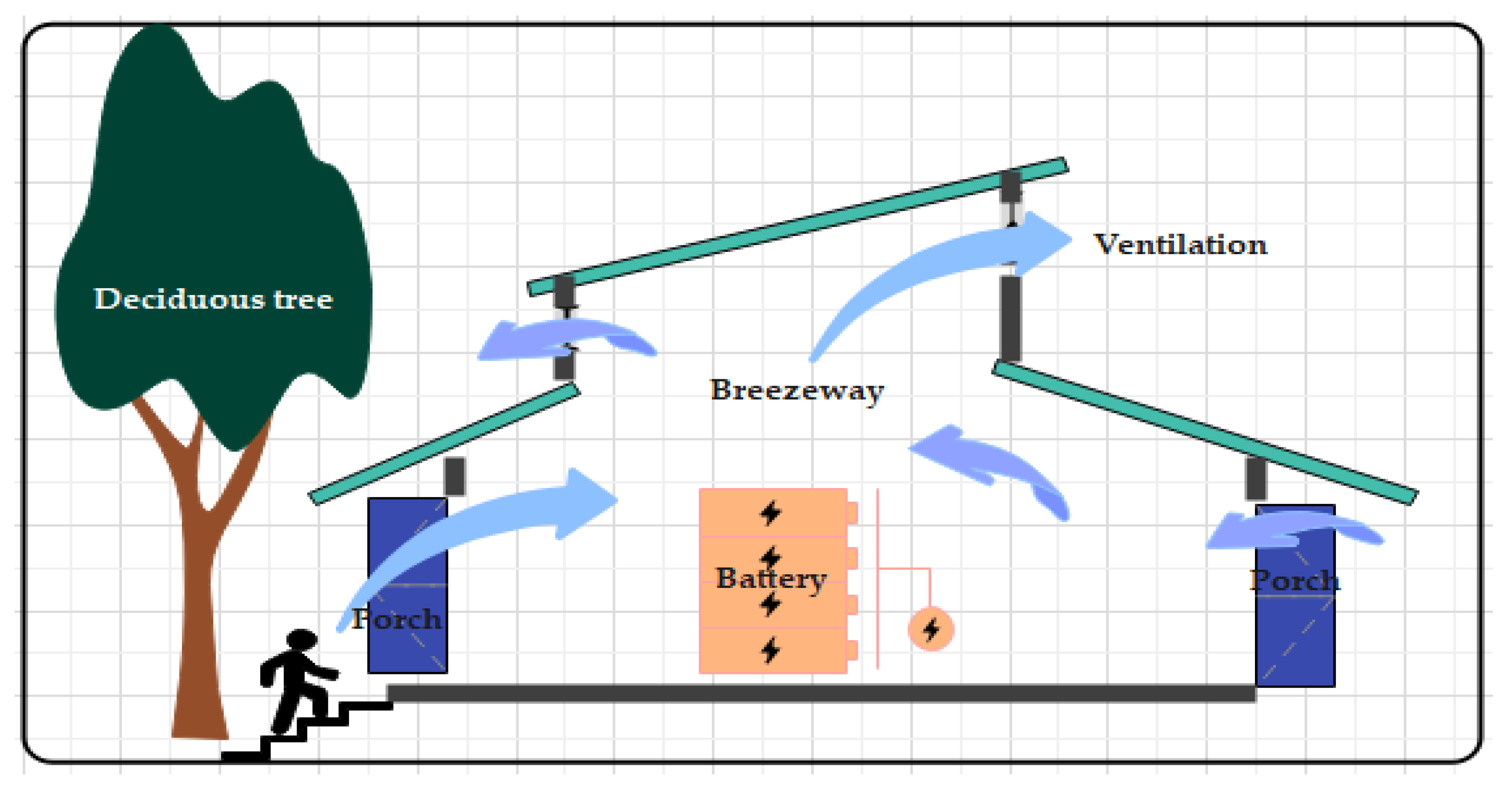
Figure 3.
Heat pipes cooling.
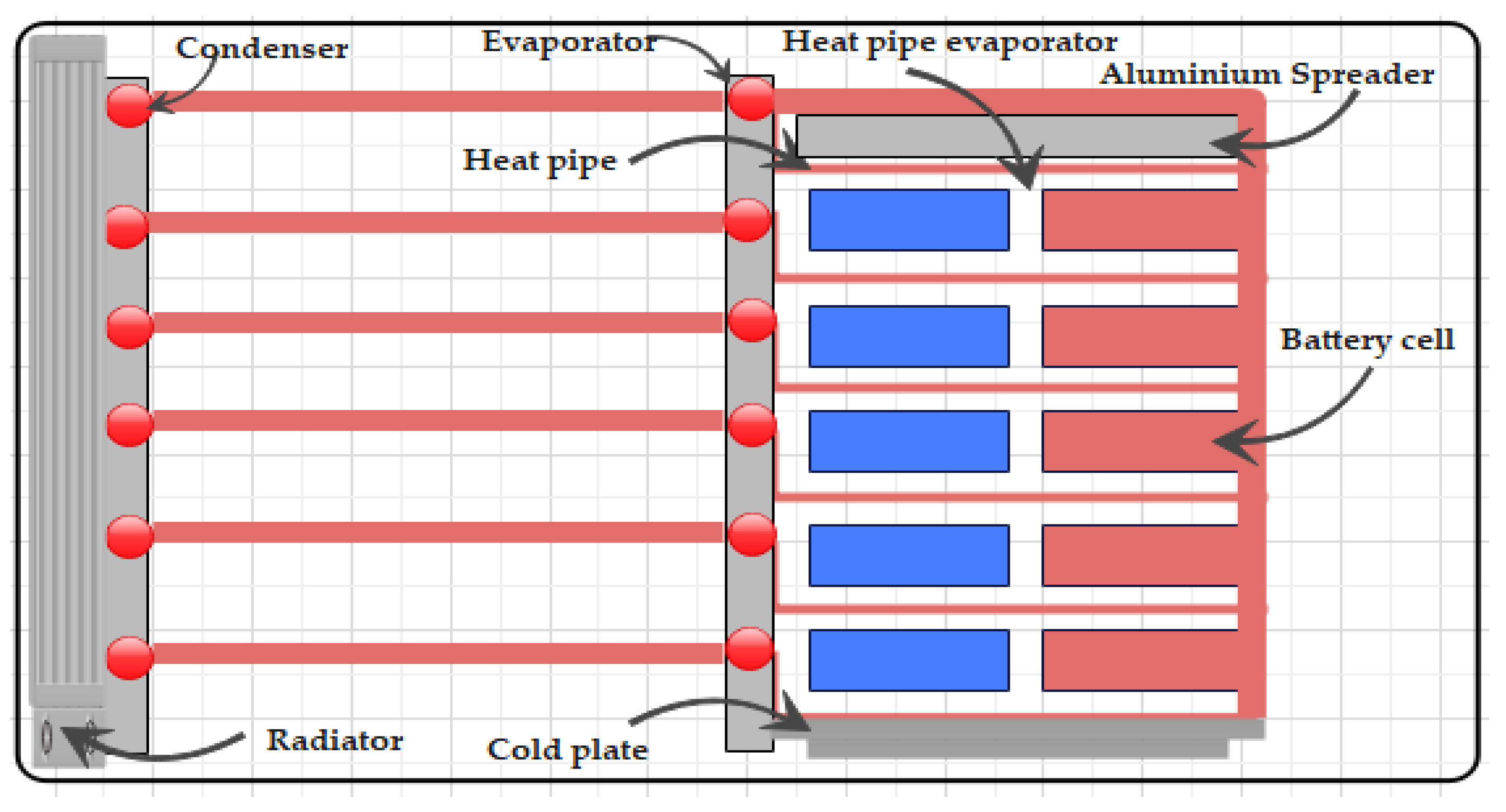
Figure 4.
Schematic of liquid/air hybrid cooling.
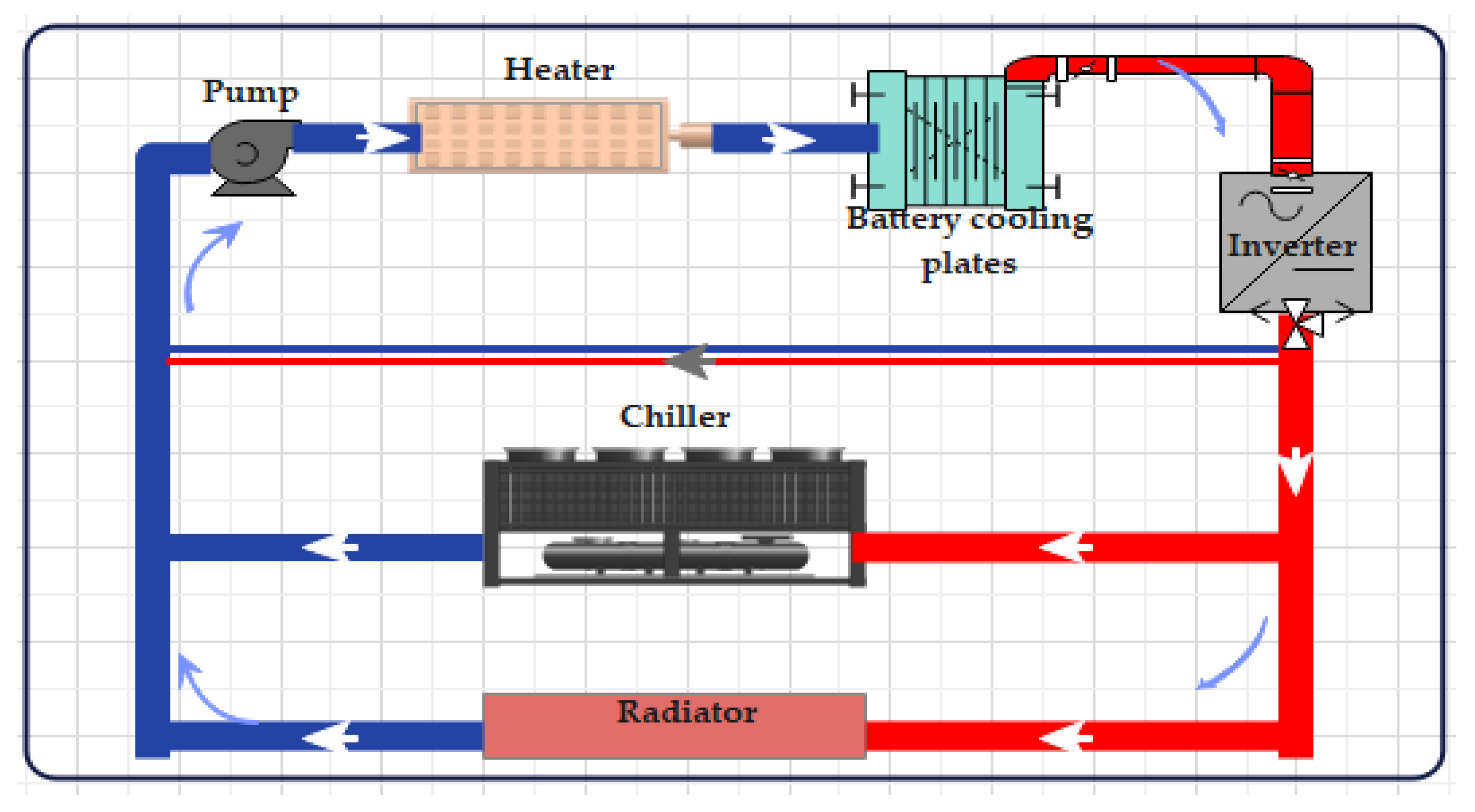
Figure 5.
Schematic of PCM cooling.
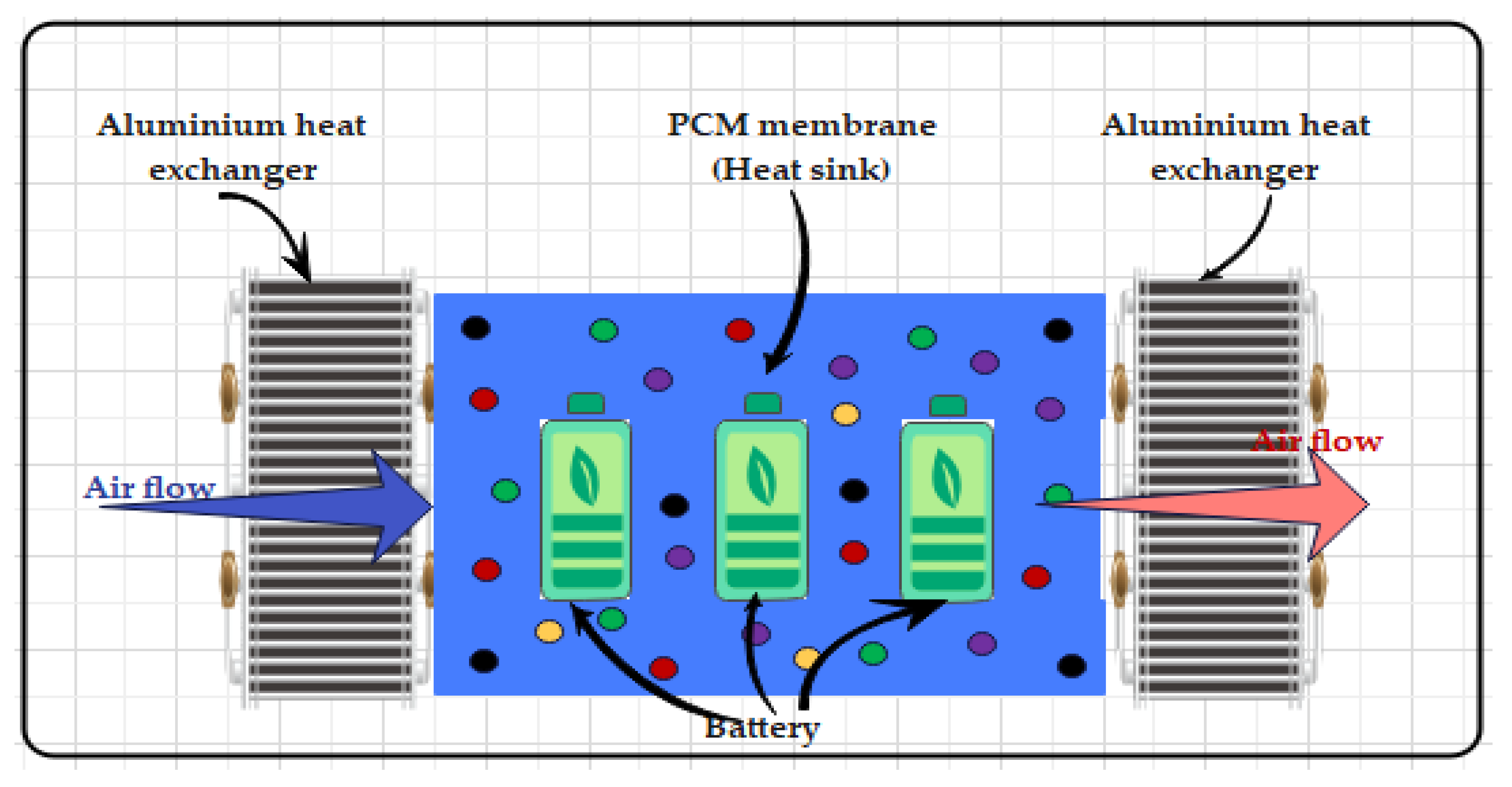
Figure 6.
Schematic of liquid passive cooling.
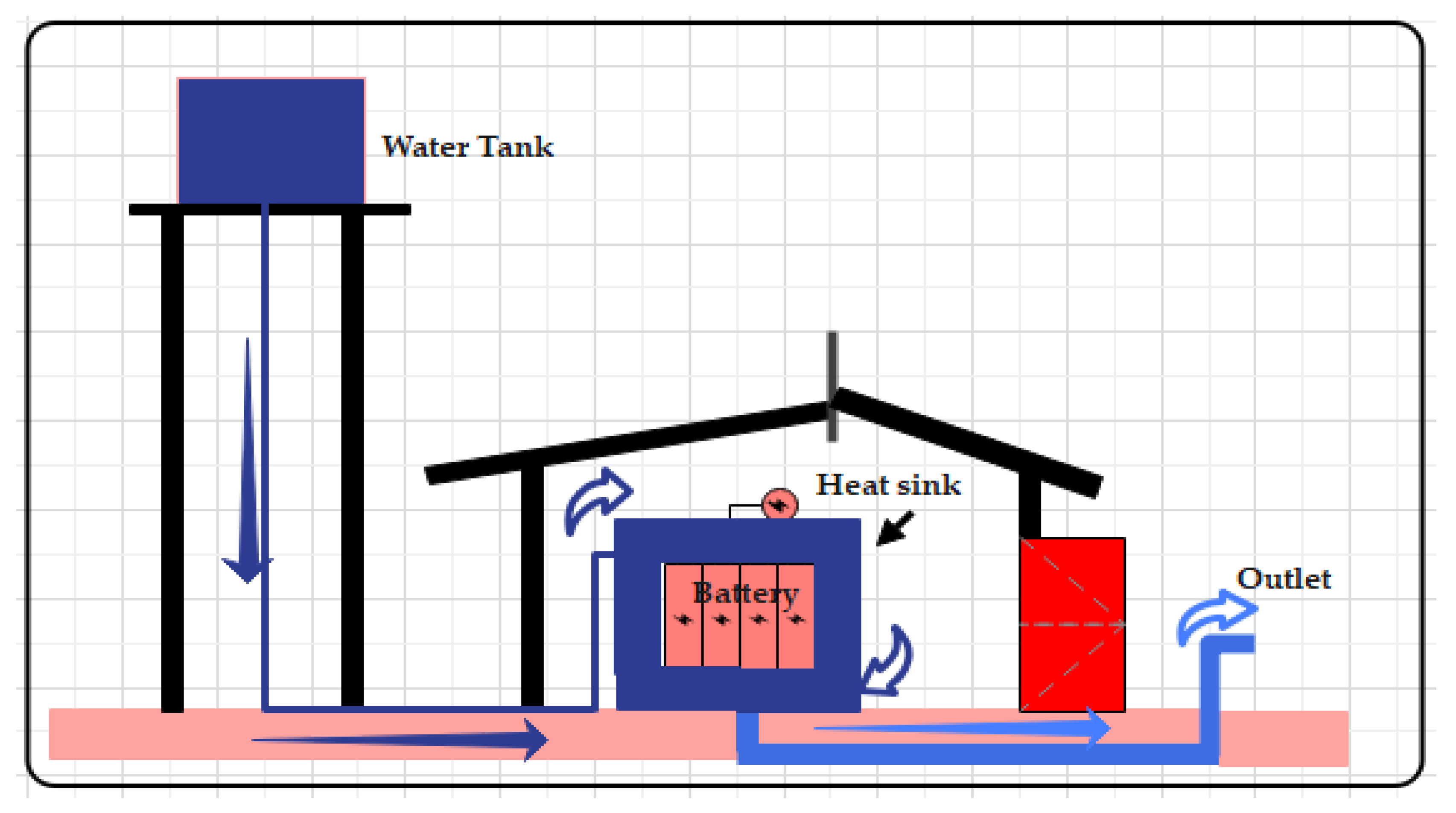
Figure 7.
Schematic of air-forced cooling.
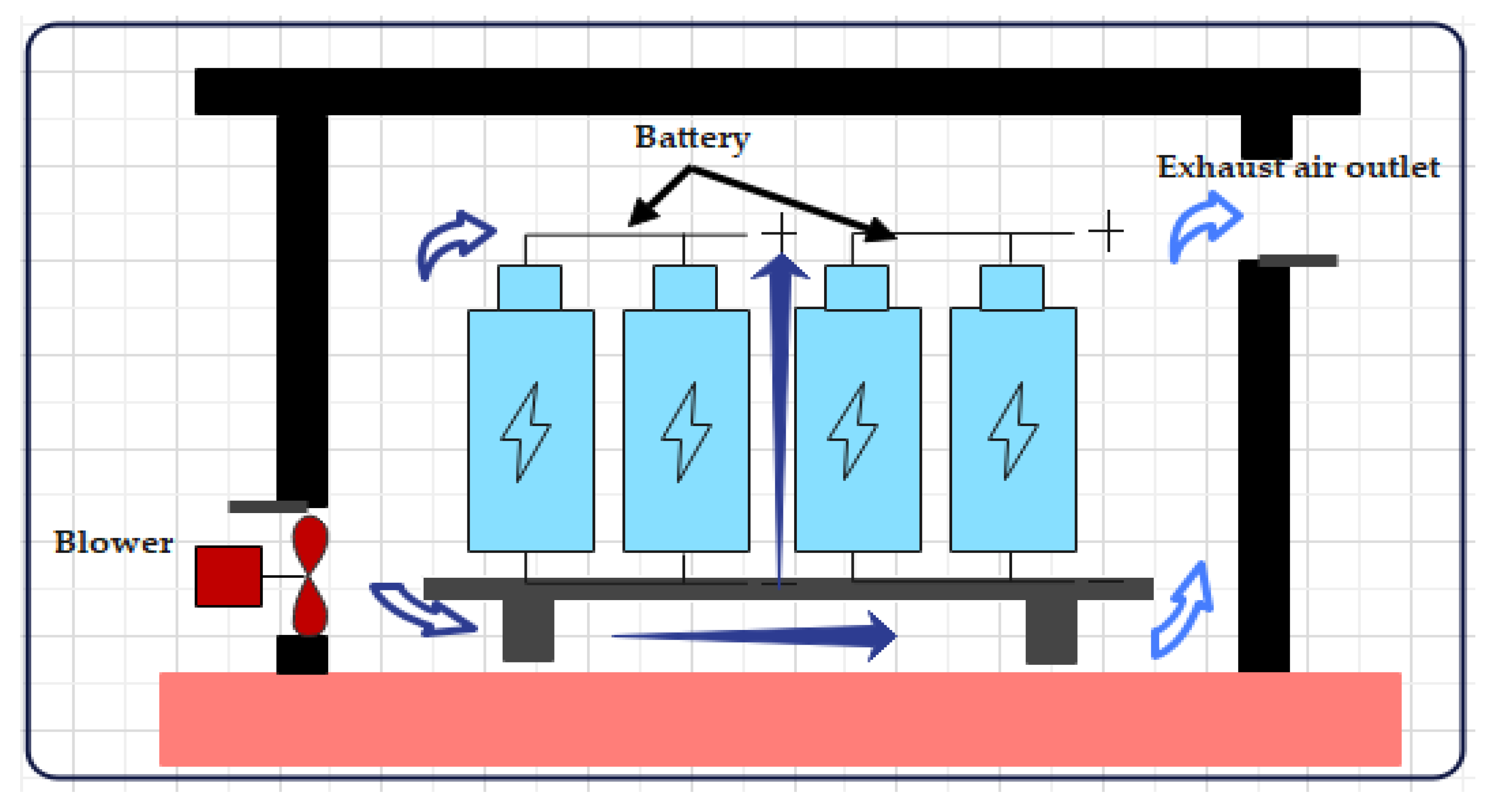
Figure 8.
AHP criteria flow diagram.
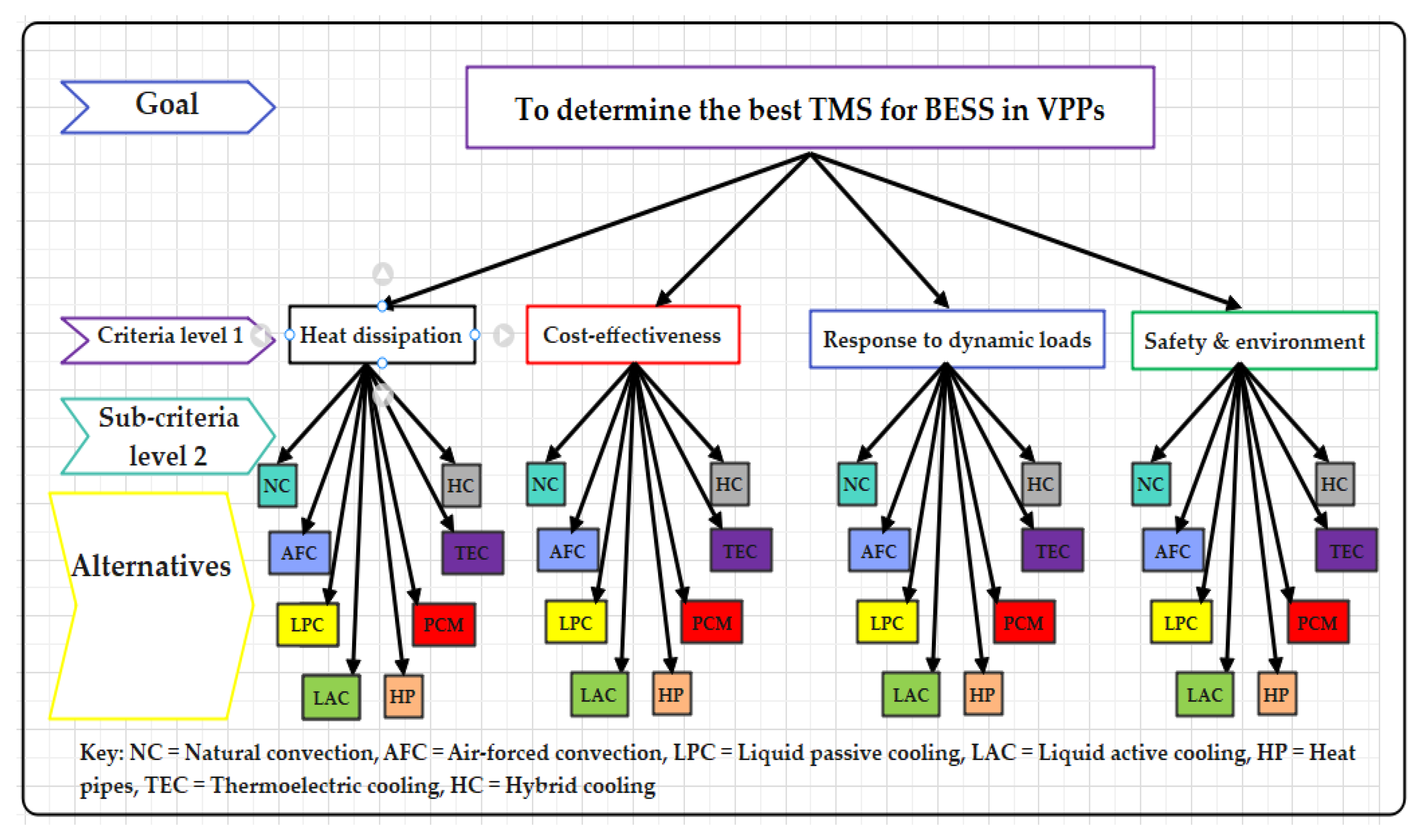
Figure 9.
TMS metrics graph.
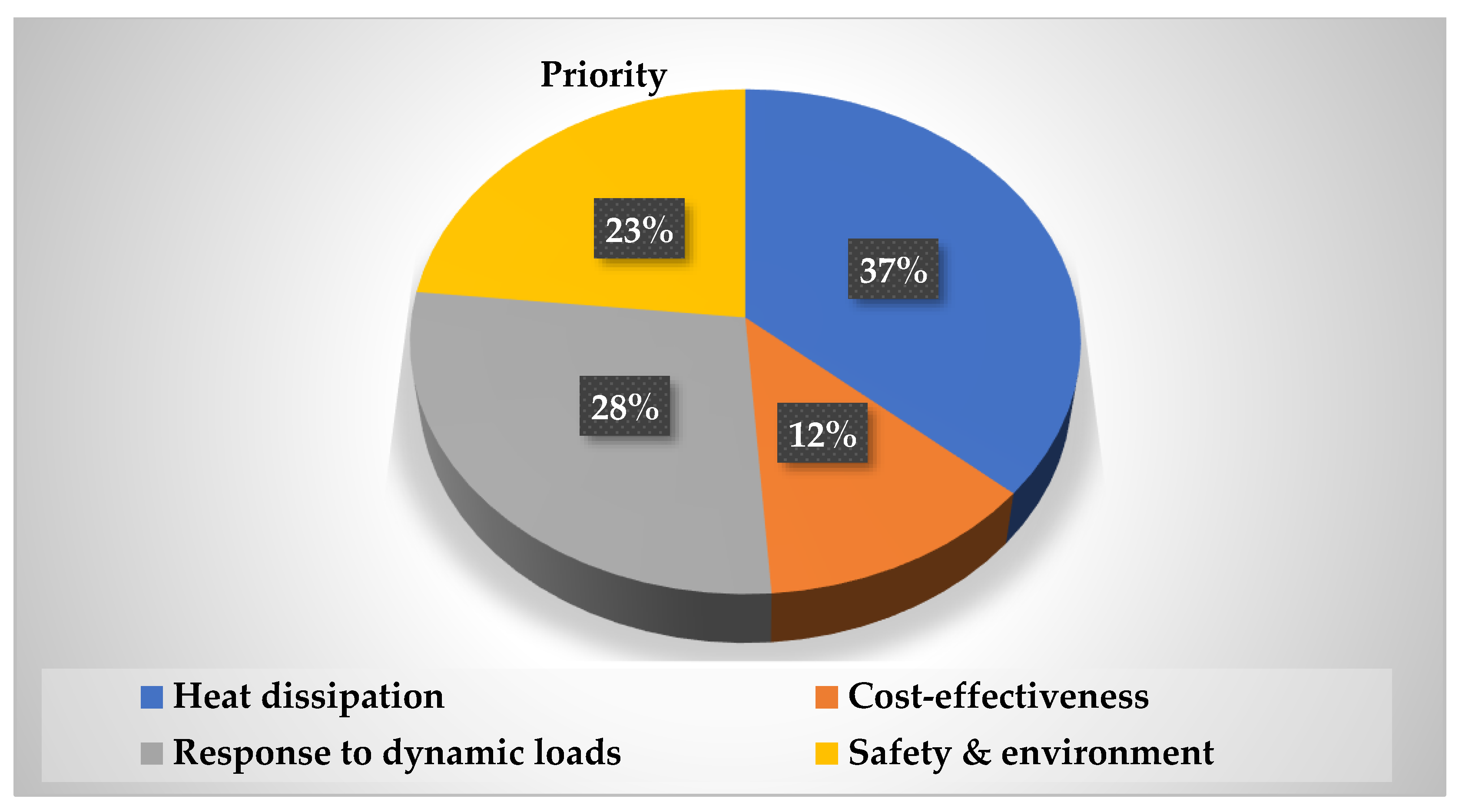

Table 1.
The Saaty scale.
| Scale | Numerical Rating | Reciprocal |
|---|---|---|
| Extremely preferred | 9 | 1/9 |
| Very strong to extremely | 8 | 1/8 |
| Very strongly preferred | 7 | 1/7 |
| Strongly to very strongly | 6 | 1/6 |
| Strongly preferred | 5 | 1/5 |
| Moderately to strongly | 4 | ¼ |
| Moderately preferred | 3 | 1/3 |
| Equally moderately | 2 | ½ |
| Equally preferred | 1 | 1 |
Table 2.
TMS metrics weights.
| TMS | Weight | AHPScale | References |
| Heat dissipation efficiency | Critical for maintaining battery efficiency and longevity by preventing overheating. Given the direct impact on performance and safety, it's highly important. | 9 | [14] |
| Cost-effectiveness | Important for the overall feasibility and economic viability of the BESS project. This includes both upfront and operational costs. | 3 | [15,16] |
| Response to dynamic loads | Paramount for systems that experience significant fluctuations in demand or operational conditions, impacting the ability to maintain optimal performance. | 7 | [17,15] |
| Safety & environment | Essential, considering the potential risks associated with battery operation and the increasing emphasis on sustainable energy solutions. | 5 | [18] |
Table 3.
Priority (Eigenvector) matrix.
| HD | CE | RDL | SE | |
|---|---|---|---|---|
| HD | 1 | 3 | 1 | 2 |
| CE | 3/9 | 1 | 1/2 | 1/2 |
| RDL | 1 | 2 | 1 | 1 |
| SE | 1/2 | 2 | 1 | 1 |
Key: HD = Heat dissipation, CE = Cost-effectiveness, RDL = Response to dynamic loads, and SE = Safety and environment.
Table 4.
Normalized priority matrix.
| HD | CE | RDL | SE | |
|---|---|---|---|---|
| HD | 1/2.833 = 0.353 | 3/8 = 0.375 | 1/3.5 = 0.286 | 2/4.5 = 0.444 |
| CE | 0.333/2.833 = 0.118 | 1/8 = 0.125 | 0.5/3.5 = 0.143 | 0.5/4.5 = 0.111 |
| RDL | 1/2.833 = 0.353 | 2/8 = 0.250 | 1/3.5 = 0.286 | 1/4.5 = 0.222 |
| SE | 0.5/2.833 = 0.176 | 2/8 = 0.250 | 1/3.5 = 0.286 | 1/4.5 = 0.222 |
Table 5.
Priority contribution.
| Eigenvector (calculation) | Eigenvector | |
|---|---|---|
| HD | (0.353 + 0.375 + 0.286 + 0.444)/4 = 0.3645 | 36.45% |
| CE | (0.118 + 0.125 + 0.143 + 0.111)/4 = 0.1243 | 12.43% |
| RDL | (0.353 + 0.250 + 0.286 + 0.222)/4 = 0.2778 | 27.78% |
| SE | (0.176 + 0.250 + 0.286 + 0.222)/4 = 0.2335 | 23.35% |
Table 6.
Approximate vs exact Eigenvectors.
| Approx. Eigenvector | Exact Eigenvector | Difference | |
|---|---|---|---|
| HD | 0.3645 | 0.3659 | 0.0014(0.383%) |
| CE | 0.1243 | 0.1238 | 0.0005(0.404%) |
| RDL | 0.2778 | 0.2778 | 0.0000(0.000%) |
| SE | 0.2335 | 0.2326 | 0.00387(0.387%) |
Table 7.
Maximum Eigenvector (λmax).
| Eigenvector | 0.3659 | 0.1238 | 0.2778 | 0.2326 |
| Total (Sum) | 2.833 | 8.000 | 3.500 | 4.500 |
| Max Eigenvalue (λmax) | (0.3659x2.833) + (0.1238x8.000) + (0.2778x3.500) + (0.2326x4.500) = 4.046 | |||
Table 8.
Criteria table.
| N | 1 | 2 | 3 | 4 | 5 | 6 | 7 | 8 | 9 | 10 |
| RI | 0 | 0 | 0.58 | 0.9 | 1.12 | 1.24 | 1.32 | 1.41 | 1.45 | 1.49 |
Table 9.
TMS weights outcome in heat dissipation.
| TMS | Weight | AHS Scale | References |
|---|---|---|---|
| Natural convection | Less effective in high-power applications due to its passive nature. | 2 | [46] |
| Air forced convection | More effective than natural convection due to the forced air movement but might still struggle with very high heat loads. | 4 | [46] |
| Liquid passive cooling | More effective than air cooling due to the higher heat transfer coefficients of liquids over air. | 6 | [46,47] |
| Liquid active cooling | By actively pumping coolant, this method can achieve even higher heat dissipation rates than passive systems. | 7 | [46,47,48] |
| Heat pipes | Effectively transfers heat away from the source with minimal temperature difference. | 7 | [46] |
| PCM | Absorb a large amount of heat with minimal temperature change. | 5 | [46] |
| Thermoelectric cooling | Generally not the most efficient for large-scale heat dissipation due to its power consumption. | 3 | [46] |
| Hybrid cooling | Can be designed to maximize heat dissipation effectiveness, adapting to various operational scenarios. | 8 | [46] |
Table 10.
Priority matrix for heat dissipation.
| NC | AFC | LPC | LAC | HP | PCM | TEC | HC | |
|---|---|---|---|---|---|---|---|---|
| NC | 1.00 | 0.50 | 0.33 | 0.25 | 0.25 | 0.33 | 0.50 | 0.25 |
| AFC | 2.00 | 1.00 | 0.50 | 0.50 | 0.50 | 1.00 | 1.00 | 0.50 |
| LPC | 3.00 | 2.00 | 1.00 | 1.00 | 1.00 | 1.00 | 2.00 | 1.00 |
| LAC | 4.00 | 2.00 | 1.00 | 1.00 | 1.00 | 1.00 | 2.00 | 1.00 |
| HP | 4.00 | 2.00 | 1.00 | 1.00 | 1.00 | 1.00 | 2.00 | 1.00 |
| PCM | 3.00 | 1.00 | 1.00 | 1.00 | 1.00 | 1.00 | 2.00 | 1.00 |
| TEC | 2.00 | 1.00 | 0.50 | 0.50 | 0.50 | 0.50 | 1.00 | 0.33 |
| HC | 4.00 | 2.00 | 1.00 | 1.00 | 1.00 | 1.00 | 3.00 | 1.00 |
Key: NC = Natural convection at 4.3% rank 8, AFC = Air-forced convection at 8.9% rank 6, LPC = Liquid passive cooling at 15.5% rank 4, LAC = Liquid active cooling at 16.1% rank 2, HP = Heat pipes at 16.1% rank 2. PCM = PCM cooling at 14.4% rank 5, TEC = Thermoelectric cooling at 7.7% rank 7, and HC = Hybrid cooling at 17.0% rank 1. (Appendix A3 results obtained by AHP-OS are shown).
Table 11.
TMS weights outcome in cost-effectiveness.
| TMS | Weight | AHS Scale | References |
|---|---|---|---|
| Natural convection | Highly cost-effective due to minimal components and maintenance needs. | 9 | [49] |
| Air forced convection | Moderate cost due to the need for fans/blowers and potential for higher operational energy costs. | 5 | [49] |
| Liquid passive cooling | High initial setup costs due to plumbing and coolant; but low operational costs. | 7 | [53] [54] |
| Liquid active cooling | High initial and operational costs due to the use of pumps and maintenance. | 3 | [48] |
| Heat pipes | Moderate to high cost-effectiveness. Initial costs can be offset by low maintenance and high efficiency. | 5 | [55] |
| PCM | High initial costs for PCM materials can be balanced by low operational costs, given their passive nature. | 7 | [56] |
| Thermoelectric cooling | It is the least cost-effective due to high energy consumption and the costs of thermoelectric materials. | 1 | [51] |
| Hybrid cooling | Depends on the specific combination of TMSs used. They are designed to optimize performance while being mindful of costs. | 7 | [52] |
Table 12.
Priority matrix for cost-effectiveness.
| NC | AFC | LPC | LAC | HP | PCM | TEC | HC | |
| NC | 1.00 | 2.00 | 1.00 | 3.00 | 2.00 | 1.00 | 9.00 | 1.00 |
| AFC | 0.50 | 1.00 | 1.00 | 2.00 | 1.00 | 1.00 | 5.00 | 1.00 |
| LPC | 1.00 | 1.00 | 1.00 | 2.00 | 1.00 | 1.00 | 7.00 | 1.00 |
| LAC | 0.33 | 0.50 | 0.50 | 1.00 | 0.50 | 0.50 | 3.00 | 0.50 |
| HP | 0.50 | 1.00 | 1.00 | 2.00 | 1.00 | 1.00 | 5.00 | 1.00 |
| PCM | 1.00 | 1.00 | 1.00 | 2.00 | 1.00 | 1.00 | 7.00 | 1.00 |
| TEC | 0.11 | 0.20 | 0.14 | 0.33 | 0.20 | 0.14 | 1.00 | 0.14 |
| HC | 1.00 | 1.00 | 1.00 | 2.00 | 1.00 | 1.00 | 7.00 | 1.00 |
Key: NC = Natural convection at 19.6% rank 1, AFC = Air-forced convection at 13.2% rank 5, LPC = Liquid passive cooling at 14.9% rank 5, LAC = Liquid active cooling at 6.9 % rank 7, HP = Heat pipes at 13.2% rank 5, PCM = PCM cooling at 14.9% rank 2, TEC = Thermoelectric cooling at 2.3% rank 8, HC = Hybrid cooling at 14.9% rank 2. (Appendix A3 results obtained by AHP-OS are shown).
Table 13.
TMS weights outcome in response to dynamic loads.
| TMS | Weight | AHS Scale | References |
|---|---|---|---|
| Natural convection | Slower to respond to sudden changes in thermal loads due to its passive nature. | 2 | [57,60] |
| Air forced convection | Better than natural convection due to forced air movement, but limited by air's thermal properties. | 4 | [57] |
| Liquid passive cooling | More responsive than air due to the higher thermal conductivity and heat capacity of liquids. | 5 | [59,58] |
| Liquid active cooling | Very responsive due to active circulation, allowing quick adjustment to changing thermal loads. | 7 | [58,59] |
| Heat pipes | Highly responsive due to their efficient heat transfer capabilities, quickly moving heat away from hot spots. | 7 | [57] |
| PCM | Can absorb a lot of heat quickly during phase change but might struggle once the material is fully melted or solidified. | 5 | [58] |
| Thermoelectric cooling | Can be very responsive as it allows for rapid adjustments in cooling power. Its effectiveness is dependent on the power supply and is energy-intensive. | 6 | [60] |
| Hybrid cooling | It can be highly effective if configured to leverage the strengths of each component system. | 8 | [62] |
Table 14.
Priority matrix for response to dynamic loads.
| NC | AFC | LPC | LAC | HP | PCM | TEC | HC | |
|---|---|---|---|---|---|---|---|---|
| NC | 1.00 | 0.50 | 0.33 | 0.25 | 0.25 | 0.33 | 0.33 | 0.25 |
| AFC | 2.00 | 1.00 | 1.00 | 0.50 | 0.50 | 1.00 | 0.50 | 0.50 |
| LPC | 3.00 | 1.00 | 1.00 | 1.00 | 1.00 | 1.00 | 1.00 | 1.00 |
| LAC | 4.00 | 2.00 | 1.00 | 1.00 | 1.00 | 1.00 | 1.00 | 1.00 |
| HP | 4.00 | 2.00 | 1.00 | 1.00 | 1.00 | 1.00 | 1.00 | 1.00 |
| PCM | 3.00 | 1.00 | 1.00 | 1.00 | 1.00 | 1.00 | 1.00 | 1.00 |
| TEC | 3.00 | 2.00 | 1.00 | 1.00 | 1.00 | 1.00 | 1.00 | 1.00 |
| HC | 4.00 | 2.00 | 1.00 | 1.00 | 1.00 | 2.00 | 1.00 | 1.00 |
Key: NC = Natural convection at 4.2% rank 8, AFC = Air-forced convection at 9.2% rank 7, LPC = Liquid passive cooling at 13.4% rank 5, LAC = Liquid active cooling at 15.1% rank 2, HP = Heat pipes at 15.1% rank 2, PCM = PCM at 13.4% rank 5, TEC = Thermoelectric cooling at 14.6% rank 4, and HC = Hybrid cooling at 15.1% rank 1. (Appendix A3 results obtained by AHP-OS are shown).
Table 15.
TMS weights outcome in safety and environment.
| TMS | Weight | AHS Scale | References |
|---|---|---|---|
| Natural convection | High safety due to its simplicity and no moving parts; environmentally friendly due to passive operation. | 8 | [64] |
| Air forced convection | Safe, but fans and electrical components add complexity; energy use for fans impacts its environmental score. | 6 | [63] |
| Liquid passive cooling | Safe if leak-proof systems are used; coolant choice impacts environmental friendliness. | 5 | [65] |
| Liquid active cooling | Requires careful design to prevent leaks; the environmental impact depends on the coolant and energy use of pumps. | 4 | [67] |
| Heat pipes | Very safe due to sealed operation; environmentally friendly with correct material choice. | 7 | [66] |
| PCM | Safe and environmentally friendly due to passive operation; choice of PCM material determines environmental impact. | 7 | [61,54] |
| Thermoelectric cooling | Safety is generally high; however, the environmental impact of power consumption for cooling can be significant. | 4 | [68] |
| Hybrid cooling | Safety and environmental impact depends on the combination of systems used but designed for high safety and lower environmental impact. | 7 | [69] |
Table 16.
Priority matrix for safety and environment.
| NC | AFC | LPC | LAC | HP | PCM | TEC | HC | |
|---|---|---|---|---|---|---|---|---|
| NC | 1.00 | 1.00 | 1.00 | 2.00 | 1.00 | 1.00 | 2.00 | 1.00 |
| AFC | 1.00 | 1.00 | 1.00 | 2.00 | 1.00 | 1.00 | 2.00 | 1.00 |
| LPC | 1.00 | 1.00 | 1.00 | 1.00 | 1.00 | 1.00 | 1.00 | 1.00 |
| LAC | 0.50 | 0.50 | 1.00 | 1.00 | 0.50 | 0.50 | 1.00 | 0.50 |
| HP | 1.00 | 1.00 | 1.00 | 2.00 | 1.00 | 1.00 | 2.00 | 1.00 |
| PCM | 1.00 | 1.00 | 1.00 | 2.00 | 1.00 | 1.00 | 2.00 | 1.00 |
| TEC | 0.50 | 0.50 | 1.00 | 1.00 | 0.50 | 0.50 | 1.00 | 0.50 |
| HC | 1.00 | 1.00 | 1.00 | 2.00 | 1.00 | 1.00 | 2.00 | 1.00 |
Key: NC = Natural convection at 14.3% rank 1, AFC = Air-forced convection at 14.3% rank 1, LPC = Liquid passive cooling at 12.4% rank 6, LAC = Liquid active cooling at 7.9% rank 7, HP = Heat pipes at 14.3% rank 1, PCM = PCM cooling 14.3% rank 1, TEC = Thermoelectric cooling at 7.9% rank 7, and HC = Hybrid cooling at 14.3% rank 1. (Appendix A3 results obtained by AHP-OS are shown).
Table 17.
TMS decision hierarchy across levels 1 and 2.
| Level 0 | Level 1 | Priority | NC | AFC | LPC | LAC | HP | PCM | TEC | HC |
|---|---|---|---|---|---|---|---|---|---|---|
| Determining the best TMS for BESS in VPPs | Heat dissipation | 0.366 | 0.043 | 0.089 | 0.155 | 0.161 | 0.161 | 0.144 | 0.077 | 0.170 |
| Cost-effectiveness | 0.124 | 0.132 | 0.149 | 0.069 | 0.132 | 0.149 | 0.023 | 0.049 | 0.149 | |
| Response to dynamic loads | 0.278 | 0.042 | 0.092 | 0.134 | 0.151 | 0.151 | 0.134 | 0.146 | 0.151 | |
| Safety & environment | 0.233 | 0.143 | 0.143 | 0.124 | 0.079 | 0.143 | 0.143 | 0.079 | 0.143 | |
| Consolidated weights of alternatives (%) | 8.5 | 10.8 | 14.1 | 12.8 | 15.0 | 14.2 | 9.0 | 15..6 | ||
Key: NC = Natural convection, AFC = Air-forced convection, LPC = Liquid passive cooling, LAC = Liquid active cooling, HP = Heat pipes, TEC = Thermoelectric cooling, and HC = Hybrid cooling. (Appendix A4 shows results obtained by AHP-OS).
Disclaimer/Publisher’s Note: The statements, opinions and data contained in all publications are solely those of the individual author(s) and contributor(s) and not of MDPI and/or the editor(s). MDPI and/or the editor(s) disclaim responsibility for any injury to people or property resulting from any ideas, methods, instructions or products referred to in the content. |
© 2024 by the authors. Licensee MDPI, Basel, Switzerland. This article is an open access article distributed under the terms and conditions of the Creative Commons Attribution (CC BY) license (https://creativecommons.org/licenses/by/4.0/).
Copyright: This open access article is published under a Creative Commons CC BY 4.0 license, which permit the free download, distribution, and reuse, provided that the author and preprint are cited in any reuse.


