

Submitted:
14 May 2024
Posted:
14 May 2024
You are already at the latest version
Abstract
This study explored factors influencing the adoption of blockchain technology in US educational settings using the UTAUT2 model. Results from 160 IT officers via an online survey and PLS-SEM analysis showed that performance expectancy and social influence significantly predict behavioral intentions towards blockchain adoption, impacting actual utilization. While some factors like effort expectancy, facilitating conditions, hedonic motivation, price value, and habit did not show significant relationships, this research underscores UTAUT2's relevance in blockchain acceptance in education. Future studies should address limitations and explore diverse stakeholder perspectives for strategic implementation approaches.
Keywords:
blockchain technology
; education technology adoption
; UTAUT2 model
; user acceptance
; predictive analytics
Introduction
Originally conceptualized as the foundational framework for the decentralized digital currency Bitcoin, blockchain swiftly evolved into a disruptive force with transformative potential across diverse sectors (Baiod et al., 2021). Anchored in the principles of distributed ledger technology (DLT), blockchain presents a novel method for securely recording, verifying, and transferring digital assets sans intermediaries. Its decentralized architecture, fortified by cryptographic algorithms and consensus mechanisms, fosters data transparency, immutability, and integrity, thereby fortifying trust and curbing fraudulent activities (Goyal & Kumar, 2022). This groundbreaking technology has captivated the attention of academia, industry, and governments alike, heralding the prospect of overhauling conventional business models, streamlining operations, and nurturing novel modes of collaboration and governance (Trivedi et al., 2021). Scholars have embarked on a journey to unravel the intricacies and potentials of blockchain, illuminating its implications, hurdles, and prospects within the digital economy landscape (Trivedi et al., 2021).
In the realm of application development, blockchain champions decentralized data management and security. A plethora of practical use cases has emerged, leveraging immutable ledgers, scalable infrastructures, and reliable processes (Baiod et al., 2021). These span from medical record sharing and farm supply chain traceability to certificate management and frictionless transactions (Baiod et al., 2021). Moreover, blockchain holds immense promise in education, facilitating data governance, certification processes, decentralized learning, and the issuance of academic credentials via smart contracts (Fedorova & Skobleva, 2020). However, despite its myriad advantages and applications, blockchain's integration into educational frameworks encounters usability challenges, trailing behind its adoption in other sectors (Oke & Fernandes, 2020).
The march of technological progress has left an indelible mark on global industries (Yamin, 2019). Breakthroughs in artificial intelligence (AI), machine learning, the Internet of Things (IoT), blockchain, and augmented reality (AR) have reshaped healthcare, finance, transportation, manufacturing, and education (Yamin, 2019). Among these innovations, blockchain stands out as a frontrunner, significantly contributing to the advancement of numerous sectors (Goyal & Kumar, 2022).
Satoshi Nakamoto introduced blockchain technology in 2008 (Rahouti et al., 2018), marking the genesis of a transformative innovation initially designed as the underlying framework for the decentralized digital currency Bitcoin. Blockchain swiftly emerged as a disruptive force with profound implications across diverse sectors (Baiod et al., 2021), rooted in the foundational principles of distributed ledger technology (DLT). Its unique approach to securely recording, verifying, and transferring digital assets sans intermediaries has revolutionized data management paradigms, offering enhanced transparency, immutability, and integrity through decentralized architecture, cryptographic algorithms, and consensus mechanisms (Goyal & Kumar, 2022).
The allure of blockchain extends beyond its technical prowess, captivating academia, industry, and governments alike with promises of revolutionizing traditional business models, streamlining operations, and fostering innovative forms of collaboration and governance (Trivedi et al., 2021). Practical applications abound, from medical record sharing to farm supply traceability and cashless transactions, showcasing blockchain's versatility in facilitating decentralized data and security within application development (Baiod et al., 2021).
However, despite its potential, blockchain's adoption in education faces hurdles related to usability and awareness within the academic community (Oke & Fernandes, 2020). Issues such as primary and public keys further complicate security, necessitating a deeper understanding and validation of blockchain's acceptance and use in education (Rahouti et al., 2018). Research endeavors have begun to address these gaps, exploring factors predicting blockchain use, user acceptance, and adoption within educational settings (Raimundo & Rosário, 2021; Tang, 2021).
This study delves into the factors influencing user acceptance of blockchain technology in education, shedding light on user perceptions, attitudes, and concerns critical for successful implementation and integration. By uncovering insights and strategies to promote blockchain adoption, this research aims to enhance educational processes and outcomes in the digital age.
This quantitative, predictive correlation study aimed to gauge the impact of various factors like performance expectancy, effort expectancy, social influence, facilitating conditions, hedonic motivation, price value, and habit on the behavioral intentions to use blockchain technology in education. It addressed a significant gap in the literature by exploring whether UTAUT2 variables could predict blockchain use in educational settings (Tang, 2021). The findings of this research hold substantial implications for diverse stakeholders, including blockchain project managers, educational institutions, educators, and even human resource professionals.
For blockchain project managers, these findings provide valuable insights into factors supporting adoption, aiding in making informed decisions that could expedite blockchain integration within educational systems. Additionally, the study sheds light on the crucial factors affecting blockchain adoption, helping educational administrators understand the challenges and opportunities associated with implementing blockchain in education compared to other sectors (Oke & Fernandes, 2020). This understanding is pivotal in mitigating usability challenges and ensuring successful implementations that resonate with user needs and expectations.
Furthermore, this research can influence policy discussions, encouraging lawmakers to enact policies conducive to blockchain implementations in education. By uncovering the predictors of behavioral intention towards blockchain use, educational leaders gain a clearer perspective on the necessary changes and adjustments needed for seamless blockchain integration. This has direct benefits for students as well, offering them a more streamlined approach to documenting, tracking, and completing their work, ultimately enhancing educational processes and outcomes.
This study addresses a critical gap in understanding user acceptance and adoption of blockchain technology in education, paving the way for strategic interventions and informed decision-making to promote its effective adoption and utilization, thereby enriching the educational experience for all stakeholders involved.
Methodology
The study employed quantitative analysis through Partial Least Squares Structural Equation Modeling (PLS-SEM) to investigate factors influencing blockchain adoption in US educational settings, based on the UTAUT2 model. The survey targeted IT officers in the US education sector, including roles like Chief Information Officer, Director of IT Infrastructure, VP of Information Technology, Director of Administrative Computing, Director of Information Security, Director of Academic Technology and Support, or Director of Web Development, ensuring insights from qualified individuals with blockchain technology experience.
This study adopted a theoretical framework rooted in Venkatesh et al.’s (2012) UTAUT2 model to explore technology acceptance, defined as a user's willingness to embrace innovation for its intended applications (Al-Maatouk et al., 2020). In recent years, researchers delving into technology acceptance have shown increasing interest in understanding the factors influencing adoption across diverse settings (Alkawsi et al., 2020; Almaiah et al., 2019; Nikolopoulou et al., 2020). While much of this research has concentrated on technology acceptance within business environments, justified by the direct link between technological advancements and profitability (Alkawsi et al., 2020), there is a growing need to extend this exploration to other sectors, such as education.
The quest to comprehend the forces driving user acceptance has led researchers to investigate the acceptance process and strategies to reduce resistance when users engage with new technologies (Alkawsi et al., 2020; Almaiah et al., 2019; Nikolopoulou et al., 2020). These studies have unearthed fundamental technical and psychological factors influencing acceptance and the behavioral intent to utilize technology effectively. Various theoretical models, including the widely recognized UTAUT2, offer distinct perspectives for understanding user technology acceptance.
By leveraging UTAUT2 in the context of blockchain technology in education, this study contributes to bridging the gap between theoretical frameworks and practical applications, offering valuable insights into the factors influencing blockchain adoption within educational settings. It extends the discourse on technology acceptance beyond profit-centric domains to encompass the unique challenges and opportunities posed by innovative technologies in education, paving the way for informed decision-making and enhanced implementation strategies.
Theoretical models like UTAUT shed light on why individuals choose to adopt and use specific technologies, both in professional and personal contexts (Al-Maatouk et al., 2020). UTAUT, a prominent model in this domain, builds upon the Technology Acceptance Model (TAM), which was introduced in 1985 (Robles-Gómez et al., 2021). TAM, an early model, focused on explaining technology acceptance by emphasizing ease of use and perceived usefulness as core constructs (Davis, 1985). Given its inception period, TAM primarily addresses technologies prevalent during the late 1980s, such as email and basic web processing systems.
UTAUT, developed by Venkatesh et al. in 2003, broadens the perspective by focusing on technology adoption within organizational settings (Venkatesh et al., 2003). It encompasses four key constructs: facilitating conditions, social influences, effort expectancy, and performance expectancy, all of which influence technology acceptance and use within organizational contexts. Moreover, UTAUT introduces additional variables like prior experience, age, voluntariness of use, and gender as moderators, which were not part of TAM (Venkatesh et al., 2003). These moderators play a role in shaping the relationships between independent and dependent variables within the model.
UTAUT2, an extension of UTAUT proposed by Venkatesh et al. in 2012, further refines the model by incorporating seven constructs as independent variables: performance expectancy, effort expectancy, social influence, facilitating conditions, hedonic motivation, price value, and habit (Venkatesh et al., 2012). These constructs collectively influence the behavioral intention to use technology. By considering a broader range of factors, UTAUT2 provides a comprehensive framework for understanding and predicting technology adoption and usage behaviors across various contexts, including education.
In the subsequent sections, we will delve deeper into each construct of the UTAUT2 model, examining their individual contributions to technology acceptance and adoption within the educational landscape.
- 1.
- Performance Expectancy (PE): Performance expectancy refers to an individual's belief in the effectiveness of technology to enhance work outcomes (Venkatesh et al., 2003). It encompasses the idea that technological innovations facilitate task completion and overall productivity (Almaiah et al., 2019). This concept draws from multiple established frameworks. Perceived usefulness, as outlined in TAM, TAM2, and C-TAM-TPB, forms the foundation of performance expectancy. Additionally, extrinsic motivation and job fit from MPCU theory play integral roles in shaping this perception. The amalgamation of relative advantage from IDT and outcome expectation from SCT further enriches the understanding of performance expectancy (Almaiah et al., 2019).
- 2.
- Effort Expectancy (EE): Effort expectancy is crucial in assessing consumers' ease of technology use, as it evaluates the simplicity or complexity of utilizing a particular technology (Kuciapski, 2019). Initially, when formulating the UTAUT theory, effort expectancy emerged from amalgamating three constructs from established theories (Venkatesh et al., 2003). The notion of effort expectancy stemmed from the perceived ease of use, a component of the TAM and TAM2 models. Complexity, as delineated in the MPCU theory, also contributed to shaping effort expectancy within the UTAUT framework. Additionally, the concept of ease of use from the IDT theory further bolstered the development of effort expectancy (Venkatesh et al., 2003). Given the nascent nature of blockchain technology, particularly in educational contexts, the role of effort expectancy becomes pivotal when applying the UTAUT2 model to analyze adoption trends (Blut et al., 2022).
- 3.
- Social Influence (SI): Social influence is a multifaceted concept in the realm of technology adoption. Venkatesh et al. (2003) highlighted its significance, stemming from a user's perception of others' value placed on using a particular technology. This concept, drawn from various theories such as TRA, TAM2, TPB, C-TAM-TPB, and MPCU, reflects the intertwined nature of societal expectations and individual actions. The evolution of social influence can be traced through constructs like subjective norm, social factor, and image, emphasizing the impact of perceived societal views on individual behavior (Venkatesh et al., 2012). When considering the dynamics of social influence, its relevance varies between voluntary adoption and mandatory usage scenarios. Blut et al. (2022) note that while it plays a crucial role in mandated technology use, its effect diminishes over time. This temporal aspect aligns with the concept's three mechanisms: compliance, internalization, and identification (Demissie et al., 2021). Compliance reflects behavioral changes under social pressure, while internalization and identification delve into deeper cognitive shifts and the pursuit of social recognition. Understanding these mechanisms provides insights into how social influence operates within technological contexts, shaping both individual behaviors and societal norms over time.
- 4.
- Facilitating Conditions (FC): Facilitating conditions, as highlighted by Venkatesh et al. (2003), are pivotal in shaping users' perceptions regarding the essential infrastructure supporting technology utilization. These conditions encompass both organizational and technical aspects, emphasizing the critical role of a conducive environment in driving technological adoption (Mukred et al., 2019). Effort expectancy, a key facet within facilitating conditions as noted by Blut et al. (2022), encapsulates the support infrastructure crucial for enhancing user experience. While Demissie et al. (2021), underscore the significance of legal and political frameworks in technology acceptance, Duarte and Pinho (2019) shed light on facilitating conditions' impact on mobile health adoption. In contrast, Gharrah and (Aljaafreh, 2021) argue that within certain contexts, facilitating conditions may not hold as much sway as other UTAUT2 factors, particularly evident in social networks within educational settings. The ongoing discourse on facilitating conditions gains further complexity in understanding their role in blockchain adoption within the U.S. education sector, indicating a need for nuanced investigations into this evolving technological landscape.
- 5.
- Hedonic Motivation (HM): Hedonic motivation, defined as the fun or joy experienced through technology use, is a cornerstone in understanding technology acceptance (Venkatesh et al., 2012). Its significance is particularly pronounced in consumer contexts (Salloum et al., 2019), where perceived enjoyment directly influences user acceptance of e-learning systems (Salloum et al., 2019). This aspect's predictive power drives users' willingness to embrace new technology, mirroring their pursuit of joy and pleasure in life. When technology aligns with these desires, adoption becomes not just likely but sustained over time. Hence, in this study focusing on blockchain technology acceptance, hedonic motivation emerges as a crucial measure. Motivating users toward emerging technologies, such as blockchain, especially during their early adoption phases, hinges on generating interest and positive feelings that correlate with user satisfaction (Venkatesh et al., 2012).
- 6.
- Price Value (PV): The concept of price value holds significant weight within the framework of UTAUT2 (Venkatesh et al., 2012). It delineates how consumers prioritize cost considerations over organizations, especially when they directly bear the financial burden of adopting new technology. Talib and Rahman's (2020) investigation into SMS technology in China underscored this, revealing consumer preference for SMS due to its cost-effectiveness compared to other communication modalities. Price value essentially represents the mental balance between a technology's benefits and its financial outlay. When the perceived benefits outweigh the monetary investment, price value positively influences consumer intent (Talib & Rahman, 2020). While students in our study might not be directly impacted by immediate costs to adopt blockchain technology for education, institutions incur upfront fees, which are eventually reflected in tuition fees. Hence, understanding price value remains pivotal in our research model.
- 7.
- Experience and Habit: In UTAUT2, experience and habit are distinct concepts. Experience denotes the duration of an individual's interaction with technology. Sabri et al. (2022) categorized experience into stages such as post-training, 1 month later, and 3 months later, where post-training signifies the initial use of technology. On the other hand, habit represents users' established behavioral patterns with technology, encompassing their prior activities and beliefs regarding automation levels. Different levels of habit develop based on users' initial technological experiences, forming a perceptual continuum rooted in past interactions. Venkatesh et al. (2012) emphasizes that perceiving technology's value prompts habit formation, fostering sustained usage over time.
Technology Acceptance in Education
In their 2021 study, Kar et al. delved into the intricacies of learning behaviors using the UTAUT framework. They crafted a novel qualitative model, dubbed Learning Emerging Digital Skills (LEDs), aimed at evaluating professionals' adaptability to rapid technological advancements like the Internet of Things (IoT). The study, involving a nationwide survey of 685 experts from 95 firms in India, focused on industries such as automotive, aviation, healthcare, and hospitality where IoT integration was prominent. Among their discoveries, Kar et al. identified key factors such as job relevance, social influence, anxiety, personal innovativeness, and long-term consequences that significantly shaped individuals' intentions to engage in tech-related learning. To validate their LEDs model, the researchers developed a comprehensive questionnaire rooted in UTAUT principles, which gauged respondents' behavioral intentions and learning behaviors across various independent variables. The study's insights underscored the nuanced interplay between performance levels, personal traits, and external influences, offering a roadmap for tailored learning and development strategies in the era of IoT-driven advancements (Kar et al., 2021).
Kar et al. (2021) delved into understanding learning behaviors, while other scholars directed their attention to user acceptance of novel educational technologies. Among these, mobile learning emerged prominently during the pandemic era (Sabri et al., 2022). The research by Sabri et al. (2022) applied the UTAUT framework to explore the reception of mobile learning among part-time learners in Malaysia. Despite its surge in popularity post-pandemic, concerns regarding mobile learning persist, particularly among part-time learners (Sabri et al., 2022). Sabri et al. (2022) incorporated elements like self-directed learning, prior mobile learning experiences, learning accessibility, and learning introduction in their investigation of part-time learners. Their study surveyed 394 formal part-time learners from five public colleges in Malaysia, revealing that facilitating conditions, learning readiness, performance expectancy, self-directed learning, effort expectancy, and social influence significantly impact adaptive learning intentions and utilization behavior (Sabri et al., 2022). This inquiry not only sheds light on the essential aspects driving mobile learning but also offers insights for mobile learning professionals in crafting impactful applications and methodologies tailored to part-time learners' needs. The study methodically determined the sample size using the G*Power statistical tool and employed PLS-SEM to construct a predictive model of mobile learning utilization behavior, a methodology frequently utilized in educational research to gauge mobile learning adoption (Sabri et al., 2022).
Sabri and colleagues' (2022) exploration into mobile learning for part-time learners intersects with broader studies on user acceptance of mobile learning apps in education, such as Almaiah et al.'s (2019) investigation using the UTAUT model. The surge in popularity for mobile learning apps over traditional methods, catalyzed by the COVID-19 pandemic, underscores the need for trust, security, information quality, self-efficacy, awareness, compatibility, and resource availability, as identified by Almaiah et al. (2019), in motivating students towards these systems. Almaiah et al. (2019) emphasized the pivotal role of student awareness, resource accessibility, and system compatibility in effectively integrating mobile learning apps into higher education. Their focus on awareness encompassed grasping system intricacies, functionalities, and intended purposes. Recognizing that social, quality, and technological factors influence technology adoption, Almaiah et al. (2019) integrated outside factors with the UTAUT model to create a comprehensive research framework. Their findings highlighted the significance of performance expectancy, effort expectancy, facilitating conditions, information quality, trust, and self-efficacy in driving mobile learning adoption among students. However, social influence did not emerge as a significant factor in this context, suggesting ongoing model refinement is necessary to capture technology adoption nuances in educational settings. Expanding beyond mobile learning, Almaiah and Alyoussef (2019) delved into e-learning acceptance among Saudi Arabian students using the e-UTAUT model. By incorporating specific constructs relevant to Saudi Arabia's e-learning landscape, they unveiled the critical impact of instructor characteristics, course design, assessment methods, and content support on e-learning system acceptance. Their study of 507 undergraduates and postgraduates at King Faisal College underscored the primacy of these factors over traditional UTAUT constructs. Notably, social influence did not significantly affect e-learning acceptance, showcasing the evolving complexities in understanding technology adoption within educational paradigms.
The studies conducted by Almaiah and Alyoussef (2019), Sabri et al. (2022), and Almaiah et al. (2019) serve as foundational pillars for educators and analysts seeking to enhance curriculum design, content, and assessment methodologies. Their findings underscore the crucial role of increasing students' familiarity and utilization of e-learning systems. According to the UTAUT framework, there is a positive correlation between performance expectancy and the behavioral intention to adopt e-learning systems. This reinforces the UTAUT's initial conceptualization. When students perceive an e-learning framework as user-friendly and easy to navigate, their adoption of such systems is encouraged (Almaiah & Alyoussef, 2019).
Robles-Gómez et al.'s (2021) research delves into the realm of user acceptance of cutting-edge technology in education. Their study specifically focuses on the acceptance of an IoT platform designed to offer virtual laboratory experiences amid the challenges posed by the COVID-19 pandemic. With traditional in-person learning disrupted, virtual labs become essential, yet their integration presents challenges. The IoT platform emerges as a viable solution, but its acceptance among users remained uncertain. By integrating TAM and UTAUT frameworks, Robles-Gómez et al. (2021) explored and validated user acceptance, emphasizing the platform's ability to align with users' academic objectives, provide necessary resources, and ensure quality education. User self-efficacy also emerged as a significant factor influencing platform acceptance. Initially, Robles-Gómez et al. (2021) conducted exploratory research to assess data reliability and identify key components influencing student behavior regarding the IoT platform. This phase highlighted the critical UTAUT/TAM components and their impact on user perception and technology quality. Subsequently, an enhanced structural model was examined, focusing on IoT cloud technologies' effects on students' progress within the UTAUT/TAM framework. The hybrid model highlighted the significance of performance expectancy and facilitating conditions as key determinants of technology adoption. Robles-Gómez et al.'s (2021) study underscores the need for continued research to deepen our understanding of technology adoption dynamics within educational contexts.
In addition to exploring user acceptance of various distance learning technologies, Mukred et al. (2019a, 2019b) delved into fundamental educational challenges such as record management. Record management stands as a cornerstone in sectors reliant on data creation. Notably, Mukred et al. (2019a) investigated the utilization and acceptance of electronic records management systems (ERMS) in higher education through the lens of the UTAUT model. Their study unveiled a persistent technological lag in the education sector compared to others, particularly evident in ERMS implementation. Mukred et al. (2019a) observed that most institutions adopt ERMS without guidance, prompting their mixed-method approach to evaluate and refine the research process. Through qualitative and quantitative analyses, they underscored the pivotal role of training, social influence, and various other factors in ERMS adoption and productivity within higher education. Considering integration, implementation, and priority as central concerns, Mukred et al. (2019a) meticulously planned their mixed-method study, prioritizing quantitative surveys while supplementing with interviews. Building on this foundation, Mukred et al. (2019b) amalgamated the UTAUT and TOE models to further probe ERMS acceptance in higher education institutions, particularly in Yemen. Their findings emphasized the necessity of assessing environmental, technological, and individual factors before implementing ERMS in such contexts, shedding light on a region relatively underexplored in ERMS adoption studies.
While the studies reviewed to this point have primarily delved into user acceptance of mainstream applications in the education sector, there have been notable investigations into less conventional technologies or specific contexts. For instance, Bilegjargal and Hsueh (2021) delved into the realm of online judge systems' use and acceptance, employing the UTAUT2 model. These systems are pivotal in assessing students’ coding prowess in online programming competitions. The research team gathered data via the UTAUT2 survey tool and analyzed it using PLS-SEM techniques. Surveying 187 undergraduates specializing in data science at Feg Chia University, Taiwan, Bilegjargal and Hsueh (2021) found that social influence, self-efficacy, and hedonic motivation significantly influence users’ inclination to utilize online judge platforms. Intriguingly, academic majors were not found to be a decisive factor in the intention to adopt online judge methods. Despite the valuable insights offered by Bilegjargal and Hsueh (2021), their study had some constraints. Notably, the research participants were exclusively drawn from a single college course, limiting the generalizability of the findings. To remedy this, Bilegjargal and Hsueh (2021) recommended future studies encompass a broader participant pool. Additionally, as their participants were predominantly of similar age, potential age-related moderating effects were not fully explored, prompting Bilegjargal and Hsueh (2021) to suggest investigating age differentials in future research utilizing similar methodologies. In summary, their research underscores that student, regardless of their academic focus, can effectively leverage online judging platforms provided they exhibit traits of independence, self-assurance, and adaptability. These findings, supported by instructors and other stakeholders, can serve as a blueprint for enhancing online judging frameworks and remote learning experiences at the university level (Bilegjargal & Hsueh, 2021).
Blockchain Applications in Education
Blockchain technology has revolutionized the realm of education, especially in combating fraud and enhancing transparency (Kaur et al., 2021; Sun et al., 2020; Tang, 2021). Tang's (2021) groundbreaking study focused on thwarting diploma fraud using blockchain mechanisms. The persistence of paper-based diplomas in many academic institutions has long been a vulnerability, prone to manipulation and forgery. While digital solutions exist, they often rely on centralized systems that can still be compromised. Tang (2021) critically analyzed prevailing frameworks and devised a security-conscious blockchain-based diploma system. By leveraging cryptographic tools like hash functions and digital signatures, Tang's (2021) approach establishes a tamper-resistant environment. The integration of smart contracts and timestamping further fortifies the system against fraudulent activities. Meanwhile, Kaur et al. (2021) delved into broader blockchain applications in education, emphasizing its role in reward systems and profile management. Traditional certification storage methods face challenges in data integrity, with centralized systems susceptible to breaches. The immutability inherent in blockchain ensures that certification data remains tamper-proof, fostering trust among stakeholders (Kaur et al., 2021). Notably, Kaur et al. (2021) championed a teacher-centric approach to blockchain adoption, empowering supervisors to input information securely into the ledger. This approach not only bolsters data integrity but also safeguards the professional profiles of educators from unauthorized alterations. These studies collectively showcase blockchain's transformative potential in securing educational credentials and fostering a more accountable ecosystem.
After a thorough exploration of existing literature, the following inquiries guide this study's trajectory:
- RQ 1: How strongly does performance expectancy correlate with behavioral intentions regarding blockchain technology in education?
- RQ 2: How impactful is effort expectancy in shaping behavioral intentions toward utilizing Blockchain technology in education?
- RQ 3: What role does social influence play in shaping behavioral intentions toward adopting blockchain technology in education?
- RQ 4: How significantly do facilitating conditions influence behavioral intentions regarding the use of blockchain technology in education?
- RQ 5: How does hedonic motivation contribute to predicting behavioral intentions to adopt blockchain technology in education?
- RQ 6: What is the significance of price value in determining behavioral intentions towards embracing blockchain technology in education?
- RQ 7: To what degree does habit influence behavioral intentions regarding the adoption of blockchain technology in education?
- RQ 8: How accurately can behavioral intentions predict the utilization of blockchain technology in an educational context?
Results and Findings
This research delved into the application of blockchain within the U.S. education domain. It aimed to gauge the influence of performance expectancy, effort expectancy, social influence, facilitating conditions, hedonic motivation, price value, and habit on the inclination to adopt blockchain technology in education. Employing a pre-validated technology adoption instrument originally formulated by Venkatesh et al. (2012), adaptations were made to align with the educational context. Data collection was facilitated by a third-party survey firm, employing random sampling techniques targeting IT officers within educational institutions. Descriptive analysis was conducted utilizing JASP software, while addressing research inquiries involved employing partial least squares structural equation modeling (PLS-SEM) via SmartPLS software.
Respondents were enlisted through an online survey platform and presented with a 26-question survey tool crafted by Venkatesh et al. (2012), tailored slightly to suit the investigation's focal point on blockchain implementation within education. Candidates were required to meet the study's specific criteria, such as holding a position as an IT officer in an educational setting, resulting in a sample size of 160, surpassing the predetermined power analysis sample size of 148. Their exposure to blockchain applications and technologies varied from 1 month to 5 years, with a median experience of 23 months. The participants were distributed across various educational levels, with 62% from universities, 22% from high schools, 14% from vocational-technical colleges, and 2% from middle schools.
All survey inquiries were rated on a 7-point scale, and mean response values were computed based on the collective responses of the entire sample regarding different questions tied to each construct. For instance, the performance expectancy construct encompassed responses to three survey questions: "I find blockchain technology applications useful in my daily life," "Using blockchain technology applications helps me accomplish things more quickly," and "Using blockchain technology applications increases my productivity." The mean value was derived from these responses to represent the performance expectancy construct, a method repeated across all 160 respondents. Similar calculations were conducted for all constructs, and distribution plots along with Shapiro-Wilk tests were employed to assess normality. This analysis revealed non-normal data distribution, leading to the utilization of PLS-SEM, a nonparametric test, for data analysis as outlined by Hair et al. (2021).
The analysis conducted through Smart-PLS software revealed several key findings regarding the model's reliability and validity measures. Firstly, the Variance Inflation Factor (VIF) values within the inner models ranged from 1 to 2.273, all well below the recommended threshold of 5.0, indicating no significant issue with multicollinearity within the model. Cronbach’s alpha coefficients, a measure of internal consistency, were found to be between 0.613 and 0.832, falling within the acceptable range and affirming the reliability of the constructs. Additionally, composite reliability (rho_c) values ranged from 0.793 to 0.887, surpassing the acceptable threshold and further supporting the reliability and validity of the model. In terms of convergent validity, the Average Variance Extracted (AVE) values ranged from 0.522 to 0.703, all above the acceptable value of 0.50, indicating satisfactory convergent validity among the constructs. Outer loadings, which represent the strength of the relationships between latent variables and their indicators, were found to be above 0.70, meeting the recommended threshold for reflective measurement models. This suggests a strong absolute contribution of each item to its assigned construct. Furthermore, the Fornell-Larcker criterion was used to assess discriminant validity, and the results supported the distinctiveness of the constructs. This was further confirmed by examining latent variable correlations and square root AVE values, all of which indicated acceptable discriminant validity and contributed to an overall valid model.
After evaluating the measurement model, the subsequent step involved assessing the path relationships within the structural model. In this phase, R-squared (R2) path-values (1-statistics), path coefficients (B), and significance coefficients (p-values) were utilized to examine the relationships between endogenous and exogenous variables, as outlined in the literature. Path coefficients demonstrate the alterations in an endogenous construct’s values concerning standard deviation unit changes in a specific indicator construct while keeping all other indicators constant. These coefficients, along with their significance, were calculated using the PLS-SEM algorithm and bootstrapping technique, with 10,000 iterations for robust testing. The resulting path and significance coefficients were then used to validate or reject the research hypotheses. During the analysis, SmartPLS software was employed to execute the bootstrap routine and generate the path coefficient values. Table 1 presents the t-values associated with this study, reflecting the significance of the relationships identified. These statistical insights contribute to a deeper understanding of the dynamics and influences among the variables studied, aiding in hypothesis validation and model refinement.

Table 1.
Hypotheses Testing Results.
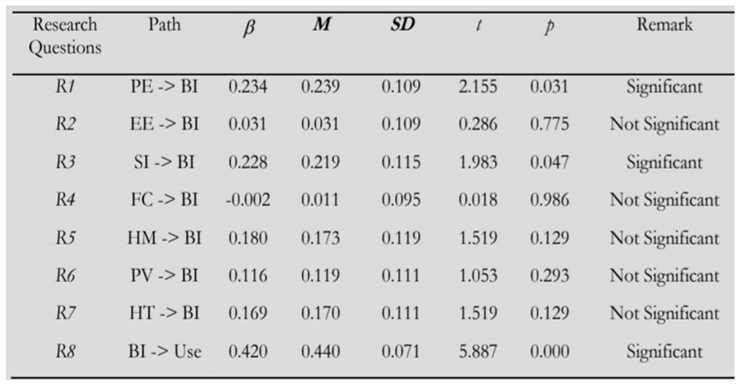
Note: HT= habit, BI = behavioral intention to use blockchain technology and Use = Use of blockchain technology.
The coefficient of determination (R²) stands as a cornerstone in assessing a model's predictive prowess, delineated between 0 to 1 as elucidated by Hair et al. (2021). R² encapsulates the interplay of independent variables on the dependent variable, showcasing the extent of variance in the latter explicable through associated independent variables, a concept pioneered by Fornell & Larcker (1981). The pivotal threshold for R² lies at 0.1, ensuring robust explanatory capabilities of exogenous variables on endogenous variable variance, per Hair et al. (2021). Illustrated in Figure 1 of the measurement model, the R² for behavioral intention regarding blockchain technology was calculated at 0.607, denoting that 60.7% of its variance stemmed from the seven independent variables in this study. Furthermore, the R² for actual use of blockchain technology applications stood at 0.177, signifying that 17.7% of blockchain use variance could be attributed to participants' behavioral intentions. These R² values, surpassing the 0.1 threshold, affirm the substantial impact of independent variables on both behavioral intention to use and actual usage of blockchain technology applications.
The research hypotheses underwent validation through t-statistics, path coefficients, and significance coefficient analysis. Table 1 delineates these values pertinent to this study. As per the path model, certain factors like effort expectancy (beta = 0.031, t = 0.286, p = 0.775), facilitating conditions (beta = -0.002, t = 0.018, p = 0.986), and hedonic motivation (beta = 0.18, t = 1.519, p = 0.129) exhibited nonsignificant impacts on the behavioral intention to use blockchain technology in the education sector. Similarly, habit (beta = 0.169, t = 1.519, p = 0.129) and price value (beta = 0.116, t = 1.053, p = 0.293) showed no significant influence in this context. Conversely, performance expectancy (beta = 0.234, t = 2.155, p = 0.031) significantly influenced the behavioral intention to use blockchain technology in education. Additionally, social influence (beta = 0.228, t = 1.983, p = 0.047) also had a significant effect on this behavioral intention. Notably, the behavioral intention to use blockchain technology itself (beta = 0.42, t = 5.887, p < 0.001) significantly impacted the actual use of blockchain technology, indicating a strong relationship in this domain.
Through PLS-SEM analysis, it was found that performance expectancy and social influence significantly predicted participants' behavioral intentions to use blockchain technology within the education sector. Additionally, behavioral intention to use blockchain technology was a significant predictor of its actual utilization. Conversely, factors such as effort expectancy, facilitating conditions, hedonic motivation, habit, and price value did not emerge as significant predictors of behavioral intentions related to blockchain technology use in education. The existing literature has emphasized the necessity for more comprehensive research on blockchain technology acceptance, especially utilizing models like UTAUT2 (Fedorova & Skobleva, 2020; Kaur et al., 2021). Scholars have pointed out the importance of further exploration regarding blockchain technology acceptance and its implementation in education (Kaur et al., 2021). This study aimed precisely at bridging these gaps in the literature by investigating user acceptance of blockchain technology within the education sector, employing the UTAUT2 theory as a guiding framework. The study not only validated the utility of the UTAUT2 model in this context but also provided valuable insights that could facilitate the broader adoption and integration of blockchain technology in educational settings.
RQ 1: How strongly does performance expectancy correlate with behavioral intentions regarding blockchain technology in education?
The strength of the correlation between performance expectancy and behavioral intentions concerning blockchain technology in education. The findings affirmed that performance expectancy indeed predicted behavioral intentions to utilize blockchain technology in educational contexts. This statistically significant relationship echoes the principles of the UTAUT2 model and aligns with various prior studies (Alkawsi et al., 2020; Bileg- jargal & Hsueh, 2021; Sabri et al., 2022). This outcome serves as a pivotal validation for blockchain project managers, affirming their endeavors in designing and implementing blockchain solutions within education. It highlights the necessity of showcasing tangible benefits and enhanced performance that blockchain can offer to educational institutions. Project managers can leverage this understanding while communicating with educational decision-makers, refining strategies to accentuate the performance-boosting attributes of their blockchain projects. Additionally, policymakers and educational leaders can draw insights from this correlation to guide policy-making and resource allocation. Recognizing the pivotal role of performance expectancy in technology adoption, they can allocate resources toward supporting research and development tailored to blockchain solutions in education. Furthermore, advocating for collaborative initiatives between educational institutions and blockchain technology providers can ensure the sector maximizes the potential benefits of this technology. The significant association between performance expectancy and behavioral intentions to adopt blockchain technology in education signals a promising trajectory for its integration in the sector. Stakeholders such as project managers, HR professionals, policymakers, and education leaders can utilize this insight to steer strategic decision-making, foster innovation, and contribute significantly to unlocking the transformative potential that blockchain technology holds for education.
RQ 2: How impactful is effort expectancy in shaping behavioral intentions toward utilizing Blockchain technology in education?
The impact of effort expectancy on shaping behavioral intentions toward utilizing Blockchain technology in education. Surprisingly, the results showed that there was no significant relationship between effort expectancy and behavioral intentions to use blockchain technology. This finding contradicts prior research by Bilegjargal and Hsueh (2021), who found that effort expectancy did predict students’ acceptance of an online judge system. This discovery suggests that the perceived ease of use, or the effort required to adopt and integrate blockchain technology into educational processes, may not strongly influence the intentions of educators and IT officers to embrace this technology. Even if stakeholders perceive Blockchain as relatively easy to use, it may not significantly drive their willingness to incorporate it into their daily activities. Other factors, such as concerns about data security, privacy, or the perceived benefits not aligning closely with the perceived ease of use, could play a more crucial role in adoption decisions. For blockchain project managers, this result presents a challenge. Simplifying the user experience and making blockchain technology more accessible may not be sufficient to drive adoption within the education sector. Instead, they should focus on highlighting the concrete benefits of blockchain and its potential to address specific educational challenges when promoting its adoption. Similarly, HR professionals in education should design training programs that emphasize how blockchain technology can improve work processes and the overall educational experience, rather than solely focusing on simplifying its use. Lawmakers and education leaders should also take note of these findings when developing policies and allocating resources. Promoting blockchain adoption should involve comprehensive strategies that address both the perceived benefits and potential concerns surrounding blockchain in education. This may include fostering collaboration between technology providers and educational institutions, offering incentives, and creating a supportive ecosystem for adoption. In conclusion, the insignificant relationship between effort expectancy and behavioral intentions to use blockchain technology in education underscores the importance of prioritizing other factors, such as performance expectancy and addressing potential concerns, in promoting blockchain adoption within the sector. A more holistic approach to technology adoption is necessary to successfully integrate blockchain into education.
RQ 3: What role does social influence play in shaping behavioral intentions toward adopting blockchain technology in education?
The impact of social influence on behavioral intentions regarding blockchain technology adoption in education. The findings unveiled a noteworthy correlation between social influence and behavioral intentions, aligning with prior research (Bilegjargal & Hsueh, 2021; Sabri et al., 2022). Bilegjargal and Hsueh's (2021) study on online judge systems in program courses revealed a positive link between social influence and intentions to use such systems. Similarly, Sabri et al. (2022) demonstrated that social influence positively affects intentions to adopt mobile learning. These results emphasize how interpersonal connections within professional circles, such as educators and IT officers, heavily influence attitudes toward blockchain adoption in education. The endorsement and encouragement of influential figures in one's professional network significantly sway individuals' readiness to adopt blockchain technology. This underscores the importance of peer support and recommendations from trusted sources, showcasing their pivotal role in fostering acceptance. For blockchain project managers, this underscores the value of cultivating robust relationships and networks within the education sector. Collaborating with influential figures and thought leaders can greatly enhance blockchain's adoption through advocacy and shared positive experiences. This insight can guide HR professionals in devising strategies to promote a culture of technology adoption and knowledge sharing within educational settings. Encouraging participation in professional communities, conferences, and knowledge exchange platforms where influential voices endorse blockchain benefits can be transformative. Lawmakers and education leaders should also acknowledge social influence's significance when formulating policies supporting blockchain adoption. Initiatives fostering collaboration and mentorship can leverage social influence to propel blockchain integration in education. Ultimately, the strong link between social influence and intentions to adopt blockchain underlines the critical role of peer recommendations in shaping technology adoption within education. Stakeholders across sectors should actively harness social influence to foster blockchain adoption and create a supportive ecosystem for its educational integration.
RQ 4: How significantly do facilitating conditions influence behavioral intentions regarding the use of blockchain technology in education?
The impact of facilitating conditions on behavioral intentions concerning blockchain technology adoption in education. Surprisingly, the results revealed no significant relationship between facilitating conditions and behavioral intentions, aligning with previous findings by Bilegjargal and Hsueh (2021). Their study on online judging systems among students similarly indicated that facilitating conditions do not strongly influence technology acceptance universally. This suggests that while facilitating conditions encompassing resources, support, and infrastructure are crucial, they may not serve as the primary driver for educators’ and IT officers’ intentions to adopt blockchain in education. Simply having access to necessary tools and support systems doesn’t inherently drive willingness to embrace blockchain technology. Other factors like perceived benefits and alignment with educational goals likely play more pivotal roles. For blockchain project managers, this emphasizes the need to go beyond providing resources and infrastructure. While ensuring facilitating conditions are met remains essential, highlighting the concrete advantages and positive outcomes of blockchain in education becomes paramount. Communicating how blockchain can address specific challenges and enhance educational processes should take precedence over mere provision of tools and support. HR professionals in education can leverage this insight to refine training programs. Instead of solely focusing on technical skills for blockchain adoption, they should integrate a broader perspective showcasing blockchain’s transformative potential. Real-world examples of successful implementations and associated benefits can significantly impact educators’ and IT officers’ perceptions, driving more meaningful adoption and integration.
RQ 5: How does hedonic motivation contribute to predicting behavioral intentions to adopt blockchain technology in education?
The role of hedonic motivation in predicting behavioral intentions regarding blockchain adoption in education. Interestingly, the results revealed a non-significant relationship between hedonic motivation and behavioral intentions, contrasting with prior research by Bilegjargal and Hsueh (2021) that emphasized the impact of hedonic motivation on students’ intentions to use new technologies like online judge systems. This discrepancy suggests that while hedonic motivation, such as fun or pleasure, is crucial for student technology adoption, it holds less sway among IT officers, who form a more mature audience less driven by such factors. In the context of blockchain technology in education, the perceived enjoyment or pleasure of its use may not strongly influence educators’ and IT officers’ adoption intentions. Unlike consumer-focused technologies where hedonic motivation plays a prominent role, blockchain adoption in education is driven more by pragmatic considerations like utility and effectiveness. For blockchain project managers, this implies that highlighting the enjoyable aspects of blockchain may not be an effective strategy for adoption promotion. Instead, emphasizing concrete benefits, efficiencies, and improvements that blockchain offers in educational processes would likely resonate more. Demonstrating how blockchain addresses specific challenges or enhances the educational experience could be a more compelling approach. HR professionals in education can leverage this insight to tailor training programs accordingly. Focusing on equipping educators and IT officers with skills to effectively use blockchain to improve work and contribute to educational objectives, rather than emphasizing enjoyment, would align better with adoption goals. Education leaders should also consider these findings when crafting policies and initiatives related to blockchain adoption. While acknowledging the potential for enjoyment and engagement is important, prioritizing policies that highlight the educational value and practical advantages of blockchain technology within the sector would be more impactful in driving adoption.
RQ 6: What is the significance of price value in determining behavioral intentions towards embracing blockchain technology in education?
It explored the role of price value in determining behavioral intentions towards adopting blockchain technology in education. Surprisingly, the results showed a non-significant relationship between price value and behavioral intentions, consistent with Lee et al.'s (2019) prior research on blockchain adoption intentions. Lee et al. (2019) found that while cost didn't significantly impact intentions, there was a weak positive correlation between cost and intention to use blockchain. This could suggest that although initial costs may seem high, the long-term benefits of blockchain could outweigh these concerns over time. However, this finding contrasts with Shahzad et al.'s (2022) research, which emphasized the significant impact of private value on blockchain adoption in supply chain management, where cost sensitivity is high. Participants in this study, comprising educators and IT officers, may not be as sensitive to price value since they're not directly involved in budgetary decisions. This suggests that monetary considerations may not be the primary drivers for them when deciding on blockchain adoption. Rather, factors like perceived benefits and alignment with educational goals likely play more substantial roles. For blockchain project managers, this underscores the need to highlight the non-monetary value propositions of blockchain in education. While costs are important, emphasizing how blockchain enhances processes, secures data, simplifies tasks, and contributes to better outcomes would be more influential in adoption decisions. Lawmakers and education leaders should also consider this when formulating policies, prioritizing the educational value and transformative potential of blockchain over purely financial aspects. In summary, while price value may not be a significant factor in behavioral intentions towards blockchain adoption in education, showcasing its broader benefits and aligning with educational goals remains crucial for fostering adoption and integration within the sector.
RQ 7: To what degree does habit influence behavioral intentions regarding the adoption of blockchain technology in education?
The influence of habit on behavioral intentions regarding blockchain adoption in education. Surprisingly, the results revealed a non-significant relationship between habit and intentions, which contrasts with previous studies like Alkawsi et al. (2020) on smart meter systems and Shahzad et al. (2022) on blockchain in supply chain management, both of which found habit to significantly impact intentions. The discrepancy in findings may stem from various factors such as contextual differences, sample characteristics, or methodological variations across studies. Further exploration is needed to understand the nuanced dynamics behind this inconsistency fully. This suggests that habitual or routine use of technology may not strongly influence educators' and IT officers' intentions to adopt blockchain in education. Unlike established technologies that people use out of habit, blockchain is perceived as relatively new and specialized in this context, diminishing the role of habit in adoption decisions. For blockchain project managers, this highlights the need to actively communicate blockchain's value and benefits in education, emphasizing its potential to address specific challenges and enhance professional practices. Breaking any pre-existing habits by showcasing blockchain's superiority as a solution can be crucial in driving adoption. HR professionals in education can leverage this insight to design training programs that empower educators and IT officers with the necessary skills for blockchain use. These programs should not rely on the assumption of habitual adoption but should instead focus on intentional and informed use through education and support. In essence, while habit may not significantly influence intentions in blockchain adoption for educators and IT officers, emphasizing its benefits and providing tailored support can pave the way for more intentional adoption and integration within the educational context.
RQ 8: How accurately can behavioral intentions predict the utilization of blockchain technology in an educational context?
The predictive accuracy of behavioral intentions regarding the utilization of blockchain technology in education. The findings revealed a significant relationship between behavioral intentions and actual use, aligning with previous research on smart meter systems and mobile learning (Alkawsi et al., 2020; Sabri et al., 2022). Alkawsi et al. (2020) highlighted the impact of behavioral intentions on smart meter system use, while Sabri et al. (2022) found a strong connection between intentions and actual use in mobile learning. This underscores the crucial role of behavioral intentions as predictors of technology adoption. In the education sector, this implies that when educators and IT officers express clear intentions to use blockchain technology, they are more likely to follow through and integrate it into their practices. This aligns with the theory that intentions often precede concrete actions. For blockchain project managers, this emphasizes the importance of understanding and influencing stakeholders' intentions. Effective communication about blockchain's benefits, utility, and positive impact on education can motivate stakeholders to adopt it successfully. Clear and persuasive communication strategies are vital in promoting technology adoption. HR professionals in education can leverage this insight to design training programs that not only impart skills and knowledge but also foster the motivation and intention to use blockchain. Aligning training efforts with behavioral intentions can significantly enhance the adoption and integration of blockchain technology within educational settings. Overall, the significant relationship between behavioral intentions and actual use underscores the value of proactive communication and intention-building strategies in promoting successful blockchain adoption in education.
Limitations of the Study
Limitations are inherent in any study, stemming from its design and execution (Robles-Gómez et al., 2021). Design-centric limitations revolve around sampling methods, assessment protocols, choice of research design, and potential discrepancies among these components (Mukred et al., 2019b; Robles-Gómez et al., 2021). Implementation-related constraints encompass hurdles faced during the study, such as small sample sizes, measurement discrepancies, and diversity within participant groups (Demissie et al., 2021). This section delves into the design limitations of the study. The research design did not incorporate a true experimental setup, necessitating acknowledgment that establishing causality definitively is not feasible when exploring variable relationships (Almaiah et al., 2019). Despite aiming to uncover predictors of the impact of behavioral intentions regarding blockchain technology in education based on the UTAUT2 theory, the absence of experimental manipulation restricts making causal inferences about these variable relationships. Establishing true cause-and-effect relationships would have necessitated control groups and pre- and post-intervention testing to manipulate independent variables. External validity, or the generalizability of findings, also posed a limitation (Alkawsi et al., 2020; Lee et al., 2019). The study's findings only partially represent the target population of IT officers in education concerning blockchain technology (Lee et al., 2019). Generalizability was limited due to the demographic characteristics and geographical location of the sample. Including participants from specific educational institutions or regions could potentially impact the results (Alkawsi et al., 2020; Lee et al., 2019). Therefore, caution is warranted when extrapolating the findings to broader contexts or populations. The study's reliance on assessment instruments introduces potential measurement limitations (Gharaibeh, 2022; Nikolopoulou et al., 2020). Issues of reliability and validity may arise from the UTAUT2 instrument used to gauge performance expectancy, effort expectancy, social influence, facilitating conditions, hedonic motivation, price value, and habit (Gharaibeh, 2022). While efforts were made to ensure the instruments' reliability and validity, measurement errors or biases could still affect the accuracy and precision of the collected data (Nikolopoulou et al., 2020). The study's statistical analysis also presents limitations (Bilegjargal & Hsueh, 2021; Hair et al., 2021; Robles-Gómez et al., 2021). The sample size of N = 160 participants might impact the generalizability and statistical power of the findings. With a relatively small sample, the effect size of relationships between variables might be influenced, potentially leading to limitations in the strength and precision of observed effects (Robles-Gómez et al., 2021). However, based on Qualtrics' (2023) sample size calculator, the margin of error was only 8%, with a confidence level of 95% based on a population size larger than 10,000. The choice of PLS-SEM techniques for data analysis had assumptions and limitations, which should be acknowledged when interpreting the results (Bilegjargal & Hsueh, 2021; Hair et al., 2021). While efforts were made to address and mitigate these limitations throughout the study, it is essential to recognize that they may have influenced the results and the broader implications of the findings. Future research should focus on addressing these limitations to enhance our understanding of blockchain technology's acceptance and use in education.
Future research should endeavor to replicate and expand upon this study by exploring diverse educational populations. These groups might encompass teachers, students, administrators, and parents, each offering unique perspectives on blockchain technology adoption (Lee et al., 2019). Analyzing the perceptions, motivations, and barriers among these stakeholders can yield a more nuanced understanding of the factors influencing blockchain acceptance in education (Tang, 2021). Further enriching our comprehension, future studies could introduce additional variables into the mix, such as trust, perceived risk, system compatibility, and data privacy concerns (Blut et al., 2022; Demissie et al., 2021; Mukred et al., 2019b). These variables, in conjunction with behavioral intentions and blockchain use, can illuminate the intricate dynamics of implementing such technologies. Moving beyond individual perspectives, it's crucial to investigate technological and organizational elements impacting blockchain adoption (Lee et al., 2019). Factors like perceived technical complexity, system reliability, data security, institutional readiness, and organizational support play pivotal roles and warrant in-depth exploration (Fedorova & Skobleva, 2020; Kaur et al., 2021). Understanding these facets can guide targeted strategies for successful blockchain integration in education. Longitudinal studies are essential to gauge the sustained impact of blockchain technology over time (Lee et al., 2019). These studies can delve into long-term user acceptance, educational outcomes, administrative efficiencies, and student experiences, shedding light on optimization opportunities and potential challenges. A broader perspective can be gained through comparative studies across different educational systems and cultural contexts (Raimundo & Rosário, 2021; Tang, 2021). Such studies unravel how acceptance and usage vary across diverse backgrounds, offering insights into cultural and institutional influences on blockchain adoption. They also promote knowledge sharing and the identification of best practices, fostering effective blockchain integration across varied educational settings.
Conclusion
This quantitative, predictive correlation study makes a valuable contribution to the emerging field of blockchain technology acceptance and adoption in the educational domain. By employing the UTAUT2 model as a theoretical framework, the research systematically investigated the influence of key factors - performance expectancy, effort expectancy, social influence, facilitating conditions, hedonic motivation, price value, and habit - on behavioral intentions to use blockchain in education settings across the United States. The findings unveiled significant relationships between performance expectancy, social influence, and the intention to adopt blockchain technology among IT officers in educational institutions. Notably, performance expectancy emerged as a robust predictor, highlighting the pivotal role of demonstrating blockchain's ability to enhance work outcomes and productivity in driving adoption. Similarly, social influence, reflecting the impact of professional networks and peer recommendations, significantly shaped intentions towards blockchain use. This underscores the power of cultivating a supportive ecosystem and leveraging influential voices within the education sector. Interestingly, factors such as effort expectancy, facilitating conditions, hedonic motivation, price value, and habit did not exhibit significant correlations with behavioral intentions in this context. This contrasts with their established influence in other technology adoption studies, suggesting that the dynamics of blockchain acceptance in education may diverge from traditional patterns. Furthermore, the study affirmed a strong predictive relationship between behavioral intentions and the actual utilization of blockchain technology within educational institutions. This alignment with theoretical expectations reinforces the critical significance of fostering positive intentions as a precursor to successful technology integration. While the research offers invaluable insights, it is essential to acknowledge certain limitations. These include constraints in establishing causality due to the non-experimental design, potential measurement errors stemming from the assessment instruments, and limitations in generalizability and statistical power associated with the sample size. Future research endeavors should strive to address these limitations through experimental approaches, refined measurement techniques, and larger, more diverse participant pools. Looking ahead, the study paves the way for numerous avenues of exploration. Replicating and expanding the research across diverse stakeholder groups, such as teachers, students, administrators, and parents, can provide a more comprehensive understanding of blockchain acceptance in education. Introducing additional variables like trust, perceived risk, system compatibility, and data privacy concerns can further enrich the model's predictive capabilities. Moreover, investigating technological and organizational factors impacting blockchain adoption, such as perceived technical complexity, system reliability, data security, institutional readiness, and organizational support, can yield actionable insights for seamless integration. Longitudinal studies assessing the sustained impacts of blockchain on educational outcomes, administrative efficiencies, and student experiences are crucial for optimizing its long-term implementation. Comparative analyses across varied educational systems and cultural contexts can illuminate the influence of institutional and societal factors, fostering knowledge-sharing and the identification of best practices. Such endeavors can contribute to the development of targeted strategies and policies tailored to specific educational environments, accelerating the successful and sustainable adoption of blockchain technology within the educational landscape. In conclusion, this research represents a pioneering step in unraveling the complexities of blockchain acceptance and use in education. By validating the UTAUT2 model's applicability and shedding light on key predictors, it provides a solid foundation for stakeholders to strategize effective integration approaches. However, the study's limitations and the vast potential for further exploration underscore the need for continued research efforts in this burgeoning field. As blockchain technology continues to disrupt traditional paradigms, a deeper understanding of its adoption dynamics will be indispensable in harnessing its transformative power to enhance educational processes, foster innovation, and ultimately enrich the learning experience for generations to come. The study reveals that stakeholders such as IT managers, educators, and decision-makers in education aiming to broaden blockchain technology's usage must highlight its performance advantages and foster positive social perceptions among users and their communities.
Future research should dissect technological and organizational influences on blockchain acceptance within educational realms. Factors like perceived technical intricacies, system dependability, data security, institutional preparedness, and organizational backing offer critical insights into adoption challenges and facilitators. Understanding these dynamics can shape targeted strategies for seamless blockchain integration and success within educational settings.
References
- Ajzen, I.; Fishbein, M. Understanding Attitudes and Predicting Social Behaviour; Englewood Cliffs: Prentice-Hall, 1980. [Google Scholar]
- Al-Emran, M.; Elsherif, H.M.; Shaalan, K. Investigating attitudes towards the use of mobile learning in higher education. Comput. Hum. Behav. 2016, 56, 93–102. [Google Scholar] [CrossRef]
- Alkawsi, G.A.; Ali, N.; Baashar, Y. An empirical study of the acceptance of IoT-based smart meter in Malaysia: The effect of electricity-saving knowledge and environmental awareness. IEEE Access 2020, 8, 42794–42804. [Google Scholar] [CrossRef]
- Al-Maatouk, Q.; Othman, M.S.; Aldraiweesh, A.; Alturki, U.; Al-Rahmi, W.M.; Aljeraiwi, A.A. Task-Technology Fit and Technology Acceptance Model Application to Structure and Evaluate the Adoption of Social Media in Academia. IEEE Access 2020, 8, 78427–78440. [Google Scholar] [CrossRef]
- Almaiah, M.A.; Alyoussef, I.Y. Analysis of the effect of course design, course content support, course assessment and instructor characteristics on the actual use of E-learning system. IEEE Access 2019, 7, 171907–171922. [Google Scholar] [CrossRef]
- Almaiah, M.A.; Alamri, M.M.; Al-Rahmi, W. Applying the UTAUT Model to Explain the Students’ Acceptance of Mobile Learning System in Higher Education. IEEE Access 2019, 7, 174673–174686. [Google Scholar] [CrossRef]
- Althunibat, A. Determining the factors influencing students’ intention to use m-learning in Jordan higher education. Comput. Hum. Behav. 2015, 52, 65–71. [Google Scholar] [CrossRef]
- Baiod, W.; Light, J.; Mahanti, A. Blockchain Technology and its Applications Across Multiple Domains: A Survey. J. Int. Technol. Inf. Manag. 2021, 29, 78–119. [Google Scholar] [CrossRef]
- BenMoussa, C. BenMoussa, C. Workers on the move: new opportunities through mobile commerce. In: Stockholm Mobility Roundtable, UKAIS Conference, pp. 22–23 (2003).
- Bilegjargal, D.; Hsueh, N.-L. Understanding Students’ Acceptance of Online Judge System in Programming Courses: A Structural Equation Modeling Approach. IEEE Access 2021, 9, 152606–152615. [Google Scholar] [CrossRef]
- Blut, M.; Chong, A.Y.L.; Tsigna, Z.; Venkatesh, V. Meta-Analysis of the Unified Theory of Acceptance and Use of Technology (UTAUT): Challenging its Validity and Charting a Research Agenda in the Red Ocean. J. Assoc. Inf. Syst. 2022, 23, 13–95. [Google Scholar] [CrossRef]
- Briz-Ponce, L.; Pereira, A.; Carvalho, L.; Juanes-Méndez, J.A.; García-Peñalvo, F.J. Learning with mobile technologies–Students’ behavior. Comput. Hum. Behav. 2017, 72, 612–620. [Google Scholar] [CrossRef]
- Cheon, J.; Lee, S.; Crooks, S.M.; Song, J. An investigation of mobile learning readiness in higher education based on the theory of planned behavior. Comput. Educ. 2012, 59, 1054–1064. [Google Scholar] [CrossRef]
- Chung, H.-H.; Chen, S.-C.; Kuo, M.-H. A Study of EFL College Students’ Acceptance of Mobile Learning. Procedia - Soc. Behav. Sci. 2015, 176, 333–339. [Google Scholar] [CrossRef]
- Churchill, D.; Churchill, N. Educational affordances of PDAs: A study of a teacher’s exploration of this technology. Comput. Educ. 2008, 50, 1439–1450. [Google Scholar] [CrossRef]
- Davis, F.D. A technology acceptance model for empirically testing new end-user information systems: Theory and results [Doctoral dissertation, Massachusetts Institute of Technology]. MIT Doctoral Theses. 1985.
- Davis, F.D. Perceived usefulness, perceived ease of use, and user acceptance of information technology. MIS Q. 1989, 13, 319–340. [Google Scholar] [CrossRef]
- Demissie, D.; Alemu, D.; Rorissa, A.; Colleges, T.S. An Investigation into user Adoption of Personal Safety Devices in Higher Education Using the Unified Theory of Acceptance and Use of Technology (UTAUT). J. South. Assoc. Inf. Syst. 2021, 8, 50–68. [Google Scholar] [CrossRef]
- Duarte, P.; Pinho, J.C. A mixed methods UTAUT2-based approach to assess mobile health adoption. J. Bus. Res. 2019, 102, 140–150. [Google Scholar] [CrossRef]
- Fedorova, E.P.; Skobleva, E.I. Application of blockchain technology in higher education. European Journal of Contemporary Education 2020, 9, 552–571. [Google Scholar]
- Fishbein, M.; Ajzen, I. Belief, attitude, intention and behavior: an introduction to theory and research. http://worldcat.org/. ISBN 0201020890 (1975). Accessed 25 Sept 2018.
- Fornell, C.; Larcker, D.F. Structural equation models with unobservable variables and measurement error: Algebra and statistics. Journal of Marketing Research 1981, 18, 382–388. [Google Scholar] [CrossRef]
- Gharaibeh, M.K. Measuring student satisfaction of Microsoft teams as an online learning platform in Jordan: An application of UTAUT2 model. Hum. Syst. Manag. 2023, 42, 121–130. [Google Scholar] [CrossRef]
- Gharrah AS, A.; Aljaafreh, A. Why students use social networks for education: Extension of UTAUT2. Journal of Technology and Science Education 2021, 11, 53–66. [Google Scholar] [CrossRef]
- Goyal, K.K.; Kumar, S. A statistical perspective on advancement in blockchain technology. International Journal of Scientific Research in Computer Science Engineering and Information Technology 2022, 8, 205–212. [Google Scholar] [CrossRef]
- Hair, J.F.; Hult GT, M.; Ringle, C.M.; Sarstedt, M.; Danks, N.P.; Ray, S. Partial least squares structural equation modeling (PLS-SEM) using R: A workbook (p. 197). Springer Nature: 2021. [CrossRef]
- Hao, S.; Dennen, V.P.; Mei, L. Influential factors for mobile learning acceptance among Chinese users. Educ. Technol. Res. Dev. 2016, 65, 101–123. [Google Scholar] [CrossRef]
- Horng, S.M.; Chao, C.L. How Risk Tolerance Constrains Perceived Risk on Smartphone Users’ Risk Behavior. In Information Technology-New Generations; Springer: Cham, 2018; pp. 67–72. [Google Scholar]
- Huan, Y.; Li, X.; Aydeniz, M.; Wyatt, T. Mobile learning adoption: an empirical investigation for engineering education. Int. J. Eng. Educ. 2015, 31, 1081–1091. [Google Scholar]
- Iqbal, S.; Bhatti, Z.A. An Investigation of University Student Readiness towards M-learning using Technology Acceptance Model. Int. Rev. Res. Open Distrib. Learn. 2015, 16. [Google Scholar] [CrossRef]
- Kar, S.; Kar, A.K.; Gupta, M.P. Industrial Internet of Things and Emerging Digital Technologies-Modeling Professionals' Learning Behavior. IEEE Access 2021, 9, 30017–30034. [Google Scholar] [CrossRef]
- Kaur, P.; Parashar, A.; Duggal, K.; Sunita, S. A blockchain-based approach for educators’ profile management and reward system. IEEE Access 2021, 9, 206–211. [Google Scholar]
- Klopfer, E.; Squire, K.; Jenkins, H. Environmental detectives: PDAs as a window into a virtual simulated world. In: Wireless and Mobile Technologies in Education, Proceedings. IEEE International Workshop, pp. 95–98 (2002). [CrossRef]
- Kuciapski, M. How the Type of Job Position Influences Technology Acceptance: A Study of Employees’ Intention to Use Mobile Technologies for Knowledge Transfer. IEEE Access 2019, 7, 177397–177413. [Google Scholar] [CrossRef]
- Kumar, B.A.; Mohite, P. Usability Study of Mobile Learning Application in Higher Education Context: An Example from Fiji National University. In Mobile Learning in Higher Education in the Asia-Pacific Region; Springer: Singapore, 2017; pp. 607–622. [Google Scholar]
- Lee, C.C.; Kriscenski, J.C.; Lim, H.S. An empirical study of behavioral intention to use blockchain technology. Journal of International Business Disciplines 2019, 14, 1–21. [Google Scholar]
- Mohammadi, H. Social and individual antecedents of m-learning adoption in Iran. Comput. Hum. Behav. 2015, 49, 191–207. [Google Scholar] [CrossRef]
- Mukred, M.; Yusof, Z.M.; Alotaibi, F.M.; Mokhtar, U.A.; Fauzi, F. The Key Factors in Adopting an Electronic Records Management System (ERMS) in the Educational Sector: A UTAUT-Based Framework. IEEE Access 2019, 7, 35963–35980. [Google Scholar] [CrossRef]
- Nikolopoulou, K.; Gialamas, V.; Lavidas, K. Acceptance of mobile phone by university students for their studies: an investigation applying UTAUT2 model. Educ. Inf. Technol. 2020, 25, 4139–4155. [Google Scholar] [CrossRef]
- Oke, A.; Fernandes, F.A.P. Innovations in Teaching and Learning: Exploring the Perceptions of the Education Sector on the 4th Industrial Revolution (4IR). J. Open Innov. Technol. Mark. Complex. 2020, 6, 31. [Google Scholar] [CrossRef]
- Pakistan Telecommunication Authority. Annual Report 2017. Available online: http://www.pta.gov.pk/assets/media/ann_rep_2017.pdf (accessed on 25 September 2018).
- Pal, D.; Arpnikanondt, C.; Funilkul, S.; Chutimaskul, W. The Adoption Analysis of Voice-Based Smart IoT Products. IEEE Internet Things J. 2020, 7, 10852–10867. [Google Scholar] [CrossRef]
- Rahouti, M.; Xiong, K.; Ghani, N. Bitcoin Concepts, Threats, and Machine-Learning Security Solutions. IEEE Access 2018, 6, 67189–67205. [Google Scholar] [CrossRef]
- Raimundo, R.; Rosário, A. Blockchain system in the higher education. European Journal of Investigation in Health, Psychology and Education 2021, 11, 276–293. [Google Scholar] [CrossRef] [PubMed]
- Robles-Gomez, A.; Tobarra, L.; Pastor-Vargas, R.; Hernandez, R.; Haut, J.M. Analyzing the Users’ Acceptance of an IoT Cloud Platform Using the UTAUT/TAM Model. IEEE Access 2021, 9, 150004–150020. [Google Scholar] [CrossRef]
- Rogers, E. Diffusion of innovations; The Free Press: New York, 1983; Available online: http://www.experience-capitalization.net/handle/123456789/83 (accessed on 25 September 2018).
- Sabri, S.; Gani, A.; Yadegaridehkordi, E.; Othman, S.; Miserom, F.; Shuib, L. A Framework for Mobile Learning Acceptance Amongst Formal Part-Time Learners: From the Andragogy Perspective. IEEE Access 2021, 10, 61213–61227. [Google Scholar] [CrossRef]
- Salloum, S.A.; Alhamad, A.Q.M.; Al-Emran, M.; Monem, A.A.; Shaalan, K. Exploring Students’ Acceptance of E-Learning Through the Development of a Comprehensive Technology Acceptance Model. IEEE Access 2019, 7, 128445–128462. [Google Scholar] [CrossRef]
- Shahzad, K.; Zhang, Q.; Khan, M.K.; Ashfaq, M.; Hafeez, M. The acceptance and continued use of blockchain technology in supply chain management: a unified model from supply chain professional's stance. Int. J. Emerg. Mark. 2022, 18, 6300–6321. [Google Scholar] [CrossRef]
- Shaikh, A.A.; Karjaluoto, H. Mobile banking adoption: A literature review. Telematics Informatics 2015, 32, 129–142. [Google Scholar] [CrossRef]
- Sun, Y.; Xue, R.; Zhang, R.; Su, Q.; Gao, S. RTChain: A reputation system with transaction and consensus incentives for e-commerce blockchain. ACM Transactions on Internet Technology 2020, 21, 1–24. [Google Scholar] [CrossRef]
- Sung, Y.-T.; Chang, K.-E.; Liu, T.-C. The effects of integrating mobile devices with teaching and learning on students' learning performance: A meta-analysis and research synthesis. Comput. Educ. 2016, 94, 252–275. [Google Scholar] [CrossRef]
- Talib, F.; Rahman, Z. Modeling the barriers toward the growth of higher education institutions A total interpretive structural modeling approach. Qual. Res. J. 2020, 20, 243–264. [Google Scholar] [CrossRef]
- Trivedi, S.; Mehta, K.; Sharma, R. Systematic Literature Review on Application of Blockchain Technology in E-Finance and Financial Services. J. Technol. Manag. Innov. 2021, 16, 89–102. [Google Scholar] [CrossRef]
- Venkatesh, V.; Davis, F.D. A Theoretical Extension of the Technology Acceptance Model: Four Longitudinal Field Studies. Manag. Sci. 2000, 46, 186–204. [Google Scholar] [CrossRef]
- Venkatesh, V.; Morris, M.G.; Davis, G.B.; Davis, F.D. User acceptance of information technology: Toward a unified view. MIS Quarterly 2003, 27, 425–478. [Google Scholar] [CrossRef]
- Venkatesh, V.; Morris, M.G.; Davis, G.B.; Davis, F.D. User acceptance of information technology: toward a unified view. MIS Q. 2003, 27, 425–478. [Google Scholar] [CrossRef]
- Venkatesh, V.; Thong JY, L.; Xu, X. Consumer acceptance and use of information technology: Extending the unified theory of acceptance and use of technology. MIS Quarterly 2012, 36, 157–178. [Google Scholar] [CrossRef]
- Venkatesh, V.; Thong, J.Y.; Xu, X. Consumer acceptance and use of information technology: extending the unified theory of acceptance and use of technology. MIS Q. 2012, 36, 157–178. [Google Scholar] [CrossRef]
- Yamin, M. Information technologies of 21st century and their impact on the society. Int. J. Inf. Technol. 2019, 11, 759–766. [Google Scholar] [CrossRef] [PubMed]
Figure 1.
PLS-Sem Model.
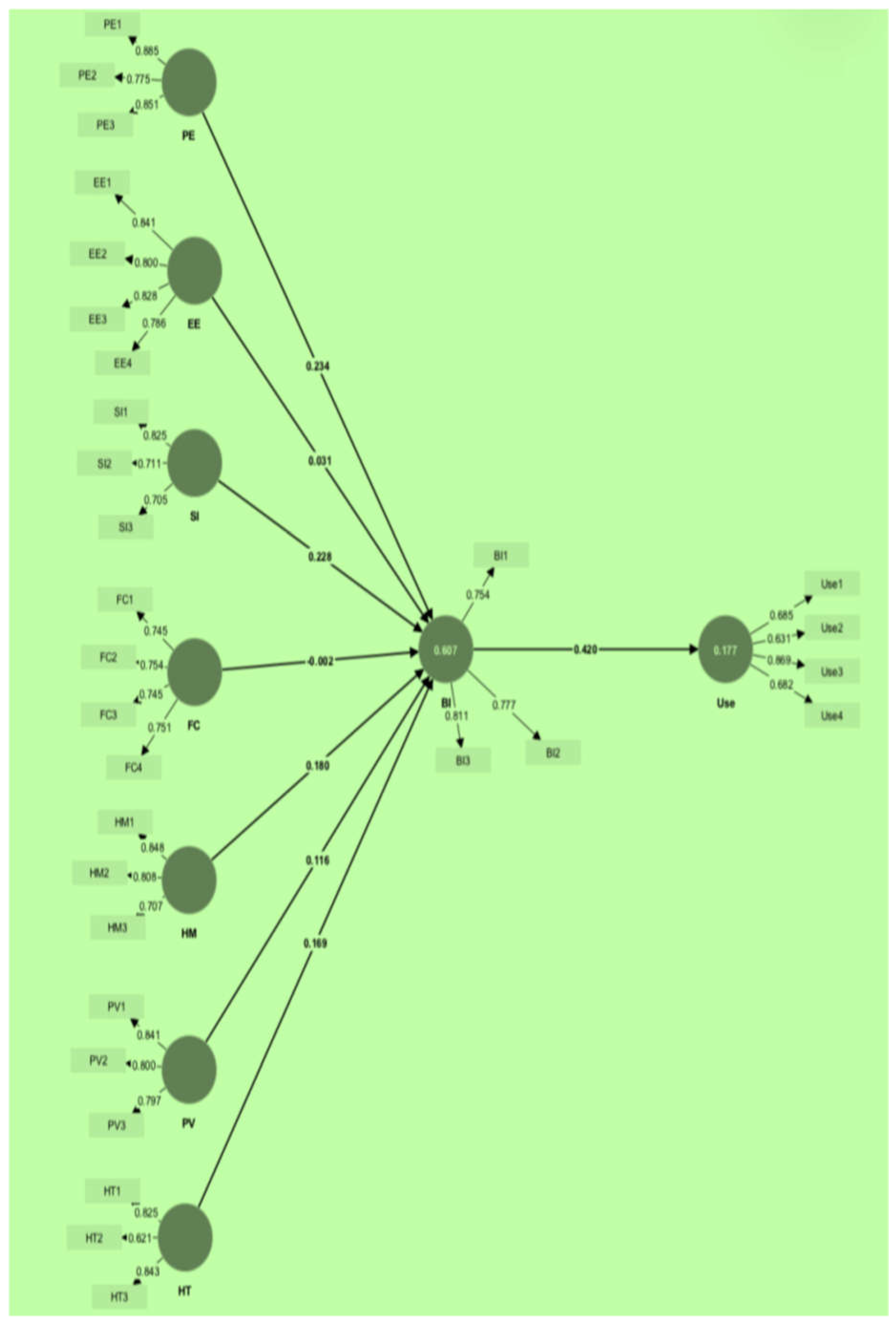
Disclaimer/Publisher’s Note: The statements, opinions and data contained in all publications are solely those of the individual author(s) and contributor(s) and not of MDPI and/or the editor(s). MDPI and/or the editor(s) disclaim responsibility for any injury to people or property resulting from any ideas, methods, instructions or products referred to in the content. |
© 2024 by the authors. Licensee MDPI, Basel, Switzerland. This article is an open access article distributed under the terms and conditions of the Creative Commons Attribution (CC BY) license (http://creativecommons.org/licenses/by/4.0/).
Copyright: This open access article is published under a Creative Commons CC BY 4.0 license, which permit the free download, distribution, and reuse, provided that the author and preprint are cited in any reuse.


